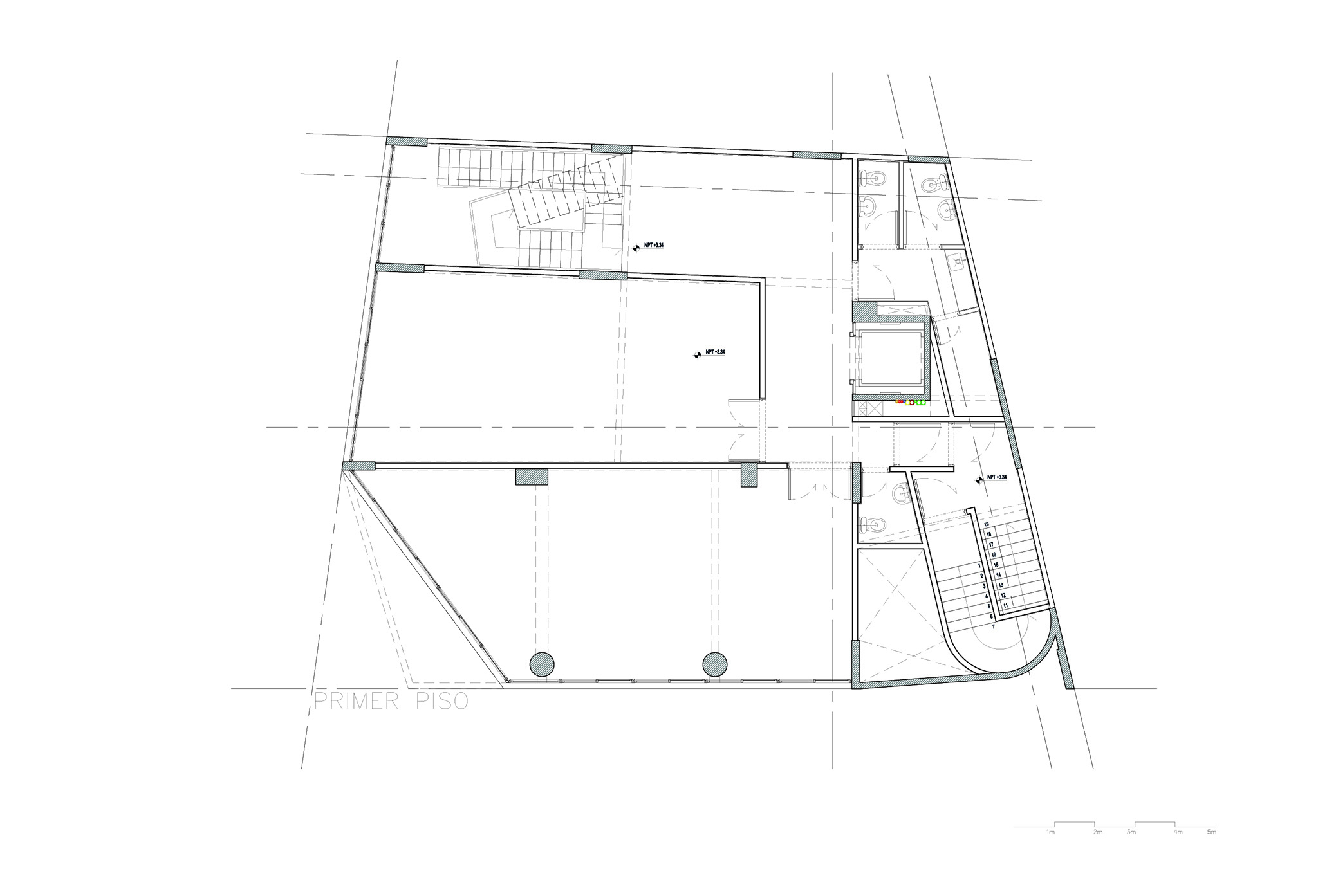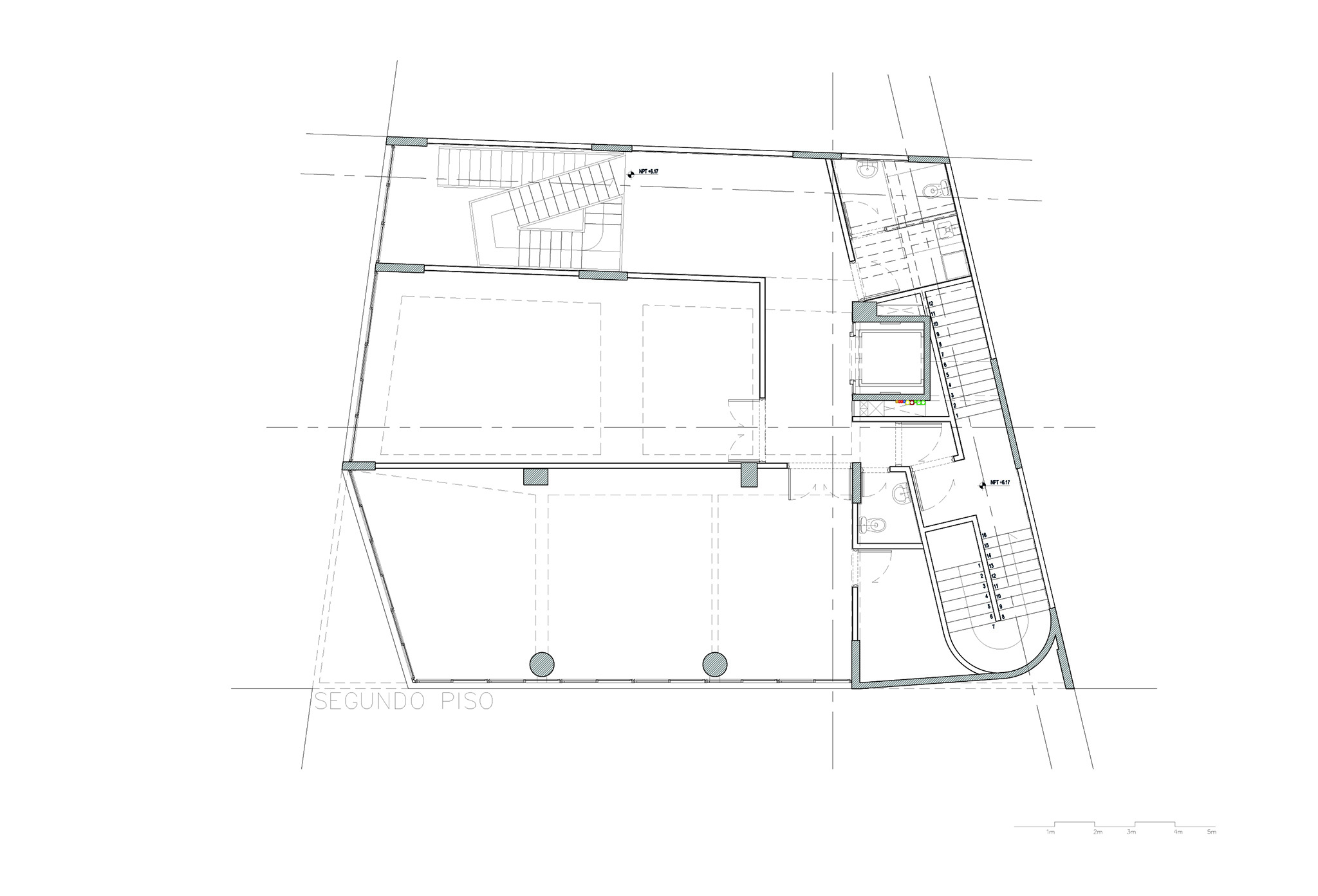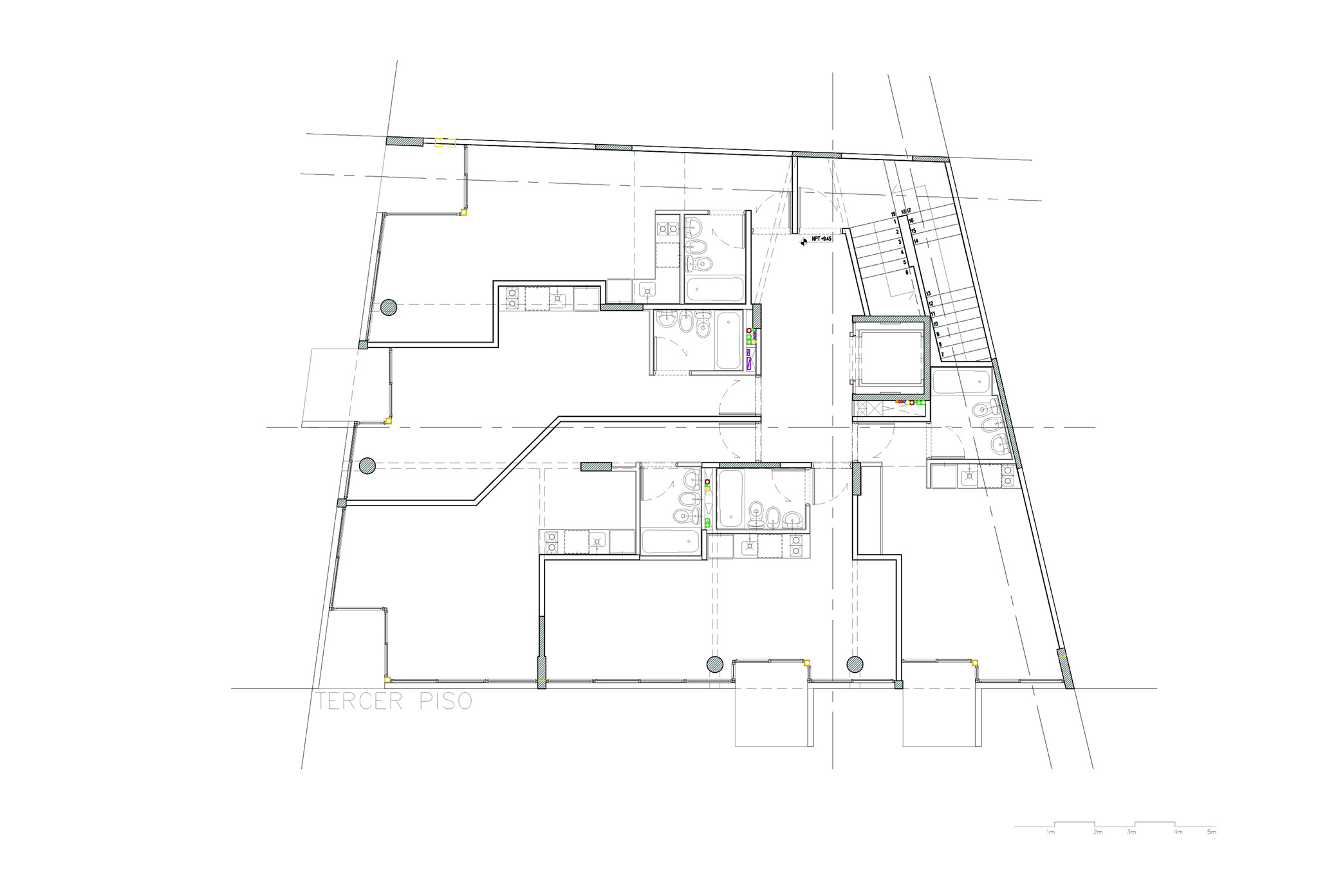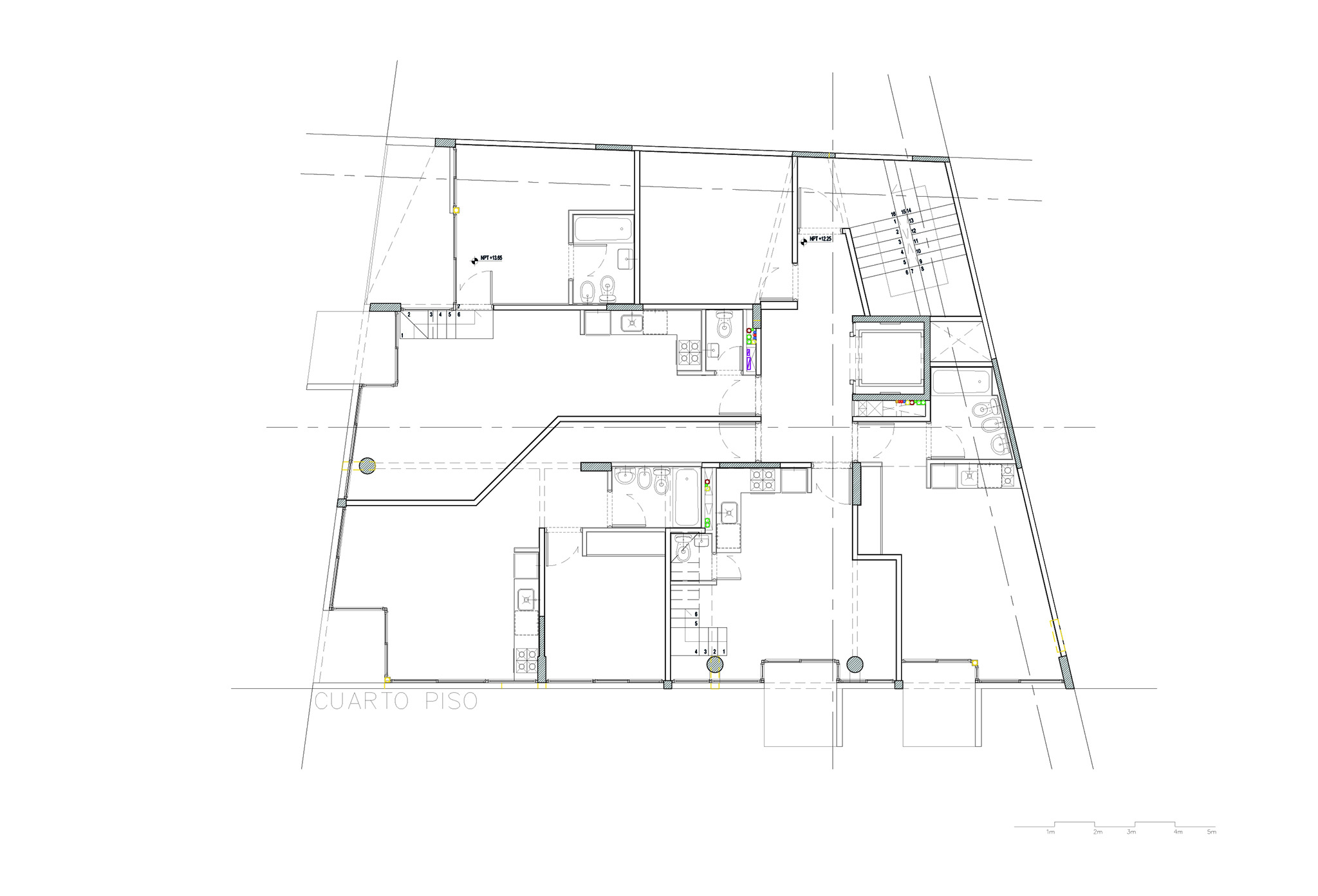
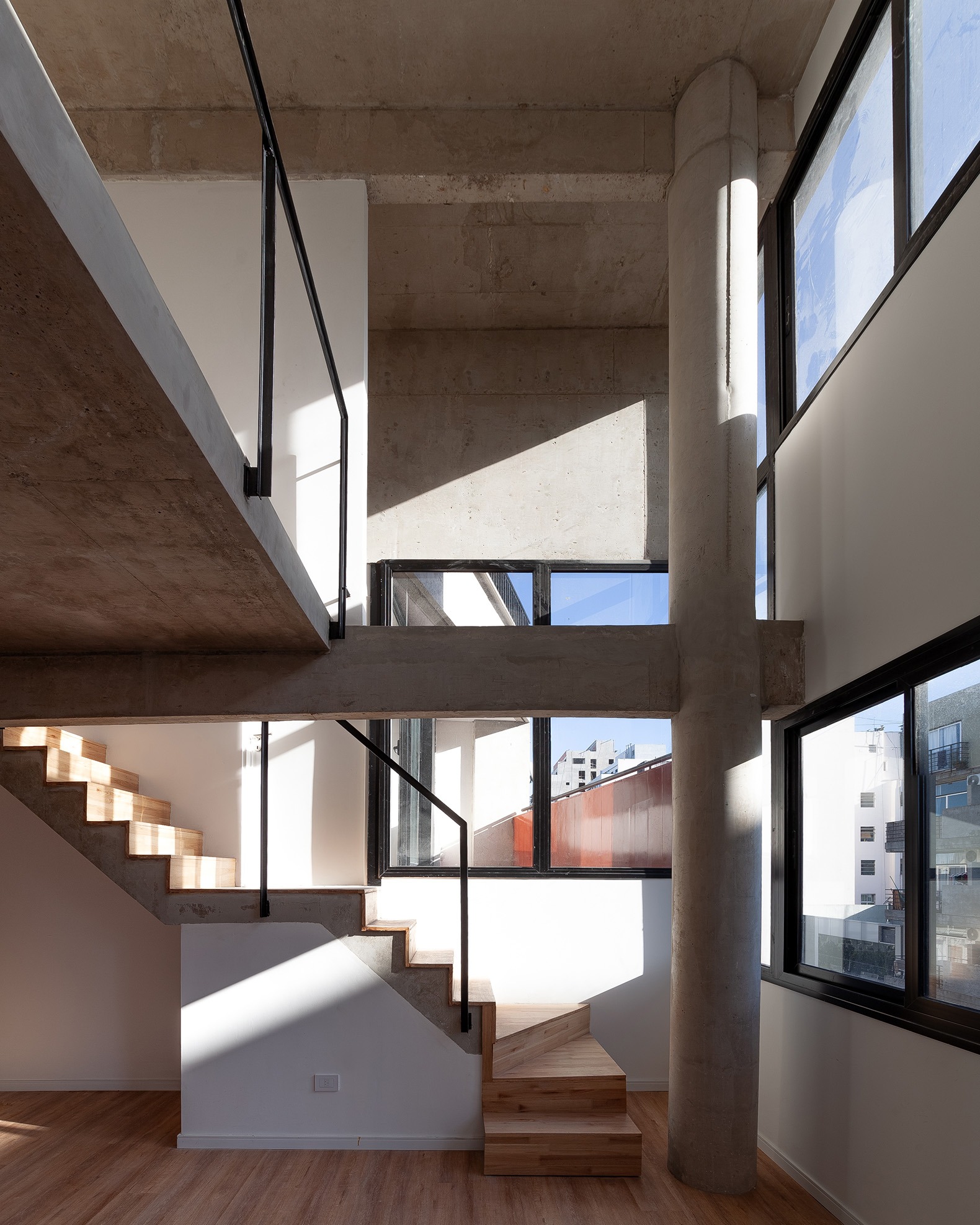
Located near the former Abasto Market in Buenos Aires, the building designed by Ariel Jacubovich Oficina de Arquitectura is situated within an urban environment characterized by intense commercial activity and a strong neighborhood identity. The project draws on the memory of the old wholesale market, reinterpreting the logic of accumulation and stacking of goods typical of the area to integrate with the vitality and complexity of the neighborhood.

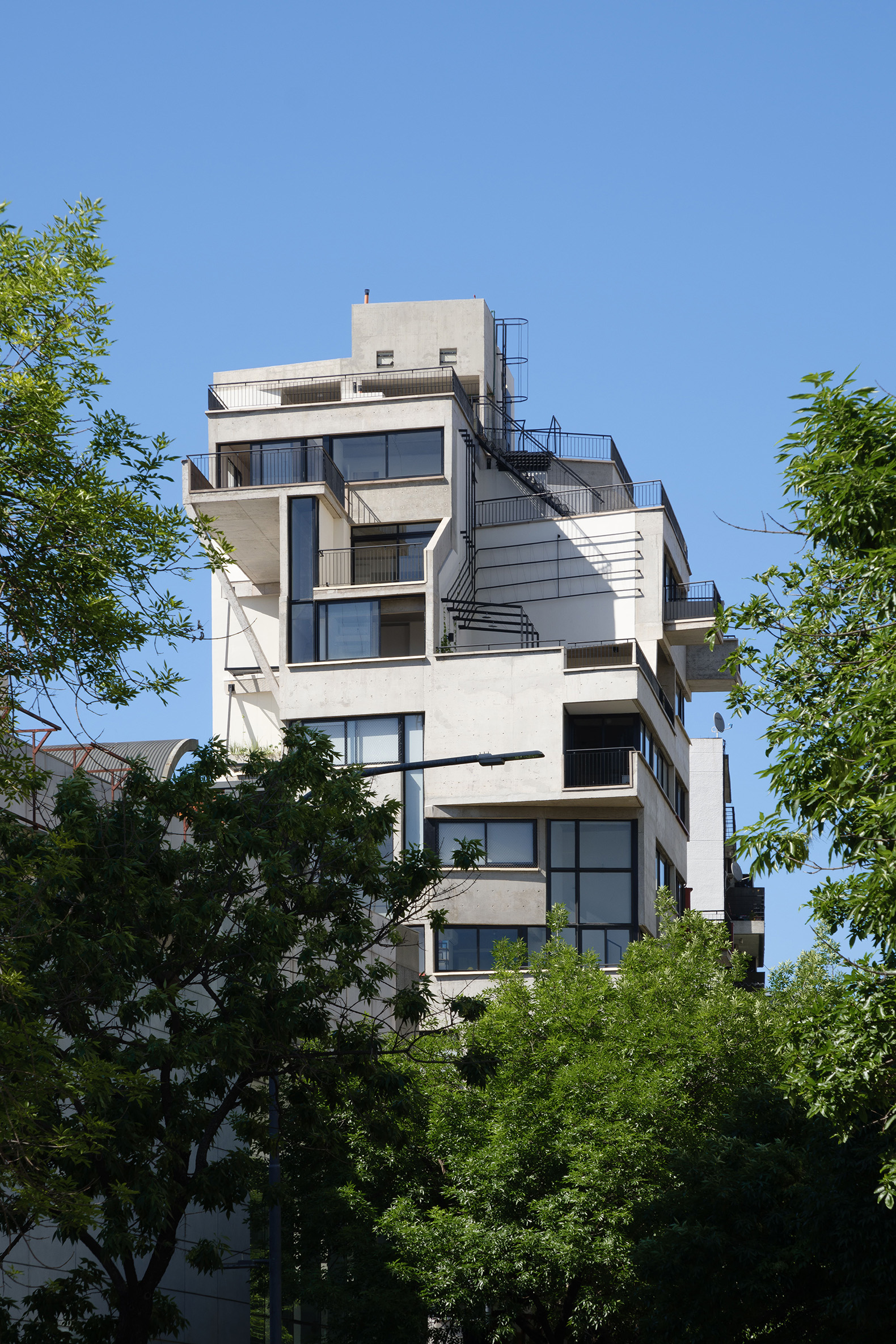
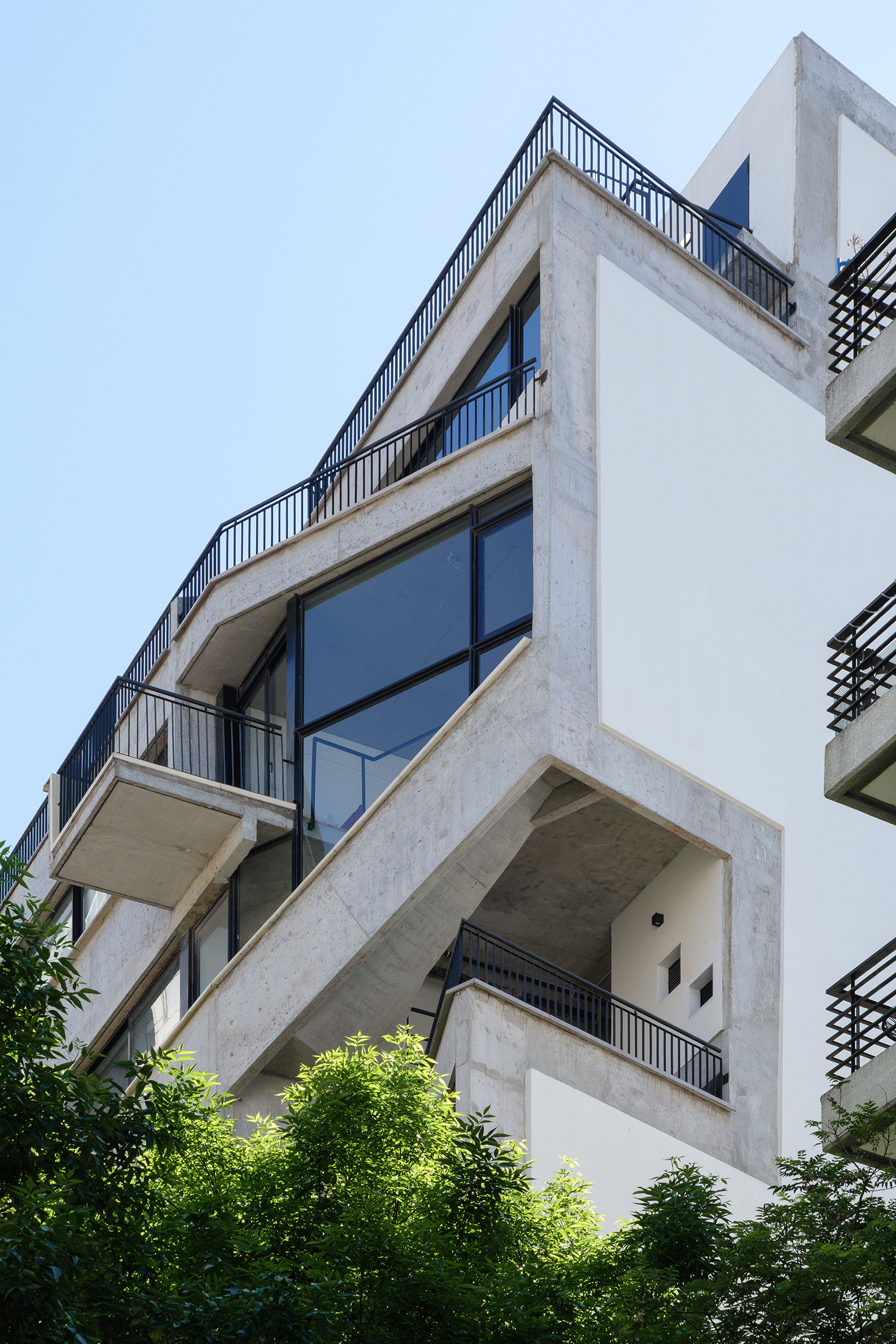
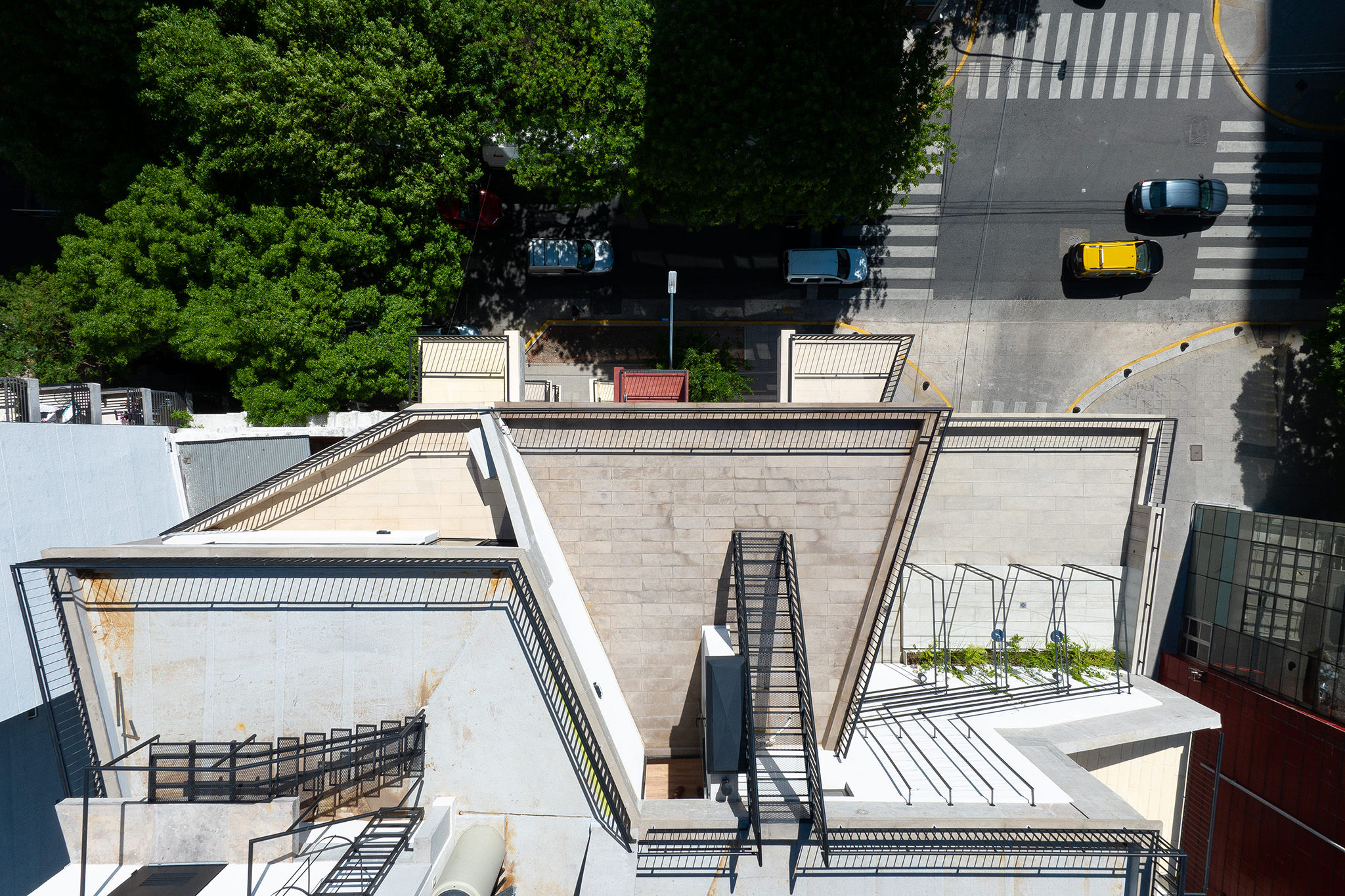
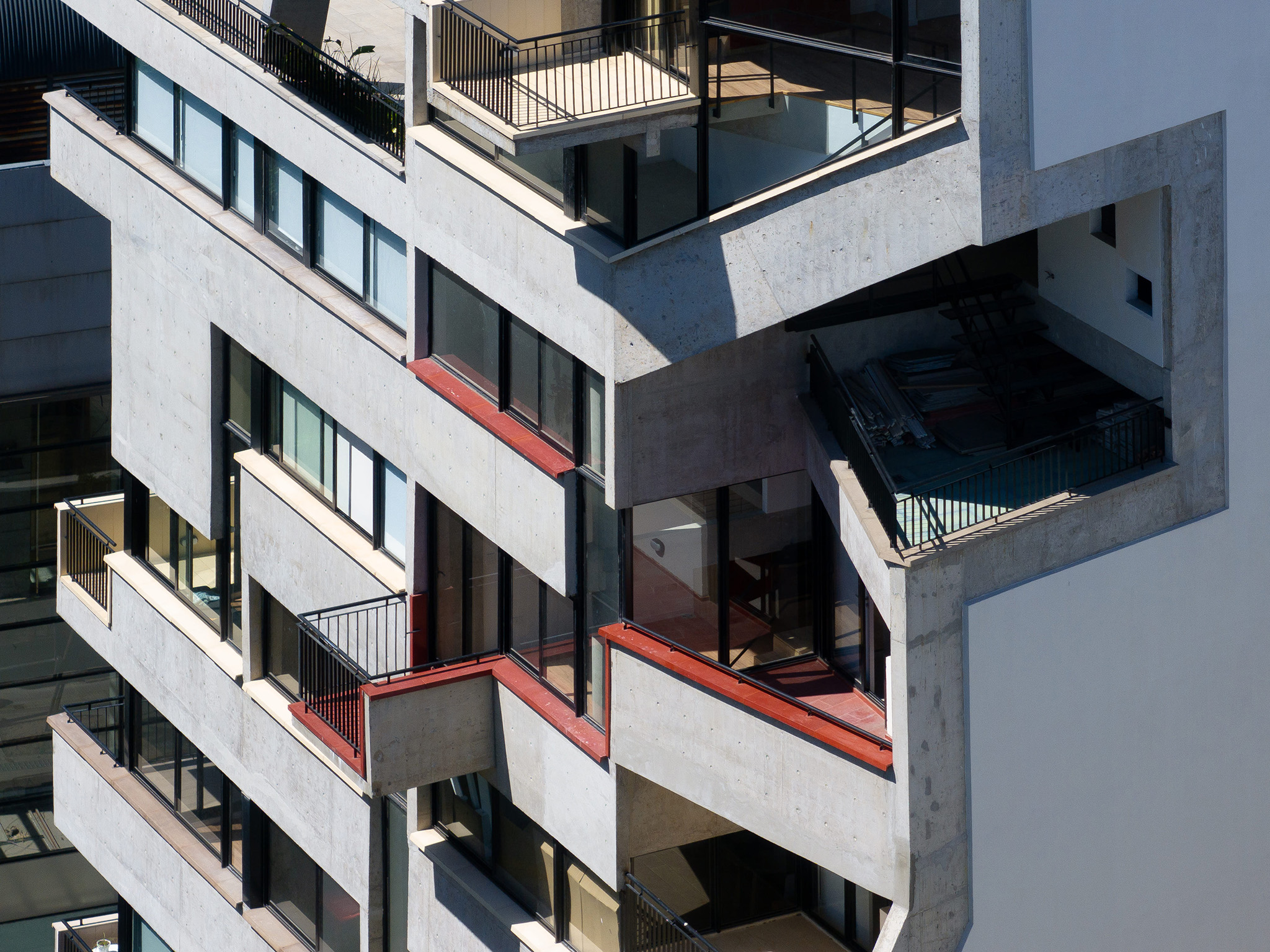
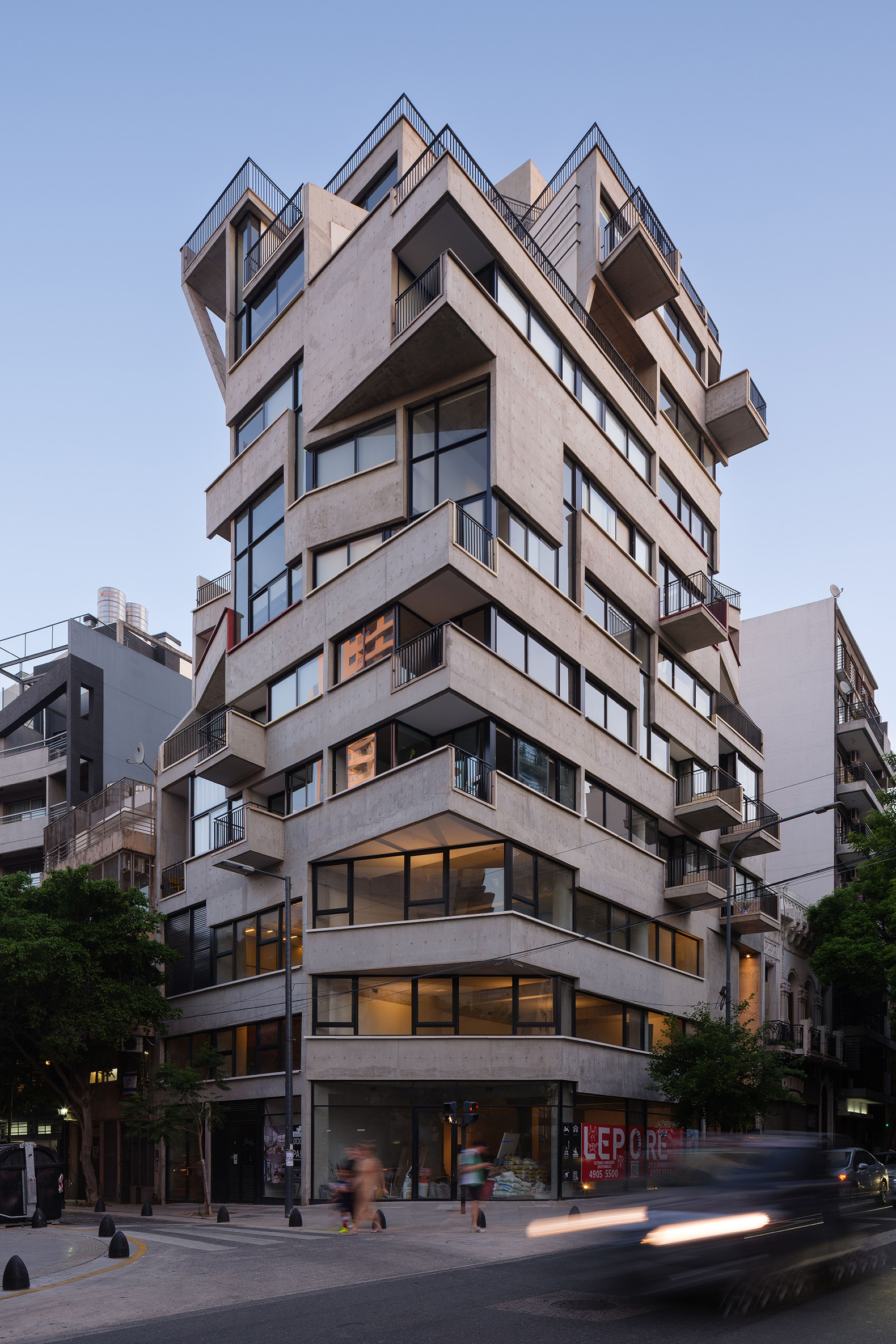
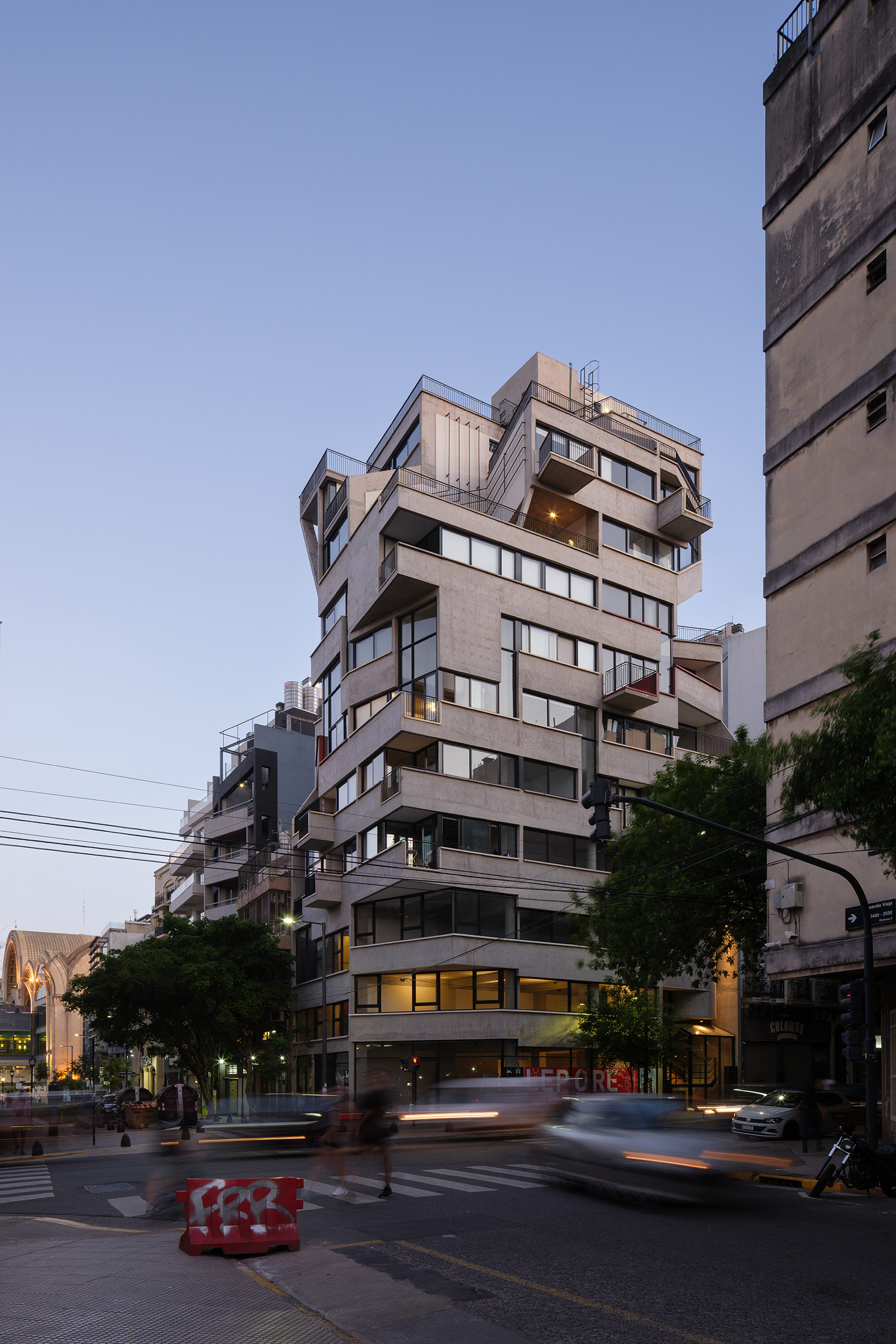
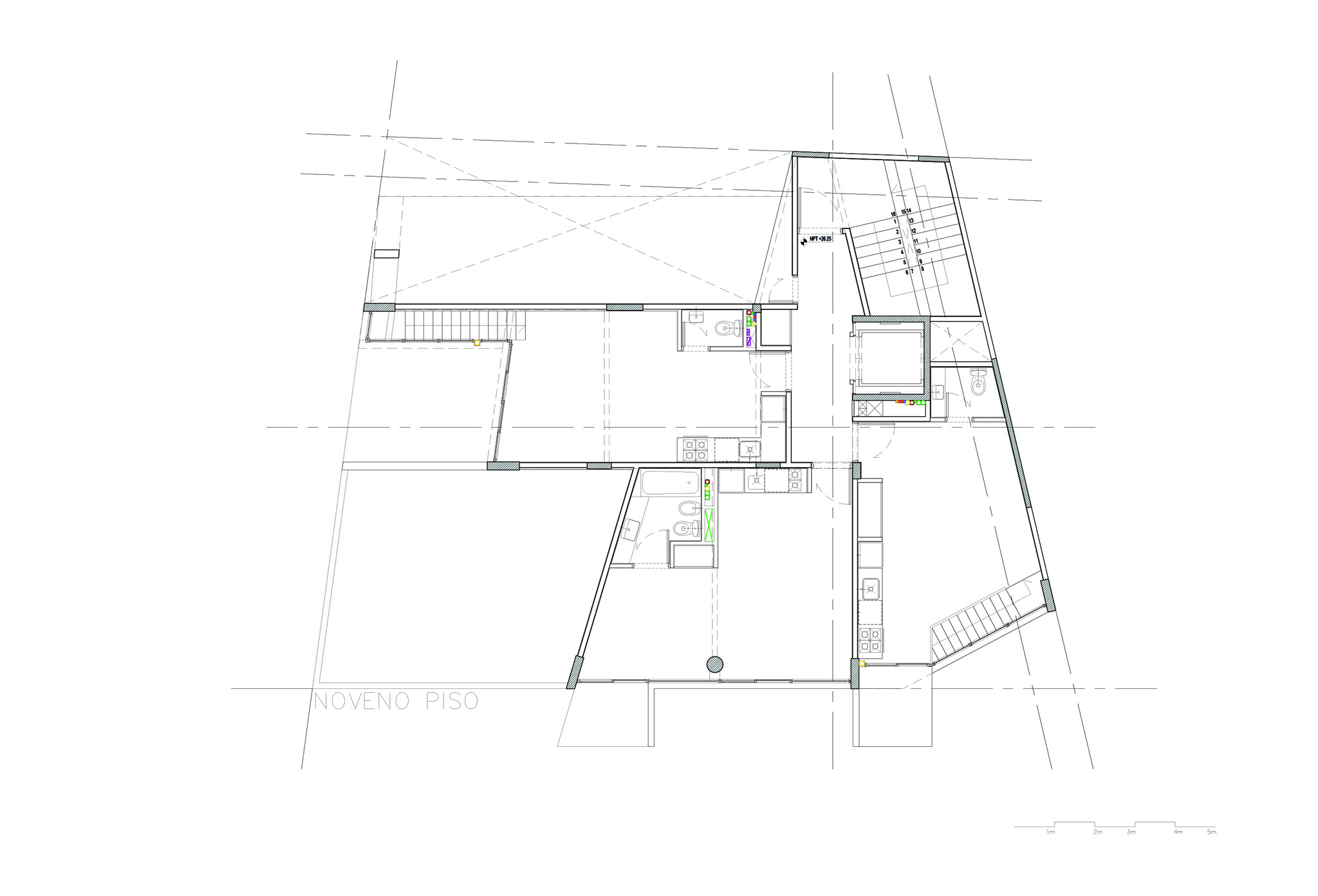
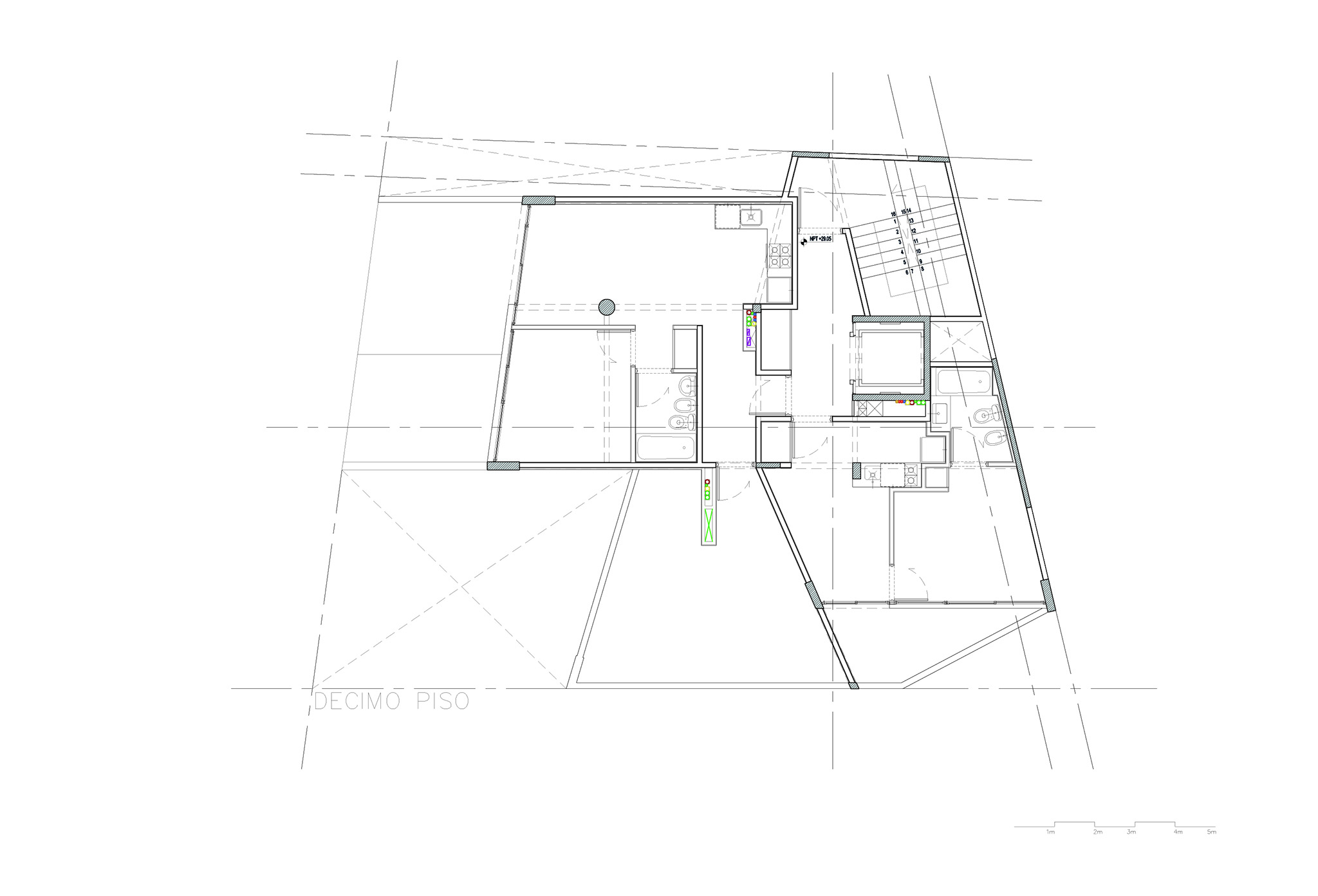
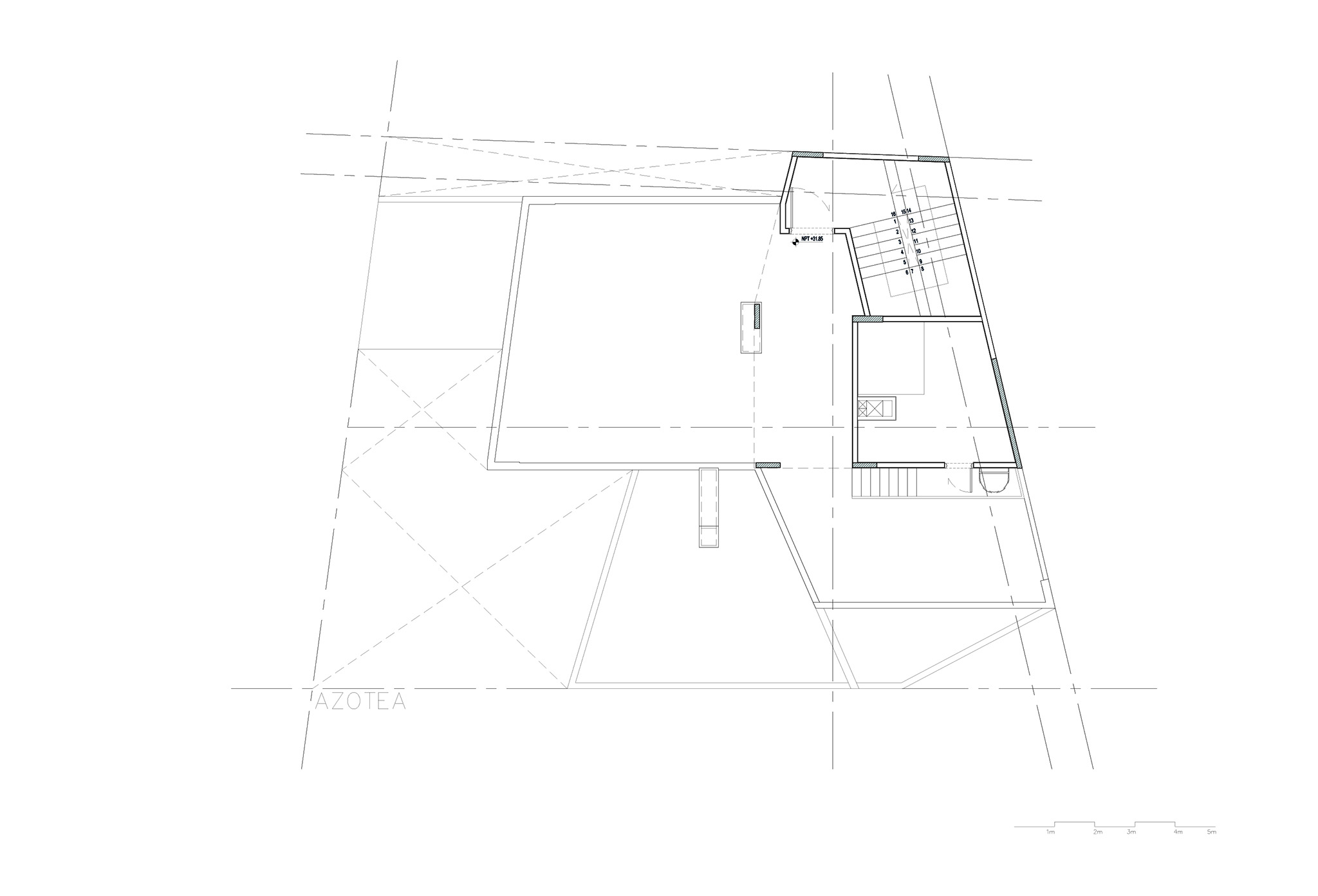
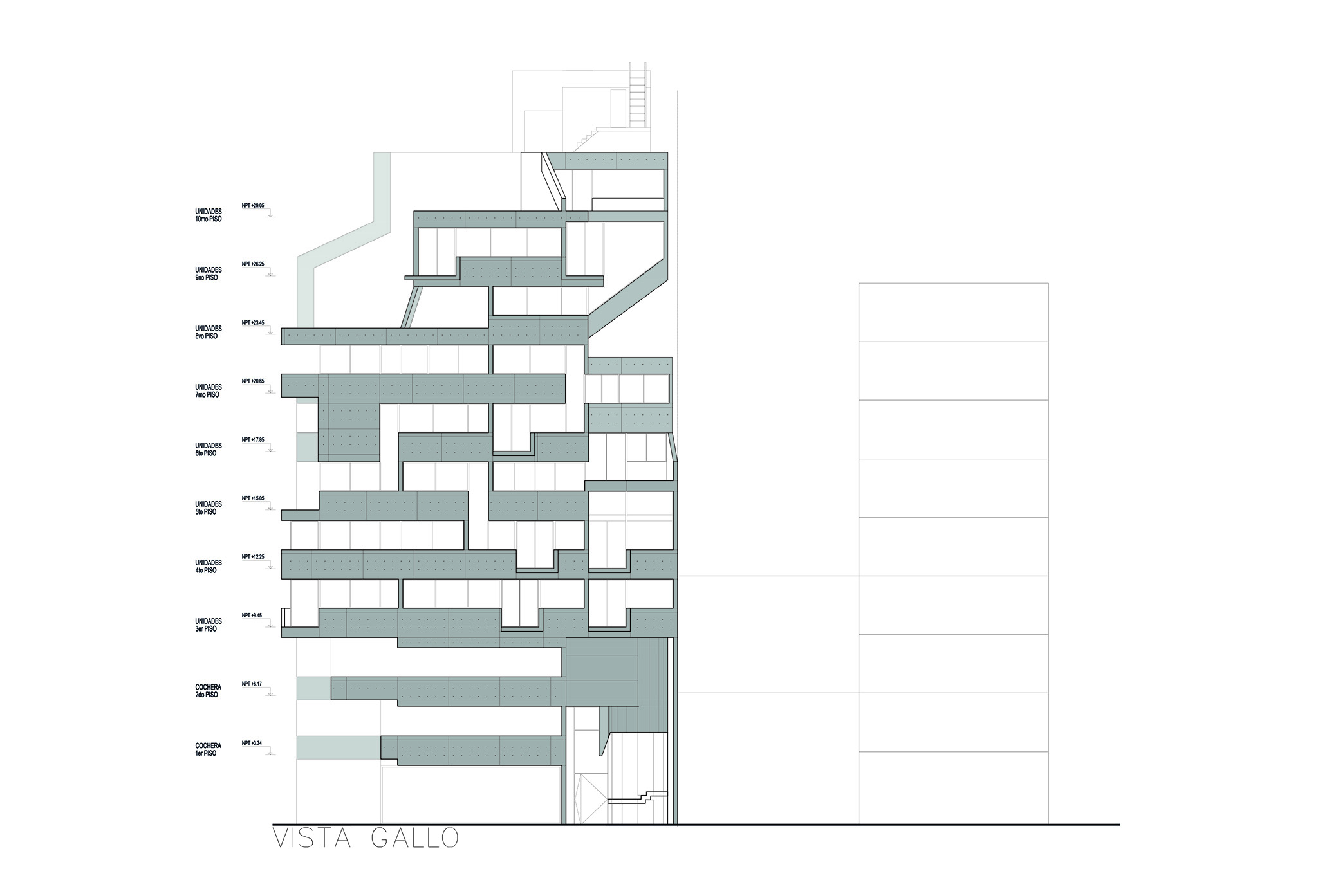
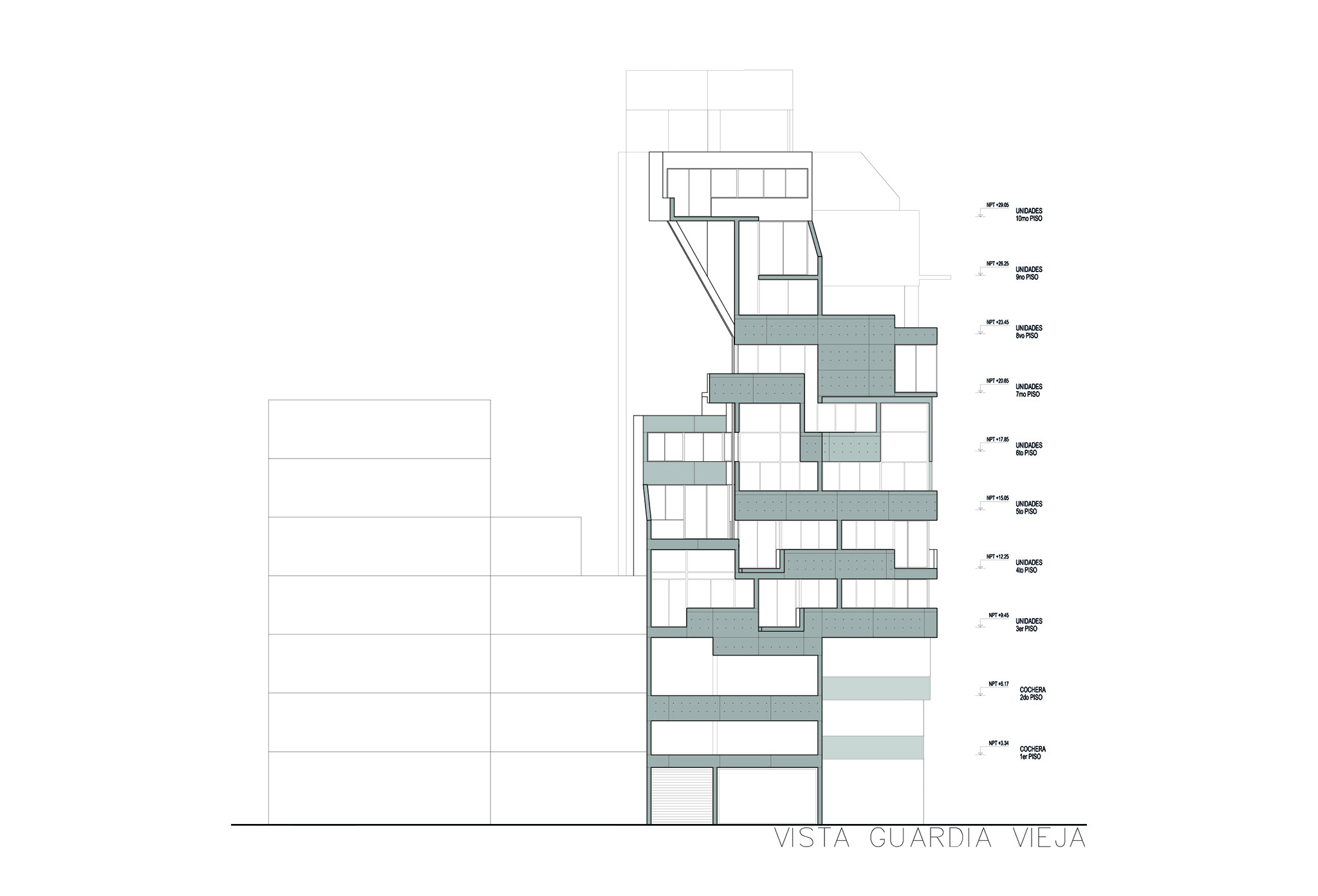
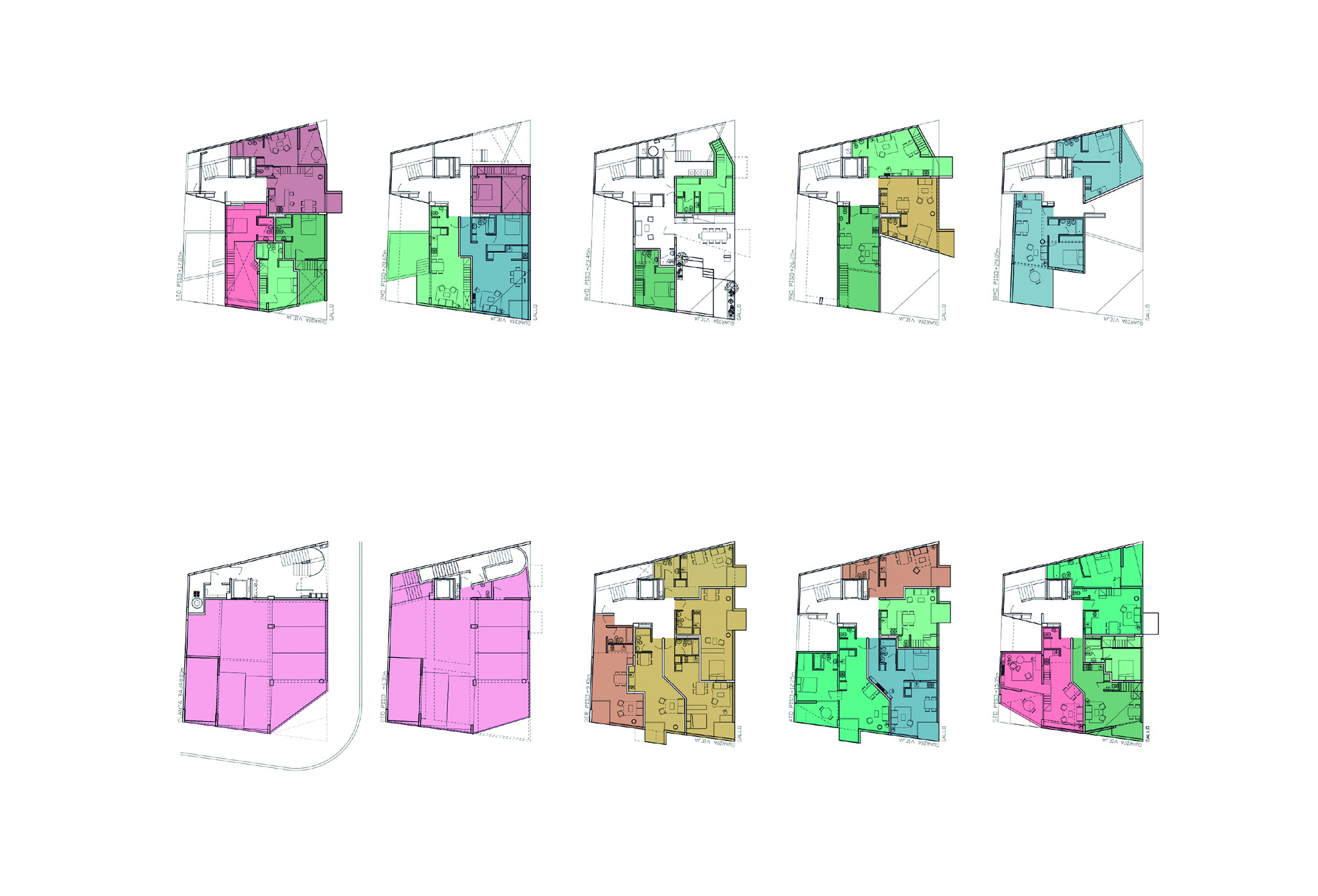
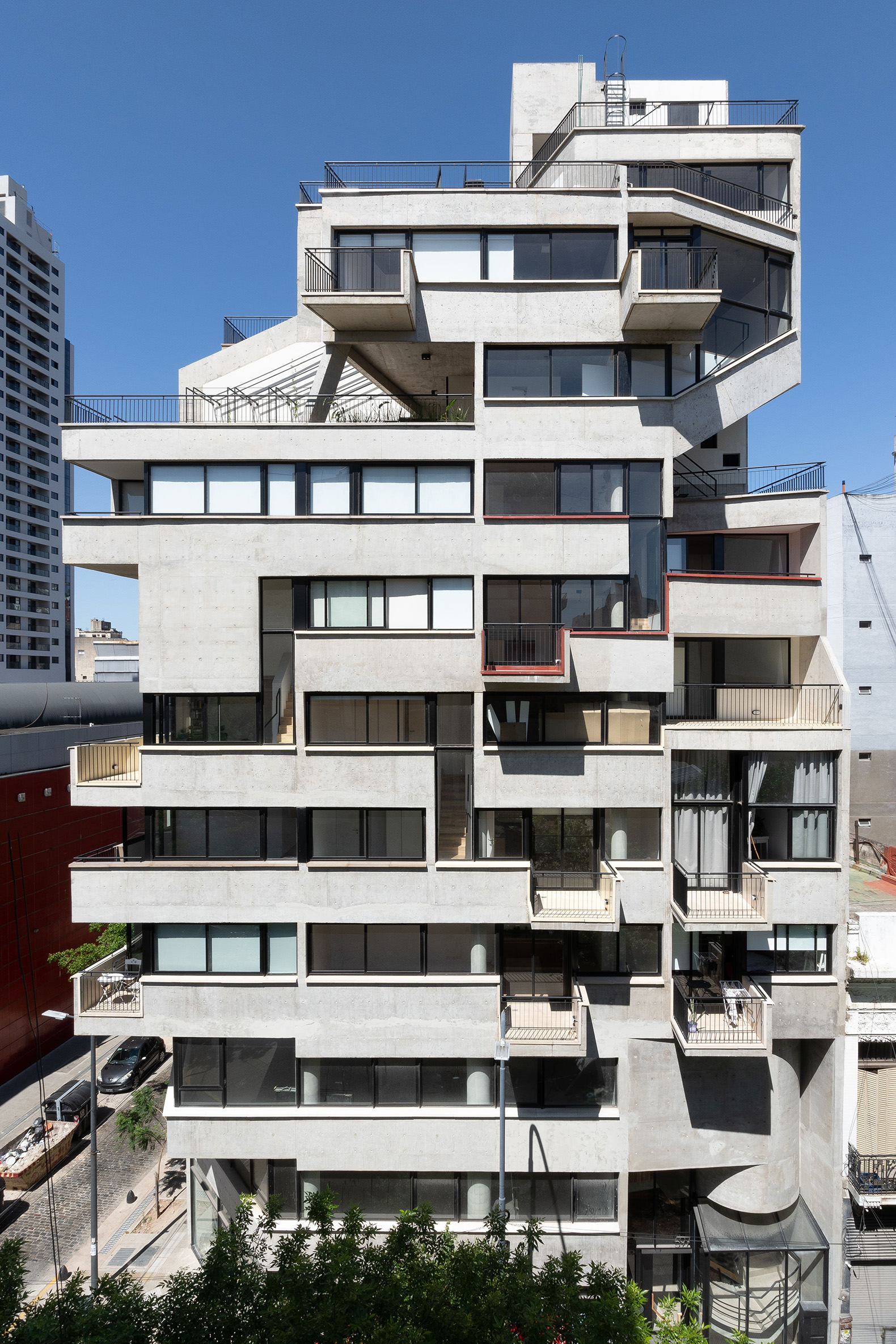
The design arises from a volumetric operation based primarily on the displacement and interlocking of residential blocks. The different units are stacked, set back, and create voids that configure the final form of the building, avoiding a rigid or repetitive composition. The morphology thus emerges from the internal relationships between the dwellings and is expressed externally through a continuous envelope that makes the spatial complexity of the complex visible.

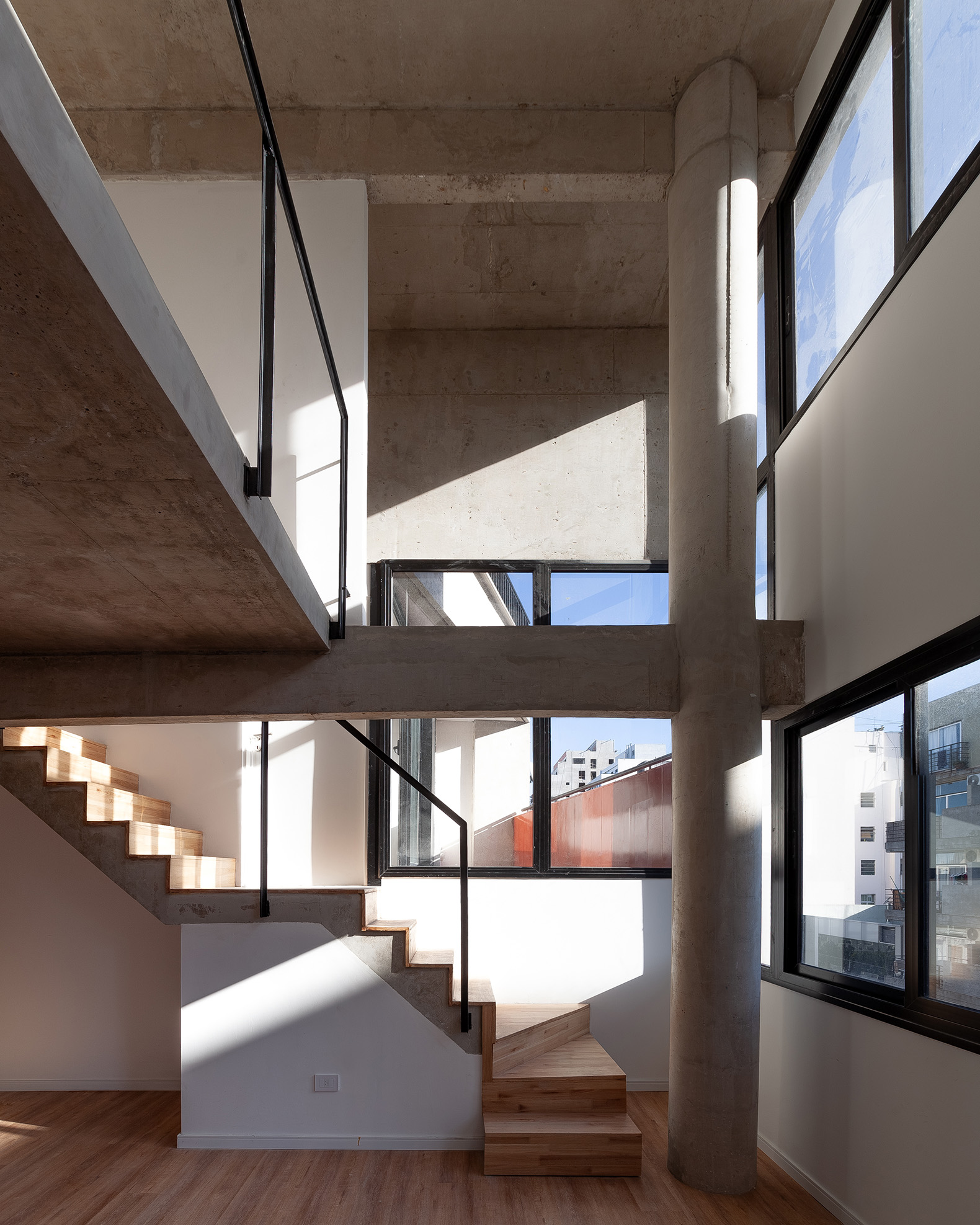
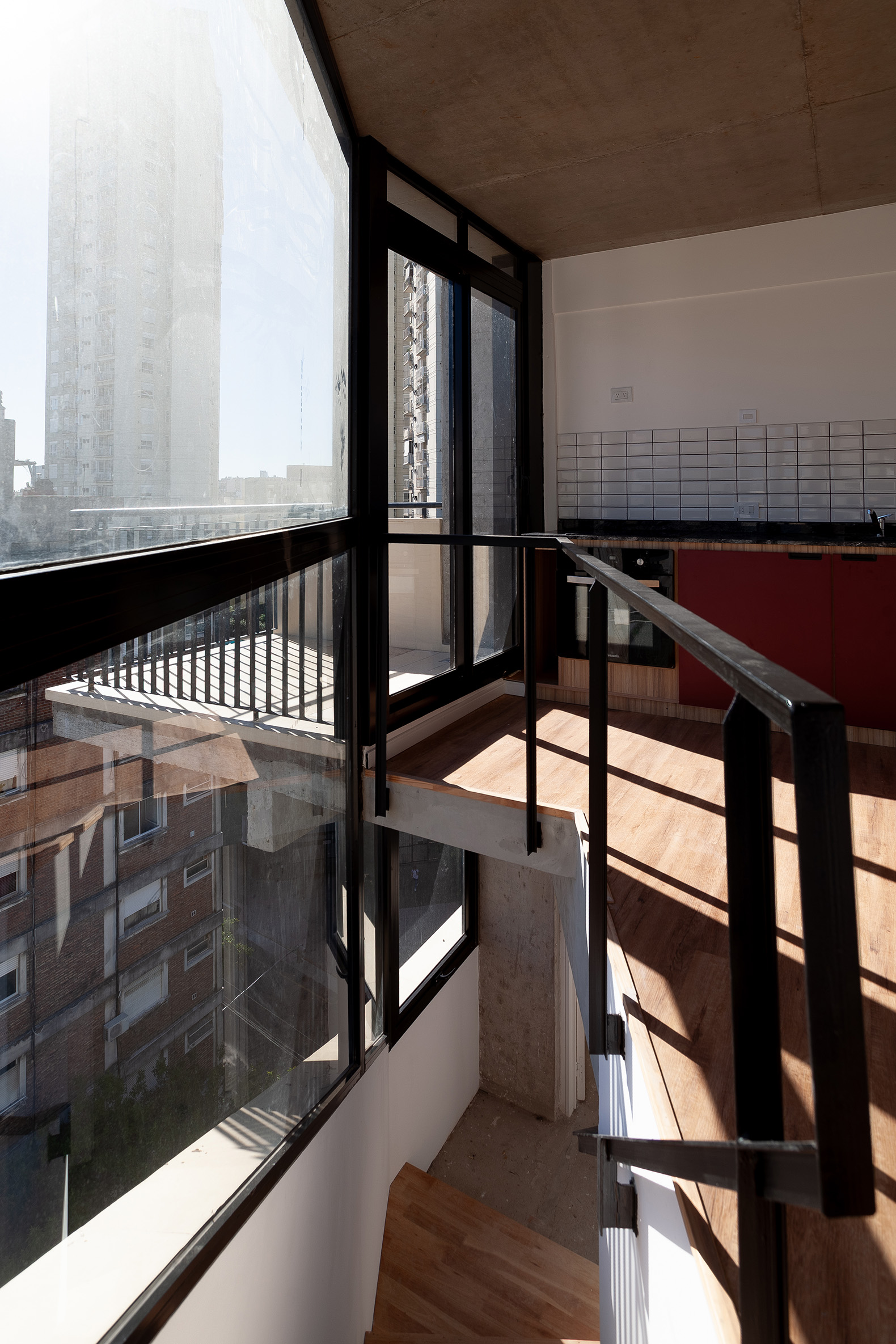
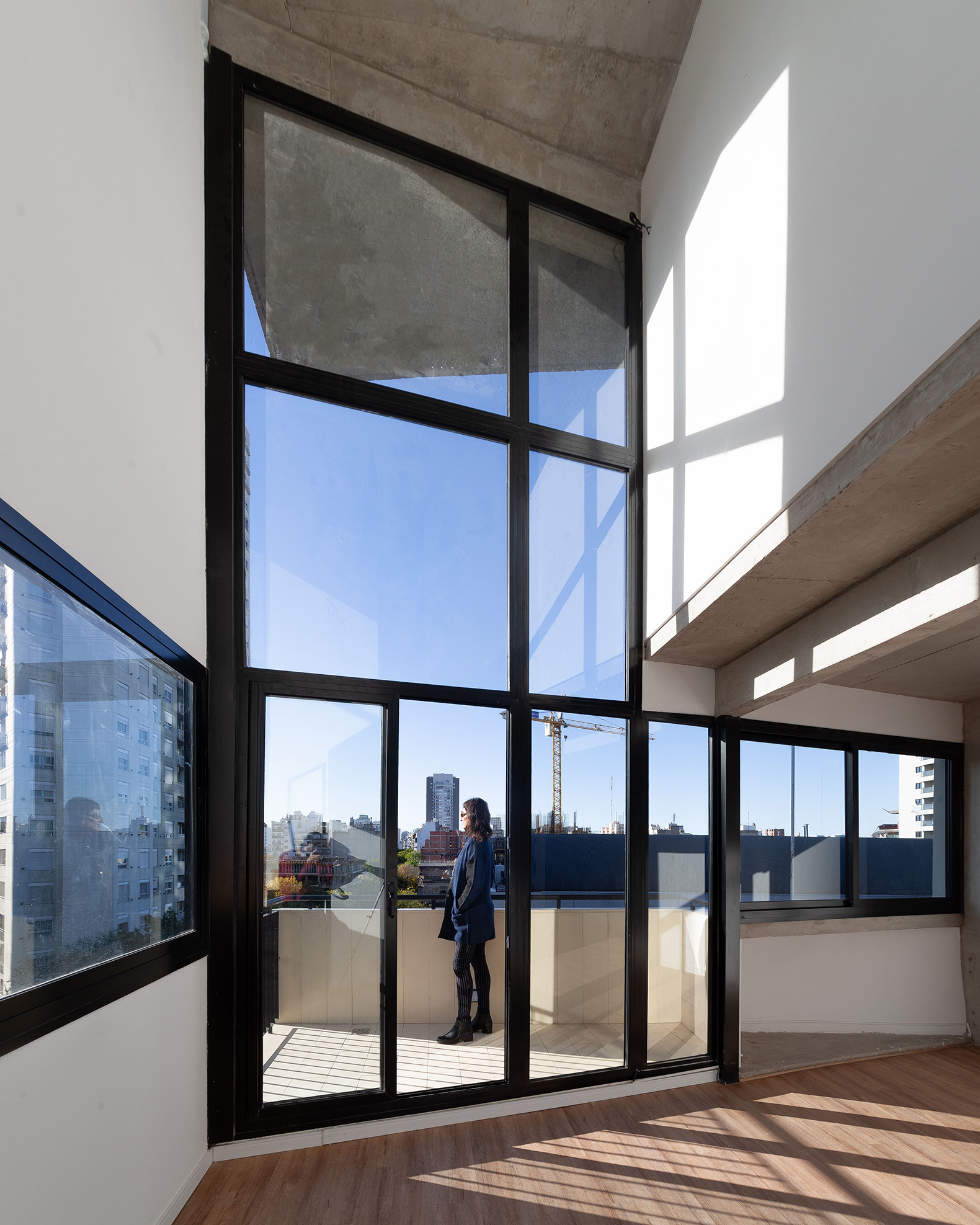
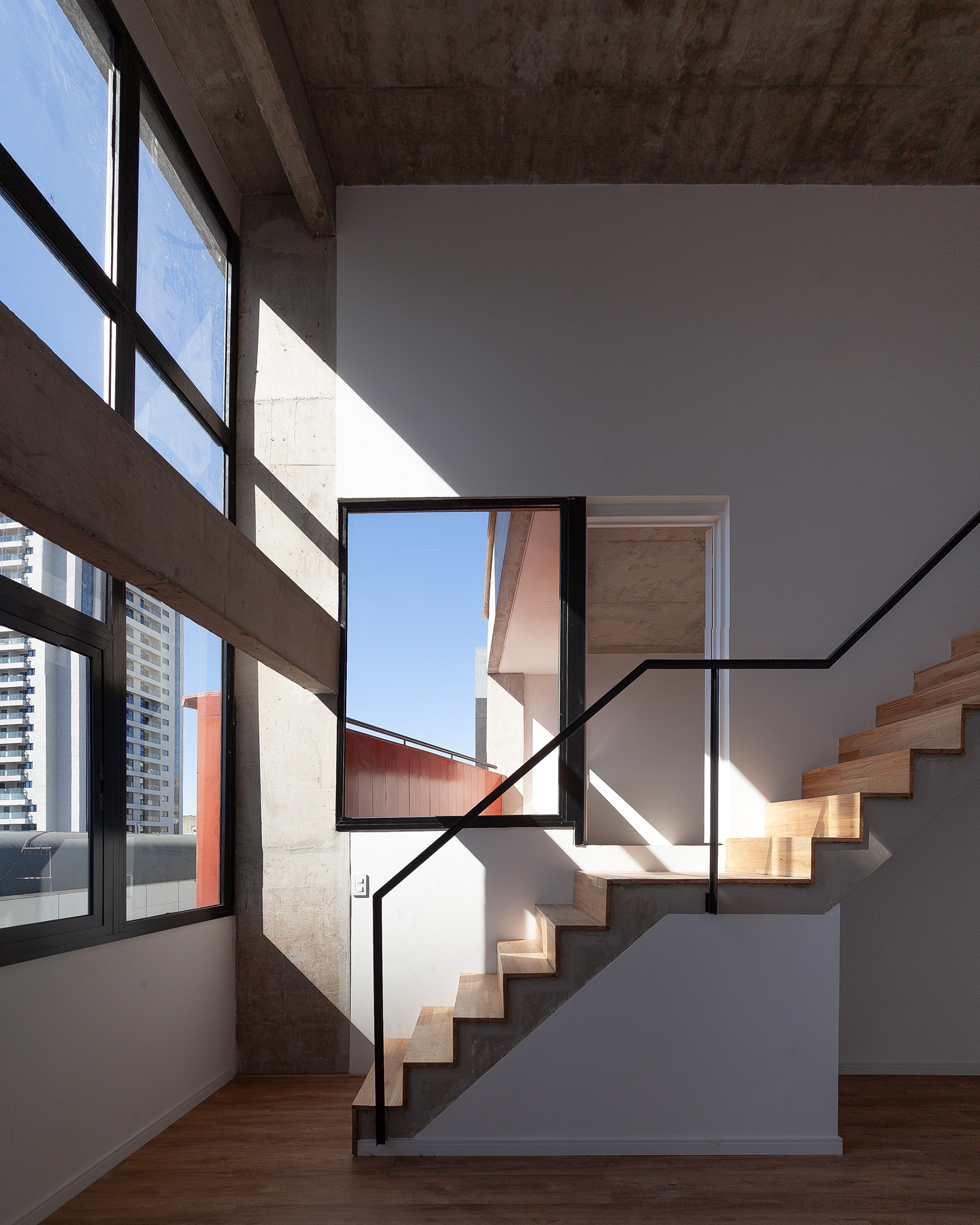
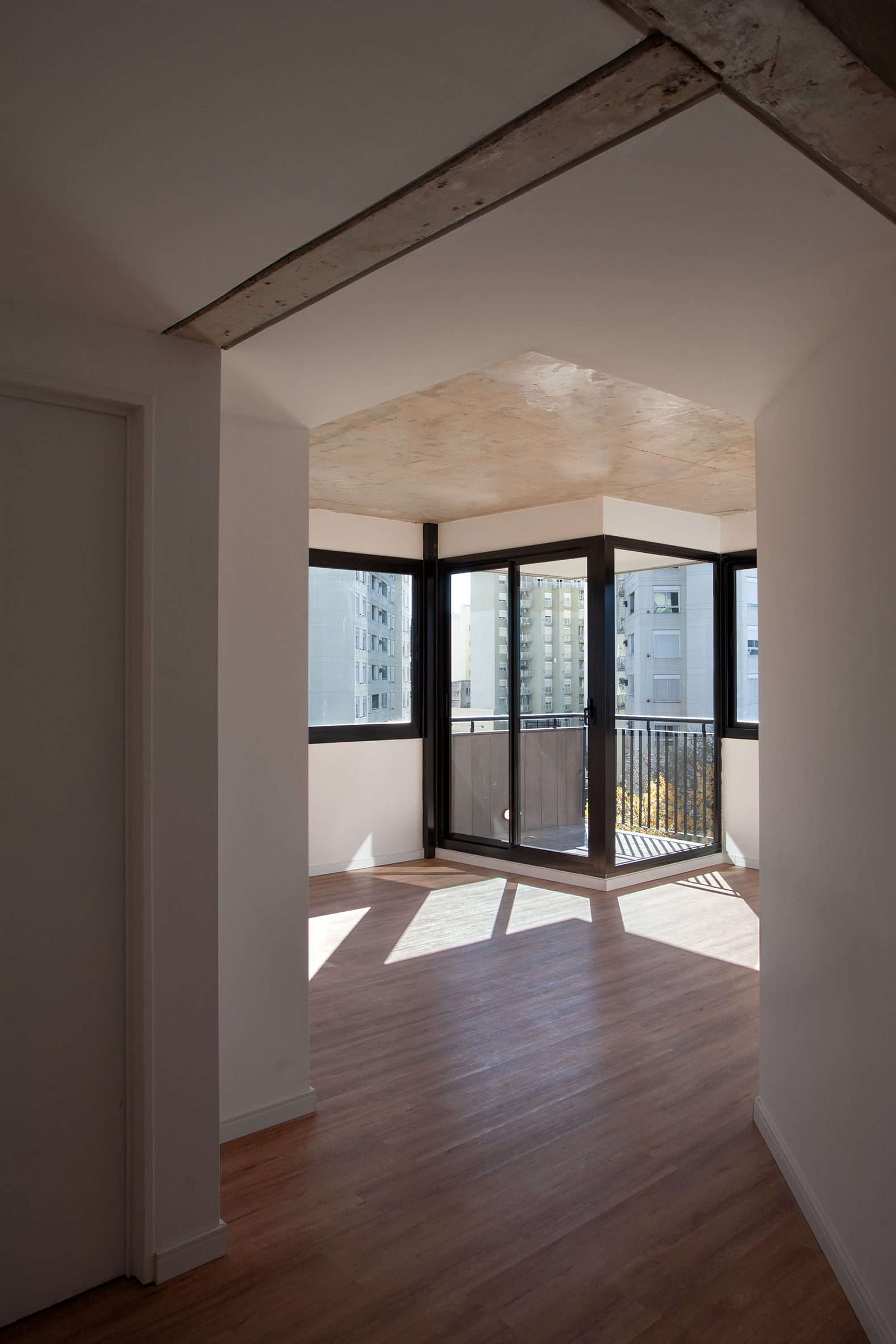
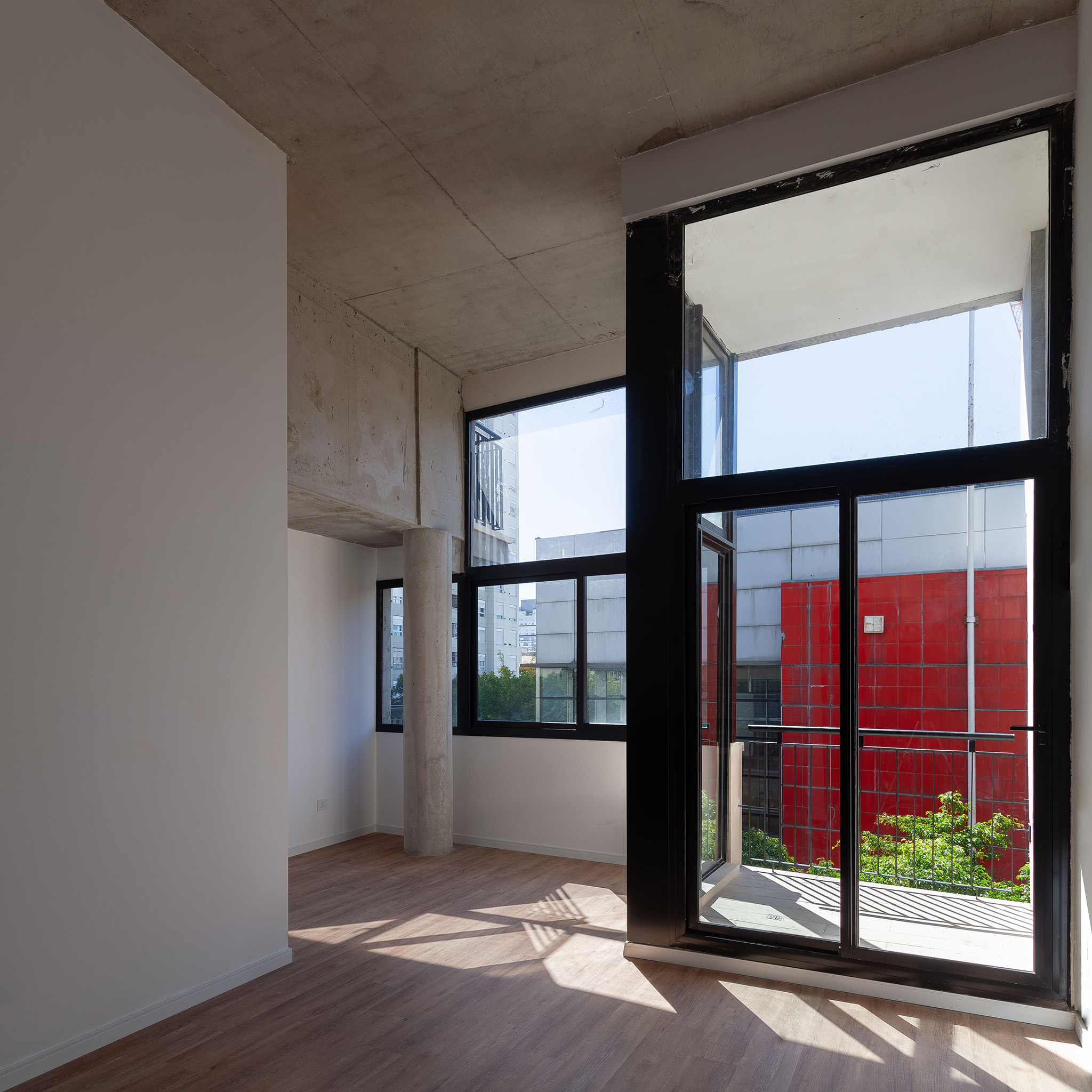
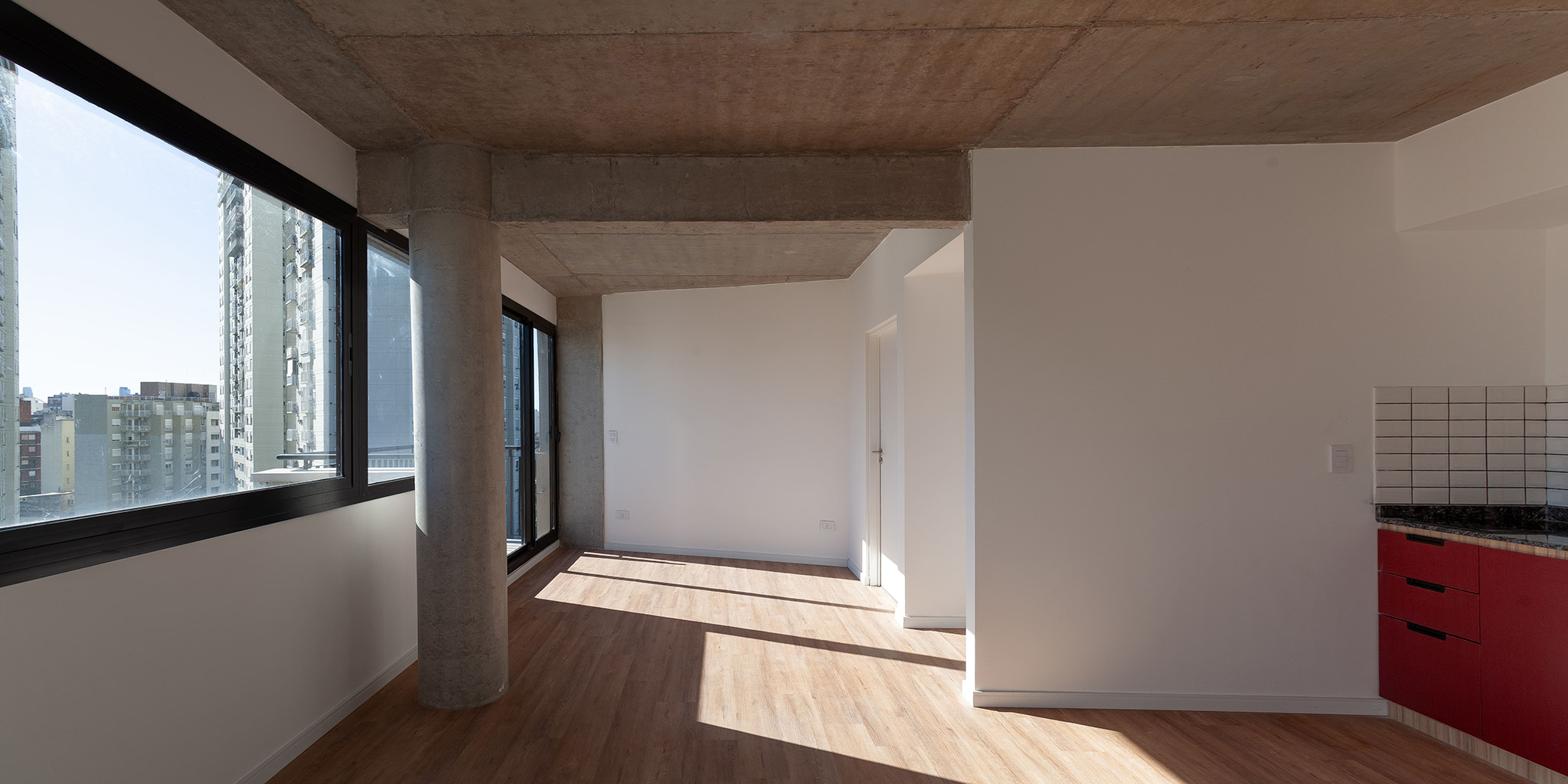
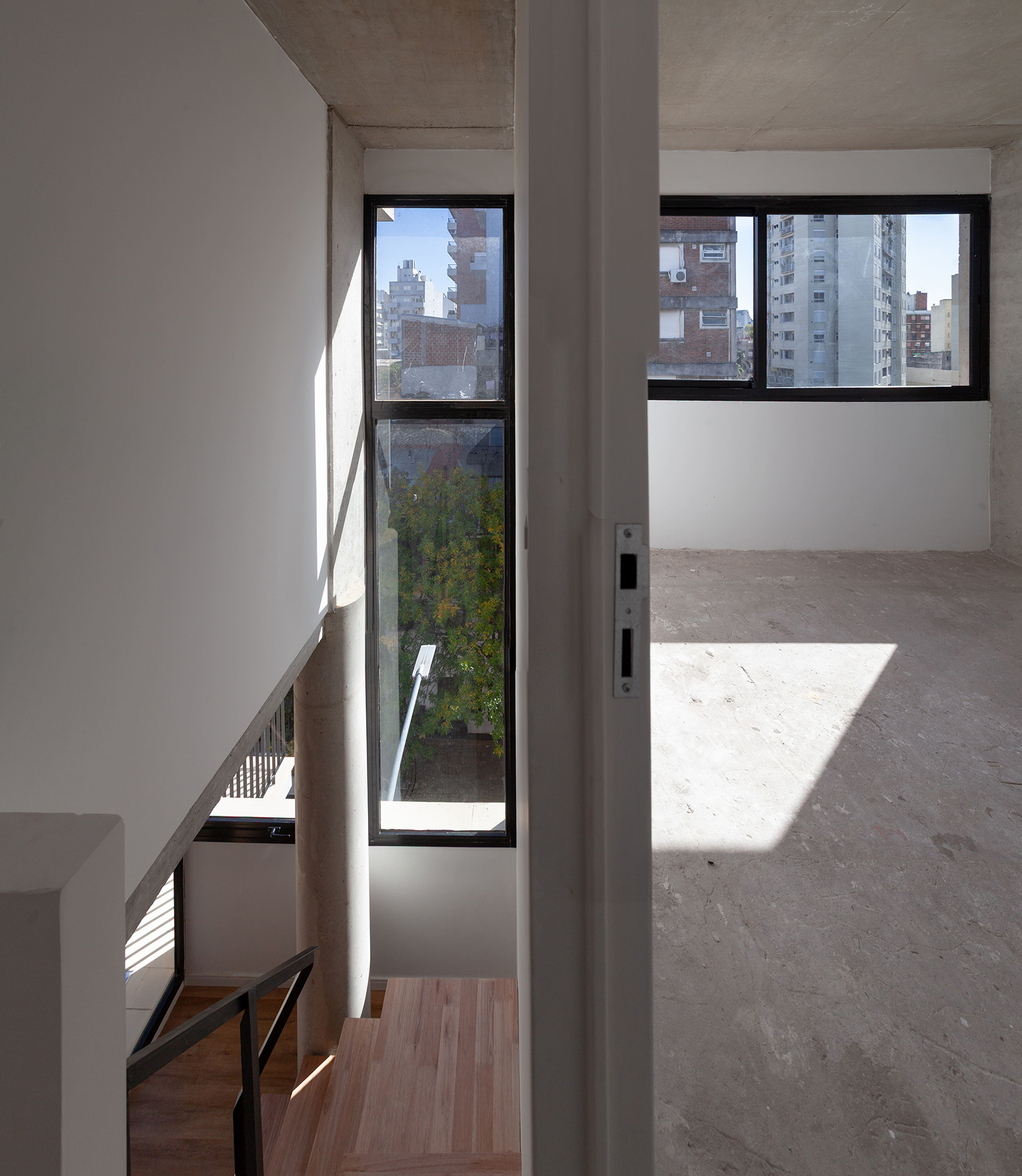
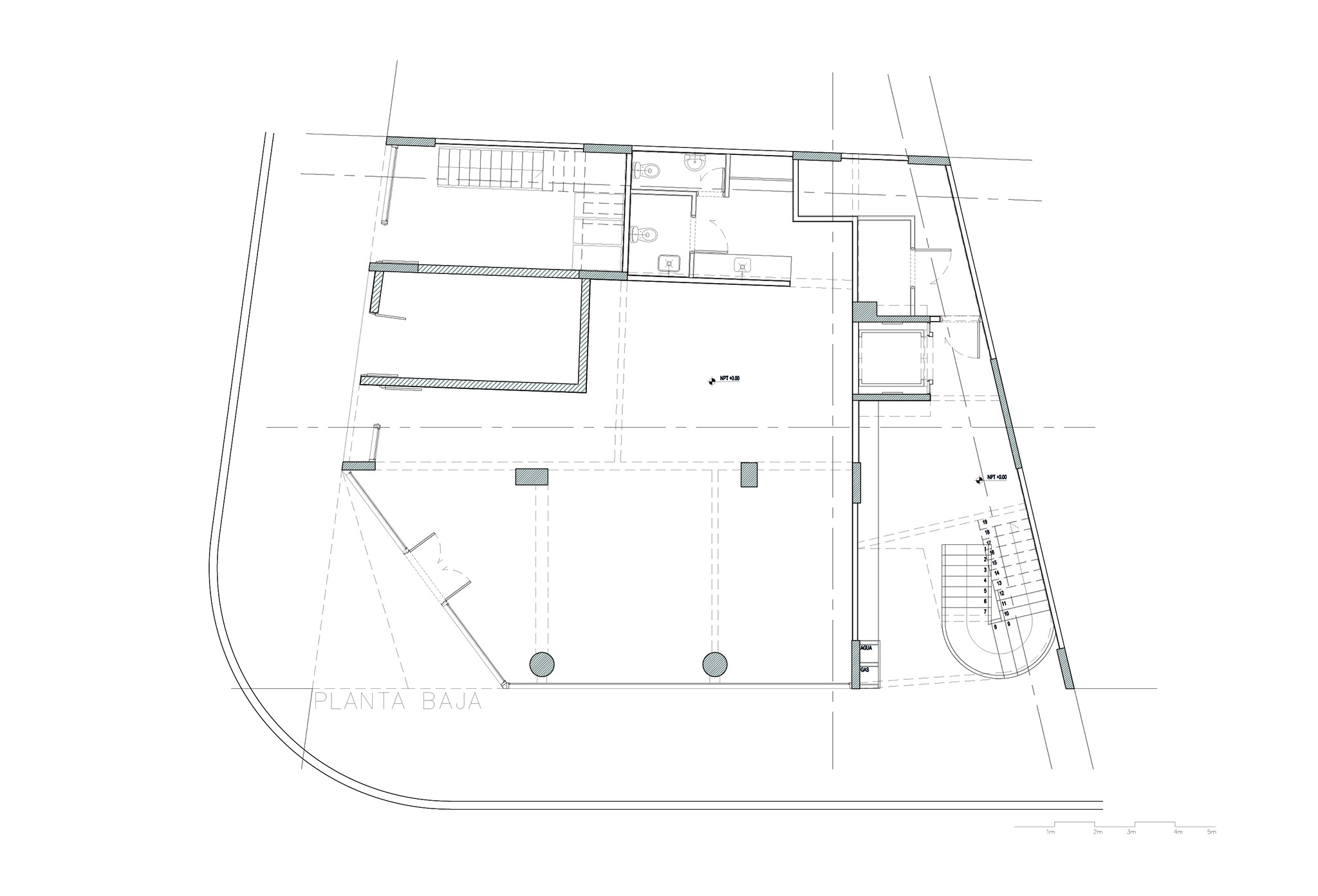
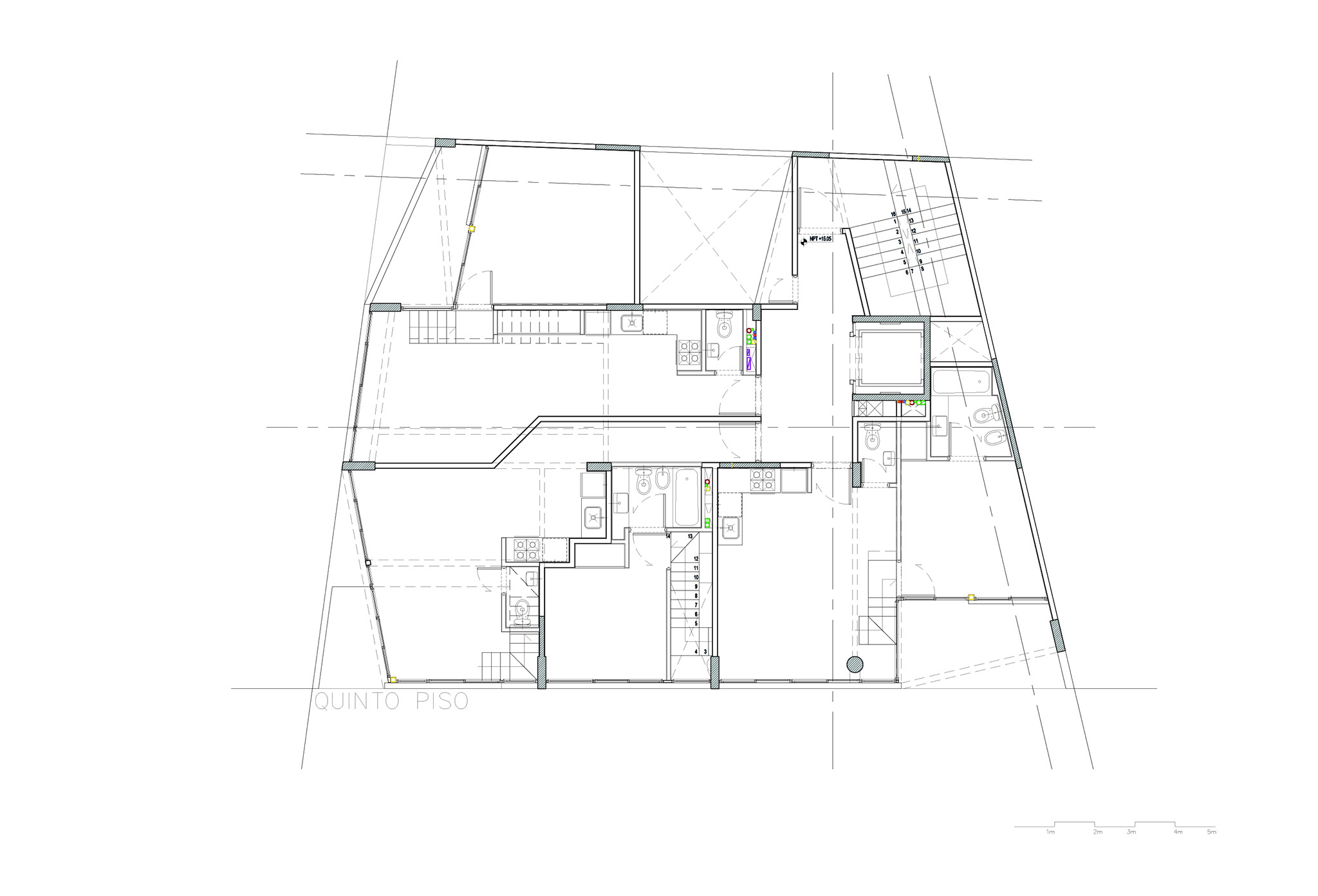
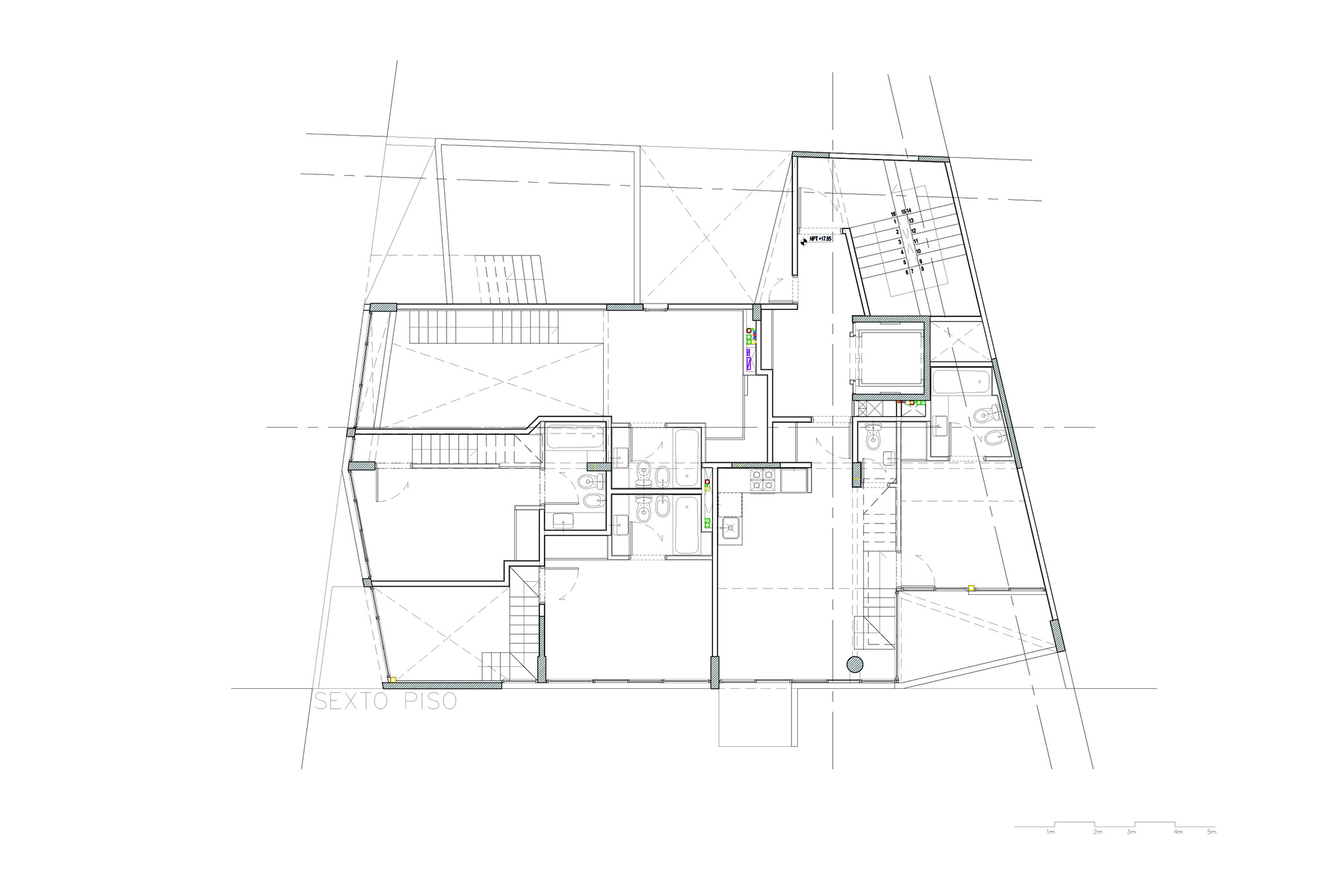
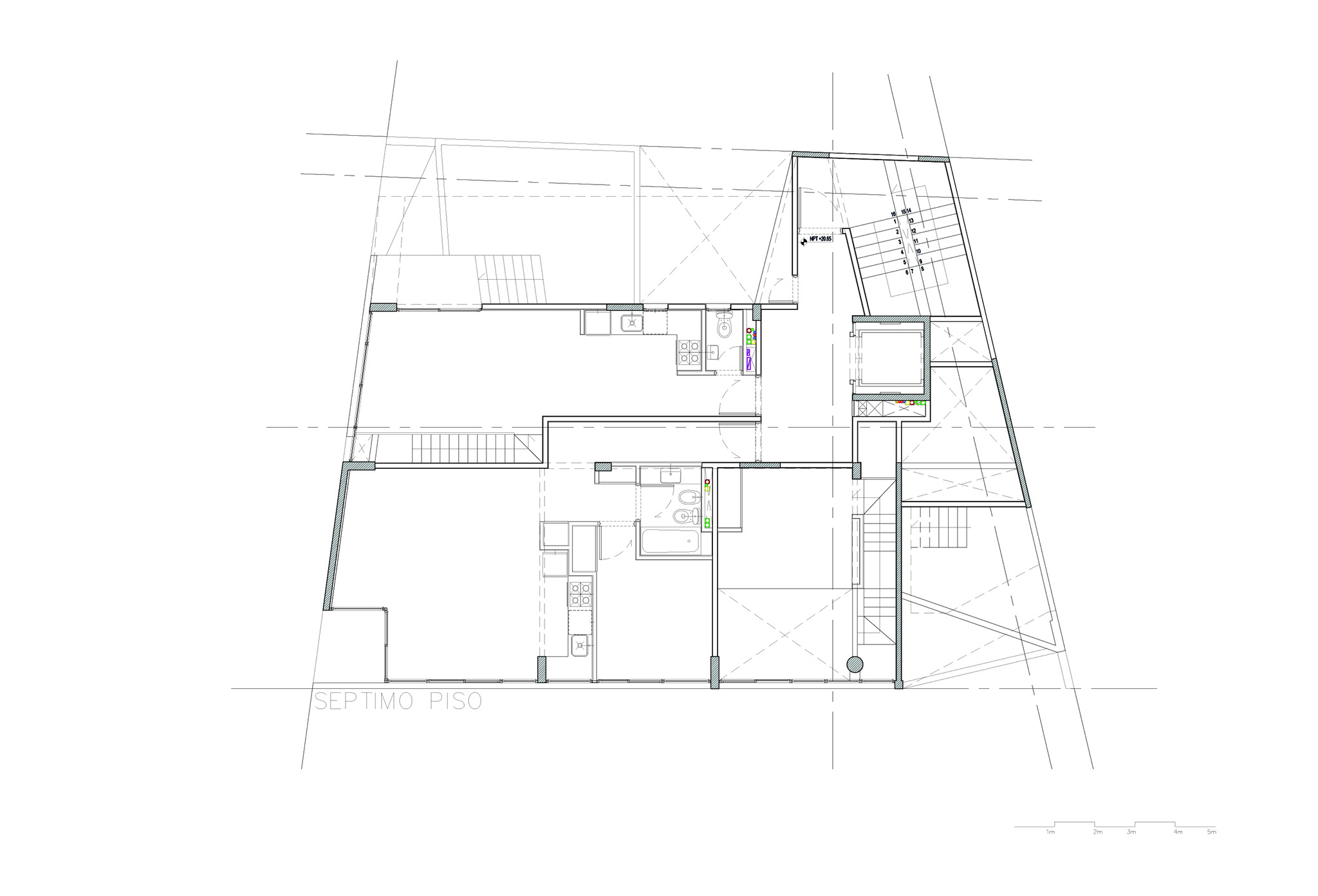
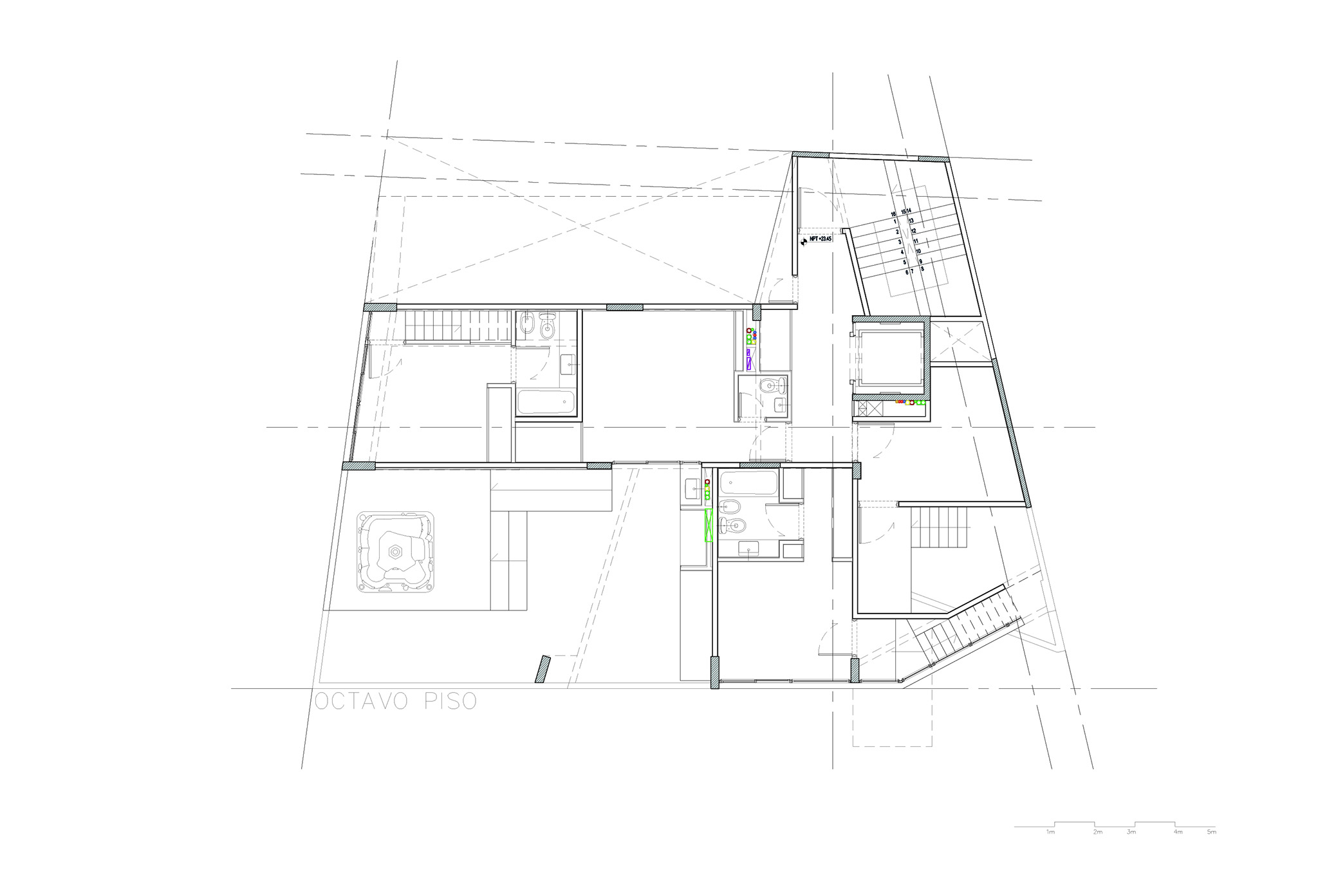
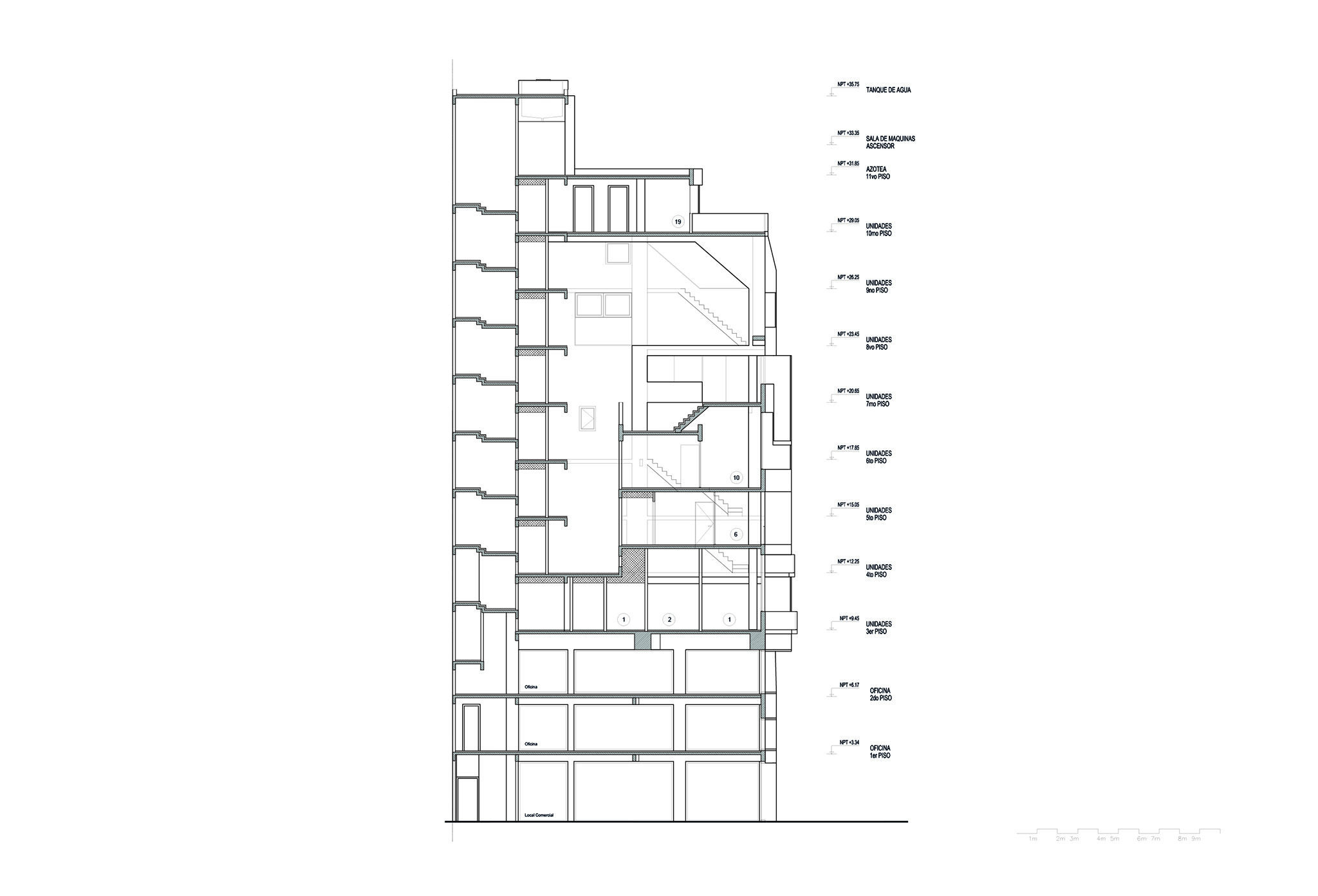
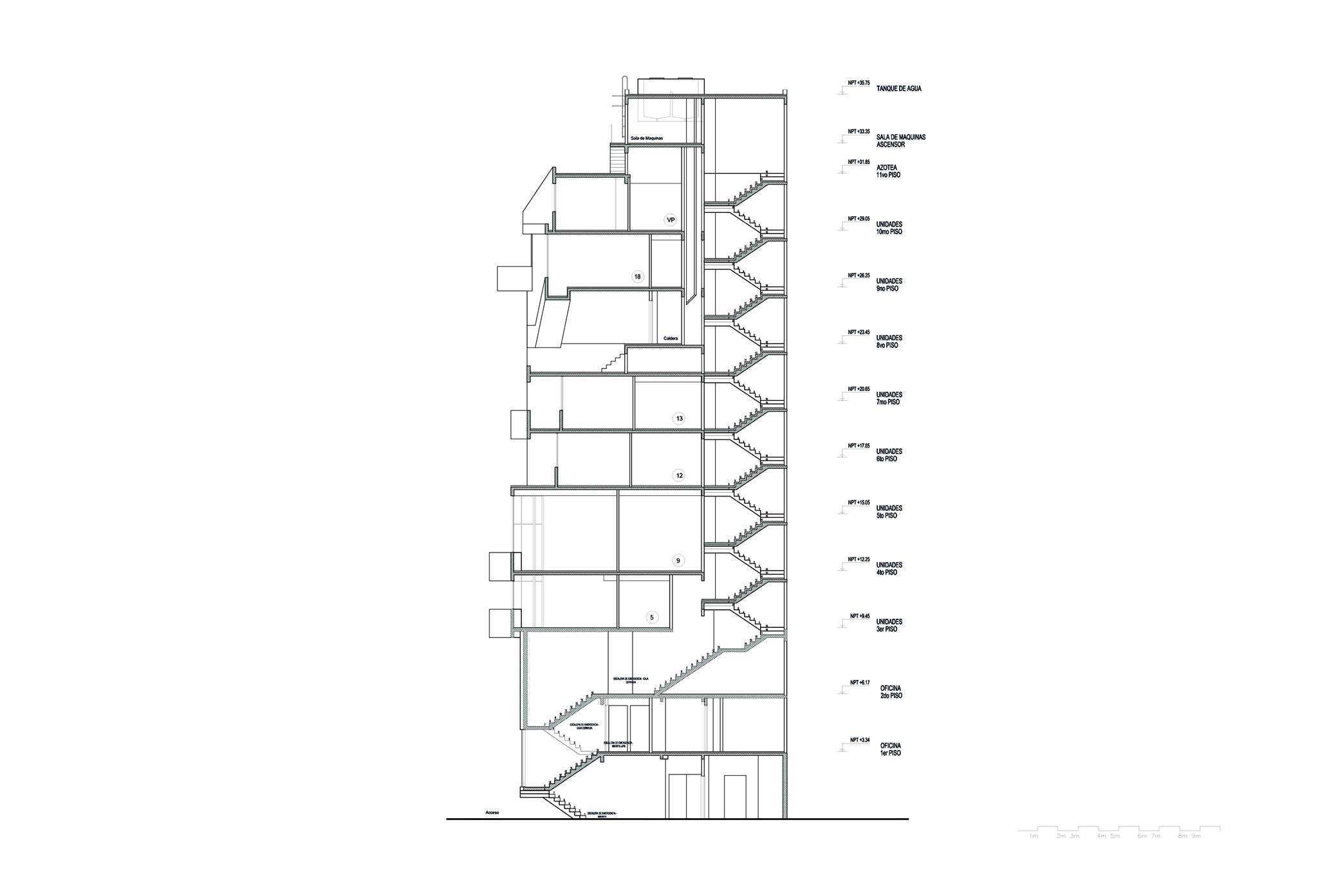
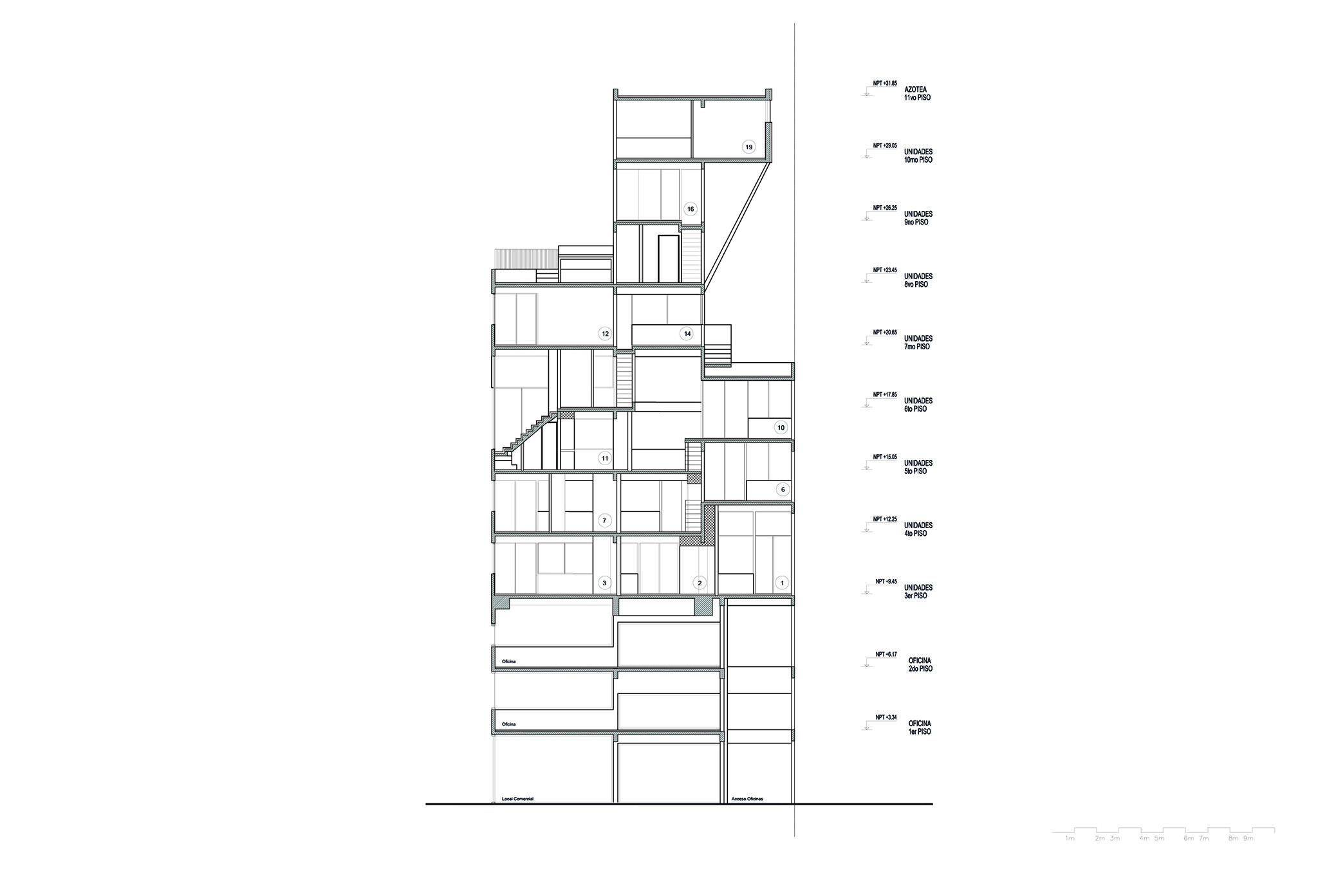
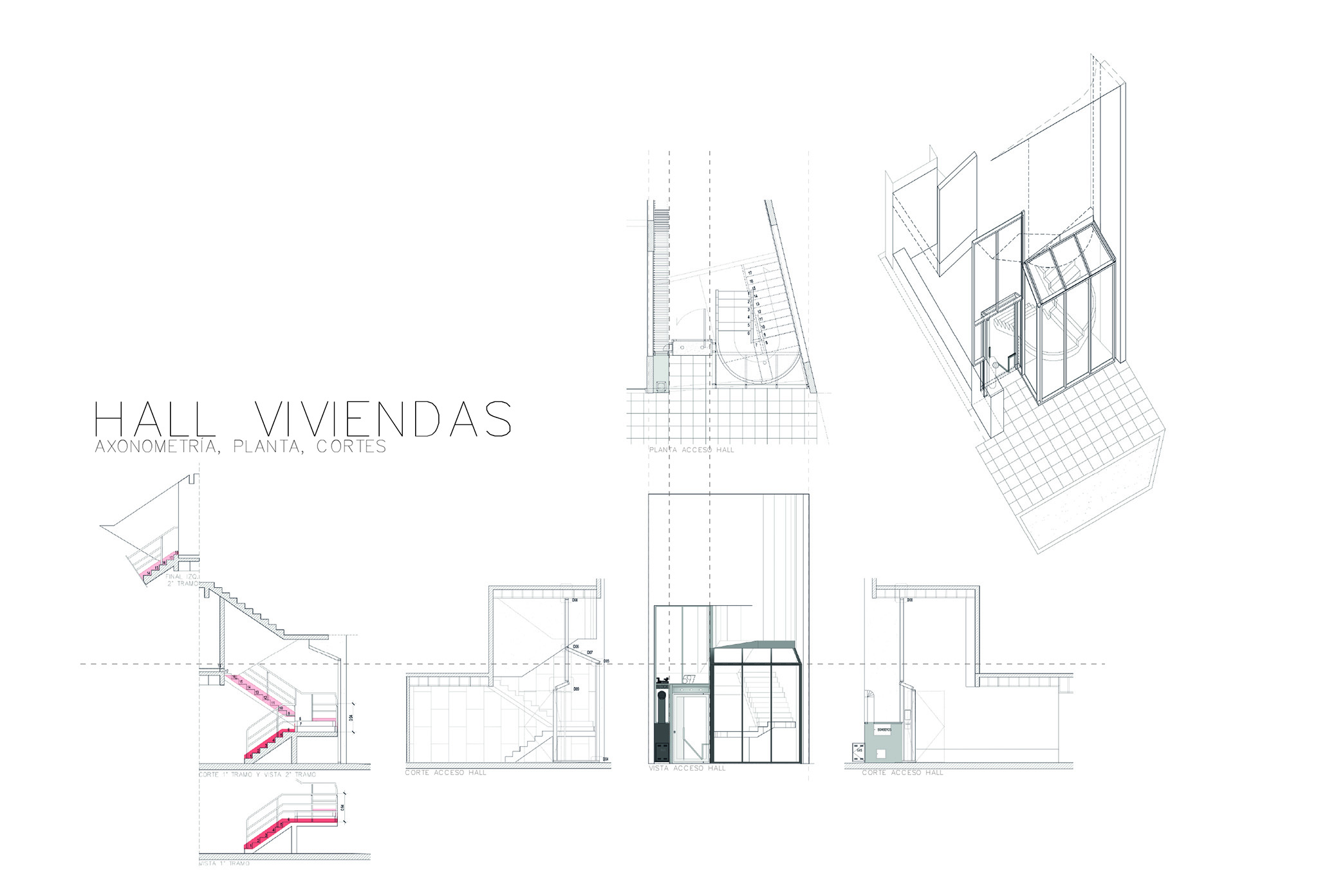
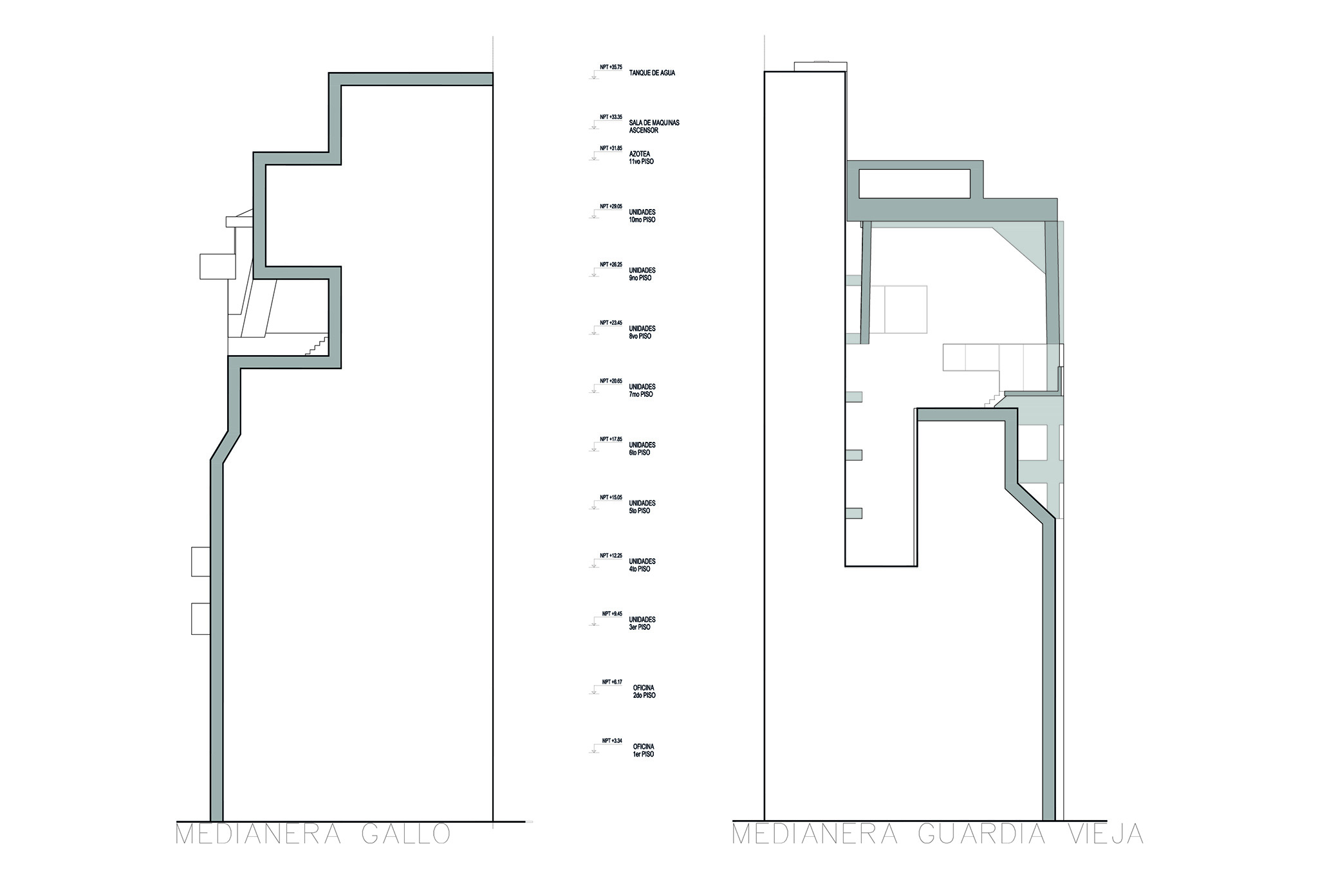
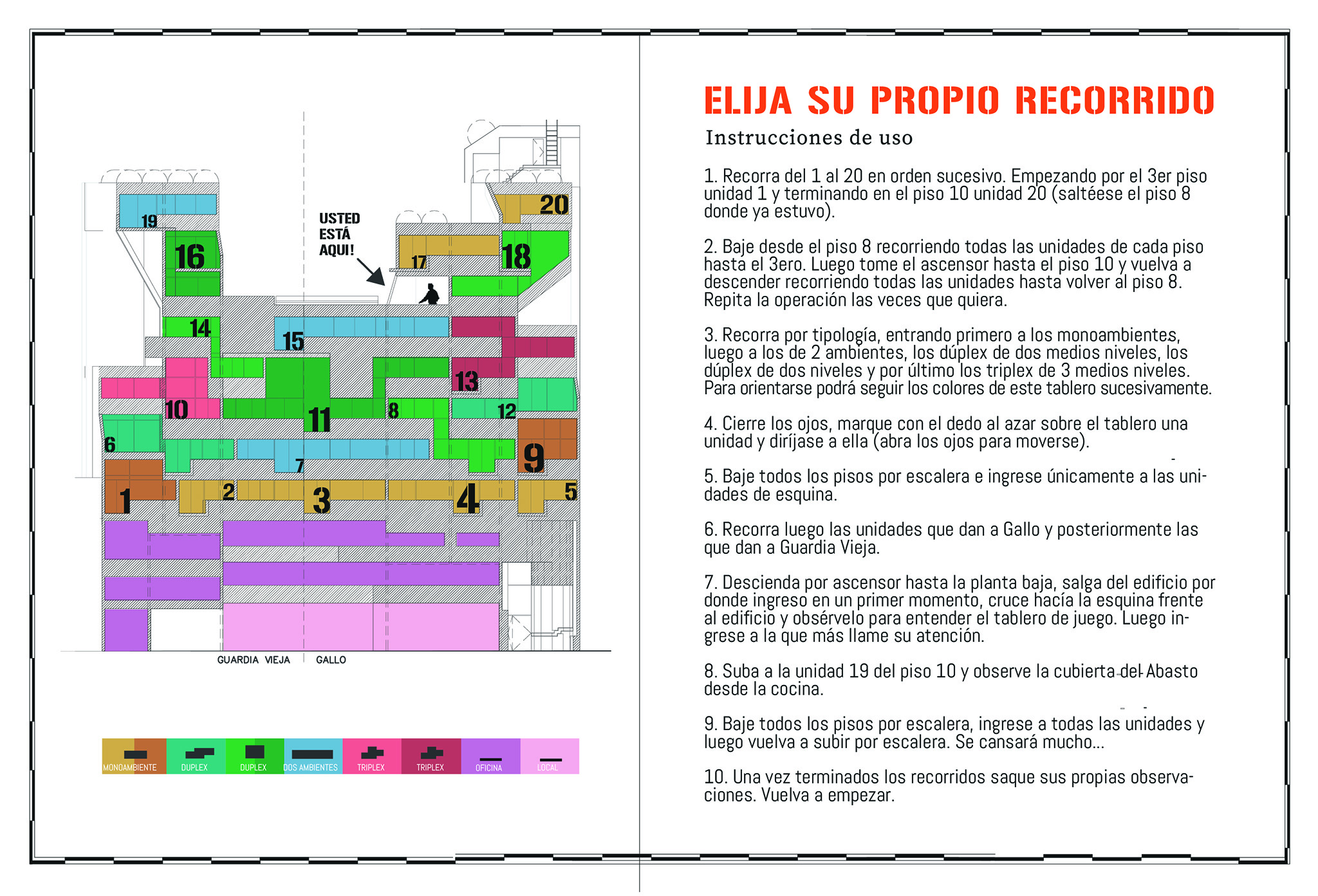
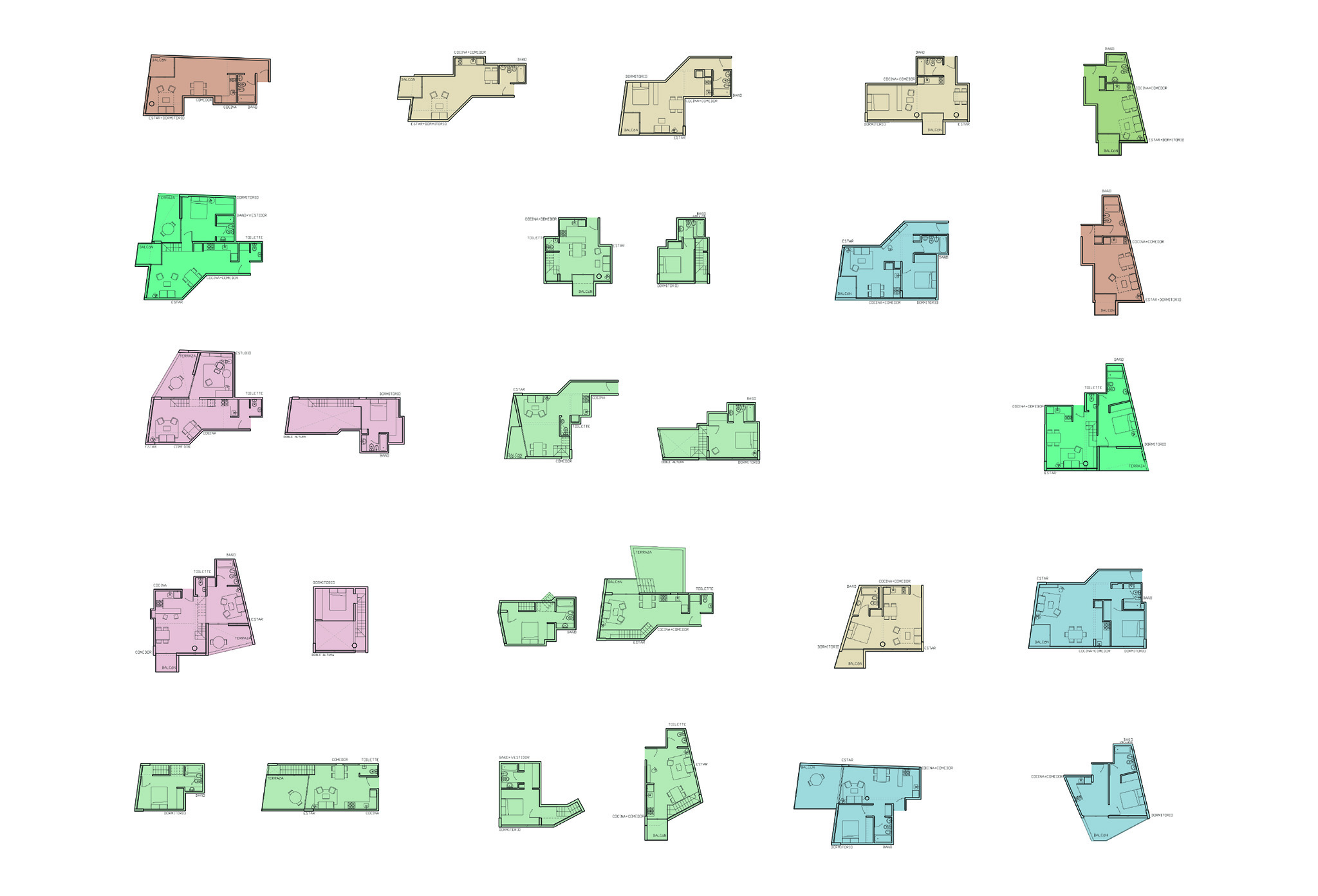
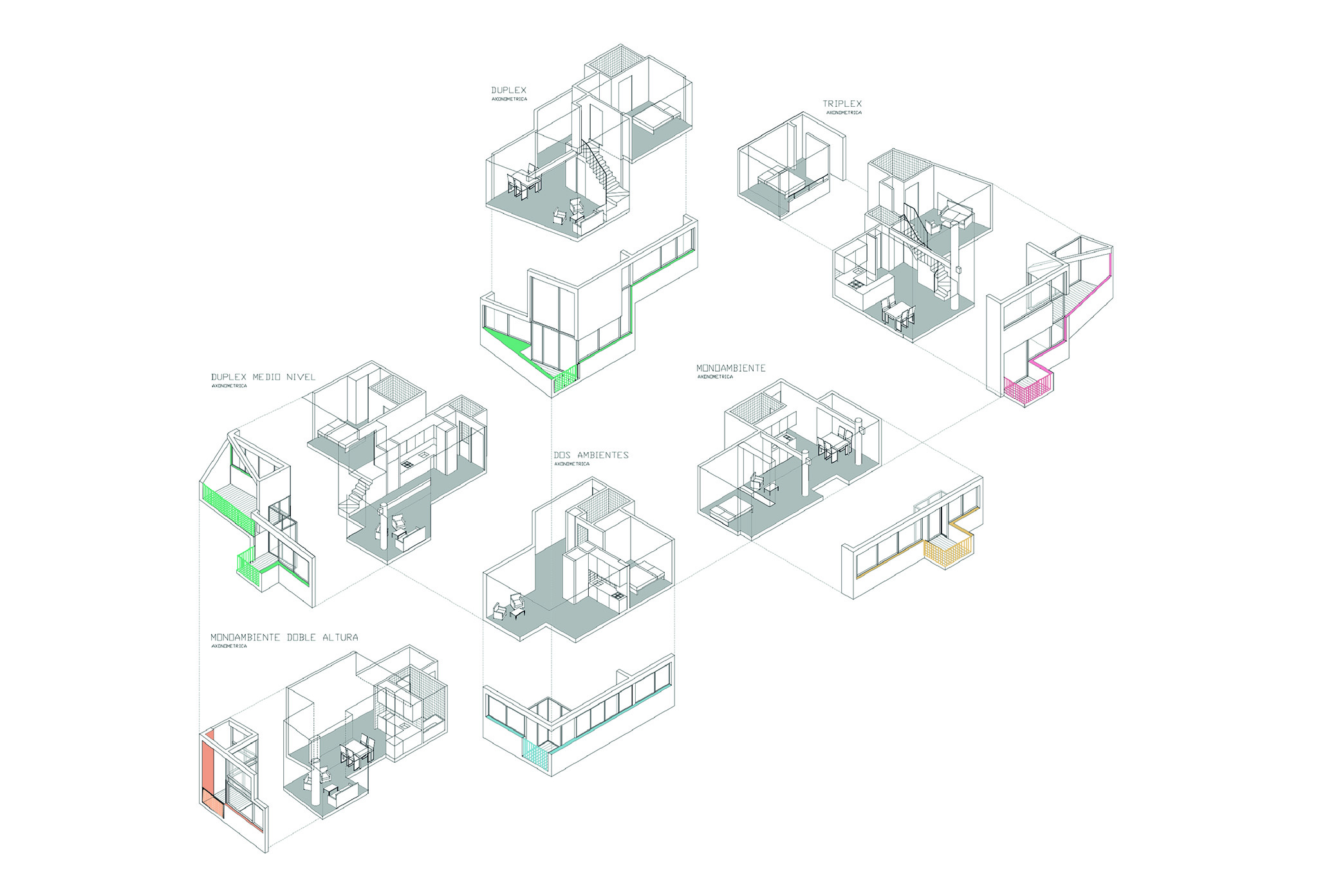
The program developed by Ariel Jacubovich Oficina de Arquitectura is distributed across ten levels that combine commercial spaces, offices, and residences. The twenty residential units are all different and incorporate double-height spaces, split levels, duplexes, triplexes, and garden terraces, offering an alternative to the typical homogenization of contemporary collective housing.

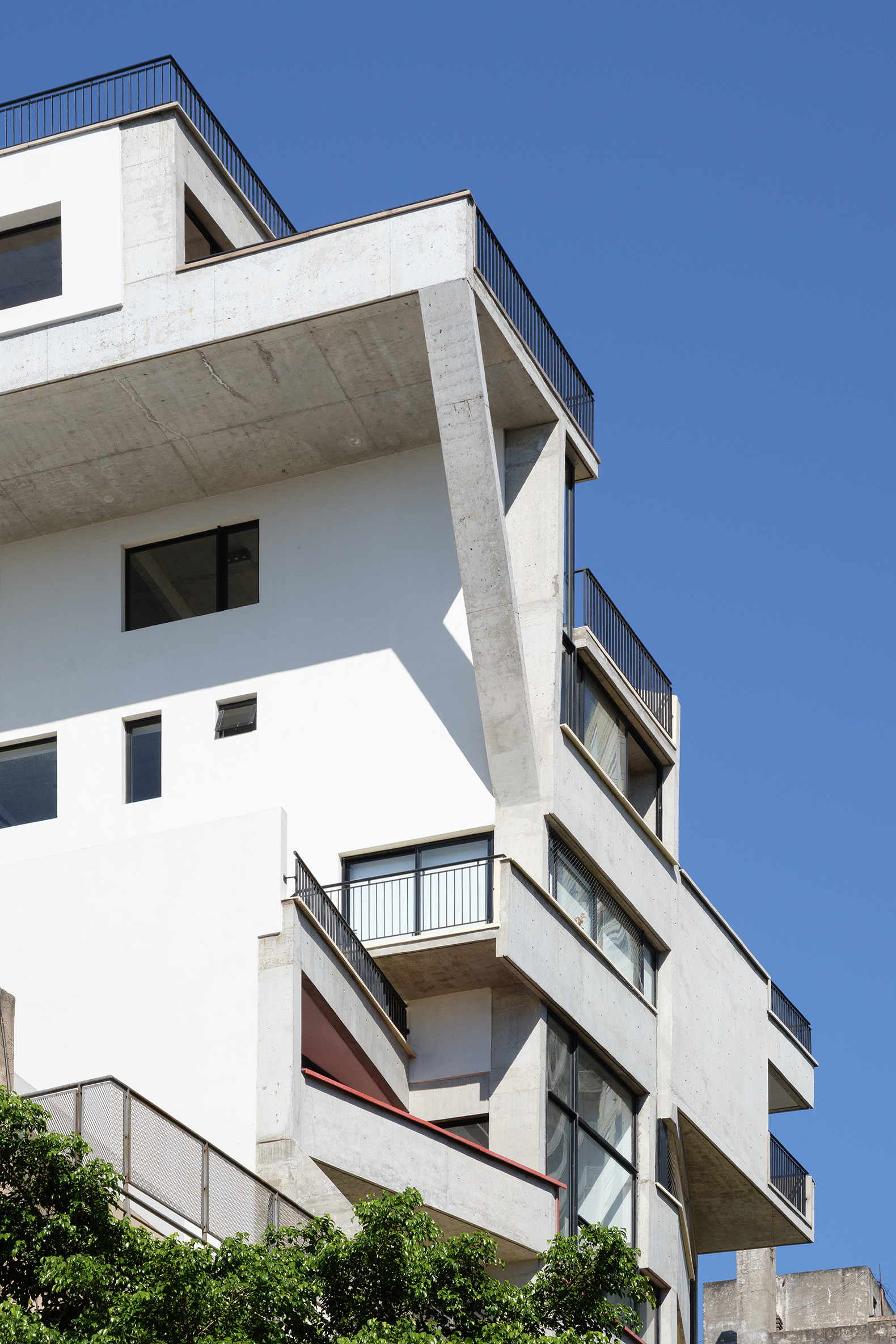
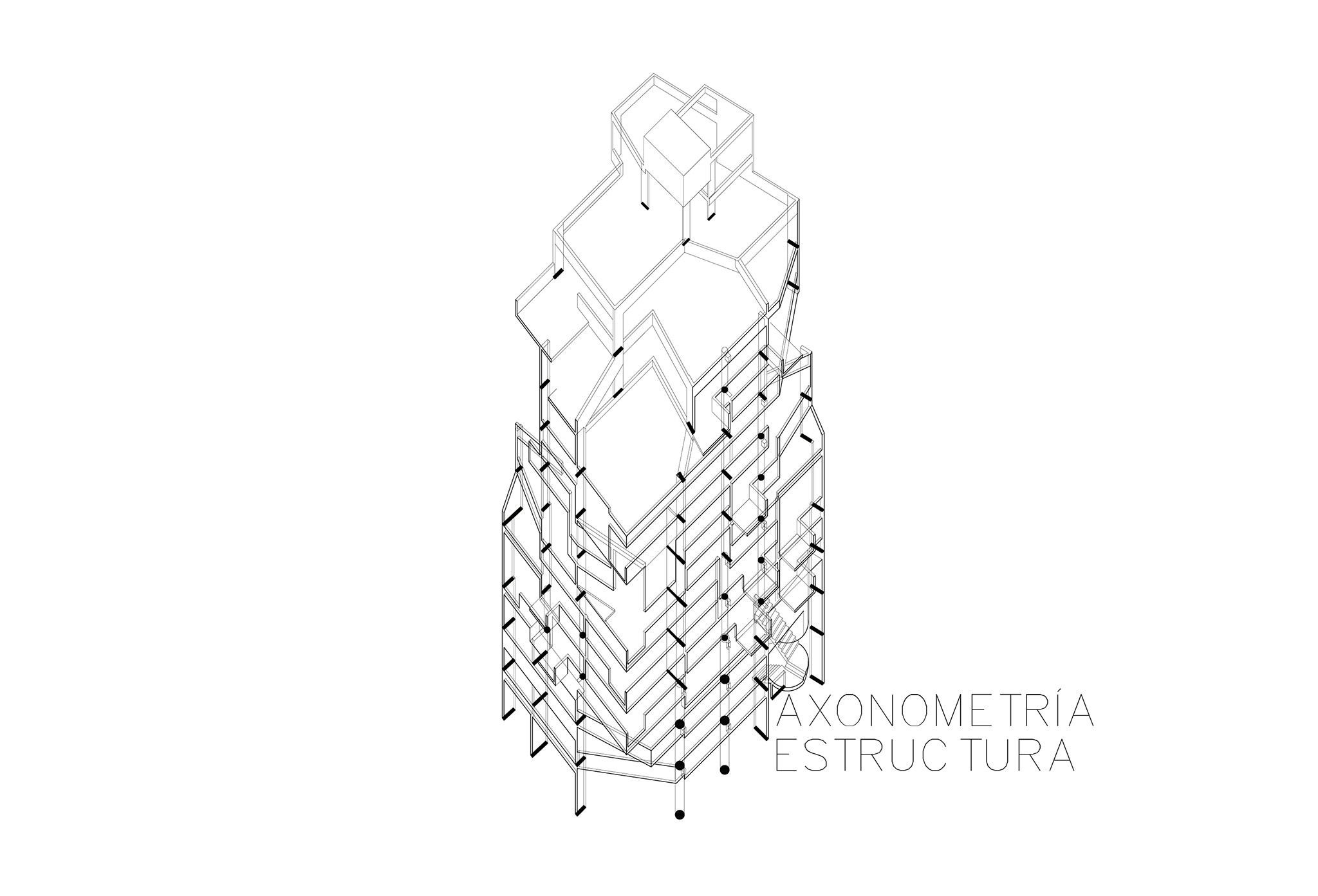
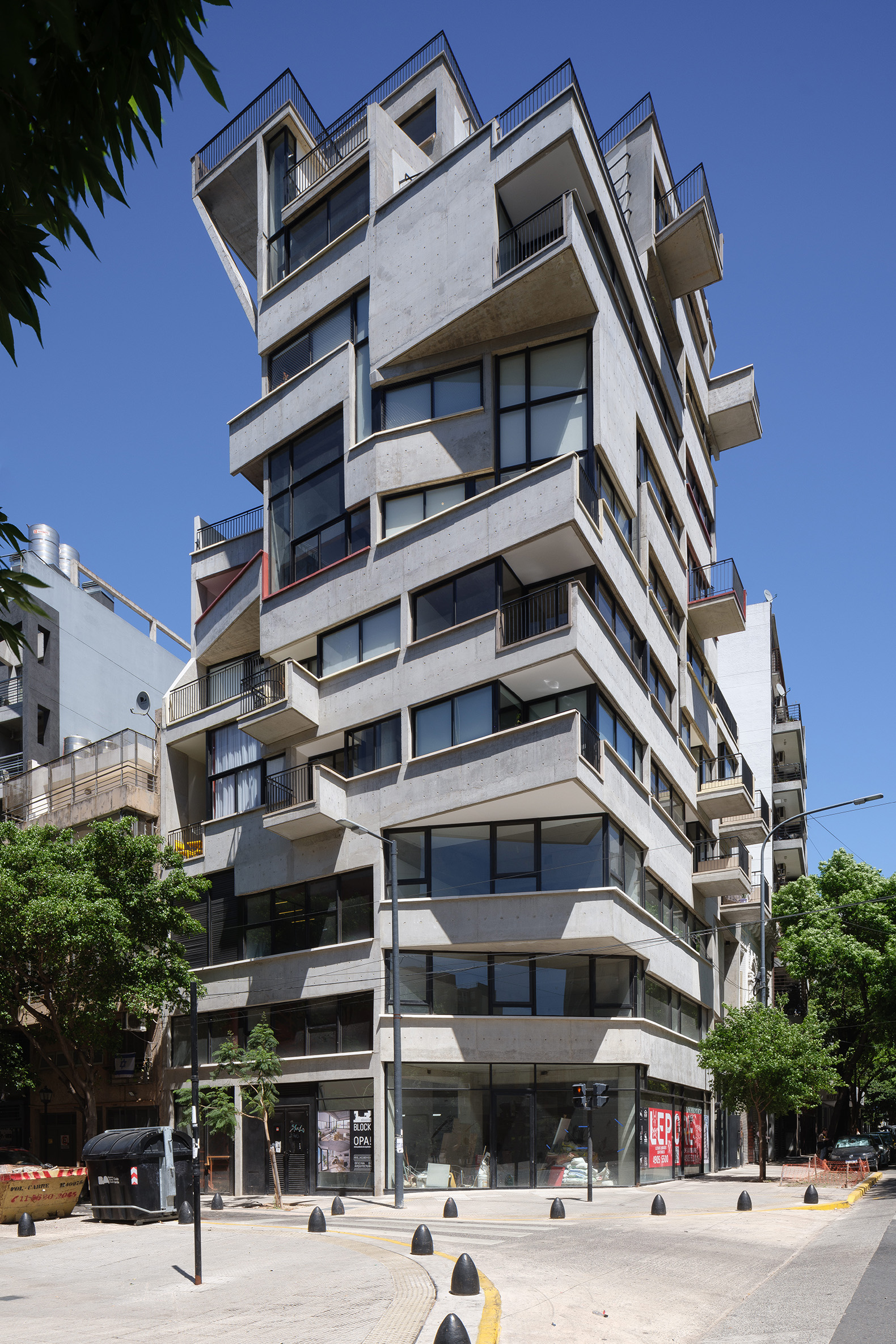
Regarding the materials used, the building is constructed with a reinforced concrete load-bearing structure that accommodates the variations of each unit and reinforces the relationship between structure and spatial organization. The perforated exposed concrete façade functions as a continuous skin that allows the sequence of solids, voids, terraces, and interior circulation to be perceived from the outside, resulting in an architectural image coherent with the project's constructive and conceptual logic.
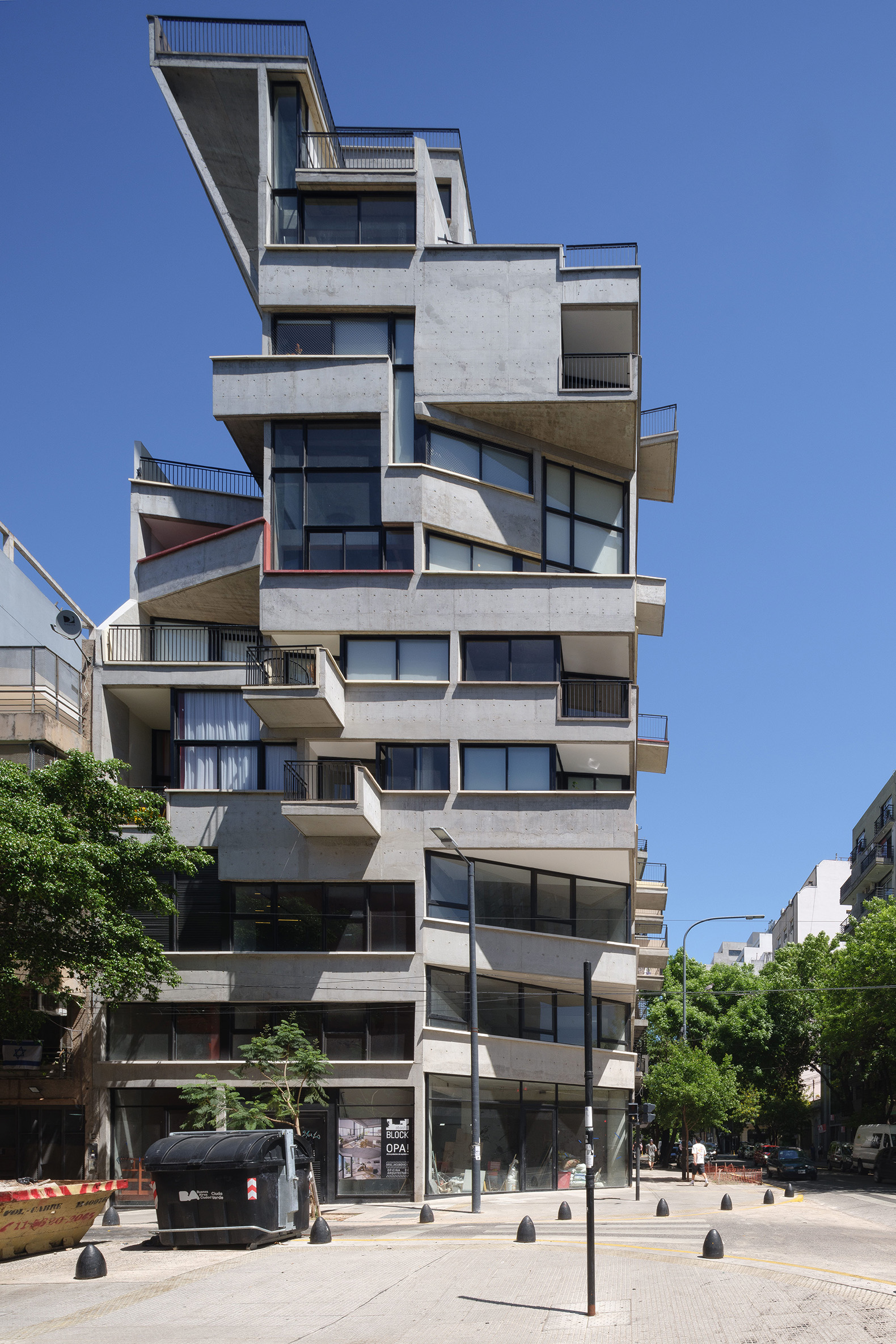
BLOCK Building by Ariel Jacubovich Oficina de Arquitectura. Photograph by Javier Agustín Rojas.

BLOCK Building by Ariel Jacubovich Oficina de Arquitectura. Photograph by Javier Agustín Rojas.

Project description by Ariel Jacubovich Oficina de Arquitectura

Located near the former Abasto Market, Block is a mixed-use building that, across ten floors, accommodates retail spaces, offices, and housing. The twenty residential units are all different: they combine split levels, double-height spaces, duplexes, triplexes, and garden terraces, proposing an expanded field for collective housing while challenging the homogenization imposed by the logic of the real estate market. The project begins with a fundamental operation: making the internal complexity of contemporary dwelling visible from the exterior.

The sectional variations of each unit generate a multiplicity of spatial situations aimed at enriching domestic life and allowing each inhabitant to identify with their home in a singular way. Rather than dissolving, these differences are projected outward: the blocks stack while affecting one another, shifting and generating voids that determine the final form of the building. 

The morphology is not imposed a priori or from the outside, but rather emerges from the internal relationships between the dwellings, from the way they interlock and influence one another. This same logic allows the envelope — a continuous perforated shell of exposed concrete — to render the building’s internal organization legible through the façade. Each unit punctures the skin without interrupting its structural continuity, revealing from the street the way life unfolds inside.

Edificio BLOCK por Ariel Jacubovich Oficina de Arquitectura. Fotografía por Ivan Breyter.
BLOCK Building by Ariel Jacubovich Oficina de Arquitectura. Photograph by Ivan Breyter.

The construction is resolved through a reinforced concrete load-bearing structure that advances, recedes, or changes shape depending on whether or not it separates units, visually reinforcing the relationship between structure and modes of occupation. The result is a building that reveals itself progressively: as one moves along the sidewalk, the façade shifts and exposes a sequence of solids and voids, terraces, staircases, and double-height spaces that shape its spatiality.

Block is part of a series of collective housing projects developed by the office for the real estate market, based on playful figures as a design strategy to explore new organizational logics and variations of housing units. These include Puzzlehomes, Tetris, and Cubik, the latter currently under construction.
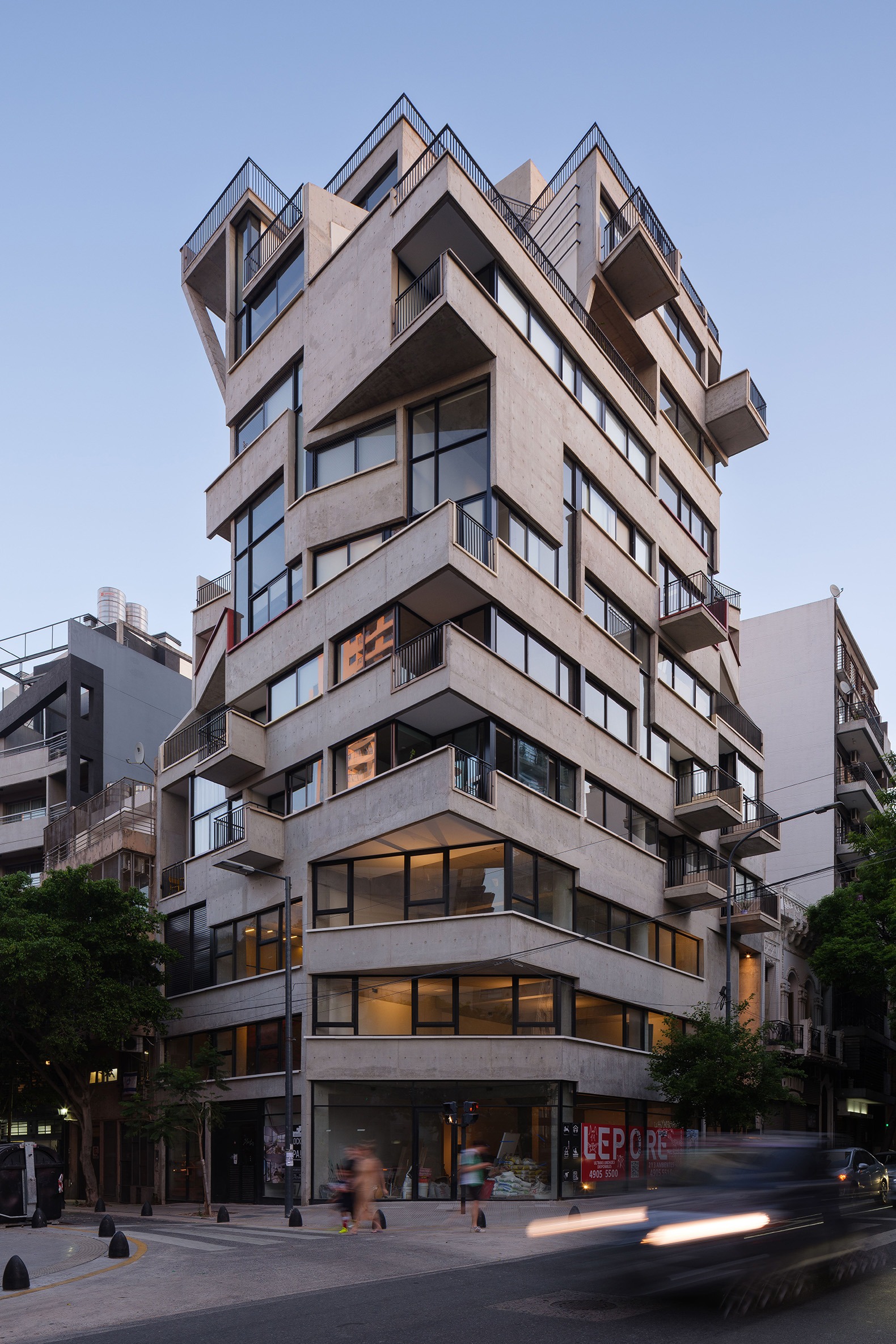
Edificio BLOCK por Ariel Jacubovich Oficina de Arquitectura. Fotografía por Javier Agustín Rojas.
BLOCK Building by Ariel Jacubovich Oficina de Arquitectura. Photograph by Javier Agustín Rojas.

The project draws its reference from the memory of the neighbourhood and from the market itself, back when it functioned as Buenos Aires’ wholesale supplier and goods were stacked in the streets, leaving gaps between crates as they rose in height. Block translates this logic into an architectural version: a game of interlocking forms, accumulations, and displacements that produces an amorphous yet coherent figure where, as in a game, each design decision triggers the next. 

The final form does not respond to a typology, but rather to a rule-based design process focused on variation and systematicity instead of repetition. In this way, the building does not seek to impose itself upon the context, but rather to extend the vitality of the neighbourhood by integrating into the urban ecology of Abasto, accentuating its rhythms, programmatic mix, and history through a piece of architecture that proposes new ways of inhabiting the city.
More information

Label
Architects
Text

Ariel Jacubovich Oficina de Arquitectura. Lead Architect.- Ariel Jacubovich.
+ + copy Created with Sketch.
- + copy Created with Sketch.
Label
Project team
Text

Project and Construction Management.- Ariel Jacubovich, Iaron Jacubovich.
Project and Construction Management Team.- Martín Flugelman, Julián Álvarez Durán, Gabriela Cárdenas, Tadeo Homps, Facundo García, and Francisco Tamargo.
Collaborators.- Marine Cobo, Sebastián Ducros, Rosella Carnicella, Florencia Rocha, Magalí Bisang, Laura Carpman, and Salvatore Murena.

+ + copy Created with Sketch.
- + copy Created with Sketch.
Label
Collaborators
Text

Structure.- Architect Roberto Alfie.

+ + copy Created with Sketch.
- + copy Created with Sketch.
Label
Development
Text

OPA Oficina Productora de Arquitectura.

+ + copy Created with Sketch.
- + copy Created with Sketch.
Label
Builder
Text

FHOL srl.

+ + copy Created with Sketch.
- + copy Created with Sketch.
Label
Area
Text

2,014 sqm.

+ + copy Created with Sketch.
- + copy Created with Sketch.
Label
Dates
Text

Project year.- 2015-2018.
Completion.- 2023.

+ + copy Created with Sketch.
- + copy Created with Sketch.
Label
Location
Text

Gallo 597, C1182 Autonomous City of Buenos Aires, Argentina.

+ + copy Created with Sketch.
- + copy Created with Sketch.
Label
Photography
Text

Javier Agustín Rojas, Ivan Breyter.

+ + copy Created with Sketch.
- + copy Created with Sketch.

Ariel Jacubovich Oficina de Arquitectura is an architecture practice founded in 2004 in Buenos Aires, dedicated to the development of housing and public space projects through a practice that articulates materiality, organizational systems, and territorial contexts.

Its work is organized through different "Modes of Doing." Assembly Architecture collaborates with social and political organizations, incorporating collective processes into the construction of space. Home-Based Architecture focuses on the transformation of individual dwellings from the domestic scale. In the realm of collective housing, the Playful Figures series—Puzzle Homes, Tetris Homes, Block, and Cubik—proposes alternatives to the typological repetition characteristic of the real estate market, while Temporary Devices explores ephemeral architectures linked to art fairs and exhibitions.

Ariel Jacubovich was a professor at the University of Buenos Aires (UBA) and the National University of San Martín (UNSAM), and has also participated as a guest lecturer at various universities in Argentina and Latin America. He has also led workshops and given lectures in South America, Europe, and the United States.

His work has been published in national and international media and exhibited in the Argentine and Venezuelan pavilions of the 15th and 17th Venice Architecture Biennales, consolidating a practice that combines design research, typological experimentation, and a commitment to the collective processes of space production.

Read more
Published on: May 8, 2026
Cite:
metalocus, AGUSTINA BERTA
"Complexity revealed. BLOCK Building by Ariel Jacubovich" METALOCUS. Accessed
<https://www.metalocus.es/en/news/complexity-revealed-block-building-ariel-jacubovich> ISSN 1139-6415
Loading content ...
Loading content ...
Loading content ...
Loading content ...
Loading content ...
Loading content ...
Loading content ...
Loading content ...
Loading content ...
Loading content ...
Loading content ...
Loading content ...
Loading content ...
Loading content ...
Loading content ...
Loading content ...
Loading content ...
Loading content ...
Loading content ...
Loading content ...
Loading content ...
Loading content ...
Loading content ...
Loading content ...
Loading content ...
Loading content ...
Loading content ...
Loading content ...
Loading content ...
Loading content ...
Loading content ...
Loading content ...
Loading content ...
Loading content ...
Loading content ...
Loading content ...
Loading content ...
Loading content ...
Loading content ...
Loading content ...
Loading content ...
Loading content ...
Loading content ...
Loading content ...
Loading content ...
Loading content ...
Loading content ...
Loading content ...
Loading content ...
Loading content ...
Loading content ...
Loading content ...
Loading content ...
Loading content ...