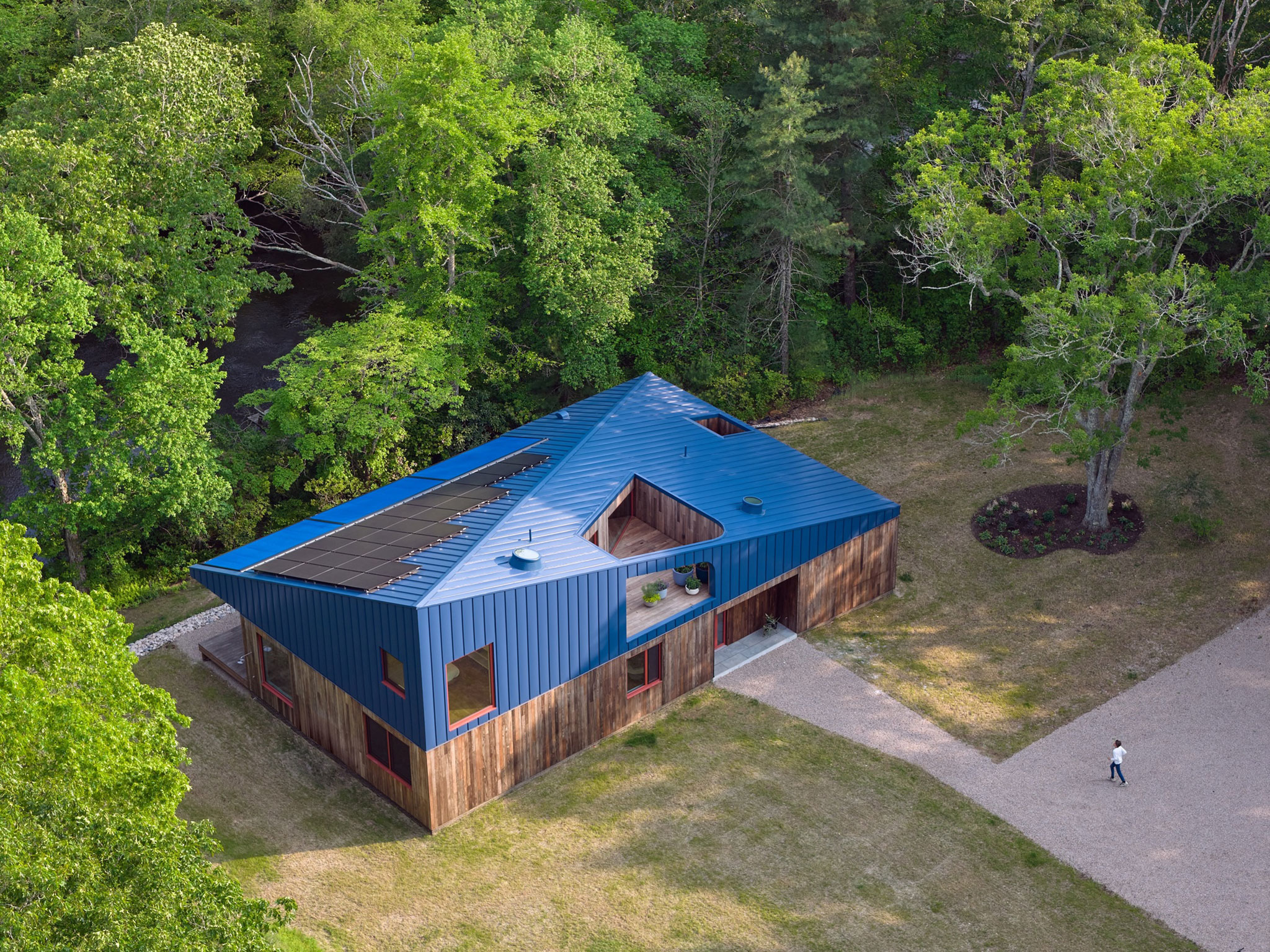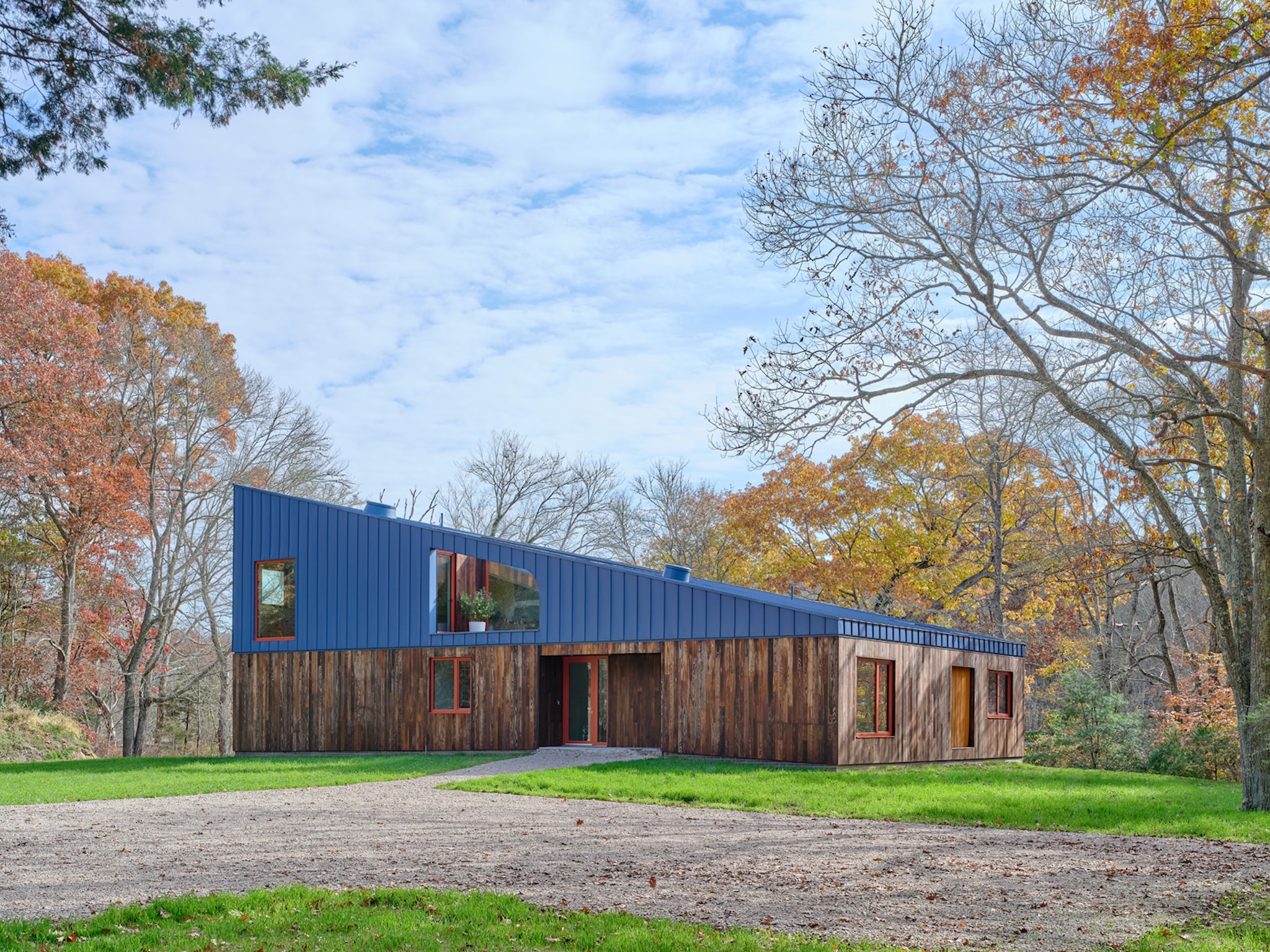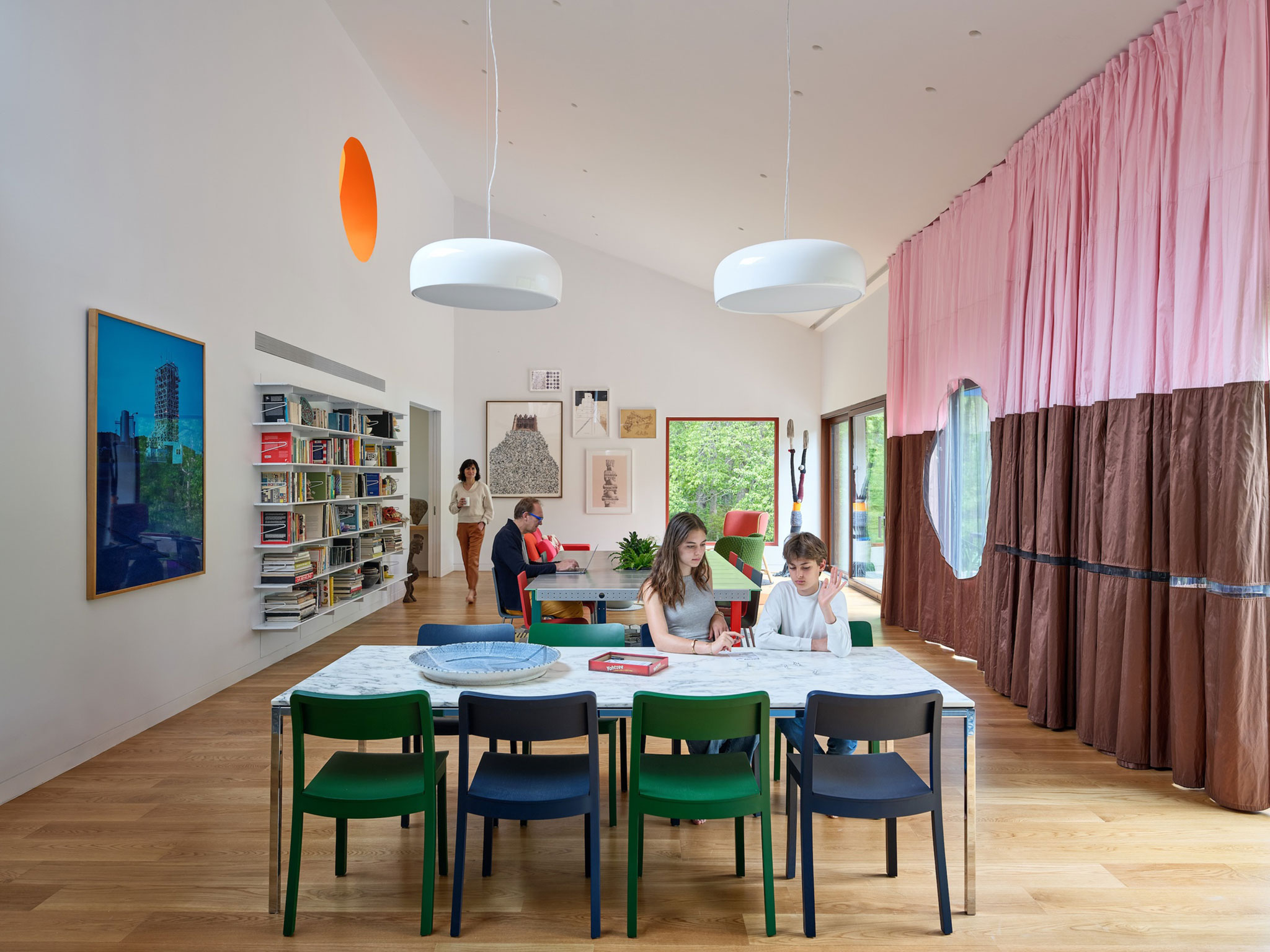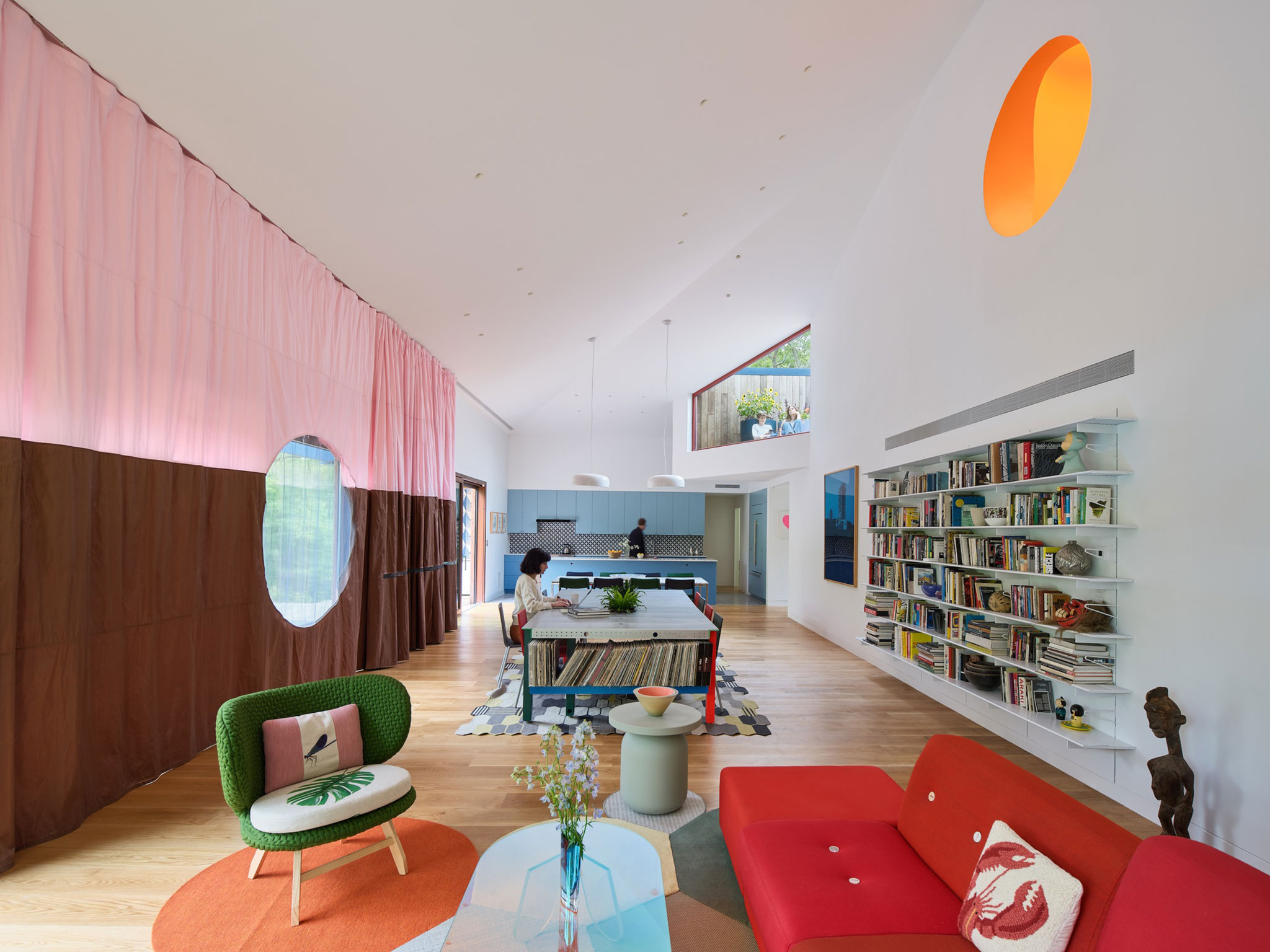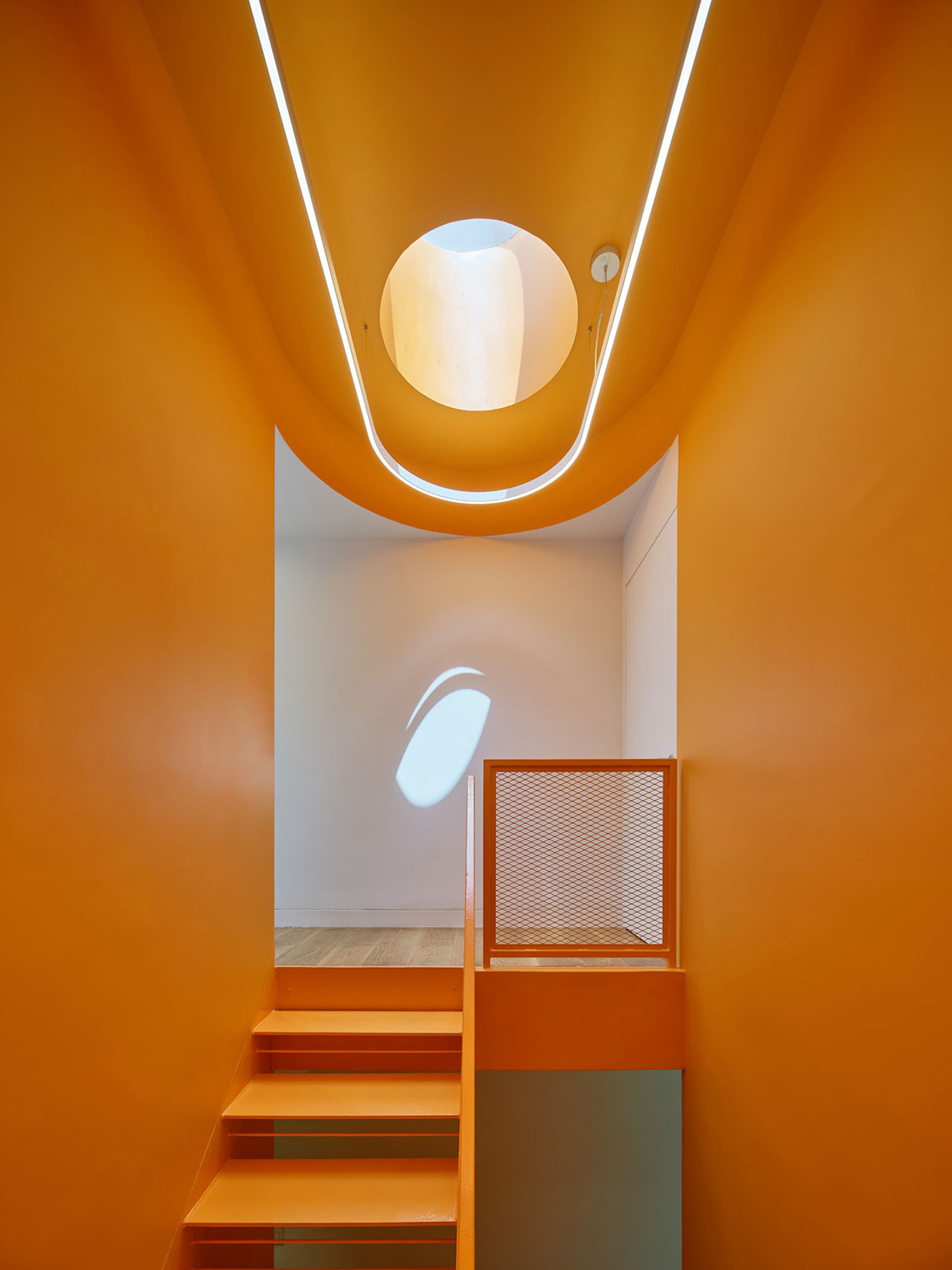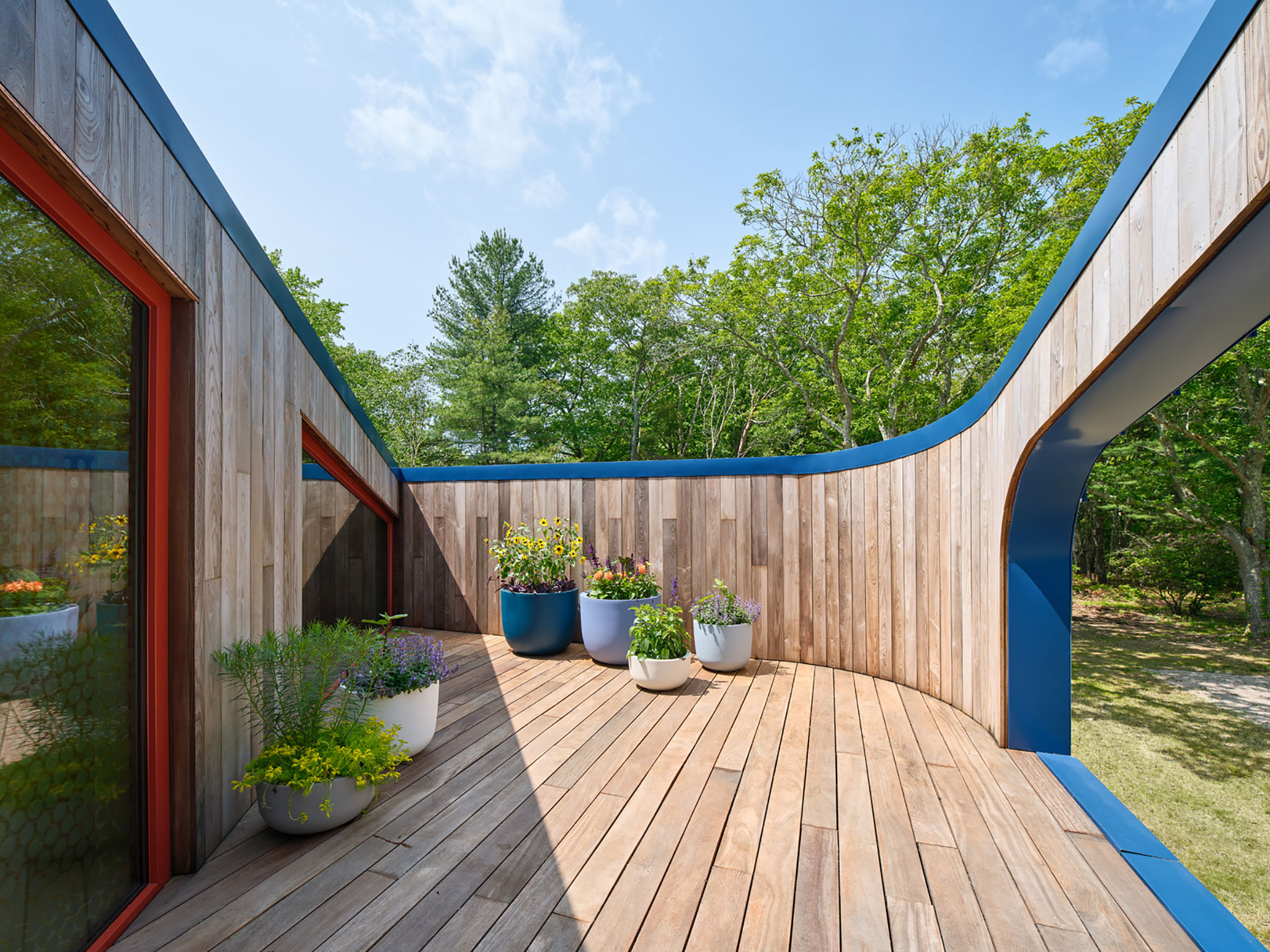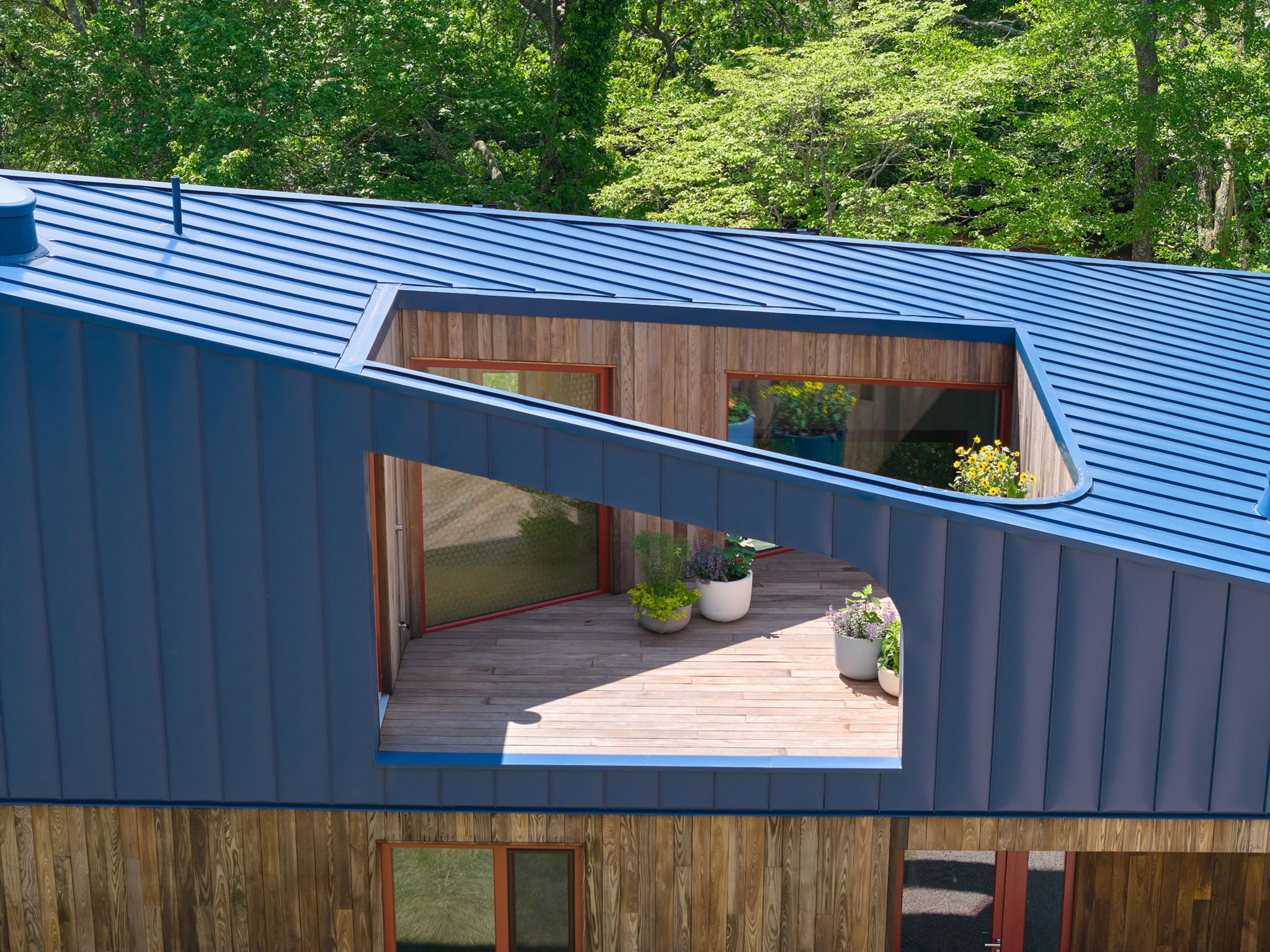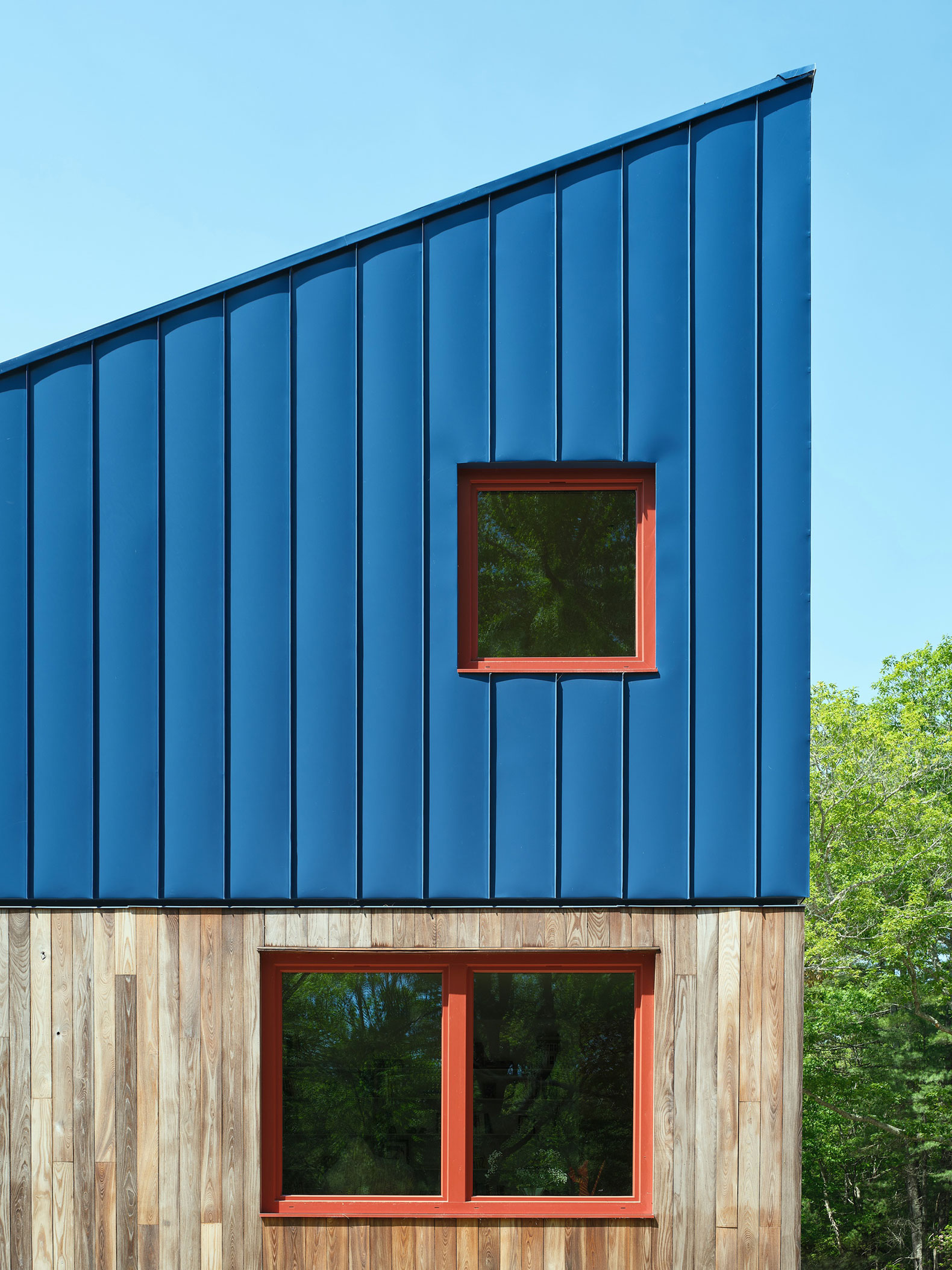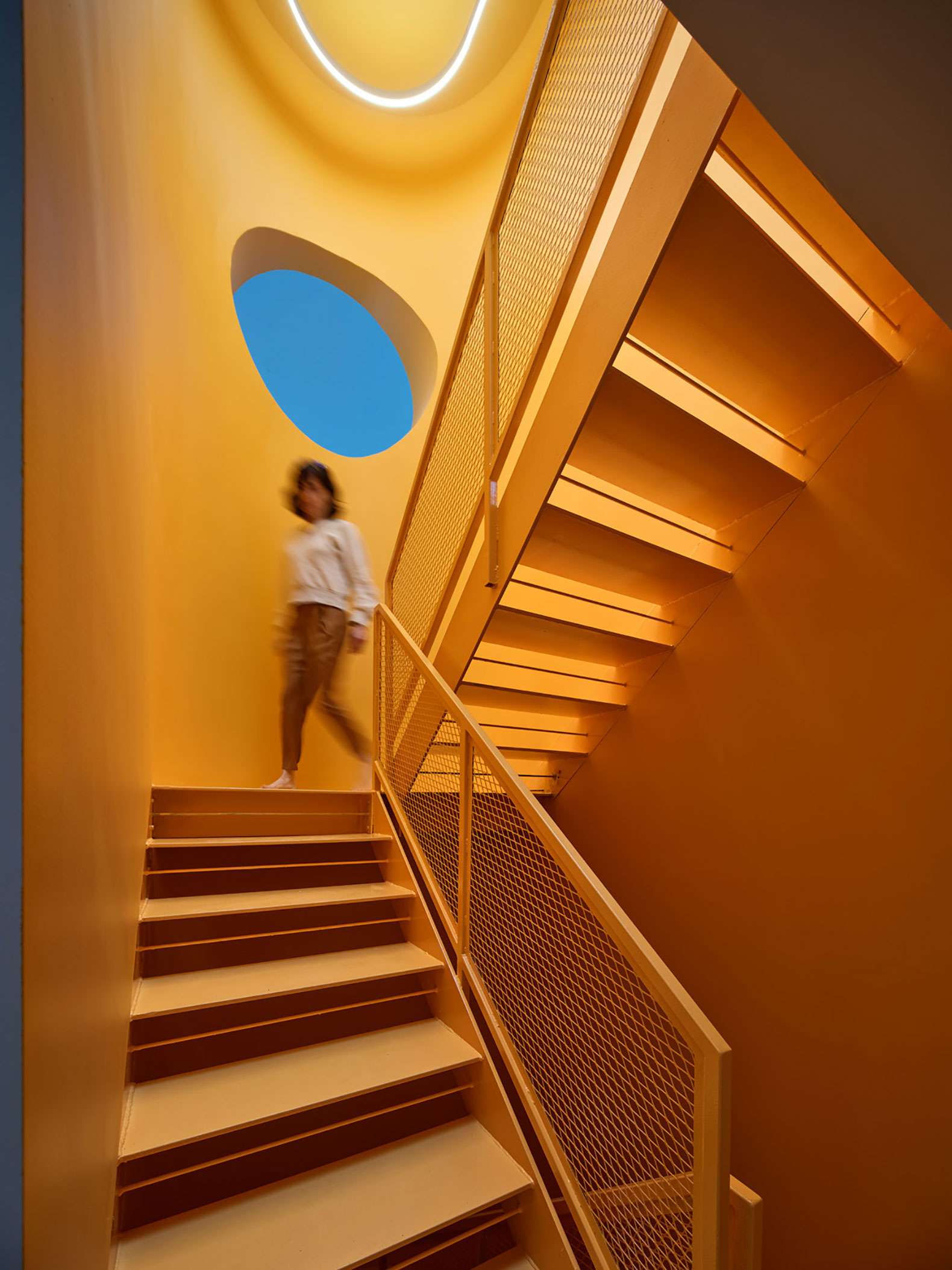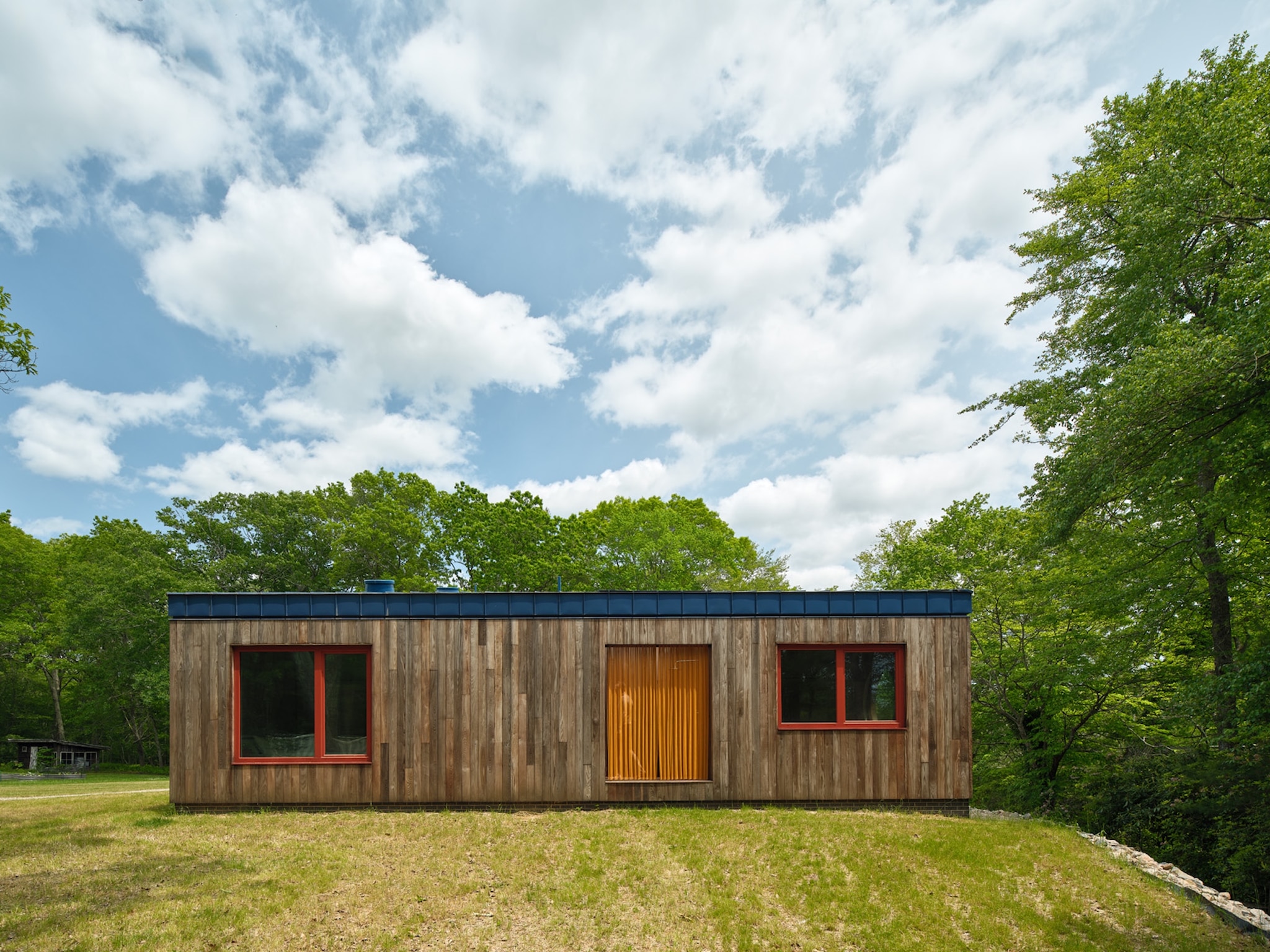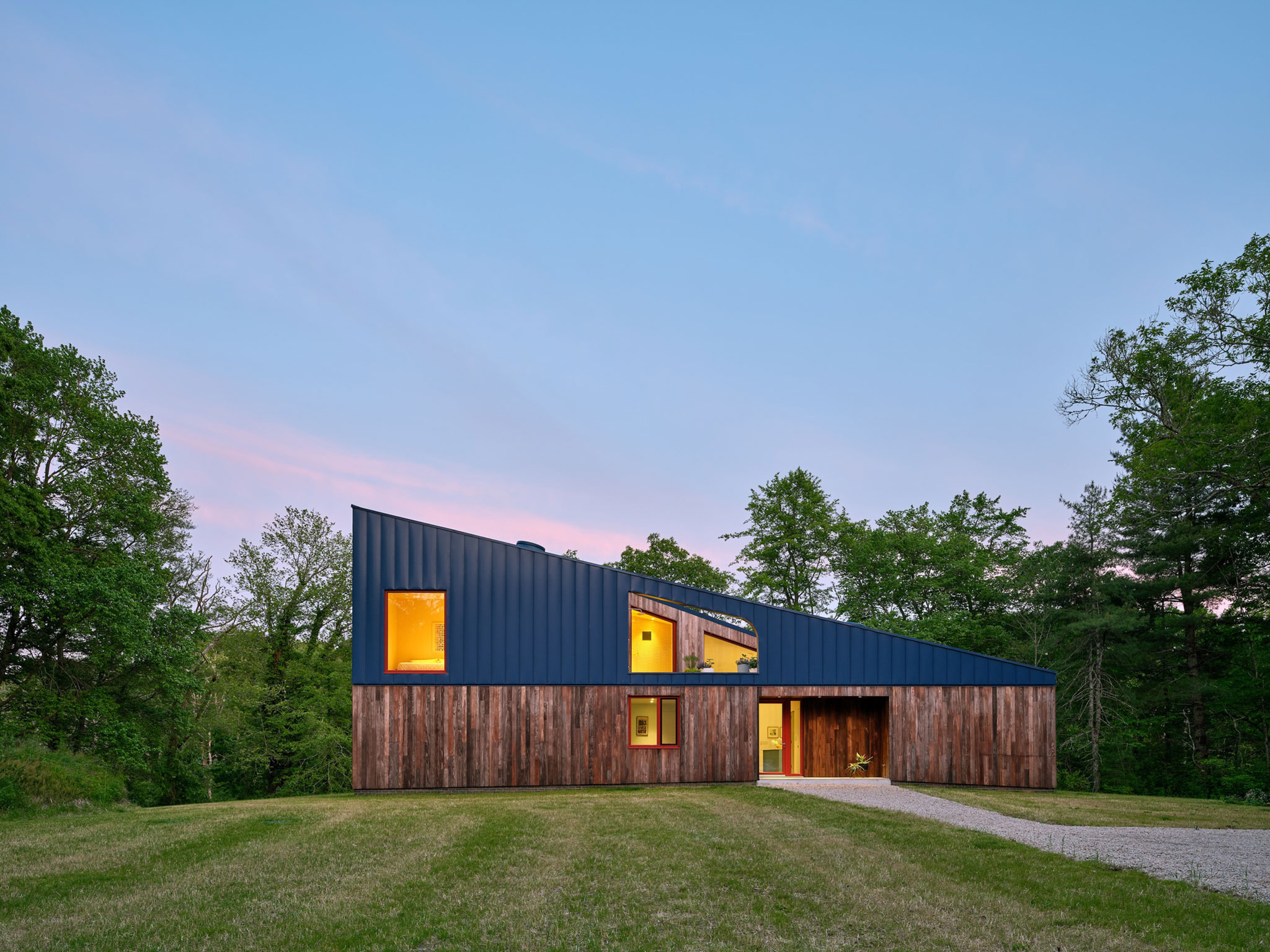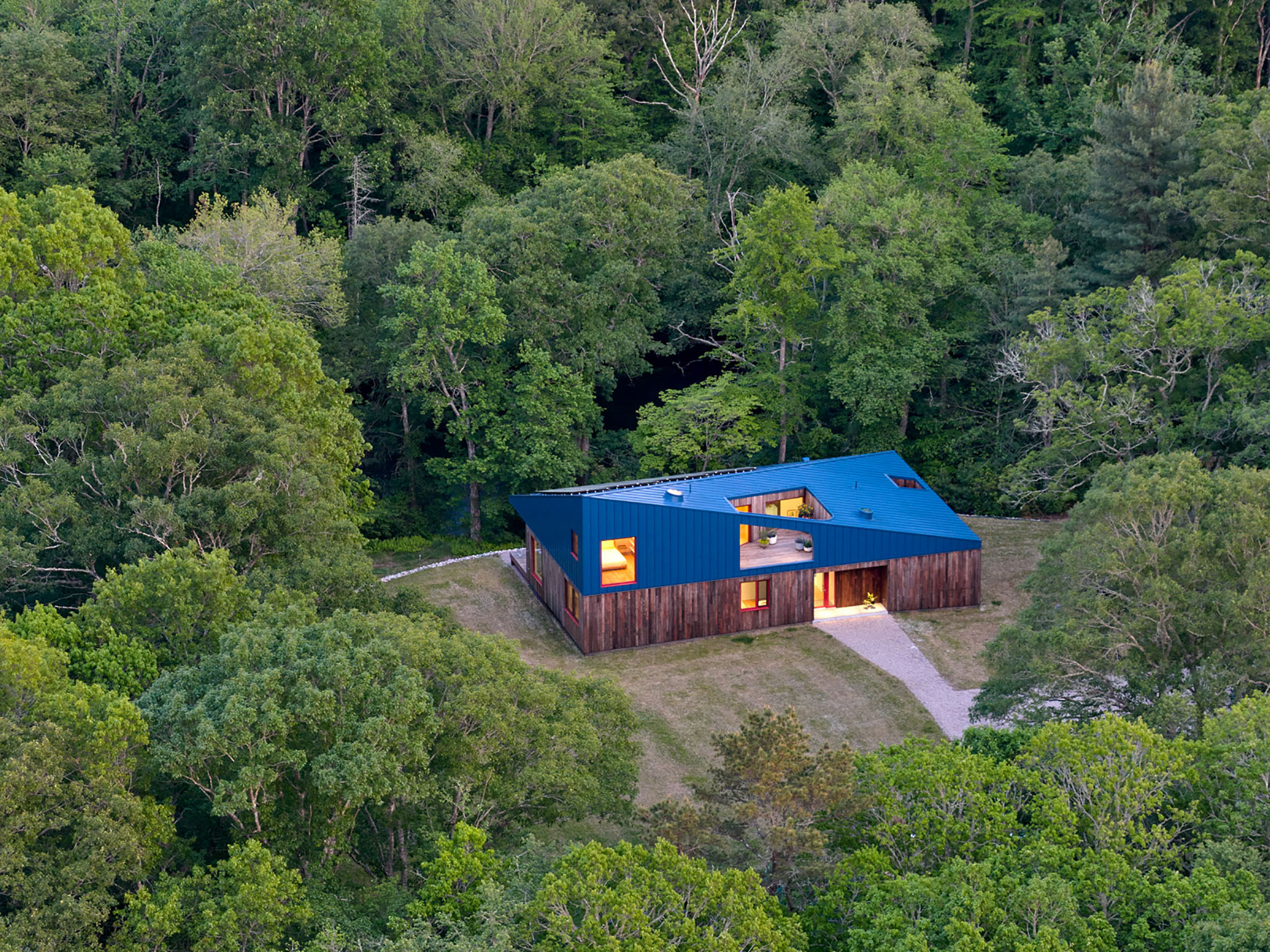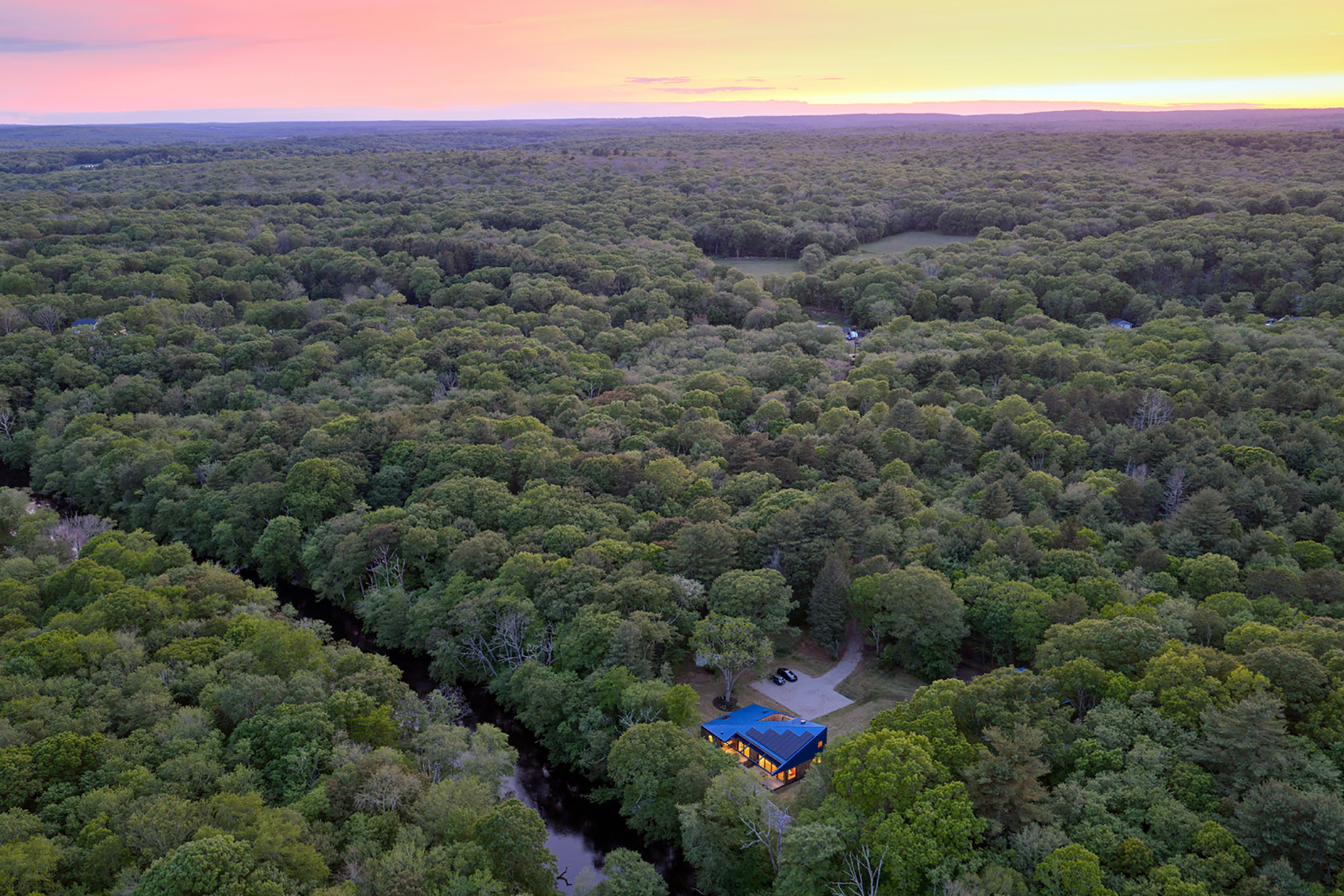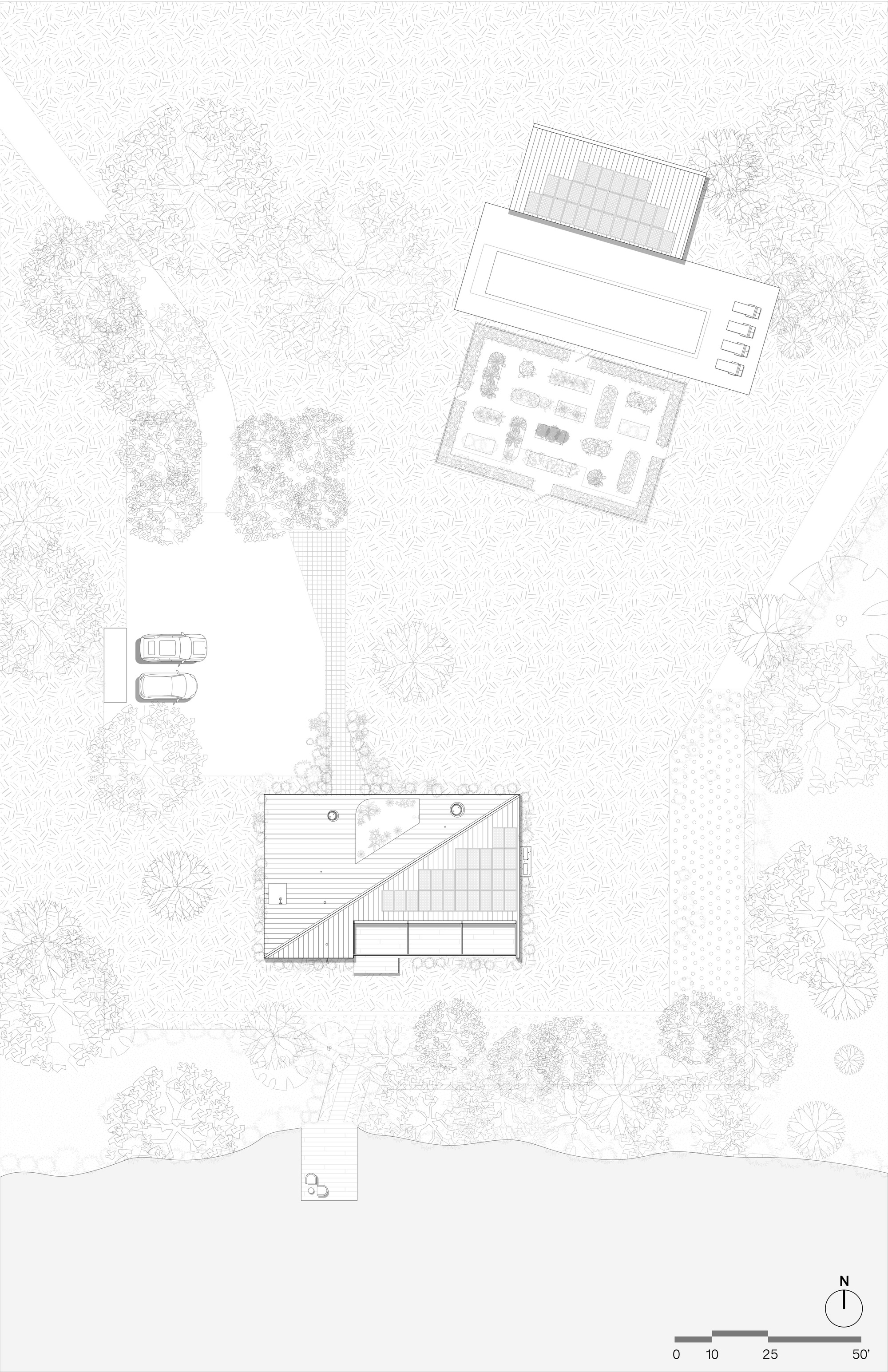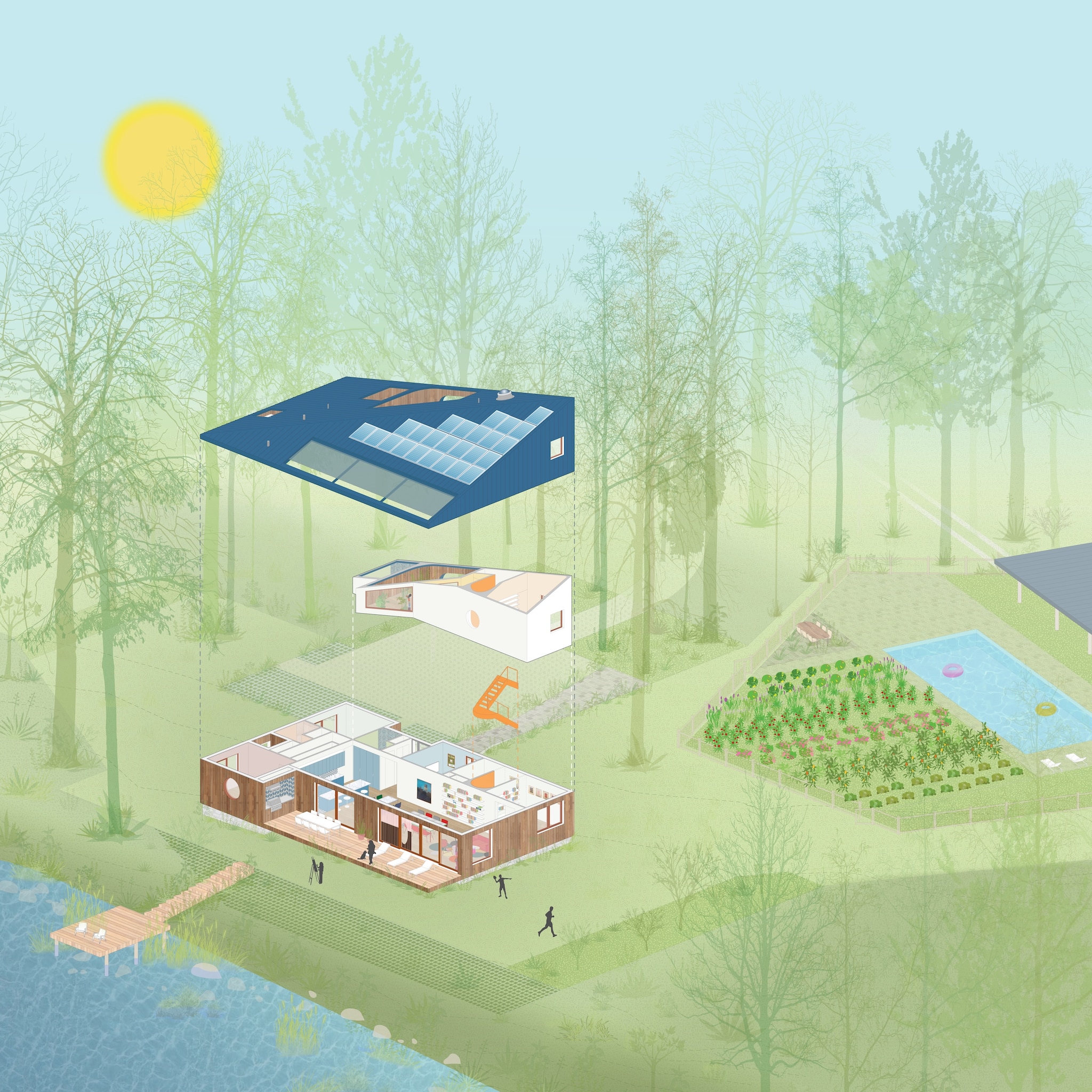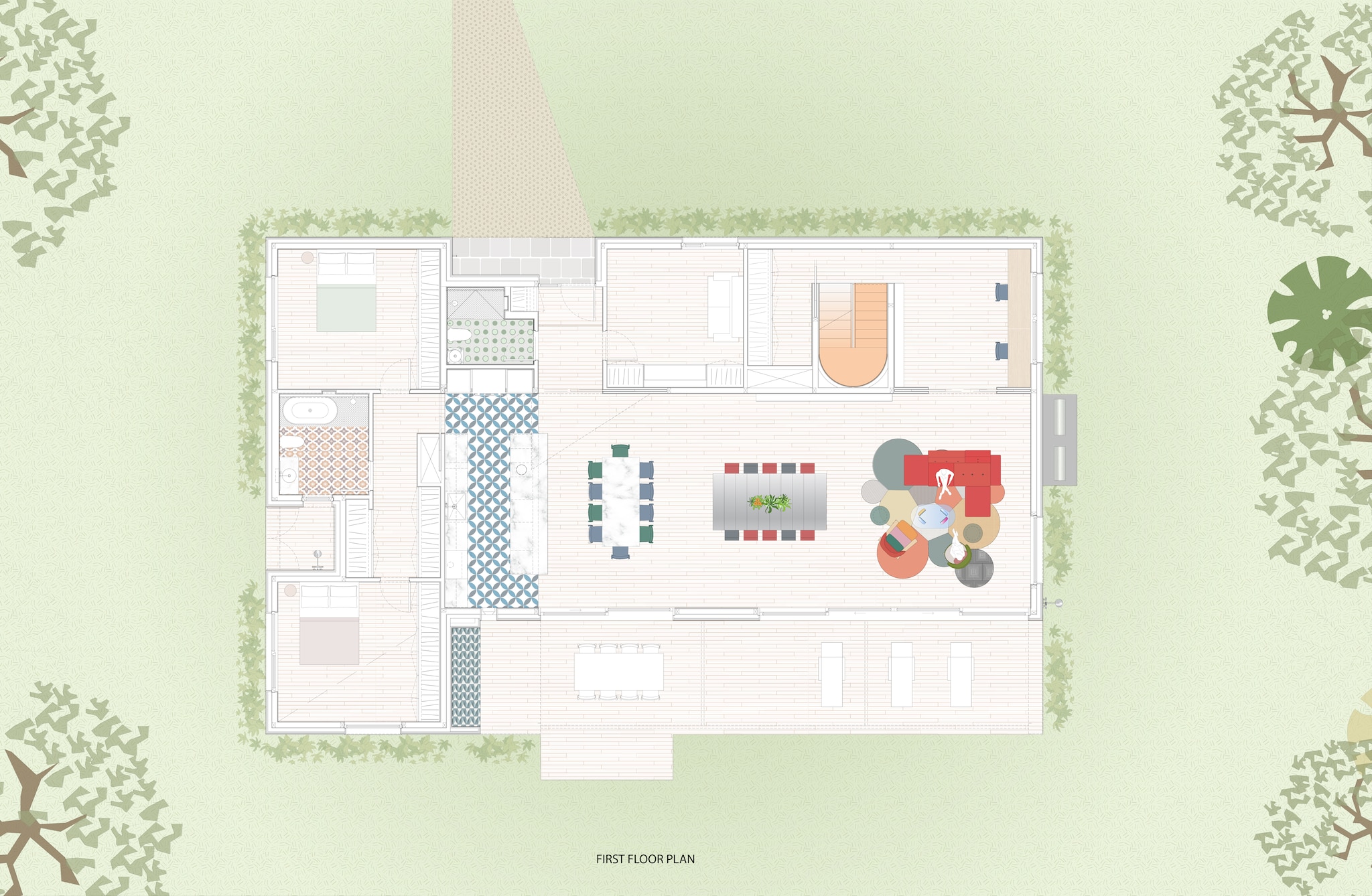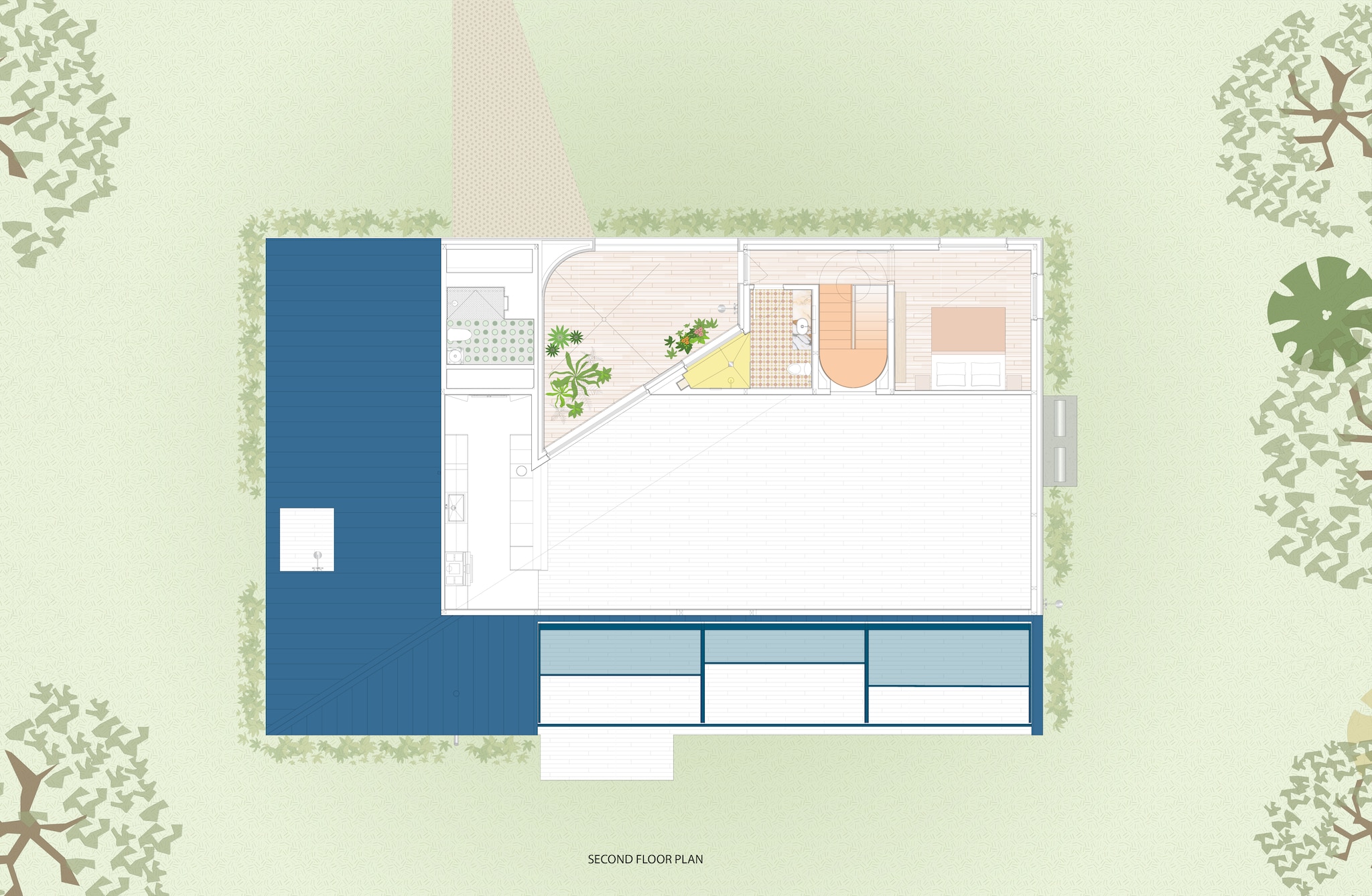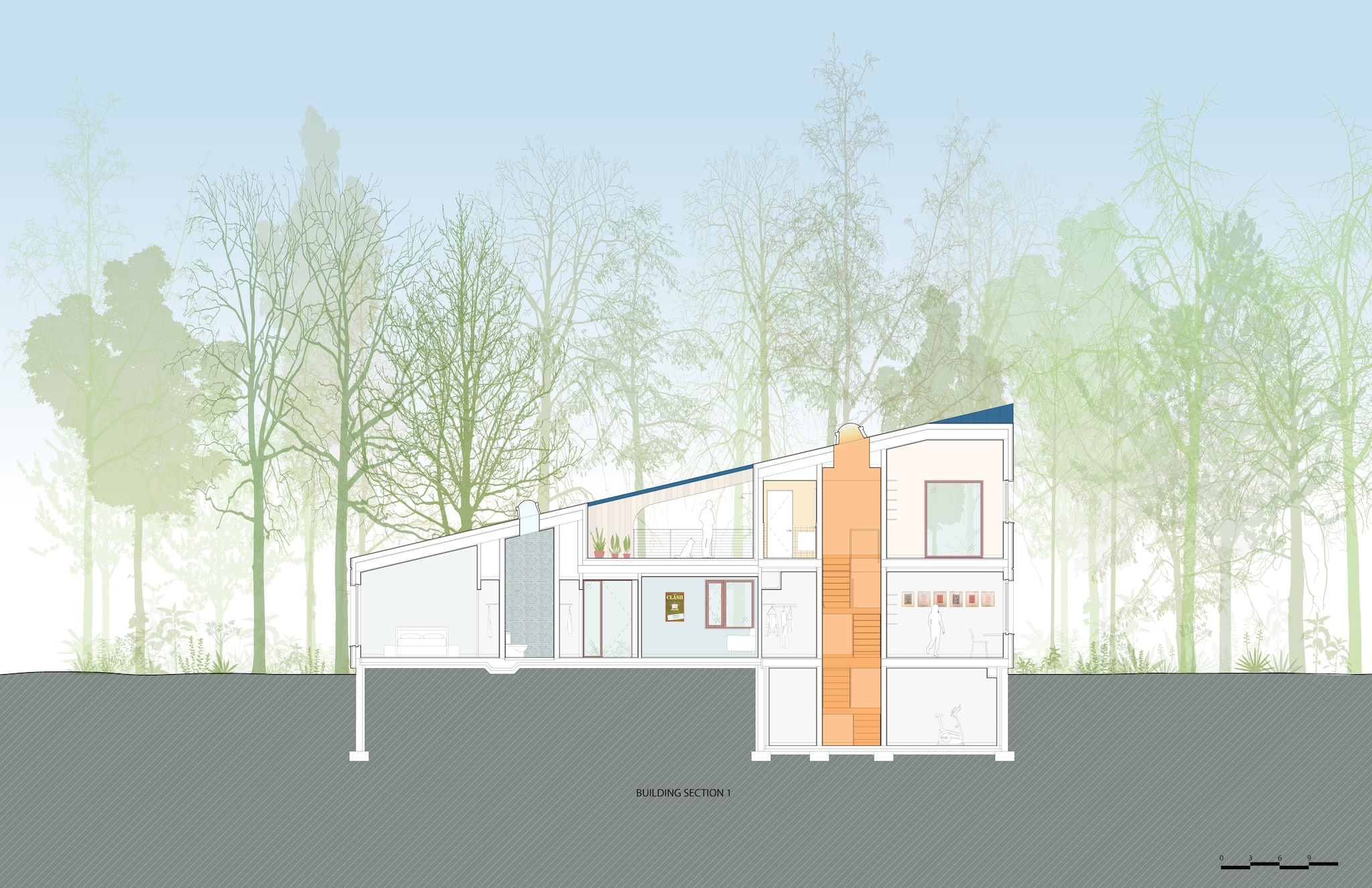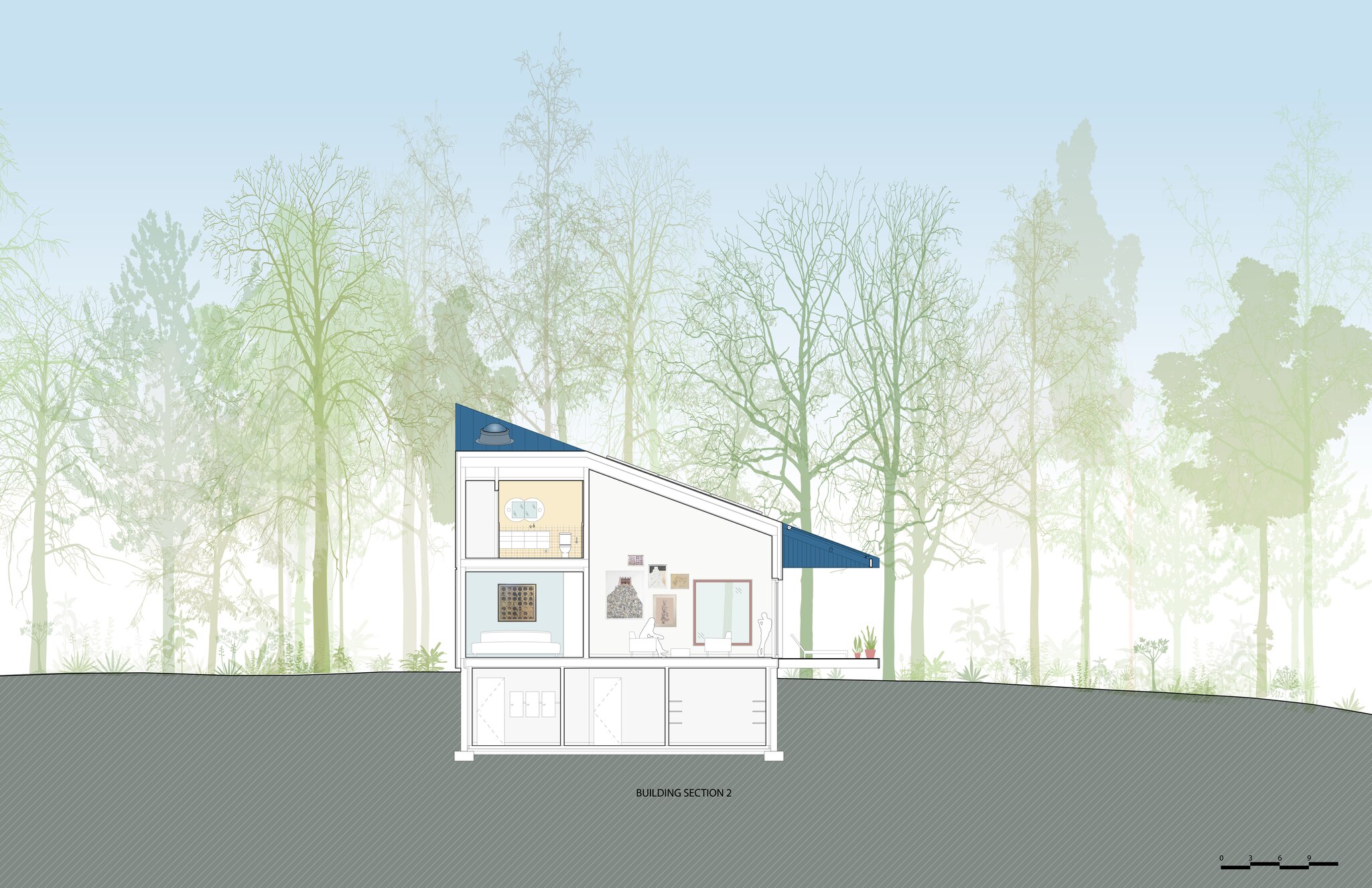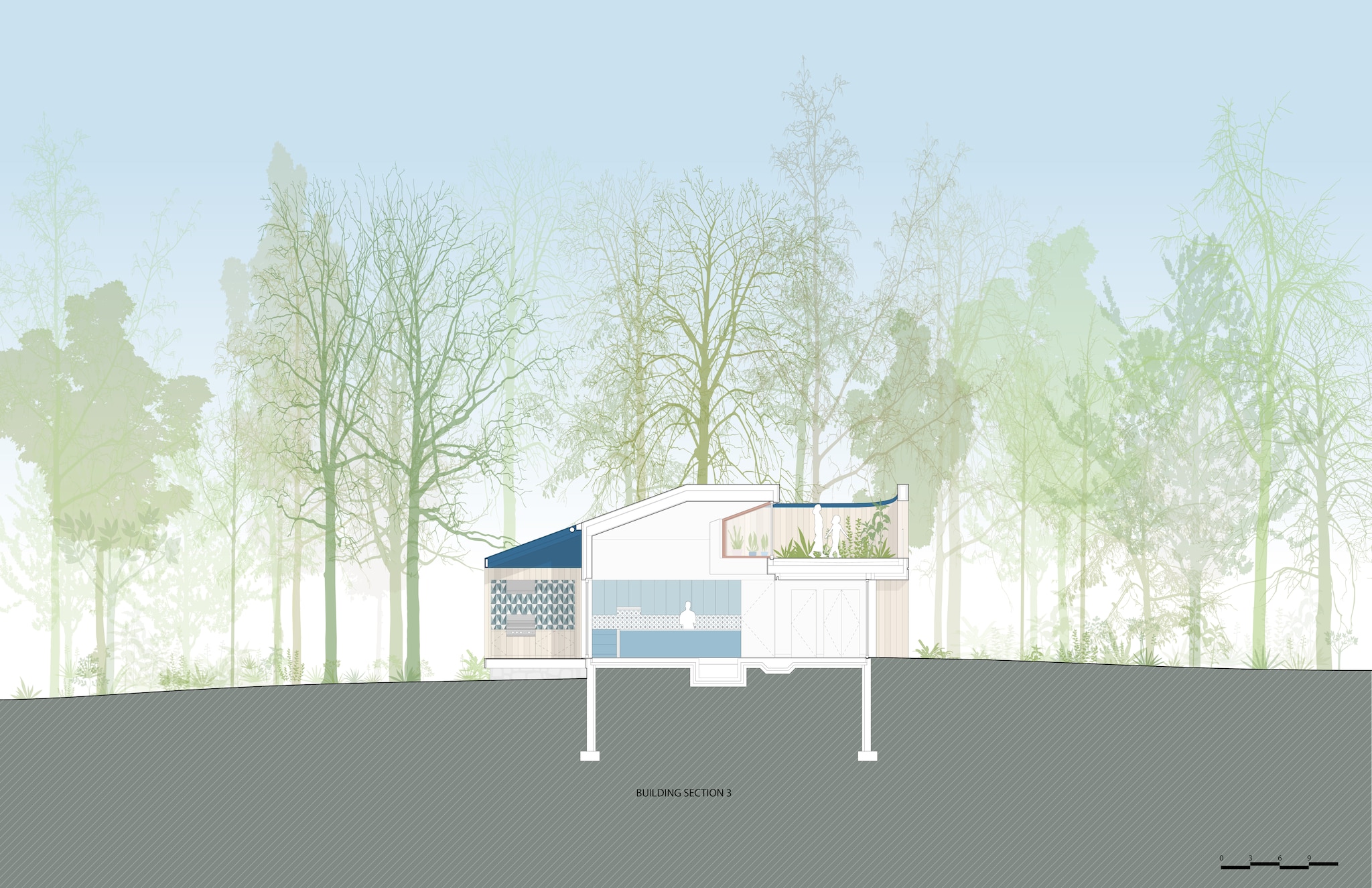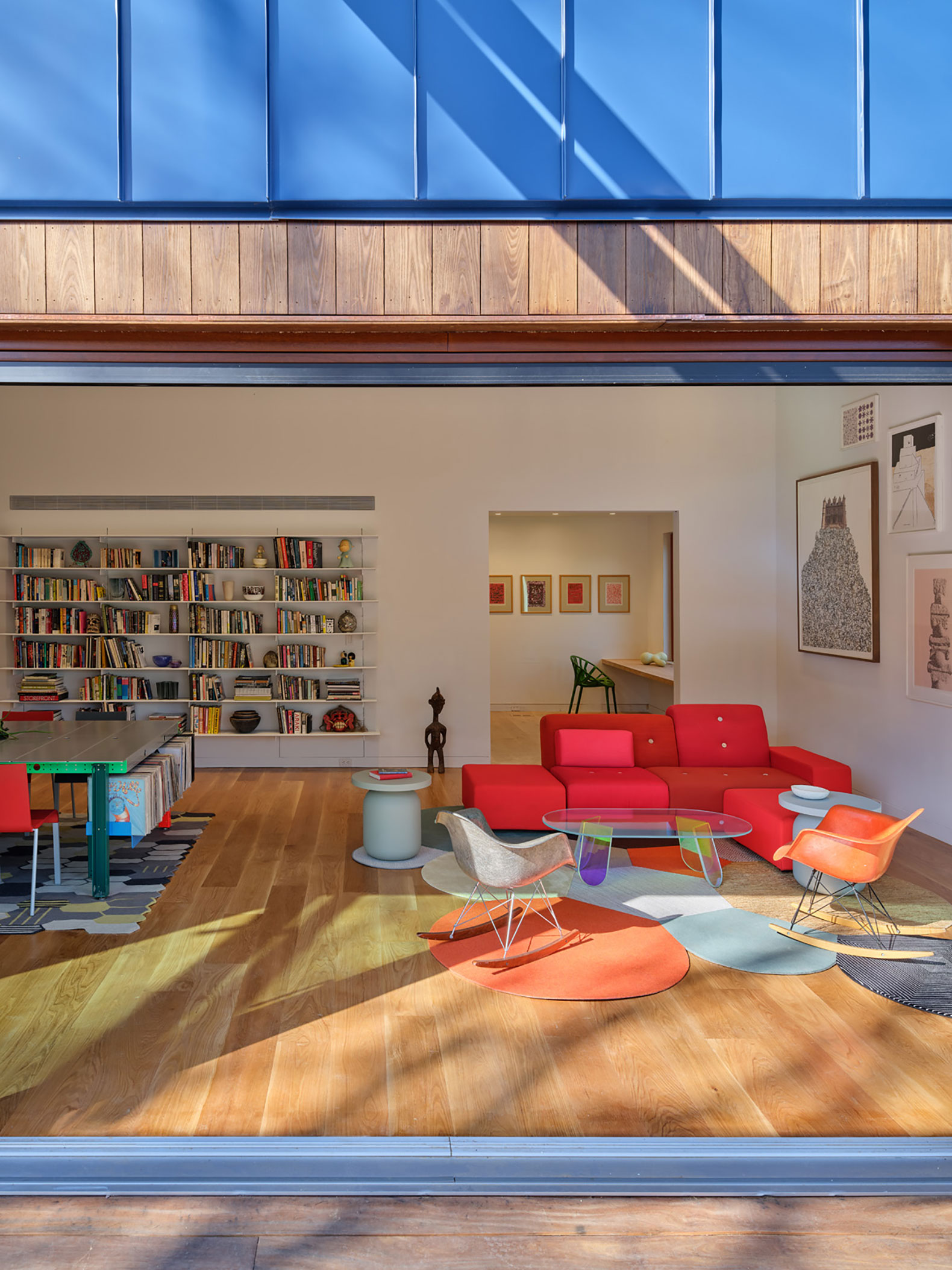
WORKac designed a compact rectangular floor plan for a house that maximizes spatial efficiency, featuring a diagonal roof ridge and an intense blue metal roof that folds down over portions of the façade, creating an interior landscape organized around a double-height living space.
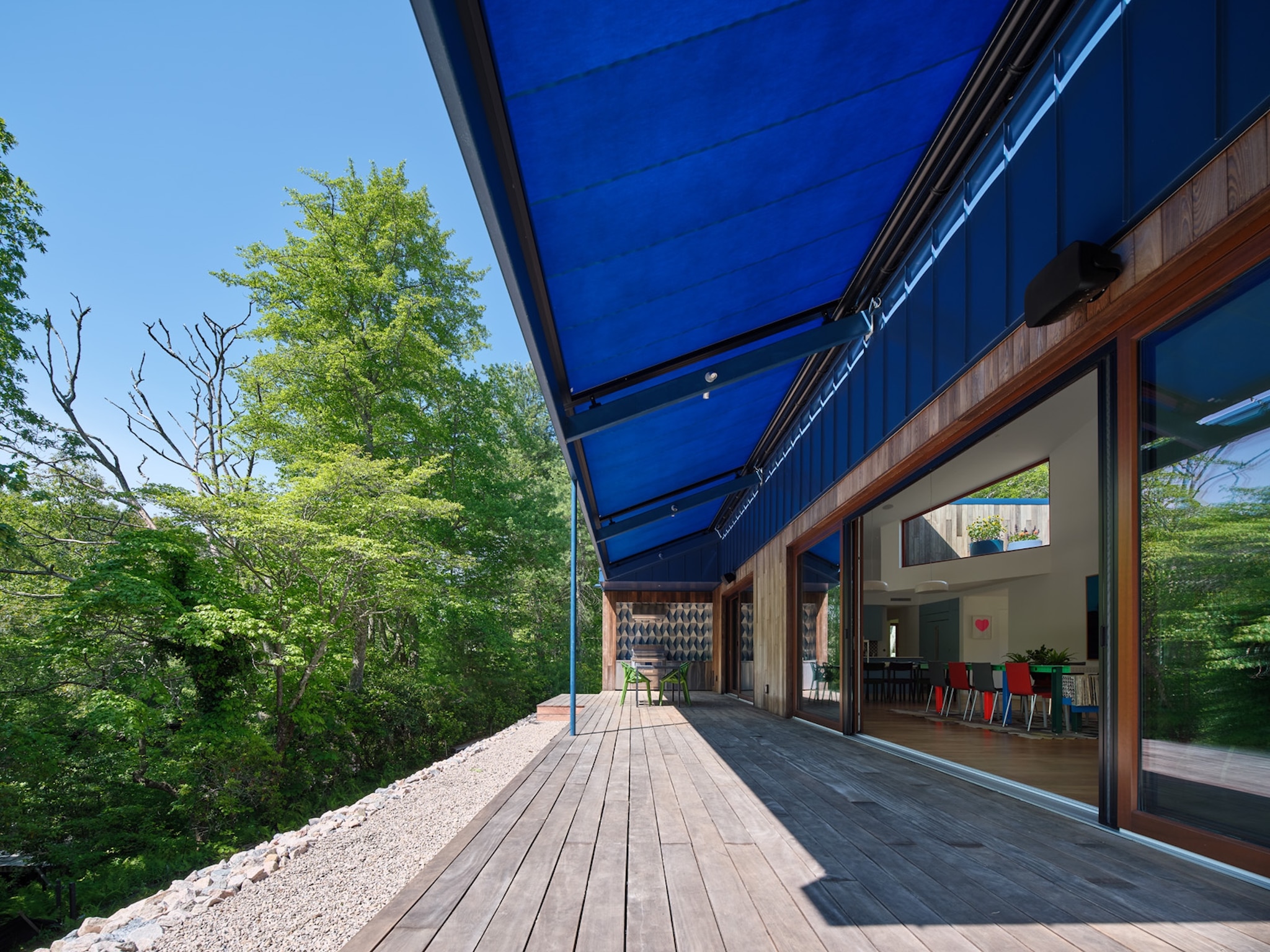
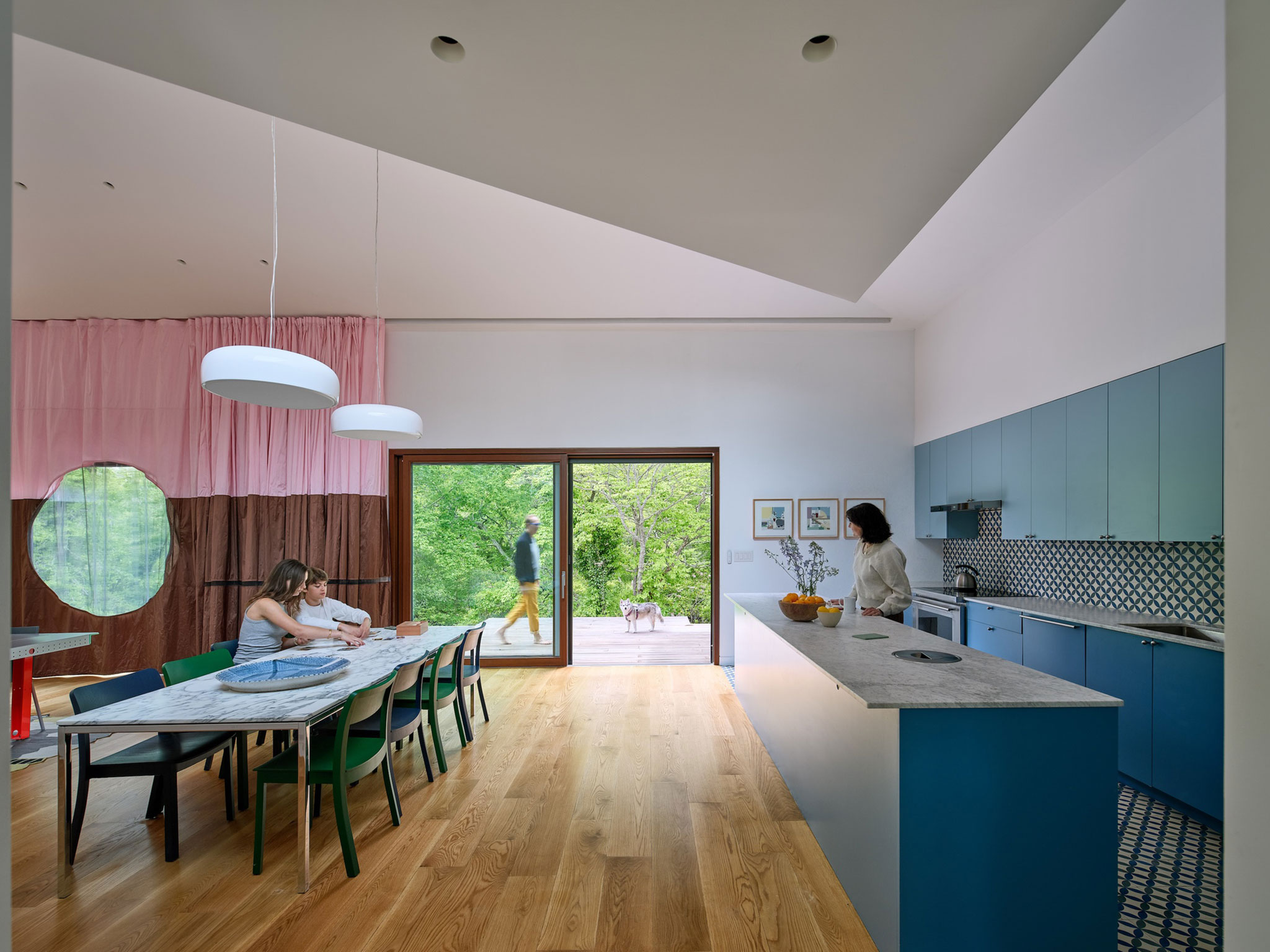
The geometry of the roof generates a sequence of changing spatial conditions inside the house, where varying ceiling heights create distinct domestic atmospheres. This configuration culminates in a central double-height space that establishes a direct relationship between the family’s daily life and the surrounding views of the river and forest. At the same time, strategically positioned windows encourage cross-ventilation and frame shifting views of the landscape throughout the day and across the seasons.
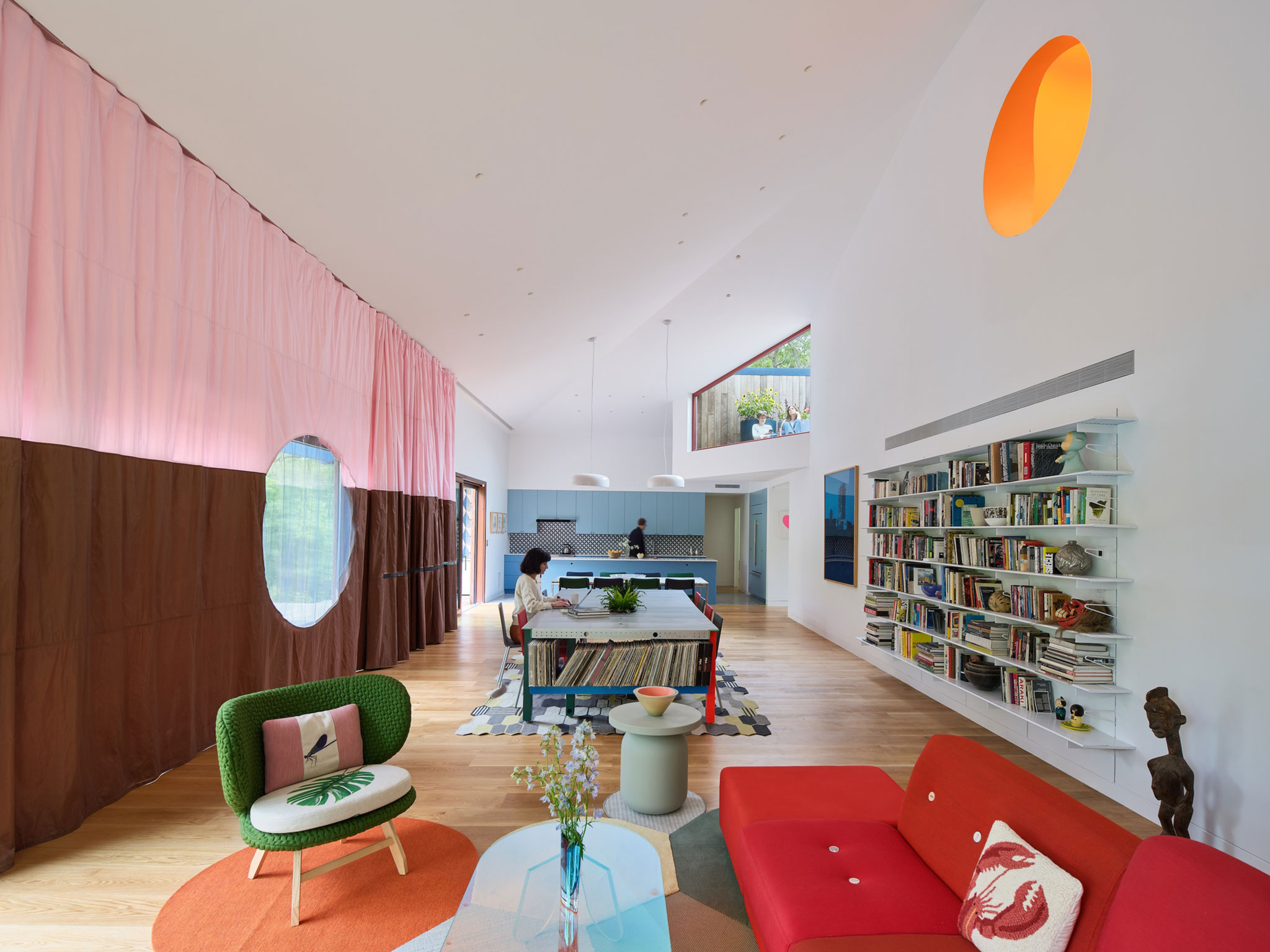
Riverhouse by WORKac. Photograph by Bruce Damonte.
Petra Blaisse designed a spectacular curtain spanning the living room, modulating light, privacy, and the seasonal atmosphere, while the artist Austėja Walter created the linen curtains for the bedrooms.
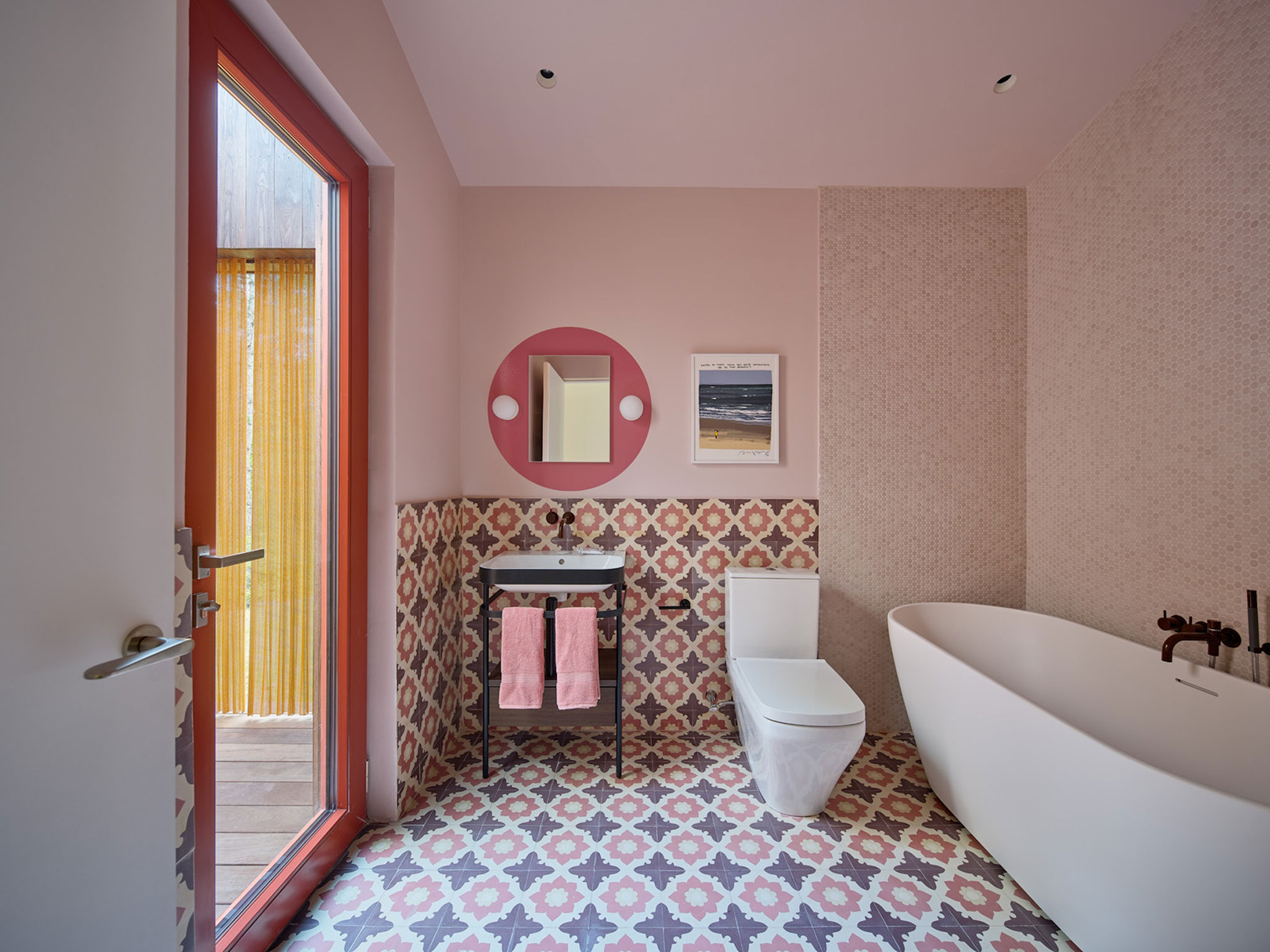
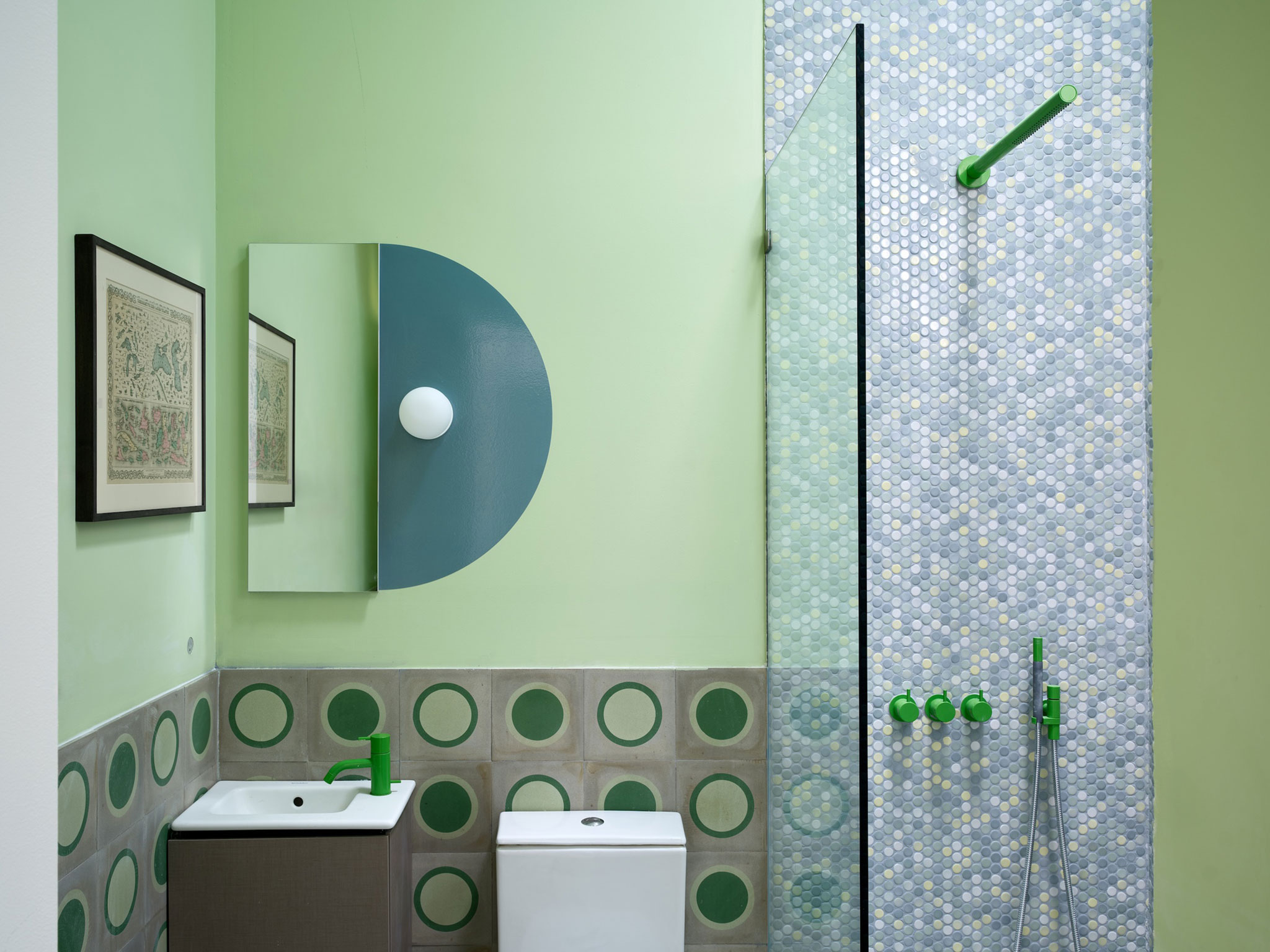
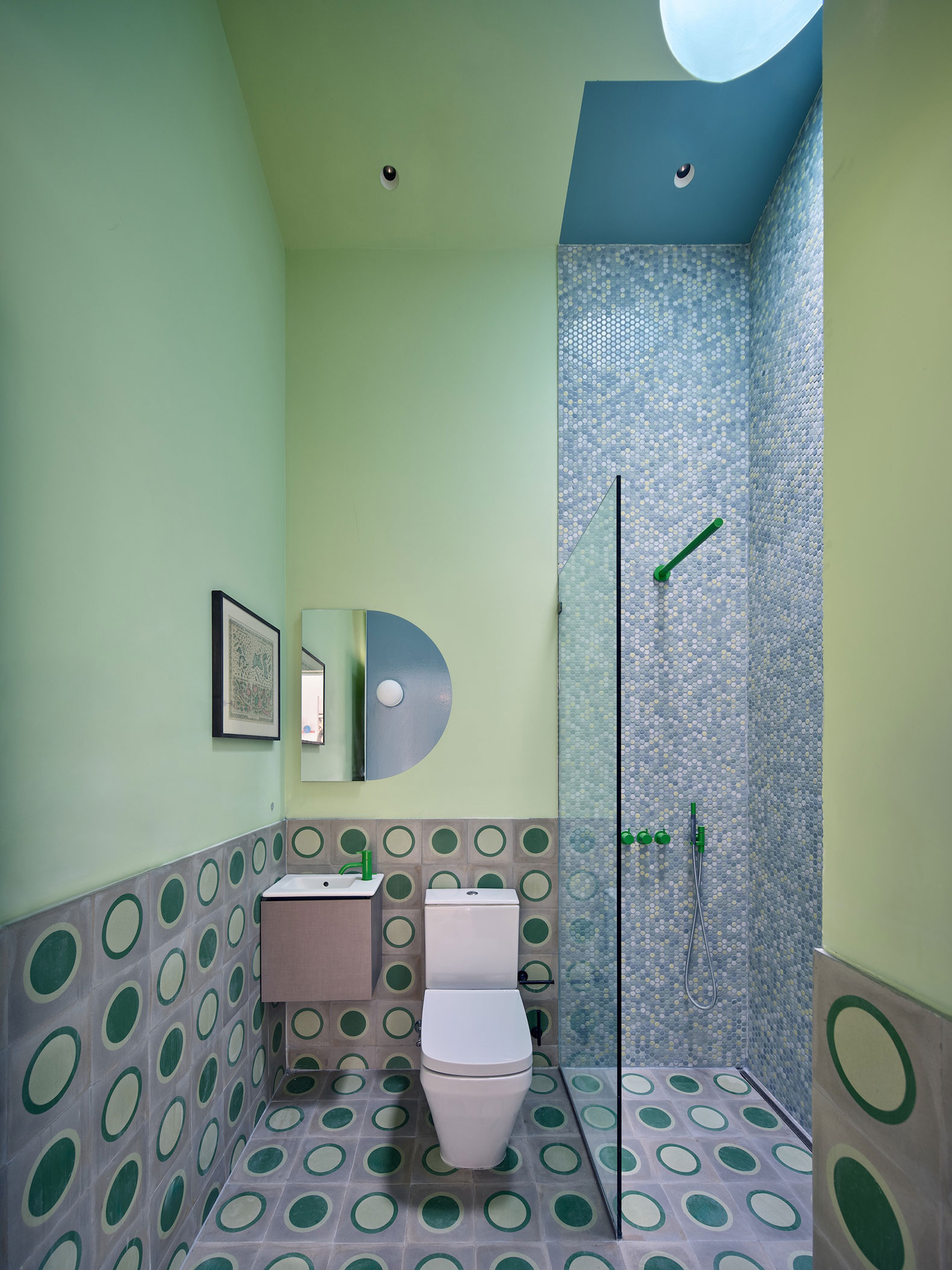
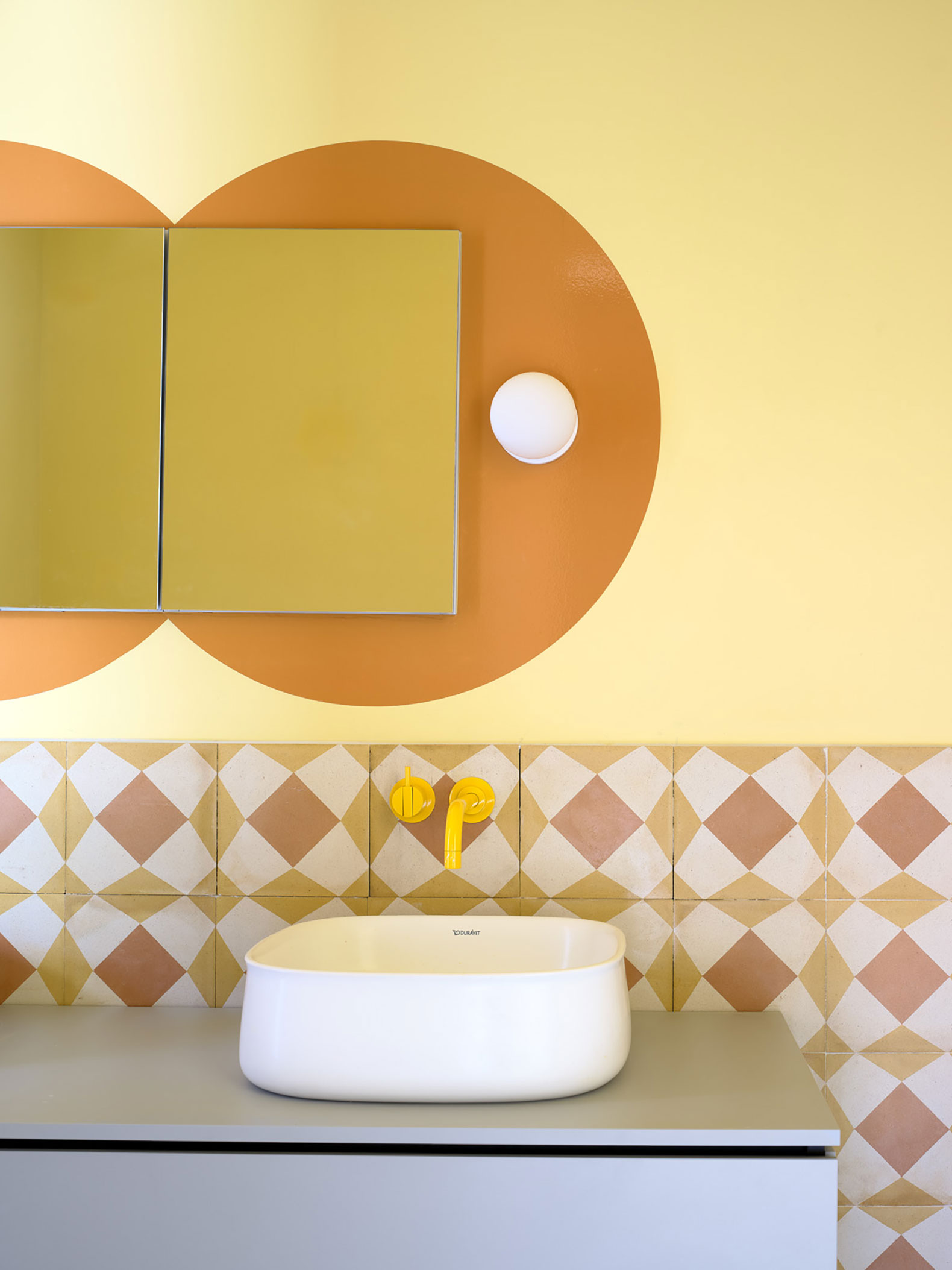
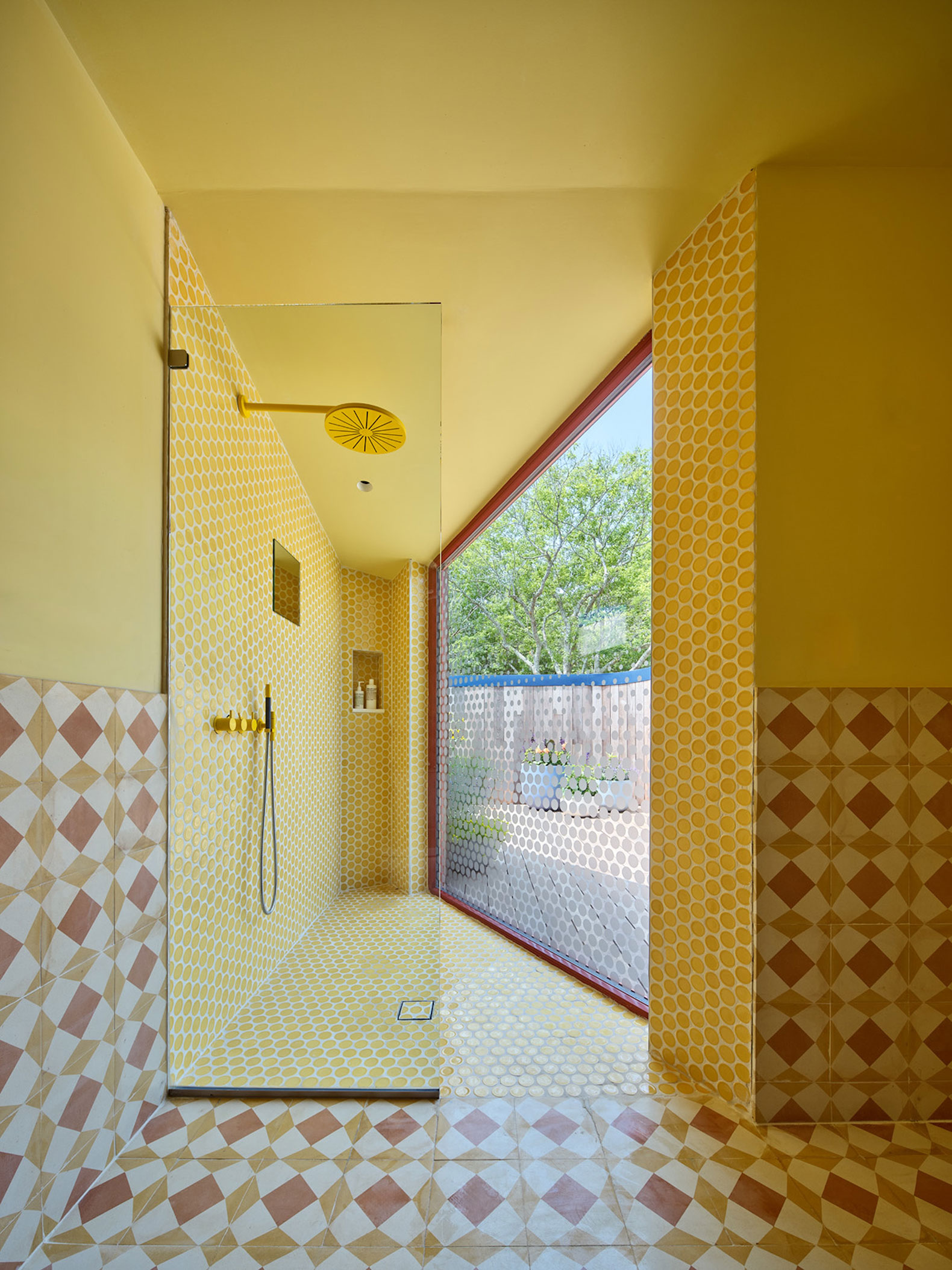
The house also incorporates a significant collaborative dimension. A custom dining table designed by MOS Architects organizes the main gathering space, blurring the boundaries between furniture and architecture. In addition, in collaboration with Karim Chaya, a friend of Amale Andraos from her native Lebanon, the project incorporates tiles featuring traditional Lebanese motifs that introduce additional layers of cultural memory and ornamentation into the house interior.
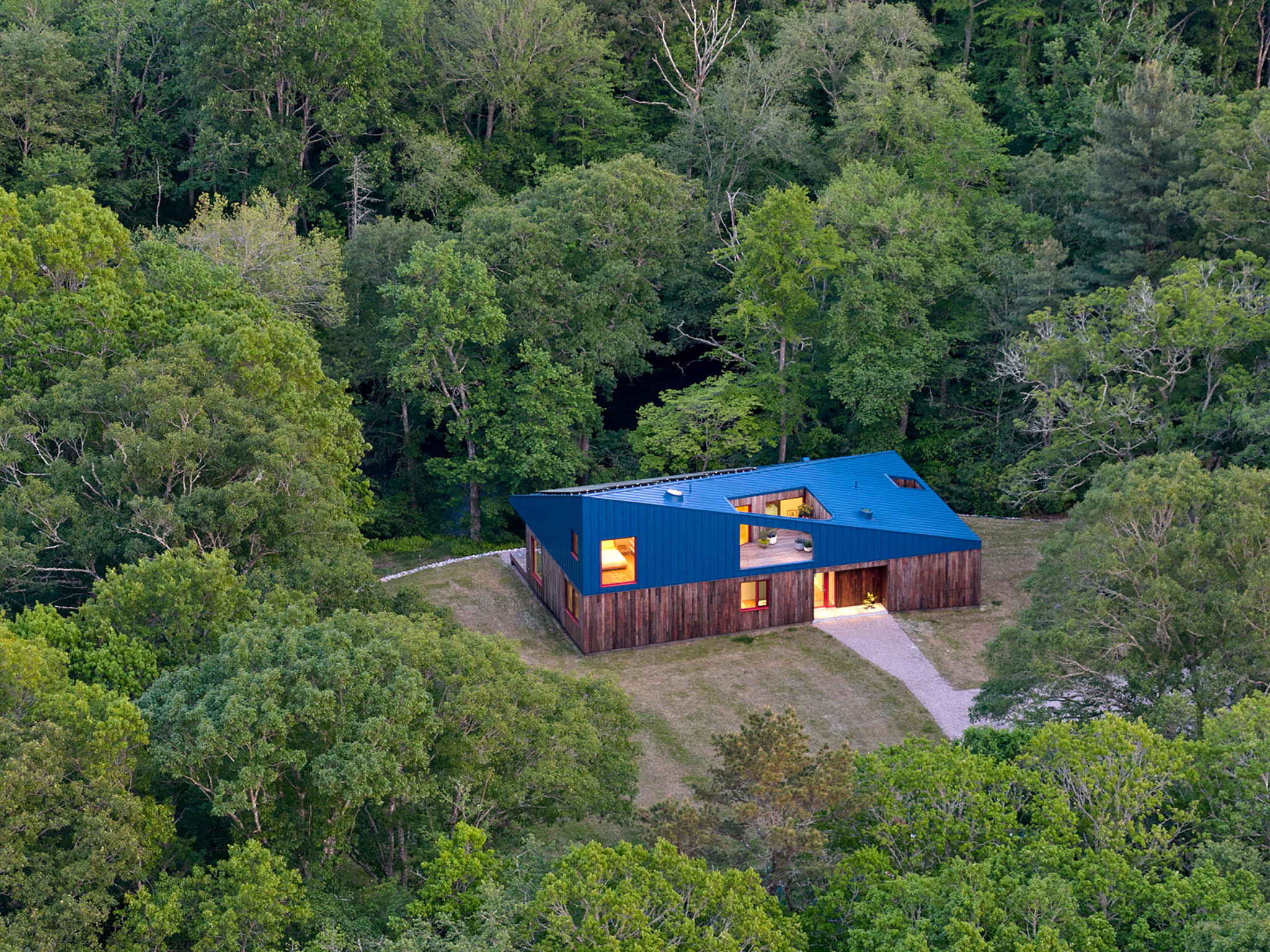
Riverhouse by WORKac. Photograph by Bruce Damonte.
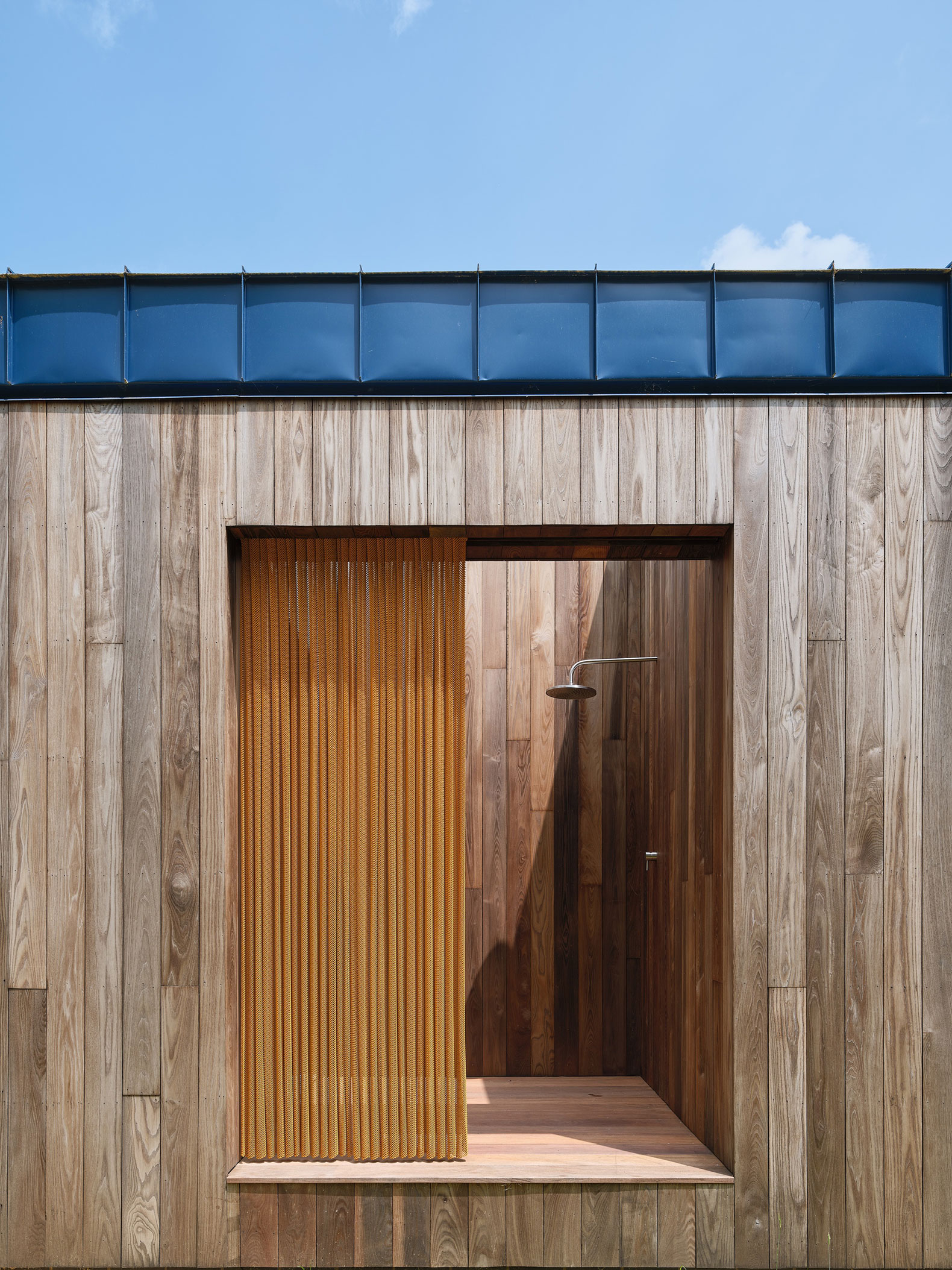
The resulting house meets the demanding energy-performance standards of Passive House design. Triple-glazed windows, rooftop photovoltaic panels with battery storage, and 35 cm insulated walls allow the house to operate year-round entirely on electricity, dramatically reducing its environmental impact. The exterior is clad in thermally treated ash wood, handmade Lebanese tiles introduce touches of color and pattern, and unfinished plywood surfaces define parts of the interior.
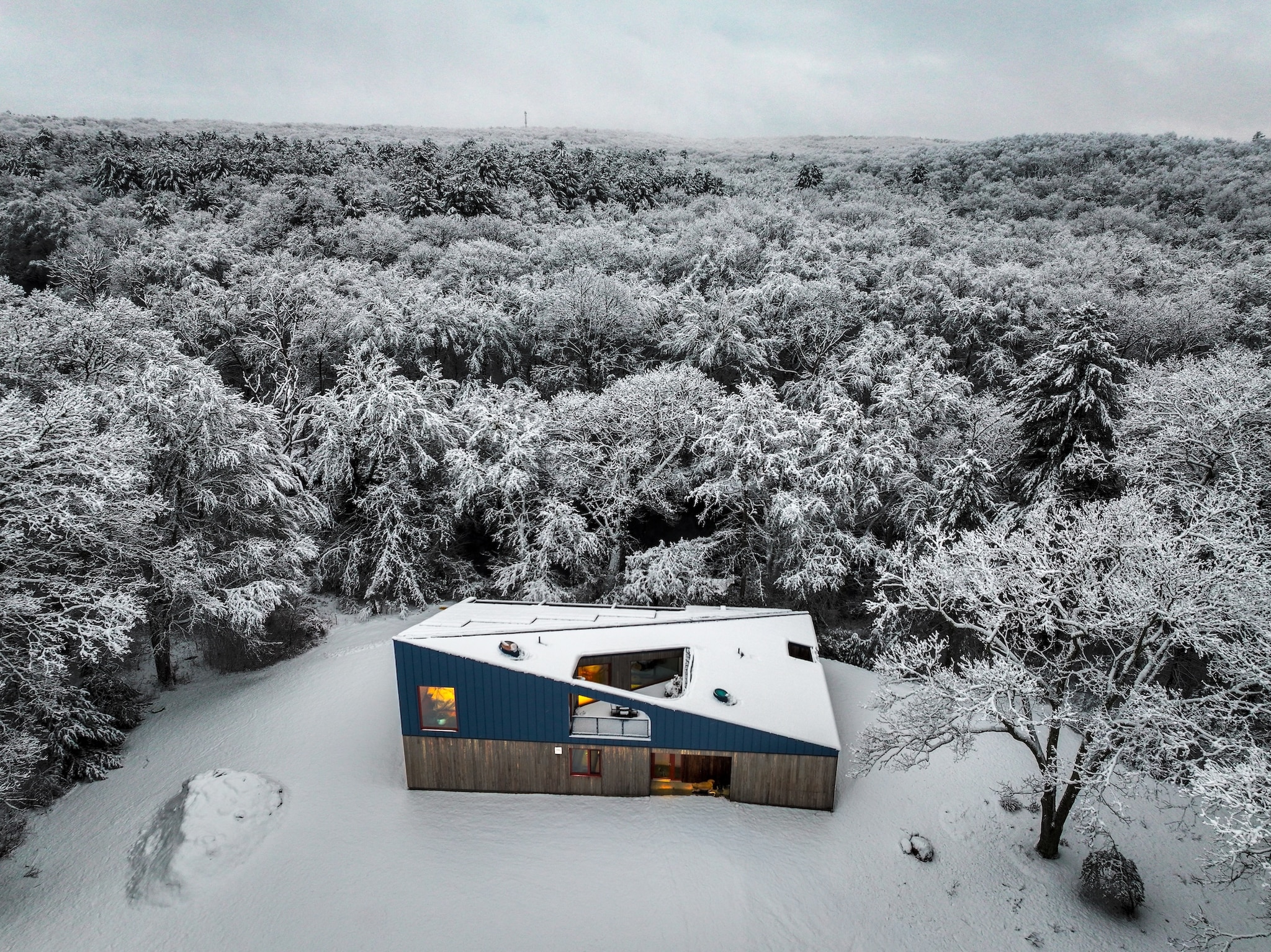
Riverhouse by WORKac. Photograph by Bruce Damonte.
Beyond its condition as a single-family residence, the project can be understood as a contemporary domestic prototype that explores how architecture can simultaneously respond to issues related to climate change, communal life, and transformations in everyday living. In this sense, the house belongs to a long tradition of architects designing homes for themselves as spaces of research and experimentation, using the domestic realm as a laboratory for testing new ways of living with greater ecological awareness and collective imagination.