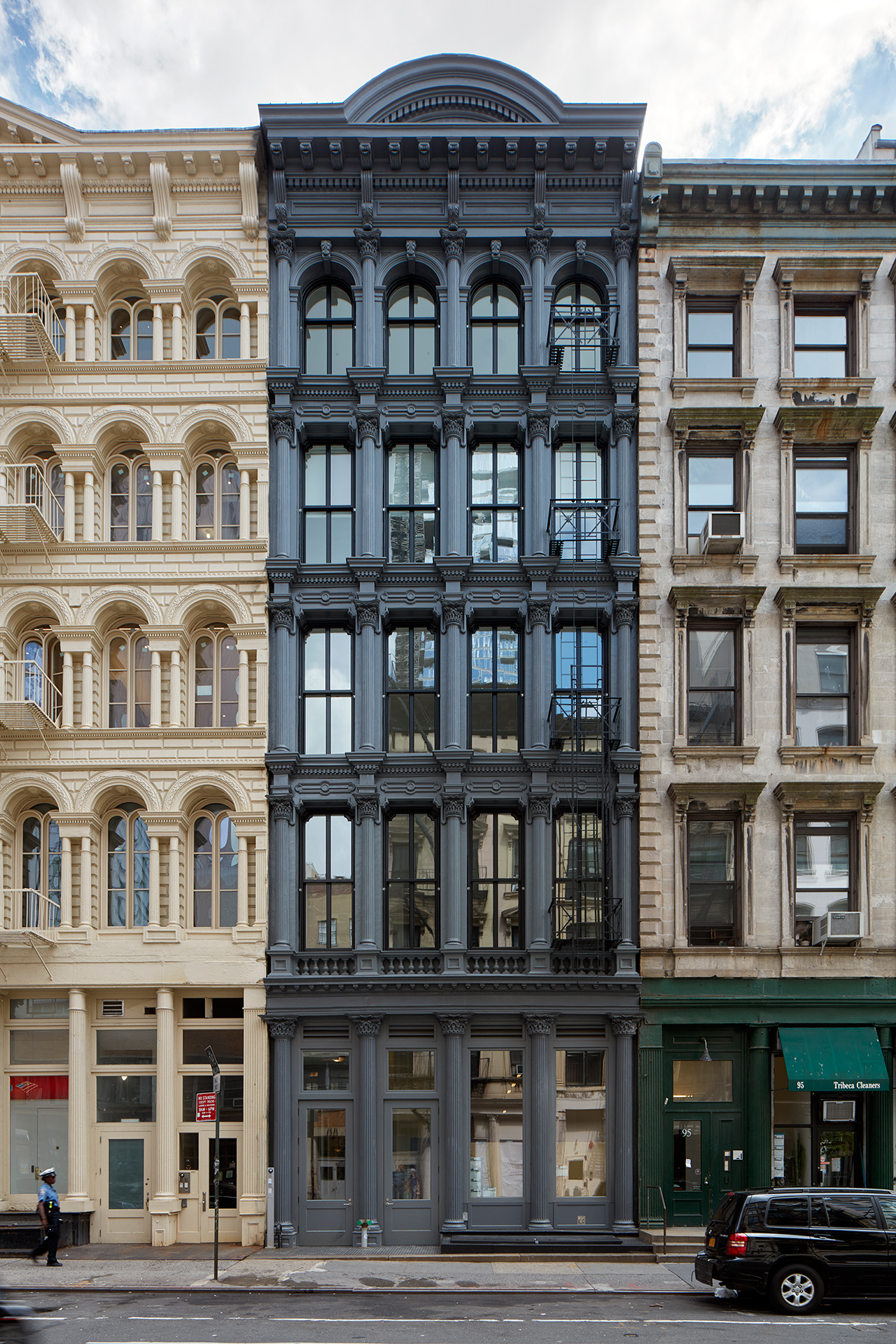
This building known as the Obsidian House was built in 1857 by one of New York’s most prominent families, becoming one of the first cast-iron buildings in the City's downtown. Today - thanks to its renovation in 2015 - the Reade Street building has reemerged and is once again one of Tribeca’s most striking residences.

In 2015, the cast iron building at 93 Reade Street was redesigned by the WORKac firm, run by the married architects Dan Wood and Amale Andraos. Now, the new Obsidian House is a 10,000 square foot loft renovation and penthouse addition, which have been updated in a way that honors its rich history. The design responds both the existing 5-storey structure and its context. The architects has implemented innovative alternatives to very complicated problems and they have proposed spaces which are provided with lots of opportunities. 
 

Project description by WORKac

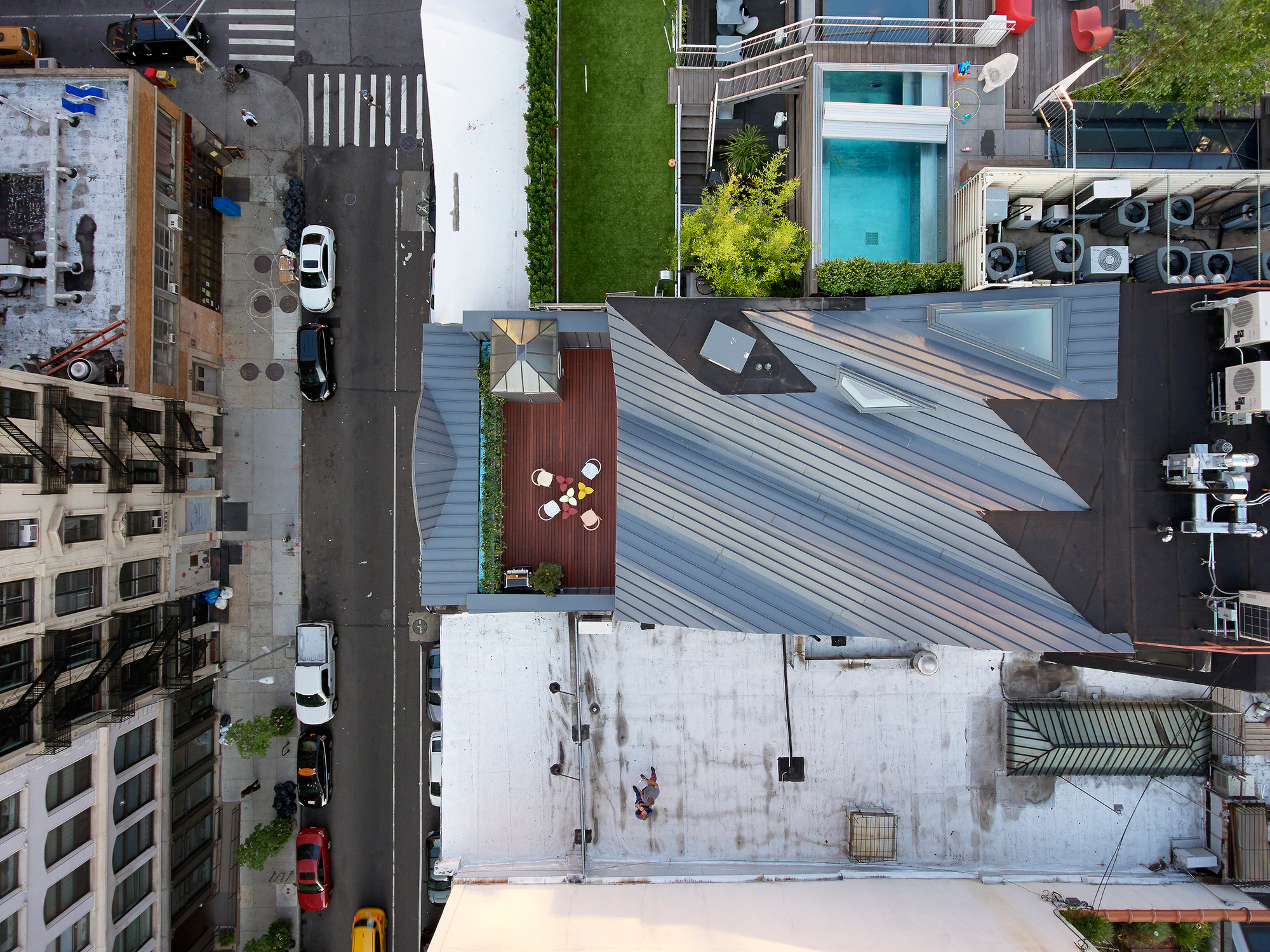
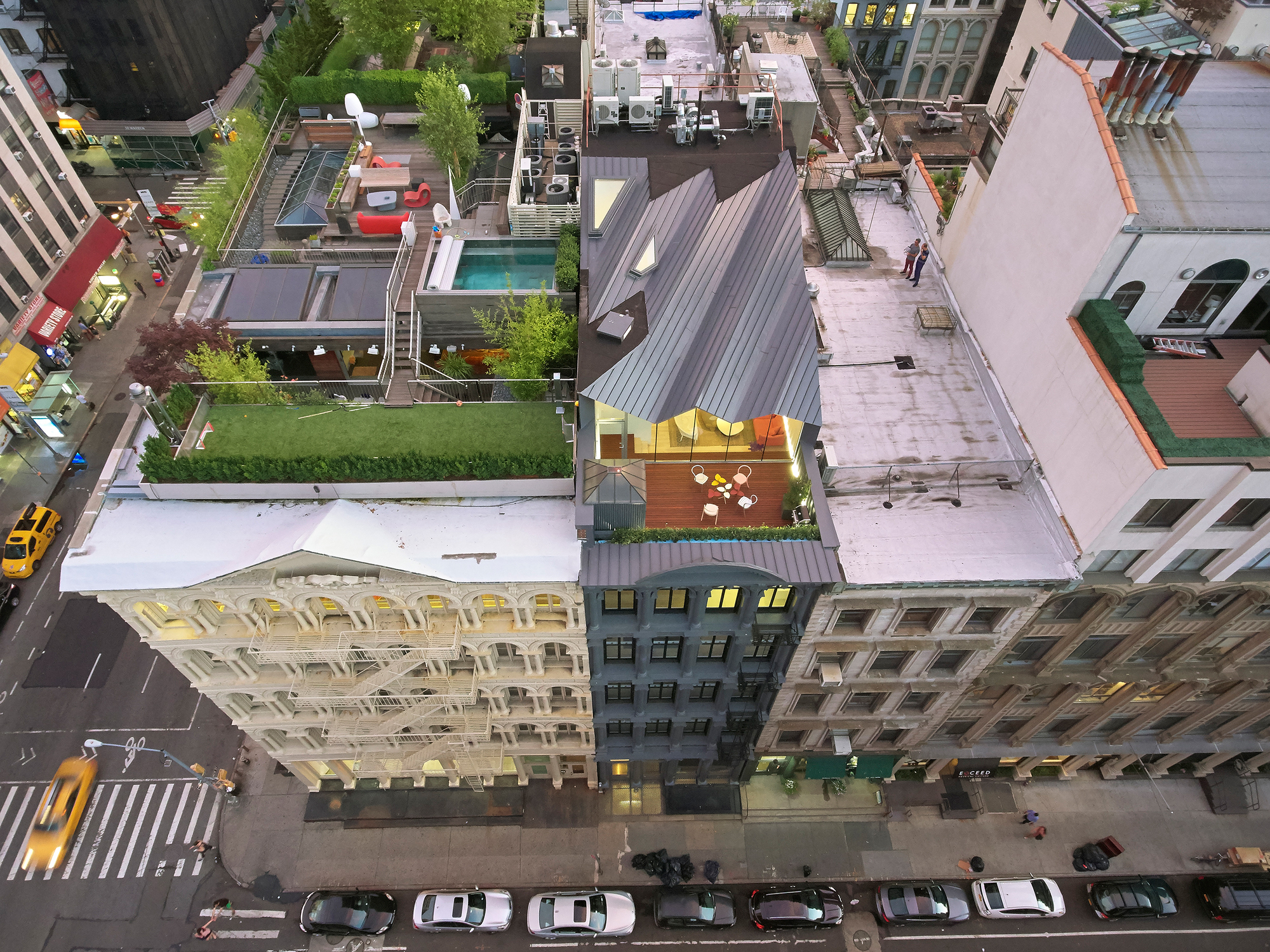
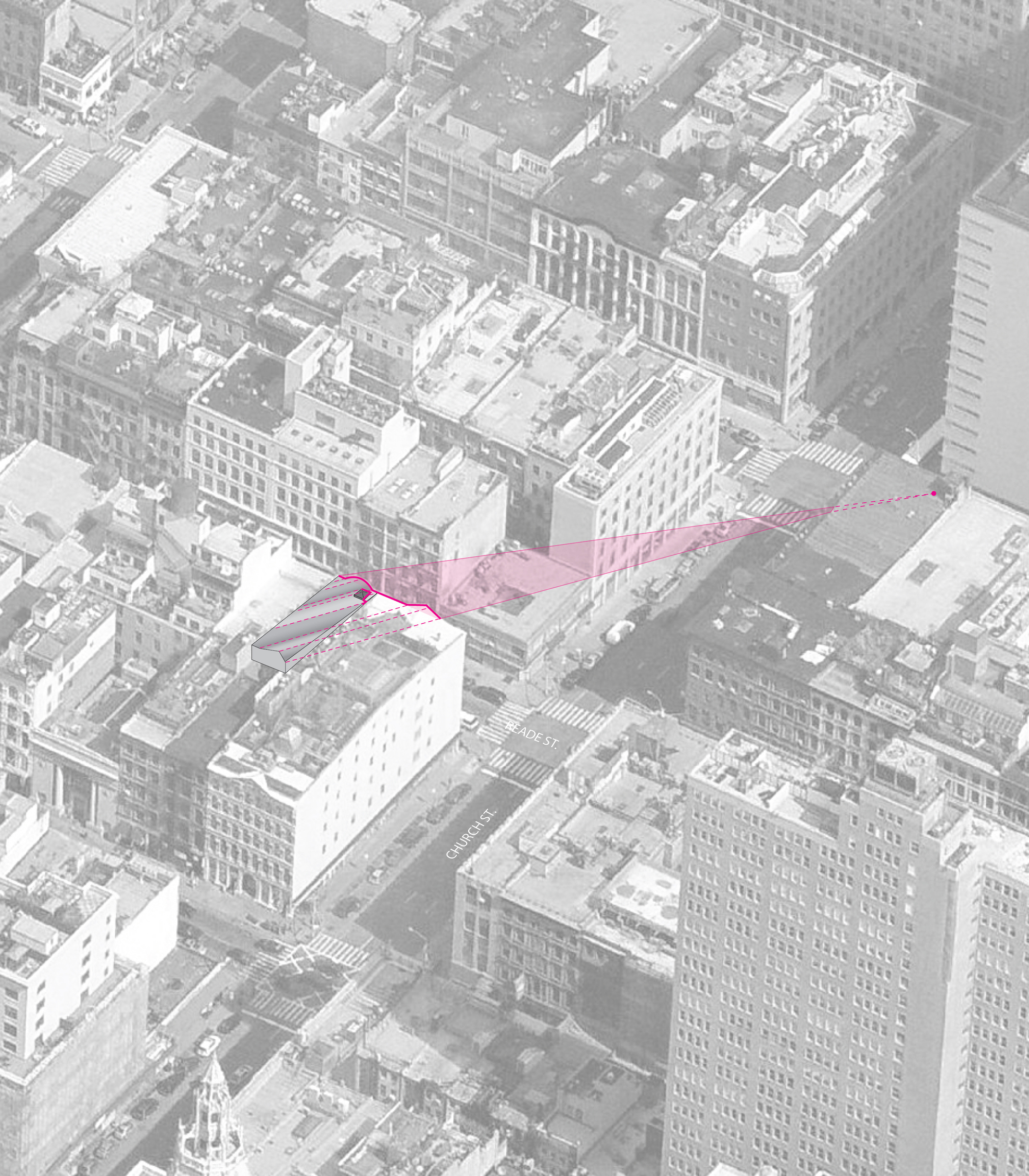
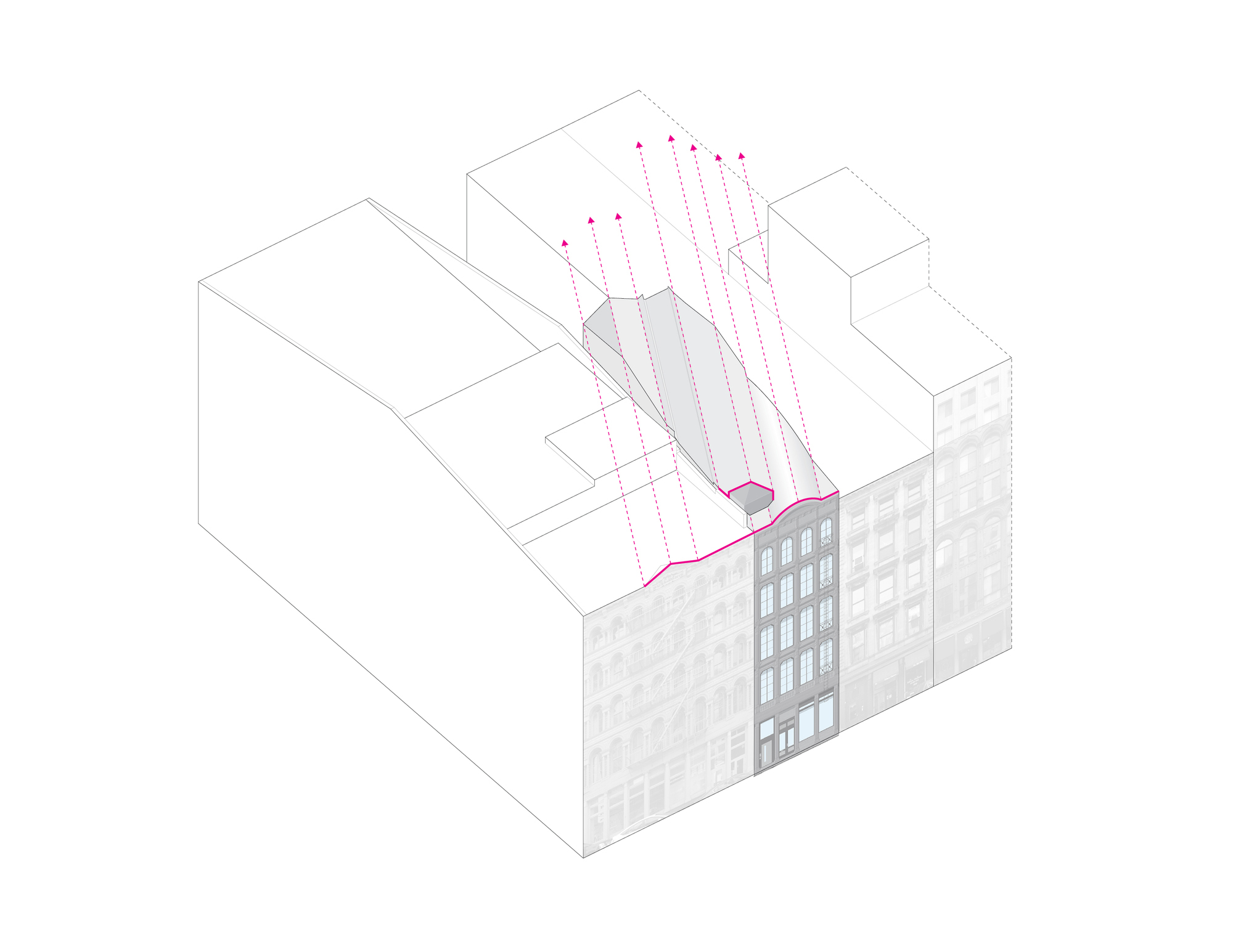
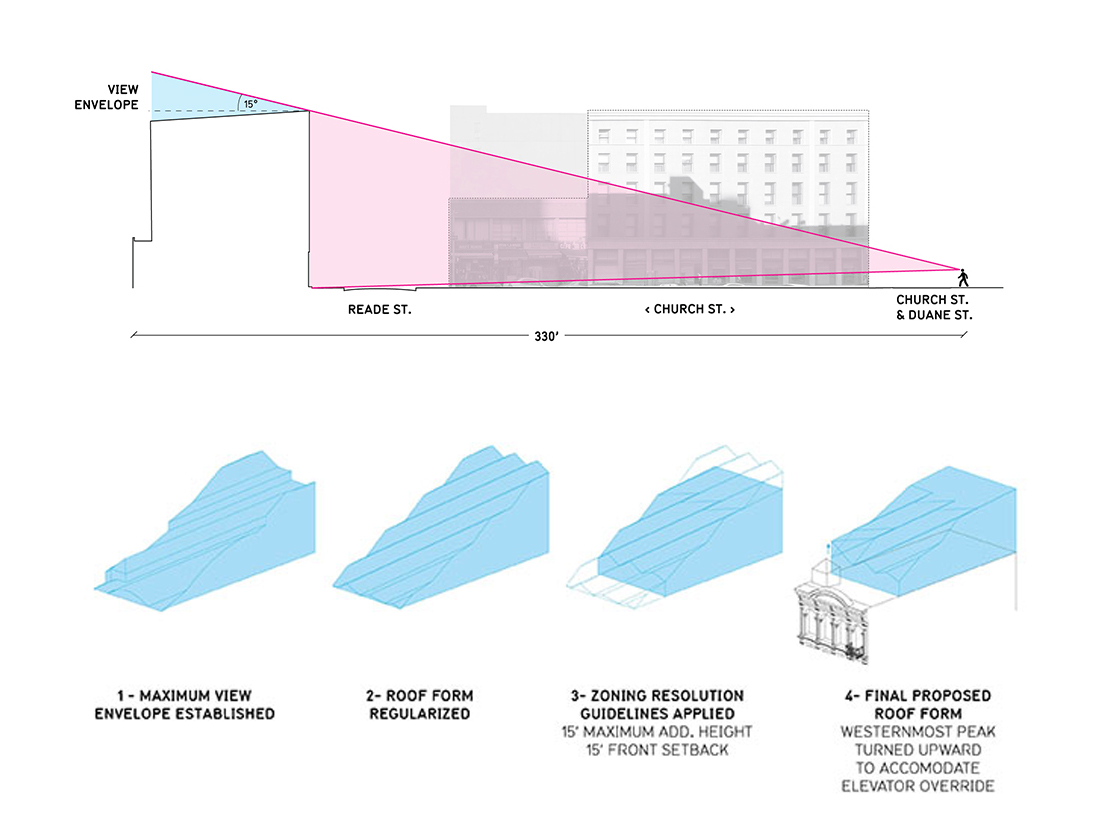
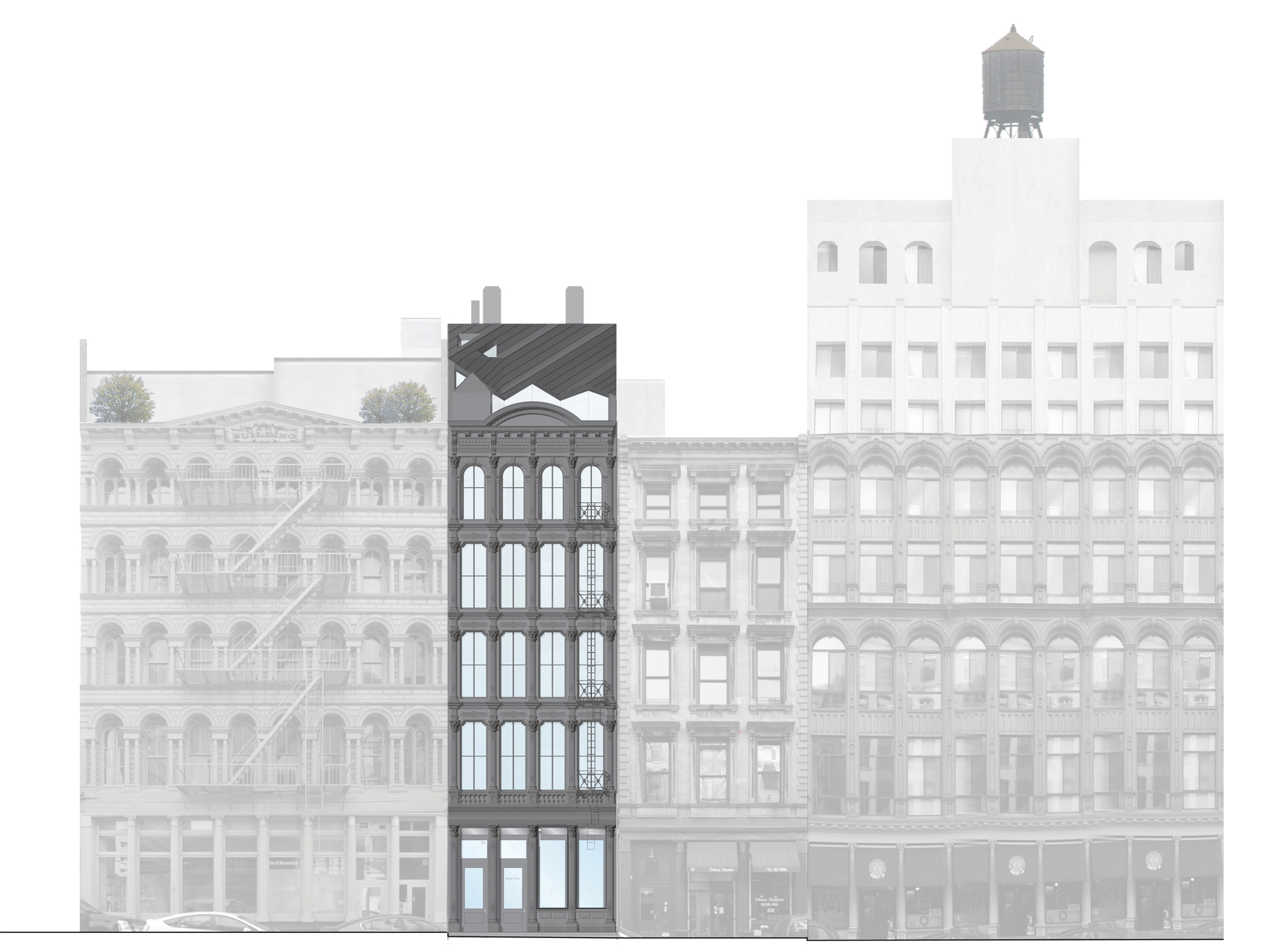
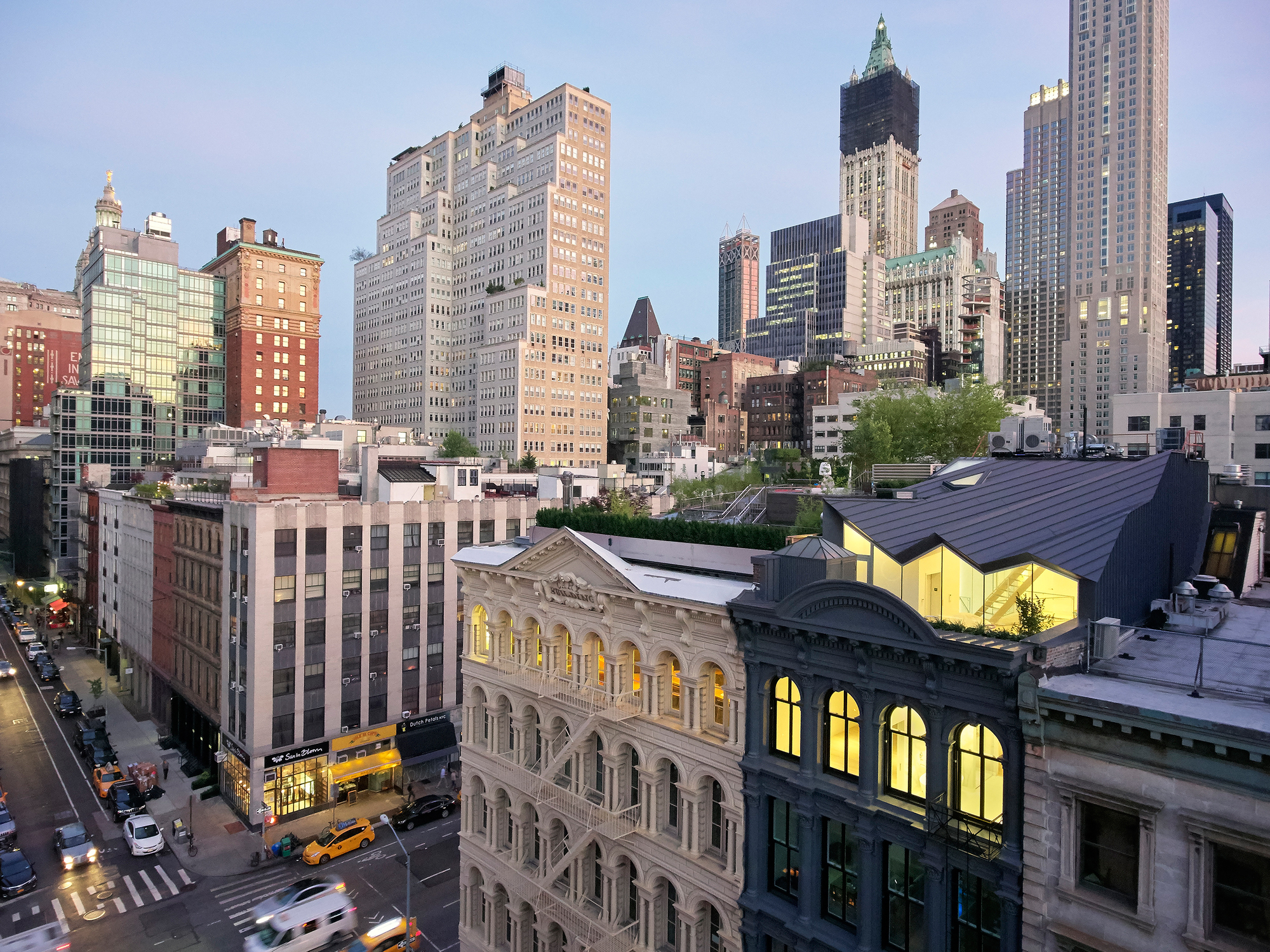
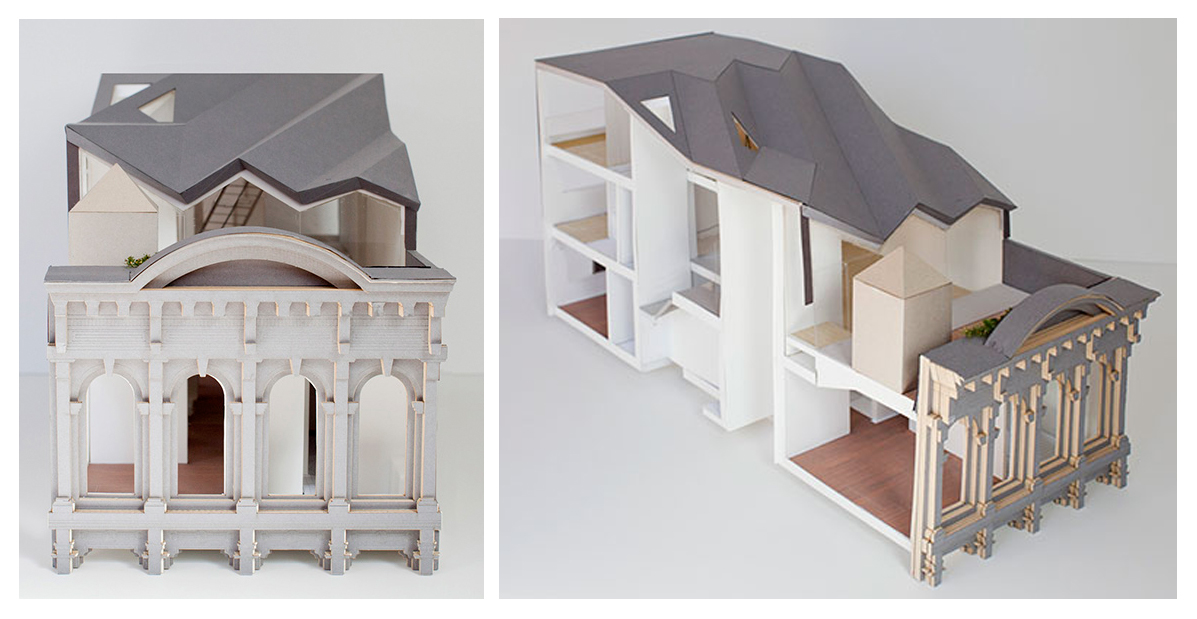
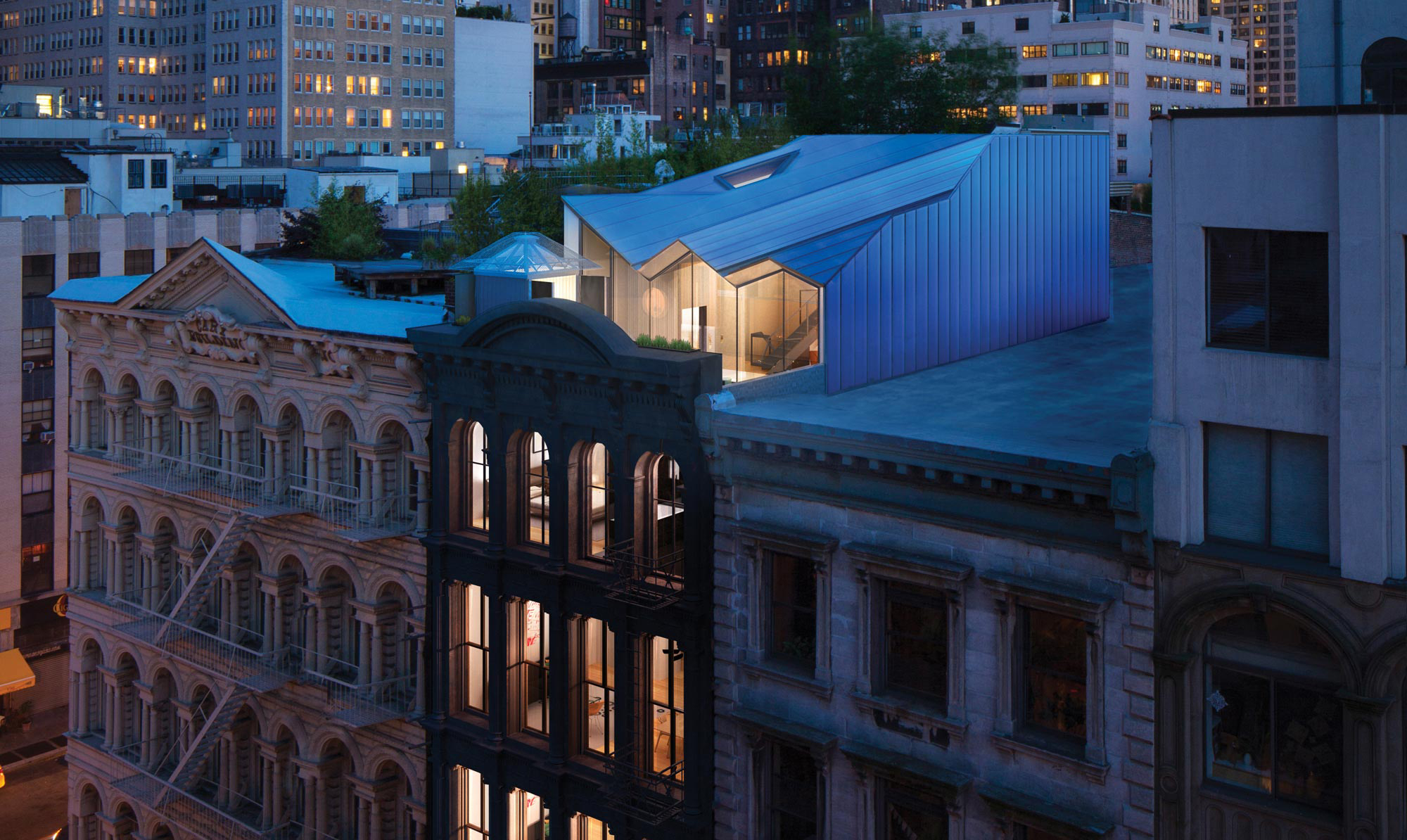
This residential development consists of a complete gut renovation and new construction behind one of New York’s most beautiful and oldest cast-iron facades. It required a careful approach to the blending of contemporary architecture with historic preservation. New York City’s Landmarks Commission required any rooftop addition to be invisible. The building, however, is located on a highly-visible corner with a low, two-story building across the street. This meant that the building’s roof was visible from almost three blocks away.

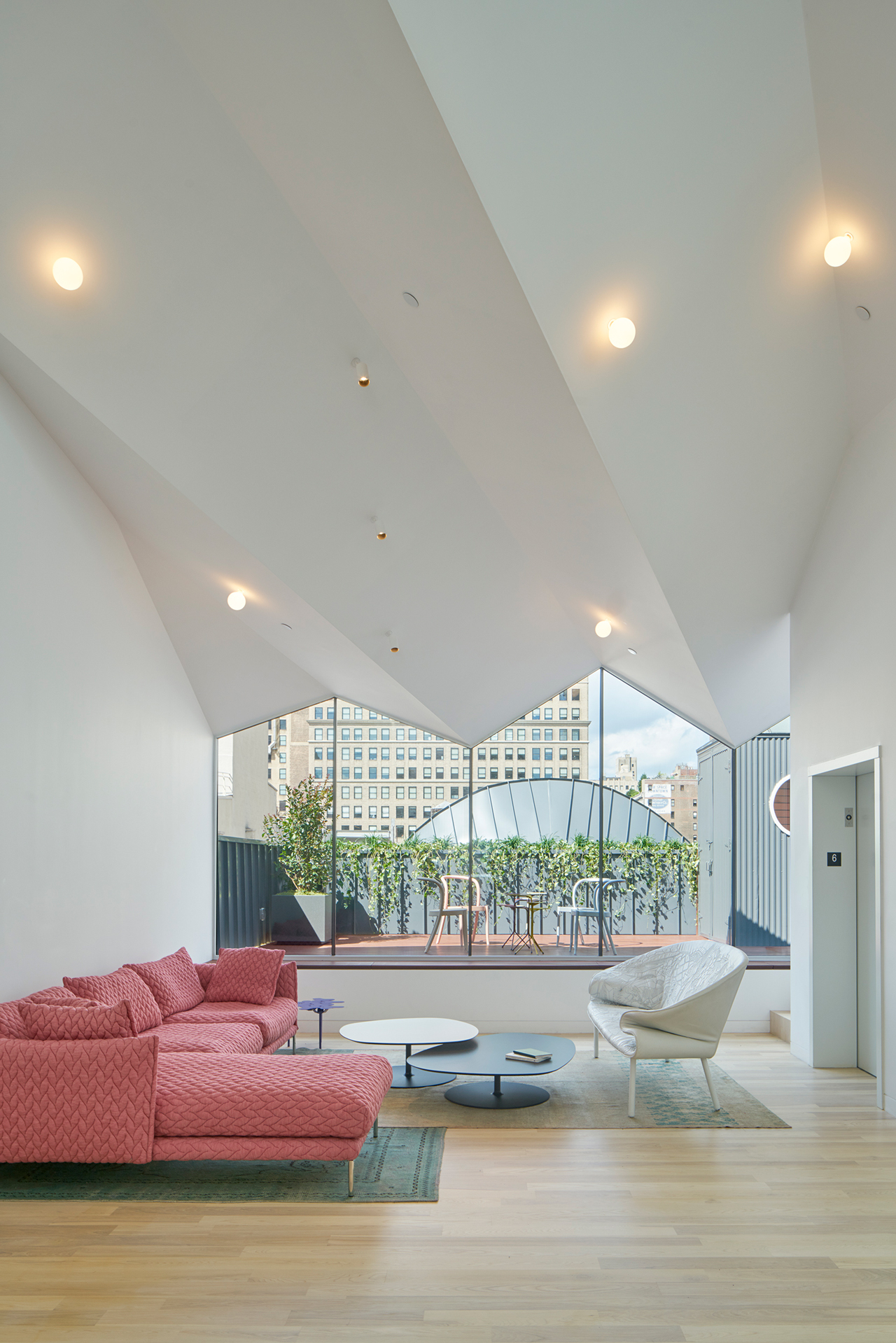
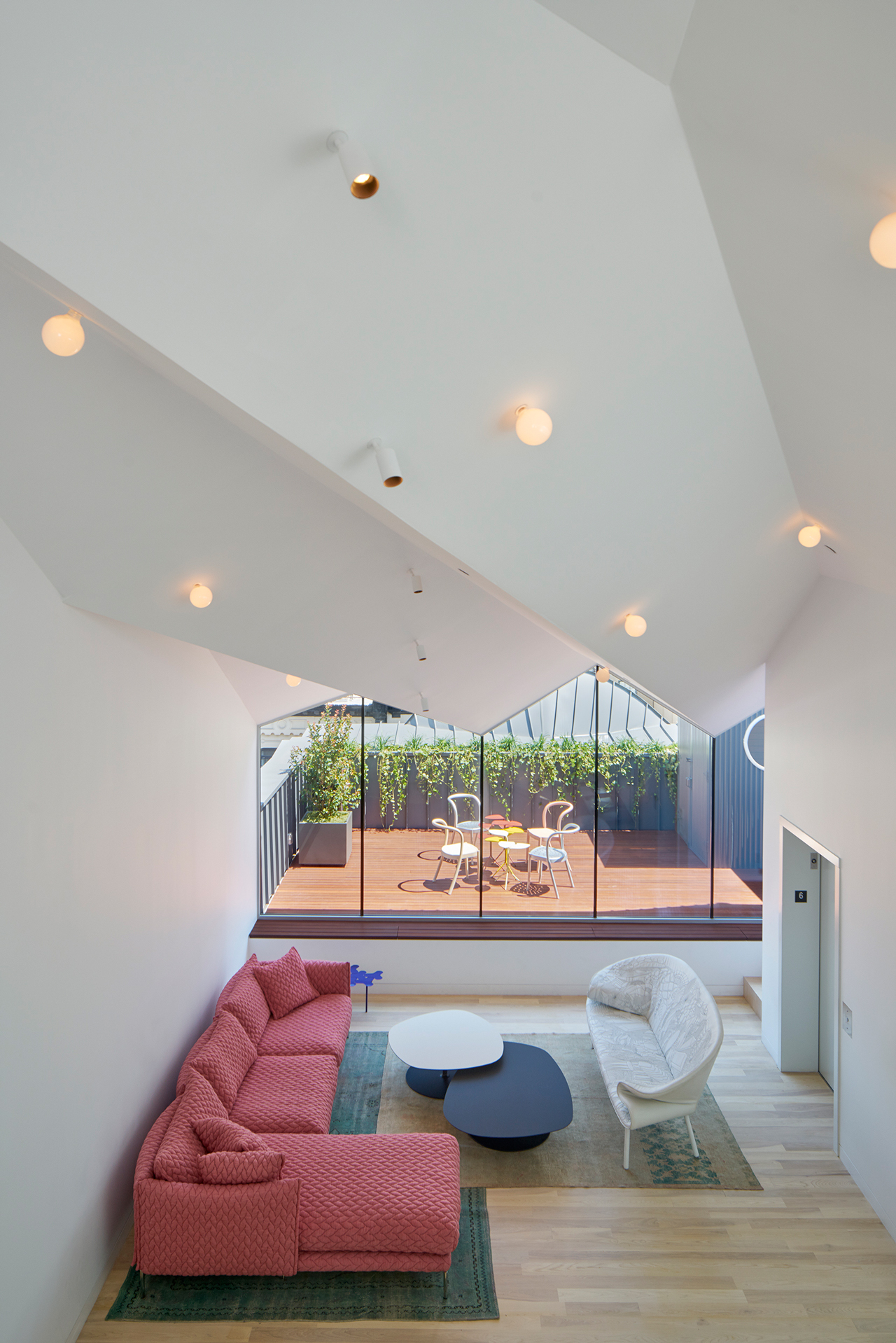
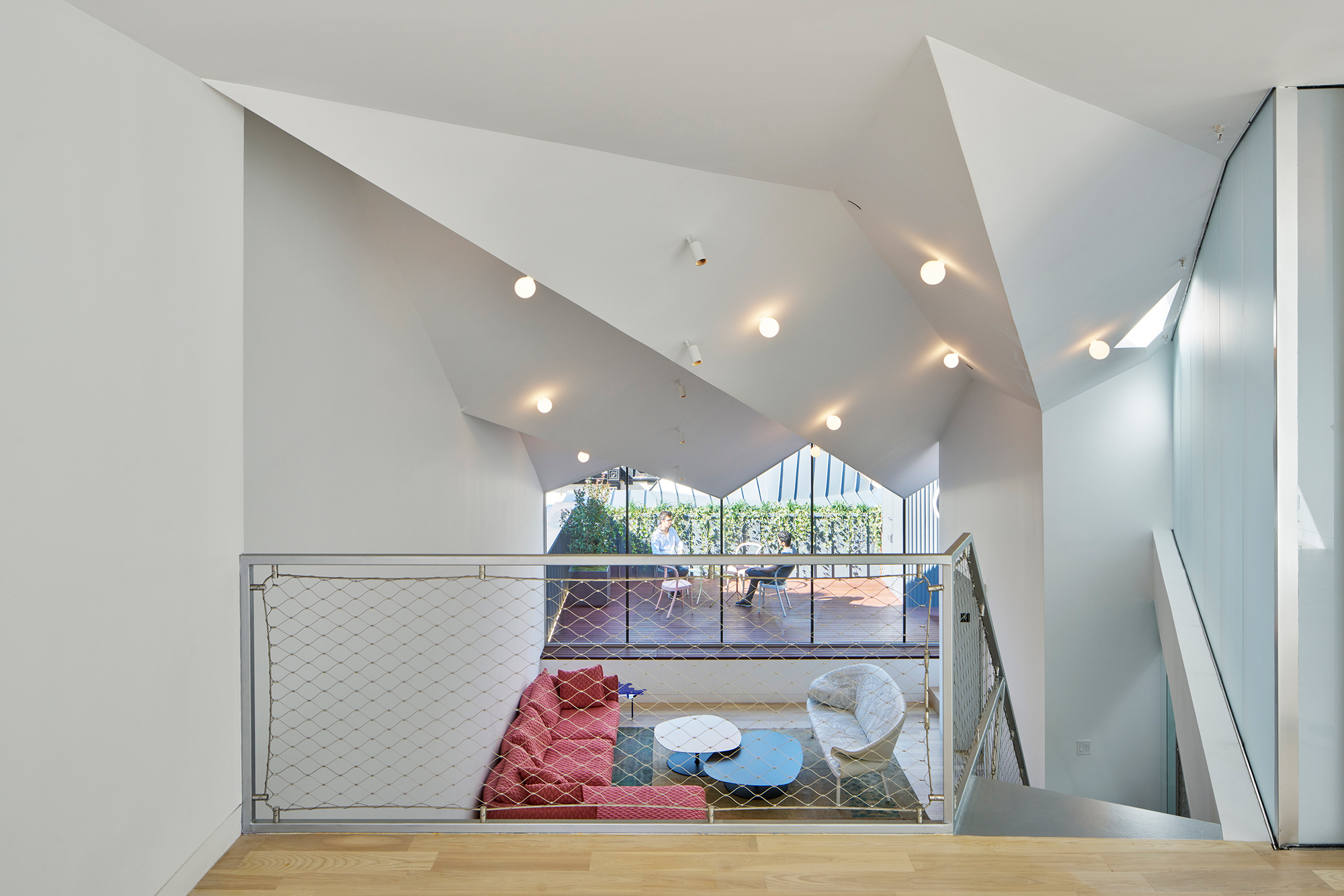
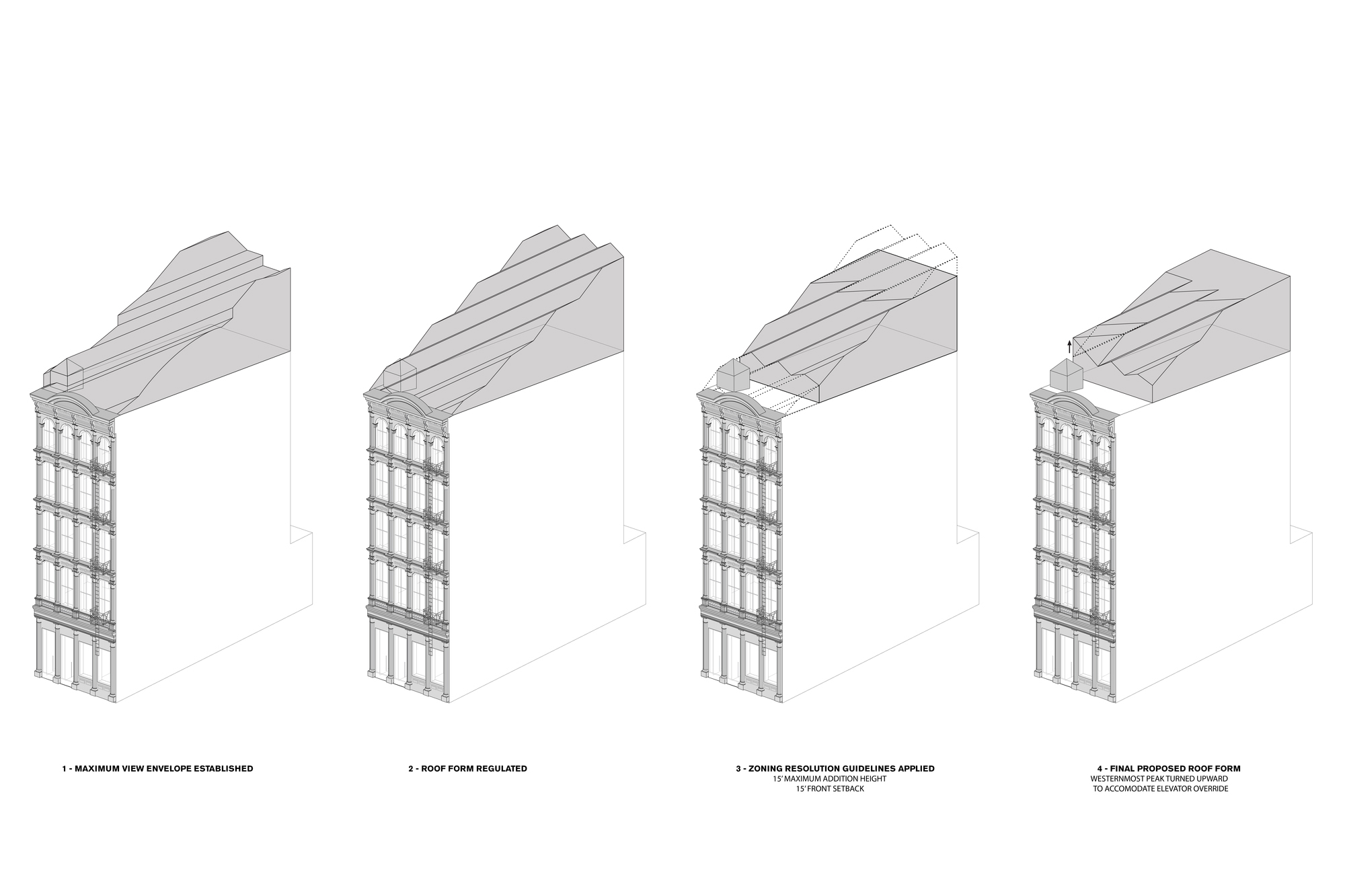
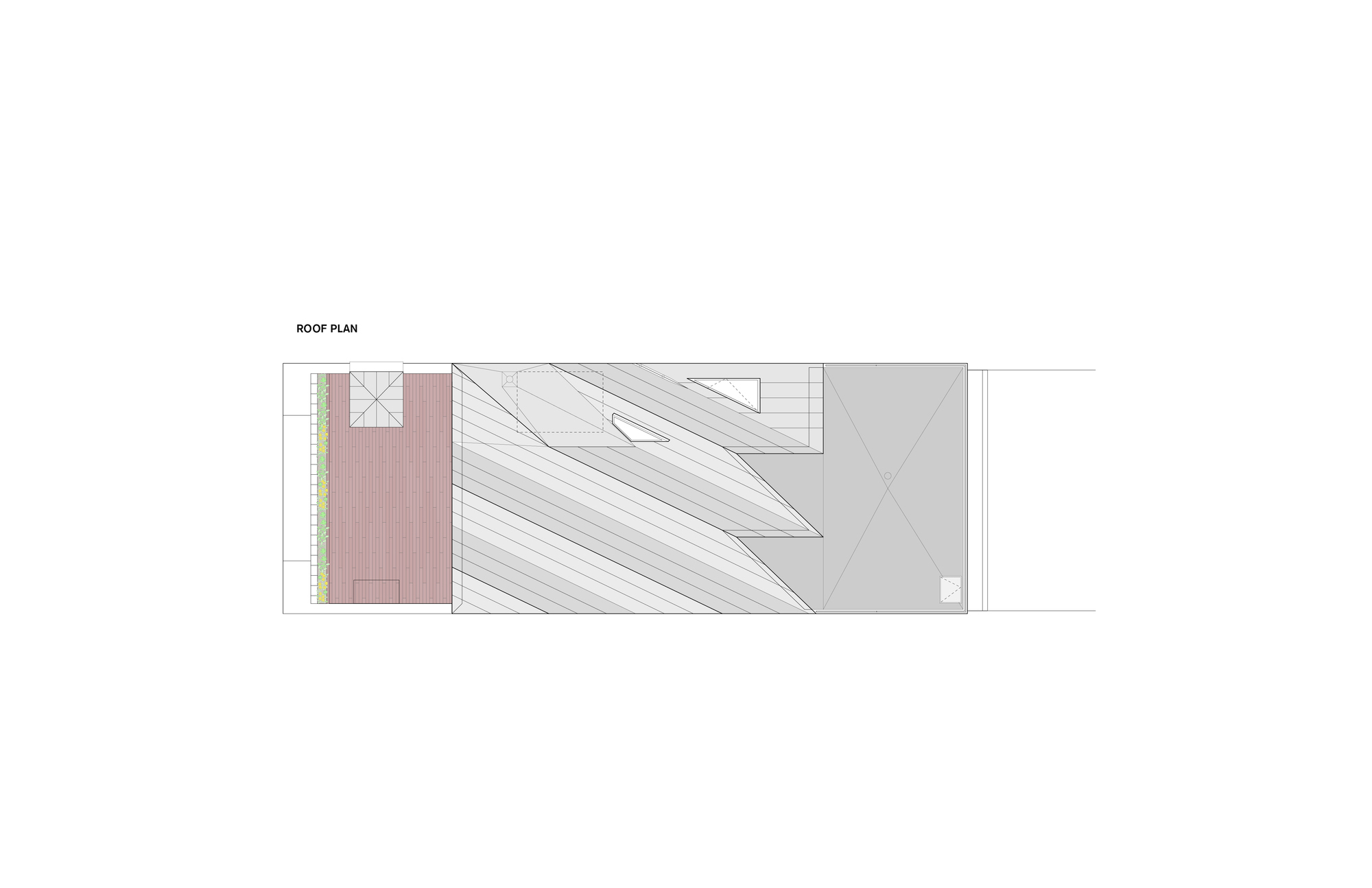
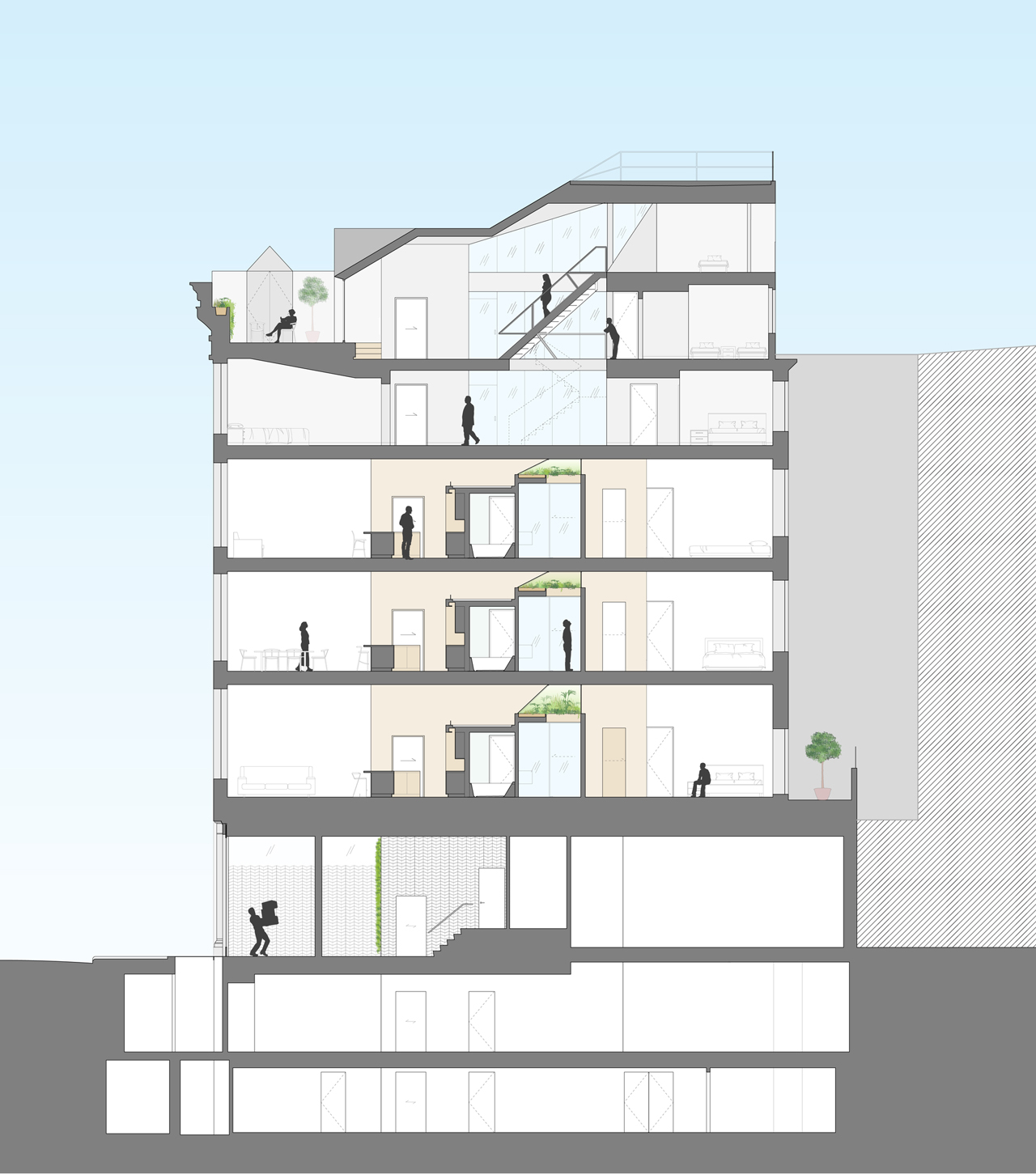
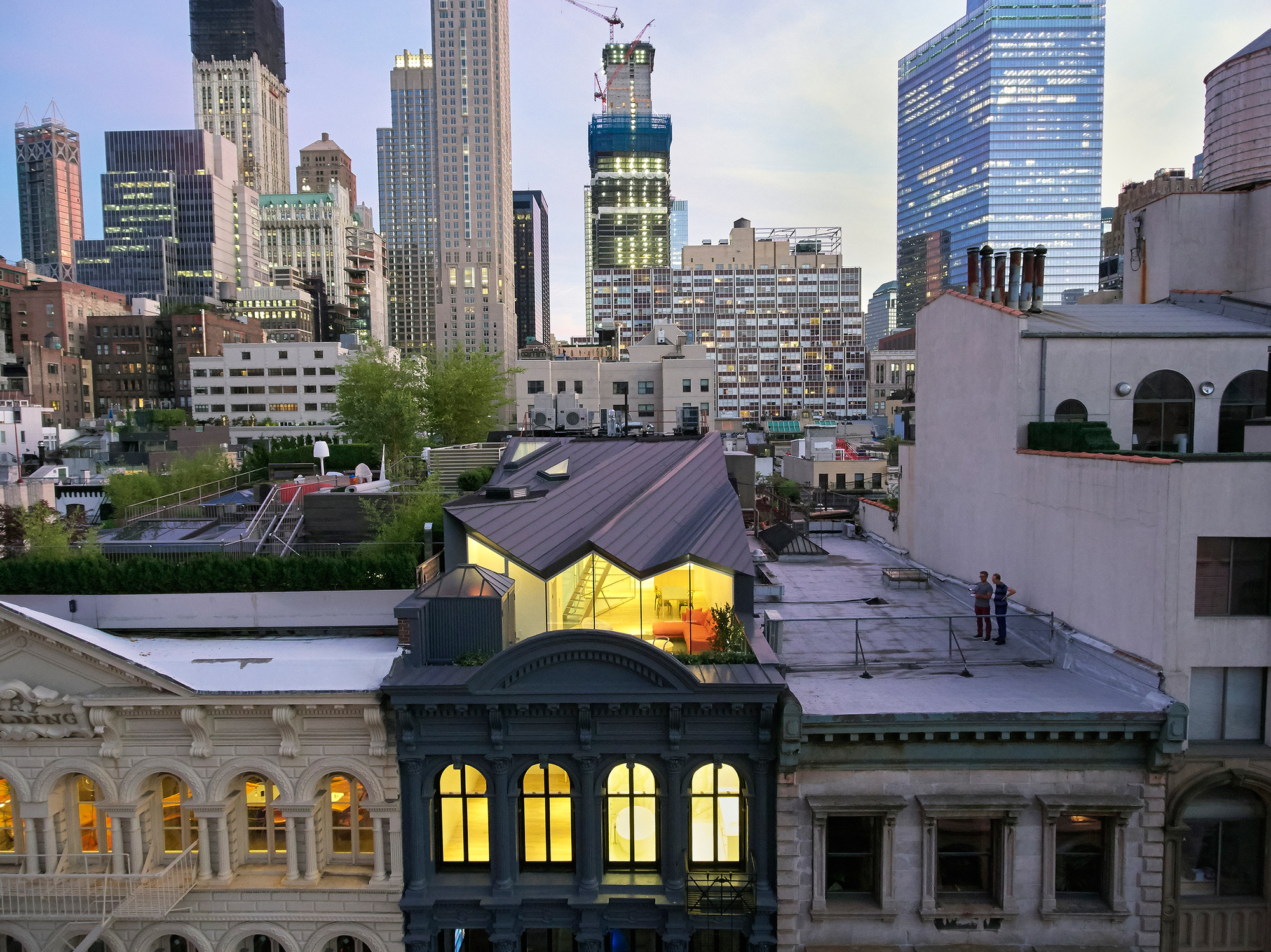
Tracing the cone of vision from the furthest point from which the building was visible, WORKac utilized three rooftop projections to mask the bulk of an addition: the triangular pediment of the historic Carey Building next door, and the circular pediment and an abandoned elevator bulkhead  at the top of the building itself. The “shadow” created by these three projections created a sizeable zone for the addition and the opportunity for a distinctive angled form for the new roof. The result is a sculptural form that is – at the same time – completely invisible from the street below.

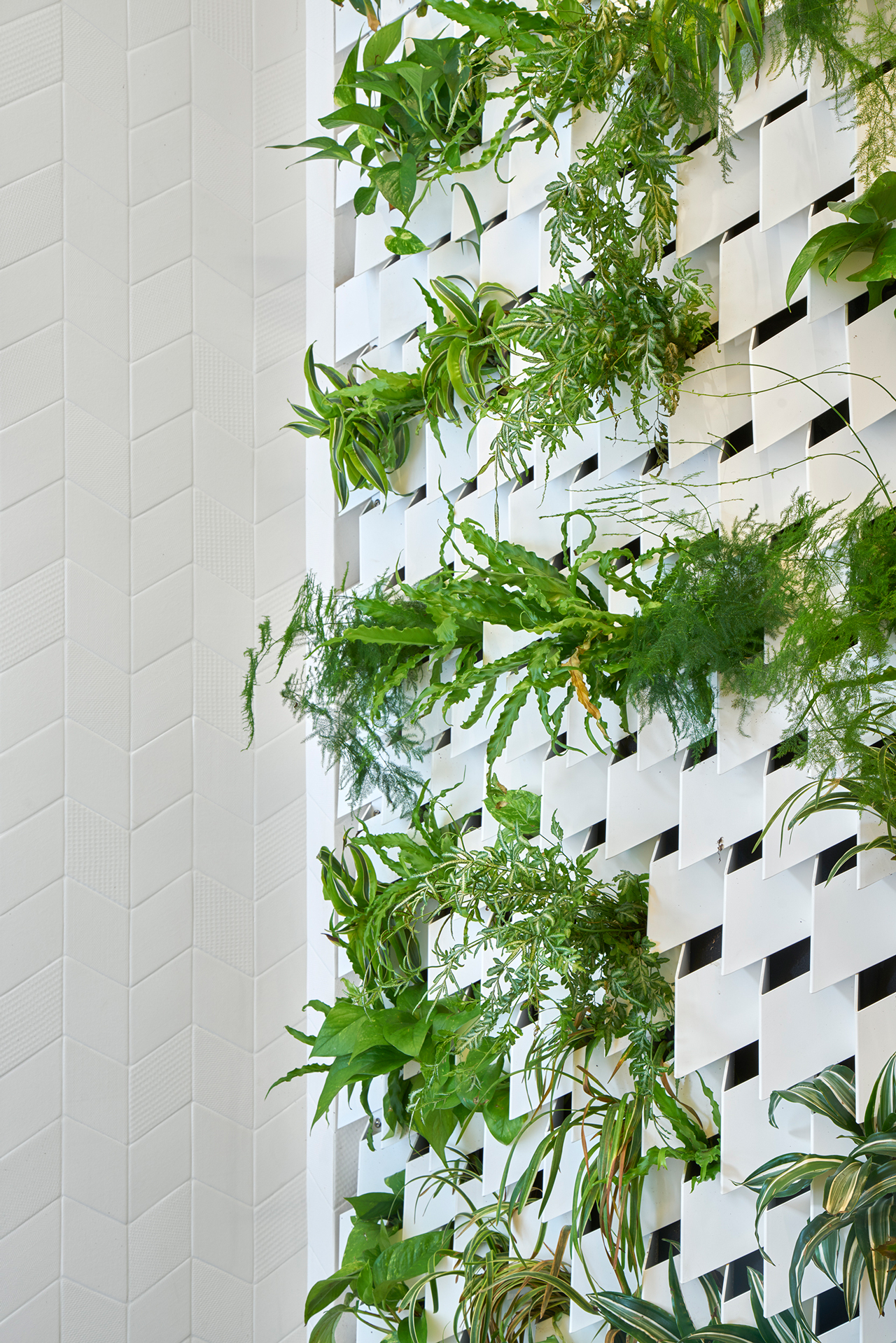
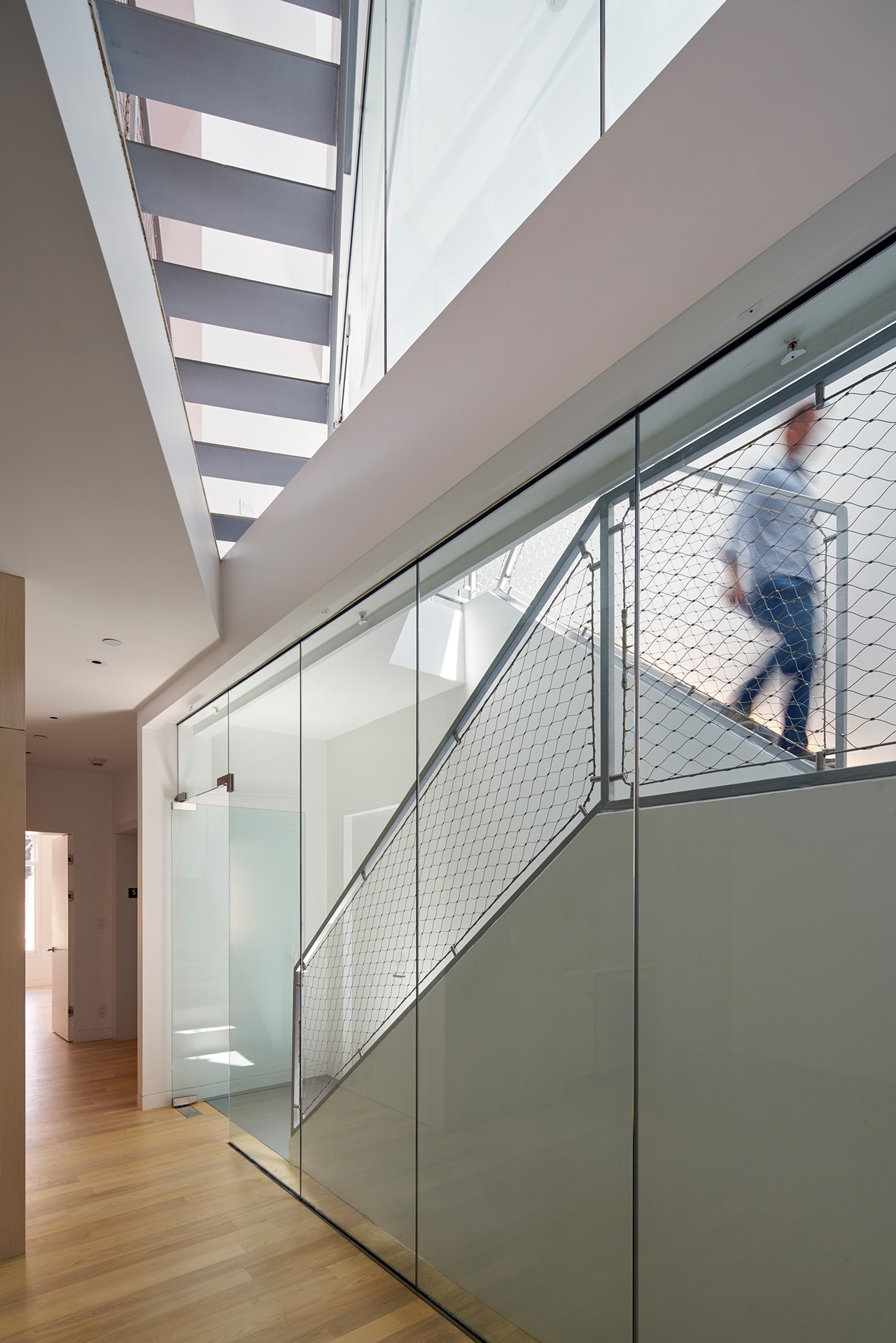
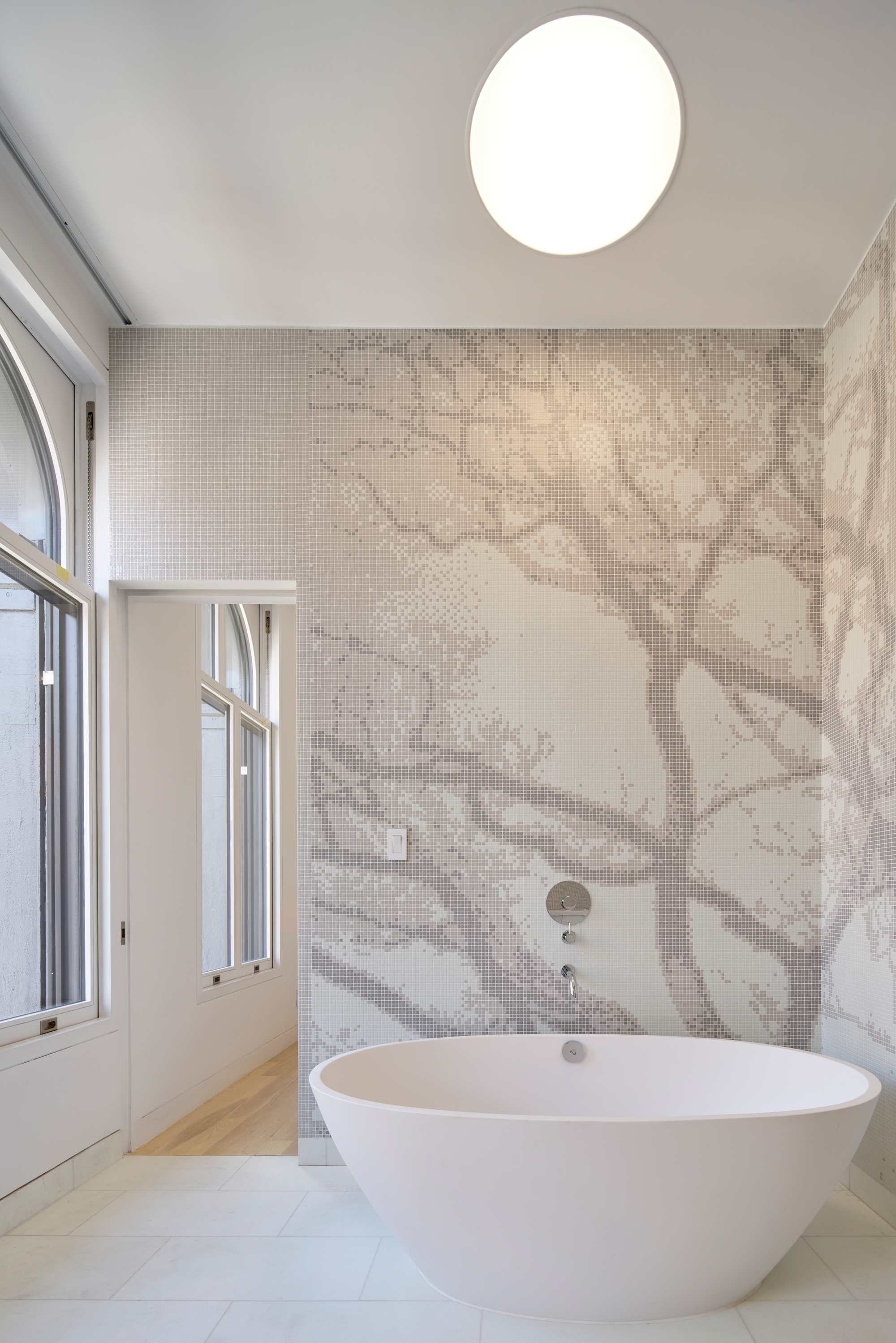
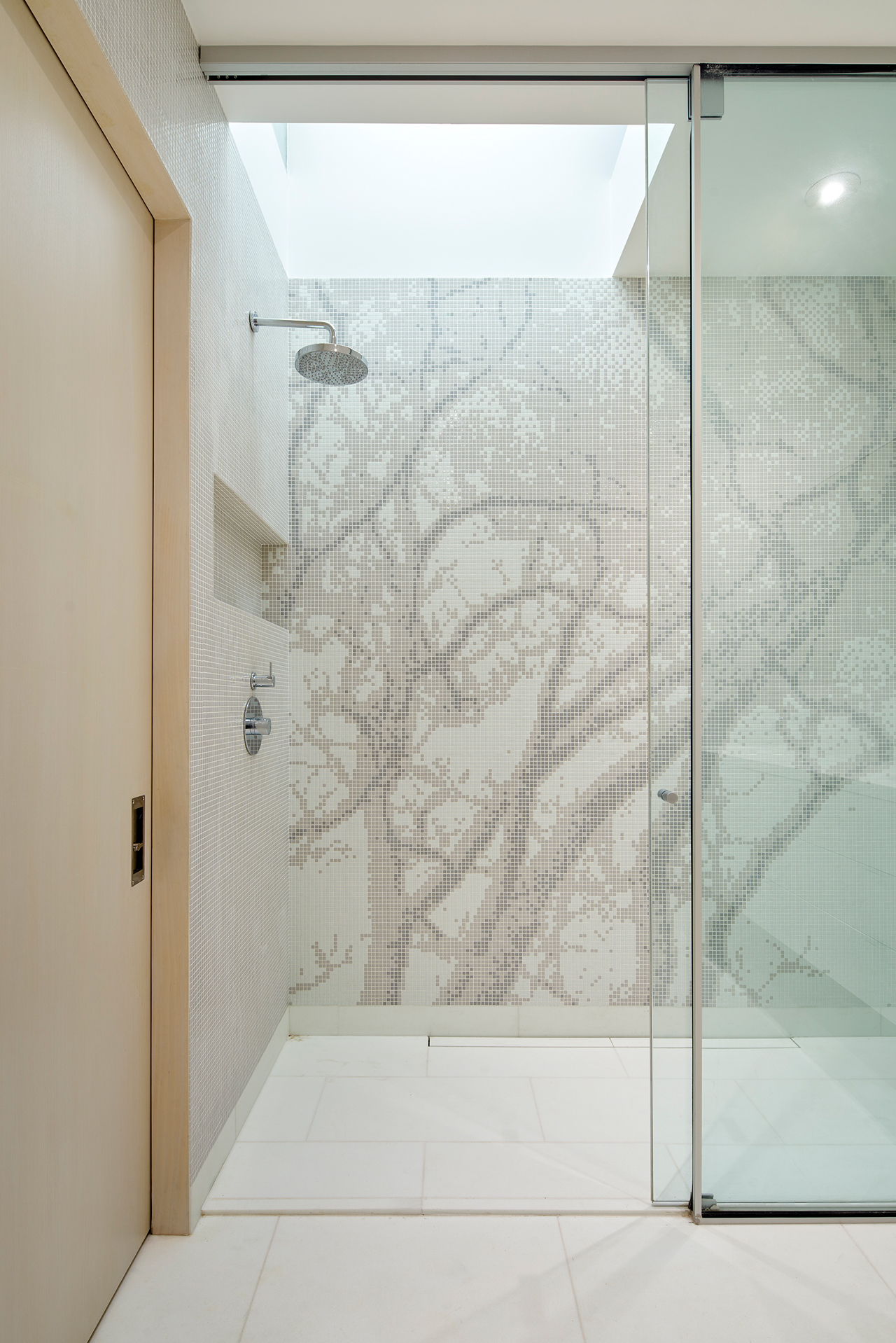
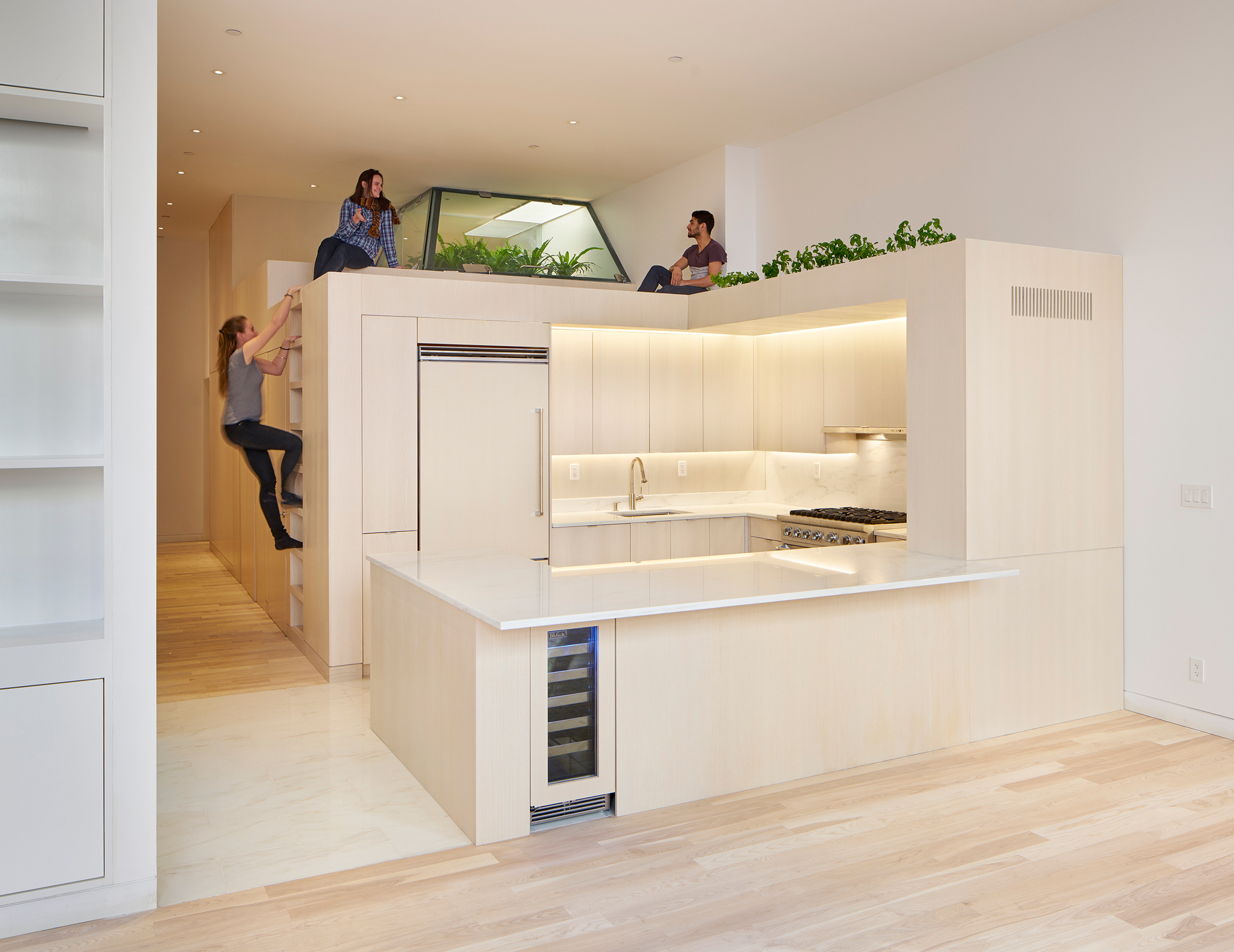
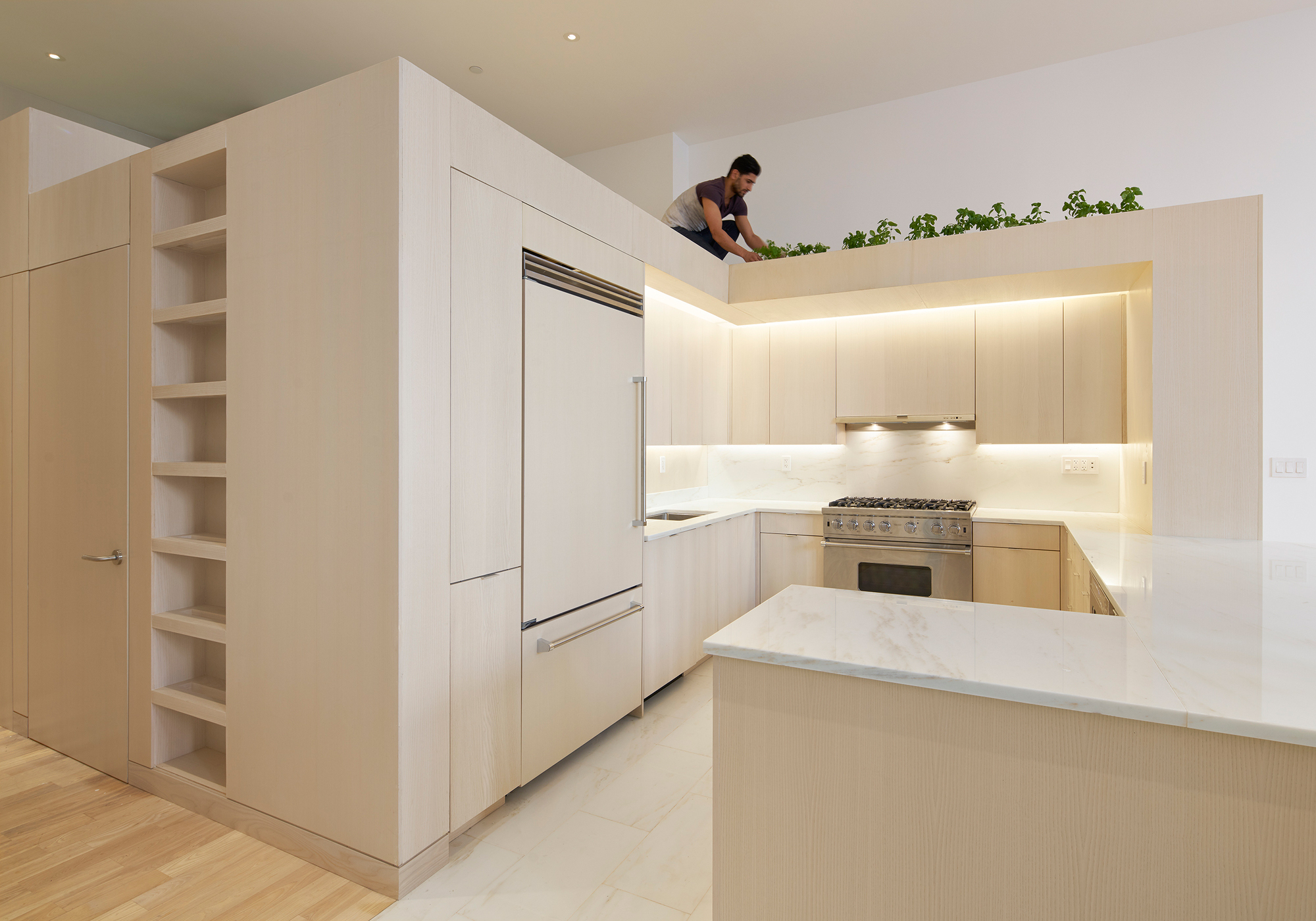
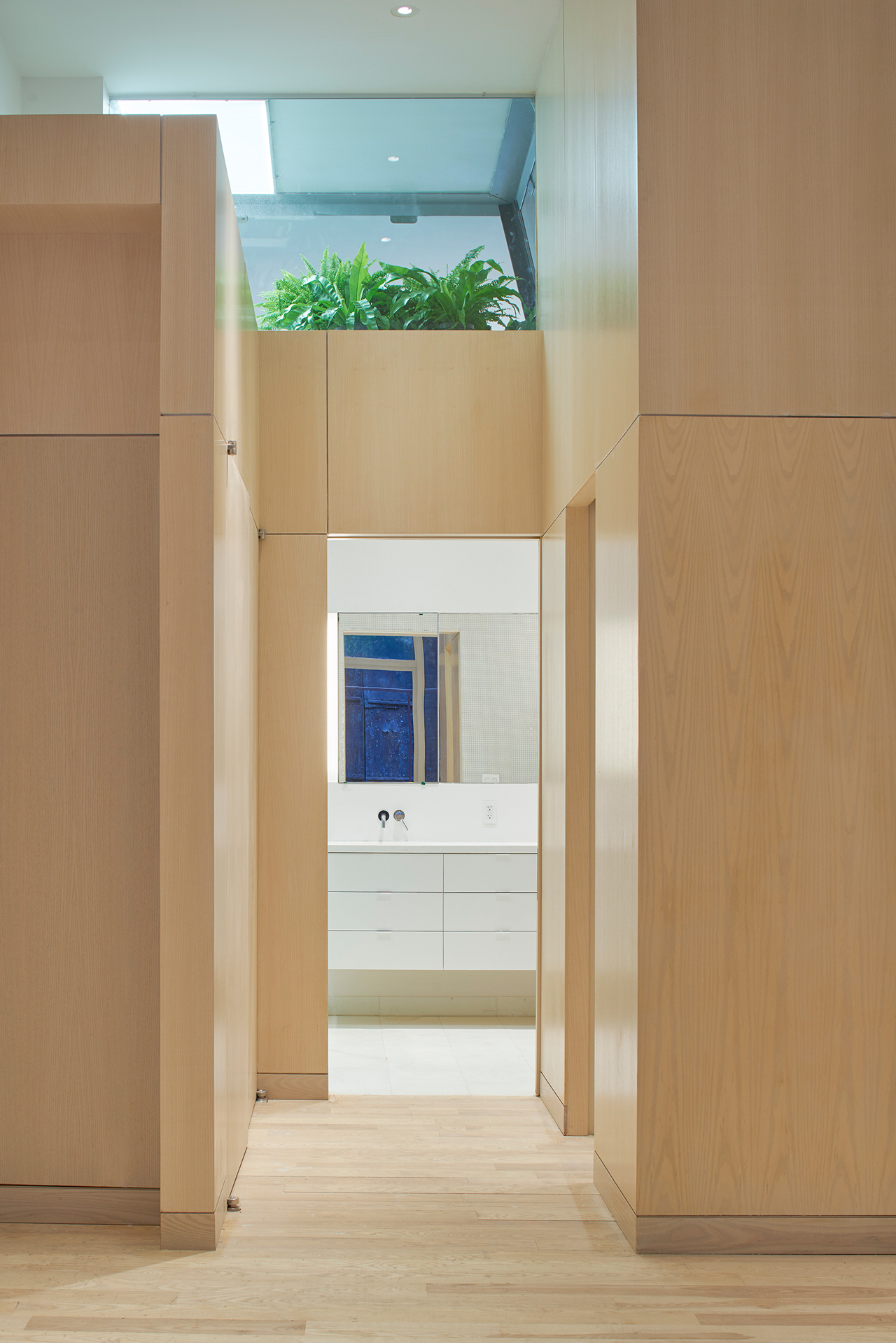
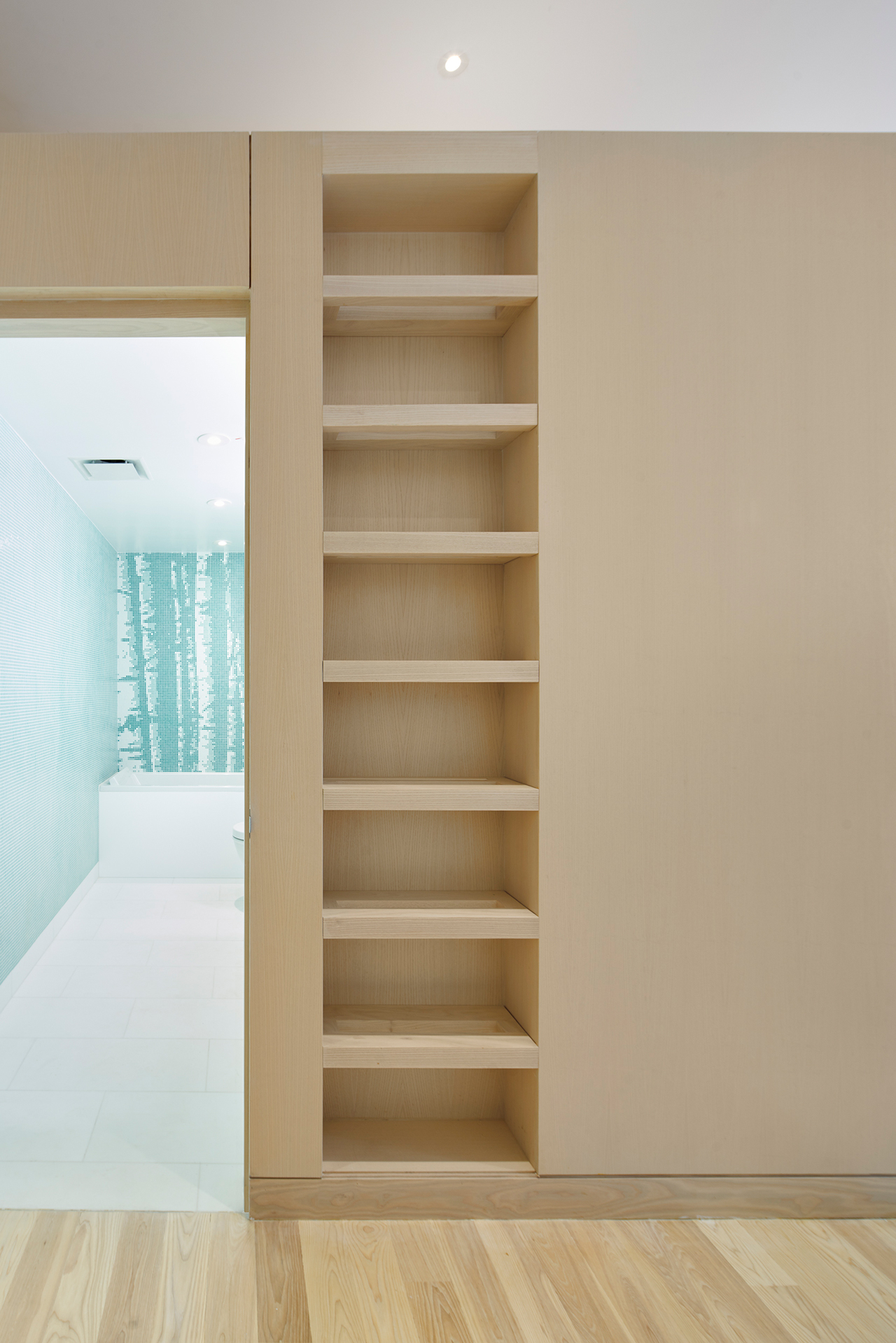
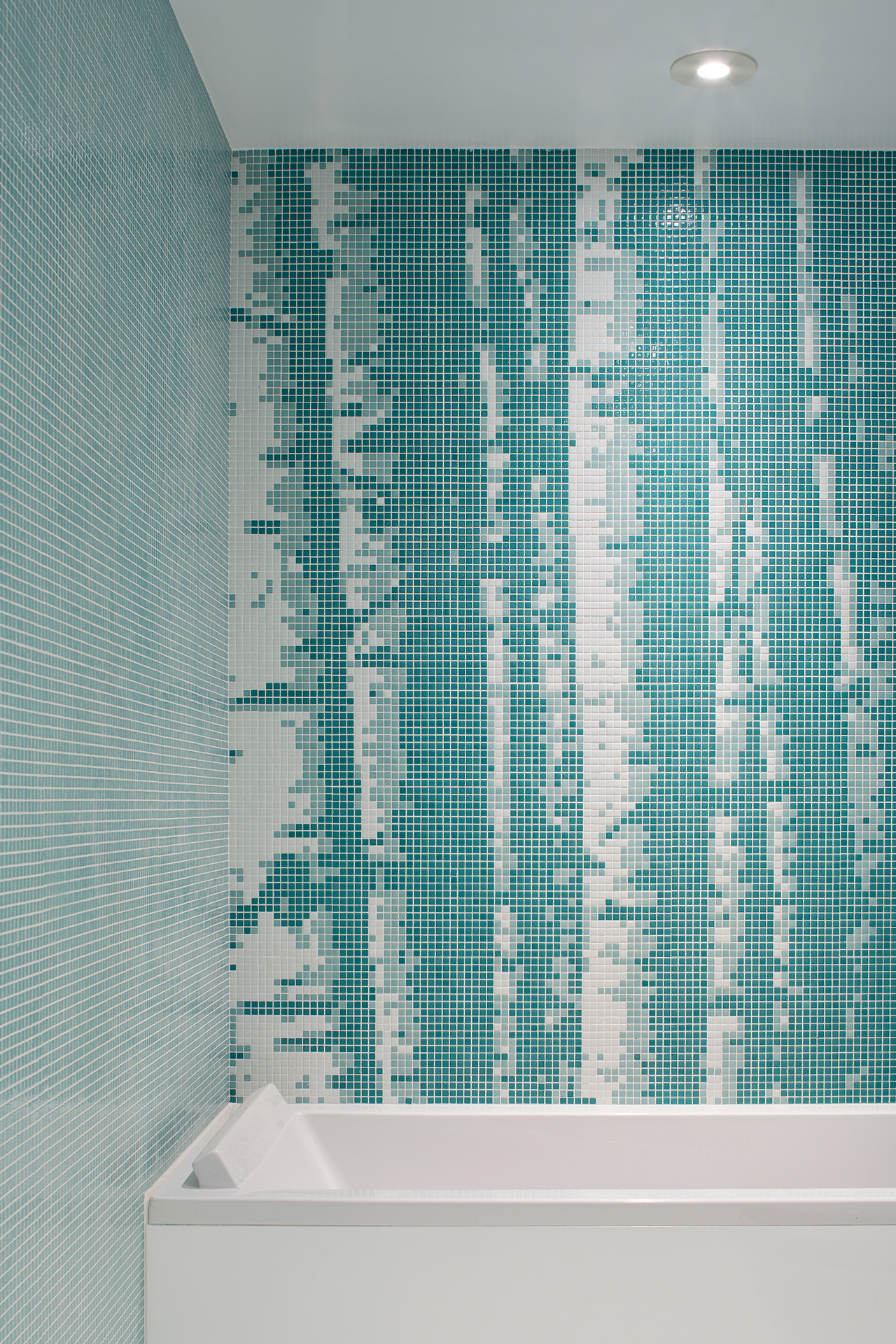
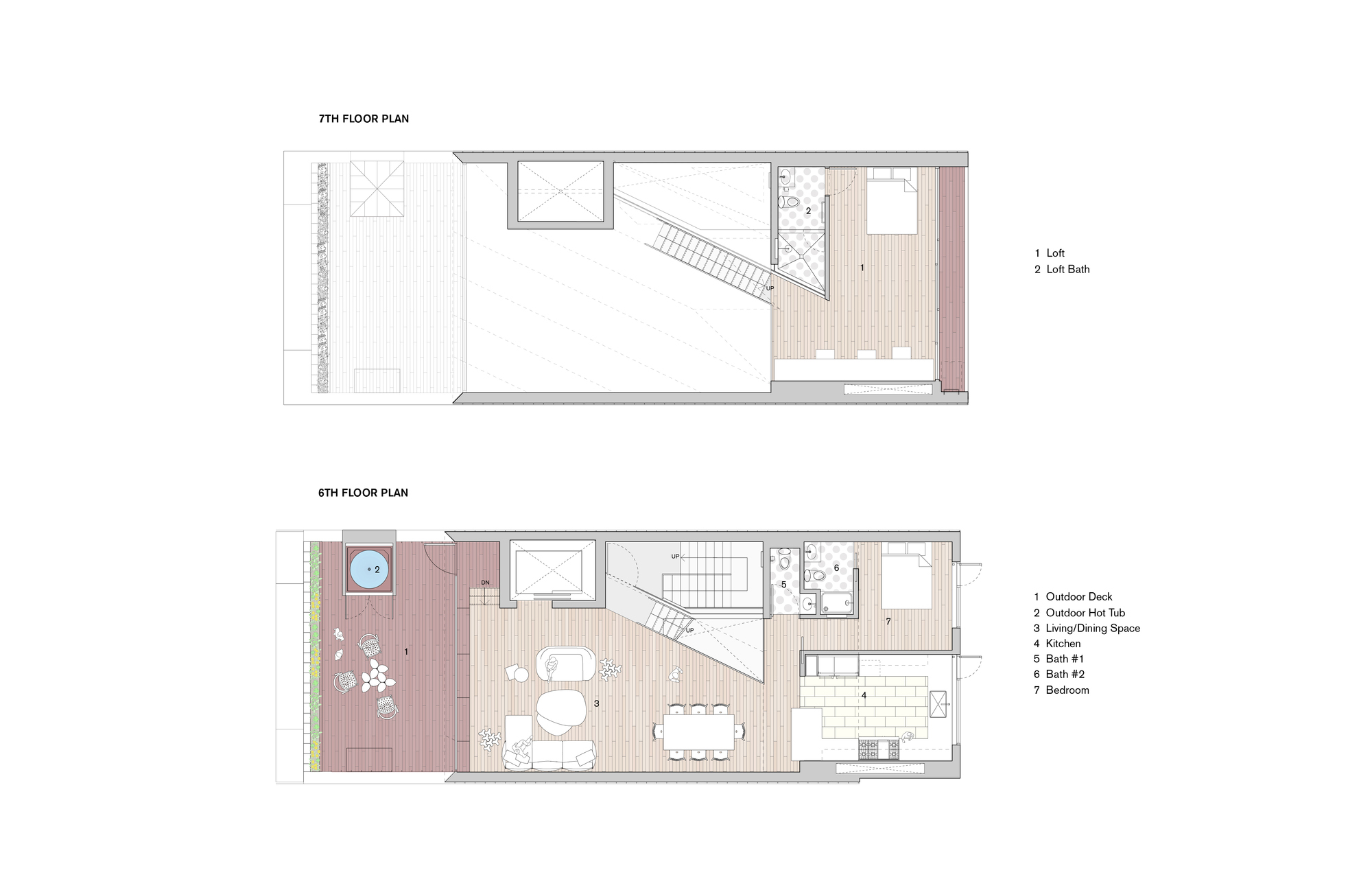
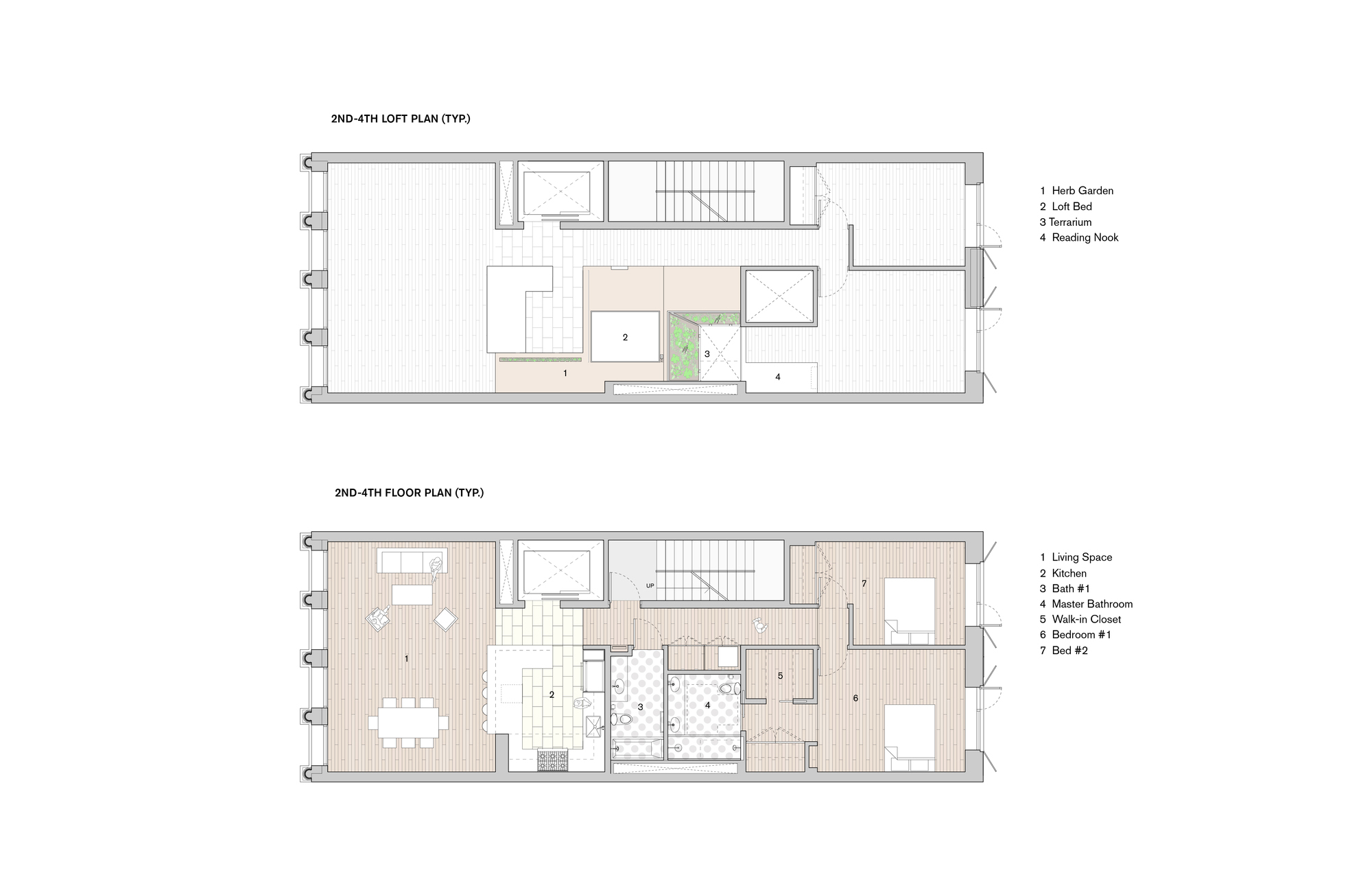
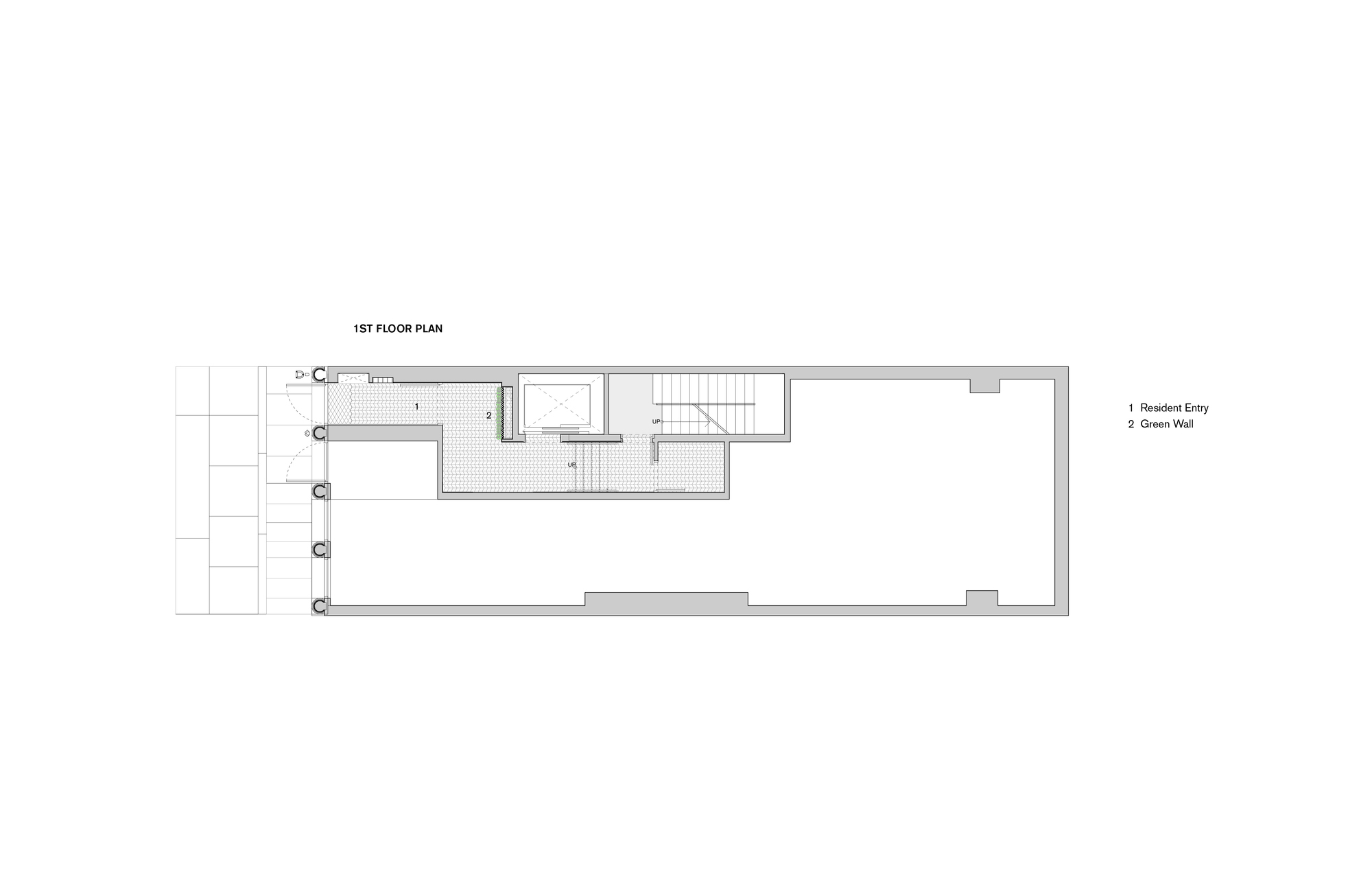
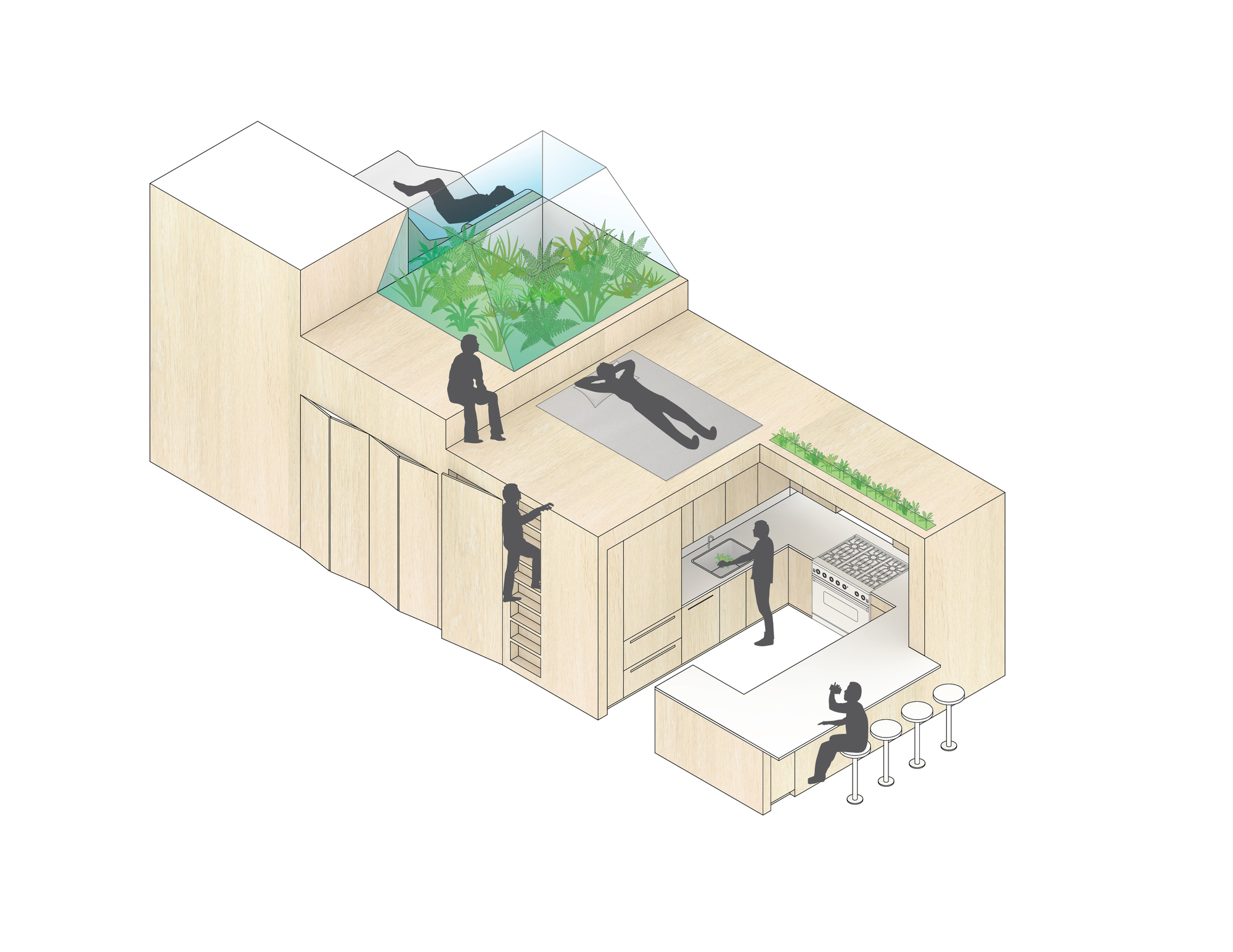
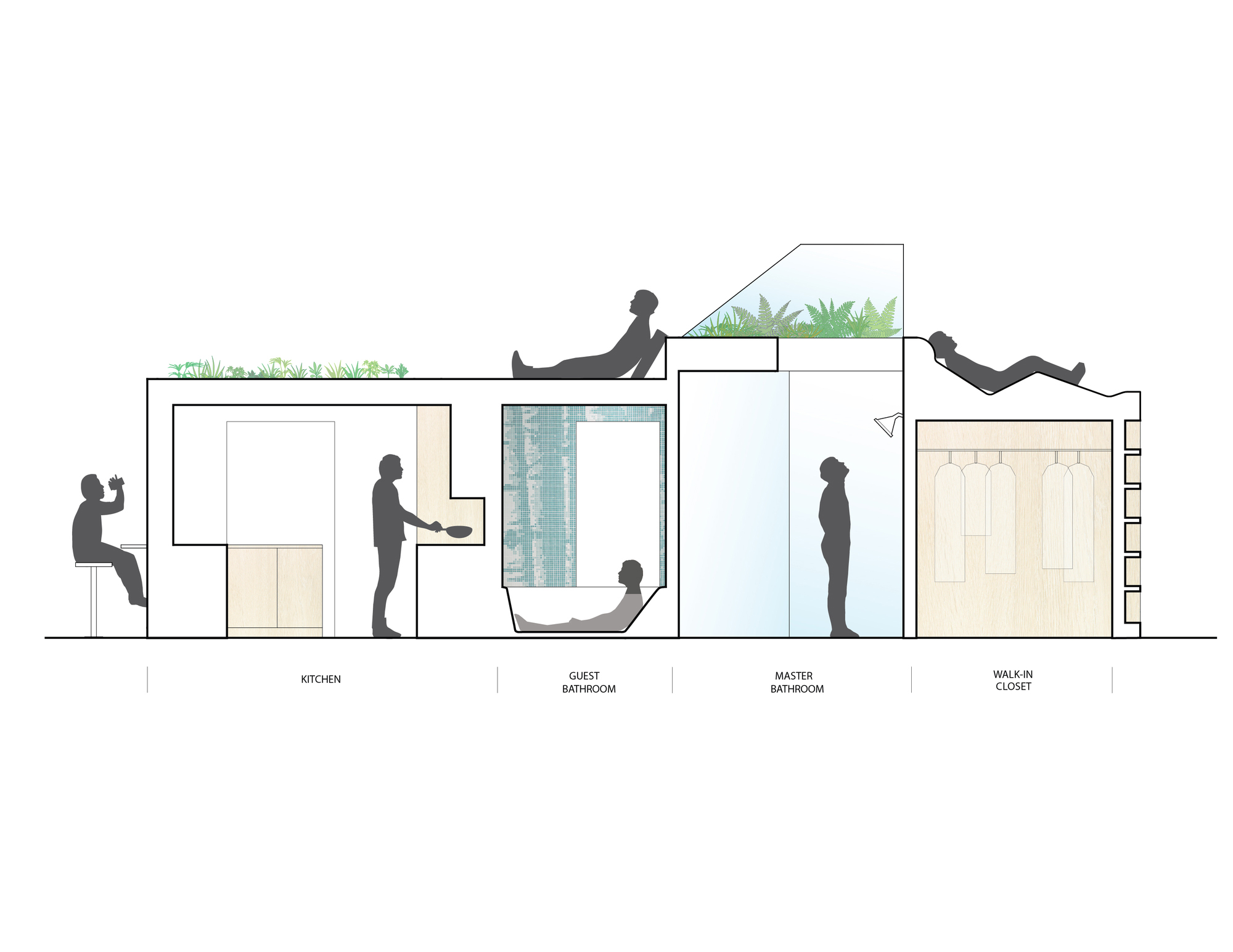
For the apartment interiors and public area, WORKac created spaces that combine nature-inspired elements and systems with new ideas about urban living. From the tessellated green wall at the lobby to generous planters and balconies at the second, sixth and seventh floors, connections to the outdoors are emphasized. Within each apartment, a “third space” between bedrooms and living spaces is created at the top of the volume containing storage and bathrooms. Less than four-feet high, this “bonsai apartment” is outfitted with a futon, seating areas, and an herb garden above the kitchen. Its main feature is a fern garden connected to the master shower below. Steam from the shower collects on the glass walls of the garden and waters the plants.

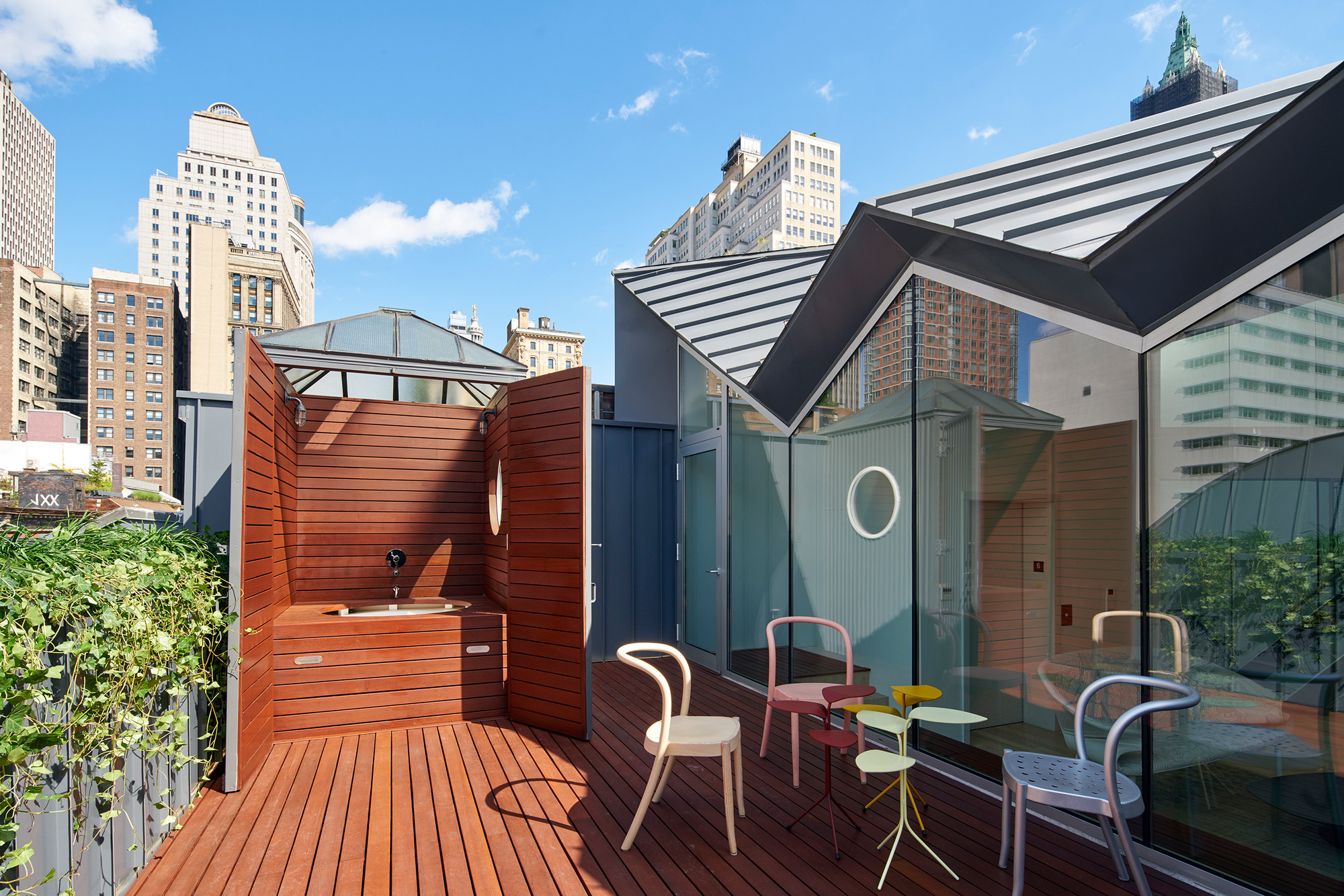
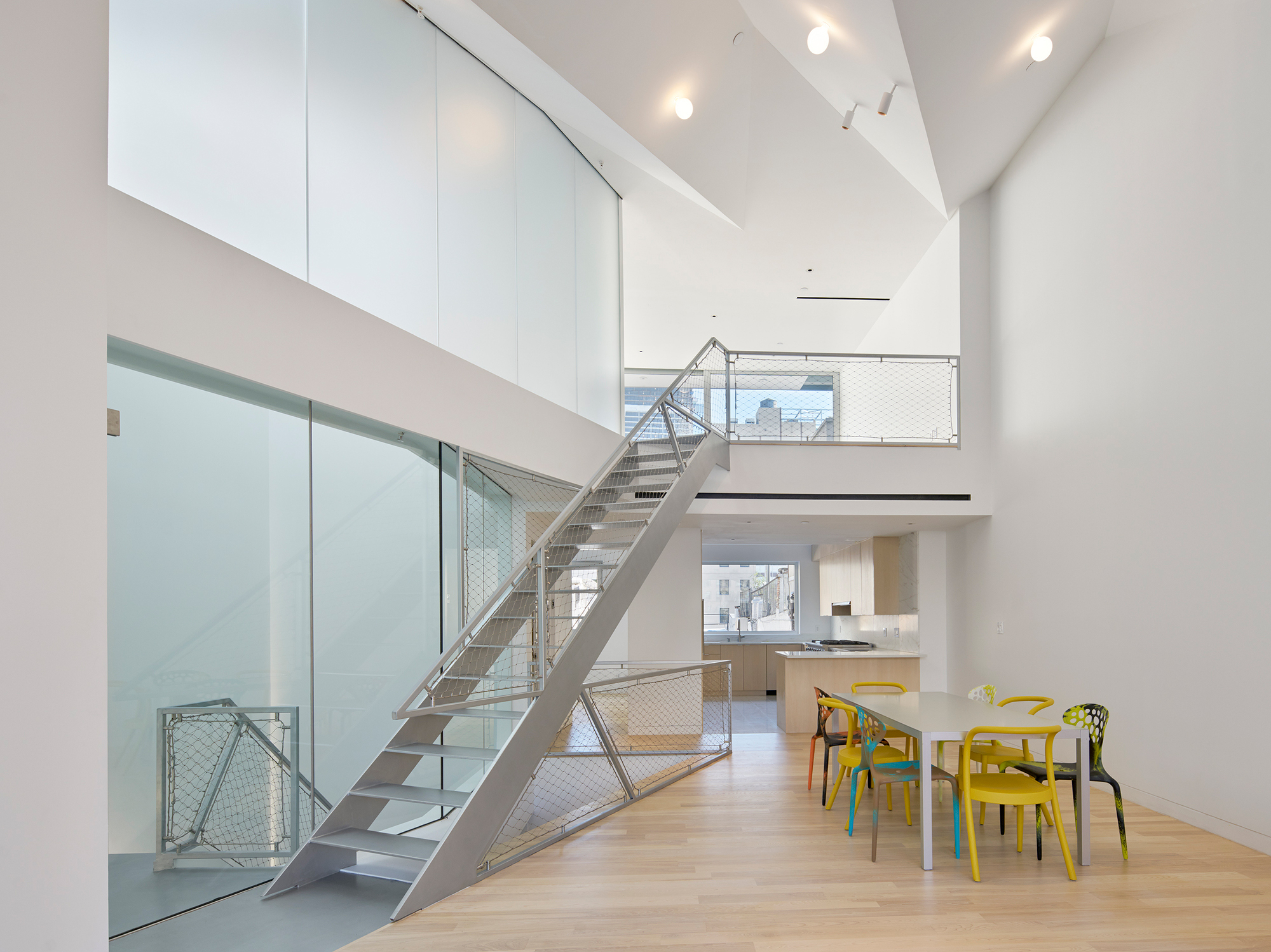
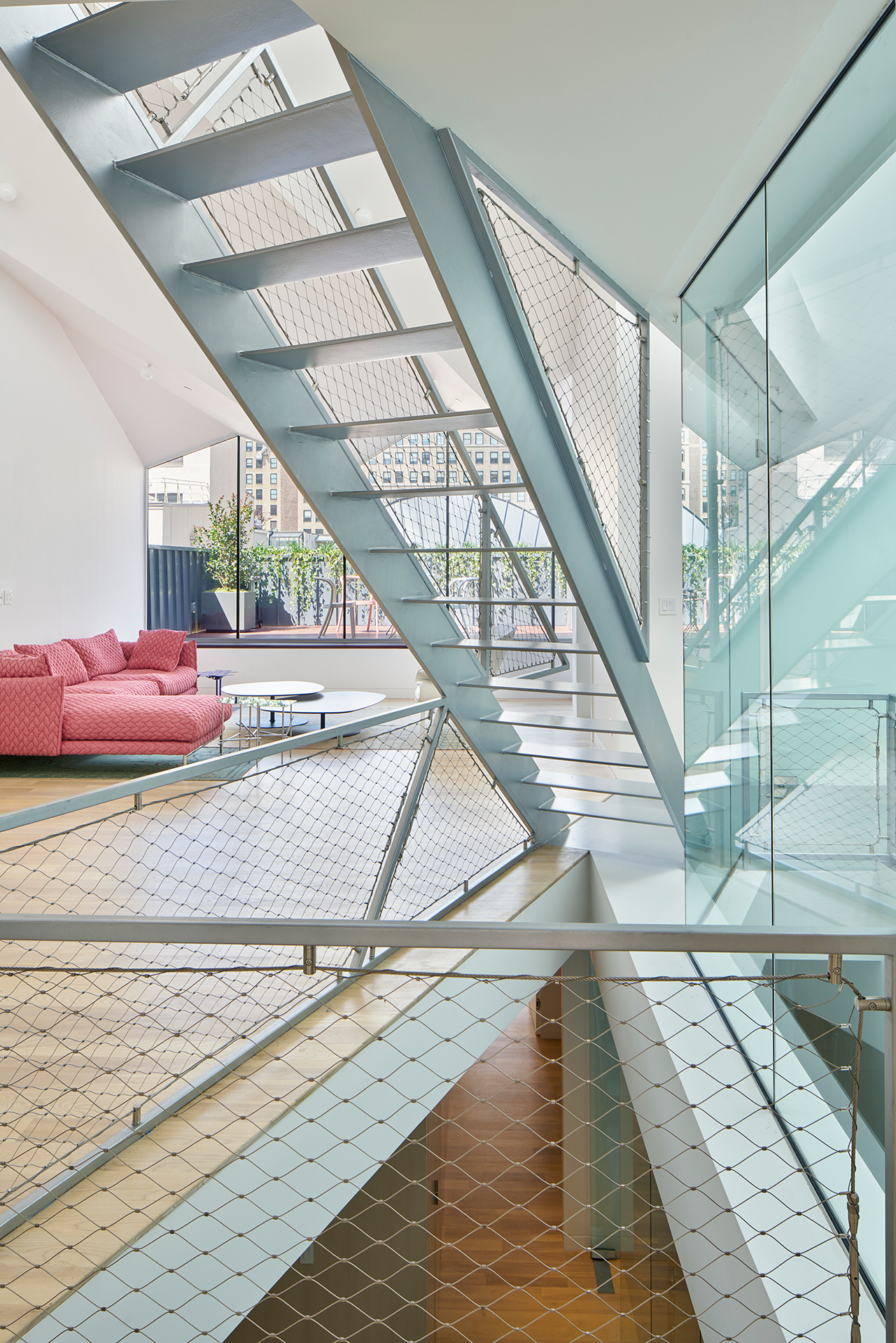
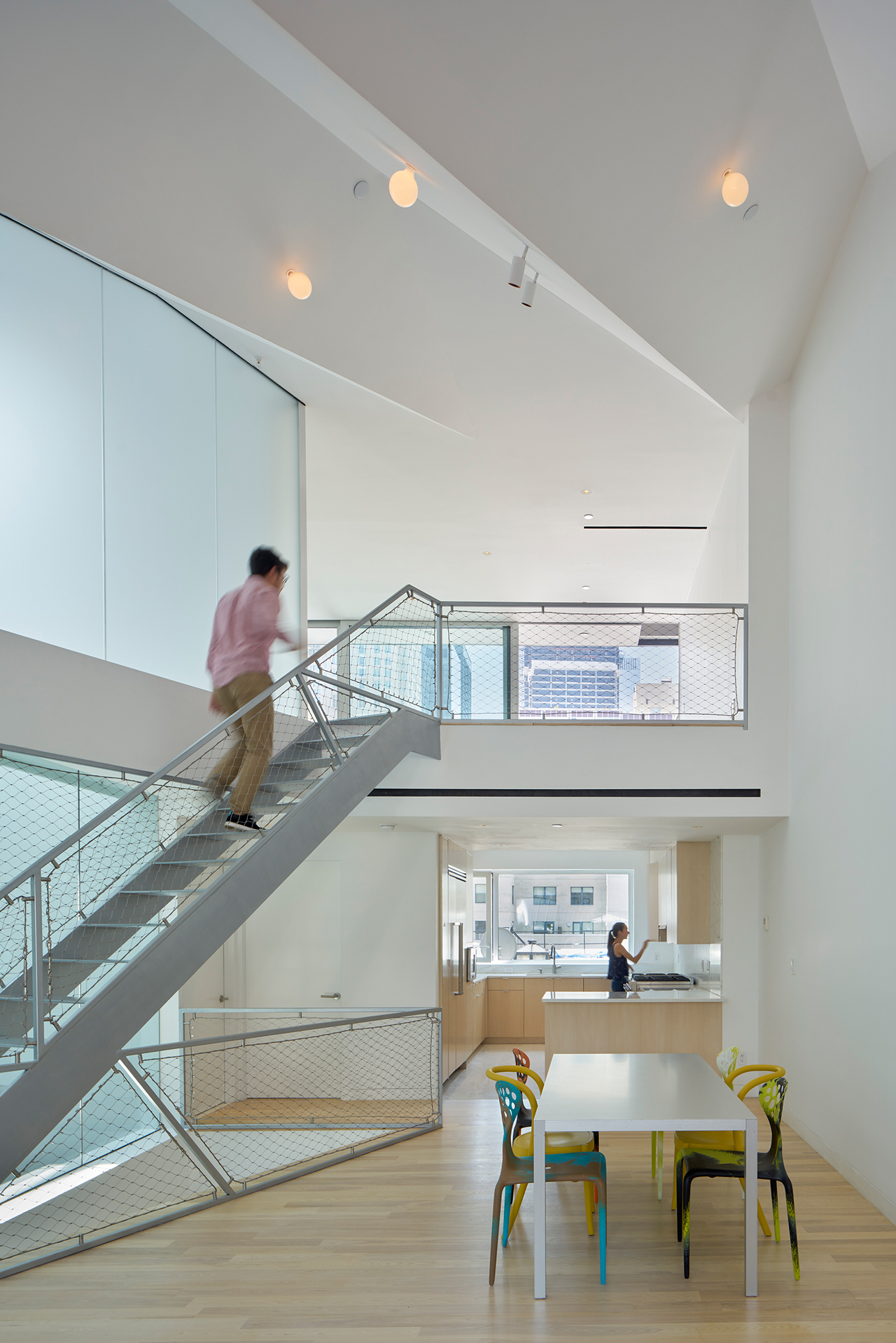
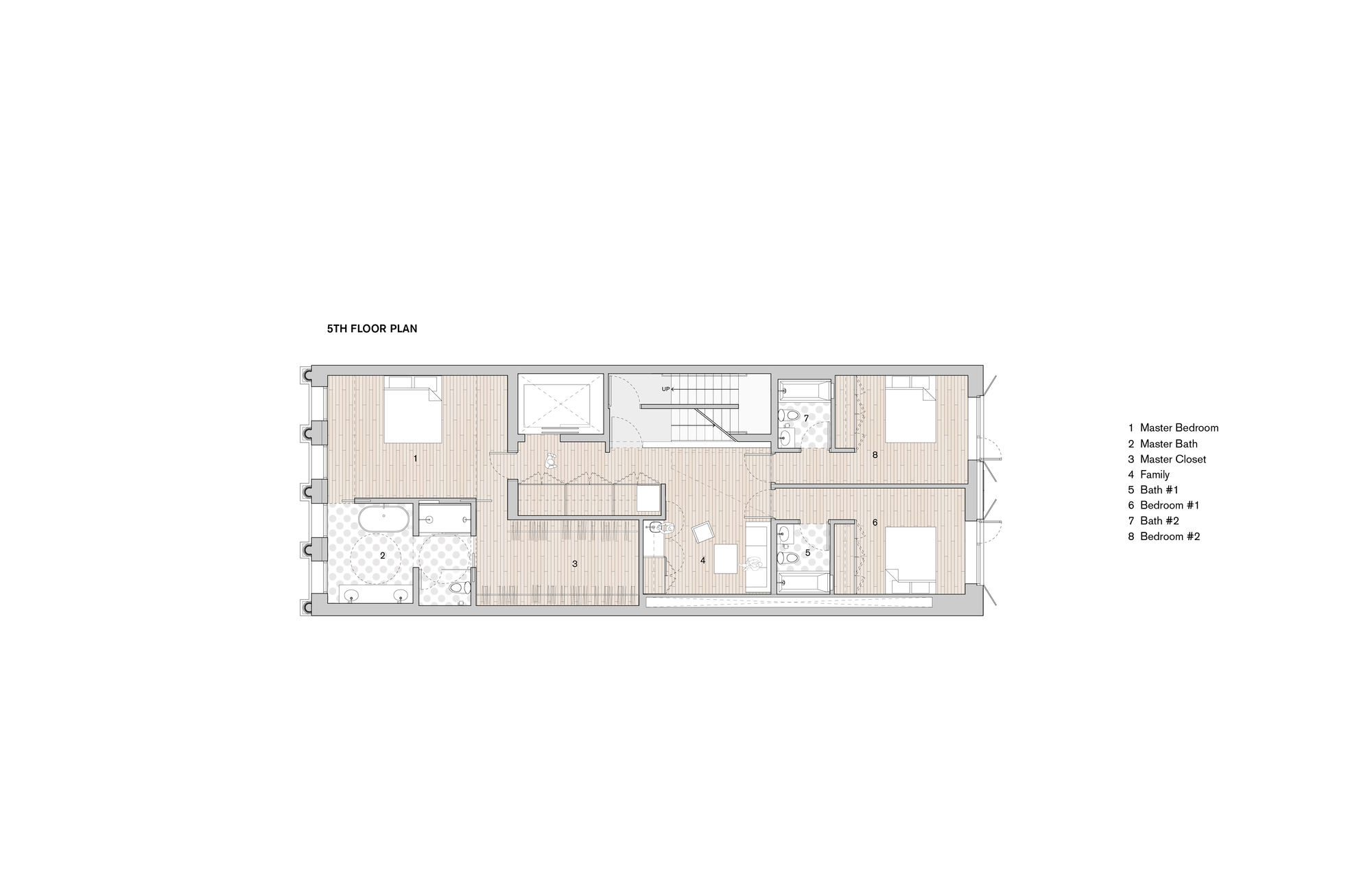
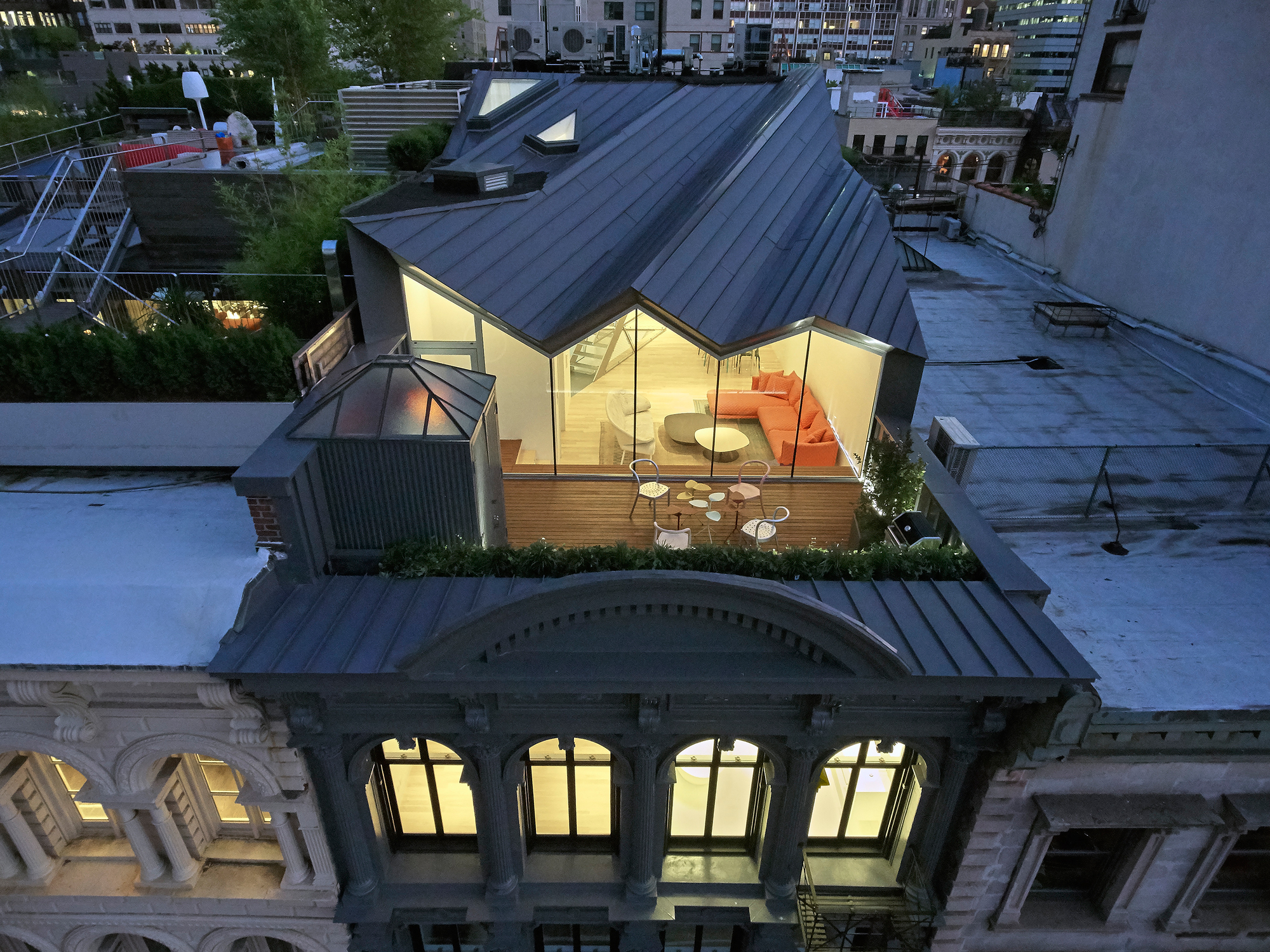
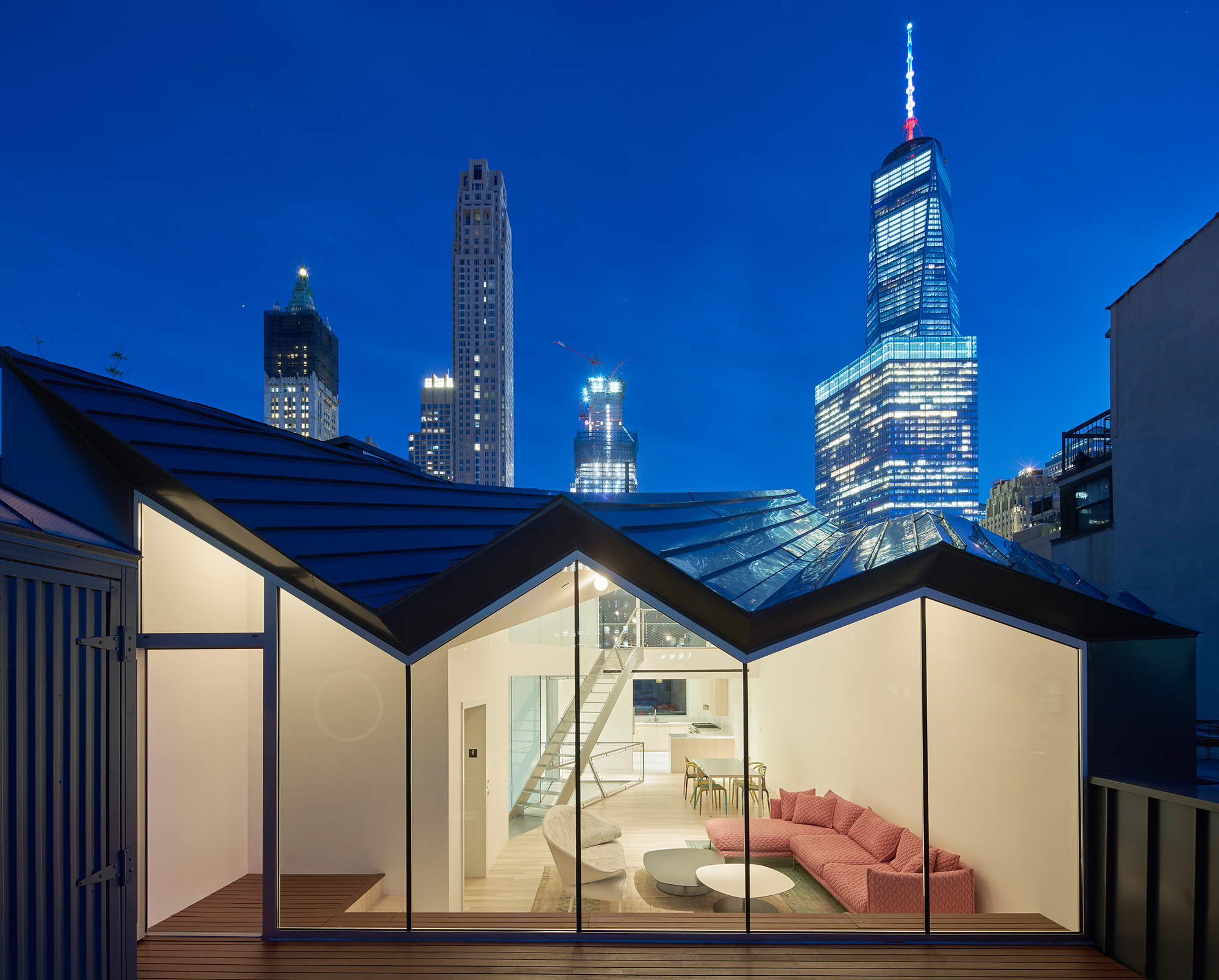
The penthouse combines sleeping spaces and a family room within the old fifth floor of the building with new entertaining and dining spaces under the new roof at the sixth floor. A secluded terrace is sunken behind the pediment with views to the Woolworth Building; the old elevator bulkhead is repurposed with a hot tub. The height afforded by angle formed by the cone-of-vision allows for a rear mezzanine with views toward downtown and the Freedom Tower.

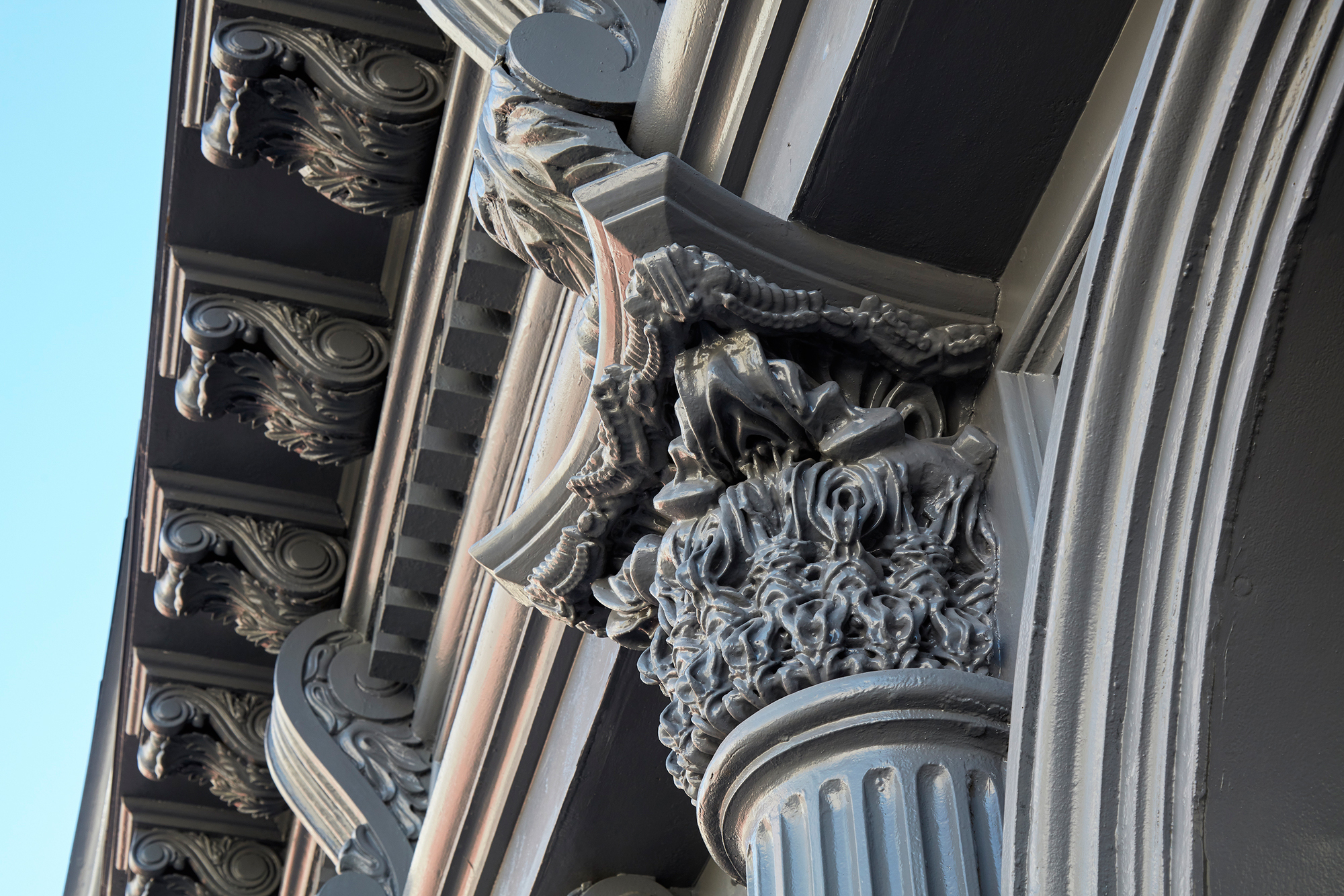
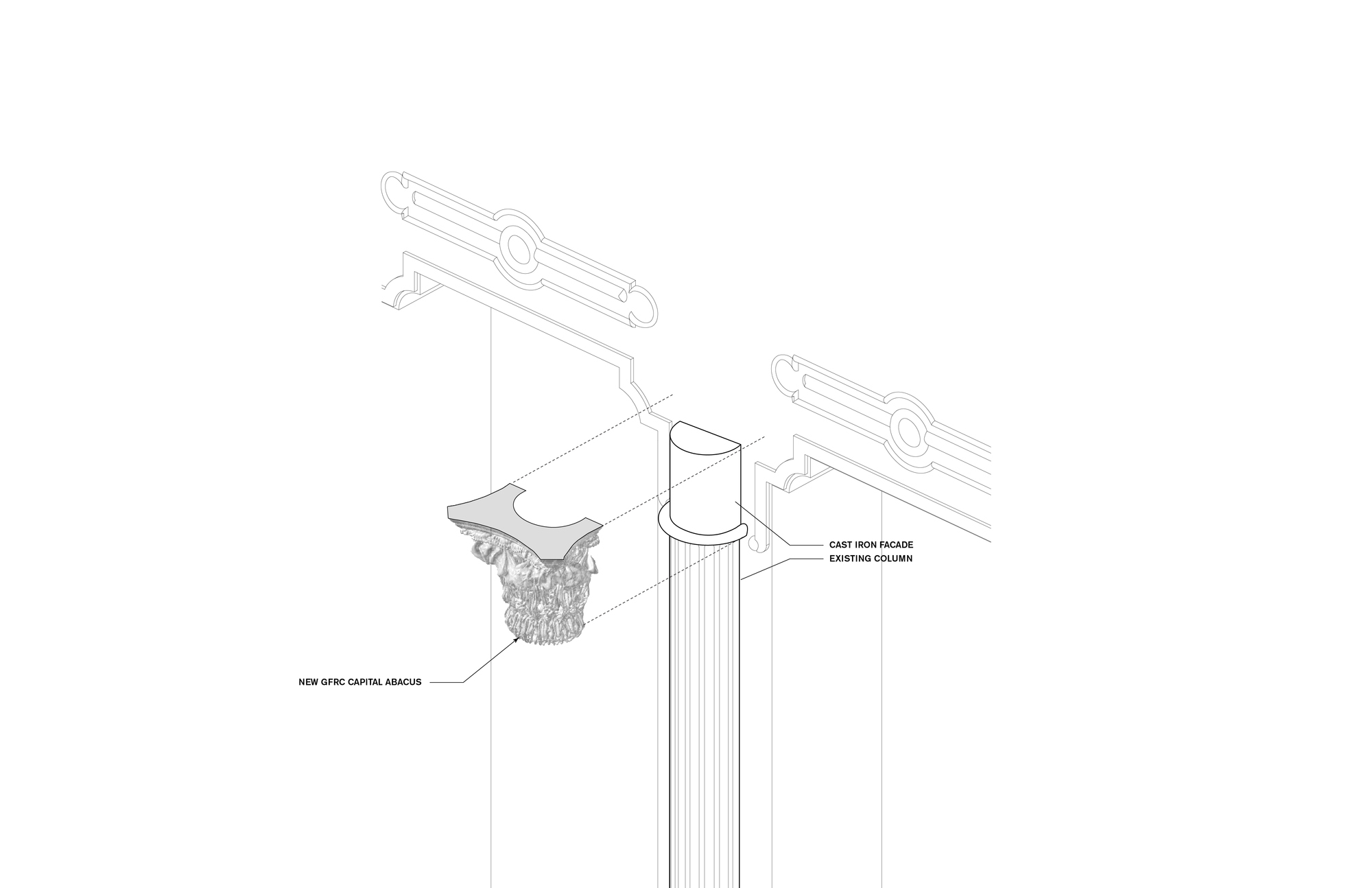
The 1857 façade is completely restored. The new charcoal color chosen by WORKac references the building’s history of being painted in dark contrast with its lighter neighbors. As all of the building’s Corinthean column capitols had been lost to history, WORKac collaborated with the artist Michael Hansmeyer to create new versions. Hansmeyer created a computer script that allowed the classical floral elements of the Corinthean order to “grow” fractally, resulting in a new design that adheres to the old proportions but is composed of clearly new forms and idiosyncrasies.  Like the rooftop addition, these capitals at first glance appear quite ordinary; it is only on closer inspection that the stealthy strategy of strategic injection of contemporary design becomes clear.
Read more
Read less

More information

Label
Architects
Text
WORKac
+ + copy Created with Sketch.
- + copy Created with Sketch.
Label
Team
Text
Dan Wood, FAIA, Amale Andraos (principals); Sam Dufaux (associate principal); Karl Landsteiner (construction administration project architect); Chris Oliver (design project architect); Maggie Tsang, Timo Otto, Patrick Daurio
+ + copy Created with Sketch.
- + copy Created with Sketch.
Label
Area
Text
14000.0 ft2
+ + copy Created with Sketch.
- + copy Created with Sketch.
Label
Manufacturers
Text
Best Range Hood, Bisazza, Bosch, Da Vinci, Desu Design, Duravit, EDM, FRANKE, Firestone Building Products, GreenGrid, Hansgrohe, MTI, Metalline, Moroso, Viking, Viking Built, Viking Undercounter, Virtual Service, Zucchetti
+ + copy Created with Sketch.
- + copy Created with Sketch.
Label
Client - Construction Manager
Text
Knightsbridge Properties
+ + copy Created with Sketch.
- + copy Created with Sketch.
Label
Collaborators
Text
Mechanical - Electrical Engineer.- Plus Group Consulting Engineering
Structural Engineer.- Robert Silman Associates
Lighting Designer.- Tillotson Design Associates
Restoration Architect.- CTS Group
Artist, Column Capitals.- Michael Hansmeyer
Code Consultant.- CCBS Consulting
+ + copy Created with Sketch.
- + copy Created with Sketch.

WORKac is a New York–based architecture and urban design practice founded in 2003 by Amale Andraos and Dan Wood. The practice operates at the intersection of the urban, the rural, and the natural, advancing architecture as a tool to address environmental and social challenges through inventive and collaborative forms of design. Their work spans public, cultural, civic, and educational projects across the United States and internationally, with a strong emphasis on integrating architecture, landscape, ecology, and community-centred design. WORKac has received international recognition for projects including the Edible Schoolyards in New York, the Miami Museum Garage, the Rhode Island School of Design Student Success Centre, and a series of innovative public libraries in Queens, Brooklyn, and Boulder. The office was recognised as the AIA New York State Firm of the Year.
Dan Wood (Rhode Island, USA), FAIA, LEED AP, co-leads WORKac’s international projects, ranging from urban master plans to institutional and cultural buildings throughout North America, Europe, Asia, and the Middle East. He has taught widely and held the 2013–14 Louis I. Kahn Chair at the Yale School of Architecture. His academic appointments have included Princeton University School of Architecture, Cooper Union, Columbia GSAPP, Ohio State University’s Knowlton School of Architecture, and the University of California, Berkeley, where he served as the Friedman Distinguished Chair. Before founding WORKac, Wood worked in Paris and the Netherlands, experiences that continue to inform his global and interdisciplinary approach to architecture and urbanism. He is a licensed architect in the State of New York and a LEED Accredited Professional.
Amale Andraos (Beirut, Lebanon, 1973) is an architect, educator, and writer. She served as Dean of Columbia University’s Graduate School of Architecture, Planning and Preservation from 2014 to 2021 and is currently Dean Emerita and Professor at Columbia GSAPP, where she also advised the university’s Climate School initiatives. Andraos has taught at Princeton University, Harvard Graduate School of Design, the University of Pennsylvania, and the American University of Beirut. Her research and publications explore architecture’s relationship to ecology, representation, and contemporary urbanism, particularly in relation to the Arab city. Her books include Buildings for People and Plants, The Arab City: Architecture and Representation, We’ll Get There When We Cross That Bridge, and Above the Pavement, the Farm!. She serves on several cultural and architectural advisory boards and has lectured internationally on architecture, climate, and the future of cities.

Read more
Published on: November 14, 2016
Cite:
metalocus, ELENA GALLEGO DE VELASCO
"93 Reade Street by WORKac" METALOCUS. Accessed
<https://www.metalocus.es/en/news/93-reade-street-workac> ISSN 1139-6415
Loading content ...
Loading content ...
Loading content ...
Loading content ...
Loading content ...
Loading content ...
Loading content ...
Loading content ...
Loading content ...
Loading content ...
Loading content ...
Loading content ...
Loading content ...
Loading content ...
Loading content ...
Loading content ...
Loading content ...
Loading content ...
Loading content ...
Loading content ...
Loading content ...
Loading content ...
Loading content ...
Loading content ...
Loading content ...
Loading content ...
Loading content ...
Loading content ...
Loading content ...
Loading content ...
Loading content ...
Loading content ...
Loading content ...
Loading content ...
Loading content ...
Loading content ...
Loading content ...
Loading content ...
Loading content ...
Loading content ...
Loading content ...
Loading content ...
Loading content ...
Loading content ...
Loading content ...
Loading content ...
Loading content ...
Loading content ...
Loading content ...
Loading content ...
Loading content ...
Loading content ...
Loading content ...
Loading content ...