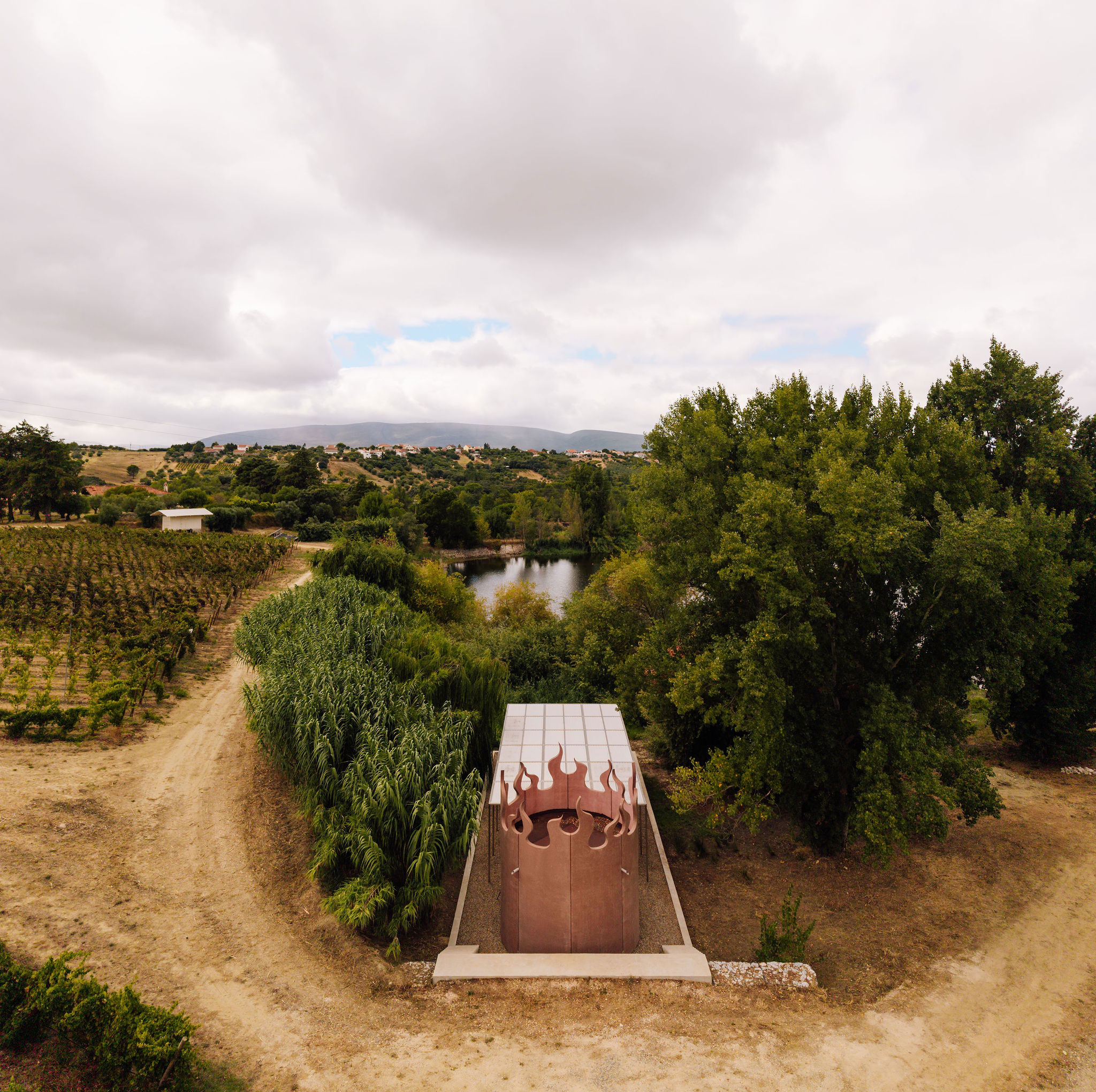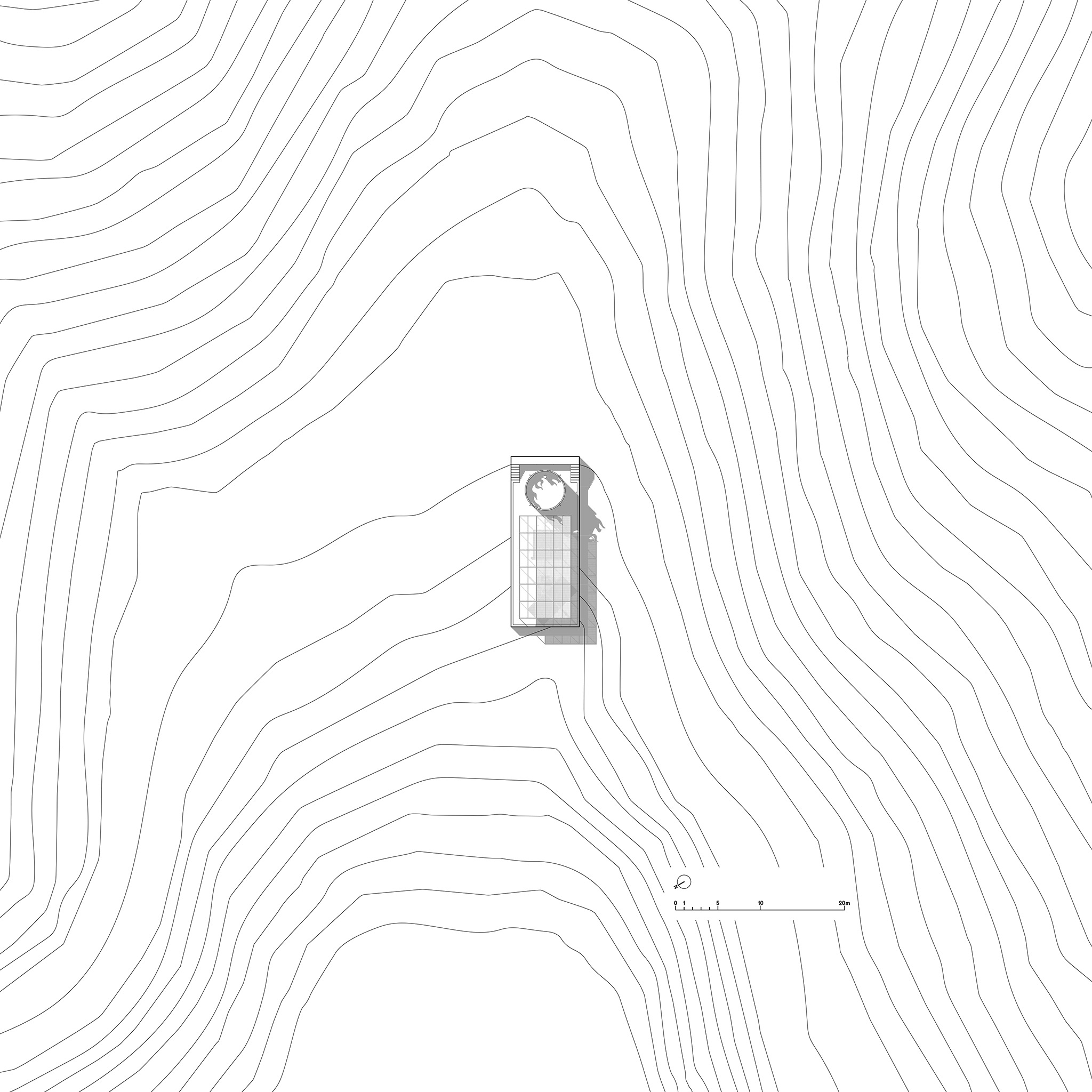
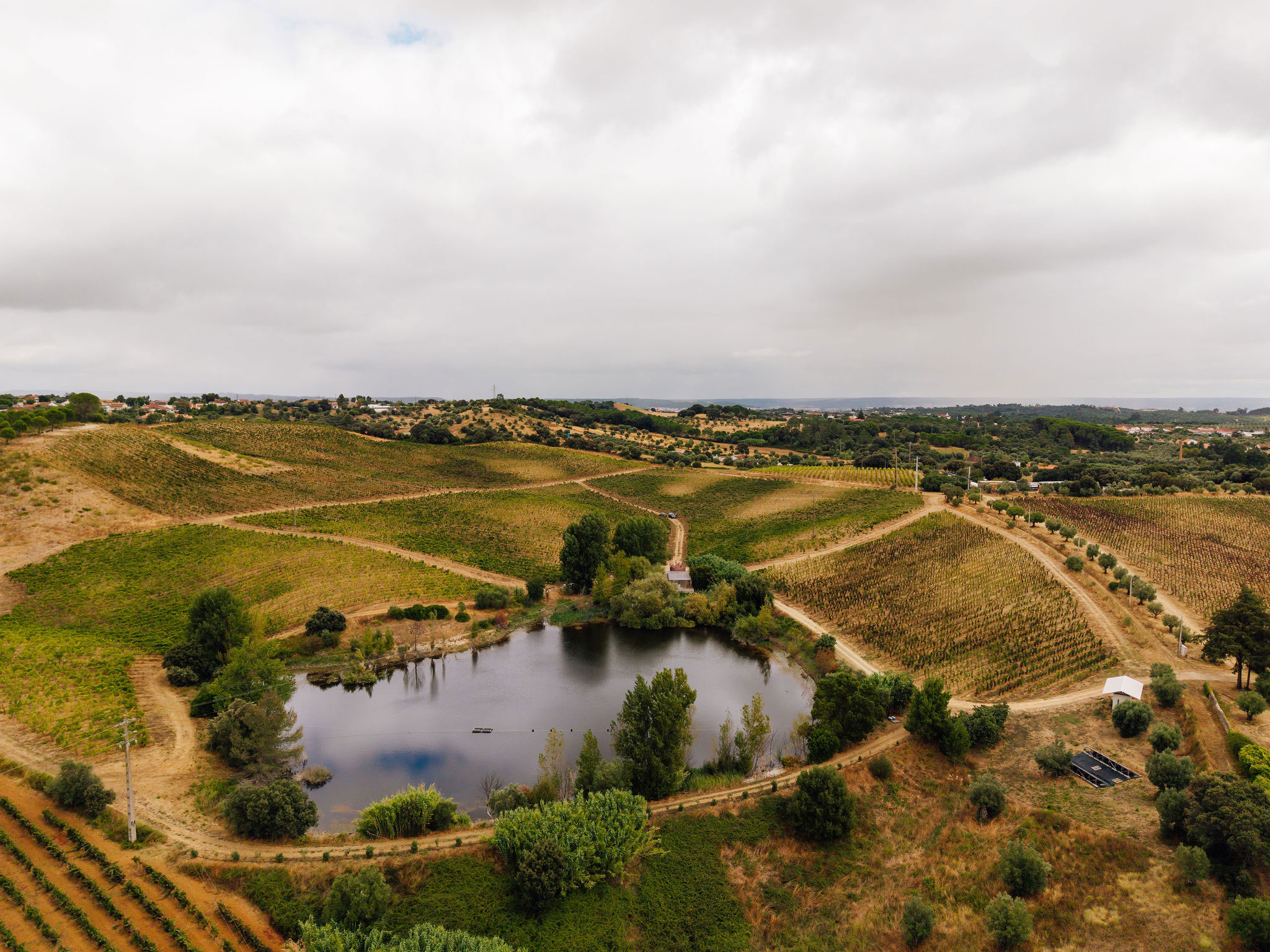
Architecture studio Bureau des Mésarchitectures designed "House Without Skin," a contemporary rural retreat nestled among vineyards, limestone soil, and lush vegetation surrounding a small lake in Ribatejo, Portugal.

The space represents a house reduced to its essentials, inviting rest, sharing, and care. It addresses the familial concept of "the home" with an explicit and transparent arrangement of domestic activities. In this way, "House Without Skin" integrates agricultural and landscape infrastructure, platforms, pergolas, and service areas.

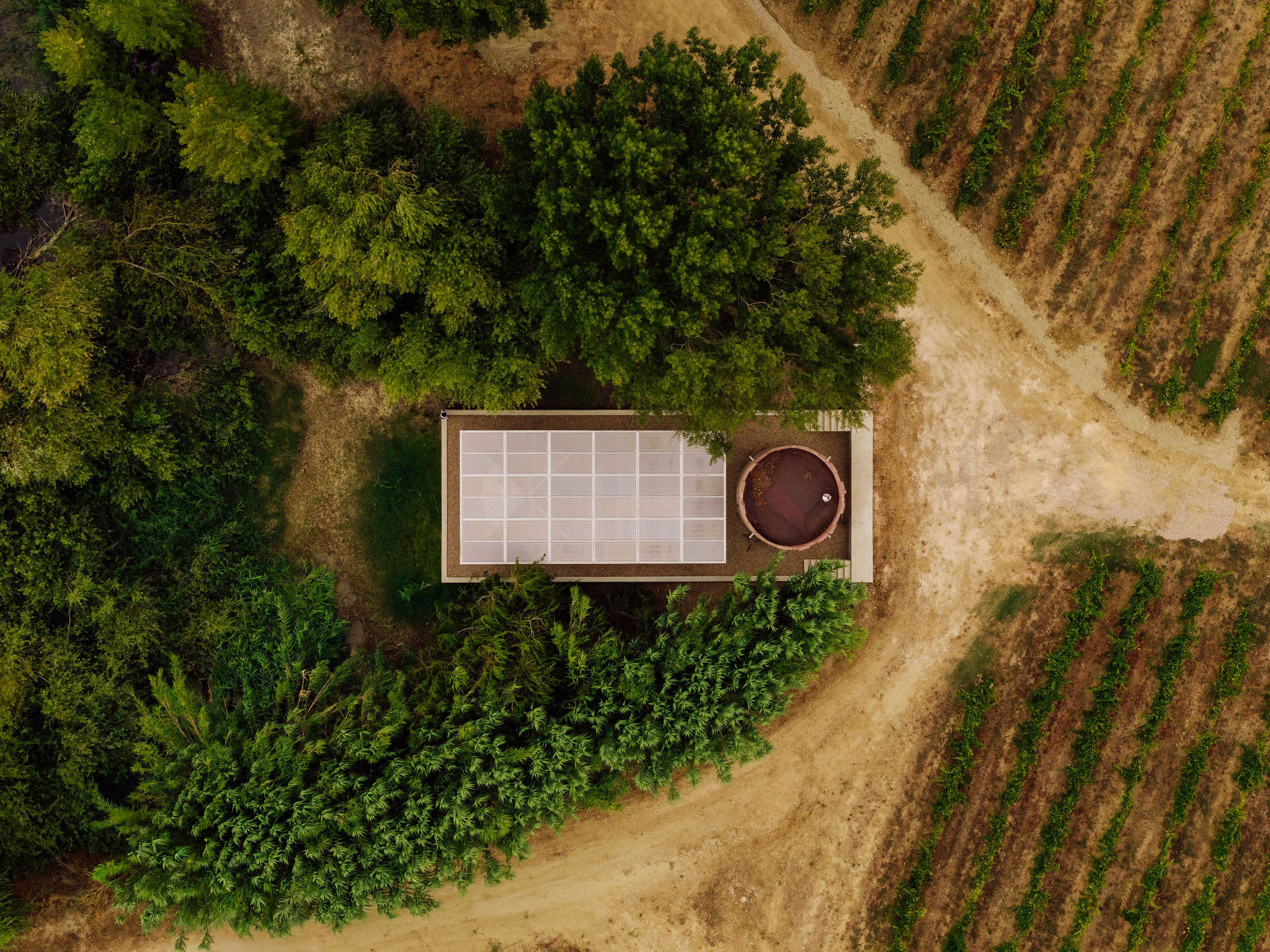
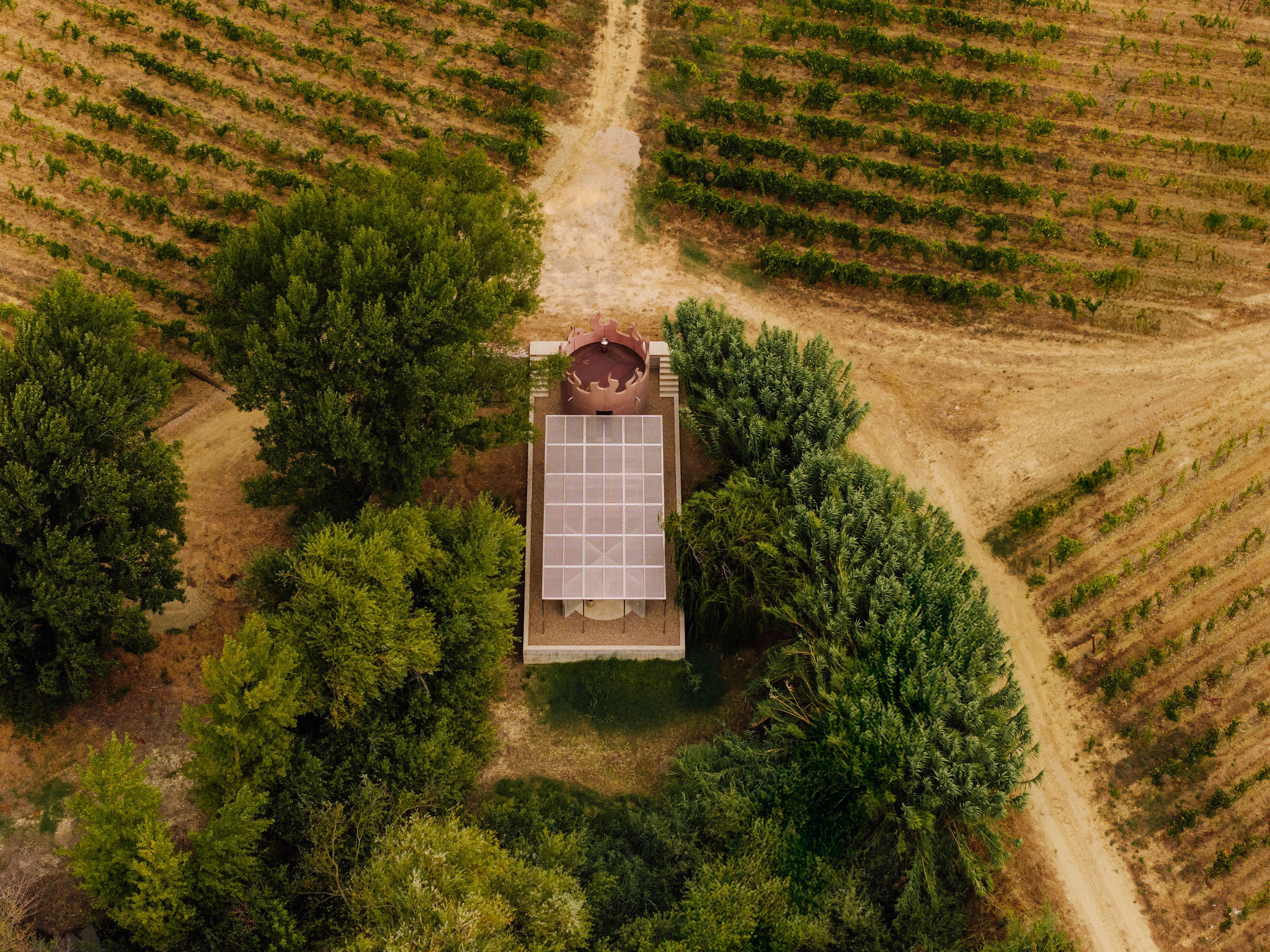
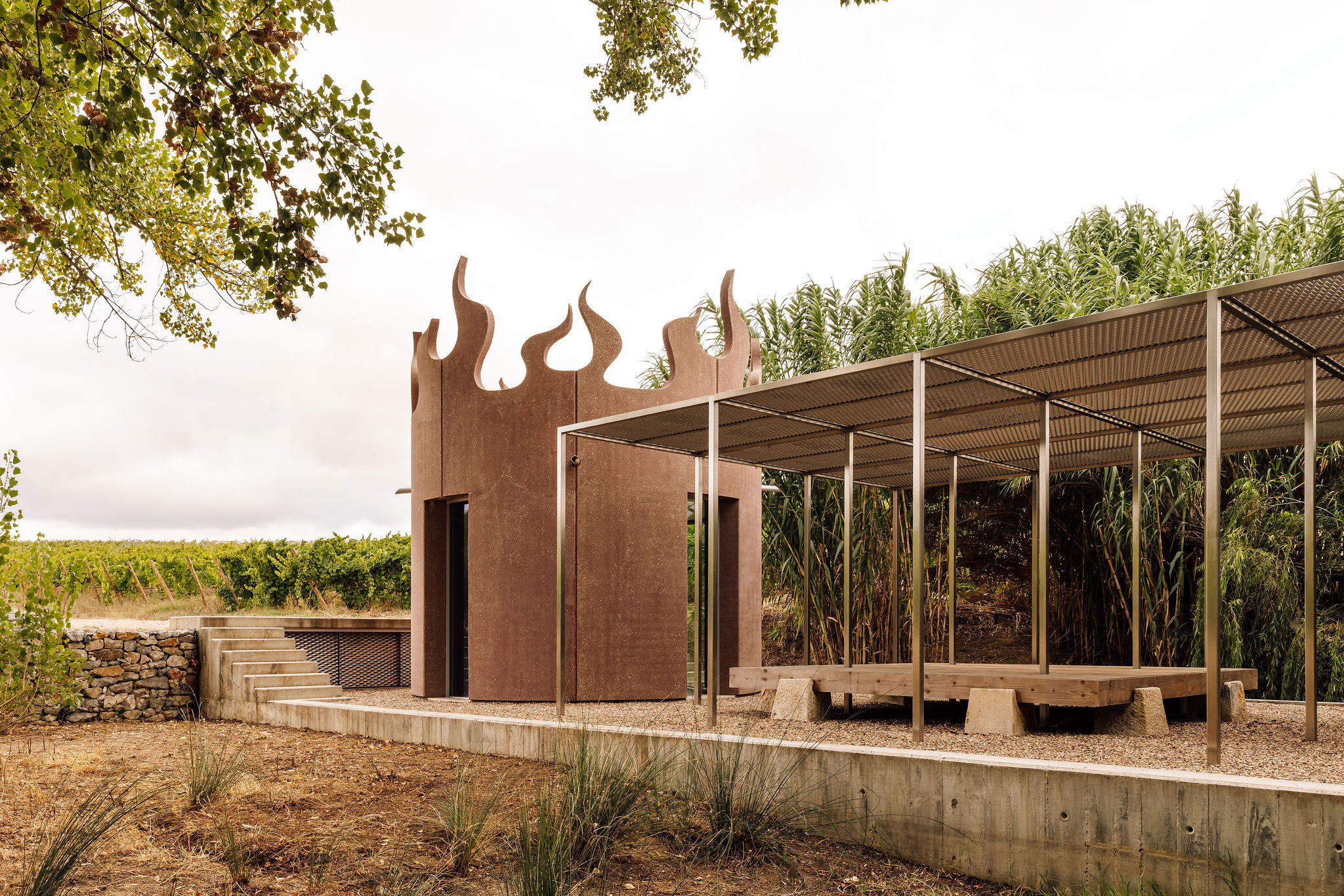
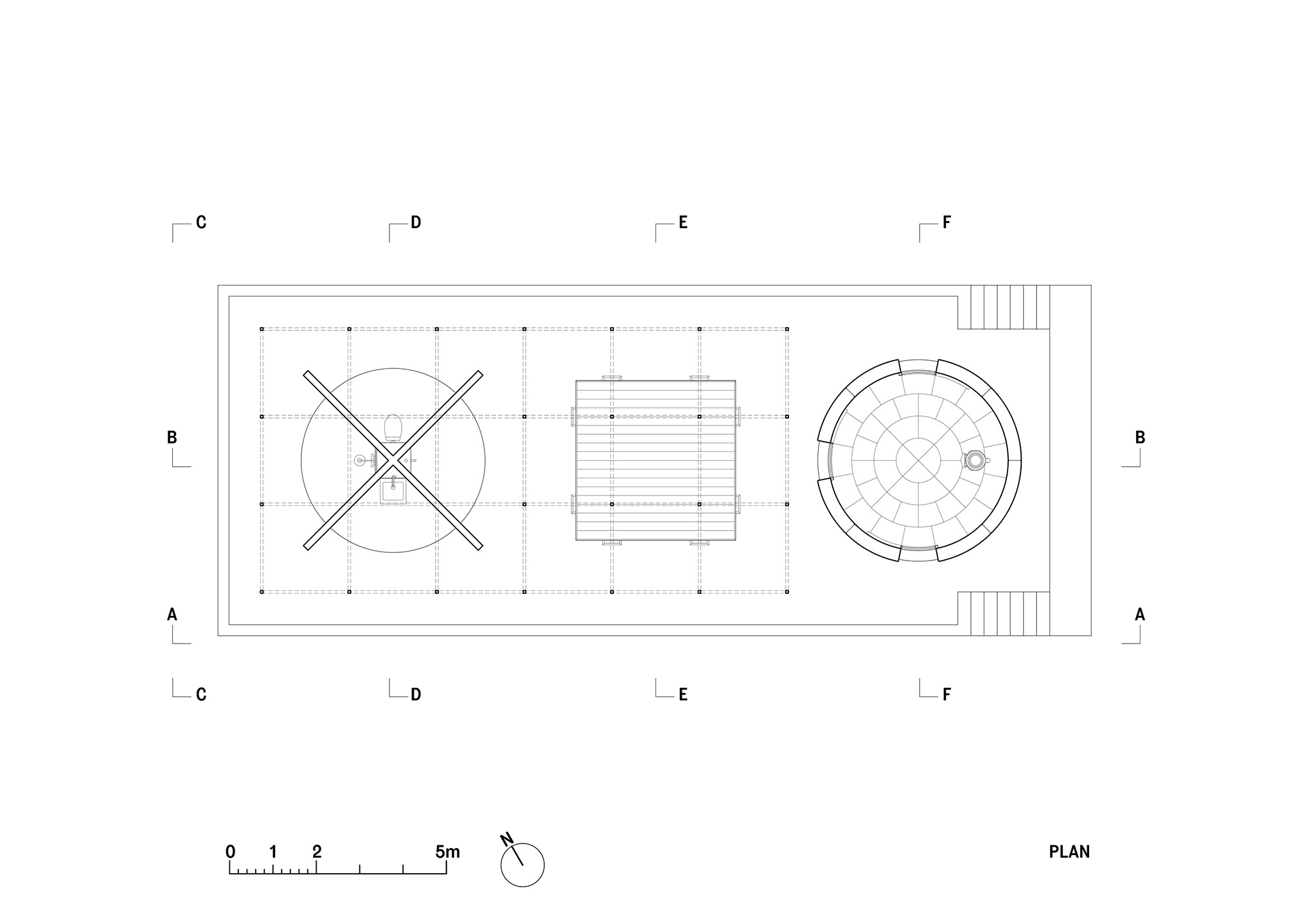
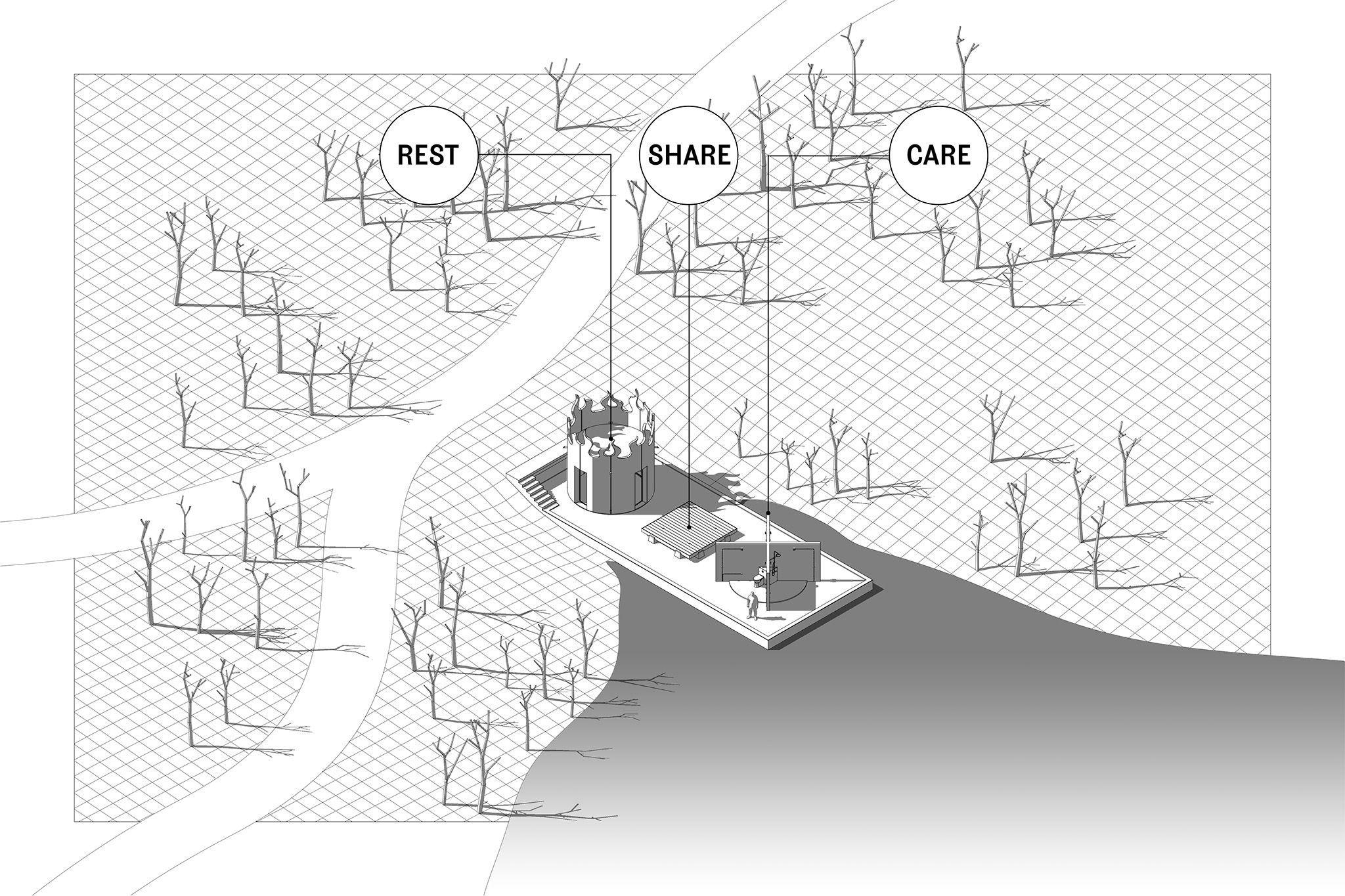
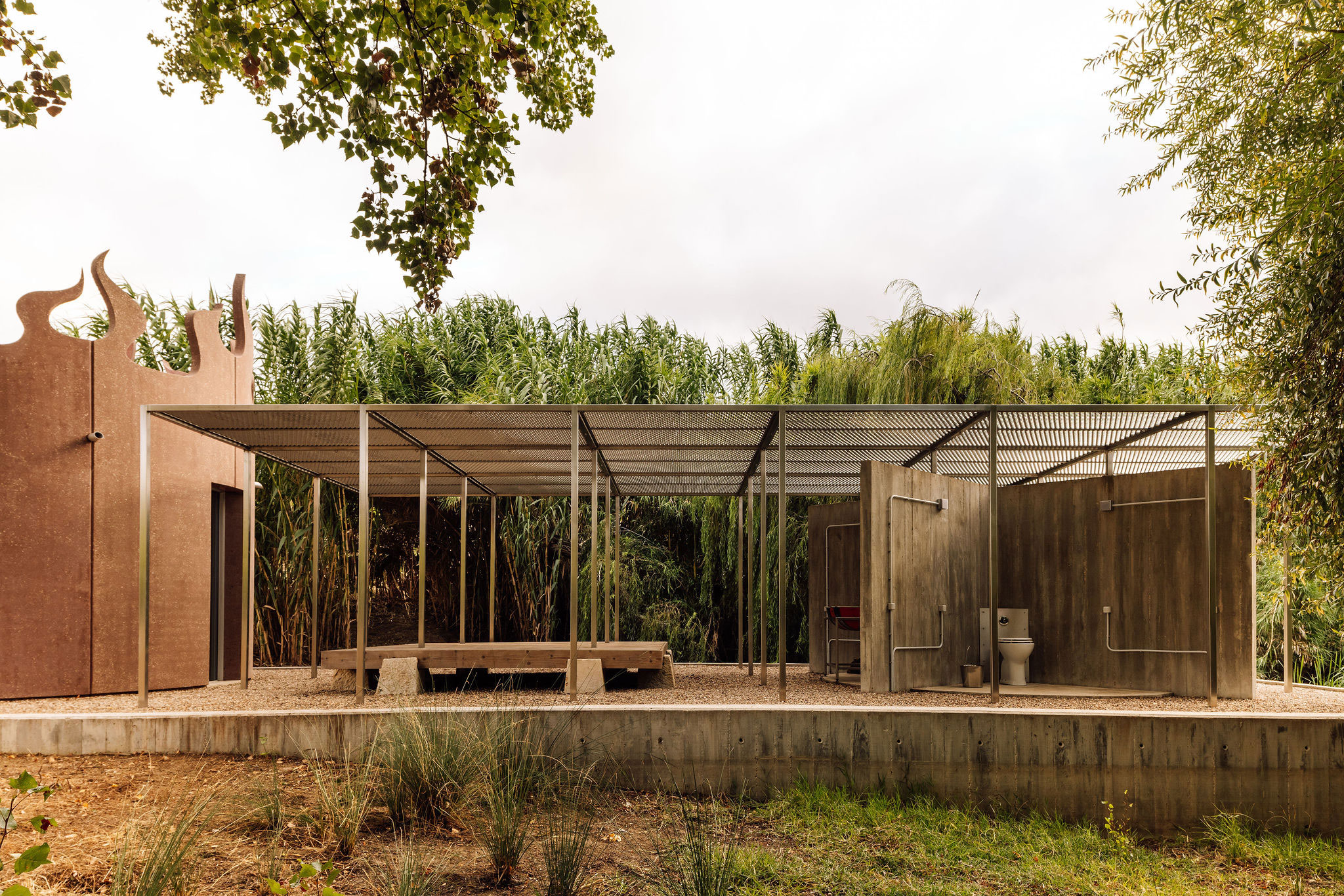
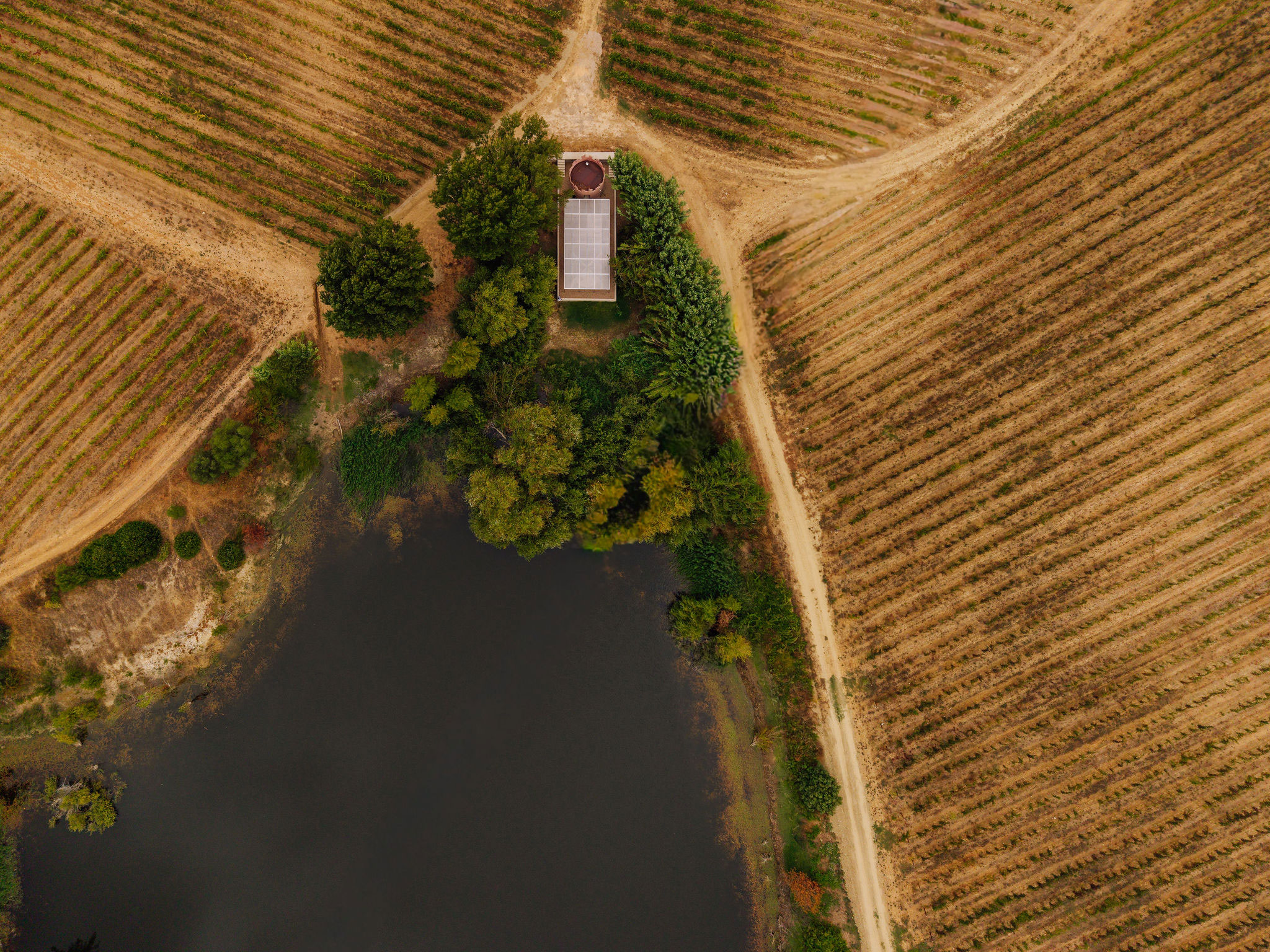
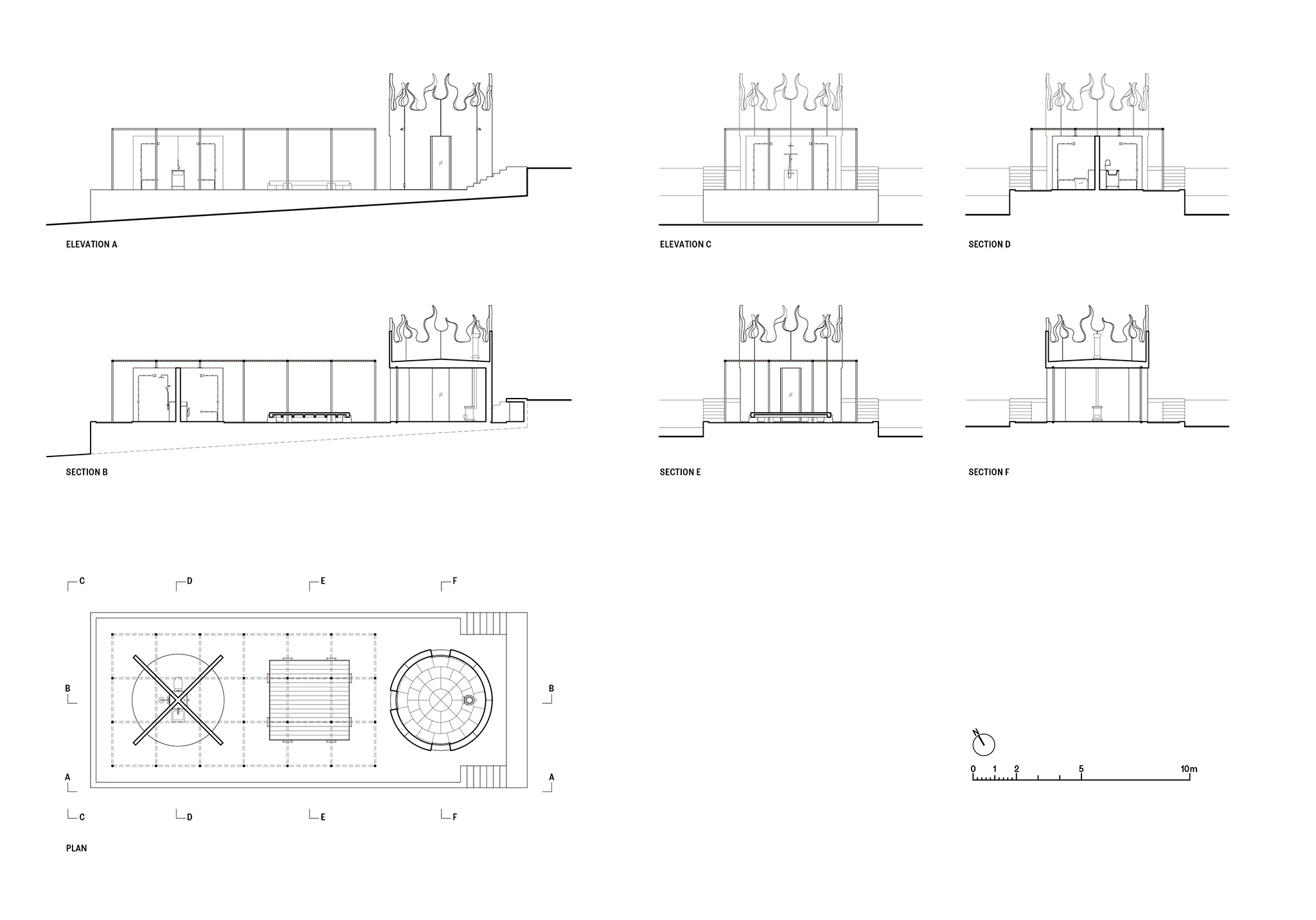
The house designed by Bureau des Mésarchitectures consists of a rectangular platform with the typical functions of a home, where the ground, shade, utilities, and an enclosed room facilitate daily life.

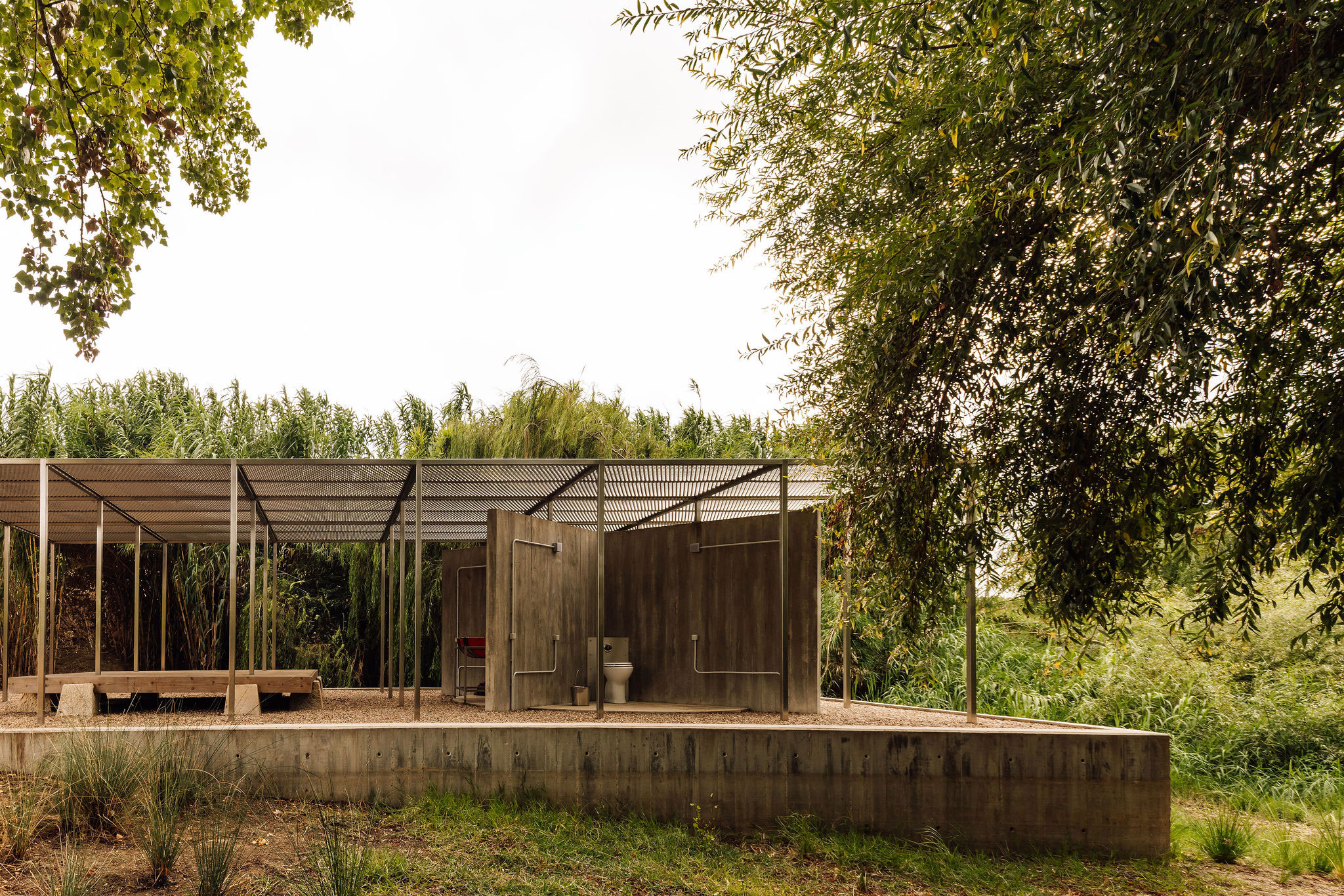
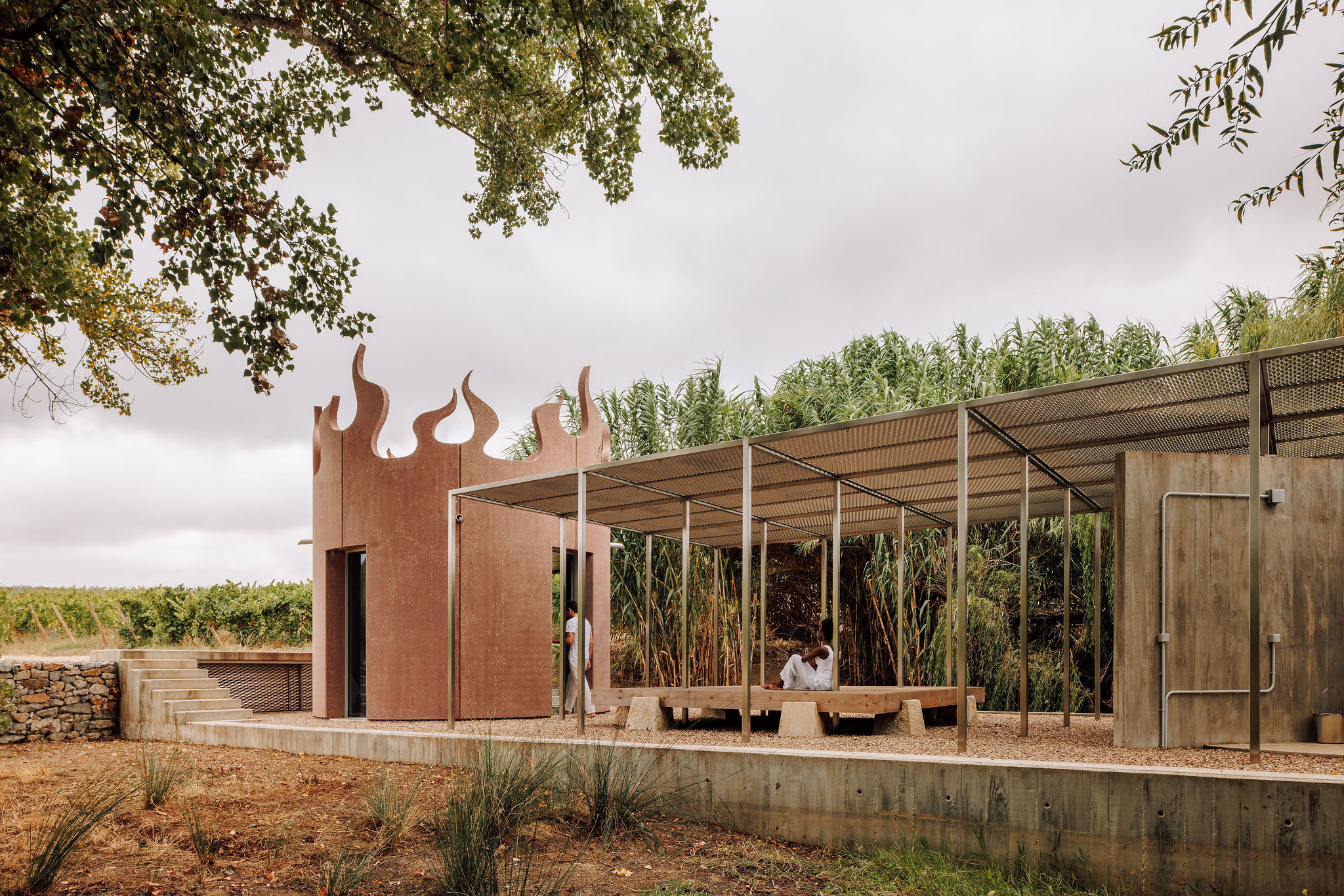
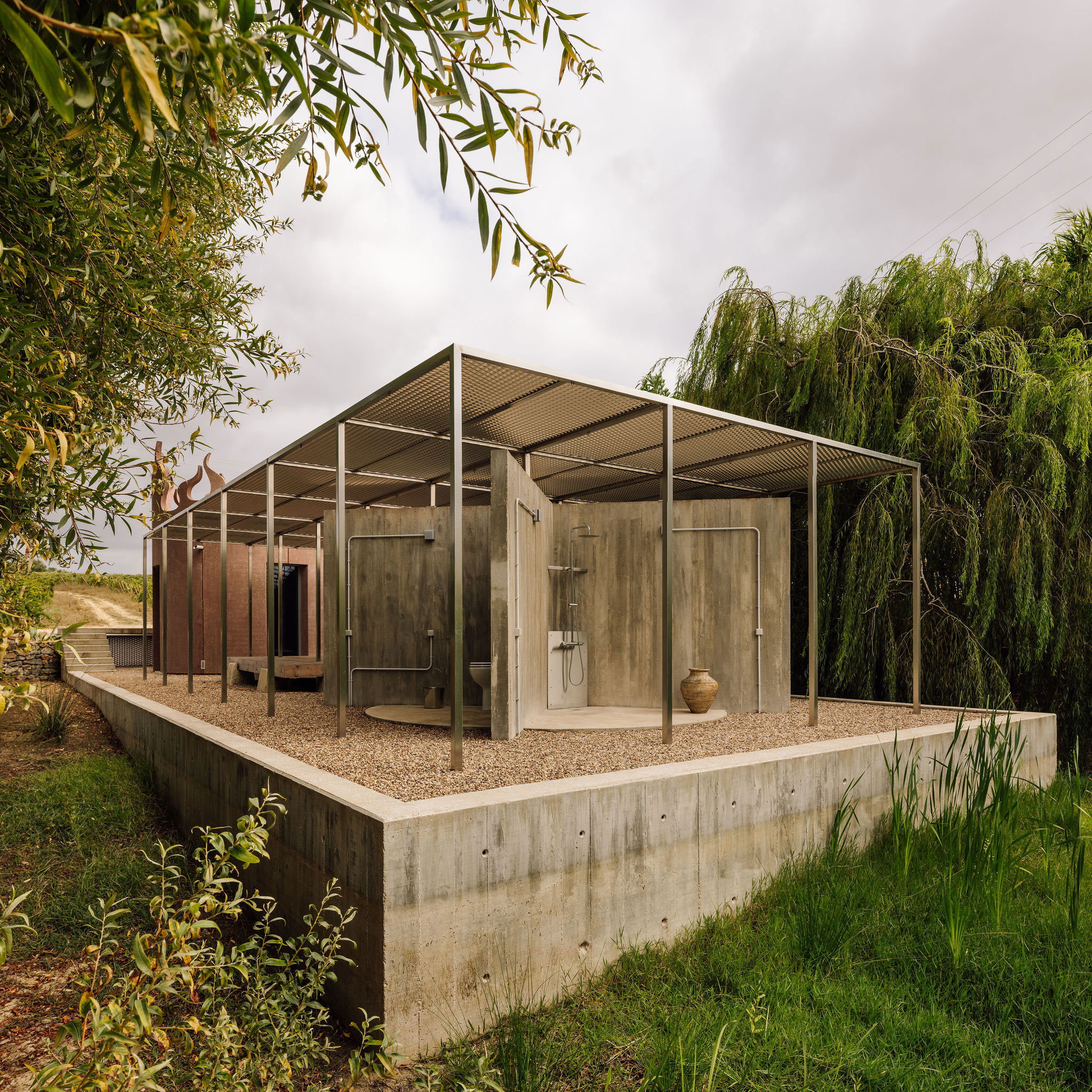
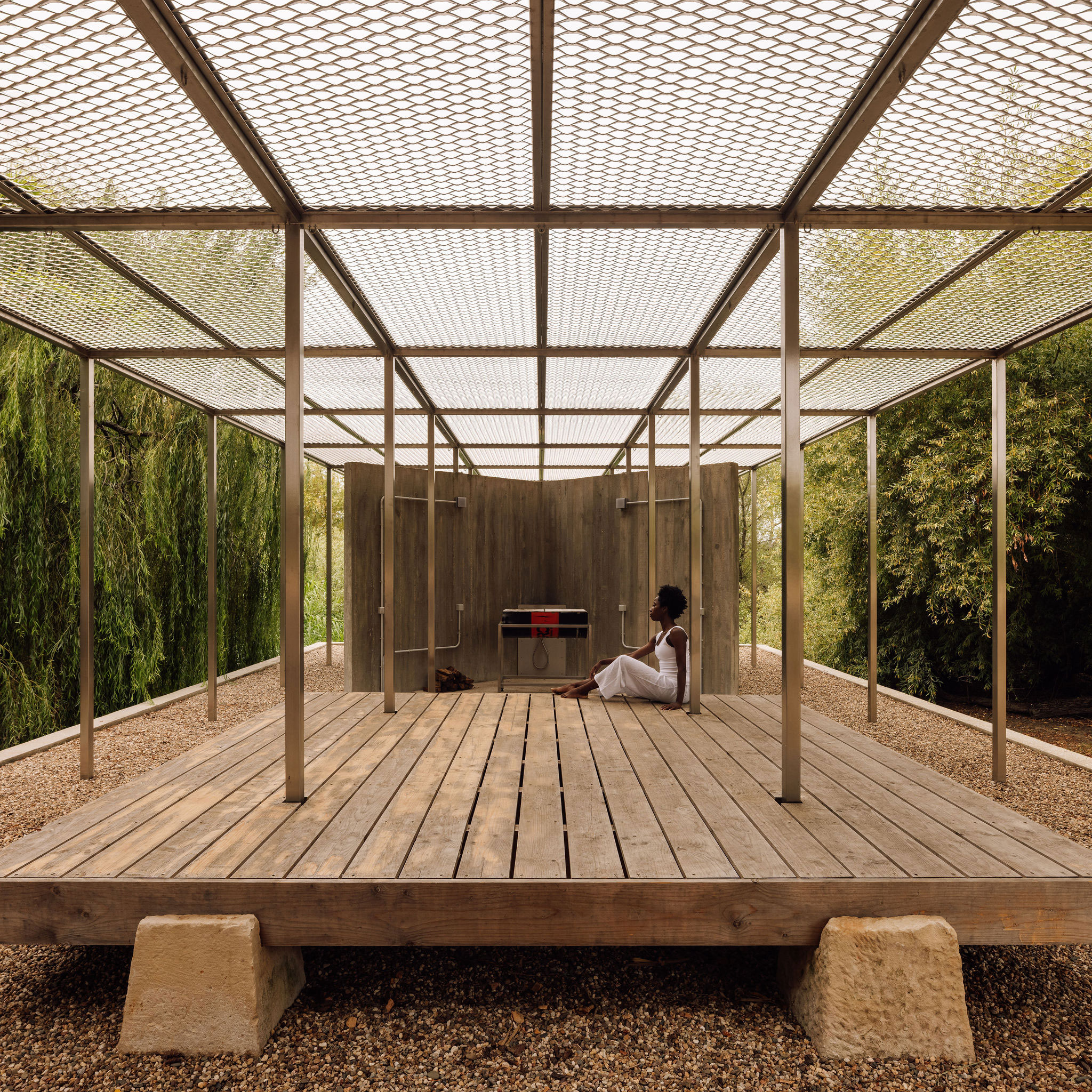
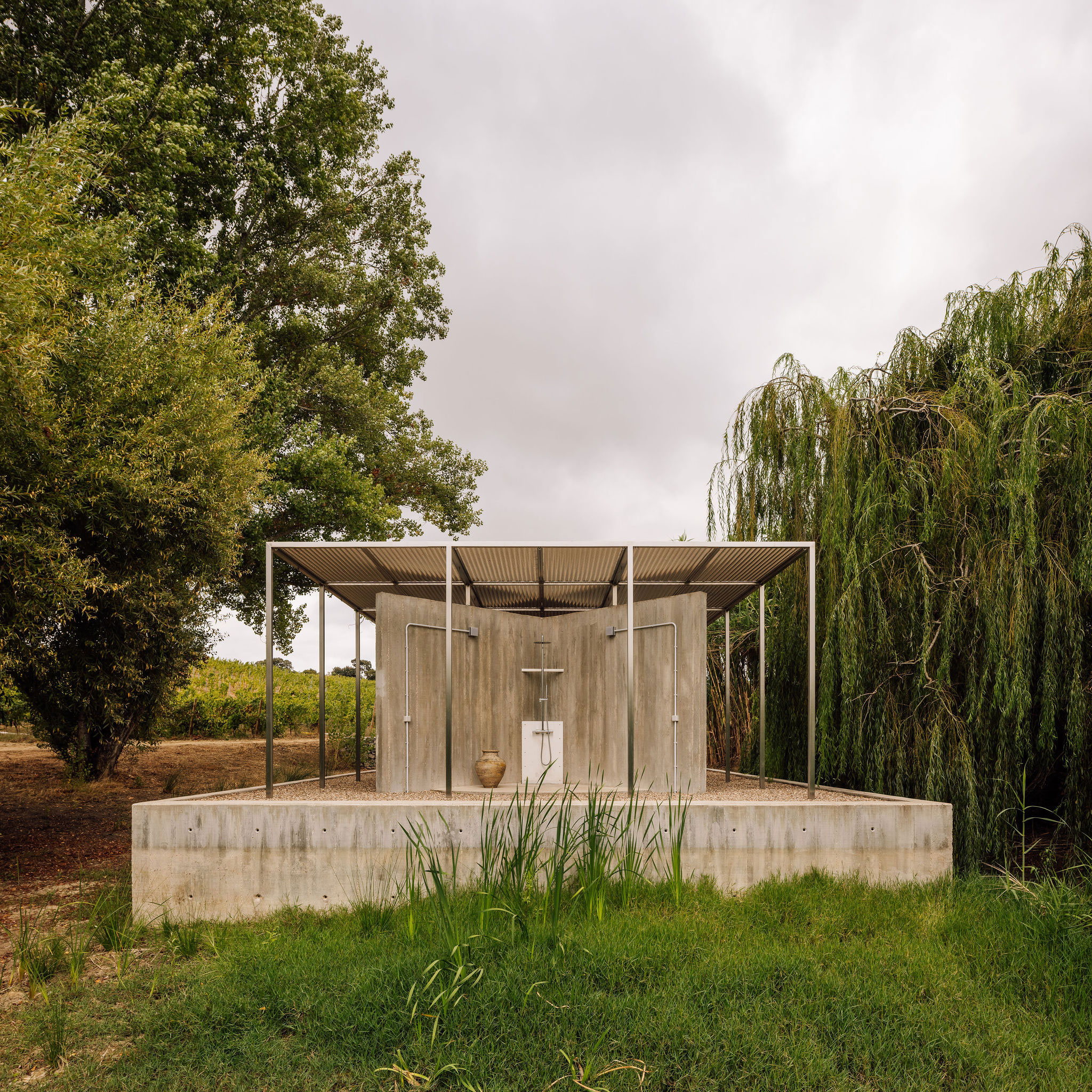
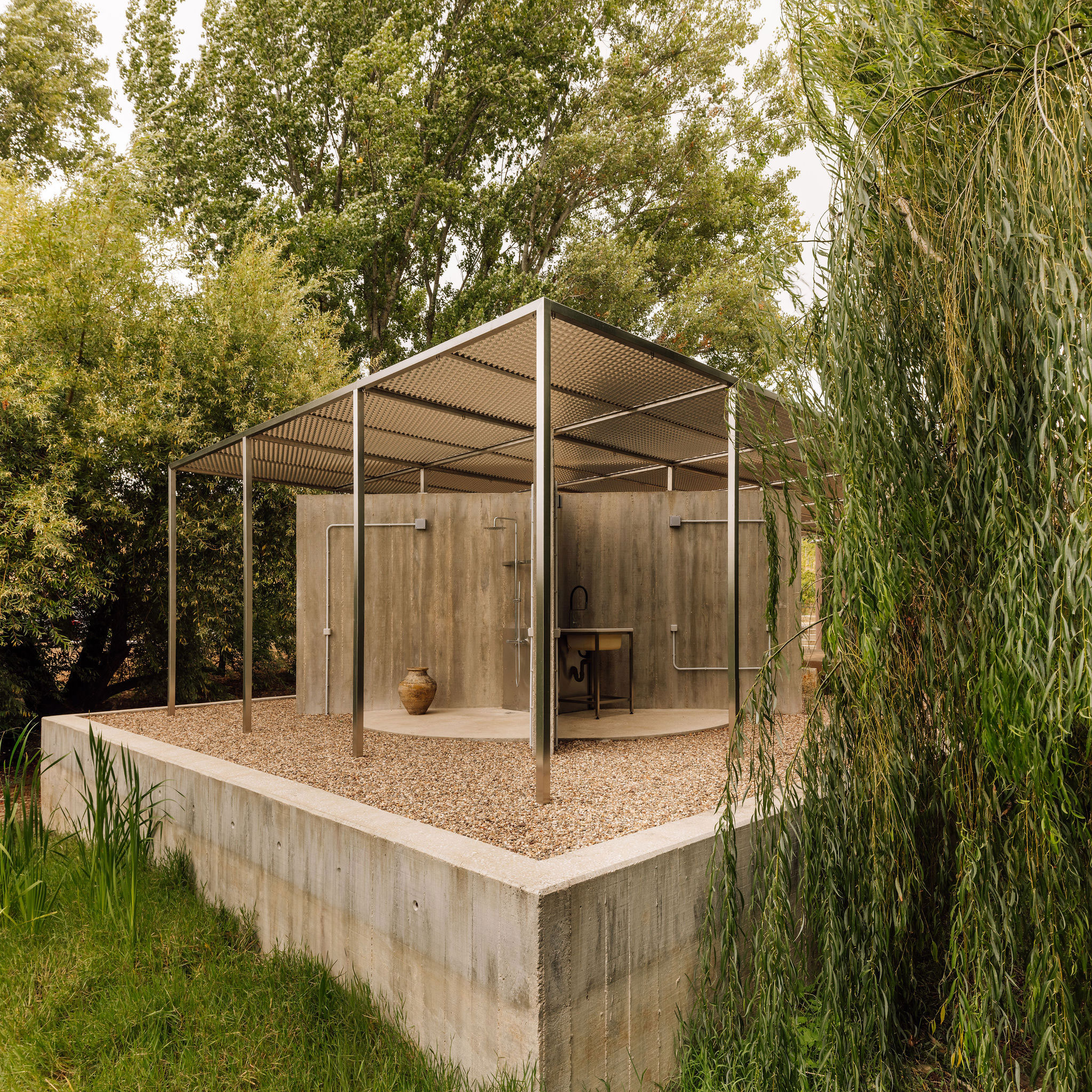
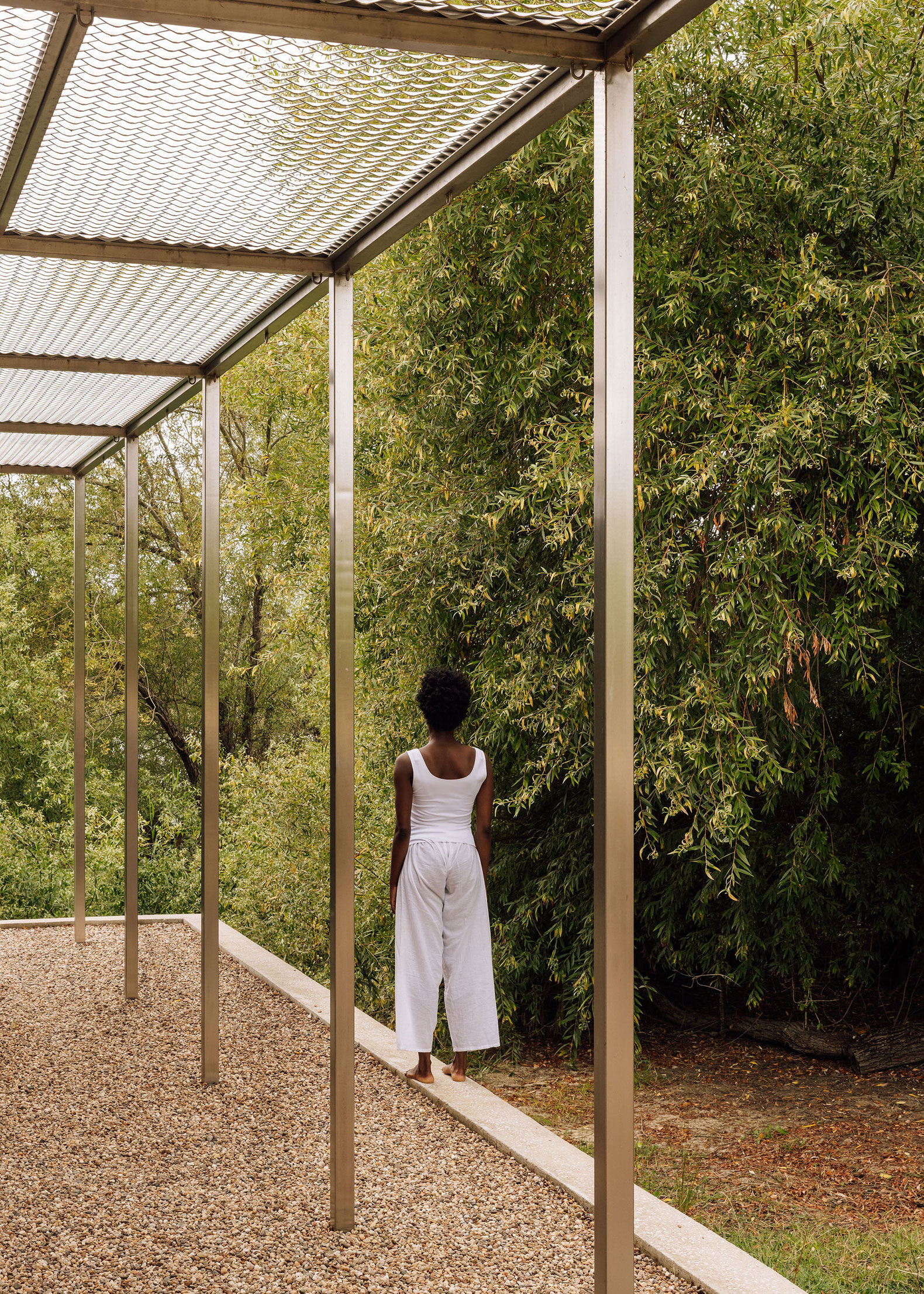
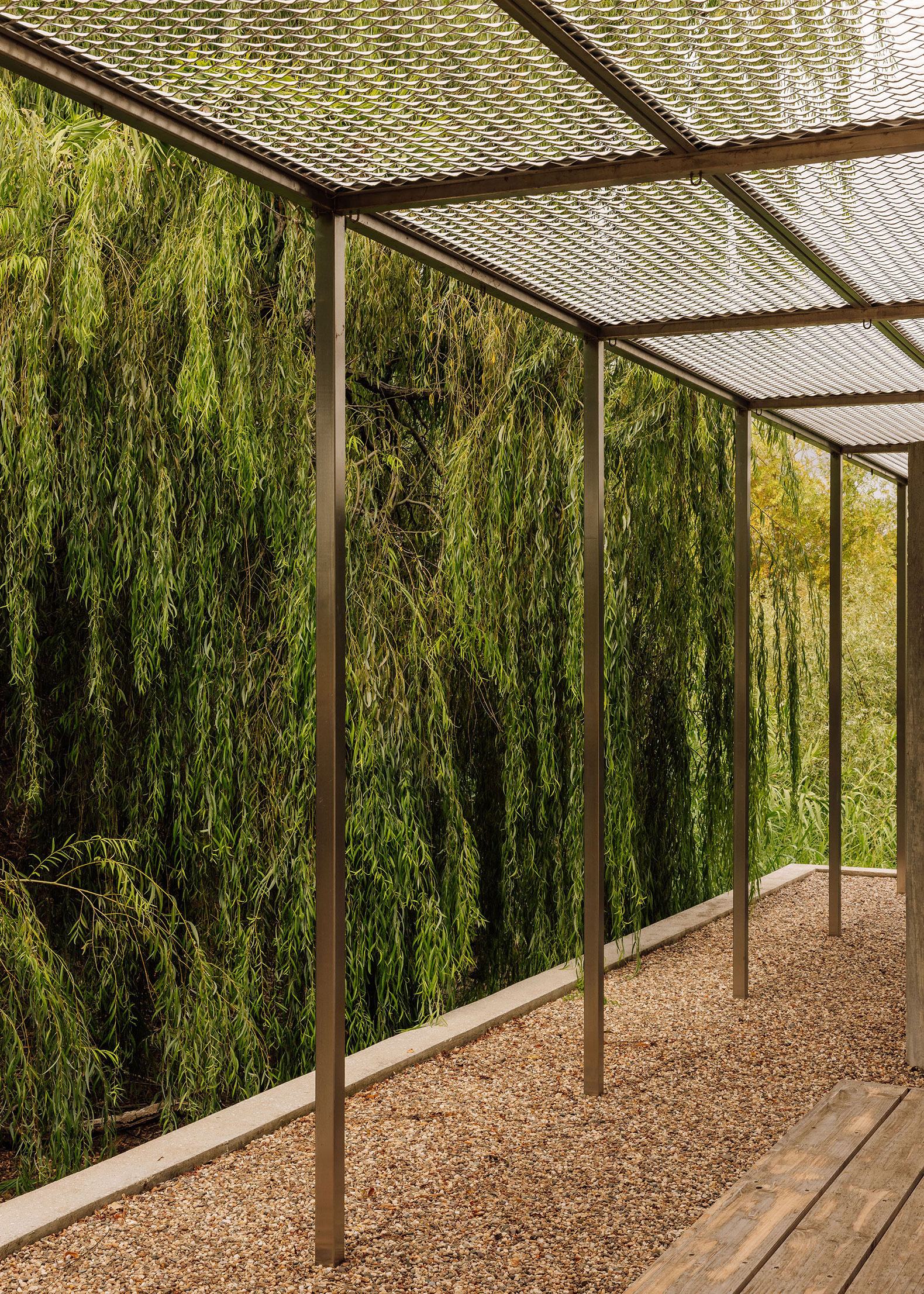
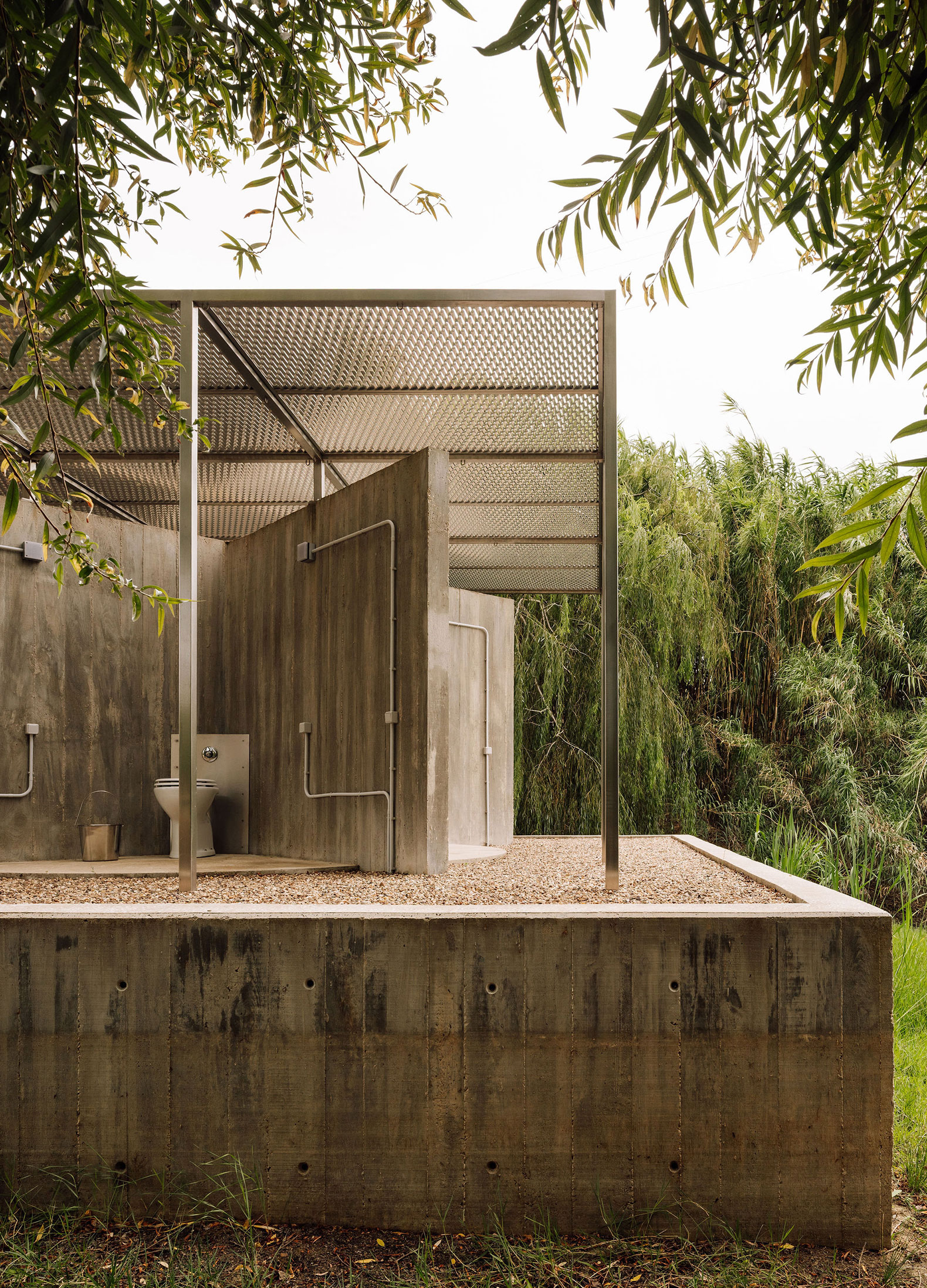
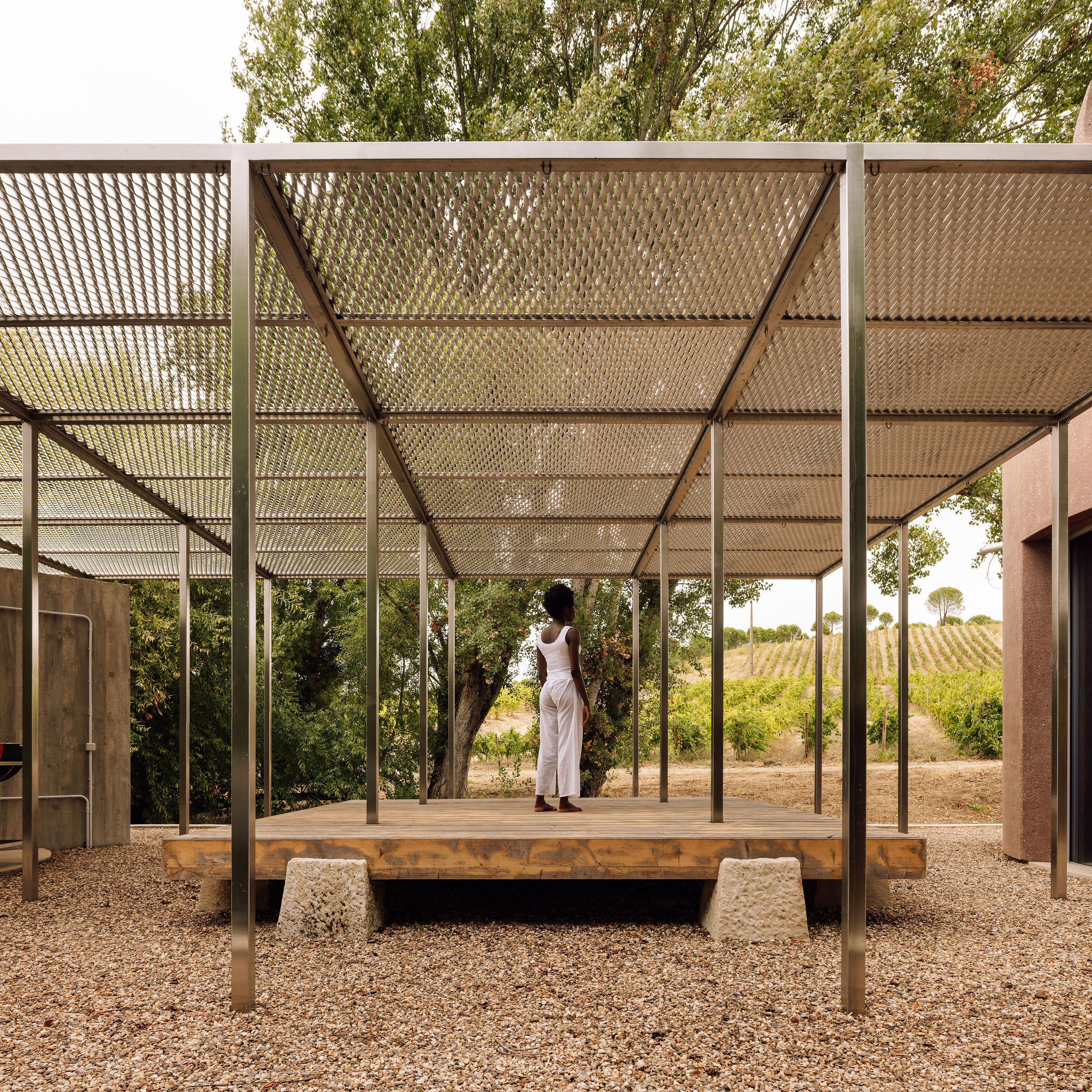
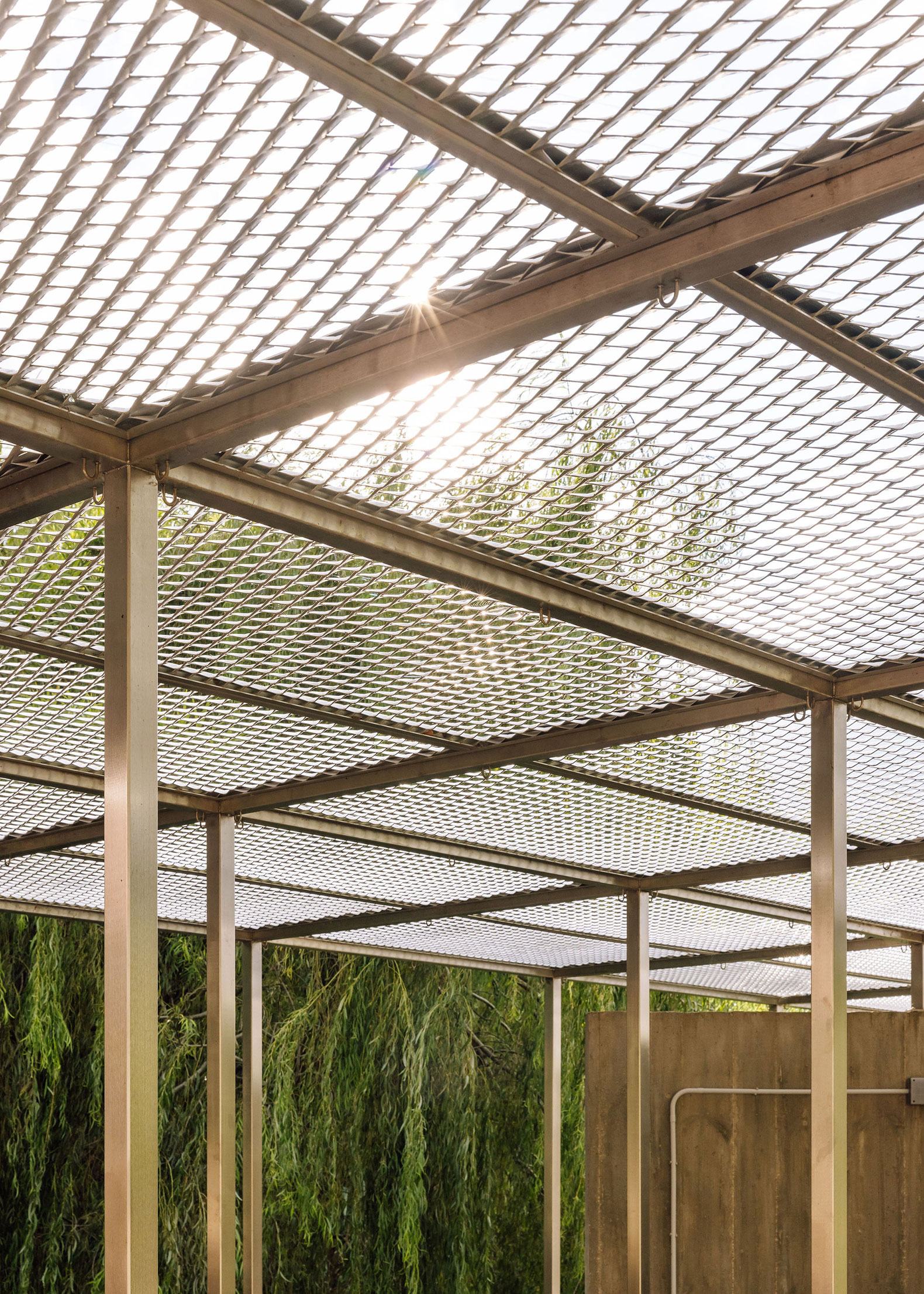
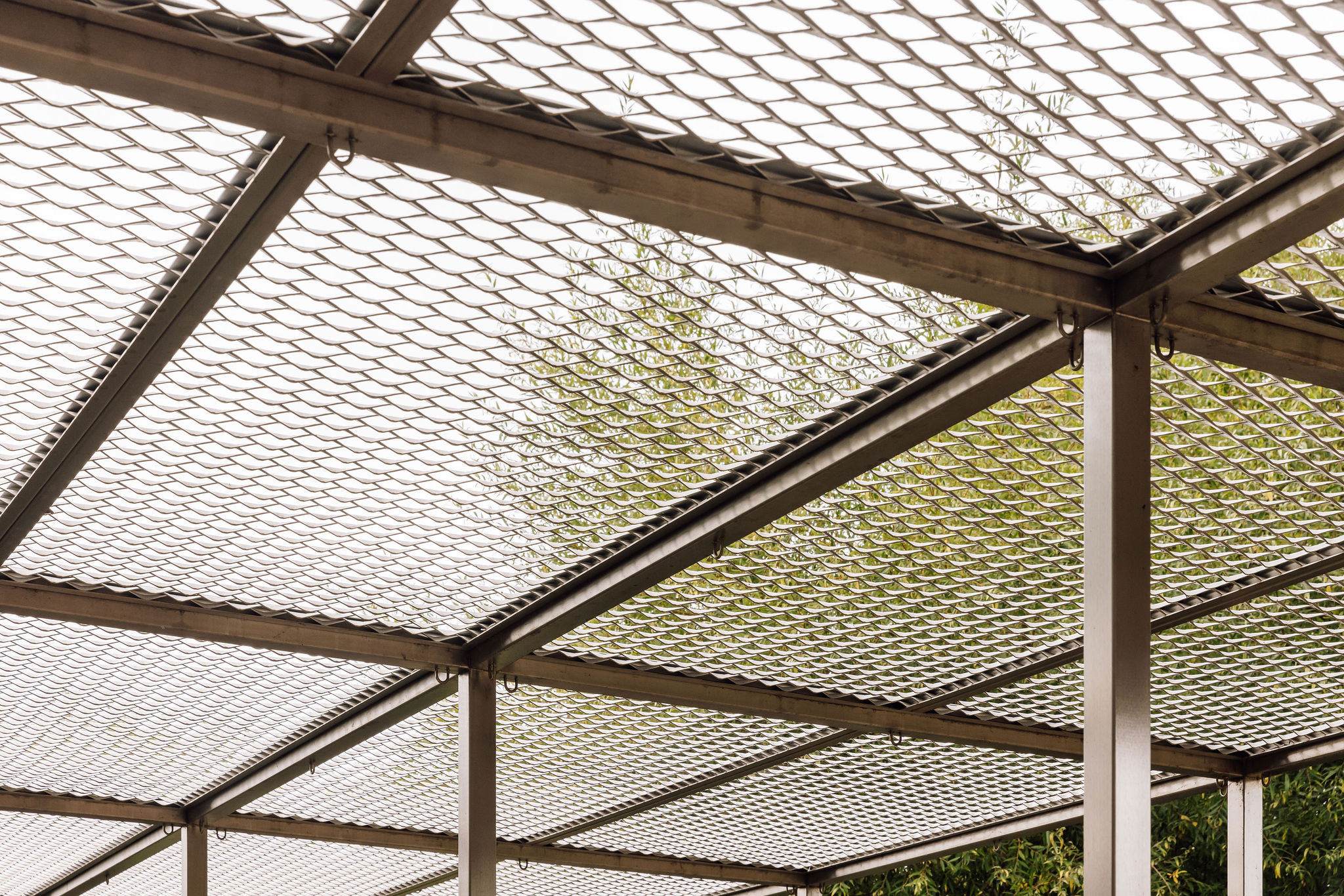
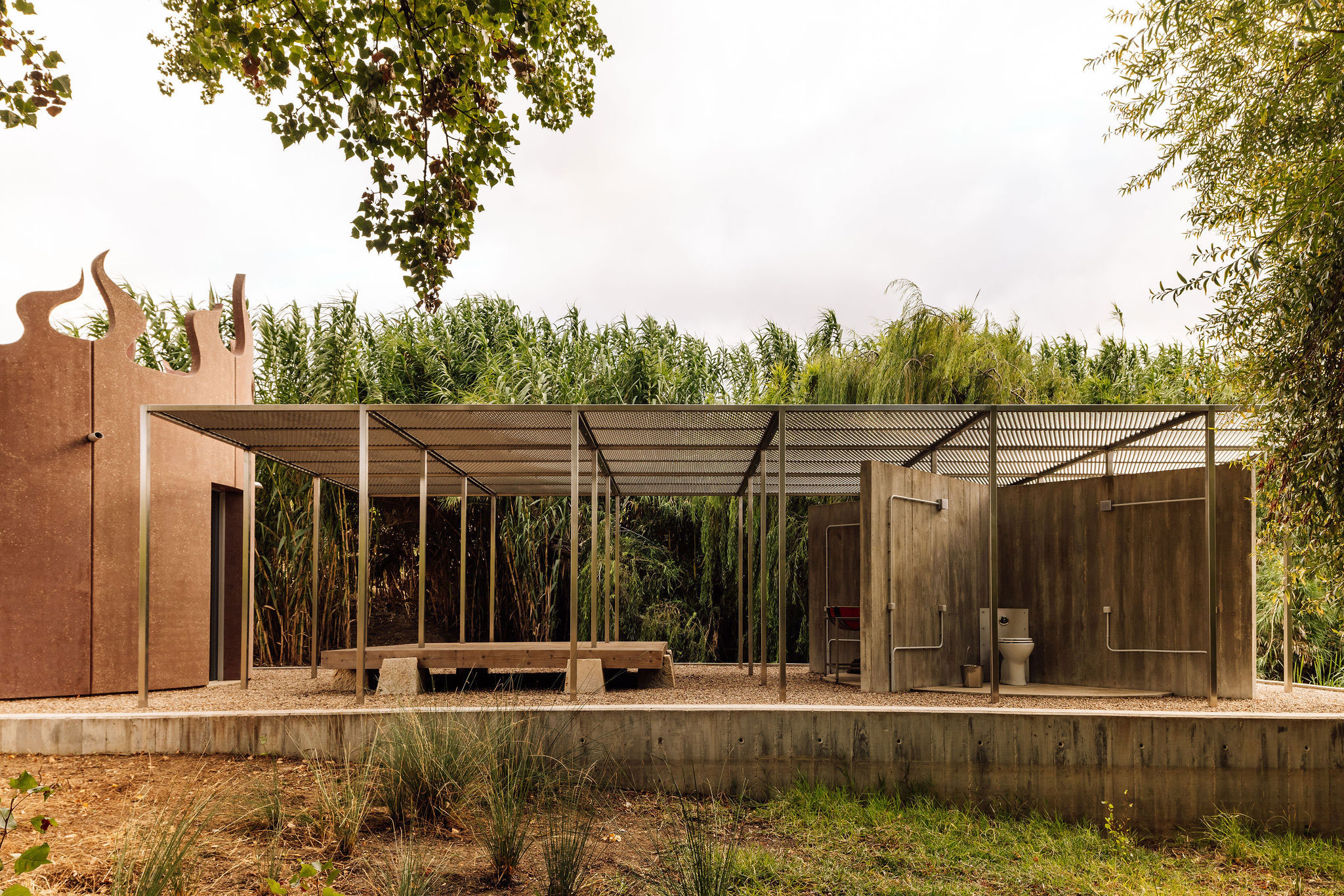
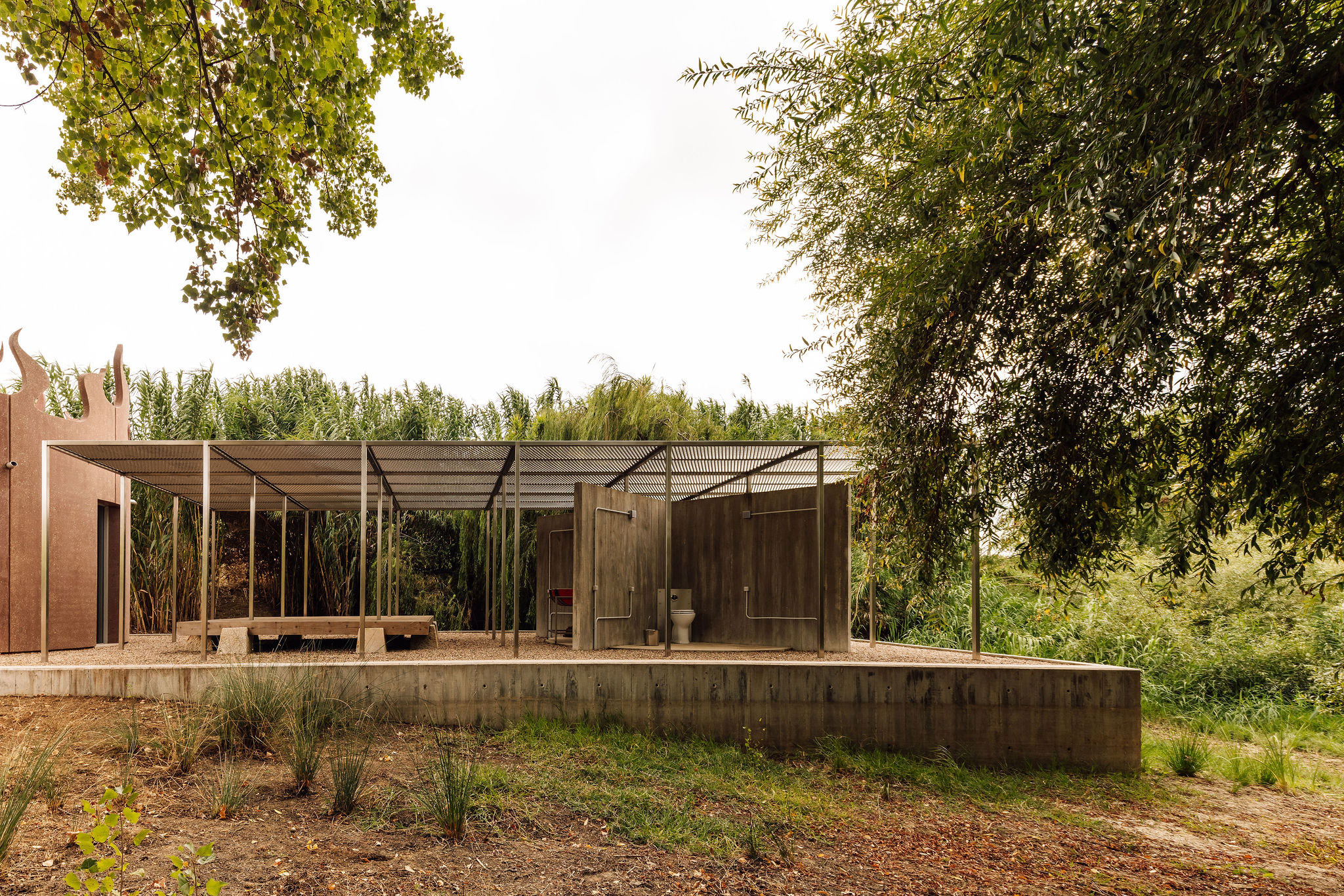
Within the rectangle, a gravel bed forms the main living area, while the platform, defined by exposed concrete walls, is perceived simultaneously as a patio, a dock, and a base. Structurally, a grid structure of stainless steel posts and beams rises above the platform, which supports an expanded metal mesh that acts as a transparent sunshade.
Casa sin piel por Bureau des Mésarchitectures. Fotografía por Francisco Nogueira.

House with no skin by Bureau des Mésarchitectures. Photograph by Francisco Nogueira.

Project description by Bureau des Mésarchitectures

With Casa sem pele (House with no skin), Didier Fiúza Faustino reframes the house as a lived field rather than a sealed object, a threesome, and a prompt to rest, share, and care. Conceived as a rural, contemporary shelter at the edge of cultivated land in Ribatejo, Portugal, it is a manifesto in built form, a house reduced to essentials, then rebuilt as a scene of domestic life.

Set among vineyards, limestone ground, and dense vegetation around a small lake, the project, completed by Faustino and his Paris–Lisbon practice Bureau des Mésarchitectures, tackles the familiar figure of “the house” in favour of an explicit, legible arrangement of domestic acts.

House with no skin by Bureau des Mésarchitectures. Photograph by Francisco Nogueira.

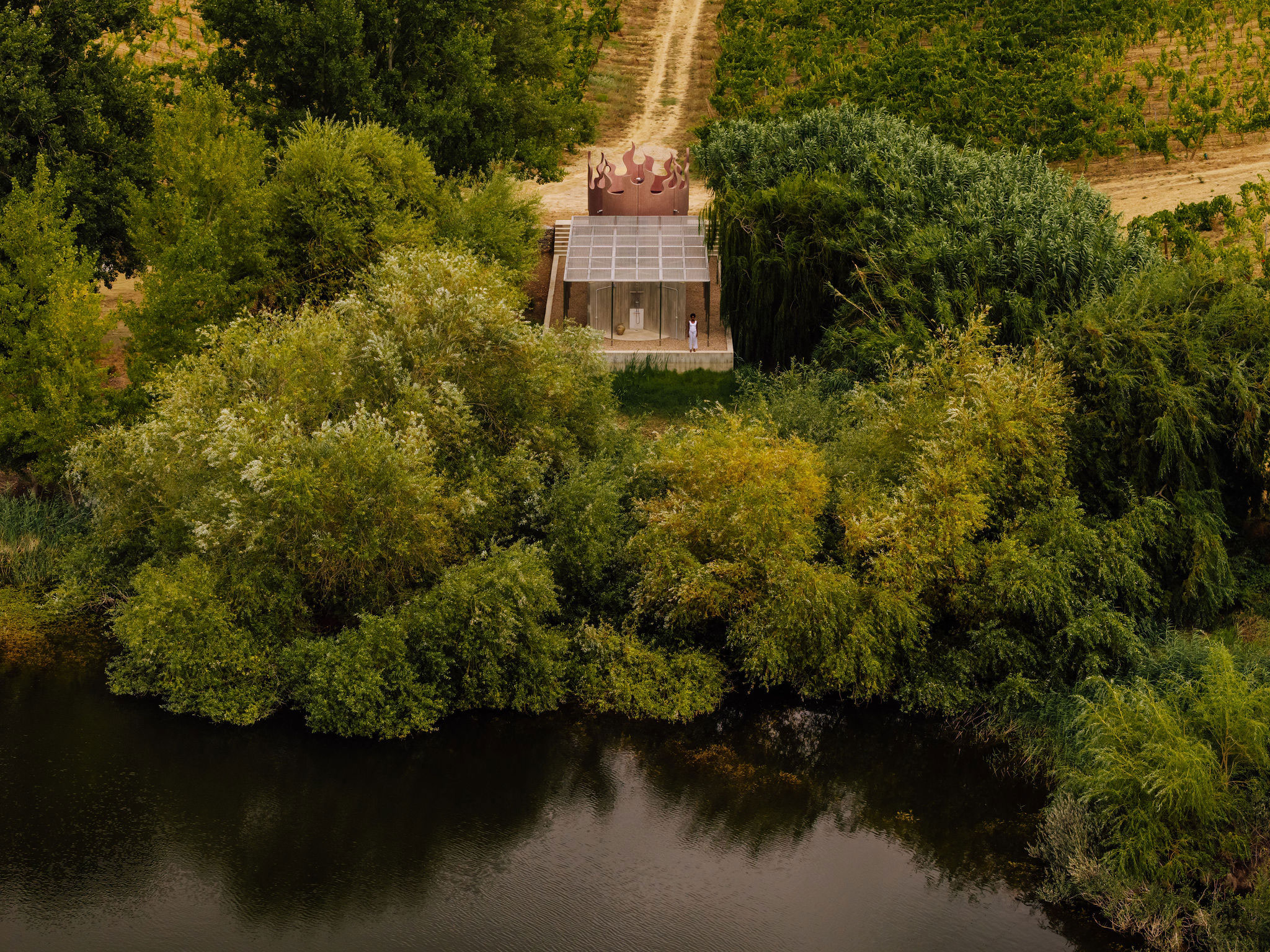
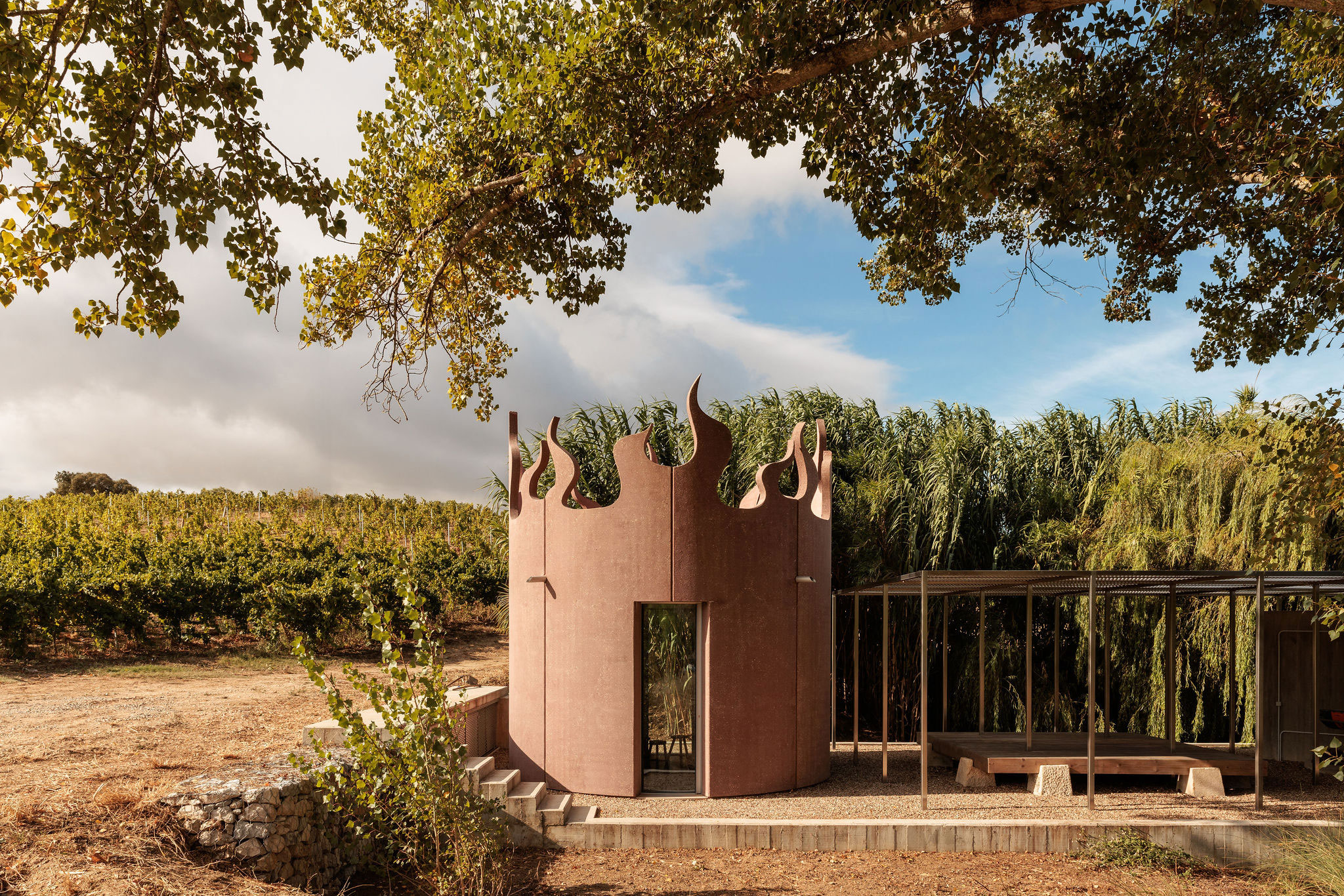
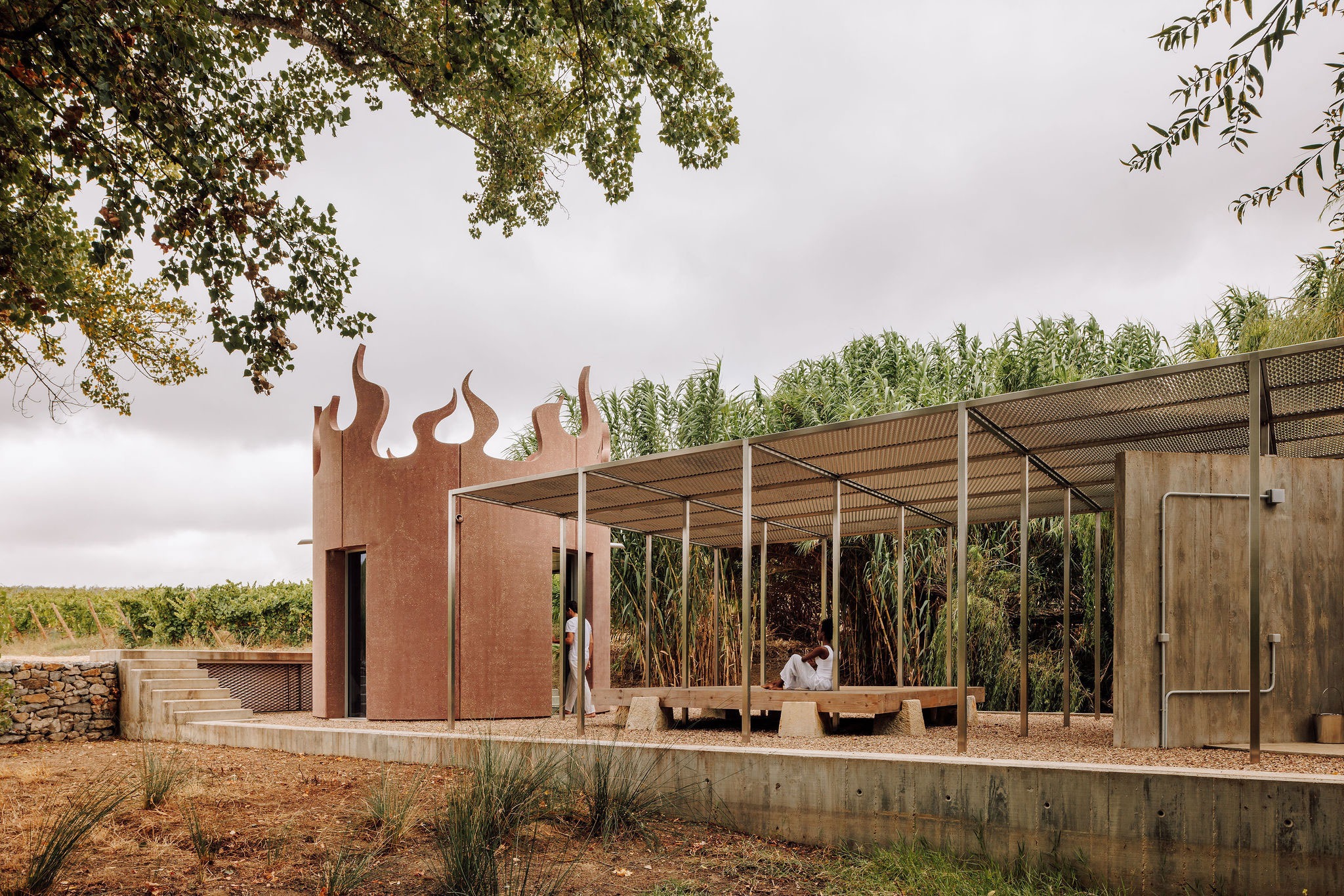
Approached along an old Roman road, Casa sem pele comes into view on a hillside vineyard, on the banks of a pond lined with willows and bamboo. From the path above, a few steps lead down to a rectangular platform defined by raw concrete walls. This plinth establishes the project’s ground, a thin slab that sets level and perimeter, edged by a short run of steps and a strip that clearly marks its bounds. Inside the rectangle, a gravel bed forms the main surface of occupation. The platform reads at once like a patio, a pier, and a foundation, framing the lake and vineyard as the dwelling’s living horizon.

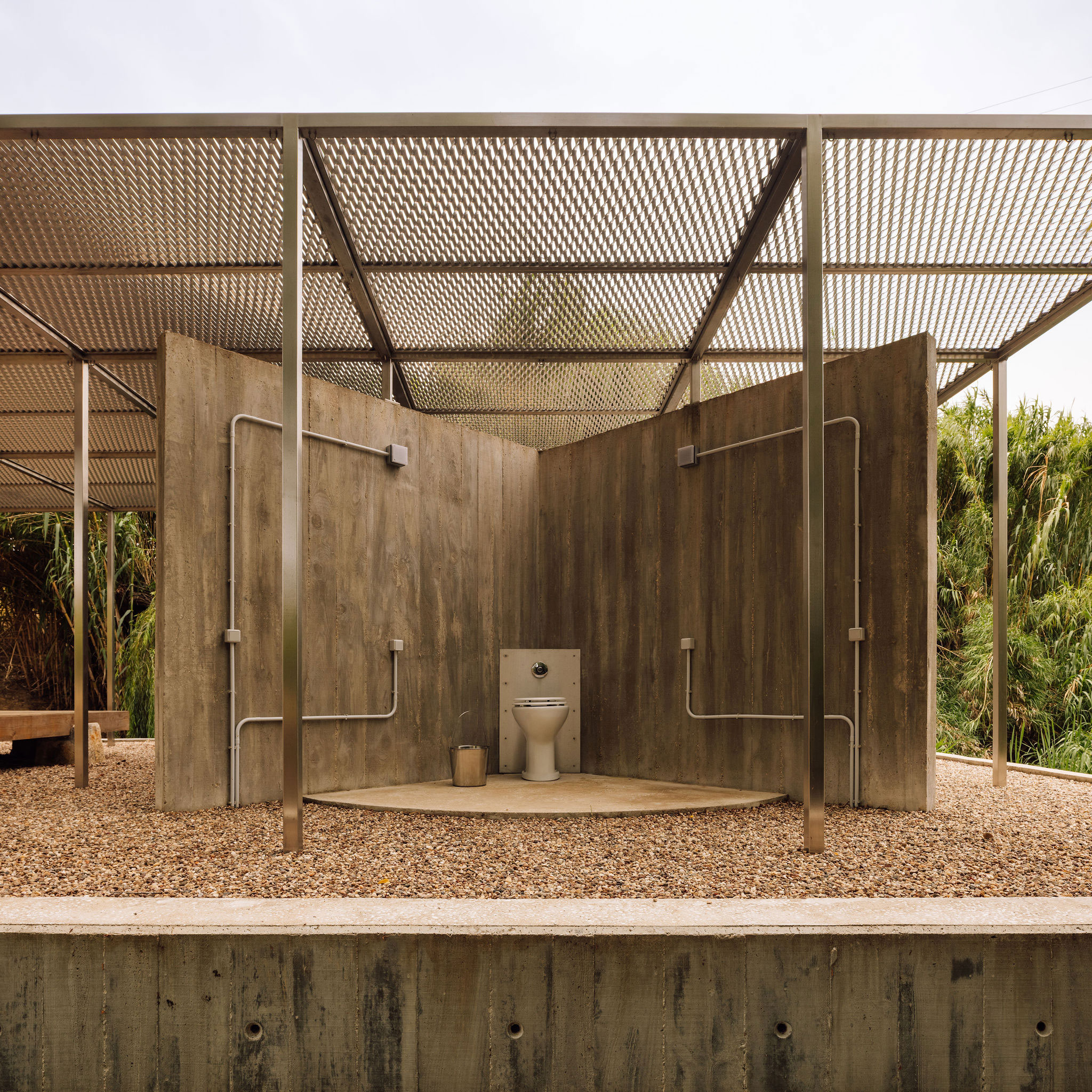
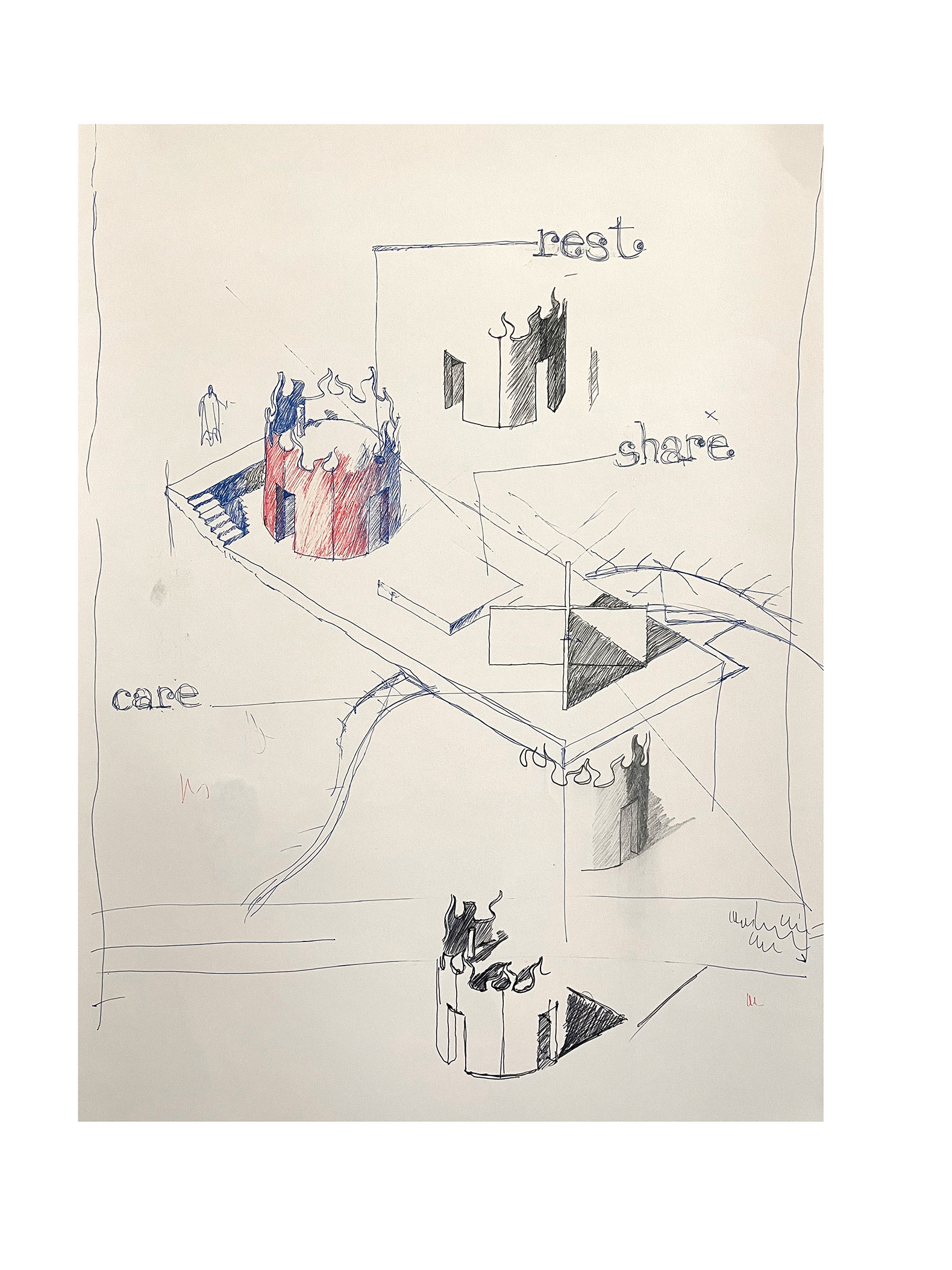
On this ground field sit three primary elements, each corresponding to one of the customary functions of a house: rest, care, and sharing. Together, they form a deliberately minimal set of components, floor, shade, services, and one enclosed room, that can support daily life without relying on conventional enclosure.
House with no skin by Bureau des Mésarchitectures. Photograph by Francisco Nogueira.

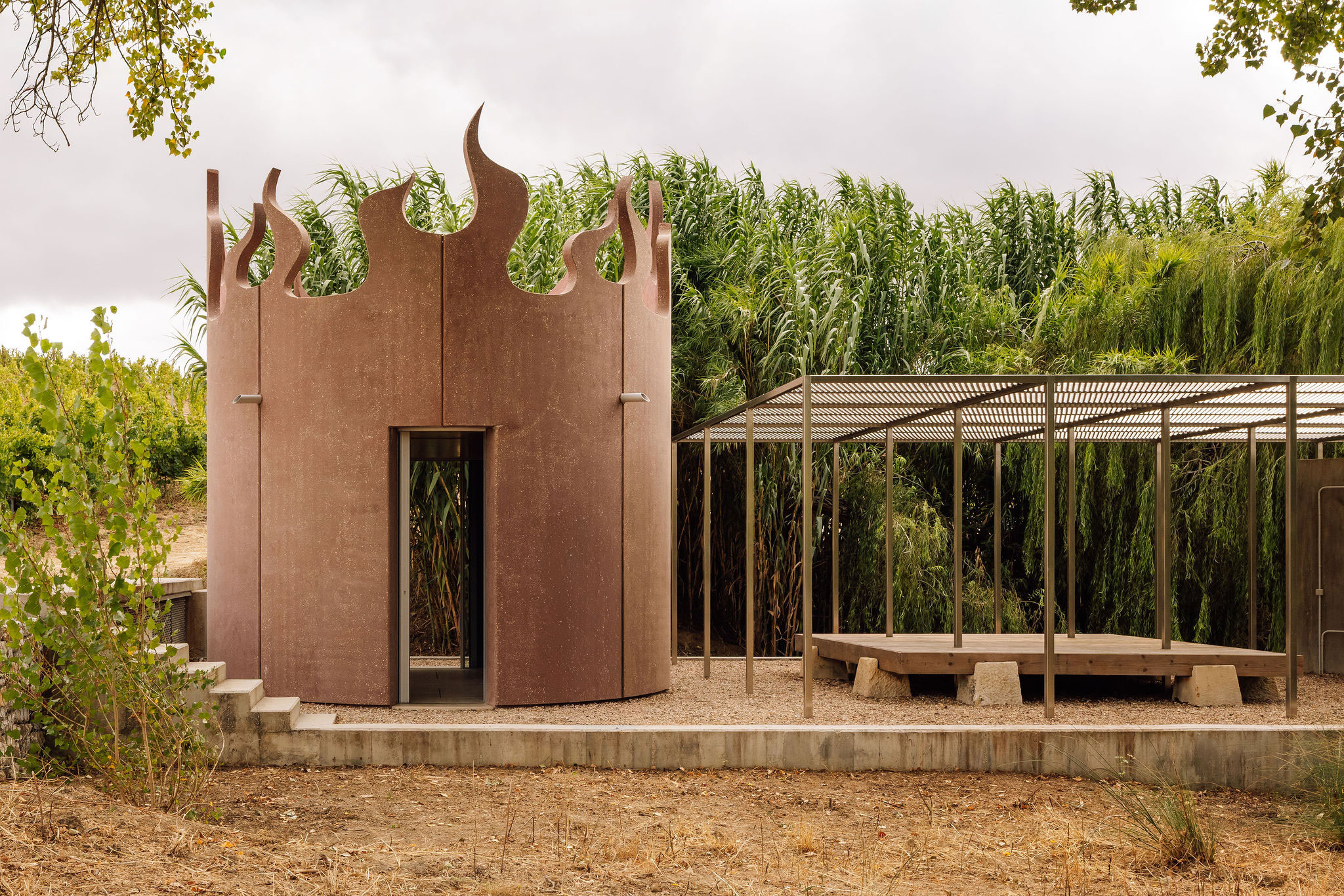
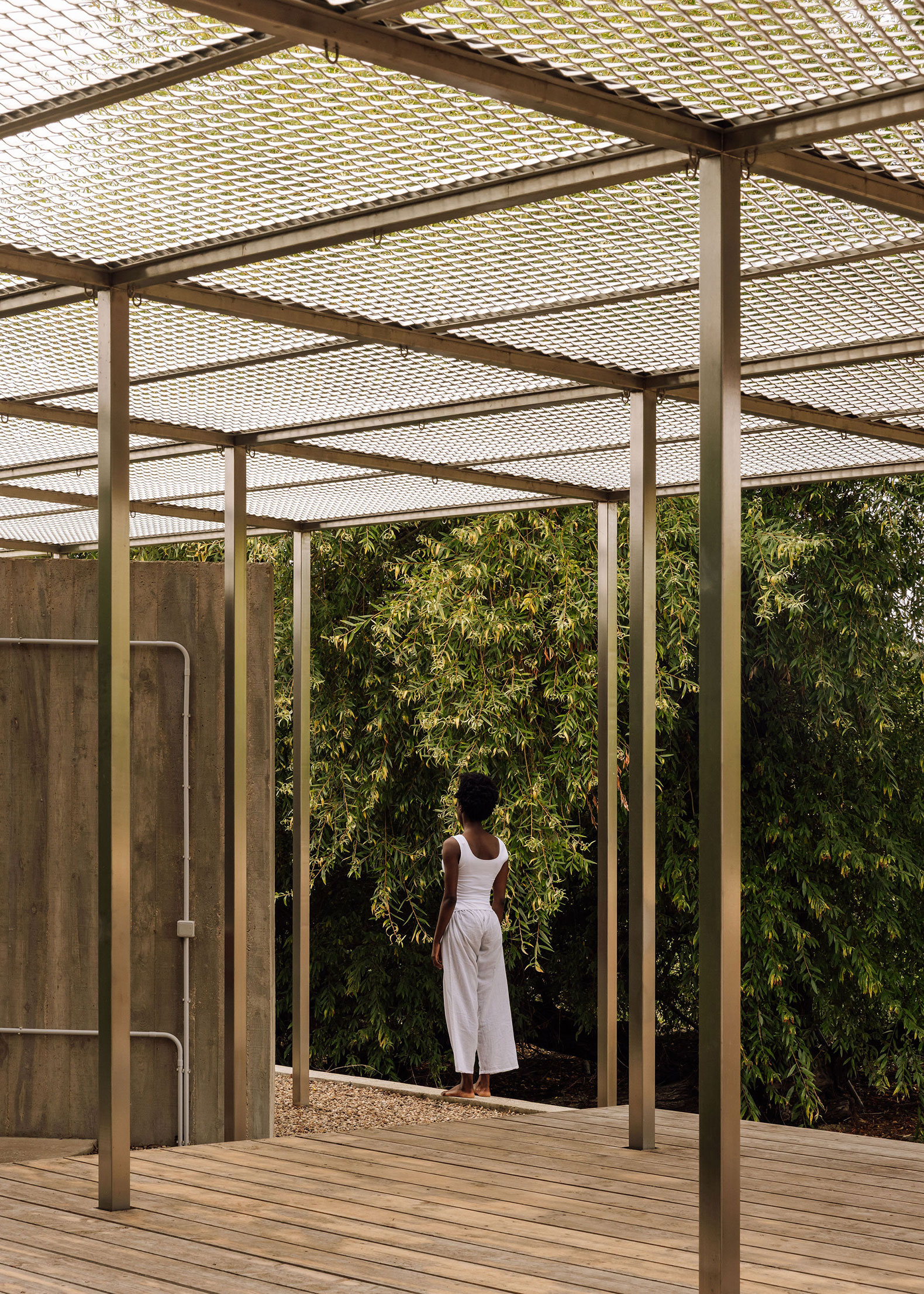
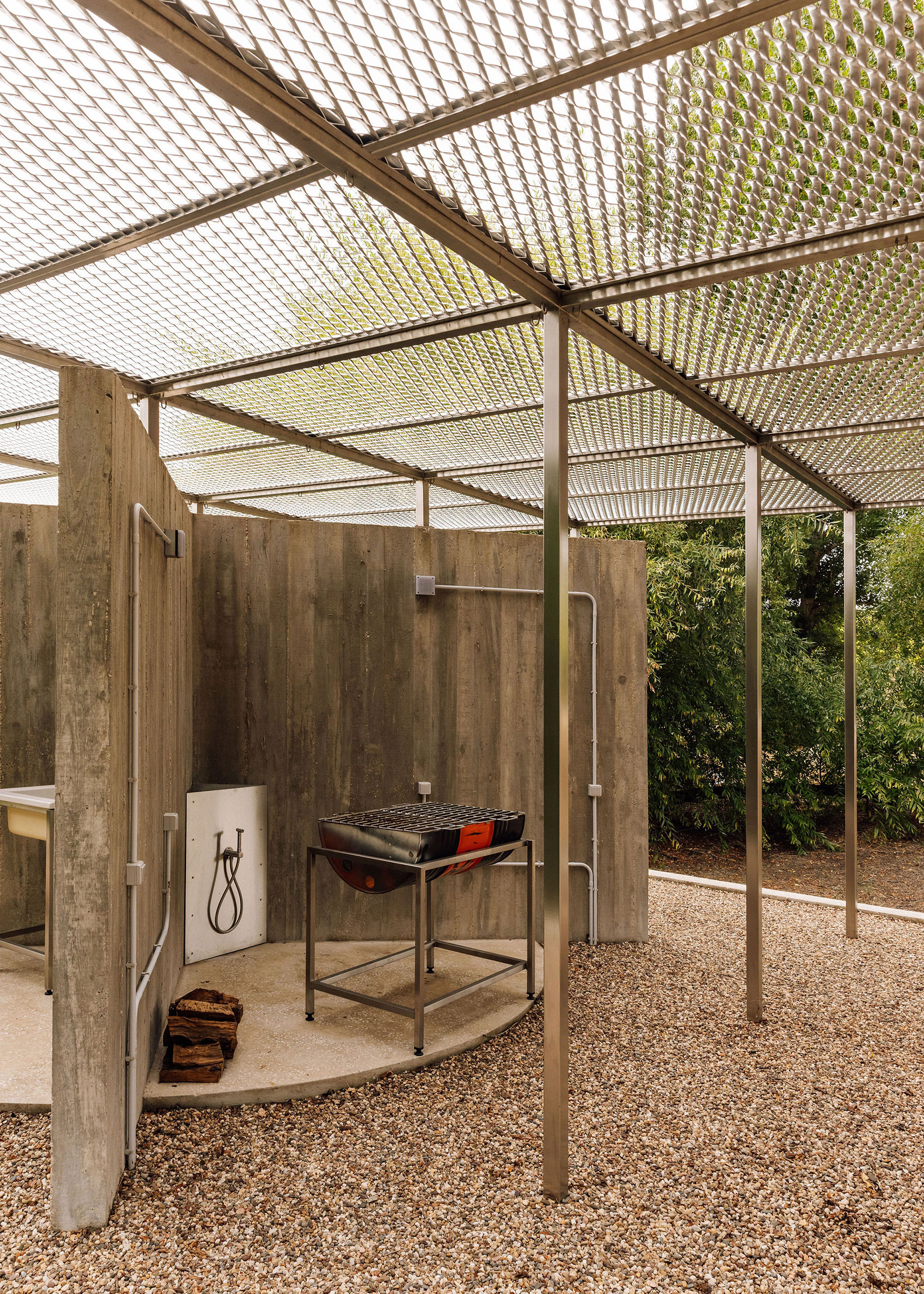
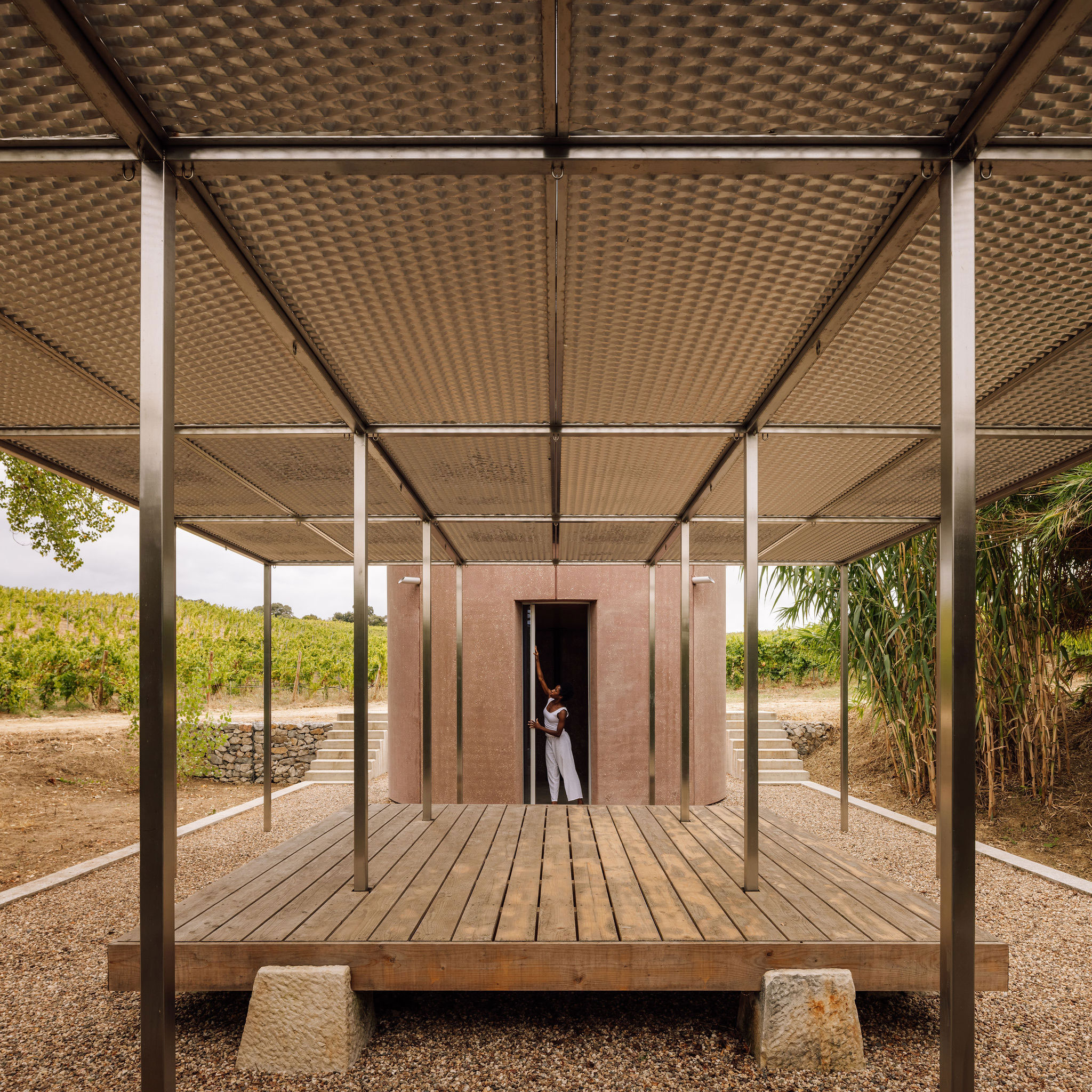
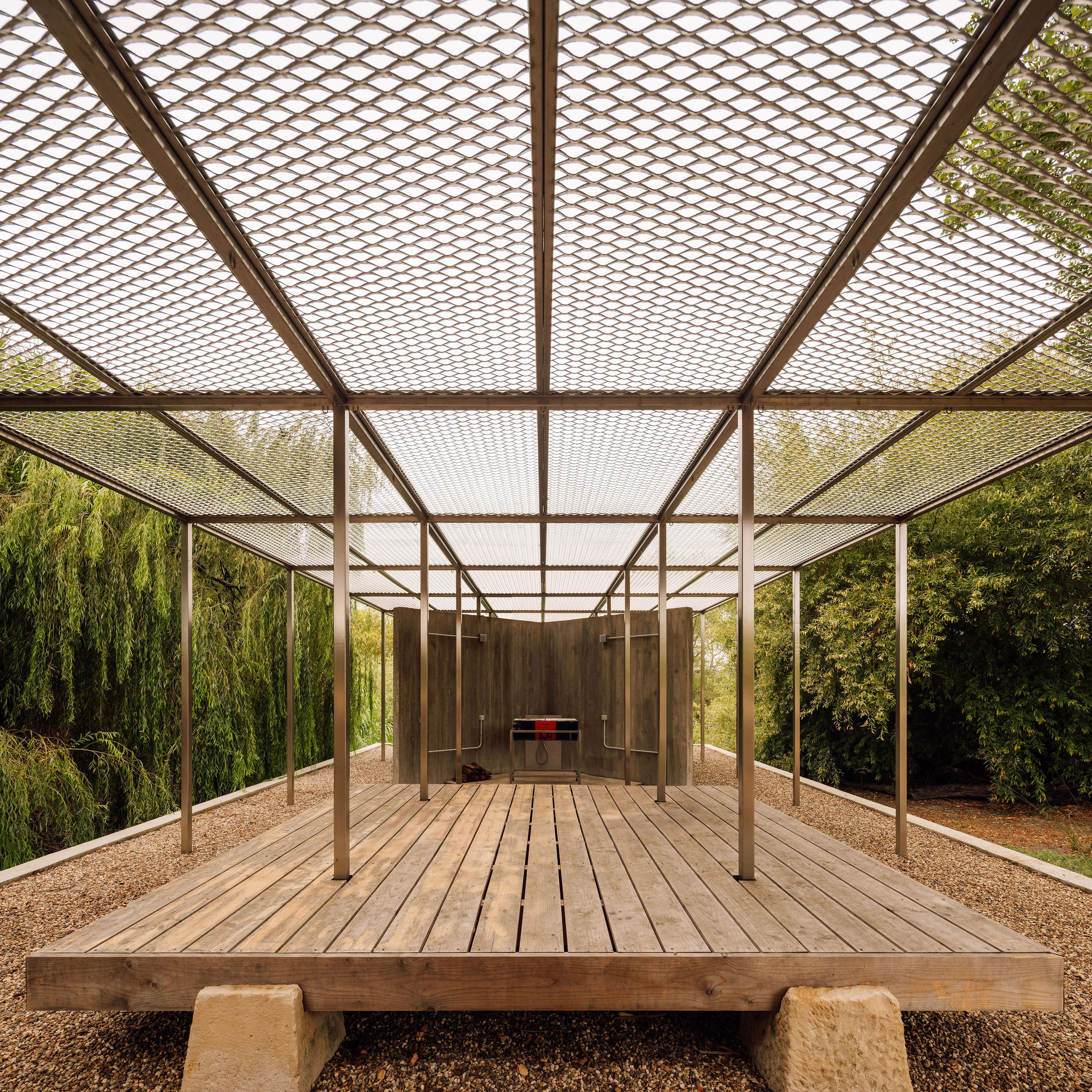
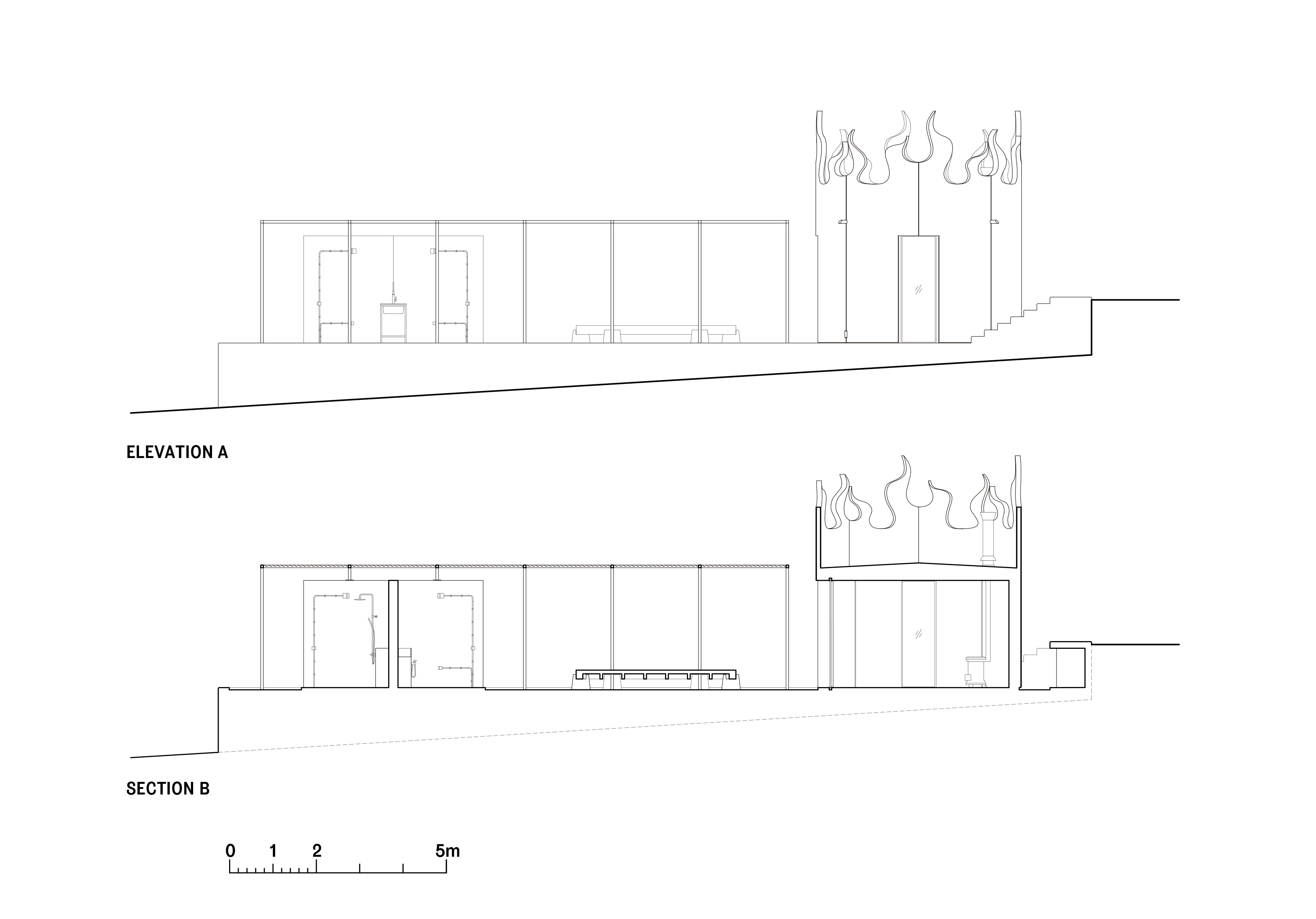
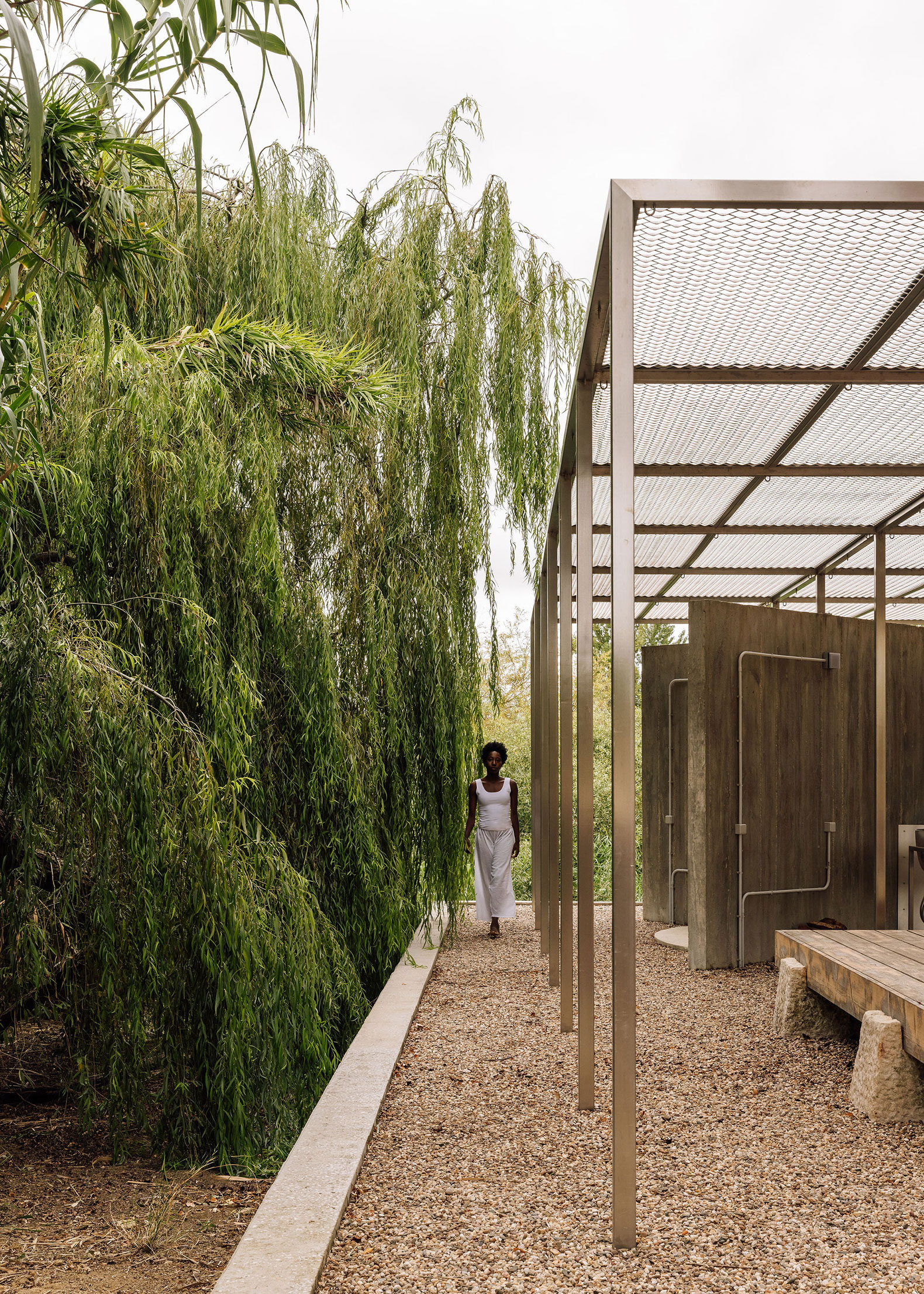
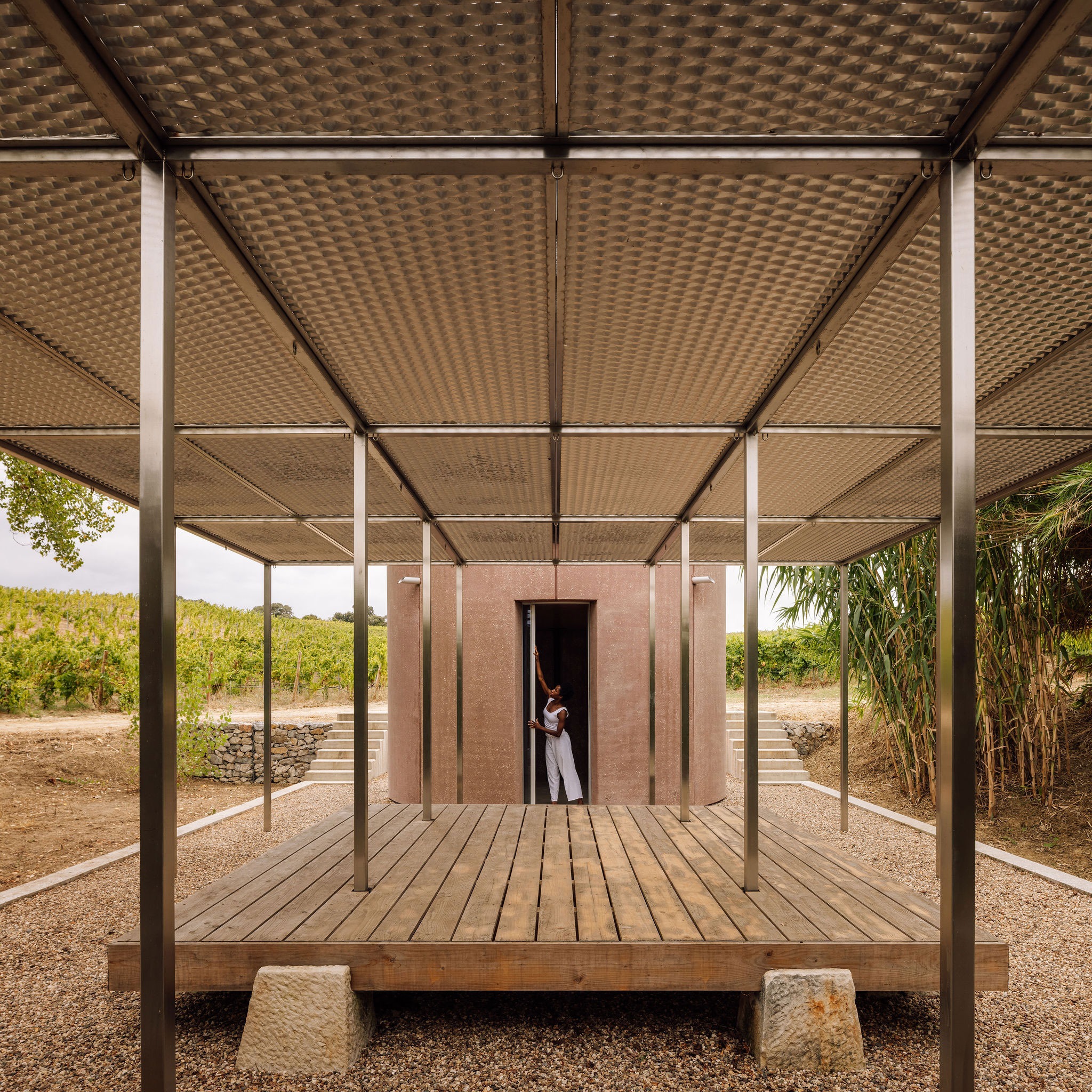
A stainless-steel post-and-beam grid rises above the platform to create a second, equally clear layer. Composed of longitudinal and lateral bays, the structure supports expanded-metal mesh that acts as a transparent sun filter. It reduces glare and heat while keeping the sky present. It is roof-like without becoming a roof, offering comfort without sealing the space.

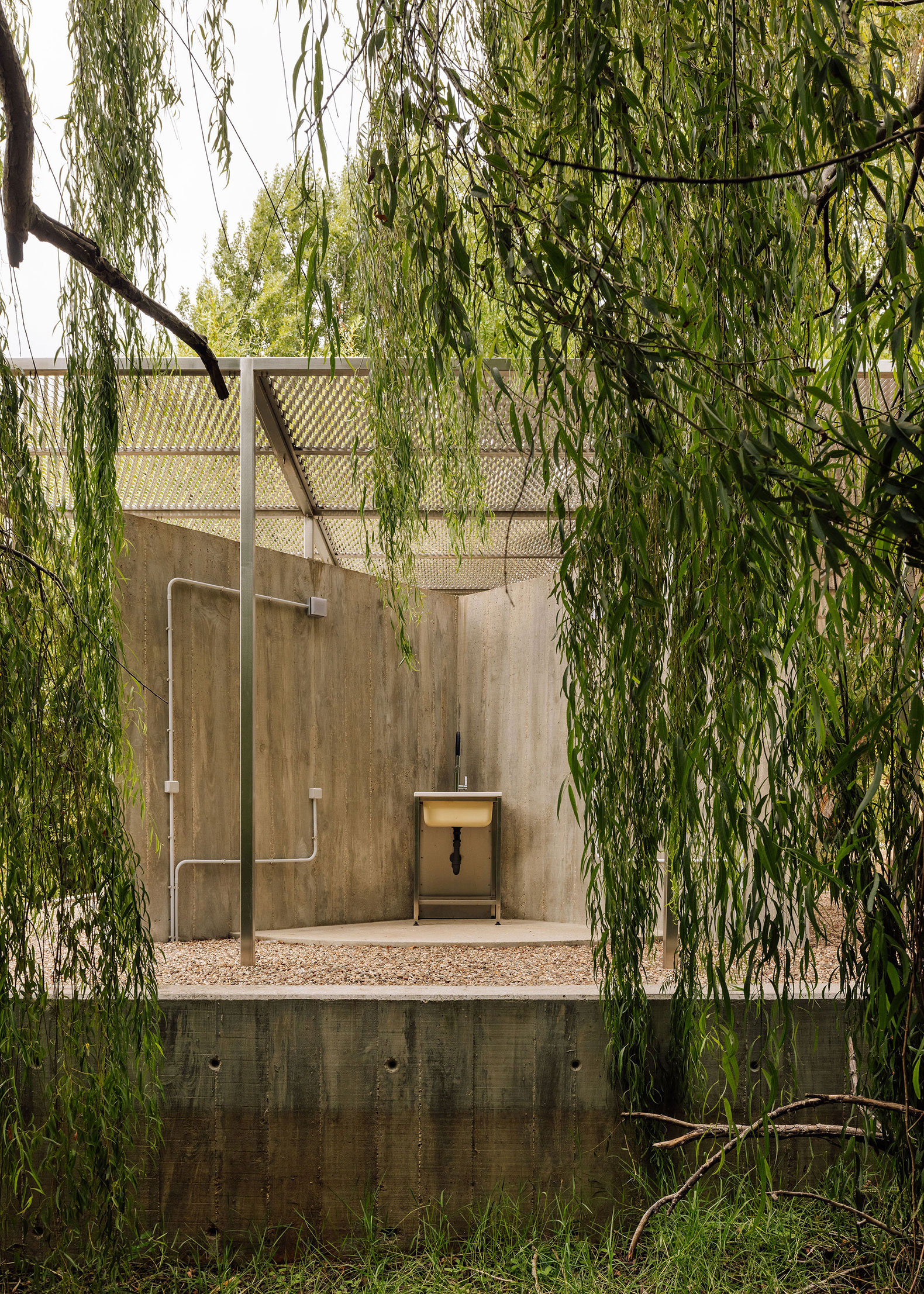
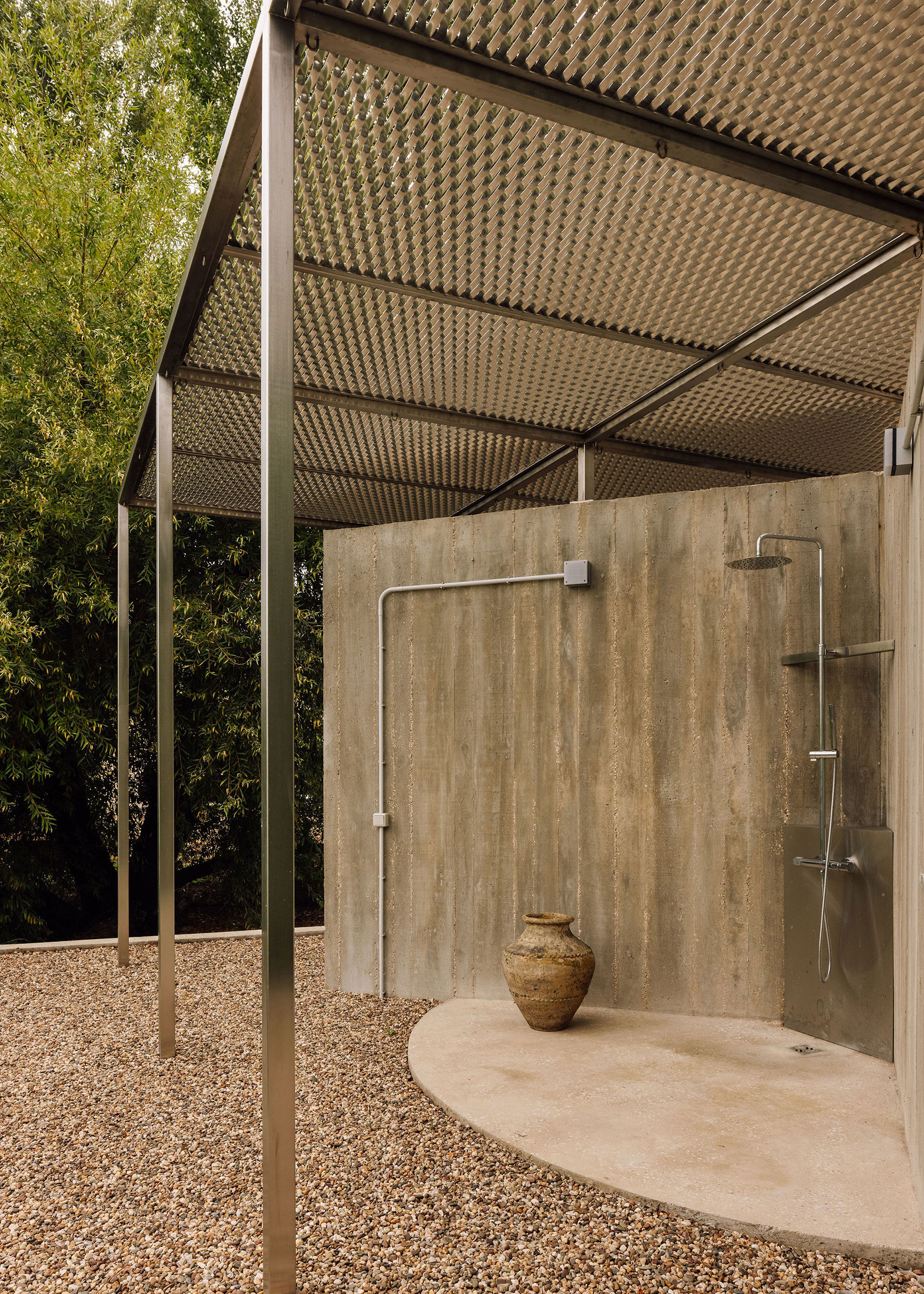
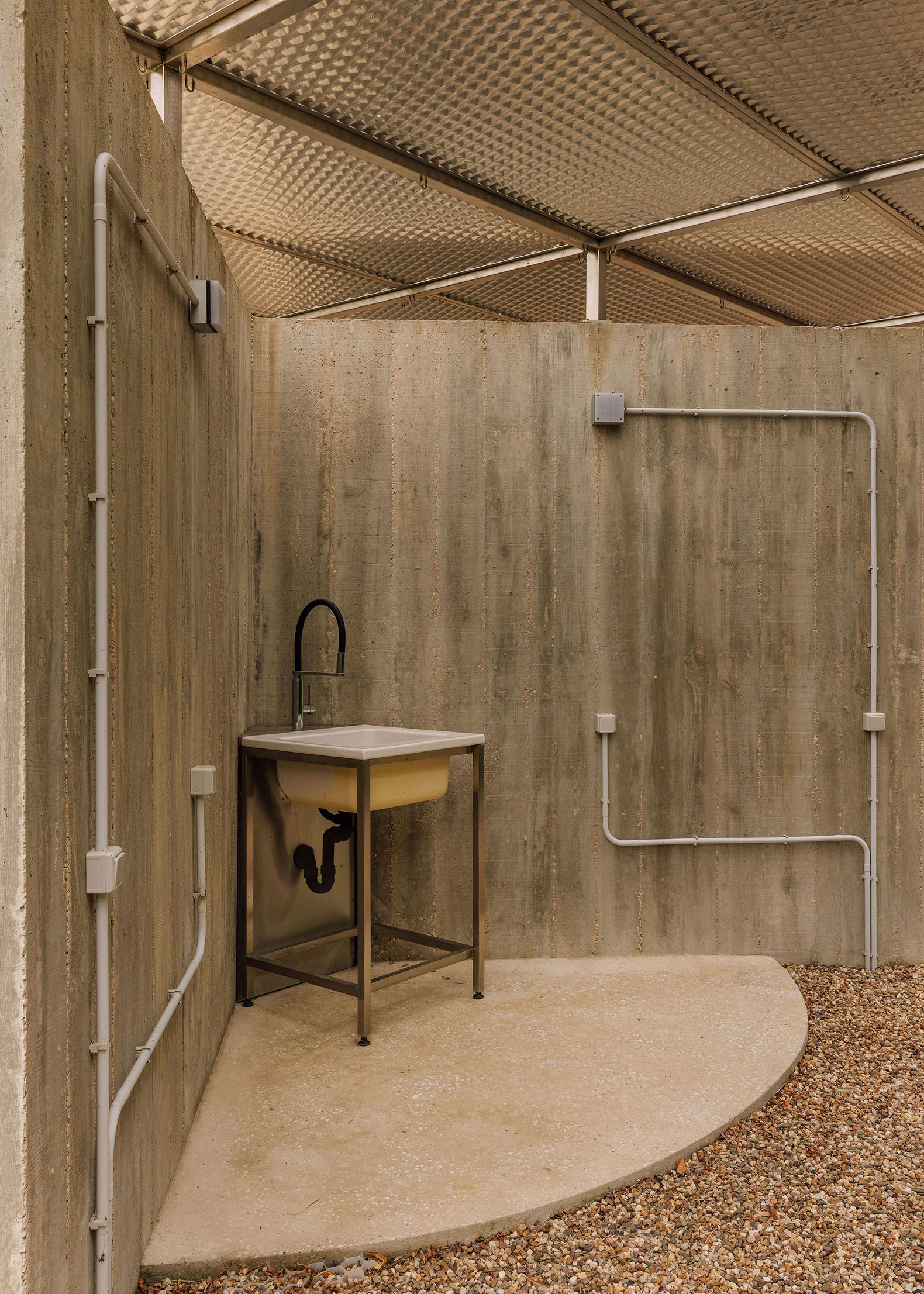
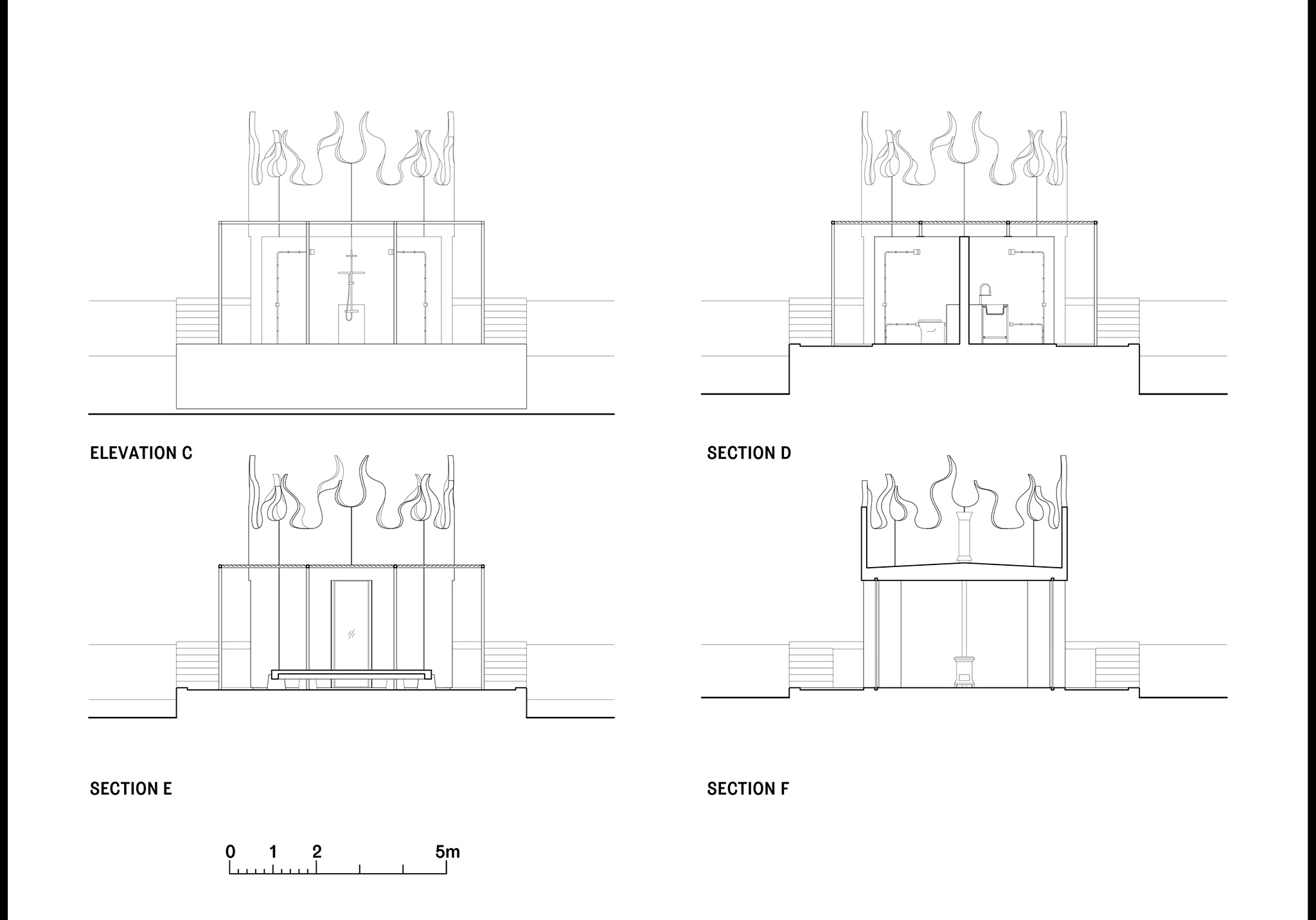
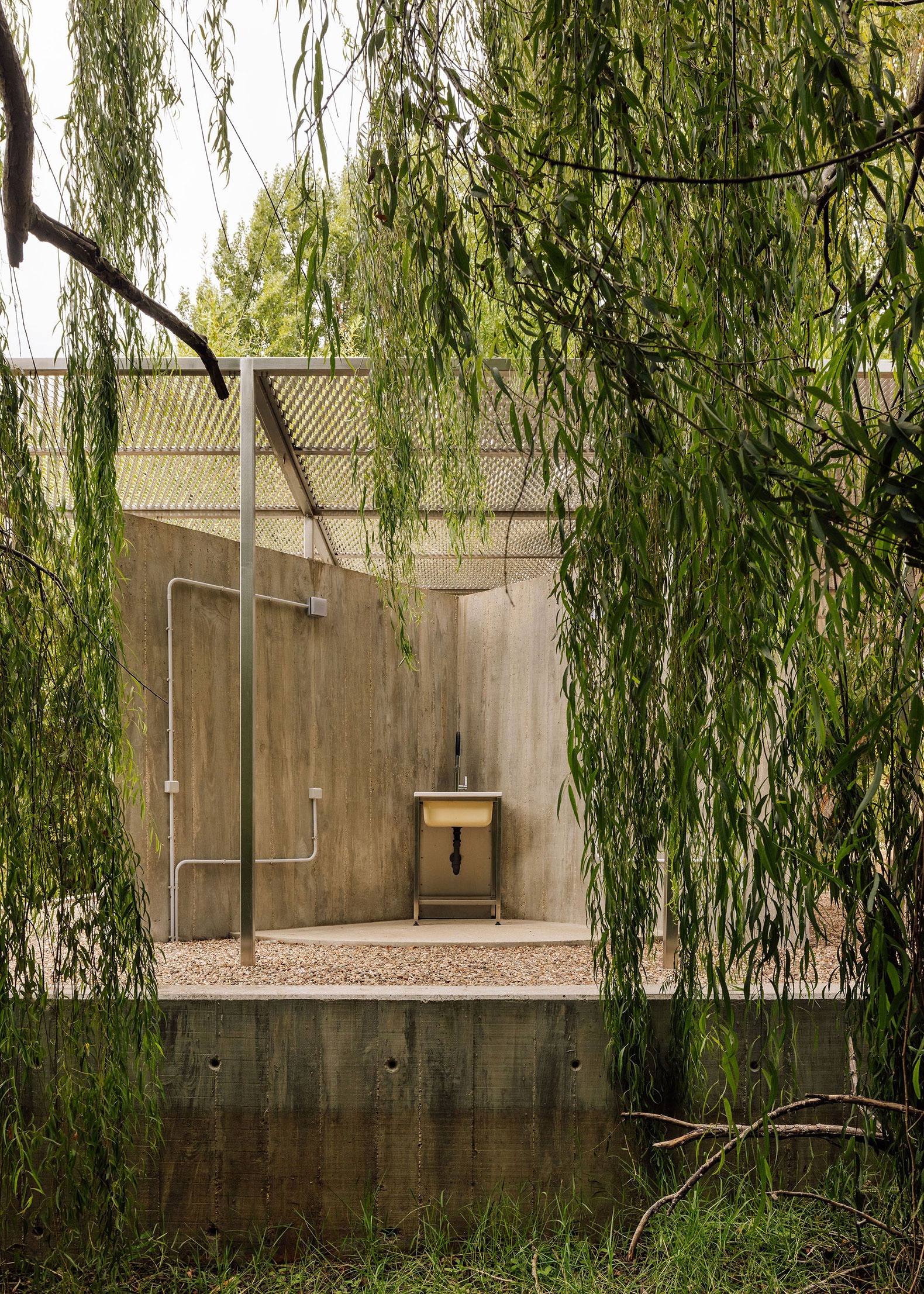
Rather than hiding utilities in a back-of-house zone, Casa sem pele turns domestic services into architectural coordinates. Low, rough concrete walls appear as freestanding planes that never rise to become enclosure and never support a roof, yet they precisely locate key functions. Two cast-inplace concrete walls arranged in a cross define uses linked to care: shower, toilet, sink, barbecue. Washing becomes a ritual under filtered light. A WC gains privacy through placement rather than full enclosure. A sink occupies another corner condition, bringing the act of maintenance into the open field. Cooking is anchored outdoors, extending domestic life outward as a shared act.
House with no skin by Bureau des Mésarchitectures. Photograph by Francisco Nogueira.

Between these service elements sits a raised square wooden platform, a stage and support for uses yet to be invented. It invites improvisation, hospitality, and the small shifts of everyday life, and acknowledges that living is not only a set of functions, but also an evolving choreography and an act of sharing.

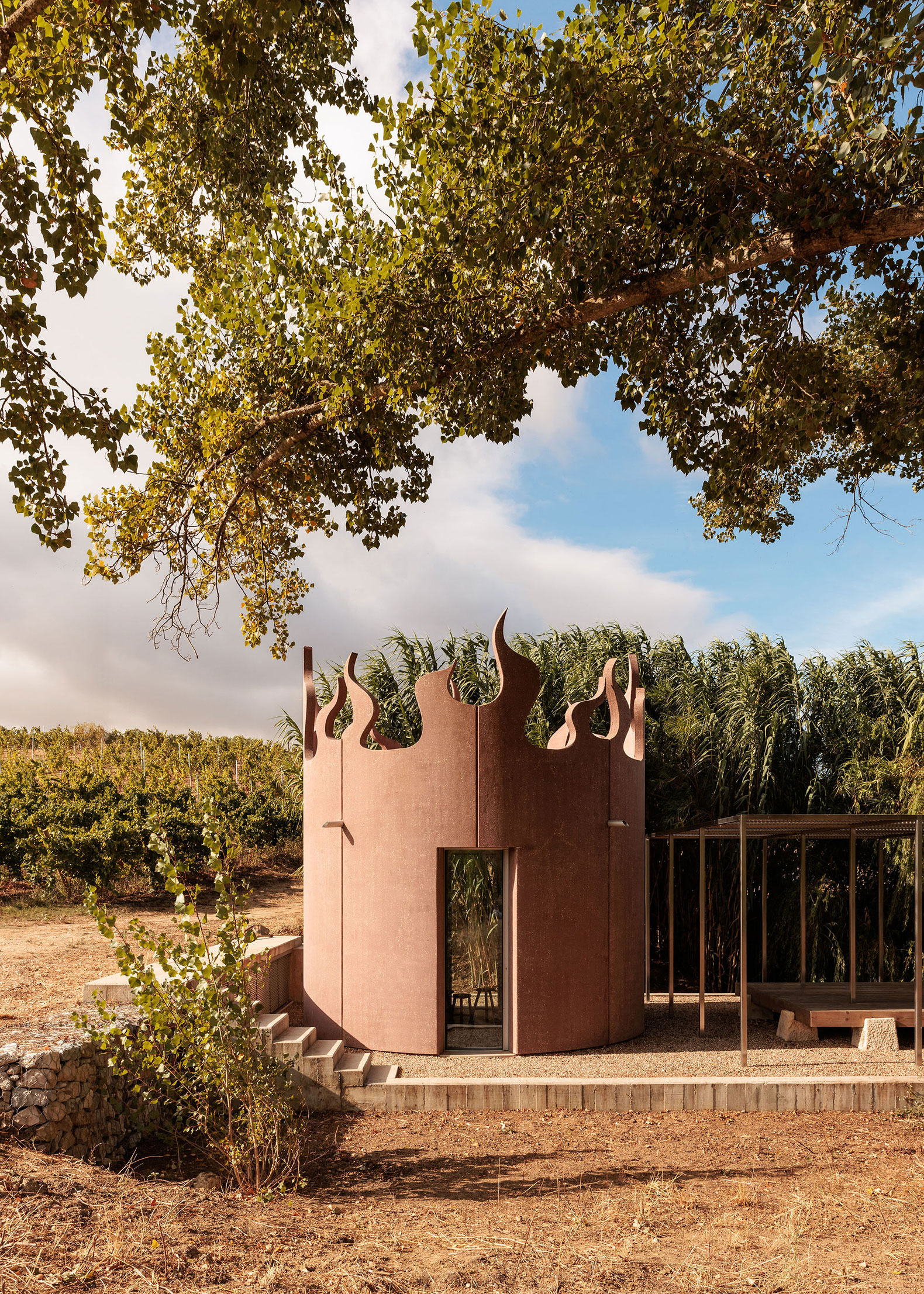
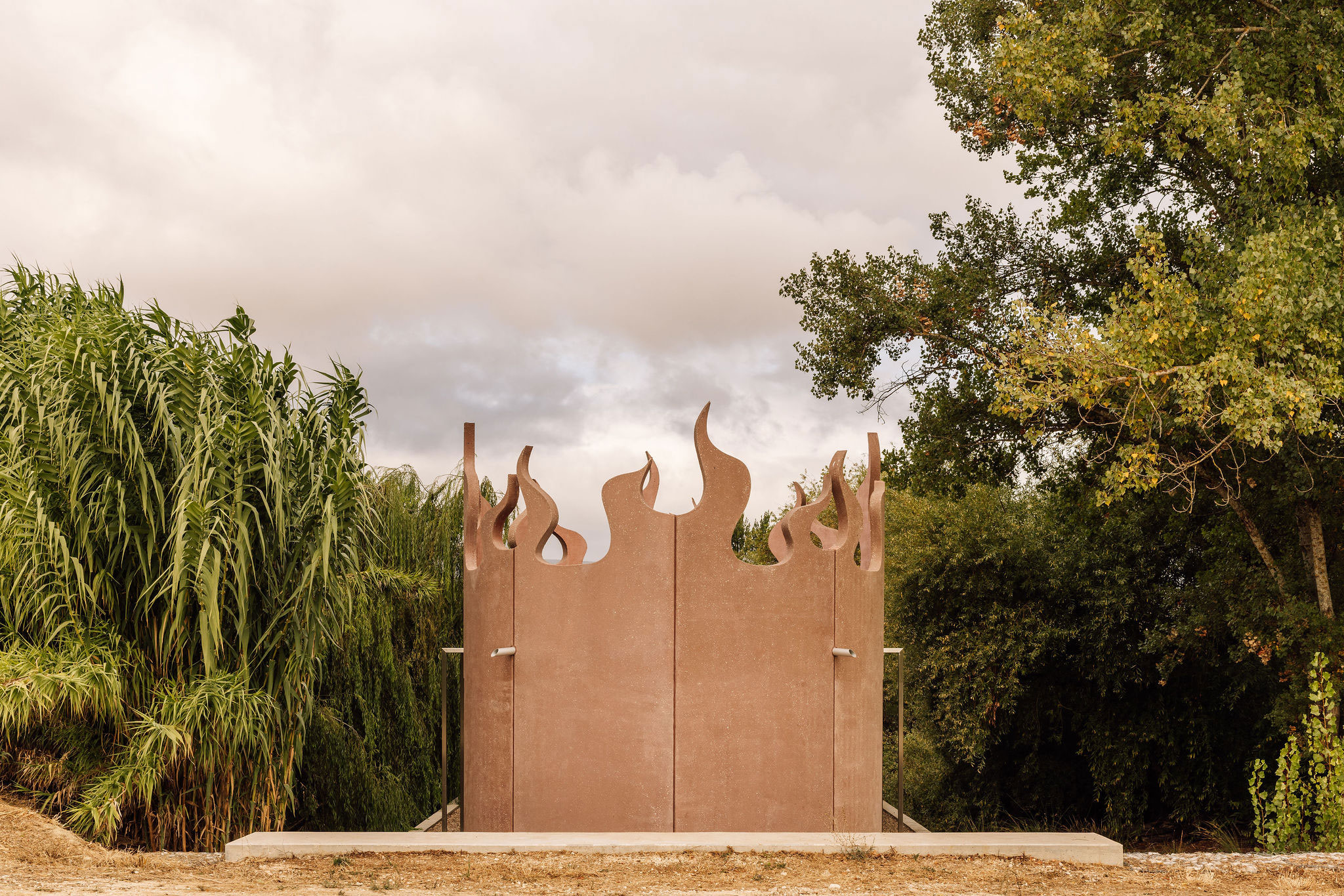
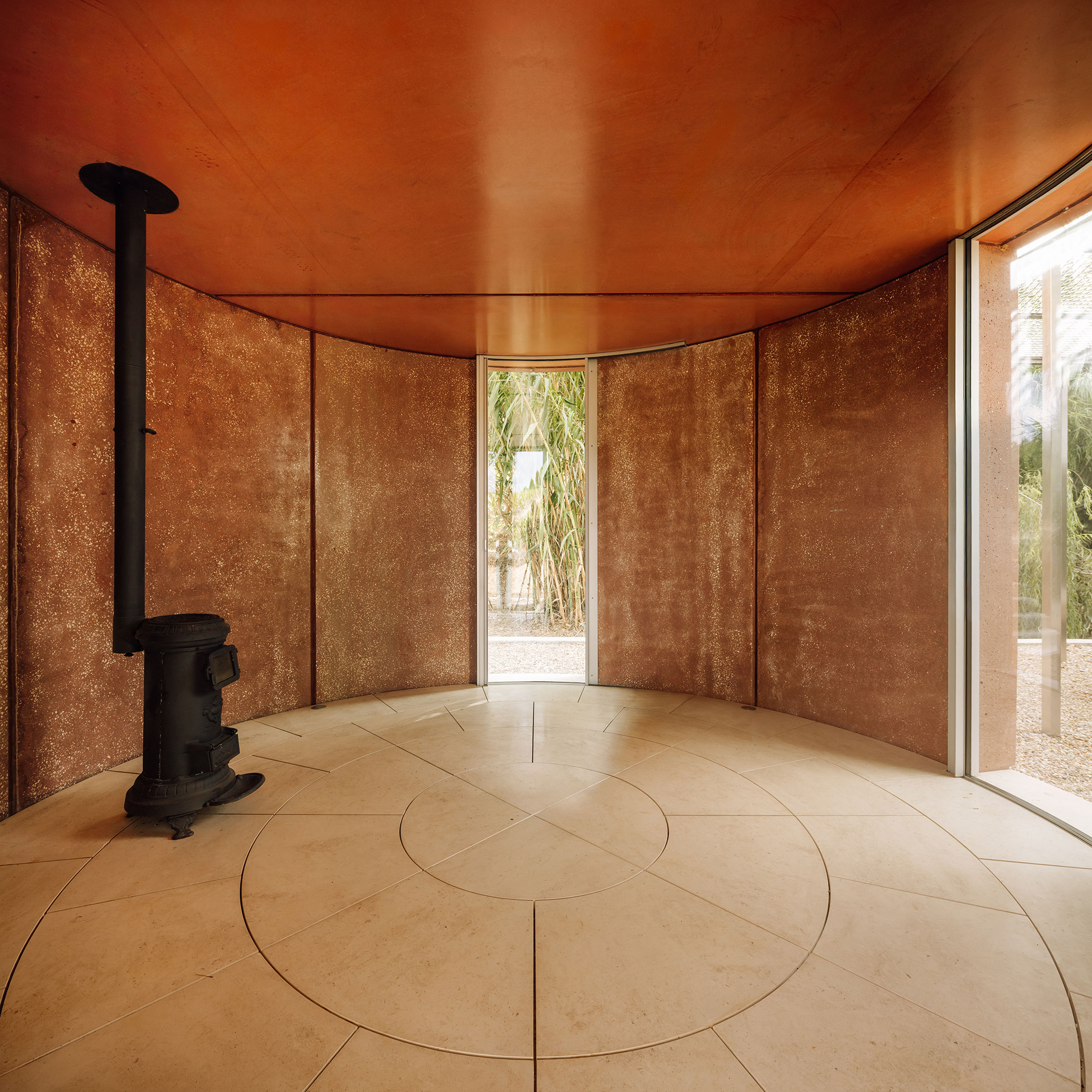
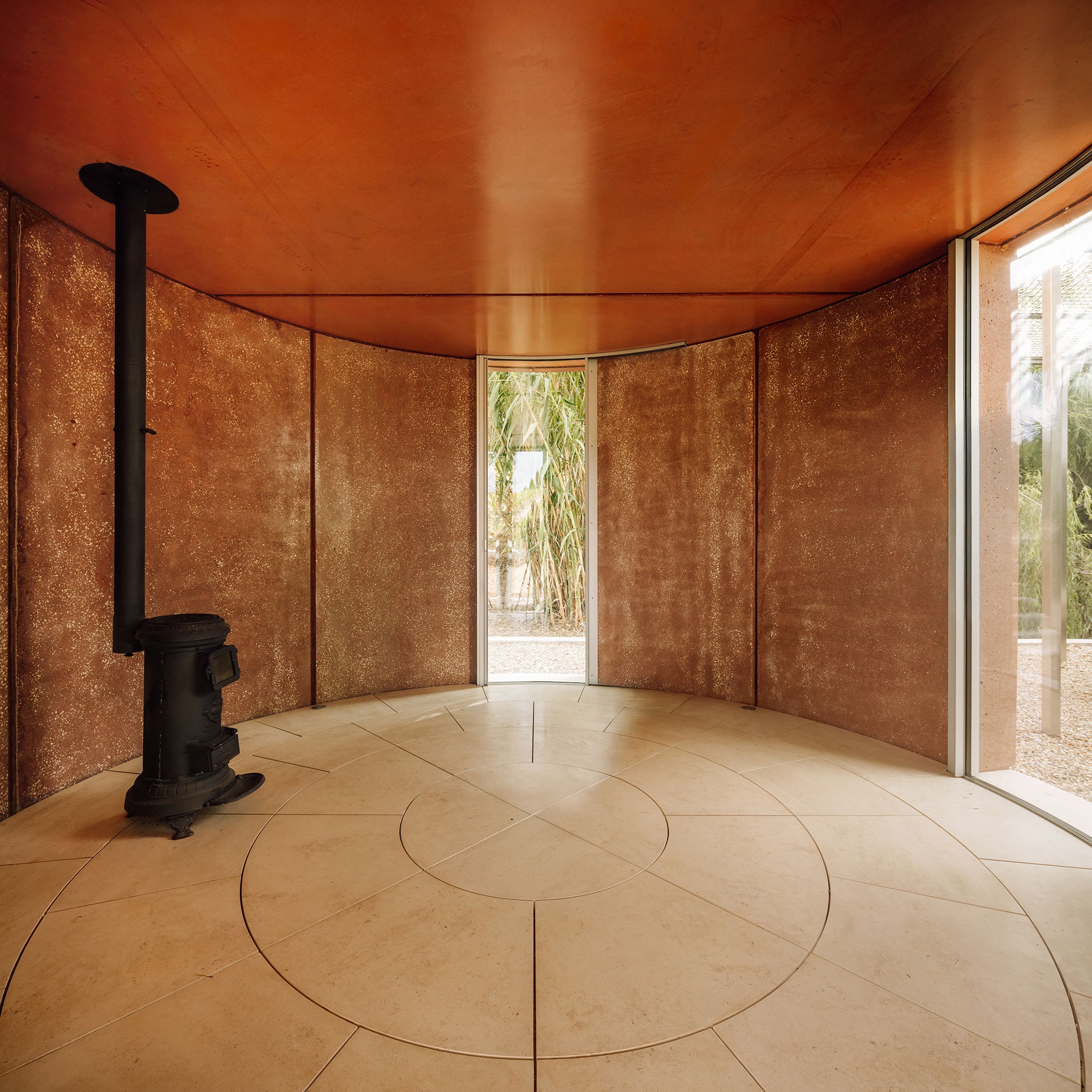
In deliberate contrast to the openness of the platform, the project introduces a single enclosed volume for rest. The only roofed and fully sheltered space is a compact sleeping chamber, a cylindrical assembly of prefabricated curved panels in pink concrete, cut at the top with a circular flame motif. Three sliding glass doors provide access, keeping the interior visually connected to the platform. Warmed by a wood-burning stove, the chamber plays with the idea of the hearth as a place of warmth and refuge, without nostalgia.
House with no skin by Bureau des Mésarchitectures. Photograph by Francisco Nogueira.

Casa sem pele is inseparable from its rural setting. Vineyards, lake edges, seasonal fluctuations, and the intensity of sun and shade are not treated as scenic background, but as the conditions that make the project’s reduction meaningful. By refusing the standard envelope, Faustino aligns the house with agricultural and landscape infrastructures, platforms, pergolas, service points, while insisting that this can still be a fully equipped place to live.

As a built argument, Casa sem pele proposes dwelling as arrangement rather than object, and comfort as calibration rather than insulation.
More information

Label
Architects
Text

Bureau des Mésarchitectures. Lead architect.- Didier Fiúza Faustino.
+ + copy Created with Sketch.
- + copy Created with Sketch.
Label
Project team
Text

André Antunes, Sérgio Brito, Pascal Mazoyer, Sónia Sousa.

+ + copy Created with Sketch.
- + copy Created with Sketch.
Label
Collaborators
Text

Structural engineering consulting.- Clanet & Brito.
Engineering consulting.- Logaritmica – Serviços de Engenharia, Lda.

+ + copy Created with Sketch.
- + copy Created with Sketch.
Label
Builder
Text

João Paulo Moleiro Felício.

+ + copy Created with Sketch.
- + copy Created with Sketch.
Label
Manufacturers
Text

Pavilion walls.- Tinted precast concrete, Luso-Alemã, Construções e Pré-Fabricados, S.A.
Windows.- Curved sliding glass doors with natural aluminium frames, Panoramah!.
Interior Floor.- limestone.
Stove.- Cast iron, Cheminées Philippe.
Curtains.- Decoresse, Decoração de Interiores, Lda.
Exterior walls.- Exposed concrete.
Pergola.- Stainless-steel structure and aluminium mesh in natural finish, Lusoacier, Construções Metálicas.
Exterior floor.- Gravel.
Exterior lights.- KOBO 11O Lombardo.
Sanitary ware.- IDRAL and Sanifirst.

+ + copy Created with Sketch.
- + copy Created with Sketch.
Label
Area
Text

Land area.- 384,630 sqm.
Intervention area.- 160 sqm.
Pavilion.- 17 m² – 4.70 m (diameter) x 5.30 m (height).
Pergola.- 73 m² – 6 m (length) x 12 m (width) x 2.8 m (height).

+ + copy Created with Sketch.
- + copy Created with Sketch.
Label
Dates
Text

2026. 

+ + copy Created with Sketch.
- + copy Created with Sketch.
Label
Location
Text

Casal Vermelho, Torres Novas, Portugal.

+ + copy Created with Sketch.
- + copy Created with Sketch.
Label
Photography
+ + copy Created with Sketch.
- + copy Created with Sketch.

Bureau des Mésarchitecture. Architecture practice founded in 2002 by artist-architect Didier Fiúza Faustino and architect Pascal Mazoyer based in Paris, France. Since 2018, the studio has an office in Lisbon, Portugal.

Today, the studio is co-led by Marie-Hélee Fabre (Principal) and Didier Fiúza Faustino (Creative Director), and includes Pascal Mazoyer (Project Manager), Sónia Pinto Sousa and André Antunes (Project Managers).

Working at the crossroads of art and architecture, the practice is multi-faceted, ranging from installation to experimentation, from the creation of subversive visual artworks to multi sensorial spaces. Invested in the relationship between body and space, their projects are characterised by a critical perspective and an ability to offer new experiences to the individual and collective body. Their projects operate at multiple scales: curatorial and editorial projects, interventions in public space, mobile architectures, as well as interior designs and buildings, including French artist Jean-Luc Moulène’s studio.

Didier Fiúza Faustino is a French - Portuguese conceptual artist and architect, working on the relationship between body and space. At the crossroad of art and architecture, his practice is multi-faceted, ranging from installation to experimentation, from the creation of subversive visual art works to multi-sensorial spaces. His projects are characterized by their critical perspective and their ability to offer new experiences to the individual and collective body.

With Mésarchitecture (2002) in Paris and his office in Lisbon (2018), he is developing projects of multiple scales: interventions in public space, mobile architectures, as well as interior designs and buildings, among which French artist Jean-Luc Moulène’s studio.

Several projects and works are part of the collection of major institutions: MoMA, Fondation Calouste Gulbenkian, Serralves Foundation, Fonds National d’Art Contemporain, Musée National d’Art Moderne / Centre Georges Pompidou, MAXXI, MAAT, FRACs Centre - Val de Loire et Grand Large - Hauts de France.

Marie-Hélène Fabre, is trained as an architect and urban planner. Fabre has led teaching and research activities in urban planning and on the city of Seoul, South Korea in the late 1990s and early 2000s, at the Institut Français d’Urbanisme. From 2006 to 2014, she was the Head of studies at the Ecole Spéciale d’Architecture in Paris. 

Since 2022, Marie-Hélène Fabre is a research by practice PhD candidate at the Ecole nationale supérieure d’architecture de Versailles, France, under the supervision of Susanne Stacher (architect) and Christian Ruby (philosopher). For her research, she explores the studio’s practice in relation to creative diversion strategies.

Read more
Published on: July 5, 2026
Cite:
metalocus, CAMILA DOYLET
"Inseparable from the natural environment. House with no skin by Bureau des Mésarchitectures" METALOCUS. Accessed
<https://www.metalocus.es/en/news/inseparable-natural-environment-house-no-skin-bureau-des-mesarchitectures> ISSN 1139-6415
Loading content ...
Loading content ...
Loading content ...
Loading content ...
Loading content ...
Loading content ...
Loading content ...
Loading content ...
Loading content ...
Loading content ...
Loading content ...
Loading content ...
Loading content ...
Loading content ...
Loading content ...
Loading content ...
Loading content ...
Loading content ...
Loading content ...
Loading content ...
Loading content ...
Loading content ...
Loading content ...
Loading content ...
Loading content ...
Loading content ...
Loading content ...
Loading content ...
Loading content ...
Loading content ...
Loading content ...
Loading content ...
Loading content ...
Loading content ...
Loading content ...
Loading content ...
Loading content ...
Loading content ...
Loading content ...
Loading content ...
Loading content ...
Loading content ...
Loading content ...
Loading content ...
Loading content ...
Loading content ...
Loading content ...
Loading content ...
Loading content ...
Loading content ...
Loading content ...
Loading content ...
Loading content ...
Loading content ...