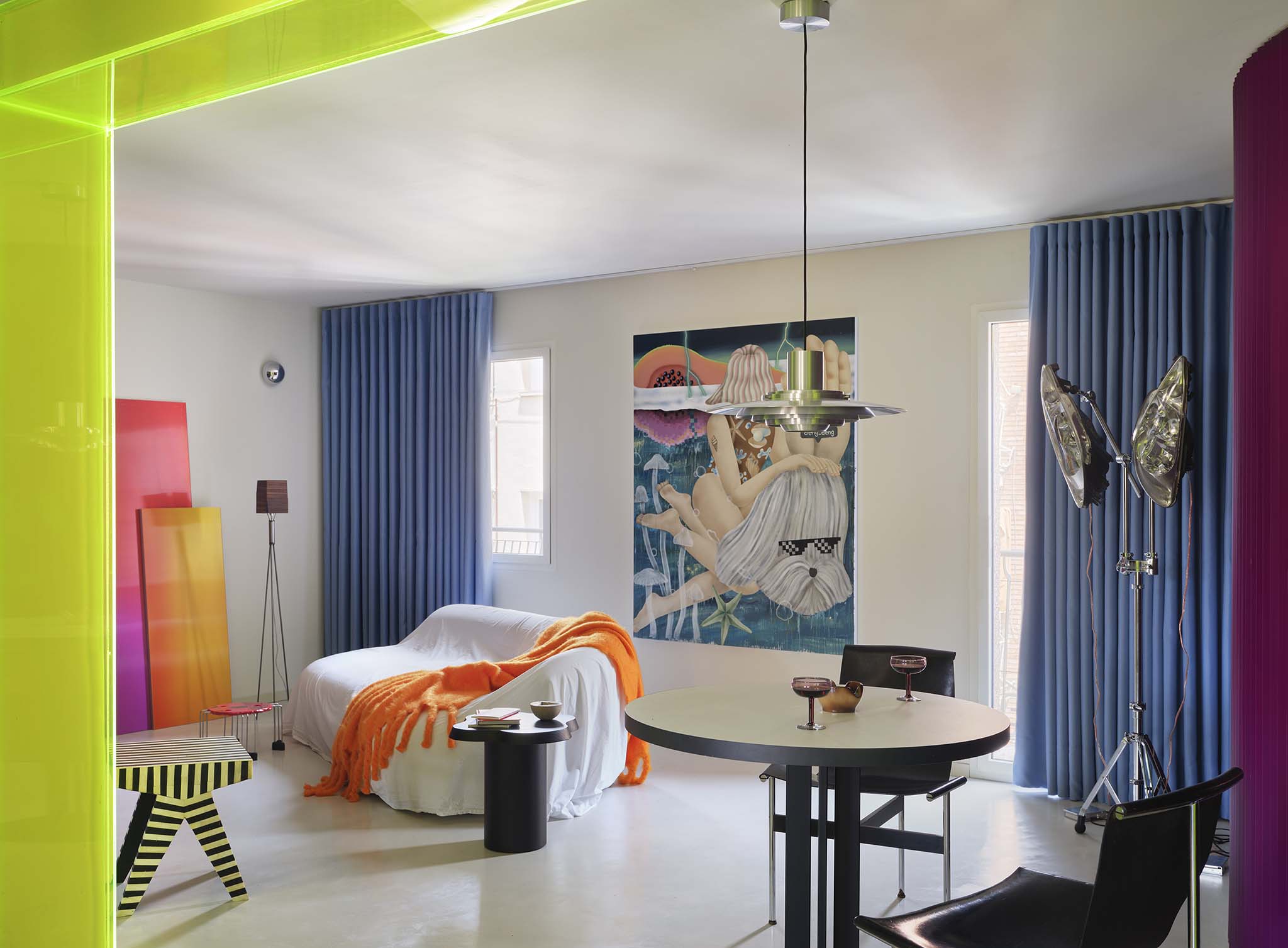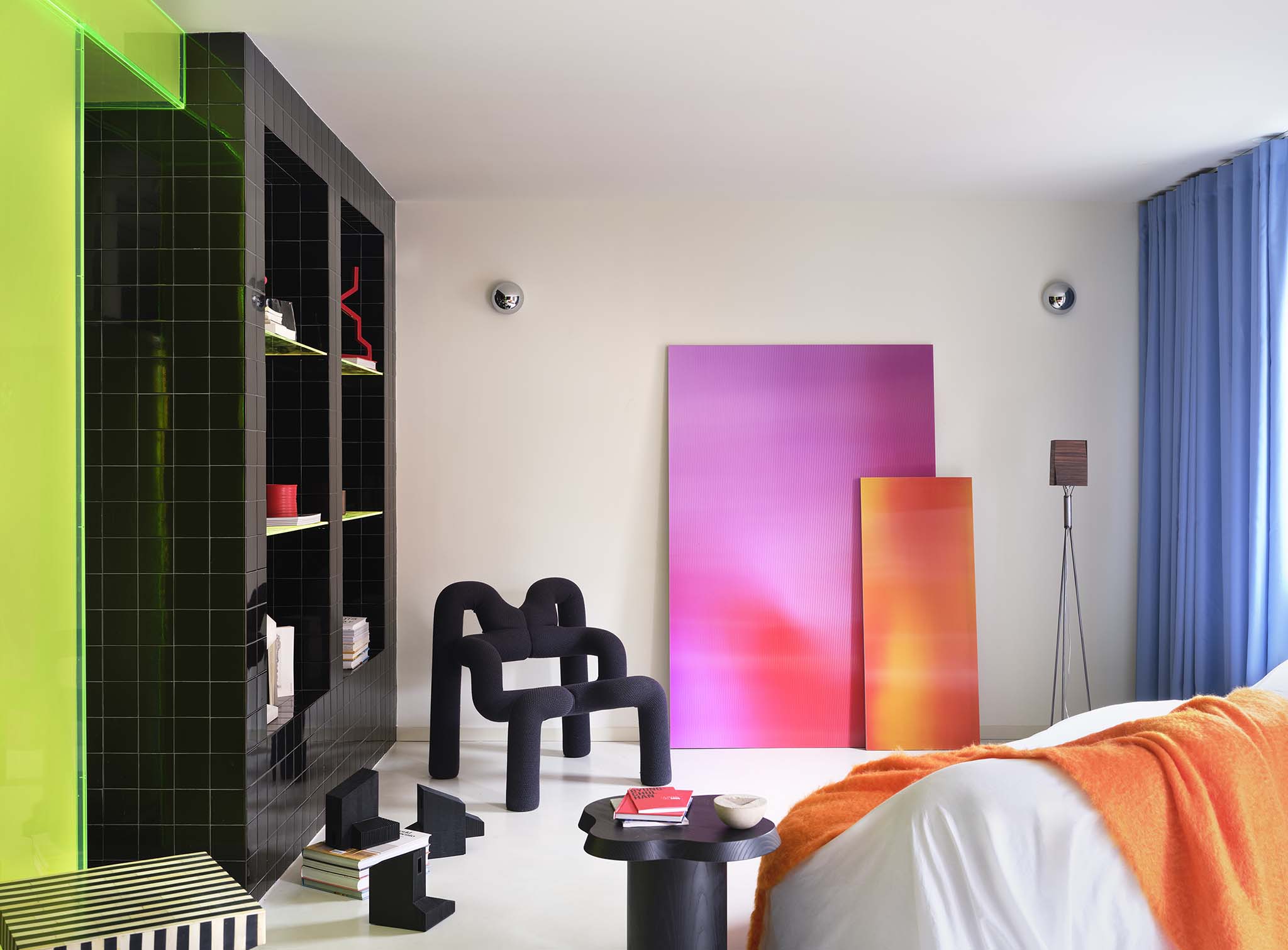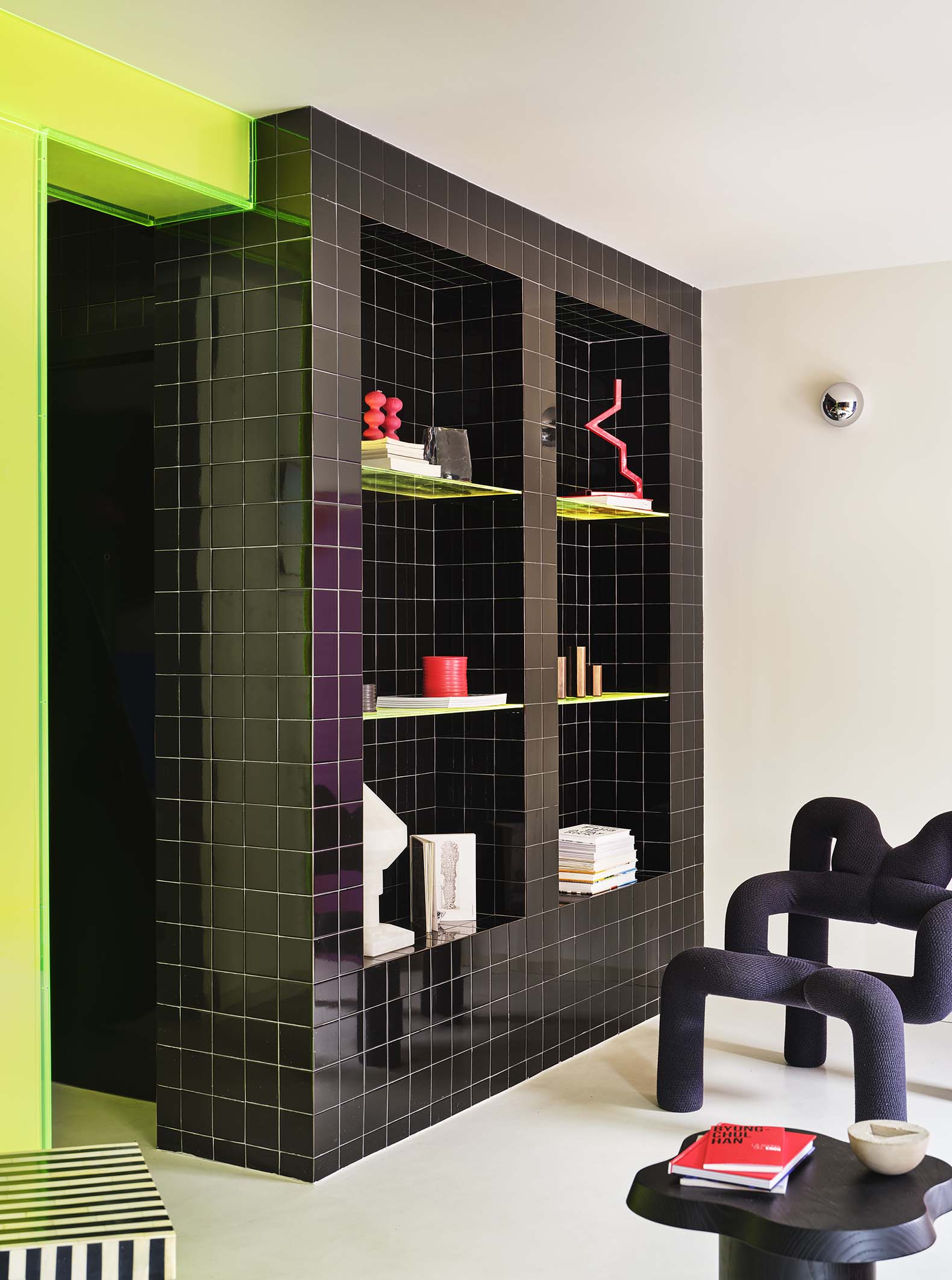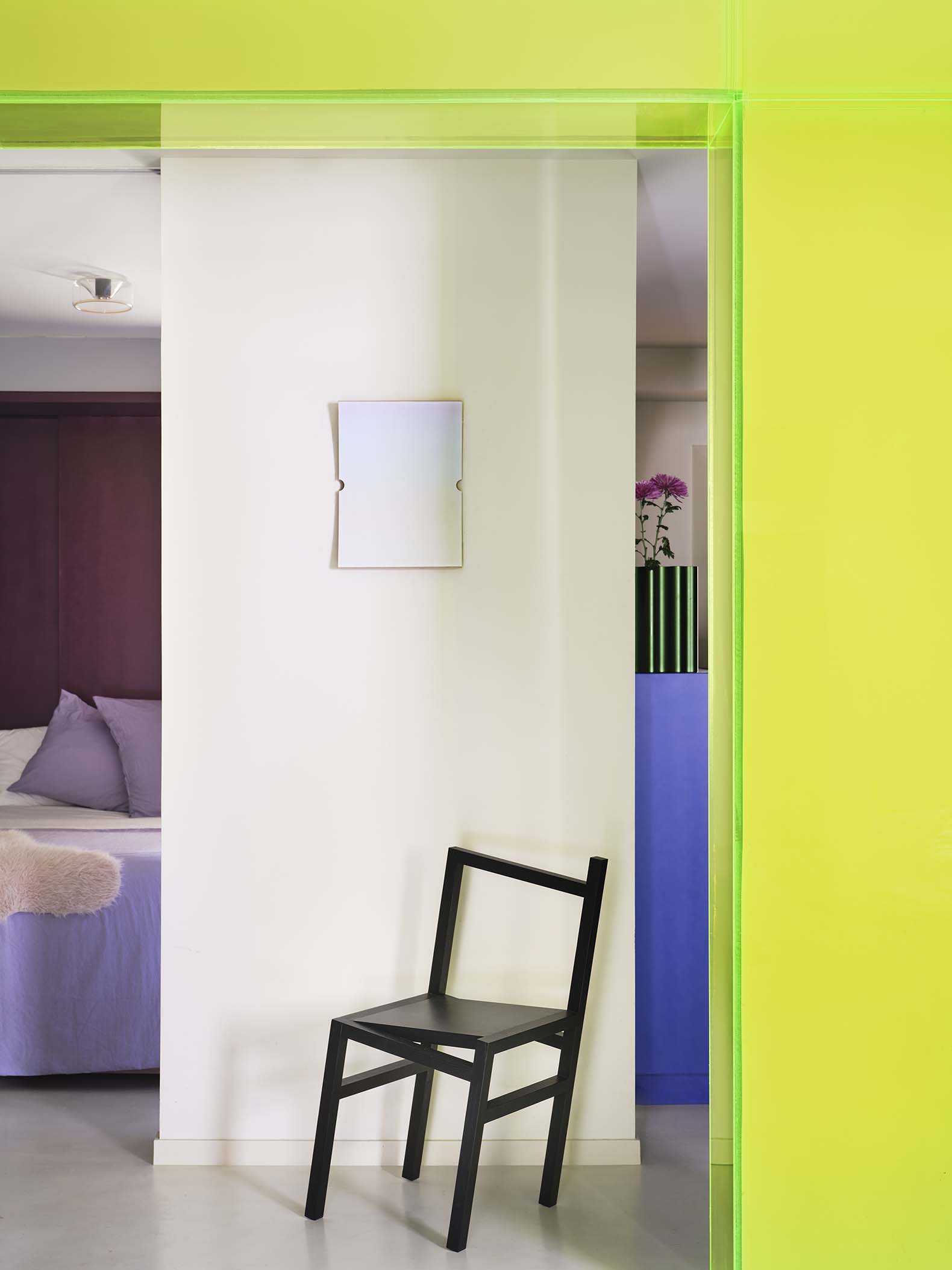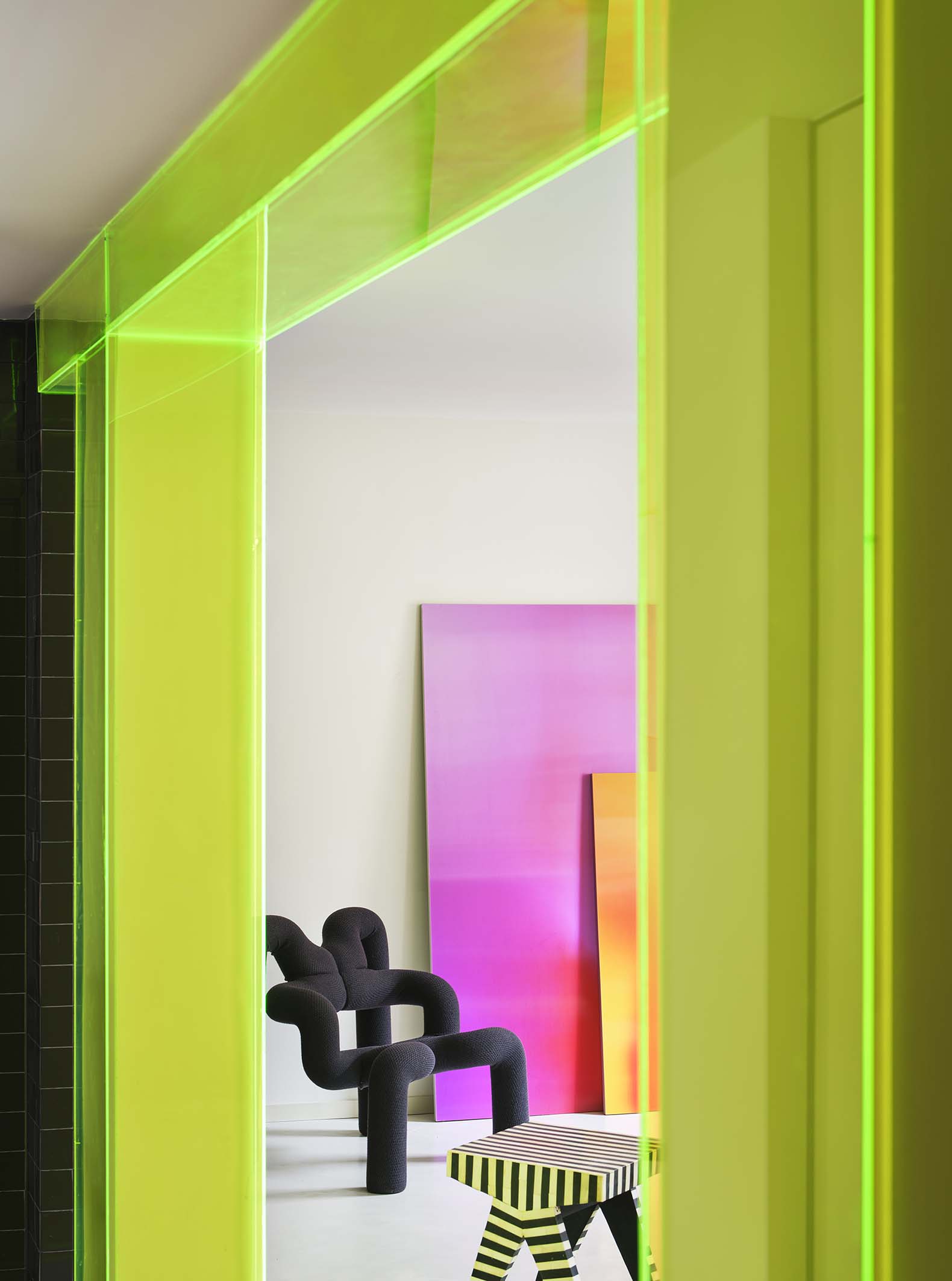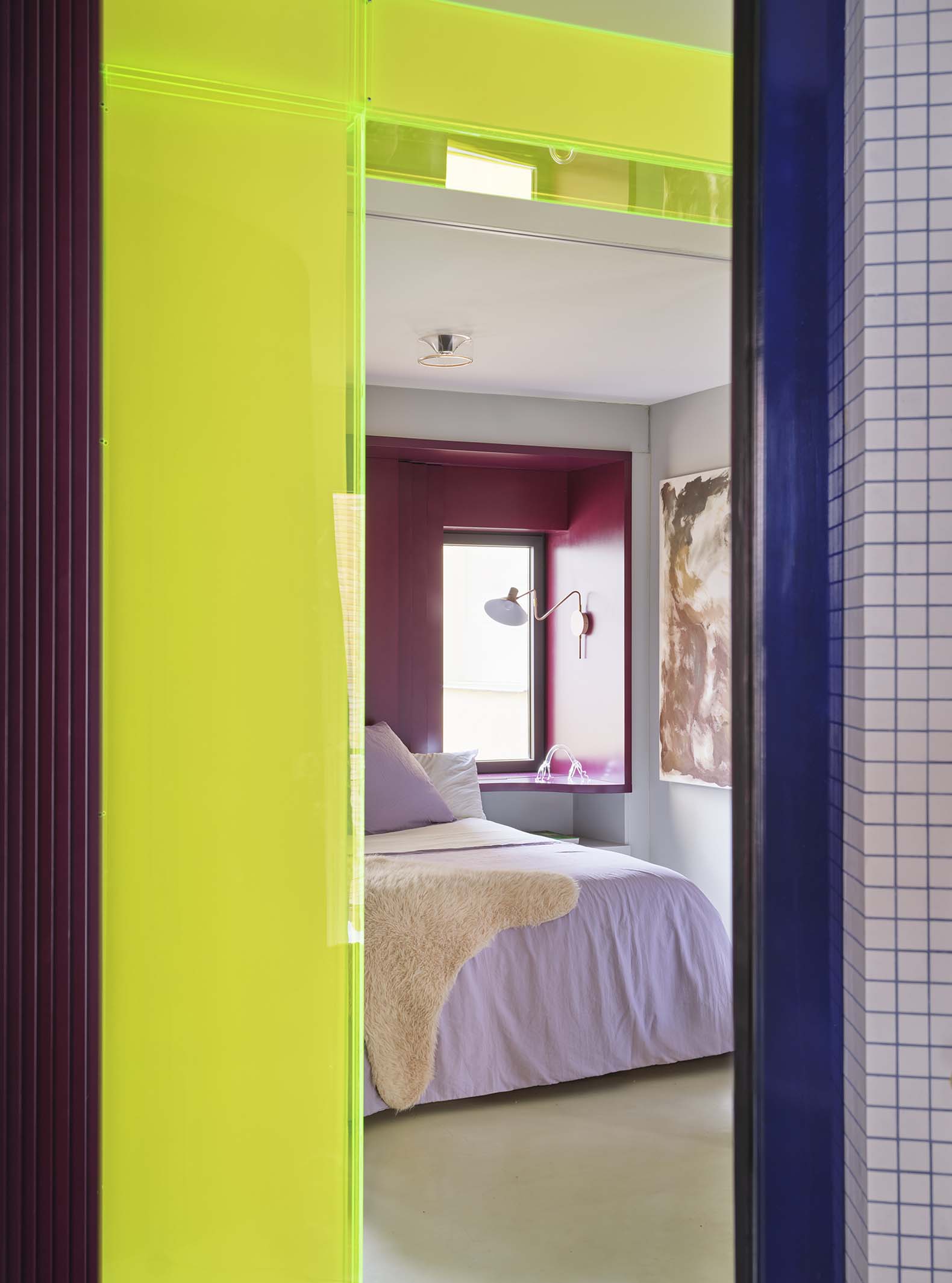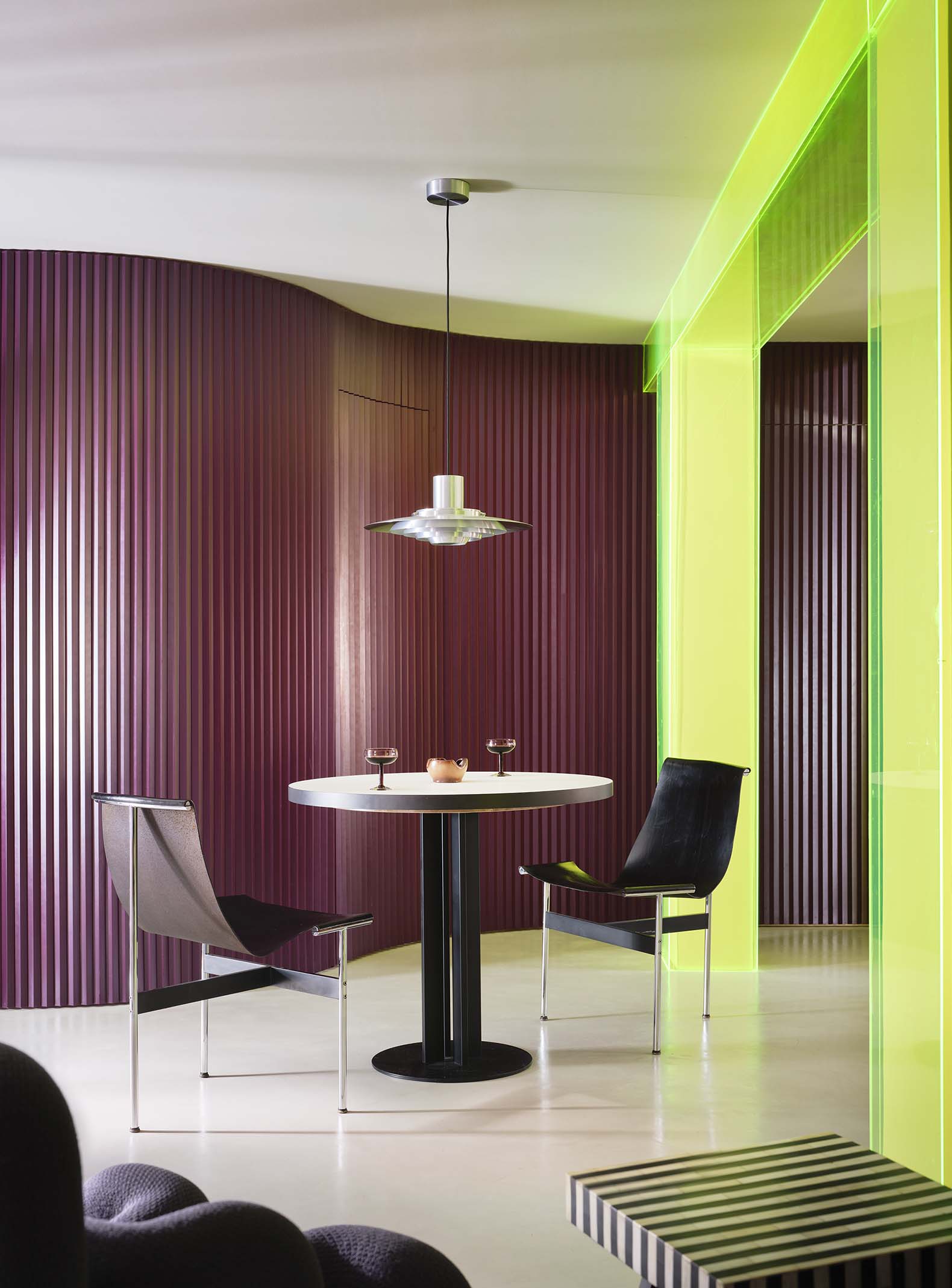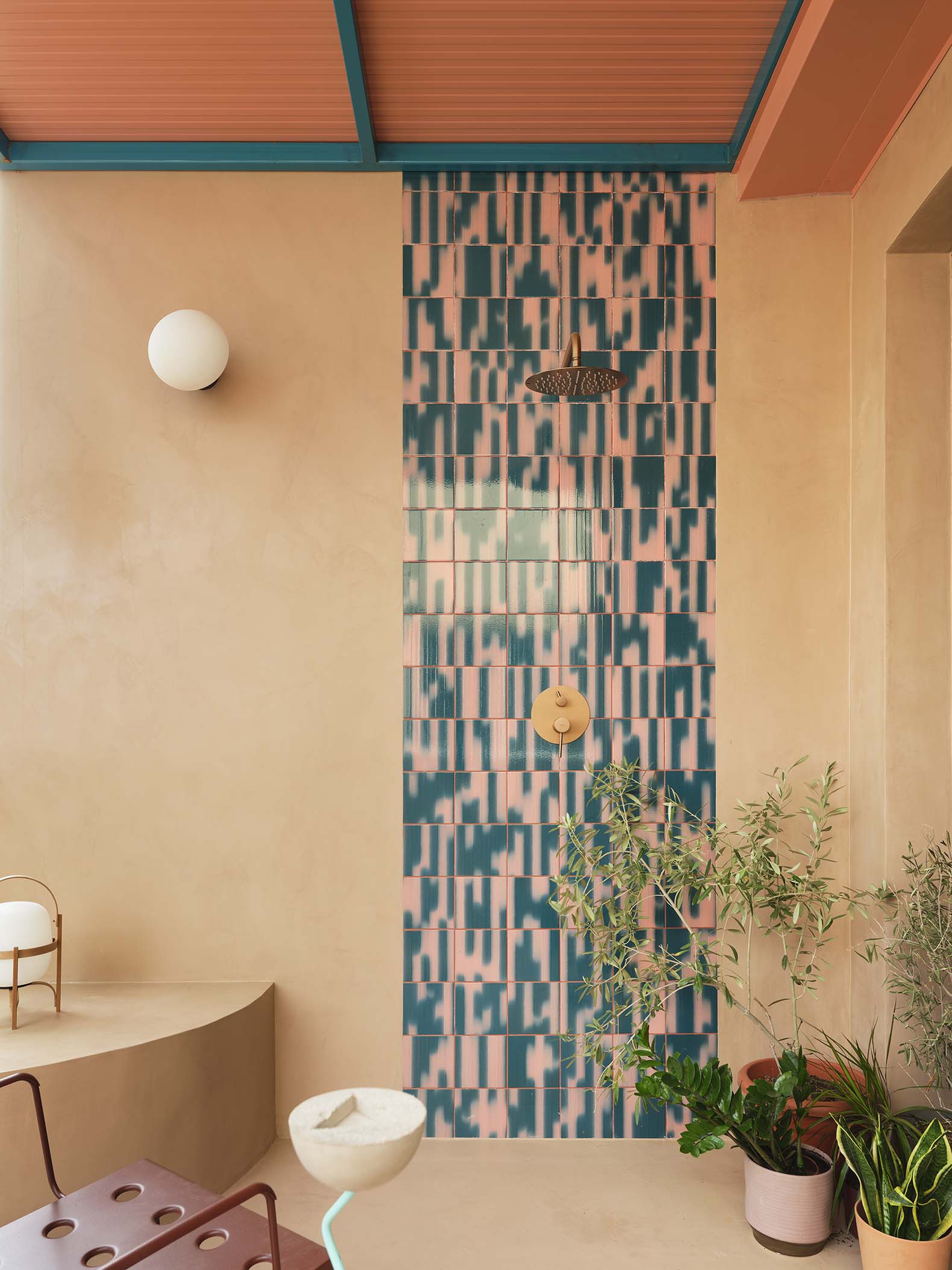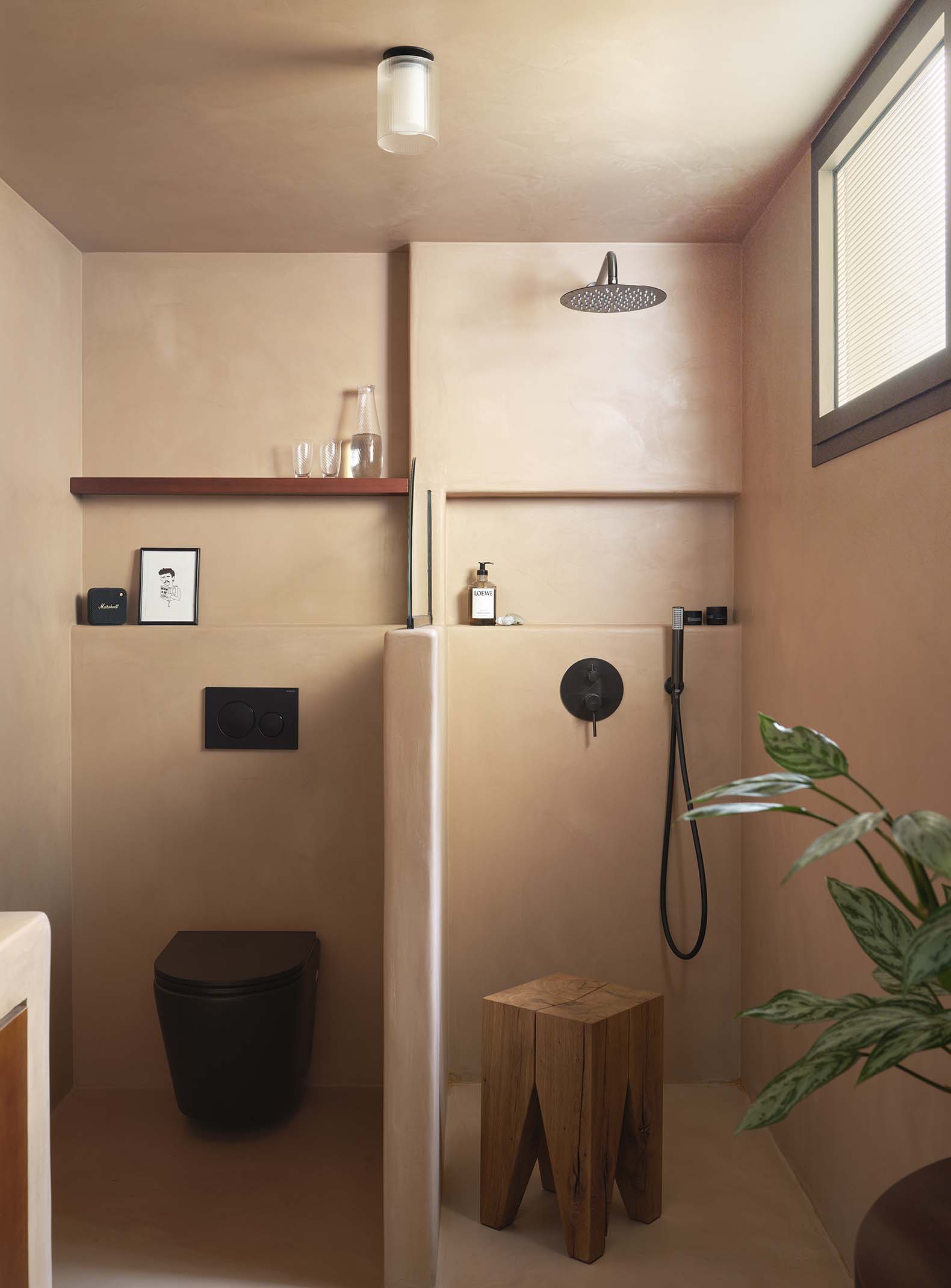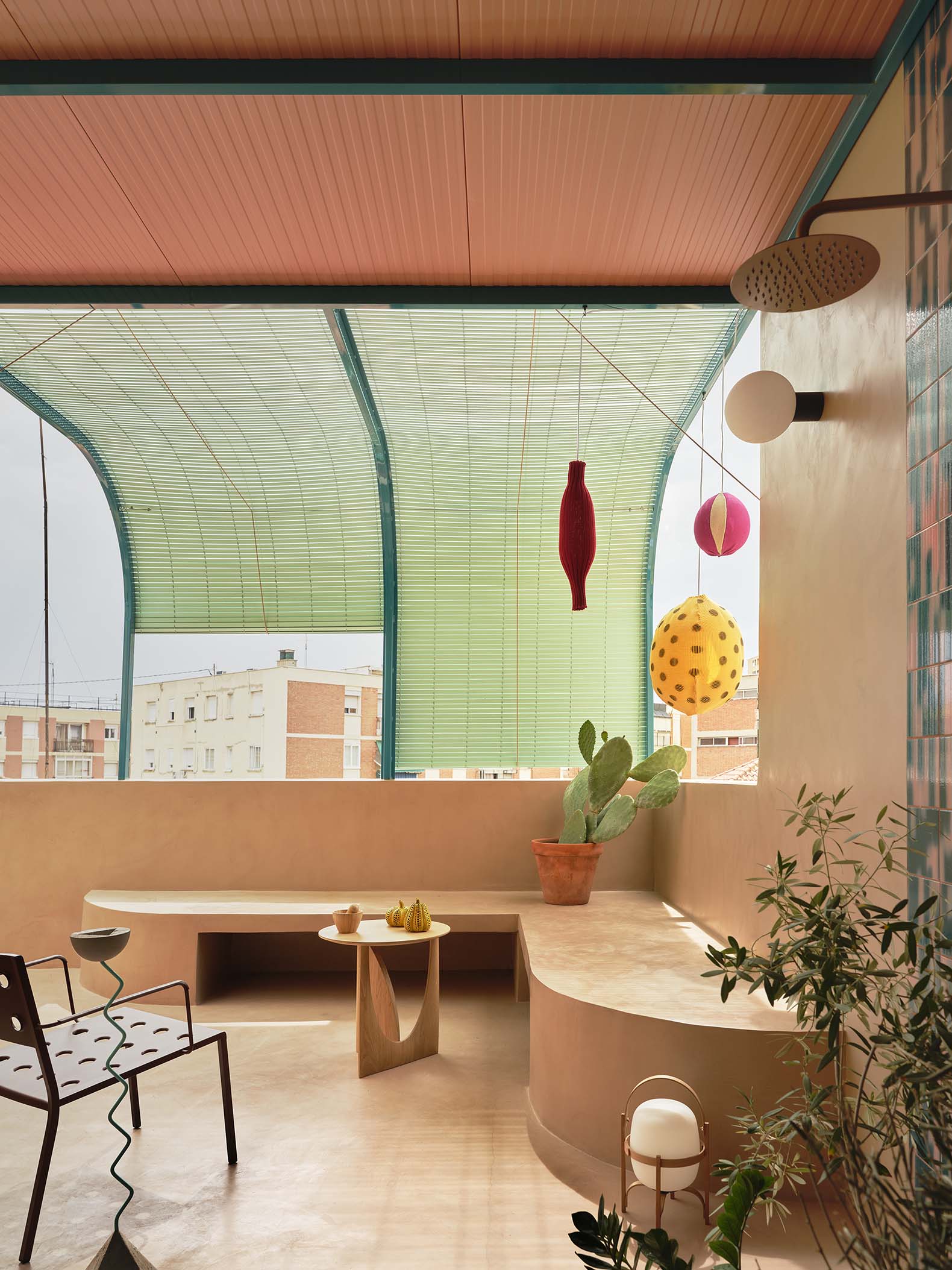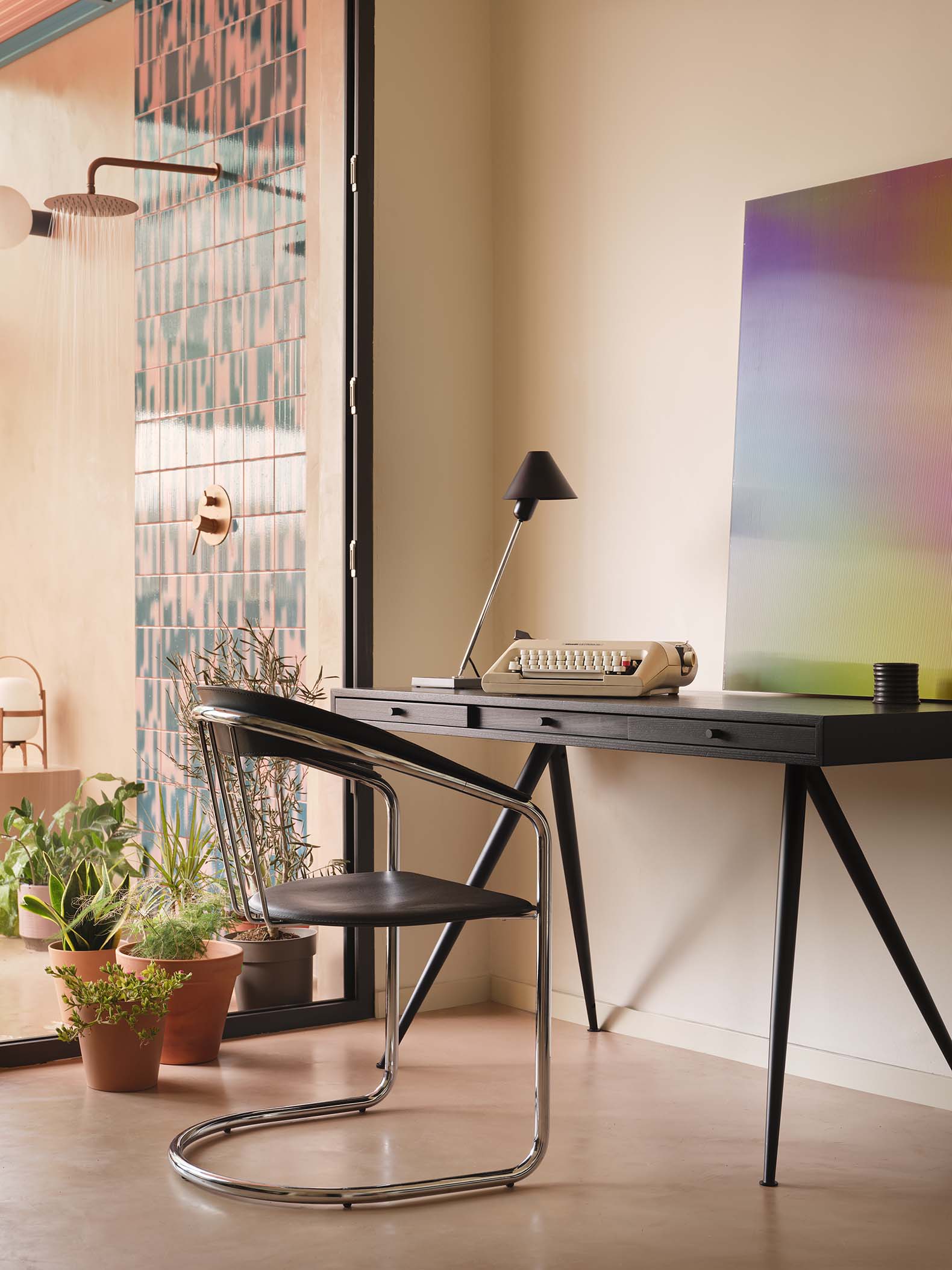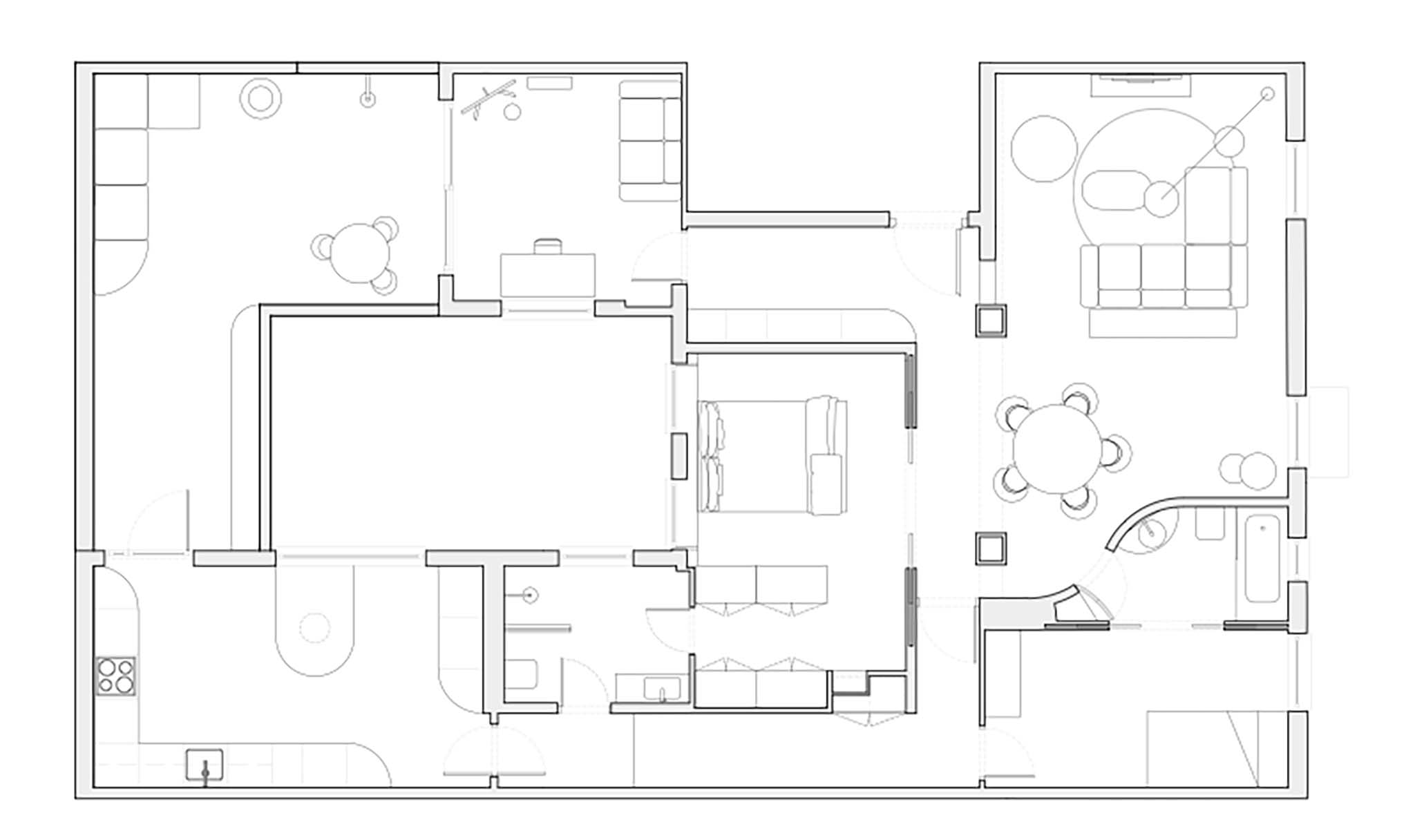
In addition to the functional reorganization, the project designed by Bardo Arquitectura relies on an architectural strategy with a narrative and scenographic quality, in which each room possesses its own distinct identity. The house is structured around a fragmented floor plan that ensures independence between zones, with a perimeter circulation around the patio that connects the different spaces.
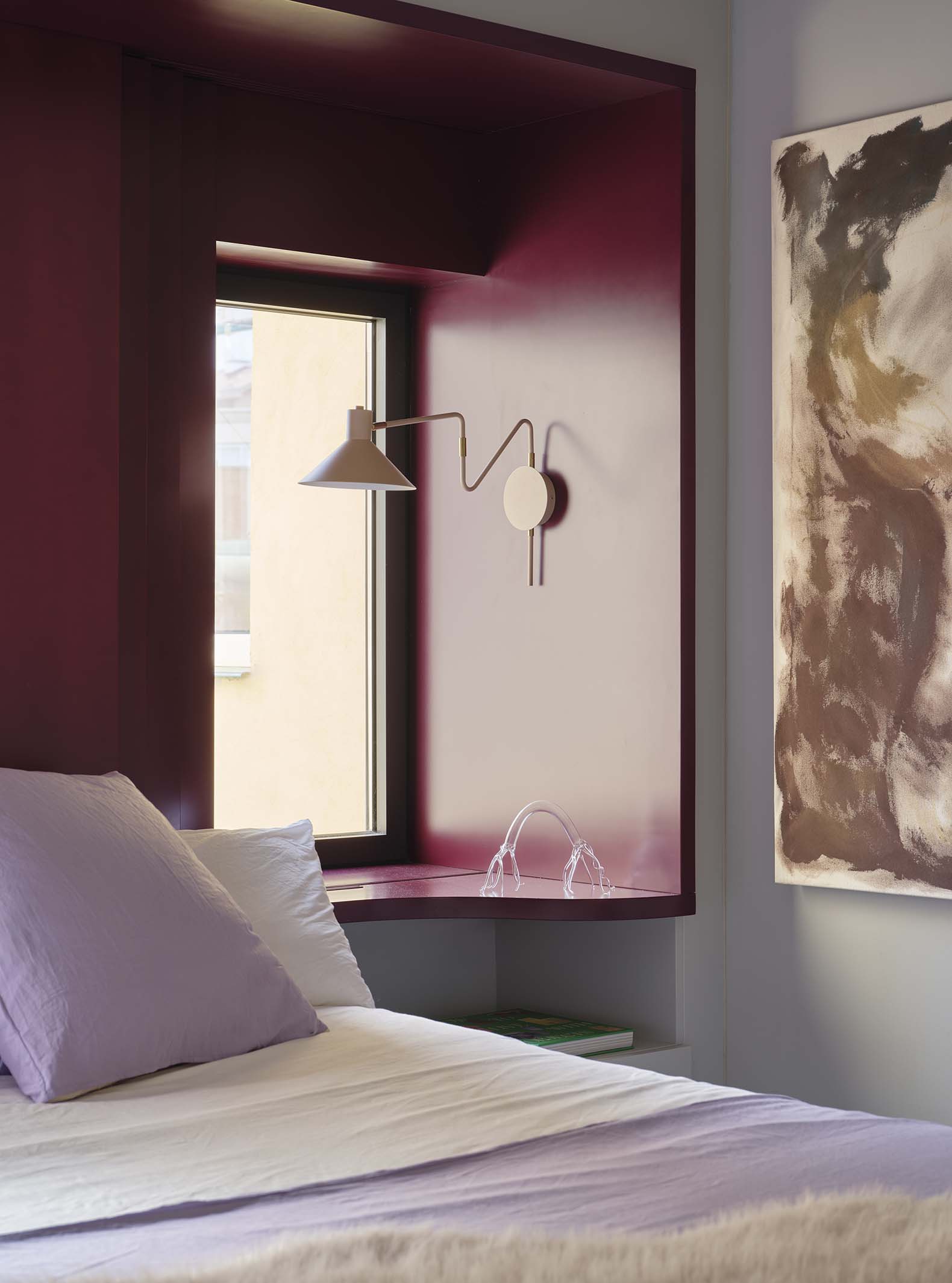
At a construction and material level, the project combines an expressive color palette. The use of neon-colored methacrylate to clad structural elements stands out, acting as a light filter and a device for spatial articulation. In contrast, continuous surfaces, micro-tiles, lacquered MDF in intense tones, and stone countertops with undulating geometries are employed. This combination of industrial materials, handcrafted finishes, and custom solutions reinforces the experimental nature of the intervention, where the technical aspects are integrated into the construction of the spatial experience.
Macedonia by Bardo Arquitectura. Photograph by Germán Sáiz.
Project description by Bardo Arquitectura
This renovation project in Madrid stems from a simple idea: to surprise.
The client was clear on one thing: they wanted a fragmented floor plan, with independent spaces that would provide privacy to the different areas of the house.
Starting from this premise, and taking advantage of the presence of a private patio that allowed for continuous perimeter circulation, Bardo conceived the house as a sequence of interconnected rooms, designed to generate surprise as one moves through them.
With surprise as the guiding principle, the project acquired a distinctly theatrical and eclectic character. Each element is understood as part of a set, designed to transform the domestic experience and give each room its own identity.
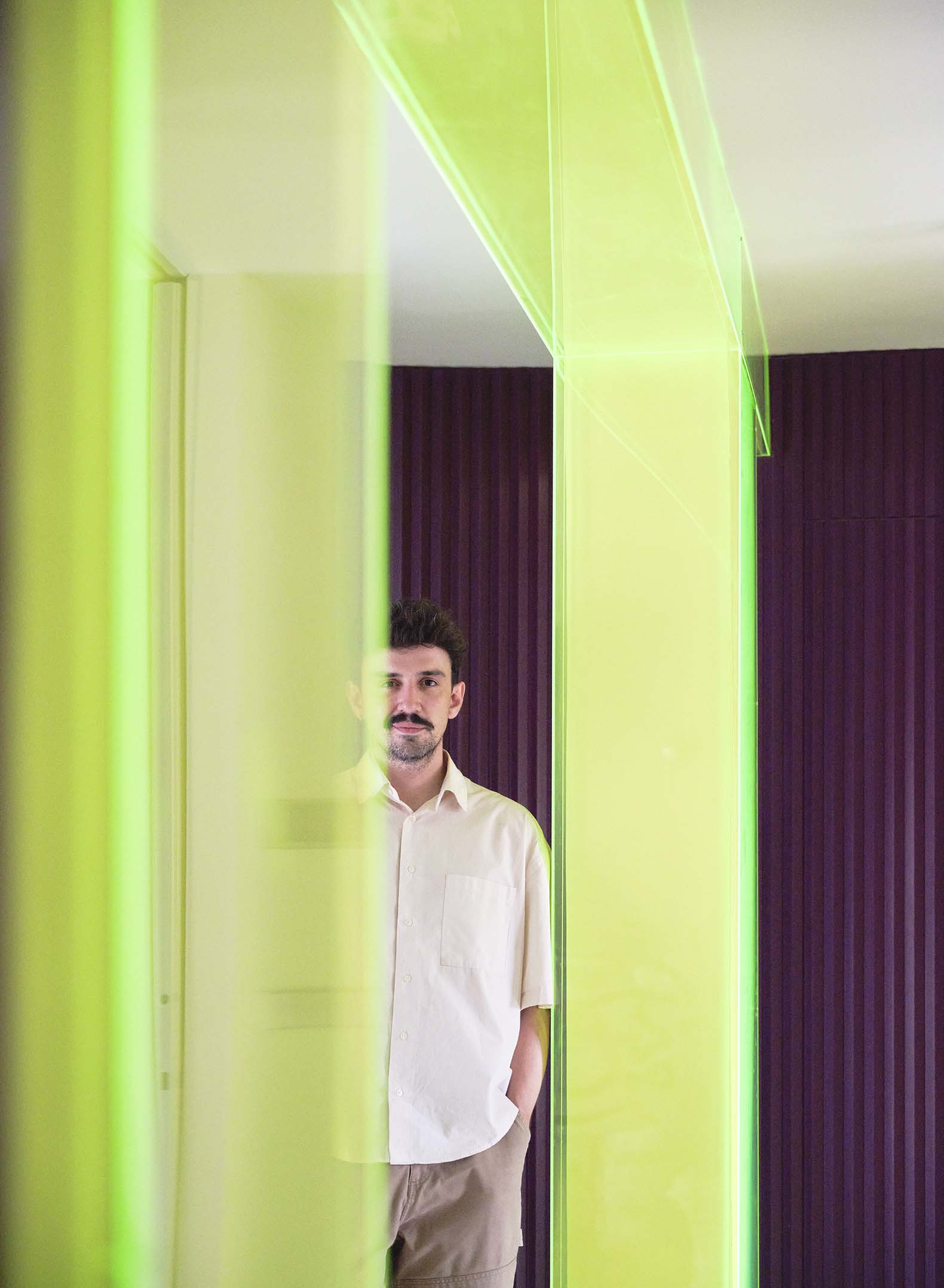
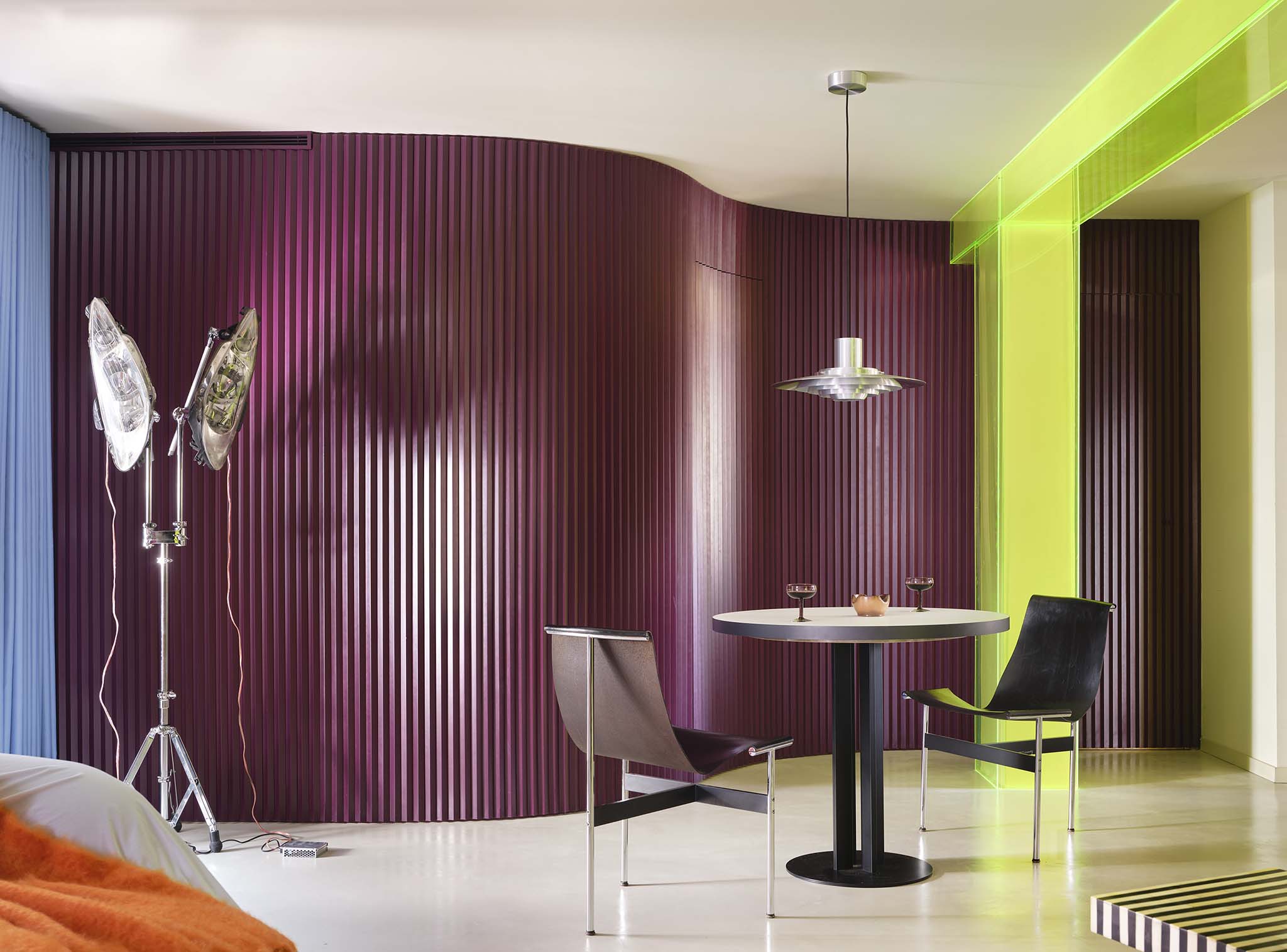
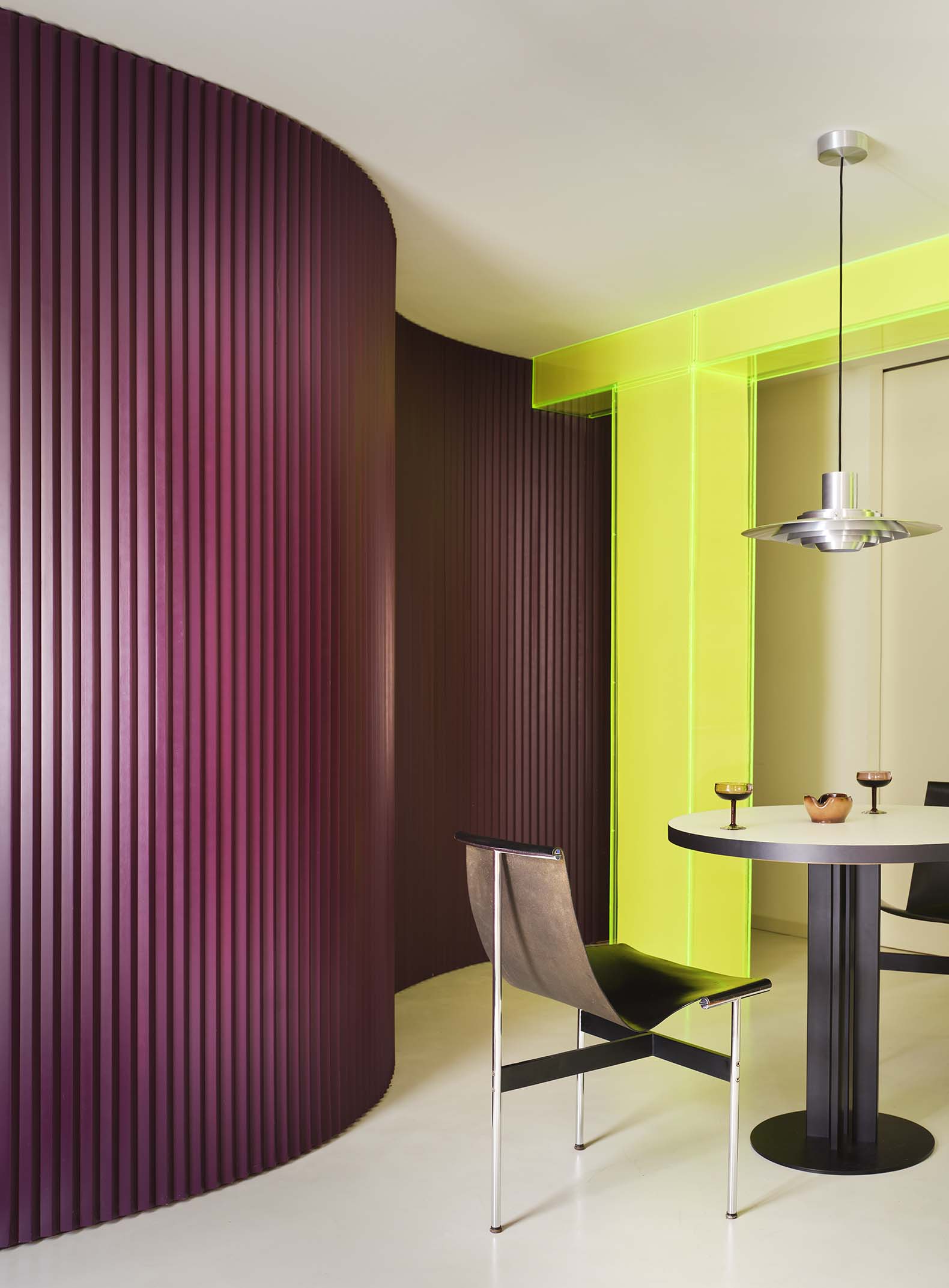
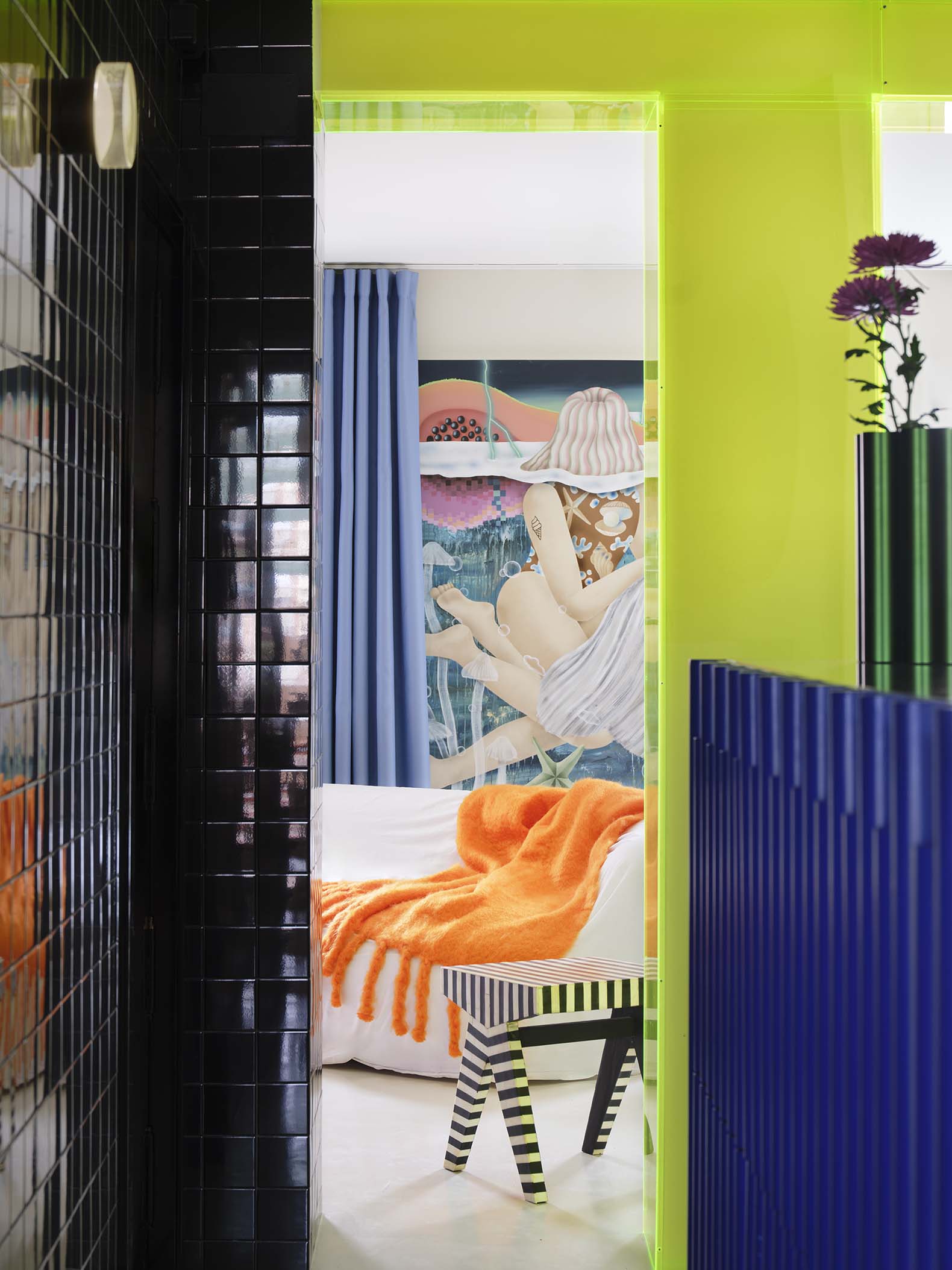
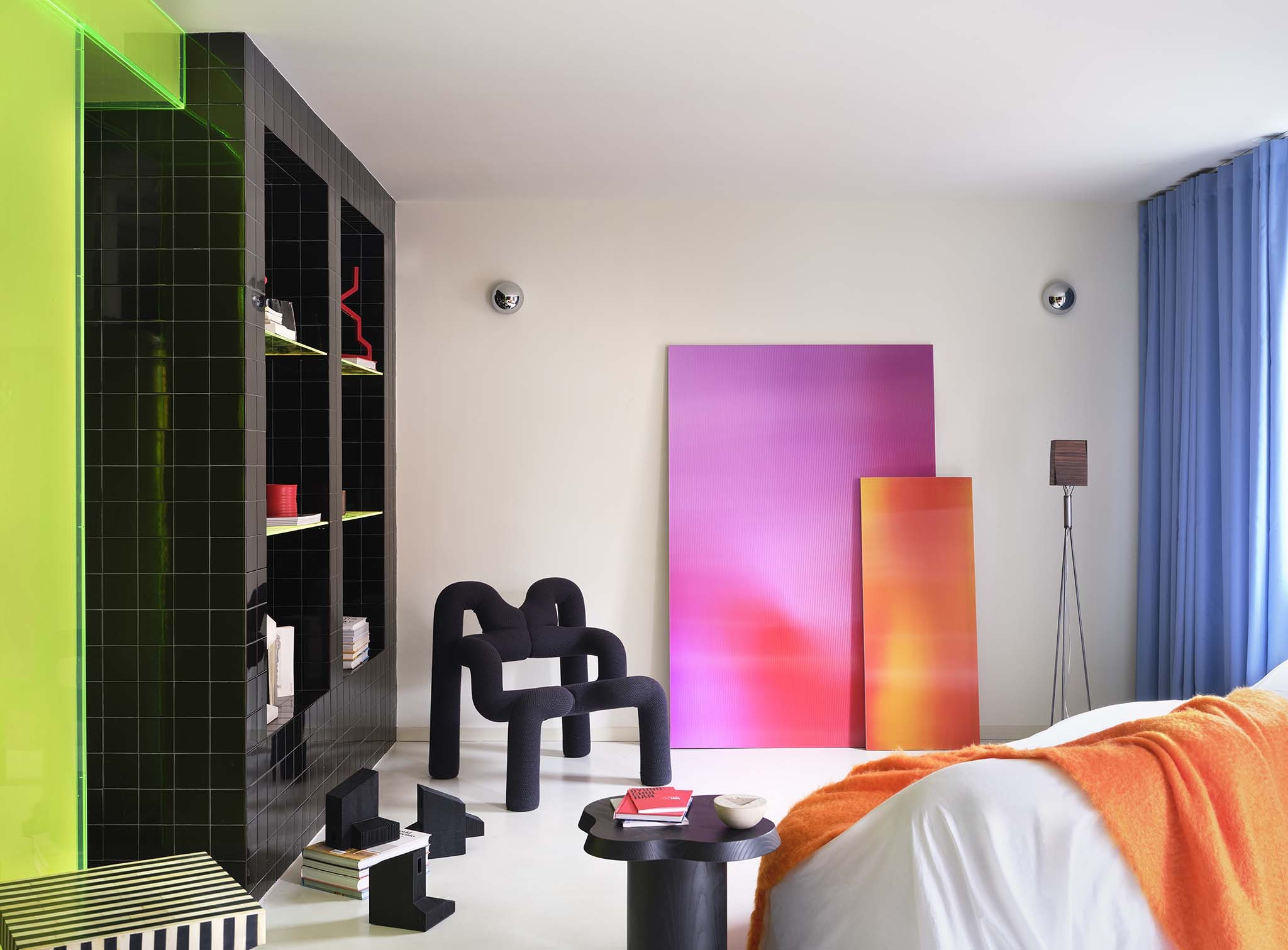
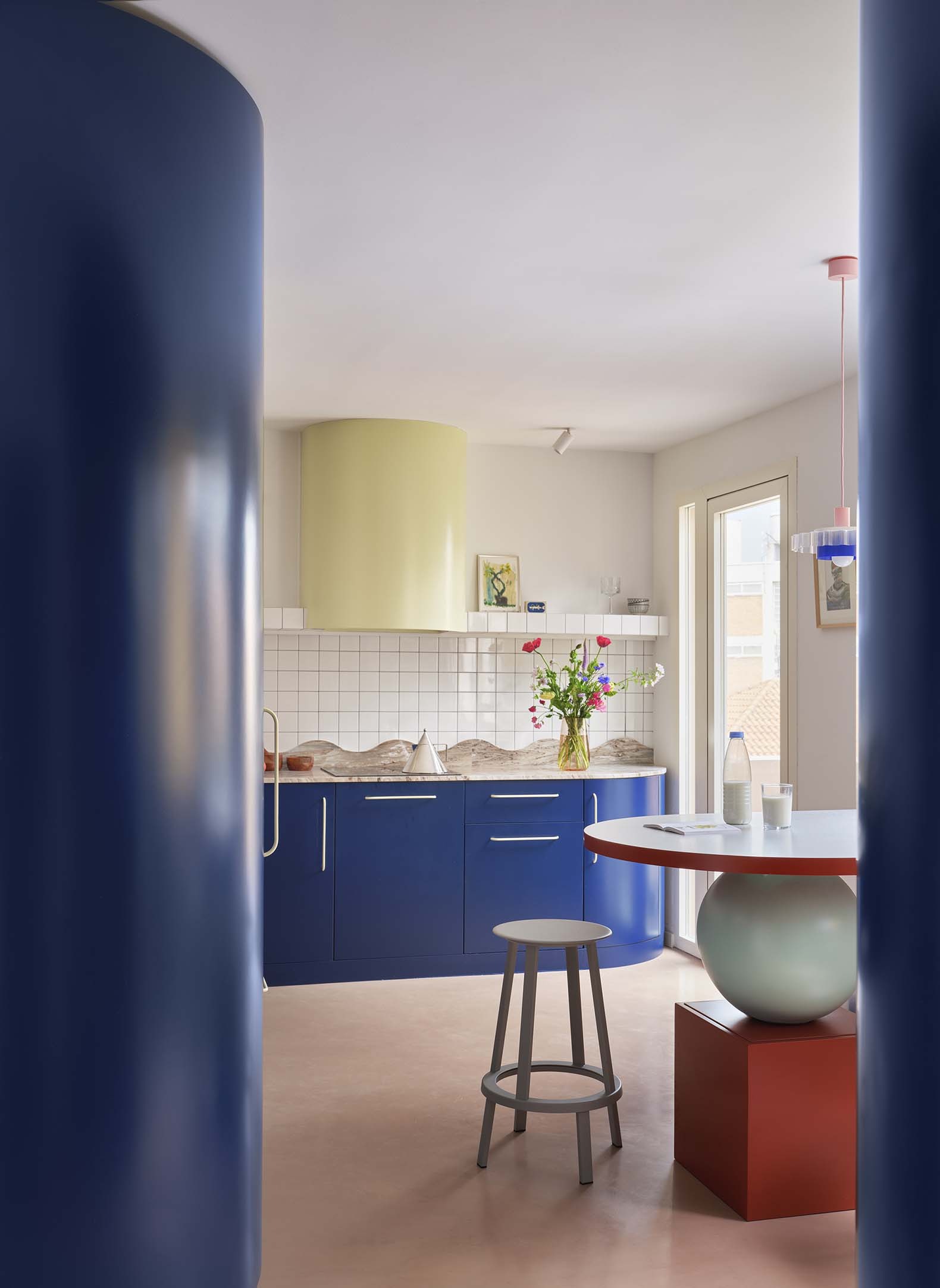
A structural pillar and beam, impossible to remove, are transformed by being clad in neon-colored methacrylate. What was initially a technical limitation becomes a sculptural piece that articulates the space and visually separates the living area from the bedroom.
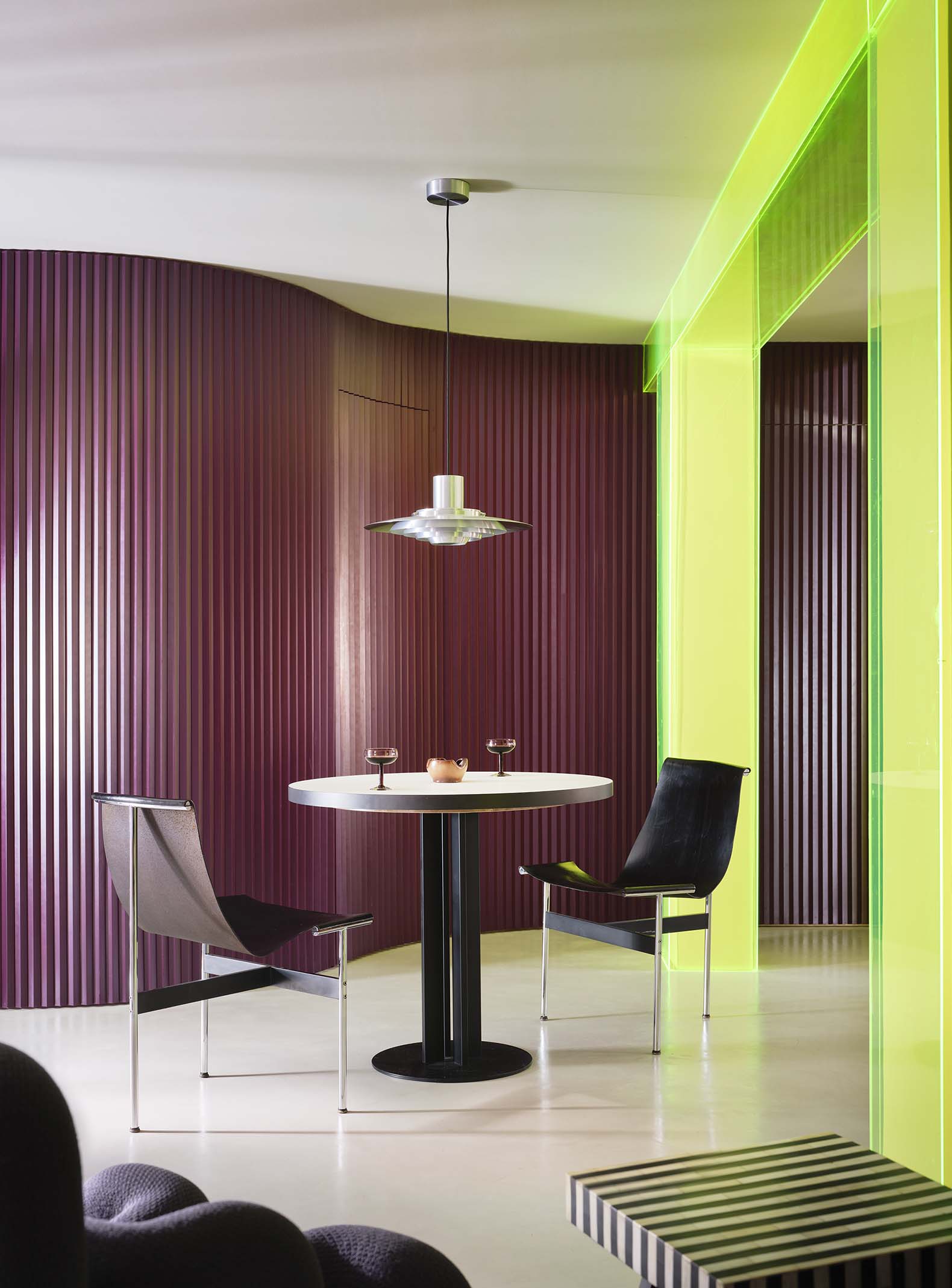
Neon methacrylate acts as a true architectural device: it filters light, generates reflections, creates transparencies and overlaps, and transforms passageways between rooms into dramatic transitions. More than separating, it connects. In the dining room, a curved wall paneled in eggplant-lacquered MDF serves as a backdrop. A bold gesture and an unexpected color reinforce the project's narrative and underscore its theatrical vocation.
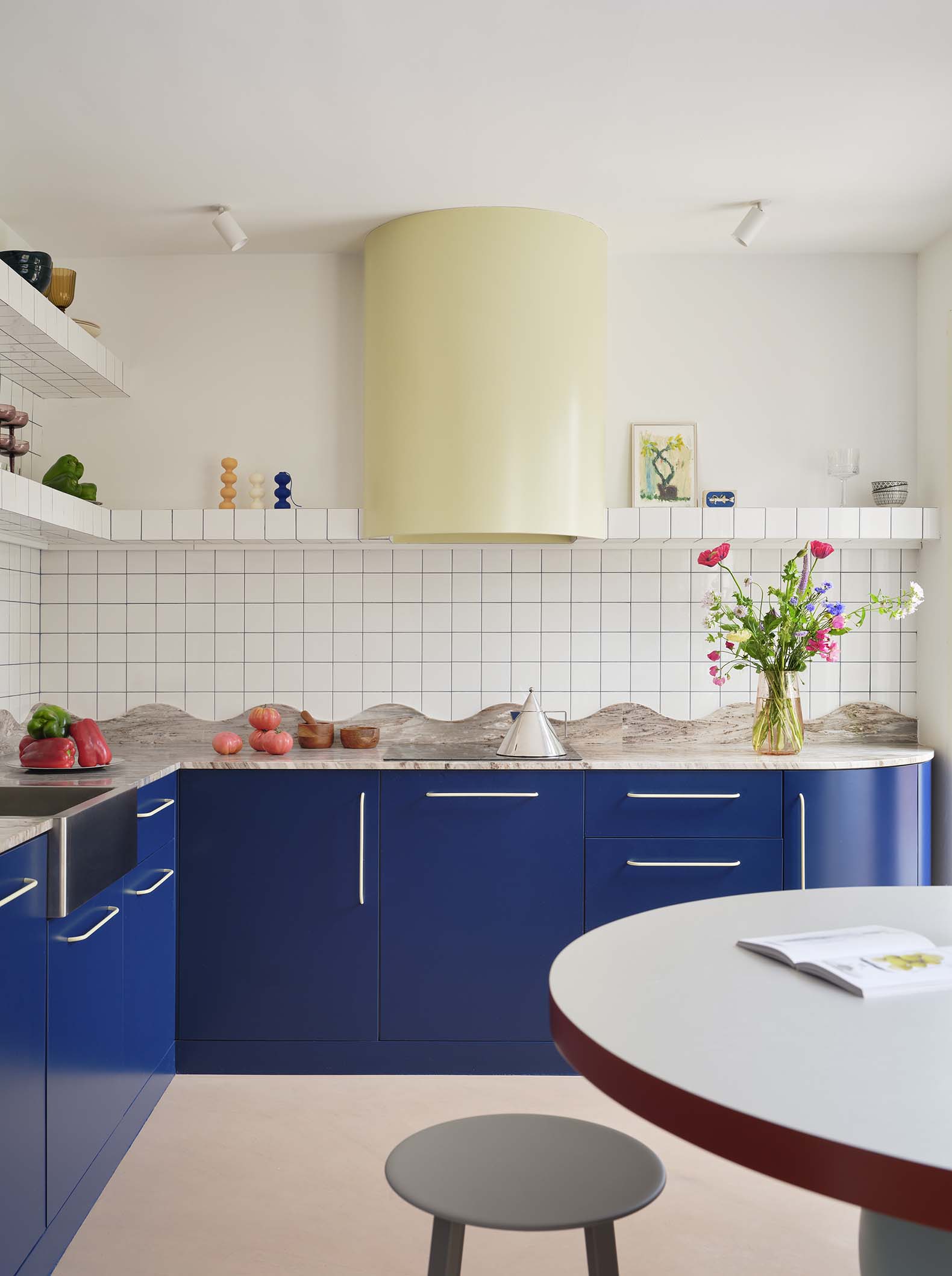
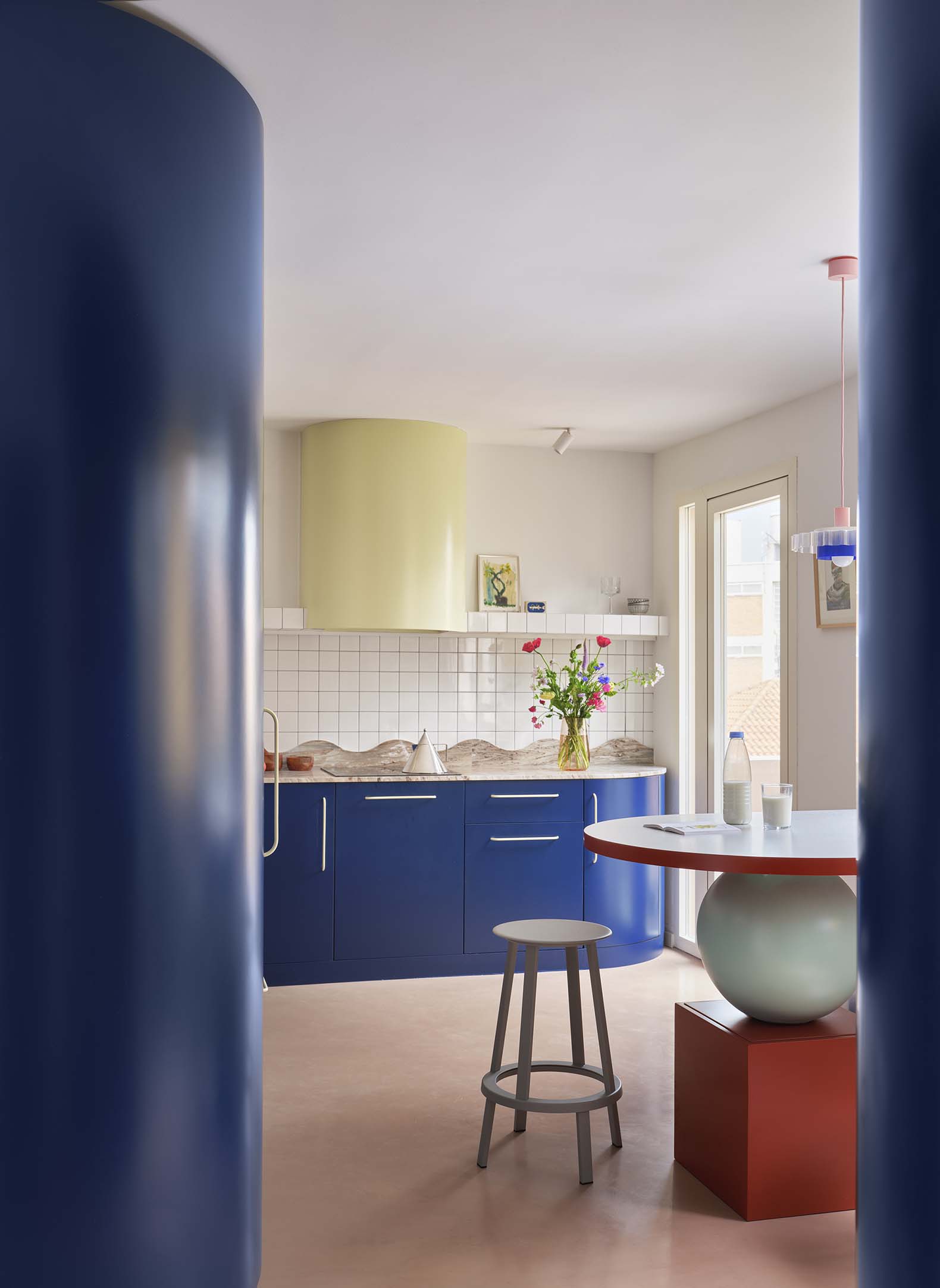
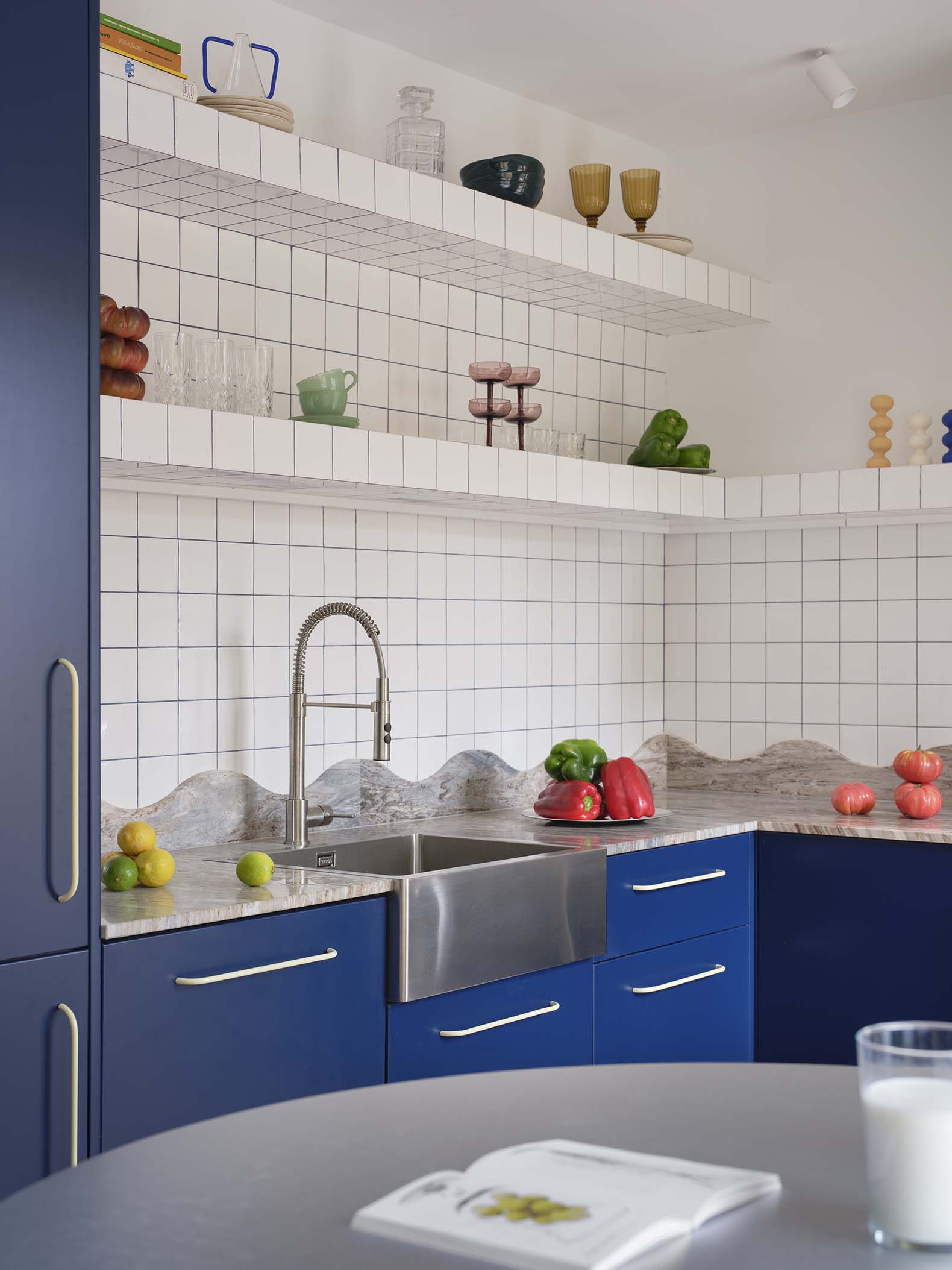
The spatial sequence is reinforced through an expressive use of color and materials, where each space creates its own atmosphere without losing the overall continuity. The kitchen is conceived as a contemporary reinterpretation of the traditional domestic space. The geometric order of the white tiles contrasts with the chromatic strength of the deep blue cabinetry, while the stone countertop, with its undulating geometry, introduces an almost topographical reading of the work surface, transforming a functional element into an architectural gesture.
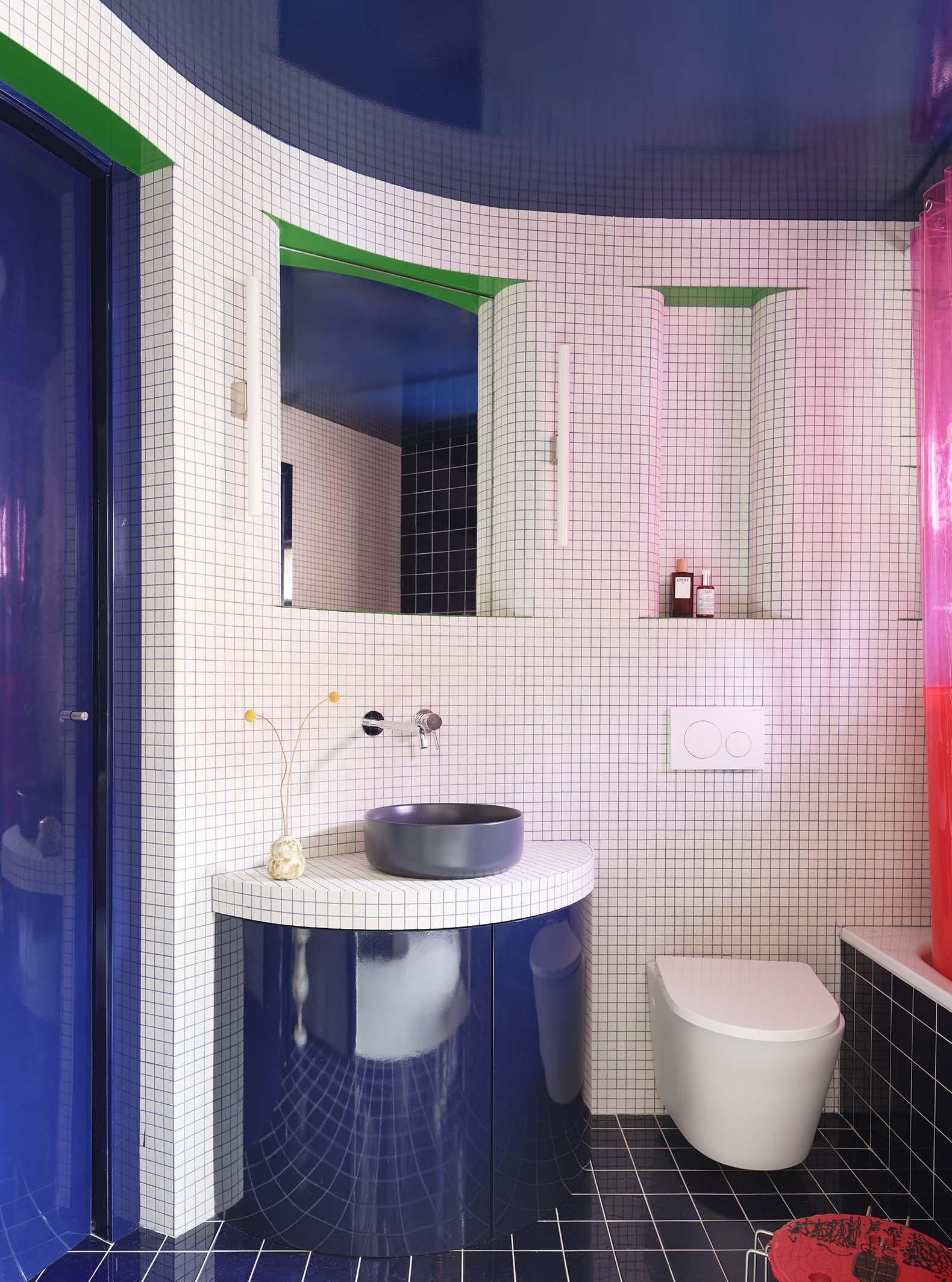
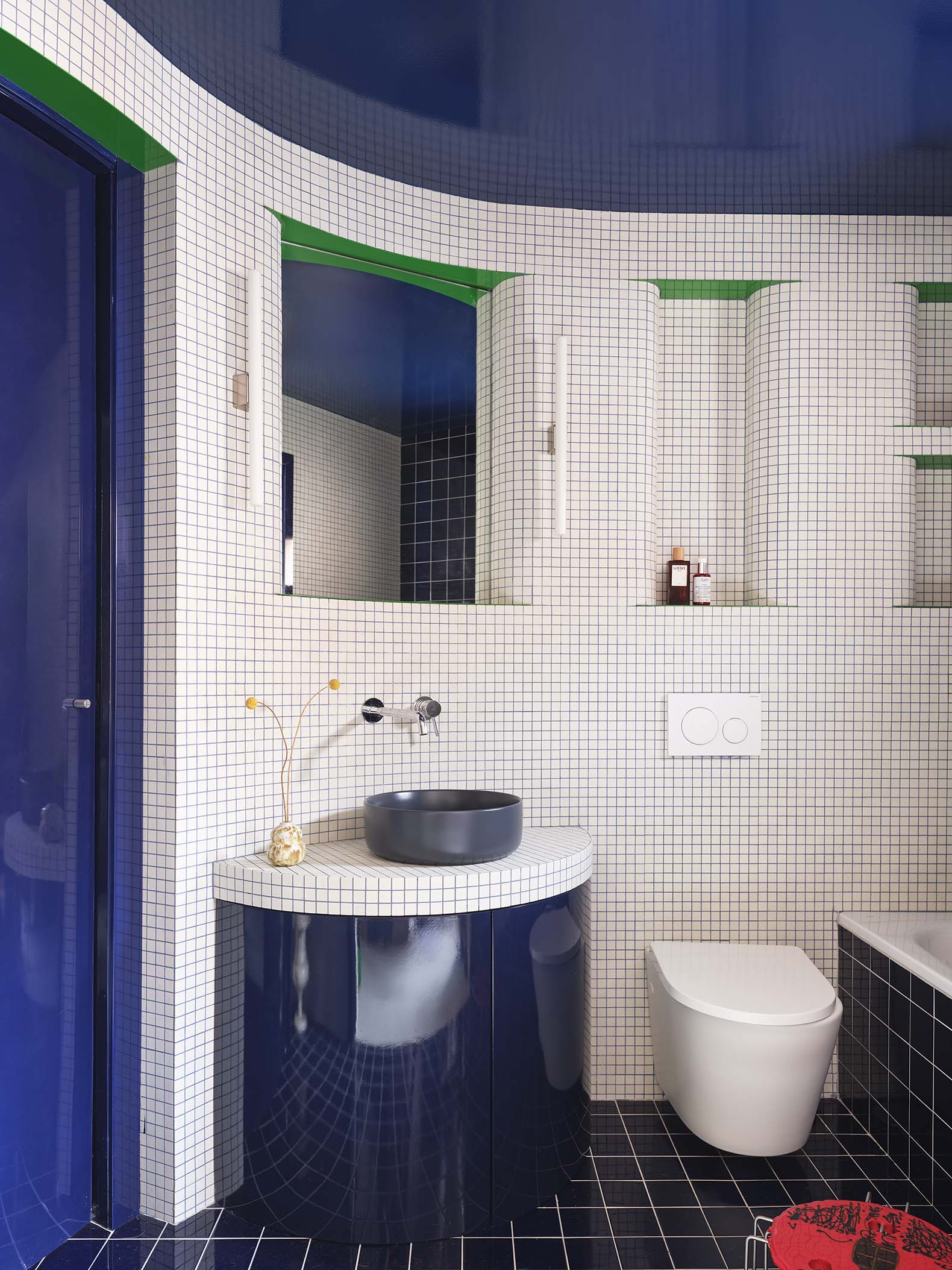
The bathrooms, especially the guest bathroom, are conceived as autonomous spaces within the overall narrative of the home. In one of them, curved geometry, micro-tiles, and the use of color create an almost dreamlike atmosphere, where the architecture is perceived as an immersive experience. In the other, the project is refined: continuous surfaces, earthy tones, and a more subdued materiality generate a space of calm and contemplation. This same strategy is evident in the patio, which is integrated as another room within the flow of the house. The architecture softens, the colors become more earthy, and the vegetation introduces a distinct sensory dimension, functioning as a counterpoint to the more theatrical character of the interior. This strategy is also present in the hallway and, as mentioned, in the en-suite bathroom of the master bedroom, all three functioning as transitional spaces.
The result, therefore, is a home that is not understood as a sum of rooms, but as a continuous spatial experience. A house conceived as a journey, where each room is a scene and each transition, a moment. An architecture that is explored, discovered and experienced as a story, in which surprise is not a specific gesture, but the very essence of the project.