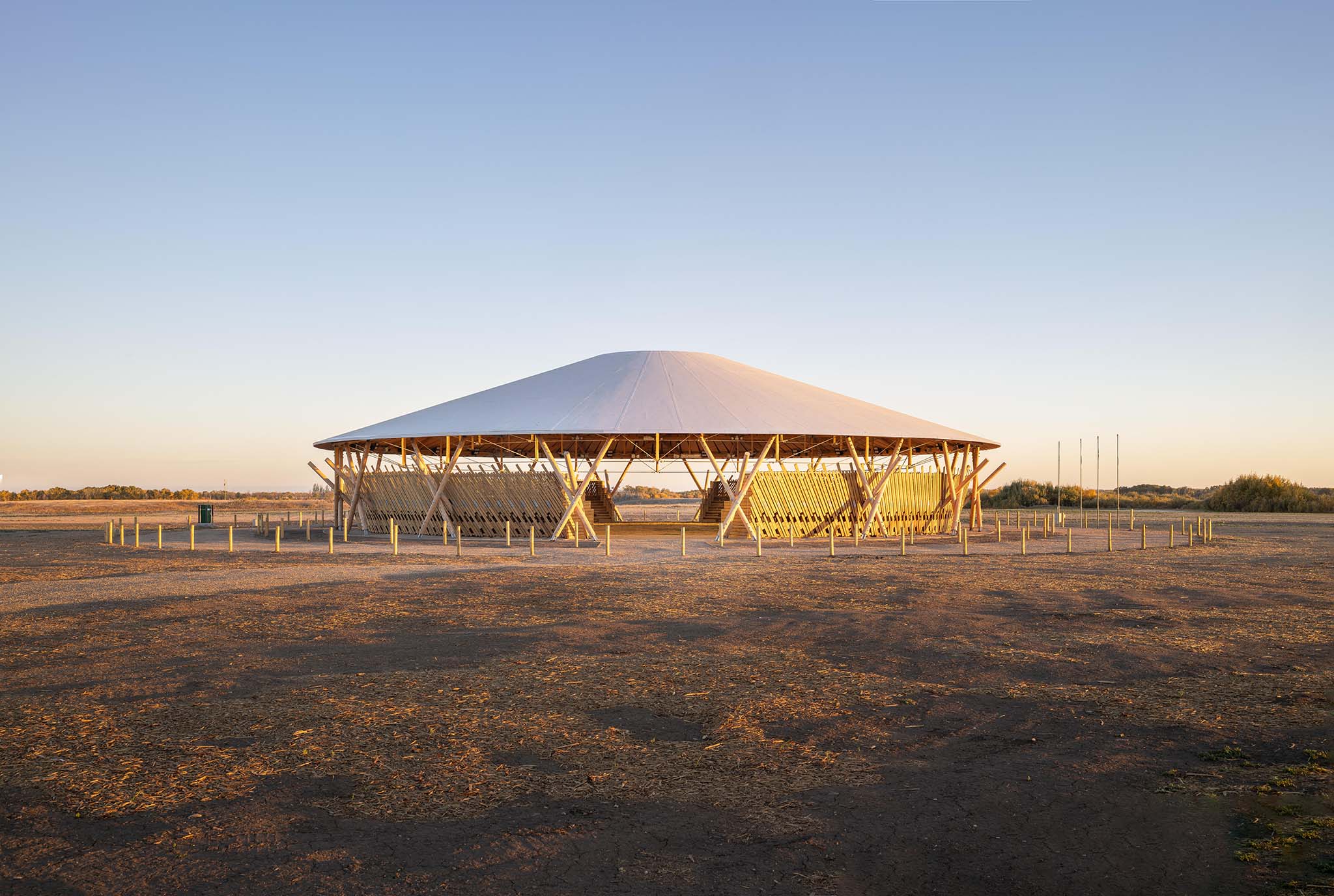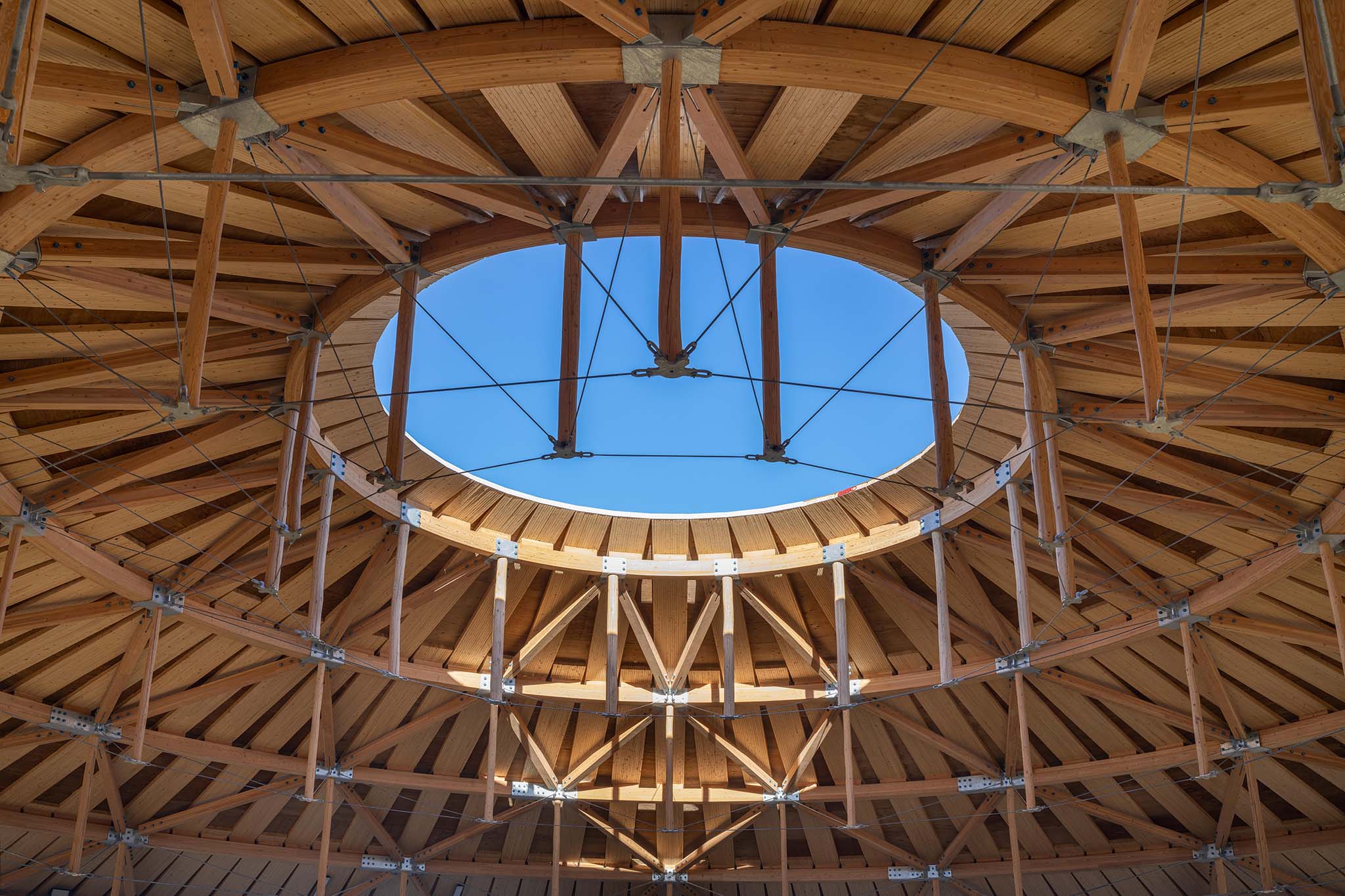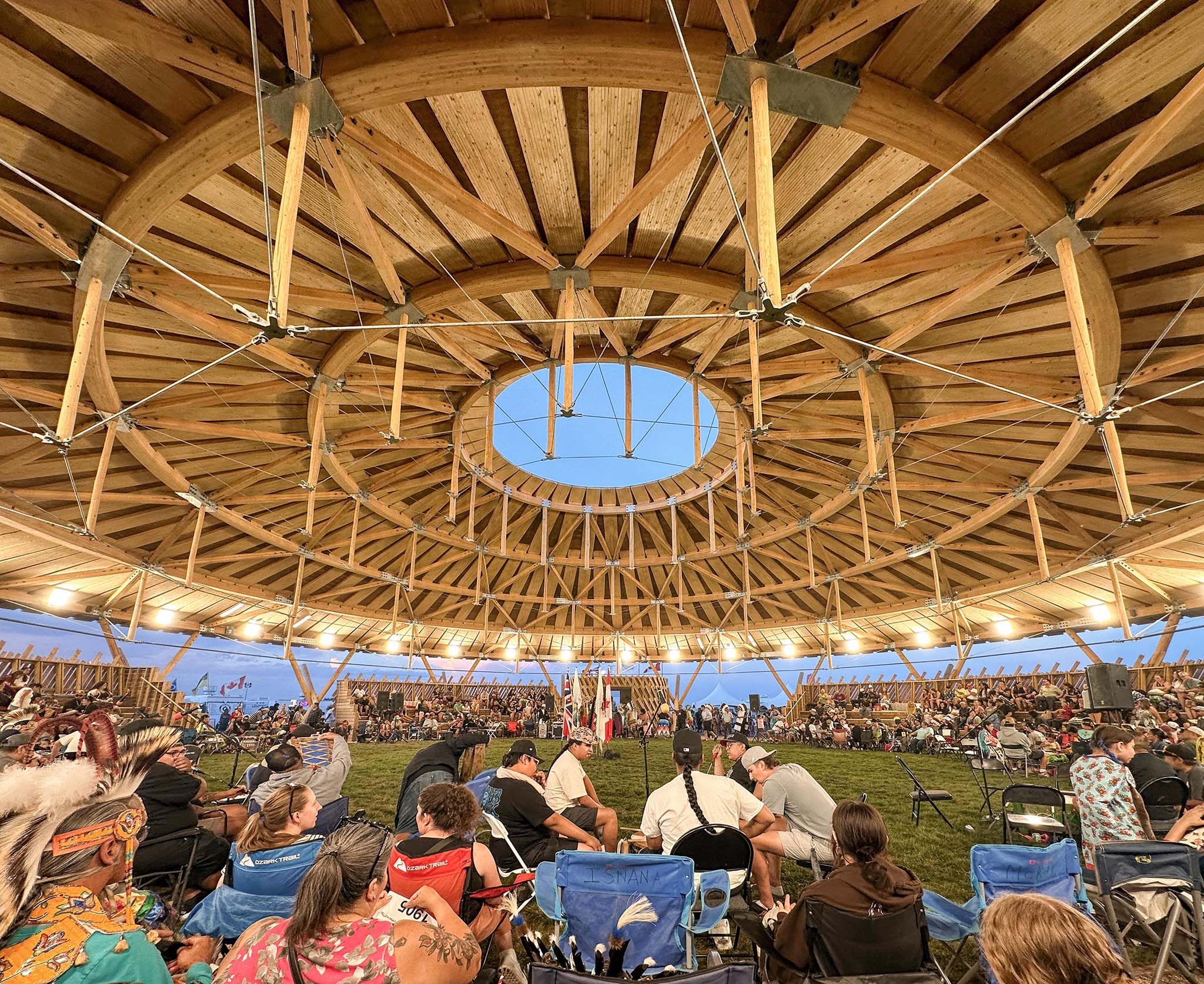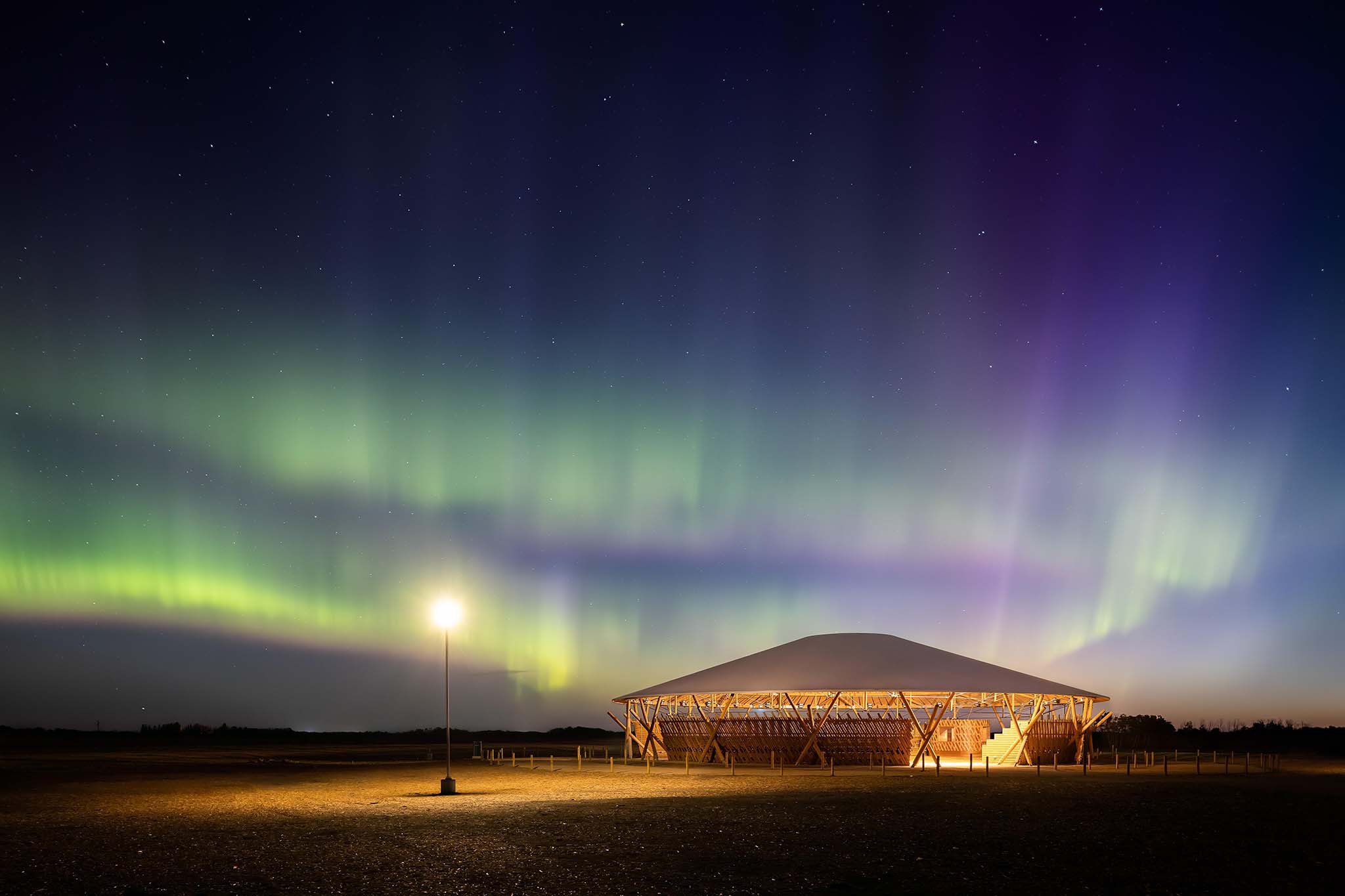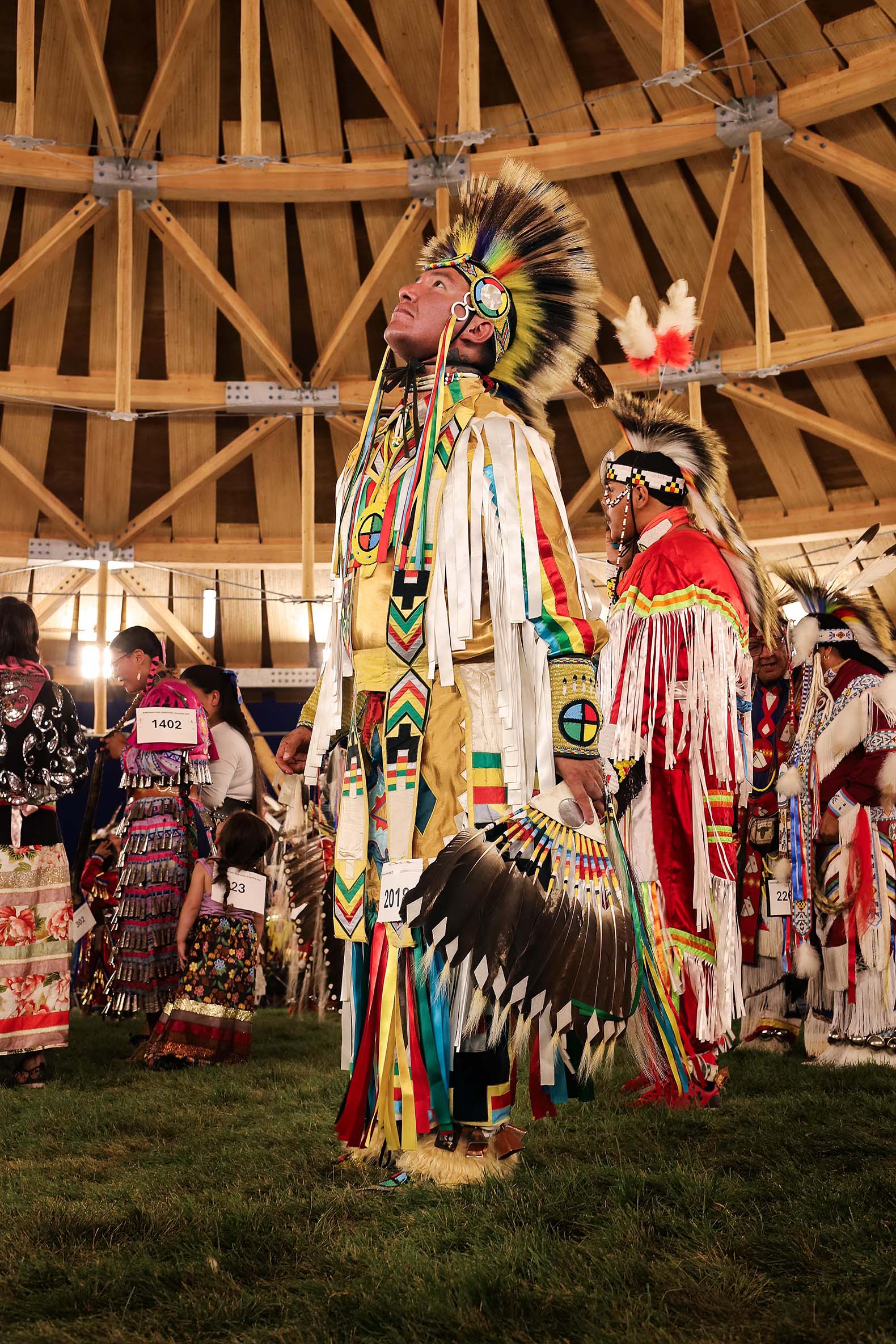
The vibrant cultural center, designed by Oxbow Architecture and Richard Kroeker, is conceived as the centerpiece of the summer powwow celebrations. The structure draws inspiration from the material culture of Saulteaux and the symbolic importance of the circle. Its open, circular form, the result of extensive consultation with community elders, evokes traditional huts while creating a light roof that appears to float on the prairie horizon.
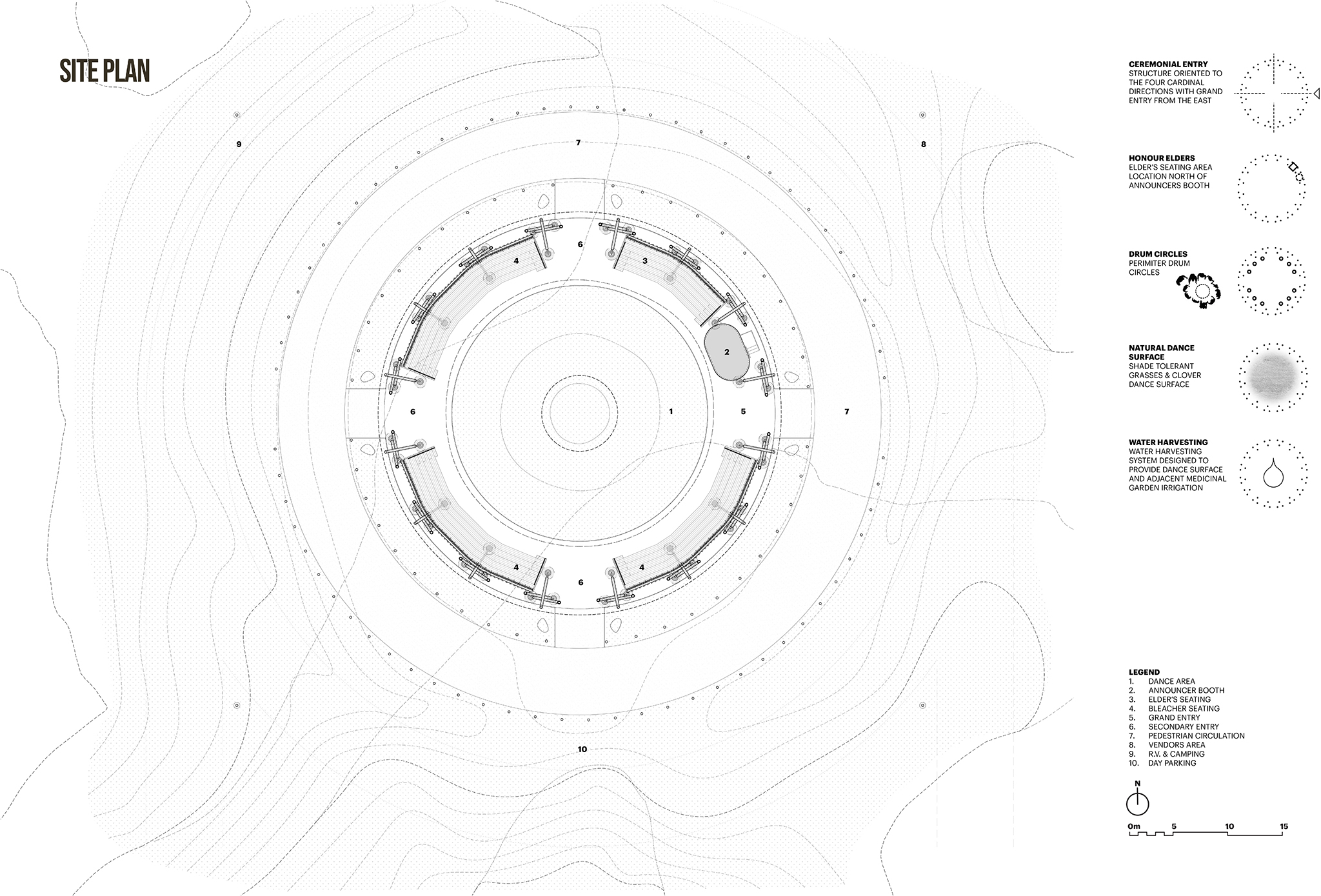
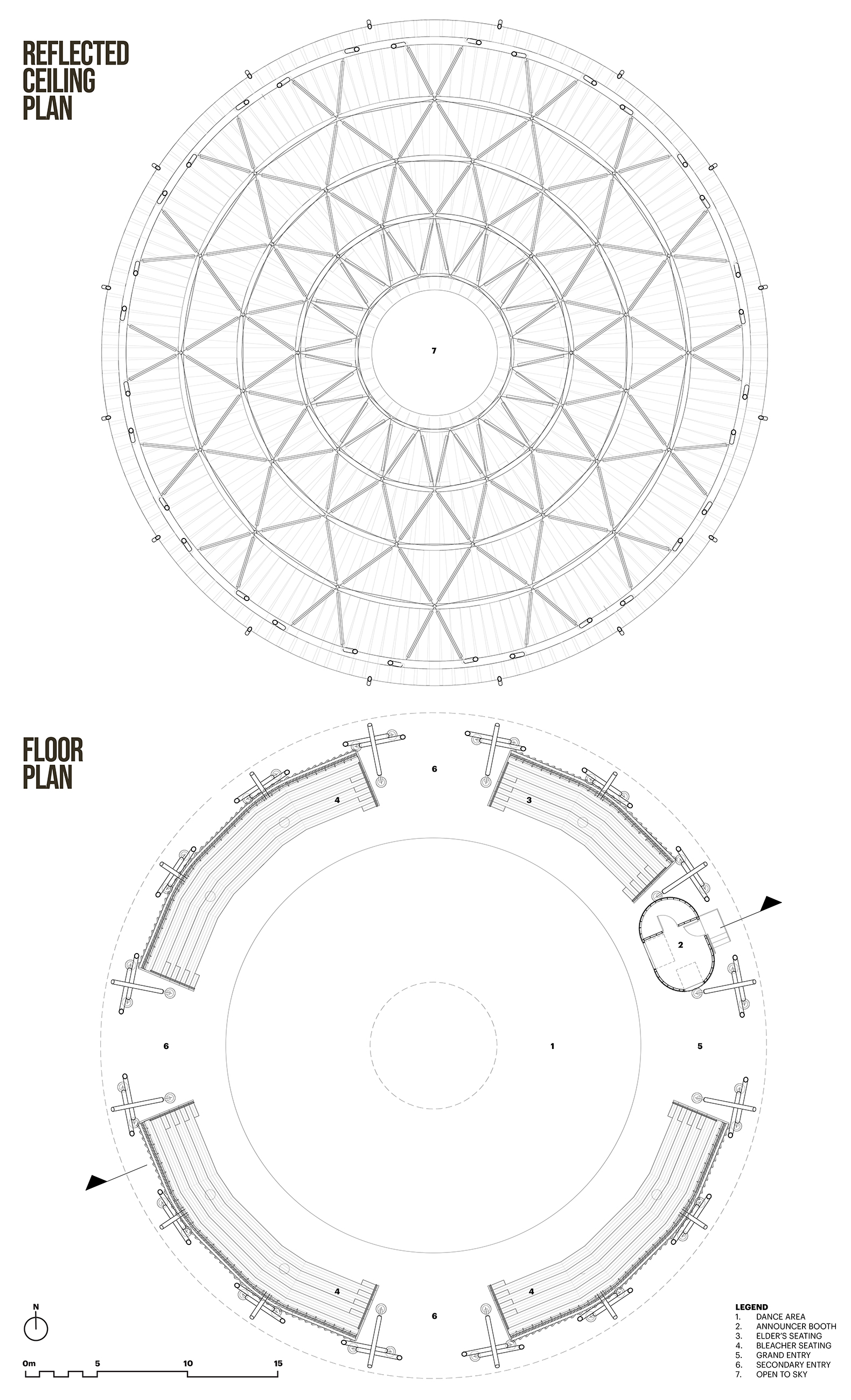
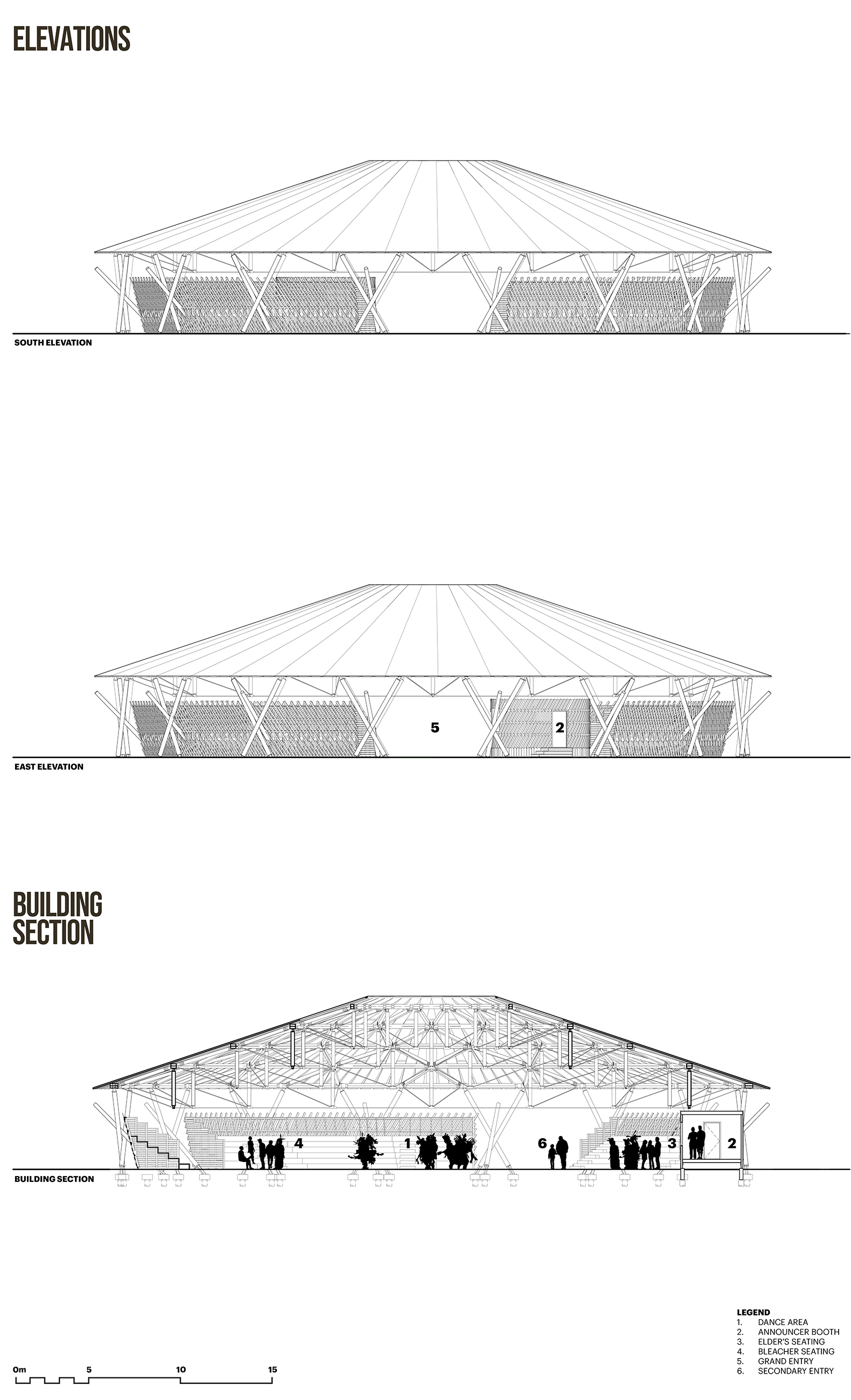
The project aims to strengthen traditions, celebrate culture, and encourage community members to pass on their knowledge to future generations. The building's design was established through consultations with the community and tribal leaders, particularly local knowledge keeper Jeff Cappo. The completed gazebo covers 1,275 square meters and can accommodate 2,500 spectators and 1,000 dancers.
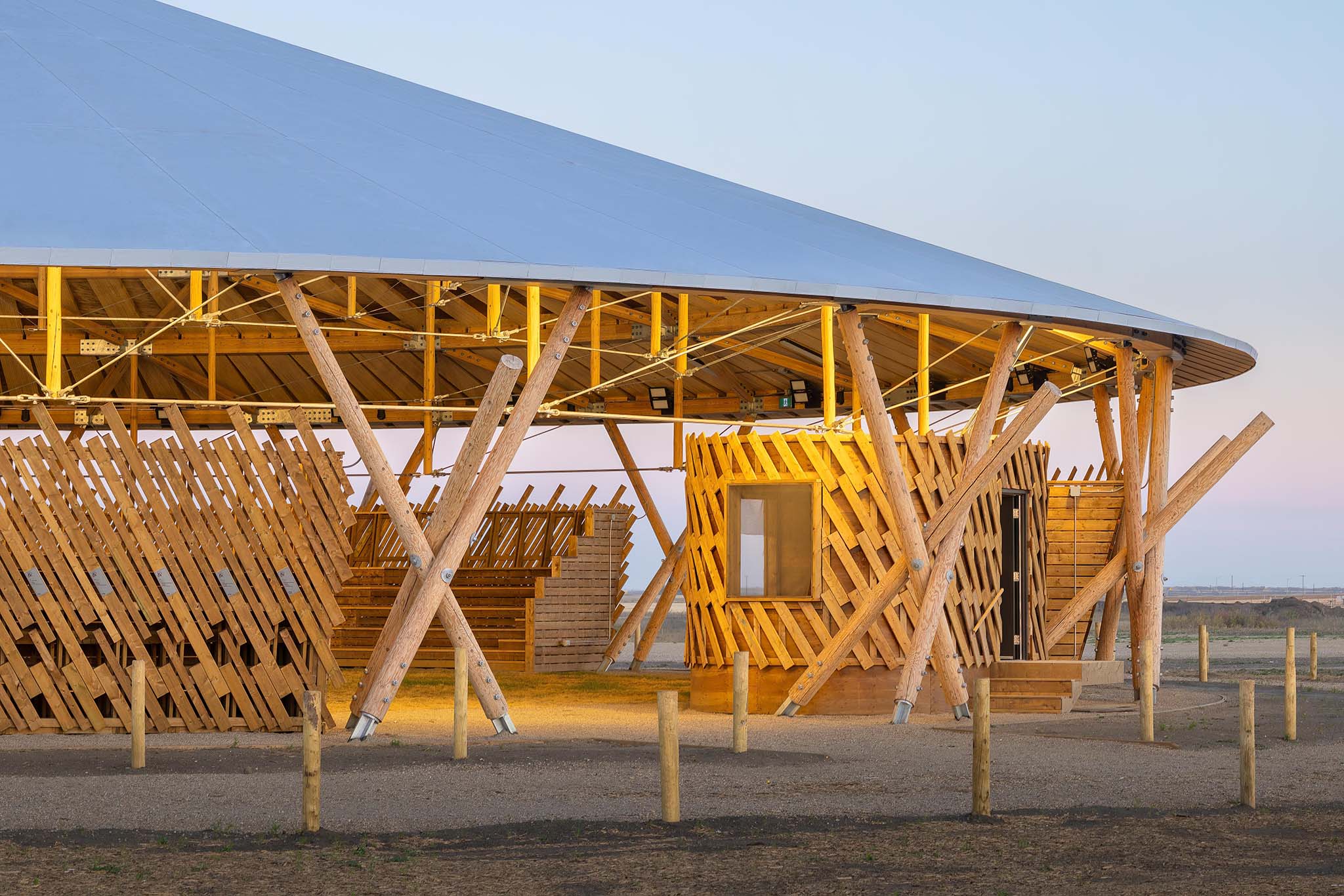
Muscowpetung Powwow Arbour by Oxbow Architecture and Richard Kroeker. Photograph by Lindsay Reid.
Architecture with Social Impact
The project supports the community's economic goals by involving local labor in the construction process, with building approaches strategically aligned with local resources and skills. The Arbour, a regenerative project in every sense, reflects the Mino-pimatisiwin concept of saulteaux—"living well"—and directly addresses both the climate crisis and the needs of the Muscowpetung community.
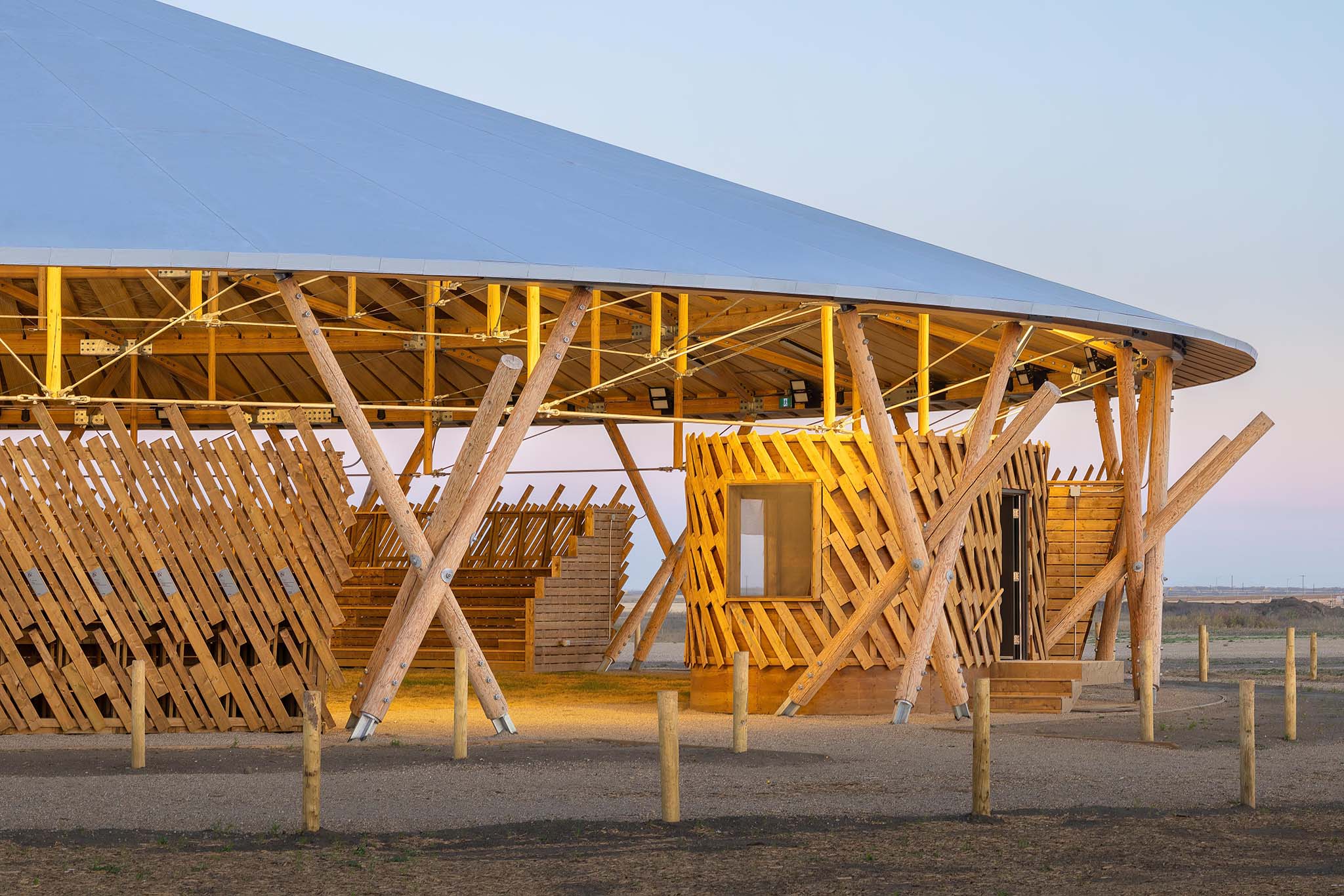
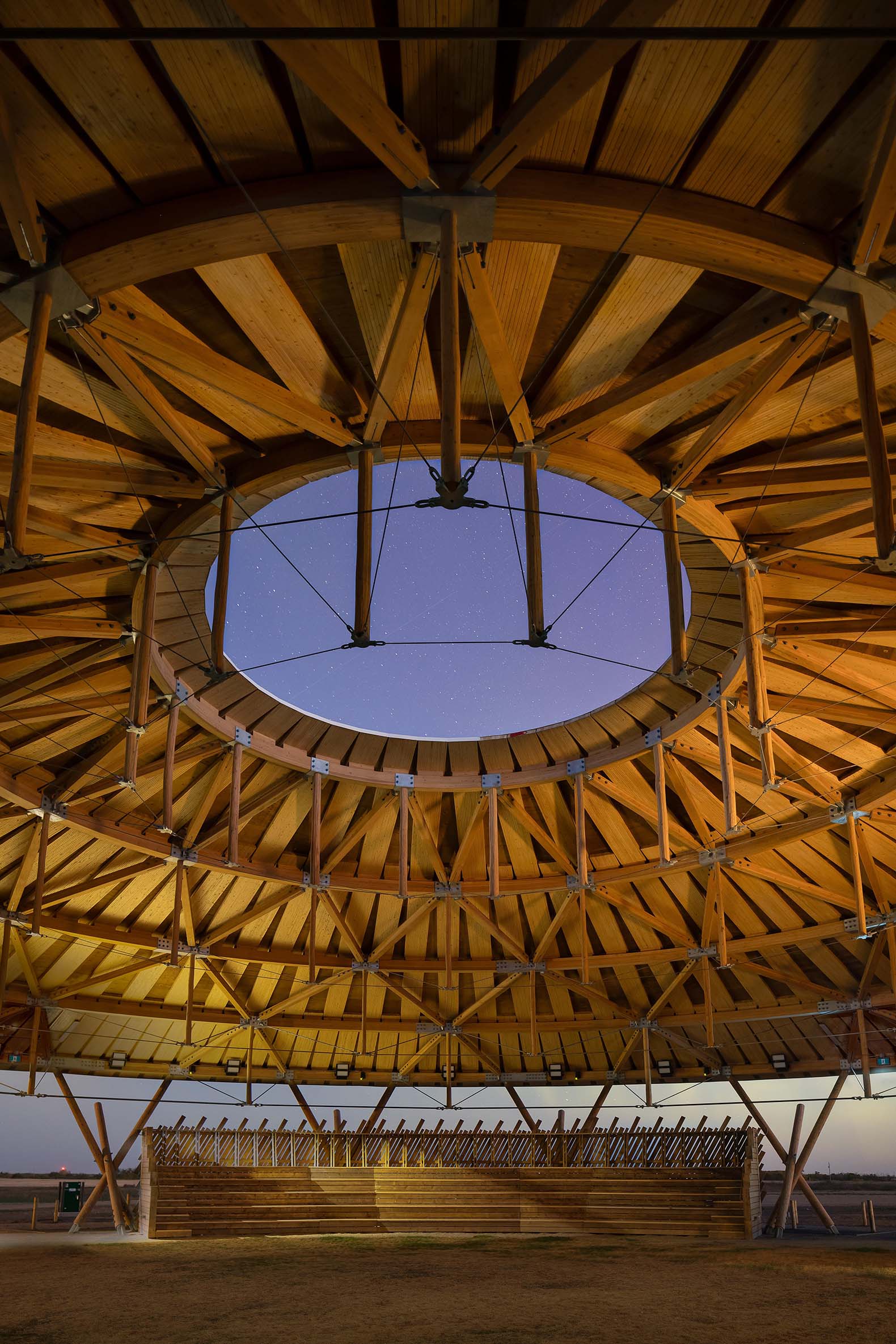
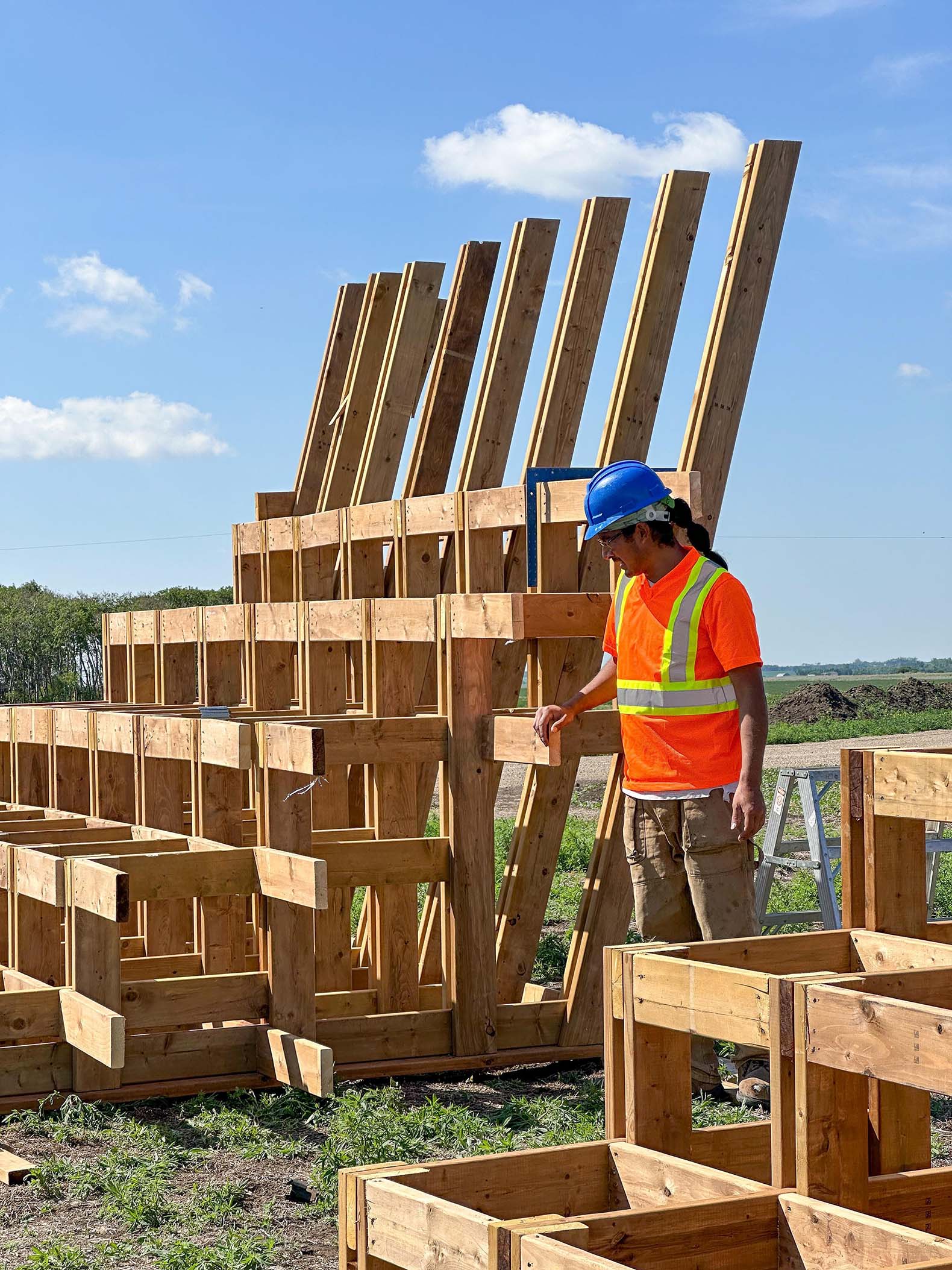
Built with regionally sourced round timber and local labor, the Arbour reflects traditional knowledge through sustainable and resource-efficient construction. Its conical roof, open at the center, allows light to enter and nourish the vegetation, seamlessly integrating landscape and architecture.
Beyond its architectural significance, the Arbour serves as a cultural center that promotes family well-being, education, and community life. Surrounded by restored native grasslands, the project demonstrates a regenerative design, with ecological restoration and carbon capture that contribute to carbon neutrality and strengthen cultural continuity for future generations.
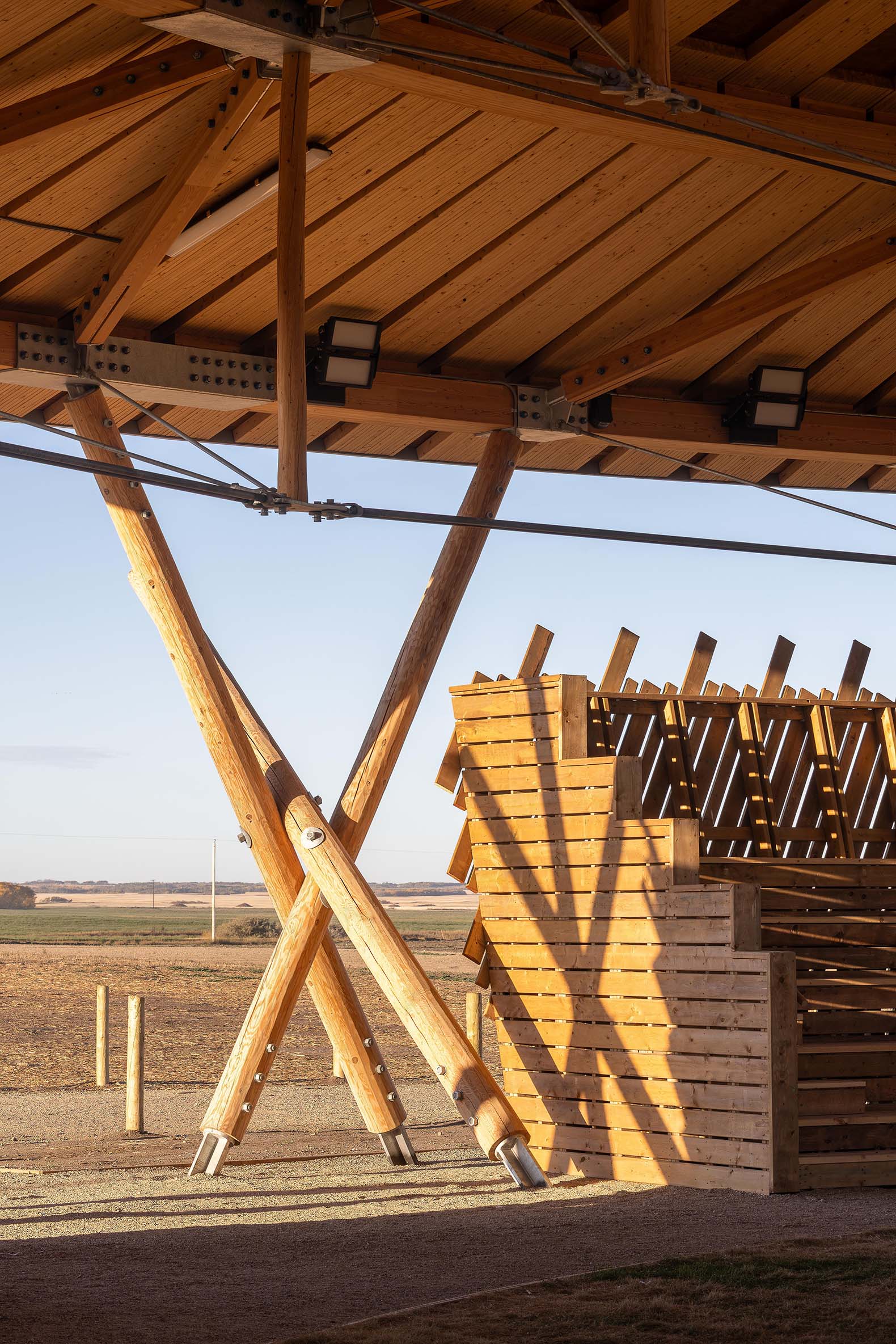
Muscowpetung Powwow Arbour by Oxbow Architecture and Richard Kroeker. Photograph by Lindsay Reid.
Context
Saskatchewan’s high-carbon-intensity electricity grid presents a significant operational emissions challenge: building operations in the province can generate up to 700% more CO₂e than similar buildings in Canadian provinces like Ontario, where hydroelectric and nuclear power predominate. The Muscowpetung Powwow Arbour offers an unheated cultural building that employs passive strategies to achieve thermal comfort during the three seasons (spring, summer, and fall) in which outdoor cultural activities take place. The resulting climate-adapted design, guided by Saulteaux’s traditional knowledge and resource management practices, focuses entirely on reducing embodied carbon and employing regenerative landscape strategies to achieve carbon neutrality within five years.
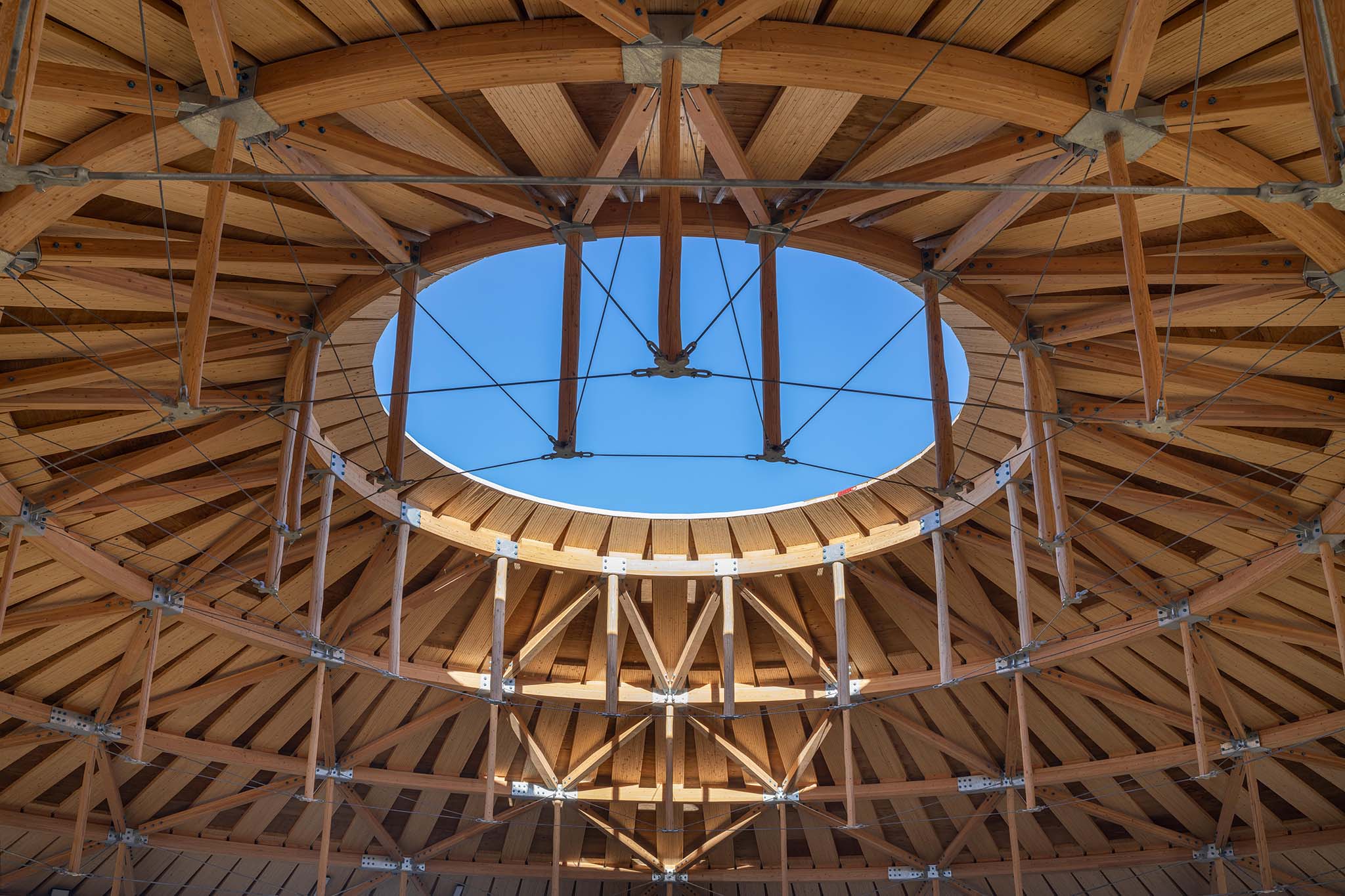
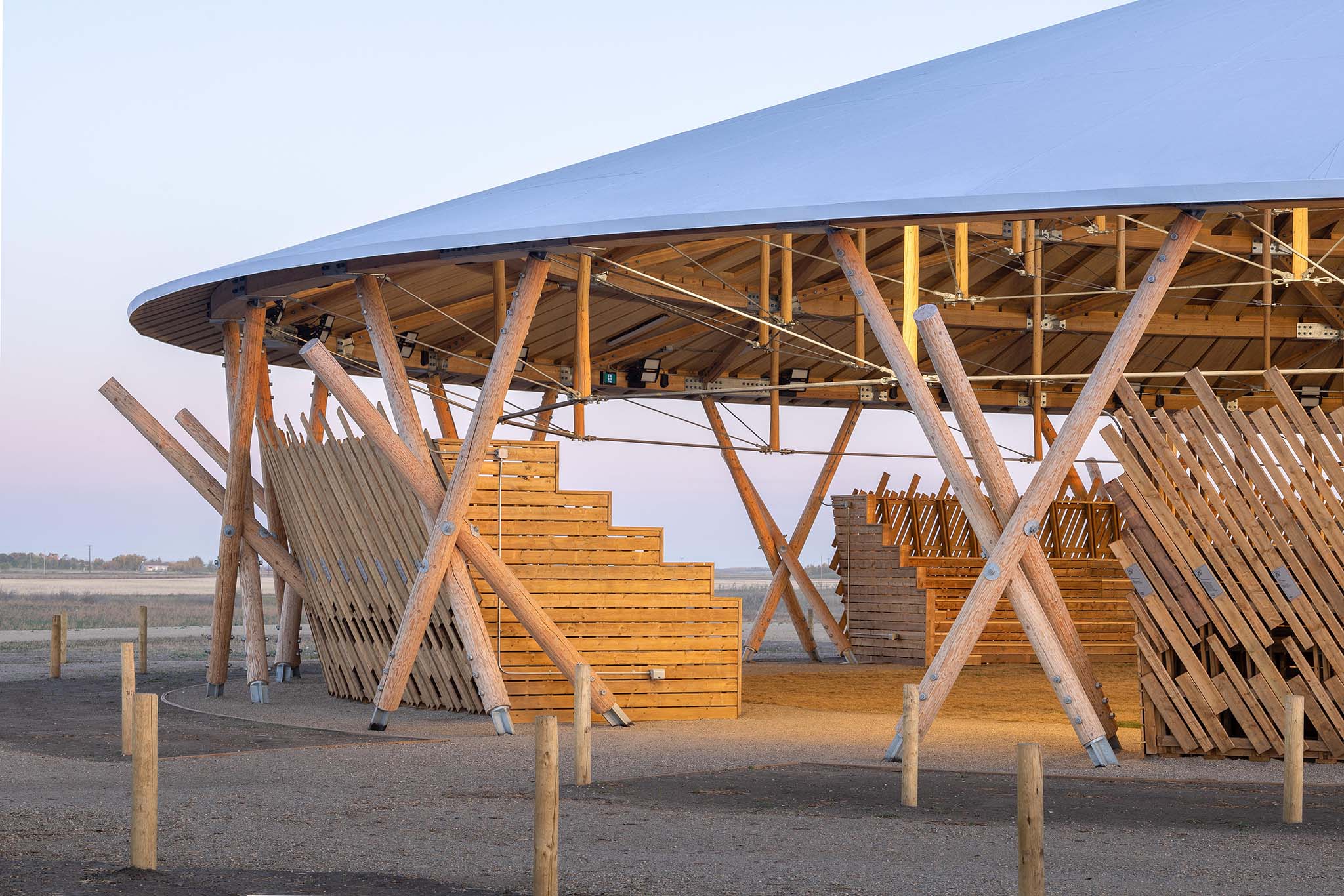
Muscowpetung Powwow Arbour by Oxbow Architecture and Richard Kroeker. Photograph by Lindsay Reid.
Life Cycle Assessment
A life cycle assessment (LCA) guided material selection and structural assembly decisions throughout the design process.
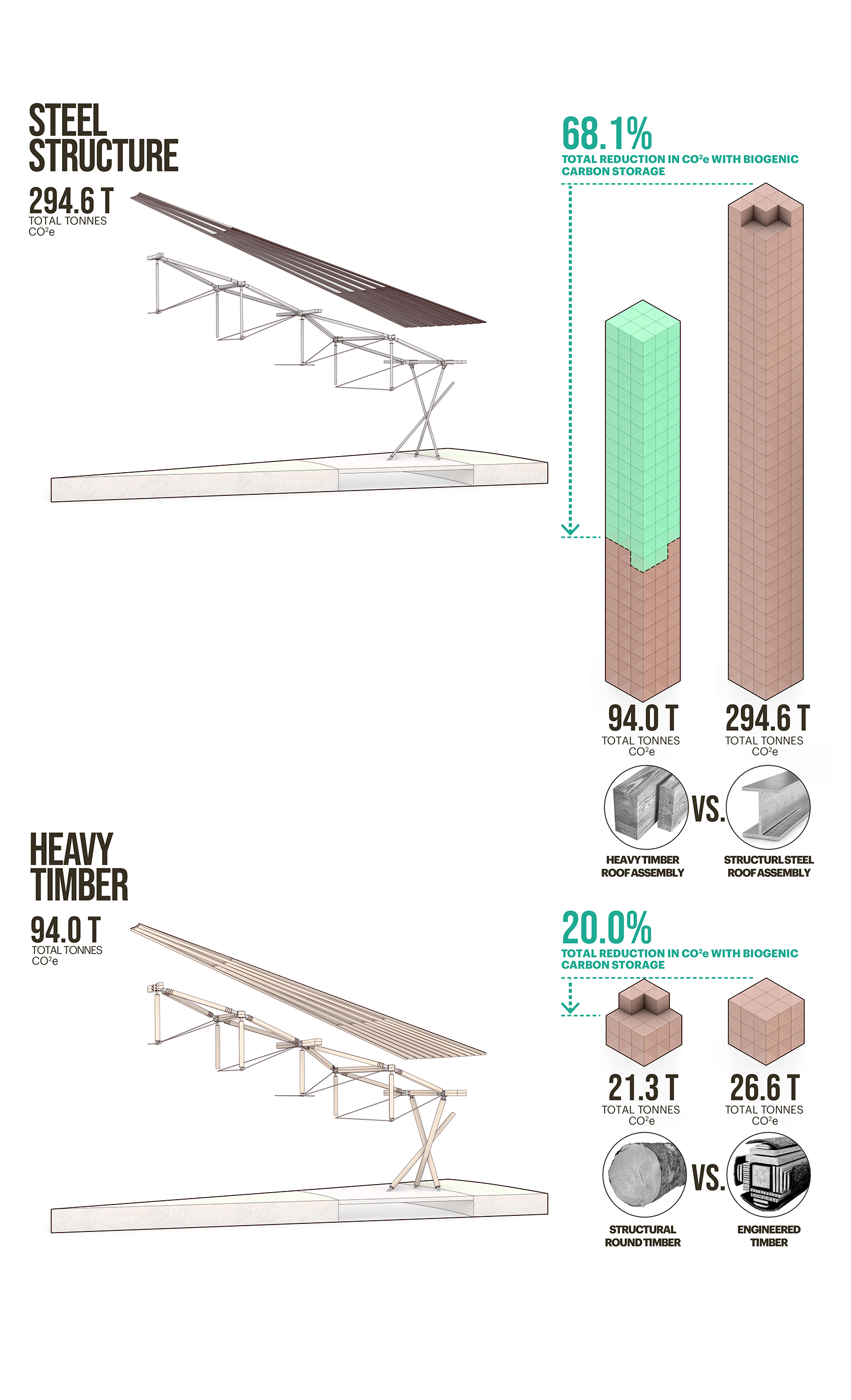
Comparison between wood and steel: Solid wood with biogenic carbon storage demonstrated a 68% reduction in CO₂e emissions compared to a structural steel alternative.
Replacing glued laminated timber (GL) with structural round timber (SRT) reduced embodied carbon by an additional 20% per structural element.
SRT requires minimal processing, maintains continuous wood fiber orientation, and shortens the supply chain by eliminating subcontracting, thus reducing transportation and manufacturing emissions.
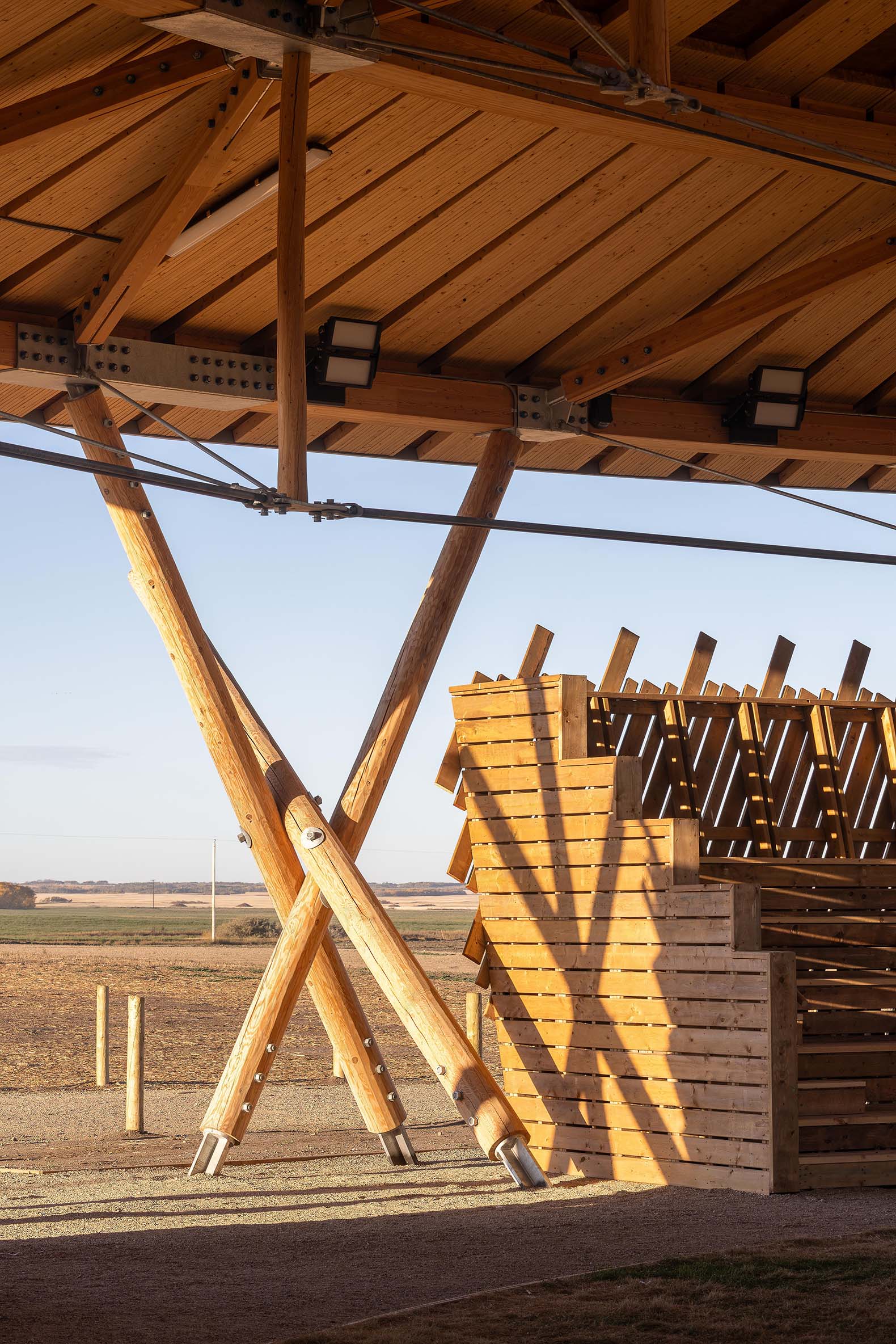
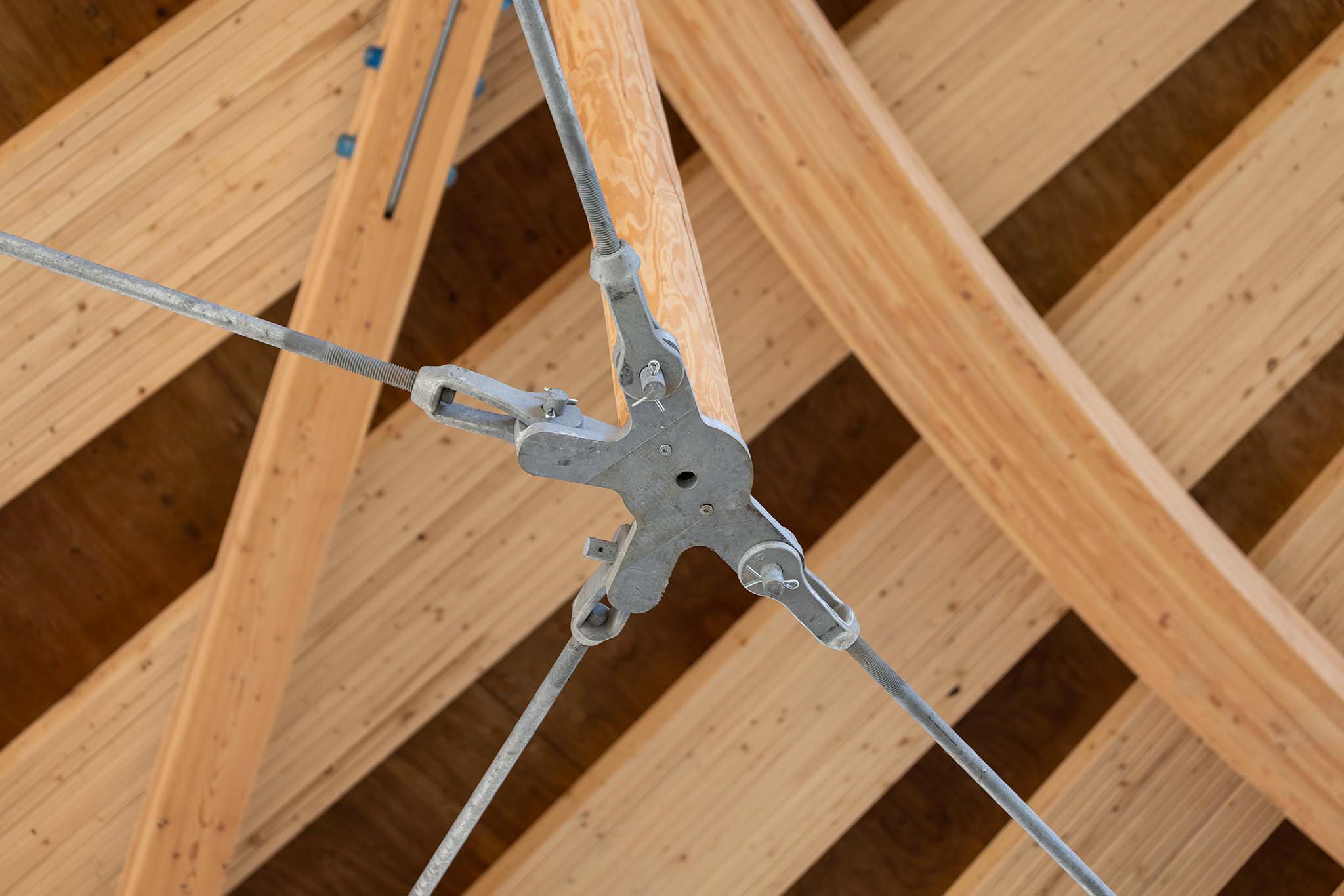
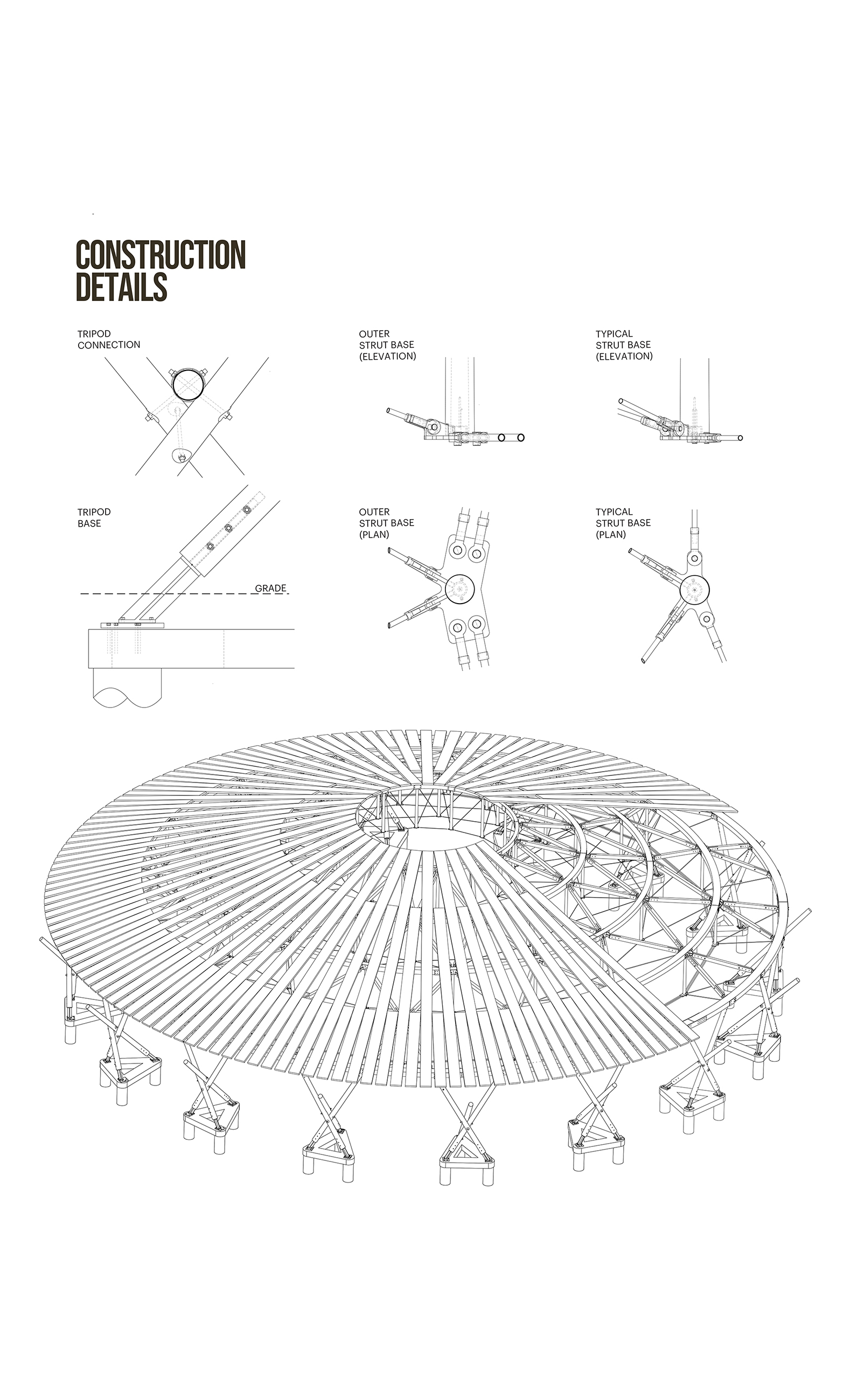
The geometry of the tripod columns allows for structural stability with smaller diameter round timbers, avoiding the felling of larger trees required for dimensional lumber.
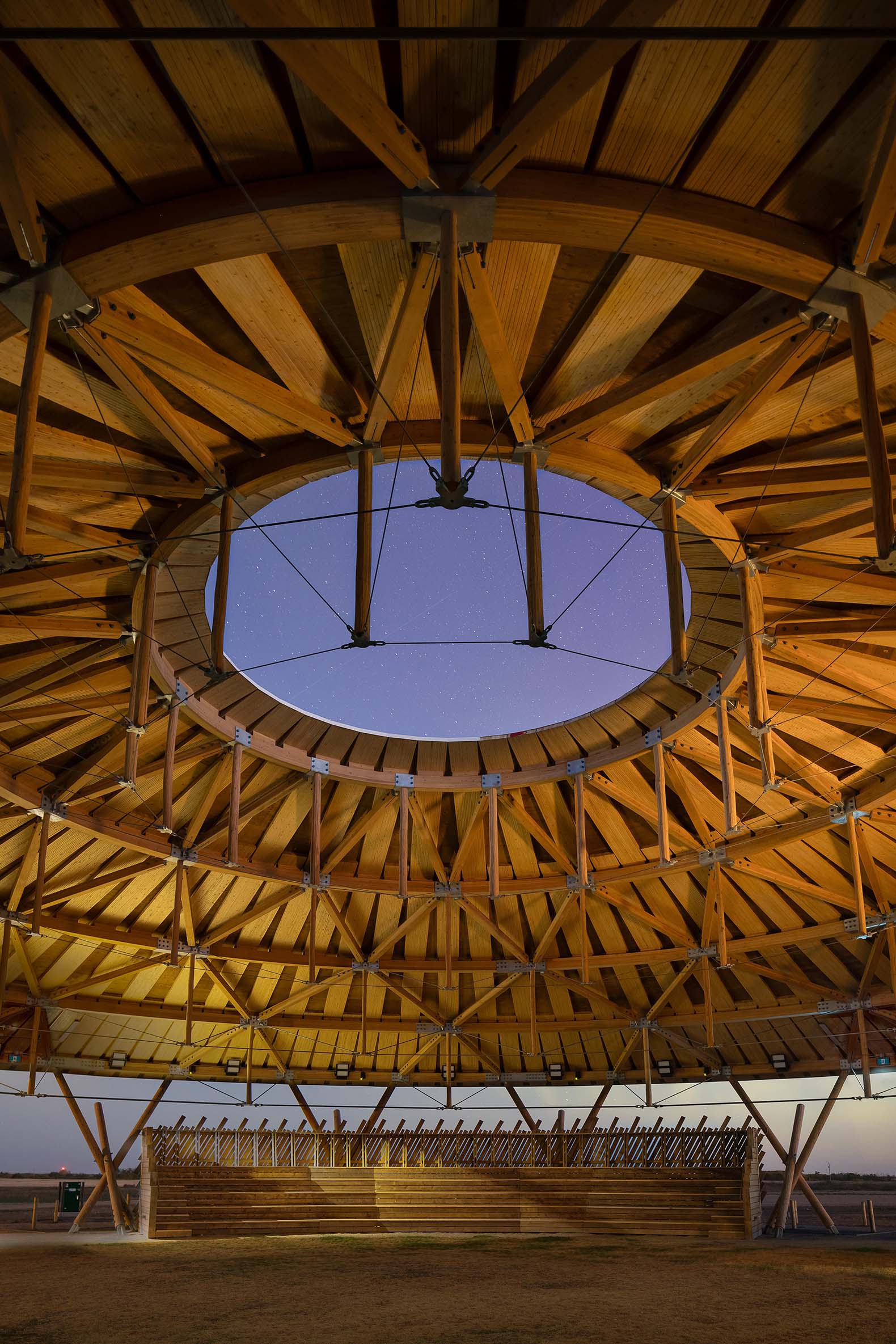
Muscowpetung Powwow Arbour by Oxbow Architecture and Richard Kroeker. Photograph by Lindsay Reid.
Landscape and carbon sequestration
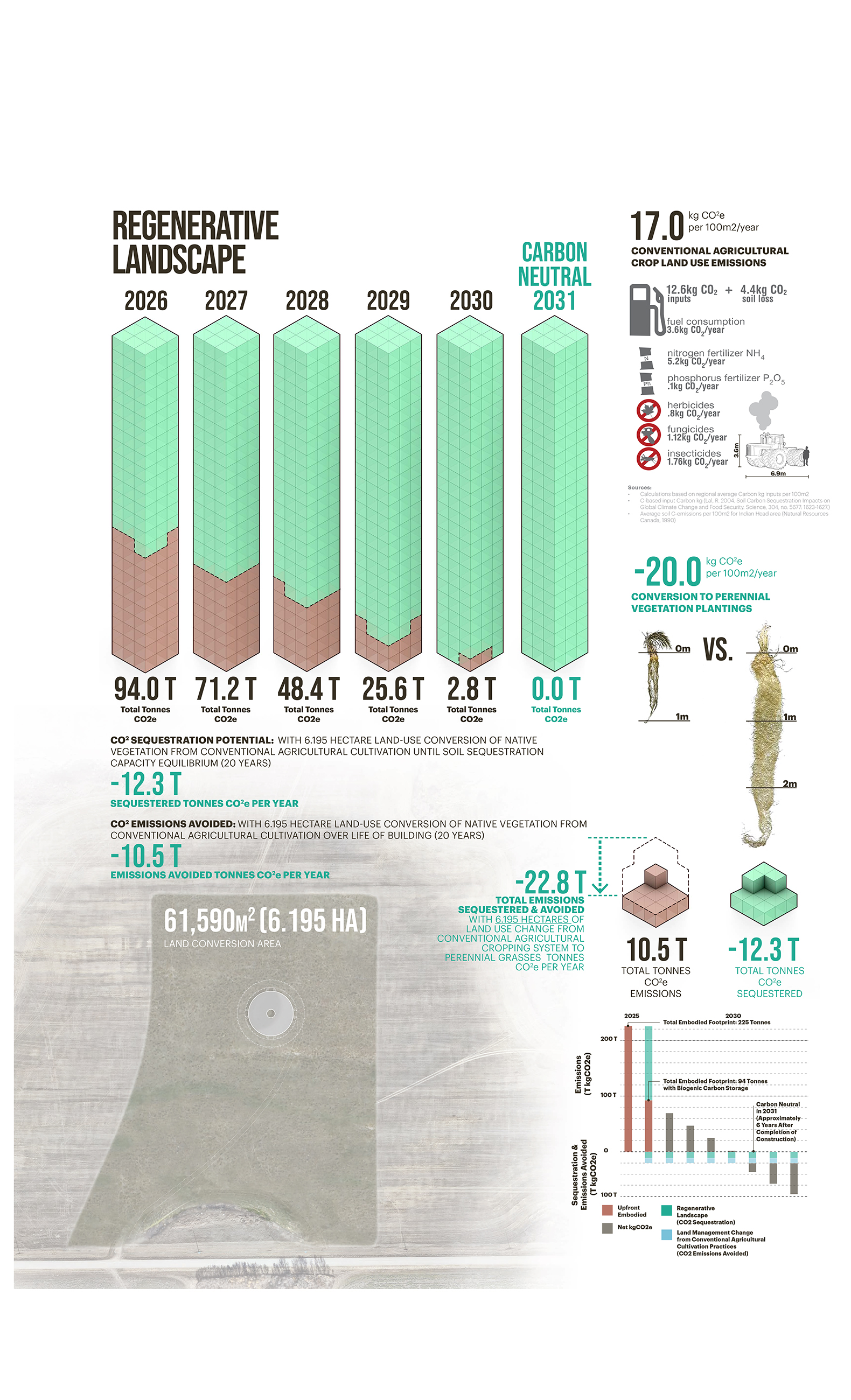
The 6.2-hectare site will be transformed from conventional agriculture to native perennial grassland vegetation.
Annual sequestration: estimated at 12.3 tons of CO₂e/year.
Emissions avoided by ceasing intensive farming practices: 10.5 tons of CO₂e/year.
Combined carbon capture and avoidance: the project is on track to achieve carbon neutrality by 2031.
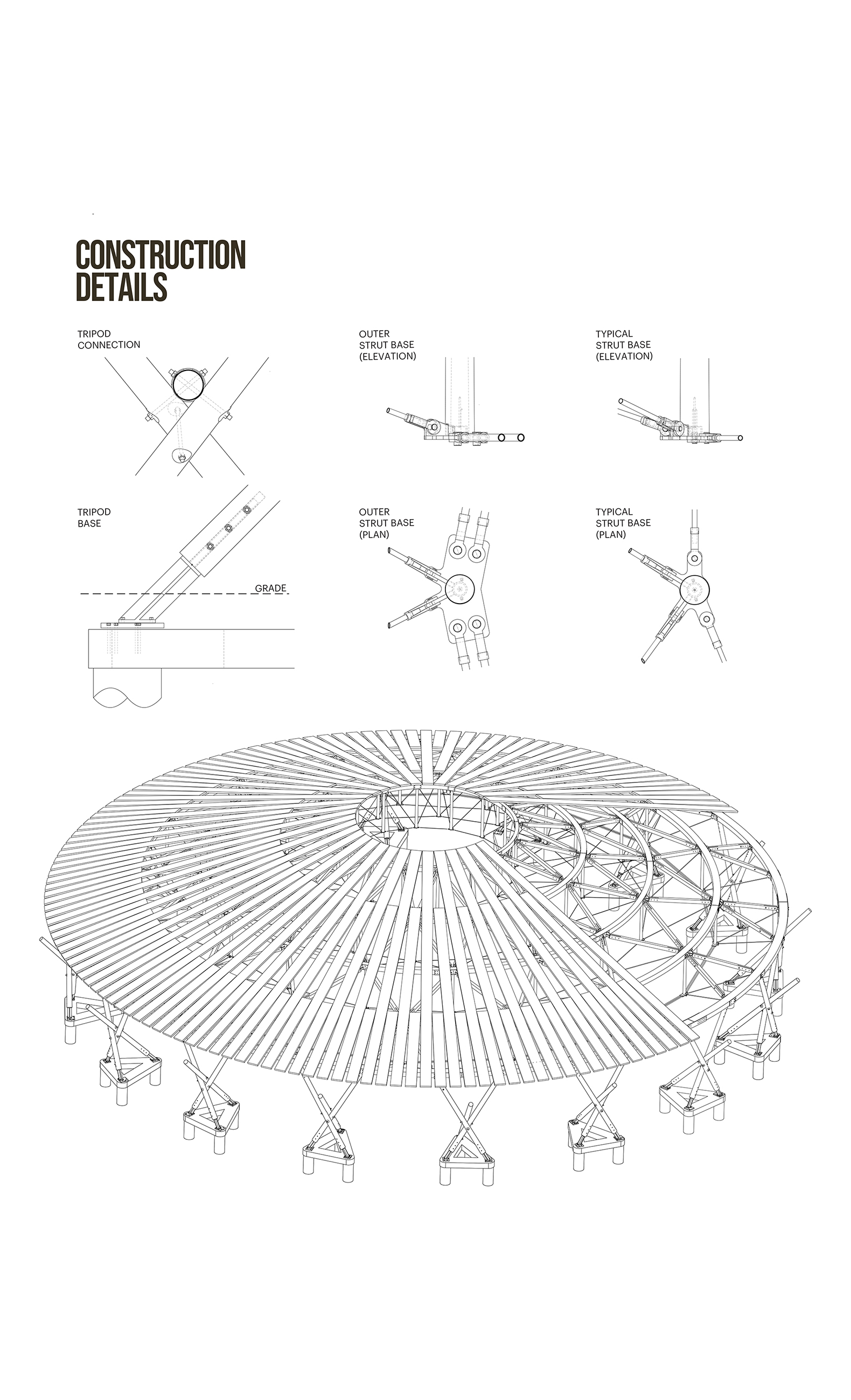
Construction details. Muscowpetung Powwow Arbour by Oxbow Architecture and Richard Kroeker.
Integrated design strategy
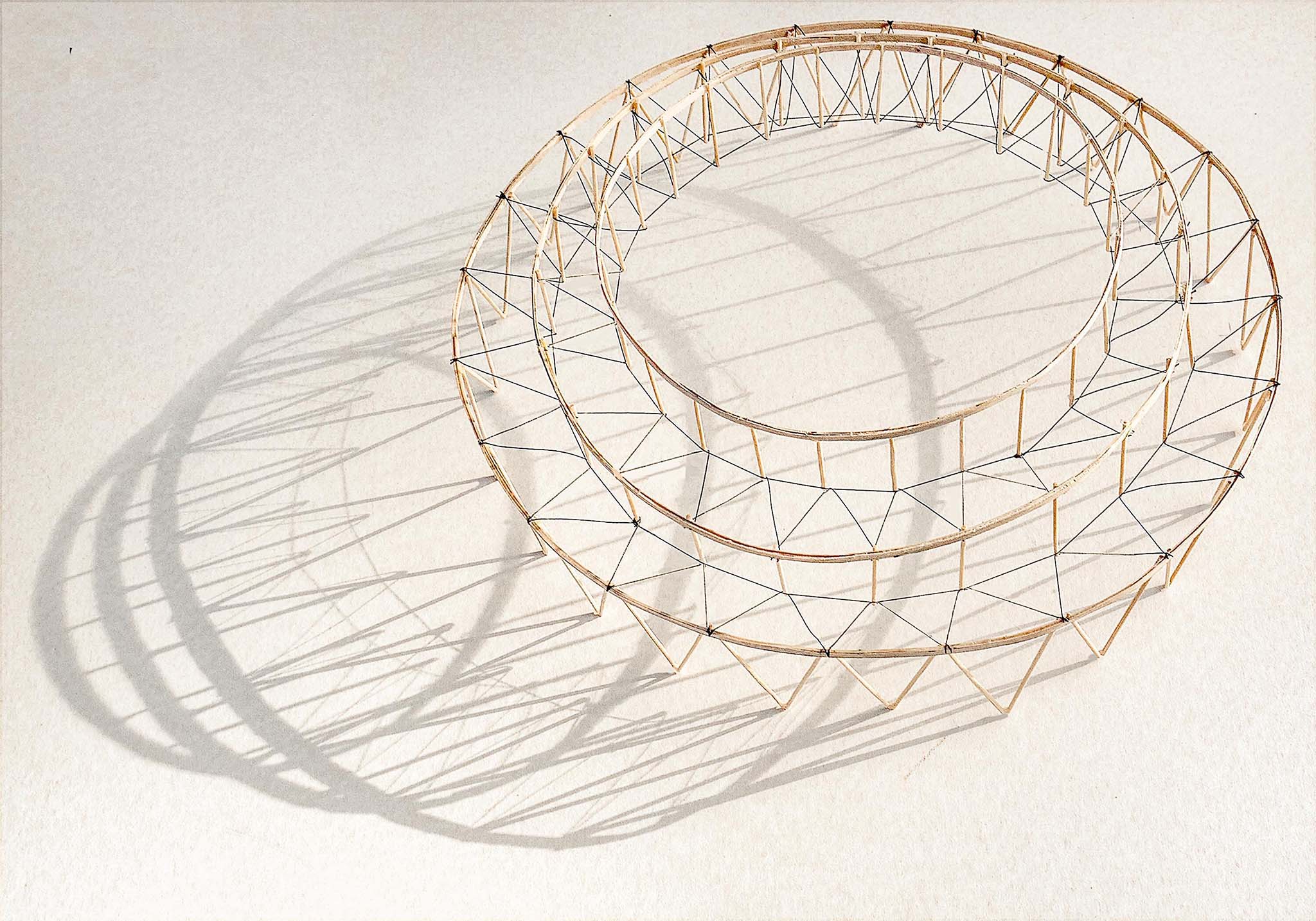
The circular structural form enhances both cultural significance and technical efficiency. The conical roof, open at the oculus, allows natural light to enter the lower dance area, promoting shade-tolerant vegetation and eliminating the need for artificial lighting during use. The landscape and structure are conceived as an integrated system.
Outcome
The Muscowpetung Powwow Amphitheater demonstrates that a design based on traditional Indigenous knowledge can generate measurable and quantifiable climate outcomes. The project is classified as a regenerative development, as it sequesters more carbon than it produces over its life cycle, while simultaneously restoring the ecological benefits of the land.