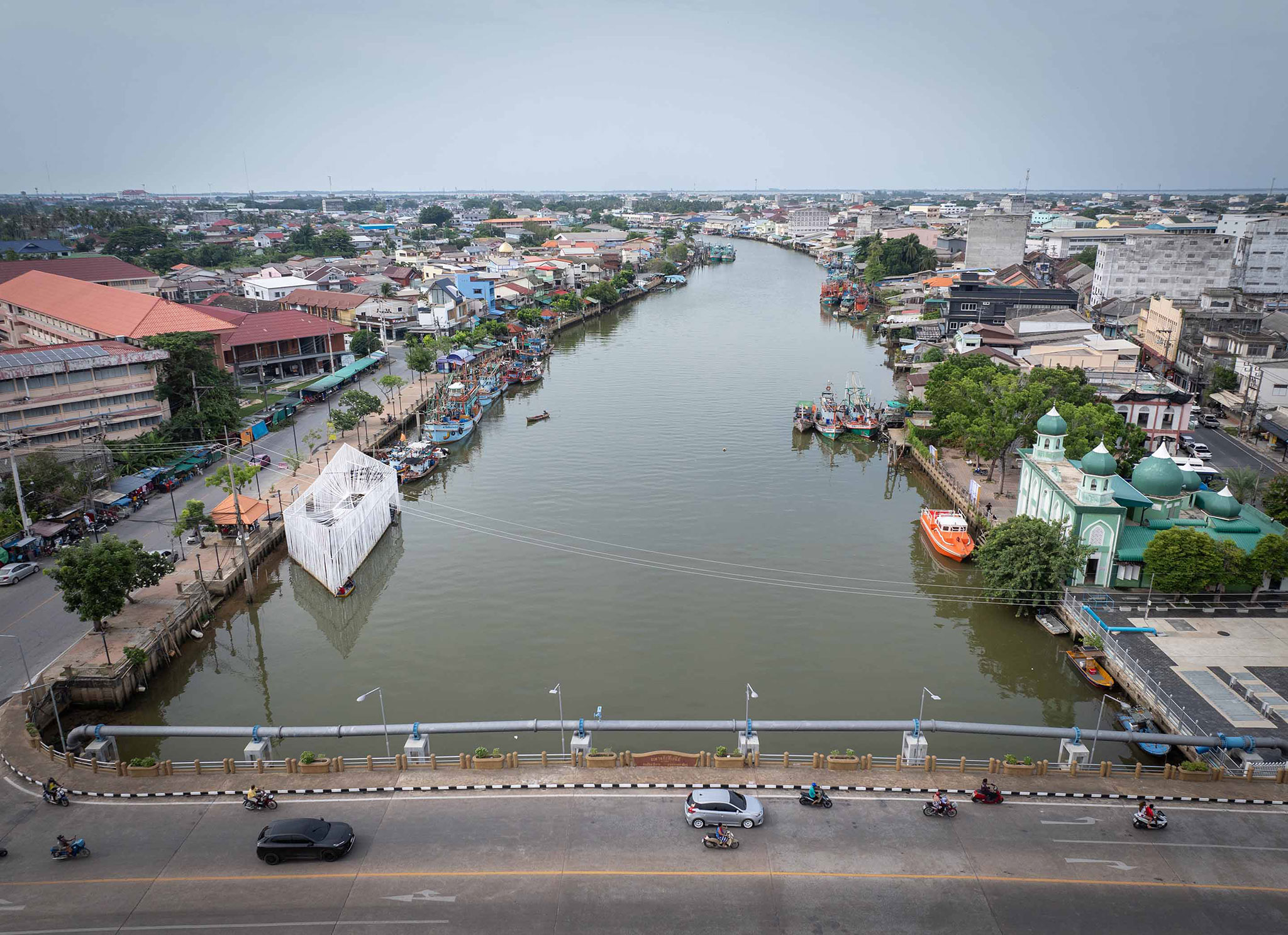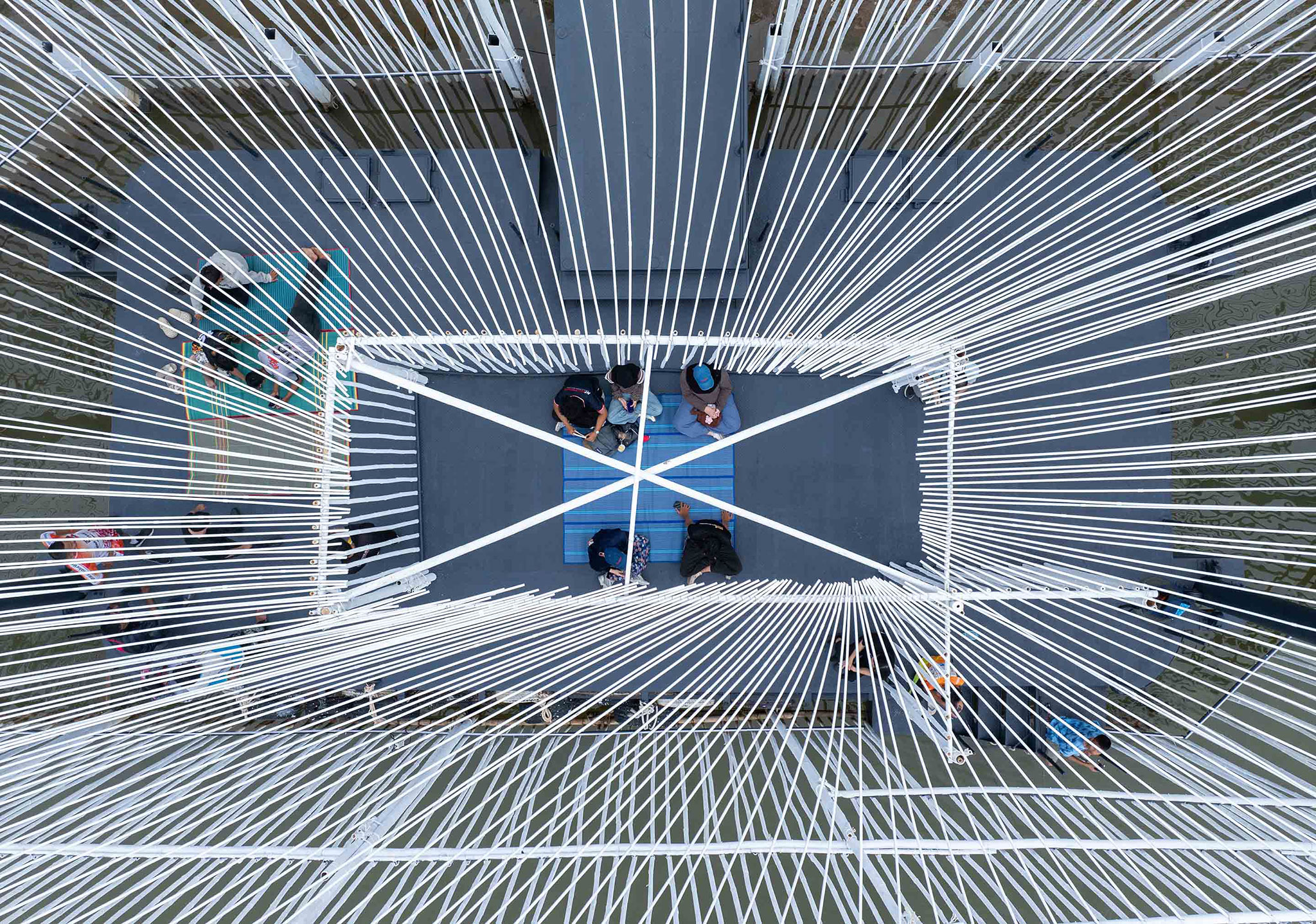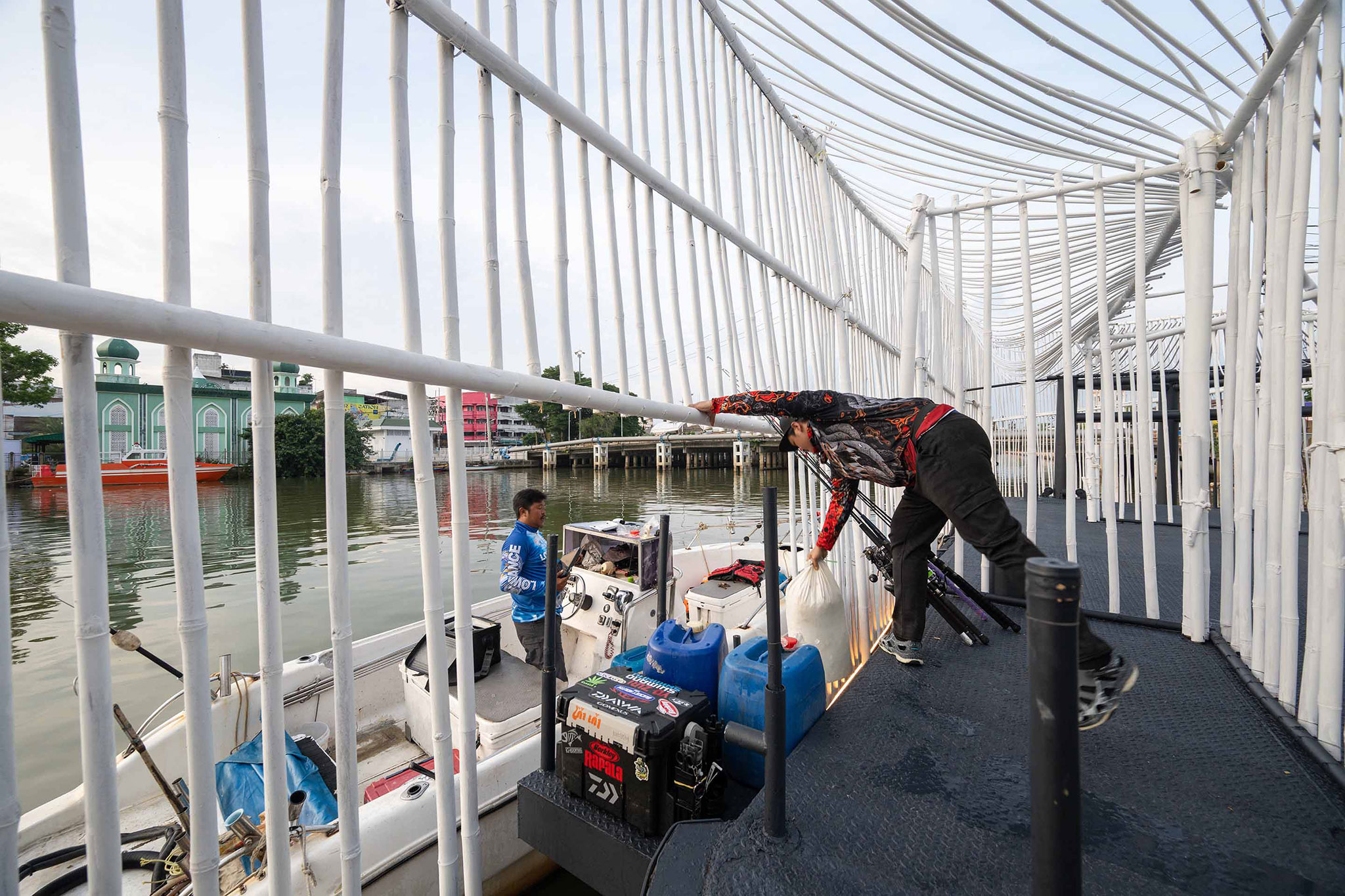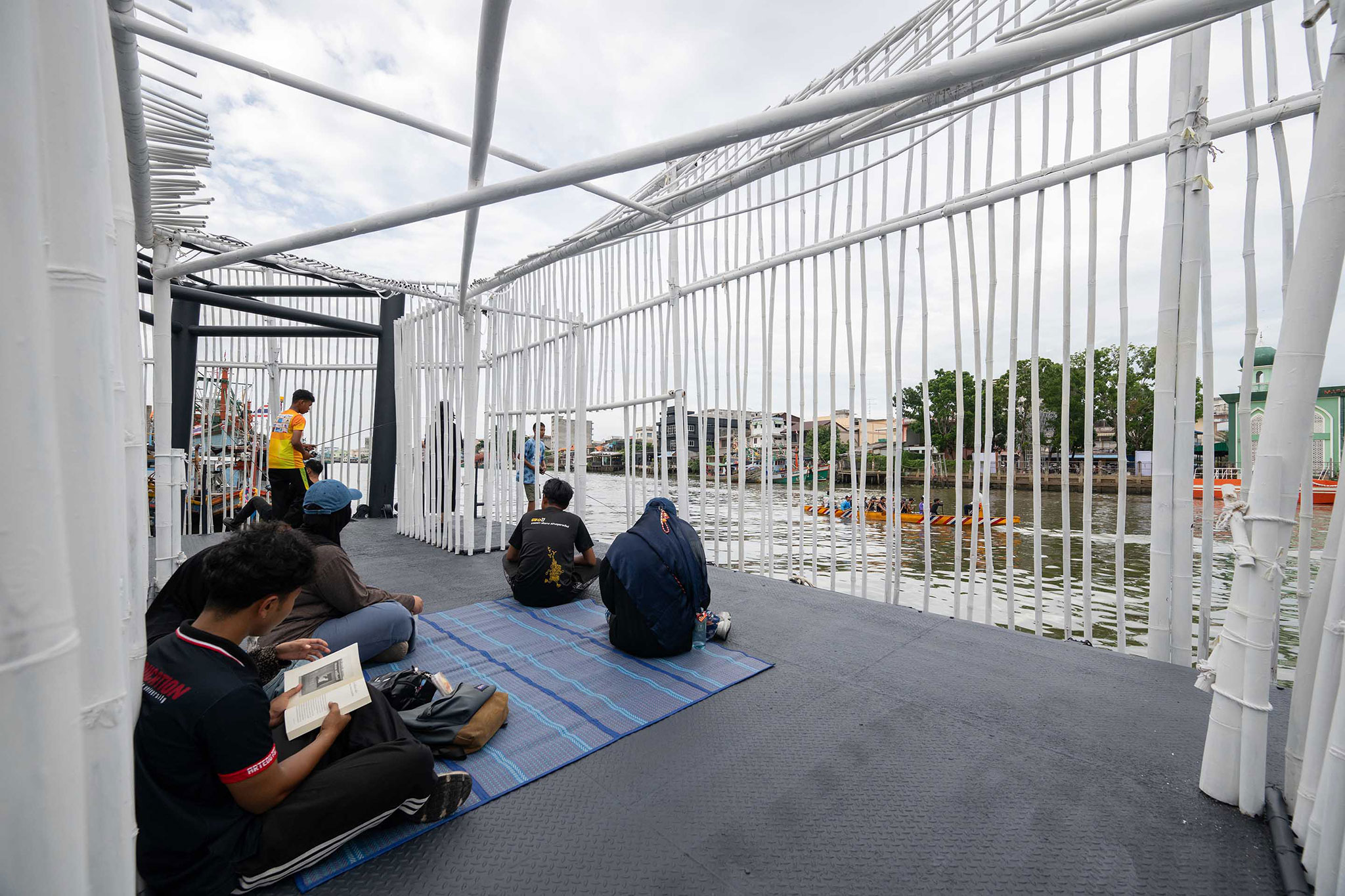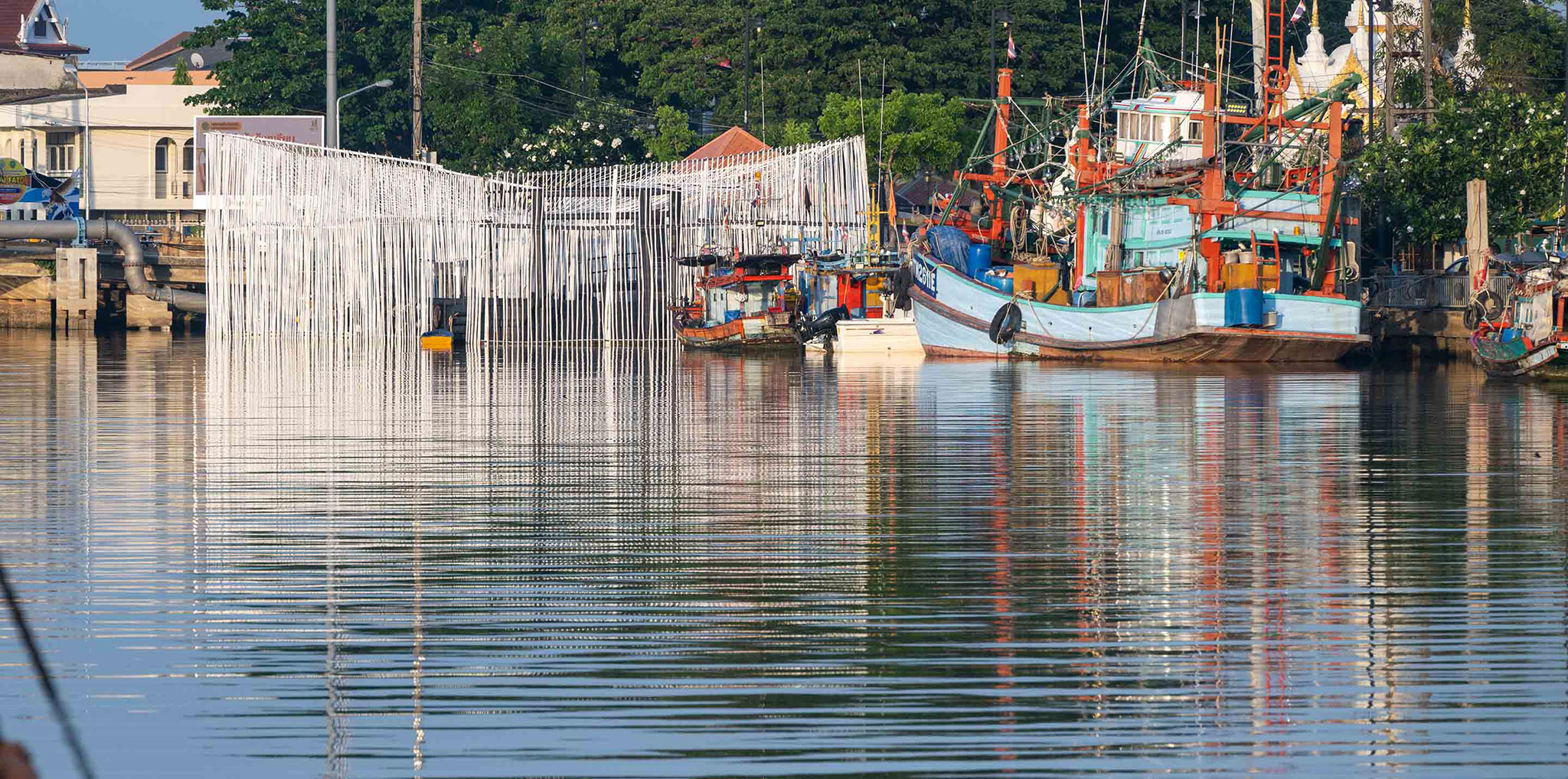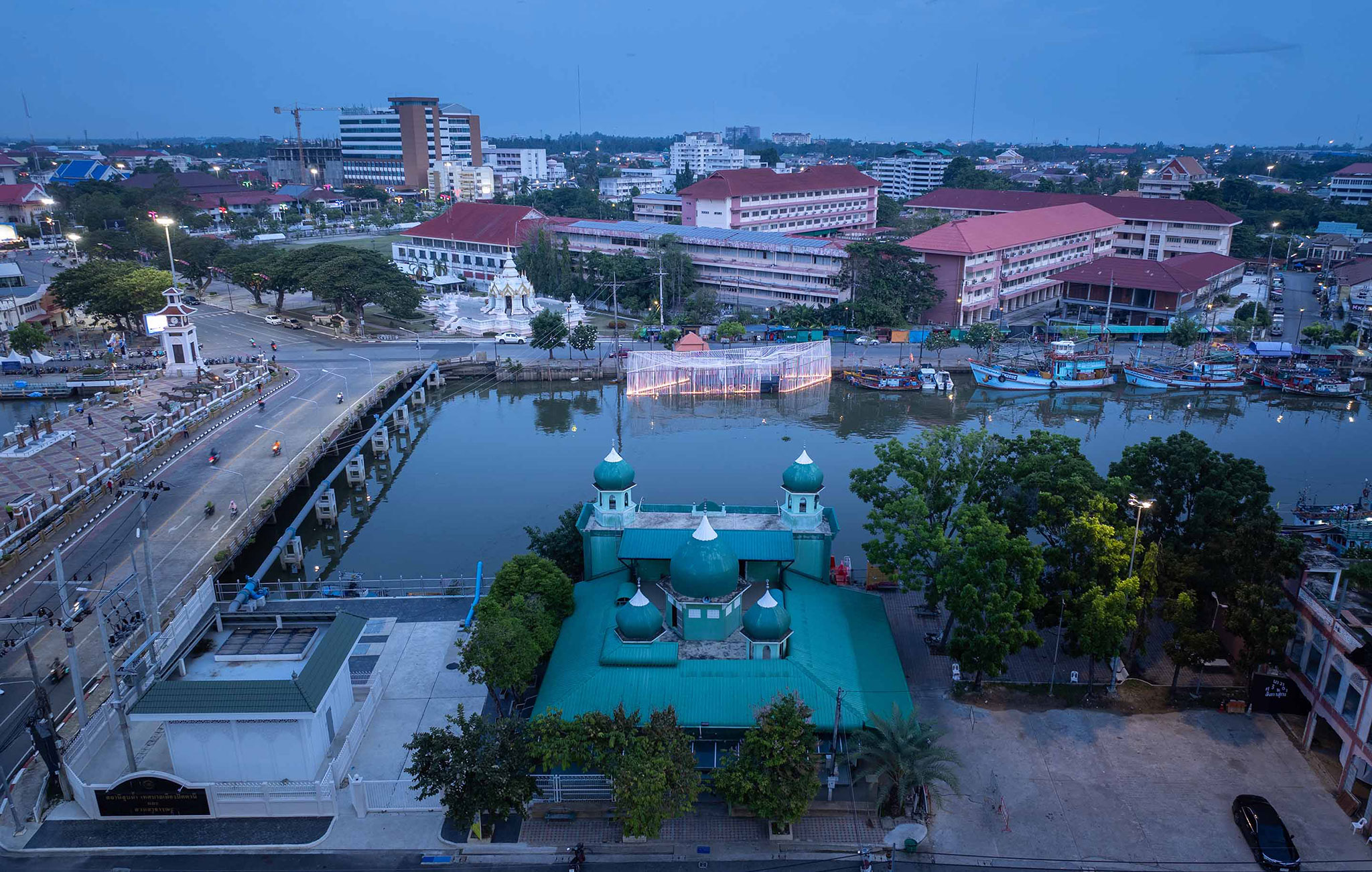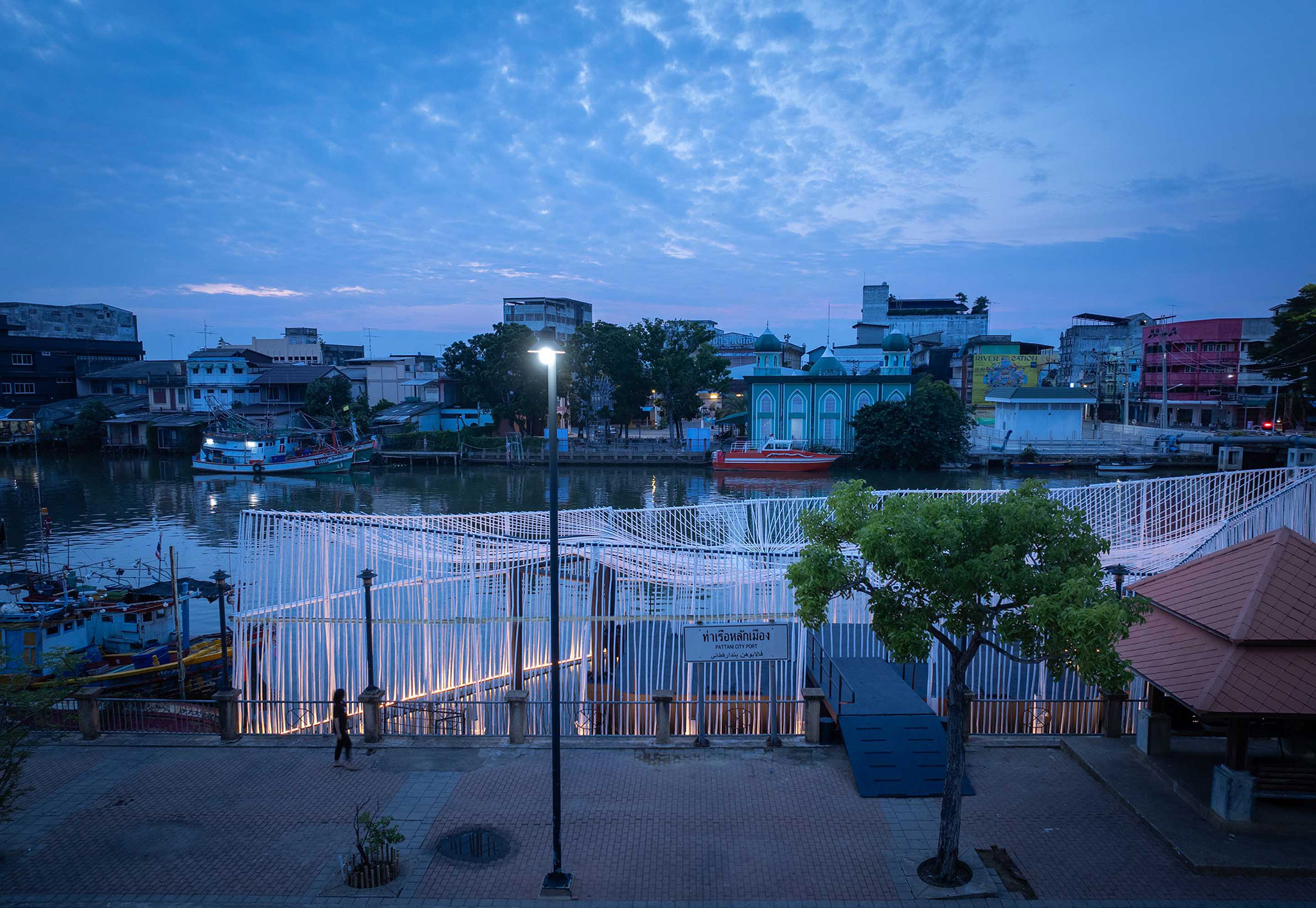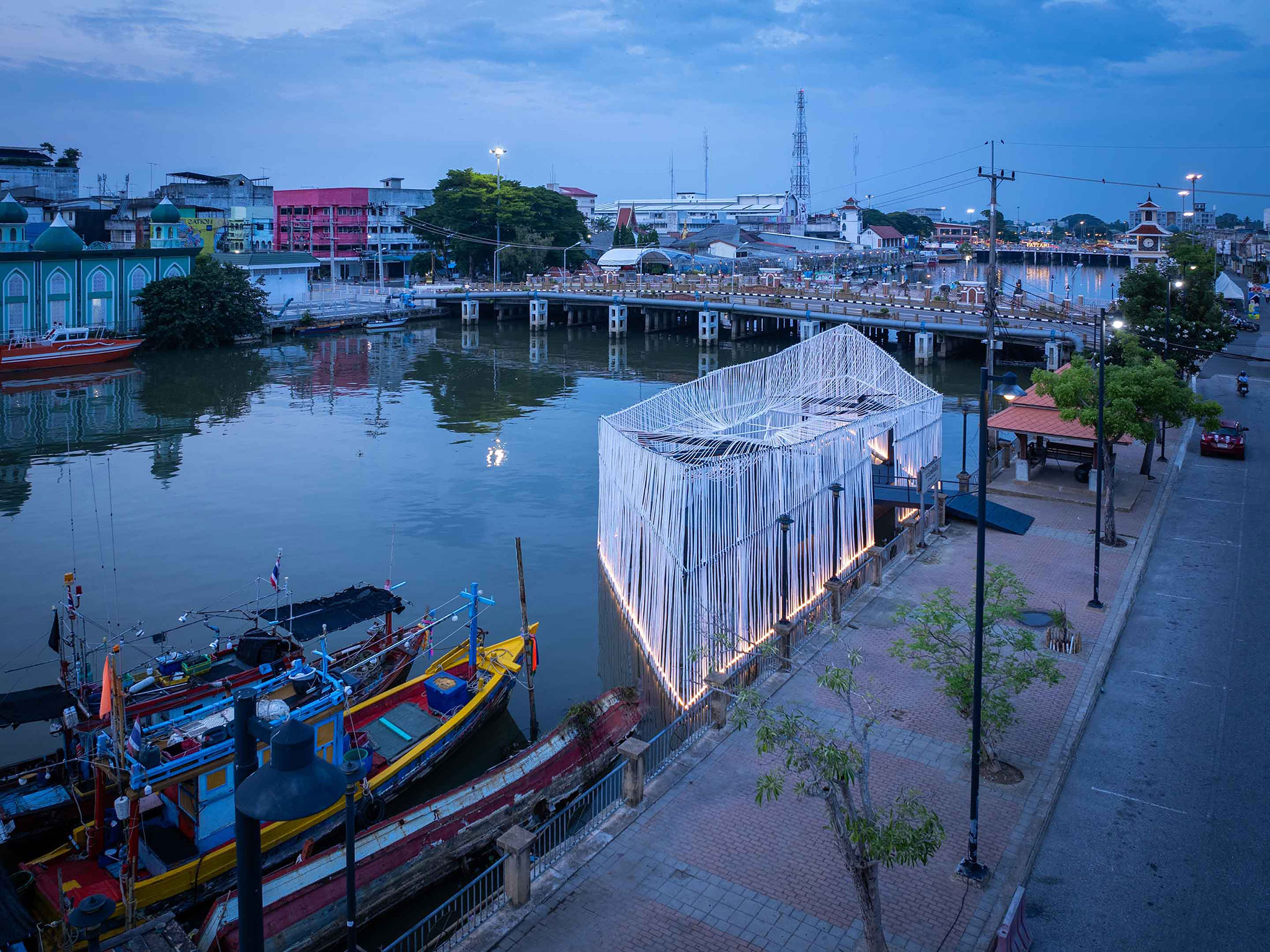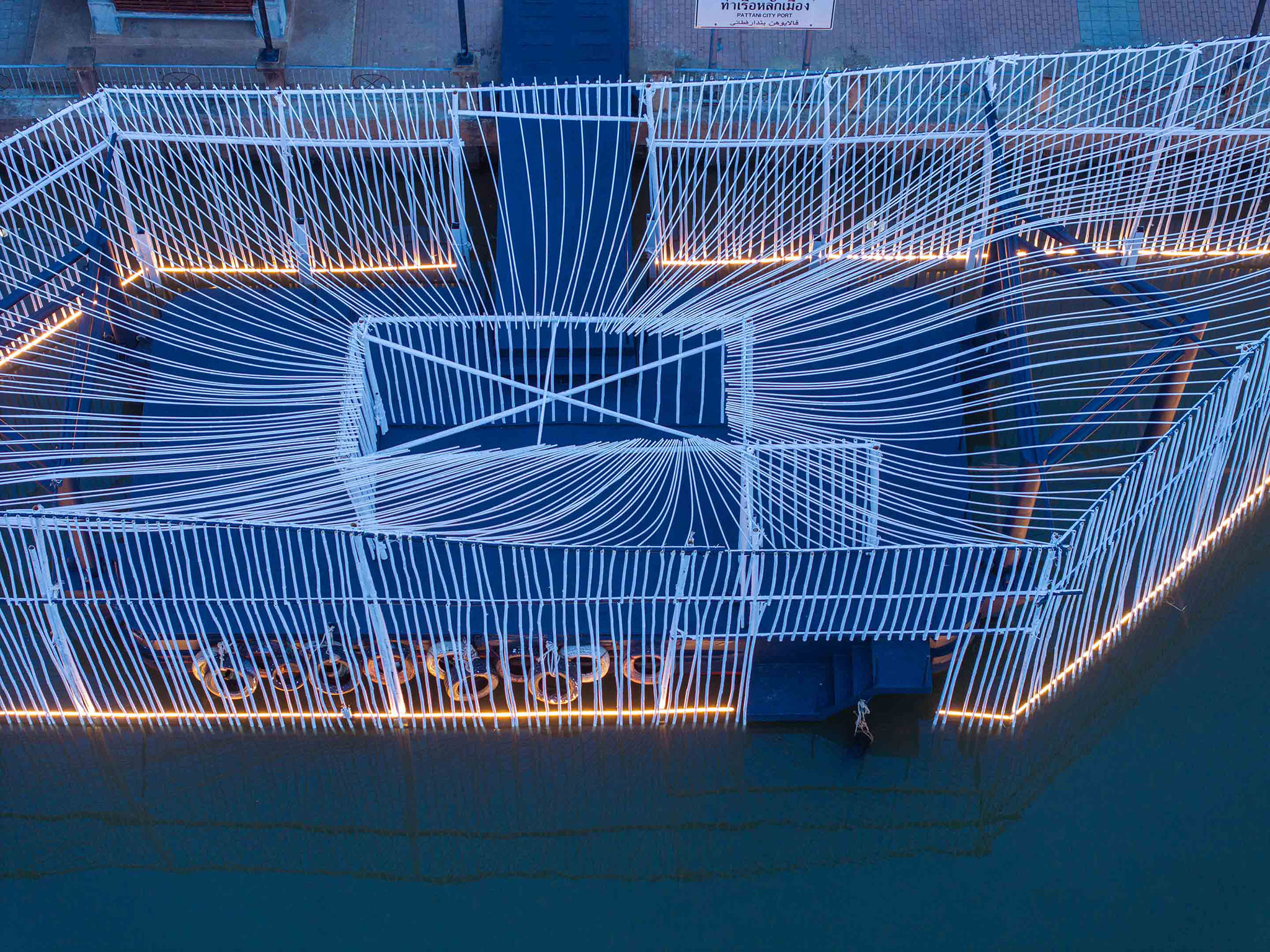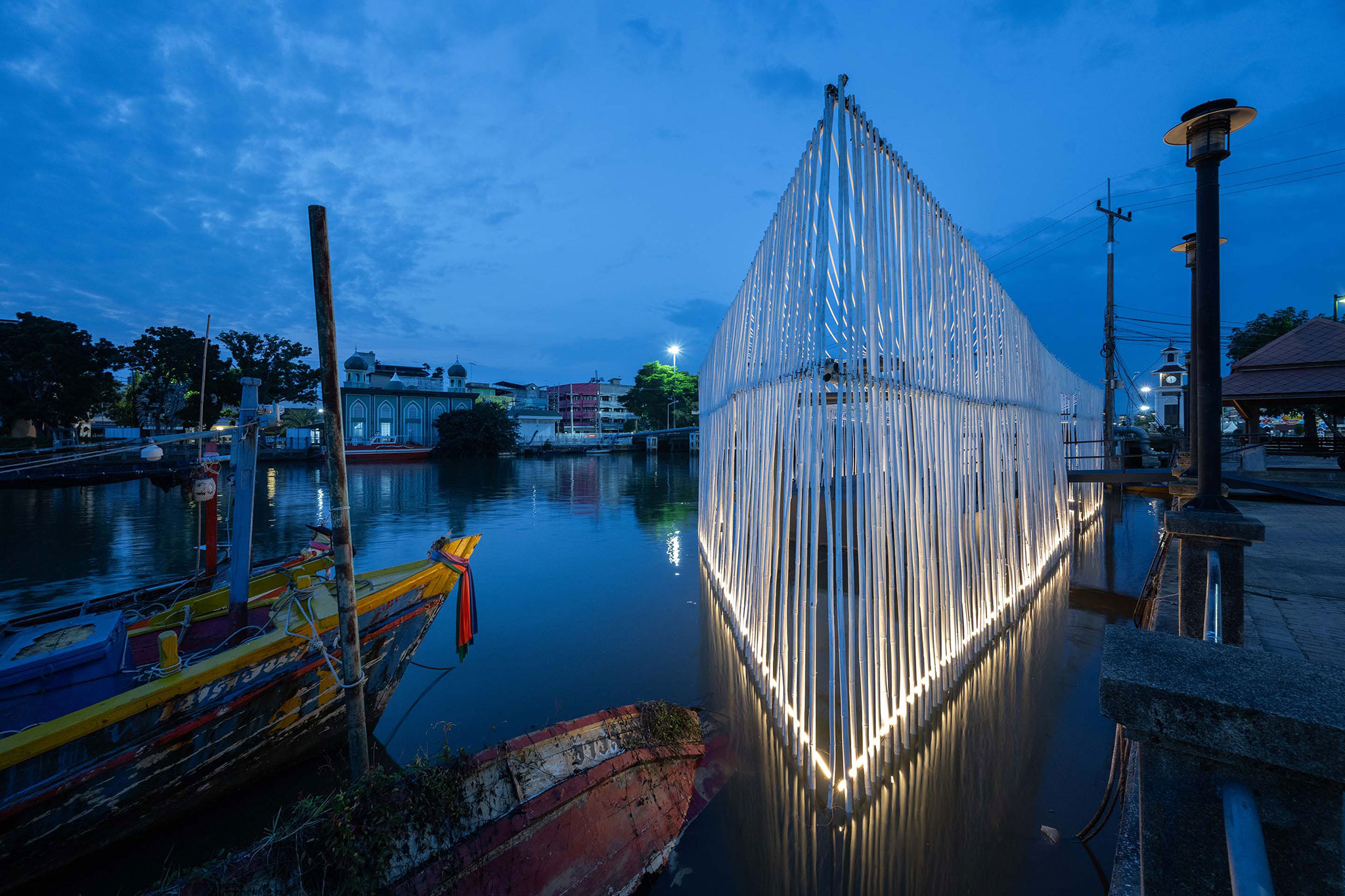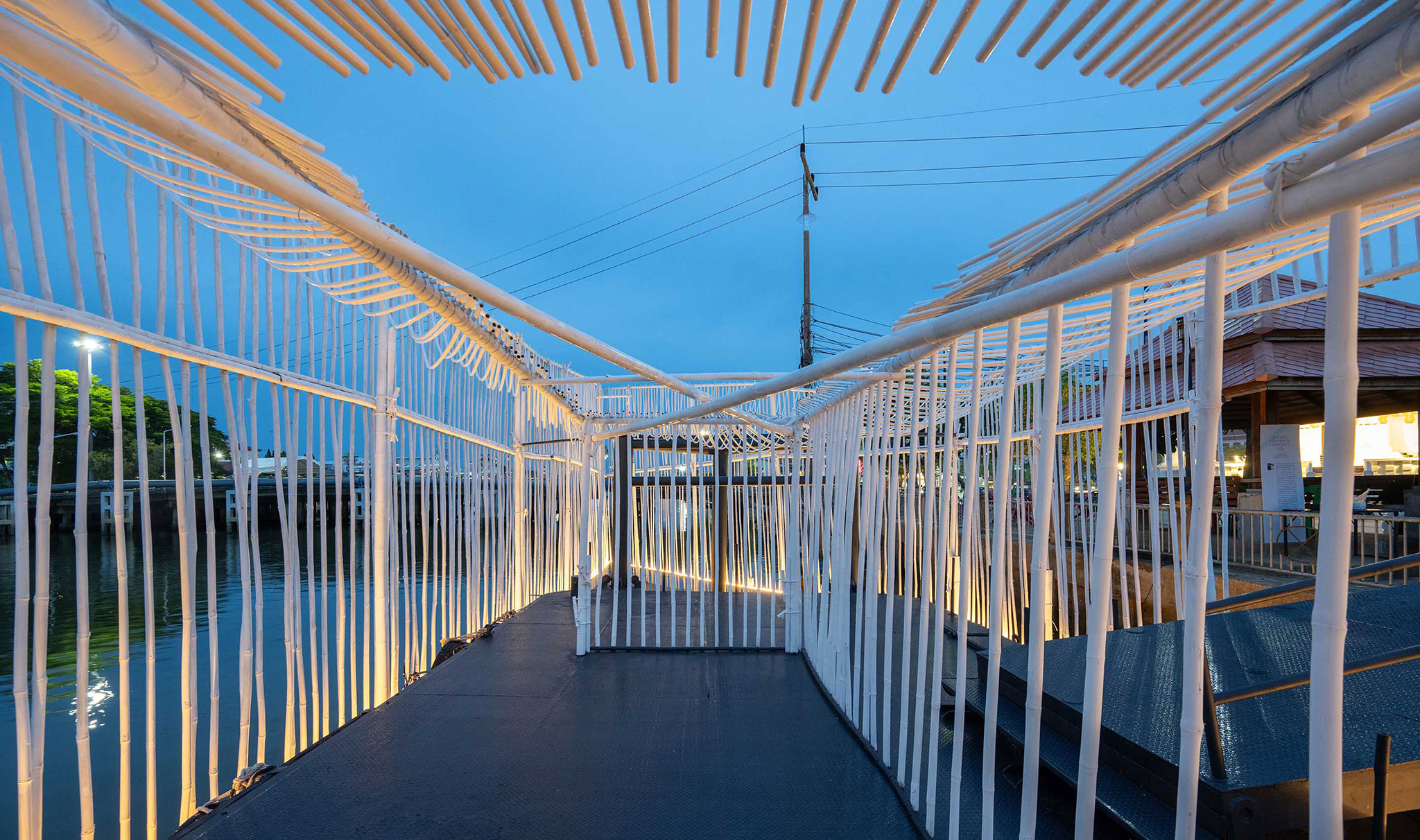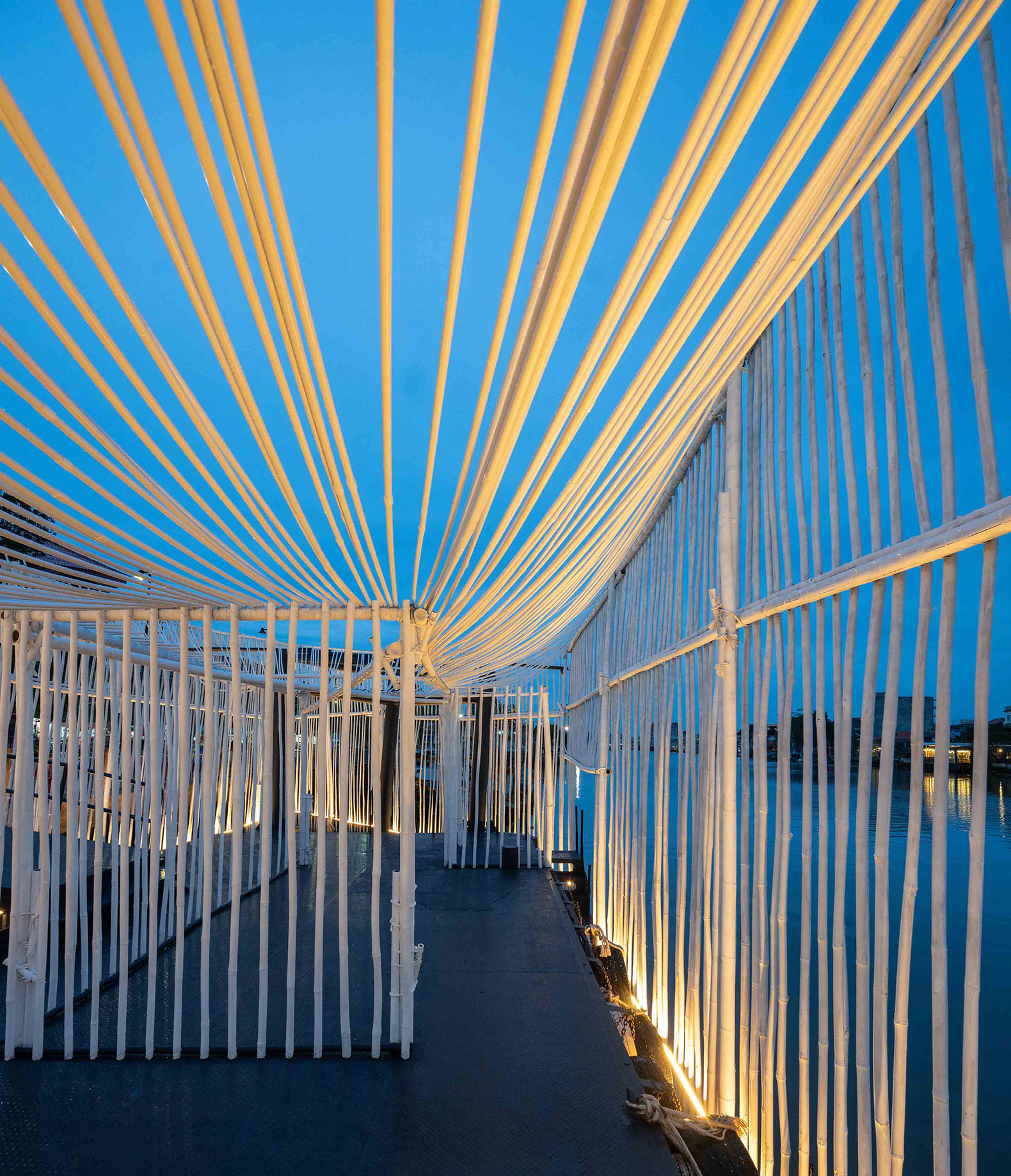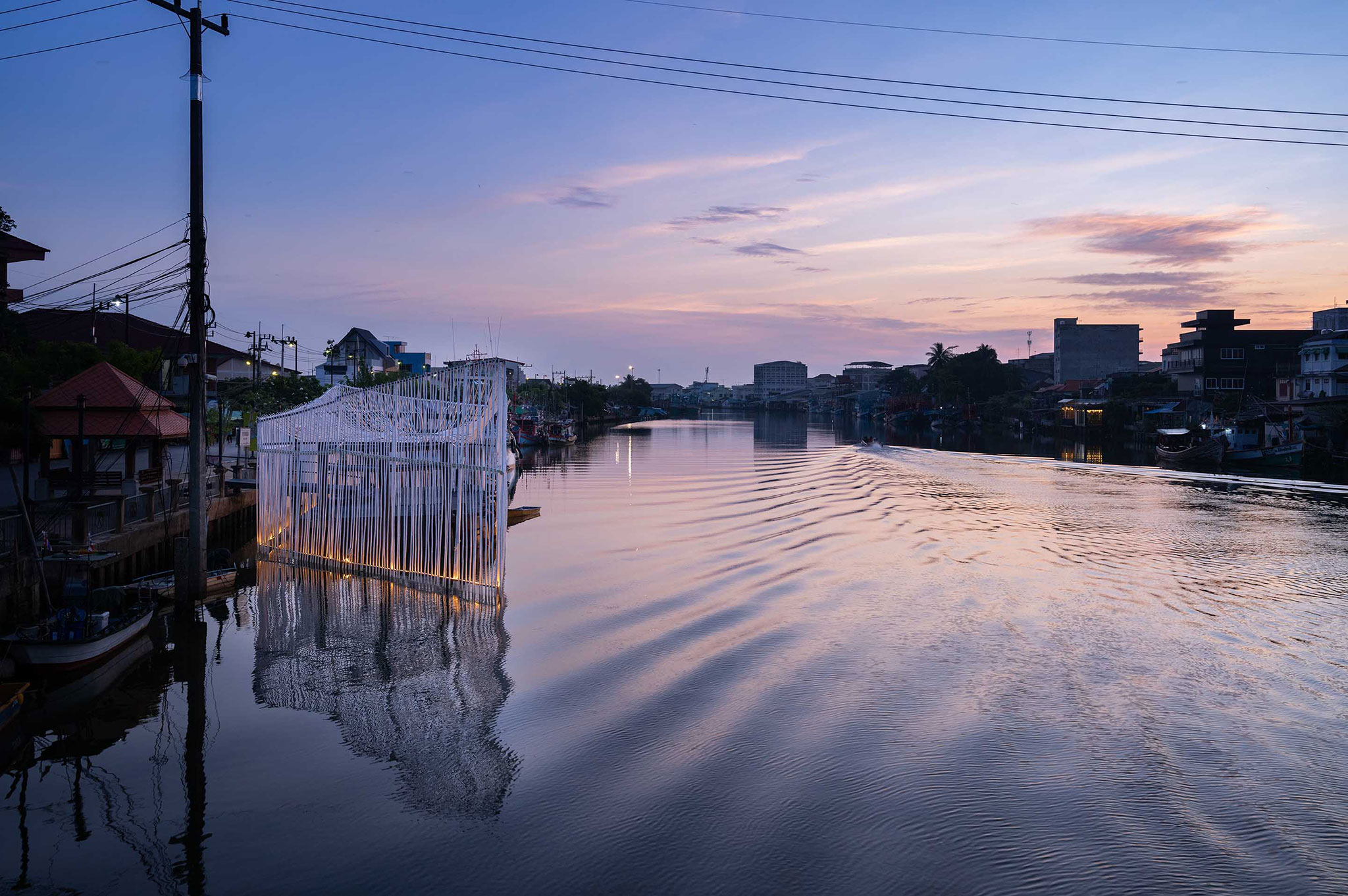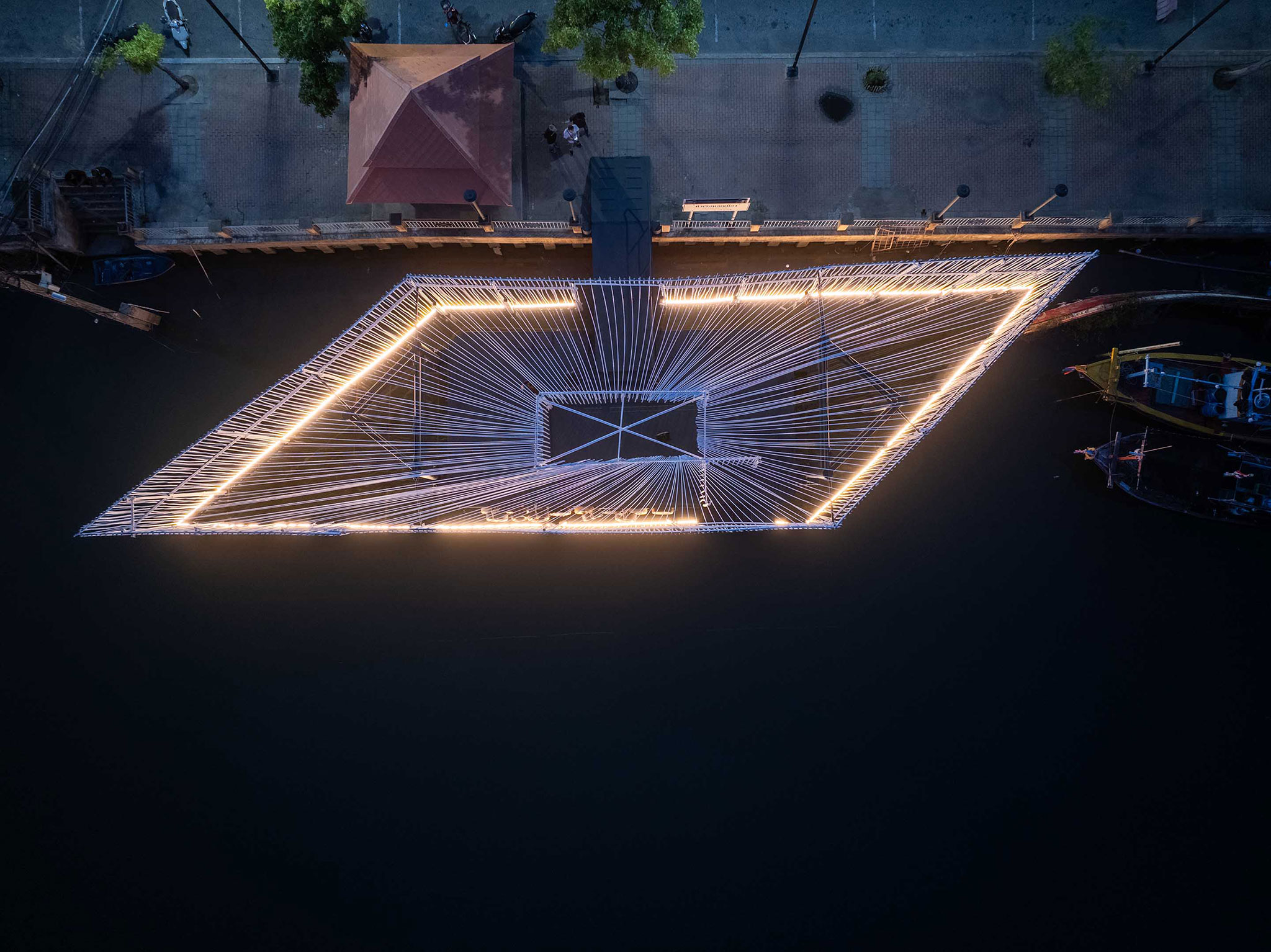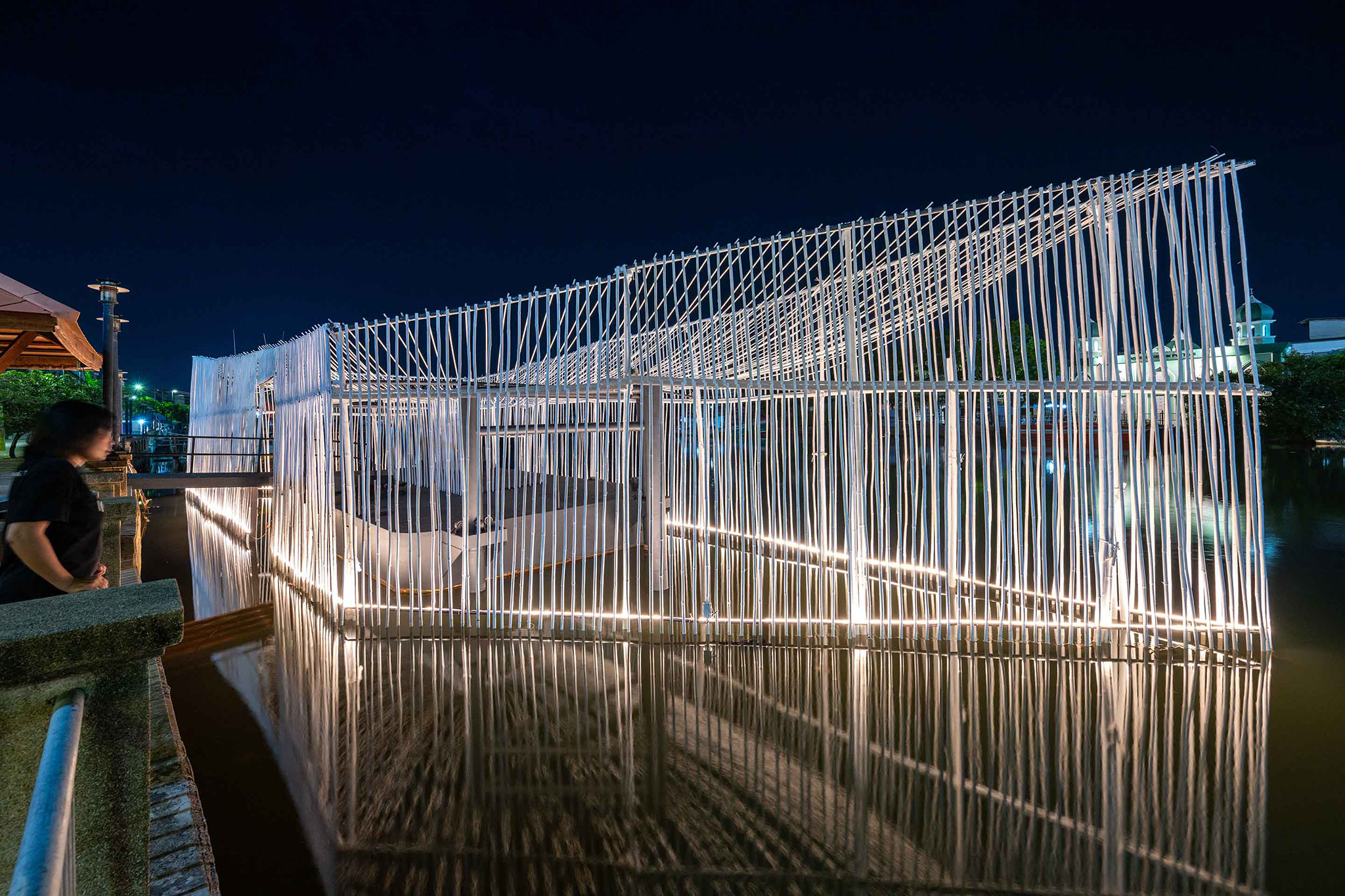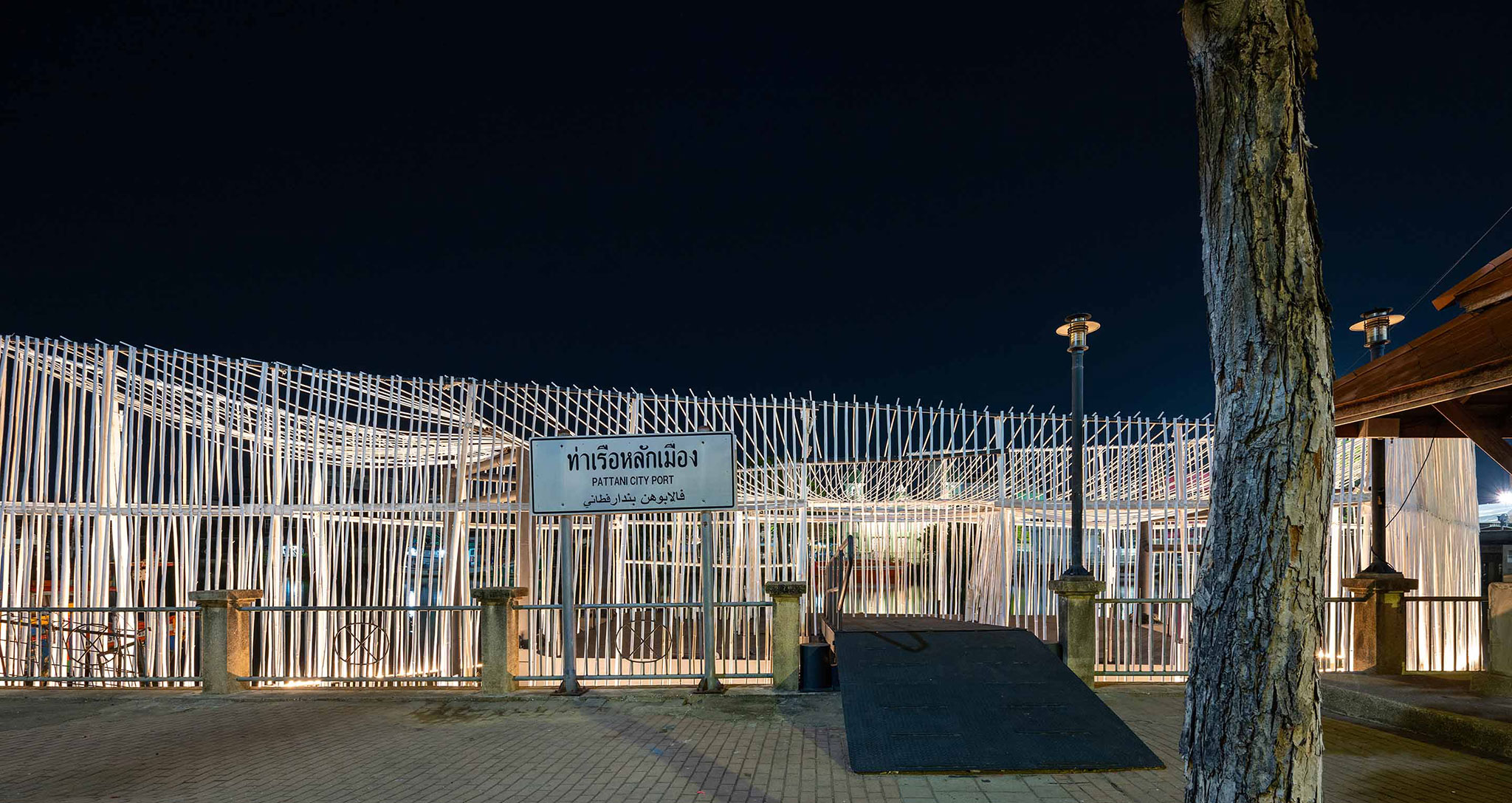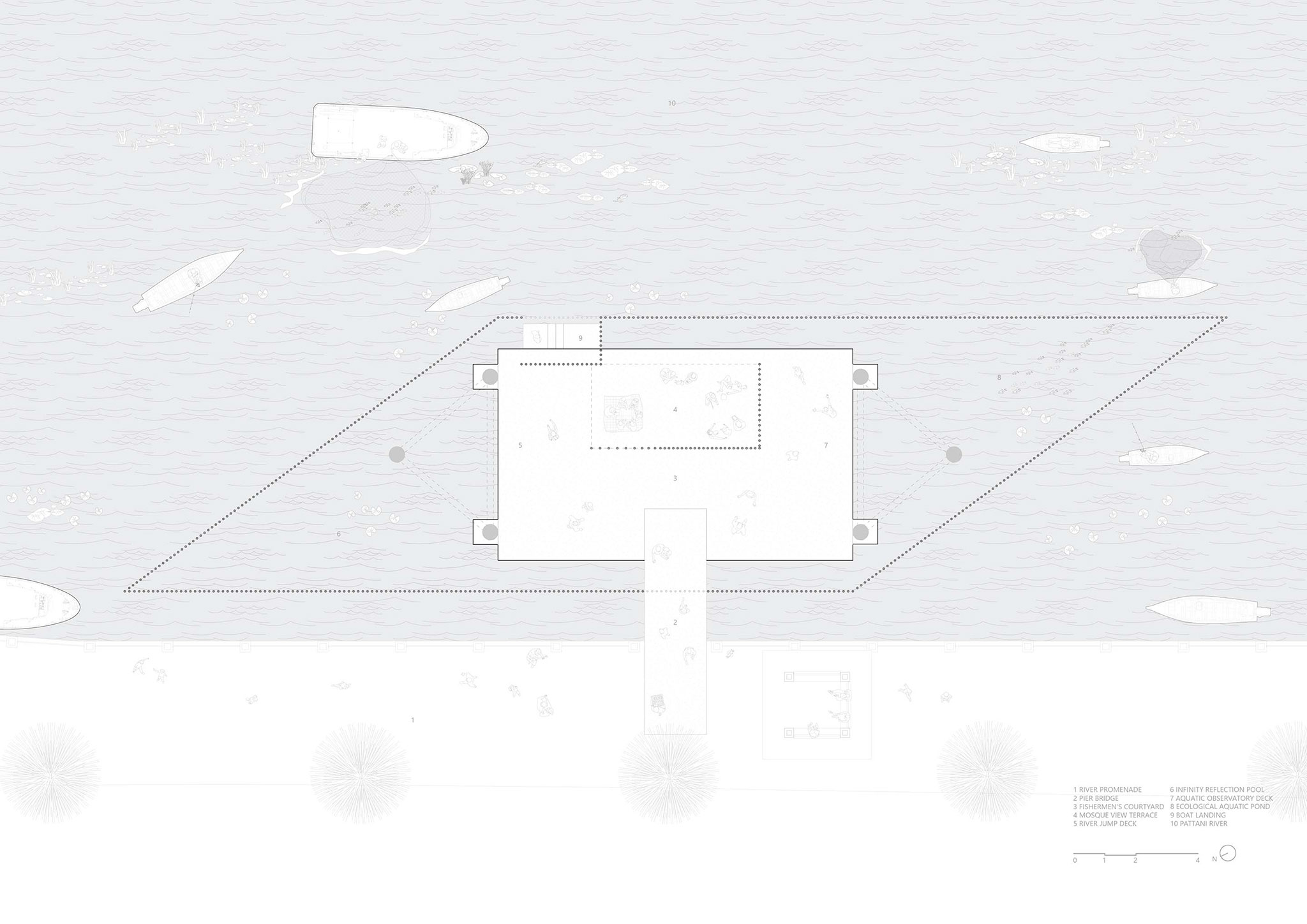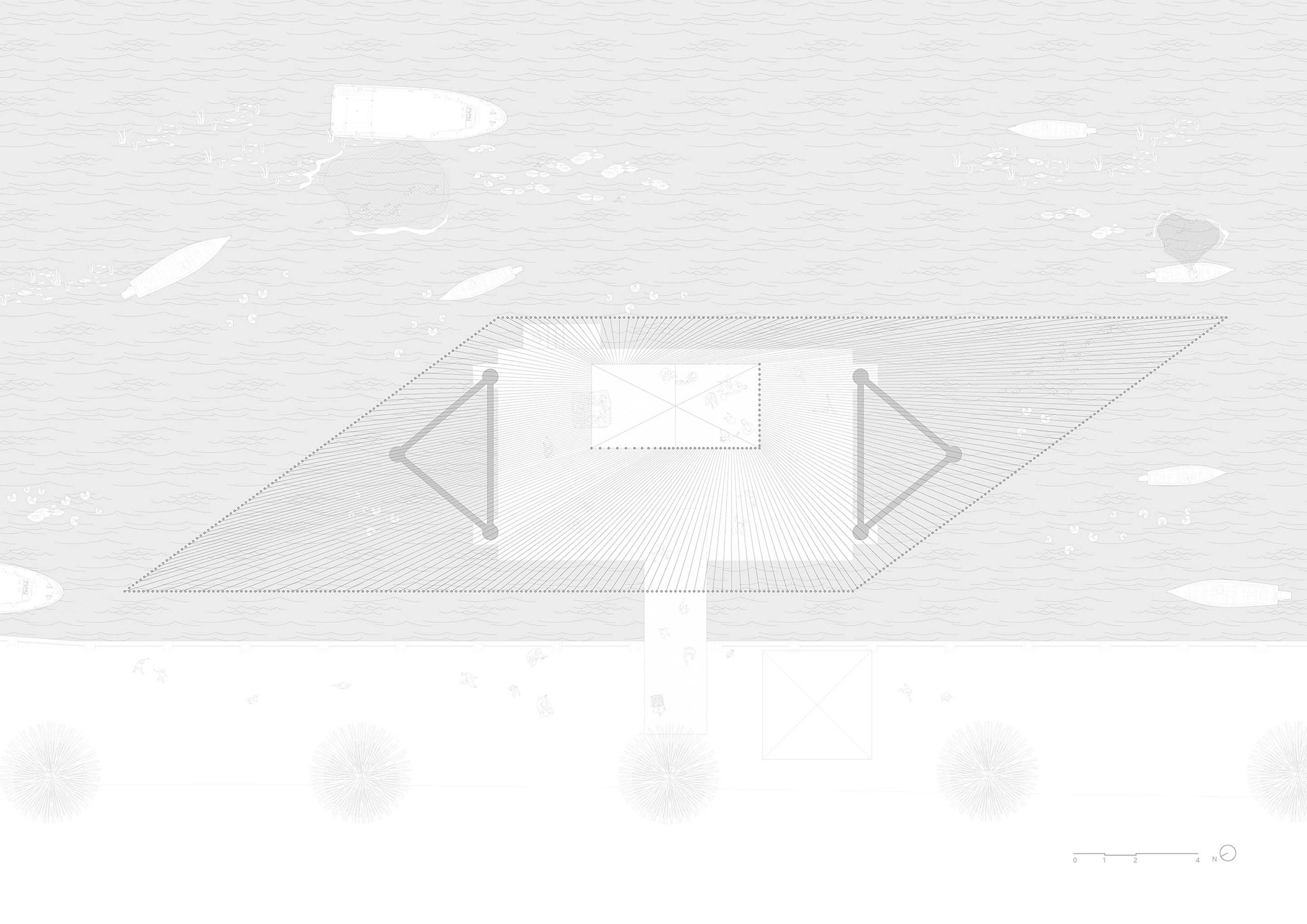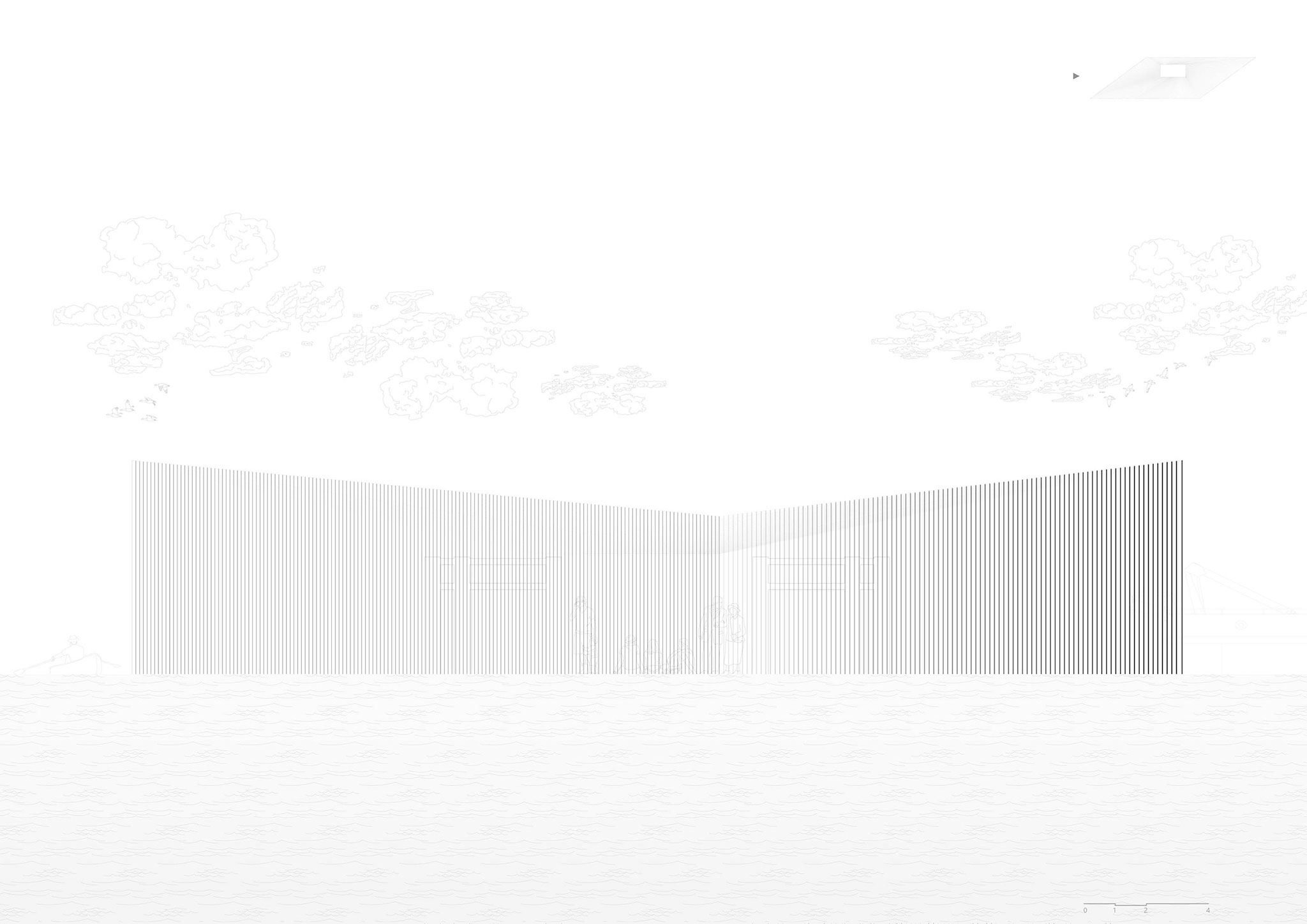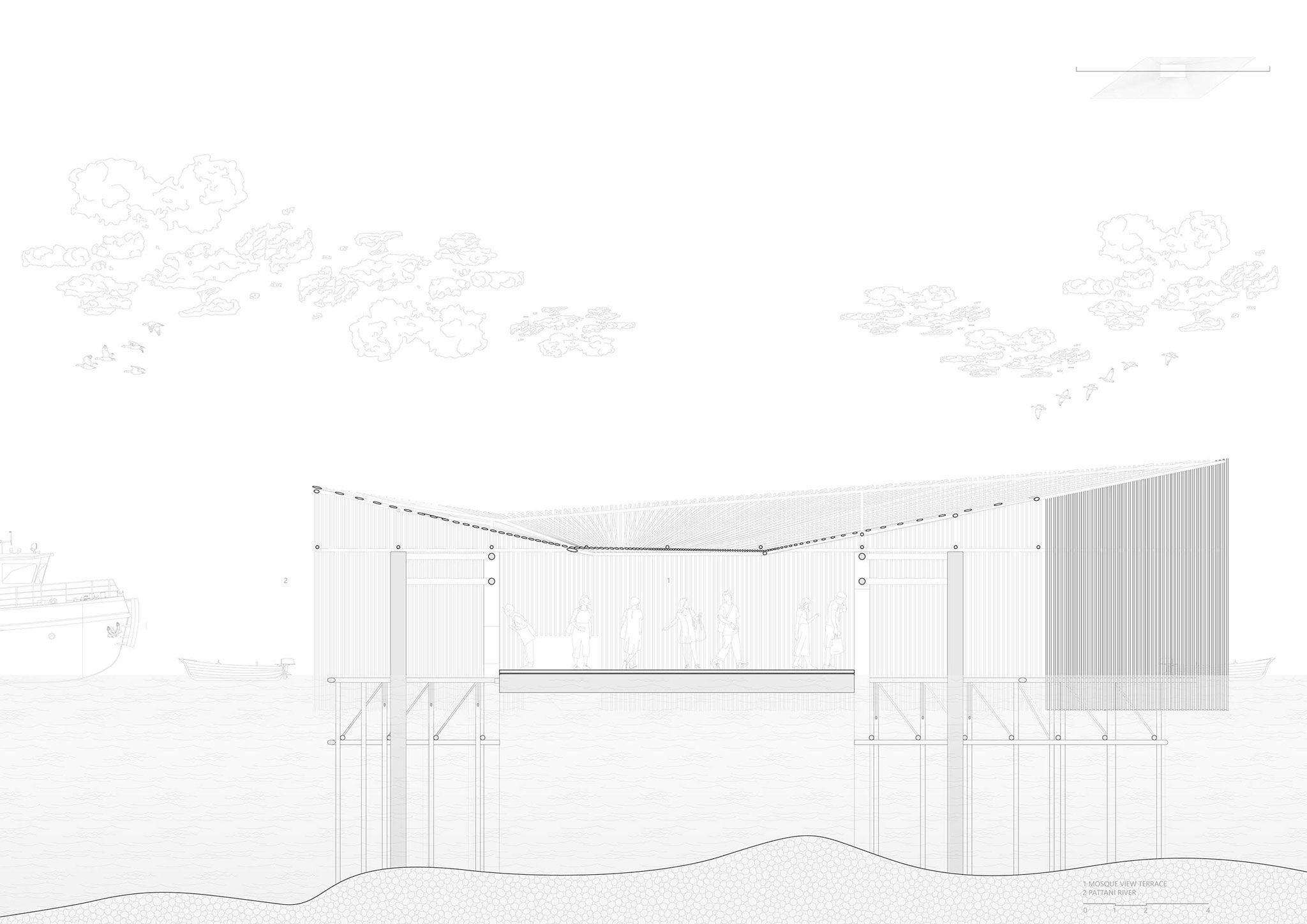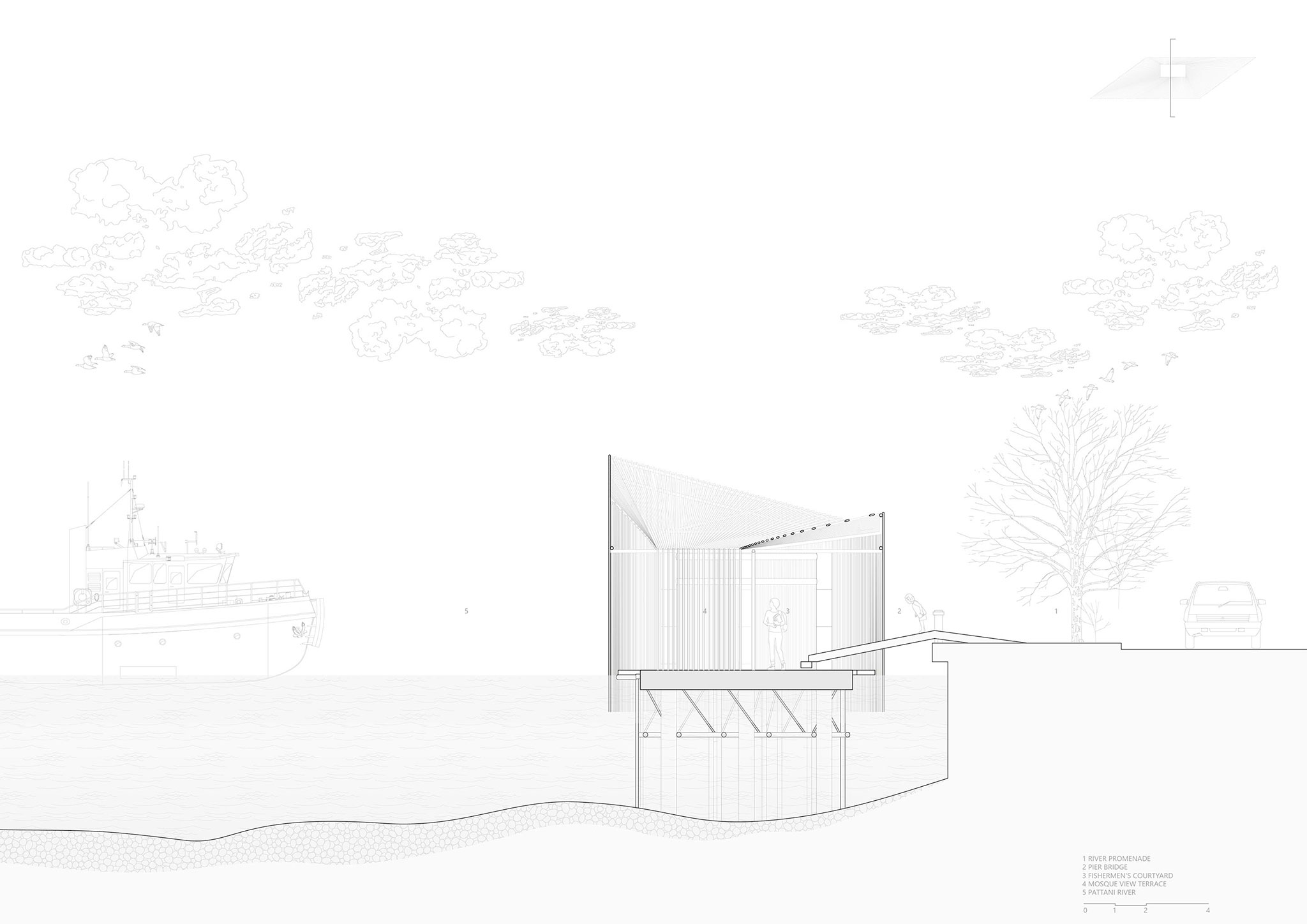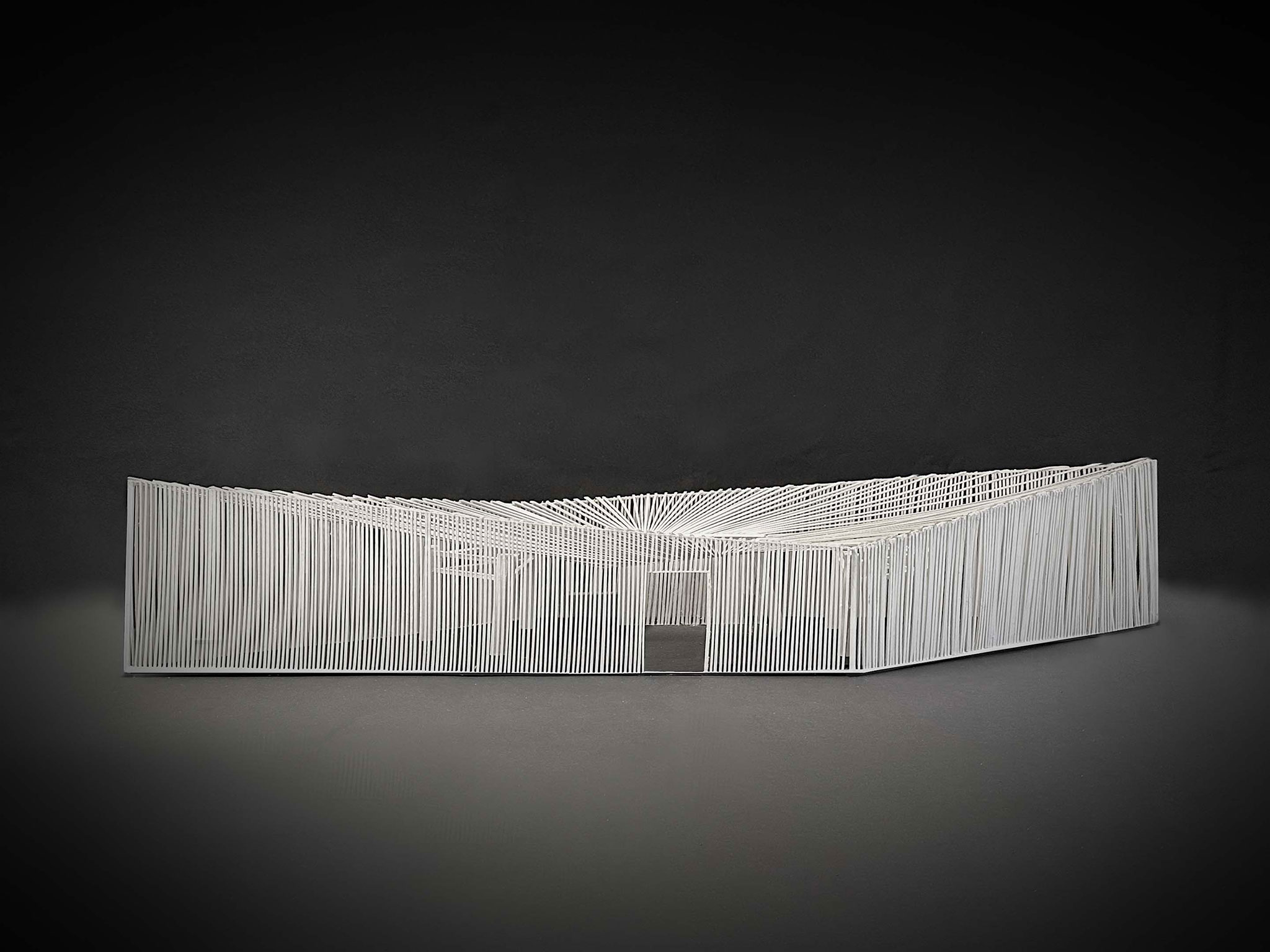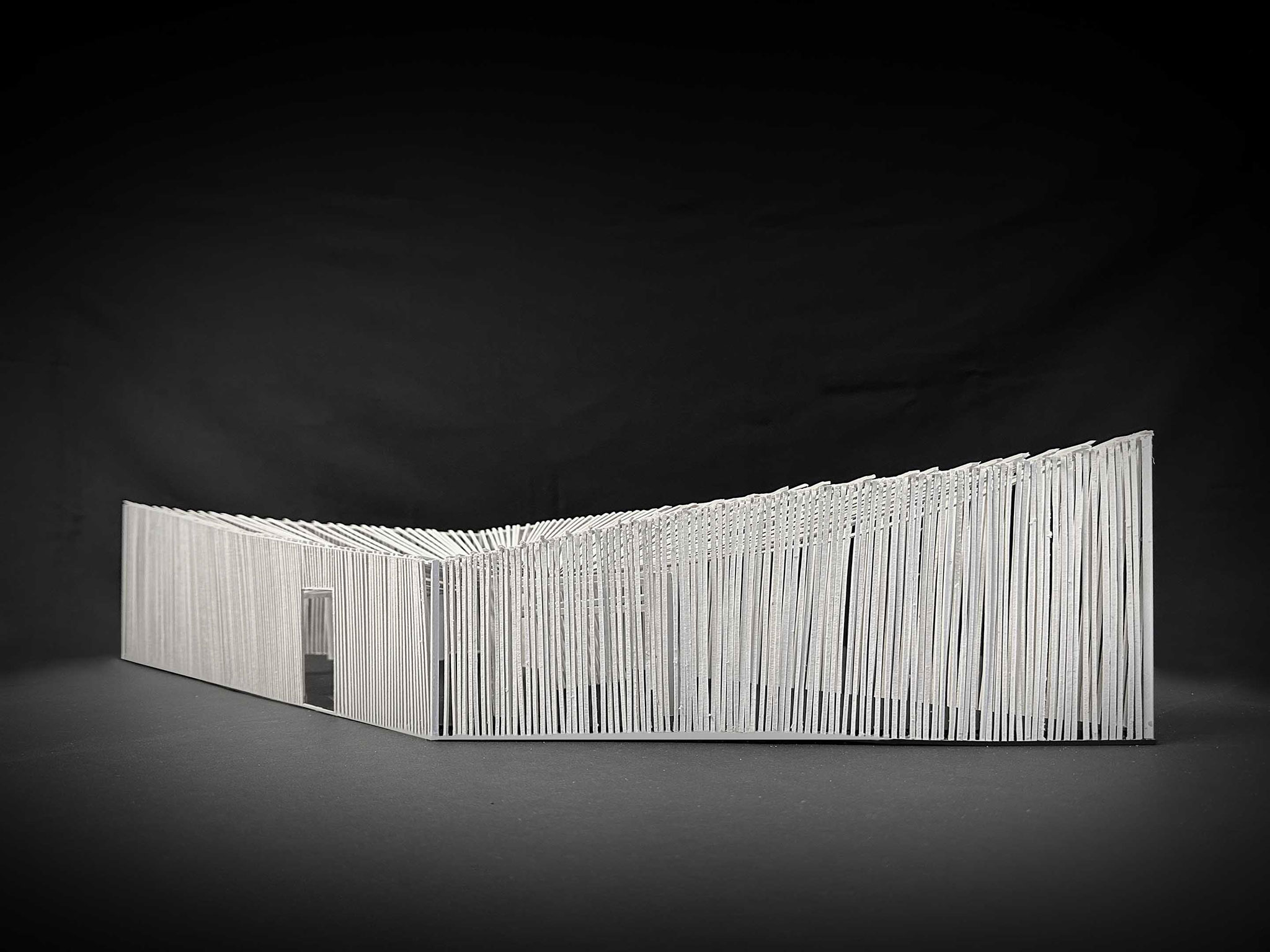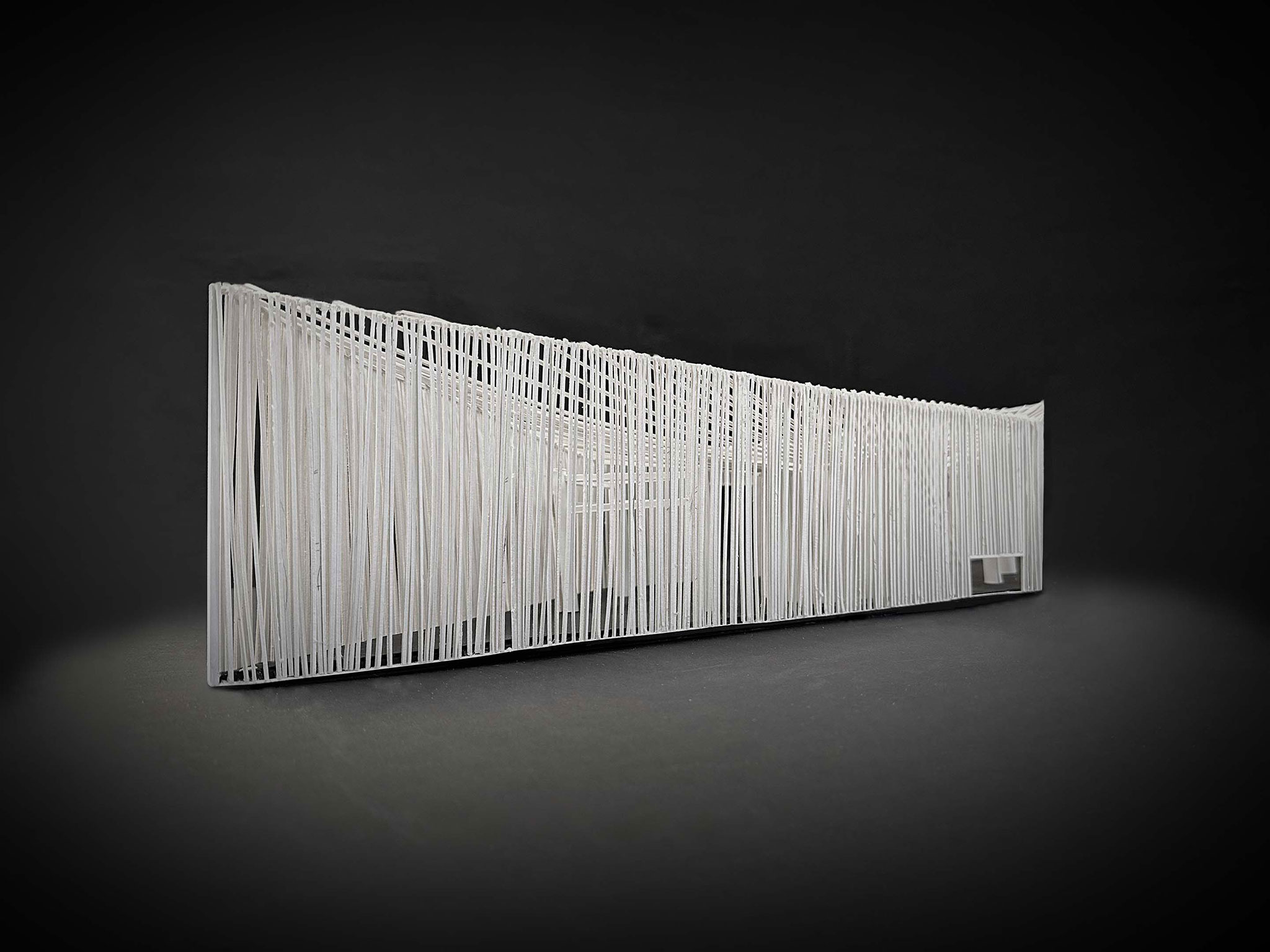
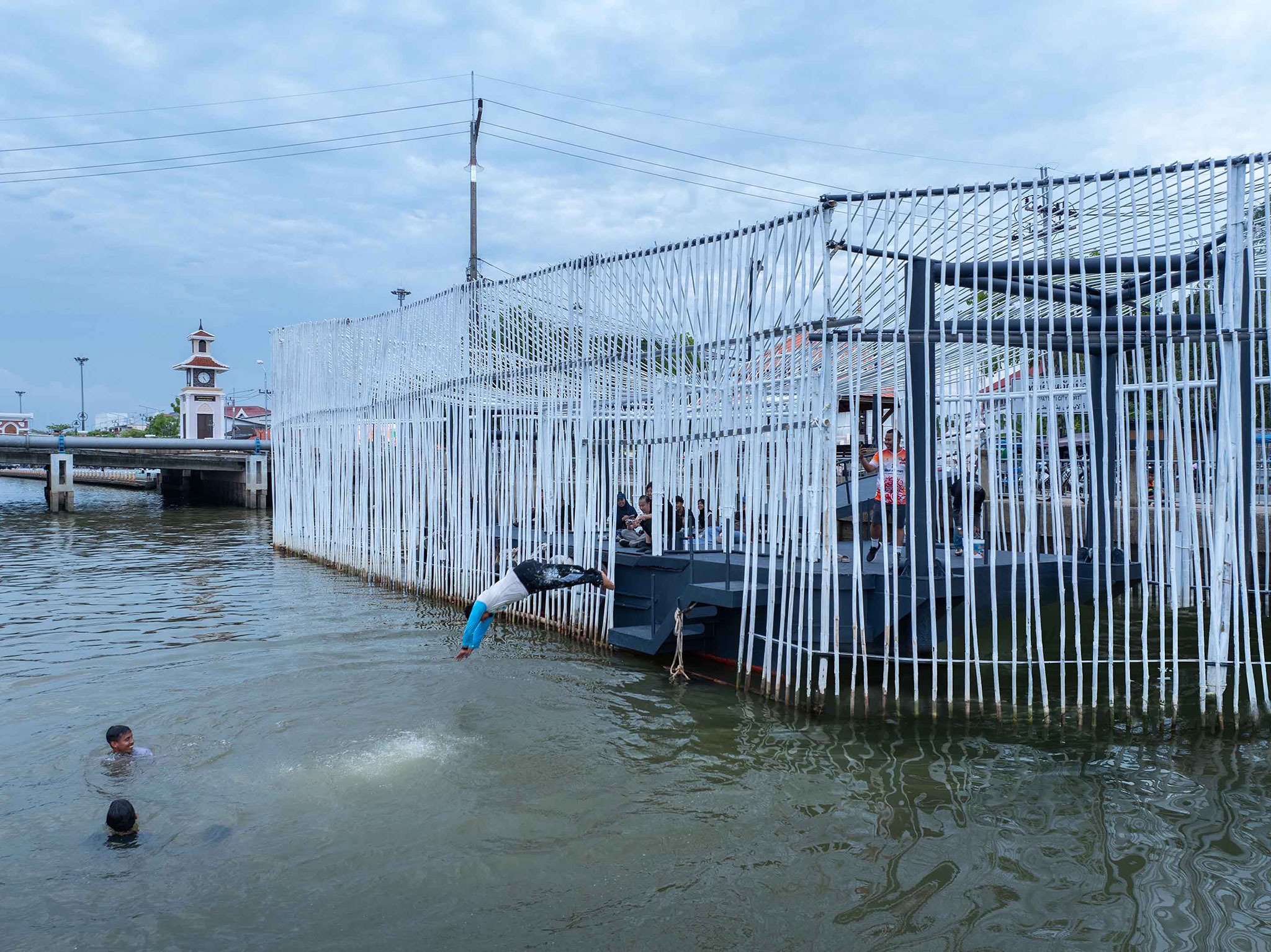
Against this backdrop, the new community landmark created by HAS design and research highlights Pattani's fishing heritage through a design that also seeks the gradual regeneration of native aquatic life. The project offers a recreational space where visitors can gather and relax while exploring the Thai river ecosystem.
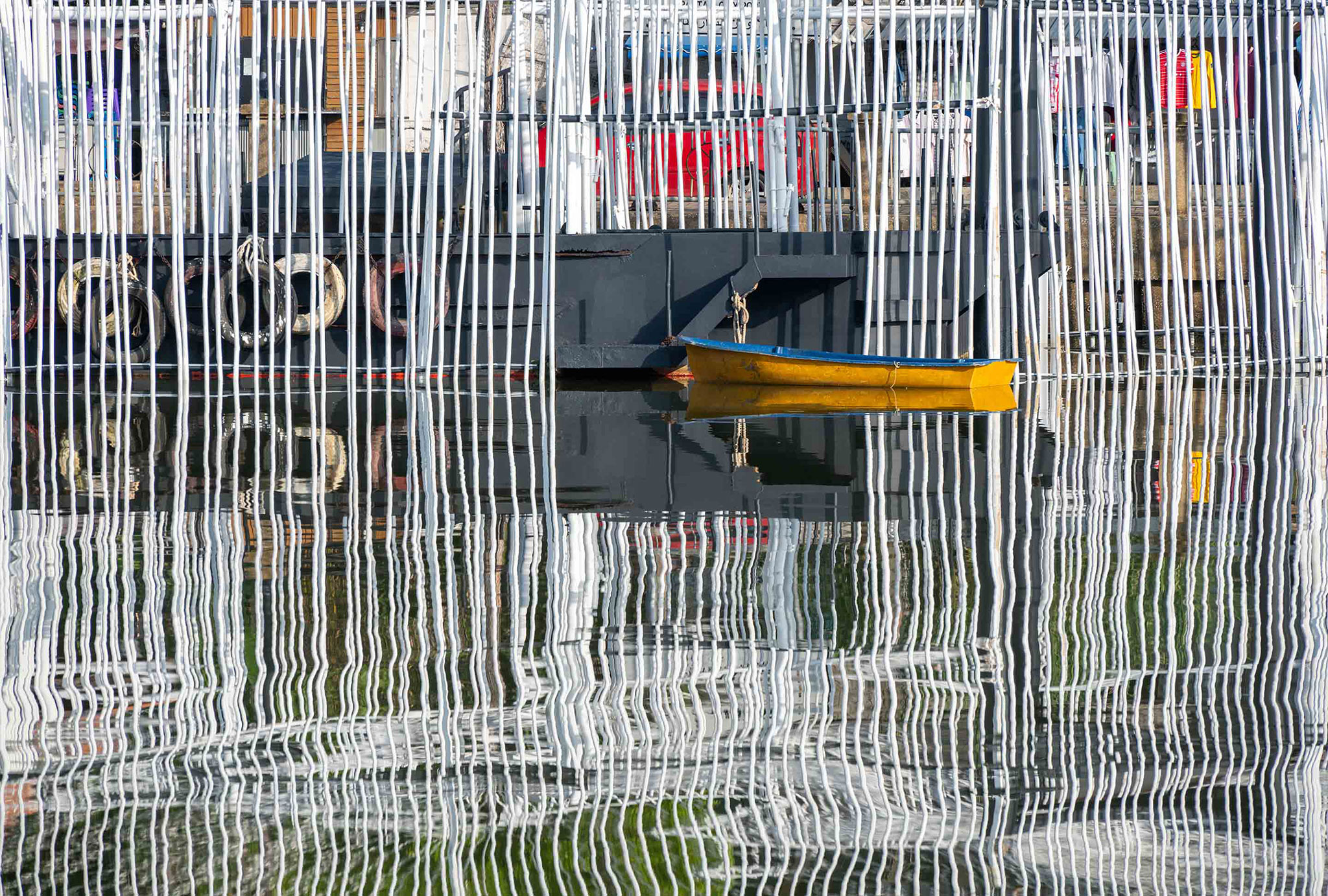
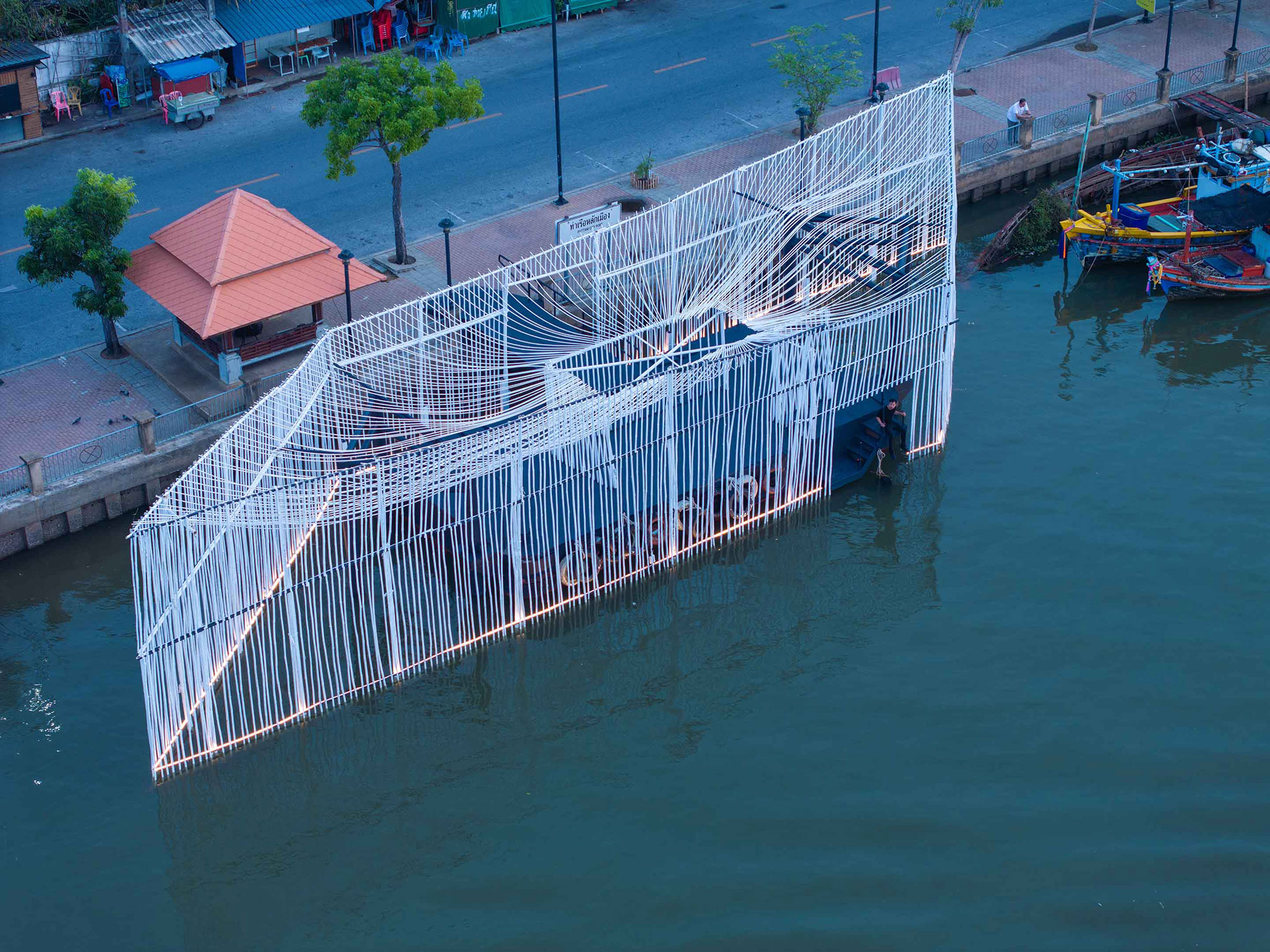
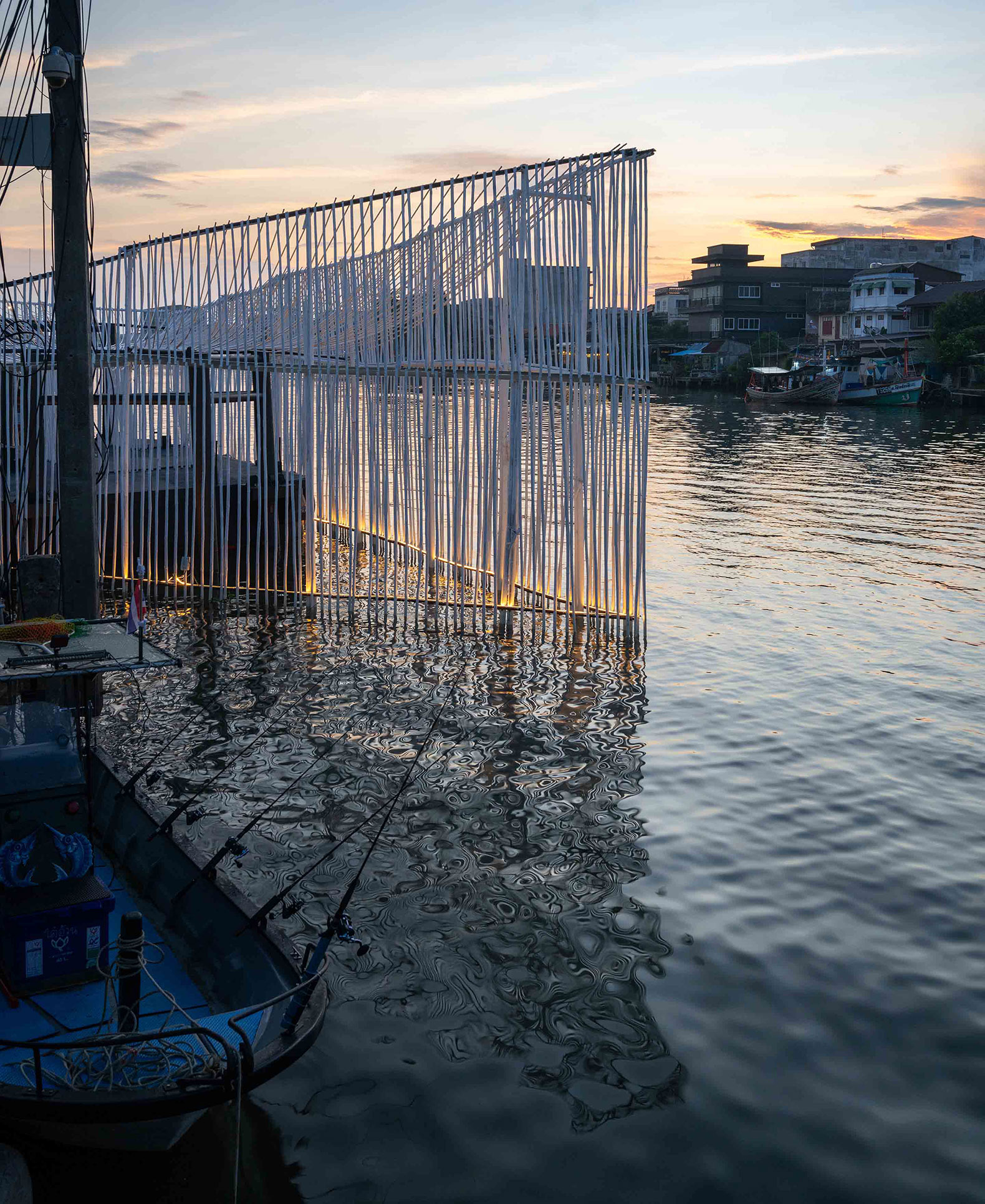
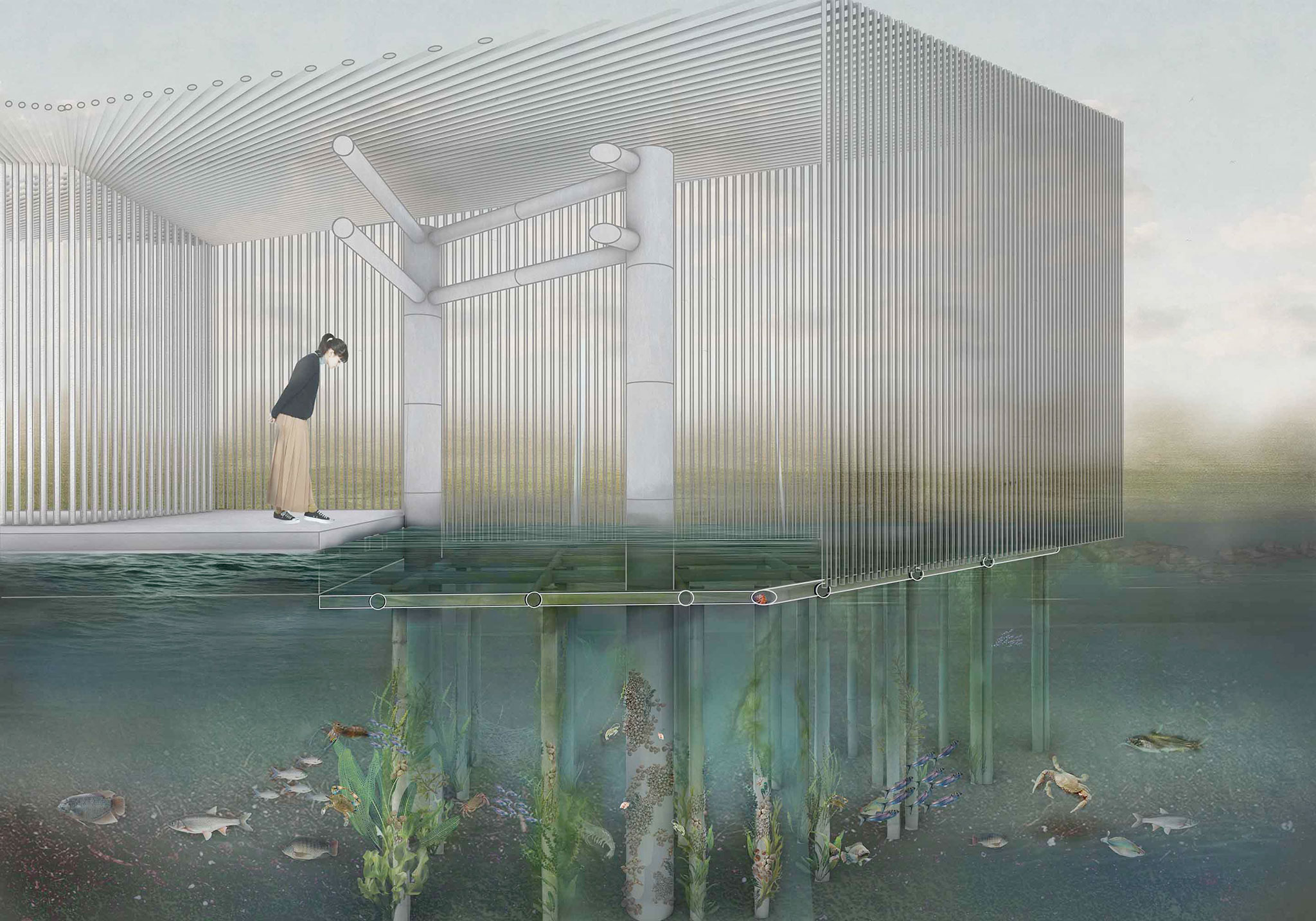
In accordance with environmental responsibility criteria, the project utilizes locally sourced bamboo as its primary structural element. Combined with durable, non-toxic protective coatings, the pavilion fosters a sustainable ecological cycle, creating ideal conditions for fish, shellfish, crabs, shrimp, and aquatic vegetation to live and reproduce.
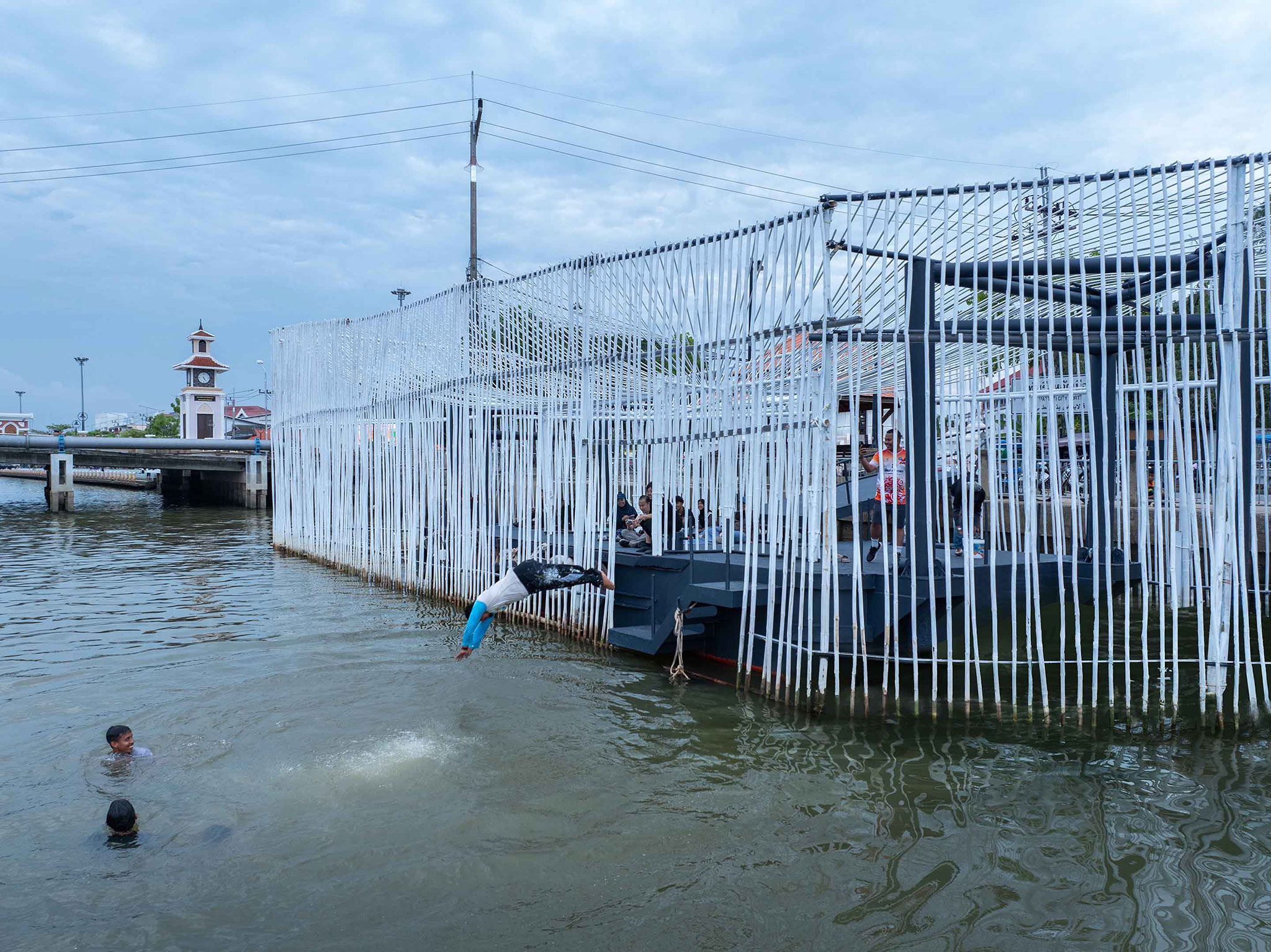
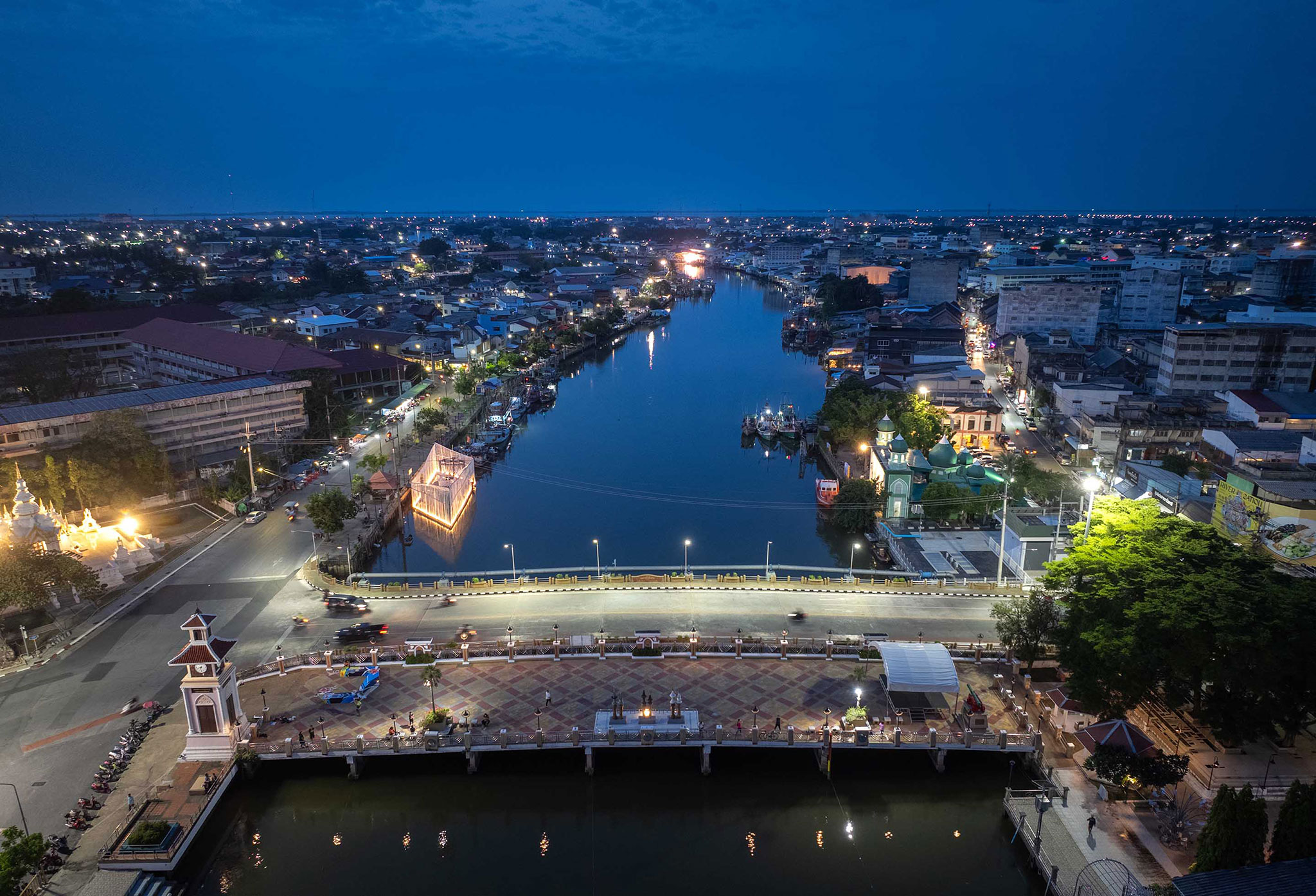
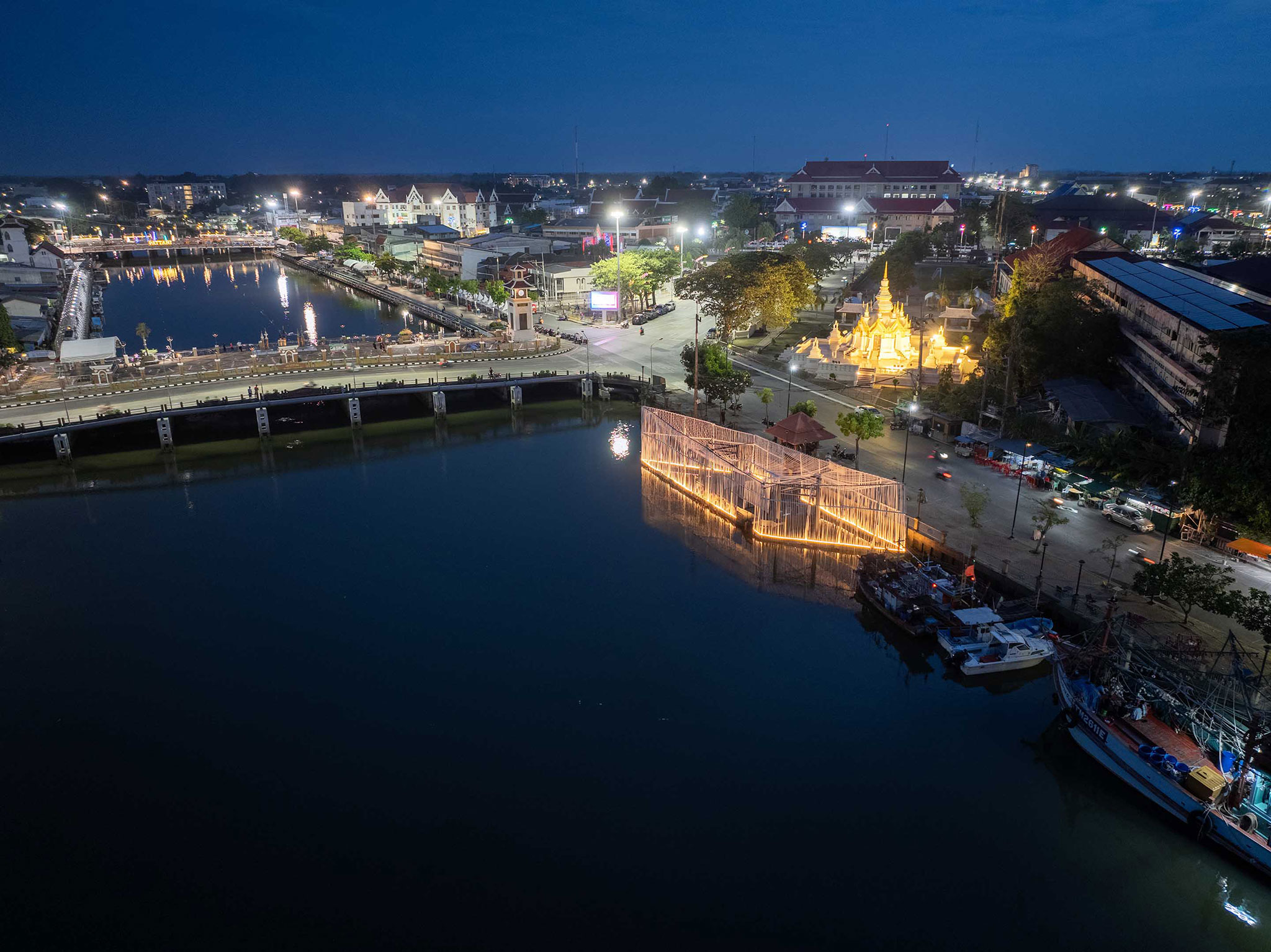
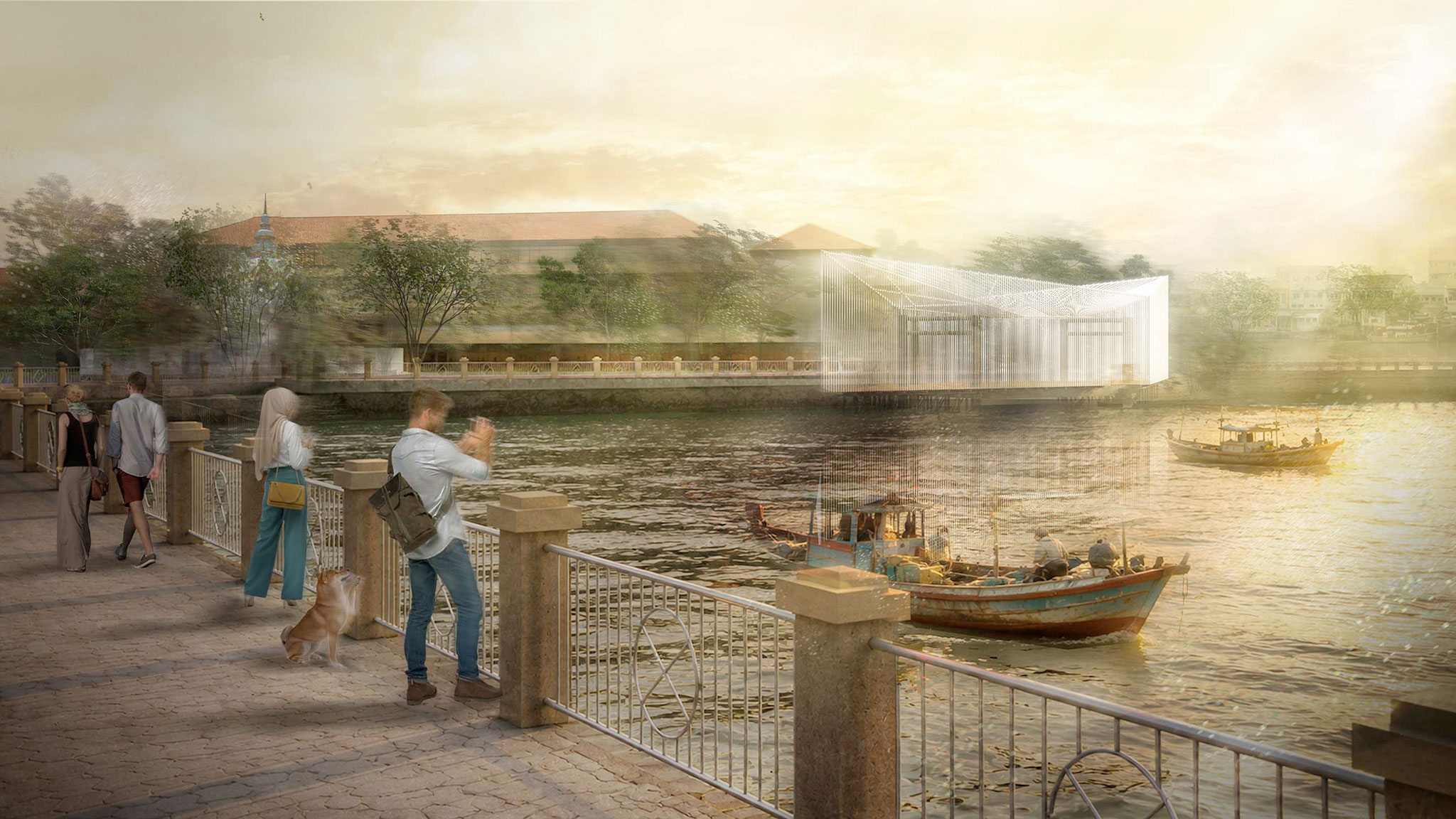
A traditional infrastructure associated with the fishing industry is thus transformed into a dynamic public space: in the morning, it functions as a bustling urban pier; while in the afternoon, residents and children gather to swim, snorkel in the river, and observe nature. As night falls, the building transforms into an illuminated riverside space, where visitors and nighttime strollers enjoy panoramic views of the river. In this way, the new Community Hub fosters a direct connection between people and the river ecosystem, encouraging a greater appreciation of Pattani's aquatic culture and environmental heritage.
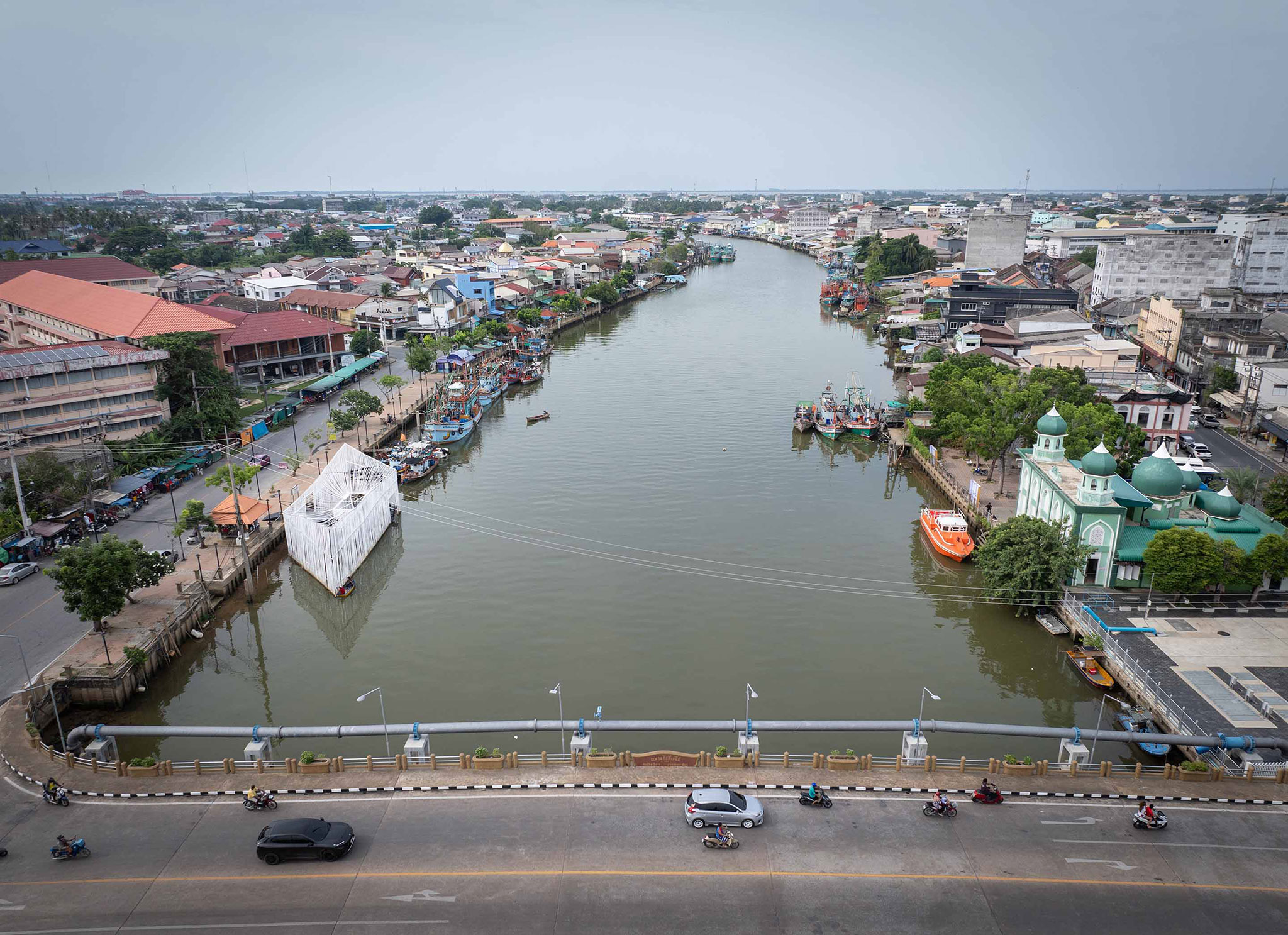
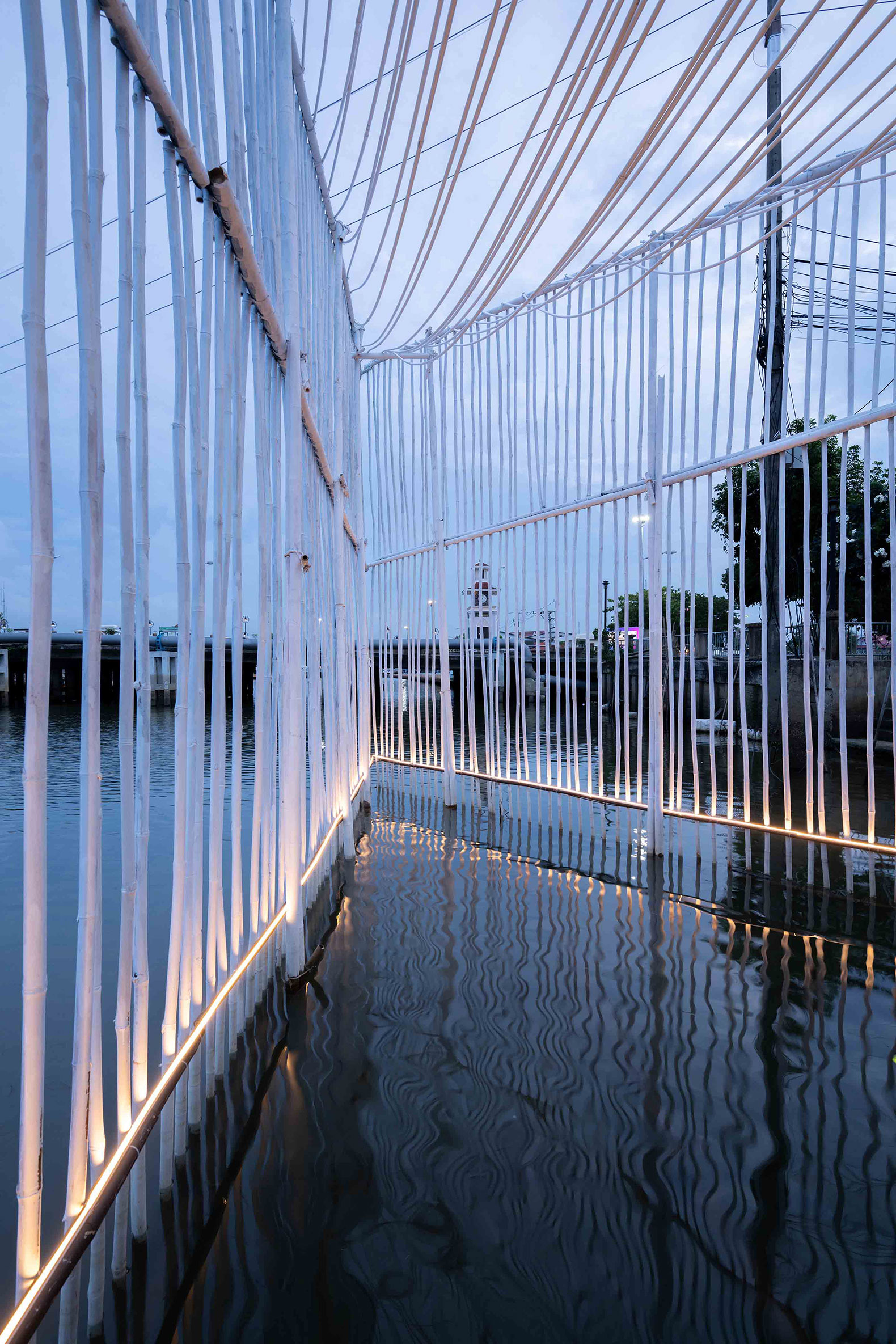
Pattani Fishermen Community Hub by HAS design and research. Photograph by Rungkit Charoenwat. Images courtesy by Jenchieh Hung + Kulthida Songkittipakdee / HAS design and research.
Project description by HAS design and research
Located in Pattani Province in southern Thailand, the Pattani Fishermen Community Hub stands near the border between Thailand and Malaysia. For centuries, Pattani has developed a distinctive cultural identity shaped by its Muslim heritage, the intertwined histories of the Malay and Thai languages, Islamic traditions centered around its mosques, the dynamic relationship between land and sea, and the everyday lives of fishing communities that have long depended on the Pattani River. These historical, cultural, religious, and environmental conditions distinguish Pattani from other Thai cities, making it one of the most culturally distinctive places in Thailand and Southeast Asia.
Despite its rich heritage, Pattani's economy has remained heavily dependent on primary industries, particularly fisheries. According to statistics from Thailand's National Economic and Social Development Council (NESDC), Pattani has consistently ranked among the country's poorest provinces for decades. Seeking to strengthen the province's international identity while celebrating its unique cultural heritage, Thai architectural firm Jenchieh Hung + Kulthida Songkittipakdee / HAS design and research, renowned for designing public and cultural buildings, was commissioned to create a new community landmark for the city.
Following several months of industrial research, ecological investigation, and cultural study, architects Jenchieh Hung and Kulthida Songkittipakdee recognized that Pattani's future depends not only on developing its fishing economy but also on restoring the ecological systems that sustain it. Their proposal introduces a public waterfront that encourages the long-term regeneration of fish, shellfish, crabs, shrimp, and aquatic vegetation while creating a shared environment where fishing families, children, and local residents can gather, explore the river ecosystem, relax, and reconnect with nature. Designed with minimal environmental impact on the Pattani River, the project employs locally sourced bamboo as its primary structural material.
Combined with durable, non-toxic protective coatings, the hollow characteristics of bamboo naturally create habitats that support the growth and reproduction of crabs, shrimp, algae, and other aquatic species. To accommodate fishing boats docking and unloading their daily catch, the steel platform is elevated above the water, allowing river currents and sediment movement to continue uninterrupted while preserving the natural riverbed. Large water-filled voids woven throughout the bamboo structure, together with strategically placed submerged stones, further create ideal conditions for native aquatic organisms to inhabit and reproduce, establishing a sustainable ecological cycle directly integrated into the architecture.
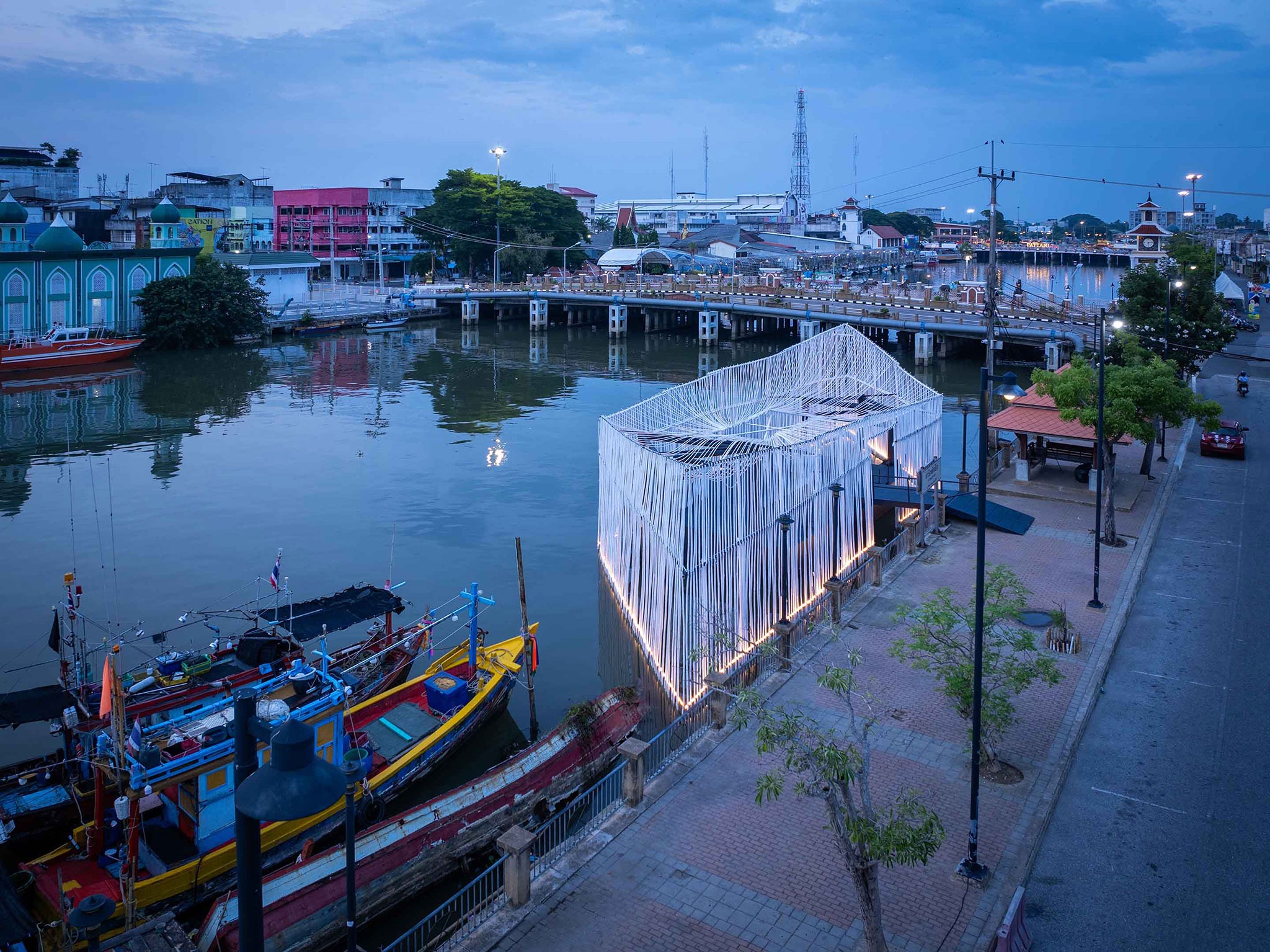
Throughout the day, the Pattani Fishermen Community Hub transforms to support multiple layers of public life. In the morning, it functions as an urban pier where local fishermen depart and return from the sea, providing generous communal spaces that transform traditional infrastructure into an active public realm. During the afternoon, local residents and children gather to swim, dive into the river, and observe schools of fish and freshwater shellfish, creating a direct and playful relationship between people and the river ecosystem. At night, the building becomes a vibrant waterfront destination where visitors and evening runners enjoy panoramic views of the river while experiencing Pattani's identity through its most important natural landscape.
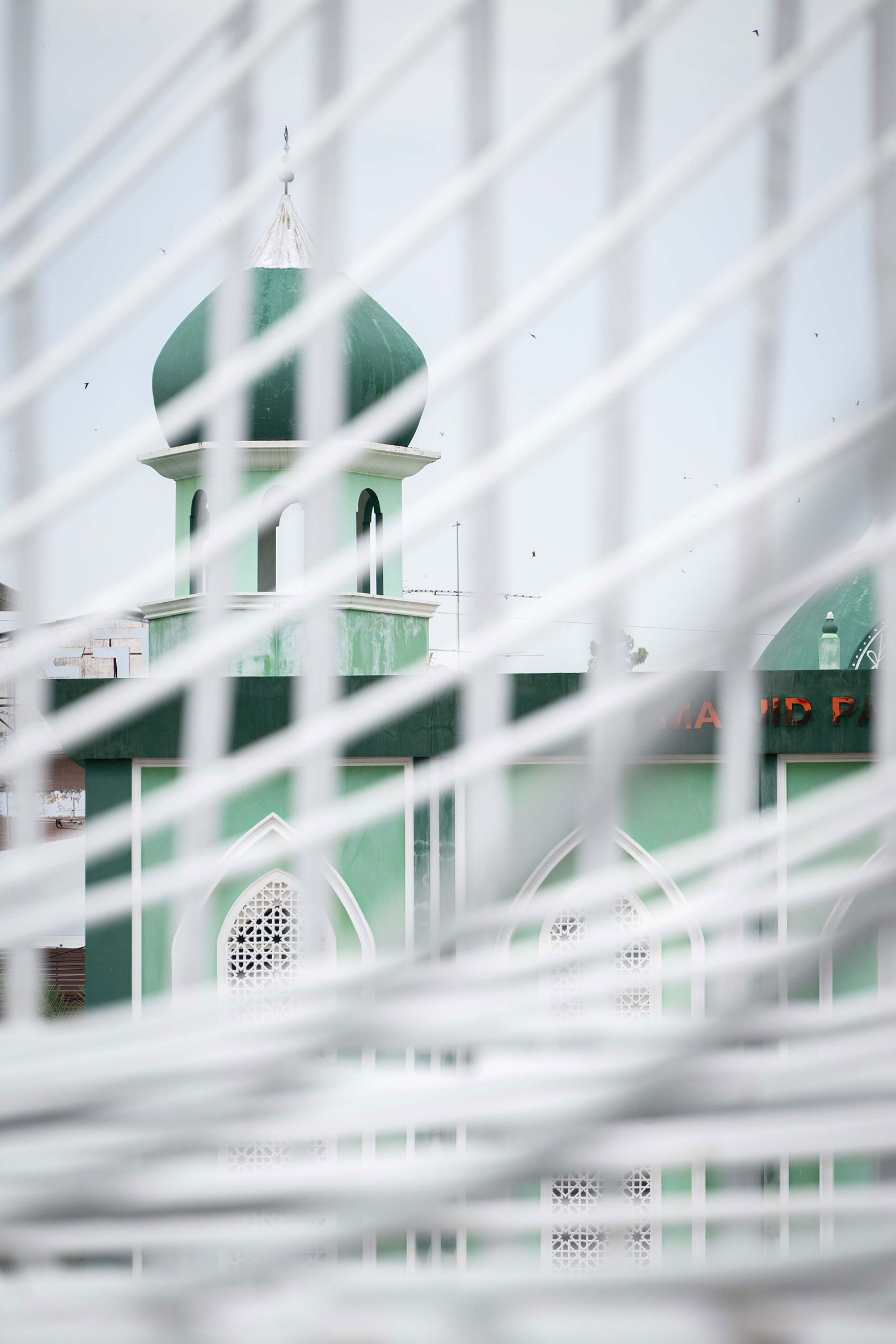
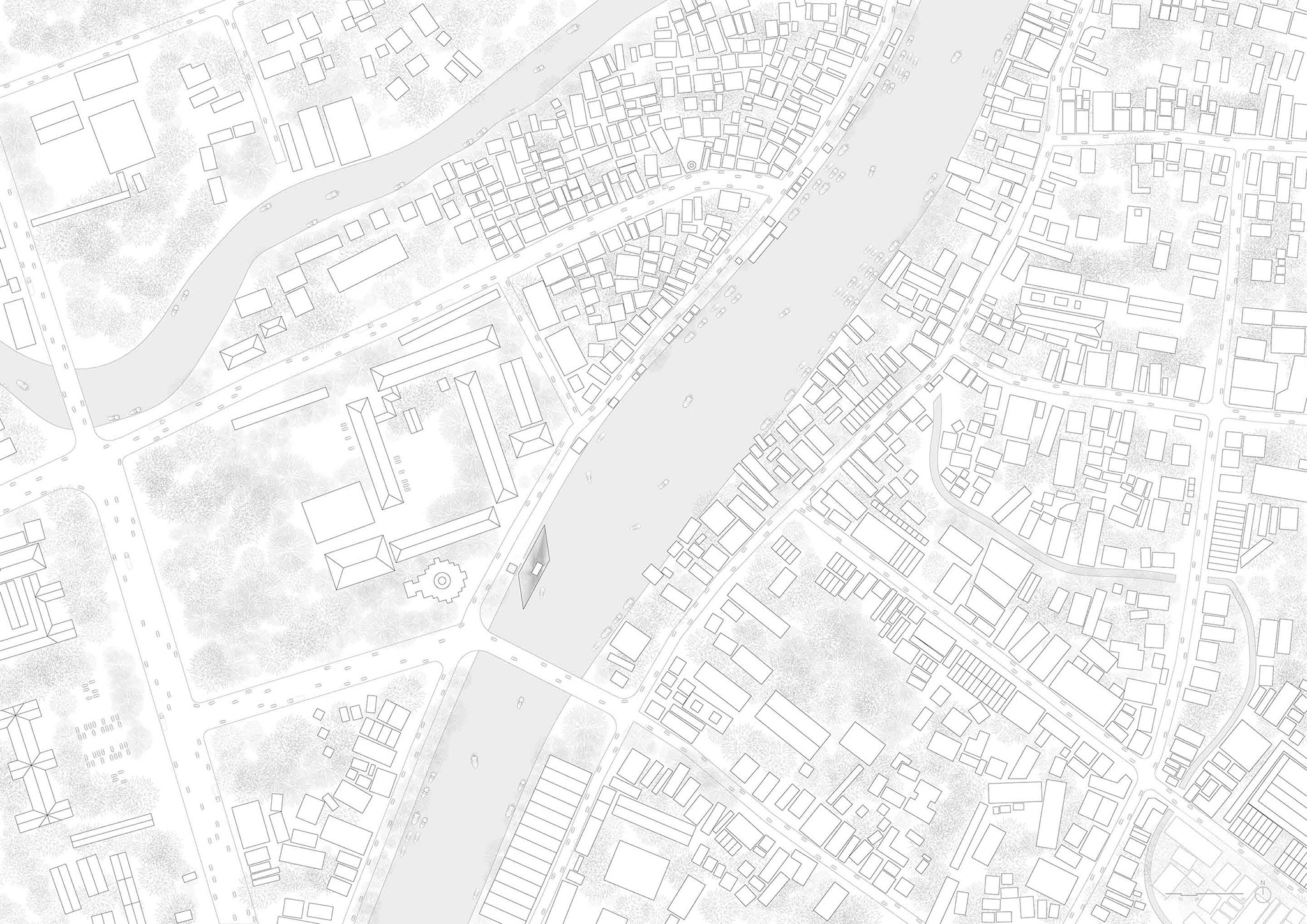
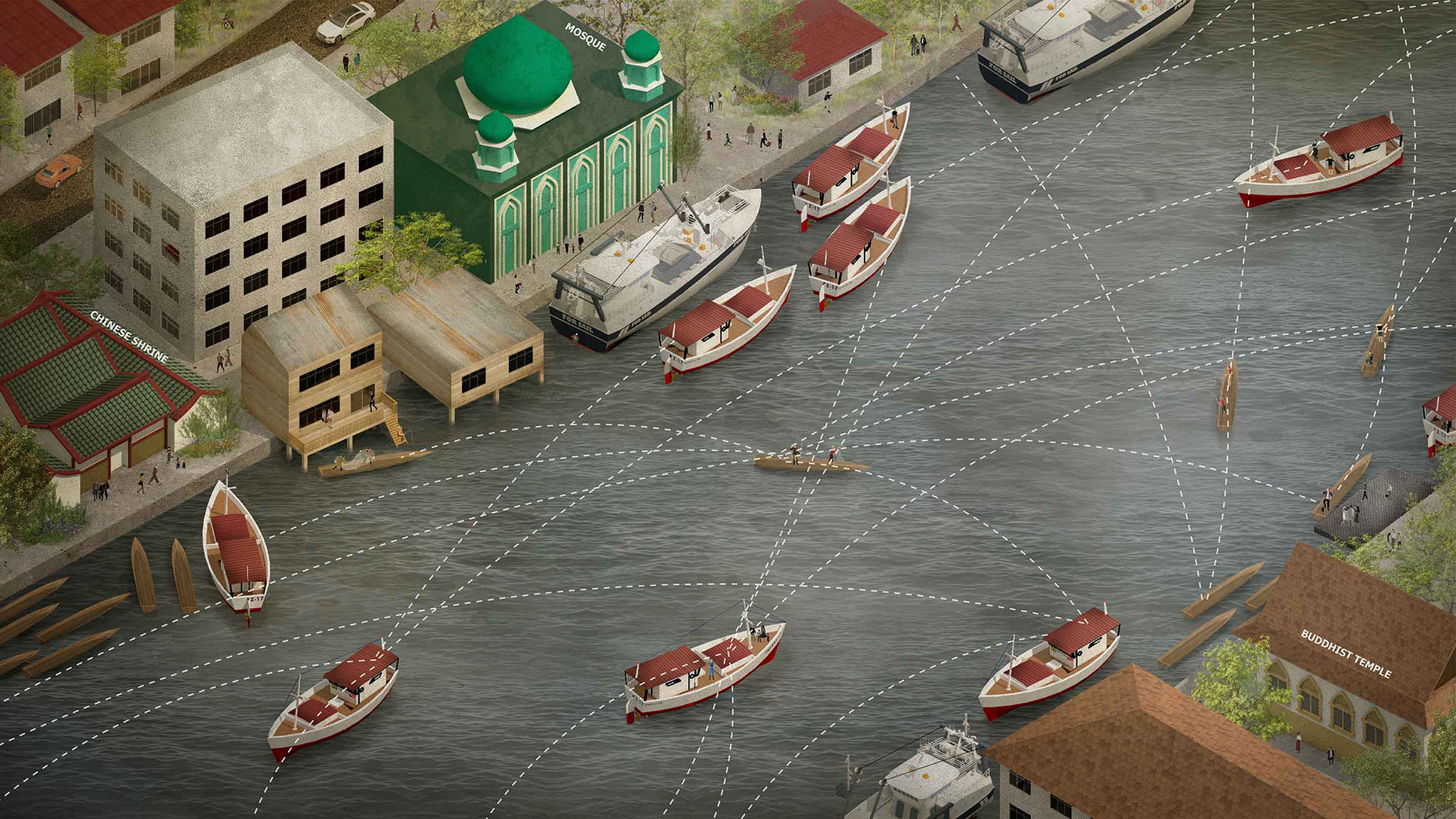
Beyond its everyday civic functions, the hub also serves as an important venue for religious gatherings and community ceremonies while acting as the starting point for Pattani's annual long-boat racing festival. The architecture carefully responds to the site's multiple historical and cultural layers, connecting the historic axis of the Pattani River, the civic axis anchored by the Pattani City Pillar Shrine, and the religious axis leading to the Pattani Mosque.
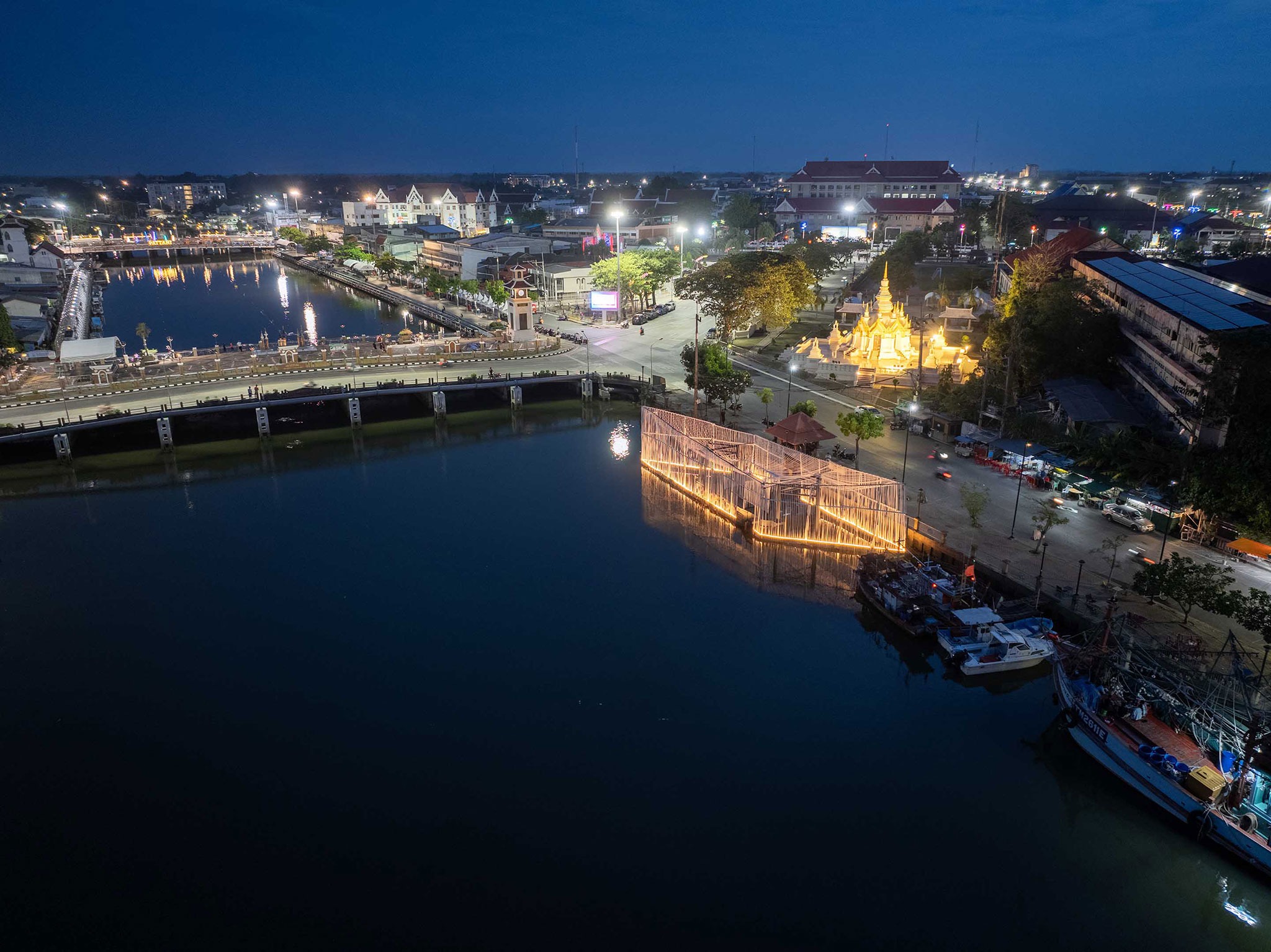
More than simply transforming a conventional pier into an accessible public waterfront, the Pattani Fishermen Community Hub re-establishes the river as the collective cultural memory of the city while revitalizing Pattani's centuries-old fishing traditions. Serving as both a public gathering place and an educational landscape, the project introduces younger generations to sustainable aquatic ecosystems and the ecological relationships among fish, shrimp, shellfish, aquatic plants, and the local livelihoods of the Sabarang community.
By encouraging people to engage directly with the river, it fosters a deeper appreciation of Pattani's water-based culture and environmental heritage. Designed as a floating landmark along the riverfront, the Pattani Fishermen Community Hub reinterprets the identity of Pattani's fishing communities through the architectural vision of Jenchieh Hung and Kulthida Songkittipakdee, who worked and built the project together with the local Sabarang community. More than just infrastructure, it reconnects people with water, ecology, cultural memory, and public life. Through this intervention, architecture becomes not only a spatial experience but also a catalyst for environmental restoration, cultural preservation, social participation, and a renewed vision for the future of Pattani's fishing communities and Thailand's riverine cities.