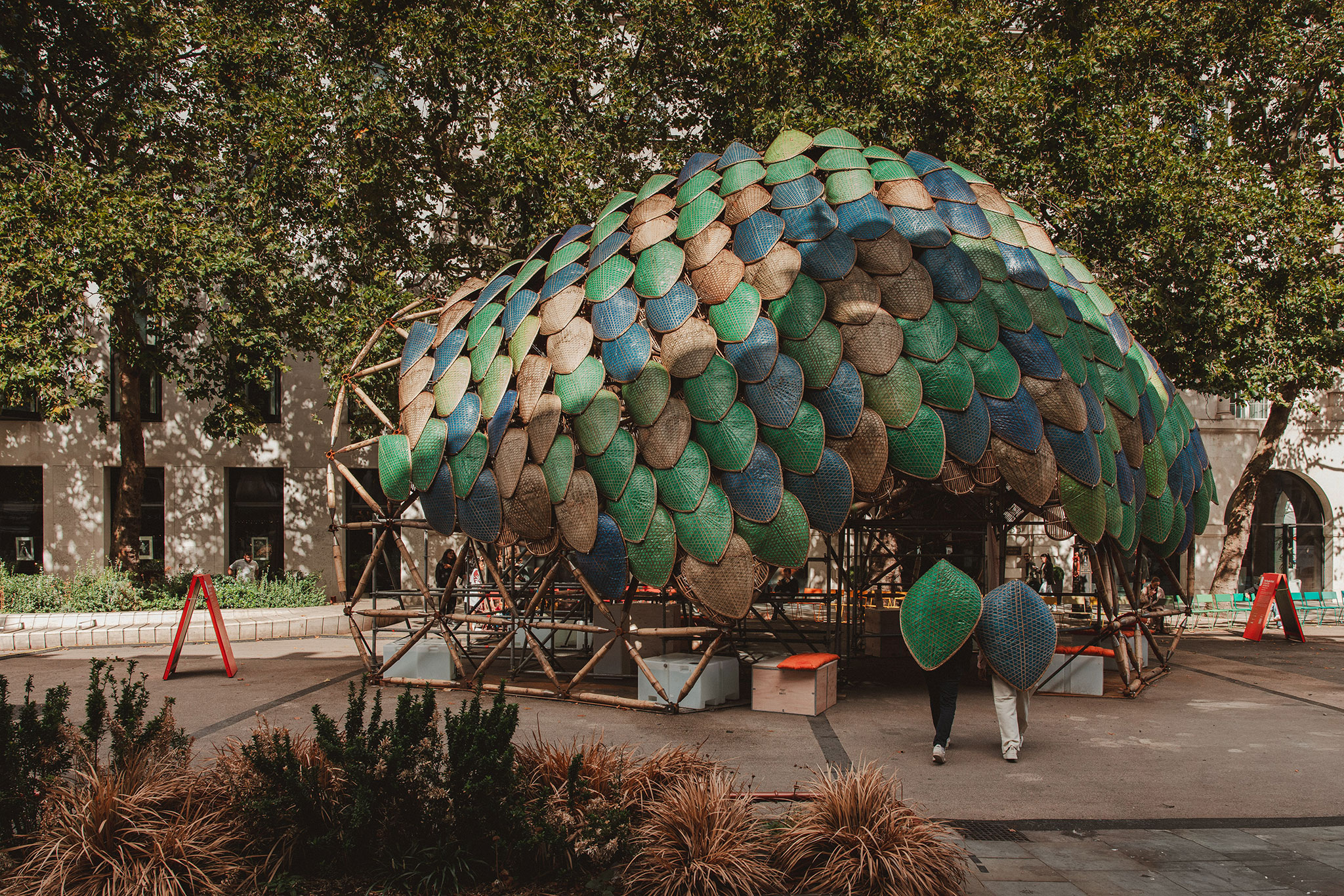
Presented as a "Landmark Project" at the London Design Festival, The Pangolin Shield is a work created by the architecture practice Studio Saar and the global structural engineering practice Atelier One, with support from Secure.

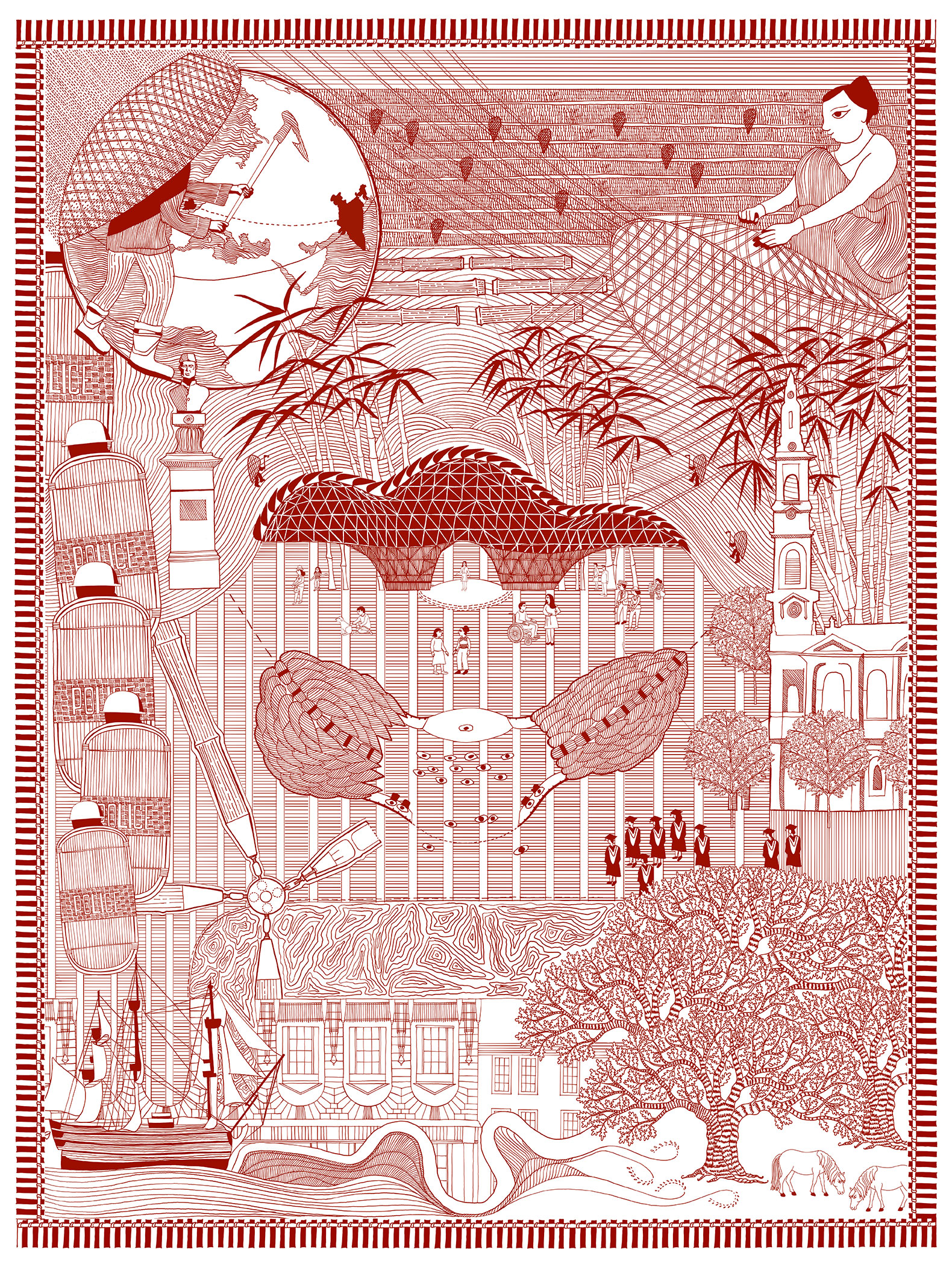
Located in the heart of Strand Aldwych from September 12 to 20, 2026, the installation explores colonial legacies, power, ecological exploitation, and the displacement of people and living beings across borders.

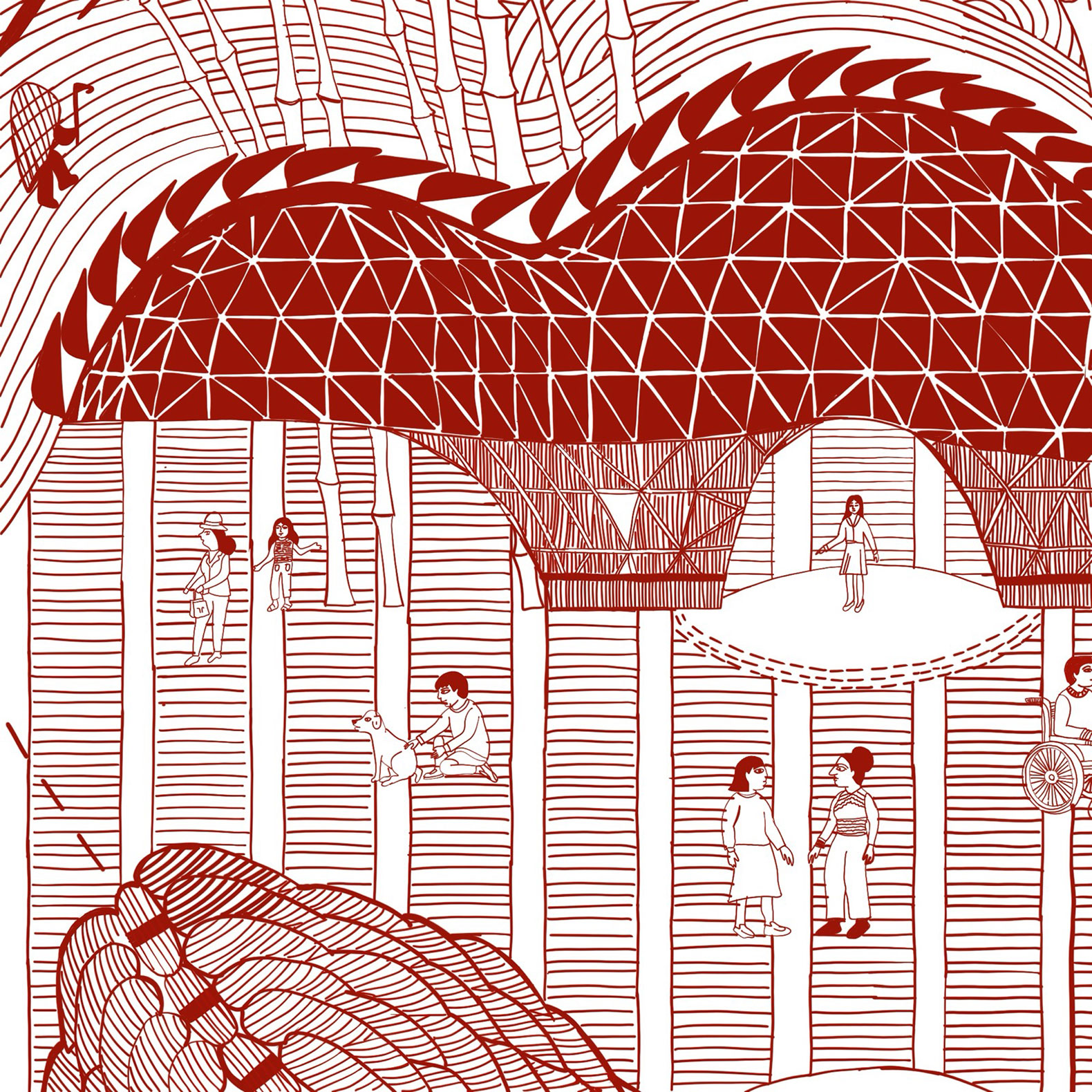
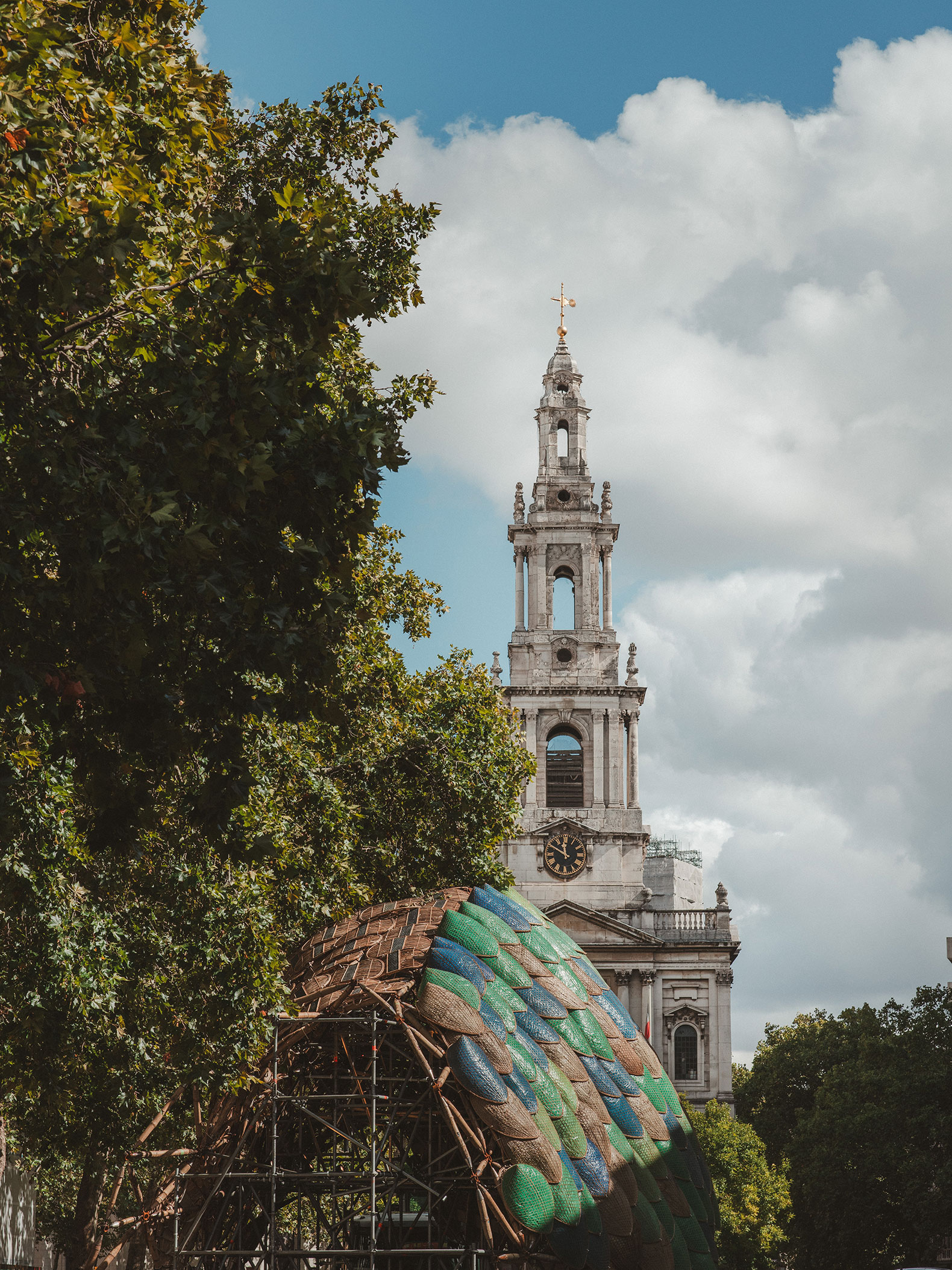
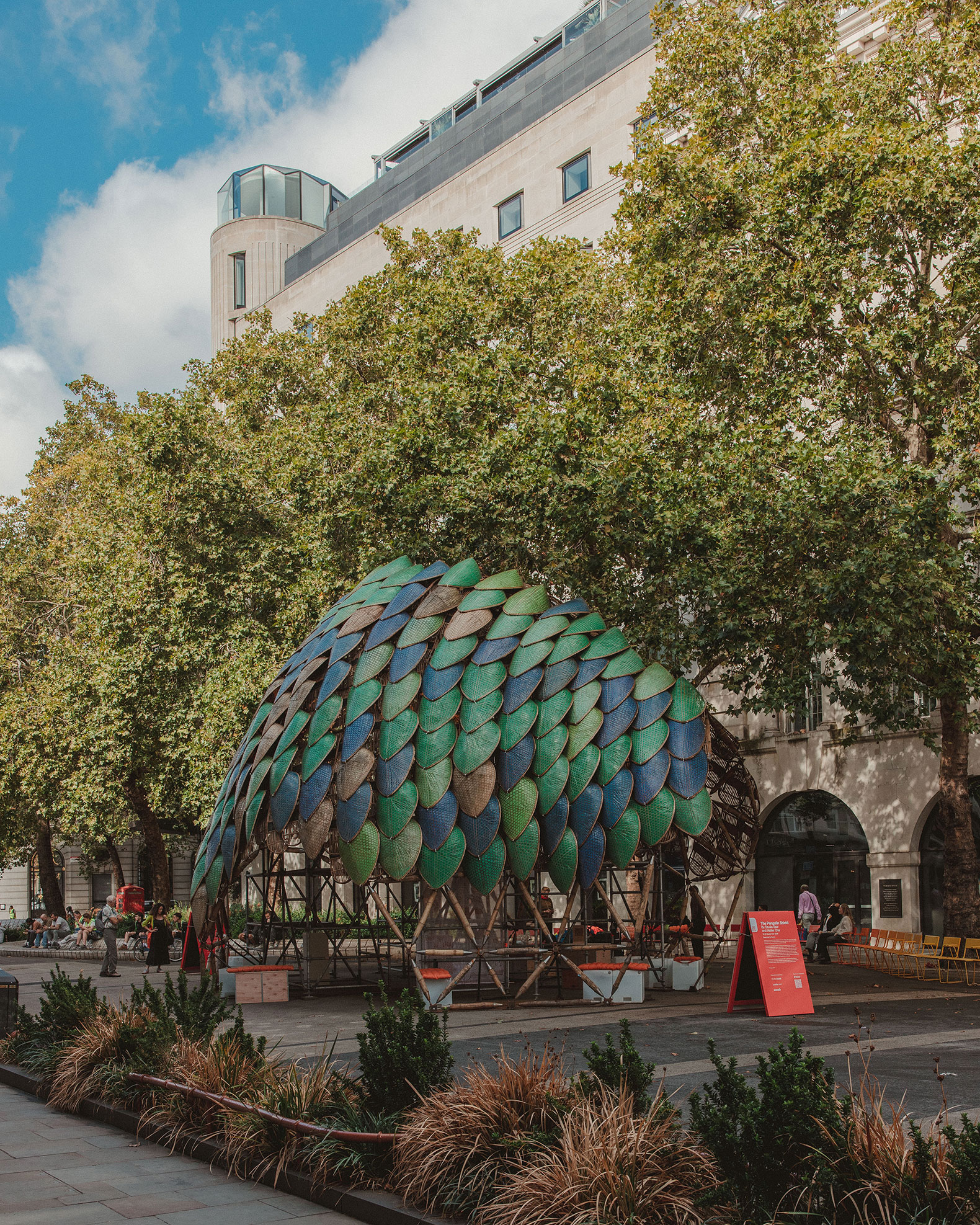
The Pangolin Shield, by Studio Saar and Atelier One, draws inspiration from the pangolin—the world’s most trafficked mammal—whose body is covered in protective scales from head to tail; the structure’s form invites visitors to reflect on the duality between vulnerability and protection.

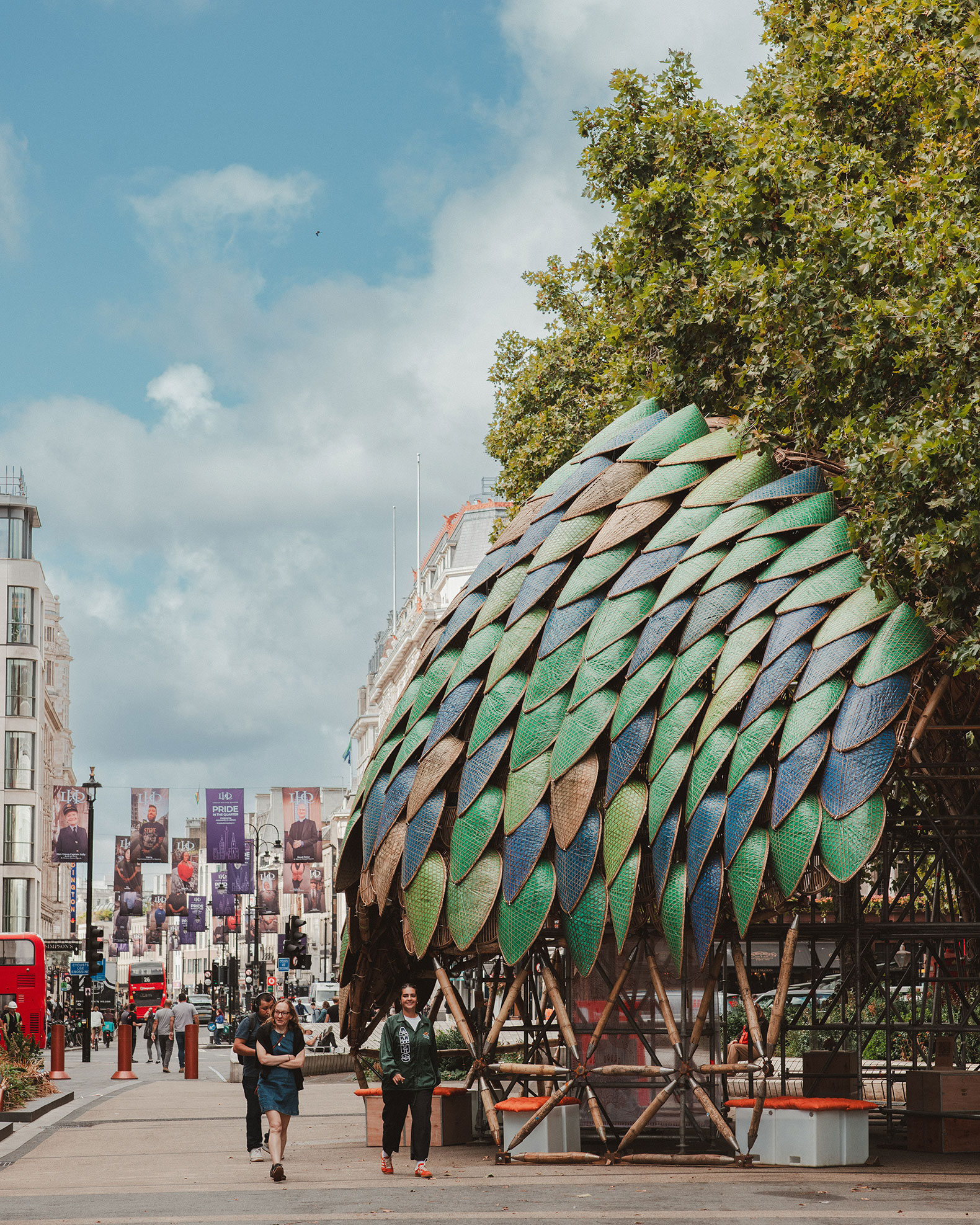
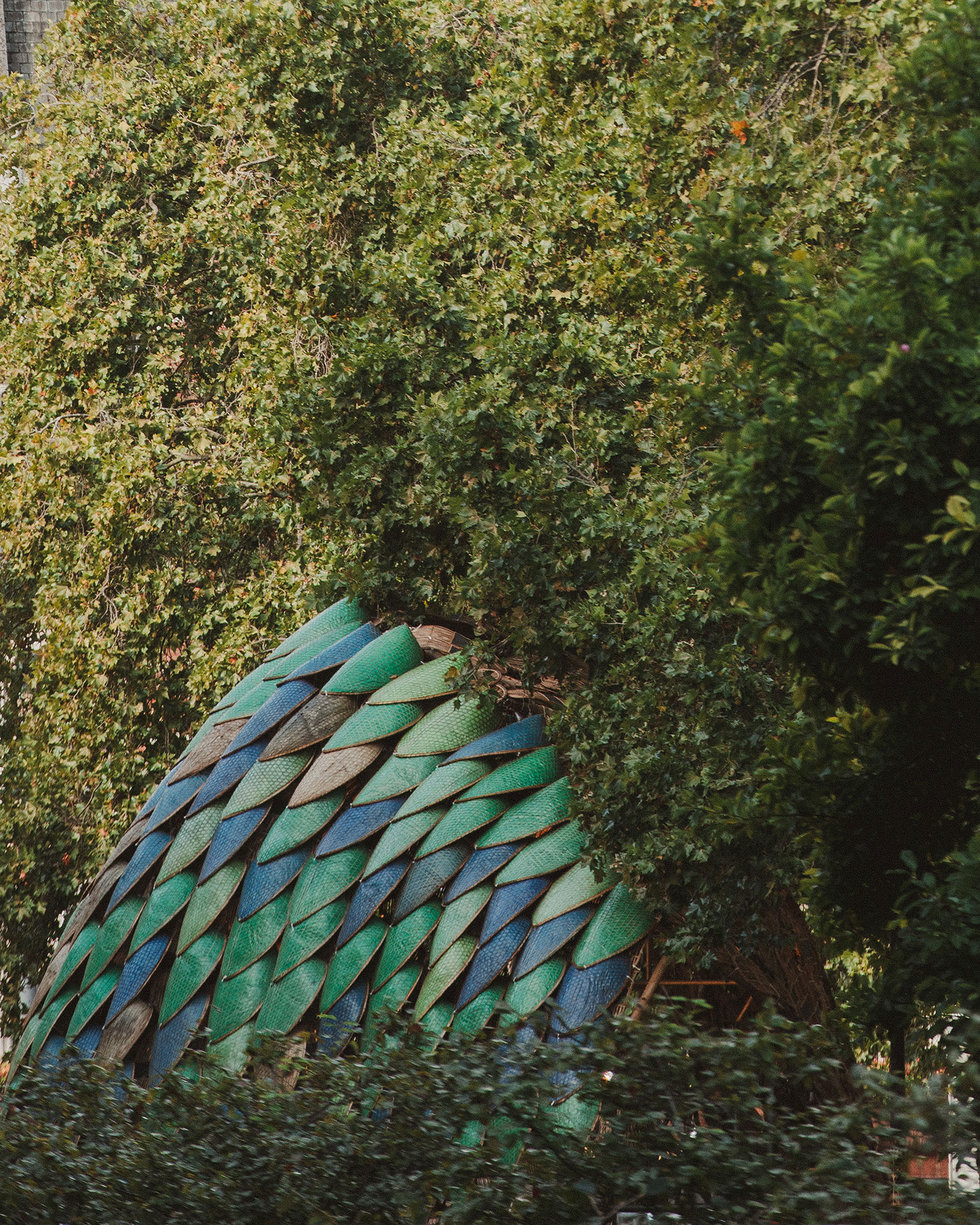
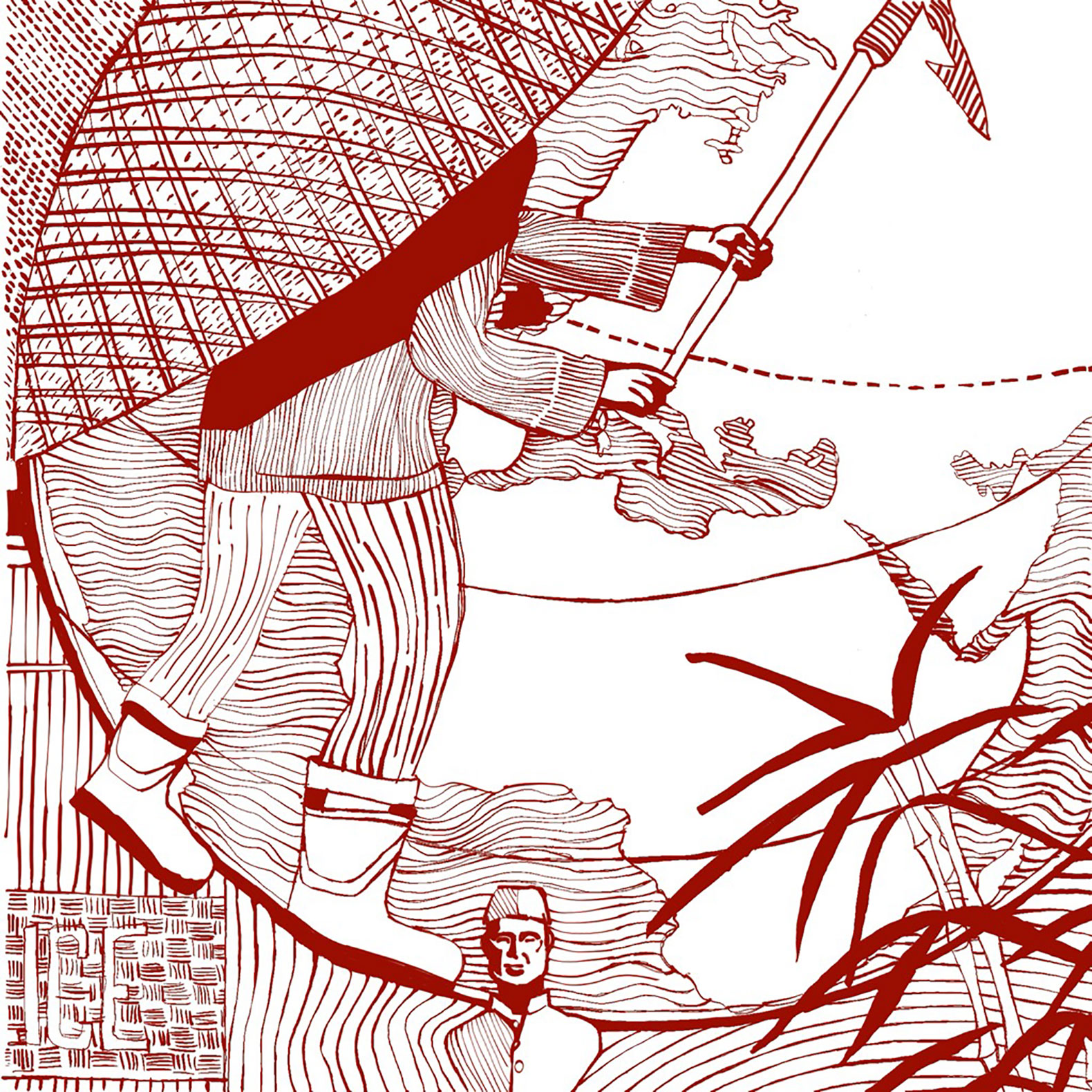
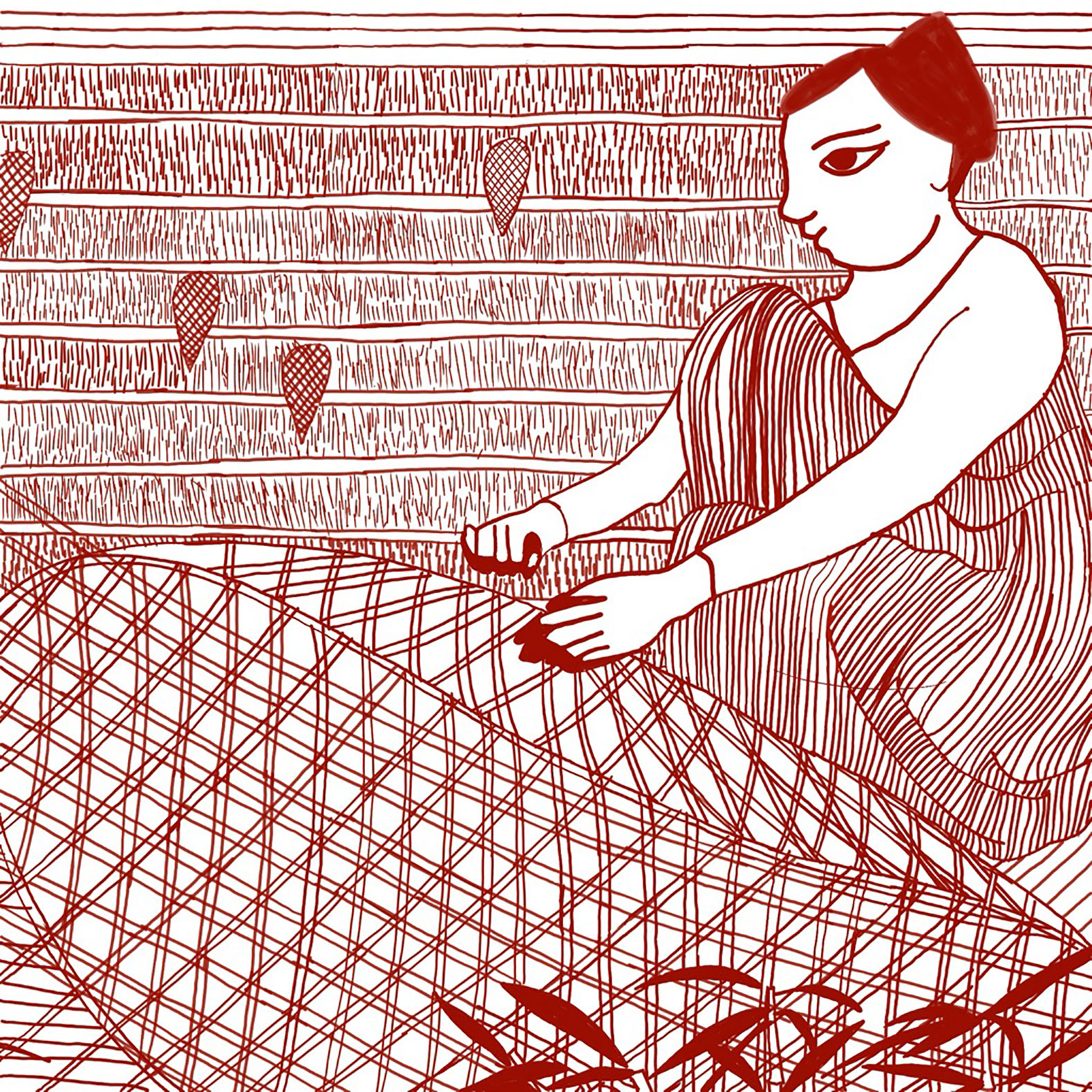
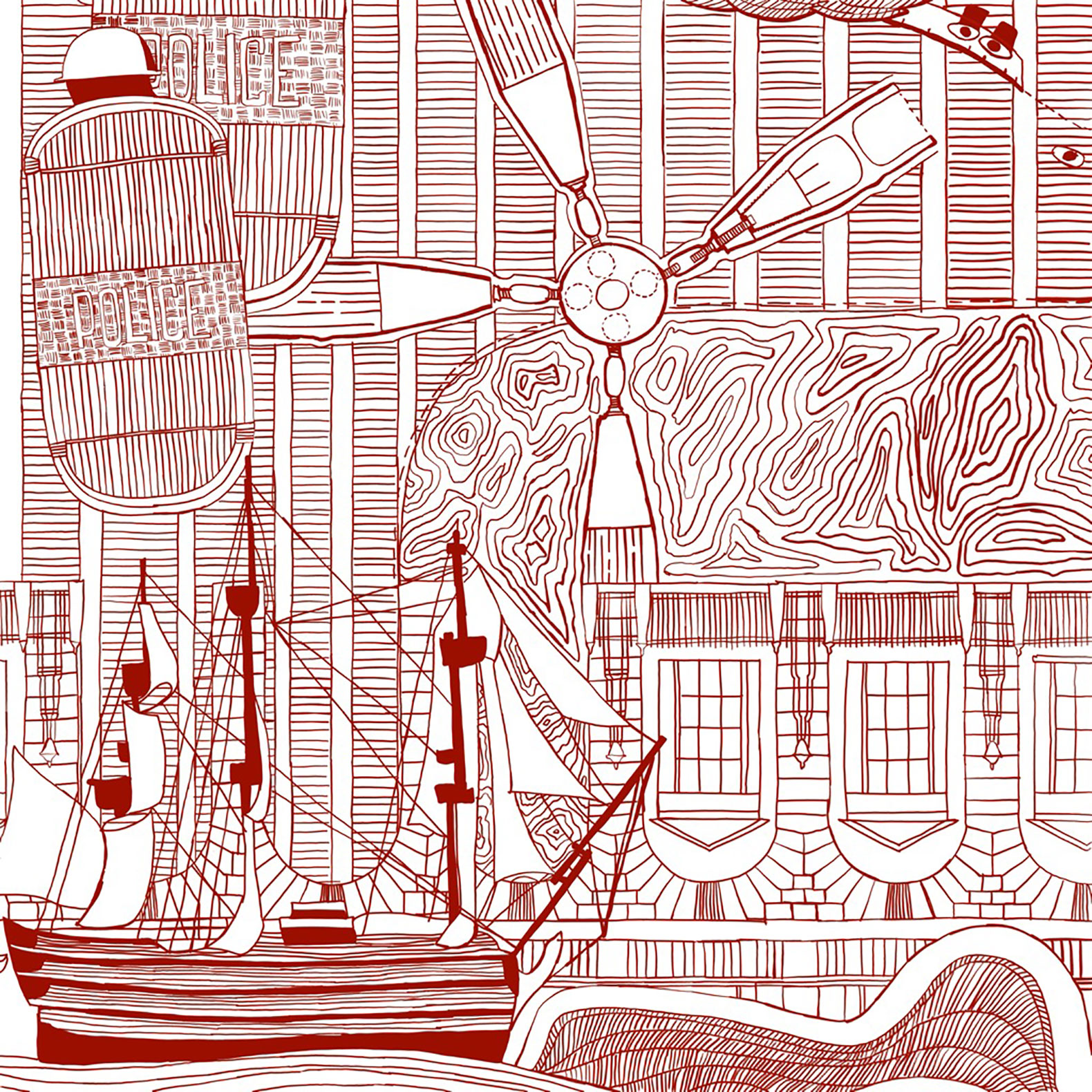
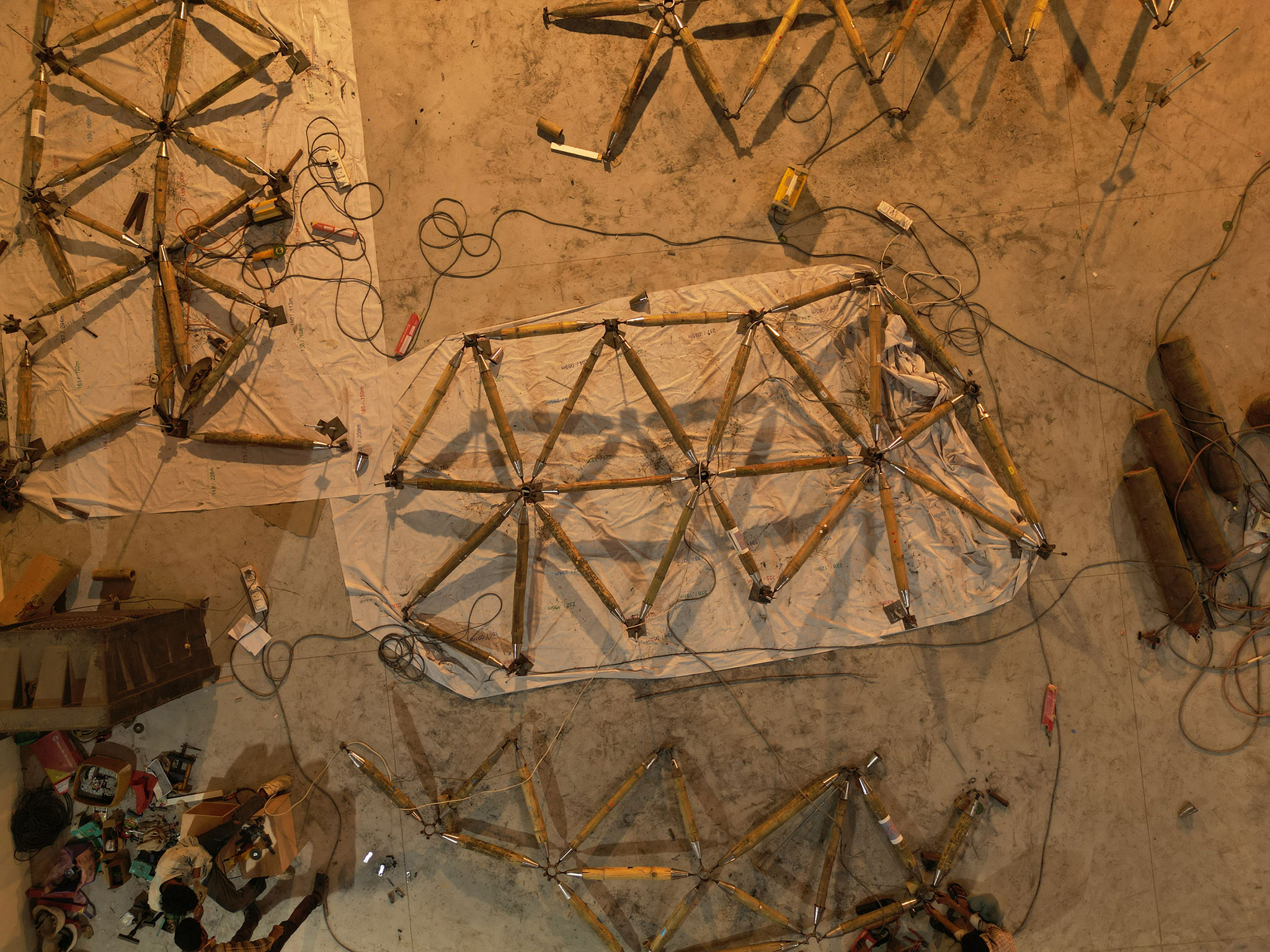
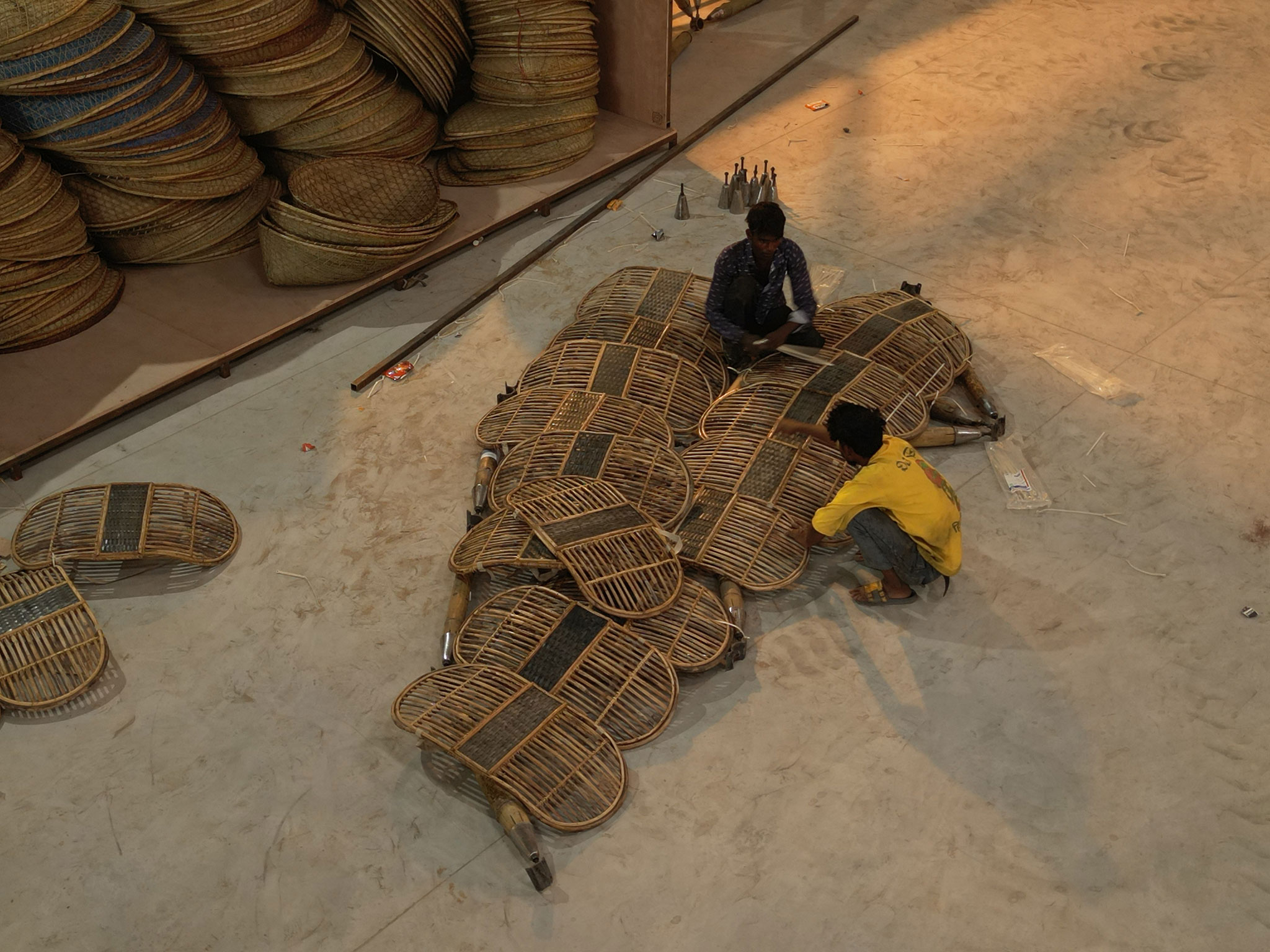
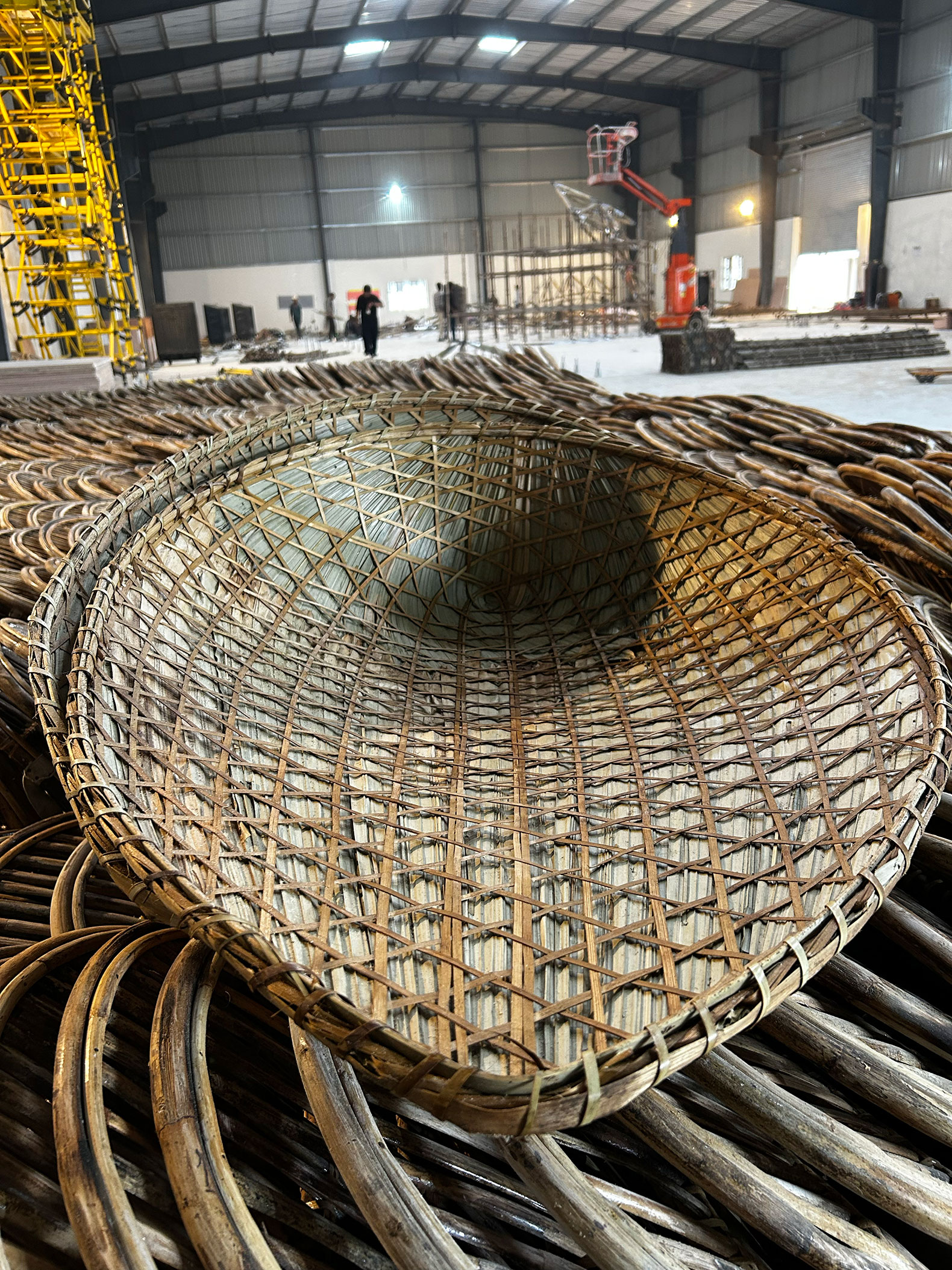
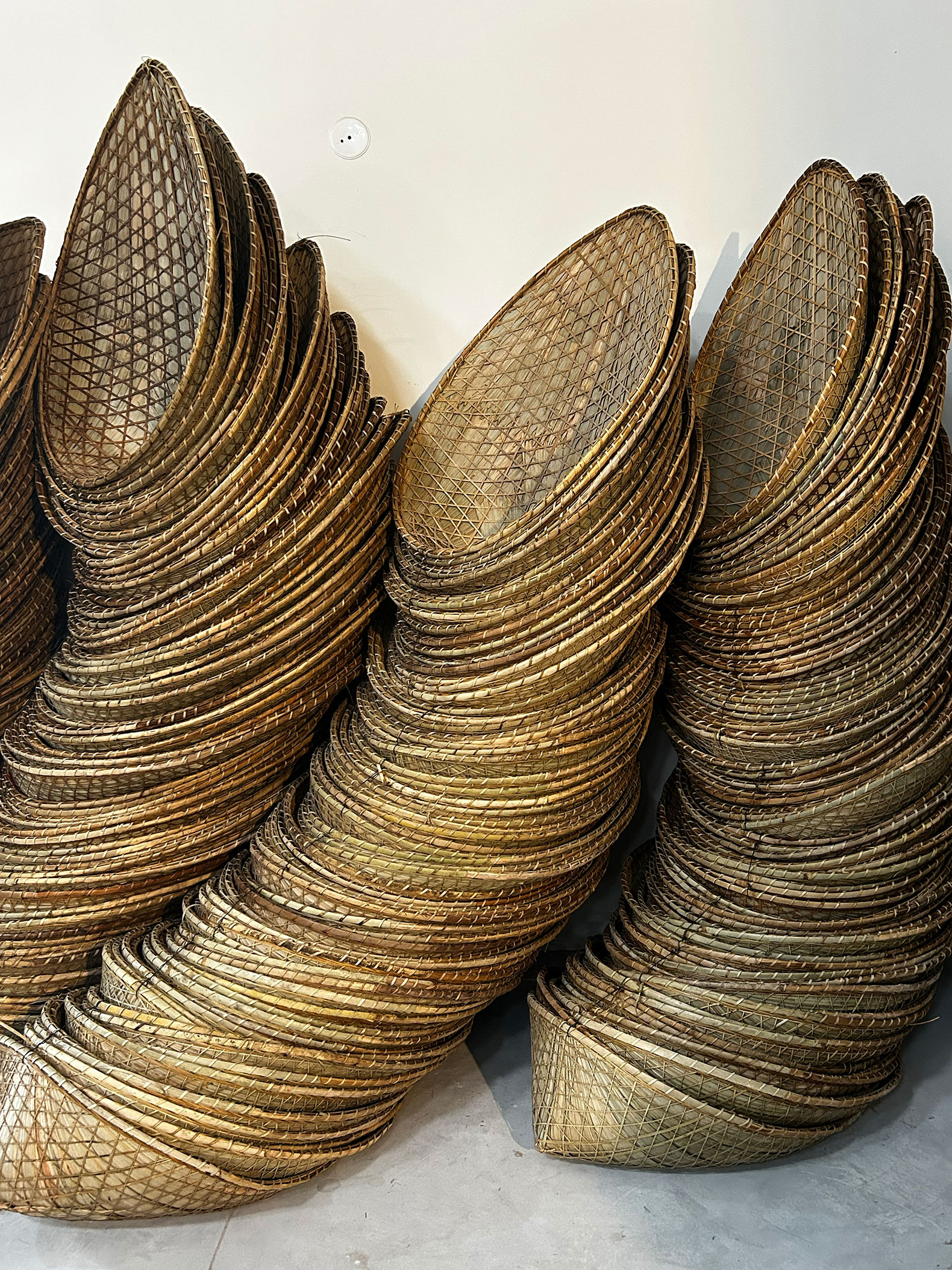
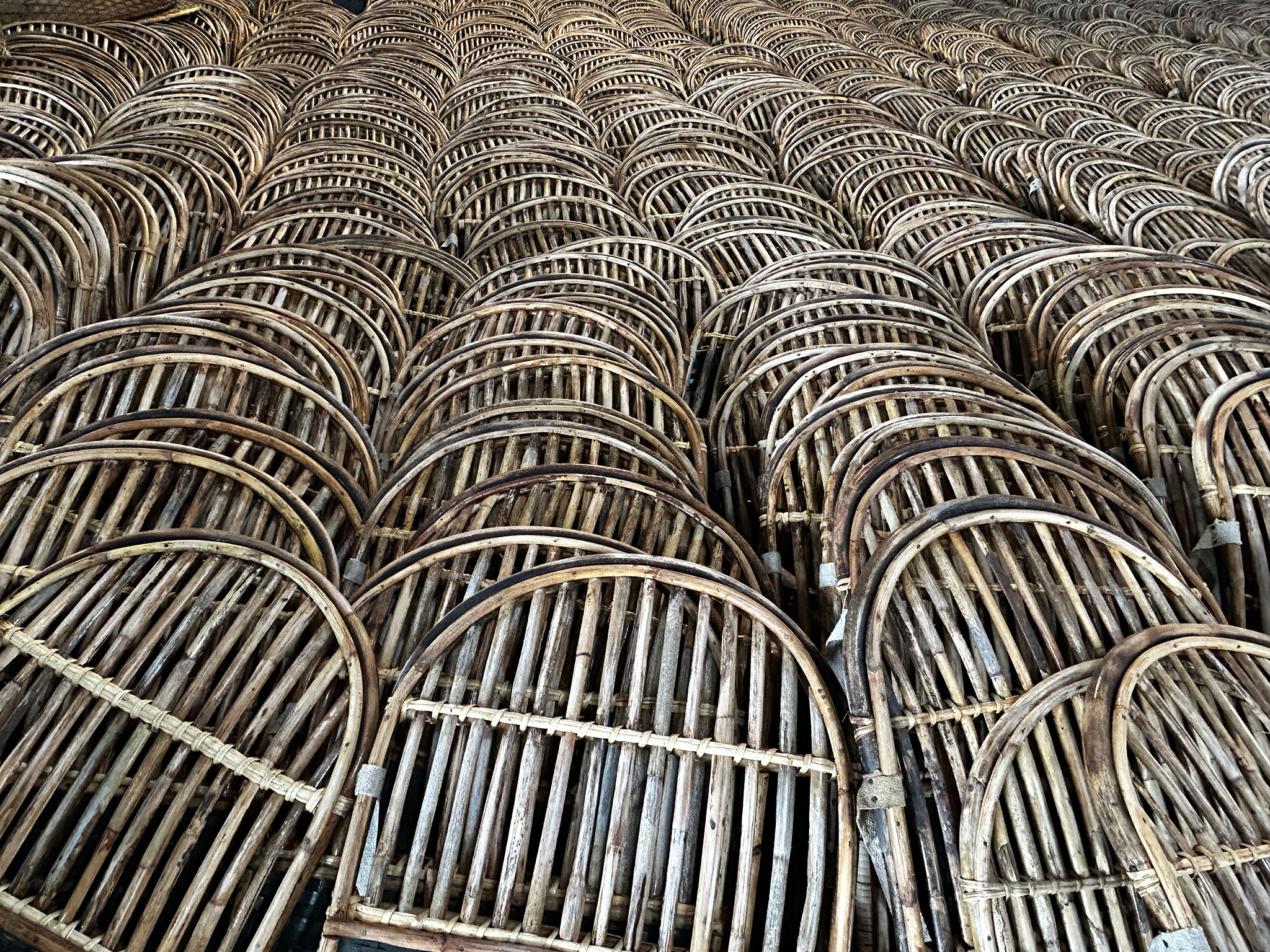
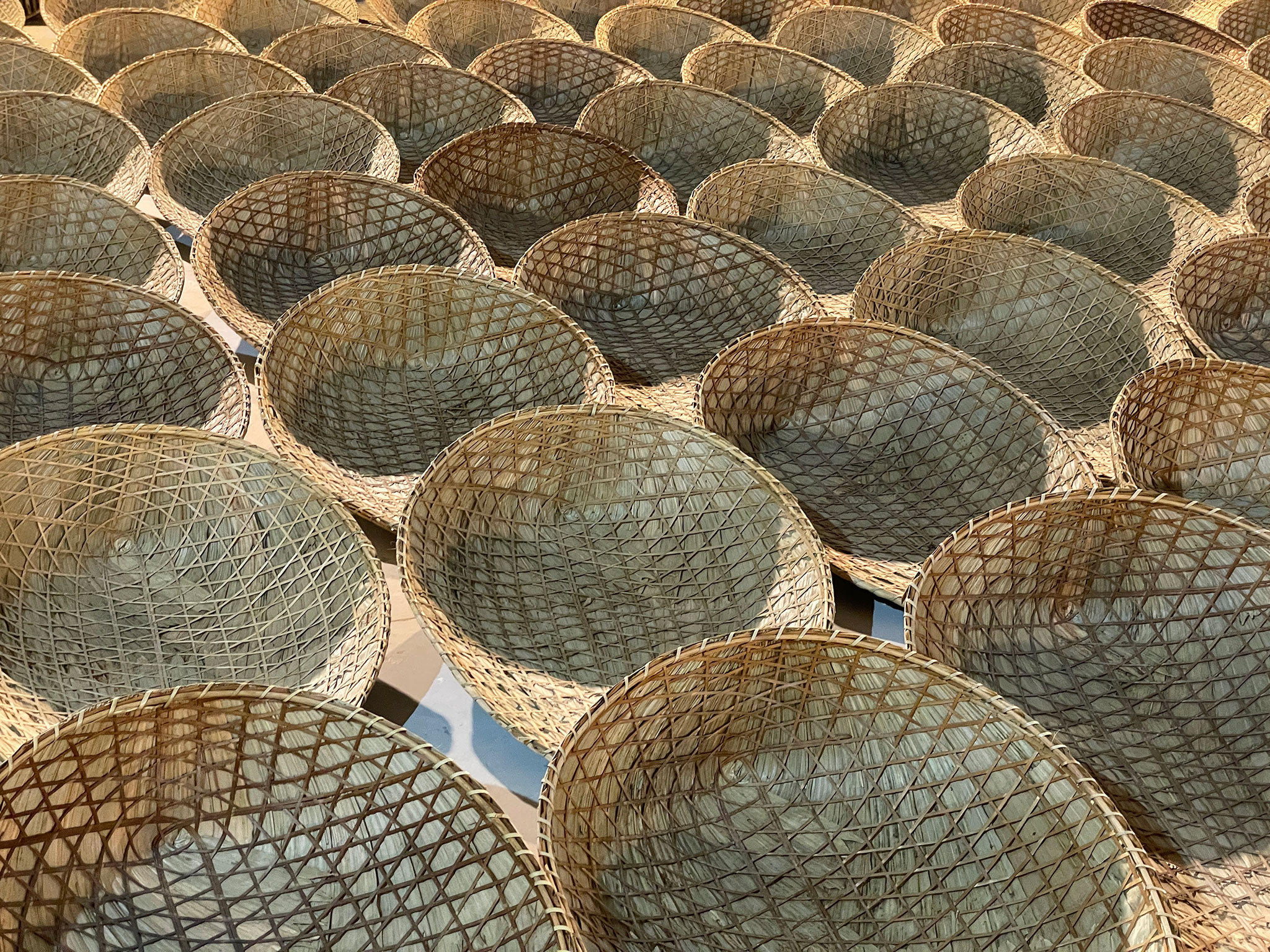
The structure consists of a bamboo gridshell canopy clad in traditional Indian police shields (made of bamboo) and woven waterproof shields known as "knups," traditionally used by farmers in Northeast India, embracing complexity by uniting technology and craftsmanship.
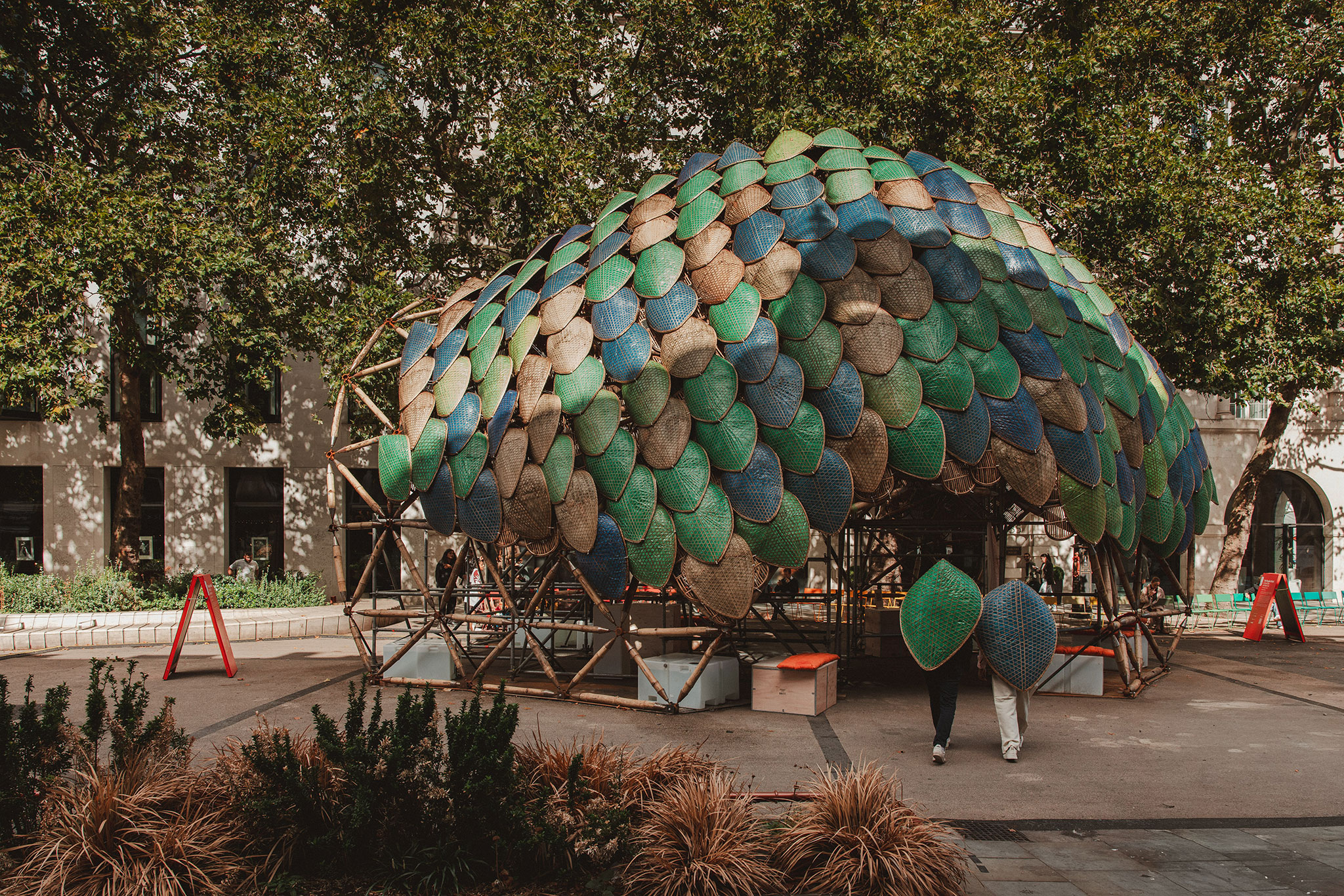
The Pangolin Shield: context, craftsmanship, and innovation. Photograph by Secure.

The Pangolin Shield by Studio Saar + Atelier One. Photograph by Secure.

Layered like scales, the various shields are assembled to form a protective canopy that plays with light and shadow while offering collective shelter to the inner structure. By removing the police shields from their context of confrontation and state authority and integrating them into a functional symbiosis with the "knups," the installation seeks to disarm emblems of aggression and foster empathy and a sense of community.

Situated at Strand Aldwych—a pedestrianized street located behind the High Commission of India and near the bust of Jawaharlal Nehru, India’s first prime minister—the installation invites reflection on colonial legacies and power dynamics between East and West.
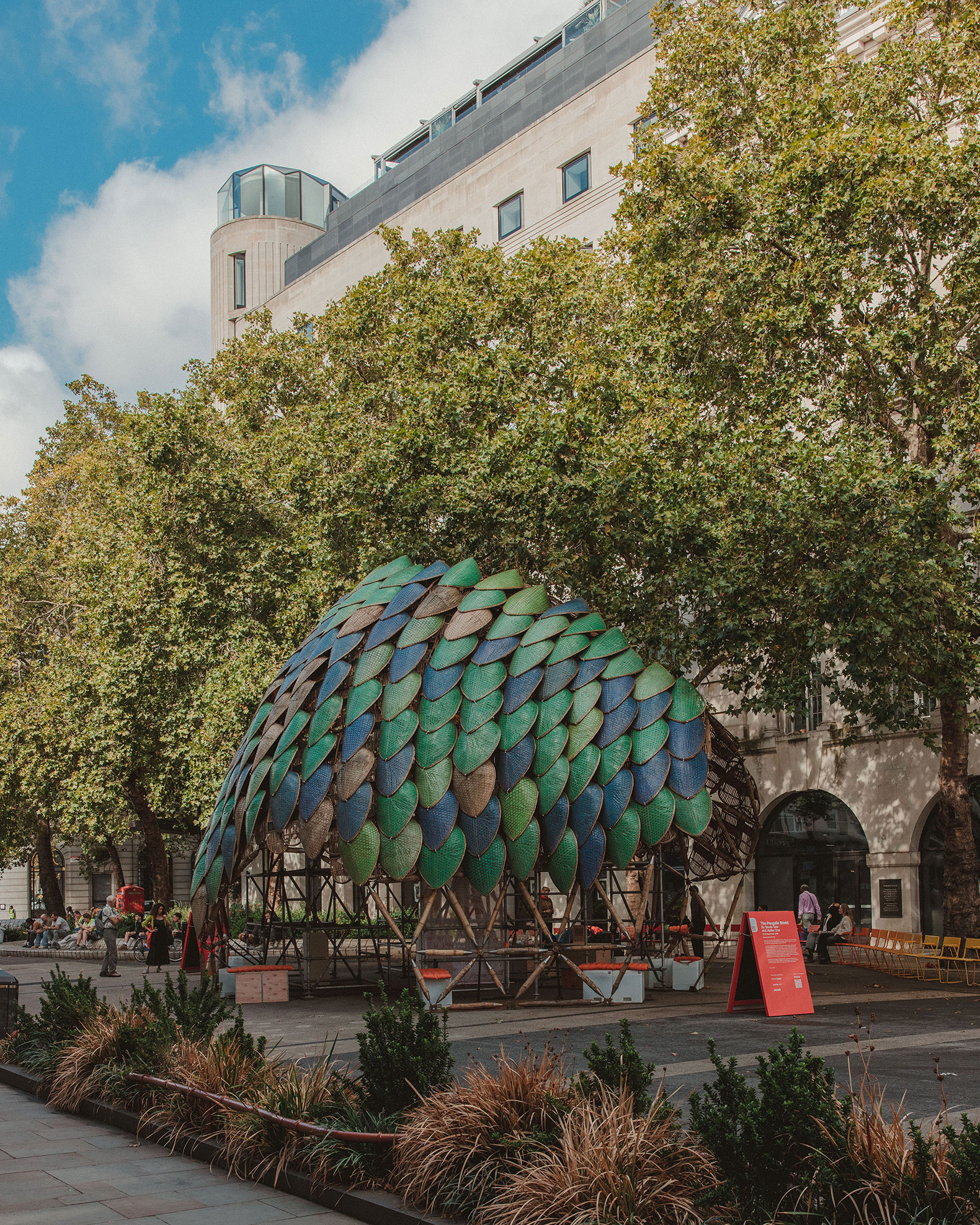
The Pangolin Shield: context, craftsmanship, and innovation. Photograph by Secure.

The Pangolin Shield by Studio Saar + Atelier One. Photograph by Secure.

"I firmly believe in the power of bringing small things together, whether from a philosophical, political, or economic perspective." "This is consistently reflected in the work of Studio Saar, where often-overlooked materials are combined to create something greater, more powerful, and more impactful; the Pangolin Shield is precisely that. This installation fosters dialogue about craftsmanship, context, and the impact of colonial rule. I am deeply interested in exploring these enduring legacies that we need to discuss. I want to help raise awareness through curiosity and promote mutual understanding and reconciliation."

Ananya Singhal, Managing Partner at Studio Saar.
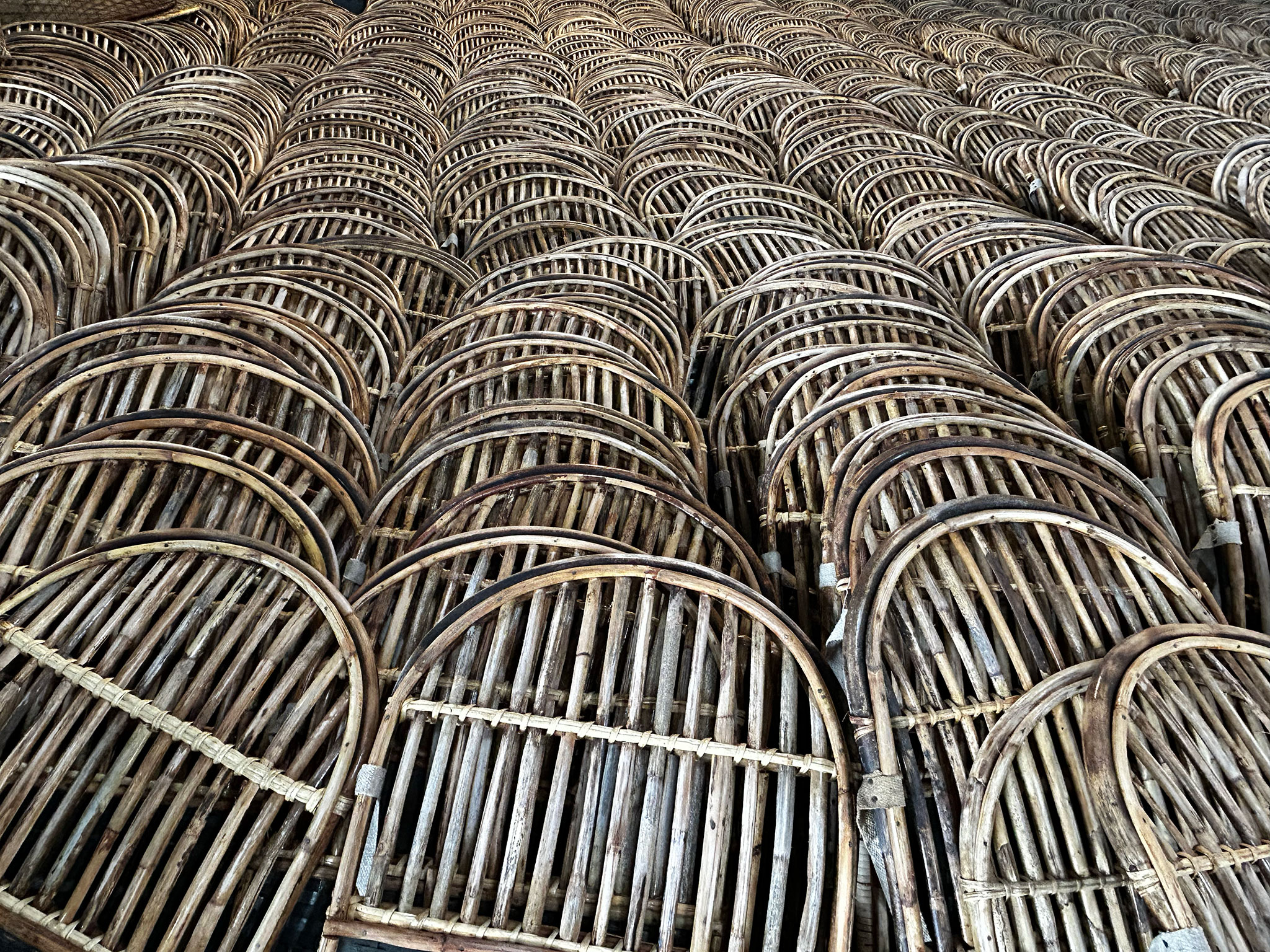
  Construction process. The Pangolin Shield: context, craftsmanship, and innovation.

Construction process. The Pangolin Shield by Studio Saar + Atelier One.

"Nature has its own rules and follows them very effectively, having done so for 400 million years. We have been working with bamboo for a long time, and one of the challenges lies in how to join it to create forms in a replicable way. We have been developing these connectors through research and a deep understanding of the complex properties of this natural material. We have reached a point where technology allows us to work with nature’s quirks—those beautiful variations it presents—by using a series of connectors; it is exciting to continue exploring these possibilities through various projects around the world."

Neil Thomas, Founder and Director of Atelier One.
More information

Label
Architects
Text

Studio Saar. Lead architects.- Jonny Buckland, Ananya Singhal. 

+ + copy Created with Sketch.
- + copy Created with Sketch.
Label
Project team
Text

Structural engineers.- Atelier One, Neil Thomas.

+ + copy Created with Sketch.
- + copy Created with Sketch.
Label
Dates
Text

From September 12 to 20, 2026.

+ + copy Created with Sketch.
- + copy Created with Sketch.
Label
Location
Text

Strand Aldwych, London, England.

+ + copy Created with Sketch.
- + copy Created with Sketch.
Label
Photography
Text

Secure. 

+ + copy Created with Sketch.
- + copy Created with Sketch.
Studio Saar was established by Jonny Buckland and Ananya Singhal in 2019, having collaborated for over a decade. The studio’s architecture is underpinned by the ambition to create sustainable solutions for society, achieved by cross-cultural sharing of emerging ideas, methodologies, and technologies.

The practice is split across its two offices in Frome, Somerset (UK), and Udaipur, Rajasthan (India). Its architecture is rooted in understanding the importance of people, culture, and place. Whether in Somerset or Rajasthan, the studio’s approach interprets vernacular traditions through a contemporary lens to deliver innovative, relevant, and beautiful design solutions across a range of typologies.

Key schemes include Third Space, a cultural and learning centre in Udaipur; Secure Sanand Factory and Canteen in Ahmedabad, Gujarat; the redevelopment of Udaan Park in Udaipur; the Mayday masterplan for Saxonvale Frome; as well as several one-off dwellings and residences in the UK and India.

Studio Saar is a subsidiary business of Secure Meters, an Indian multi-national smart metering and energy management company with operations in India, the UK, Bangladesh, Australia, Italy, Singapore, Switzerland, Sweden, and the UAE. This affiliation provides a unique platform to align architectural practice with broader sustainability and energy efficiency goals, allowing the studio to engage in high-impact projects that address global challenges such as energy access, climate resilience, and social equity.

Through a design process that blends local craftsmanship with advanced technologies and by fostering close collaboration with communities, artisans, and stakeholders, Studio Saar continues to deliver architecture that is both contextually rooted and future-oriented, catalysing positive environmental and social change.

Read more

Atelier One is an engineering practice founded by Neil Thomas in 1989 in Fordingbridge, Hampshire, England. The practice is described as "the UK's most innovative engineering studio."

It has achieved international recognition as a structural engineering firm specializing in highly complex projects. Its collaborations with architects, artists, and designers have resulted in notable works such as "Gardens by the Bay" (alongside Grant Associates and Wilkinson Eyre), the opening ceremonies for the London 2012 and Sochi 2014 Olympic Games, Anish Kapoor's "Cloud Gate" sculpture, and "The Claw" stage for U2's "360 Degree" world tour (with Mark Fisher).

Neil has taught at Yale and MIT and was recently appointed a lifelong visiting professor at his alma mater, the University of Leeds, where he serves on the steering committee developing a new architectural engineering curriculum.

In 2014, Neil was named a "Royal Designer for Industry" in recognition of his excellence and innovation in structural design and his enduring ingenuity as a structural engineer collaborating on pioneering public art installations. That same year, he was awarded an honorary Fellowship of the RIBA (Royal Institute of British Architects) for the excellence and creativity of his contribution to architecture over the previous 25 years.

In 2015, he was made a Fellow of the Institution of Structural Engineers, and subsequently, in 2016, he was appointed a Member of the Order of the British Empire (MBE) in the Queen's 90th Birthday Honours, in recognition of his contributions to architecture, design, and engineering. He received the Milne Medal in 2019 and, more recently, in 2025, was awarded the Ronald Sharpe Medal by the Structural Engineers World Congress (SEWC) in Shanghai.

Since visiting Bali over a decade ago, Neil has become increasingly involved in the design and development of bamboo structures. He is a regular lecturer at Bamboo U—an initiative linked to the Green School in Bali—where he teaches the engineering principles underpinning bamboo design. He recently authored the technical appendix for the book *Bamboo Contemporary* (published by Princeton Press) and co-authored an article titled "Advancing engineered bamboo materials for sustainable construction" with Professor Chunping Dai of the University of British Columbia (Vancouver).

In 2023, Atelier One received the Supreme Award for Structural Engineers from the Institution of Structural Engineers for the new Green School gymnasium in Bali, a project carried out in collaboration with Ibuku and Jorg Stamm.

Read more
Published on: September 20, 2026
Cite:
metalocus, MARÍA MÍNGUEZ
"Disarm emblems of aggression. The Pangolin Shield by Studio Saar + Atelier One" METALOCUS. Accessed
<https://www.metalocus.es/en/news/disarm-emblems-aggression-pangolin-shield-studio-saar-atelier-one> ISSN 1139-6415
Loading content ...
Loading content ...
Loading content ...
Loading content ...
Loading content ...
Loading content ...
Loading content ...
Loading content ...
Loading content ...
Loading content ...
Loading content ...
Loading content ...
Loading content ...
Loading content ...
Loading content ...
Loading content ...
Loading content ...
Loading content ...
Loading content ...
Loading content ...
Loading content ...
Loading content ...
Loading content ...
Loading content ...
Loading content ...
Loading content ...
Loading content ...
Loading content ...
Loading content ...
Loading content ...
Loading content ...
Loading content ...
Loading content ...
Loading content ...
Loading content ...
Loading content ...
Loading content ...
Loading content ...
Loading content ...
Loading content ...
Loading content ...
Loading content ...
Loading content ...
Loading content ...
Loading content ...
Loading content ...
Loading content ...
Loading content ...
Loading content ...
Loading content ...
Loading content ...
Loading content ...
Loading content ...
Loading content ...