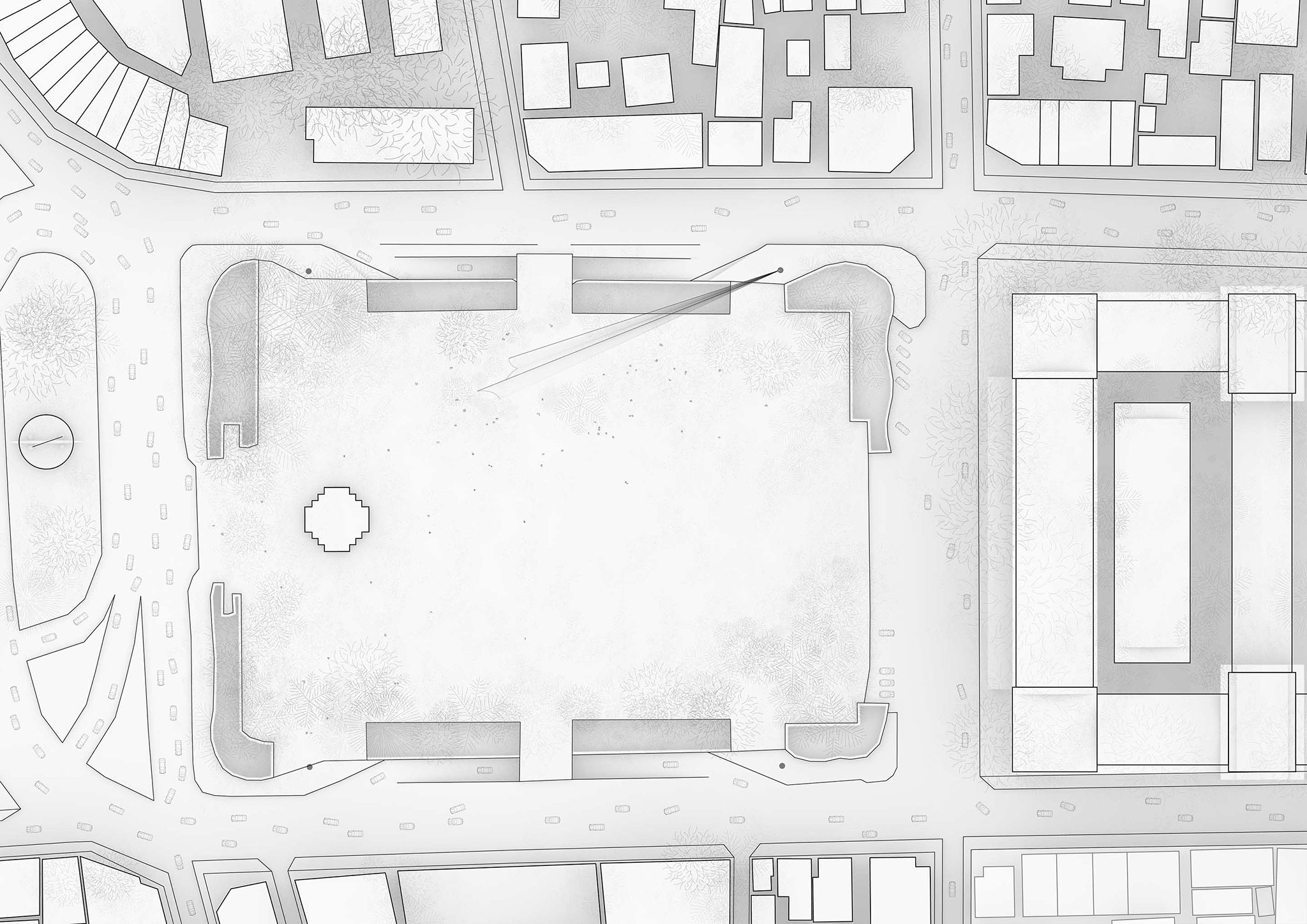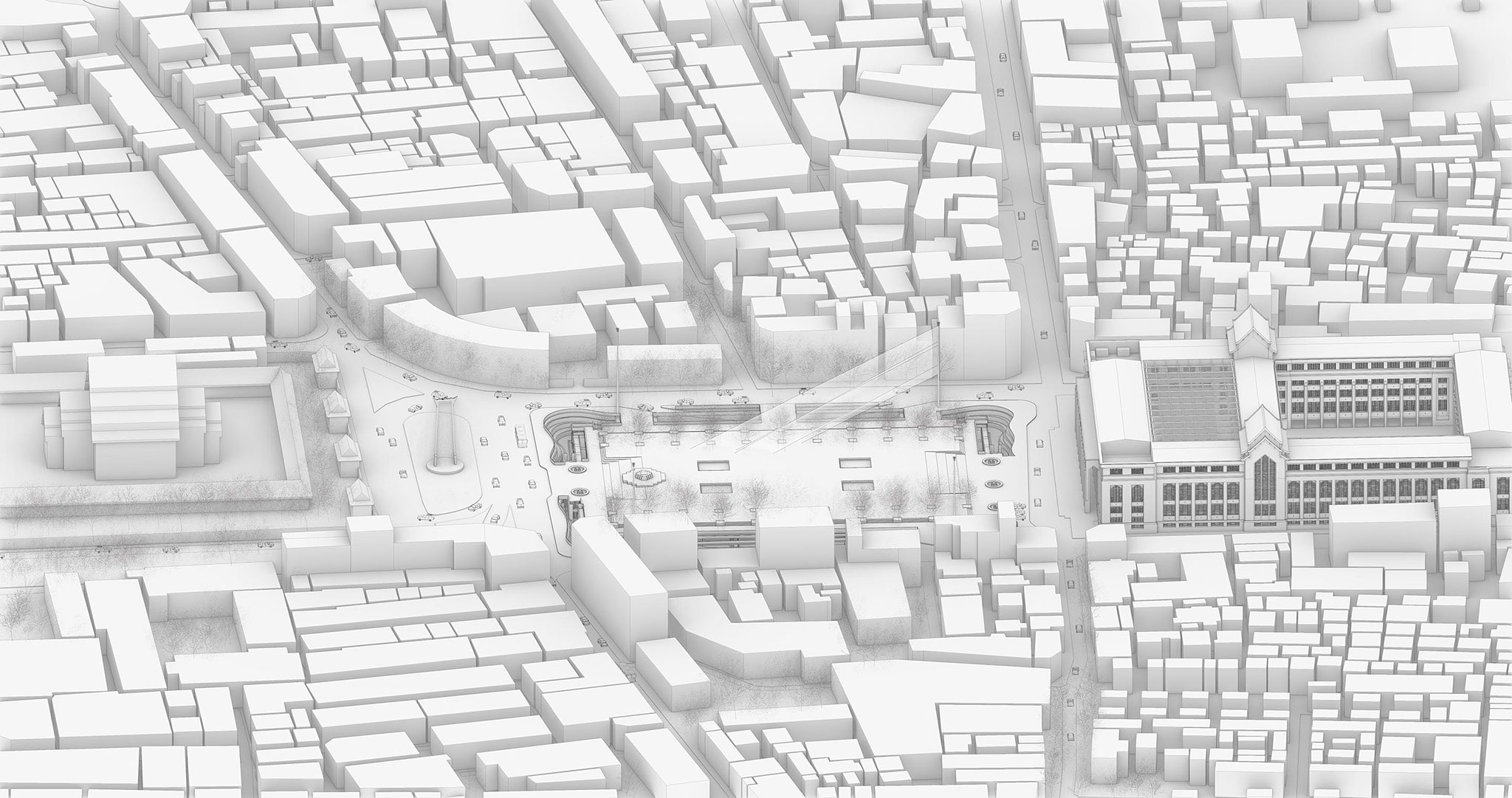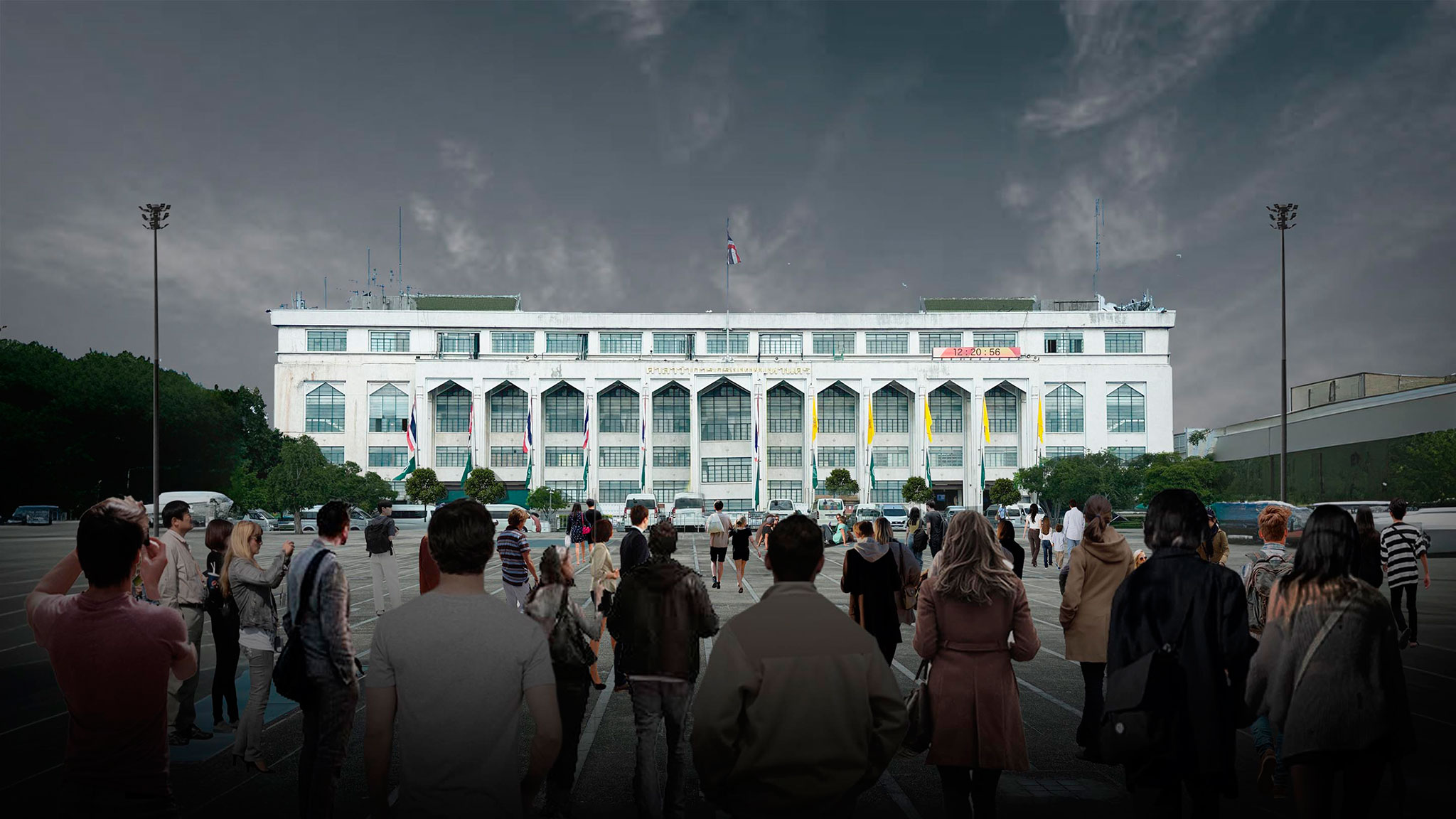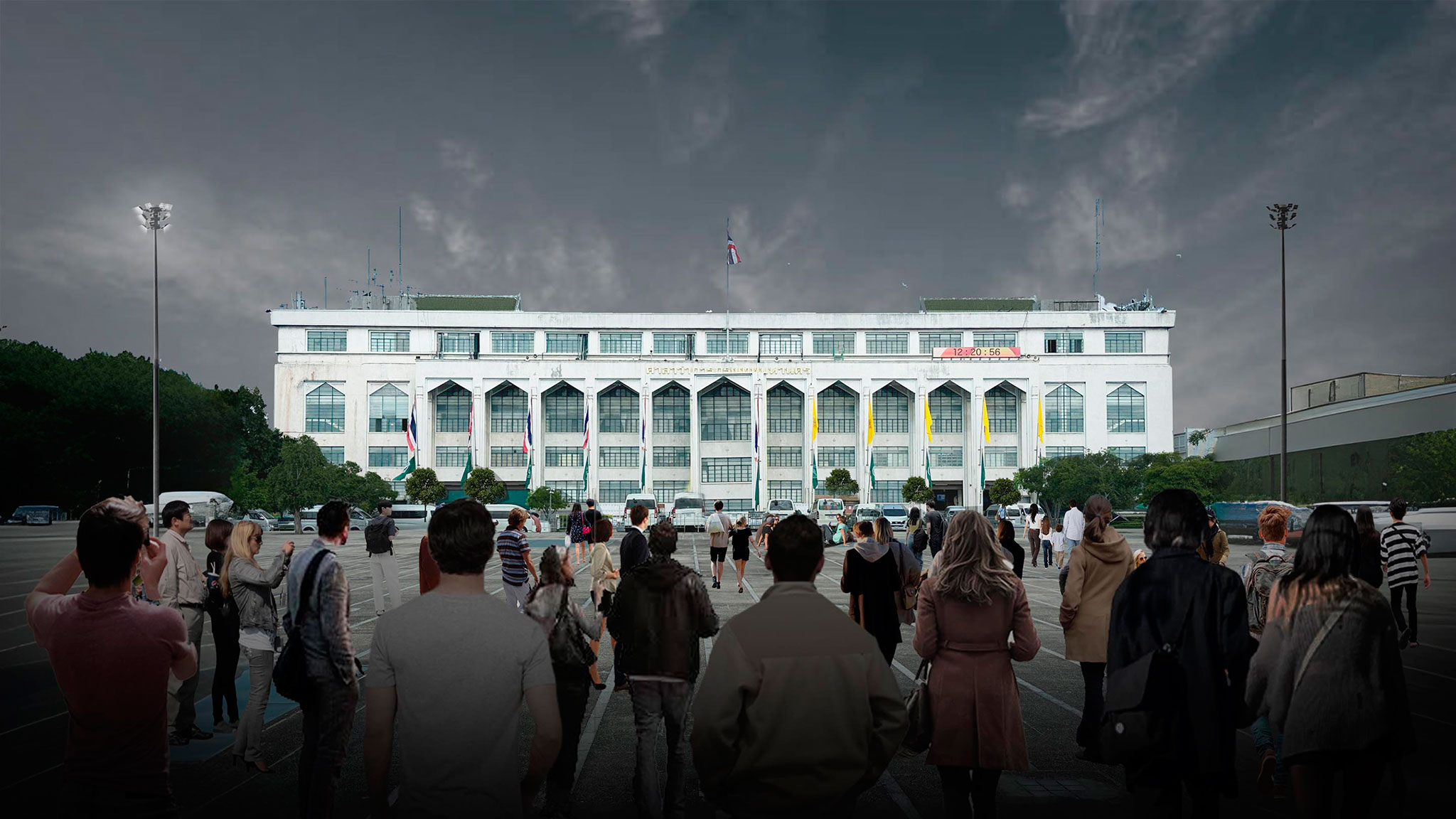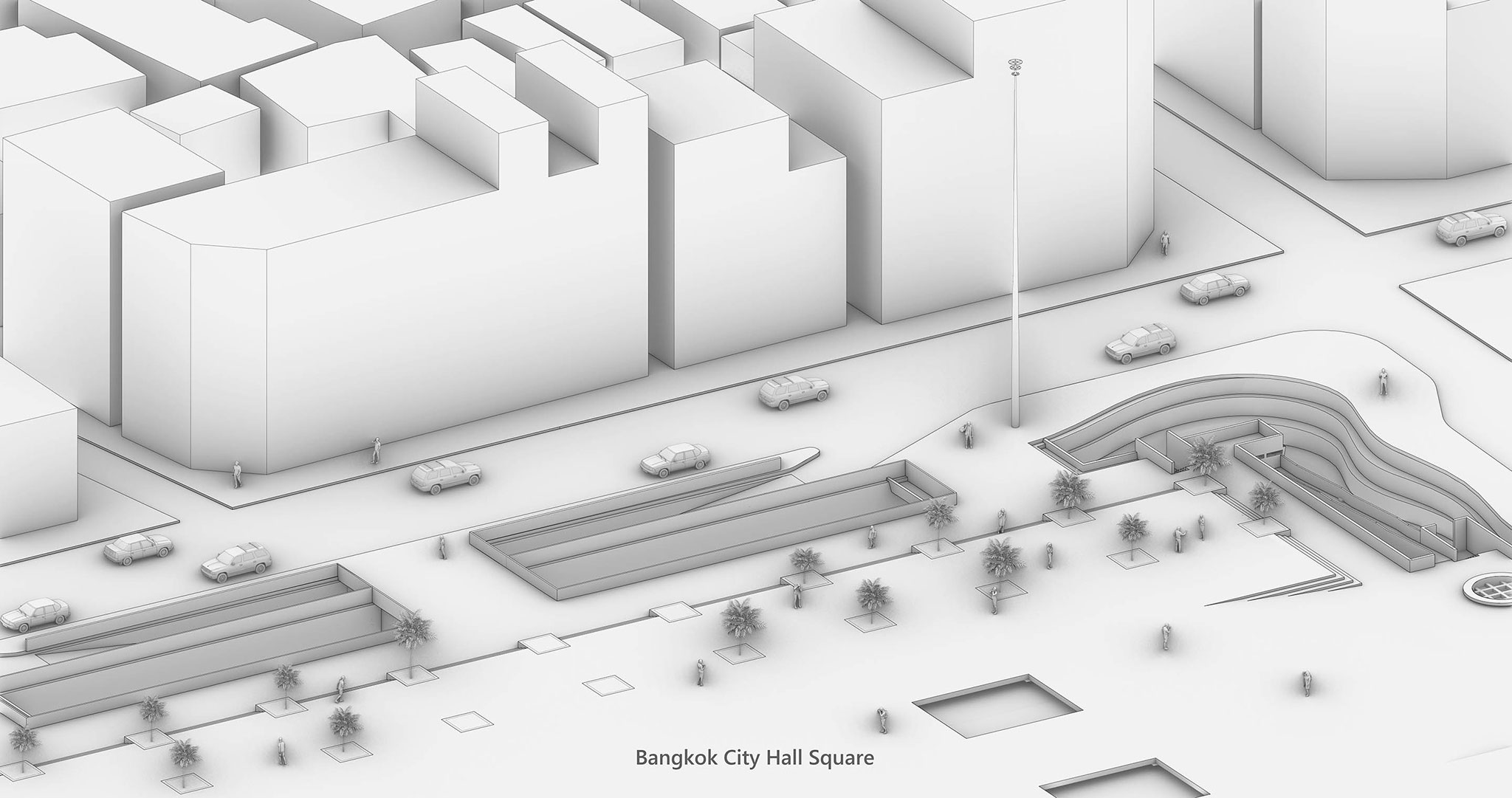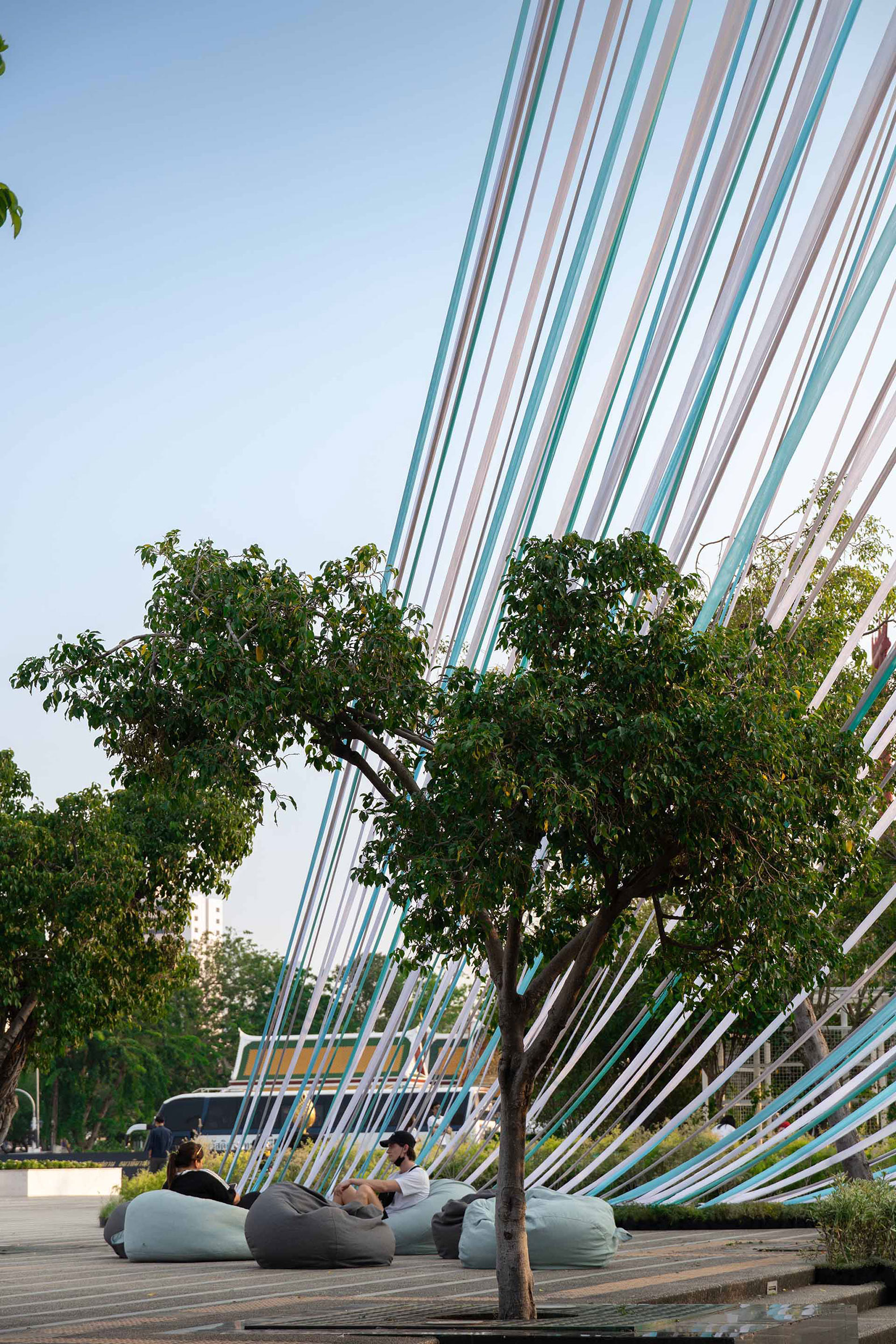
The architecture practice HAS design and research was commissioned to create the "High Line Bangkok" themed pavilion for Bangkok Design Week, an intervention that reinvents and elevates the urban infrastructure of the Phra Nakhon district, located in the expansive public square in front of Bangkok City Hall, Thailand.

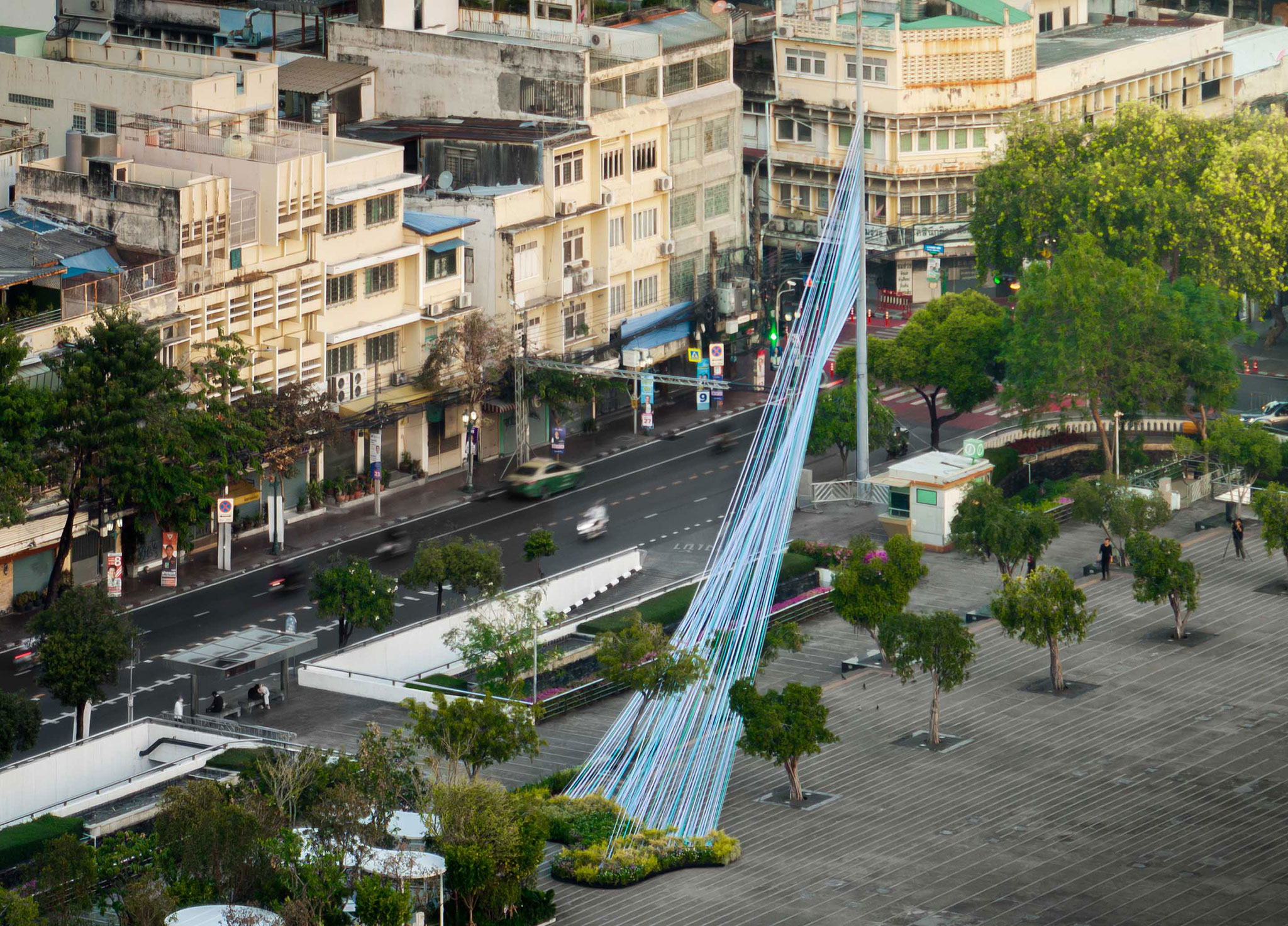
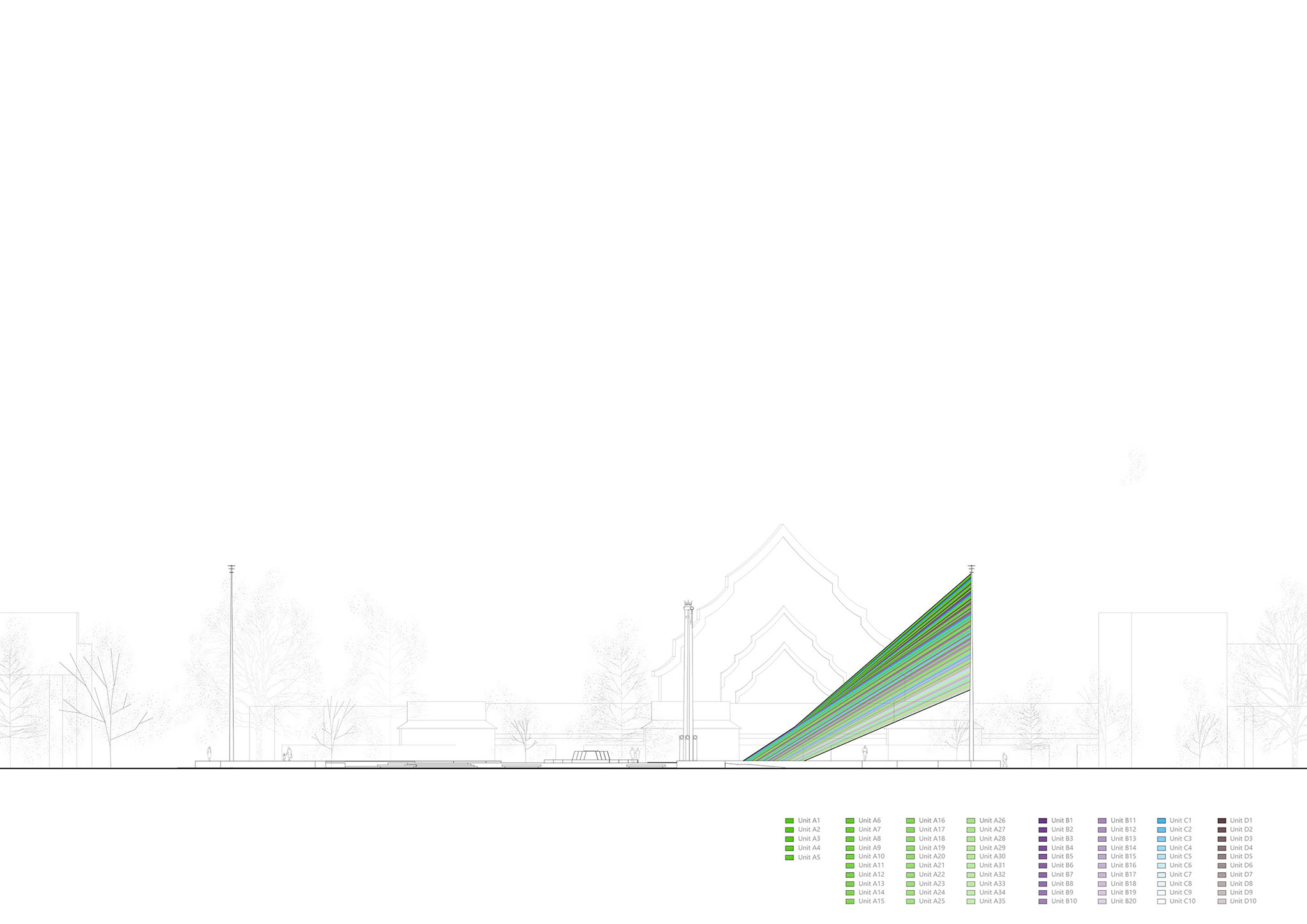
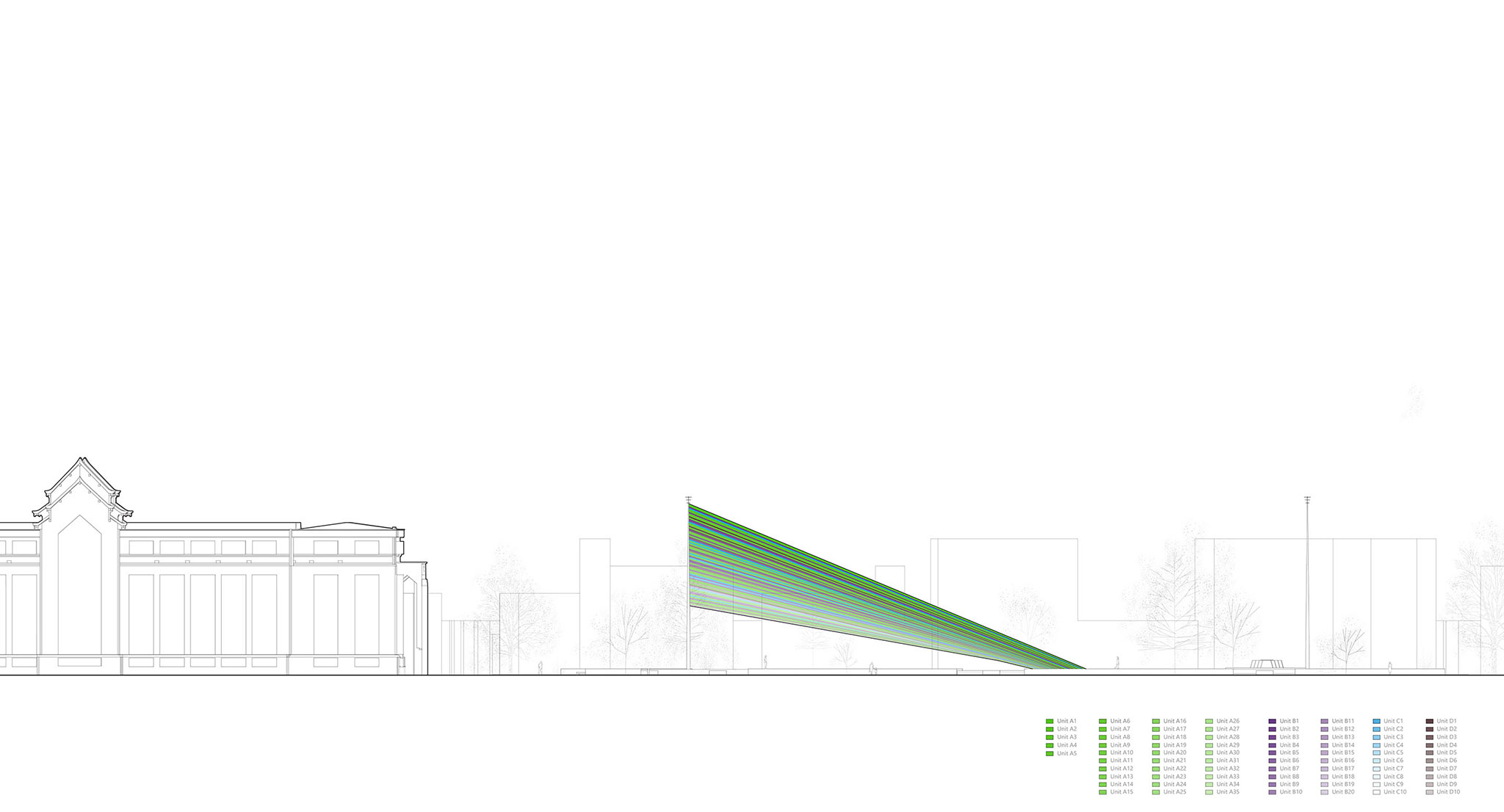
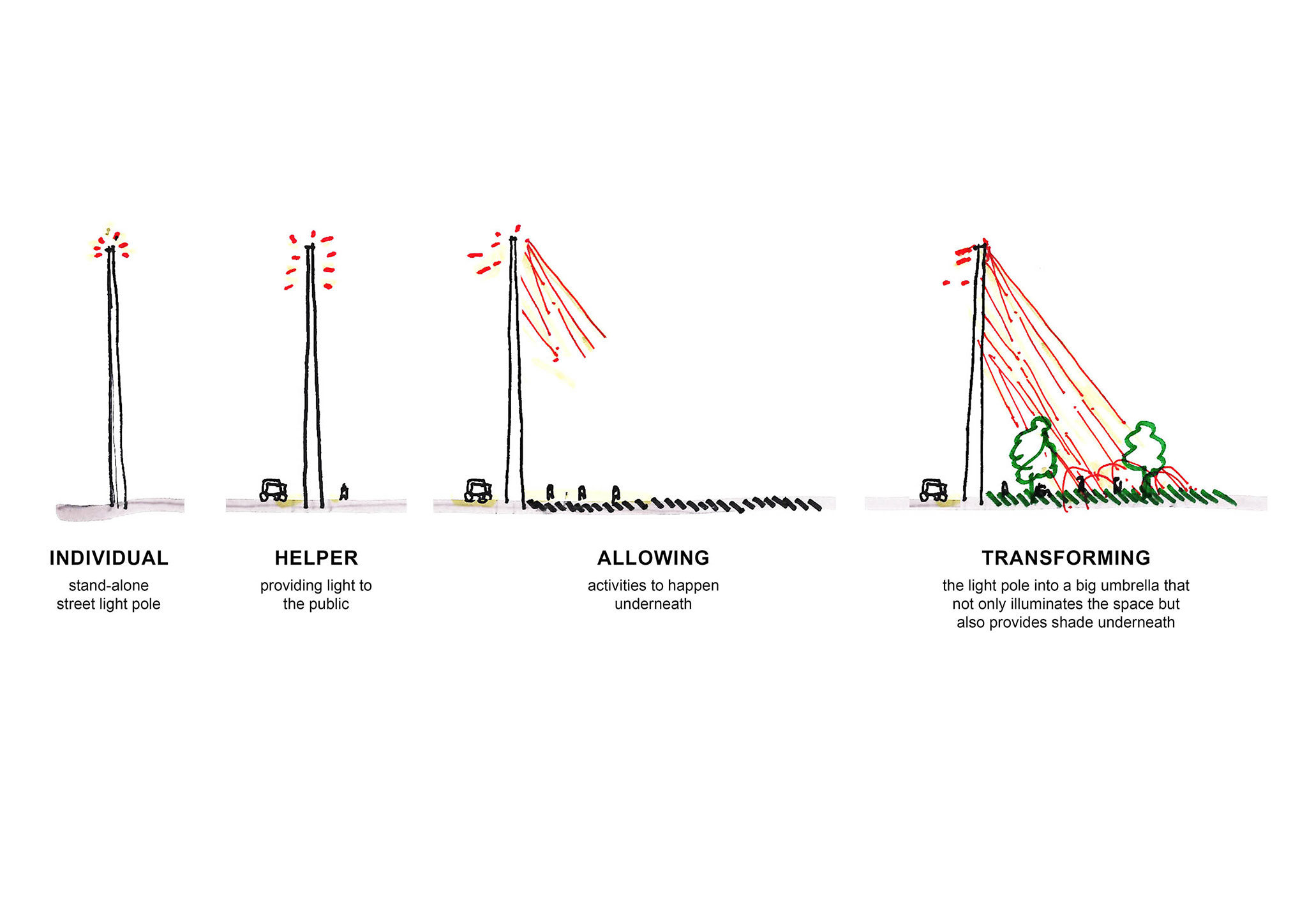
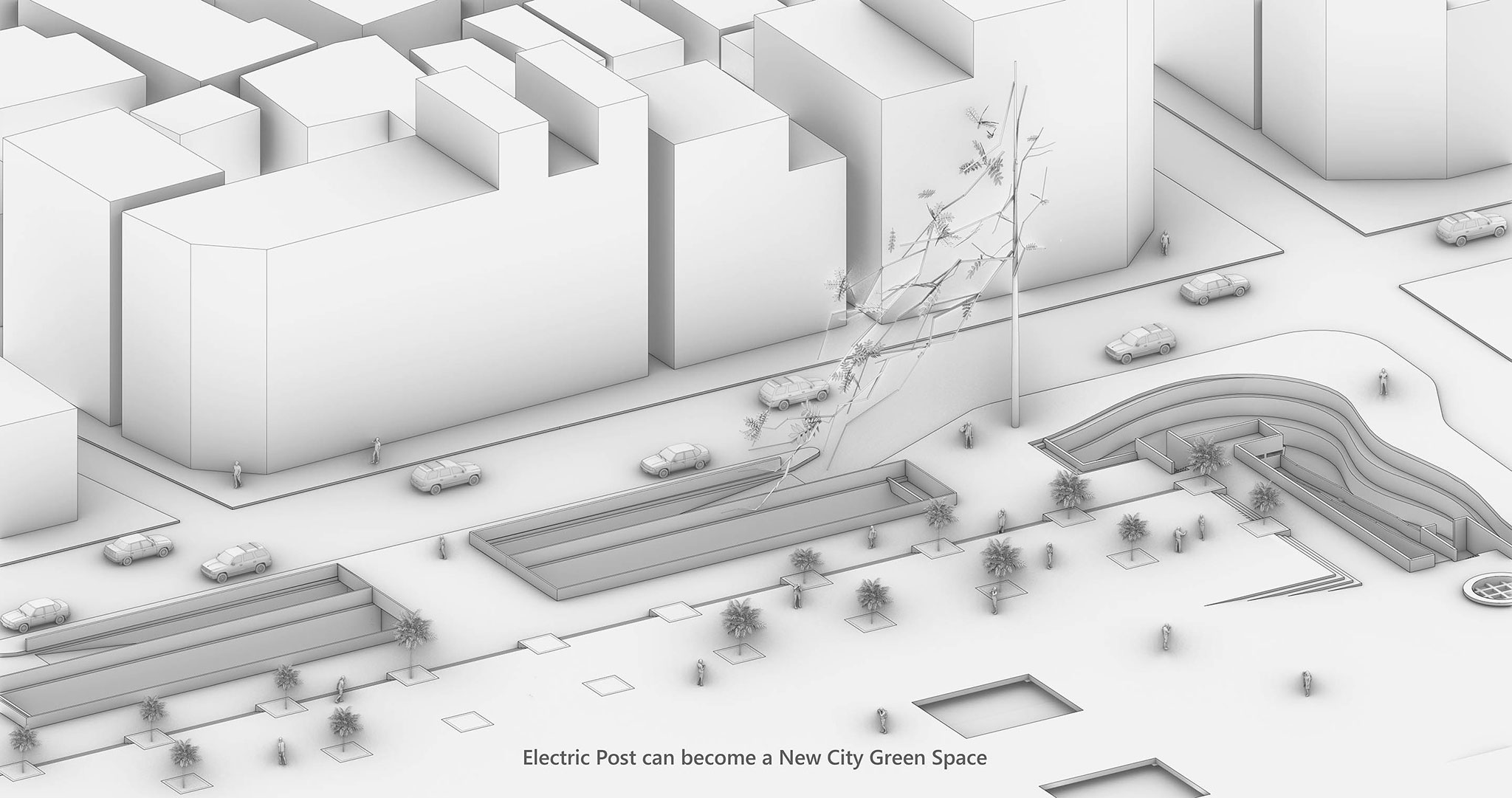
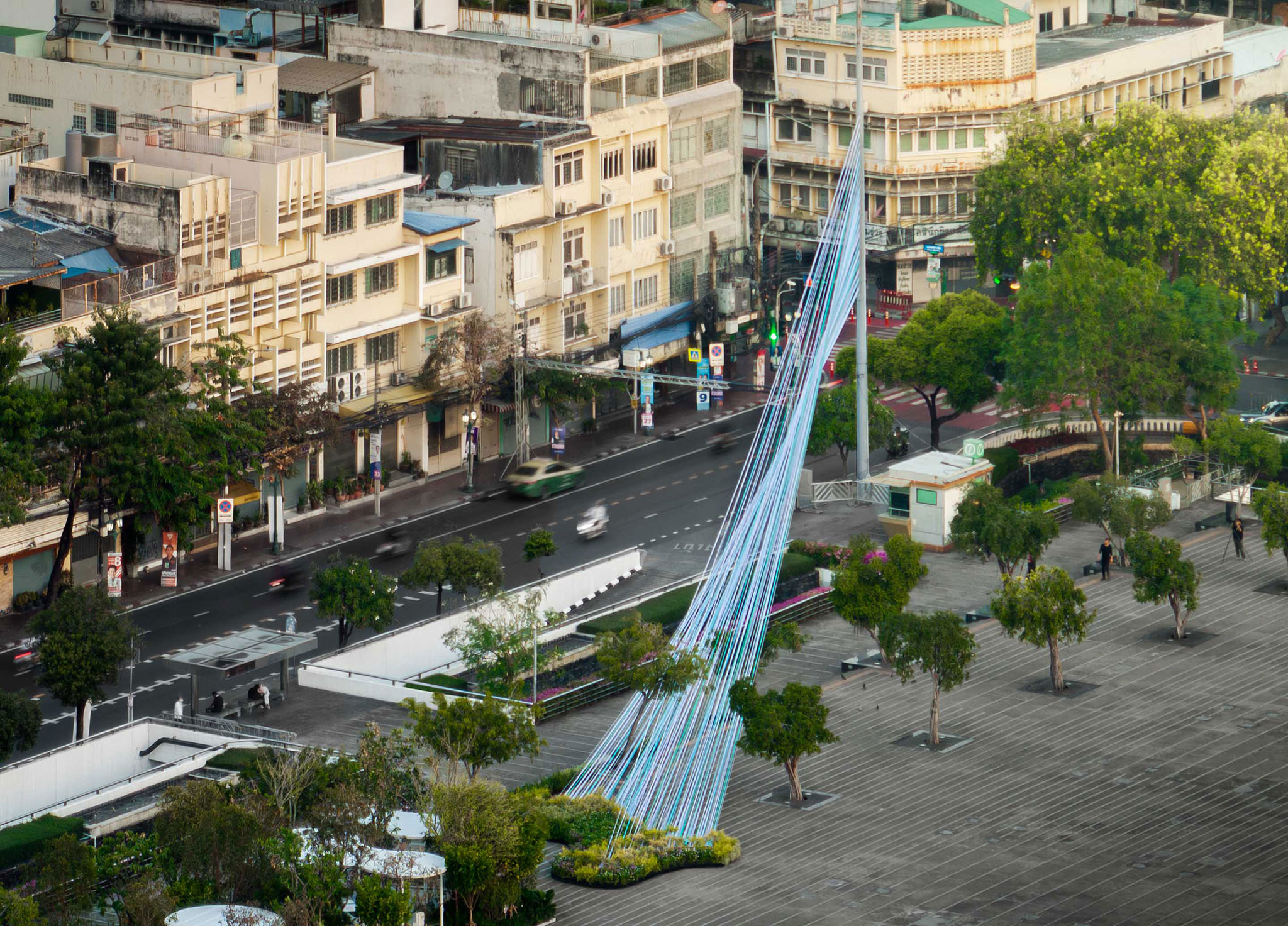
The proposal stems from the architects' in-depth observation of the site, highlighting a distinctive pattern of spatial use influenced by Thailand's tropical climate. The pavilion utilizes existing streetlights as its primary structure, transforming the urban infrastructure into spatial and social catalysts for civic life.

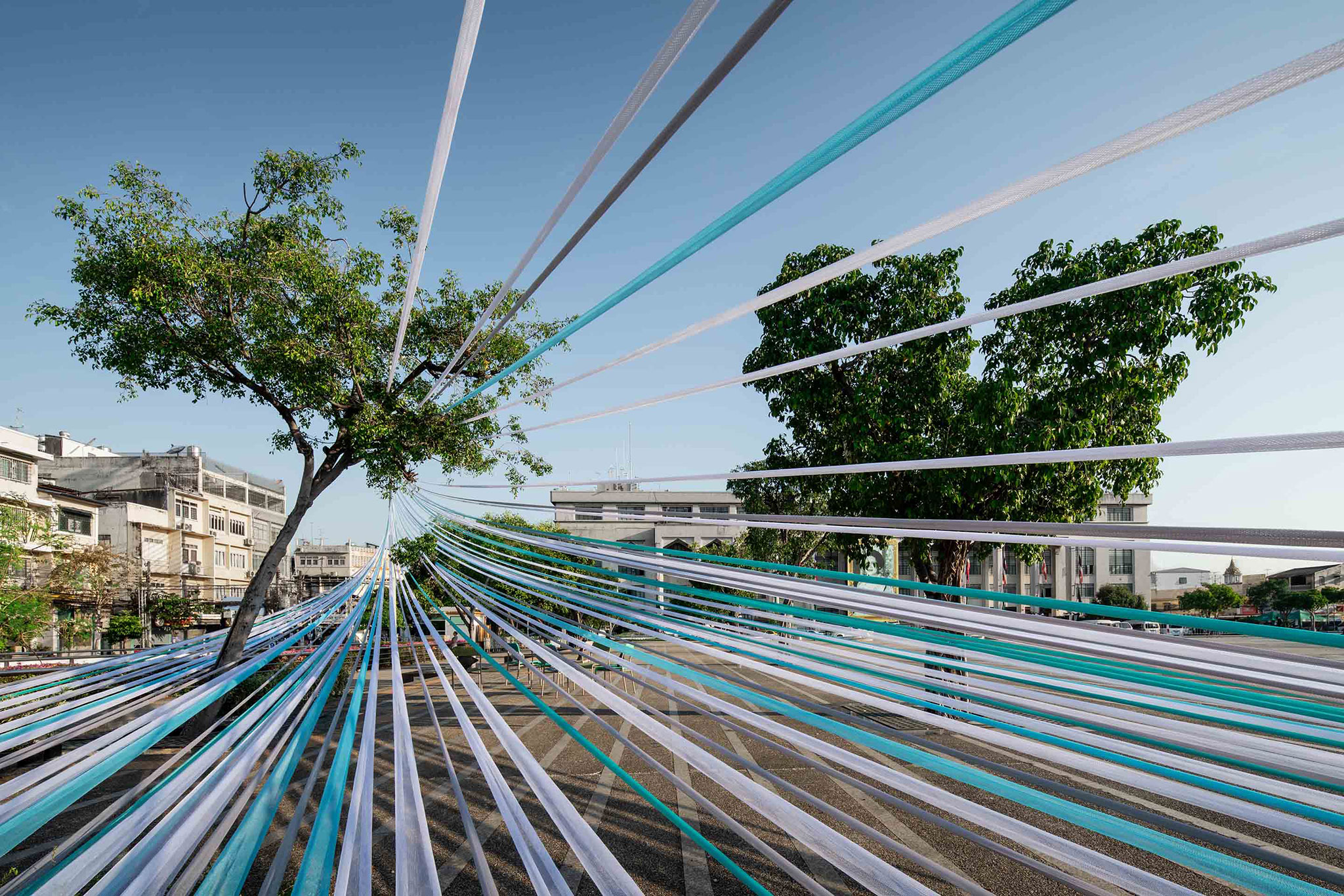
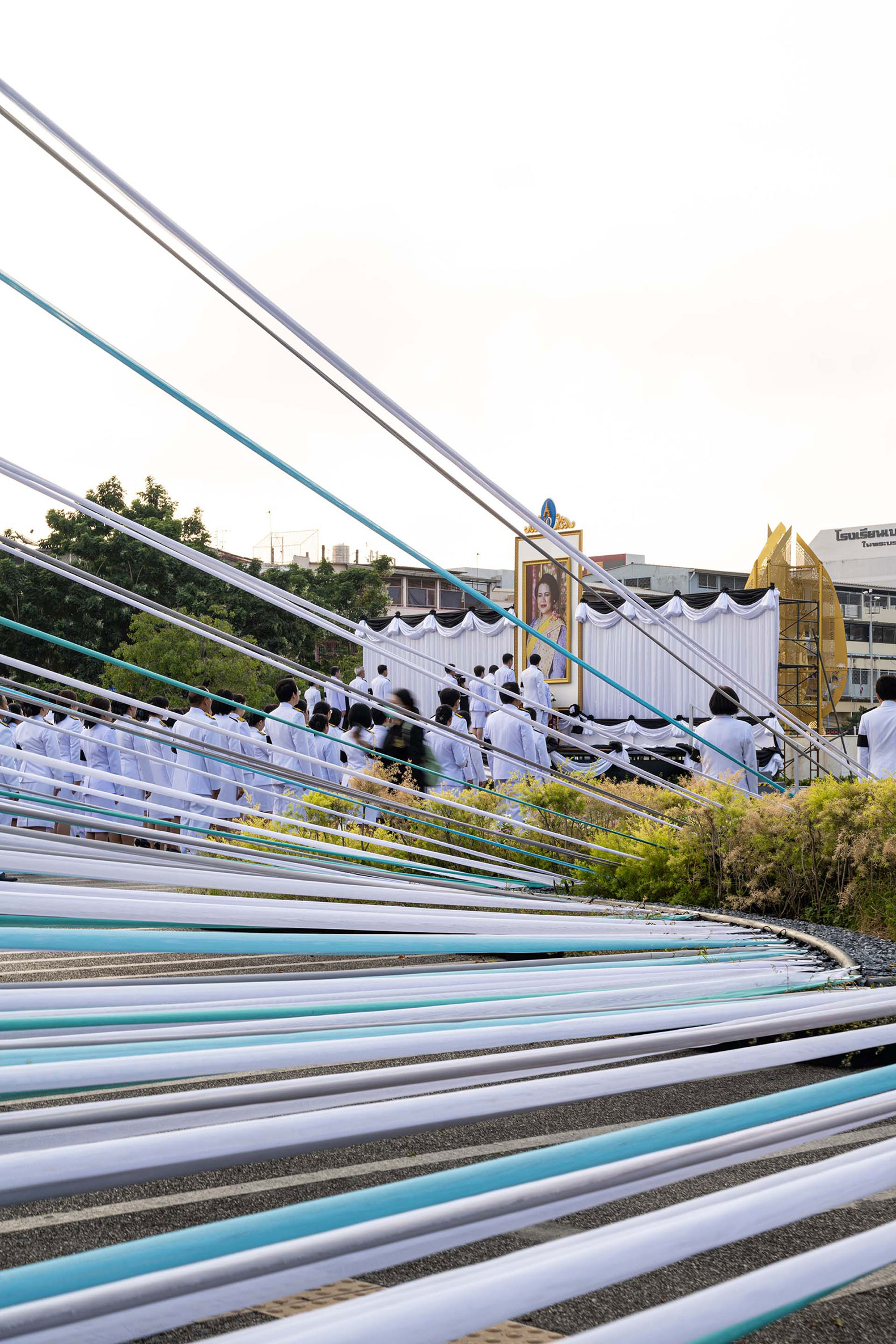
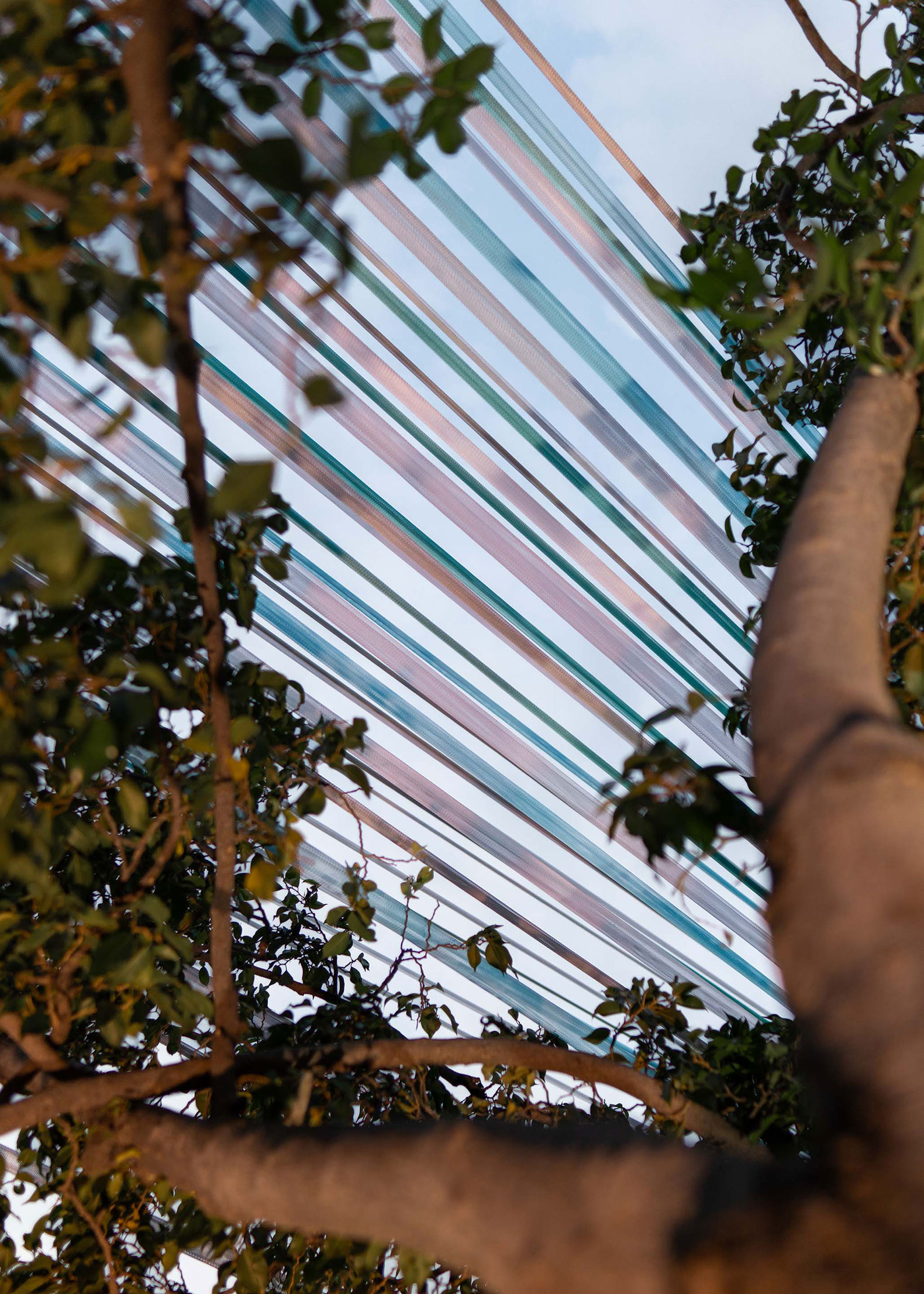
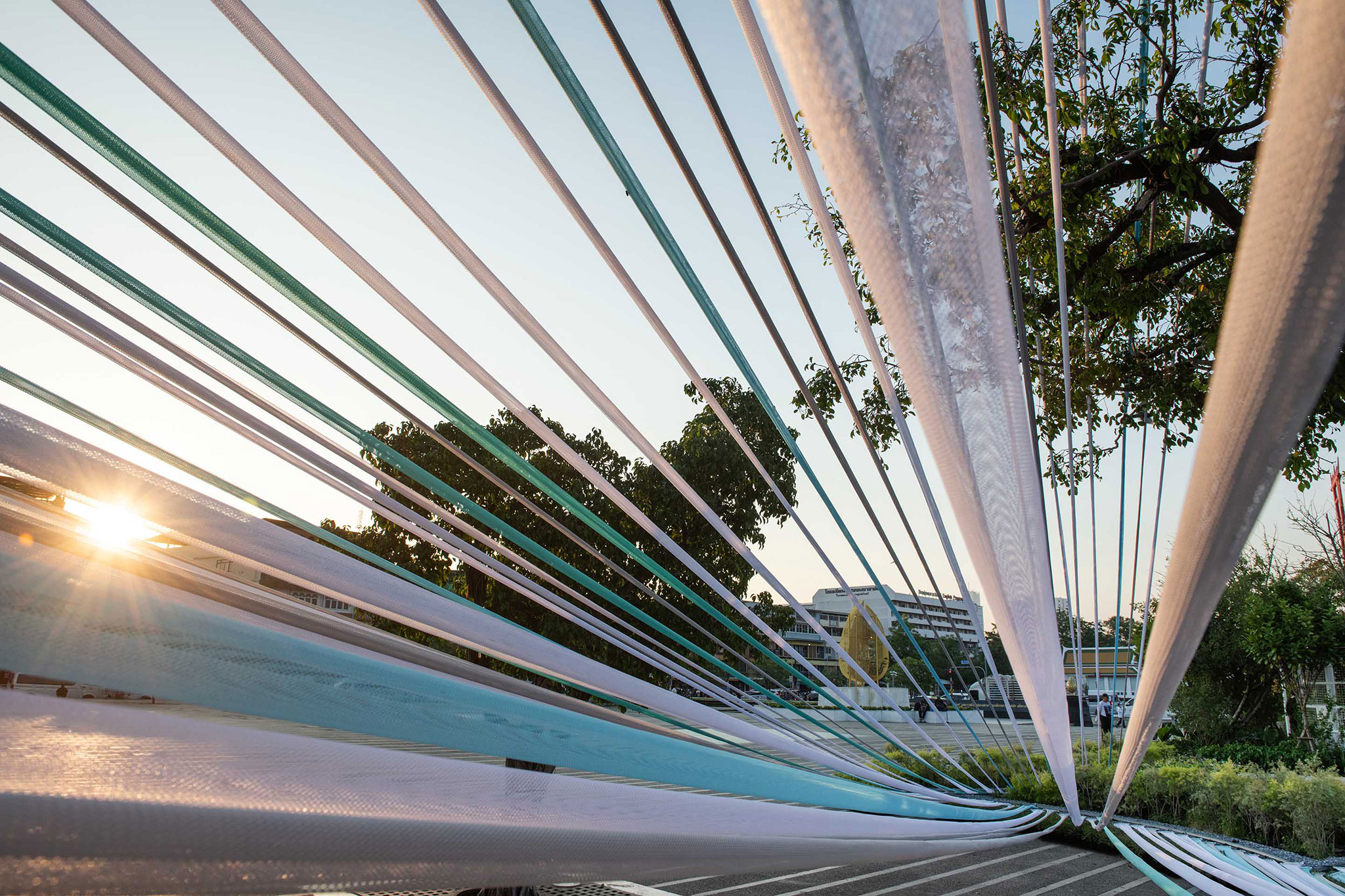
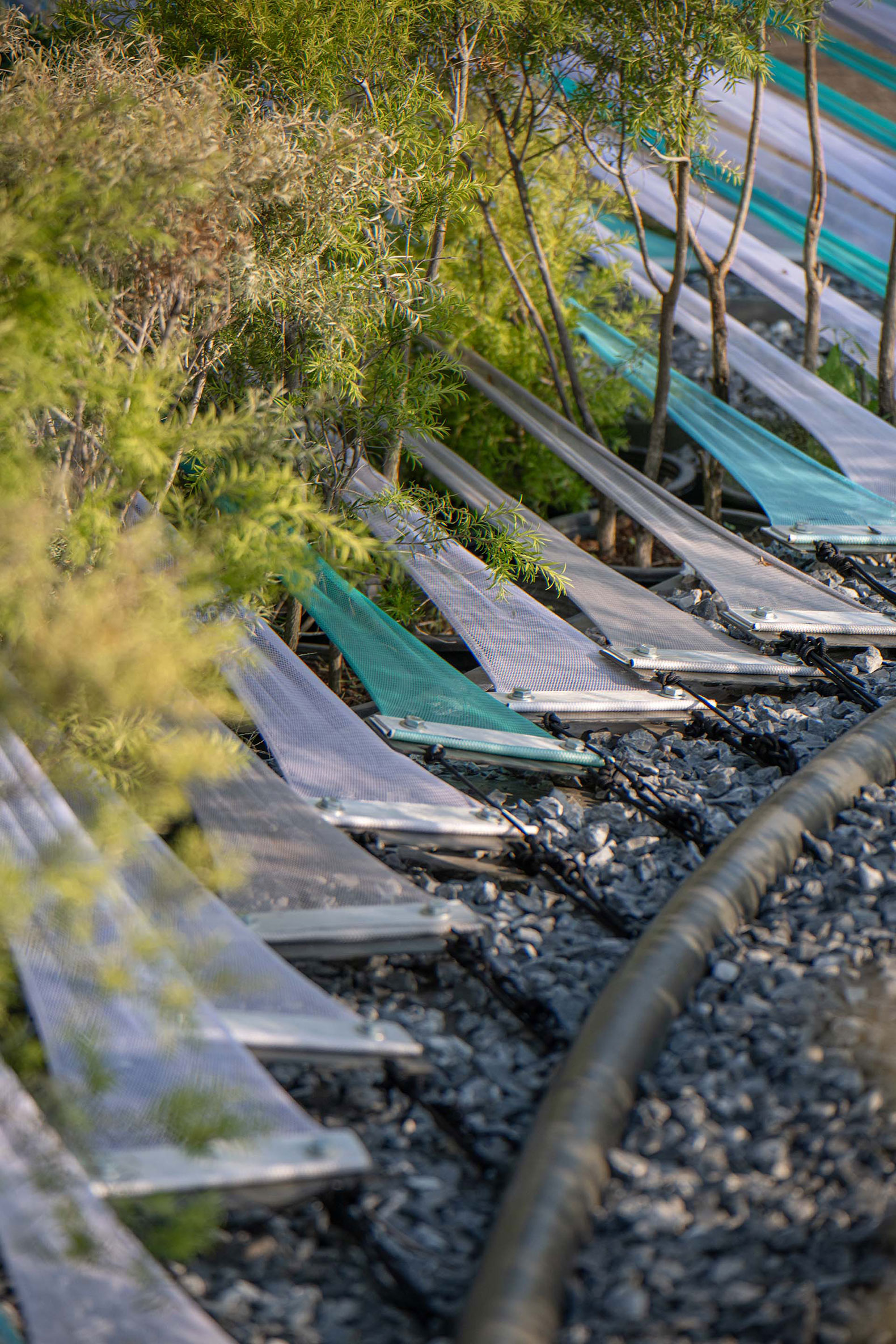
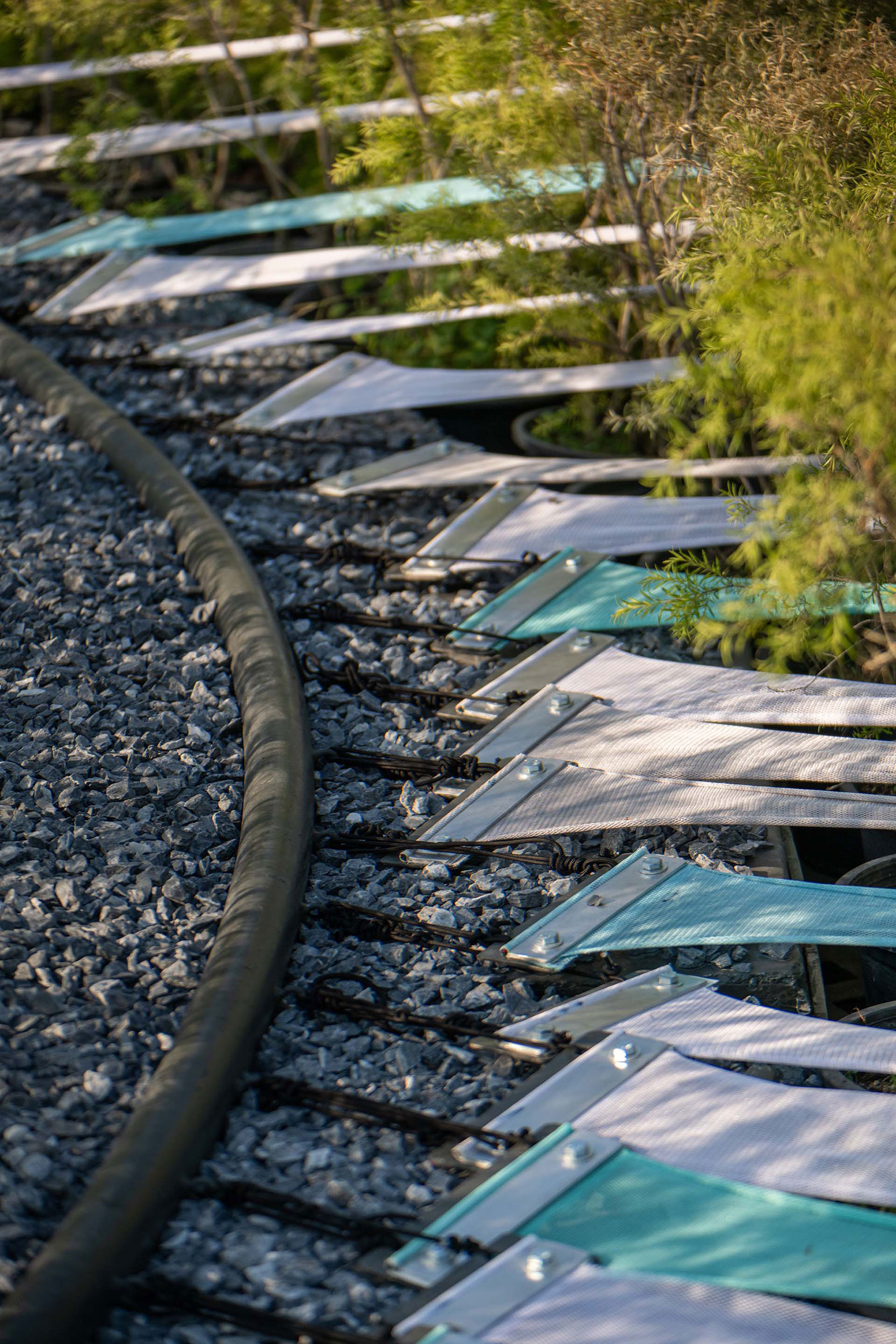
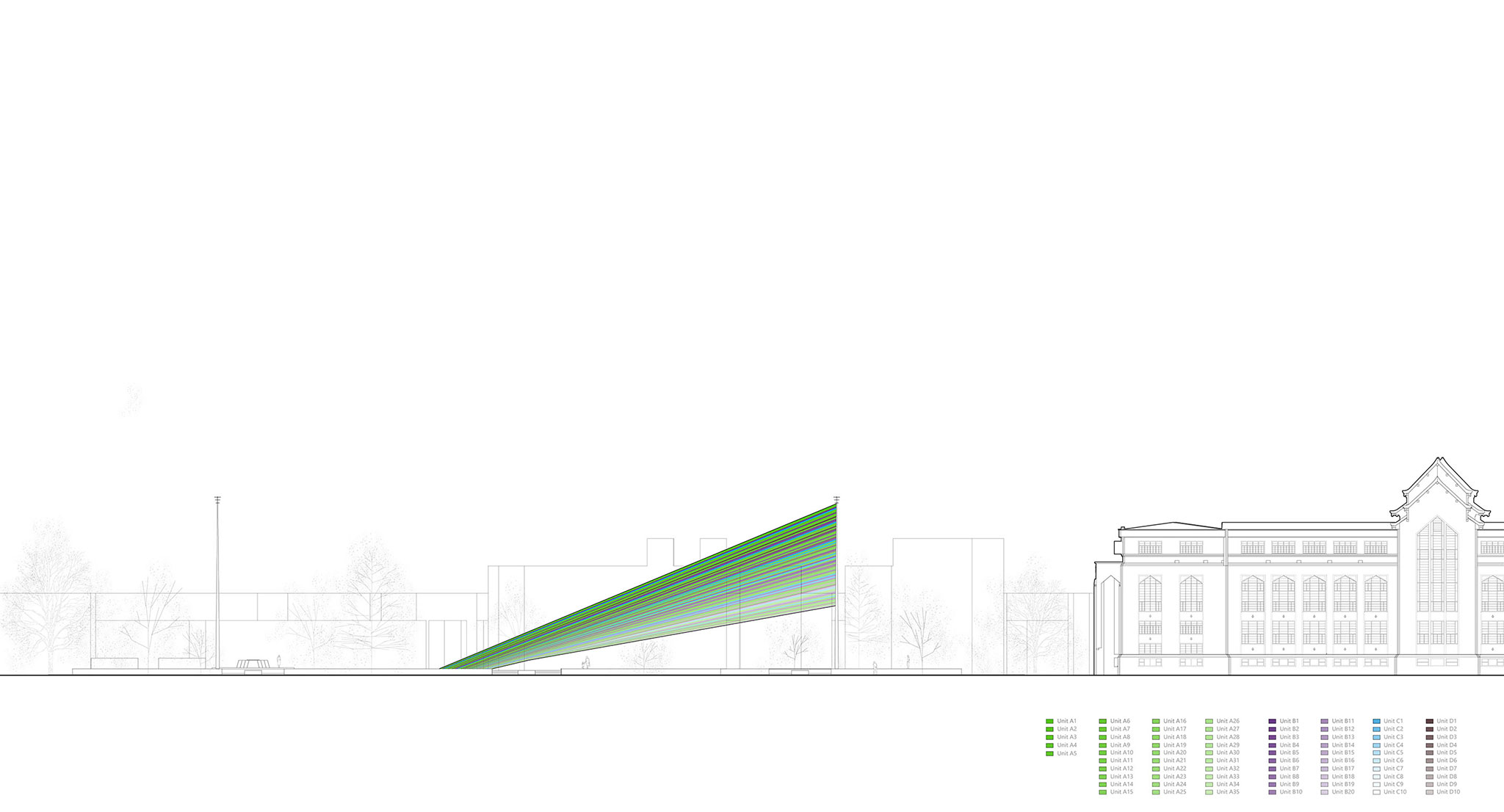
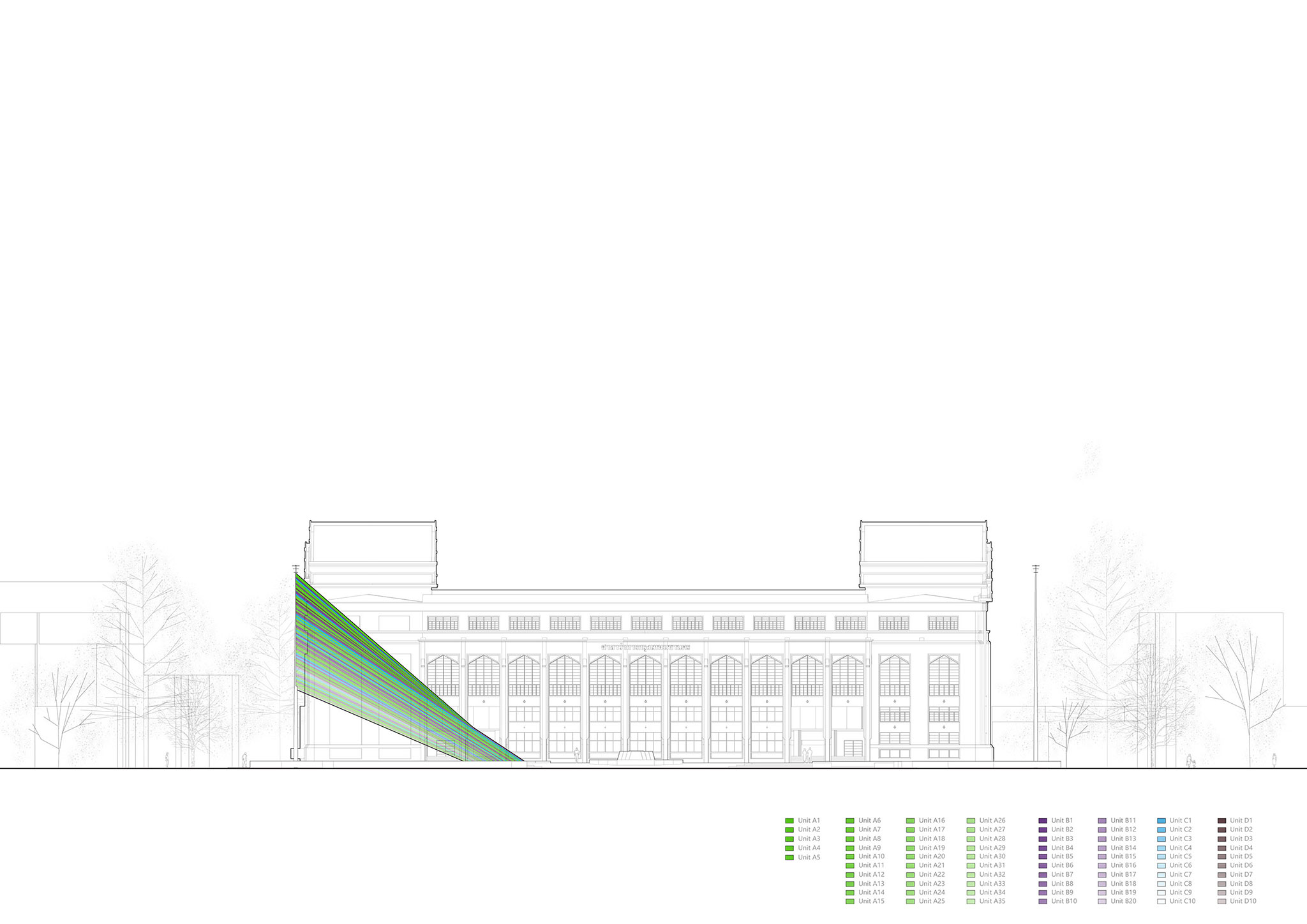
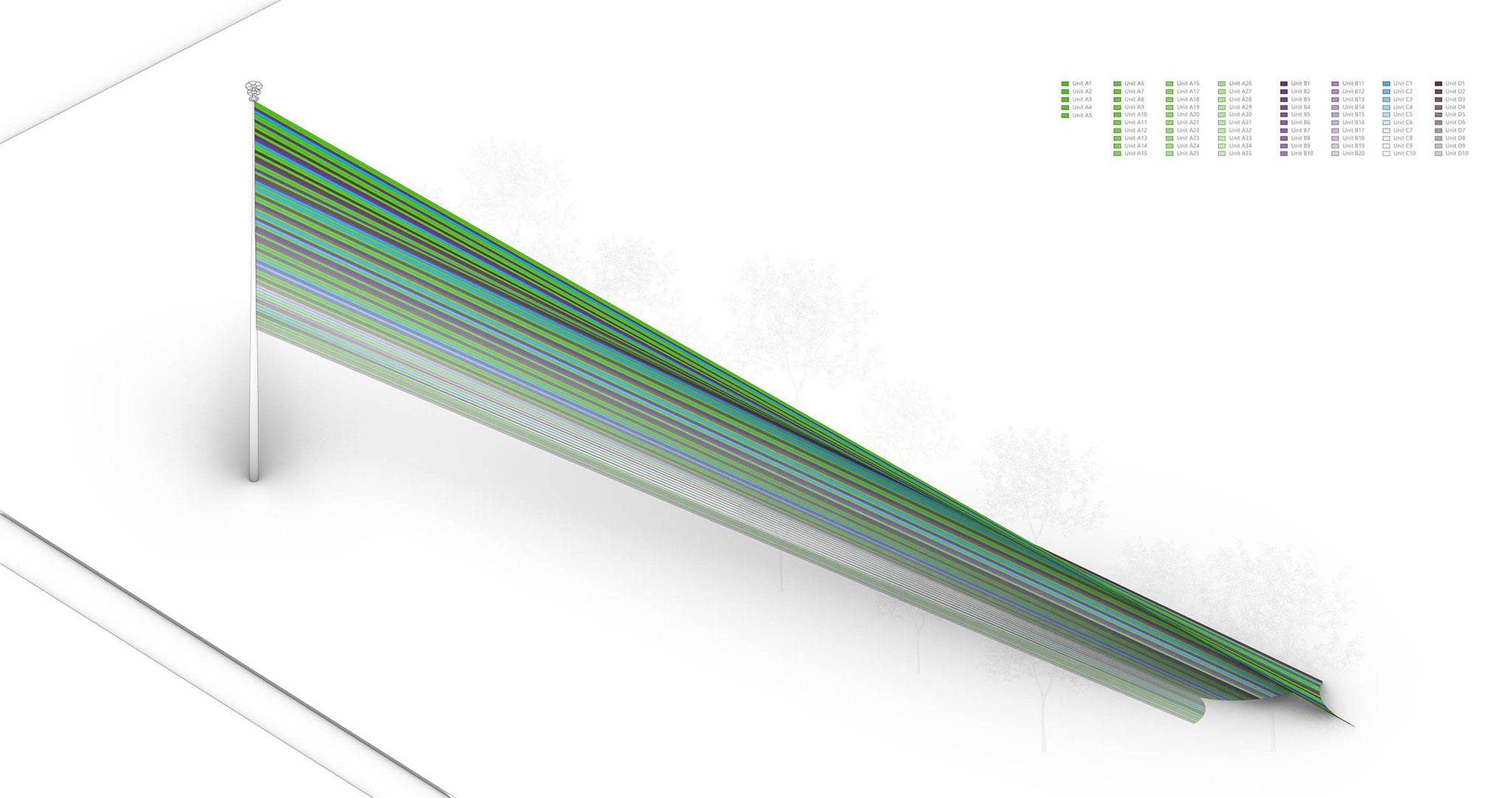
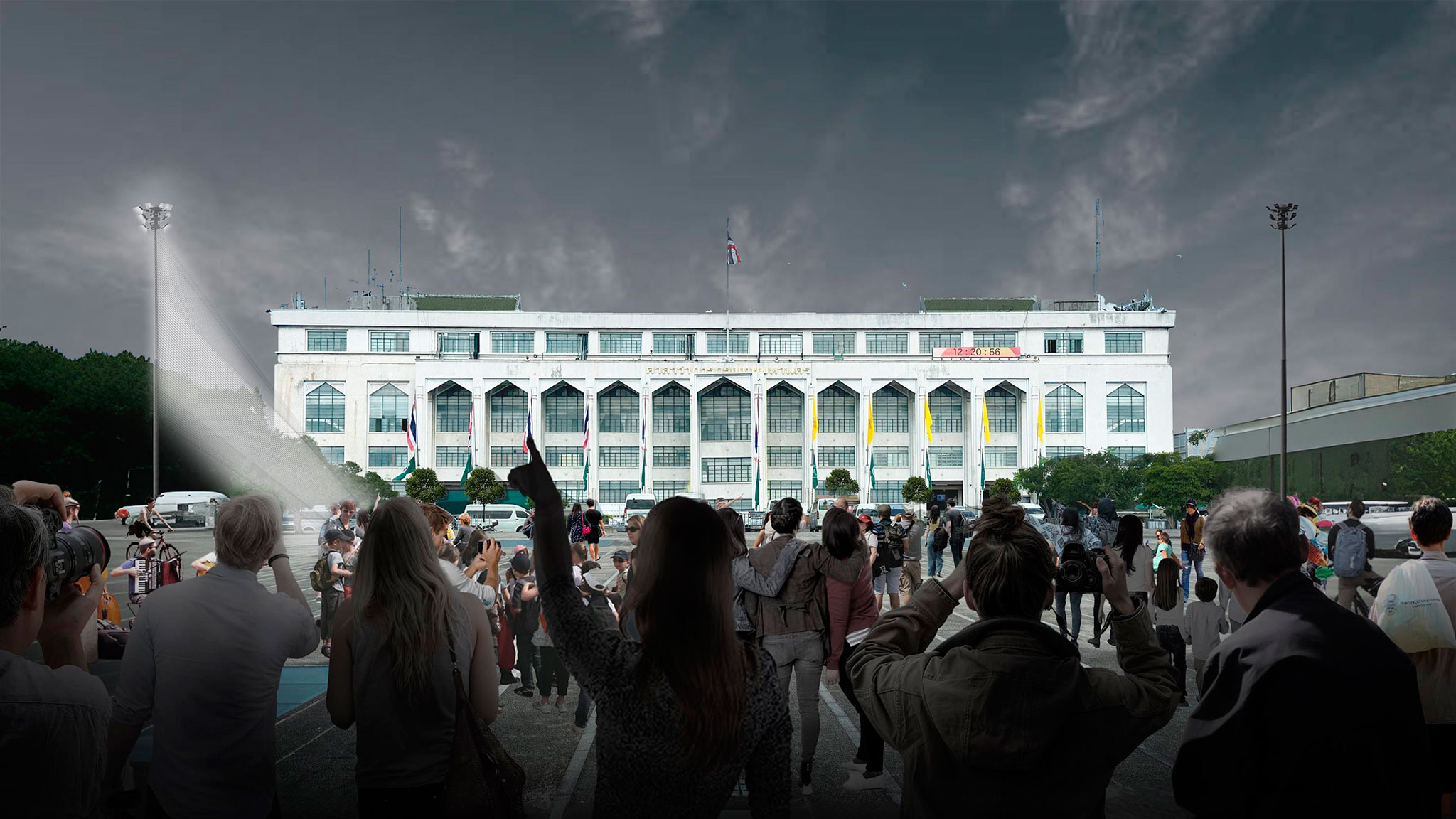
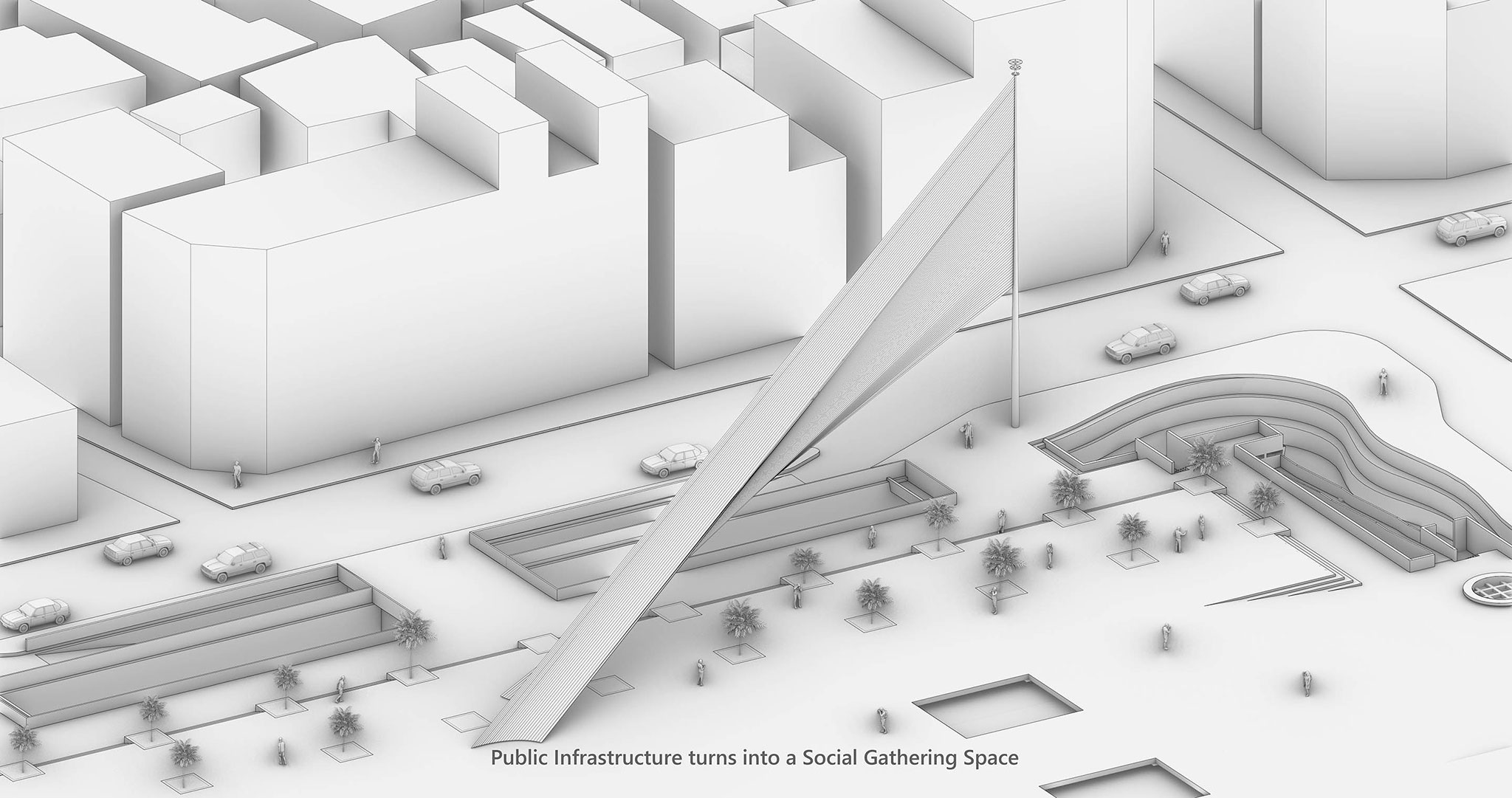
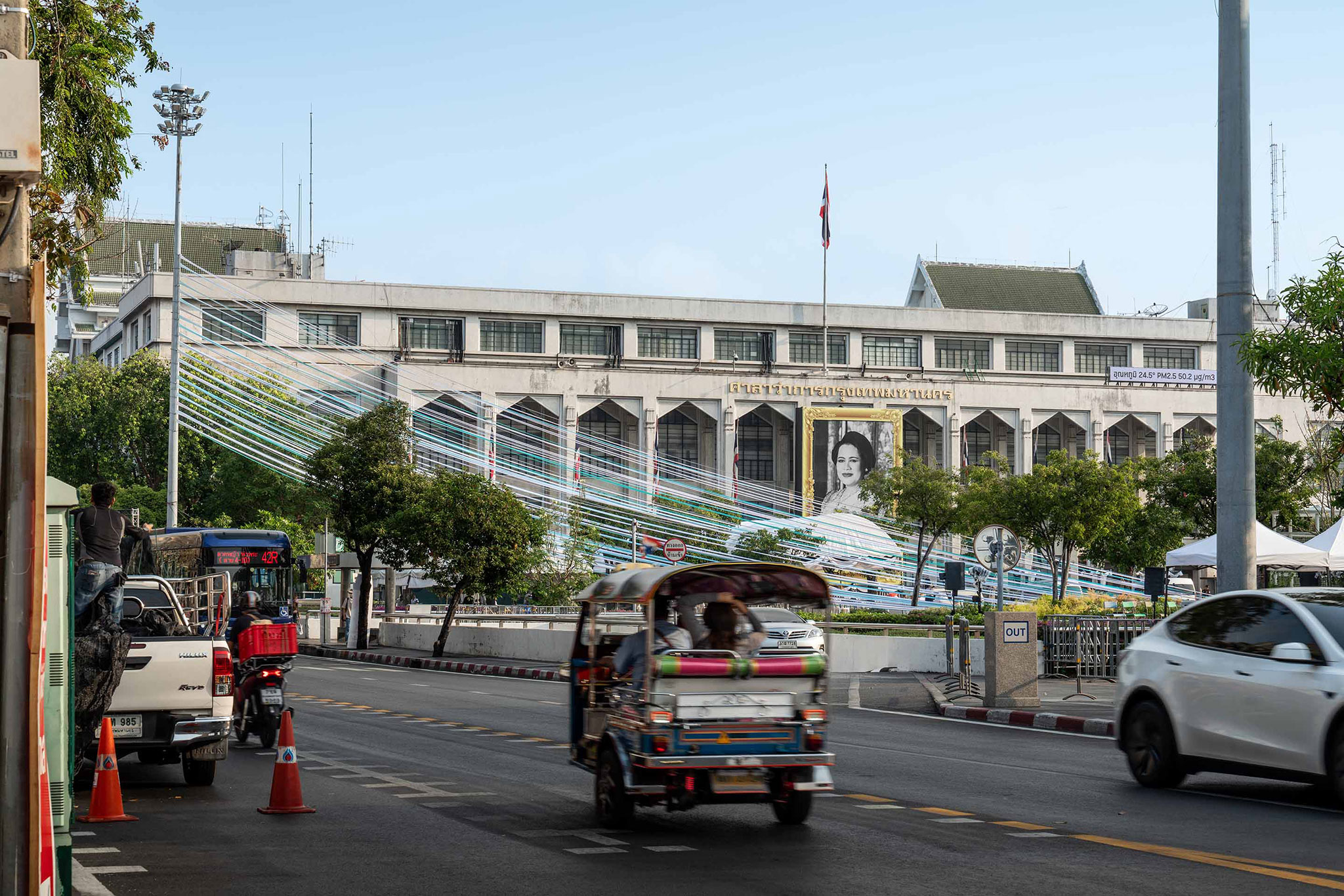
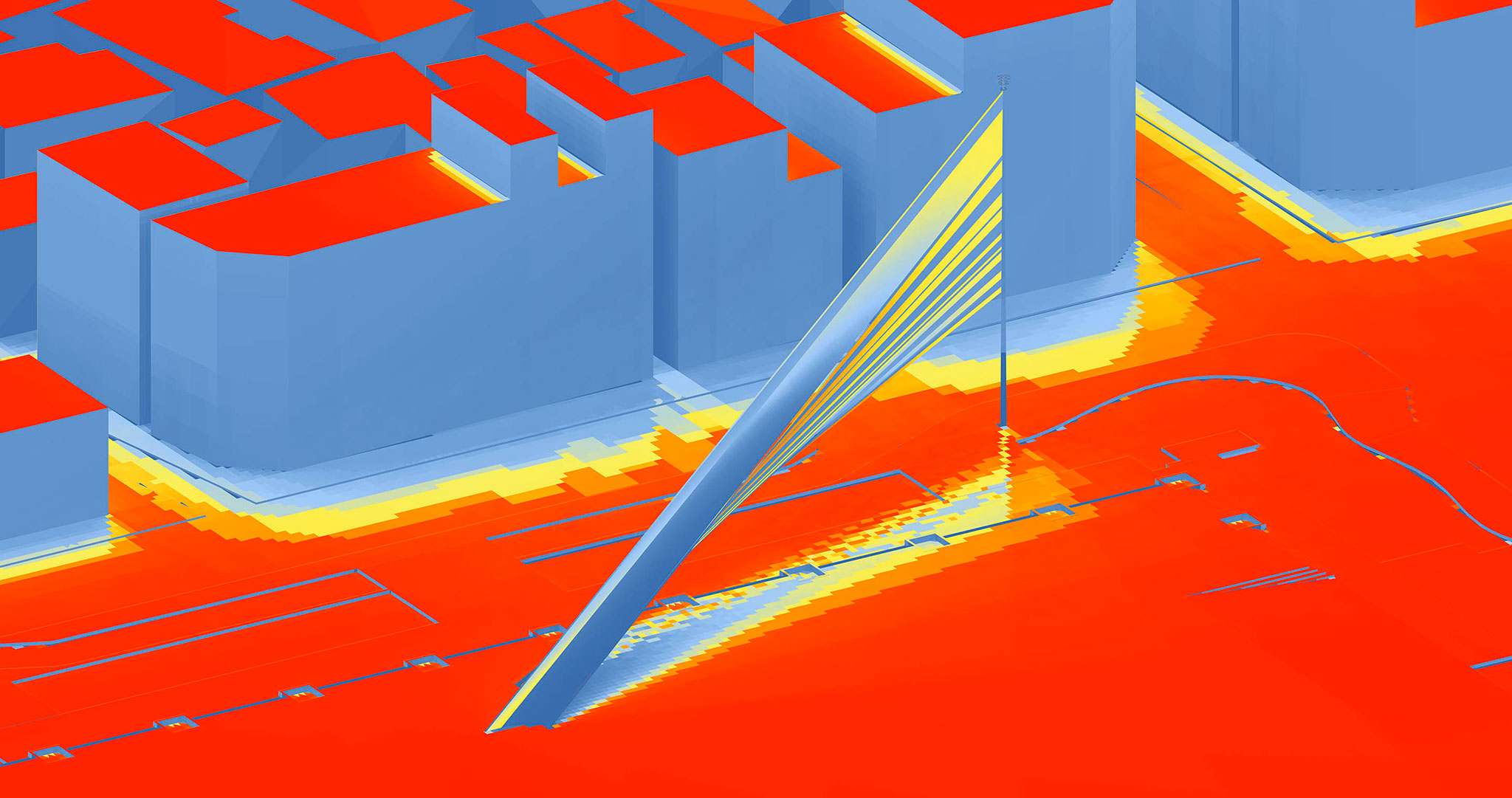
“High Line Bangkok,” designed by HAS design and research, strategically explores the relationship between lampposts and trees, creating a play of light and shadow, infrastructure and nature. The result is a dynamic spatial atmosphere that evolves throughout the day. In the morning, the installation functions as a rainbow, casting shadows across the plaza. At night, the pavilion transforms into a beacon, extending and amplifying the light in the plaza.

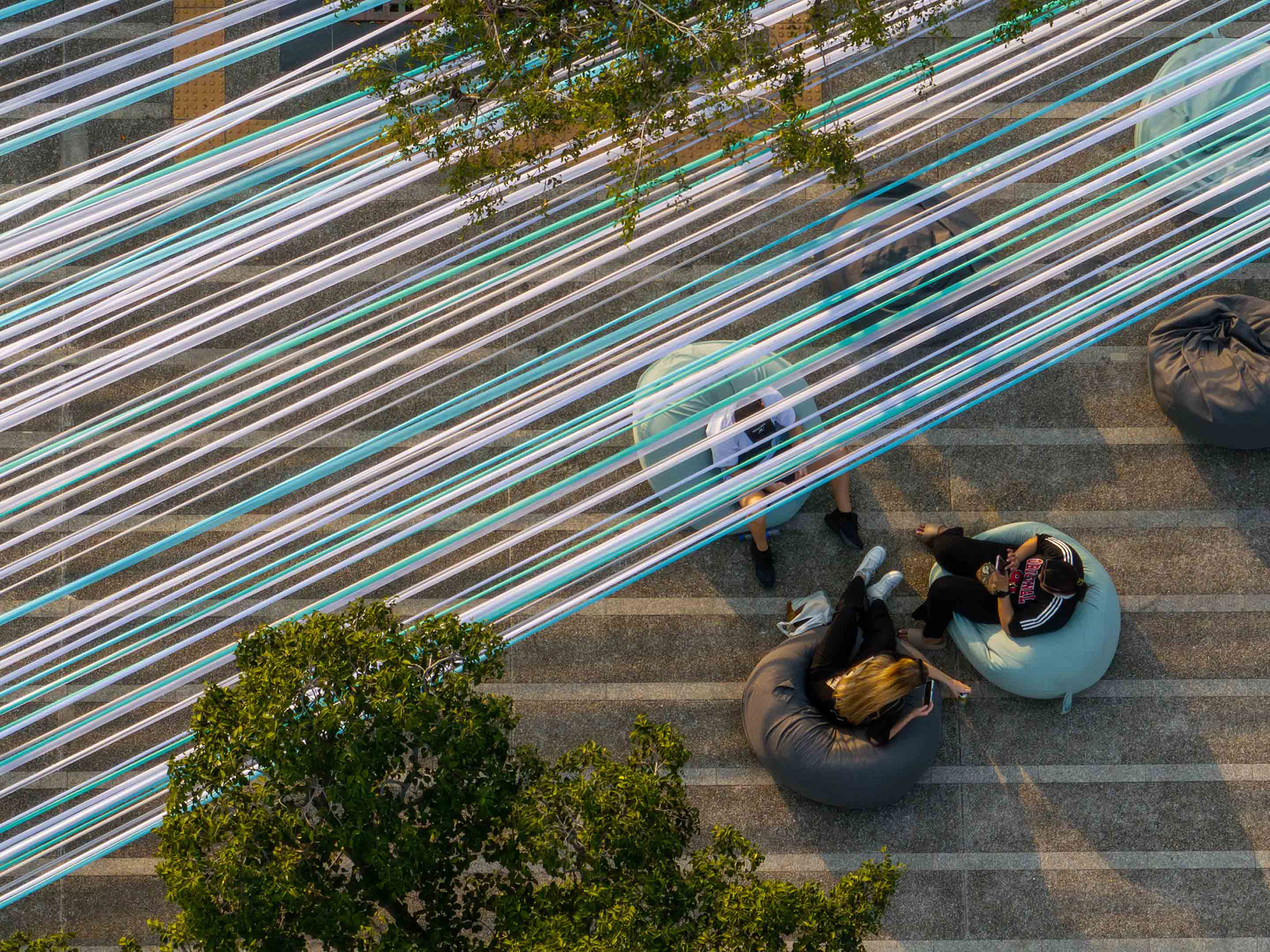
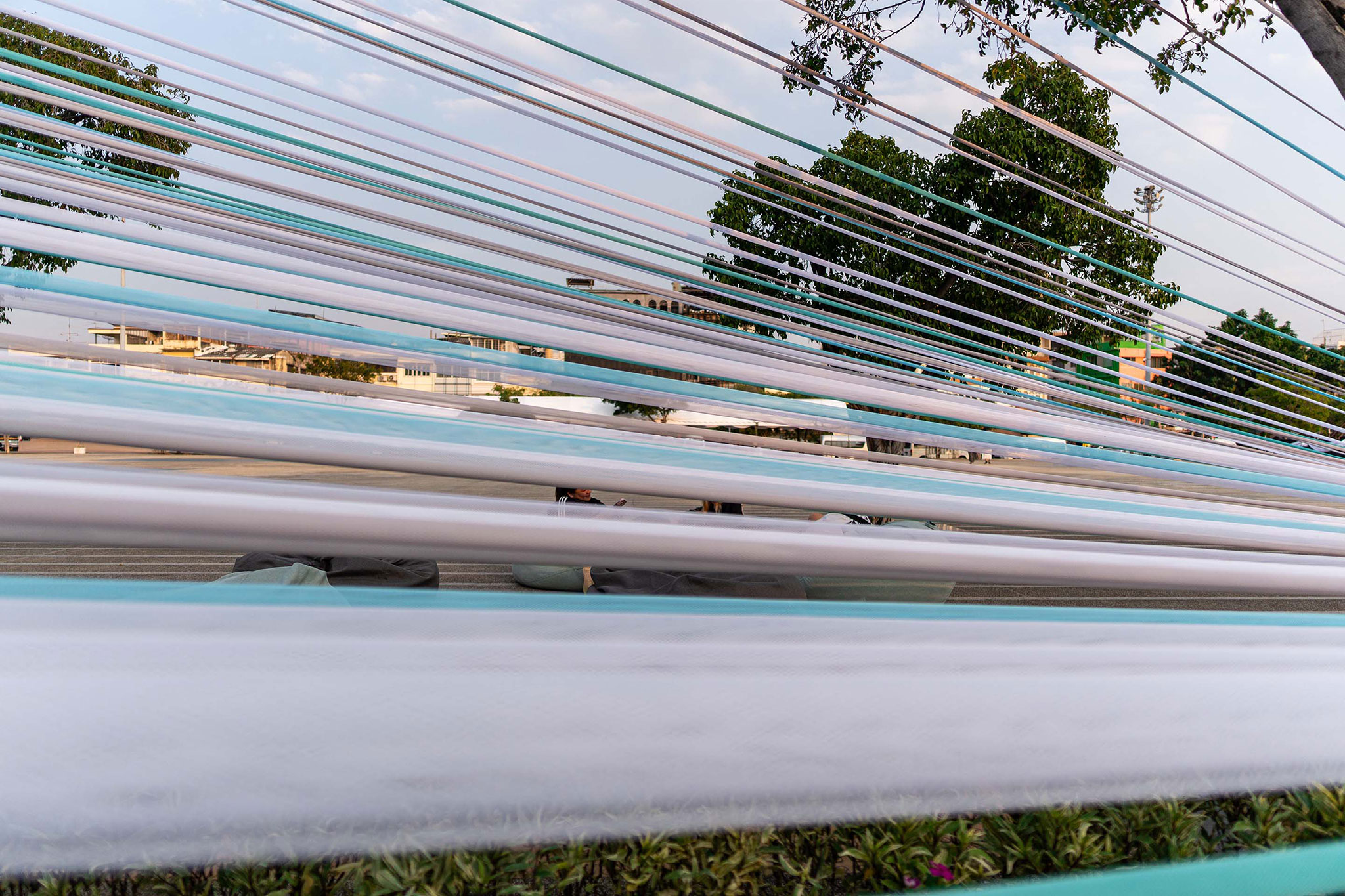
The intervention proposes a prototype that enhances urban infrastructure both aesthetically and functionally, integrating principles of tropical architecture and sustainable urban strategies such as shading, ventilation, and arcade-like spatial conditions.
High Line Bangkok by HAS design and research. Photograph by DOF Sky|Ground.

High Line Bangkok by HAS design and research. Photograph by DOF Sky|Ground.

Project description by HAS design and research

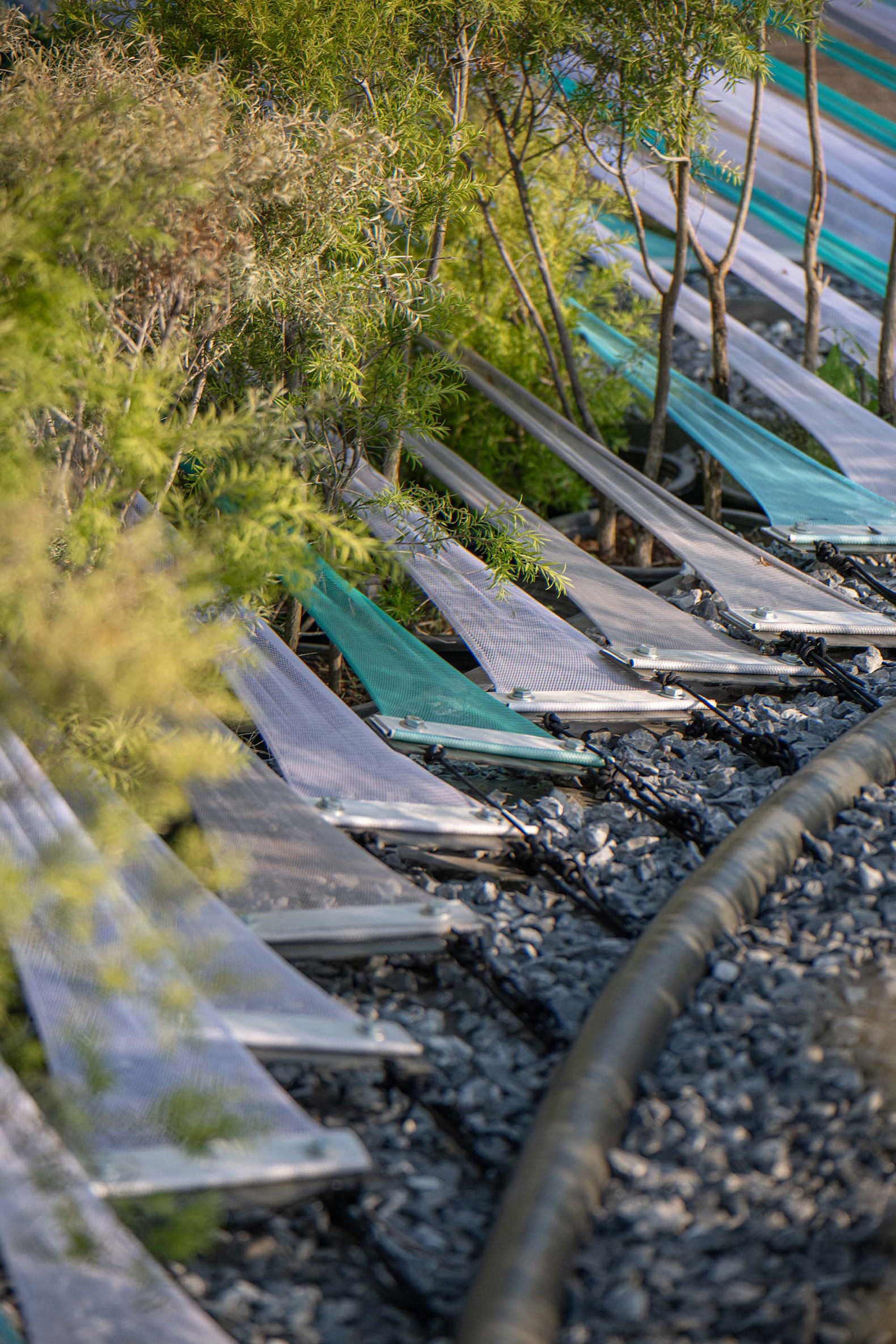
High Line Bangkok is an innovative zero-waste thematic pavilion that reimagines and elevates Bangkok’s urban infrastructure. By transforming ordinary electric lighting posts into meaningful public space, the project redefines infrastructure as a social and spatial asset for citizens. Although Thailand has millions of streetlights lining its roads, they rarely engage public life in a meaningful way. Architects Jenchieh Hung and Kulthida Songkittipakdee, founders of HAS Design and Research, propose an aesthetically driven and socially participatory transformation that reinterprets public infrastructure for tropical living. The pavilion integrates shading devices, natural ventilation, and arcade-like spatial qualities, while incorporating locally recyclable Thai fabrics with existing streetlights—highlighting both sustainability and cultural heritage.

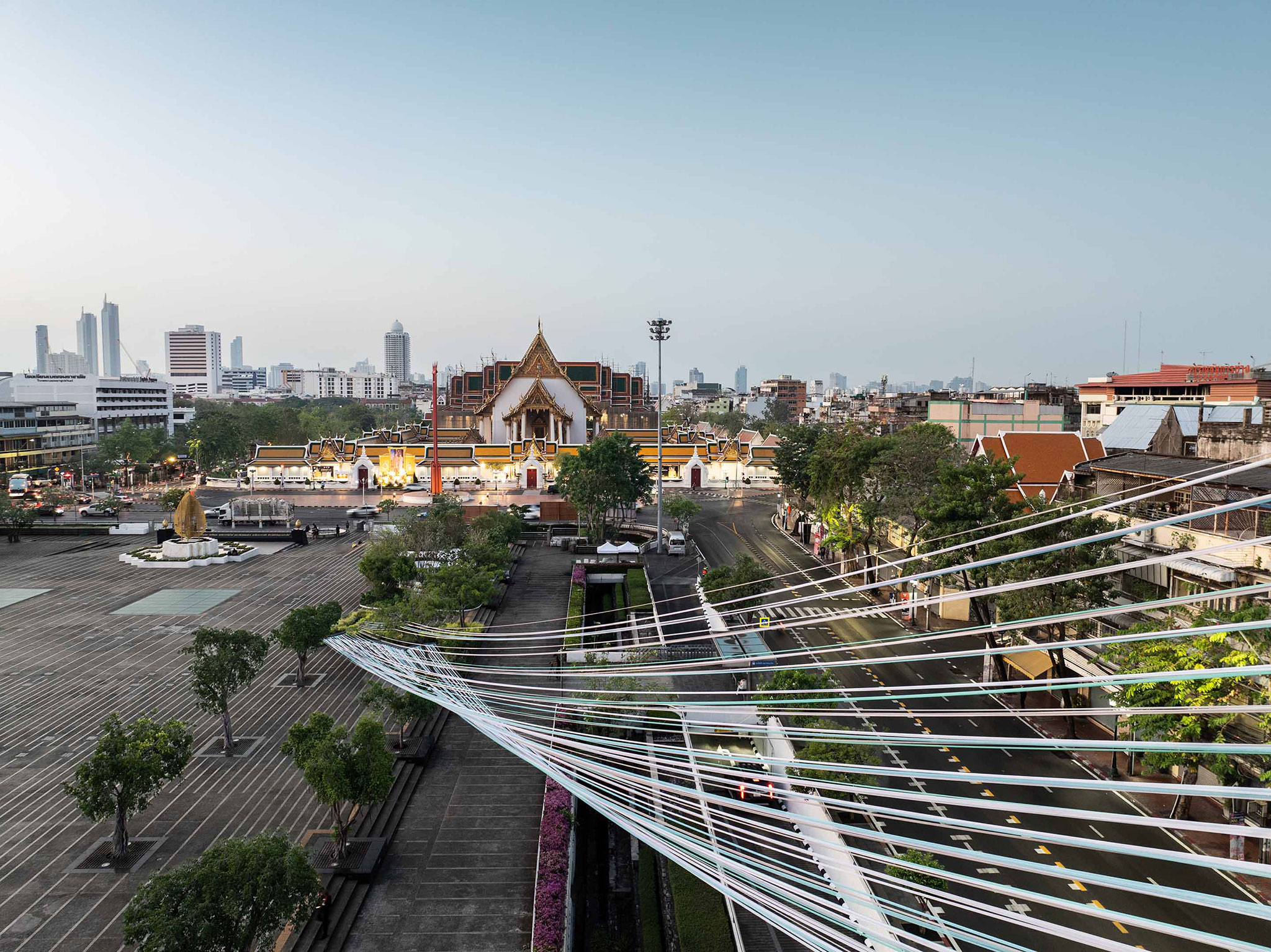
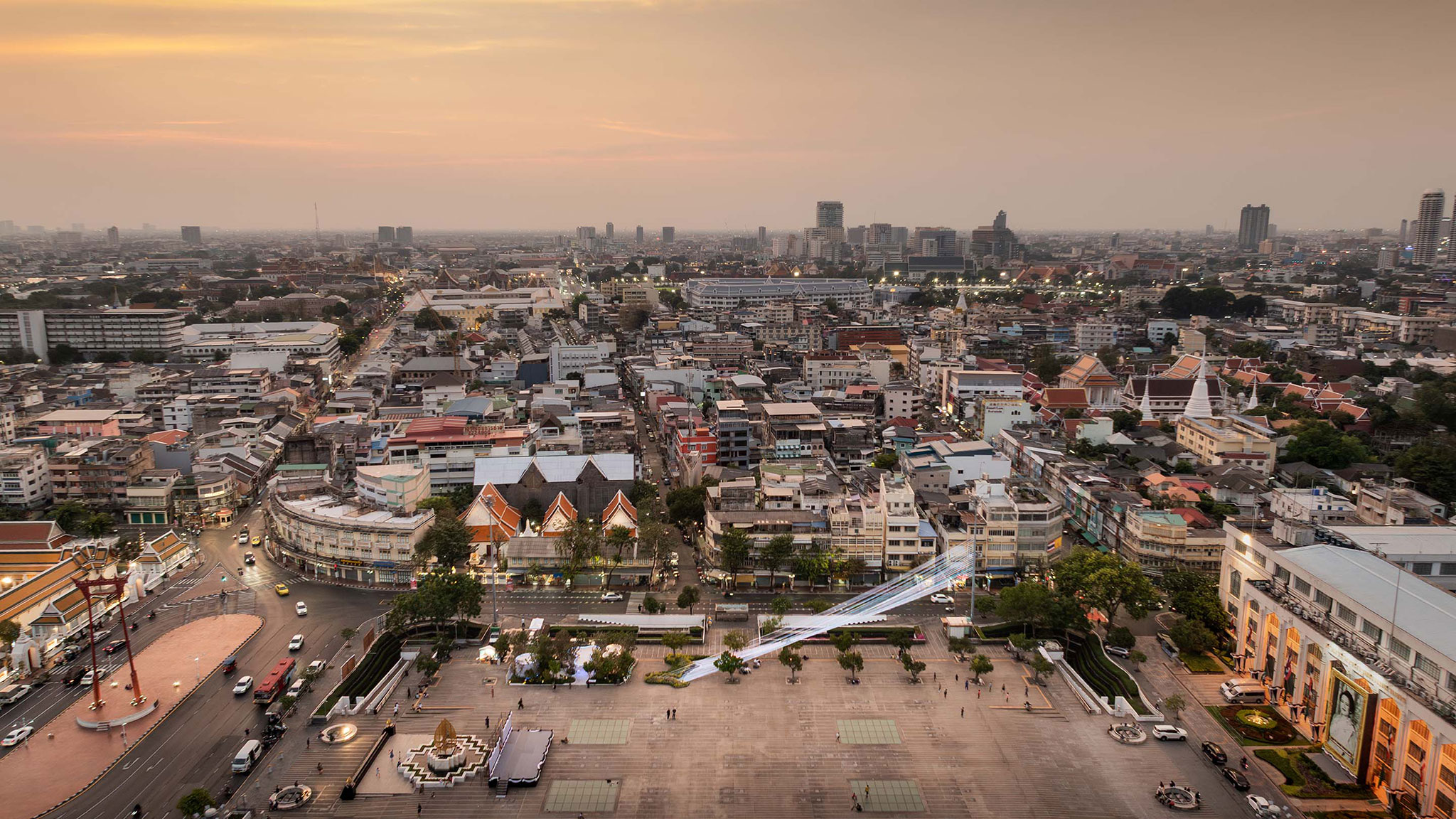
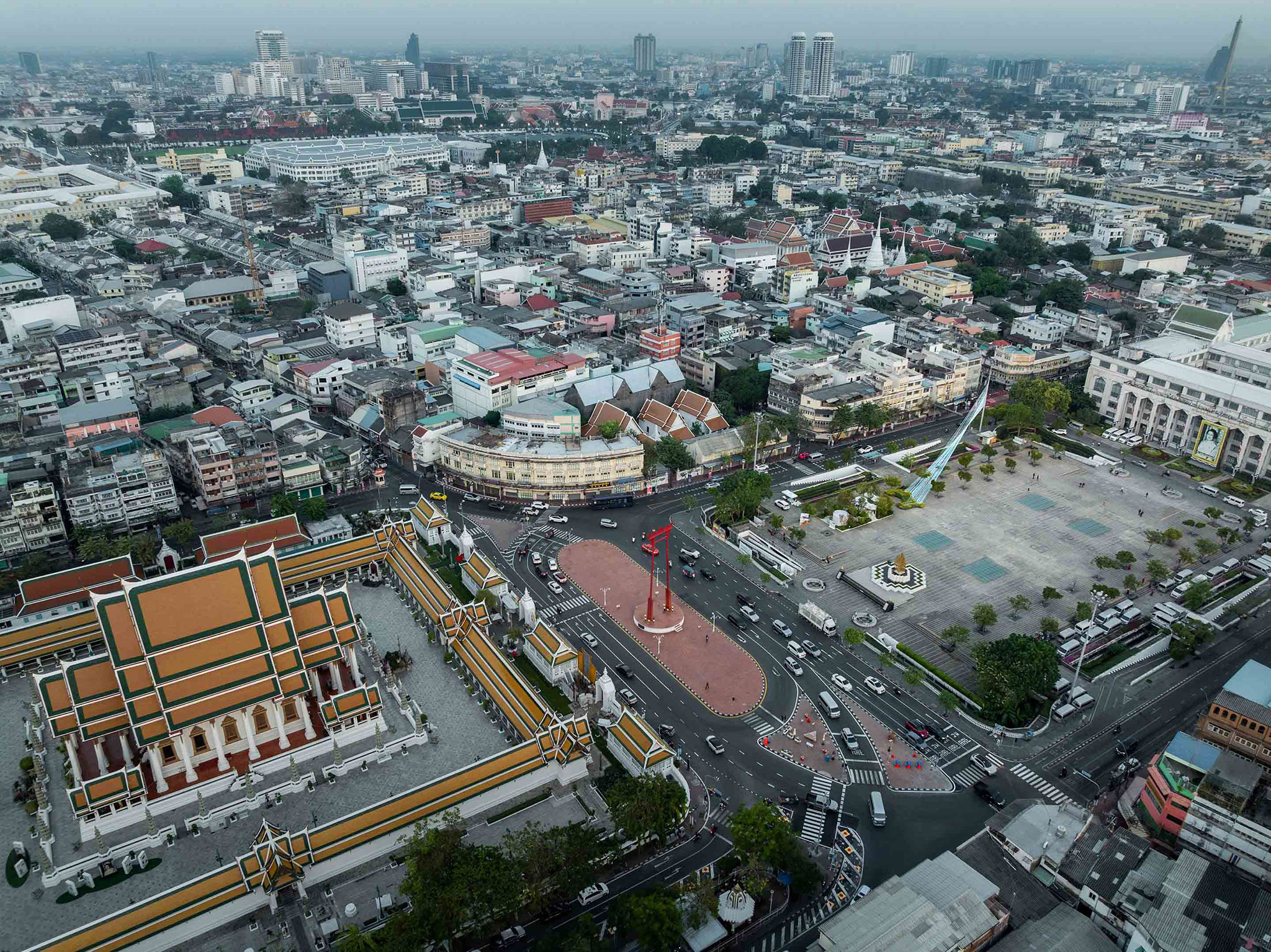
Situated in the heart of Bangkok’s Phra Nakhon district for Bangkok Design Week, the pavilion stands at Bangkok City Hall Square, a prominent public space in front of the Bangkok Metropolitan Administration City Hall. The site has previously hosted installations by internationally renowned architects, including the Dutch architectural firm MVRDV. This year, the Thai architectural firm Jenchieh Hung + Kulthida Songkittipakdee / HAS Design and Research was invited to present High Line Bangkok as a major public engagement project for the Bangkok Metropolitan Administration and the Creative Economy Agency. In collaboration with the urban research firm Urban Ally, the project underscores Bangkok’s growing influence as a global design hub, showcasing Thailand’s soft power through culture, art, architecture, and urban innovation.

High Line Bangkok by HAS design and research. Photograph by DOF Sky|Ground.

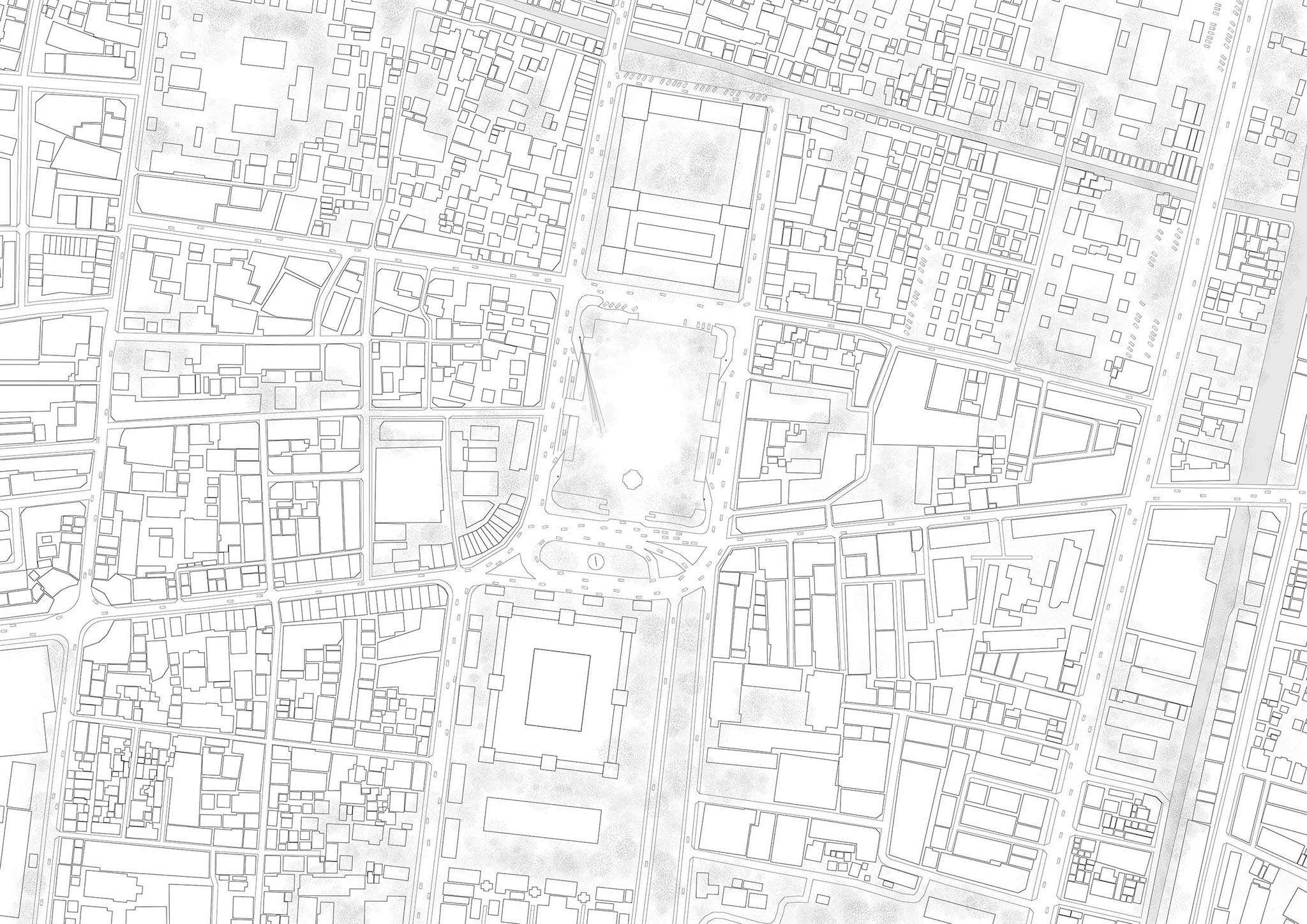
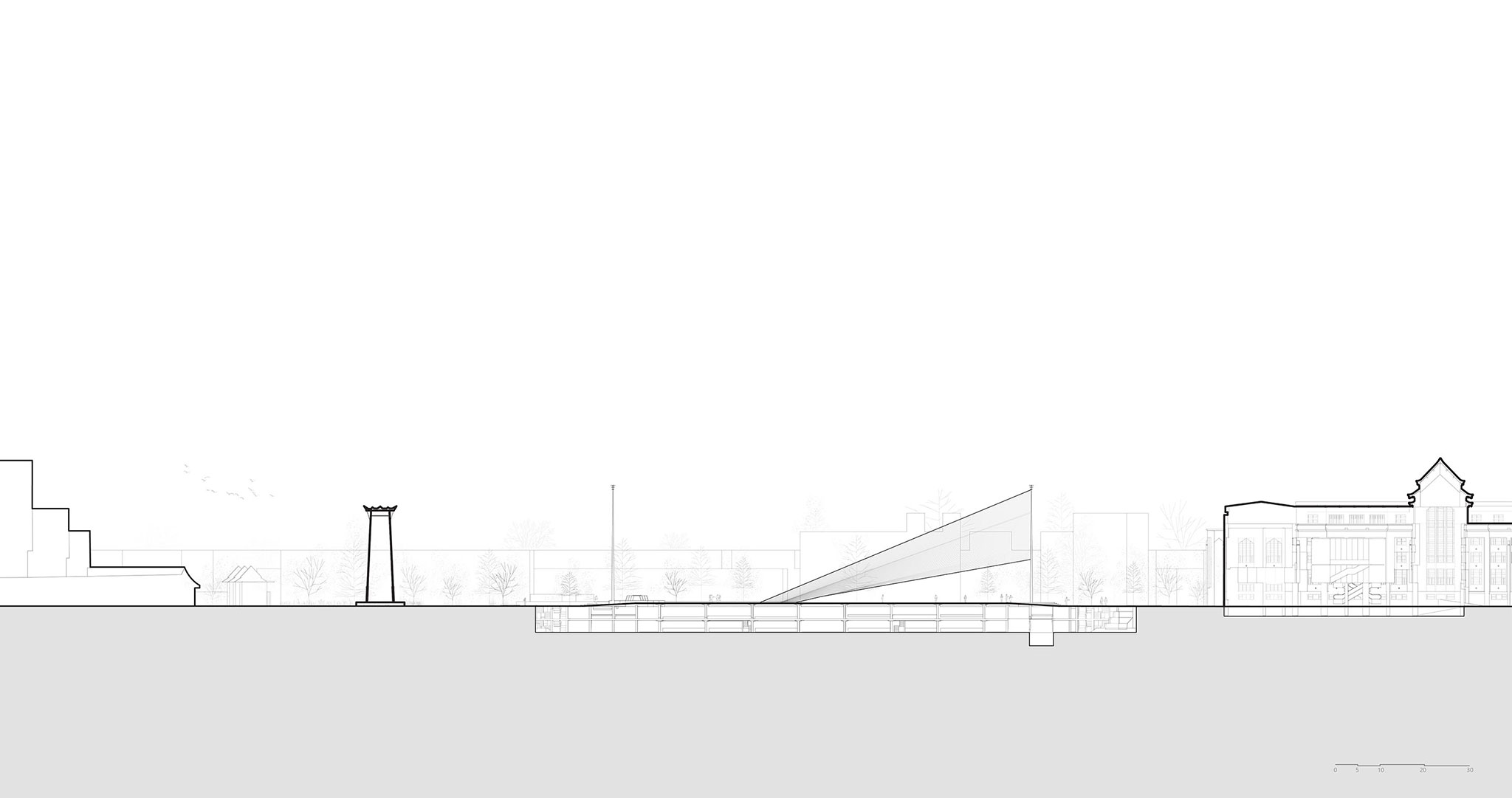
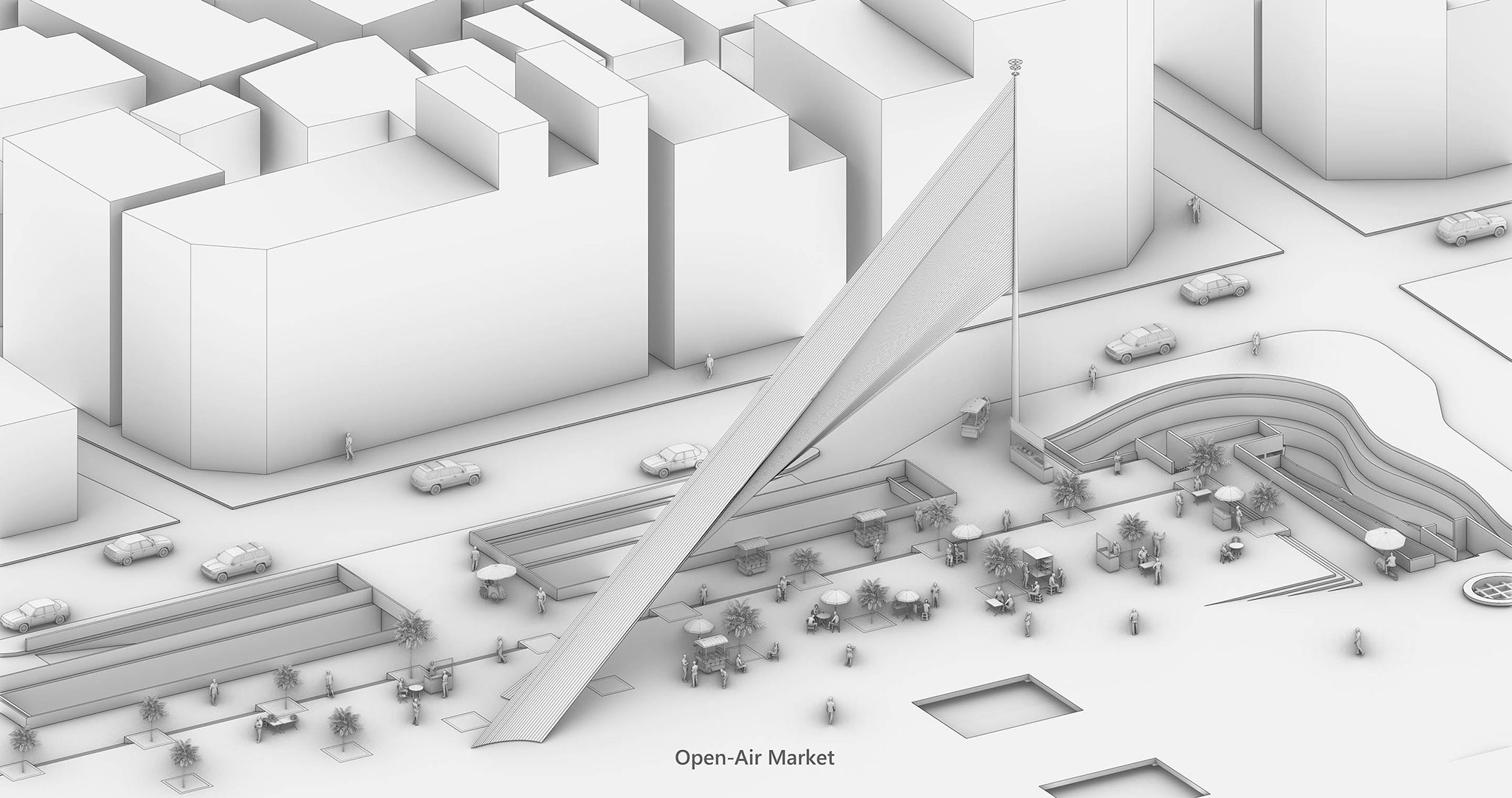
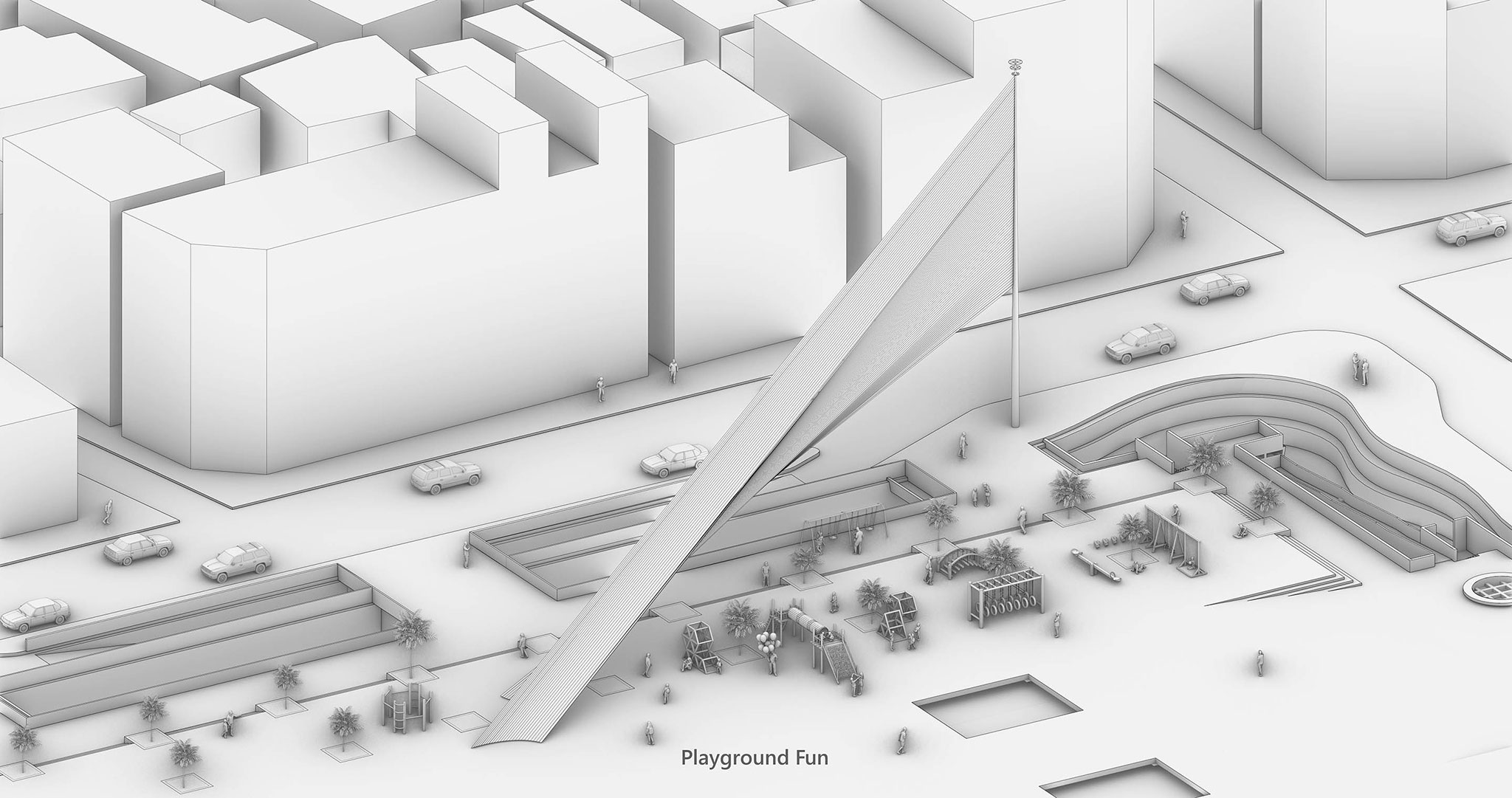
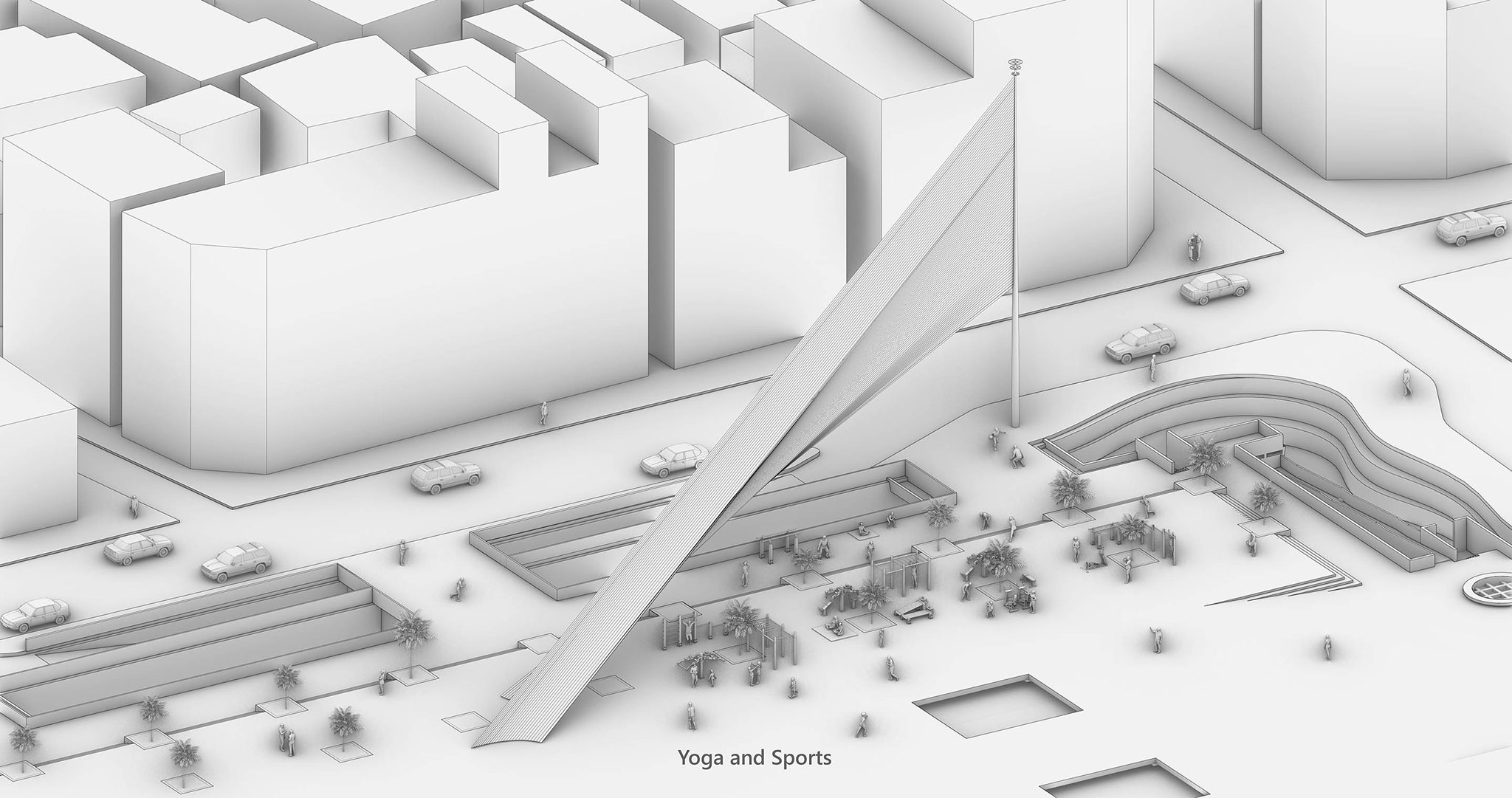
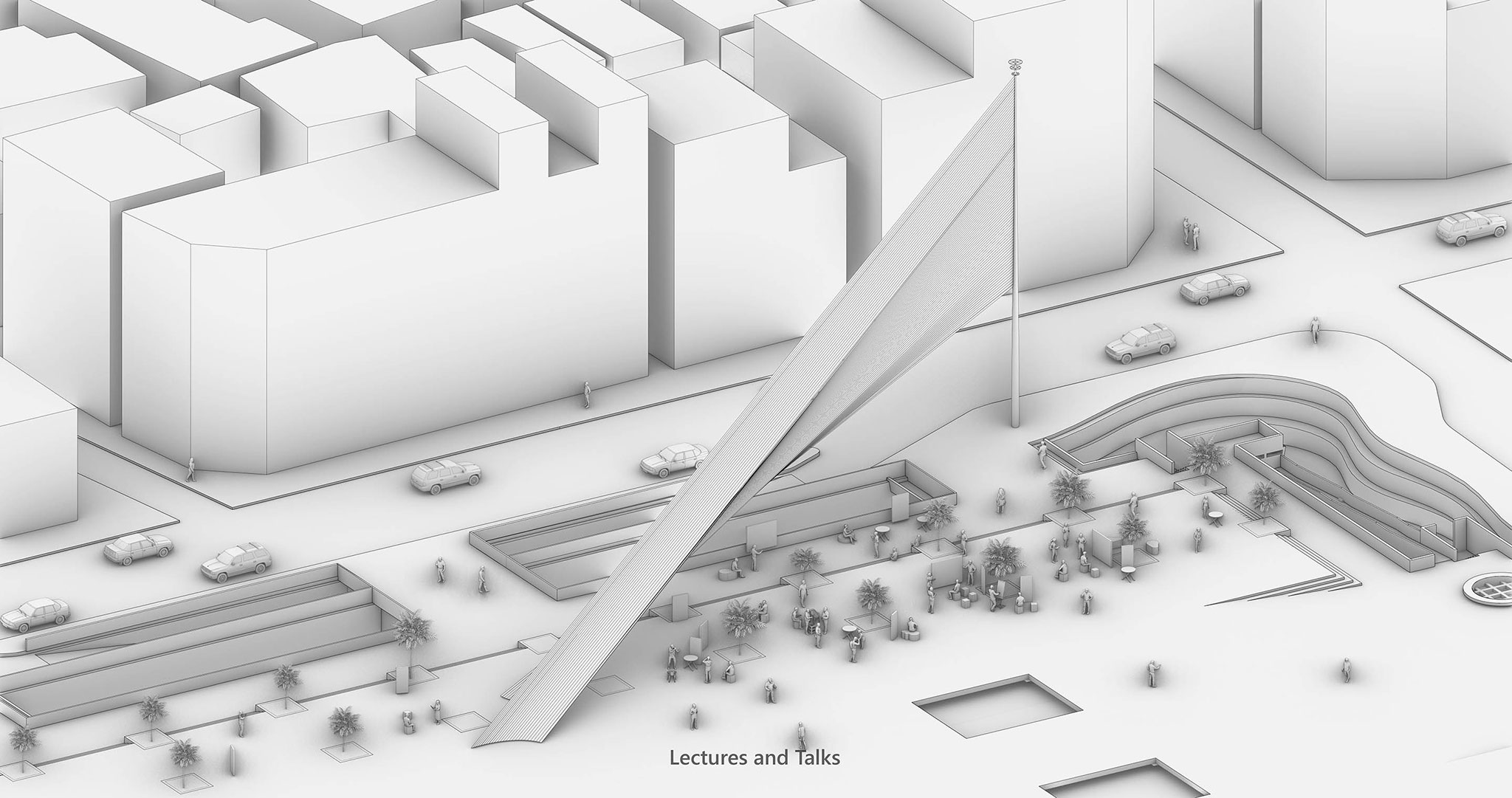
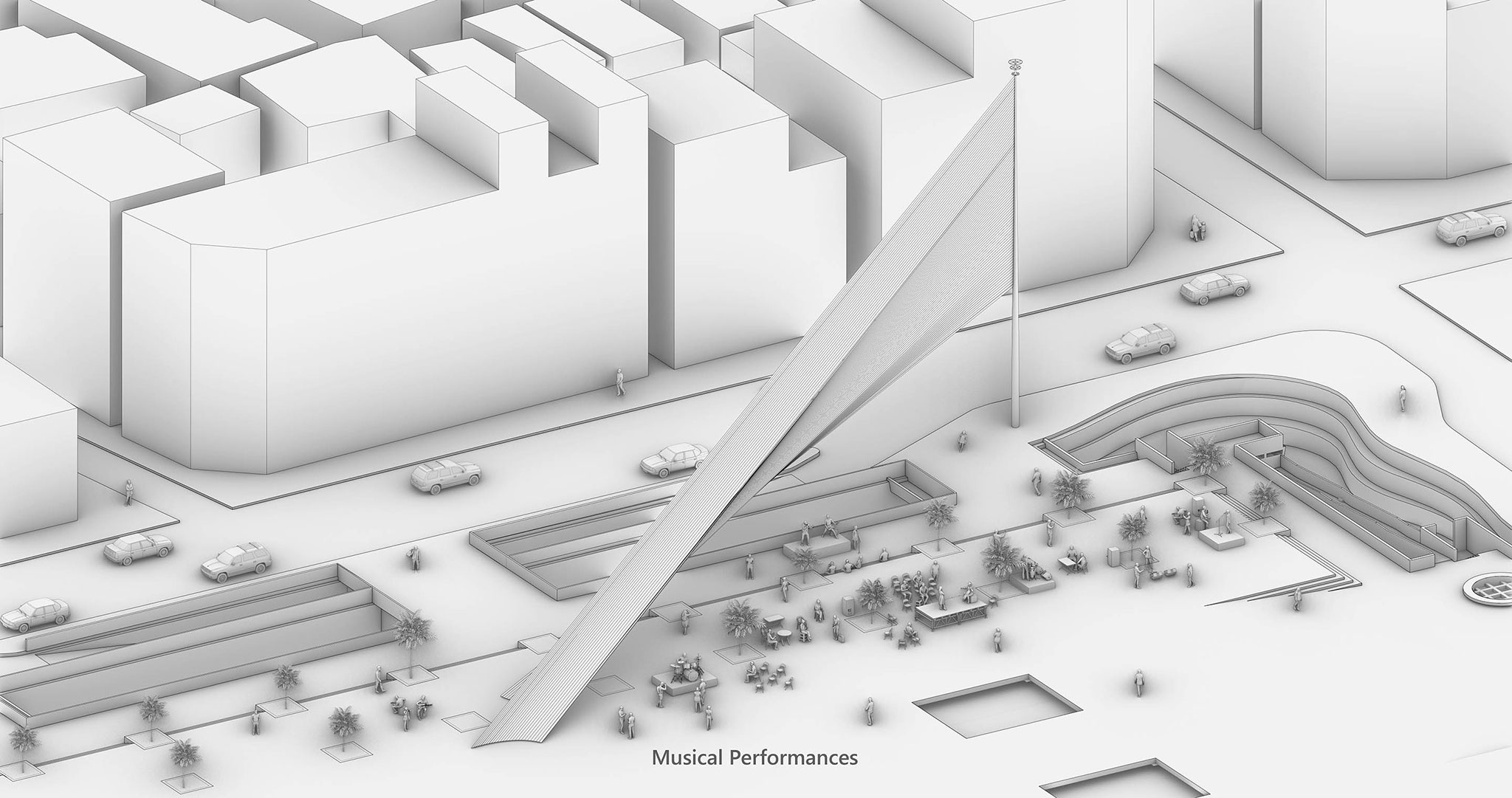
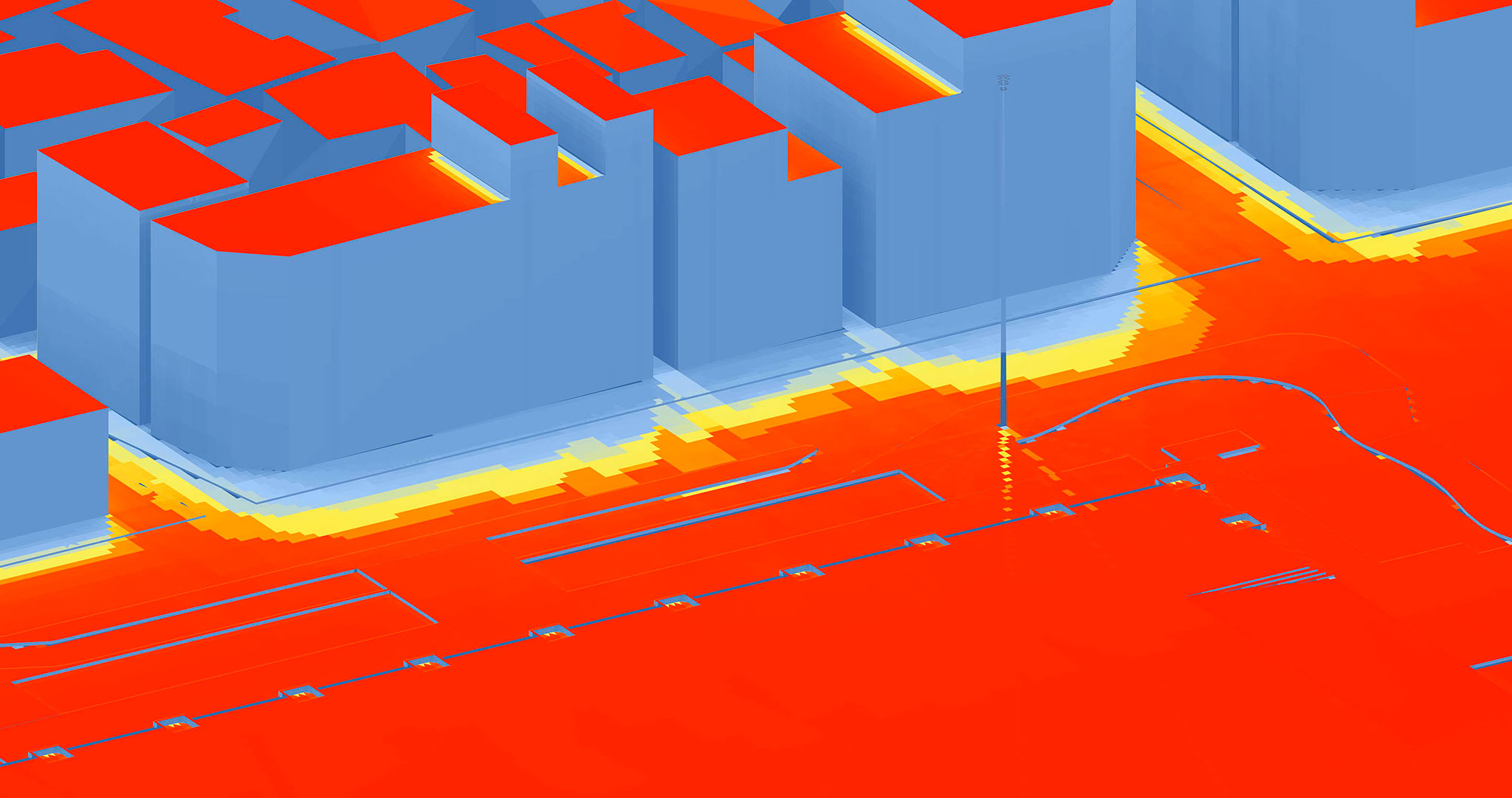
High Line Bangkok occupies the expansive public plaza in front of Bangkok City Hall. The plaza functions not only as an extension of the civic complex but also as one of Thailand’s most significant public gathering spaces. Through in-depth observation and site research, the architects identified a distinct behavioral pattern shaped by Thailand’s tropical climate. During periods of intense daytime heat, people naturally gather in shaded areas beneath large trees. At night, as temperatures cool, activities shift toward illuminated zones surrounding the lighting posts. This contrast reveals the critical role of shade and light in extending daily life and activating public space—particularly within tropical environments.

In response, the design strategically explores the relationship between electric lighting posts and trees, light and shadow, and infrastructure and nature by utilizing the existing streetlights as the primary structural framework of the pavilion. Rather than introducing new foundations or permanent construction, the project minimizes material consumption and embodies an alternative architectural approach—transforming existing urban infrastructure into spatial and social catalysts for civic life.

High Line Bangkok by HAS design and research. Photograph by DOF Sky|Ground.

High Line Bangkok creates a dynamic spatial atmosphere that evolves throughout the day. In daylight, it appears as a rainbow-like installation that captures natural phenomena, casting vibrant, colorful shade across the plaza and forming a comfortable semi-outdoor environment for public use. At night, the pavilion becomes beacon-like, extending and amplifying light across the square while reinterpreting everyday urban lighting as a symbol of collective life and civic identity.

The project proposes a prototypical design strategy that enhances urban infrastructure both aesthetically and functionally, integrating essential principles of tropical architecture such as shading, ventilation, and arcade-like spatial conditions. More importantly, it redefines the role of public infrastructure by allowing citizens to directly experience how thoughtful design can improve everyday urban life. Through High Line Bangkok, architects Jenchieh Hung and Kulthida Songkittipakdee explore the evolving relationship between public infrastructure and tropical lifestyles, emphasizing sustainable urban strategies, active public engagement, and the continued enhancement of the city’s vibrancy.
More information

Label
Architects
Text

HAS design and research. Lead architects.- Jenchieh Hung, Kulthida Songkittipakdee.

+ + copy Created with Sketch.
- + copy Created with Sketch.
Label
Project team
Text

Jenchieh Hung, Kulthida Songkittipakdee, Darin Thonongtor, Vich Chinpraditsuk, Reefa Panawa, Sasitorn Sueatao.

+ + copy Created with Sketch.
- + copy Created with Sketch.
Label
Collaborators
Text

Urban Research Consultant.- Urban Ally. 
Structure Consultant.- Isarapon Udomtham, Buncha Layangkoon.
Landscape Design.- Shma Company Limited, Shma SoEn.
Lighting Consultant.- LUNDI.

+ + copy Created with Sketch.
- + copy Created with Sketch.
Label
Client
Text

Bangkok Metropolitan Administration, Creative Economy Agency, Bangkok Design Week. 

+ + copy Created with Sketch.
- + copy Created with Sketch.
Label
Developer
Text

Masco Enterprise Thailand.

+ + copy Created with Sketch.
- + copy Created with Sketch.
Label
Contractor
Text

Bangkok Canvas.

+ + copy Created with Sketch.
- + copy Created with Sketch.
Label
Area
Text

Site Area.- 13,800 sqm.
Gross Build Area.- 1,050 sqm.

+ + copy Created with Sketch.
- + copy Created with Sketch.
Label
Fechas
Text

2026.

+ + copy Created with Sketch.
- + copy Created with Sketch.
Label
Location
Text

Bangkok, Thailand. 

+ + copy Created with Sketch.
- + copy Created with Sketch.
Label
Photography
+ + copy Created with Sketch.
- + copy Created with Sketch.
HAS design and research is a based Bangkok architecture practice founded by Jenchieh Hung and Kulthida Songkittipakdee. The firm explores Asia’s architectural language through a “design + research” parallel approach; it emphasizes the analogy of nature and man-made nature, looking for another kind of new natural architecture through the city’s own derivatives, named “The Improvised, MANufAcTURE and Chameleon Architecture”. HAS work encompasses cultural buildings, religious architecture, installation art, exhibition design and experimental projects; and HAS research includes the train and railway markets, the charming roadside vendors, the borderless illegal constructions under the elevated freeways, and the roundabouts of dead alleys. These interesting scenes typically exist in Asian cities, where temporary structure truly reveals how people can find a “new” nature in the reinforced concrete city.

HAS developed an international reputation through winning competition entries, and their work stands out in terms of its synthesis of form, pattern, material and technology into singular, irreducible constructions. They have been widely recognized for their innovative work and received awards and honours including Wallpaper* Architects’ Directory 2022, Thailand Prestige Award 2021, Designer of the Year Award 2019, Design Star Award 2018, Distinguished Alumni Award 2016, WA Award 2014, art4d Design Award 2012, National Golden Award for Architecture 2011.

Jenchieh Hung started his career working at the Japanese firm Kengo Kuma & Associates (KKAA), where he became design manager and project in-charge in 2018. During his tenure at KKAA, Hung was responsible for Yangcheng Lake Tourist Transportation Center in Suzhou and Shipyard 1862 in Shanghai. At present, he is the principal architect of HAS design and research, founder of Chinese-Thai Research Studio, associate editor of the International Journal of Interior Architecture + Spatial Design, and member of the Association of Siamese Architects under Royal Patronage. Hung received a Bachelor of Architecture and Urban Planning with 1st Honor Award from Chung Hua University, a Master of Architecture with Best Research Paper Award from National Cheng Kung University and a full scholarship for an advanced master program at Czech Technical University in Prague.

Kulthida Songkittipakdee is a registered Thai architect. She was the first Asian architect among thousand of applications worldwide to be awarded the scholarship of Renzo Piano Foundation working at Renzo Piano Building Workshop (RPBW) in Paris. During her tenure at RPBW, she was involved in the Jerome L. Greene Science Center, Columbia University and Los Angeles County Museum of Art (LACMA) Expansion. At present, she is the principal architect of HAS design and research, guest editor of Taiwan Architecture, and member of the Association of Siamese Architects under Royal Patronage. Songkittipakdee received a Bachelor of Architecture with honours from Chulalongkorn University, and she pursued studies abroad and obtained a Master of Urban Design from the L’Ecole National Supérieure d’Architecture de Paris-la-Villette including the exchange program study at School of Architecture and Design, Aalborg University in Denmark.
Read more
Published on: February 14, 2026
Cite:
metalocus, CAMILA DOYLET, ELVIRA PARÍS FERNÁNDEZ
"Dynamic space atmosphere. High Line Bangkok by HAS design and research " METALOCUS. Accessed
<https://www.metalocus.es/en/news/dynamic-space-atmosphere-high-line-bangkok-has-design-and-research> ISSN 1139-6415
Loading content ...
Loading content ...
Loading content ...
Loading content ...
Loading content ...
Loading content ...
Loading content ...
Loading content ...
Loading content ...
Loading content ...
Loading content ...
Loading content ...
Loading content ...
Loading content ...
Loading content ...
Loading content ...
Loading content ...
Loading content ...
Loading content ...
Loading content ...
Loading content ...
Loading content ...
Loading content ...
Loading content ...
Loading content ...
Loading content ...
Loading content ...
Loading content ...
Loading content ...
Loading content ...
Loading content ...
Loading content ...
Loading content ...
Loading content ...
Loading content ...
Loading content ...
Loading content ...
Loading content ...
Loading content ...
Loading content ...
Loading content ...
Loading content ...
Loading content ...
Loading content ...
Loading content ...
Loading content ...
Loading content ...
Loading content ...
Loading content ...
Loading content ...
Loading content ...
Loading content ...
Loading content ...
Loading content ...