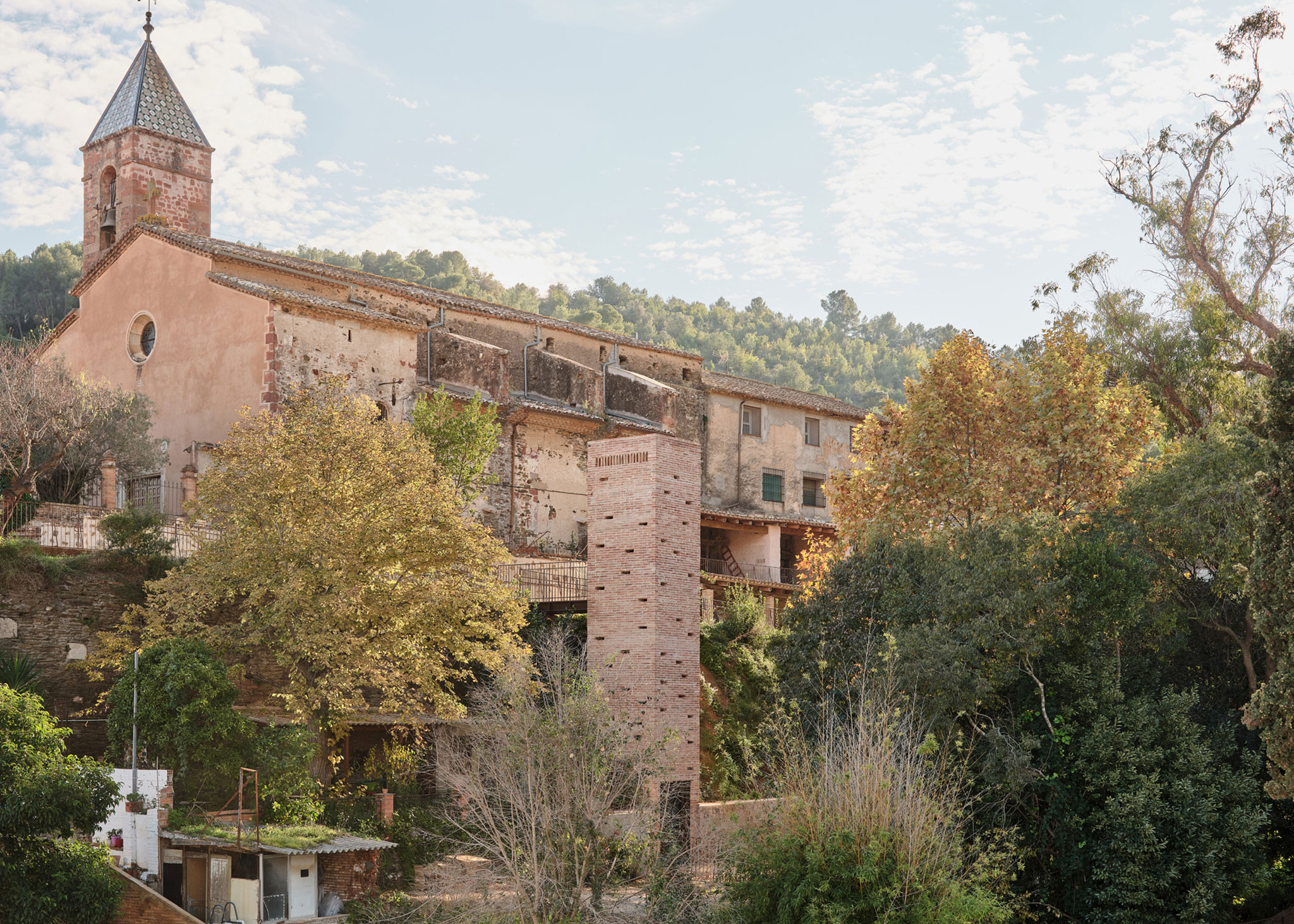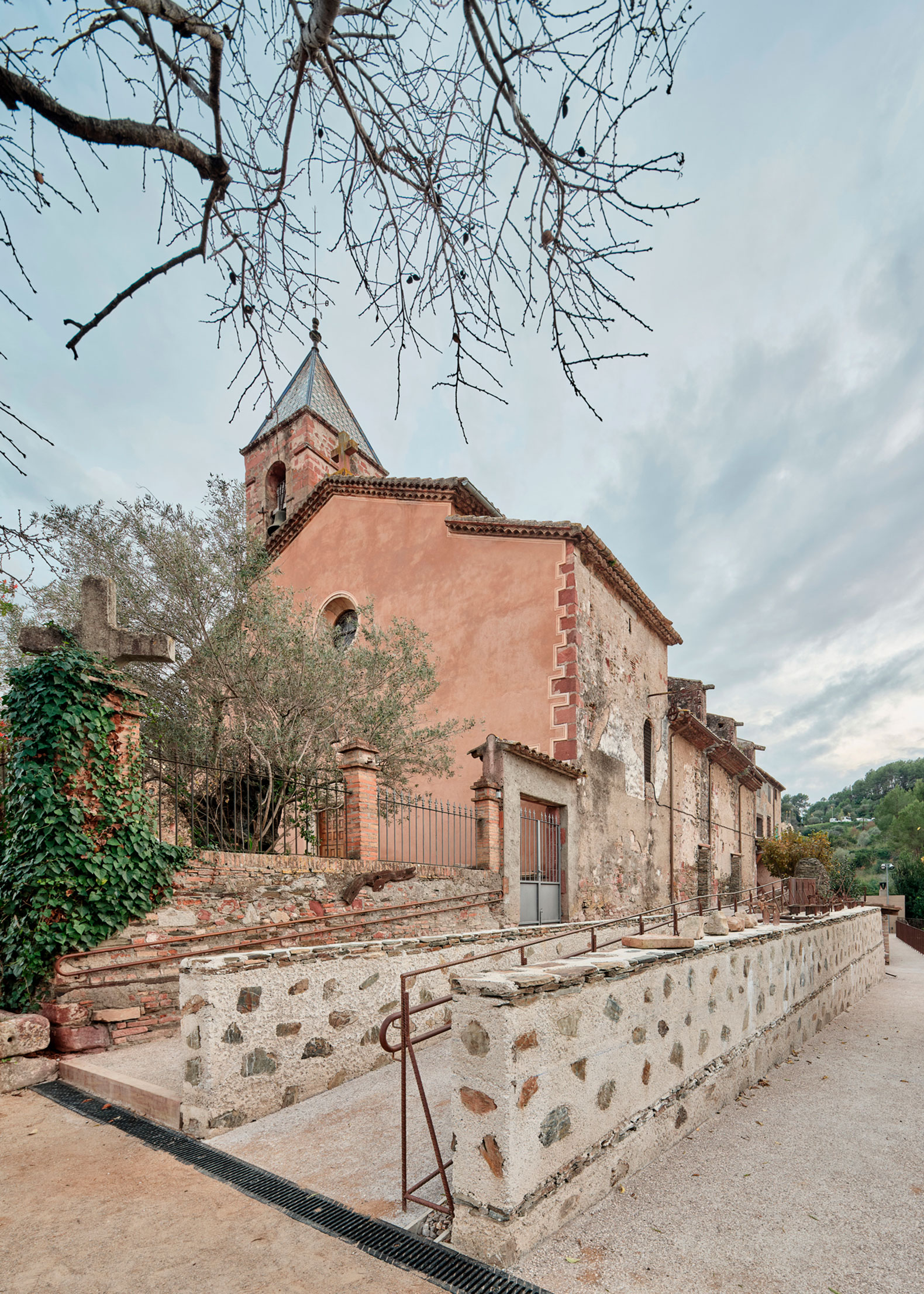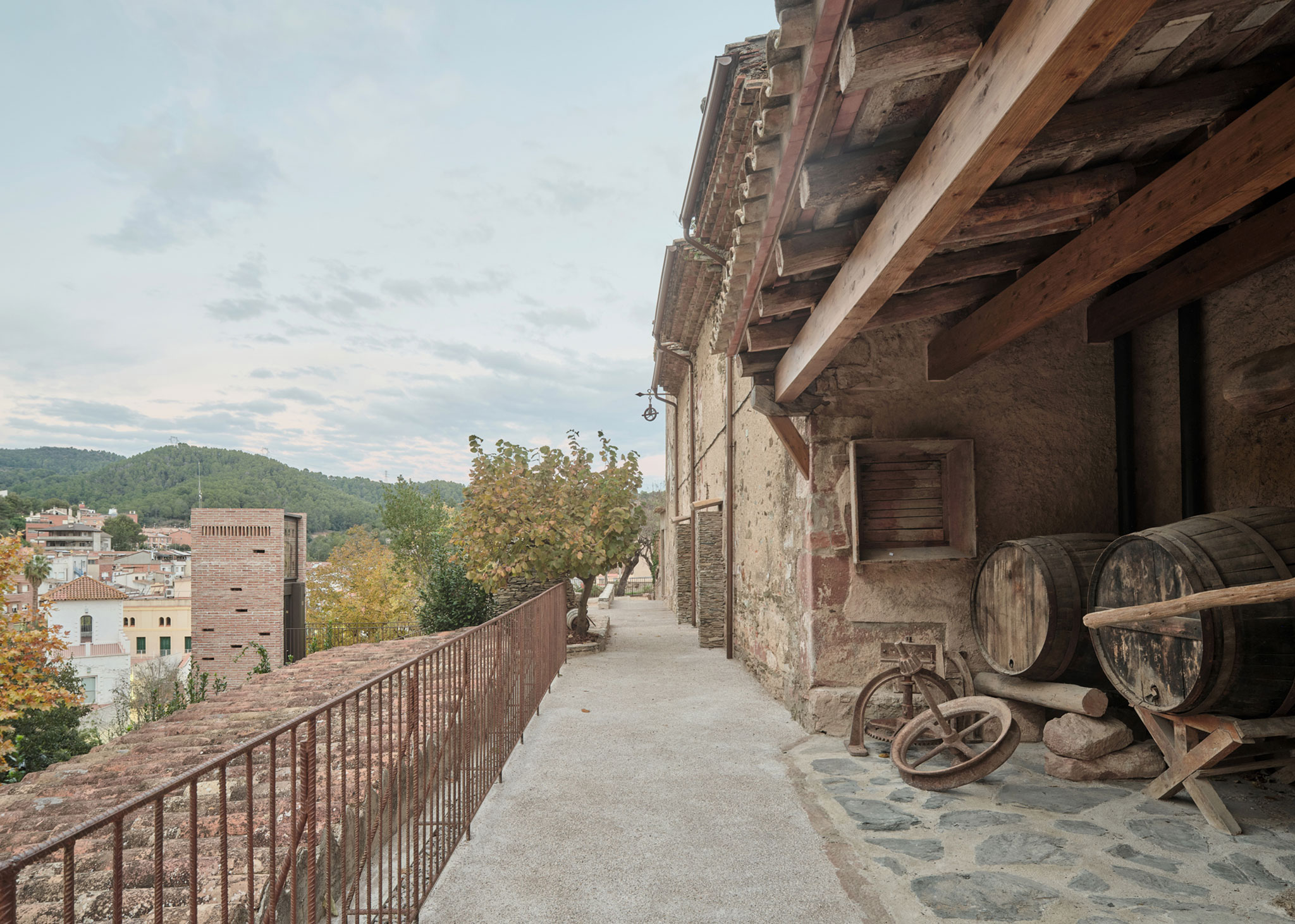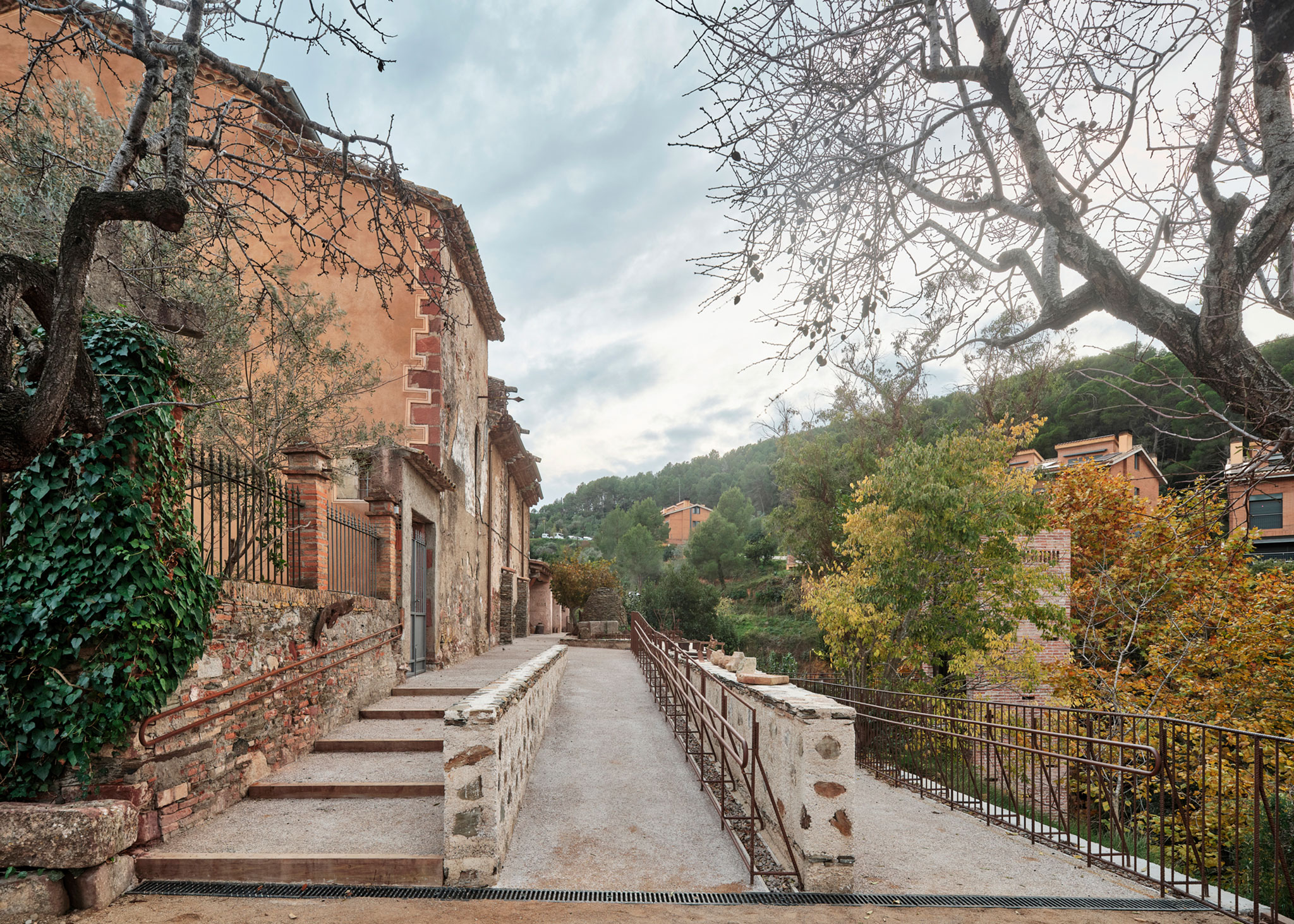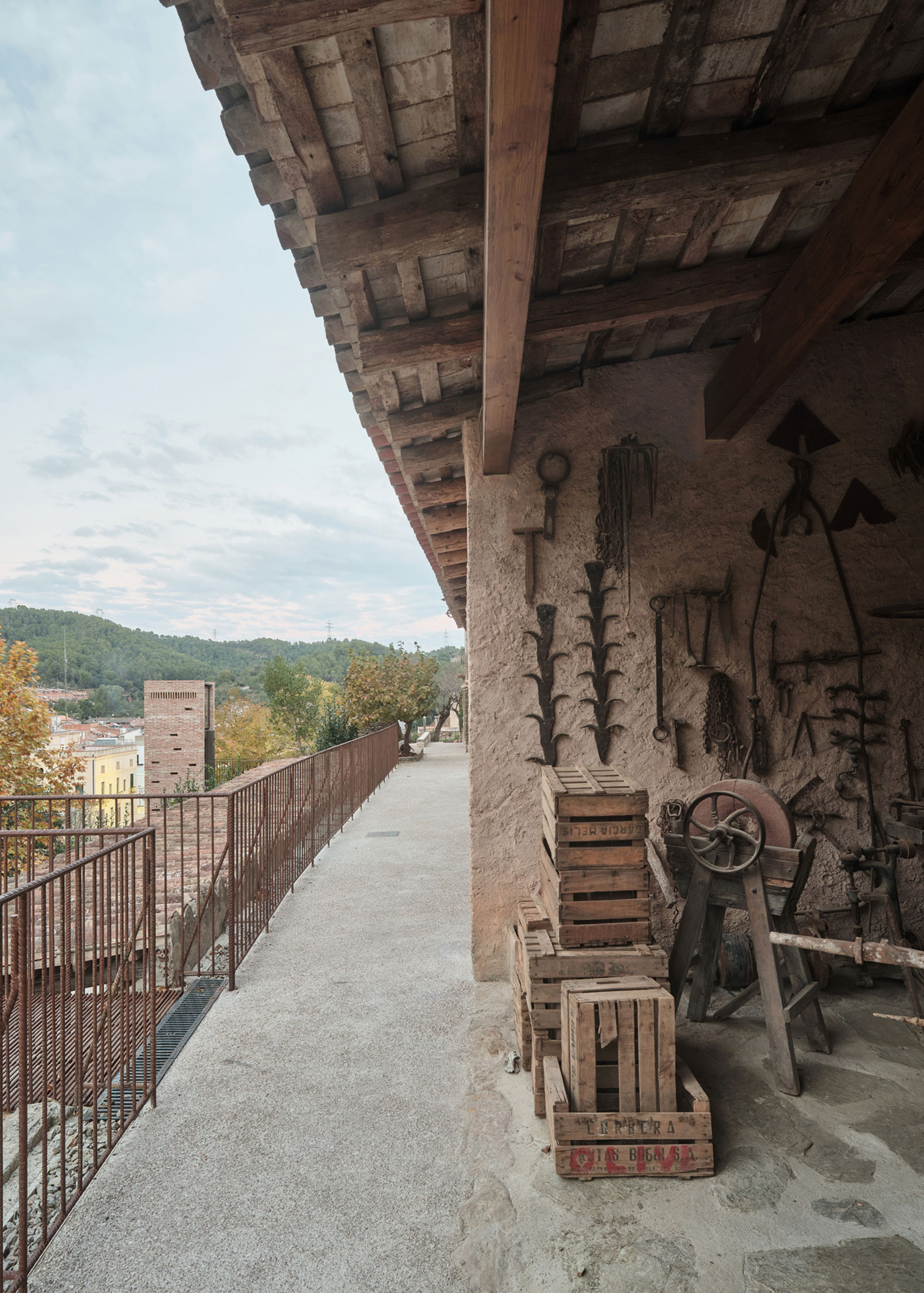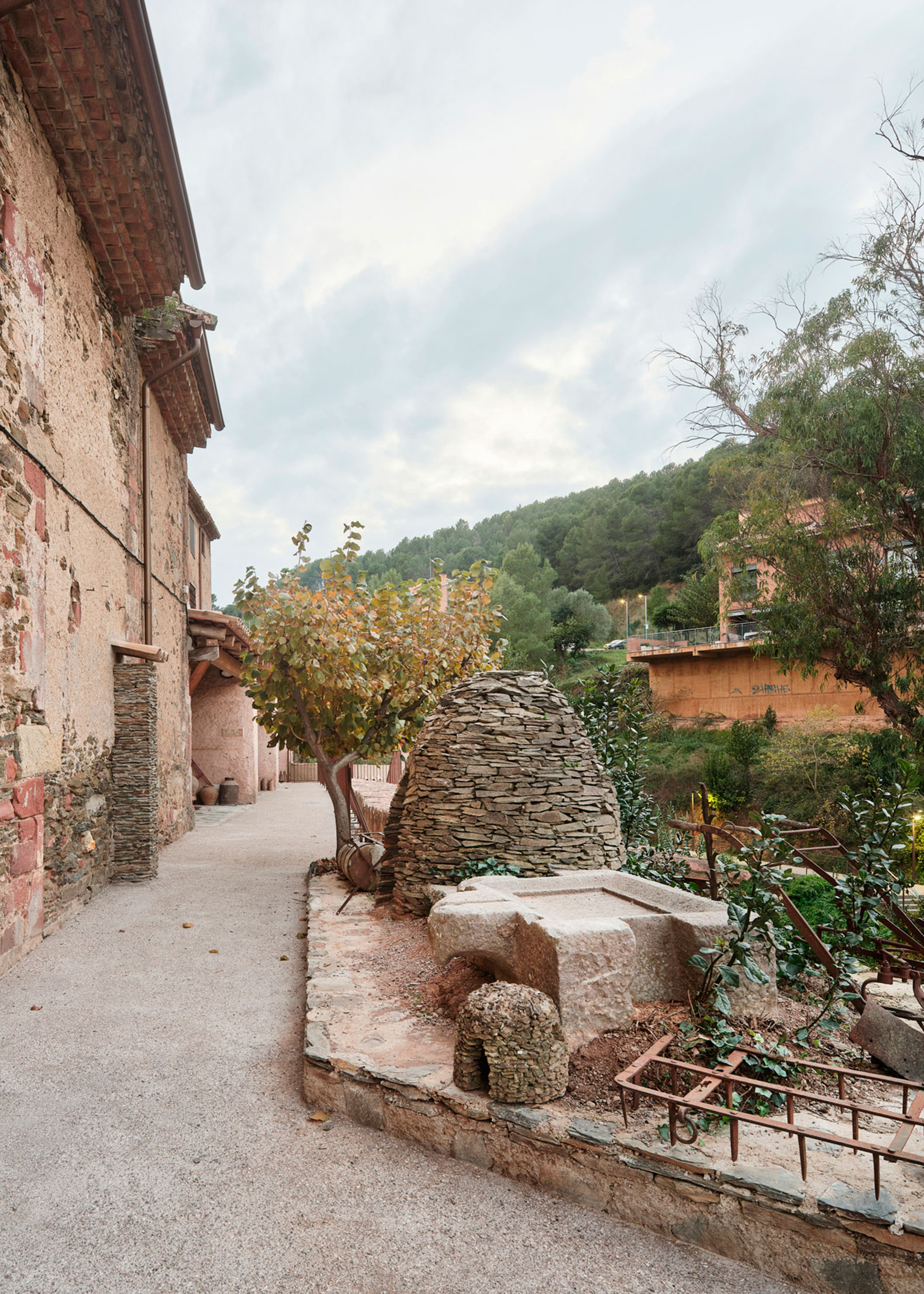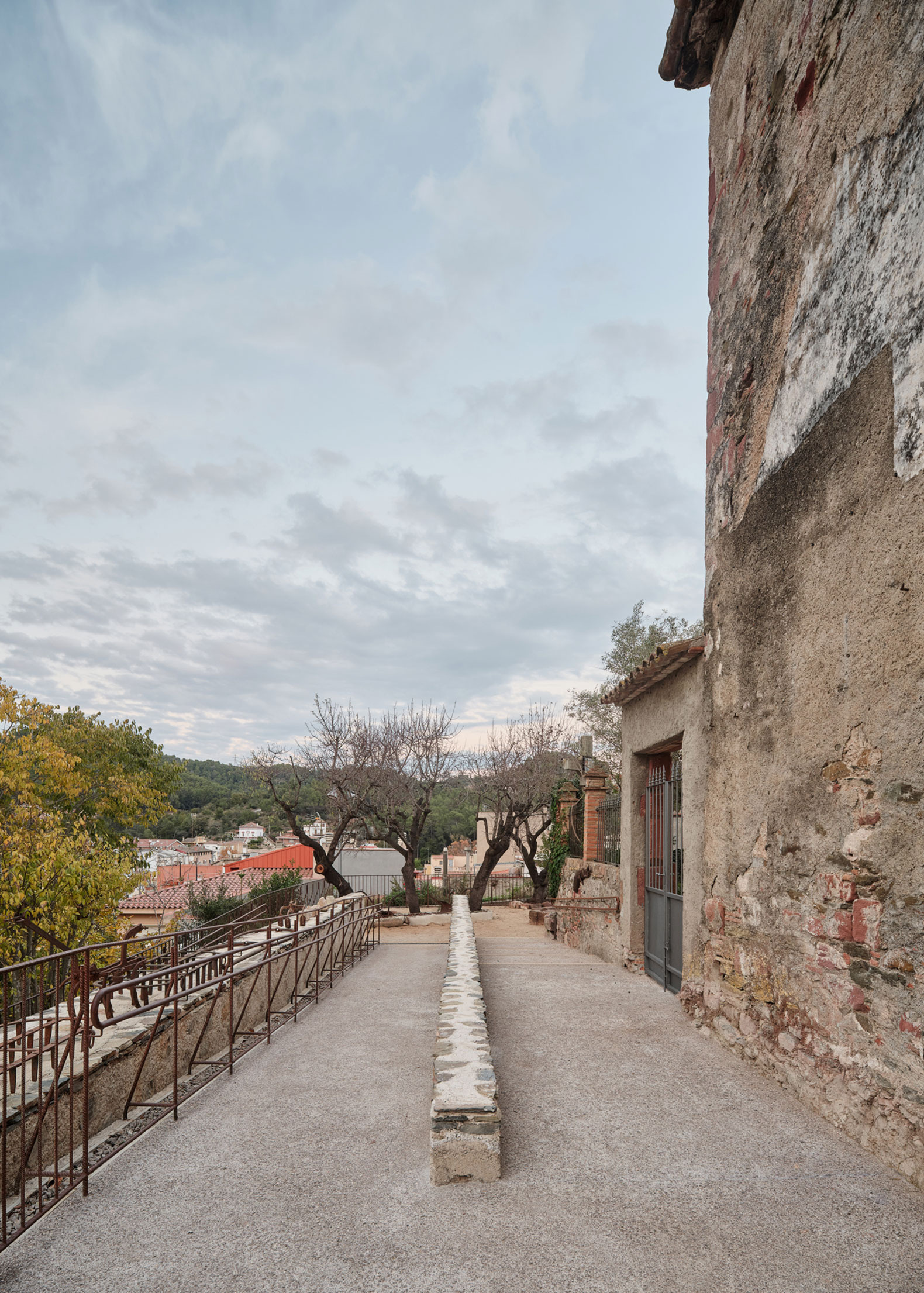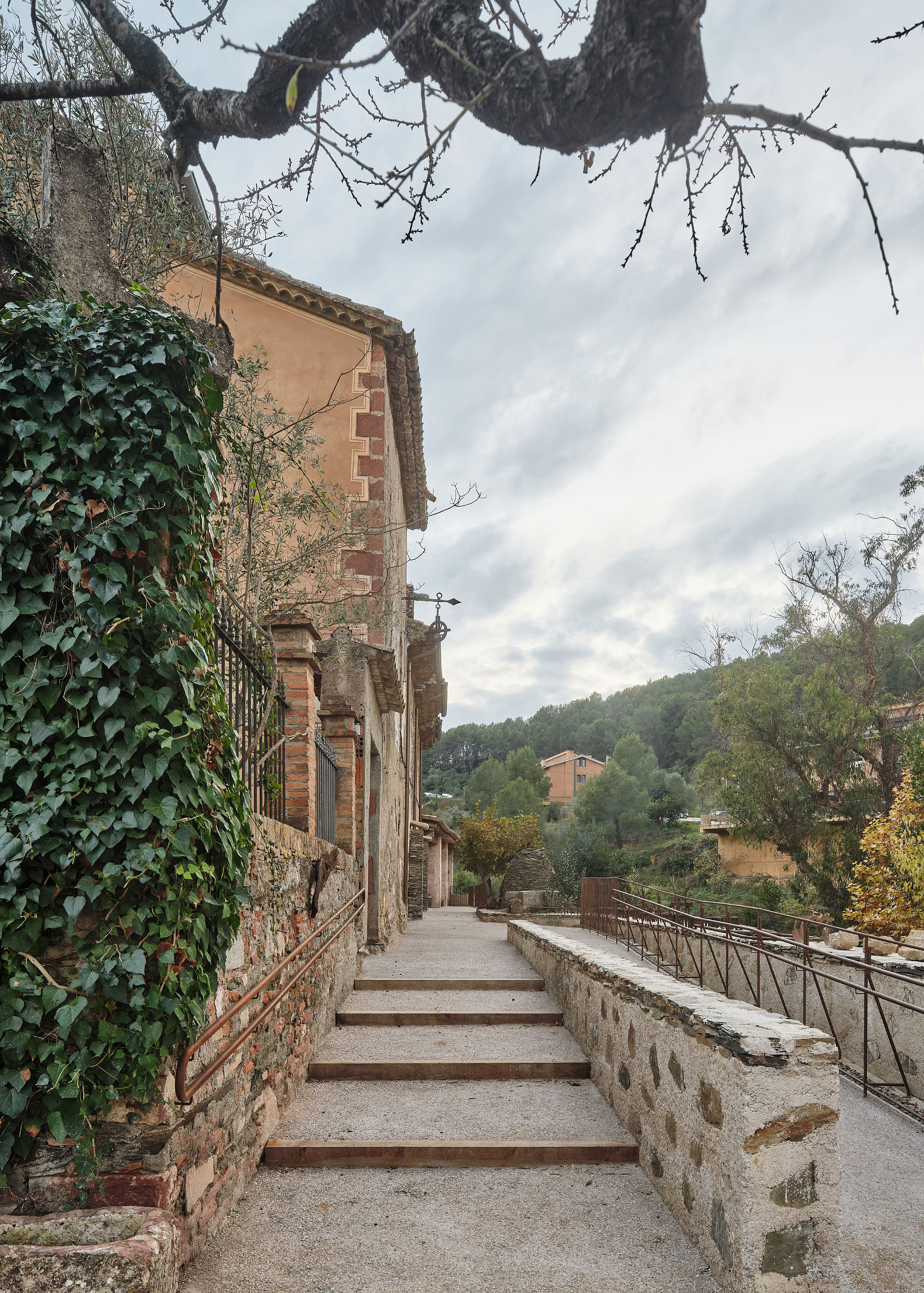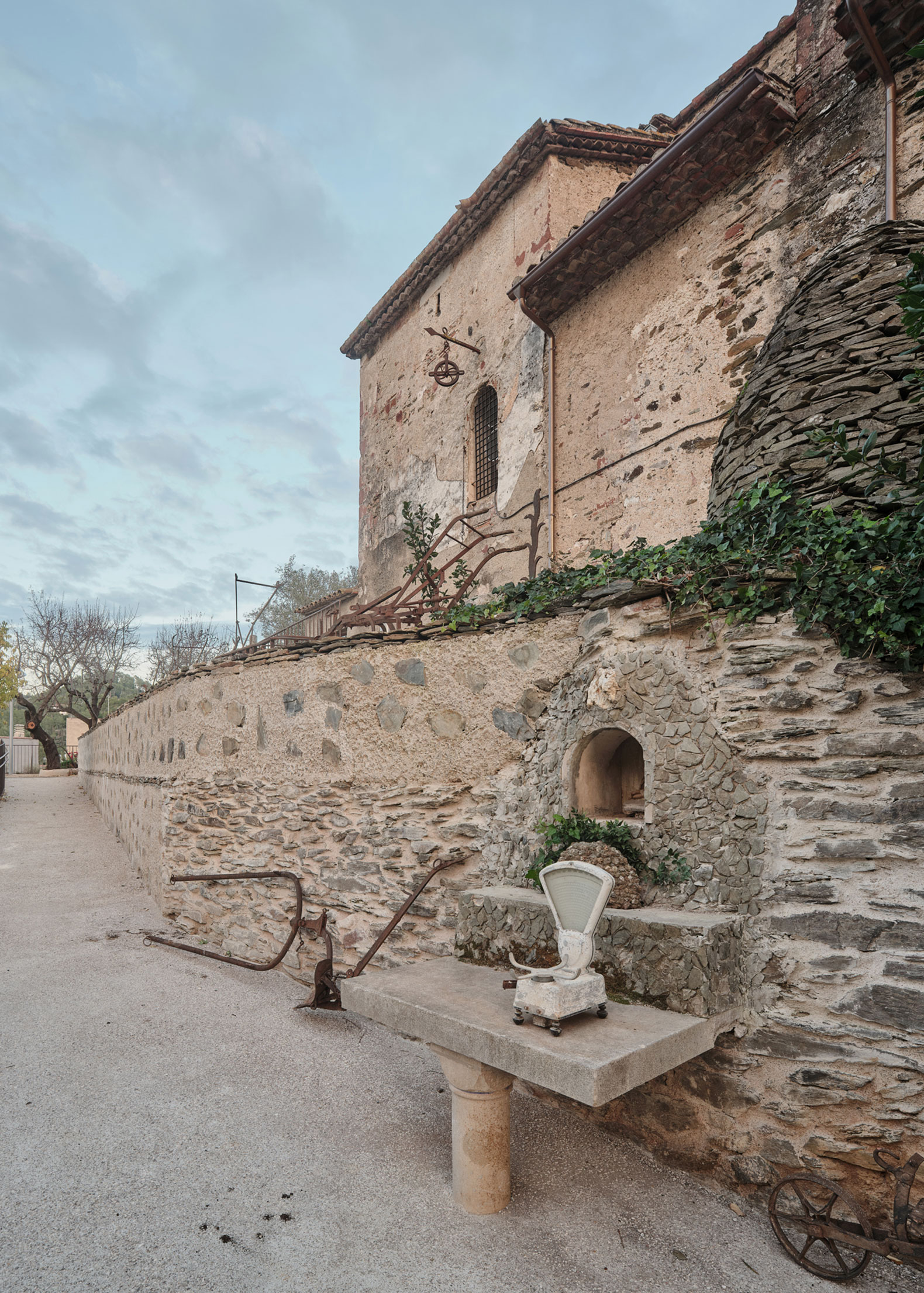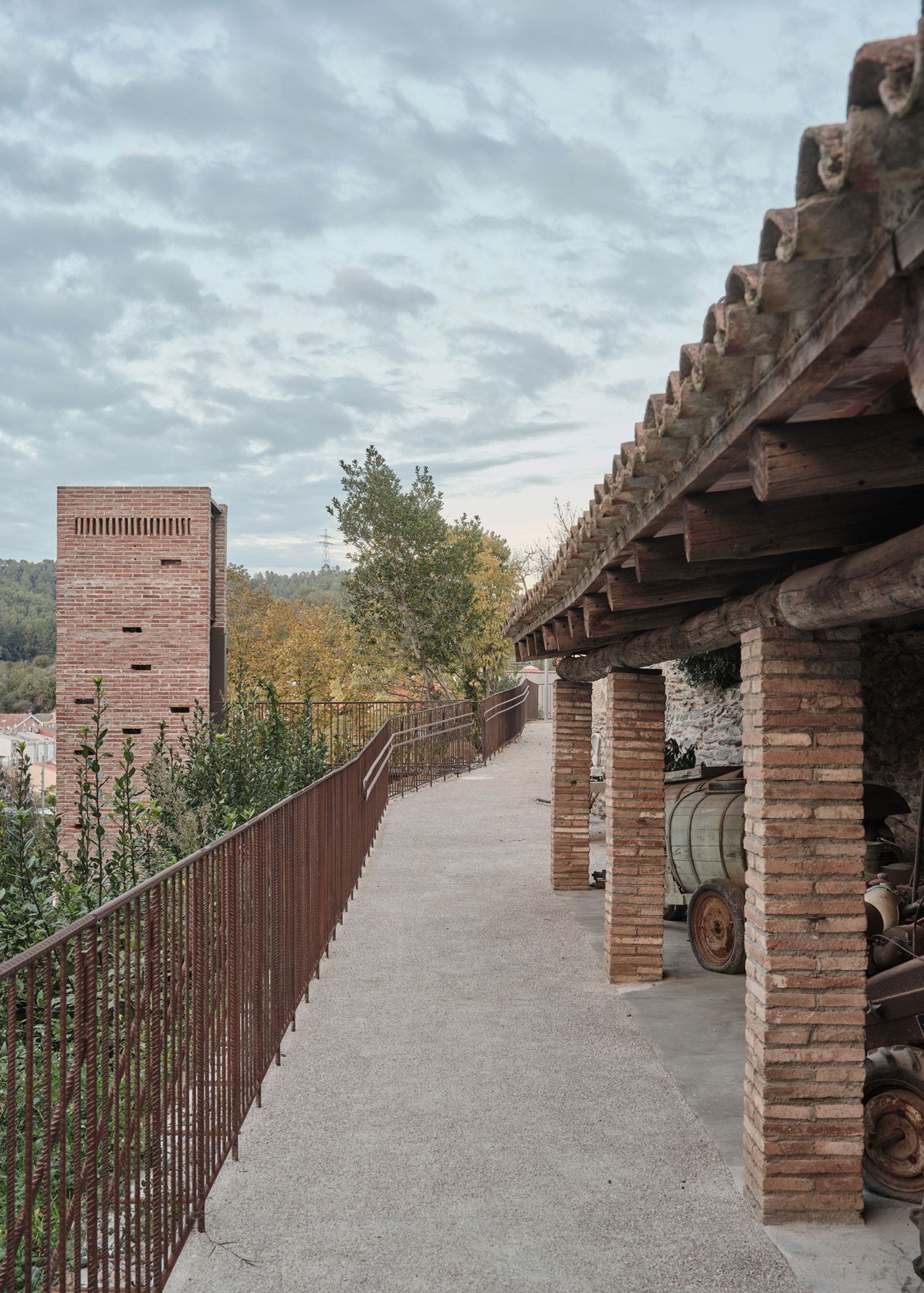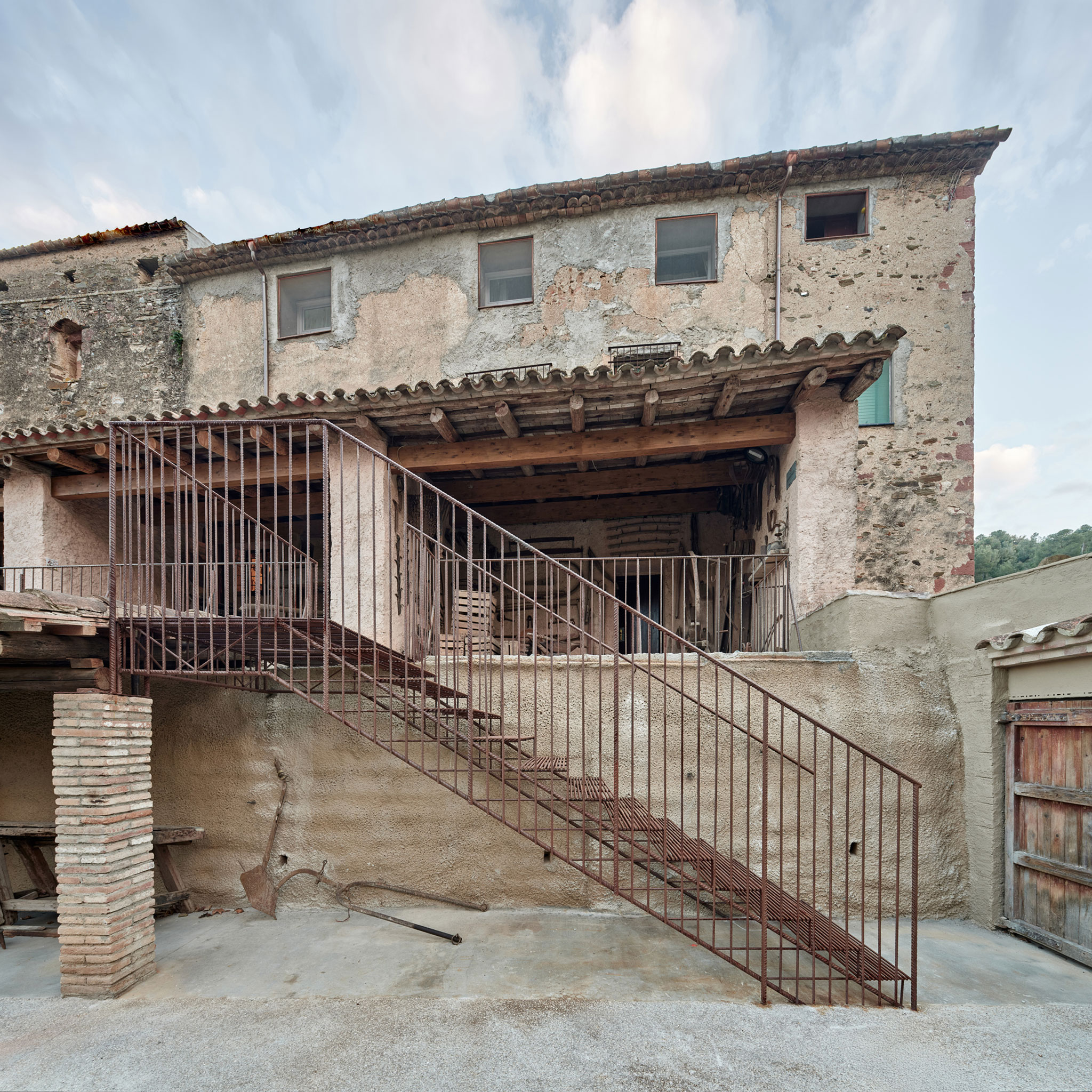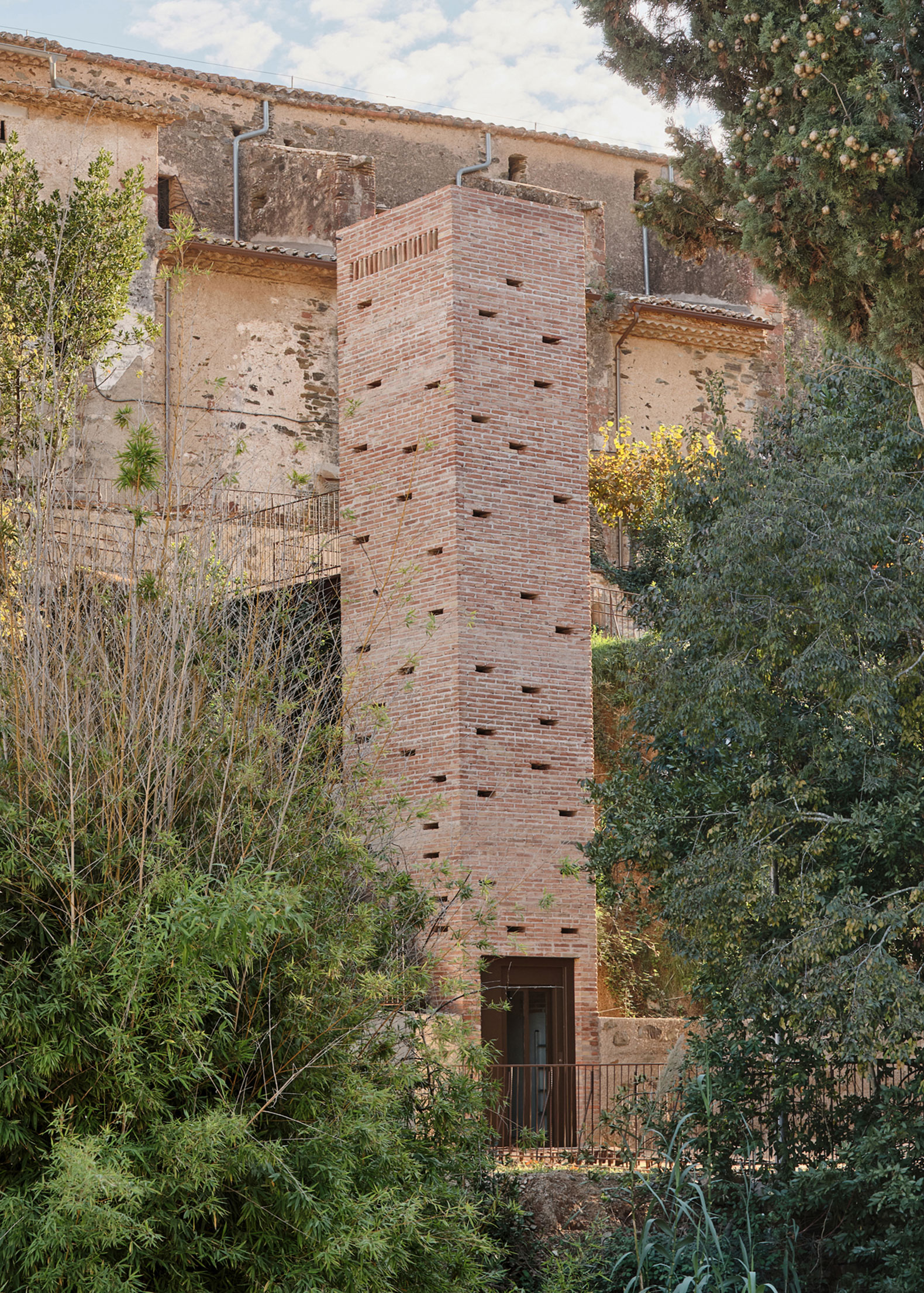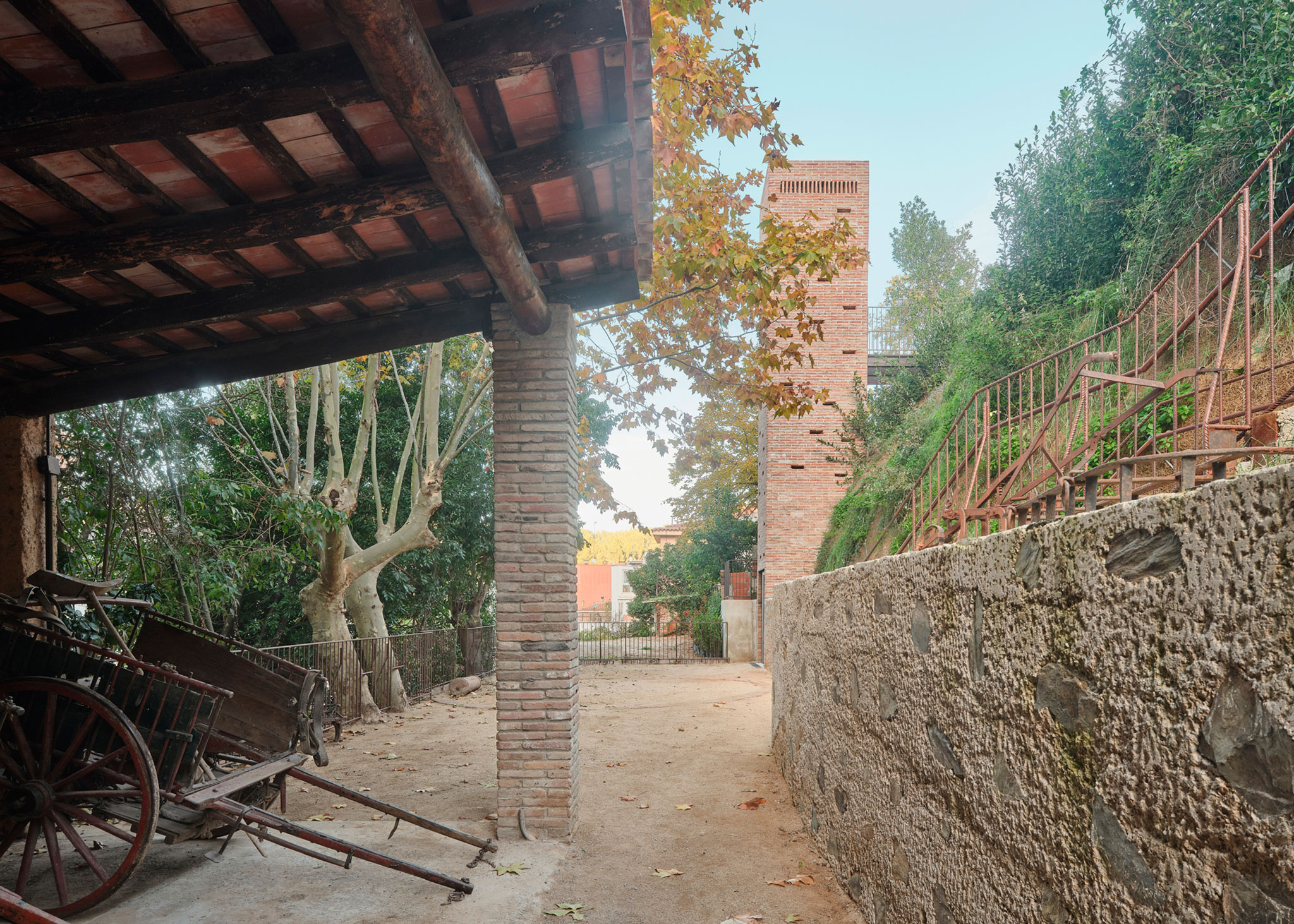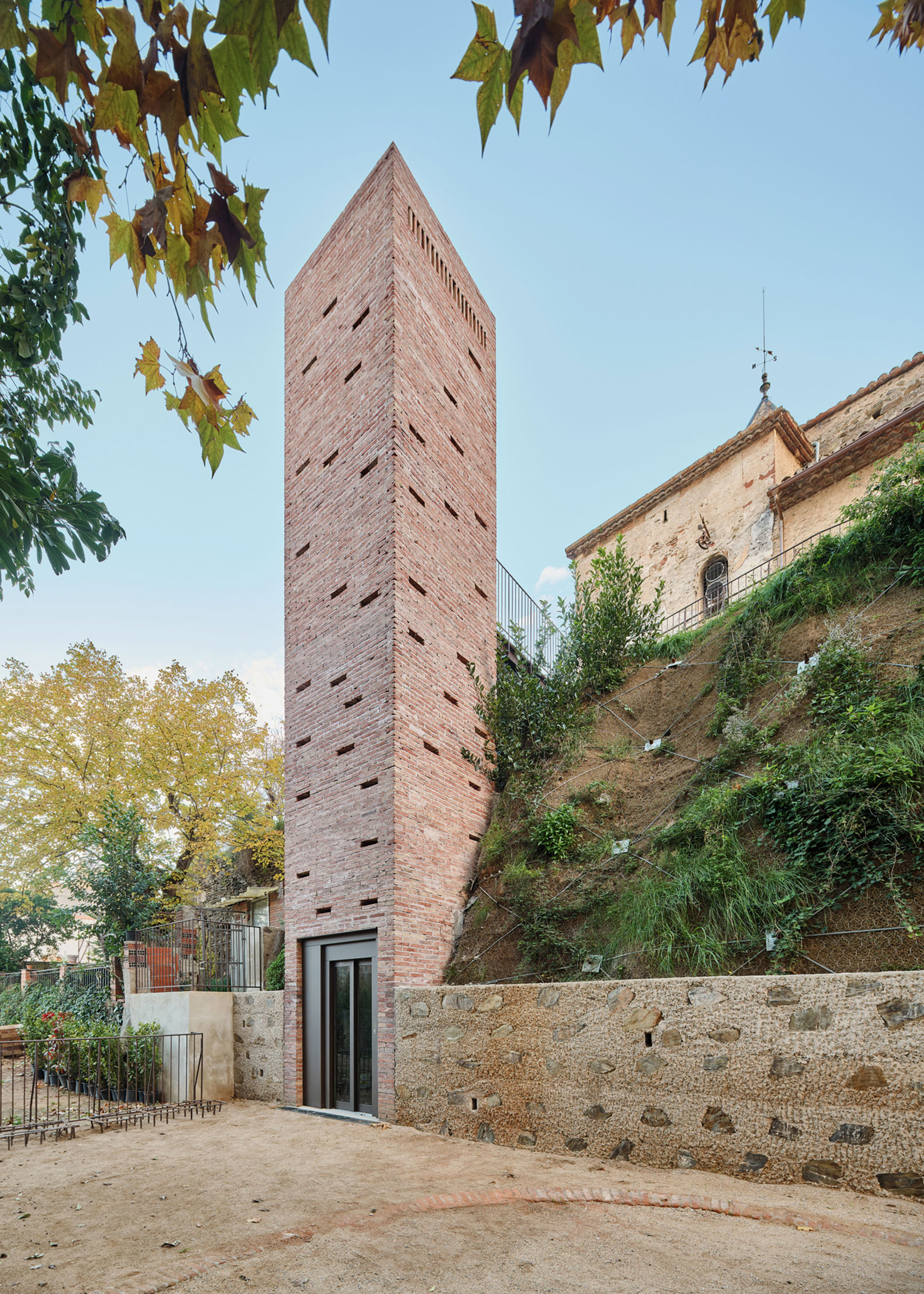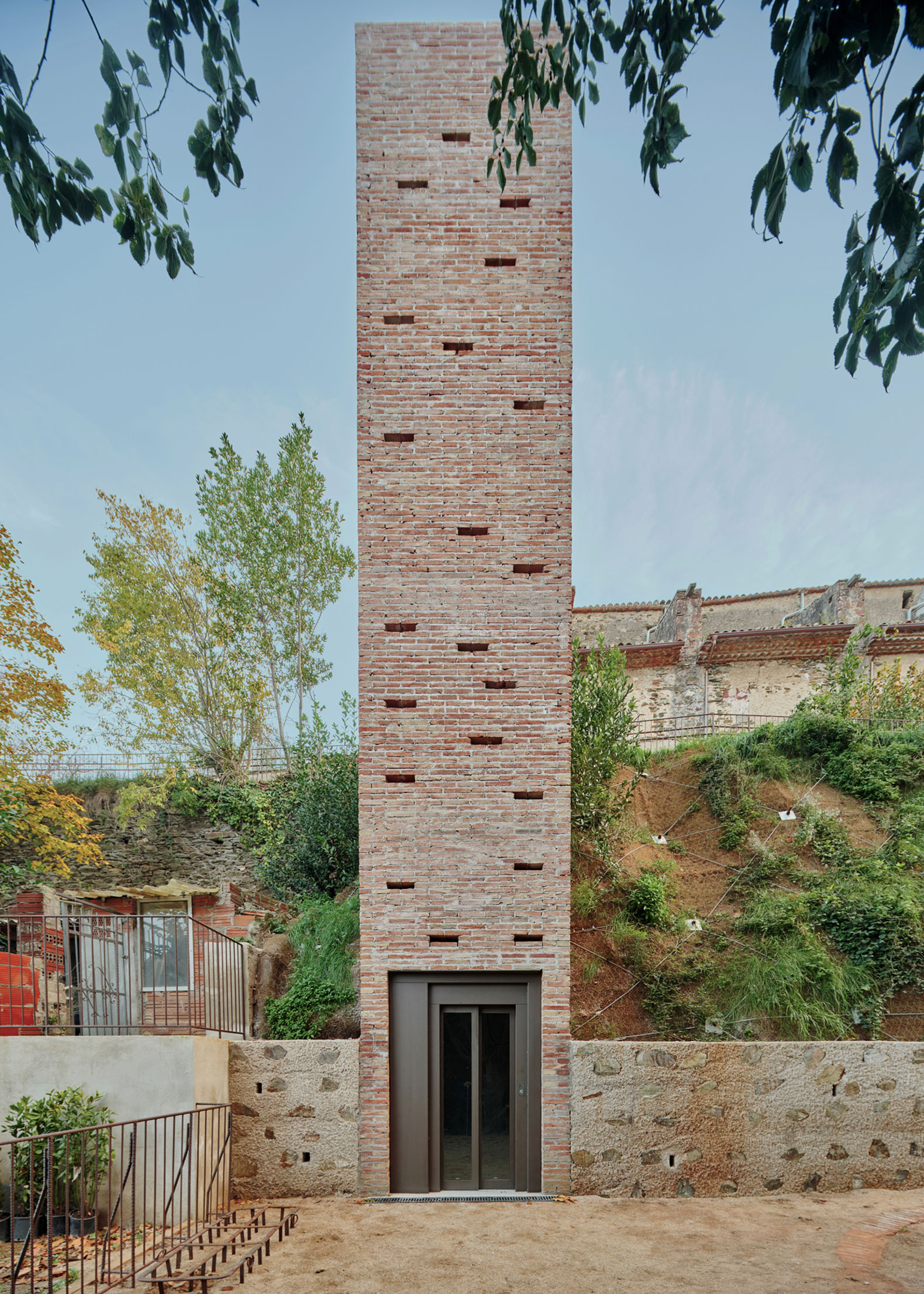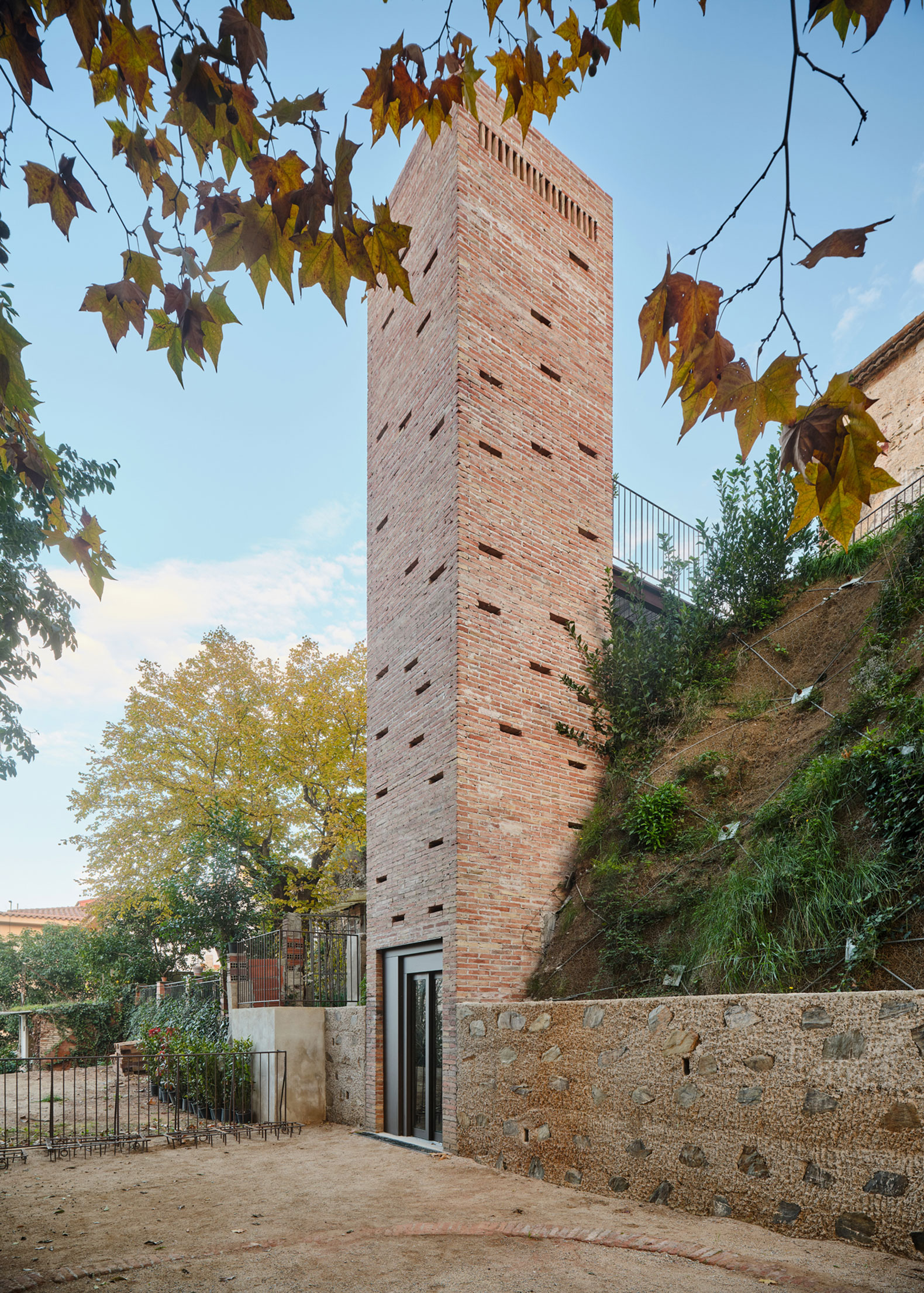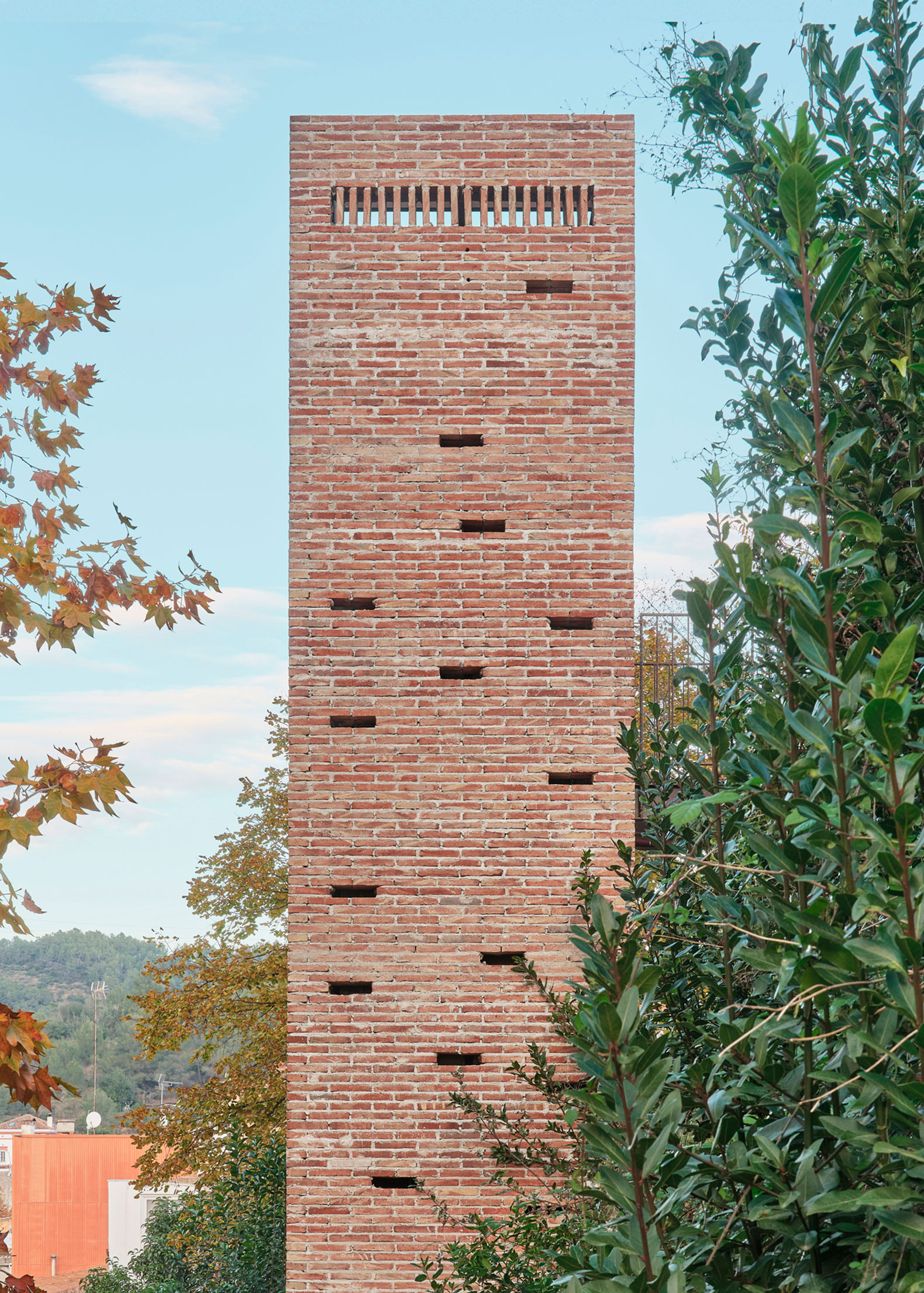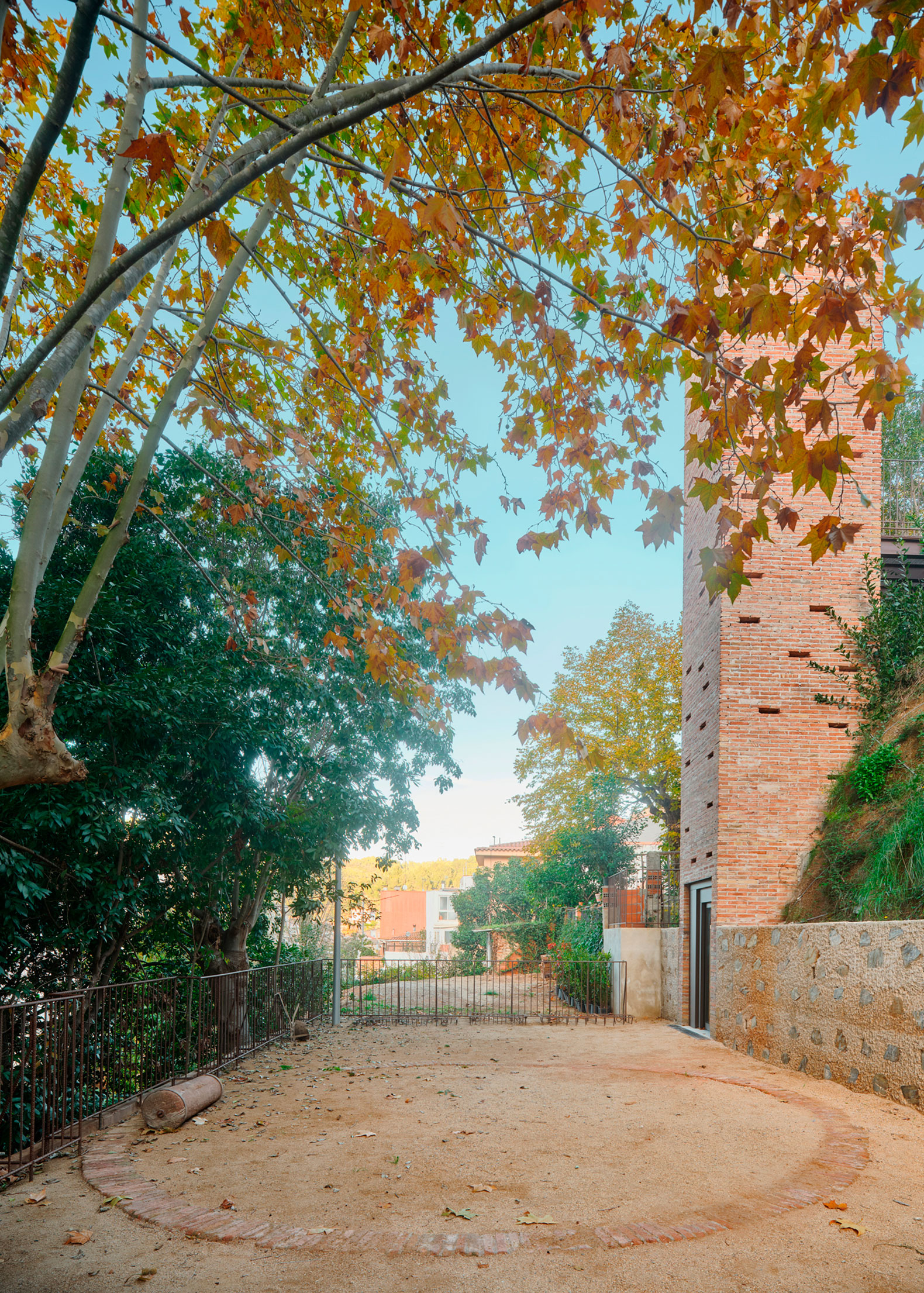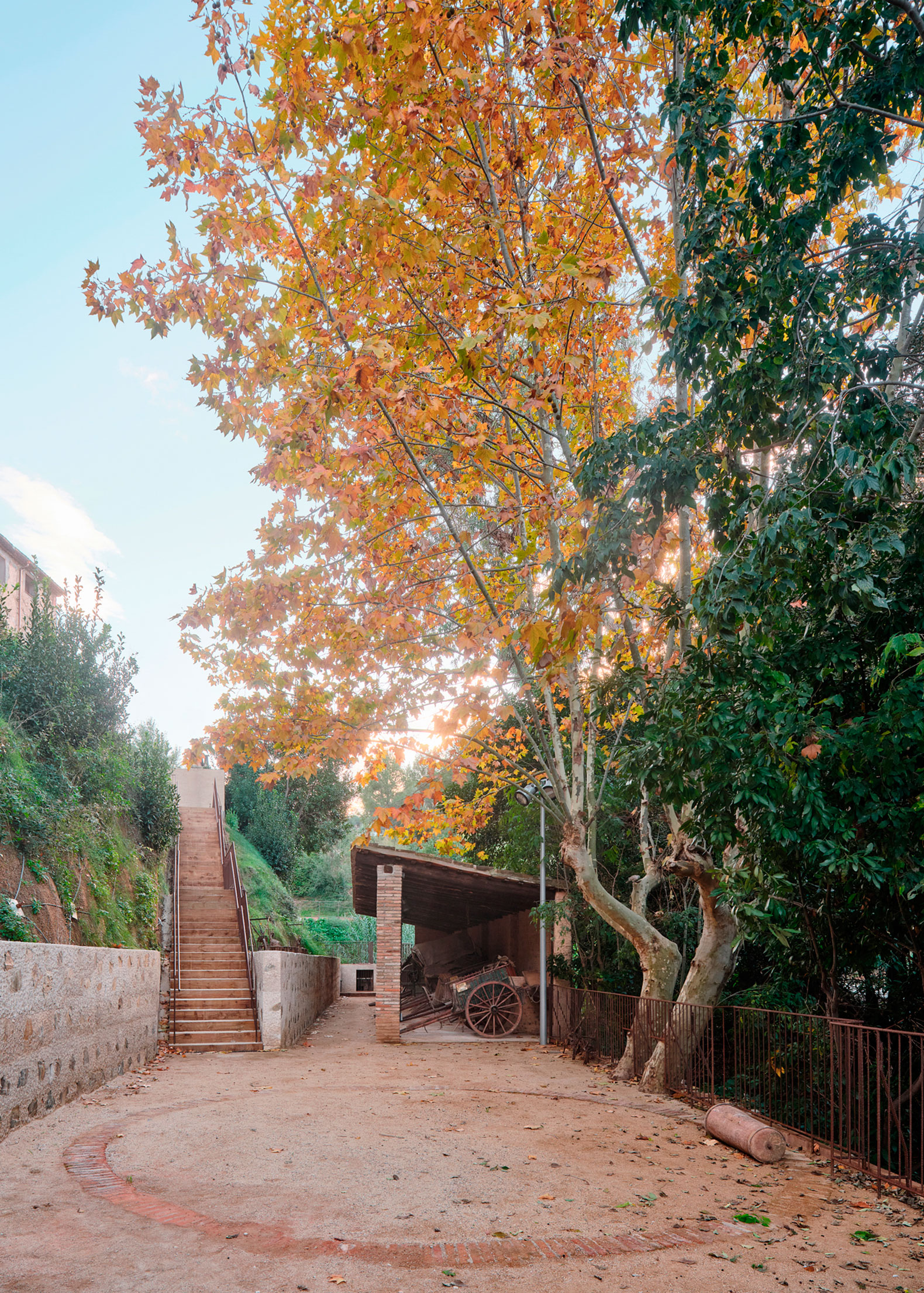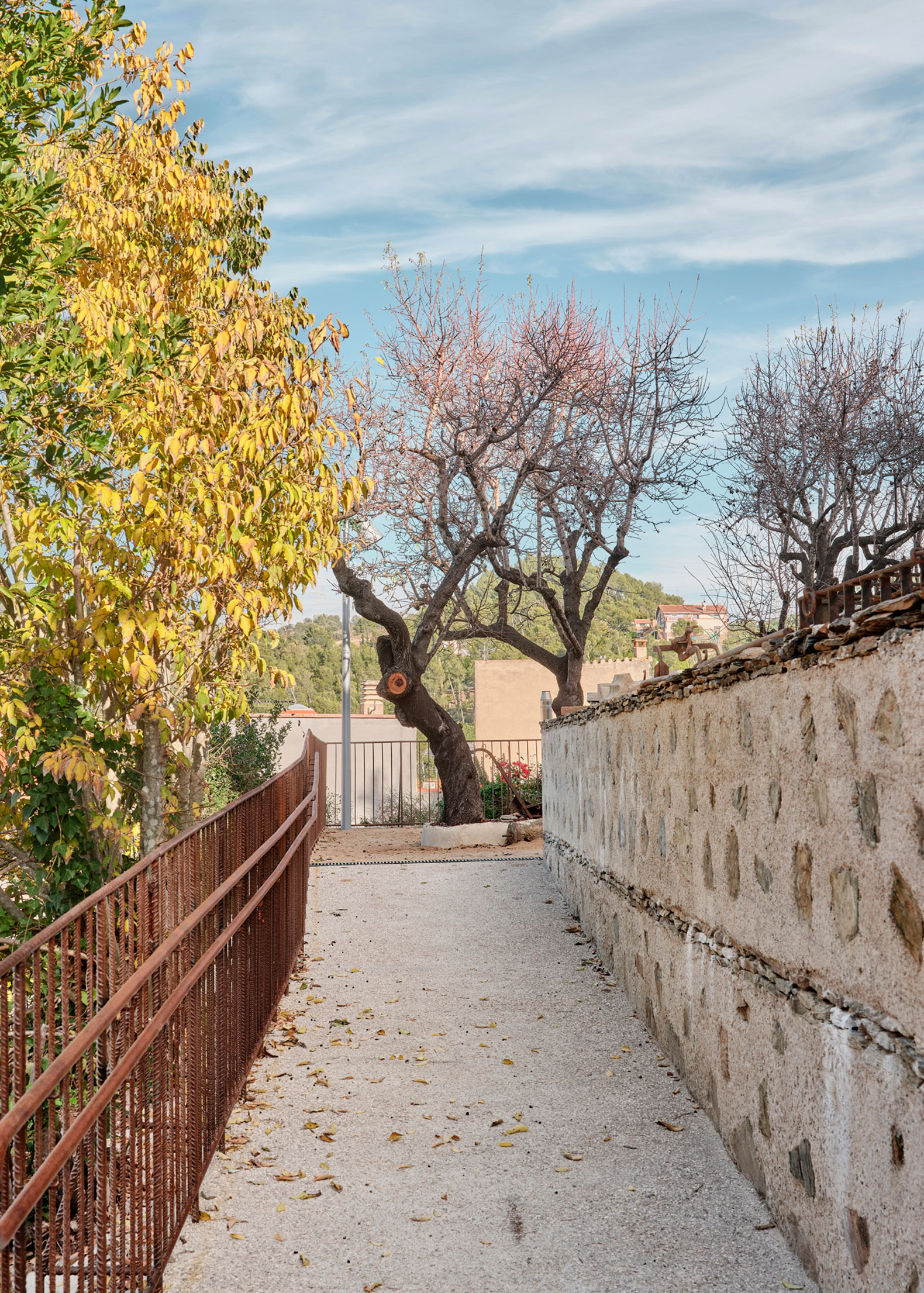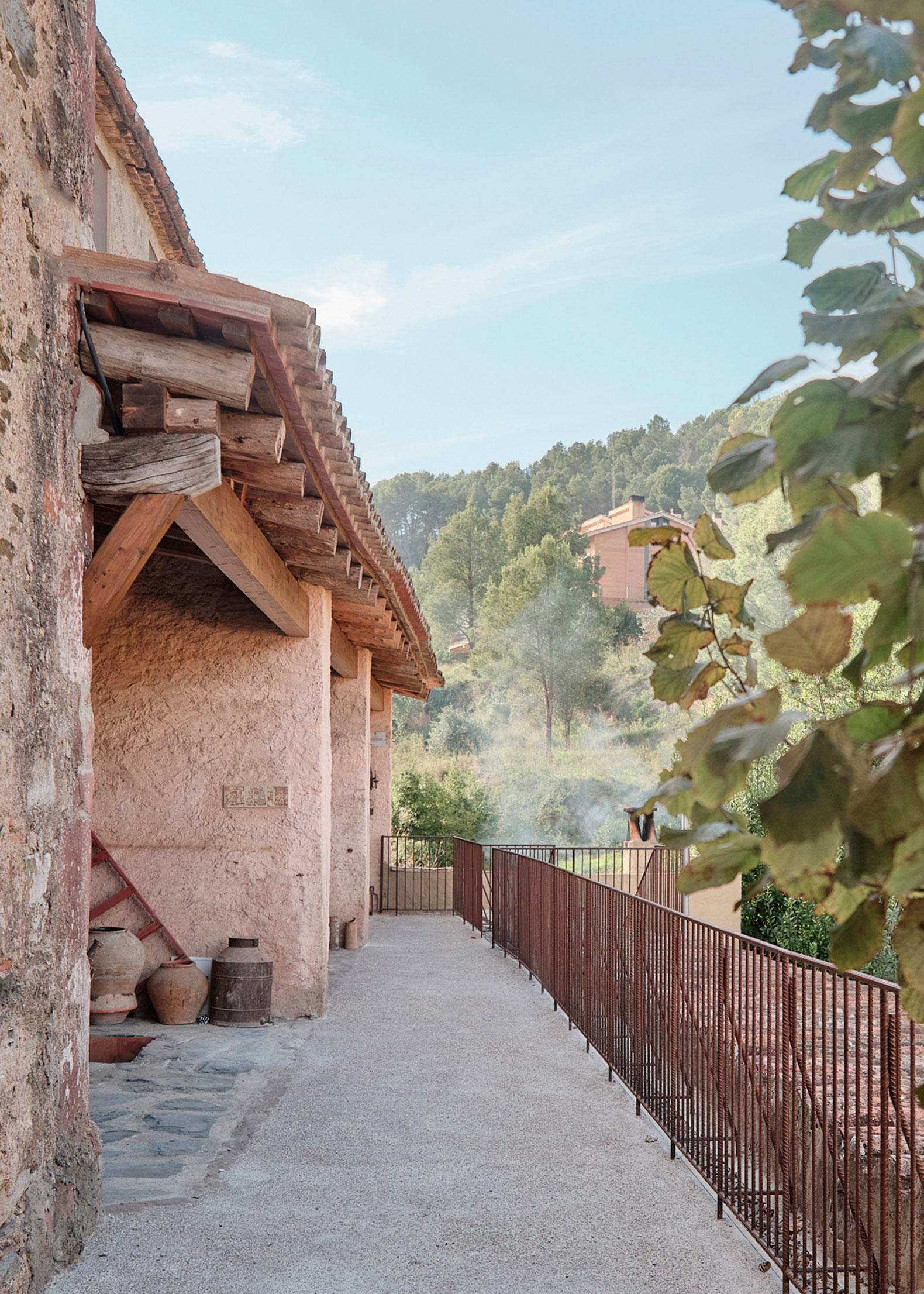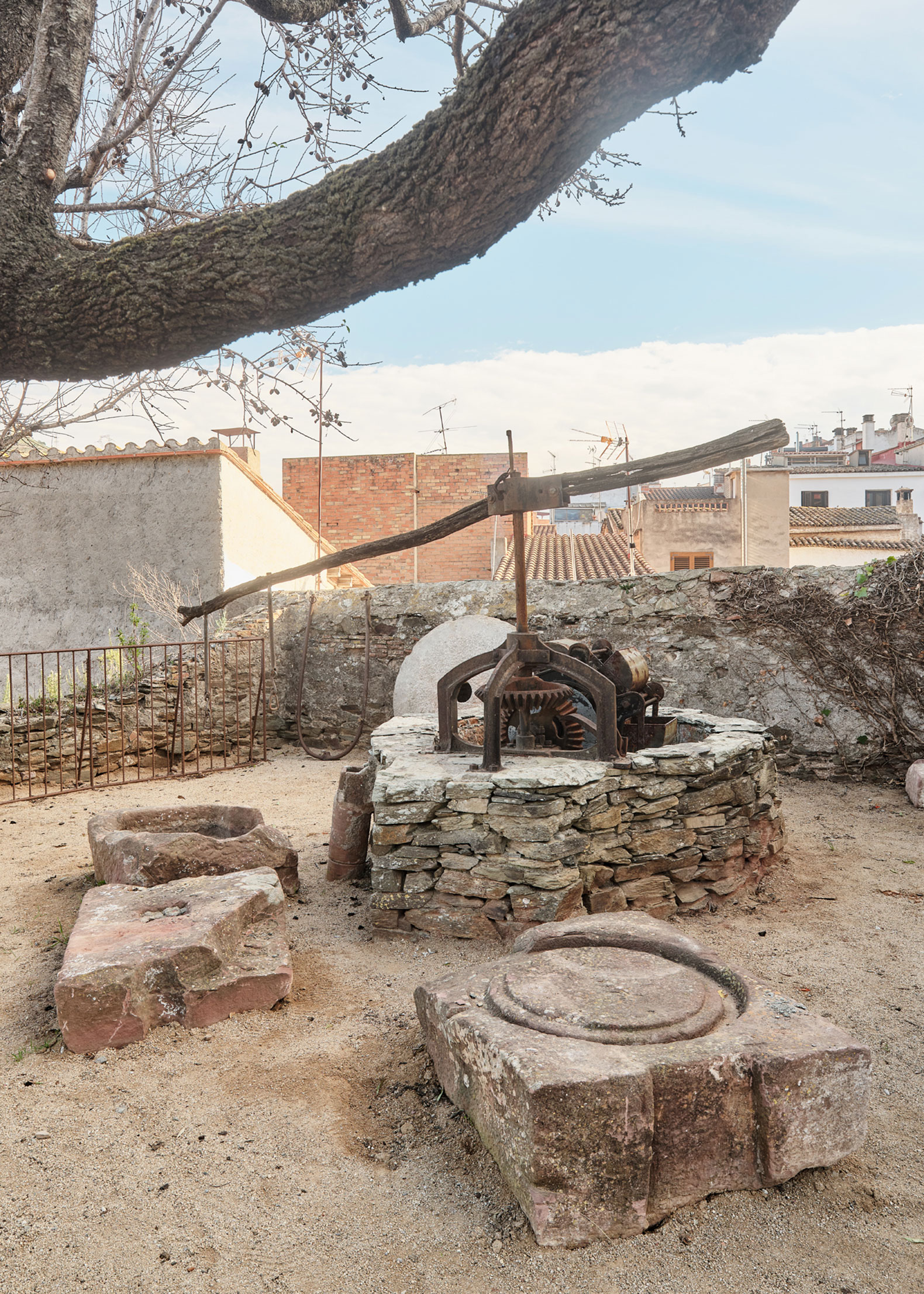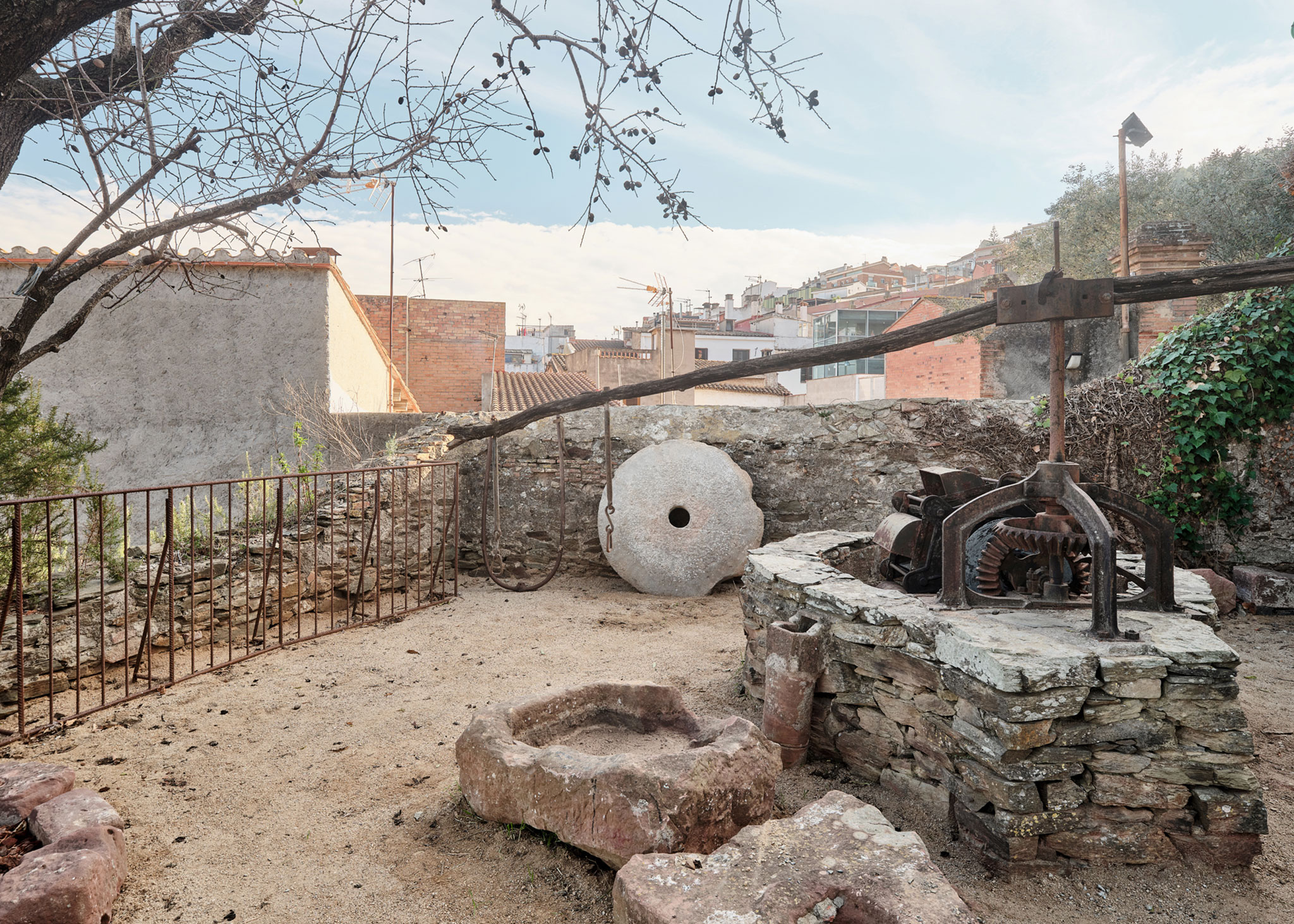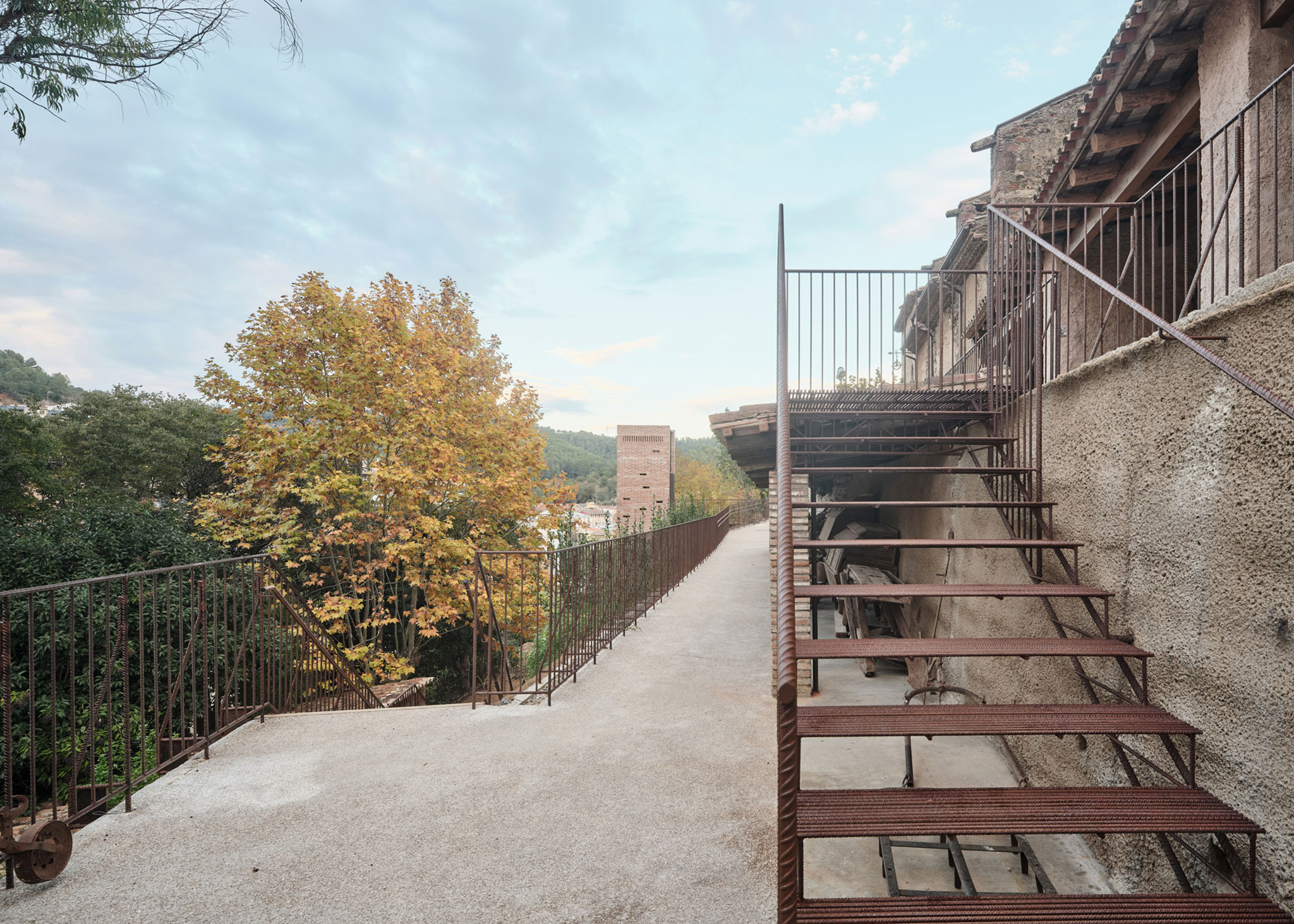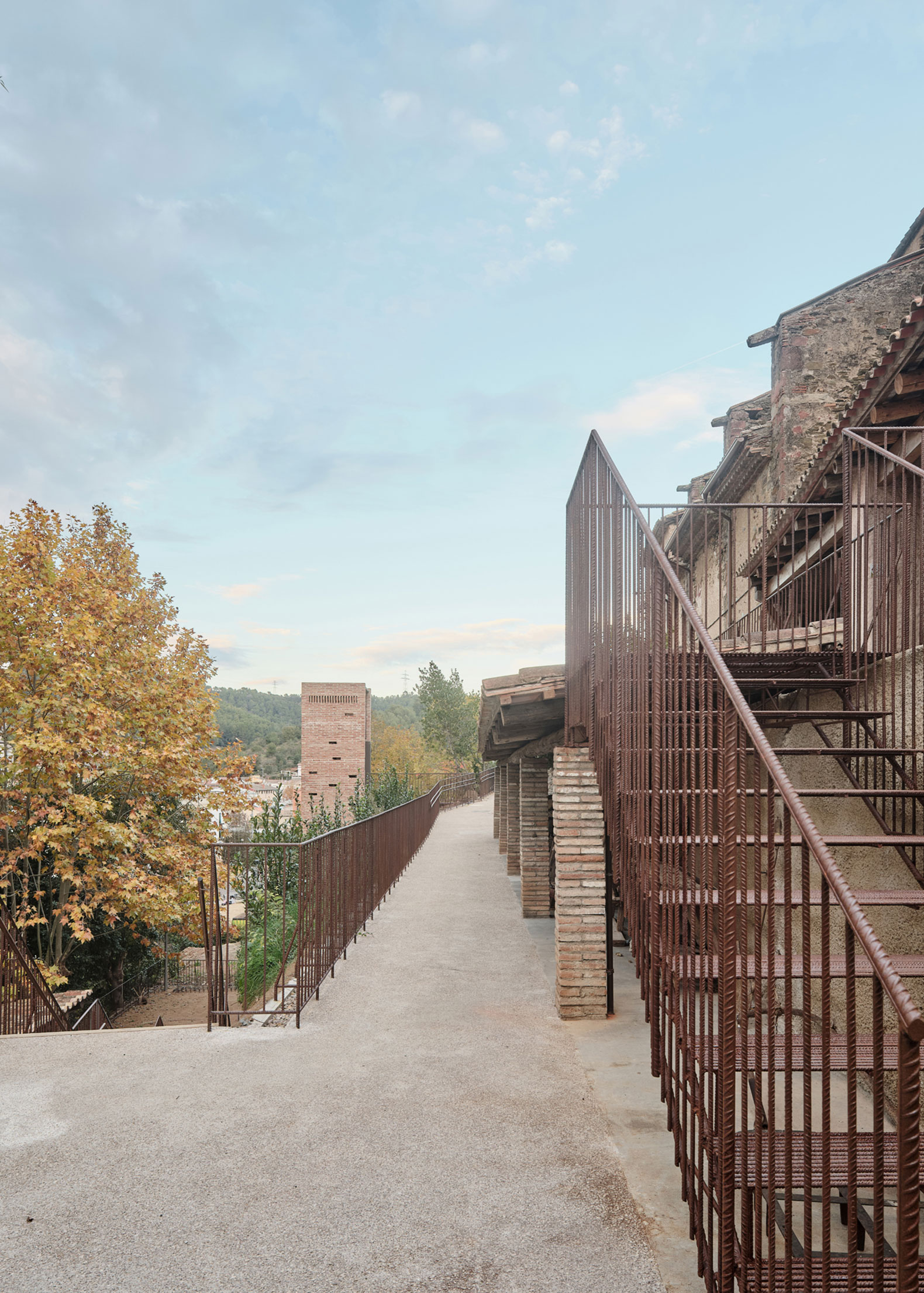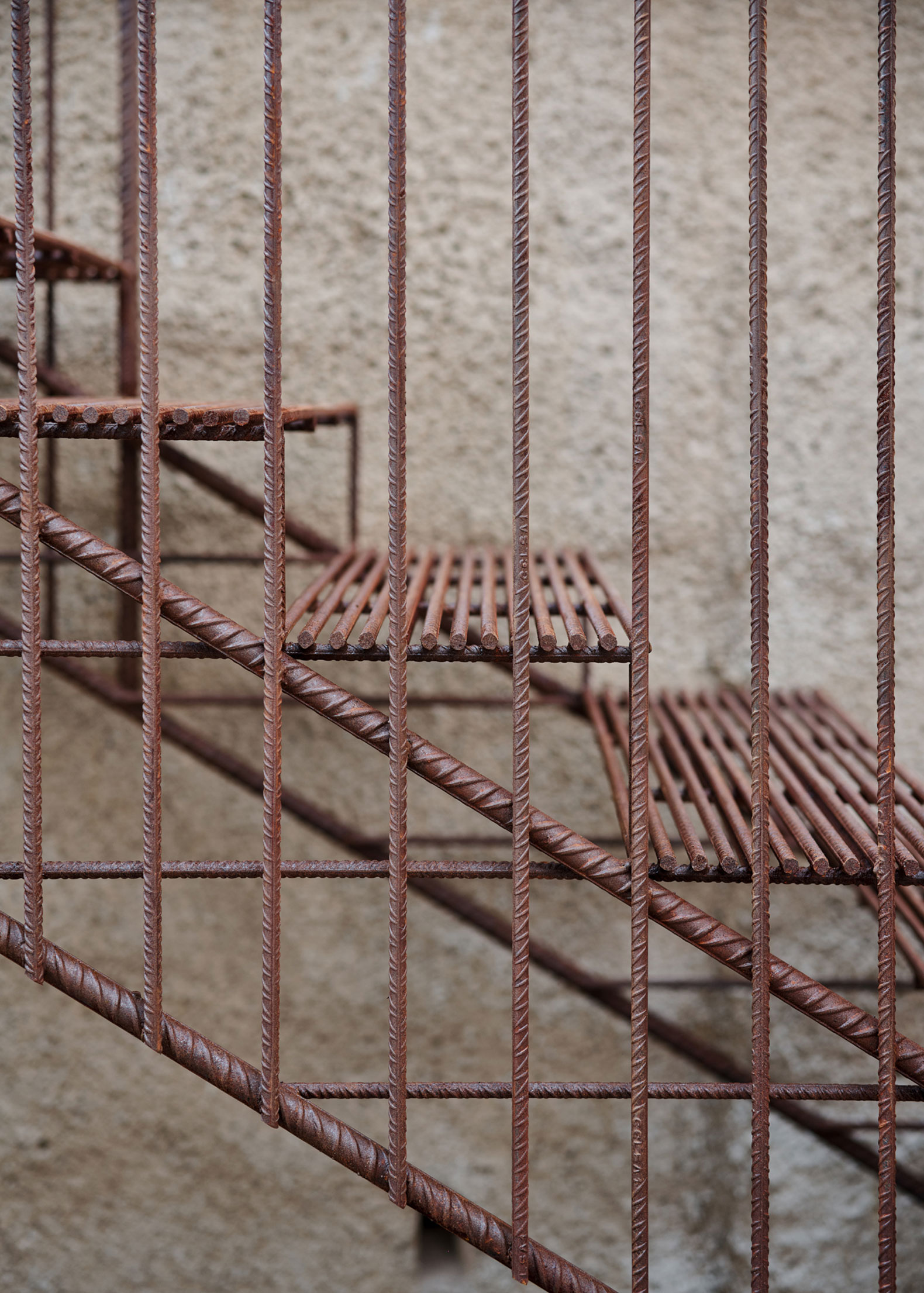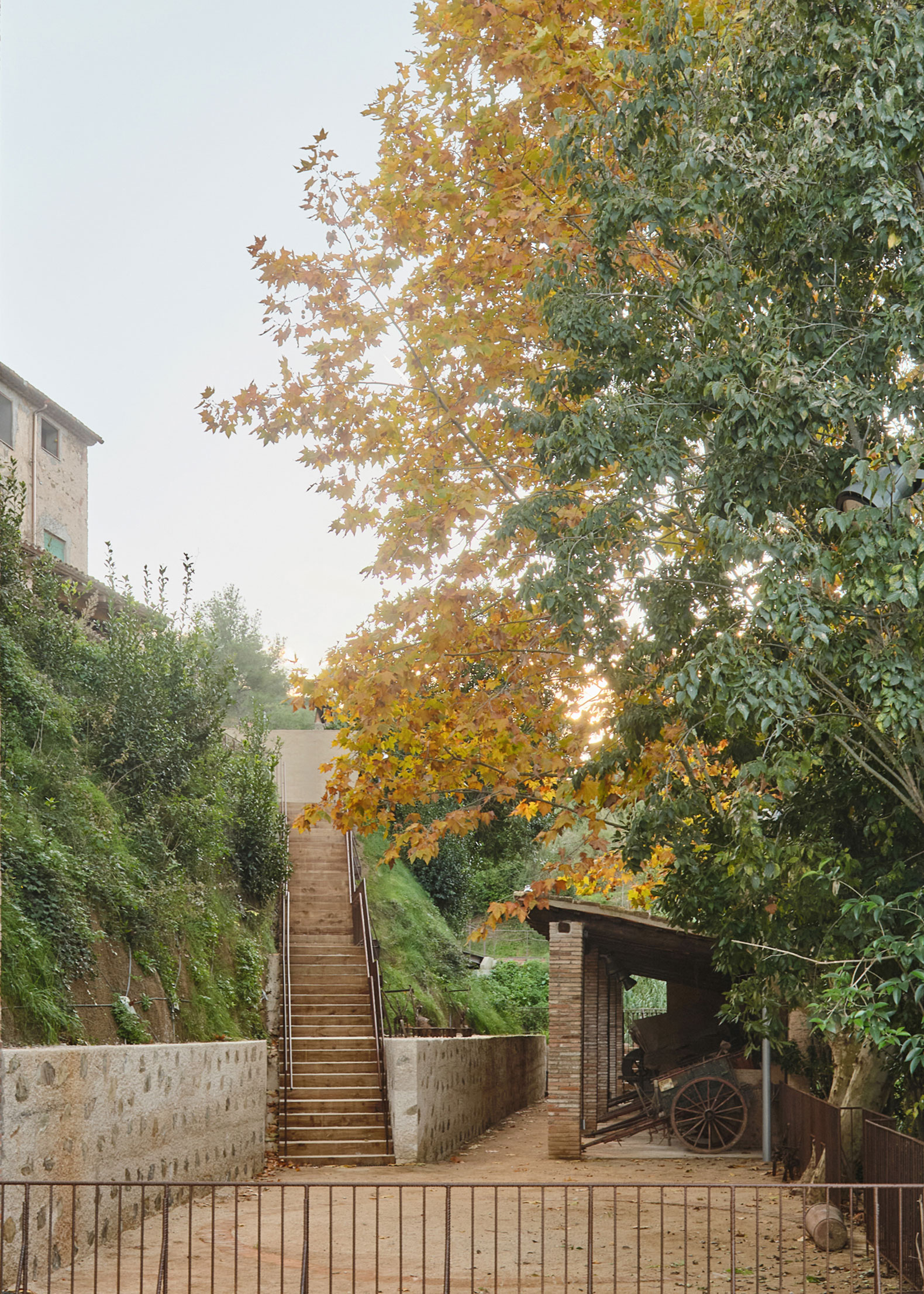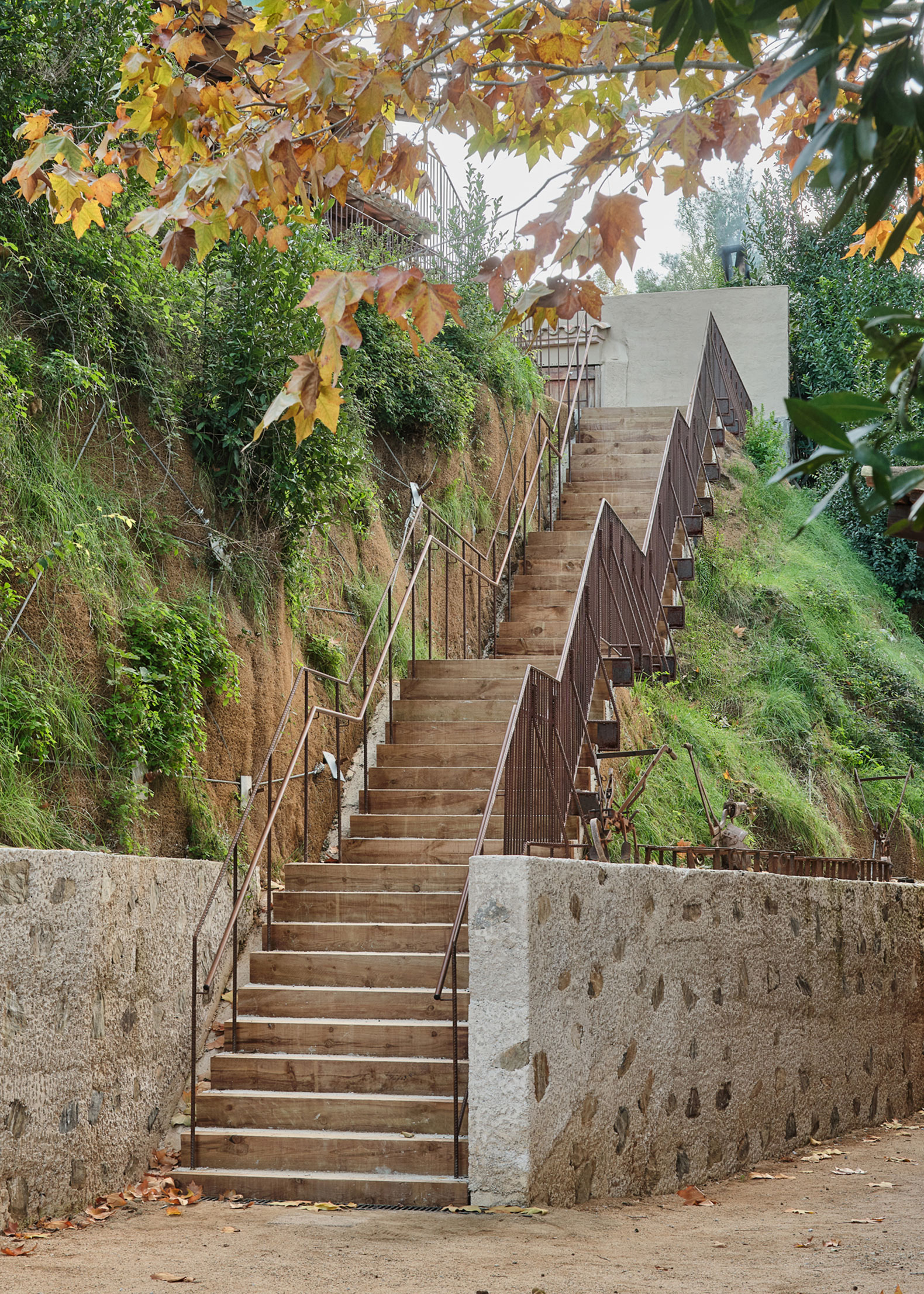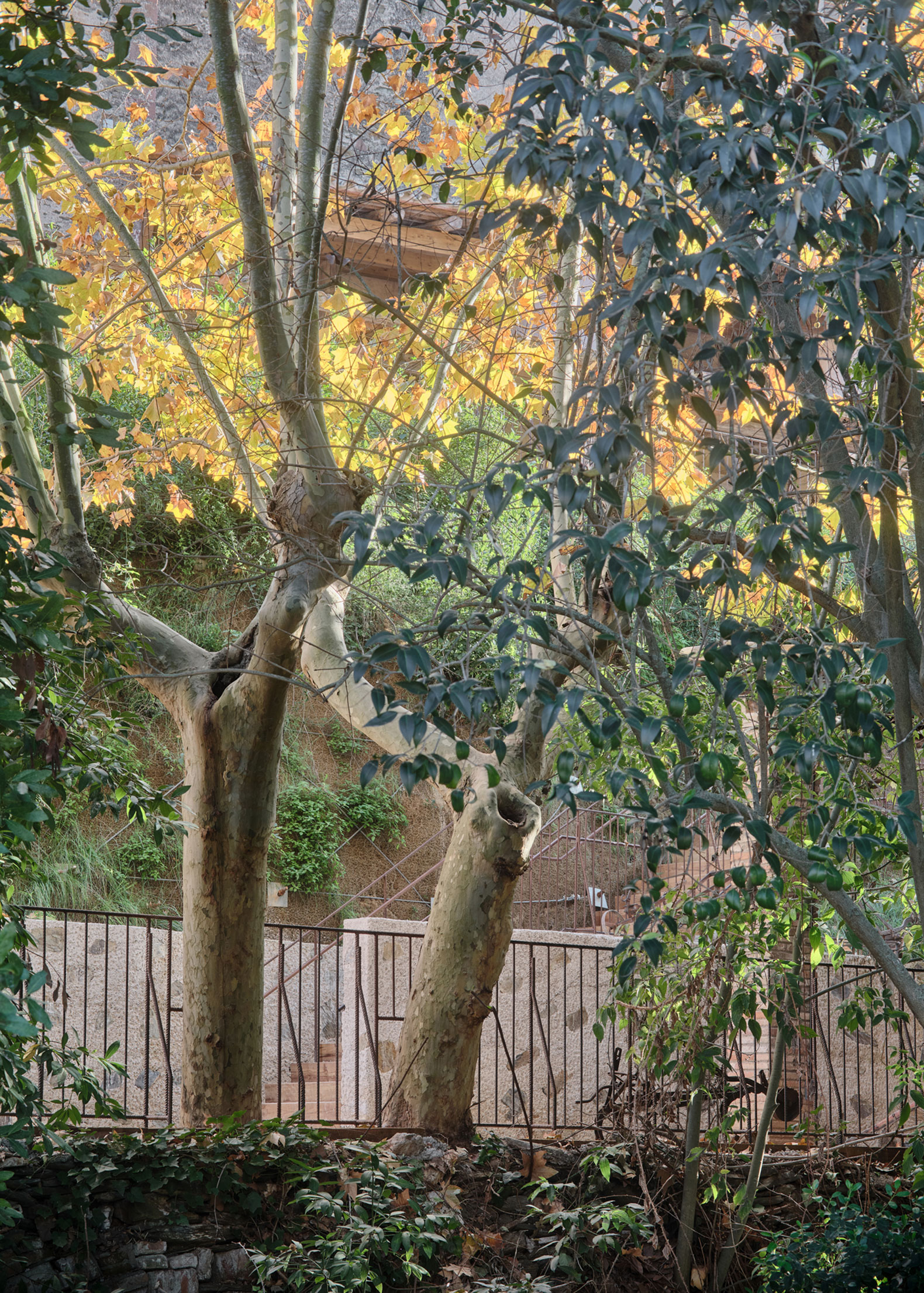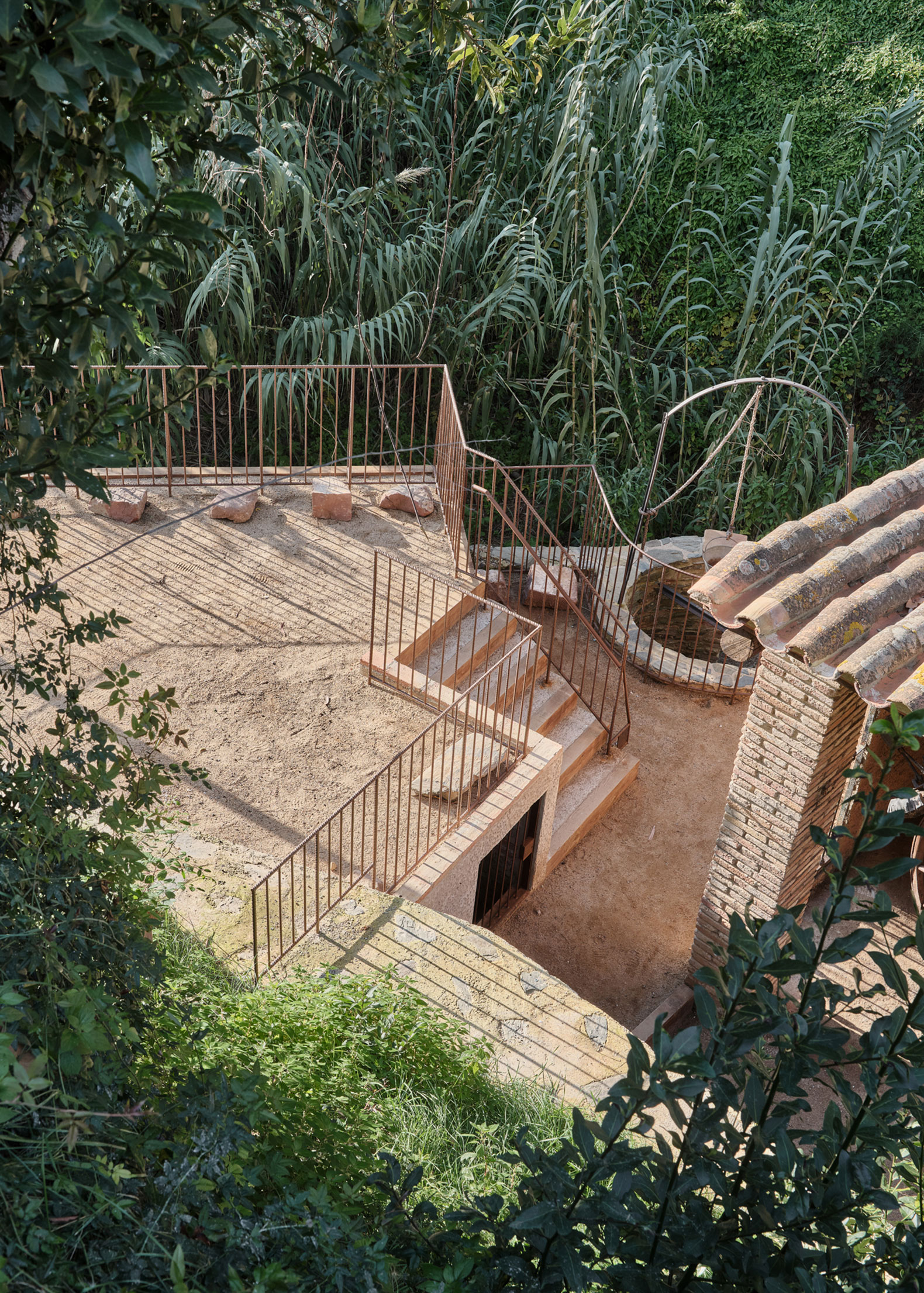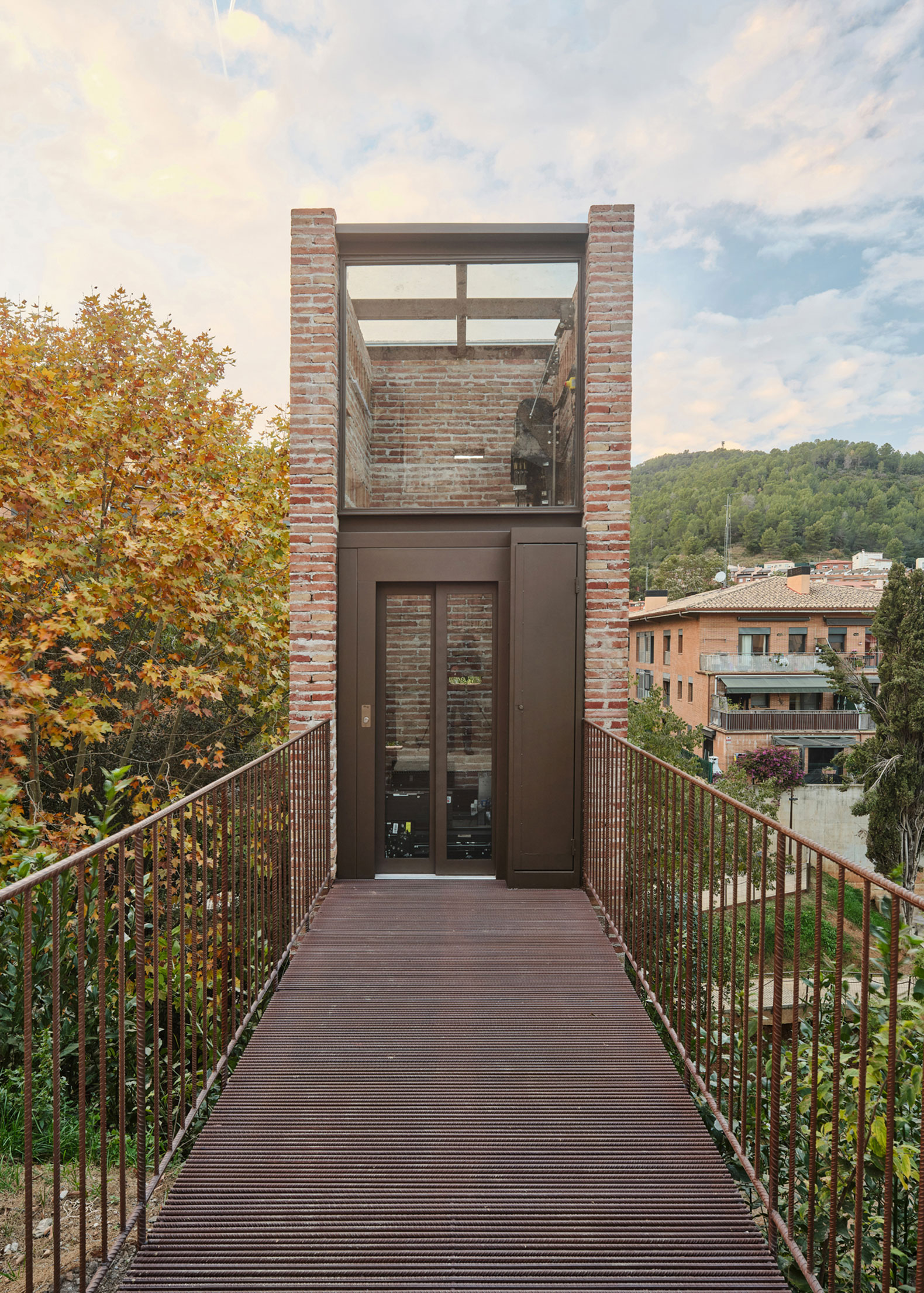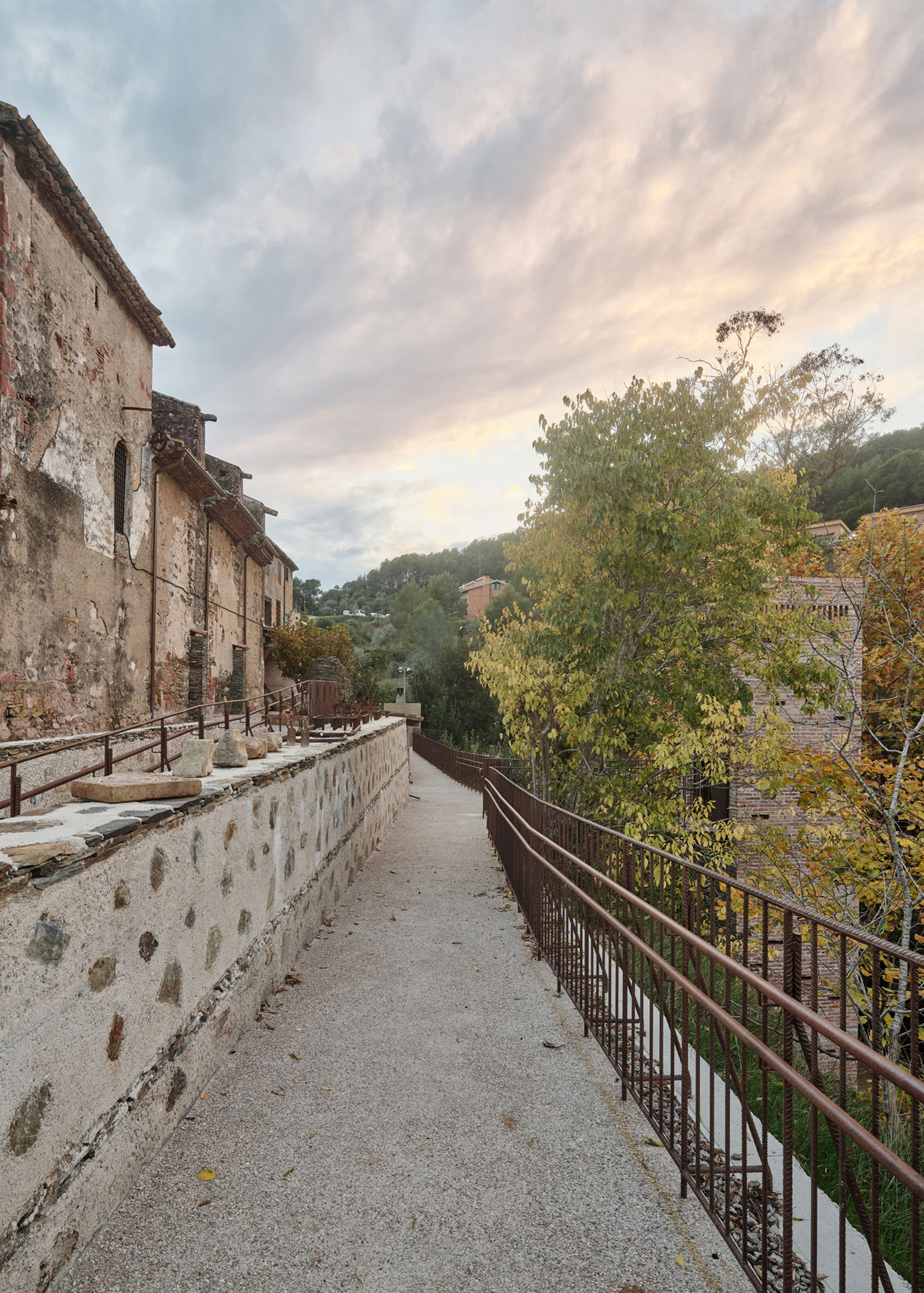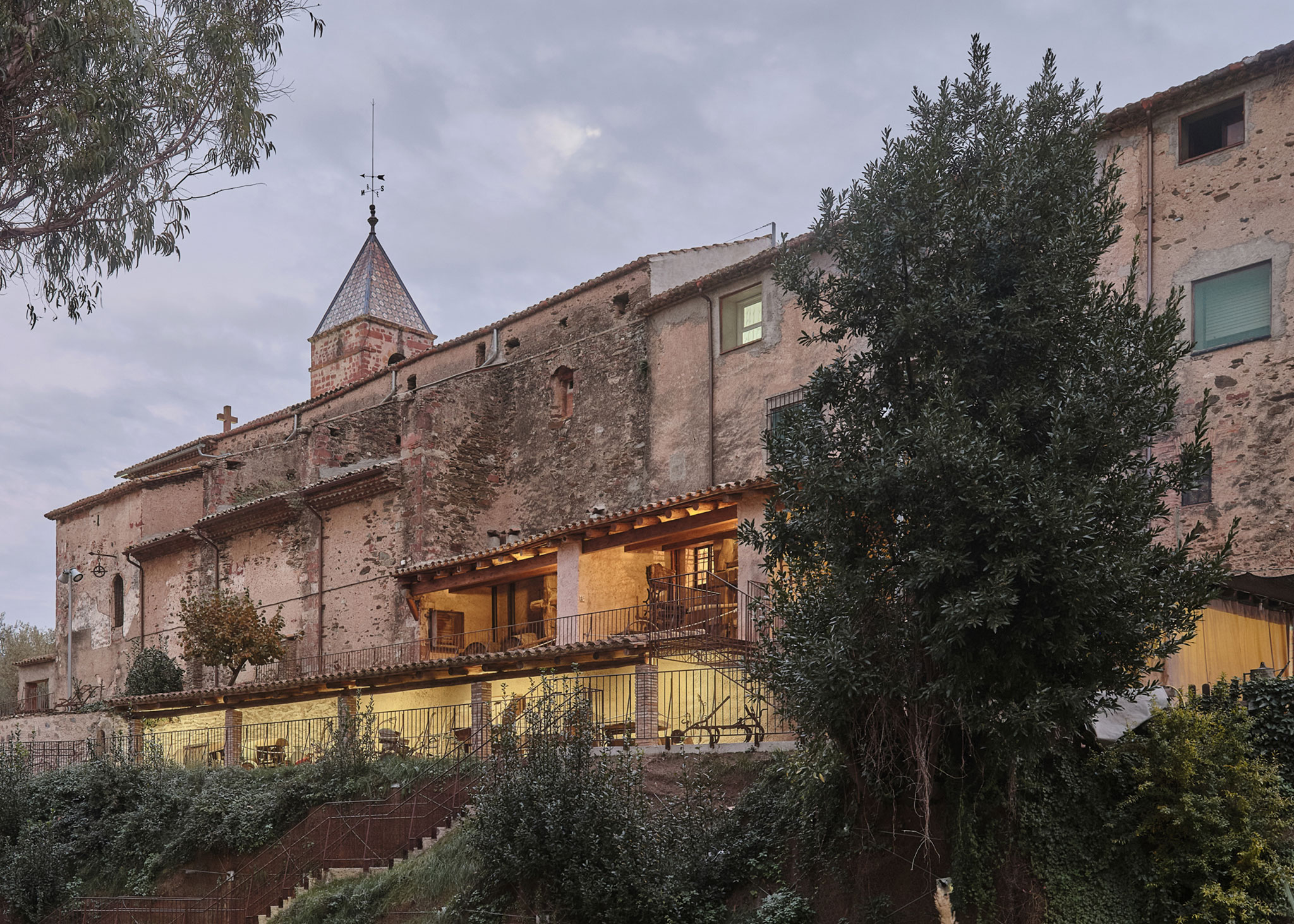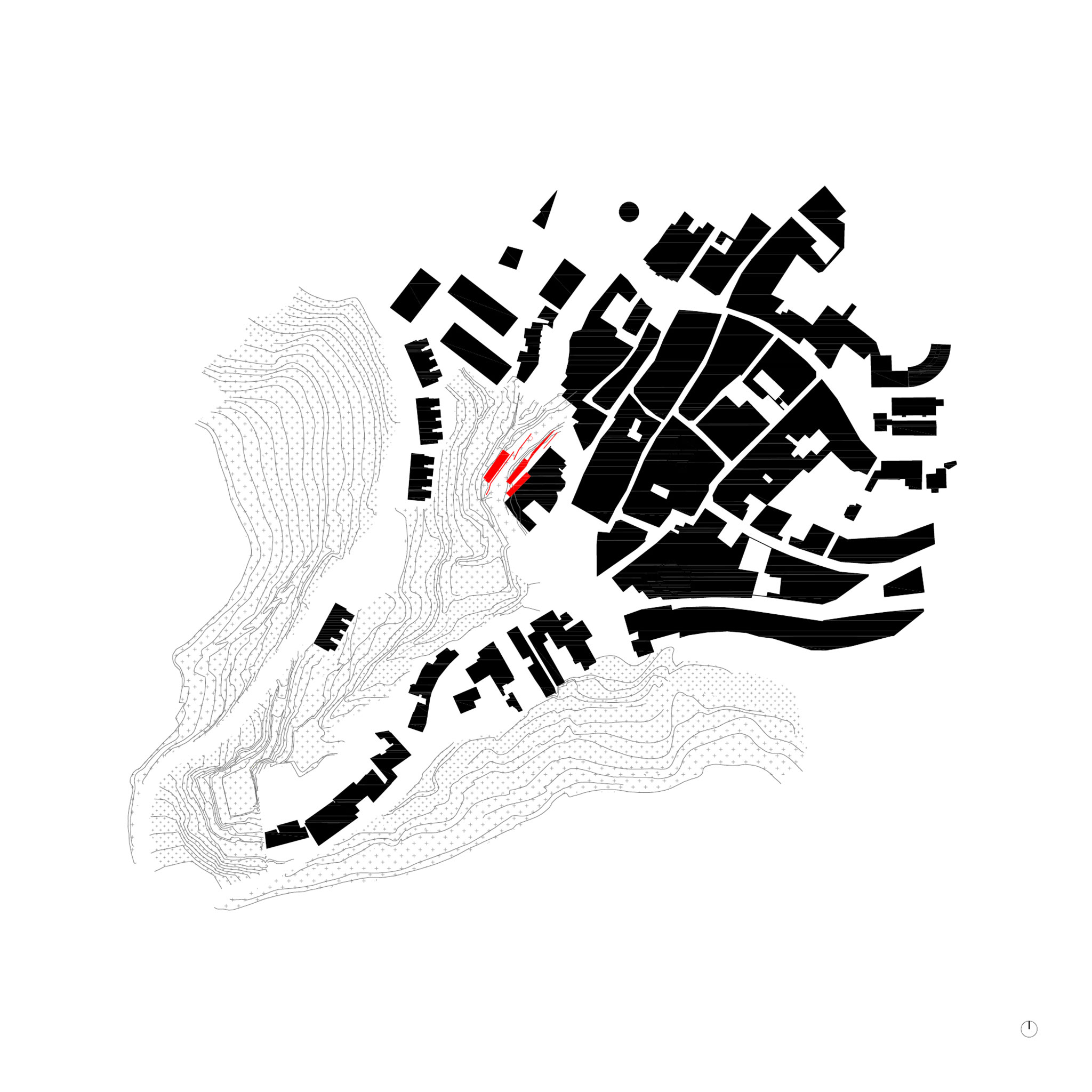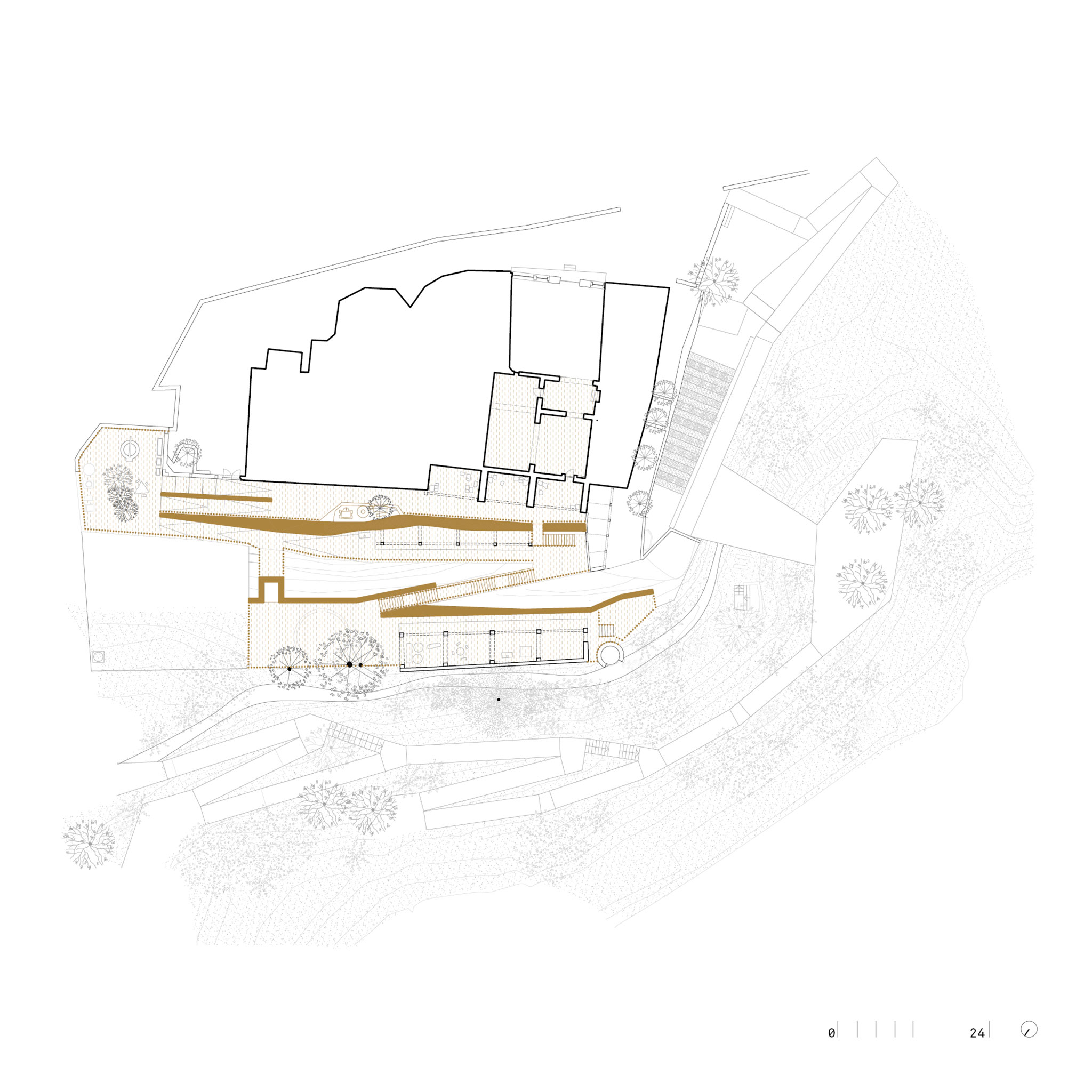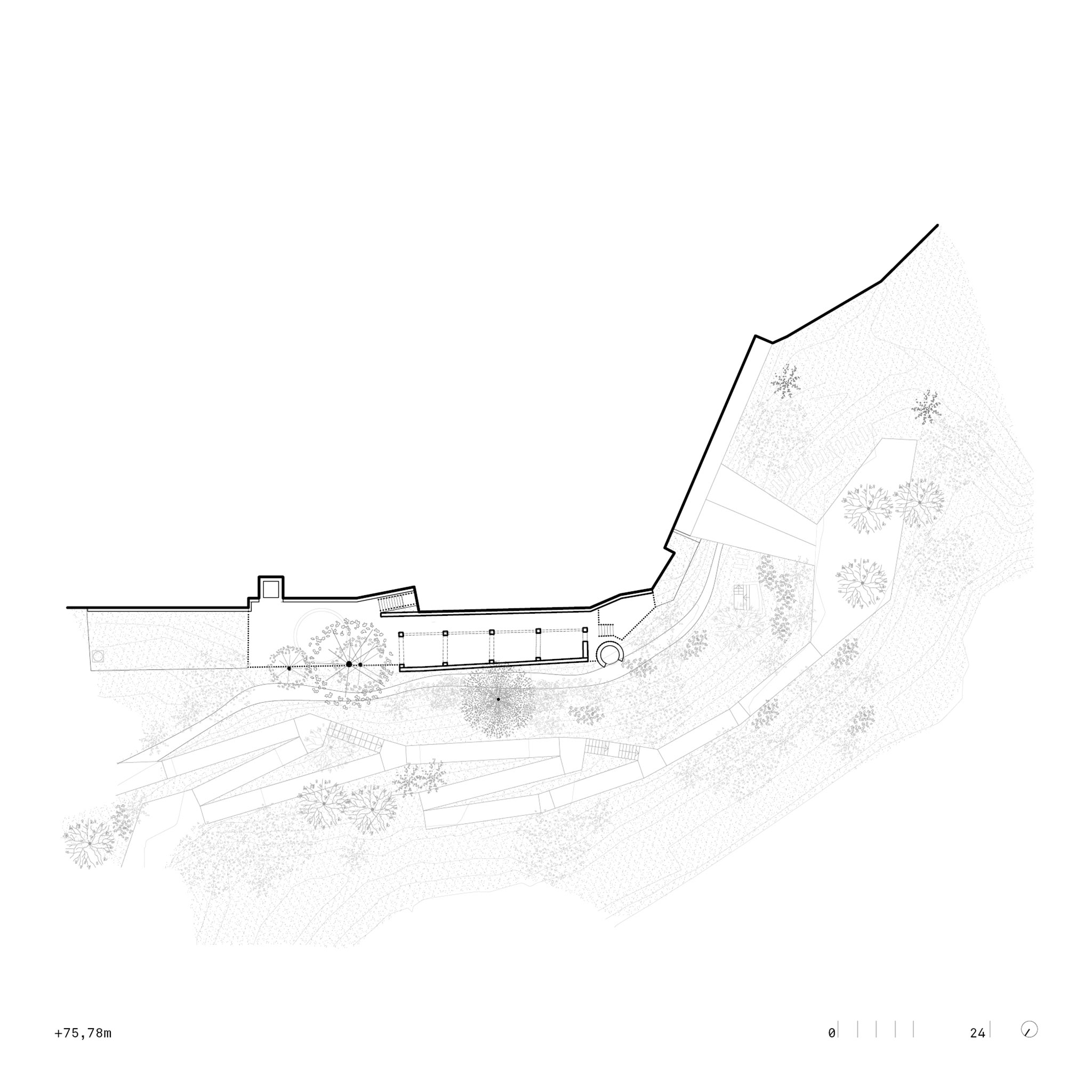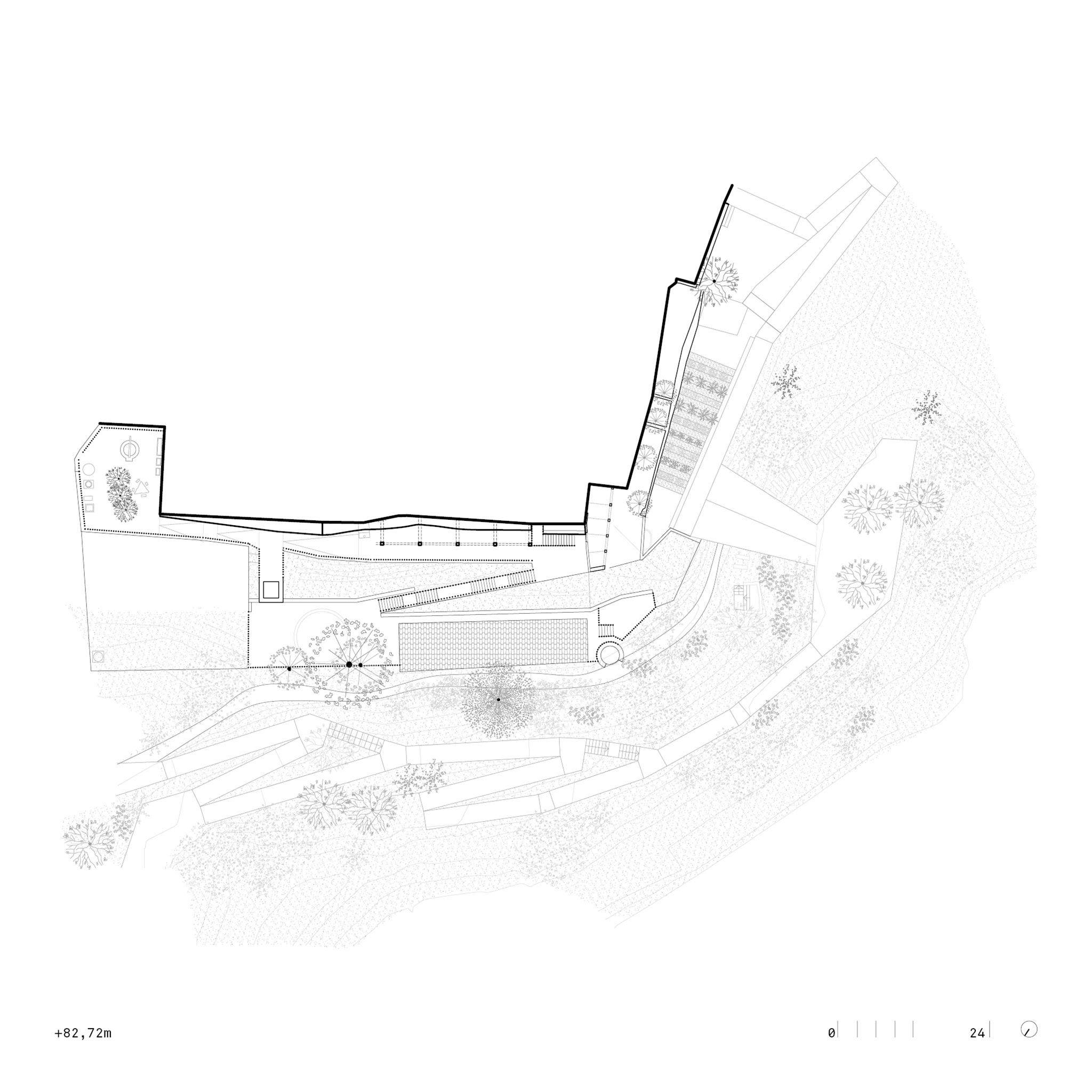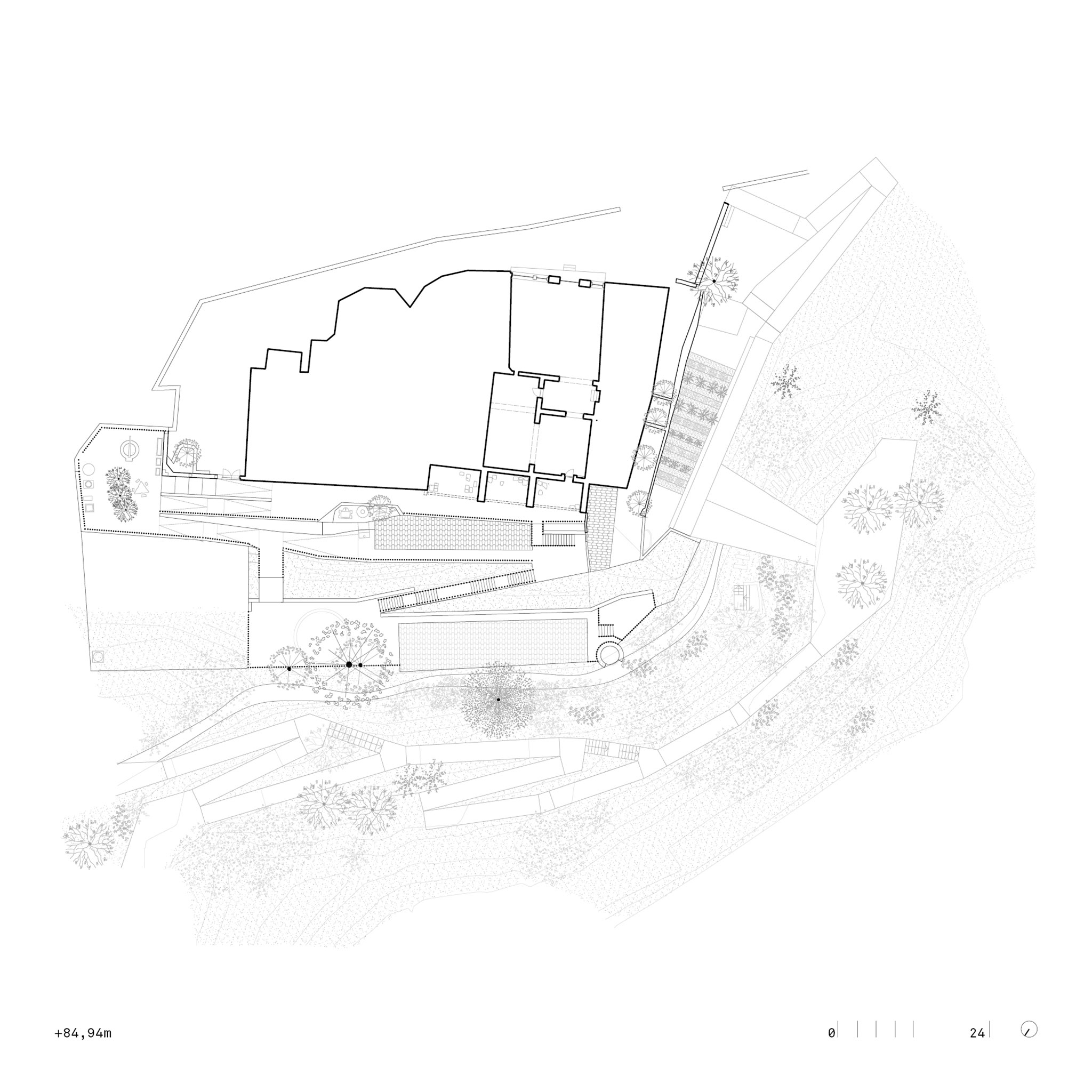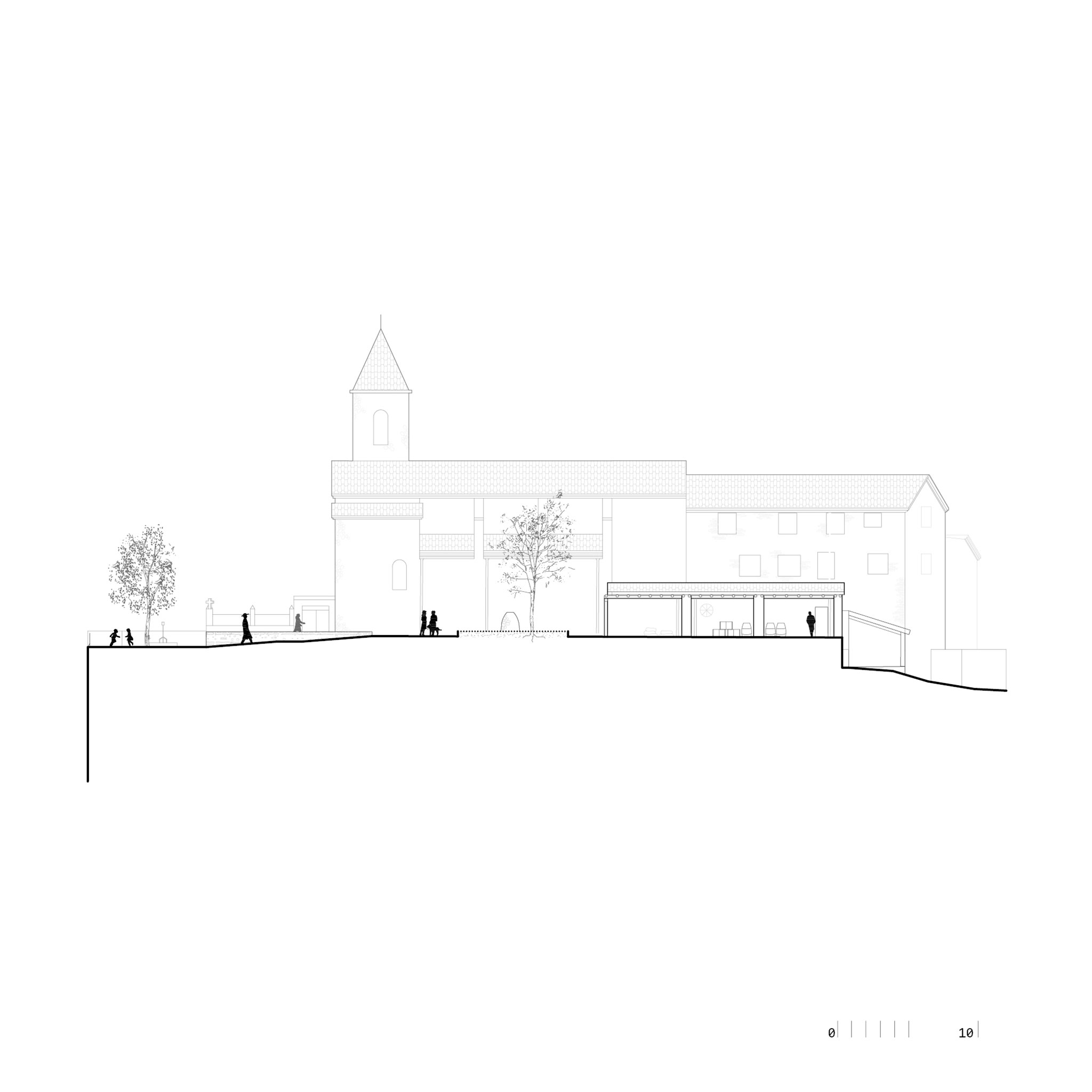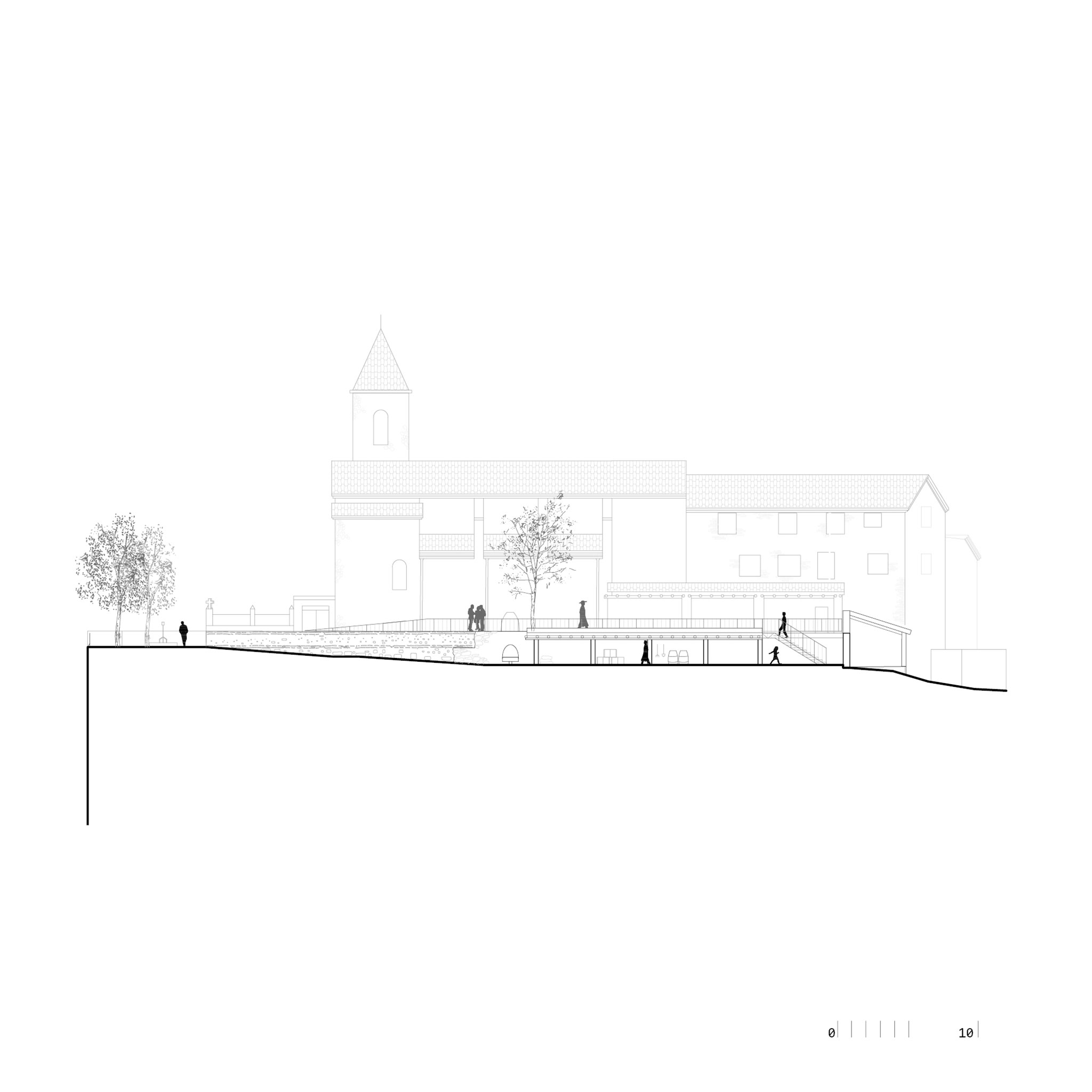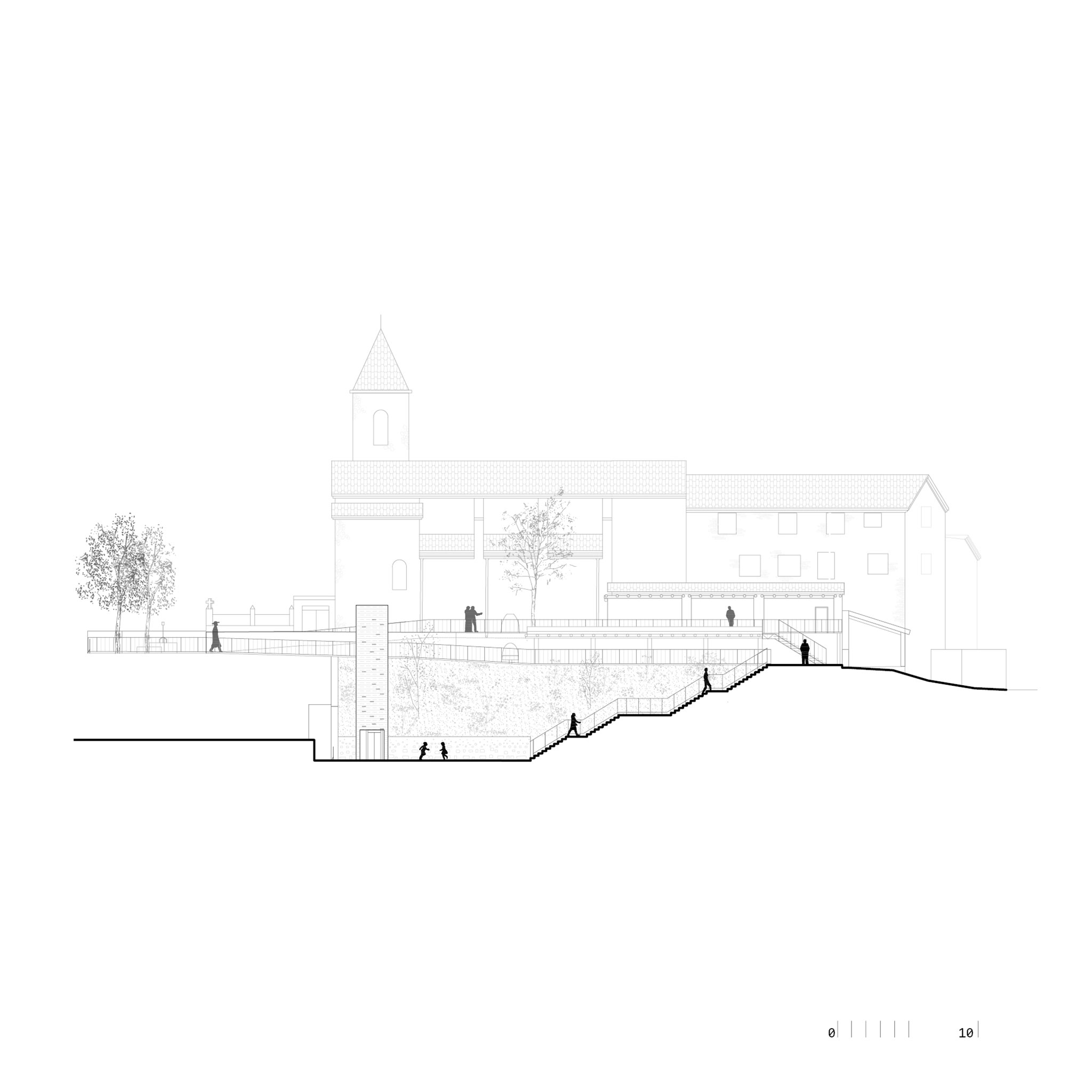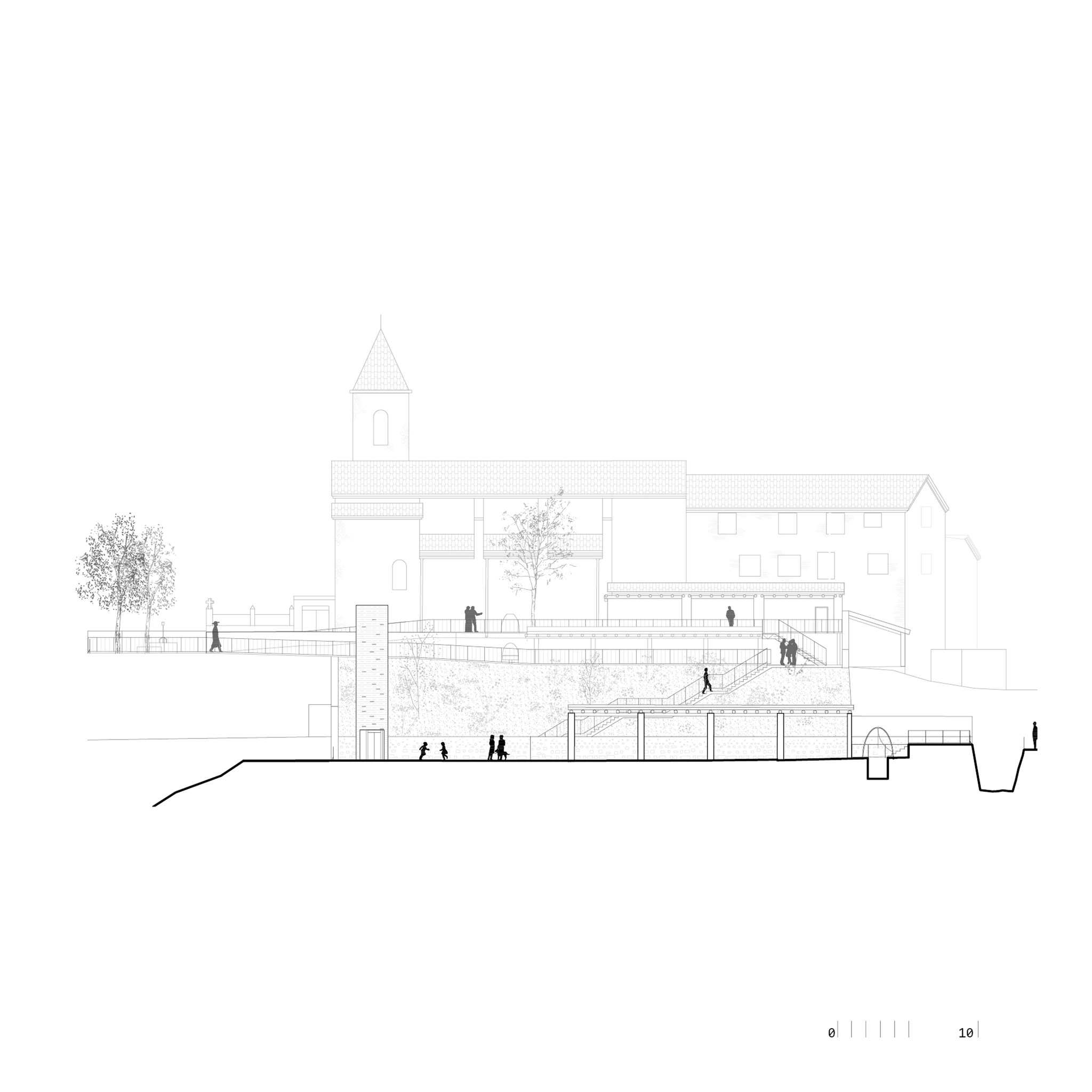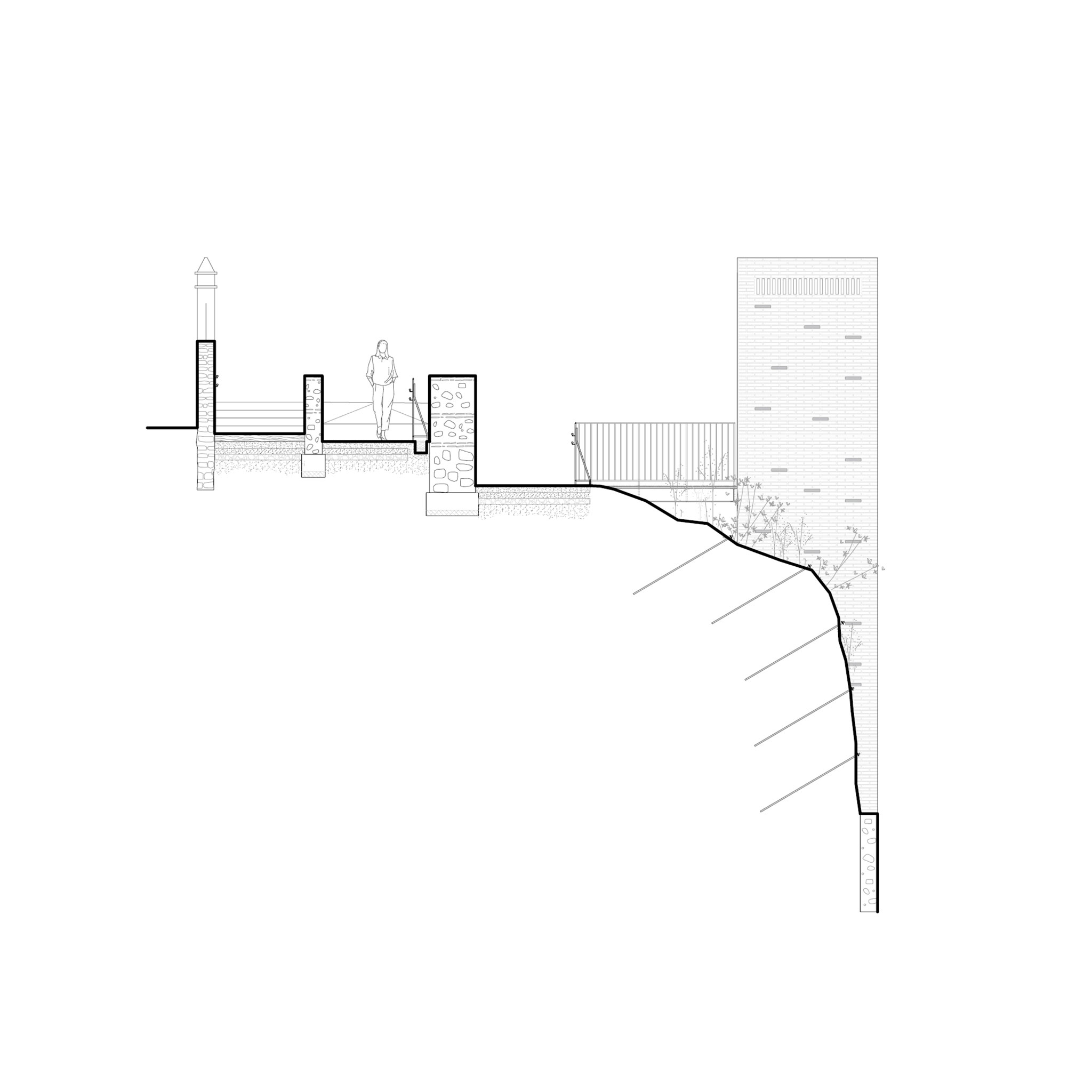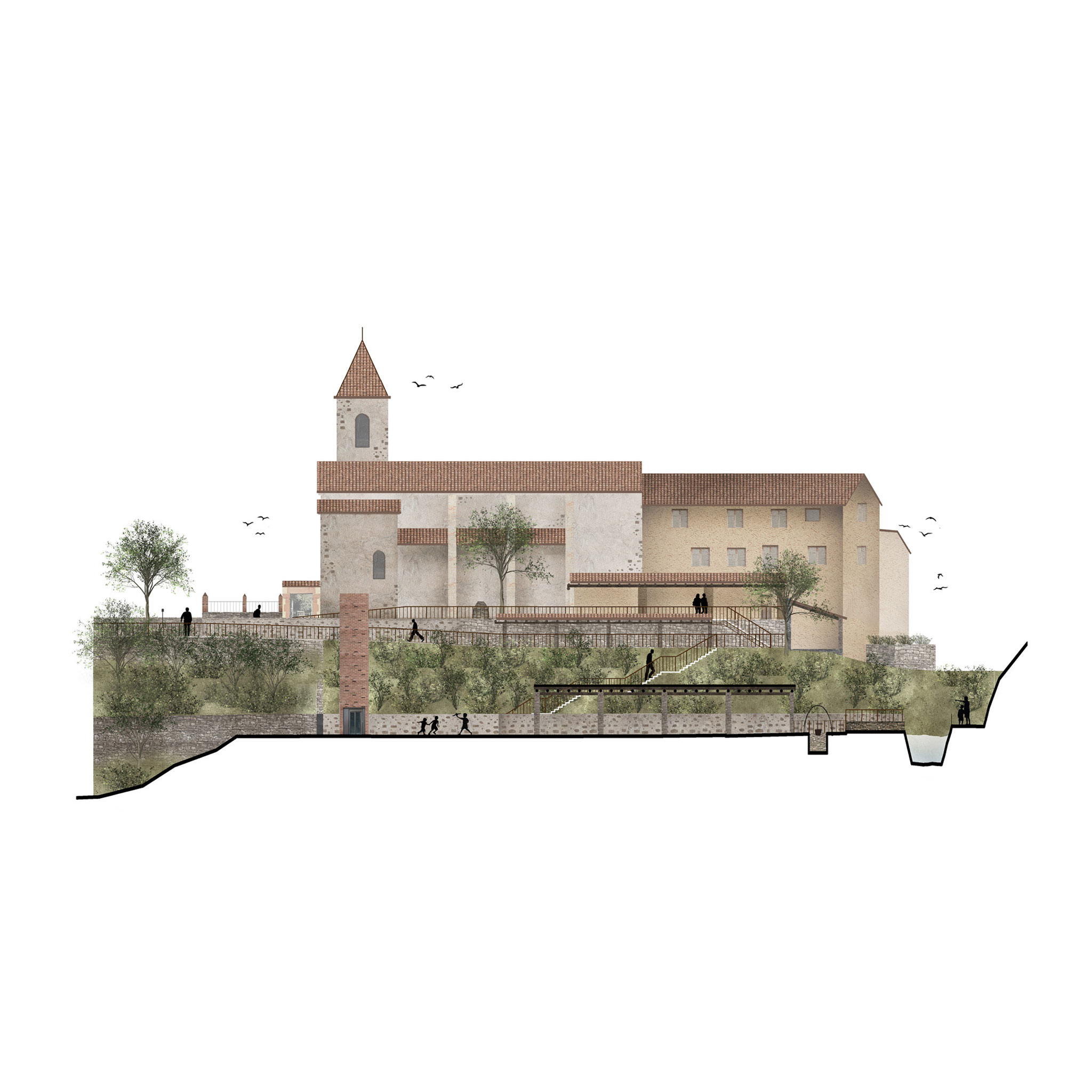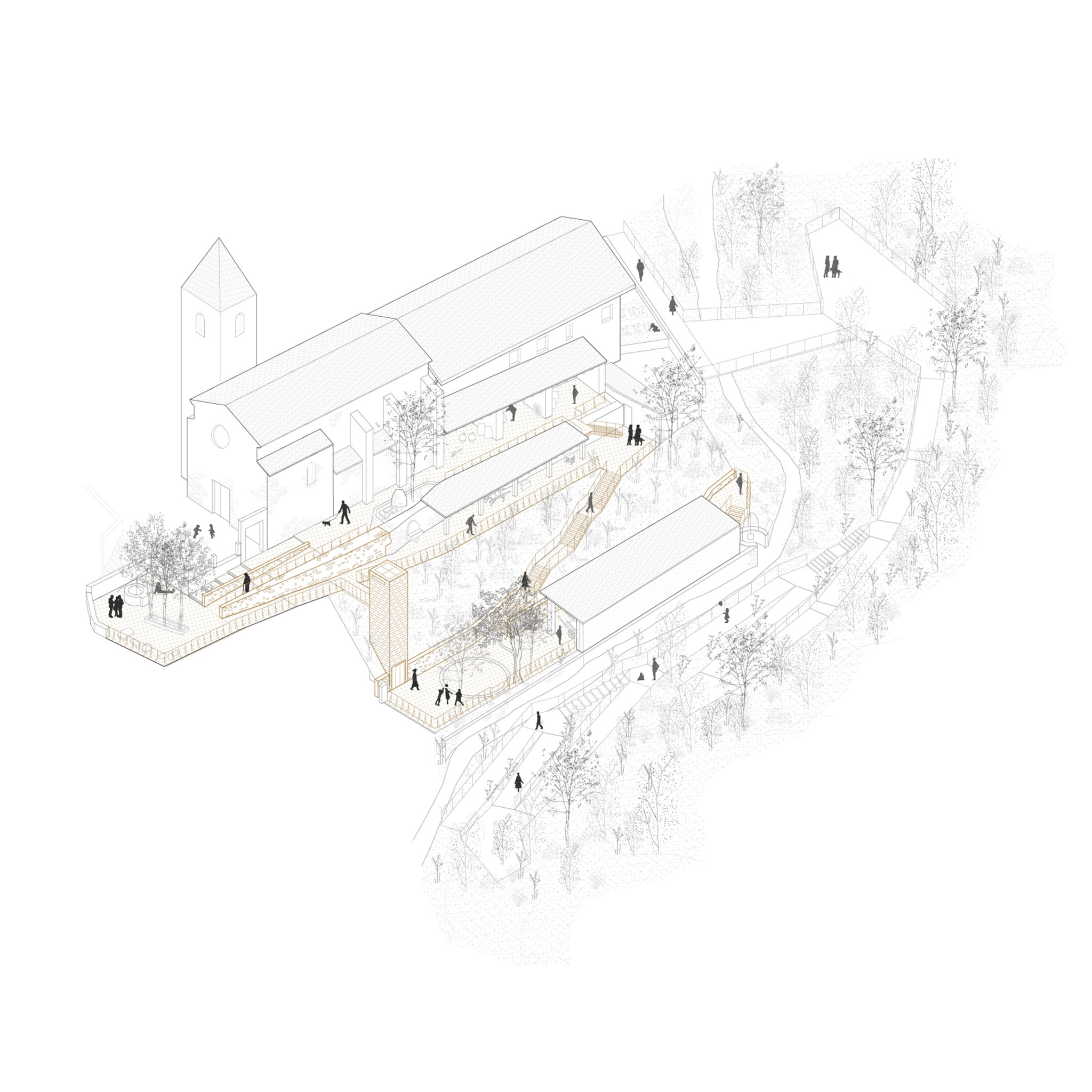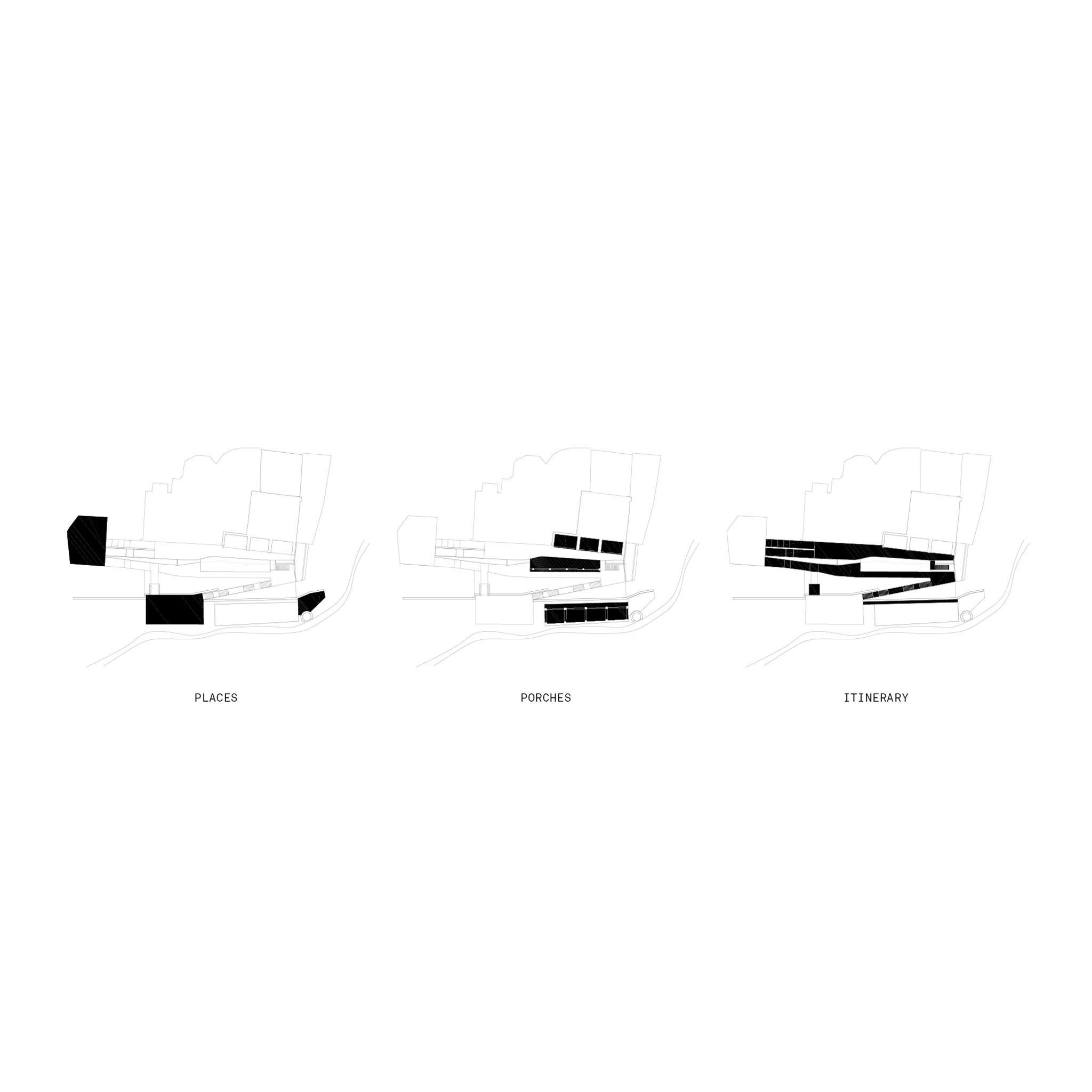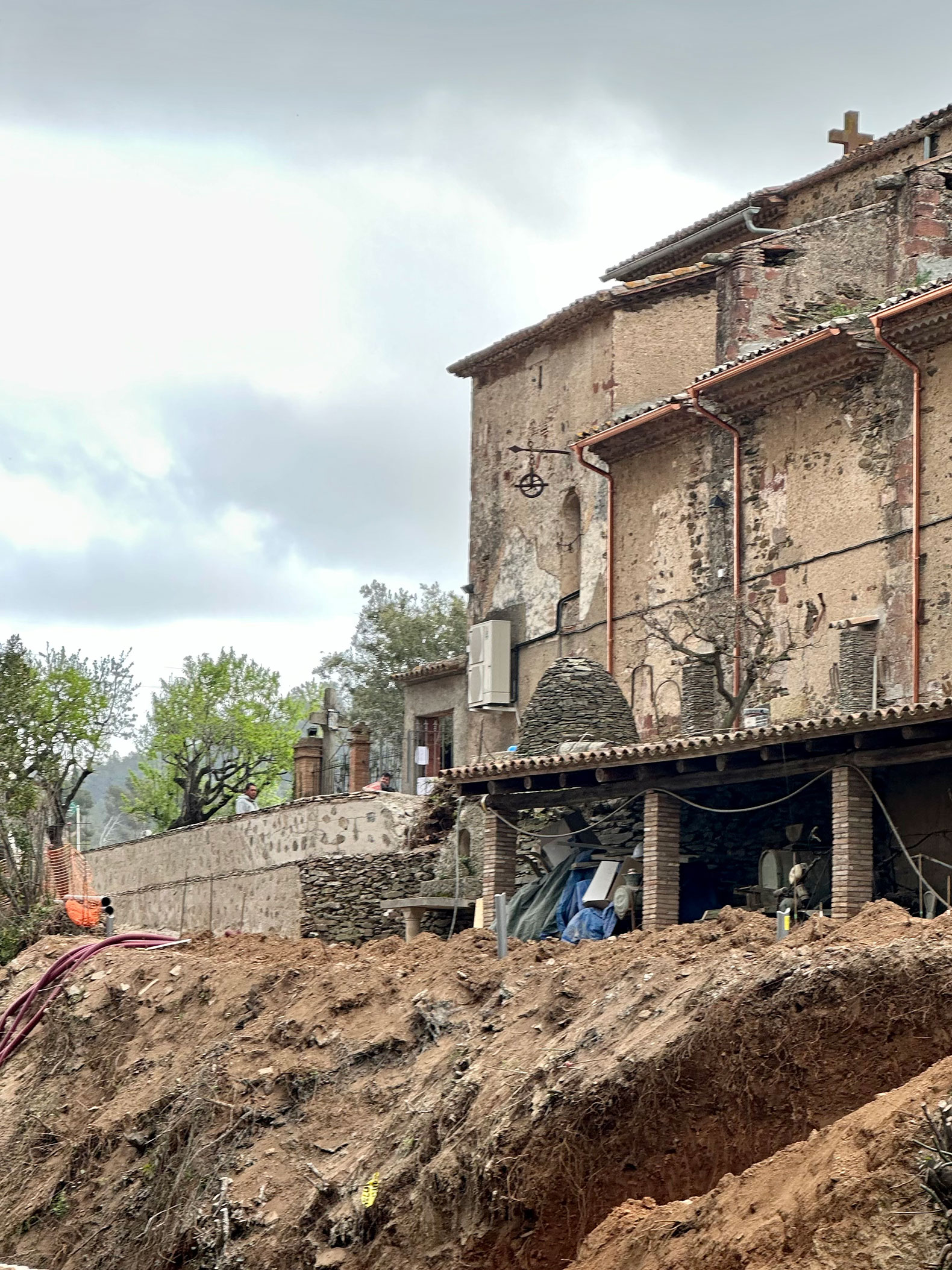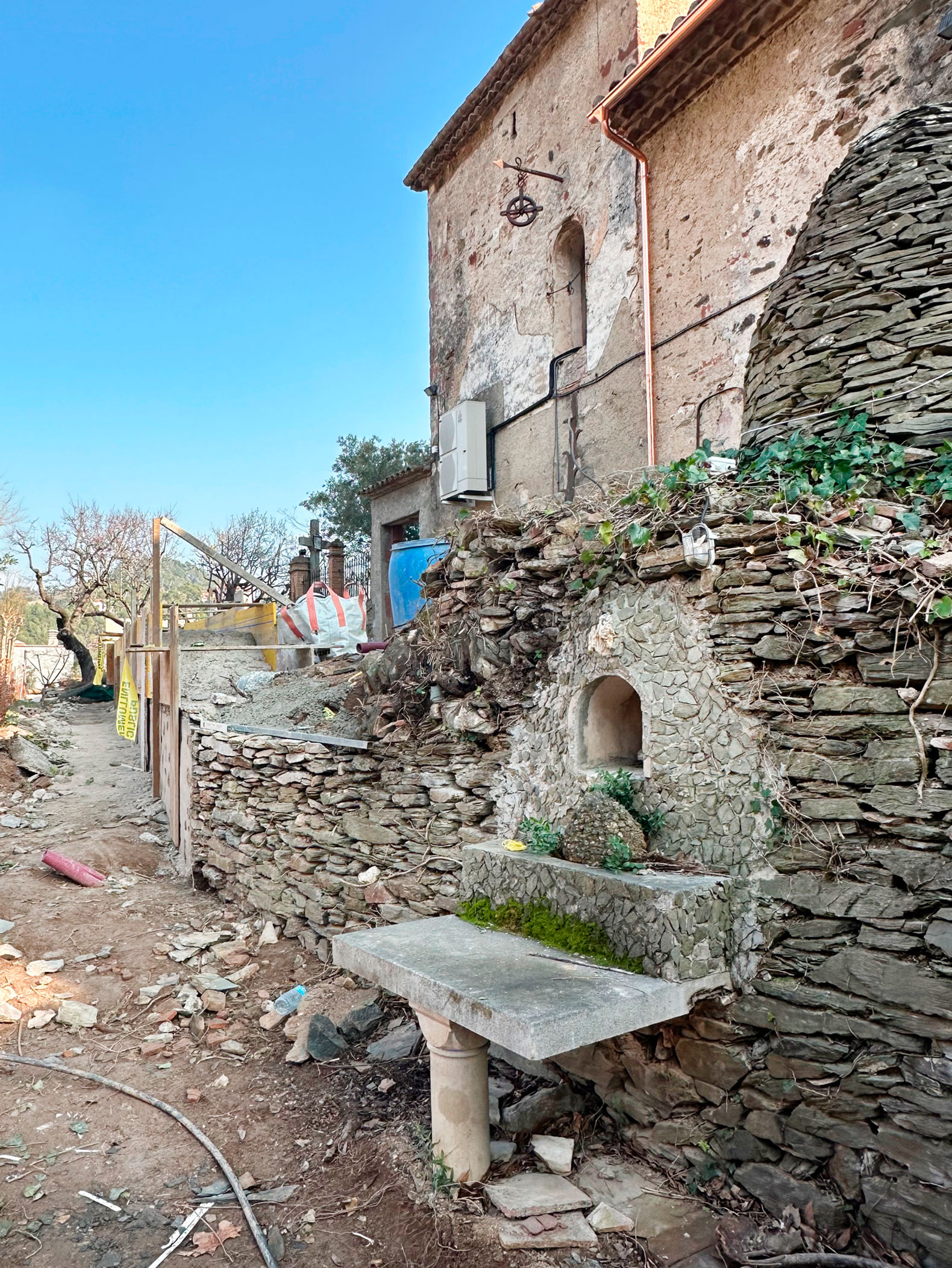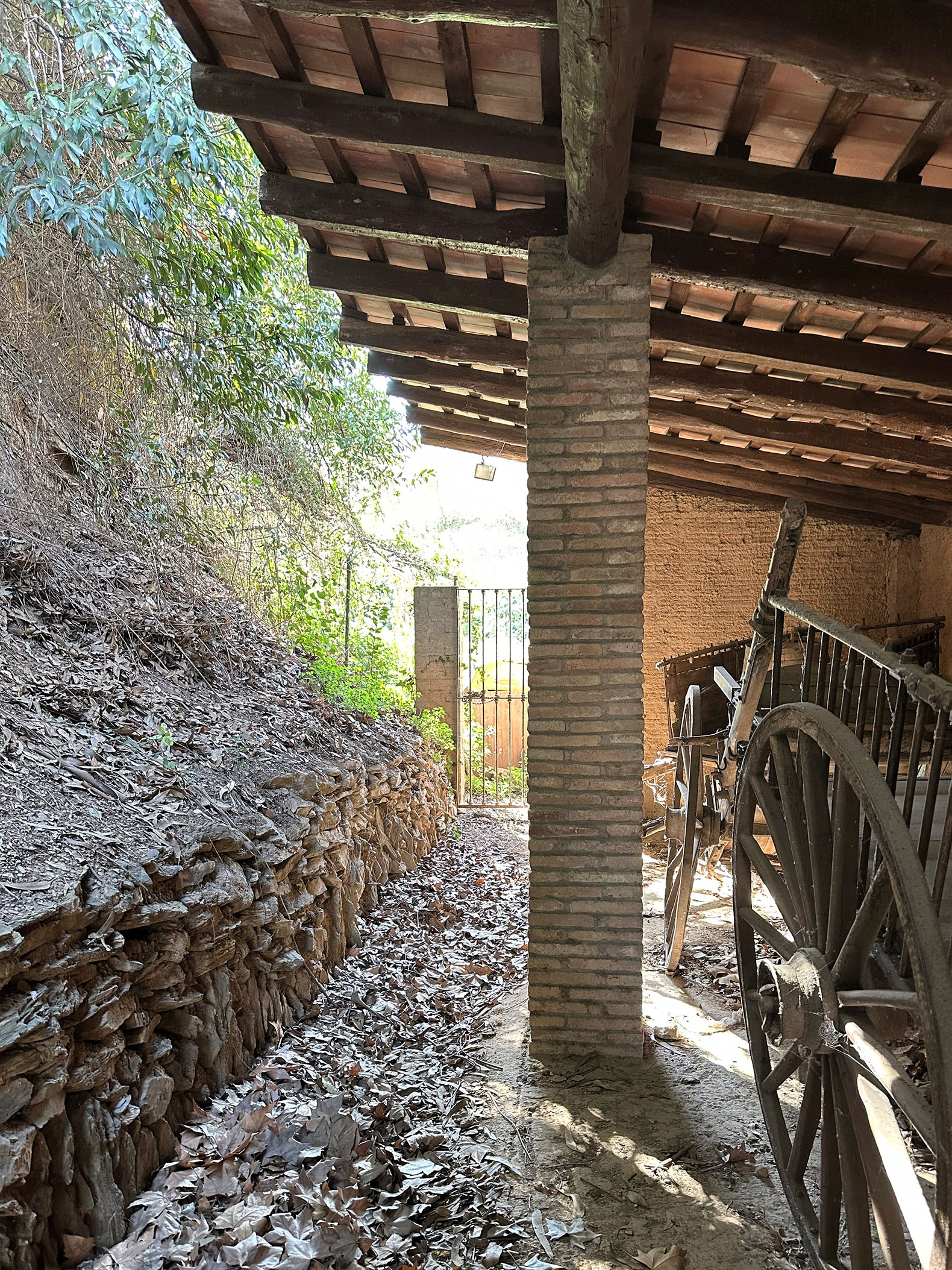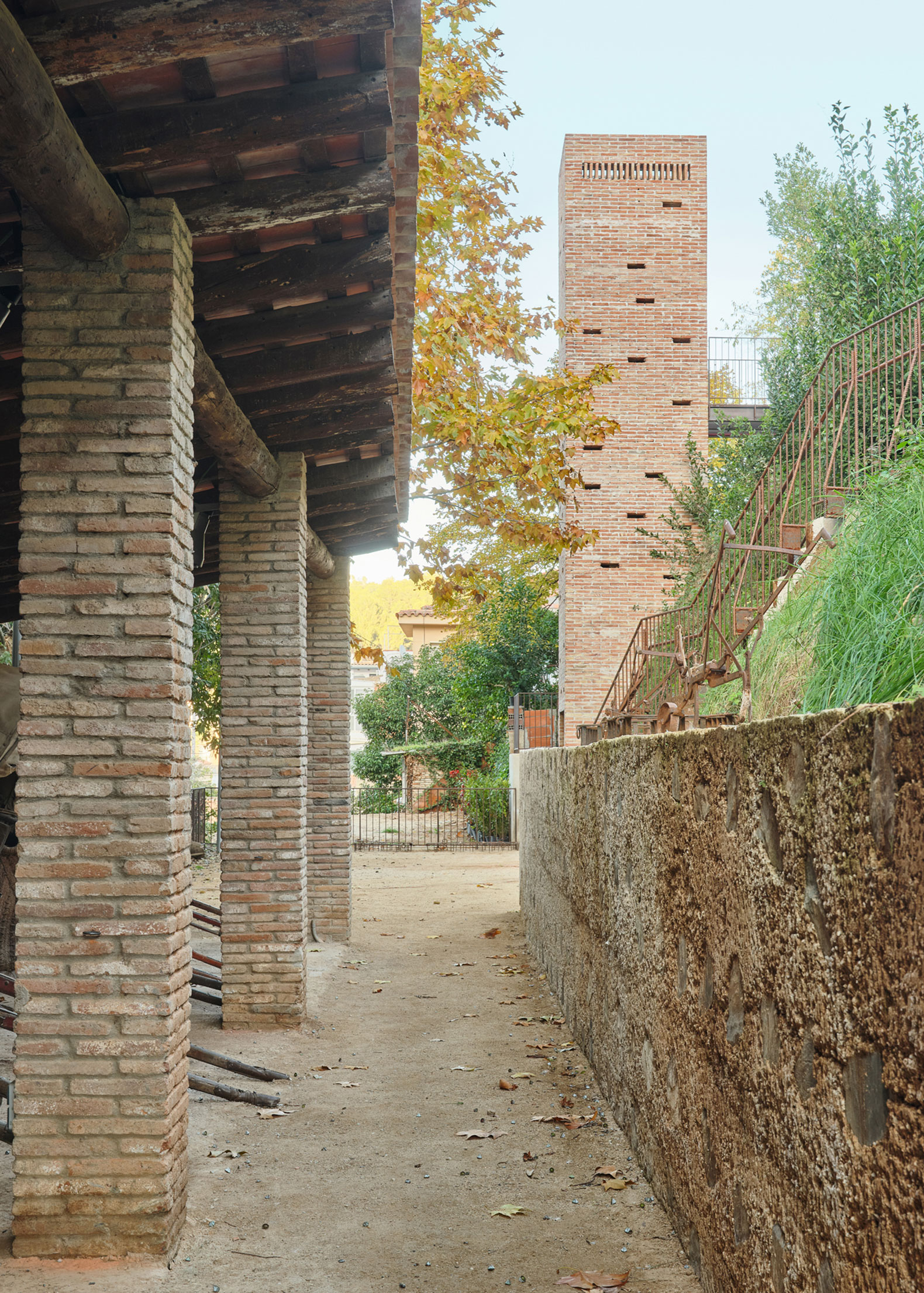
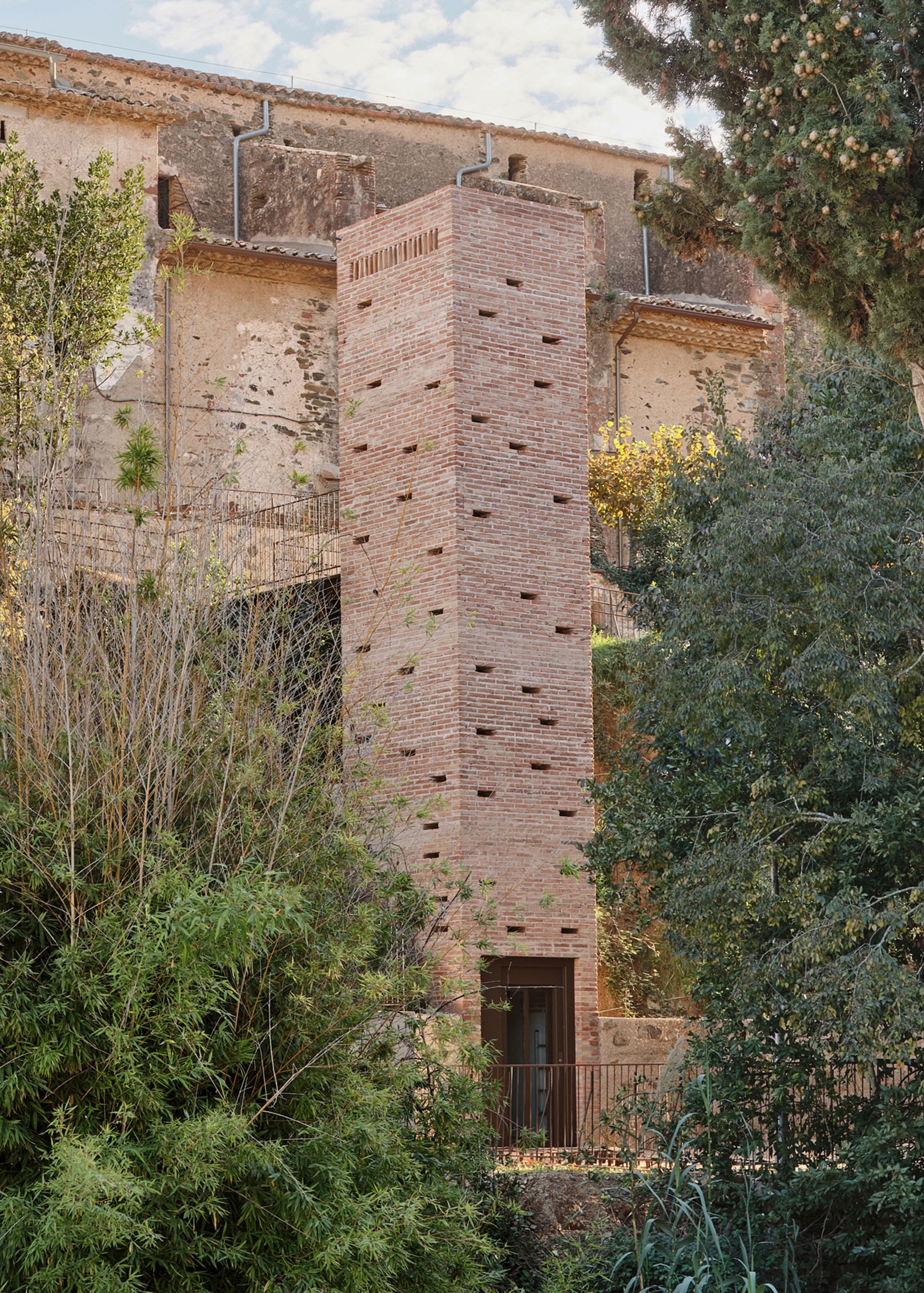
The "Font del Rector" project, conceived by Carles Enrich Studio, is a scenic viewpoint, an outdoor pathway that establishes a dialogue between the built heritage and the surrounding agricultural landscape. The complex is organized into four platforms and three porches, where changes in level, totalling 9 meters along the path, are addressed by masonry retaining walls and landscaped slopes. Various circulation options (stairs, ramps, and an elevator) are provided to overcome the elevation changes, leading to the restored threshing floor, now a new meeting space.
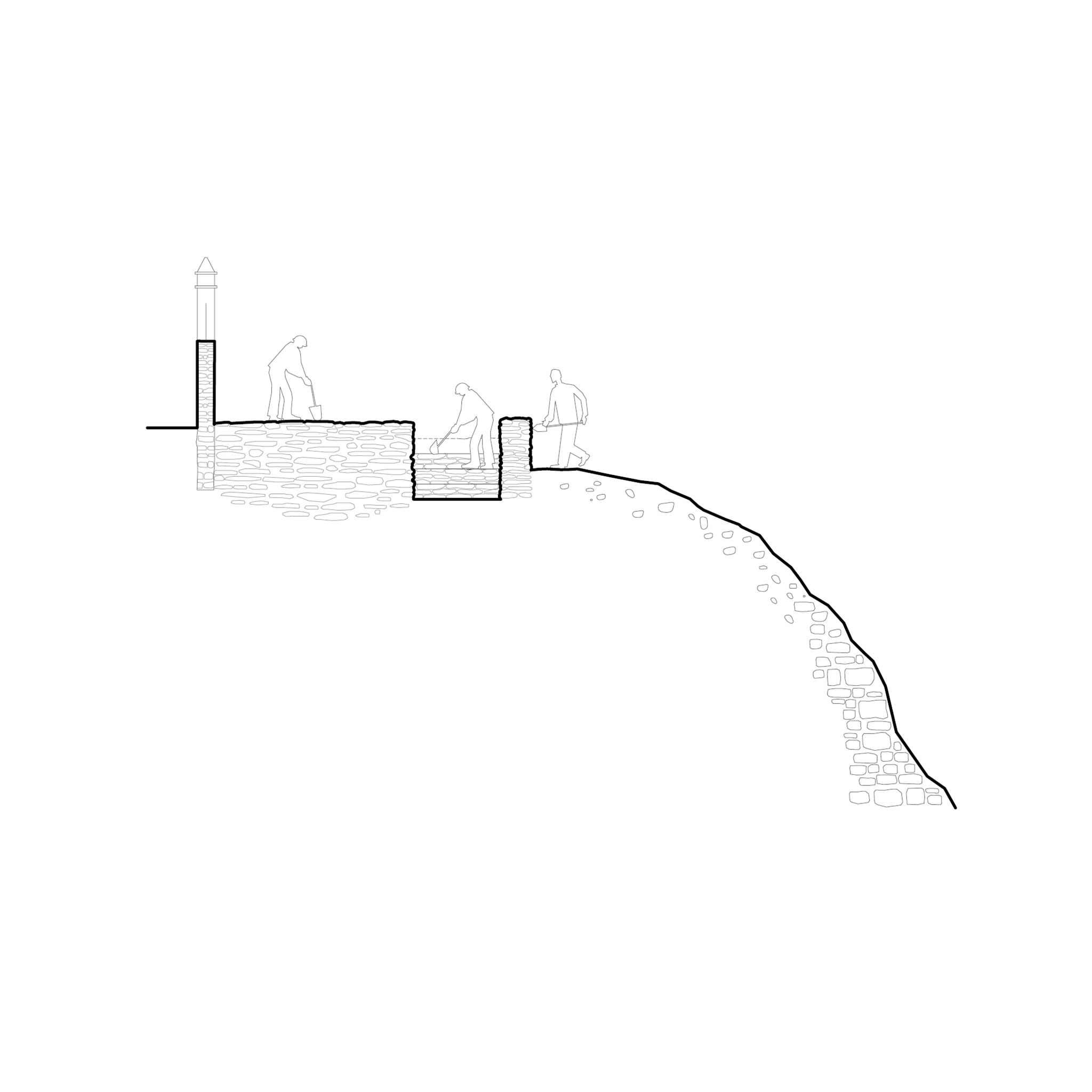
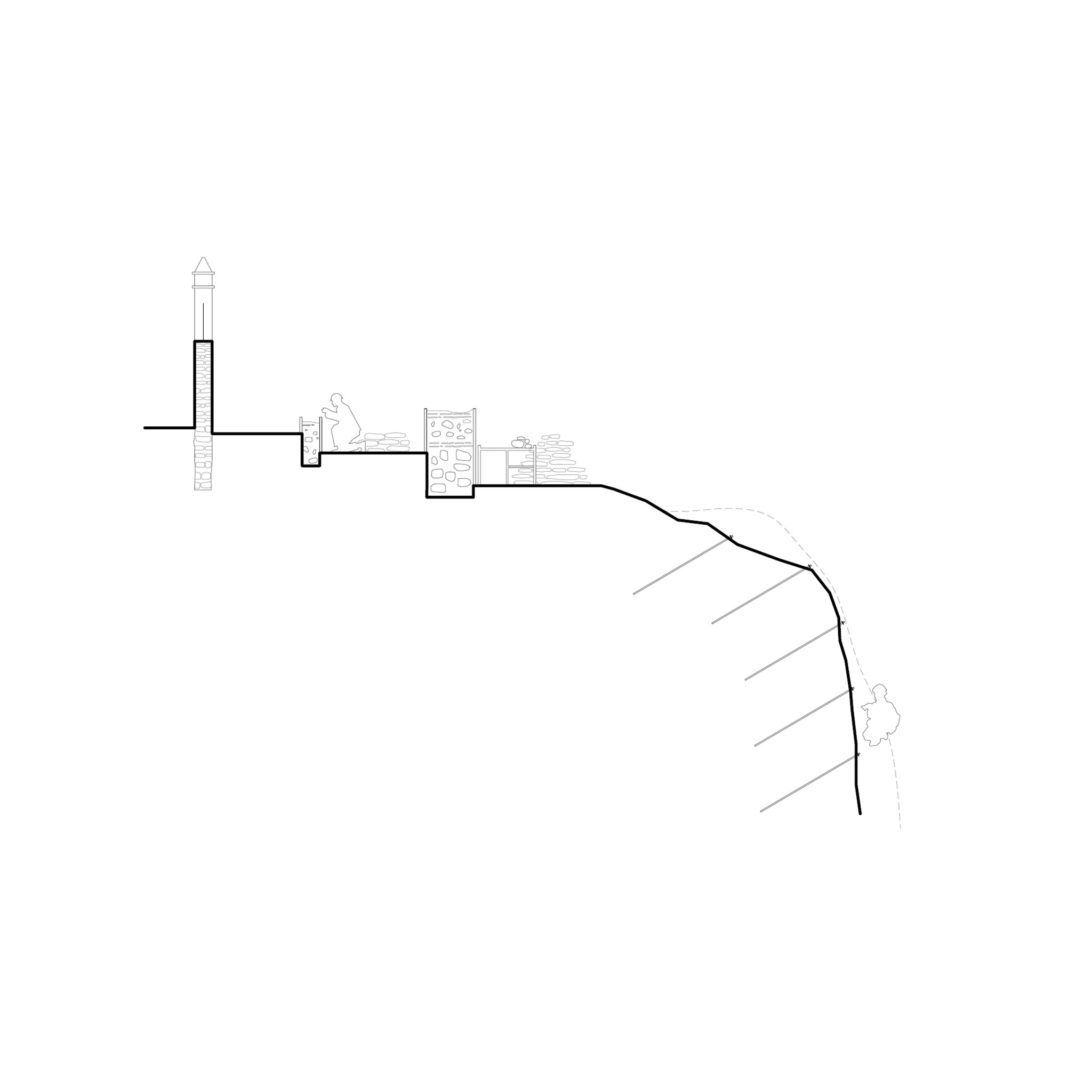
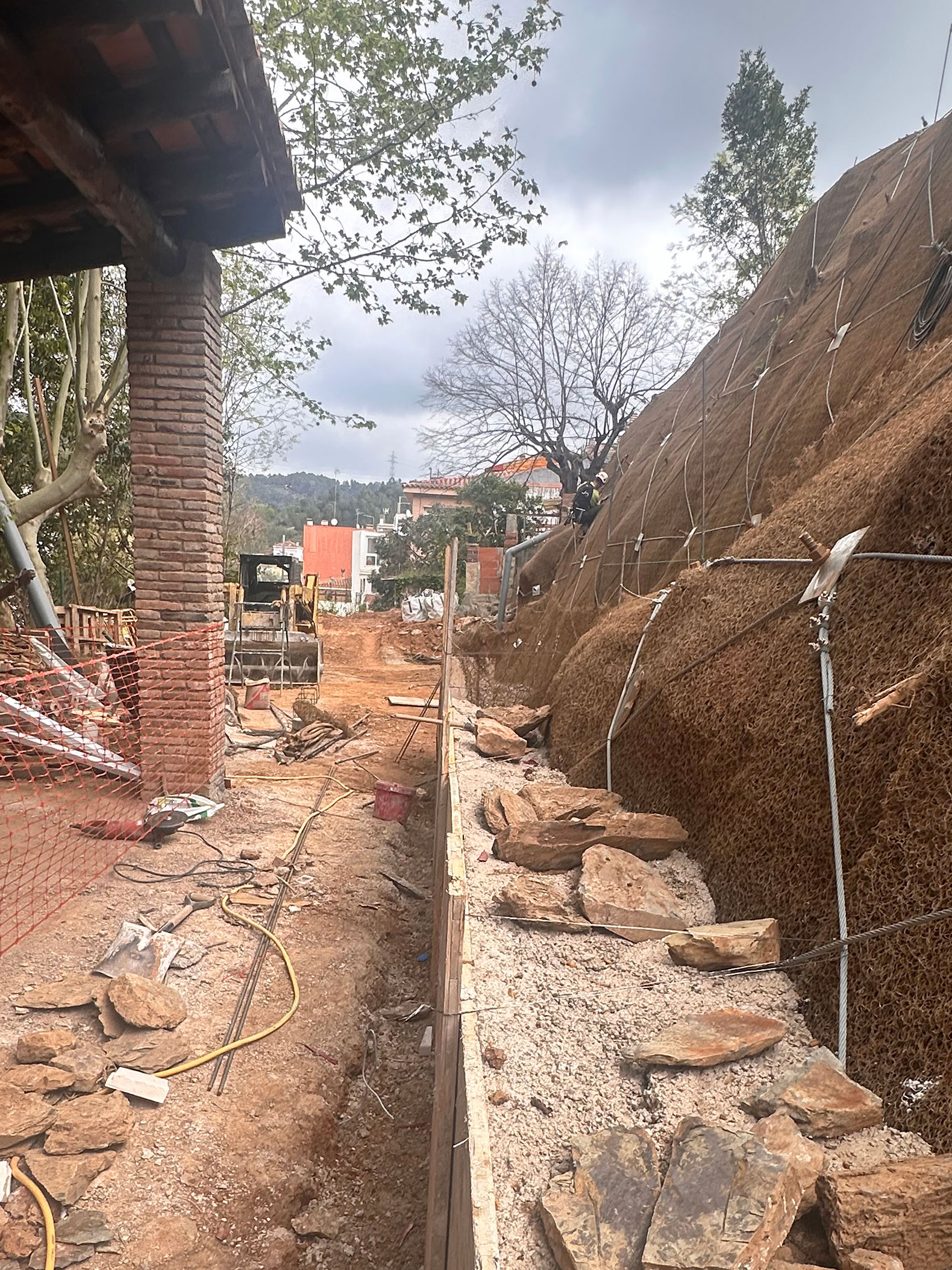
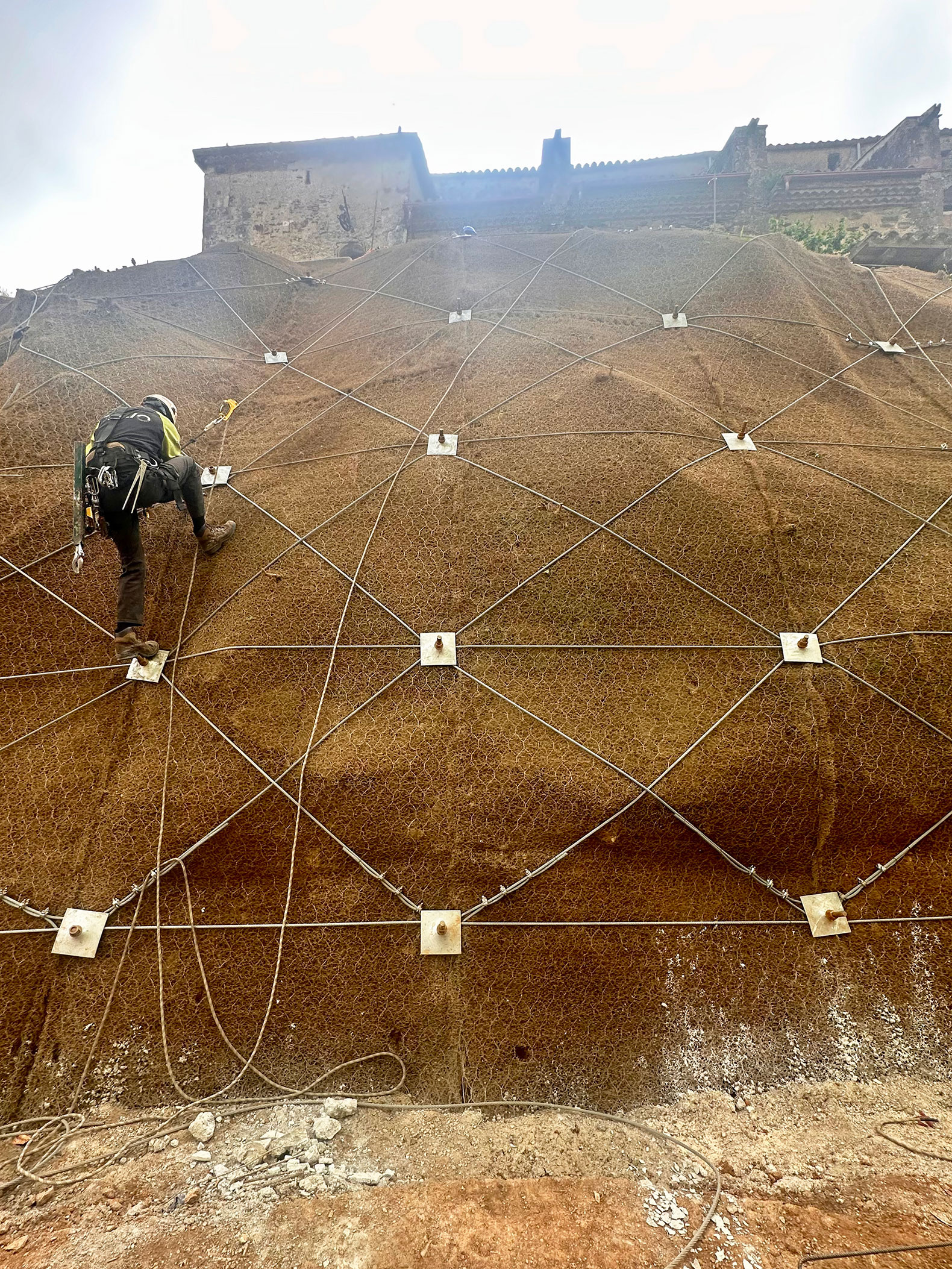
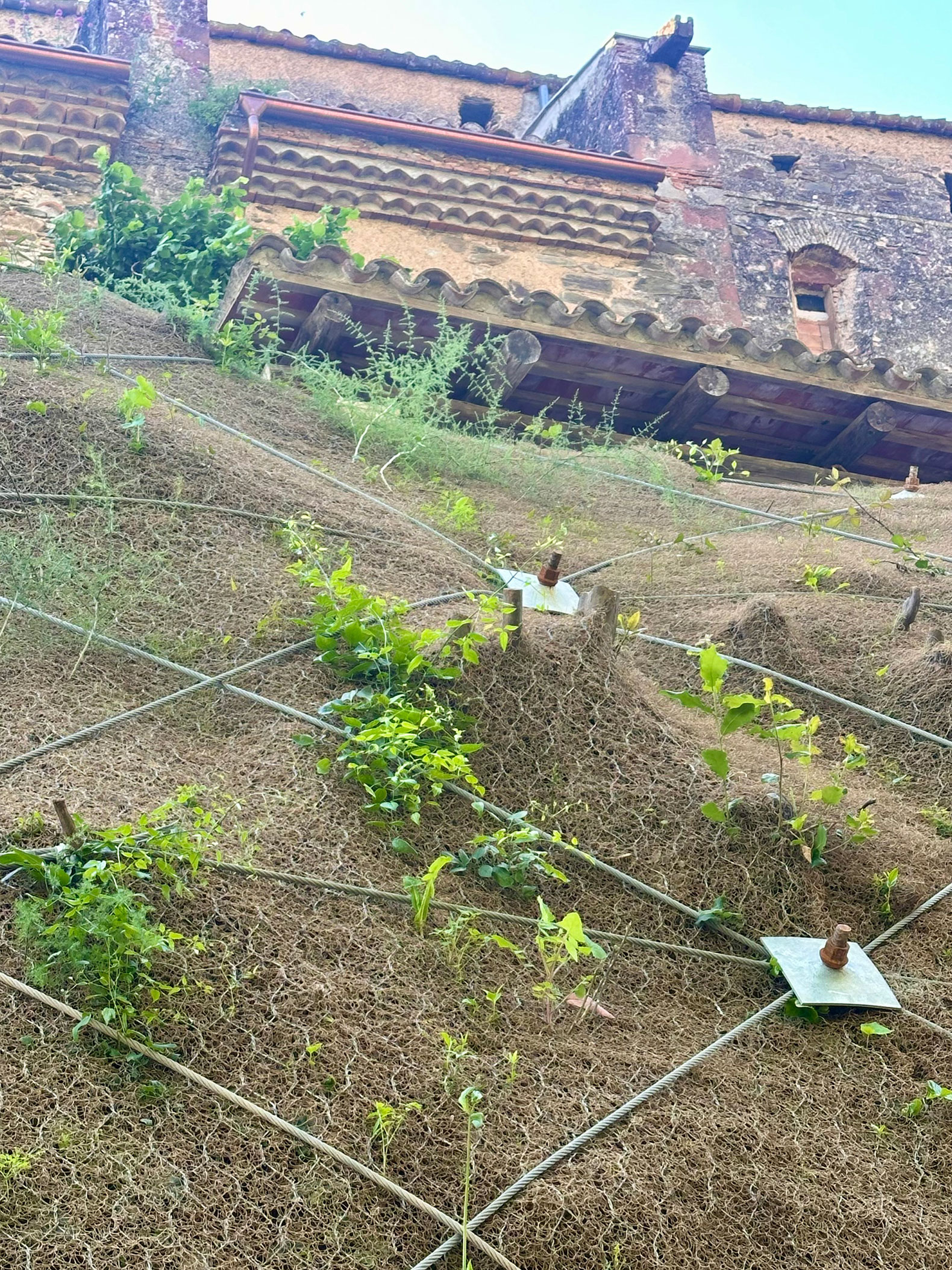
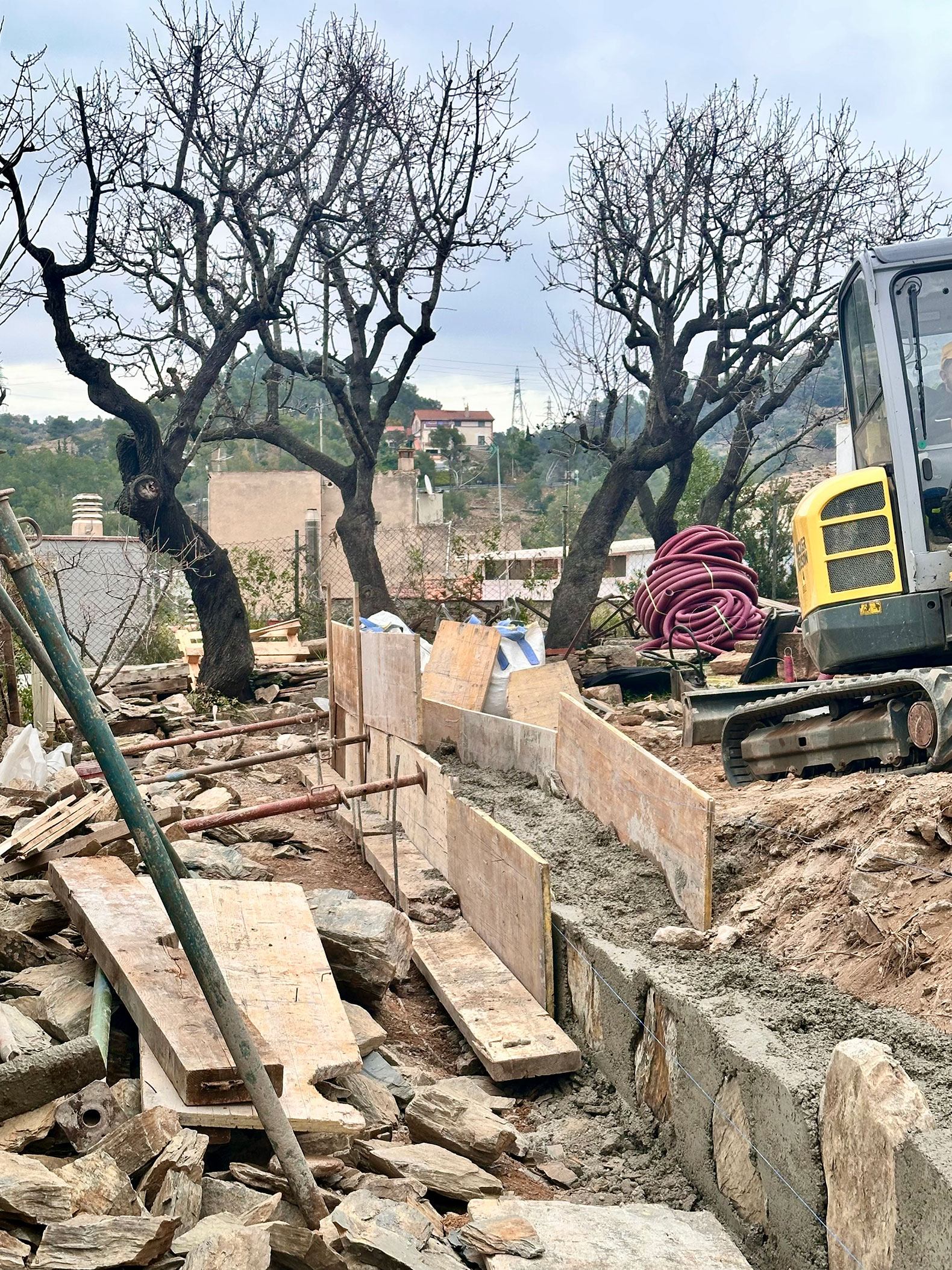
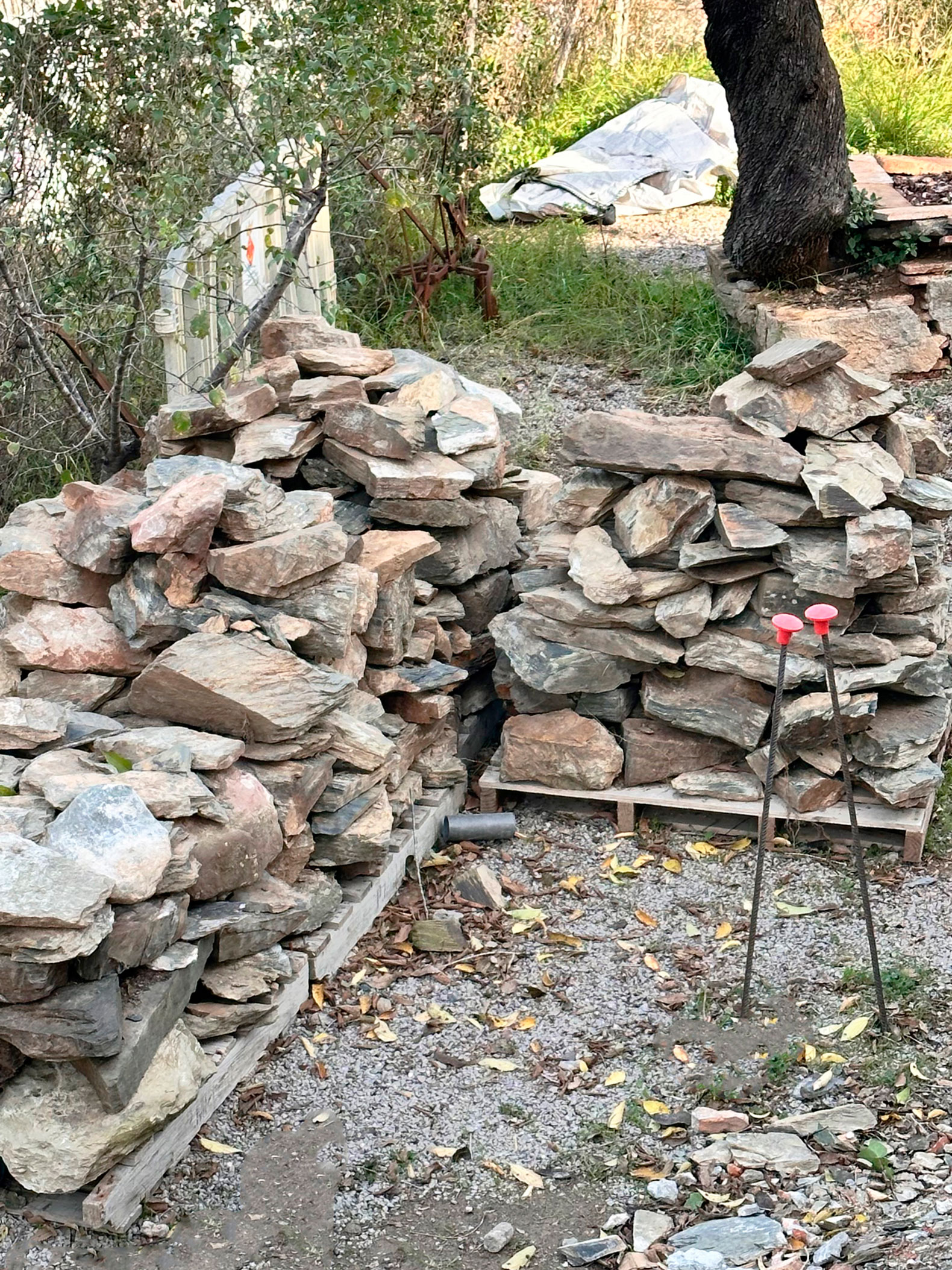
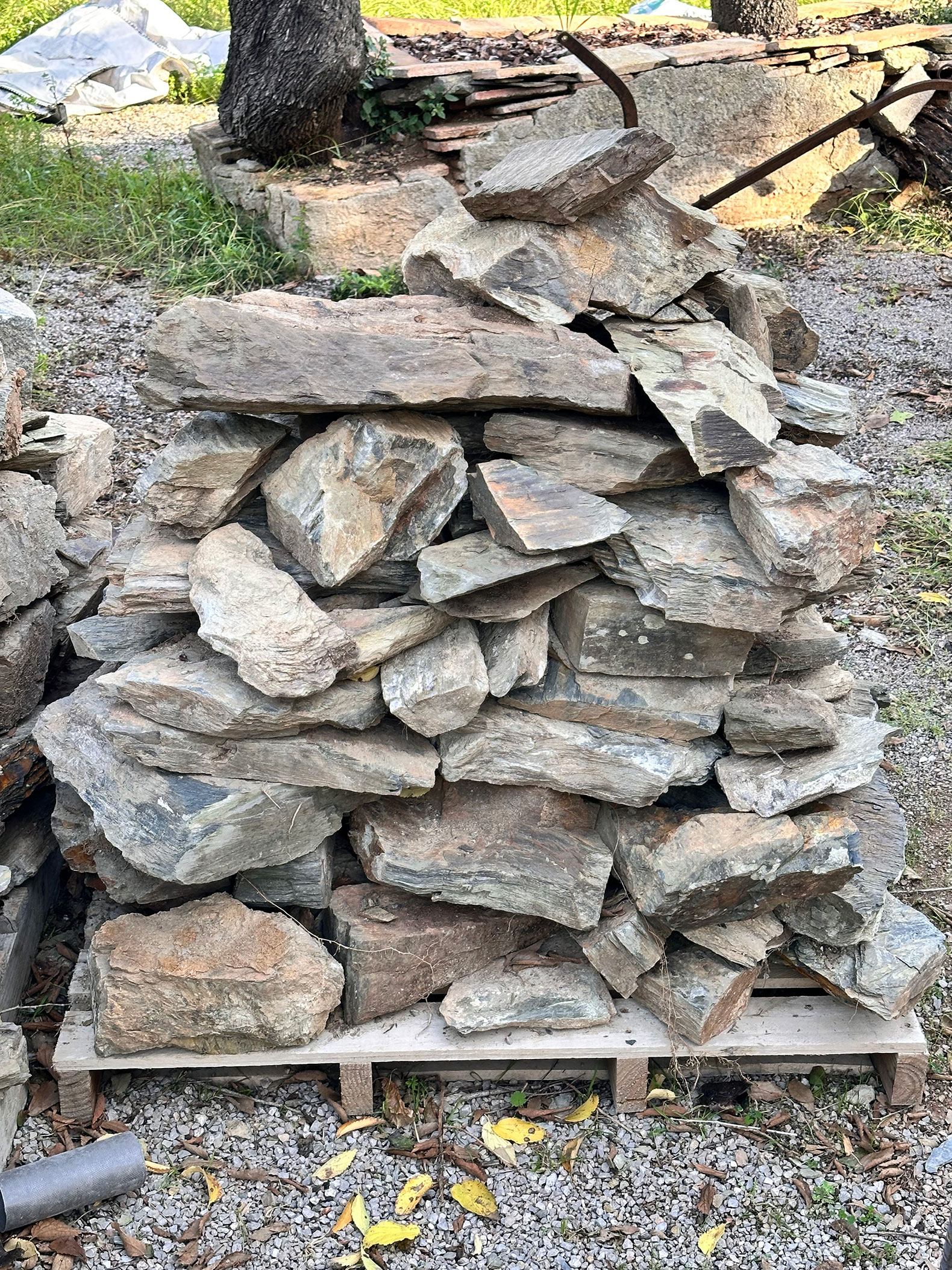
All the material from the demolition and earthmoving has been reused to construct the cyclopean walls that line the path. The slopes are stabilized using a reinforced geogrid, allowing vegetation to grow and integrate naturally into the overall design.
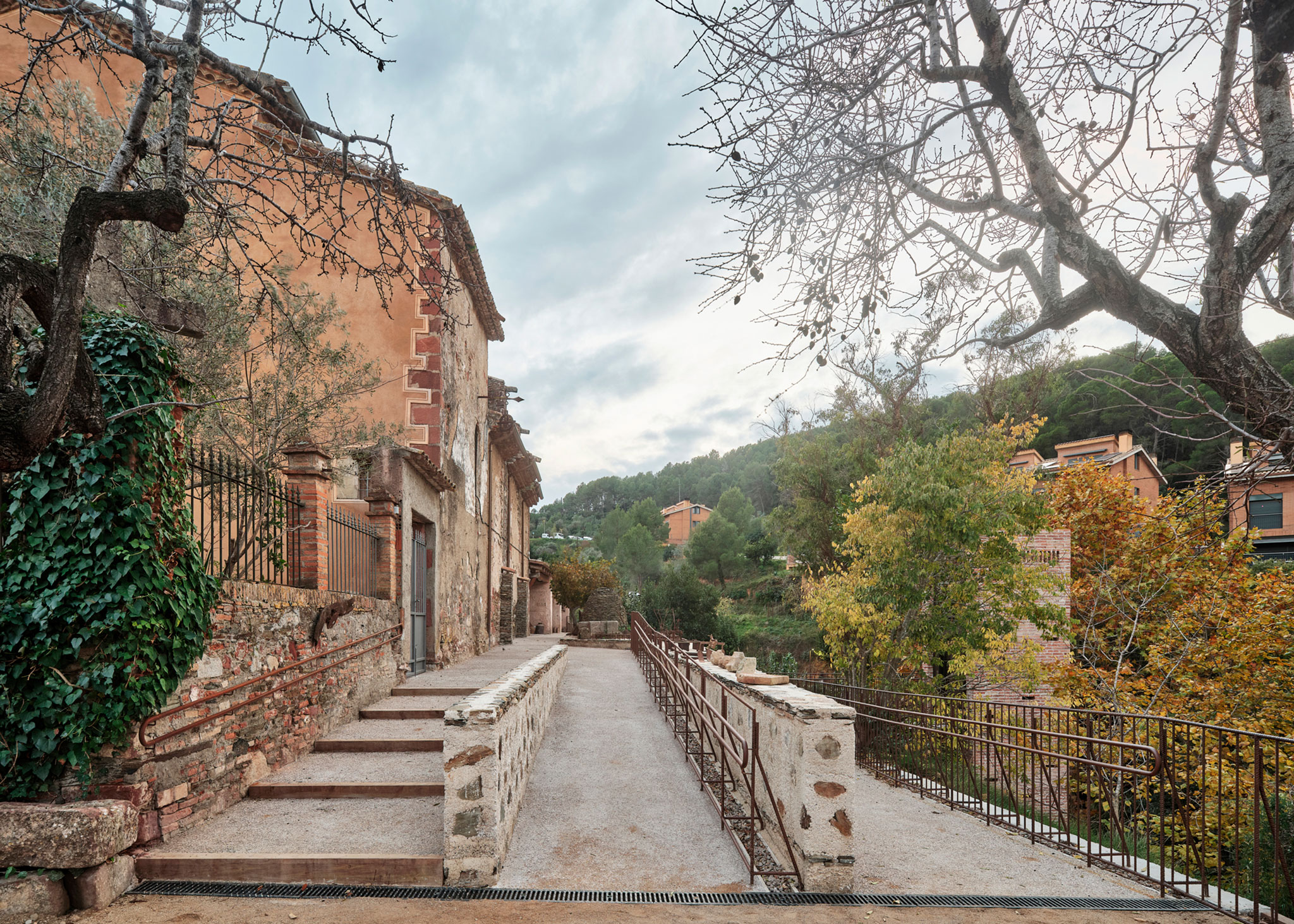
"Font del Rector" by Carles Enrich Studio. Photograph by Adrià Goula.
Project description by Carles Enrich Studio
Popular Heritage
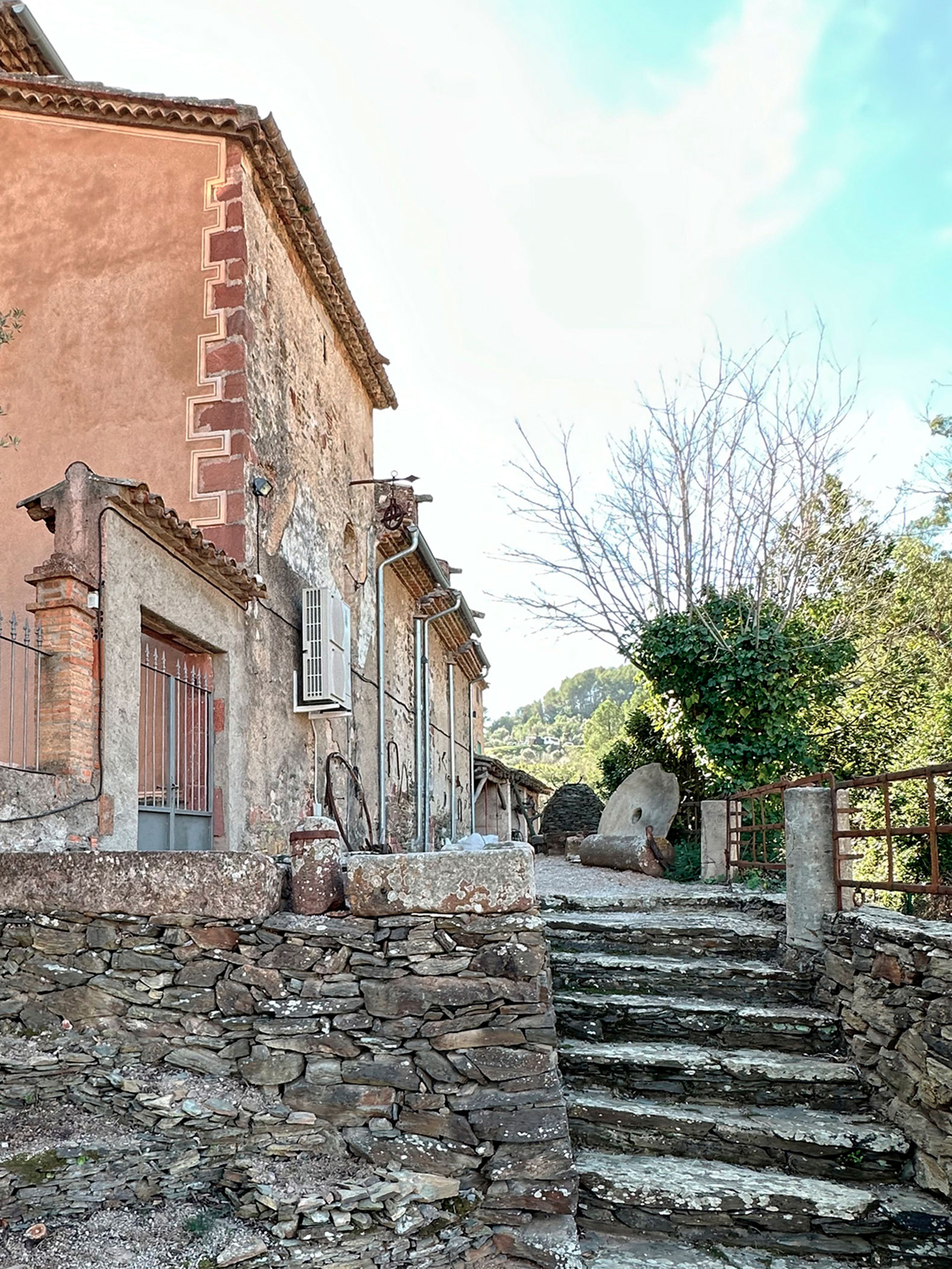
The Museu de les Eines of Sant Climent de Llobregat was created by a group of local residents who, over the years, collected a set of farming tools with the aim of preserving and disseminating the agricultural past of the Baix Llobregat region. The facility is located inside the Rector’s House of Sant Climent, attached to the parish church, and constitutes one of the most significant exhibitions in the region in terms of farming tools, carts, household utensils, and 19th-century kitchen furniture.
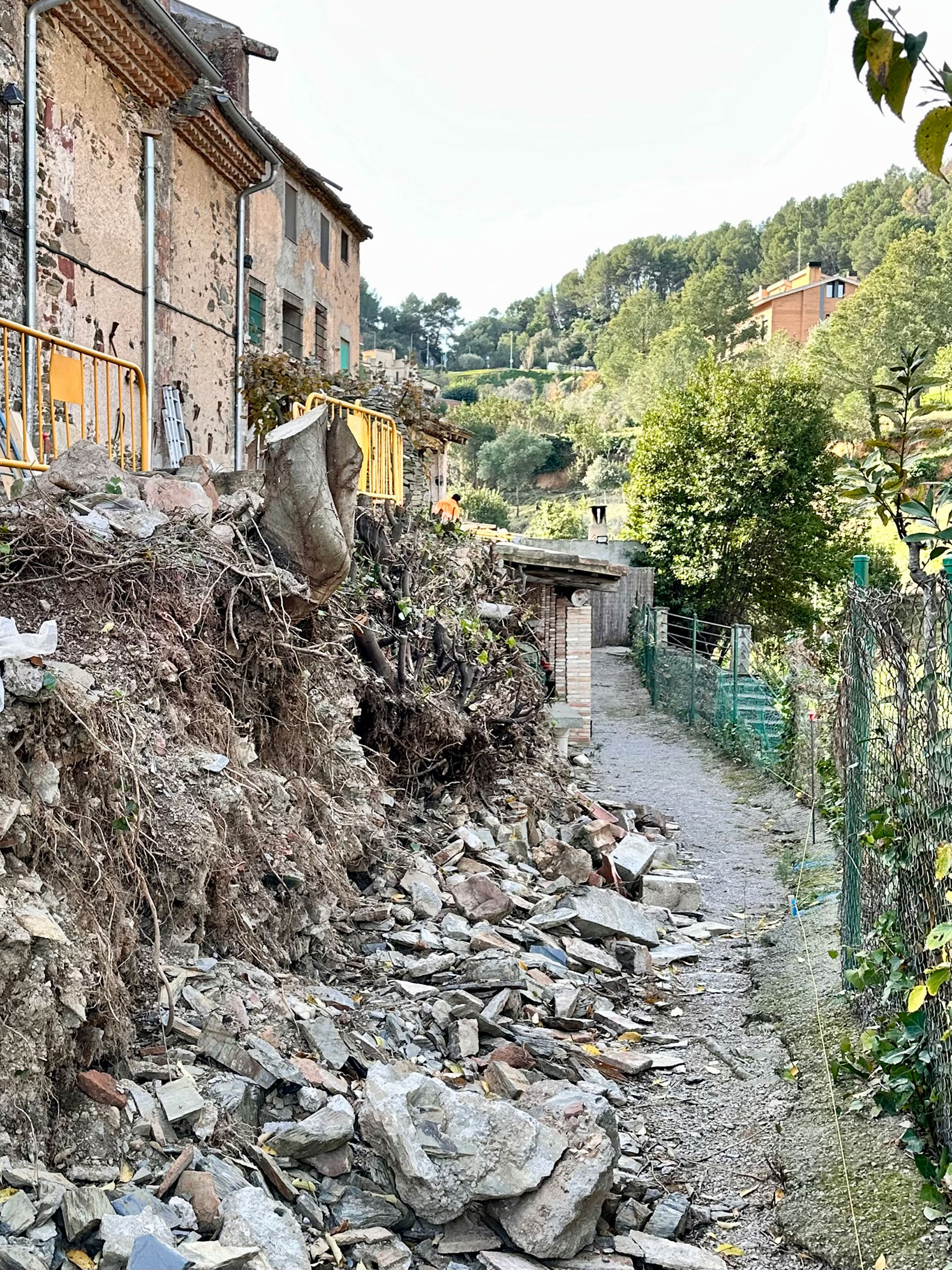
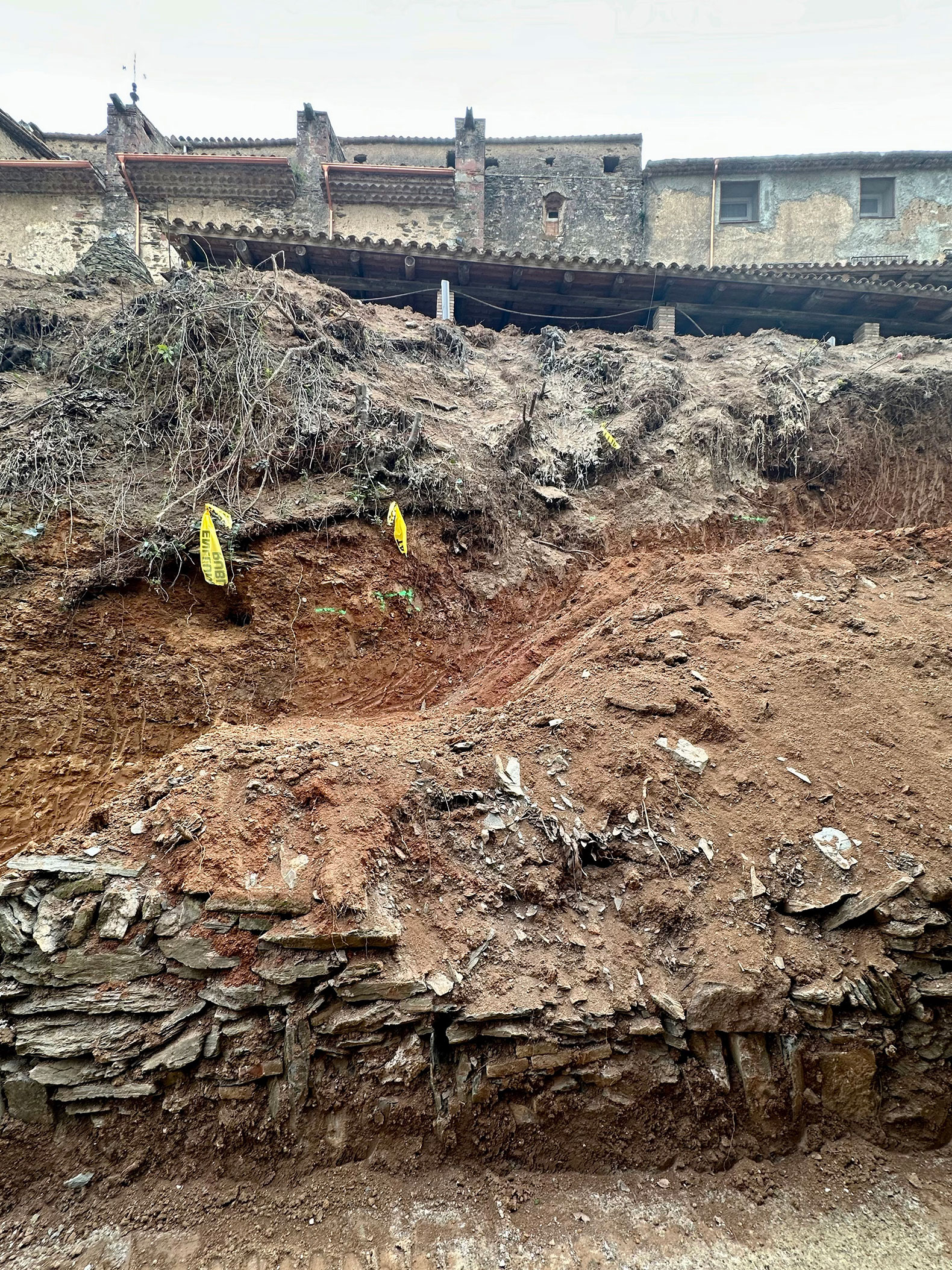
The museum’s outdoor spaces consist of a set of four platforms located at different levels, where three porches are situated, creating a total height difference of 9 meters. The changes in level between terraces are resolved through various sections of retaining walls built with dry stone and masonry, as well as landscaped slopes with shrub and tree vegetation—elements that form part of the area’s traditional landscape. The outdoor visitor route of the museum was not accessible, with several stair sections and isolated steps that hindered the continuity of the itinerary. In addition, the heavy rainfall of recent years caused erosion of the slopes, and the main staircase was in a very advanced state of deterioration, compromising both visitor safety and the conservation of the space.
Reuse and Consolidation
The project aims to restore the porches where the tools are displayed, consolidate the slopes to ensure ground stability, and adapt an outdoor itinerary for the Museum of Agricultural Tools of Sant Climent. In this way, the experience of the outdoor route is enhanced as part of the museum’s interpretive narrative. The proposal creates a continuous and accessible route, with different circulation alternatives (stairs, ramps, and an elevator) to overcome the changes in level up to the threshing floor, recovered as a meeting space. This route is conceived as a landscape viewpoint, allowing visitors to enjoy open views towards the stream and the natural surroundings, integrating the museum into its territorial context.
All materials resulting from demolition and earthworks (slate, stone, and soil) are reused for the construction of cyclopean walls that accompany the route from the parish church to the stream, reinforcing the landscape, sustainable, and identity-based character of the intervention. The slope is consolidated using soil-nailing techniques, allowing vegetation to grow. The project includes a widened promenade, gathering spaces where tools are displayed, and various shaded areas provided by porches and trees.
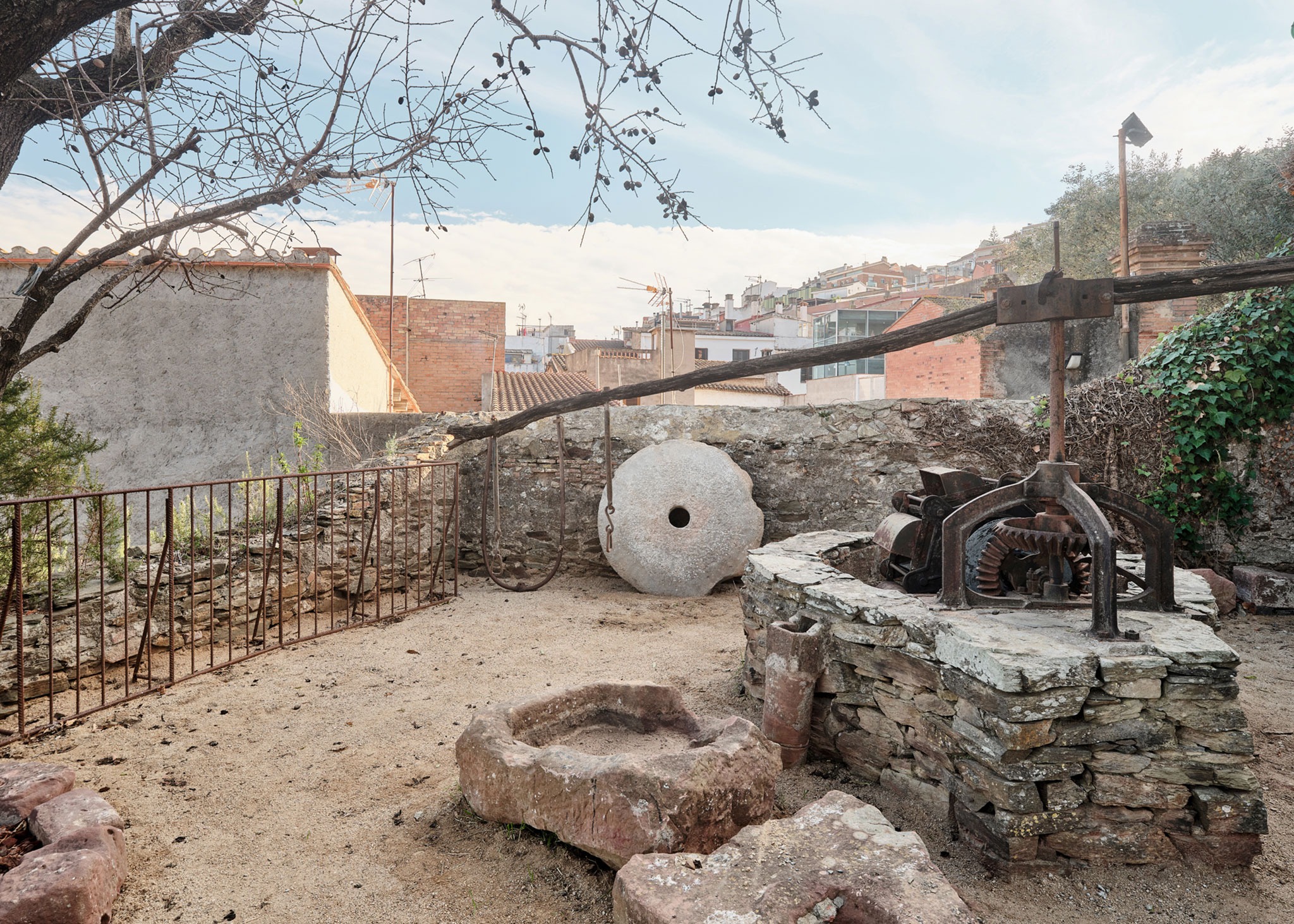
Through this intervention, history is reconnected with the landscape, establishing a dialogue between material heritage and the agricultural territory. By consolidating the outdoor spaces as a living extension of the museum’s historical narrative, the material and intangible heritage of Sant Climent is preserved, experienced, and passed on to future generations.