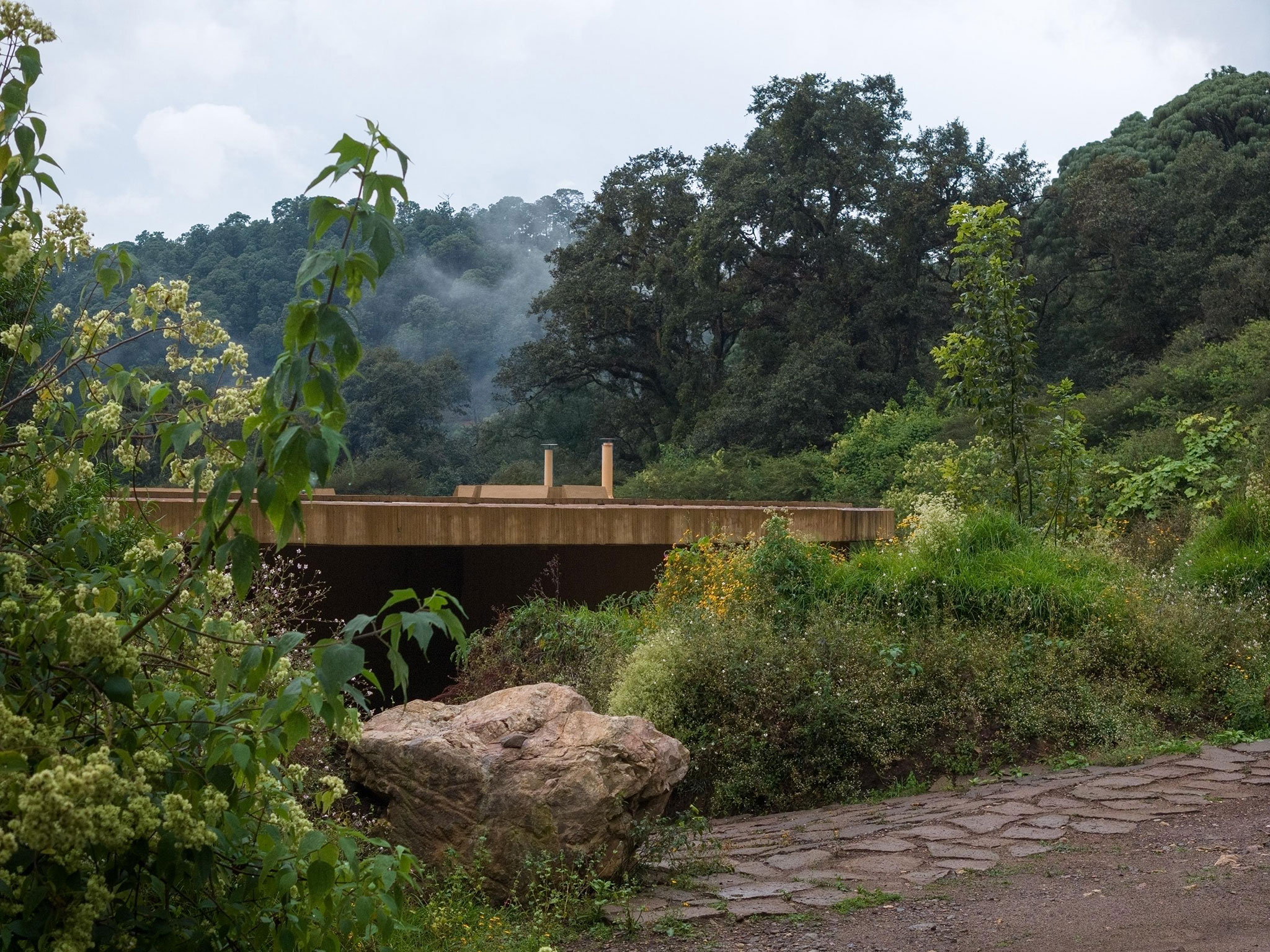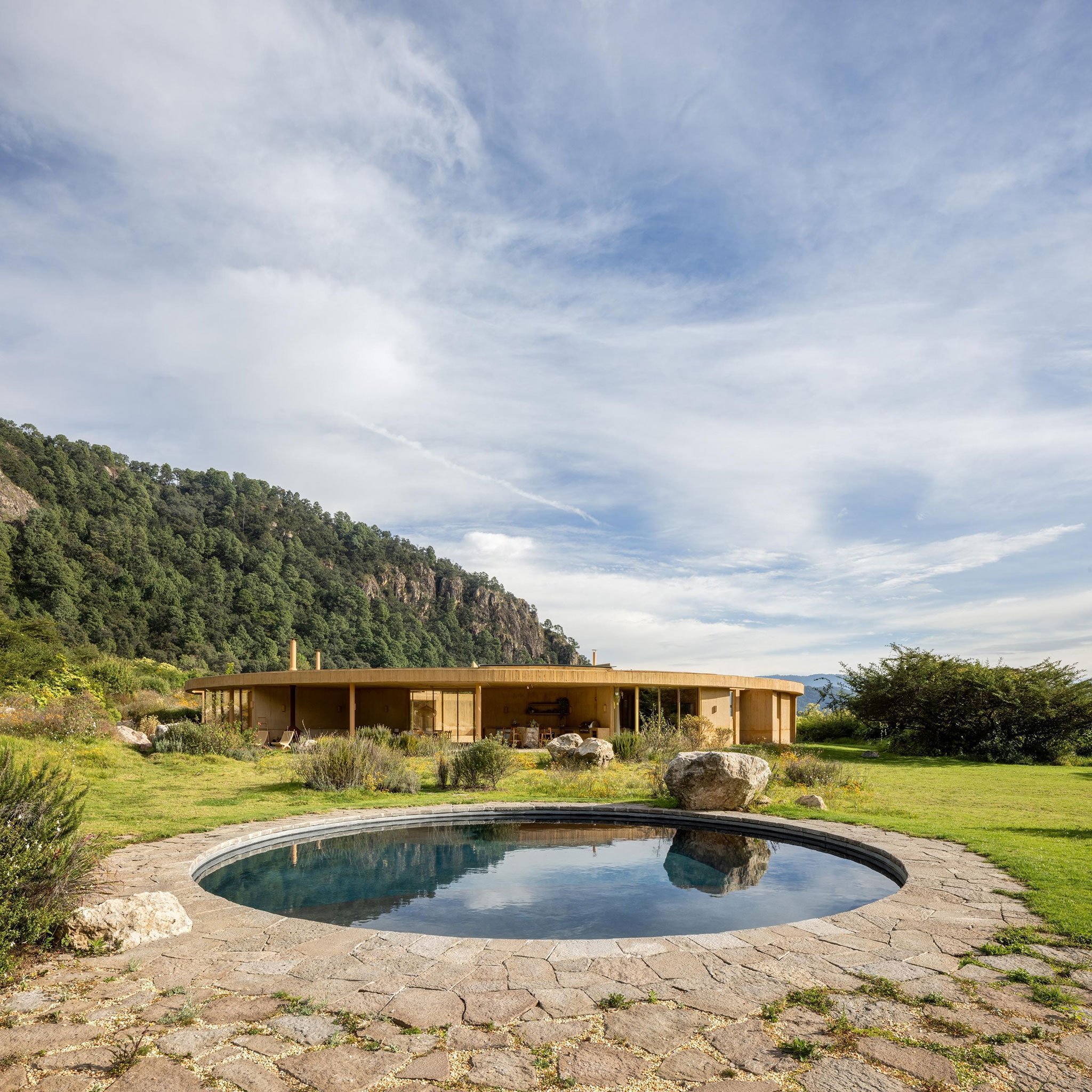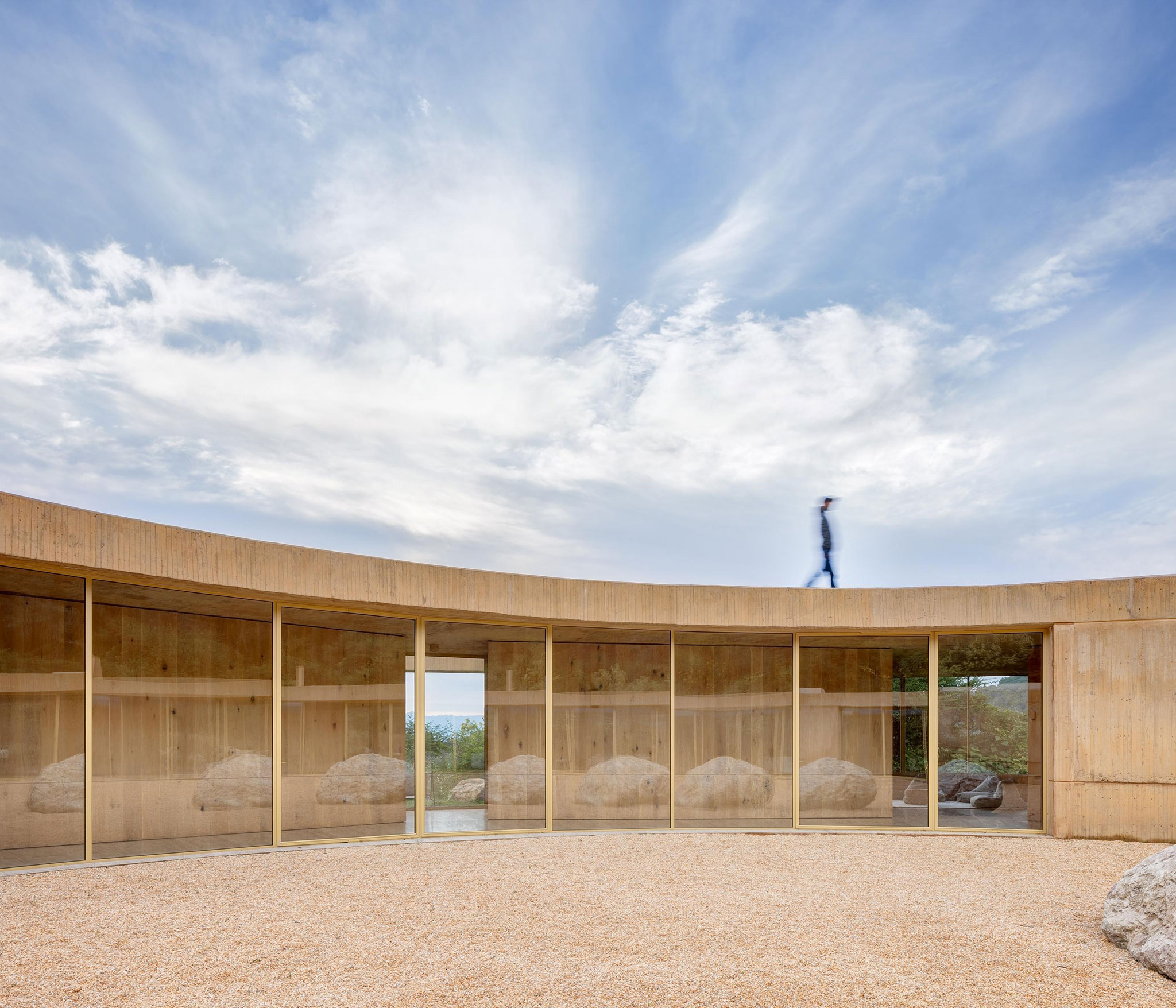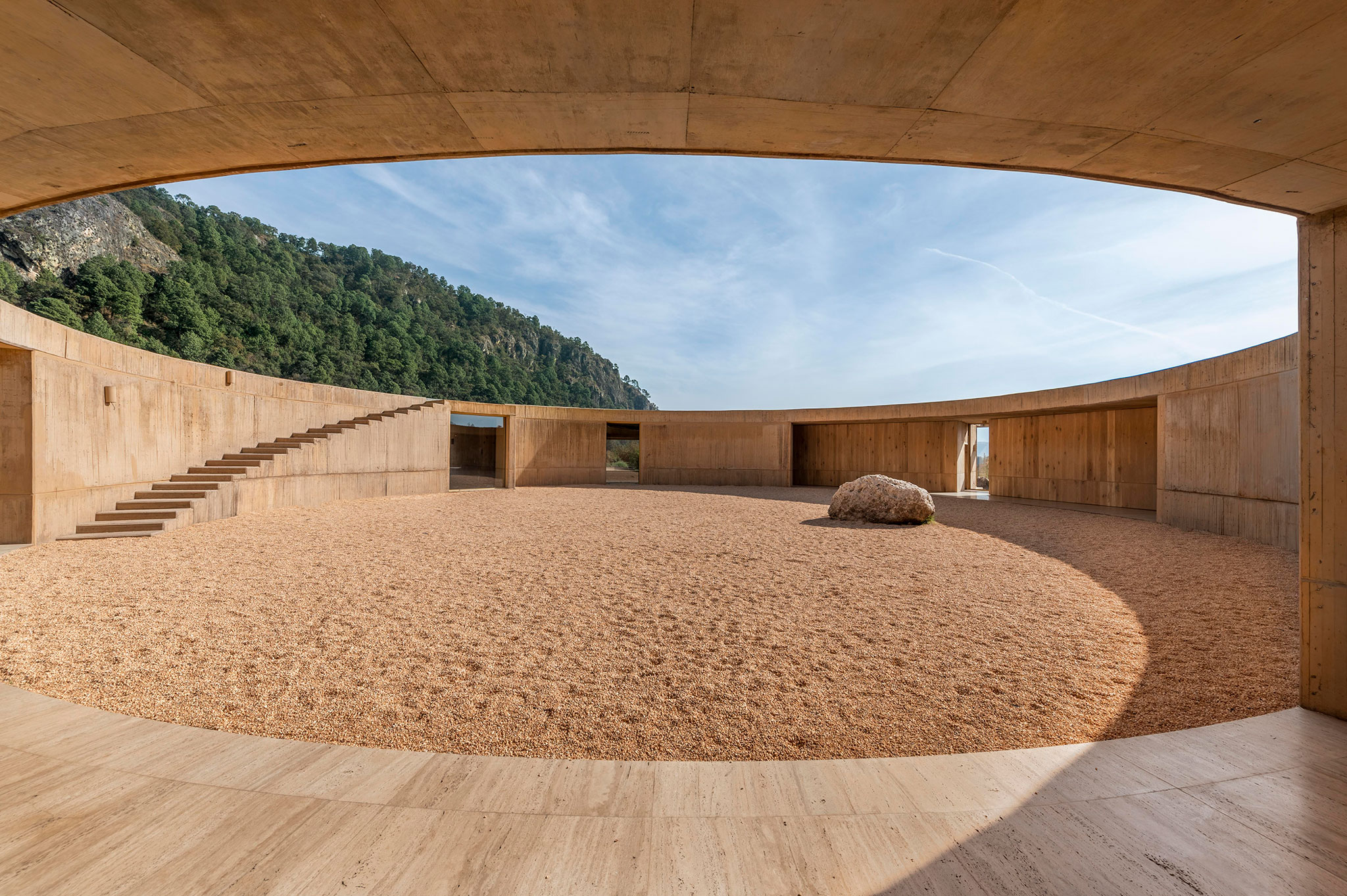
Architect Fernanda Canales has designed "House 720 Degrees", a dwelling conceived as a geometric and optical device that replicates the 360-degree field of vision of conventional sight. Located in the Mexican city of Valle de Bravo, a place known for its large lake and wooded landscape, the house is a striking example of this design.

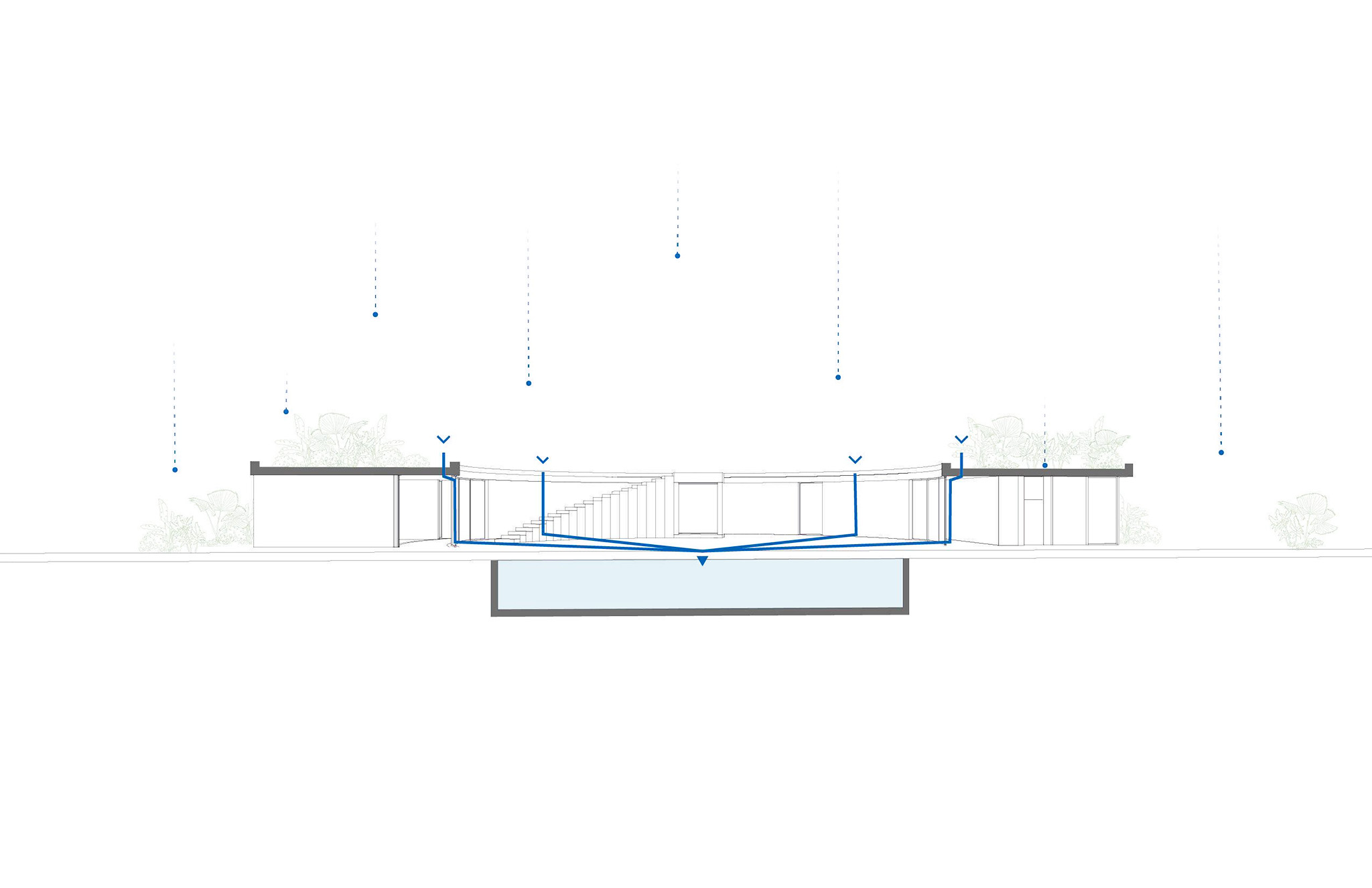
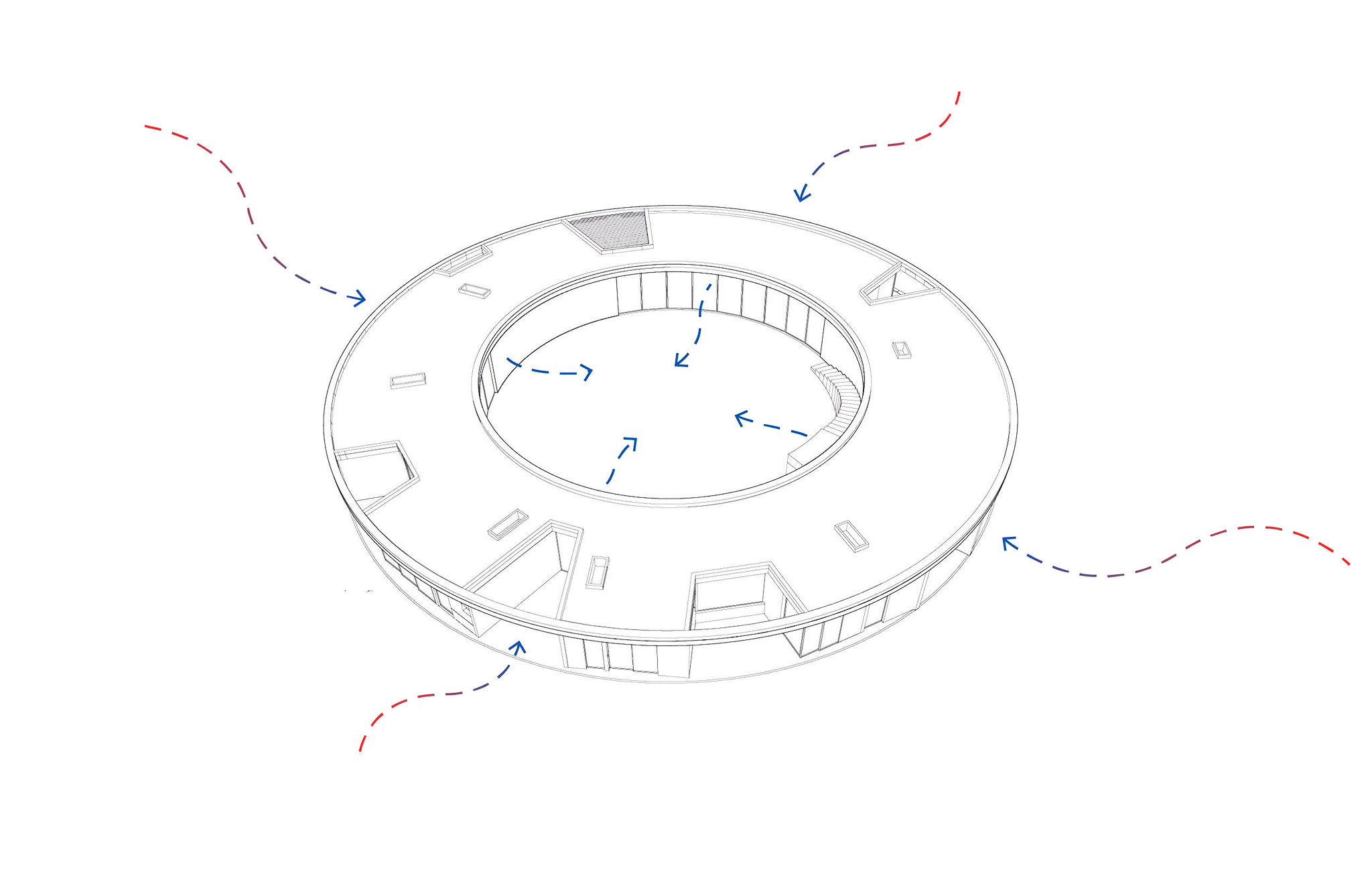
This intriguing proposal was conceived based on three spatial conditions, considering criteria of isolation and openness: center, interior, and exterior. It also takes into account temperature variations of up to 30°C in a single day and the predominant rainfall for half the year. With a focus on sustainability, the house features a rainwater harvesting system, integrates solar panels to generate its own energy, and incorporates hydronic radiant floor heating for thermal comfort.

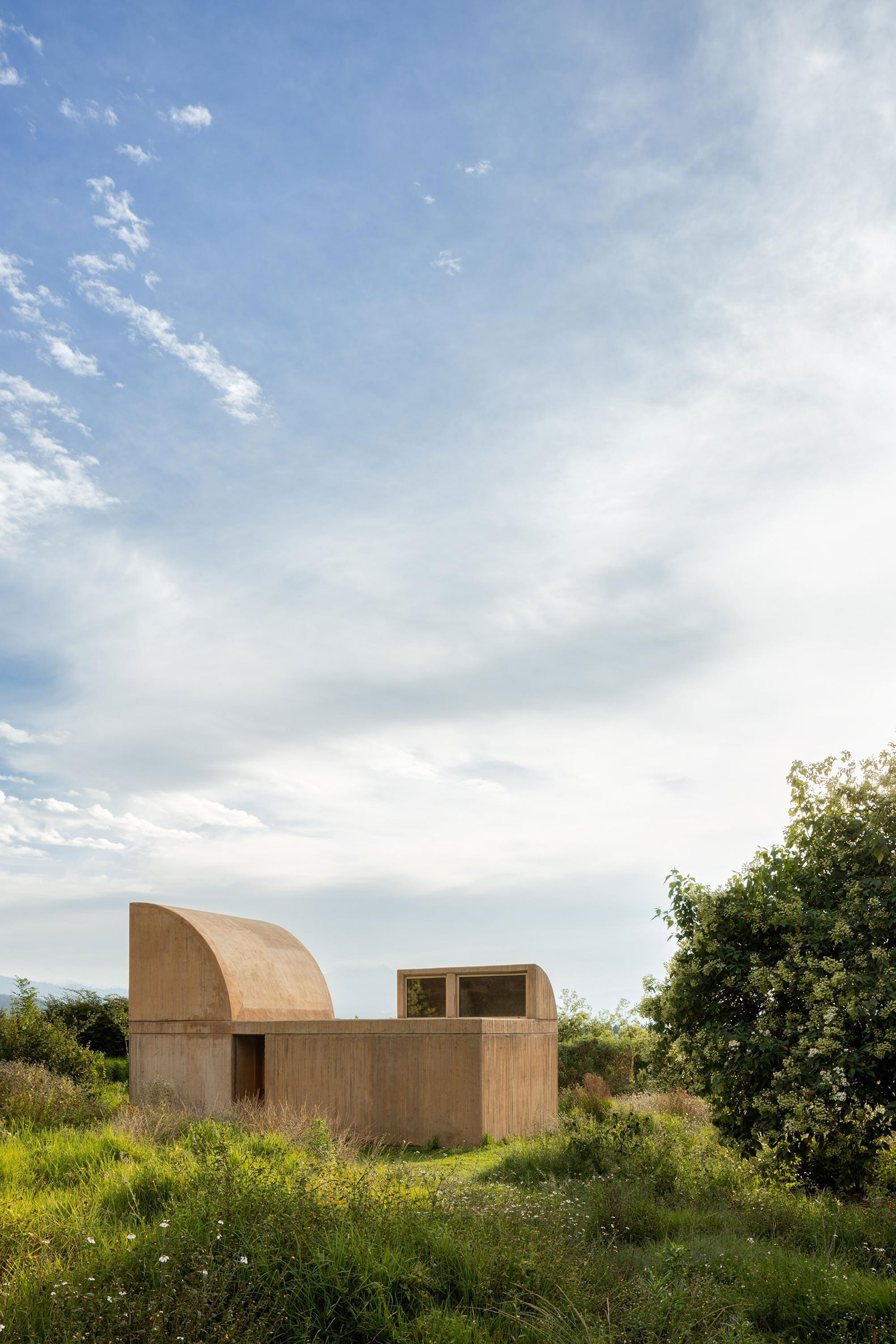
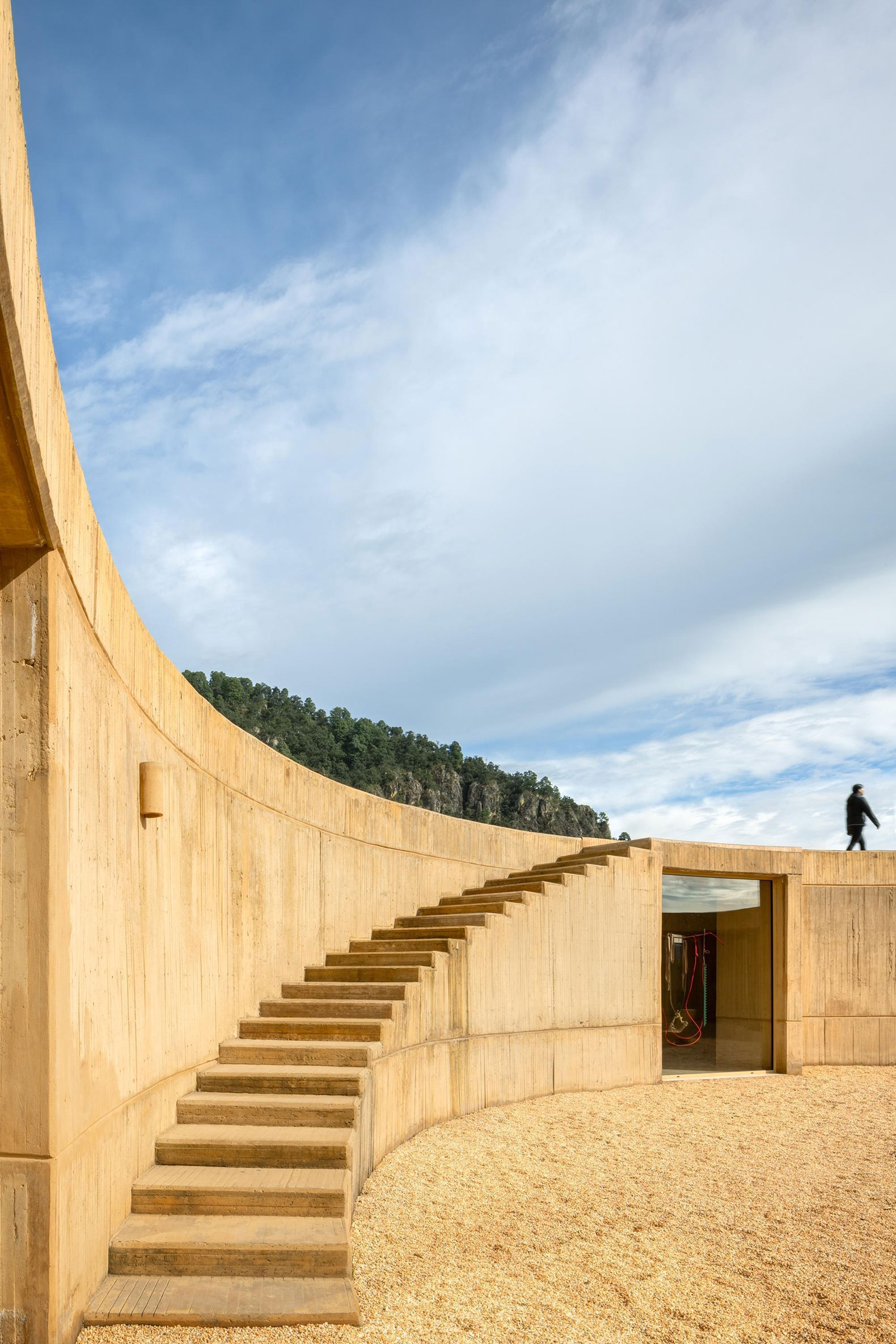
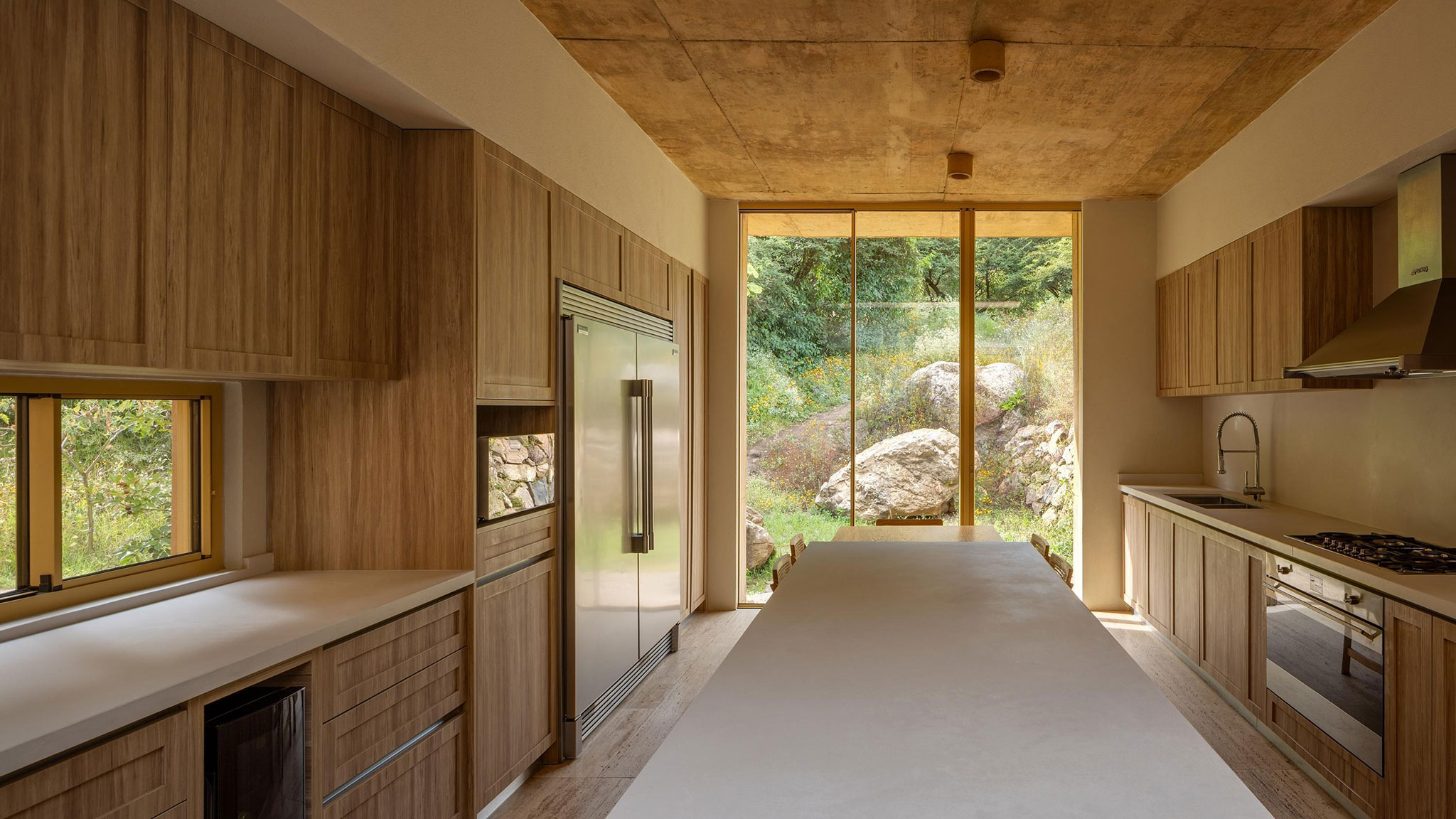
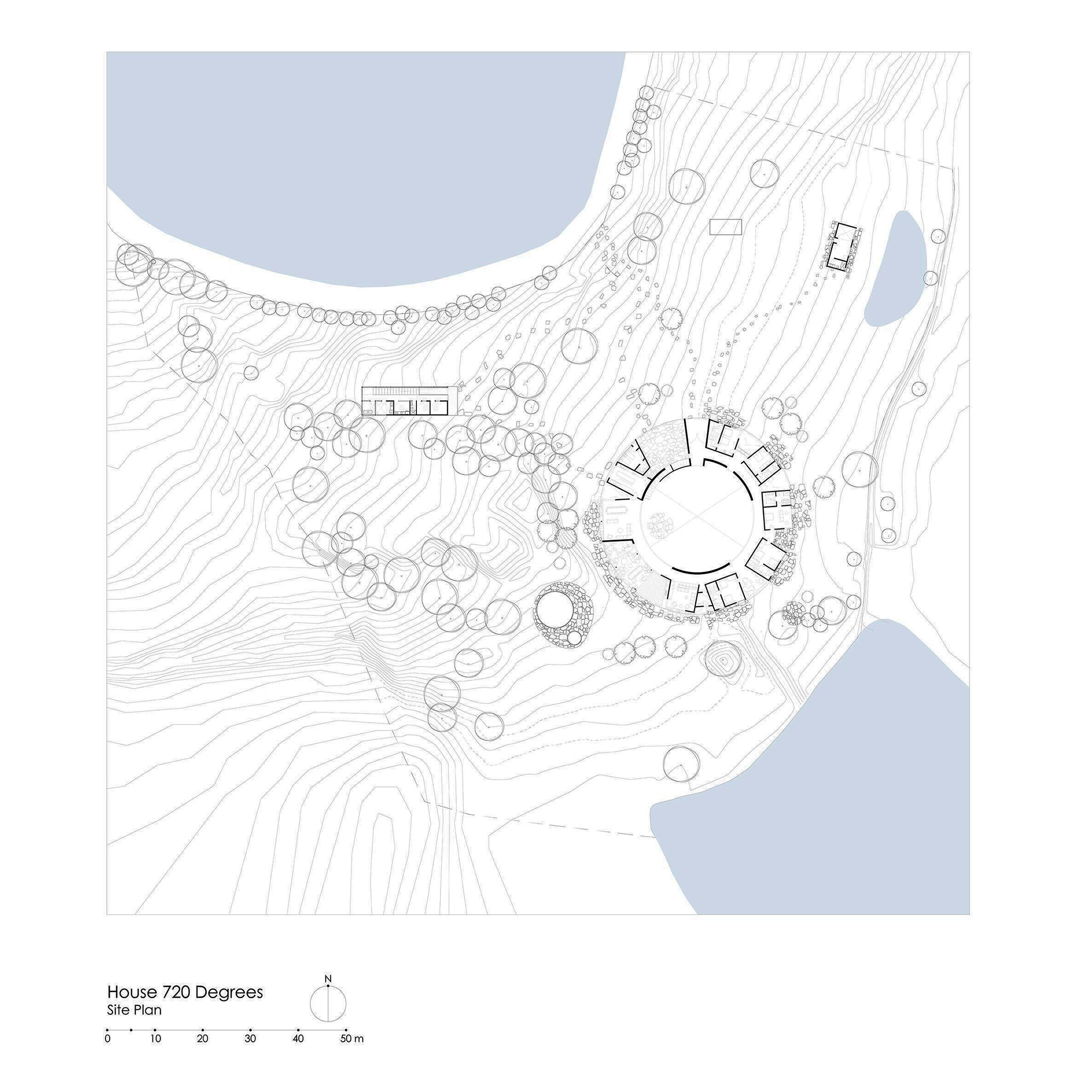
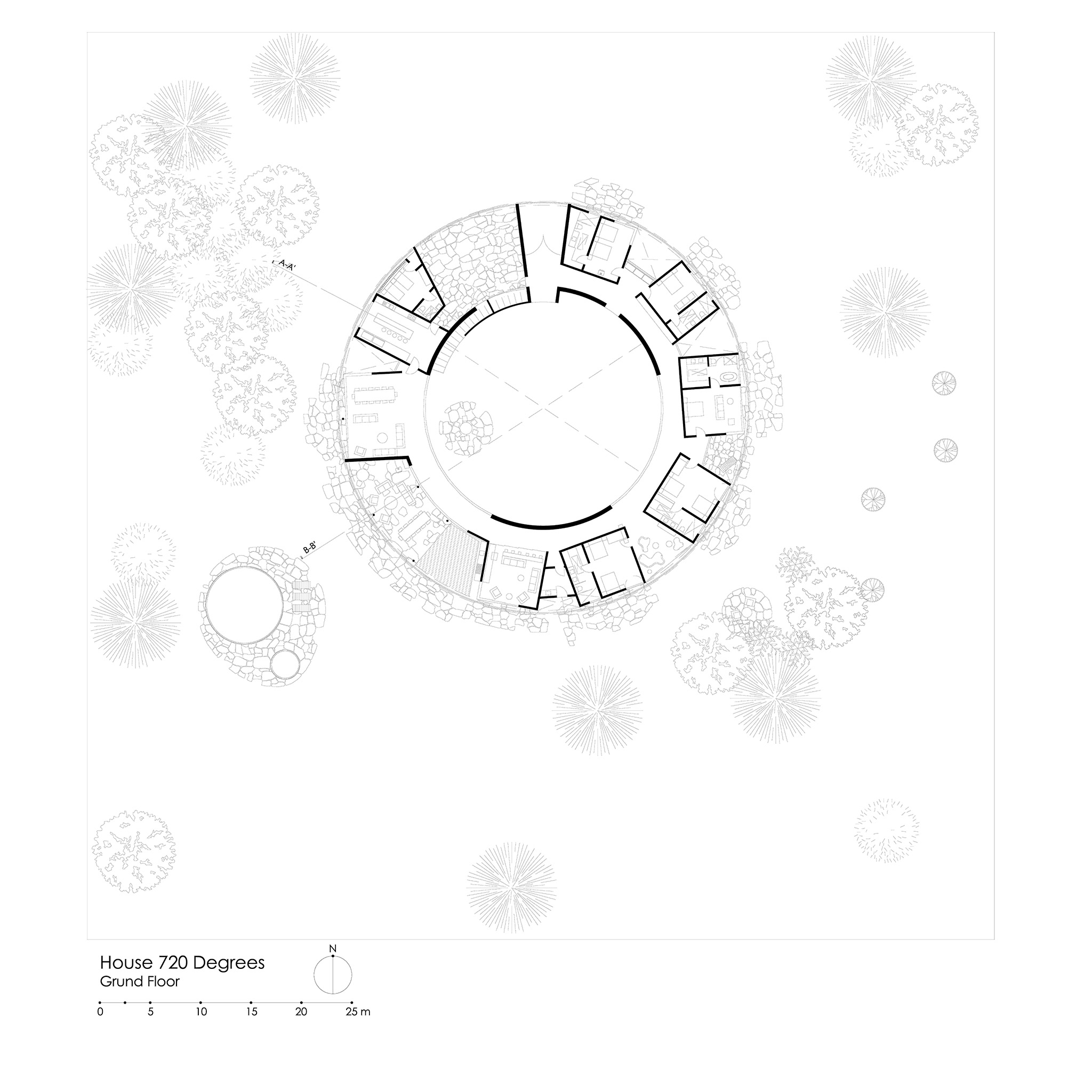
The "720 Degree House," designed by architect Fernanda Canales, comprises three volumes. The first and main volume is the circular house; the second is a separate studio/guest room; and the third is a rectangular volume containing a patio, bedrooms, storage space, and service areas. The main house with circular floor plan is spread over two levels. The ground floor houses the living room, kitchen, bedrooms, bathrooms, and closets, while the rooftop features an open terrace.

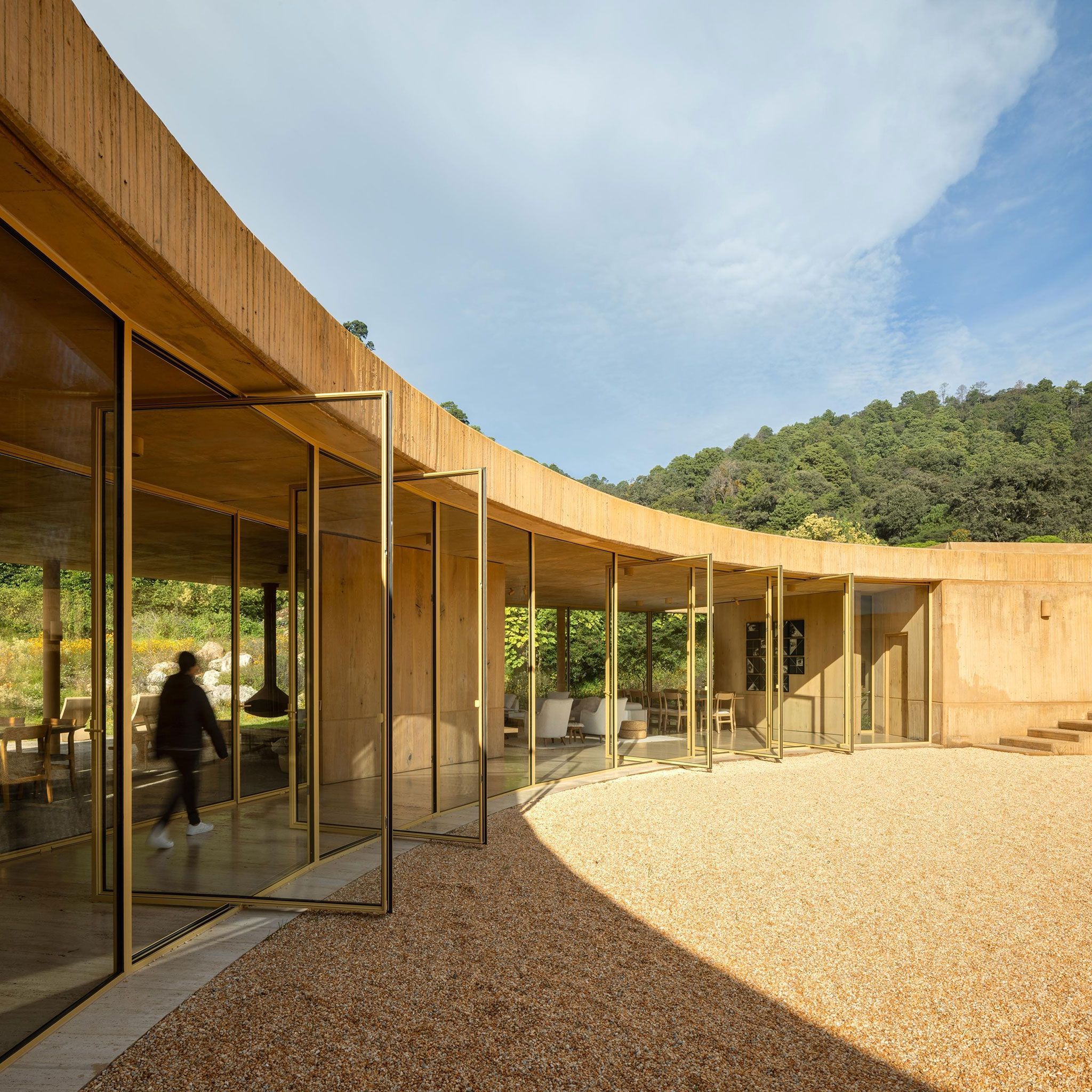
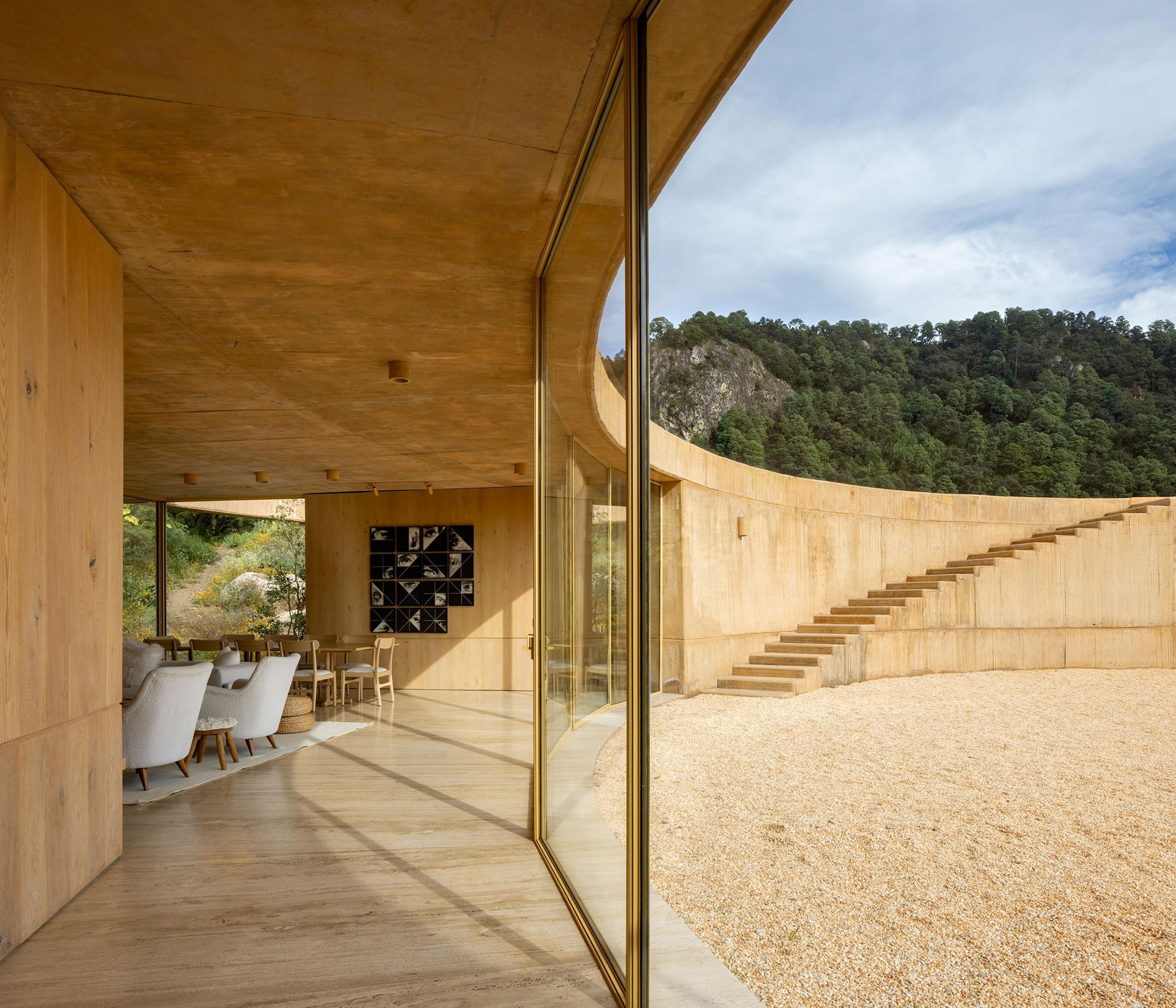
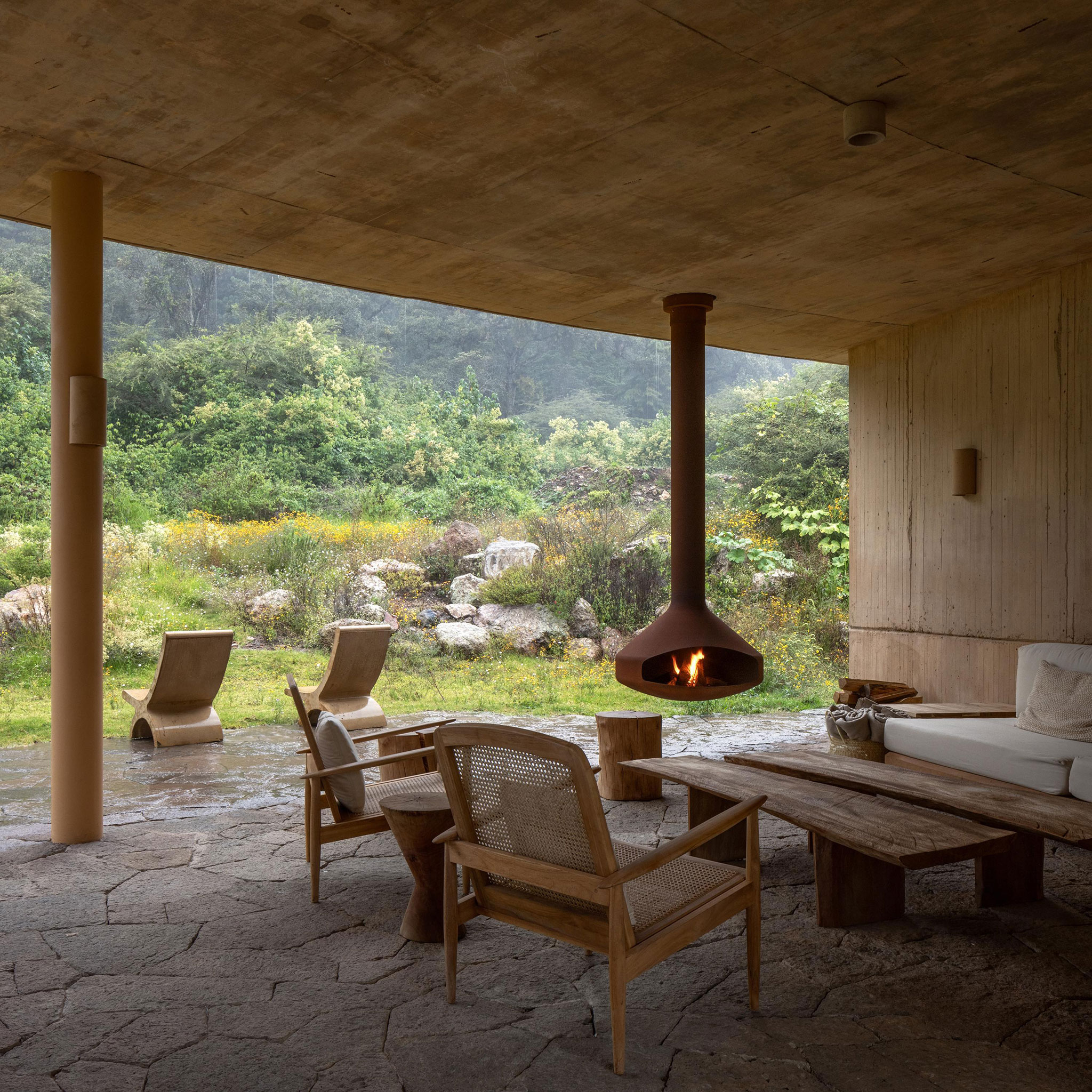
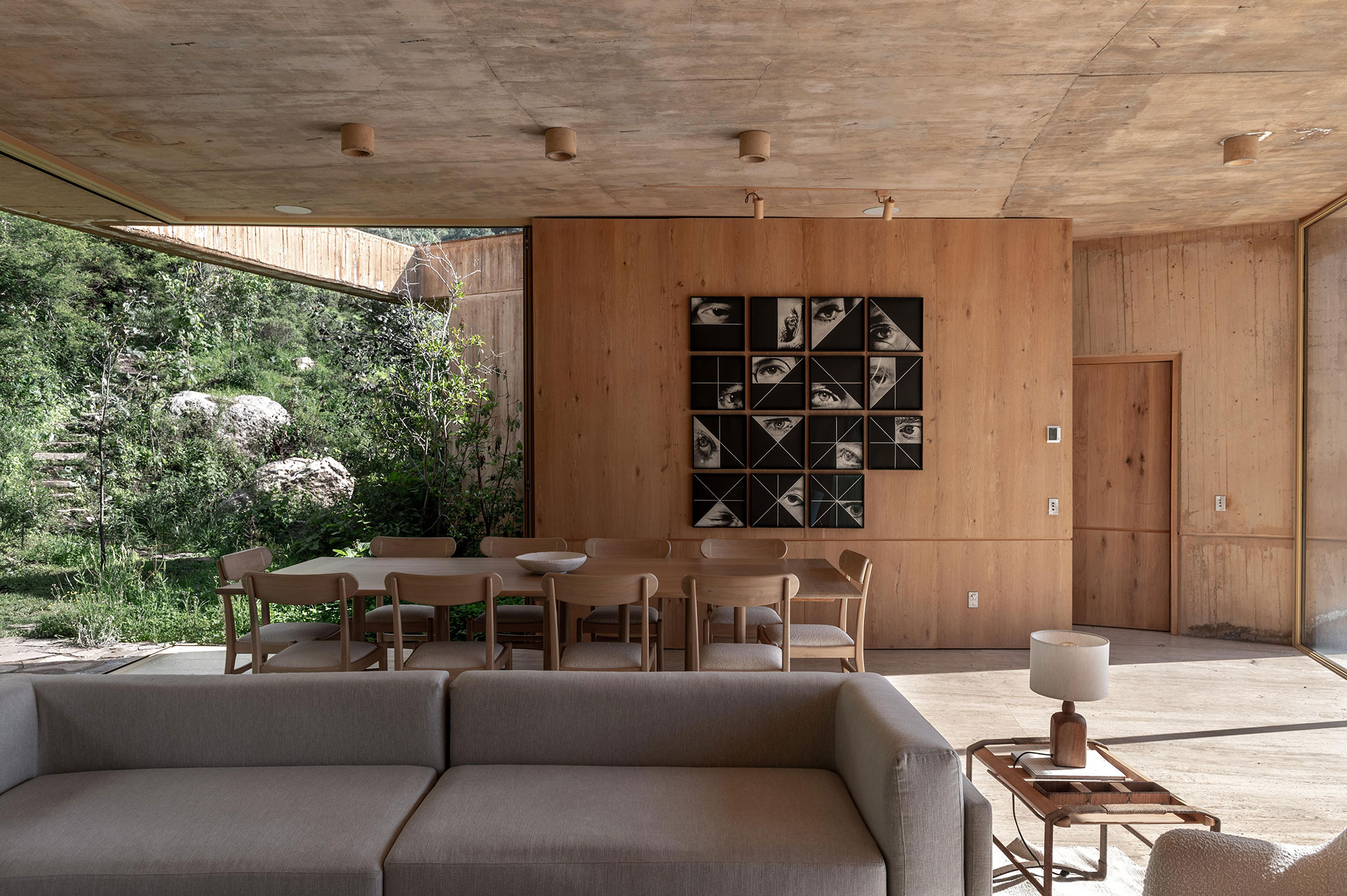
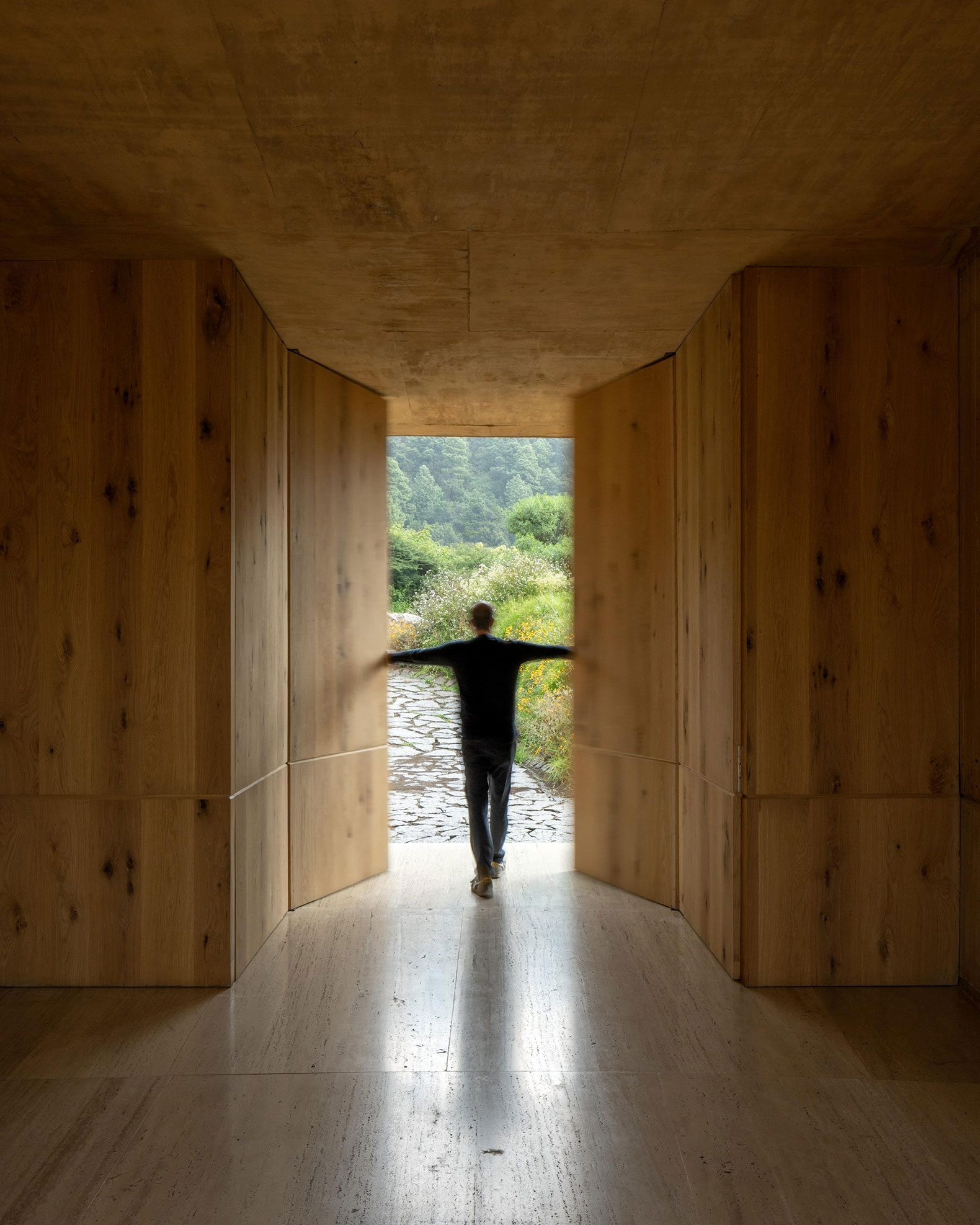
The design maintains a strong connection with the outdoors through flexible openings with large folding windows that also create natural cross-ventilation. Local earth and concrete were used in its construction to achieve a natural finish that evokes the surrounding landscape.
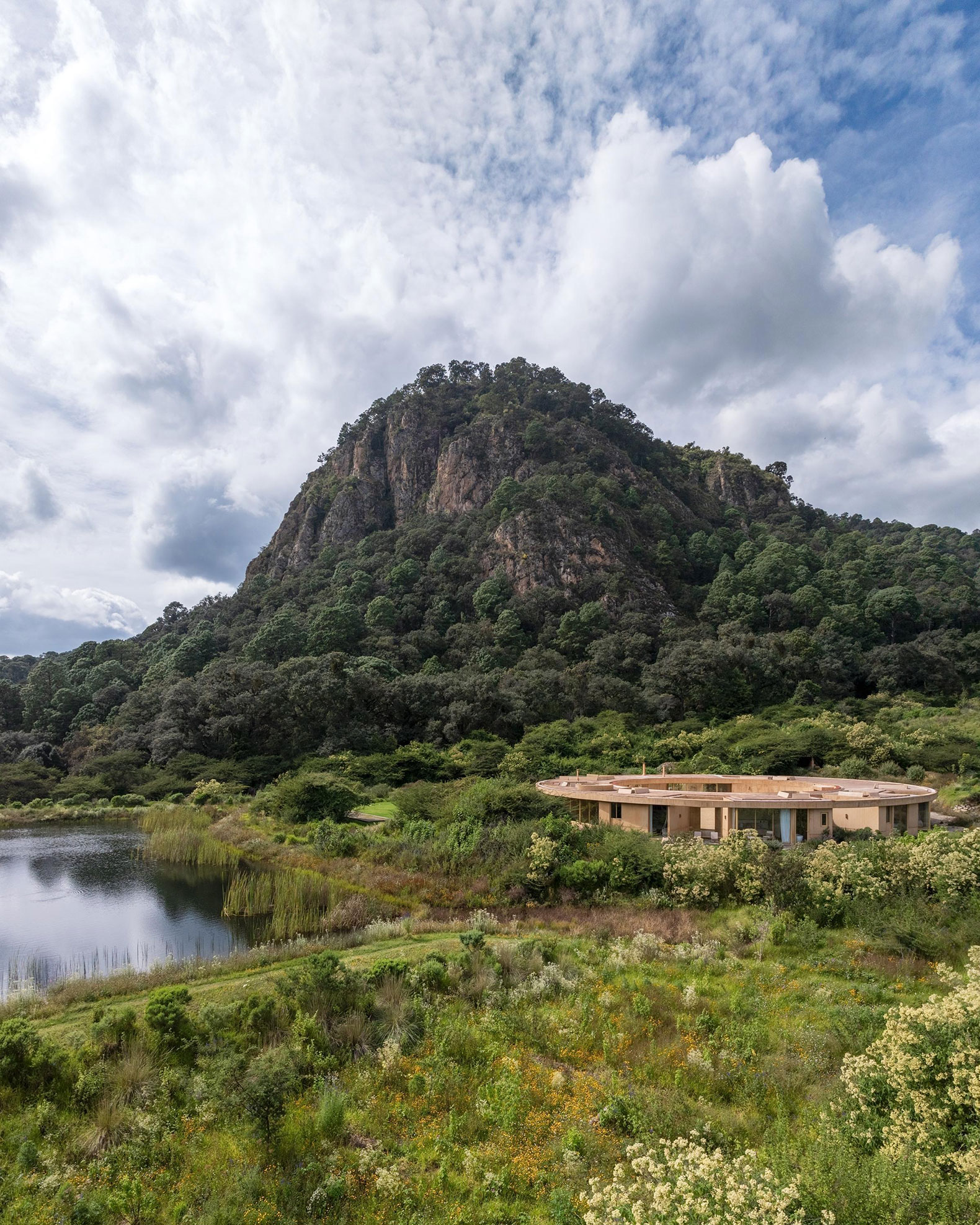
Casa 720 Grados por Fernanda Canales. Fotografía por Rafael Gamo.

House 720 Degrees by Fernanda Canales. Photograph by Rafael Gamo. 

Project description by Fernanda Canales

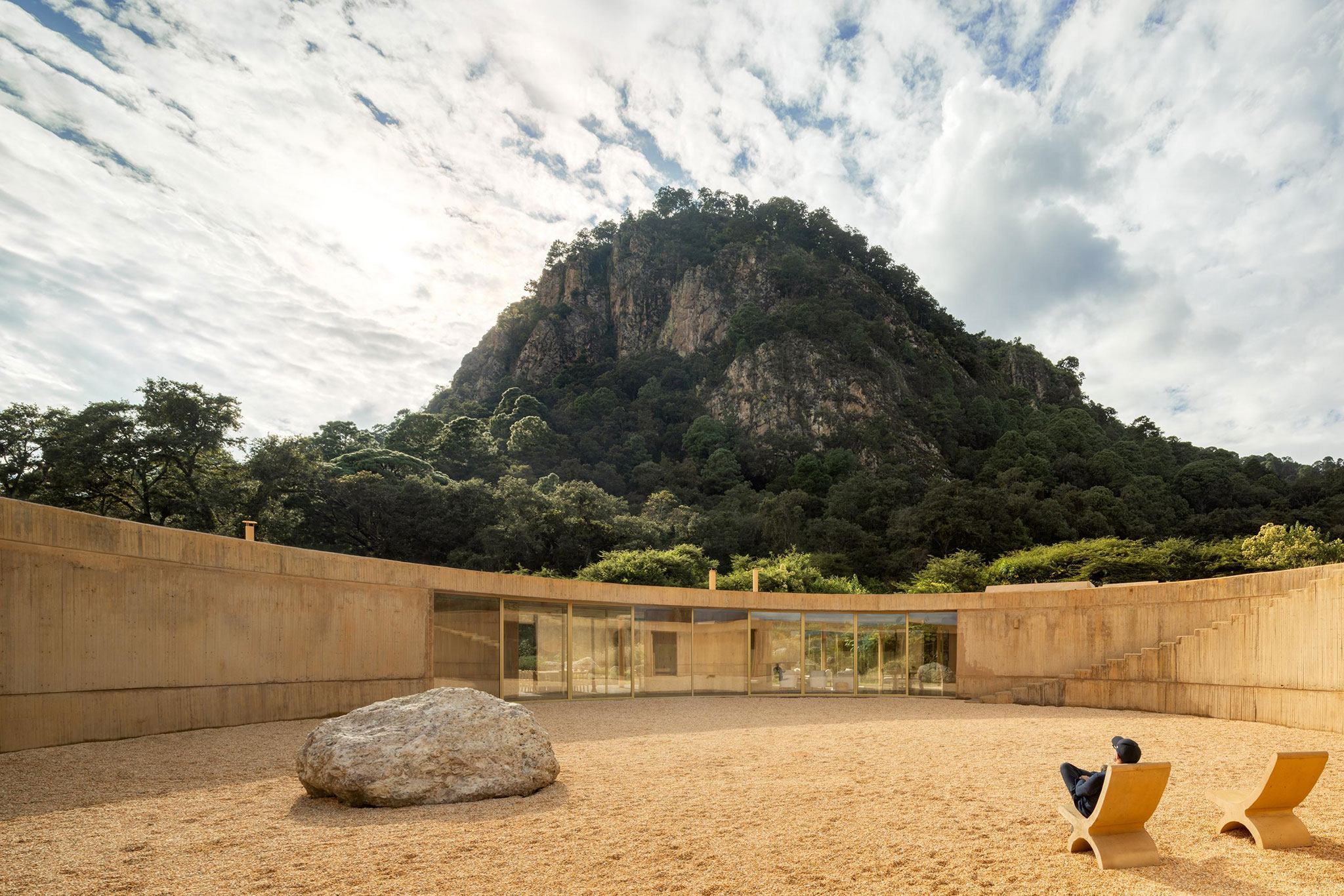
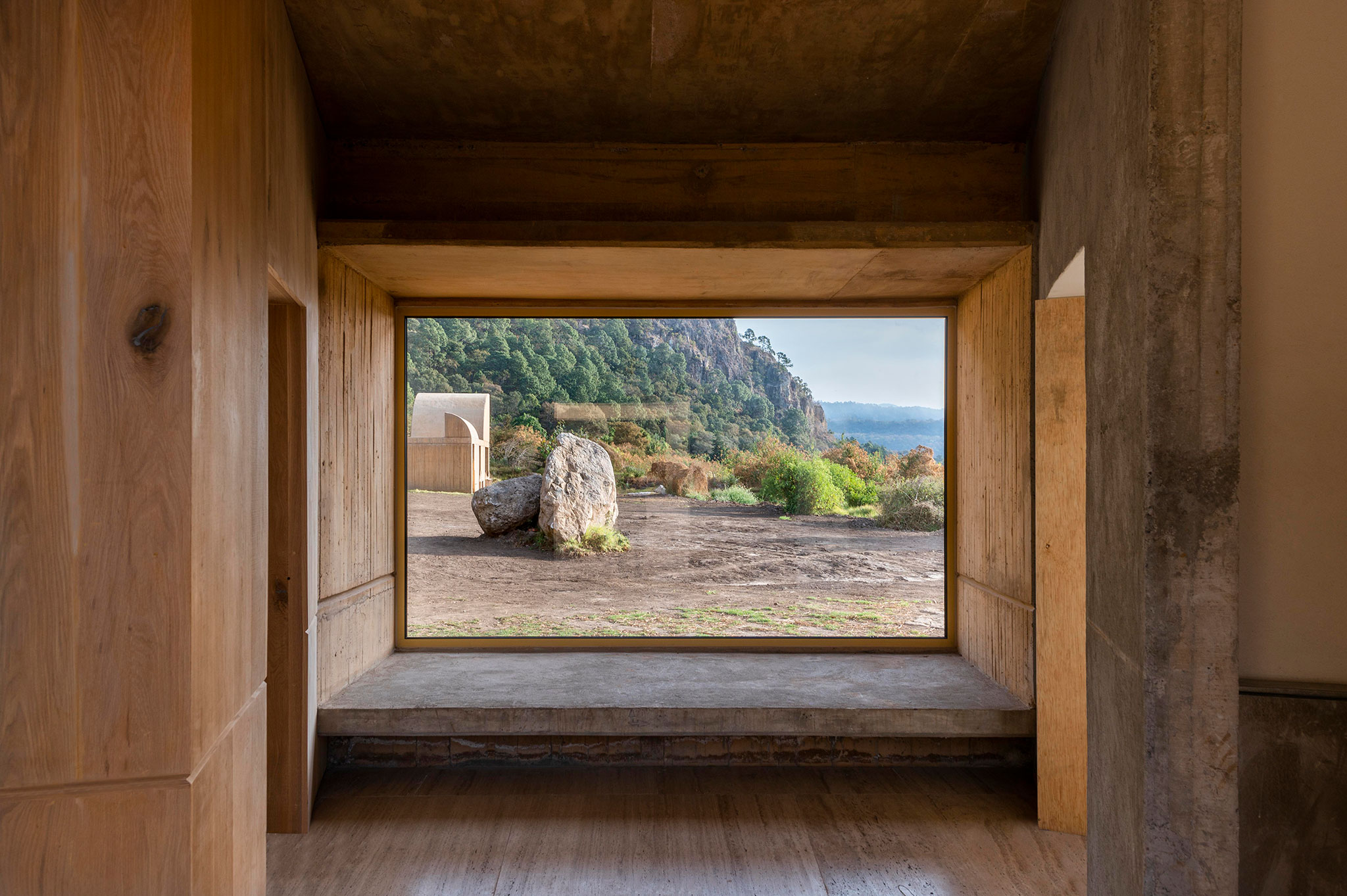
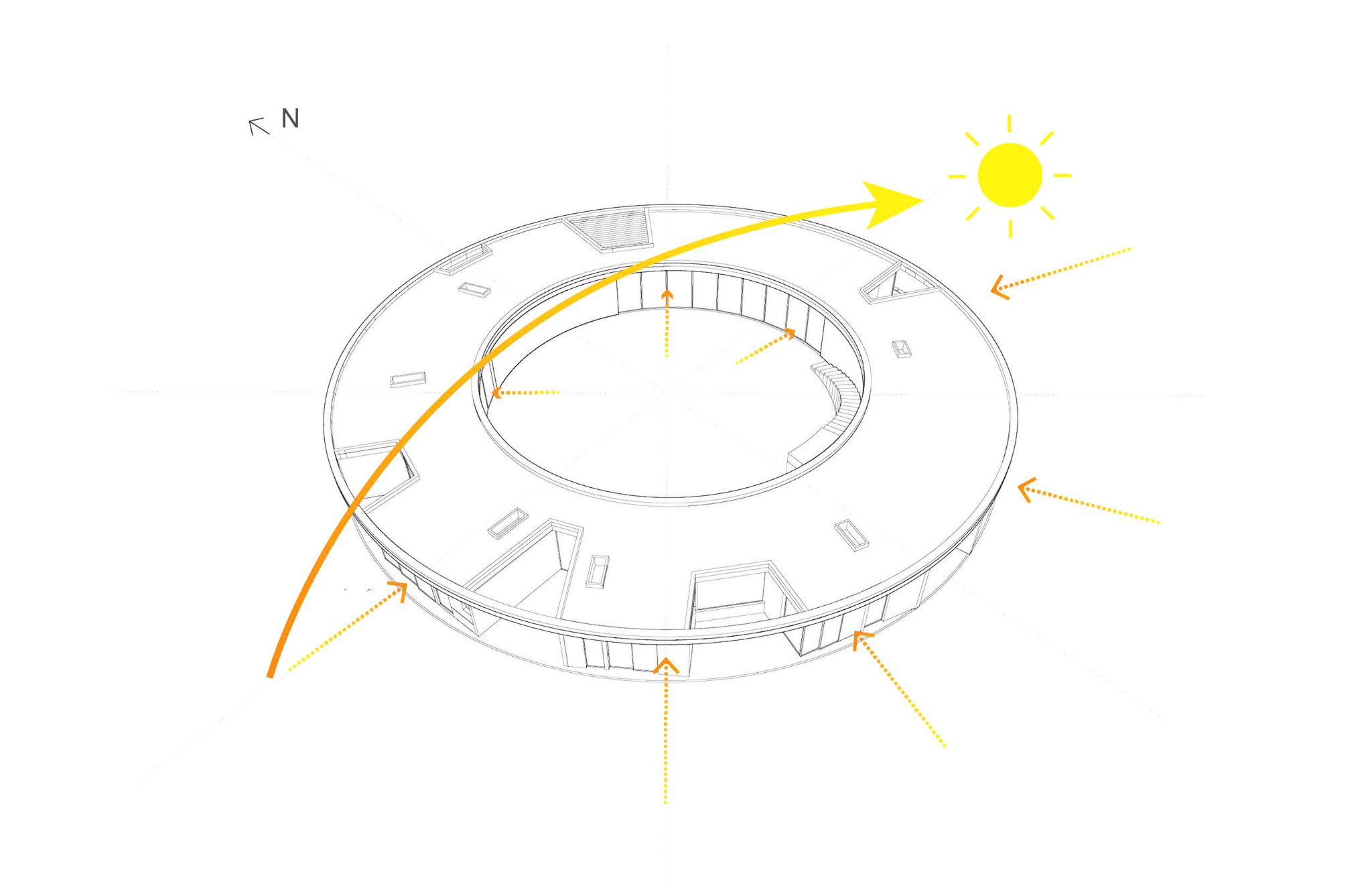
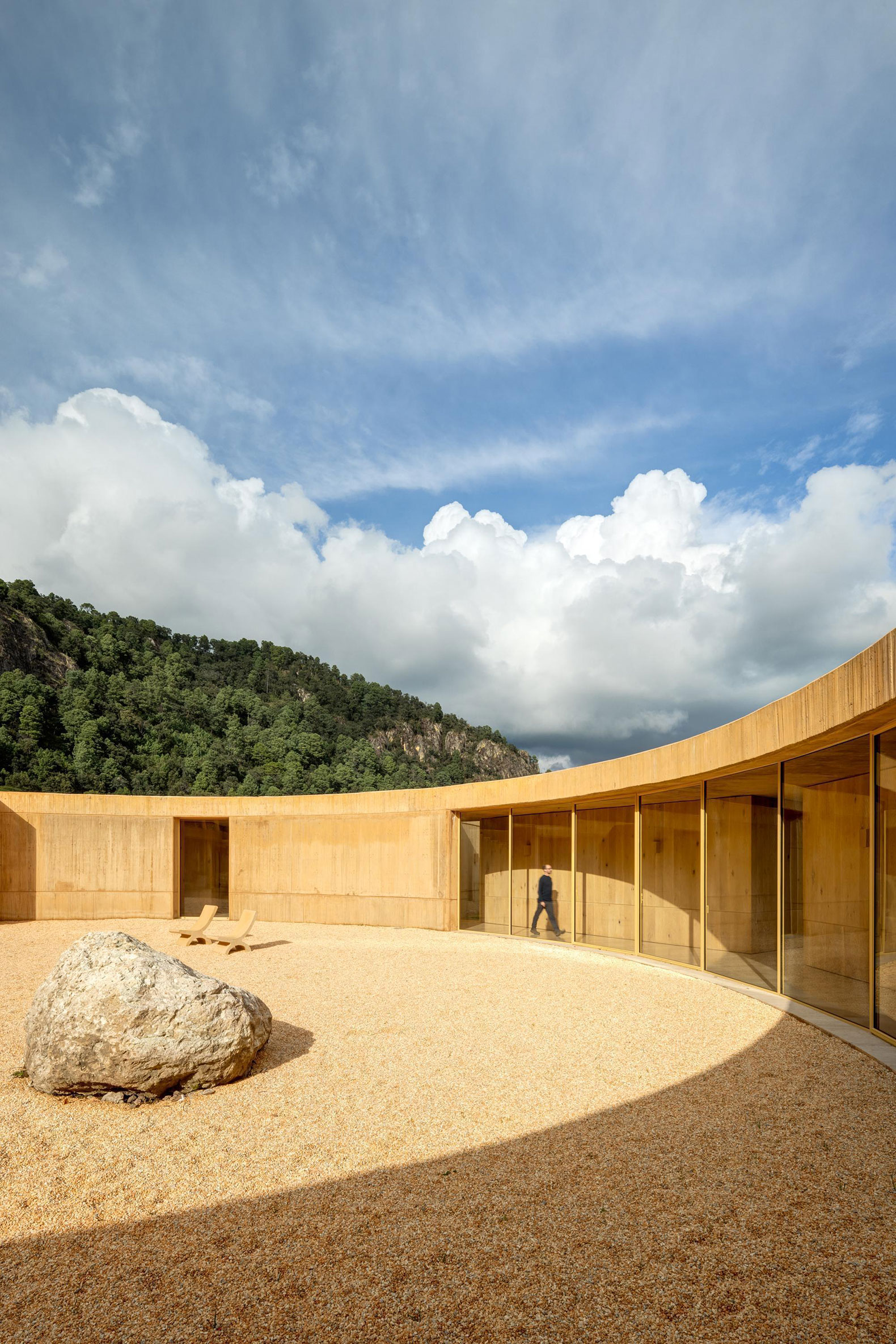
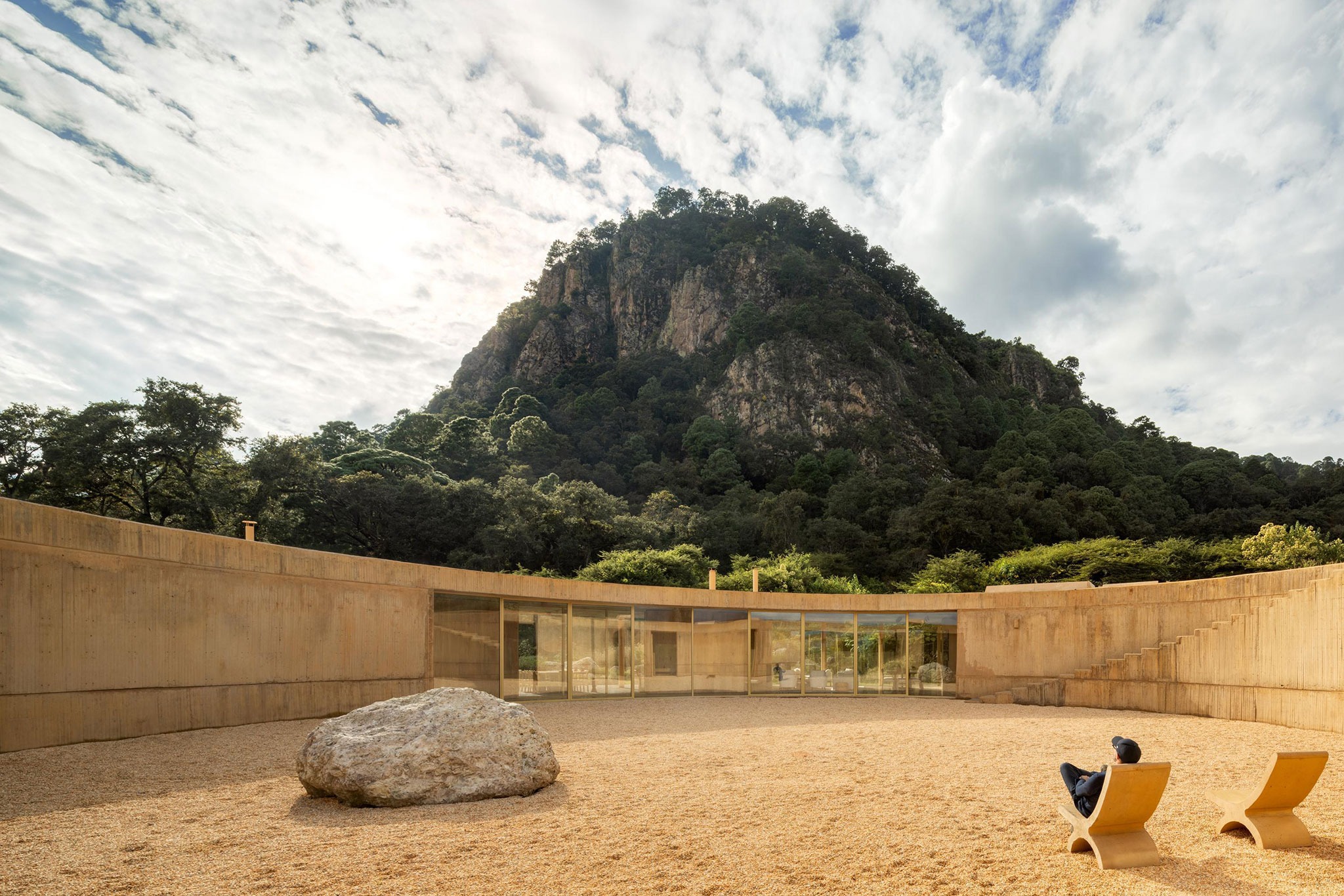
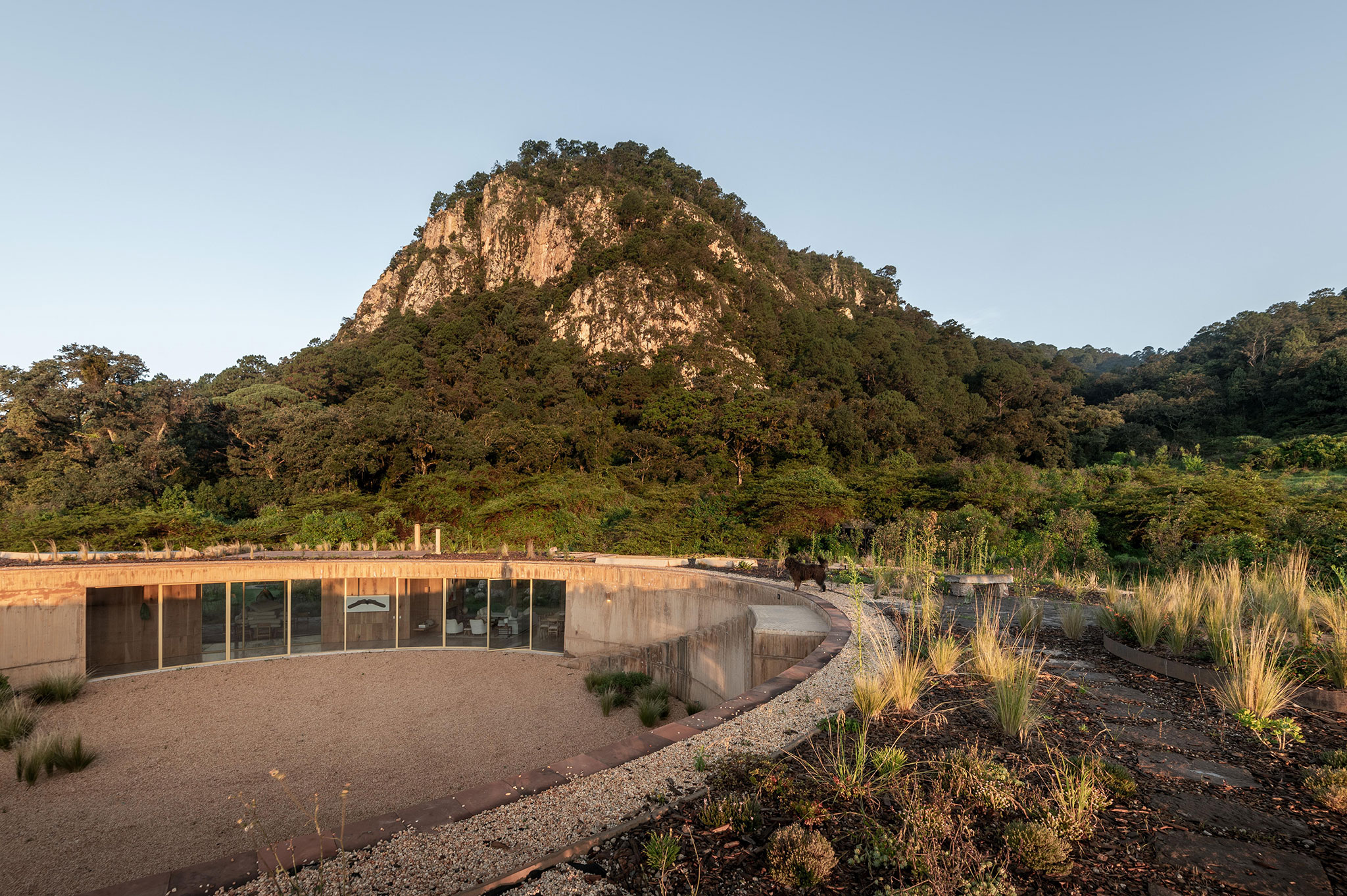
House 720 Degrees is a geometric and optical device, doubling the 360-degree track of normal vision. The design originates from a central patio and from the ways in which the inner and outer worlds might interact with one another. Conceived as a solar clock that registers the passing of time, this off-the-grid house is many houses in one: during the day it frames a mountain and a volcano, opening up toward the varied views along the external perimeter of the circle; at night, it turns inward around a circular courtyard.

The project comprises three different volumes: the main circular house, a detached studio/guest room, and a rectangular volume with a patio that contains additional bedrooms, storage, and services. The division into separate volumes responds to the accentuated topography and preserves the existing vegetation. Designed for two families, it includes spaces for extended relatives and guests.

Casa 720 Grados por Fernanda Canales. Fotografía por Rafael Gamo.
House 720 Degrees by Fernanda Canales. Photograph by Rafael Gamo. 

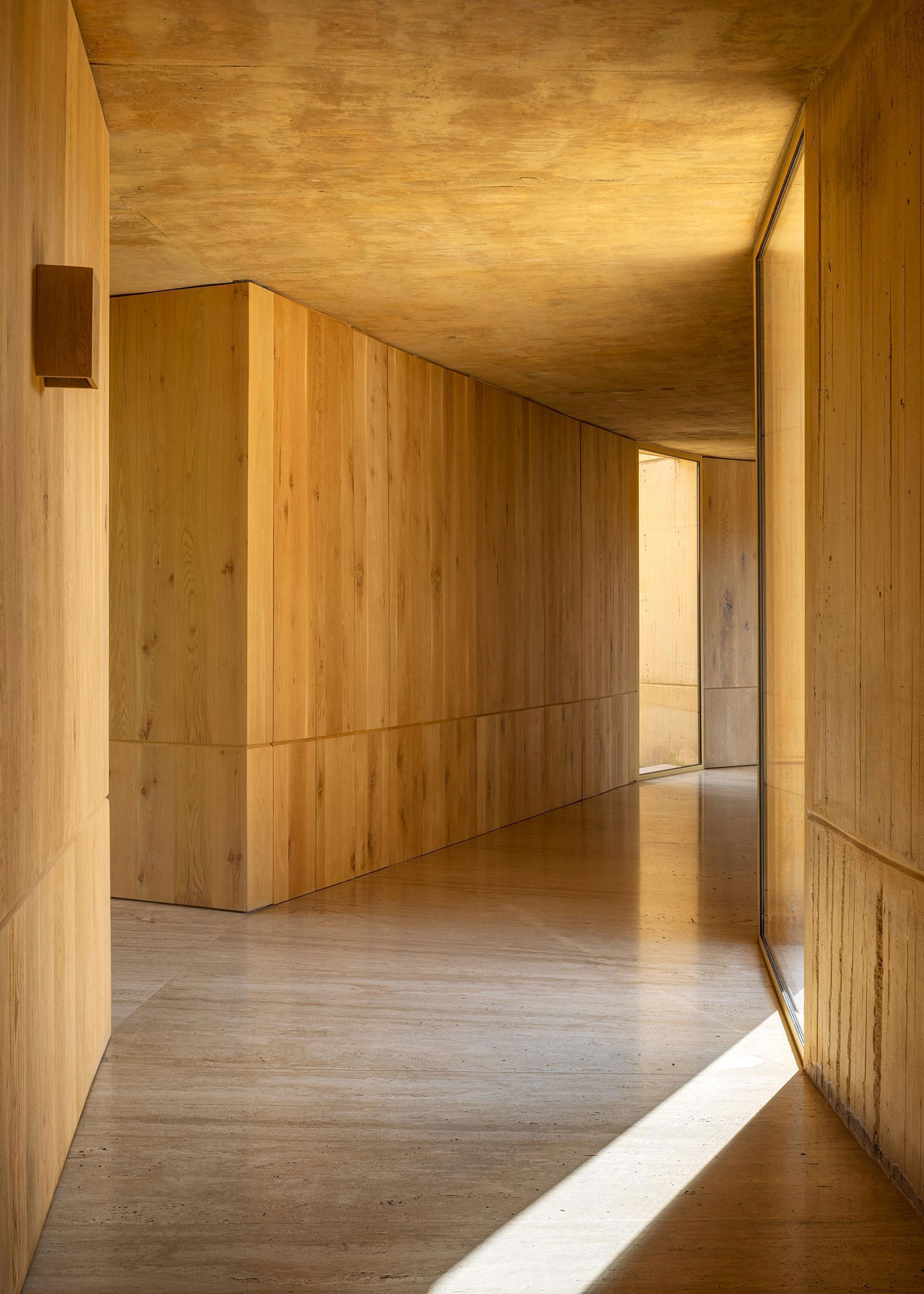
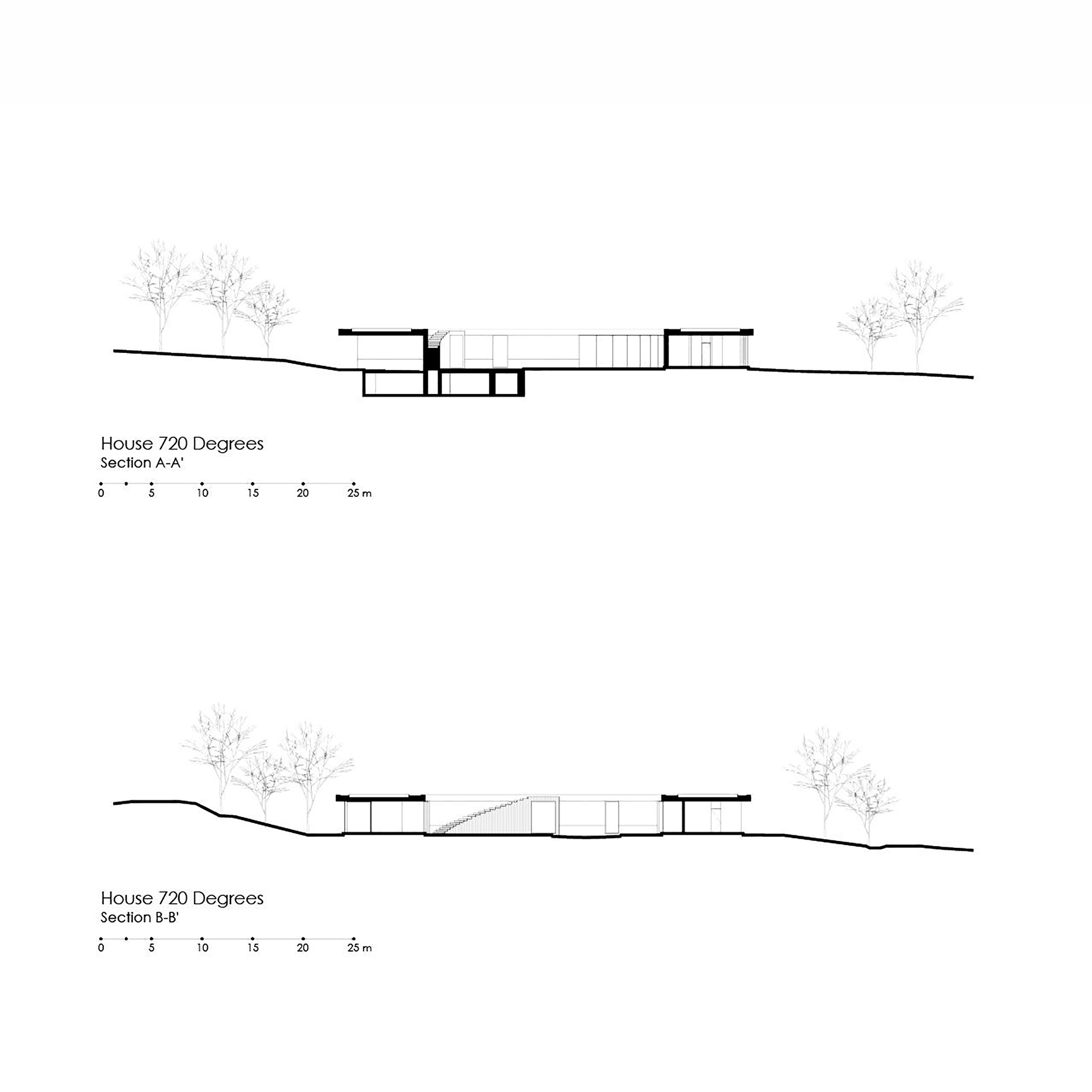
The house unfolds across two levels — one on the ground floor and another as an open roof terrace. Its circular plan holds rectangular bedrooms, bathrooms, closets, and a kitchen. The curved walls are left for circulation, extending as terraces toward the courtyard and as gardens toward the exterior. The scheme uses flexible openings — privacy screens, large fold-away windows, and framed views — allowing the interior spaces to transform and remain connected to the environment.

Located in a secluded valley three hours from Mexico City, the house addresses two apparently contradictory conditions: seclusion and aperture. It shelters against radical weather — where temperatures can vary by 30°C in a single day and rain dominates half the year — yet opens as much as possible to the surrounding landscape. Its walls act as membranes between two temperate zones (forest and prairie), two seasons (dry and wet), and three spatial conditions (center, inside, and outside).
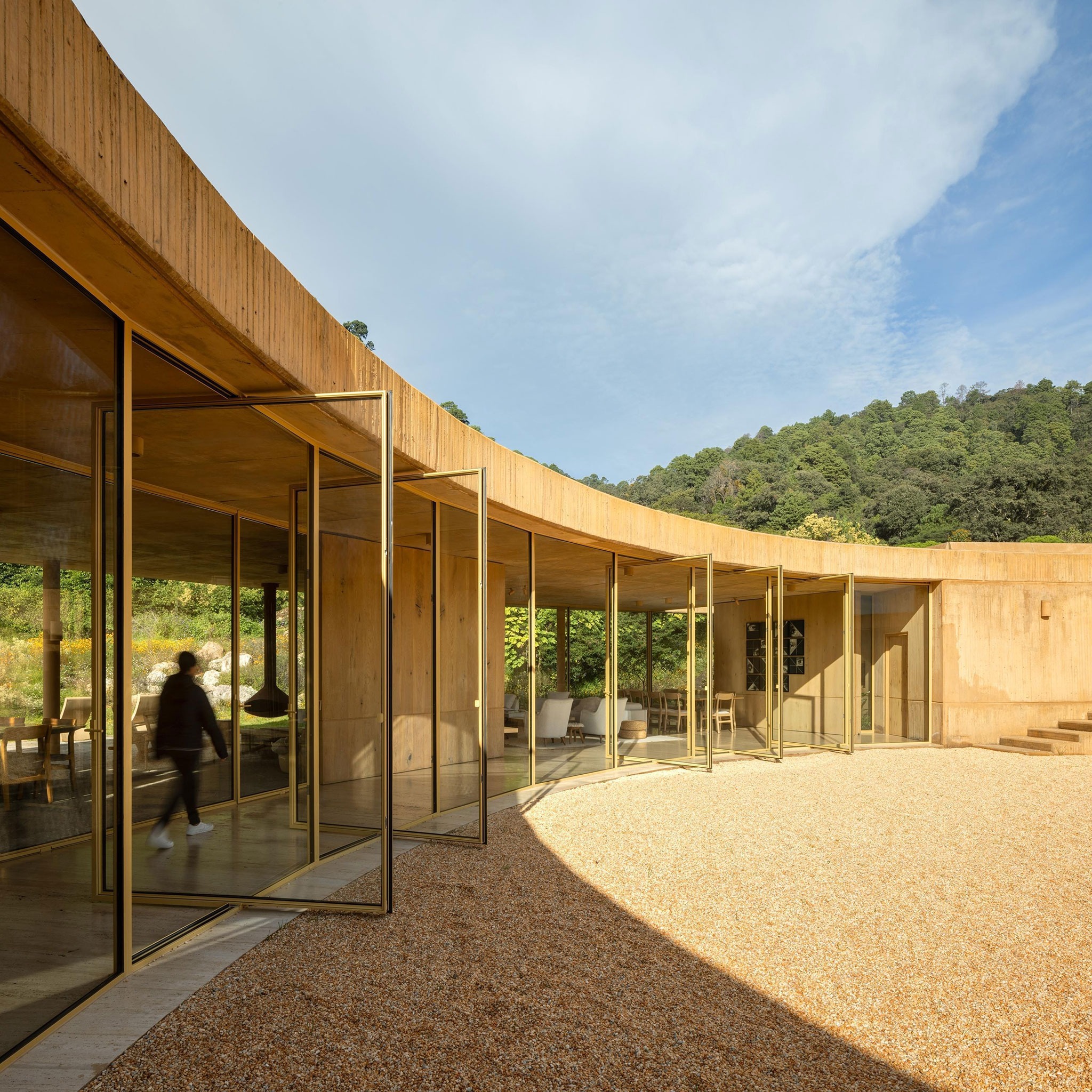
Casa 720 Grados por Fernanda Canales. Fotografía por Rafael Gamo.
House 720 Degrees by Fernanda Canales. Photograph by Rafael Gamo. 

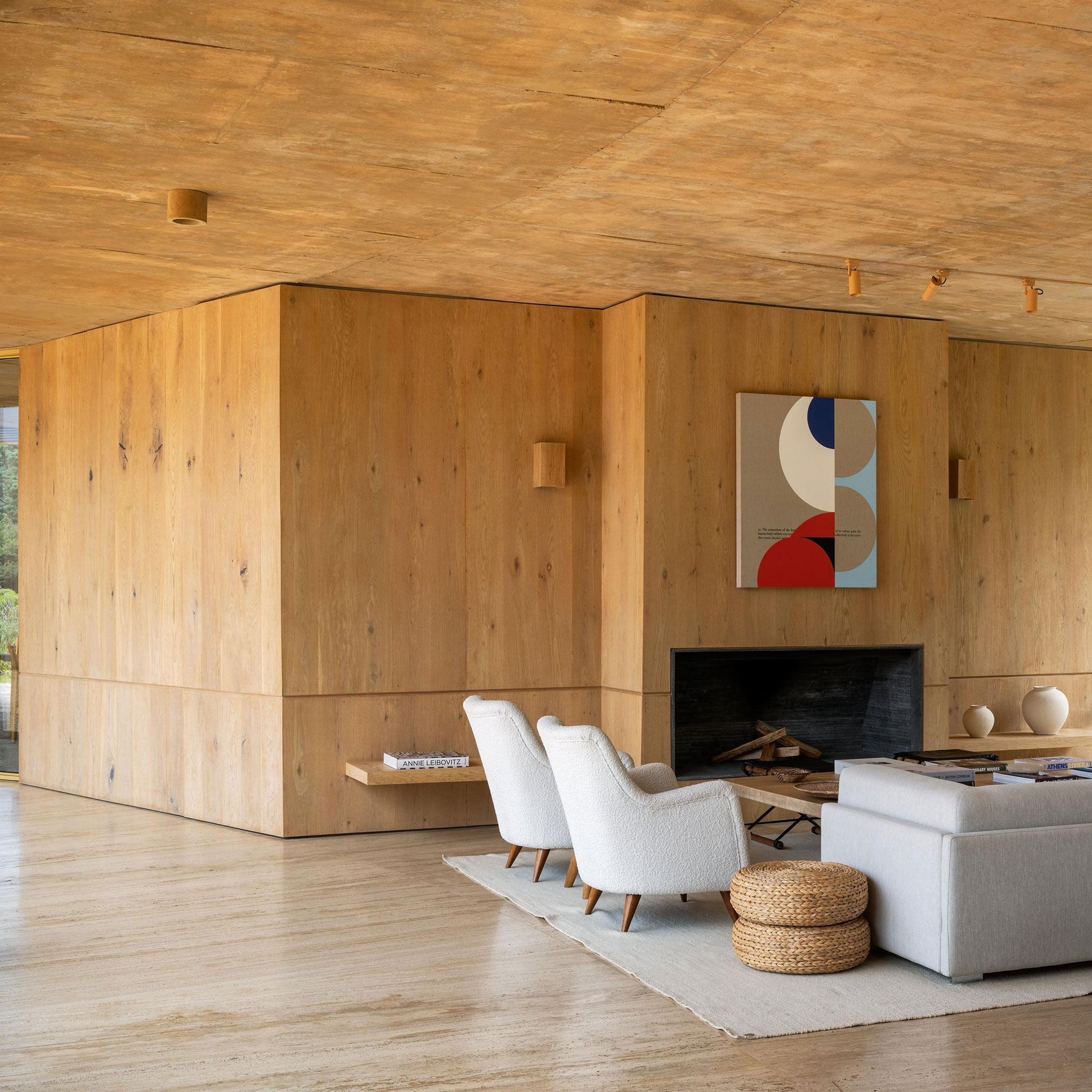
The house is earthbound, nestling into the ground from which its materials emerge. To make the large-scale construction blend into the untouched scenery, a low, single-level design, local soil mixed with concrete was used to achieve a natural finish that echoes the landscape. Most of the lamps and furniture were produced on site with local materials and local craftsmanship.

The house harvests rainwater, generates its own electricity through solar panels, and incorporates hydronic radiant floors in the bedrooms. The solar system also heats water used throughout the house. Every space benefits from natural cross-ventilation and opens to two or three different orientations.
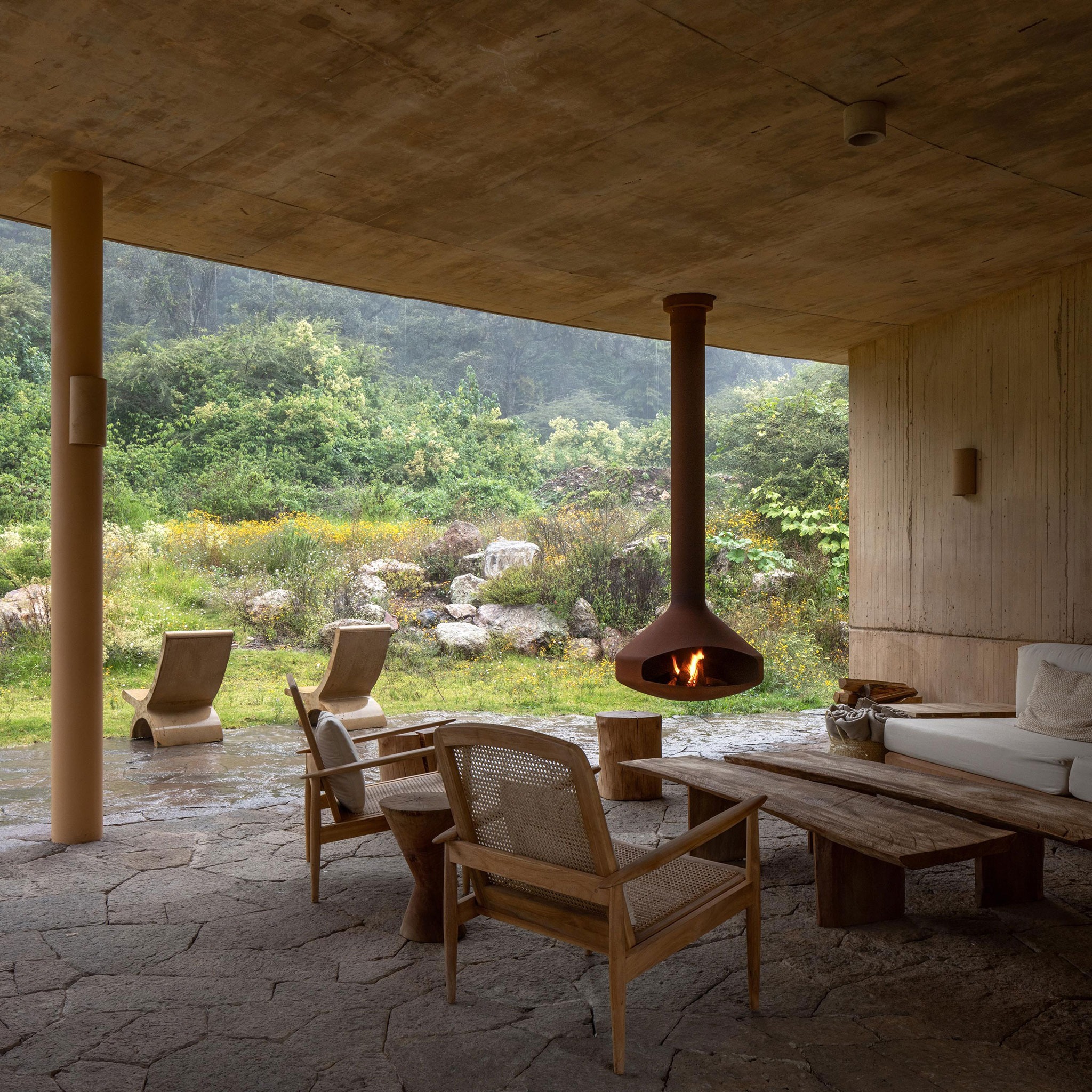
Casa 720 Grados por Fernanda Canales. Fotografía por Rafael Gamo.
House 720 Degrees by Fernanda Canales. Photograph by Rafael Gamo. 

The priority was easy and economical maintenance: durable materials that withstand the weather without painting or cladding, becoming part of the natural landscape. Built with the soil and color of the land, the house changes subtly with the seasons — a living structure that adapts, blends, and breathes with its environment.
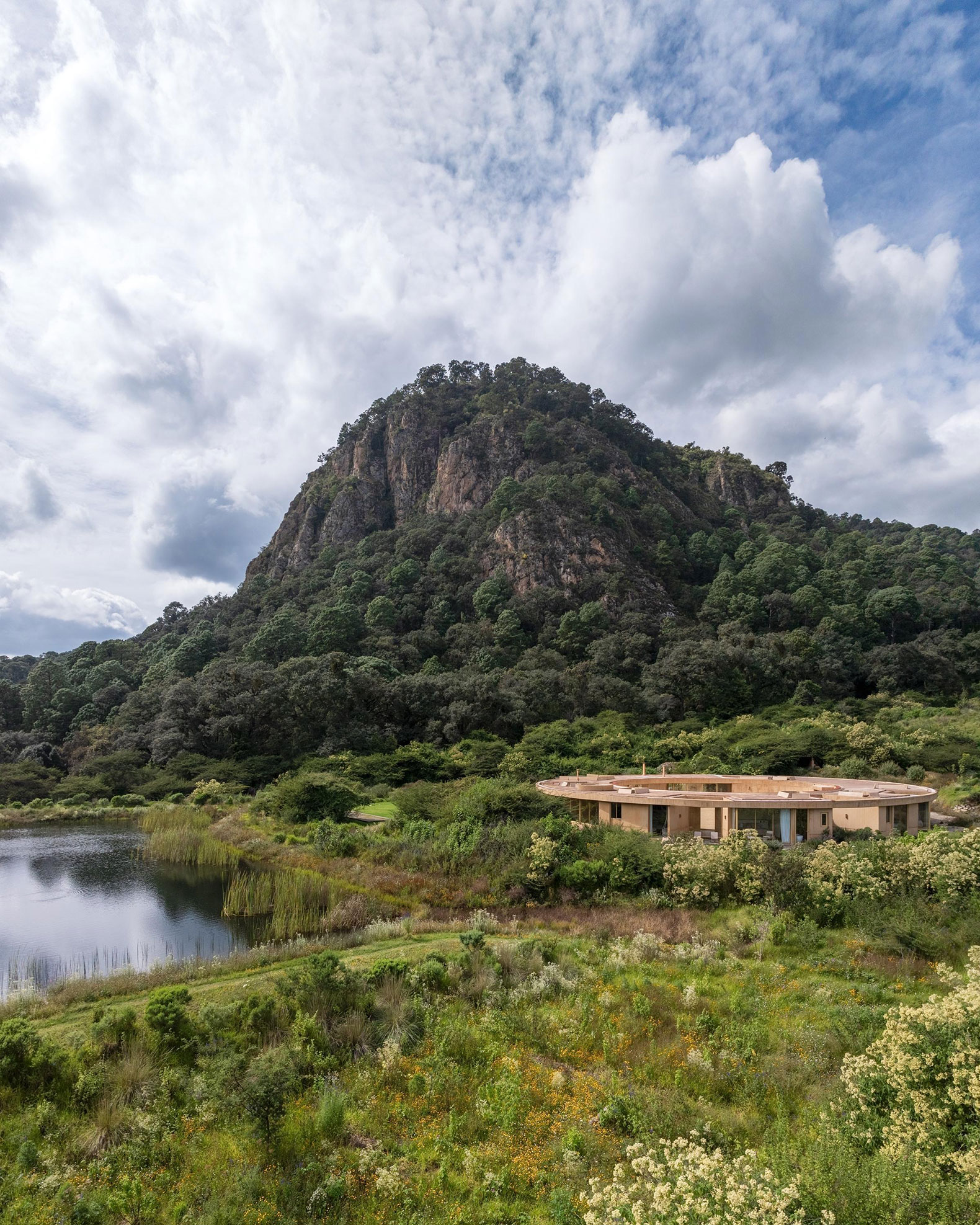
More information

Label
Architects
+ + copy Created with Sketch.
- + copy Created with Sketch.
Label
Project team
Text

Aarón Jassiel, Alberto García Valladares, Ángela Vizcarra.

+ + copy Created with Sketch.
- + copy Created with Sketch.
Label
Collaborators
Text

Interior decoration.- Camilla Pallares.
Structural Engineer.- Gerson Huerta – Grupo Sai.
Sanitary and electrical installations.- Carlos Medina – Grupo MEB. 
Carpentry.- Óscar Nieto.  
Lighting.- Lucas Salas. 
General Contractor.- Felipe Nieto. 

+ + copy Created with Sketch.
- + copy Created with Sketch.
Label
Area
Text

Surface area.- 8,000 sqm. 
Built area.- 1,115 sqm.  

+ + copy Created with Sketch.
- + copy Created with Sketch.
Label
Dates
Text

Completion.- 2024.

+ + copy Created with Sketch.
- + copy Created with Sketch.
Label
Location
Text

La Reserva Peñitas, State of Mexico, Mexico.

+ + copy Created with Sketch.
- + copy Created with Sketch.
Label
Photography
+ + copy Created with Sketch.
- + copy Created with Sketch.
Fernanda Canales. Born Mexico City, 1974. Fernanda Canales founded her practice in 2002 committed to architecture, urban design and research. She holds a PhD degree cum laude in Architecture from the Escuela Técnica Superior de Arquitectura de Madrid, Spain, her Bachelor degree, graduated with honors, from the Universidad Iberoamericana, México City, and her MA at the Universidad Politécnica de Cataluña, Barcelona.

She received the Emerging Voices Award from The Architectural League of New York in 2018, and her work was selected for the AR House Awards by the Architectural Review and The Record Houses (2018) by Architectural Record. She was selected as a candidate for the Swiss Architecture Award (2018) and received the Career Award and Best Young Architect in Mexico (Colegio de Arquitectos de México, 2012) and was awarded the fellowship of the National System of Creators (Fondo Nacional para la Cultura y las Artes, 2012-2015) , the Young Creator Program (FONCA, 2004) and the Fundación Jumex Arte Contemporáneo Grant 2018.

Other recognitions include: ArchDaily Building of the Year, The Chicago Athenaeum Museum of Architecture Award, Concrete WAN Awards the IIDA Design Award and the Cemex Award. She is author of books such as Vivienda Colectiva en México, El derecho a la arquitectura (Gustavo Gili, 2017), Architecture in Mexico 1900-2010 (Arquine, 2013), Central de Arquitectura (Arquine 2009), and coauthor of Arquitectos del Siglo XX en México (Arquine, 2017, 2011) and México, O´Neil Ford Duograph 4 Series (The University of Texas at Austin, 2012).

Fernanda Canales has been nominated twice for the Iakov Chernikov International Architecture Award (2010, 215). Her work has been exhibited in venues such as the Museum of Modern Art in San Francisco, The Gallatin Gallery in New York, the Venice Biennale, the Rotterdam Biennale and in museums and galleries across the world.

She has published more than 100 essays in specialized magazines such as: El Croquis, Praxis, Arquitectura Viva, Domus, AD, Abitare and Arquine. She has been a professor at the Universidad Iberoamericana in Design and Urbanism and also at the CMAS Master in Urbanism, as well as at the Master Laboratory of Collective Housing for the 21st century in collaboration with the UPC at Barcelona; She has also taught at the UNAM’s Max Cetto University, has been a visiting critic and lecturer in different institutions and universities.
Read more
Published on: February 12, 2026
Cite:
metalocus, SARA GENT
"Active circular device. House 720 Degrees by Fernanda Canales " METALOCUS. Accessed
<https://www.metalocus.es/en/news/active-circular-device-house-720-degrees-fernanda-canales> ISSN 1139-6415
Loading content ...
Loading content ...
Loading content ...
Loading content ...
Loading content ...
Loading content ...
Loading content ...
Loading content ...
Loading content ...
Loading content ...
Loading content ...
Loading content ...
Loading content ...
Loading content ...
Loading content ...
Loading content ...
Loading content ...
Loading content ...
Loading content ...
Loading content ...
Loading content ...
Loading content ...
Loading content ...
Loading content ...
Loading content ...
Loading content ...
Loading content ...
Loading content ...
Loading content ...
Loading content ...
Loading content ...
Loading content ...
Loading content ...
Loading content ...
Loading content ...
Loading content ...
Loading content ...
Loading content ...
Loading content ...
Loading content ...
Loading content ...
Loading content ...
Loading content ...
Loading content ...
Loading content ...
Loading content ...
Loading content ...
Loading content ...
Loading content ...
Loading content ...
Loading content ...
Loading content ...
Loading content ...
Loading content ...