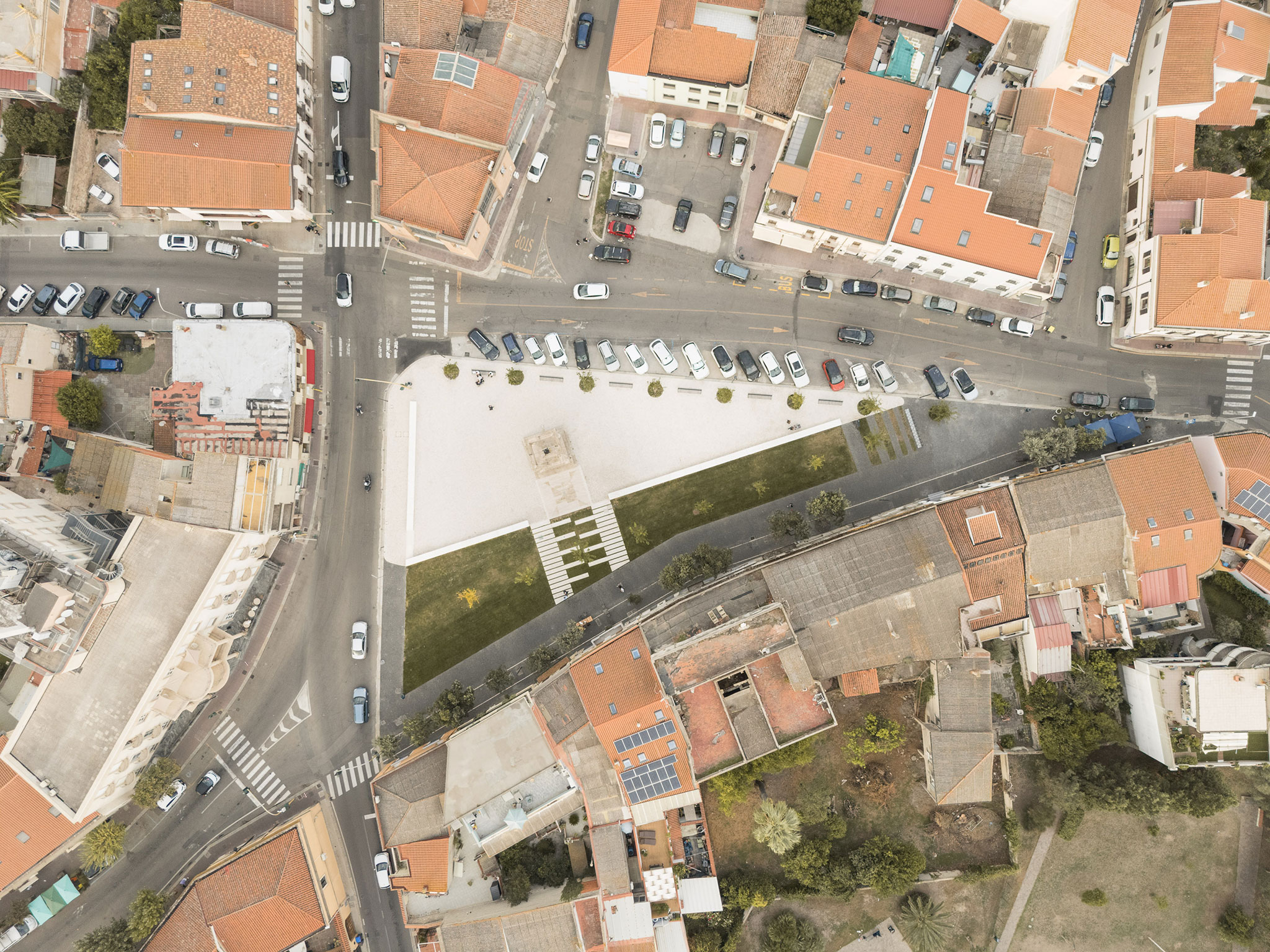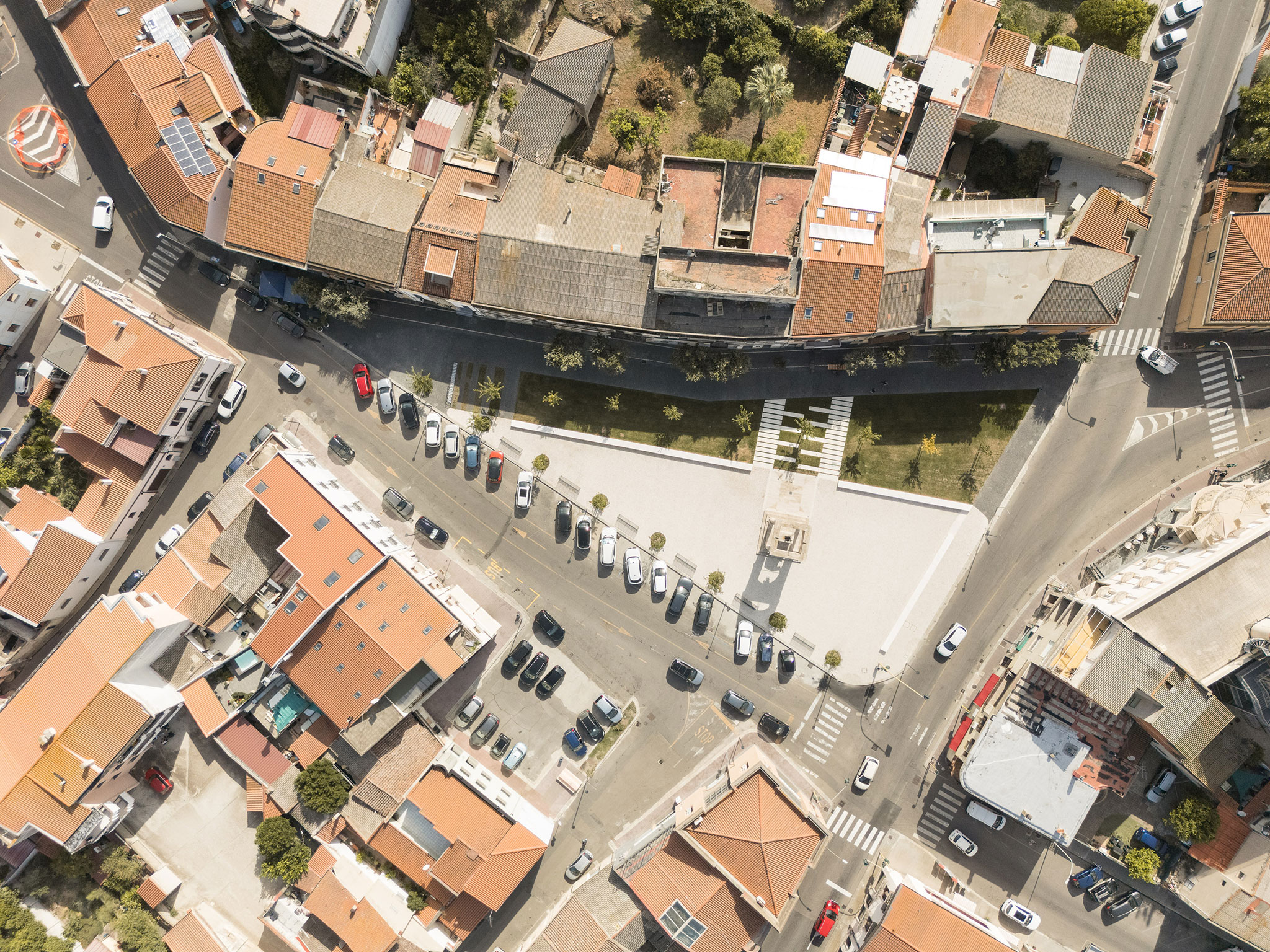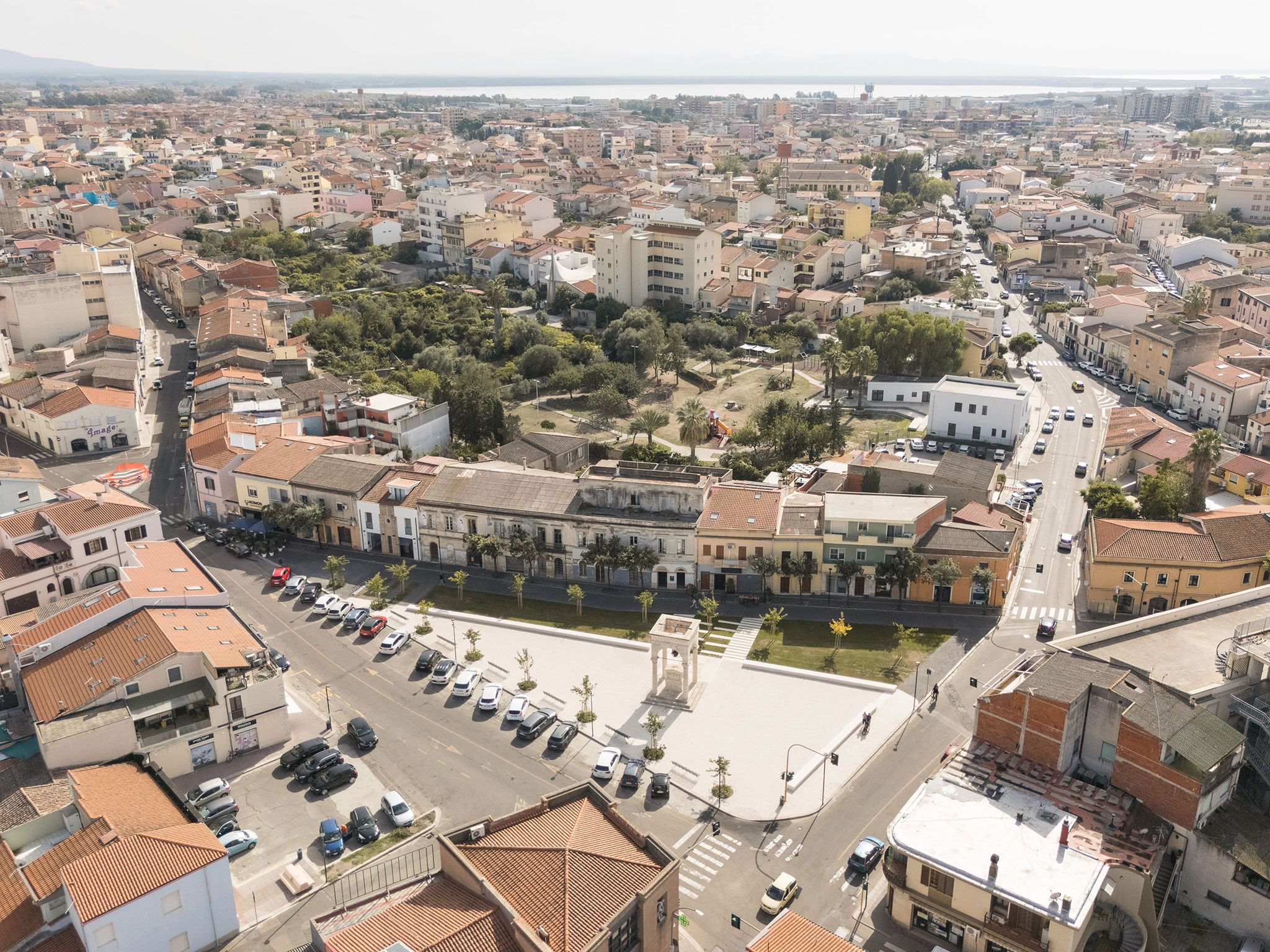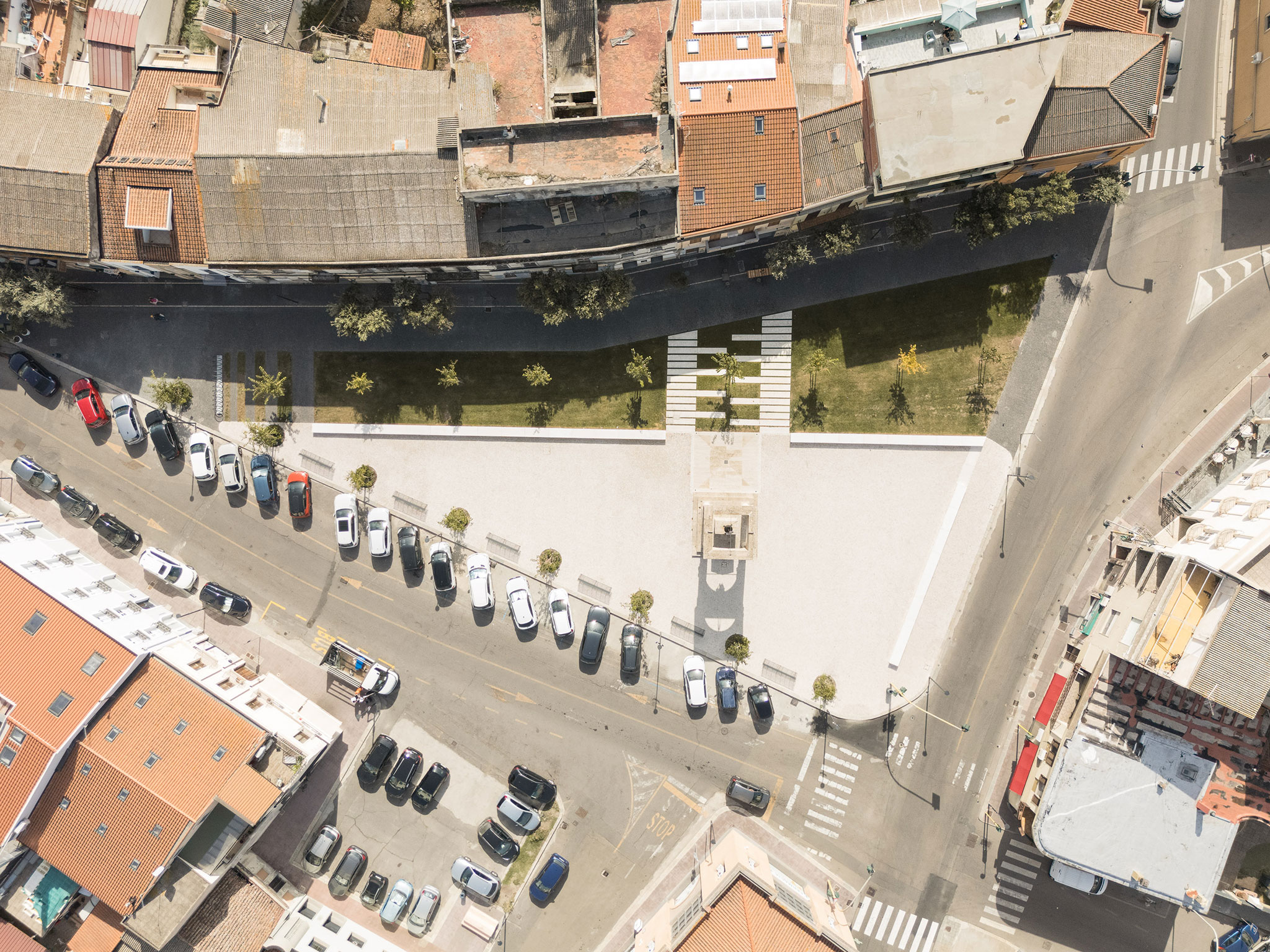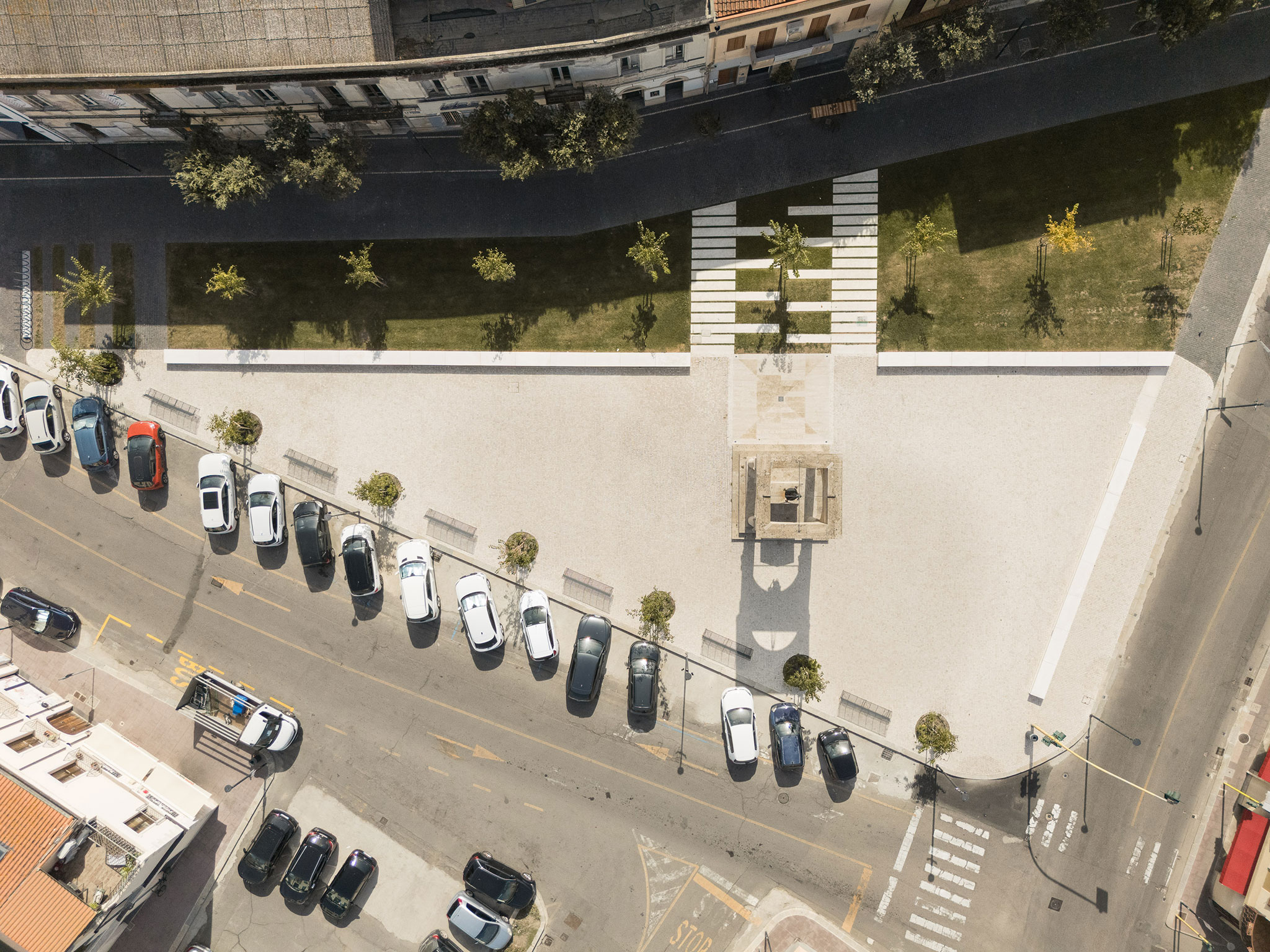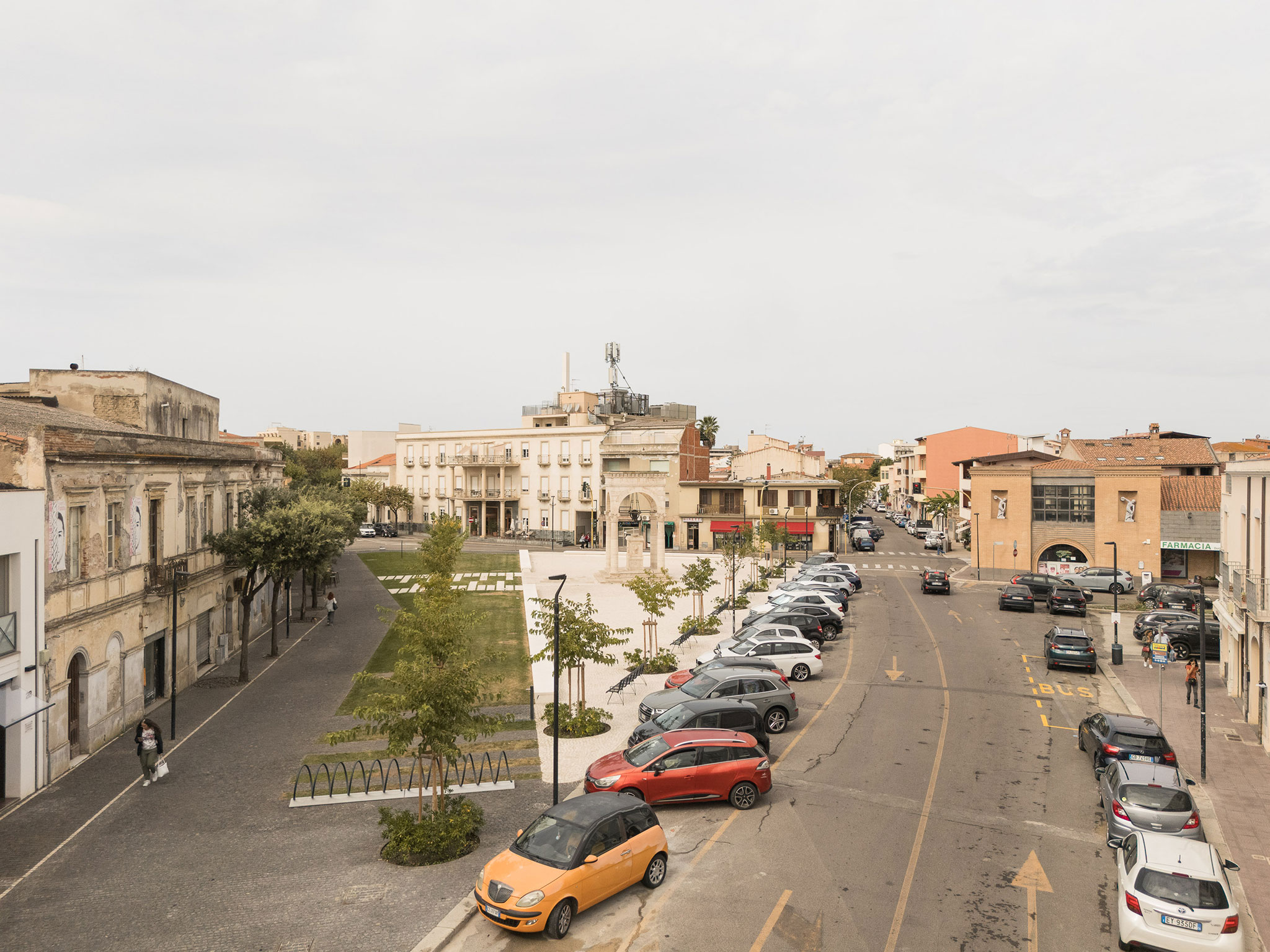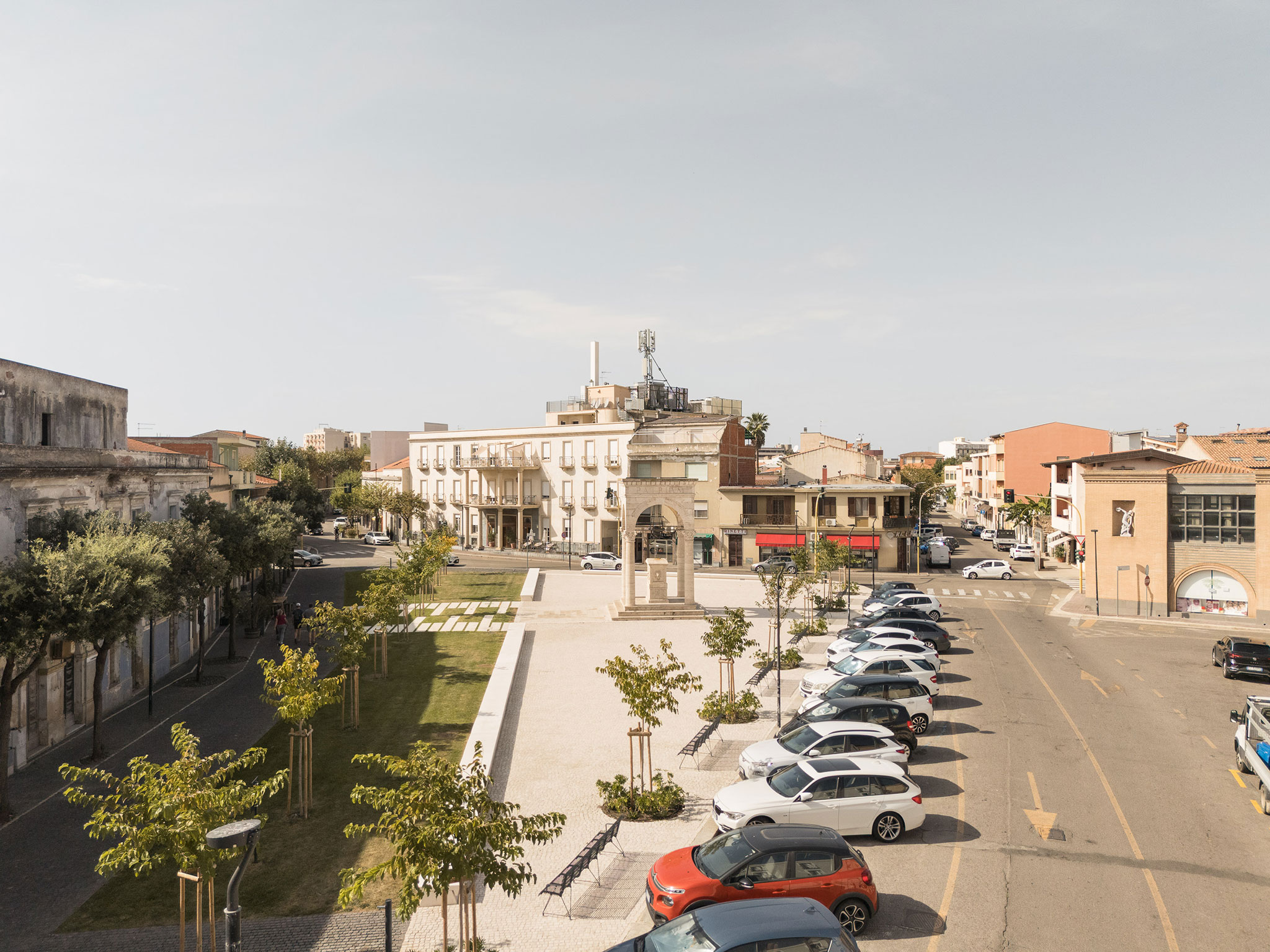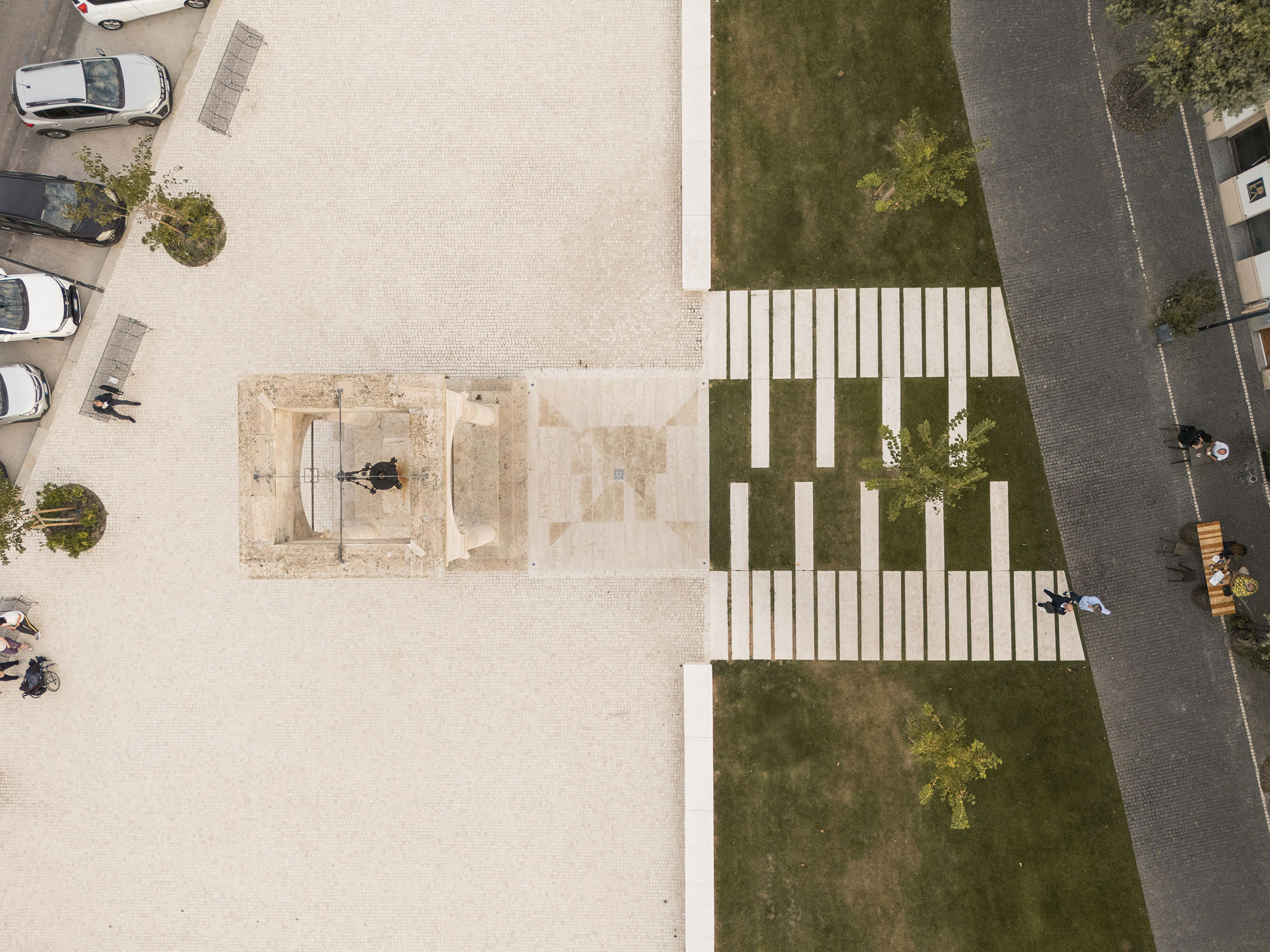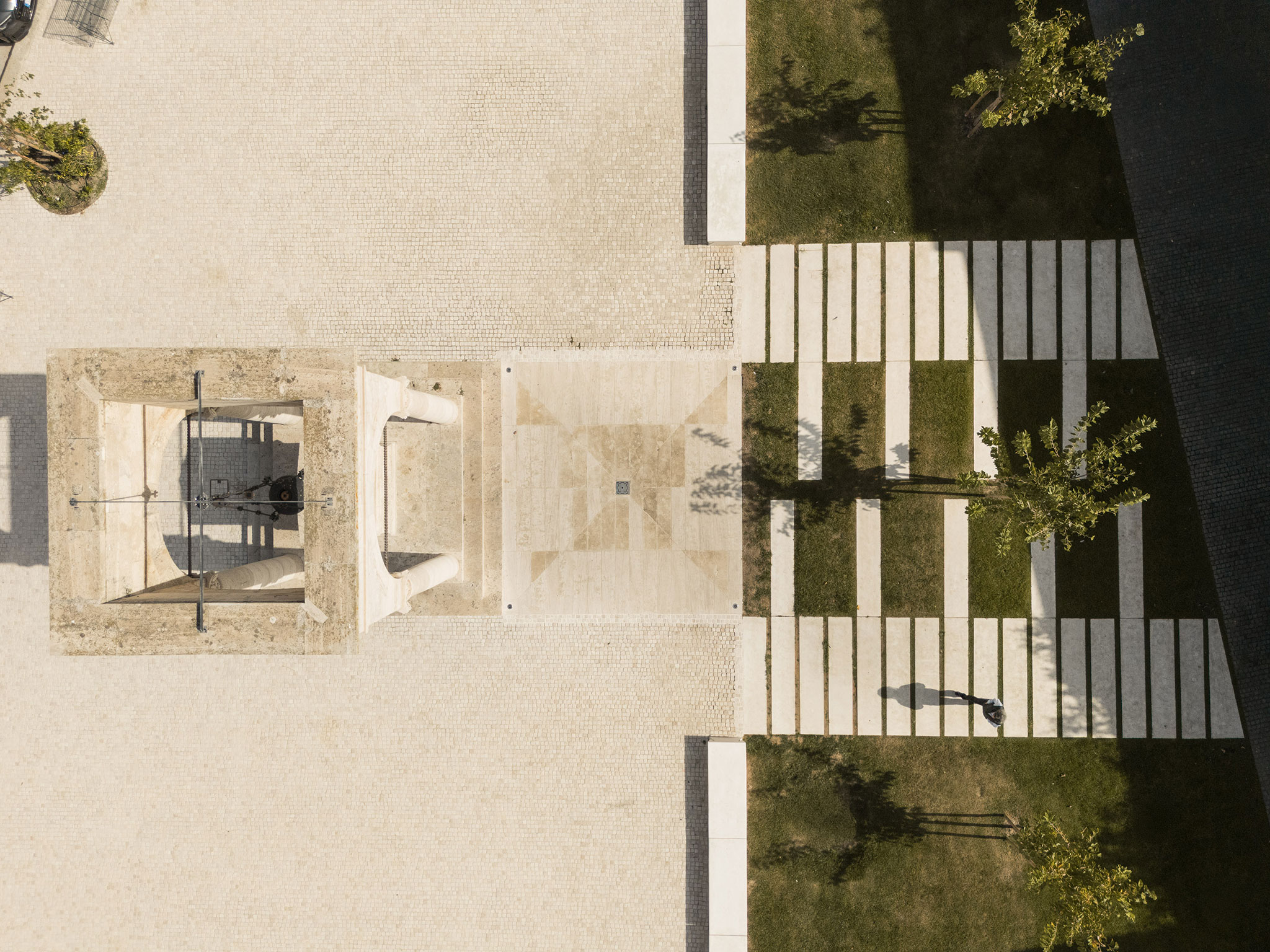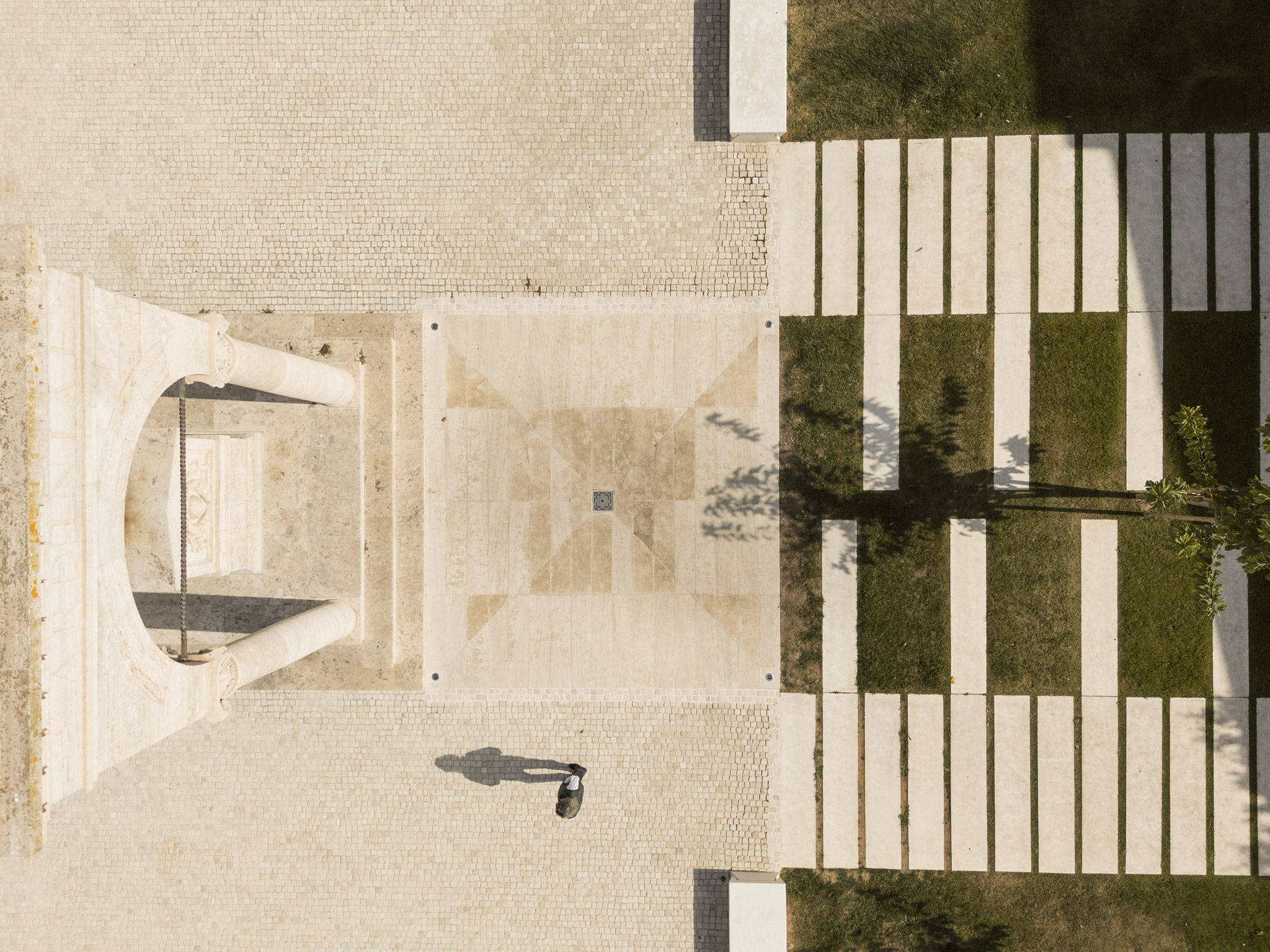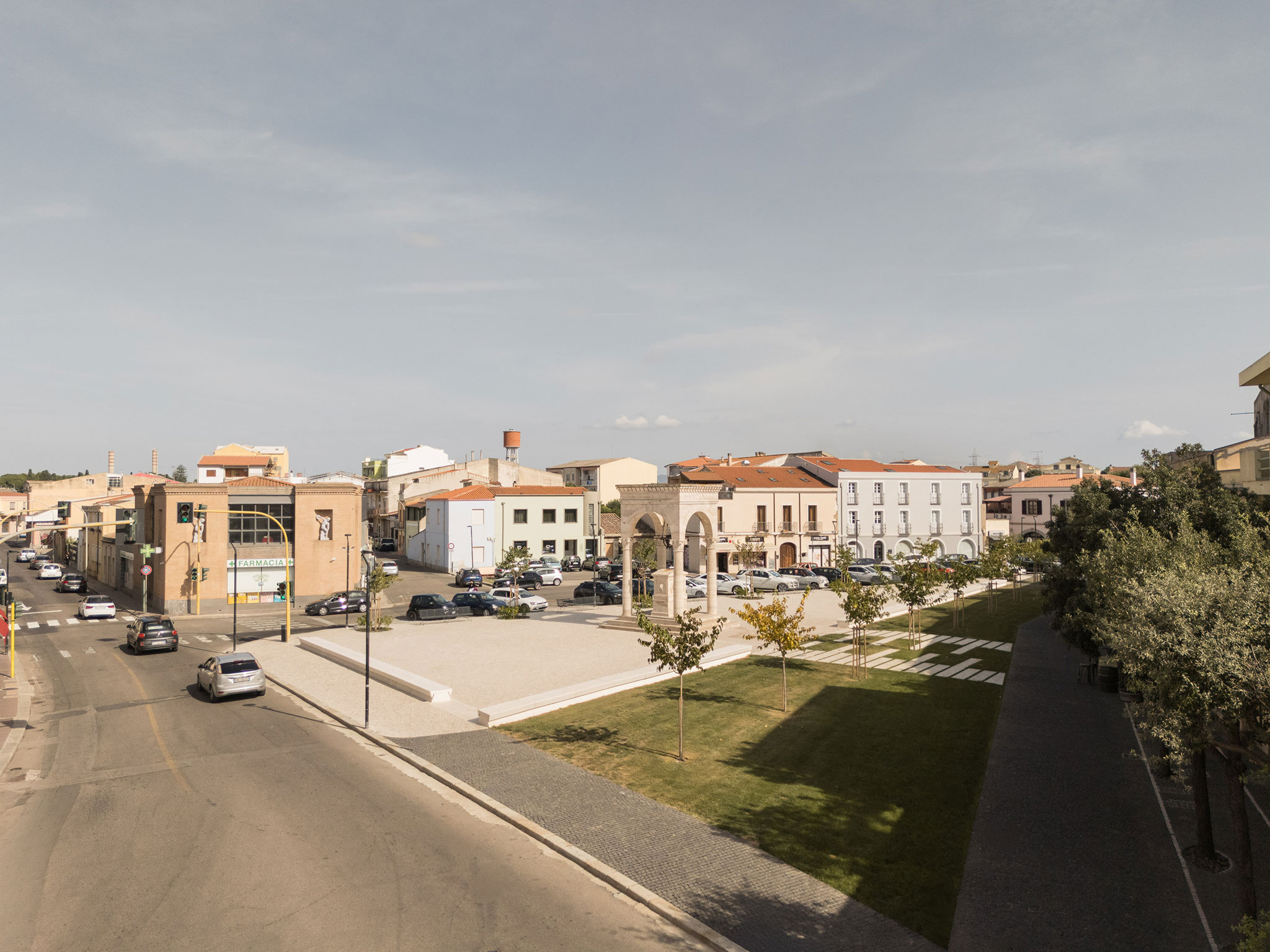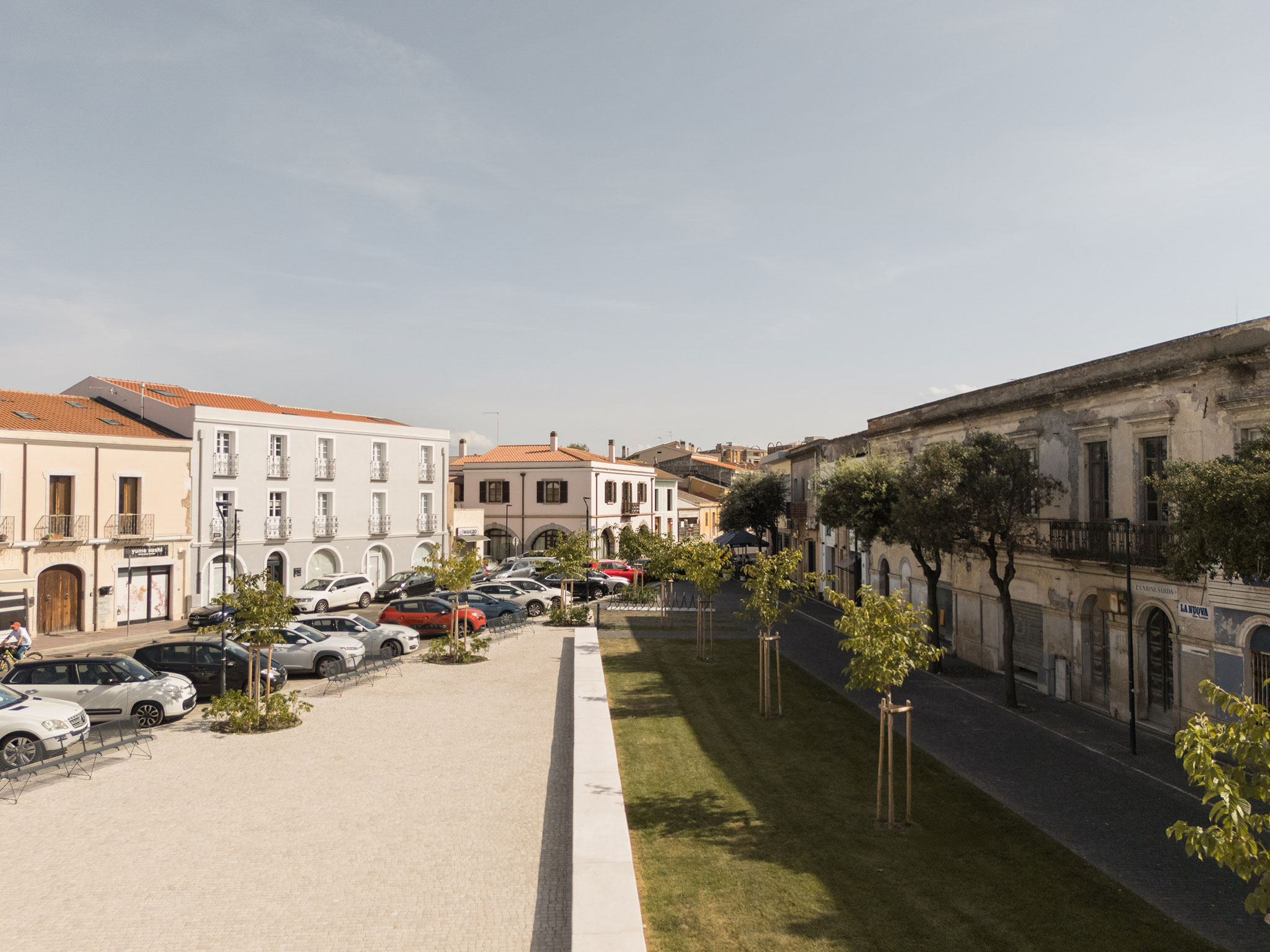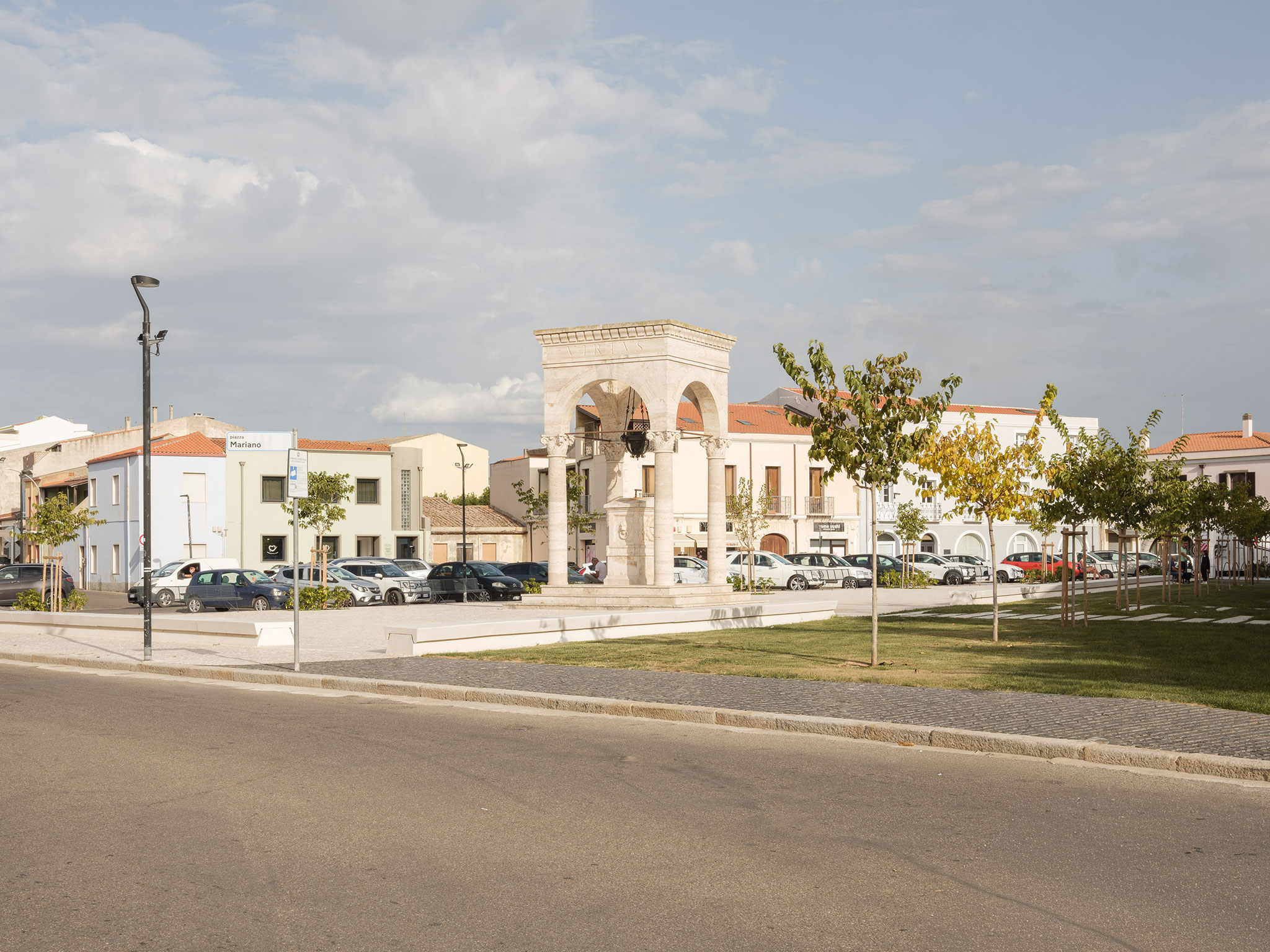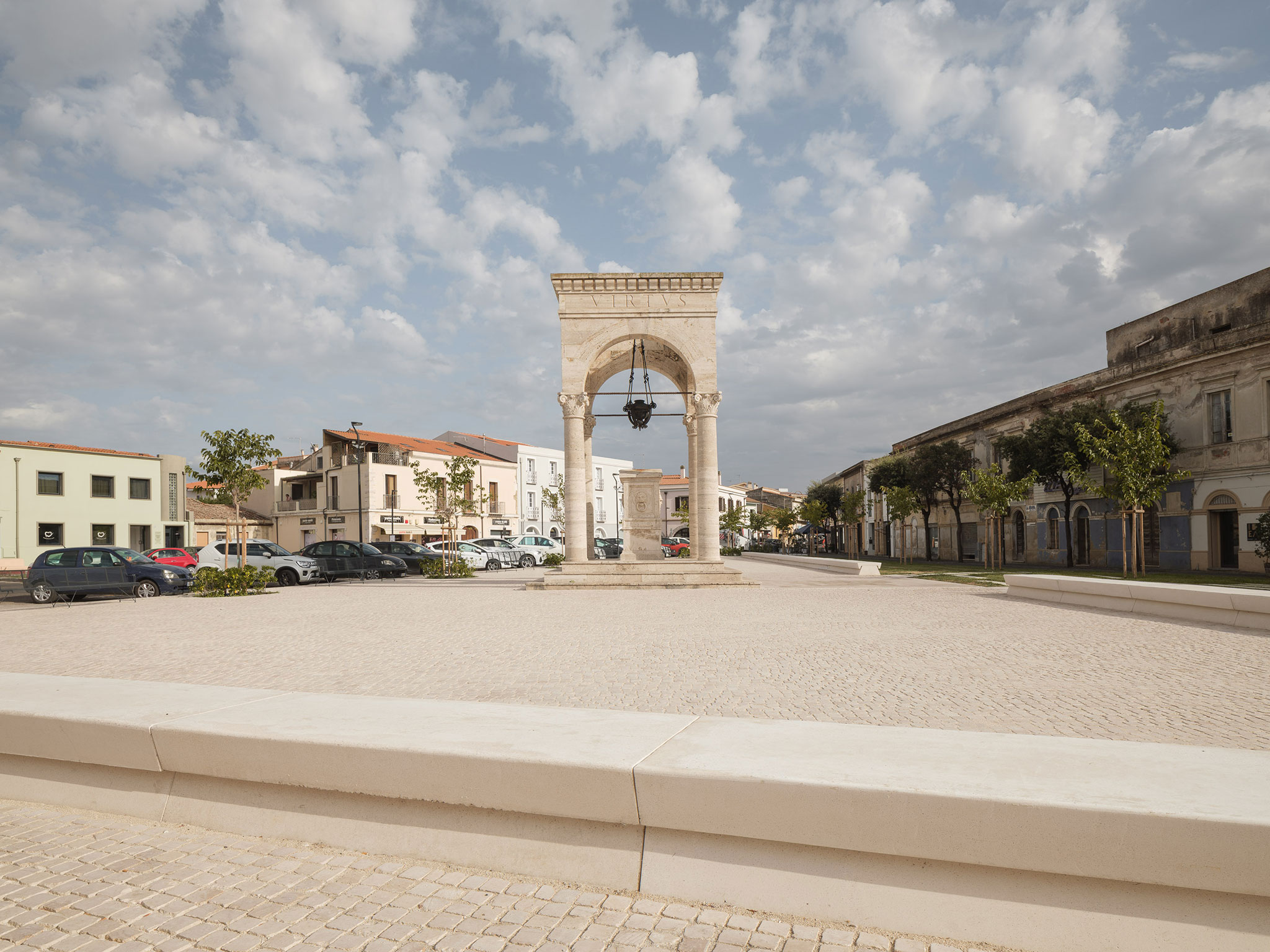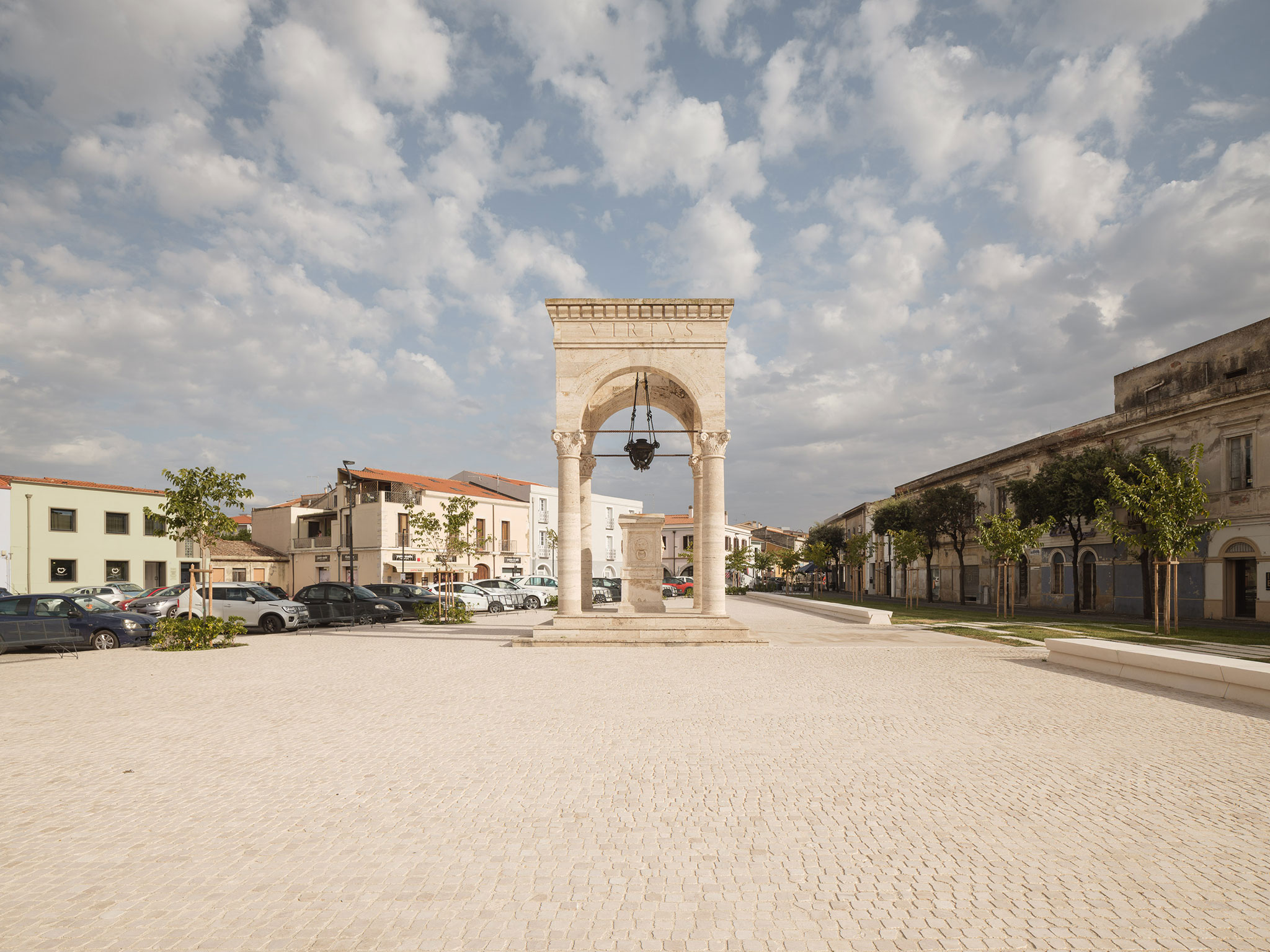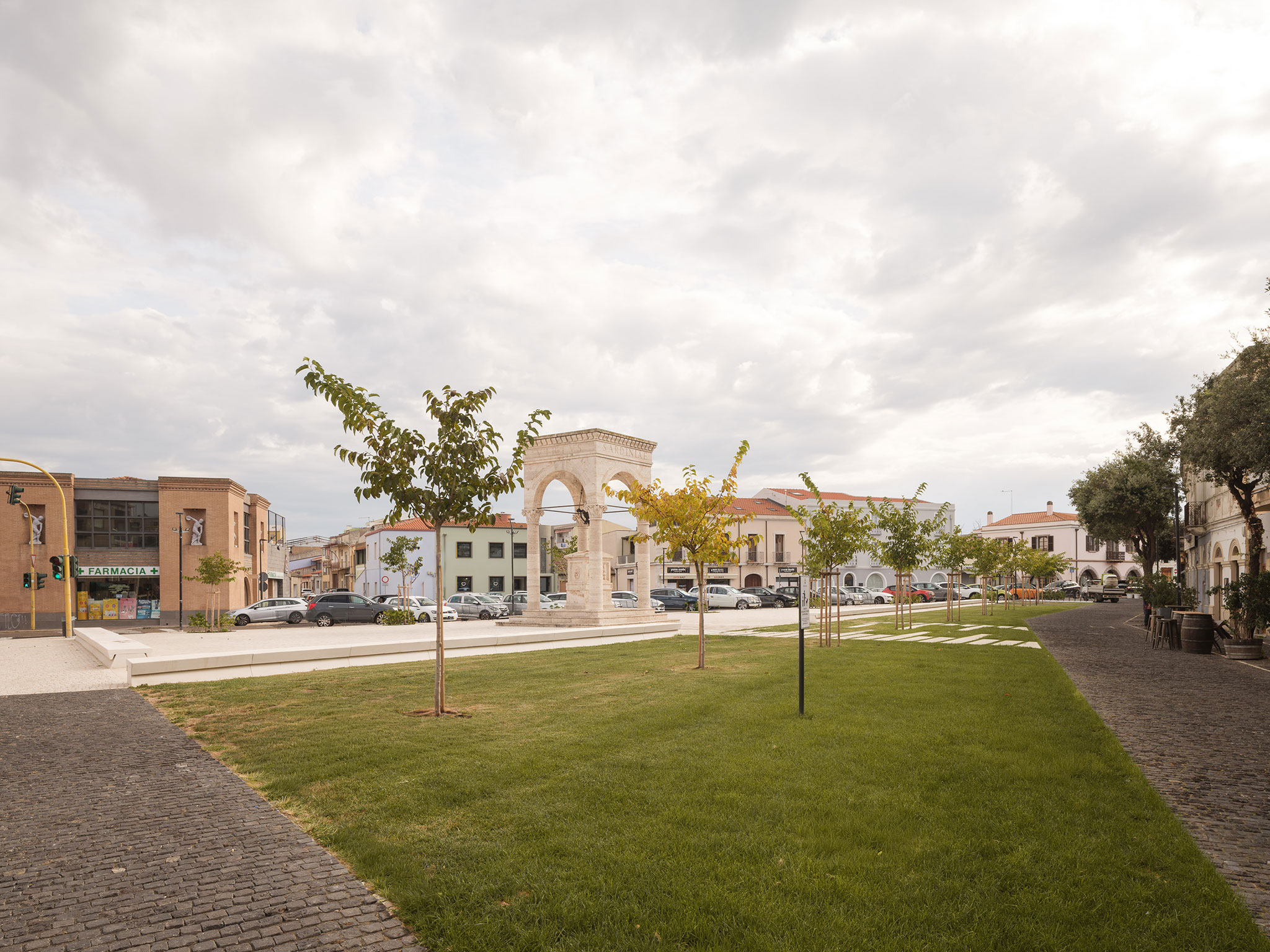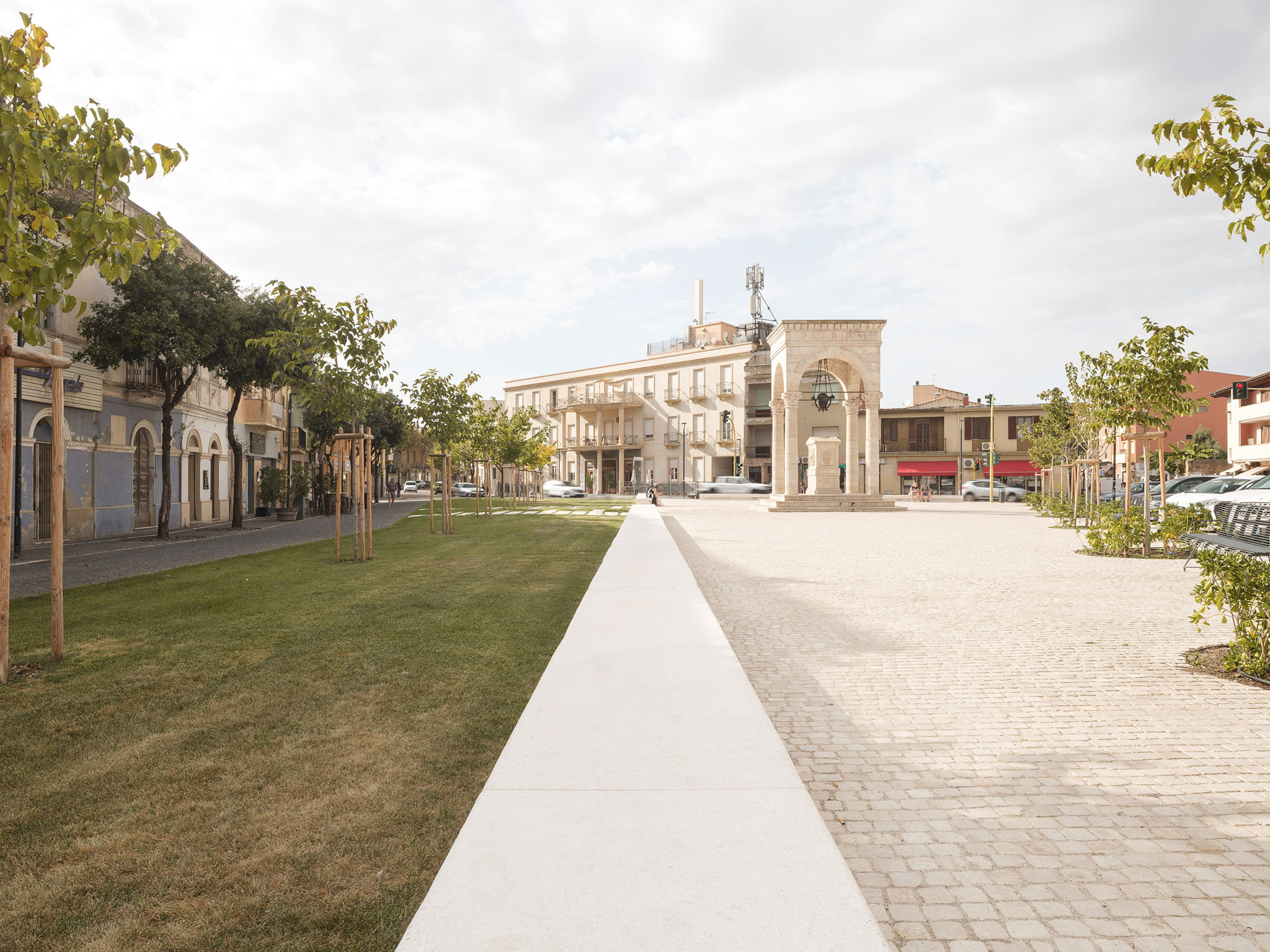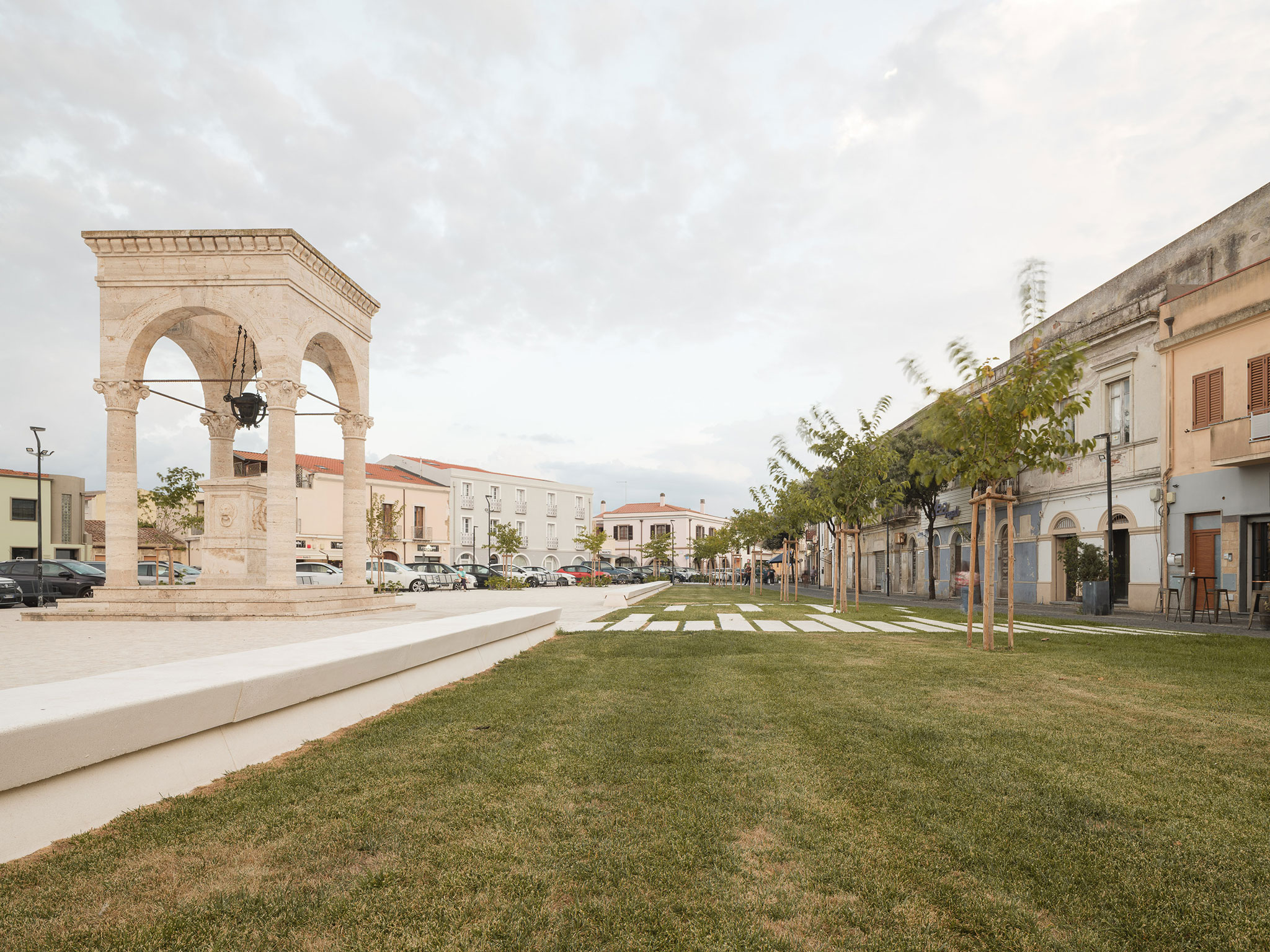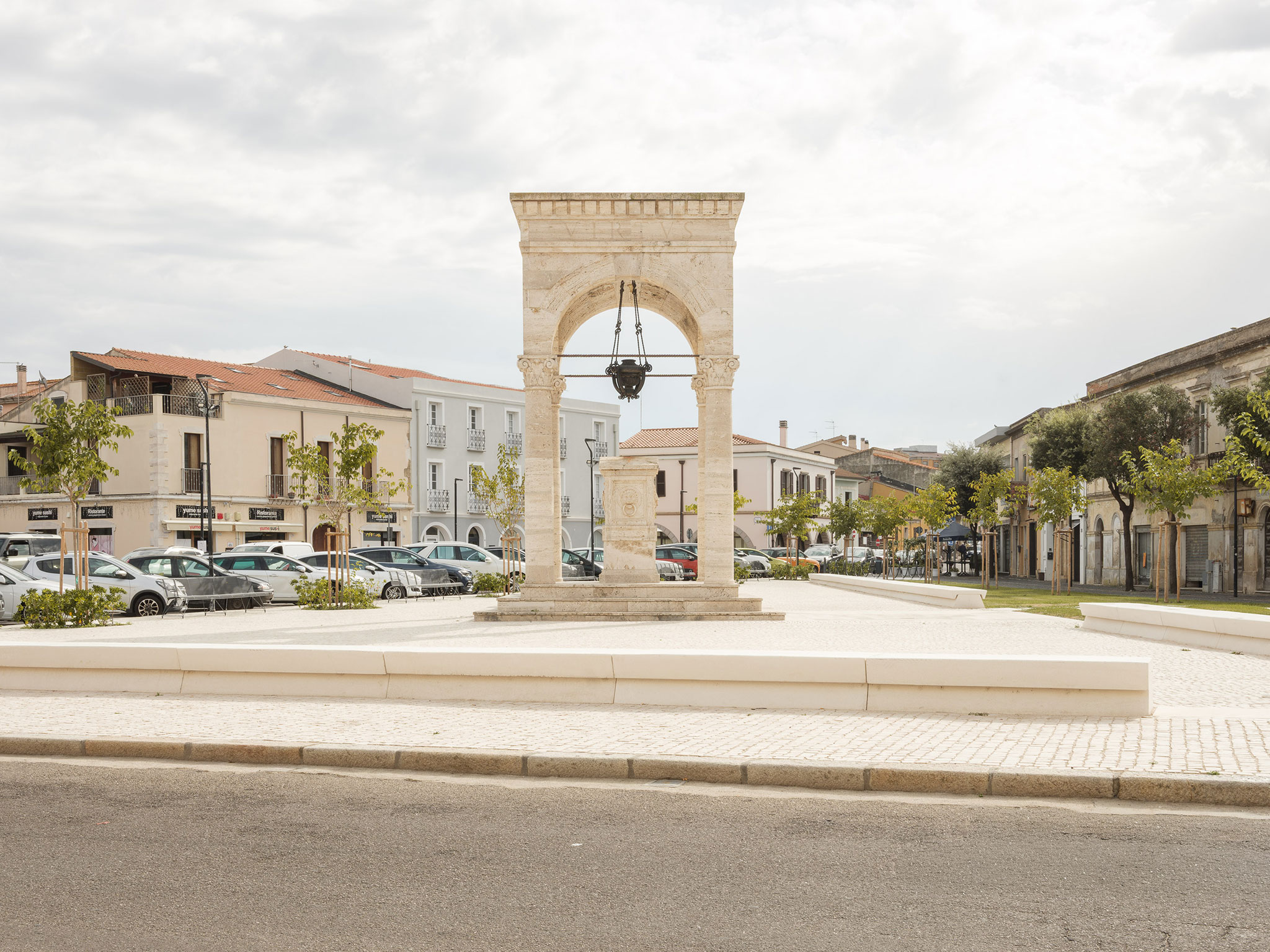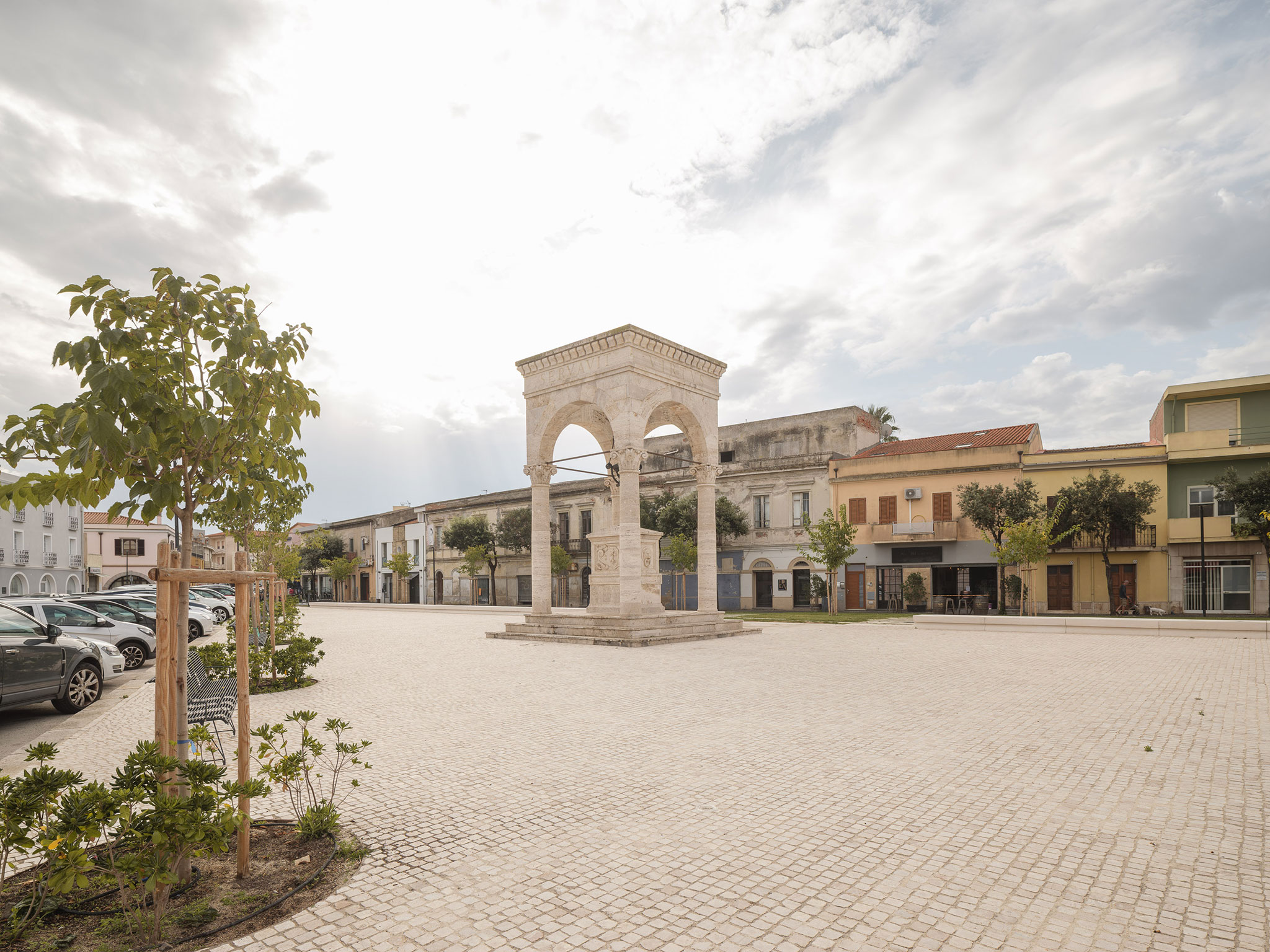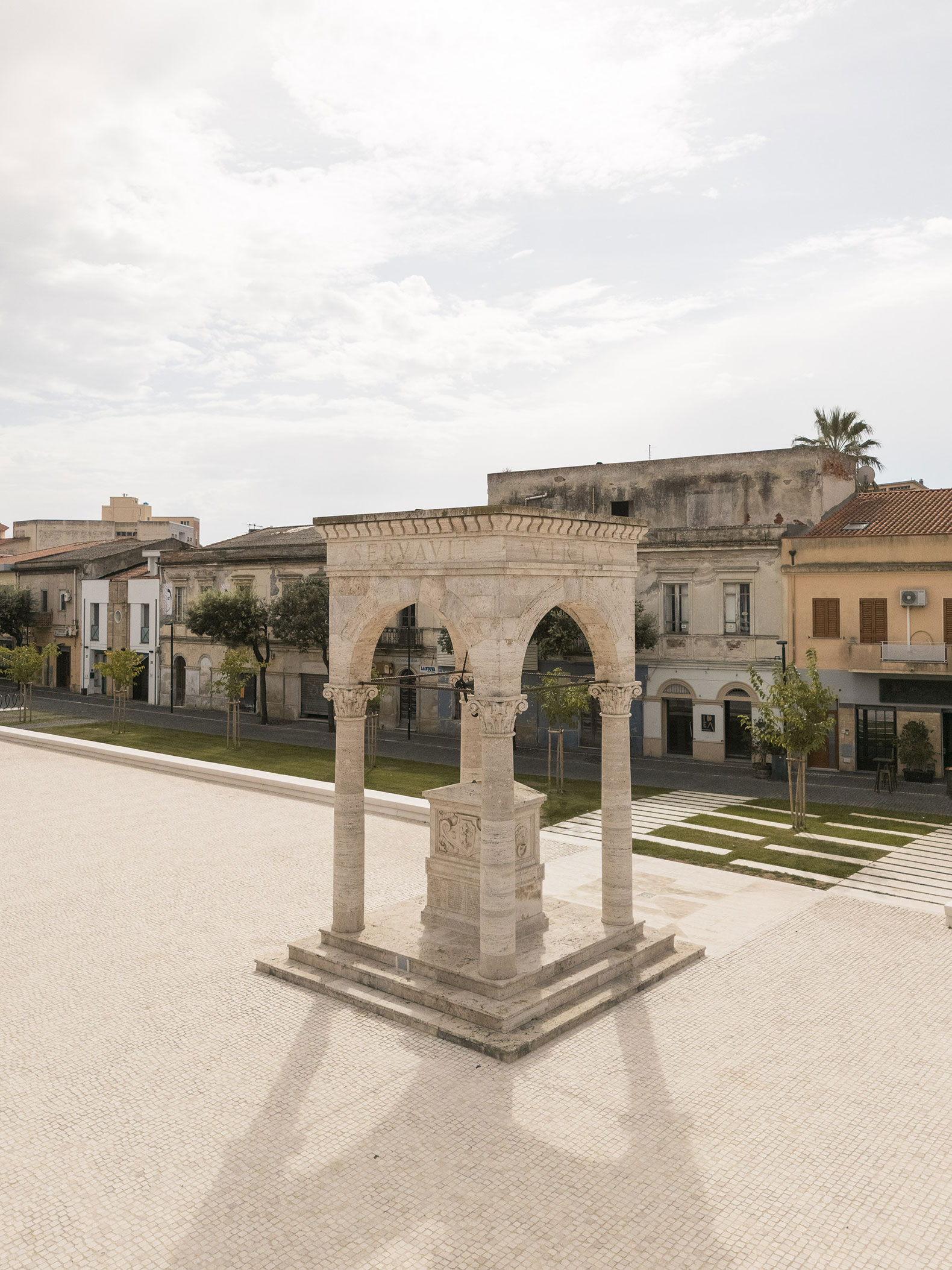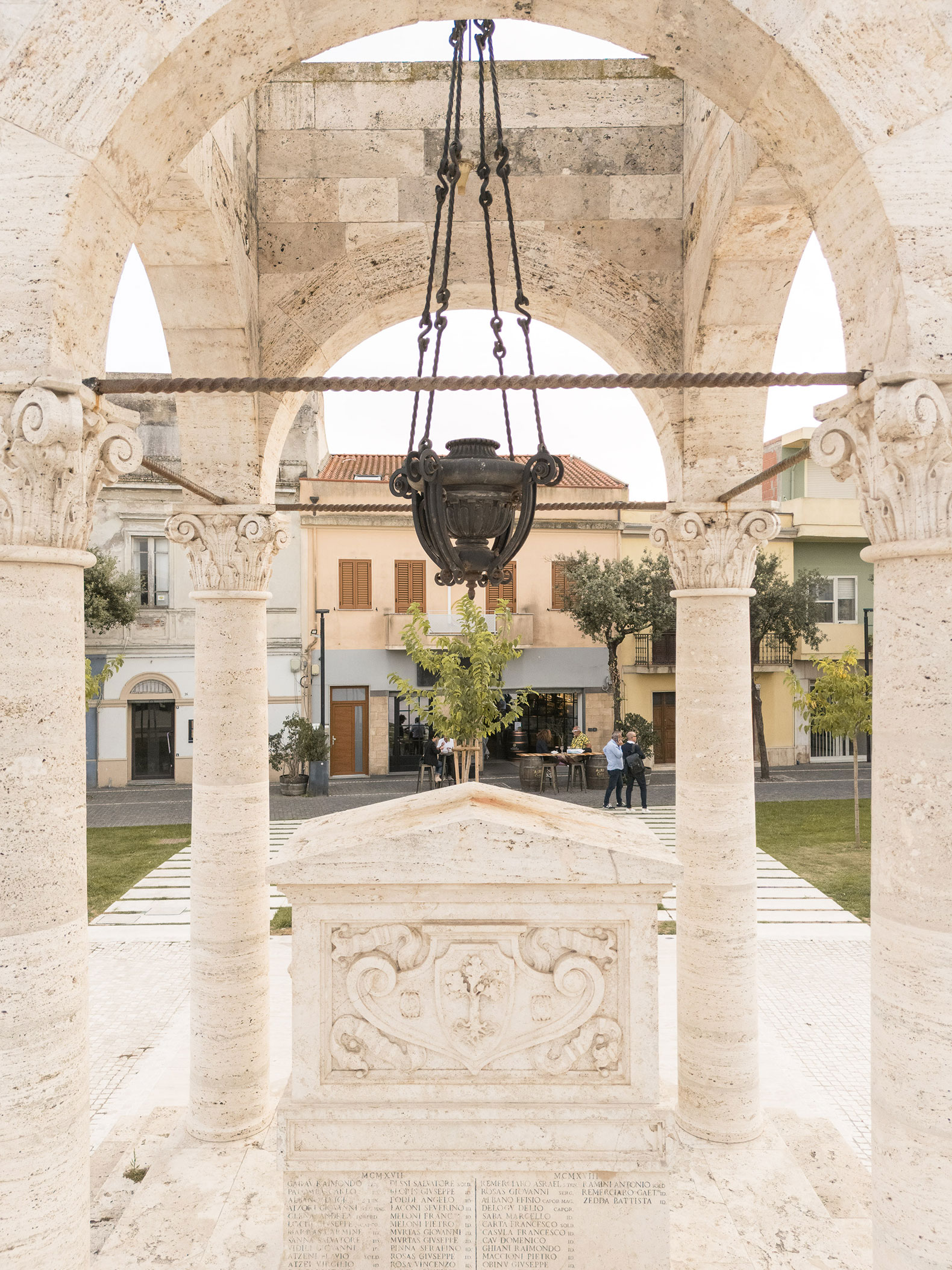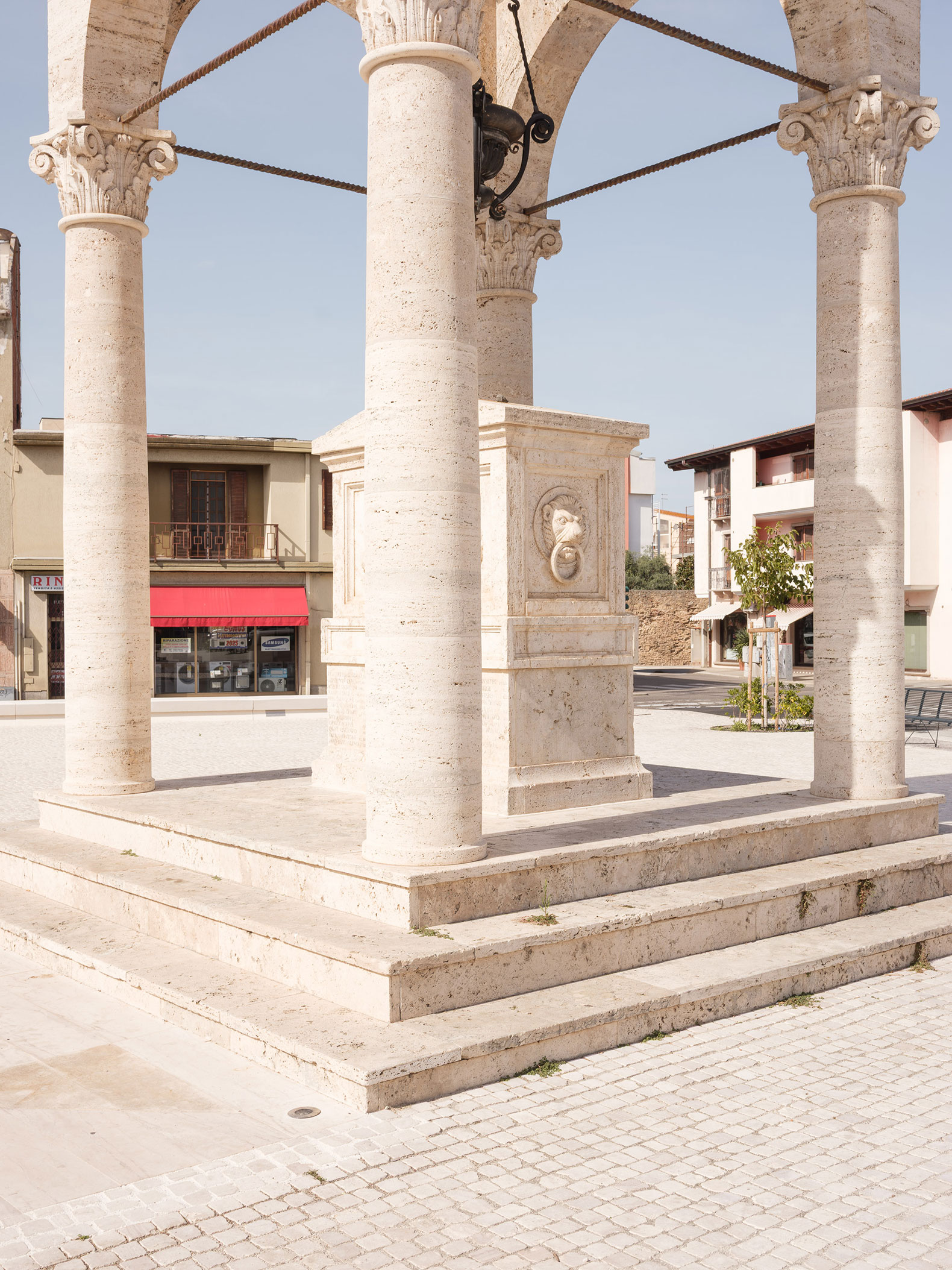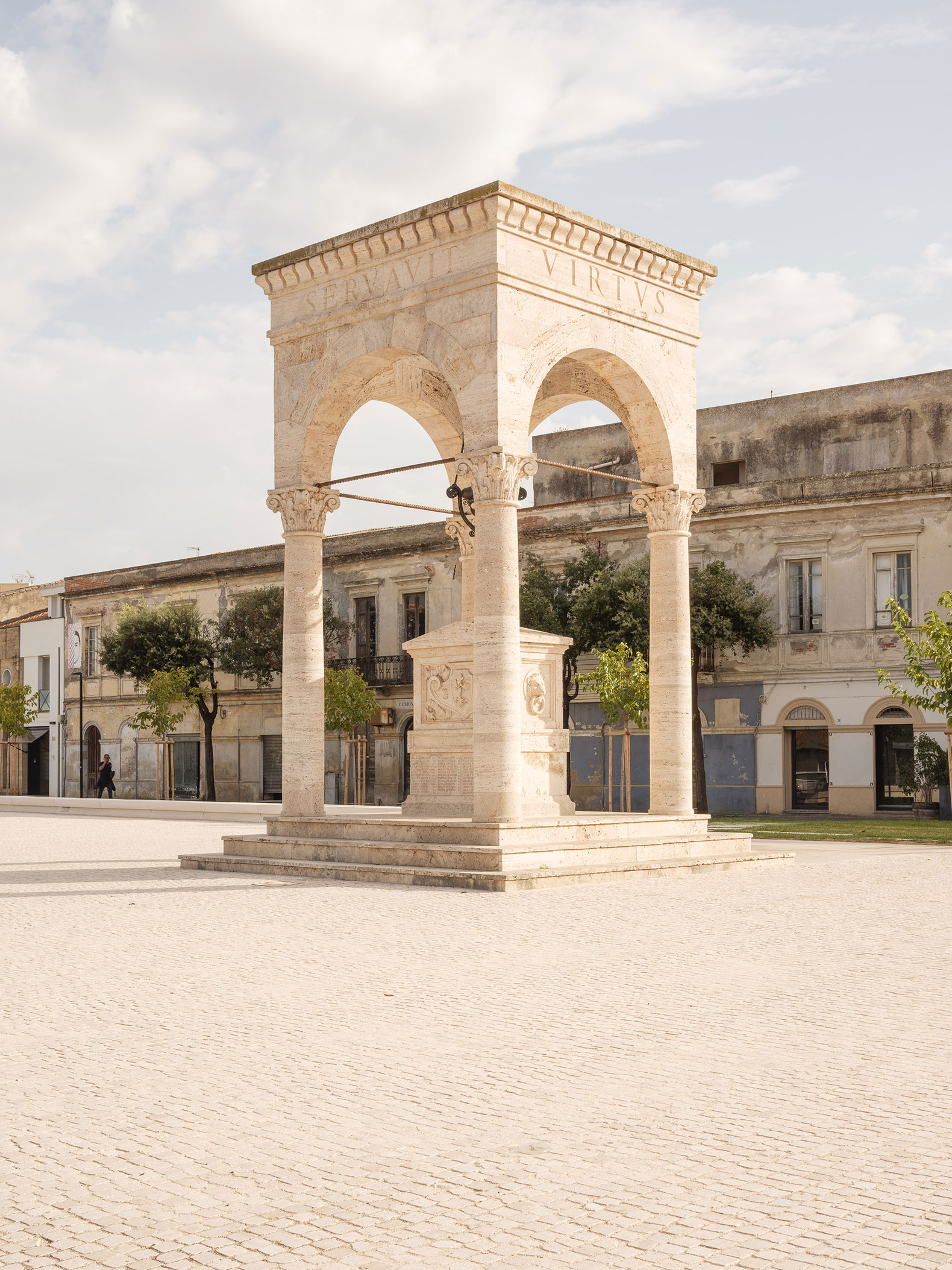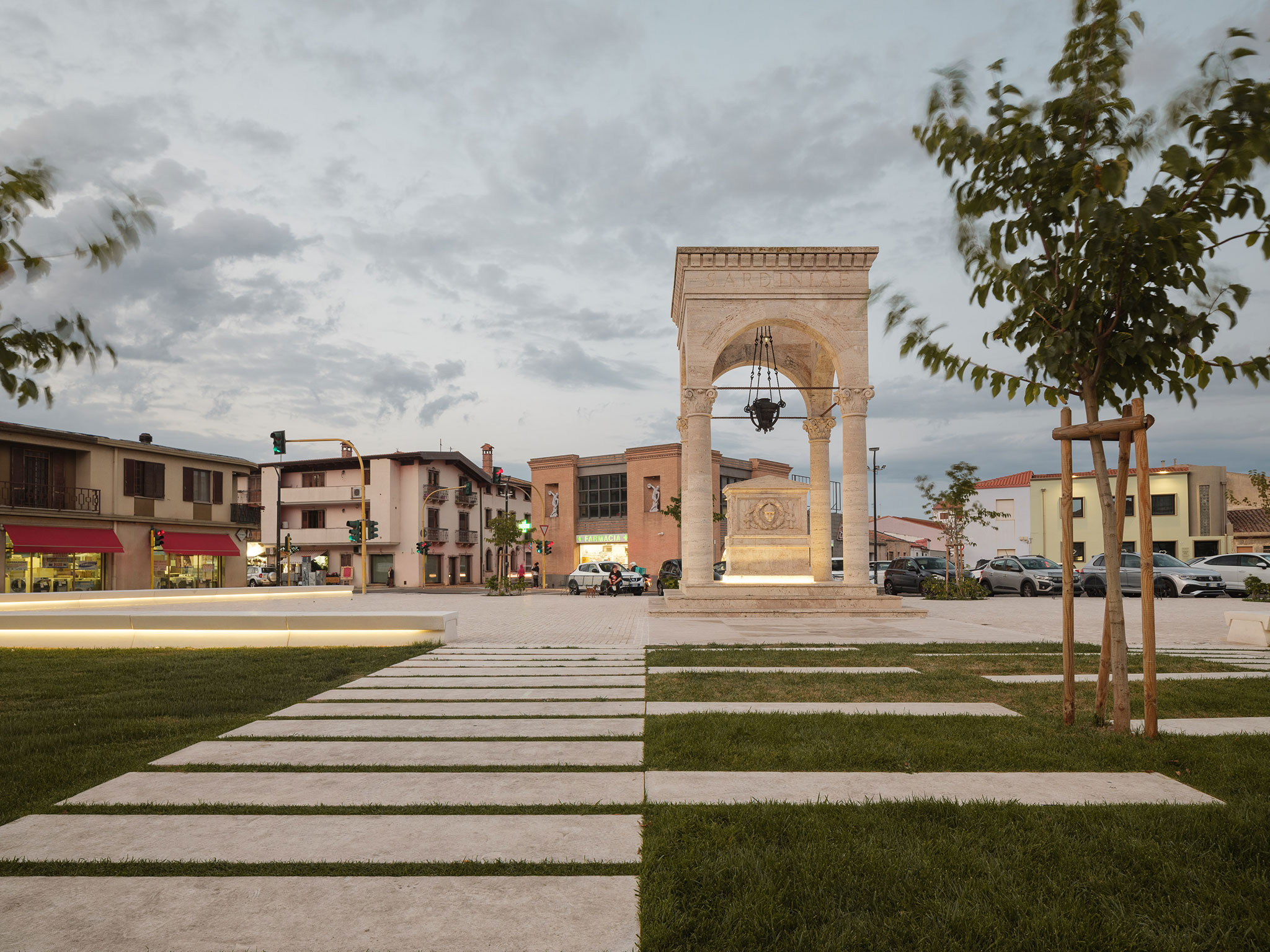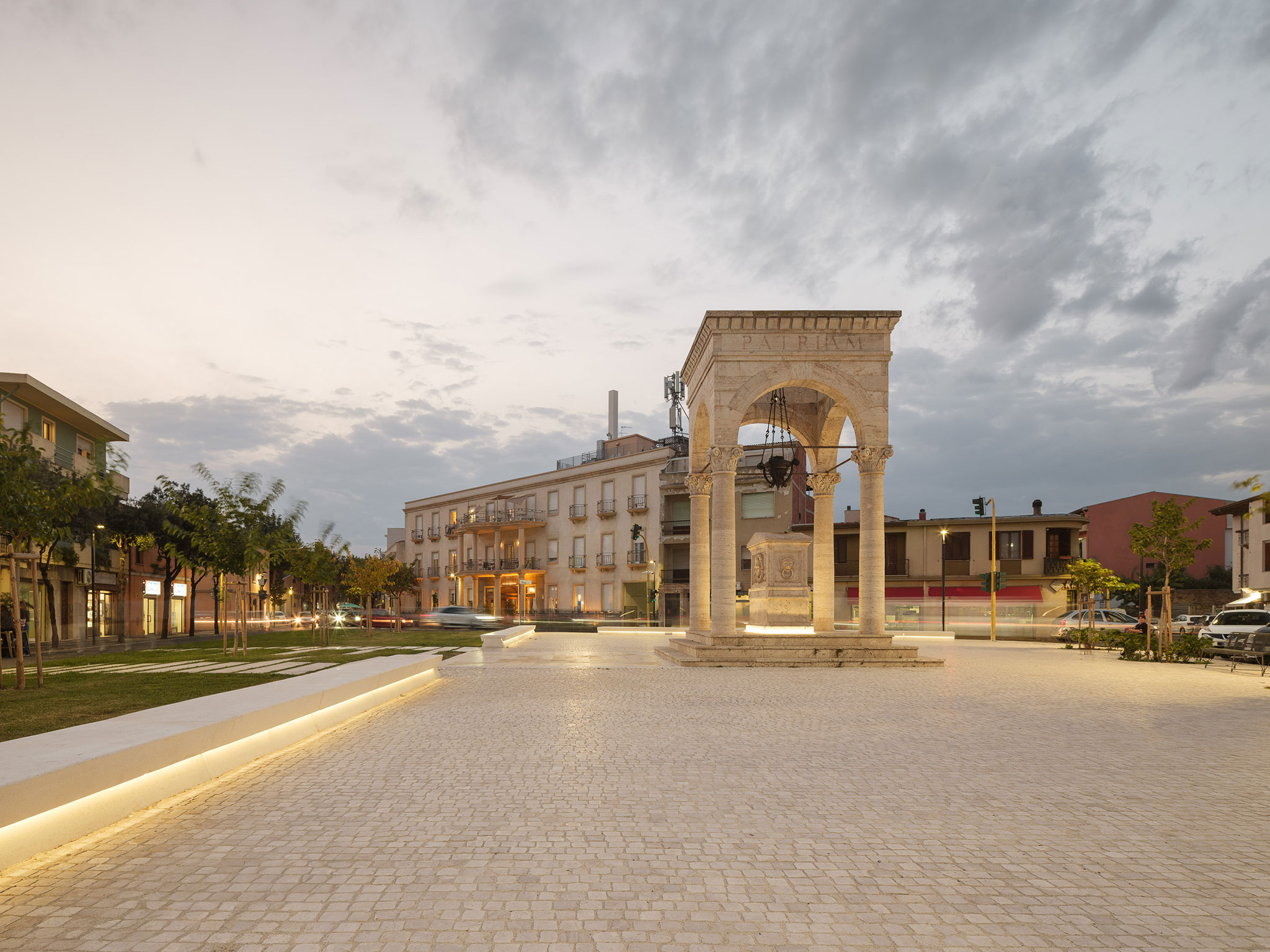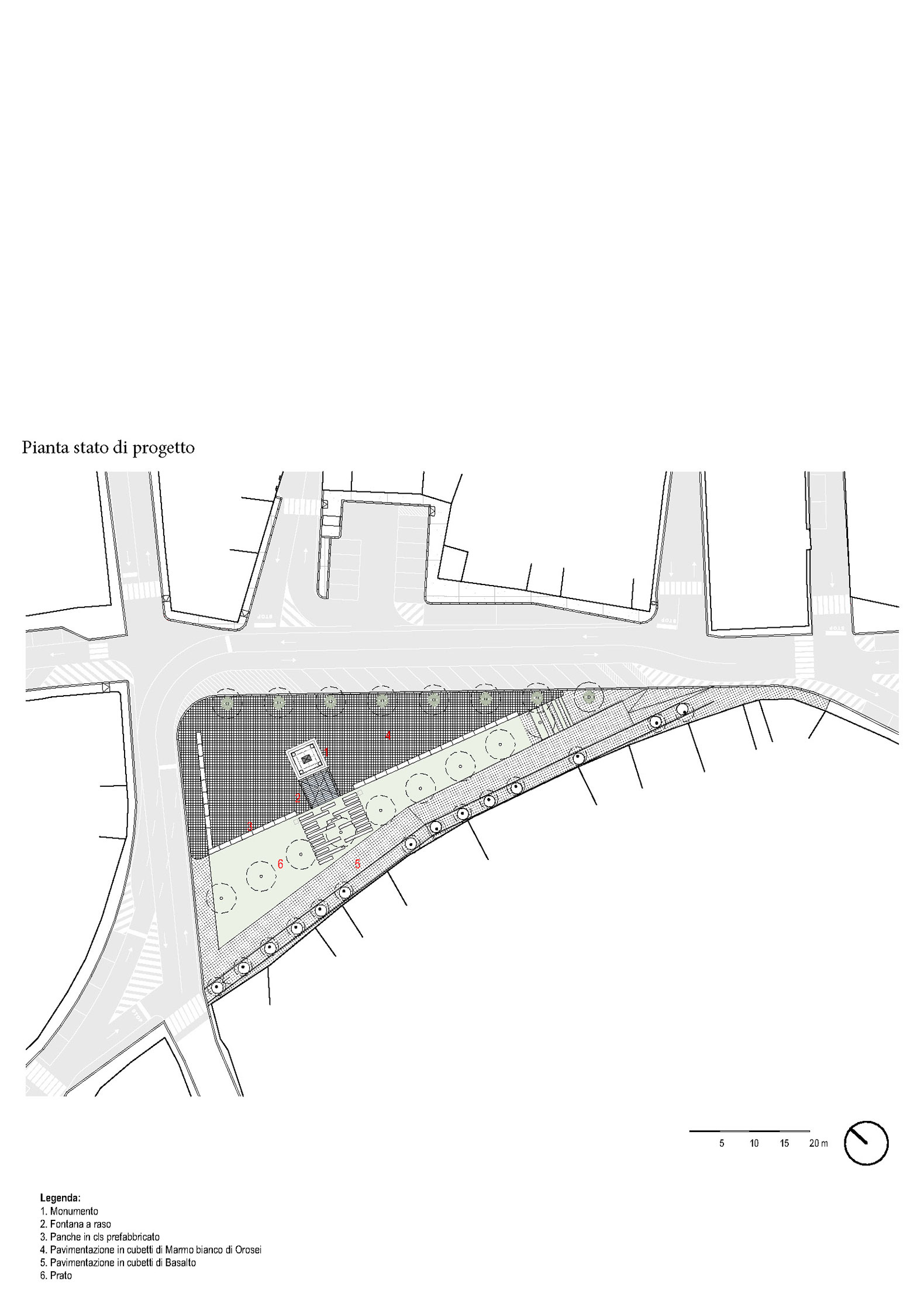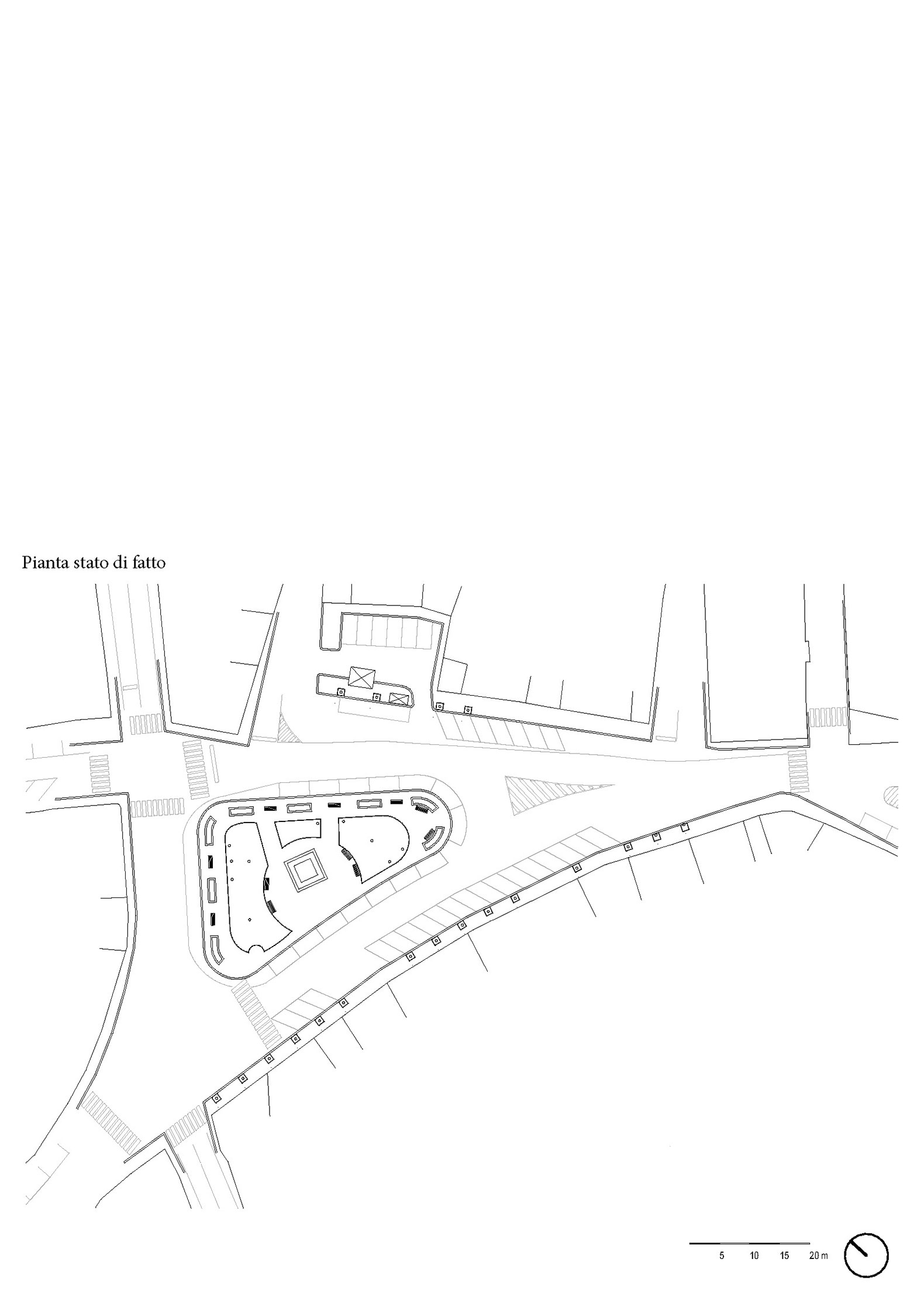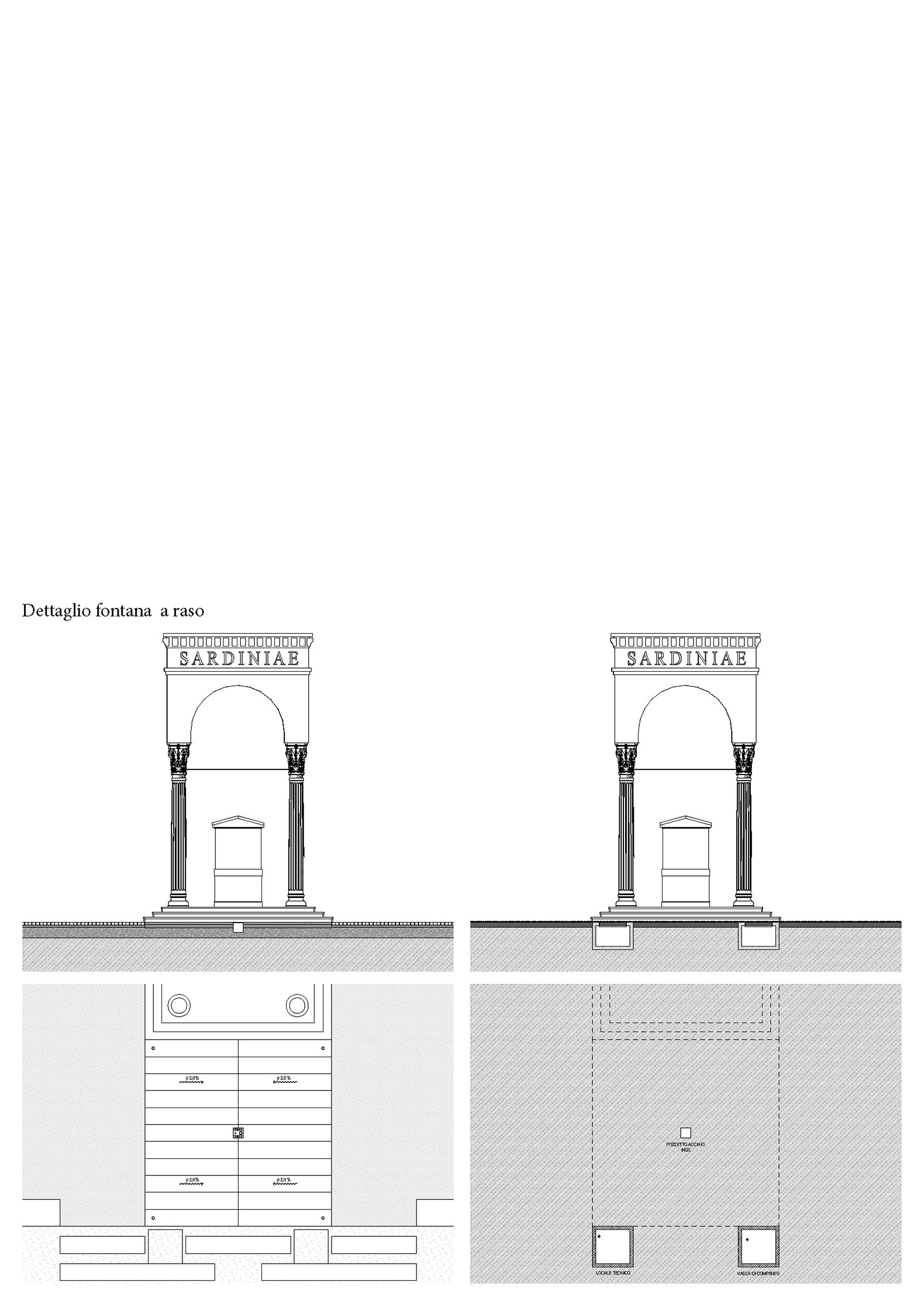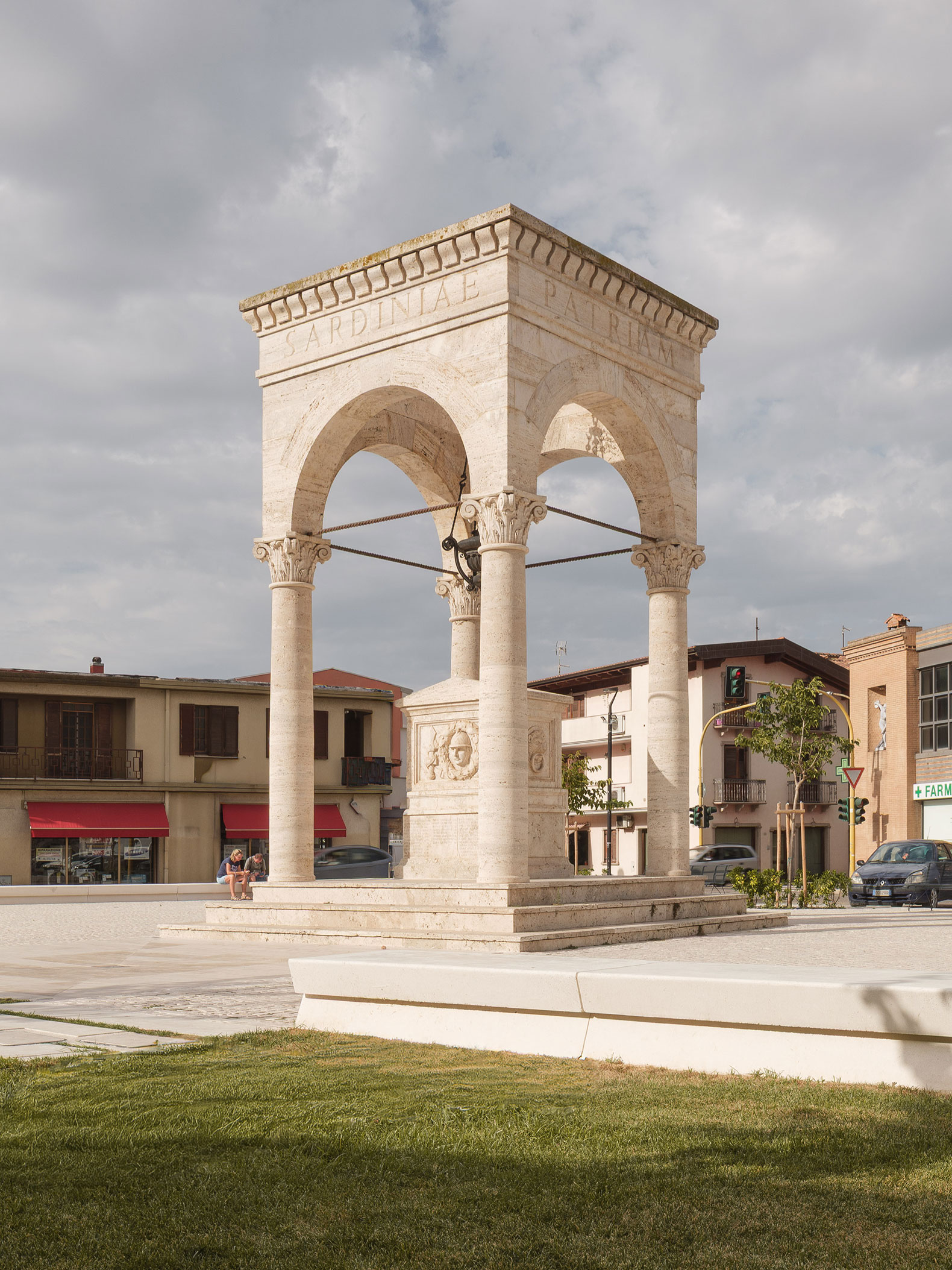
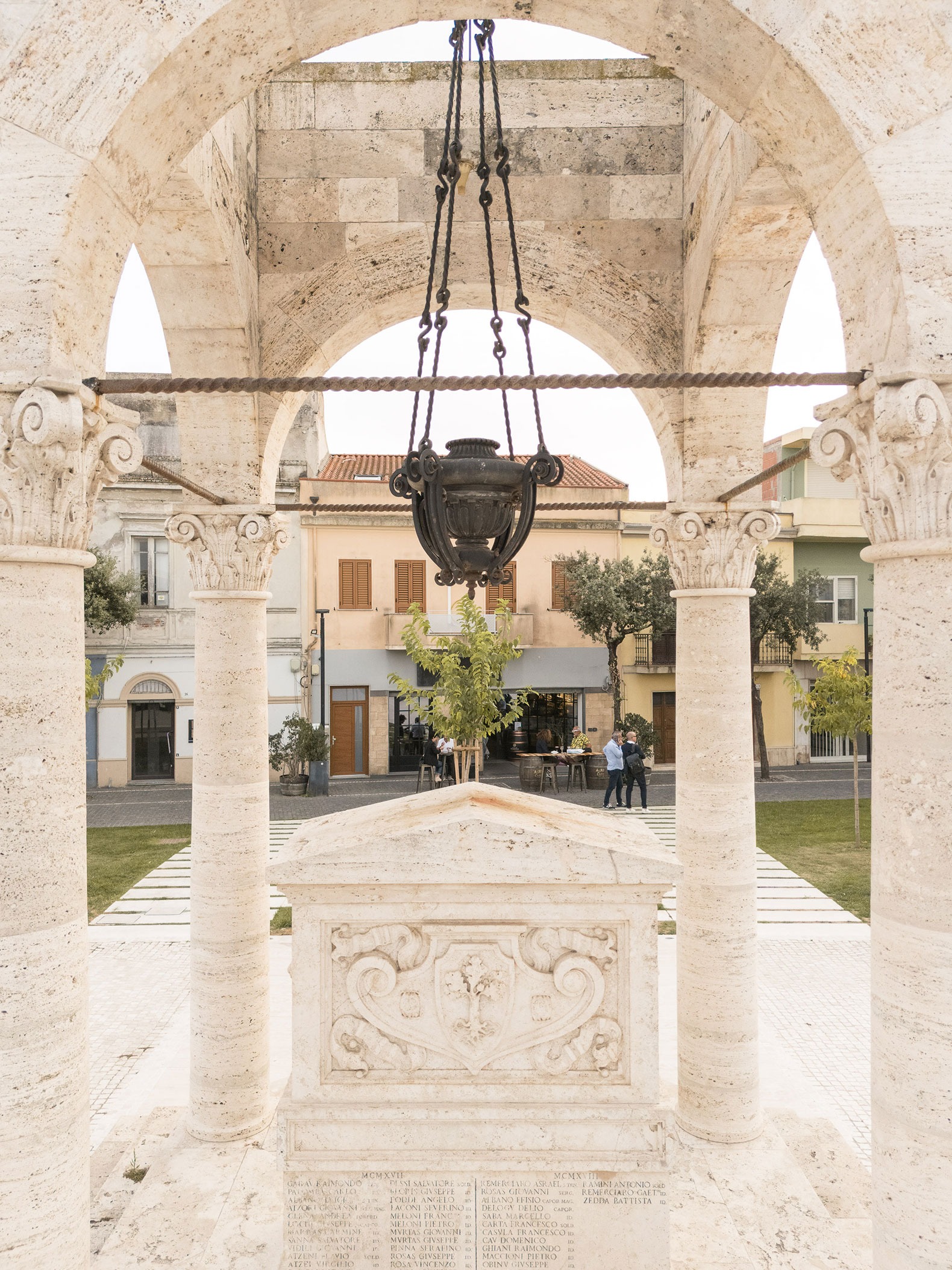
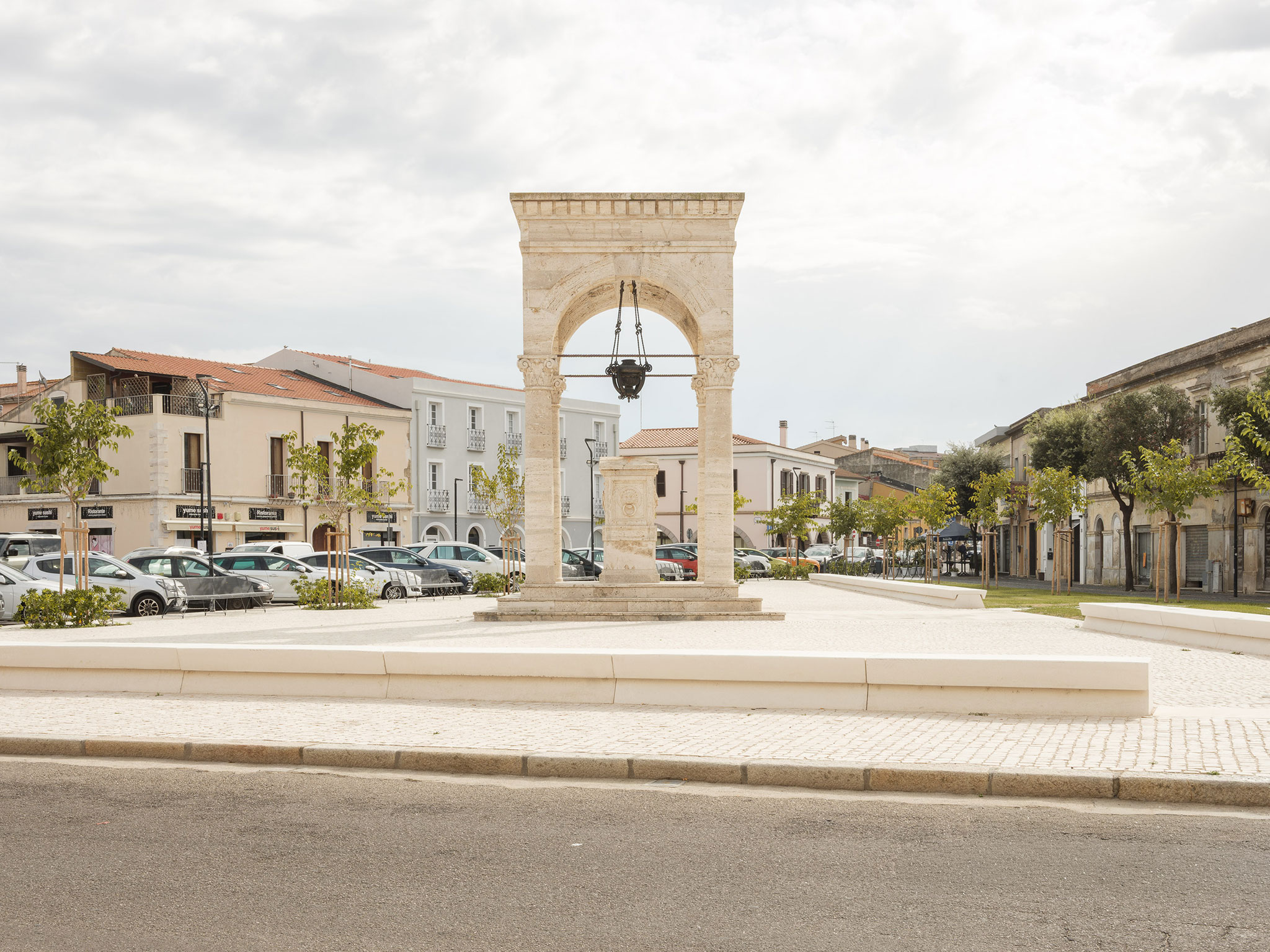
The “Piazza Mariano,” redesigned by architect Giulia de Appolonia, comprises two distinct areas. To the north stands the war memorial at its center, while to the south, the space is a grassy area that serves as an urban living room and a buffer zone, mitigating the temperature.
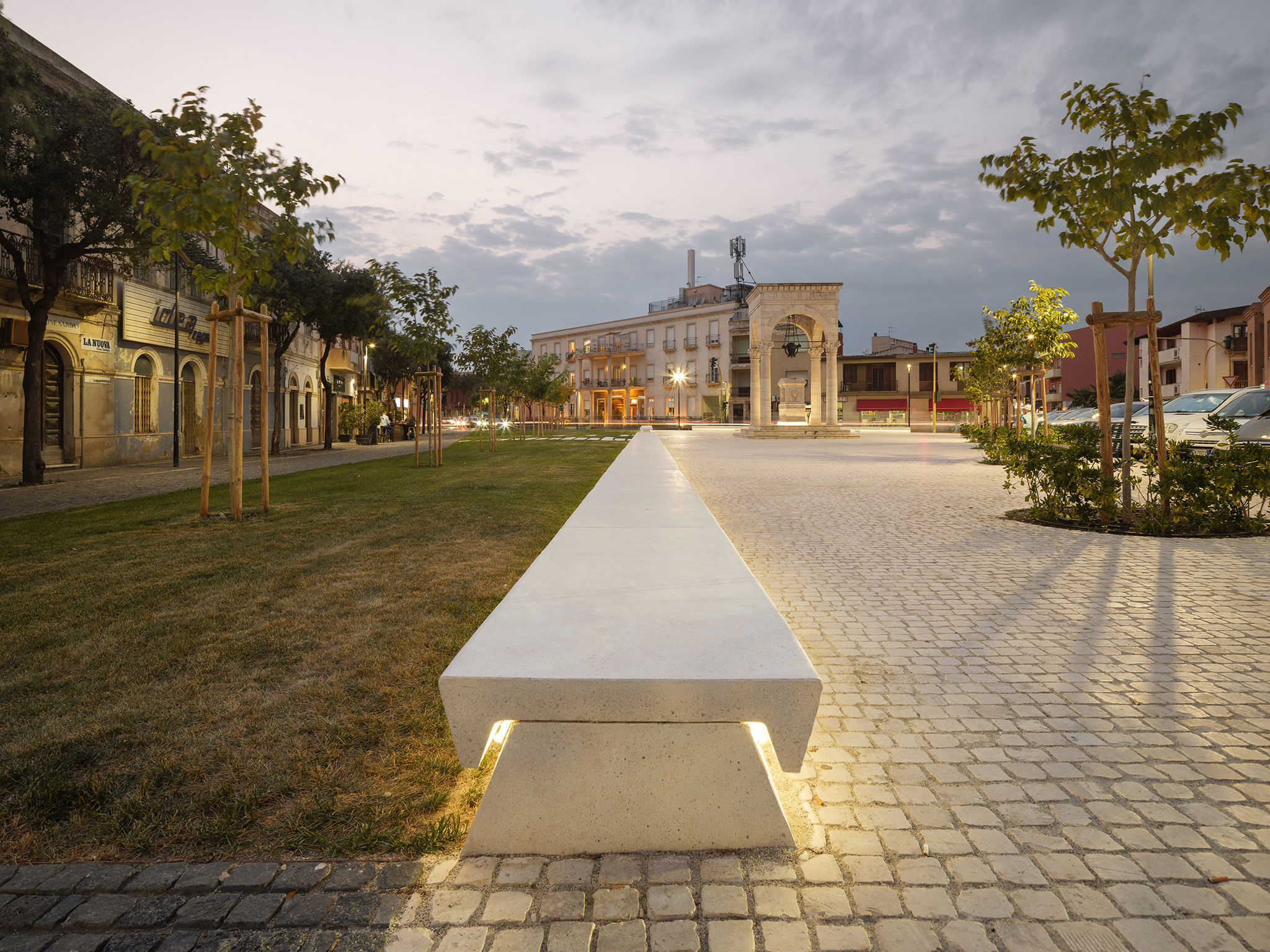
The northern area is paved with white porphyry marble cubes, and the walkway between the lawn and the building facades is paved with dark basalt cubes.
Piazza Mariano by Giulia de Appolonia. Photograph by Filippo Poli.
Project description by Giulia de Appolonia
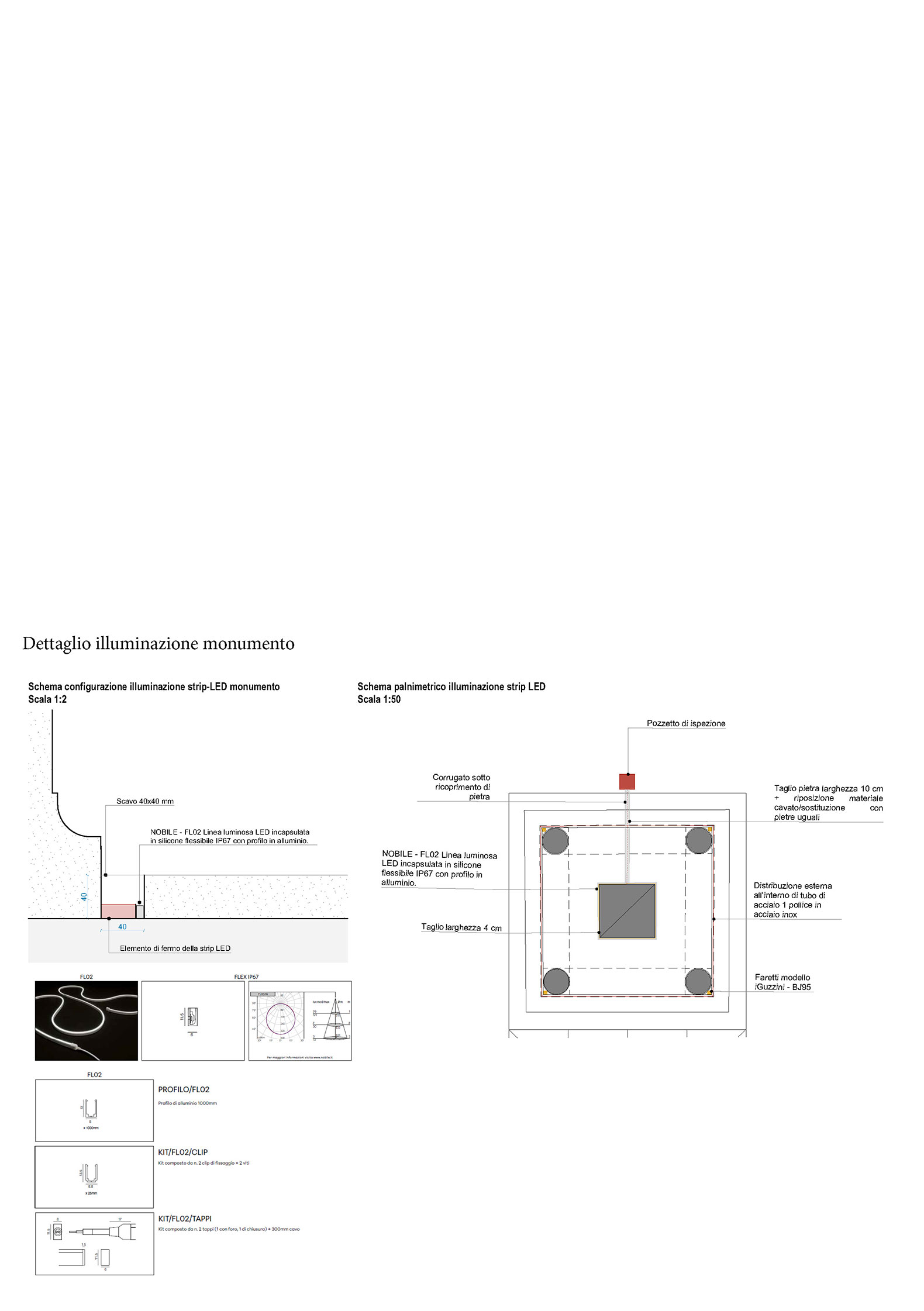
The intervention on Piazza Mariano focused on the recovery of the nature of the place, respecting the functional comfor- ts that have consolidated over the years and giving a new reading to the war memorial through this reconfiguration of the space. The closure to traffic of the stretch of road south of the monument and its conversion into a pedestrian area allowed the urban lot to become a real square, losing its central position and reconnecting the privileged pedestrian path that connects the historic center to the train station.
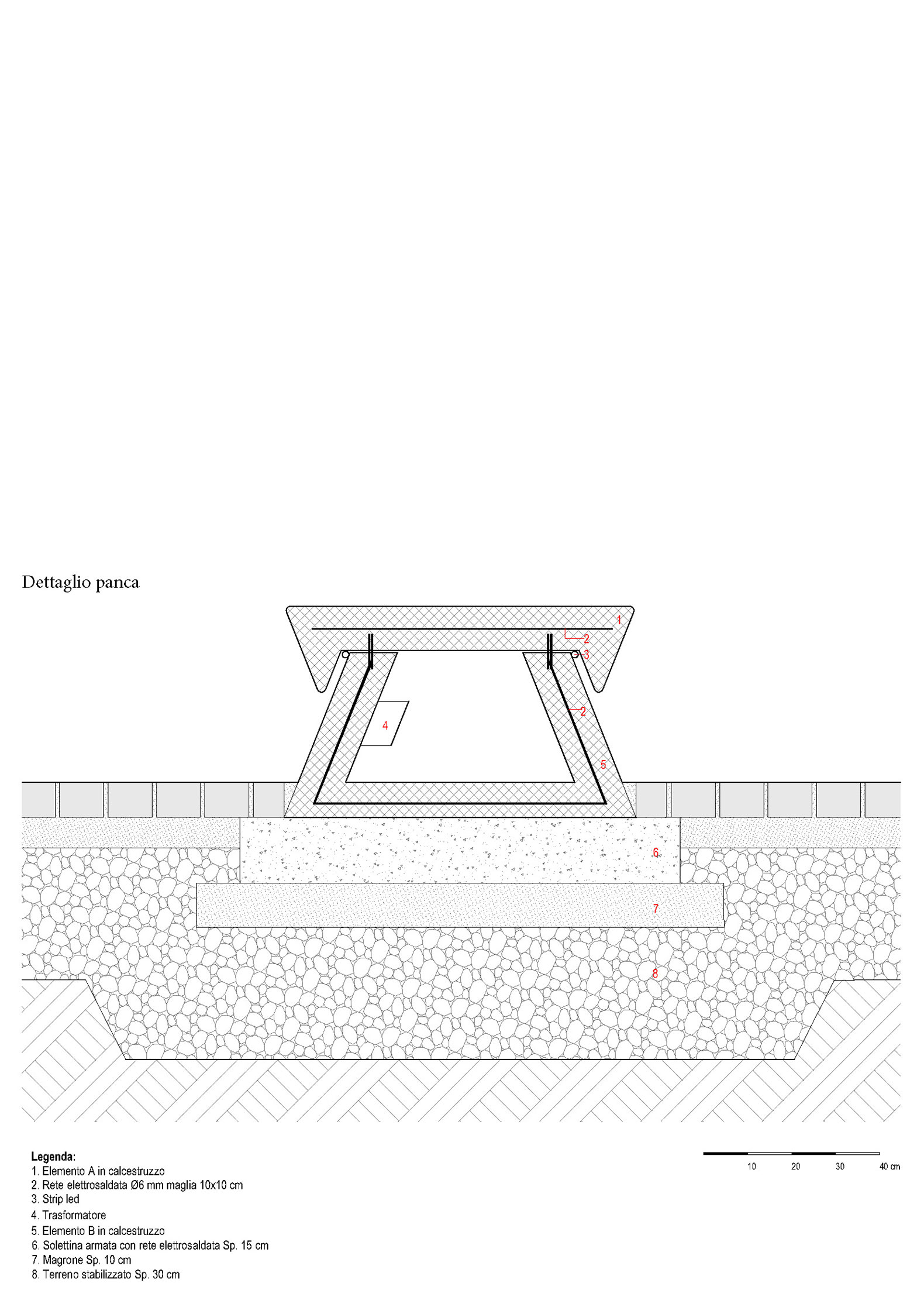
The square is divided into two areas: the northern one paved with white marble porphyry cubes, in the center of which there is the war memorial, delimited by three long benches and the southern one consisting of a green lawn that functions as an environmental island for mitigating the temperature and is enjoyed by the public as an urban living room. The square corridor between the lawn and the fronts of the buil- dings is paved with dark-colored basalt cubes, which recall the typical chromatism of various squares in Oristano, and act as a more private area in direct contact with commercial activities and dedicated to the movement of pedestrians.
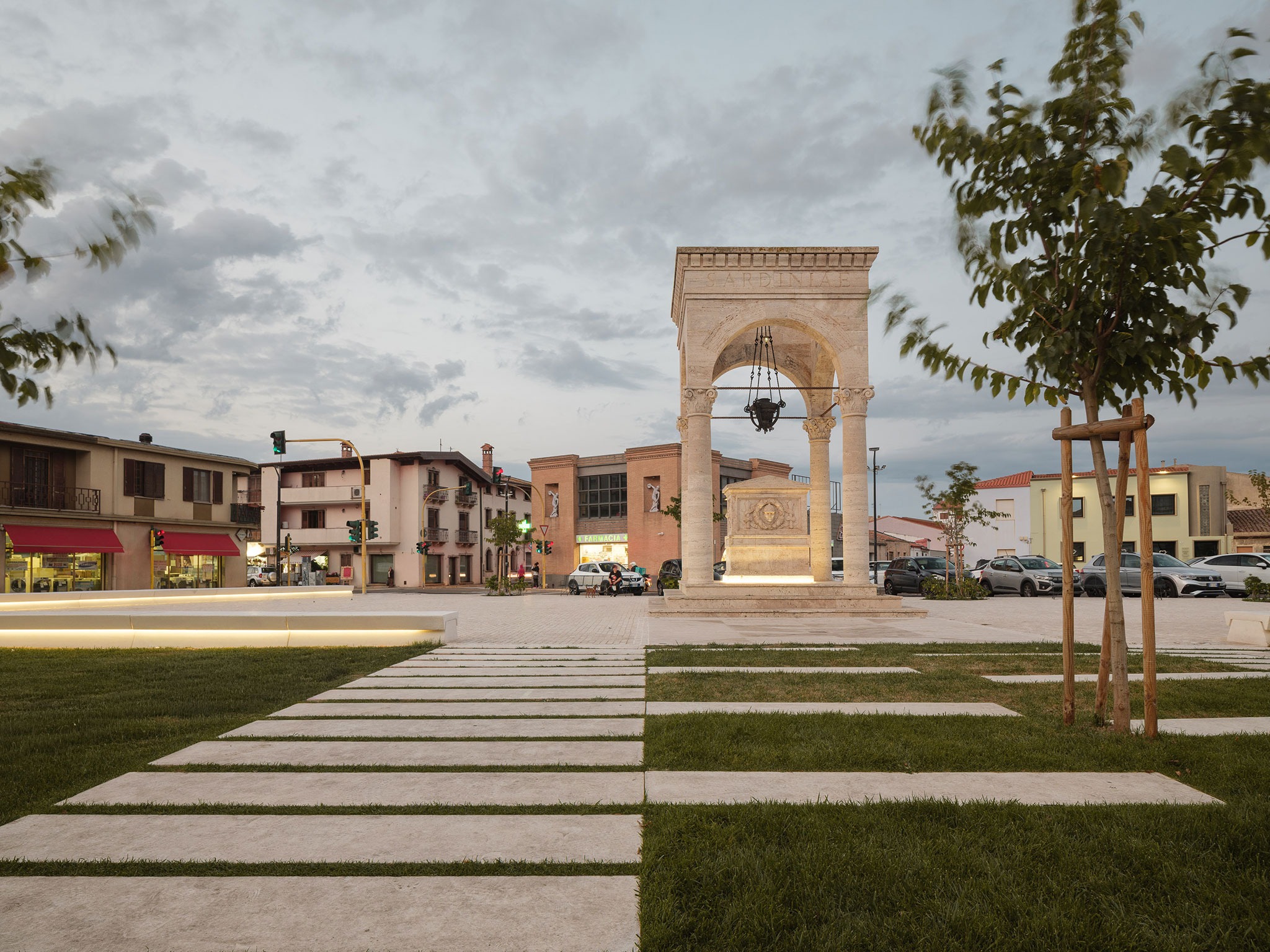
Two rows of trees act as scenic backdrops, framing and isolating the monument and at the same time visually filtering the space of the square from the road and making the pedestrian space along the fronts of the buildings more private.