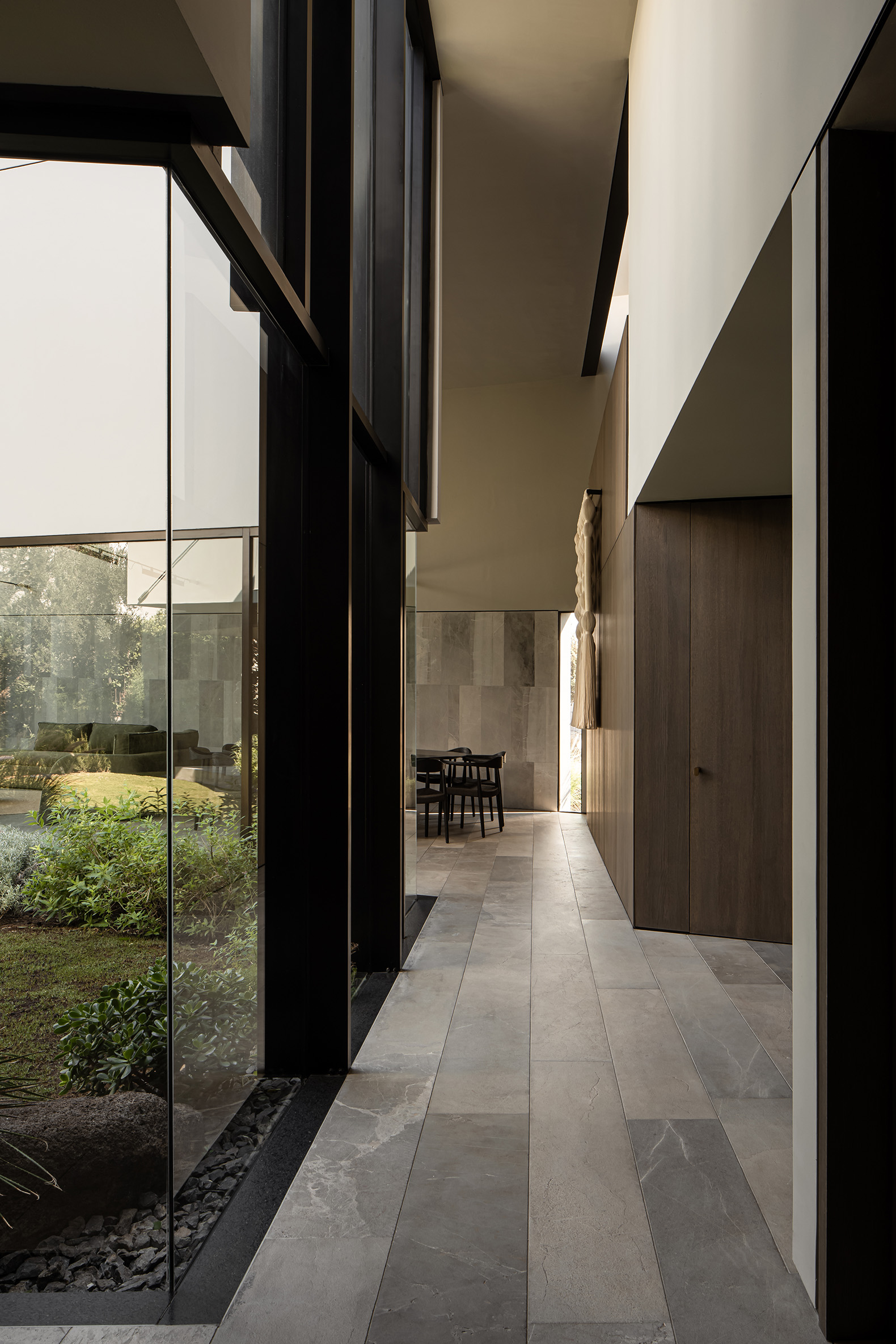
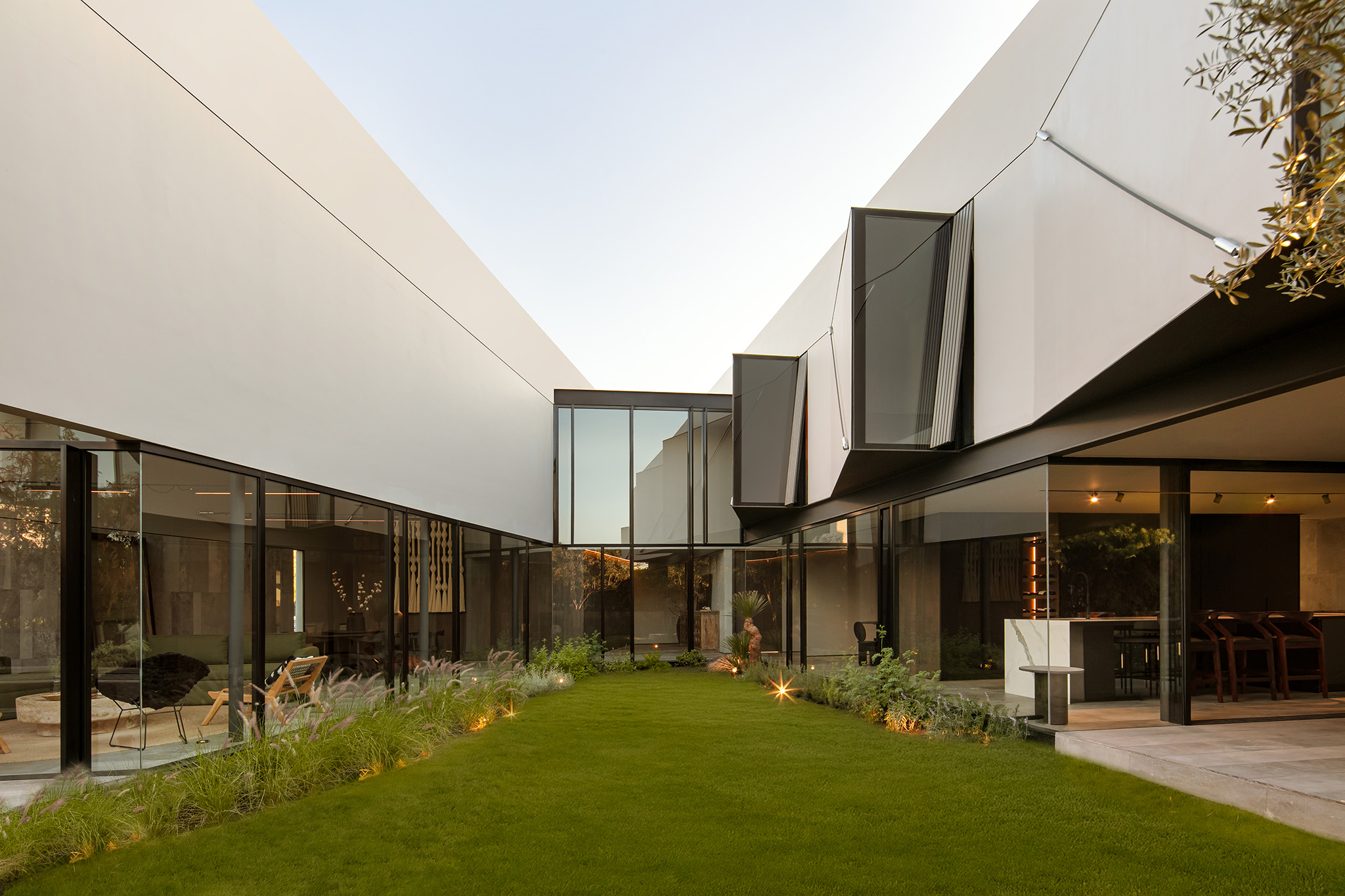
In the city of Santiago de Querétaro, Mexico, the LABarq architecture studio has completed a residential project that harmoniously adapts to the morphology of the site. A uniquely topographical and irregularly shaped lot results in a V-shaped house that responds to the challenges of the site while strengthening the visual connection to the surrounding natural landscape.

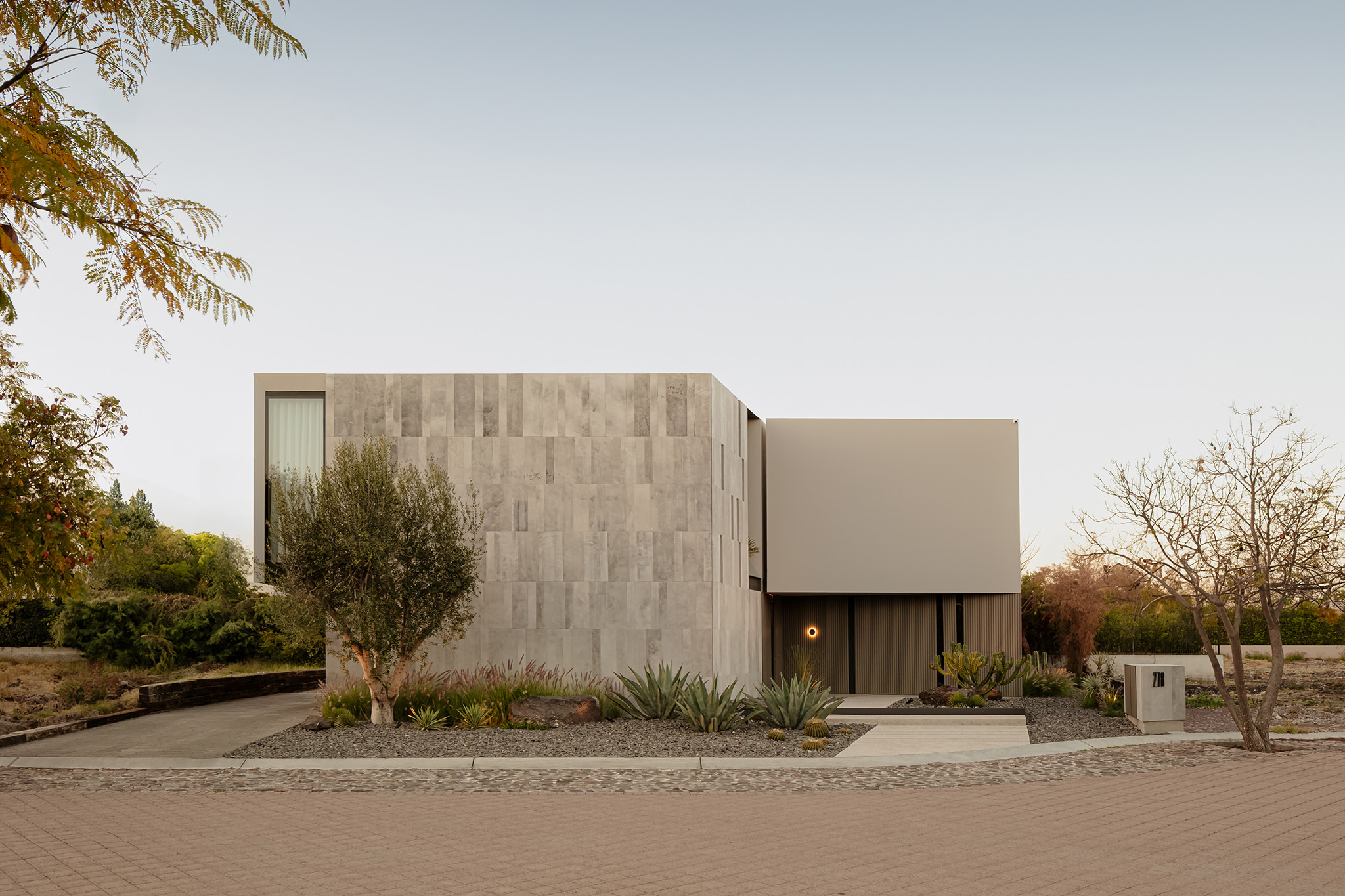
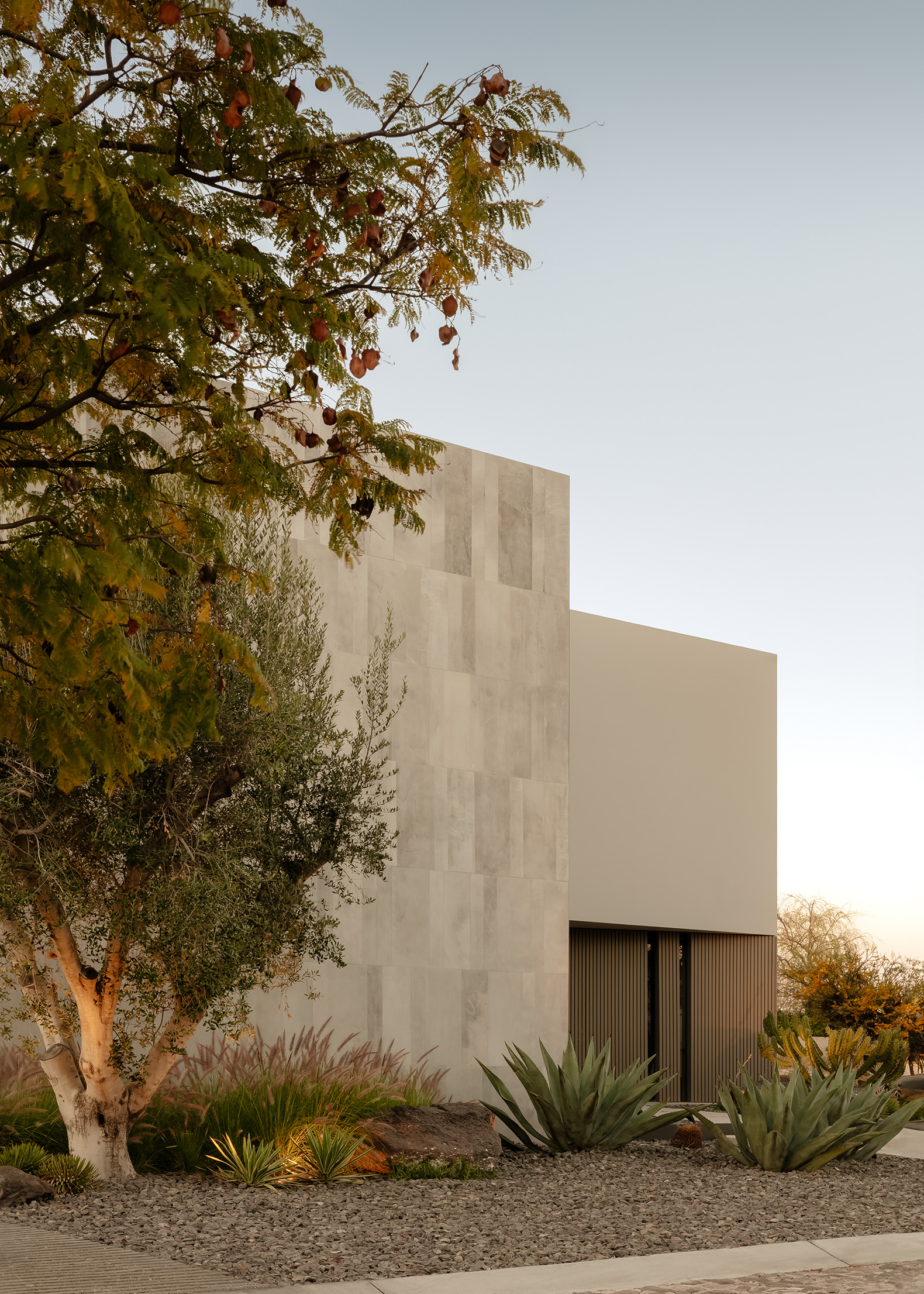
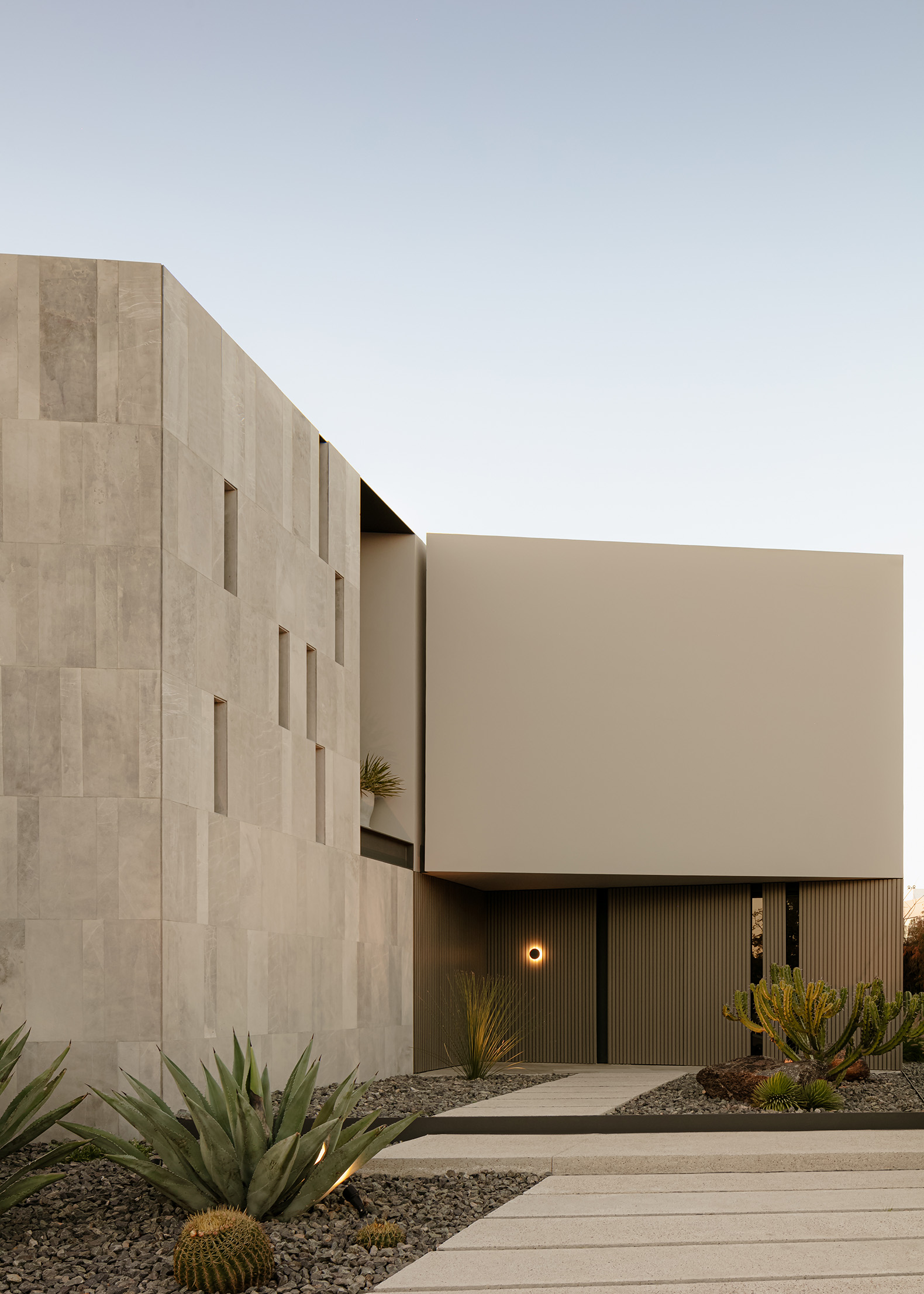
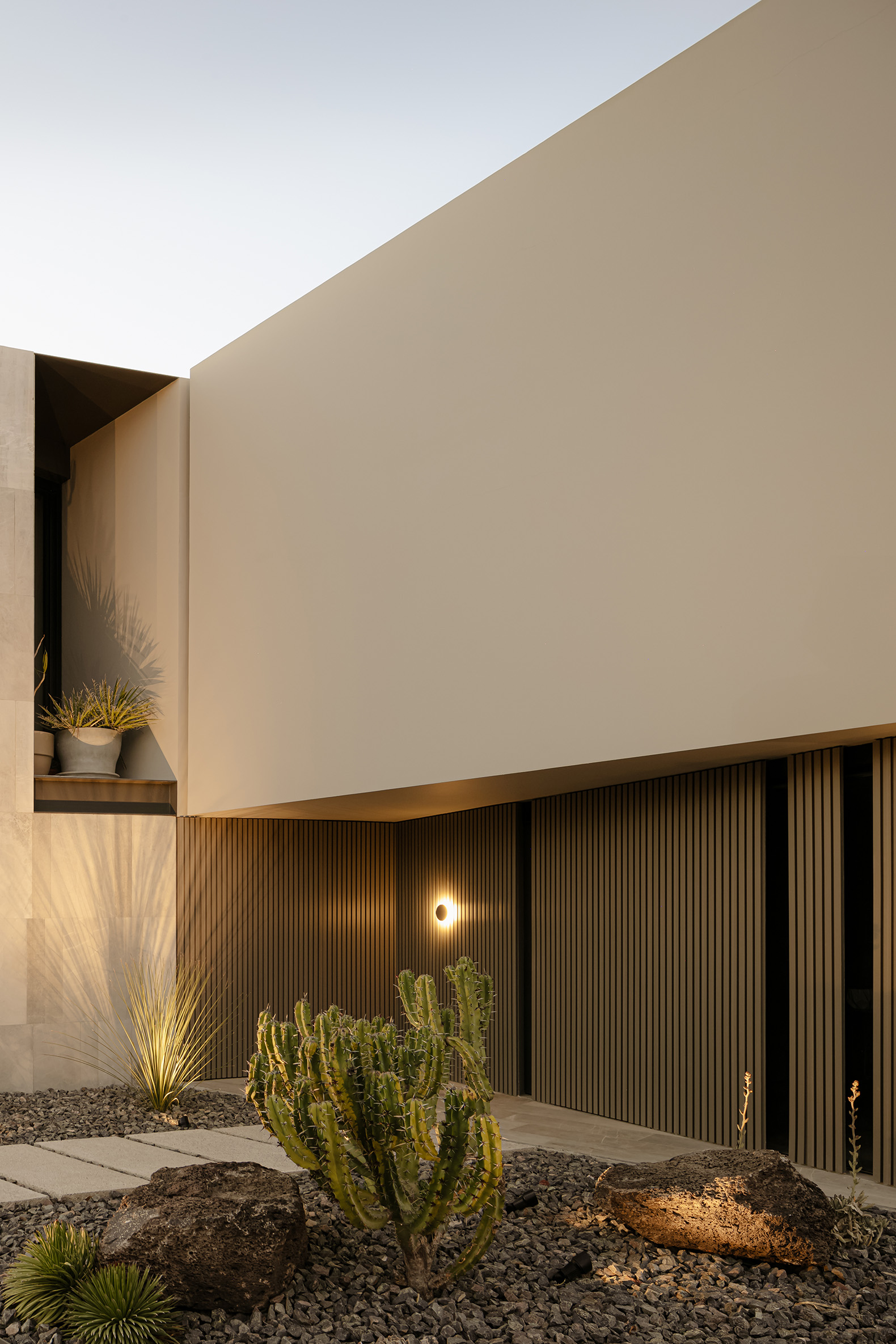
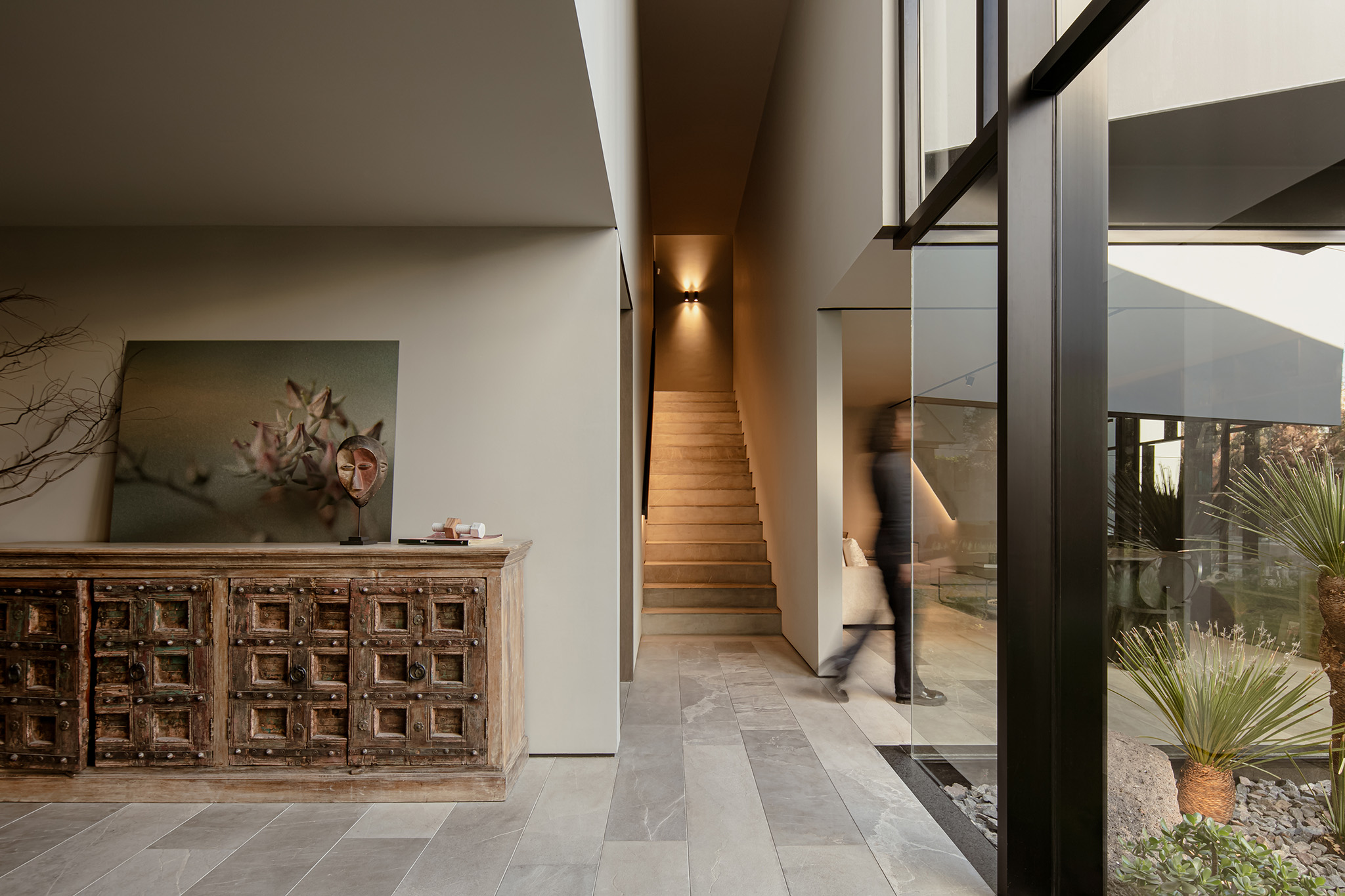
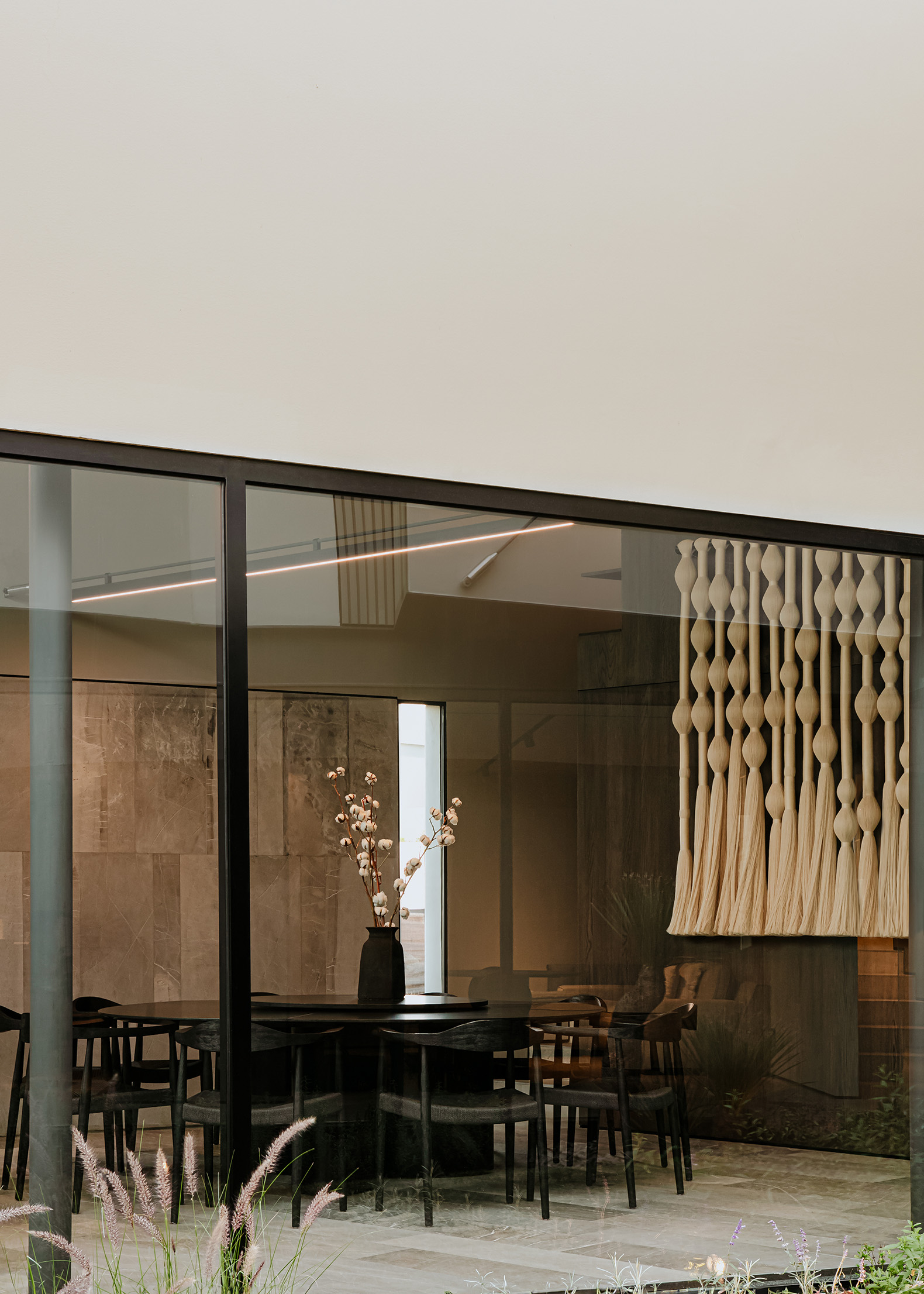
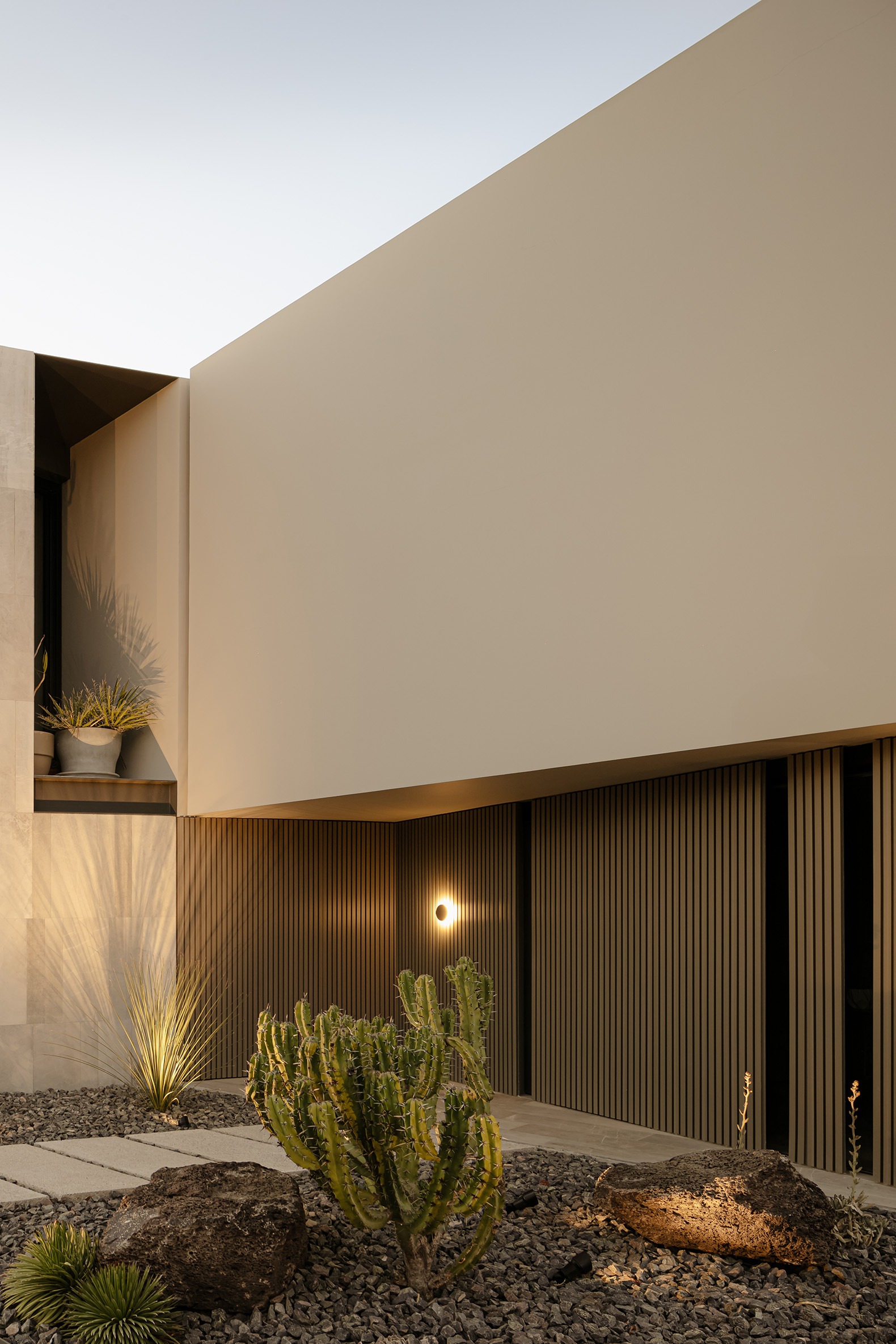
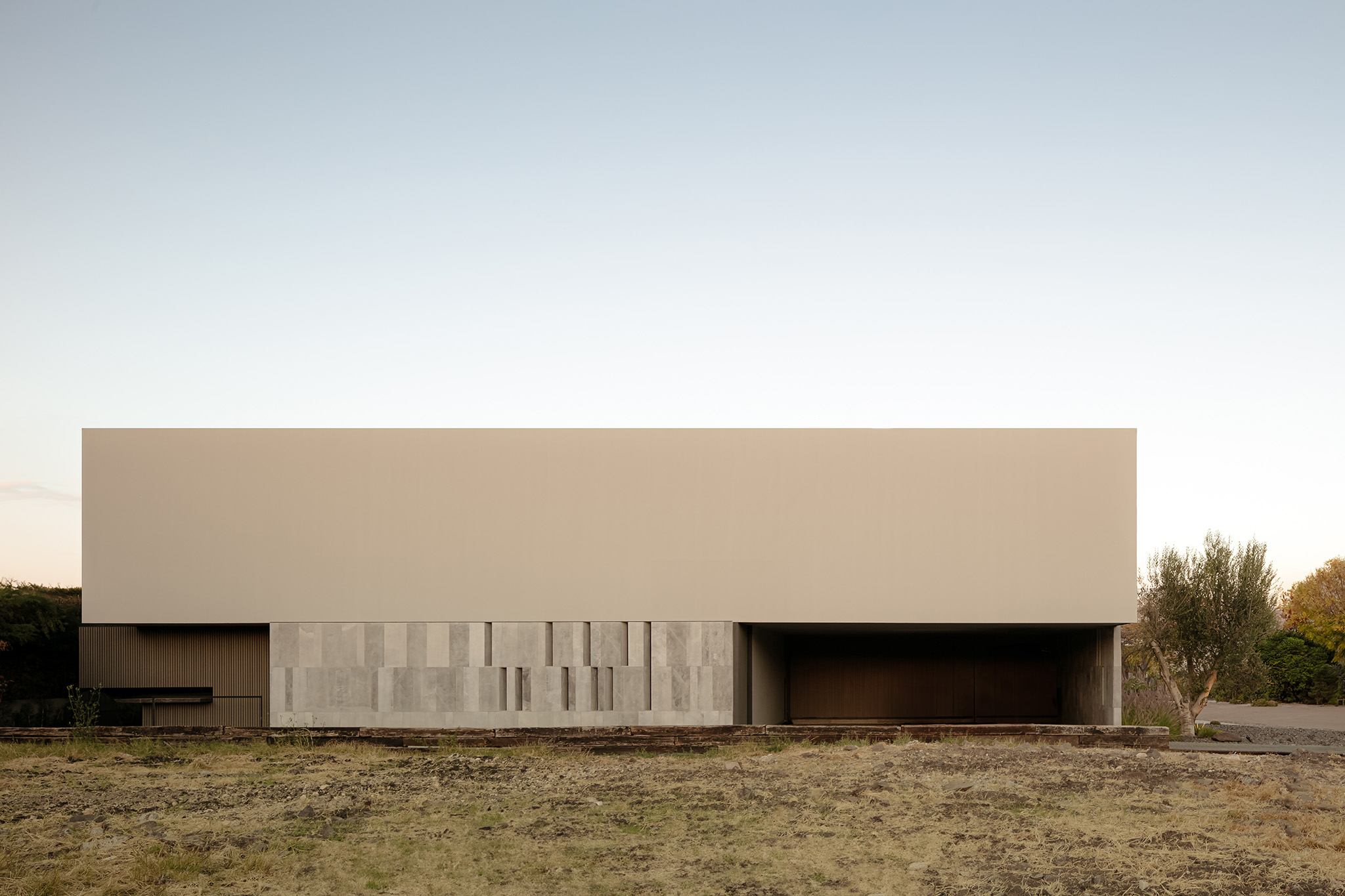
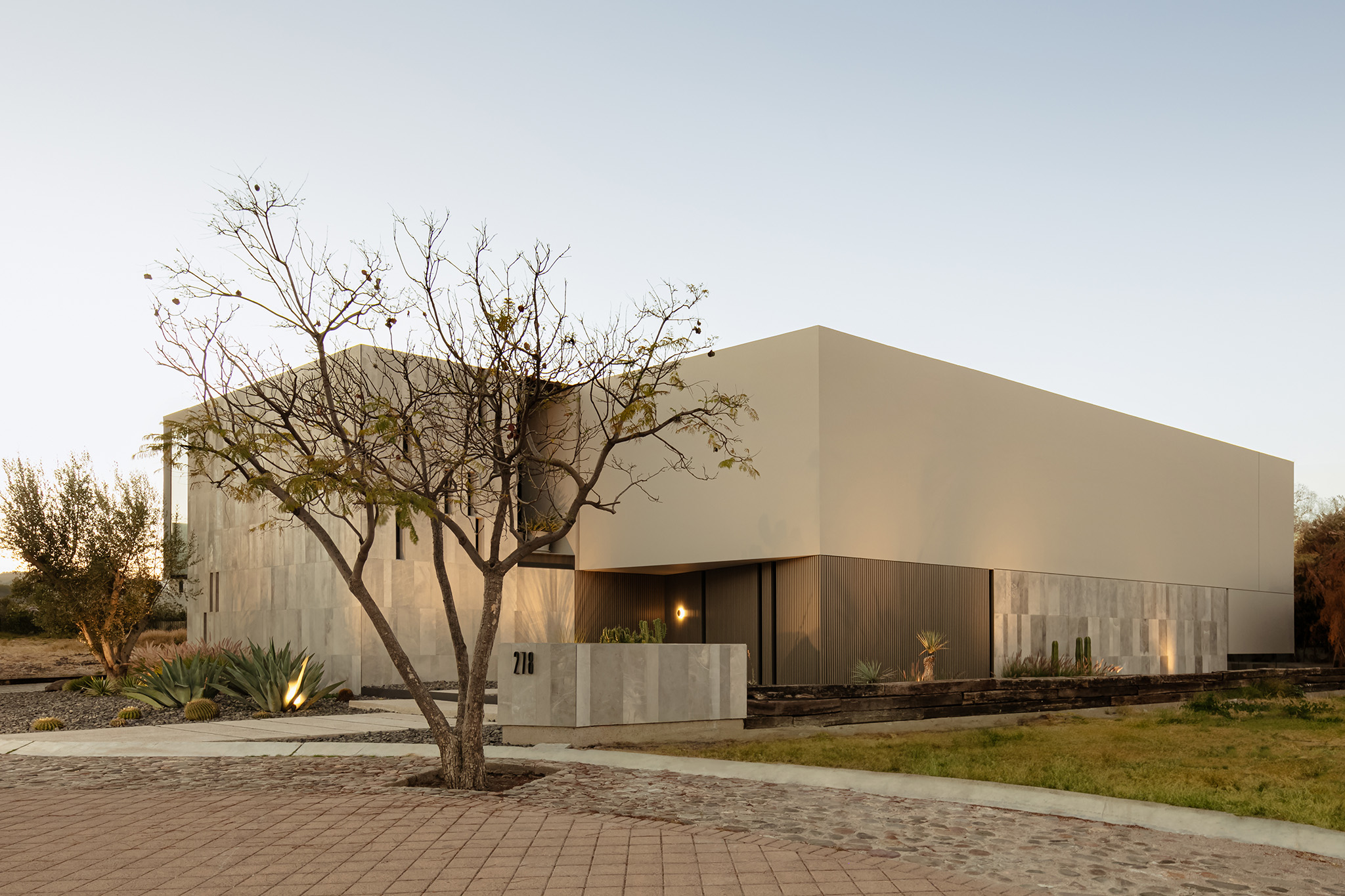
Casa Río presents itself as a solid, sober, and closed-off dwelling toward the front, while inside, it incorporates a series of enclosures that dissolve the boundaries between interior and exterior, allowing for an almost complete opening to the immediate surroundings.

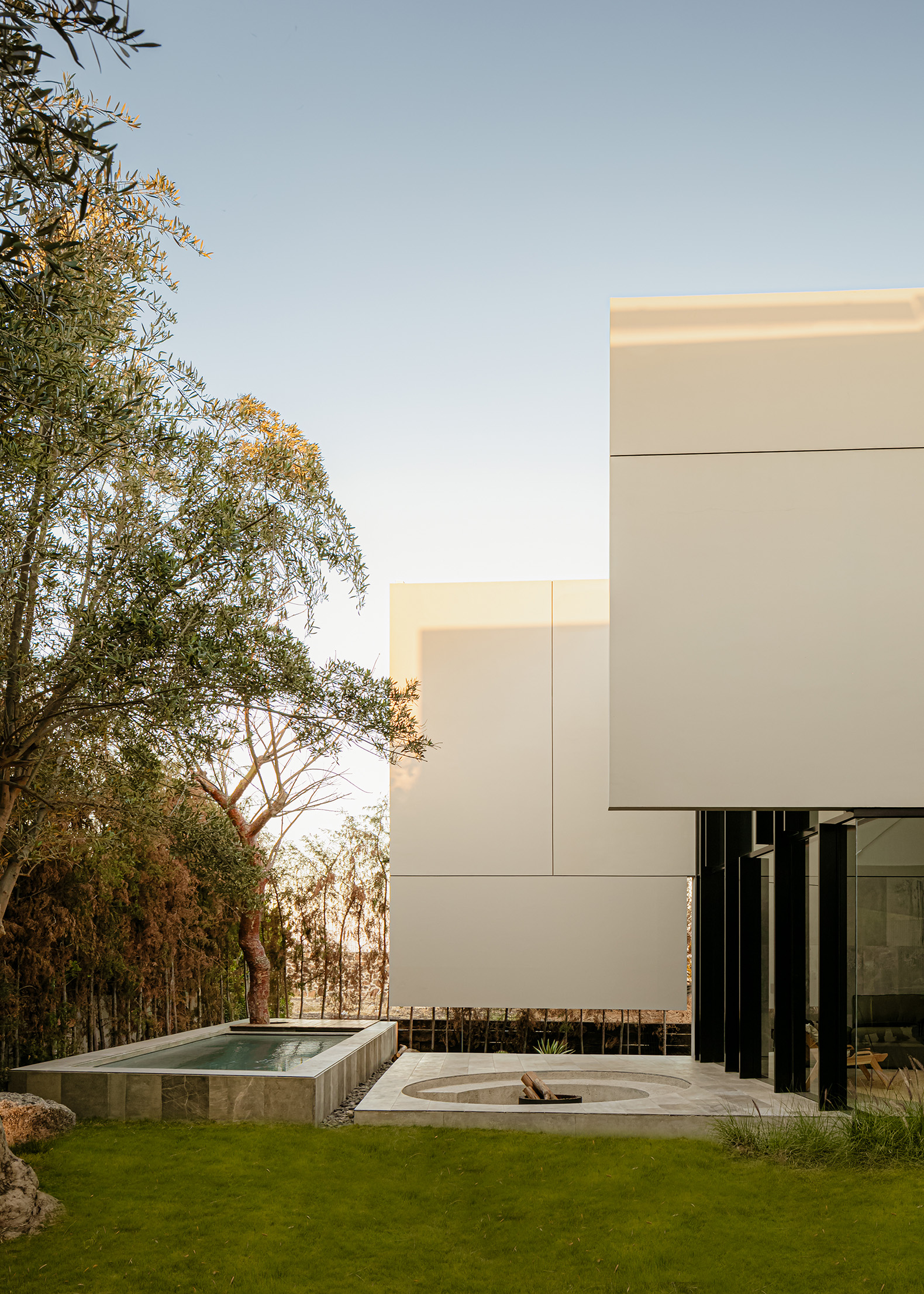
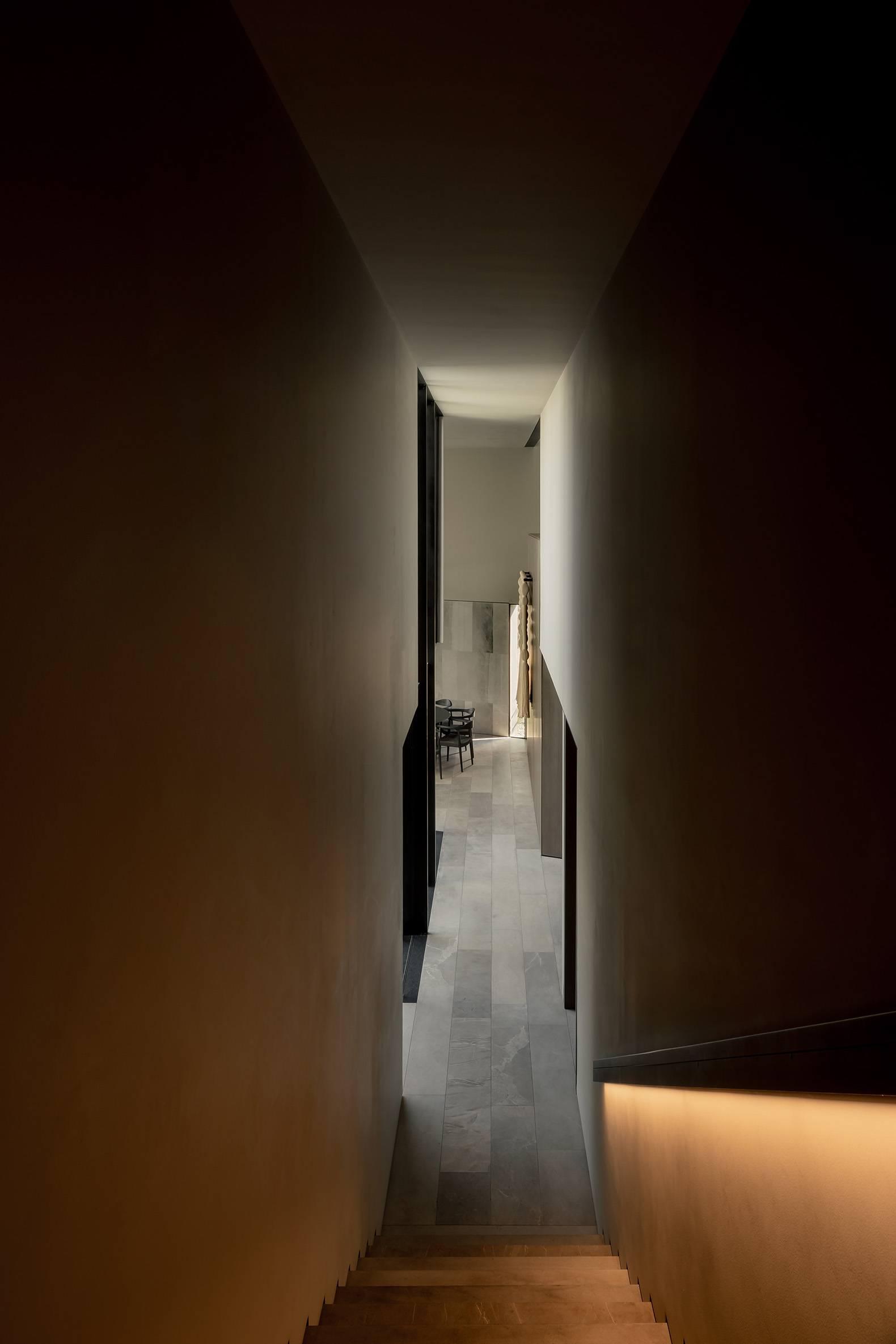
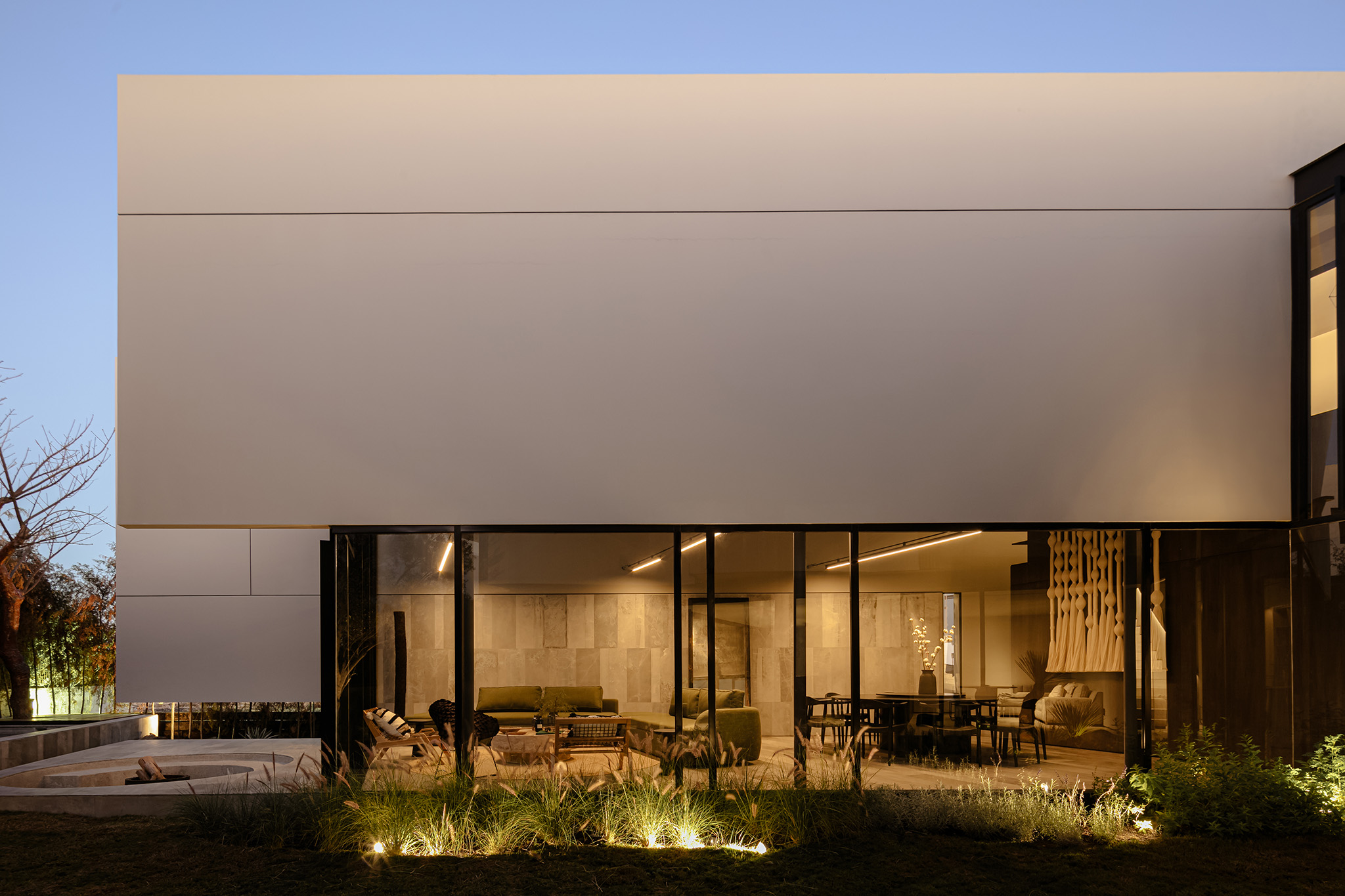
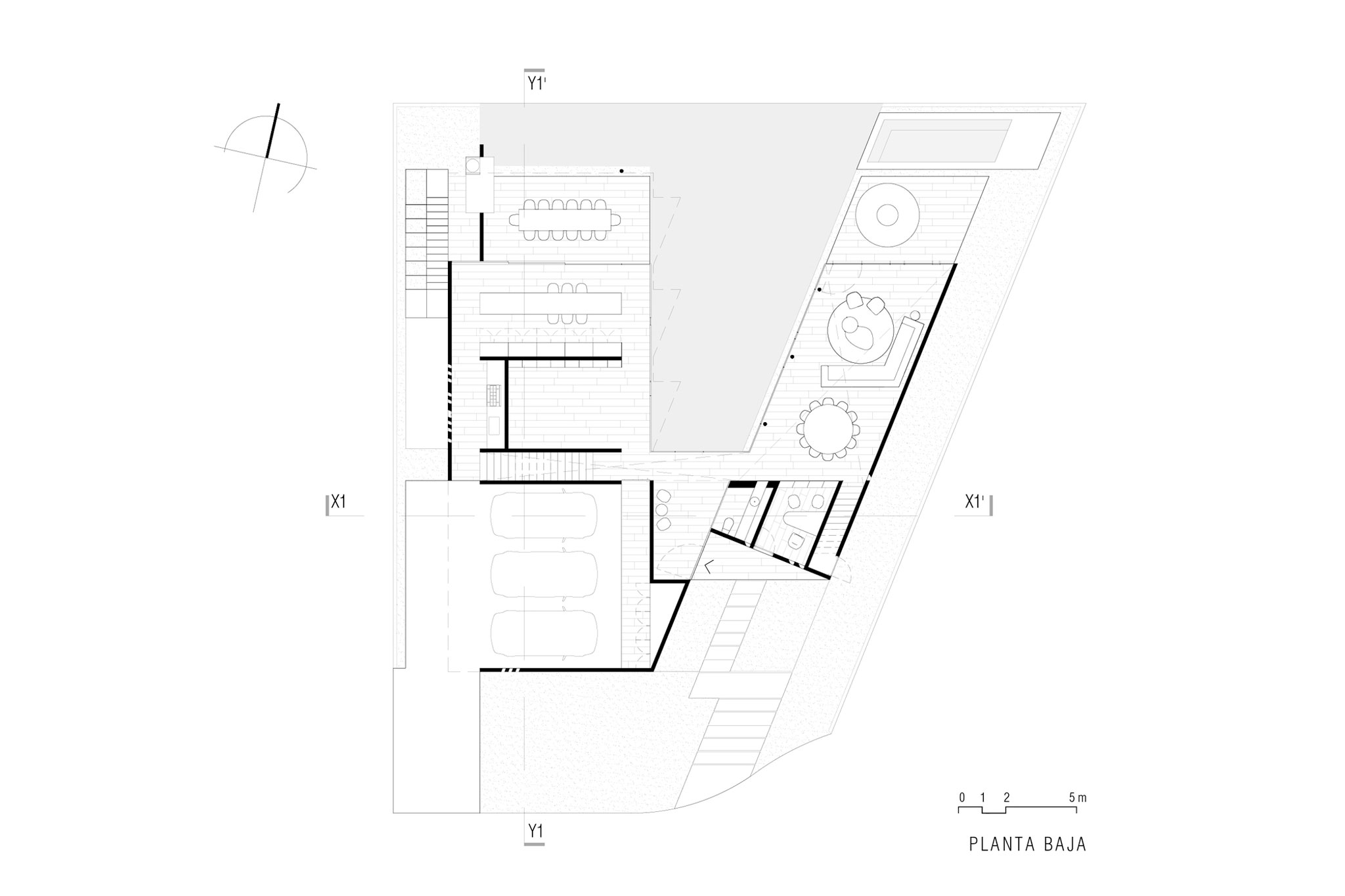
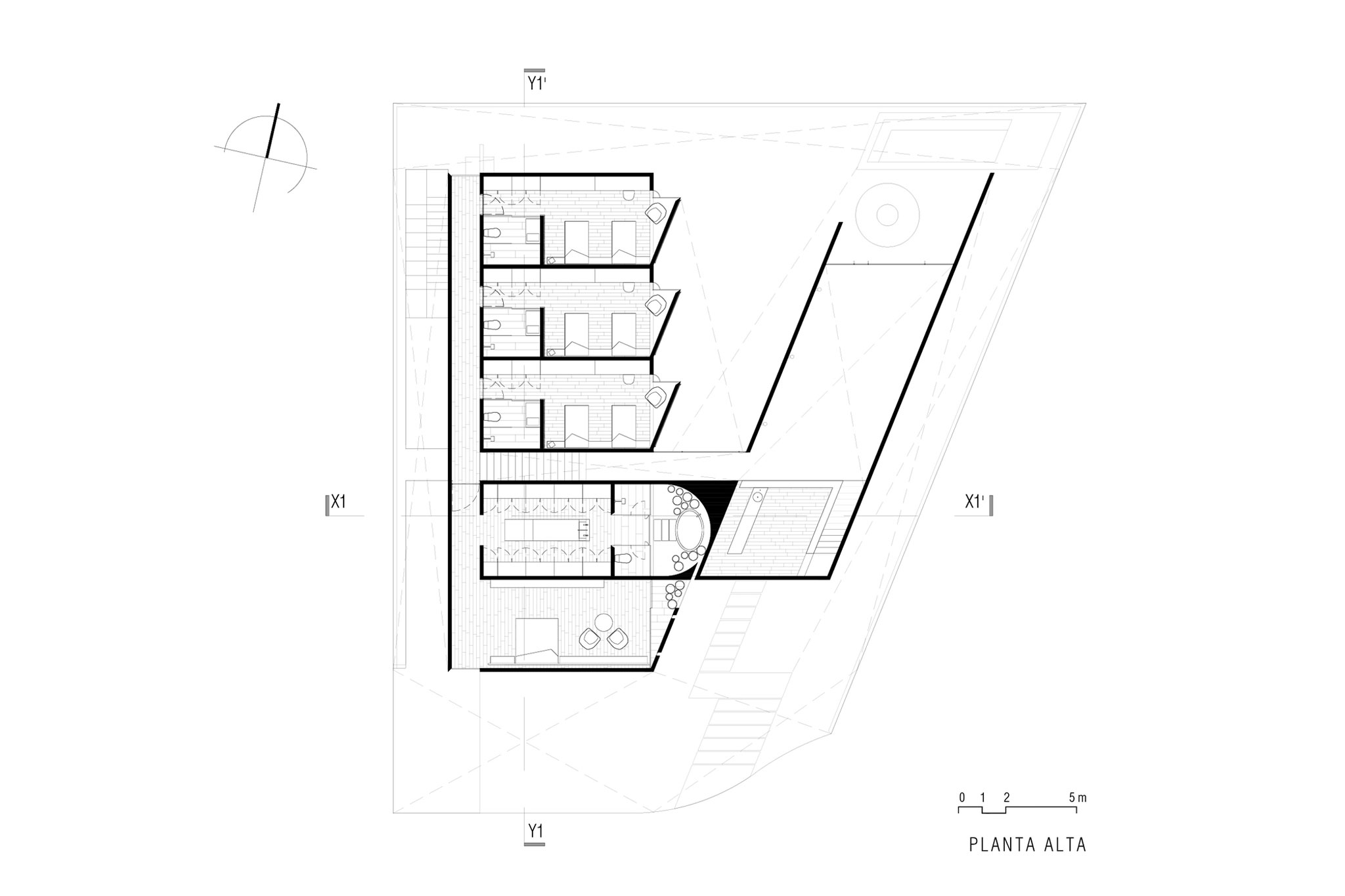
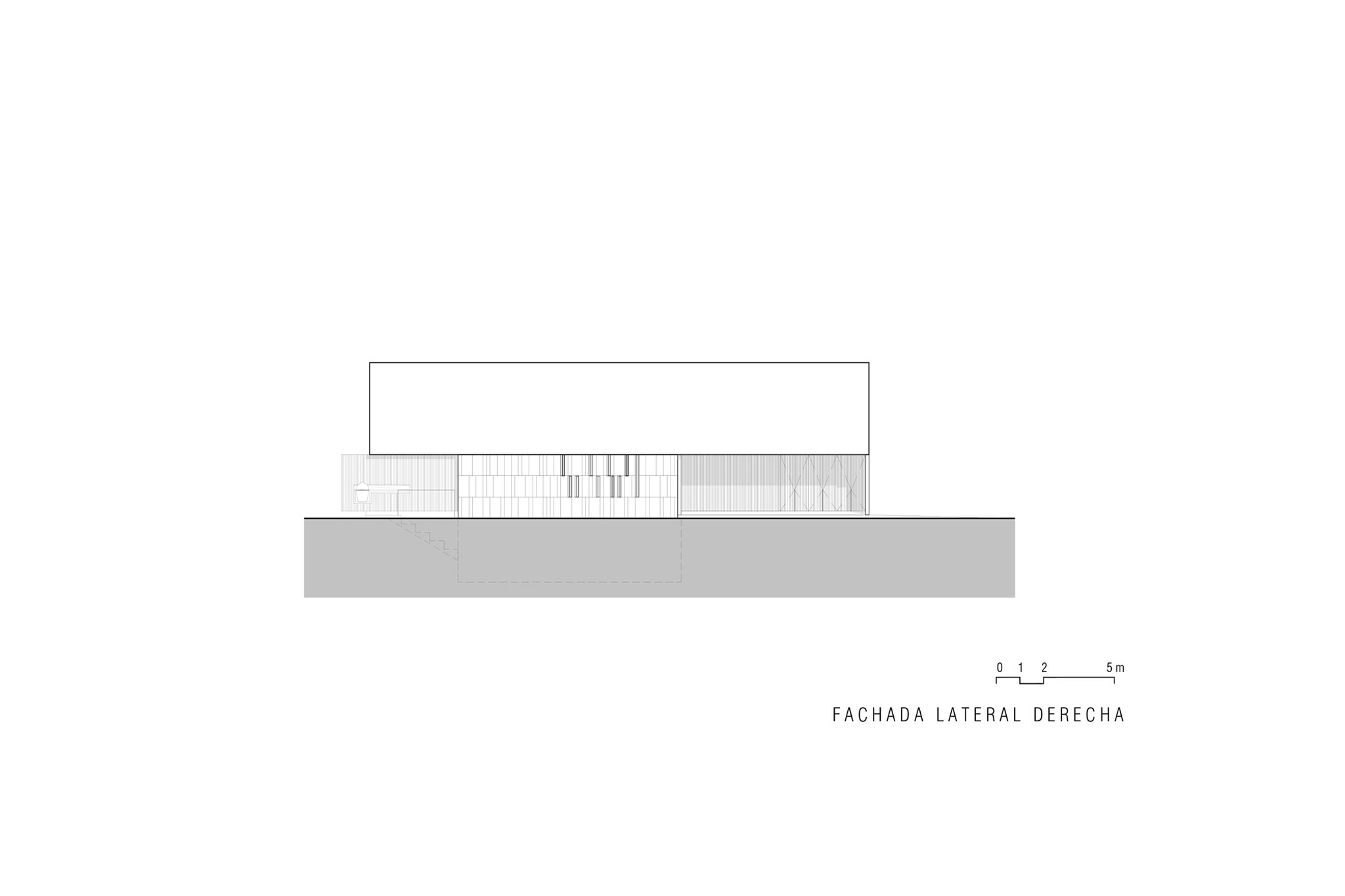
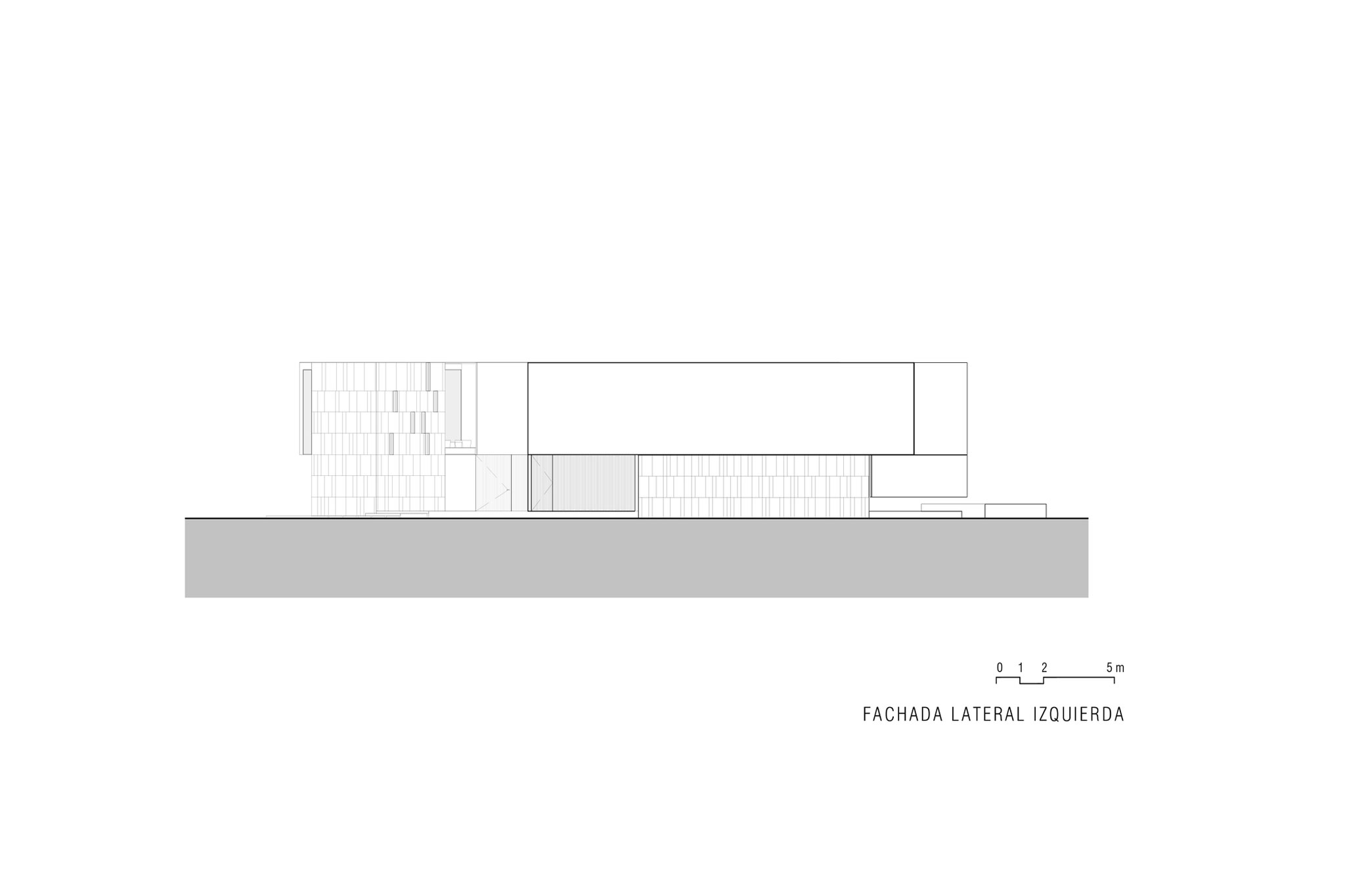
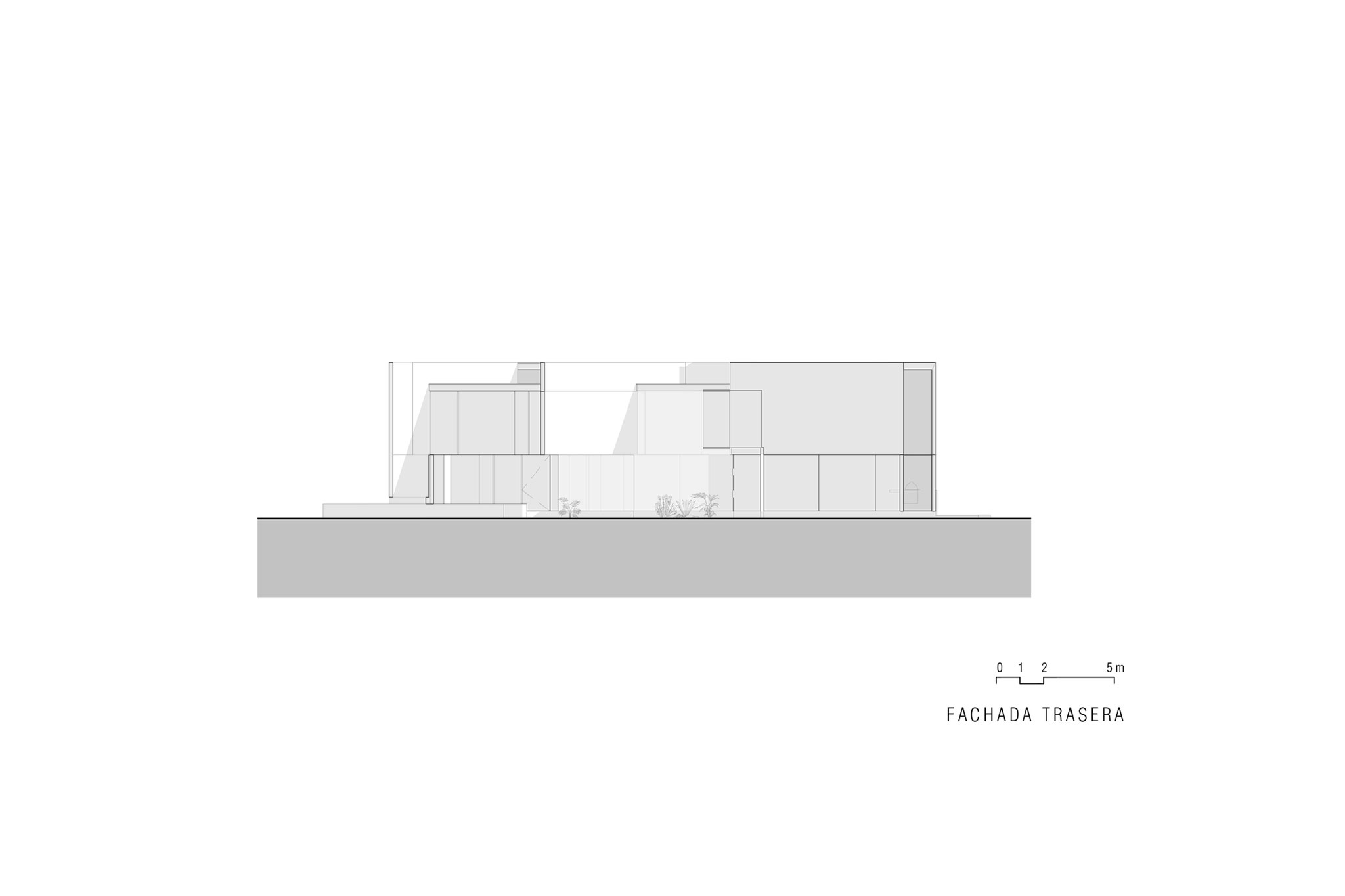
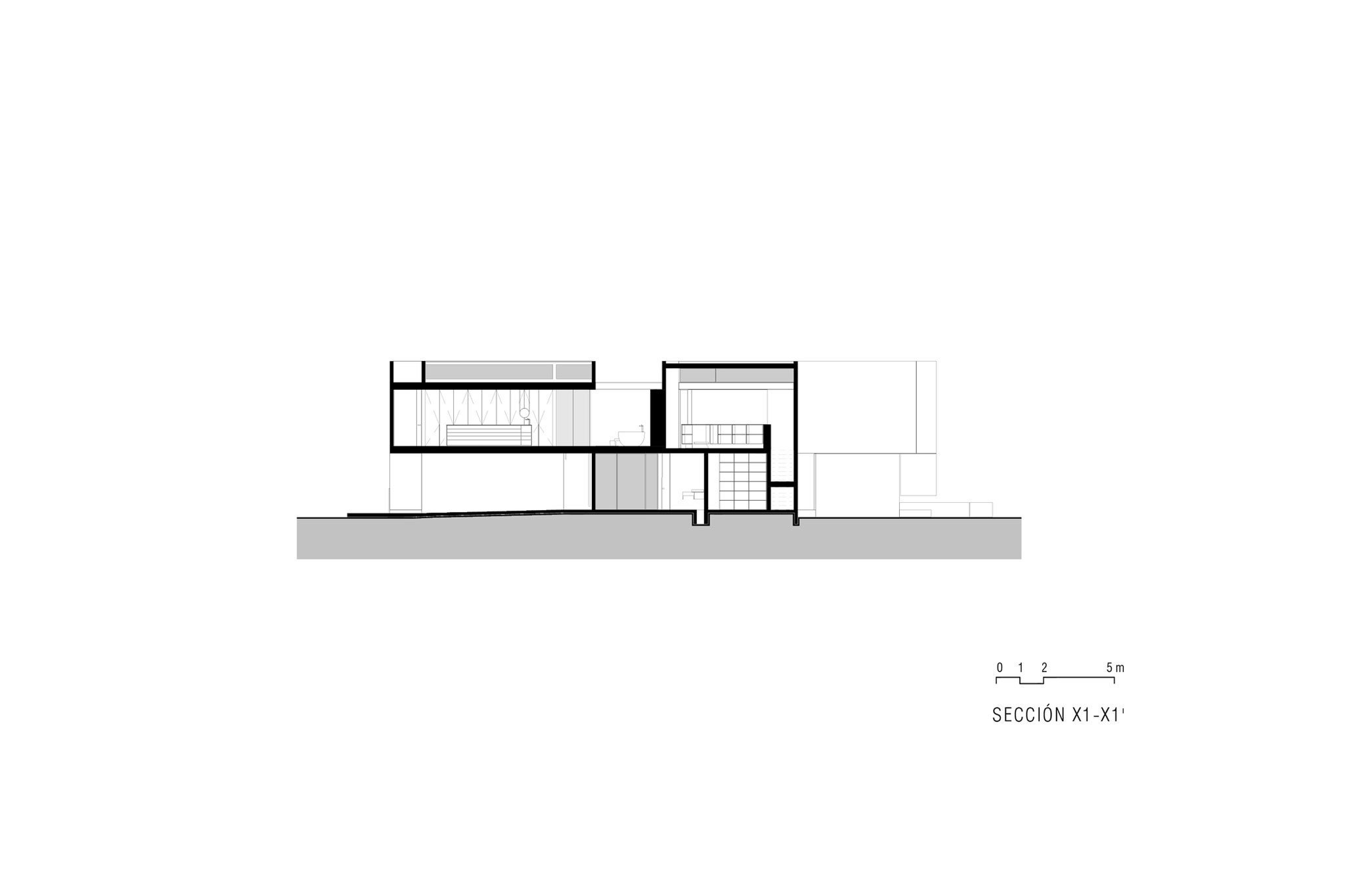
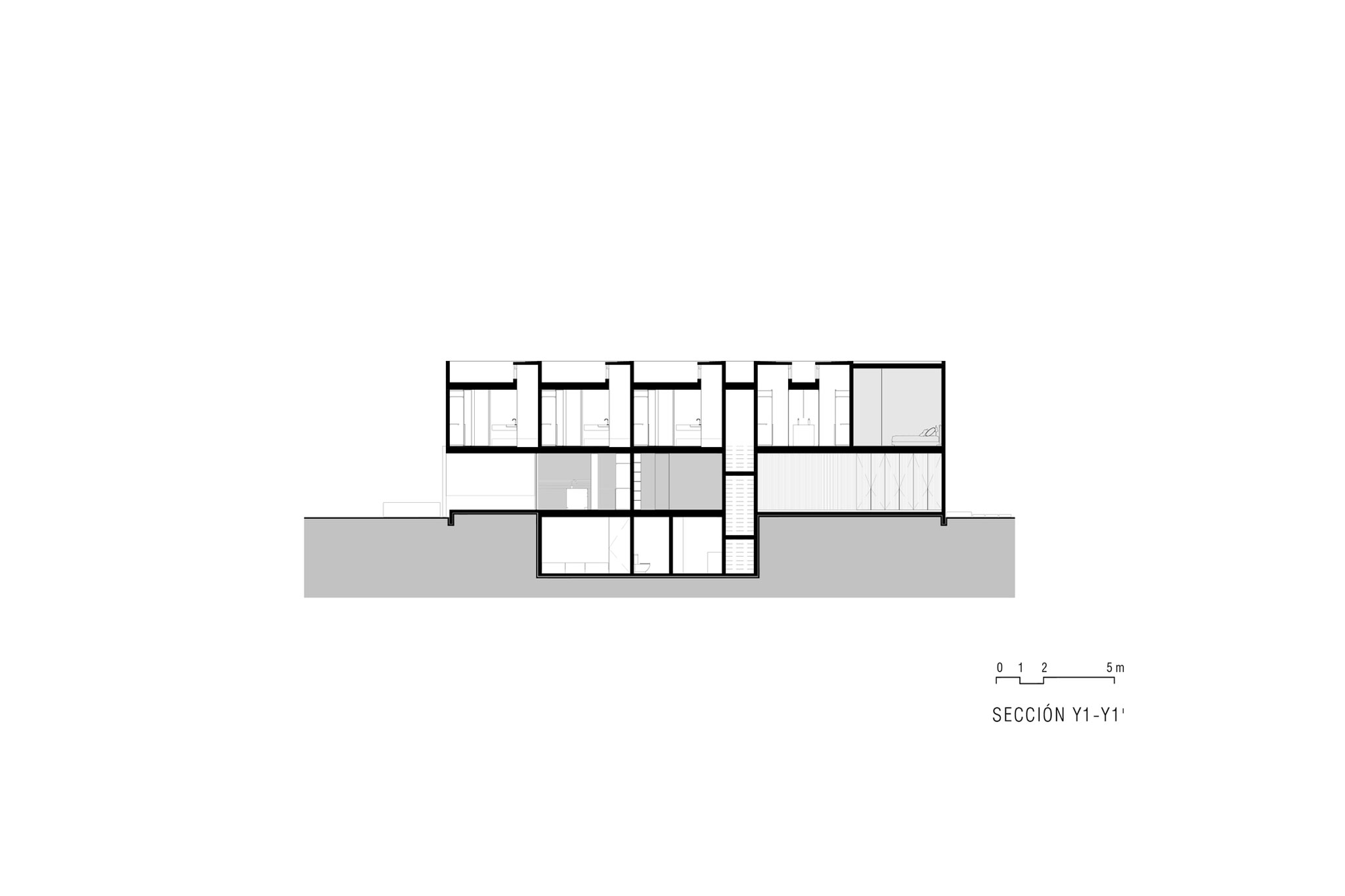
Formally, LABarq's proposal is summarized in two main volumes. The first adopts a gentle incline that responds to the existing slope of the site and houses the main social areas, such as the living room and dining room. The second uses the ground floor for service, while the upper floor houses a series of bedrooms that conveniently open onto the northwest façade.

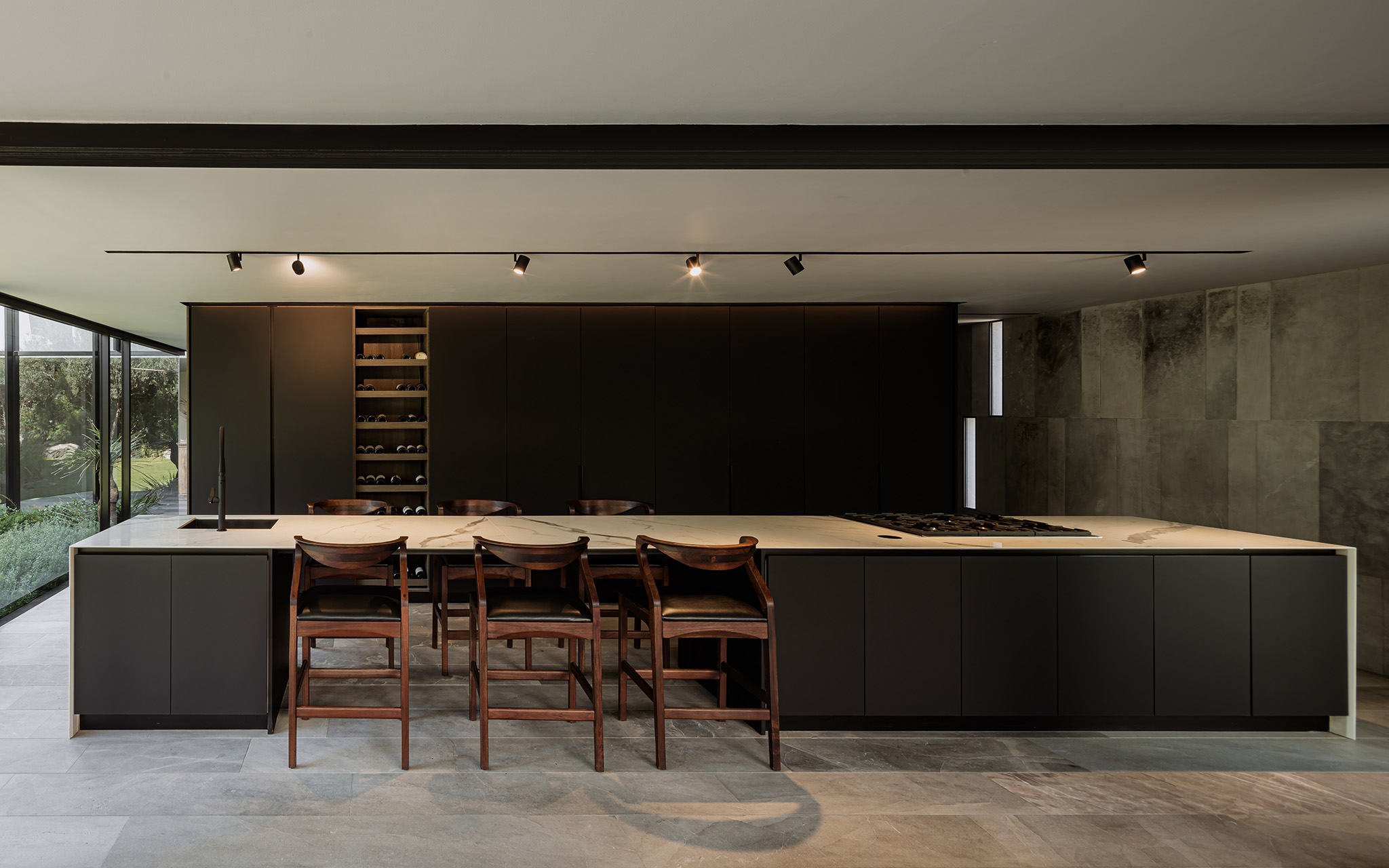
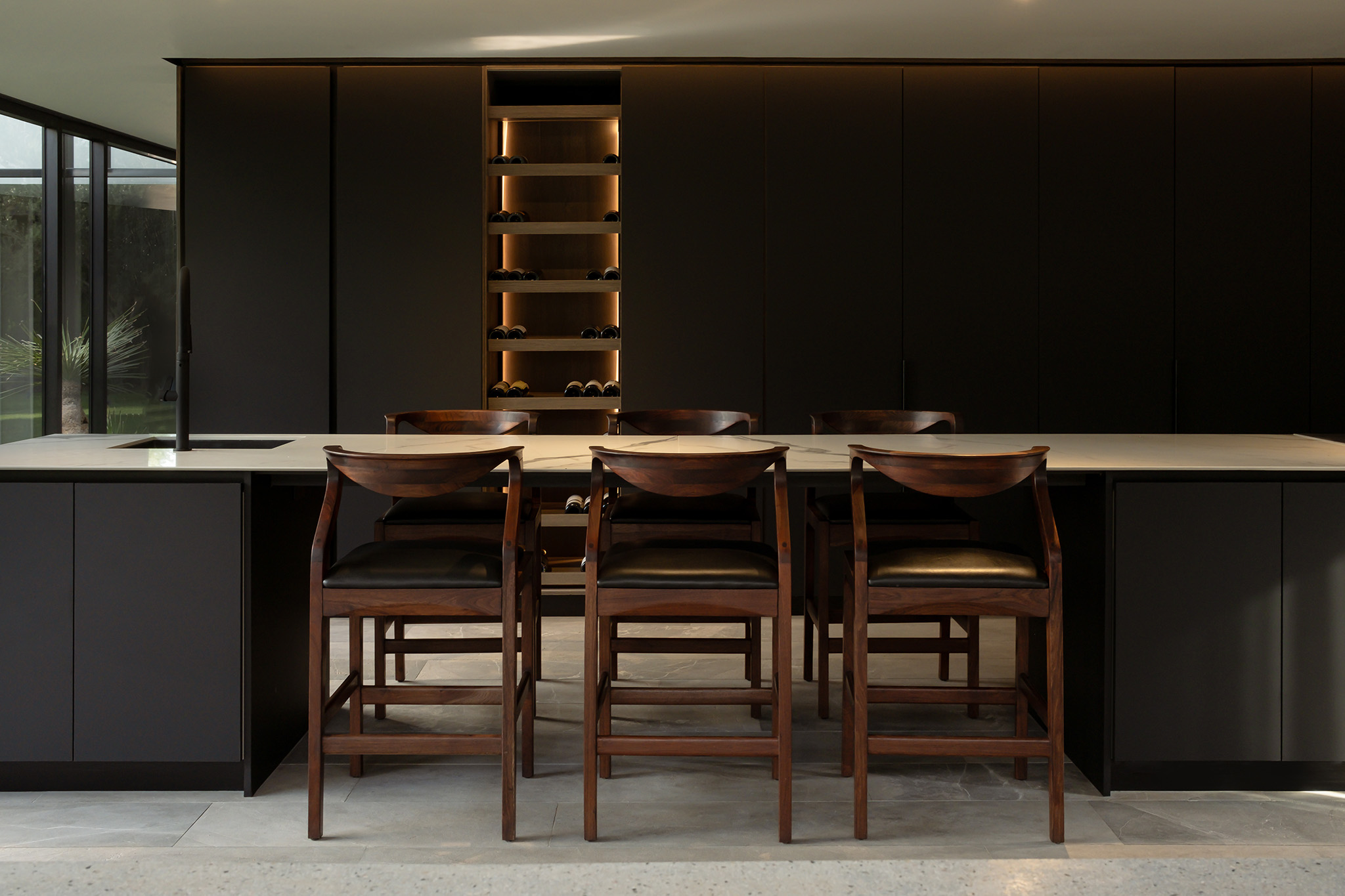
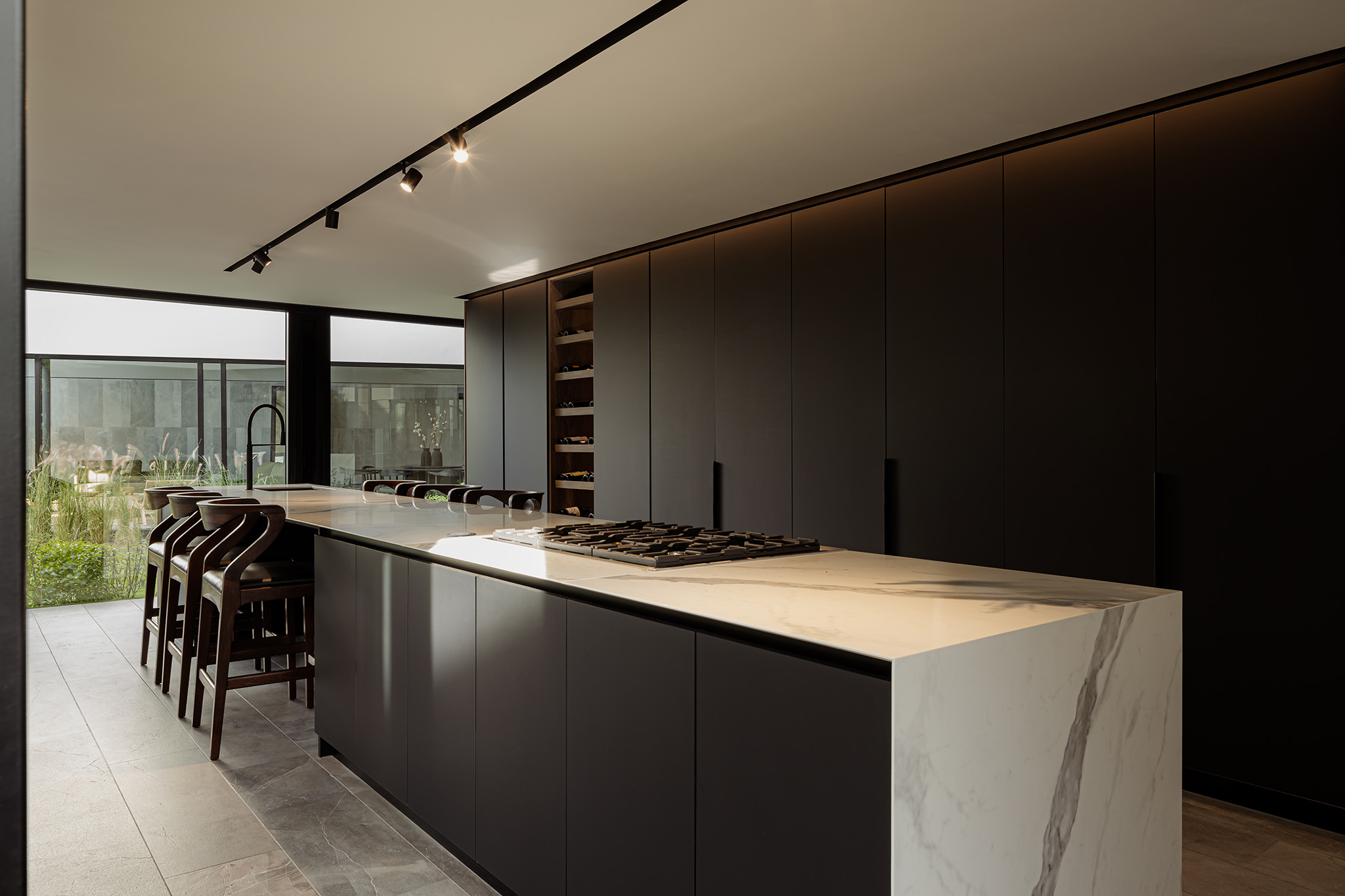
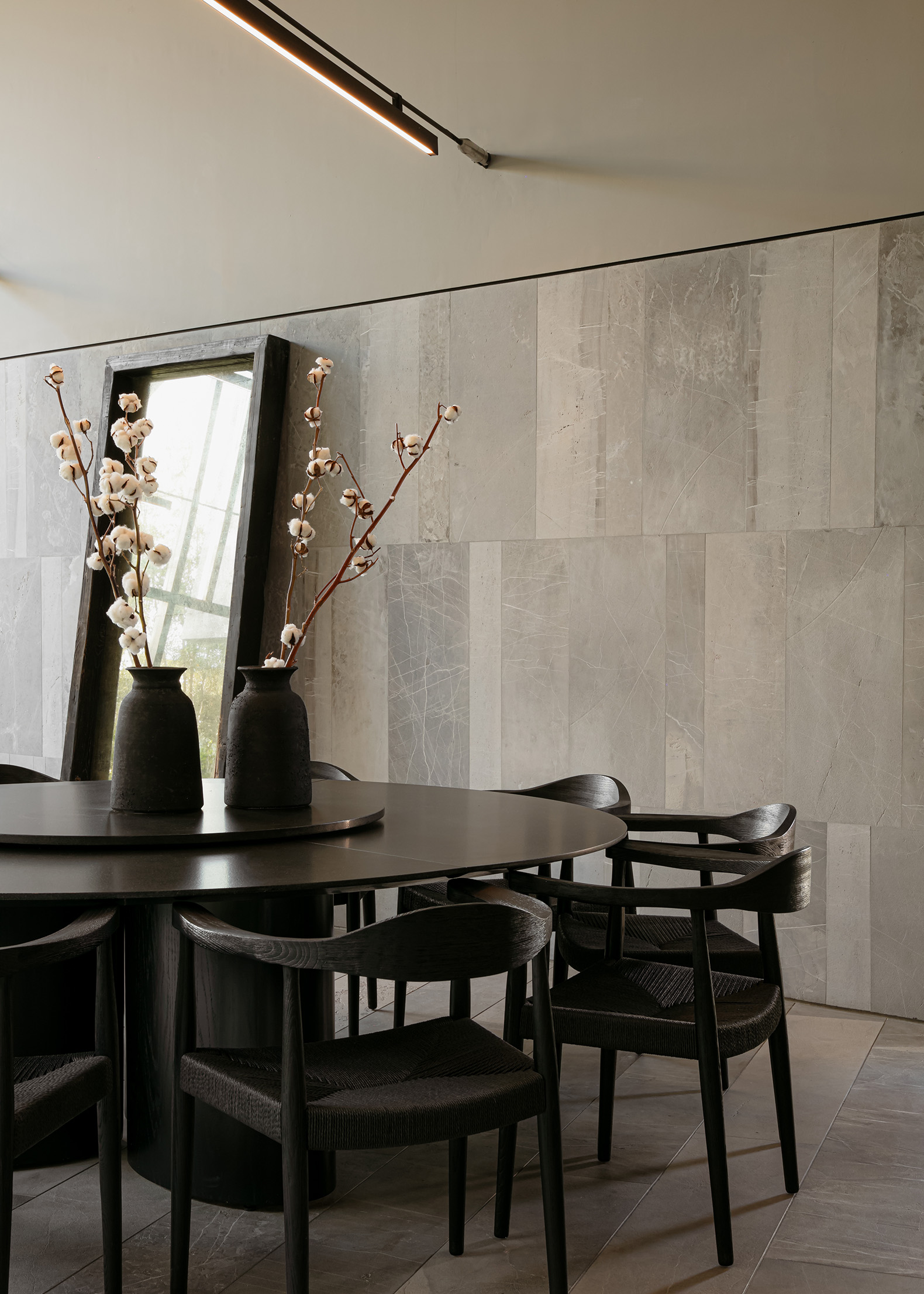
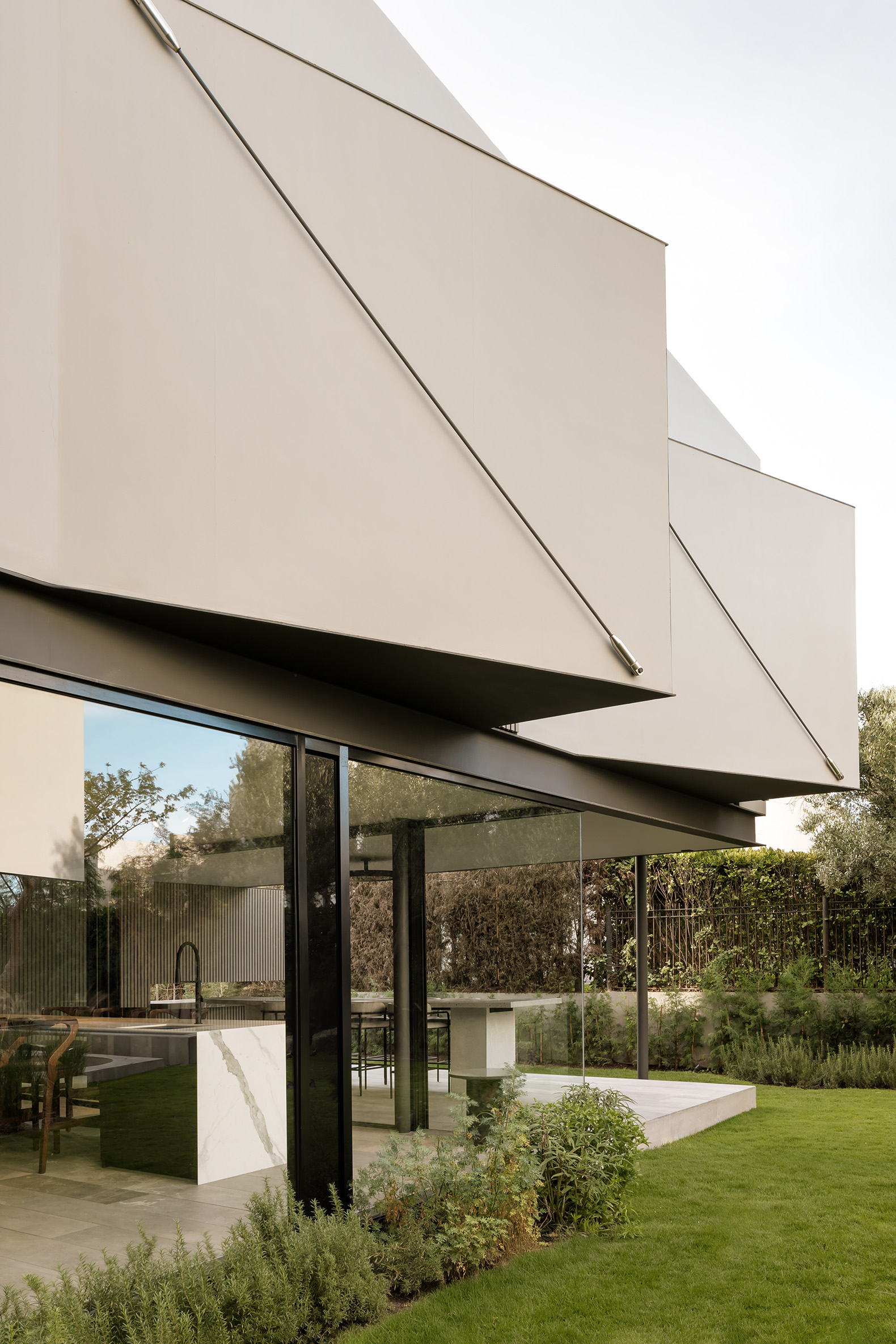
For the construction of Casa Río, the architectural team opted for a structural strategy that complements the soberness of the home's overall architectural style. Local materials such as Santo Tomás marble, walnut veneer, and wood finishes are combined with steel columns, slabs, and metal tensioners, resulting in a lightweight design that appears to float above the ground.
Casa Río by LABarq. Photograph by Ariadna Polo.

Casa Río by LABarq. Photograph by Ariadna Polo.

Project description by LABarq

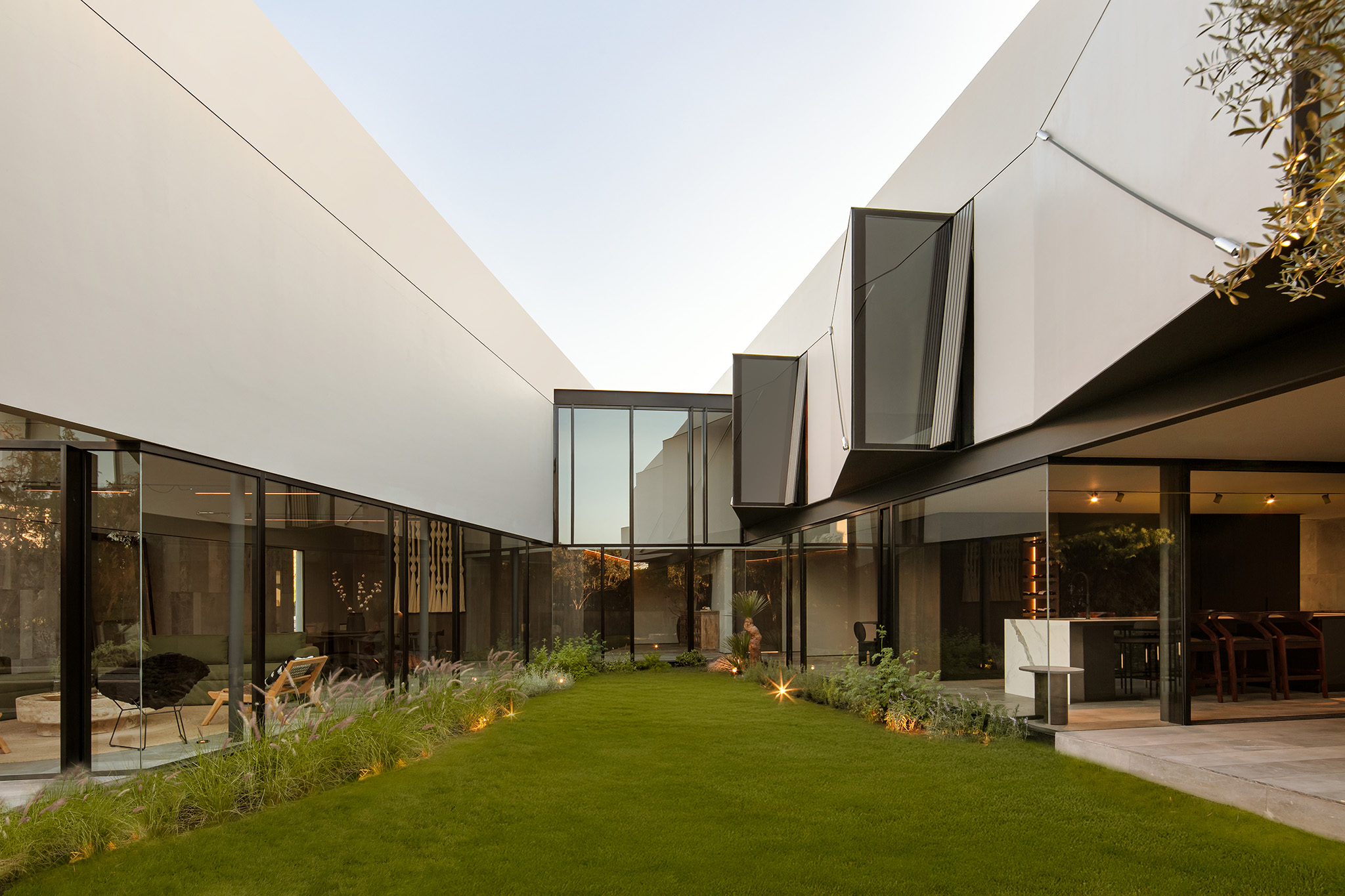
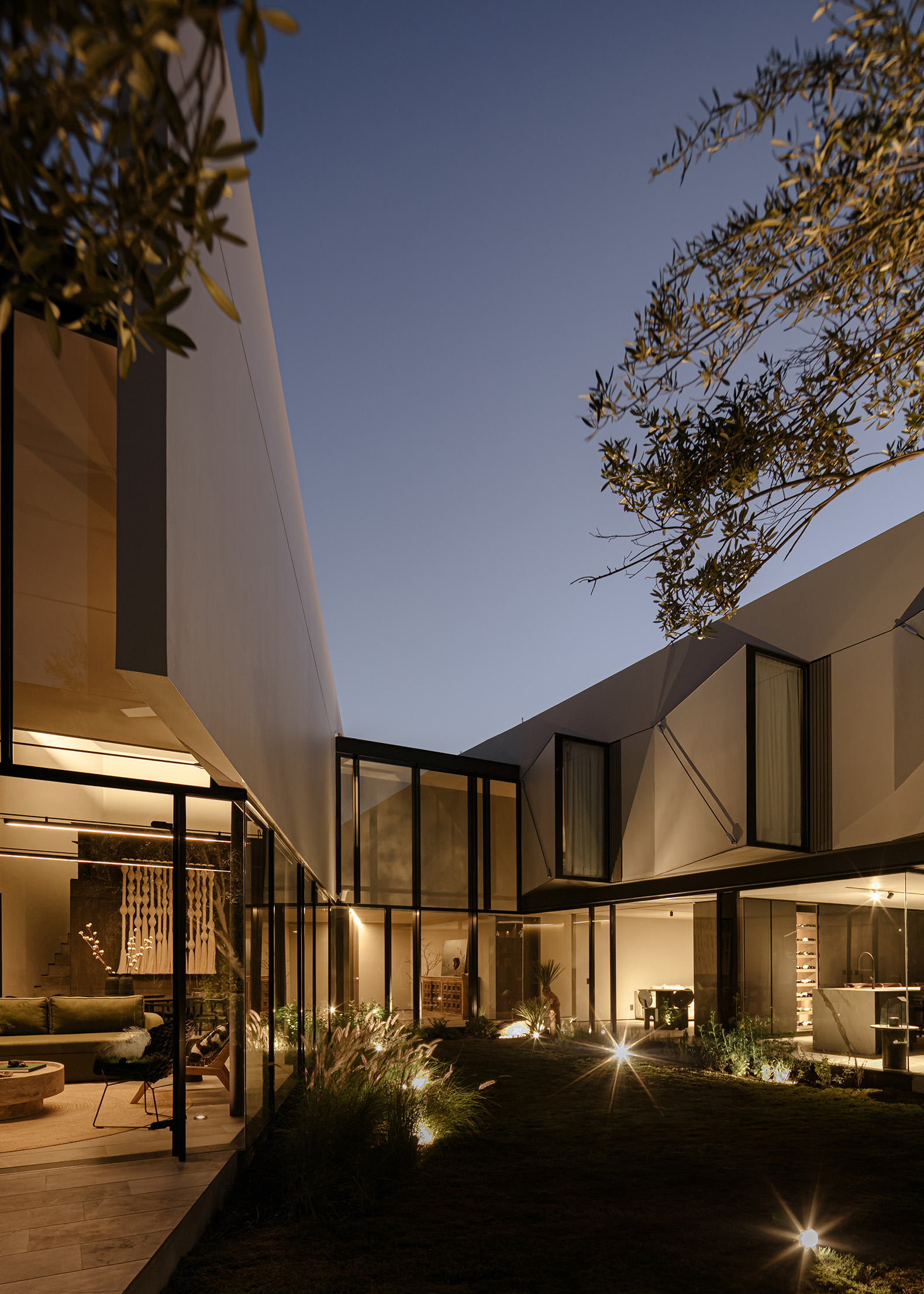
Casa Río is a project that responds sensitively to the site’s topography and irregular geometry. Its “V” shape not only addresses the trapezoidal condition of the plot but also creates a central garden that organizes the residence and frames views toward the surrounding natural environment.

“The intention is for the architecture to disappear among the trees, with solid walls at the front and a complete opening toward the landscape at the back: a light, transparent house that remains fully aware of its context.” 

Juan Carlos Kelly

Casa Río por LABarq. Fotografía por Ariadna Polo.
Casa Río by LABarq. Photograph by Ariadna Polo.

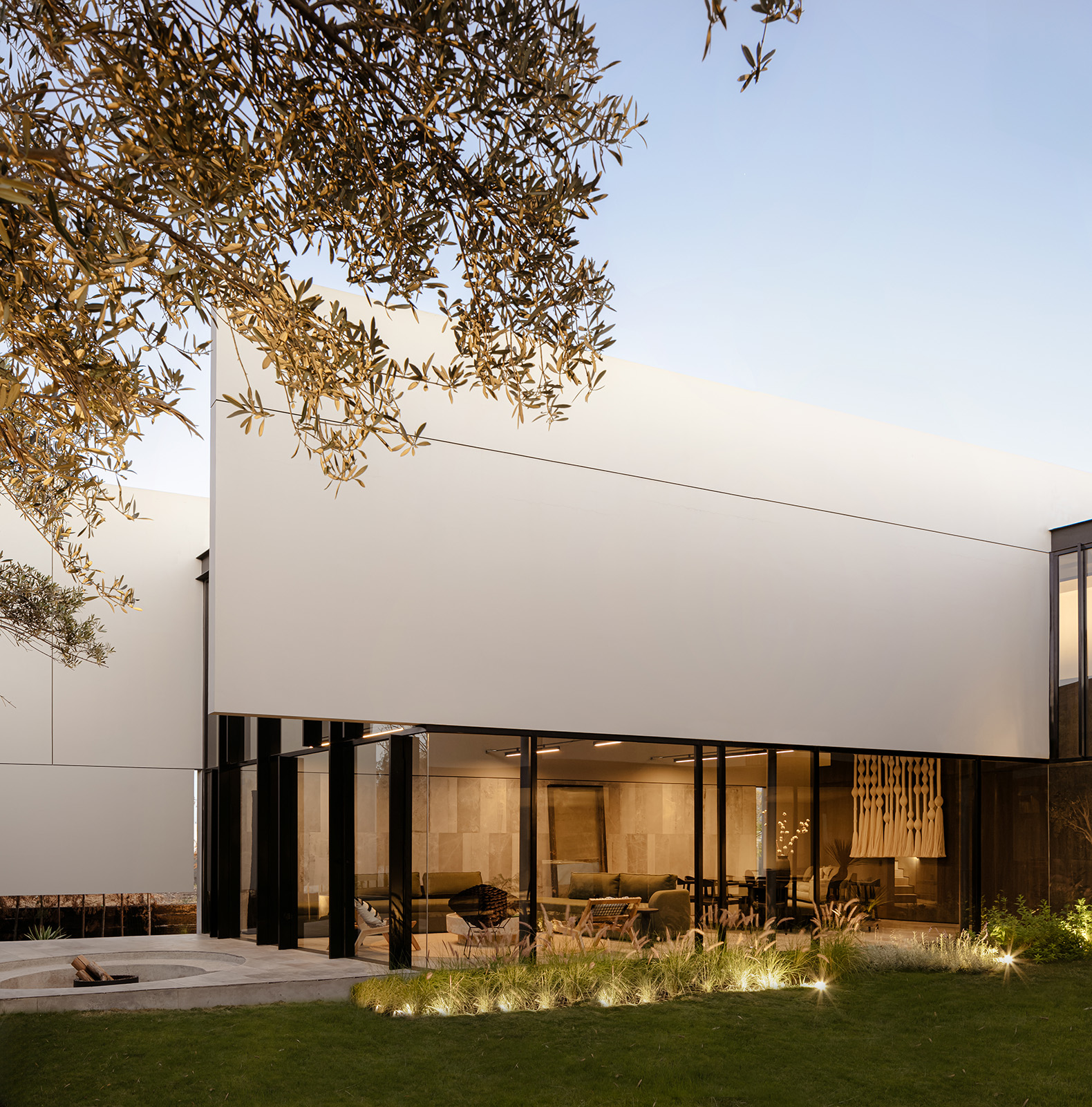
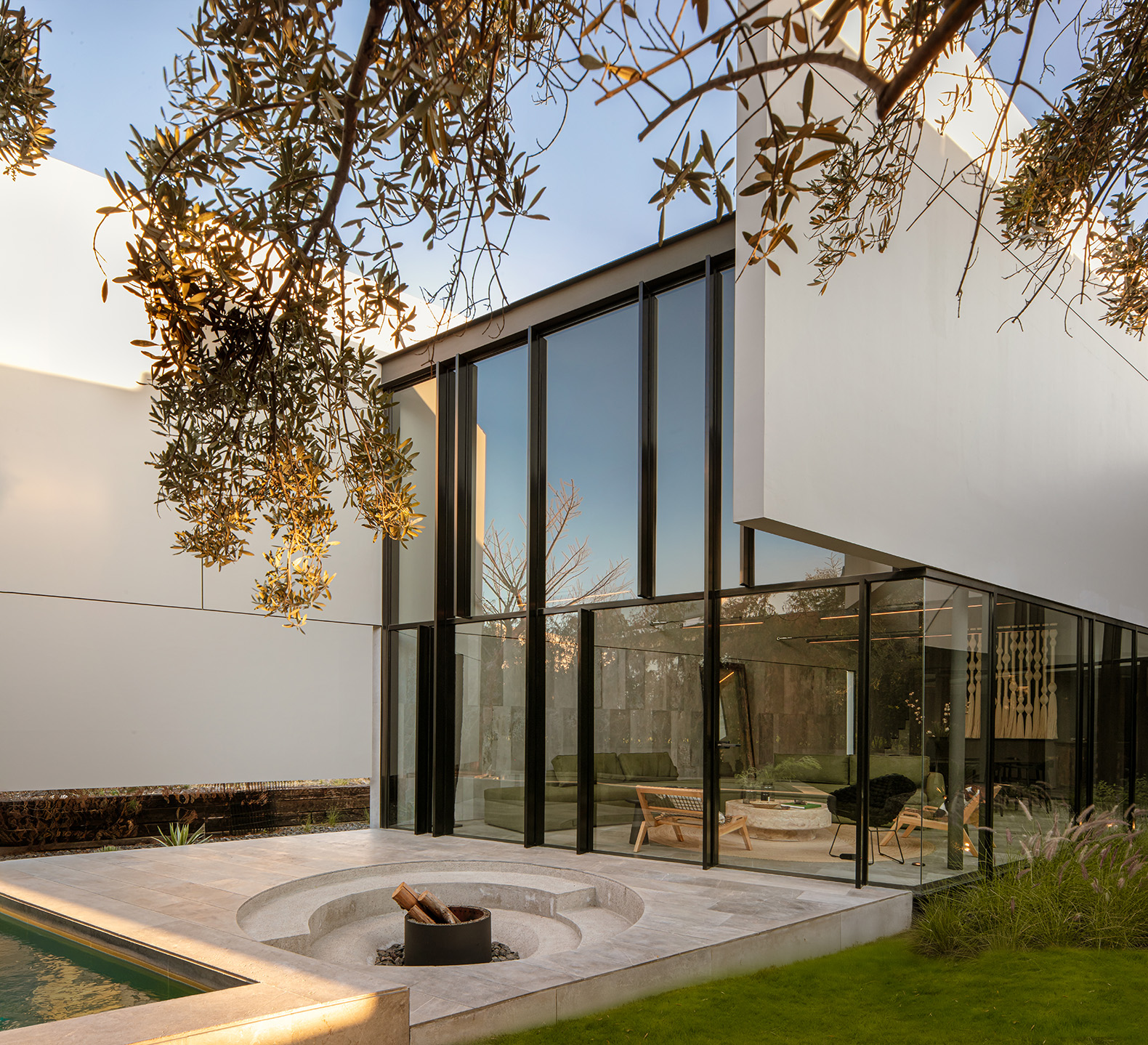
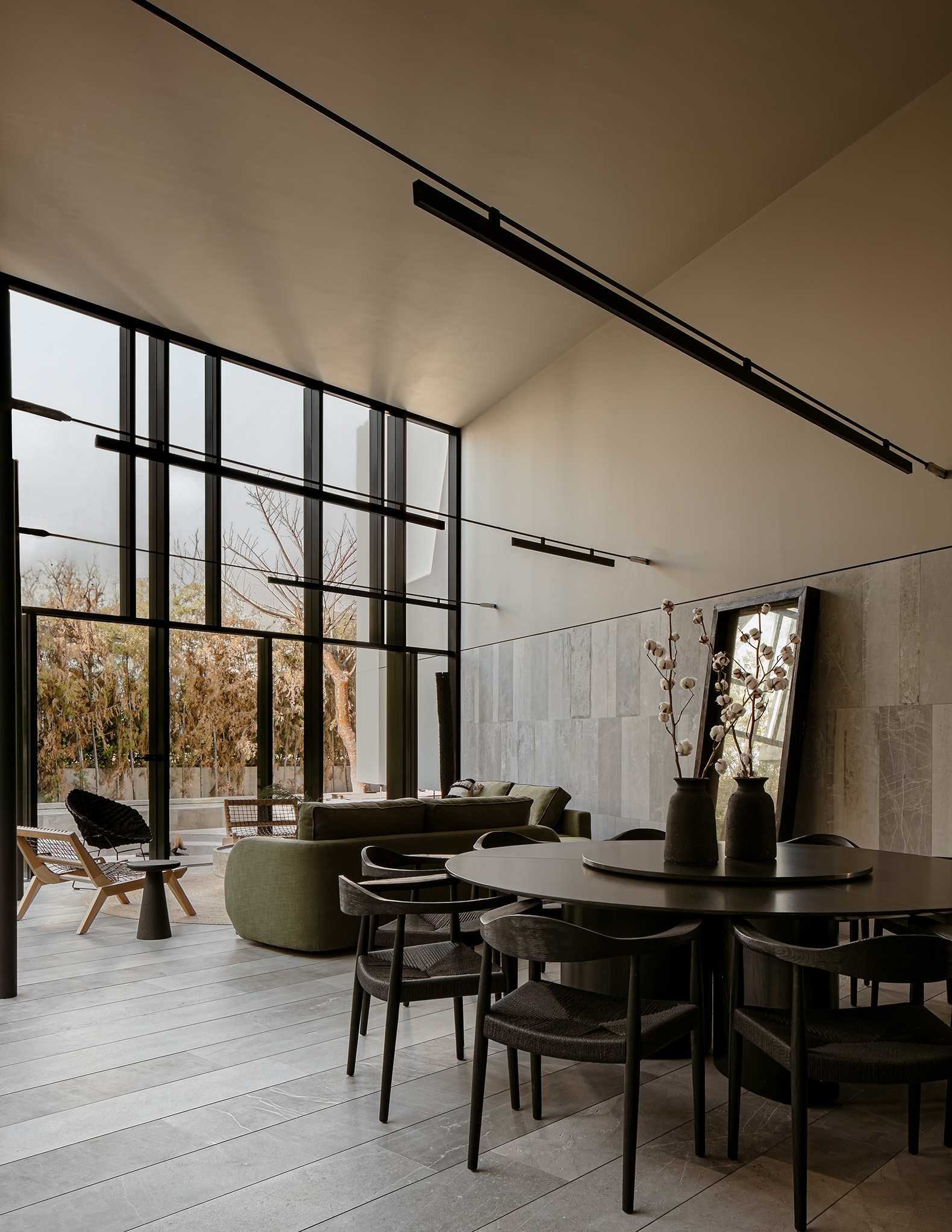
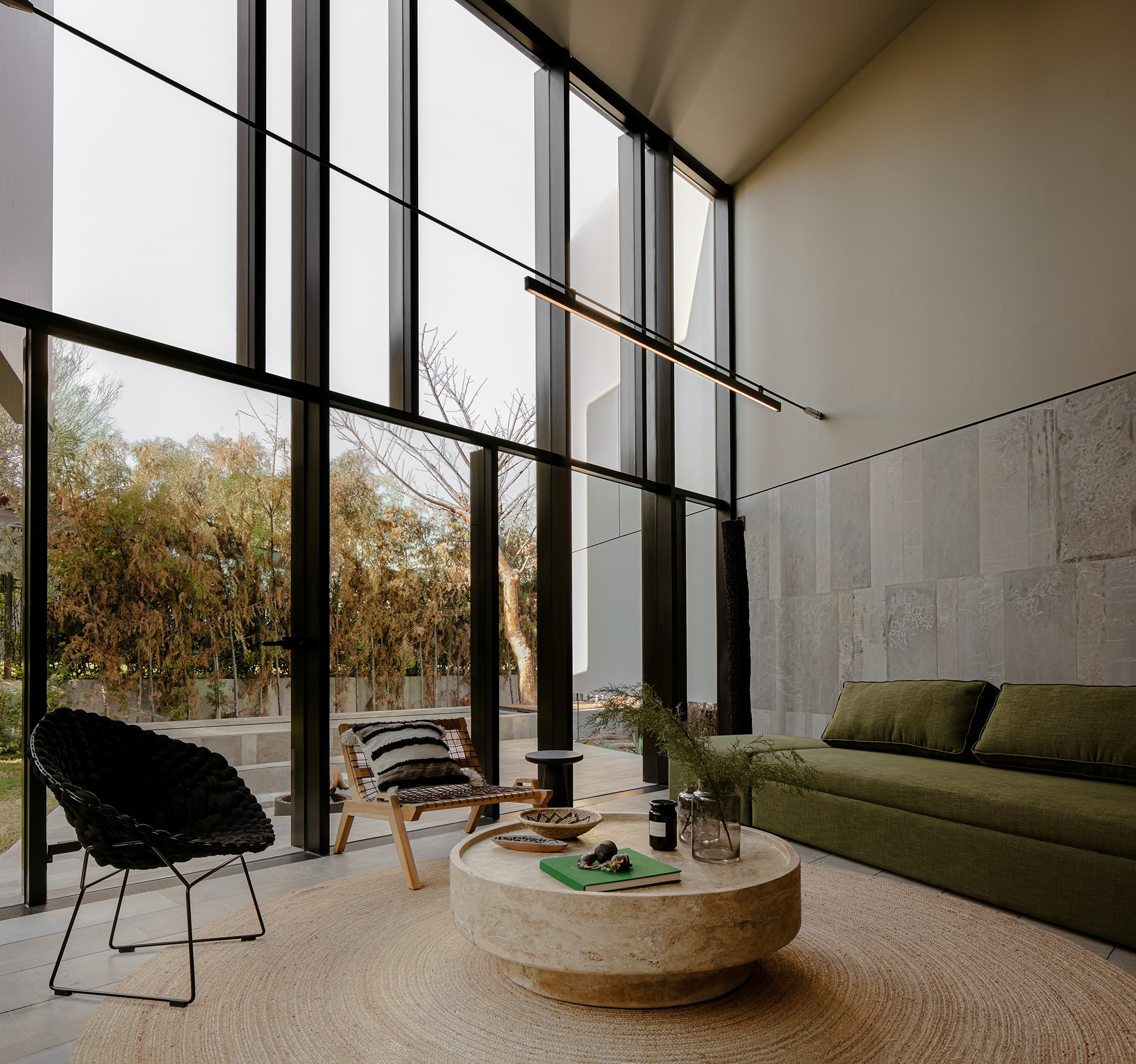
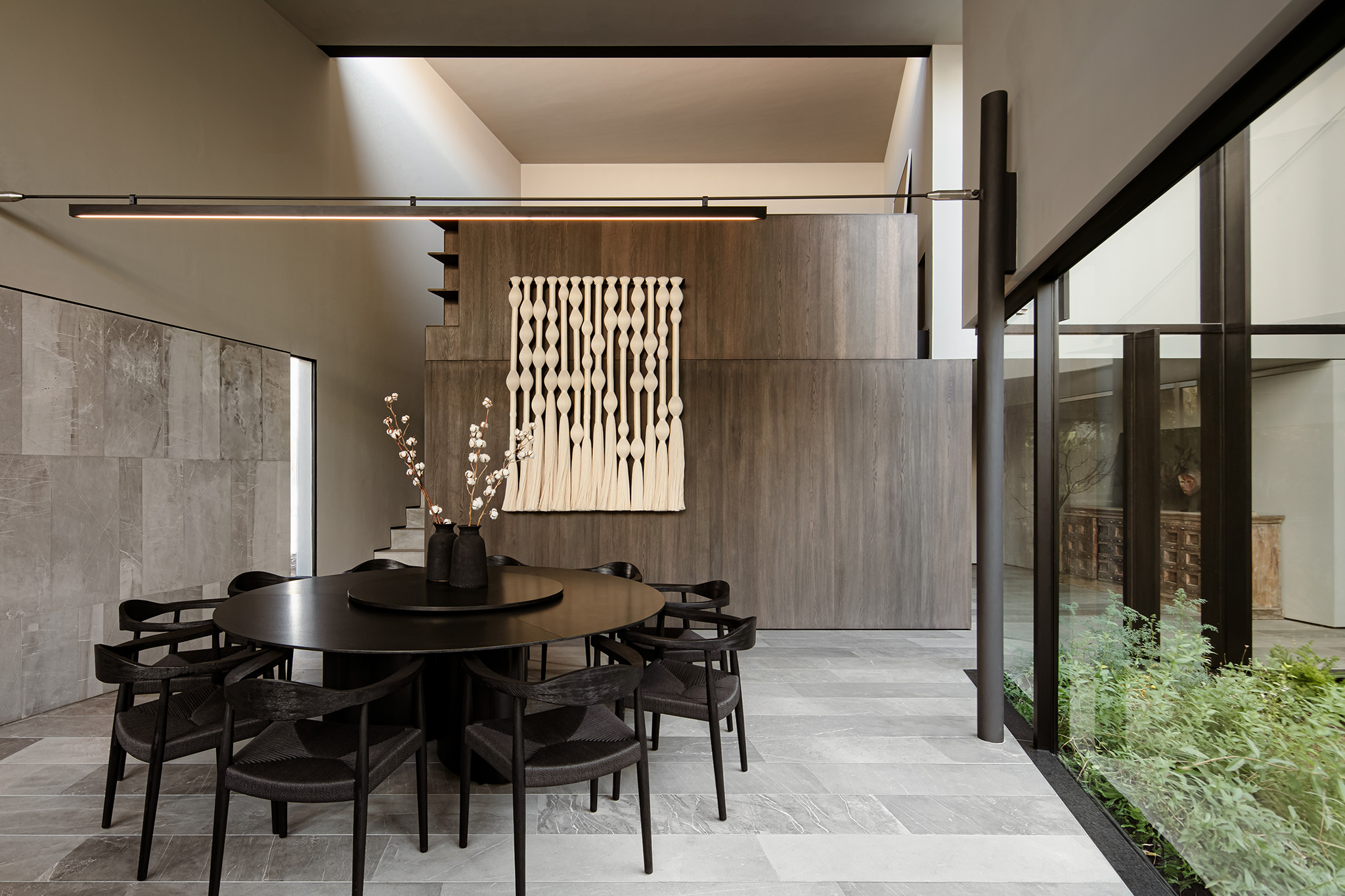
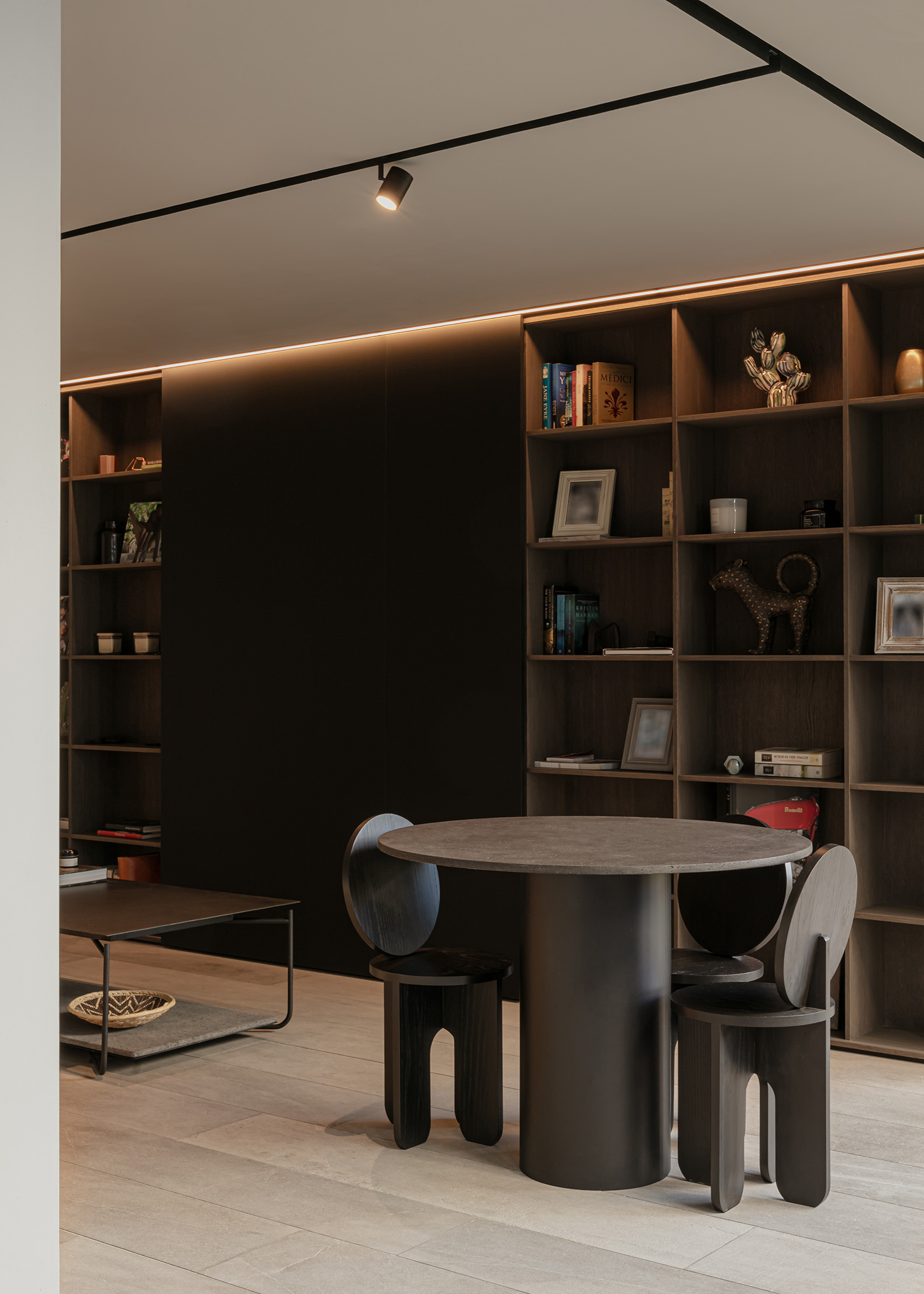
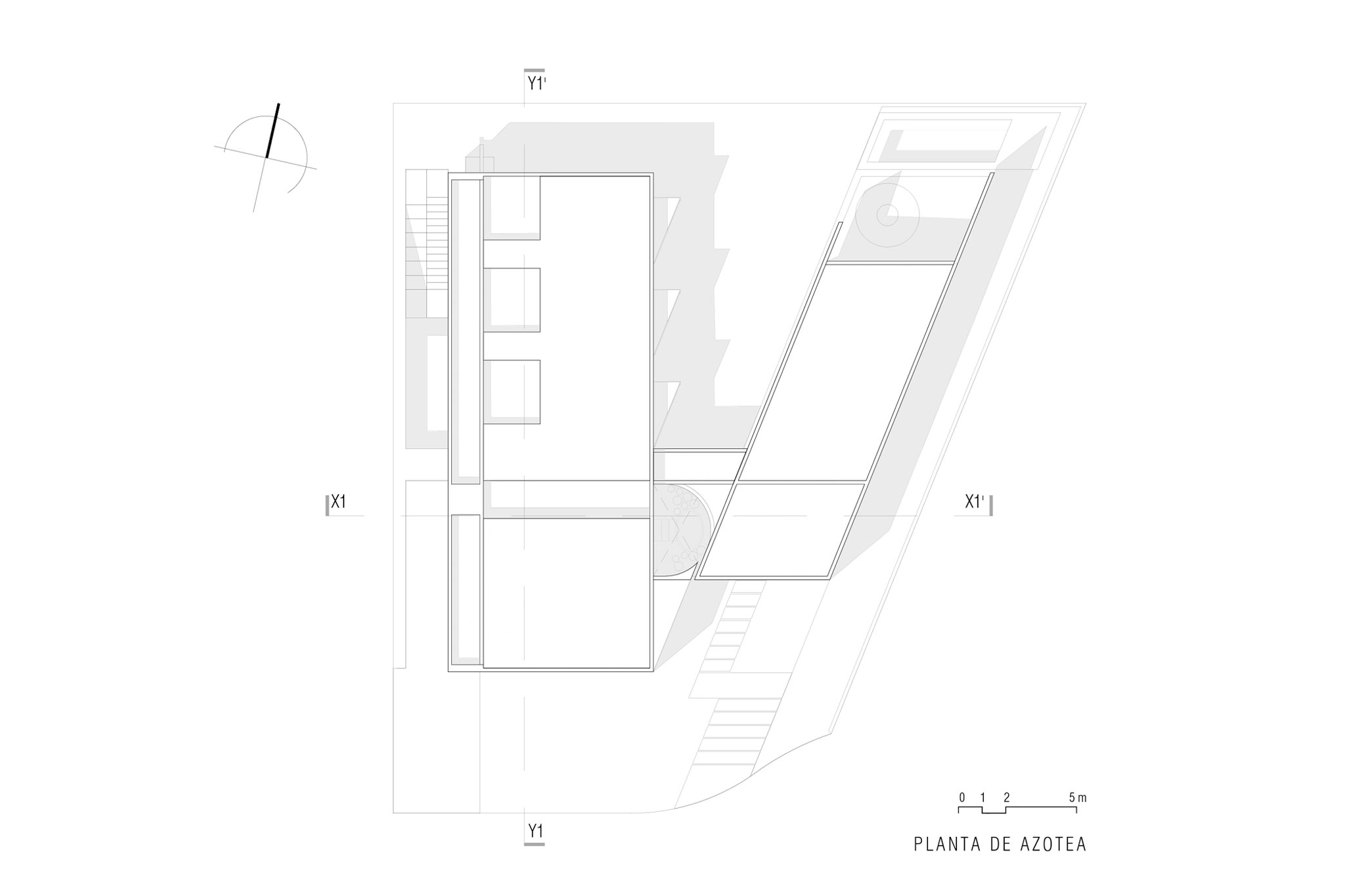
The design unfolds in two main volumes. The first, inclined to adapt to the slope, houses the social areas: a double-height living and dining room, a study with independent access, and a mezzanine that expands the interior space. Extending outward, a swimming pool and a fire pit create continuity between architecture and landscape.

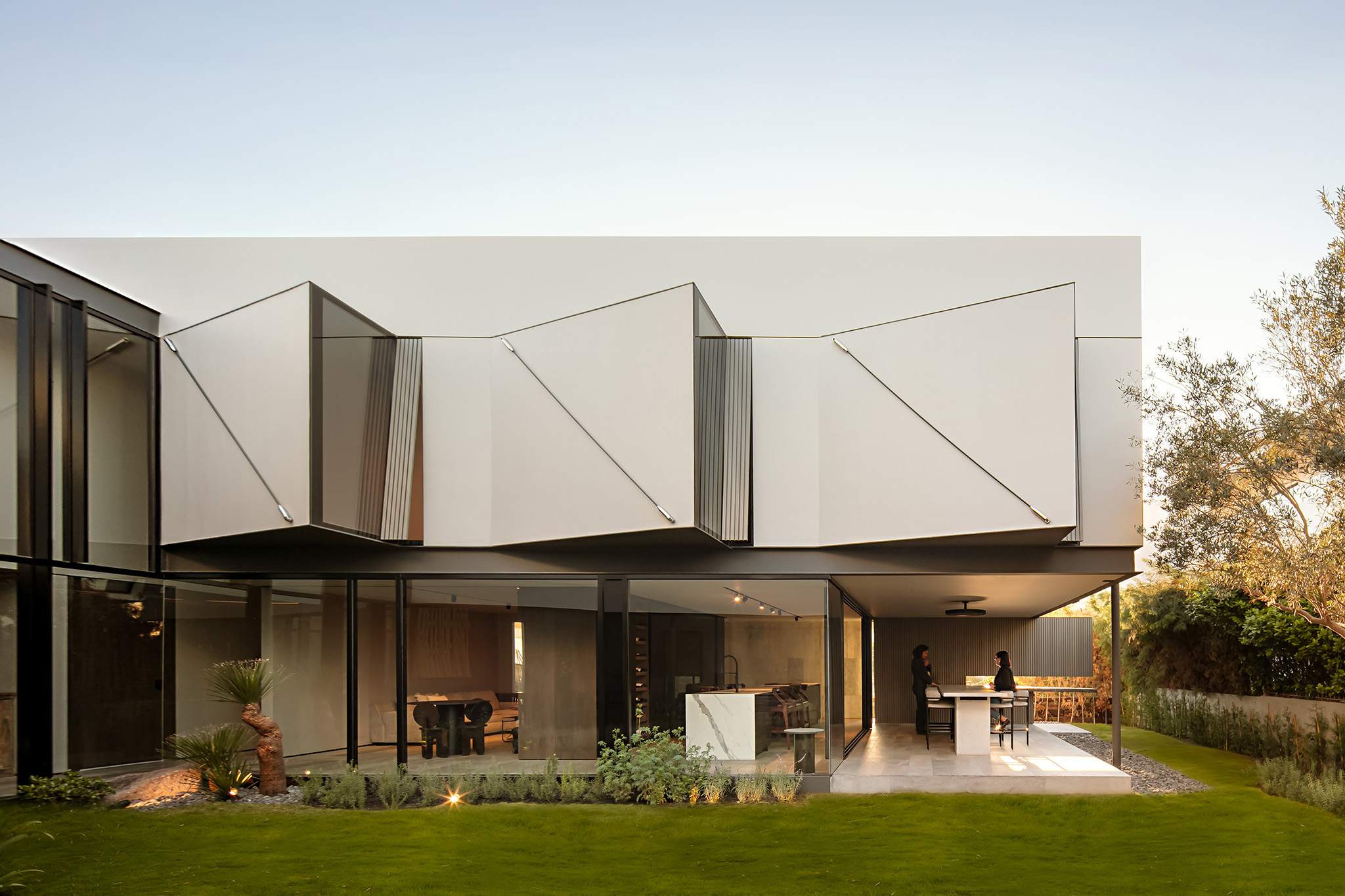
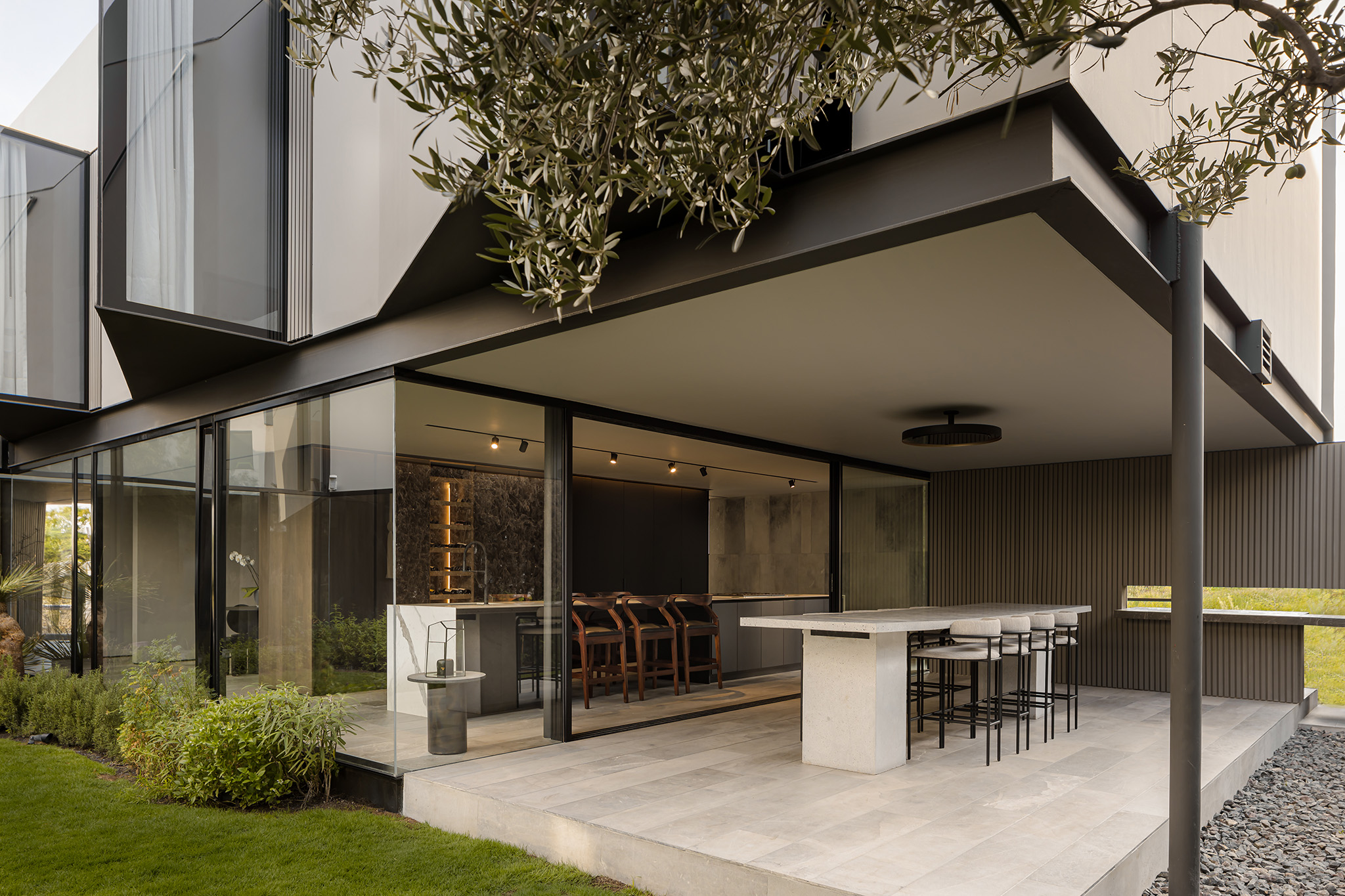
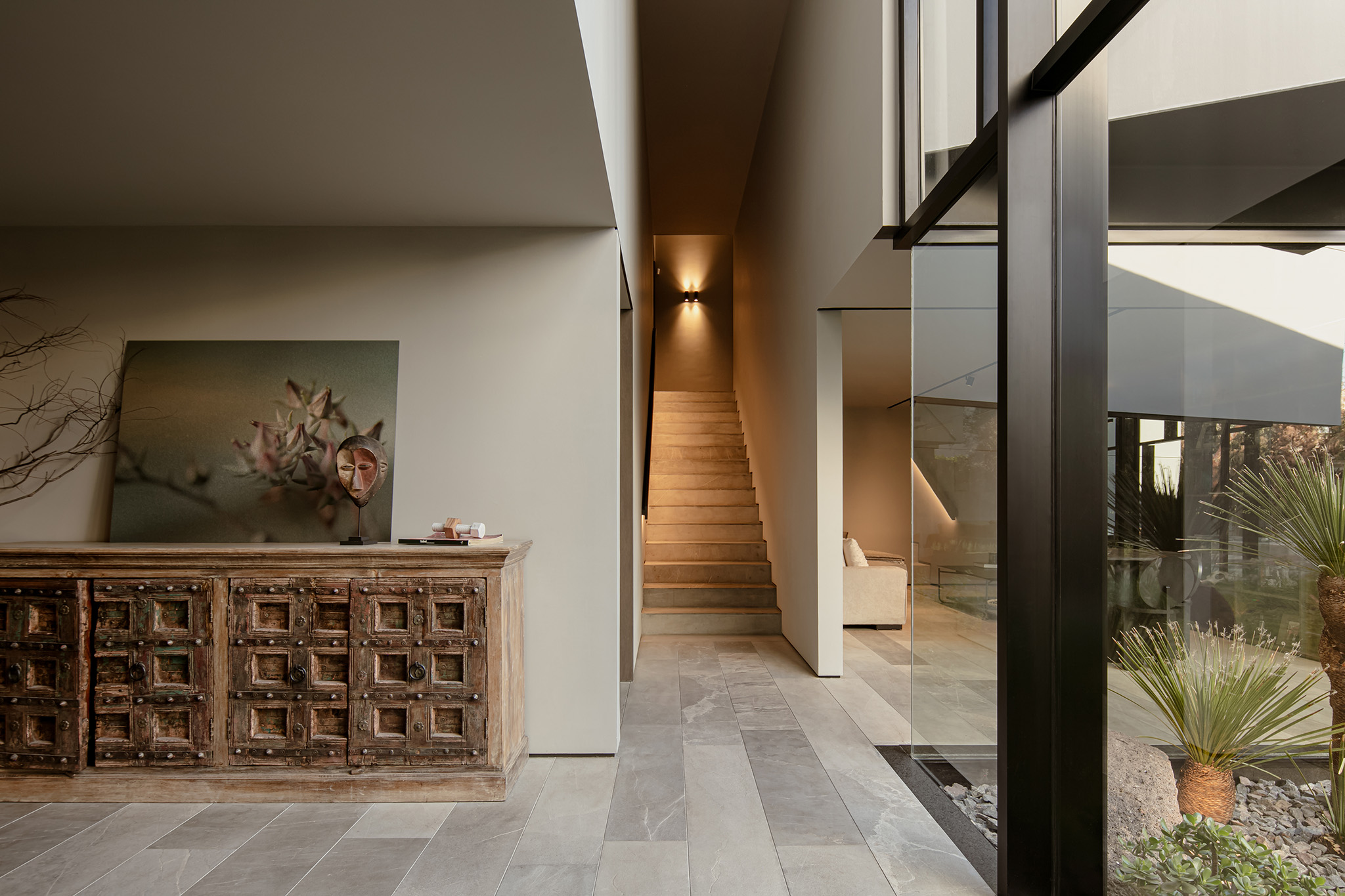
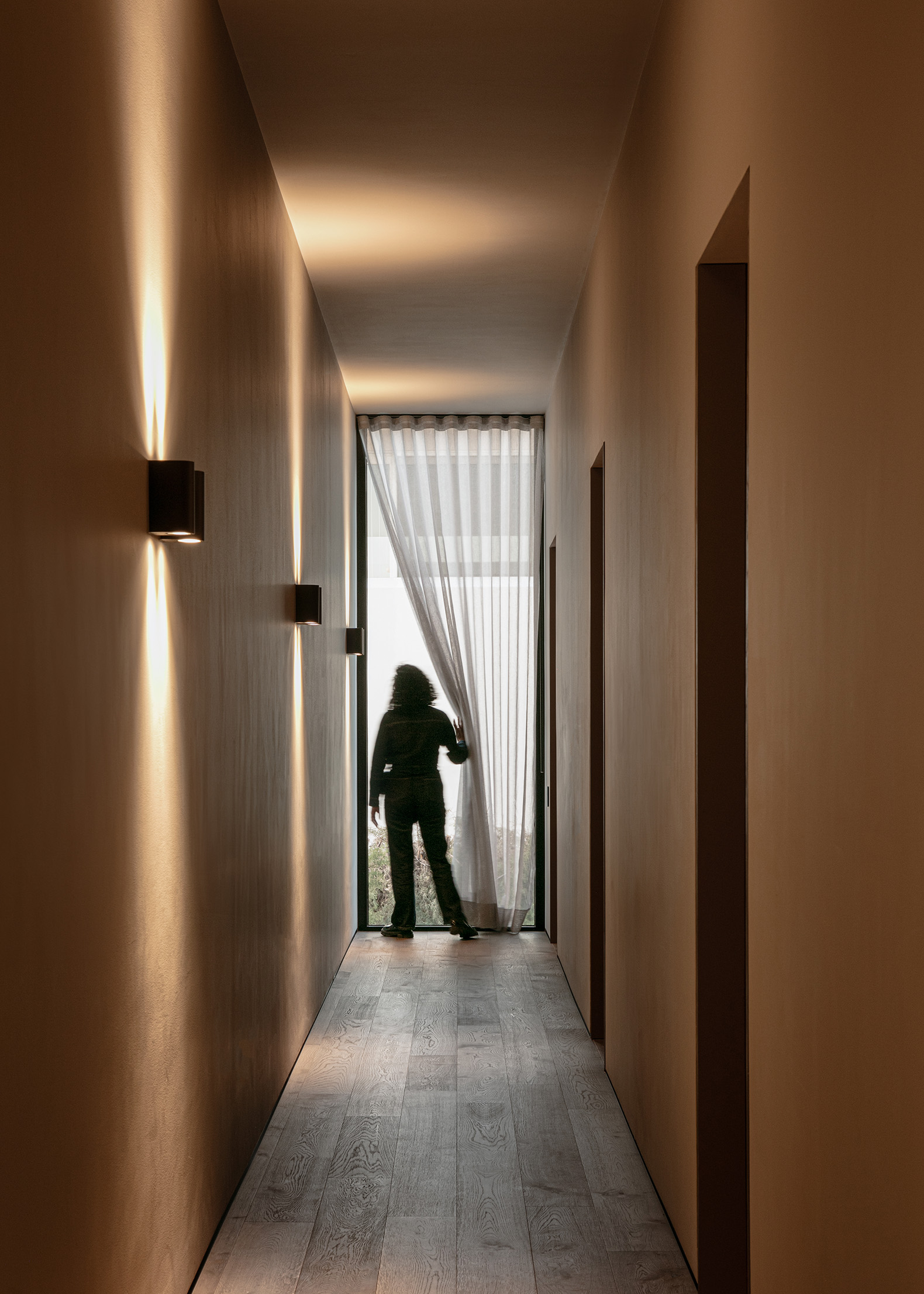
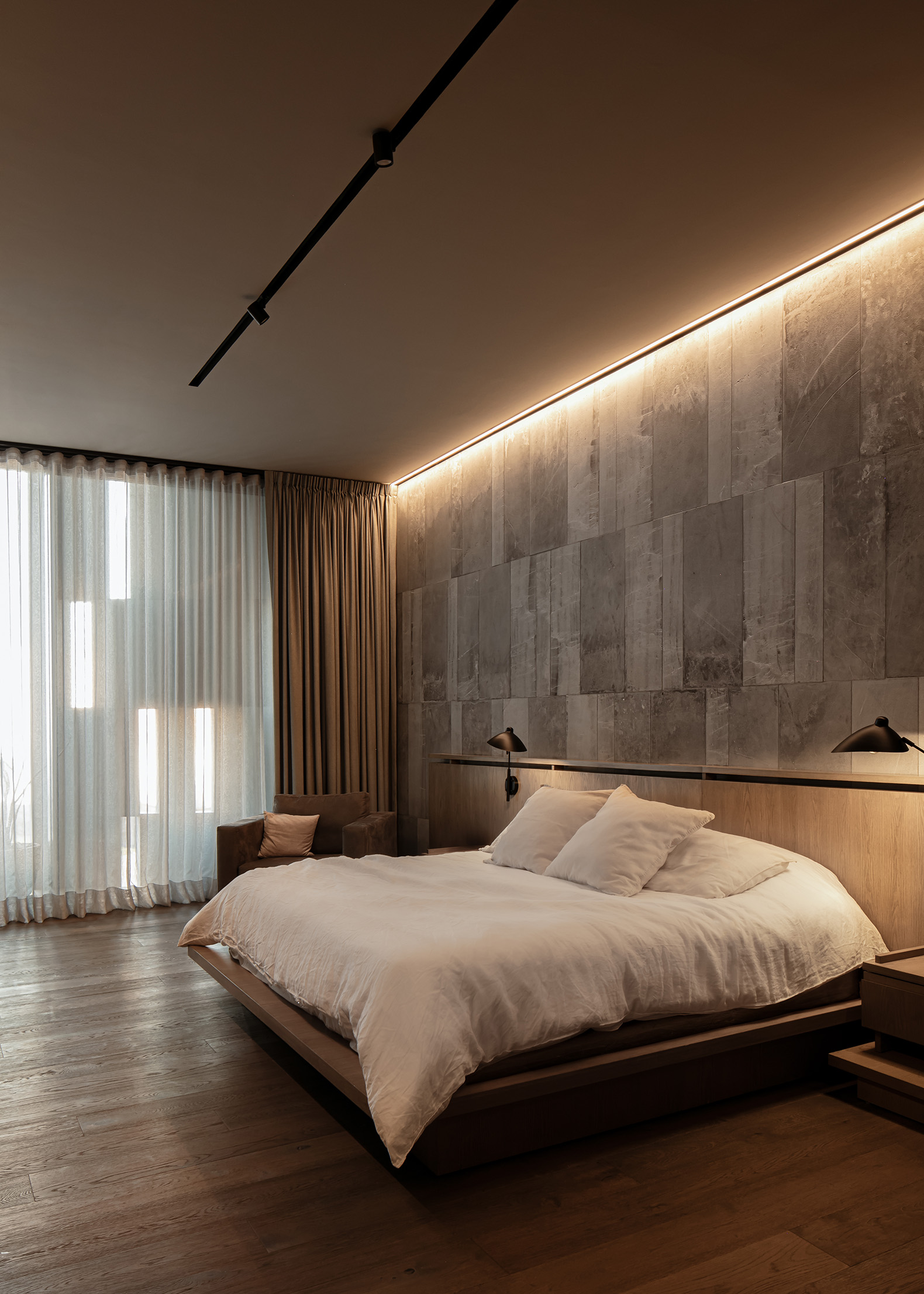
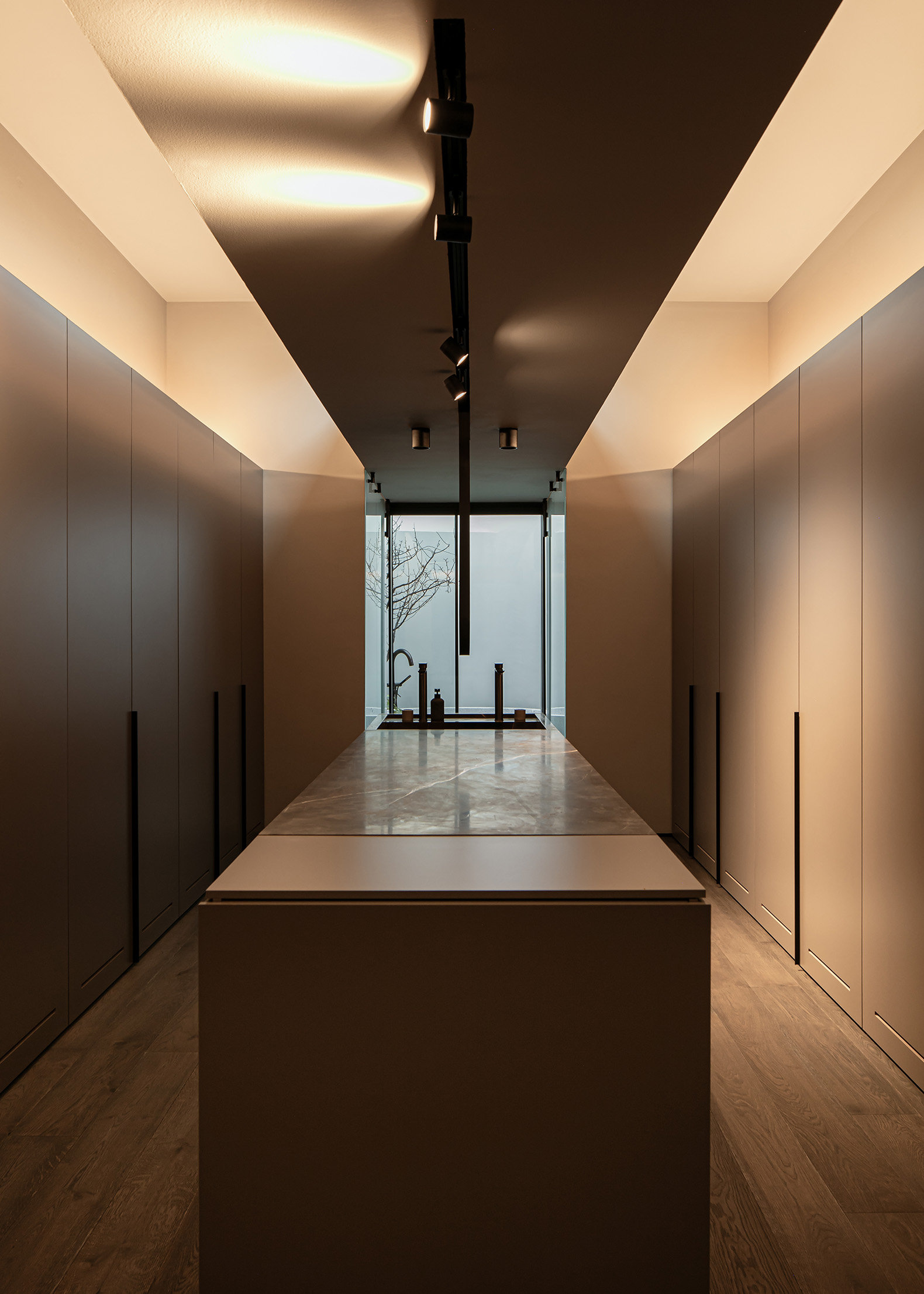
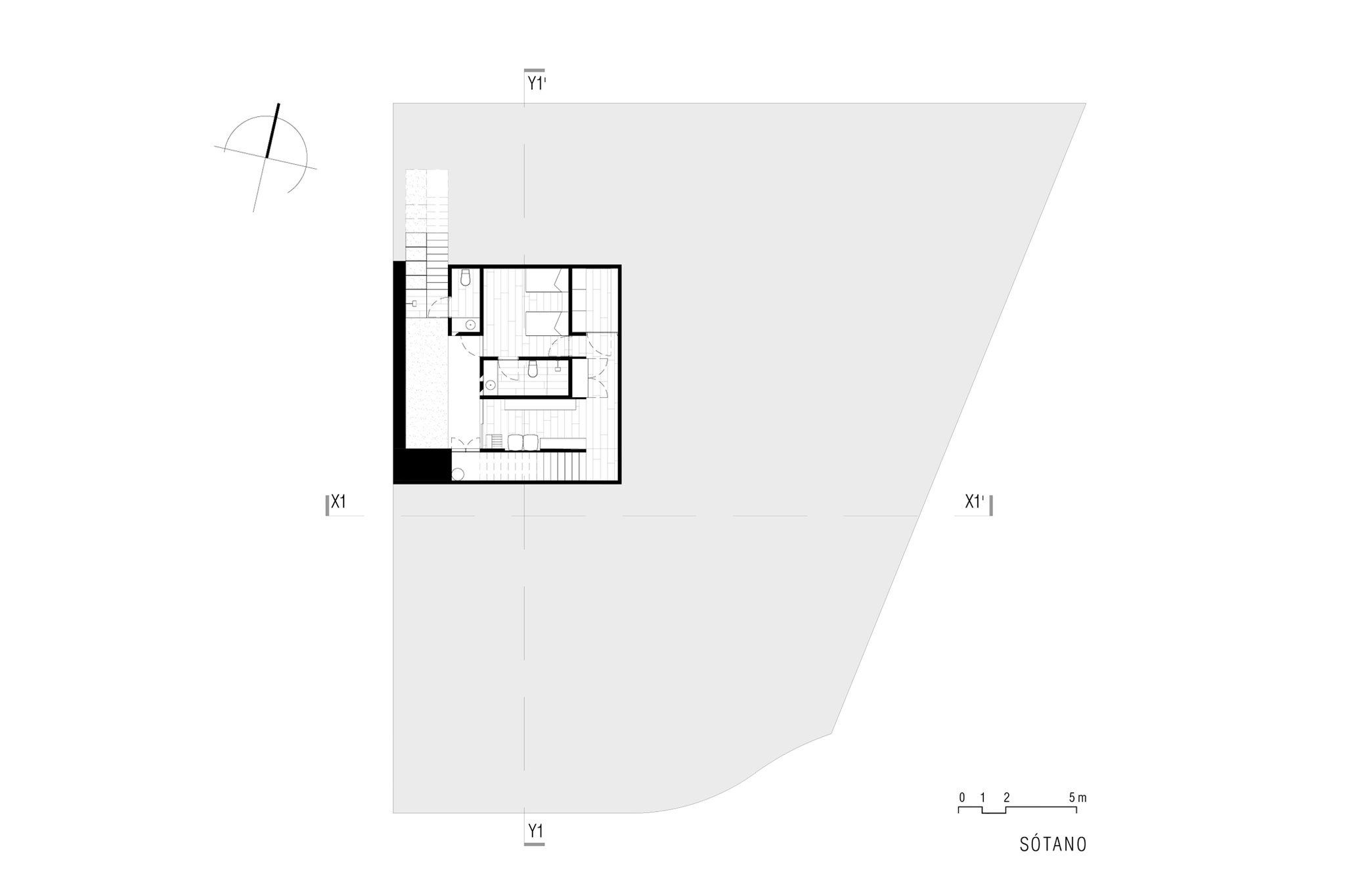
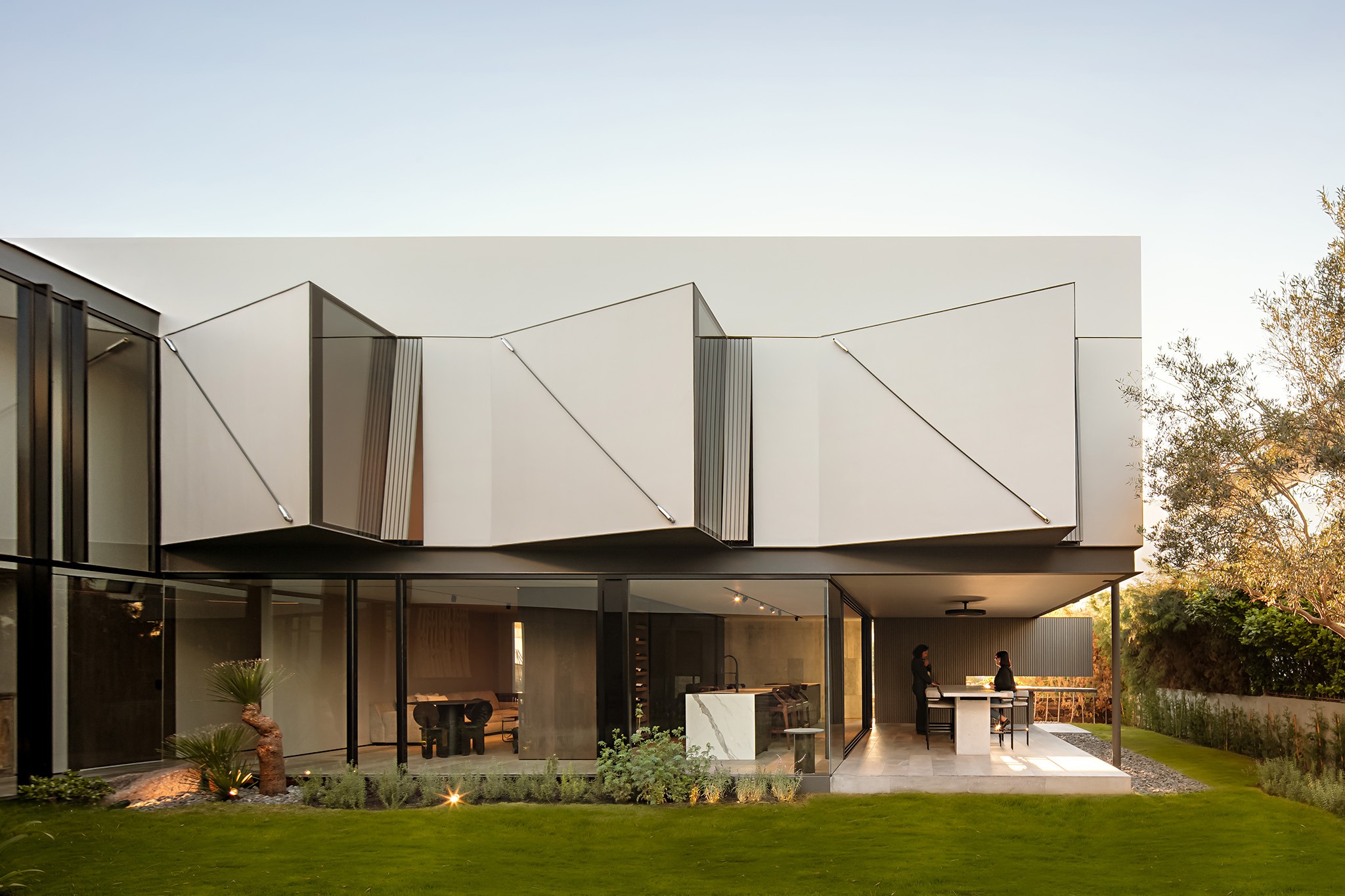
The second volume contains the service areas on the ground floor —kitchen, TV room, terraces, and a vertical circulation core— along with a basement for storage and service quarters. The upper floor is dedicated to private spaces: a master bedroom with a walk-in closet and three secondary bedrooms that open strategically toward the northwest façade, ensuring controlled views without compromising privacy.
Casa Río by LABarq. Photograph by Ariadna Polo.

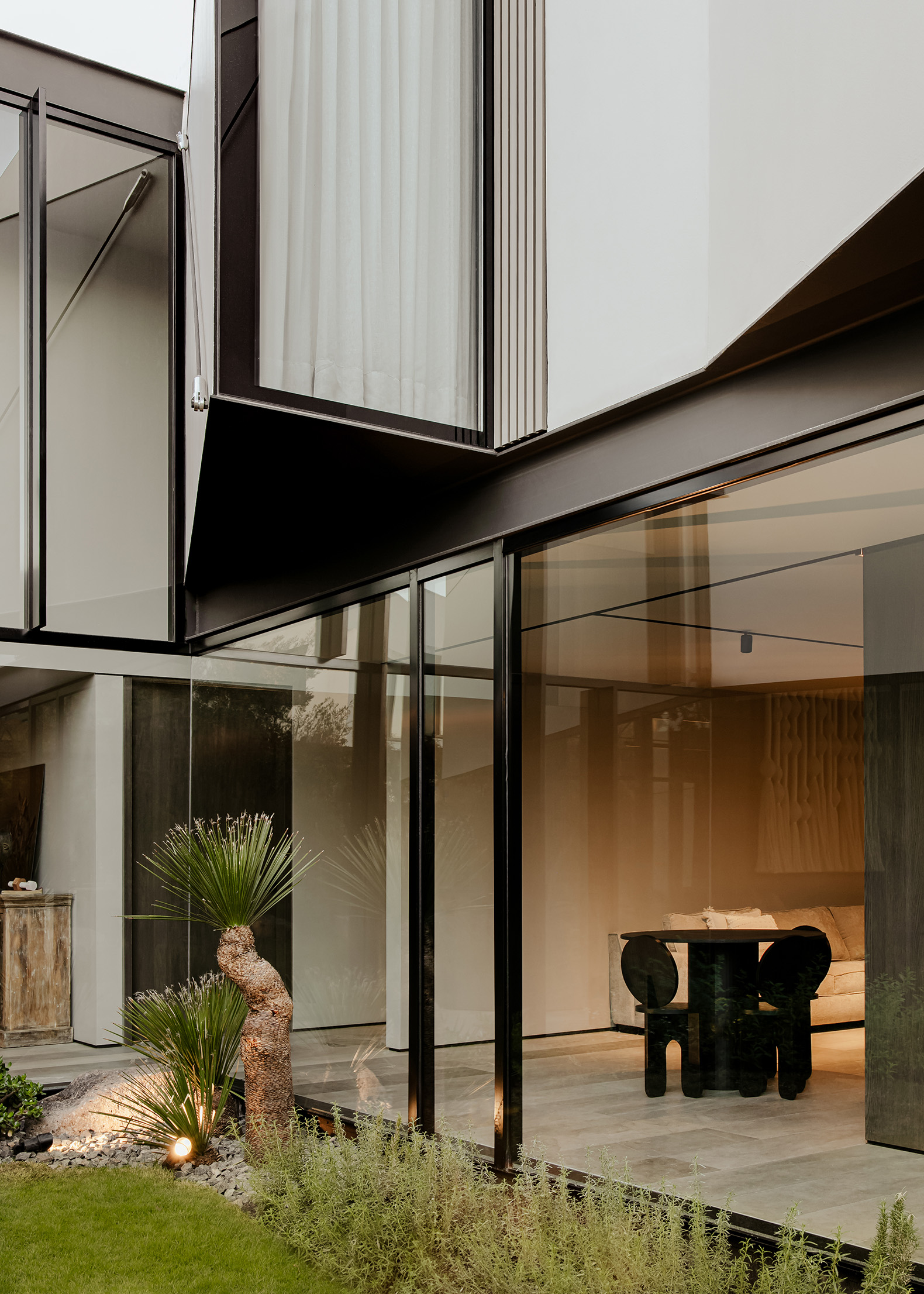
The structural system is conceived as part of the architectural language. Slender steel columns, plates, and tensile cables allow for wide spans and a light expression. In the bedrooms, the tensile elements regulate sunlight and direct views, reinforcing the connection with the outdoors. The lateral walls of the first volume float above the ground, enhancing the sense of lightness and transparency.

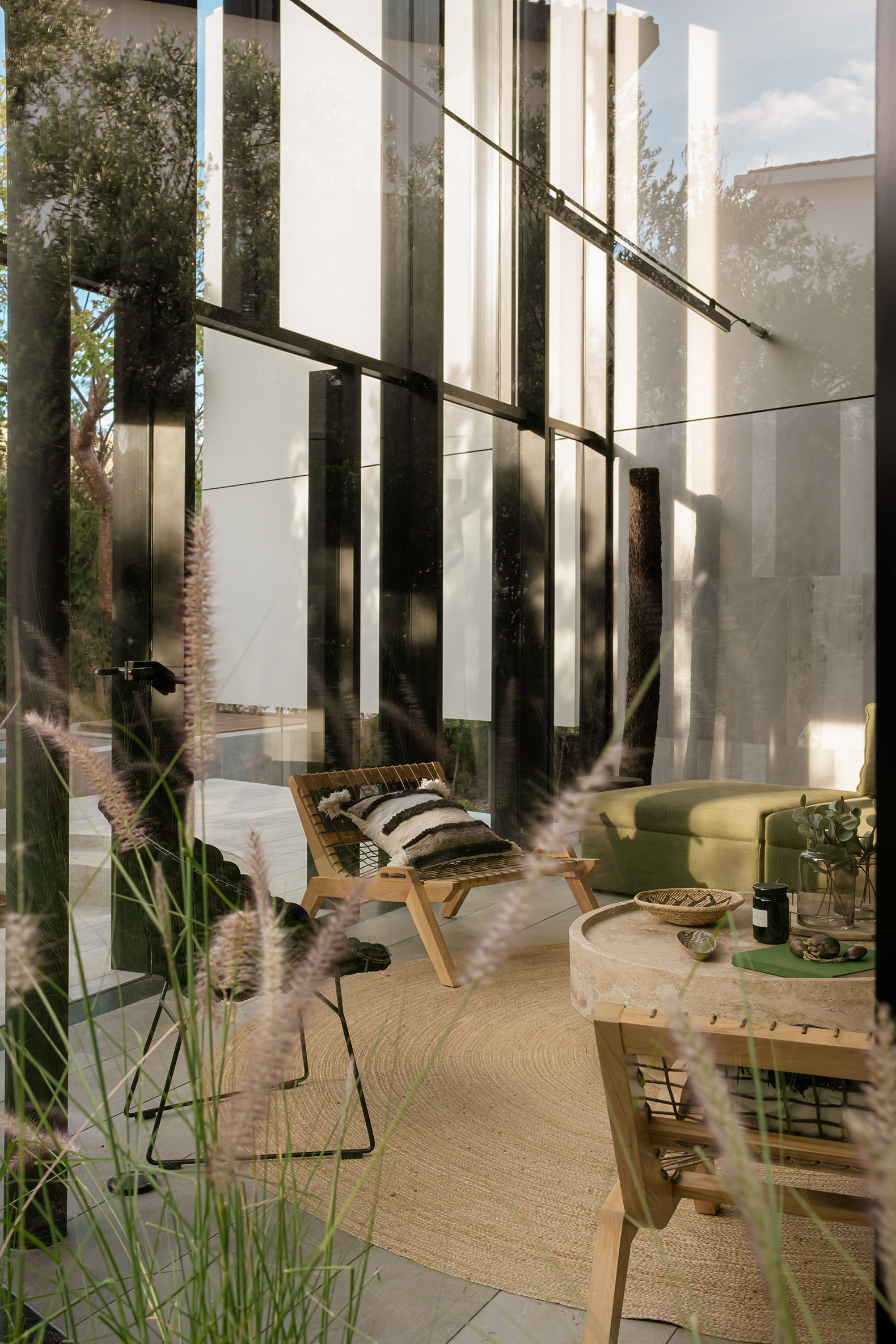
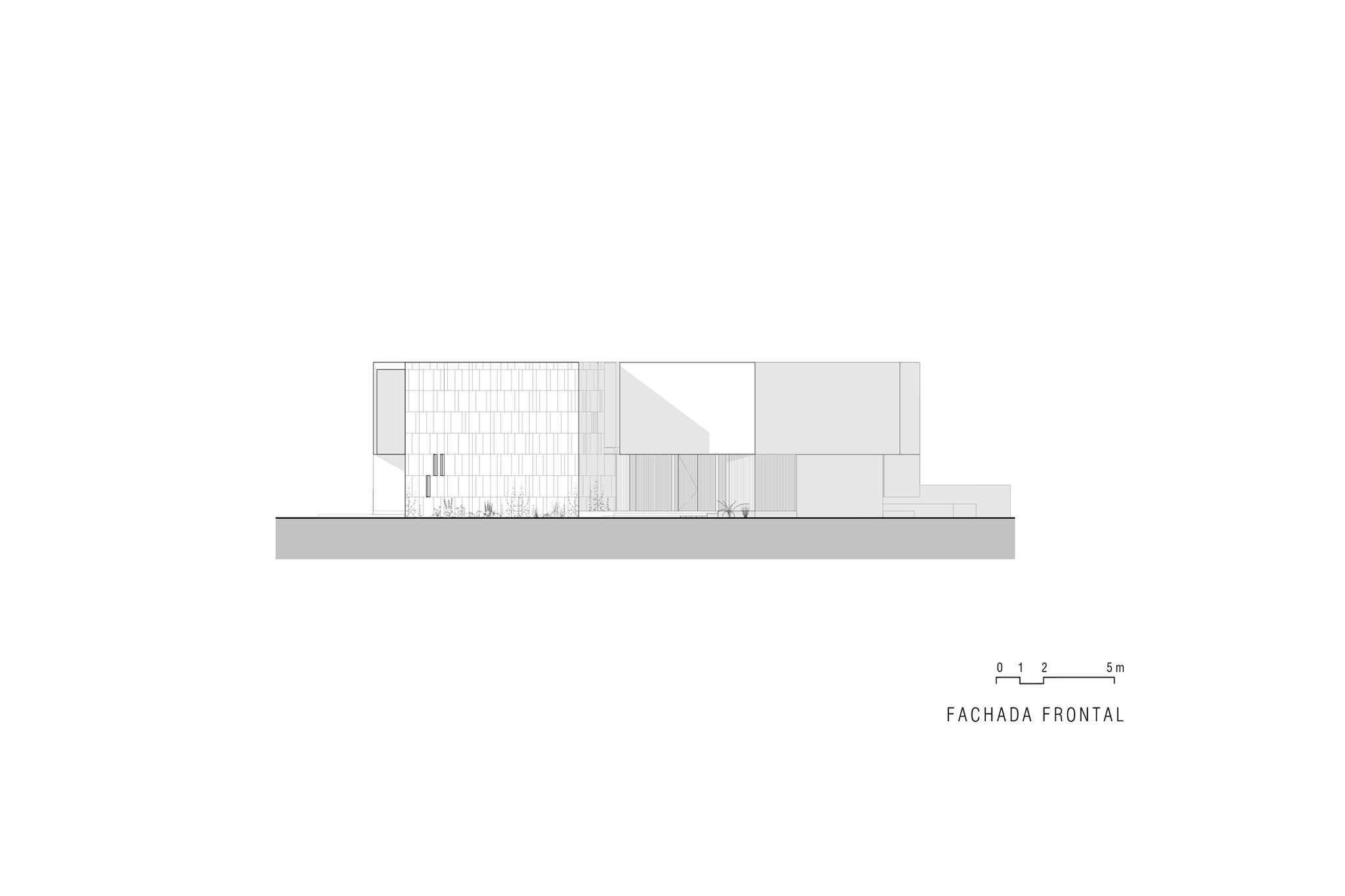
The façades establish a contrasting dialogue: sober and solid at the front and sides, while the rear façade opens completely with floor-to-ceiling glazing, dissolving the boundaries between interior and exterior.
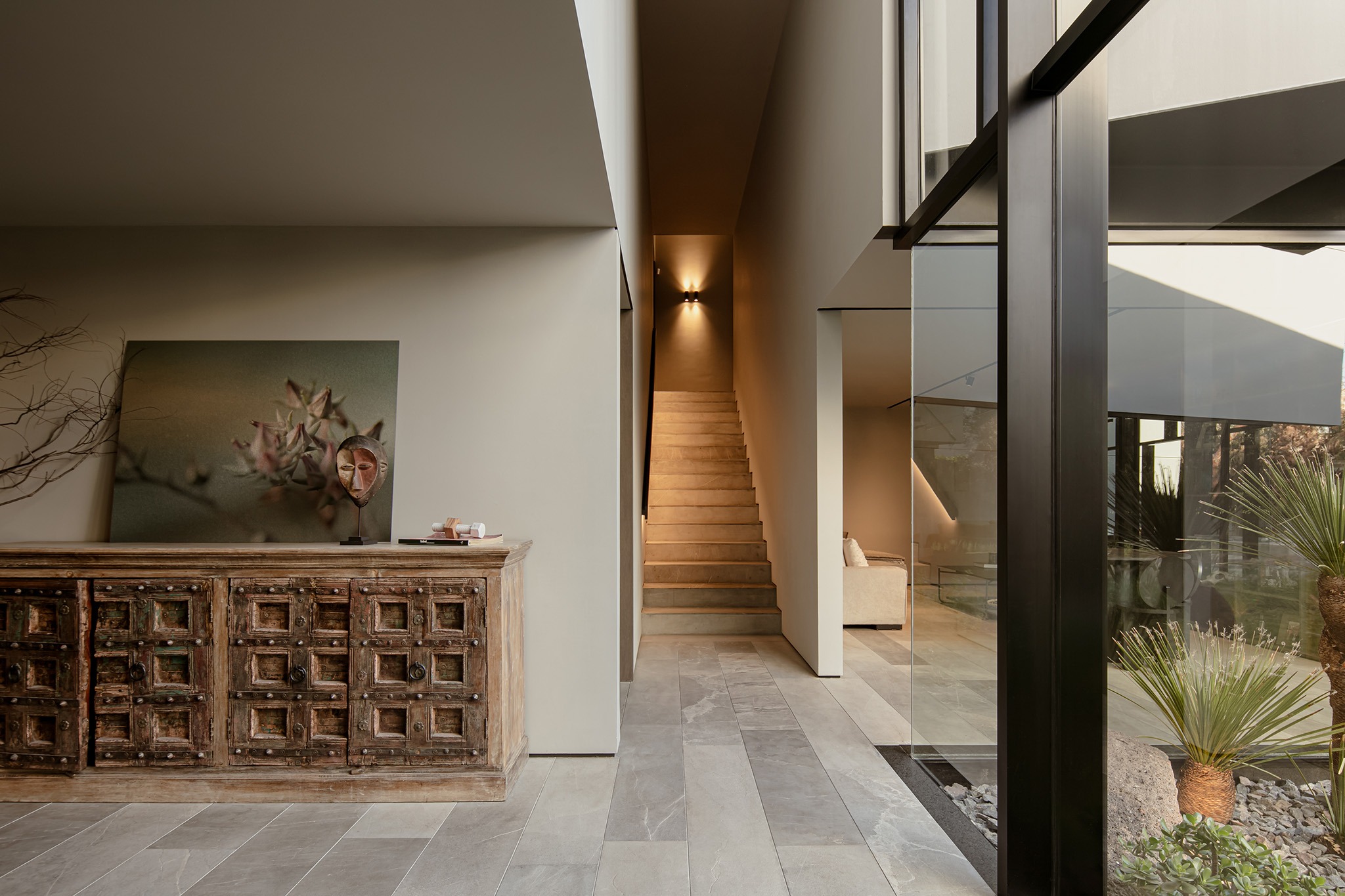
Casa Río por LABarq. Fotografía por Ariadna Polo.
Casa Río by LABarq. Photograph by Ariadna Polo.

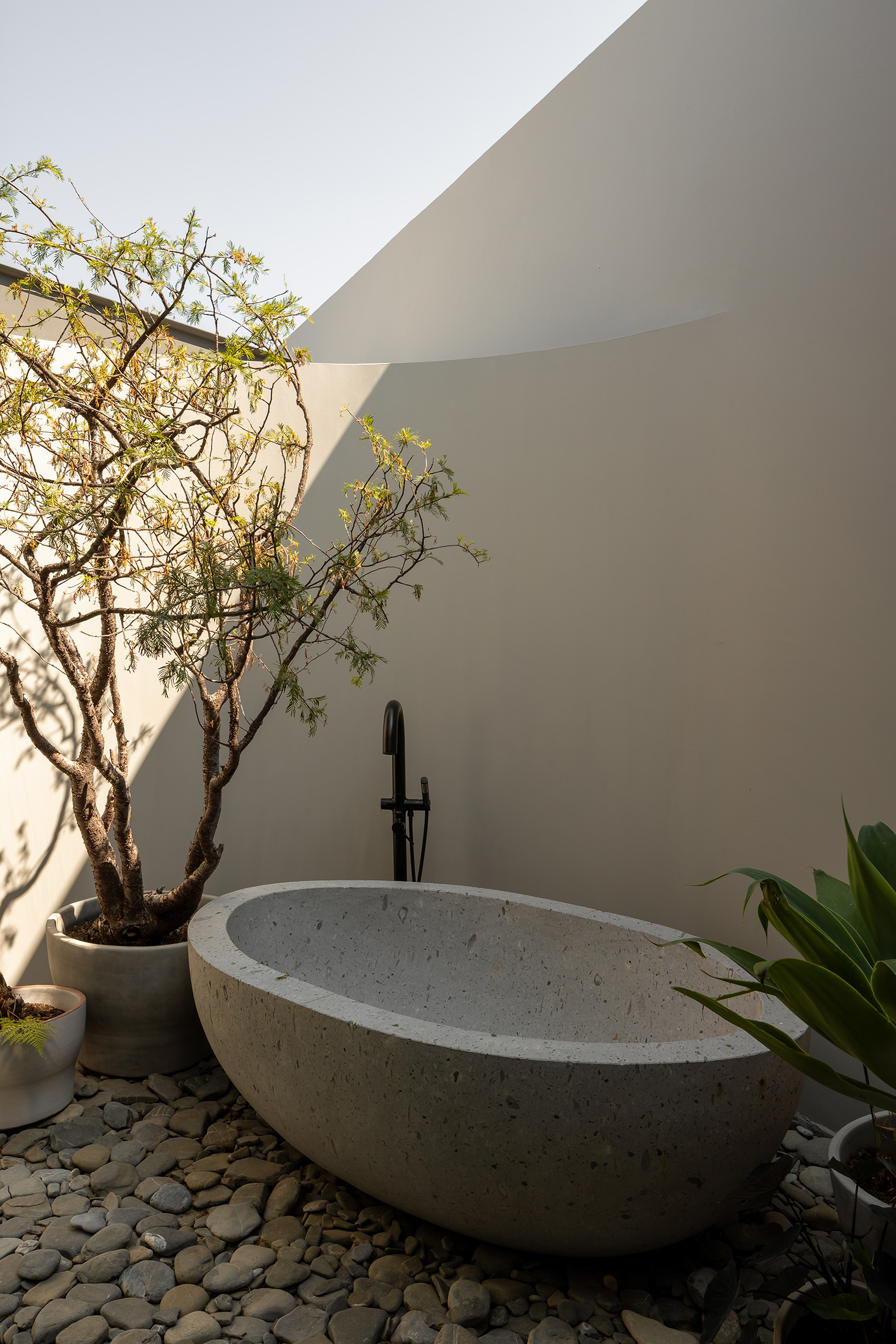
Materiality reinforces the integration with context through the use of local resources: Santo Tomás marble, walnut veneer, and wood-textured panels, all in dialogue with dry gardens composed of controlled gravel and native, low-water vegetation. Replacing traditional grass with sustainable landscaping reduces environmental impact and strengthens the project’s relationship with the territory.
More information

Label
Architects
Text

LABarq. Lead Architect.- Juan Carlos Kelly.
+ + copy Created with Sketch.
- + copy Created with Sketch.
Label
Project team
Text

Jonathan Morales, Ixchel Muñoz.

+ + copy Created with Sketch.
- + copy Created with Sketch.
Label
Collaborators
Text

Landscape design.- Ixchel Muñoz Paisajismo + Acrea Landscape.
Structural design.- Juan Carlos Cisneros.

+ + copy Created with Sketch.
- + copy Created with Sketch.
Label
Builder
Text

SPEC.
Glazing systems.- DFC. / Carpentry.- Ankui. /  Finishes / Cladding.- Procesos en Mármoles de Querétaro.

+ + copy Created with Sketch.
- + copy Created with Sketch.
Label
Area
Text

Built.- 559 sqm.
Plot.- 691 sqm.

+ + copy Created with Sketch.
- + copy Created with Sketch.
Label
Dates
Text

2025.

+ + copy Created with Sketch.
- + copy Created with Sketch.
Label
Venue / Location
Text

Santiago de Querétaro, Querétaro, Mexico. 

+ + copy Created with Sketch.
- + copy Created with Sketch.
Label
Photography
+ + copy Created with Sketch.
- + copy Created with Sketch.

Laboratorio de Arquitectura is a studio founded in 2013 in the city of Querétaro by architect Juan Carlos Kelly, in collaboration with architect Paulina Moreno. Their extensive experience includes the development of condominiums, residential housing, and commercial and institutional projects.
Their practice is distinguished by a contemporary, functional, and committed vision, focused on addressing current housing needs with design proposals based on sustained growth and architectural quality.

Since its inception, the team has been recognized for its innovation and contribution to the urban environment. Among their most notable projects are the Aristóteles 235 housing complex in Mexico City, which won the Obra Award; Distrito Marqués, which won the Interceramic Award; and the Lomas del Campanario Norte project, which received third place in the Noldi Schreck Award and an honourable mention for Distrito Marqués. They have also been finalists in national and international awards such as the Quito Pan-American Architecture Biennial and the Firenze Entremuros Prize.

The studio's portfolio exceeds 2,000 housing units, and its work has been published in specialized national and international media, consolidating its presence within the current panorama of contemporary architecture in Mexico.

Read more
Published on: October 16, 2025
Cite:
metalocus, ANTONIO GRAS
"Integration and materiality. Casa Río by LABarq " METALOCUS. Accessed
<https://www.metalocus.es/en/news/integration-and-materiality-casa-rio-labarq> ISSN 1139-6415
Loading content ...
Loading content ...
Loading content ...
Loading content ...
Loading content ...
Loading content ...
Loading content ...
Loading content ...
Loading content ...
Loading content ...
Loading content ...
Loading content ...
Loading content ...
Loading content ...
Loading content ...
Loading content ...
Loading content ...
Loading content ...
Loading content ...
Loading content ...
Loading content ...
Loading content ...
Loading content ...
Loading content ...
Loading content ...
Loading content ...
Loading content ...
Loading content ...
Loading content ...
Loading content ...
Loading content ...
Loading content ...
Loading content ...
Loading content ...
Loading content ...
Loading content ...
Loading content ...
Loading content ...
Loading content ...
Loading content ...
Loading content ...
Loading content ...
Loading content ...
Loading content ...
Loading content ...
Loading content ...
Loading content ...
Loading content ...
Loading content ...
Loading content ...
Loading content ...
Loading content ...
Loading content ...
Loading content ...