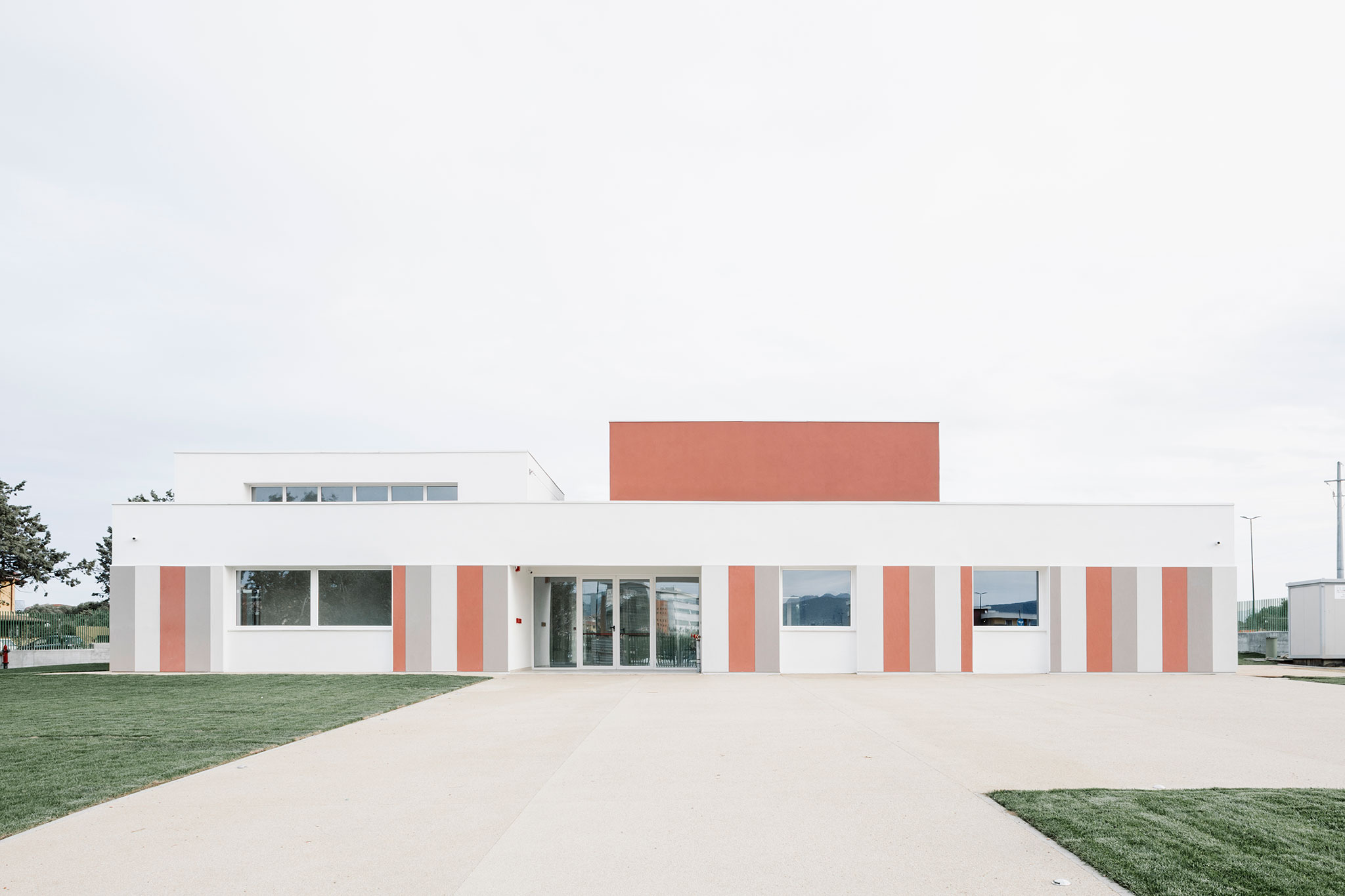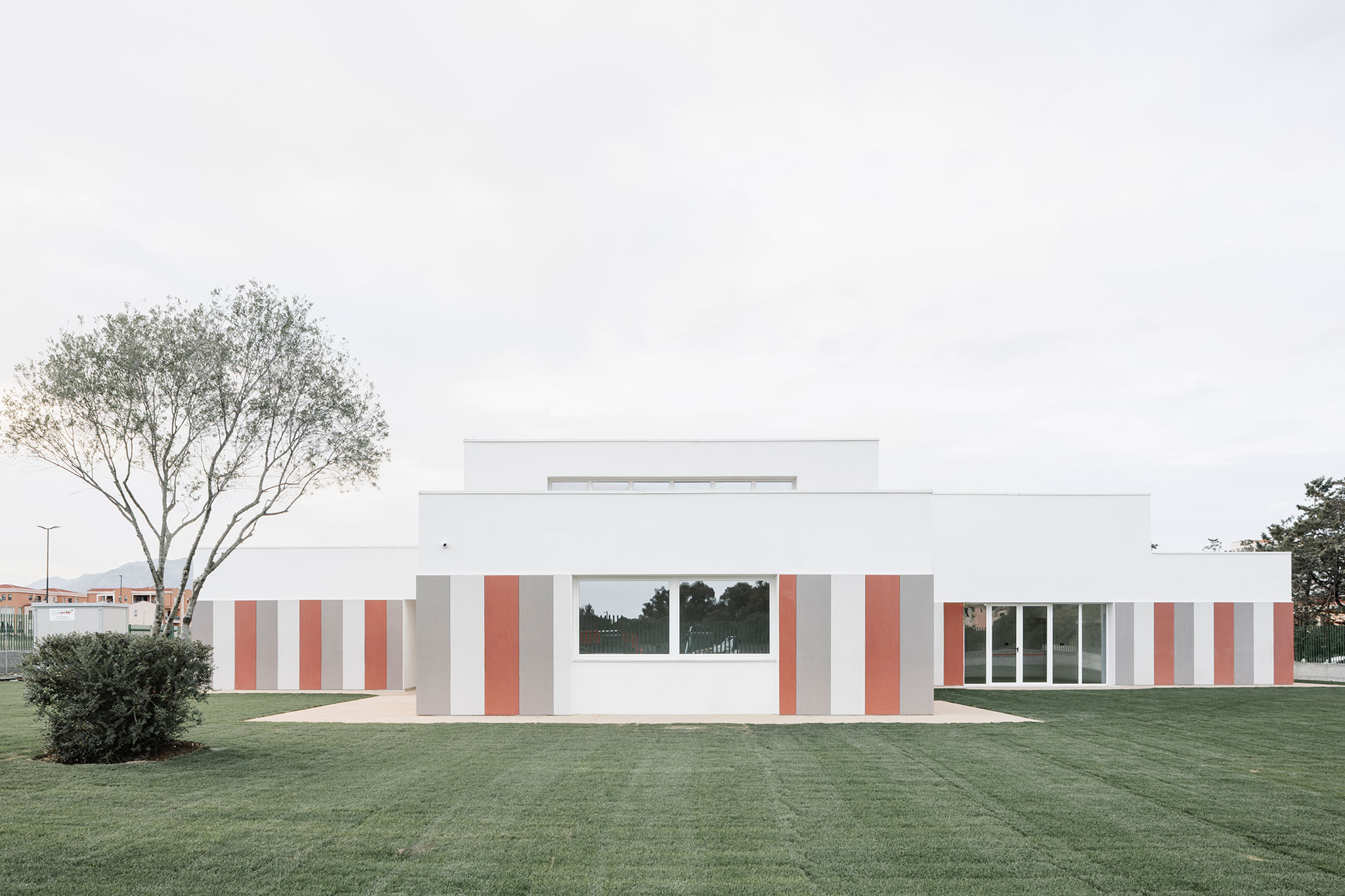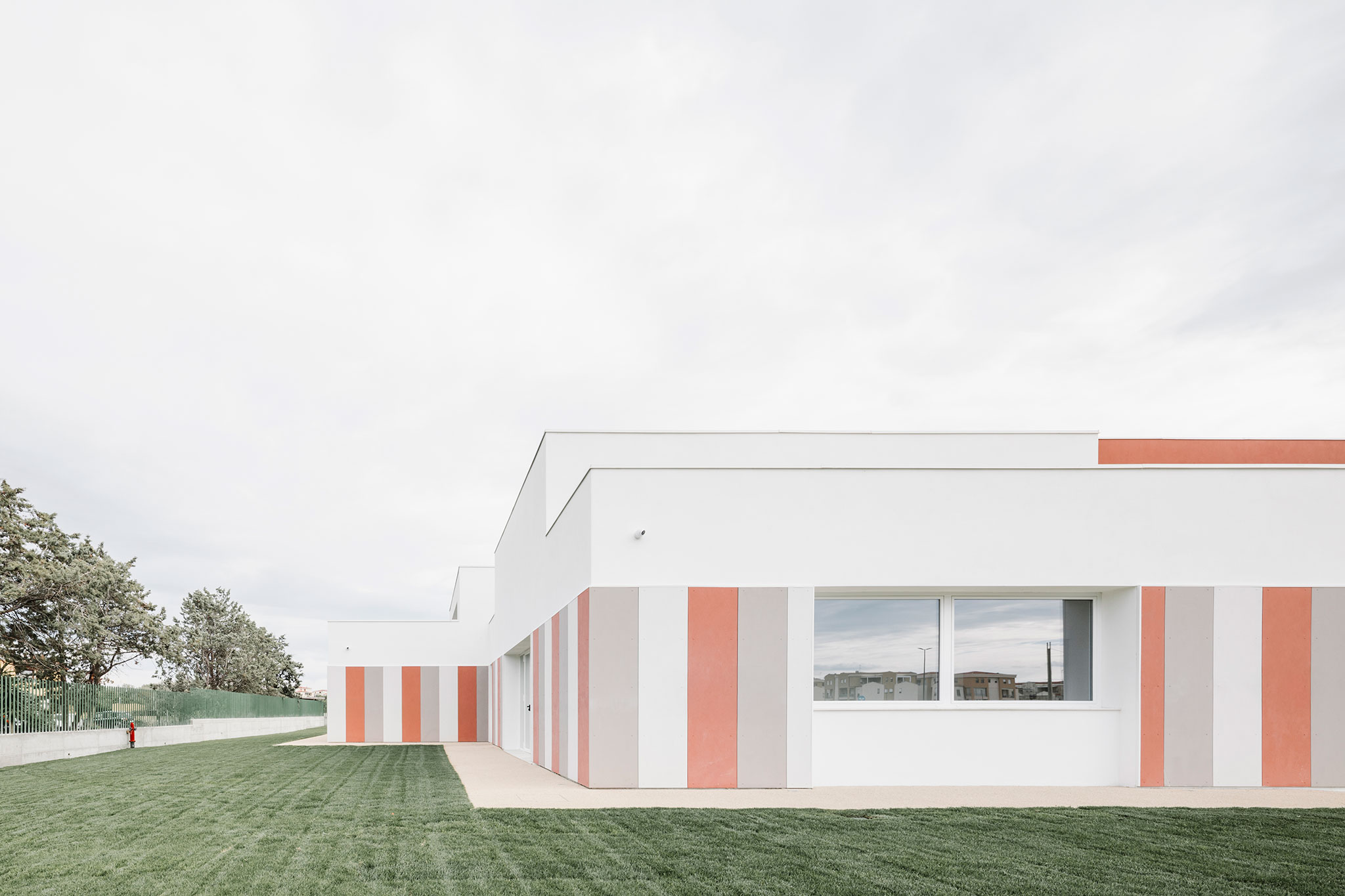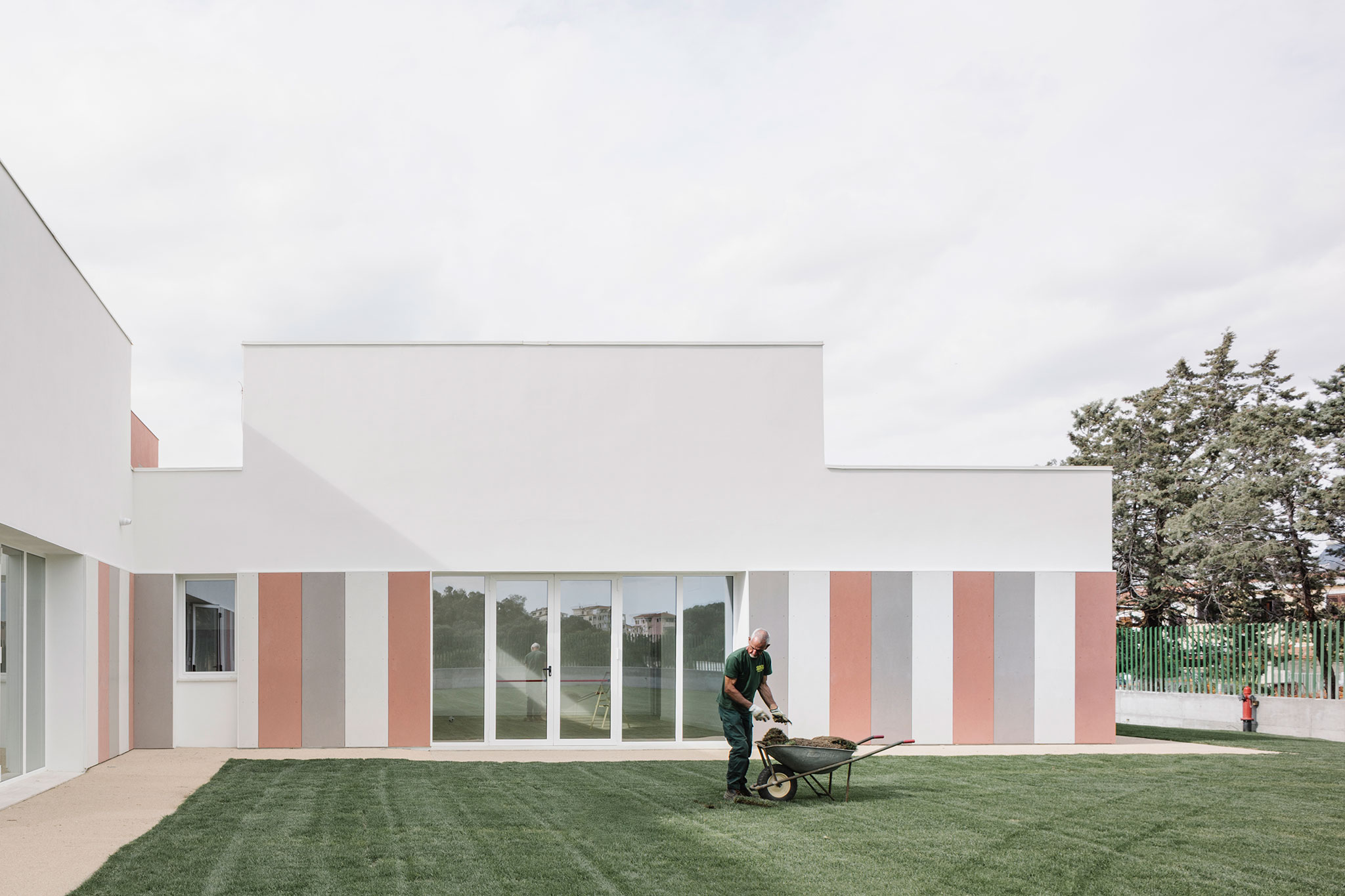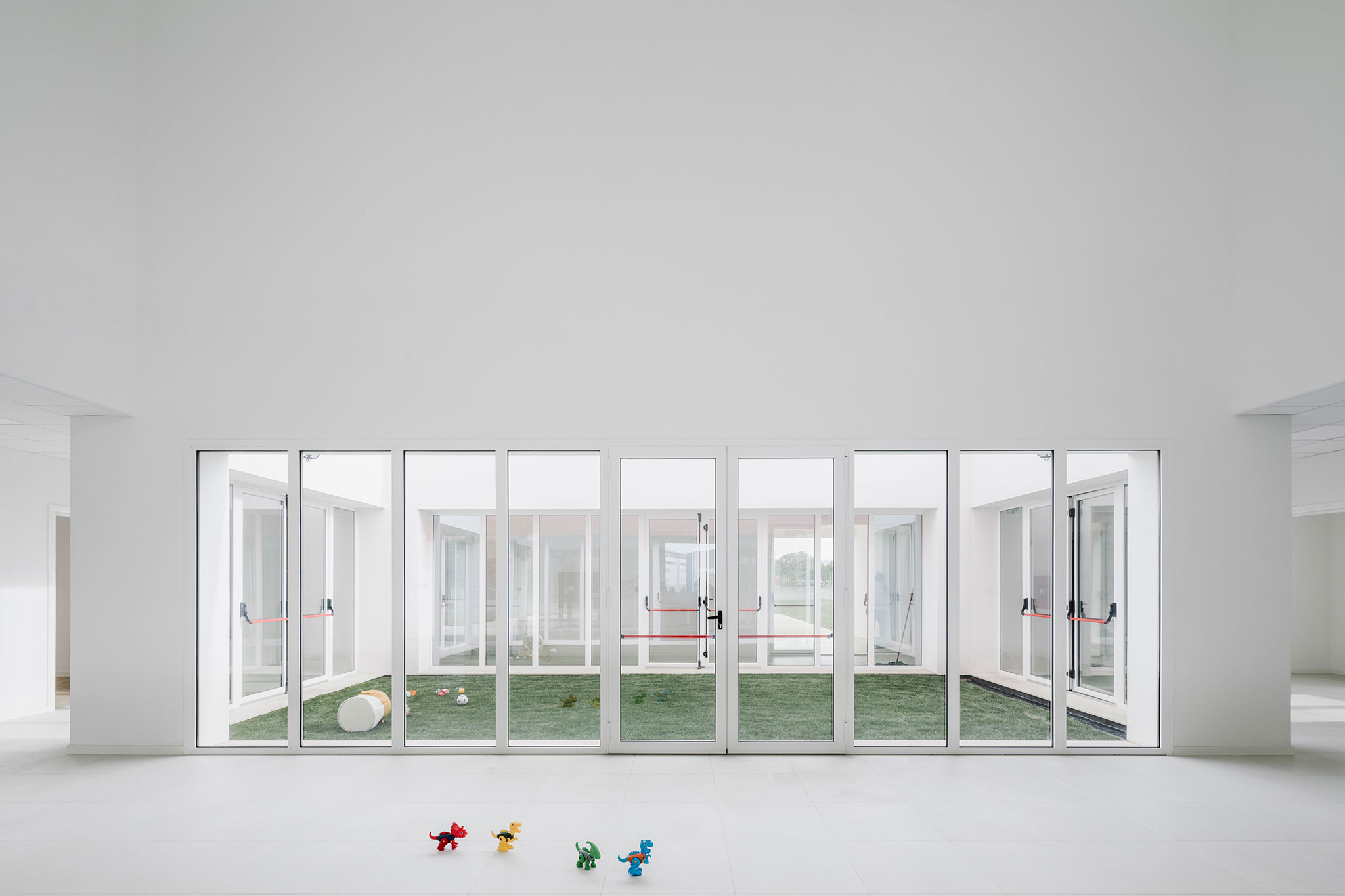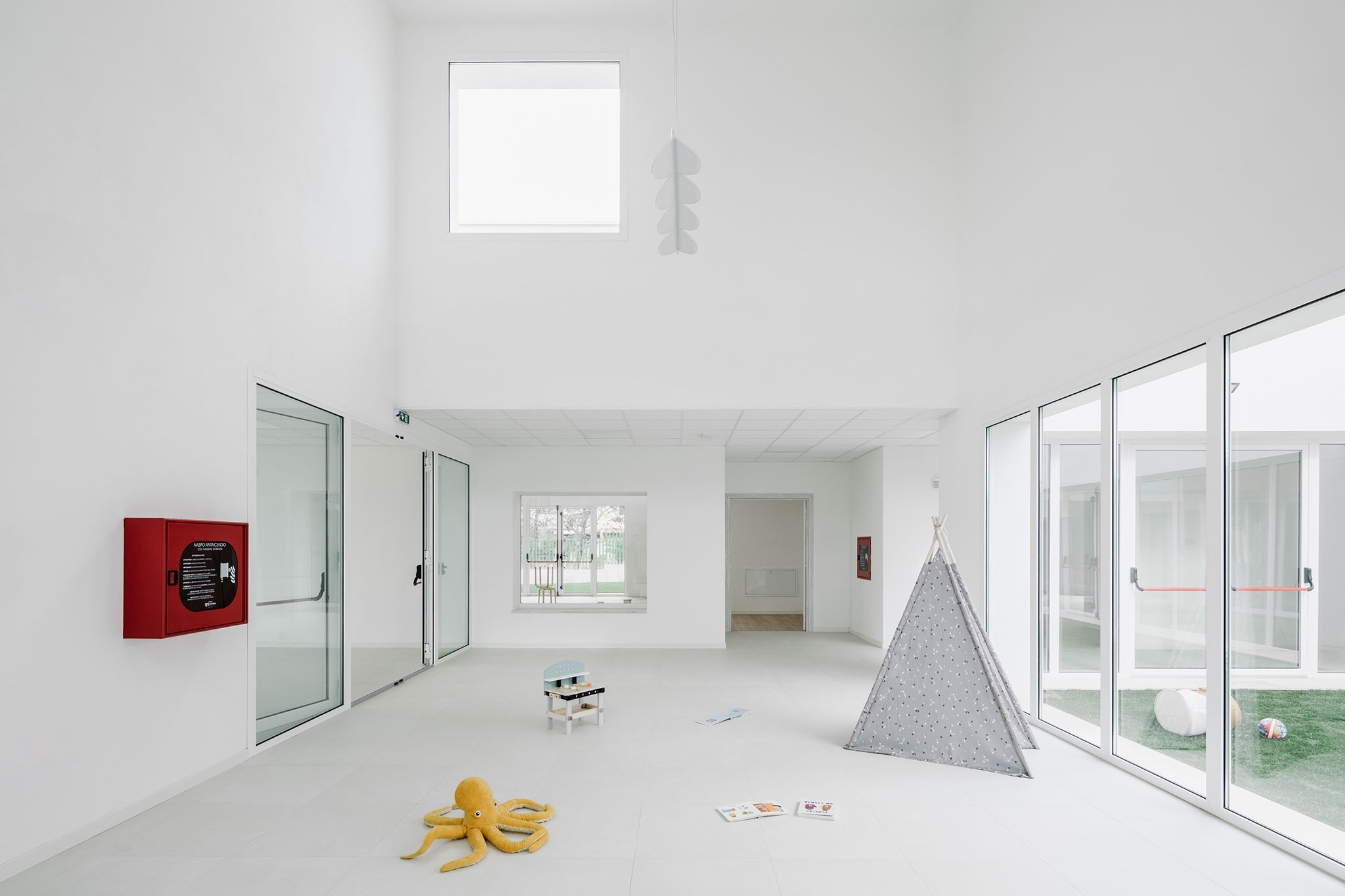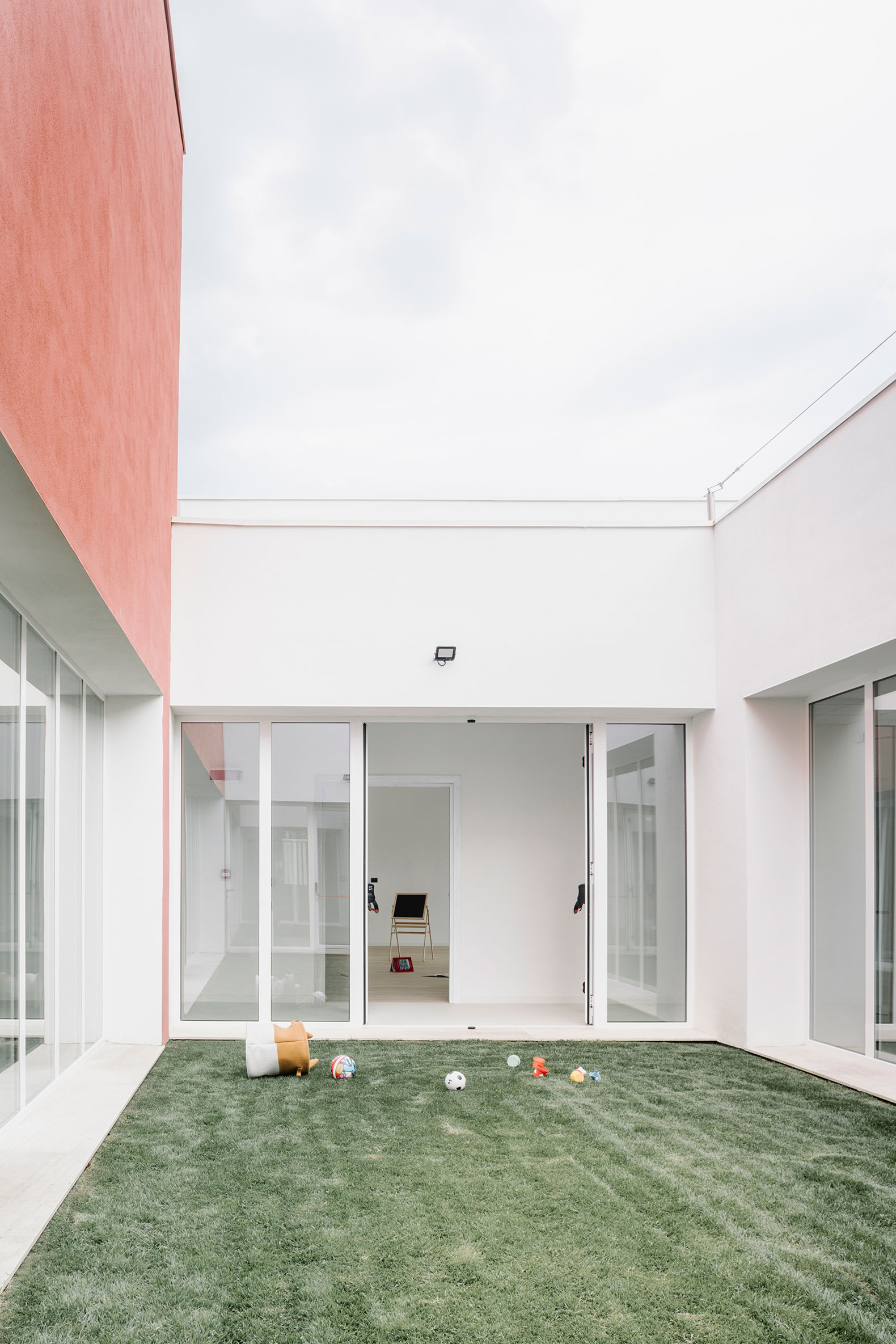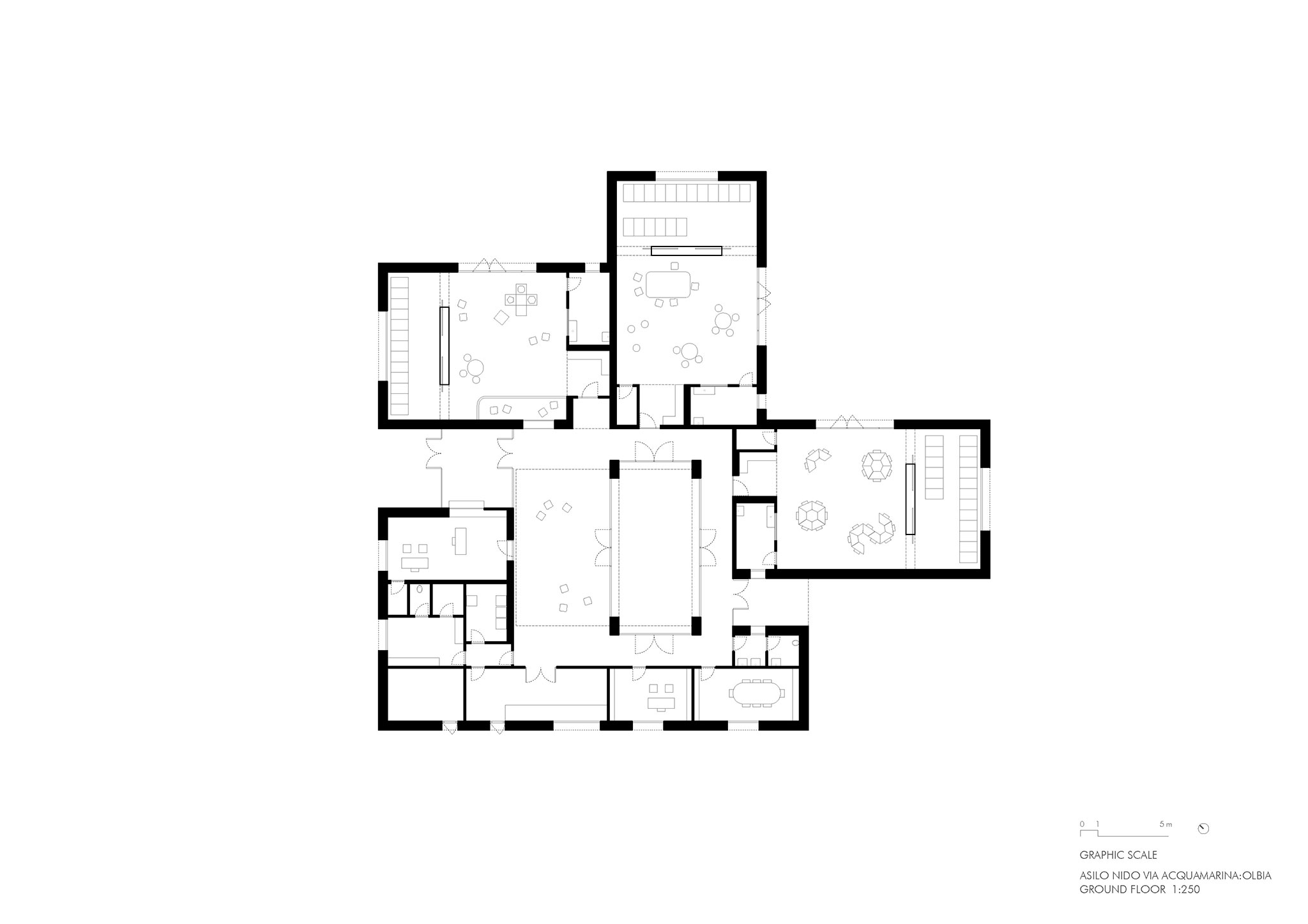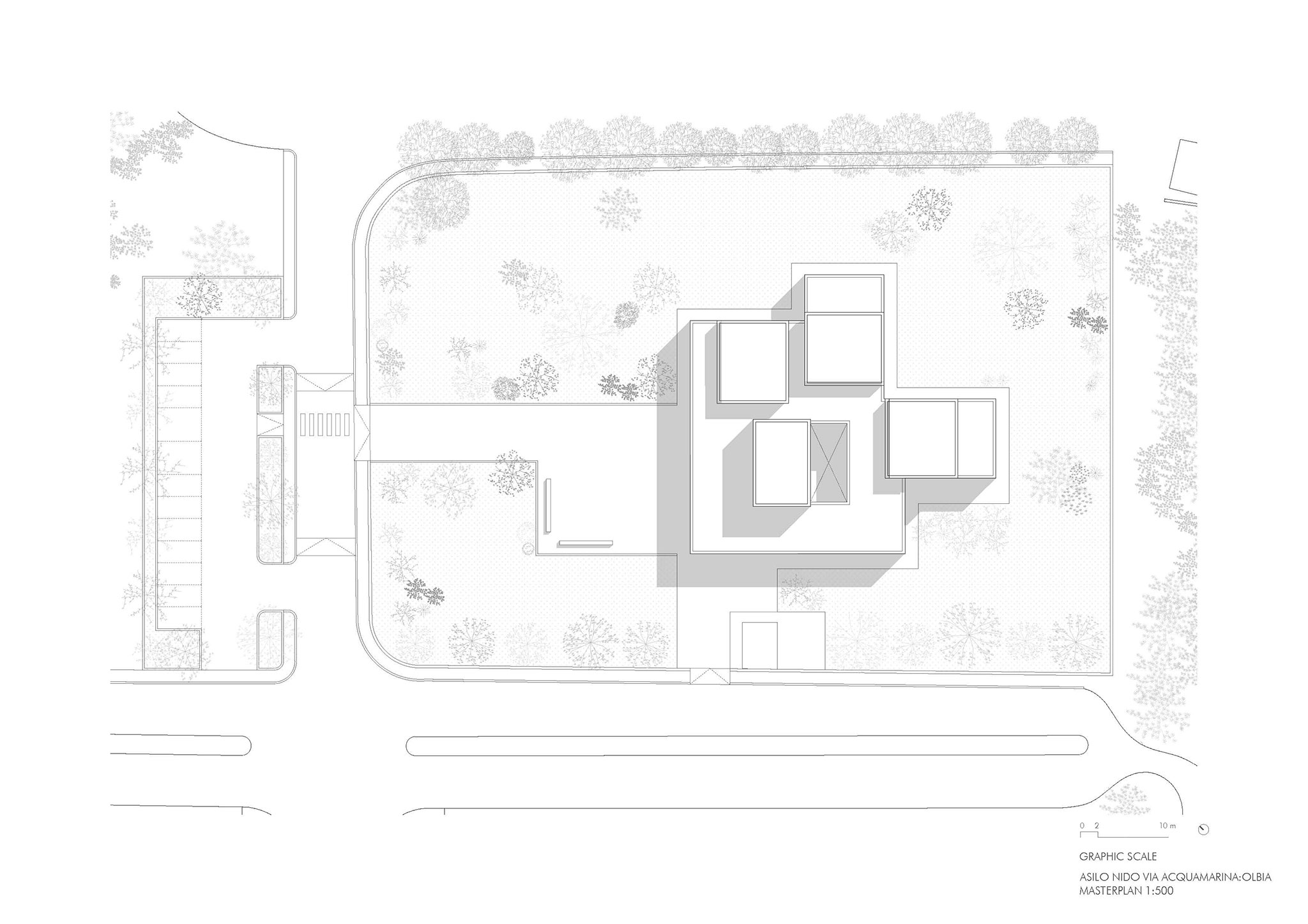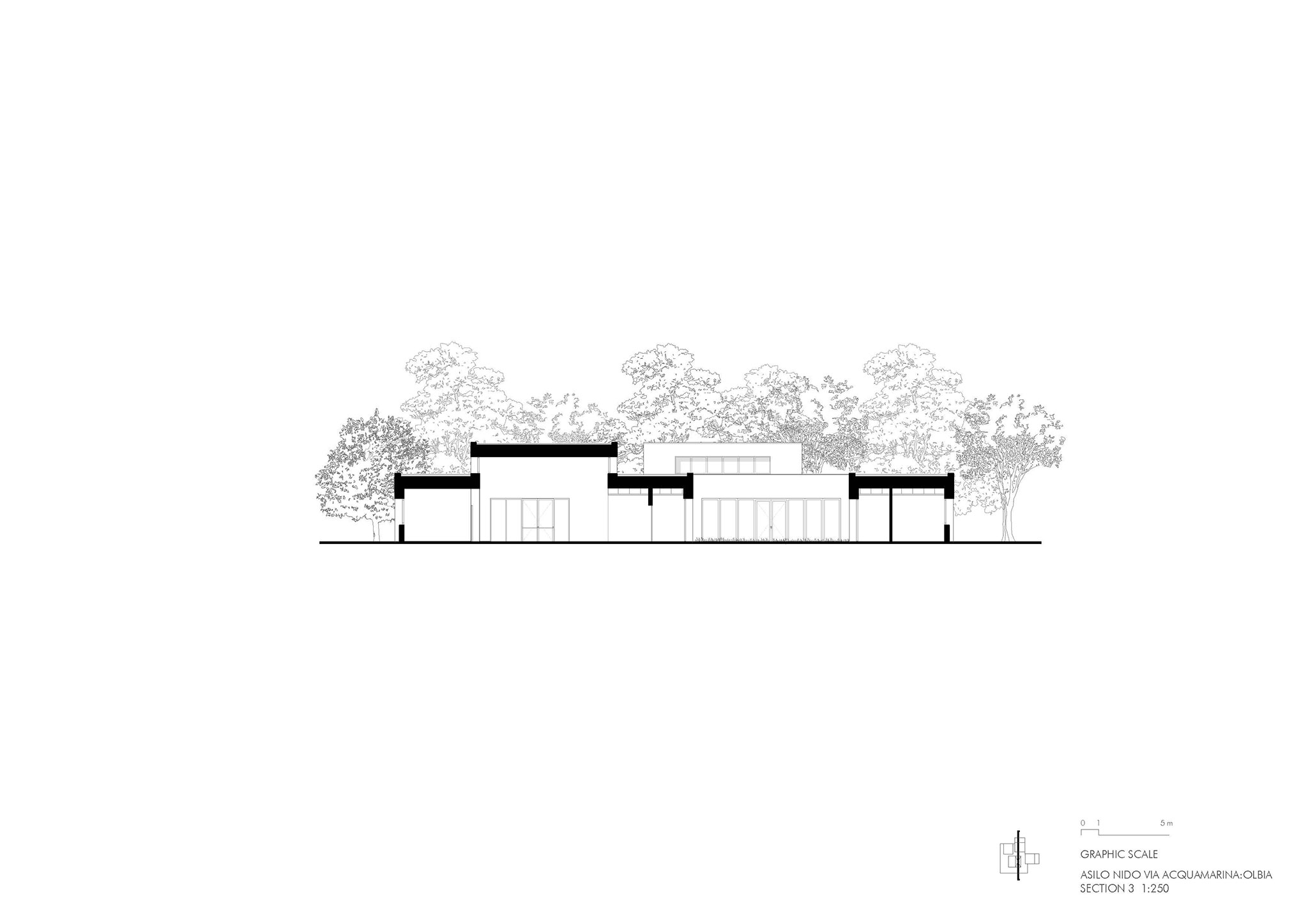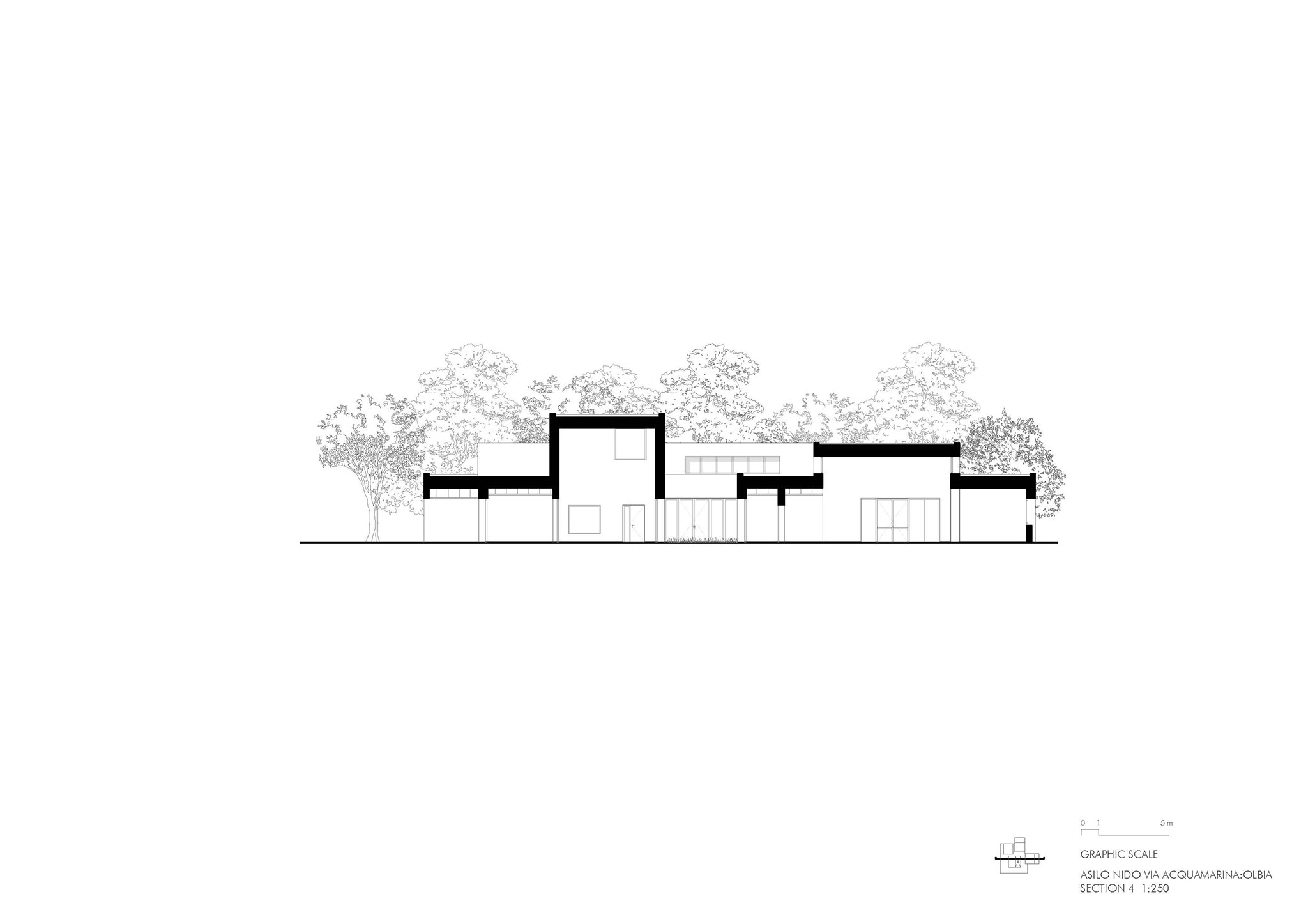
Seeking a spatial configuration that guarantees both functional efficiency and psychophysical well-being, Studio Associato di Architettura LERUA clearly differentiates the spaces dedicated to play, rest, and care from the complementary and service areas. As a complement, the central courtyard serves as the perceptual and symbolic core of the building.
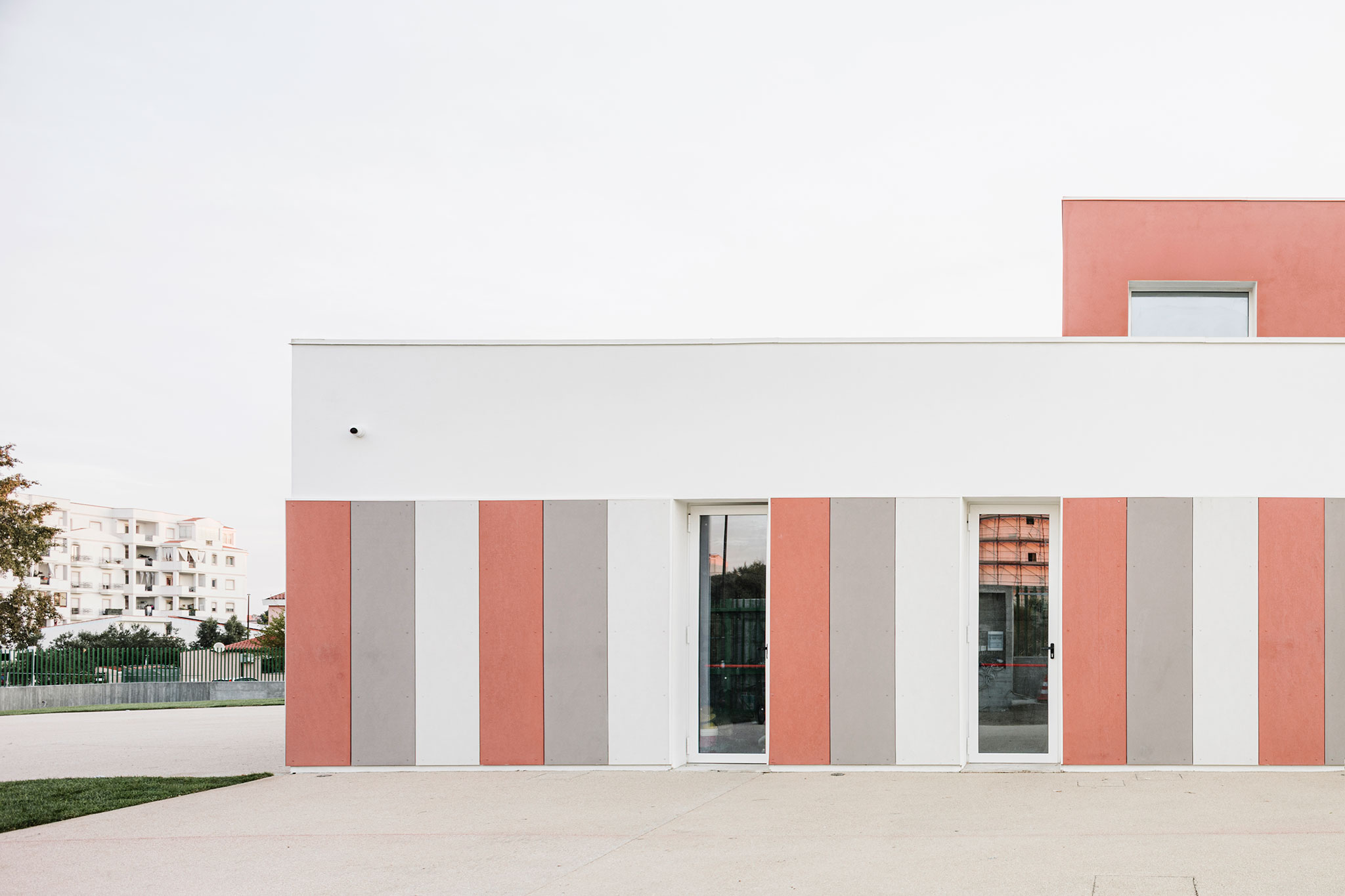
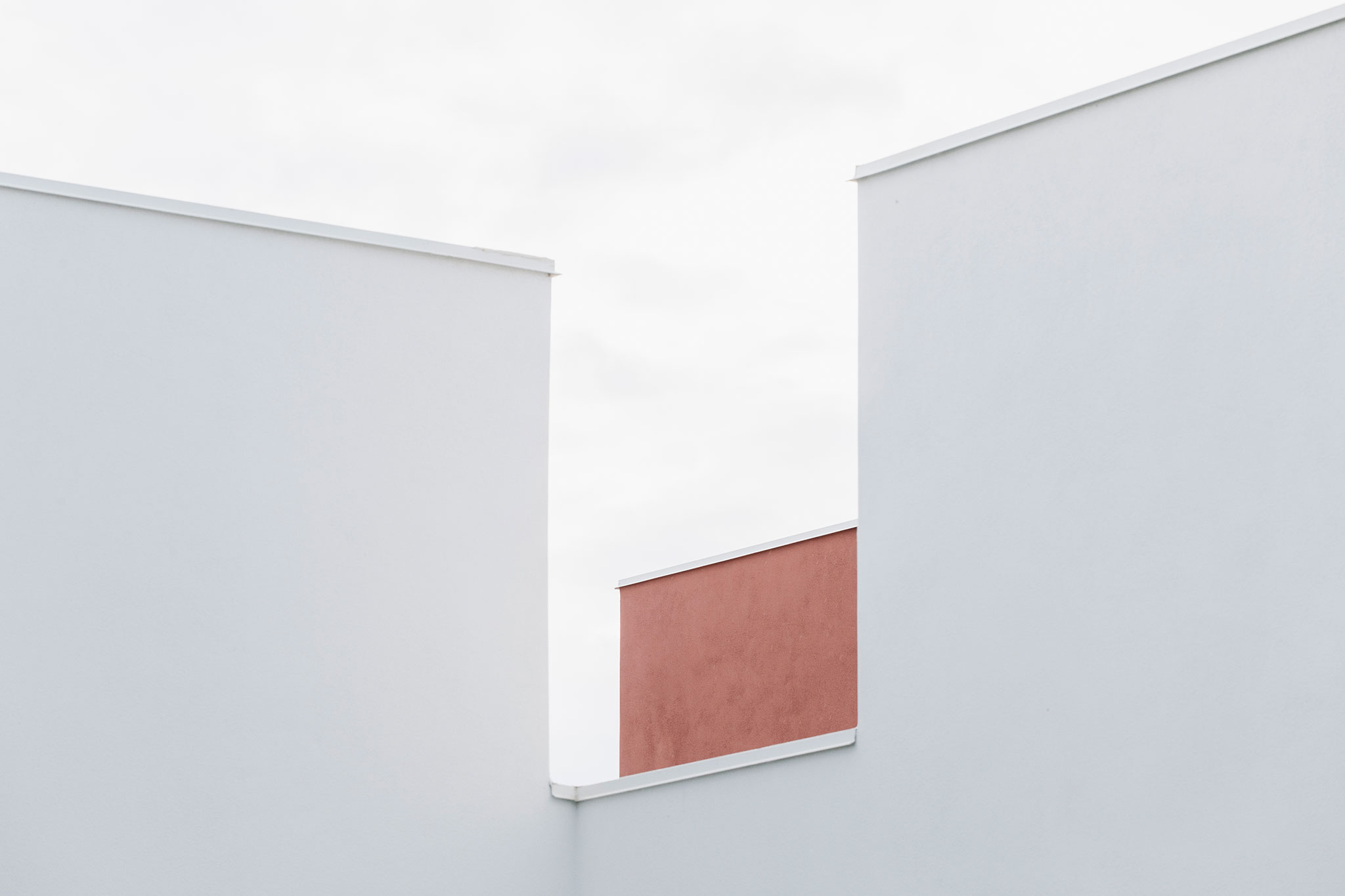
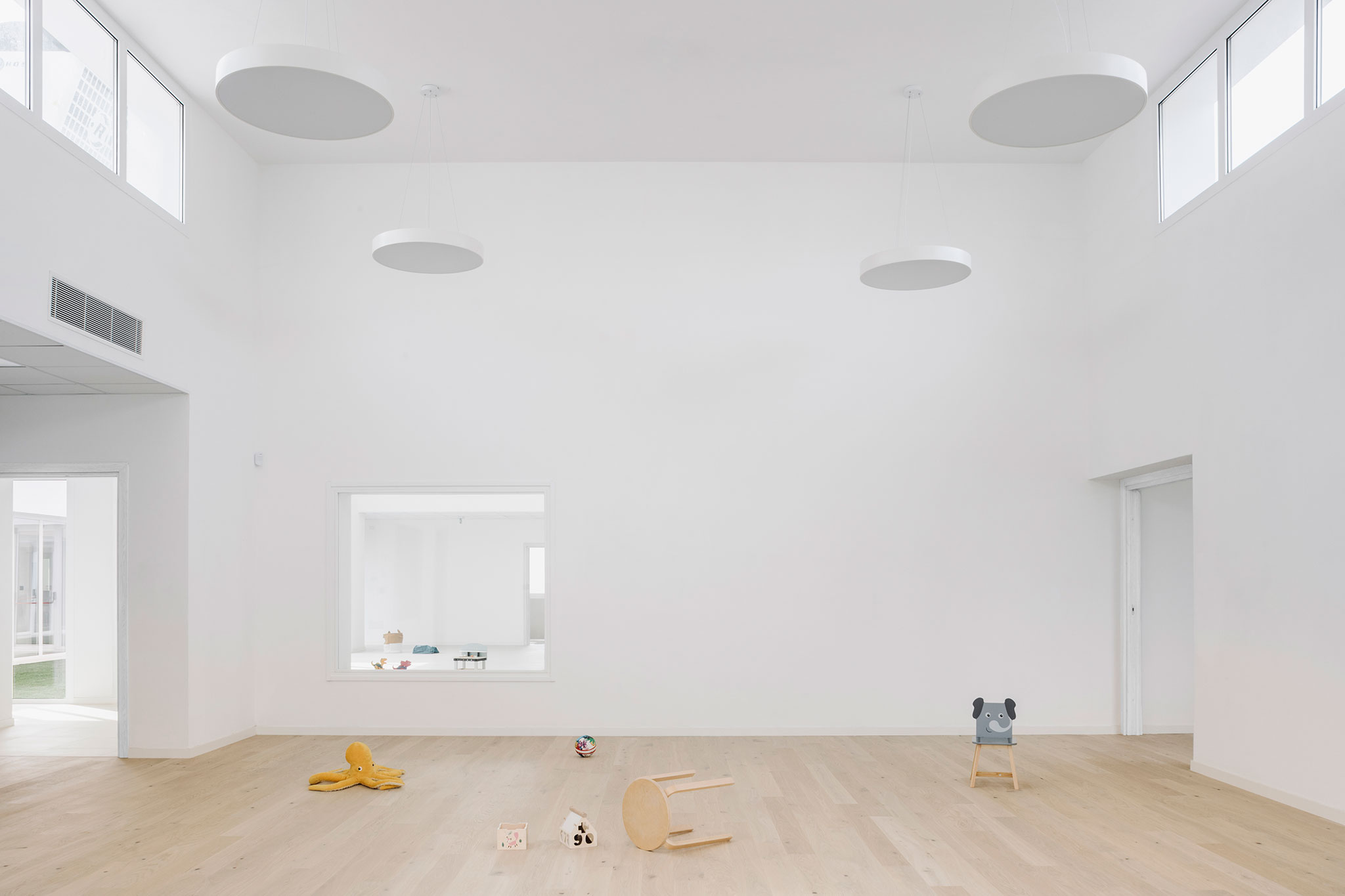
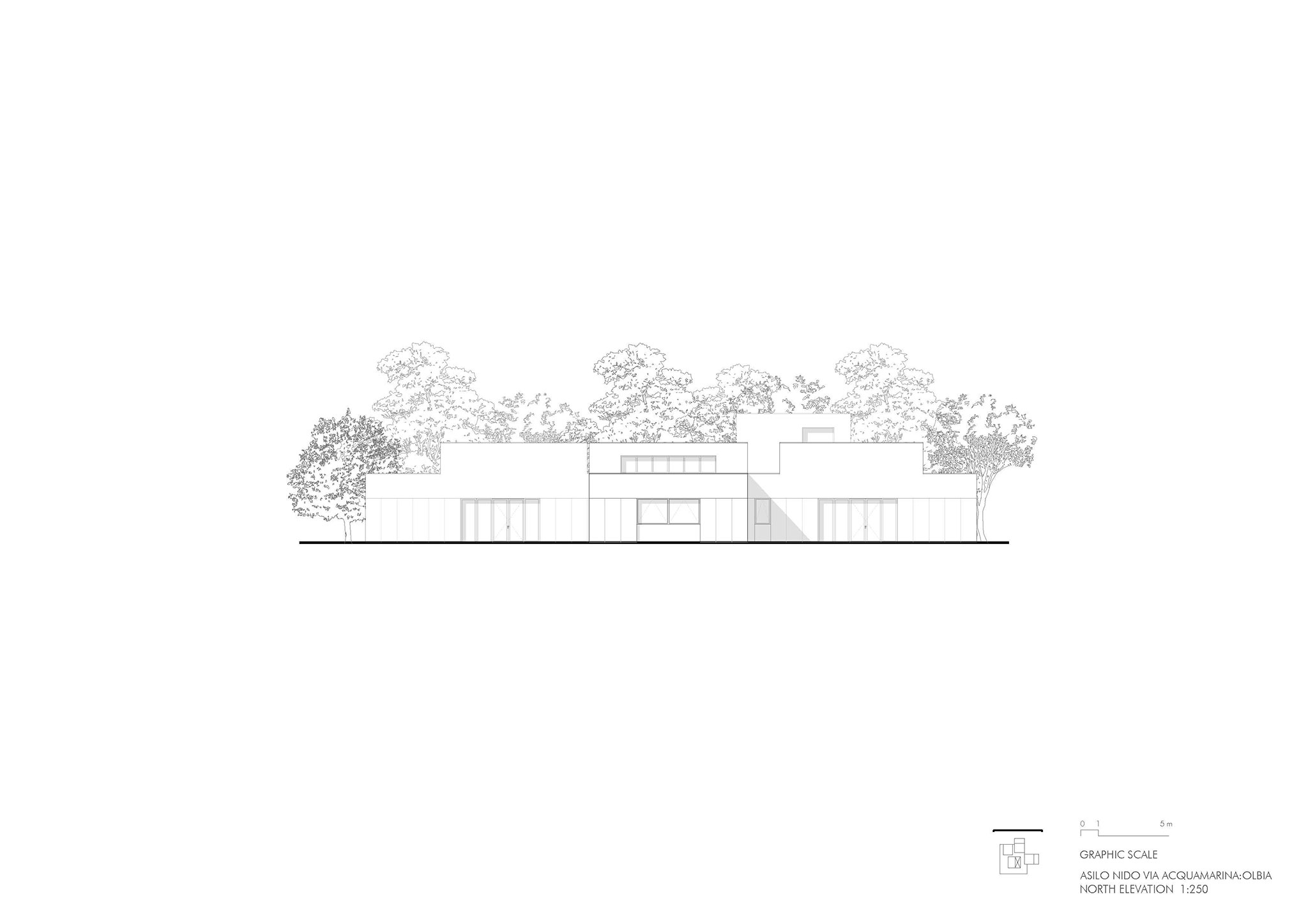
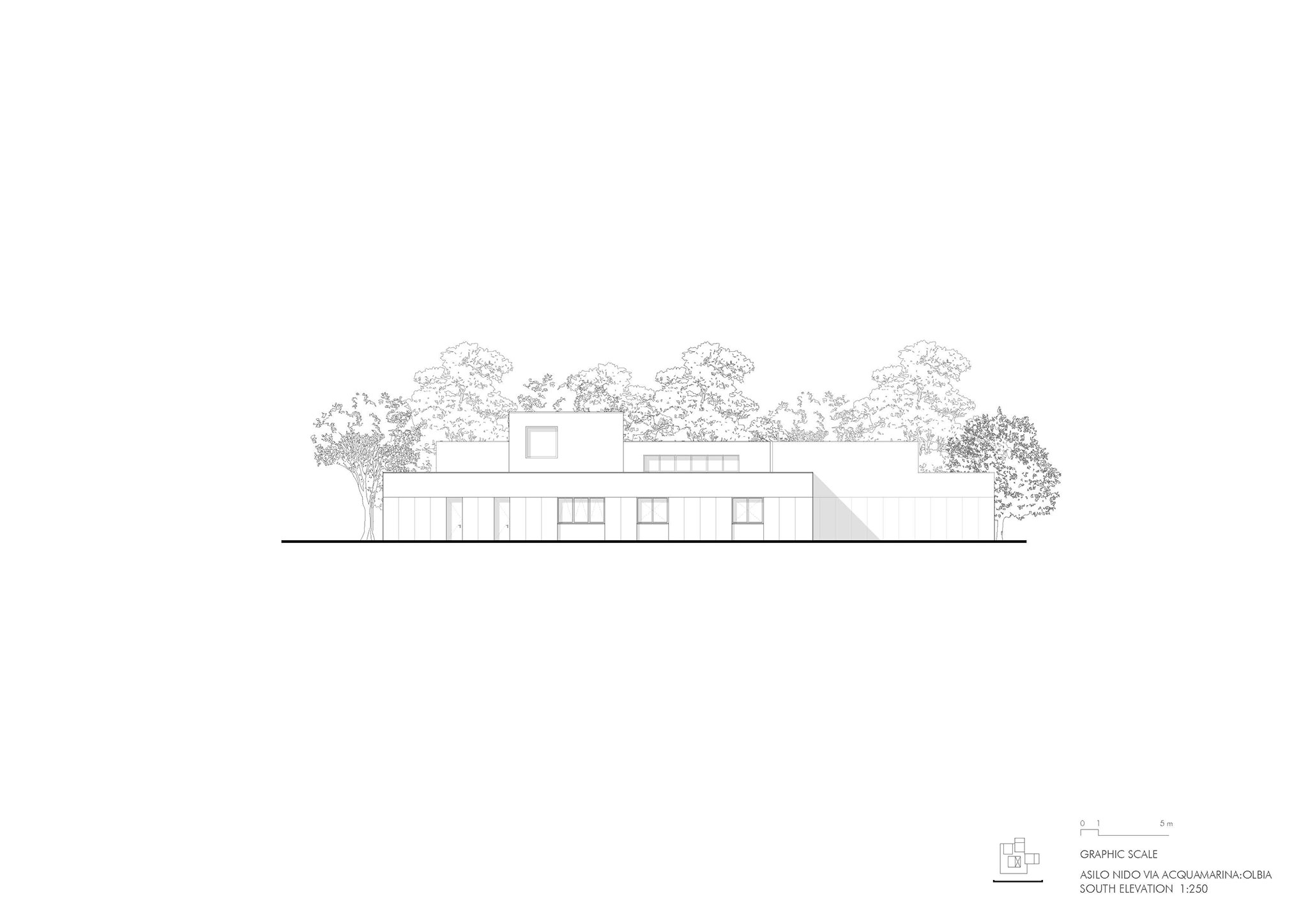
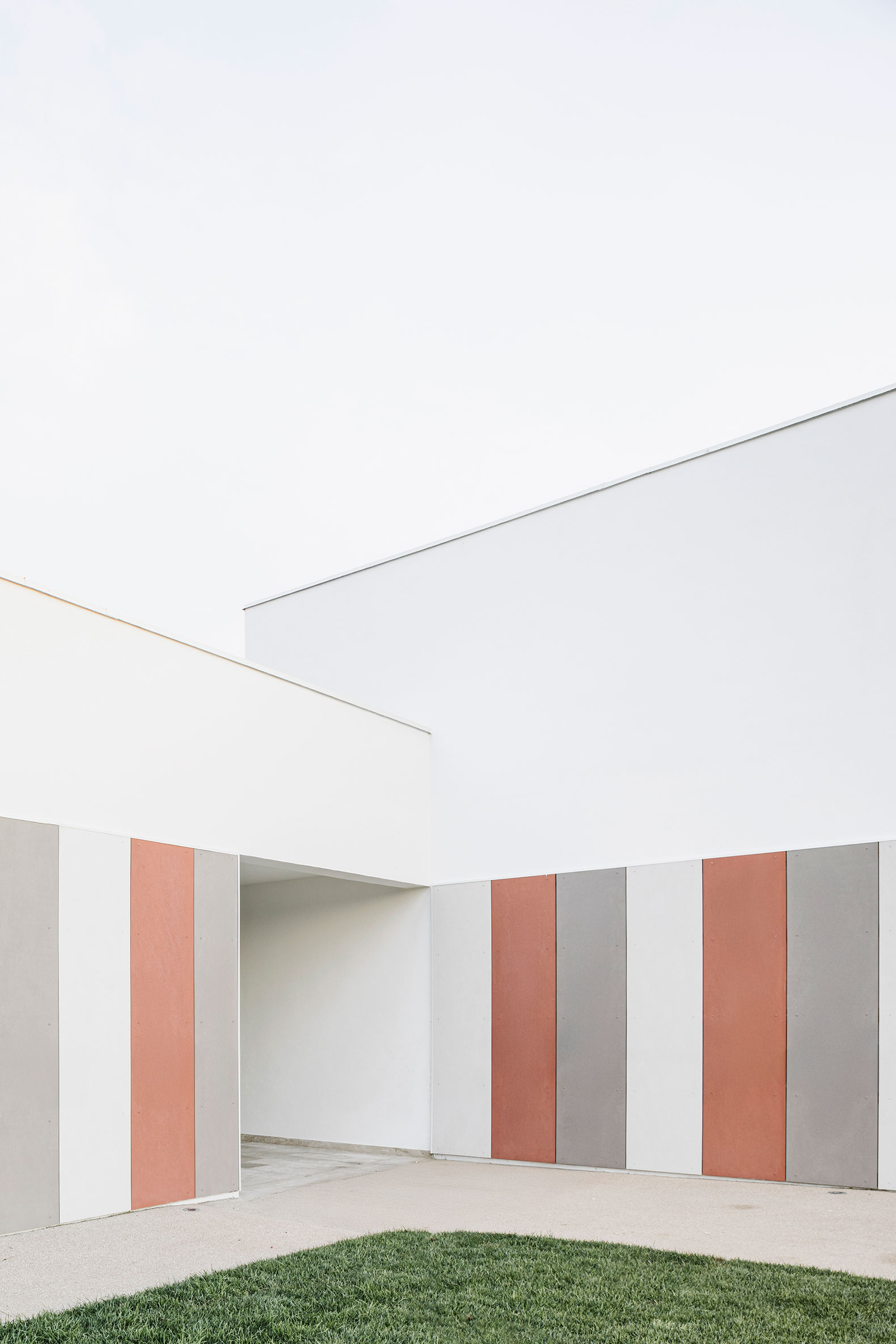
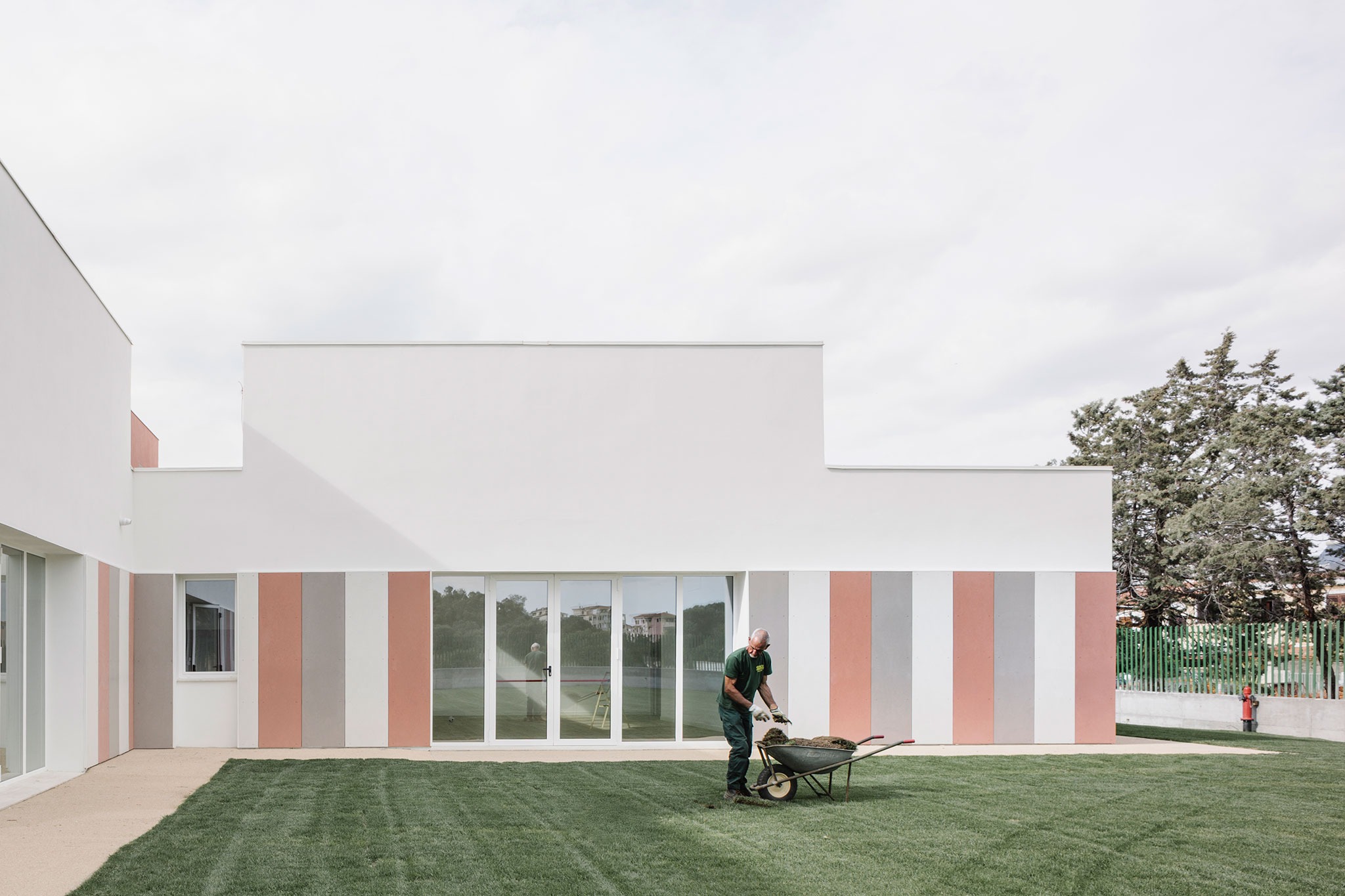
Formally, the design comprises clear and precise volumes, clad in panels in shades of white, gray, and red, combining a contemporary and dynamic architectural language. Inside, the spaces are defined by natural oak parquet floors, ceramic surfaces, and washable finishes, creating a cohesive and welcoming environment that actively supports the educational experience.
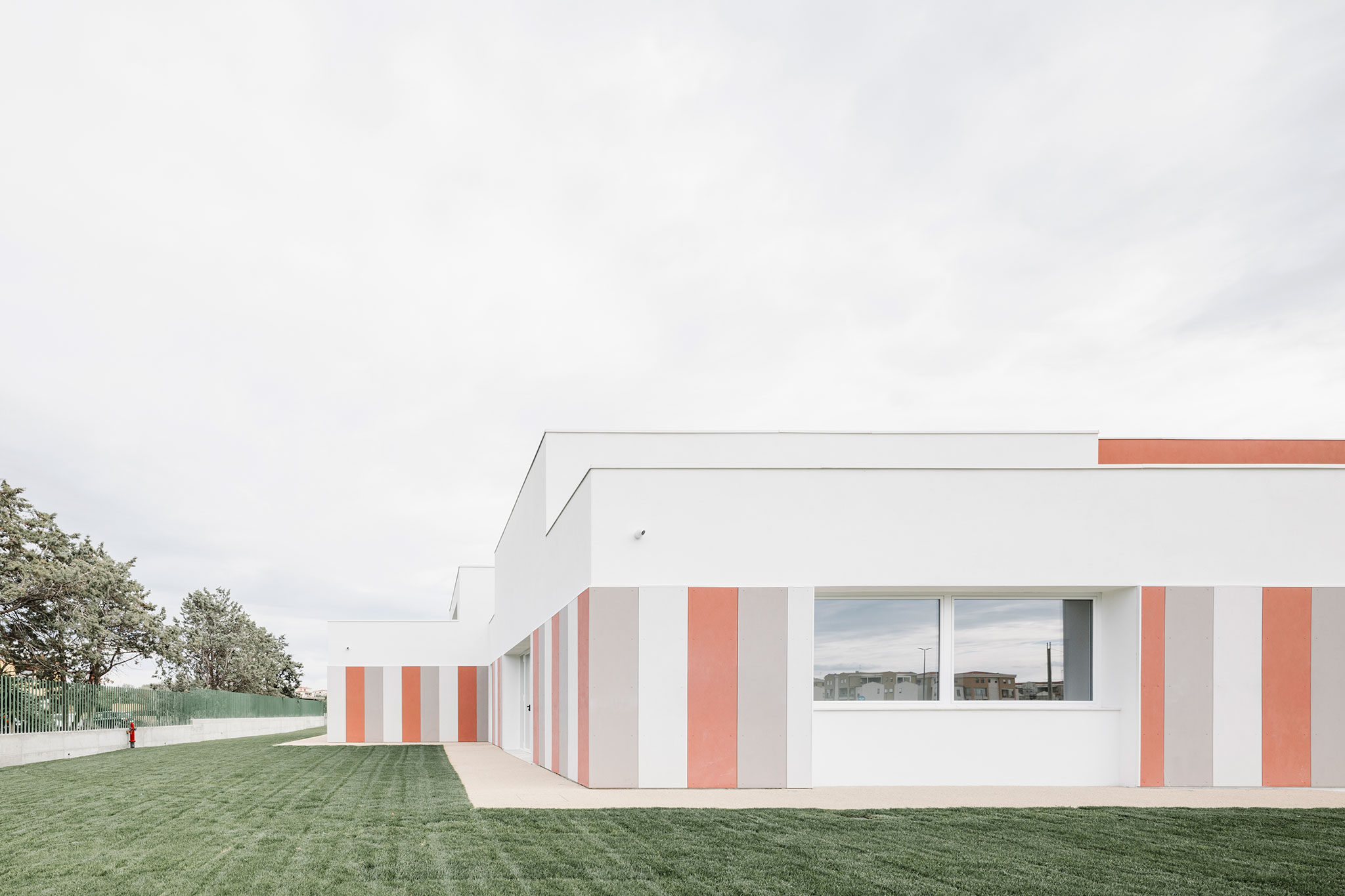
Nursery school on Via dell’Aquamarina Studio Associato di Architettura LERUA. Photograph by Cedric Dasesson.
Project description by Studio Associato di Architettura LERUA
The New Nursery School on Via dell’Acquamarina in Olbia is conceived as an architectural intervention of strong civic and social significance, designed to respond thoughtfully to the growing demand for spaces dedicated to early childhood care and education. The facility is sized to accommodate 85 children between 2 and 36 months of age, organized into three functional groups—infants, semi-toddlers, and toddlers—according to a pedagogical framework aligned with the most up-to-date national guidelines and the developmental needs of each age group.
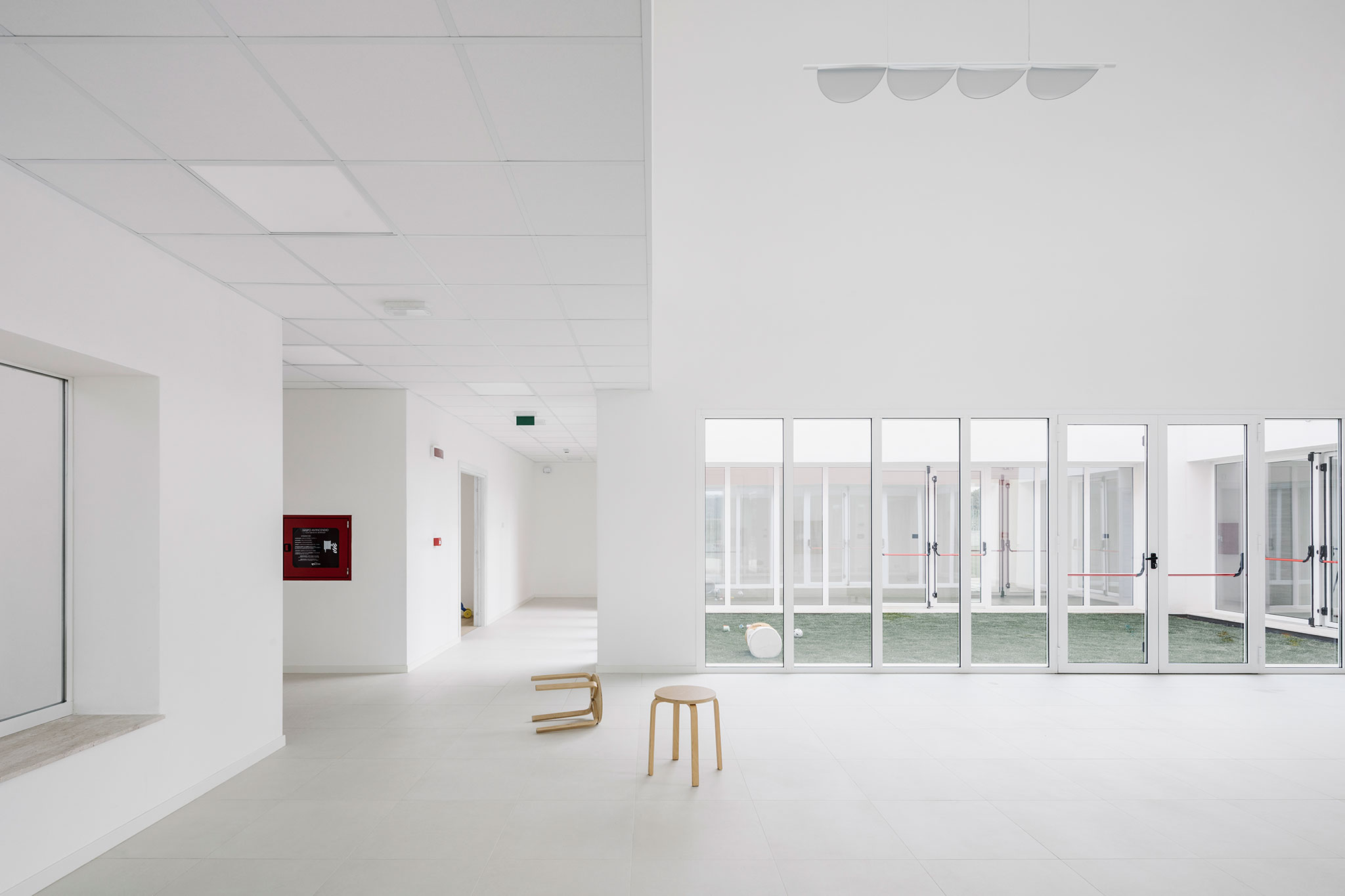
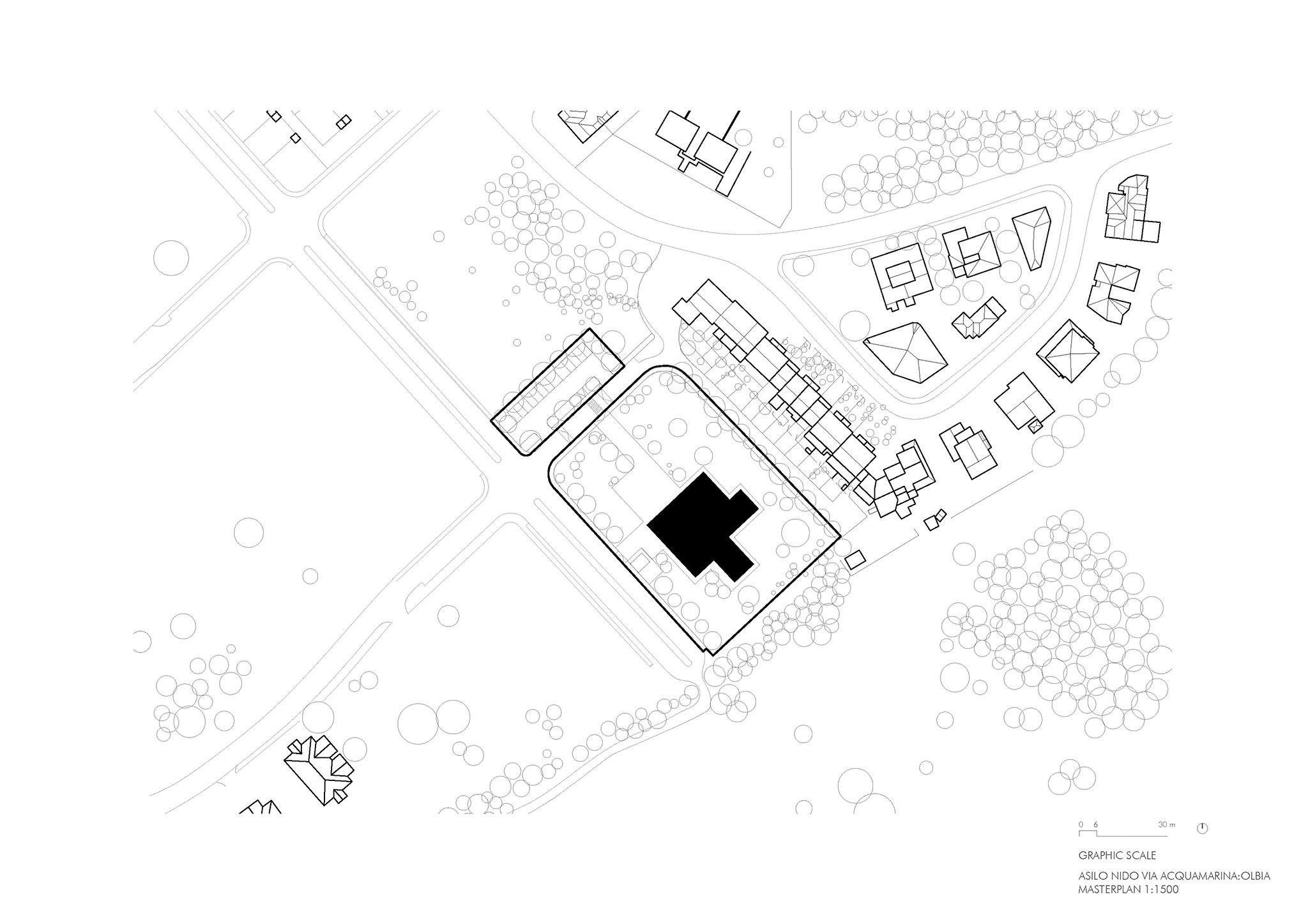
Developed entirely on a single level, the building is structured around a central patio conceived as a true internal piazza: an identity-defining space that orders the plan layout and becomes a place of interaction, encounter, and collective activity. This central void is not merely a connective element, but the symbolic and functional heart of the nursery, fostering socialization and reinforcing a sense of community. The plan clearly differentiates spaces dedicated to play, rest, and care, complemented by shared and service areas—including the kitchen, teachers’ room, and administrative offices—achieving a balanced configuration that ensures both functional efficiency and psychophysical well-being.
Architectural quality is expressed through compositional clarity and a careful consideration of light as a primary design material. Double-height volumes allow for generous and evenly distributed natural daylight, enhancing spatial perception while contributing to reduced energy consumption. The central patio thus emerges as the perceptual and symbolic core of the building, a recognizable and cohesive place where architecture actively supports the educational experience.
From a construction standpoint, the building employs a reinforced concrete frame with porous brick infill walls, while internal partitions in masonry and drywall provide flexibility and adaptability over time. The façades, clad with large-format UHPC panels in white, grey, and red tones, combine a contemporary architectural language with high durability and energy performance. Interior spaces are defined by natural oak parquet flooring, ceramic surfaces, and washable finishes, creating a cohesive, welcoming environment that is easy to maintain.
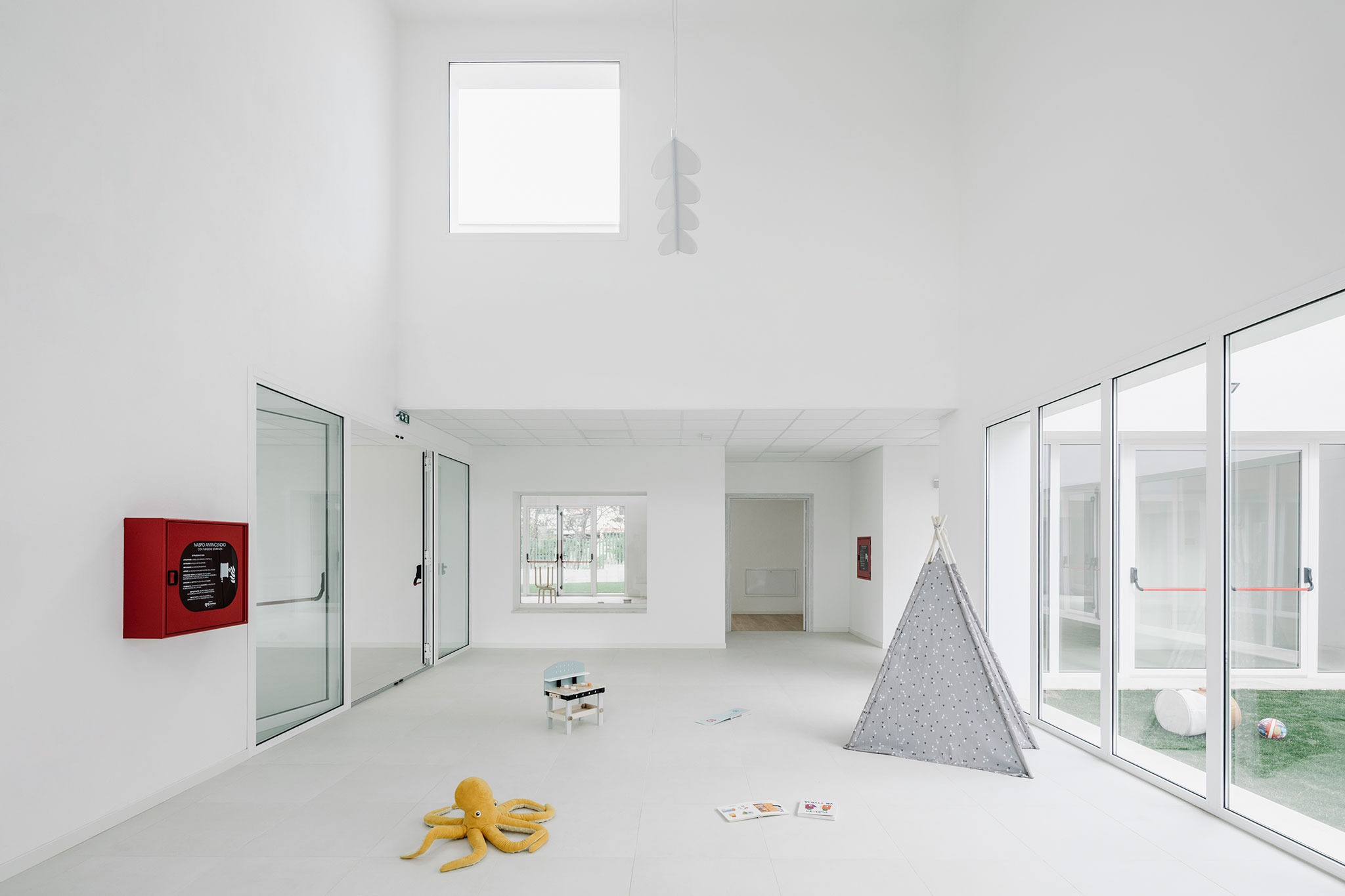
In line with design for all principles, the project ensures full accessibility and the complete absence of architectural barriers, allowing inclusive use of all spaces. The use of natural materials and low-impact construction solutions ensures compliance with Minimum Environmental Criteria and guides the project toward a sustainable, durable, and responsible building model—one that integrates architectural quality, social awareness, and environmental responsibility.