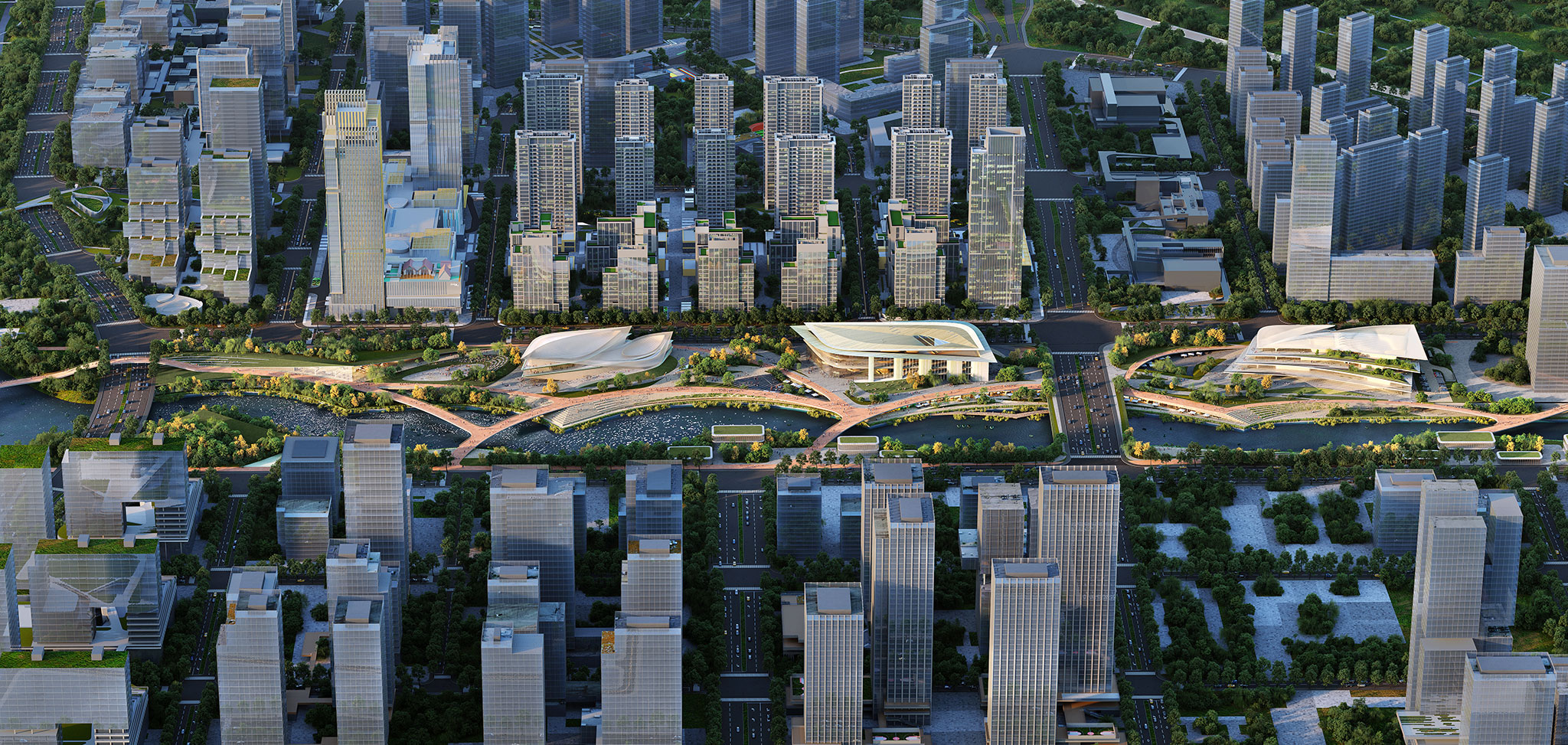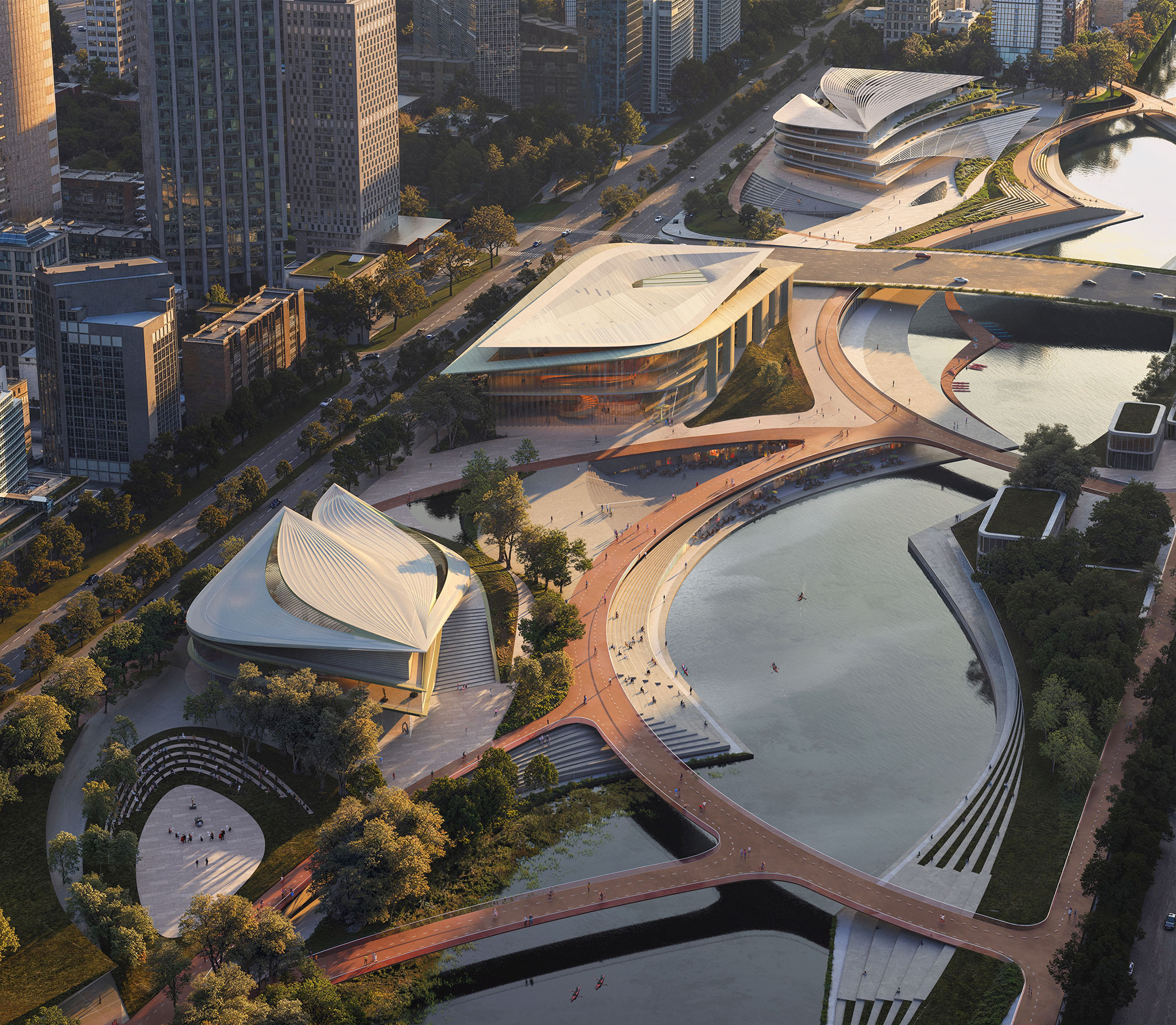
Zaha Hadid Architects designed cultural and educational buildings to interact with the public space along the waterfront, incorporating plazas, promenades, and areas for events and gatherings. A network of bridges and pedestrian walkways connects both banks of the canal and links the new district to the existing city. The buildings designed by ZHA respond to the topography, views, and environmental conditions of the site, dynamically integrating into this new urban landscape.
In this riverside landscape, cultural and educational buildings follow the course of the canal and open onto the new civic spaces along the waterfront, integrating plazas, pedestrian walkways, and areas for cultural, recreational, and community activities.
An interconnected network of bridges and walkways links both banks of the canal and connects the new urban axis with the existing city. The cultural buildings designed by ZHA are integrated into these public spaces, responding to the topography, views, and sunlight throughout the year, thus strengthening their connection with the natural and urban environment.
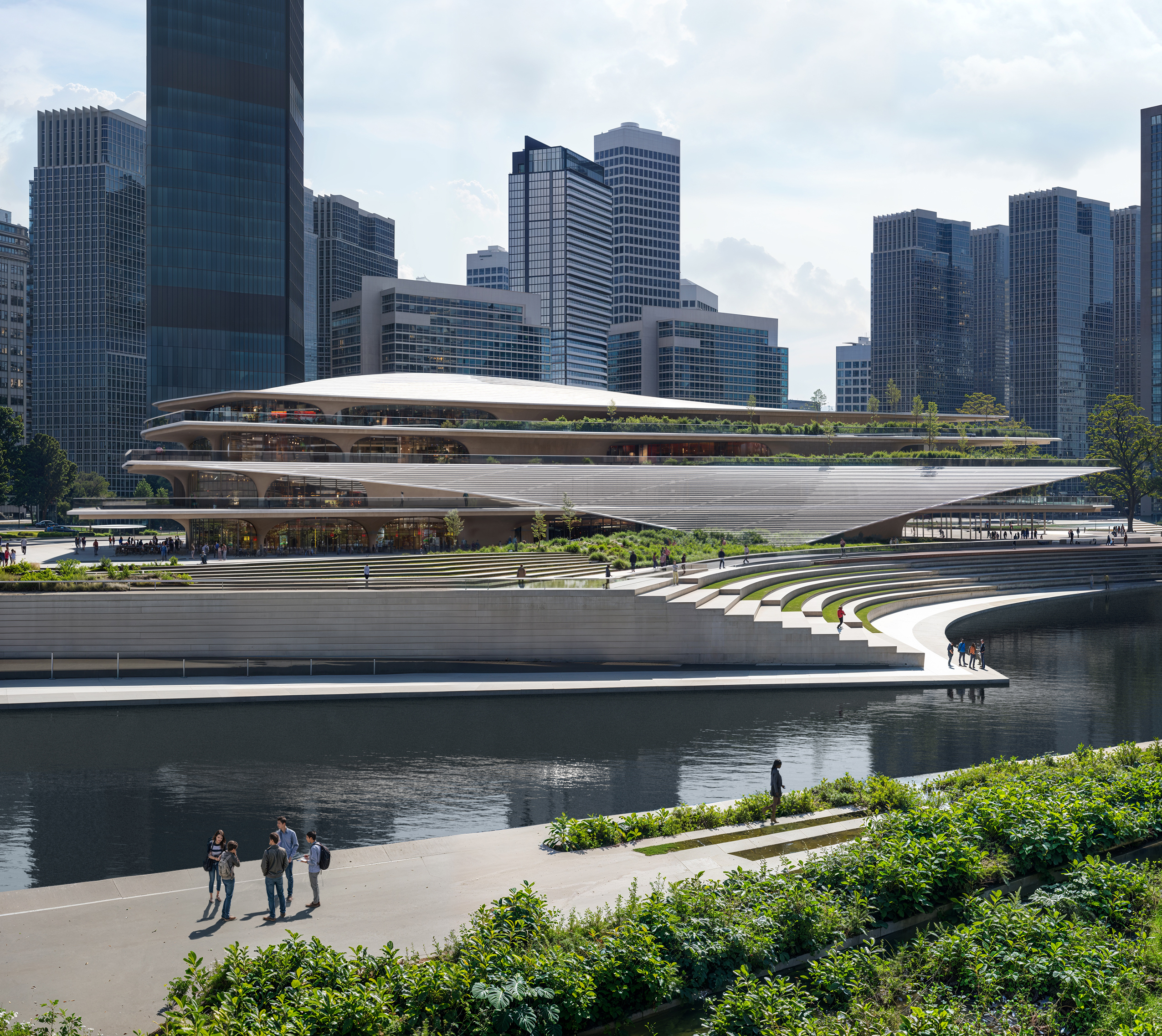
ZHA Architects, Qiantang Bay Cultural District, Hangzhou, China. Rendering by Proloog.
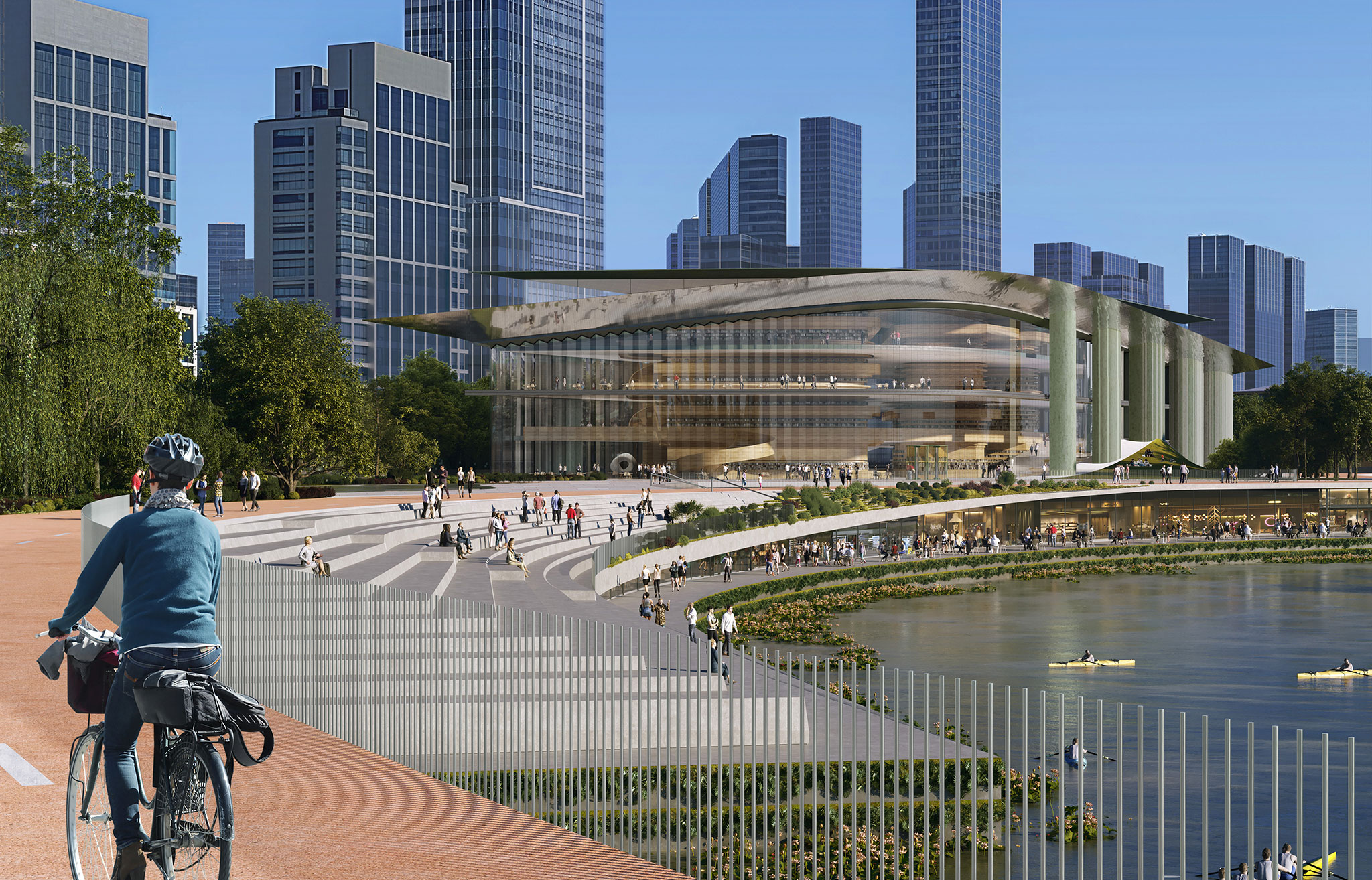
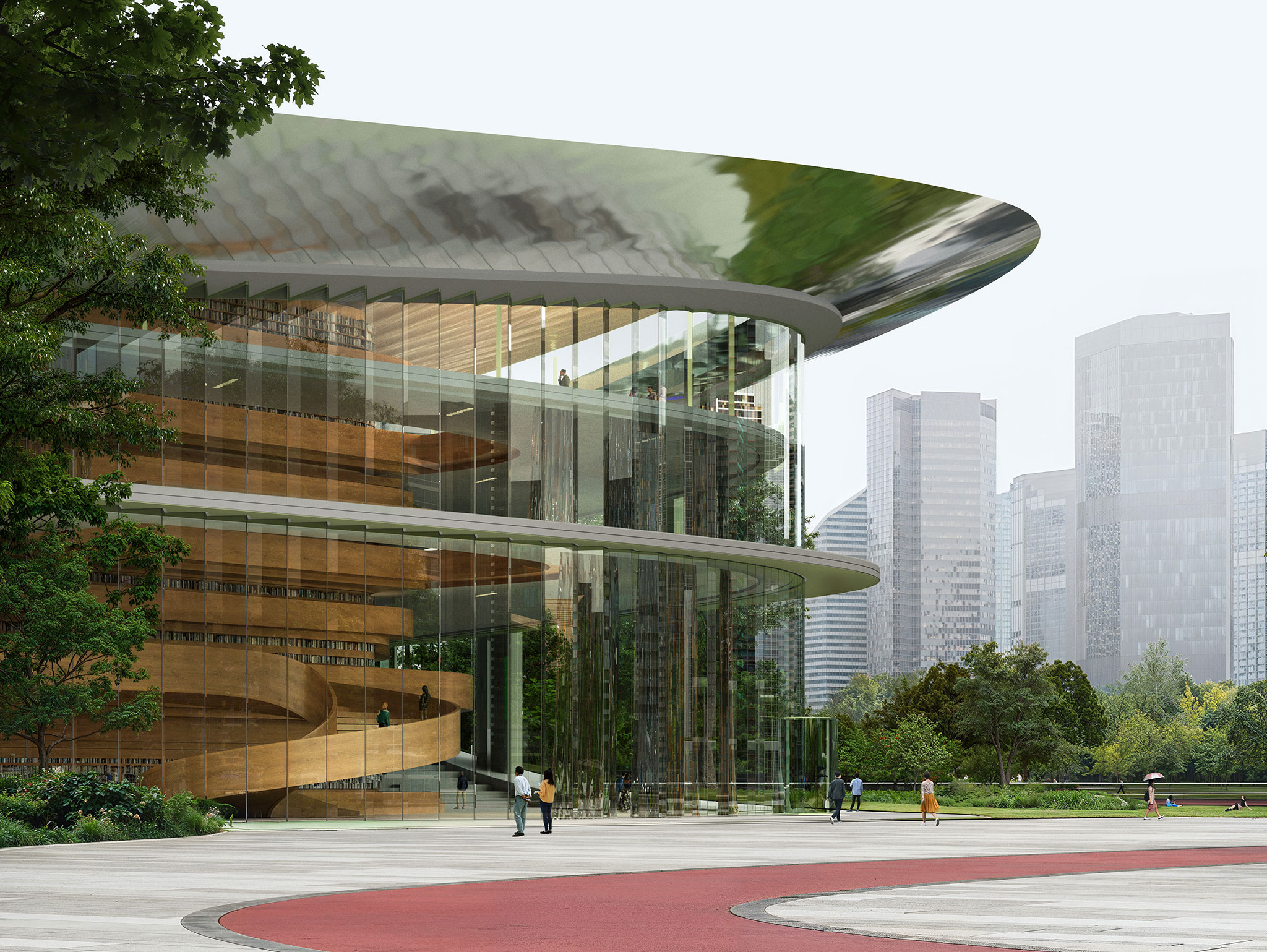
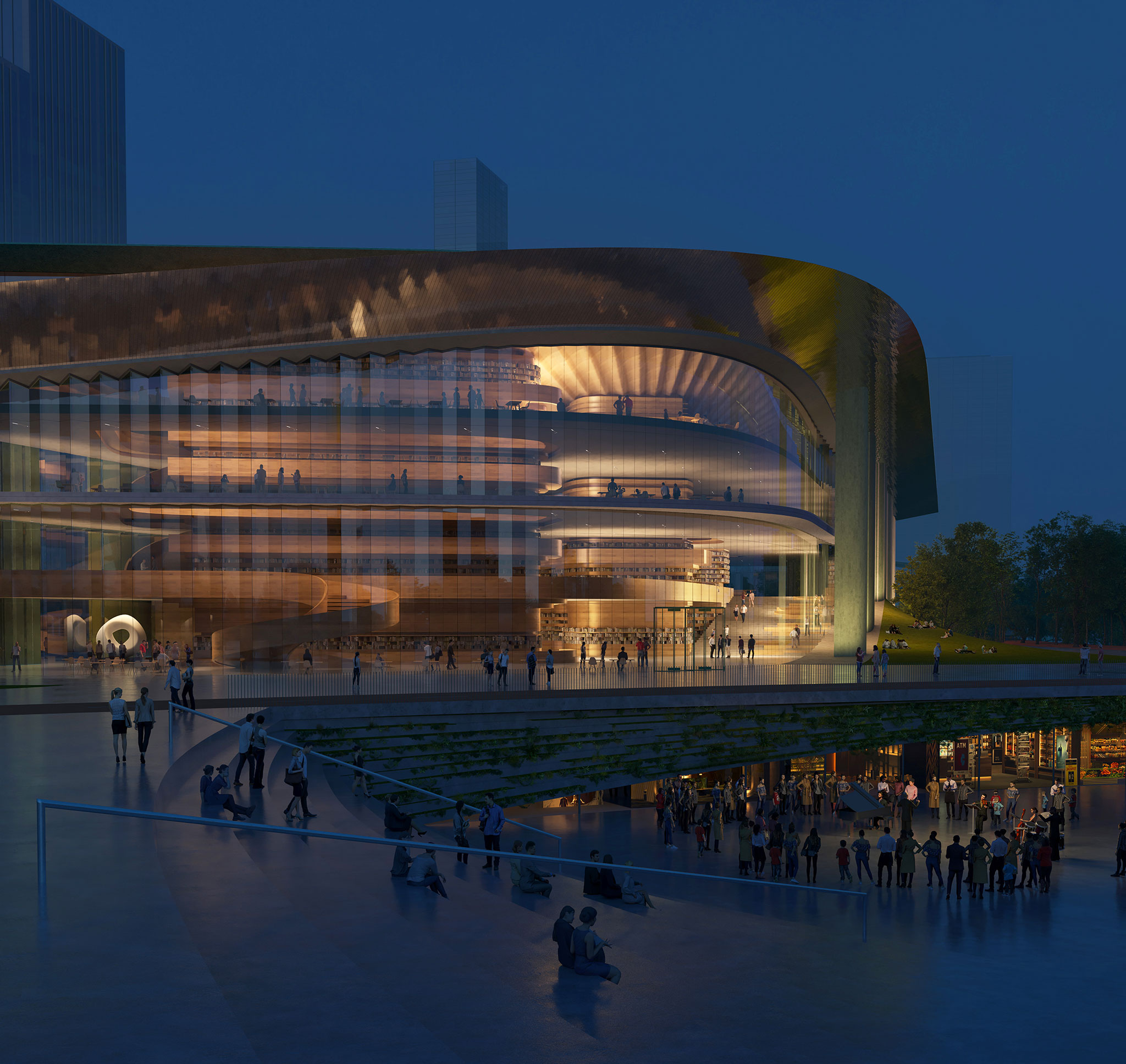
Within this new canal-side cultural district, the library designed by ZHA is defined by a sequence of habitable architectural columns that serve as both structural support and a defining element. Conceived as “stones of knowledge,” these columns house bibliographic collections, archives, reading rooms, and community spaces open to the public.
Inspired by the region’s ancient jade craft tradition, with over 5,000 years of history, the library’s façade is composed of precisely crafted masonry pieces, whose hue evokes the chromatic qualities of this local gemstone. Folded glass elements integrated into the building envelope filter natural light into the interior, creating a soft and homogeneous atmosphere, ideal for reading, studying, and contemplation, while also allowing natural light to penetrate deep into the building.
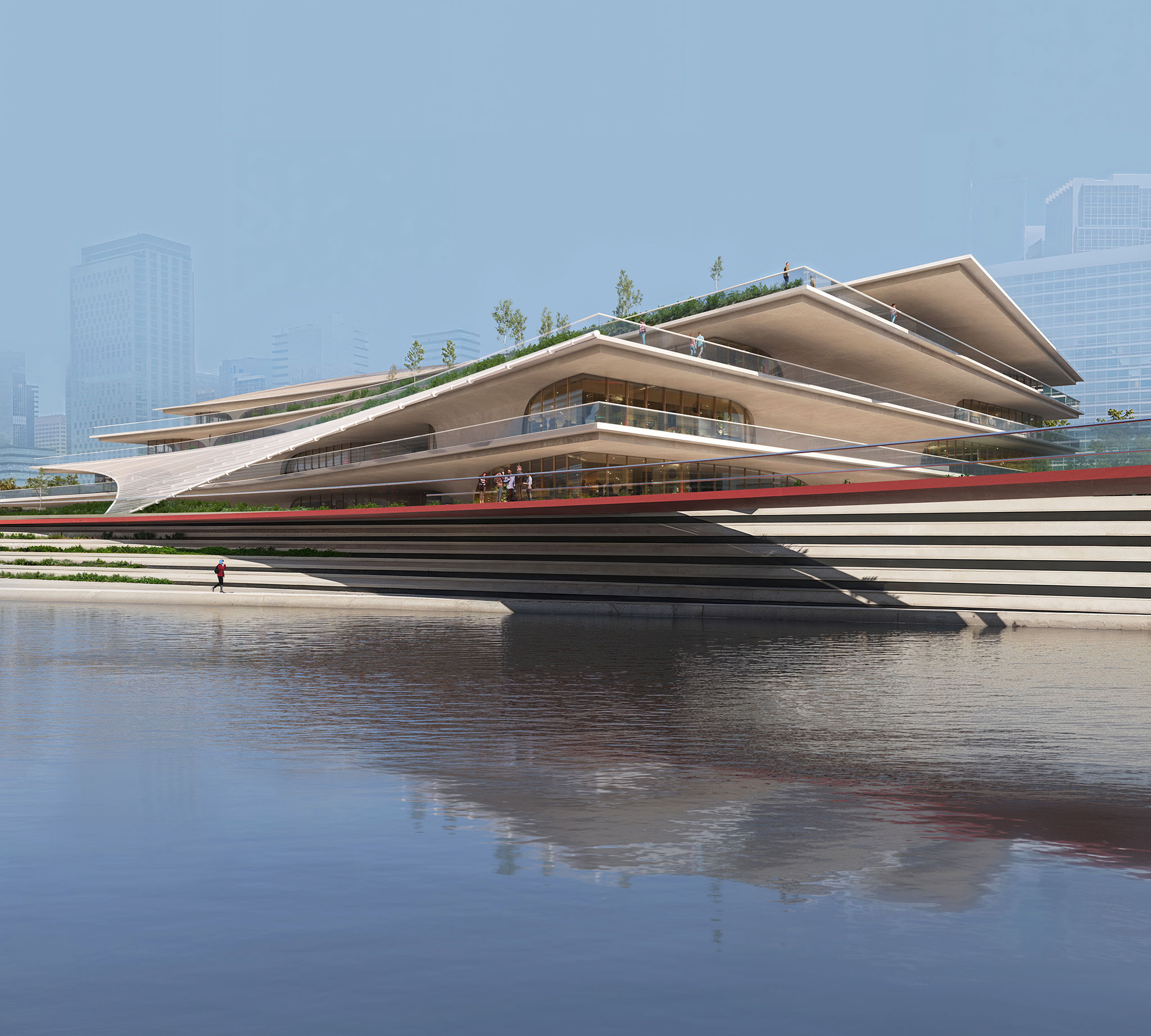
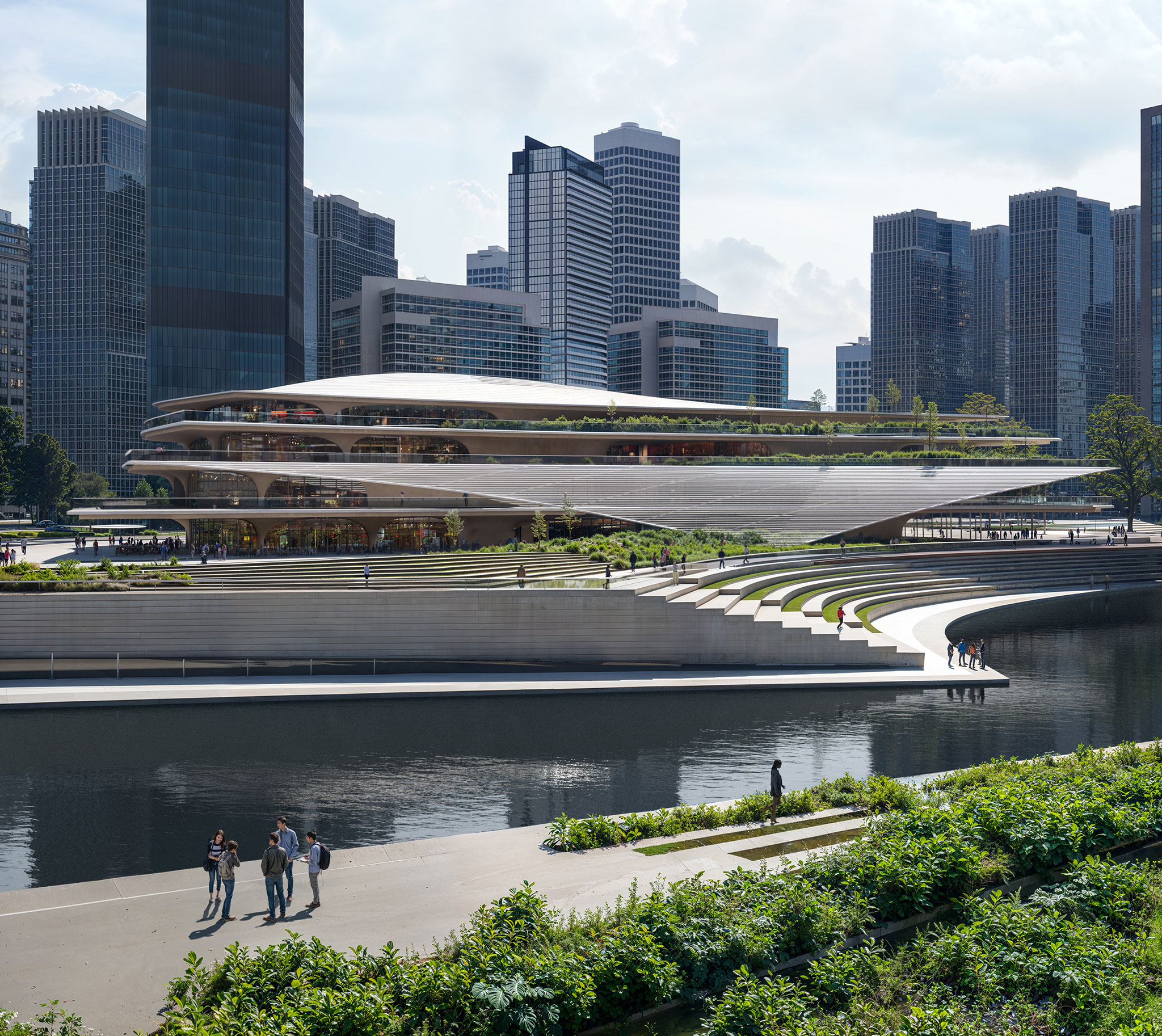
In dialogue with the library, the new International Youth Center, designed by ZHA, is conceived as a meeting and exchange space for students and visitors to the city. Its geometric composition responds to the direct relationship with the canal and extends inside through a sequence of interconnected auditoriums and studios, along with areas for seminars, conferences, exhibitions, and performances. Terraces overlooking the water extend the activities outdoors and offer spaces for events, civic gatherings, and socializing.
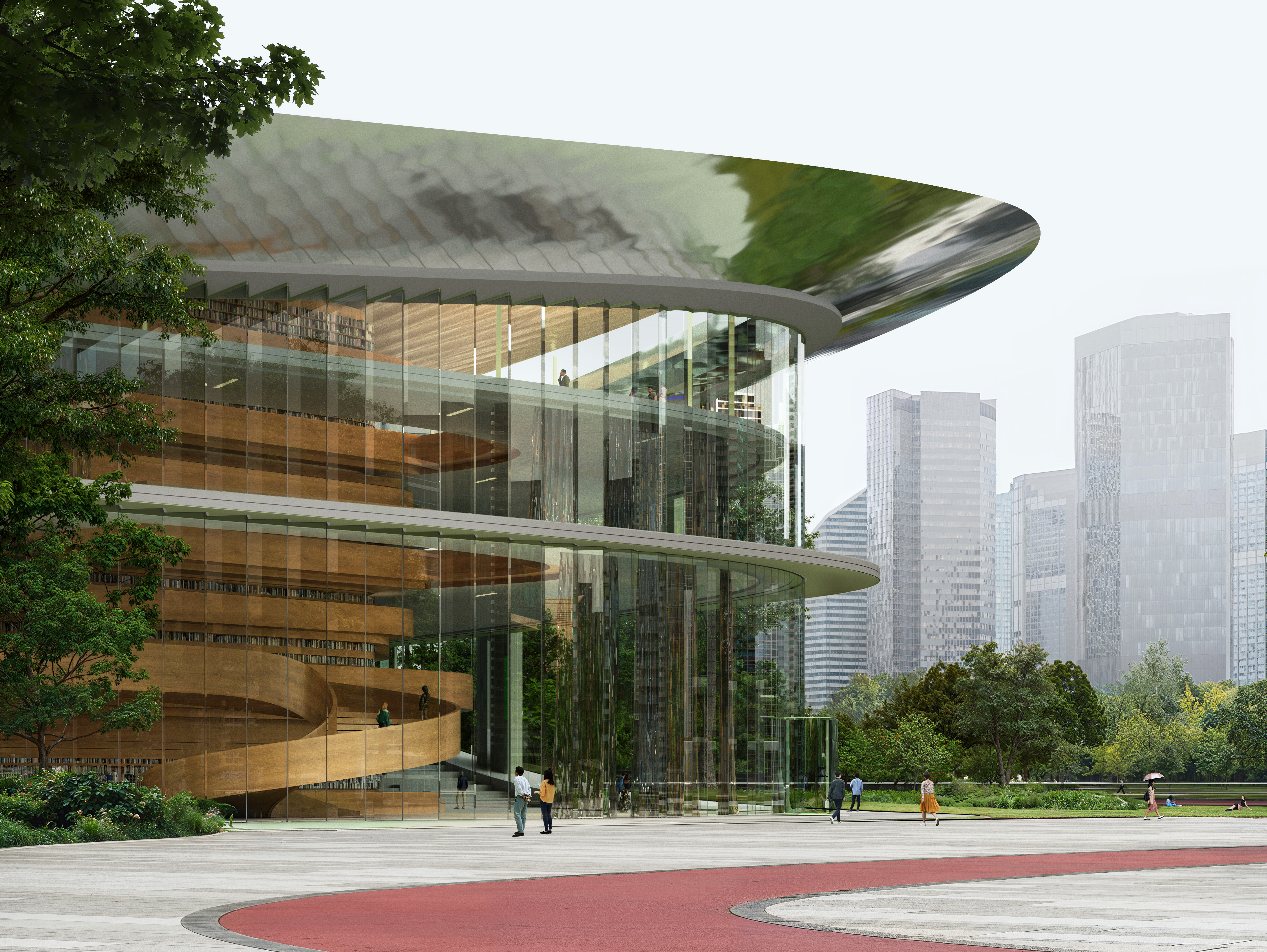
ZHA Architects, Qiantang Bay Cultural District, Hangzhou, China. Rendering by Proloog.
The complex integrates sustainability strategies adapted to the local ecology and climatic conditions, incorporating energy-efficient systems and on-site energy generation solutions that optimize the development's environmental performance.
As a key component of Hangzhou’s “sponge city” infrastructure, designed to mitigate flood risk, the Central Water Axis landscape incorporates permeable surfaces, landscaped ditches, and water retention systems. These measures promote effective stormwater management and create a low-impact, high-performance urban environment, strengthening the city’s long-term resilience and ecological health.