The proposal by Snøhetta for the new Düsseldorf opera house has been selected by the jury of the "Opera of the Future" competition, conceived as the future home of the Oper am Rhein in Düsseldorf.

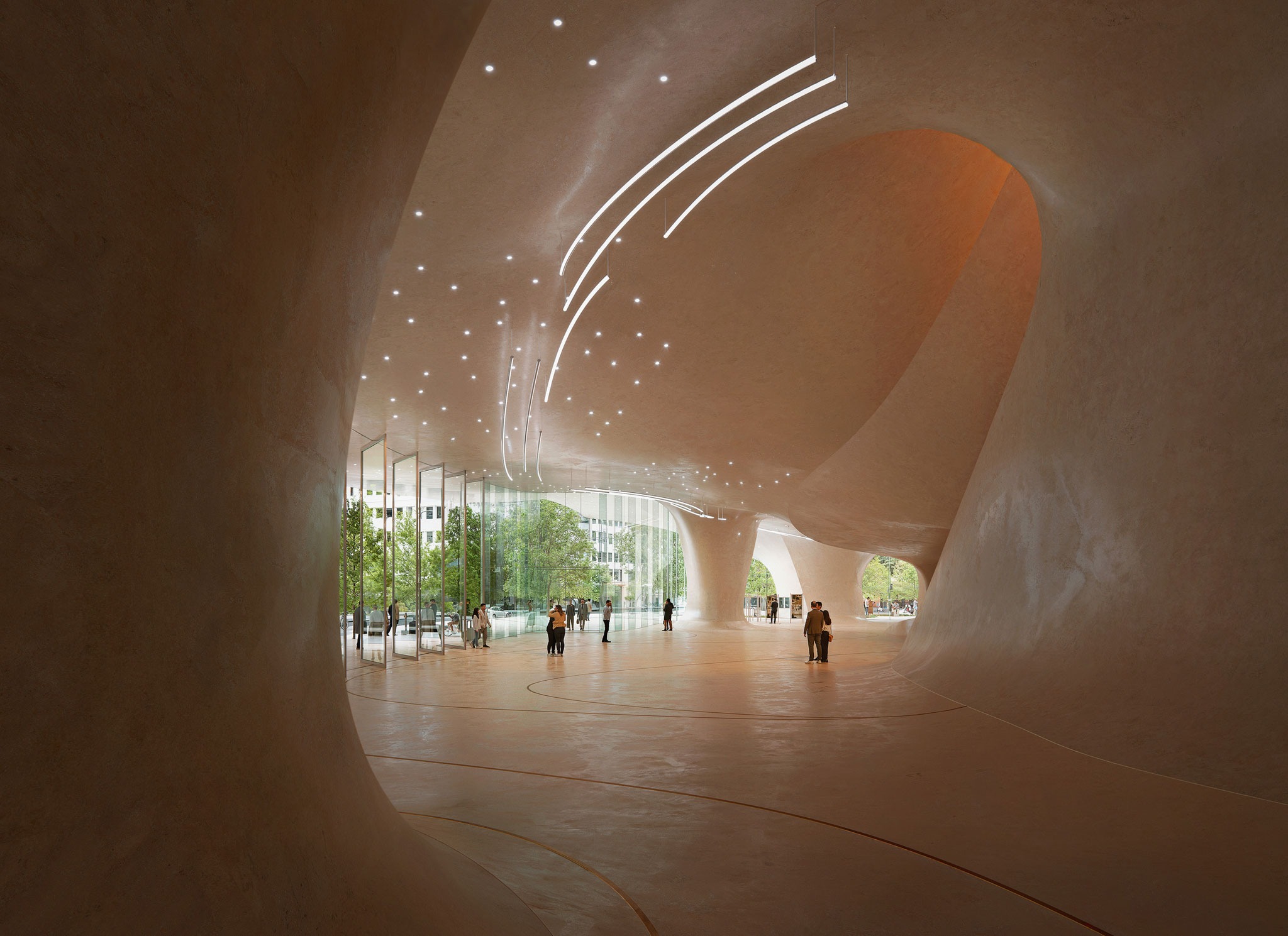
The project offers a unique image and opens up to the city with a ground floor reminiscent of a cave, inspired by the winding course of the Rhine through the region.

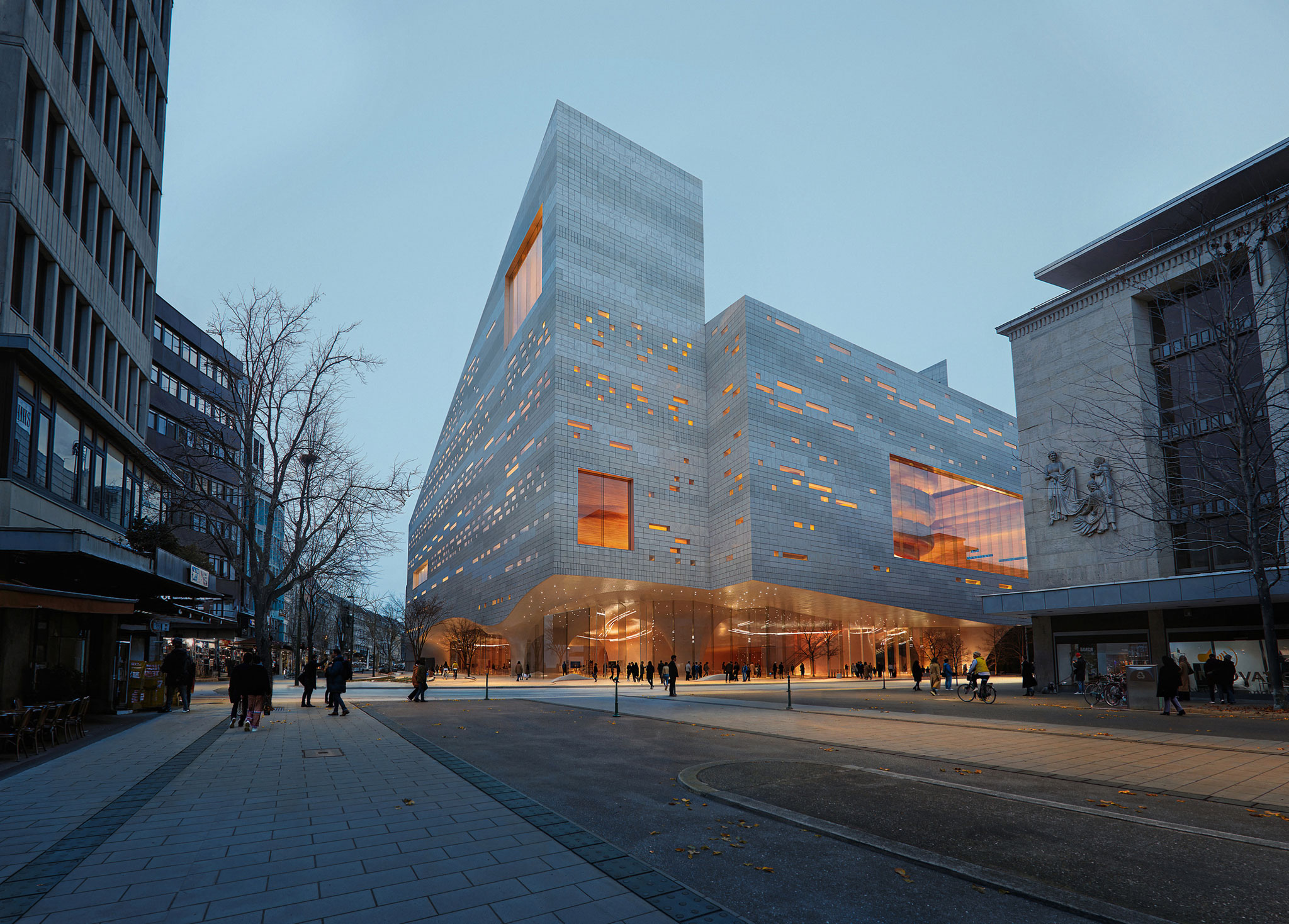
Snøhetta divides the building's volume into three asymmetrical, trapezoidal segments and introduces corridors on the ground floor, facilitating the entry of natural light and creating a dynamic and inviting space for visitors.

"When designing the Düsseldorf Opera House, it was essential to us that this central building should not shut itself off from the city, but instead draw the public into the ground floor, creating a public forum where urban life can flow freely in and out.

This forum, filling the entire ground floor, will become a large, open, and accessible space in the heart of the city — staging a clear gradient from city to stage: a constellation of rooms for encounter, rehearsal glimpses, informal performance, and pause. As a result, the opera is not conceived as a stand-alone monument, but as an integral part of the urban fabric.

Just as the Oslo Opera House opened up to the fjord and invited people onto its roof, we envision this as a contemporary house that will embrace not only art, but also everyday encounters, conversations, and community. Through the integration of the three components, the building opens itself to users of all ages and becomes a true gathering place for the citizens of Düsseldorf." 

Snøhetta's founding partner Kjetil Trædal Thorsen.
metalocus_snohetta_Düsseldorf-opera-house_0

Rendering. New Düsseldorf opera house by Snøhetta. Image by Mir.

Project description by Snøhetta

The roofs of the three figures slope in opposite directions—lowering themselves in response to their immediate surroundings and rising to announce the presence of the opera.

The resulting tripartite silhouette symbolizes the unity of three institutions under one roof: the Deutsche Oper am Rhein, the Clara Schumann Music School, and the Music Library.

An organic, open space
The Rhine is the central source of inspiration for the building. Just as the river has carved its meandering path through the Rhineland over millions of years, shaping the sedimentary foundation upon which Düsseldorf is built, the ground floor of the opera is conceived as an eroded cave: an organic, open space that becomes the city’s new cultural arena.

This carved-out design opens the ground floor on all sides, creating generous connections between the opera and its urban surroundings, inviting everyone to engage with its content.

Visualización. Nuevo teatro de ópera de Düsseldorf. Imagen por Mir.
Rendering. New Düsseldorf opera house by Snøhetta. Image by Mir.

Harmonizing with Düsseldorf’s palette
The façade is designed as a light-colored, rear-ventilated natural stone cladding. Its tone harmonizes with Düsseldorf's city palette while reducing summer heat gain and mitigating the urban heat island effect.

Varied stone module formats minimize material thickness and waste. The different formats are also accompanied by different surface finishes – from very rough to finely ground – which are arranged in wave-like bands reminiscent of sedimentary layers, connecting the eroded ground floor motif to the facade.

Two window concepts ensure flexibility and performance: large openings highlight central public areas such as the foyer, bar, and selected rehearsal rooms, while smaller 'filter windows' provide uniform lighting, shading, and ventilation.

Together, the silhouette, window composition, and recessed terraces create a dynamic yet context-sensitive presence—a cultural institution embedded in its surroundings yet confident in its expression.
Visualización. Nuevo teatro de ópera de Düsseldorf. Imagen por Mir.
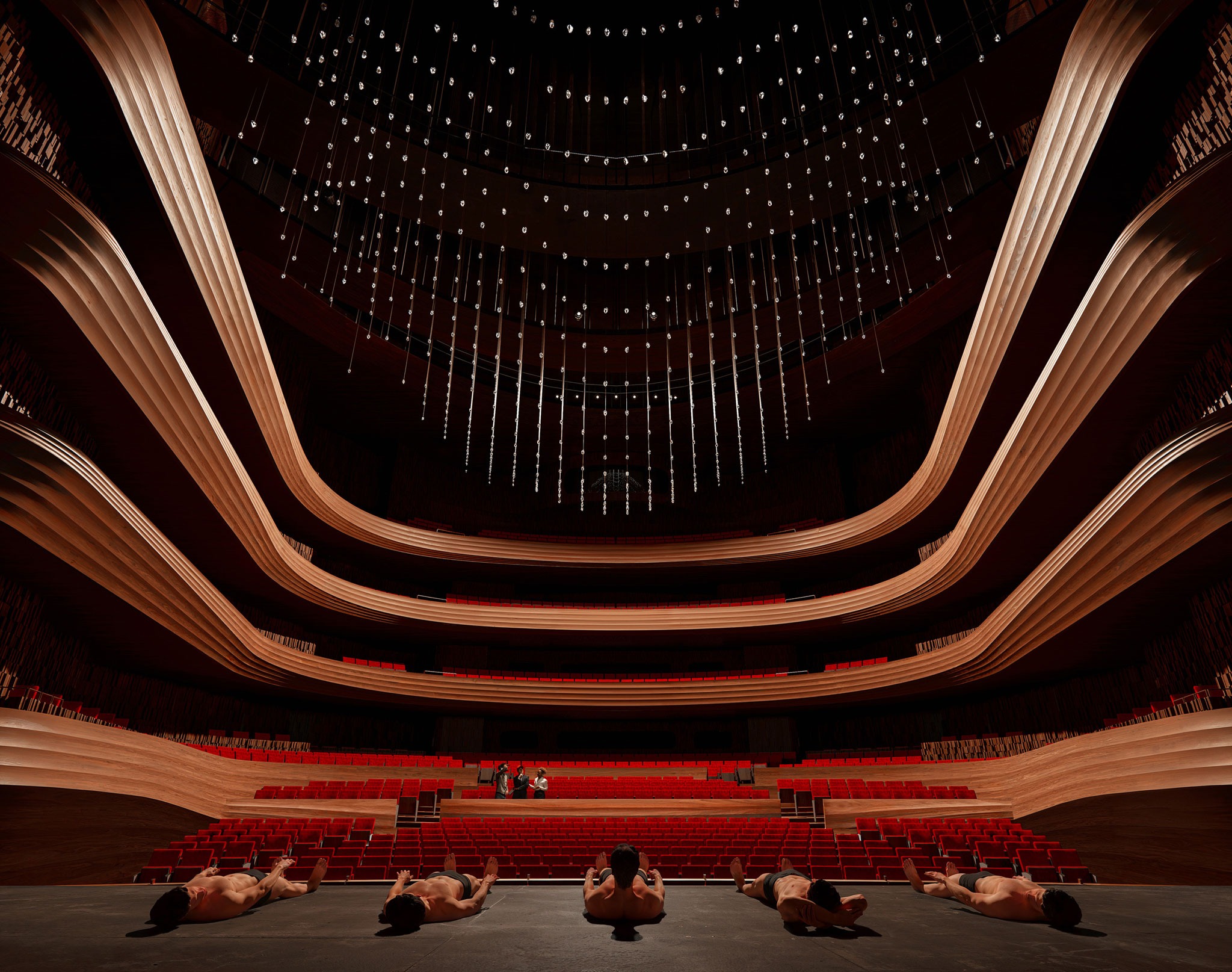
Rendering. New Düsseldorf opera house by Snøhetta. Image by Mir.

Roof landscape and biosolar roof
The interiors follow the logic of the façade and the theme of erosion; mineral materials with a calm flow of tone and texture. The main auditorium, with 1,300 seats, features smoked oak paneling and red seating, tying in with the color scheme of the existing opera house, which is expected to be demolished.

The roof landscape combines photovoltaics, skylights, and technical infrastructure to form a biosolar roof. Striped, green terraces planted with species native to the Lower Rhine floodplains are staggered between PV fields and technical strips.

"The new cultural building block will be integrated into the urban context with a high mark. The building, which is cleverly divided into three segments, skilfully reacts to its surroundings, opens up a variety of views of the city and shows a design of high sophistication. The Forum offers a unique atmosphere and thus creates a place of encounter in the environment of culture for all citizens." 

Heiner Farwick, architect, urban planner and chairman.

More information

Label
Architects
+ + copy Created with Sketch.
- + copy Created with Sketch.
Label
Collaborators
Text

Structural & Facade Engineering.- Bollinger + Grohmann GmbH.
MEP Engineering.- Buro Happold GmbH.
Acoustics.- Nagata Acoustics International, Inc.
Theatre Planning.- Theatre Project Consultants Ltd, TheaPro GmbH
General Planning Management Services, Cost Consulting: Drees ​ & Sommer SE.
Fire safety Consulting.- Gruner Deutschland GmbH.
Lightning Design.- Kardorff Ingenieure Lichtplanung GmbH.
Visualisations.- Mir.
Model building.- Made by Mistake. 

+ + copy Created with Sketch.
- + copy Created with Sketch.
Label
Client
Text

Landeshauptstadt Düsseldorf.

+ + copy Created with Sketch.
- + copy Created with Sketch.
Label
Dates
Text

November, 2025.

+ + copy Created with Sketch.
- + copy Created with Sketch.
Label
Venue / Location
Text

Düsseldorf, Germany. 

+ + copy Created with Sketch.
- + copy Created with Sketch.
Label
Renderings
Text

Mir.

+ + copy Created with Sketch.
- + copy Created with Sketch.

Snøhetta is an architecture, landscape, and interior design studio with offices in Oslo, Norway, and New York City, USA. Founded in 1989, it is led by Craig Dykers and Kjetil Thorsen. The studio, named in honour of Mount Snøhetta, the highest peak in the Dovrefjell mountains of Norway, has approximately 100 collaborators working on large-scale international projects across a wide range of typologies. Their approach is deeply collaborative and transdisciplinary, bringing together architects, designers, engineers, and landscape professionals to explore multiple perspectives depending on the nature of each project.

Snøhetta has completed a series of world-renowned cultural and landmark projects, including the Bibliotheca Alexandrina in Egypt, the Oslo Opera House and Ballet, and the Lillehammer Art Museum in Norway. Current projects include the National Pavilion of the September 11 Memorial Museum at the World Trade Center site in New York, as well as urban and landscape developments that aim to merge local identity, sustainability, and public experience.

In 2004, Snøhetta was awarded the Aga Khan Award for Architecture, and in 2009, the Mies van der Rohe Award. The studio is the only practice to have won the World Architecture Award for Best Cultural Building twice in consecutive years: in 2002 for the Bibliotheca Alexandrina and in 2008 for the Oslo Opera House and Ballet, consolidating its international prestige.

Kjetil Trædal Thorsen (born 1958 on the coastal island of Karmøy, Norway) is a co-founder of the studio and a multiple award-winning architect. He is a visionary and humanist designer who has redefined the boundaries of contemporary practice. Under his leadership, Snøhetta has produced iconic, sustainable structures that are highly sensitive to their cultural context, combining technological innovation with a profound environmental awareness. Thorsen’s work is recognized for its focus on social interaction, sustainability, and the creation of spaces that foster human connection and sensory experience, establishing a benchmark in contemporary global architecture.

Craig Dykers (born 1961 in Frankfurt, Germany) is also a co-founder of the studio and director of its New York office. Snøhetta has earned a reputation for maintaining a deep integration of landscape, architecture, and urban experience across all its projects. Key works include the Bibliotheca Alexandrina in Egypt, the Oslo Opera House and Ballet, the National Pavilion of the September 11 Memorial Museum in New York, and the redesign of Times Square. Professionally and academically active, Dykers has been a member of the Norwegian Association of Architects (NAL), the American Institute of Architects (AIA), and the Royal Society of Arts in England. He has served as a diploma juror at the Architectural College in Oslo and as a distinguished professor at City College, New York. He has delivered numerous lectures across Europe, Asia, and the Americas, and has undertaken public art installation projects, many of which explore the interplay between context, landscape, and human experience.

Read more
Published on: November 20, 2025
Cite:
metalocus, ANTONIO GRAS
"The winding course of the Rhine. Snøhetta wins the competition for new Düsseldorf opera house" METALOCUS. Accessed
<https://www.metalocus.es/en/news/winding-course-rhine-snohetta-wins-competition-new-dusseldorf-opera-house> ISSN 1139-6415
Loading content ...
Loading content ...
Loading content ...
Loading content ...
Loading content ...
Loading content ...
Loading content ...
Loading content ...
Loading content ...
Loading content ...
Loading content ...
Loading content ...
Loading content ...
Loading content ...
Loading content ...
Loading content ...
Loading content ...
Loading content ...
Loading content ...
Loading content ...
Loading content ...
Loading content ...
Loading content ...
Loading content ...
Loading content ...
Loading content ...
Loading content ...
Loading content ...
Loading content ...
Loading content ...
Loading content ...
Loading content ...
Loading content ...
Loading content ...
Loading content ...
Loading content ...
Loading content ...
Loading content ...
Loading content ...
Loading content ...
Loading content ...
Loading content ...
Loading content ...
Loading content ...
Loading content ...
Loading content ...
Loading content ...
Loading content ...
Loading content ...
Loading content ...
Loading content ...
Loading content ...
Loading content ...
Loading content ...