As part of an international architecture competition aimed at reclaiming the forgotten concrete structure of the Brise-Vent, the LYT-X Studio team has developed a proposal for a museum on the waterfront of Le Havre, France. Respecting and preserving the identity, essence, and valuable cultural heritage of the site, the project envisions the transformation of a historically significant structure into a contemporary cultural, civic, and cultural landmark.

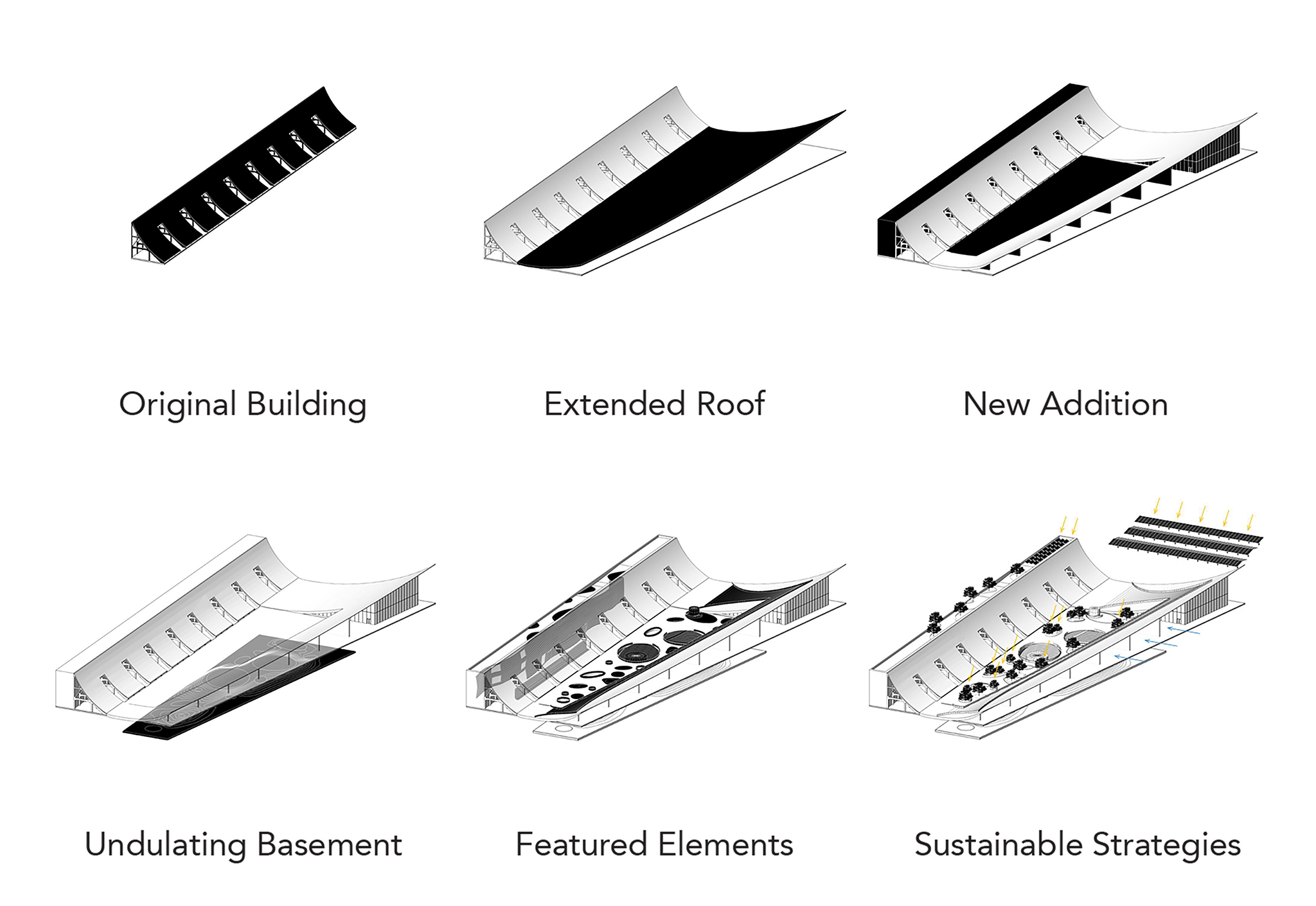
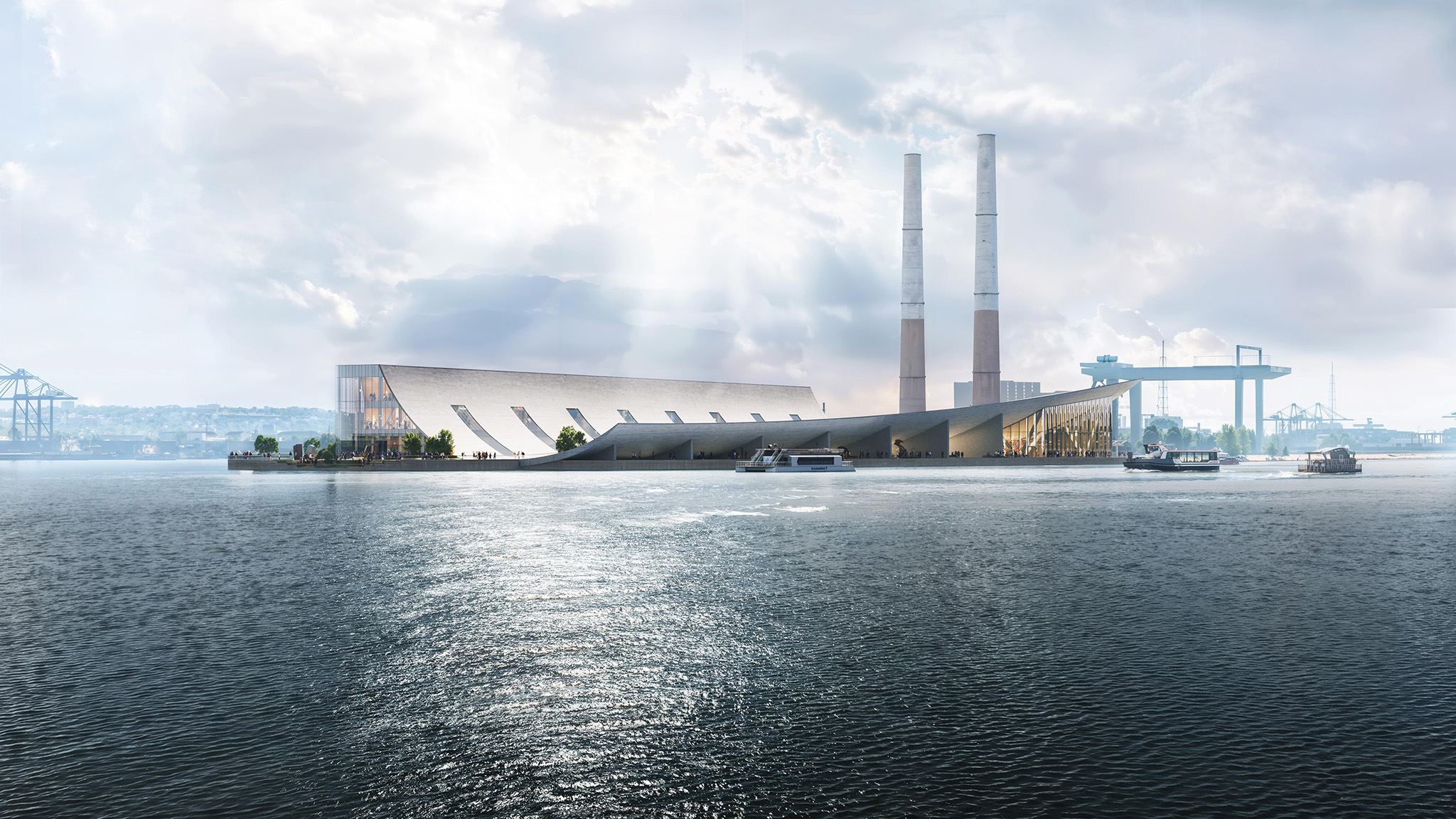
Conceptually, the building establishes a close dialogue with the past while projecting itself into the future. The iconic original curved roof adopts a new, dynamic configuration that lends vitality and fluidity to the abandoned structure. Evoking the gesture of a swimmer diving and resurfacing, the intervention symbiotically connects with its surroundings, honouring and reinterpreting the existing architecture.

The proposal developed by LYT-X Studio is presented as an example of the reuse and regeneration of coastal industrial heritage stripped of its original function. To broaden its reach to the local community and international tourism, the extensive roof houses a sequence of semi-open, continuous public spaces that gradually lead to the entrance of the new museum.

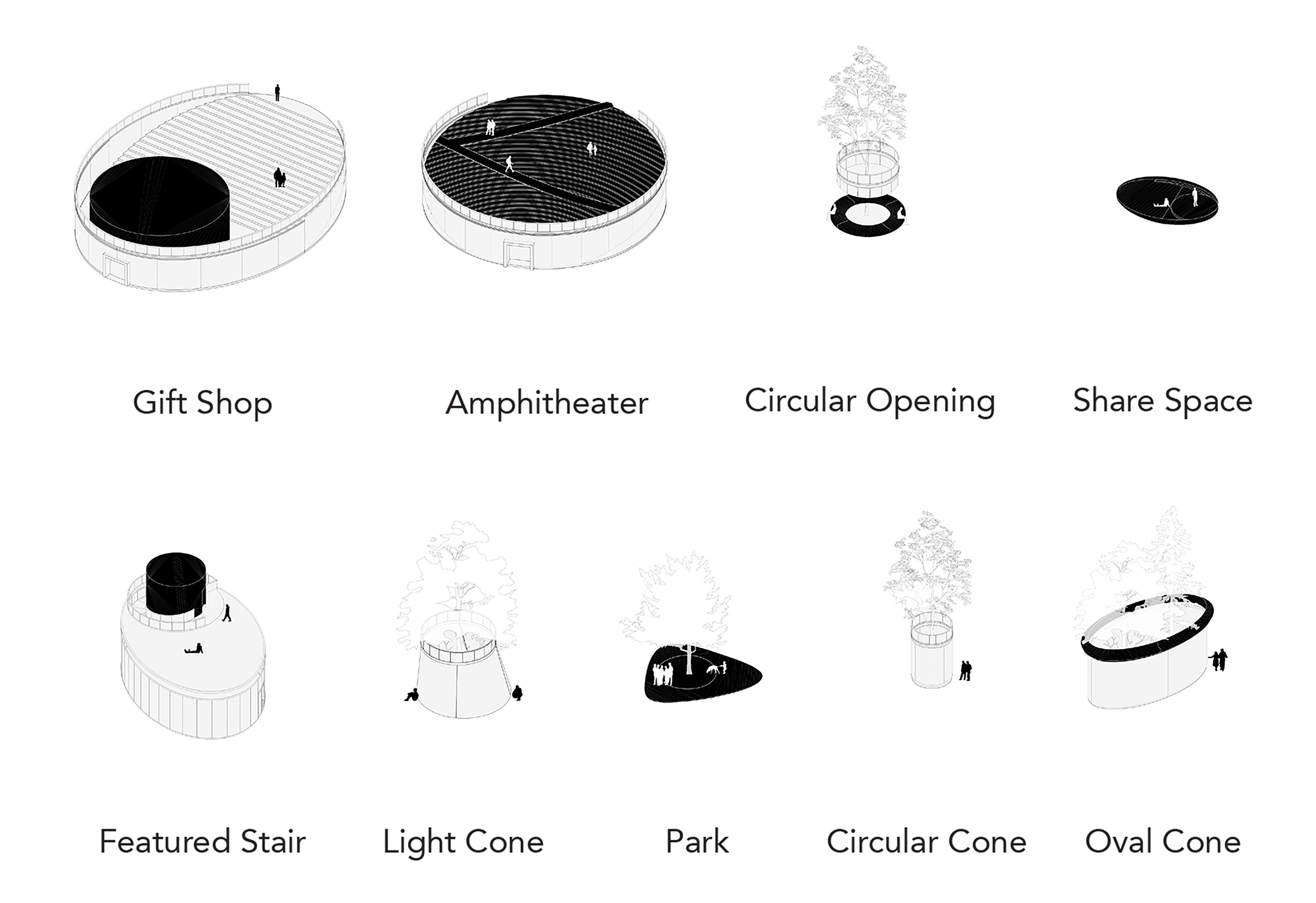
In line with sustainability criteria, the project introduces a series of strategically placed openings that ensure natural ventilation and optimize energy efficiency. Additionally, the incorporation of solar panels, rooftop vegetation, and landscaped courtyards helps regulate the microclimate and promote biodiversity.

Conceived as a new emblem of the city of Le Havre, the project responsibly addresses contemporary usage demands, transforming the Brise-Vent structure into a cultural landmark that respectfully connects past and future.
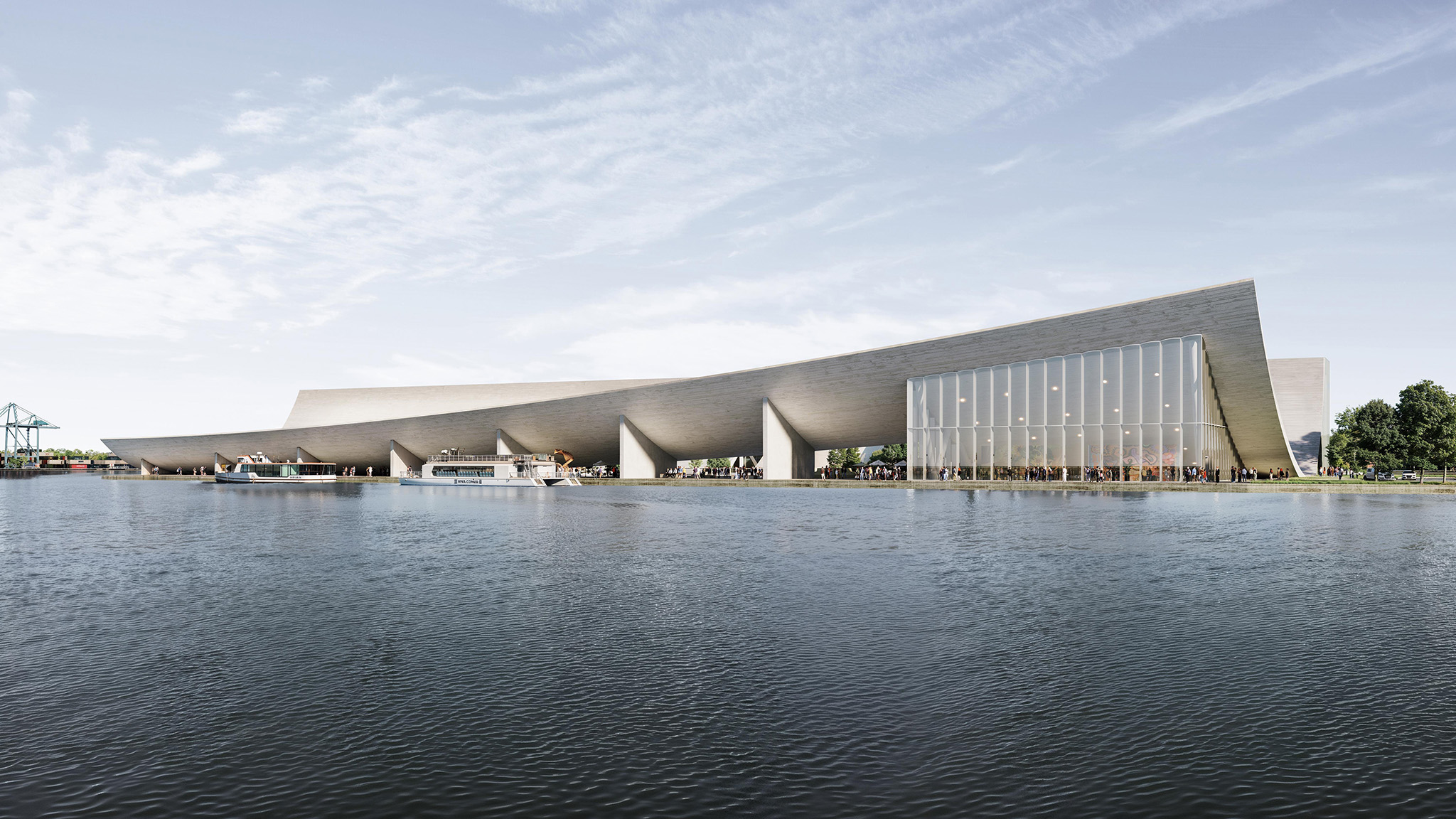
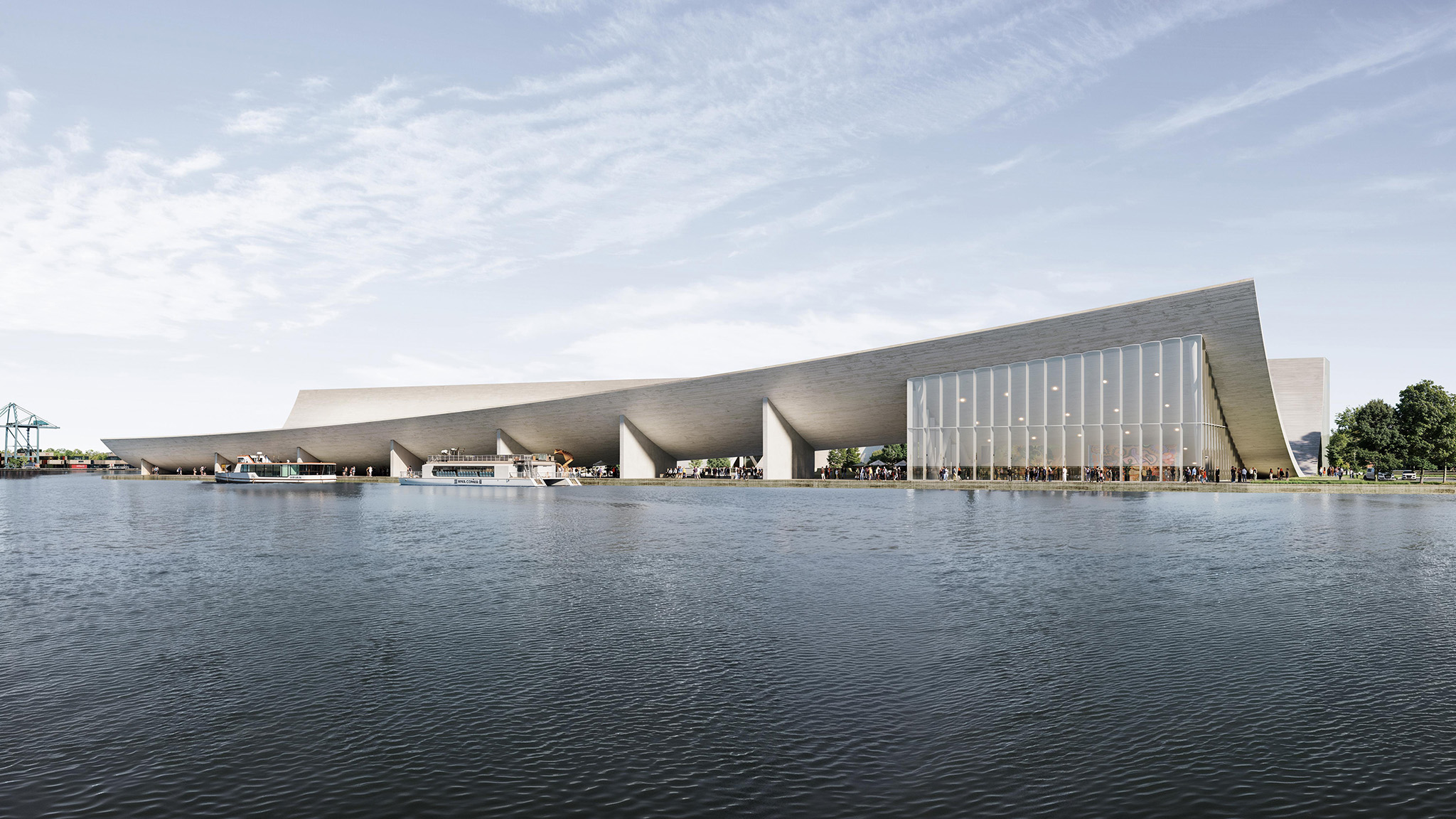
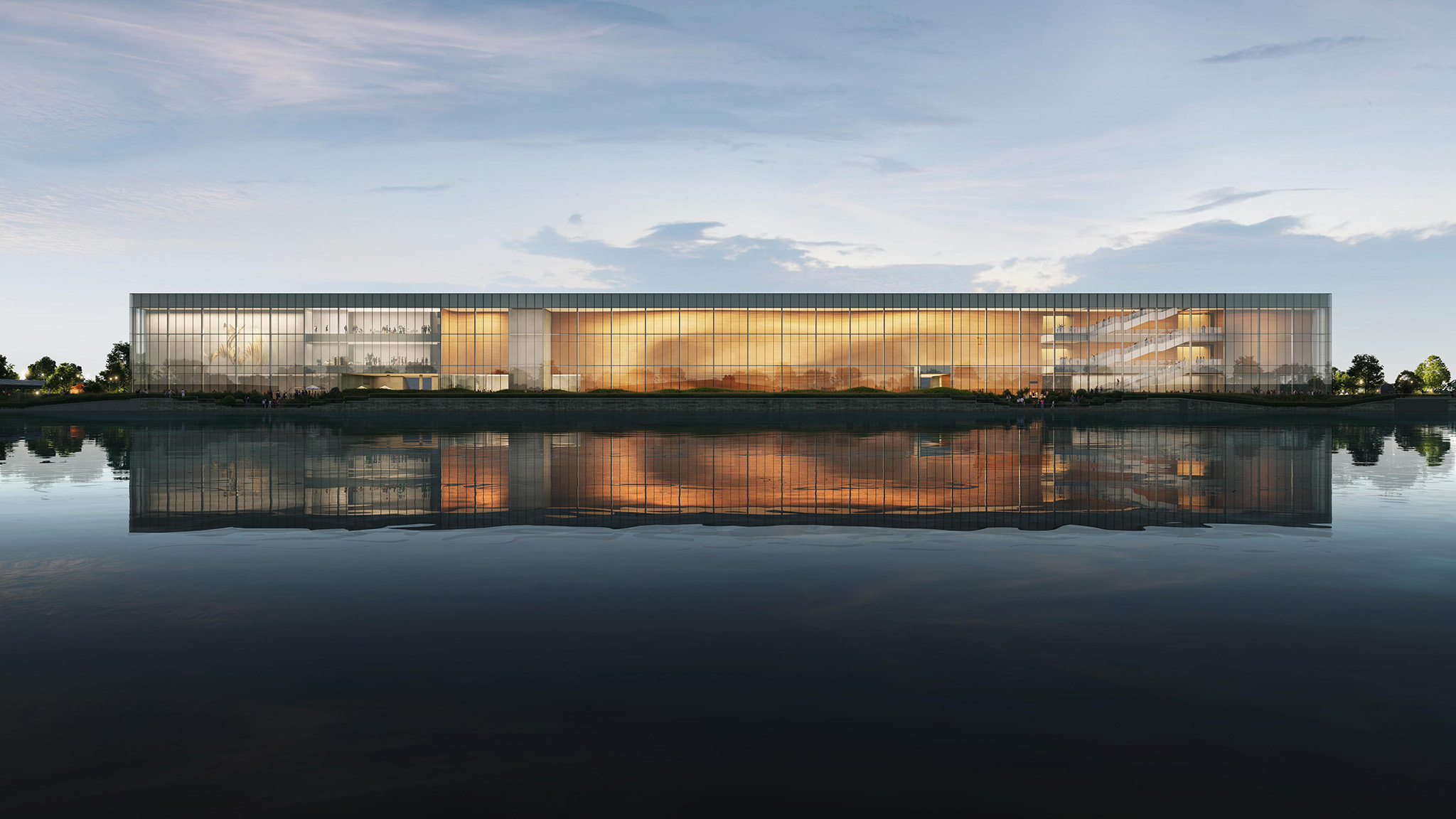
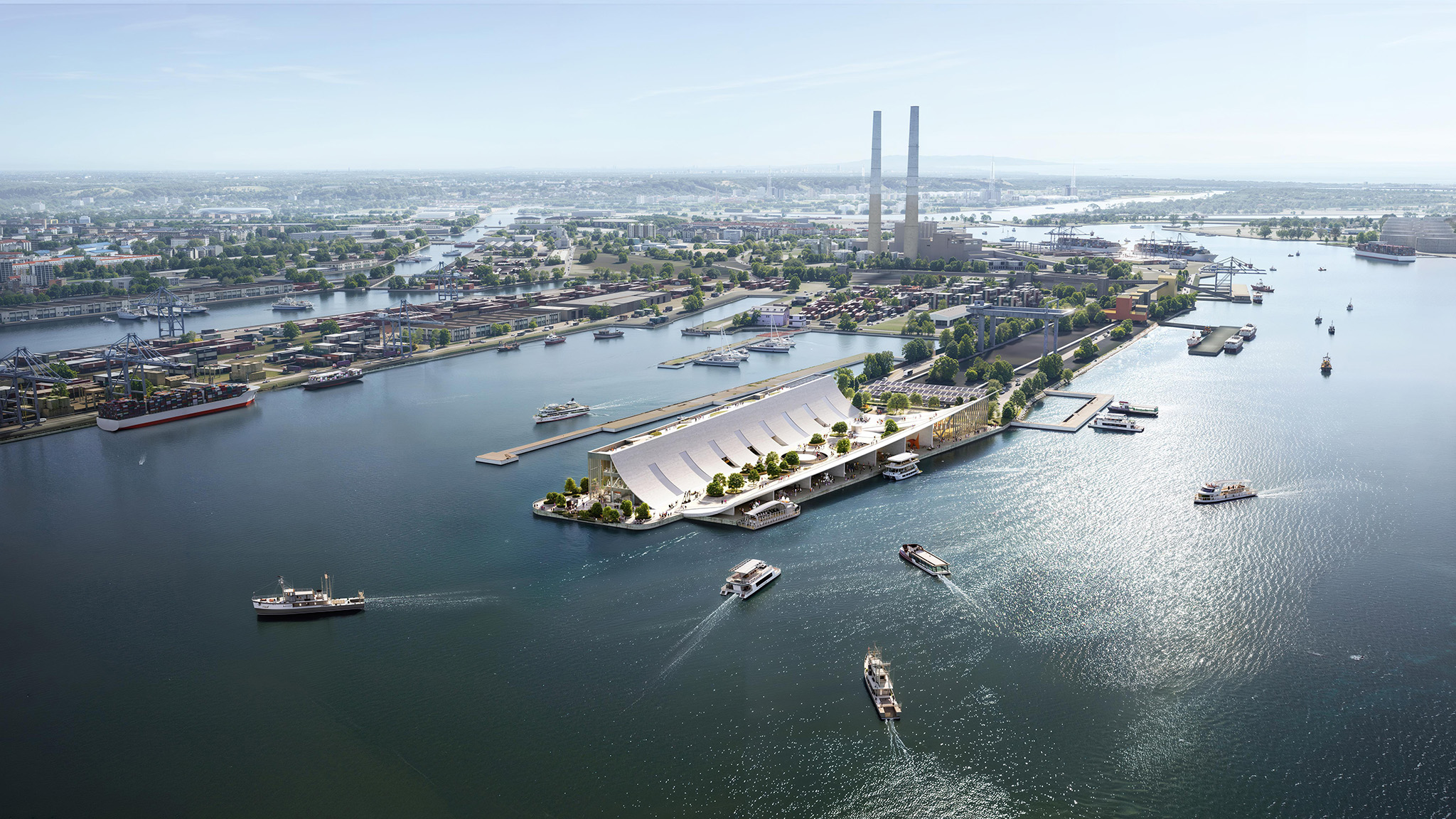
El techo curvo extendido forma un borde público continuo sobre el muelle frente al mar y los espacios de reunión al aire libre. Museo Brise-Vent del Puerto de Havre por LYT-X Studio. Visualización por LYT-X Studio.

The extended curved roof canopy forms a continuous public edge above the waterfront dock and outdoor gathering spaces. Brise-Vent Havre Harbor Museum by LYT-X Studio. Rendering by LYT-X Studio.

Project description by LYT-X Studio

The Brise-Vent Havre Harbor Museum revitalizes a disused harbor structure into a contemporary cultural institution, re-establishing maritime heritage as an active component of public life rather than a preserved artifact. The project is positioned within a broader inquiry into how industrial waterfront heritage can be adaptively reused to support cultural continuity, urban regeneration, and long-term sustainability.

Design Concept
The design preserves the original harbor building as the primary historical layer while introducing a contemporary architectural intervention that extends the existing curved roof into a continuous canopy. This approach retains the building’s iconic roofline as a recognizable element of its industrial past, while reinterpreting it as an active spatial framework that mediates between land, water, and public use. Rather than serving as a purely symbolic gesture, the extended canopy organizes circulation, frames public gathering spaces, and provides environmental shelter, establishing a clear and functional dialogue between the historic fabric and its maritime context.

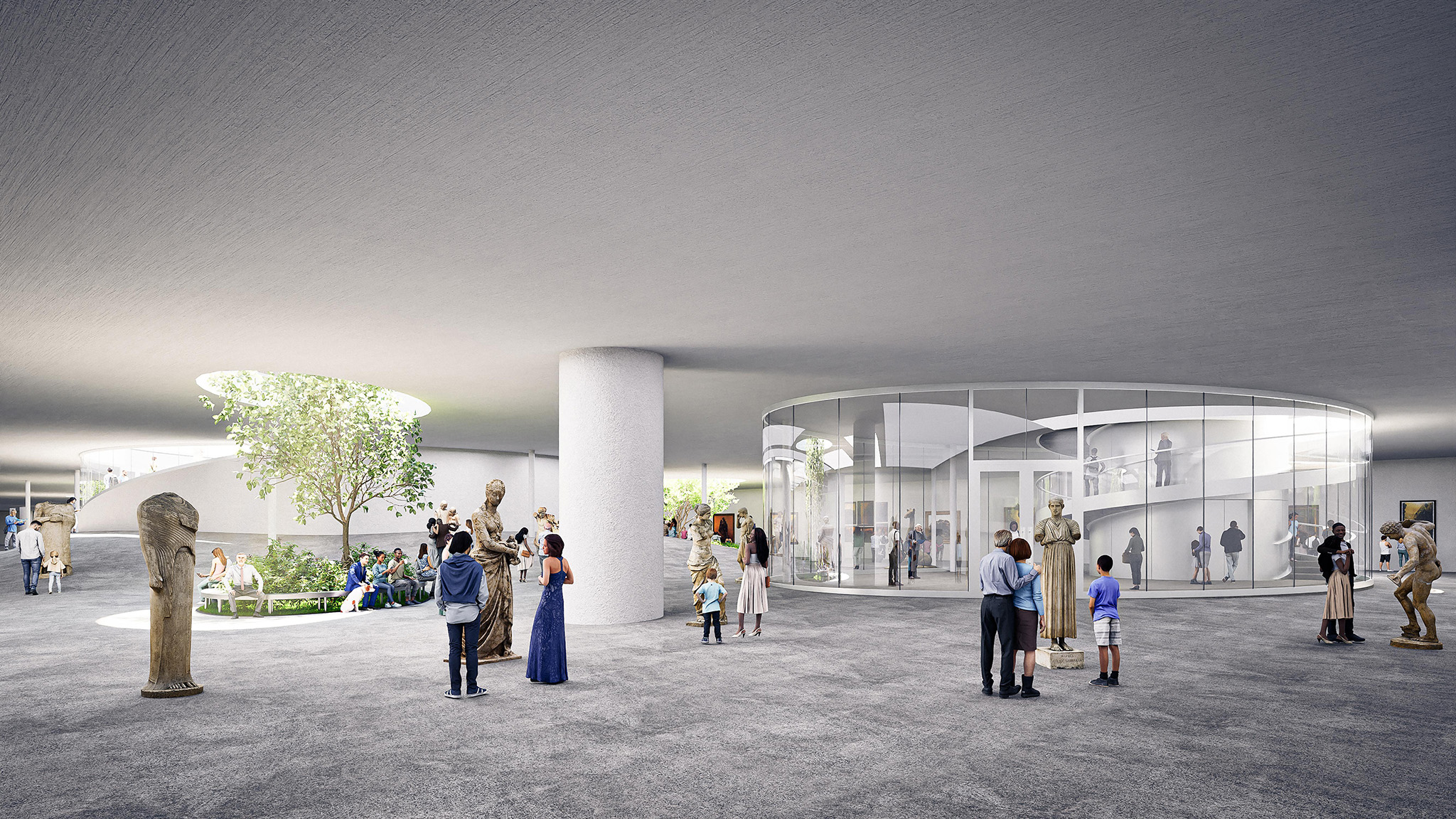
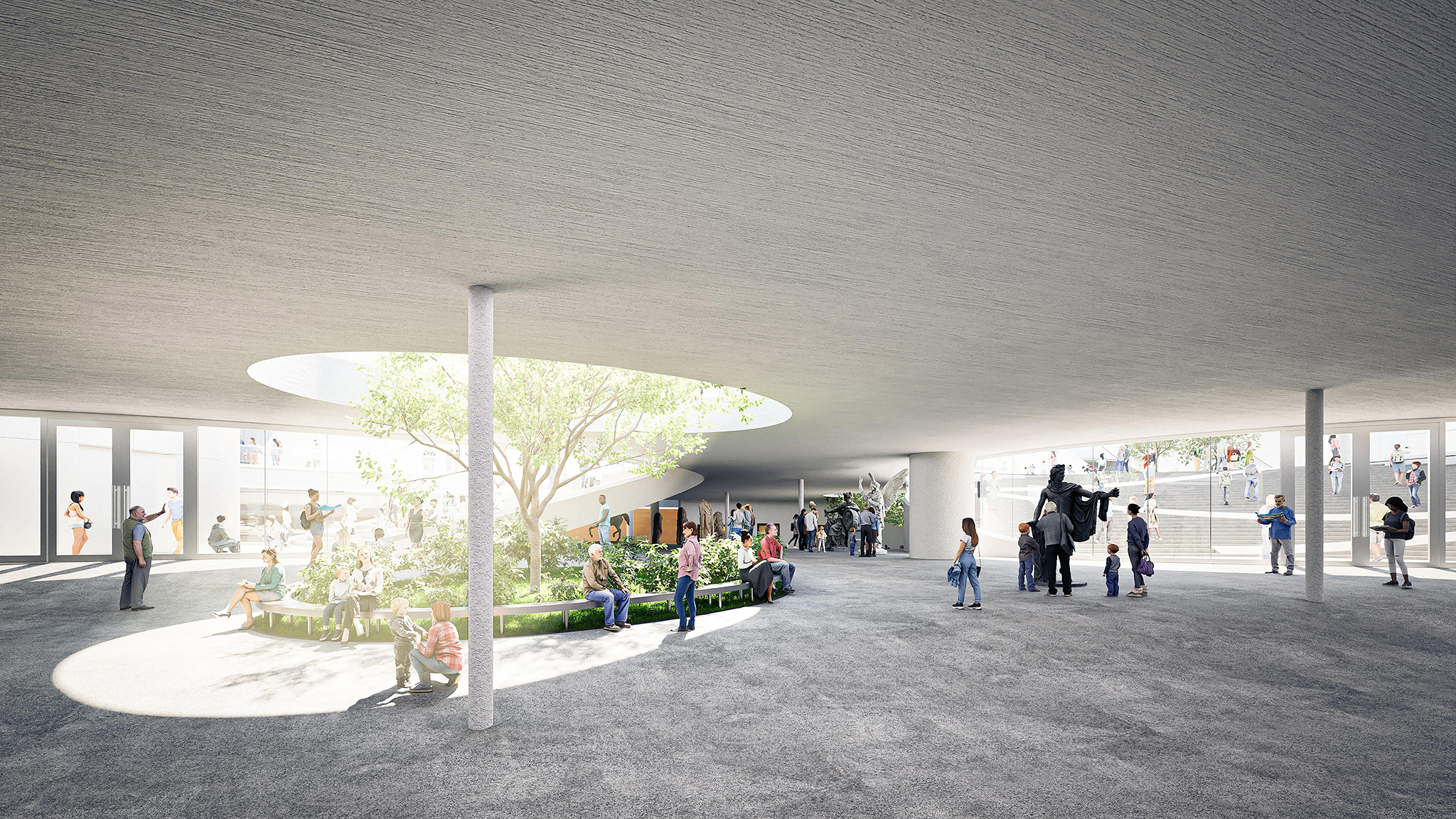
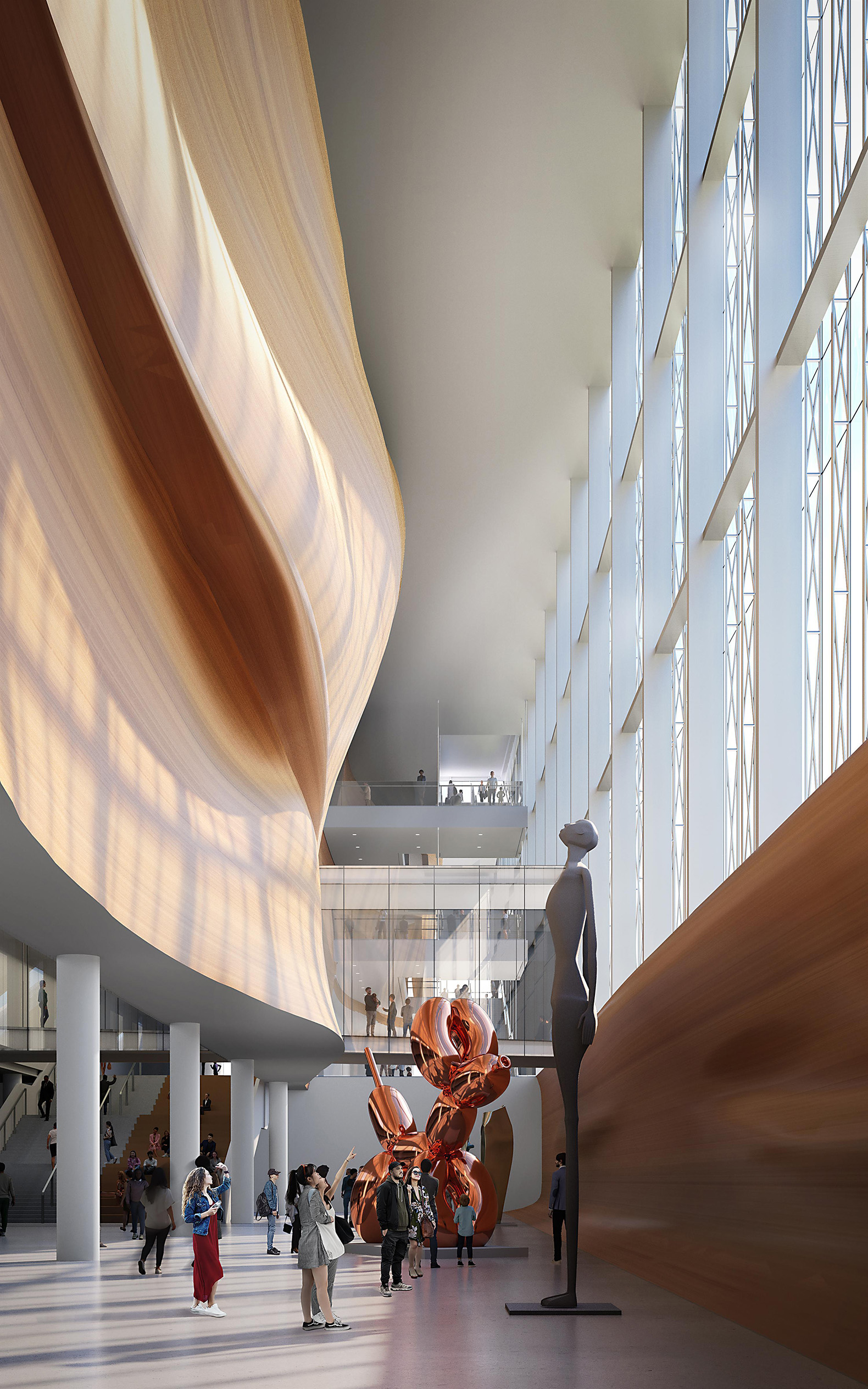
Interior view of the open exhibition area beneath the courtyard, designed for flexible cultural programming and public use. Brise-Vent Havre Harbor Museum by LYT-X Studio. Rendering by LYT-X Studio.

Interior view of the open exhibition area beneath the courtyard, designed for flexible cultural programming and public use. Brise-Vent Havre Harbor Museum by LYT-X Studio. Rendering by LYT-X Studio.

Extended Roof
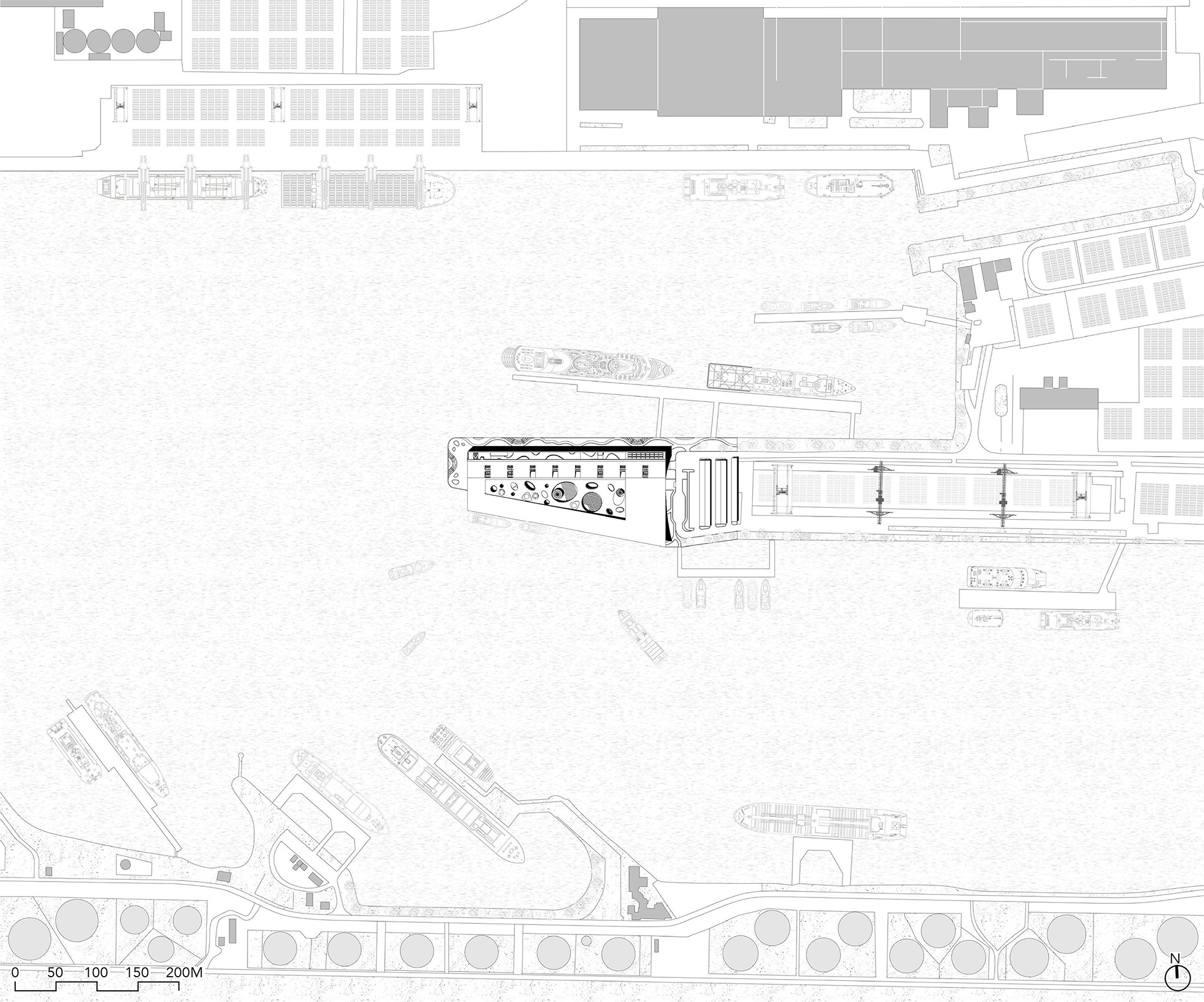
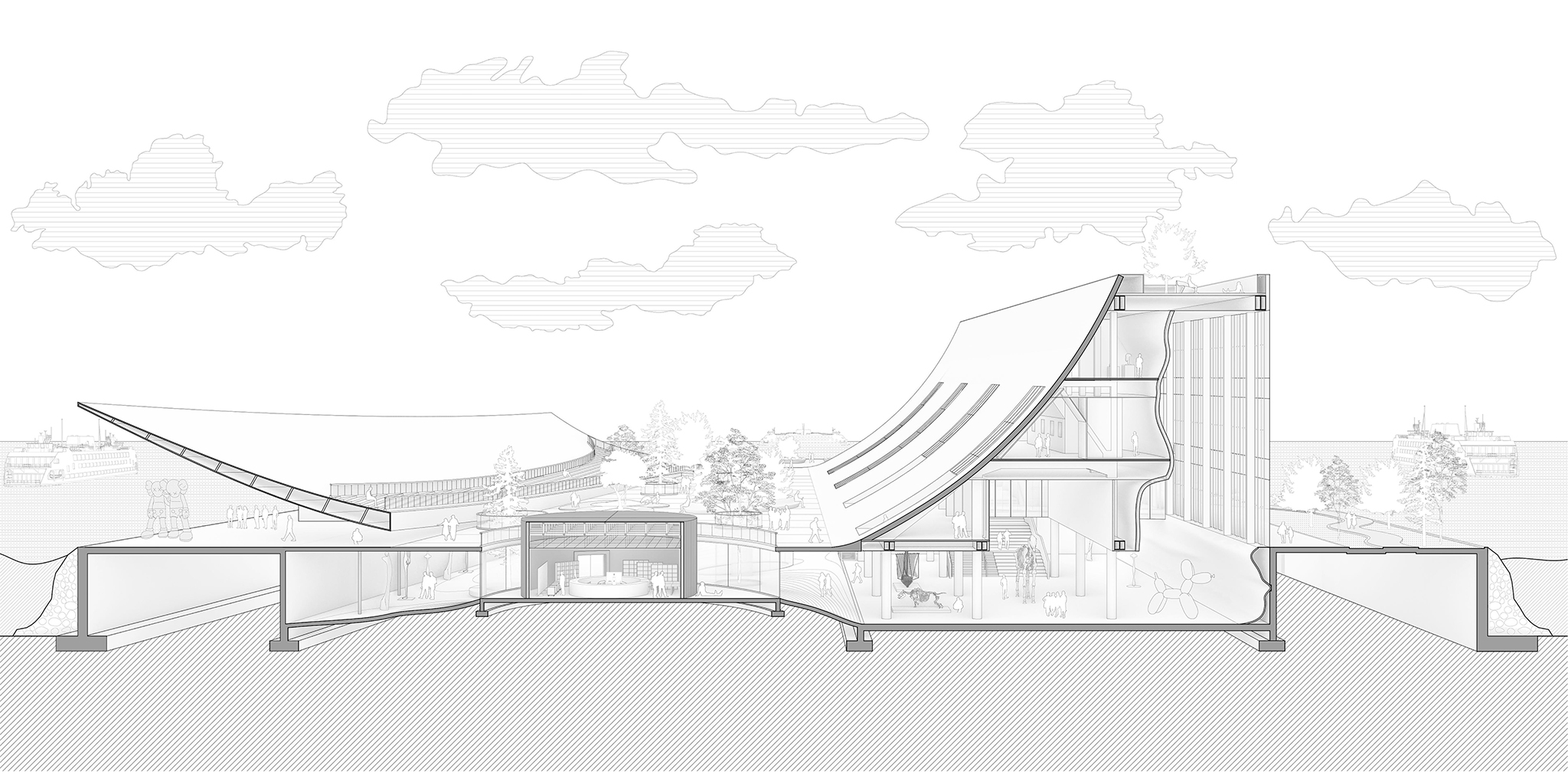
Beneath the extended roof, a sequence of semi-open spaces unfolds, including a sheltered public courtyard and a new waterfront pier. This configuration enables multi-modal access to the museum, allowing visitors to arrive by foot, urban circulation, or directly from the water. By reintroducing water-based arrival, the project reactivates the harbor edge and repositions the museum as a connective urban hub rather than an isolated destination.

Flexible Exhibition Space
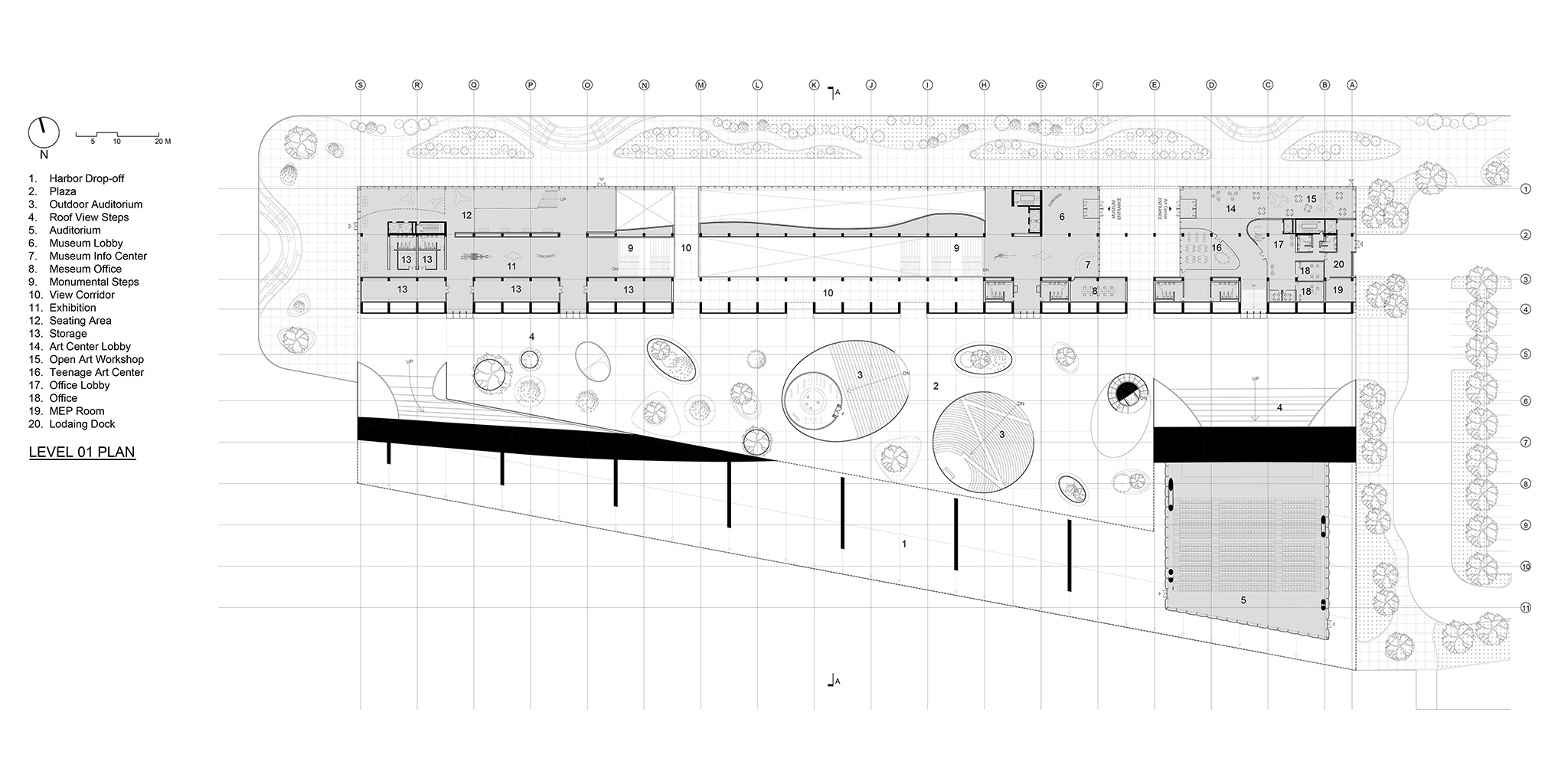
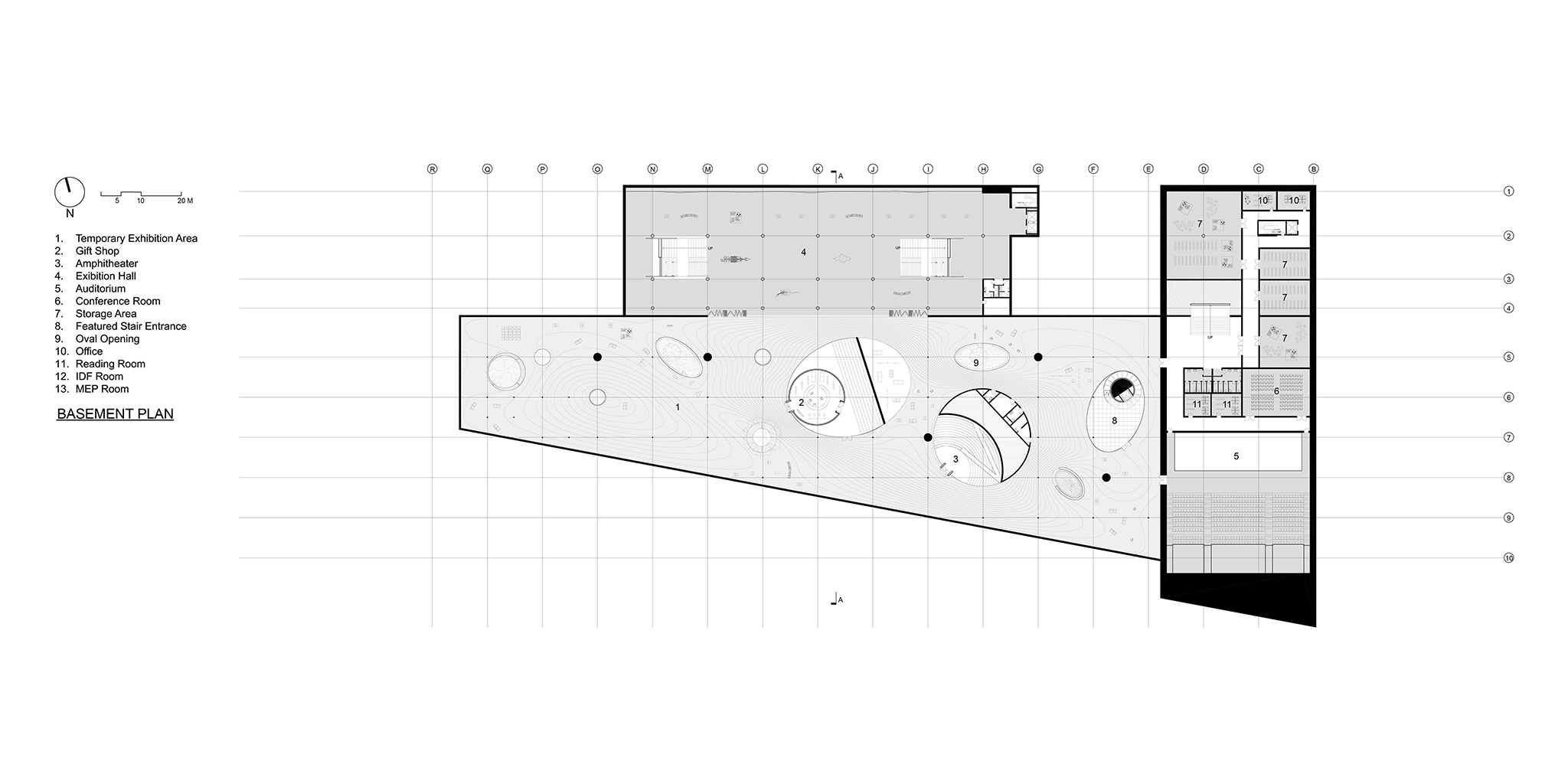
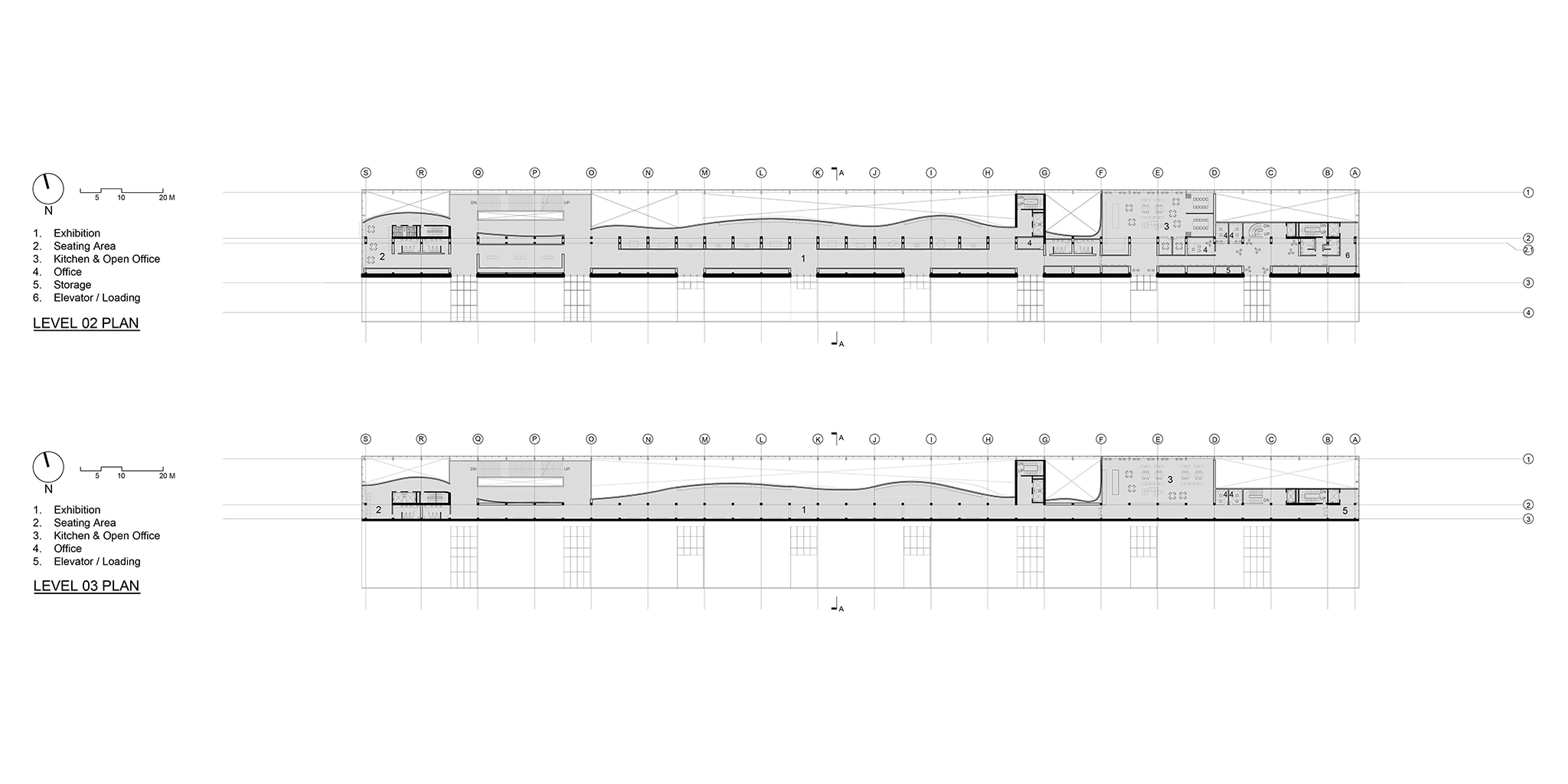
Internally, the museum accommodates flexible exhibition spaces, social platforms, and panoramic terraces overlooking the harbor. These spaces support exhibitions, education, performances, and informal cultural events, allowing the program to adapt over time. The architectural organization emphasizes openness and permeability, ensuring that cultural activity extends beyond enclosed galleries into shared public environments.
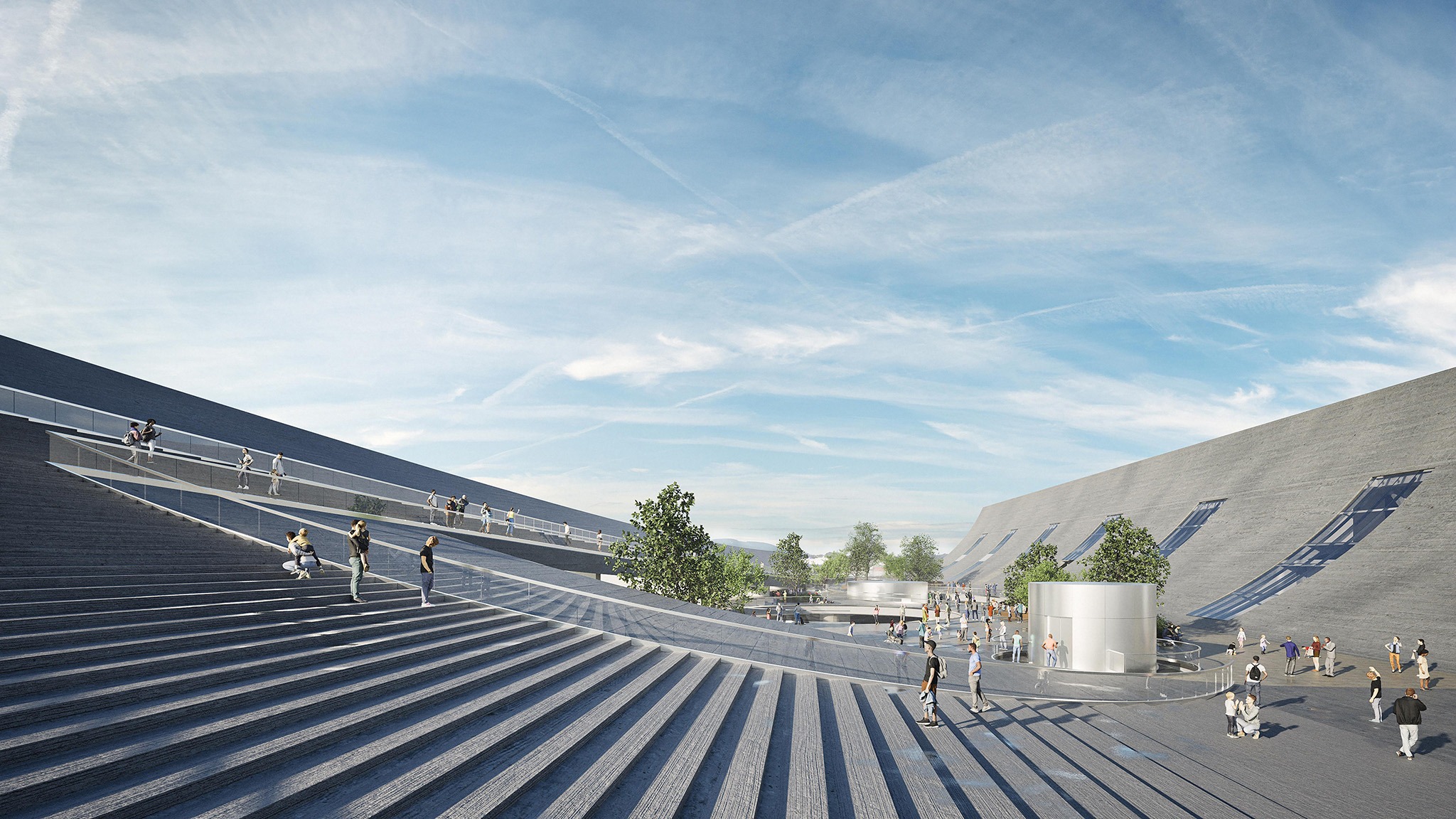
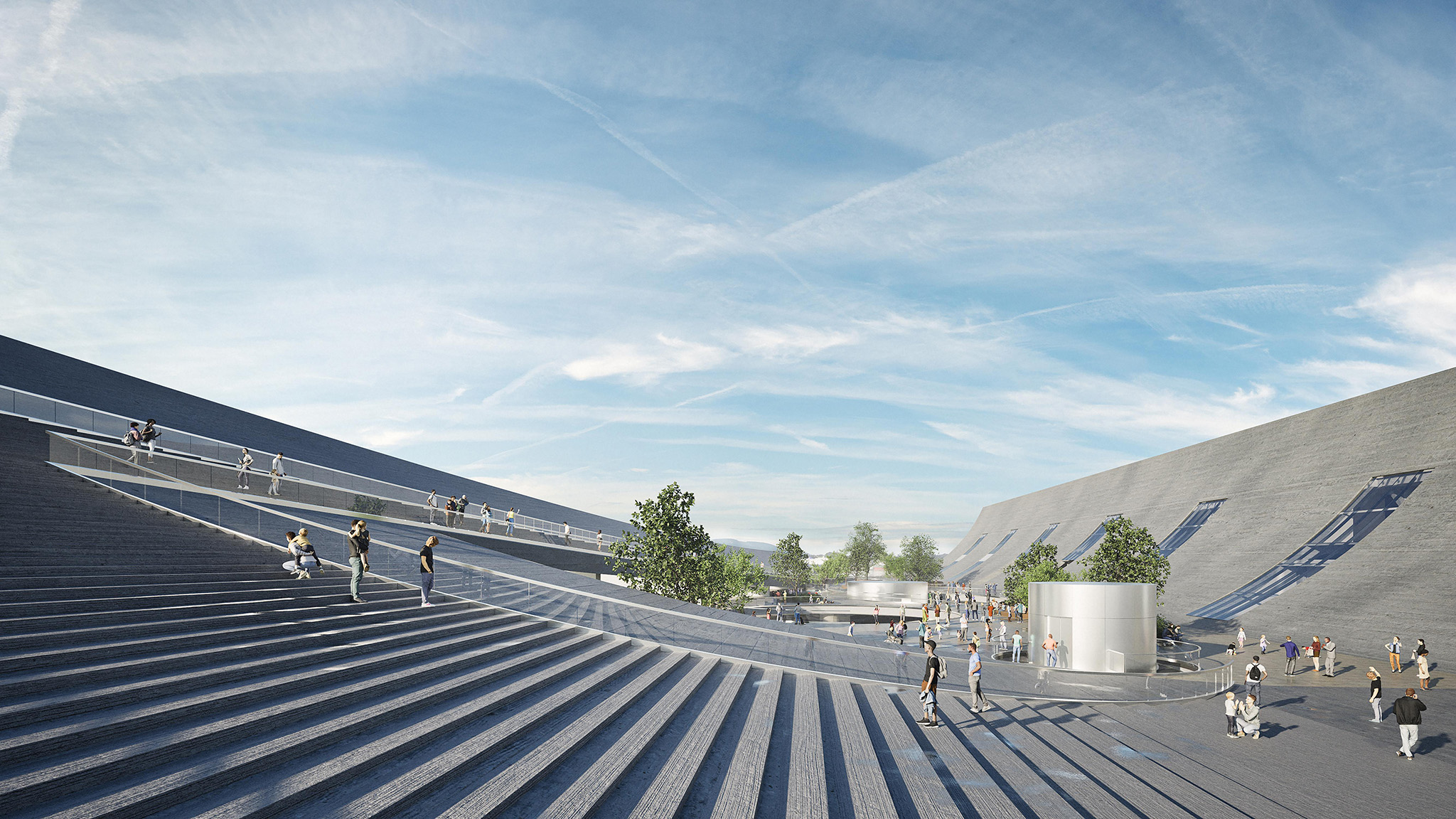
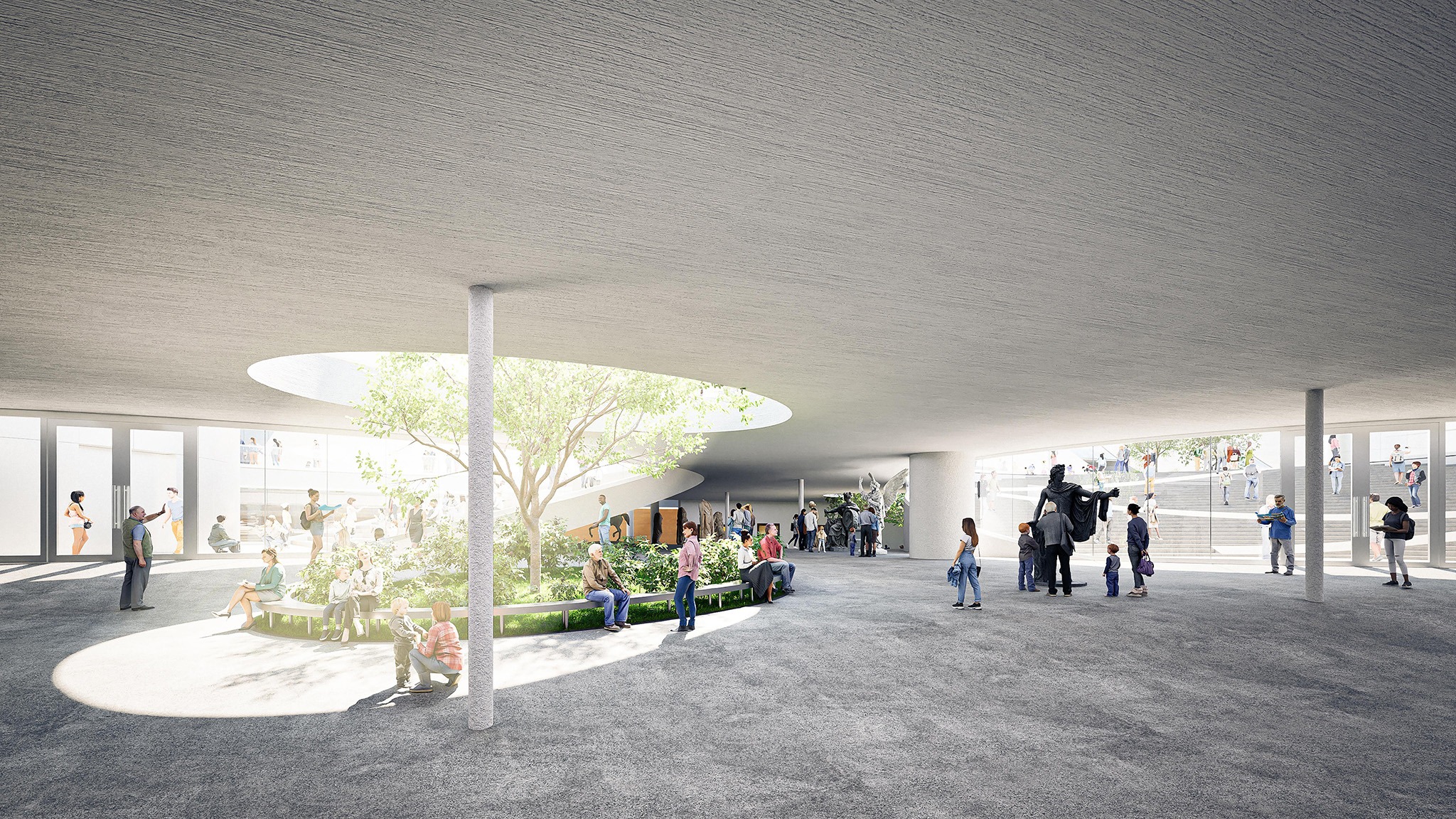
Vista del patio de la plaza, concebido como el corazón cívico del proyecto y un conector entre la ciudad, el museo y la costanera. Museo Brise-Vent del Puerto de Havre por LYT-X Studio. Visualización por LYT-X Studio.
Plaza courtyard view, conceived as the civic heart of the project and a connector between city, museum, and waterfront. Brise-Vent Havre Harbor Museum by LYT-X Studio. Rendering by LYT-X Studio.

Public Courtyard
At the center of the project is a 24-hour publicly accessible courtyard, conceived as an open civic forum that remains active beyond museum operating hours. This continuous public space encourages everyday use, informal gathering, and social interaction, embedding cultural heritage into the rhythms of daily life. Through this strategy, heritage is transformed from a protected object into a lived urban node—one that supports both collective memory and contemporary social exchange.

Sustainability
Sustainability is integrated as a spatial and lifecycle strategy rather than a technical overlay. Adaptive reuse significantly reduces embodied carbon by retaining the existing structure, while the extended canopy provides passive shading and facilitates cross-ventilation driven by prevailing sea breezes. Courtyard openings and roof apertures introduce daylight deep into interior and lower-level exhibition spaces, reducing reliance on artificial lighting. Seasonal vegetation further moderates microclimatic conditions, ensuring long-term usability of the public realm.
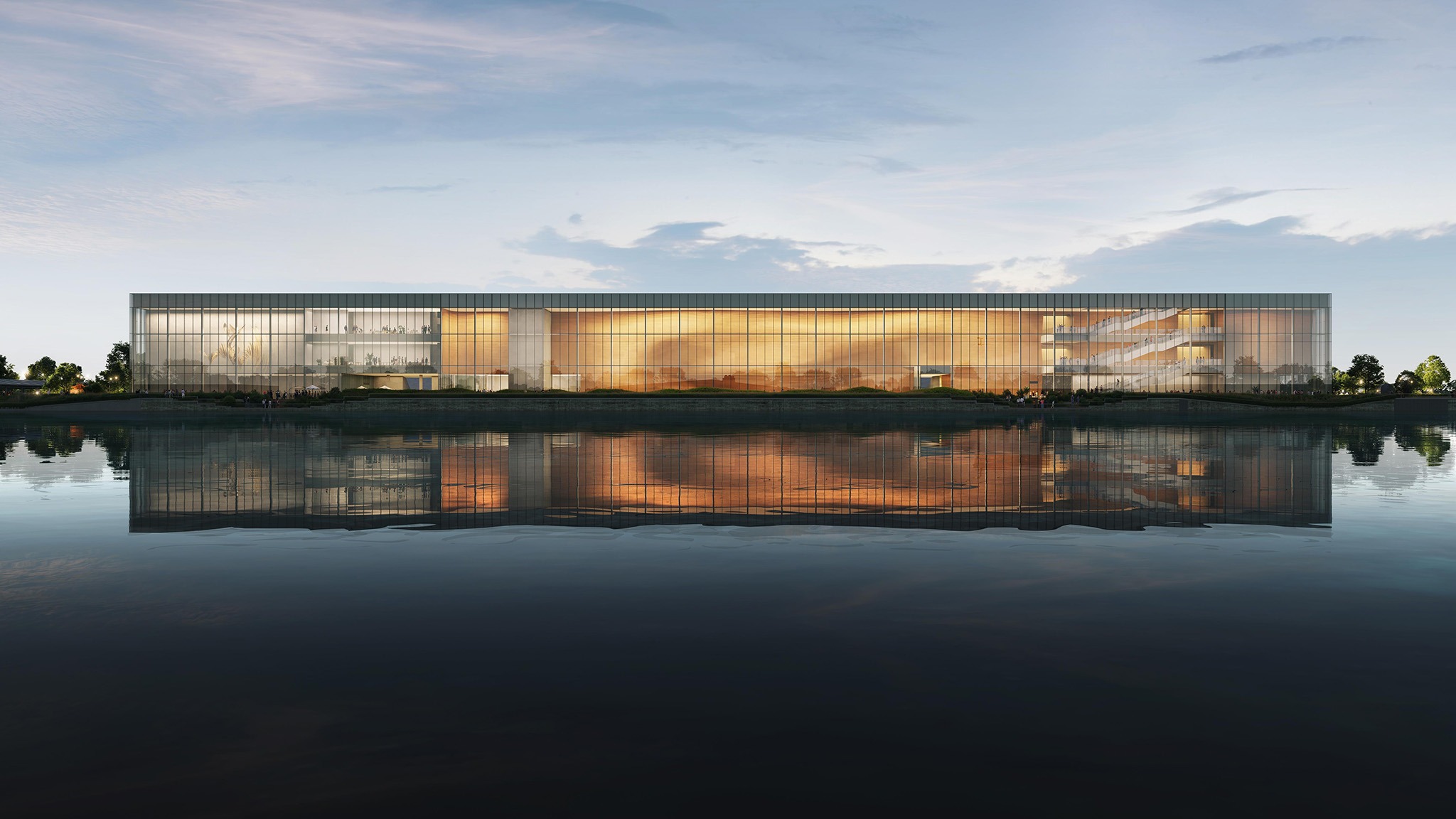
Adaptive reuse of the existing industrial structure along the northern edge, integrating new cultural functions while preserving the original fabric. Brise-Vent Havre Harbor Museum by LYT-X Studio. Rendering by LYT-X Studio.

By combining minimal and reversible intervention with continuous public access, the Brise-Vent project demonstrates how industrial waterfront heritage can be transformed into resilient cultural infrastructure. The project offers a repeatable model for integrating heritage preservation, public space, urban mobility, and environmental performance—contributing to ongoing discourse on adaptive reuse and cultural architecture at both urban and disciplinary scales.
More information

Label
Architects
Text

LYT-X Studio. Lead Architect.- Dingdong Tang.

+ + copy Created with Sketch.
- + copy Created with Sketch.
Label
Project team
Text

Dingdong Tang, Zehui Li, Haisheng Xu.

+ + copy Created with Sketch.
- + copy Created with Sketch.
Label
Area
Text

31,000 sqm.

+ + copy Created with Sketch.
- + copy Created with Sketch.
Label
Dates
Text

2024-2025.

+ + copy Created with Sketch.
- + copy Created with Sketch.
Label
Location
Text

76600 Le Havre, France.

+ + copy Created with Sketch.
- + copy Created with Sketch.
Label
Renderings
Text

LYT-X Studio.

+ + copy Created with Sketch.
- + copy Created with Sketch.

LYT-X Studio is a Los Angeles–based design and research group, founded by Dingdong Tang. They practice architecture and urbanism, focusing on projects related to cultural architecture, adaptive reuse, and civic design. Their work has been recognized through international design awards and professional publications, reflecting their commitment to both research and practice within the built environment.

Projects at LYT-X Studio are developed using a contextual approach that responds to the cultural, environmental, and urban conditions of each site. Rather than applying a fixed formal language, their design strategies draw upon existing structures, historical layers, and patterns of public use, positioning architecture as a mediator between the heritage fabric and contemporary civic life.

As a collaborative design and research group, LYT-X Studio brings together designers with expertise in architecture, urban strategy, and public space design. Through this process, the study promotes work focused on adaptive reuse, public accessibility and long-term urban relevance, prioritizing solutions that integrate spatial clarity, environmental performance and social participation.

Read more
Published on: January 8, 2026
Cite:
metalocus, AGUSTINA BERTA
"Engaging with the past, looking to the future. Brise-Vent Havre Harbor Museum by LYT-X Studio" METALOCUS. Accessed
<https://www.metalocus.es/en/news/engaging-past-looking-future-brise-vent-havre-harbor-museum-lyt-x-studio> ISSN 1139-6415
Loading content ...
Loading content ...
Loading content ...
Loading content ...
Loading content ...
Loading content ...
Loading content ...
Loading content ...
Loading content ...
Loading content ...
Loading content ...
Loading content ...
Loading content ...
Loading content ...
Loading content ...
Loading content ...
Loading content ...
Loading content ...
Loading content ...
Loading content ...
Loading content ...
Loading content ...
Loading content ...
Loading content ...
Loading content ...
Loading content ...
Loading content ...
Loading content ...
Loading content ...
Loading content ...
Loading content ...
Loading content ...
Loading content ...
Loading content ...
Loading content ...
Loading content ...
Loading content ...
Loading content ...
Loading content ...
Loading content ...
Loading content ...
Loading content ...
Loading content ...
Loading content ...
Loading content ...
Loading content ...
Loading content ...
Loading content ...
Loading content ...
Loading content ...
Loading content ...
Loading content ...
Loading content ...
Loading content ...