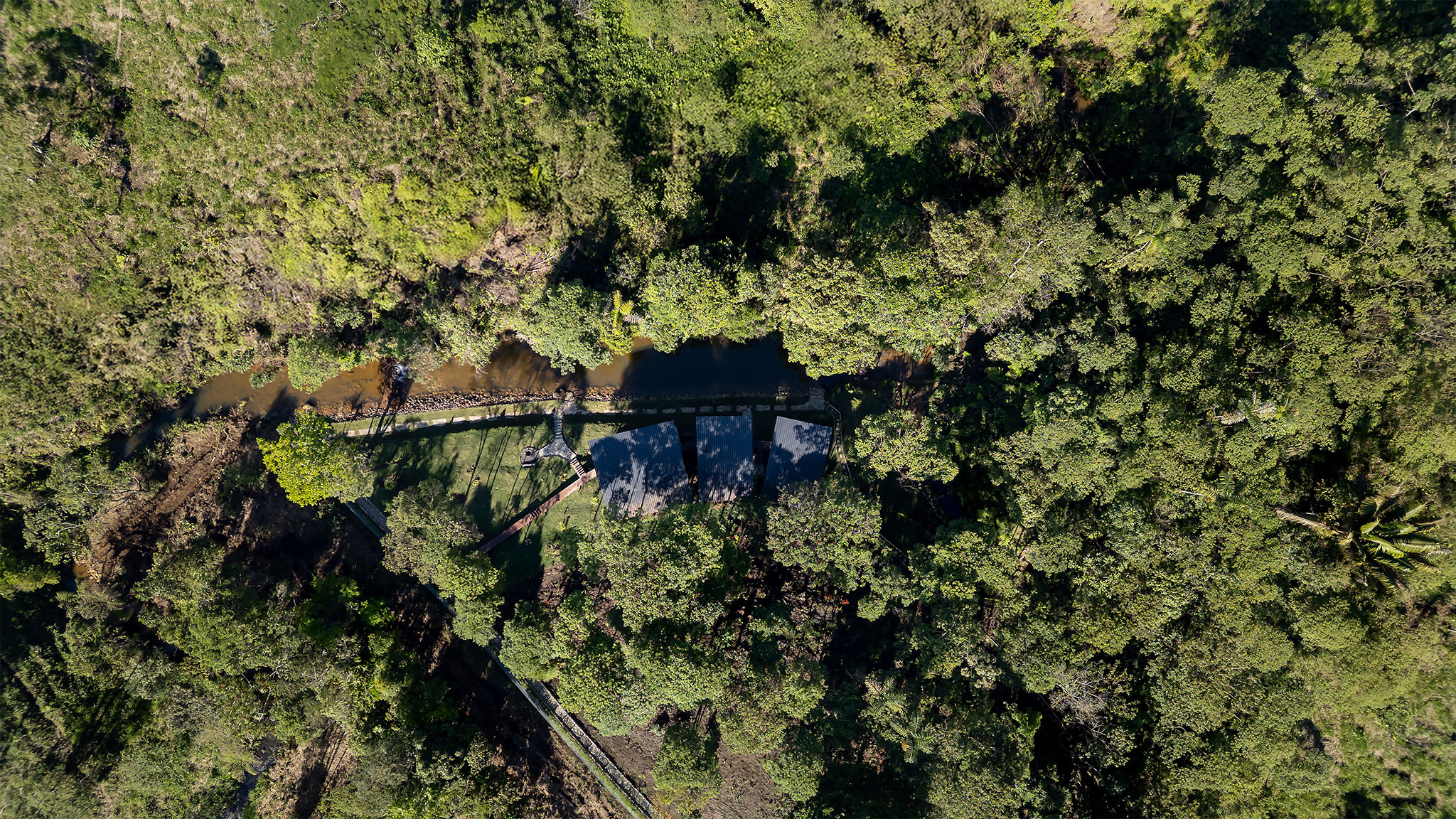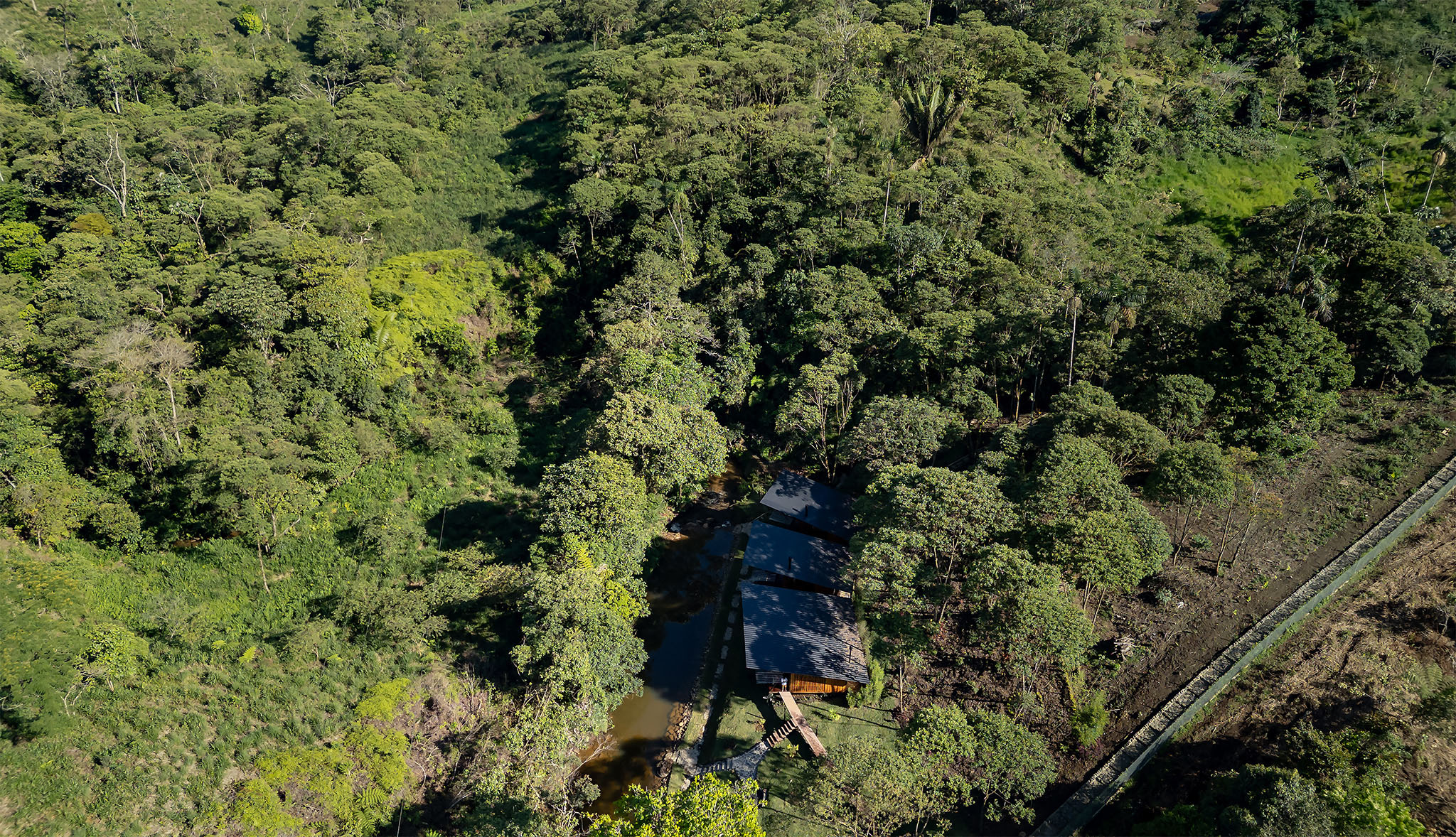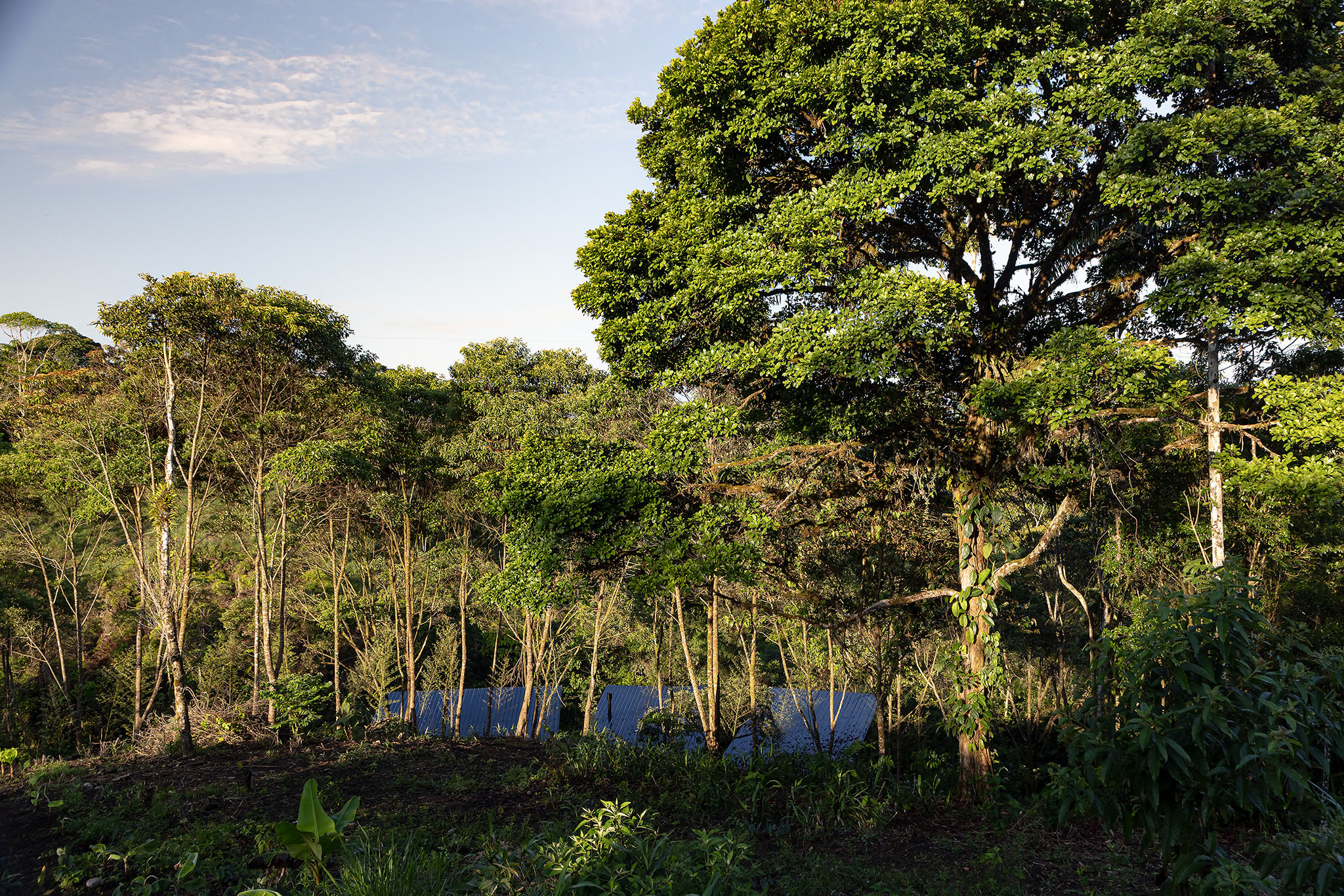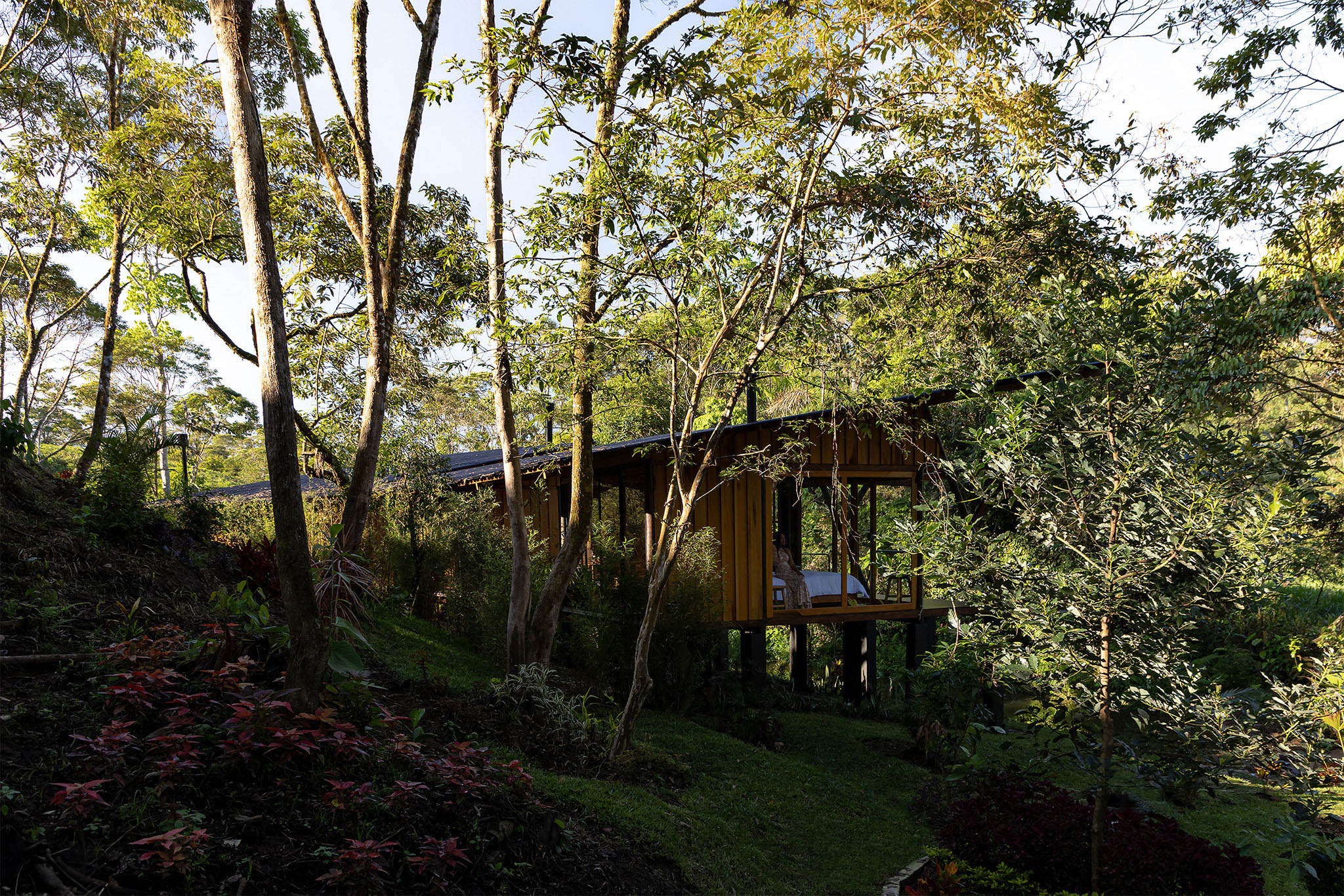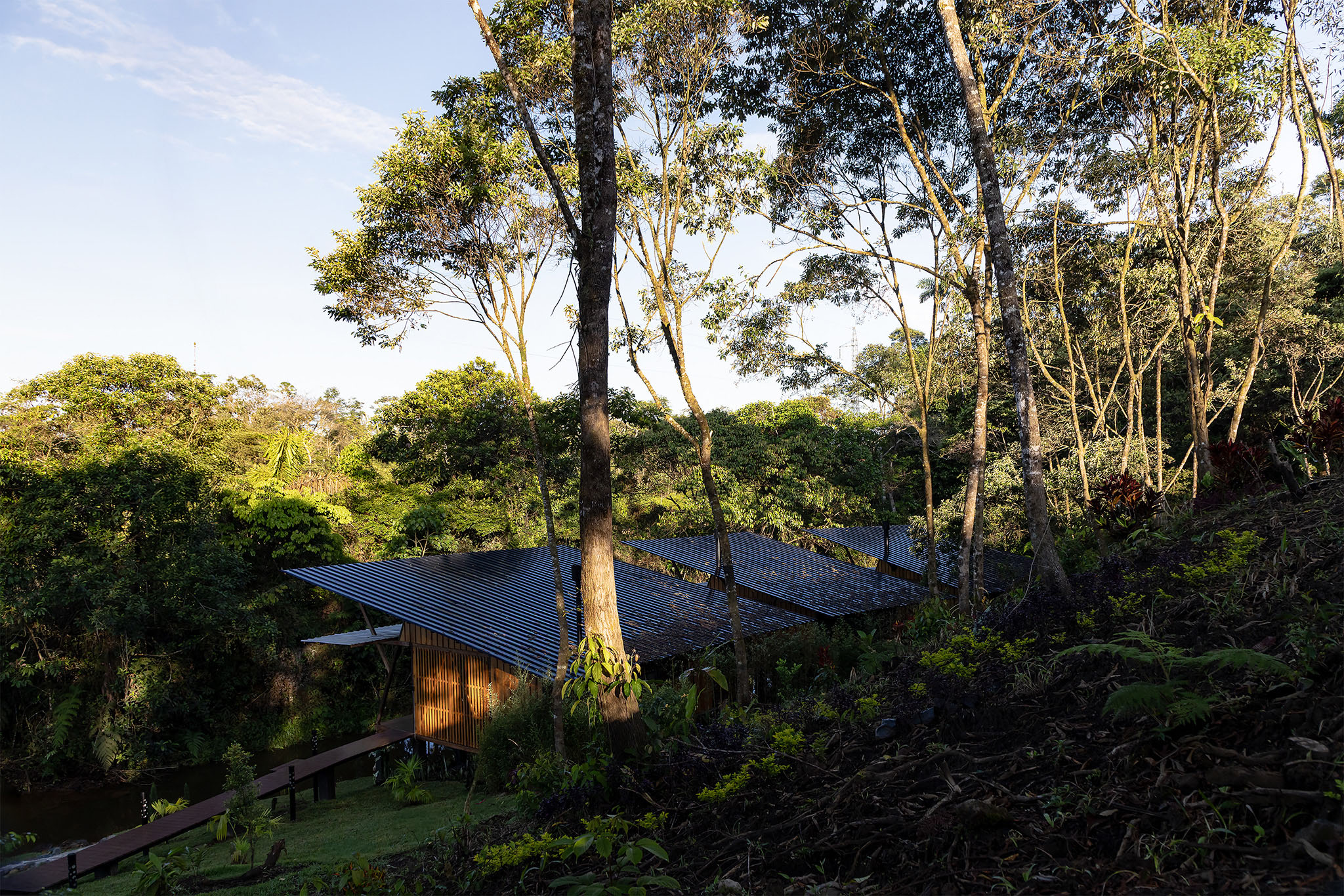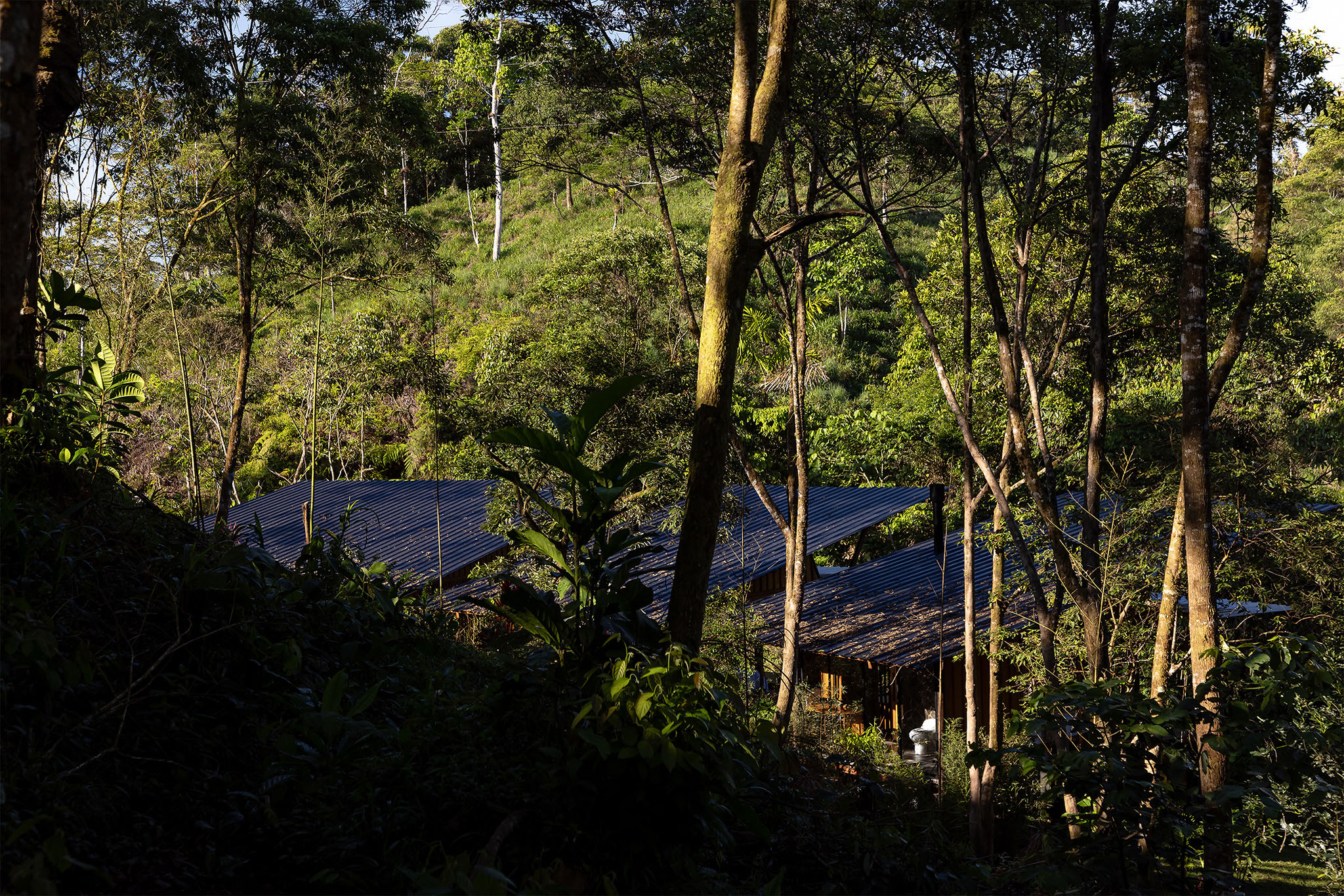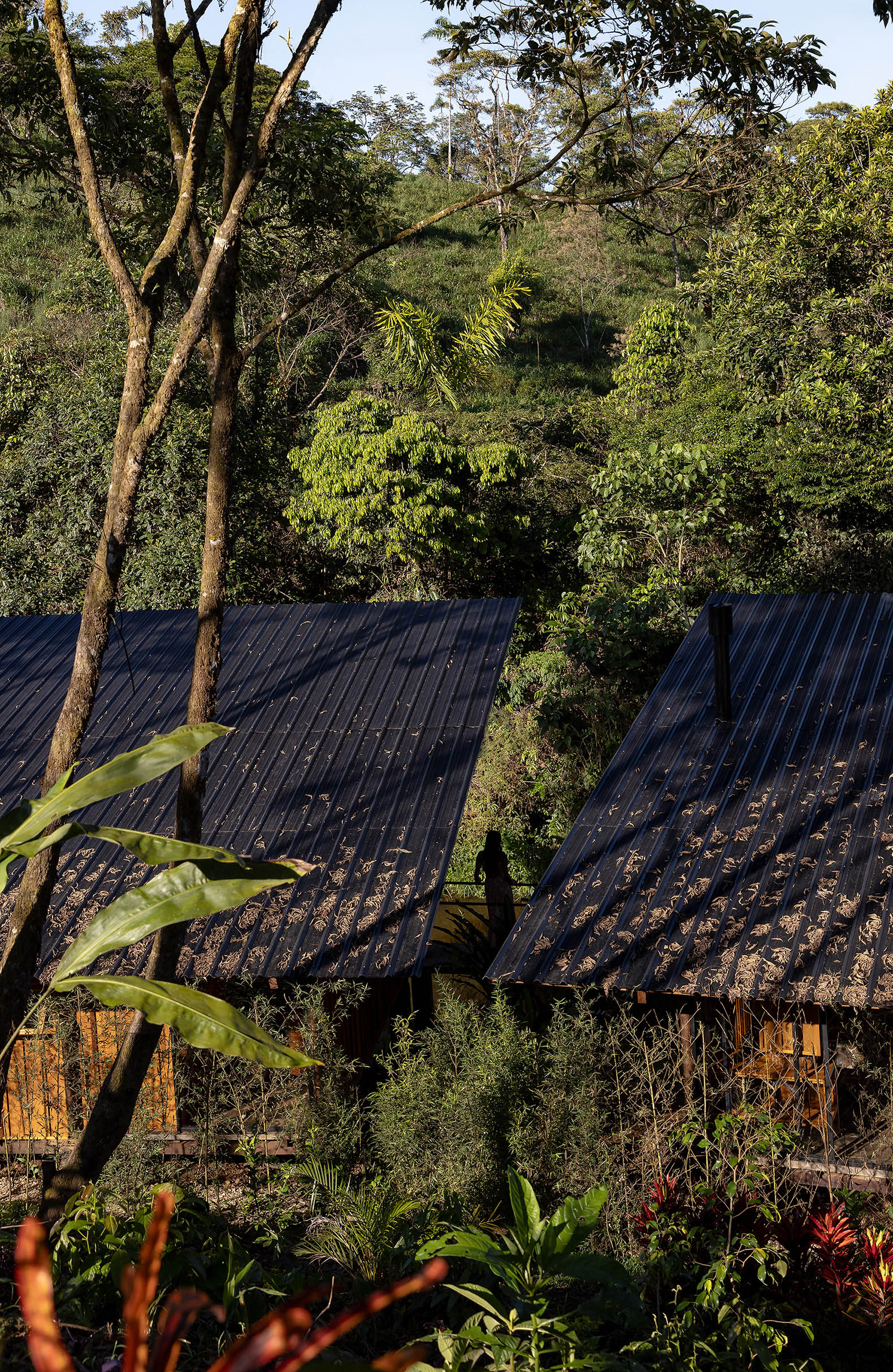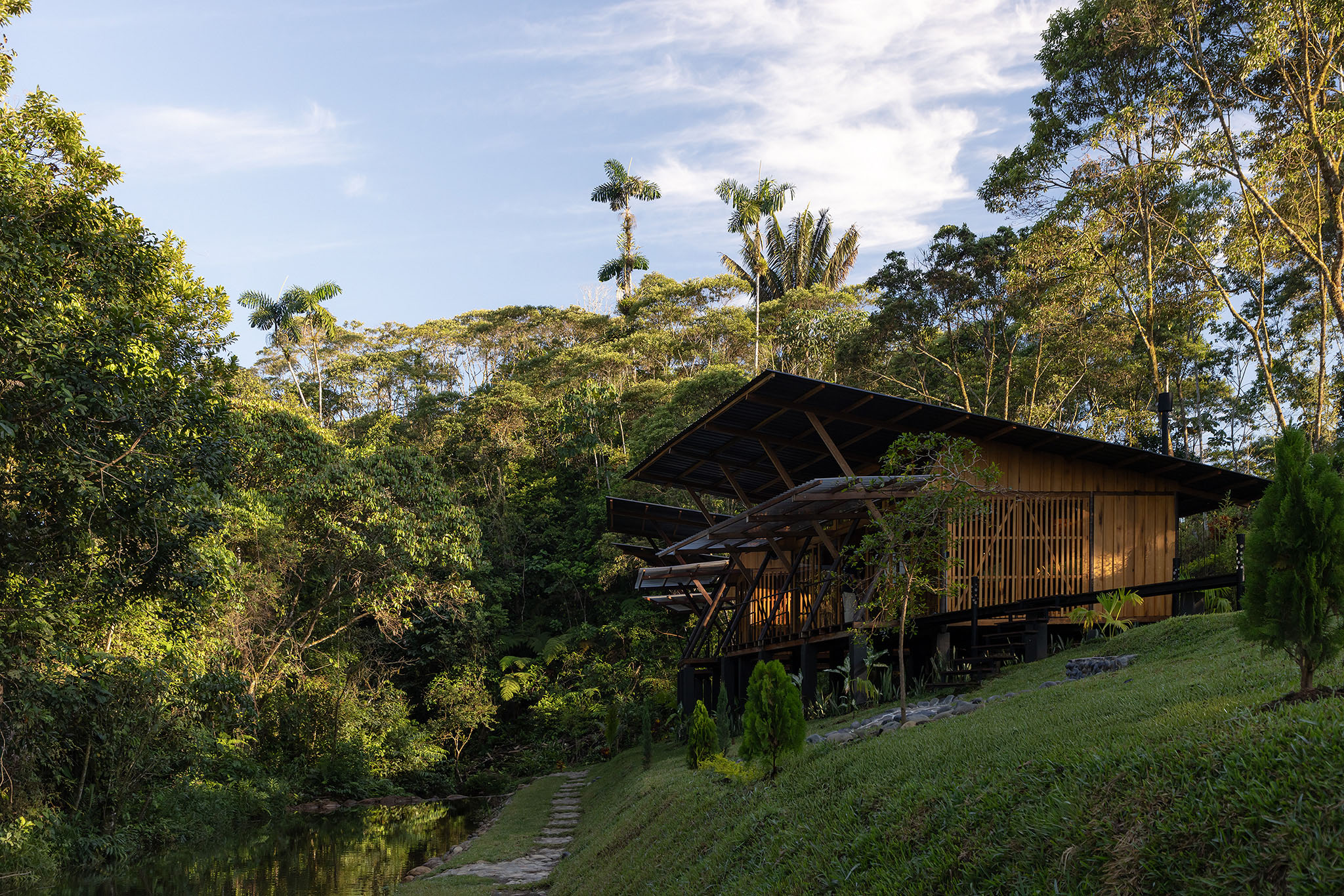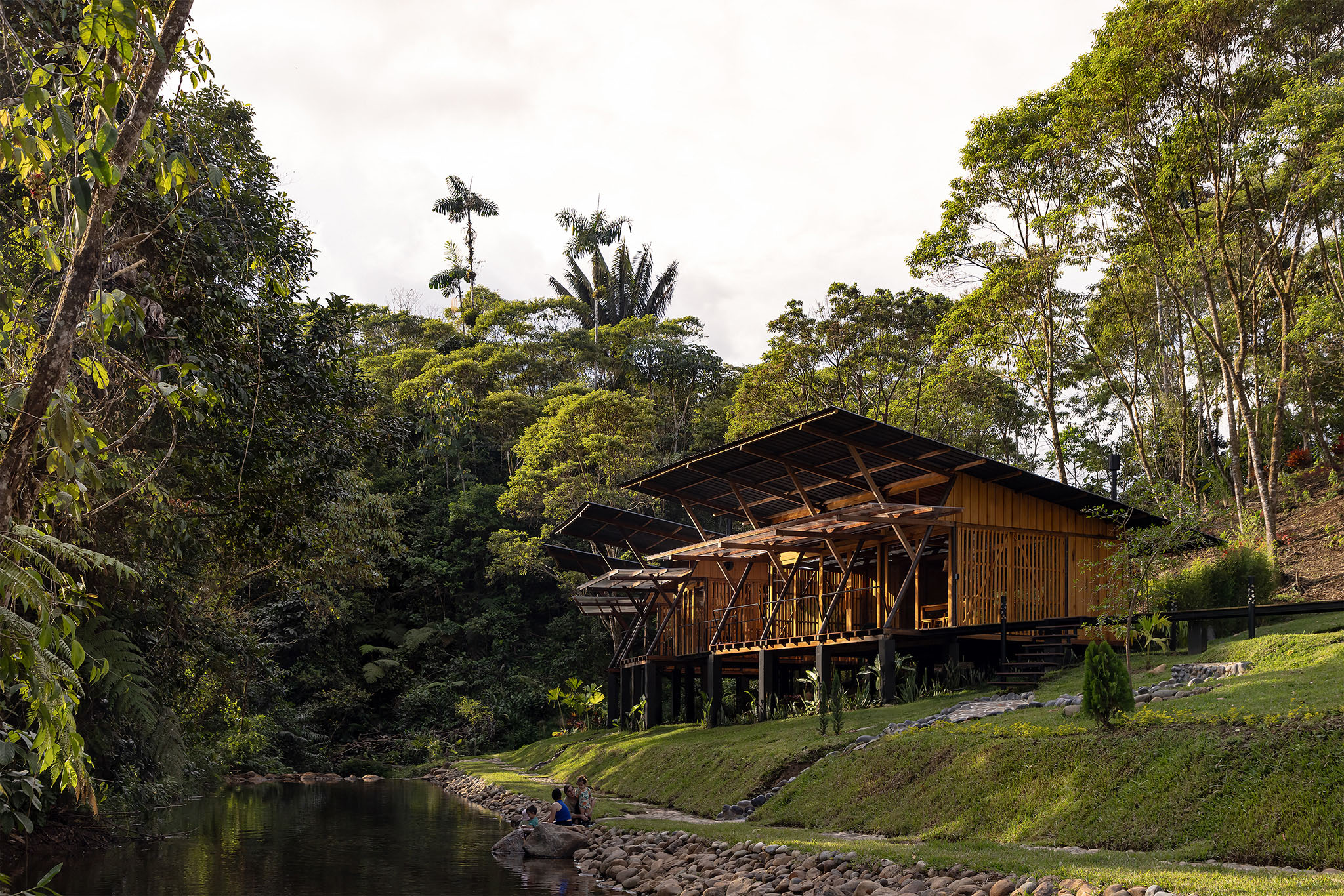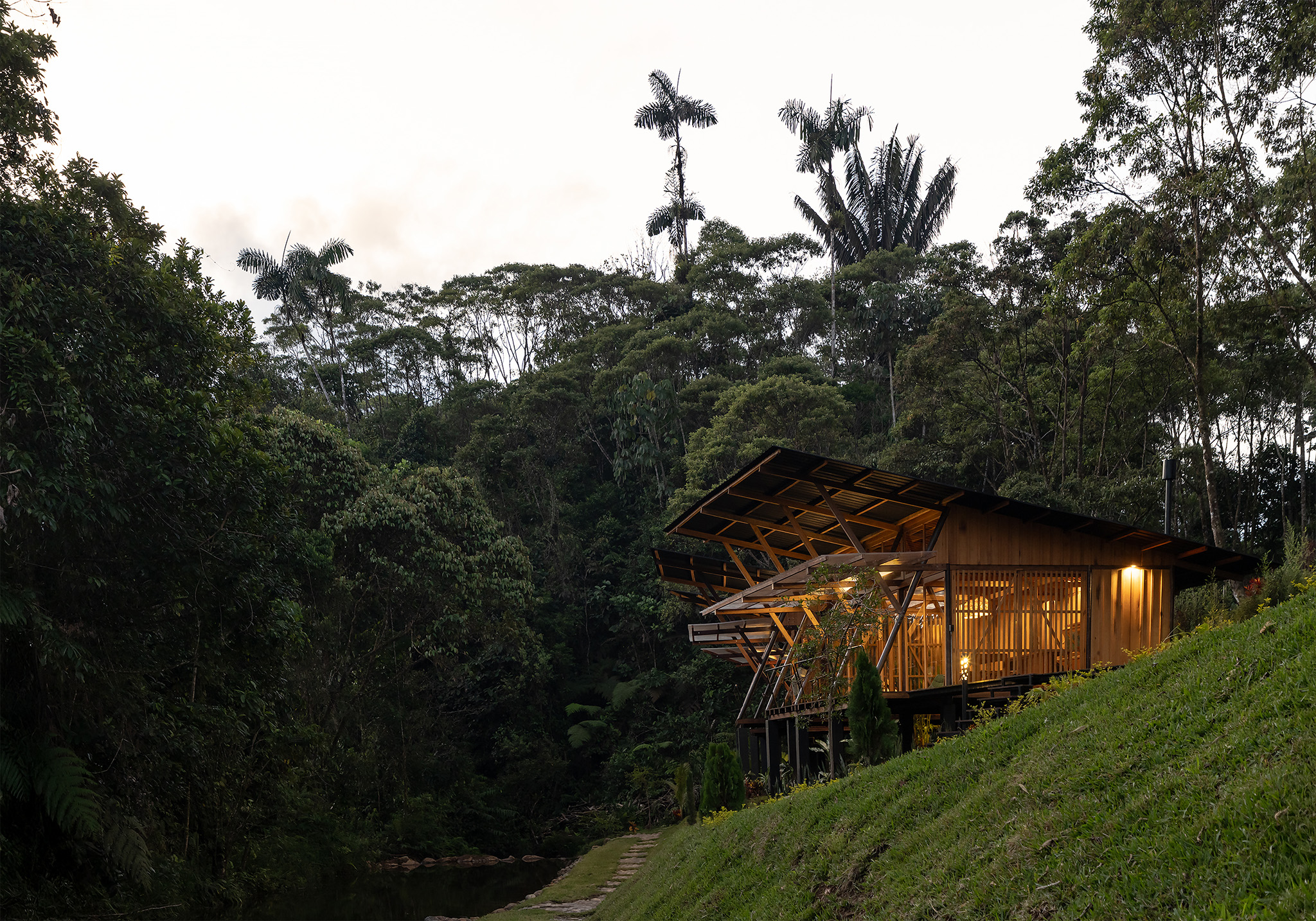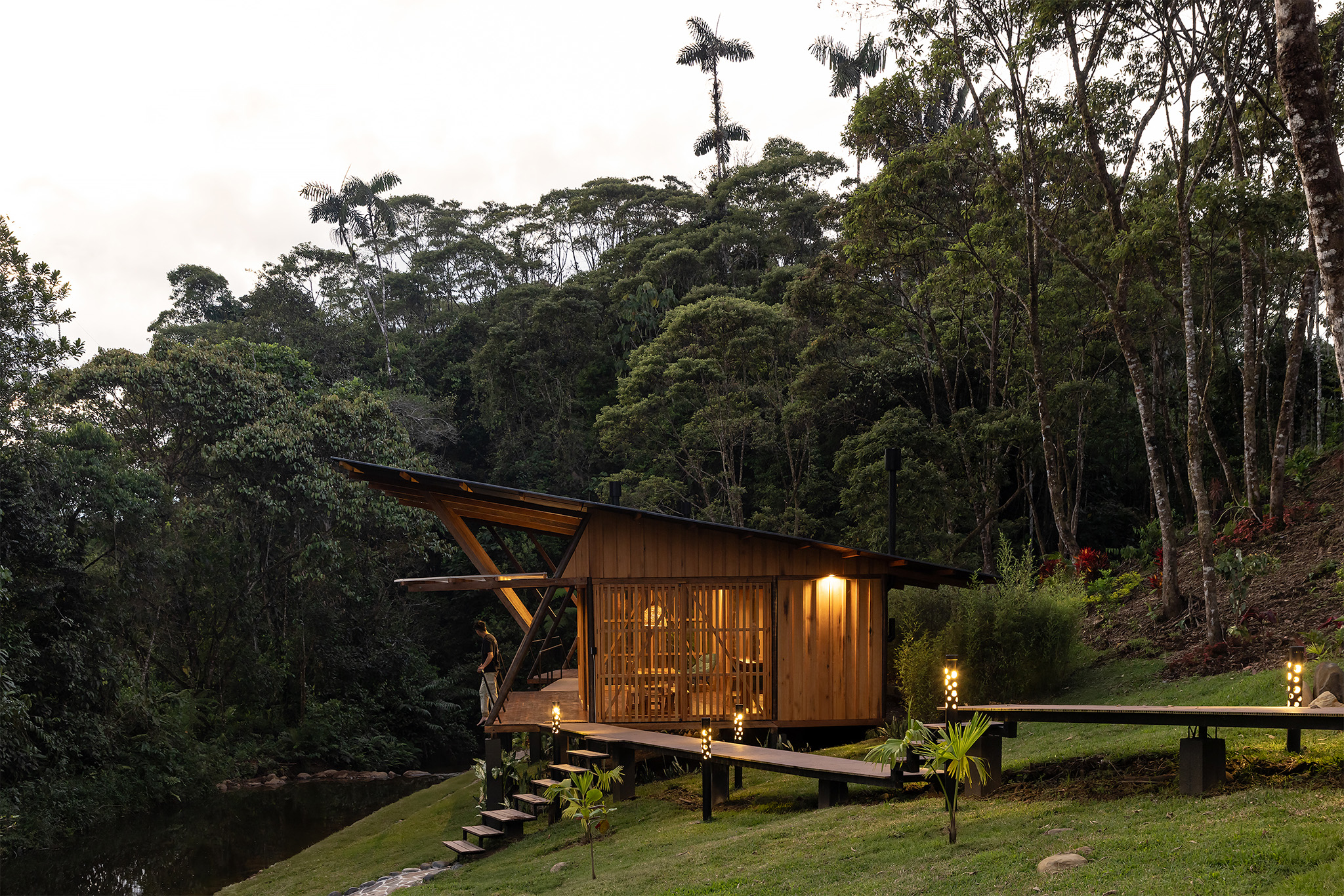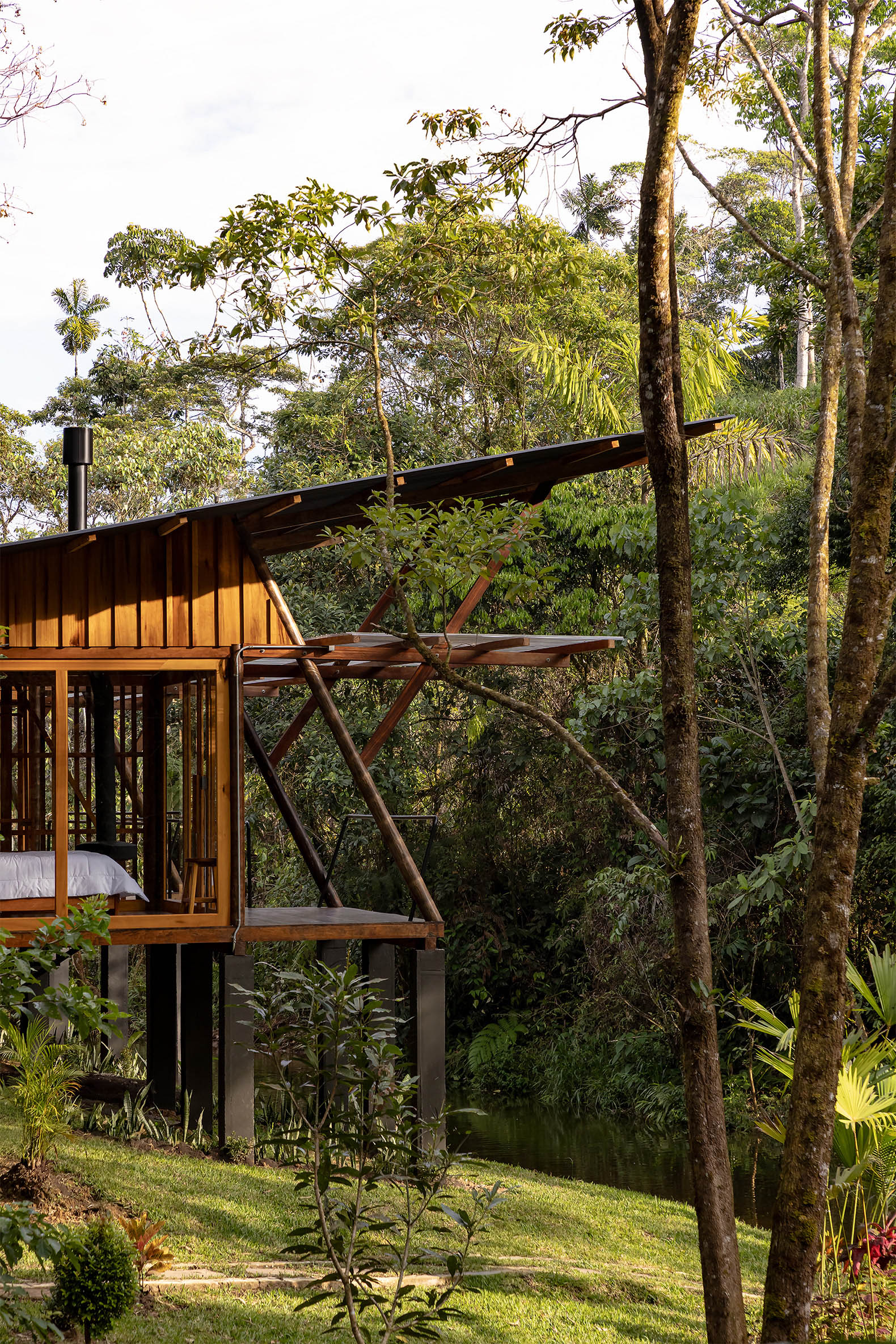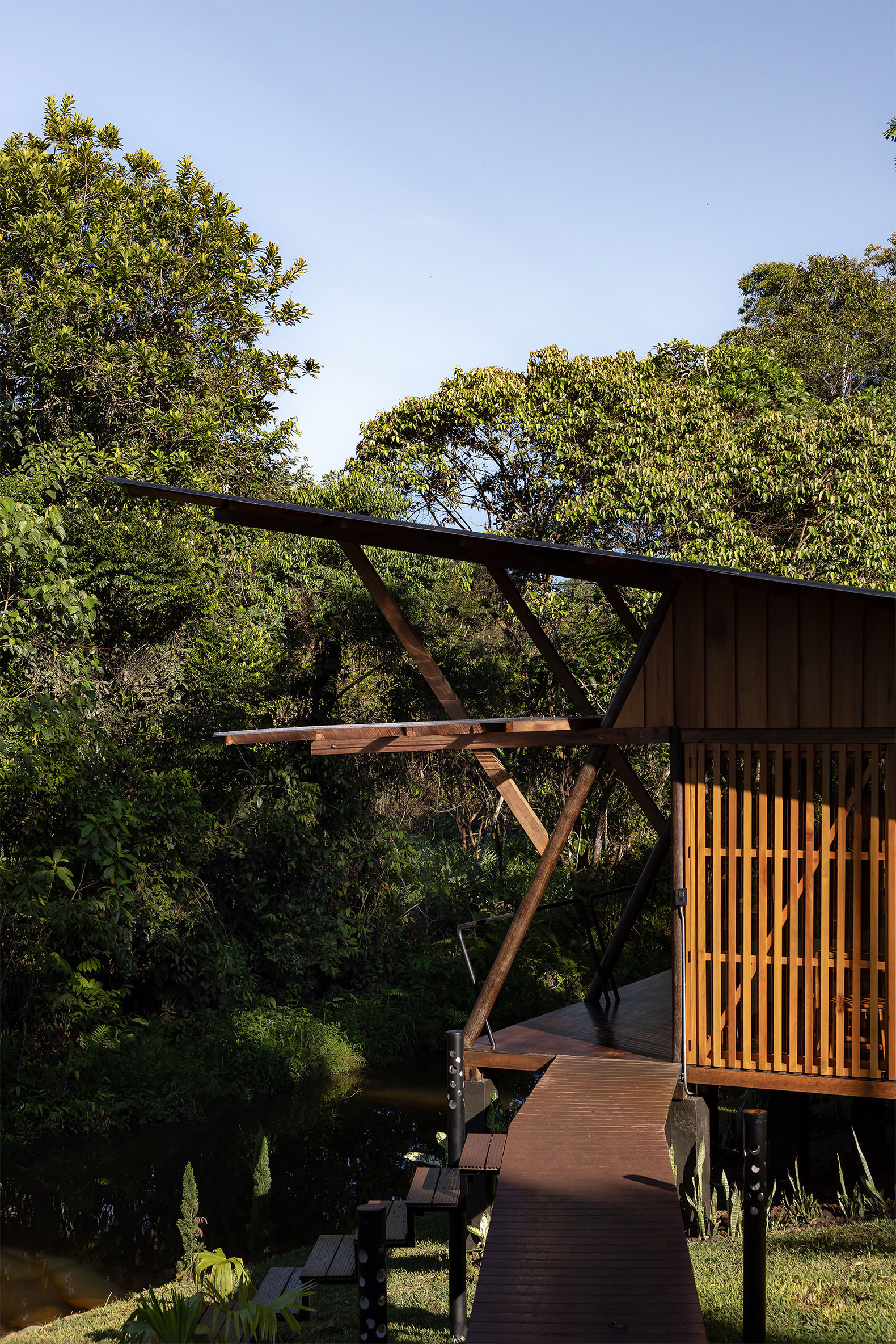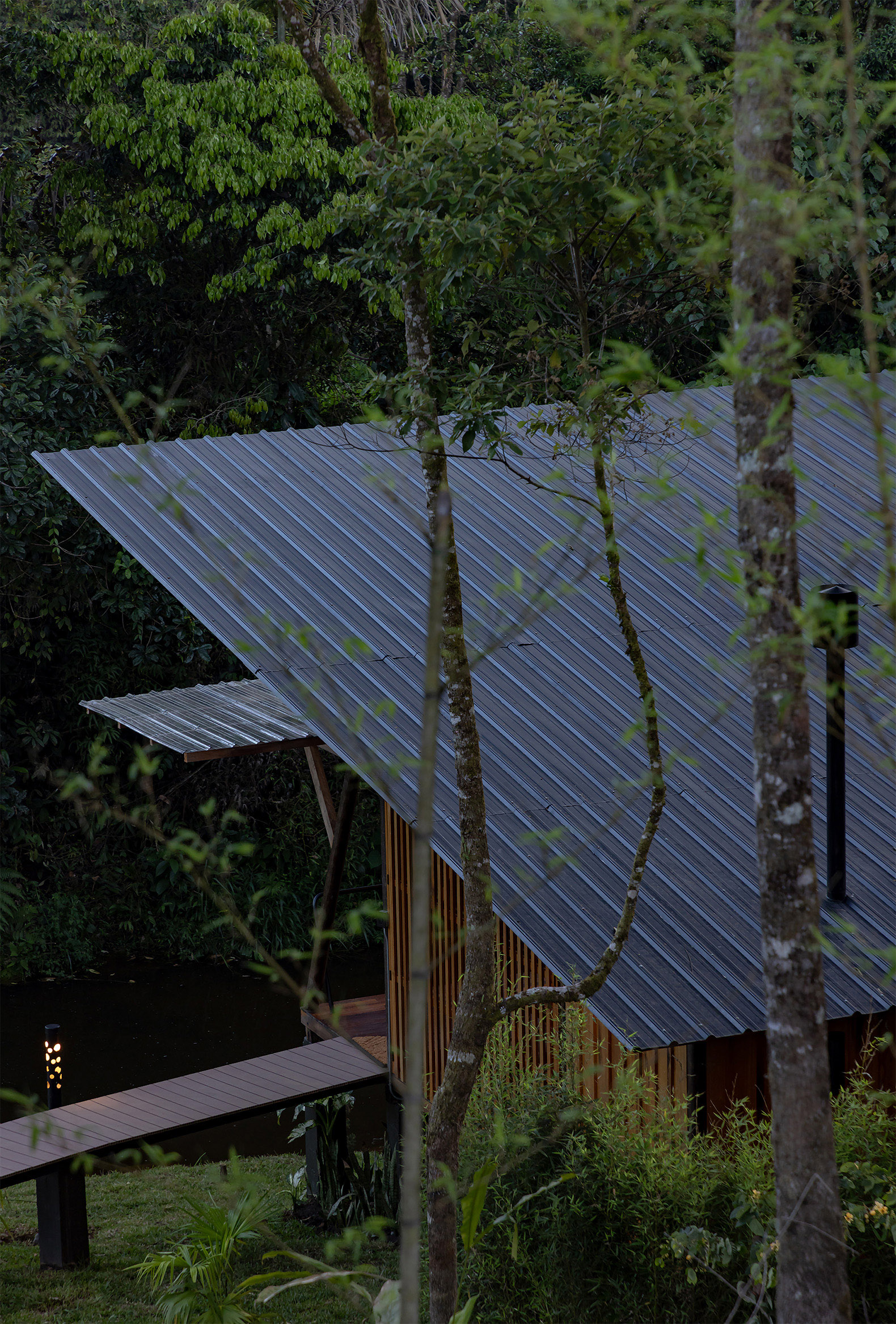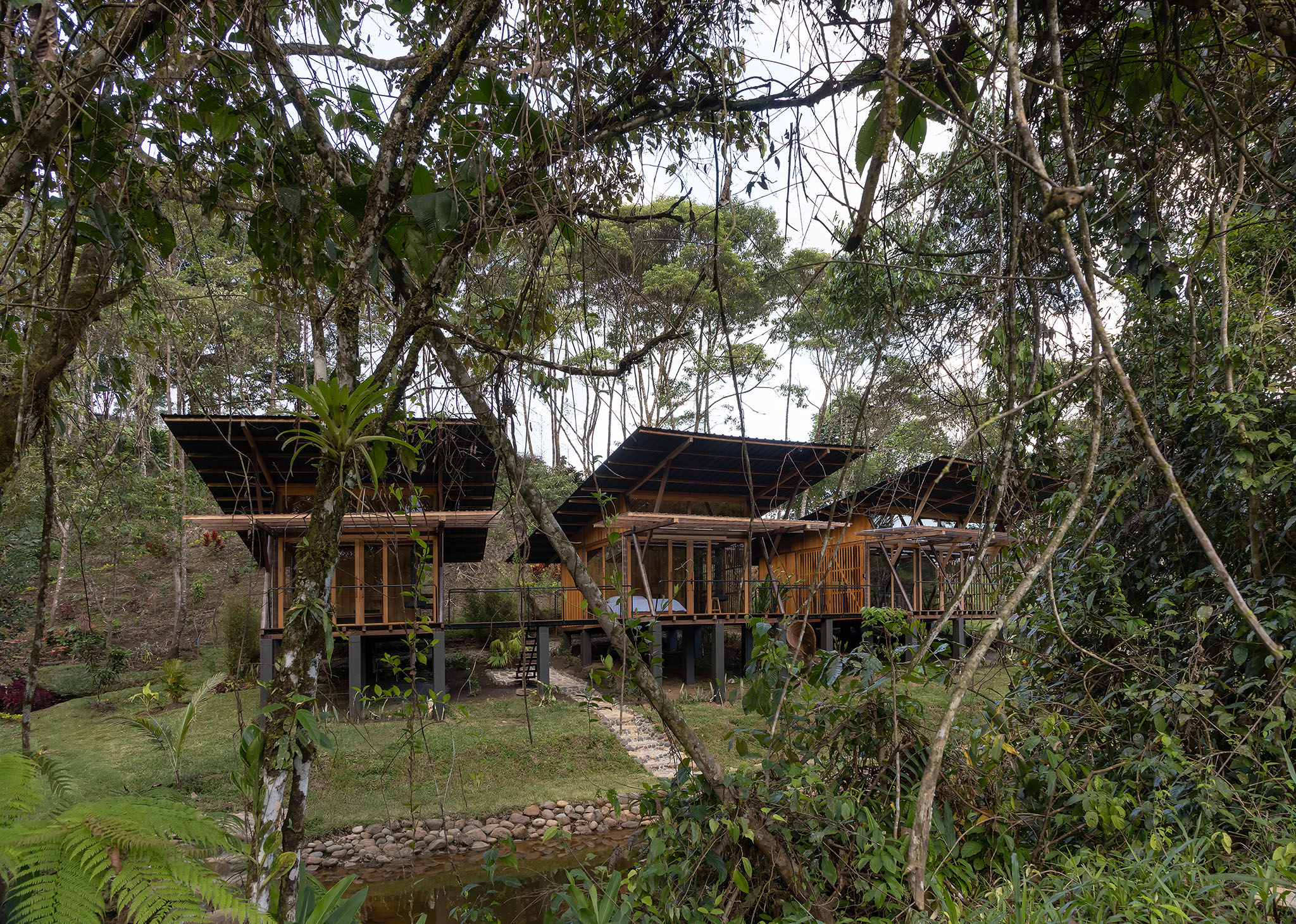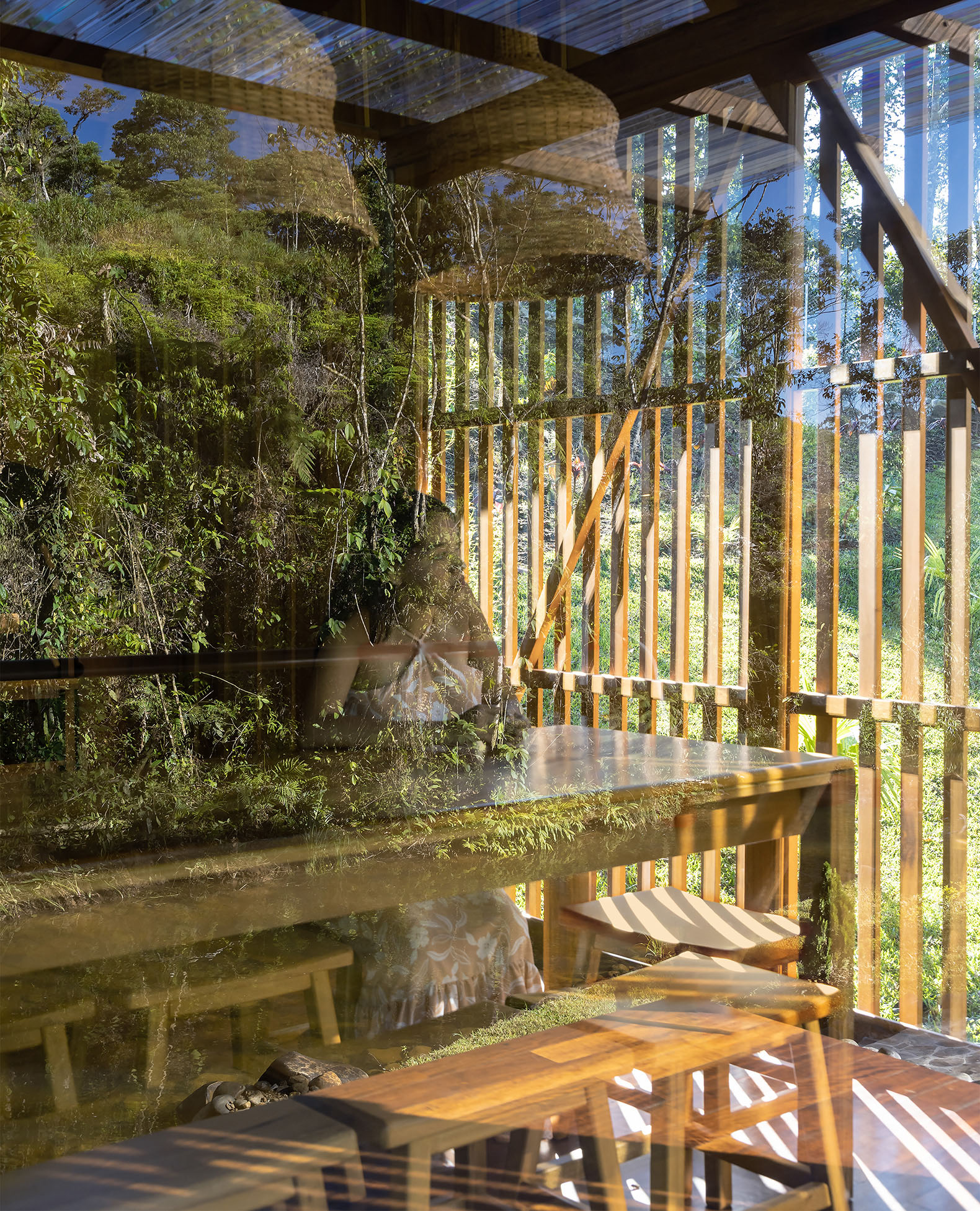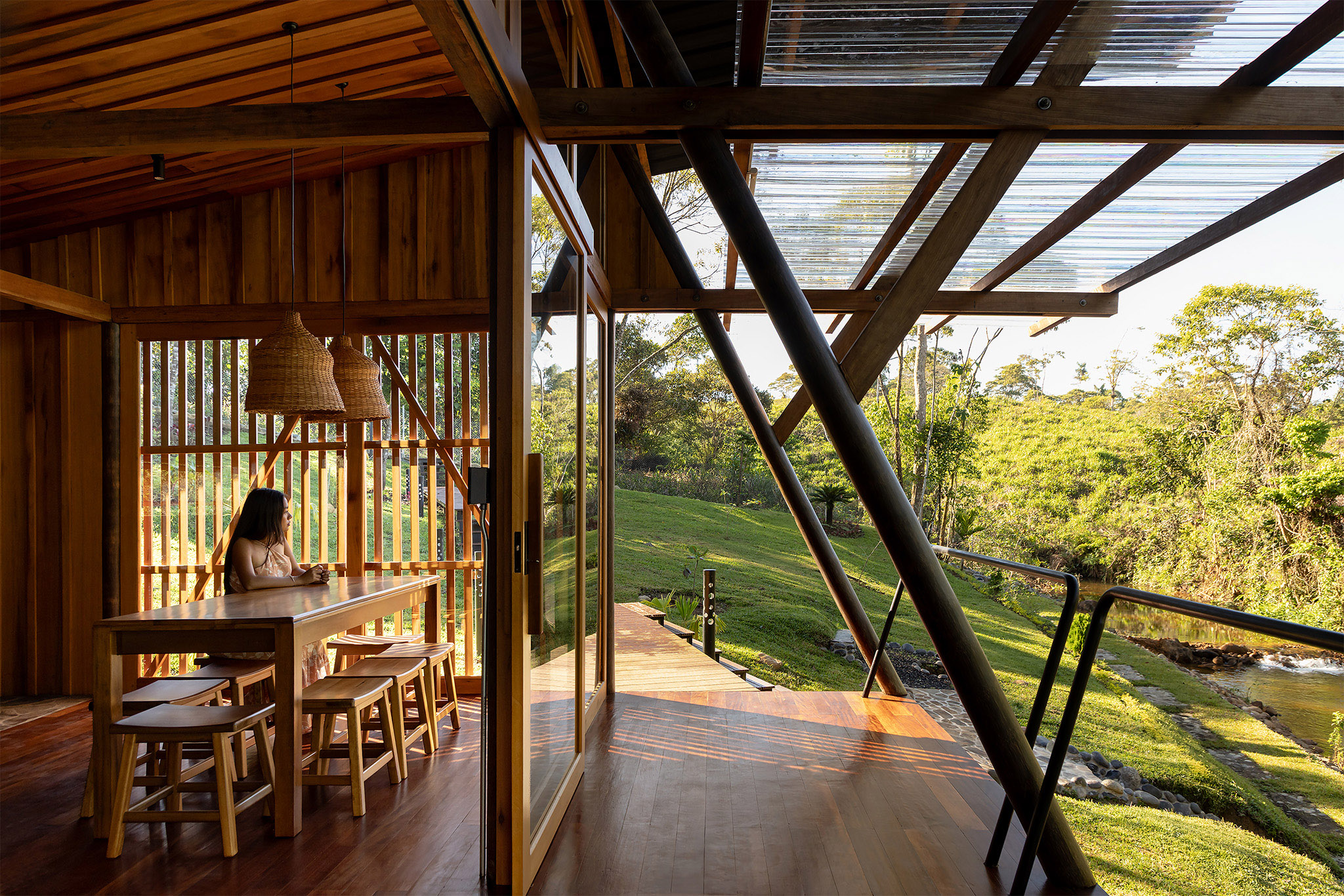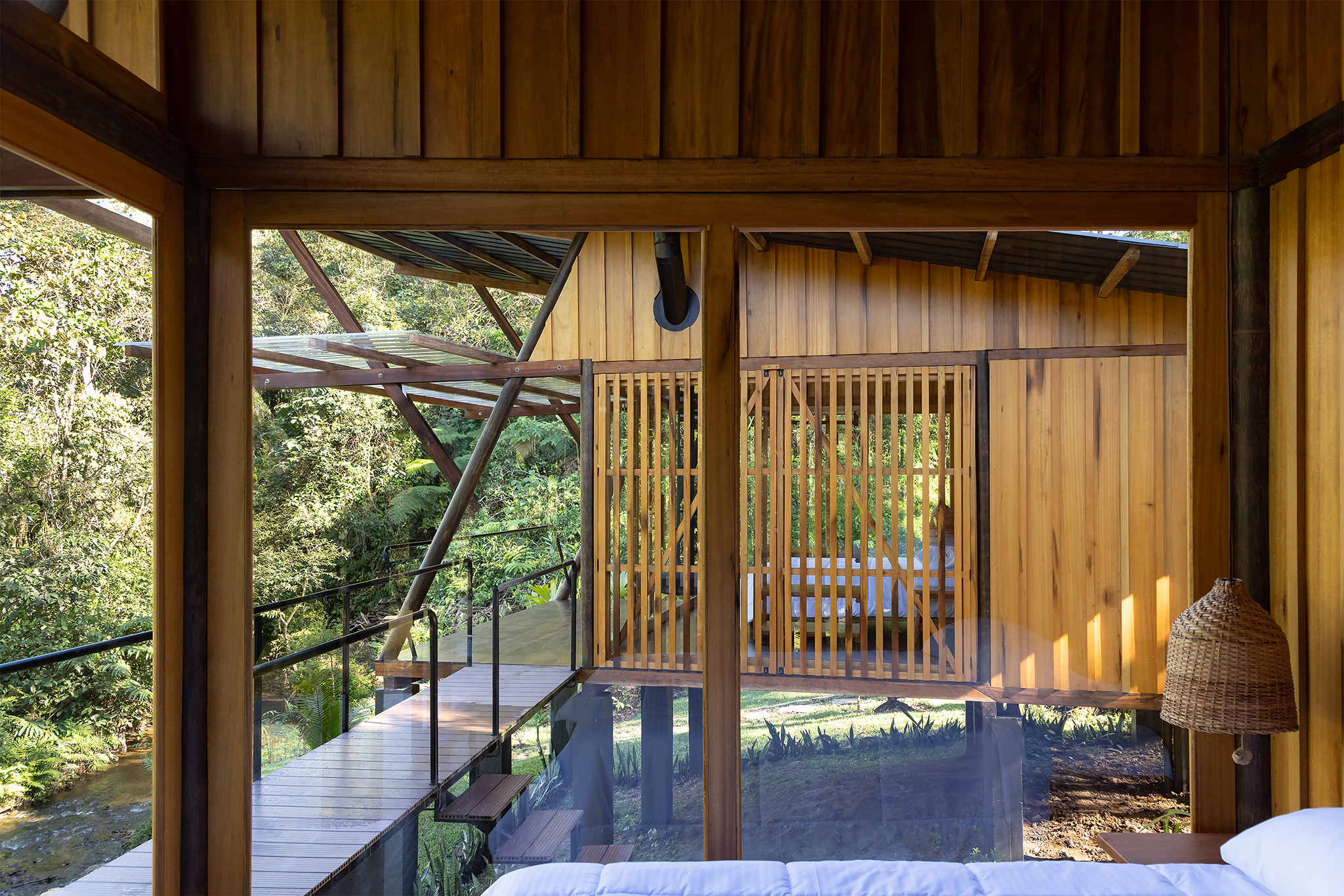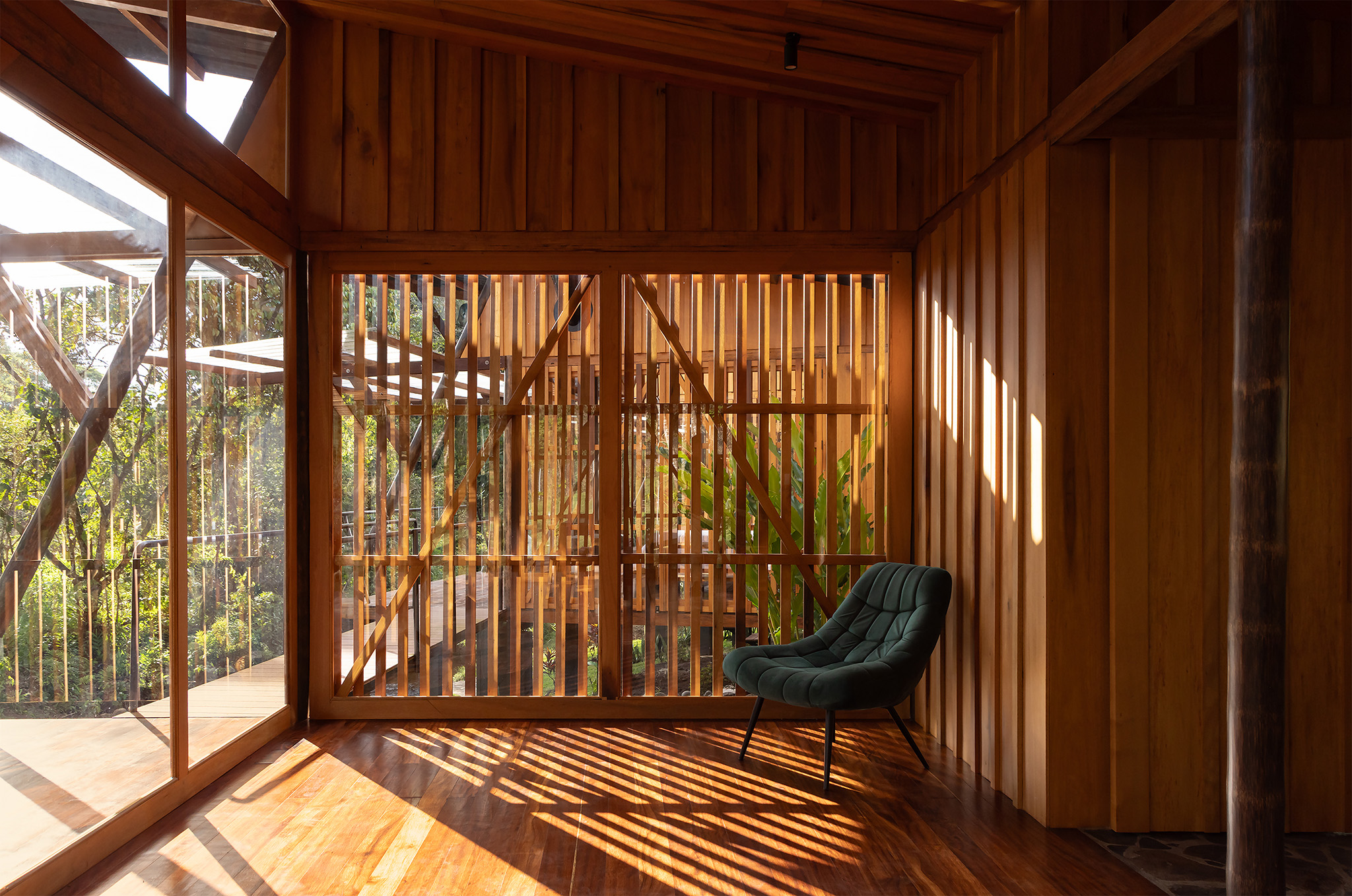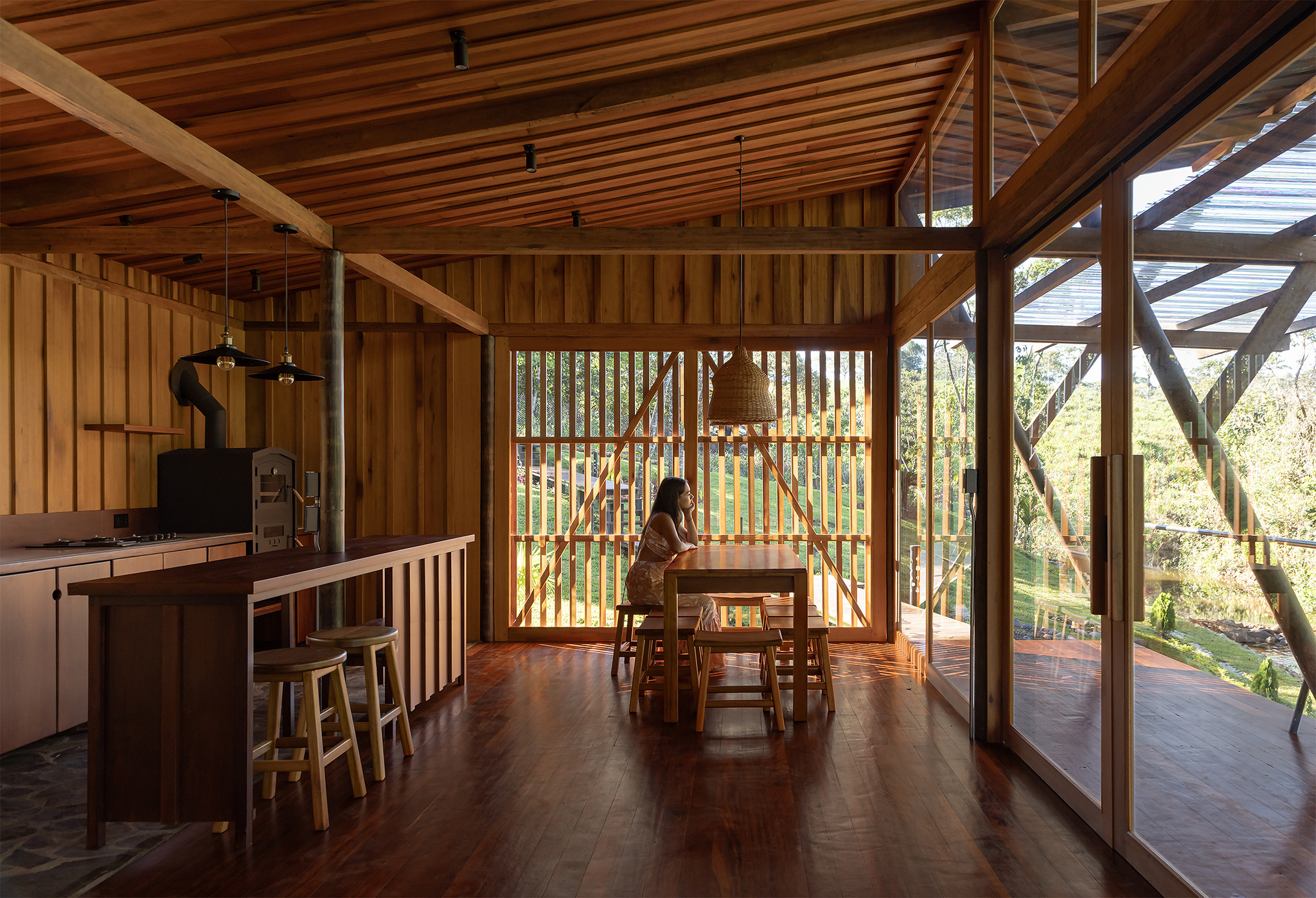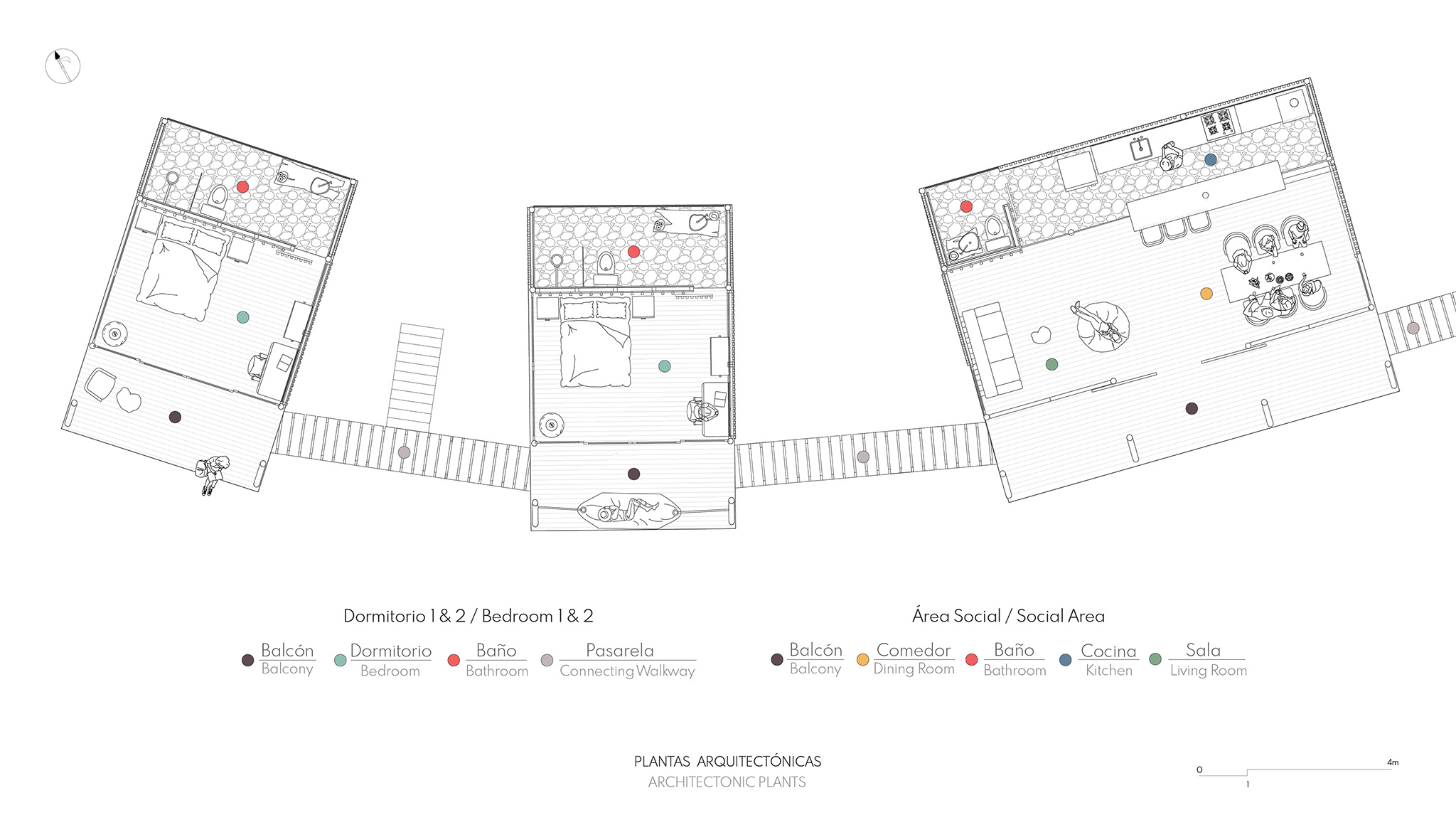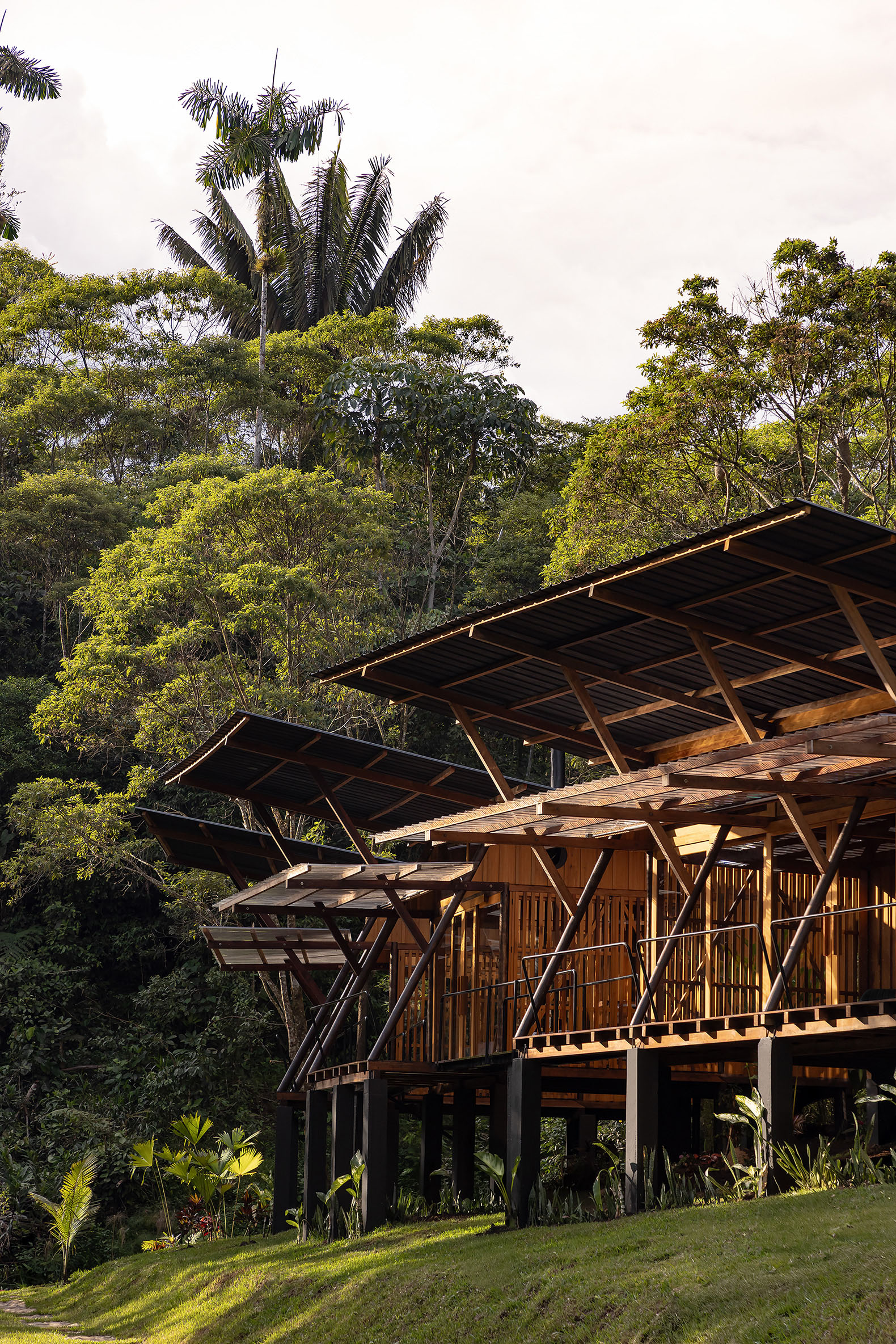
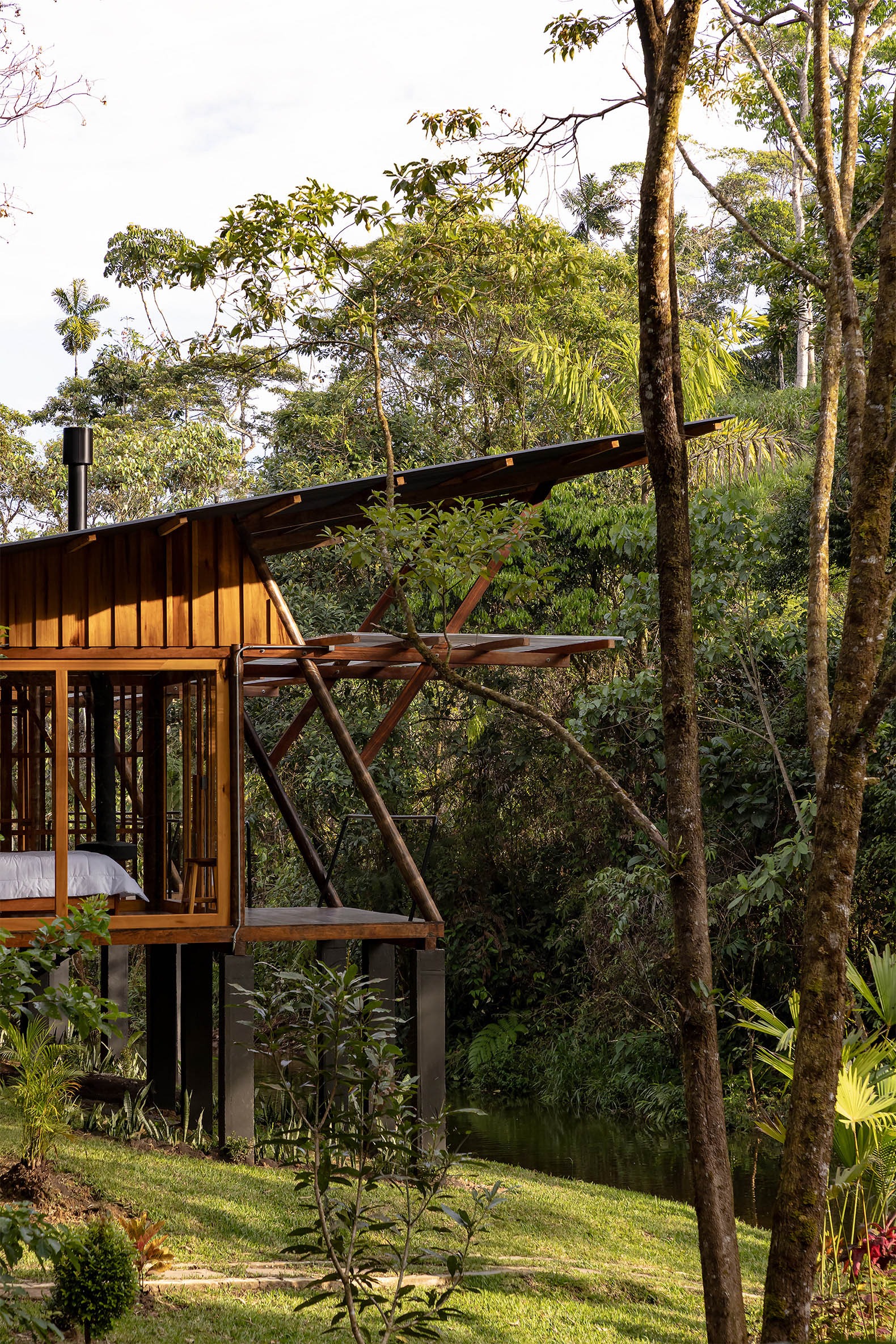
Functionally, the house designed by Mestizo Estudio Arquitectura places the social area in the largest module, while the remaining modules house the bedrooms. As a design principle, the shelter uses emptiness as an articulating element that guarantees privacy and creates diverse visual relationships between the interiors and the surrounding environment.
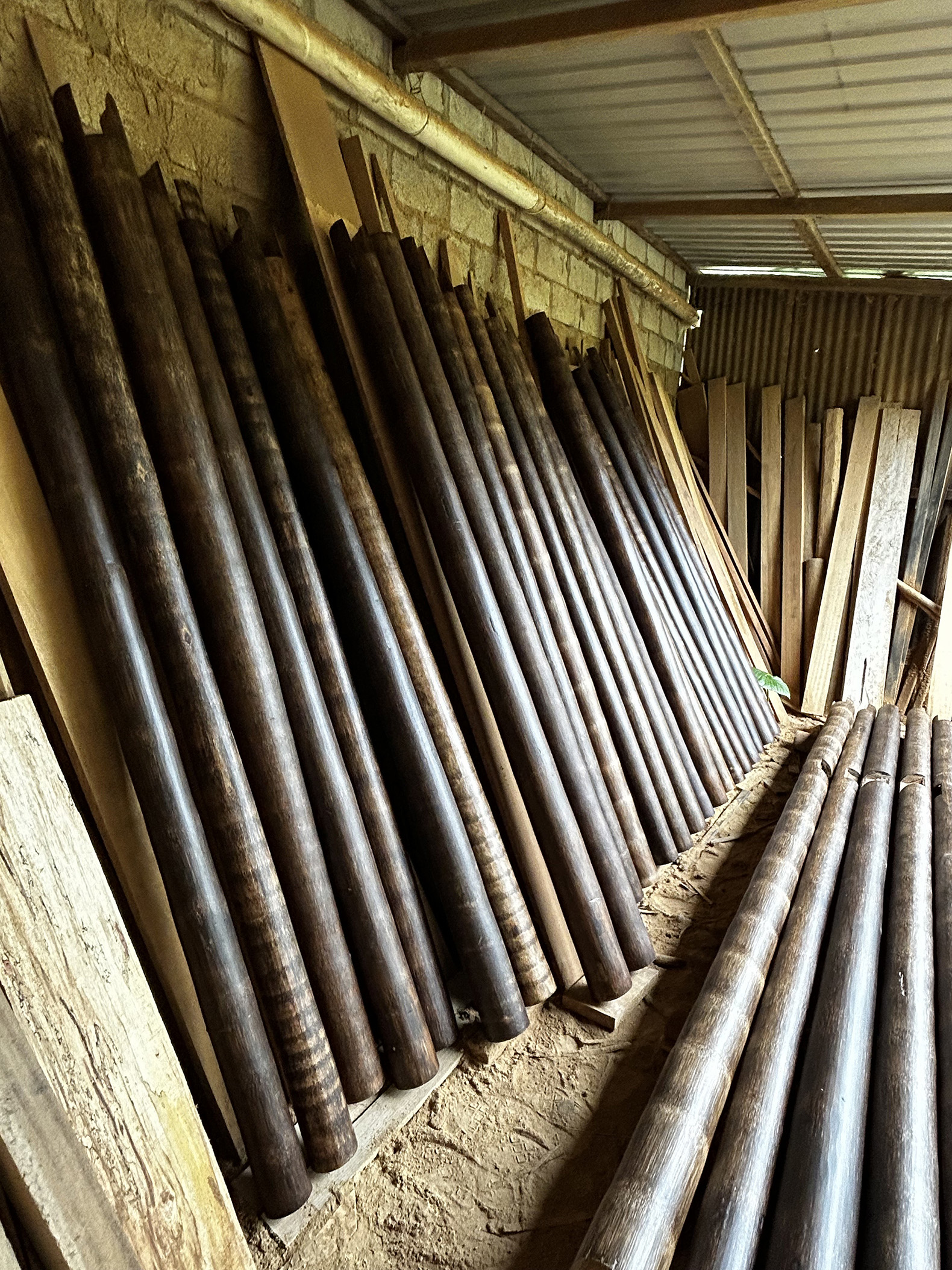
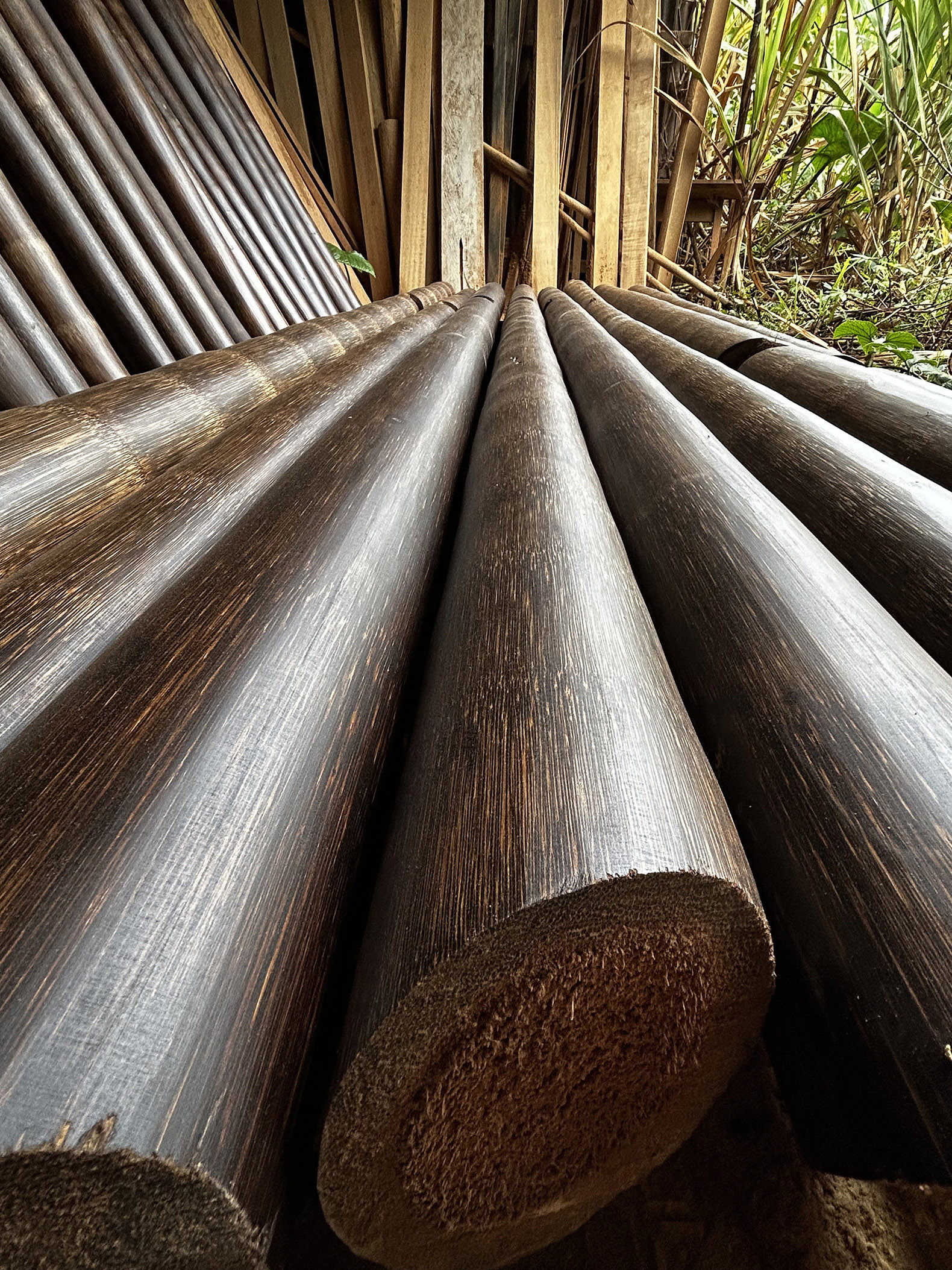
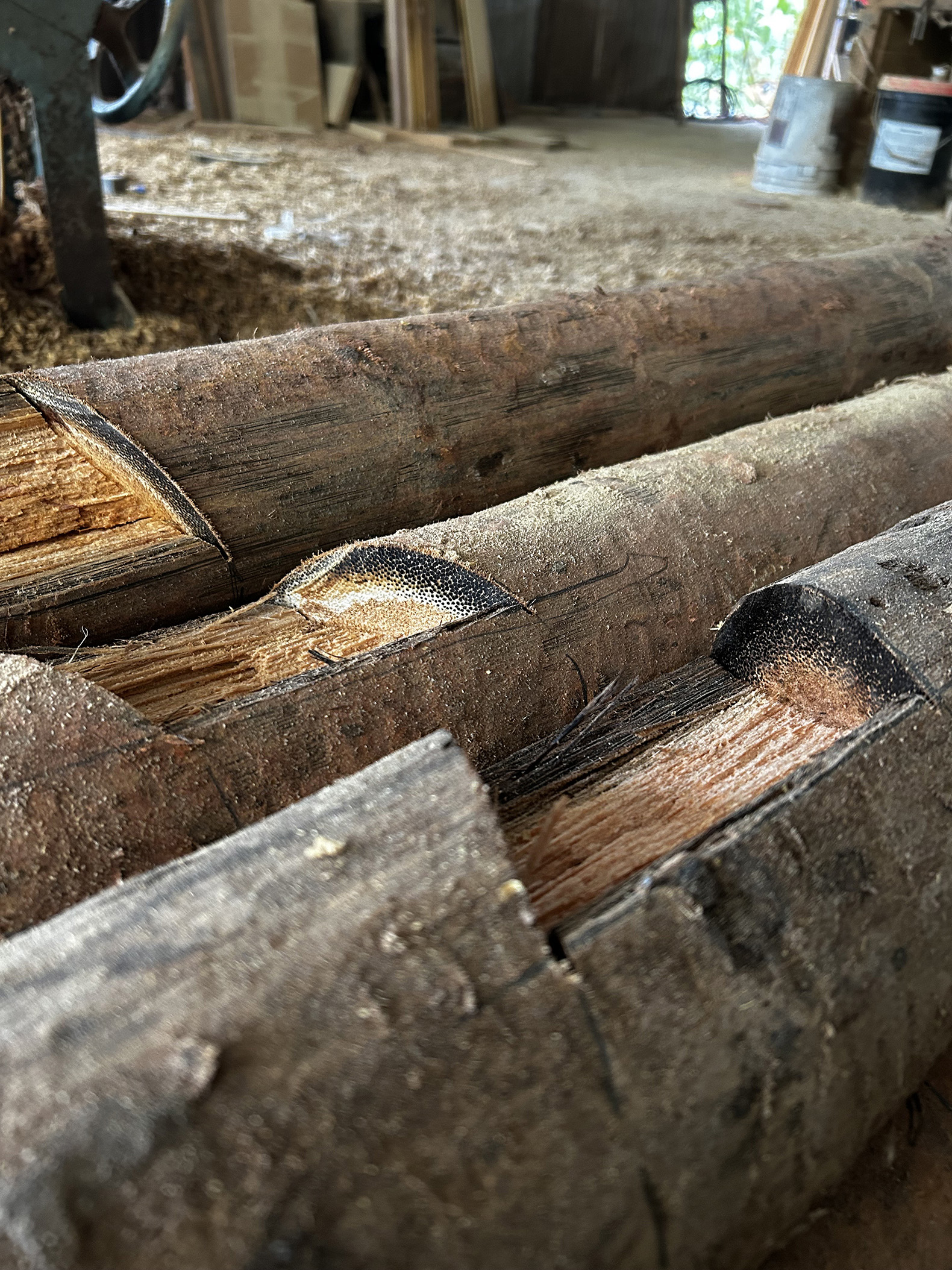
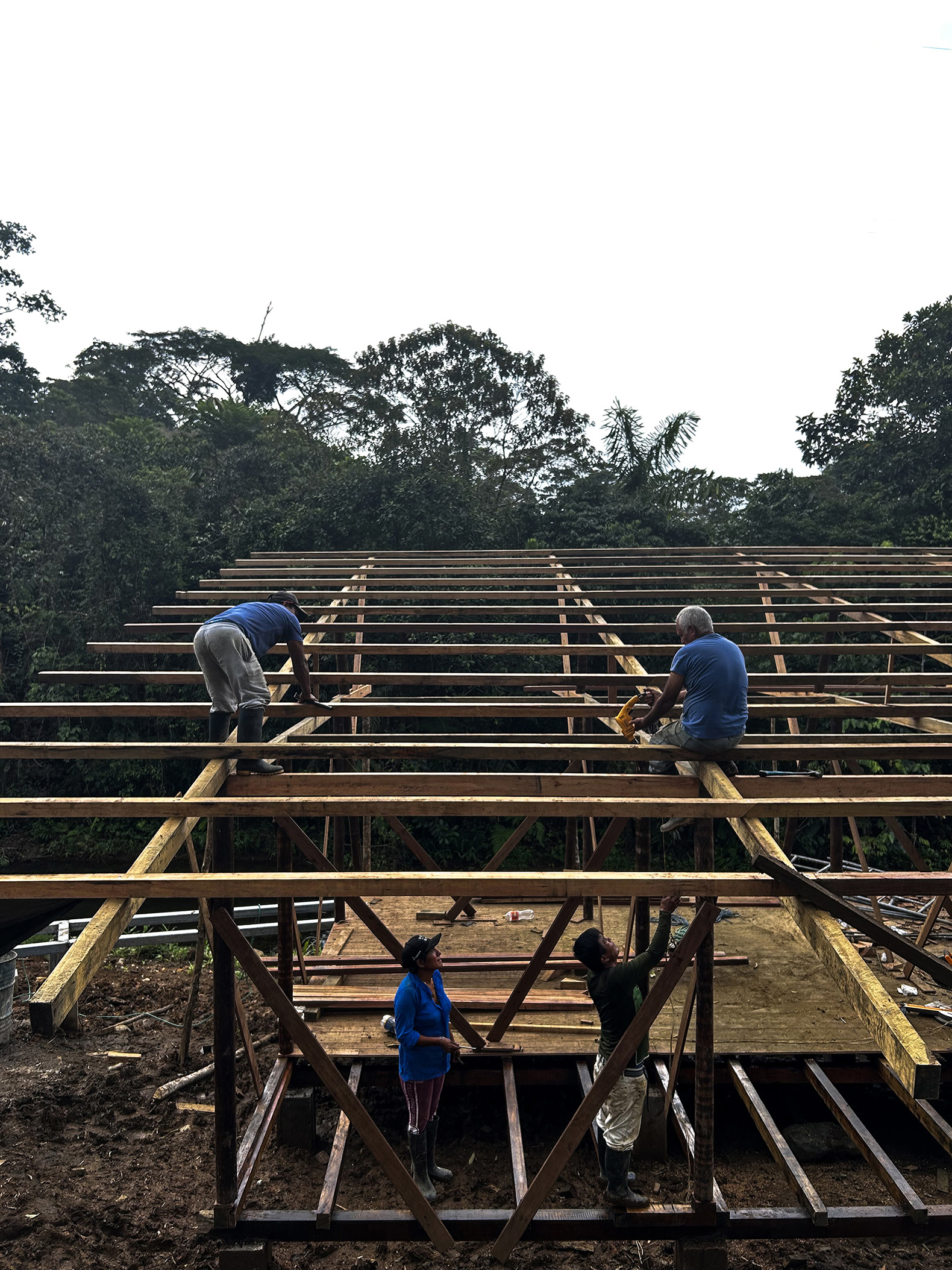
For its construction, the project employs a type of palm very common in these territories: the "Killi," known as the "steel of the jungle." Guided by ancient vernacular practices, wood assumes a leading role in the construction of the house, just as it did in the past. In this way, "Hoguera de Madera" (Wooden Fire) highlights the artisanal work of the local community and emphasizes their ability to transform existing materials into resources with their own unique identity.
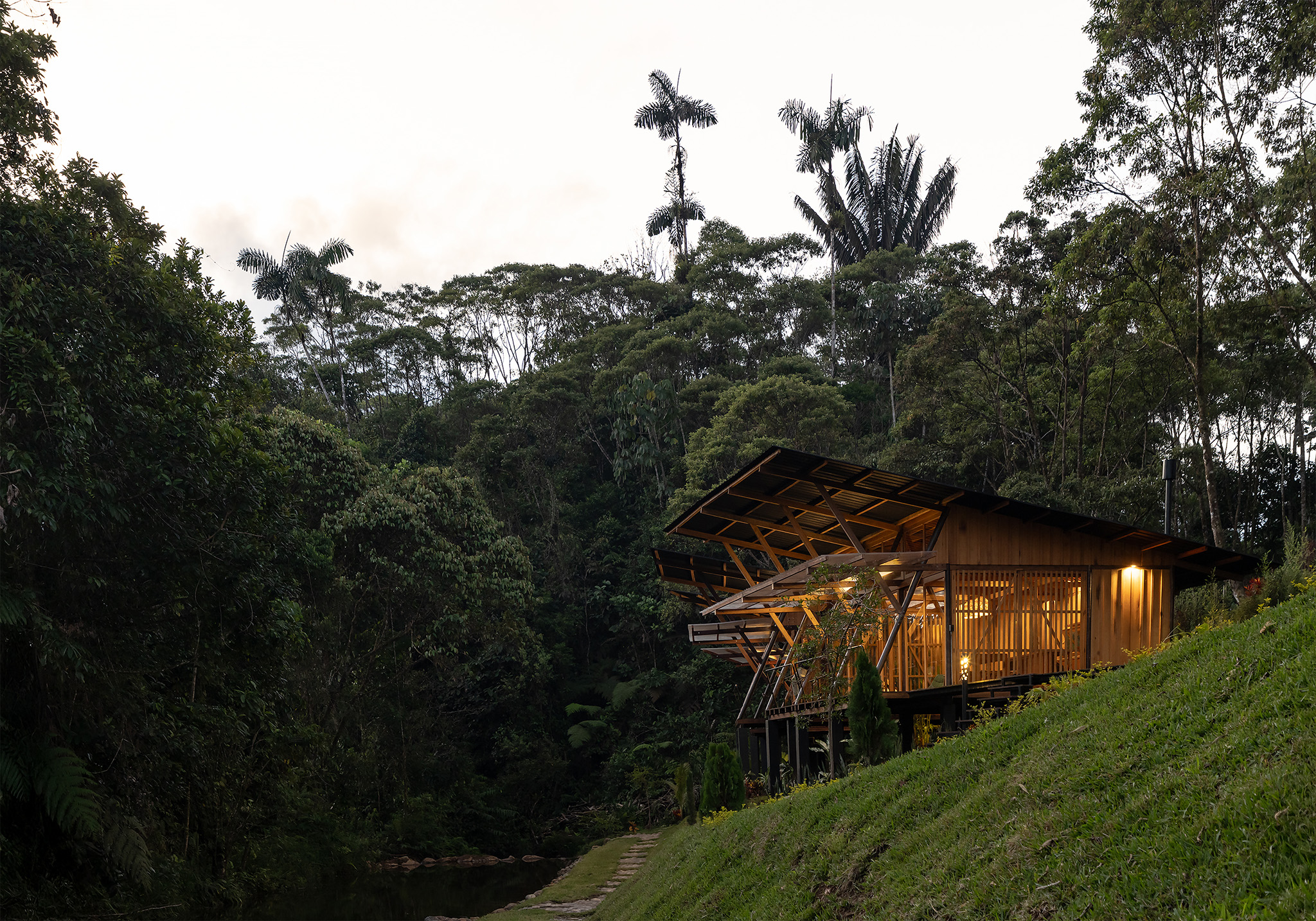
"Hoguera de Madera" by Mestizo Estudio Arquitectura. Photograph by JAG Studio.
Project description by Mestizo Estudio Arquitectura
Hoguera de Madera is conceived as a shelter for a family who chooses to rethink their conventional way of living within the city. This reflection leads them to seek an alternative lifestyle, envisioning a space integrated with nature, a place capable of renewing and enhancing their human and professional qualities.
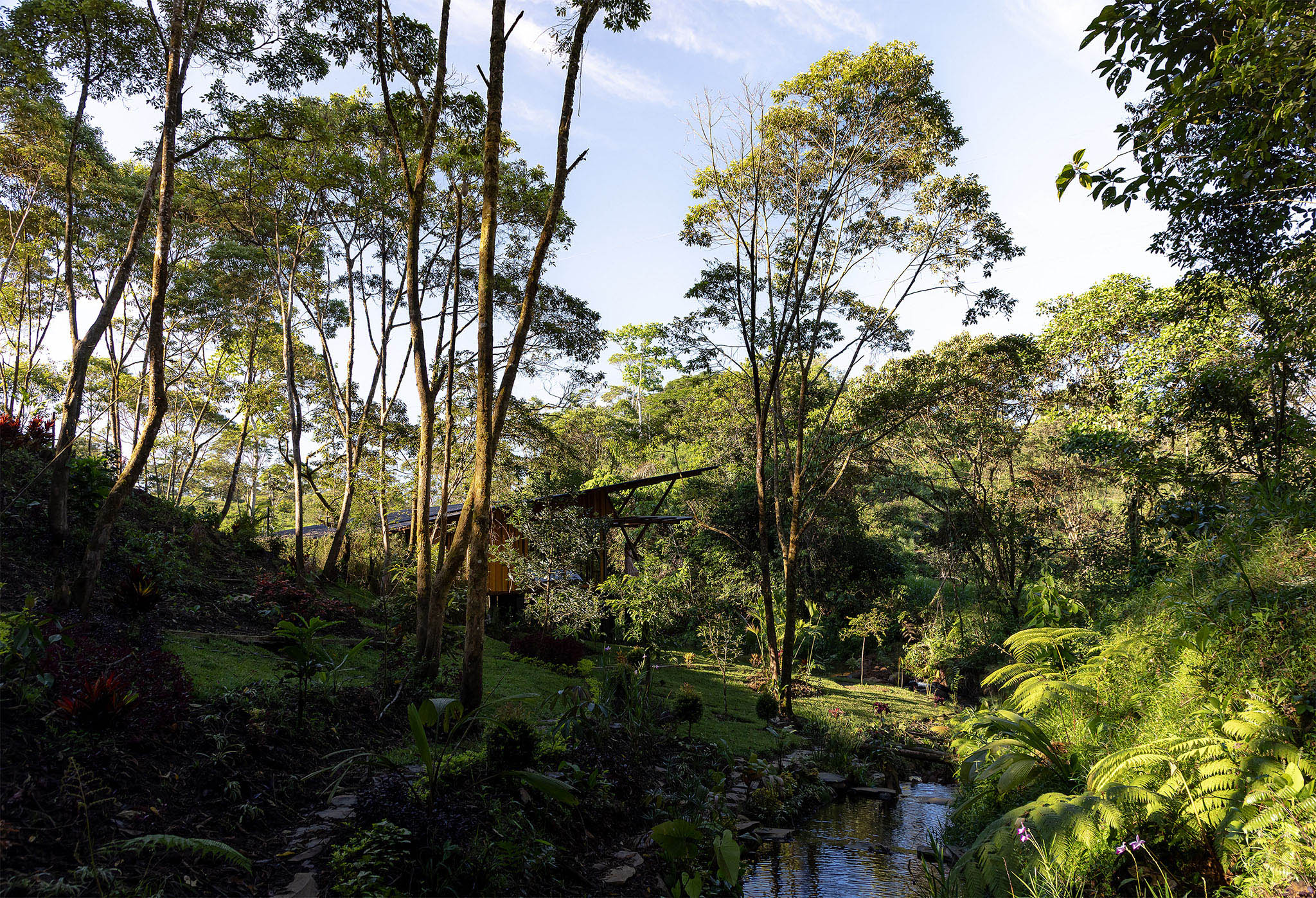
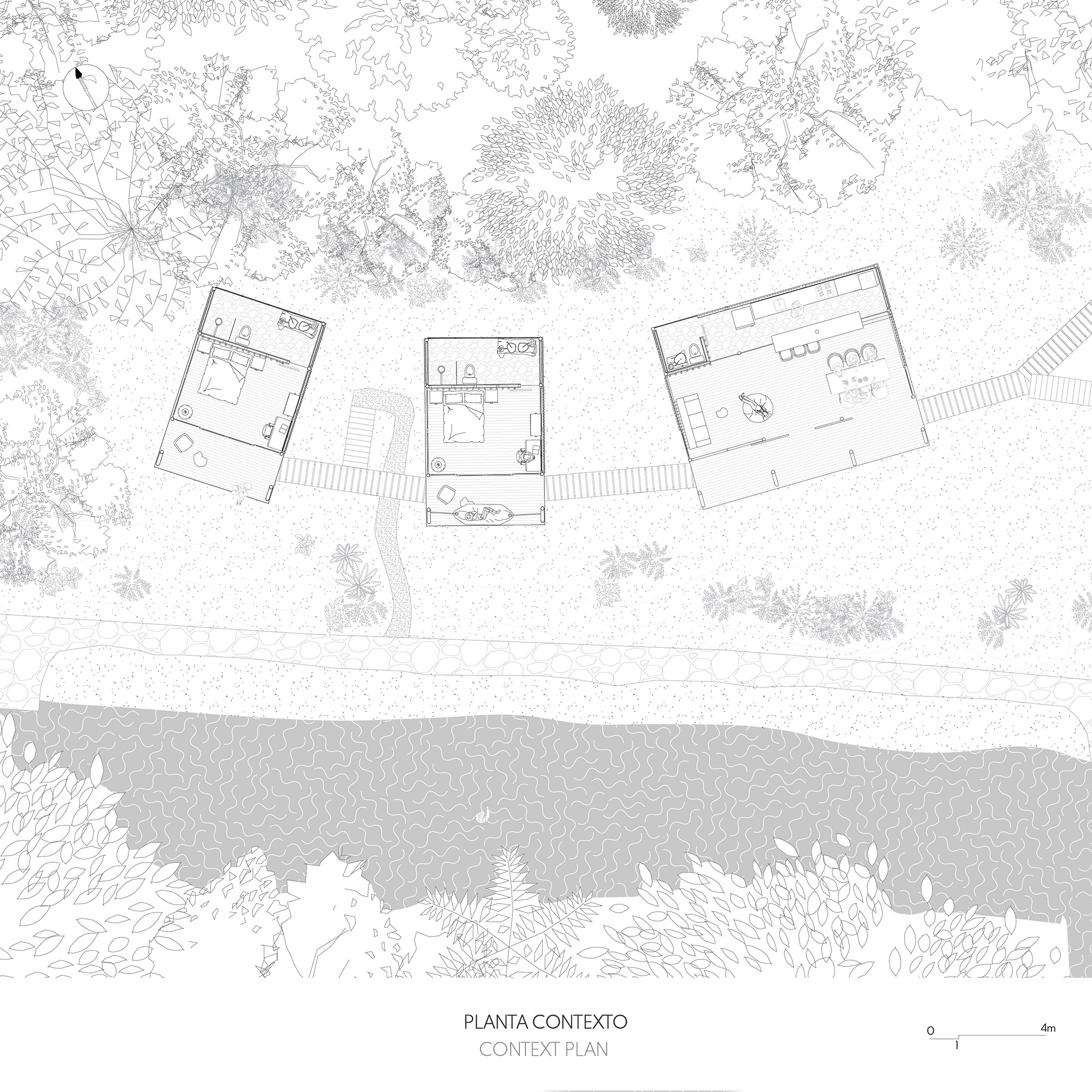
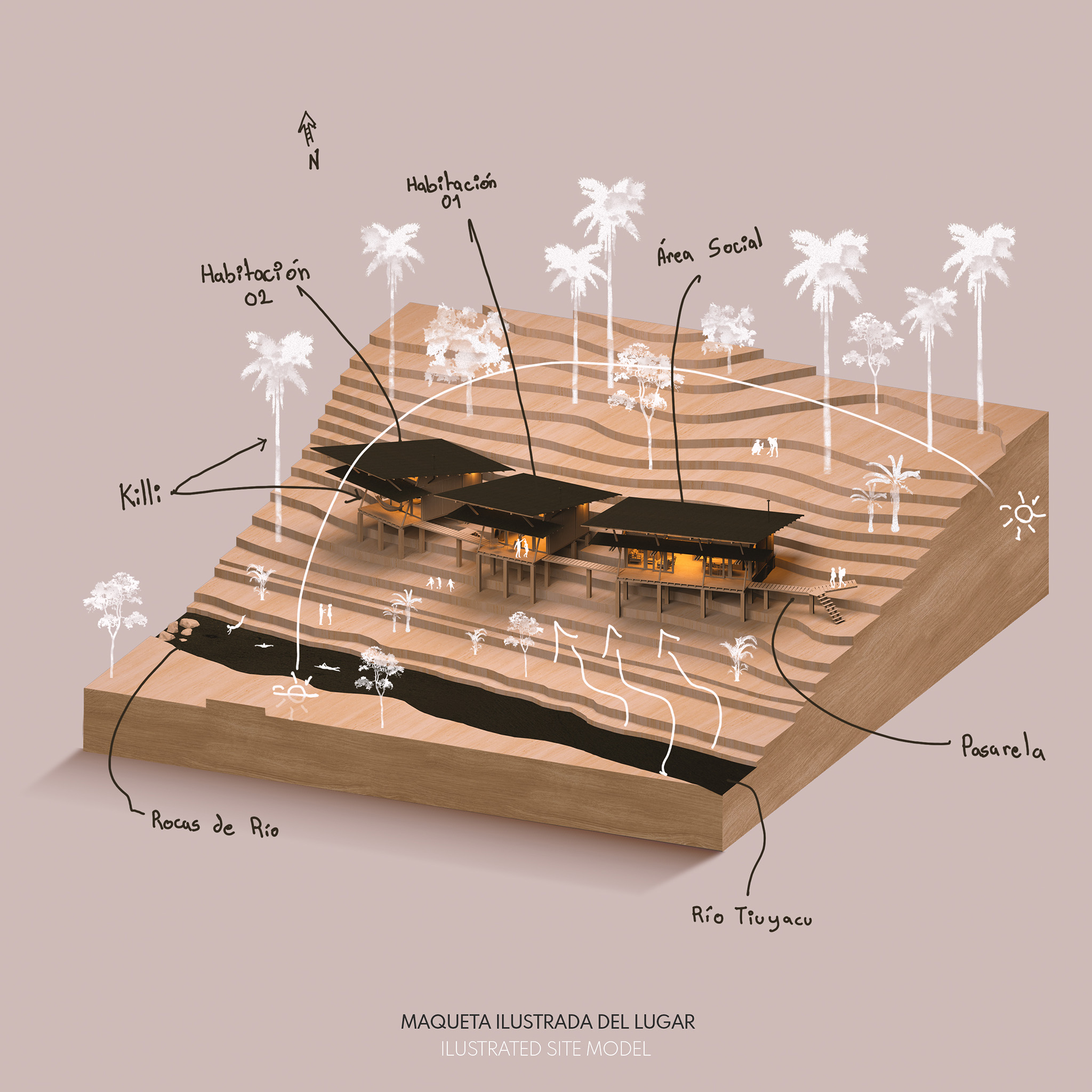
Located 6 km from the city of Puyo, in the province of Pastaza (Ecuador), the house is immersed in a natural environment, set on the edge of a ravine and defined by a small river. This body of water becomes one of the natural elements guiding the project.
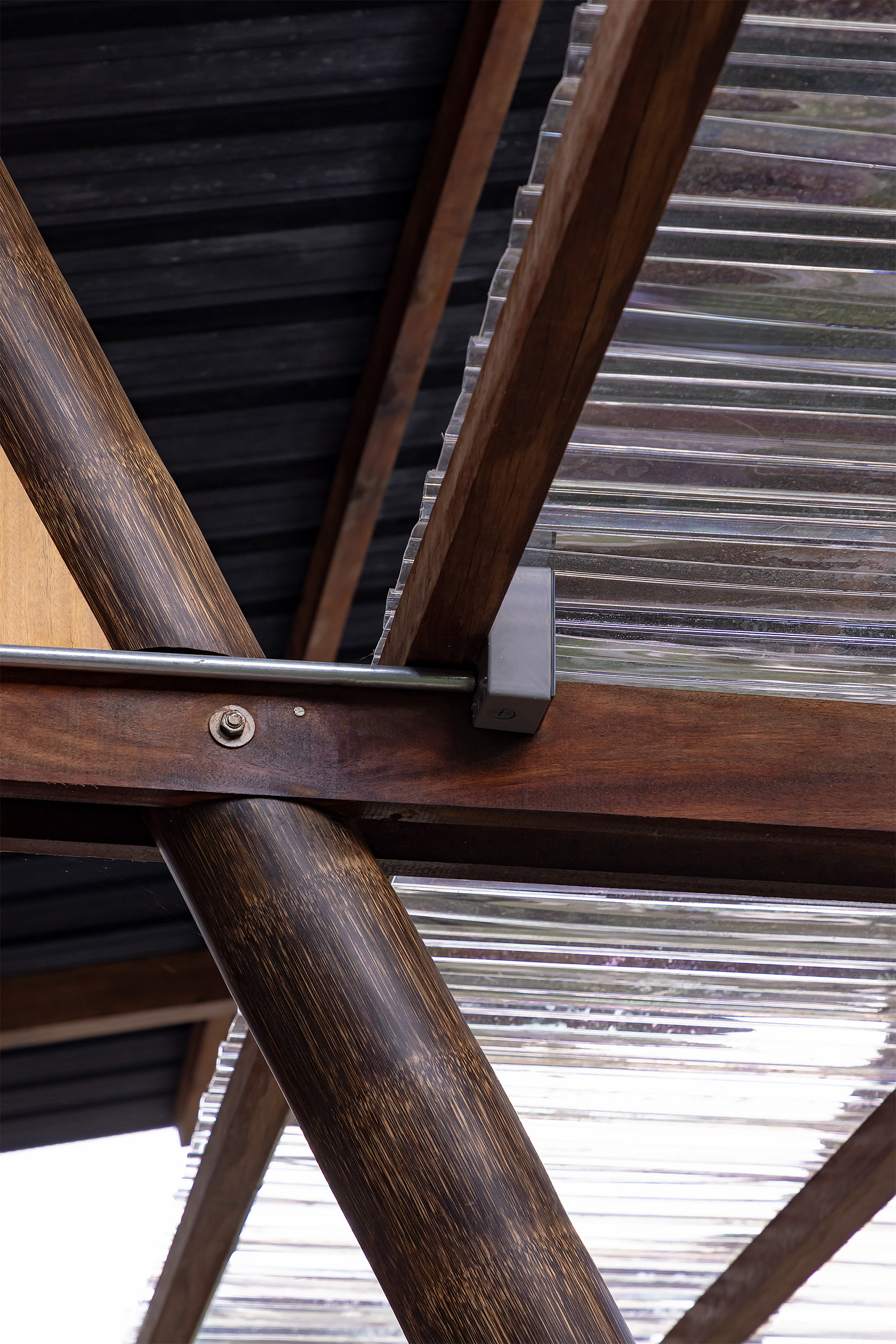
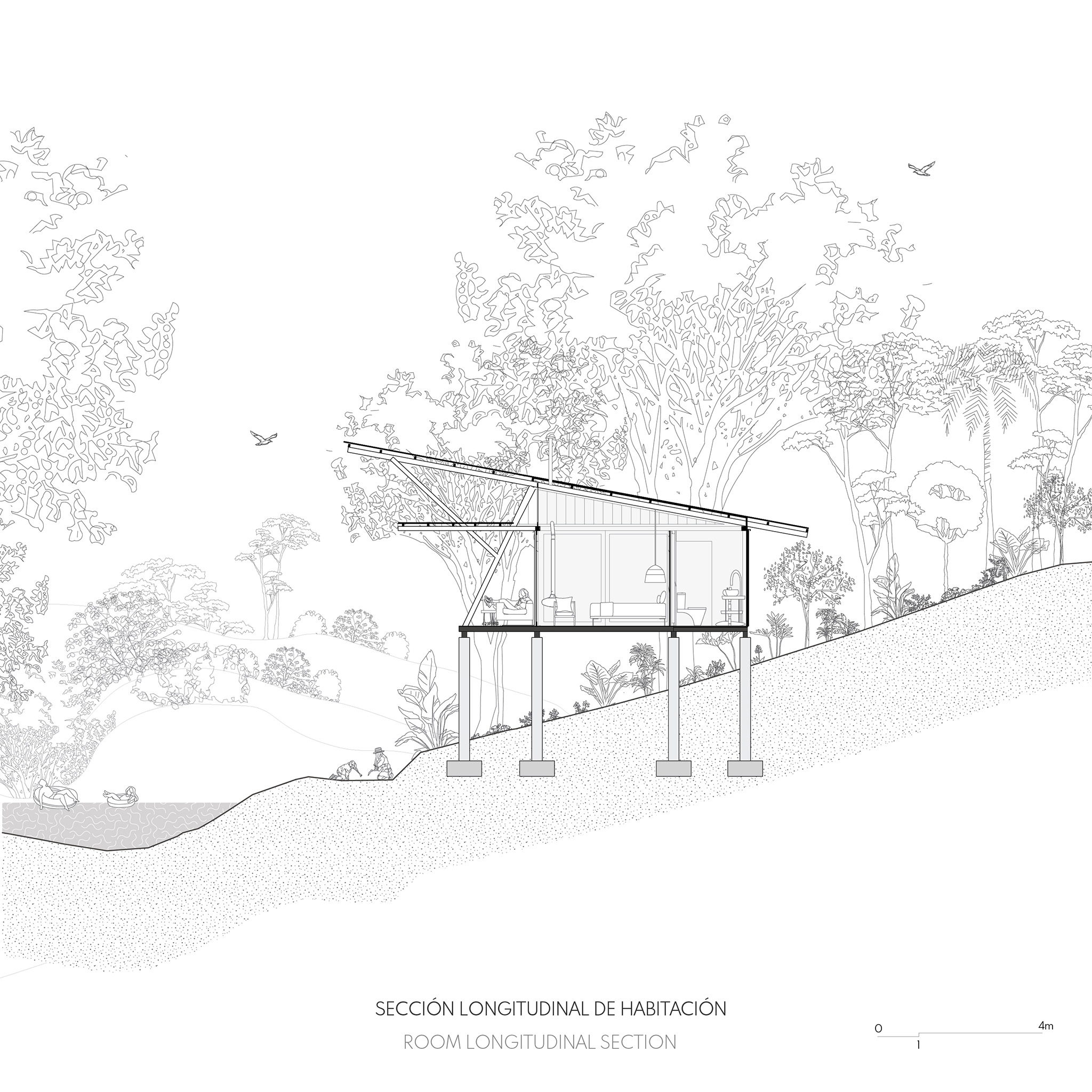
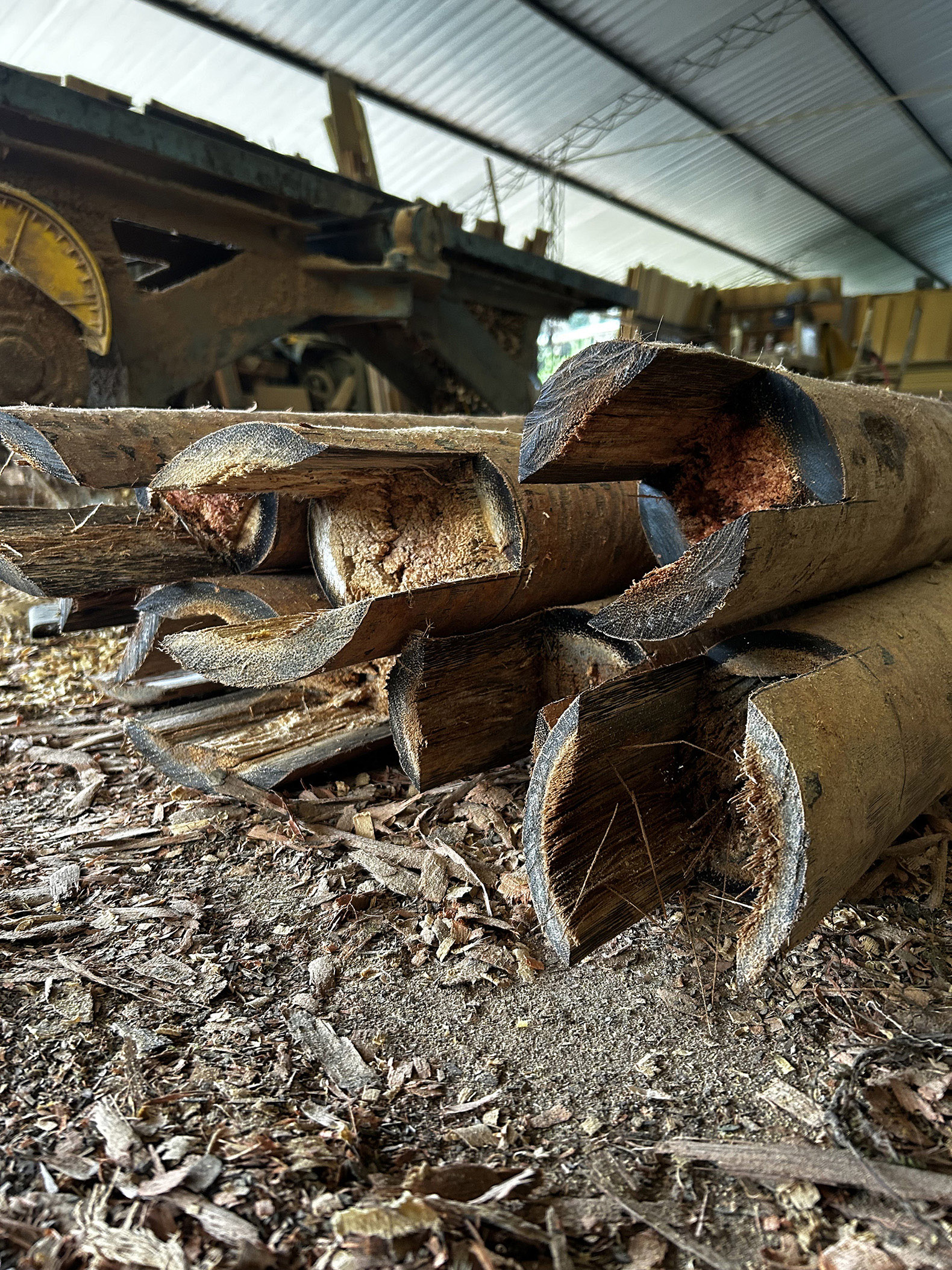
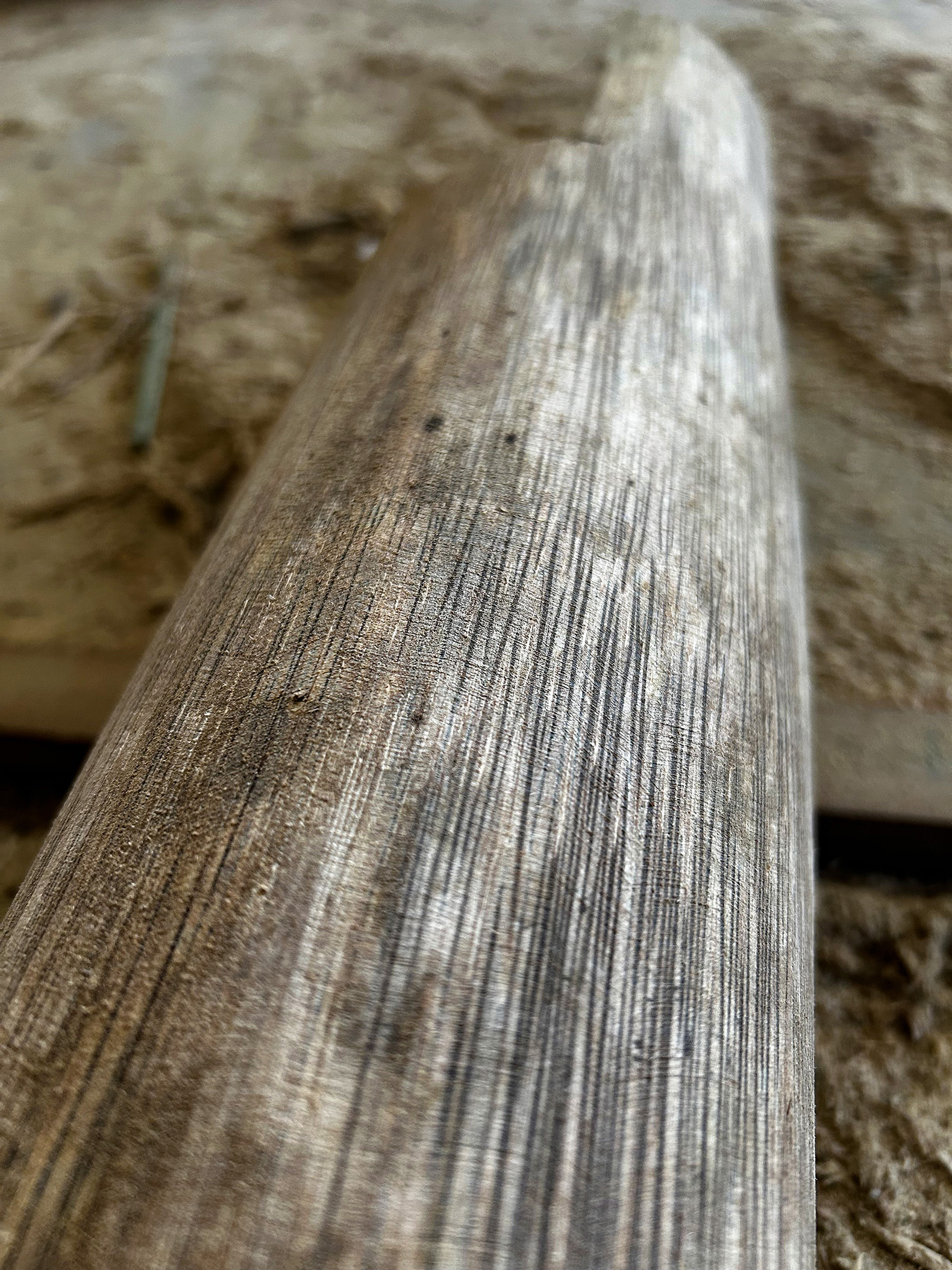
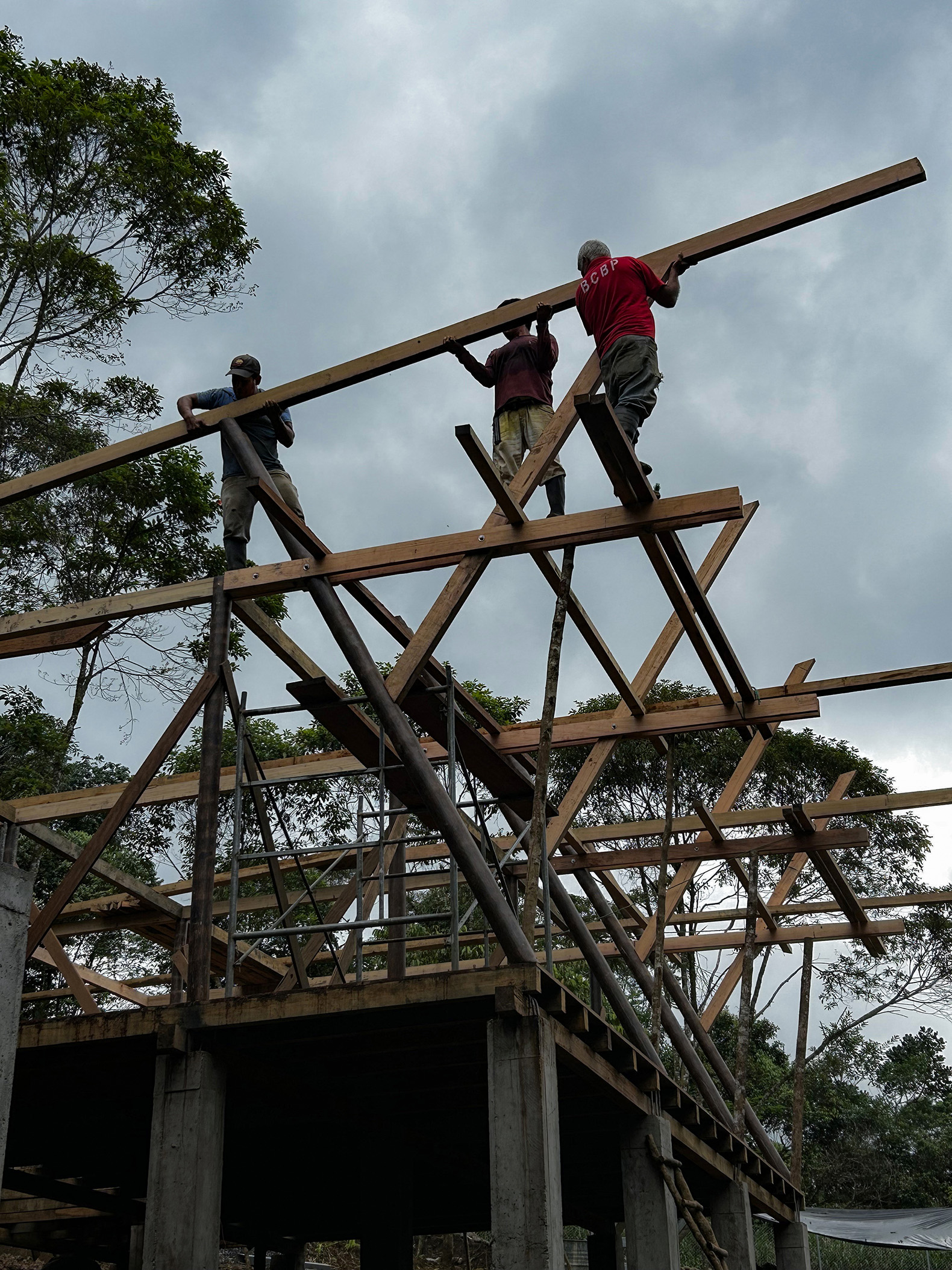
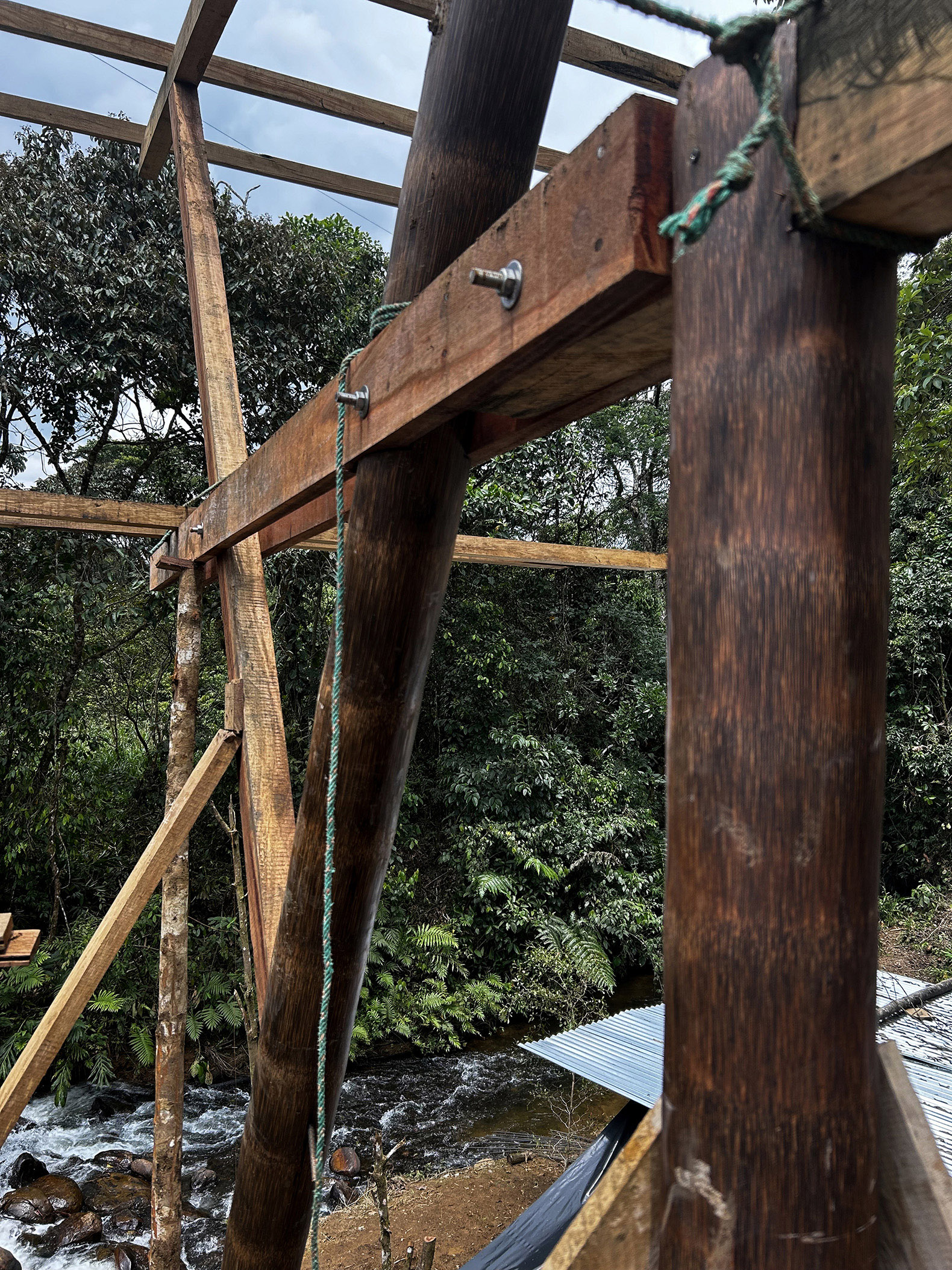
Known by local communities as the "steel of the jungle," the "Killi," a palm species commonly found in these territories, has been used for centuries in vernacular constructions in the Amazonian rural landscape. It is a slender, durable species, resistant to direct contact with damp soil. Existing Killi trunks found on the site were collected and taken to a carpentry workshop, where they were treated and later returned to their original location, this time as structural elements. Combined with wooden beams sourced from local communities, they form a series of triangulated frames that define the architectural structure.
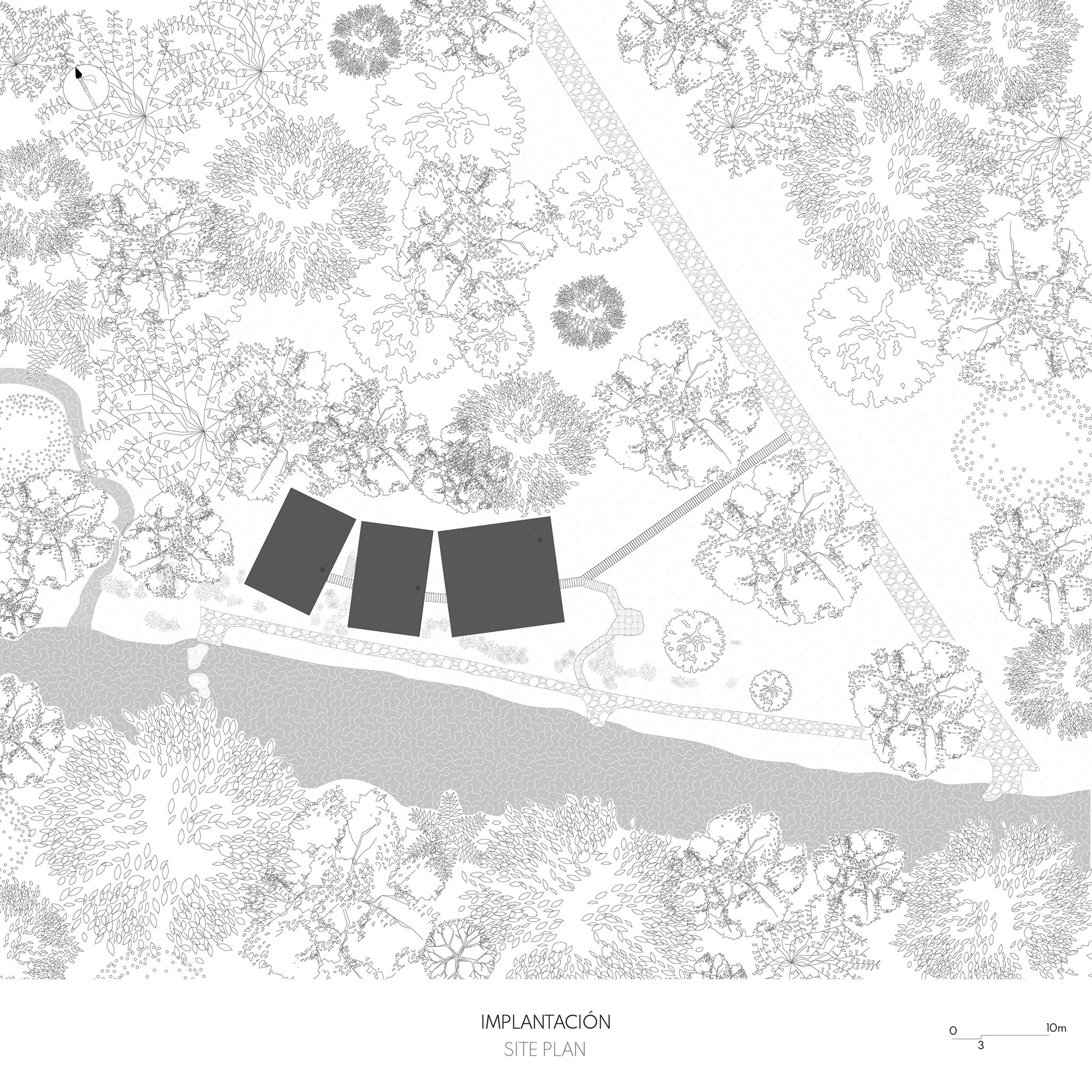
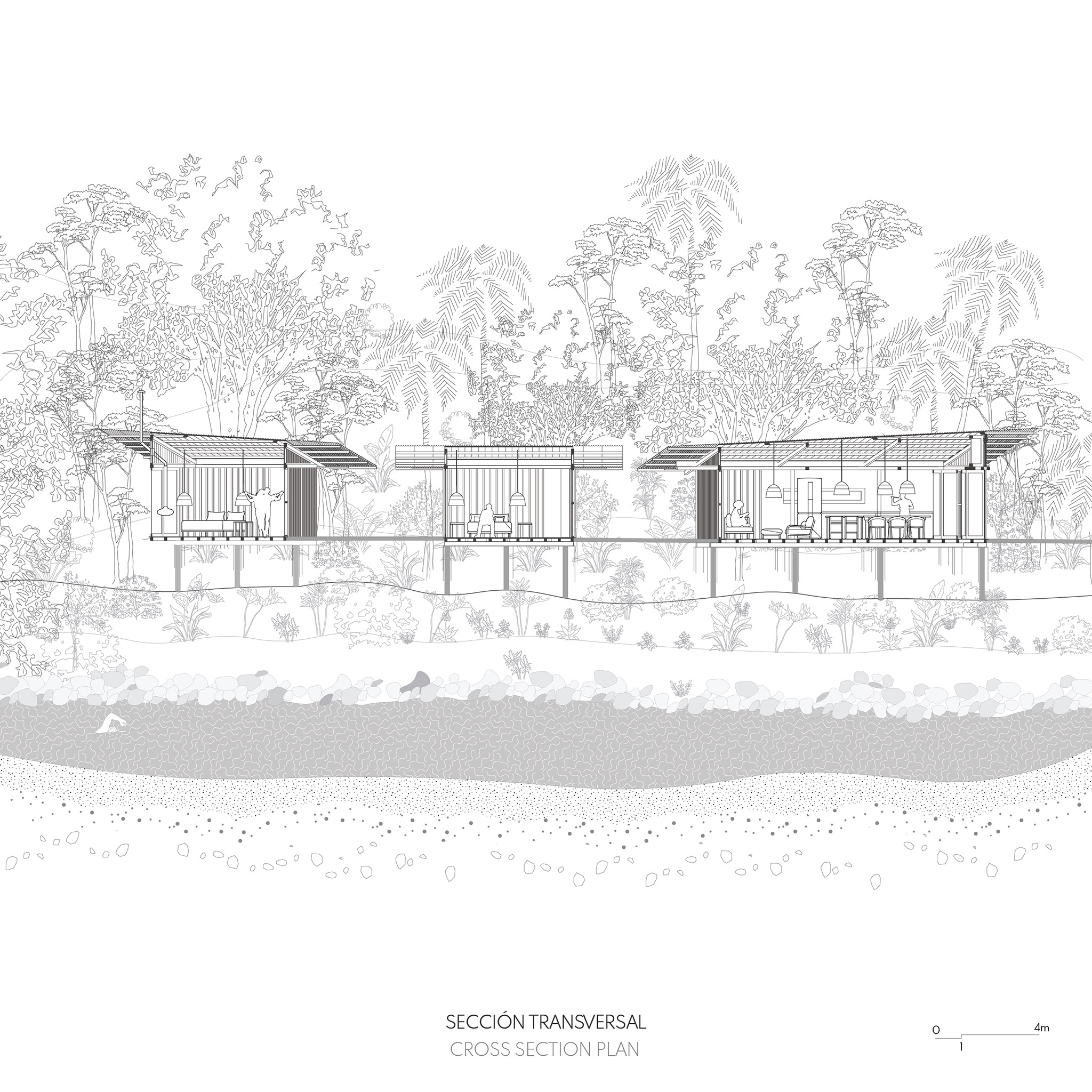
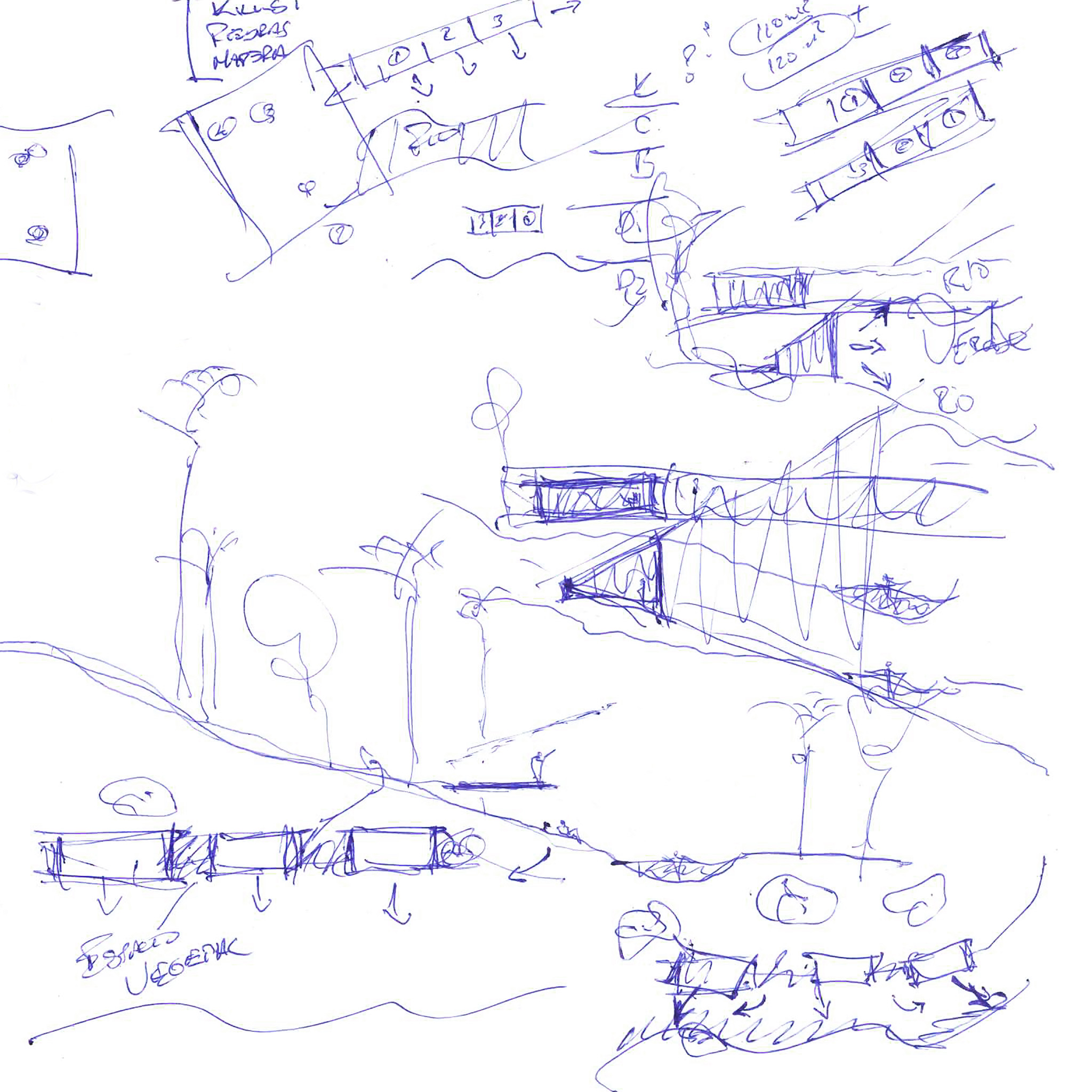
Through an elevated walkway running parallel to the riverbed, three wooden modules are articulated, using voids as a strategy for privacy. The lateral modules are rotated in relation to the central module, generating the required intimacy while simultaneously fostering direct relationships and experiences with the surrounding natural environment, without losing internal connection among its inhabitants.
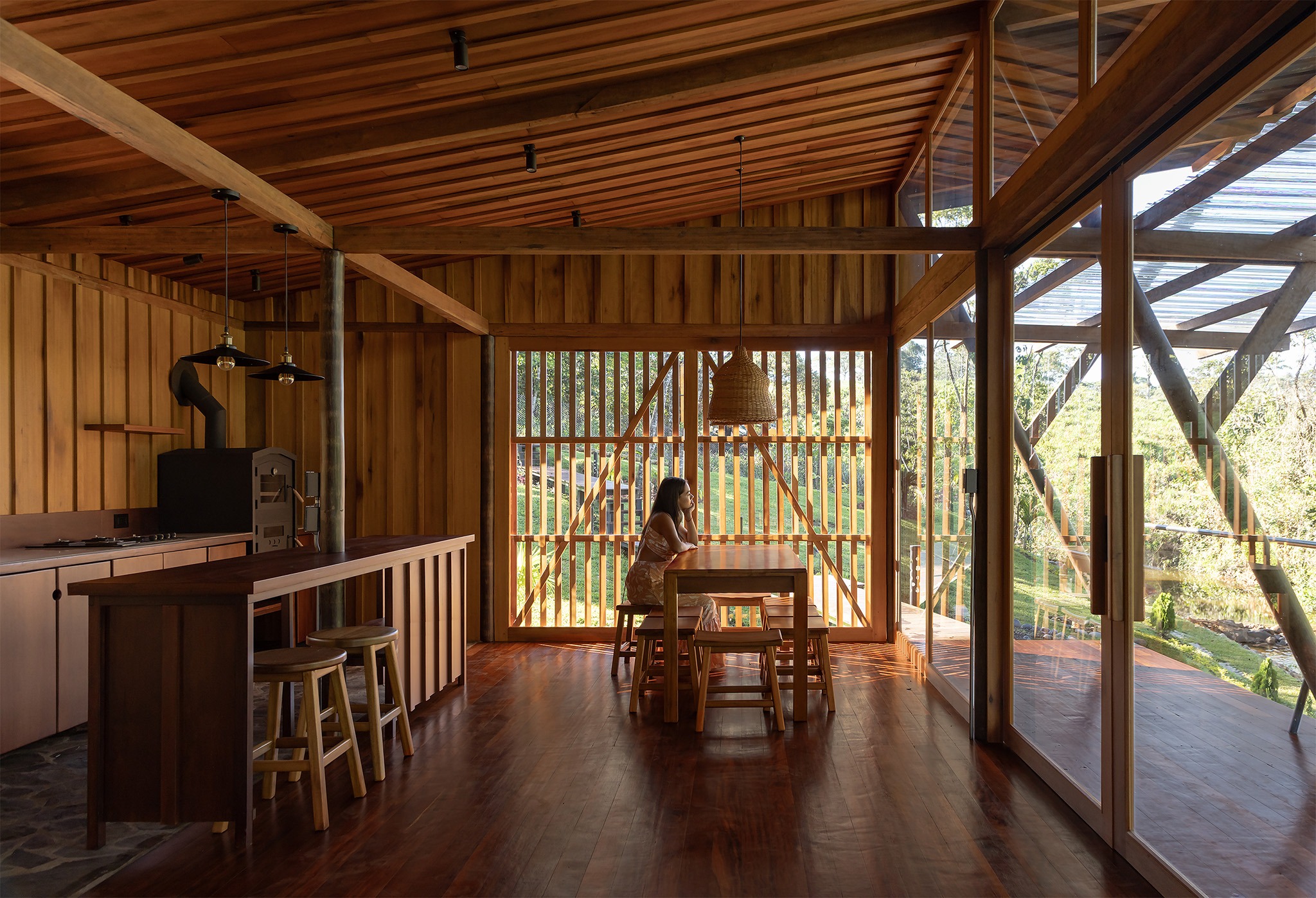
The first module, with an area of 58 sqm, contains the social spaces: living room, dining area, kitchen, and guest bathroom. The following two modules, each measuring 28 sqm, house the bedrooms. With single-pitch roofs, the project opens toward the river, while narrowing at the rear to control privacy in the wet areas, without losing its connection to the native context. Wastewater is treated through a biological reactor, completing a cycle that leads to an infiltration field, protecting local water sources.
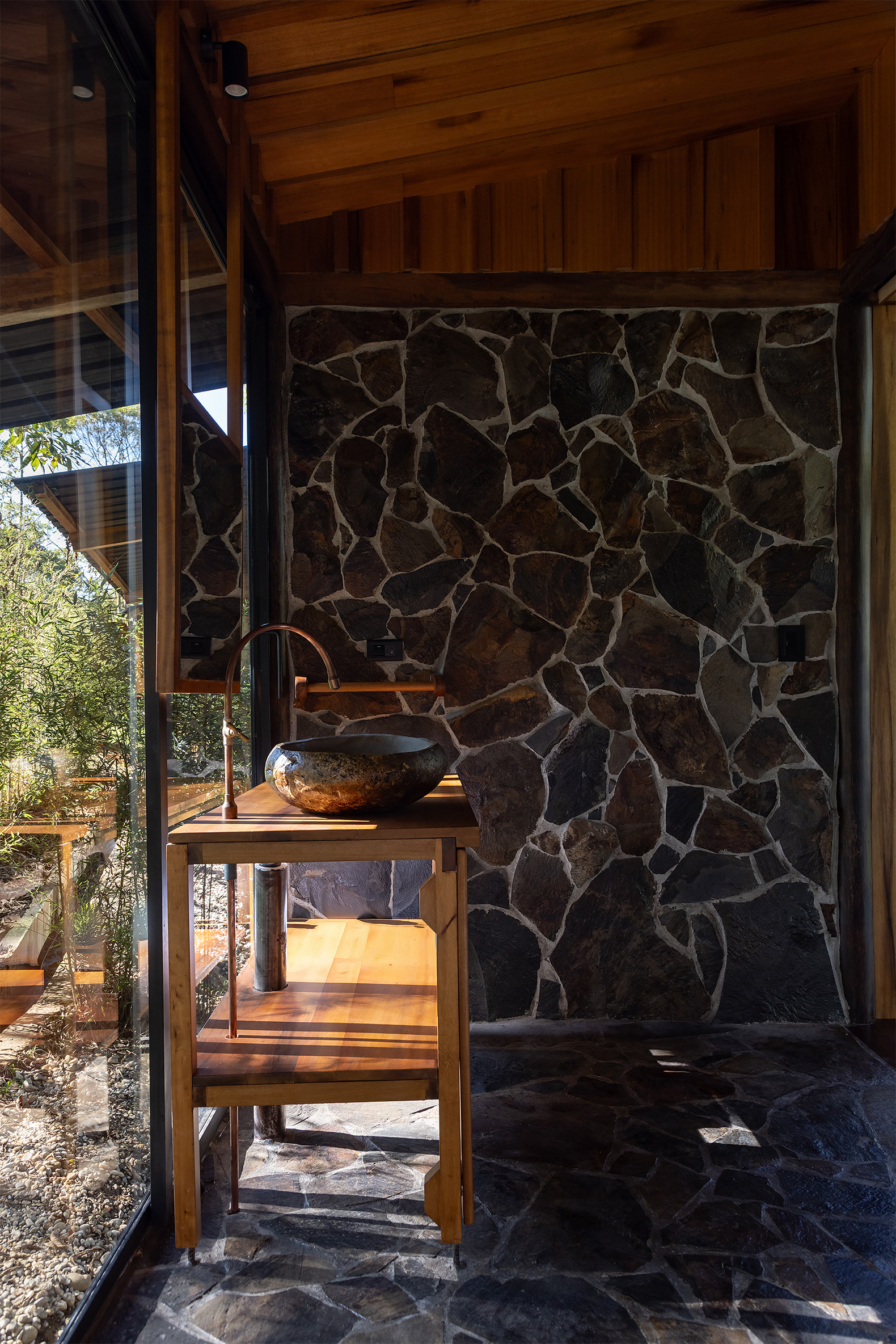
The natural resources available in the area guide the overall approach of the project. Wood once again becomes the protagonist in the construction of a dwelling, as it was in the past, through work developed by artisans who promote and transmit knowledge. This time, wood envelops most of the building envelope and is also used in the creation of both fixed and movable furniture. Rocks from geological faults located 2 km from the site are used for walls and floors in wet areas, while three river stones are selected and carved into washbasins. These small actions revive local craftsmanship, highlighting the ability to transform raw matter into materials and resources that reclaim a sense of identity.
“To return to being what has been left undone.”