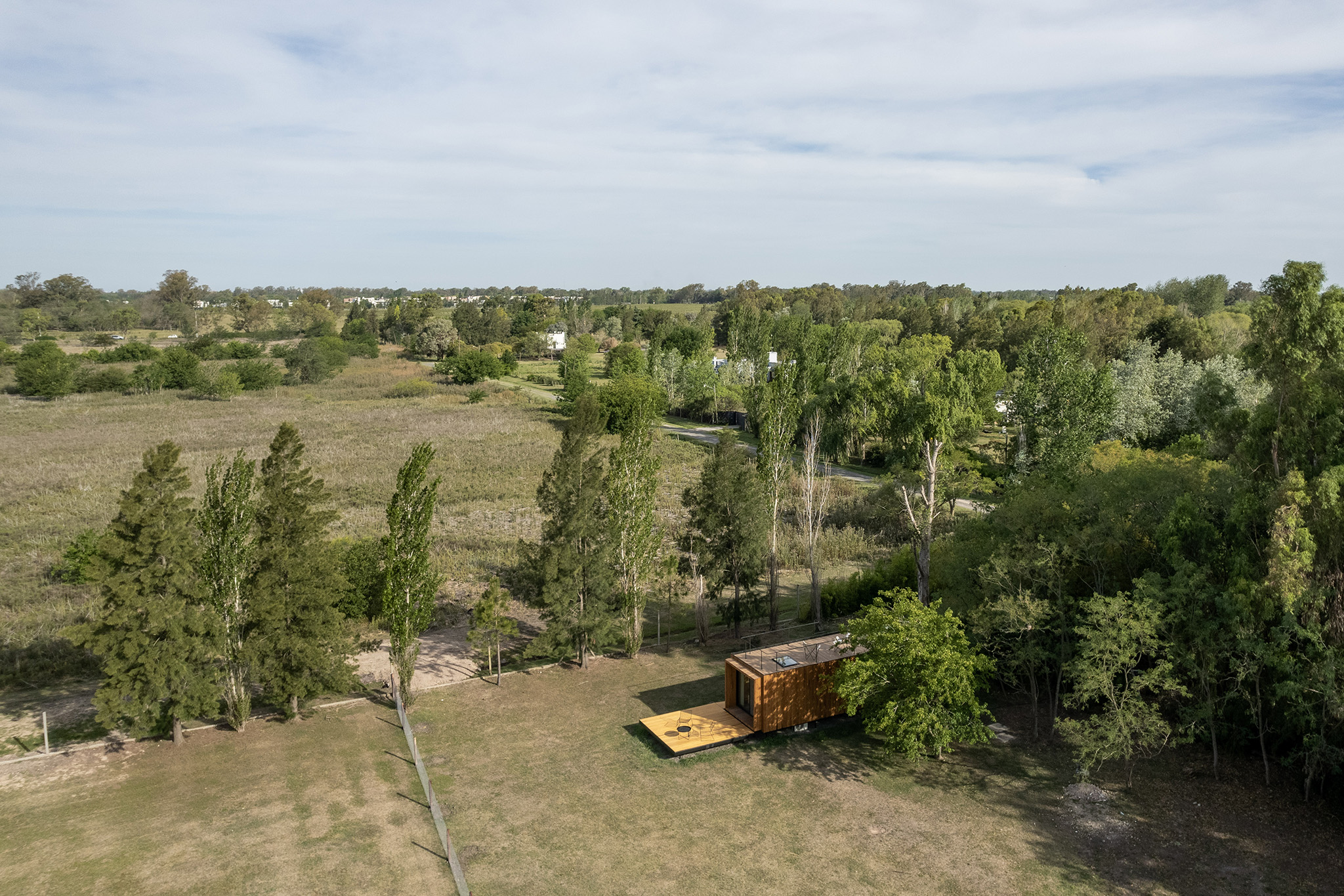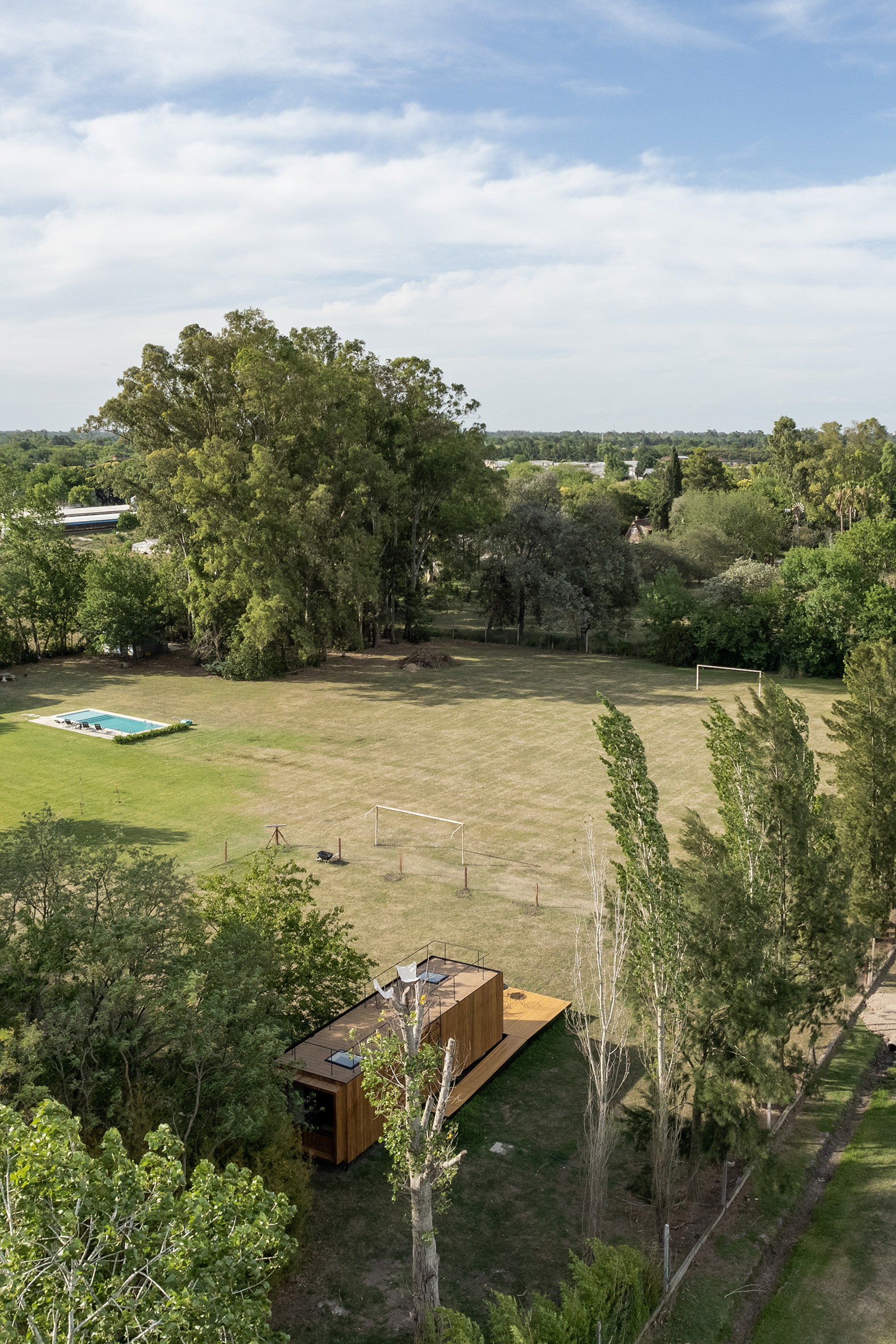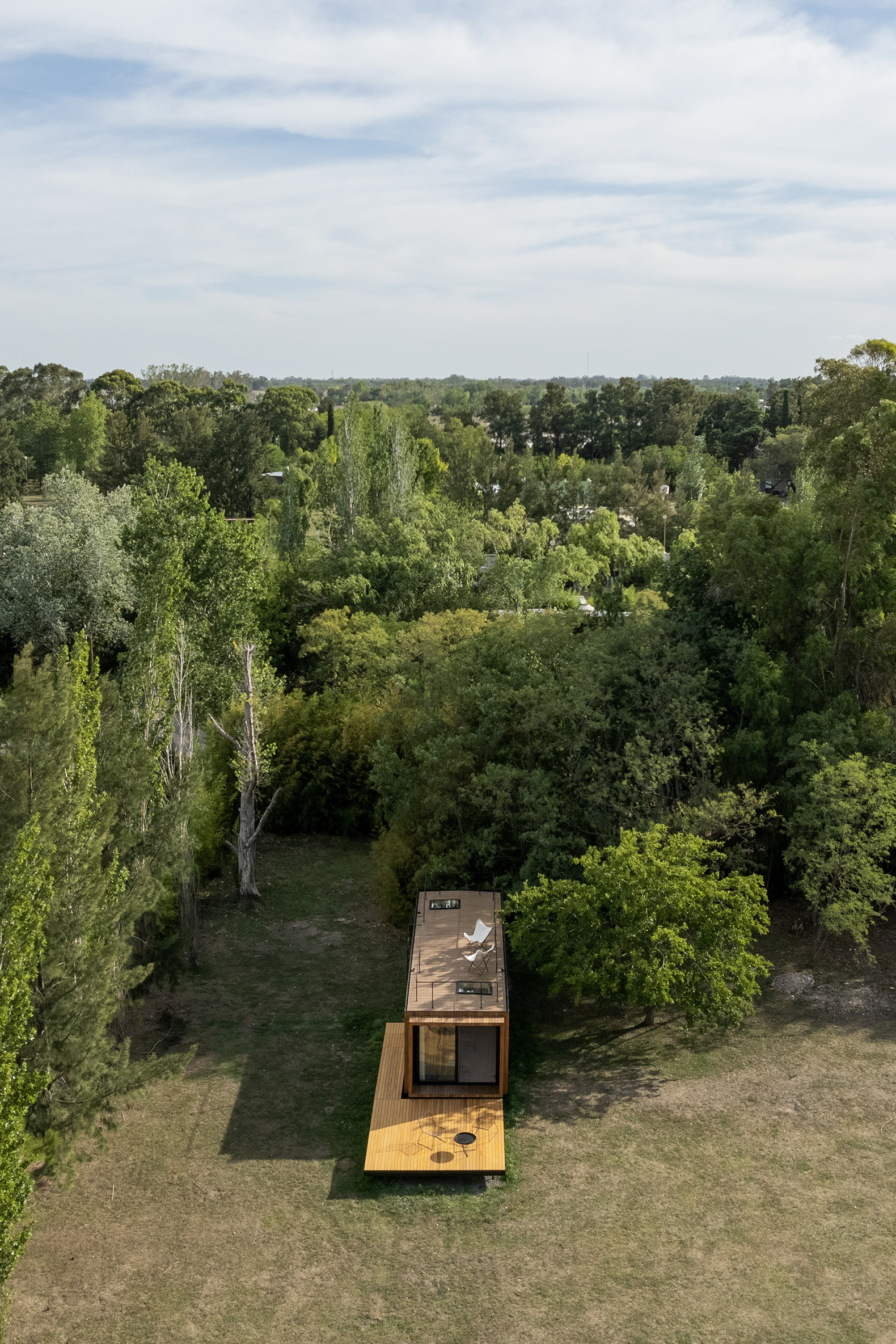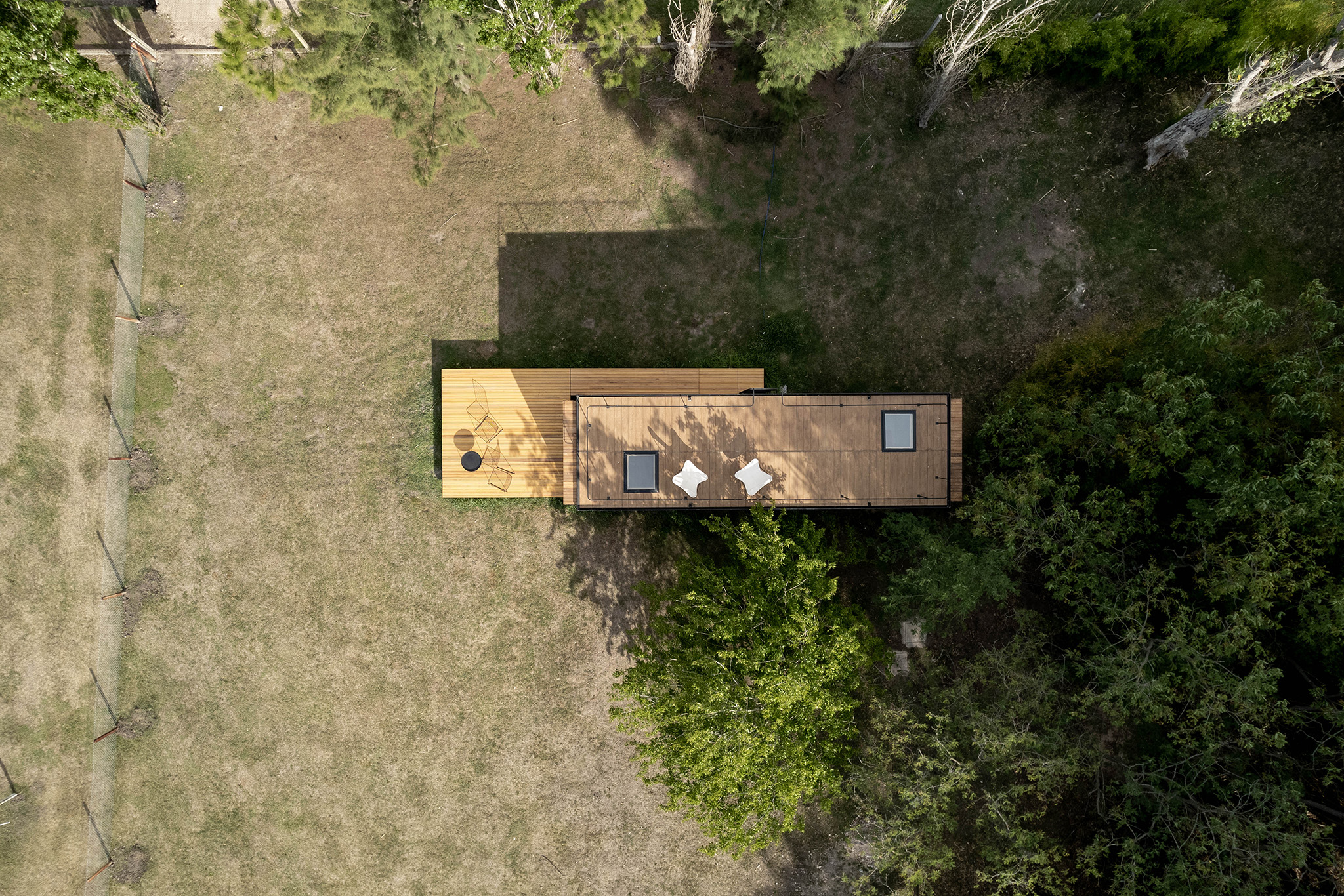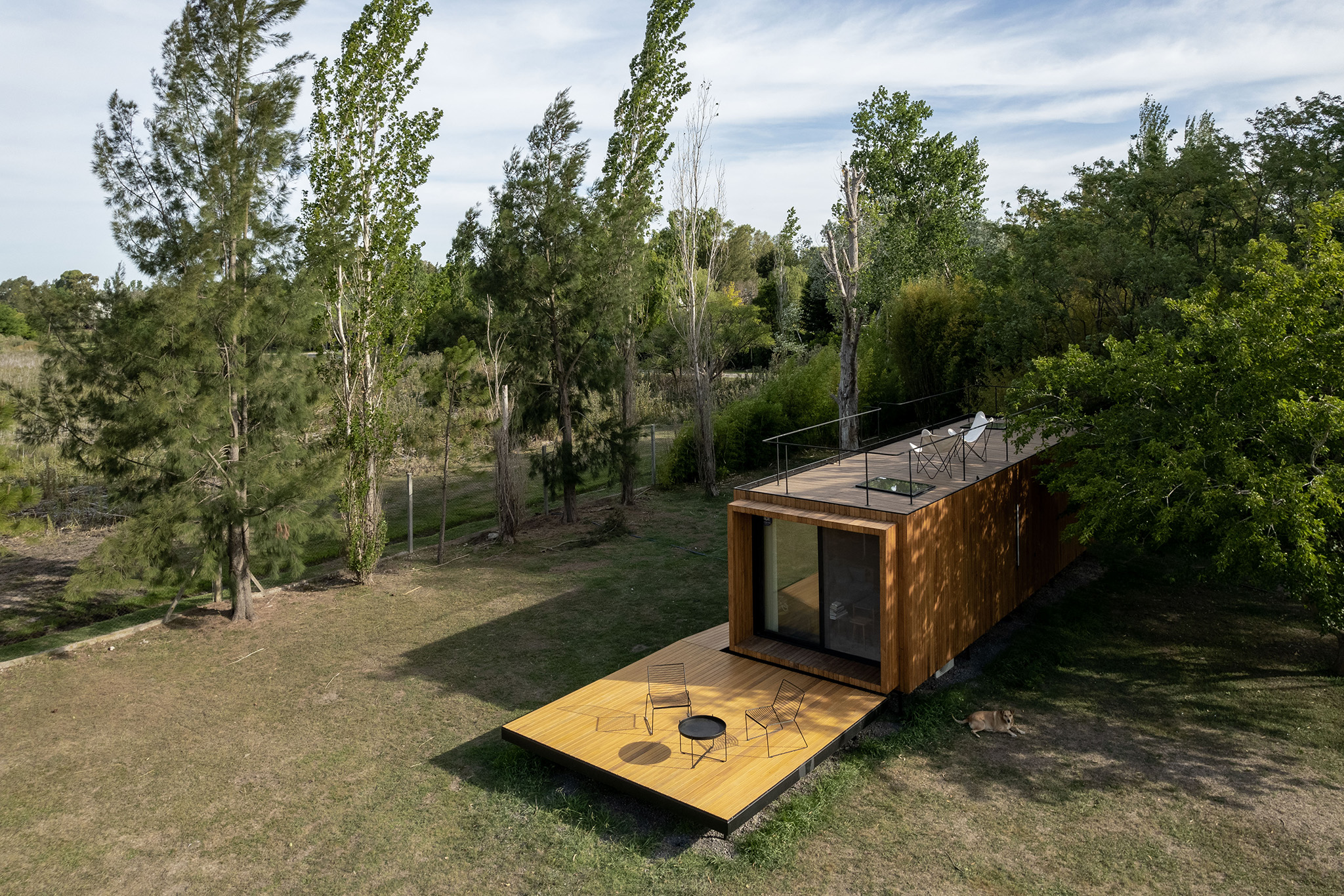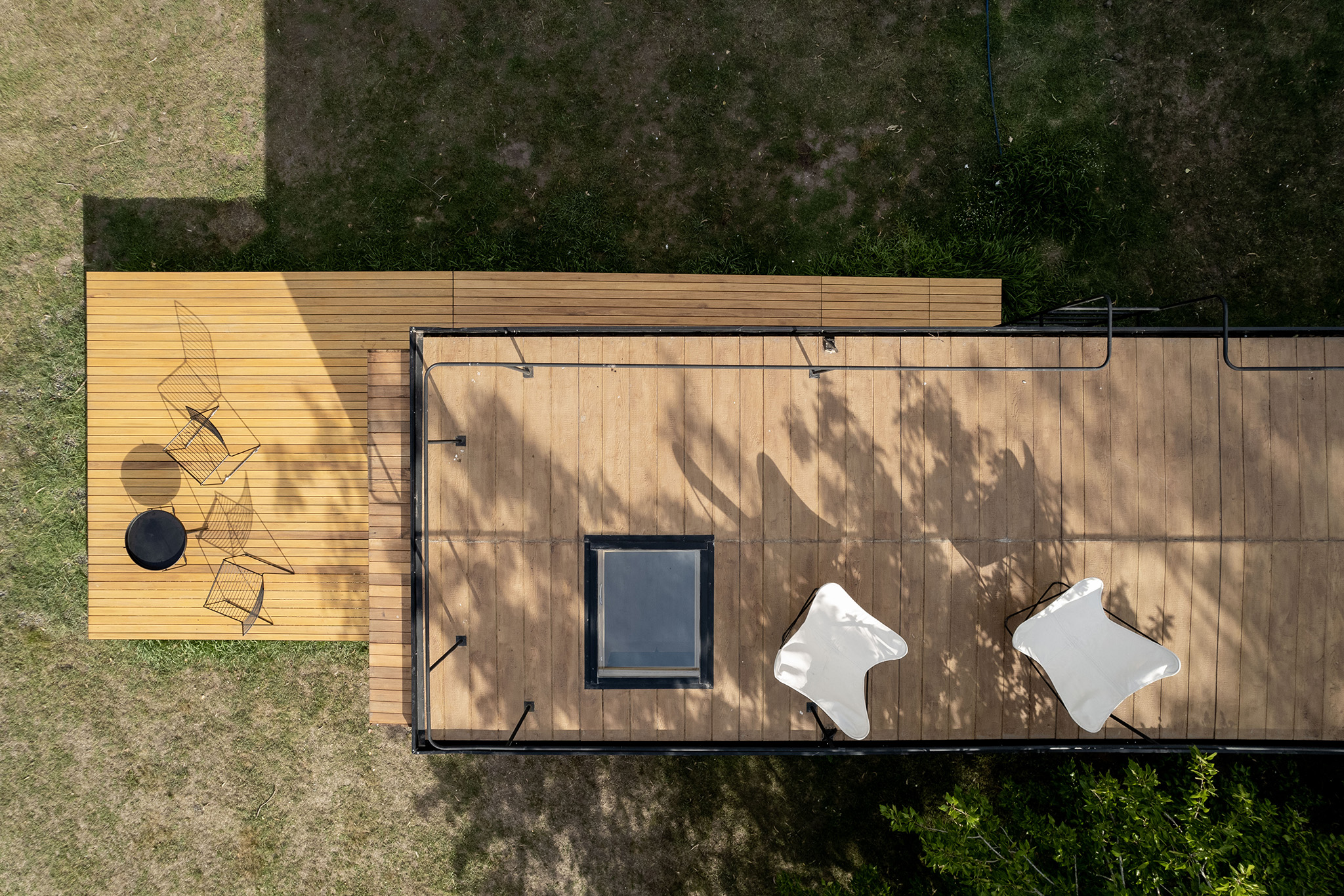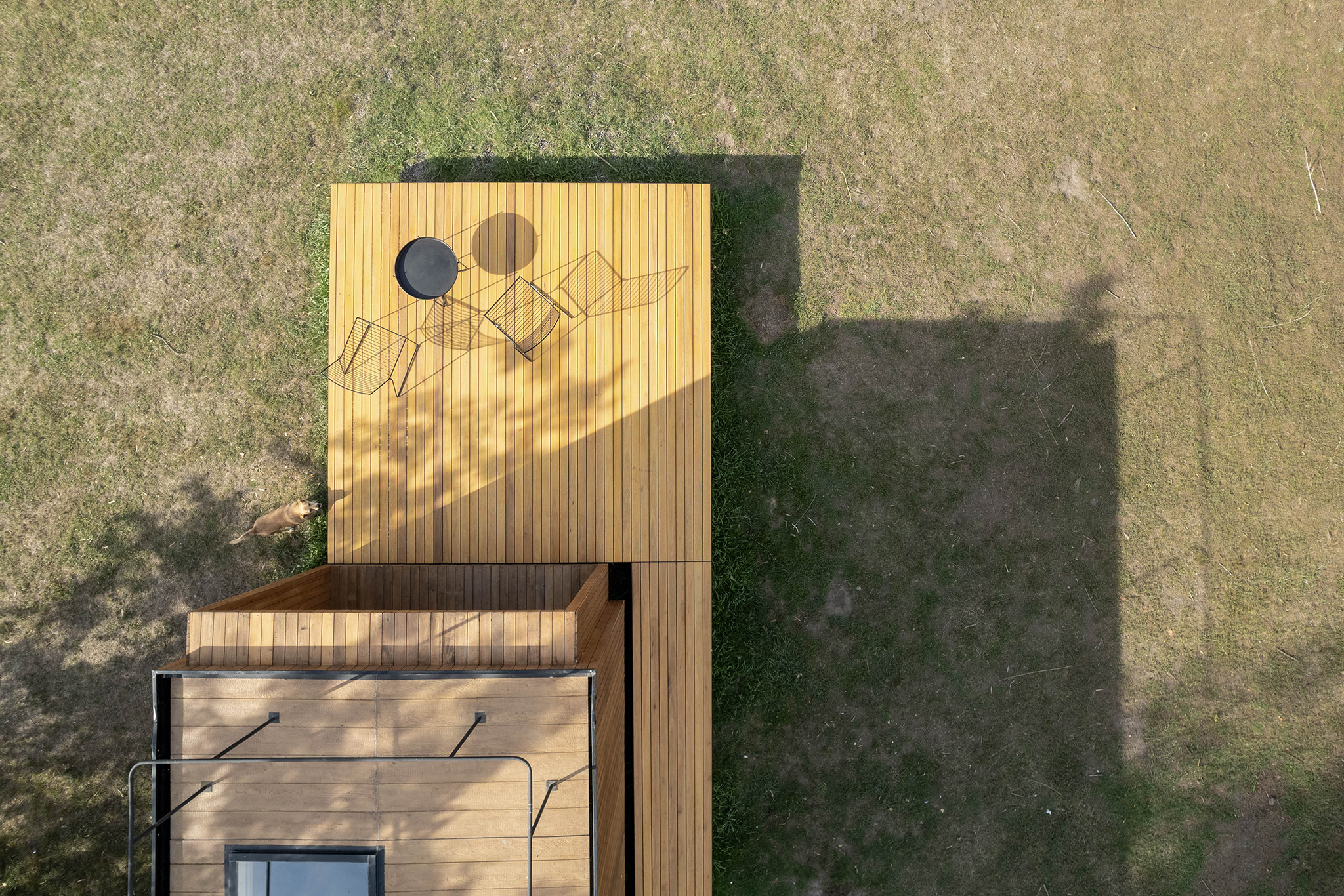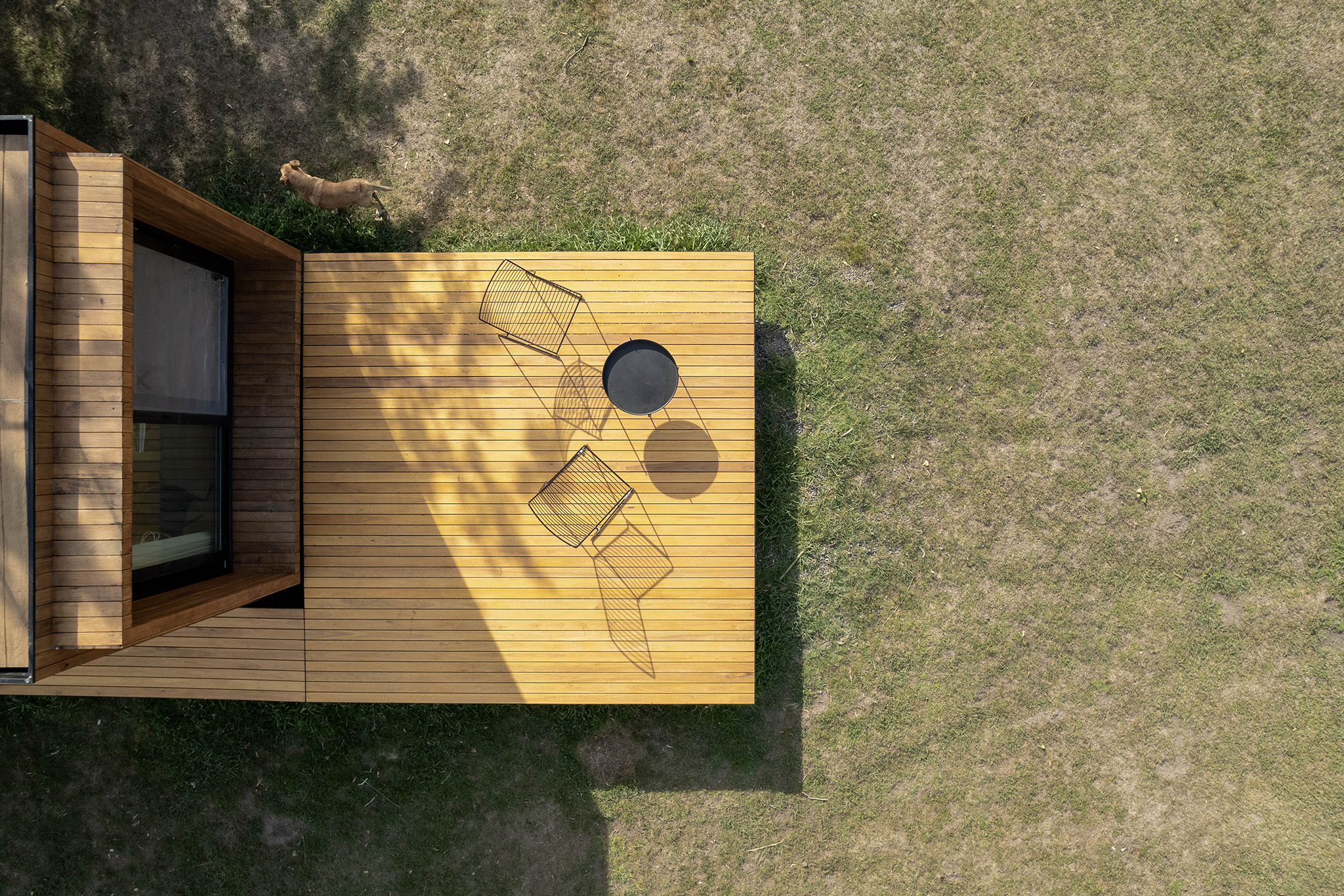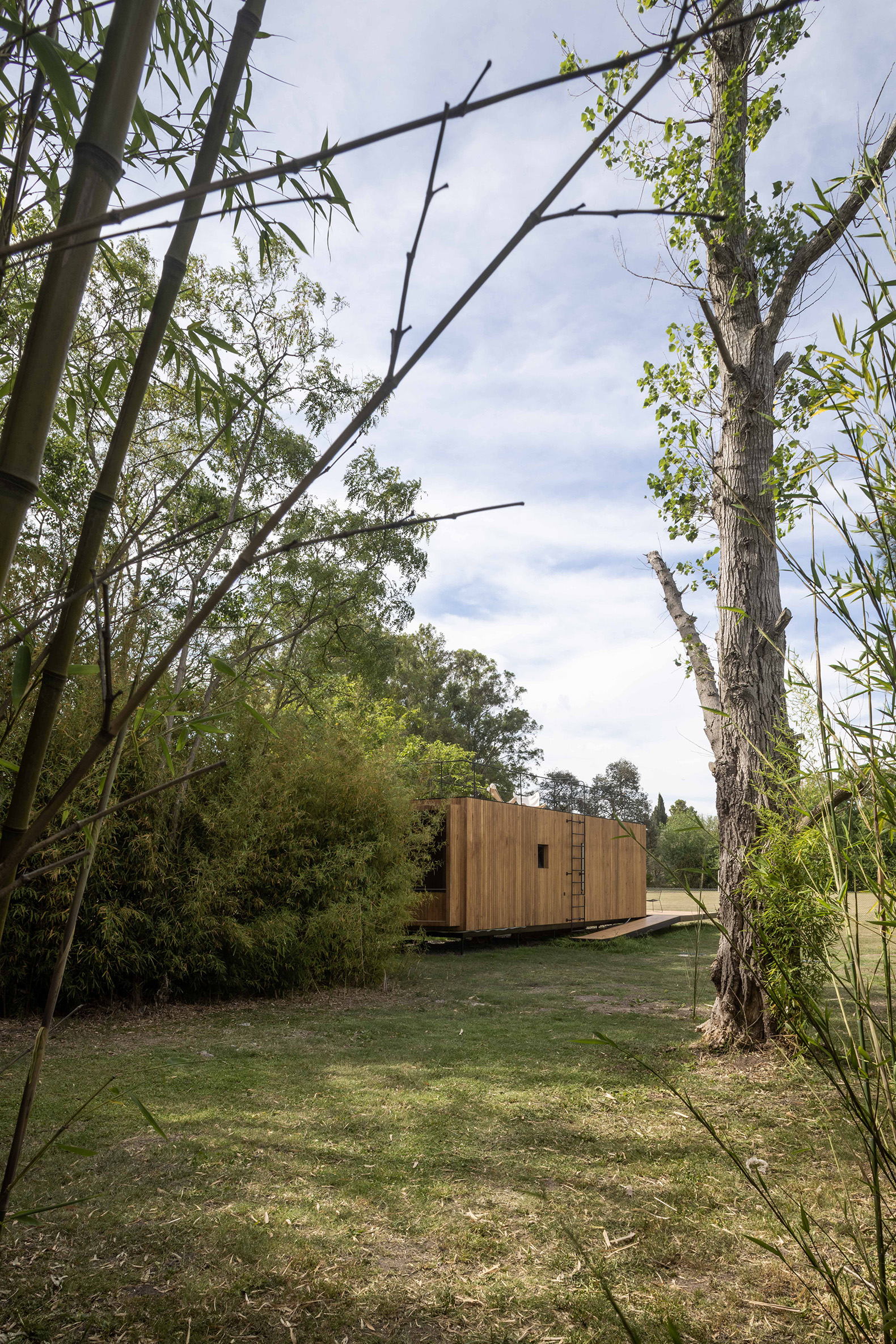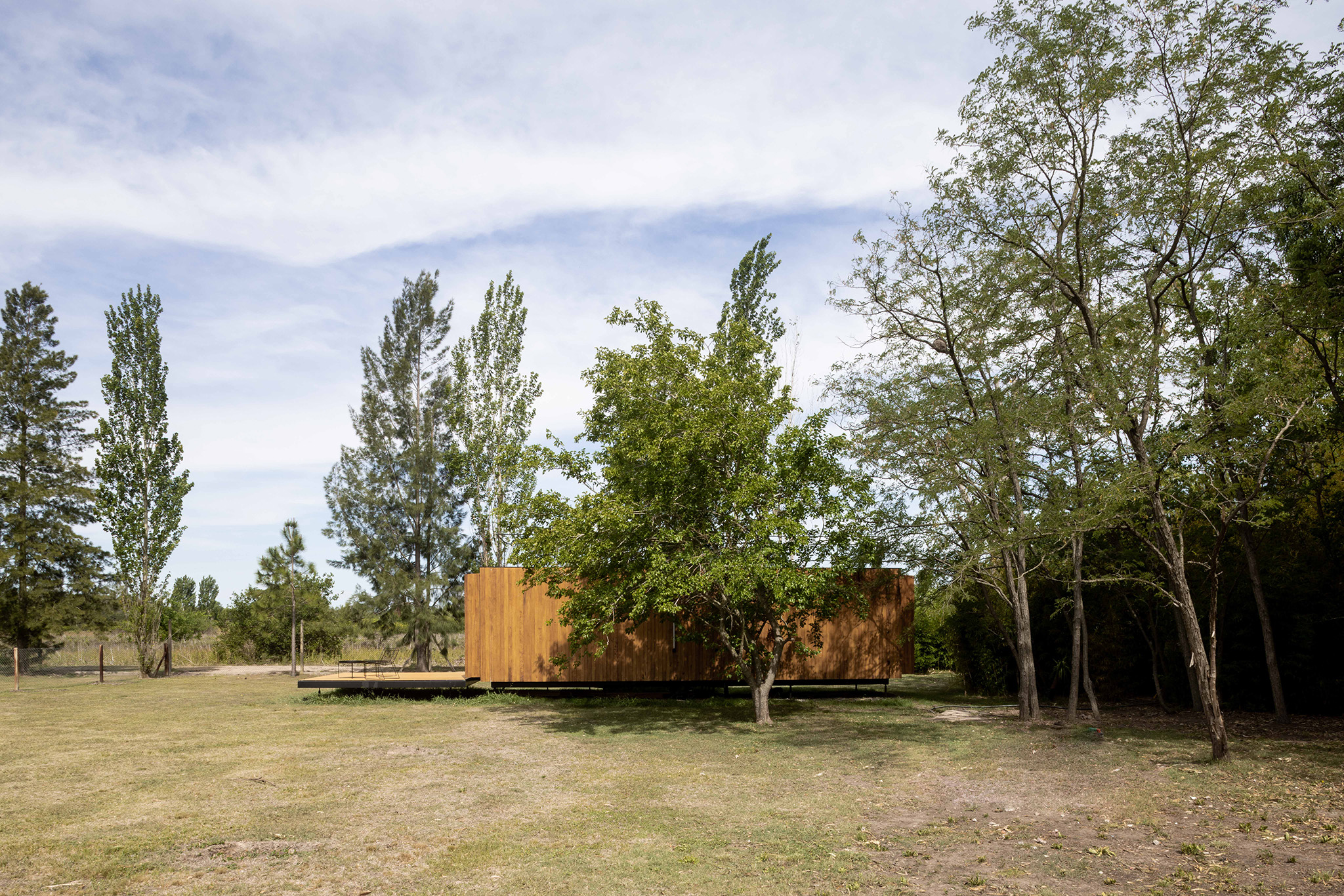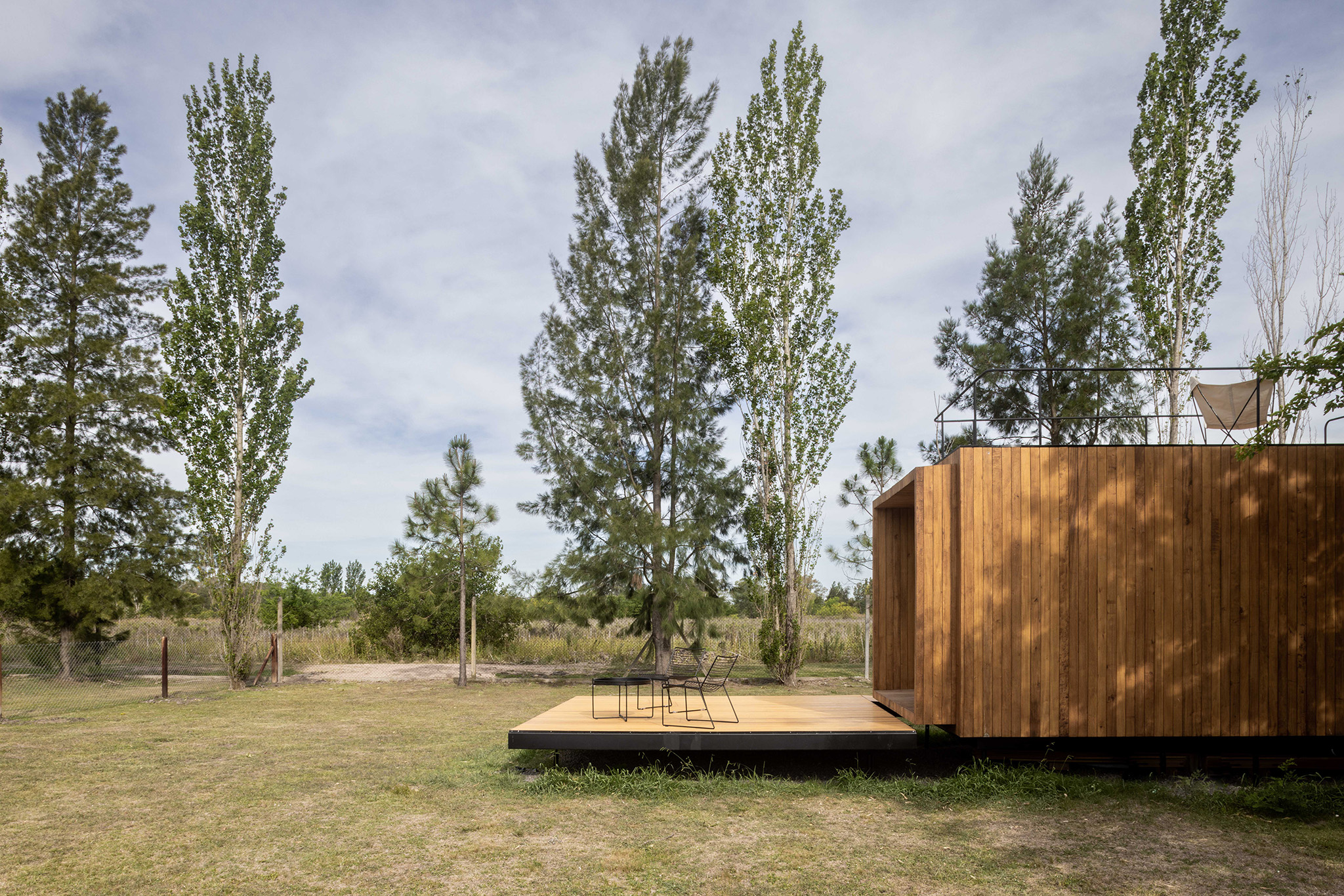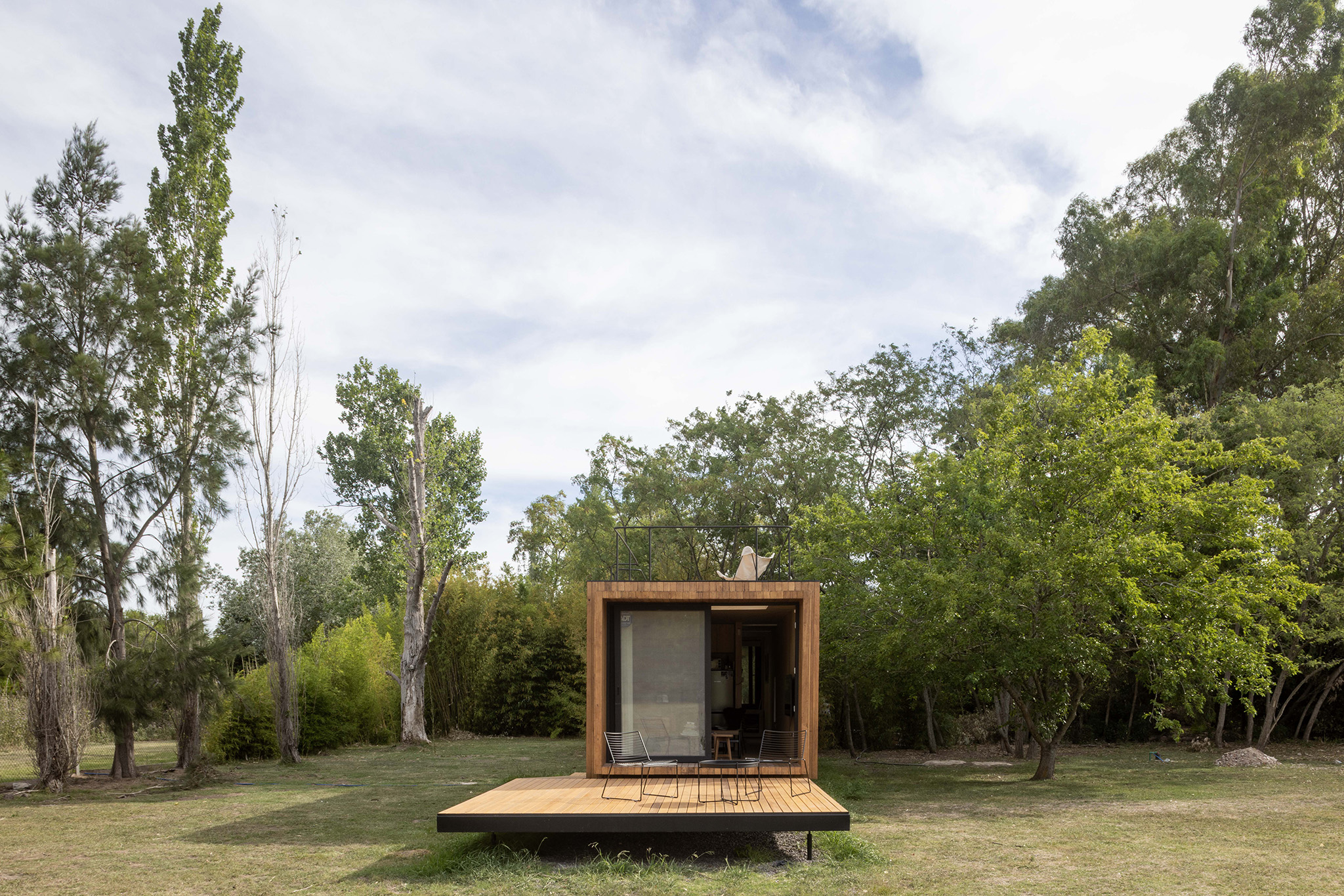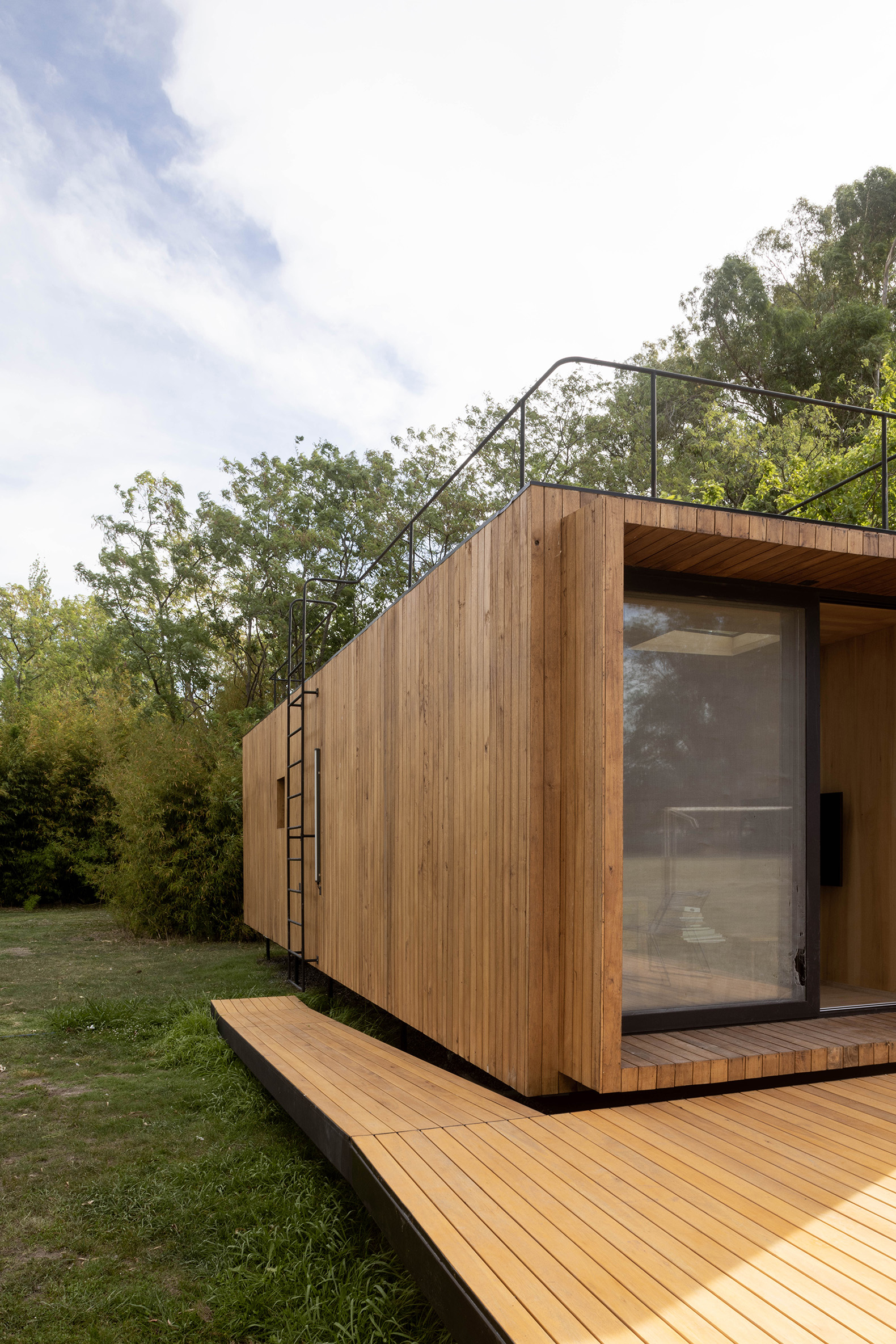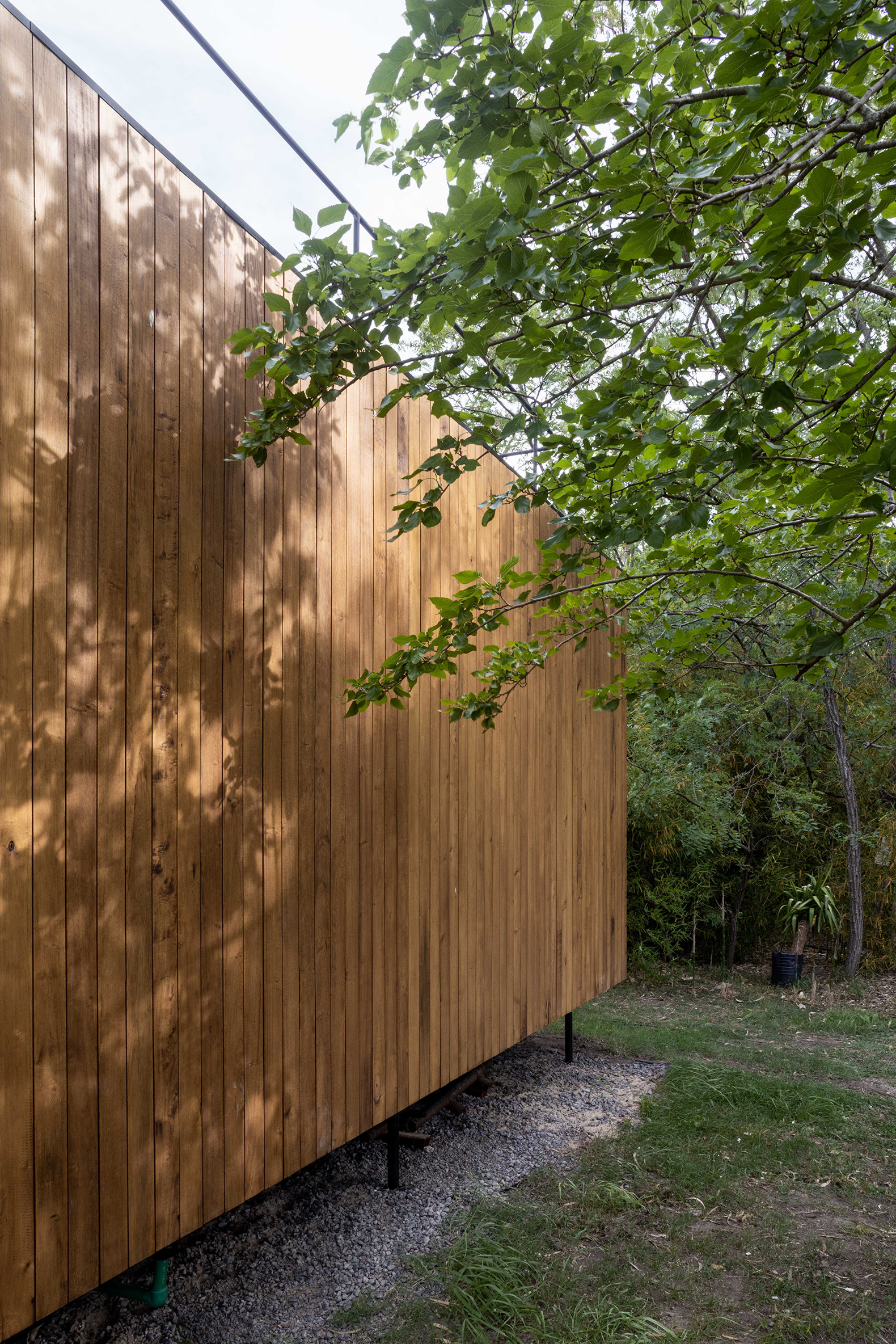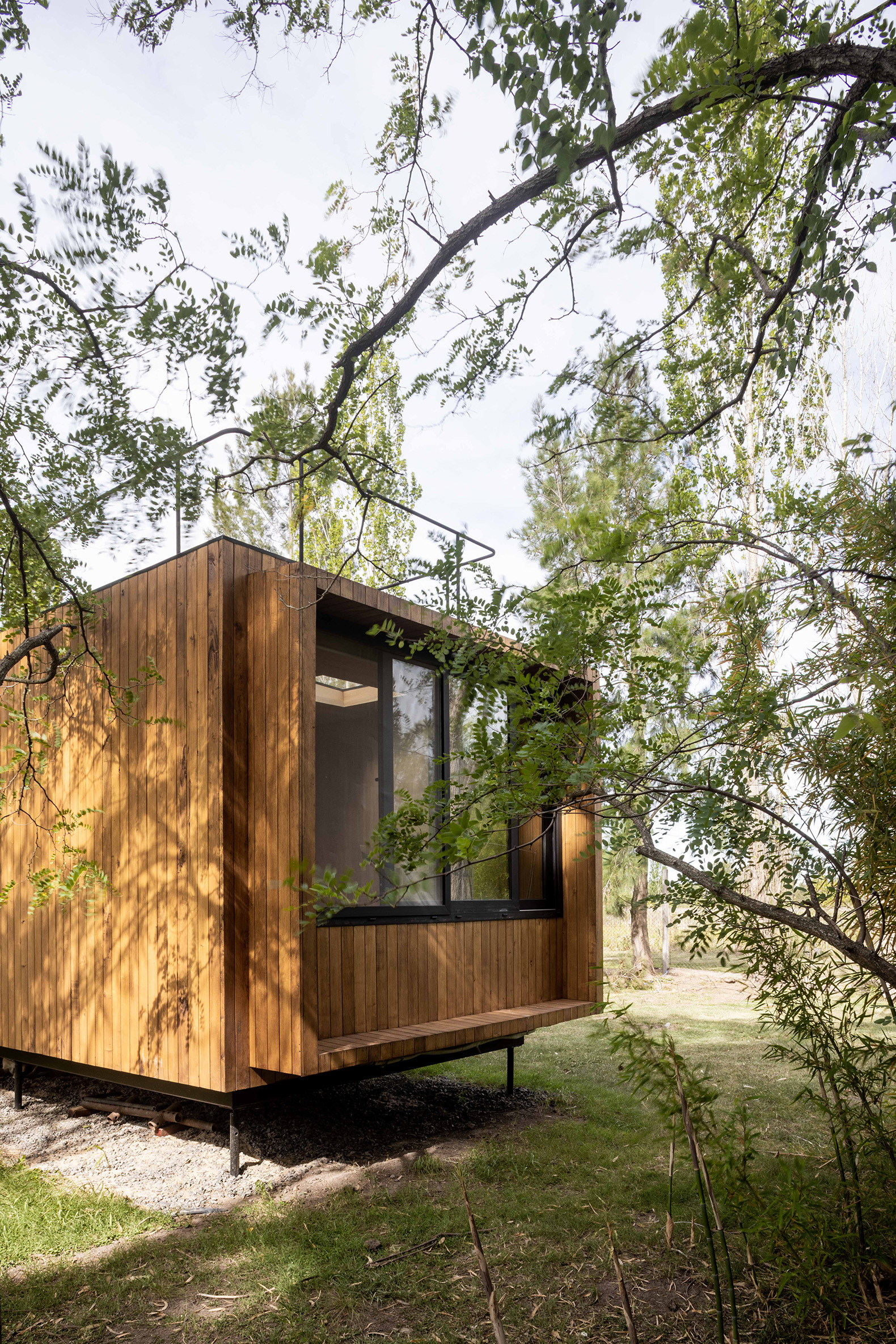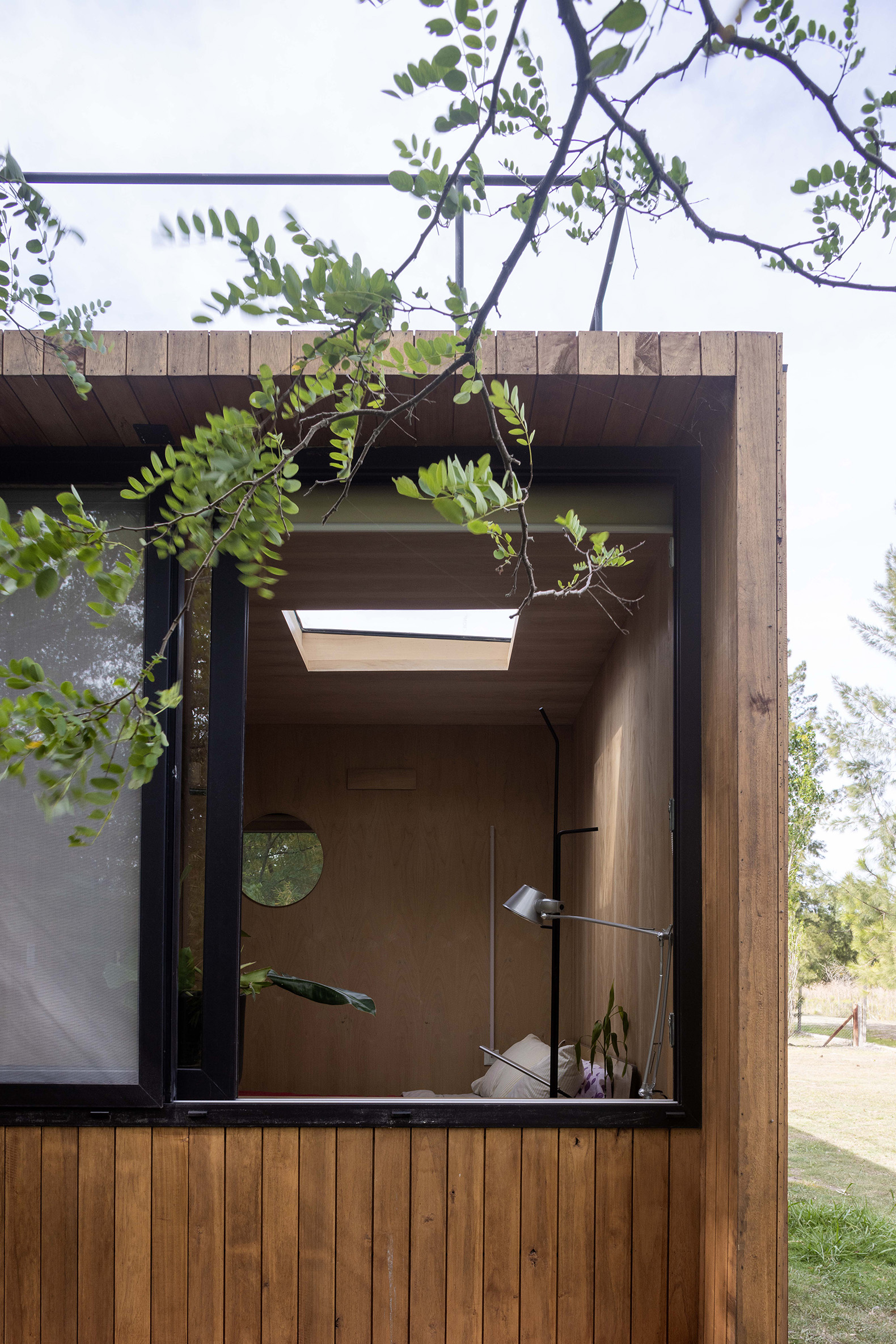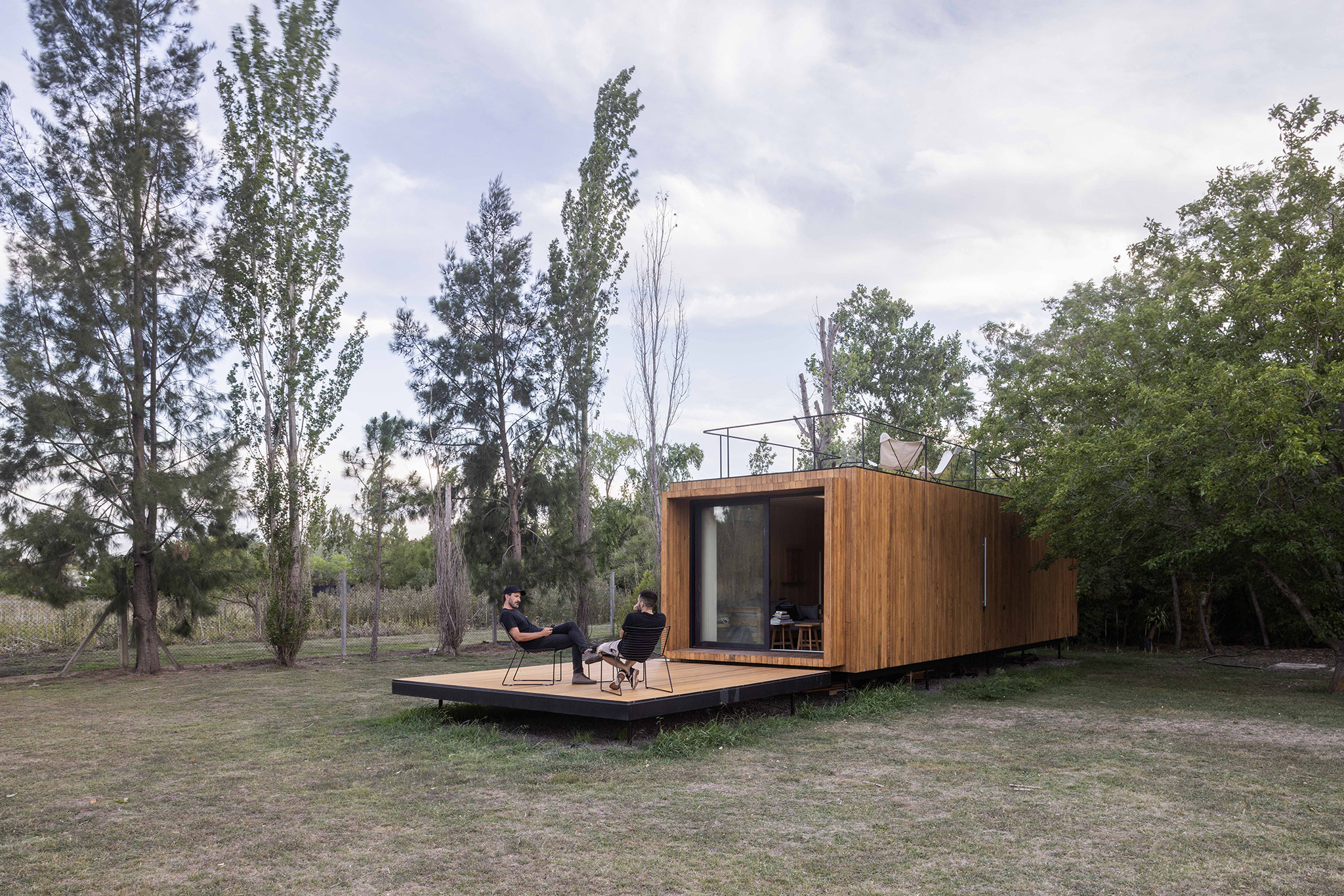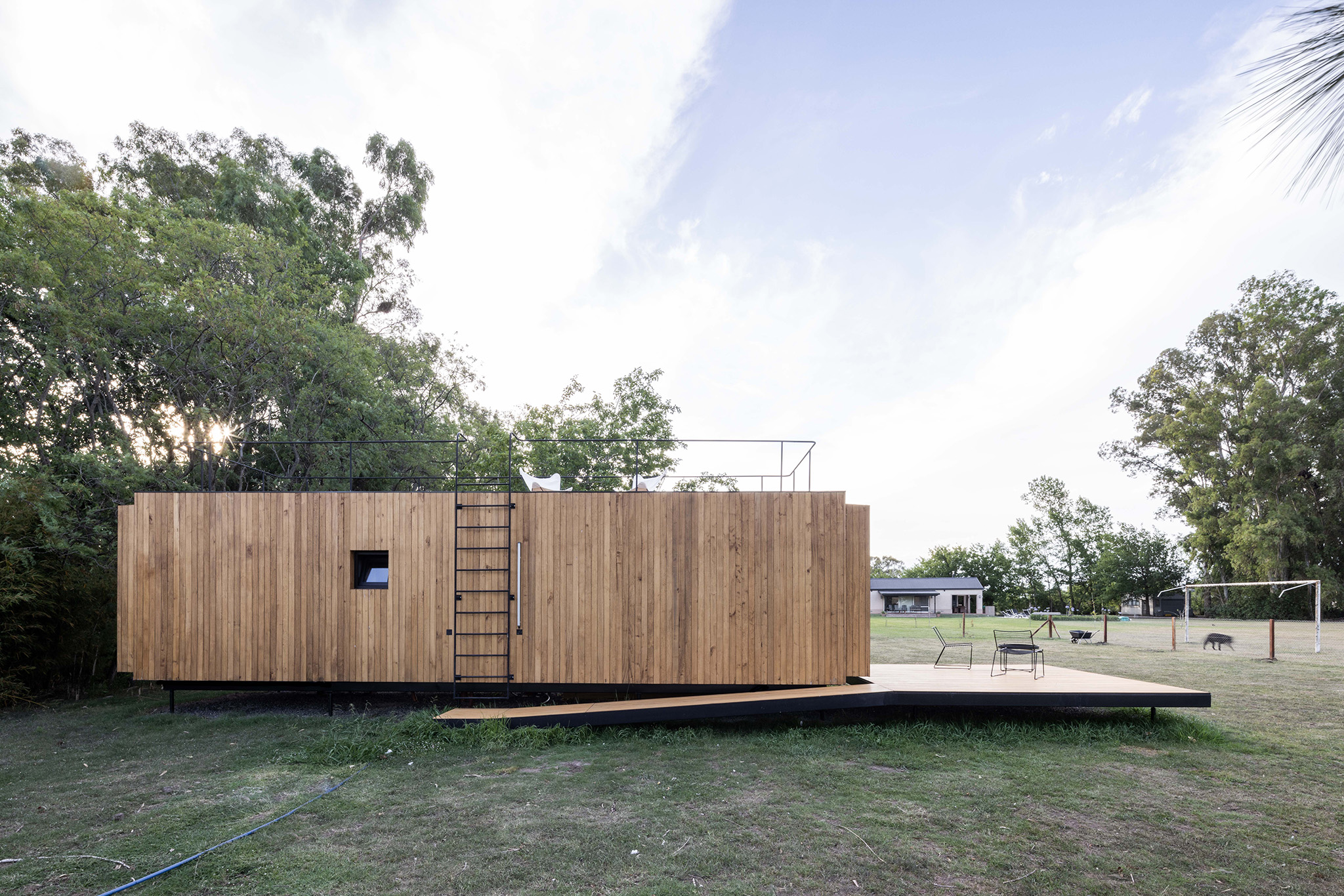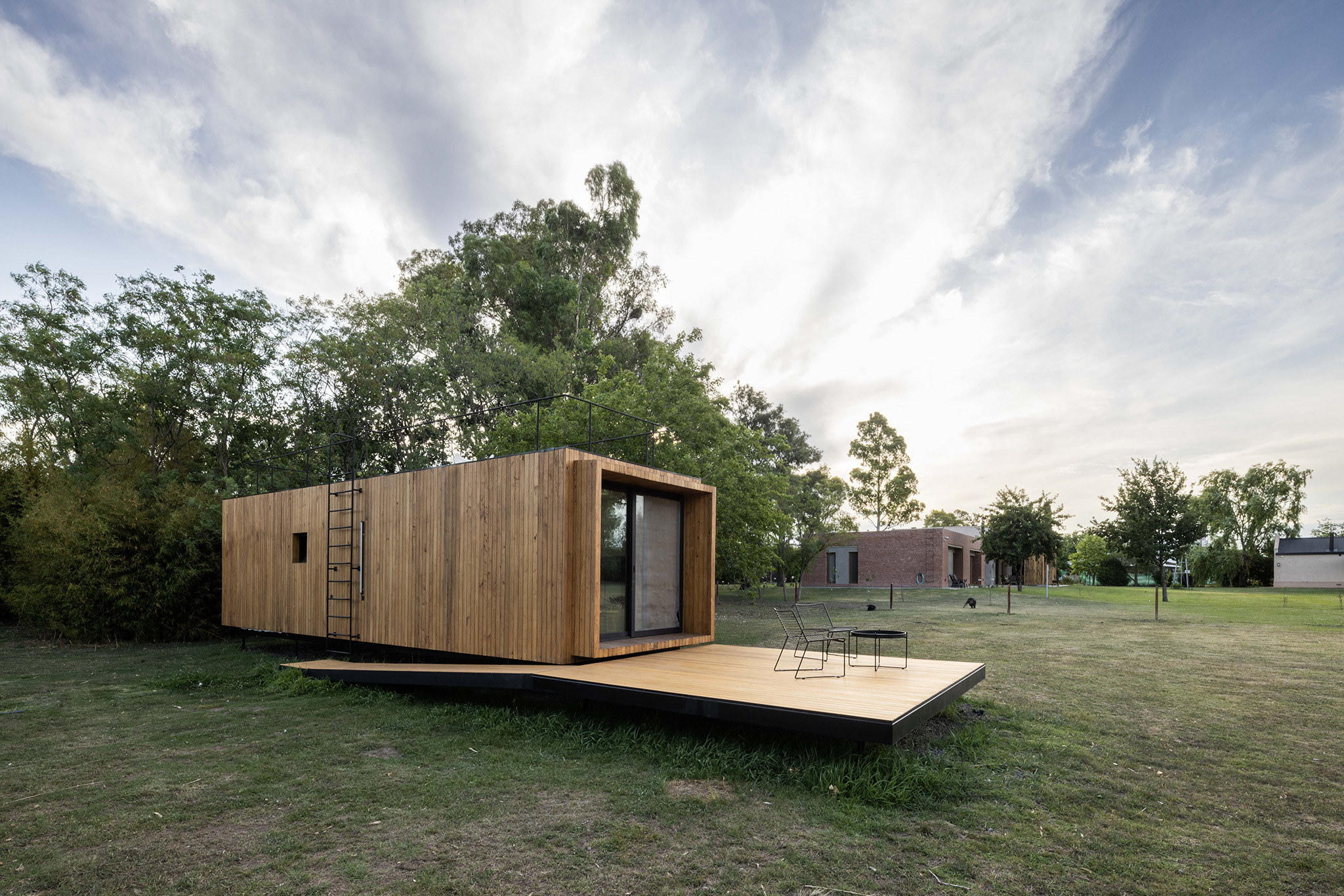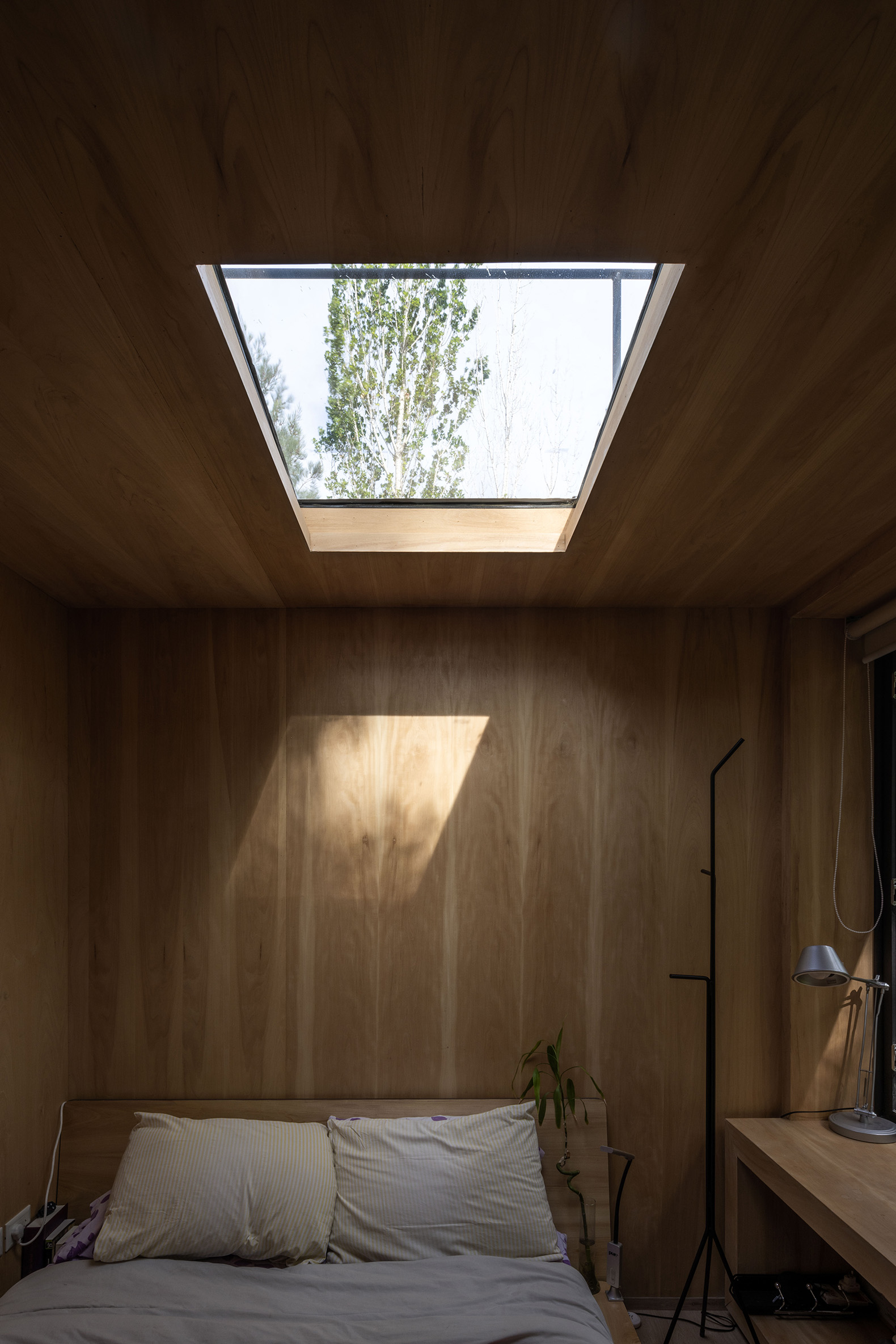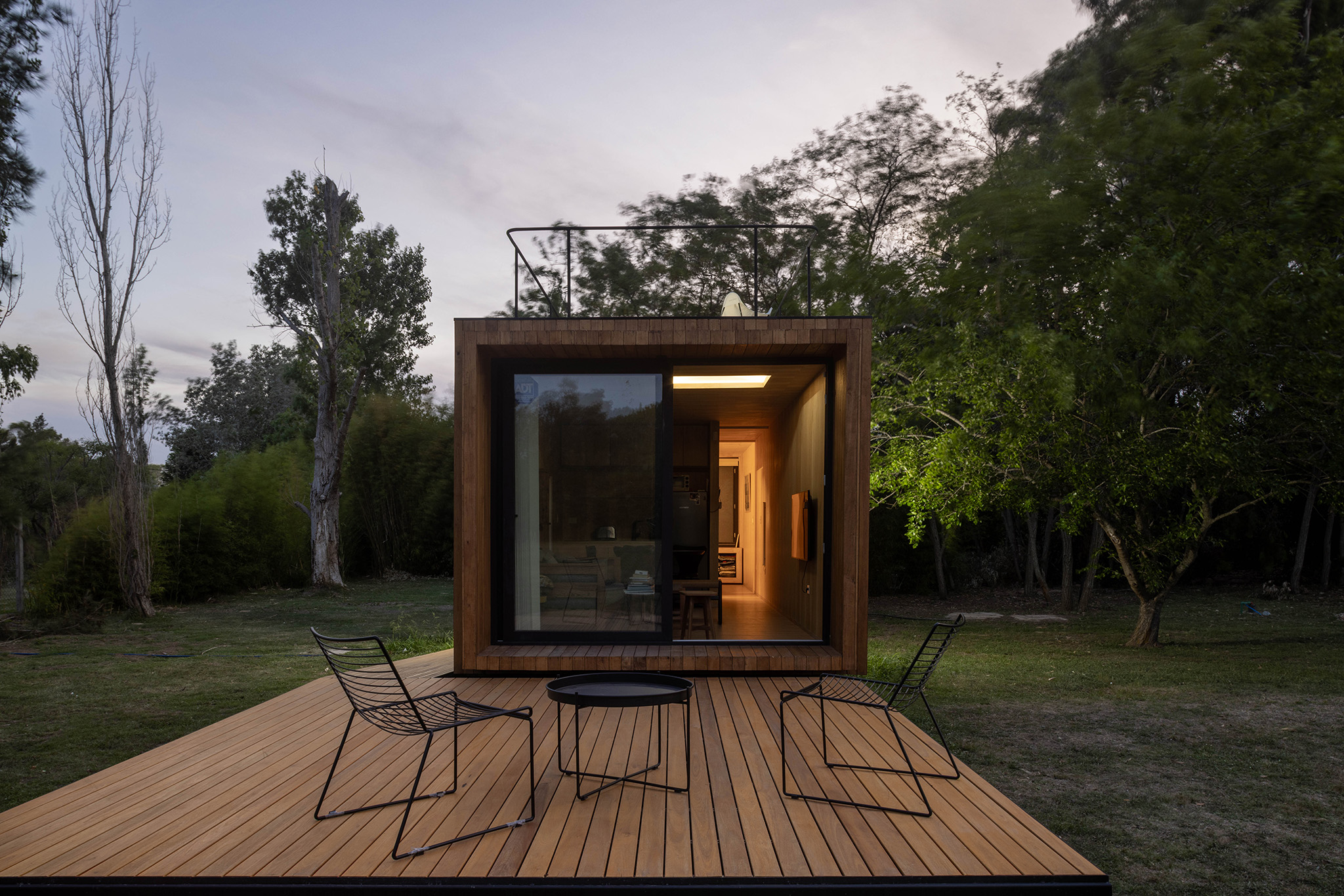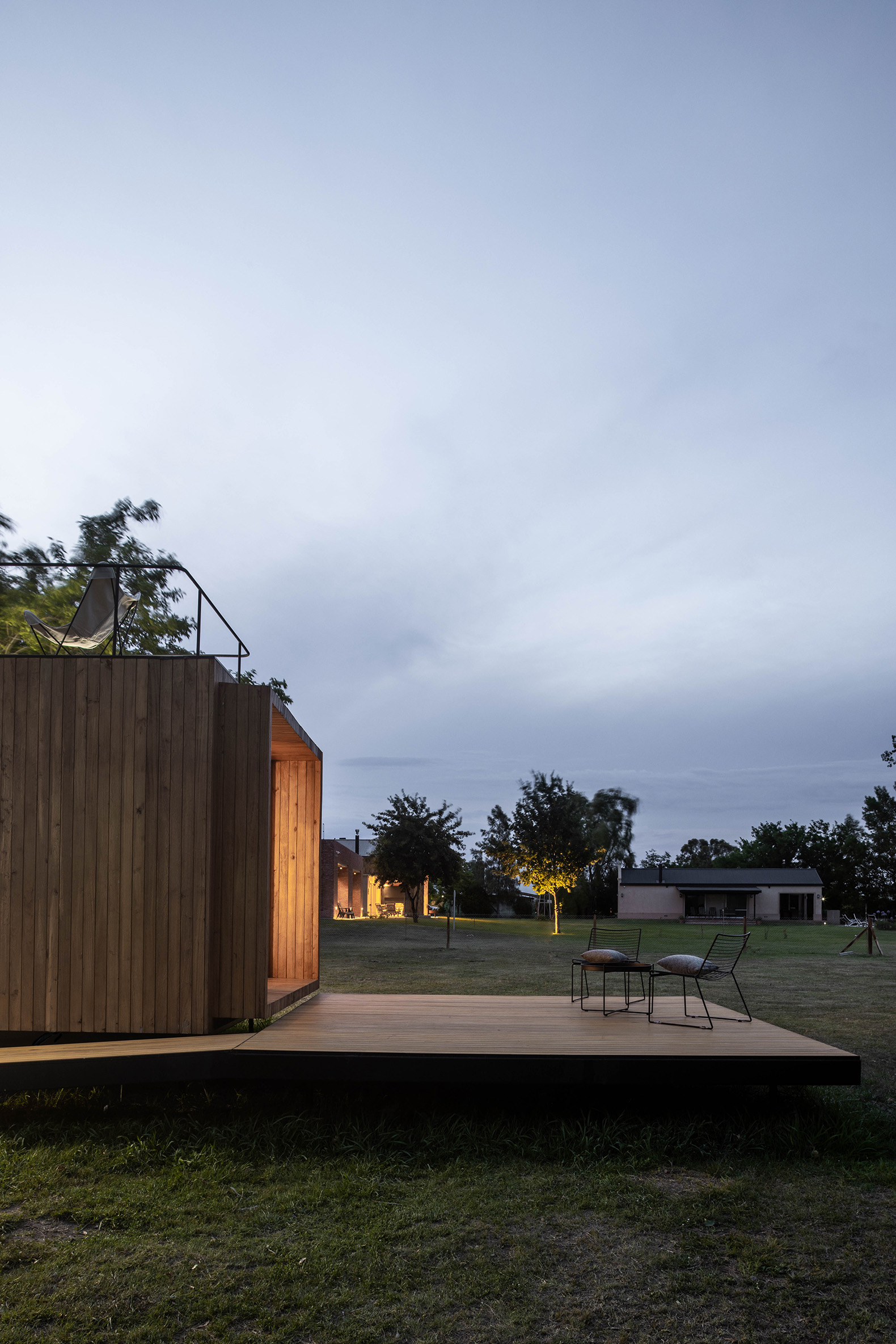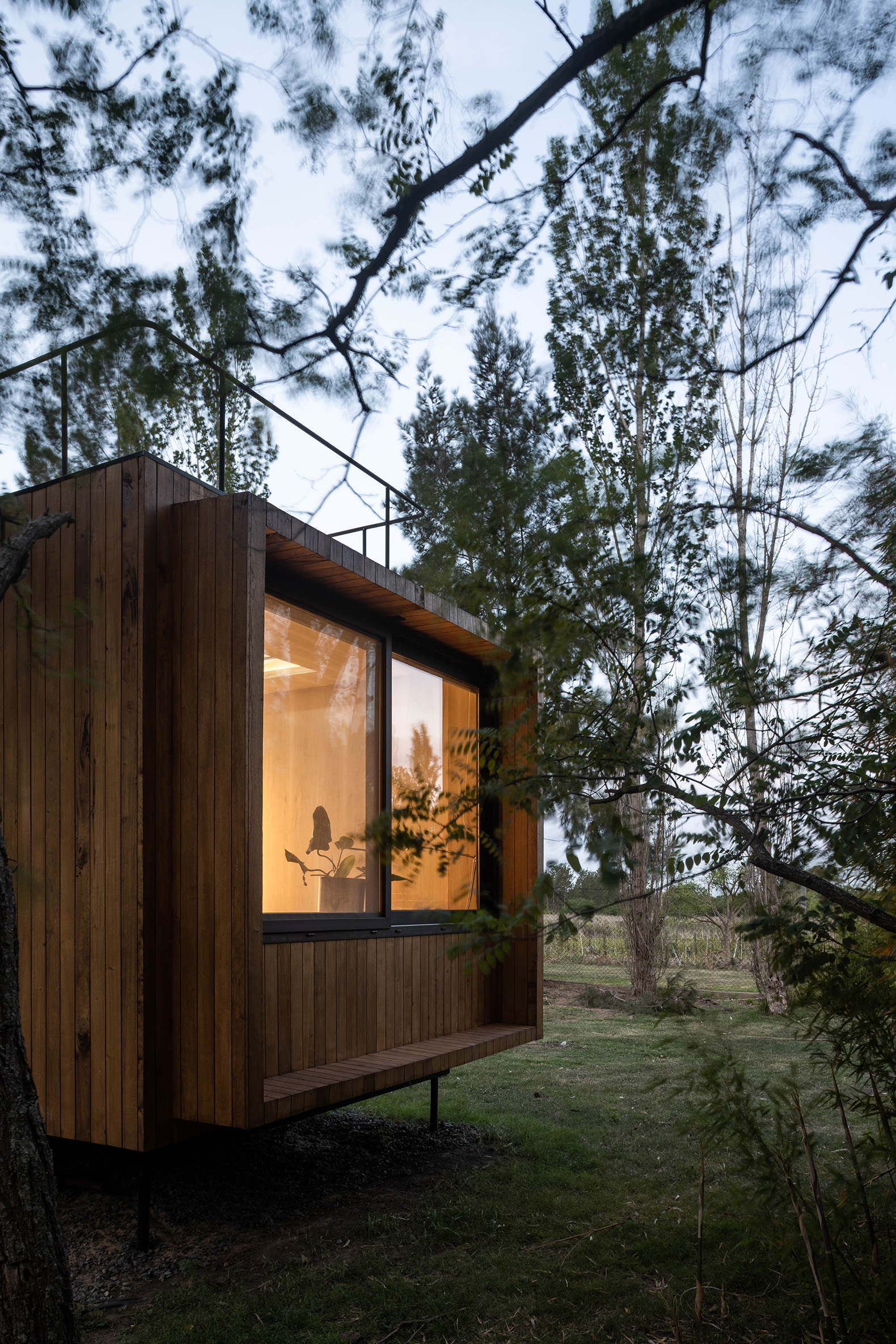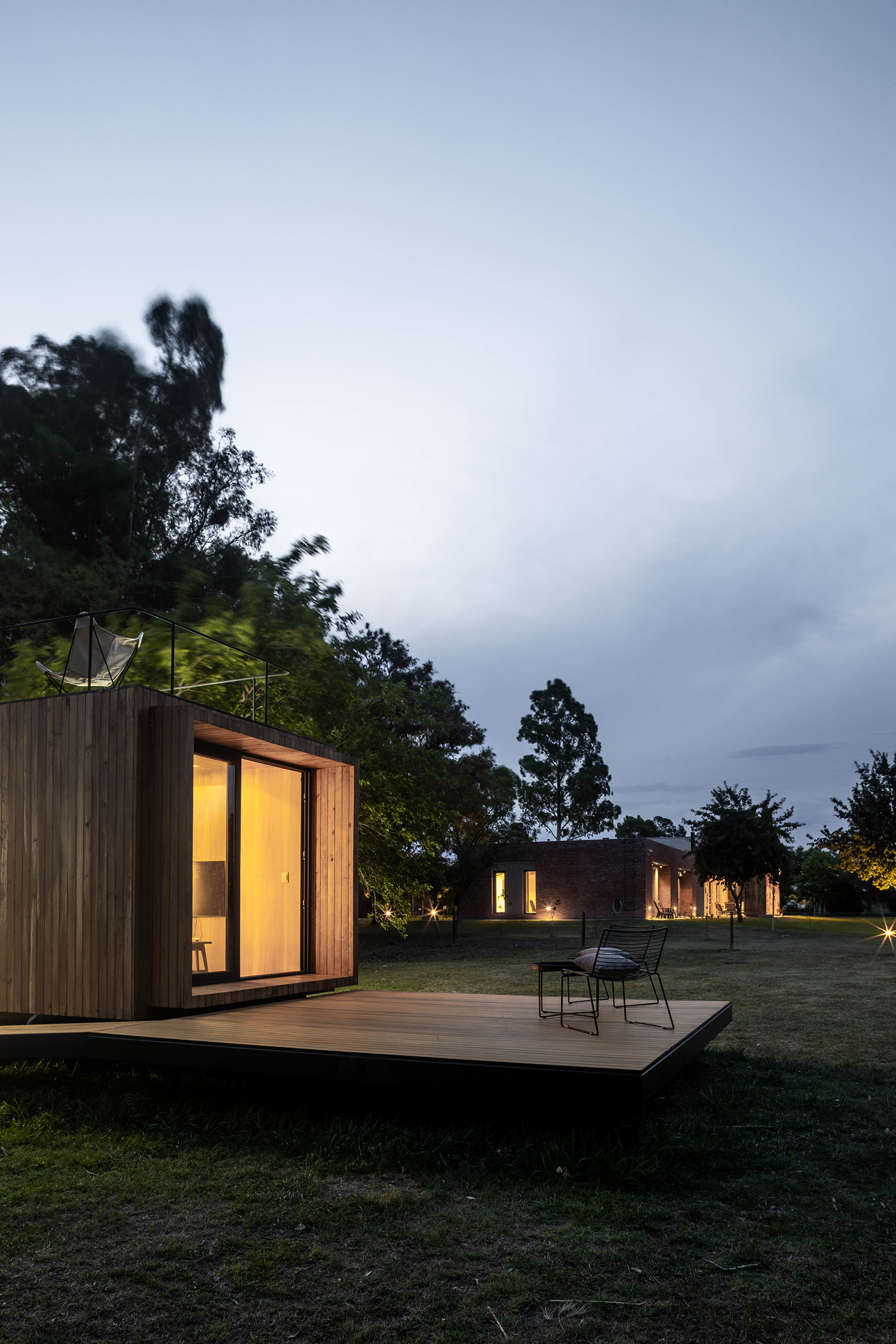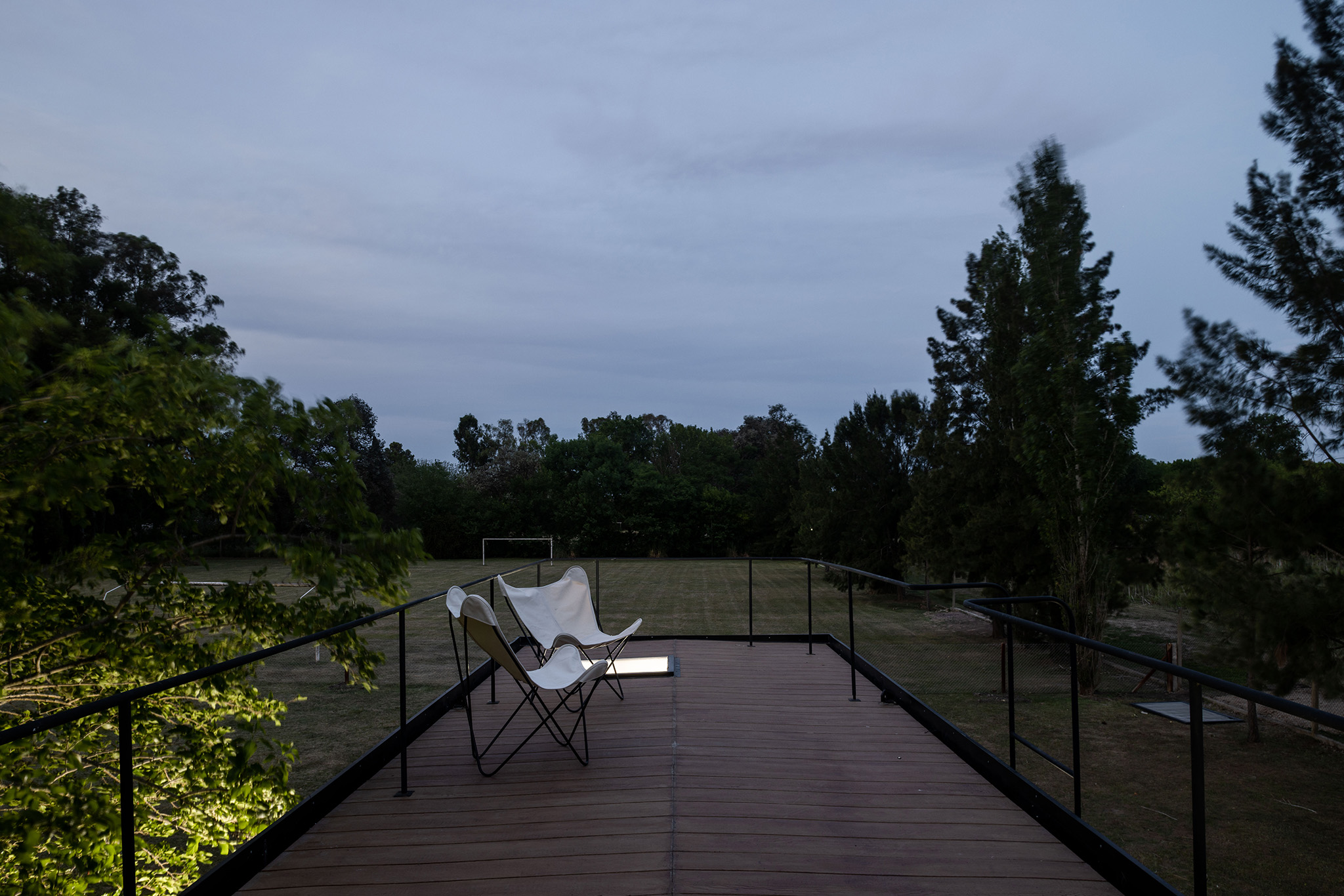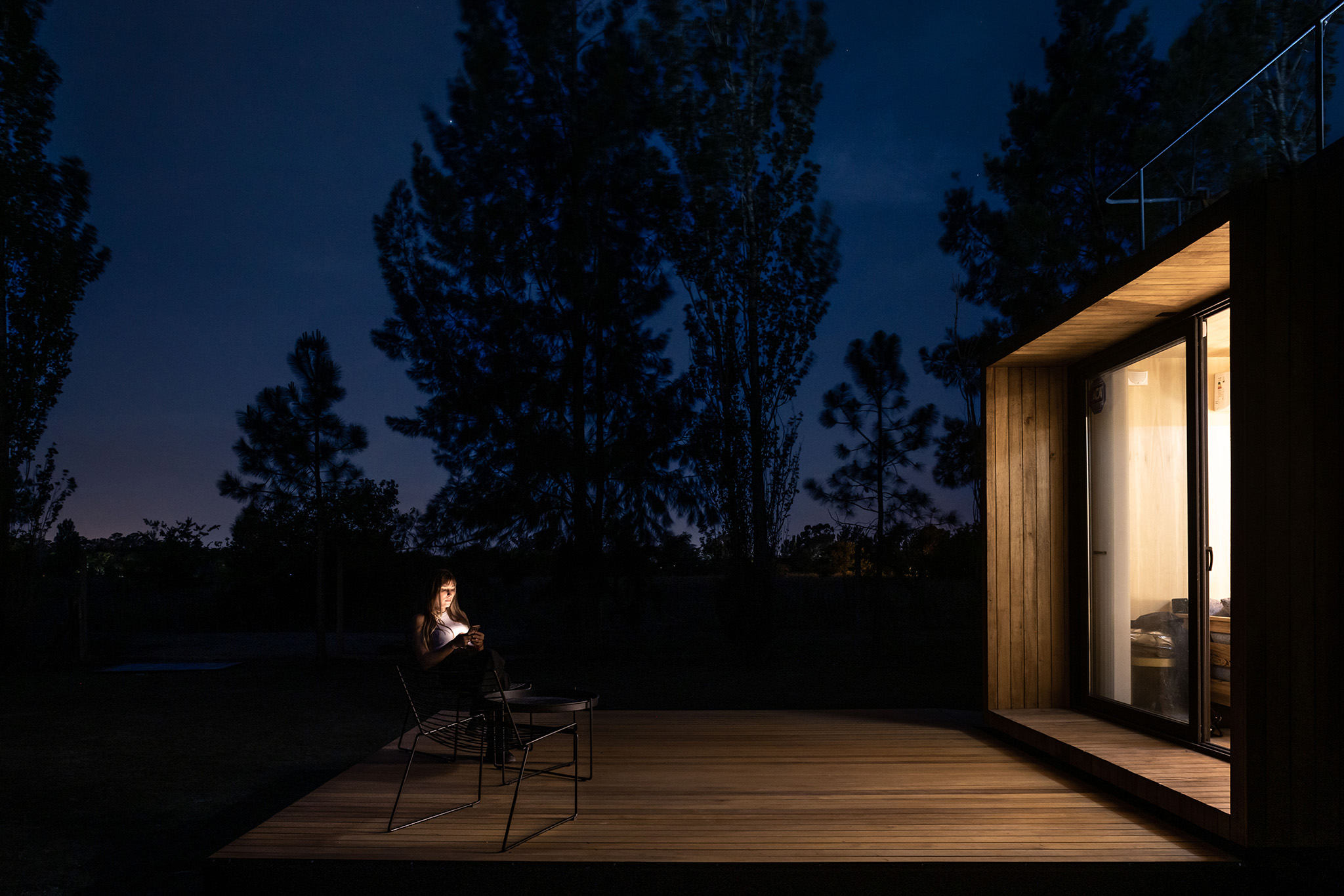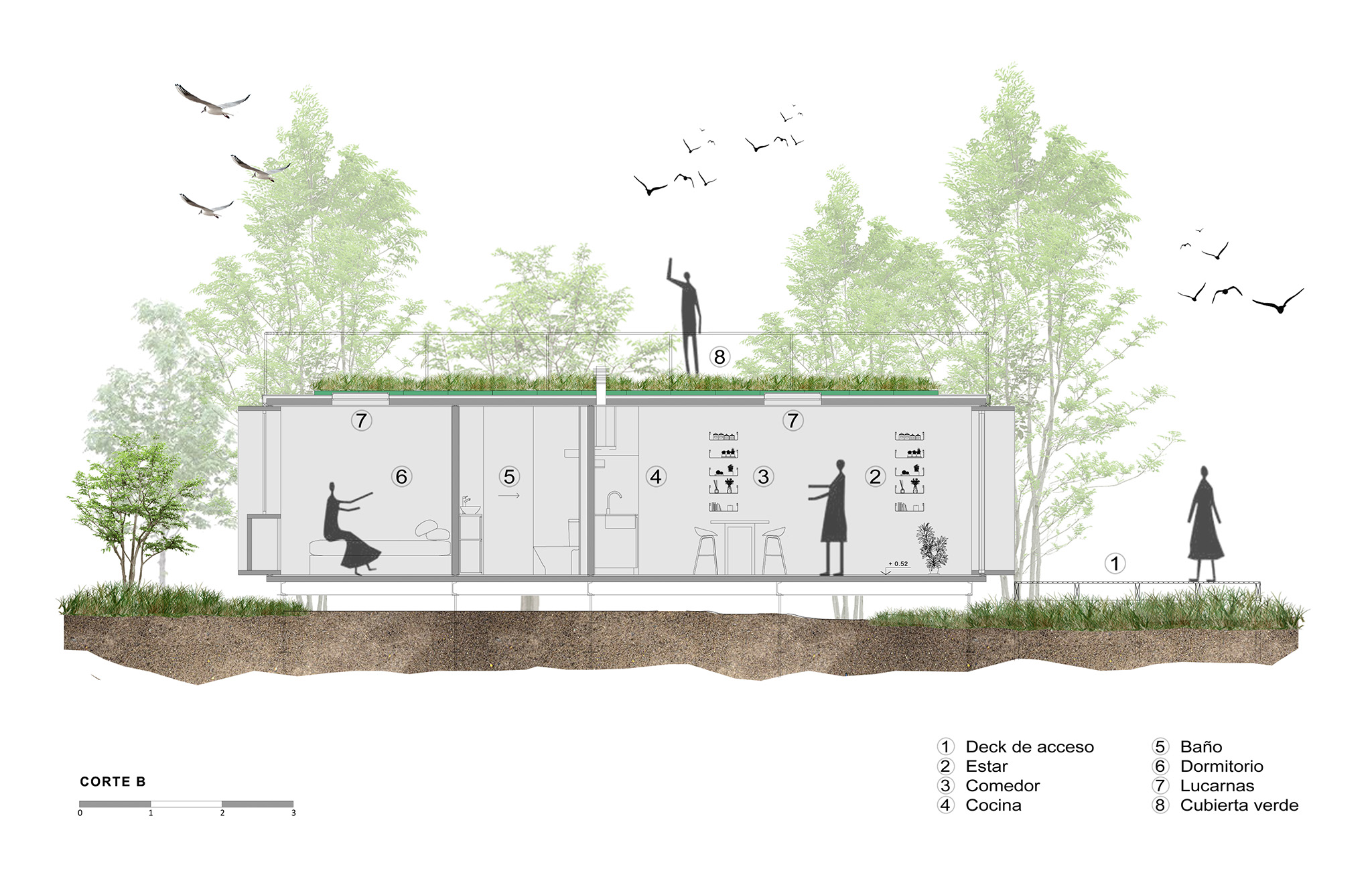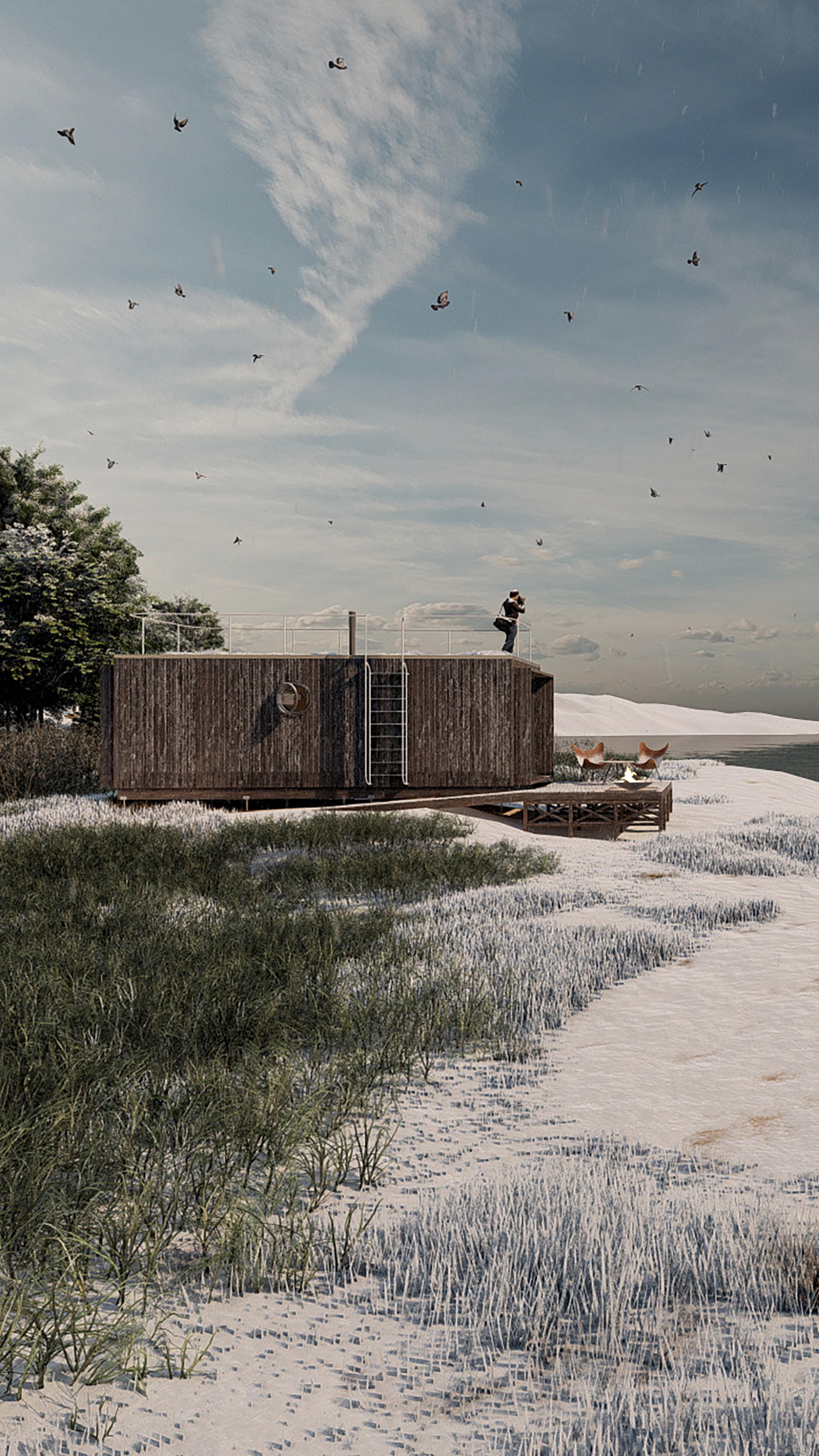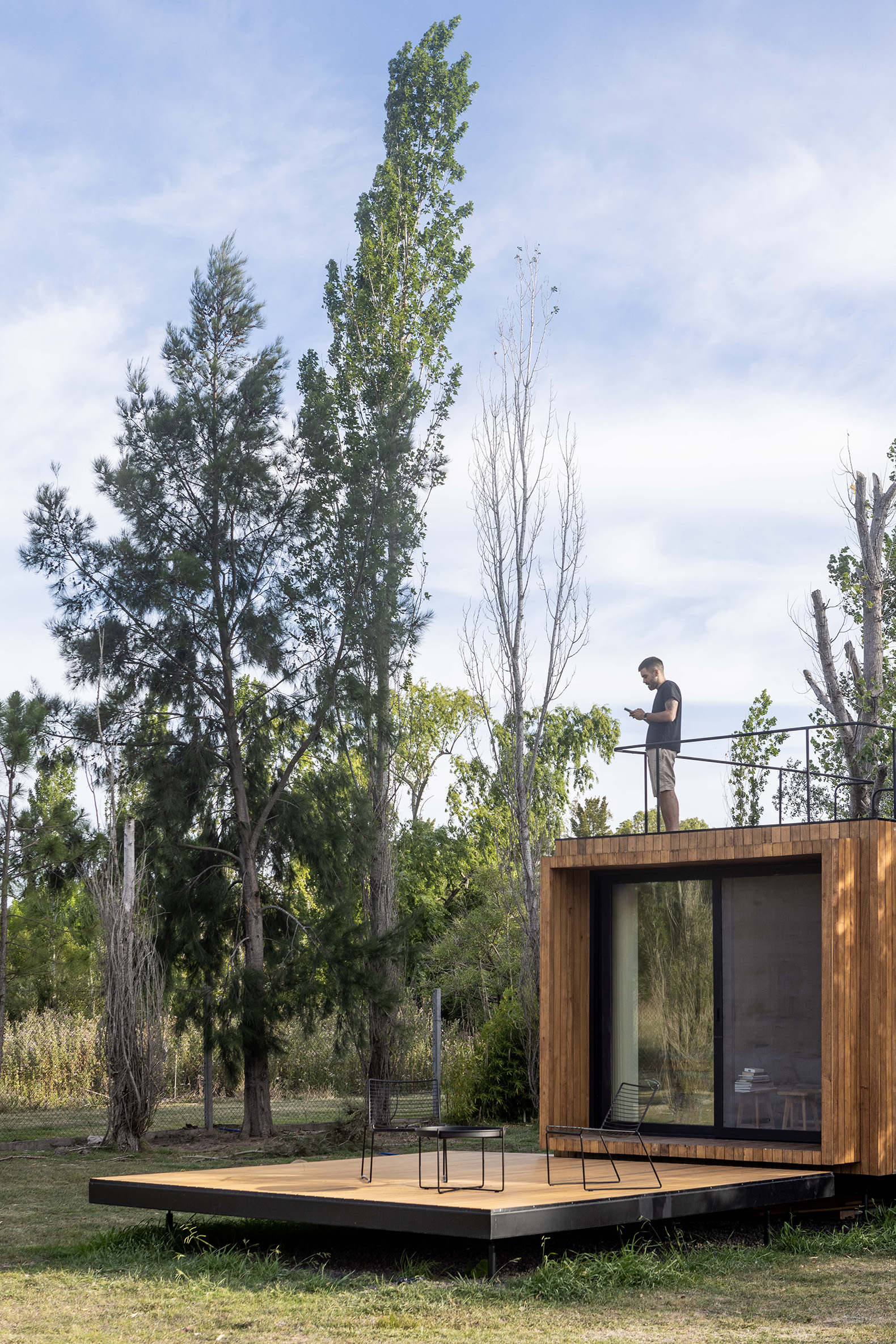
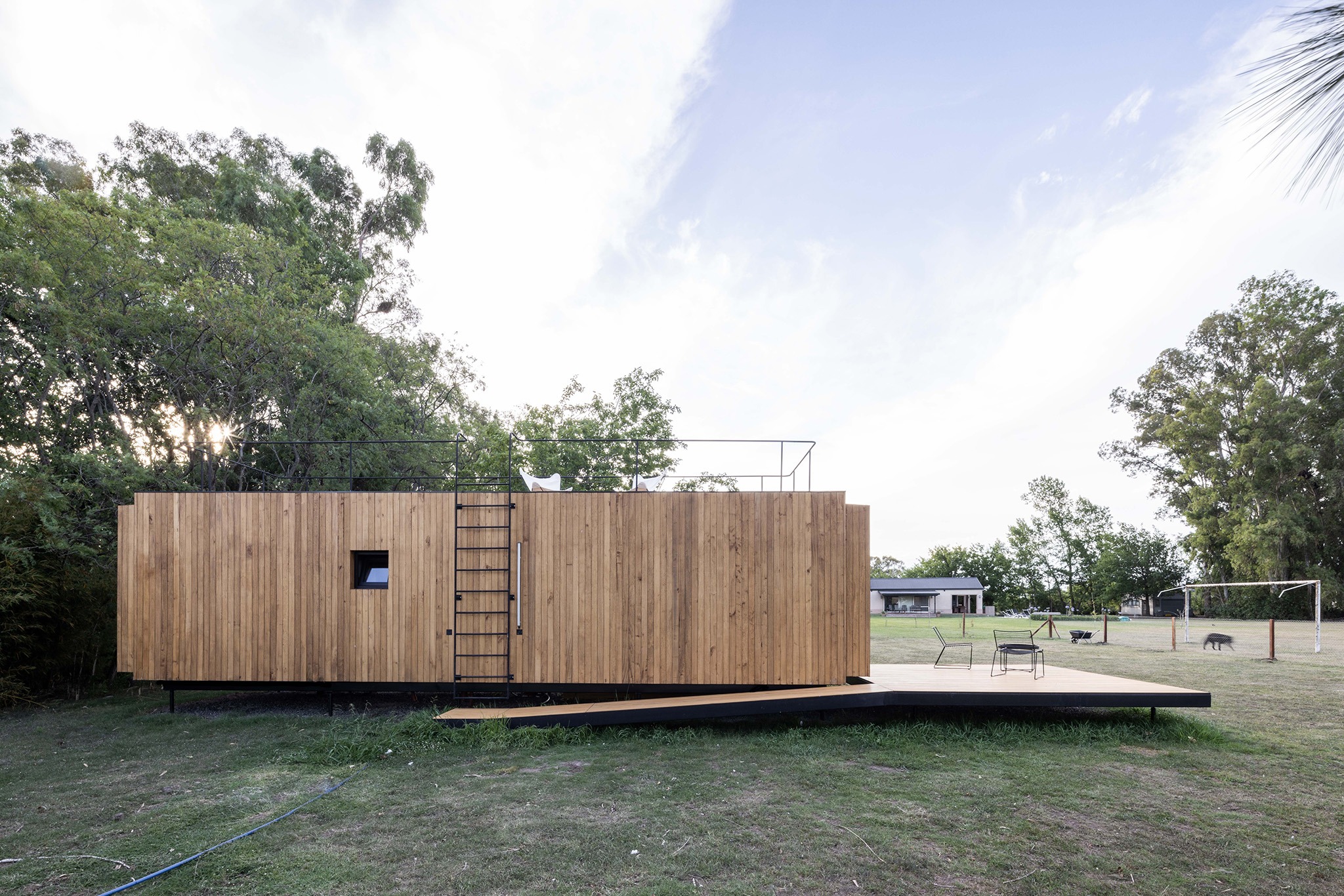
The minimal dwelling in La Plata, designed by Estudio Borrachia, represents the largest module in the series and features a living and dining space, a wet area consisting of a kitchen and bathroom, and a bedroom. The project is added to the facilities of a large house at the other end of the site and functions as a permanent home for one or two people.
In line with circular economy principles, the house is characterized by prefabrication, the use of local materials, and the adaptation of the space to the specific conditions of the environment. Passive conditioning strategies complement the proposal, resulting in an efficient use of resources, both during construction and throughout its lifespan.
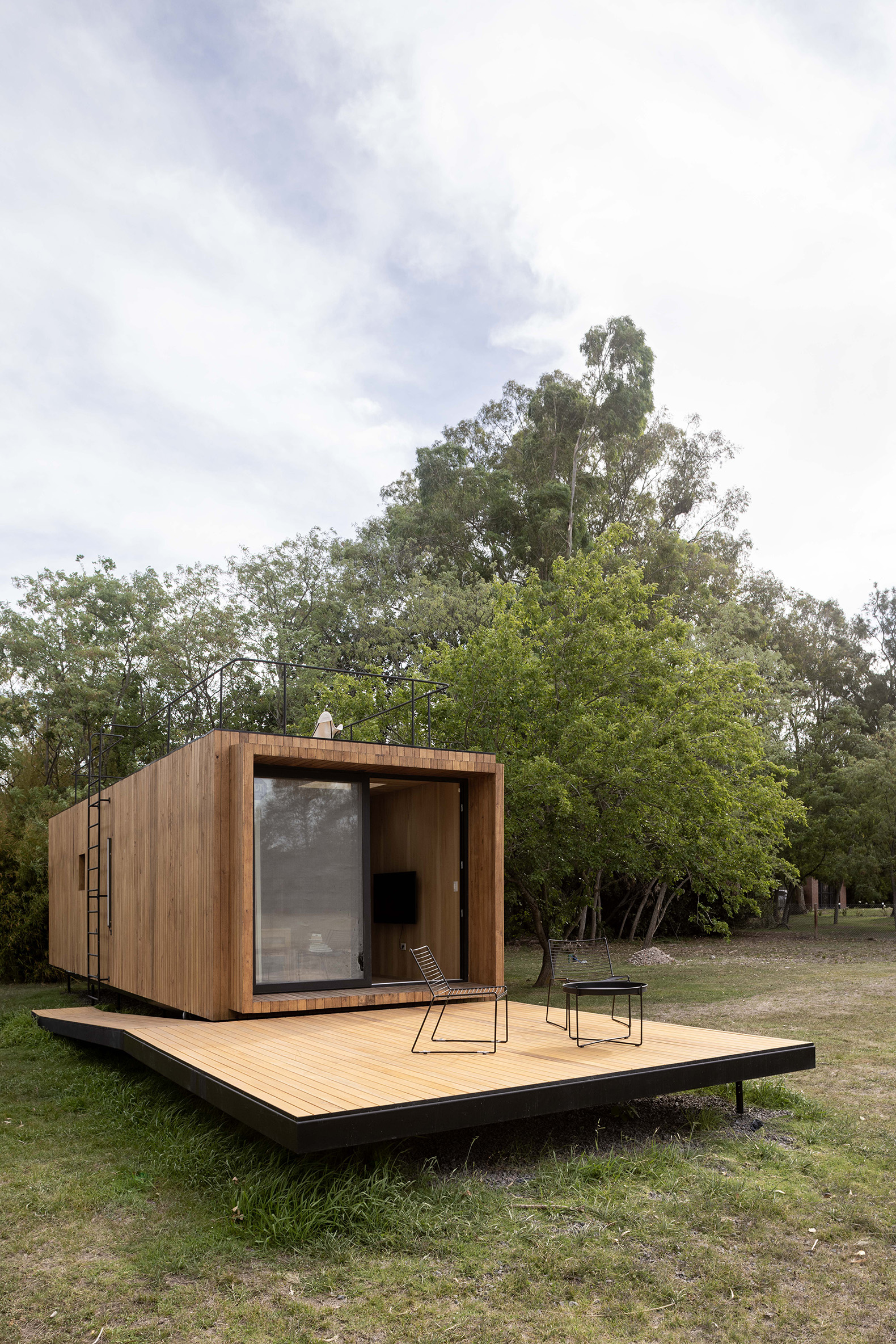
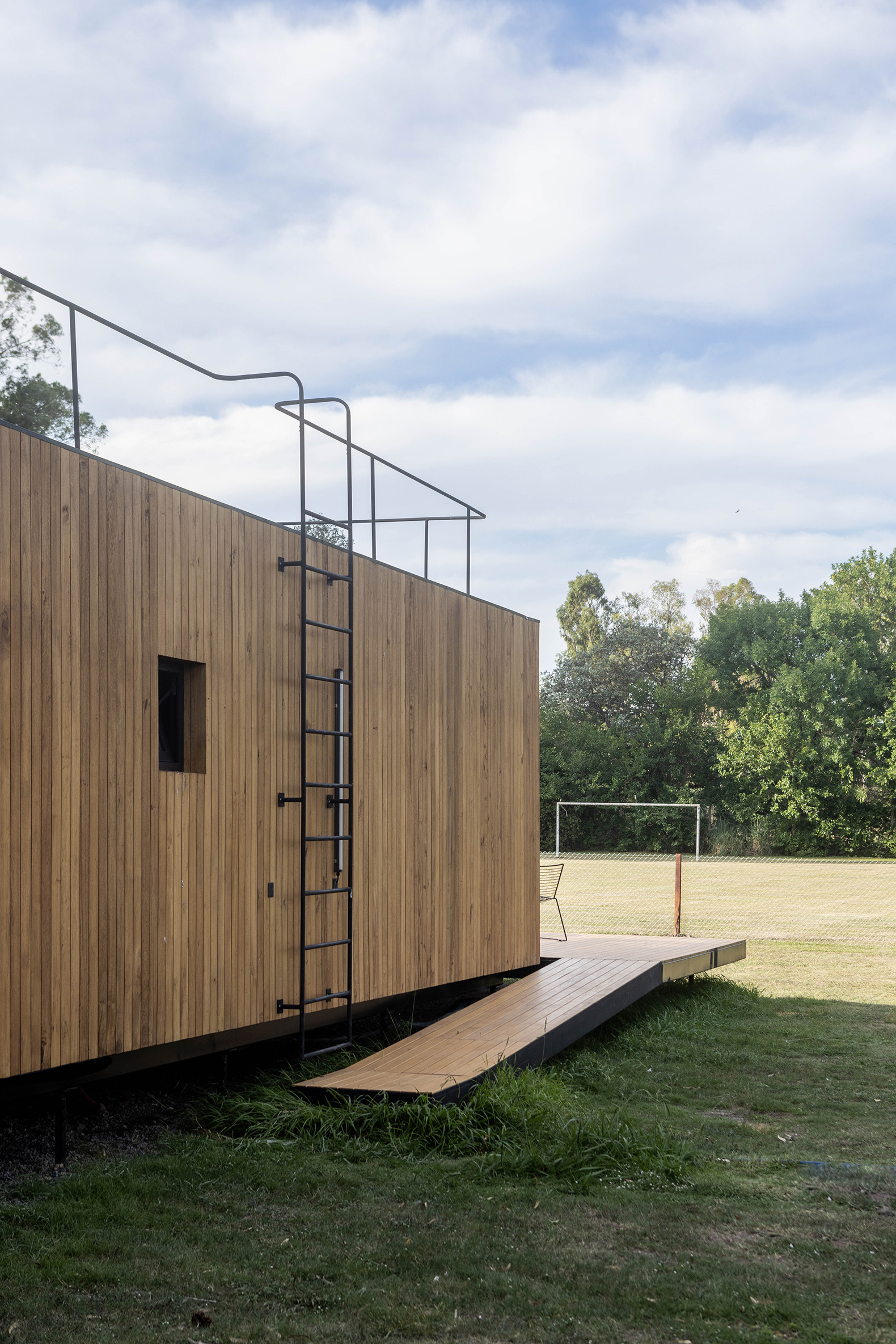
Minimal house in La Plata by Estudio Borrachia. Photograph by Luis Barandiaran.
Project description by Estudio Borrachia
Minimal house in La Plata is part of a serial execution and workshop production system that can be modified and adapted to different climates and user needs by simply altering their size and some particular characteristics, adding comfort and services. They try to be compact buildings, with a little covered surface, versatile and surpassing the very trendy idea of "Glamping" by proposing much more than a simple shelter.
From a small dwelling to be implemented in extreme landscapes—such as a mountainside, a forest, the edge of a lake, or a river—to a house or tourist complex that draws on these architectural elements and is completed with the necessary infrastructure, achieving balanced interactions with nature, flora, and fauna, understanding architecture, its inhabitants, and everything that surrounds them as part of a continuous and cohesive organism.
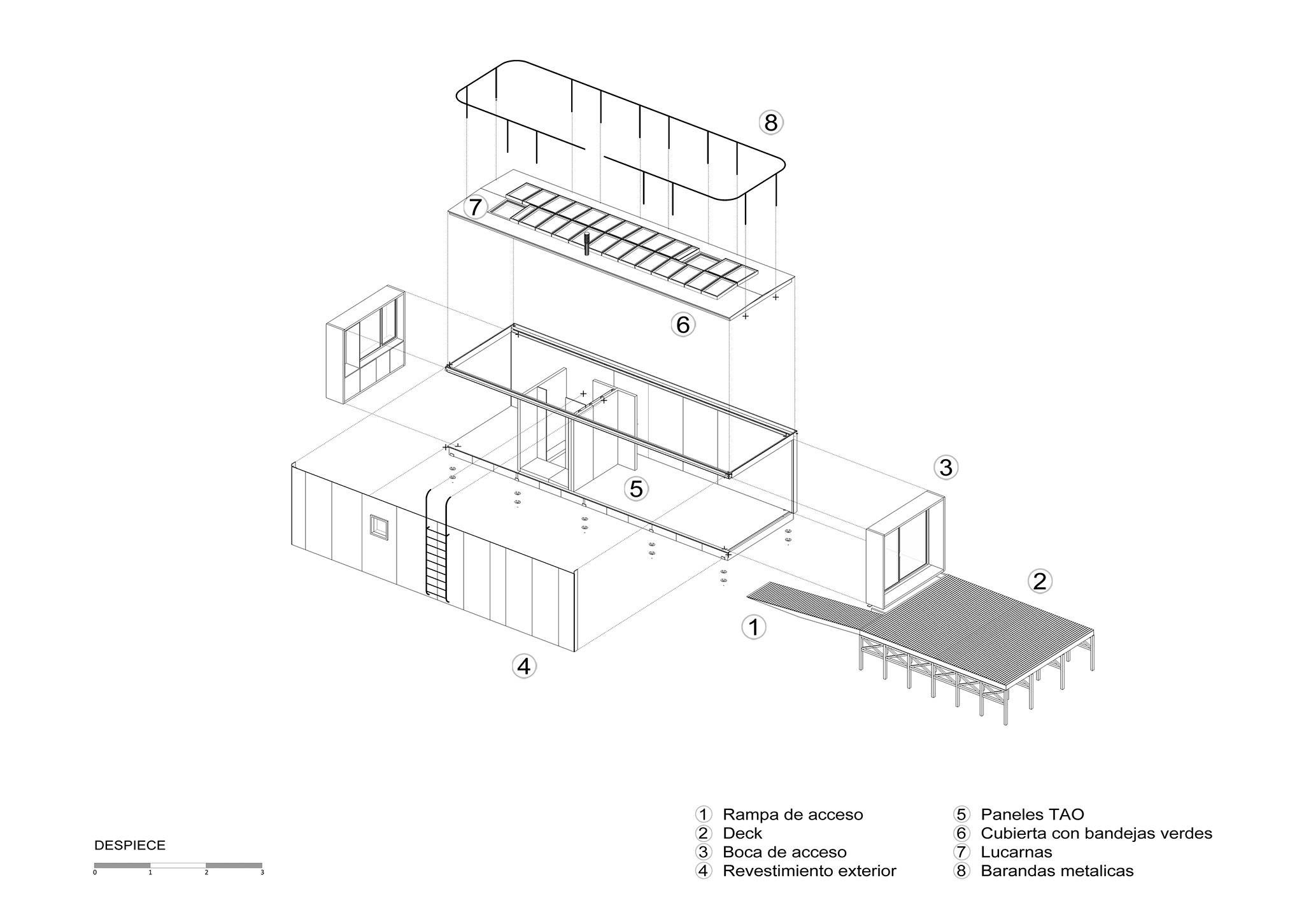
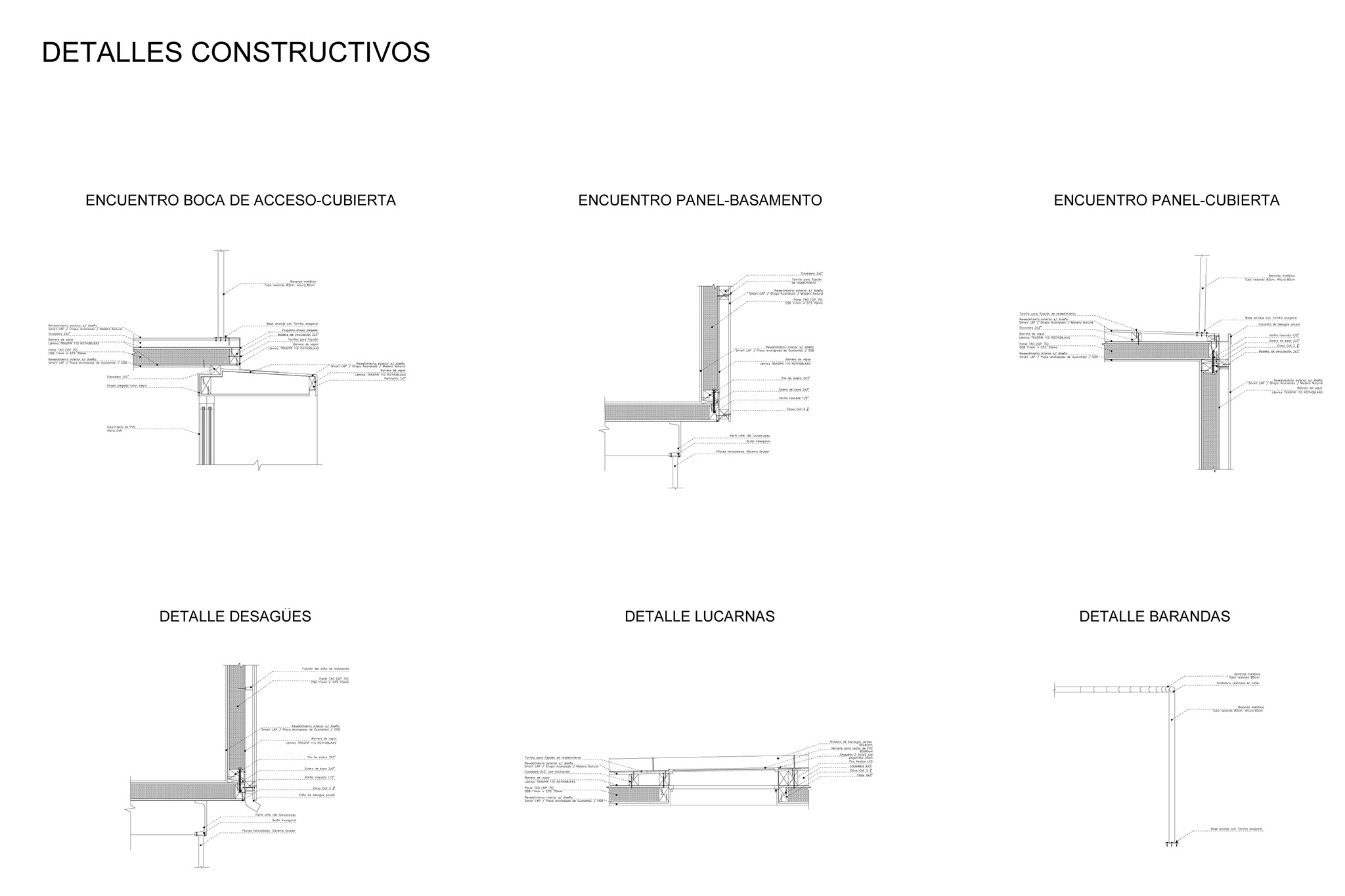
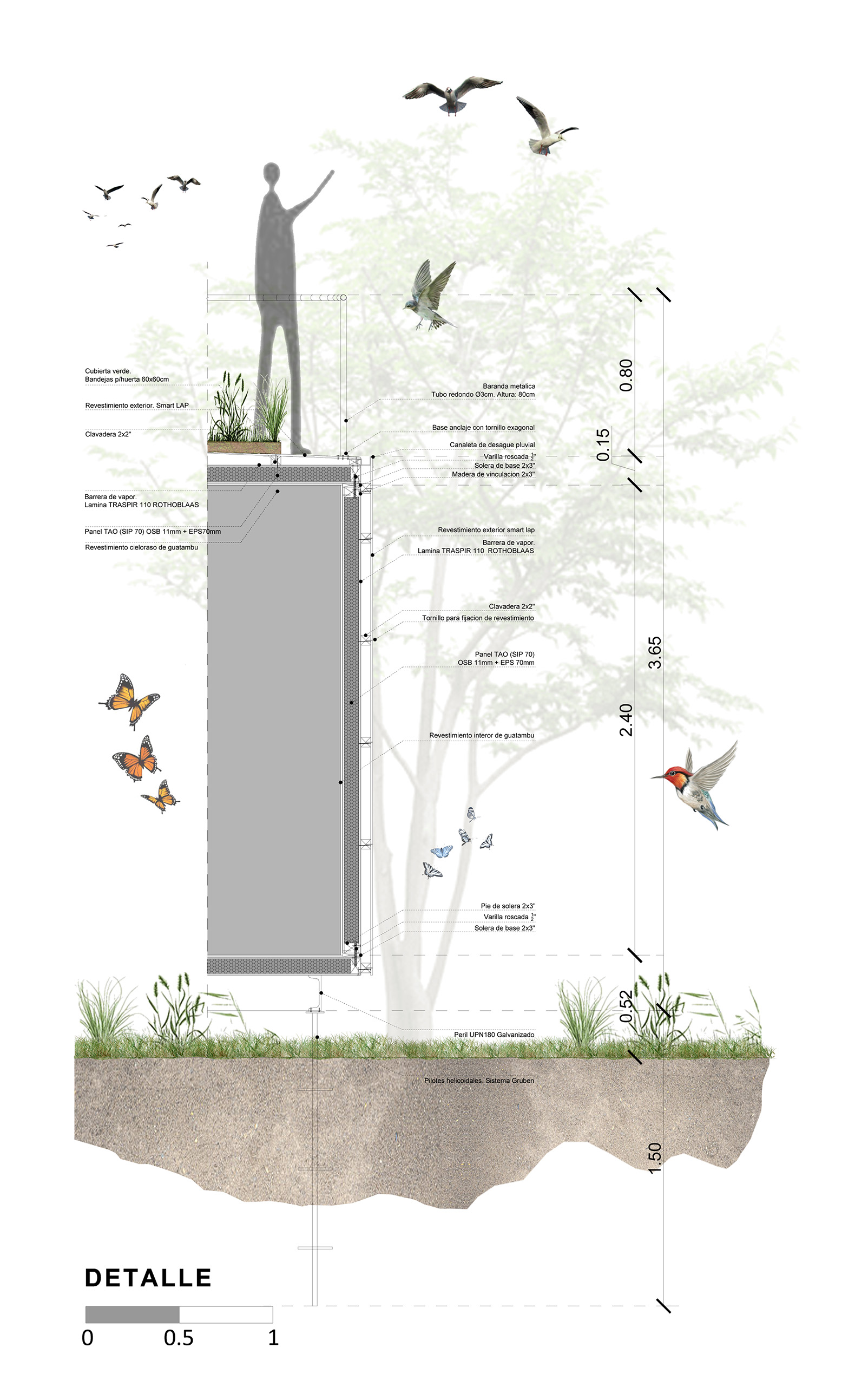
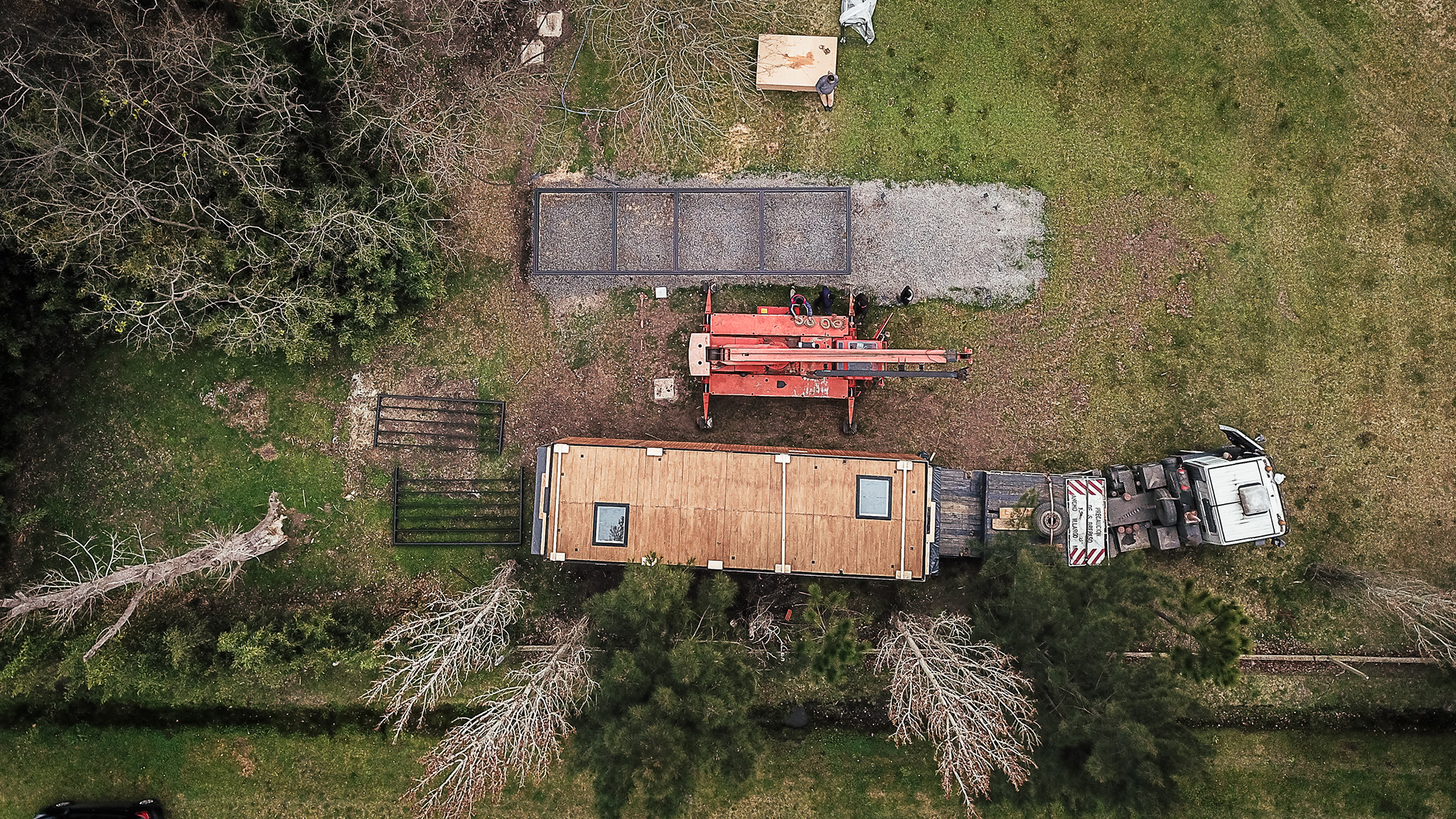
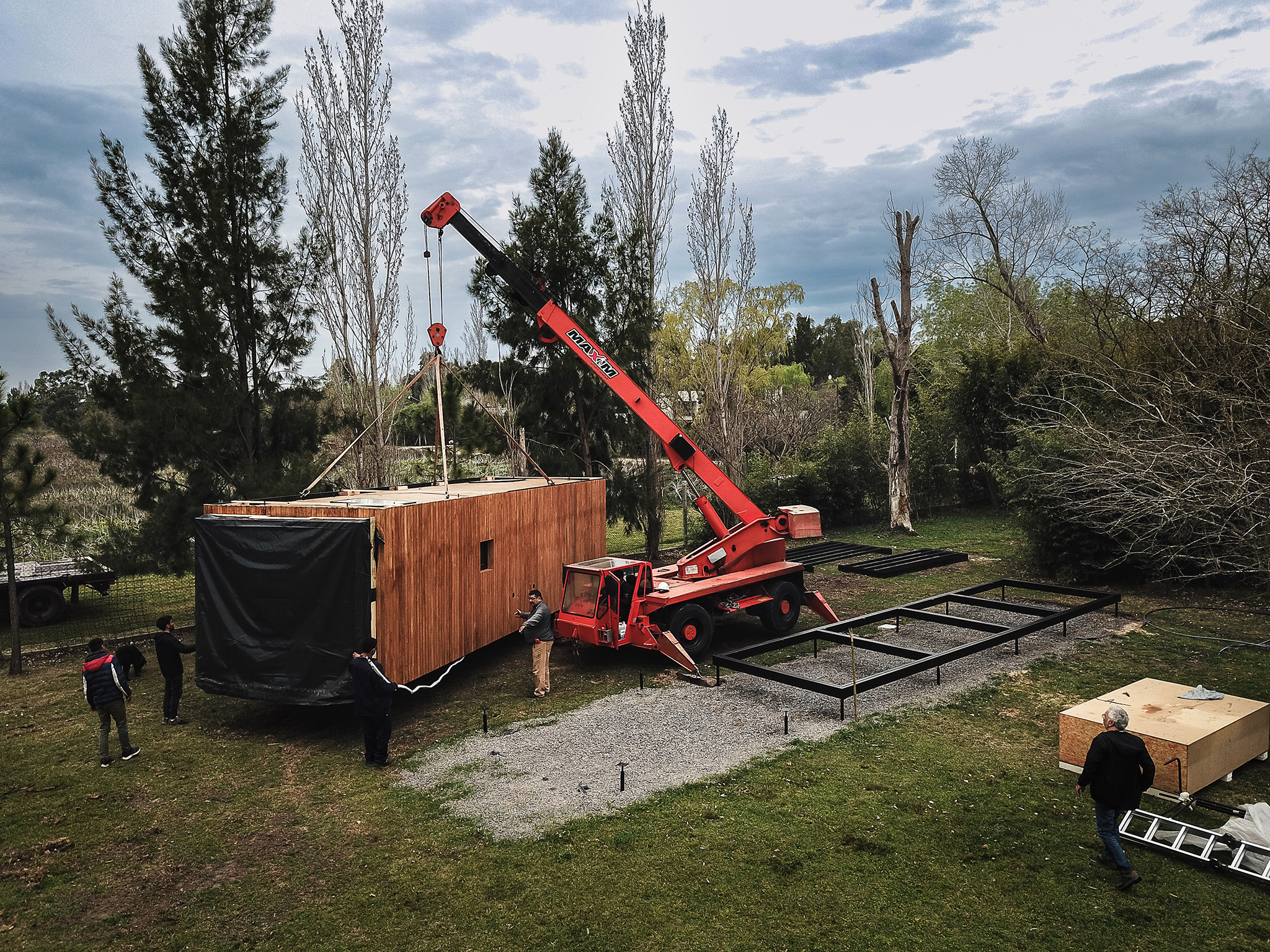
A whole series of systems are added to the modules in order to achieve a minimal footprint on the landscape: for example, the bases, which are installed in a few hours and can be removed in the same amount of time, making the intervention in the territory respectful and even ephemeral; Or the lifting hooks, conceived as part of the architecture and permanently linked to the building in case it needs to be relocated.
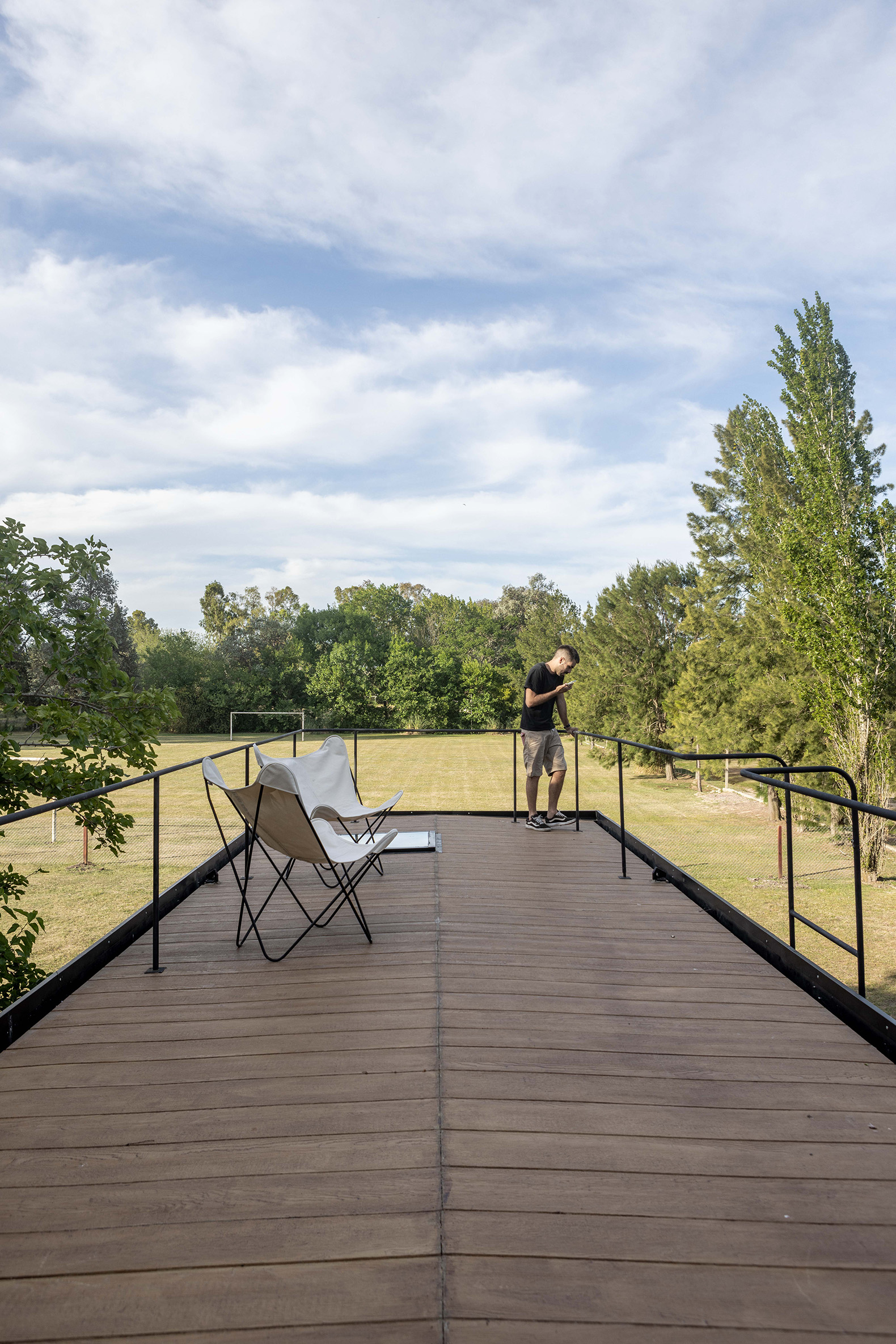
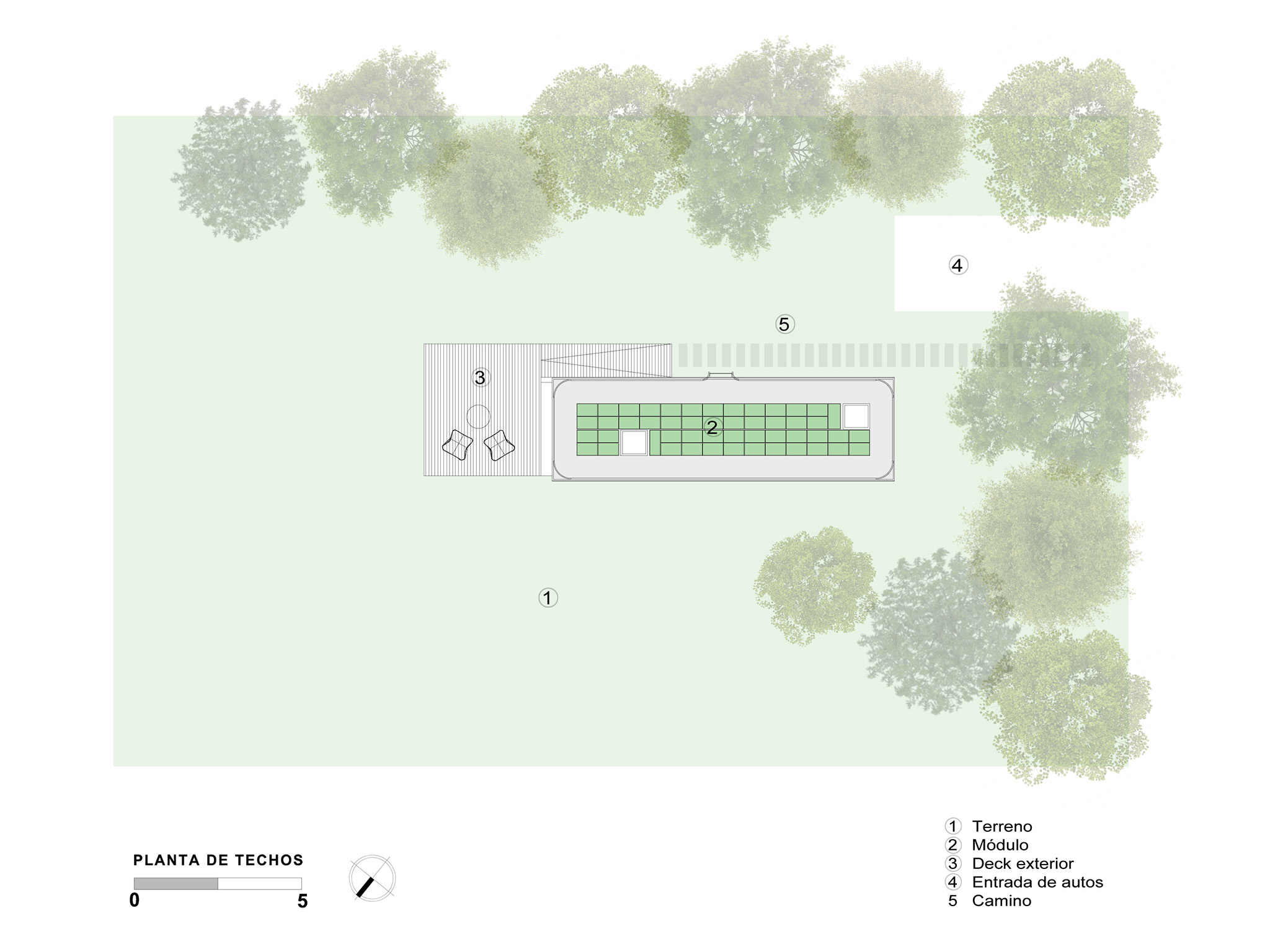
Within this catalog of parts, there are also elements of interaction with the site, such as springs, decks, walkways, and ramps, attempting to limit the intervention to a few square meters around the module and then preserve the landscape intact or even create a new landscape on the building with the green terrace.
This notion, which at first may seem contradictory—a fusion with the landscape and the idea of nomadism as a principle—has everything to do with the way of inhabiting of our native peoples; A system that adapts to the site, with elements from the surrounding landscape, but that also allows to be removed and relocated as part of a culture that seeks out the best locations to generate temporary habitats with minimal alteration to the intervention site.
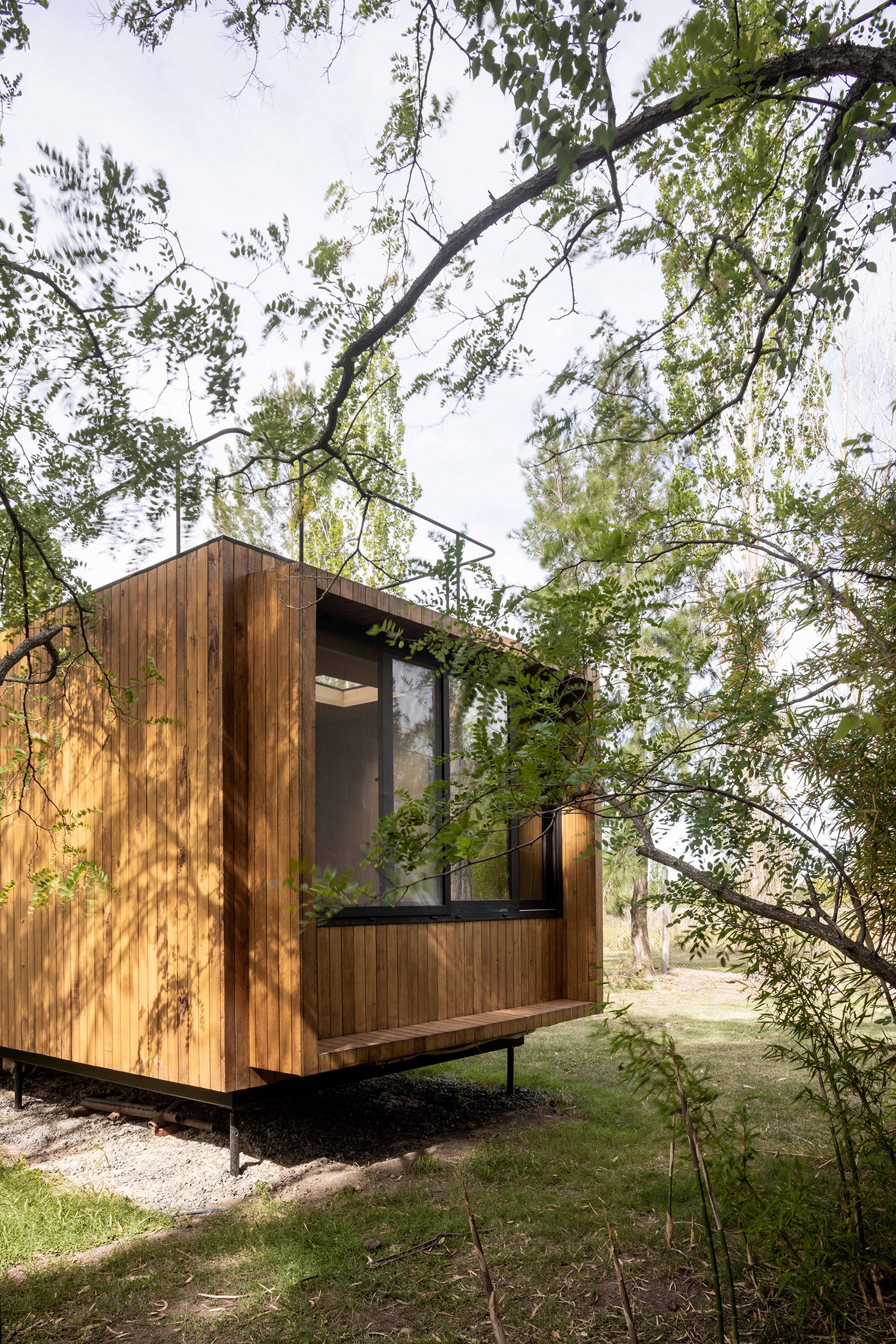
The detailed study carried out on the ecosystem to be intervened and the adaptation of the piece to the particular conditions of it quickly translates into the manufacturing logic, seeking to bring "the workshop" closer to the different points where the modules will be located. This will generate local networks that allow us to nourish ourselves not only from local materials but also from the labor force, organizing training and creating new job positions, thus strengthening small regional economies.
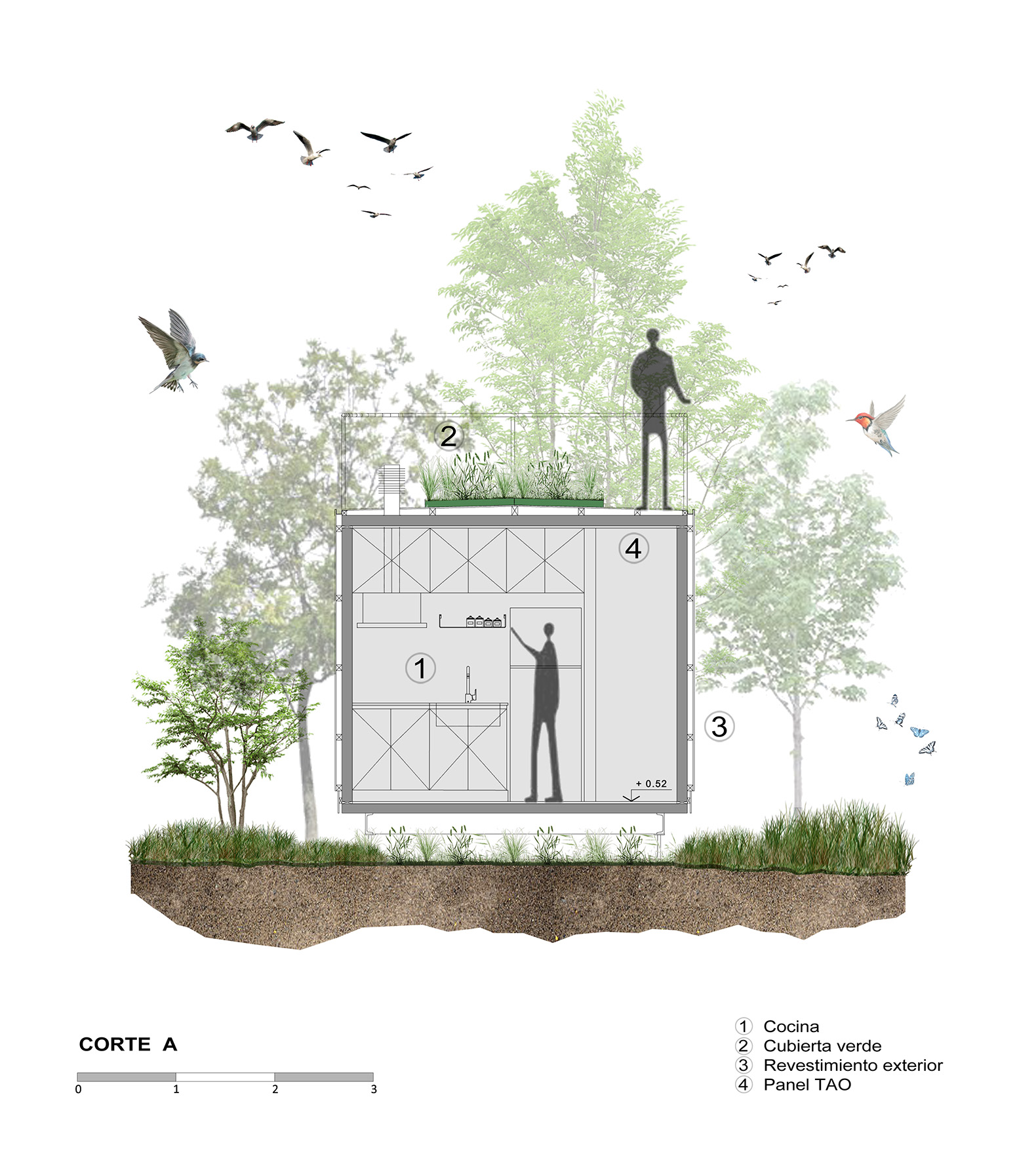
These ideas related to the circular economy seek prefabrication, the use of materials such as wood or lightweight, self-supporting, and super-insulated construction systems such as SIP panels, as well as an optimized relationships with climate, sunlight, and ventilation, conditions that make the resources used more efficient, both in manufacturing and in subsequent use.
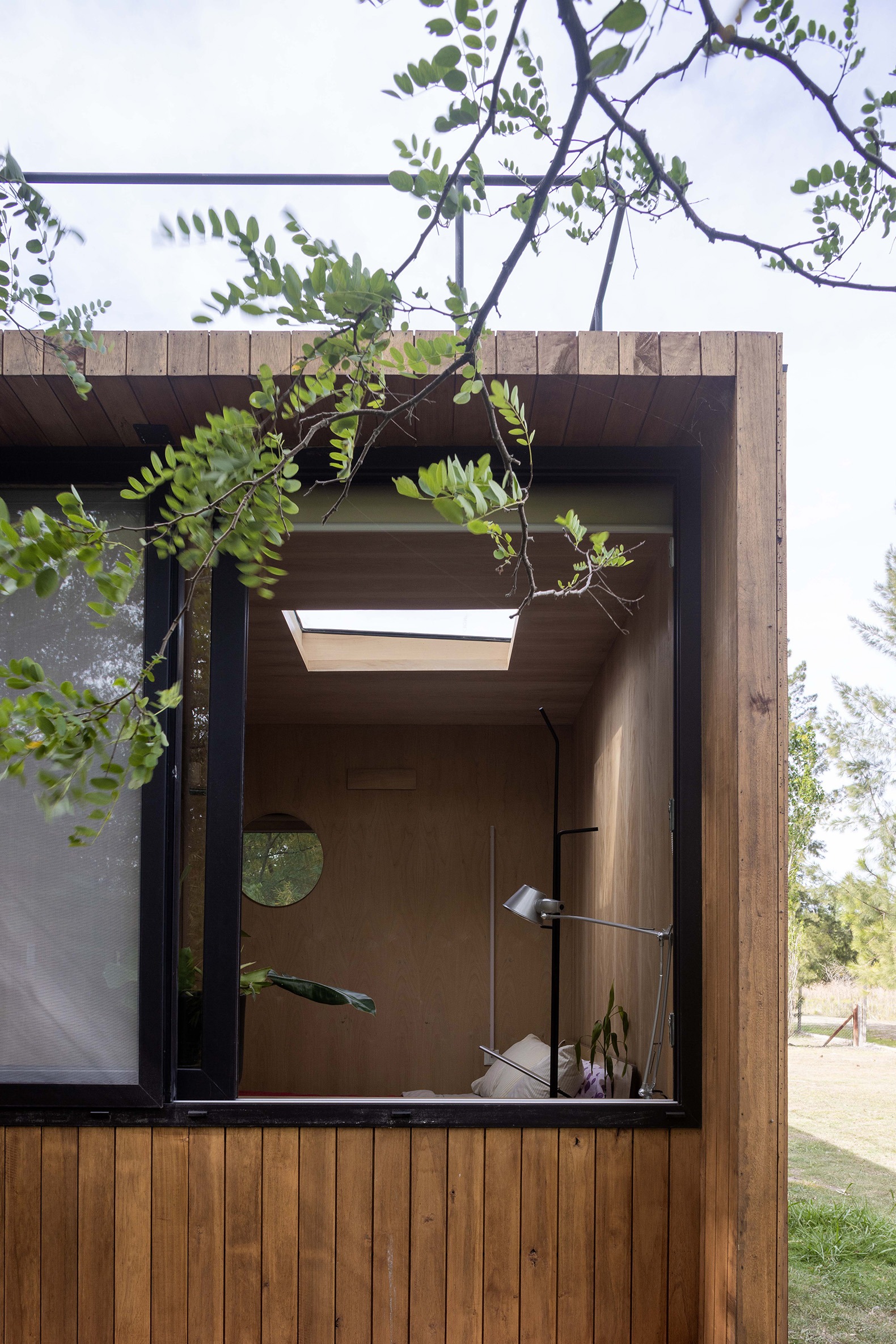
Basic passive operational criteria such as cross-ventilation, the "chimney" effect, or the green roof aim to complement these premises according to the seasons and their interaction with the climate. In summer, in each of the spaces, opening the windows accelerates the incoming air. The opening of the roof's skylights forces the warm air stored inside to be expelled to the outside, continuously renewing the building's climate and lowering the temperature. In winter, the insulation on each side, the air chambers, and the materials of the window frames windows have been designed to ensure that minimal heating, such as that generated by a wood-burning salamander, is sufficient to supply heat to the entire interior.
These modules are complemented by photovoltaic panels, geothermal heating and cooling systems, solar water heaters, and a whole series of appliances that optimize consumption and allow, in extreme situations, complete disconnection from infrastructure networks.
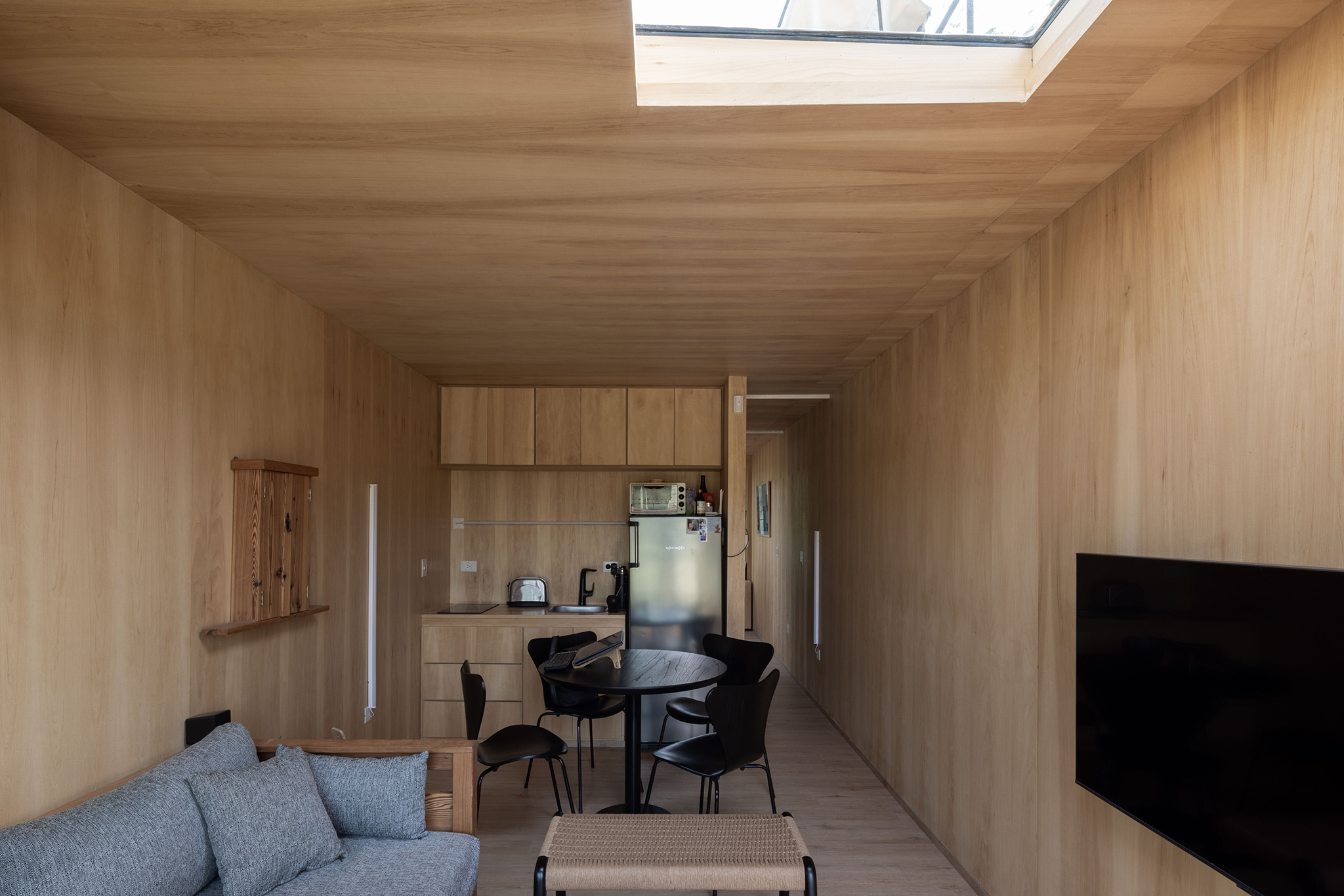
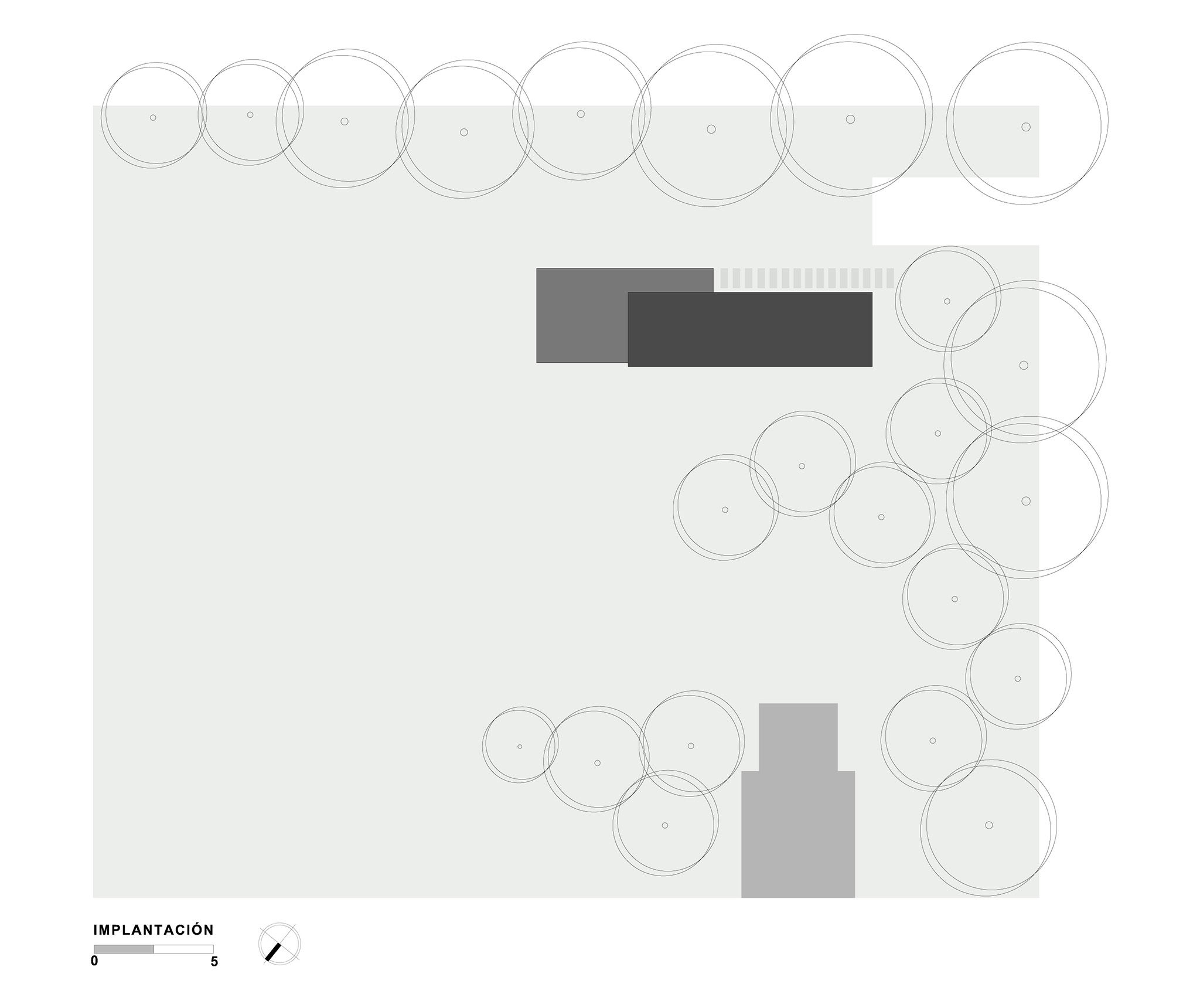
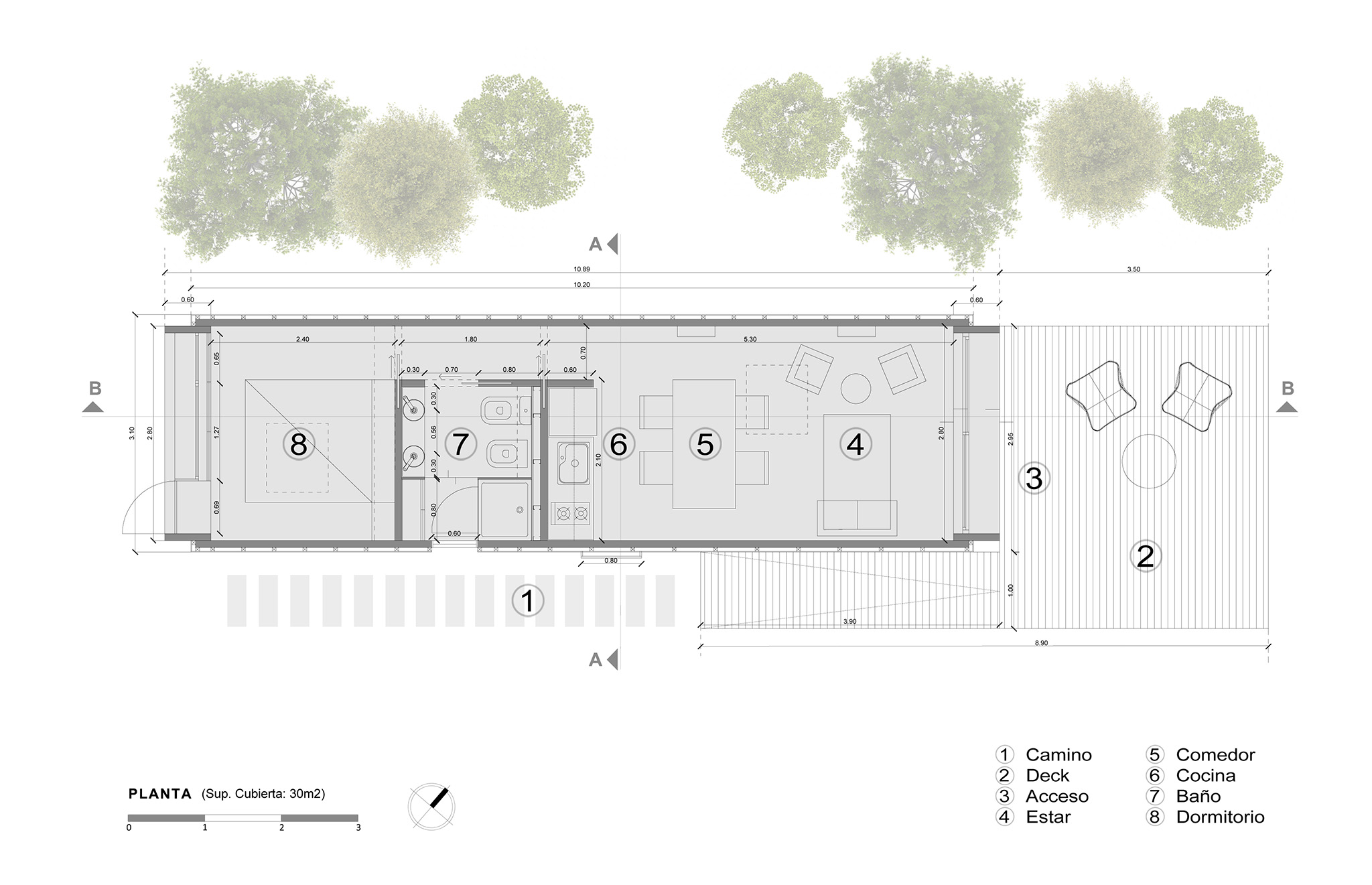
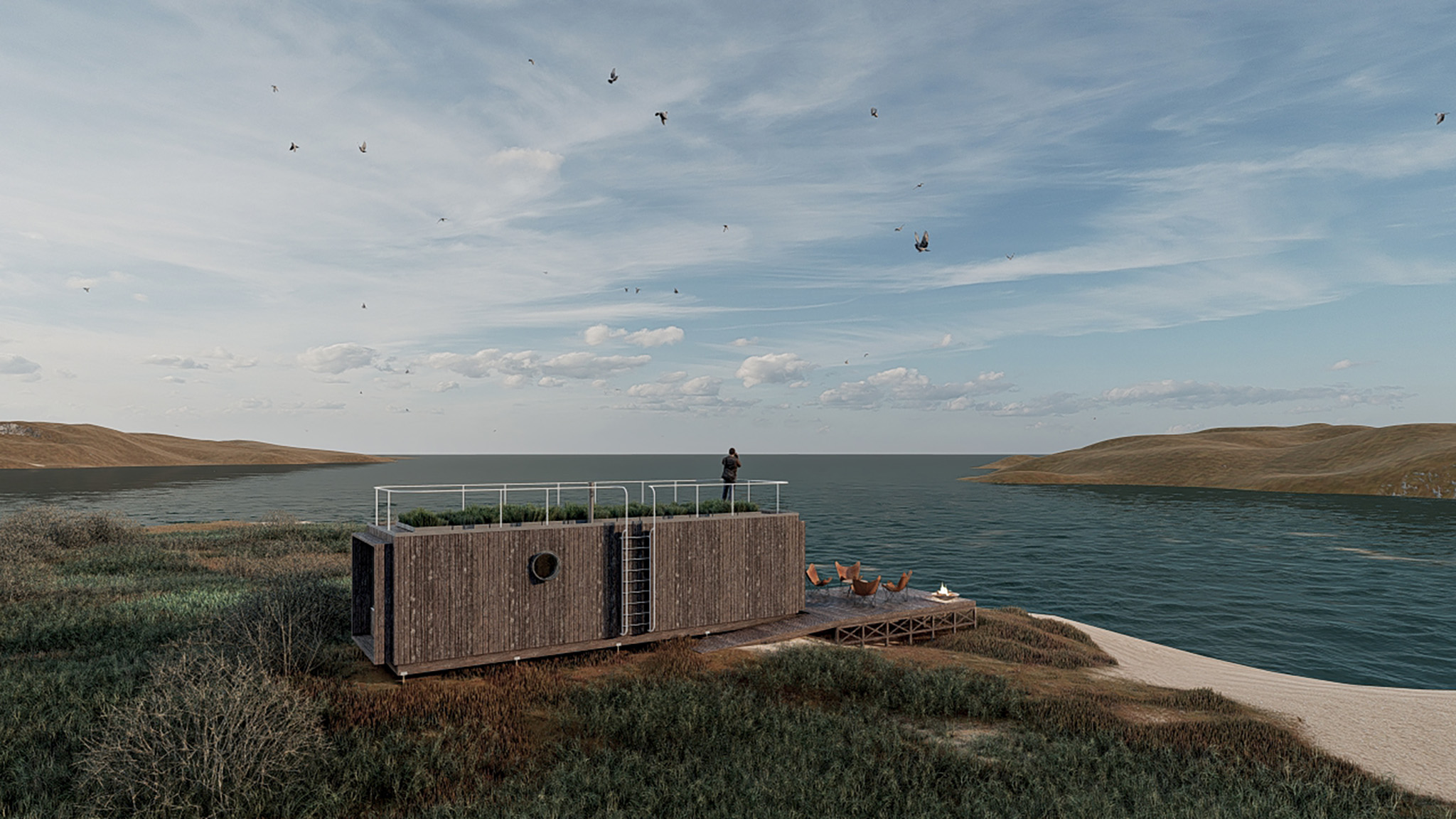
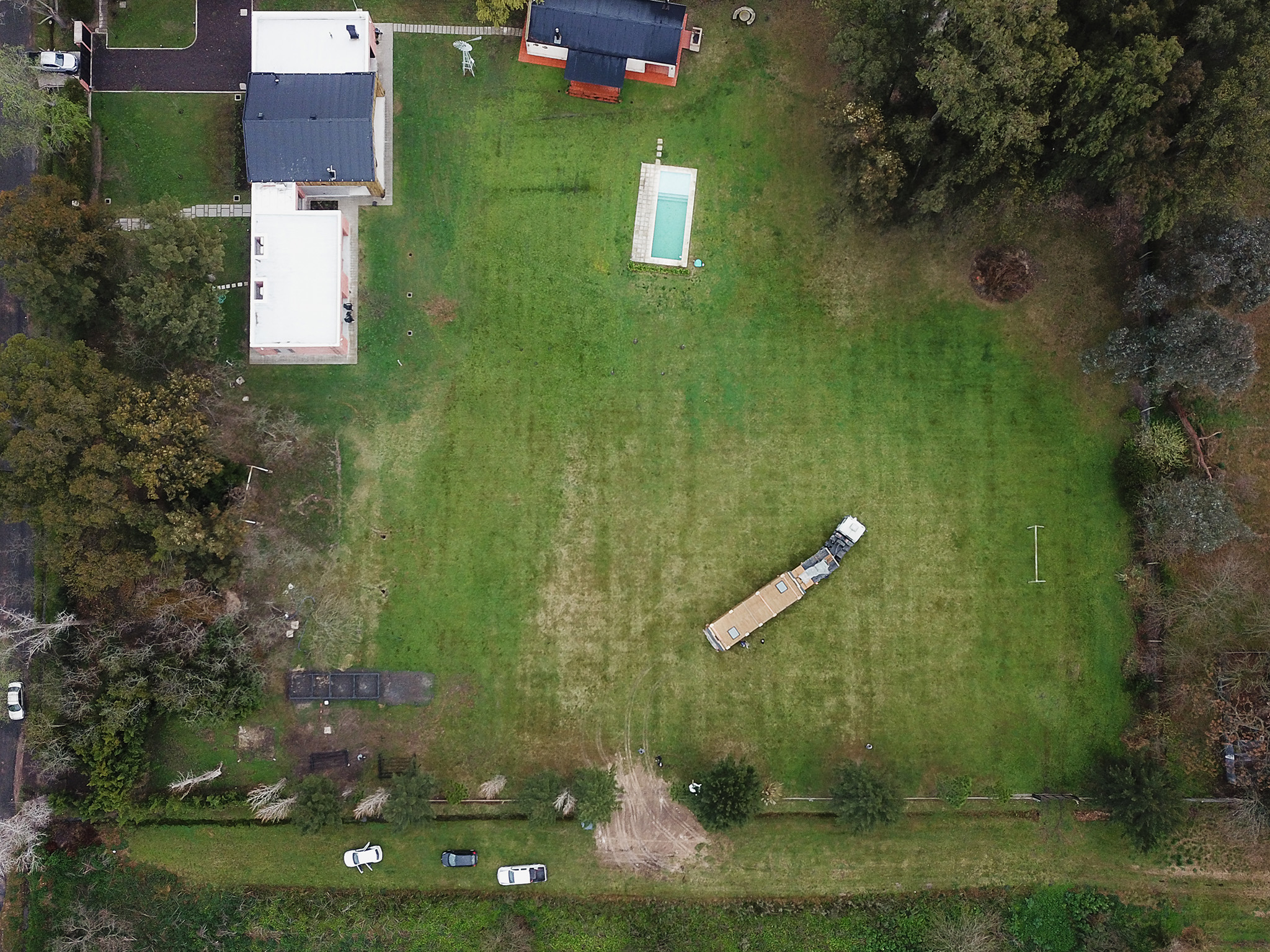
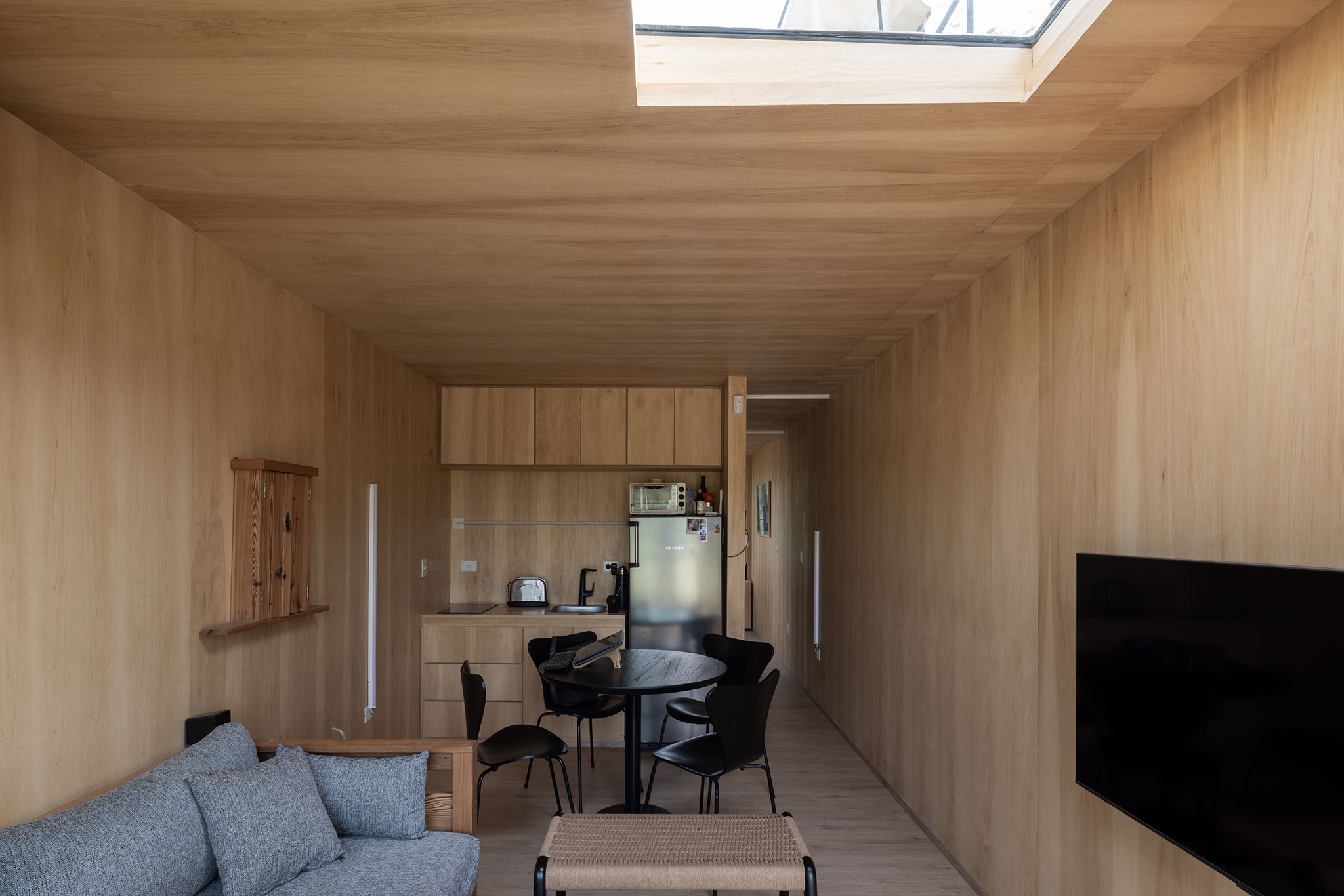
The minimal dwelling described here is installed in the city of City Bell, in La Plata, Buenos Aires province, in a landscape typical of the humid pampas, surrounded by crops and trees. It is the largest model in the series, measuring 10.5 meters long and 31.5 sqm in area. It functions as a permanent residence for one or two people. It is added to the facilities of a large house at the other end of the property, coexisting in some way with the pool, barbecue area, and laundry room as common areas. It also achieves complete privacy by being located near a small forest and approximately 100 meters from the existing complex.
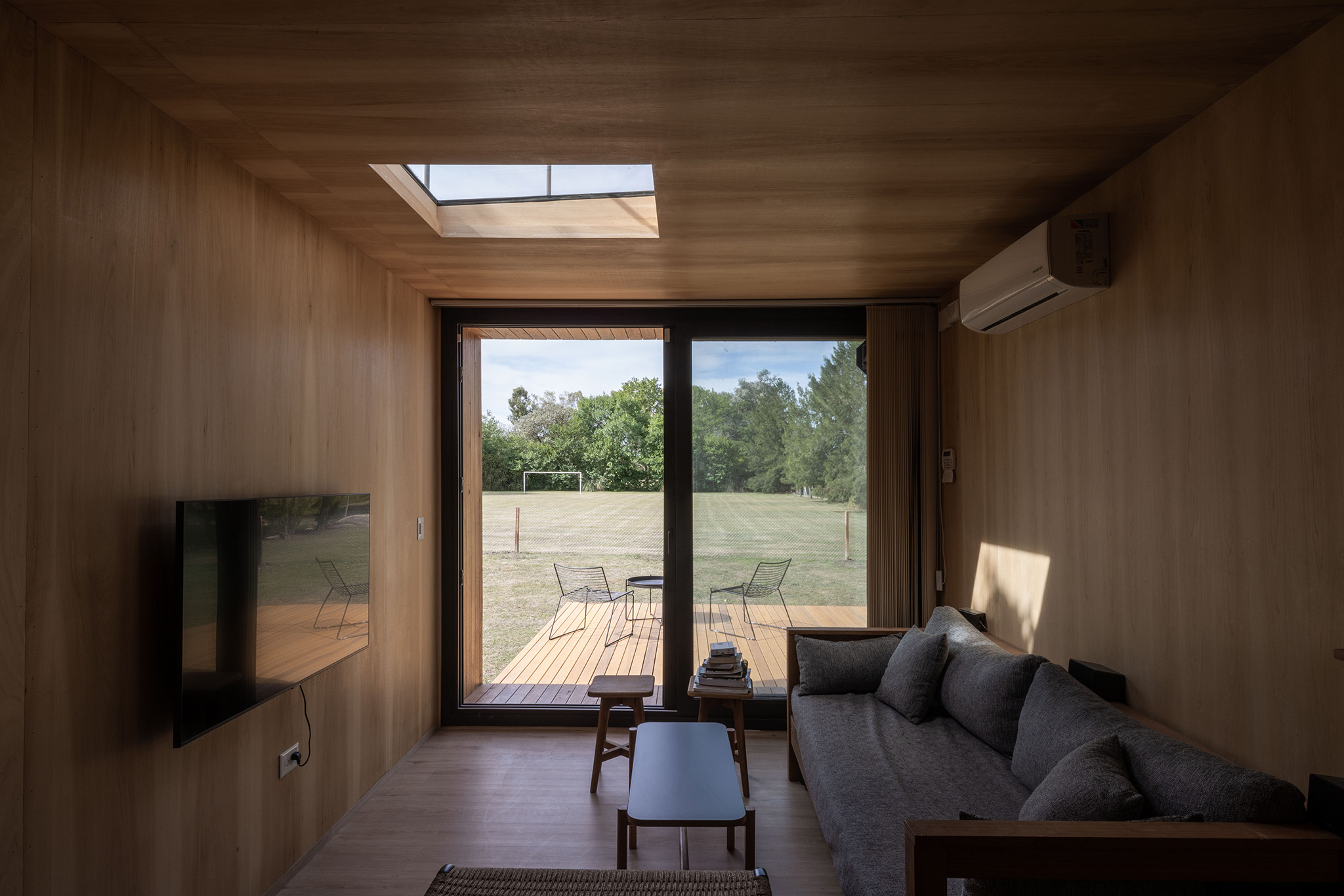
It has a living and dining area that also allows for the addition of one or two transformable furniture pieces into beds to accommodate more people. It also has a kitchen that is the only fixed element in the spatial layout and, together with the bathroom, forms the wet area of the module. At the opposite end of the living room, there is a bedroom, which is isolated from the rest of the spaces by a series of sliding panels that also allow it to be privately integrated with the bathroom.
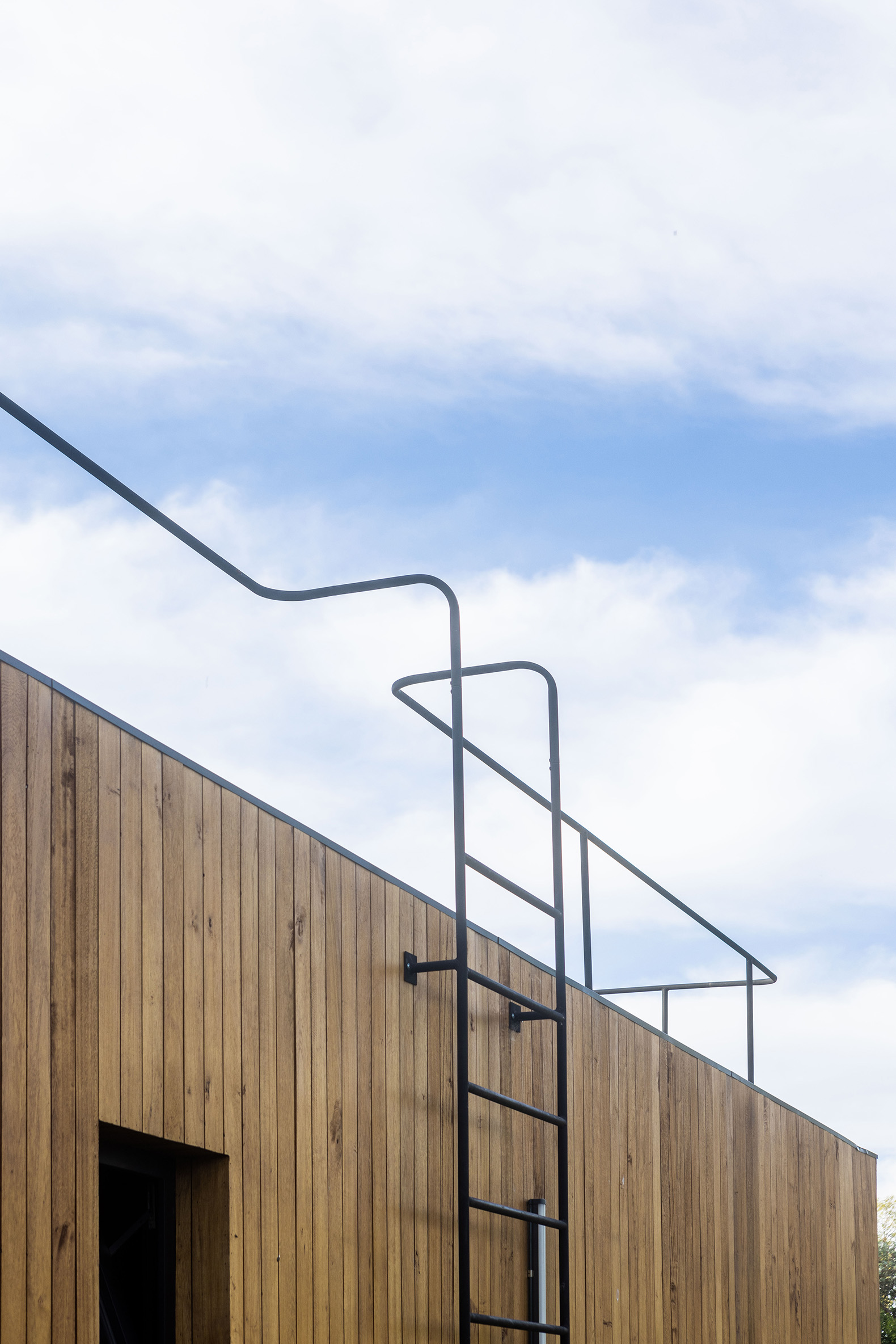
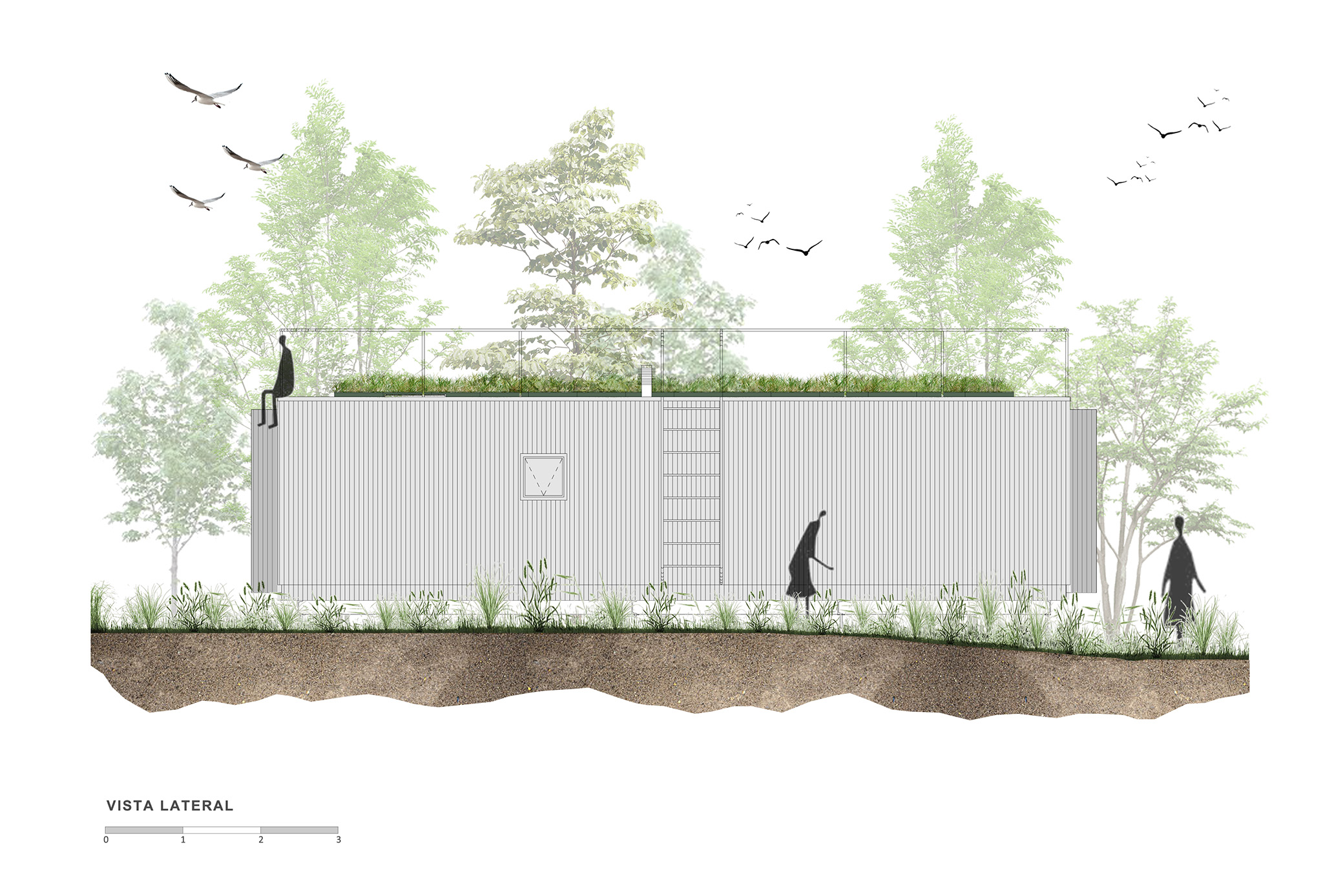
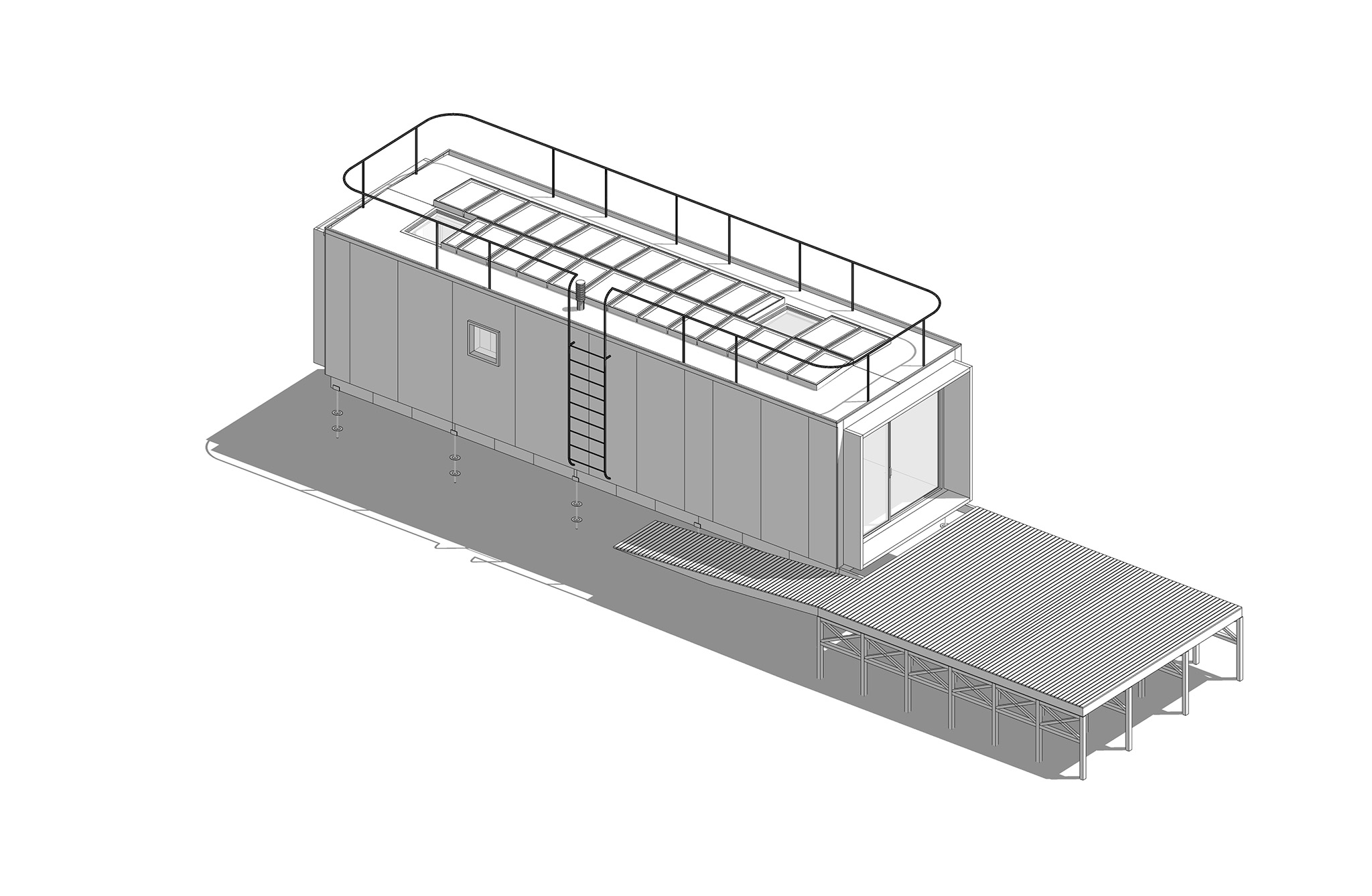
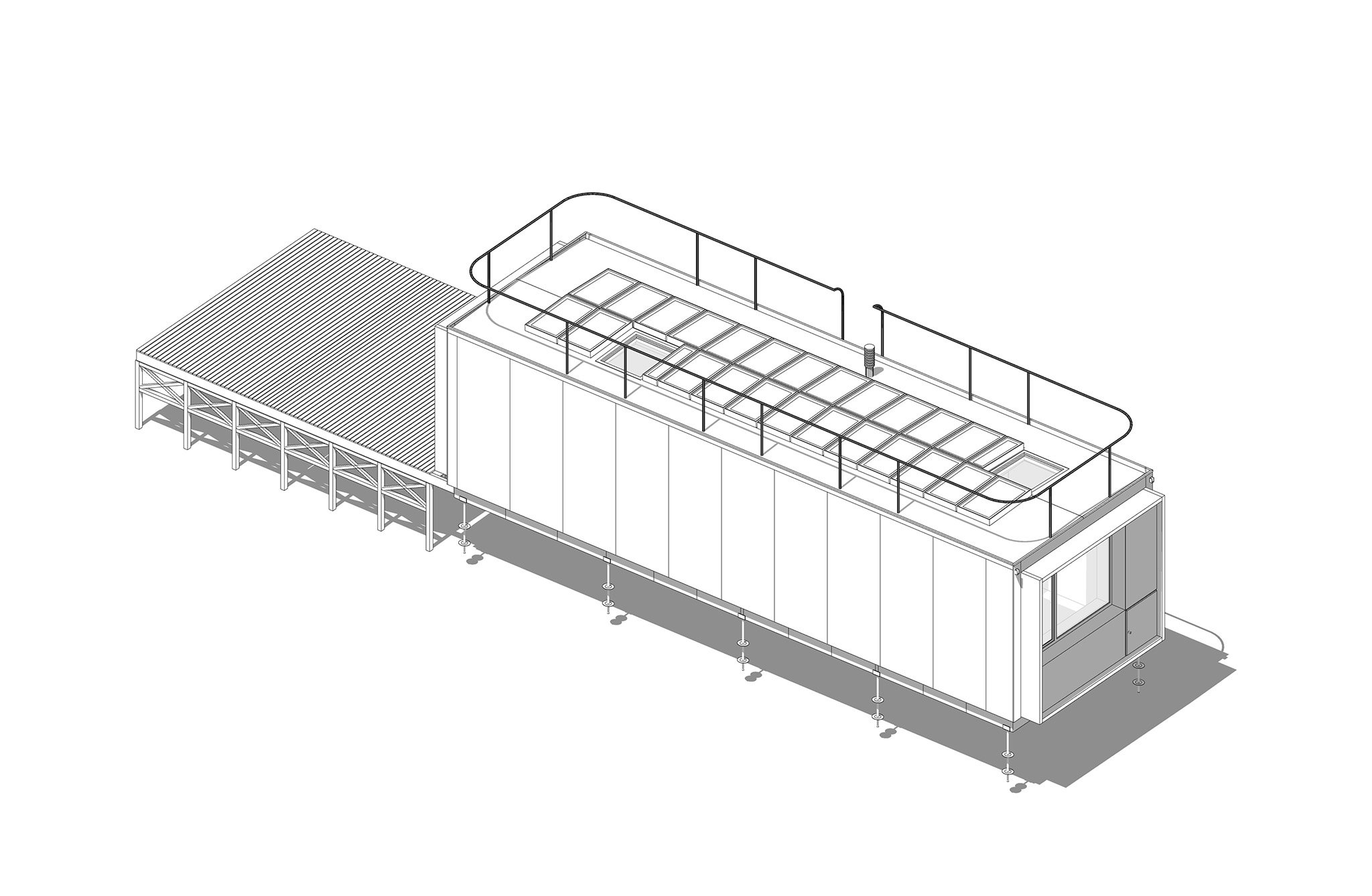
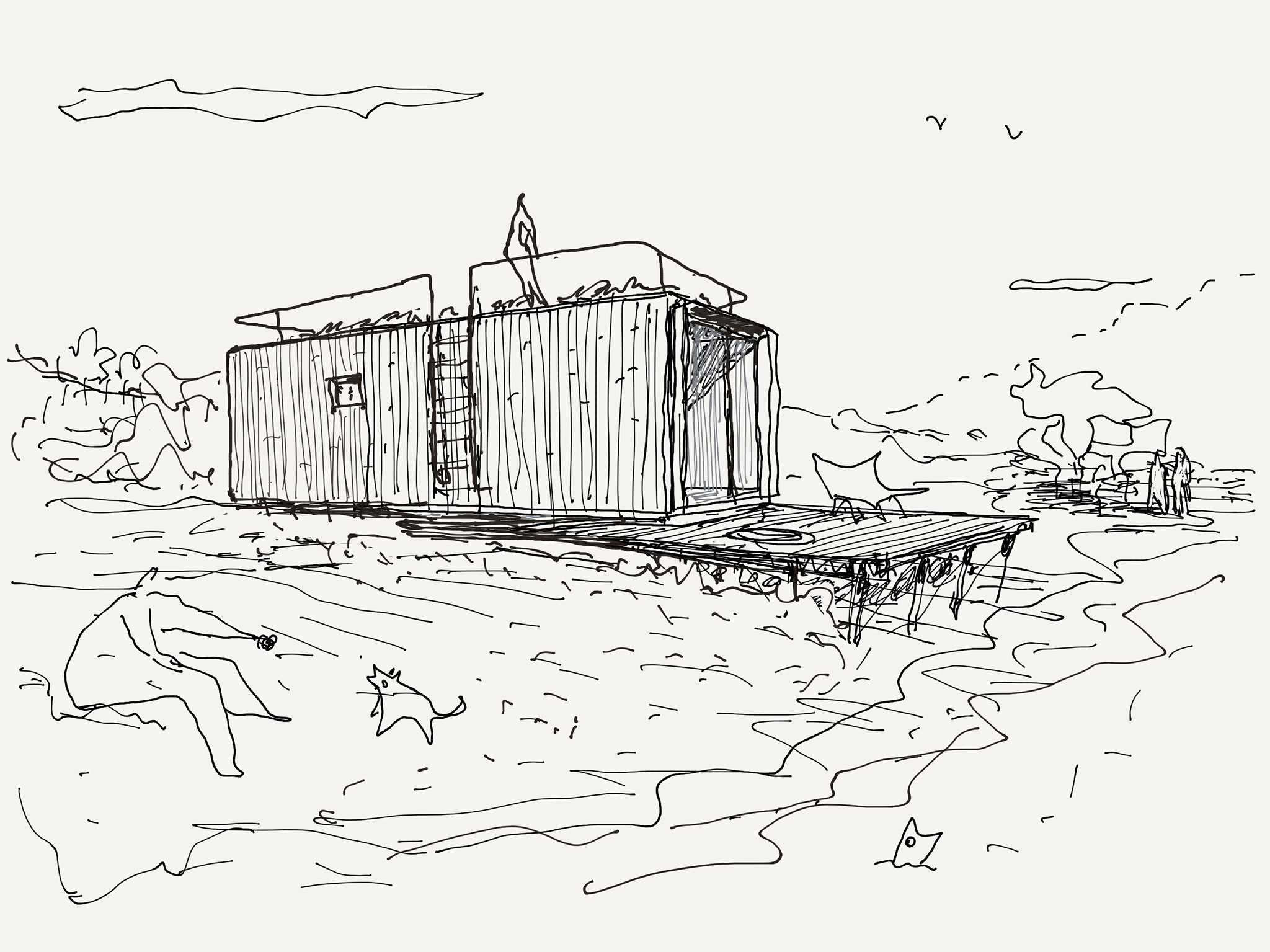
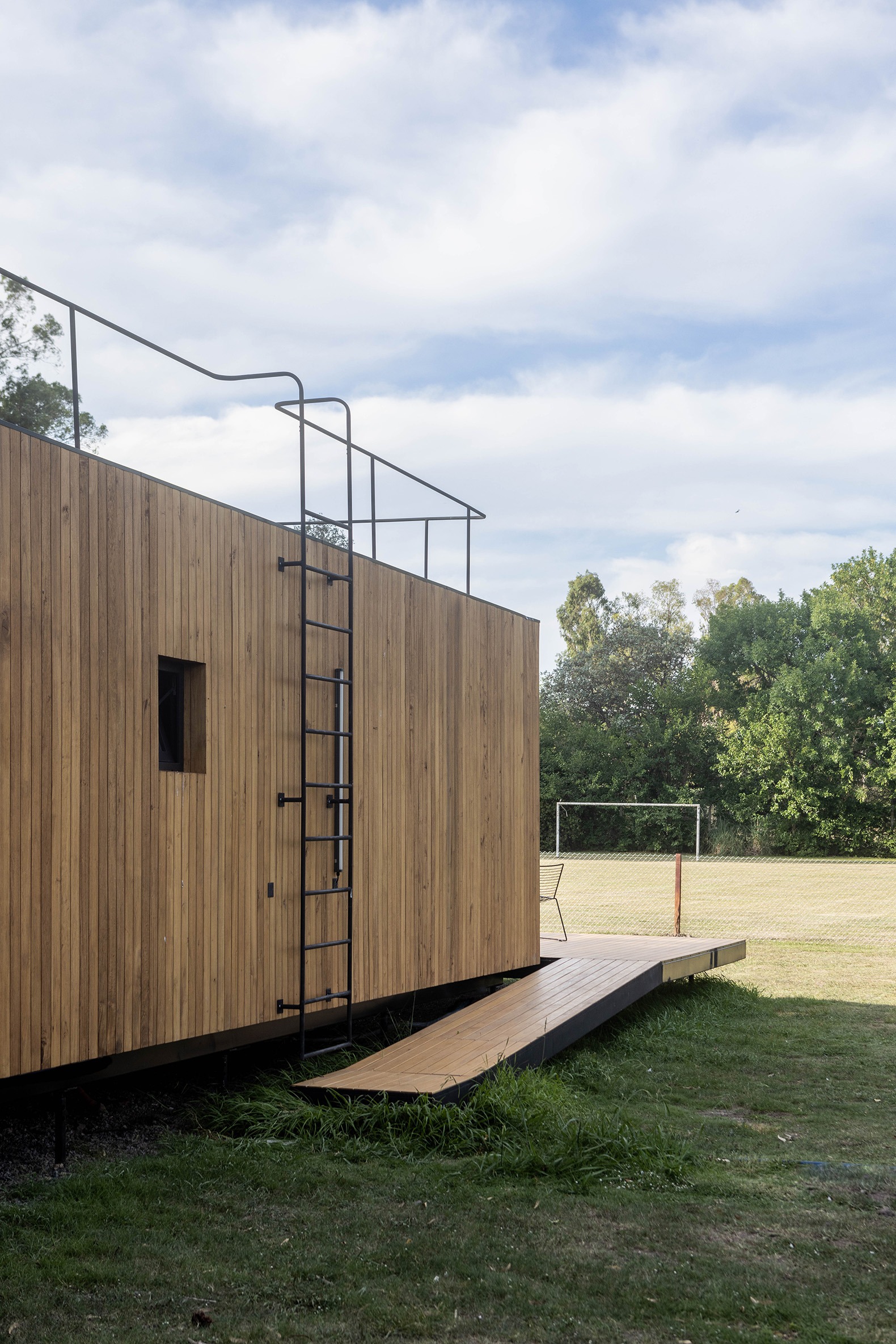
Outside, a sailor ladder on one side provides access to the green roof and the viewing platform, thus completing the entirety of the usable spaces.
The access ramp and an exterior platform, connected to the large front window and functioning as a patio, organize the outdoor furniture, and allow access to the staircase leading to the terrace without having any contact with the ground, creating a functional continuum between all the usable spaces, are added to the program as part of the annex systems already designed for these modules.