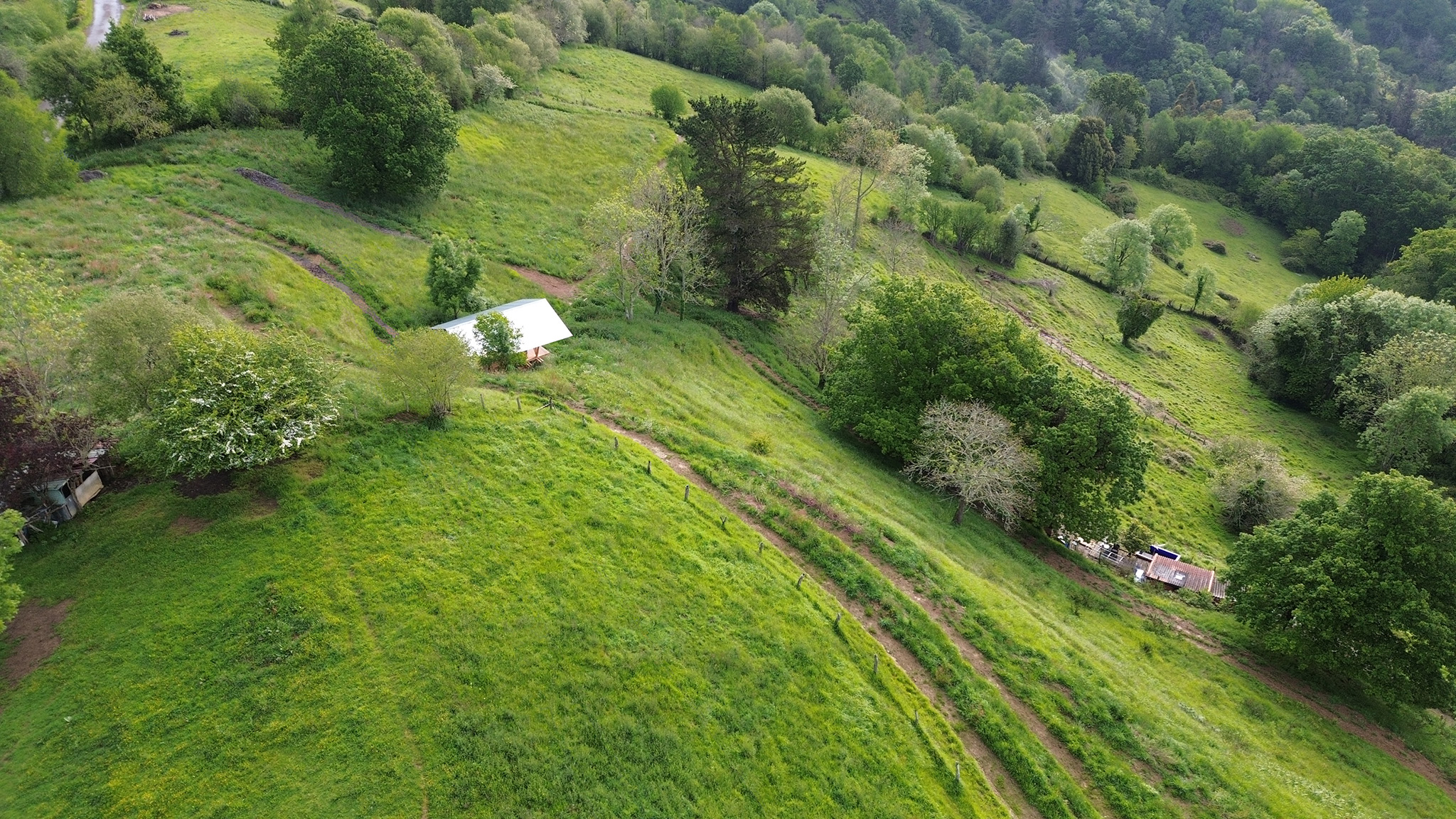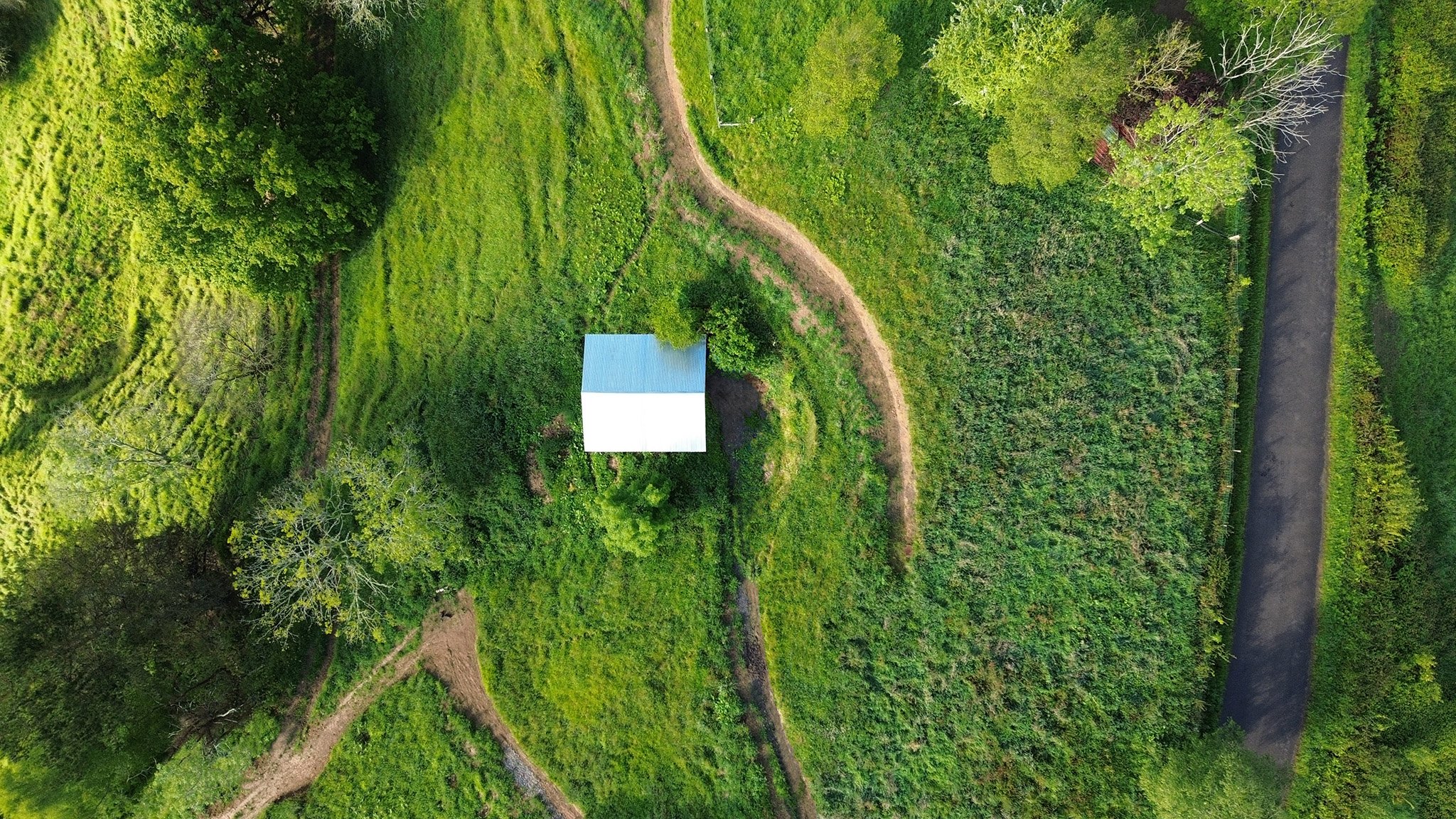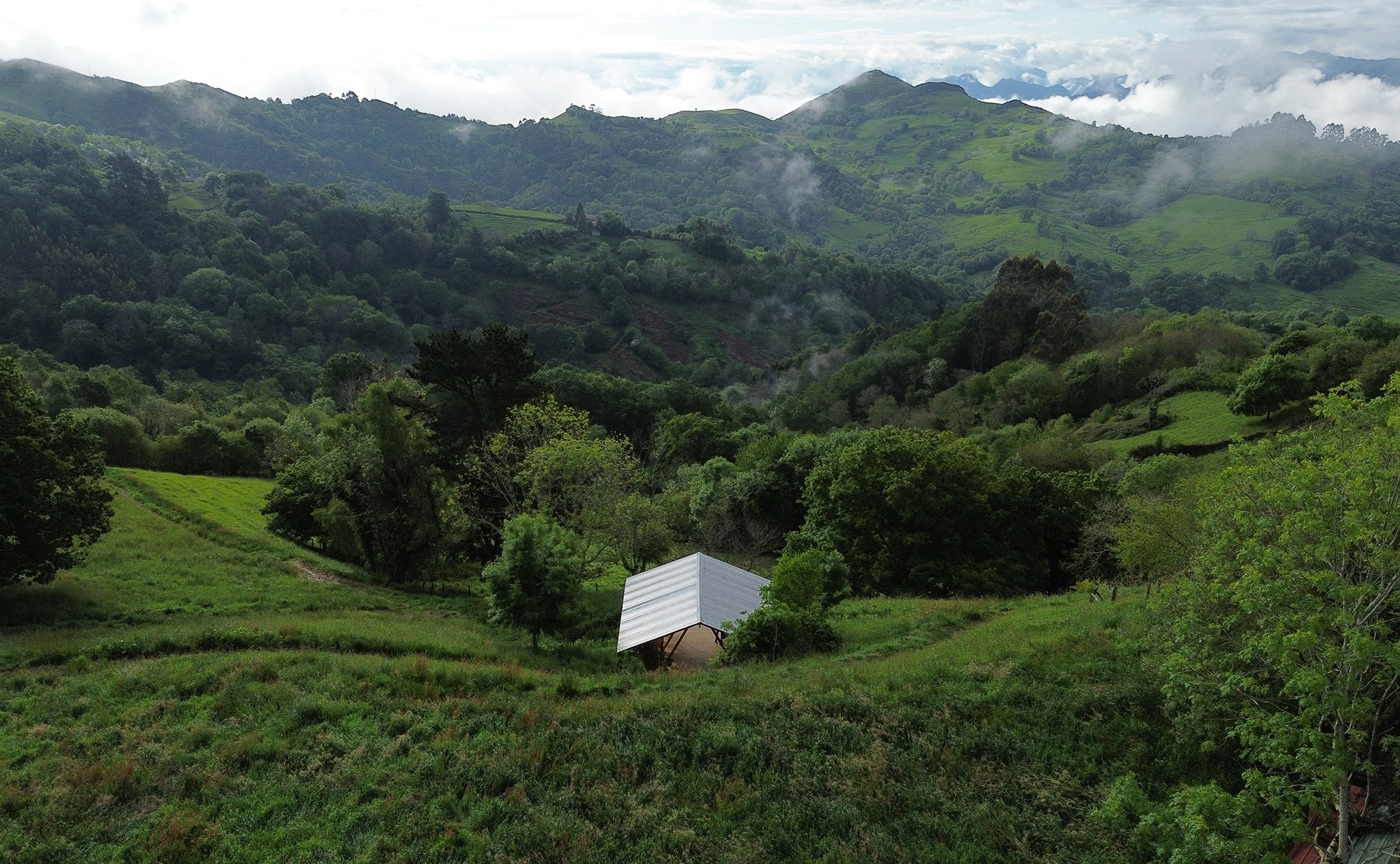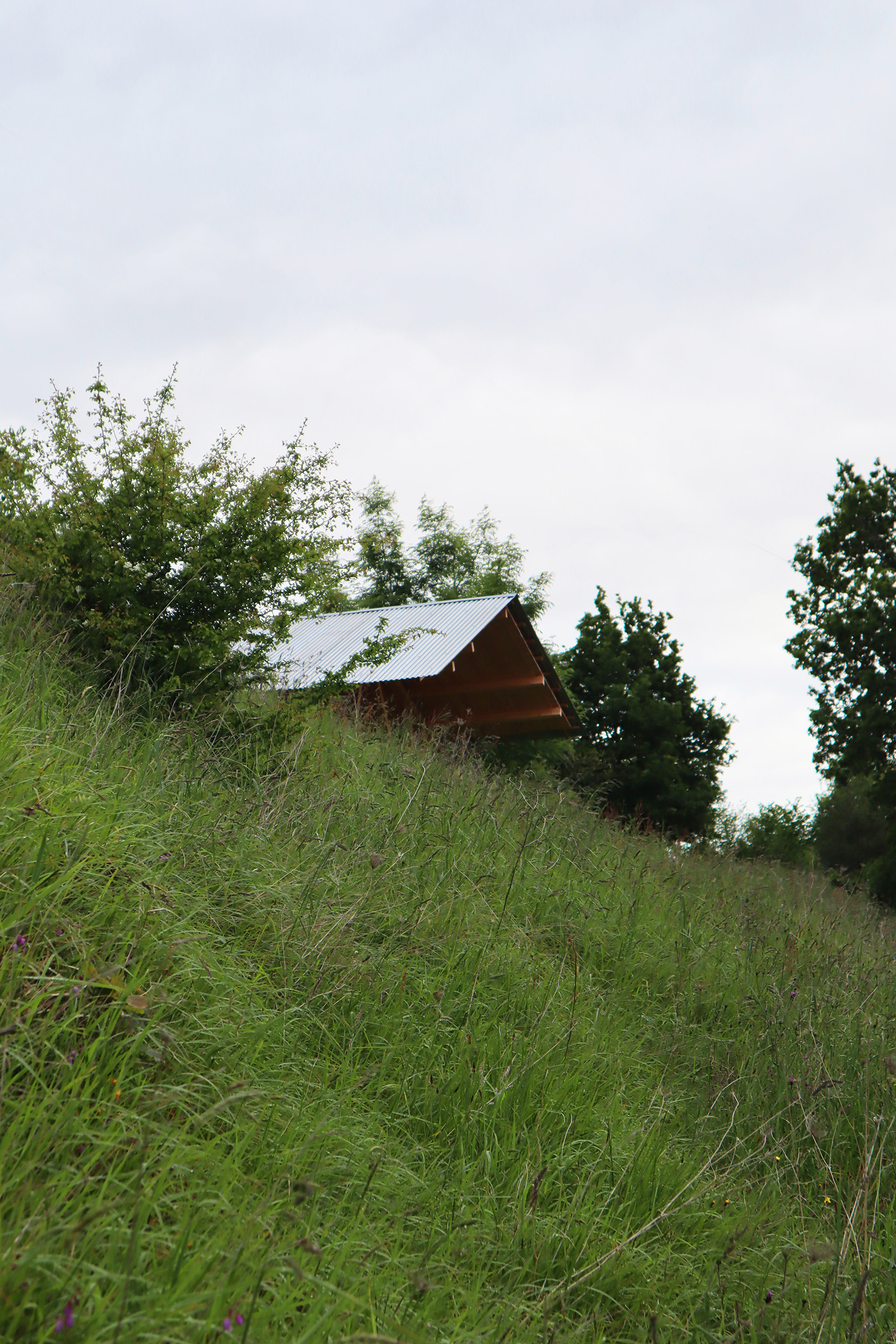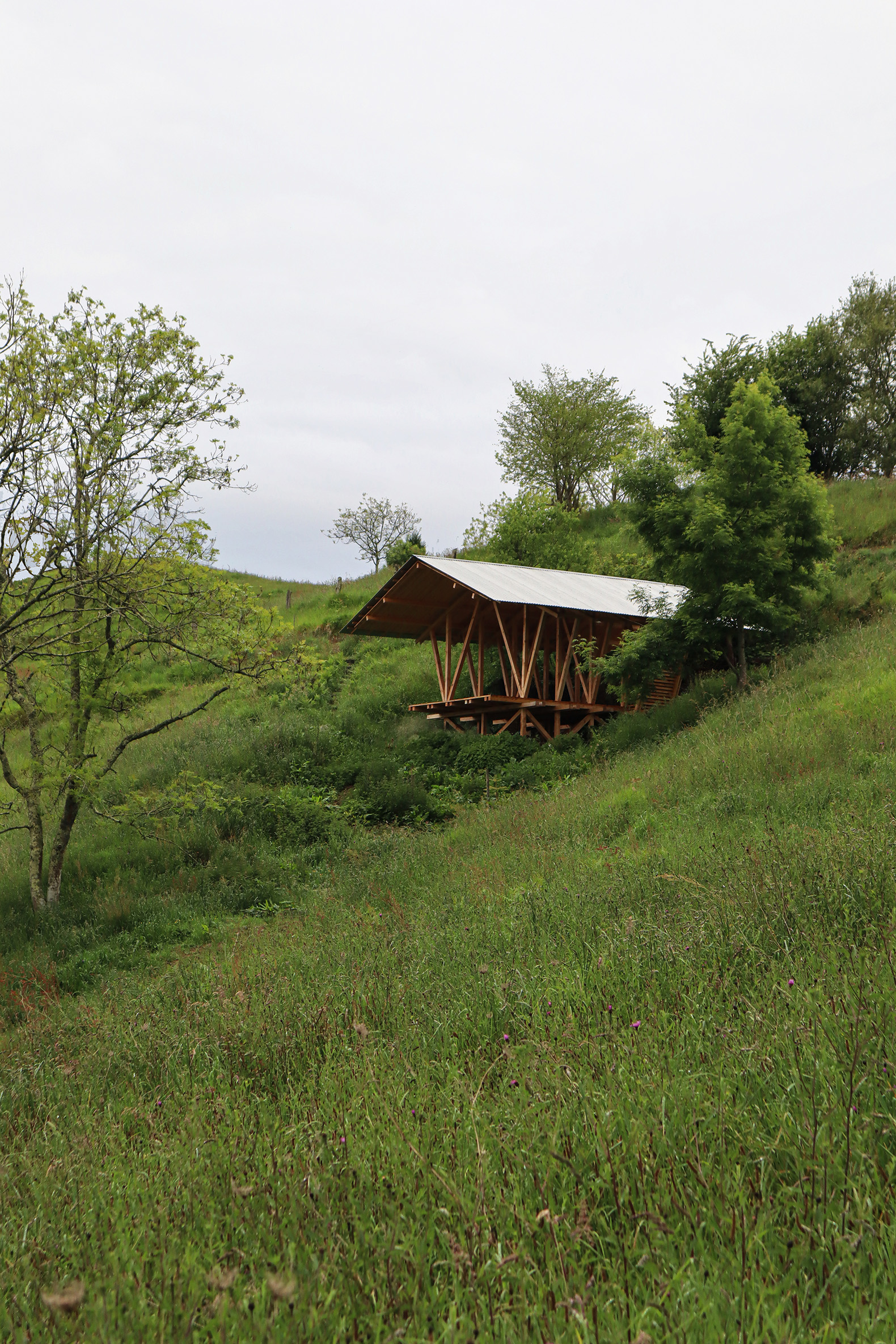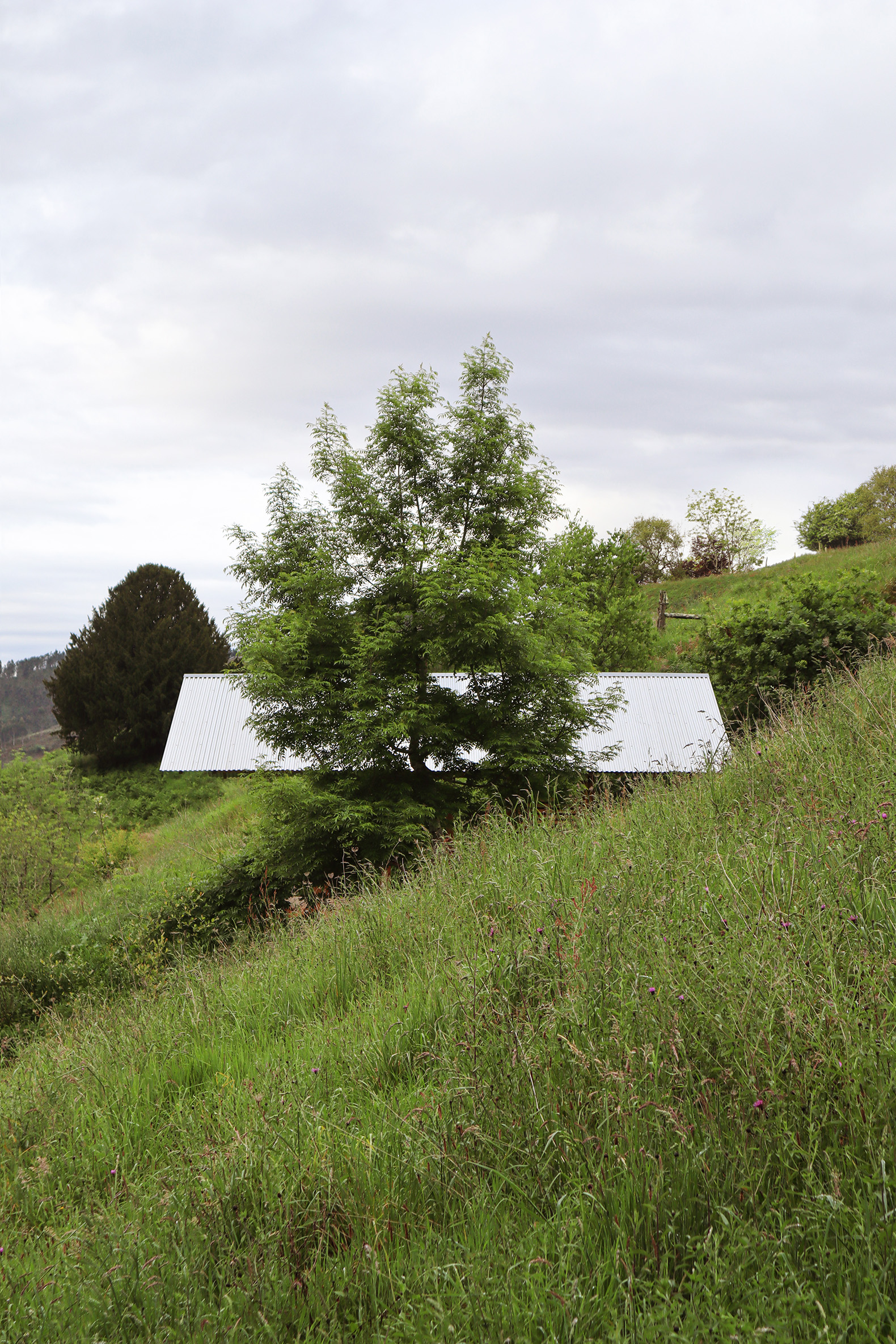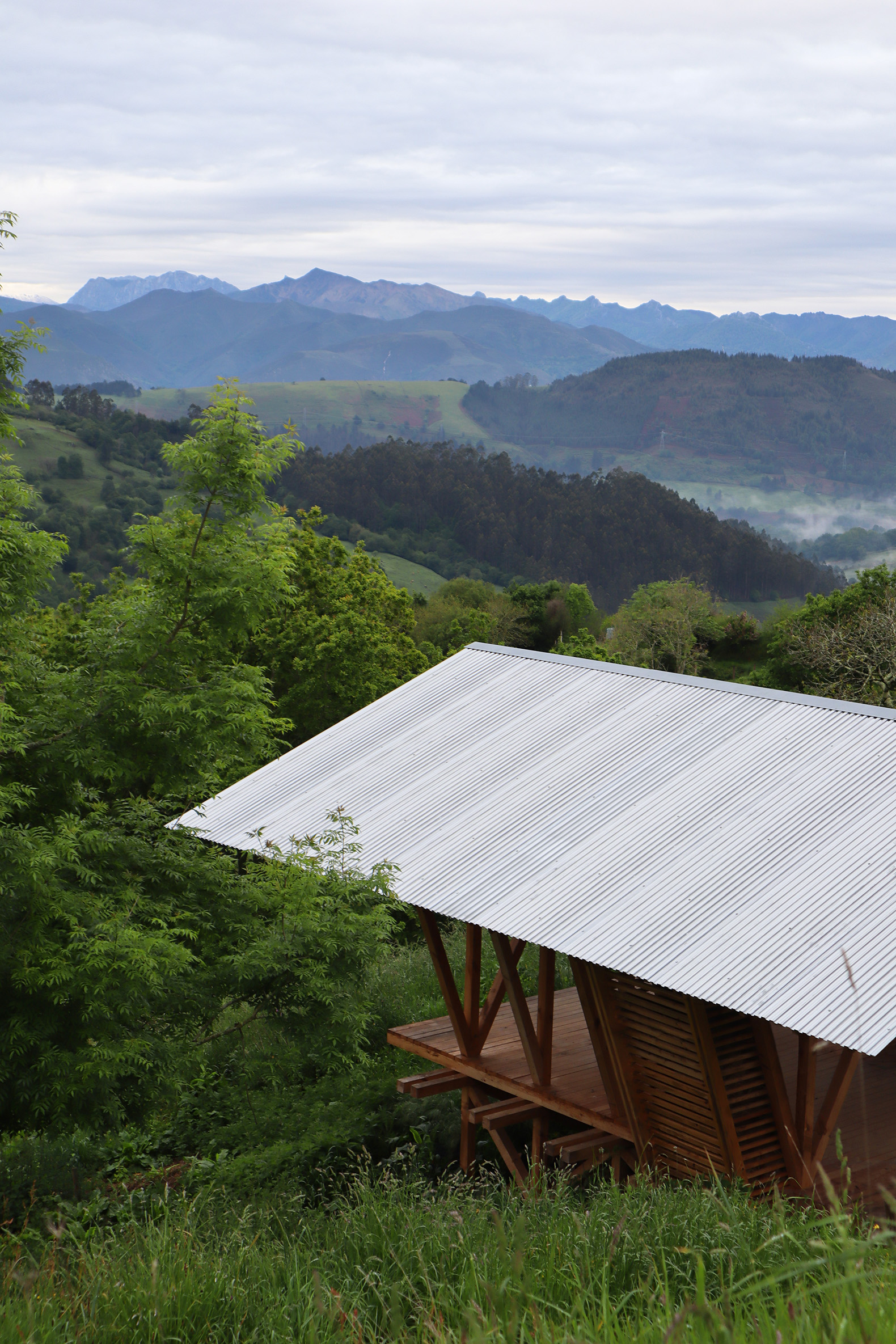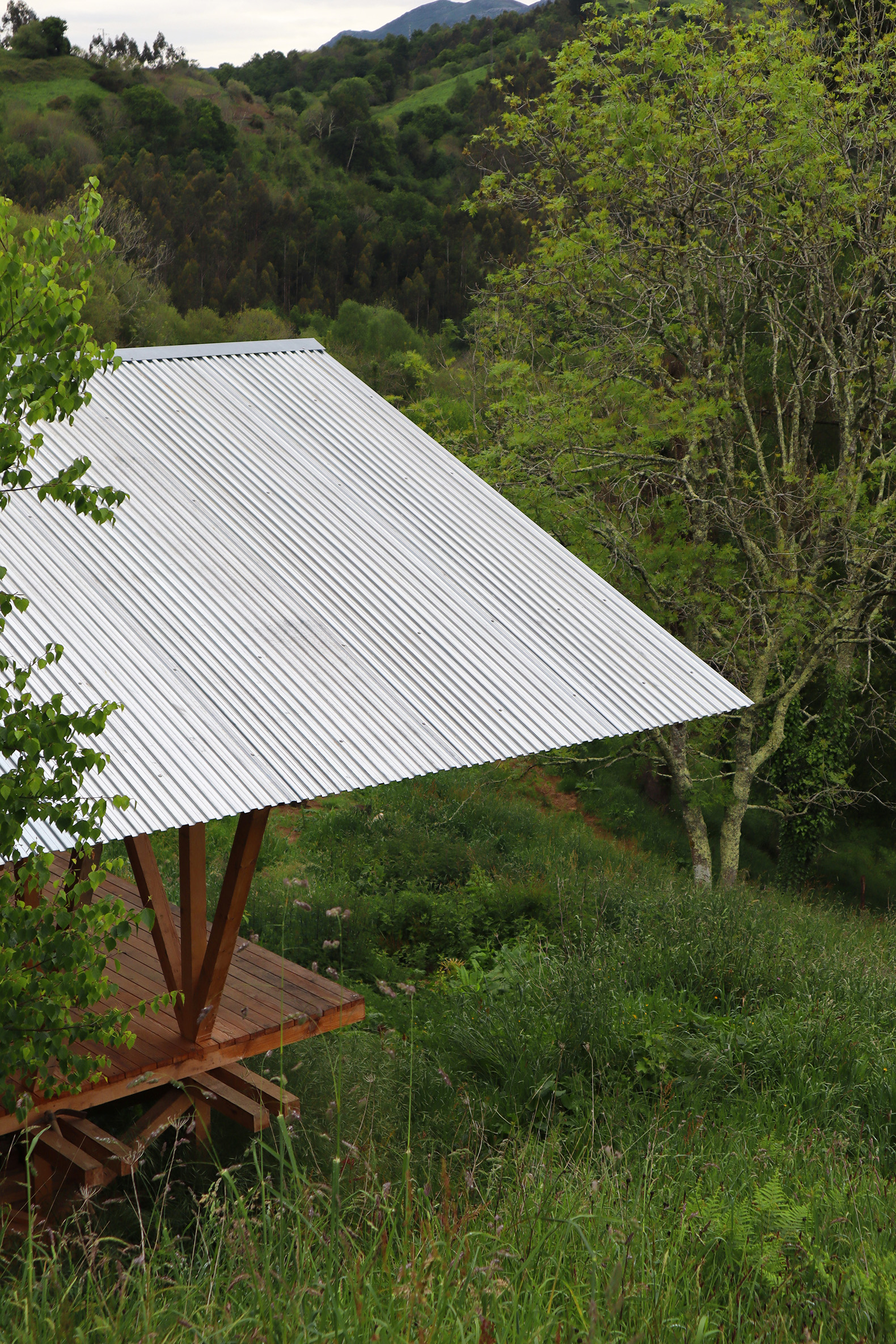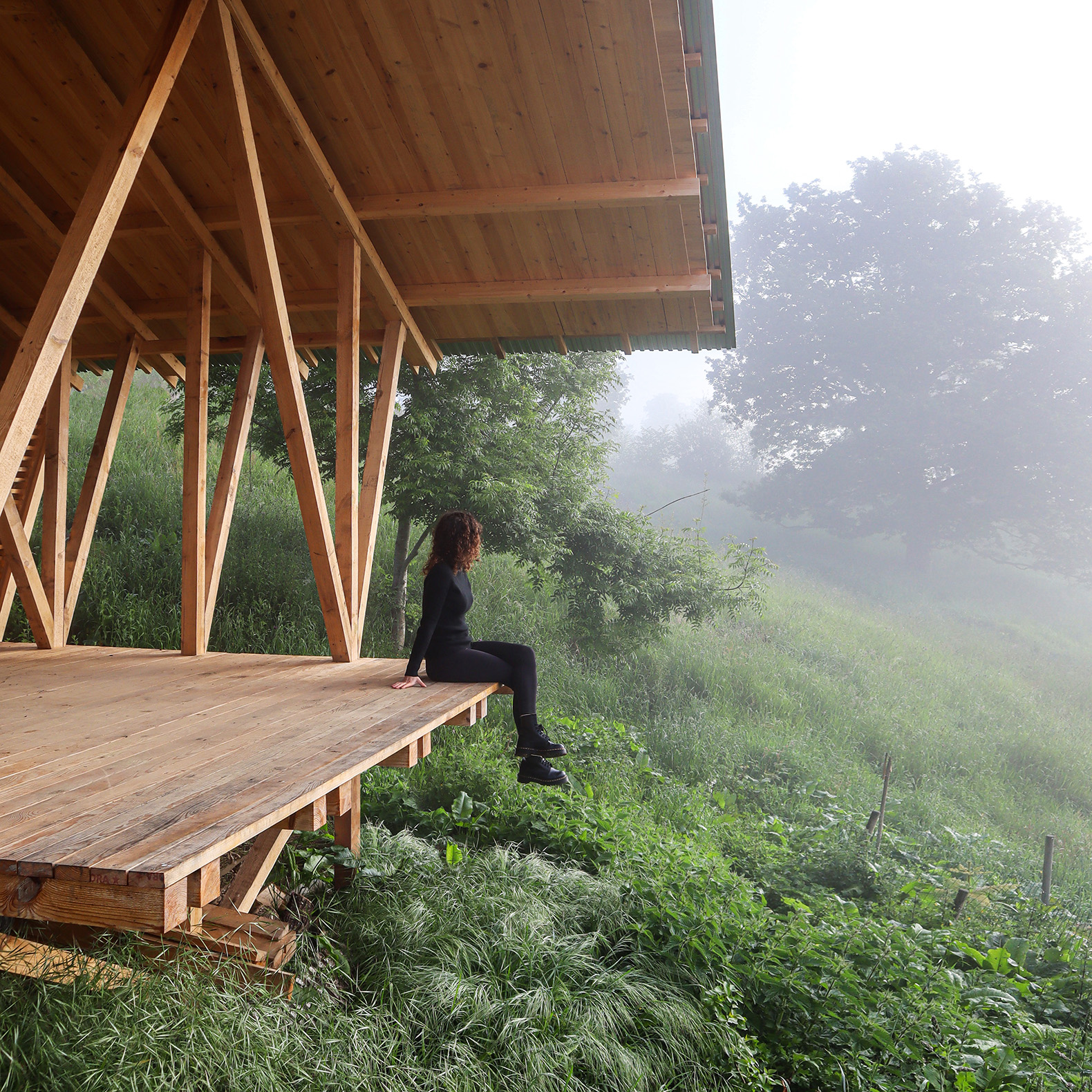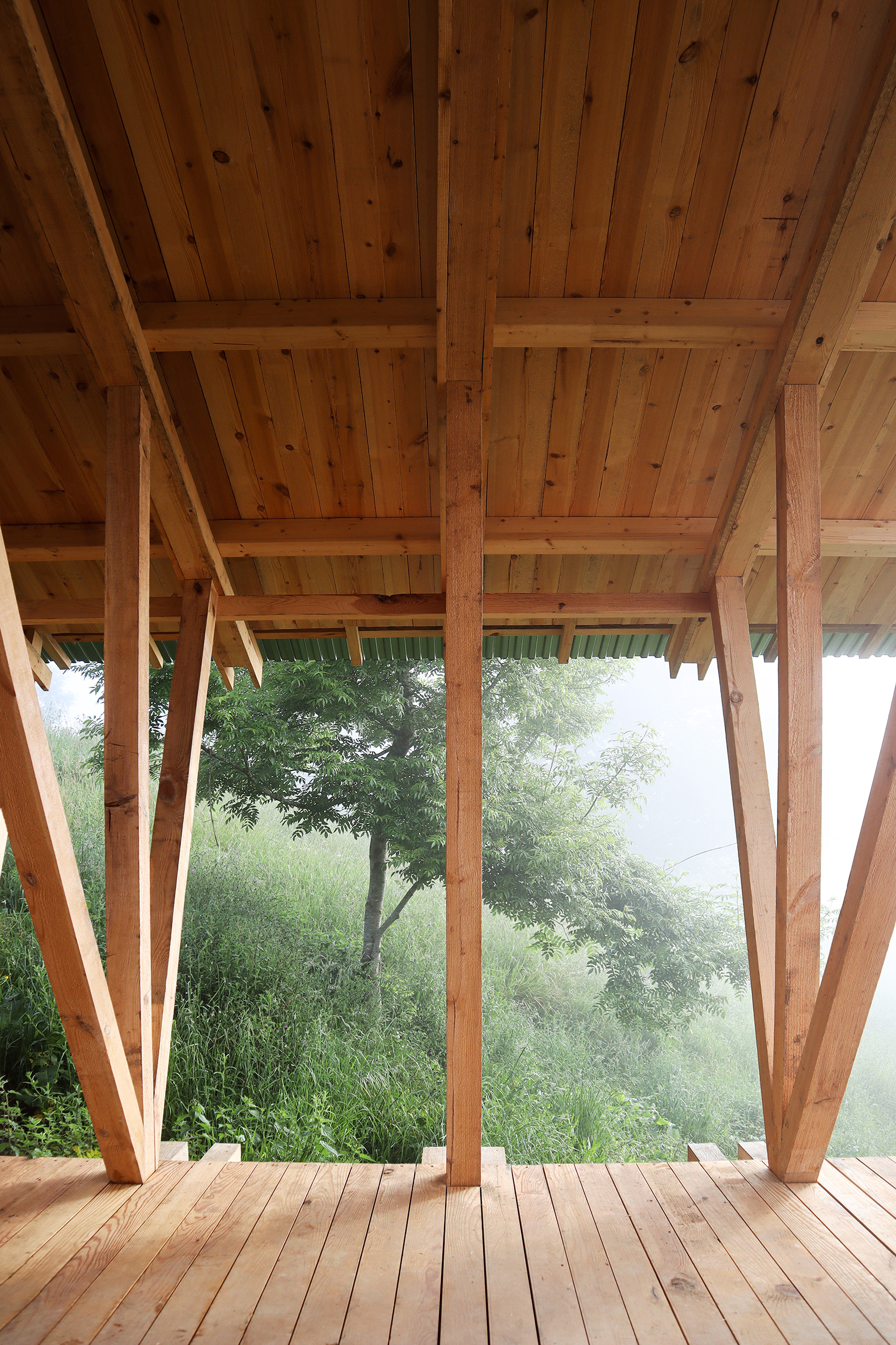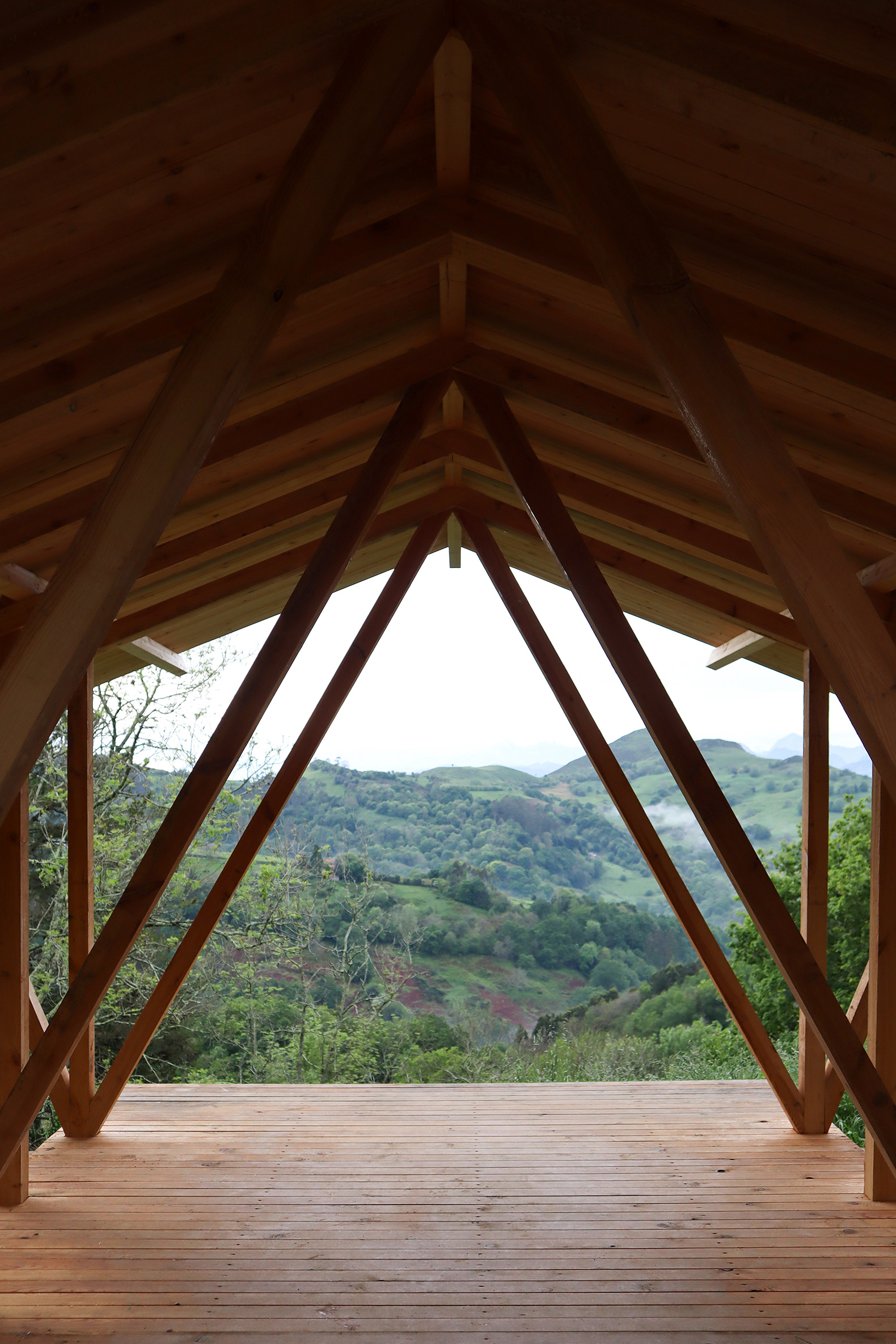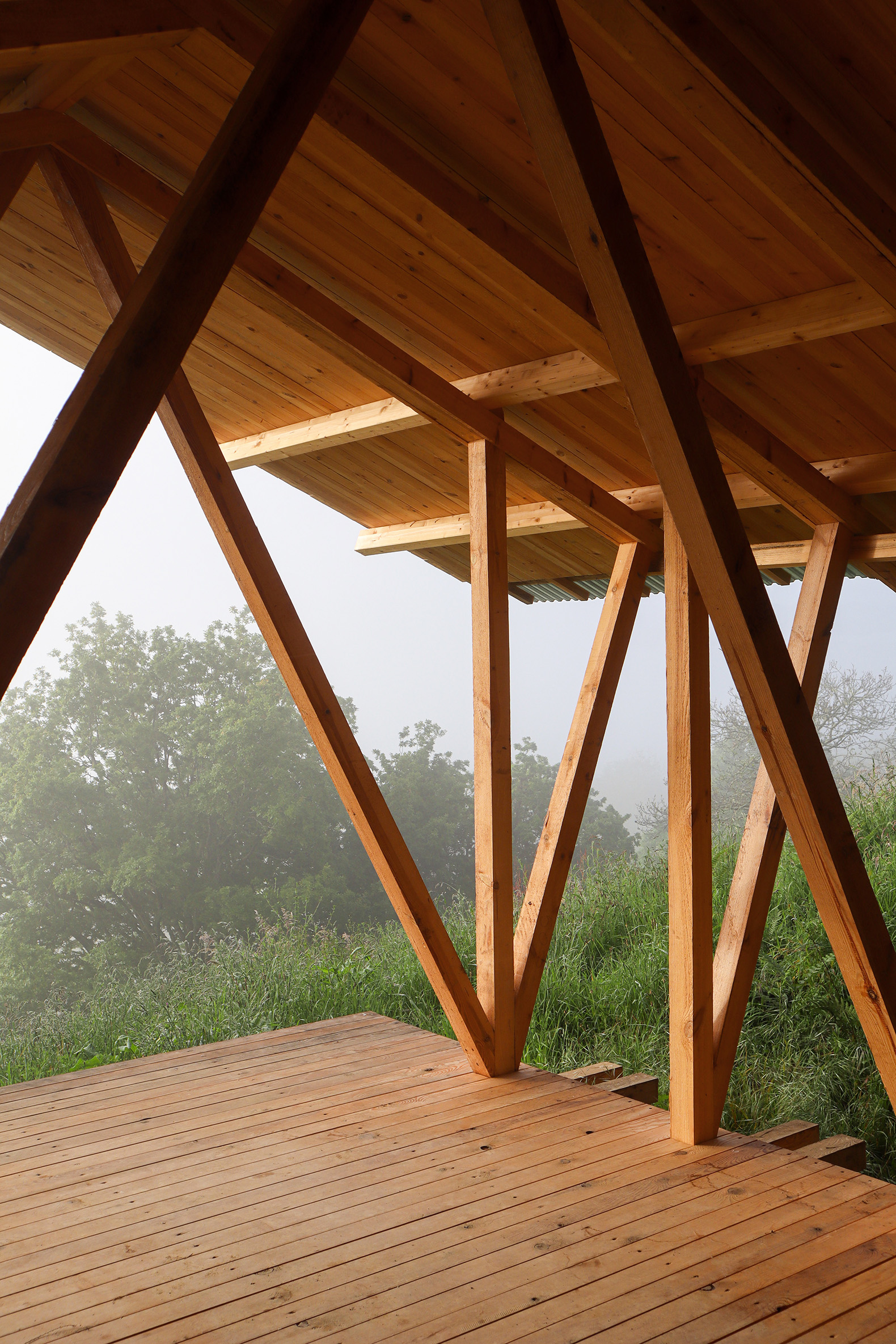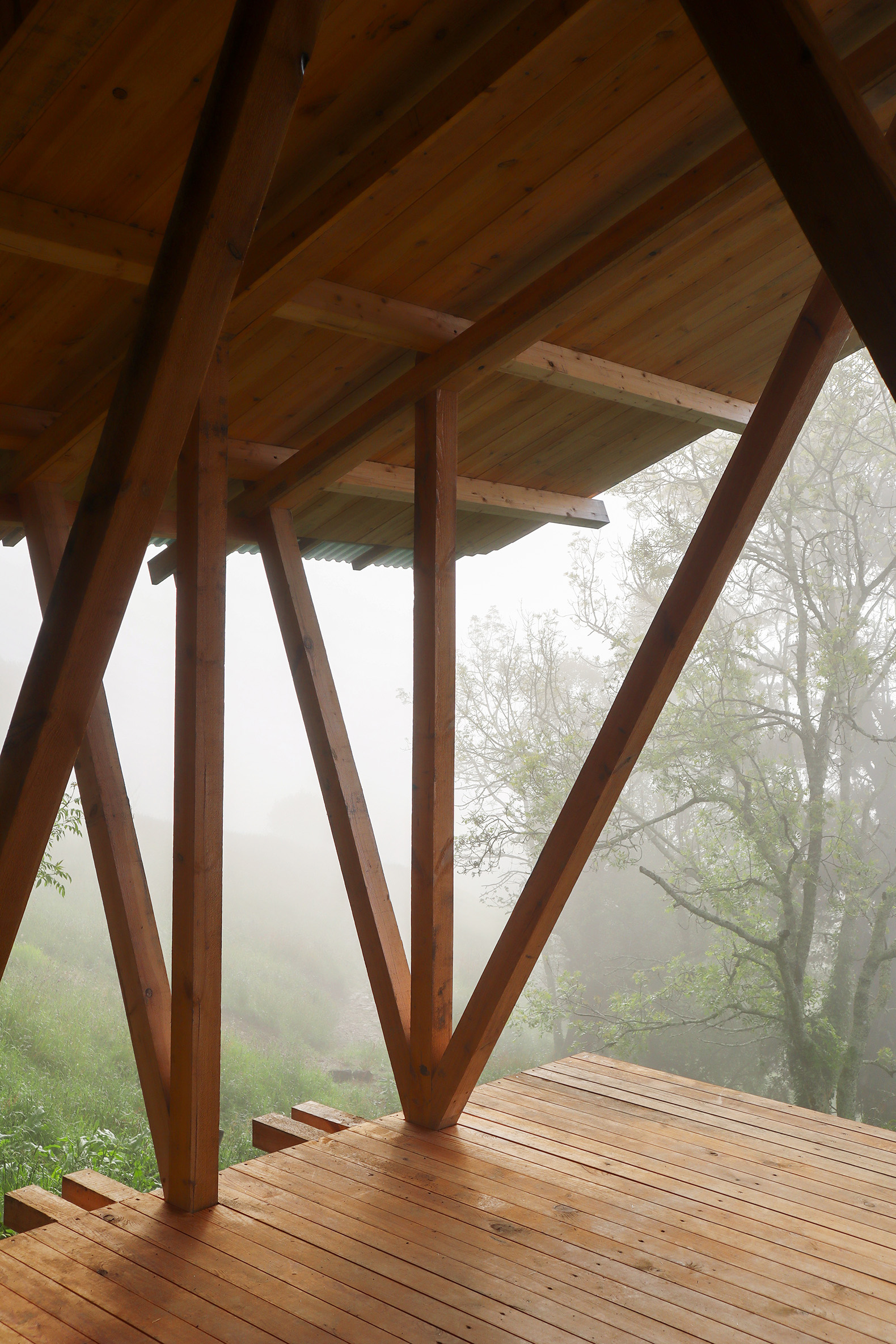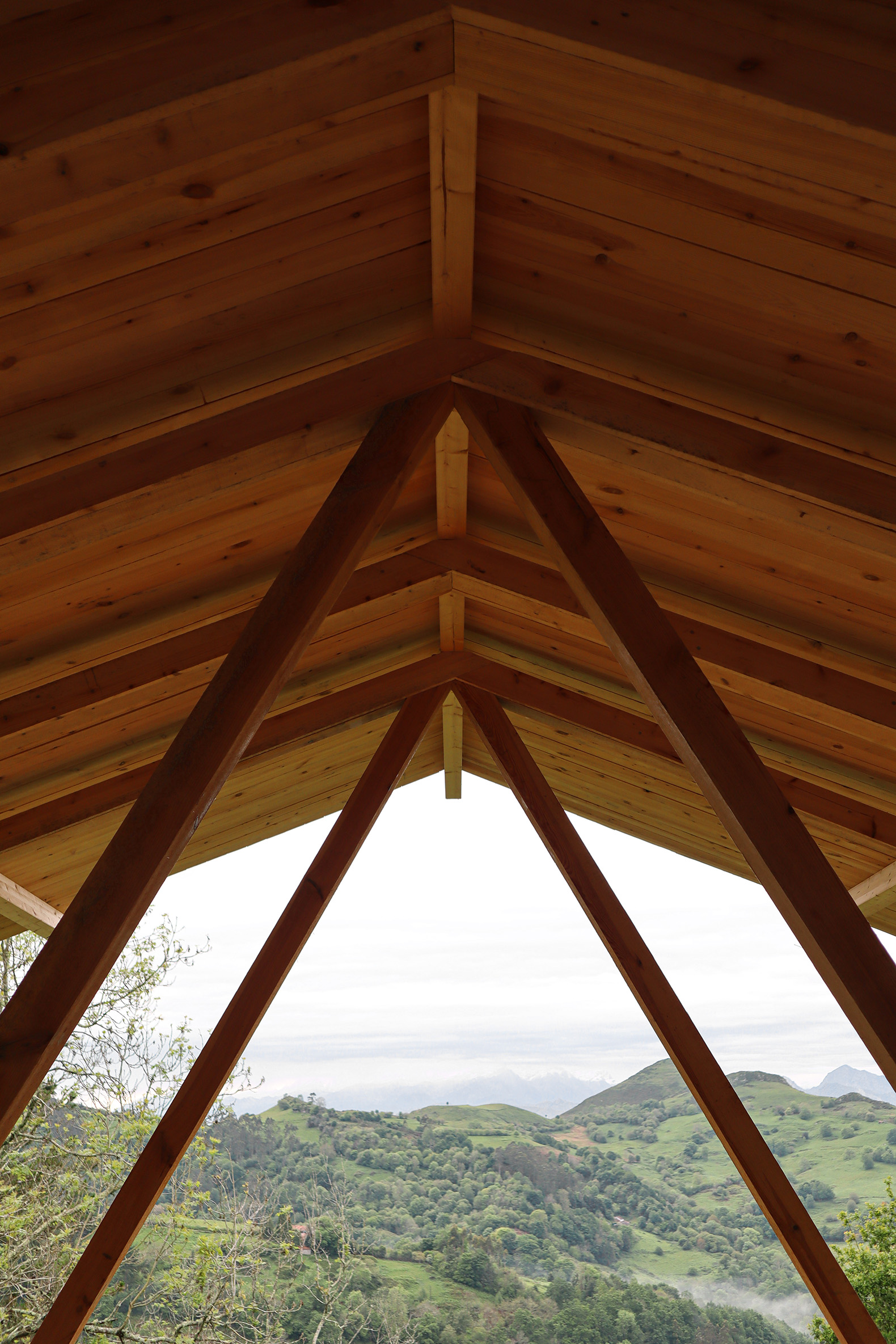
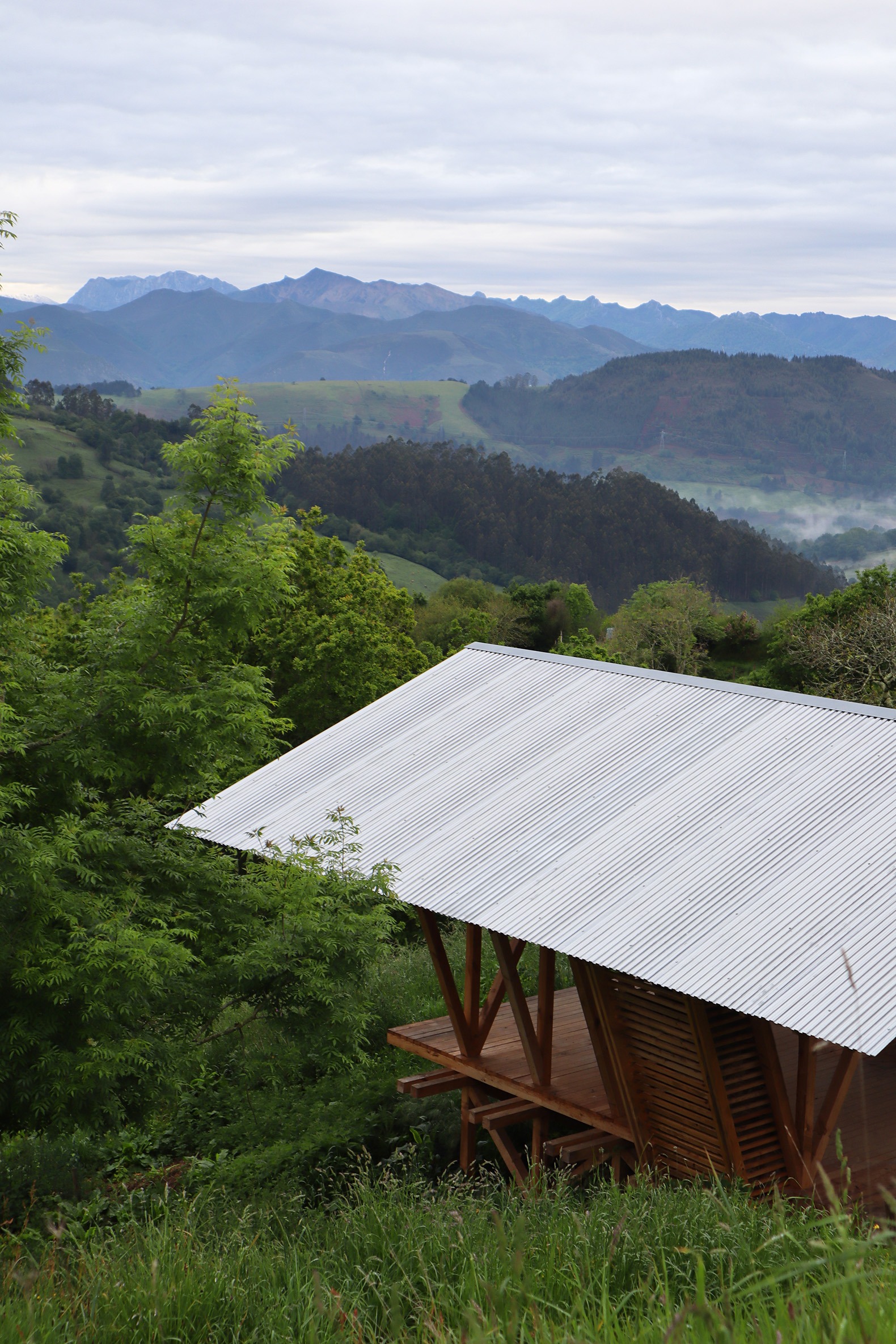
Deeply rooted in Asturian vernacular architecture, the workshop designed by Atelier Poem serves as an open classroom that also functions as the support infrastructure for an ambitious agroforestry program involving the planting of over 1,000 trees across 5 hectares. The Agropoetic Workshop reinterprets the efficiency of historical rural architecture, translating it into an essential and precise language.
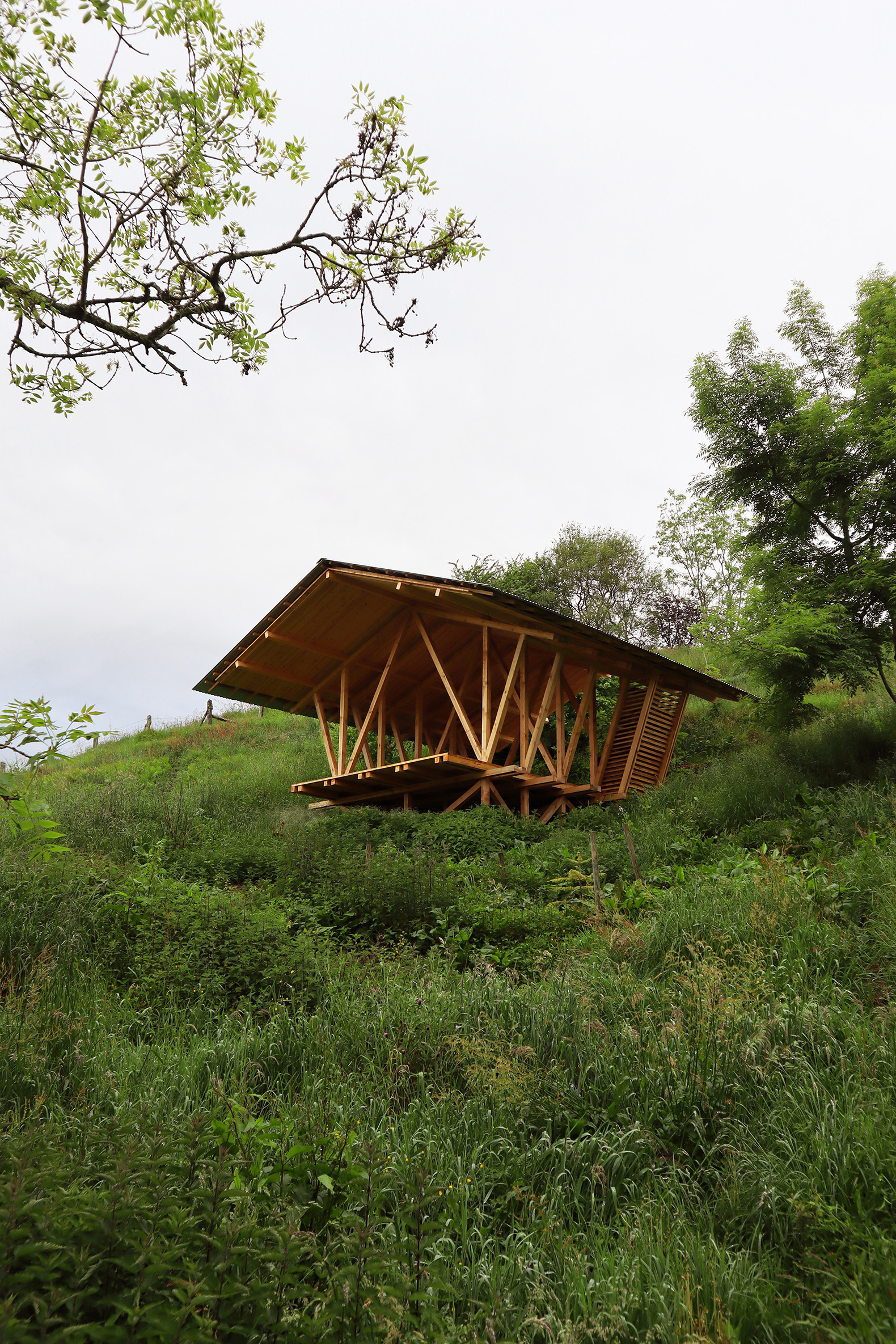
Built on the site of a former hayloft, the project is strategically composed of simple materials, elementary geometries, and a rational construction system. As a discreet structure that integrates respectfully into the landscape, the Agropoetic Workshop offers itself as an open and permeable refuge, permeated by wind, light, gazes, and people. From its quiet vantage point, the refuge contributes to the development of an educational model centered on direct experience of nature and the collective construction of knowledge.
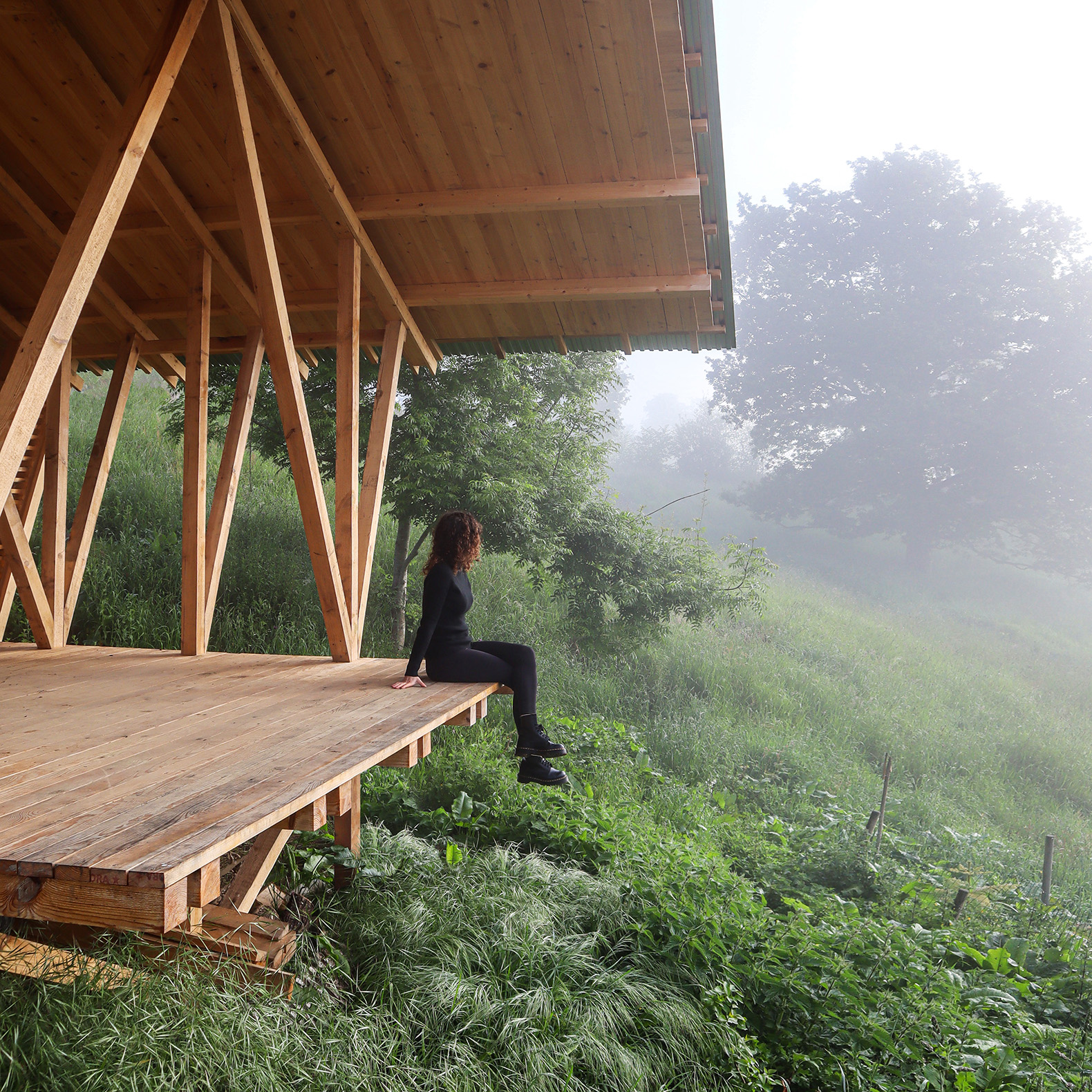
Taller Agropoético by Atelier Poem. Photograph courtesy of Atelier Poem.
Project description by Atelier Poem
In Cabranes, Asturias, Atelier Poem has realized the Taller Agropoetico for Foresta Collective—a space that integrates agricultural practice with pedagogy.
Foresta is a collective operating between Germany and Spain, promoting education grounded in direct experience of nature. Through artistic residencies and workshops, they develop projects that engage artists, educators, and local communities in shared learning processes, weaving together creative practices, environmental sustainability, and territorial engagement.
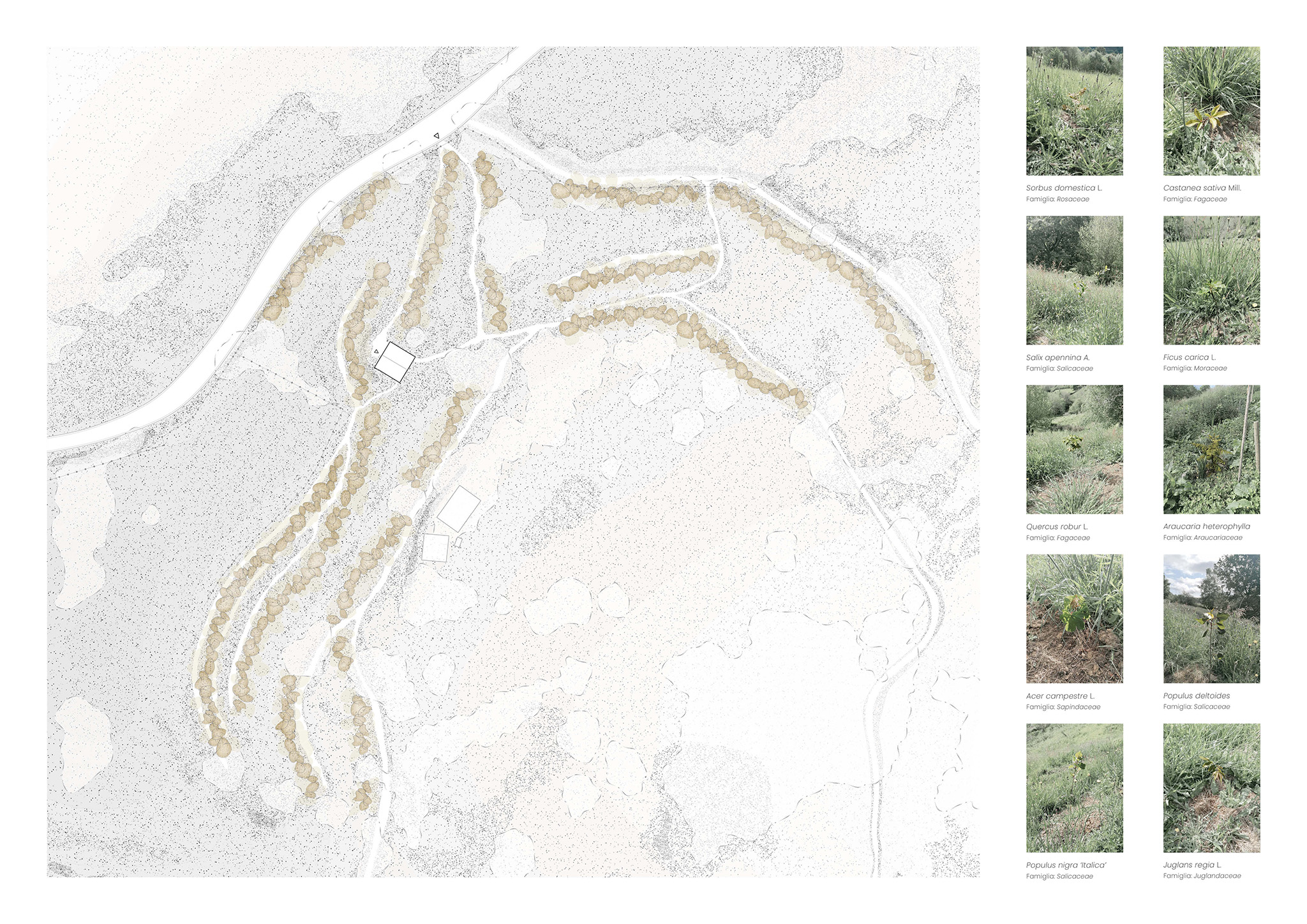
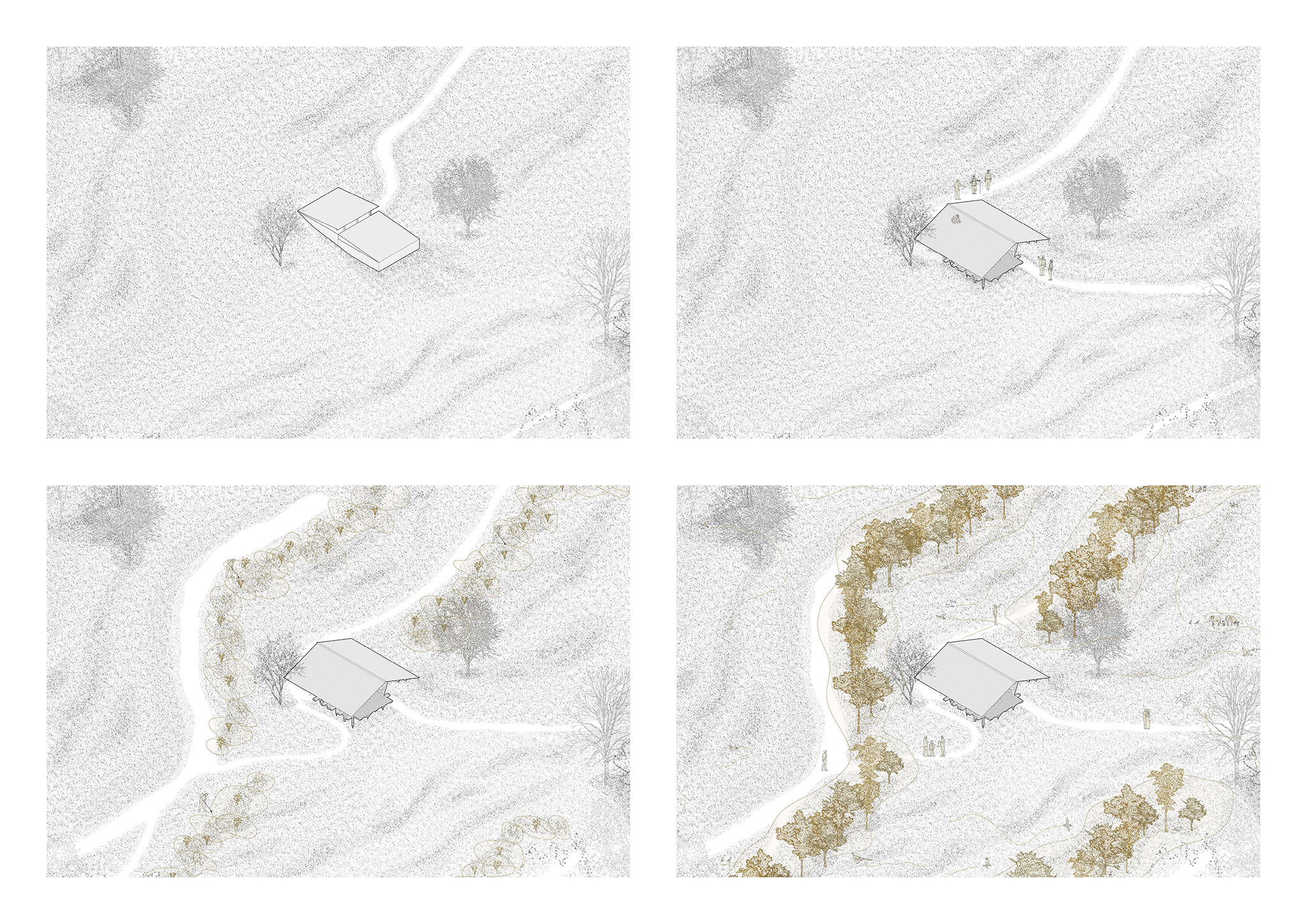
The Taller Agropoetico responds to an agroforestry program involving the planting of over 1,000 trees across 5 hectares. The structure serves as a landmark within the emerging forest: a space where the community shares experiences and observes the landscape's transformation over time. The pedagogical dimension permeates the entire process: from the construction site to the educational workshop, where apprentices worked alongside local master carpenters, to the tree planting structured as a collaborative workshop involving the community, agronomists, and botanists.
The project addresses a dual functional requirement: it provides a flexible covered space for workshops and collective activities, while also offering storage for tools needed for planting and harvesting. This dual purpose manifests in an architecture that maintains close dialogue with the natural and rural landscape, serving as a bridge between pedagogy and territorial transformation.
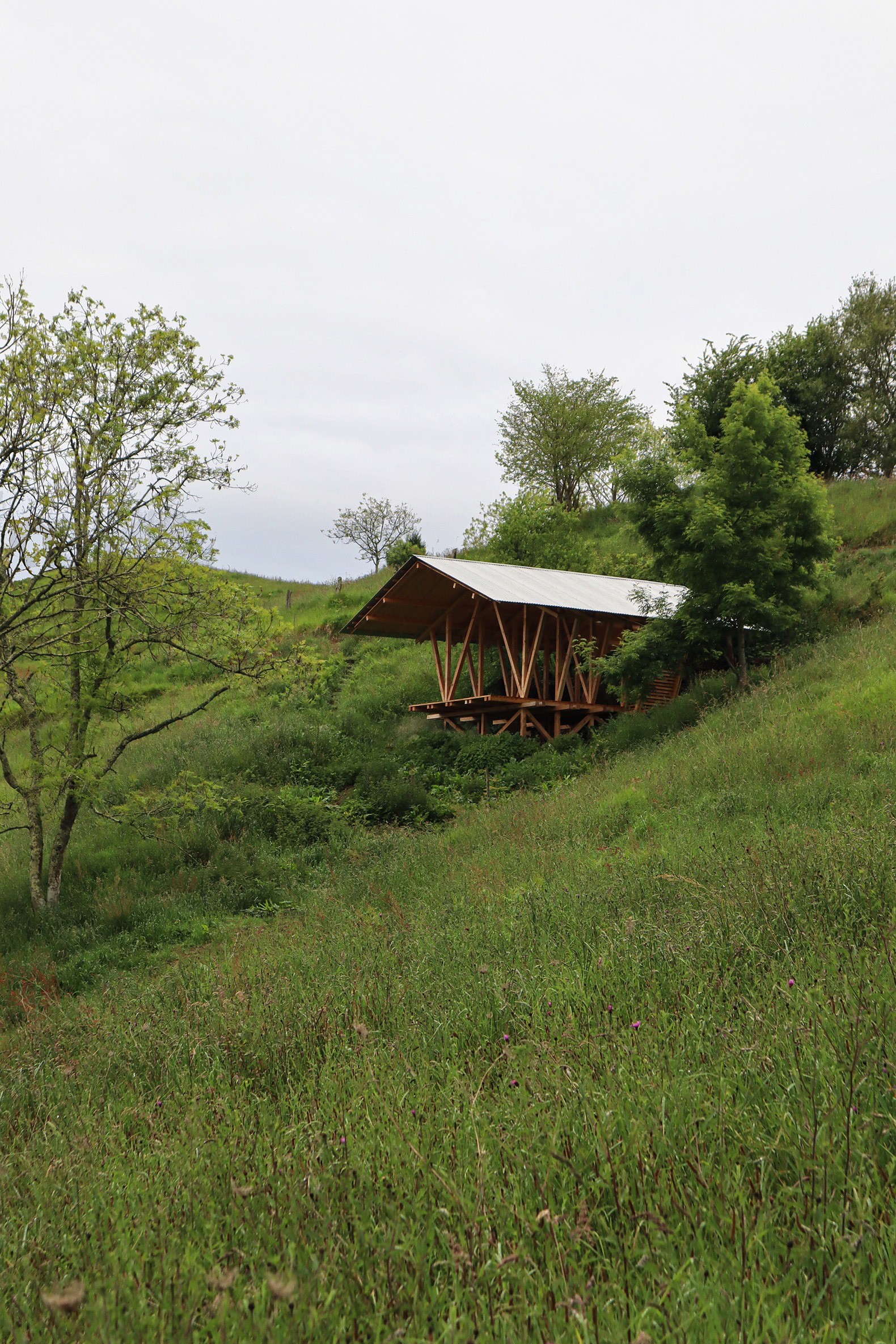
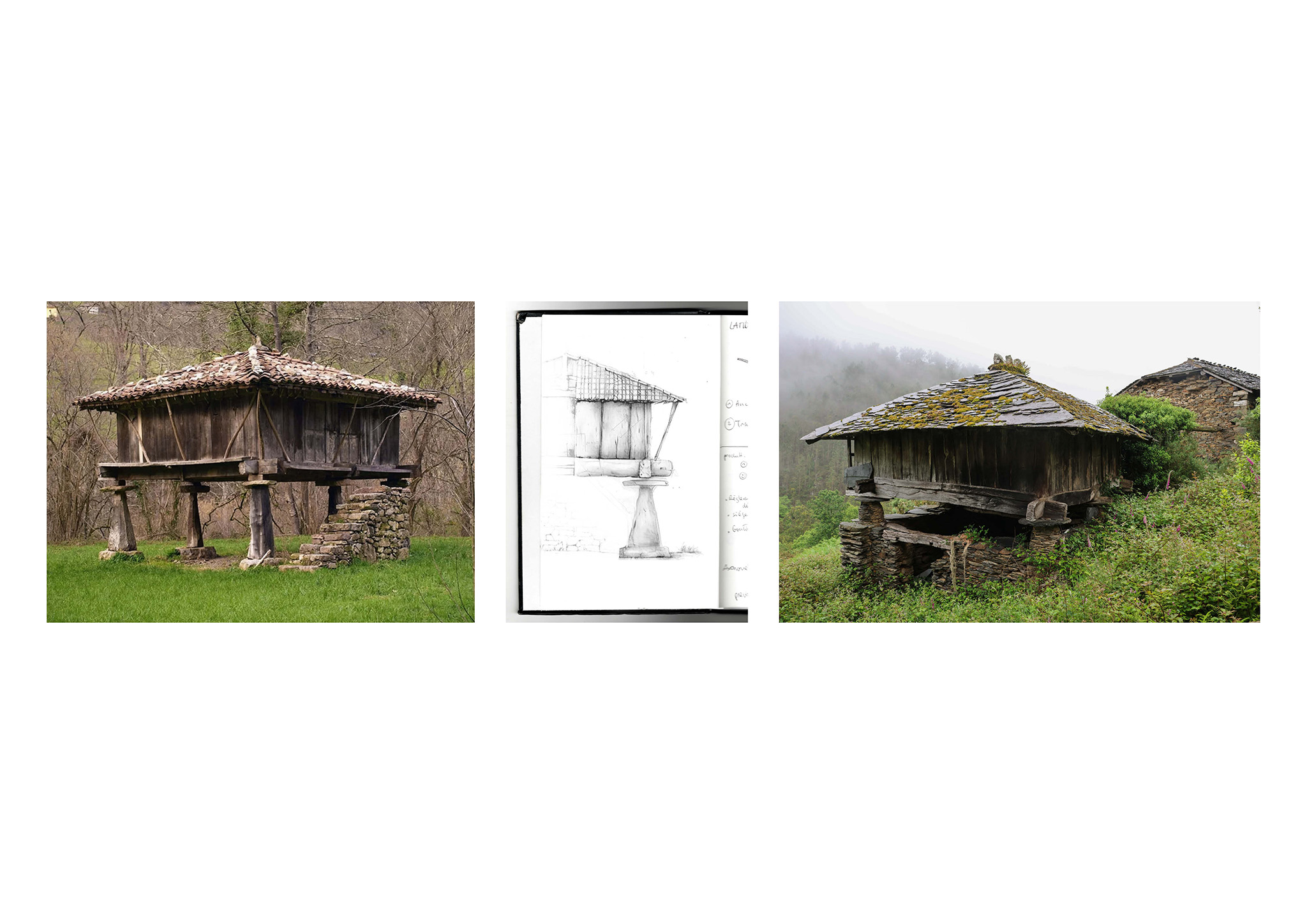
Built on the footprint of an old pajar (traditional barn), the project emerges from in-depth study of Asturian vernacular architecture, with particular attention to hórreos—small-scale rural structures dedicated to agricultural storage. Drawing from this constructive knowledge and Asturian folk imagery, the Taller Agropoetico translates the efficiency and durability of historic rural architecture into a minimalist, essential language.
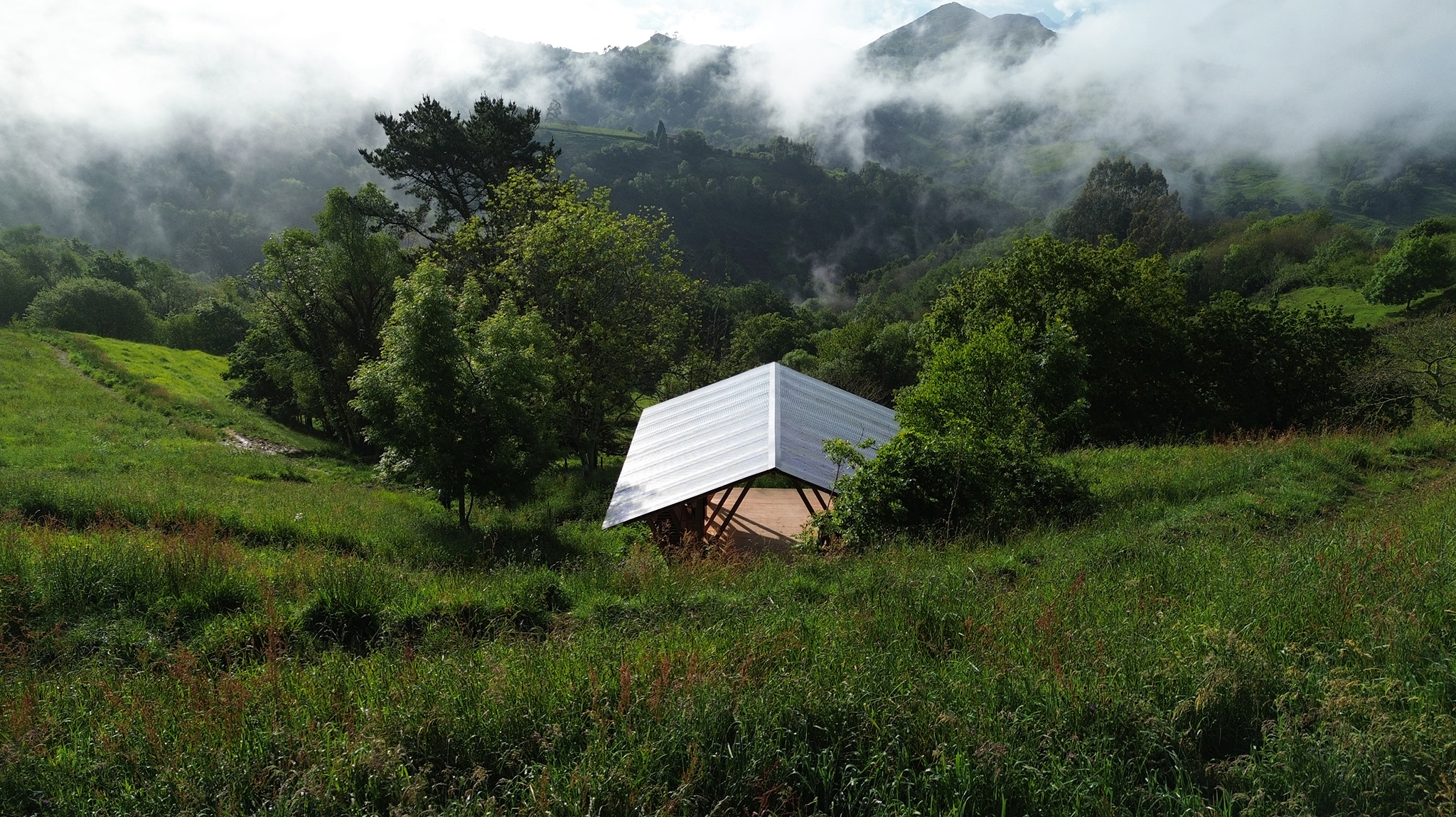
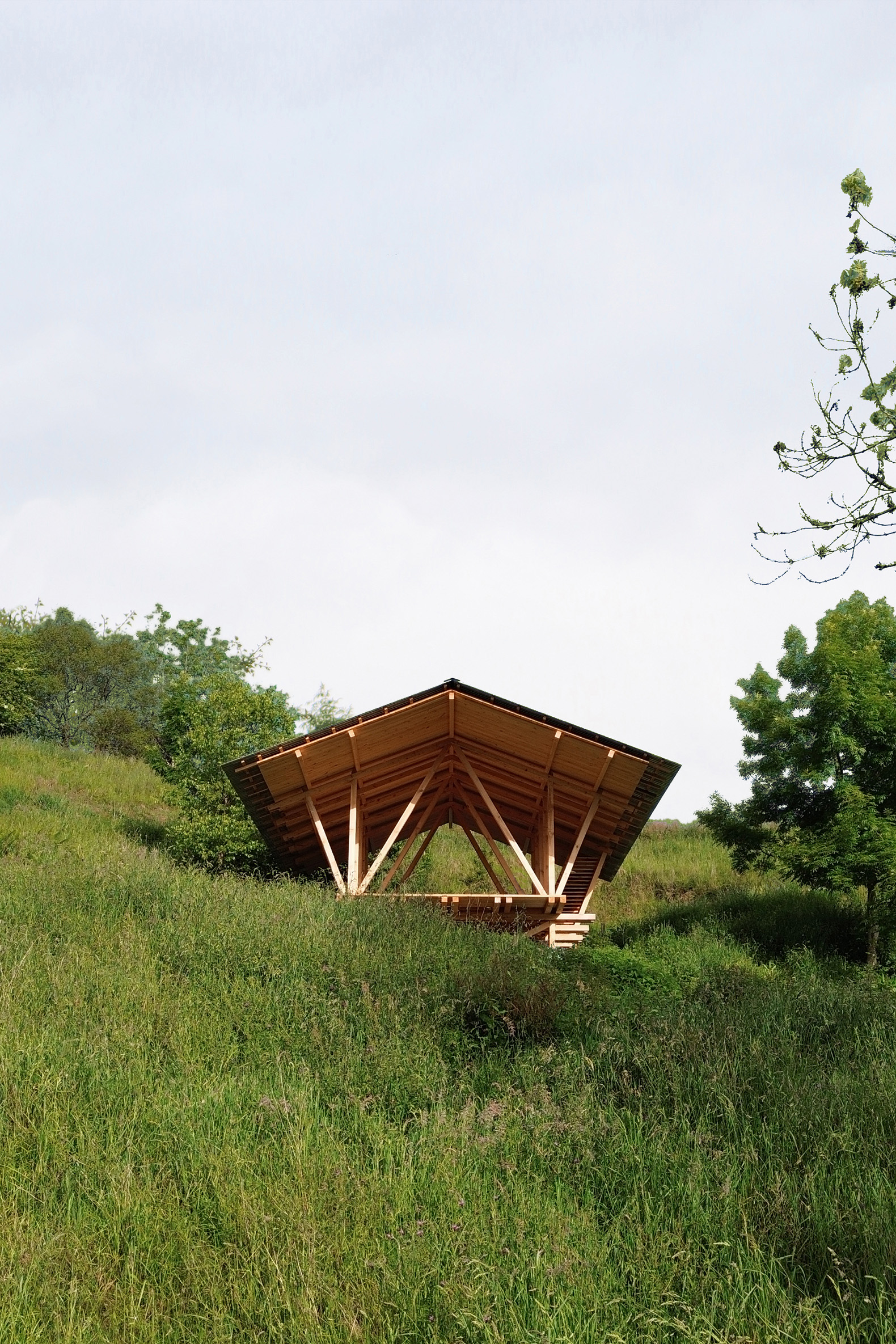
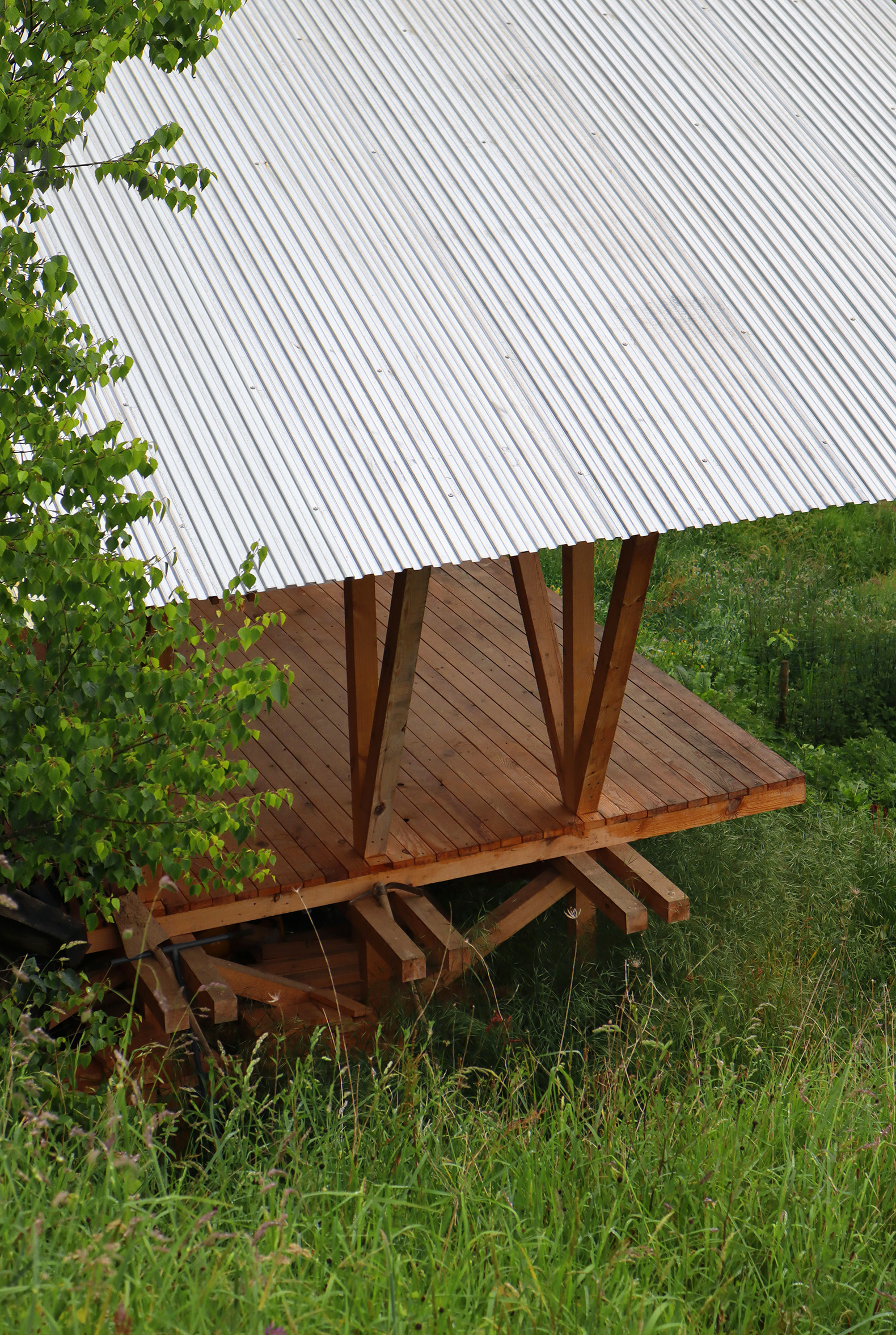
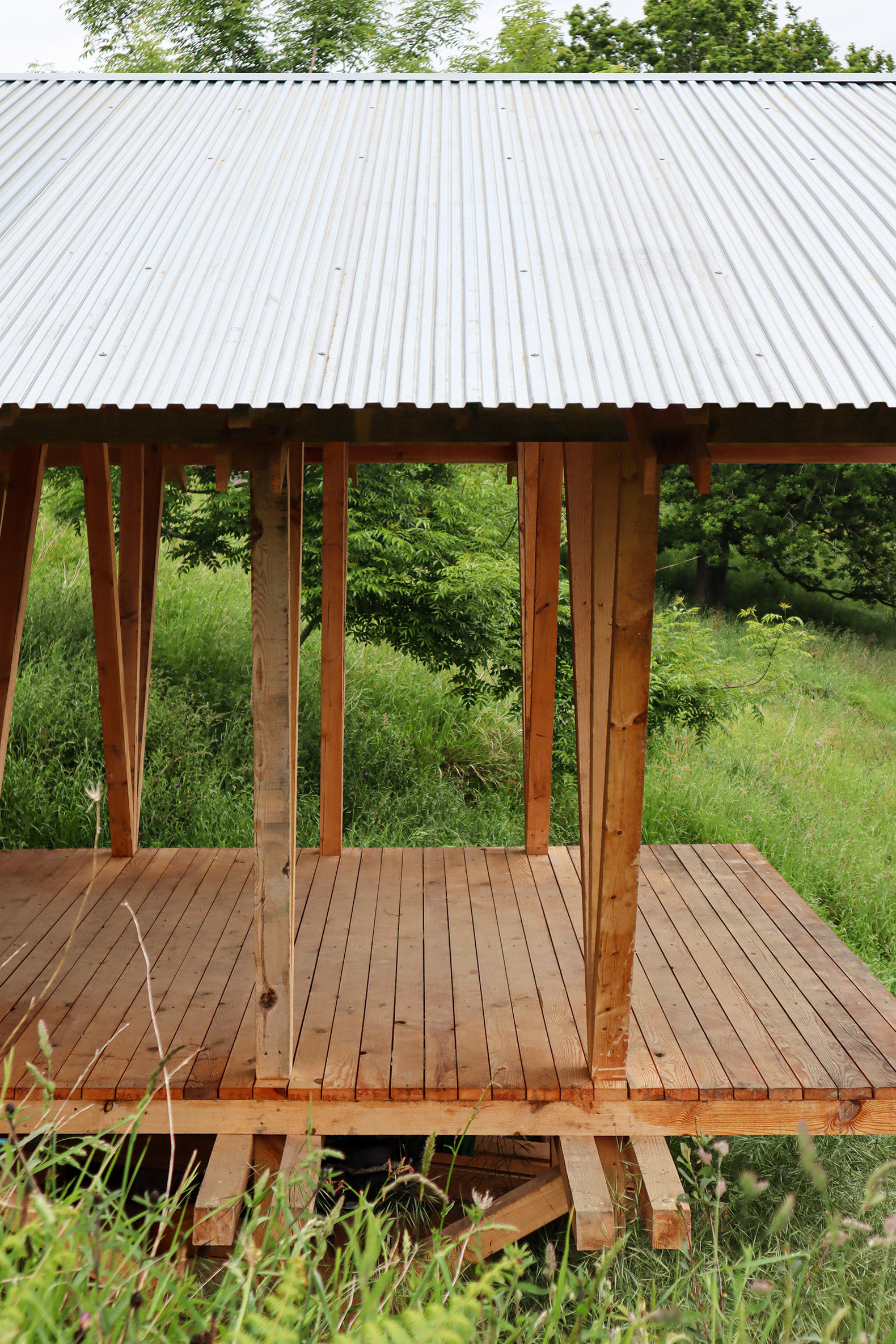
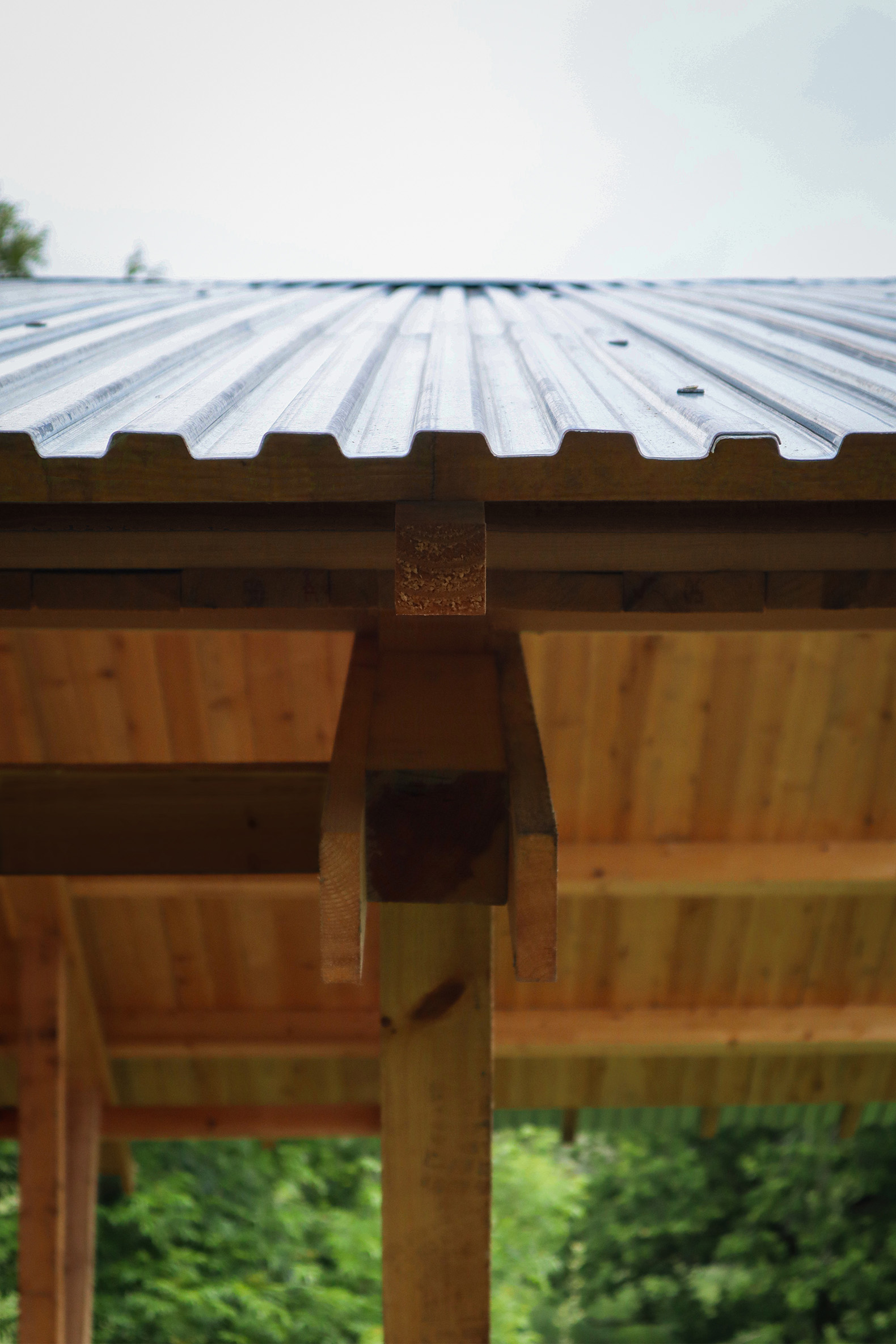
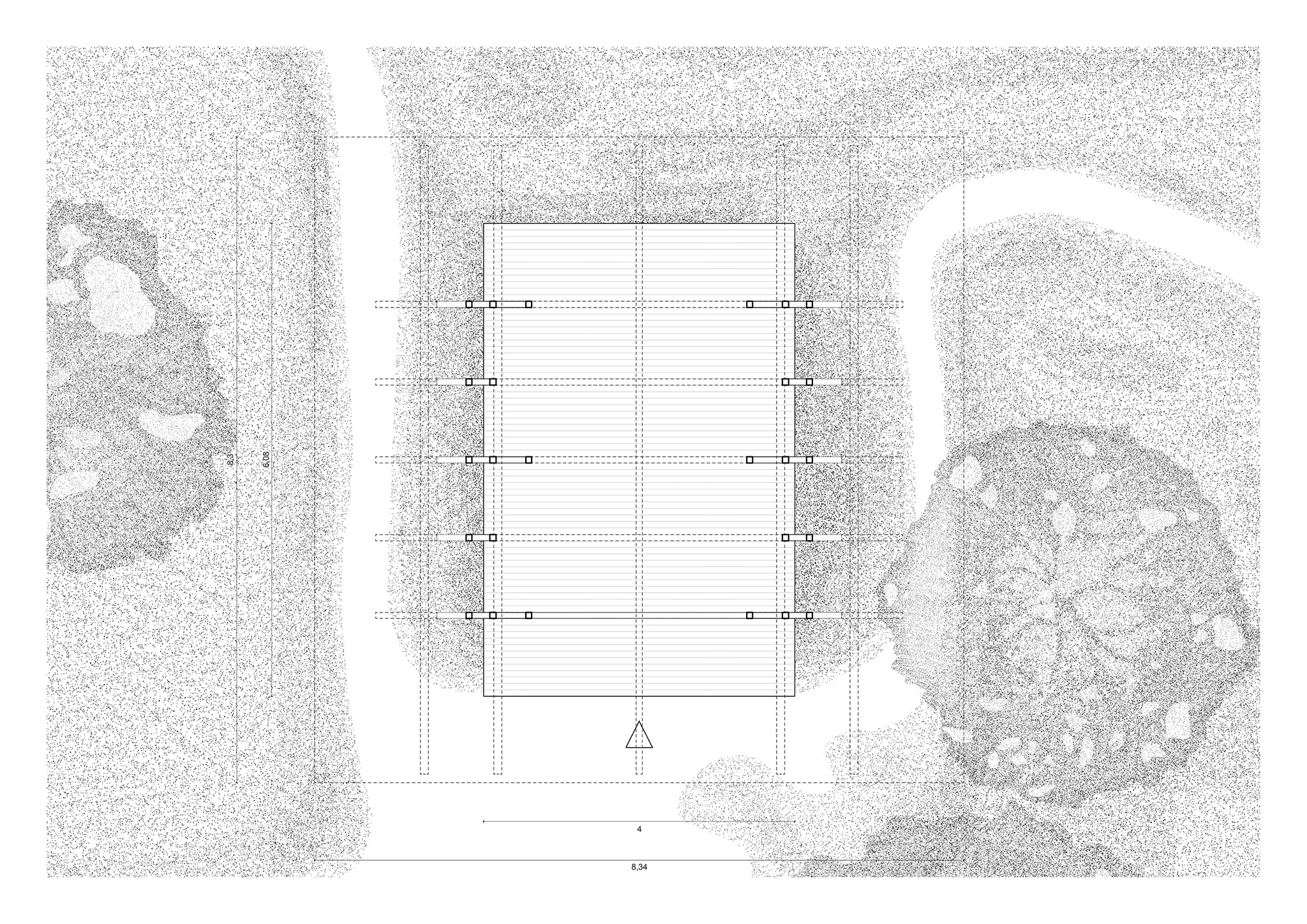
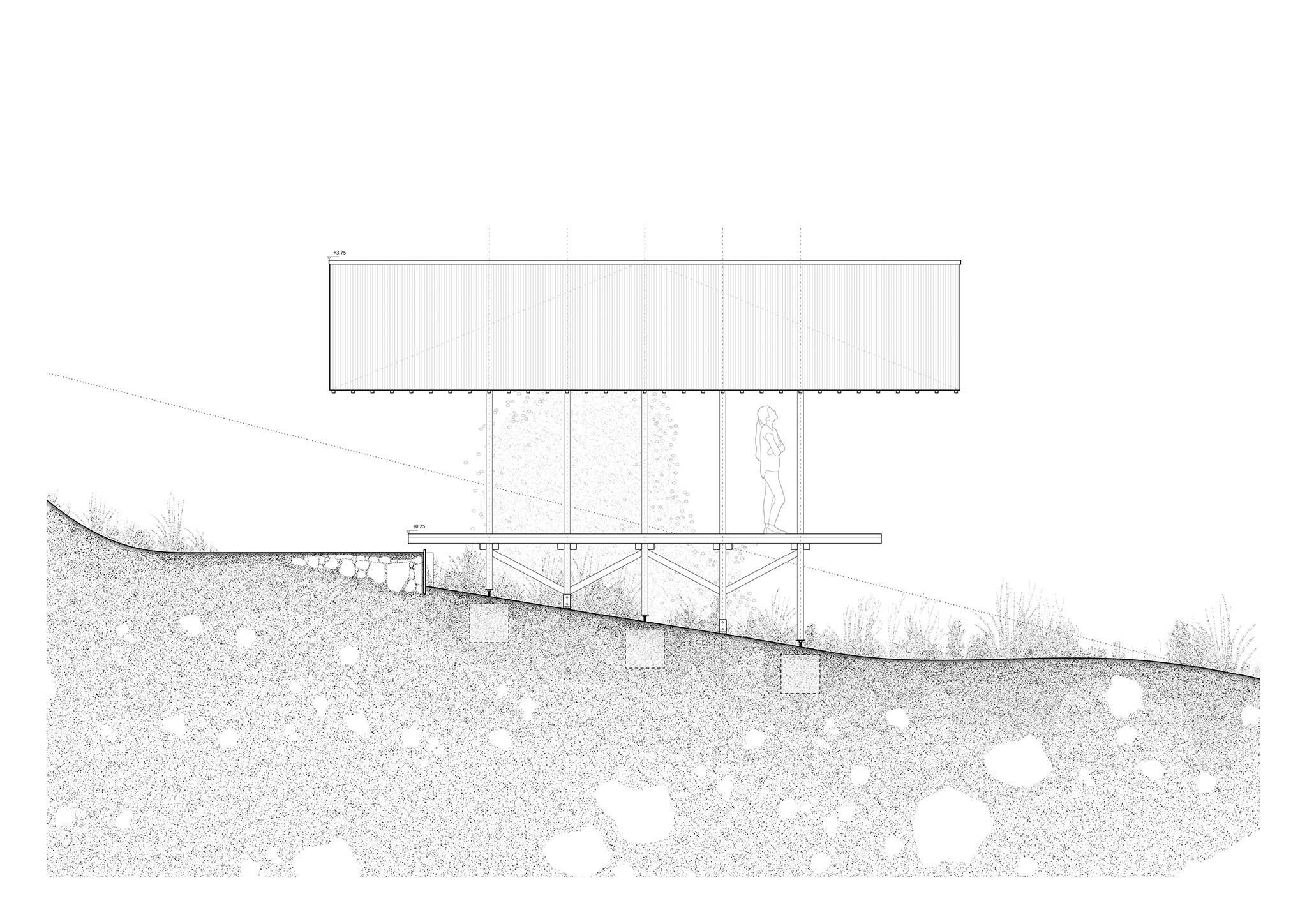
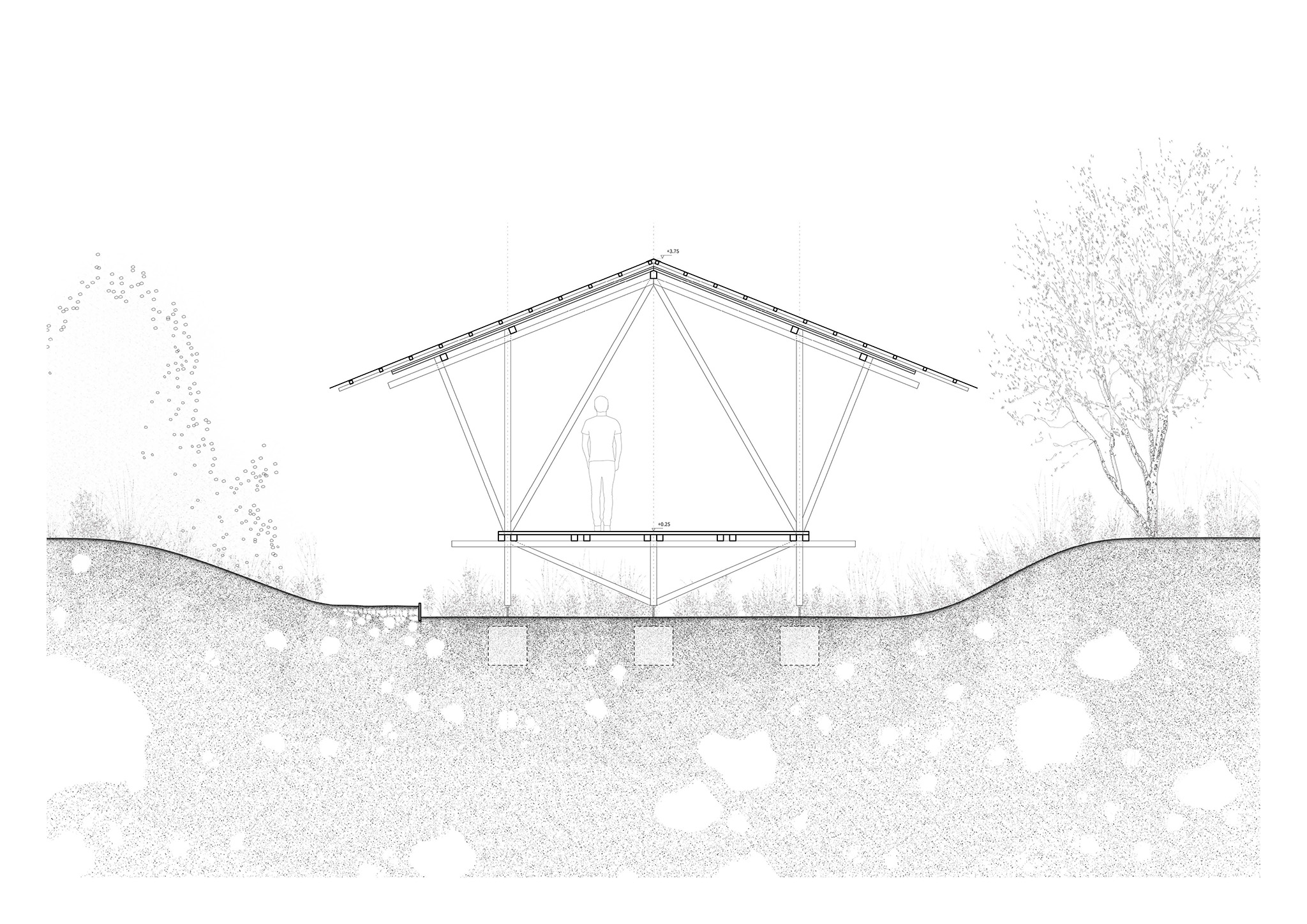
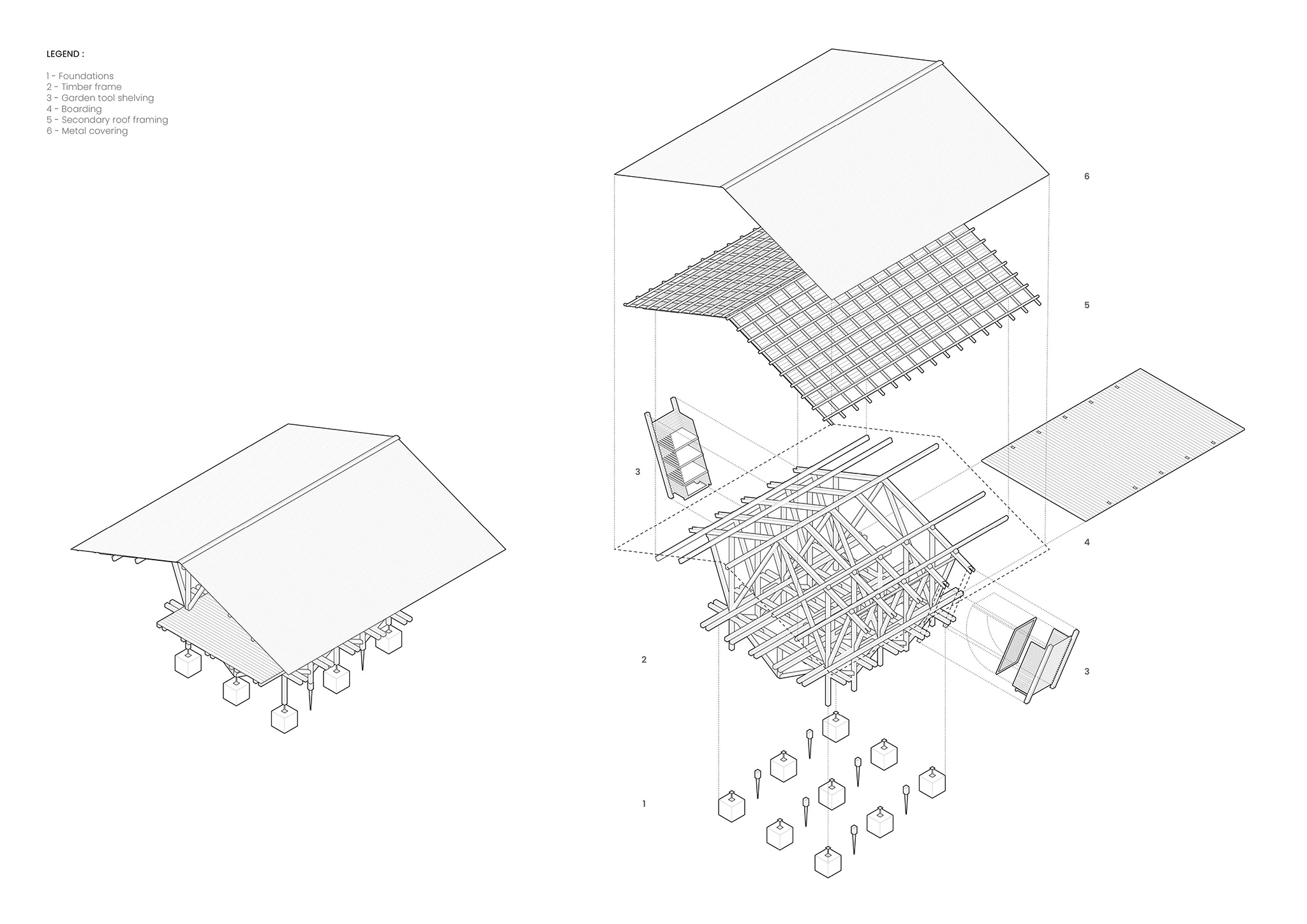
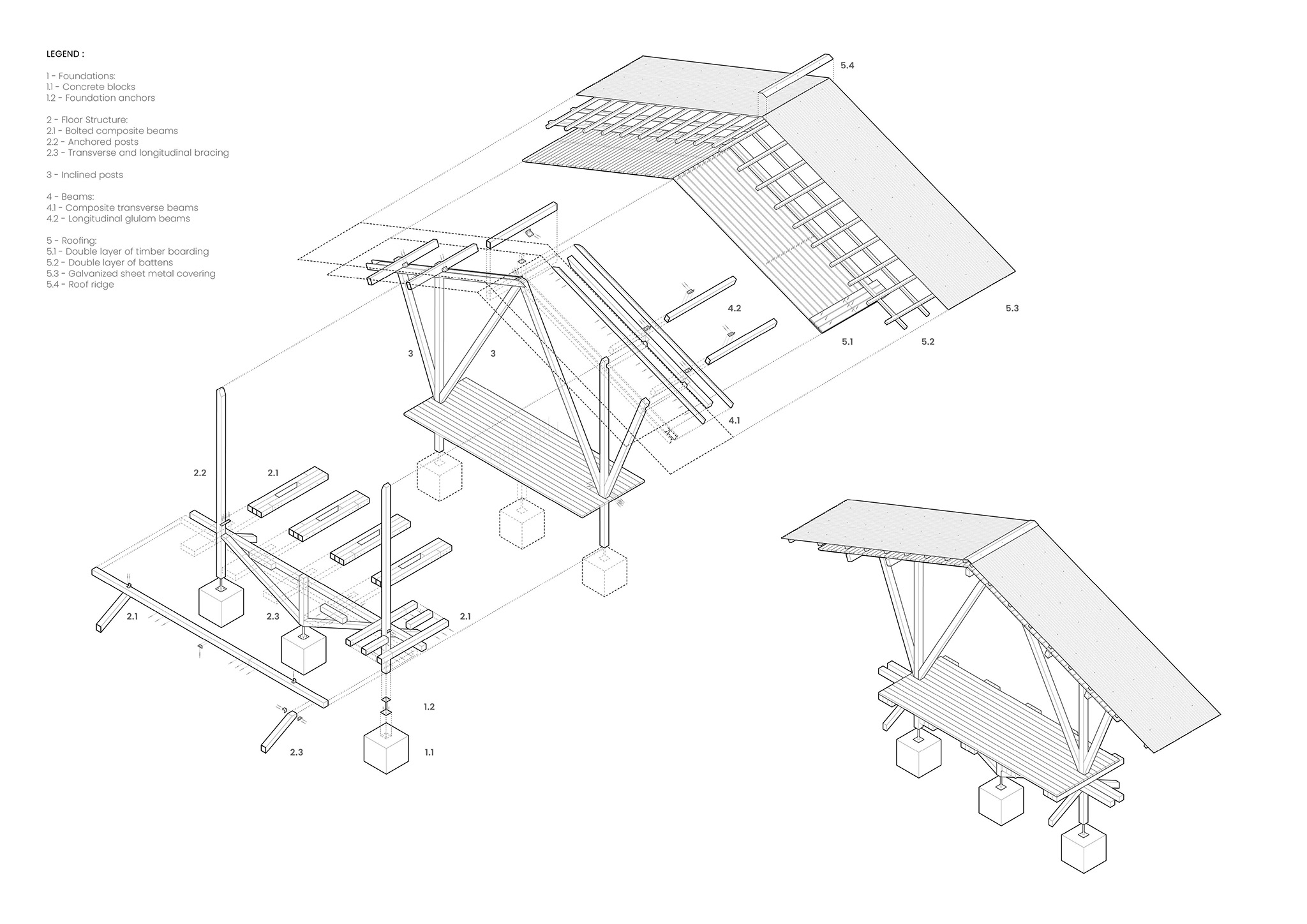
The project demonstrates strong commitment to constructive economy: simple materials (timber, metal sheeting), essential geometry, and rational construction systems. Exploiting the natural slope of the terrain, the pavilion rises above ground level, protecting timber structures from moisture while allowing vegetation, microfauna, and natural soil cycles to continue undisturbed beneath the structure. The foundation, consisting of individual pile caps, minimizes ground impact while preserving soil permeability.
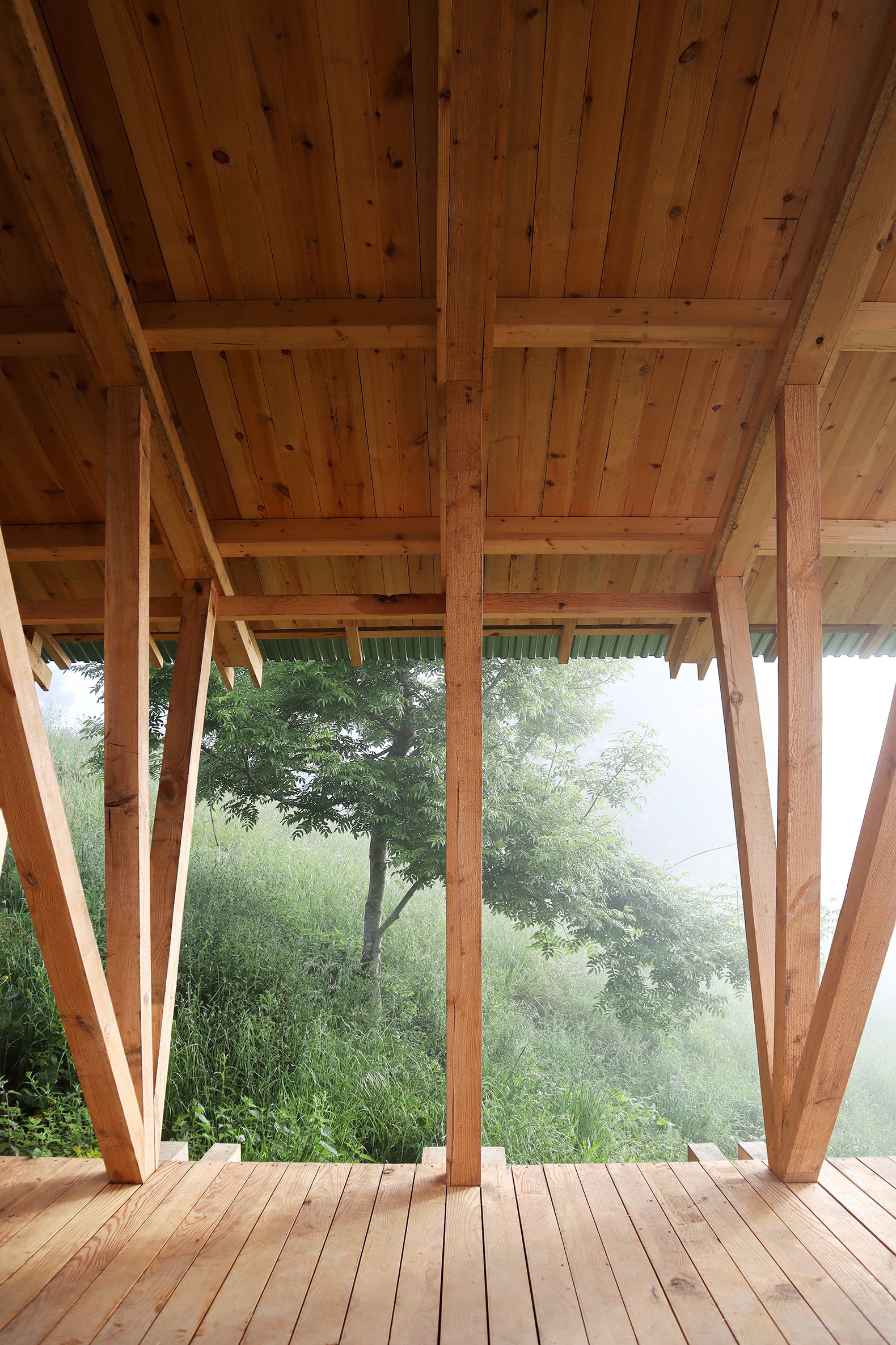
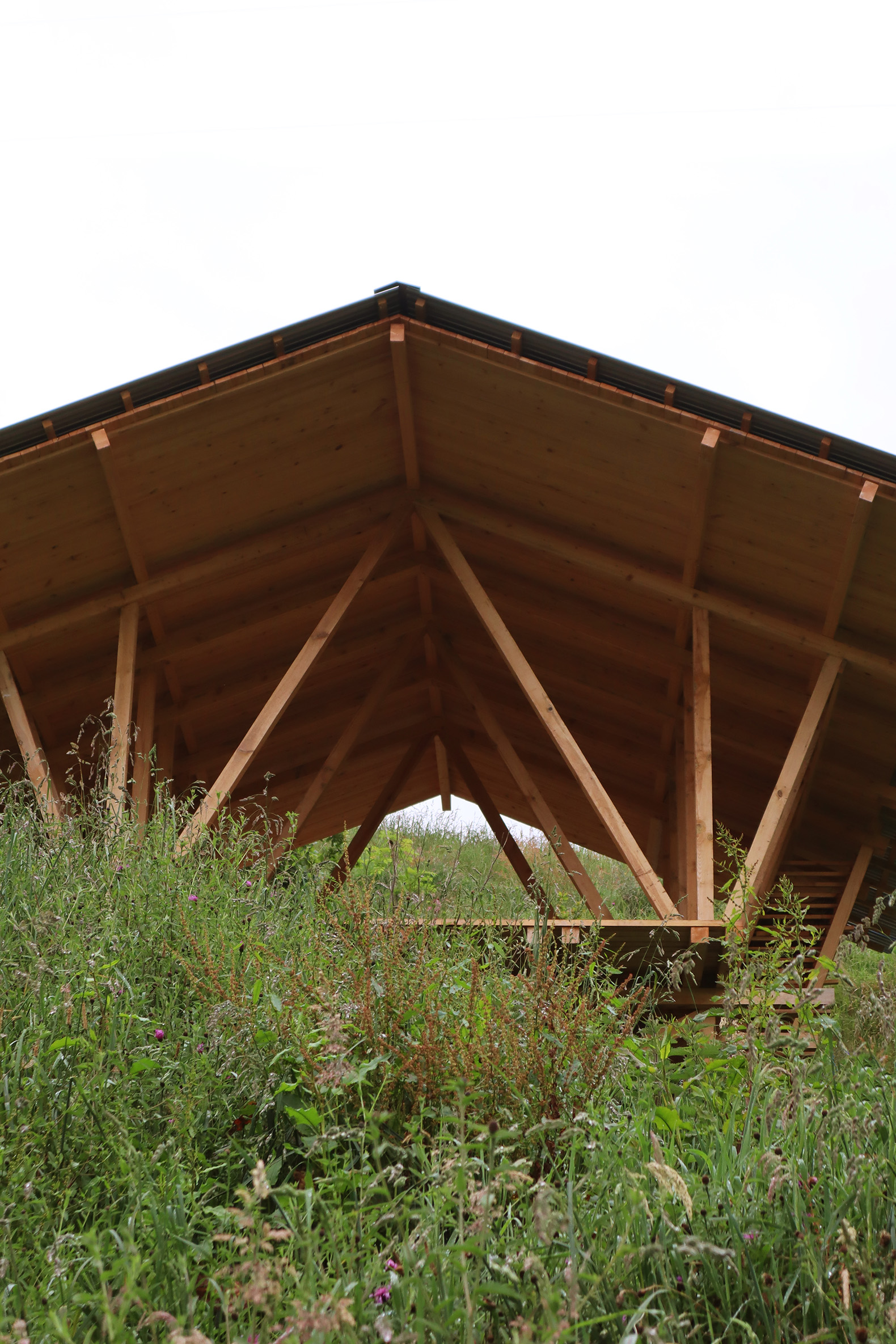
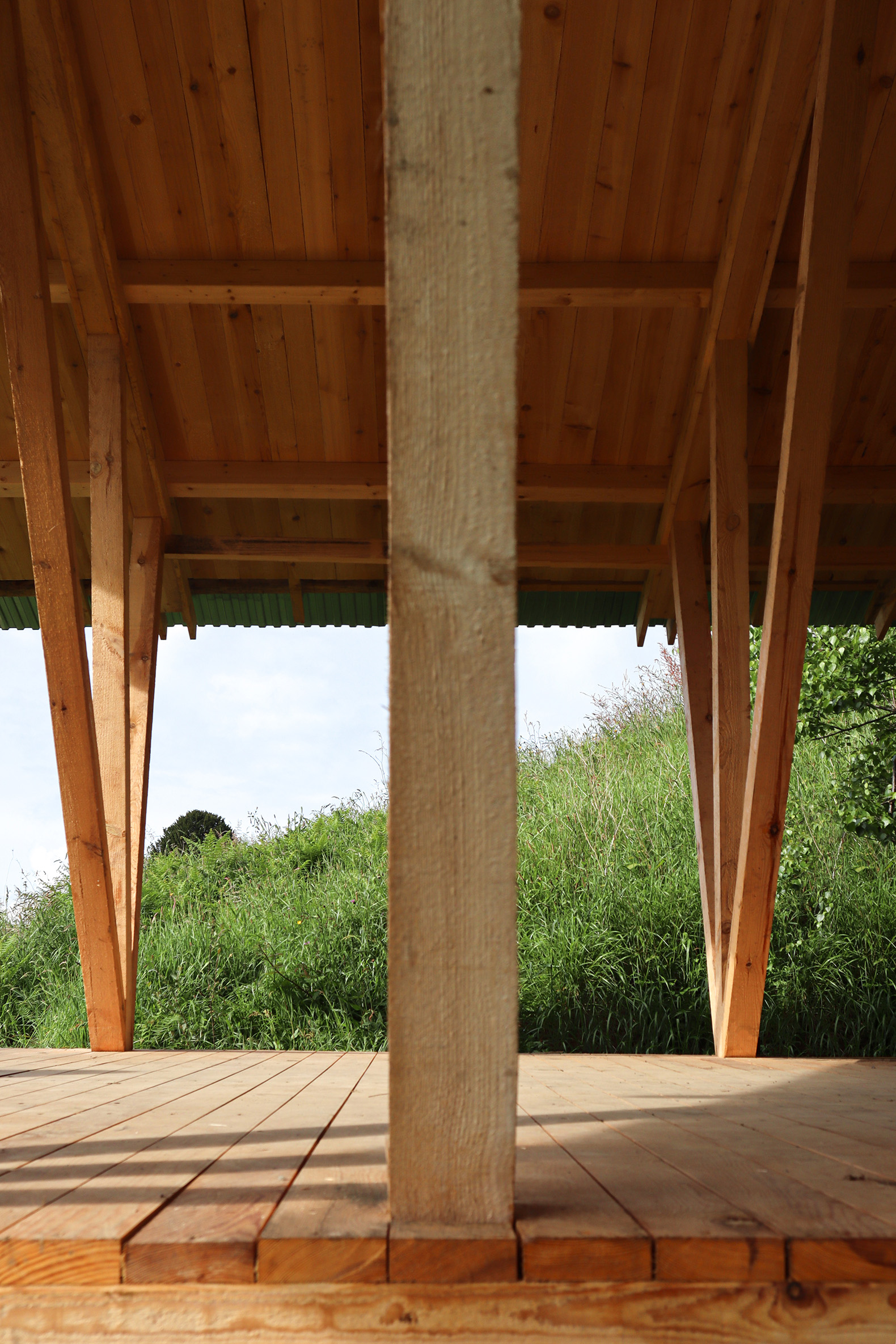
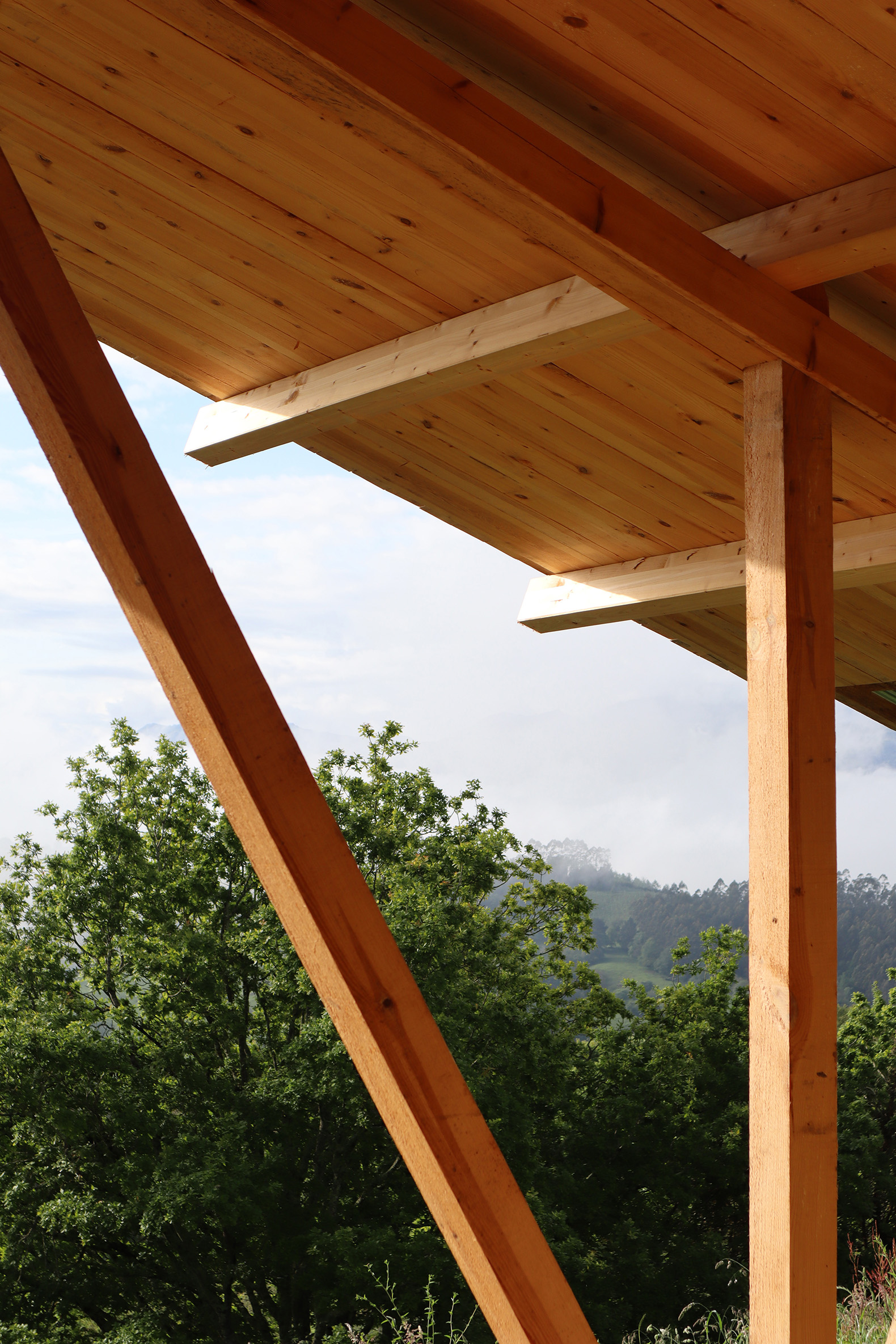
The main level functions as an open classroom. The interstitial space between the first pairs of columns houses storage racks for tools. The structure is completely permeable: the short sides open outward in a gesture of maximum visual continuity, while the rhythm of columns along the long sides articulates and fragments the territory, creating a sequence of "windows" that transform the pavilion into an observatory of the nascent forest. The large gable roof projects into the landscape, engaging directly with Asturian territorial morphologies. The generous overhang embraces both building levels and adjacent pathways, defining a threshold between architecture and nature.
The Taller Agropoetico represents the generative nucleus of an agroforestry system destined to expand over the years, following the rhythms of agricultural production and needs emerging from the forest's growth. It is a work that inhabits the territory with discretion and allows itself to be traversed—by wind, light, gazes, and people. An open shelter, an observatory without boundaries, a repository of knowledge as much as tools. Over time, it will become an integral part of the forest ecosystem it is helping to create, a silent witness to an educational model centered on direct experience of nature and collective construction of knowledge.