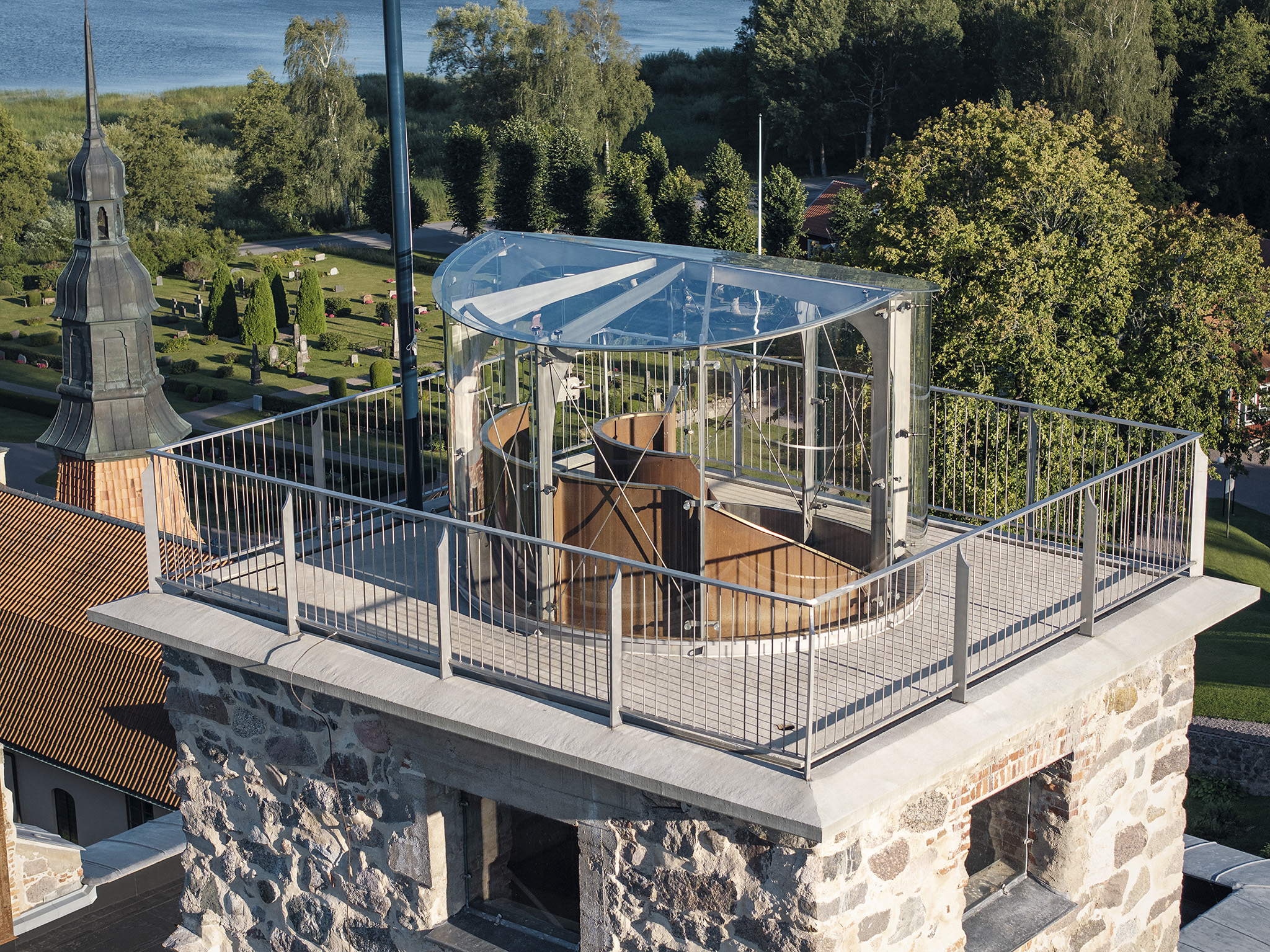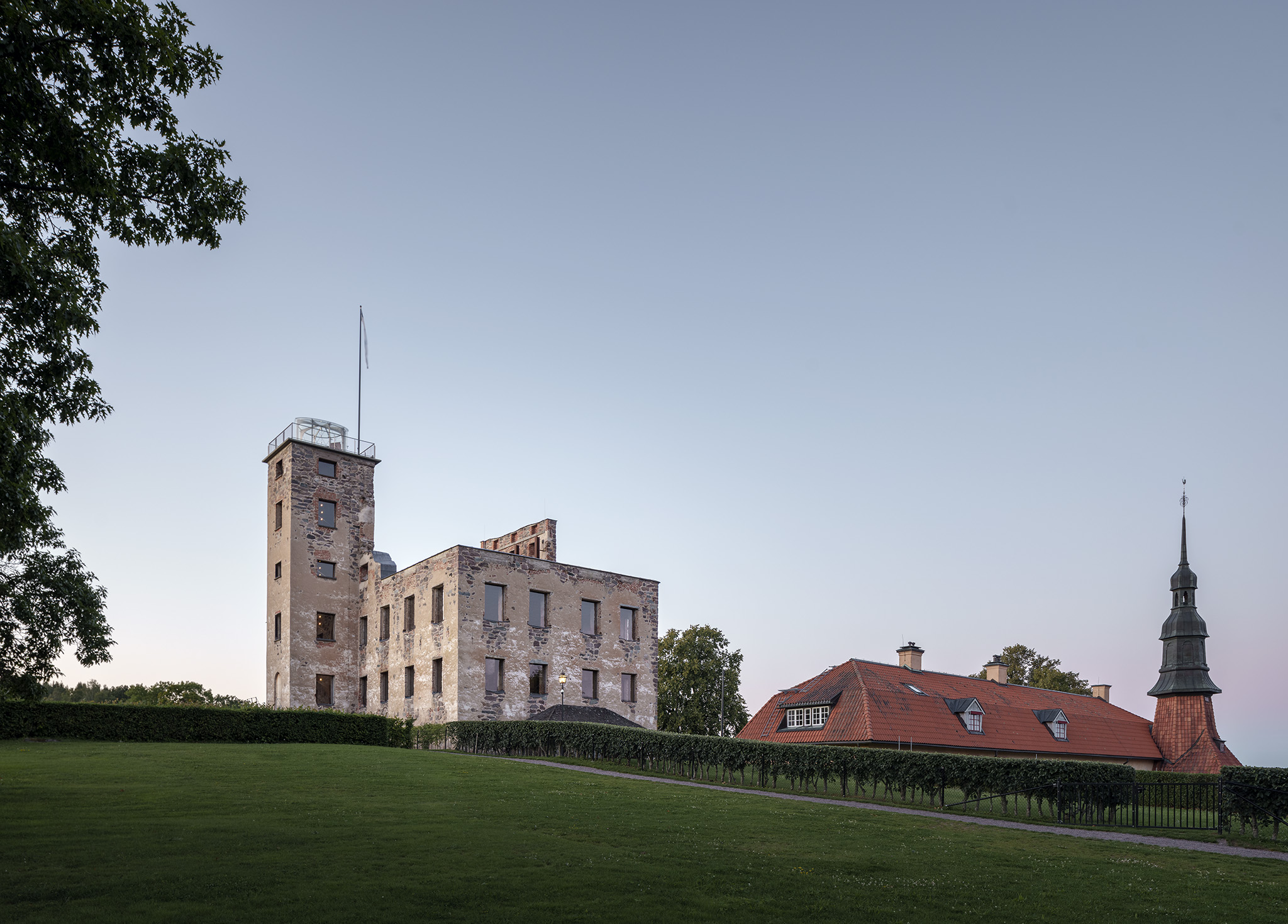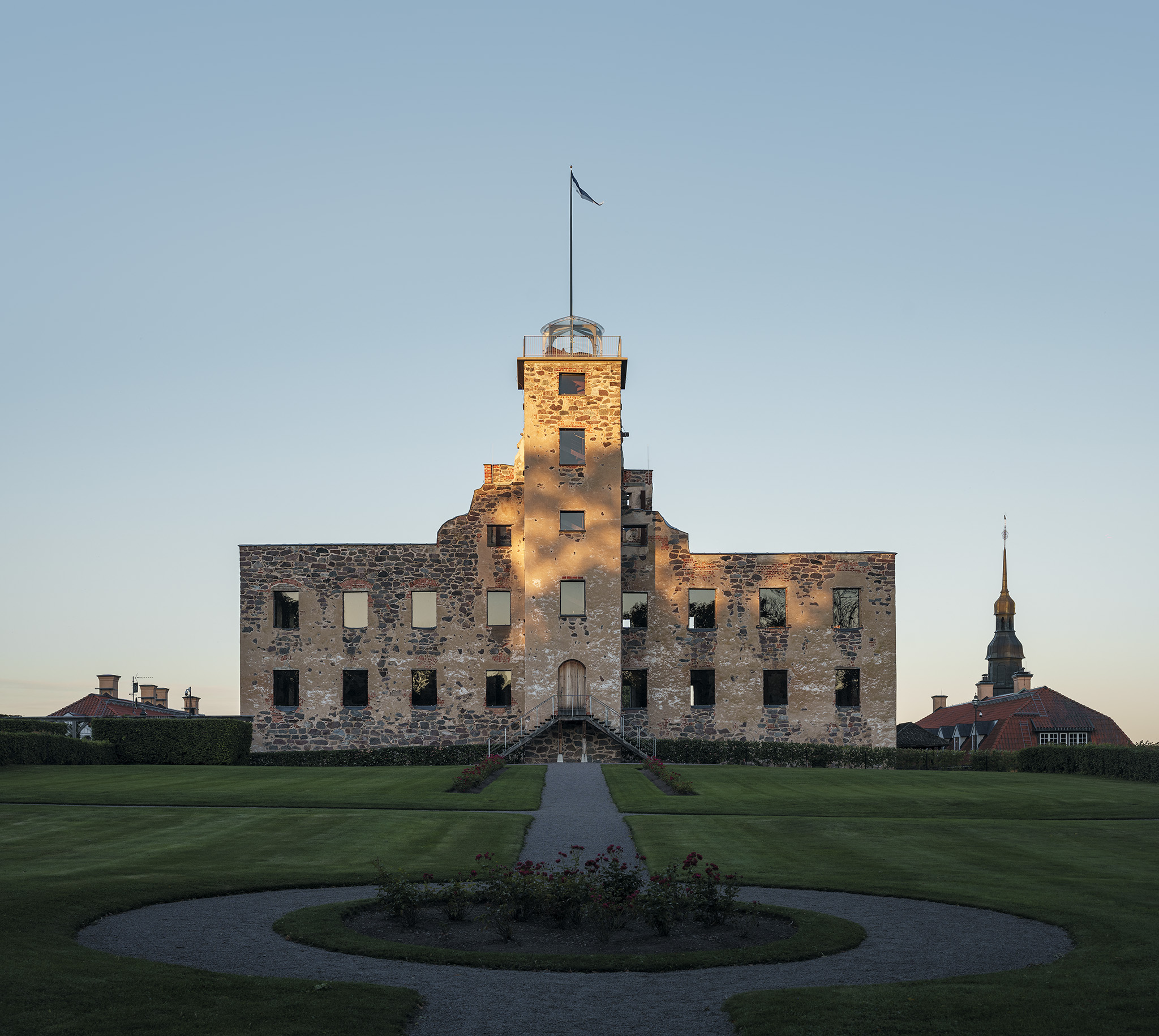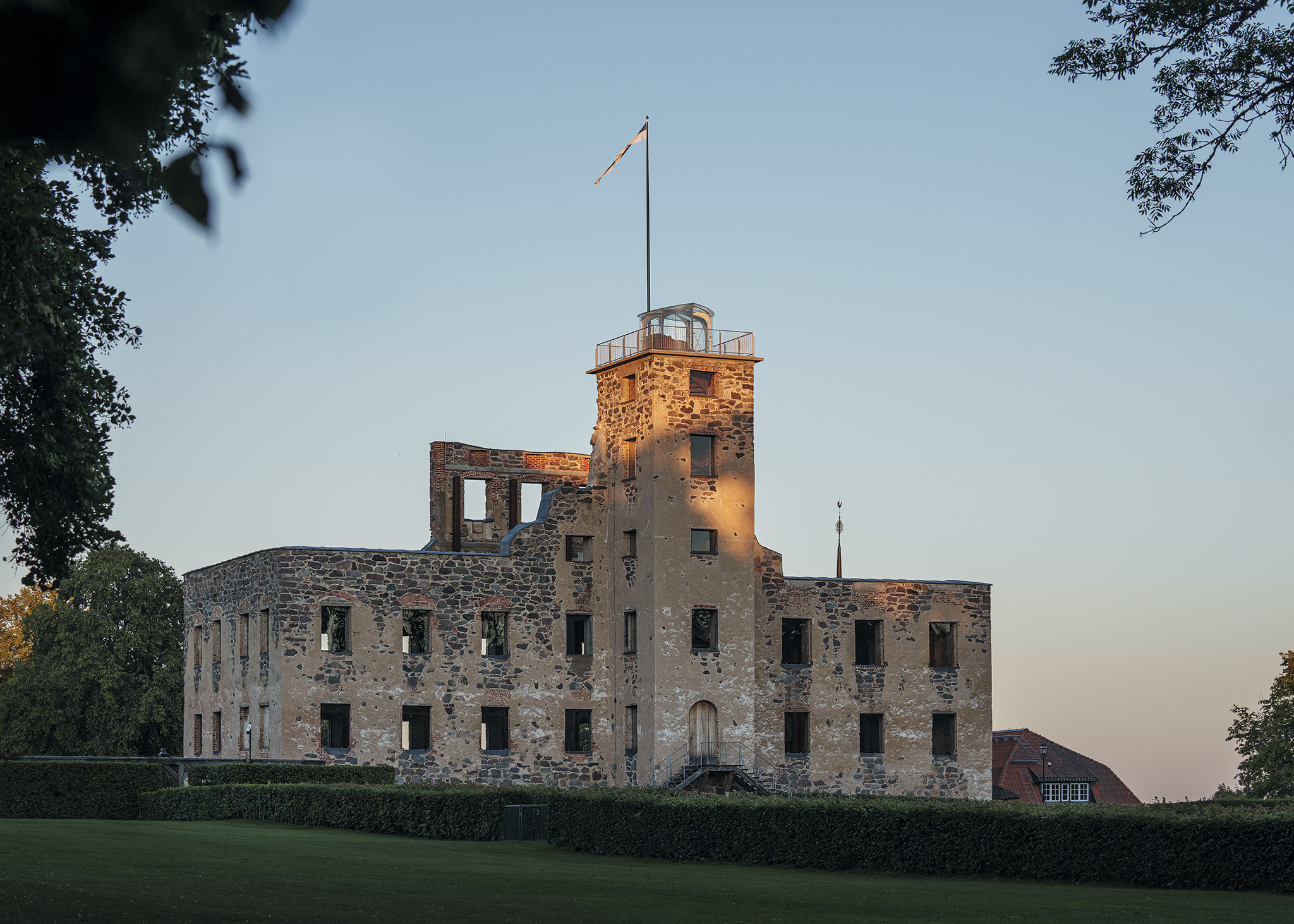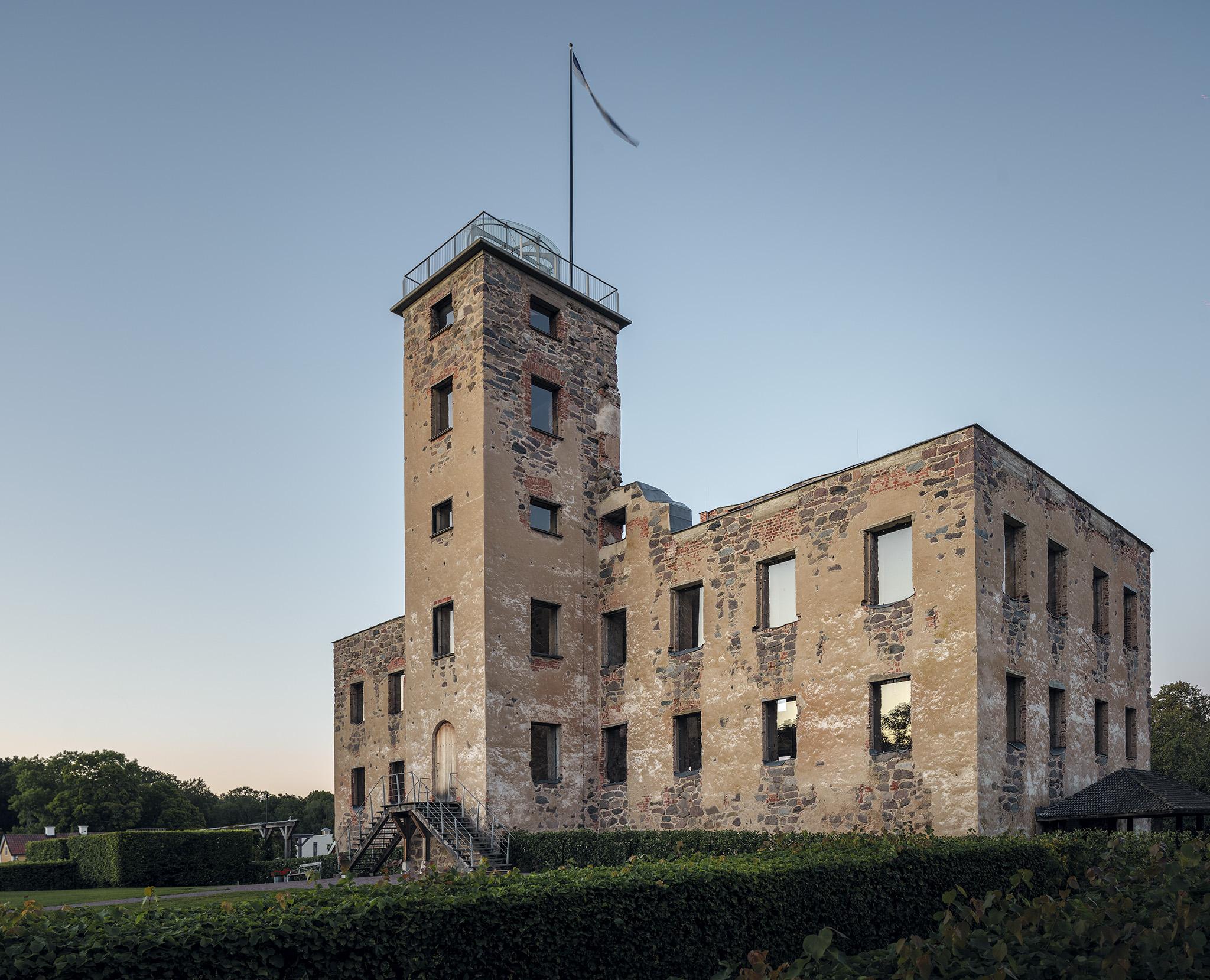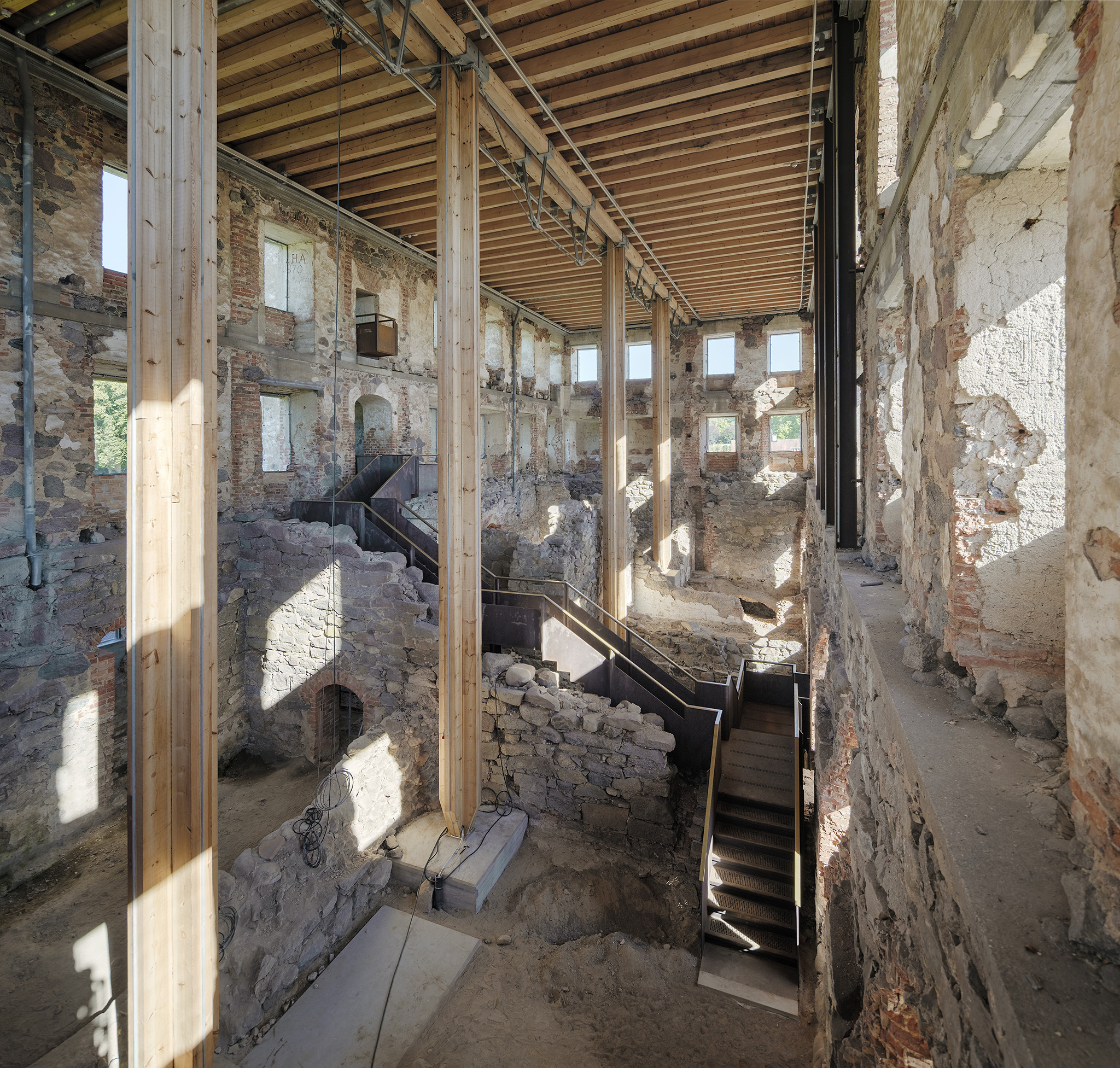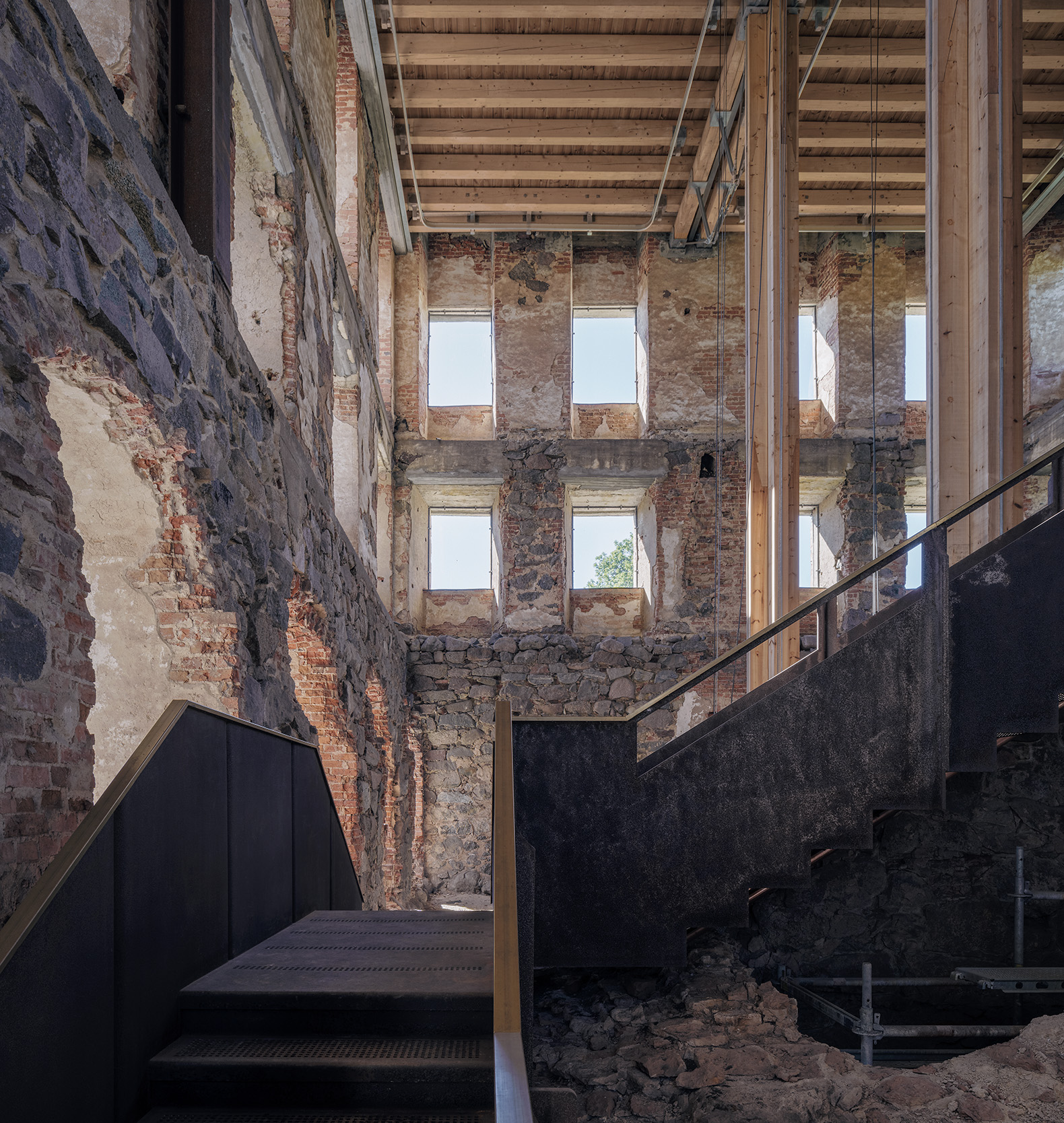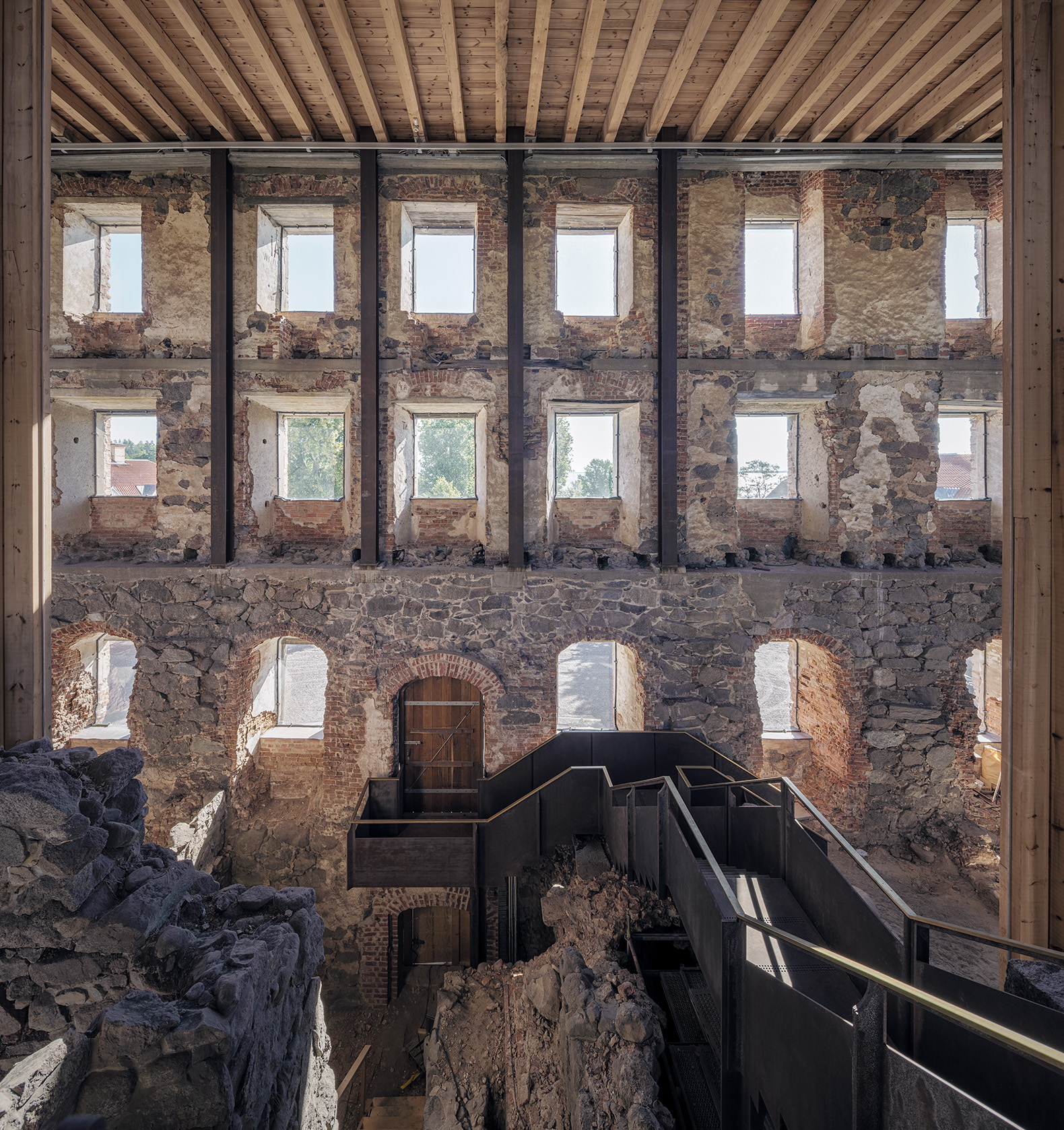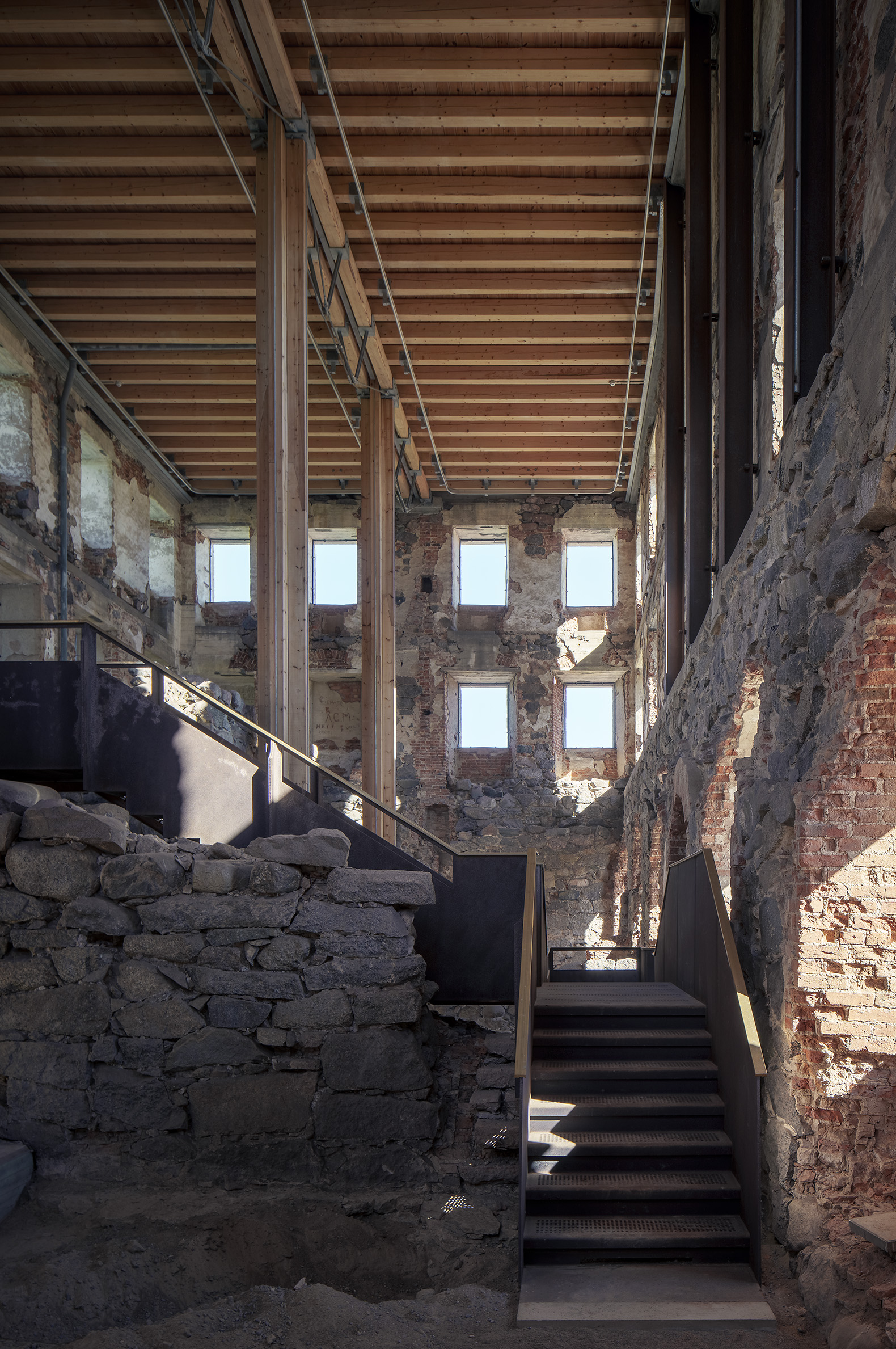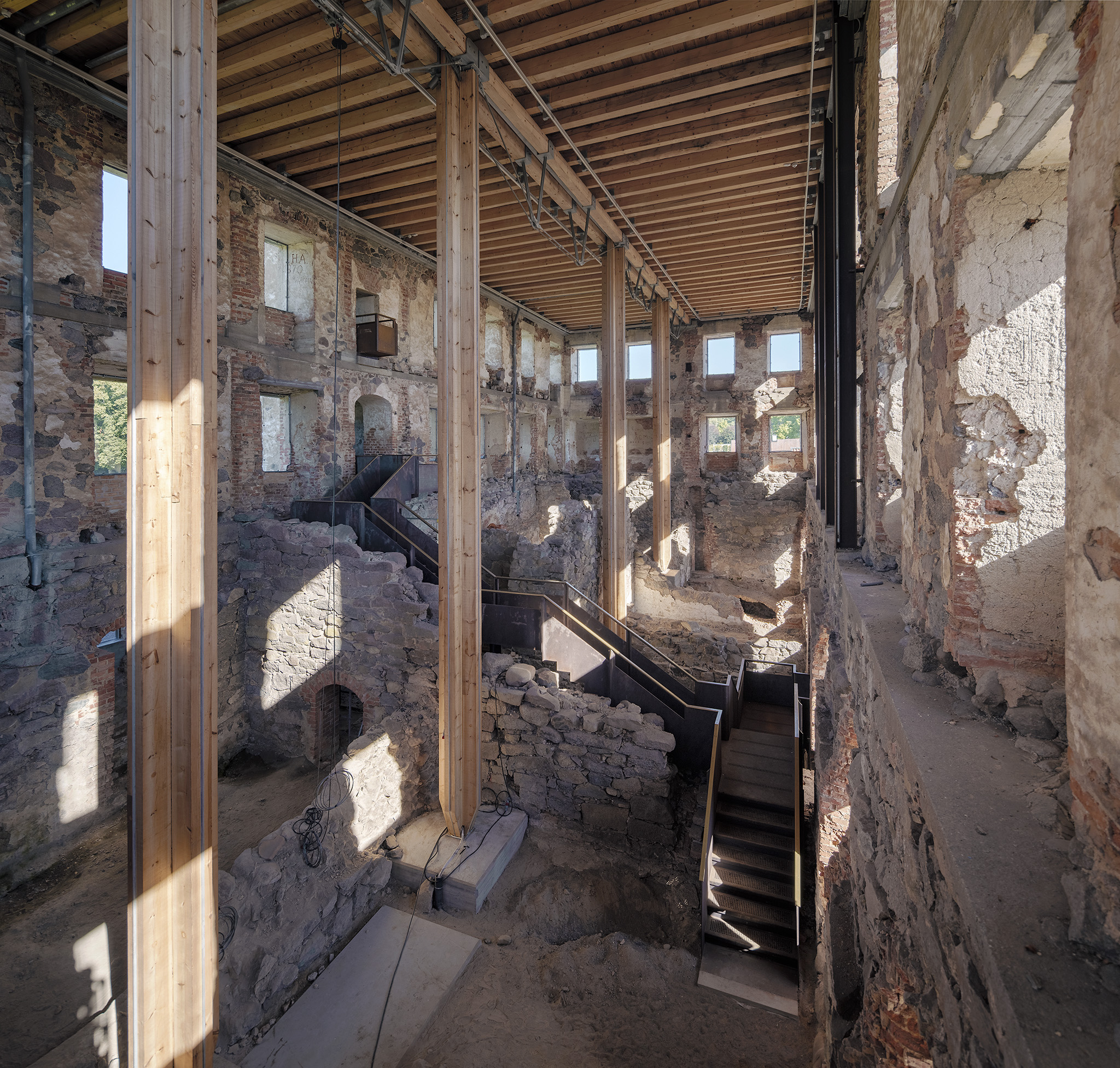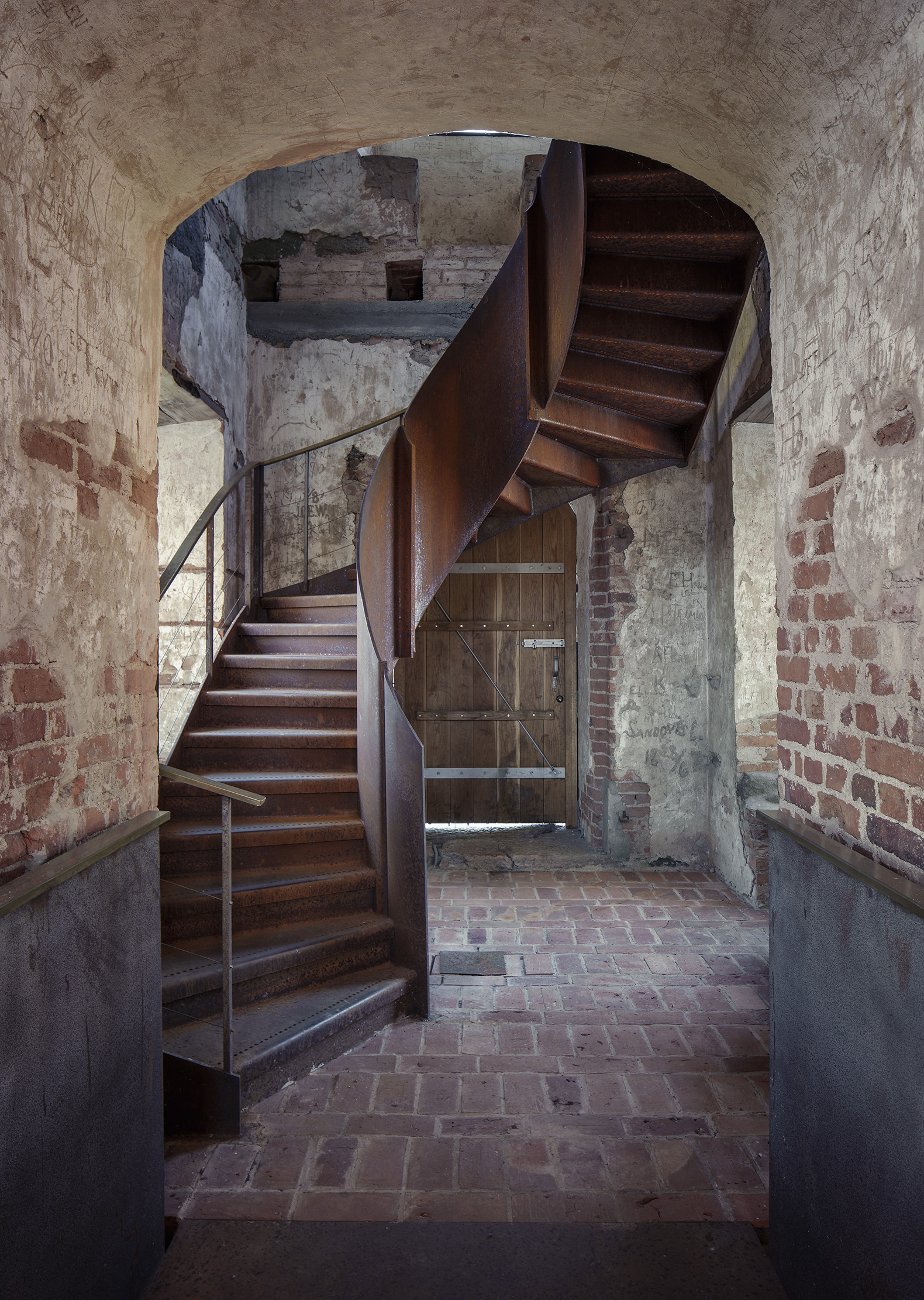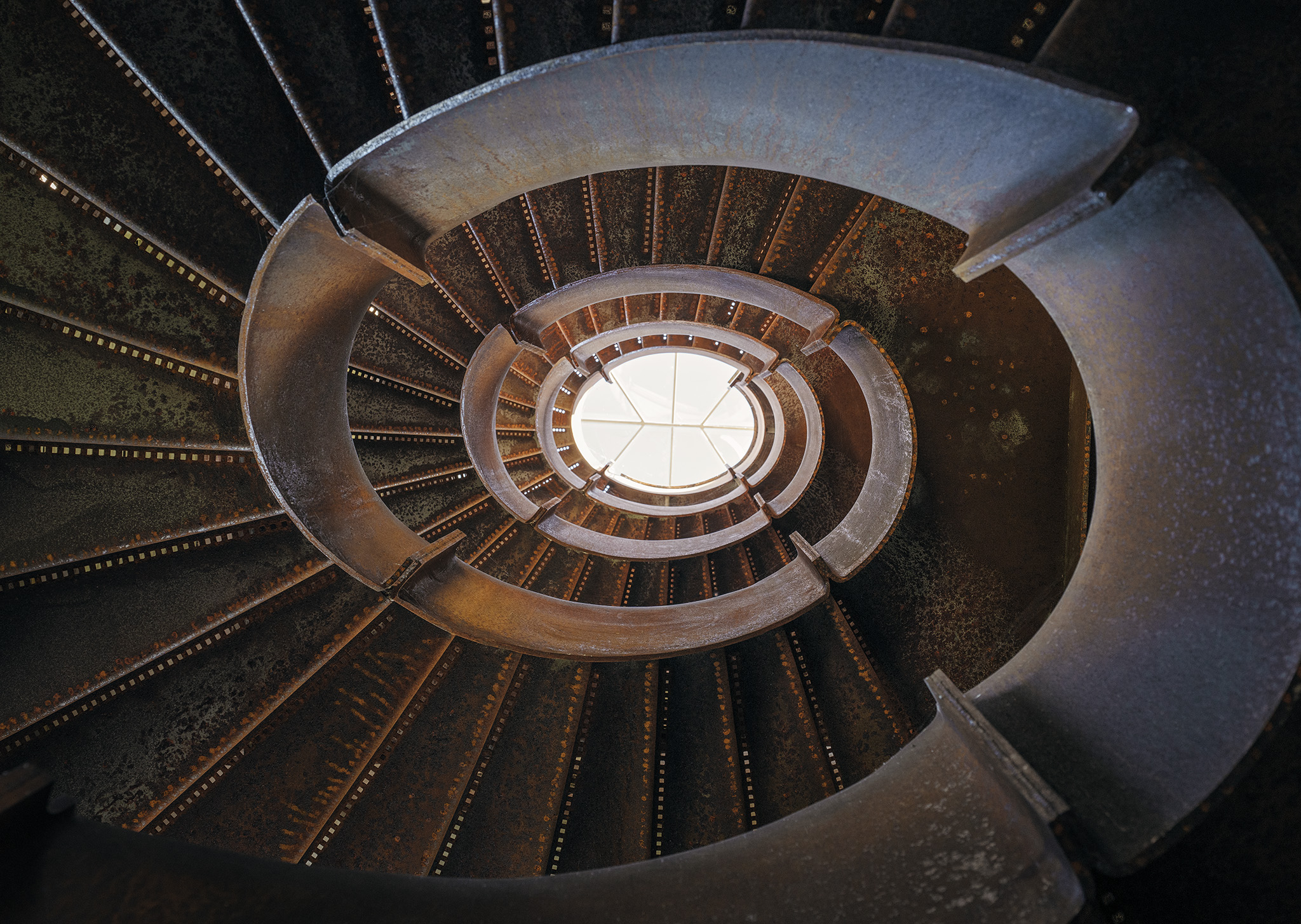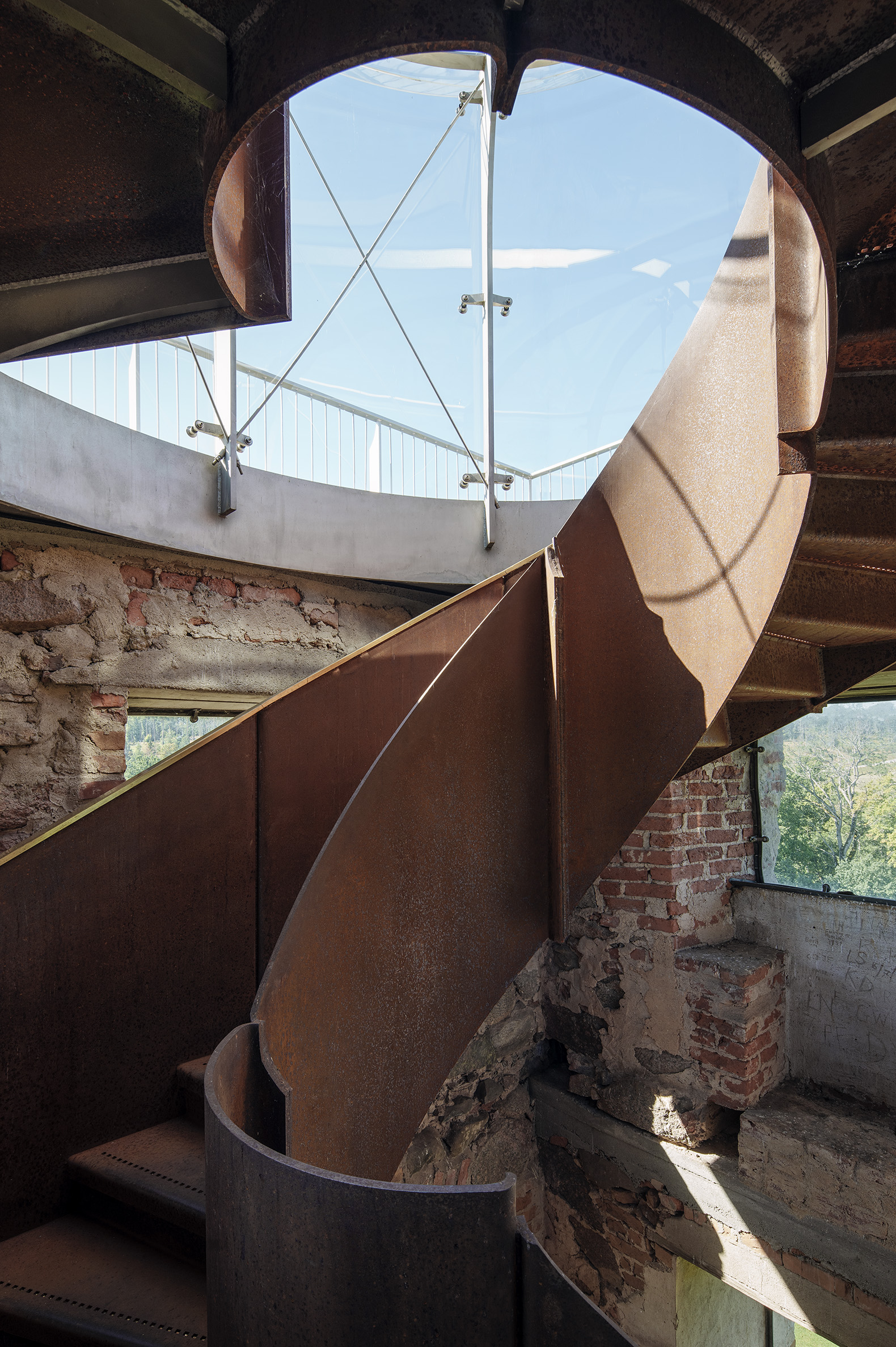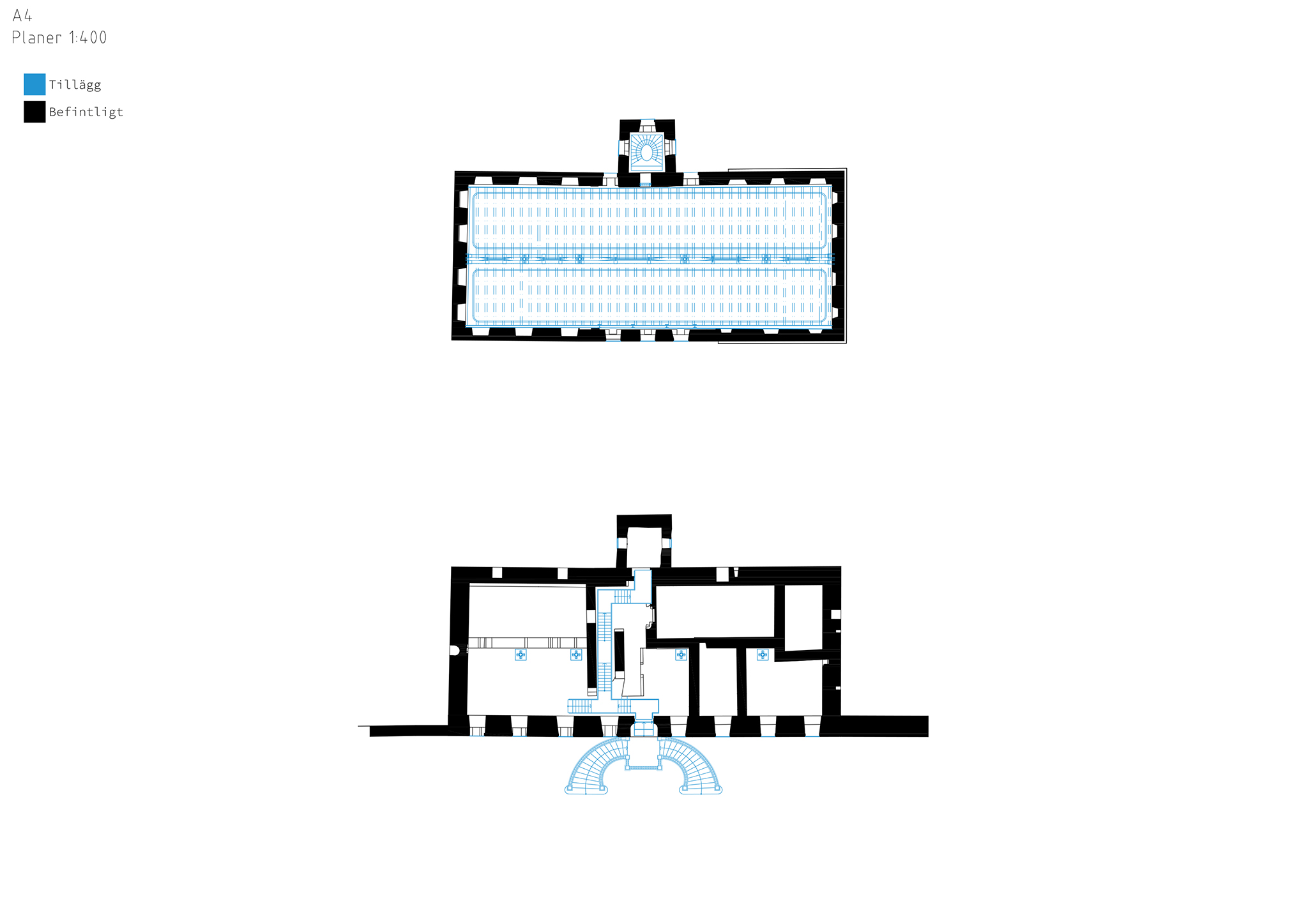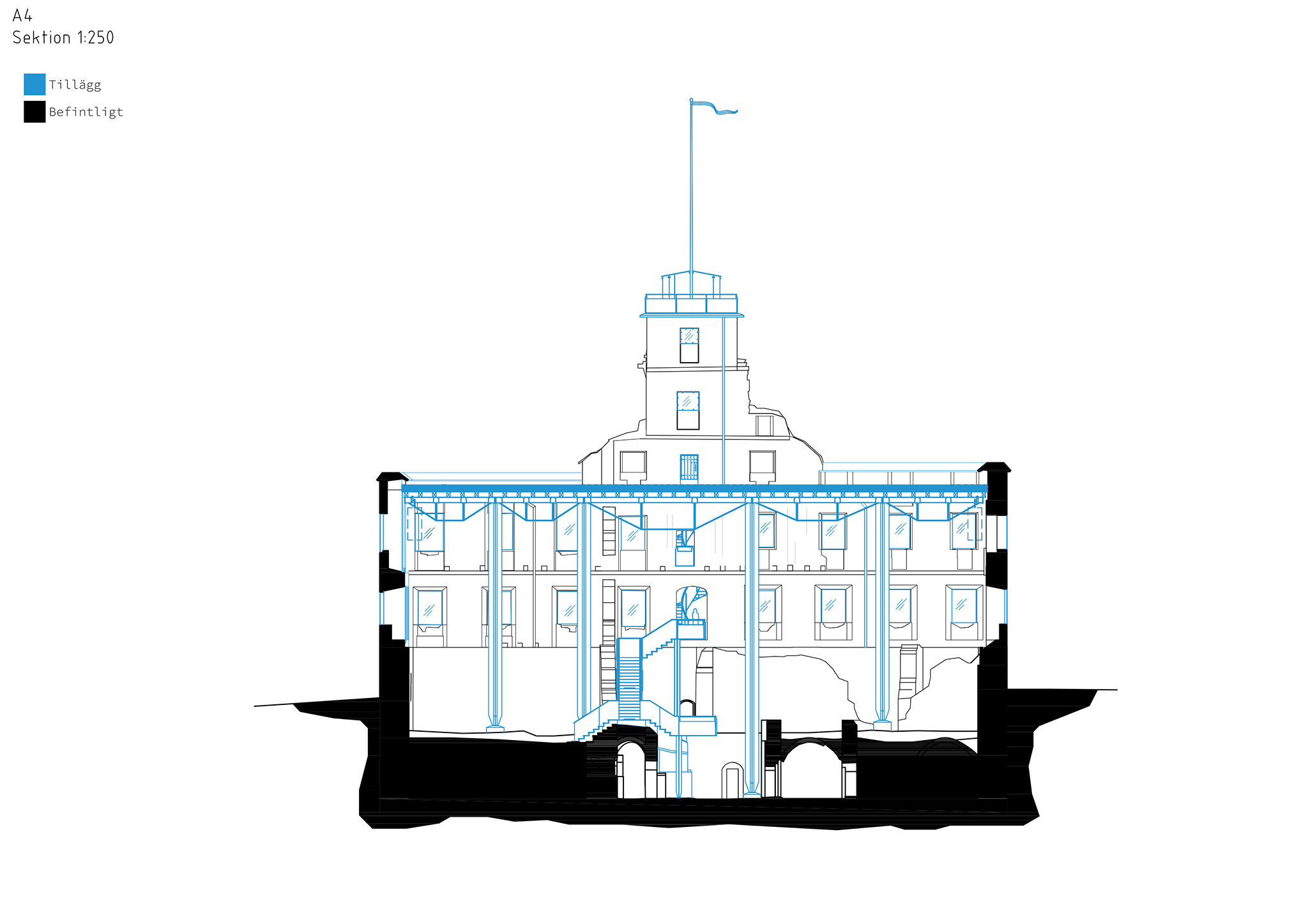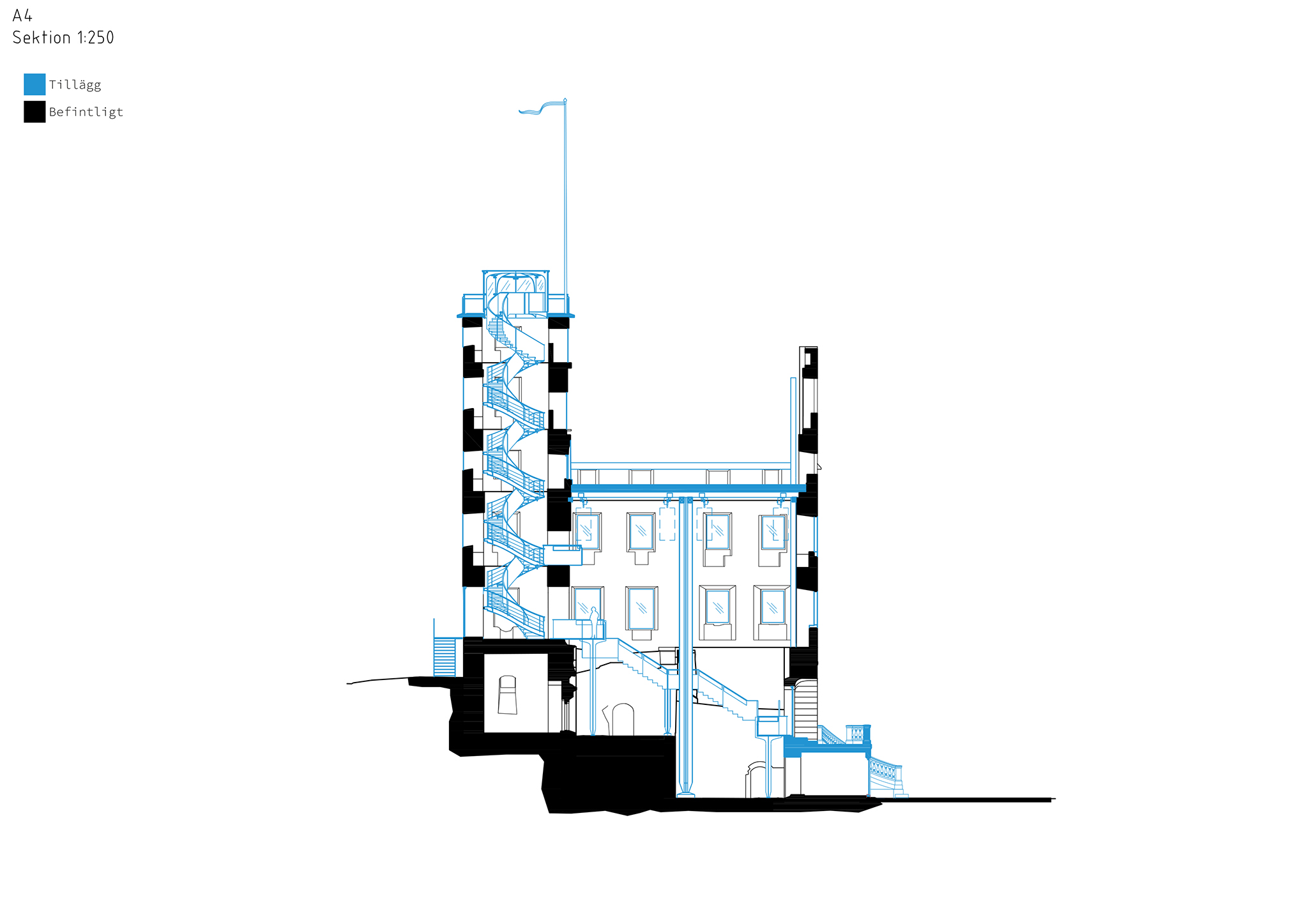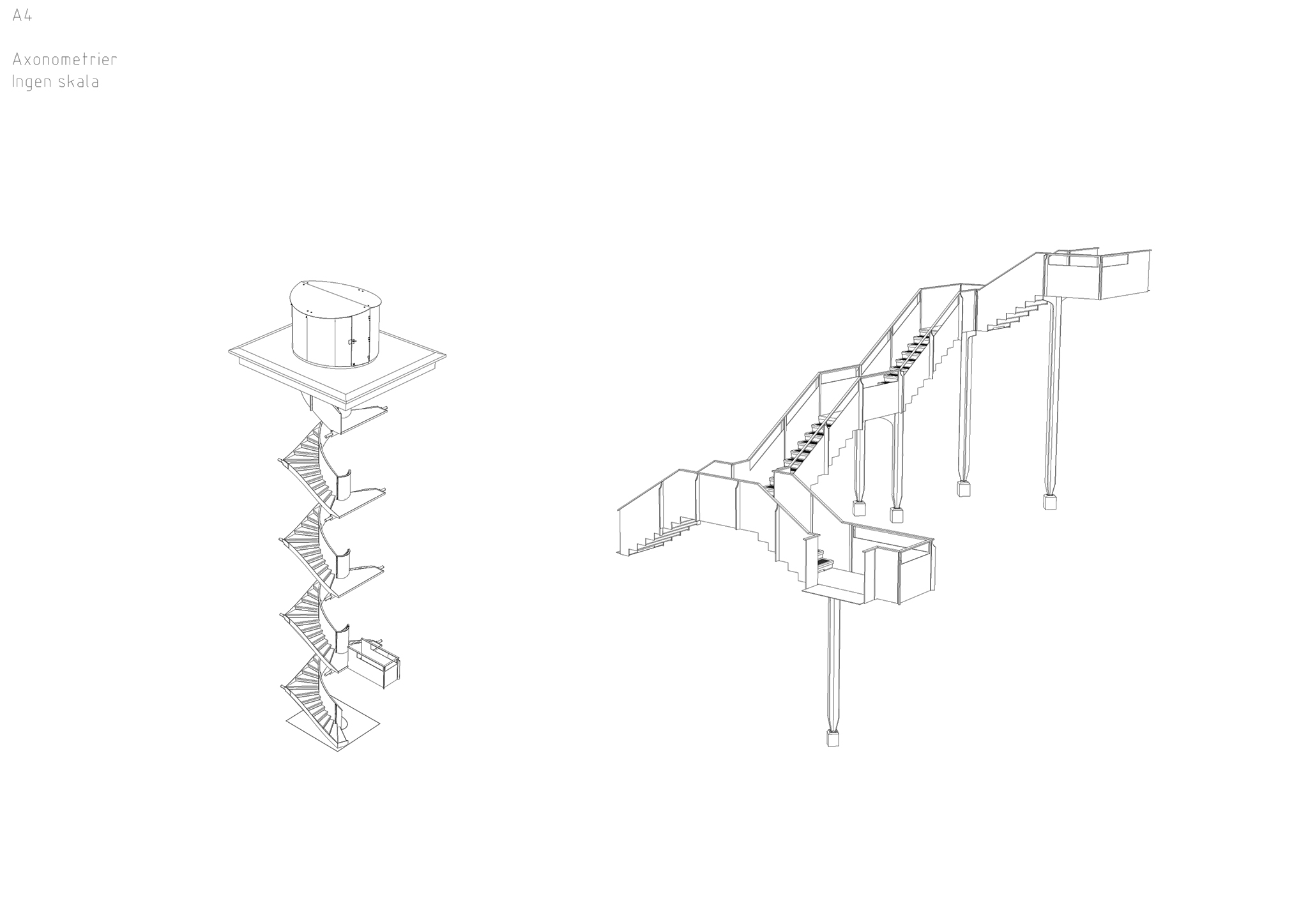
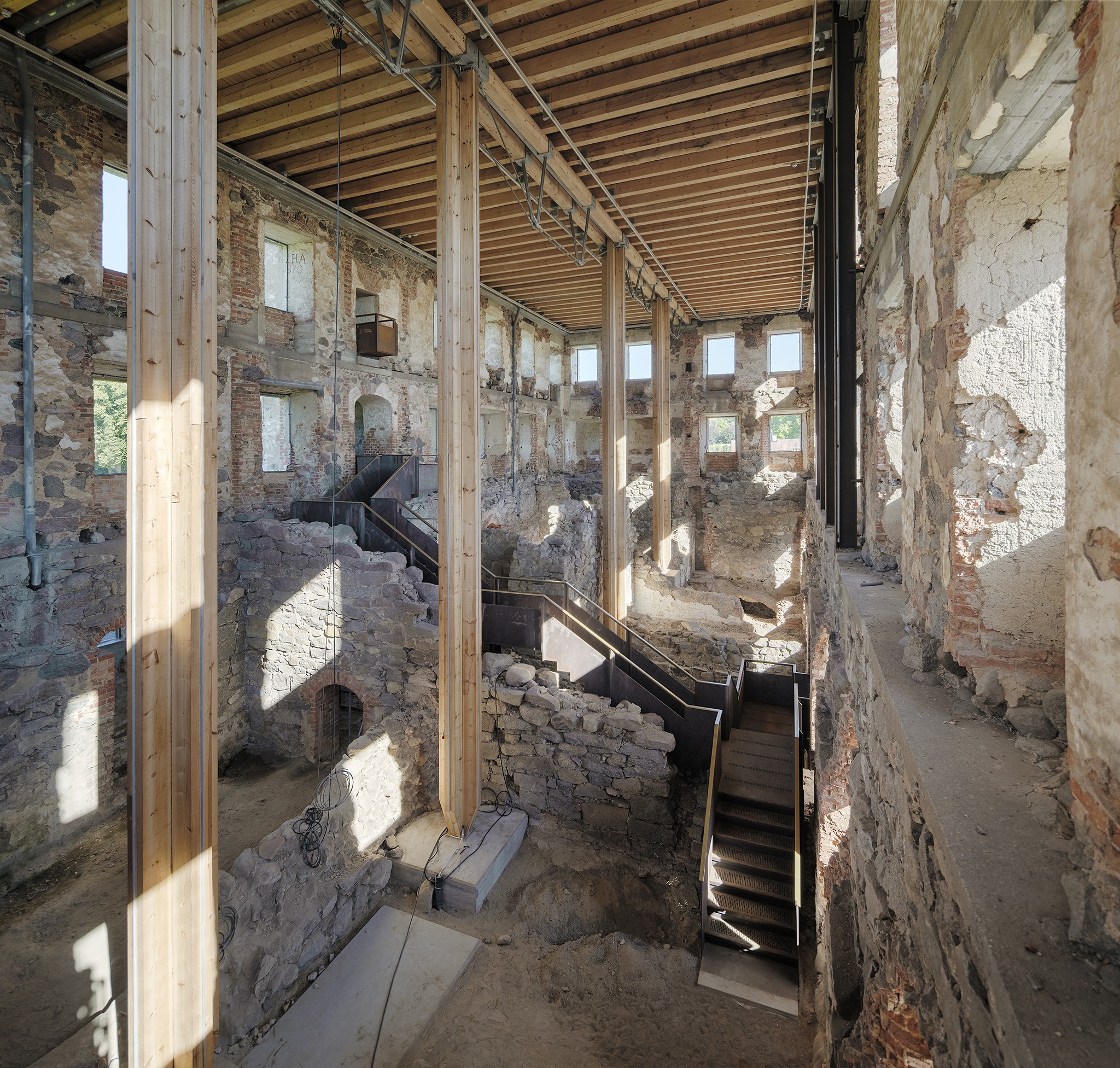
In 2012, the Stjärnorp estate selected Wikerstål Arkitekter, a firm later acquired by Tengbom in 2017, to develop a proposal for preserving the ruins. The project's premise is to improve accessibility to the building without altering its historical character. To this end, the intervention incorporates a freestanding staircase in the great hall and a new elliptical spiral staircase inside the tower, situated beneath an imposing glass lantern that introduces natural light and reinforces the verticality of the space.
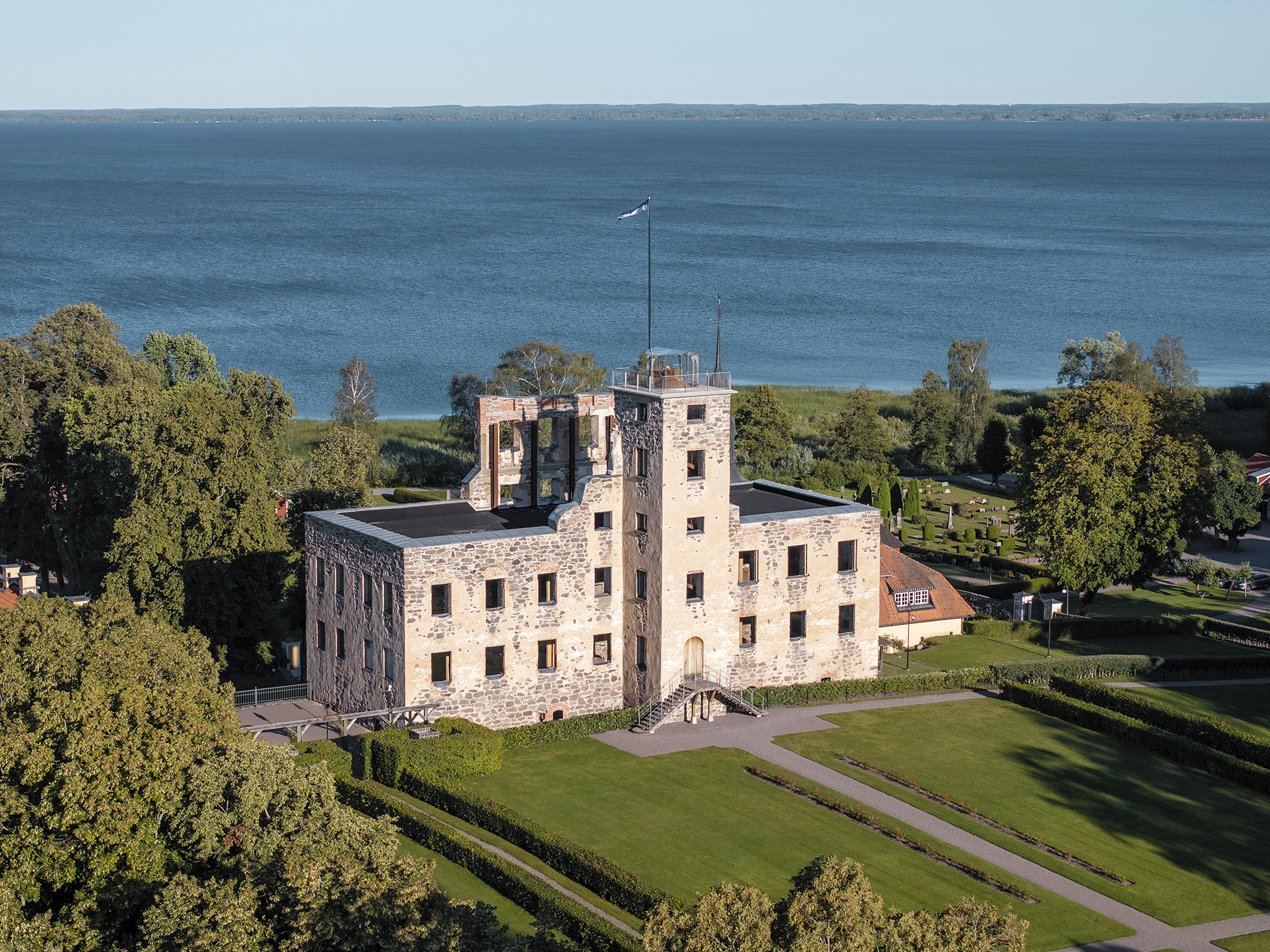
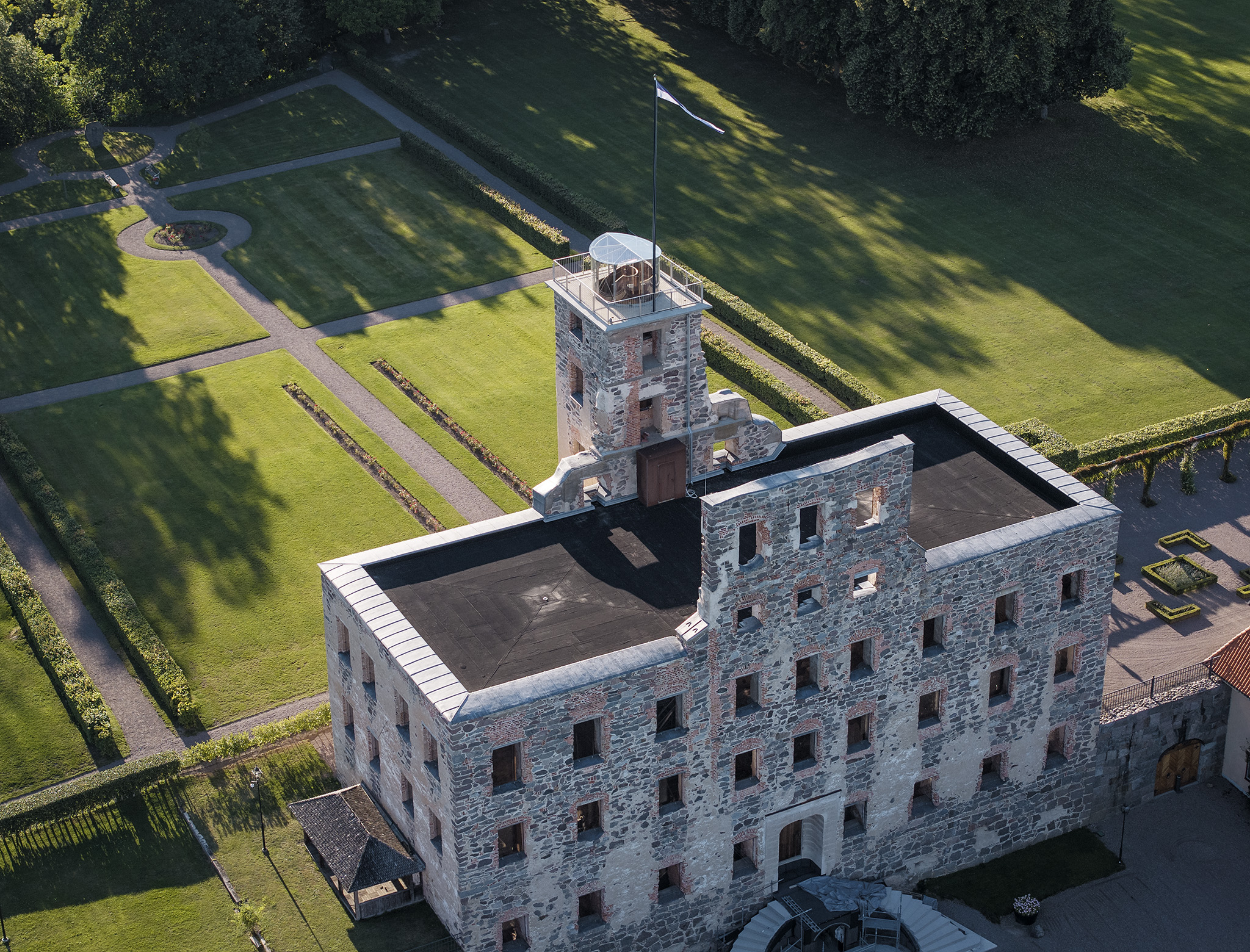
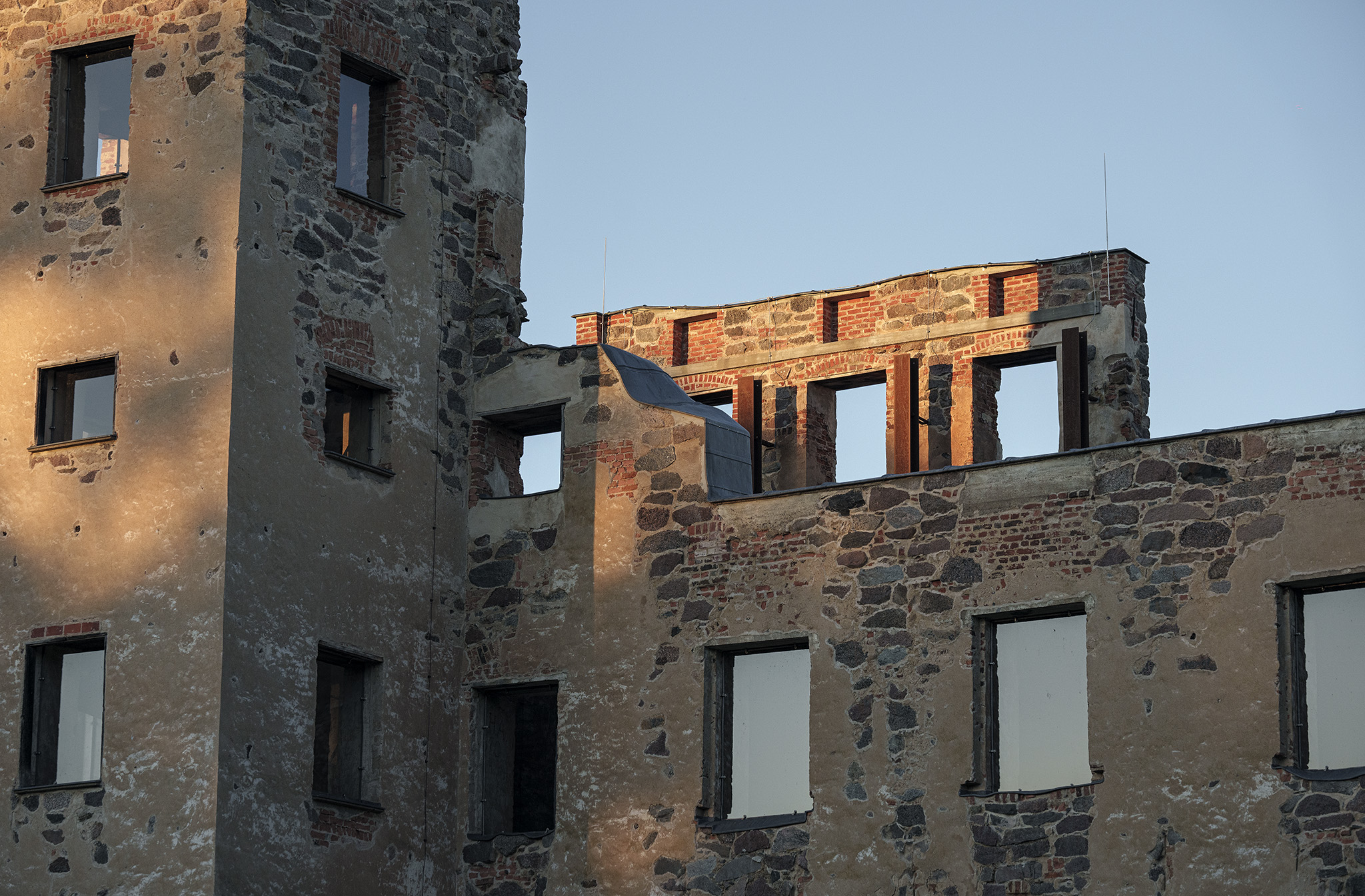
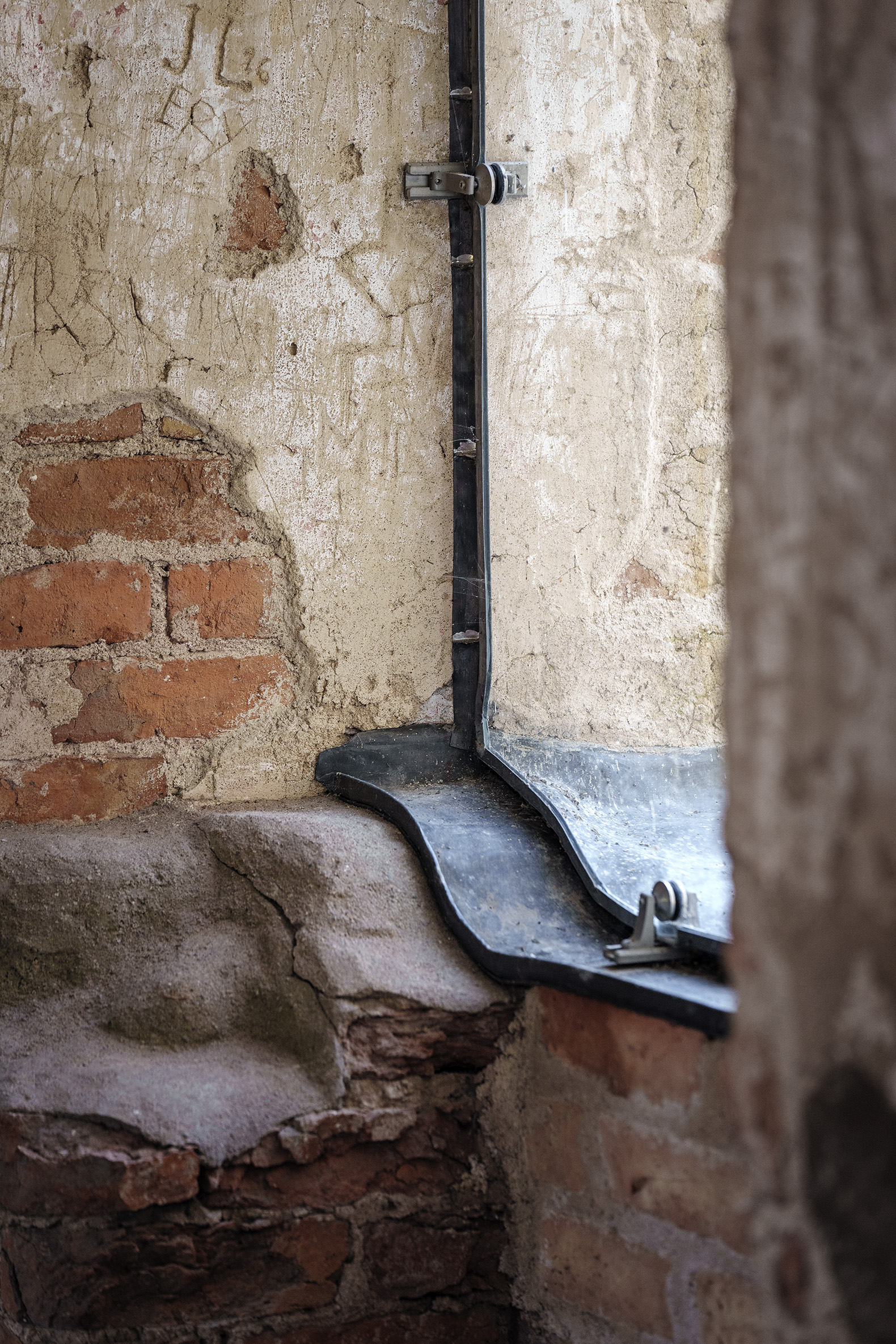
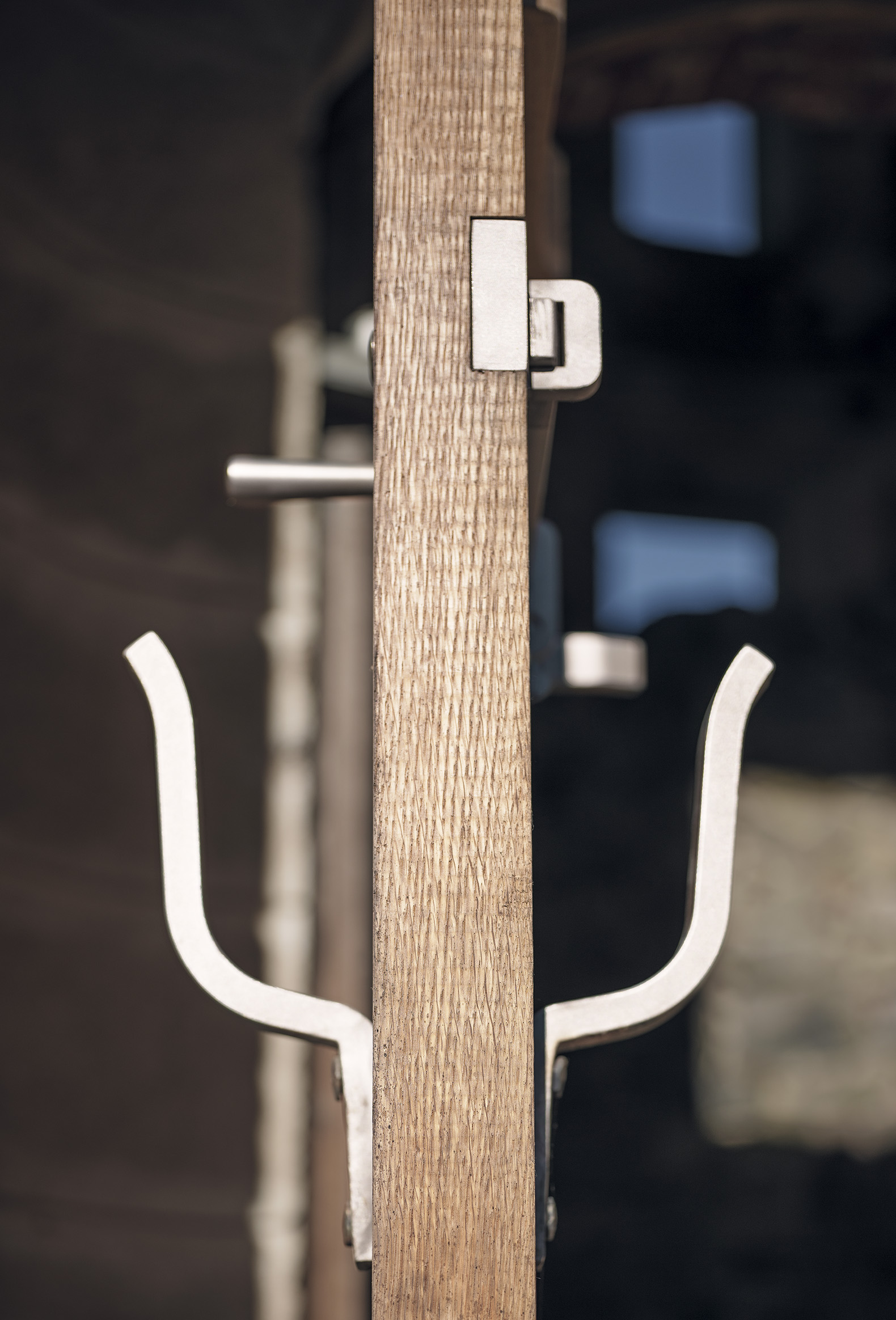
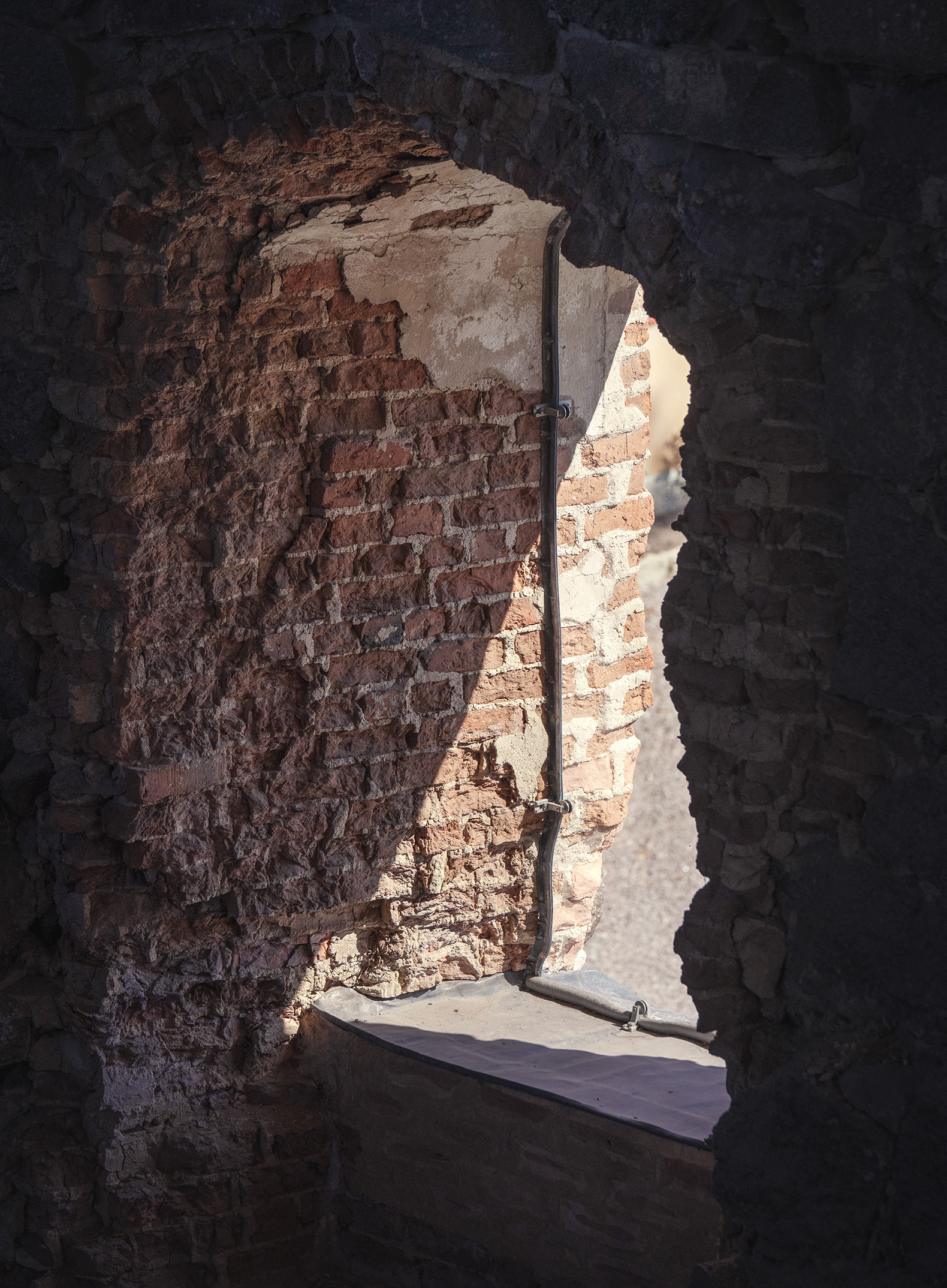
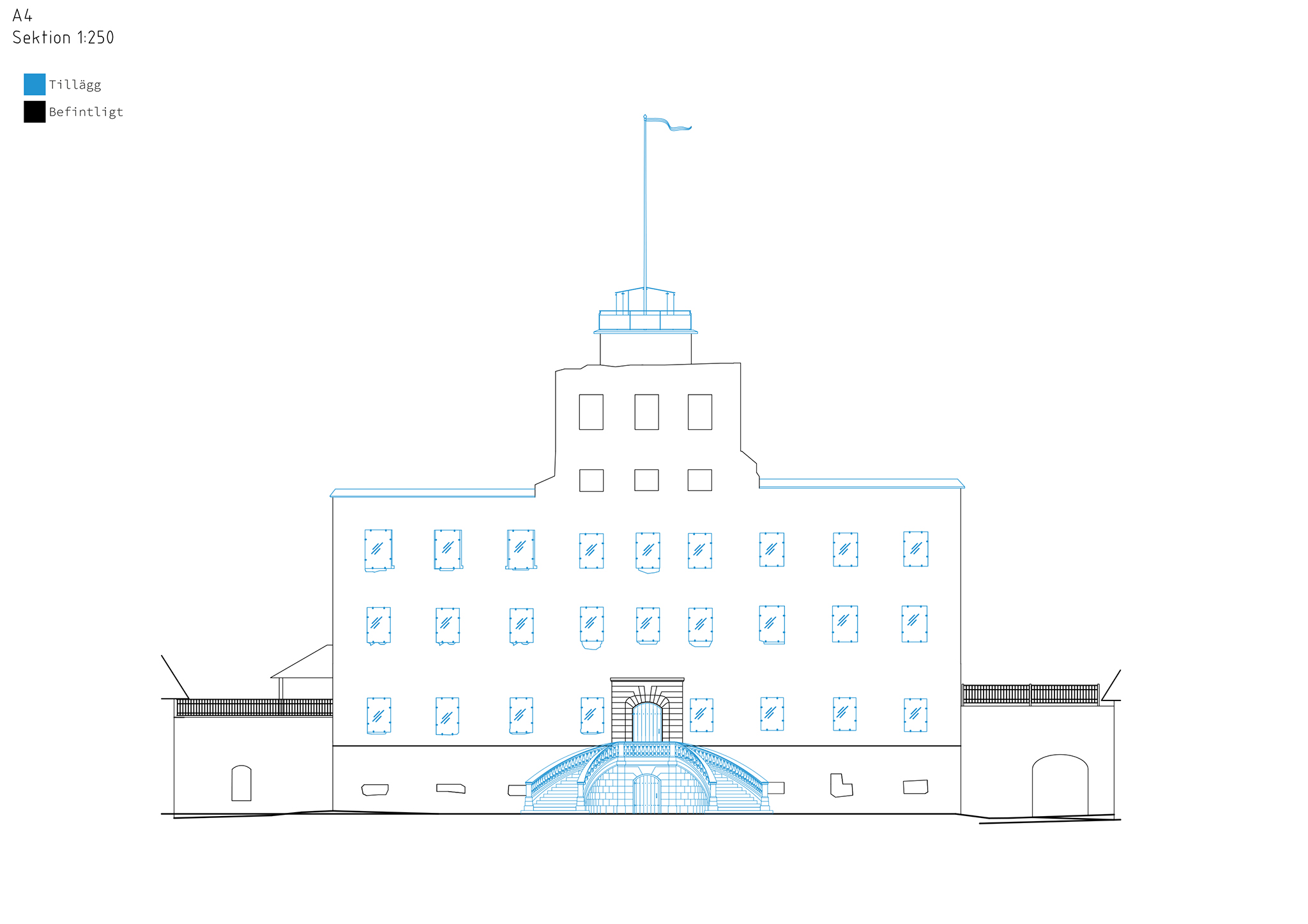
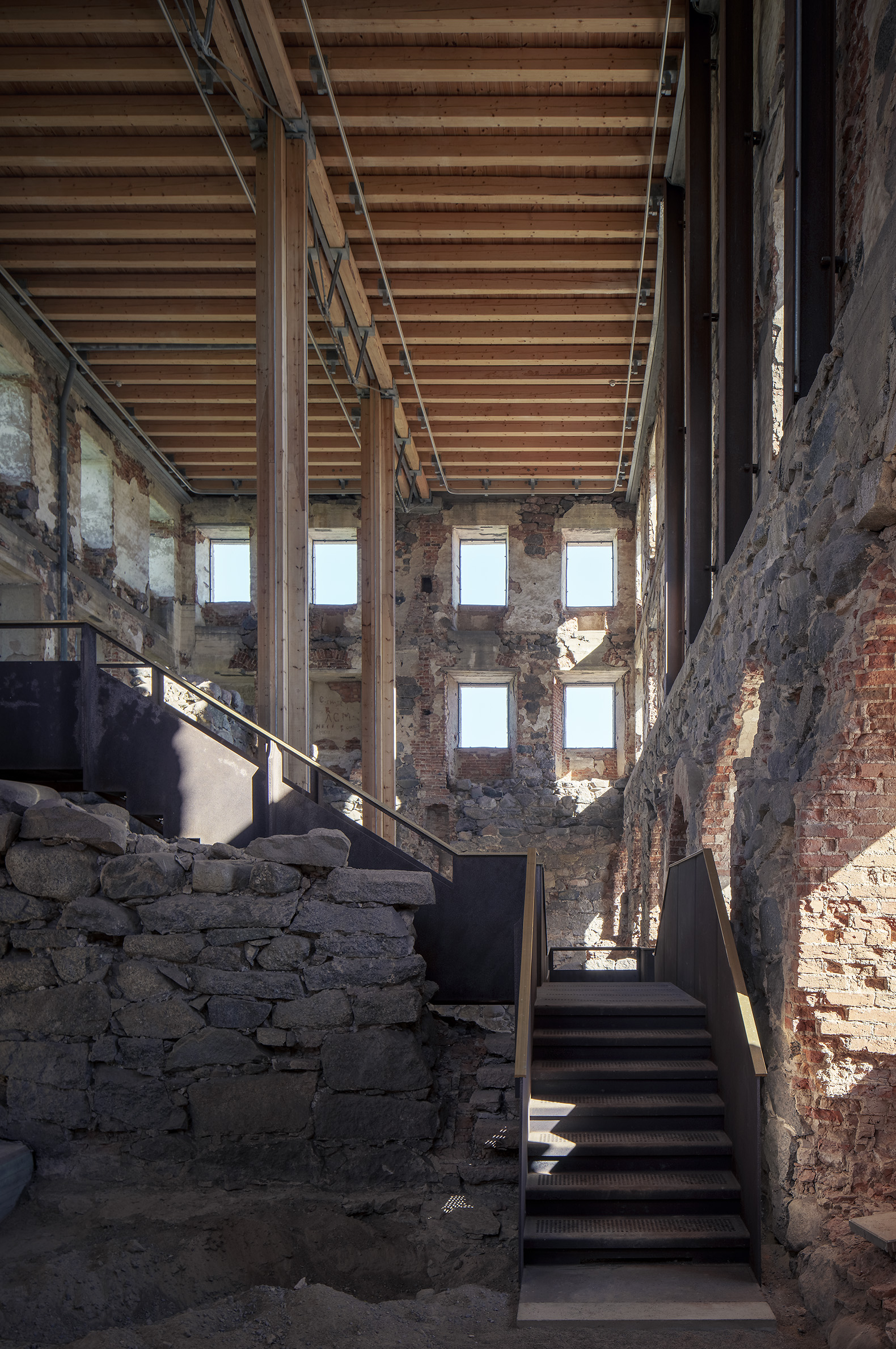
On the exterior of the castle, the careful restoration maintains the impression of an untouched ruin. Inside, the intervention adds a protective roof structure supported only by the original points of support. Understated additions, such as the contoured lead sheets that crown the walls and window sills, and the exterior oak-plank doors, allow Stjärnorp Castle to be visited once again, without compromising its historical essence.
The project is one of the 40 selected for the EUmies / Mies van der Rohe Awards 2026.
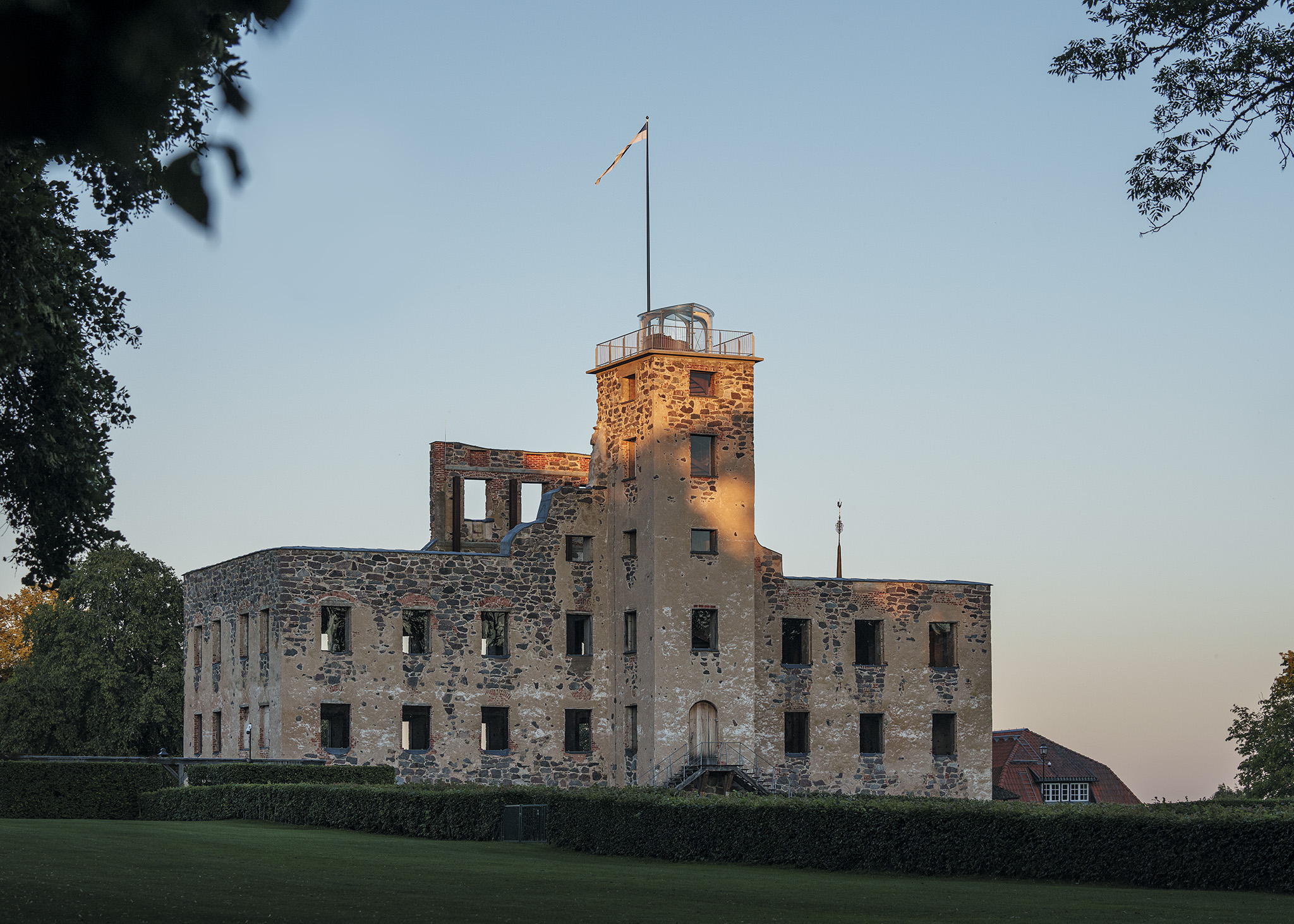
Stjärnorp Castle Ruin by Wikerstål Arkitekter / Tengbom Arkitekter. Photograph by Felix Gerlach.
Project description by Wikerstål Arkitekter, Tengbom
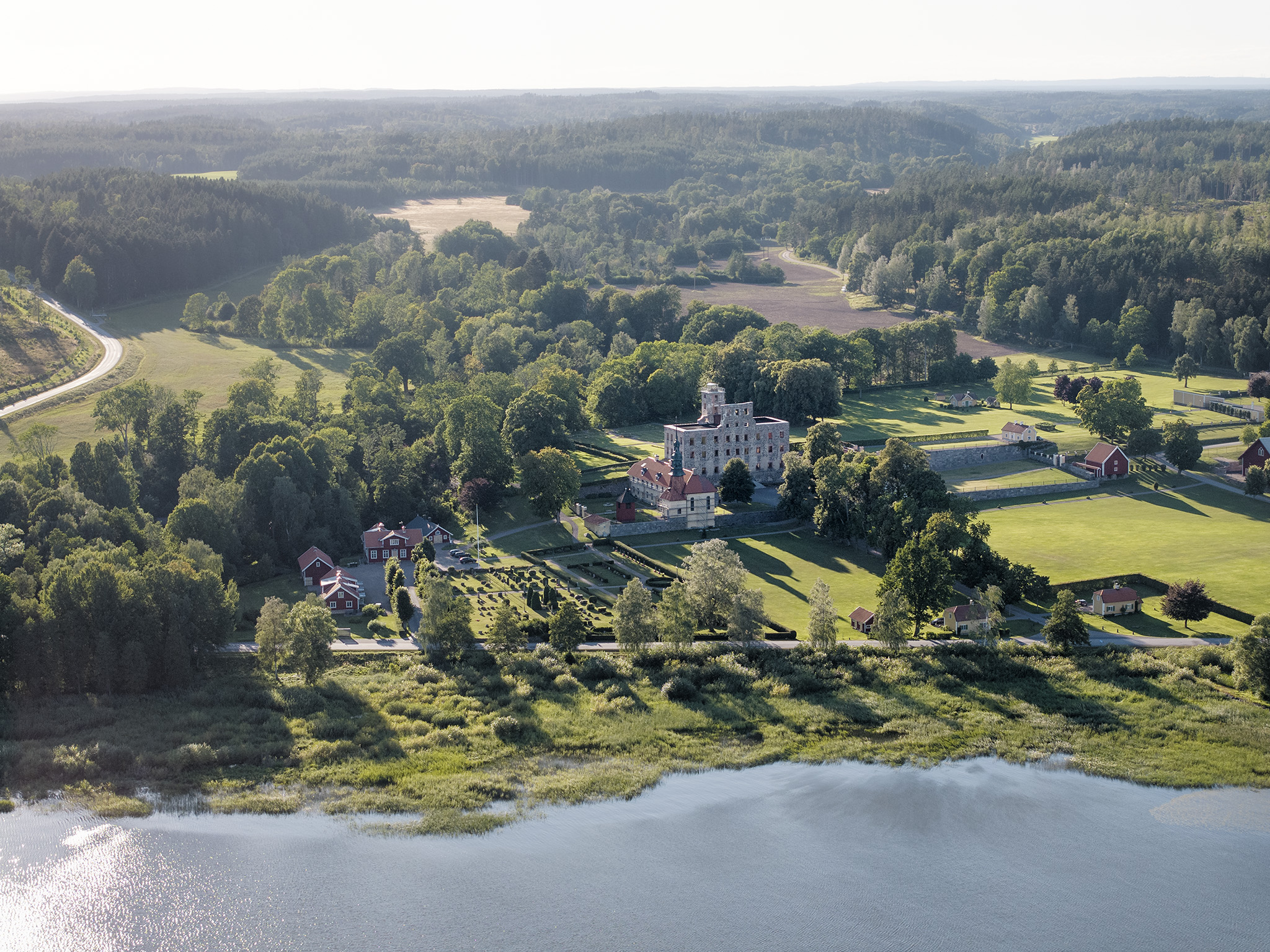
West of Lake Roxen, just outside Linköping, stands the ruin of Stjärnorp Castle, originally built between 1654 and 1662, most likely designed by Nicodemus Tessin the Elder. The estate comprised a four-storey stone main building with a stair tower facing the park to the west, and two wings facing Lake Roxen to the east. The castle is depicted in Erik Dahlbergh’s Suecia Antiqua et Hodierna from 1697.
A major fire in 1789 destroyed the main building and both wings. While the wings—one containing the castle chapel—were restored, the main building was left as a ruin and has remained exposed for over 230 years. During the 20th century, only minor stabilisation measures were carried out. Today, the ruin is a protected ancient monument.
In 2012, the Stjärnorp estate launched an architectural parallel commission to find ways to preserve the ruin while enabling limited access. Wikerstål Arkitekter, later acquired by Tengbom in 2017, was selected to develop and realise the proposal.
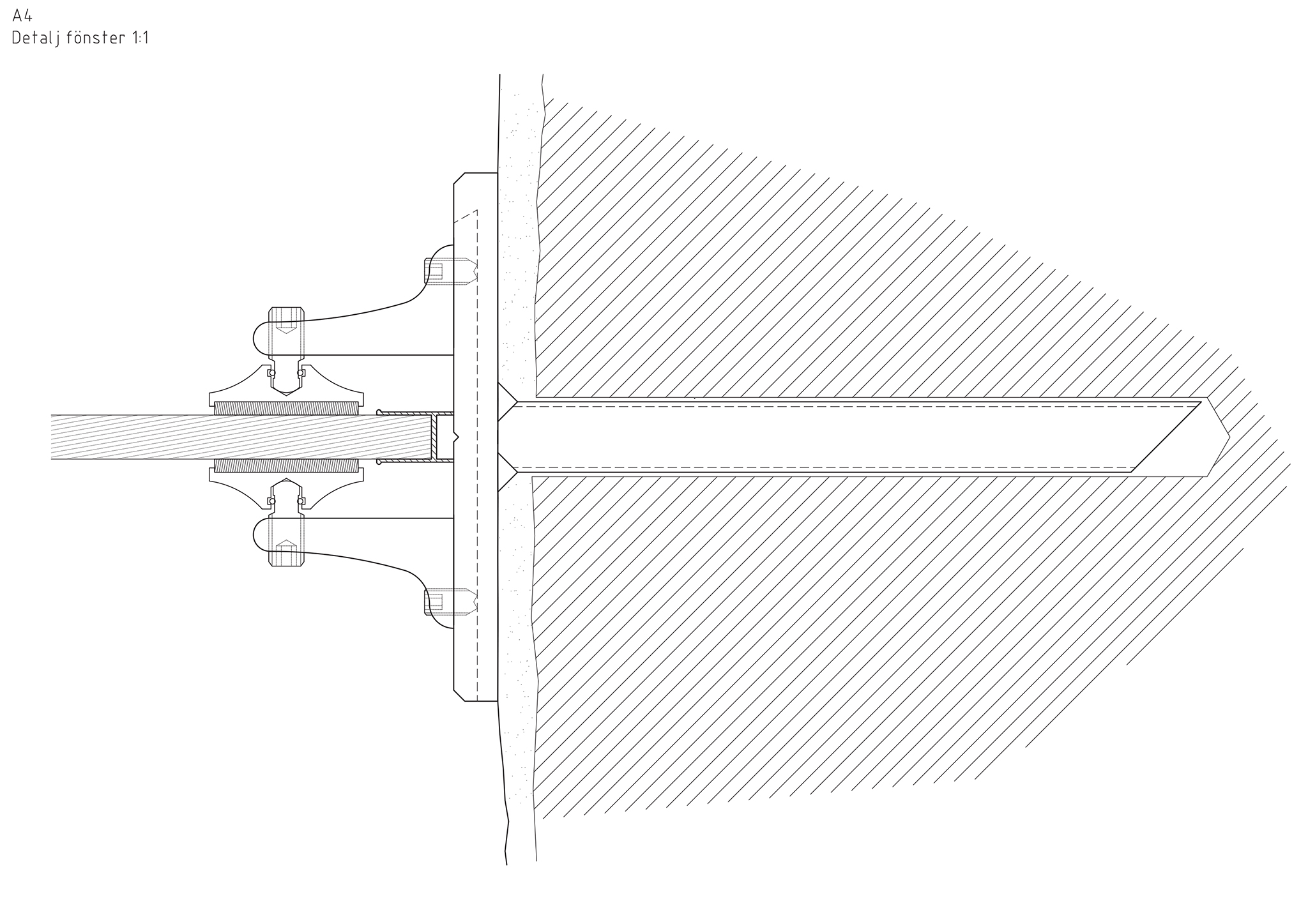
In recent years, a careful restoration has combined masonry conservation with restrained architectural additions. Externally, the aim was to maintain the impression of an untouched ruin. Internally, a protective roof structure has been added, supported at the original bearing points. Wall tops and window parapets have been capped with contoured sheet lead, and custom laminated glass panes have been installed in the window openings. New oak plank exterior doors have also been introduced.
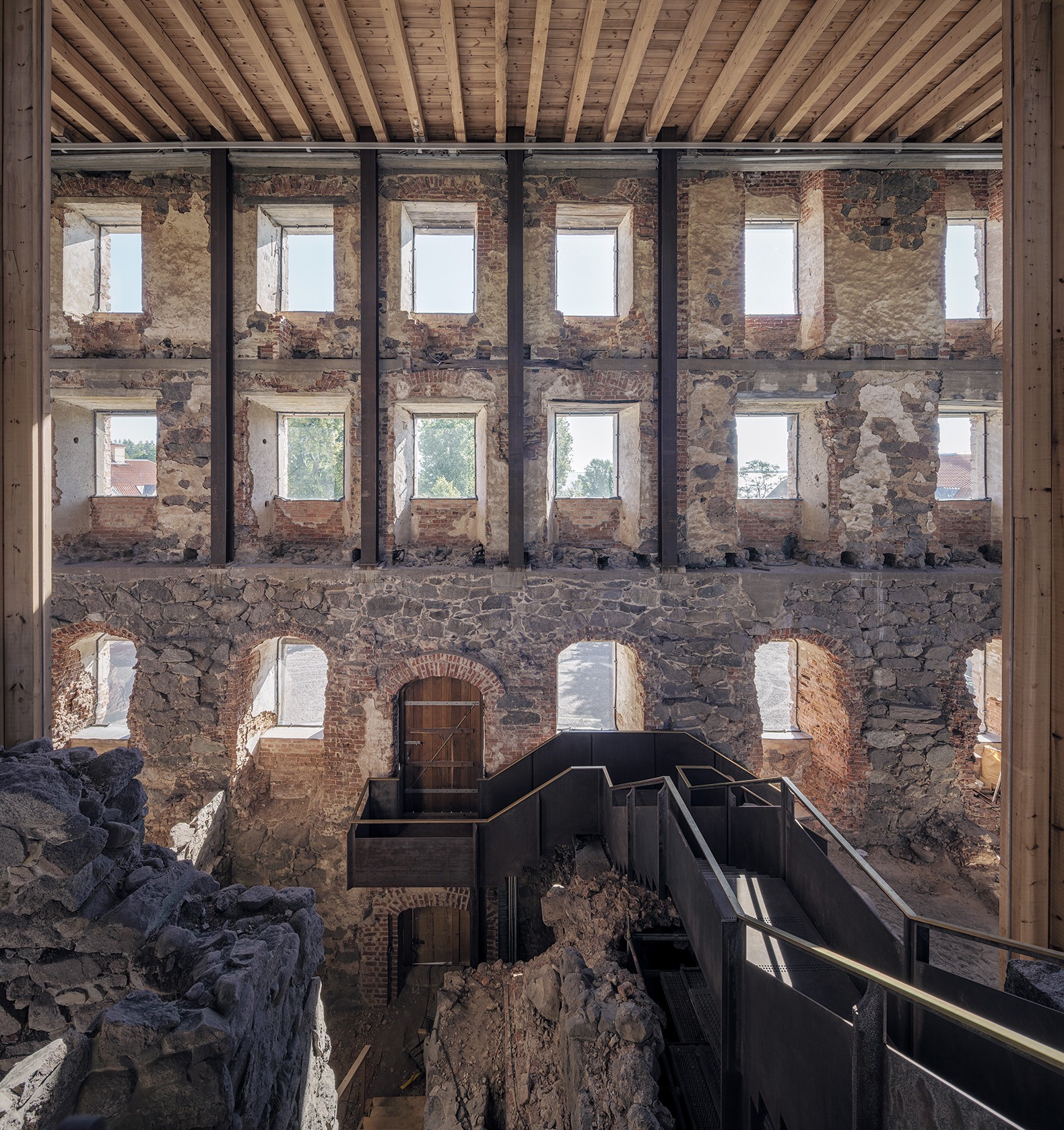
The roof structure uses full-length beams sawn on site from timber sourced from the estate’s forest. The collapsed central wall has been replaced by double beams supported by steel columns clad in timber for fire protection.
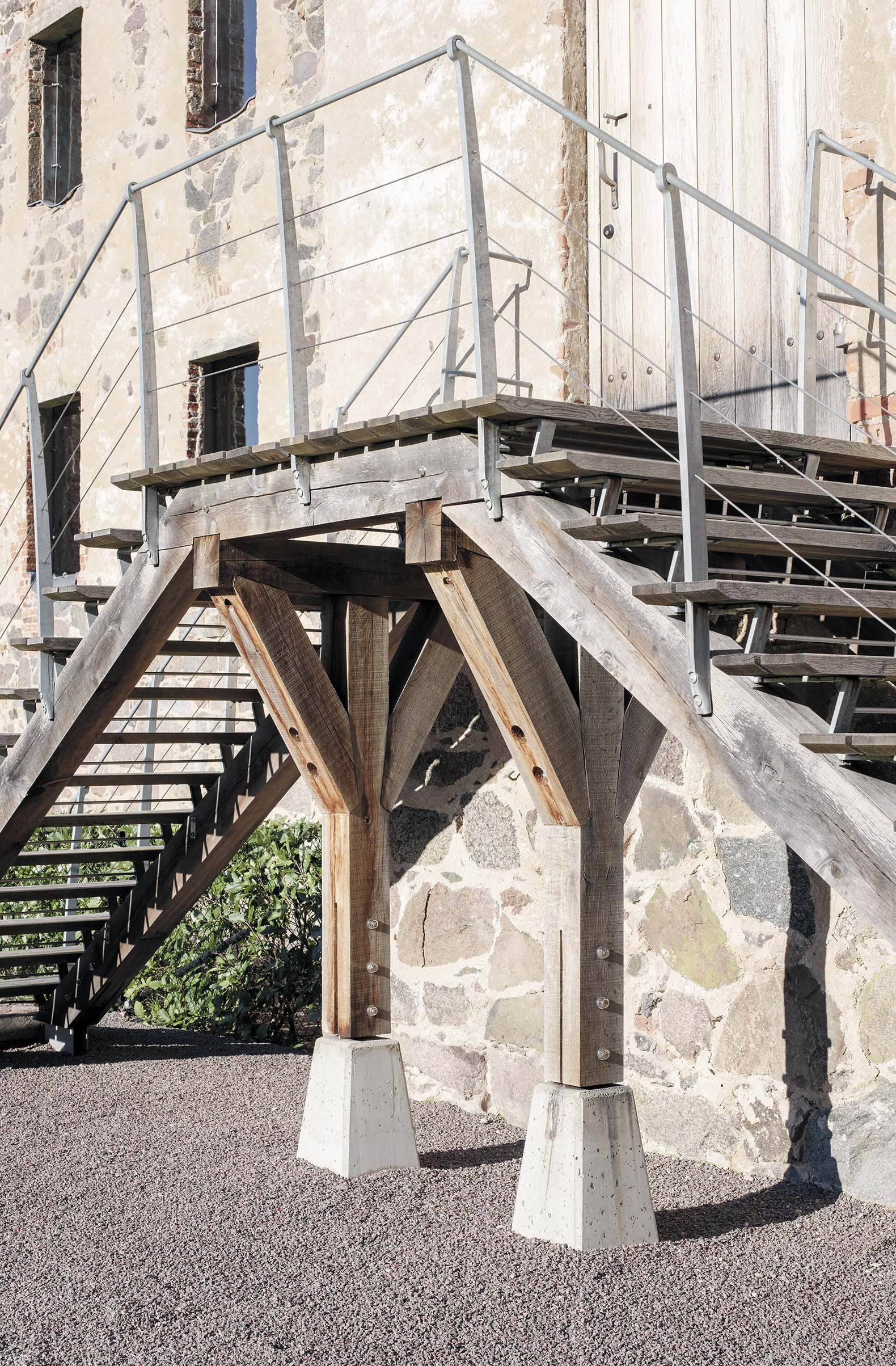
To improve accessibility, new staircases have been added. A self-supporting staircase in the great hall rests on steel columns between the cellar vaults, while an elliptical spiral staircase in the stair tower is suspended beneath a glass lantern. Both staircases are made of weathering steel with brass handrails. Access is provided by a new oak beam staircase, and a Baroque-style stone staircase is currently under construction at the courtyard entrance.