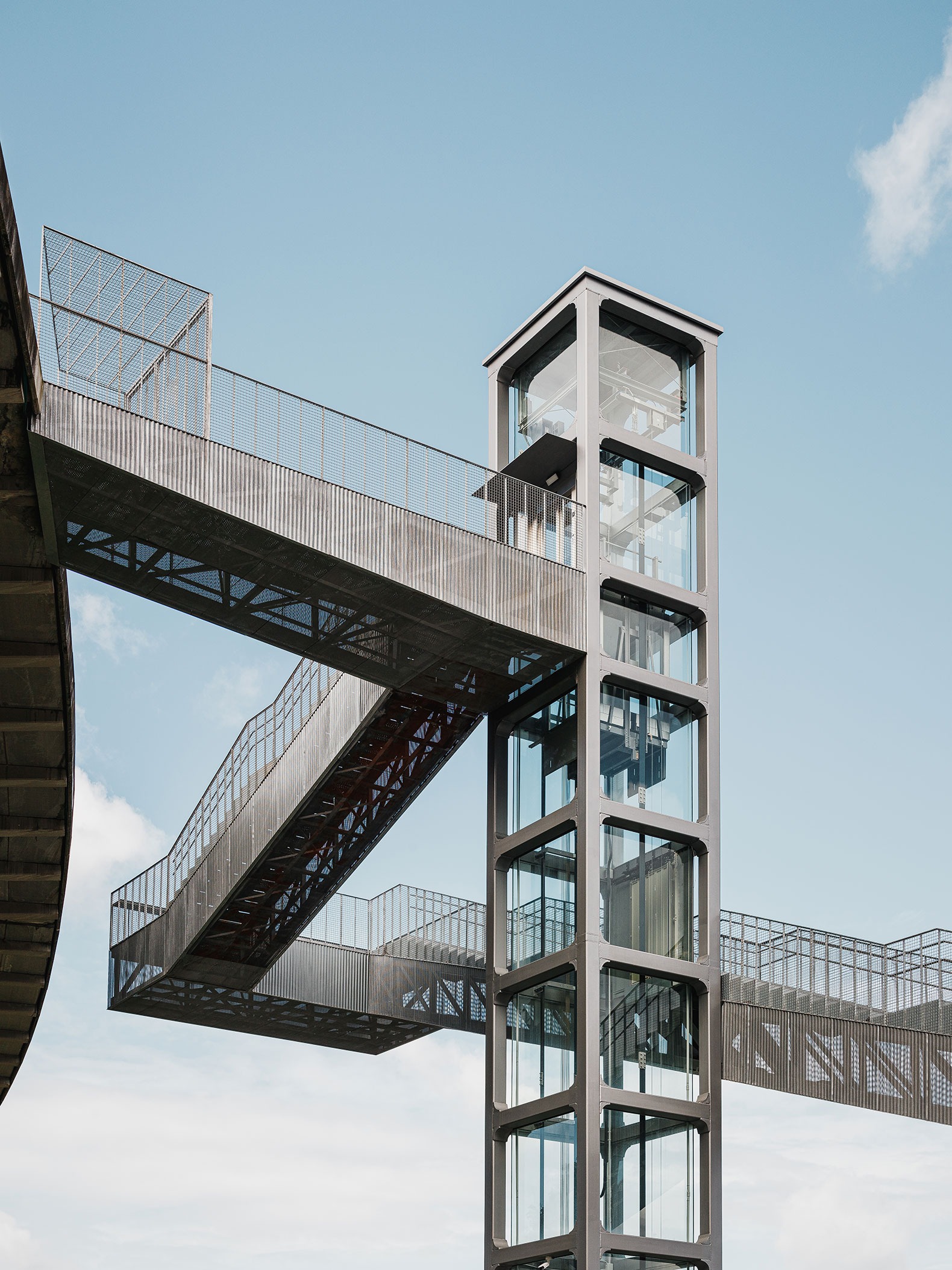
Architecture practices TARTE Arkitektura and ELE Arkitektura were commissioned to design a landscaped pathway, an elevator, and an urban staircase for the access to the Altos Hornos de Bizkaia blast furnaces, located in Sestao, a neighborhood with a mix of residential and industrial areas situated next to a bend in the Nervión River.

This project is part of the regeneration plan for this industrial area and was awarded through a competition. It subsequently received the ENOR JOVEN 2026 and COAVN 2024 awards, was nominated for the EUmies Awards 2026, was a finalist for the BEAU 2026, and was selected for the IX arquia/próxima Festival 2024.

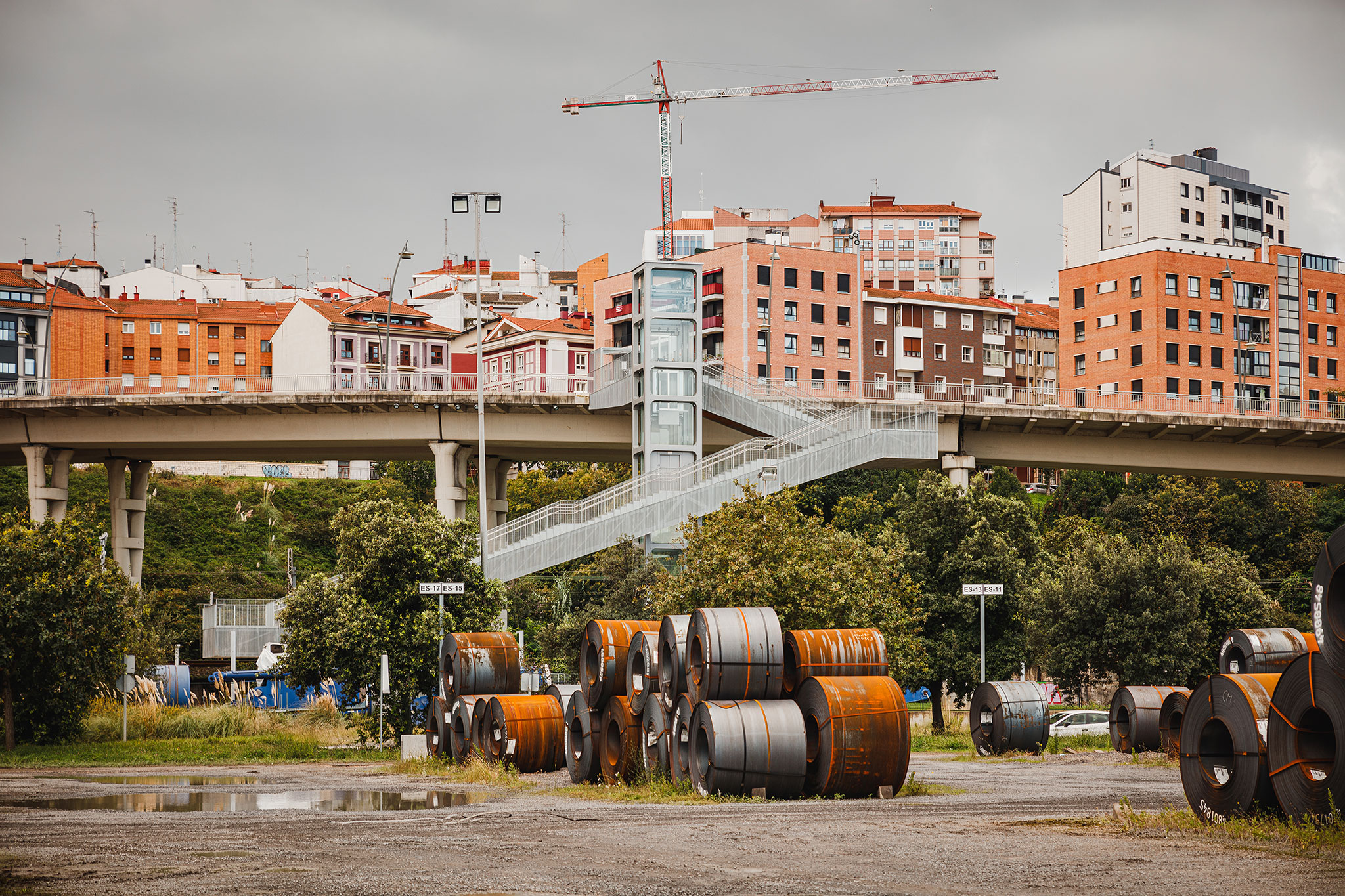
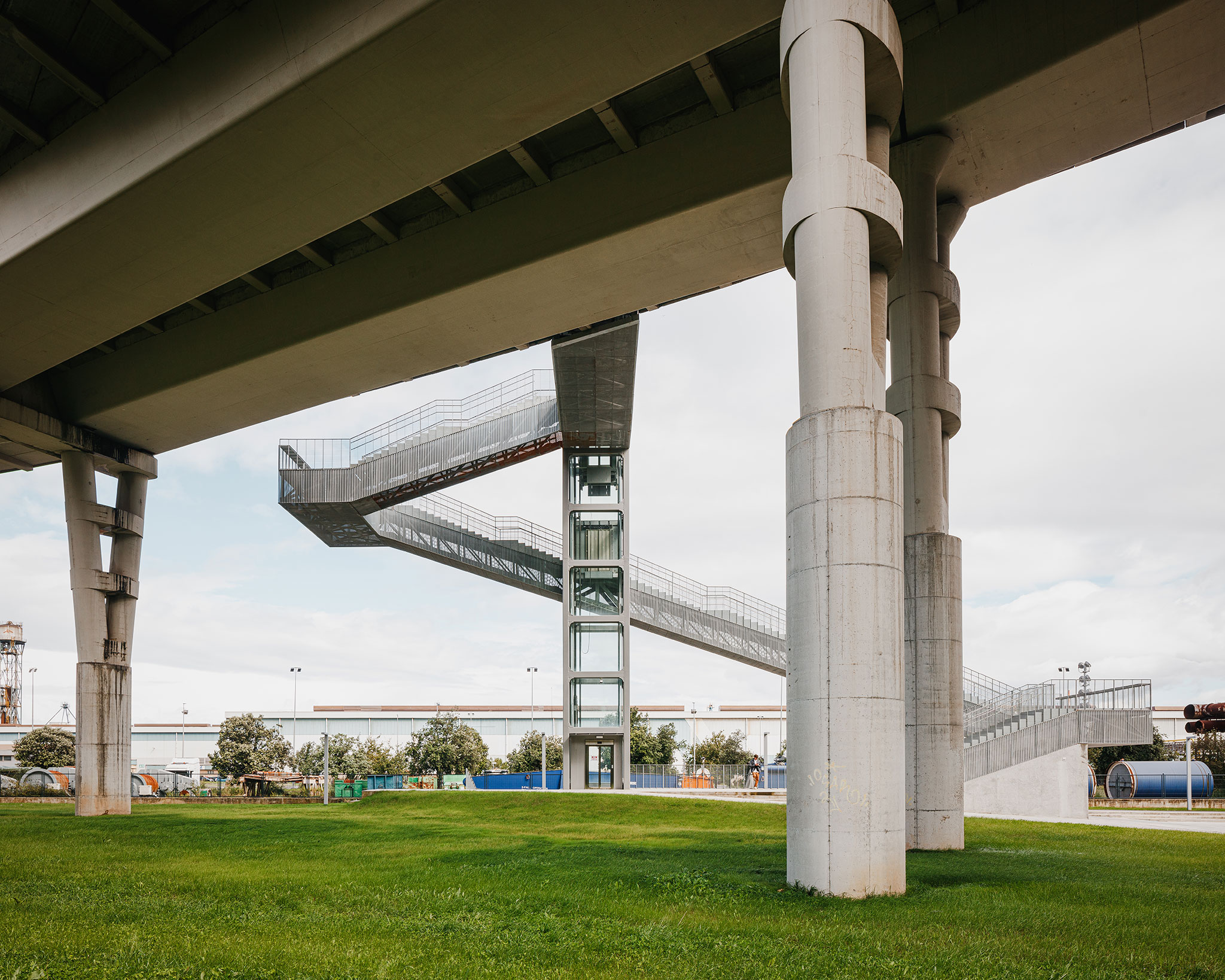
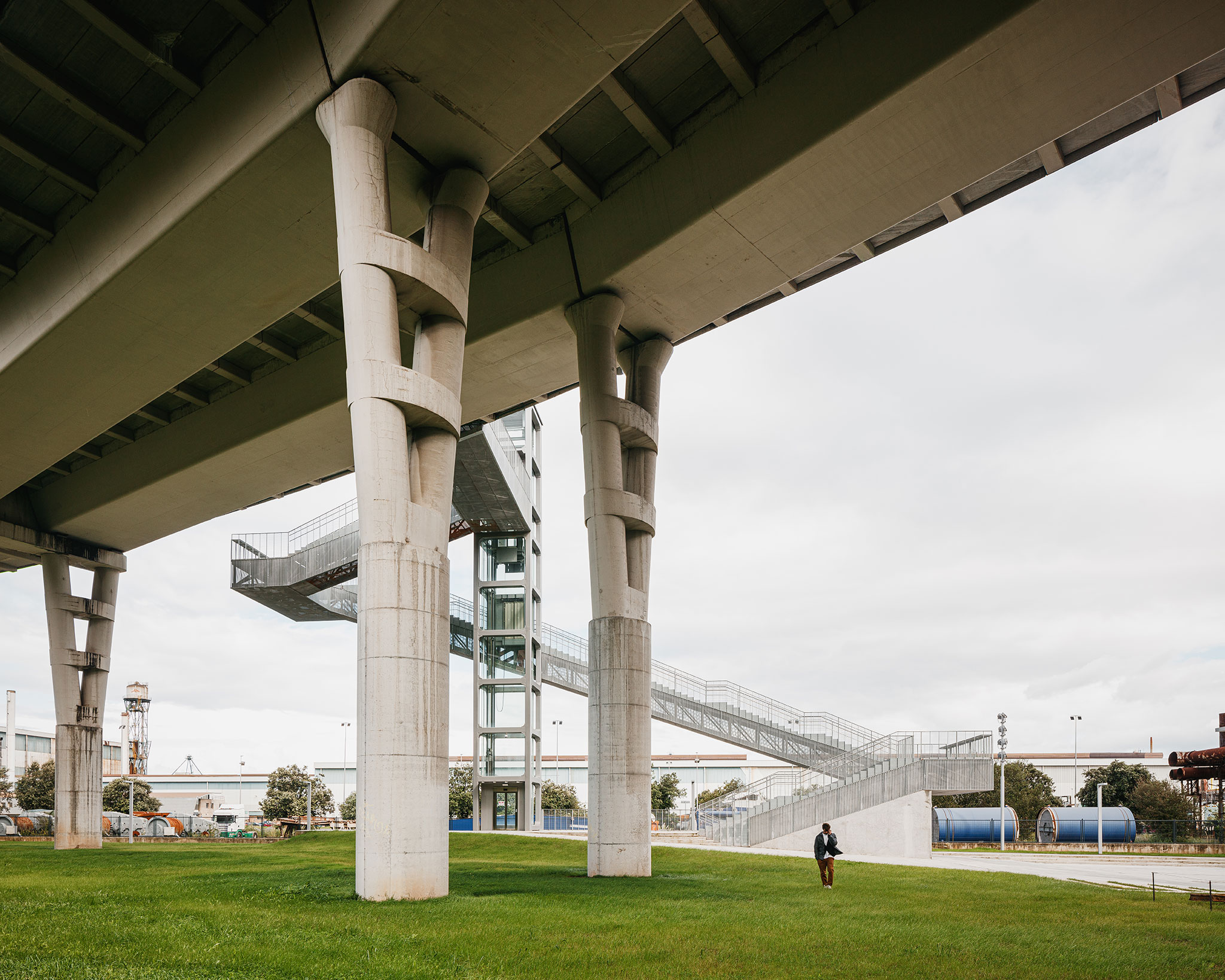
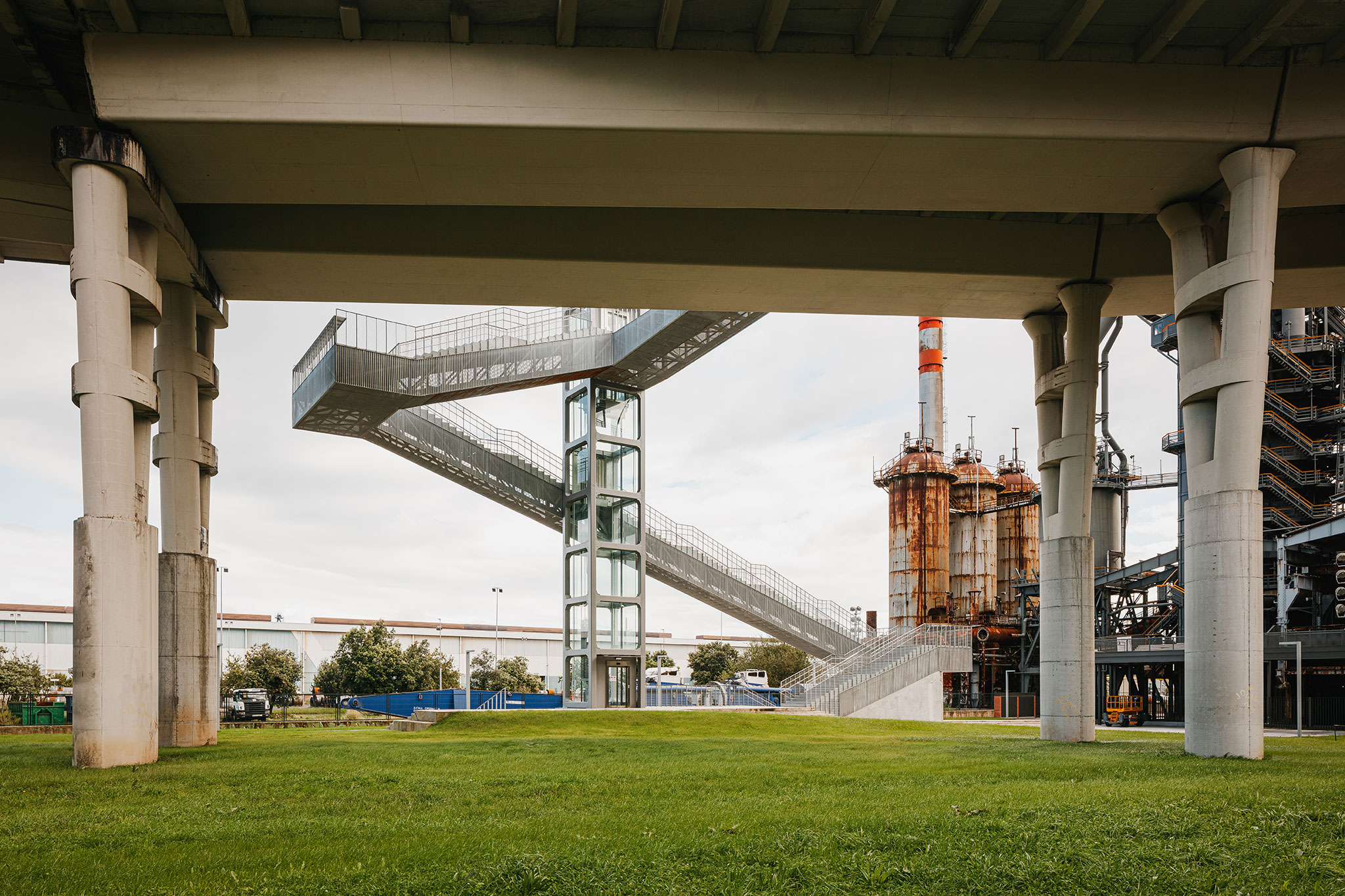
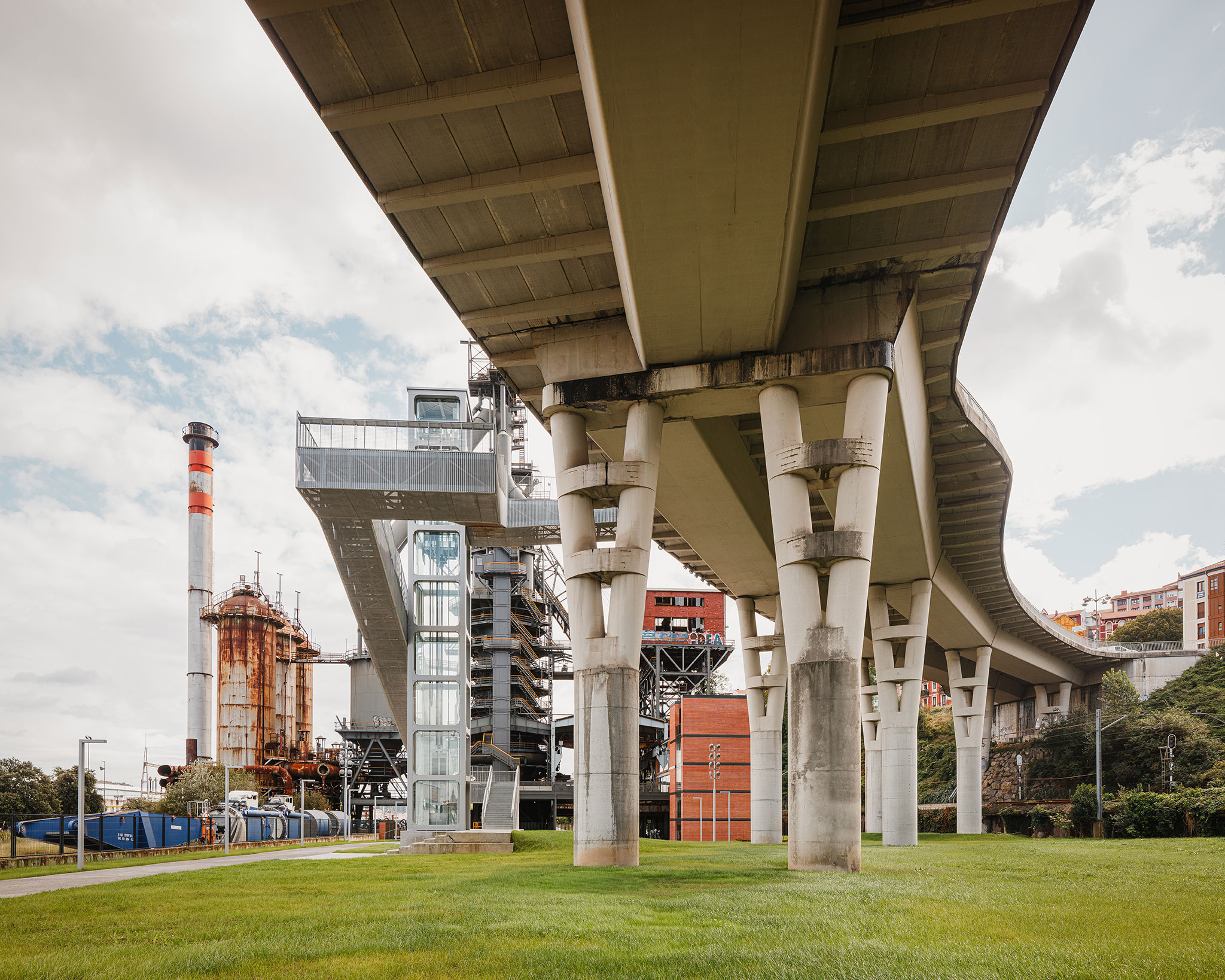
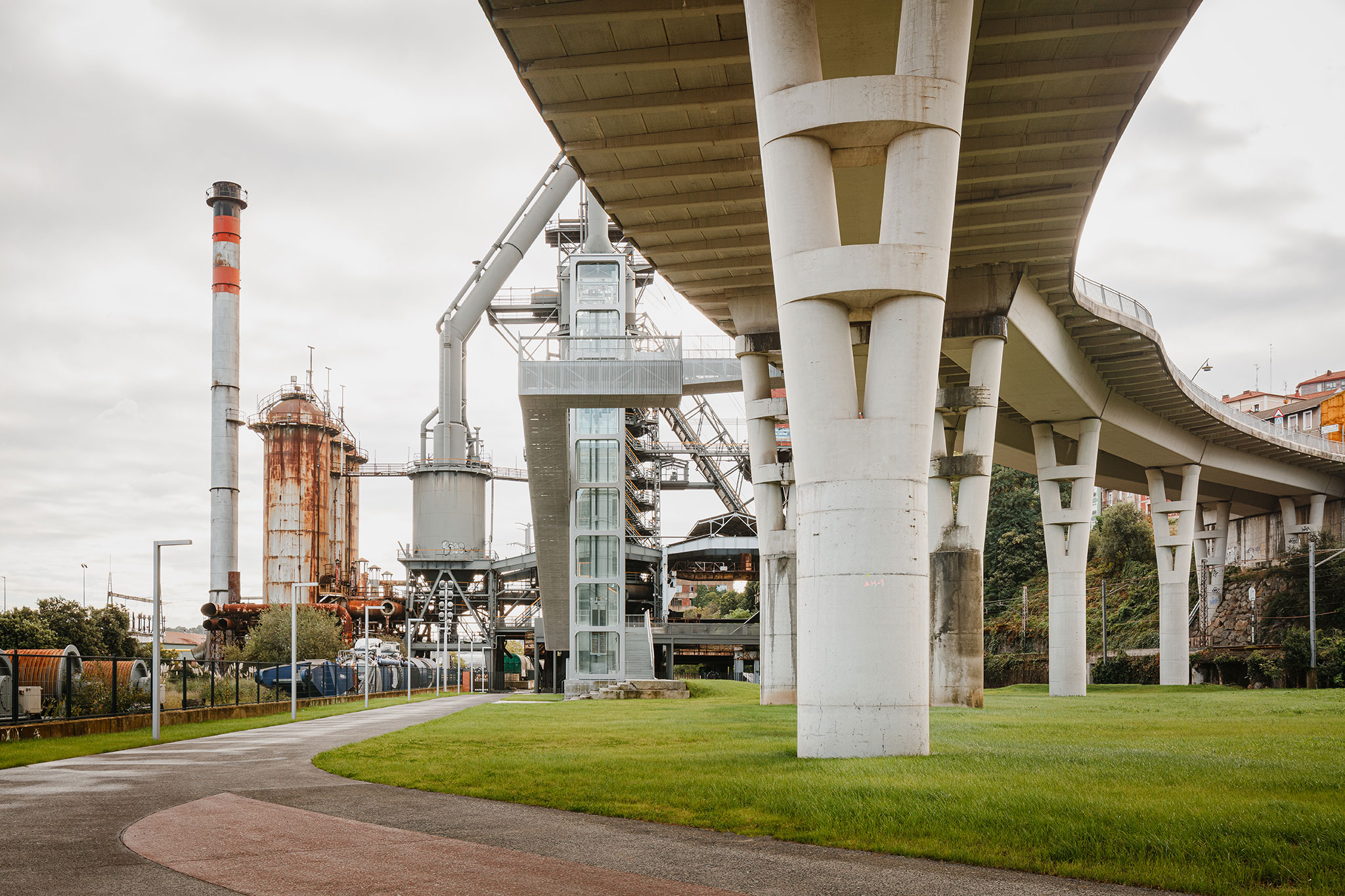
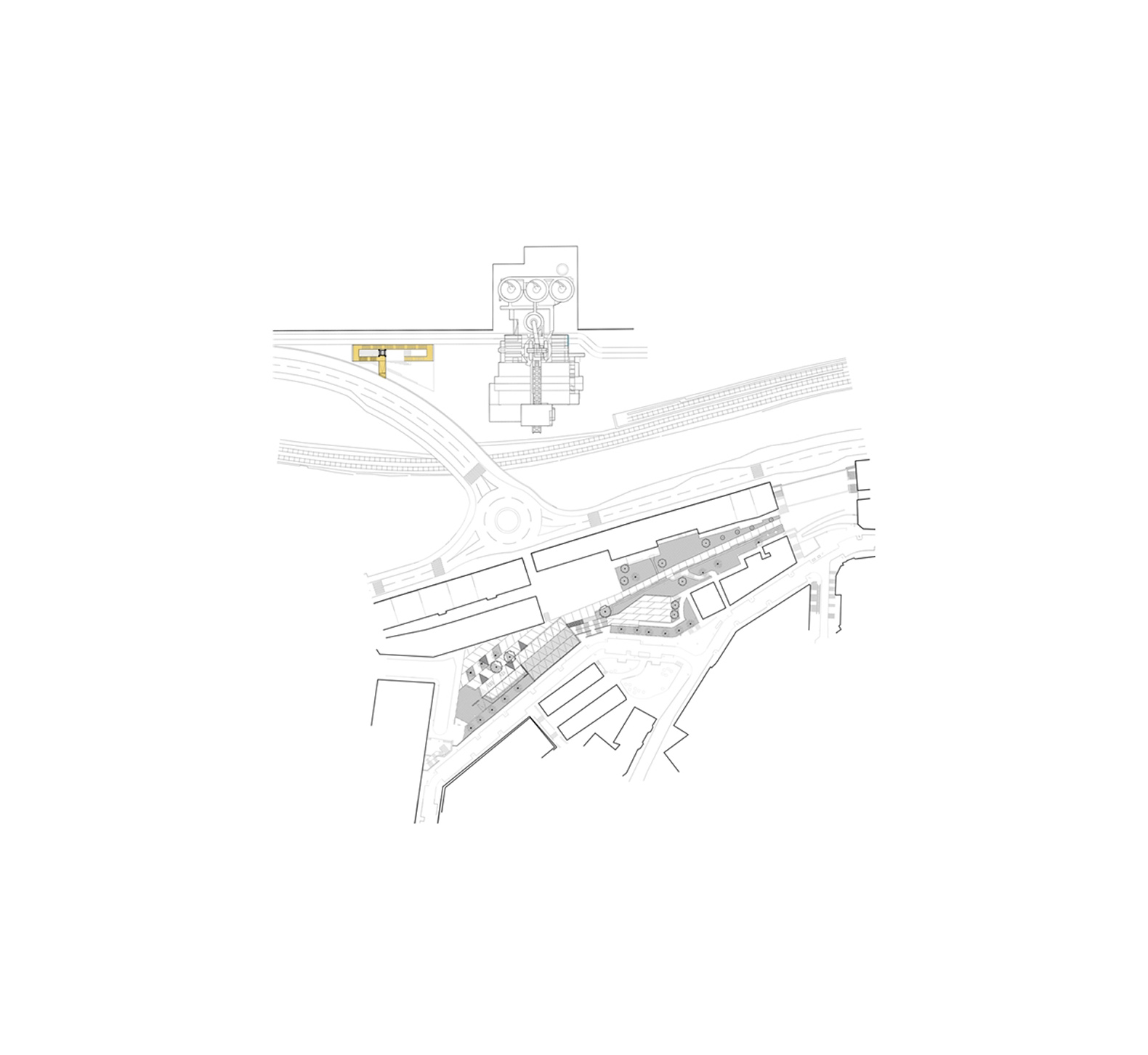
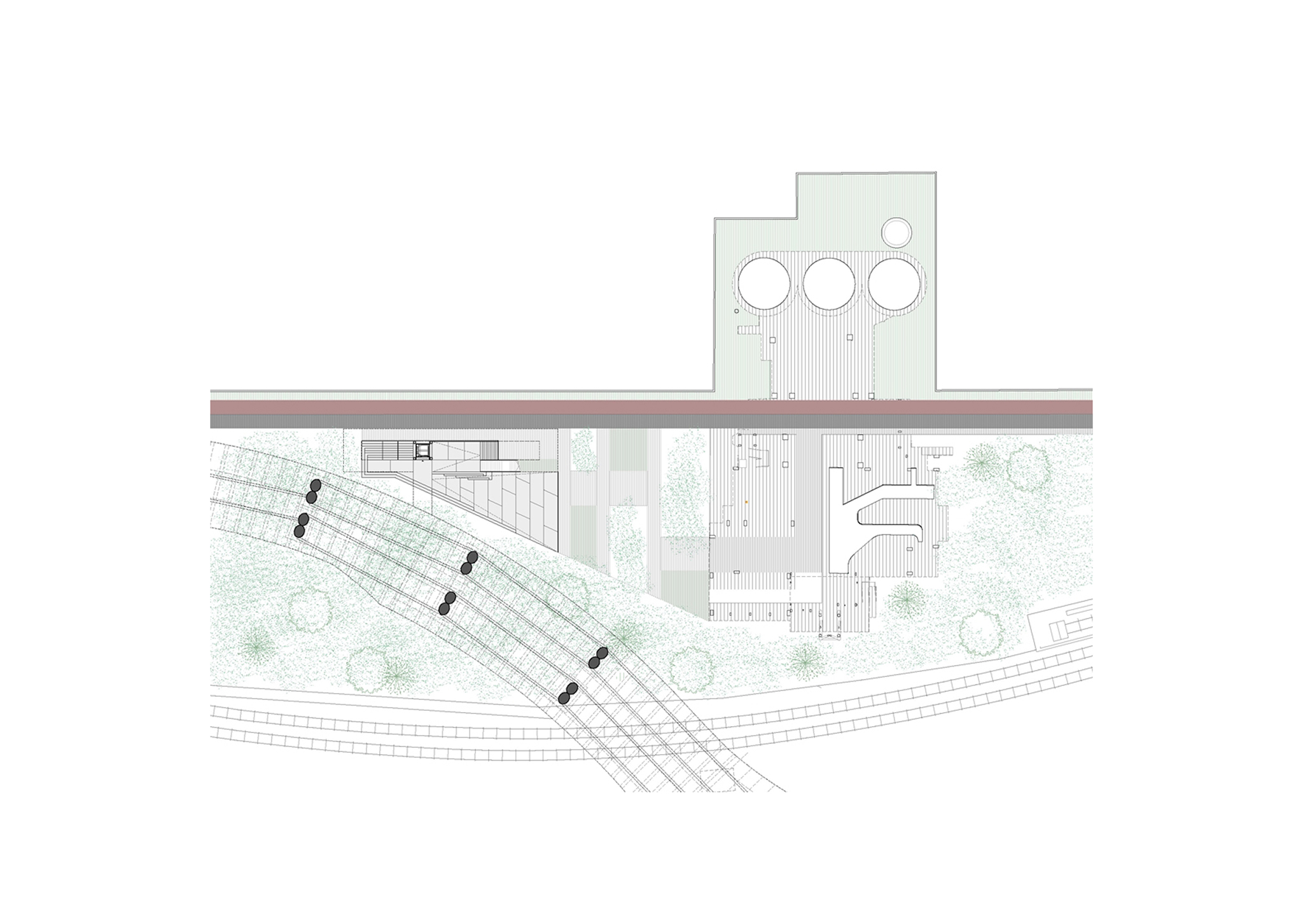
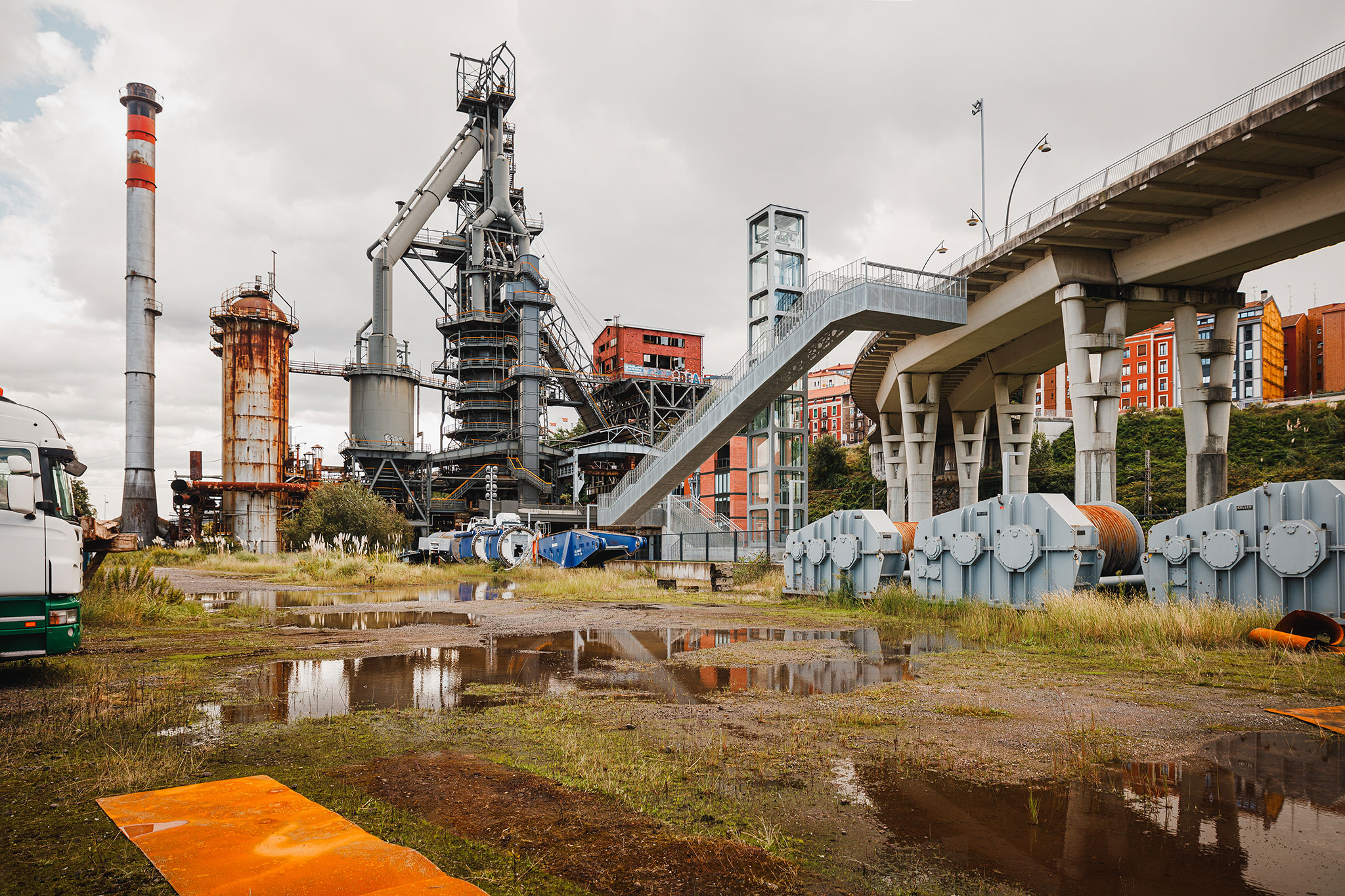
The project by TARTE Arkitektura and ELE Arkitektura consists of the installation of an elevator and an urban staircase to access the Altos Hornos de Bizkaia, overcoming the 25-meter difference in elevation between the neighborhood and the river bend. It is located on the northern esplanade, facing the blast furnace, with a layout that creates a vestibule in front of the monument.

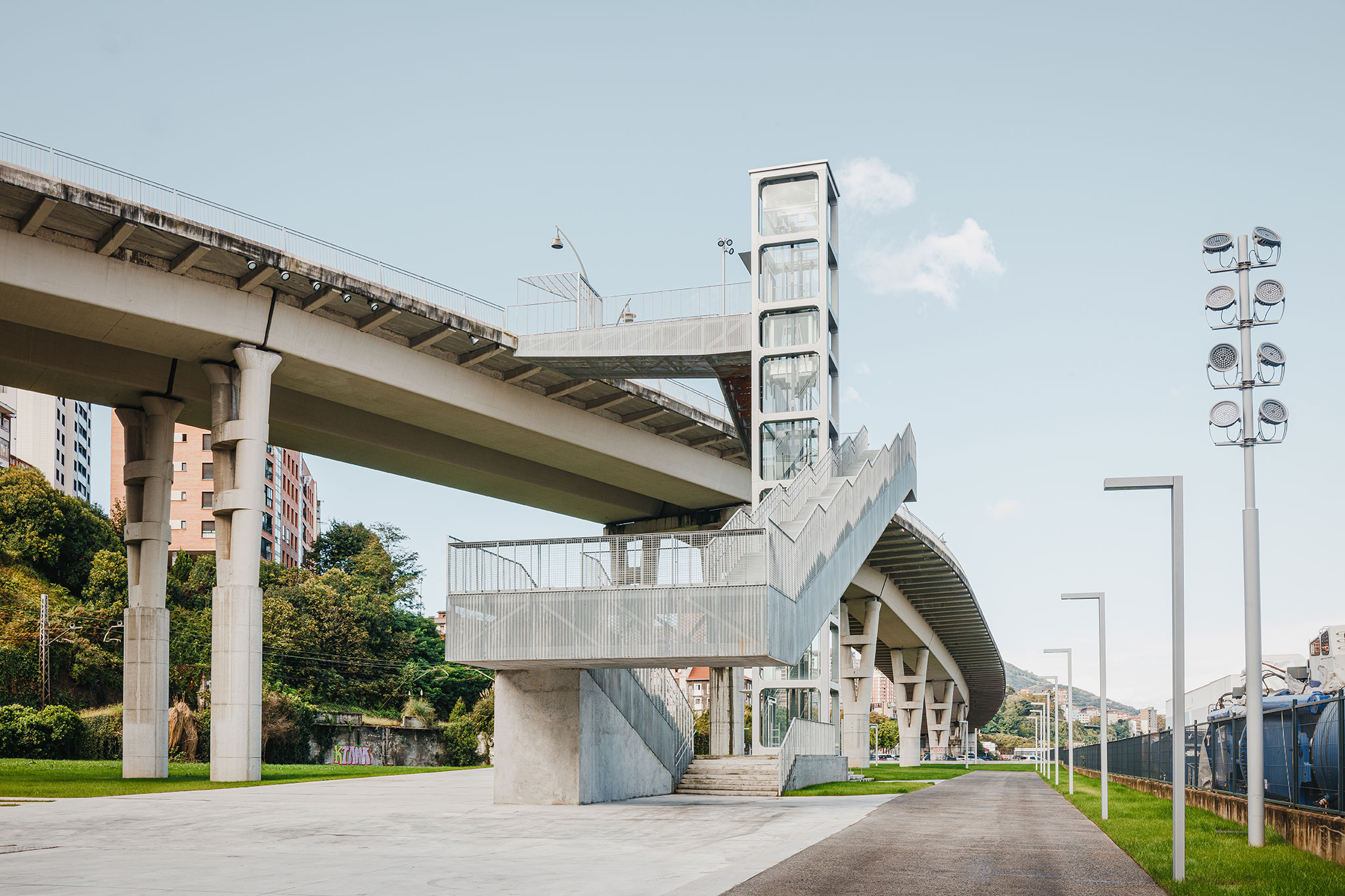
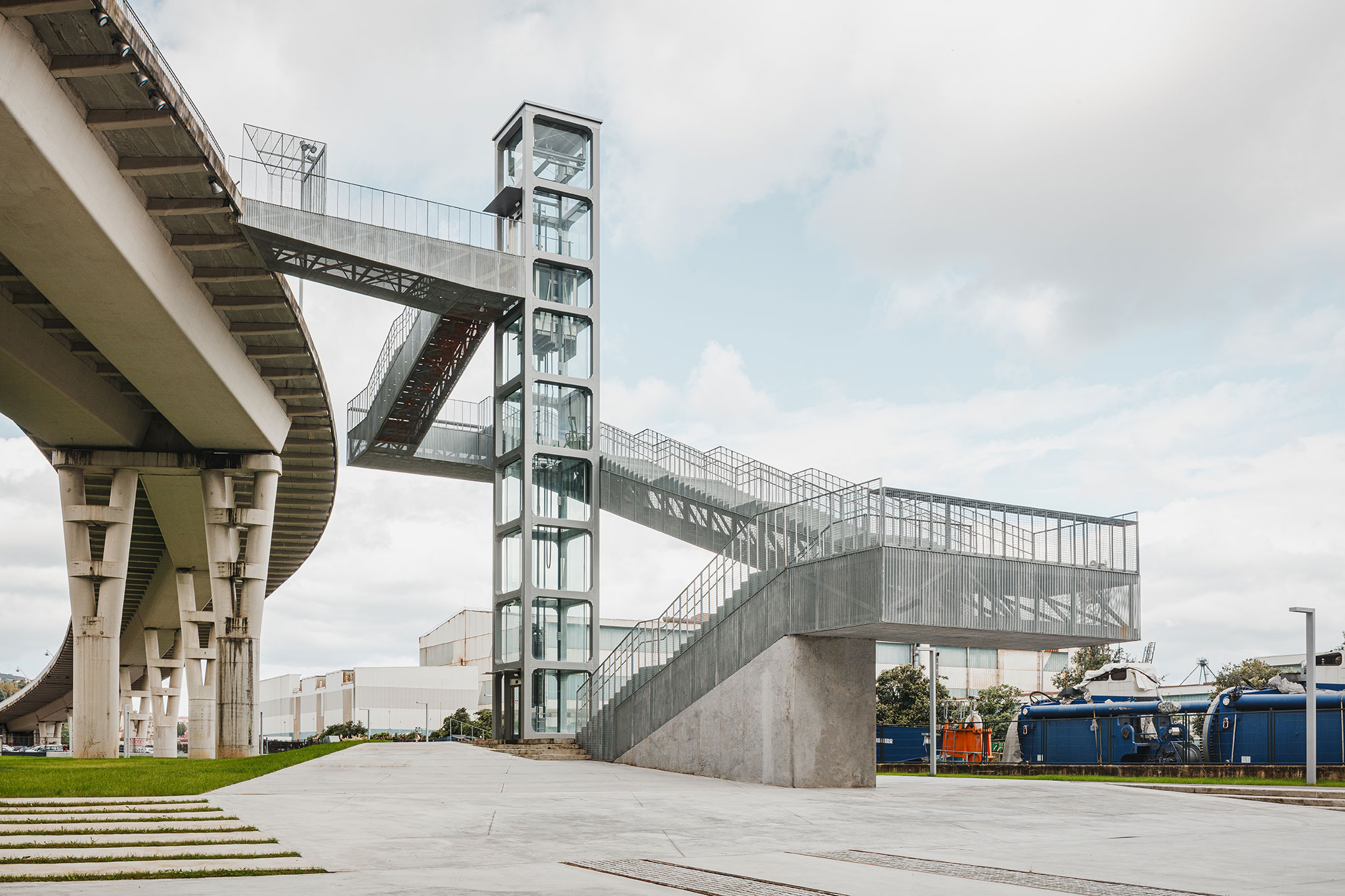
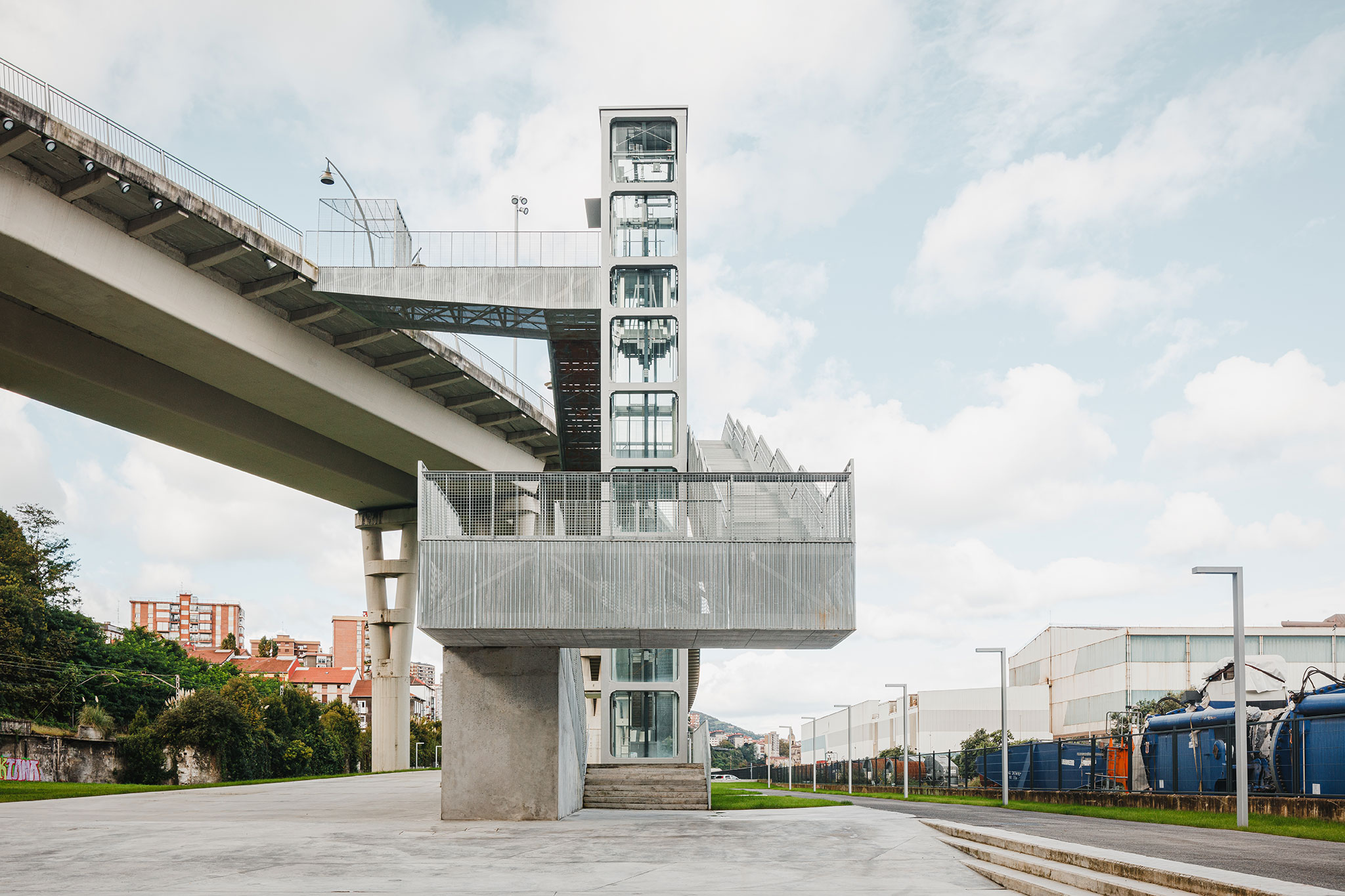
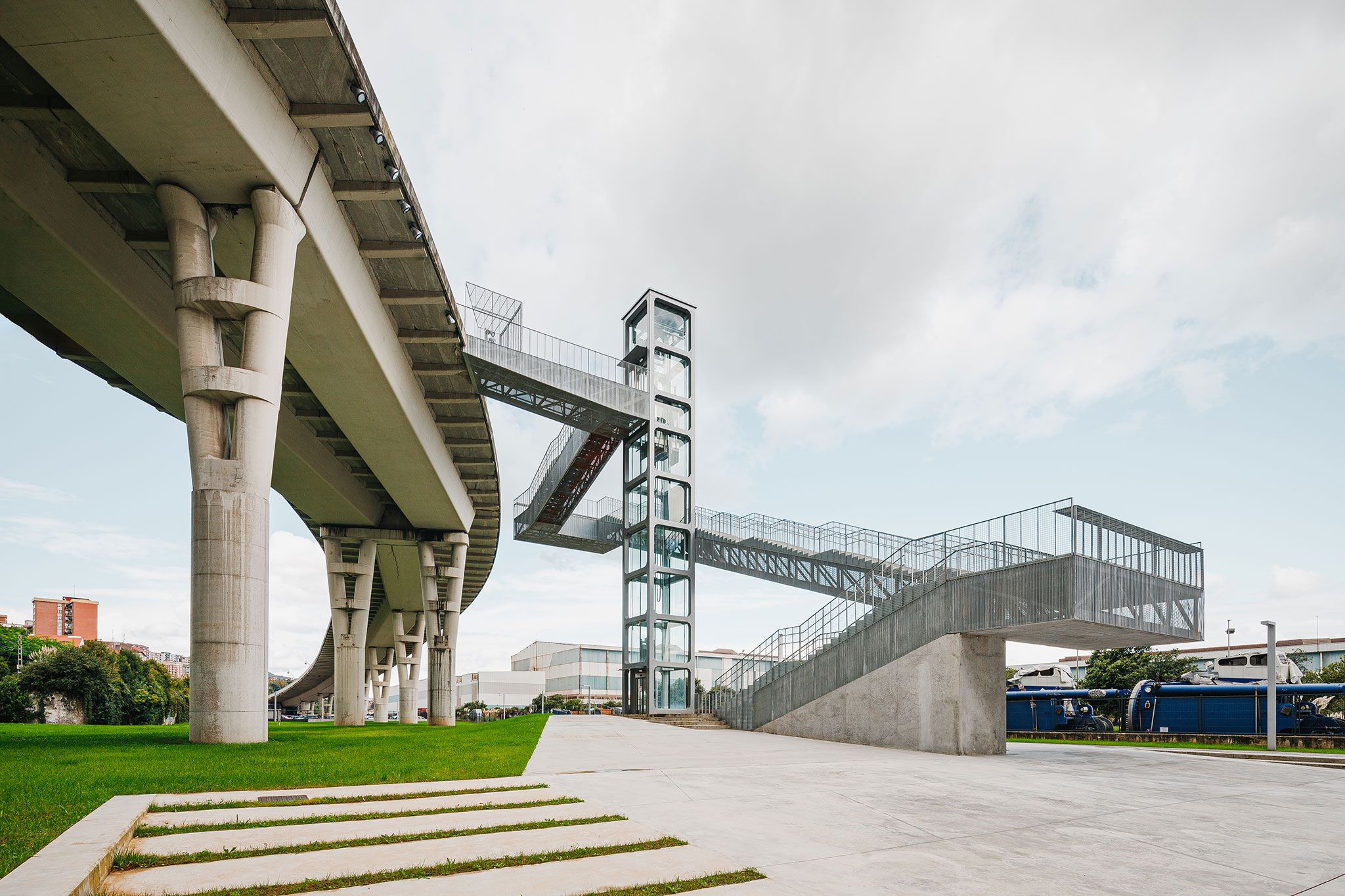
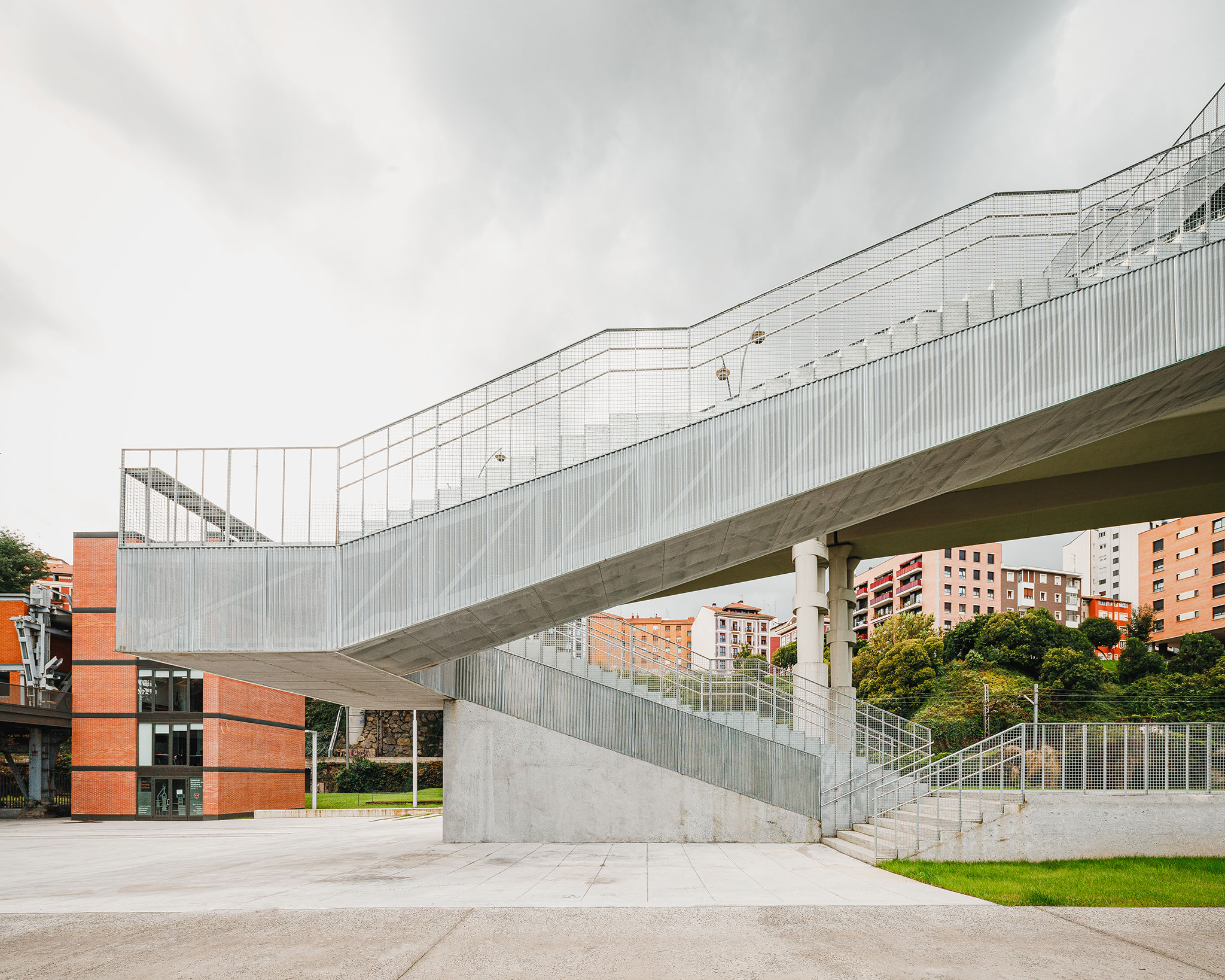
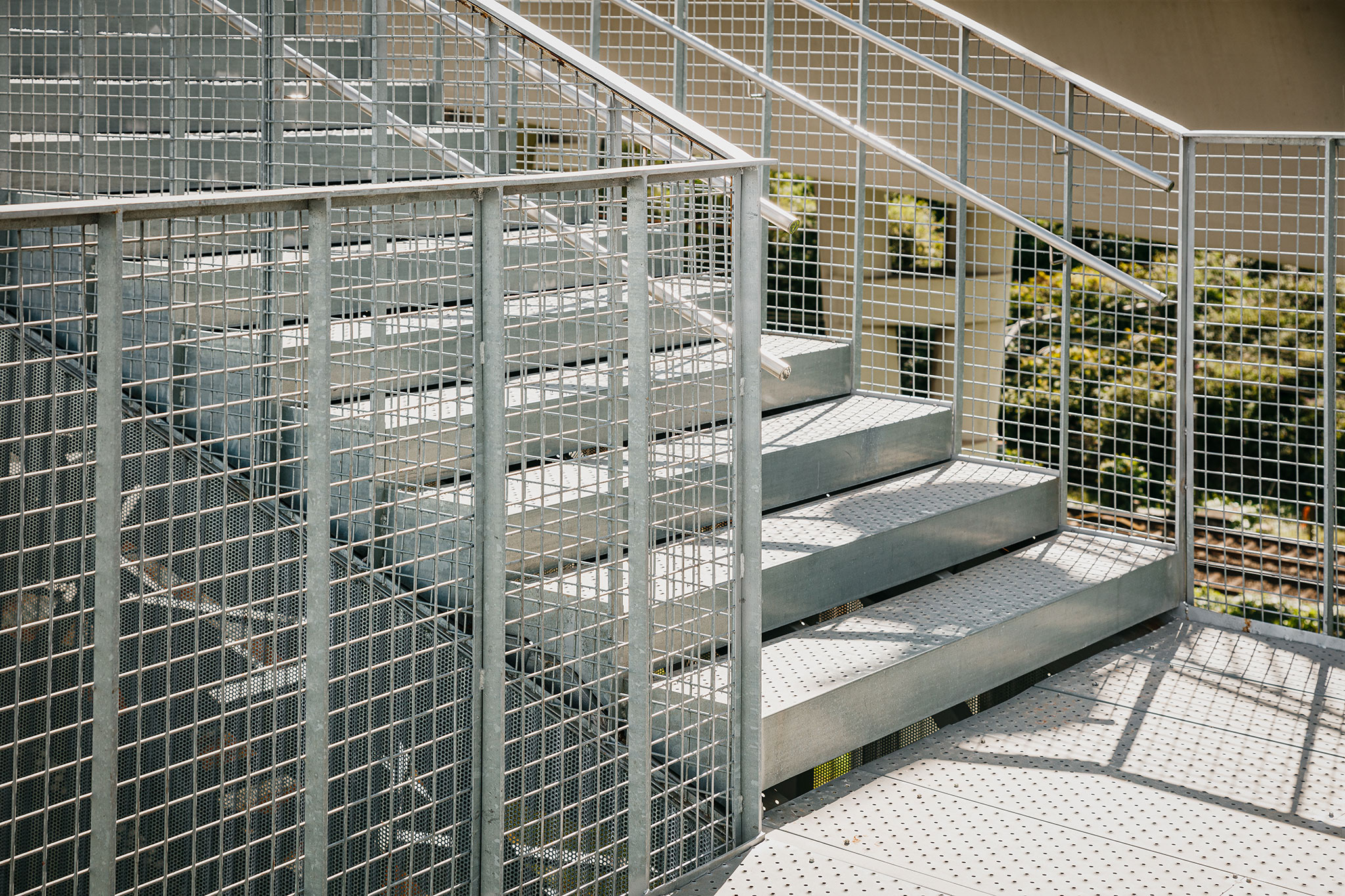
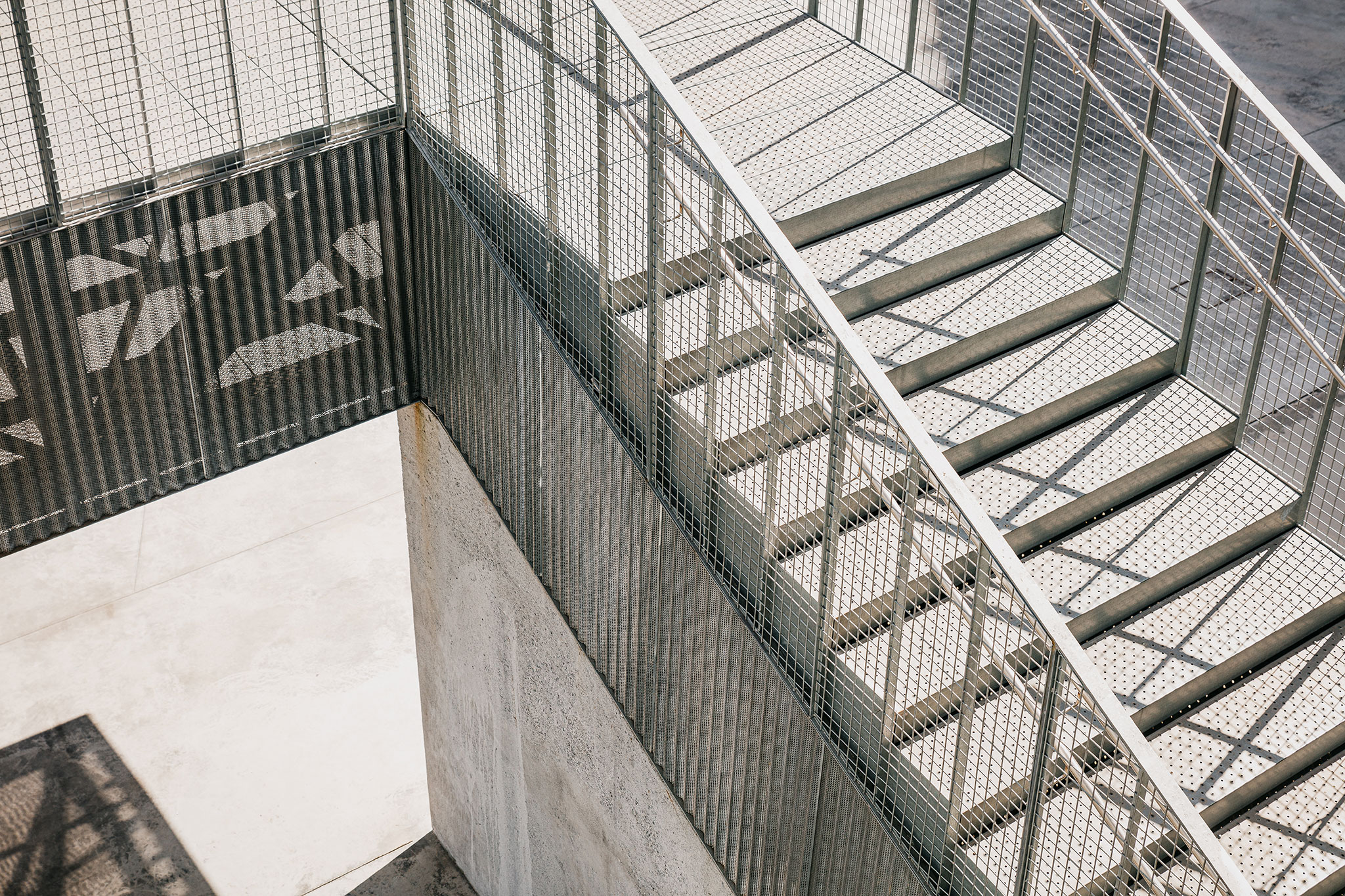
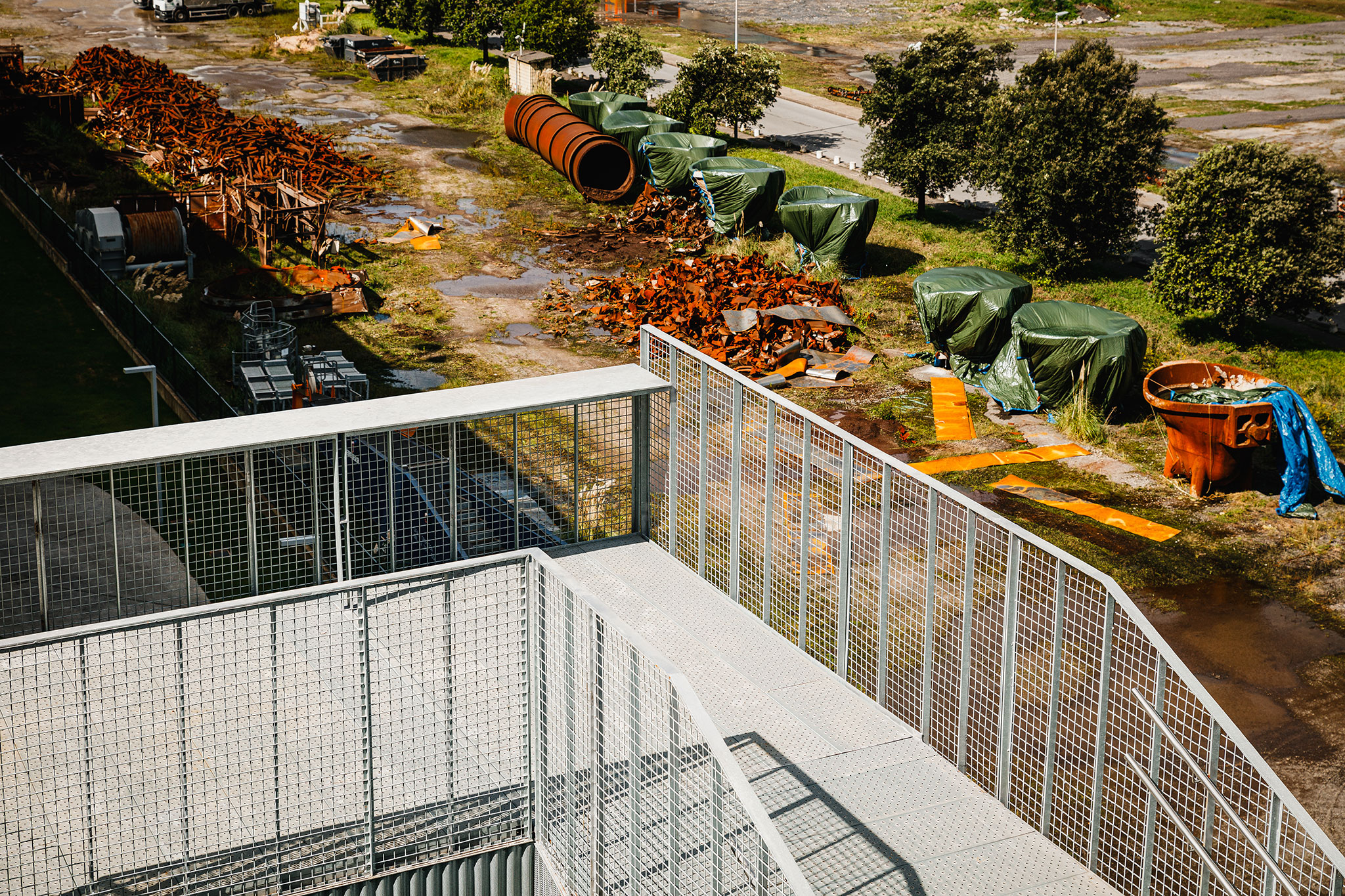
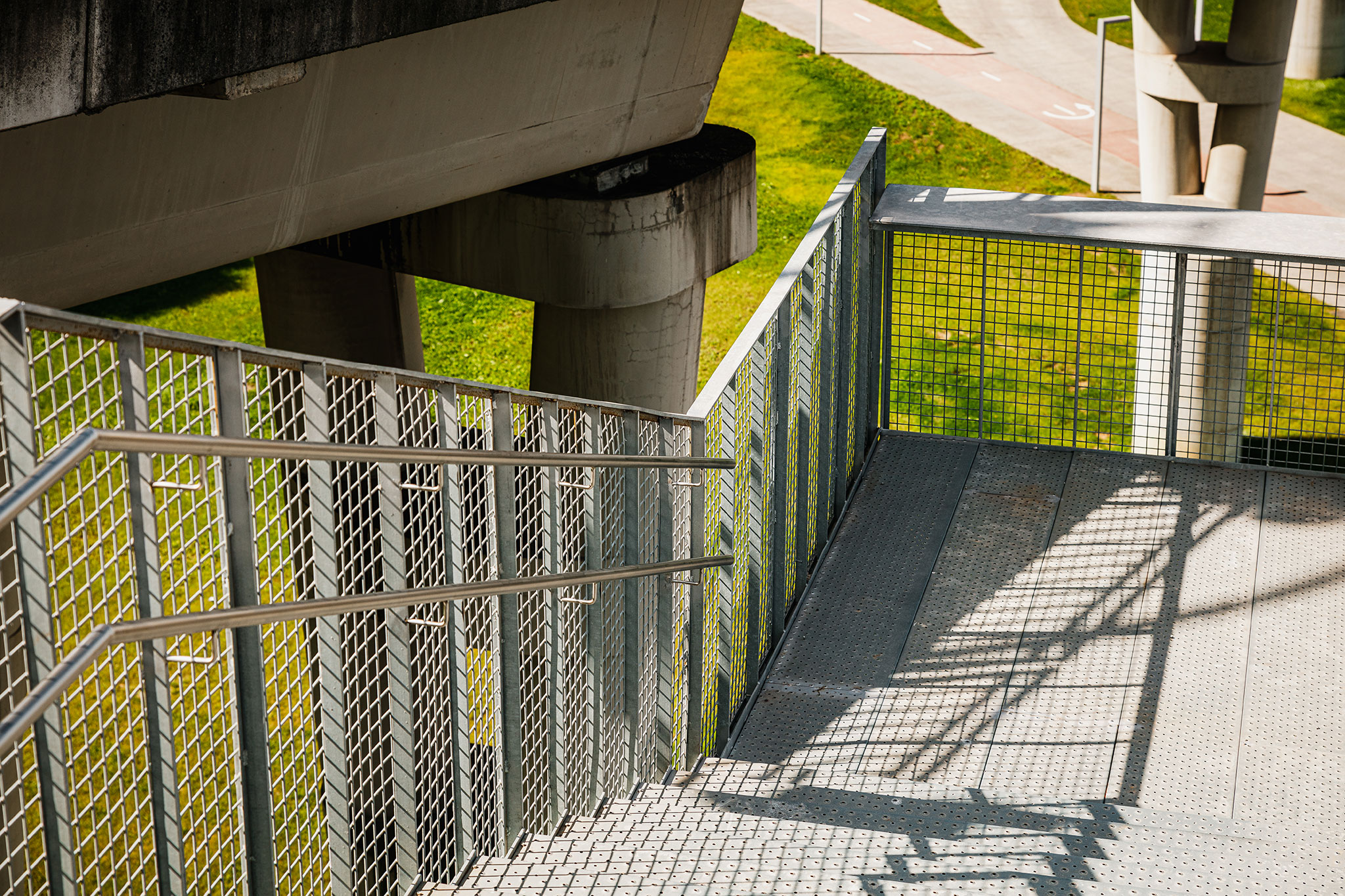
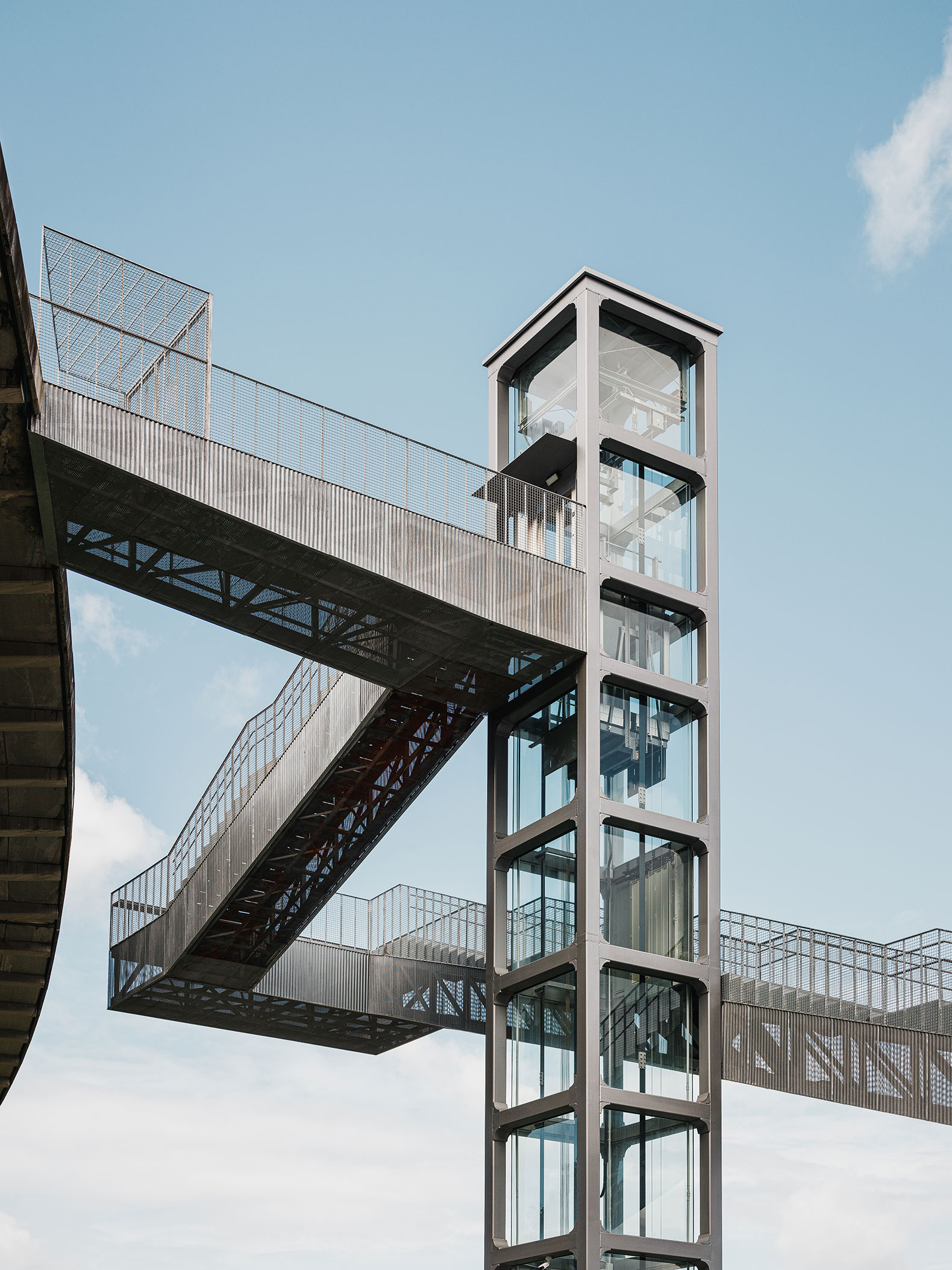
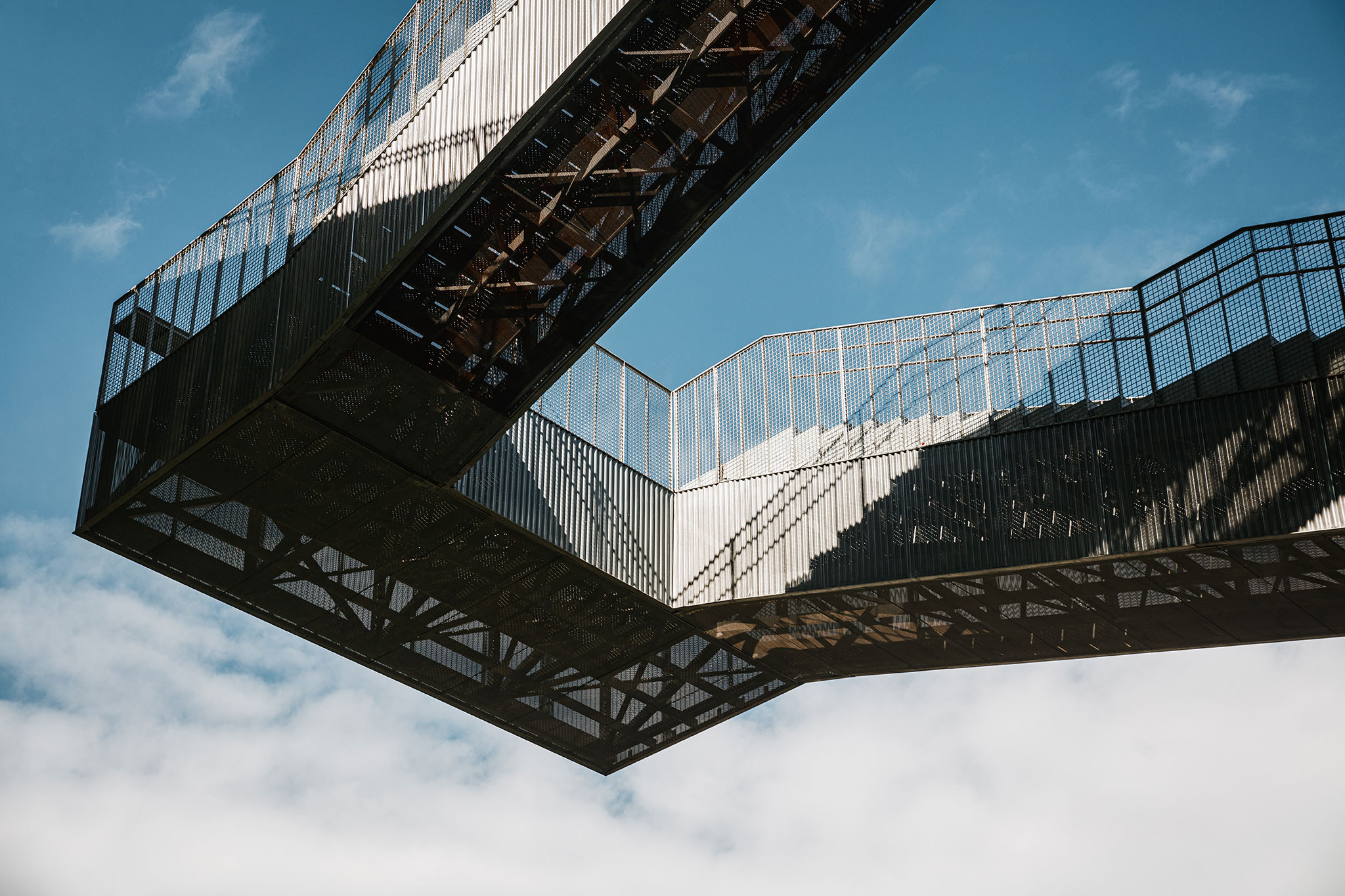
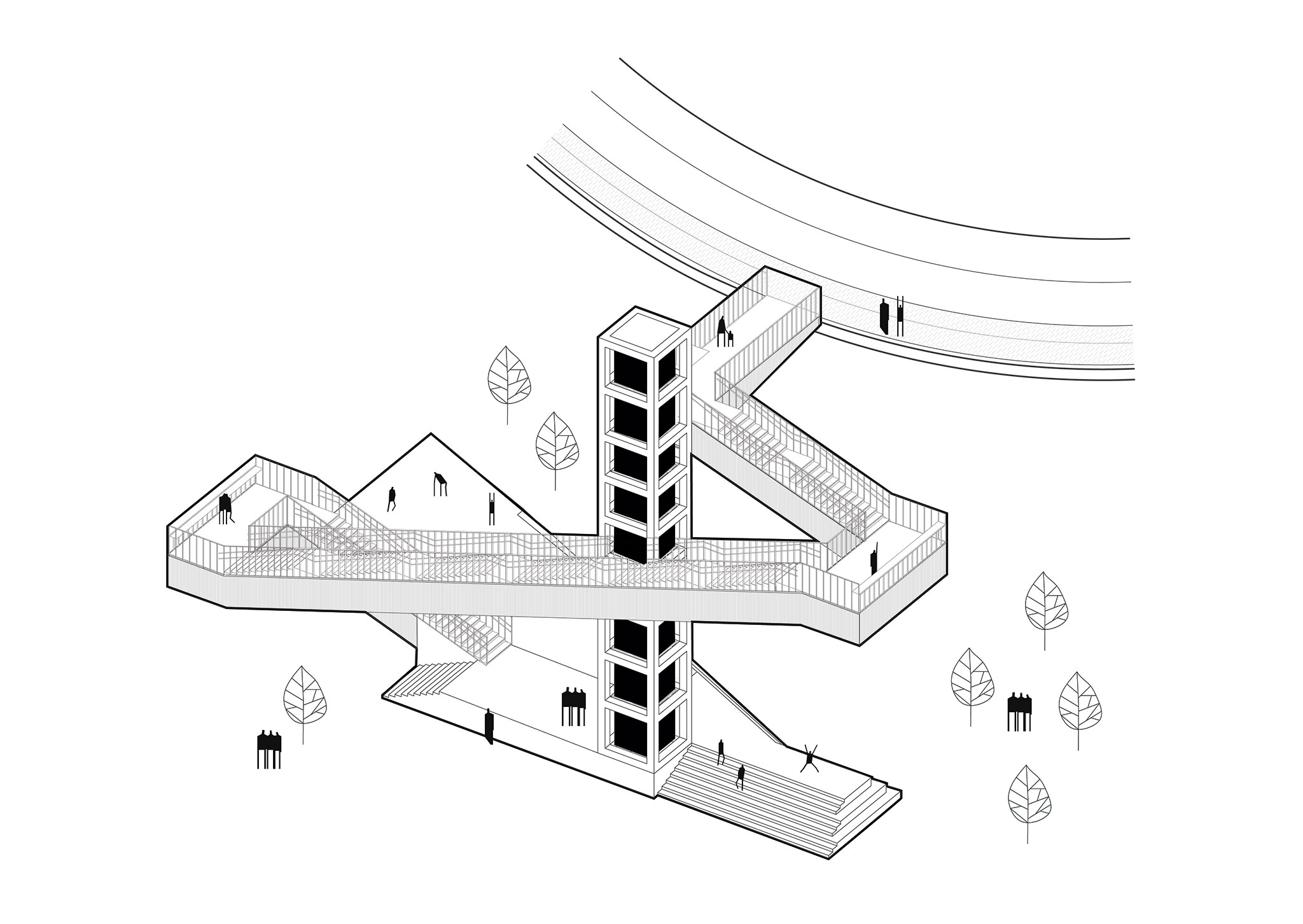
The work, oriented north to south, rises perpendicular to the furnace and the Puente Colgante del Portugaleta, and features two large viewing platforms at the ends of the north and south cantilevers, offering views of the surrounding area and allowing one to observe oneself within this open and linear design. The staircase structure is composed of triangulated steel box girders and modular auxiliary elements, which facilitates prefabrication and shortens construction time. The elevator tower is a closed box structure formed by four girders supporting three cantilevers.
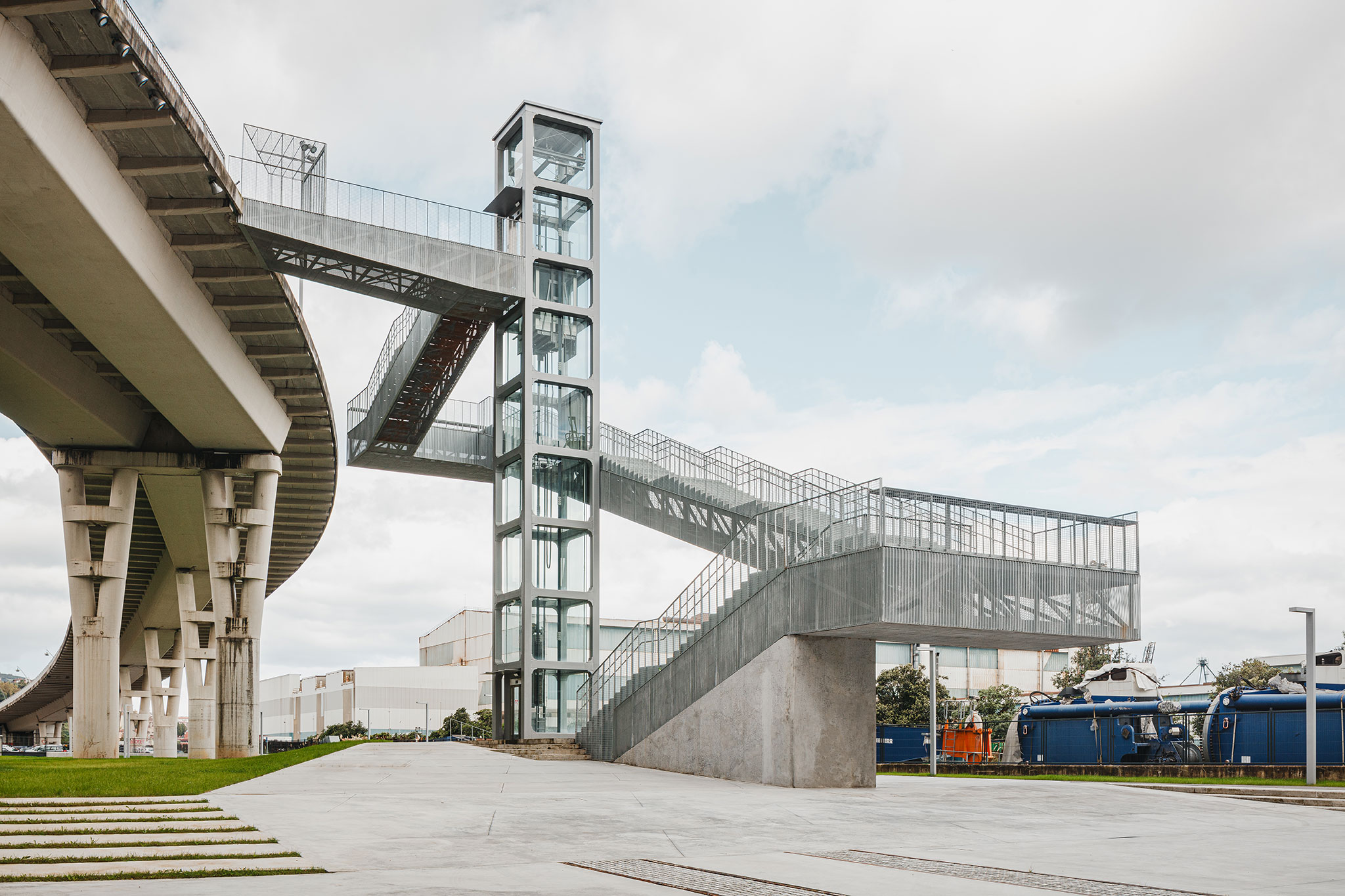
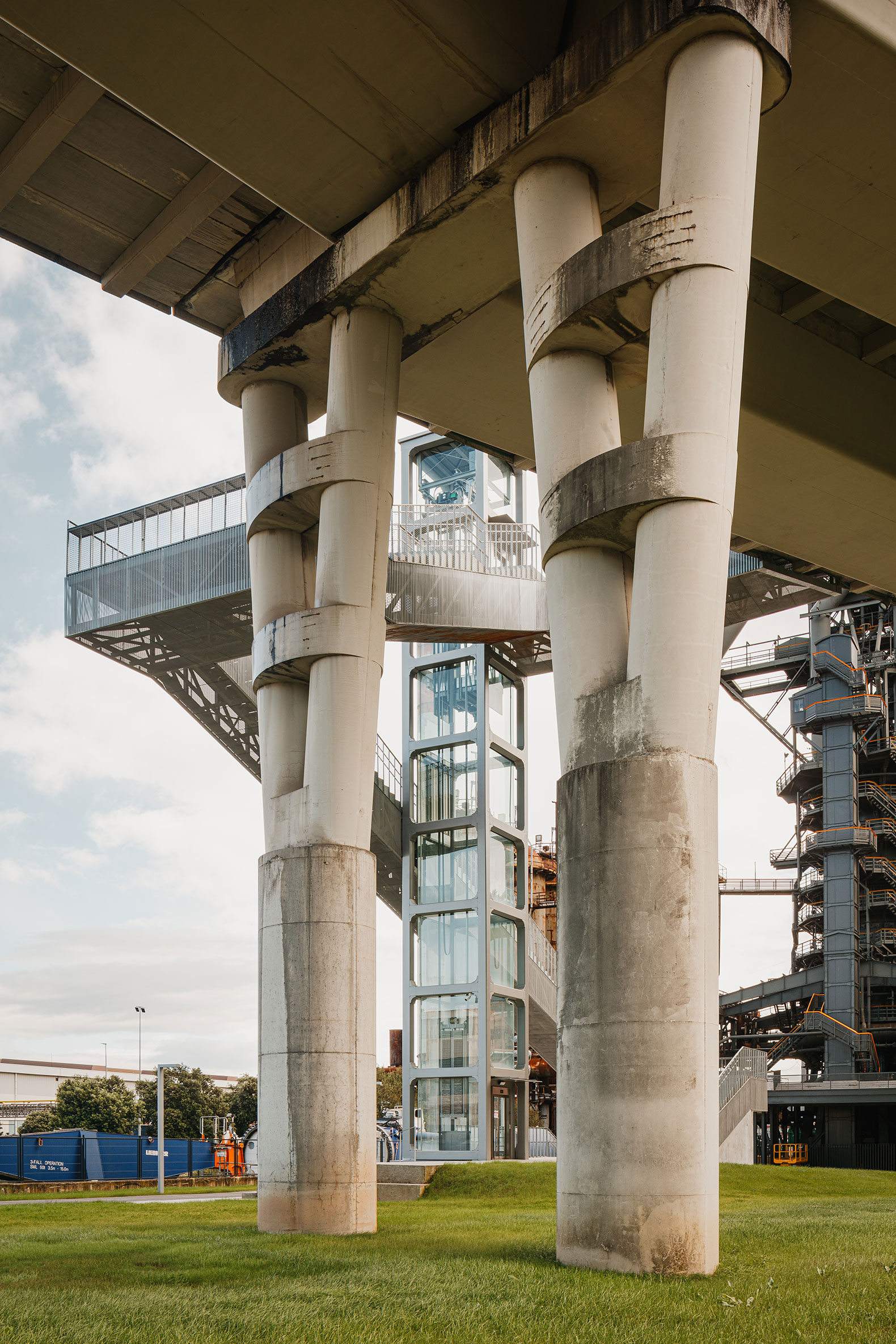
Access to the Altos Hornos de Bizkaia by TARTE and ELE. Photograph by Aitor Estévez.

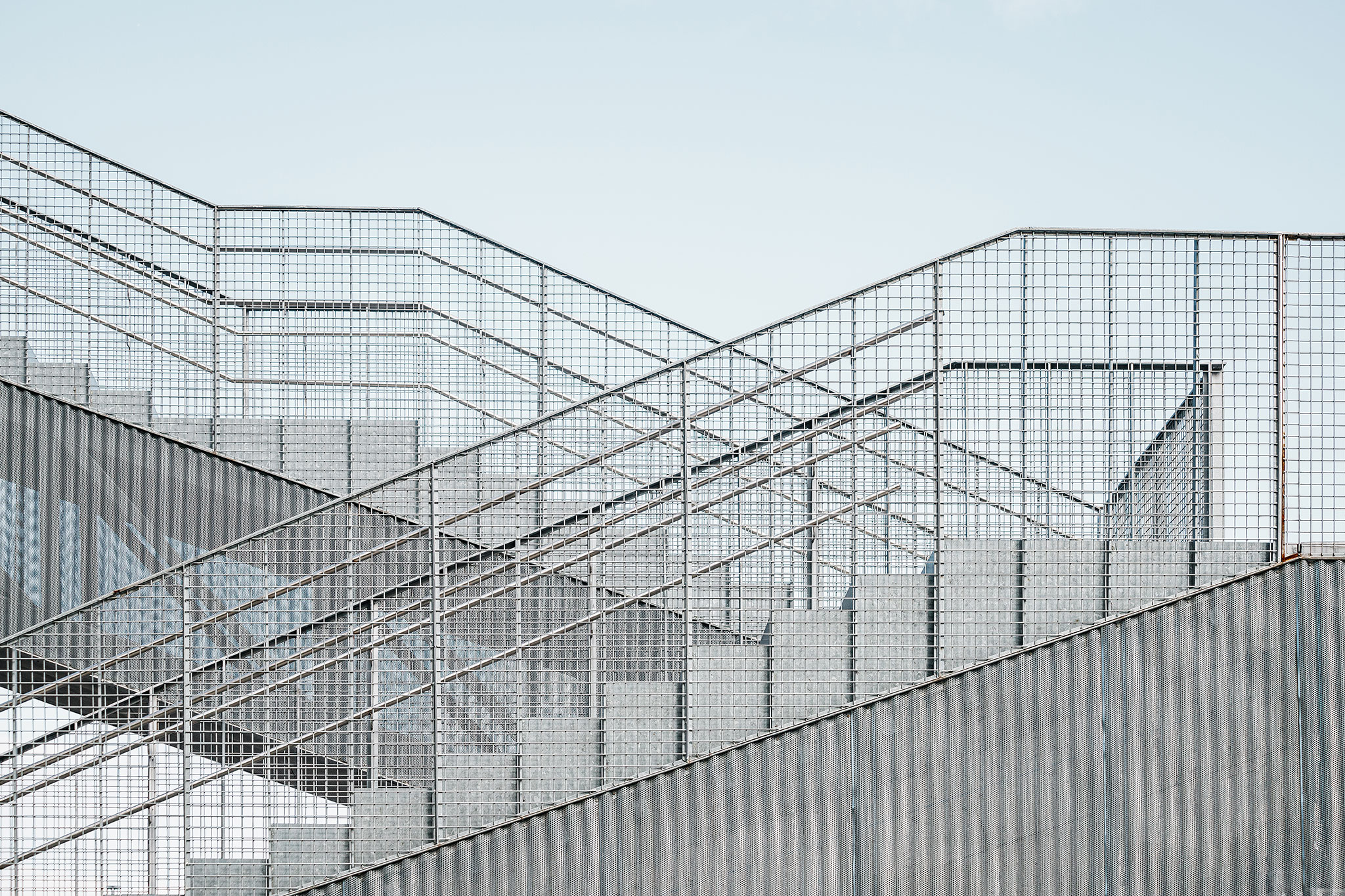
Access to the Altos Hornos de Bizkaia by TARTE and ELE. Photograph by Aitor Estévez.

Project description by TARTE Arkitektura and ELE Arkitektura

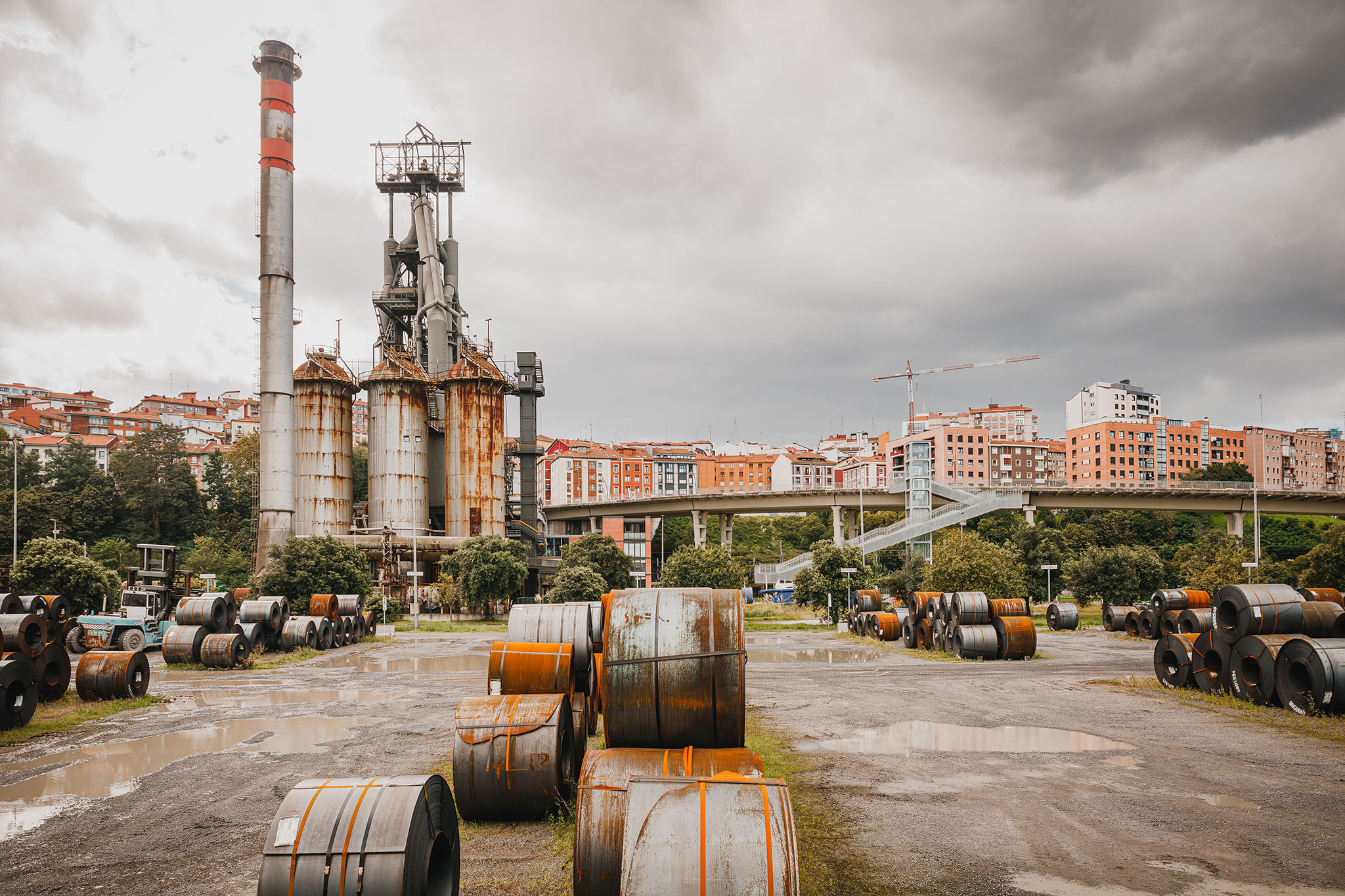
The project is part of the regeneration plan for the Txabarri neighborhood and the area surrounding the Bizkaia Blast Furnace in Sestao. This neighborhood houses the residential area that supported the entire industrial complex located on a bend in the Nervión River. The transformation of the productive fabric during the 20th century led to the demolition or abandonment of many of the industrial infrastructures that enjoyed their peak at the beginning of the last century. The area's regeneration plan includes the gradual rehabilitation or replacement of housing and the restoration and conversion of the Blast Furnace, the prime example of the area's industrial past and currently designated a Cultural Asset with the category of Monument, into a museum.

The competition called for the installation of an urban elevator and staircase to overcome the 25-meter difference in elevation between the Txabarri neighborhood and the bend where the Monument is located. The location proposed by the developer encompassed the northern esplanade in front of the Blast Furnace.

Access to the Altos Hornos de Bizkaia by TARTE and ELE. Photograph by Aitor Estévez.

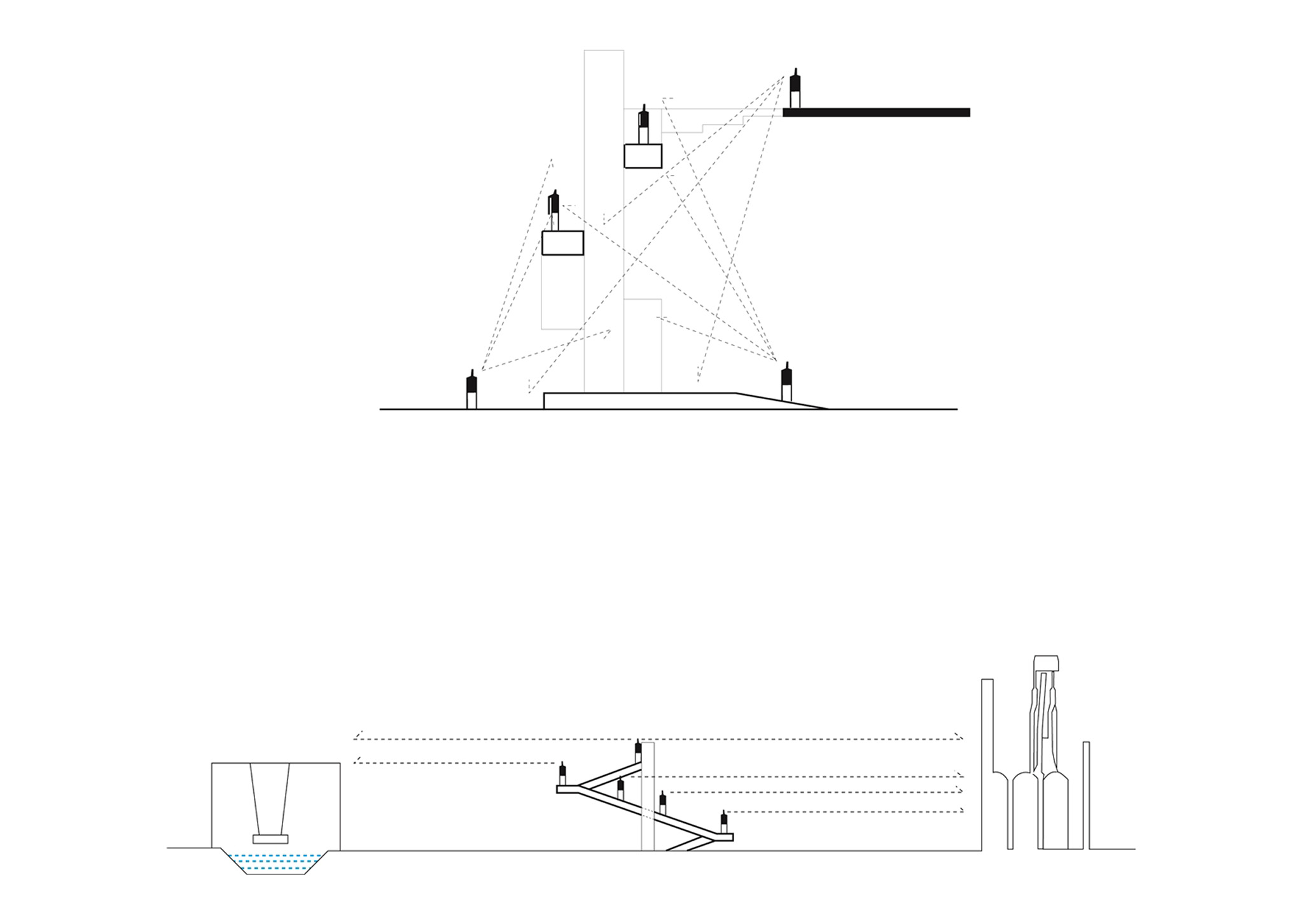
The urban strategy outlined in the competition proposal suggested a change in placement, moving the new structure away from the blast furnace and creating a new entrance area facing the Monument. Positioning the structure north-south, perpendicular to both the blast furnace and the Vizcaya Bridge (a UNESCO World Heritage Site), along with the creation of two large viewpoints at the ends of the north and south cantilevers, highlighted both structures and generated a virtual line of attraction connecting them through the new building.

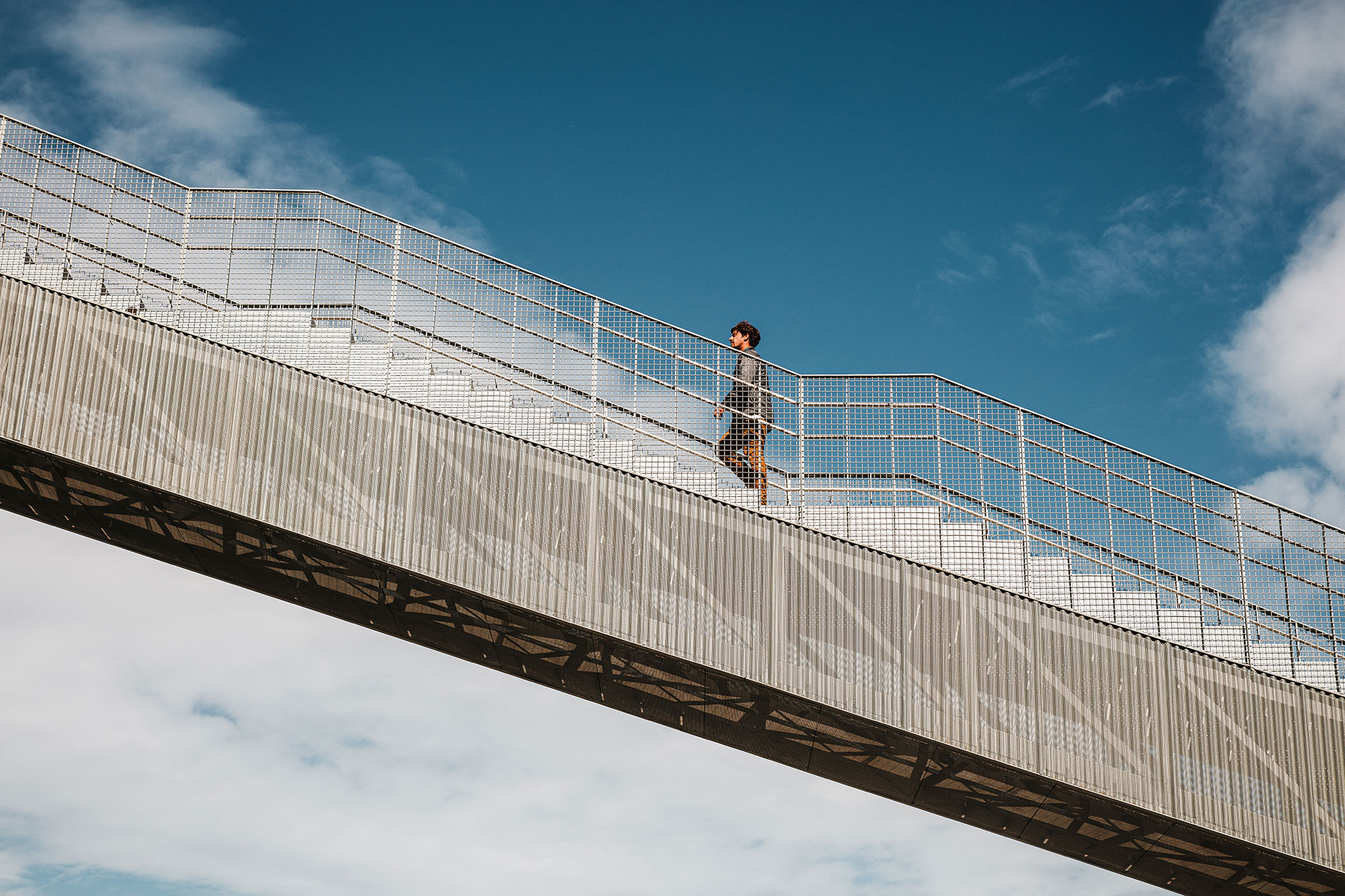
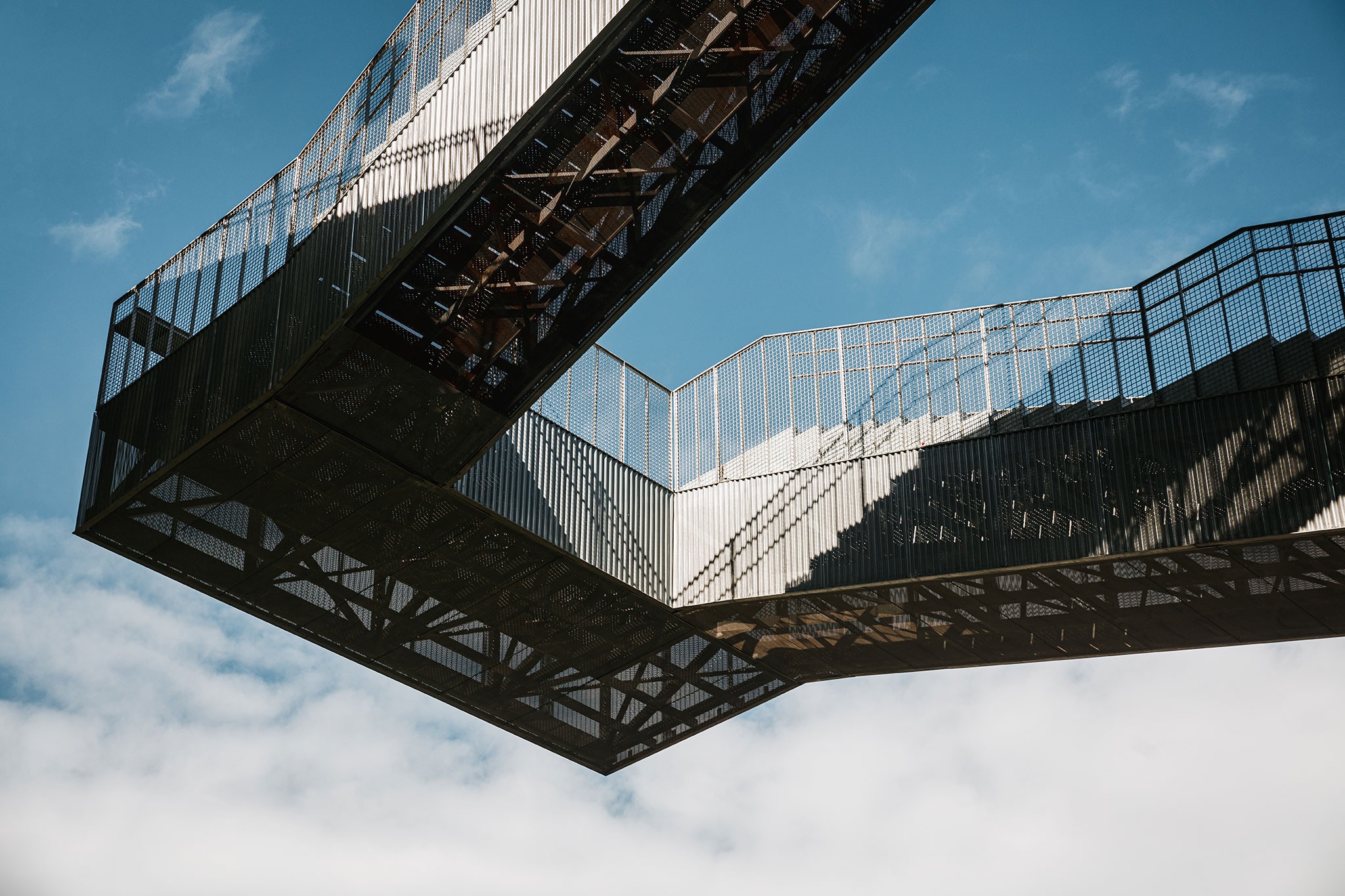
The structure was designed not only to look at its surroundings but also to be observed. The open, linear design of the staircase allows it to be viewed from any angle, creating a safe route from a gender perspective.
Access to the Altos Hornos de Bizkaia by TARTE and ELE. Photograph by Aitor Estévez.

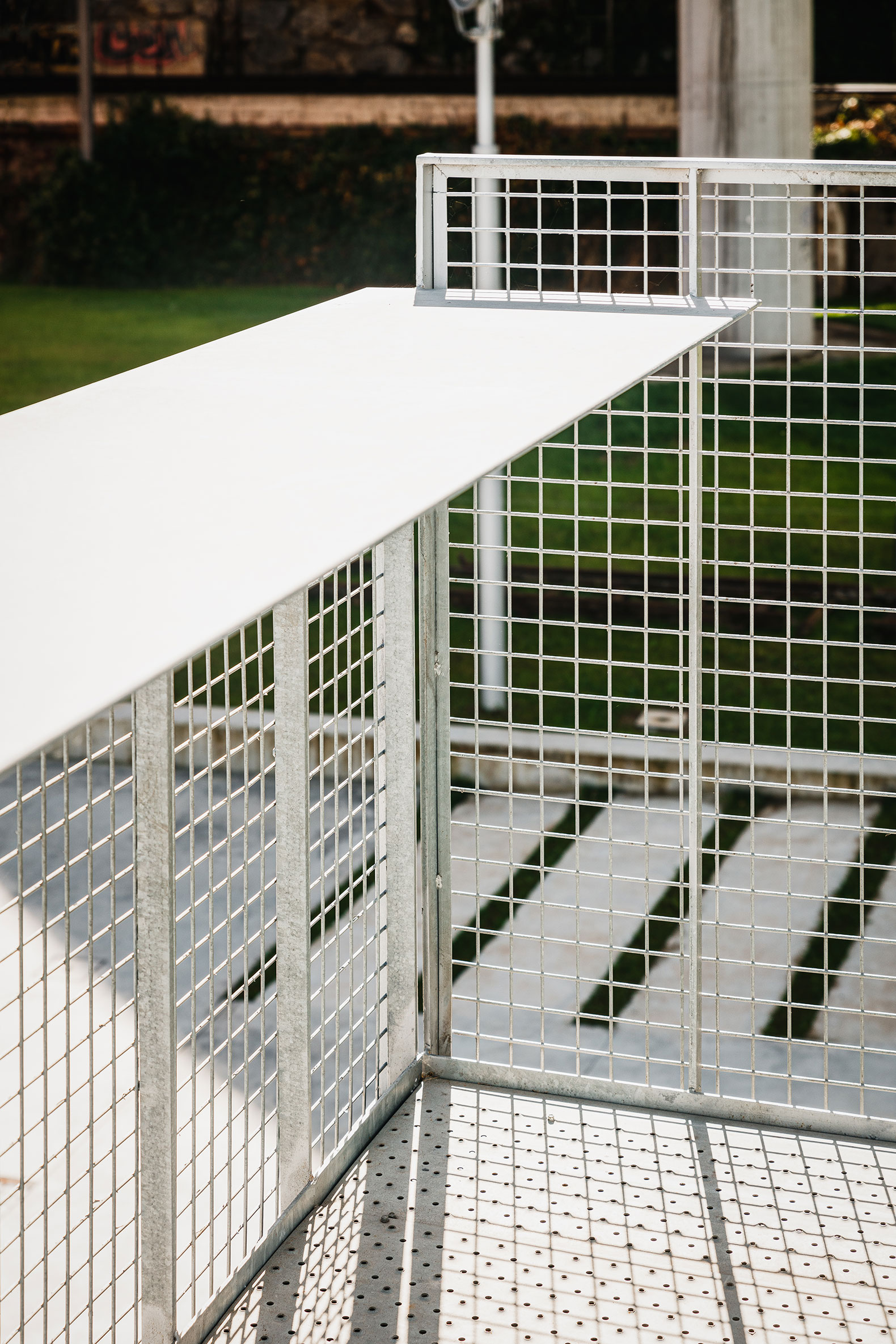
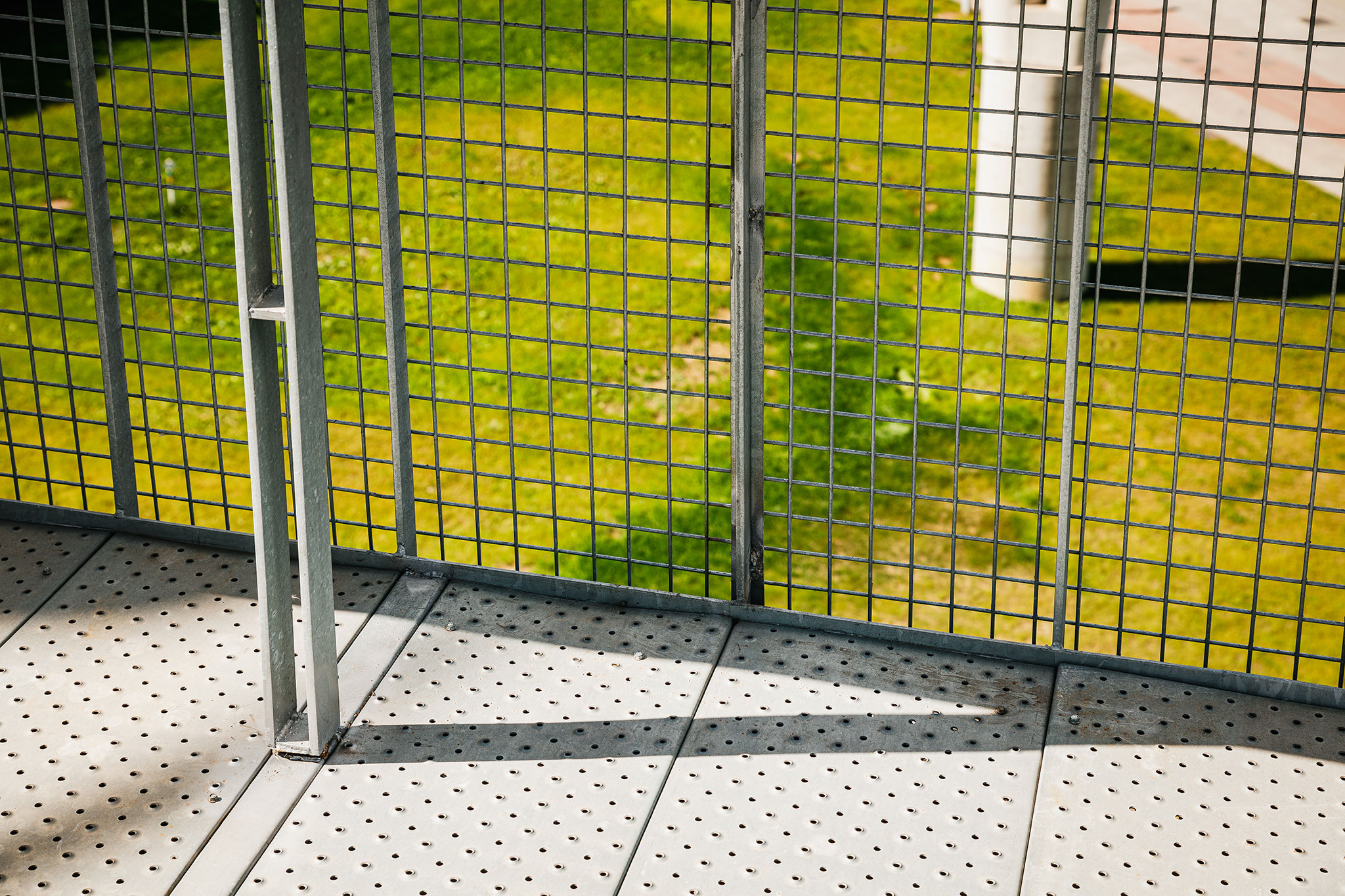
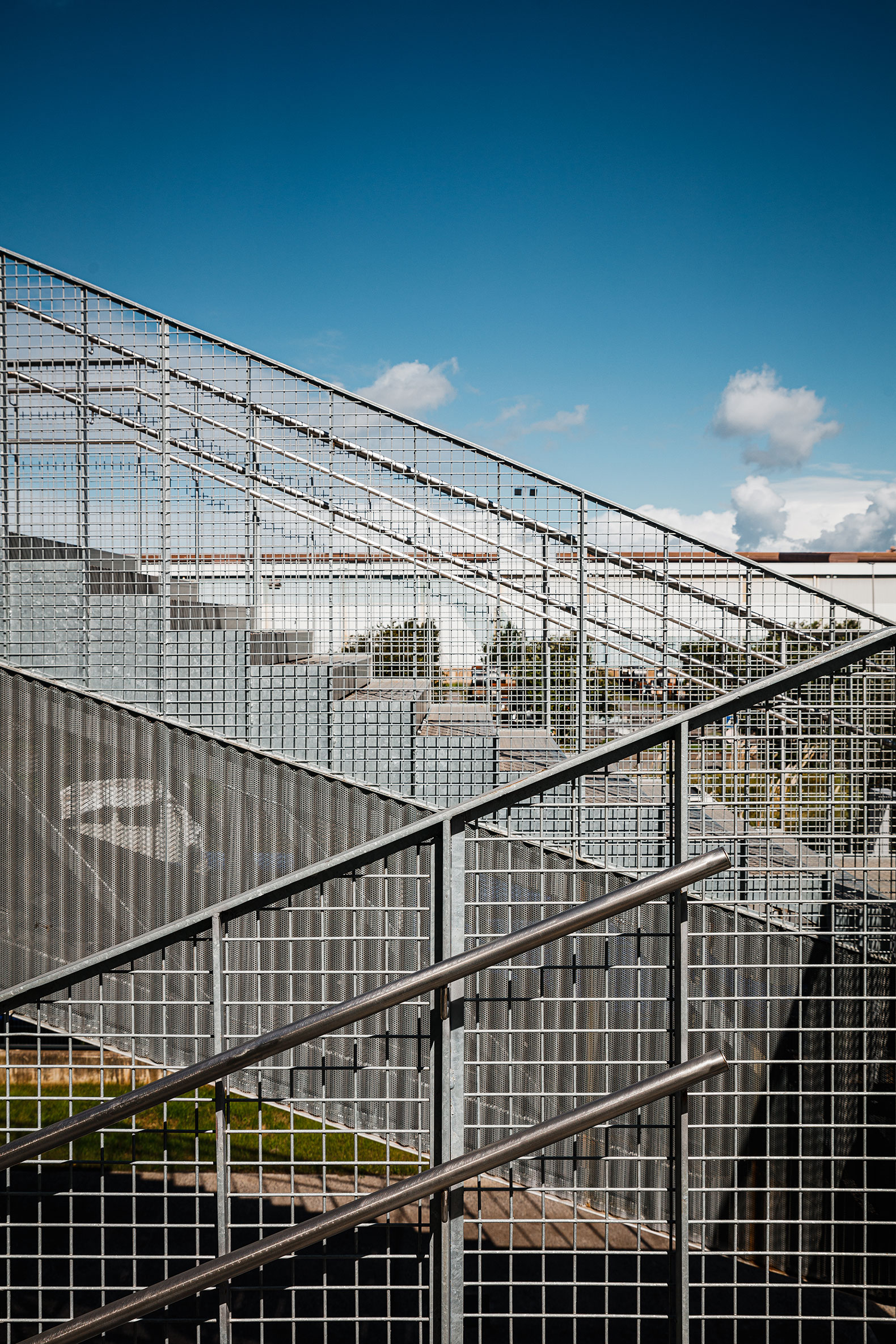
The staircase's structure is built using prefabricated, triangulated steel box girders, facilitating assembly and shortening construction time. All auxiliary elements such as railings, steps, and enclosures have been modularized along with the structure to facilitate prefabrication and avoid on-site metalwork. The elevator tower, a closed box composed of four Vierendeel trusses, acts as the sole vertical support element, from which three cantilevers extend to the north (17 m), west (13 m), and south (3 m).
More information

Label
Architects
+ + copy Created with Sketch.
- + copy Created with Sketch.
Label
Project team
Text

Alex Etxeberria Aiertza, Eduardo Landia Ormaetxea, Eloi Landia Ormaetxea.

+ + copy Created with Sketch.
- + copy Created with Sketch.
Label
Client
Text

Sestao Town Council, Sestao Berri S.A.M.P.

+ + copy Created with Sketch.
- + copy Created with Sketch.
Label
Builder
Text

VICONSA S.A. - KARBI SERVICIOS INTEGRALES S.L. (UTE).

+ + copy Created with Sketch.
- + copy Created with Sketch.
Label
Area
Text

646 sqm.

+ + copy Created with Sketch.
- + copy Created with Sketch.
Label
Dates
Text

January 2024. 

+ + copy Created with Sketch.
- + copy Created with Sketch.
Label
Location
Text

Sestao, Bizkaia, Spain.

+ + copy Created with Sketch.
- + copy Created with Sketch.
Label
Awards
Text

2026.- ENOR YOUNG AWARD. 
2024.- Selected work IX arquia/próxima Festival - "DESEO."
2024.- COAVN Award (Official Association of Architects of the Basque Country and Navarre).
2026.- Nominated for the EUmies Awards.
2026.- Finalist in the BEAU Spanish Architecture and Urbanism Biennial - "Flujos Comun.es."

+ + copy Created with Sketch.
- + copy Created with Sketch.
Label
Photography
+ + copy Created with Sketch.
- + copy Created with Sketch.
TARTE Arkitektura is an architecture studio founded by Alex Etxeberria architect from the ETSA in Barcelona,2013. In 2019, after his time in internationally renowned studios such as Cruz and Ortiz in Amsterdam and Vora Arquitectes in Barcelona, he founded his studio.

The studio is established in Zarautz, from where he works, the approach to projects prioritizing the strategy and systematization of concepts, highlighting in each intervention or those relevant variables that make a project understandable and coherent.

Among the works carried out we can highlight the partial reform works of the Territorial College of Architects of Valencia (2016) and the redevelopment and covering of Sestao fronton (2021) and competitions won as the Europan 15 in the location of lasarte-oria of 100 productive social housing + equipment (2019) and the elevator - staircase - urban viewpoint in the blast furnaces of Bizkaia de Sestao (2020).
Read more
ELE Arkitektura was founded in 2013 by joining, after several collaborations, Eduardo and Eloi Landia, with the vocation of weaving a multidisciplinary network of independent professionals, capable of tackling projects of a diverse type and scale, combining different artistic and technical skills.

His works include his proposals “Puente Sarasola” (2nd prize), “A refuge for Oteiza” (1st prize) and the competition for the construction of an elevator and an urban staircase in the Blast Furnace of Bizkaia in Sestao (1st prize), in addition to his works “Territorial College of Architects of Valencia” (1st prize. Work selected among the best 20 works in the Valencian Community between 2015/2018) and “Reform of the Ikastola Kurutziaga” (finalist in the COAVN 2019 awards), all of them made with different collaborators.

Eduardo Landia (Durango, 1986), an architect from ETSA del Vallés in 2011, specializes in Sustainable Construction and Energy Efficiency from the University of the Basque Country and begins his professional trajectory. He collaborated with the Xavier Vancells Arquitectos studio in 2012, and during one year in the GA Arquitectos studio (Xaviera Gleixner and Tomás Garcia de la Huerta) in Santiago de Chile.

Eloi Landia (Durango, 1989), an architect from ETSA of the Basque Country, in 2015, during the race, he participated in different exhibitions and publications, he collaborates with the Jesus Angel Landia studio and begins to participate in architectural competitions with Eduardo Landia. After finishing their studies, he complements his work as an architect with other artistic disciplines such as painting and sculpture, carrying out different collaborations and exhibitions.
Read more
Published on: January 13, 2026
Cite:
metalocus, SARA GENT, ELVIRA PARÍS FERNÁNDEZ
"To see and be seen. Access to the Altos Hornos of Bizkaia by TARTE and ELE" METALOCUS. Accessed
<https://www.metalocus.es/en/news/see-and-be-seen-access-altos-hornos-bizkaia-tarte-and-ele> ISSN 1139-6415
Loading content ...
Loading content ...
Loading content ...
Loading content ...
Loading content ...
Loading content ...
Loading content ...
Loading content ...
Loading content ...
Loading content ...
Loading content ...
Loading content ...
Loading content ...
Loading content ...
Loading content ...
Loading content ...
Loading content ...
Loading content ...
Loading content ...
Loading content ...
Loading content ...
Loading content ...
Loading content ...
Loading content ...
Loading content ...
Loading content ...
Loading content ...
Loading content ...
Loading content ...
Loading content ...
Loading content ...
Loading content ...
Loading content ...
Loading content ...
Loading content ...
Loading content ...
Loading content ...
Loading content ...
Loading content ...
Loading content ...
Loading content ...
Loading content ...
Loading content ...
Loading content ...
Loading content ...
Loading content ...
Loading content ...
Loading content ...
Loading content ...
Loading content ...
Loading content ...
Loading content ...
Loading content ...
Loading content ...