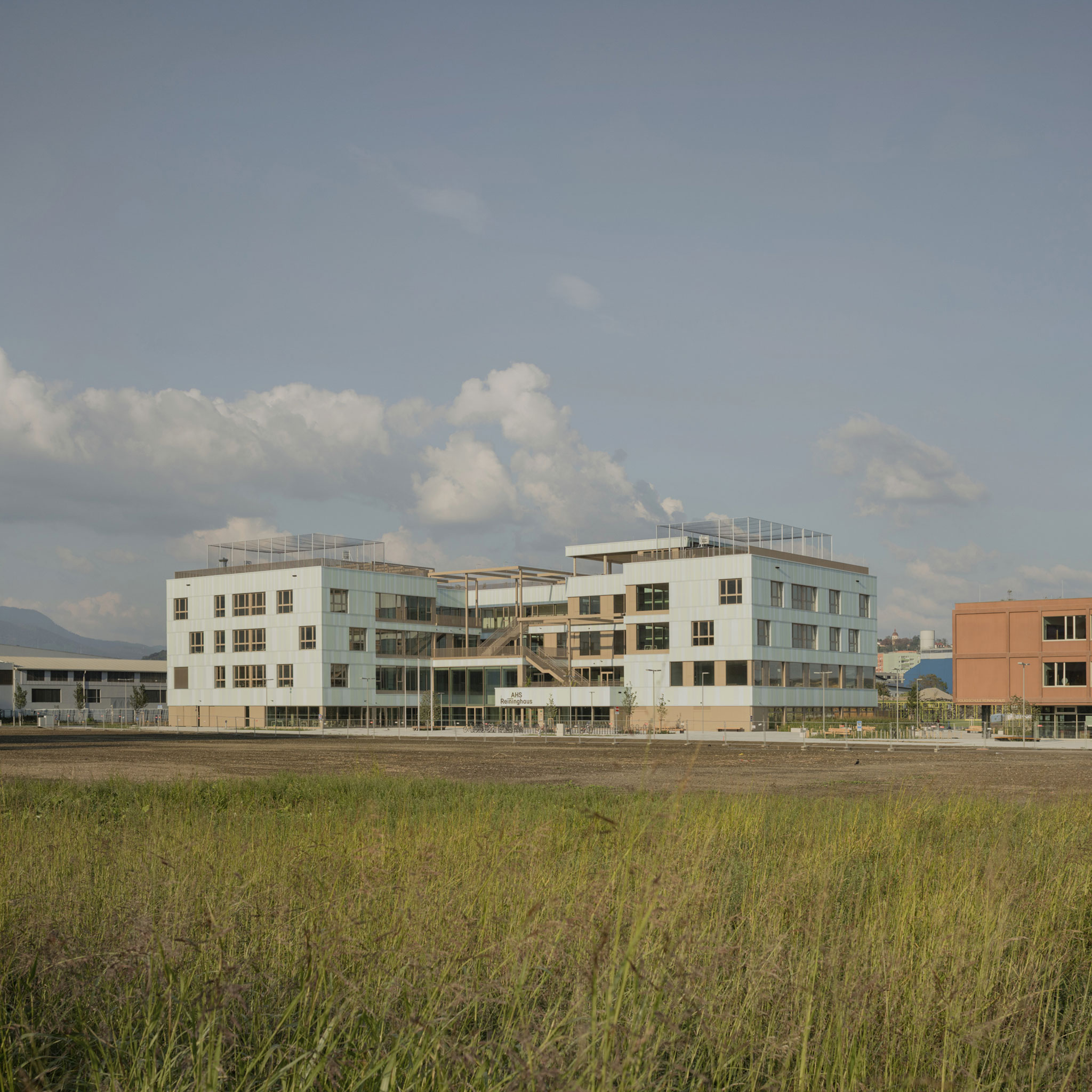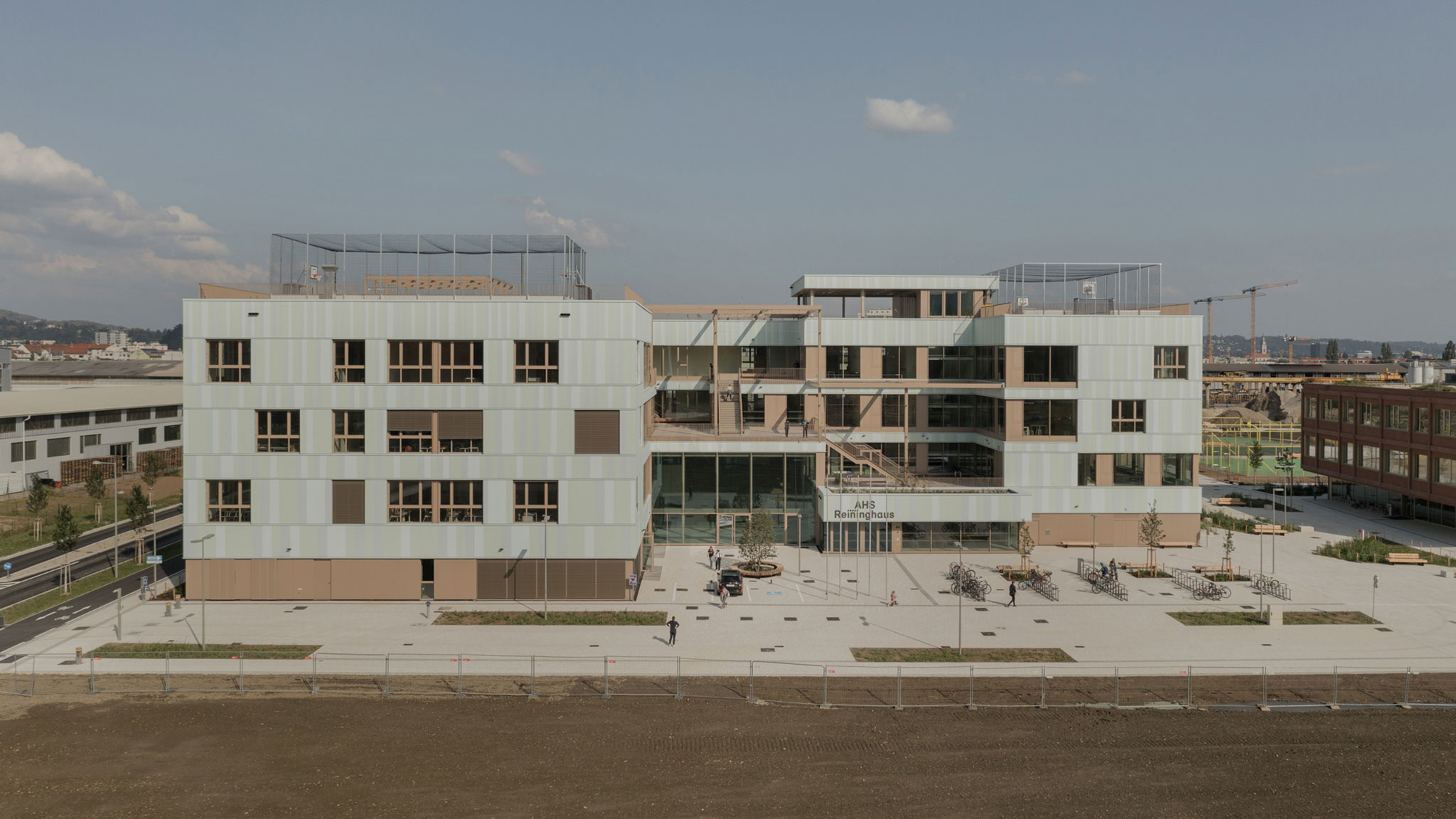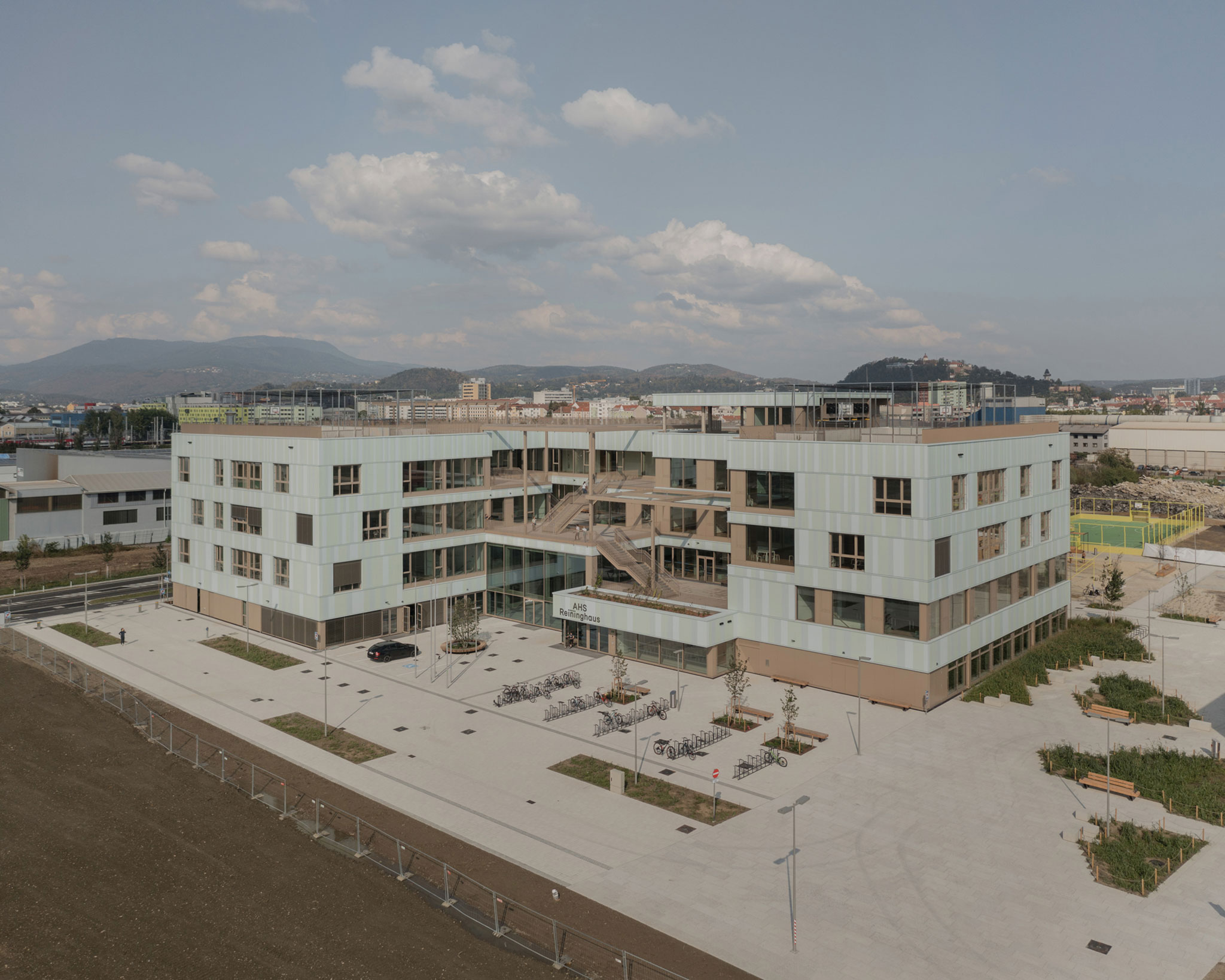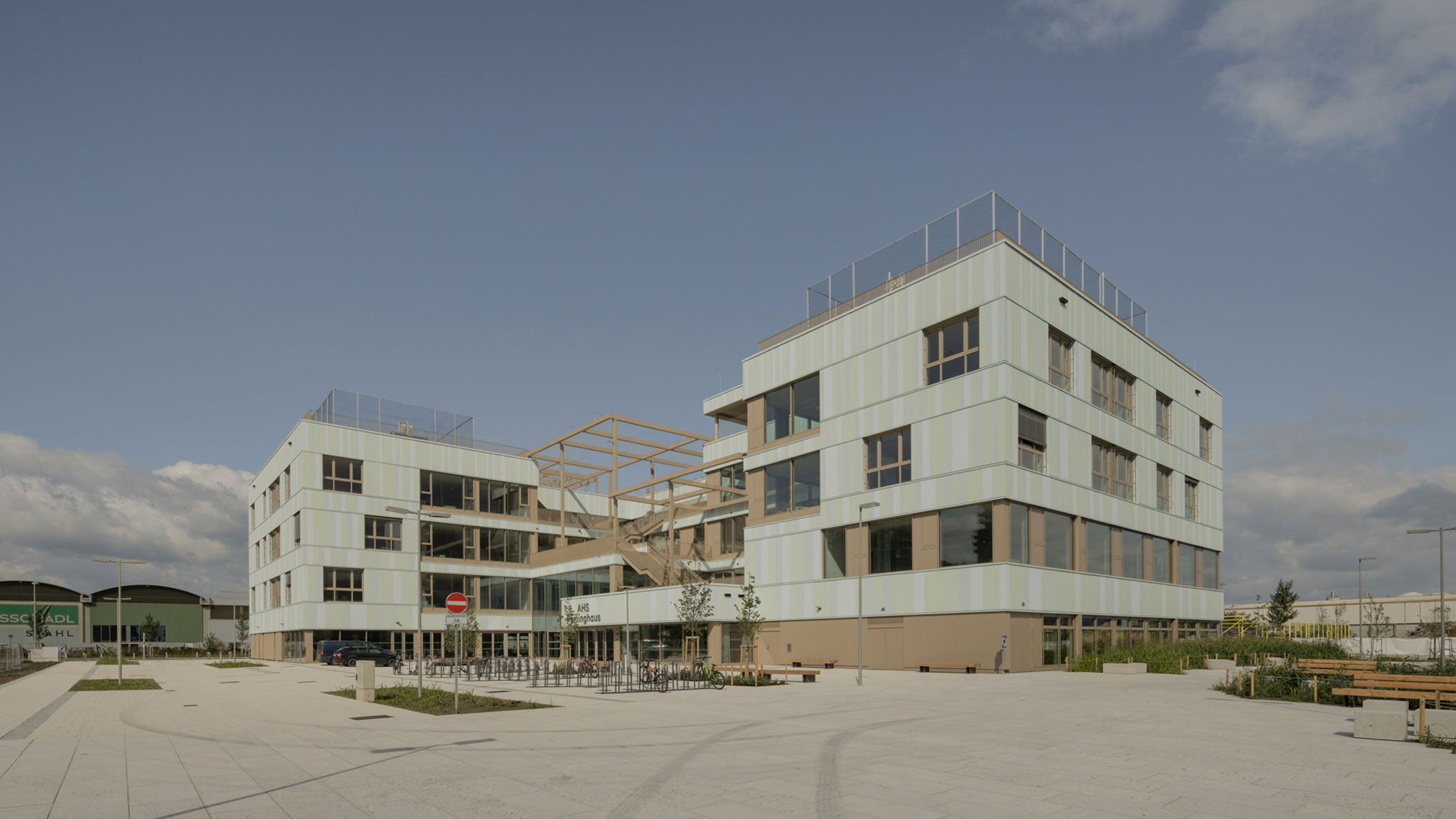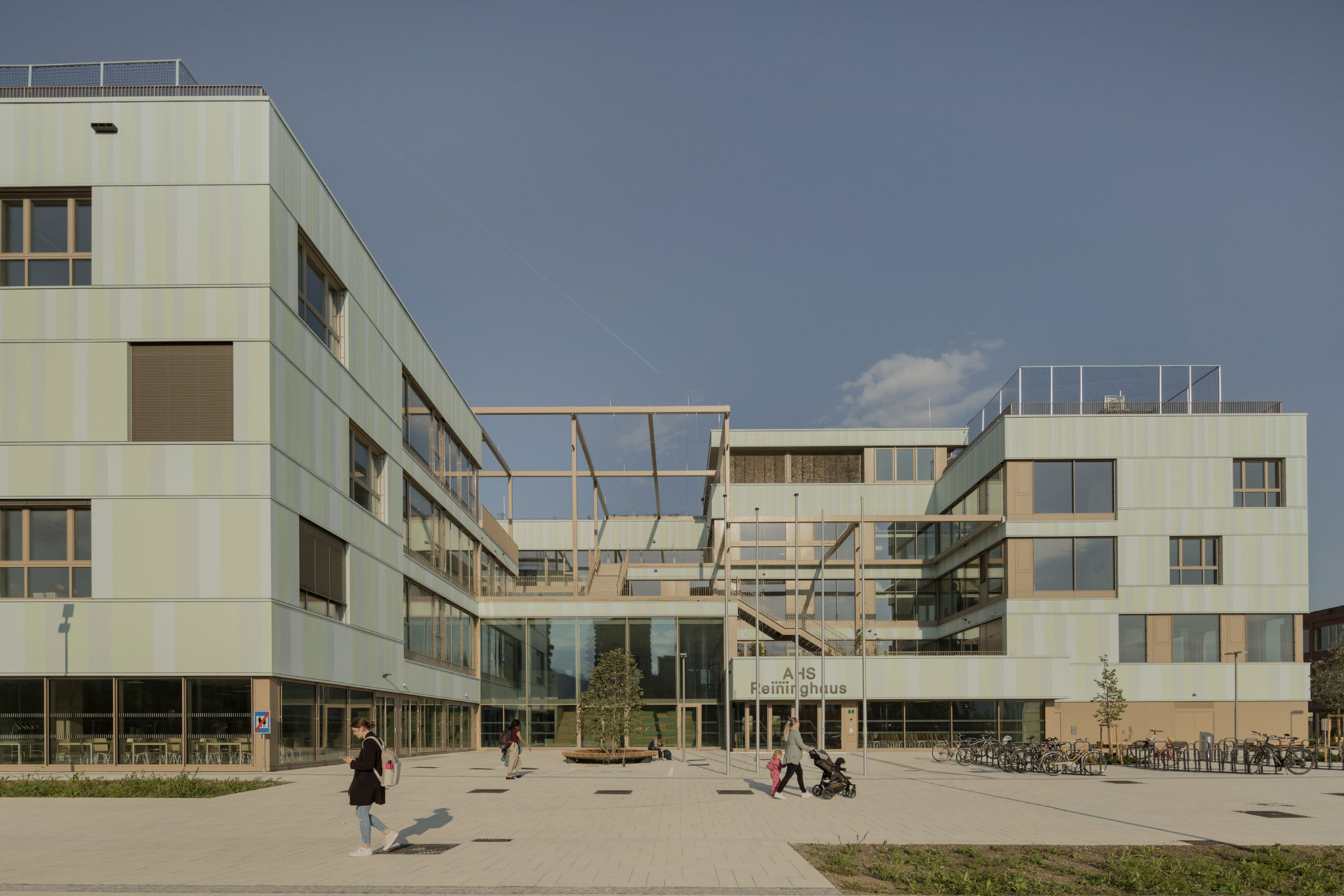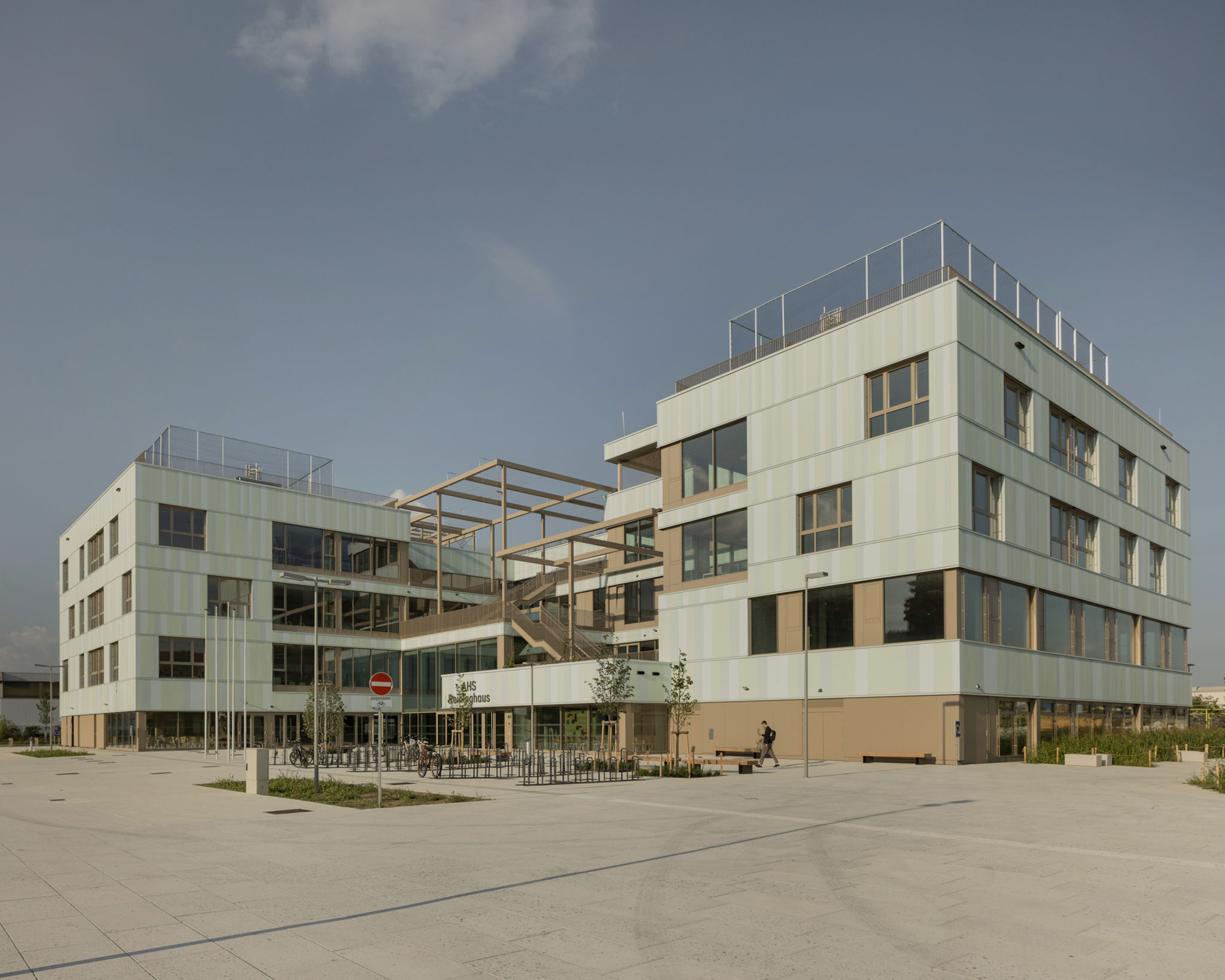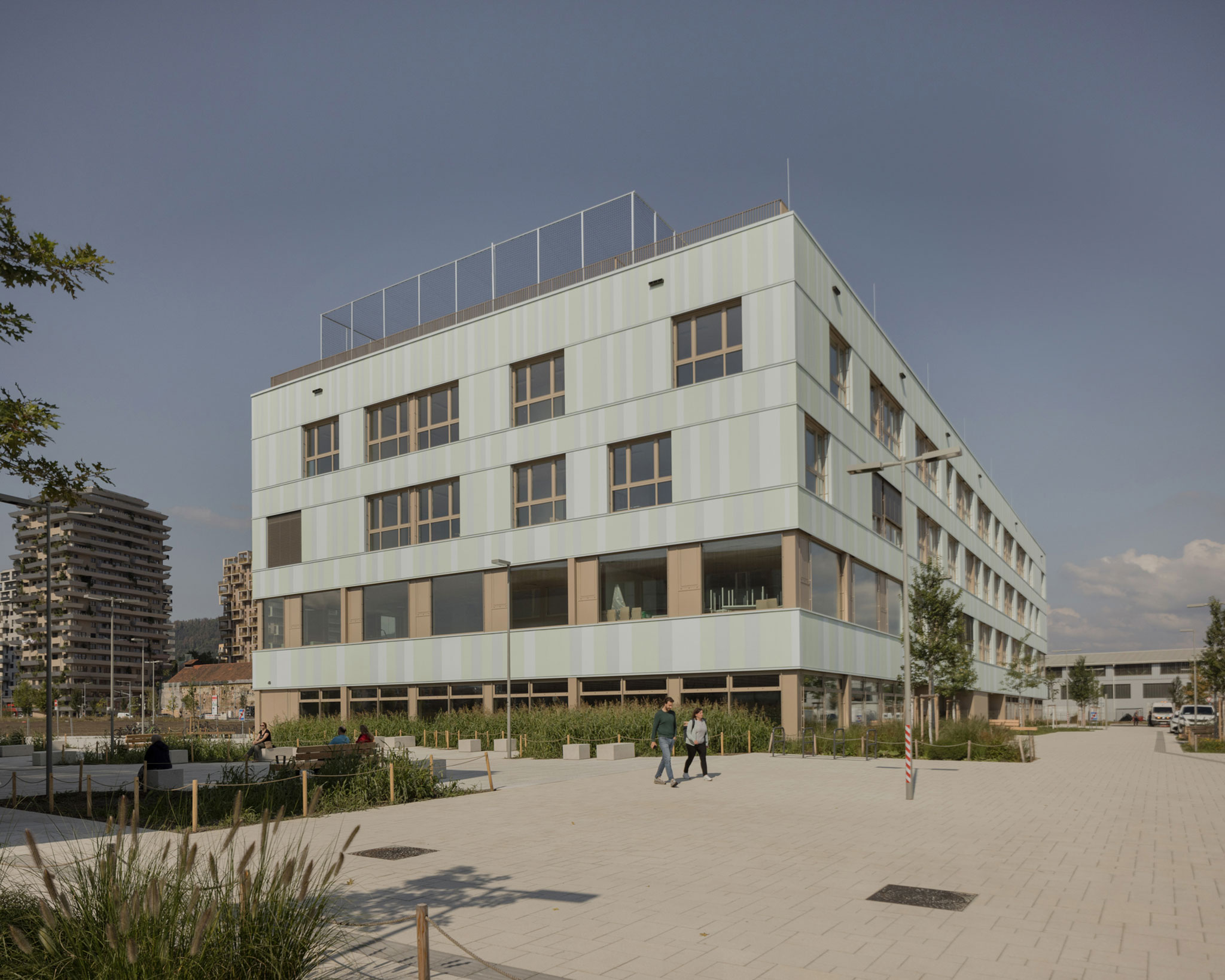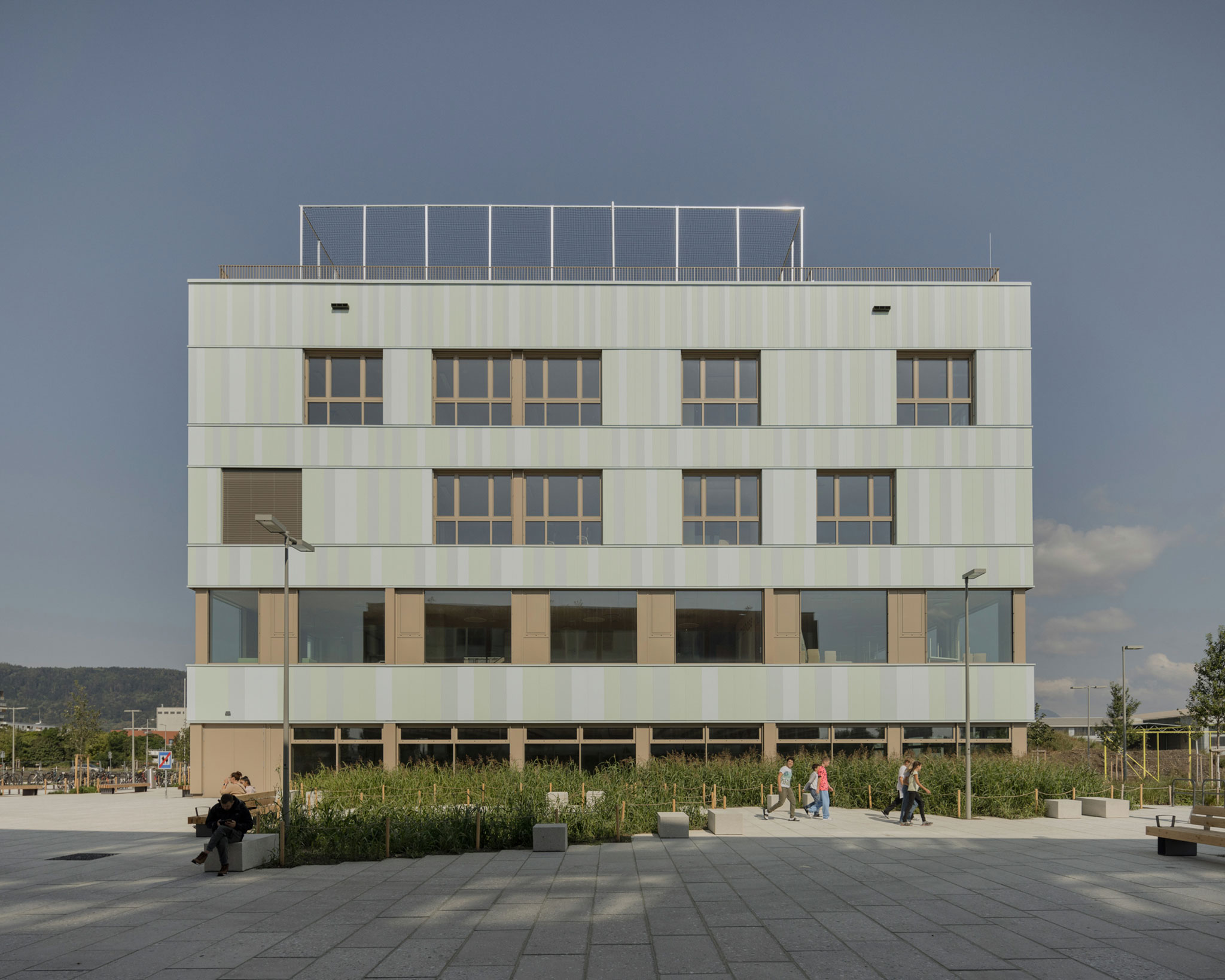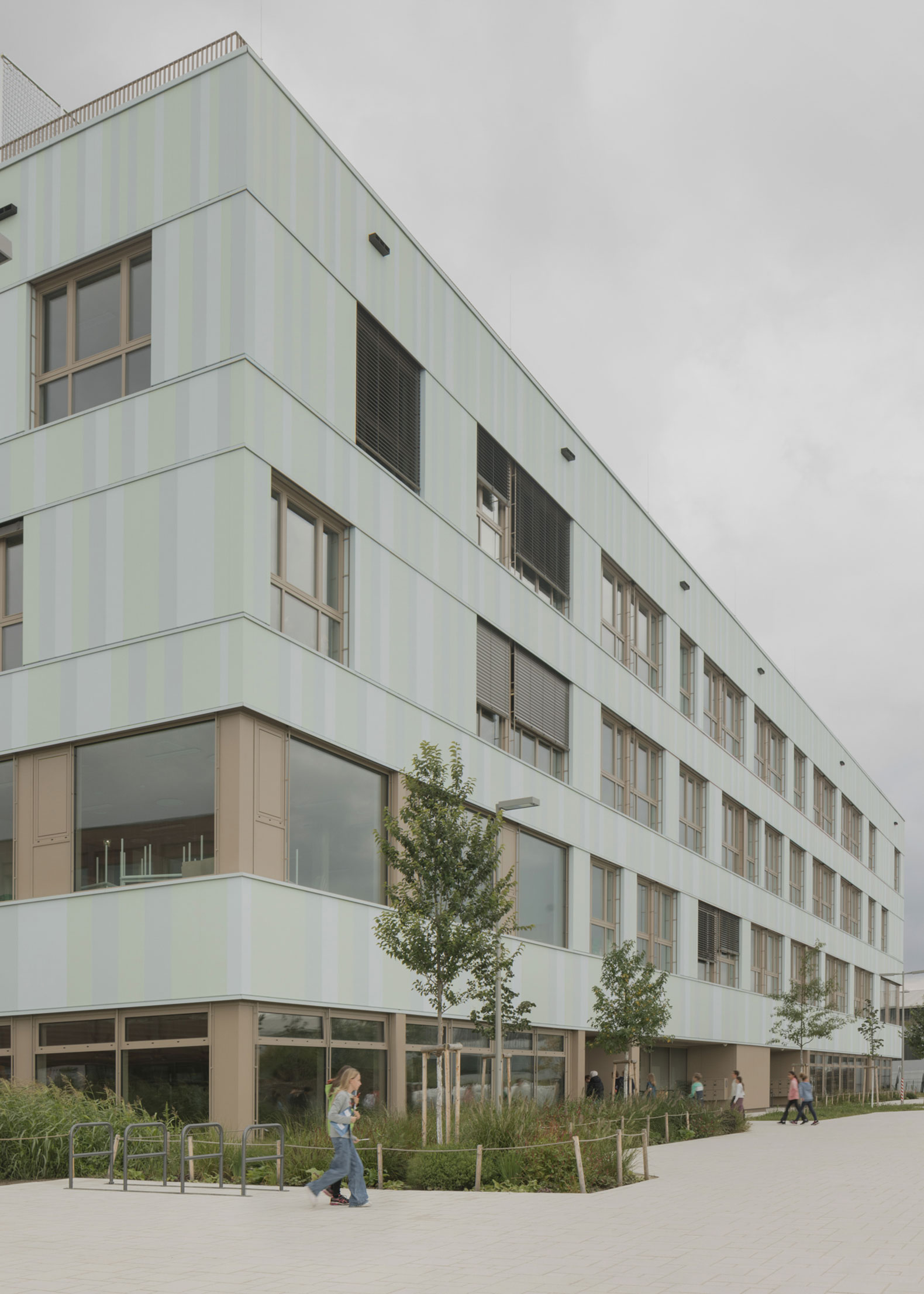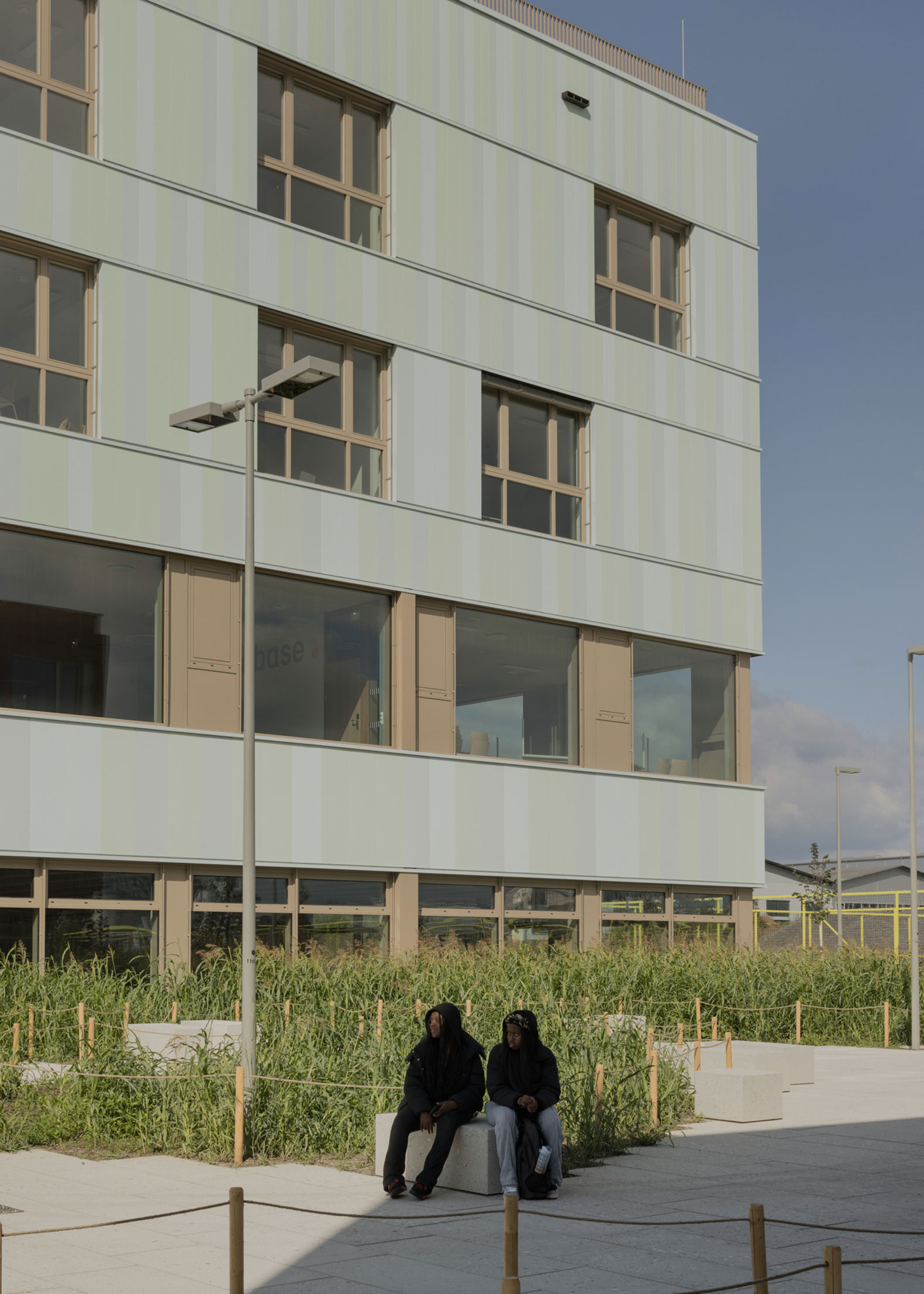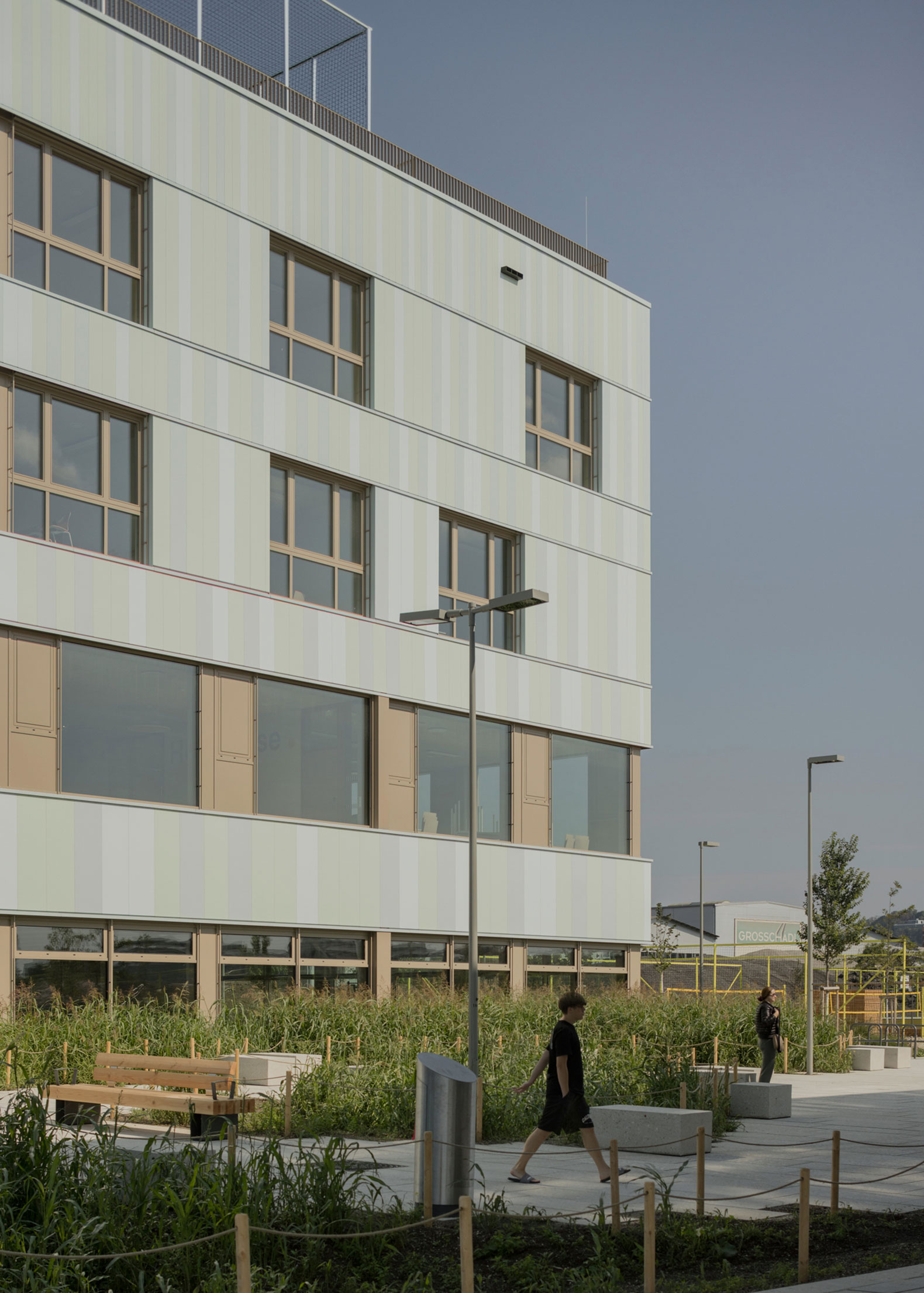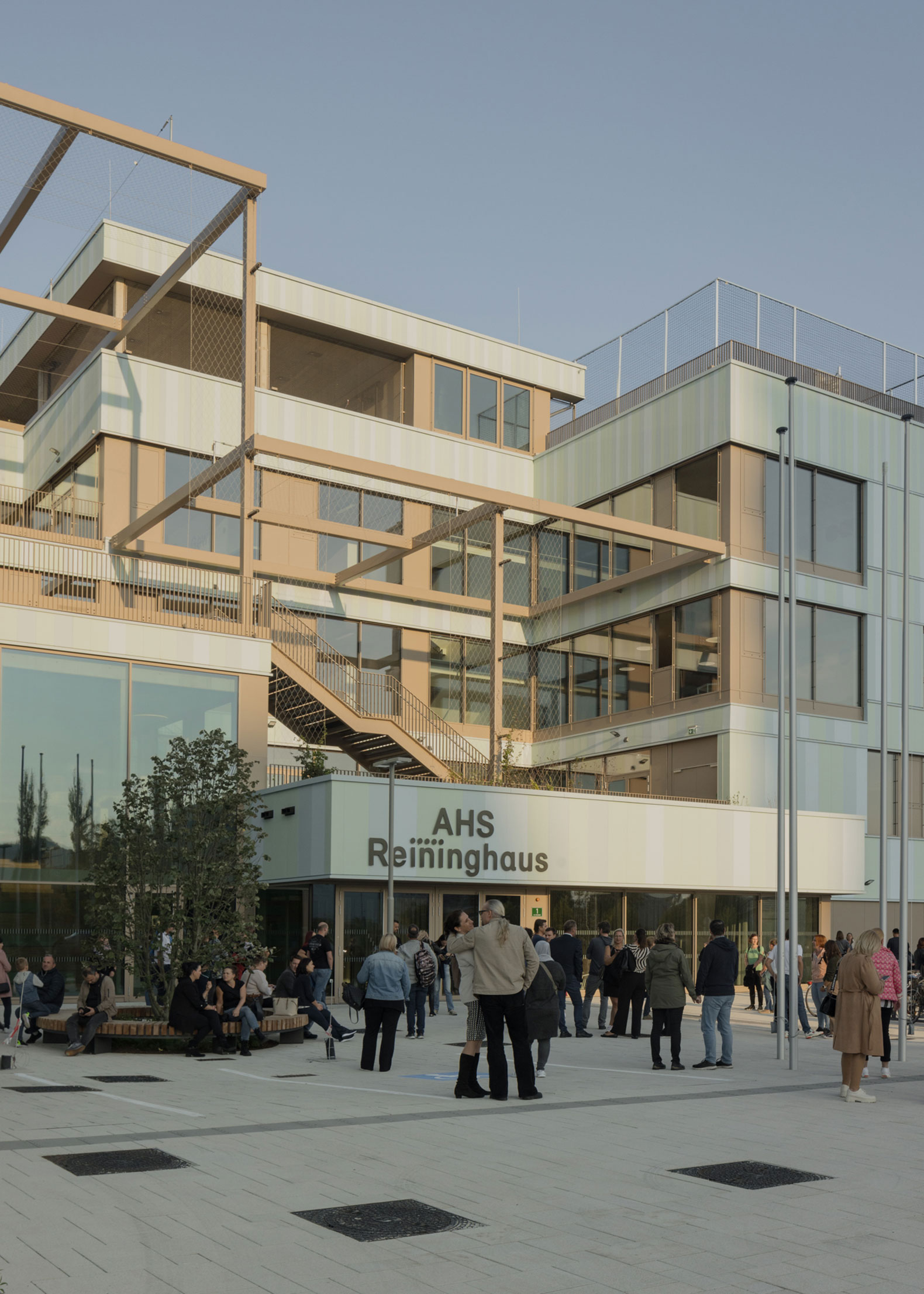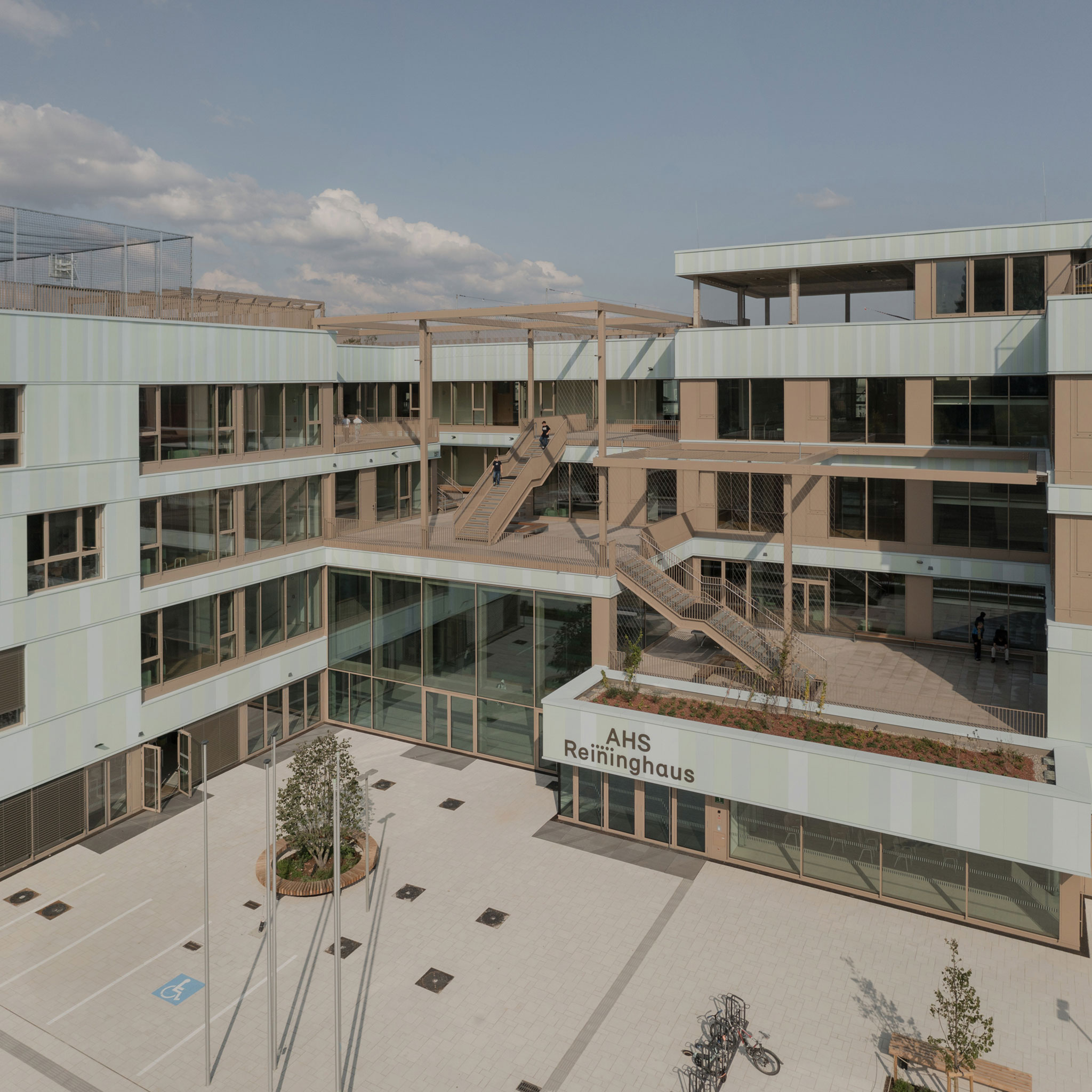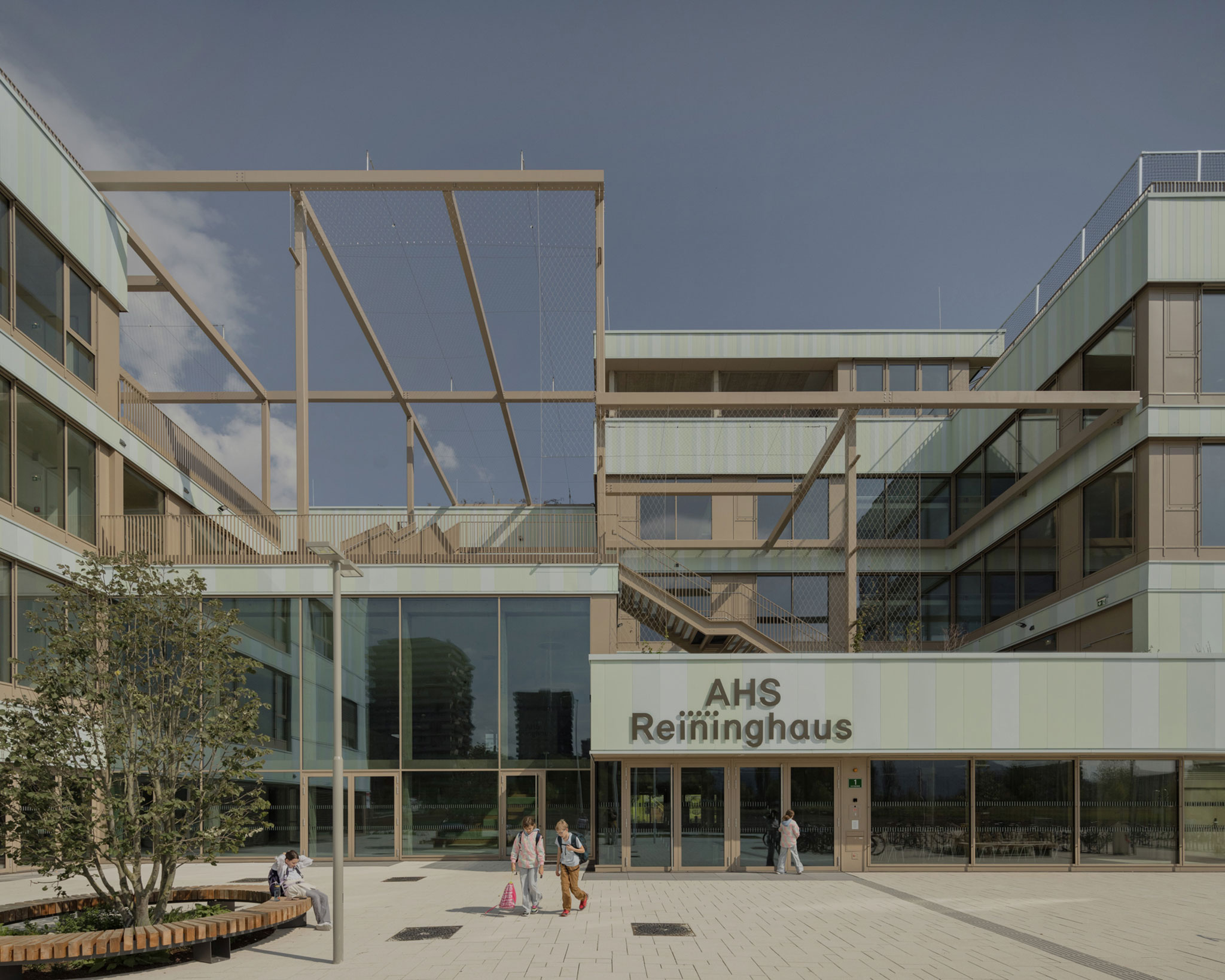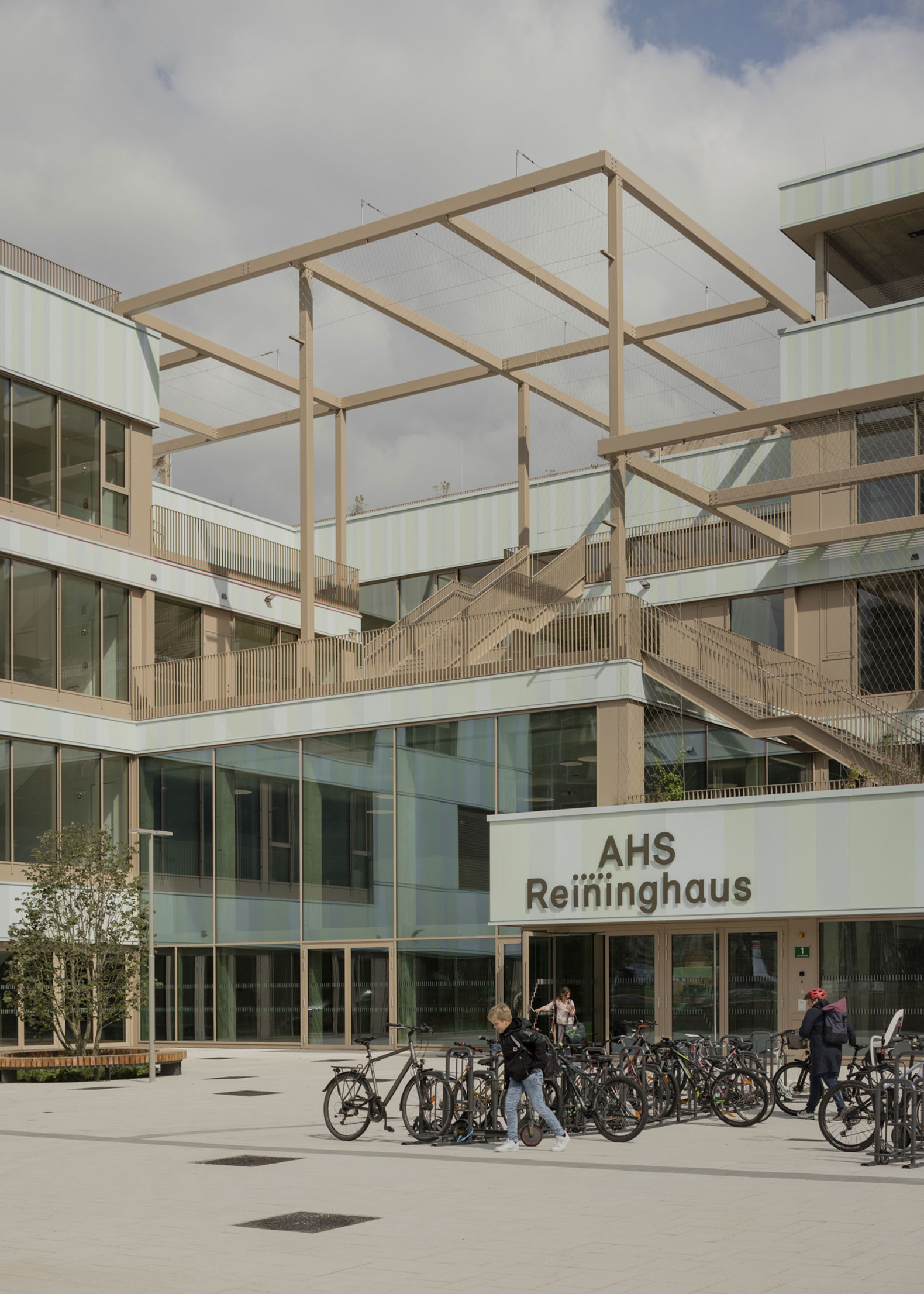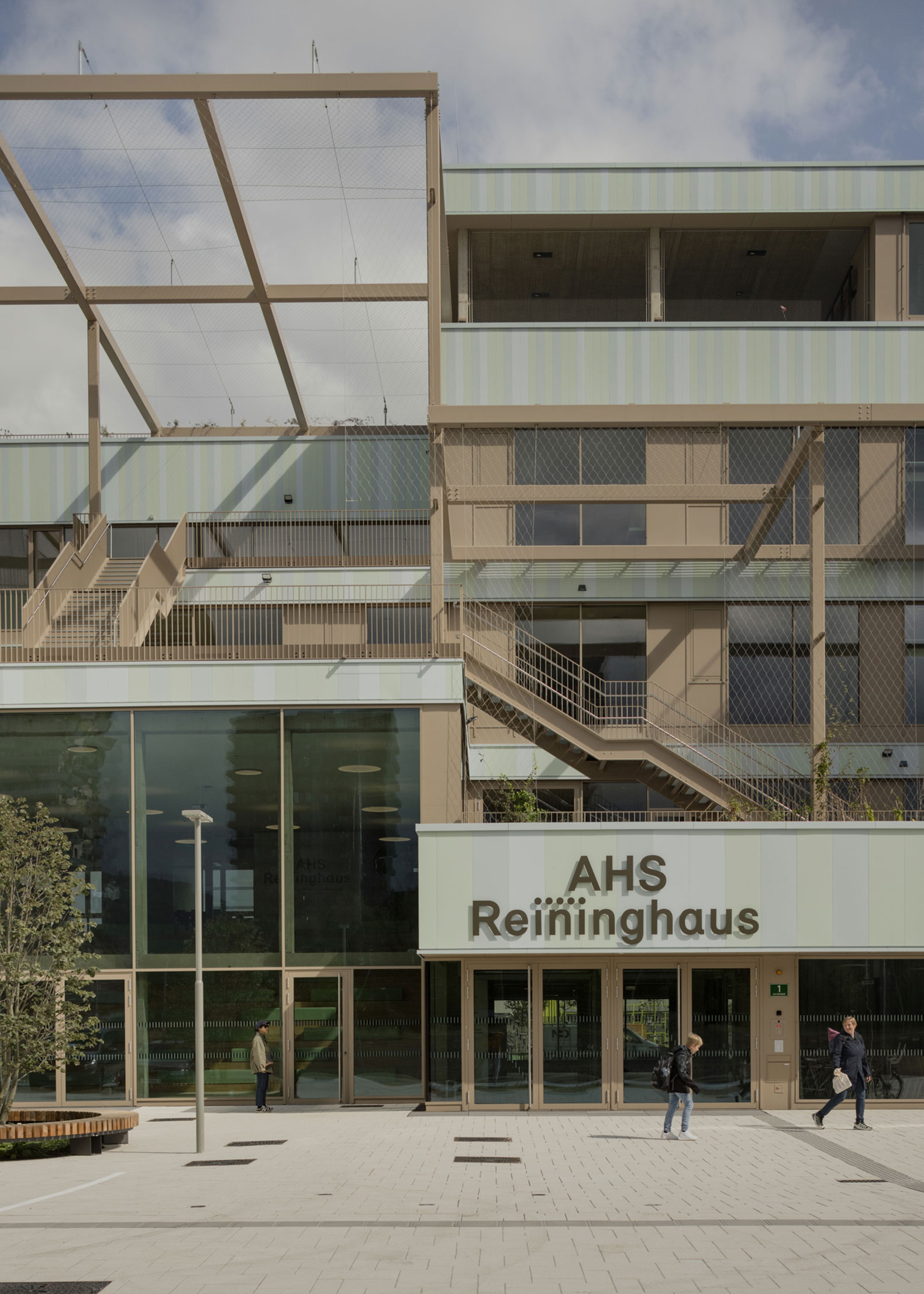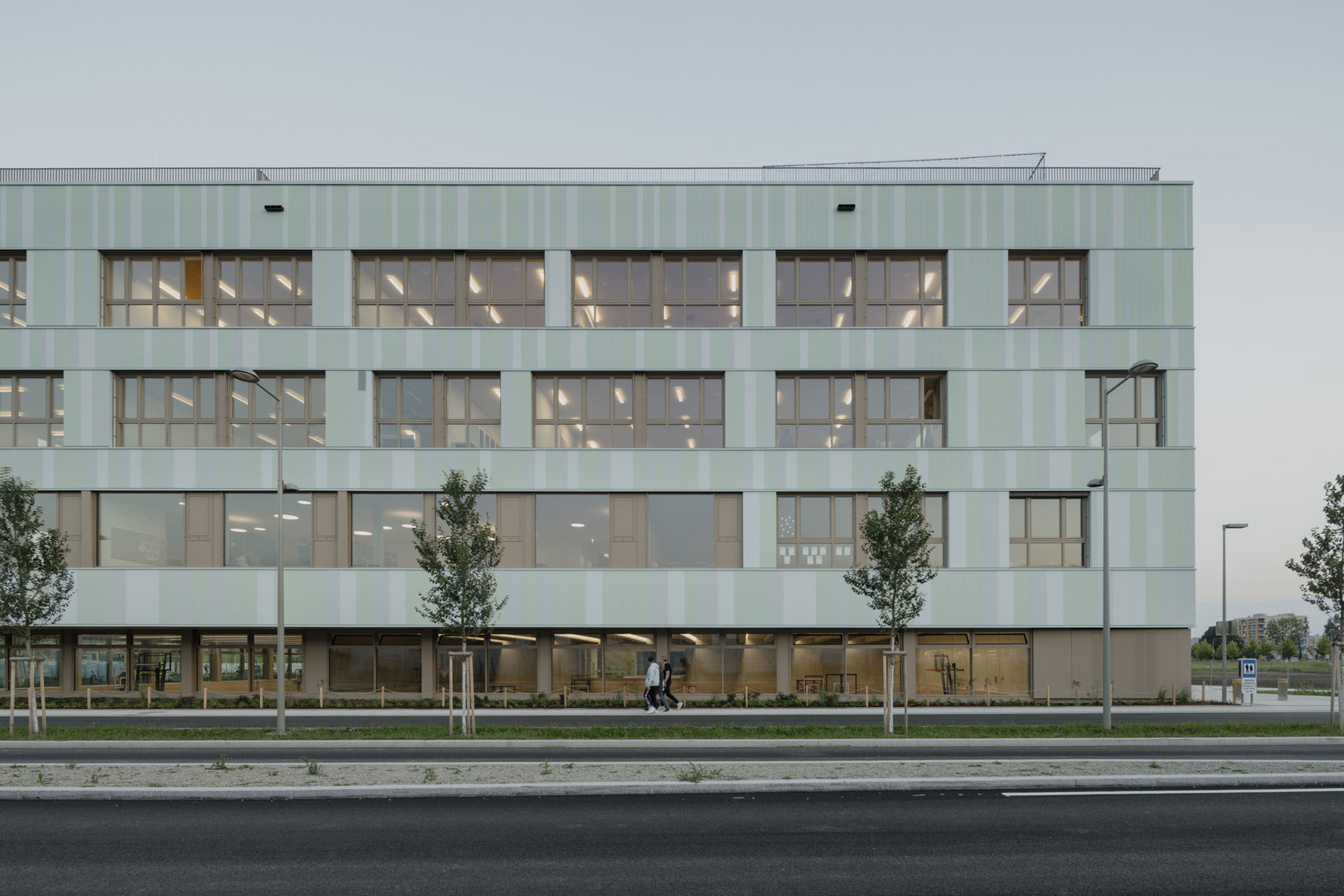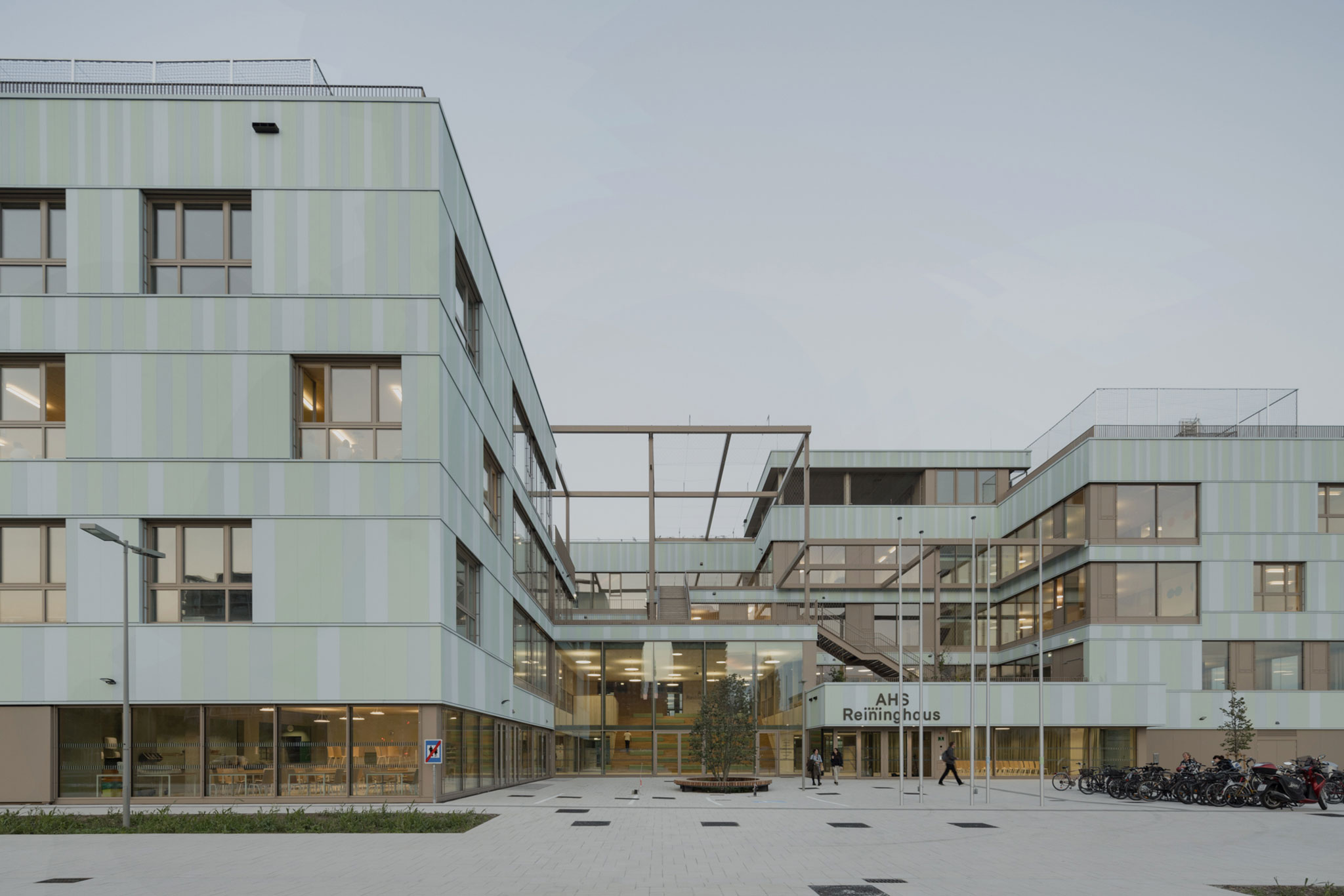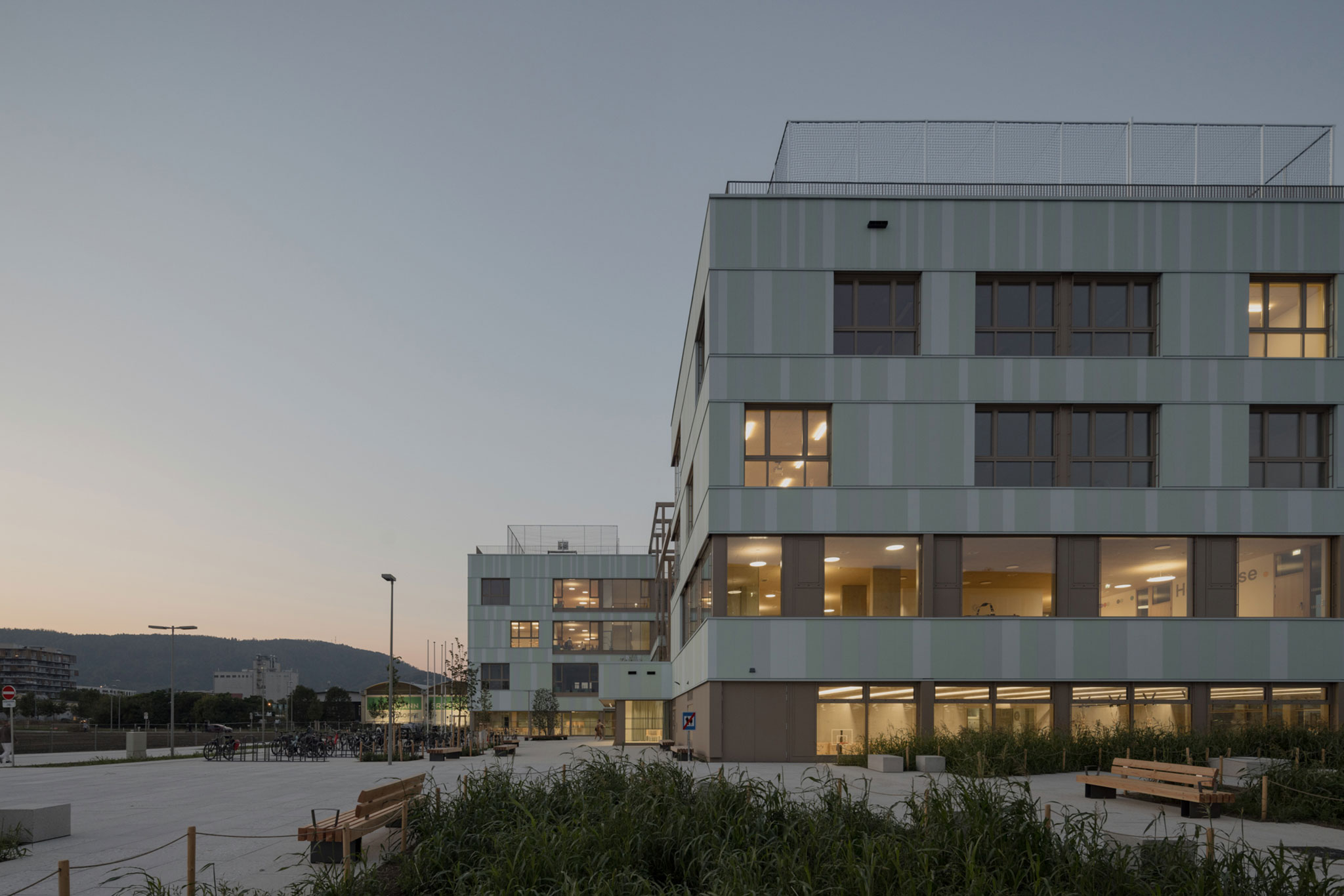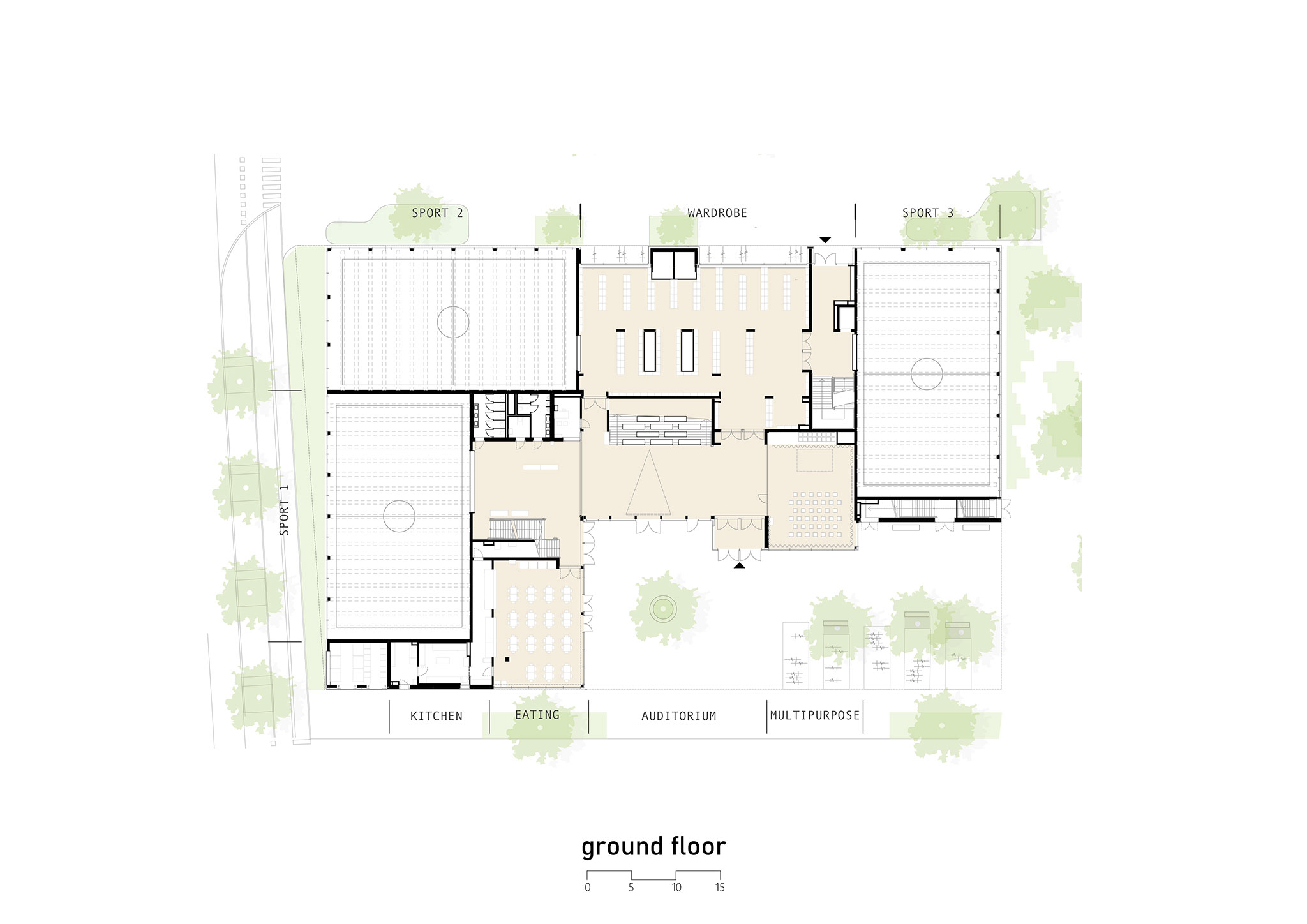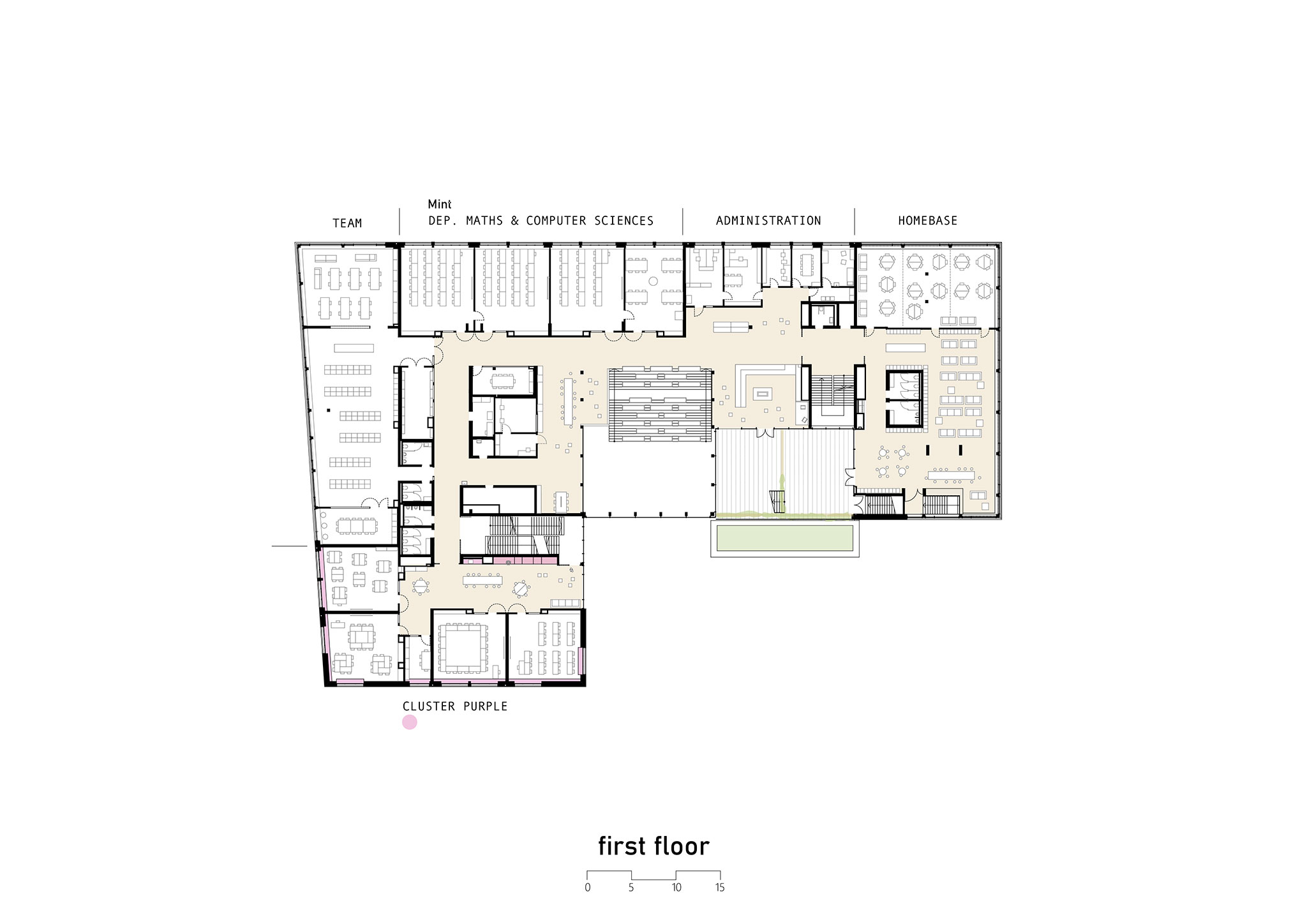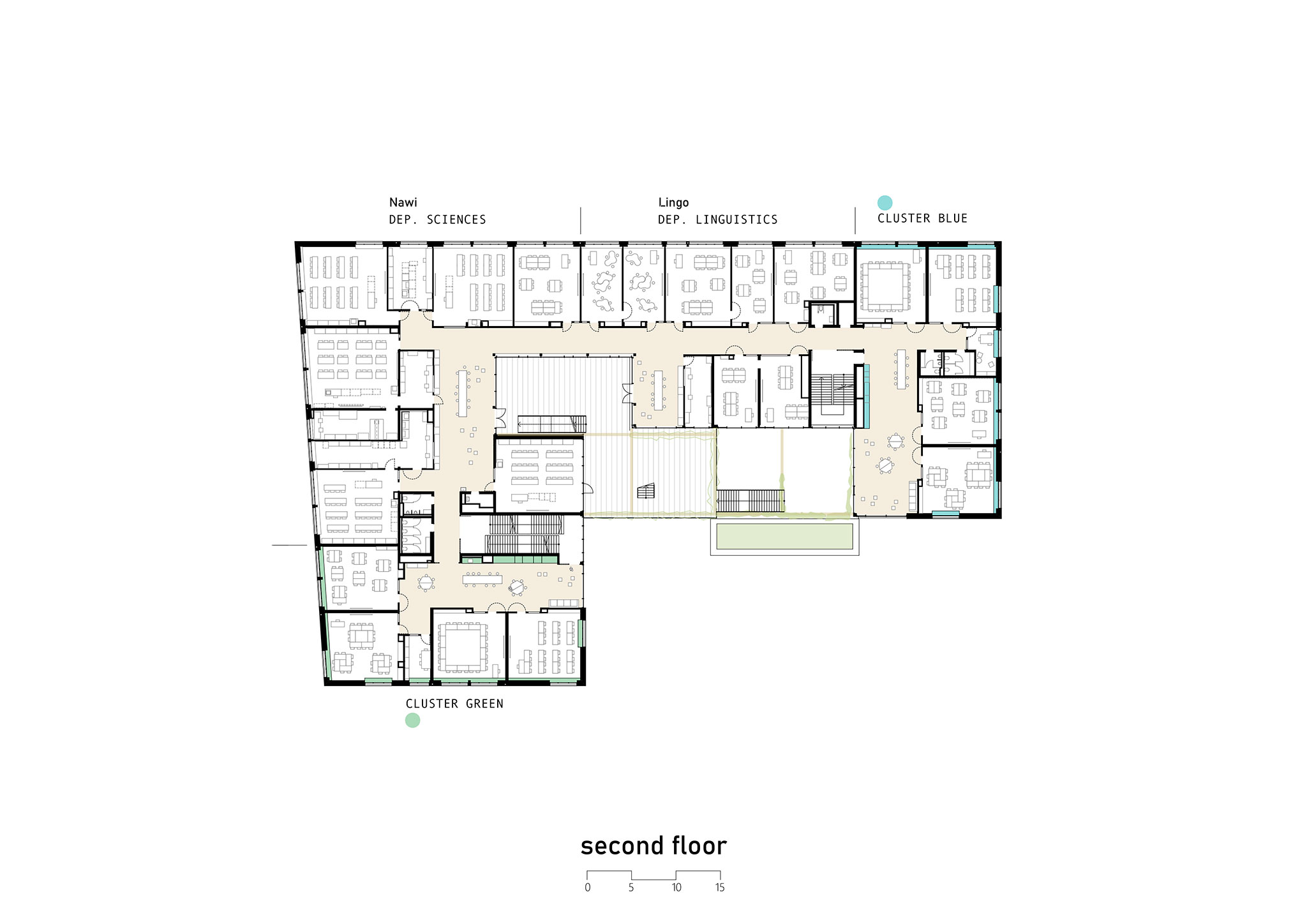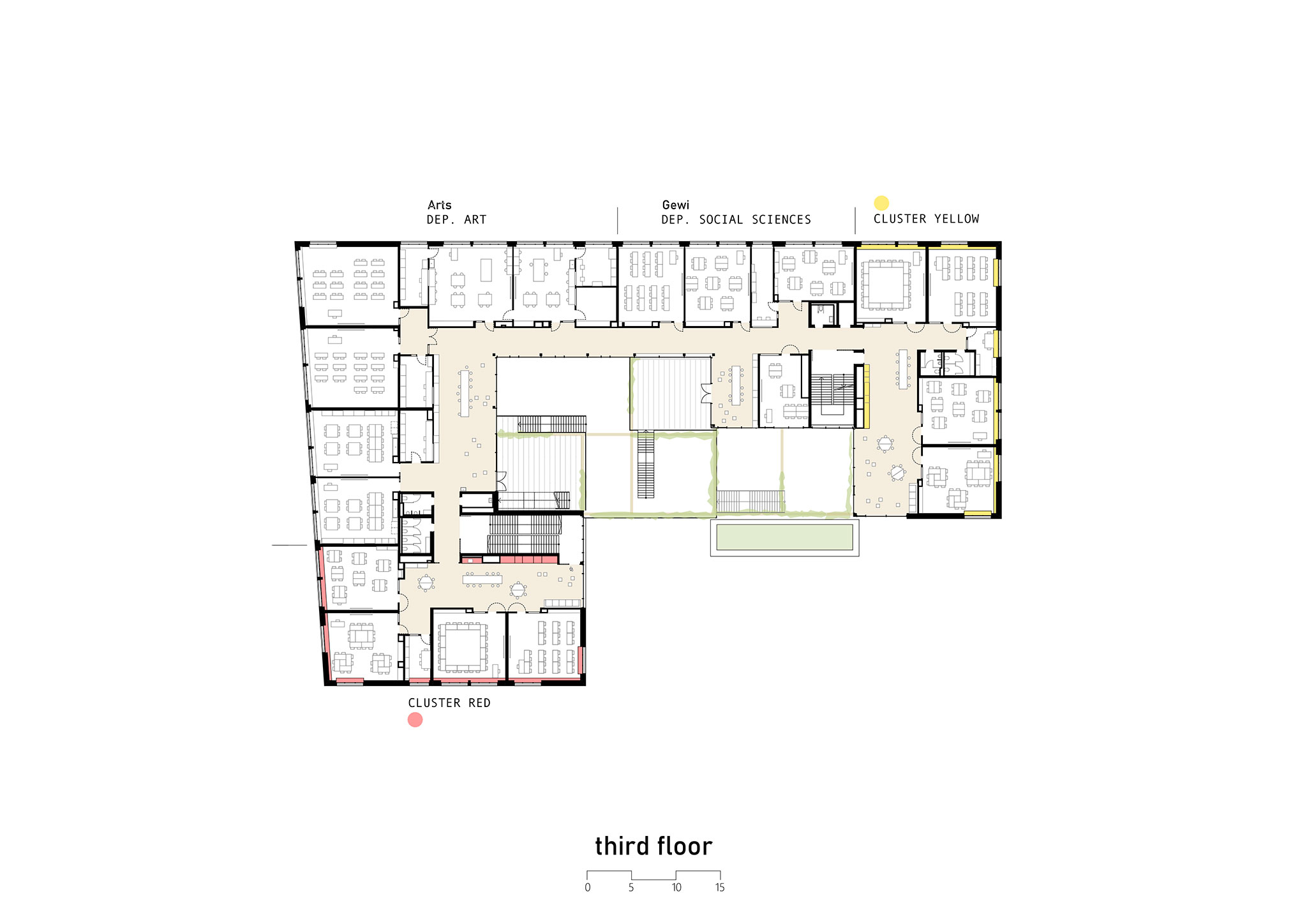
Architecture practice j-c-k (Janser Castorina Katzenberger) designed the "AHS Reininghaus" School, located in the Reininghaus district of Graz, Austria. This four-story secondary school, which will accommodate approximately 1,000 students, features an entrance with two central cores that provide a clear and efficient connection between all the building's clusters and departments.

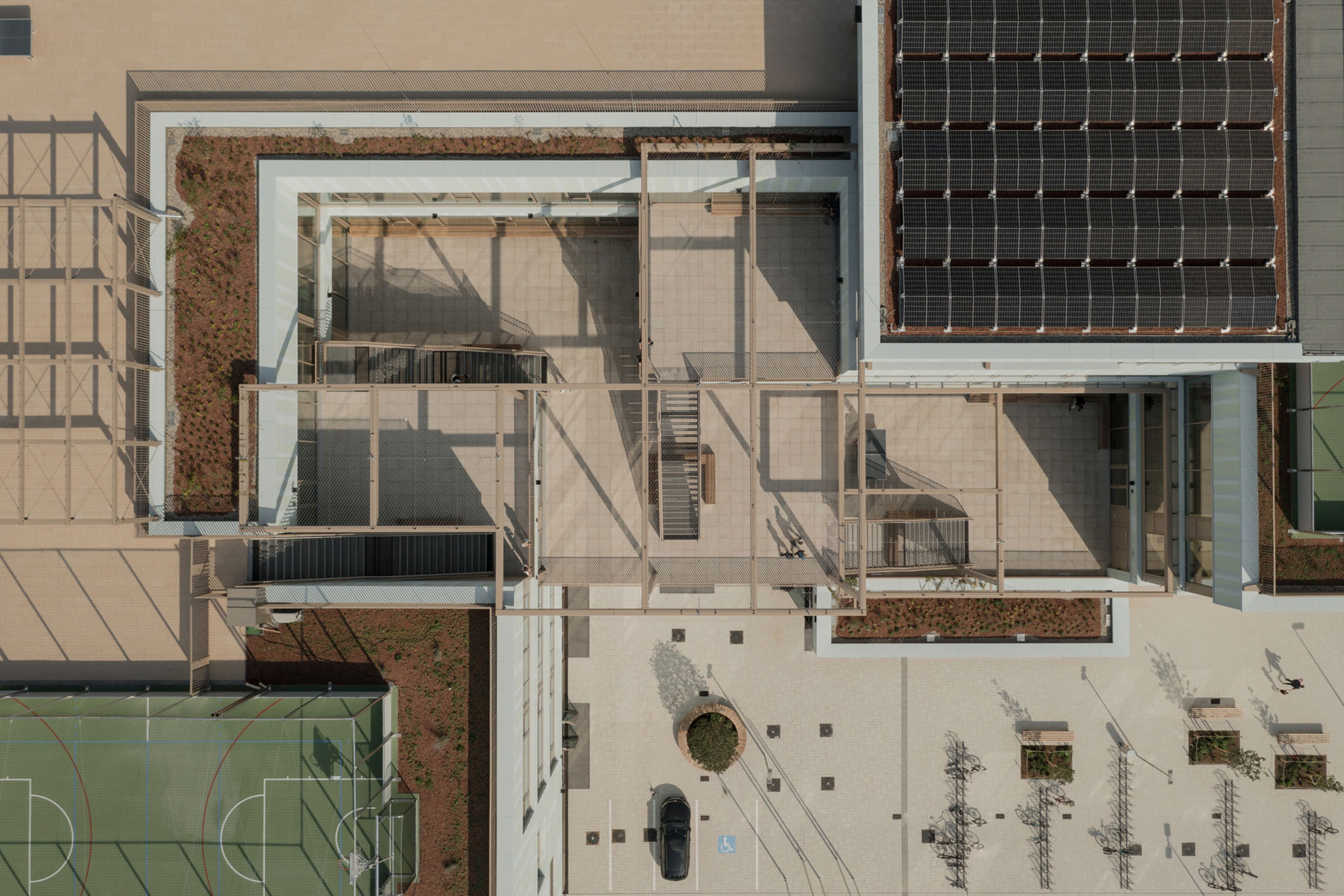
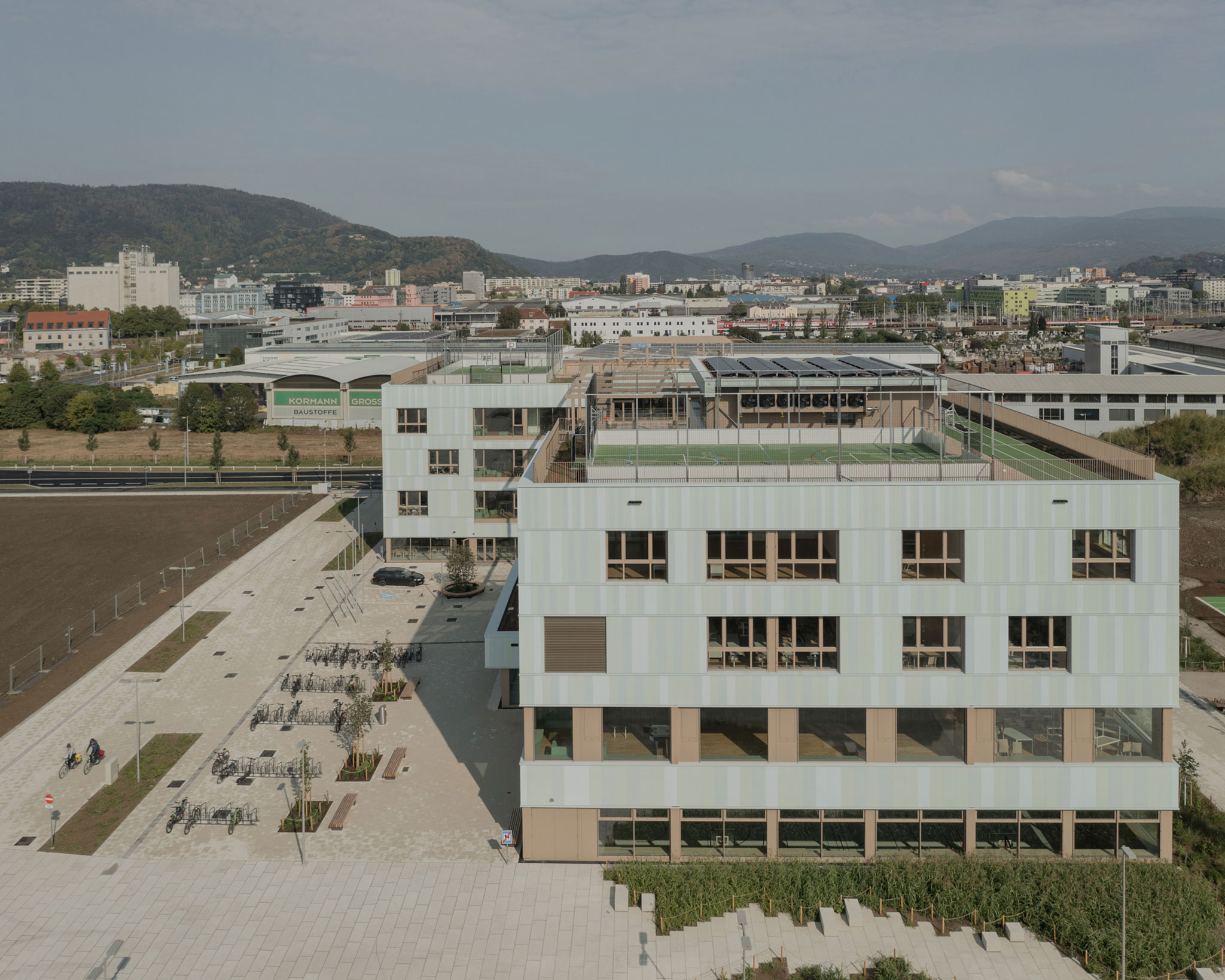
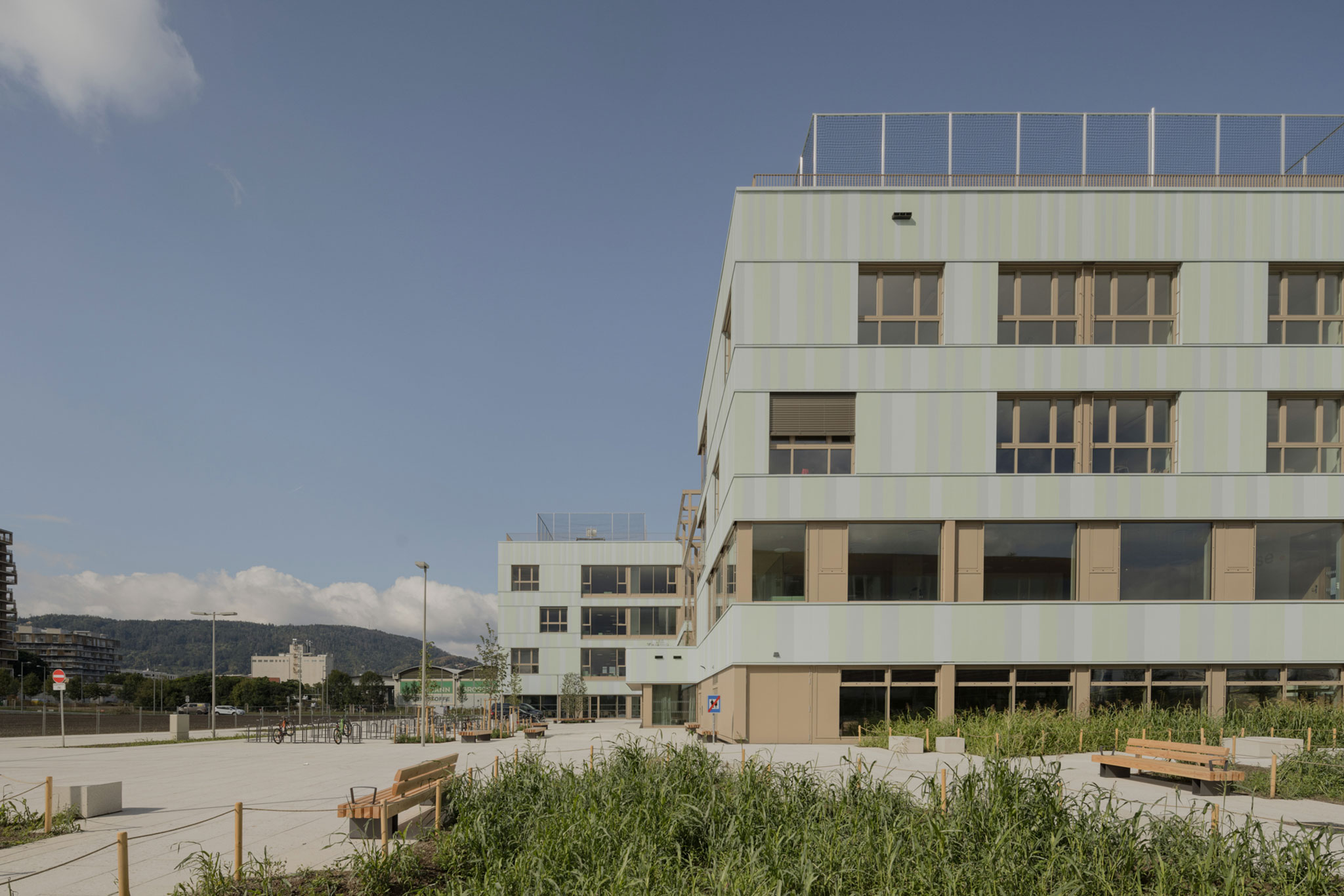
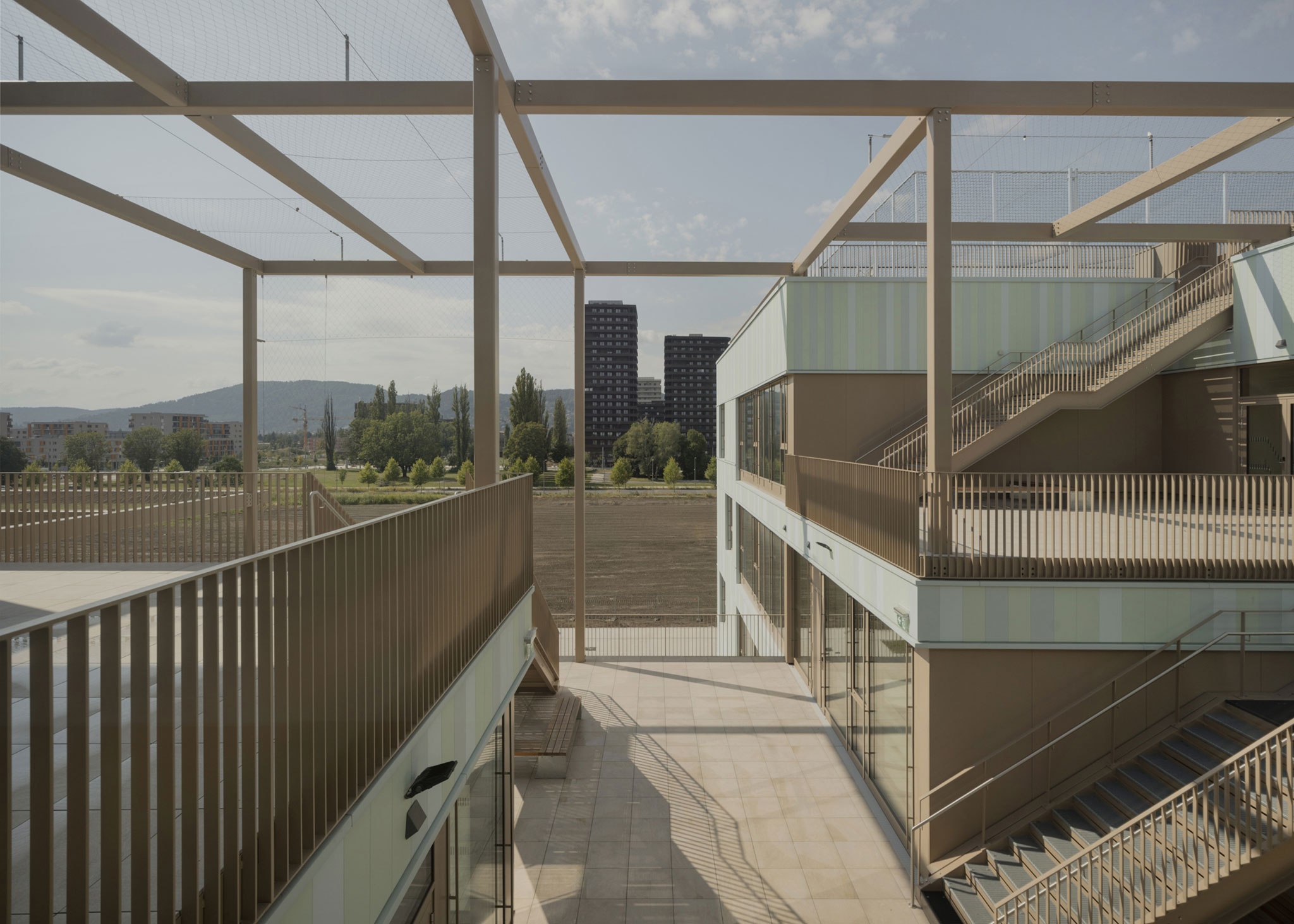
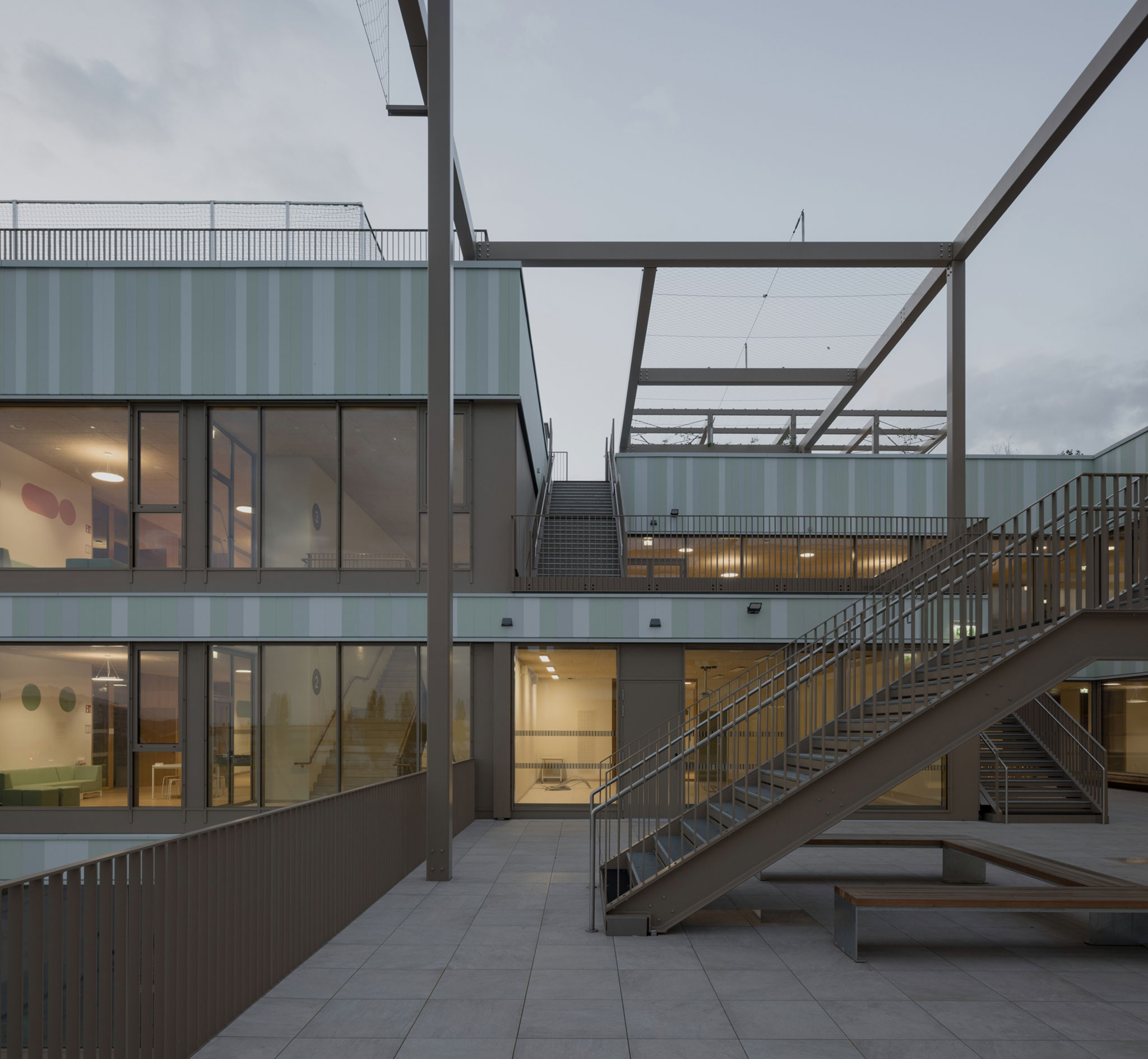
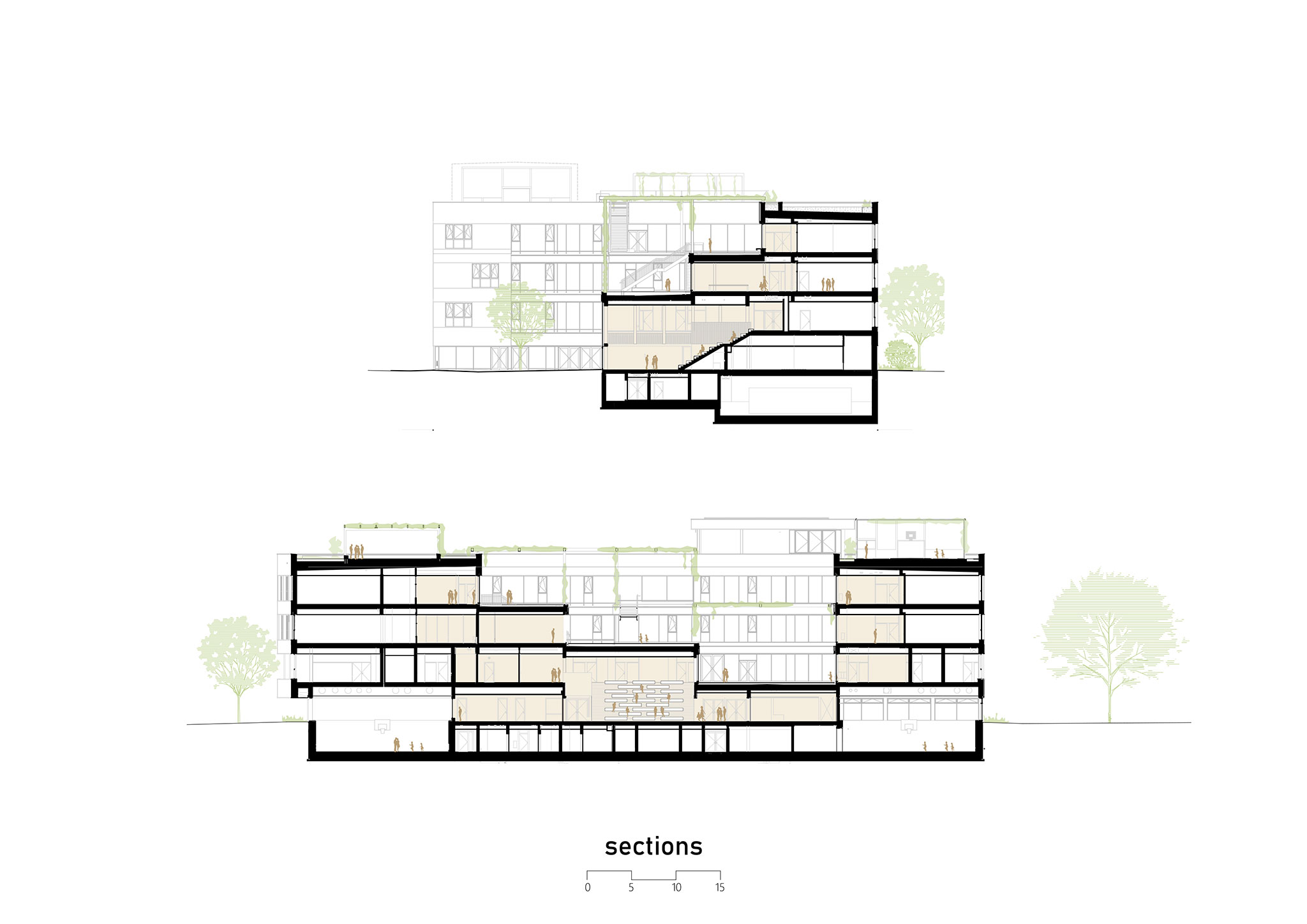
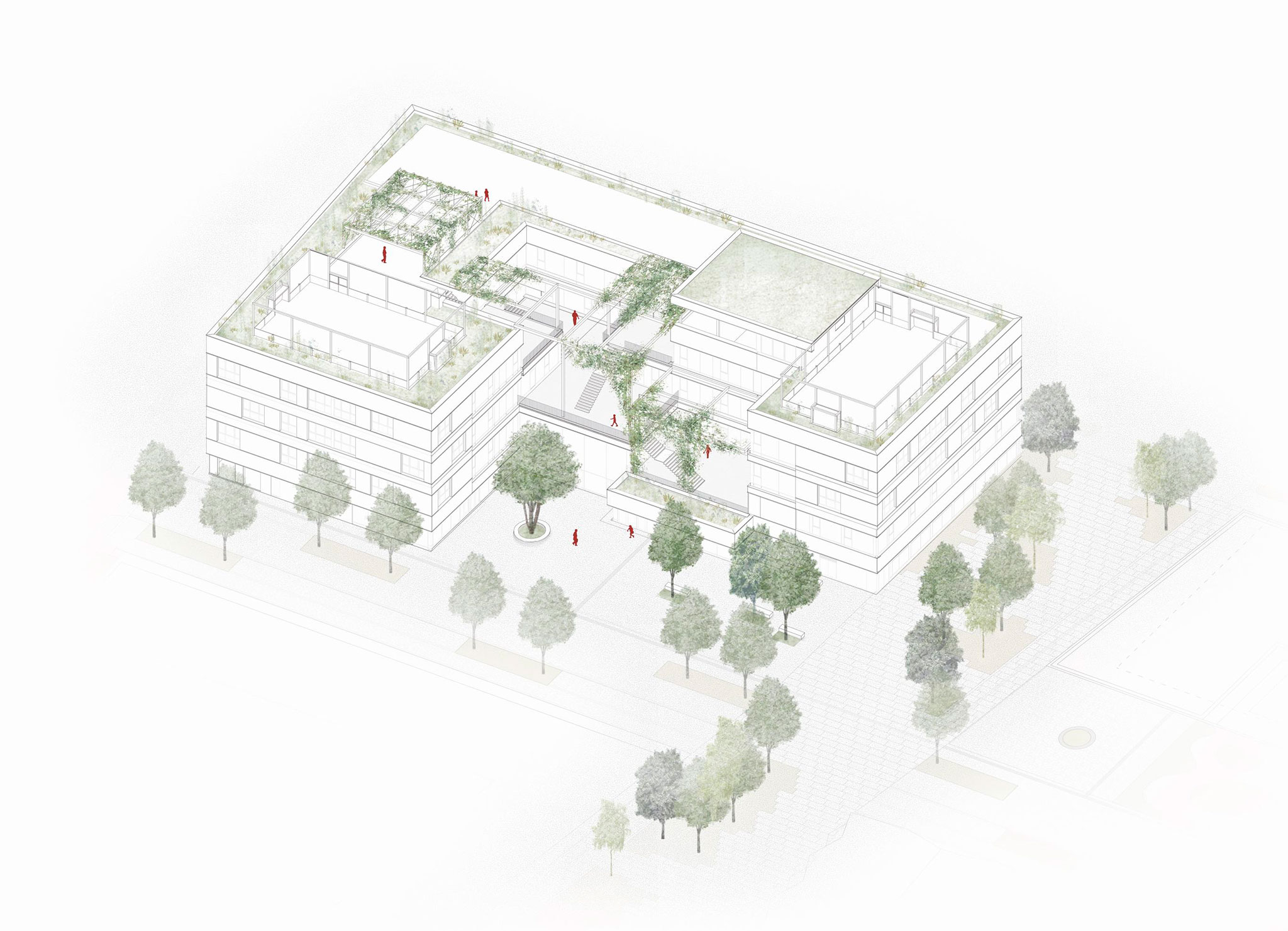
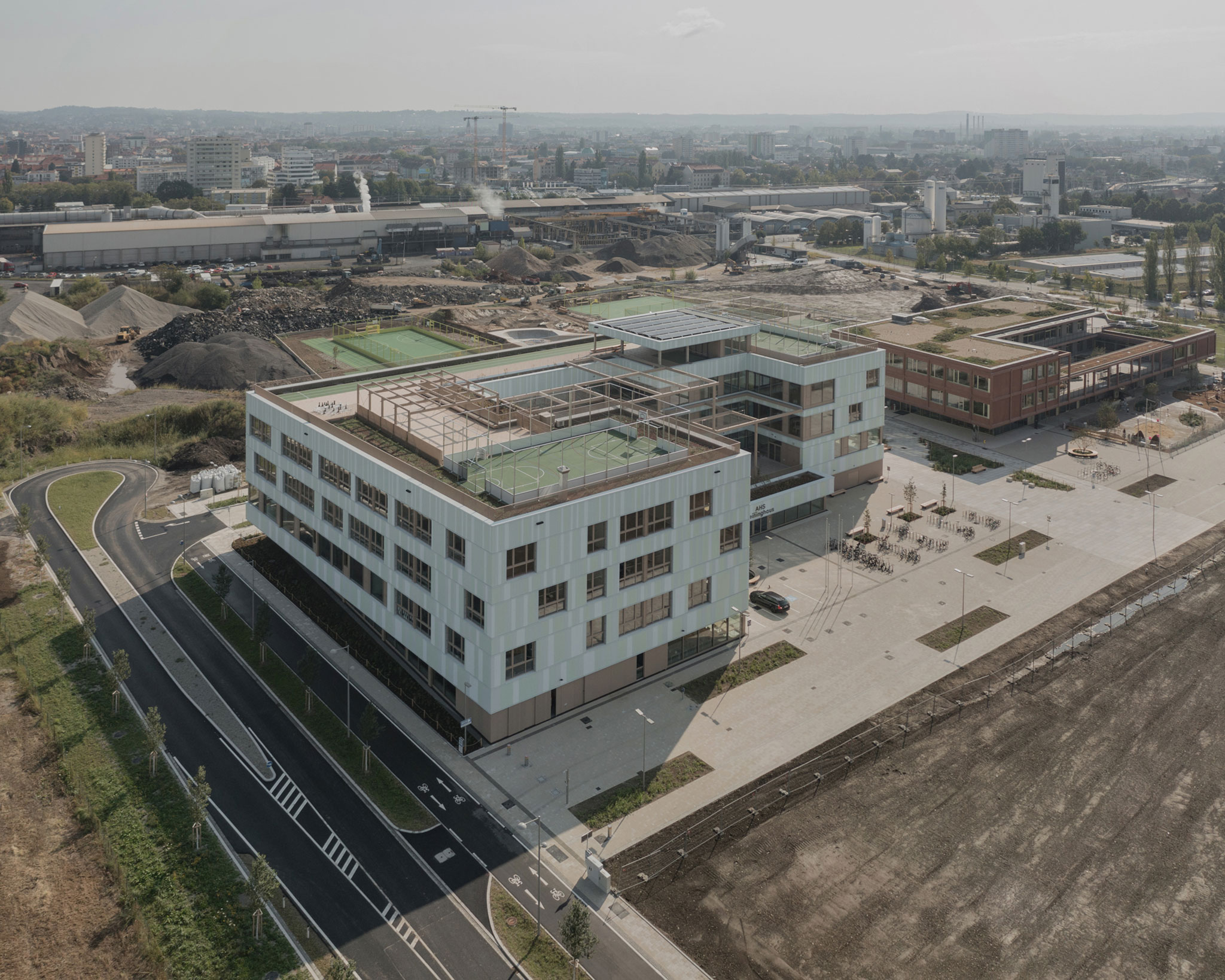
The building is L-shaped in both plan and section, with a central stepped section that breaks up the compact volume and protects the public spaces from noise pollution, creating a series of spaces and terraces that face inwards.

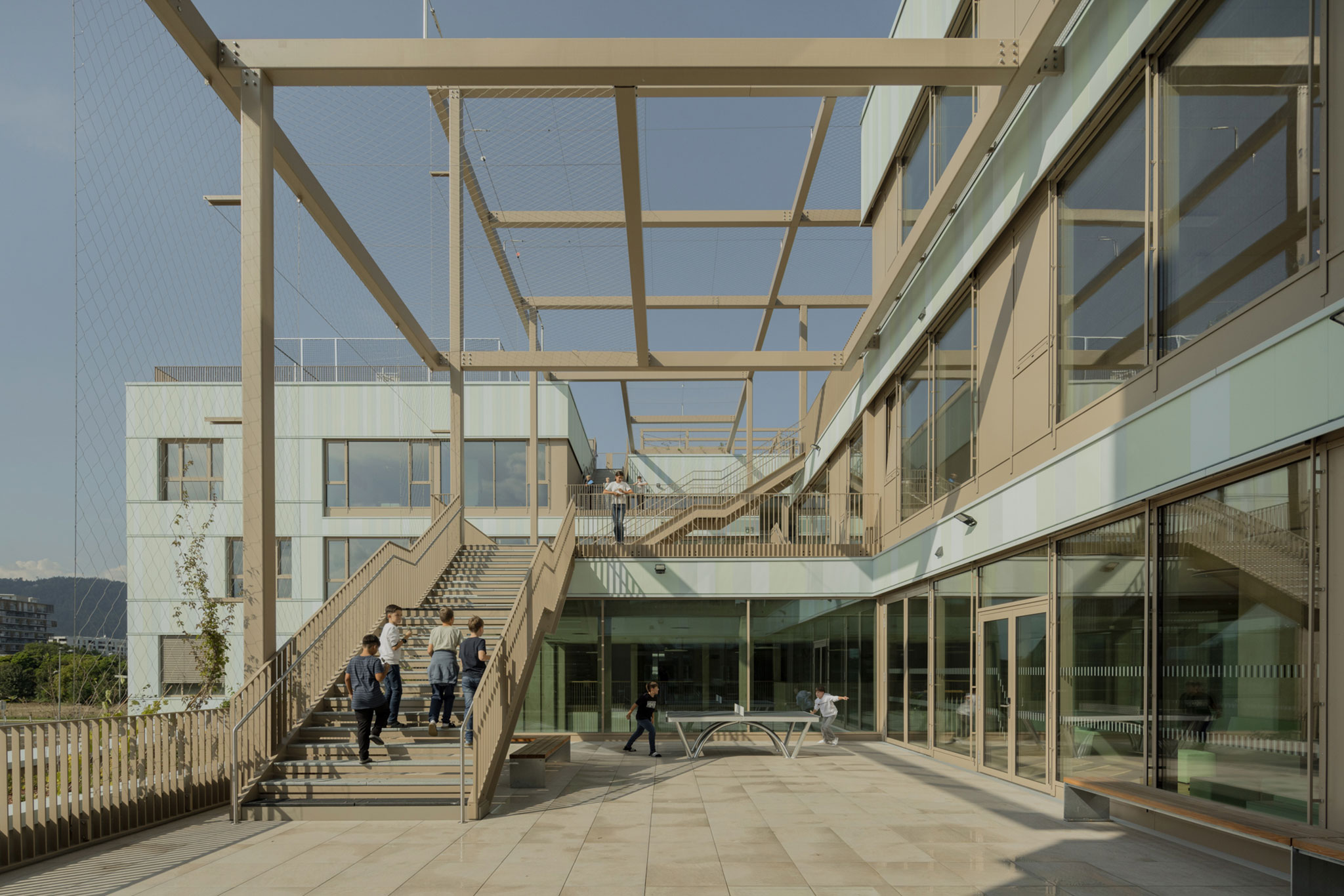
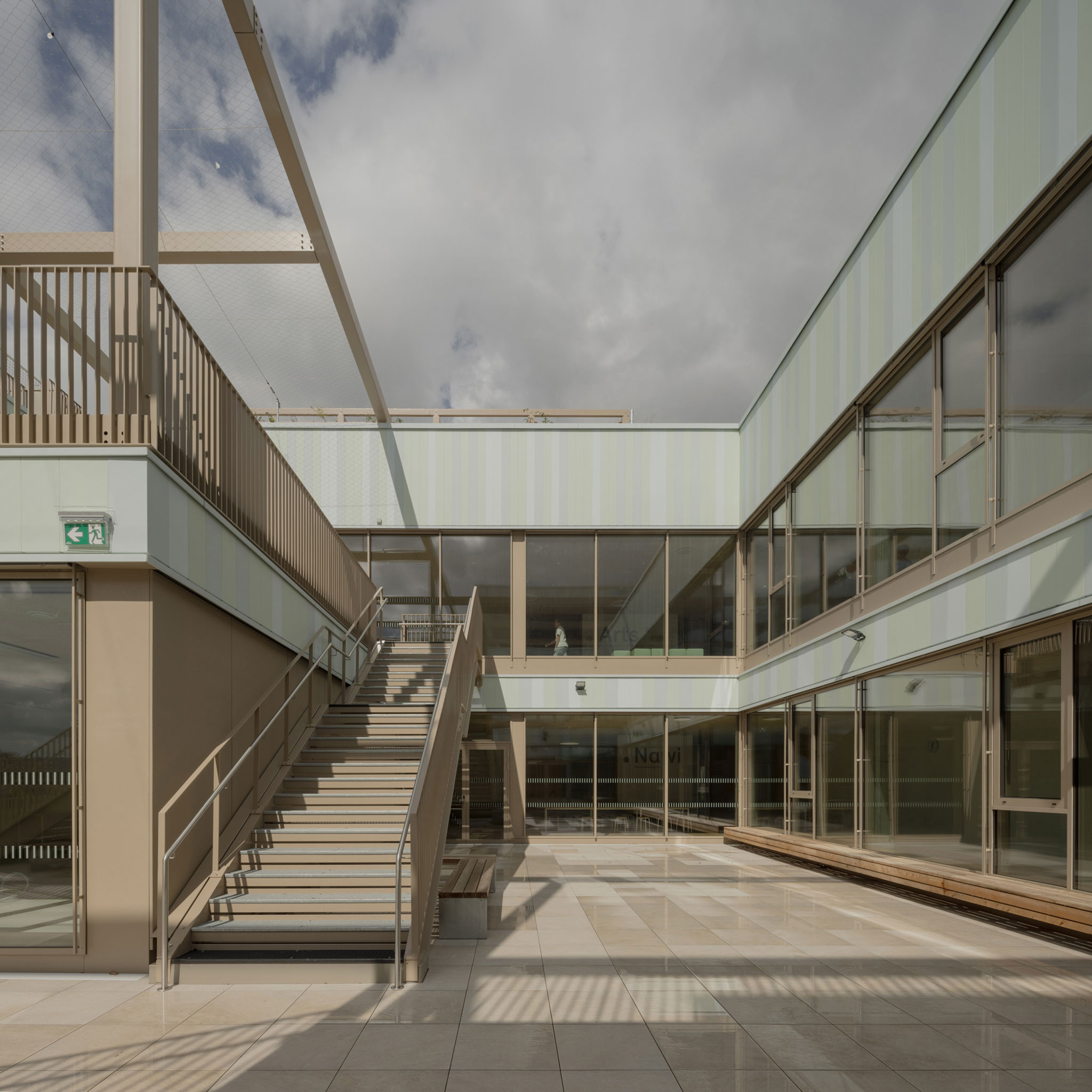
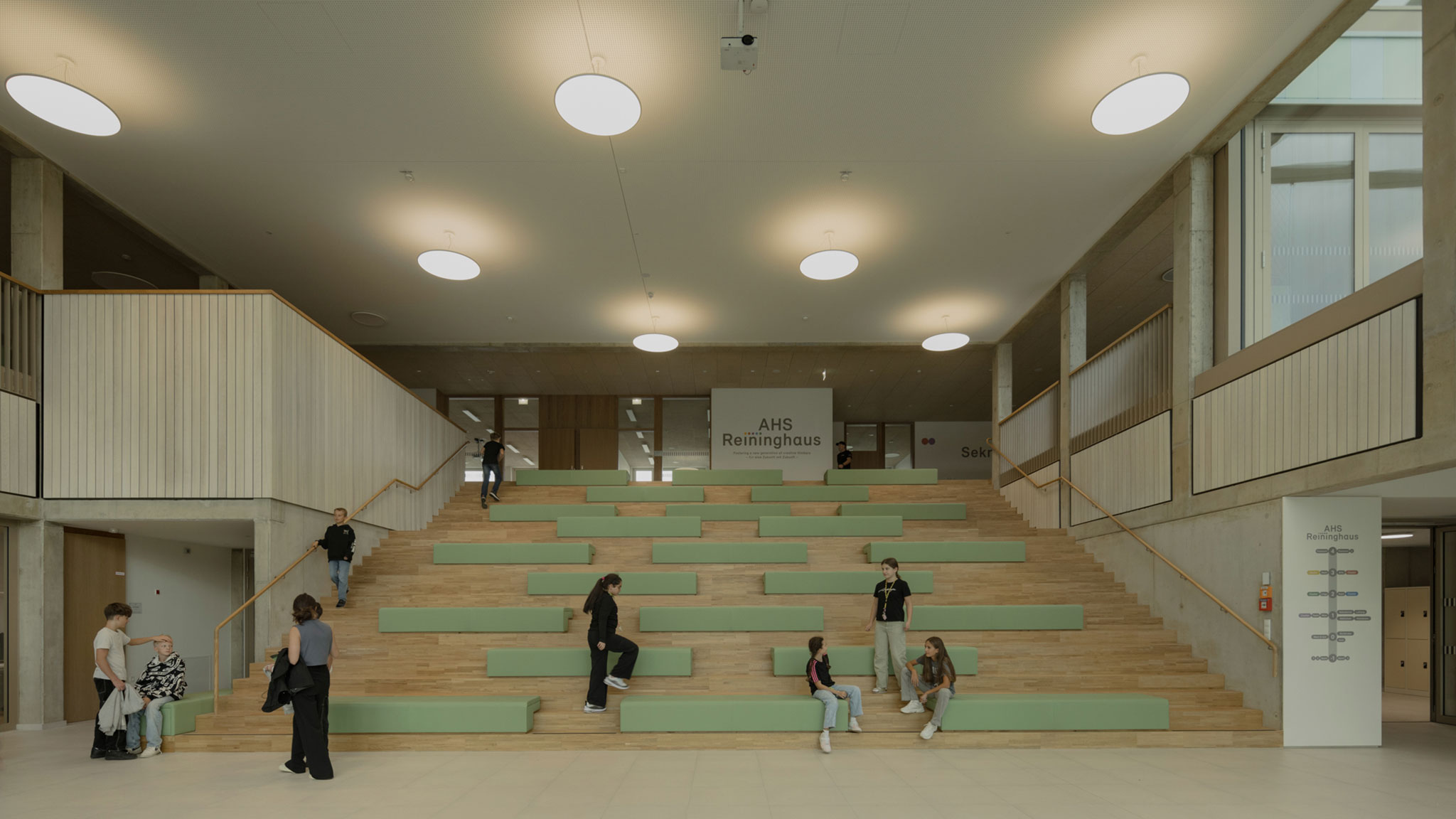
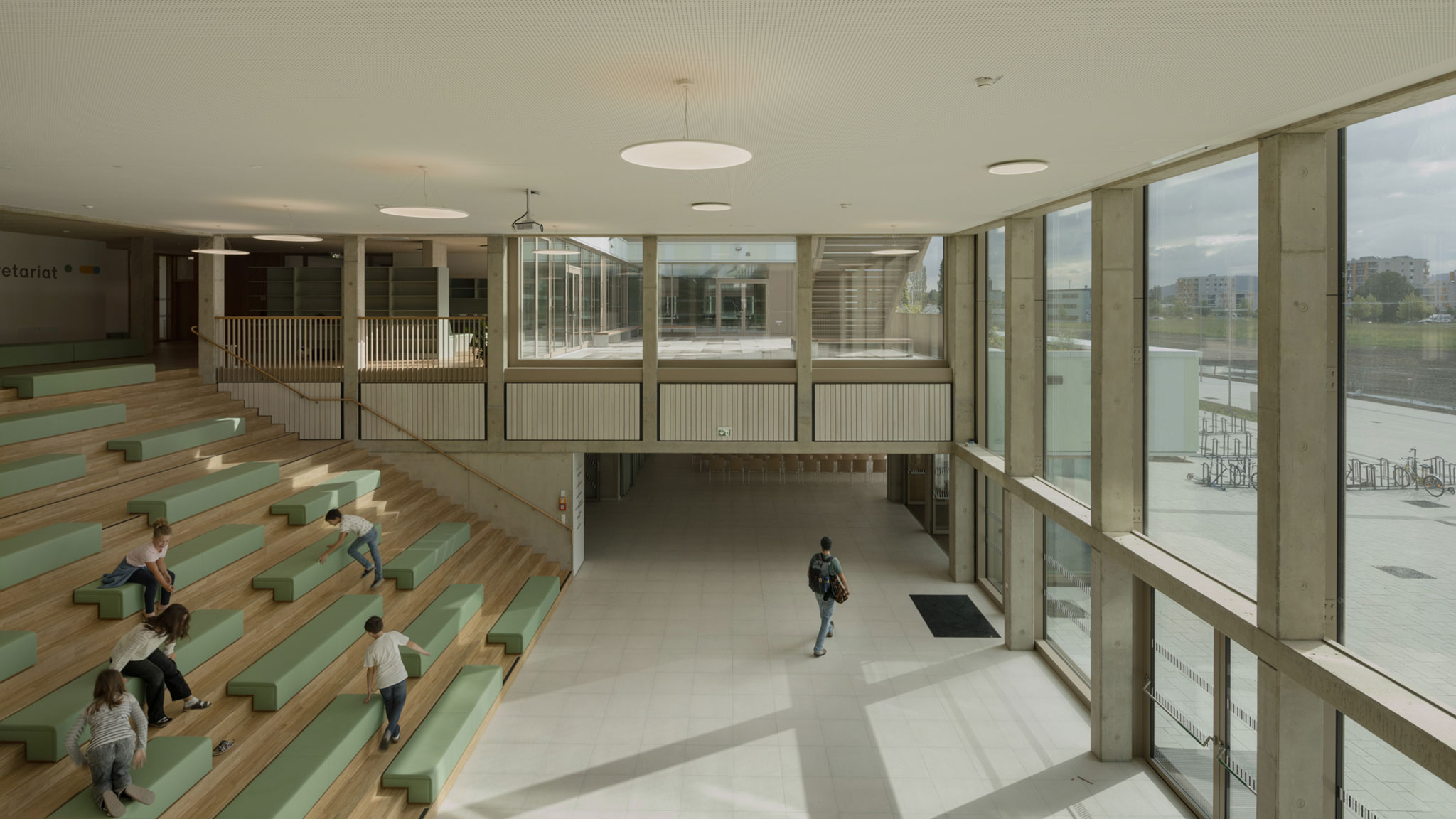
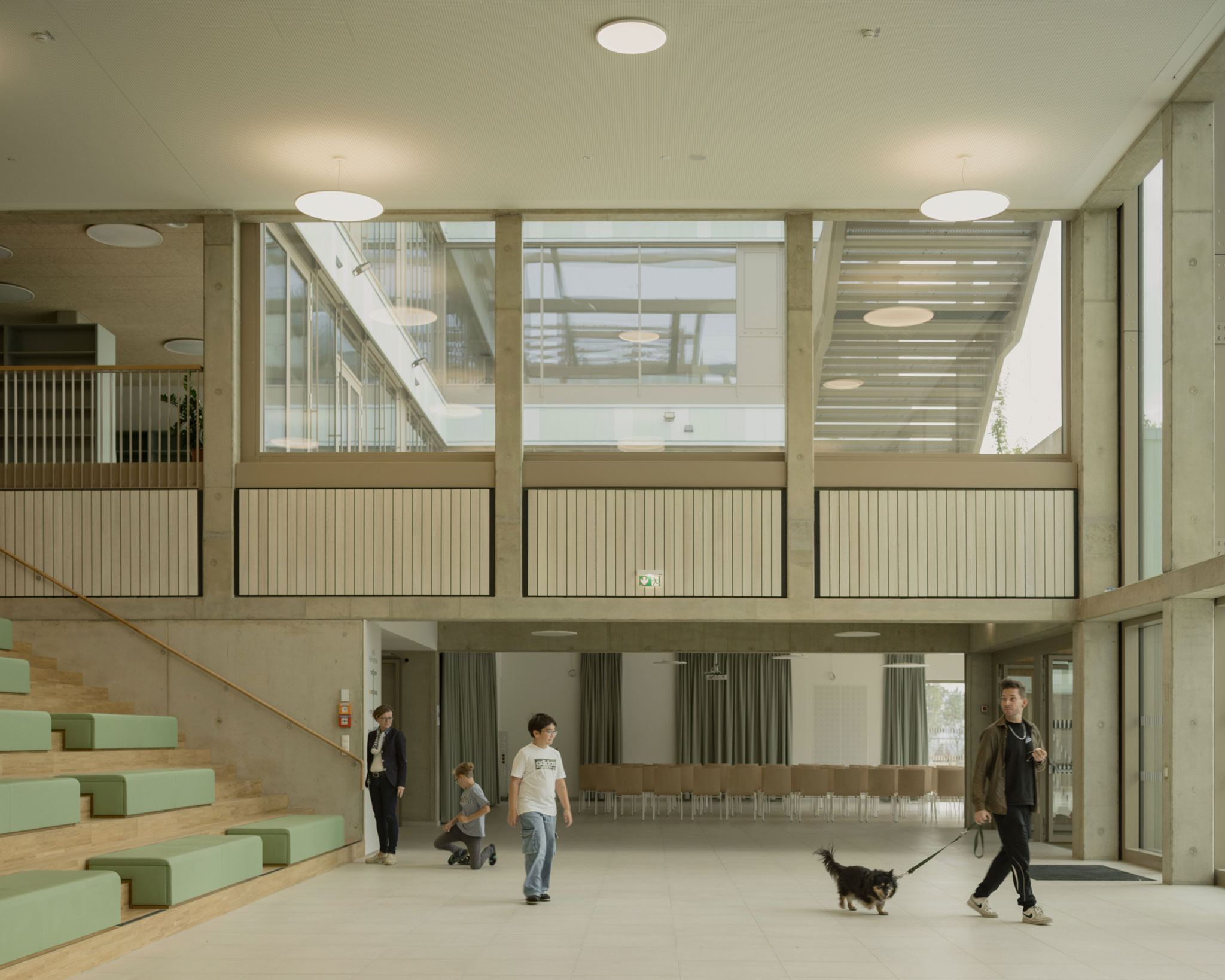
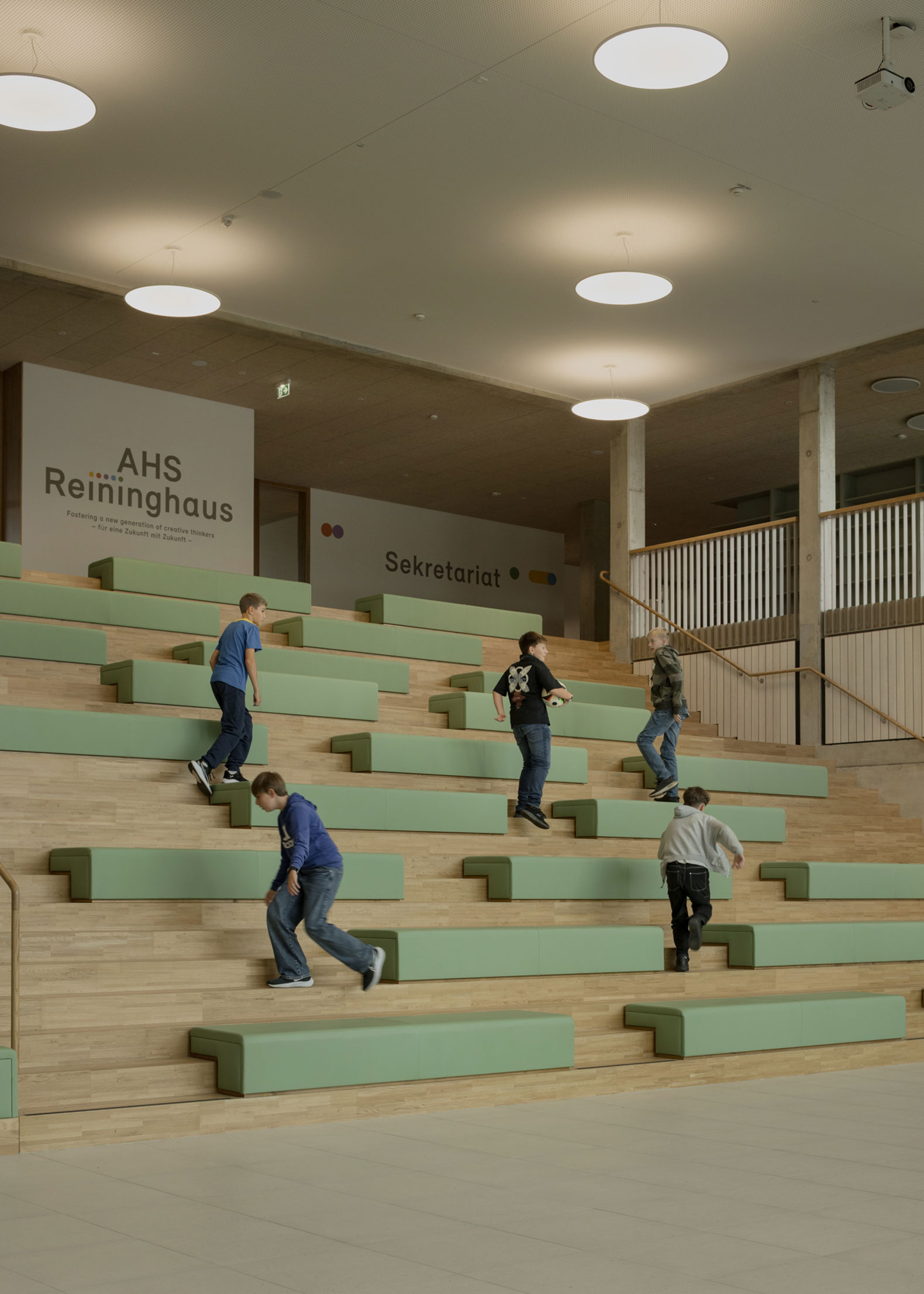
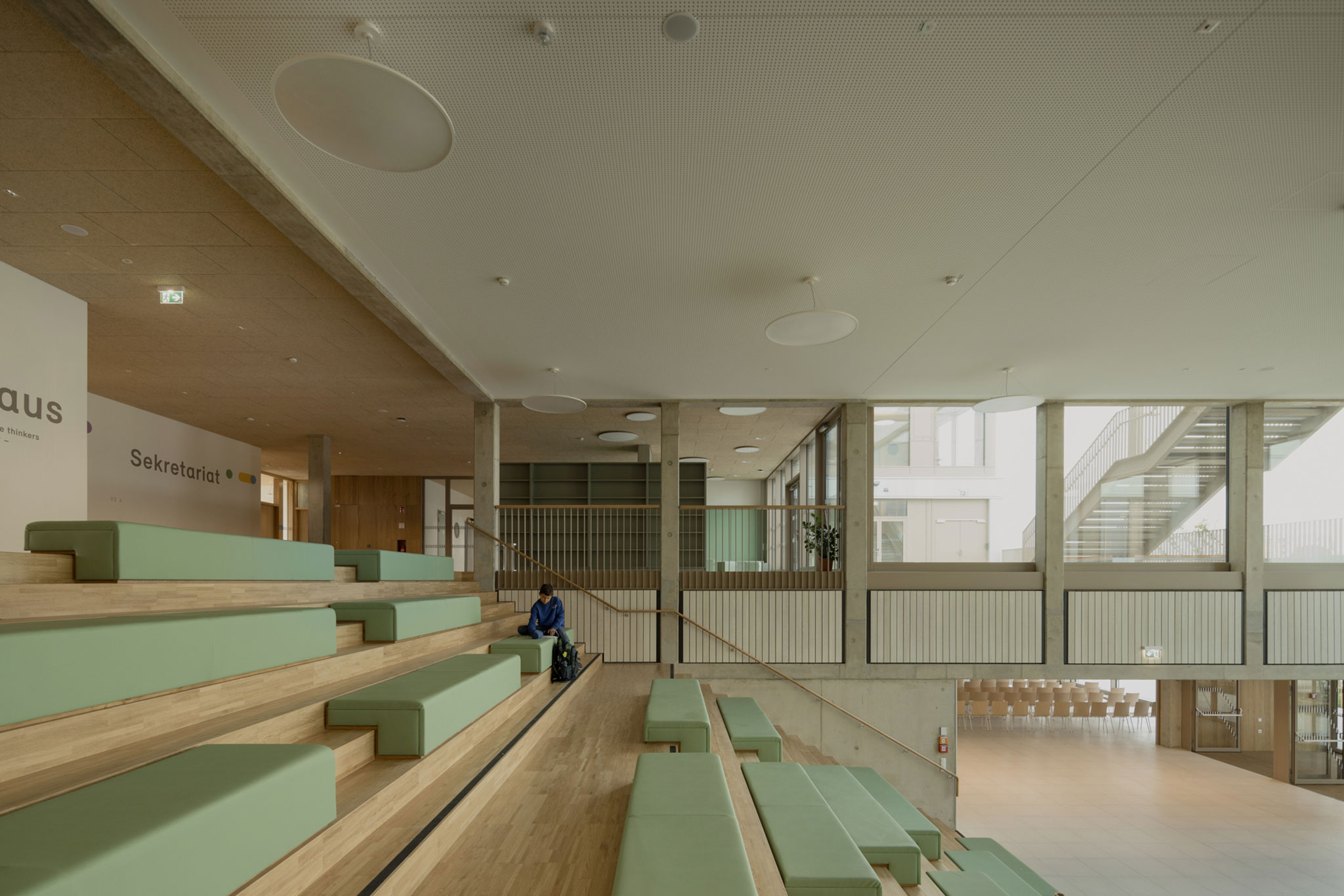
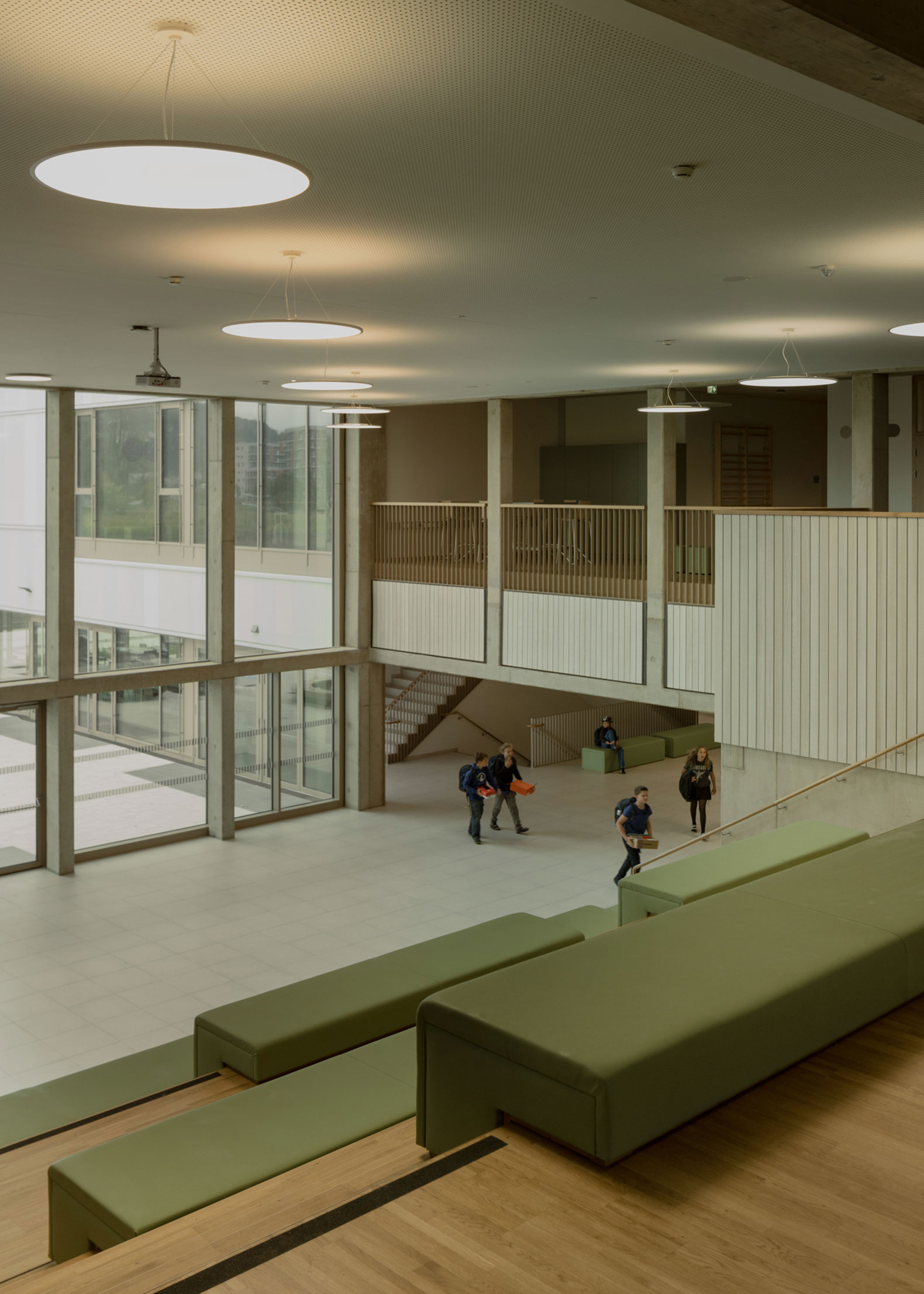
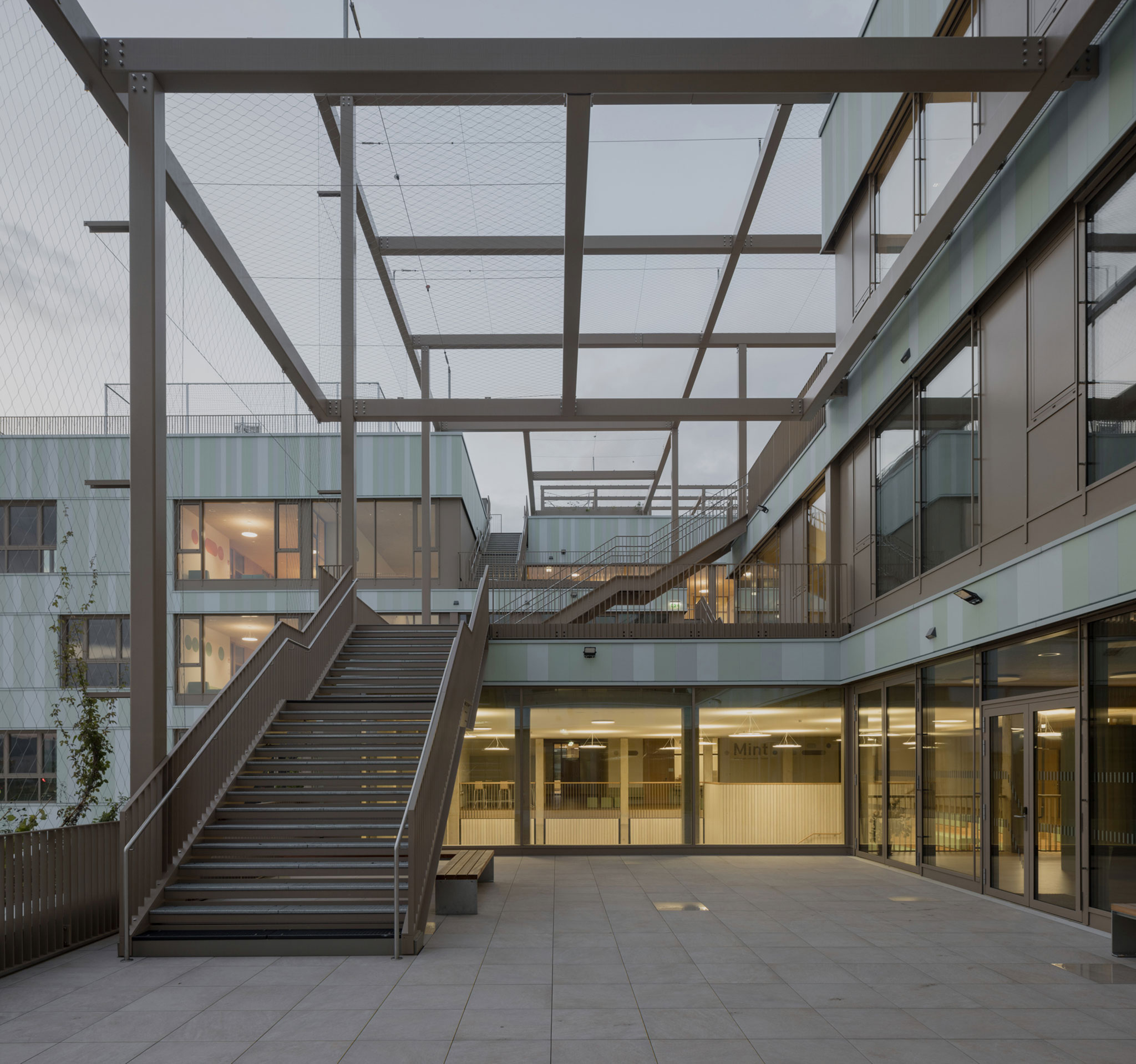
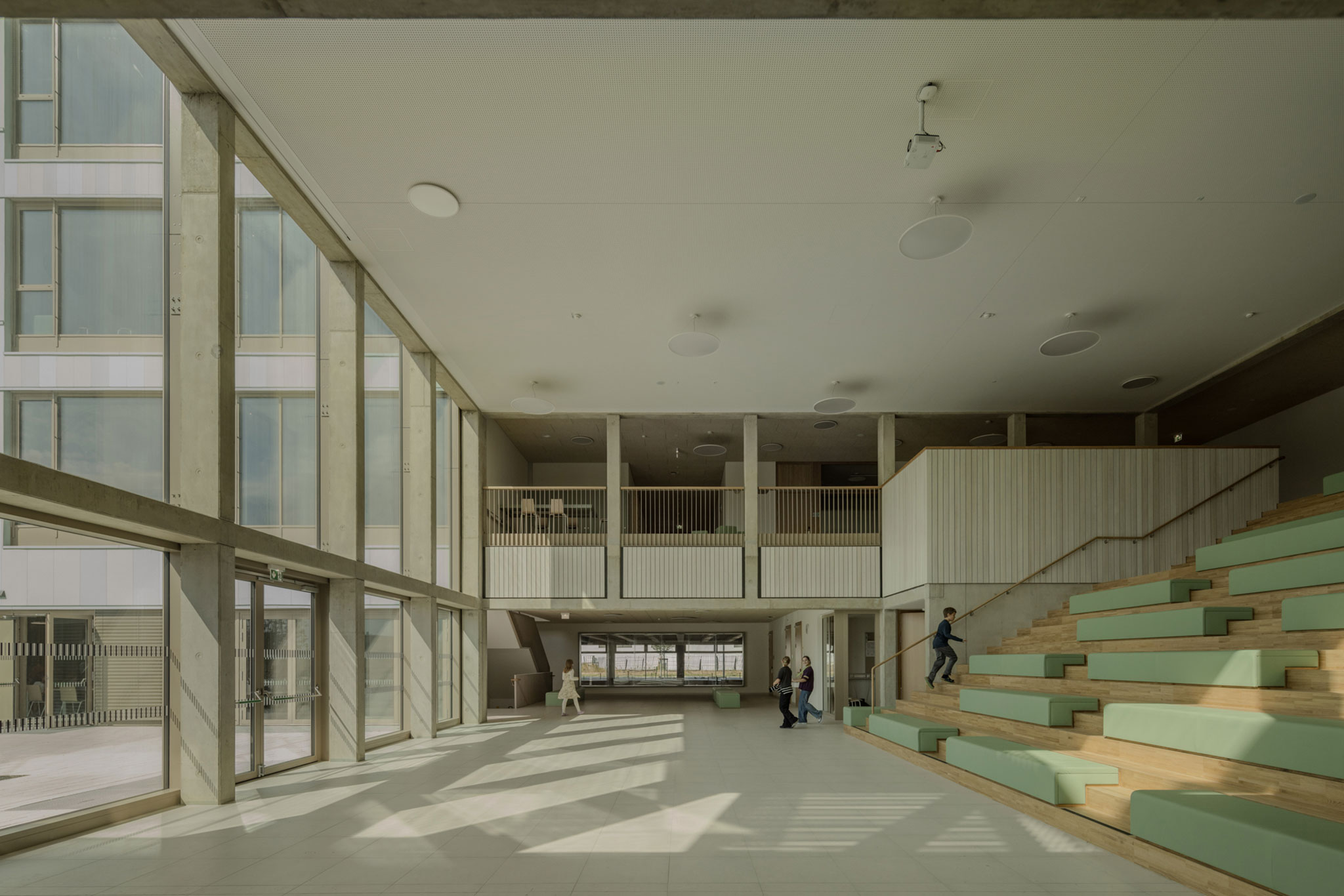
The "AHS Reininghaus" School by j-c-k (Janser Castorina Katzenberger) features a sheltered, semi-public space for meetings, events, and other community activities that connects the secondary school with the nearby primary school. Transparent, multi-purpose rooms are arranged around the courtyard. The double-height lobby is framed by a wide staircase overlooking the courtyard, which also serves as an auditorium.

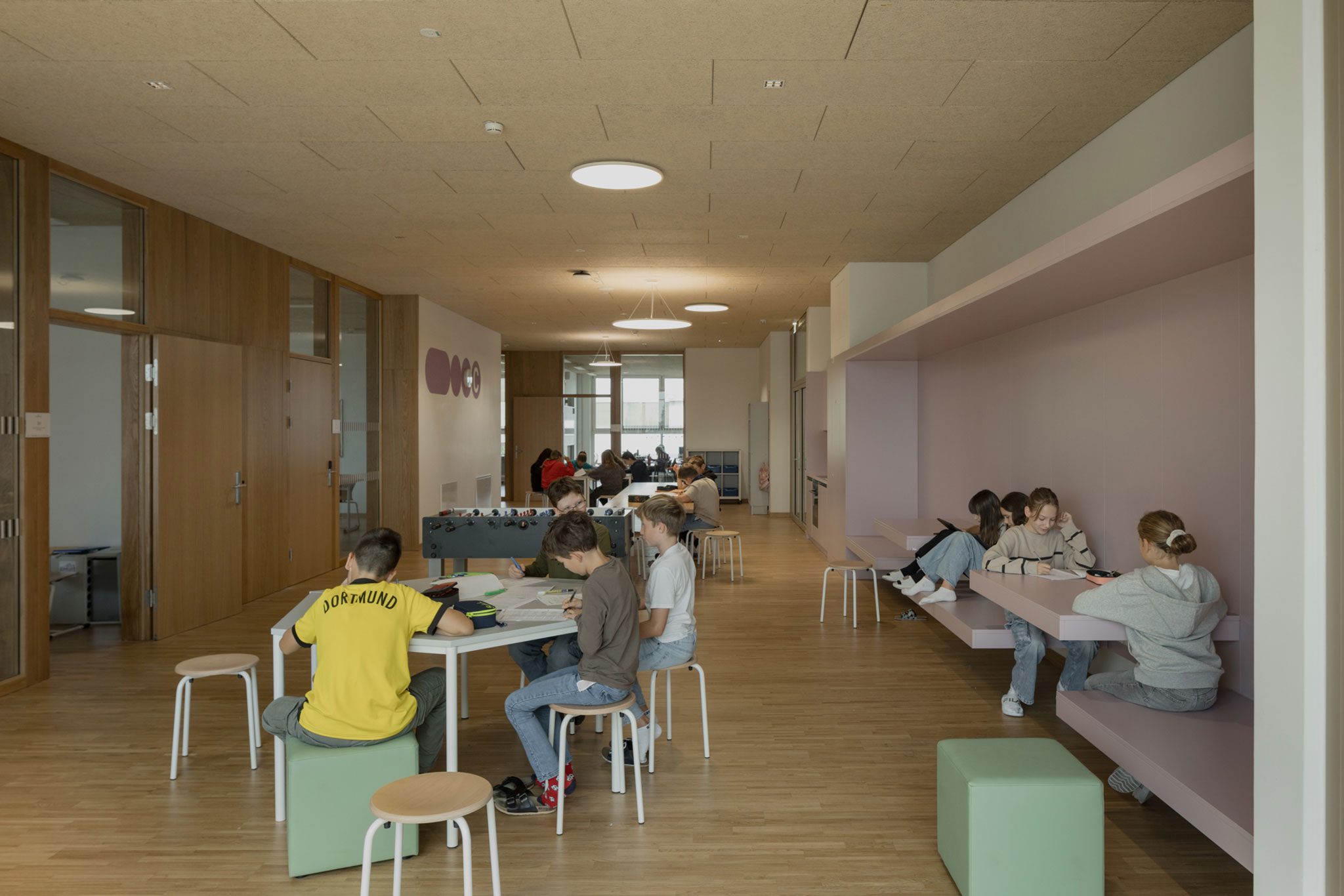
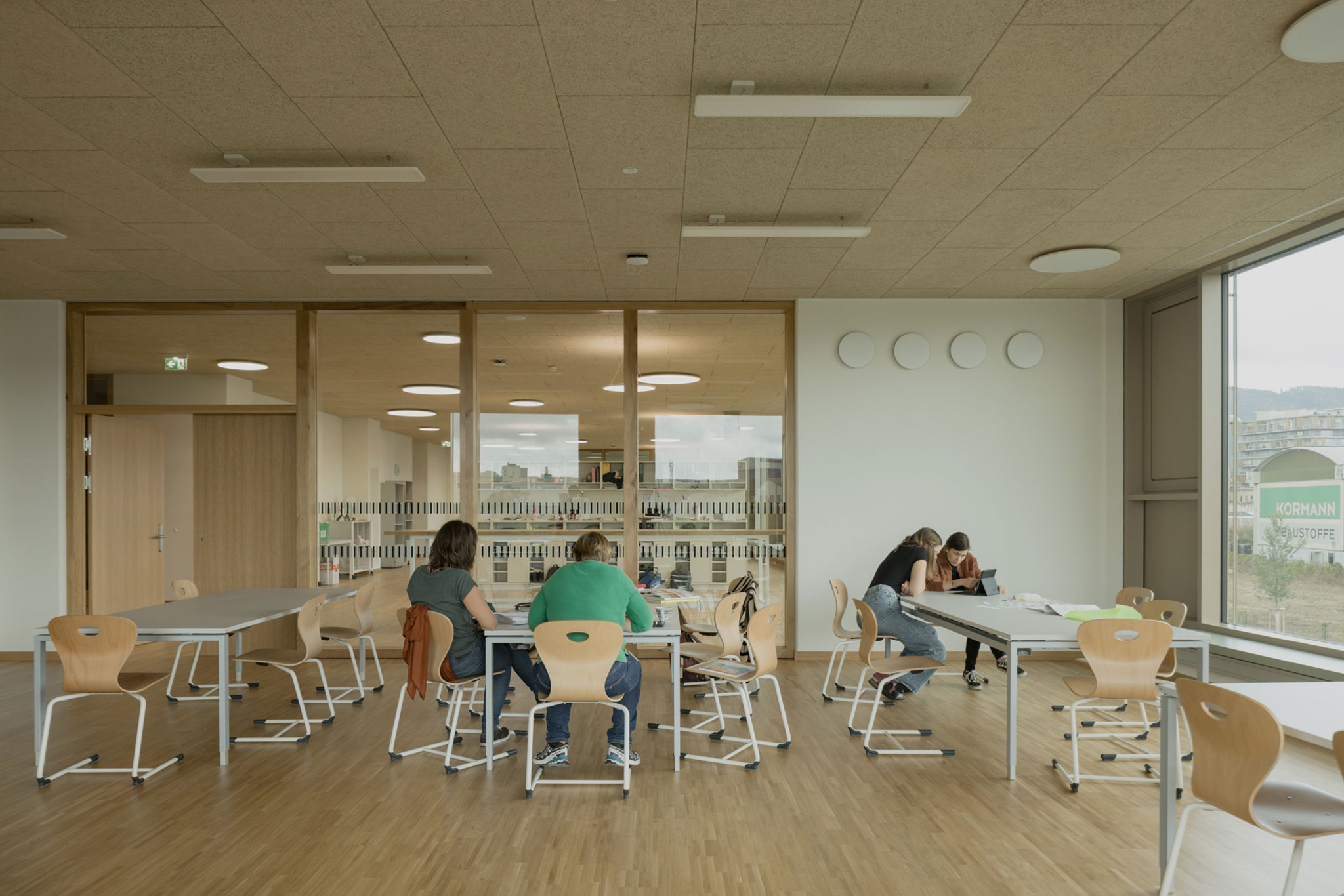
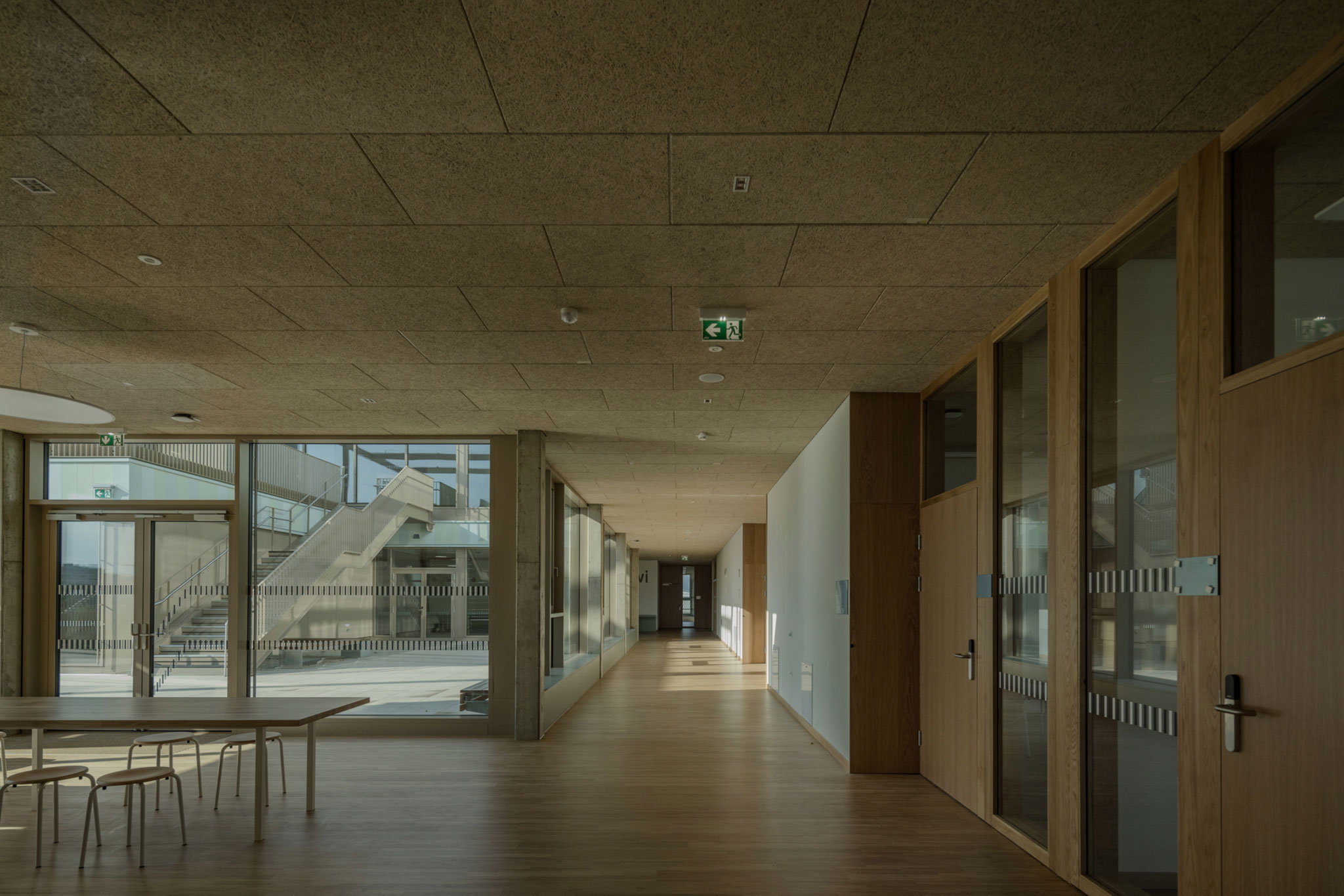
A fluid spatial network is created, comprised of learning islands, multi-purpose corridors, and landscaped terraces arranged around the courtyard, which has an open central area and shaded seating areas. The interior design, with its wooden surfaces and warm tones that create a welcoming atmosphere, uses color to organize the different zones through a system of visual and written signage.
"AHS Reininghaus" school by j-c-k. Photograph by Federico Cairoli.

"AHS Reininghaus" school by j-c-k. Photograph by Federico Cairoli.

Project description by j-c-k 

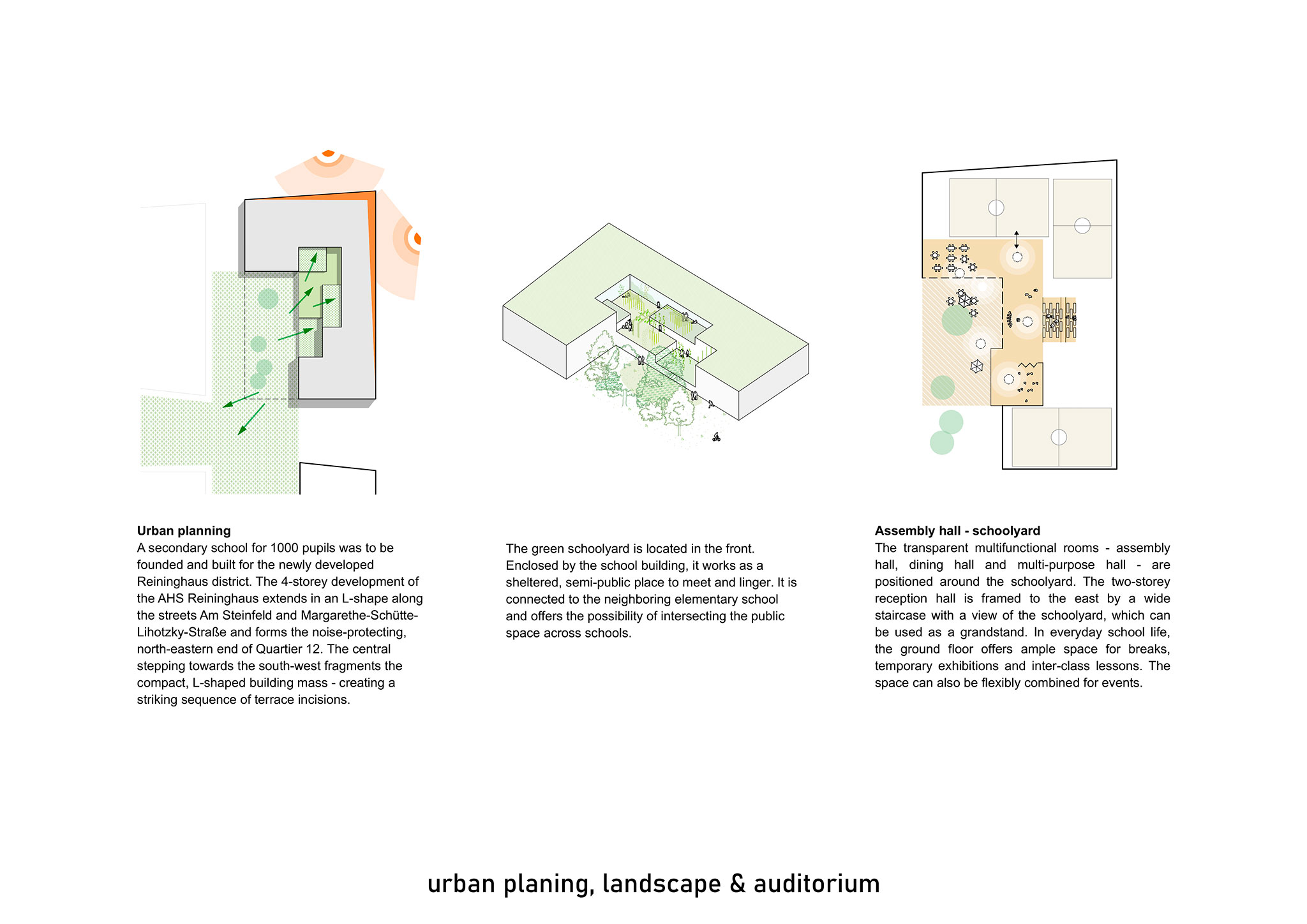
Urban planning
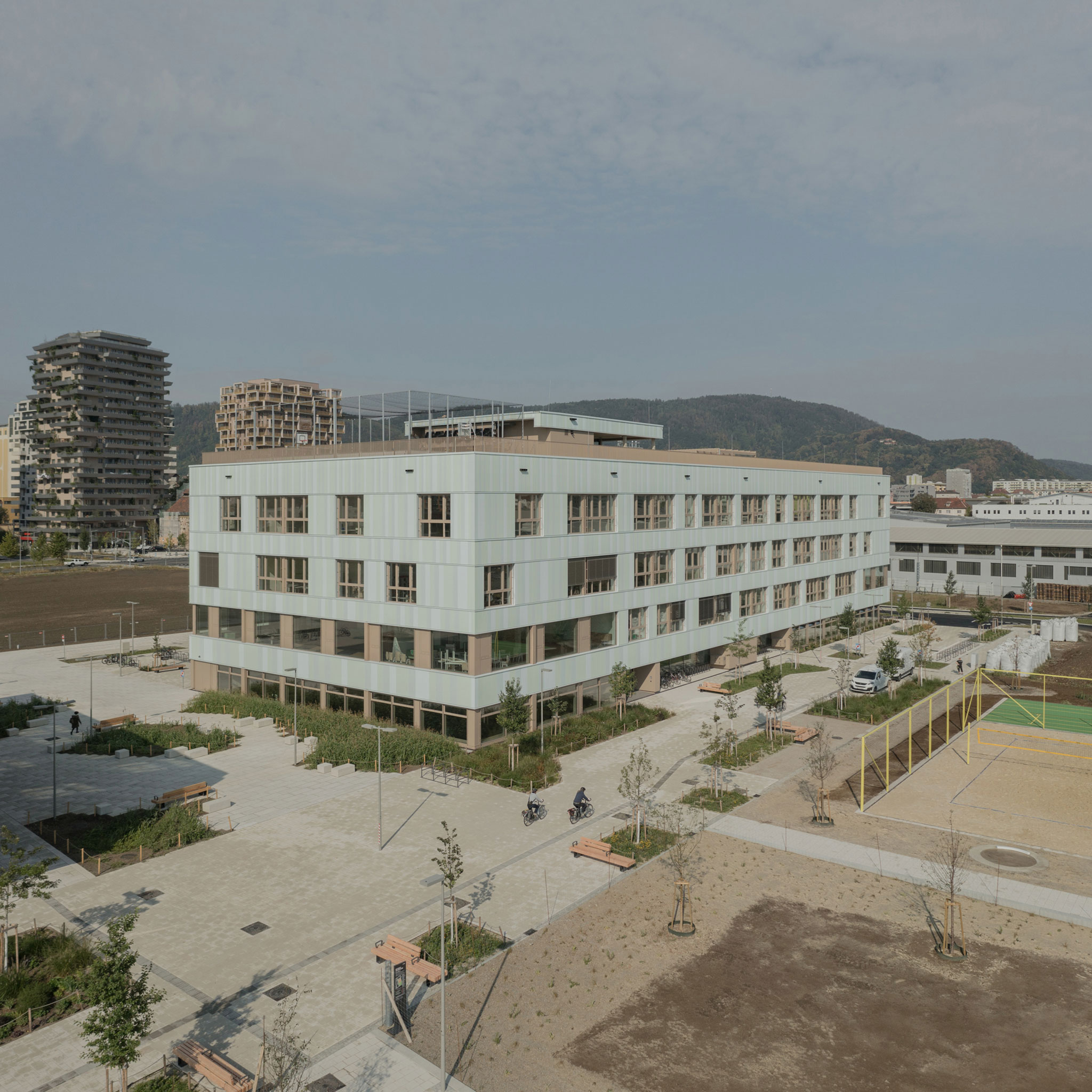
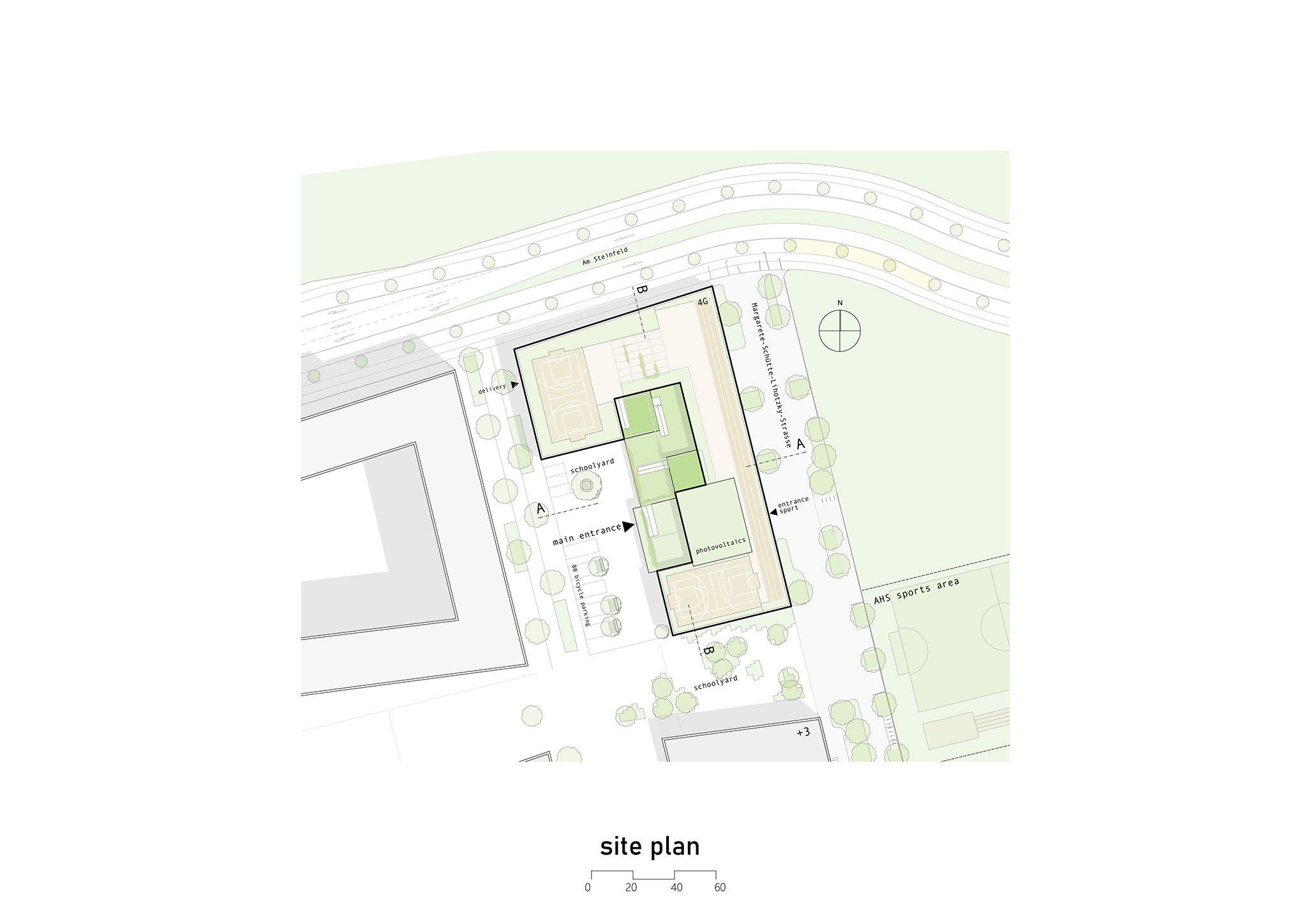
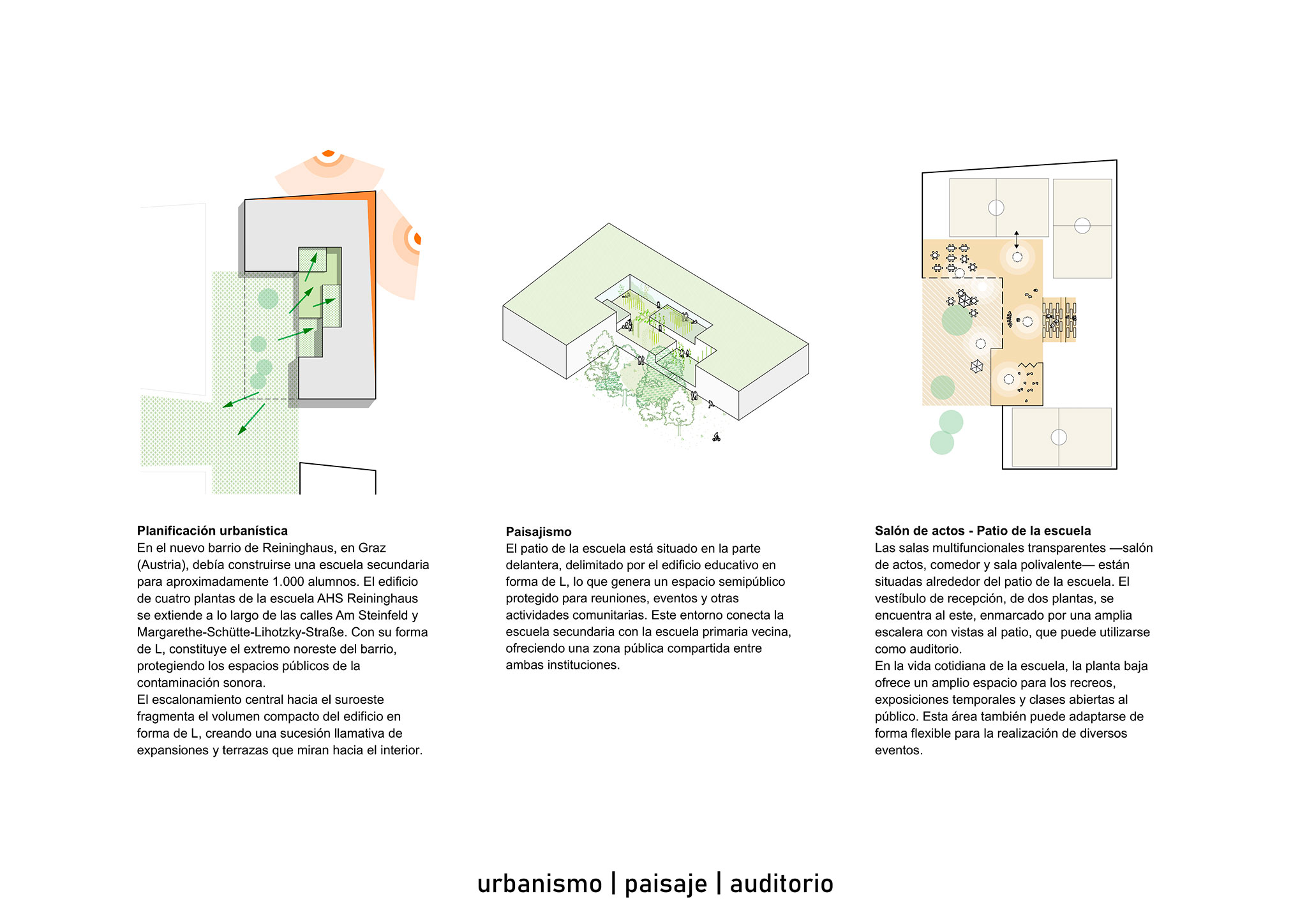
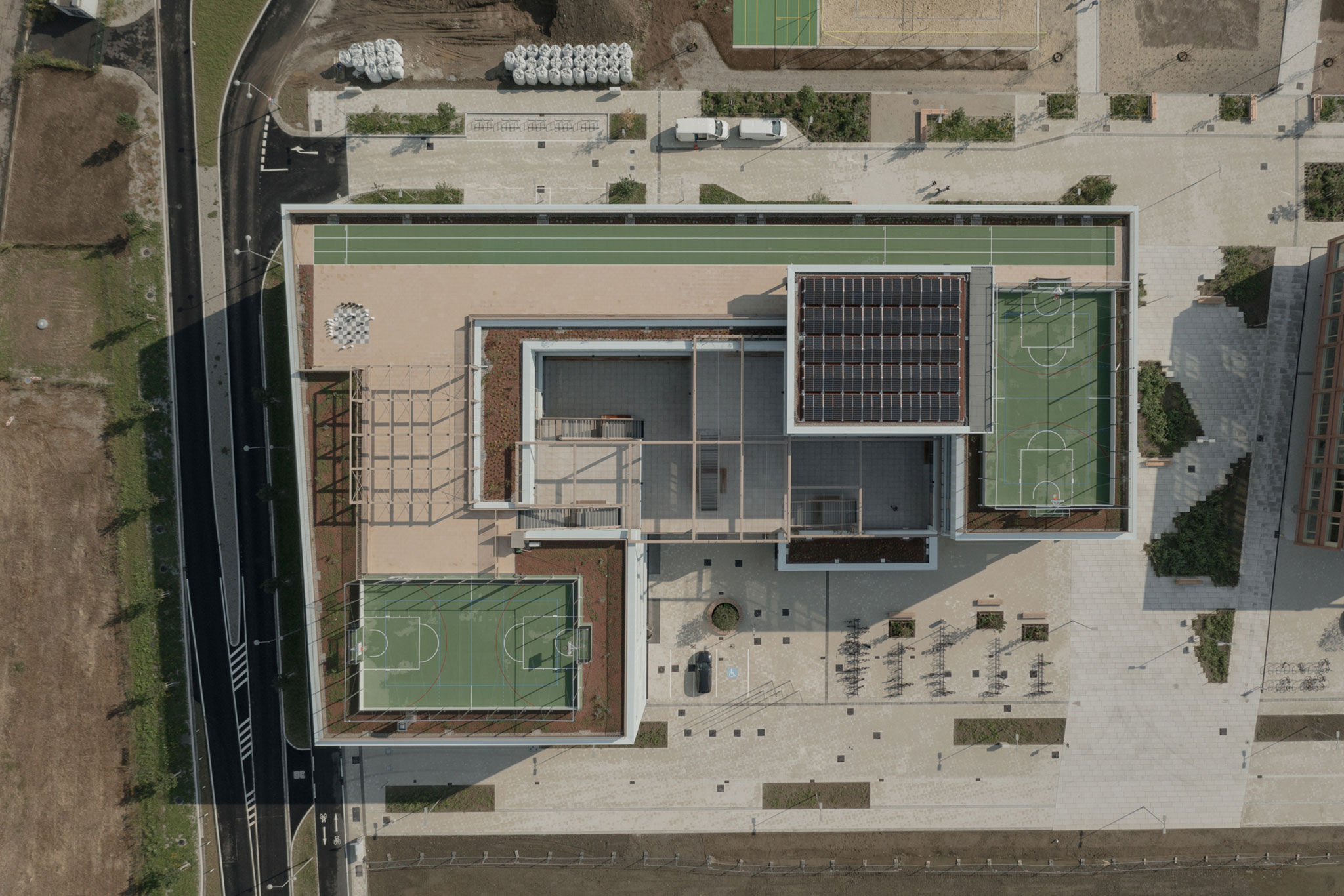
A secondary school for 1000 pupils was to be founded and built for the newly developed Reininghaus district. The 4-storey development of the "AHS Reininghaus" extends in an L-shape along the streets Am Steinfeld and Margarethe-SchütteLihotzky-Straße and forms the noise-protecting, north-eastern end of Quartier 12. The central stepping towards the south-west fragments the compact, L-shaped building mass - creating a striking sequence of terrace incisions.

"AHS Reininghaus" school by j-c-k. Photograph by Federico Cairoli.

Landscaping
The green schoolyard is located in the front. Enclosed by the school building, it works as a sheltered, semi-public place to meet and linger. It is connected to the neighboring elementary school and offers the possibility of intersecting the public space across schools.

"AHS Reininghaus" school by j-c-k. Photograph by Federico Cairoli.

Assembly hall - schoolyard
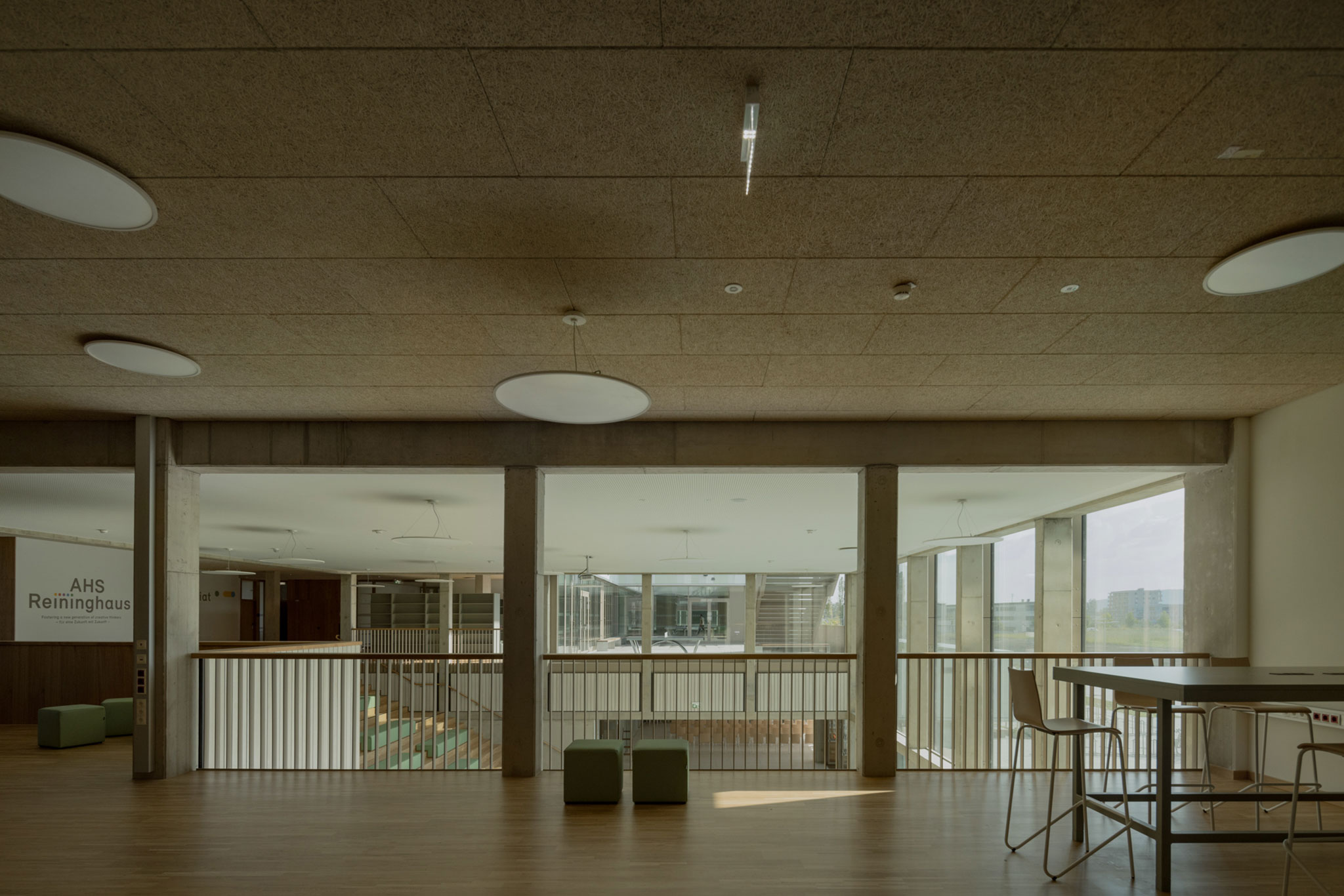
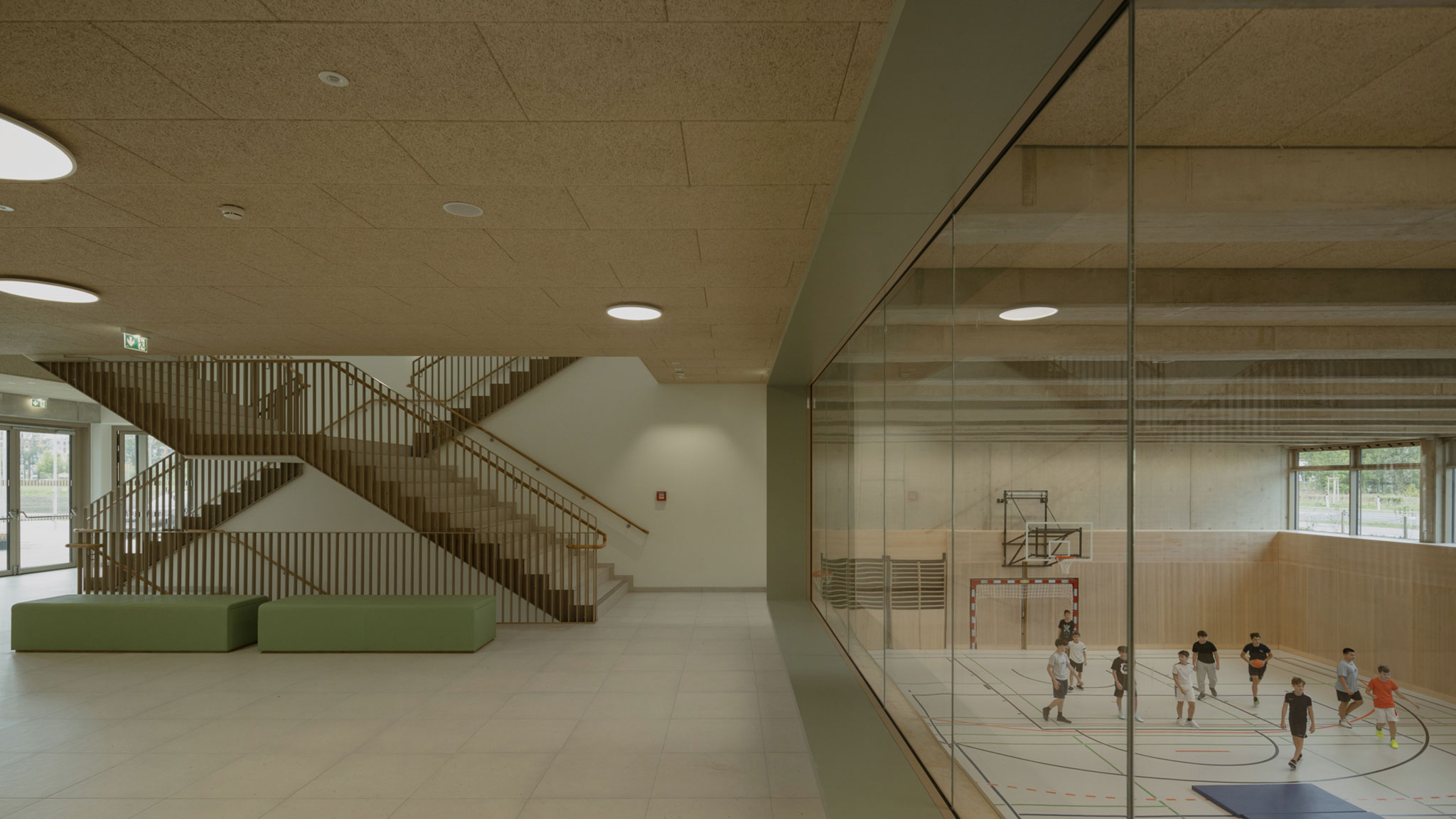
The transparent multifunctional rooms - assembly hall, dining hall and multi-purpose hall - are positioned around the schoolyard. The two-storey reception hall is framed to the east by a wide staircase with a view of the schoolyard, which can be used as a grandstand.

In everyday school life, the ground floor offers ample space for breaks, temporary exhibitions and inter-class lessons. The space can also be flexibly combined for events.

"AHS Reininghaus" school by j-c-k. Photograph by Federico Cairoli.

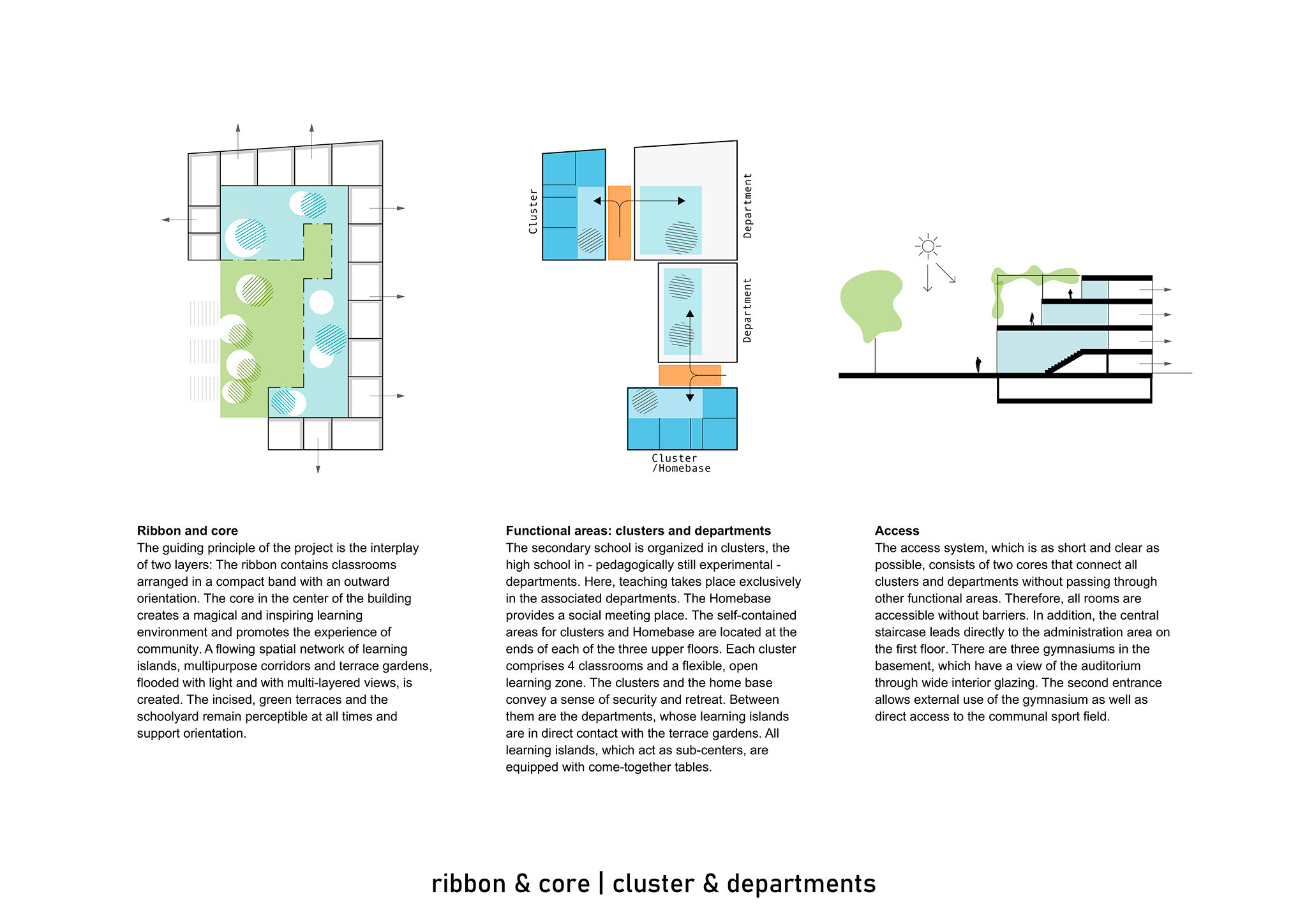
Ribbon and core
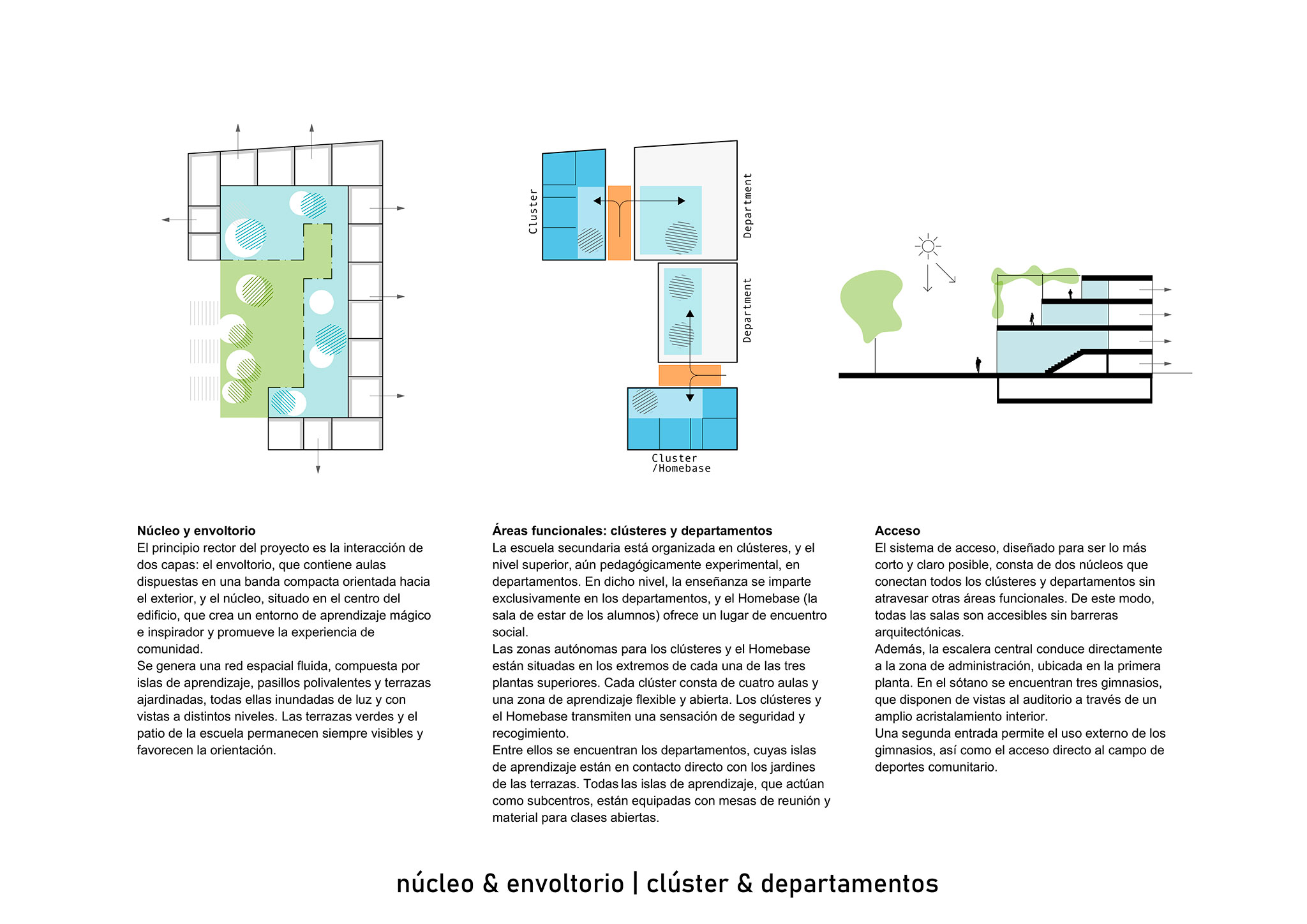
The guiding principle of the project is the interplay of two layers: The ribbon contains classrooms arranged in a compact band with an outward orientation. The core in the center of the building creates a magical and inspiring learning environment and promotes the experience of community.

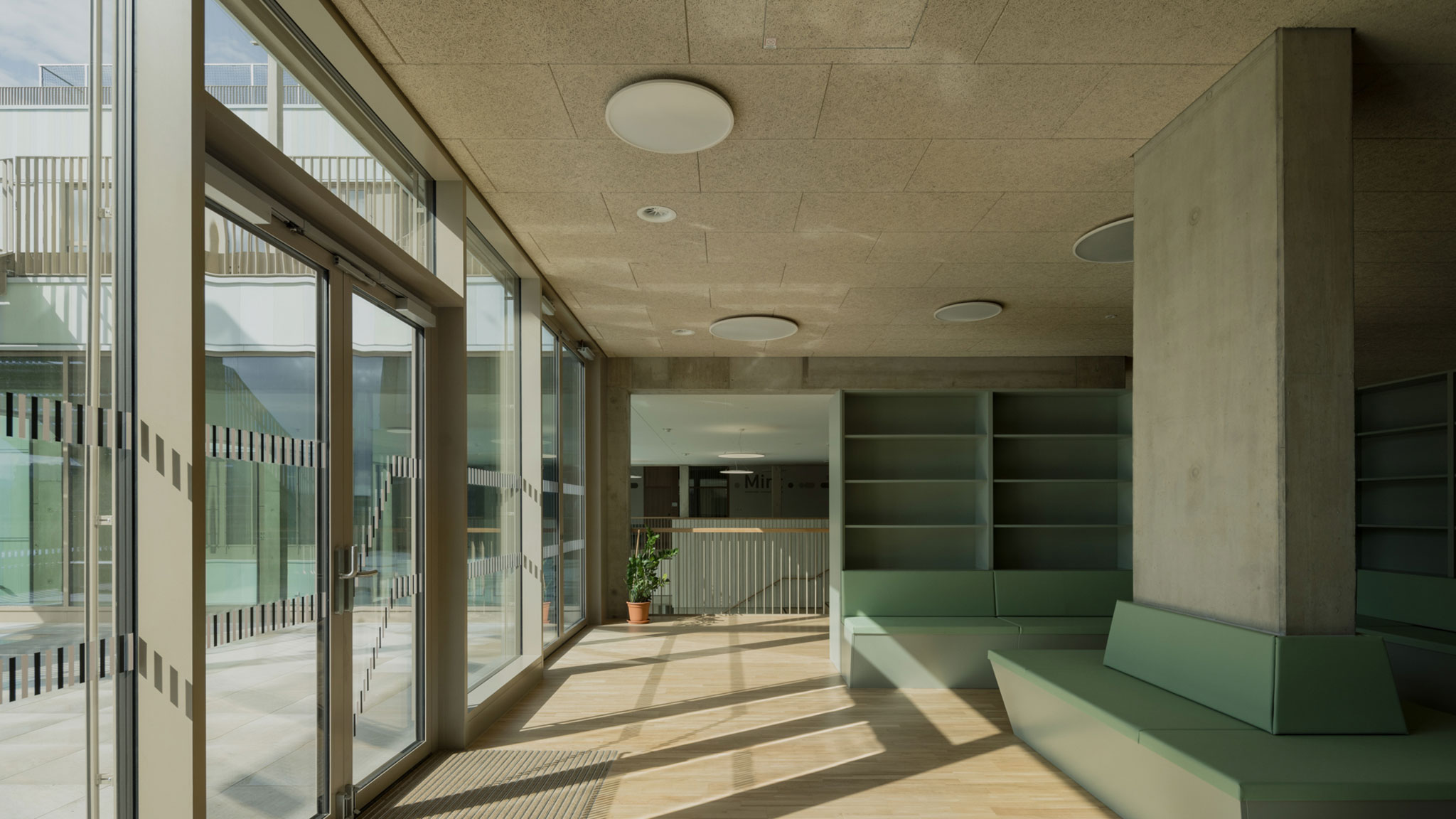
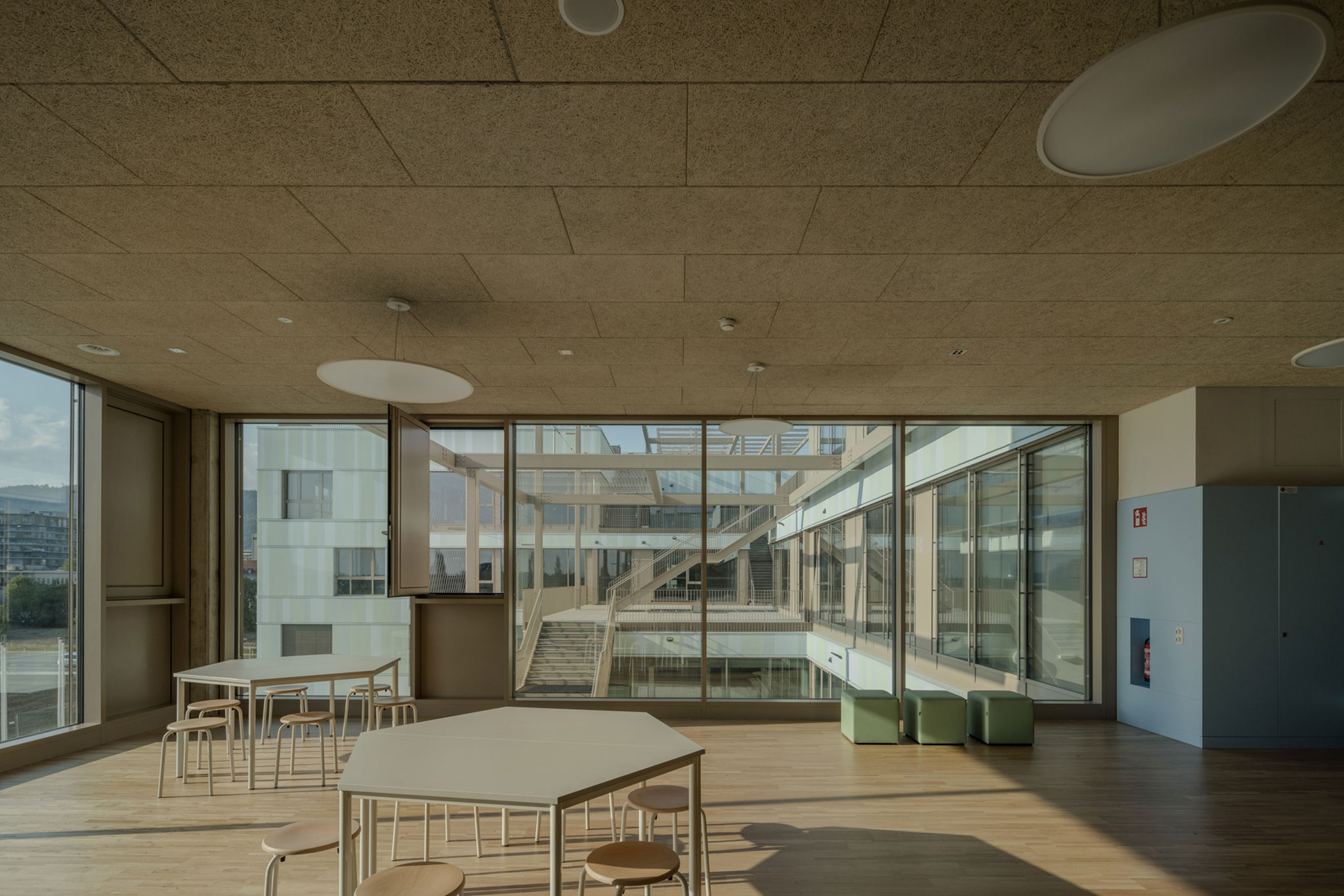
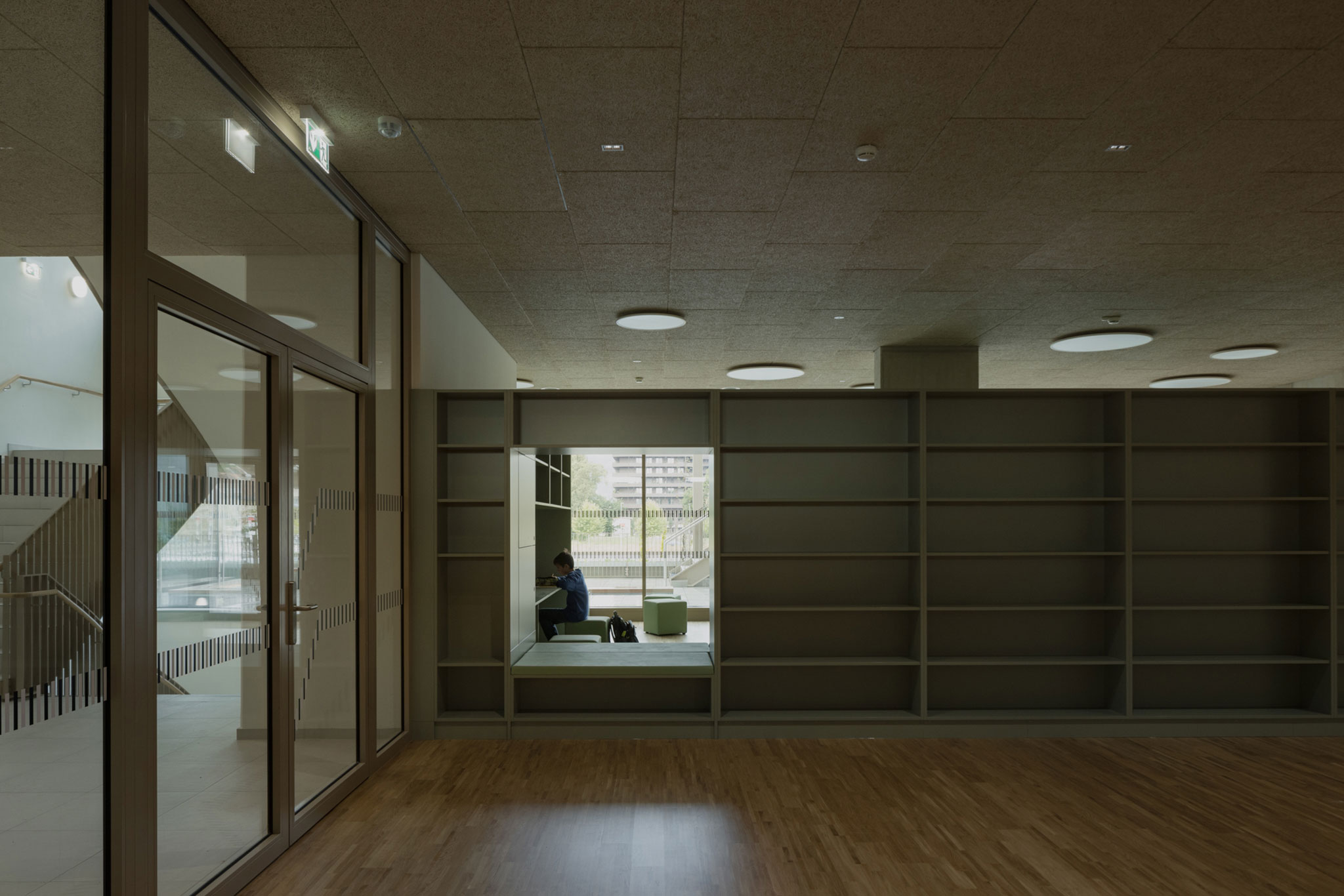
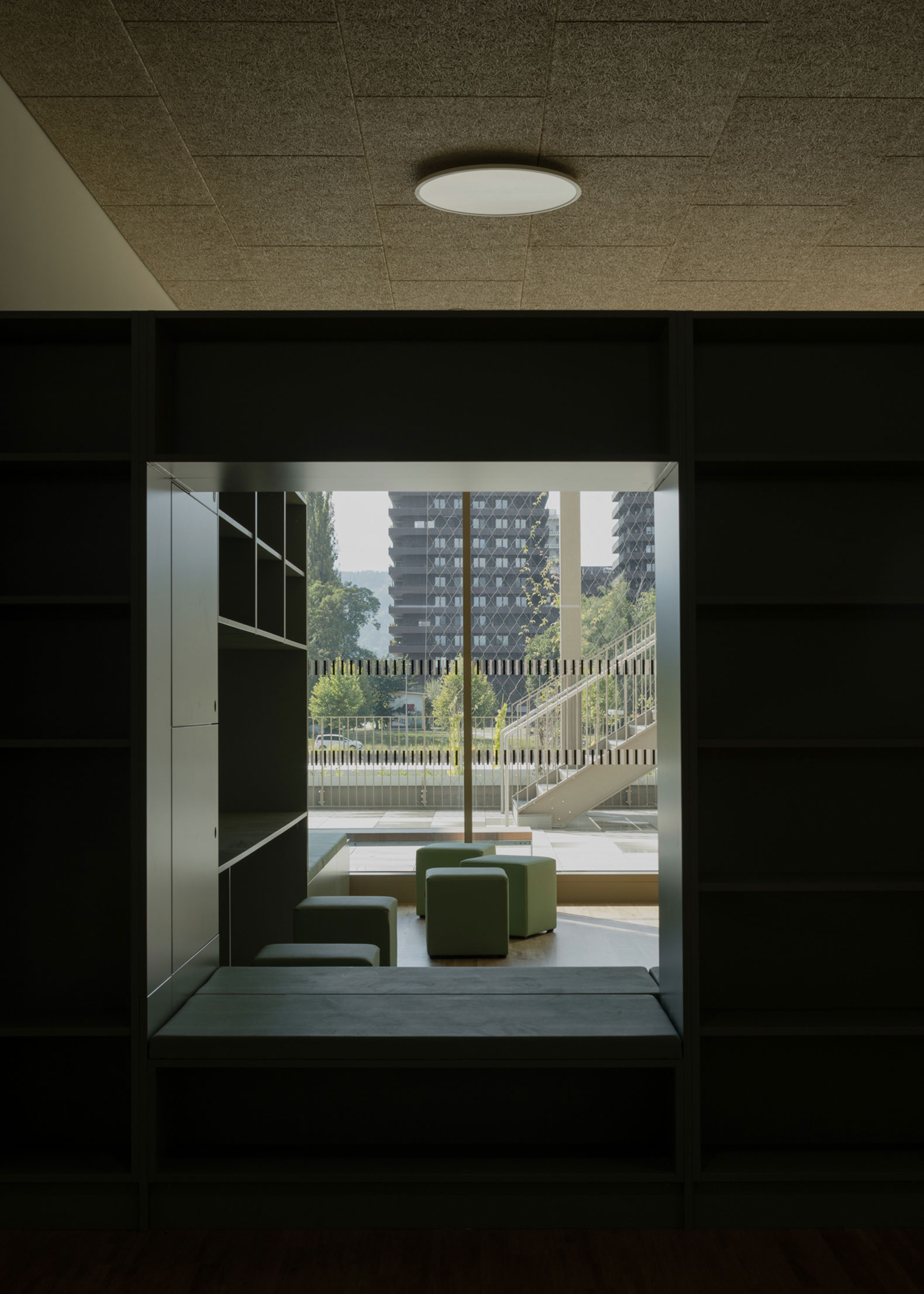
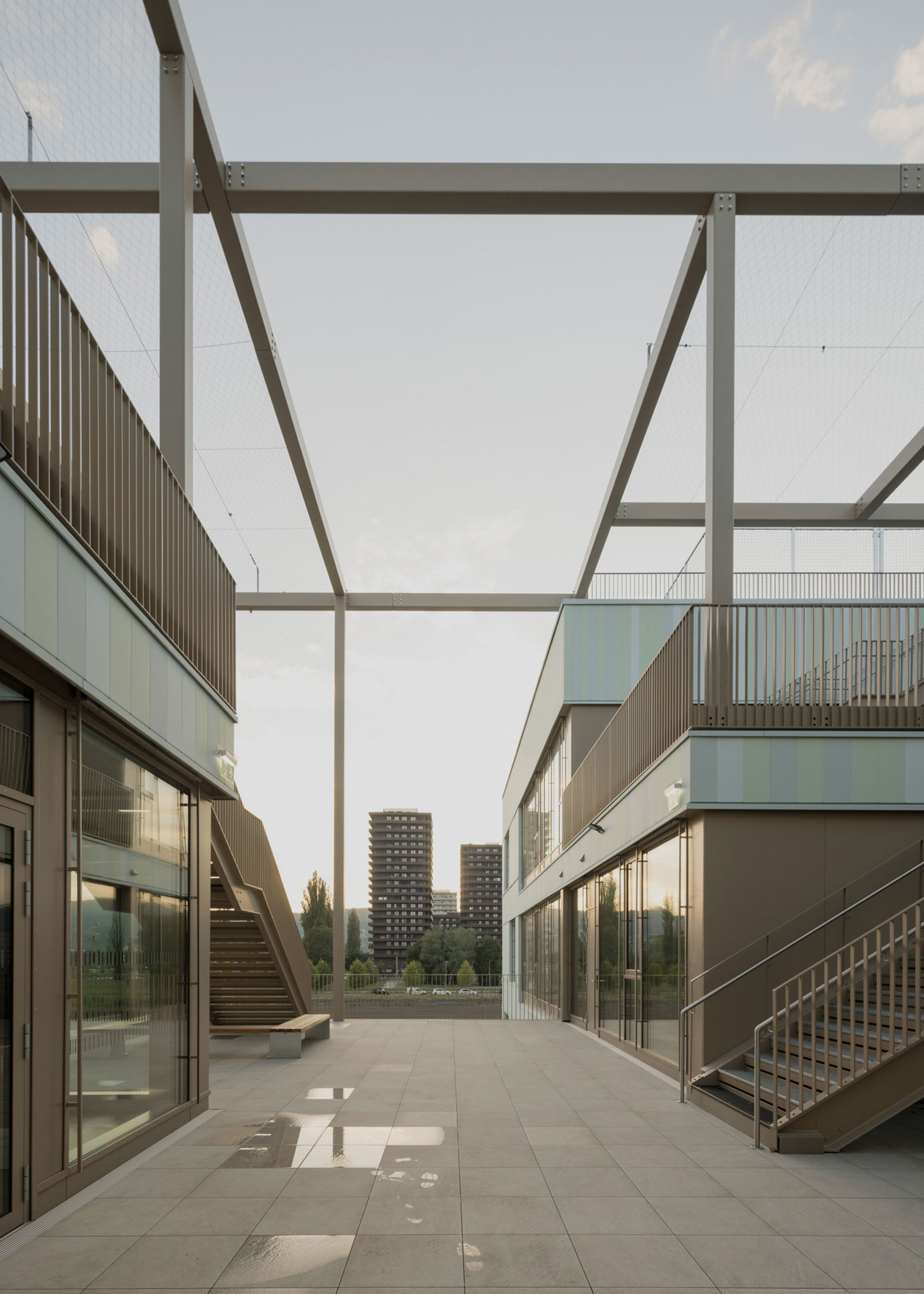
A flowing spatial network of learning islands, multipurpose corridors and terrace gardens, flooded with light and with multi-layered views, is created. The incised, green terraces and the schoolyard remain perceptible at all times and support orientation.

"AHS Reininghaus" school by j-c-k. Photograph by Federico Cairoli.

Functional areas: clusters and departments 
The secondary school is organized in clusters, the high school in - pedagogically still experimental departments. Here, teaching takes place exclusively in the associated departments. The Homebase provides a social meeting place.

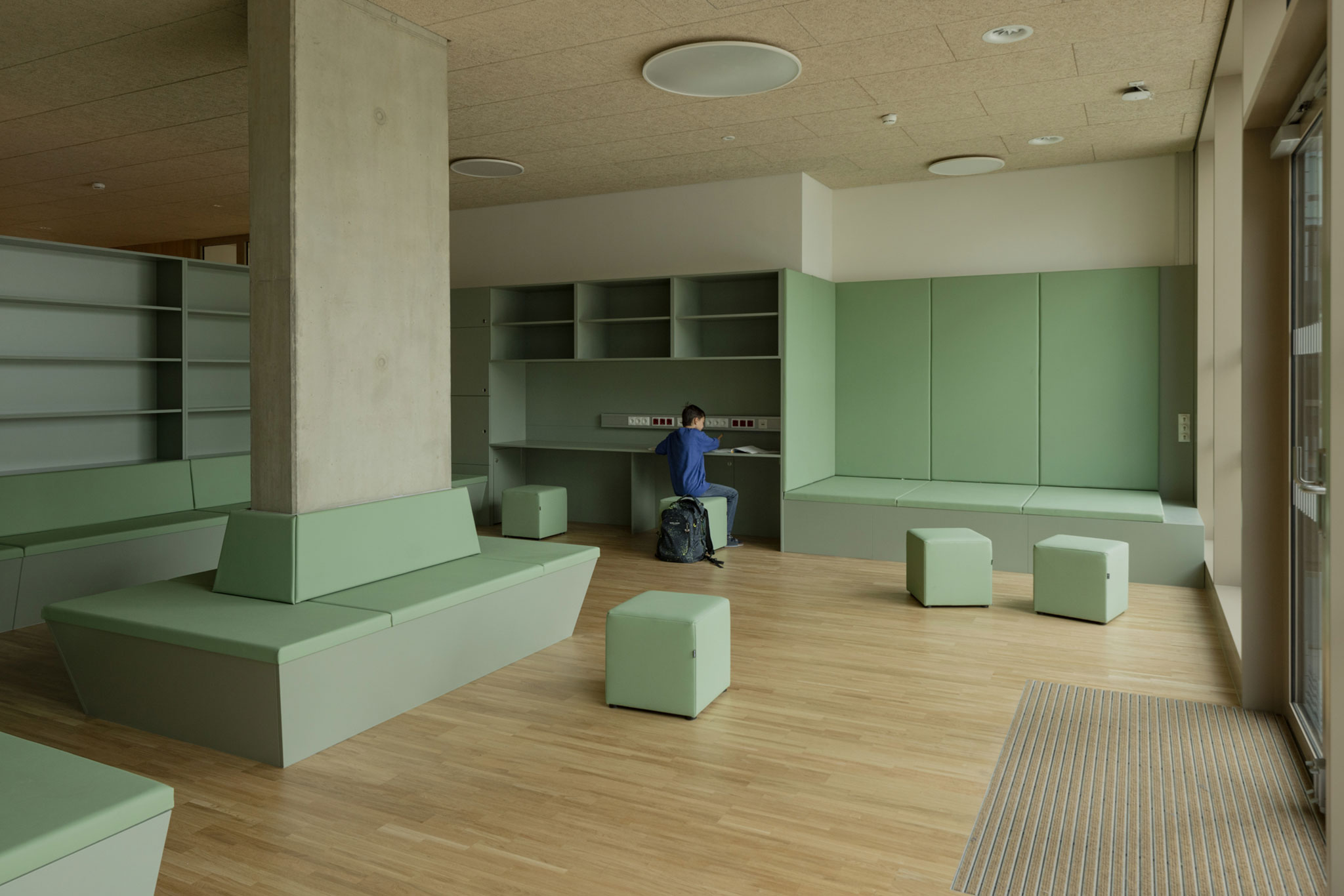
The self-contained areas for clusters and Homebase are located at the ends of each of the three upper floors. Each cluster comprises 4 classrooms and a flexible, open learning zone. The clusters and the home base convey a sense of security and retreat.

Between them are the departments, whose learning islands are in direct contact with the terrace gardens. All learning islands, which act as sub-centers, are equipped with come-together tables.
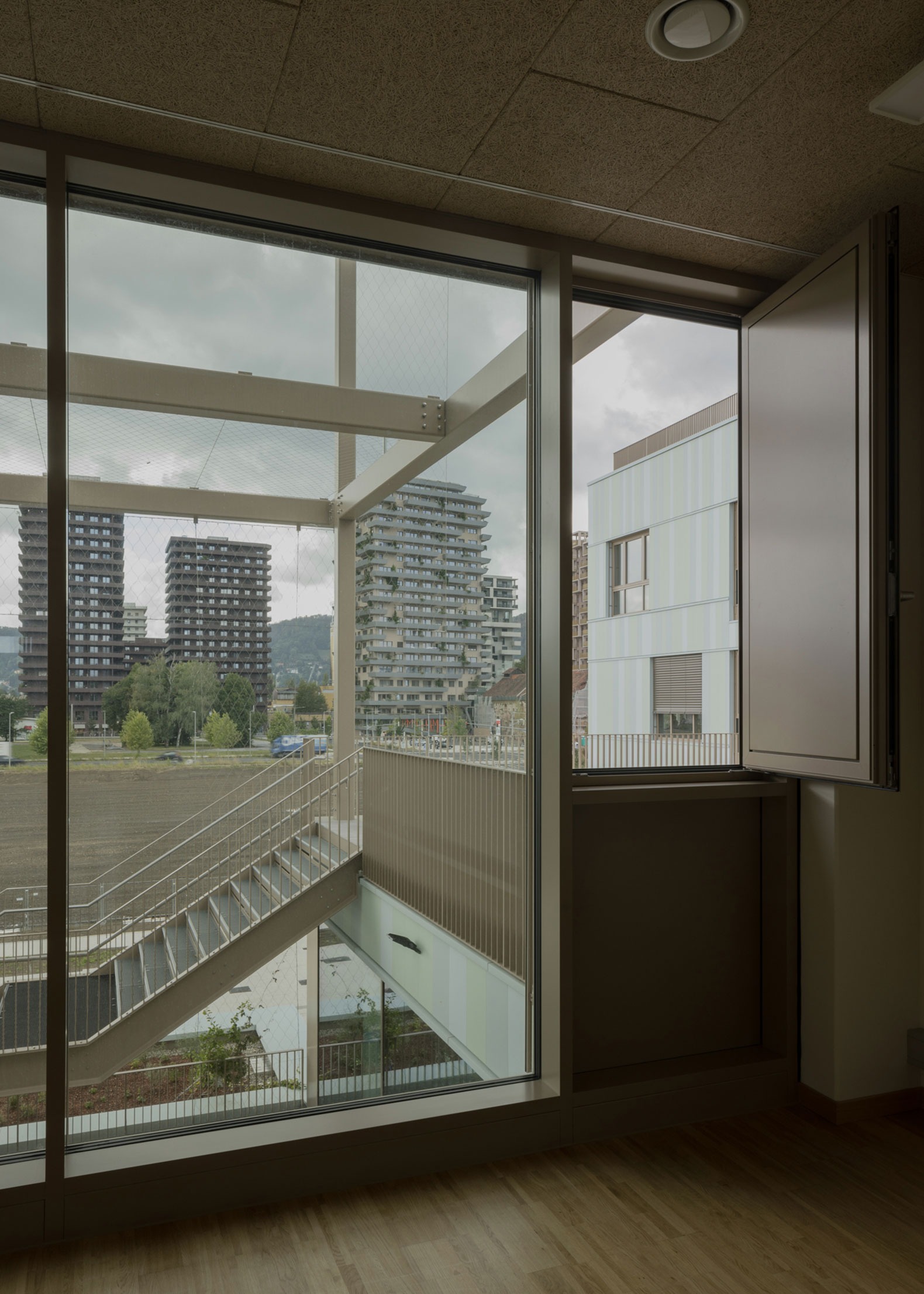
"AHS Reininghaus" school by j-c-k. Photograph by Federico Cairoli.

Access
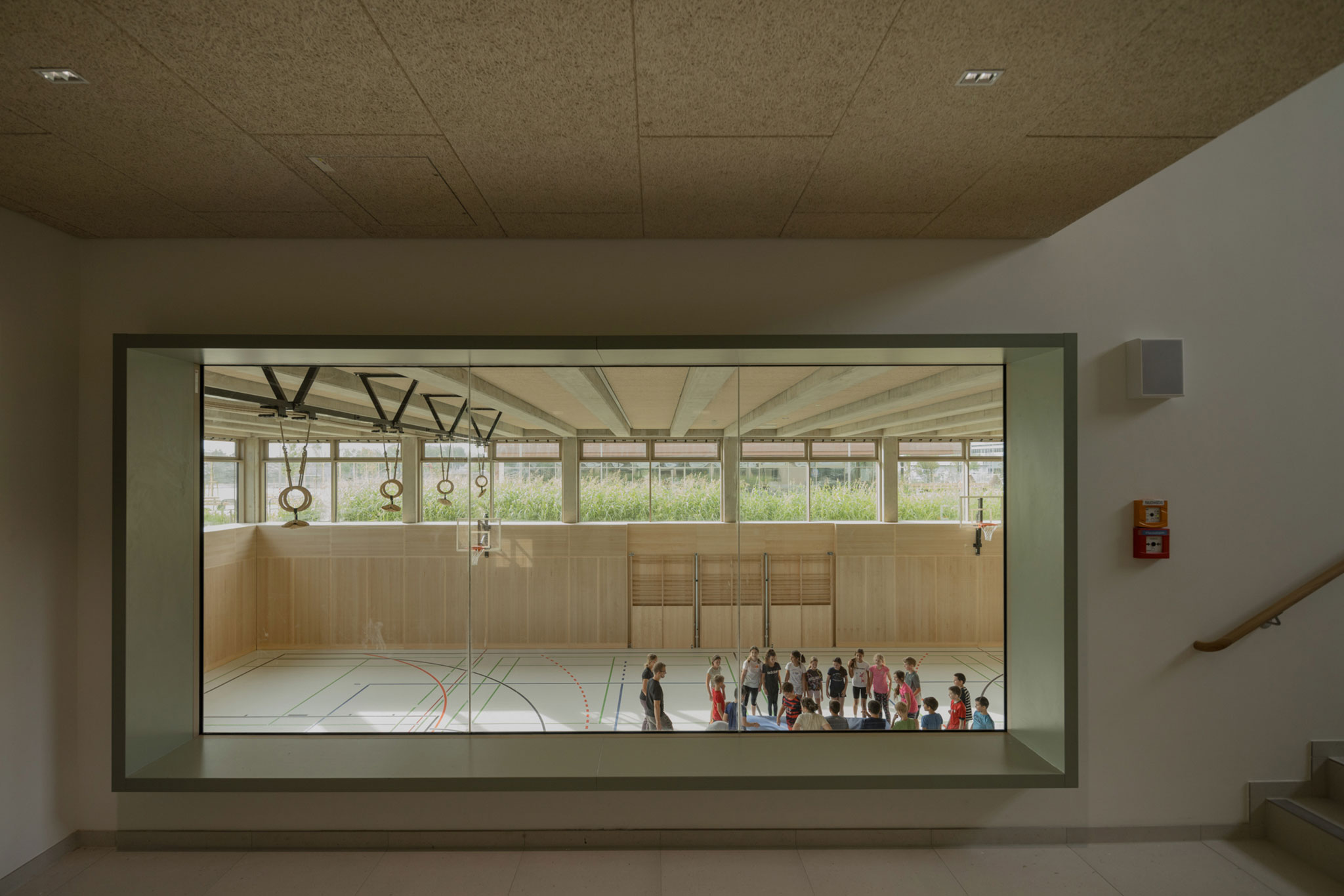
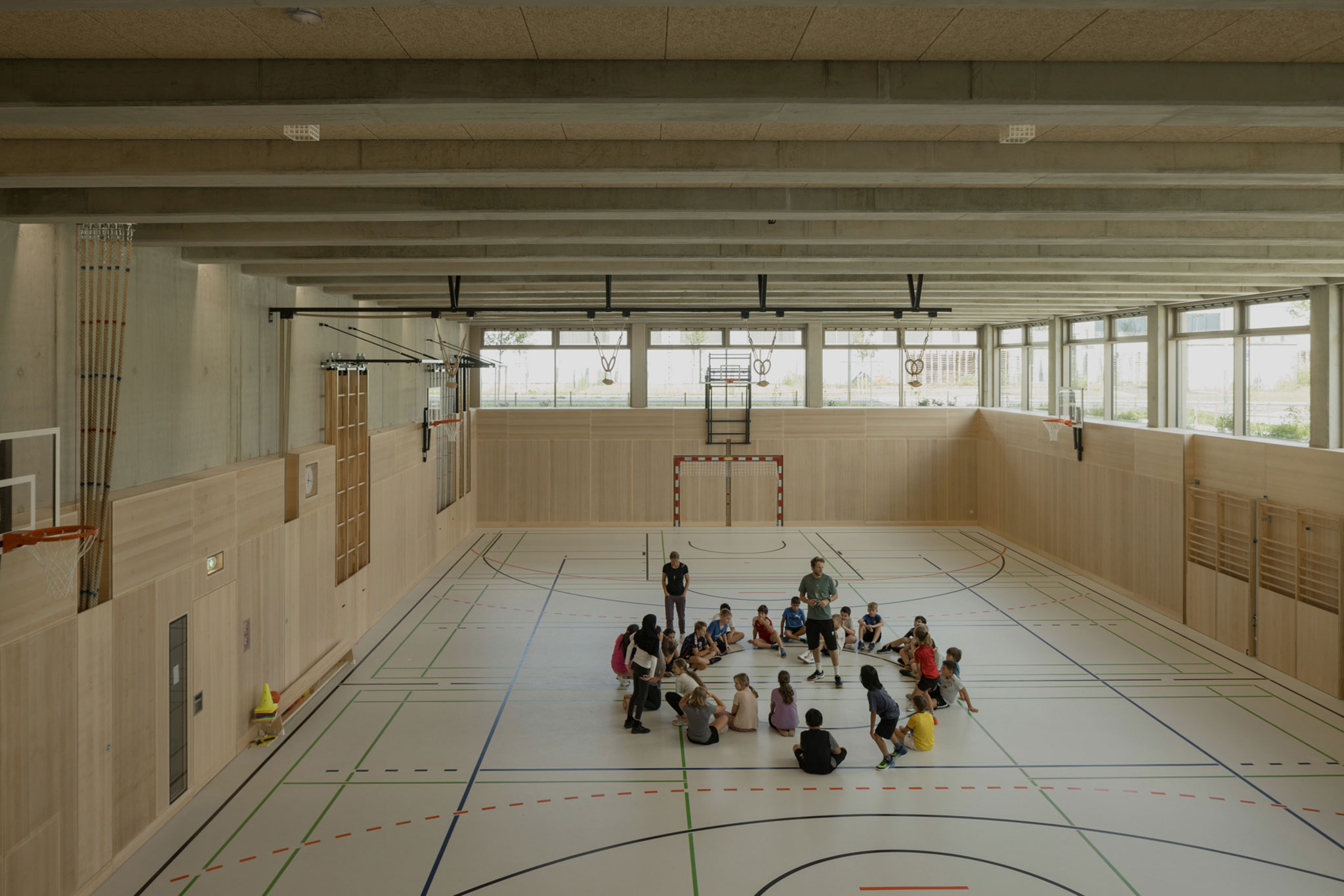
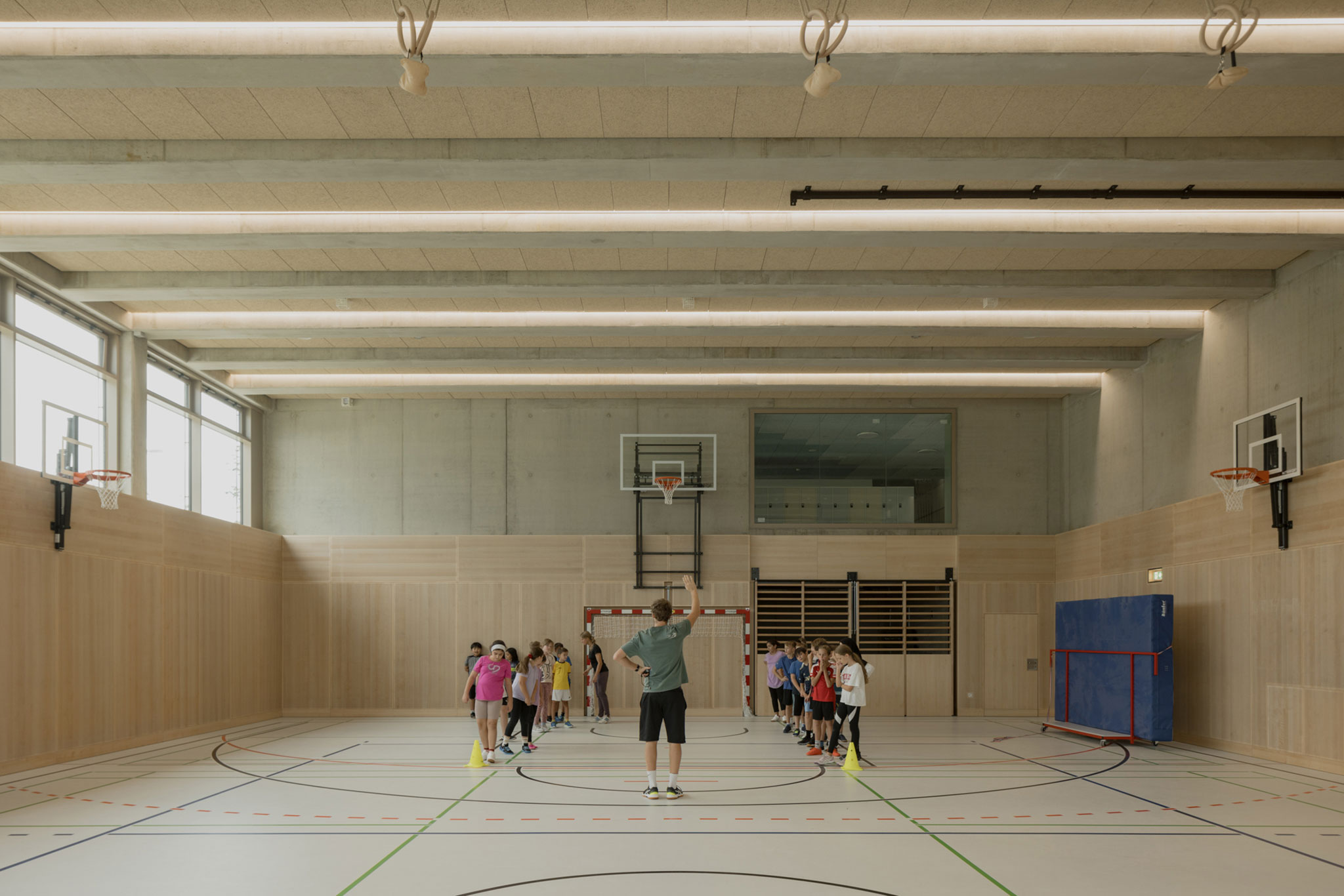
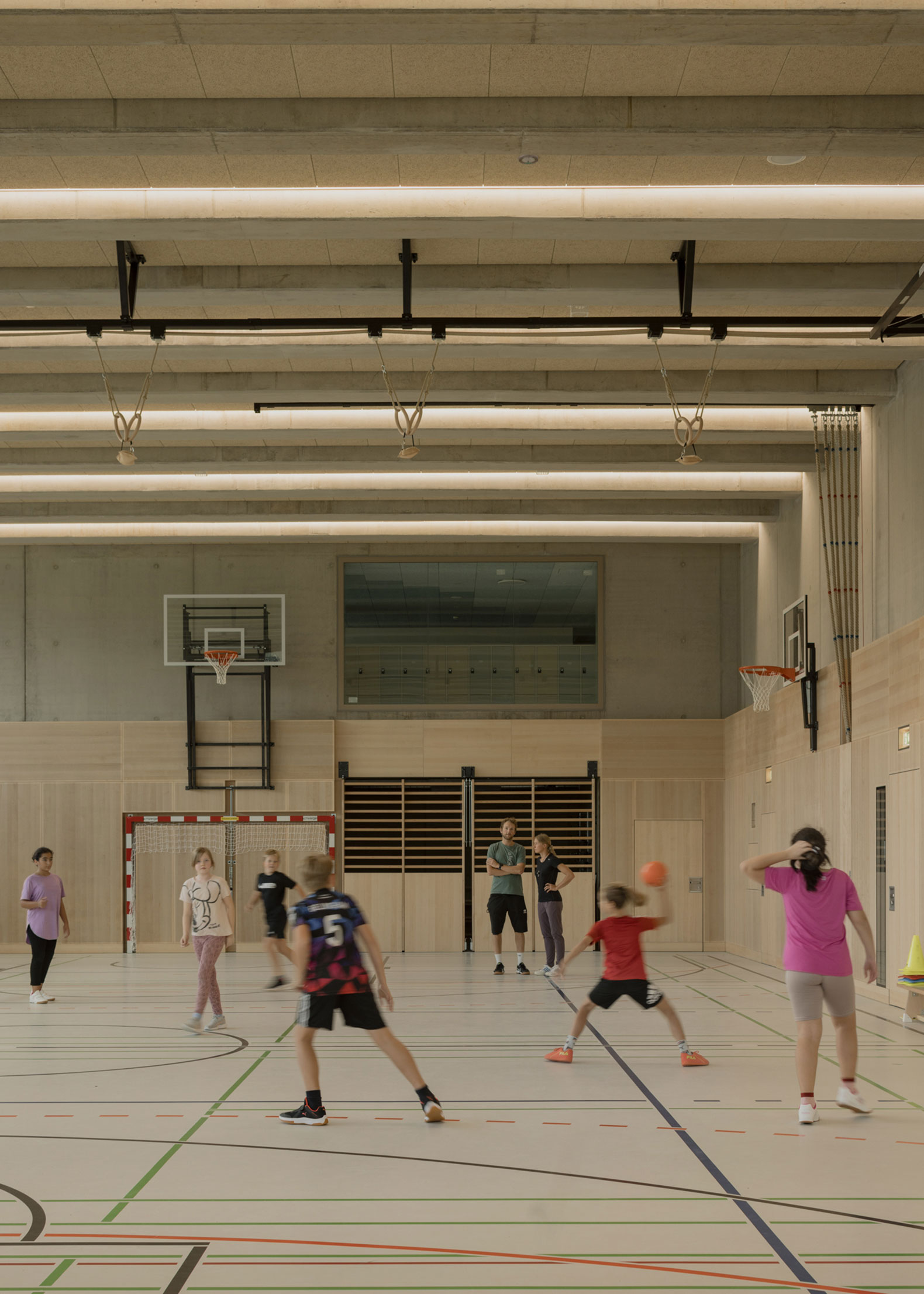
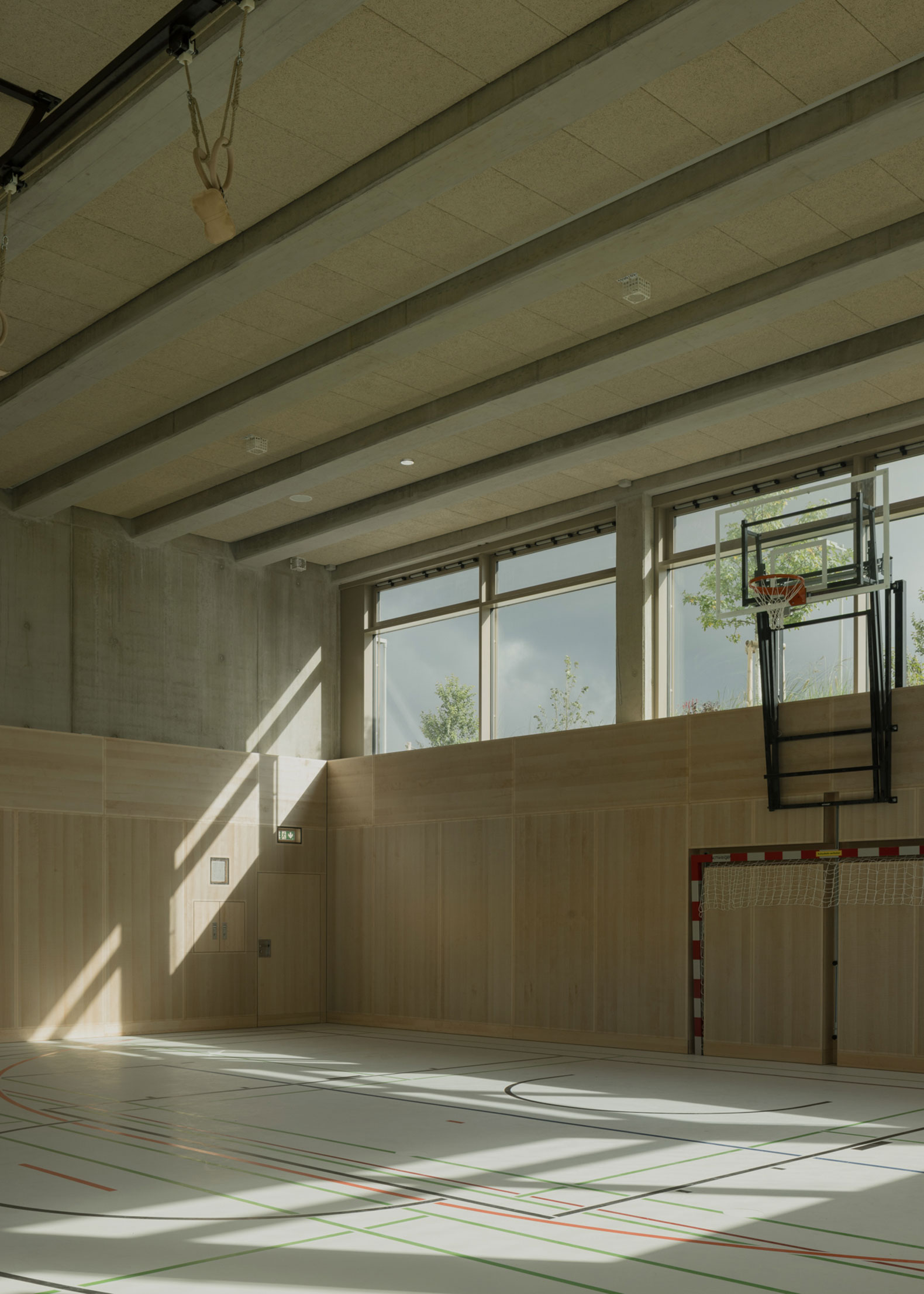
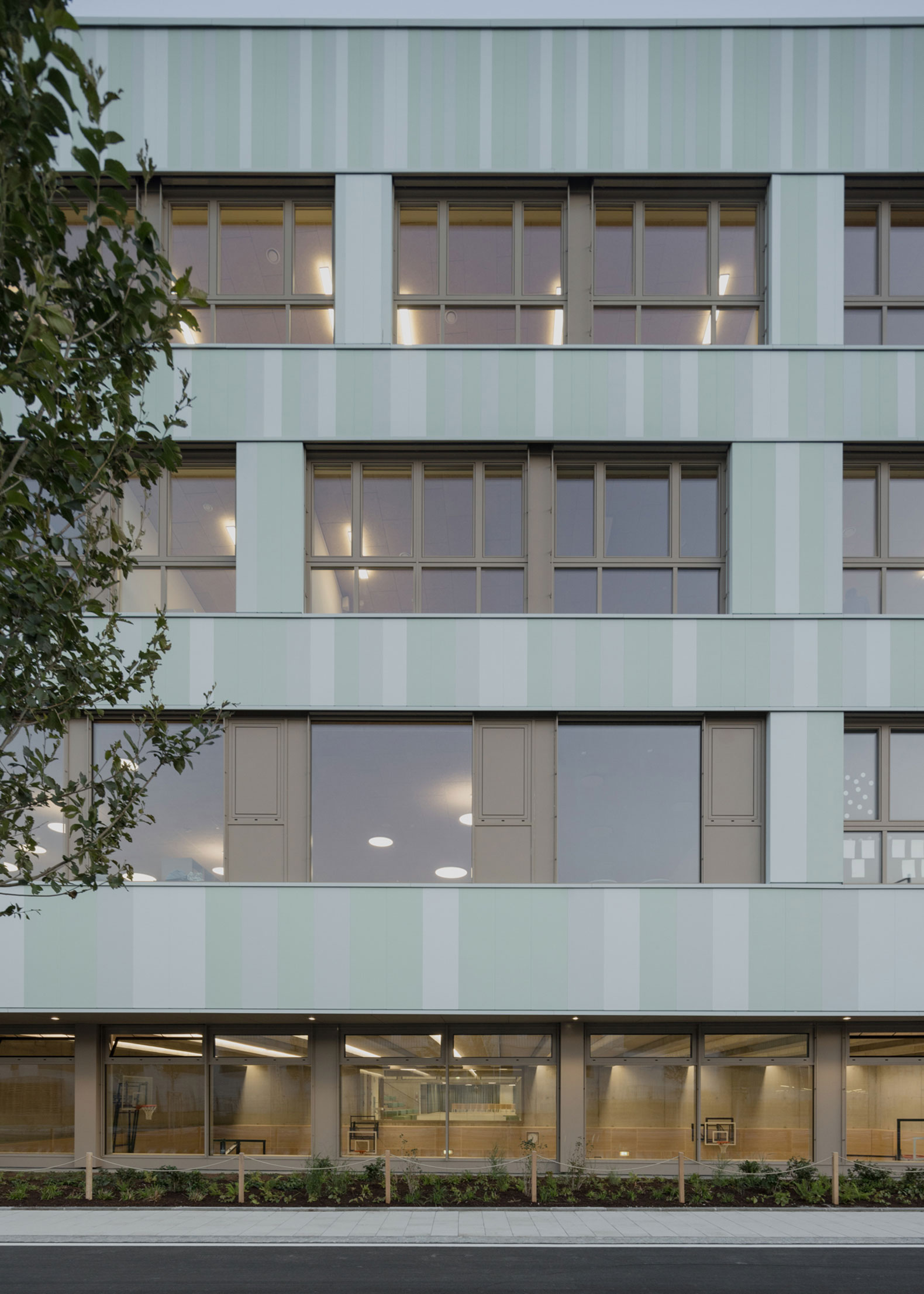
The access system, which is as short and clear as possible, consists of two cores that connect all clusters and departments without passing through other functional areas. Therefore, all rooms are accessible without barriers. In addition, the central staircase leads directly to the administration area on the first floor. There are three gymnasiums in the basement, which have a view of the auditórium through wide interior glazing. The second entrance allows external use of the gymnasium as well as direct access to the communal sport field.
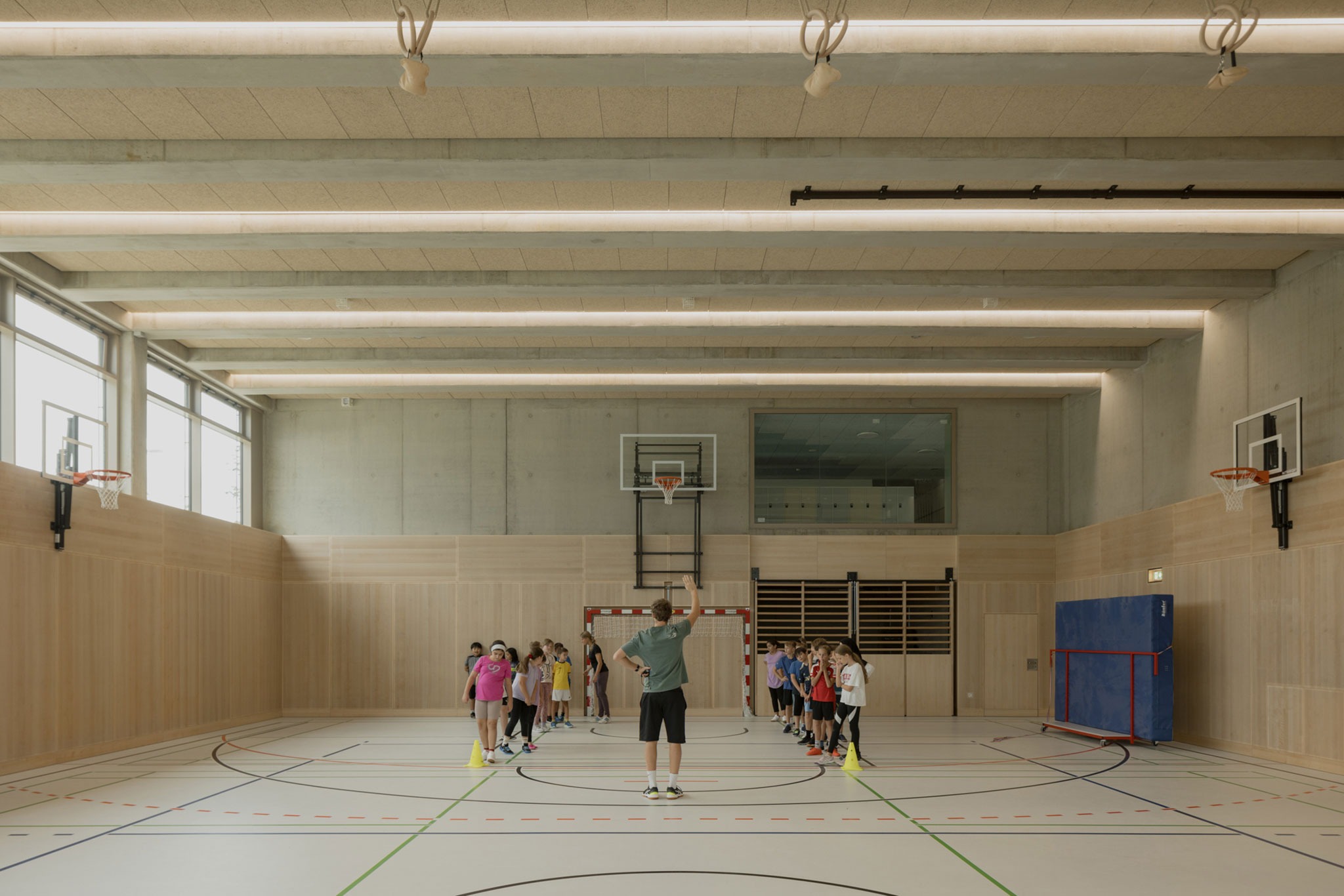
"AHS Reininghaus" school by j-c-k. Photograph by Federico Cairoli.

Landscape and facade
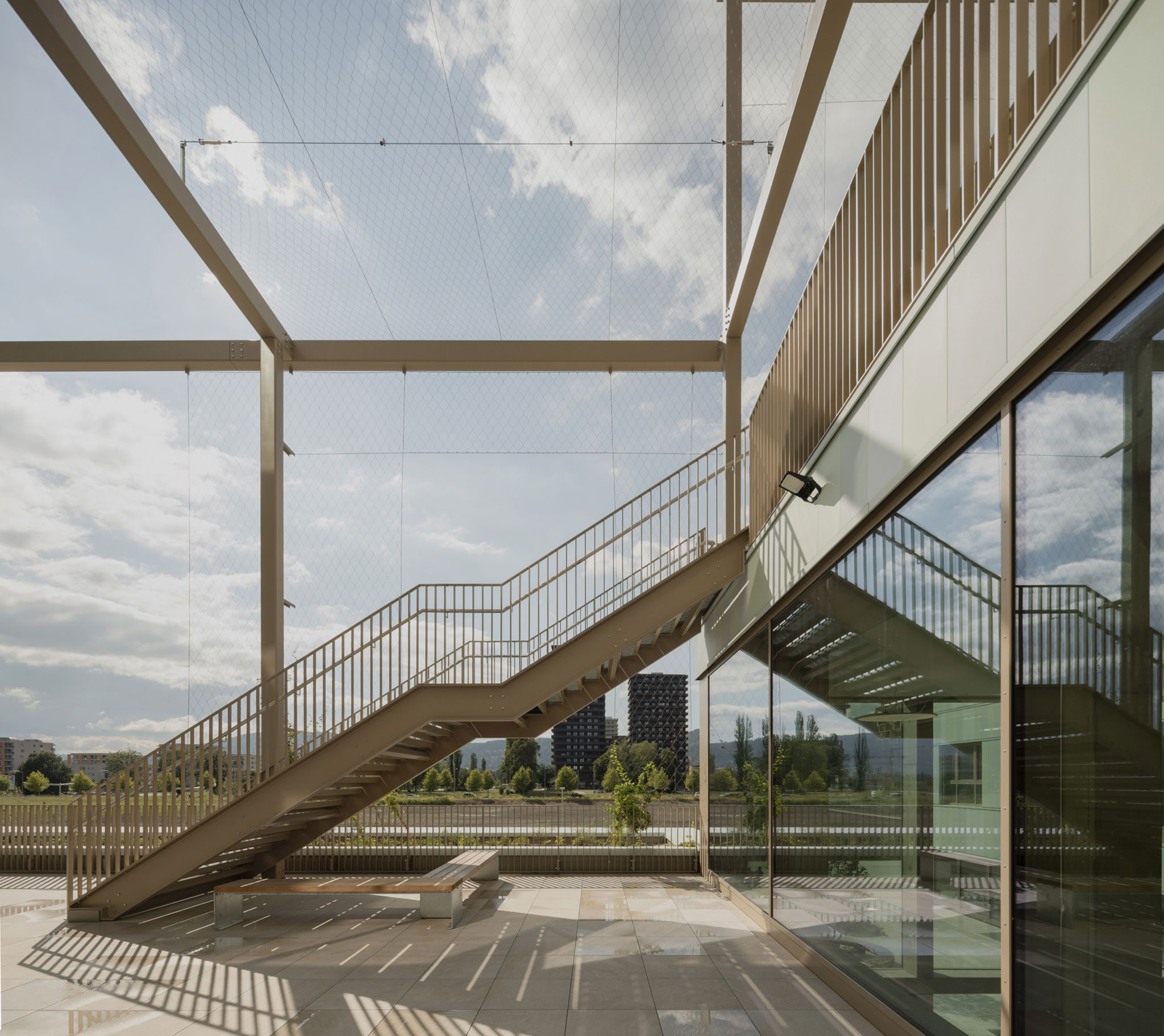
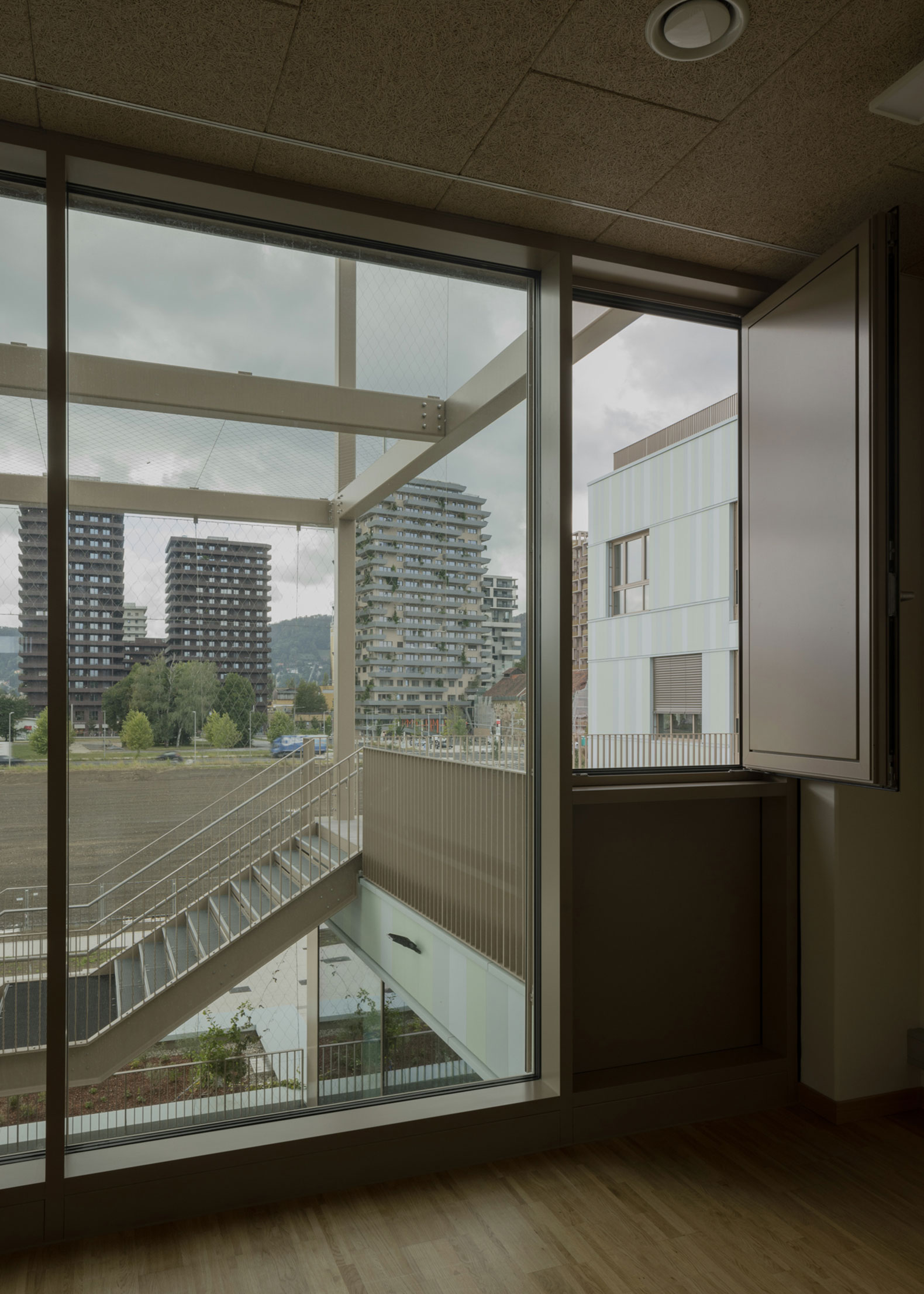
The schoolyard with a loose grove of trees offers a central open area as well as shady areas with seating. The terraced gardens are covered in climbing plants, which in a fully grown state will serve as sun protection and counteract overheating. Over the course of the year, they create different impressions (blossoms, fragrance, autumn colors of the leaves).

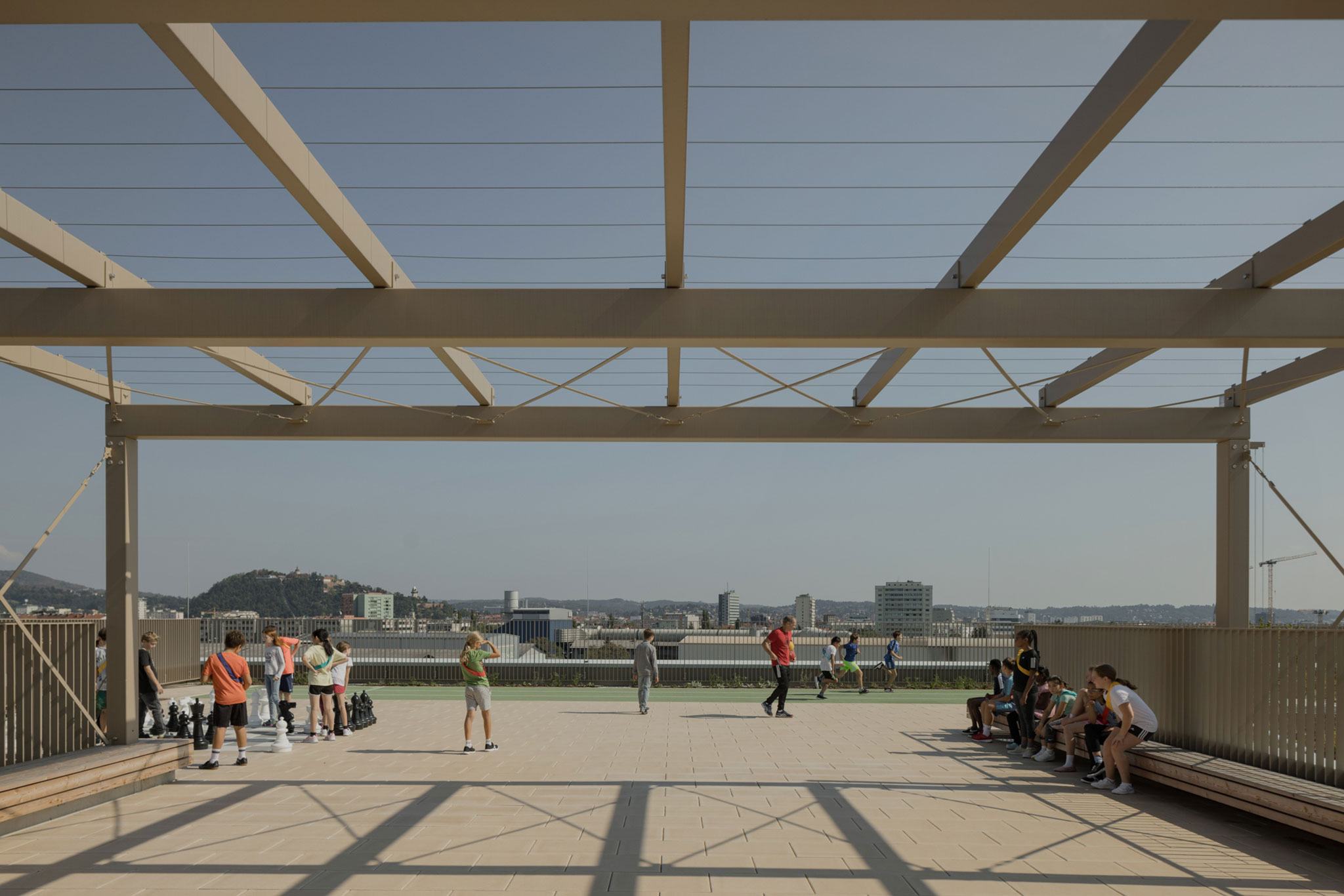
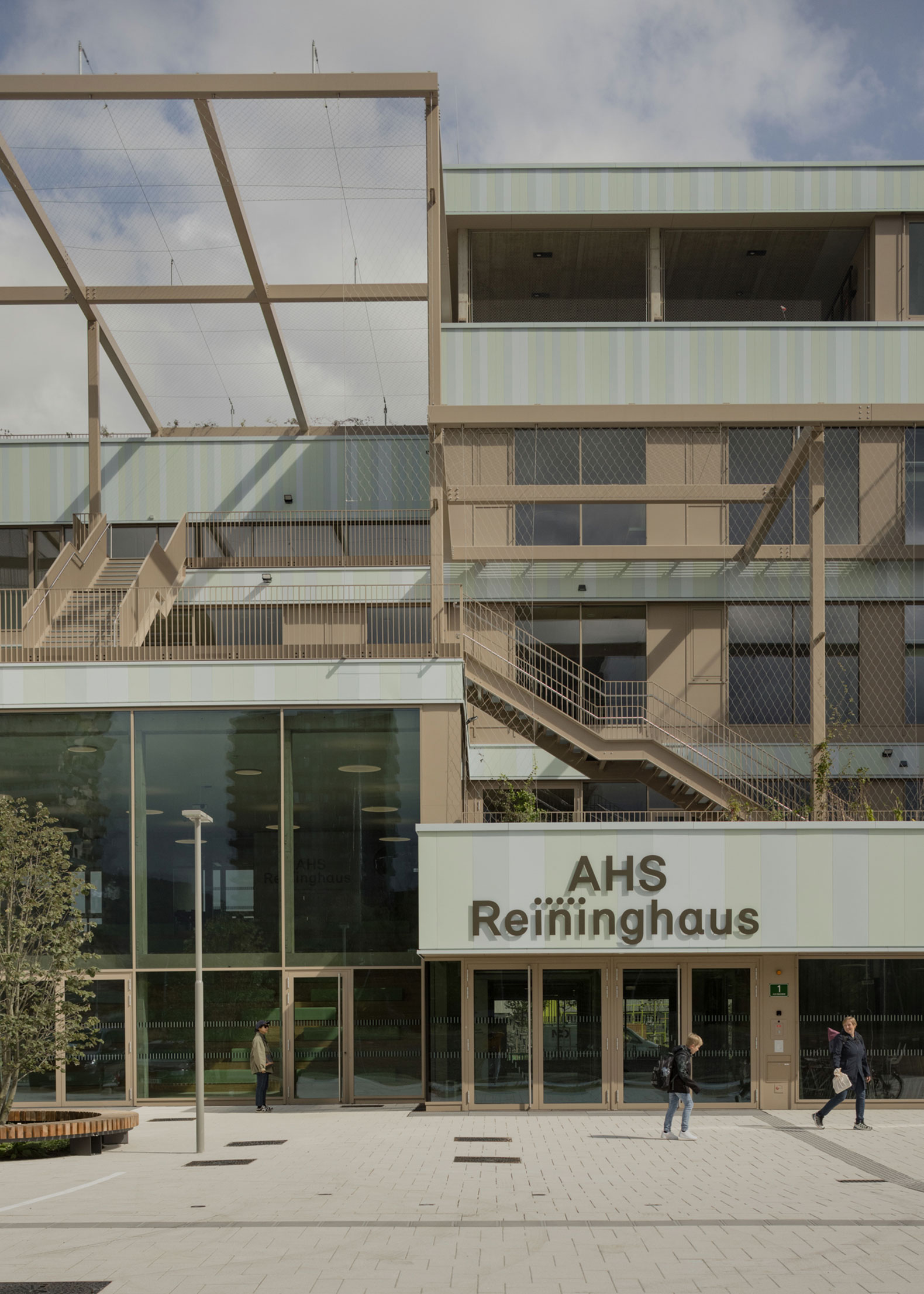
An externa staircase connects the entire terrace and roof landscape. Here you will find various green and shaded recreational areas that can be used as outdoor classrooms.

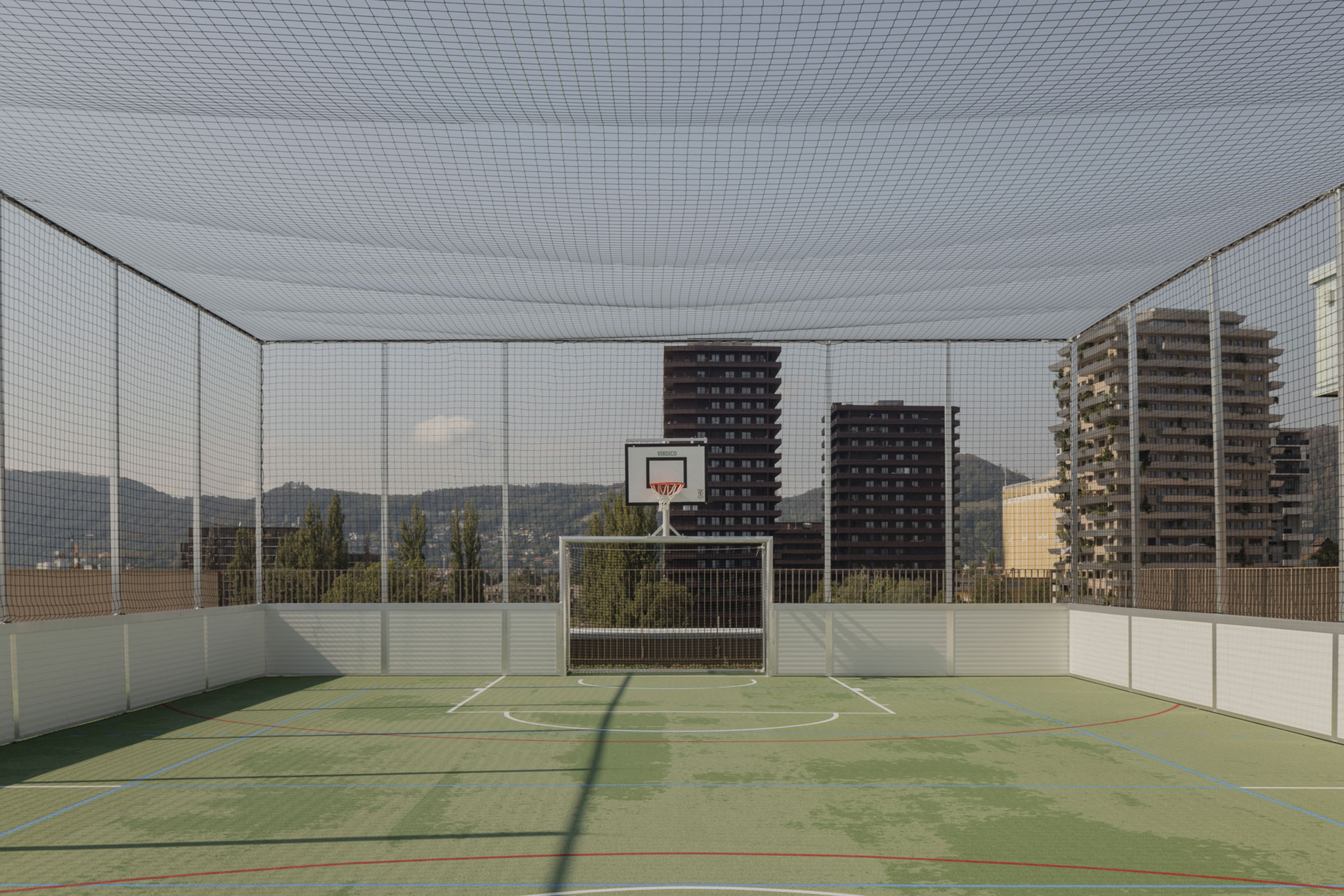
The roof impresses with fun courts, a running track and a boulder wall. The façade design extends the idea of greening the building and gives the school a friendly face in a still fallow environment. The gradations in the color scheme break up the building towards the top.

"AHS Reininghaus" school by j-c-k. Photograph by Federico Cairoli.

Identity
The interior design and the murals are part of a color-coordinated overall concept that structures individual areas under a graphic and textual guidance system. Wooden surfaces and warm colors enhance the pleasant and inspiring room atmosphere.

The architecture supports the  "AHS Reininghaus - Fostering a new generation of creative thinkers."
More information

Label
Arquitectos
+ + copy Created with Sketch.
- + copy Created with Sketch.
Label
Dates
Text

2020 to 2024.

+ + copy Created with Sketch.
- + copy Created with Sketch.
Label
Location
Text

Graz, Austria.

+ + copy Created with Sketch.
- + copy Created with Sketch.
Label
Photography
+ + copy Created with Sketch.
- + copy Created with Sketch.

The j-c-k (Janser Castorina Katzenberger) architecture practice was founded in 2015 and is led by four architects Sandra Janser, Castorina Santiago, Ursula and Markus Katzenberger.

Sandra Janser was born in 1976 and is an architect from Graz University of Technology, az4 and ETS Seville. In 2004, she obtained her degree, which was awarded the Graz Architecture Prize. From 2004 to 2009, she collaborated with ppag architects, Vienna, and pac architects, Buenos Aires. In 2009, she passed the ZT exam and since 2010 has been an architect and member of the Chamber of Civil Engineers of Styria and Carinthia. Since 2019, she has been a member of the advisory board of the Styrian Education Authority and since 2023 a member of the advisory board of the Styrian Architectural Culture Association, serving as a jury member for the Chamber.

Santiago Castorina was born in 1978 in Argentina and graduated as an architect from UN Mar del Plata in 2003. In 2004, he collaborated on the "elemental" social housing project in Santiago, Chile. From 2005 to 2006, he completed a postgraduate master's degree at the UBA Buenos Aires. From 2007 to 2010, he collaborated with bus architektur in Vienna. From 2011 to 2013, he was a lecturer at the Institute of Architecture at Graz University of Technology.
Markus Katzenberger was born in Graz in 1976. He studied architecture at Graz University of Technology and Montpellier, graduating in 2003 and passing the ZT examination. He has been an architect and member of the Chamber of Civil Engineers of Styria and Carinthia since 2007. From 2009 to 2015, he was a lecturer at the Institute of Architectural Technology at Graz University of Technology.

Ursula Katzenberger was born in Graz in 1975. She studied architecture at Graz University of Technology and Montpellier, graduating in 2004.

The studio has achieved numerous successes in competitions and awards. In 2025, it won the Styrian Regional Architecture Award "AHS Reininghaus," in 2024 the first prize with "Wohnbau Fritz-Stachel-Gasse, Hartberg," in 2023 the award "Extension of the Regional Criminal Court and Public Prosecutor's Office in Graz," in 2020 the first prize with "New Construction AHS Reininghaus," in 2013 with "Wohnbau Gleisbach," in 2011 with "Stadtfinden" and with "Lyoness Tower," as well as the recognition award "Wohnbau Waagner-Biro-Straße" Graz and was a finalist in "Housing – This is tomorrow" in Spain. In 2010, it won first prize with "Pilot Project – Jakomini Neighbourhood" in Graz and "Schools for Doctors" in Argentina. It received the "Kärnter Holzpreis" recognition award for the Wolfsberg climbing centre in 2009. He received first prize for "Remodelling Microcentro de Rafaela" in Argentina in 2006 and for "Vivienda Social Elemental" in Santiago de Chile in 2004, when he received the "GAD Award" in Graz.
 

Read more
Published on: January 12, 2026
Cite:
metalocus, ELVIRA PARÍS FERNÁNDEZ
"Flowing spatial network. AHS Reininghaus school by j-c-k " METALOCUS. Accessed
<https://www.metalocus.es/en/news/flowing-spatial-network-ahs-reininghaus-school-j-c-k> ISSN 1139-6415
Loading content ...
Loading content ...
Loading content ...
Loading content ...
Loading content ...
Loading content ...
Loading content ...
Loading content ...
Loading content ...
Loading content ...
Loading content ...
Loading content ...
Loading content ...
Loading content ...
Loading content ...
Loading content ...
Loading content ...
Loading content ...
Loading content ...
Loading content ...
Loading content ...
Loading content ...
Loading content ...
Loading content ...
Loading content ...
Loading content ...
Loading content ...
Loading content ...
Loading content ...
Loading content ...
Loading content ...
Loading content ...
Loading content ...
Loading content ...
Loading content ...
Loading content ...
Loading content ...
Loading content ...
Loading content ...
Loading content ...
Loading content ...
Loading content ...
Loading content ...
Loading content ...
Loading content ...
Loading content ...
Loading content ...
Loading content ...
Loading content ...
Loading content ...
Loading content ...
Loading content ...
Loading content ...
Loading content ...