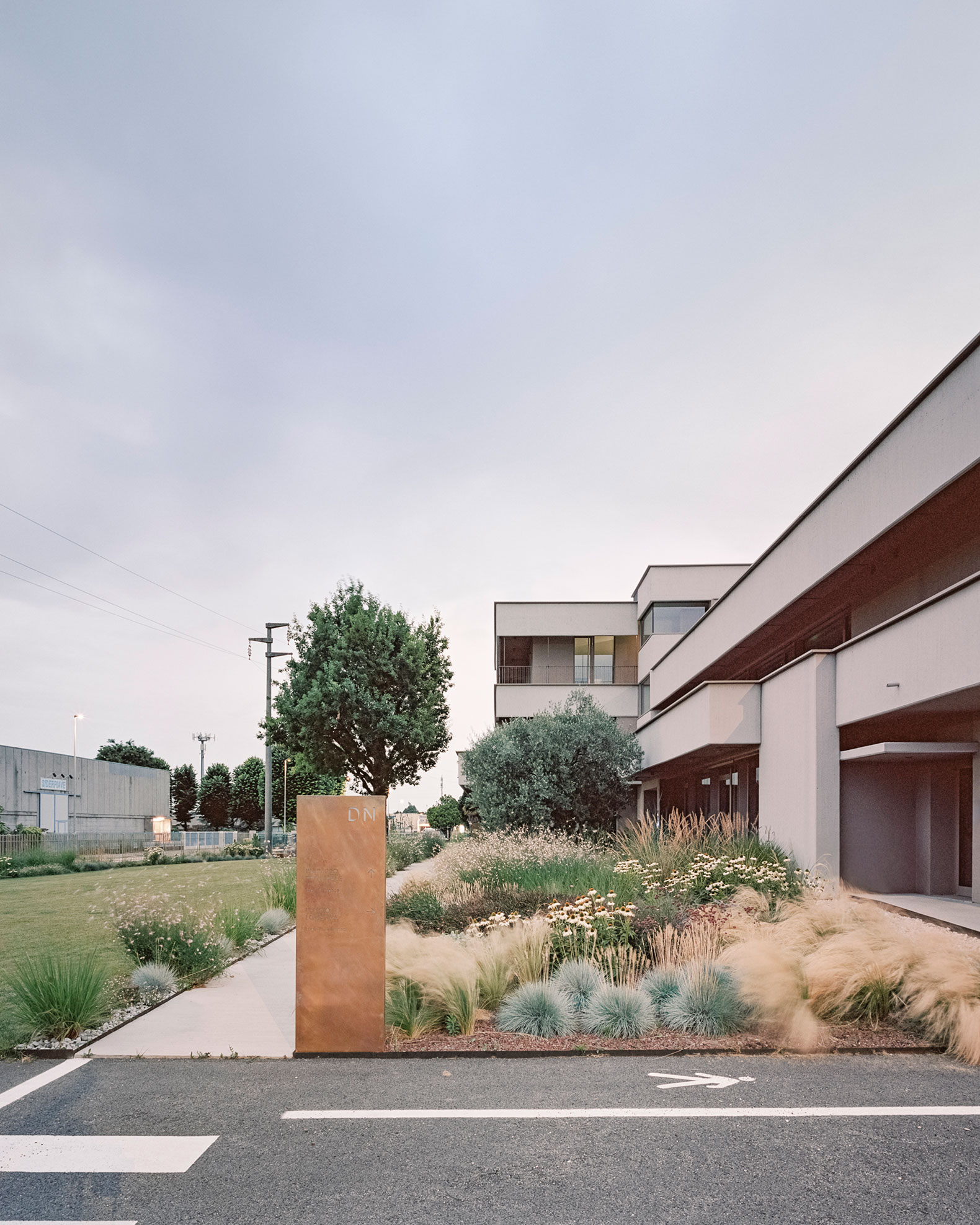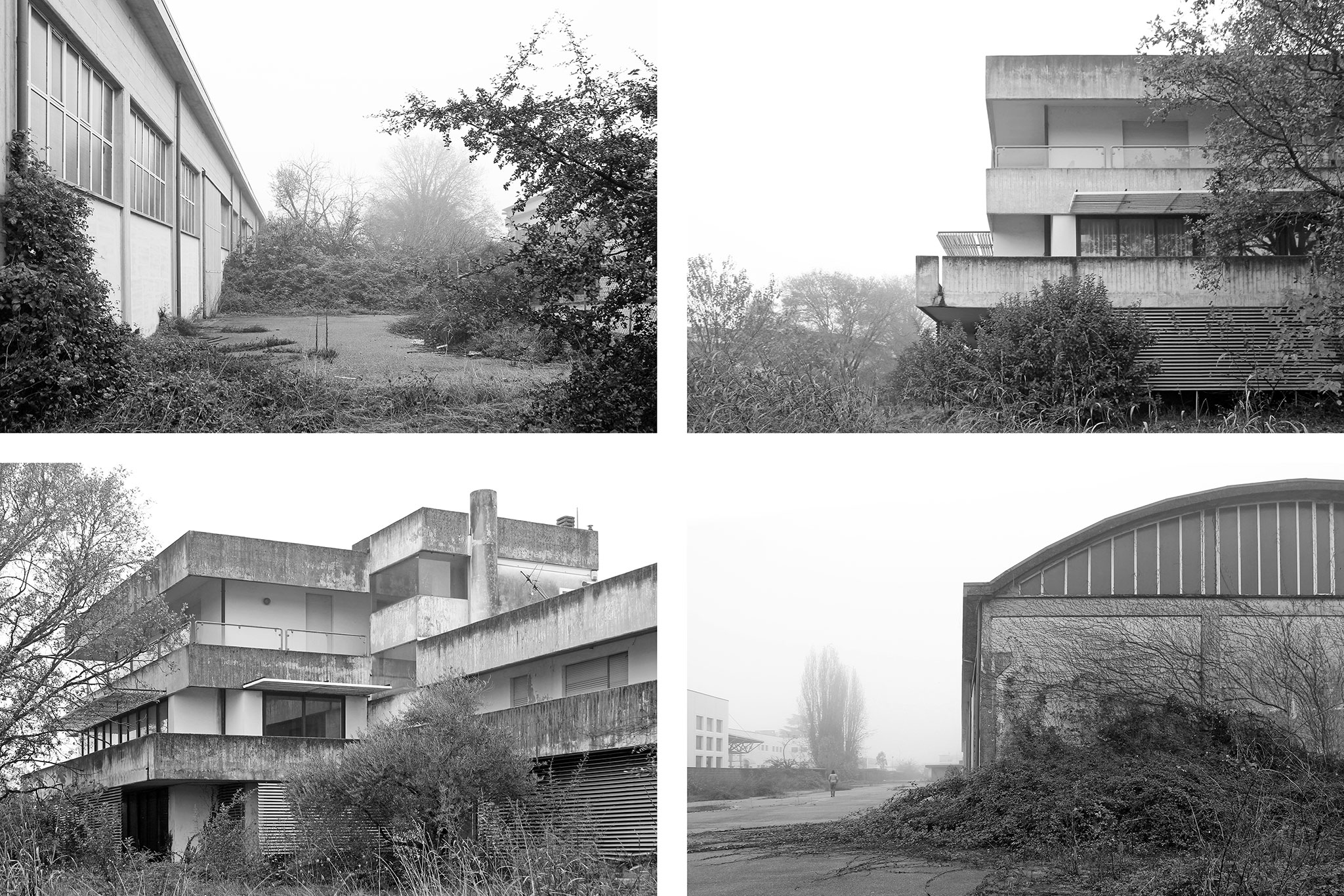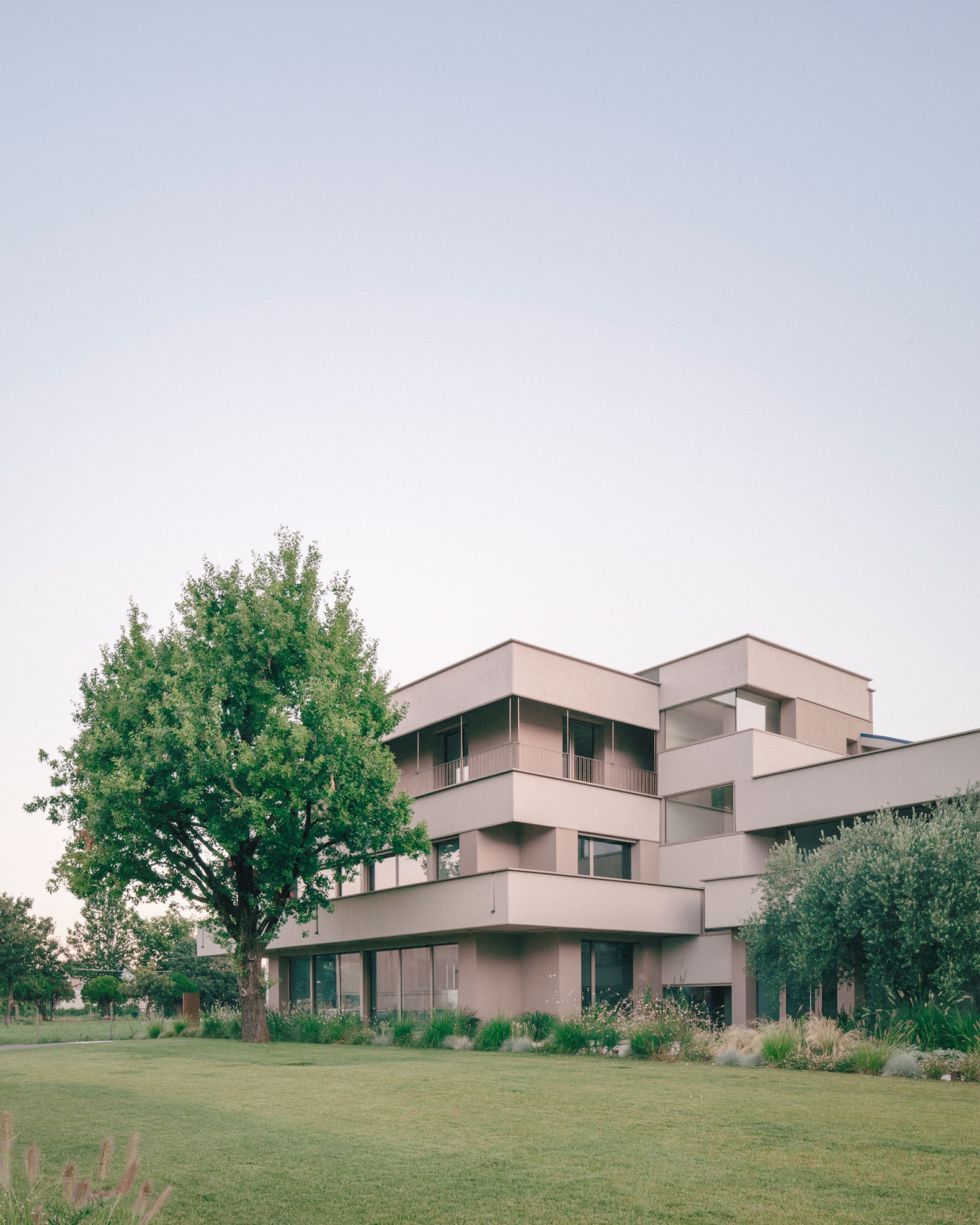
Studio Bressan was commissioned to renovate an abandoned production building into the new headquarters of Dante Negro (a company of master blacksmiths) in Villorba, a town in the Italian province of Treviso.

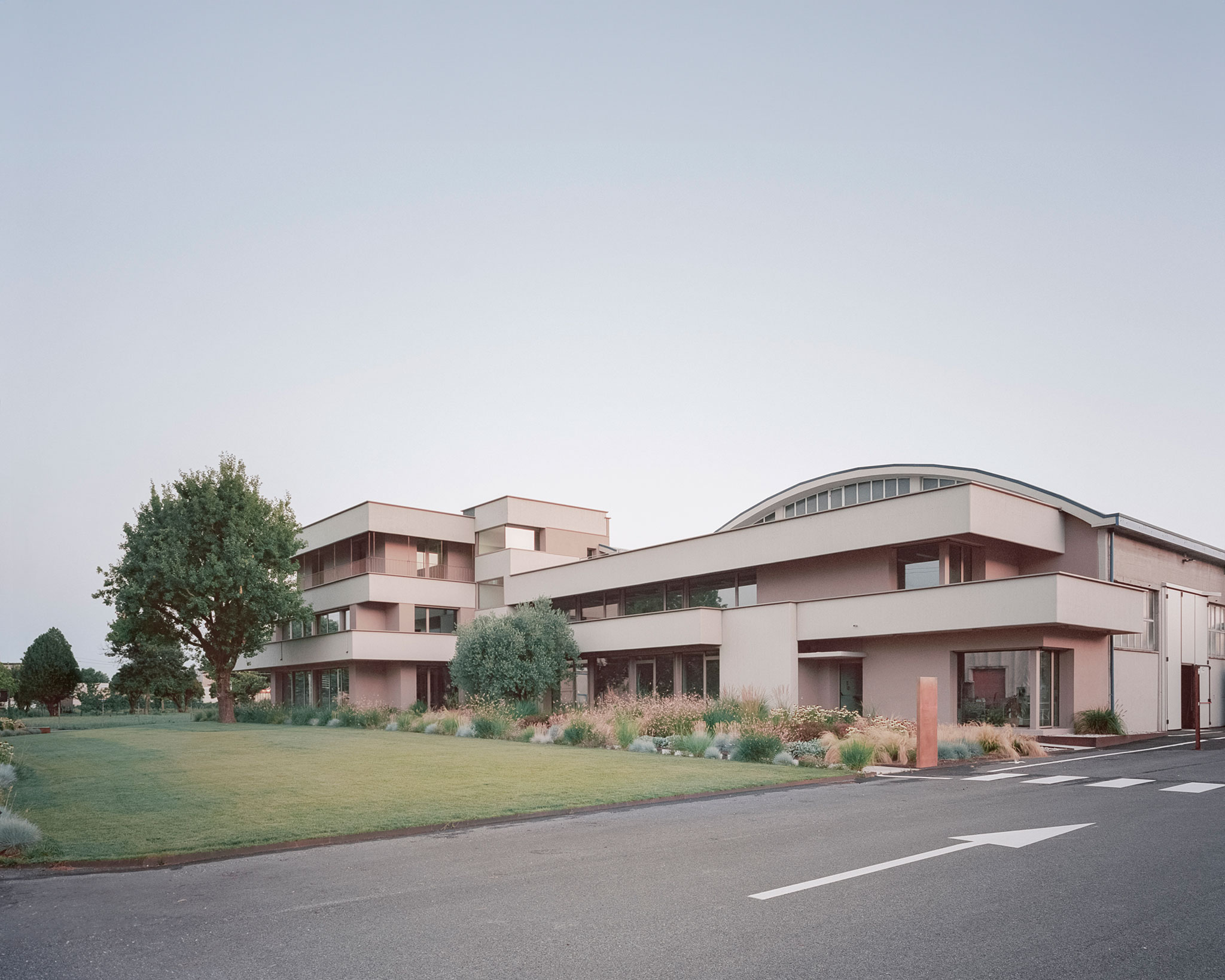
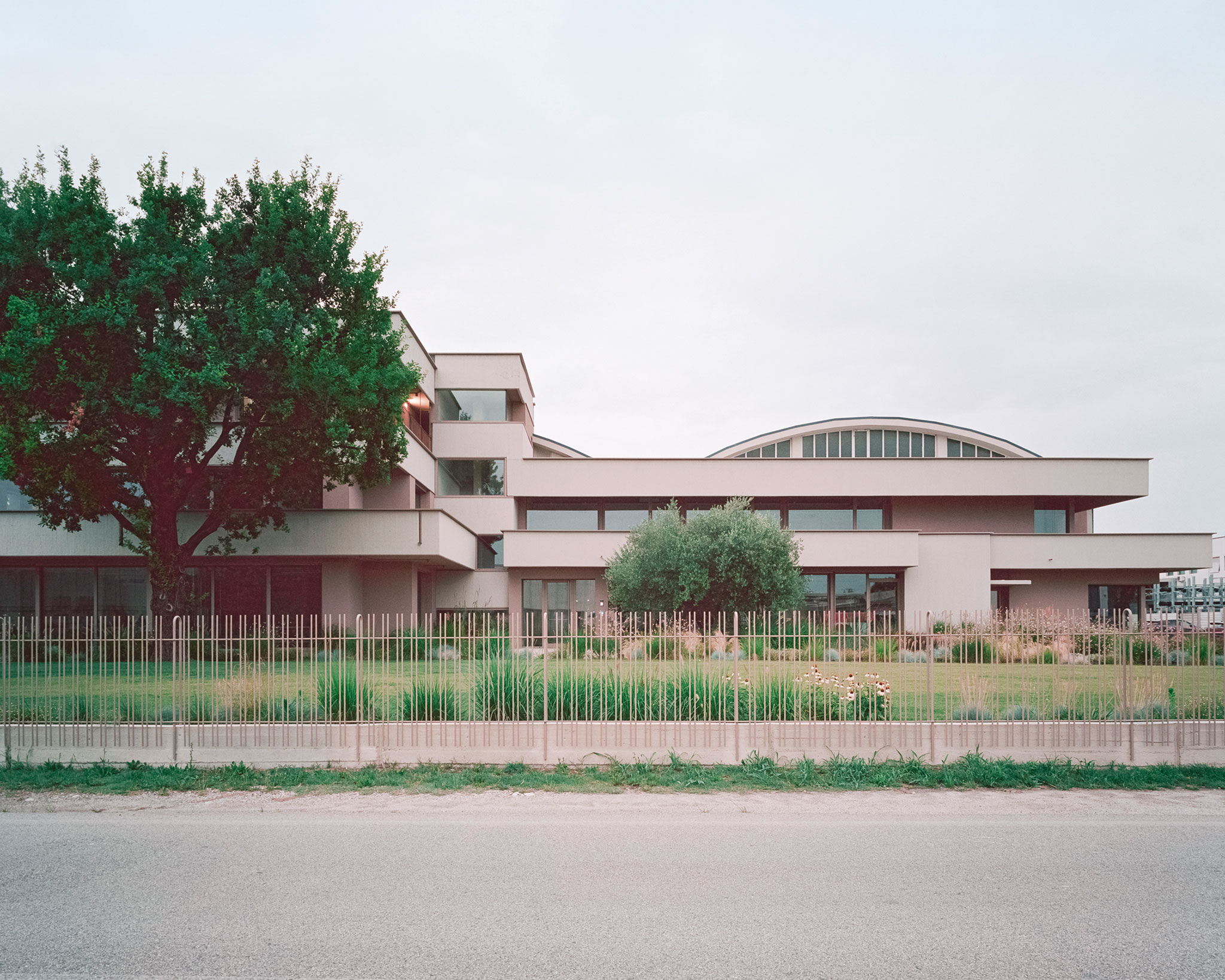
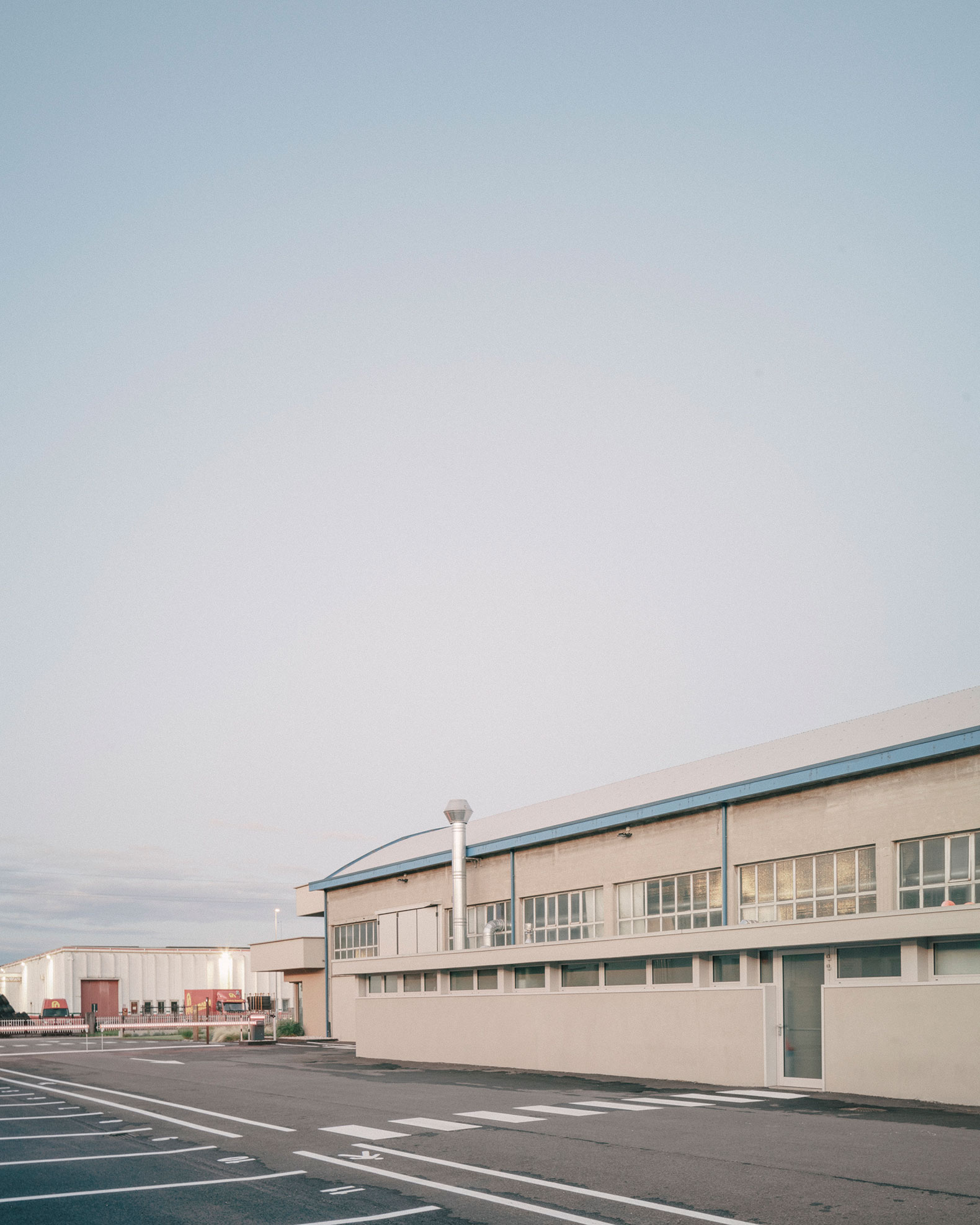
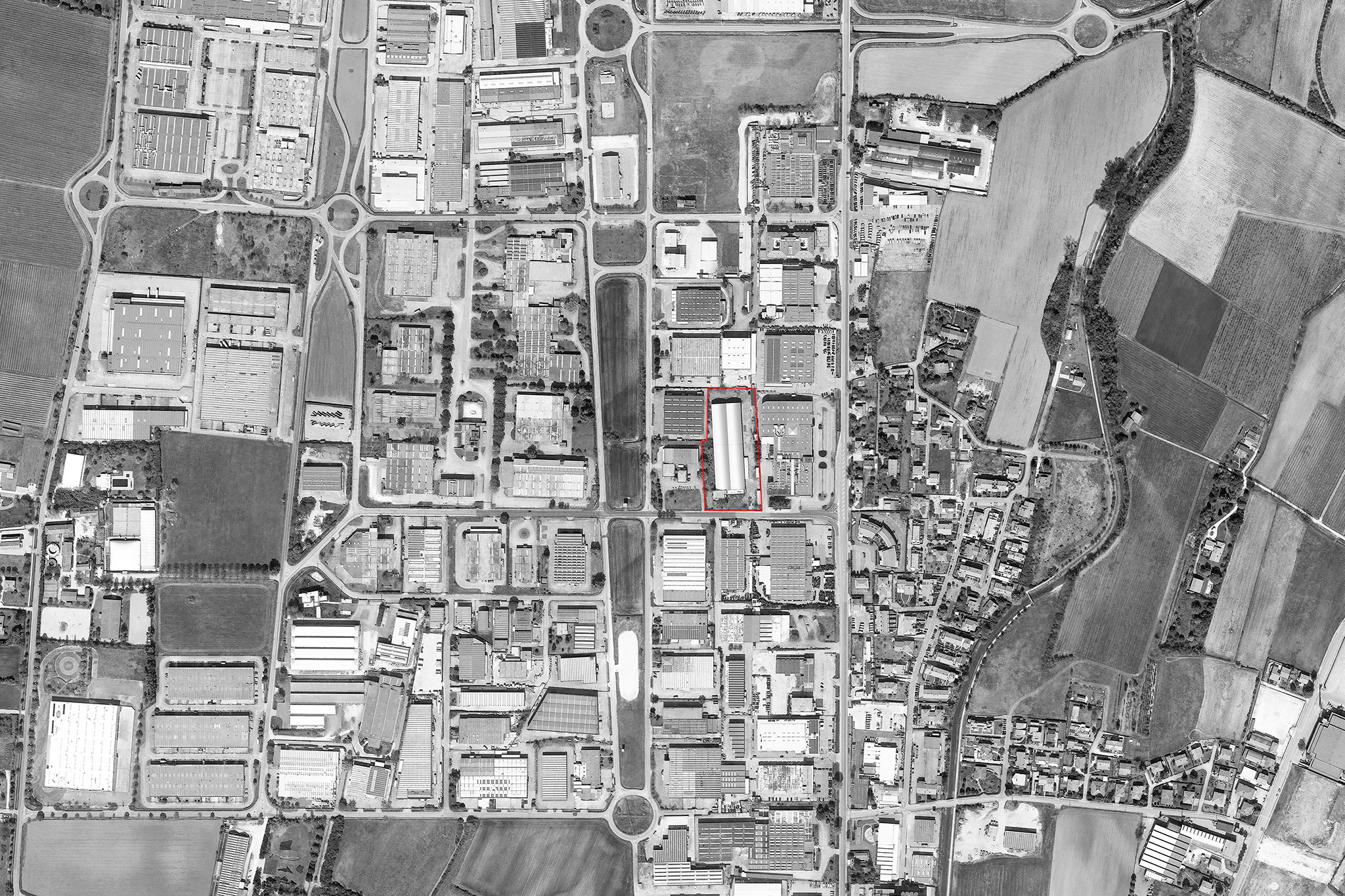
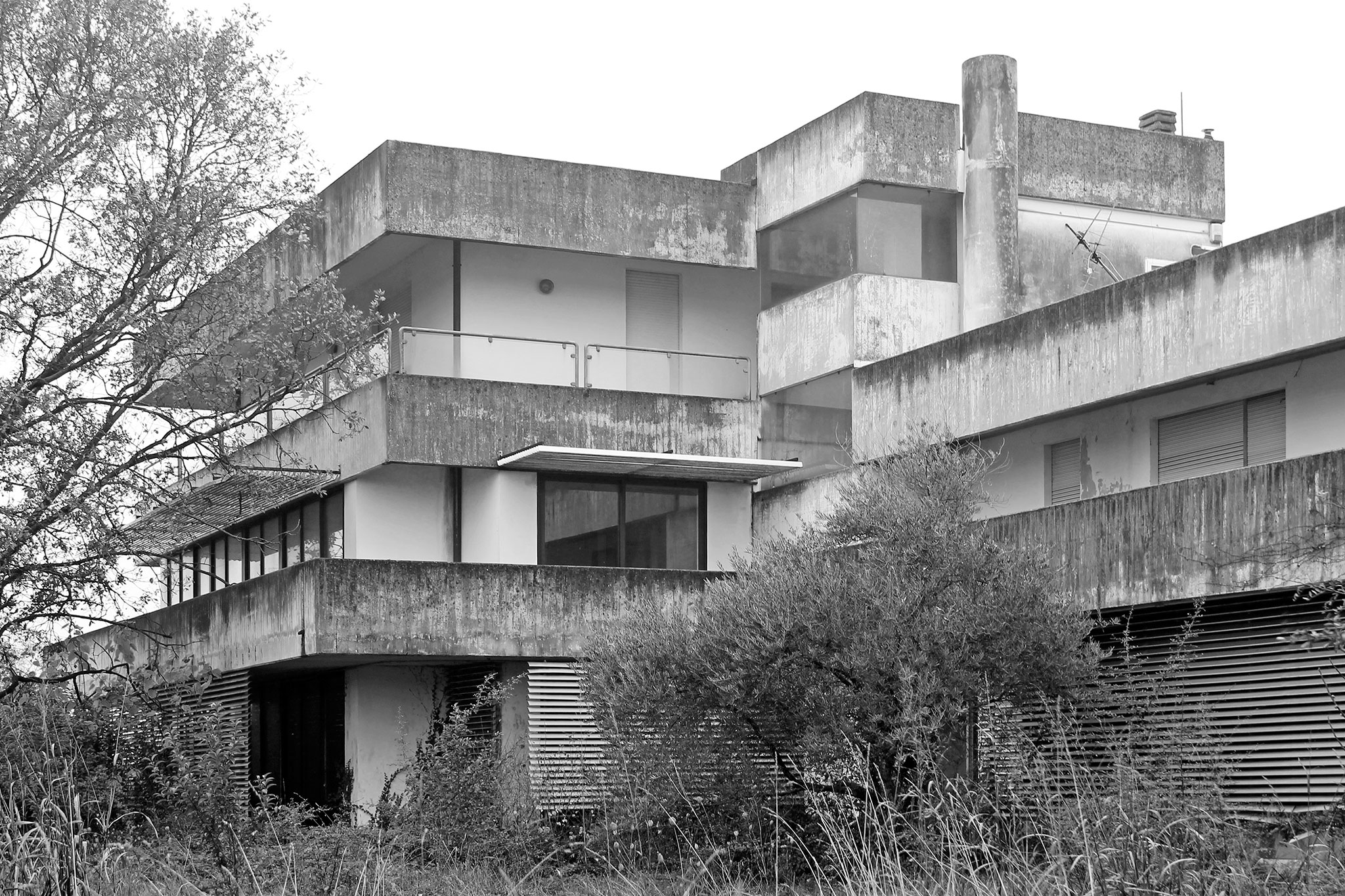
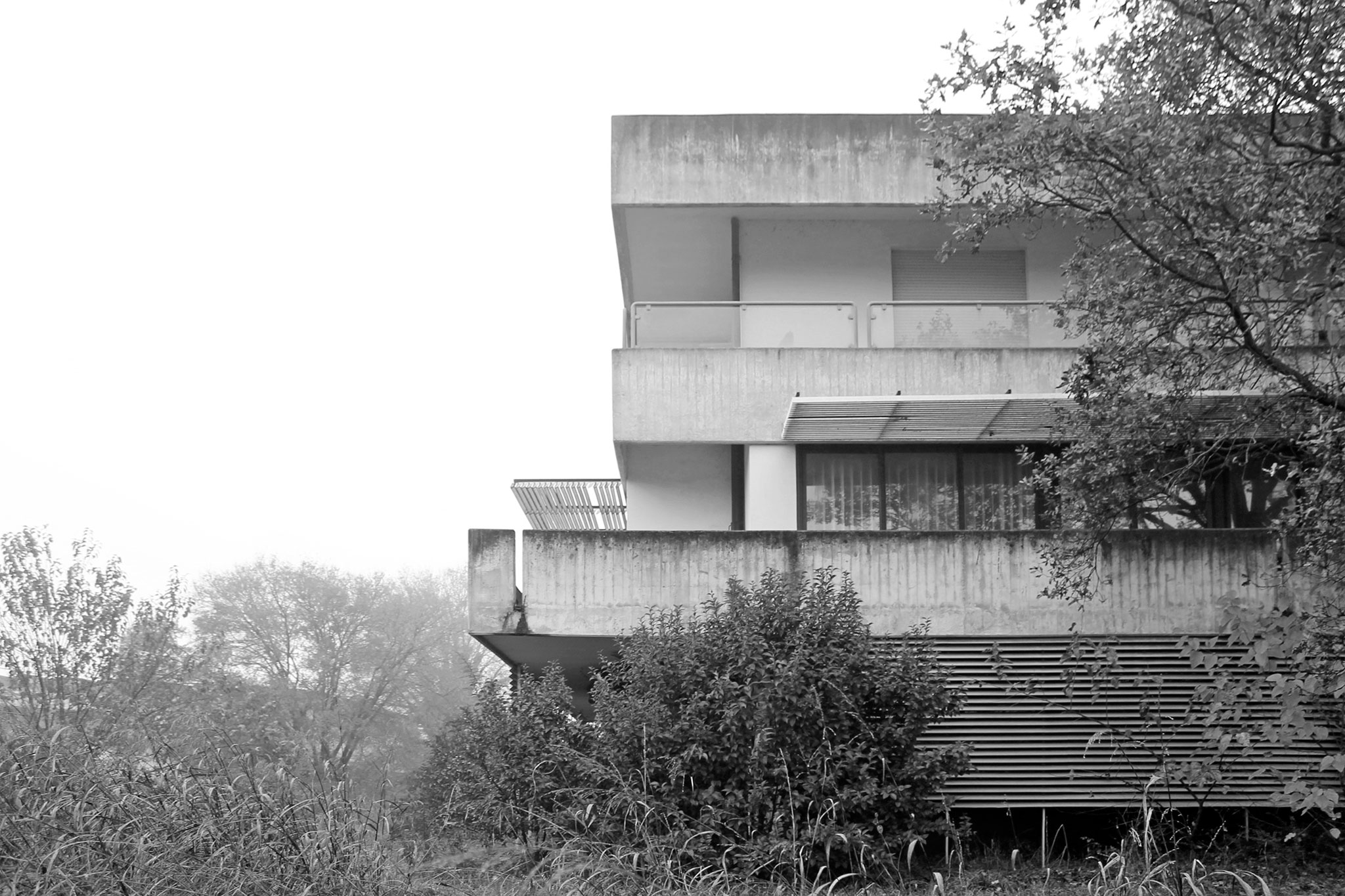
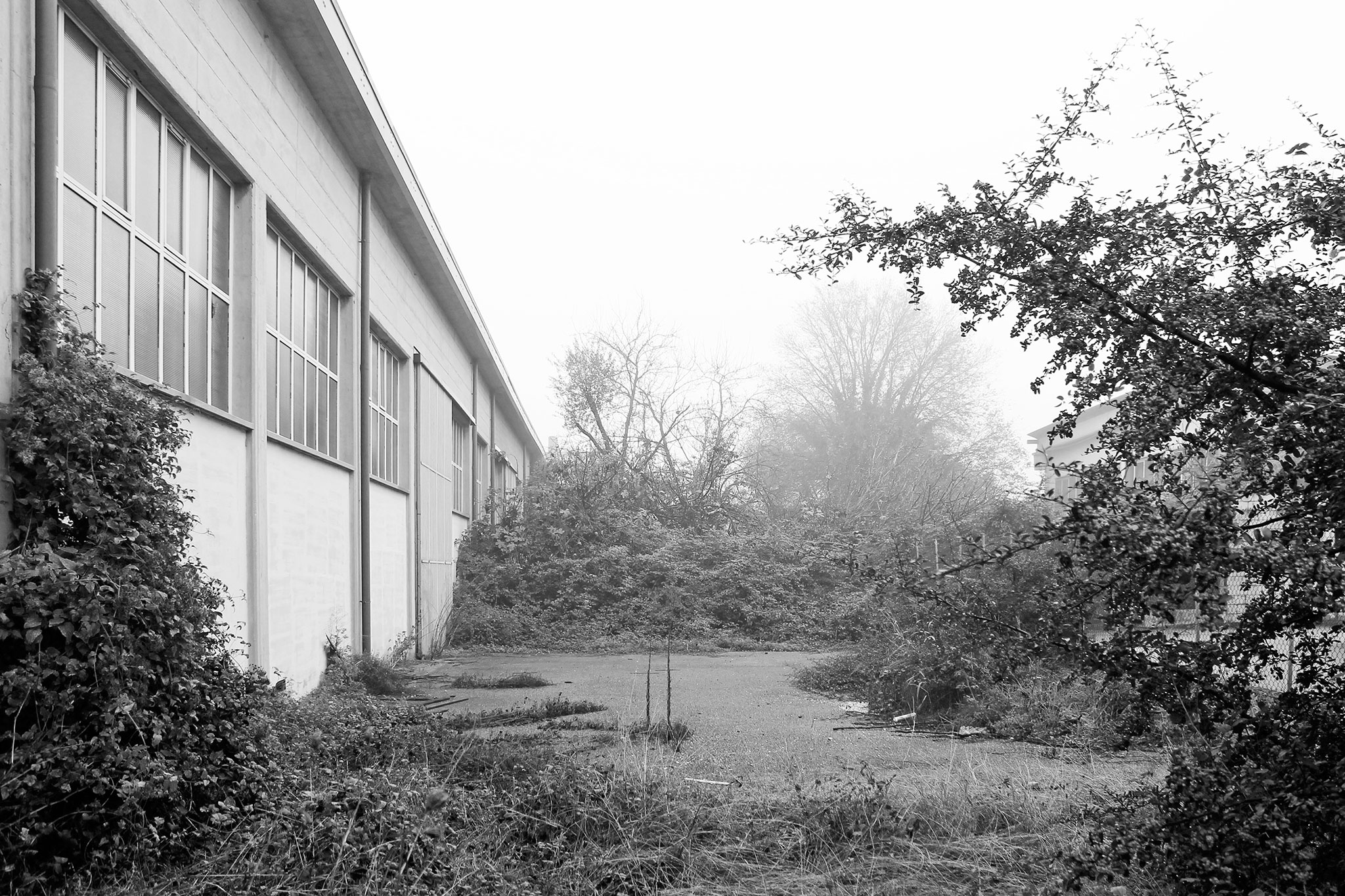
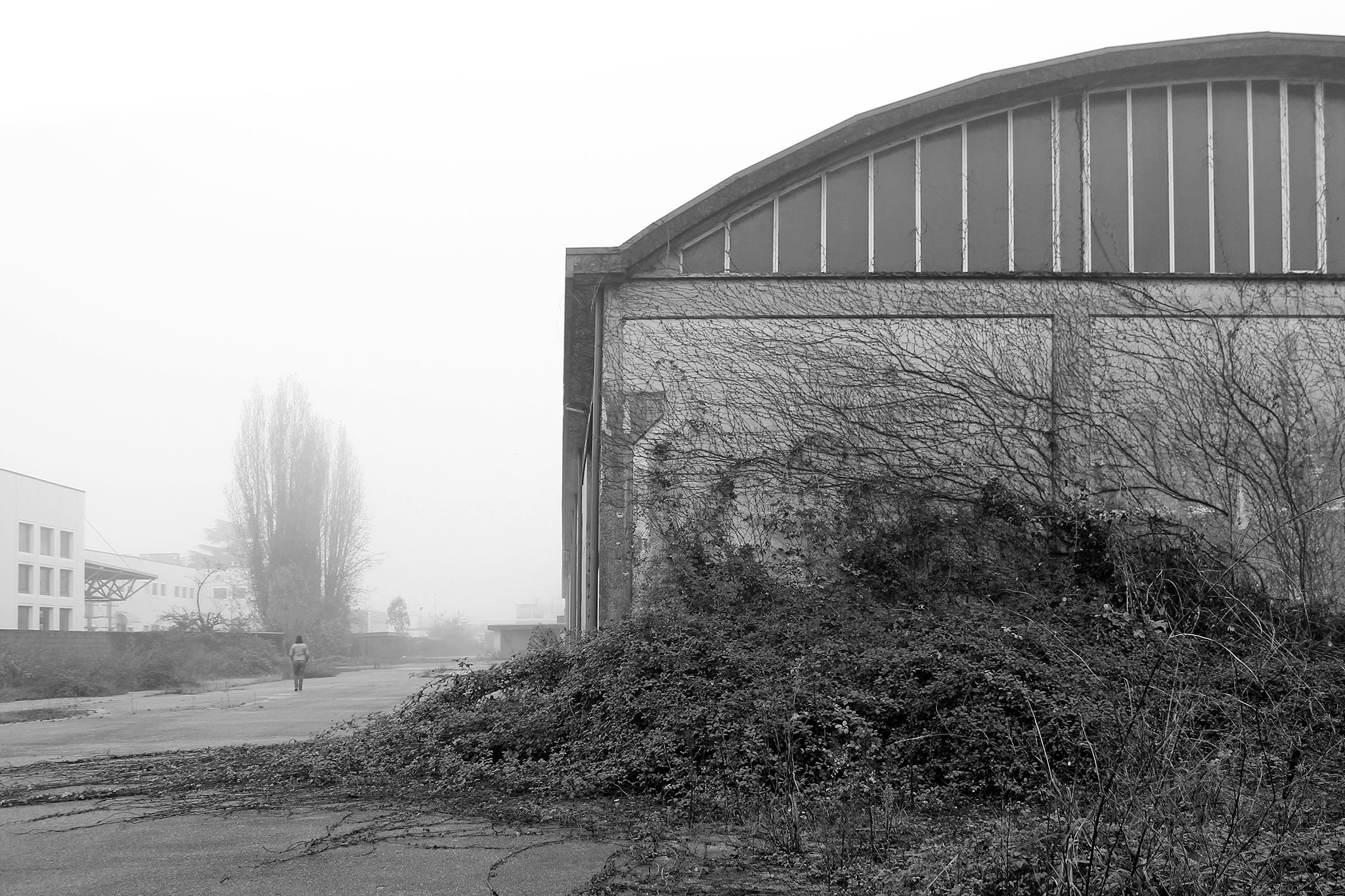
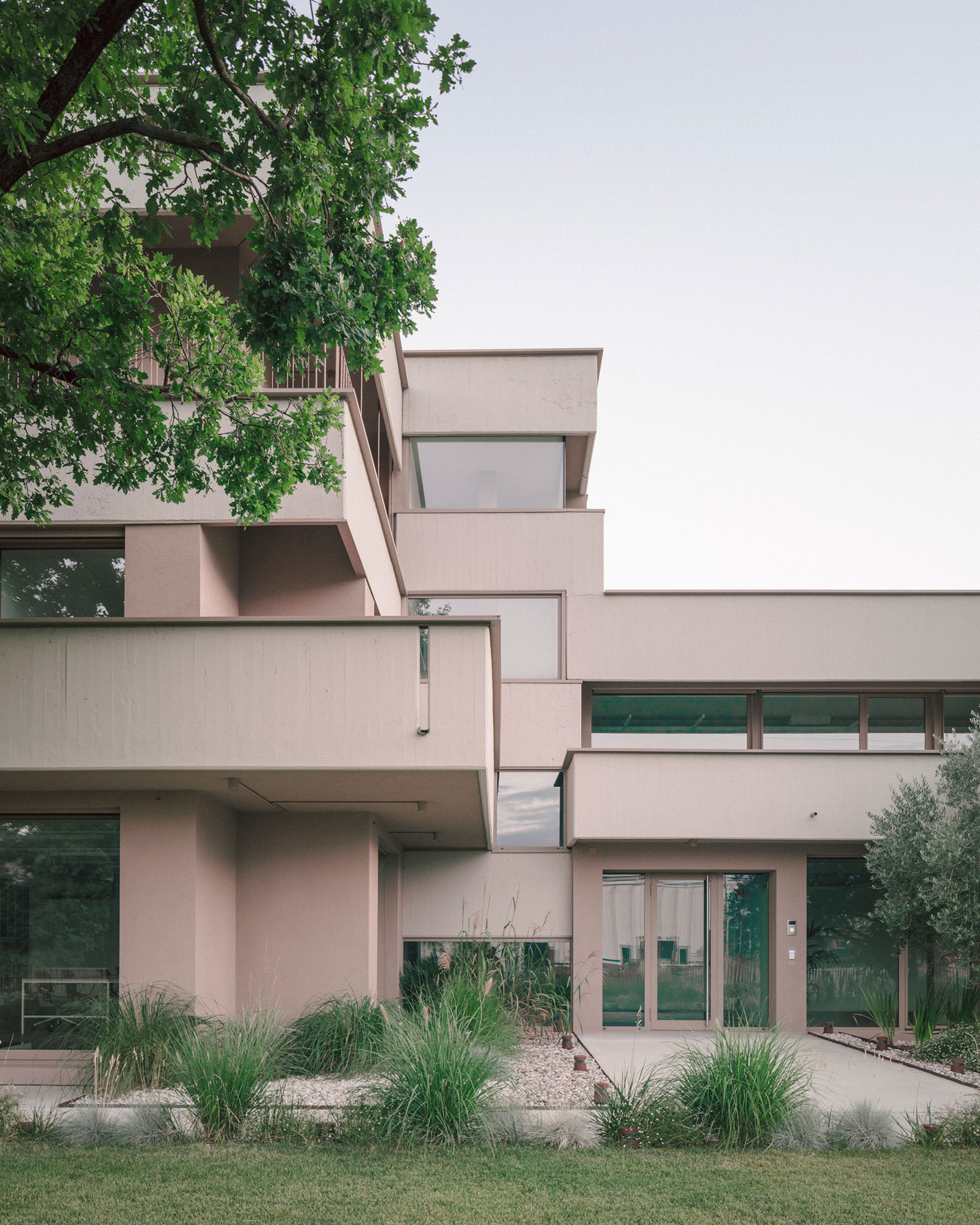
The new headquarters of this company, which specializes in the production of designer metal furniture, is located in a 1970s building on a major commercial and industrial street. The original building consisted of two parts: the main section in the Brutalist style and a double-height vaulted volume.

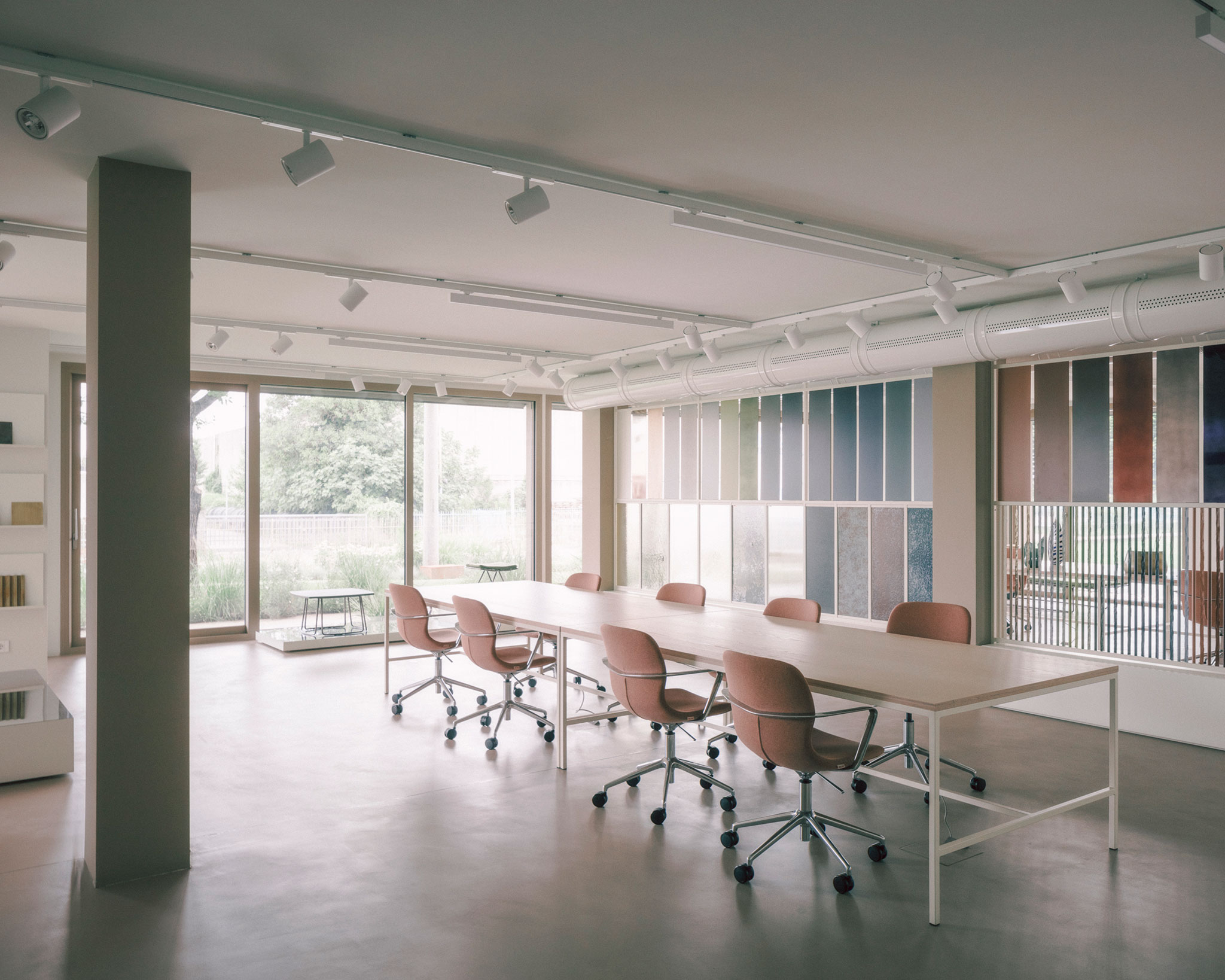
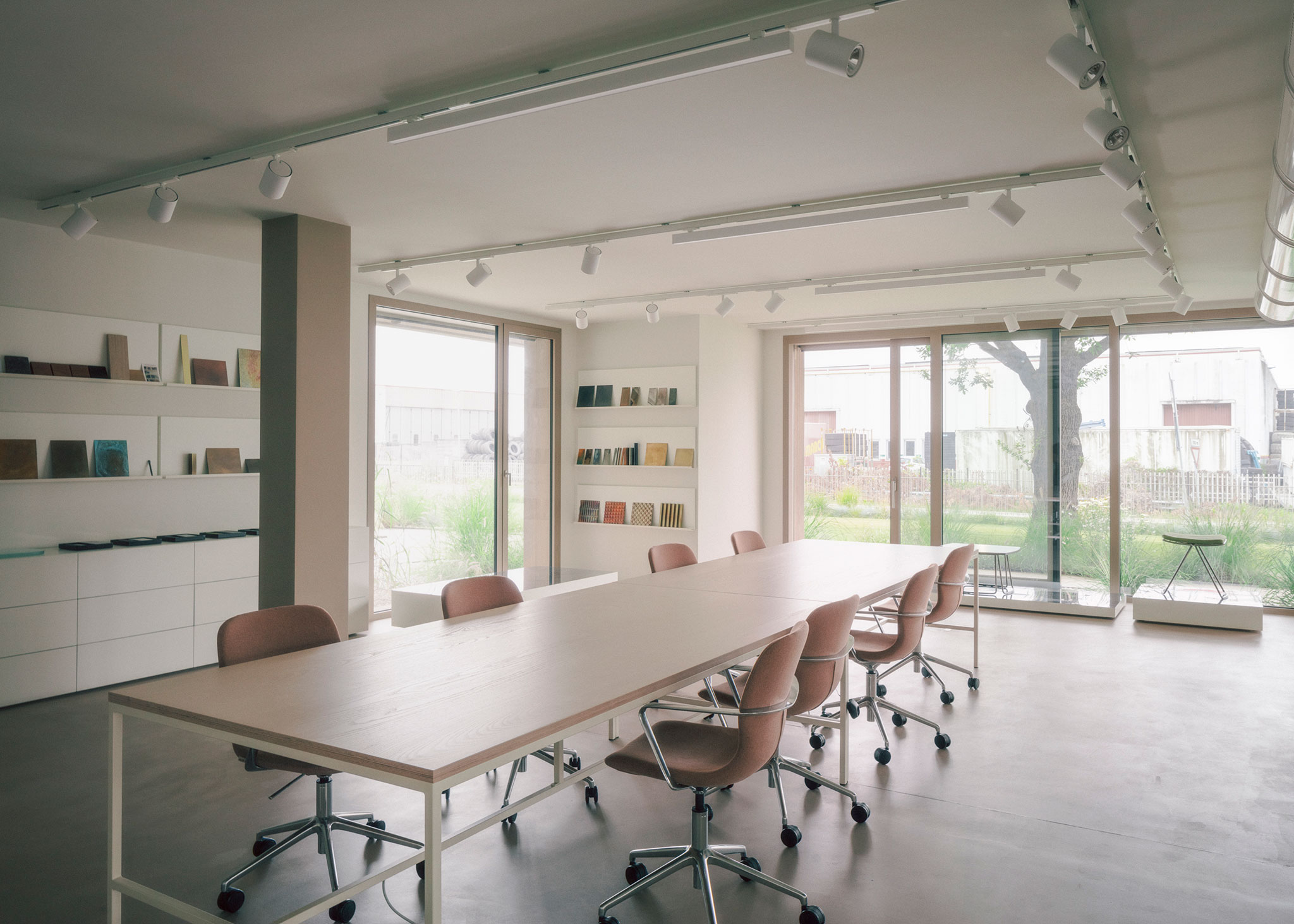
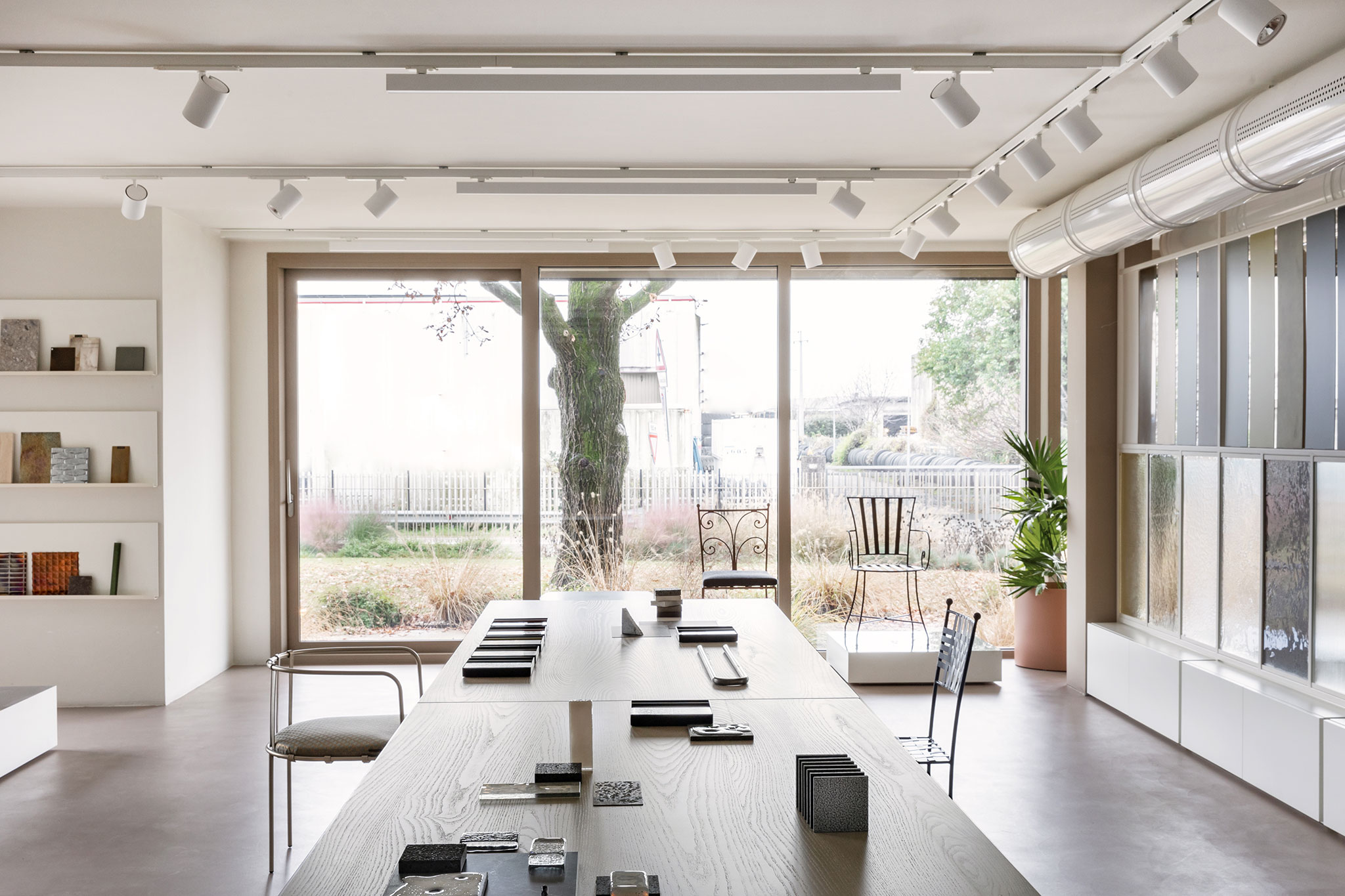
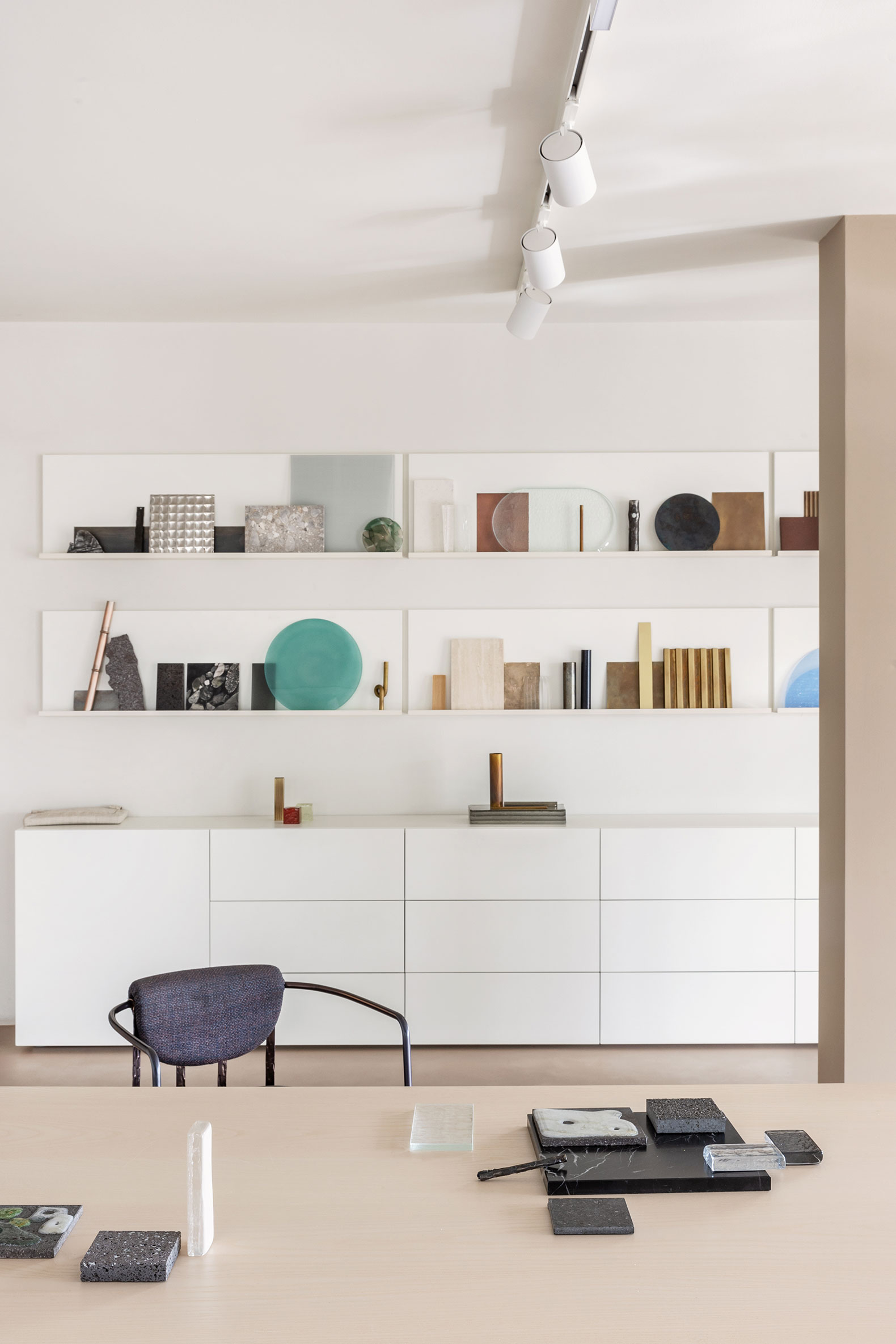
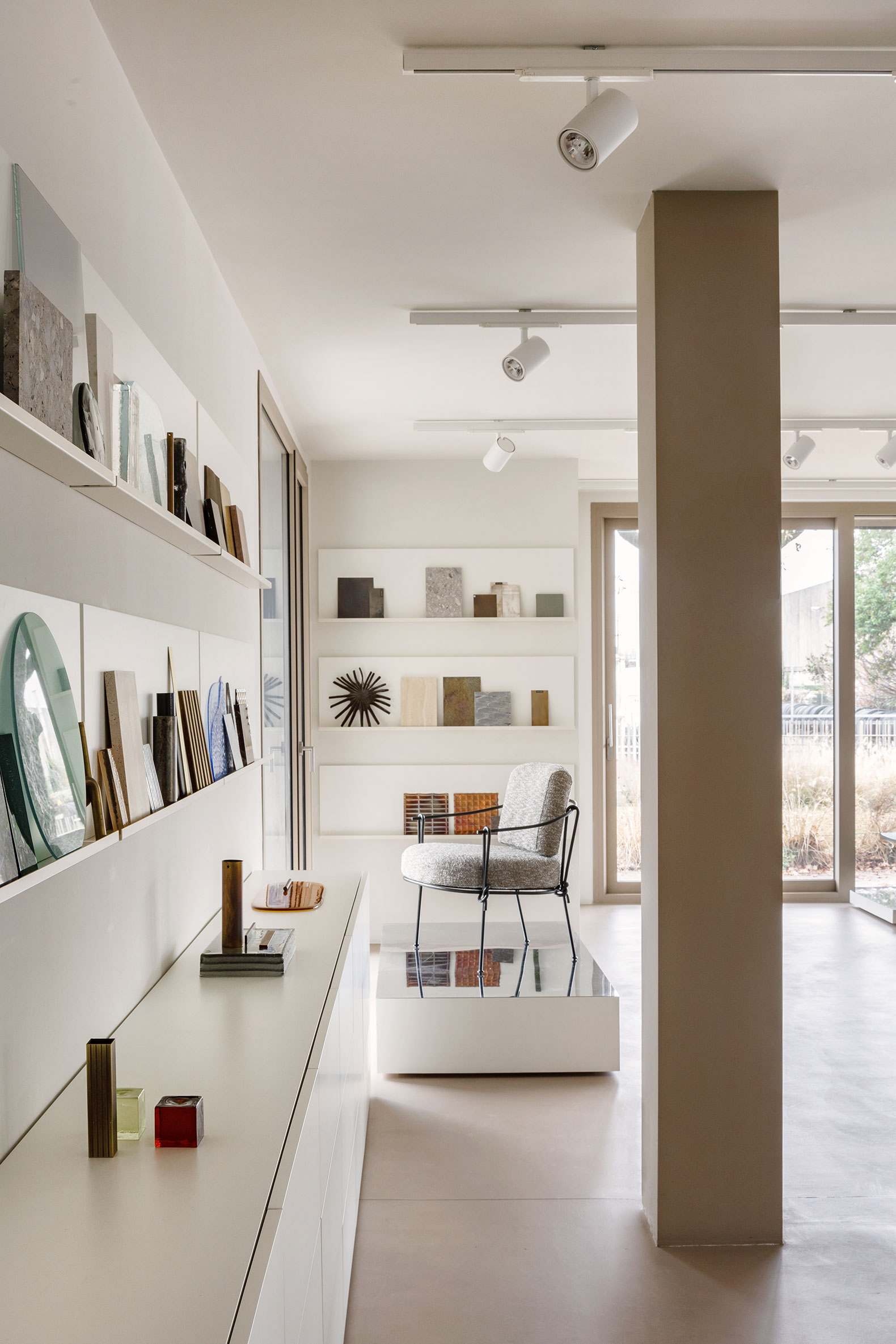
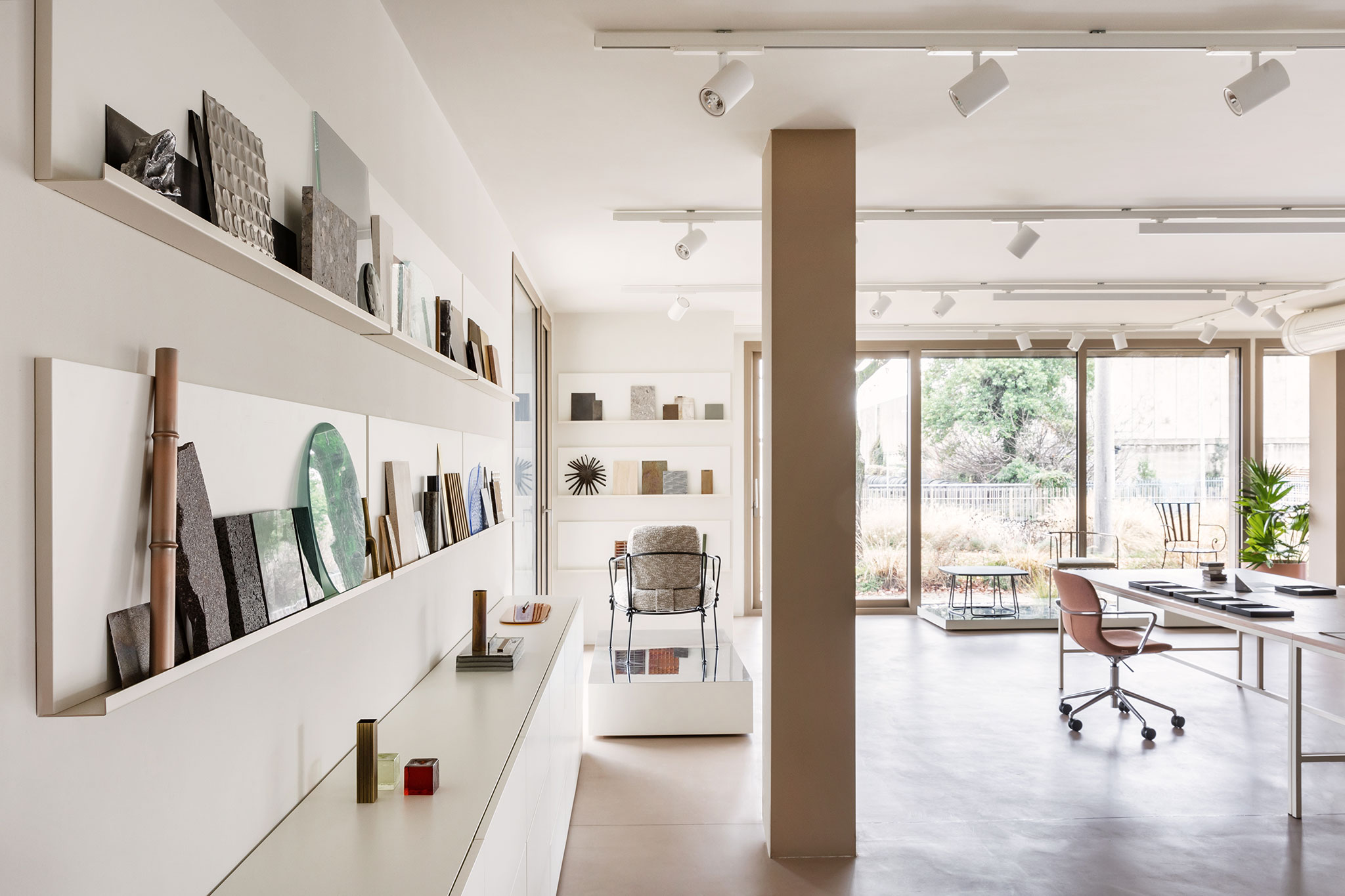
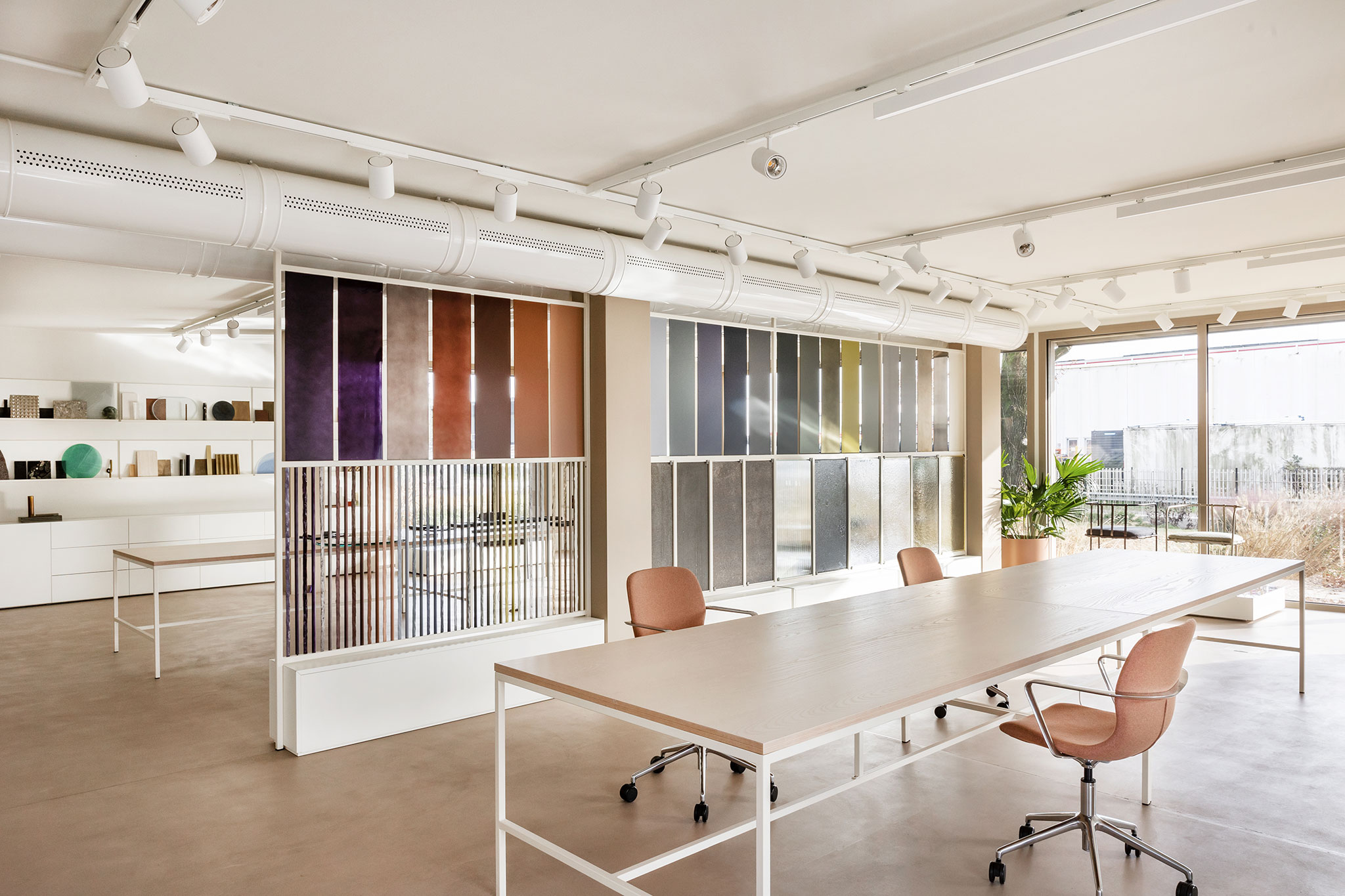
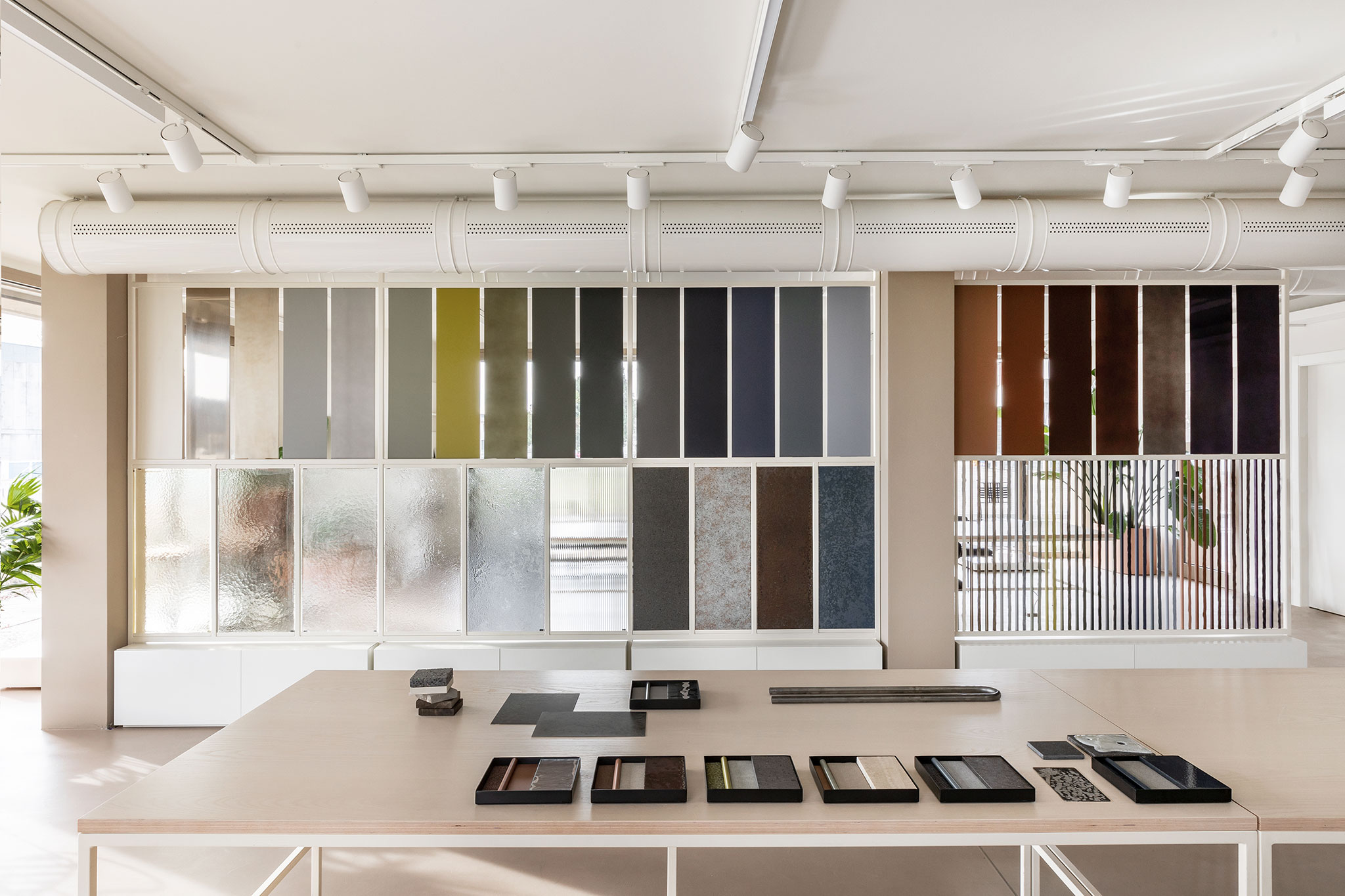
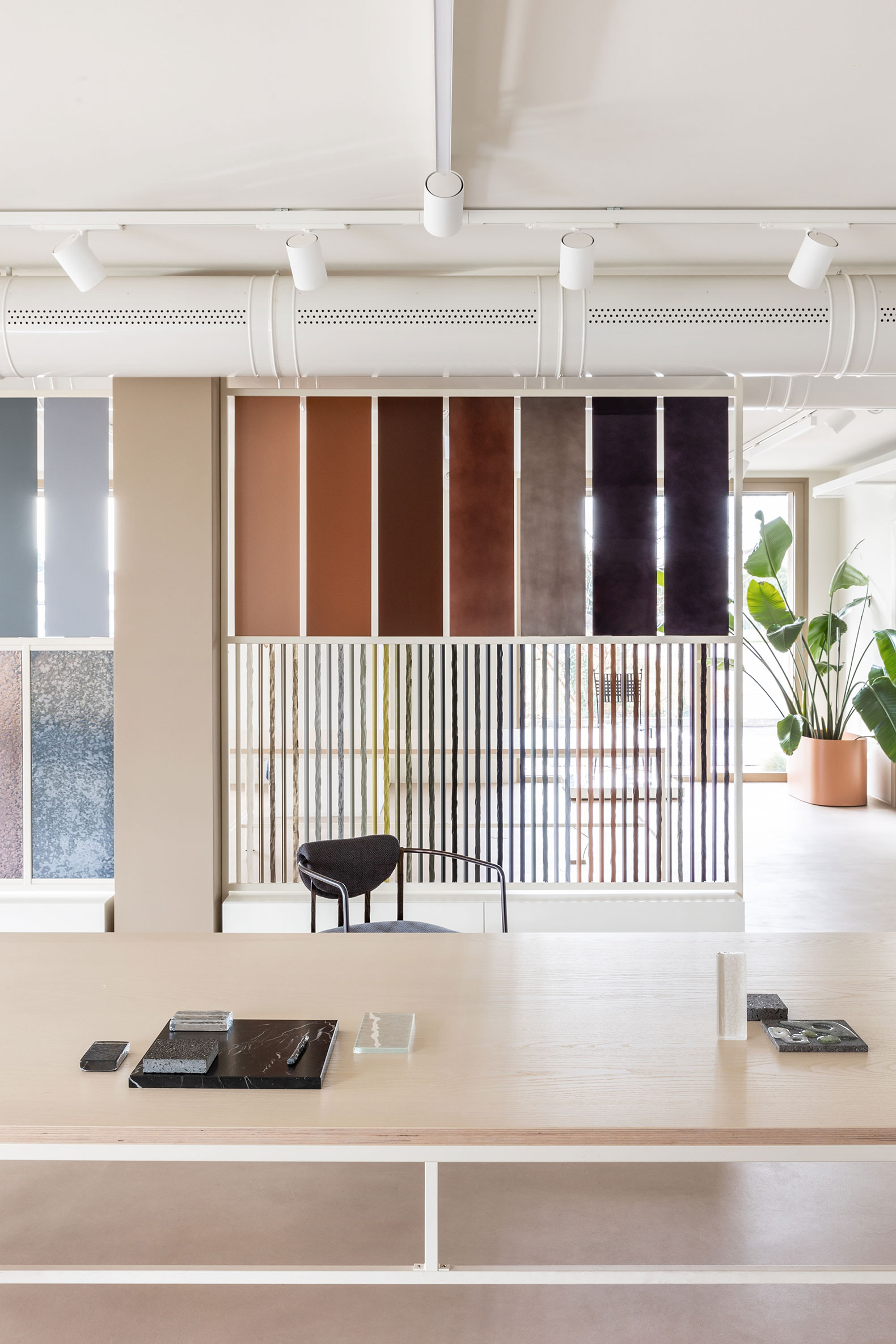
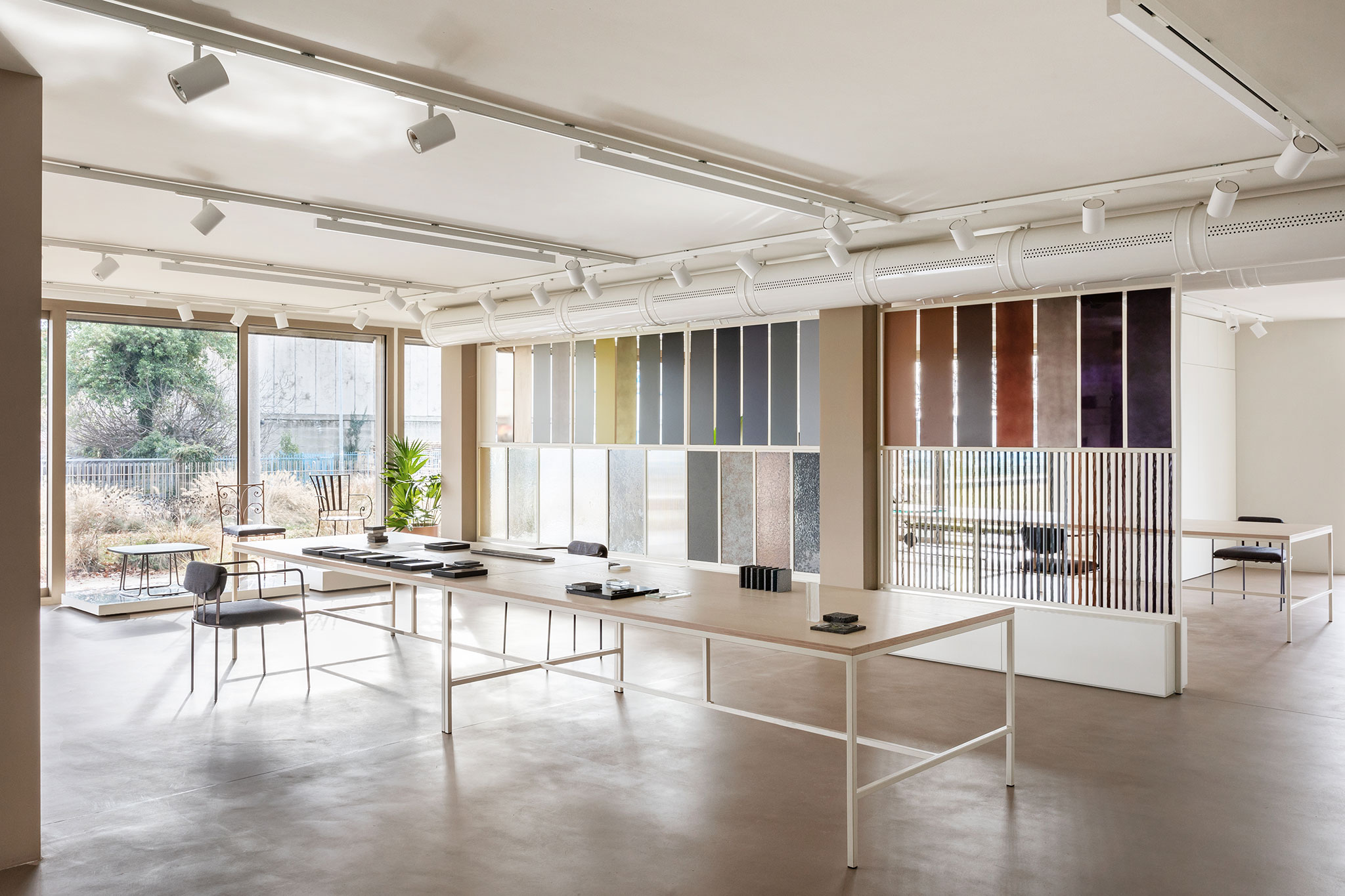
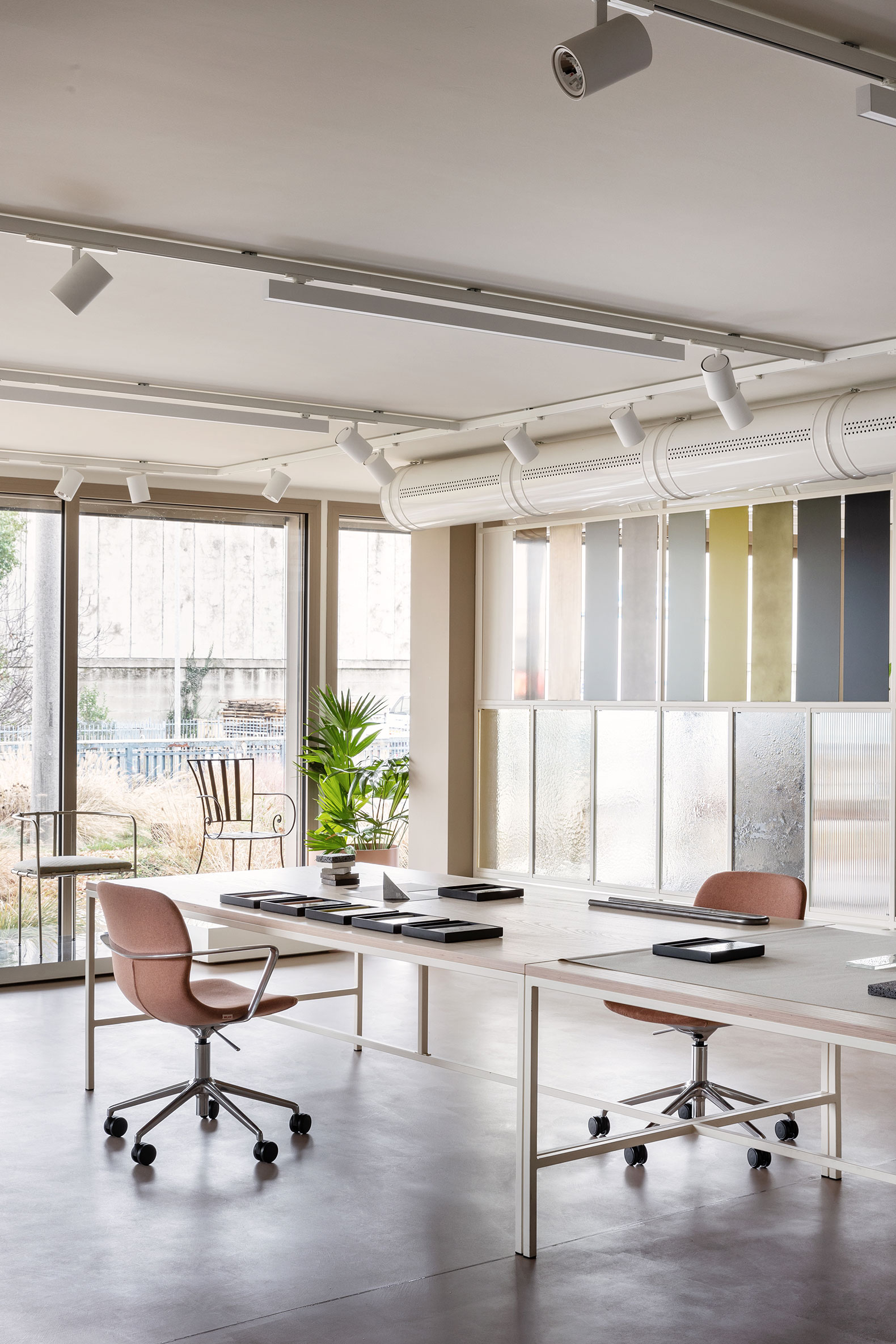
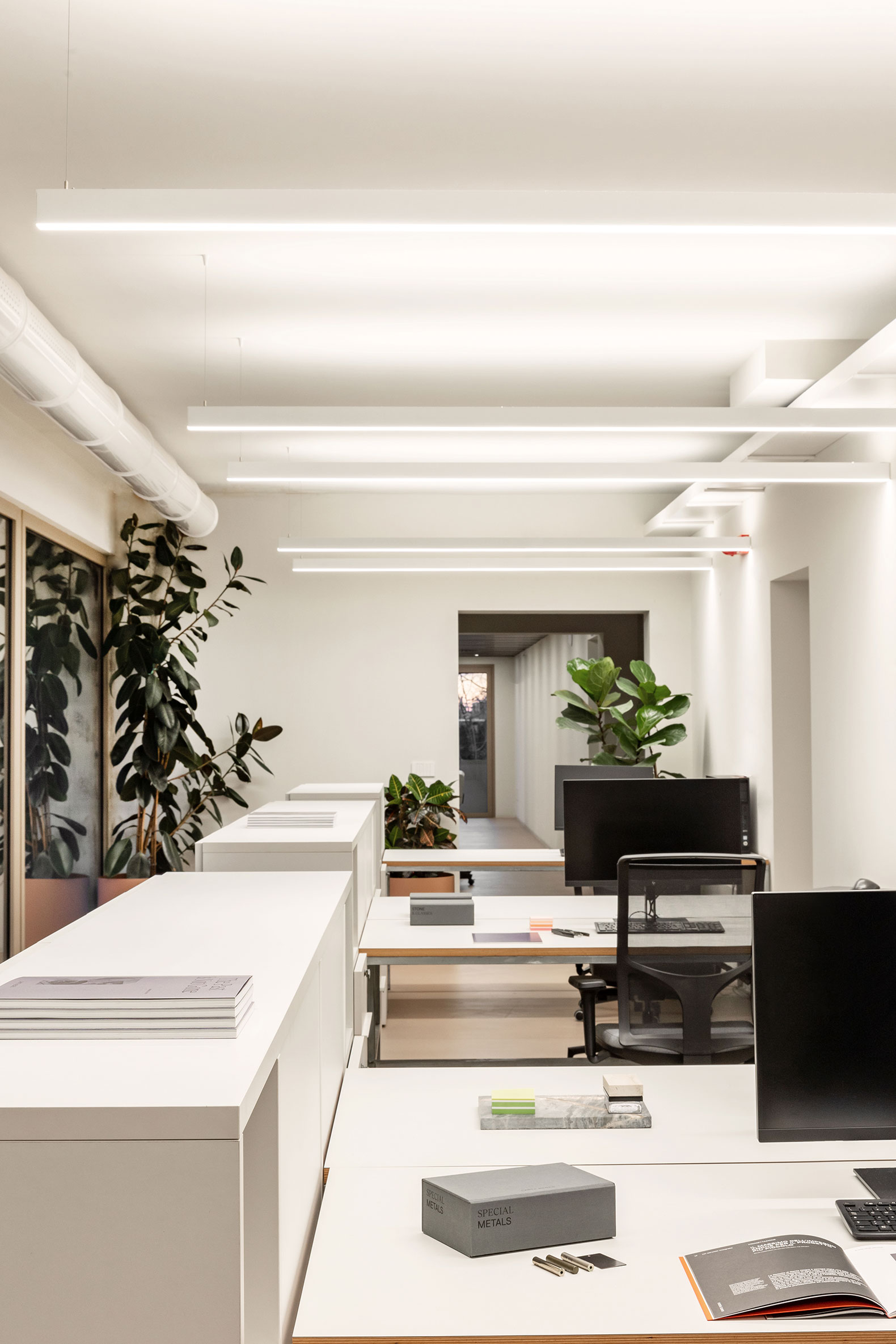
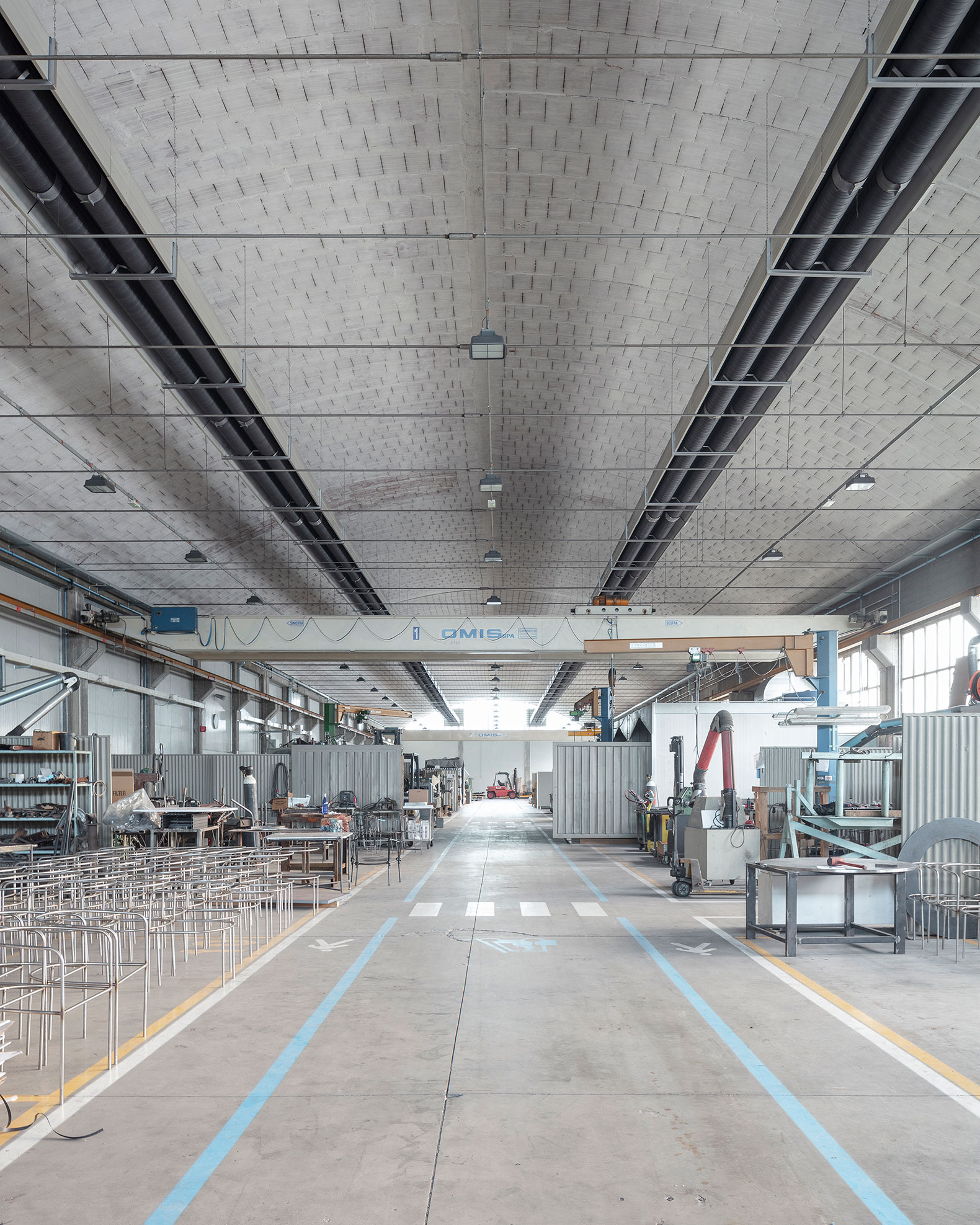
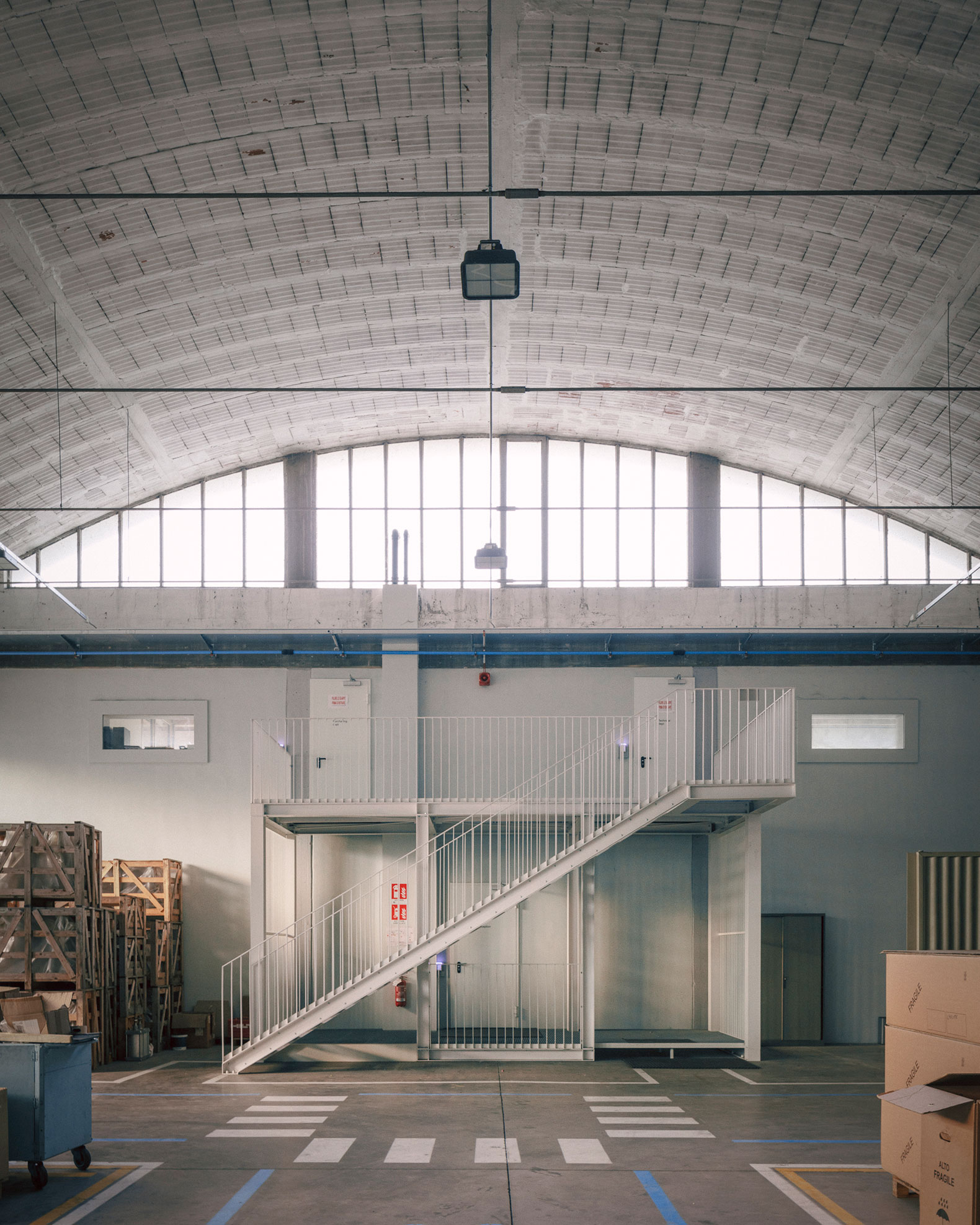
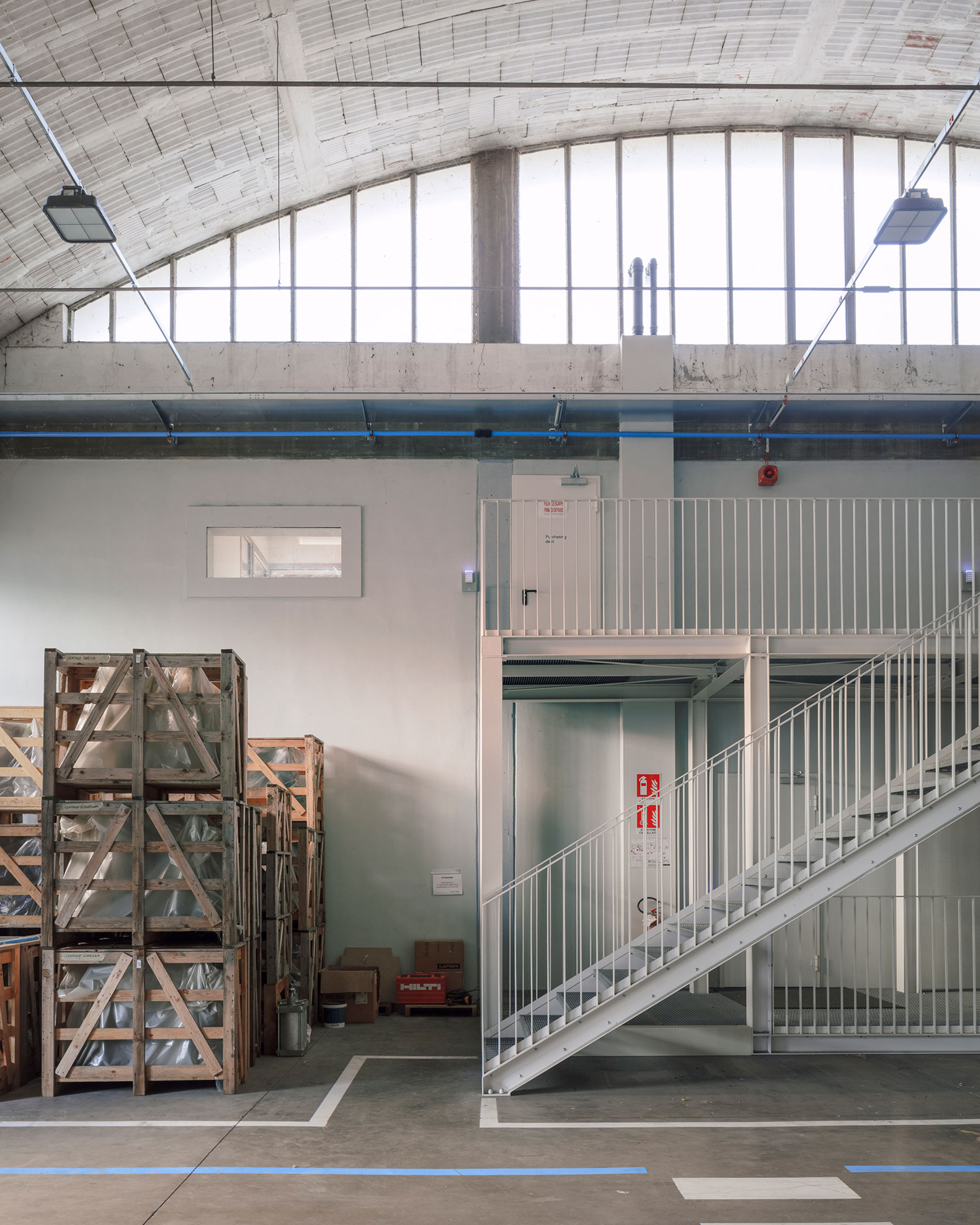
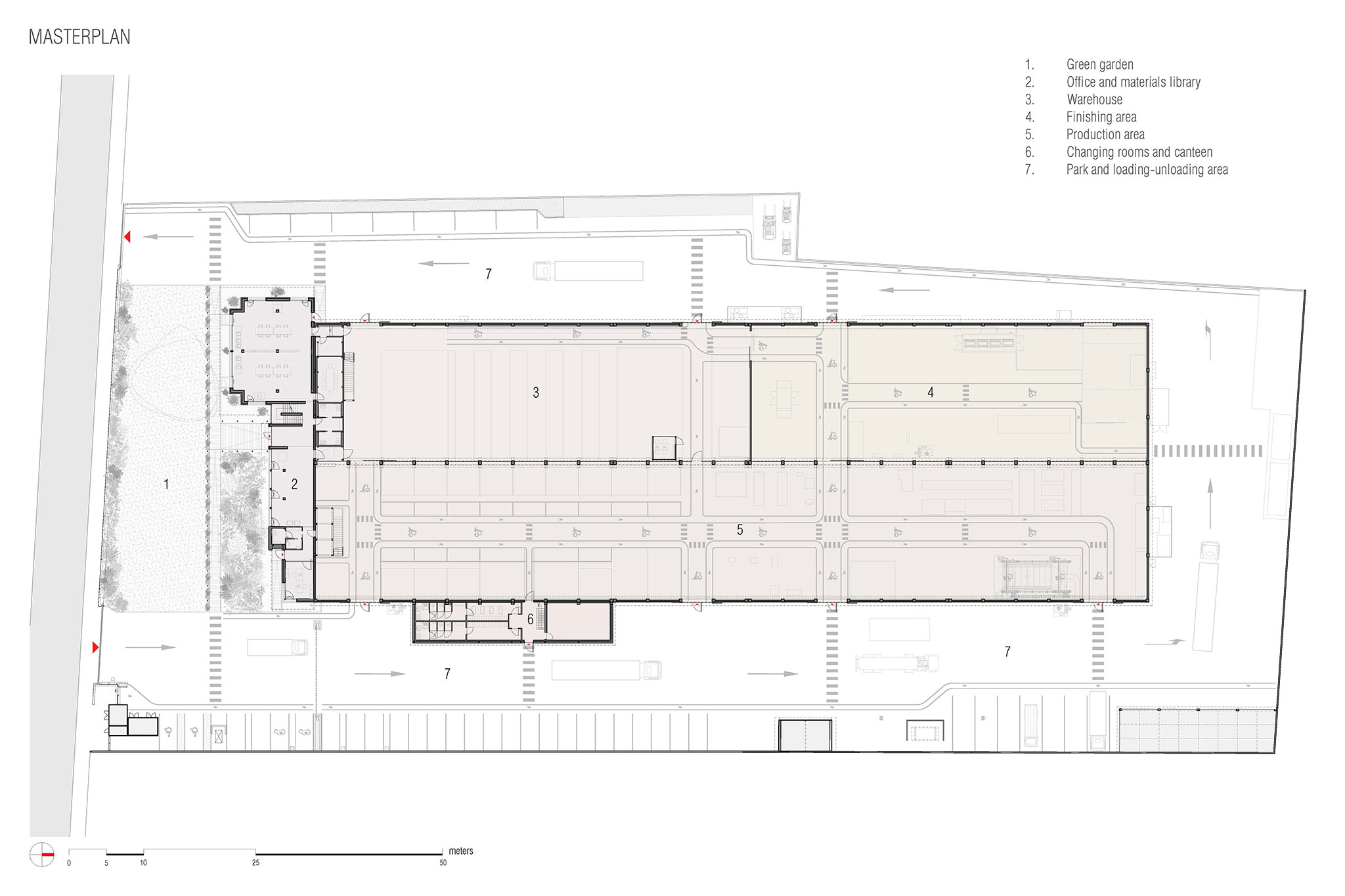
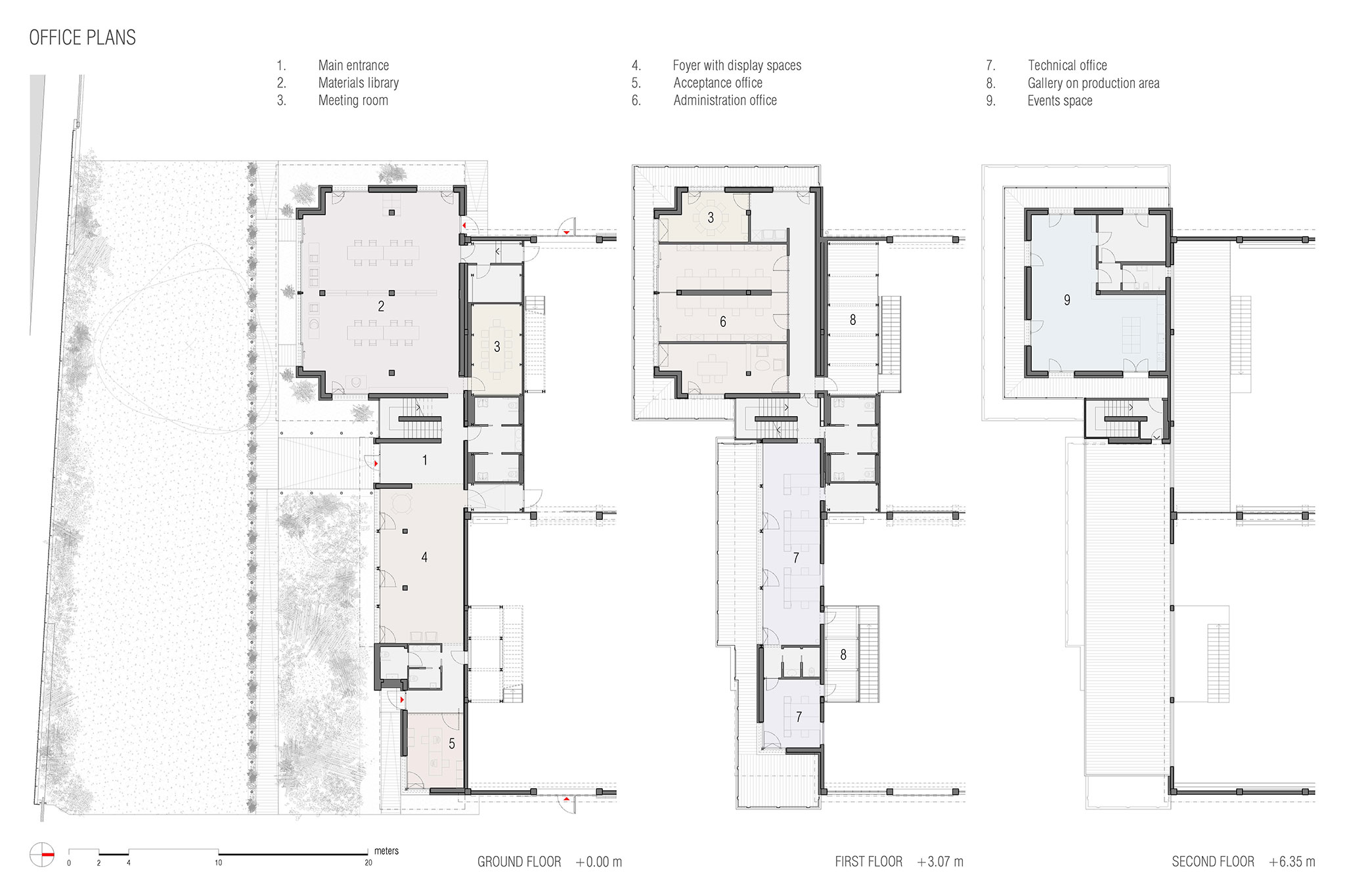
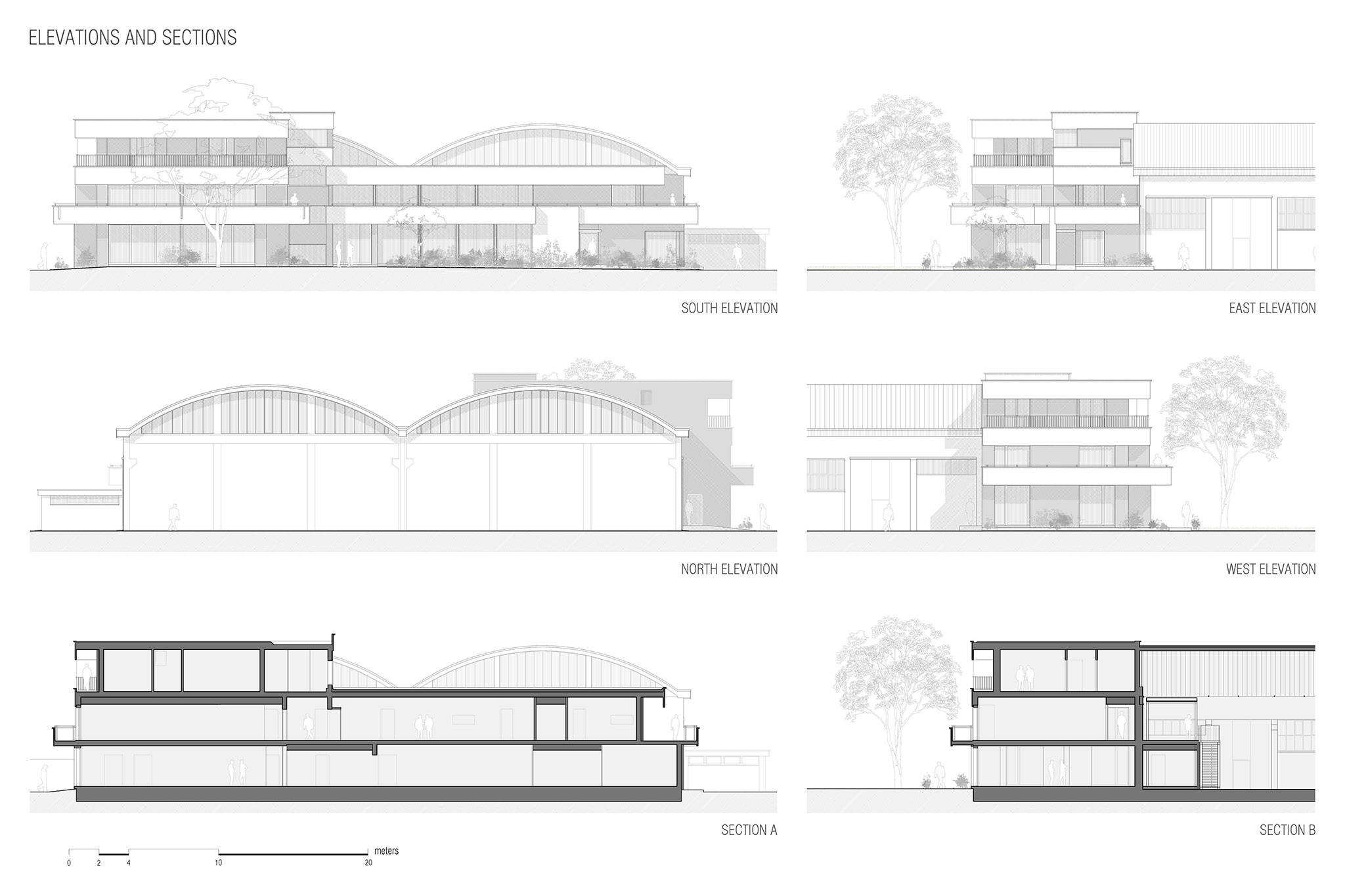
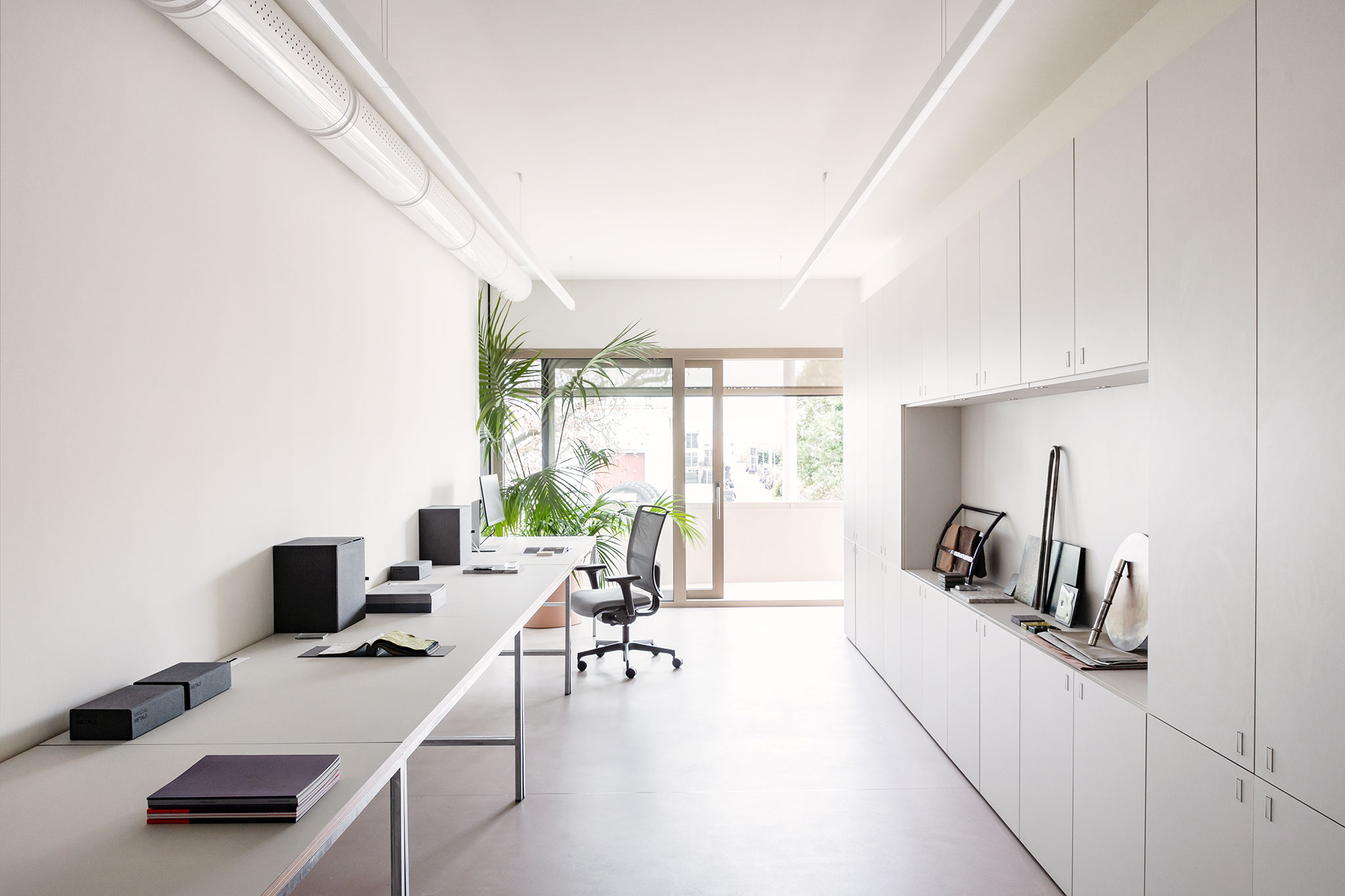
In this industrial renovation for Dante Negro, Studio Bressan placed the offices, materials library, and technical-administrative spaces in the main Brutalist-style section, while the production area is located in the double-vaulted volume.

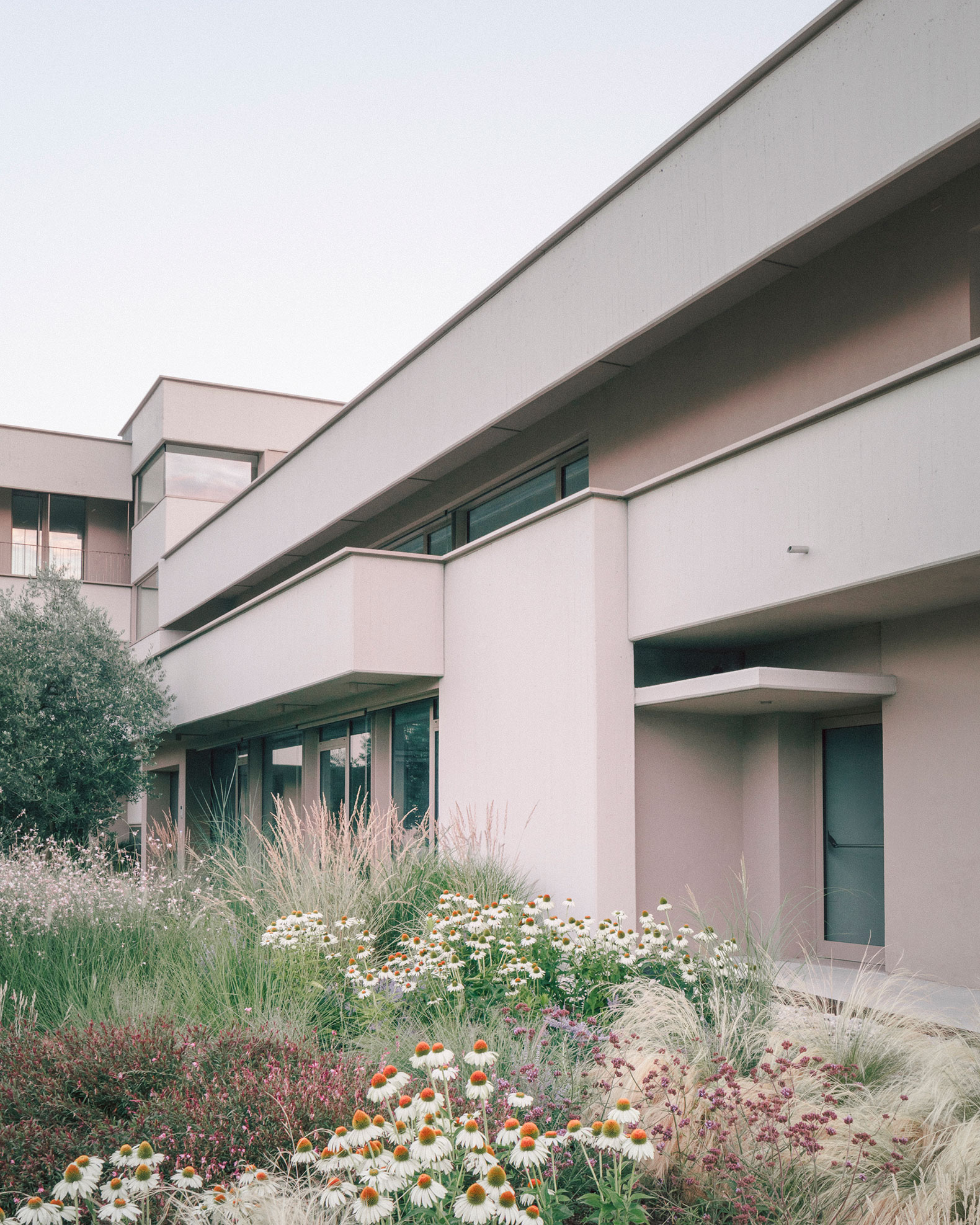
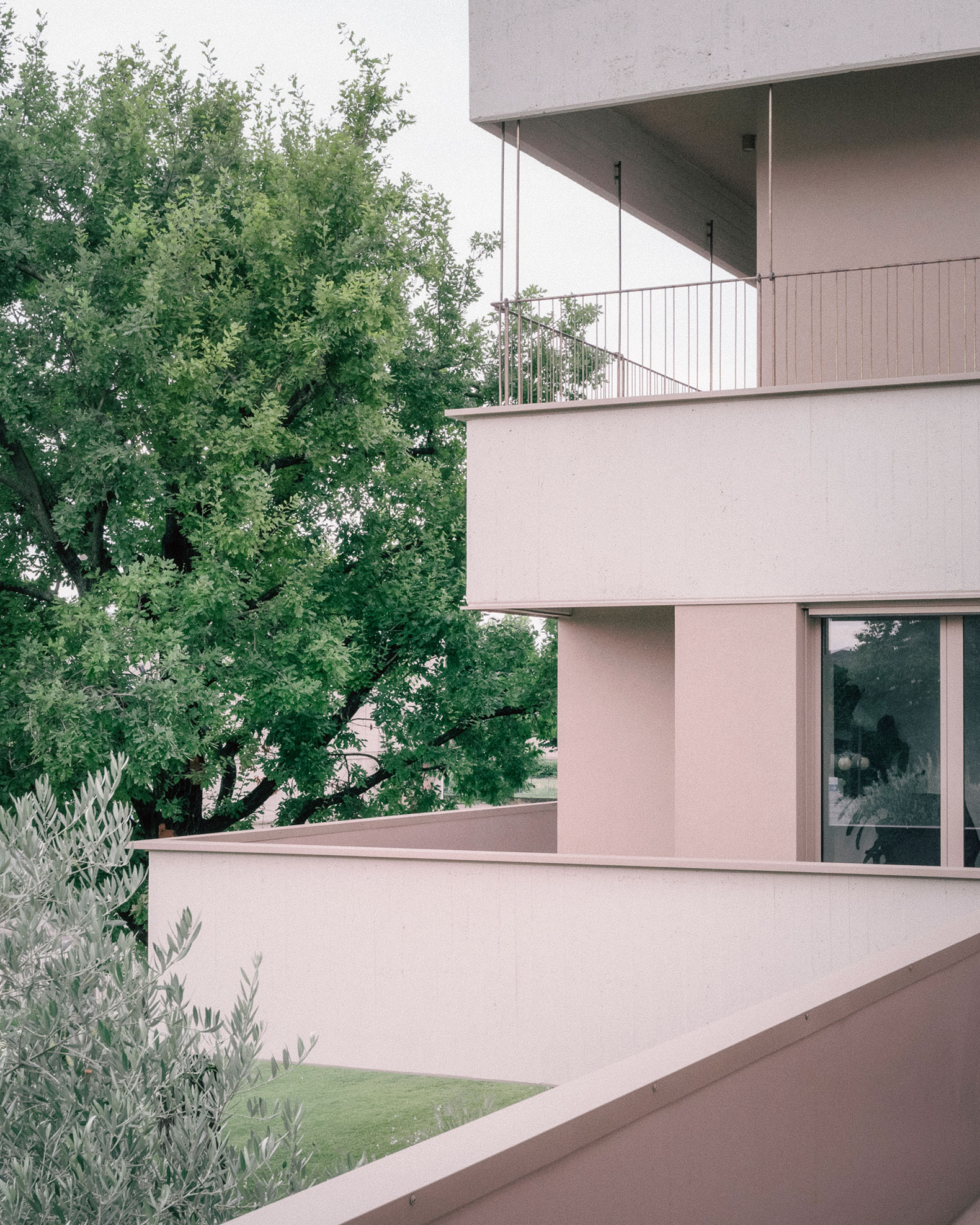
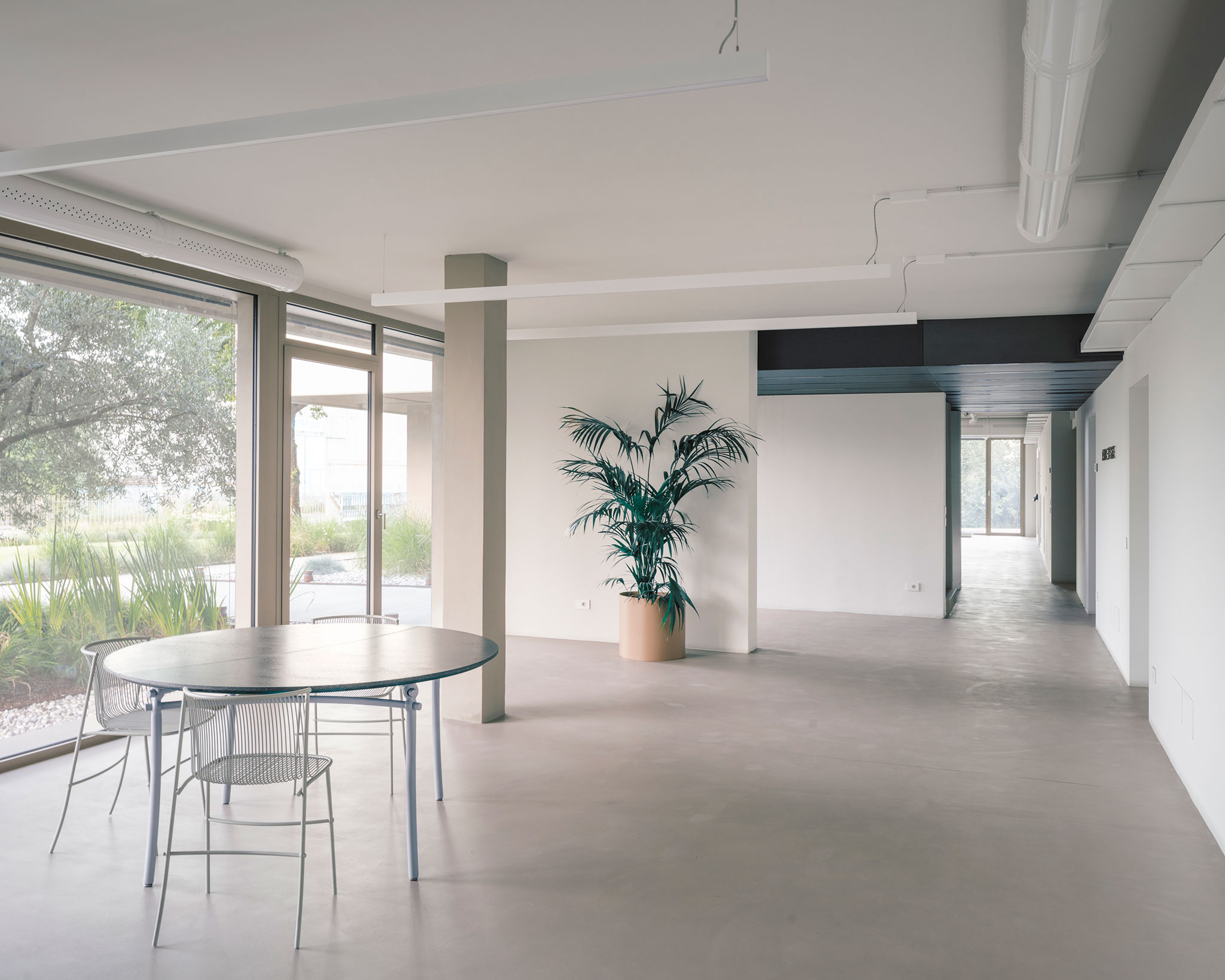
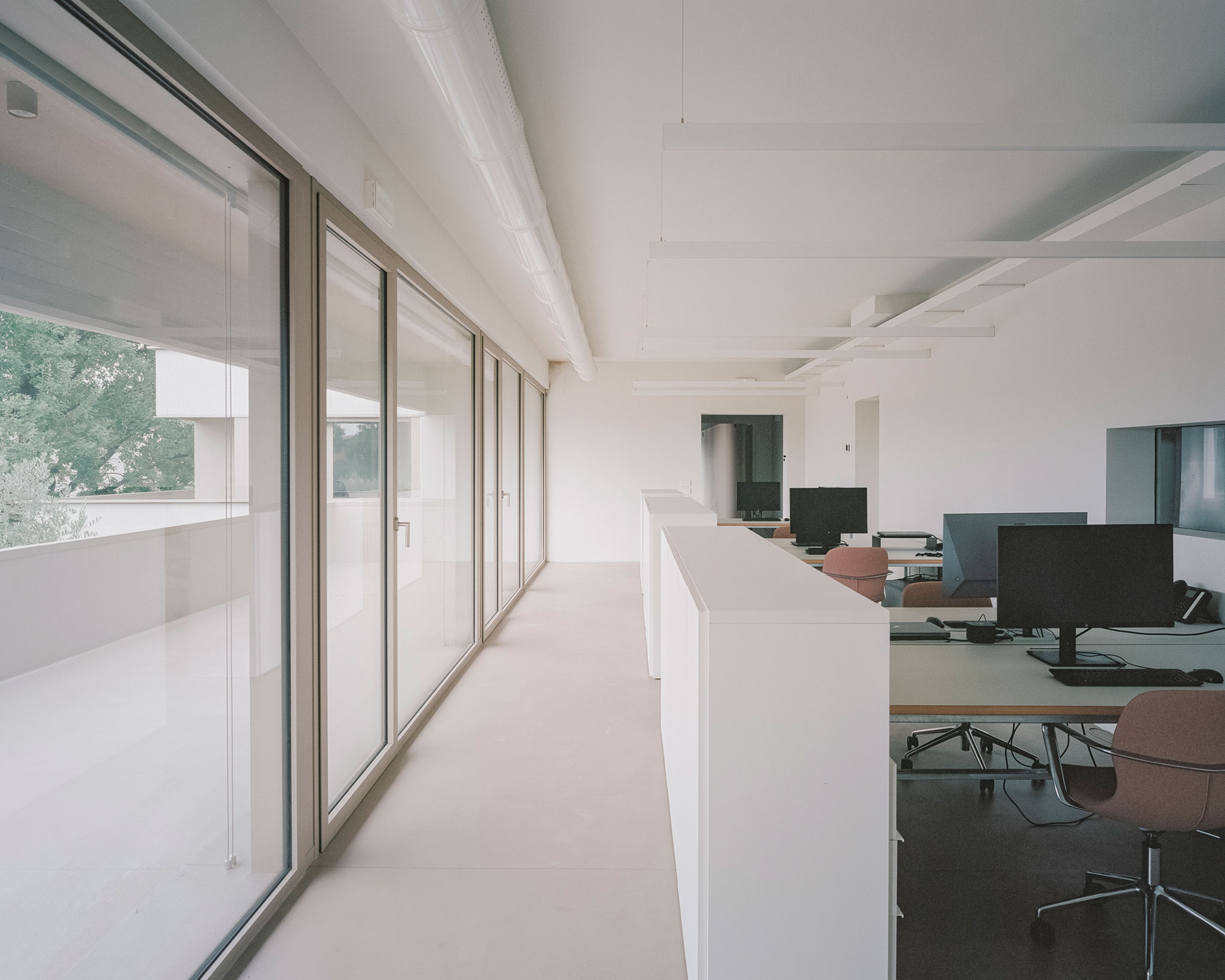
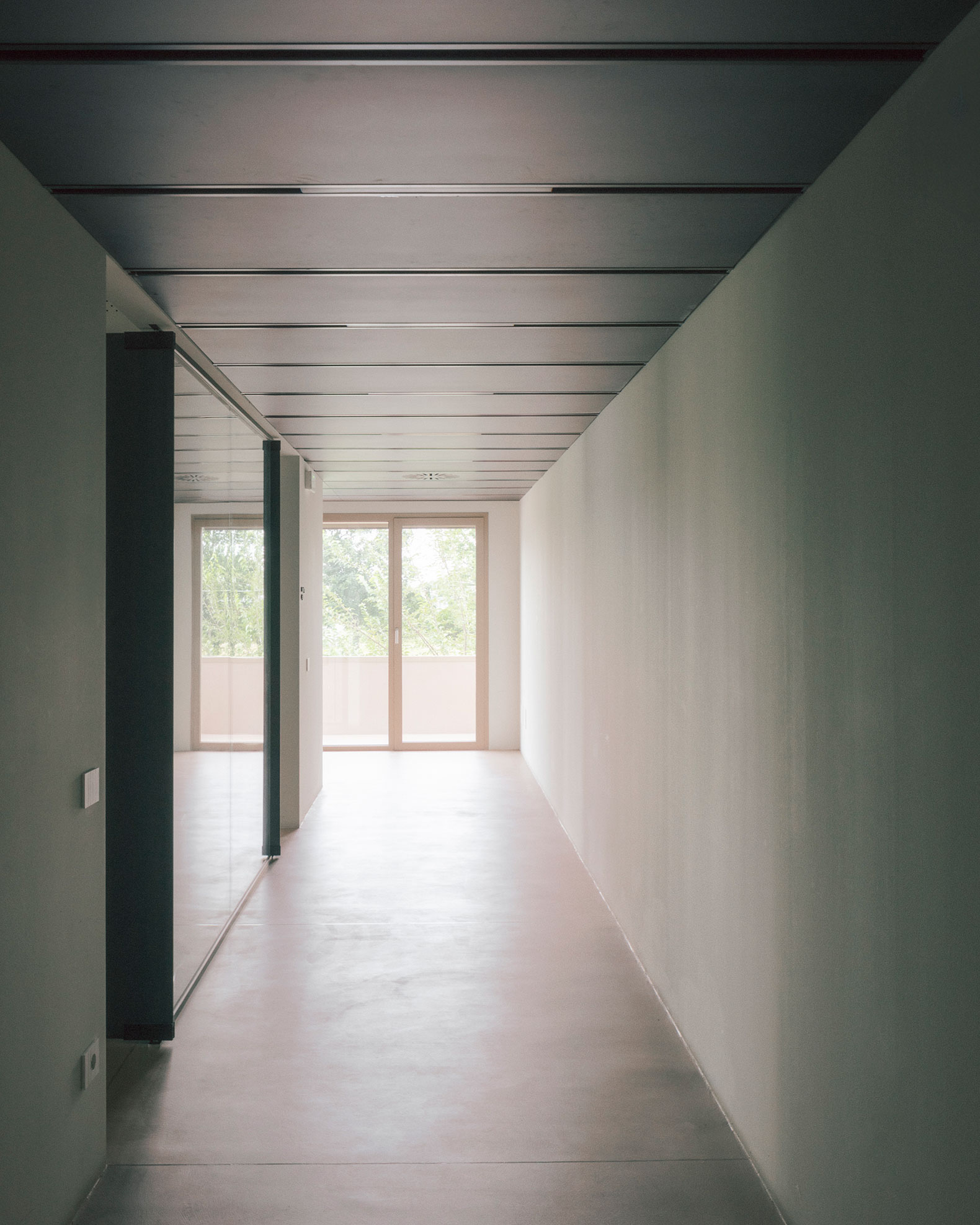
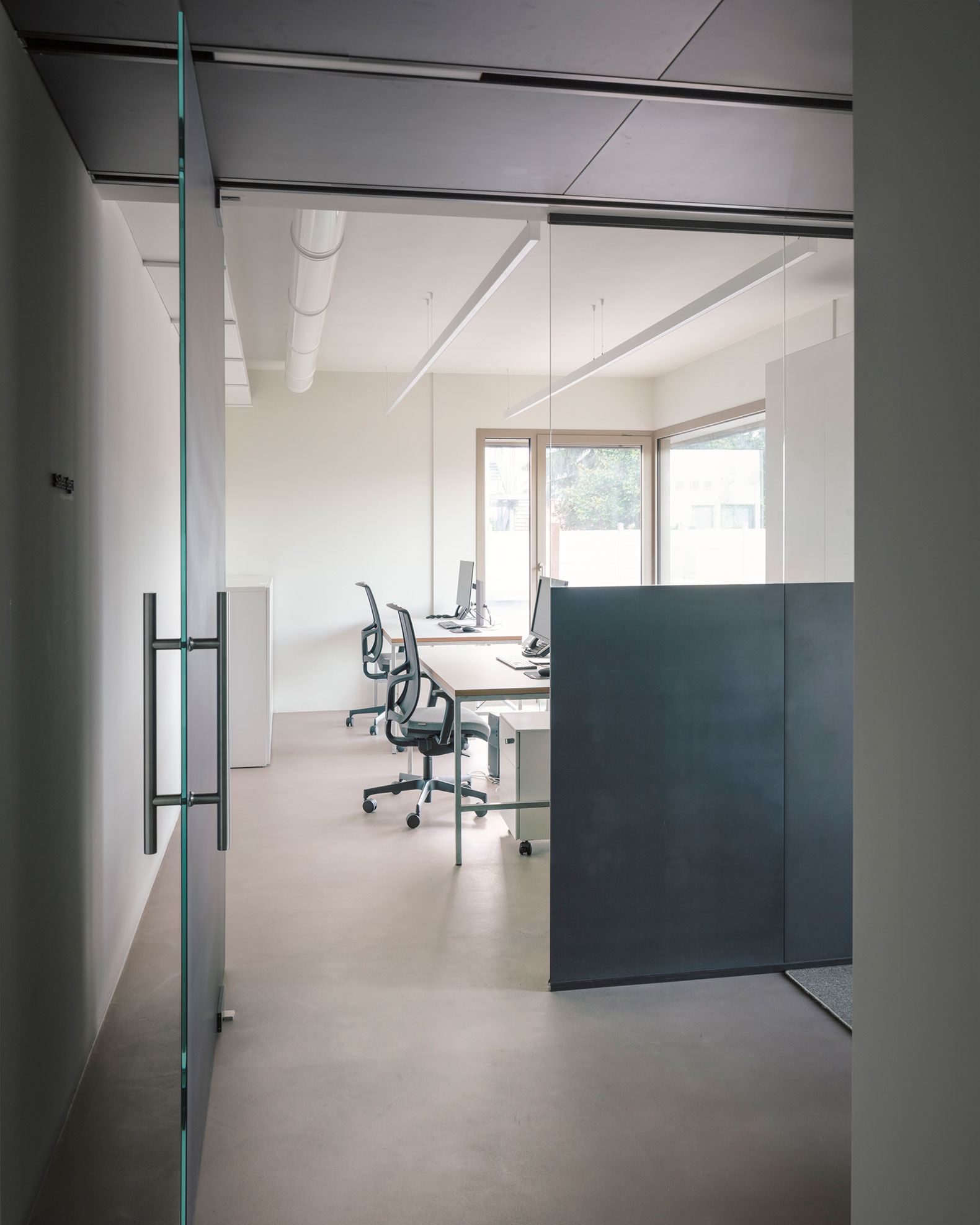
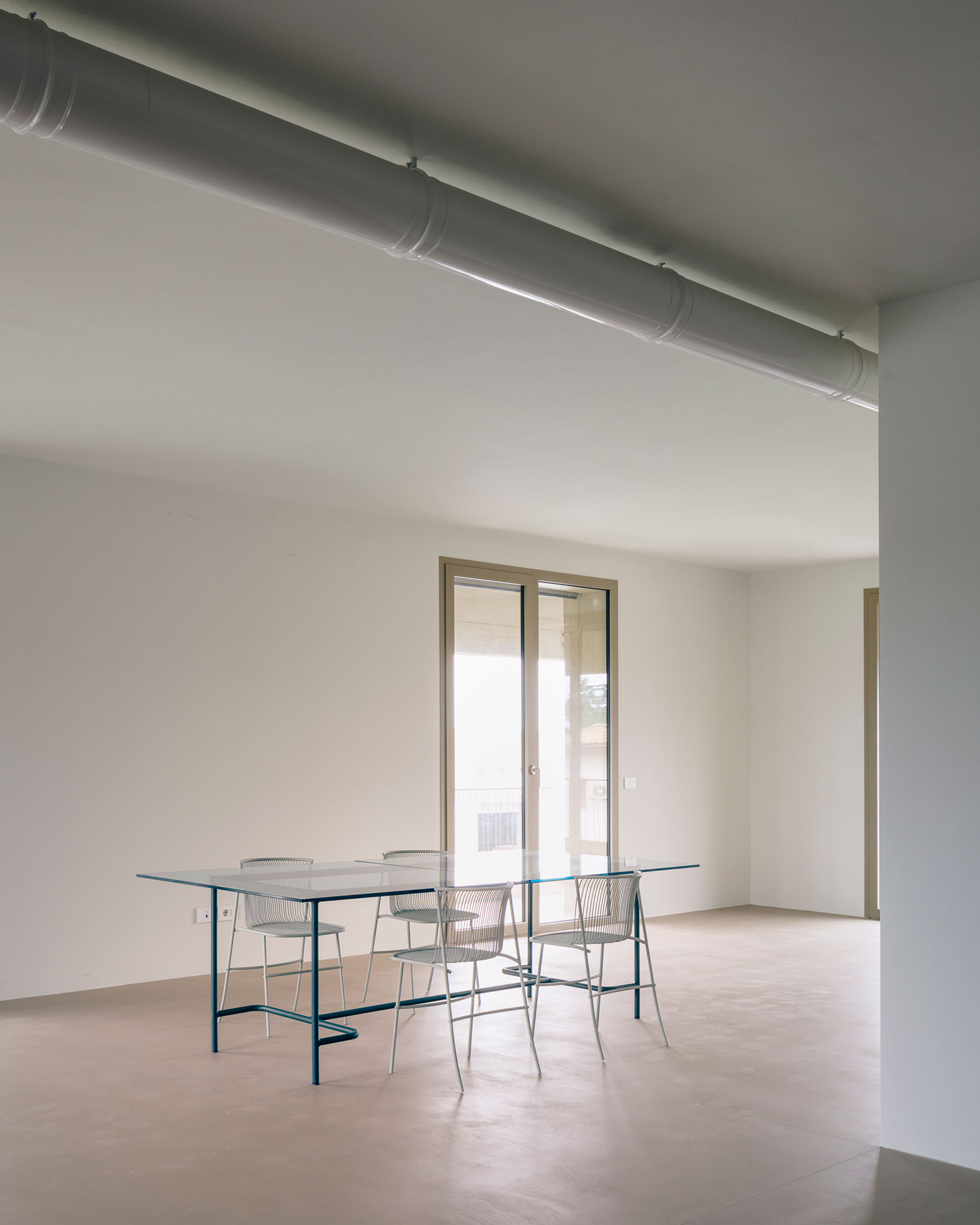
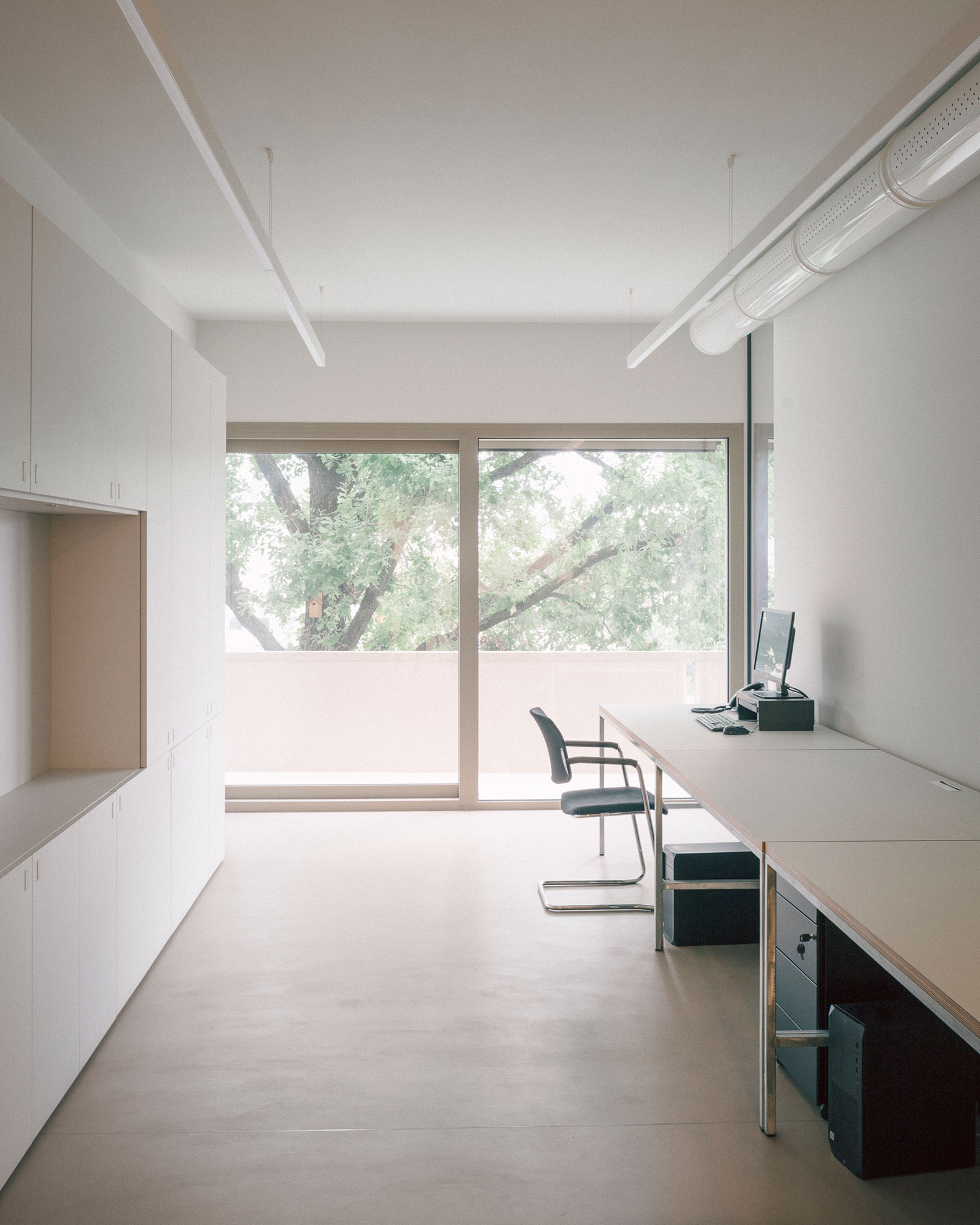
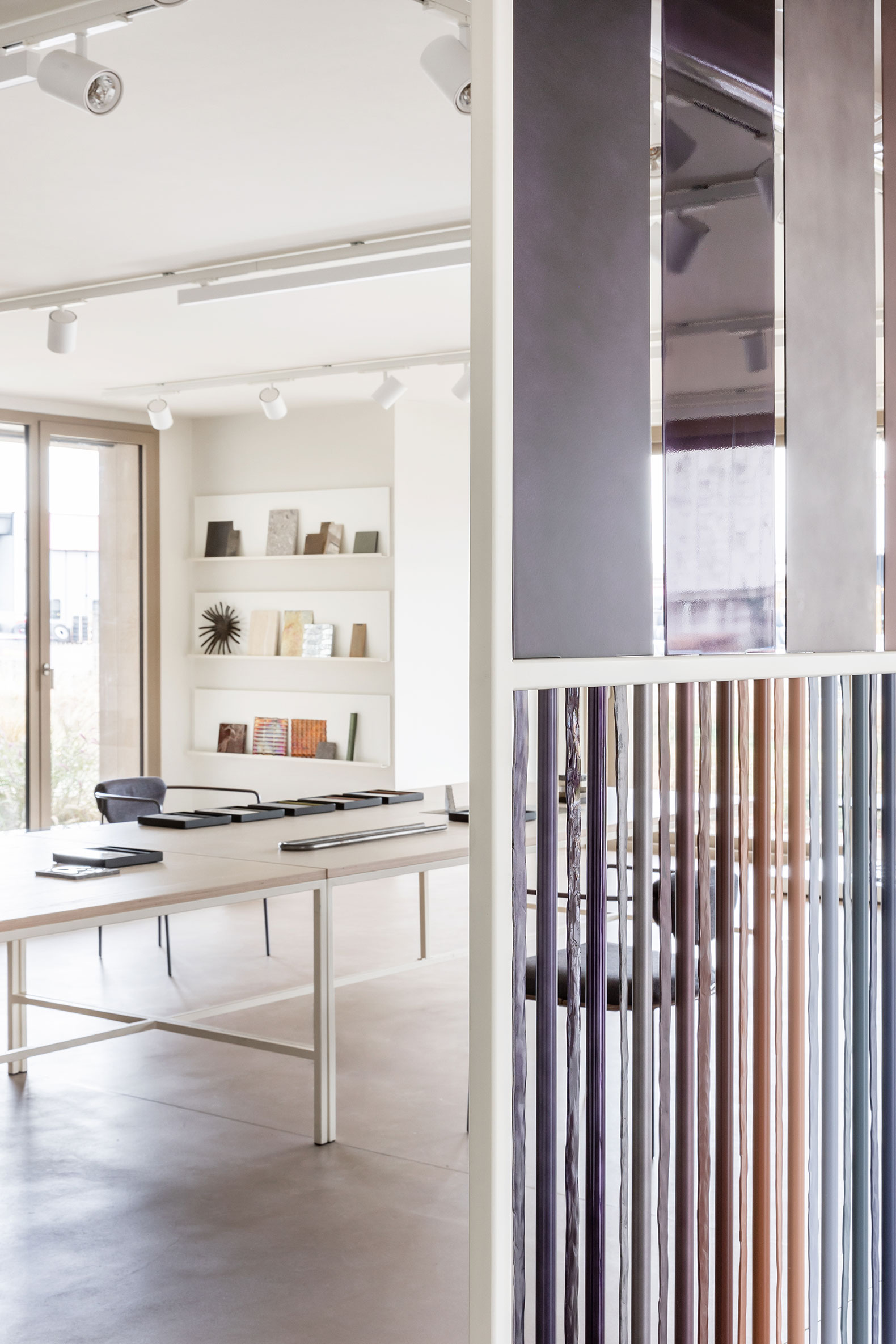
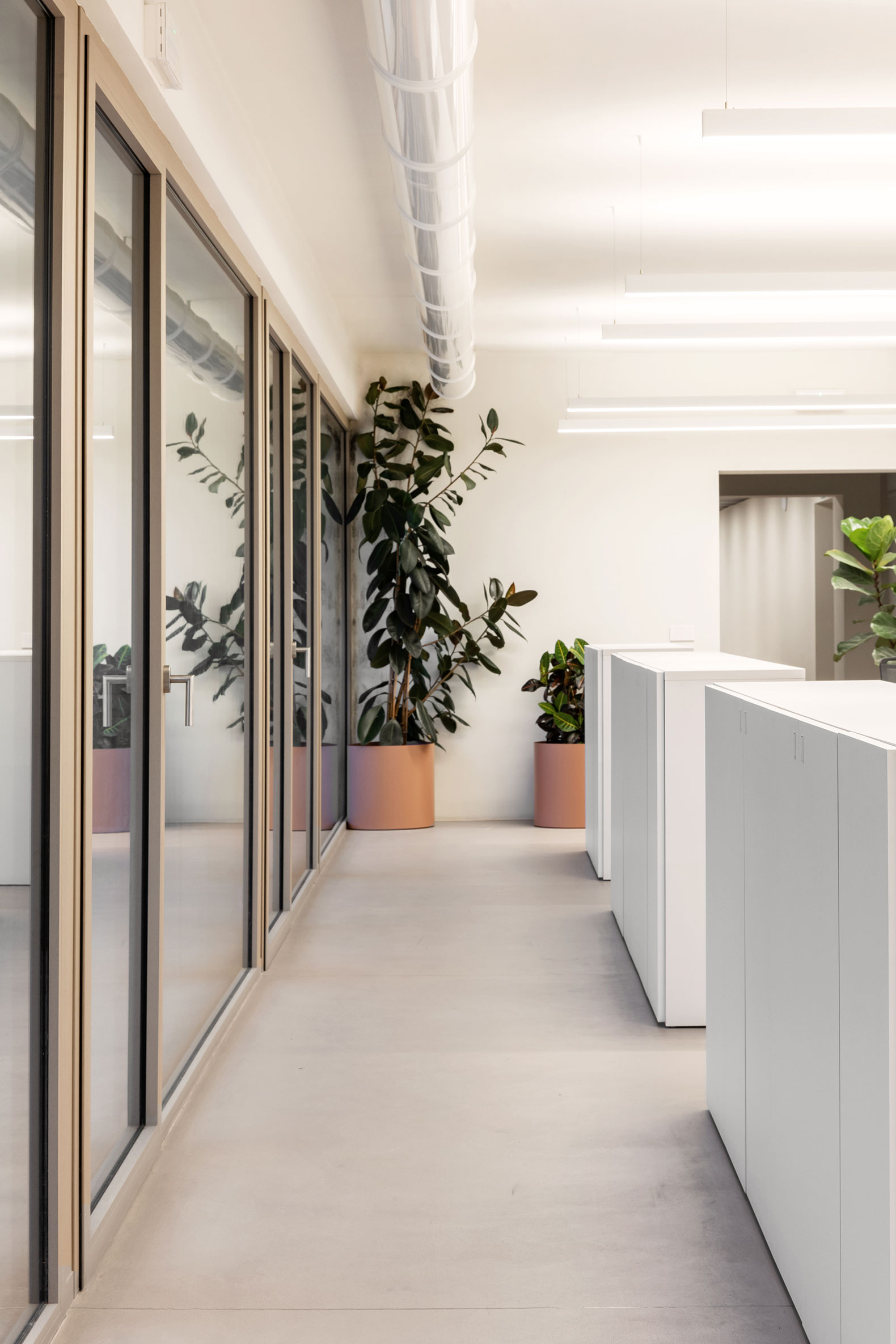
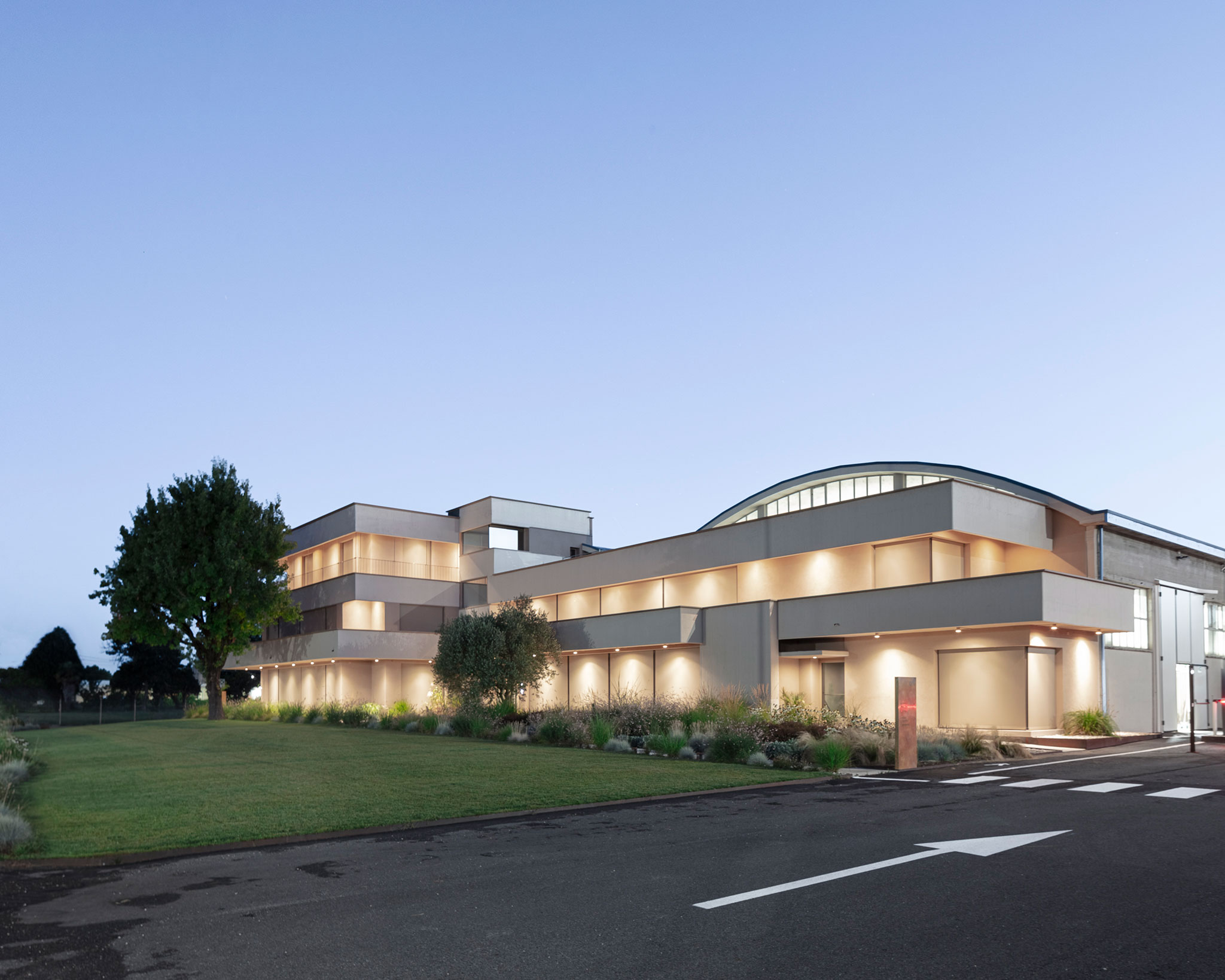
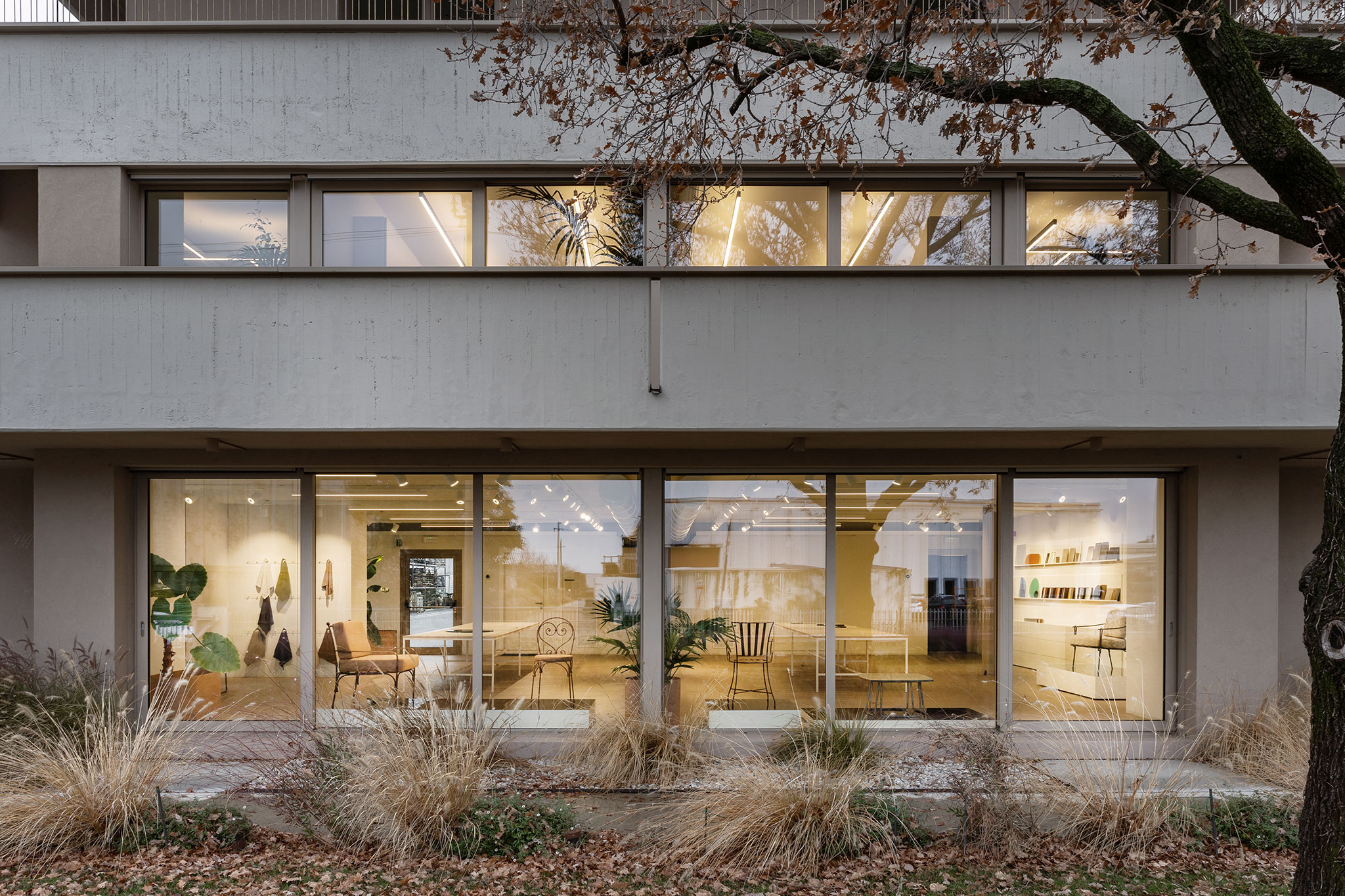
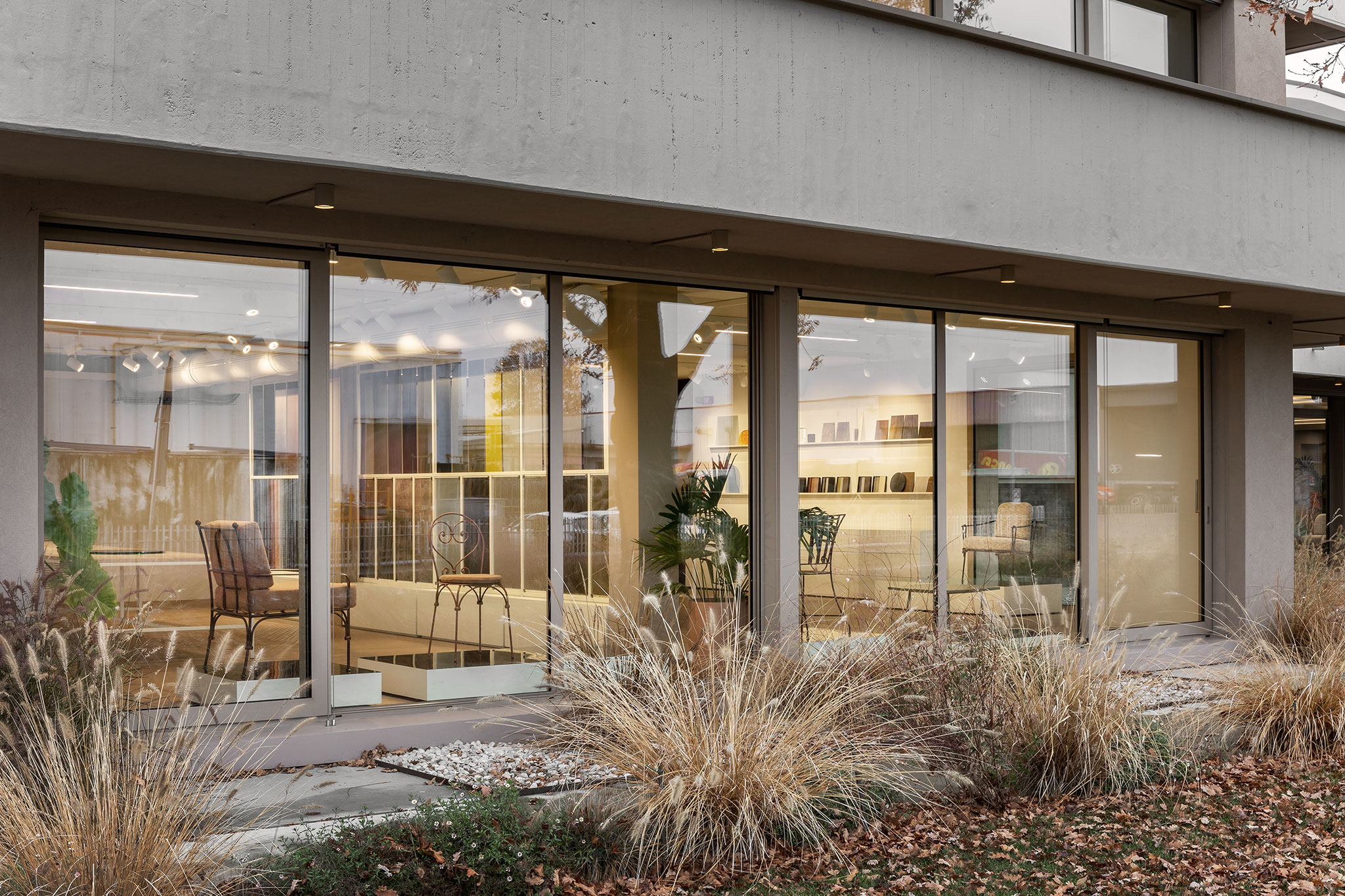
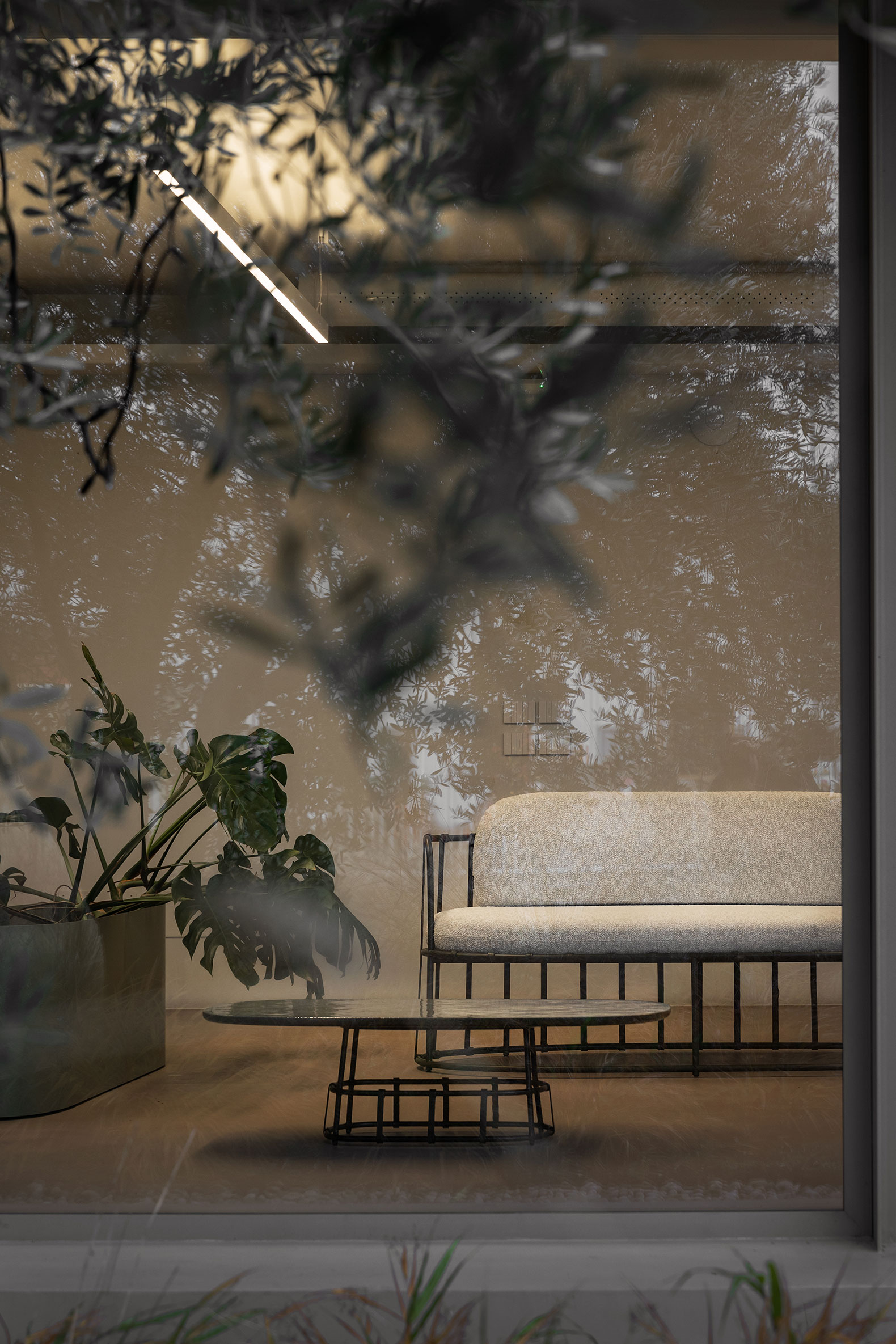
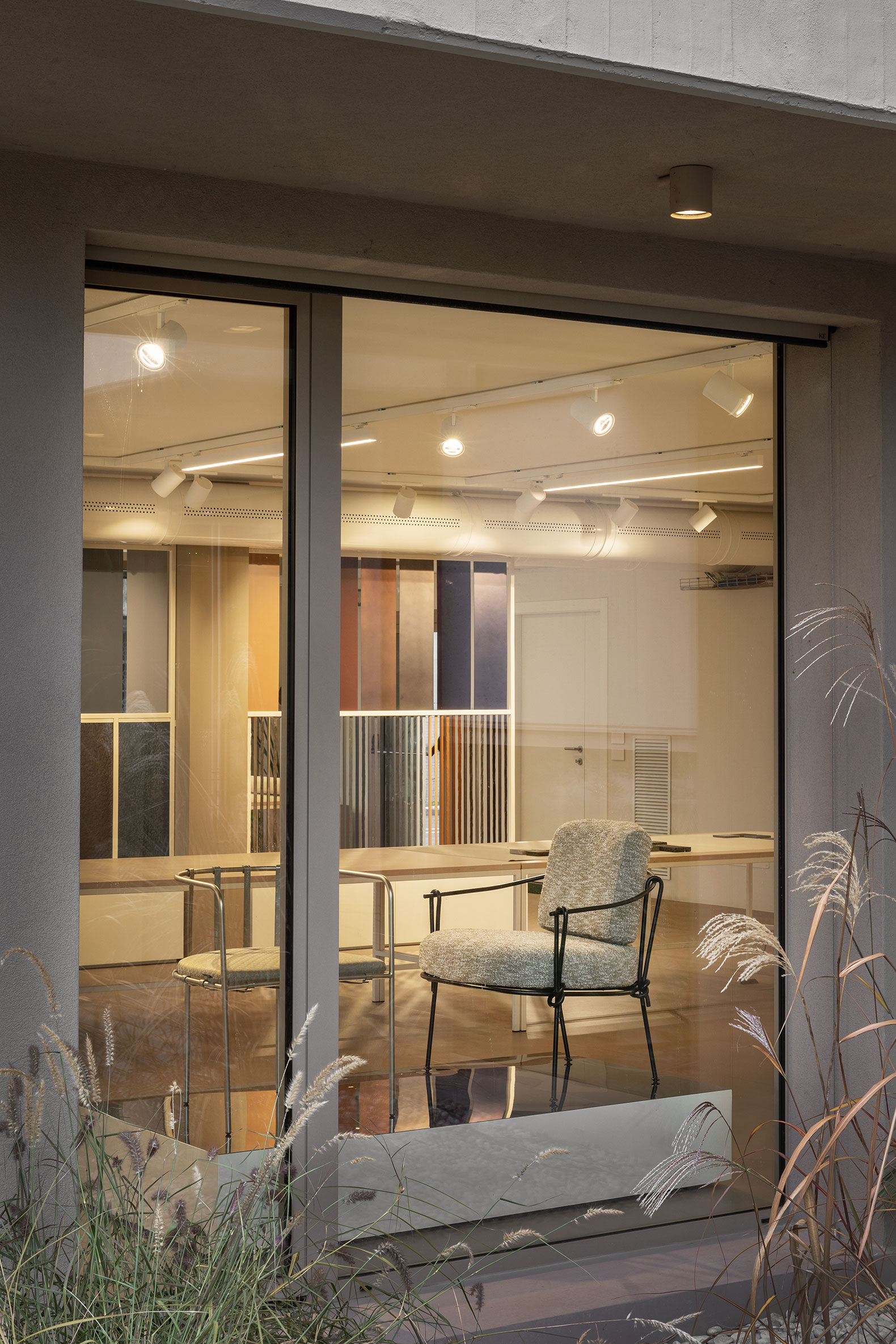
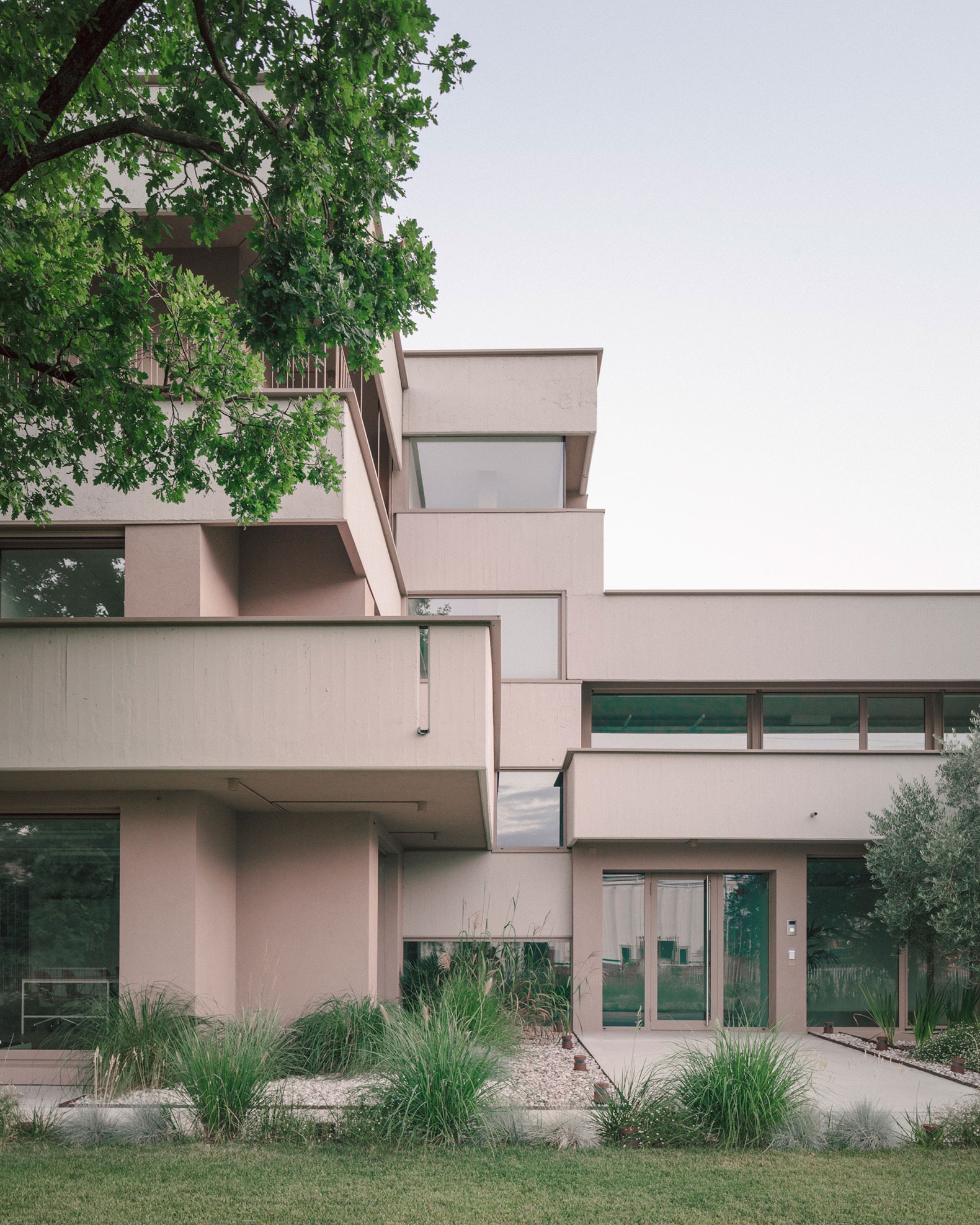
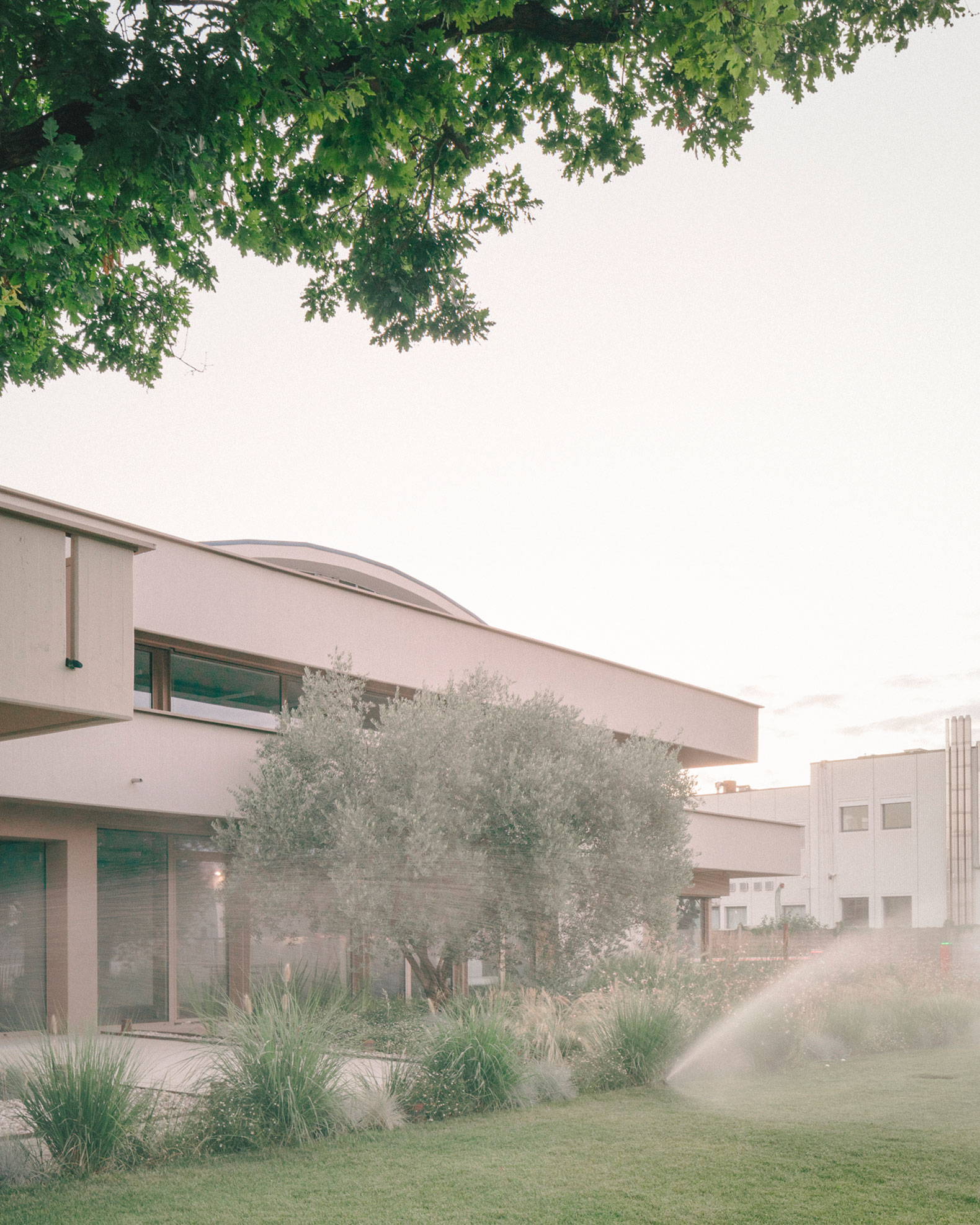
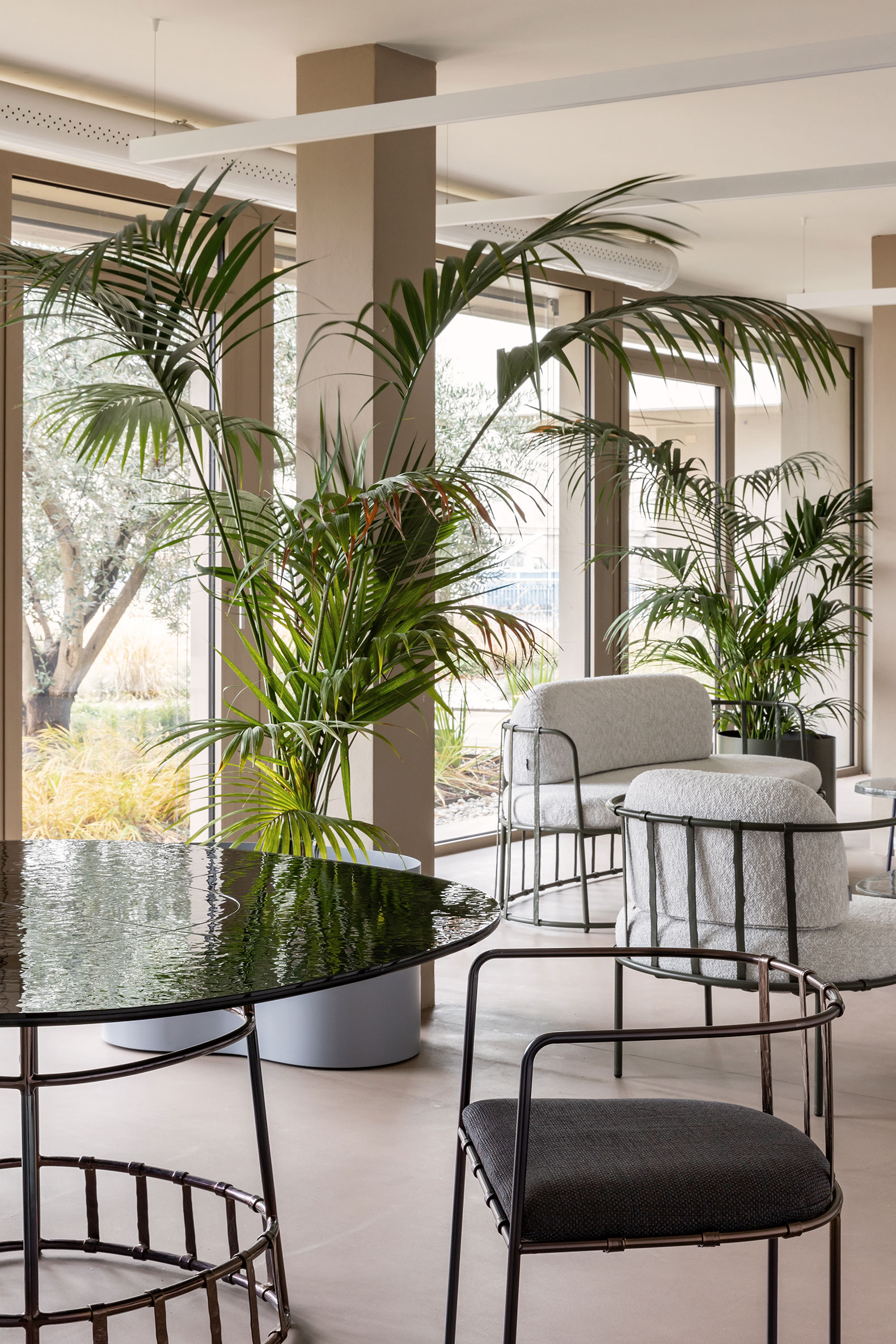
The design maintains the overall configuration of the structure, eliminating all non-structural internal partitions to create a fluid and open space. Large, continuous openings have been added to the facade, emphasizing the relationship between the exterior and interior and improving natural light in the workspaces.
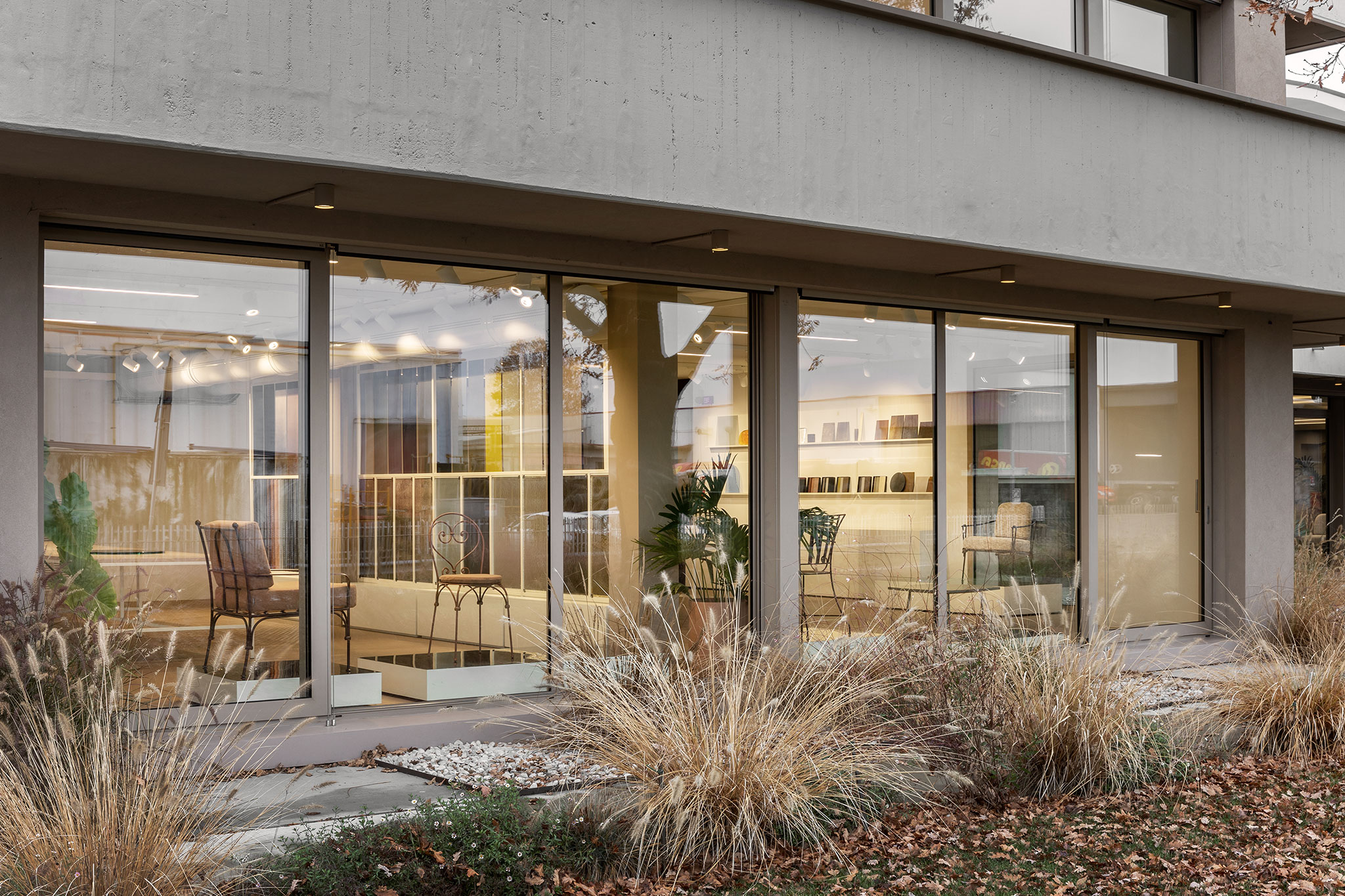
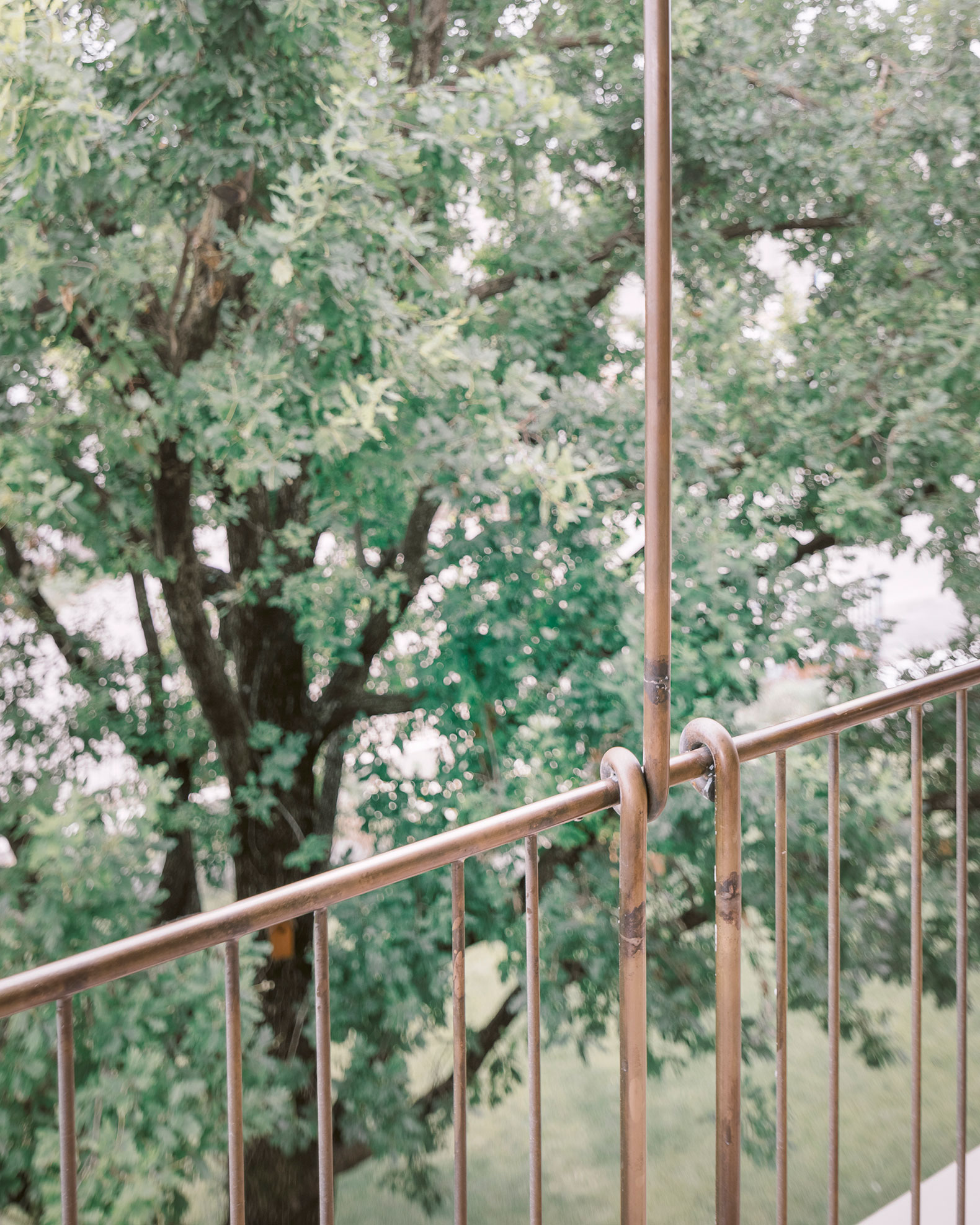
Industrial Redevelopment for Dante Negro. Photograph by Aldo Amoretti.

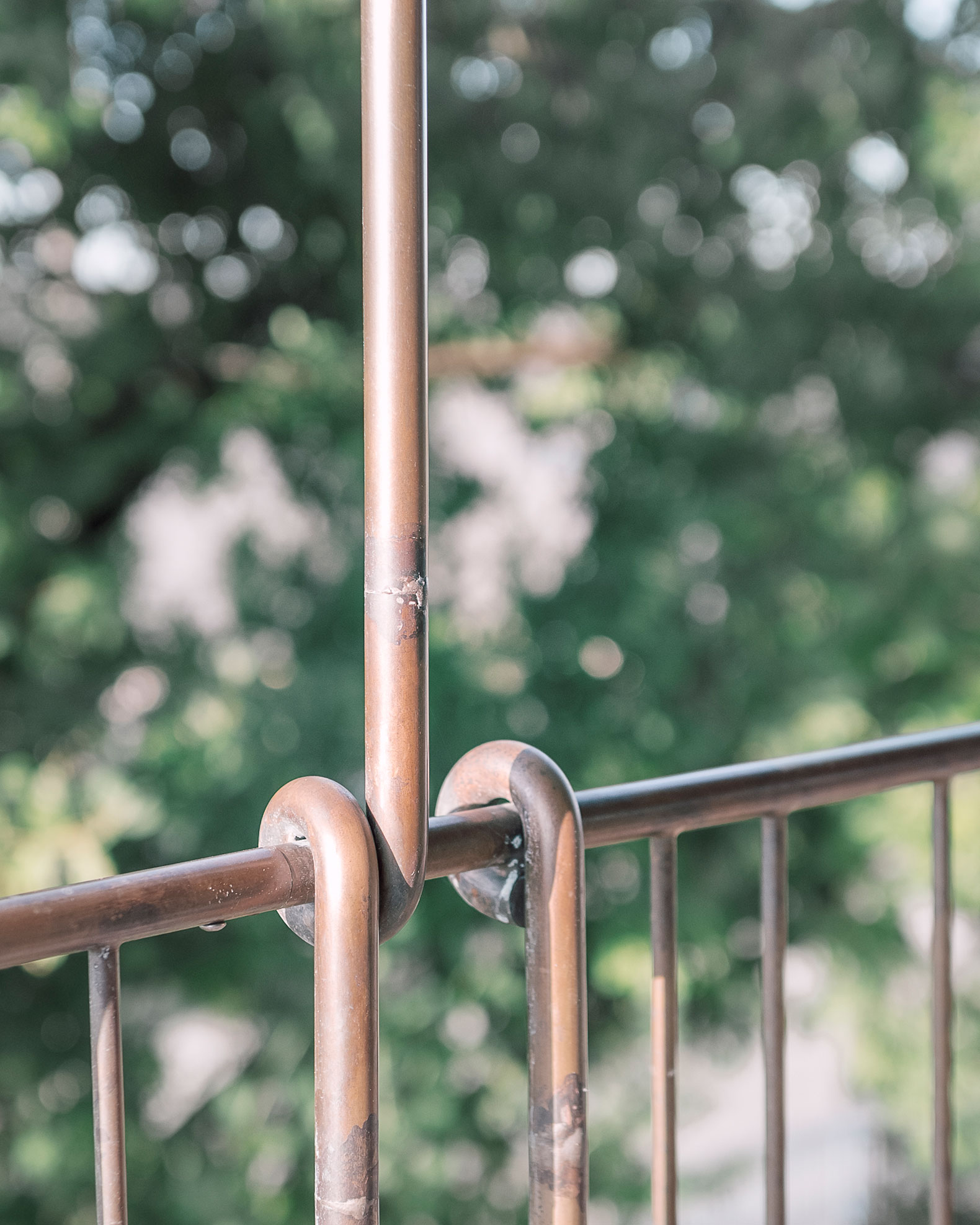
Industrial Redevelopment for Dante Negro. Photograph by Giovanni Nardi.

Project description by Studio Bressan

The industrial redevelopment project concerns an abandoned production building, constructed in the early 1970s and located along a major industrial and commercial route in Villorba, north of Treviso. The project enabled the establishment of the new headquarters of Dante Negro, a company of master blacksmiths specializing in the production of metal design furniture.

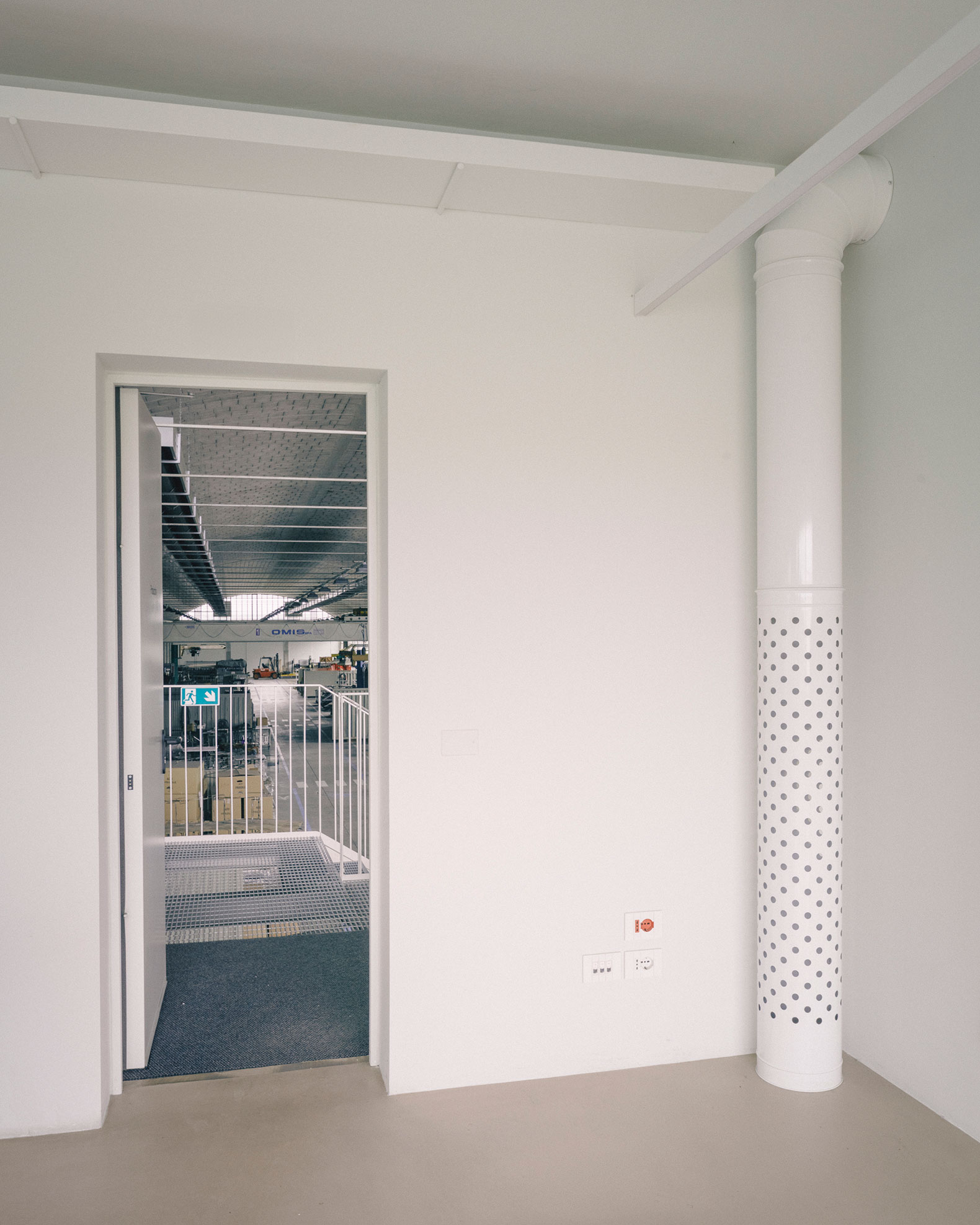
The original building consisted of two parts: in the brutalist-style head section, the executive offices, material library and technical-administrative spaces were created; while in the 112 m deep vaulted double volume, the production area was established. The decision was made to maintain the general configuration of the structure, adapting the interior layout to new functionalities. The new production layout strengthened the functional relationship between interior spaces and external yards, optimizing the transformation cycle of raw materials, which arrive from the east gate and emerge as finished products from the west gate.

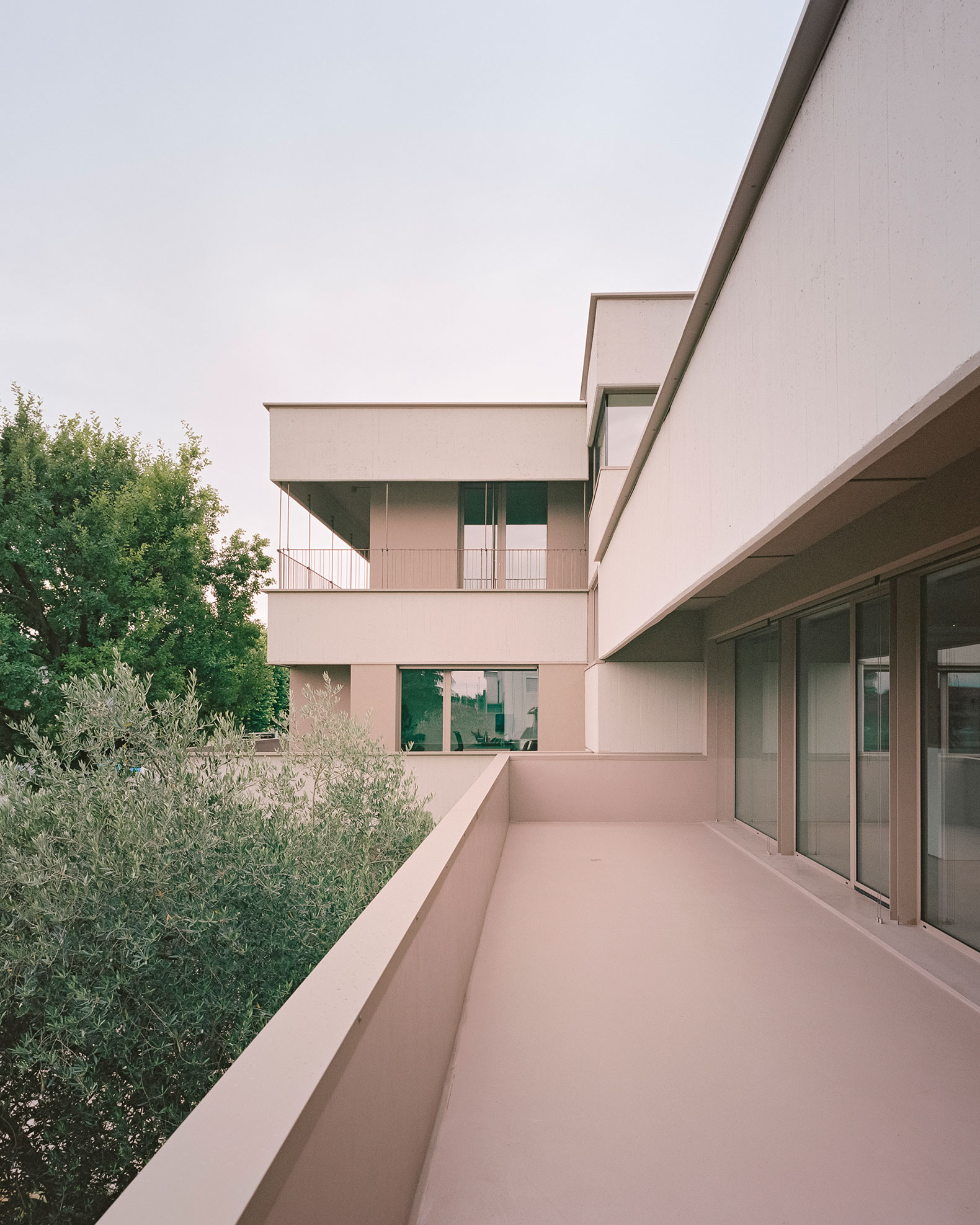
Industrial Redevelopment for Dante Negro. Photograph by Aldo Amoretti.

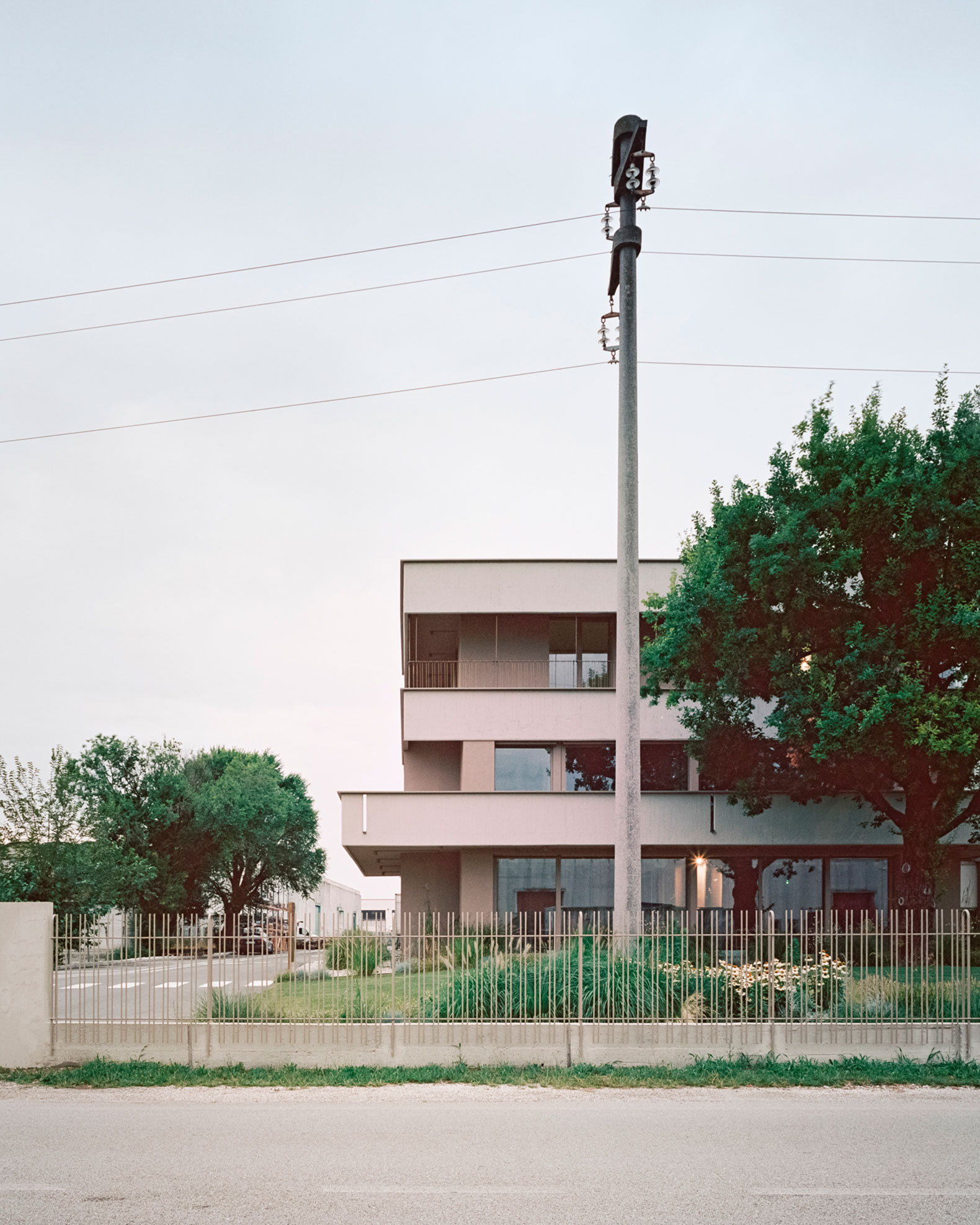
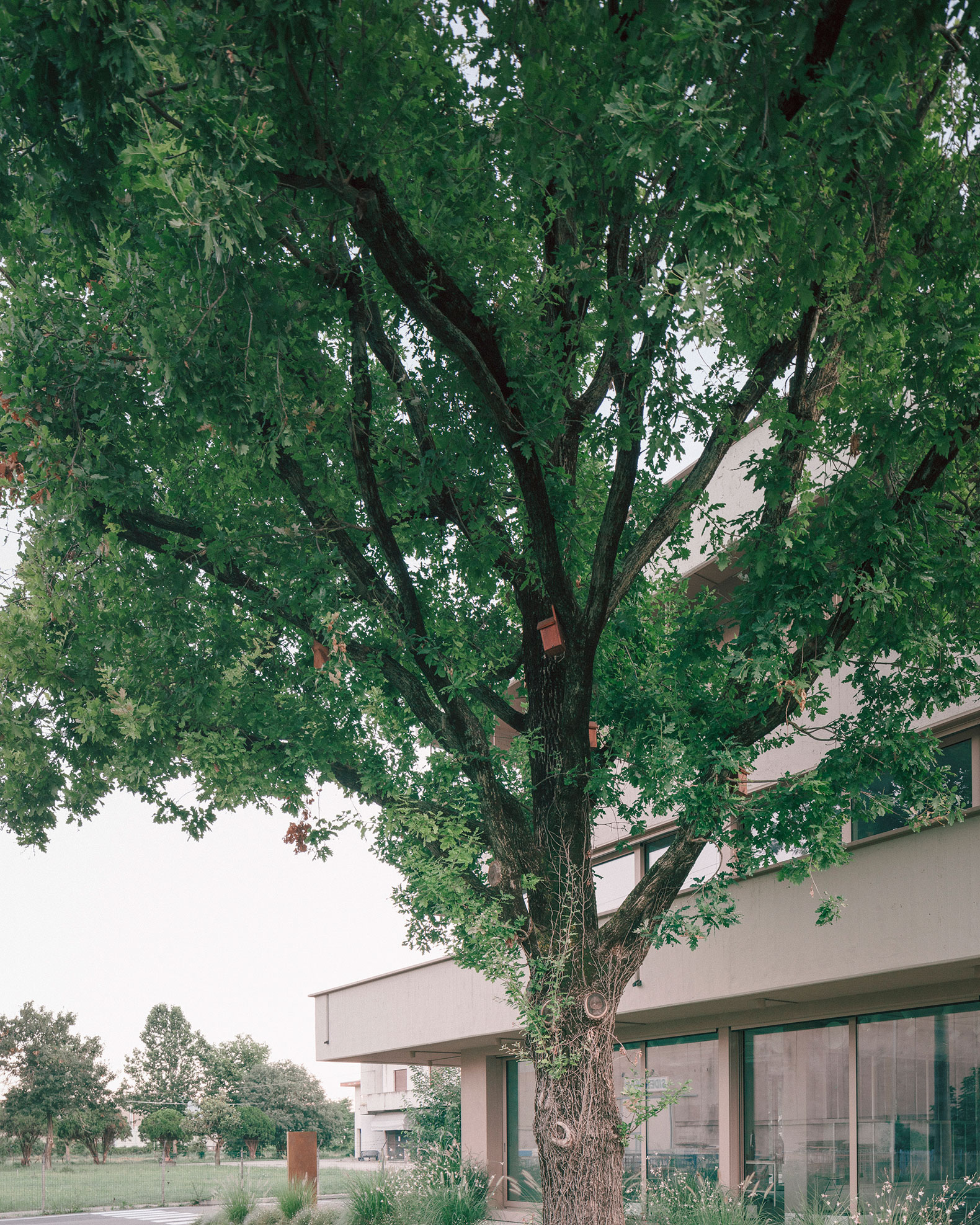
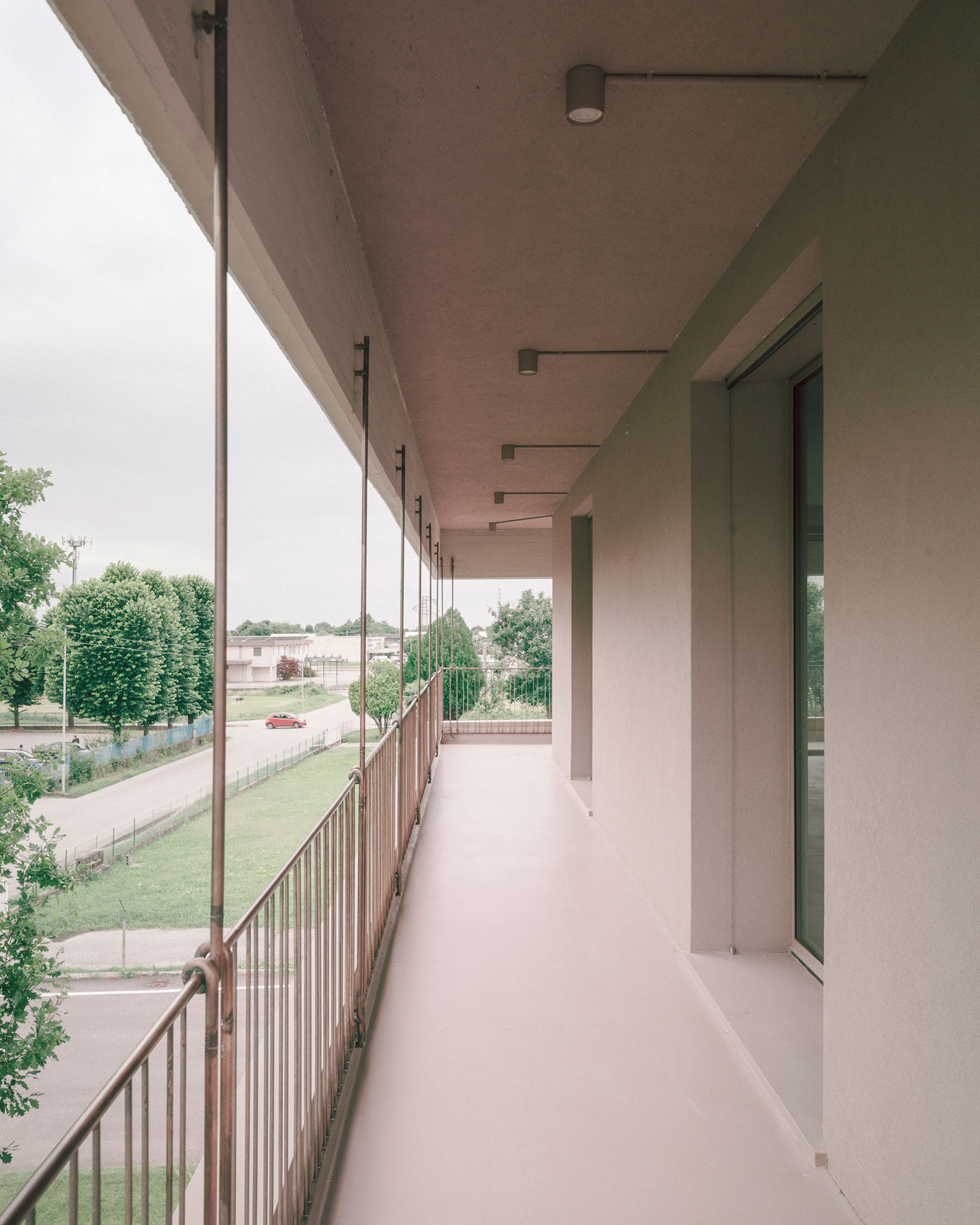
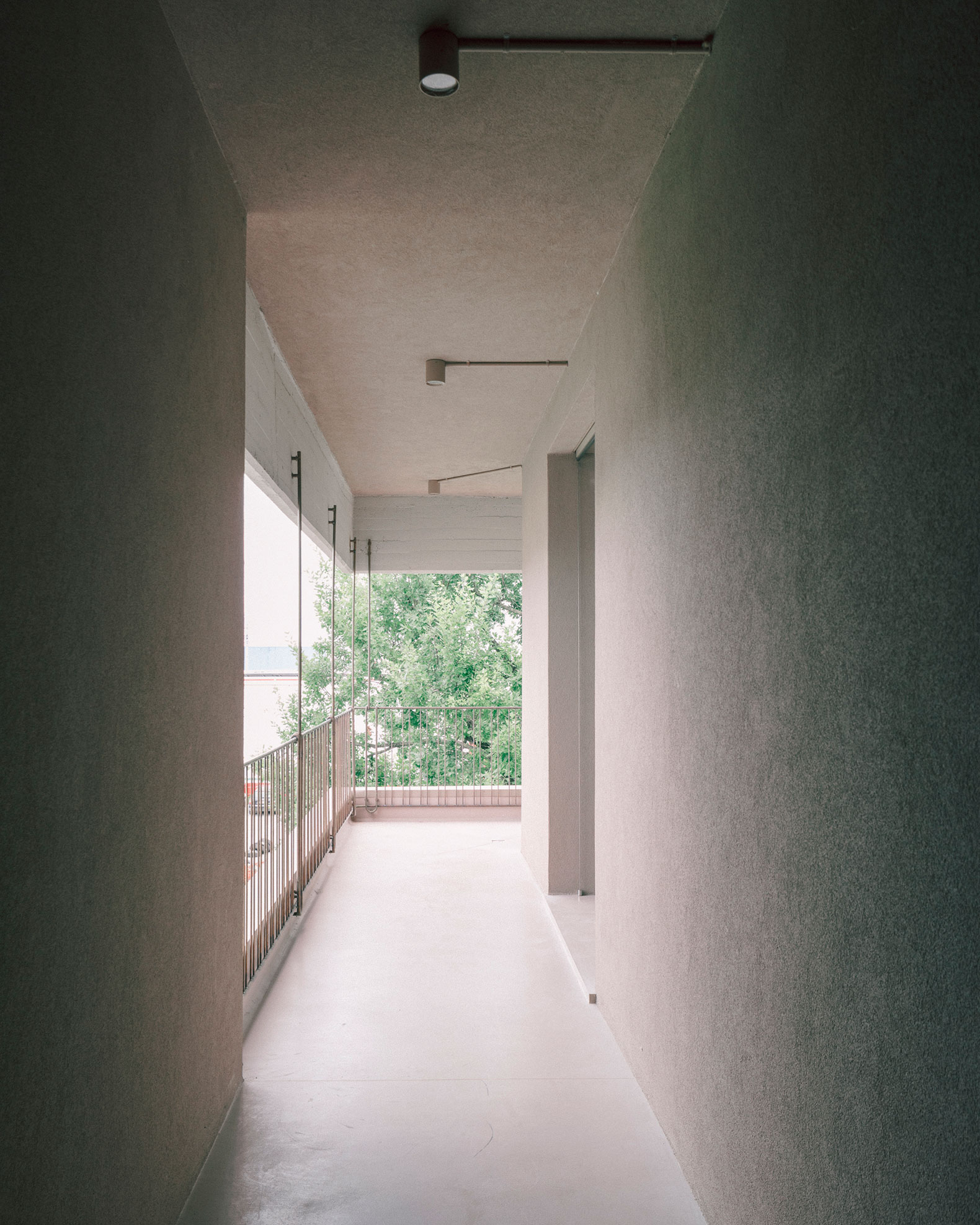
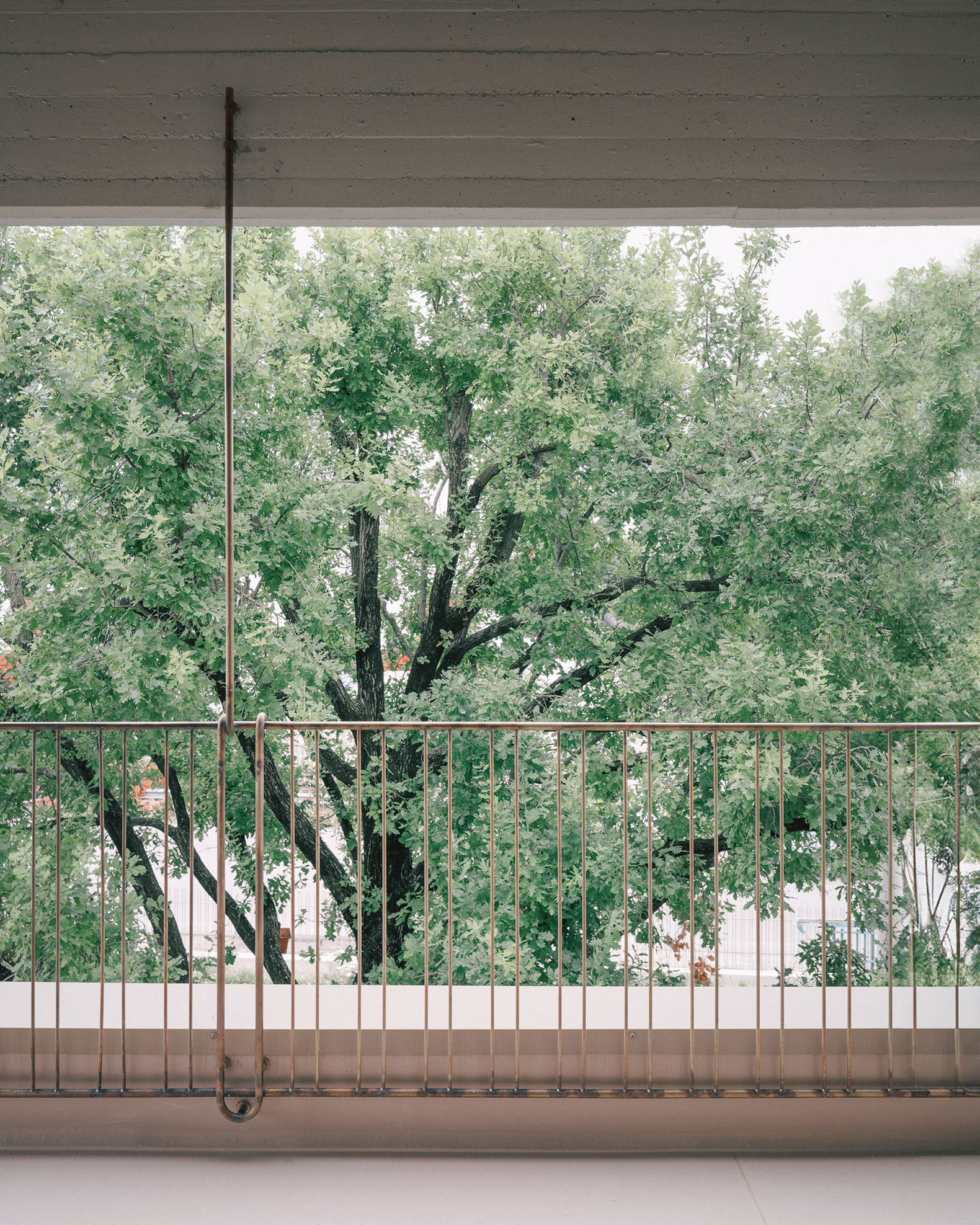
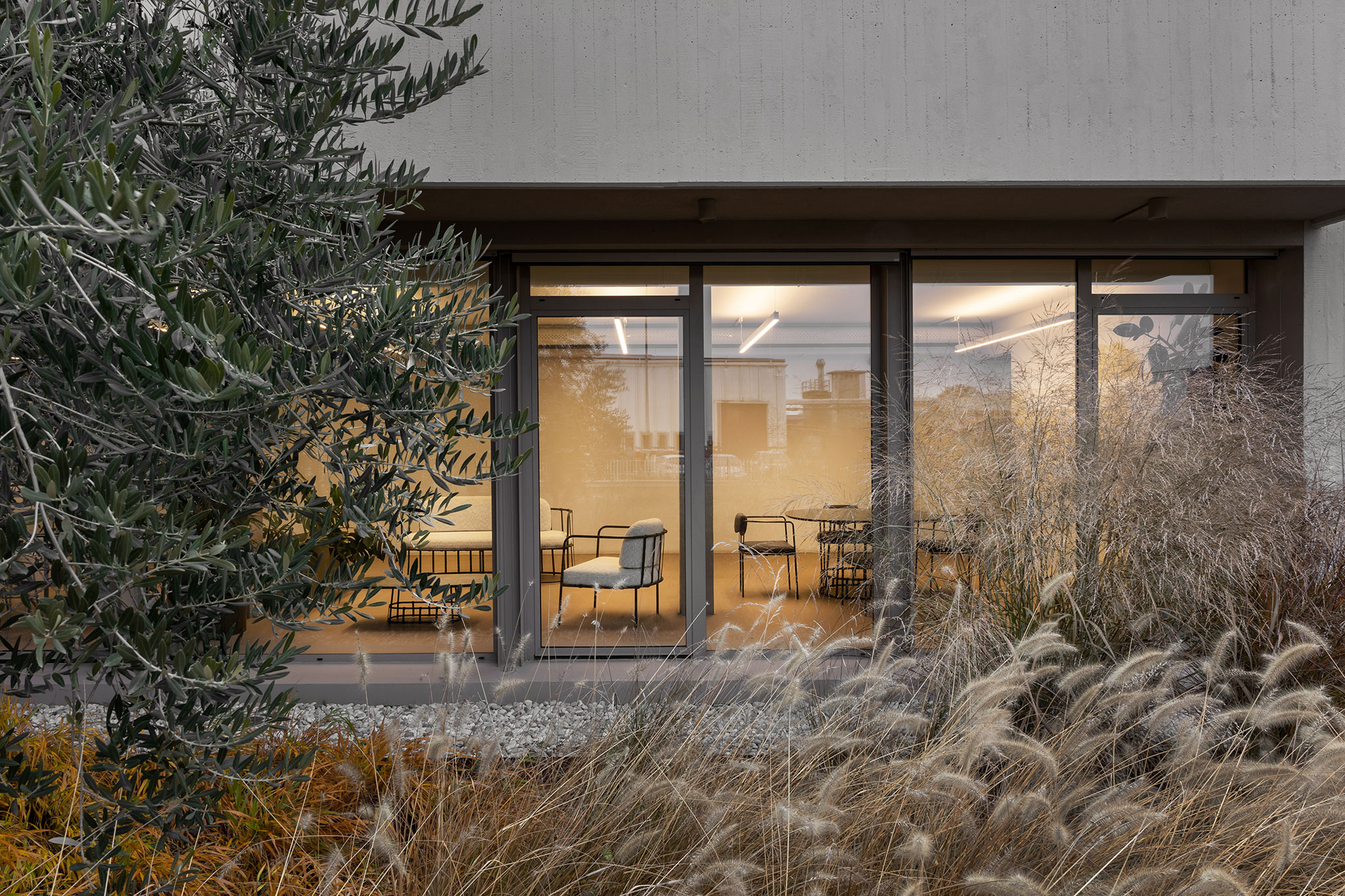
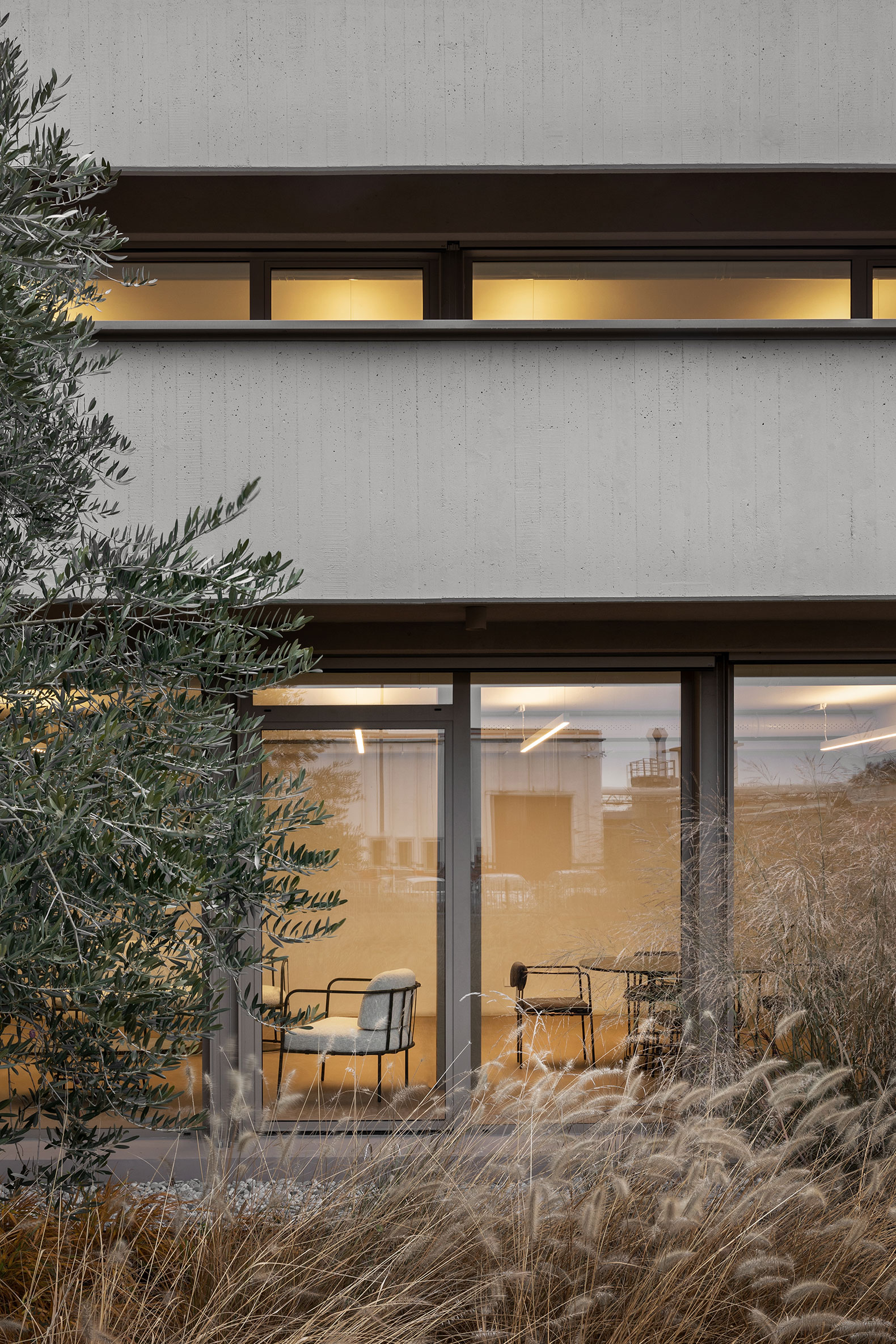
Interventions in the office area revitalized and enhanced the original composition, ensuring seismic and energy compliance of the structures. All non-structural internal partitions were removed in favor of fluid, open-plan spaces. The facades were redesigned with large, mostly continuous windows, improving natural lighting in the workspaces and emphasizing the relationship between the interiors, external terraces, and the garden in front.

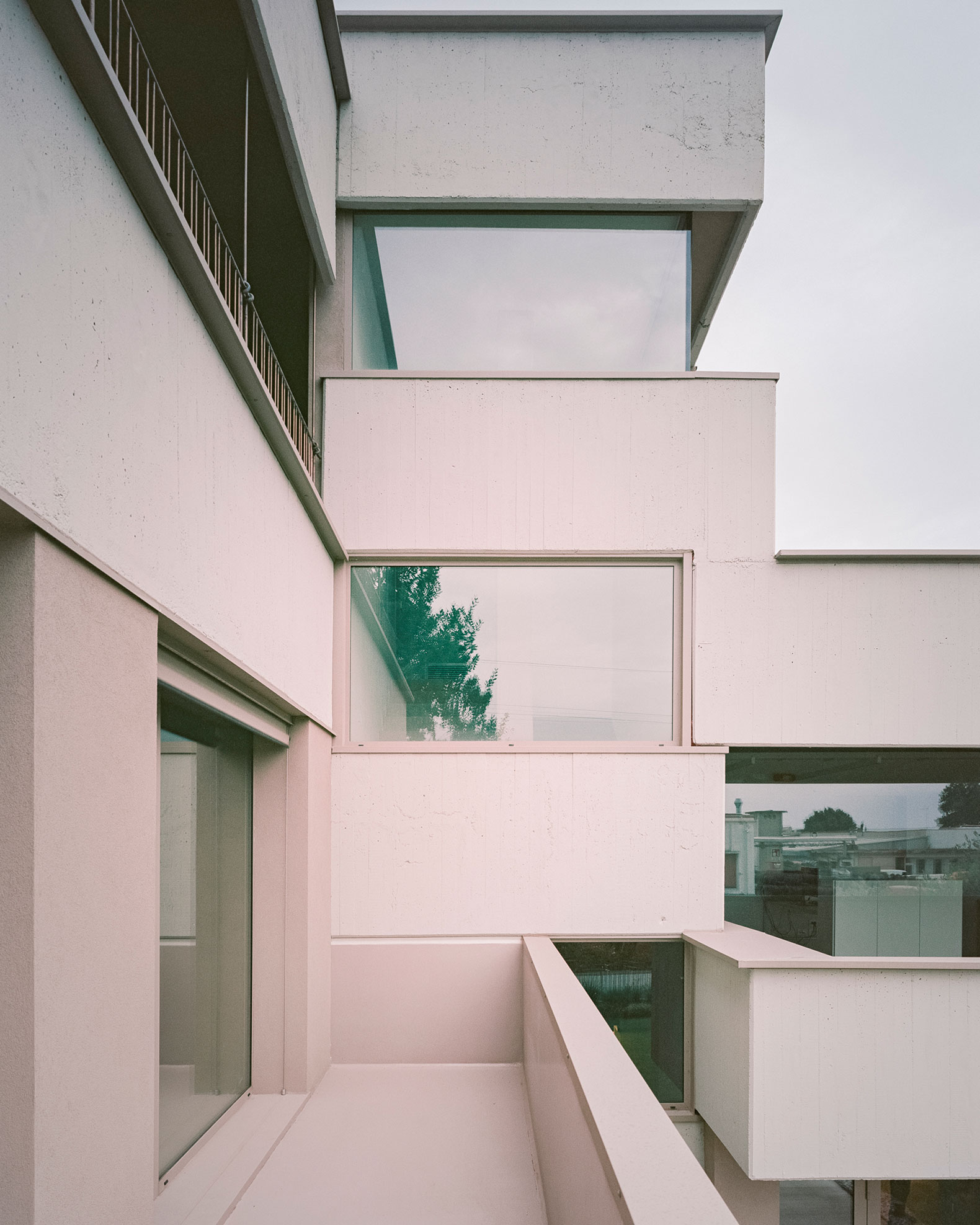
The brutalist image of overlapping and interpenetrating bands was maintained through the restoration of the projecting concrete parapets and enhanced by increasing the chromatic contrast of the deeper parts with darker colors and larger windows. Special filtering curtains were provided to control daytime solar radiation and nighttime visual introspection. Great care was taken in the selection of finishes and colors to make the spaces more rational and welcoming.
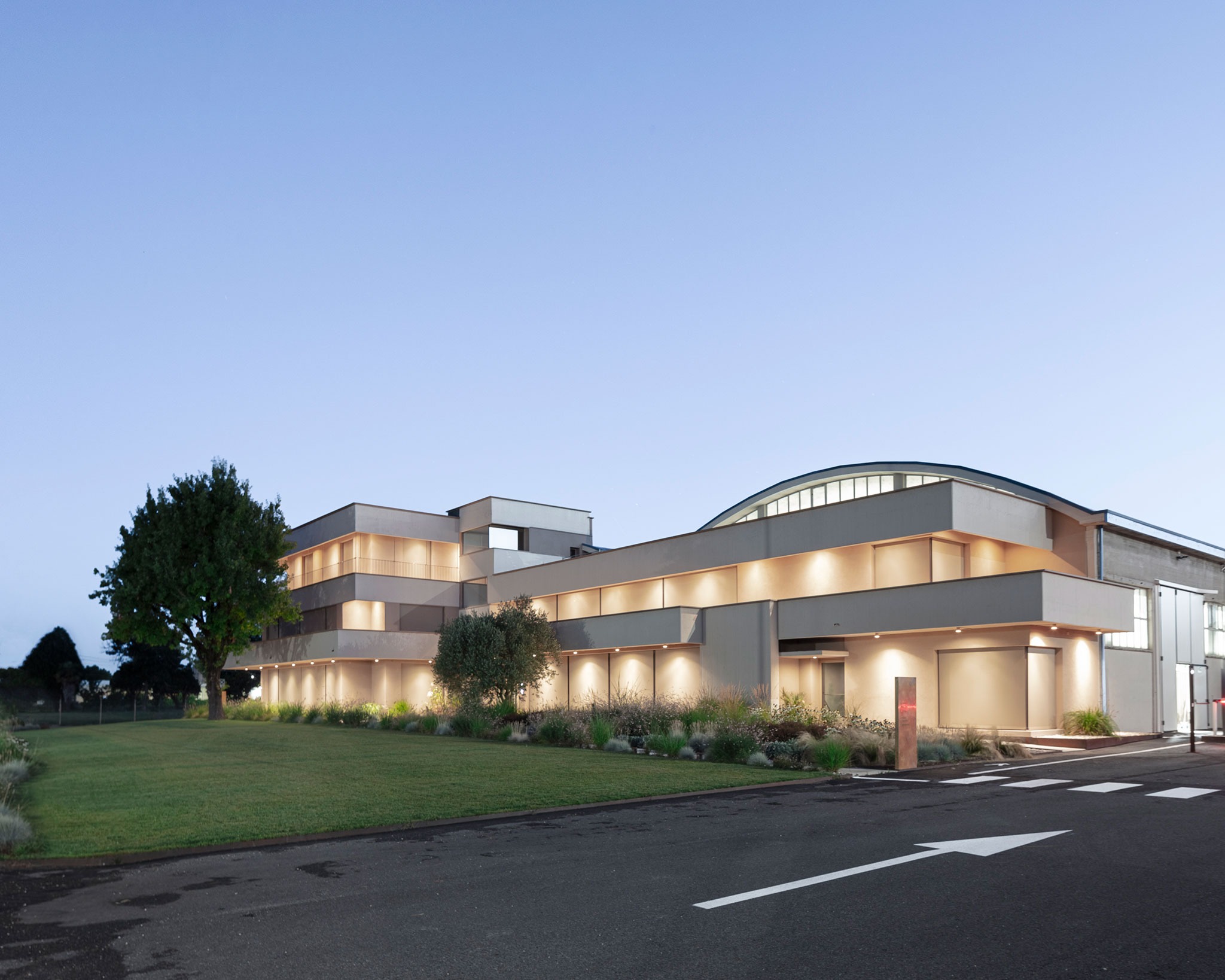
Industrial Redevelopment for Dante Negro. Photograph by Aldo Amoretti.

The choice to recover an abandoned building was a real challenge taken on by the property. Investing in the redevelopment of a building of this type means giving back valuable architecture to the area, with the prospect of transforming it into a cultural space, replacing a degraded industrial site. Not demolishing and rebuilding, but reviving.
More information

Label
Architects
Text

Studio Bressan. Lead architects.- Andrea Bressan, Emanuele Bressan.

+ + copy Created with Sketch.
- + copy Created with Sketch.
Label
Collaborators
Text

Interior design.- Studio Bressan + dogtrot.
Garden design.- Dorothy Guidotto.
Company Creative Direction.- Margherita Rui.

+ + copy Created with Sketch.
- + copy Created with Sketch.
Label
Client
+ + copy Created with Sketch.
- + copy Created with Sketch.
Label
Area
Text

Surface Area.- 4,753 sqm.
Volume.- 44,135 cbm.
Dimensions.- 123 m x 37 m x 9.5 m.

+ + copy Created with Sketch.
- + copy Created with Sketch.
Label
Location
Text

Villorba, Treviso, Italy.

+ + copy Created with Sketch.
- + copy Created with Sketch.
Label
Photography
+ + copy Created with Sketch.
- + copy Created with Sketch.

Studio Bressan is an interdisciplinary architecture practice based in Montebelluna, in the province of Treviso, active for over forty years and currently led by architects Andrea and Emanuele Bressan. The studio operates in Italy and abroad, working across scales from urban planning to architecture, from restoration to interior design, following the entire design process from concept to completion. Its approach combines careful attention to context, environmental and economic sustainability, construction quality, and attention to detail. Alongside its core professional activity, which over the years has led the studio to independently manage large-scale projects, Studio Bressan actively participates in the contemporary cultural debate and has received national and international awards and publications. Studio Bressan was founded in 1980 by Gianni Bressan.

Andrea Bressan was born in 1980 in Asolo (Treviso). After completing a scientific high school diploma, he graduated with honors in Architecture from IUAV University of Venice in 2005, with a thesis supervised by architect and urban planner Giorgio Lombardi. After graduating, he collaborated with Professor Lombardi and architect Trevisan, and in 2006 began a professional and cultural path through the founding of Frammenti, a network of young professionals focused on participatory urban design. This activity led to recognition in several design competitions, particularly on themes related to urban housing. In parallel, he works as a consultant for the Municipality of Asolo on urban planning, urban regeneration, the livability of the historic center, and urban furniture.
In 2013, he took over the management of the studio founded by his father, Gianni Bressan, which became Studio Bressan. He has been a member of the Municipal Building Commission of Asolo since 2020 and of the Landscape Commission since 2024. He has been registered with the Order of Architects, Planners, Landscape Architects and Conservationists of the Province of Treviso since 2006.

Emanuele Bressan, born in 1985 in Asolo (Treviso), completed his scientific high school education with top marks and graduated with honors in Architectural Sciences from IUAV University of Venice in 2007. In 2008, he was awarded a scholarship through the Swiss European Mobility Programme and attended the Academy of Architecture in Mendrisio, where he studied with internationally renowned architects. In 2010, he obtained his Master’s degree with honors from IUAV, developing a project between Mendrisio and Venice.

From 2010 to 2017, he worked at Studio Mario Botta Architetto as a project architect and project coordinator, contributing to complex projects in the residential, cultural, tertiary, and infrastructural sectors across Europe and Asia. Between 2017 and 2019, he collaborated with Studio Stocker-Lee in Switzerland, working on international projects. Alongside this experience, he has long been active within Studio Bressan and has participated in competitions and collaborations throughout Europe. Among his most significant works is the Palaluxottica multipurpose center in Agordo, which has received international awards and publications. He is registered with the Order of Architects of Treviso and has been a member of the Technical and Scientific Committee of the Fondazione Architettura Treviso since 2023.

Read more
Published on: January 30, 2026
Cite:
metalocus, ELVIRA PARÍS FERNÁNDEZ
"Revitalising abandonment. Industrial Redevelopment for Dante Negro by Studio Bressan" METALOCUS. Accessed
<https://www.metalocus.es/en/news/revitalising-abandonment-industrial-redevelopment-dante-negro-studio-bressan> ISSN 1139-6415
Loading content ...
Loading content ...
Loading content ...
Loading content ...
Loading content ...
Loading content ...
Loading content ...
Loading content ...
Loading content ...
Loading content ...
Loading content ...
Loading content ...
Loading content ...
Loading content ...
Loading content ...
Loading content ...
Loading content ...
Loading content ...
Loading content ...
Loading content ...
Loading content ...
Loading content ...
Loading content ...
Loading content ...
Loading content ...
Loading content ...
Loading content ...
Loading content ...
Loading content ...
Loading content ...
Loading content ...
Loading content ...
Loading content ...
Loading content ...
Loading content ...
Loading content ...
Loading content ...
Loading content ...
Loading content ...
Loading content ...
Loading content ...
Loading content ...
Loading content ...
Loading content ...
Loading content ...
Loading content ...
Loading content ...
Loading content ...
Loading content ...
Loading content ...
Loading content ...
Loading content ...
Loading content ...
Loading content ...