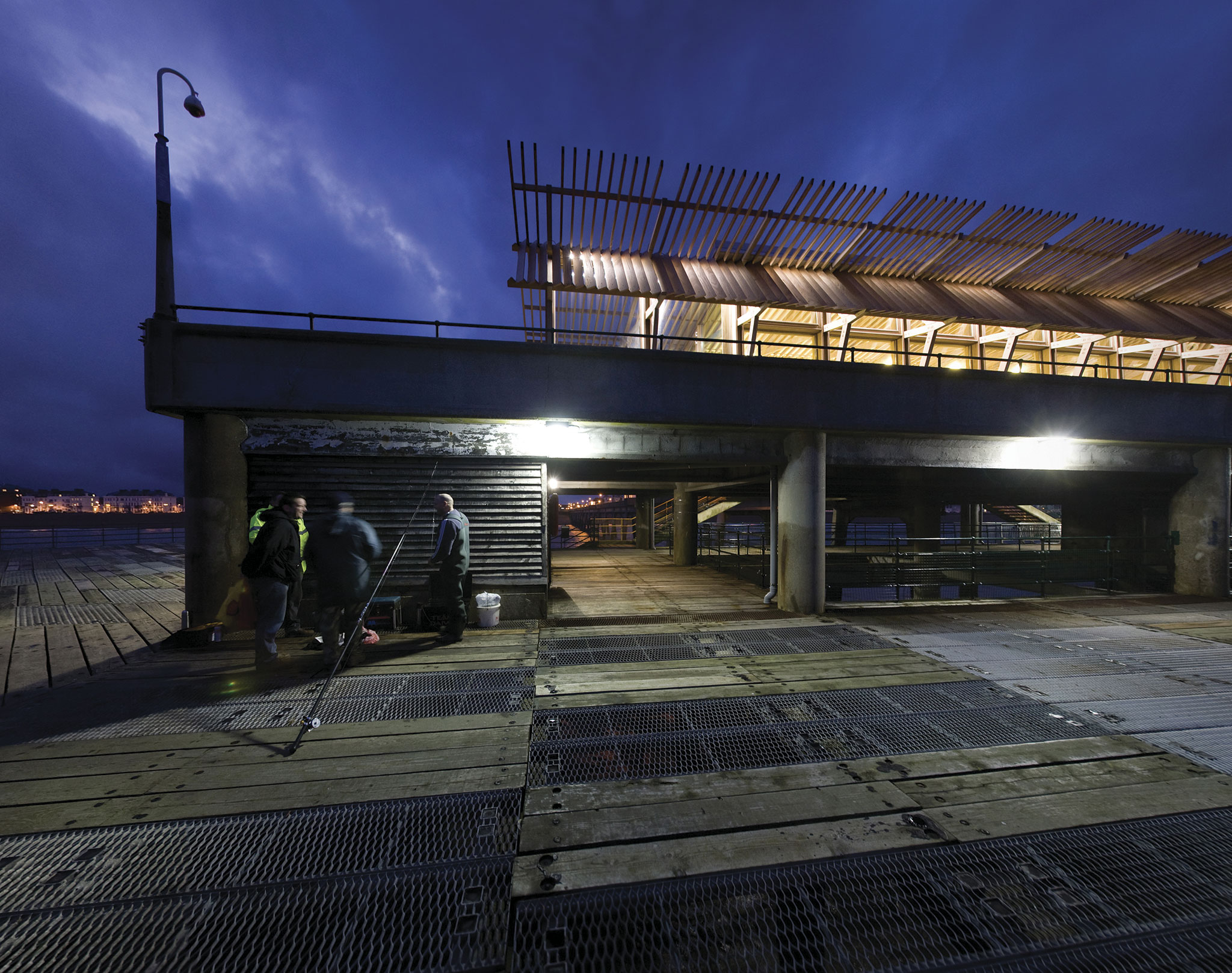
Architect, educator, and writer Niall McLaughlin has been awarded one of the world's highest honors in the profession, following a body of work marked by a profound sensitivity to place, material, craftsmanship, light, and form, and by a constant commitment to the quality of space.
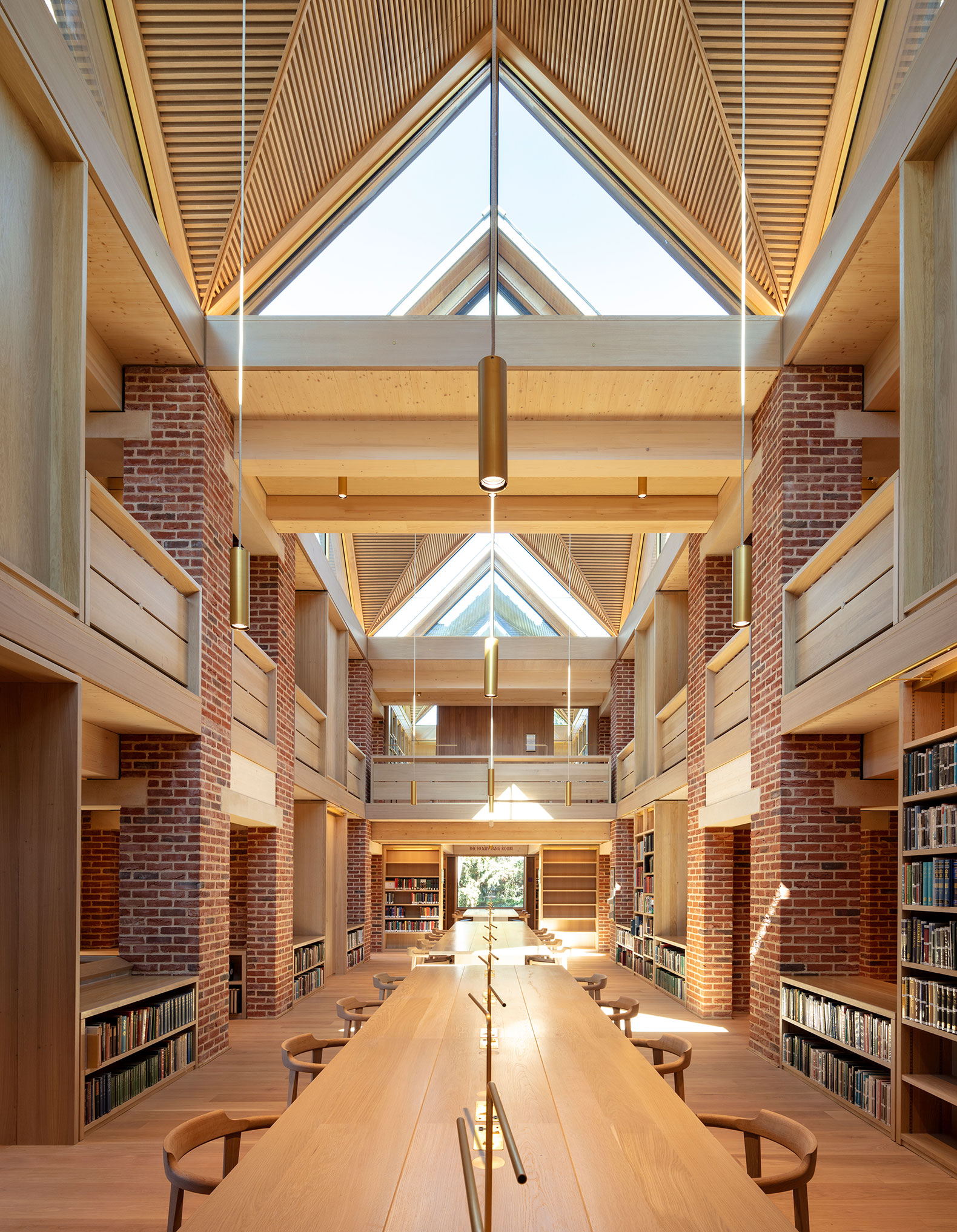
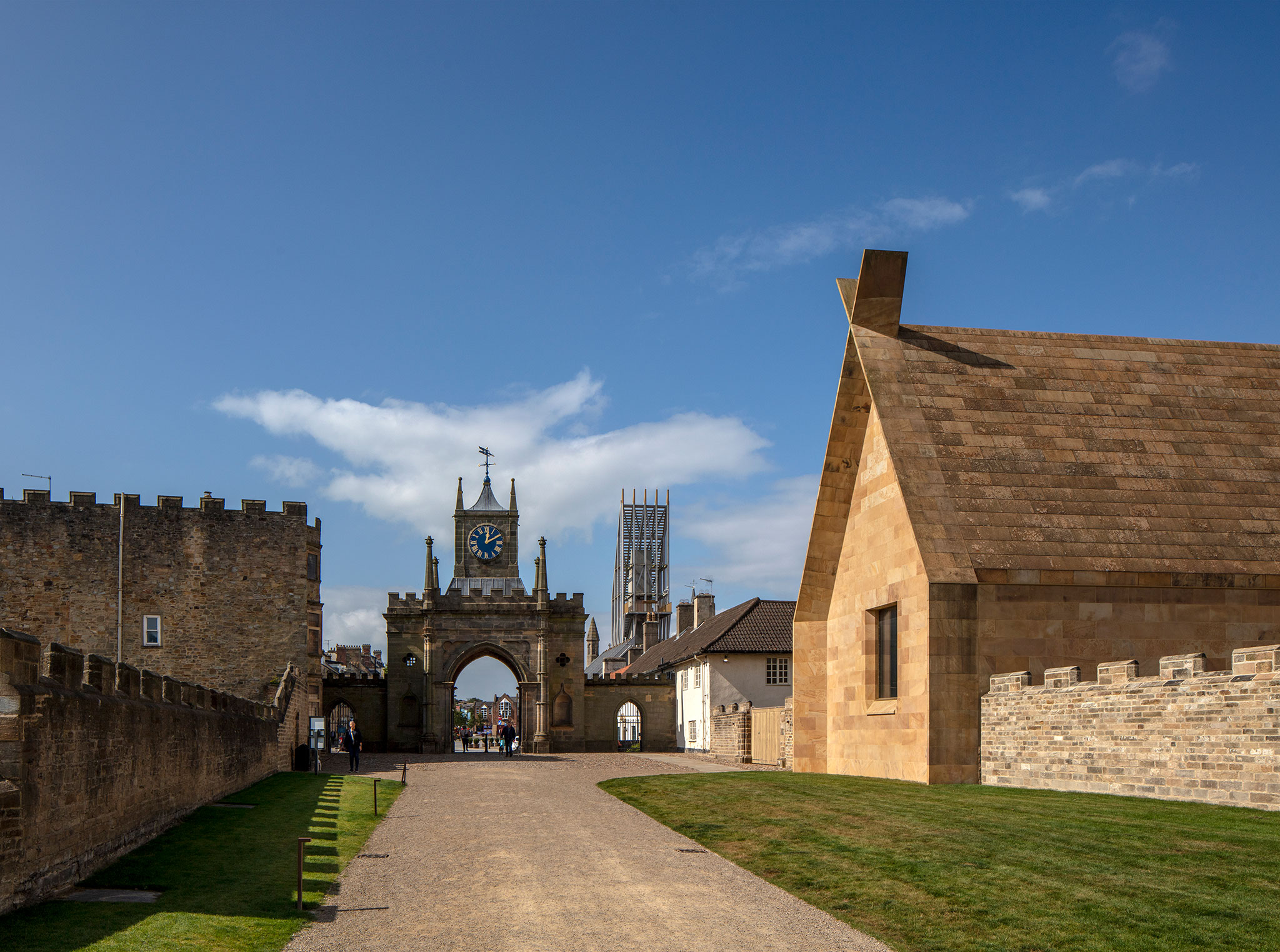
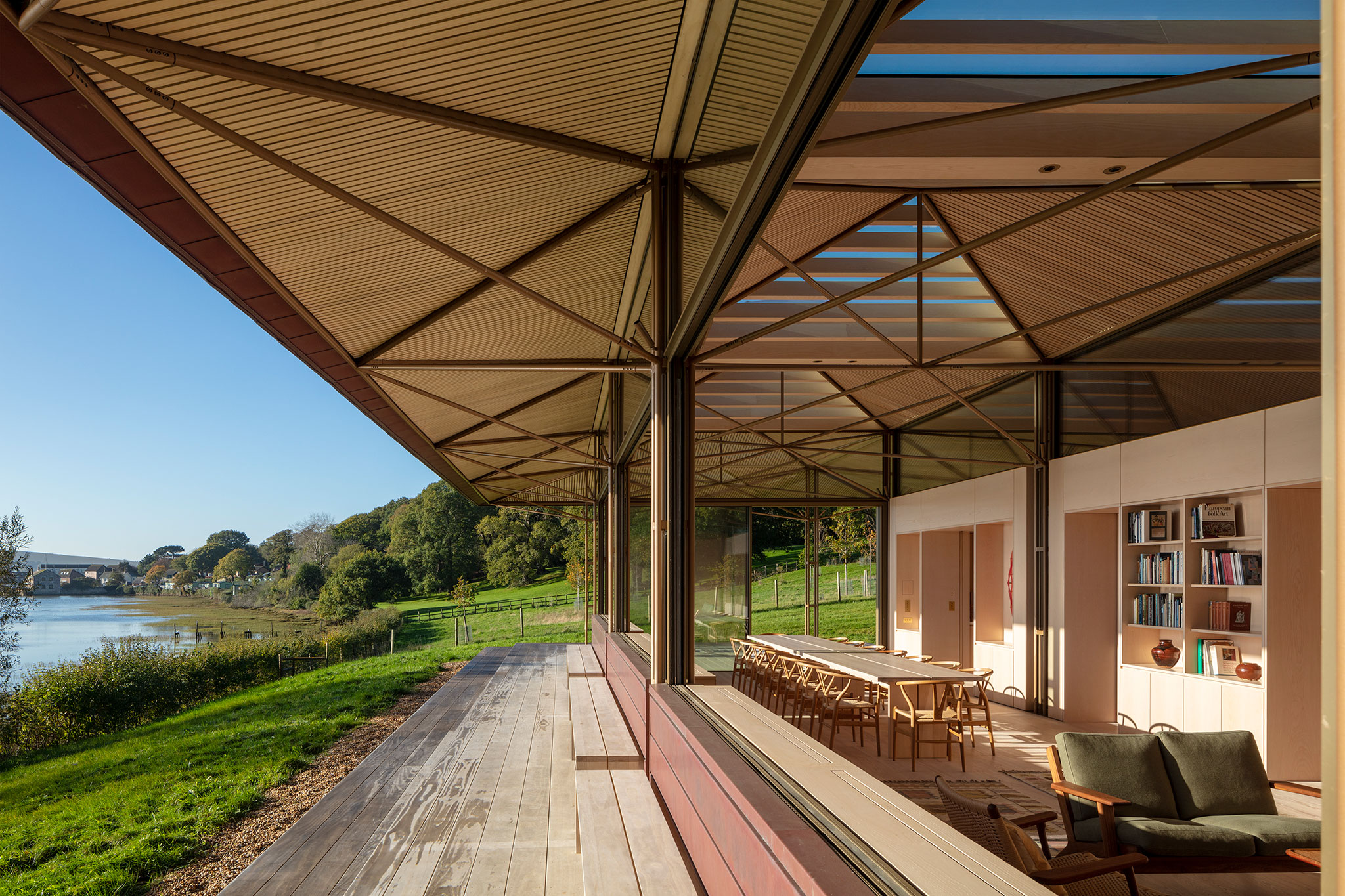
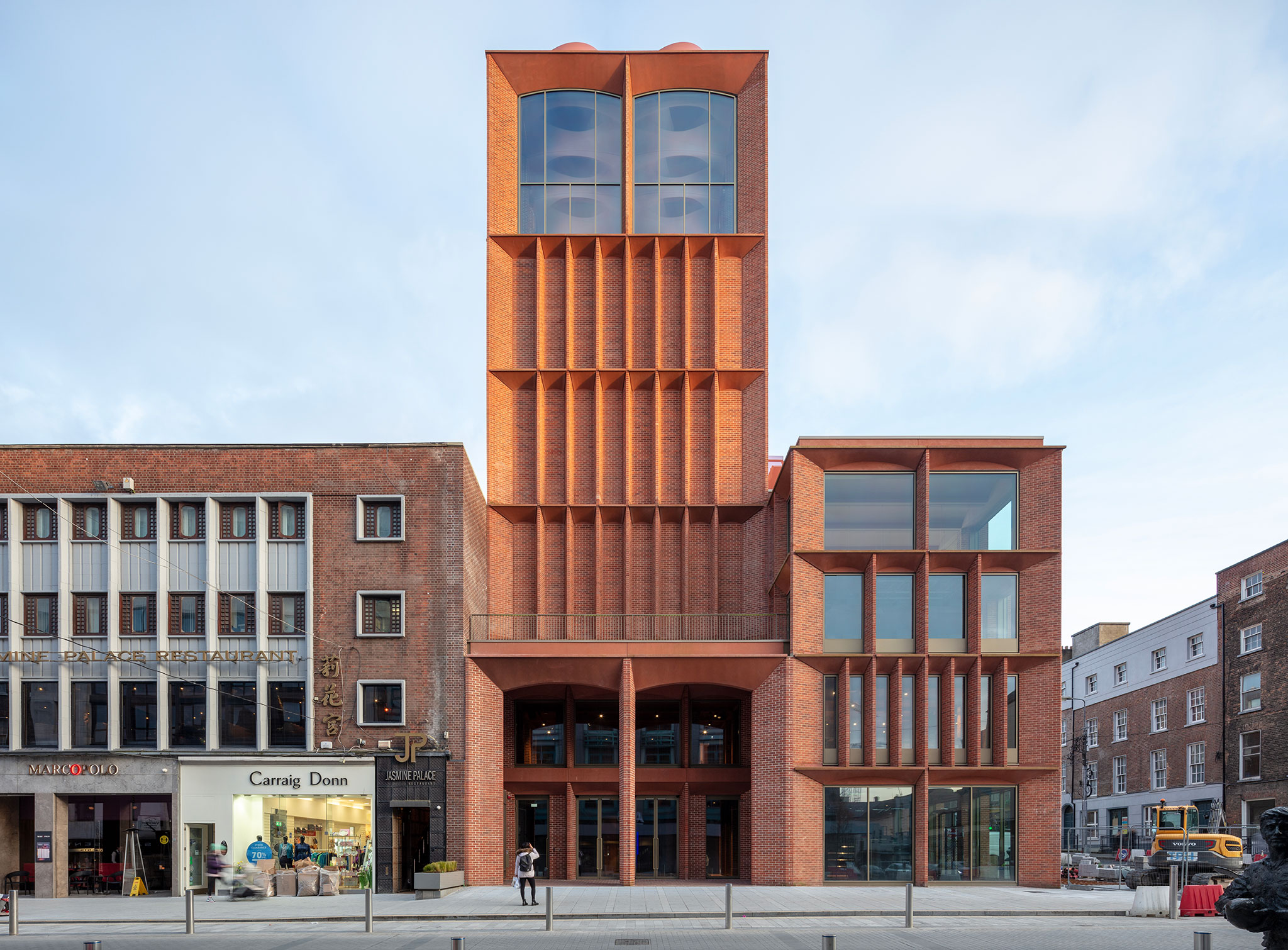
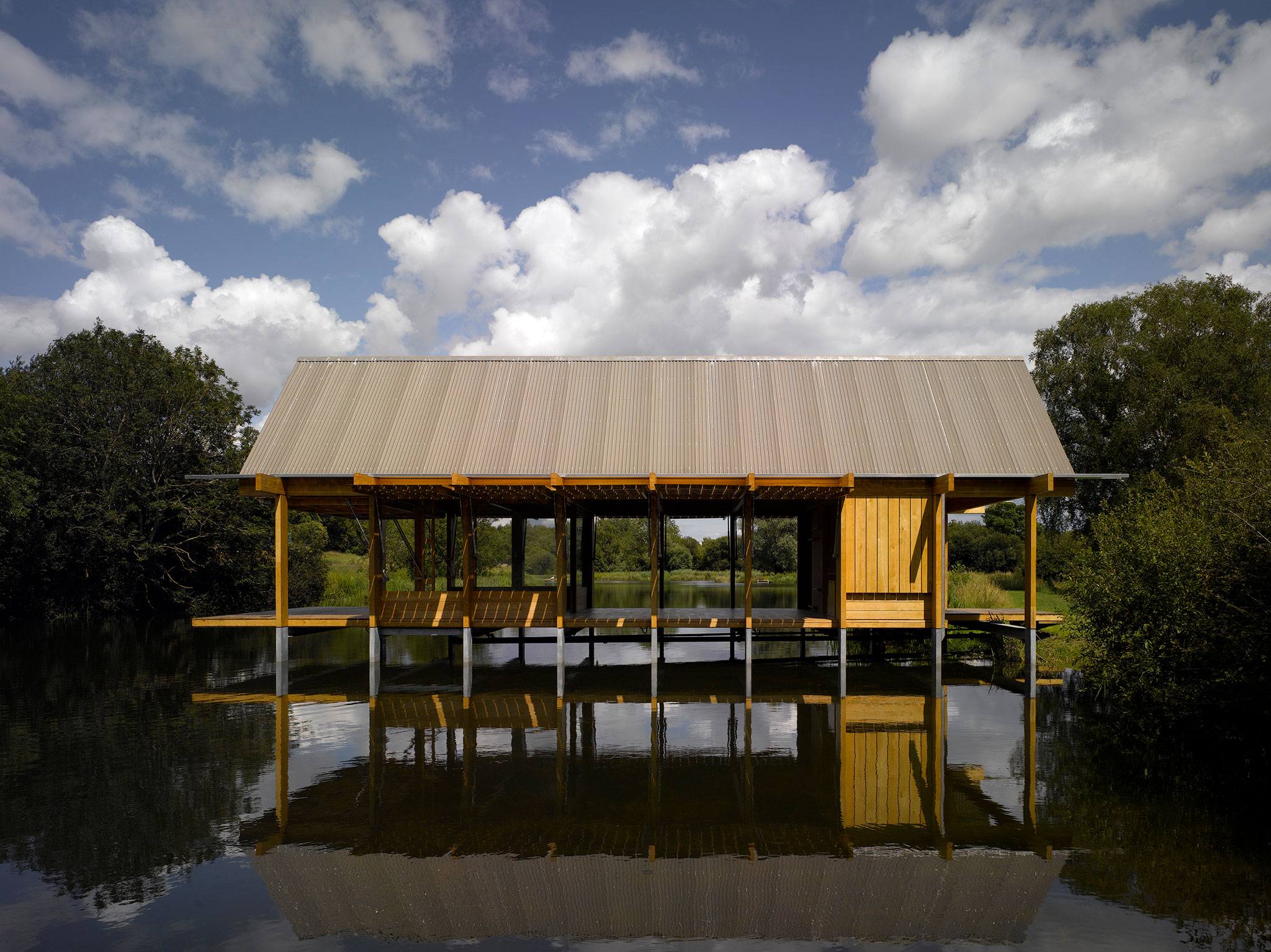
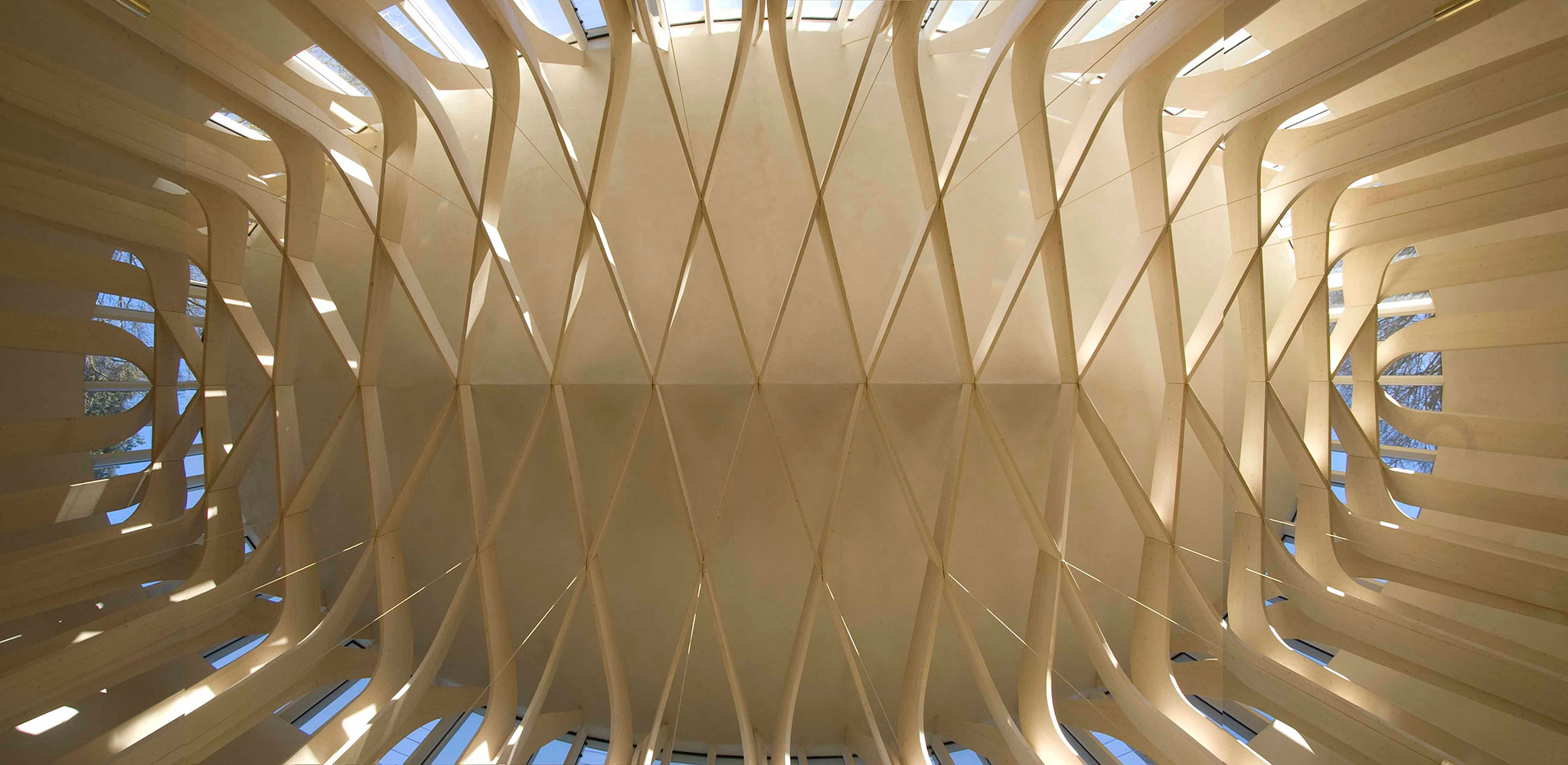
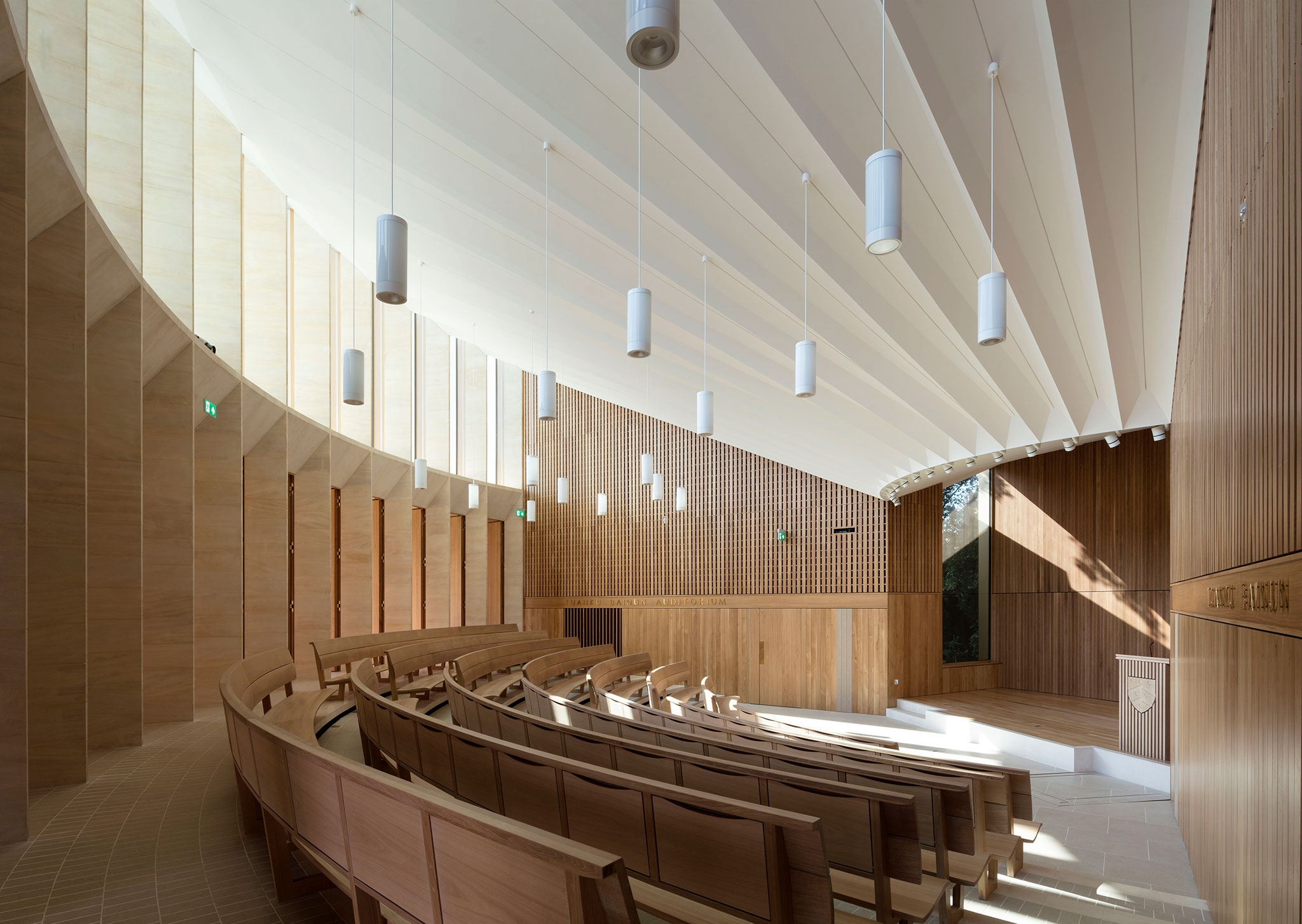
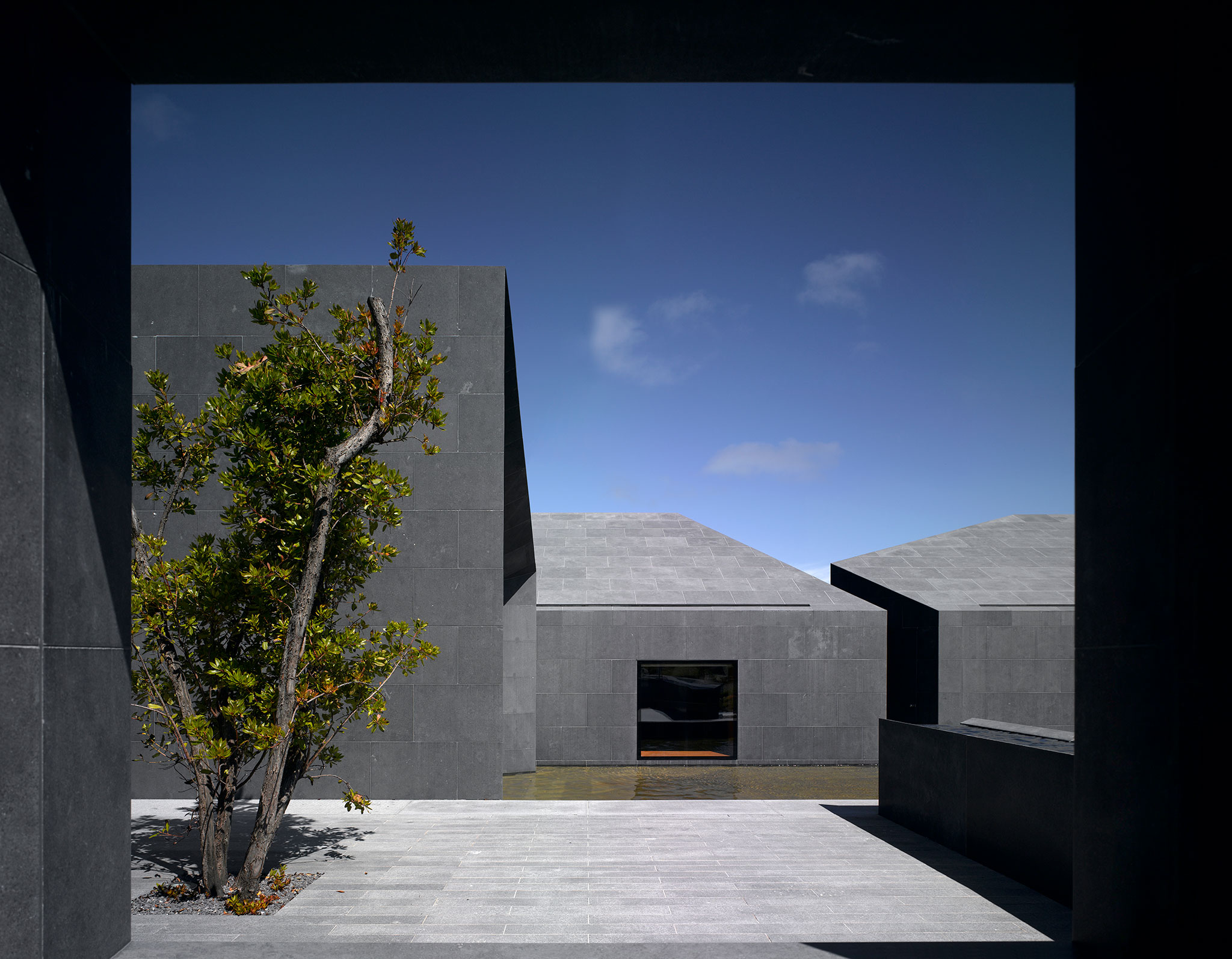
Among his notable projects are the New Magdalene College Library (2021), winner of the Stirling Prize in 2022; The Faith Museum (2024); Saltmarsh House (2023); the Limerick (2023); the bandstand in Bexhill (2001); the tranquil orthogonal pavilions of the Respite Centre for People with Alzheimer's in Dublin (2011); and the latticed wooden oval of Bishop Edward King Chapel in Oxford (2013).
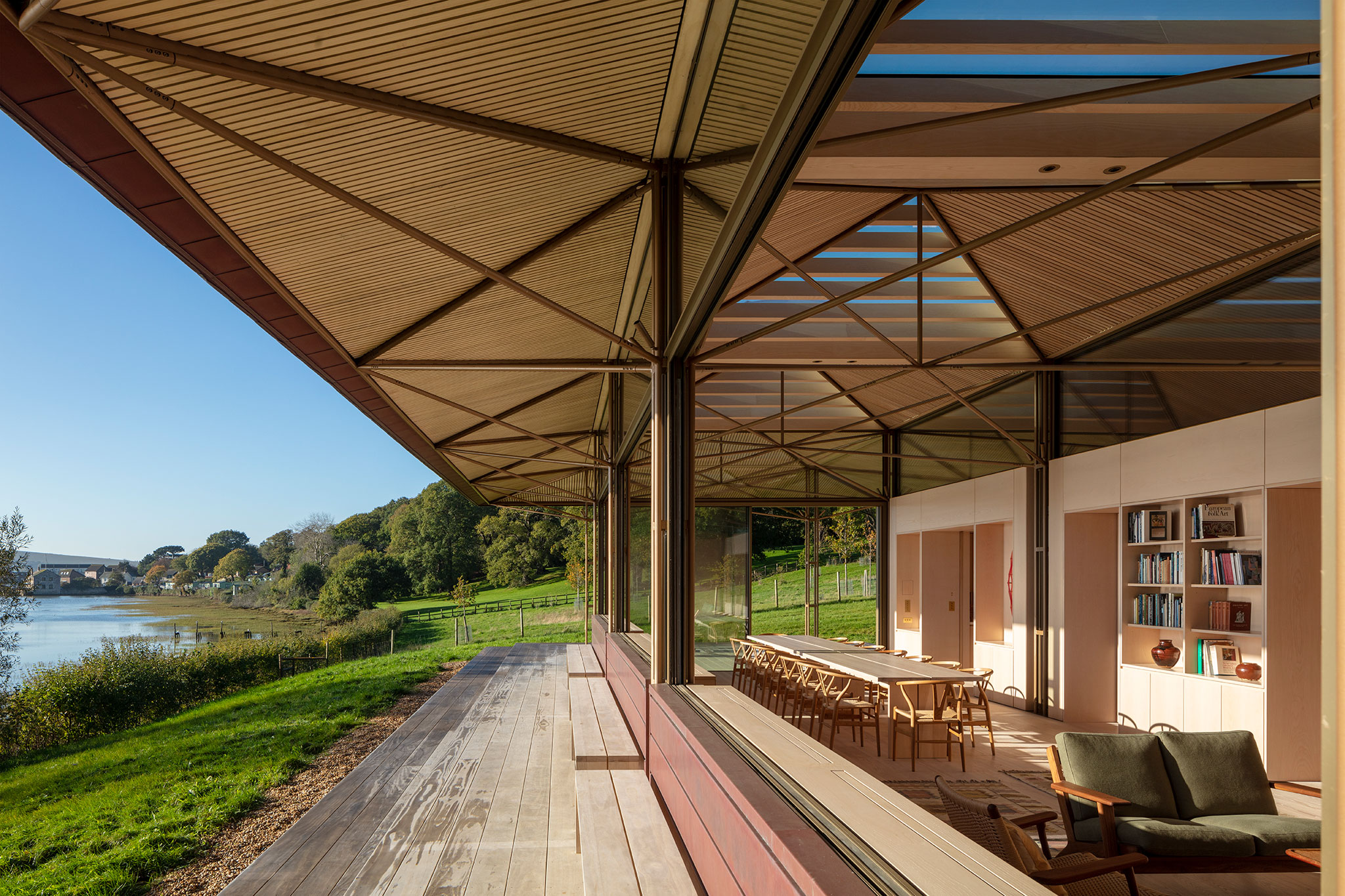
Saltmarsh by Niall McLaughlin. Photograph by Nick Kane.
“I am delighted and honoured to receive the 2026 Royal Gold Medal for Architecture.
My team and I view architecture as a continuity of practice across generations. We are grateful to our teachers, who passed on the spirit, and our students, who continually question and transform it. As a small studio, we have grown and learned together. Thank you to all those who have collaborated with us and supported our ideals through commissioning, design, and construction.
Through practice, we have learned that architecture is not the production of singular objects, but an ongoing performance of development, alteration, and reinvention through lived experience. At a time of accelerating technological change in design and construction, we continue to insist on the human rituals and material practices at the heart of our discipline. Building is an act, not an object. Architecture lies in its making and the way that it shapes learning, culture, and communal life.
We accept this recognition with gratitude and with a renewed commitment to live up to its challenge.”
Níall McLaughlin
“Always one to credit and uplift those around him, it is fitting that Níall is recognised for the resounding impact he has had on the profession. As an educator, he has been an outstanding role model for young architects, while his designs - eclectic in appearance and use - share a sense of care and grace that represent the very best of architecture.
Such sustained success has in no way diminished his humility. A humble visionary, his dedication to architecture as an art and professional practice has left an enduring mark on the discipline – one that will undoubtedly transcend trends and time.”
Chris Williamson, RIBA President and Chair of the 2026 RIBA Honours Jury
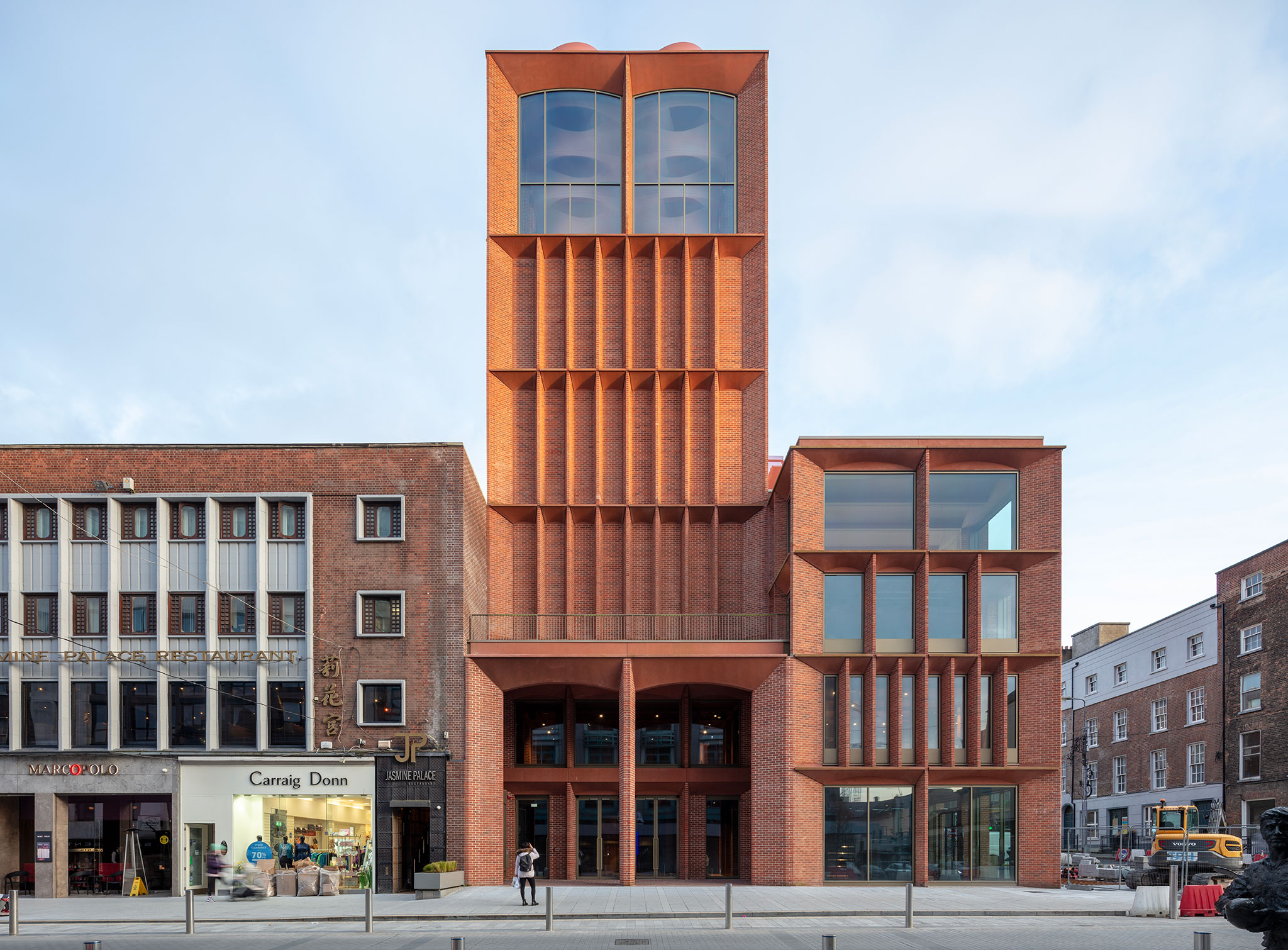
Limerick by Niall McLaughlin. Photograph by Nick Kane.
Citation by the 2026 RIBA Honours Committee:
Níall McLaughlin’s qualities as an architect stem from his ‘commitment to architecture as an art and professional practice’ said Charles Jencks when handing him the RIBA Charles Jencks Award in 2016 for Simultaneous Contribution to Theory and Practice. In 2020 he was awarded an Honorary MBE for Services to Architecture.
With over 30 years in practice and a portfolio of outstanding projects ranging from the cloud-like Bandstand at Bexhill (2001); the calm orthogonal pavilions of the Alzheimer’s Respite Centre in Dublin (2011); the latticed timber oval of the Bishop Edward King Chapel in Oxford (2013); to the very simple brick volumes of The New Library Magdalene College (2021).
His work for Peabody, Darbishire place (2014), one of Peabody’s oldest housing estates in London, represents a hugely impressive revival of a still vital tradition of housing delivery. Featured on the 2015 RIBA Stirling Prize shortlist, it was arguably one of greatest relevance to the future of architecture in the UK. Critics remarked, if all new social housing was as thoughtfully designed as Darbishire Place, the green housing agenda would be well advanced.
Níall has a robust reputation for thoughtful, innovative and well-crafted architecture. His rich enjoyment of the process of architecture has made him one of the most respected yet idiosyncratic architectural practitioners in the UK.
McLaughlin’s contributions to architecture are multifaceted, encompassing award-winning building designs, critical discourse, influential writing, and impactful educational initiatives.
Níall is a thinking architect, who embraces history, art and literature as muses. He believes that practice should be understood as a range of activities which are all necessary to each other. His approach for any audience is that they are engaged, motivated and valued.
The work not only enriches the architectural profession but also addresses its evolving challenges, making him a pivotal figure in contemporary architecture.
McLaughlin’s architectural vision is deeply informed by a nuanced understanding of time, social context, and environmental impact. In his talk "Six Pockets of Time," he said ‘Time, and how buildings embody this elusive medium, the apparently static durability of architecture, hides the fact that its representative of development, change and temporal depth at every level.’ He frames contemporary practice as a procession of communal performances organised in time.
He argues that architecture represents the durability of communal bonds, and that this insight has critical relevance at a moment when the embodied investment in our existing building stock has urgent priority.
Born in Geneva in 1962. He was educated in Dublin and studied architecture at University College Dublin between 1979 and 1984. He worked for Scott Tallon Walker for four years and established his own practice in London in 1990. He has designed buildings for education, culture, health, religious worship and housing.
Teaching has been integral to his practice from the start, describing his first role at Oxford Brookes as his introduction to any coherent architecture scene in the UK. Teaching has remained important to him; he is a professor of architectural practice at the Bartlett – and views studying, practice and teaching as a vital continuum of learning and education. He was a visiting professor at the University of California Los Angeles from 2012-2013, and was appointed Lord Norman Foster Visiting Professor of Architecture at Yale for 2014-2015.
His own educational experience at University College Dublin is a constant referent when he discusses his approach to design – and underpins the intense ideation of materials in his projects.
With a distinctive approach to materiality, his architecture is informed by ideas around the individual perception of space. McLaughlin emphasizes the importance of setting and light in architecture, which speaks to the cultural and technical aspects of his design principles. His projects often challenge conventional notions of architecture and regeneration, illustrating a visionary approach that prioritizes environmental and cultural considerations.
McLaughlin’s is an architecture that plays with elemental geometries and simple palettes of materials and is not afraid to draw on nor to echo in its forms past models of Classicism or historical precedents.
He doesn’t focus on the idea of the architect’s authorial ‘signature’. Instead, he feels, “Originality in building is rarely the way in which it is packaged and sold. A project can be incredibly original and beautifully built on account of the way the brick is bonded. Sometimes it’s the quiet thing within a project that’s original.”