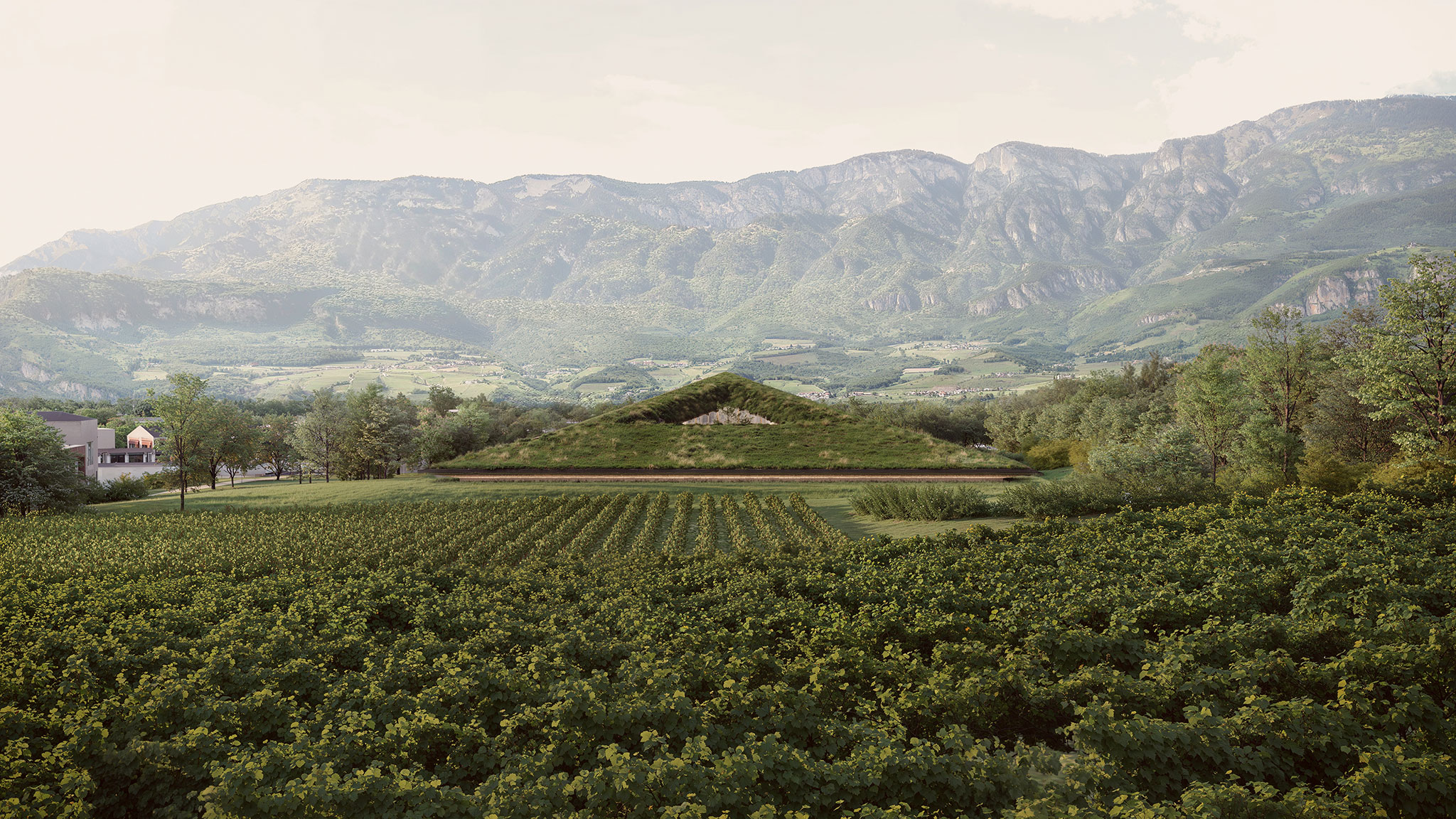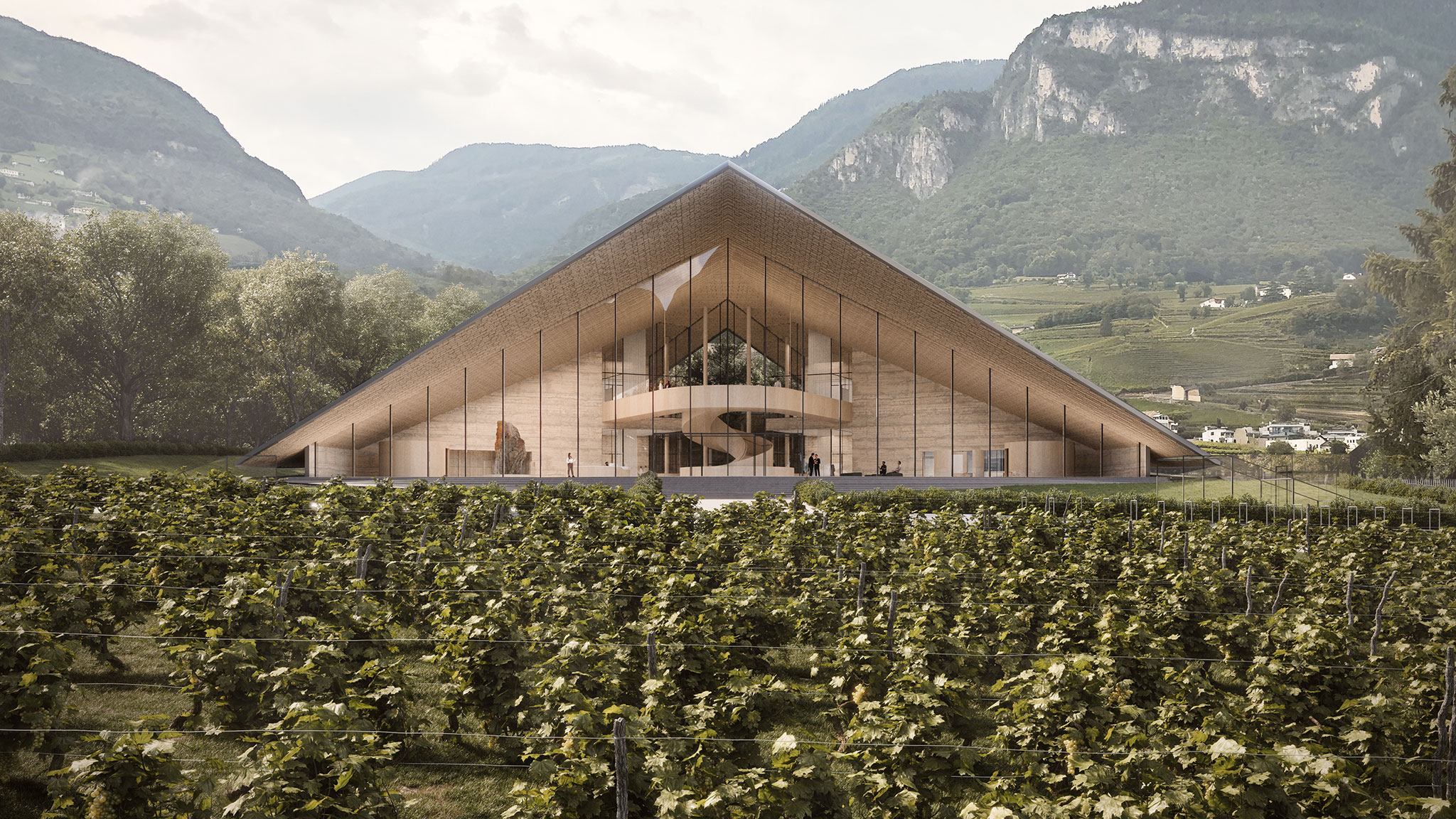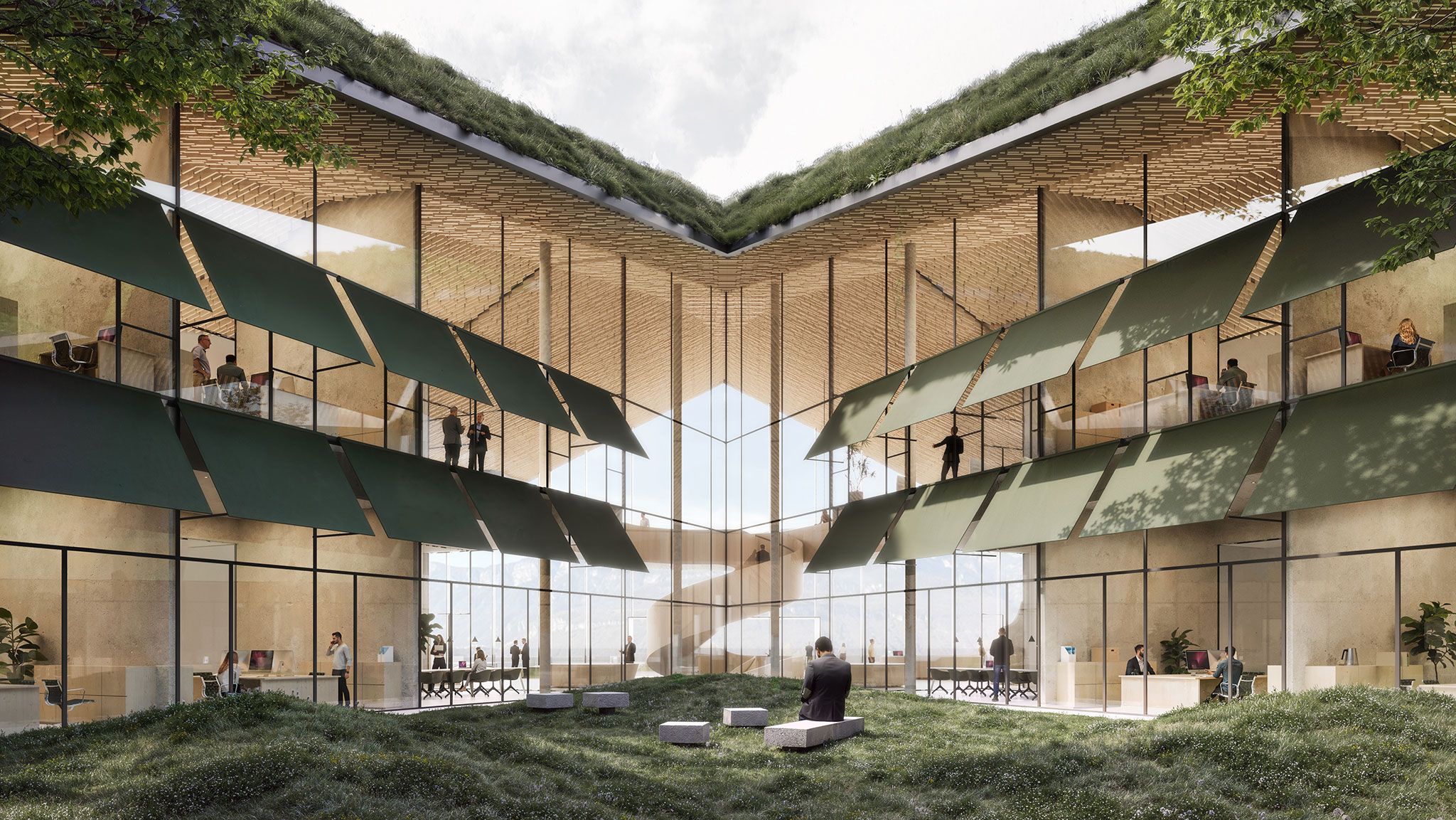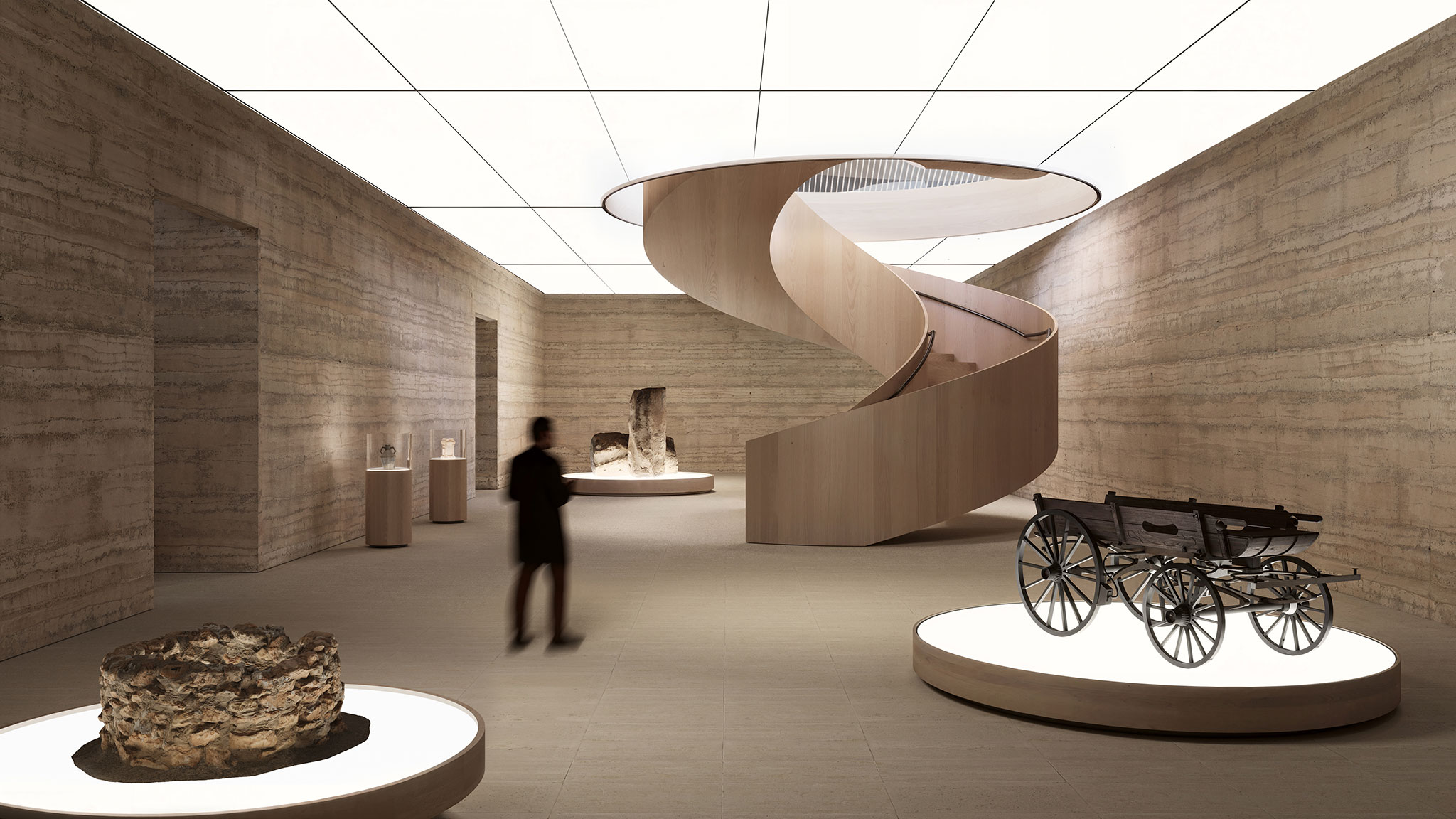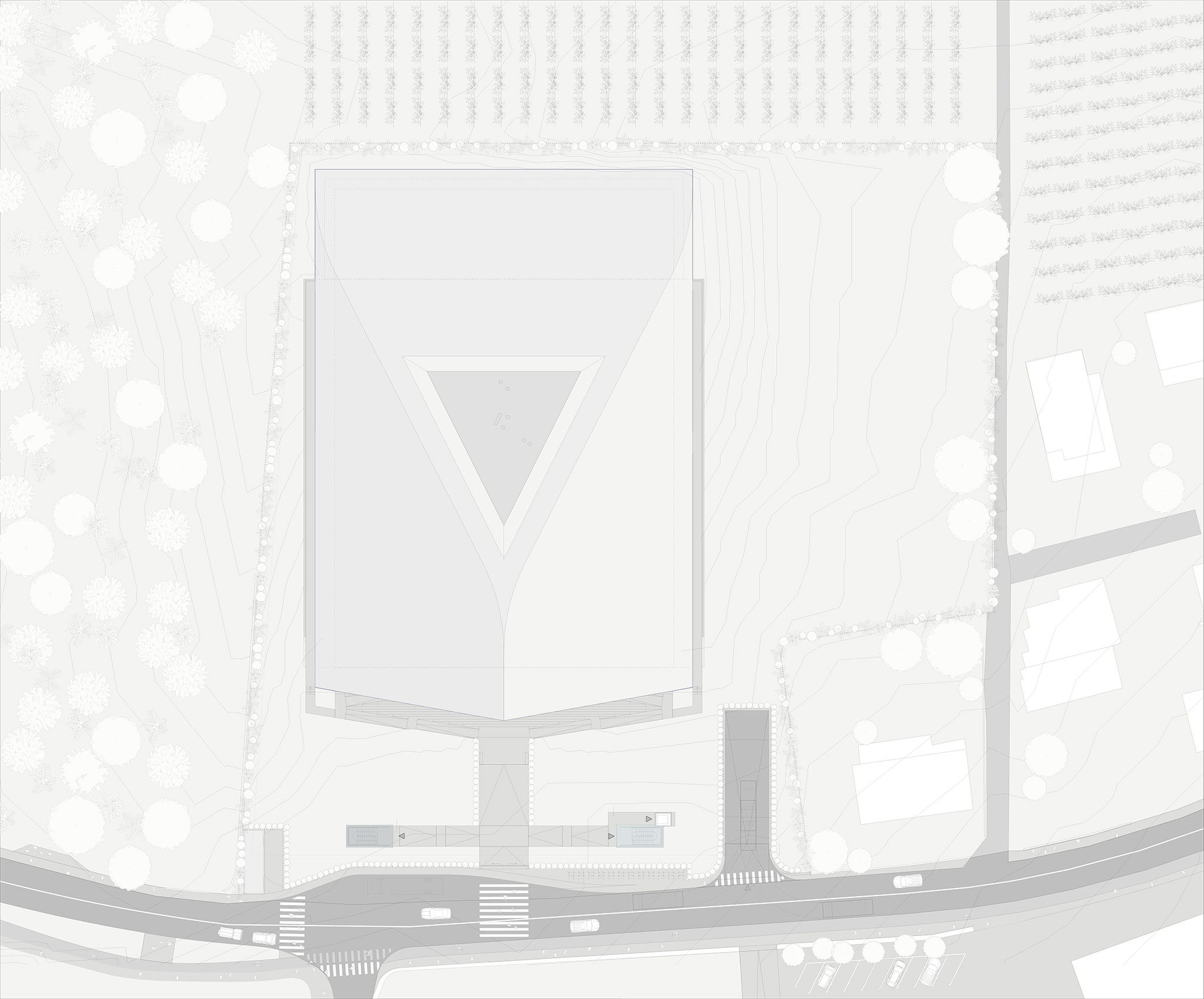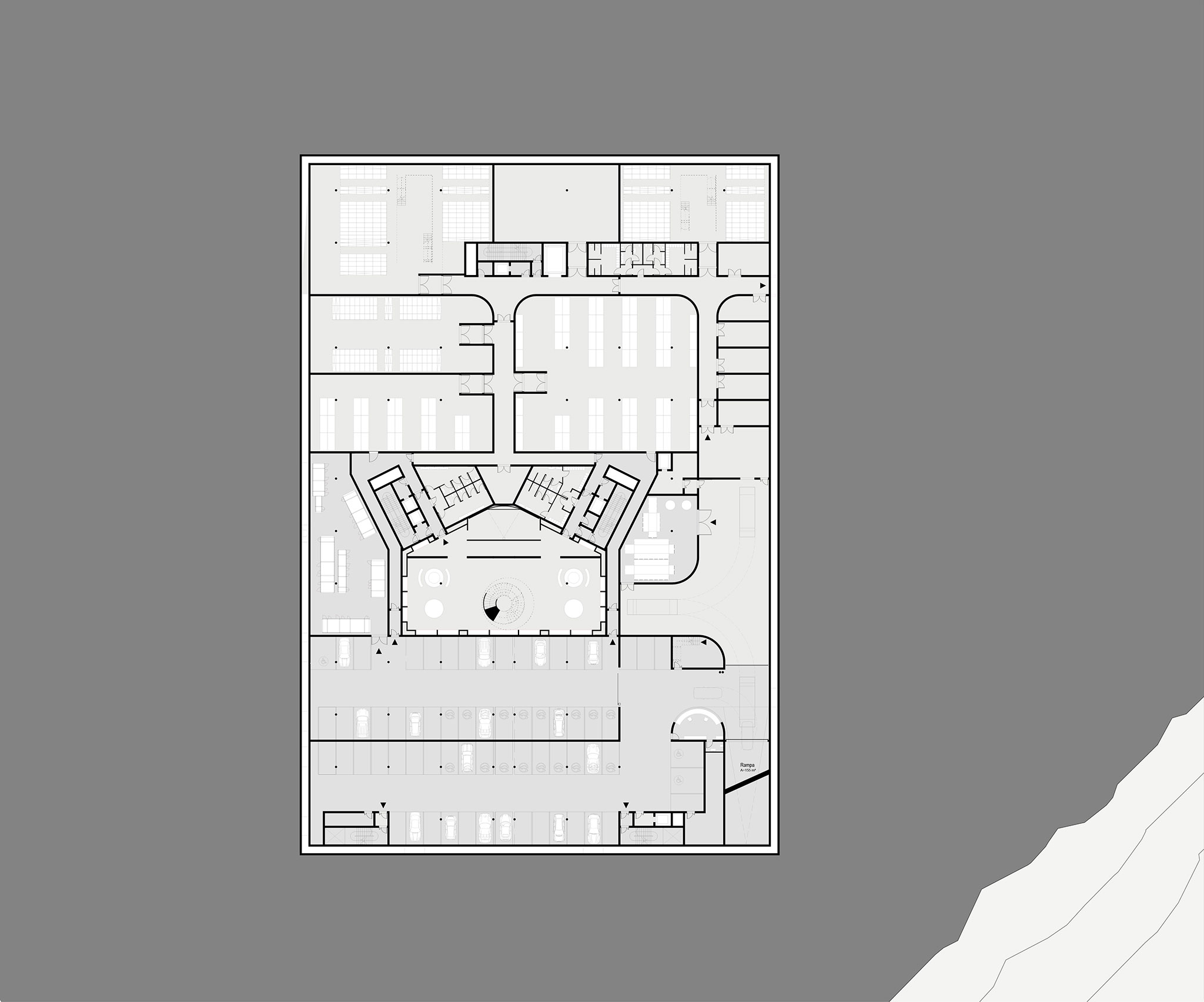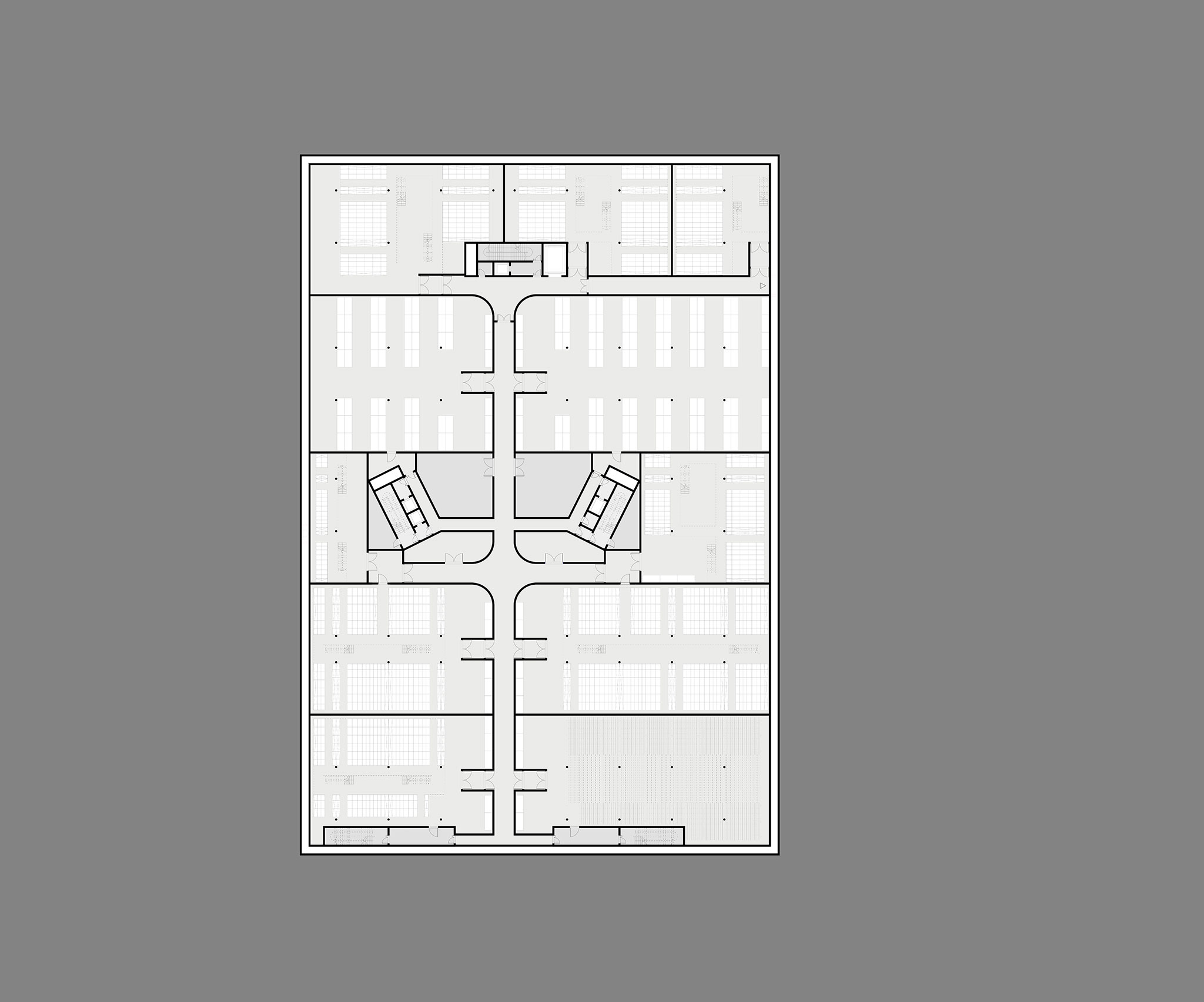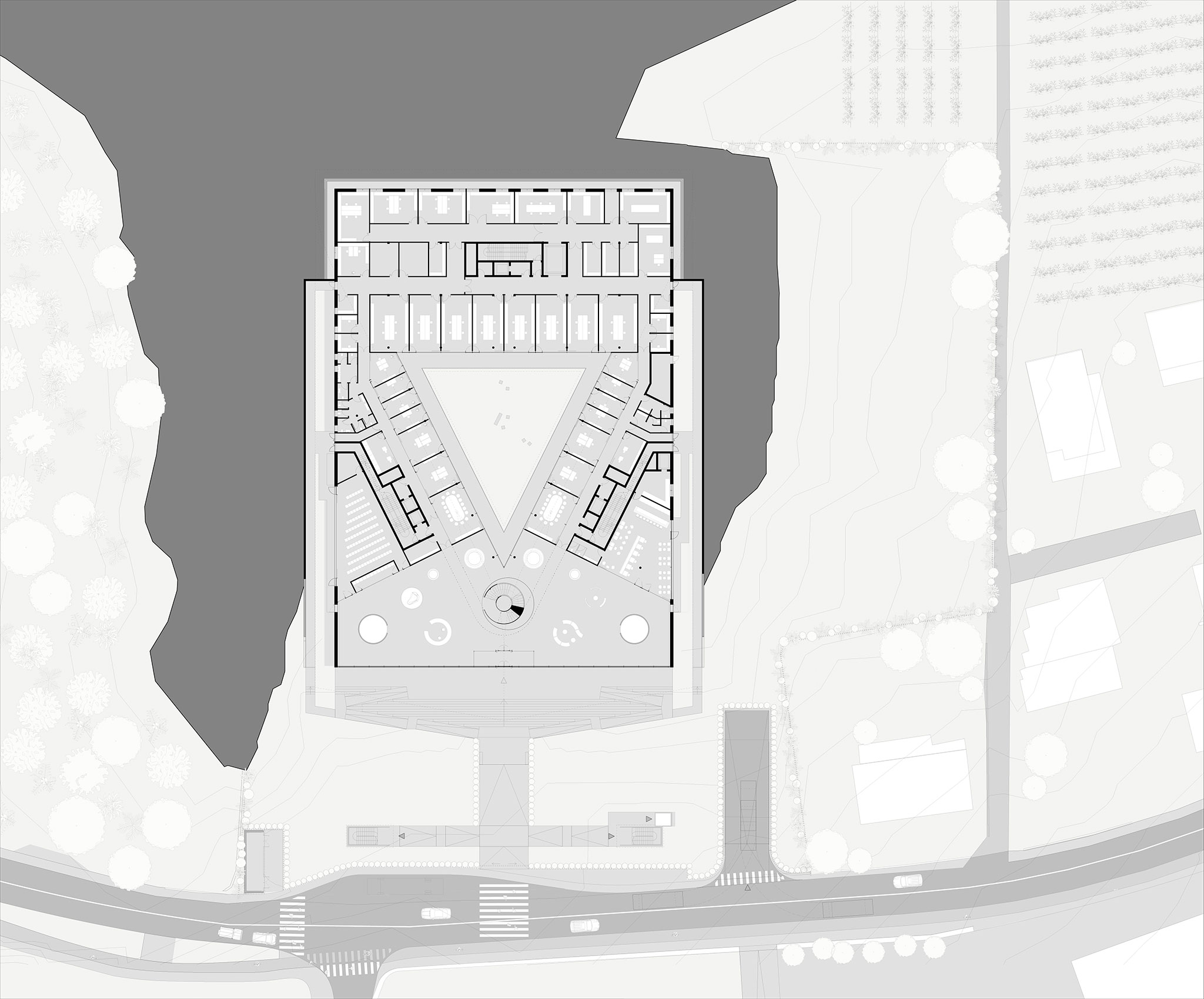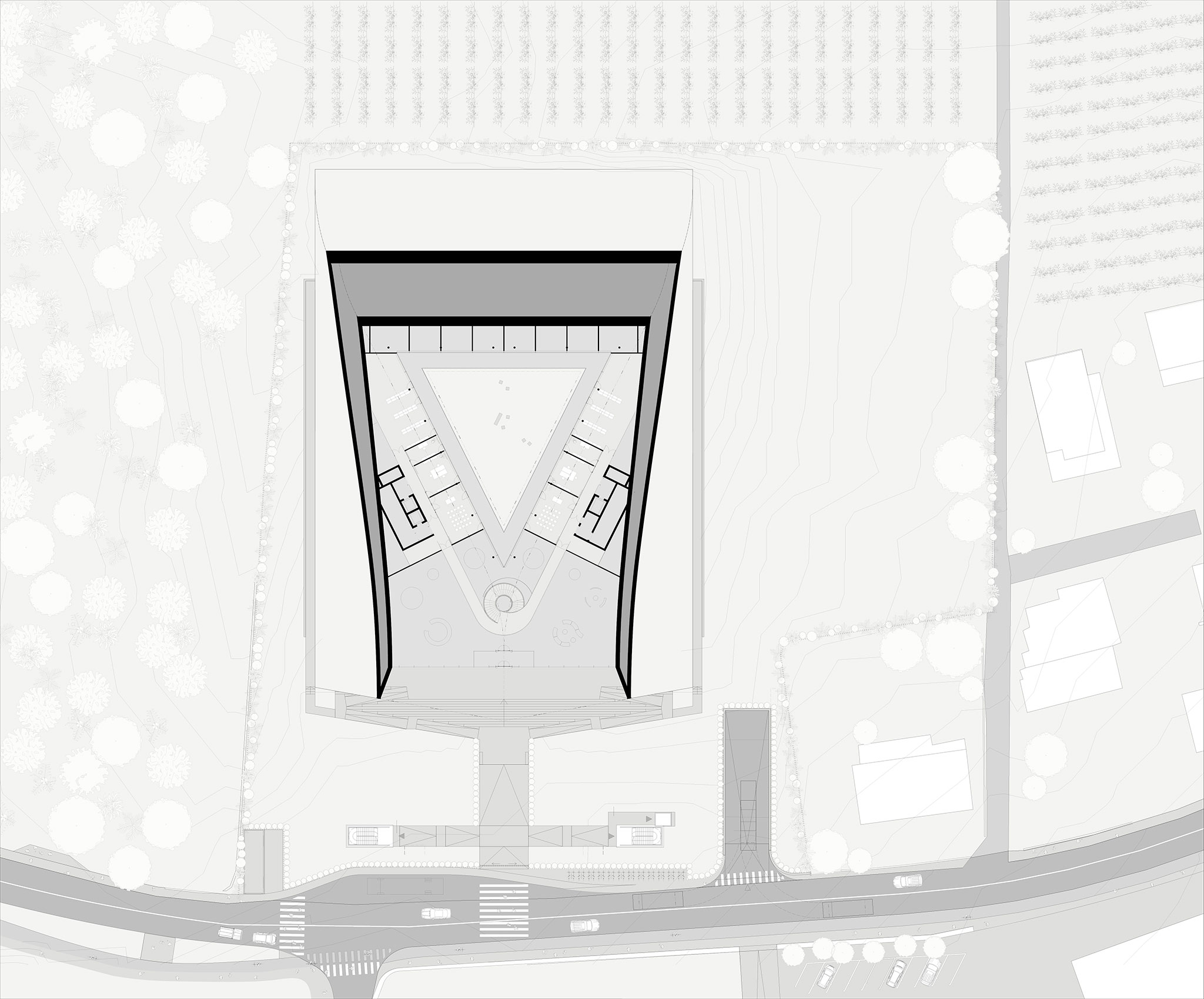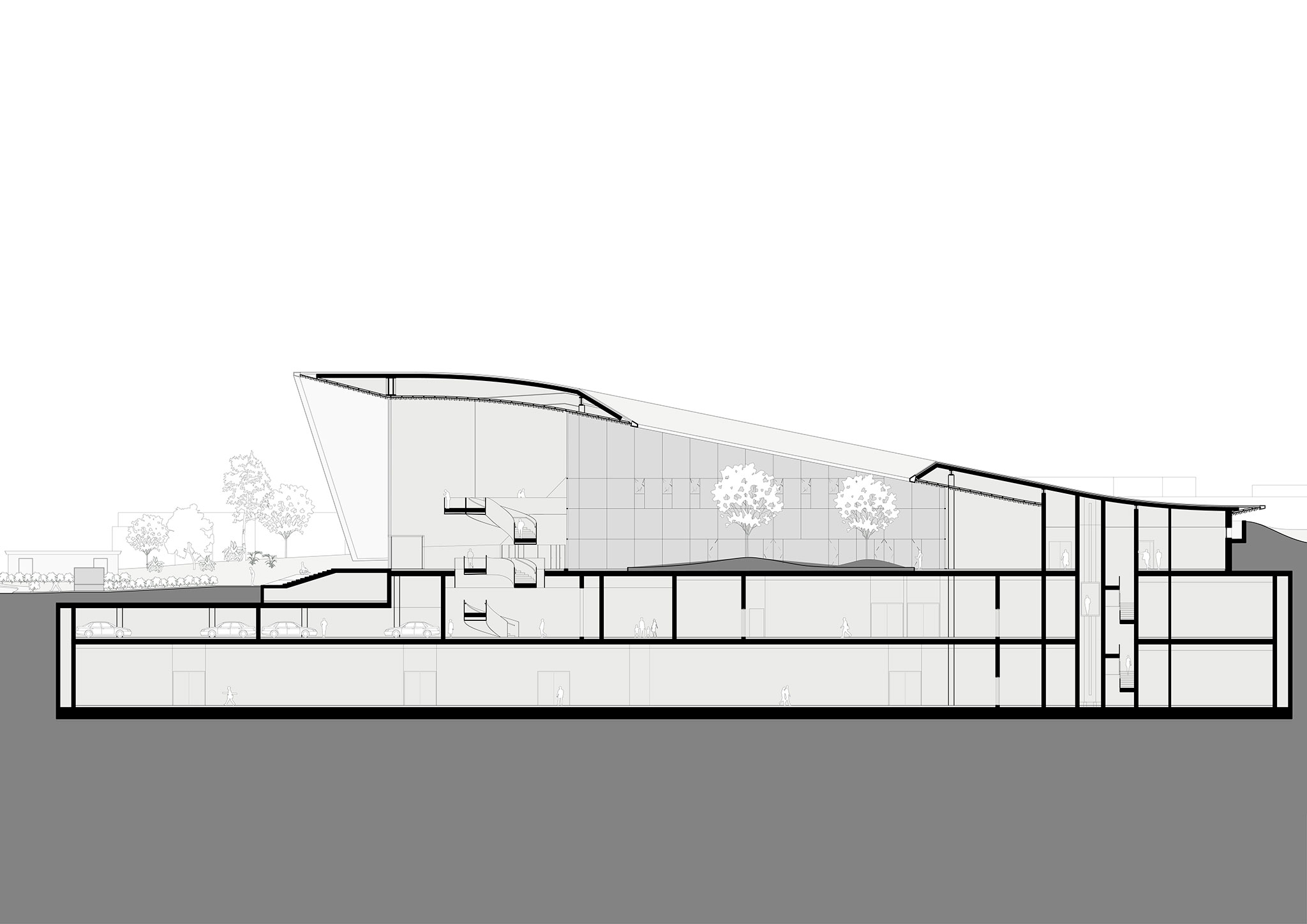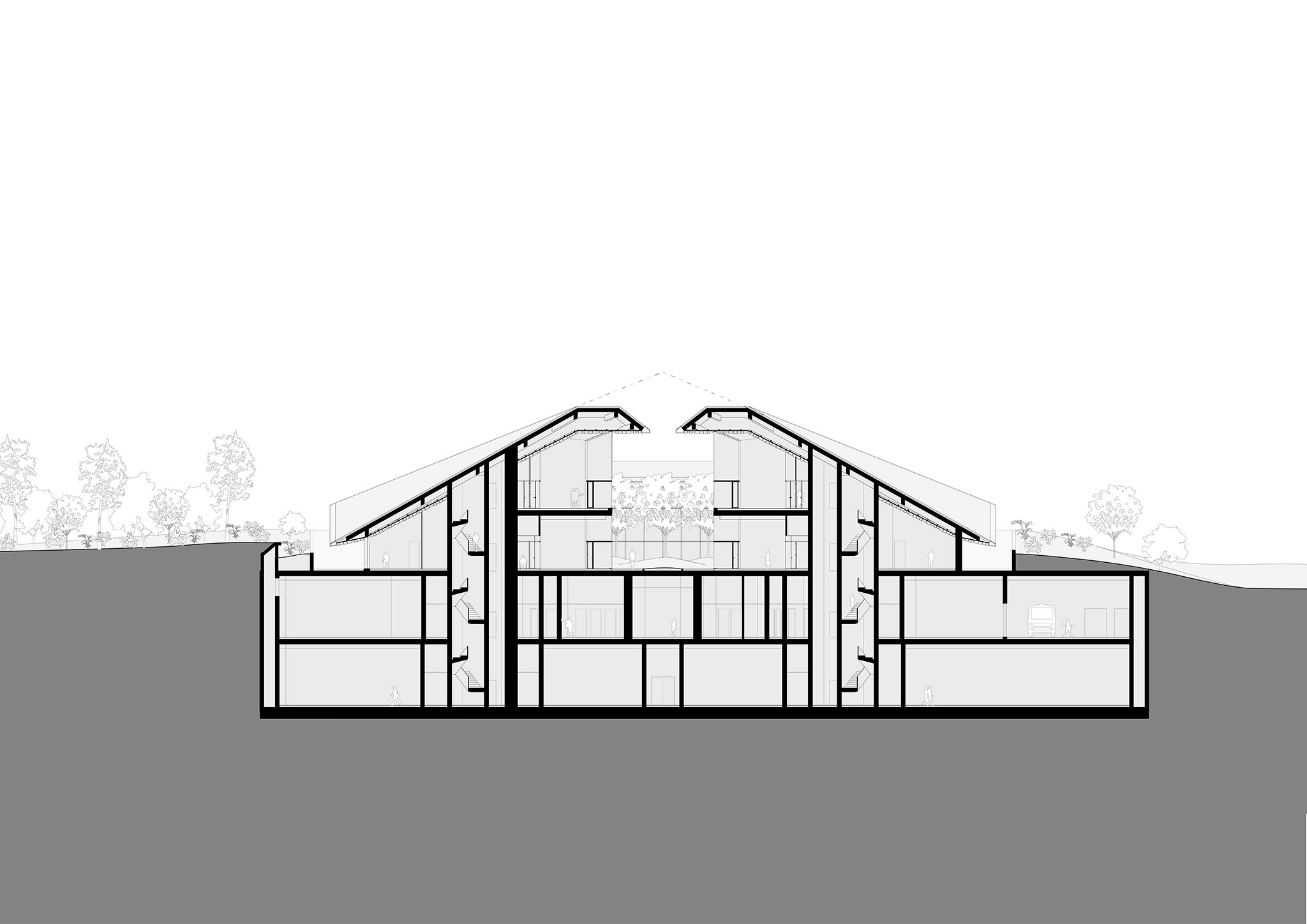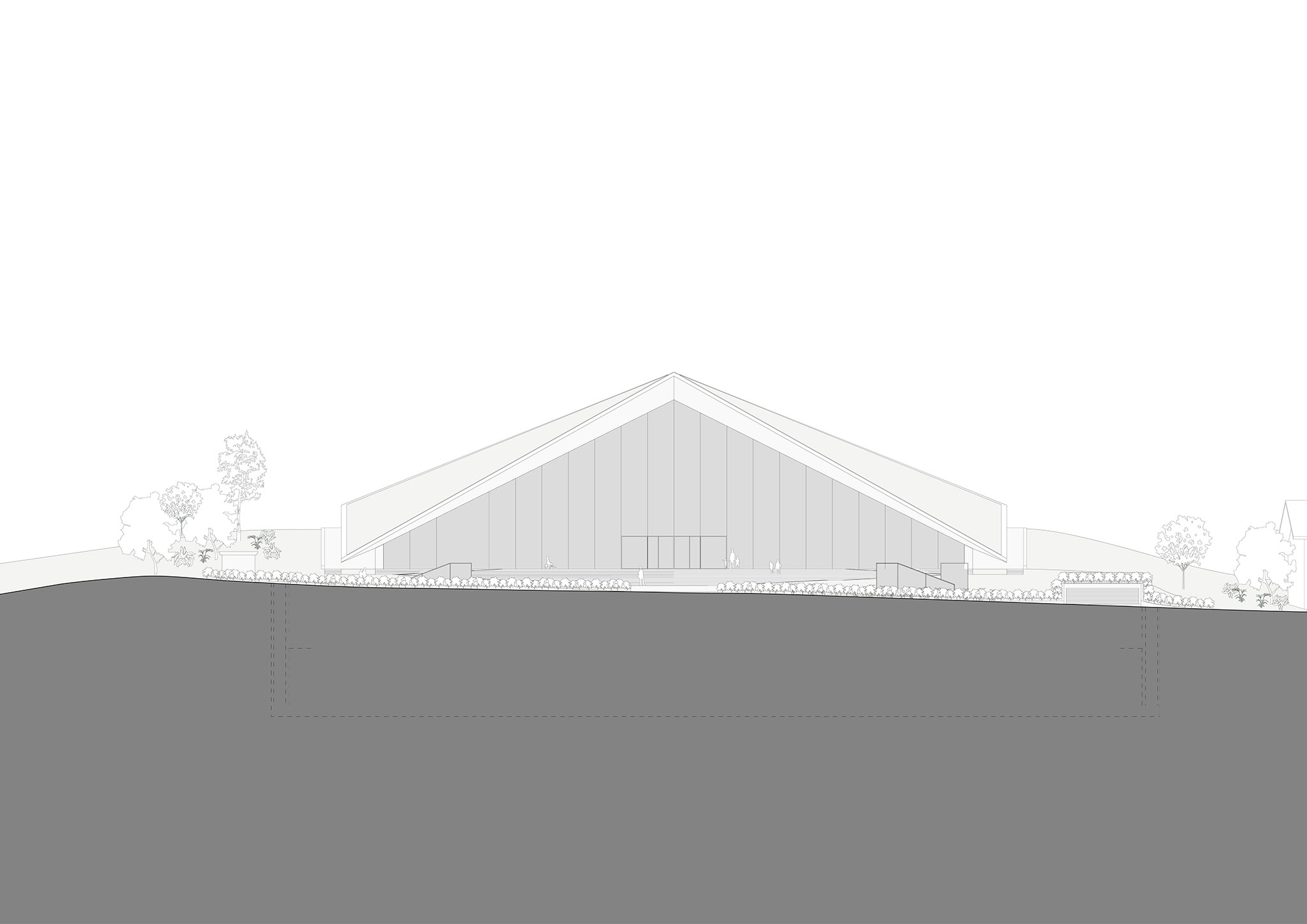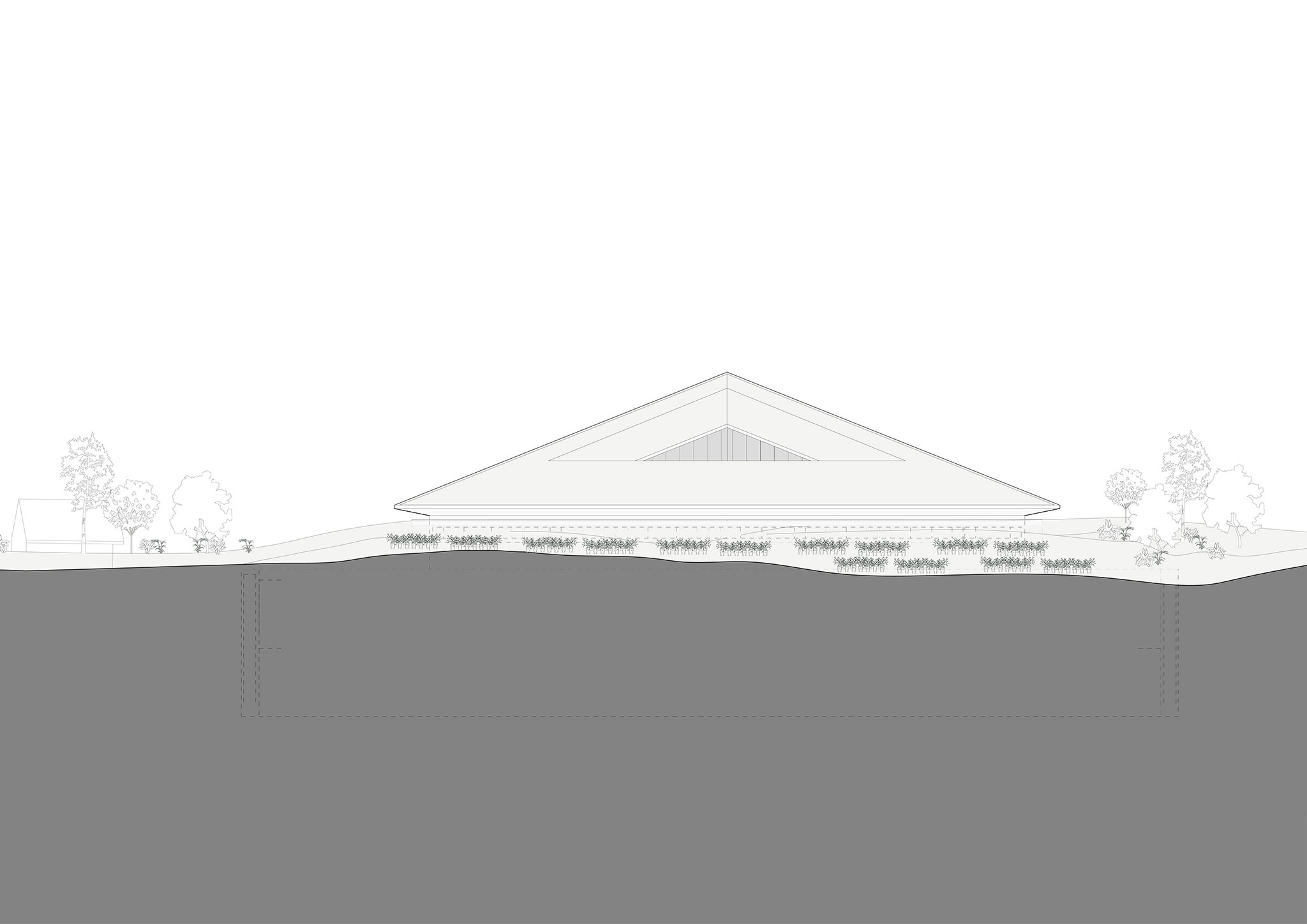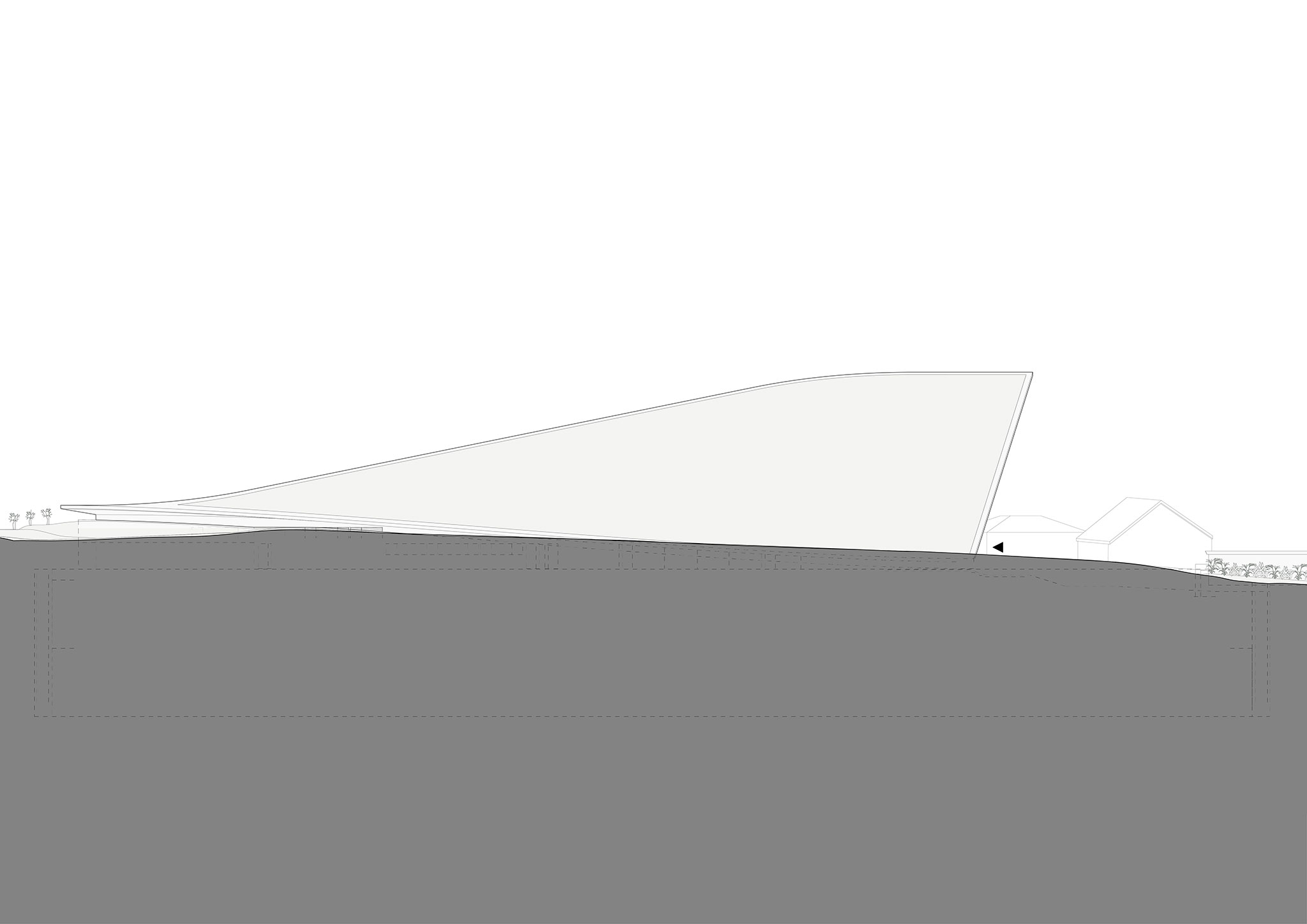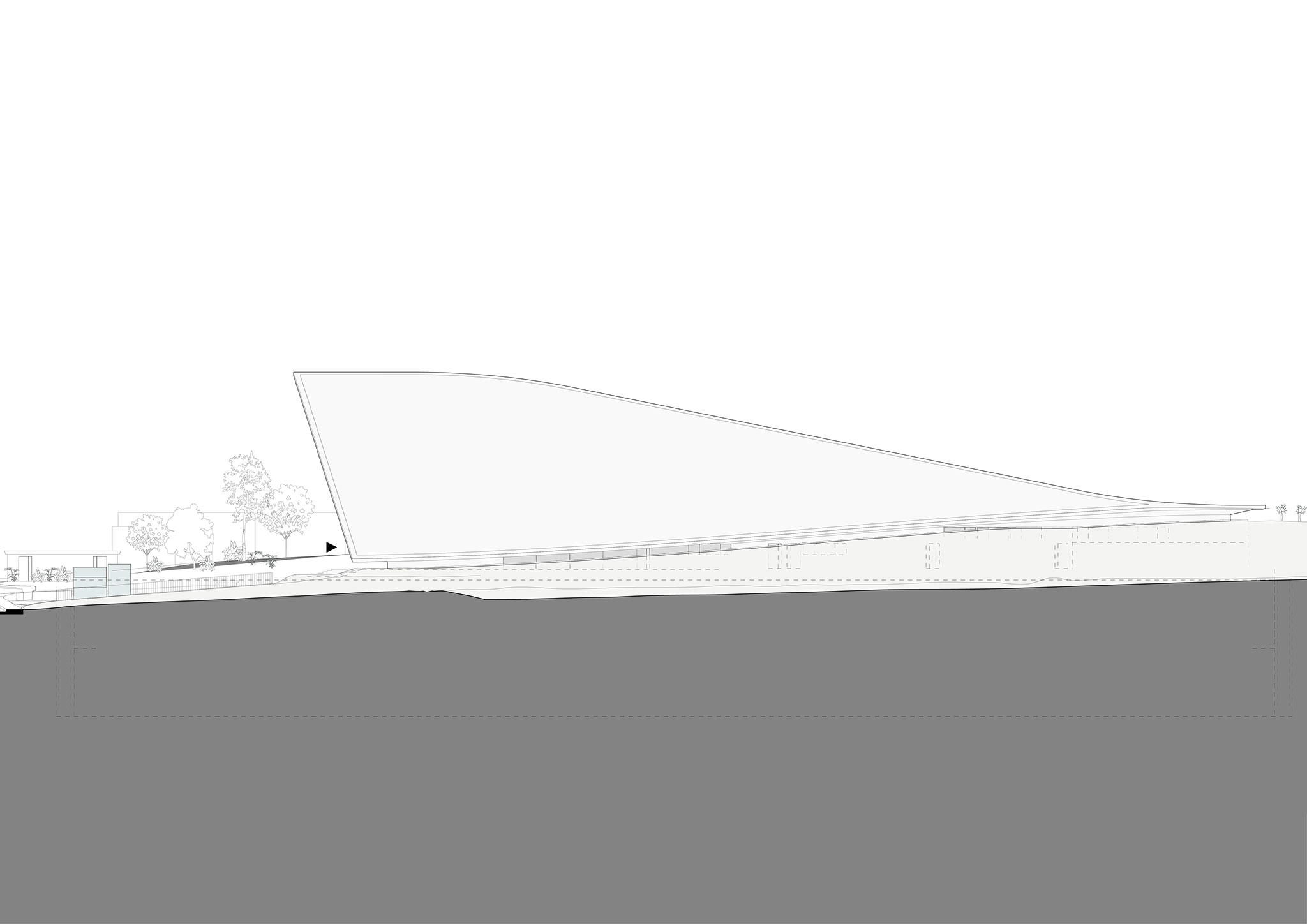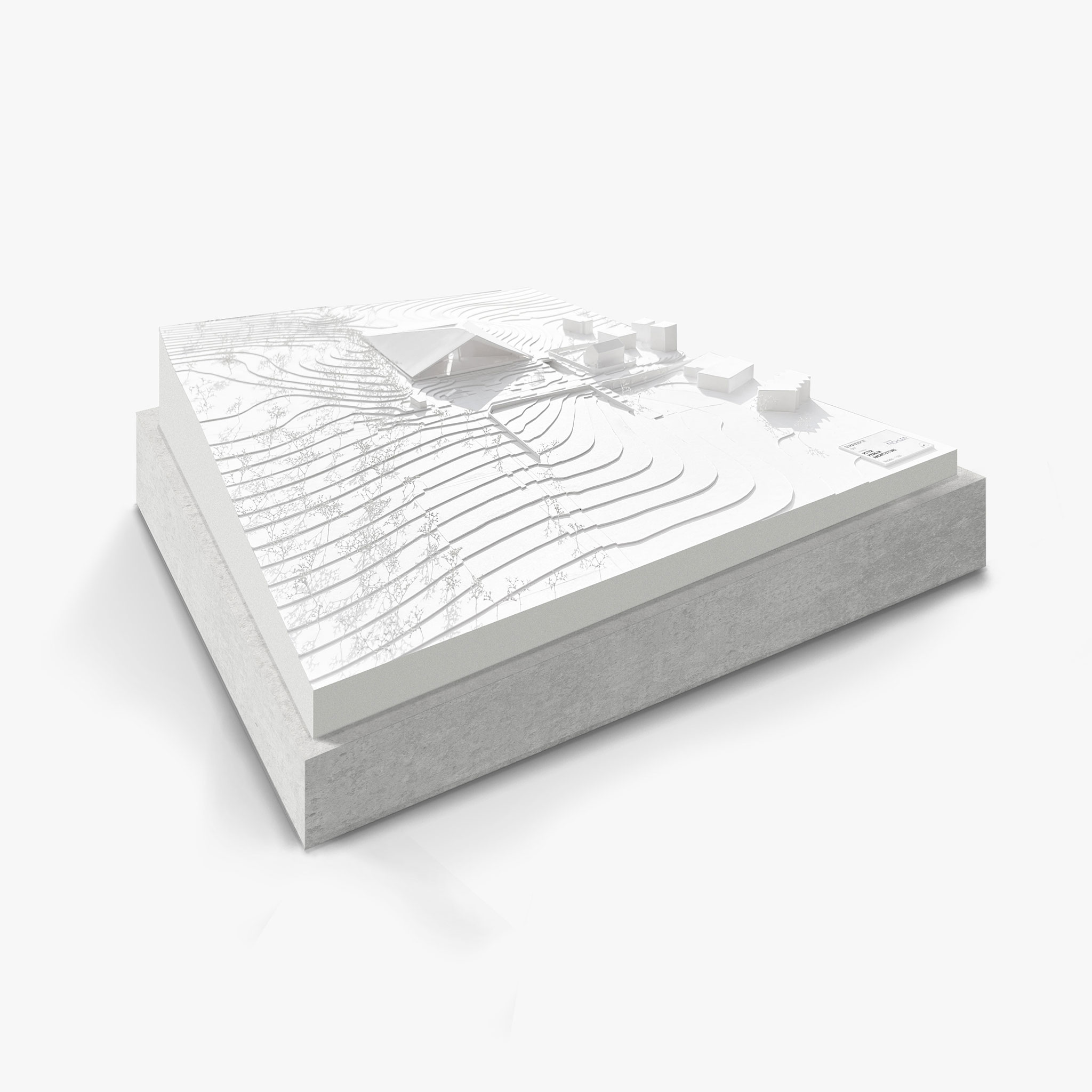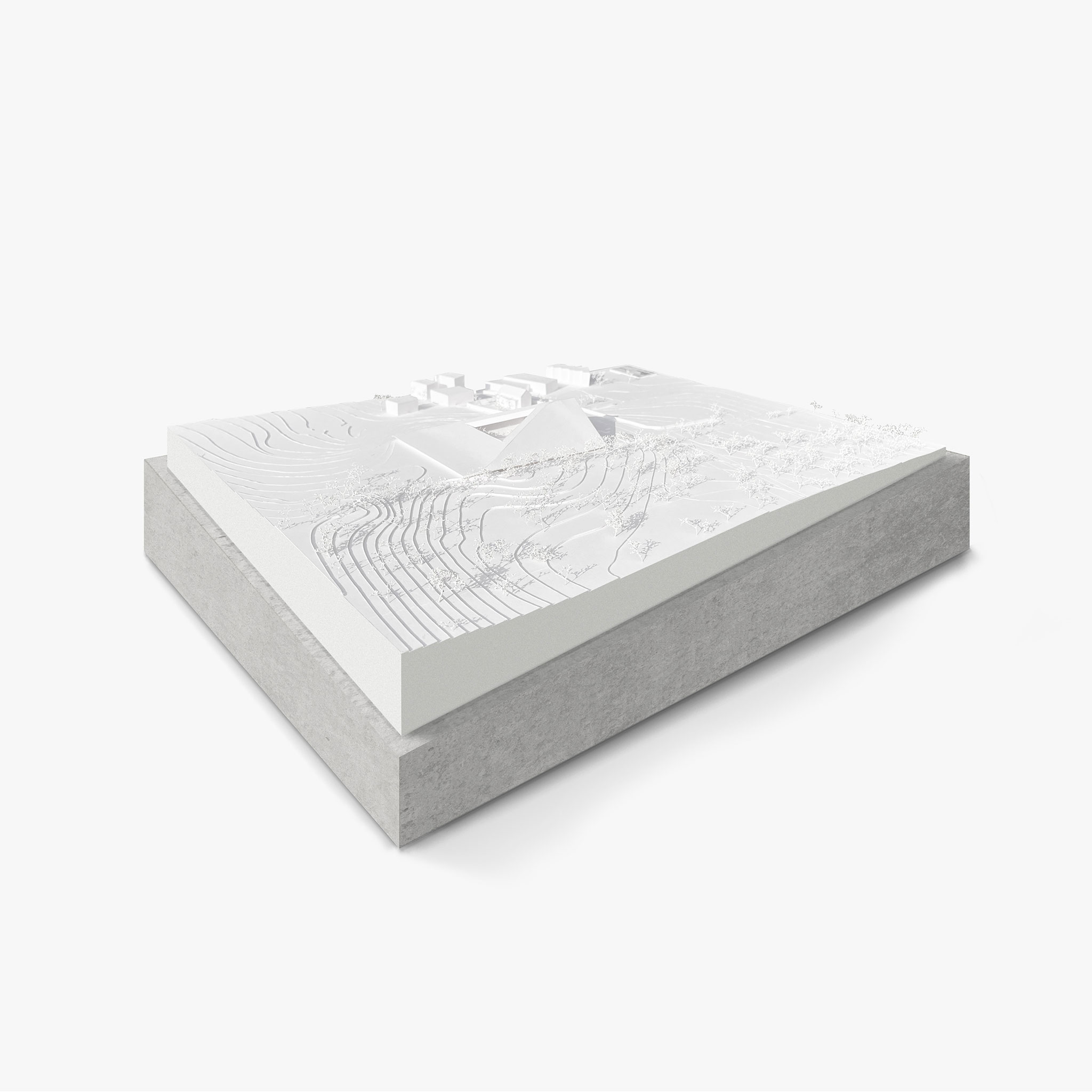
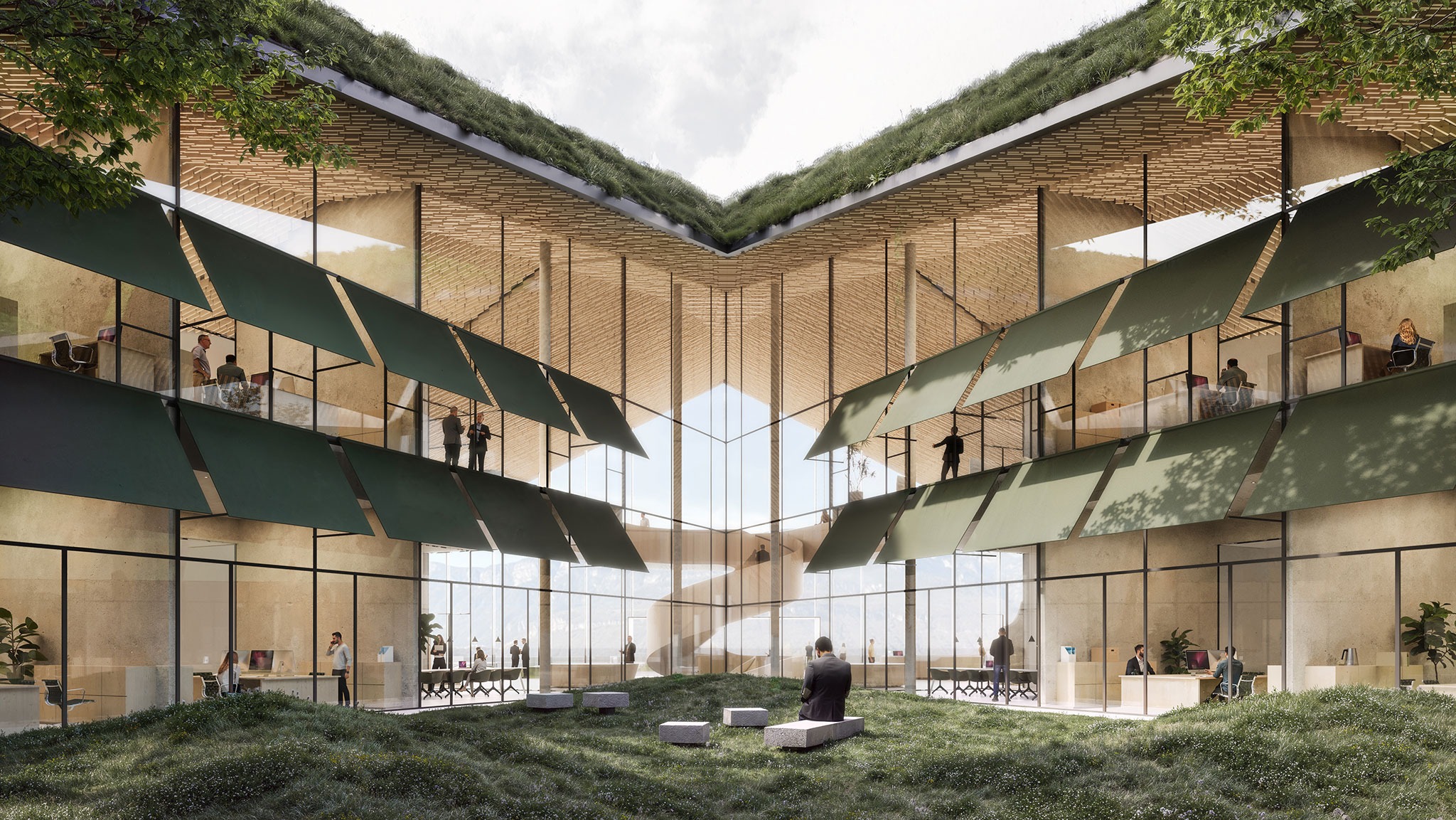
The Cultural Heritage Repository, designed by Peter Pichler Architecture, will house multiple functions, such as offices, laboratories, workshops, storage areas, and public galleries, prioritizing circulation, relationships, and workflows. In the new building, the offices are arranged around a central courtyard, while the storage and exhibition areas are located in the basement levels to ensure stable temperature and humidity conditions.
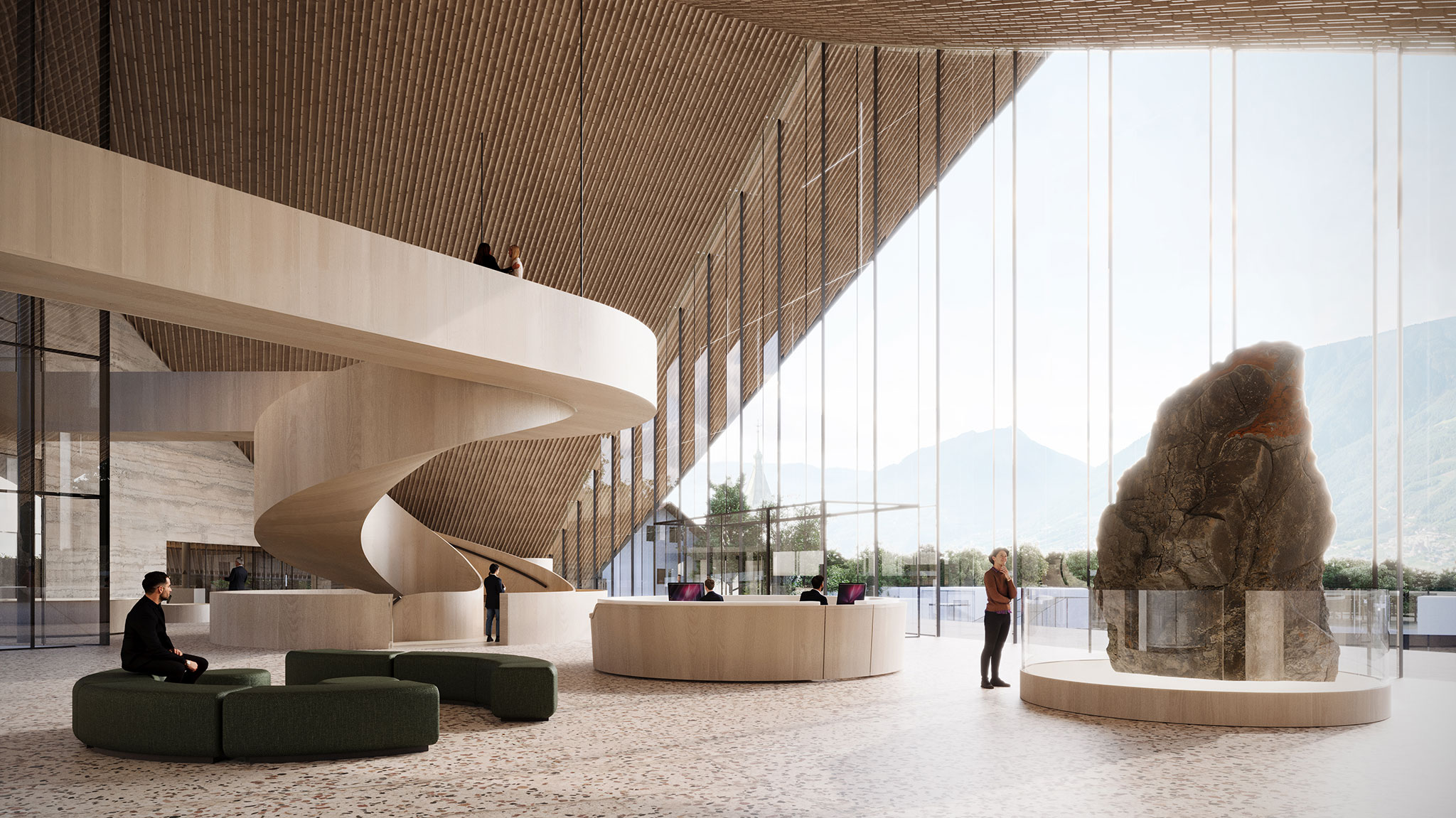
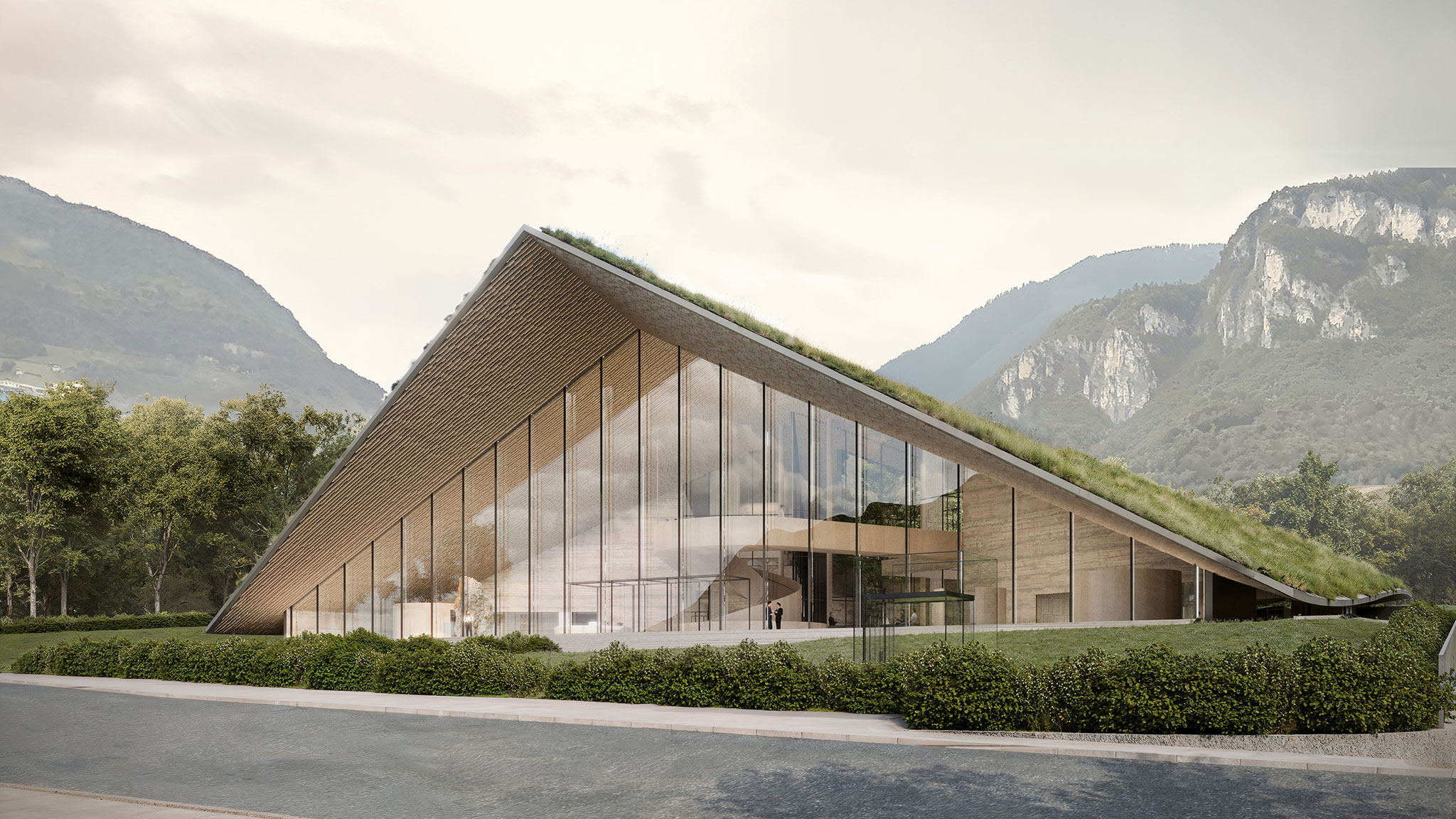
The design is partially integrated into the site, respecting its relationship with the surrounding context through a green roof that becomes an extension of the landscape. The building offers dual access for all users, one from the street and another from the underground parking garage. Upon entering, a sculptural spiral staircase connects the underground exhibition area to the ground floor and first floor.
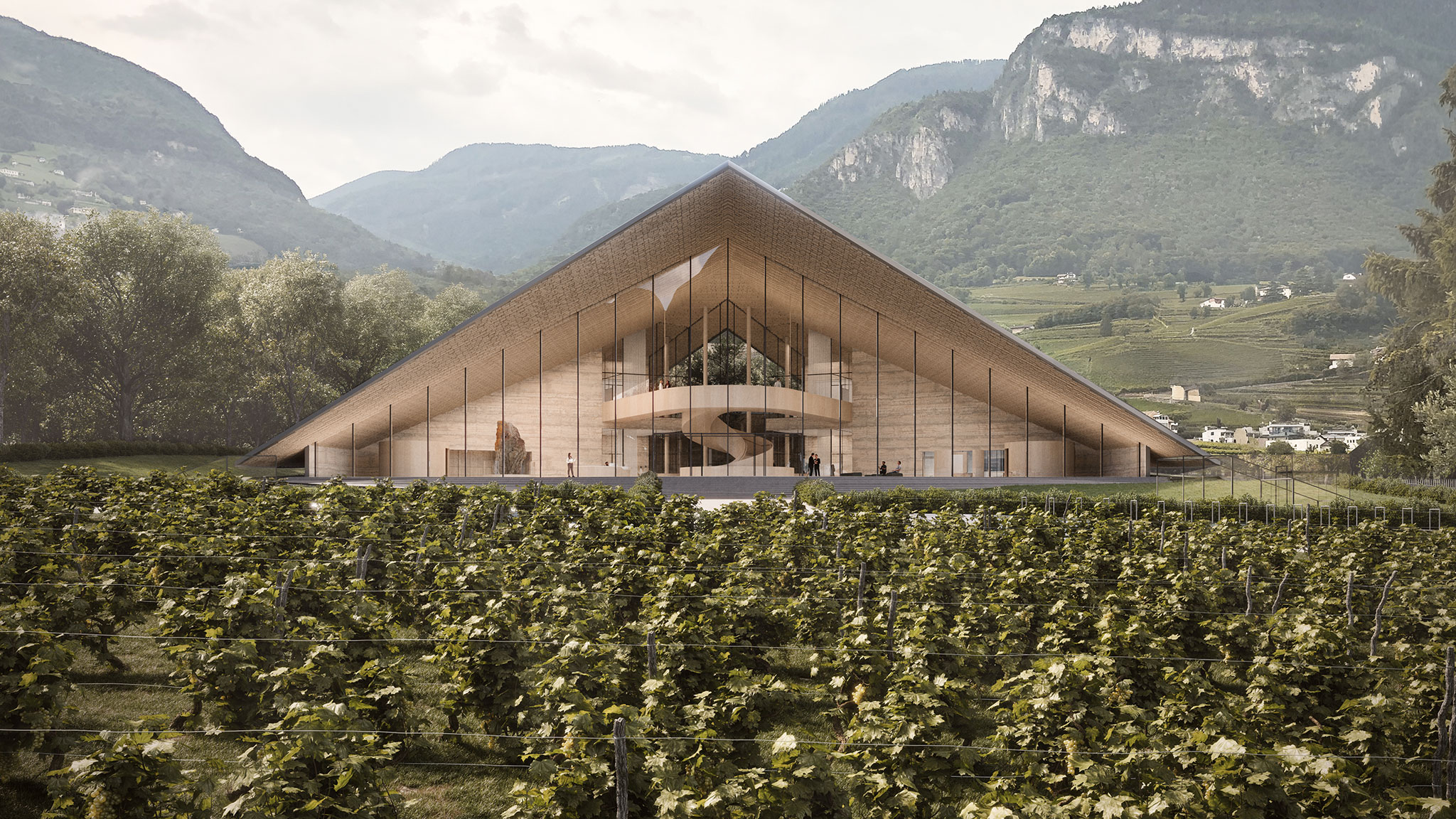
Museum Depot by Peter Pichler Architecture. Rendering courtesy of Peter Pichler Architecture.
Project description by Peter Pichler Architecture
Peter Pichler Architecture designs the new Kulturgüterdepot (Cultural Heritage Depot) for South Tyrol, Italy.
In response to the need for a centralized facility dedicated to the protection, conservation, and enhanced public accessibility of the region’s cultural assets, the project challenges the pre-existing architectural language of local depots developed over the years. Thanks to a centralized facility such as this Cultural Heritage Depot, it will be possible not only to conserve over one million objects, but also to make them accessible to the public; from artworks belonging to the Unterberger and Eccel Kreuzer collections and the Museion, to the holdings of the provincial museums, as well as archaeological finds and photographic and film archives.
The new design was confronted with a dual obligation: to perform as an optimized preservation facility while simultaneously responding to the cultural demands of the region. Unlike the historical distribution of depots of varying scales and programs scattered across South Tyrol, the new Museum Depot consolidates these functions into a unified facility, creating an integrated regional space for archaeological research. The building accommodates multiple functions, including offices, laboratories and workshops, storage spaces, and public galleries.
The spatial program is organized to prioritize circulation, relationships, and workflows between institutions, rather than functioning as a collection of discrete storage units. Offices are arranged around a central courtyard to maximize natural daylight while offering employees direct access to a green space during breaks. The depot and exhibition areas are located underground to ensure stable temperature and humidity conditions, which are essential for the long-term preservation of archaeological finds and historical artifacts.
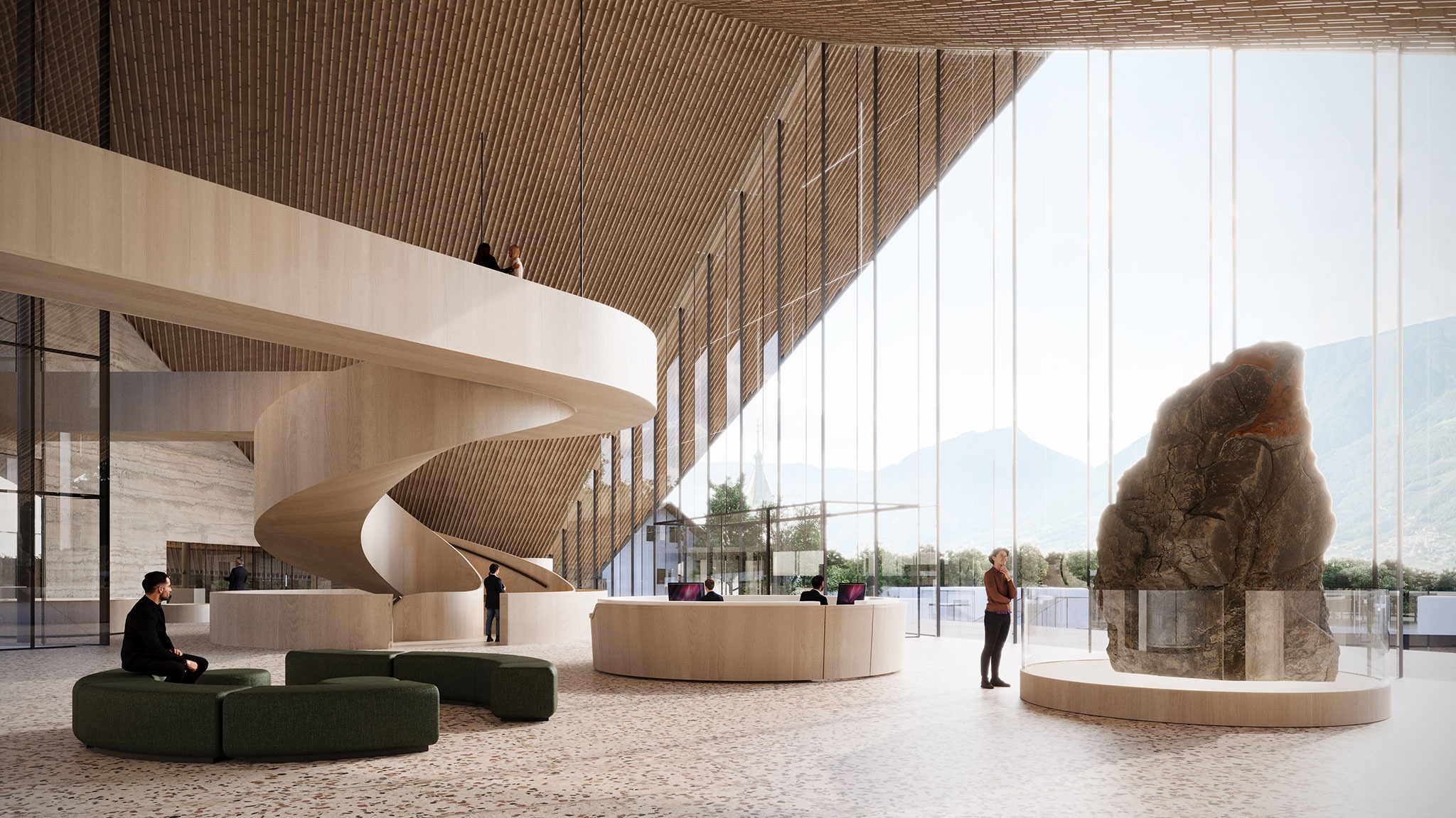
Derived from the traditional architecture of South Tyrol’s alpine and valley regions, the raised roof and street-facing entrance create an inviting and transparent foyer for visitors. By partially embedding the building into the ground, the project reduces its perceived scale and respects the surrounding context and typology. The green roof becomes an extension of the landscape, fostering continuity and a seamless dialogue between architecture and its natural setting.
The main entrance is accessible from the street and across the plaza, while both visitors and employees can also access the building directly via the underground parking. Upon entering the main foyer, visitors are welcomed by a sculptural spiral staircase that connects the underground exhibition area with the ground and first floor.
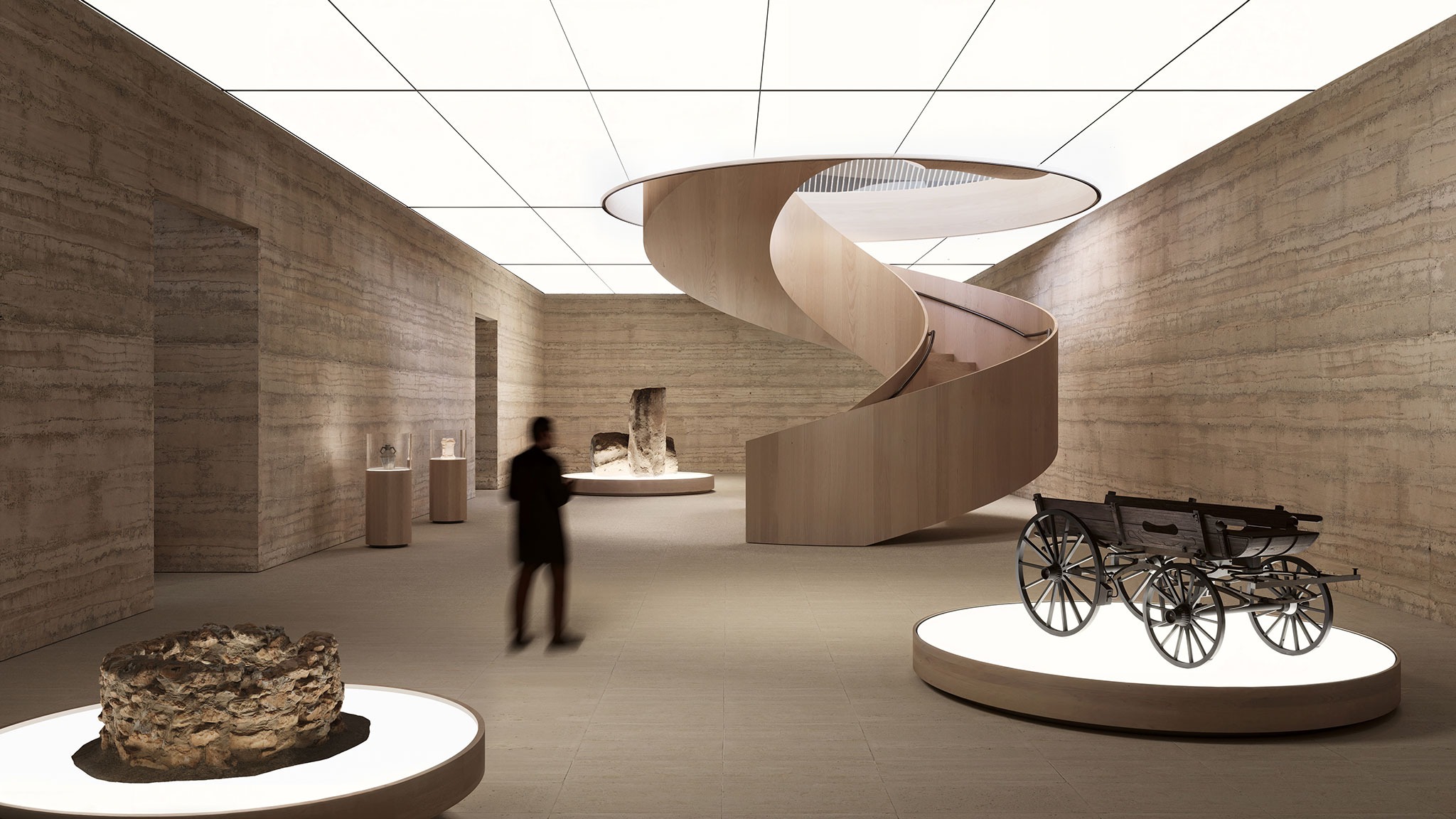
Upon completion, the facility will consolidate archaeological collections previously stored under inadequate conditions, ensuring appropriate conservation standards while strengthening their role as accessible and valued cultural assets.