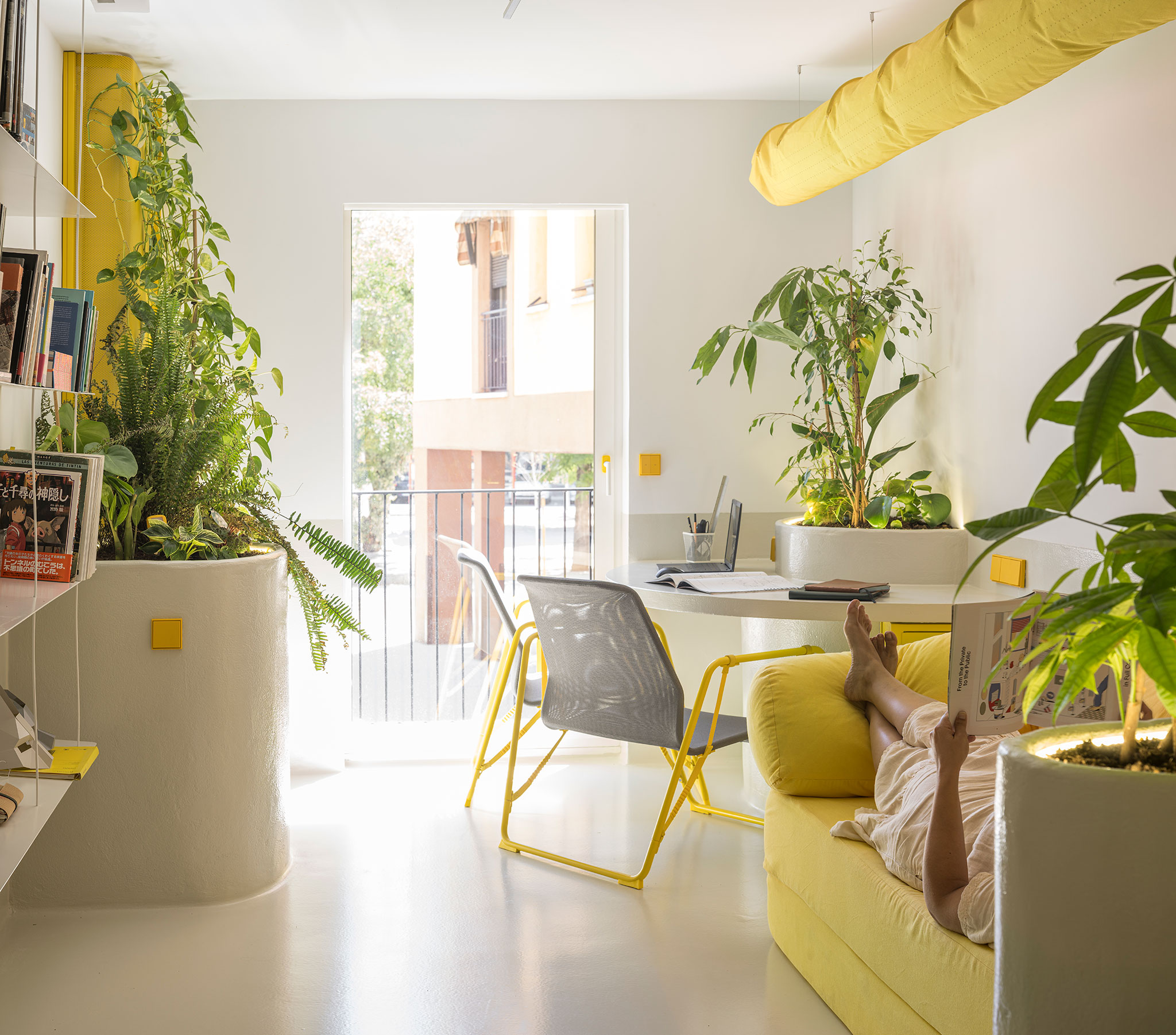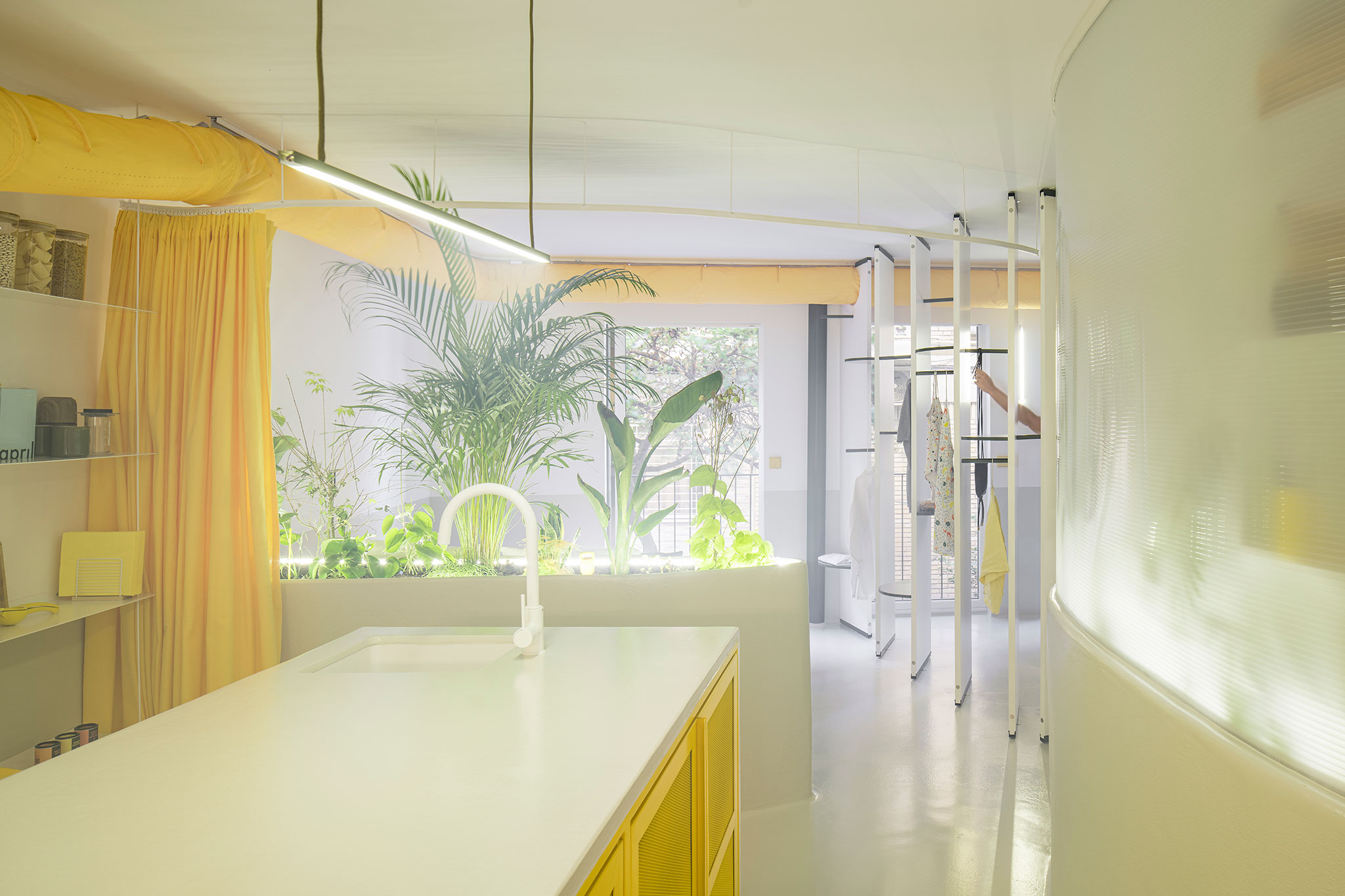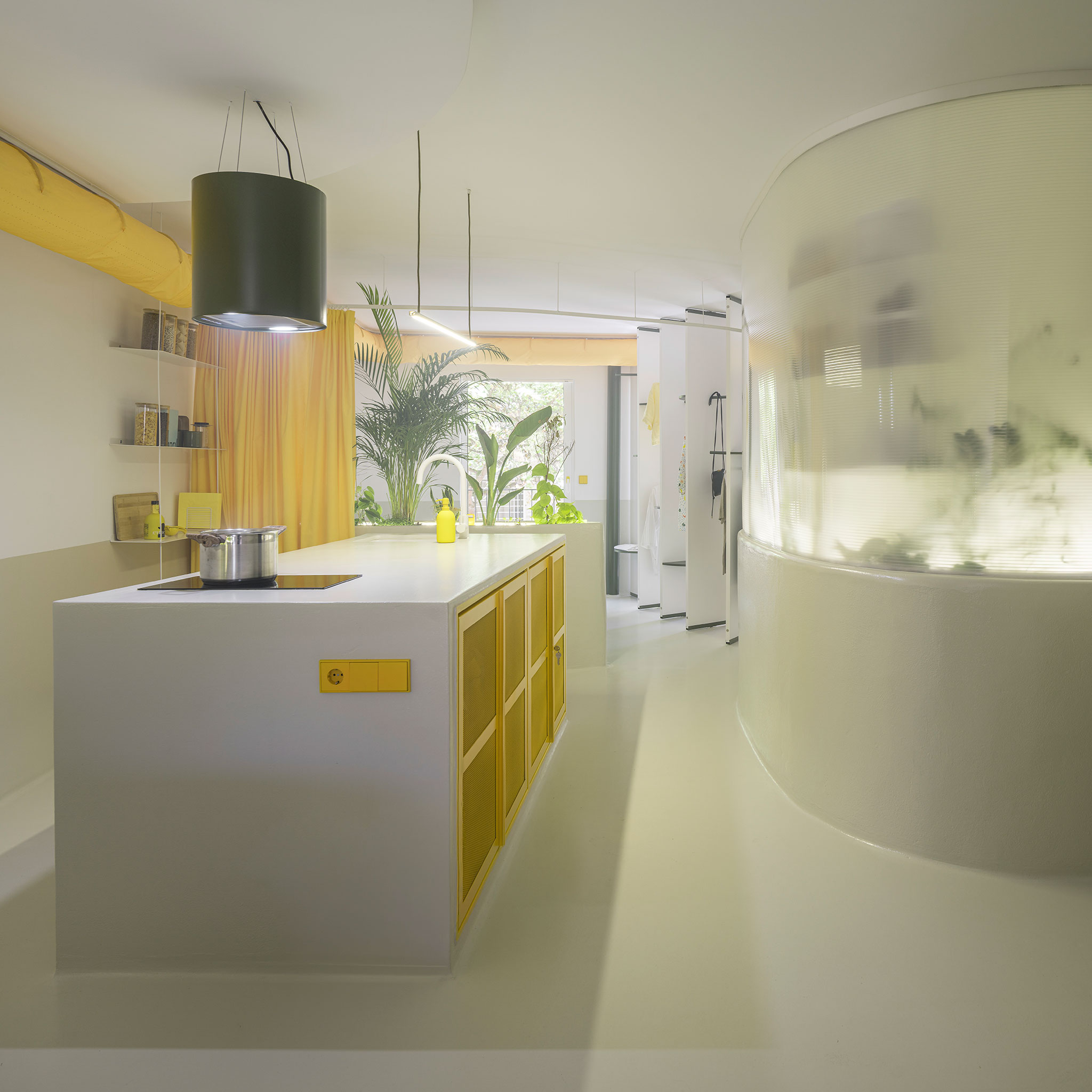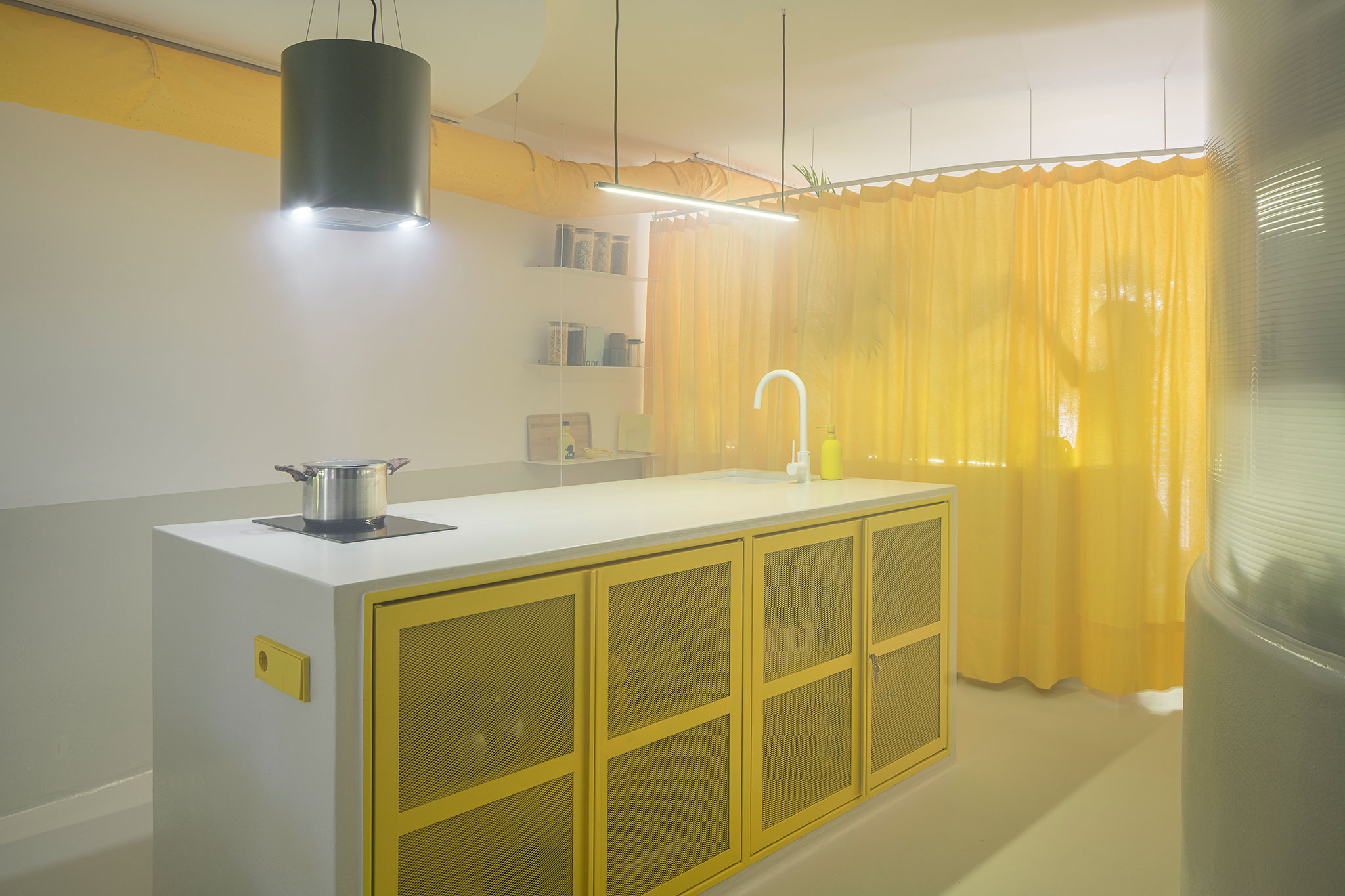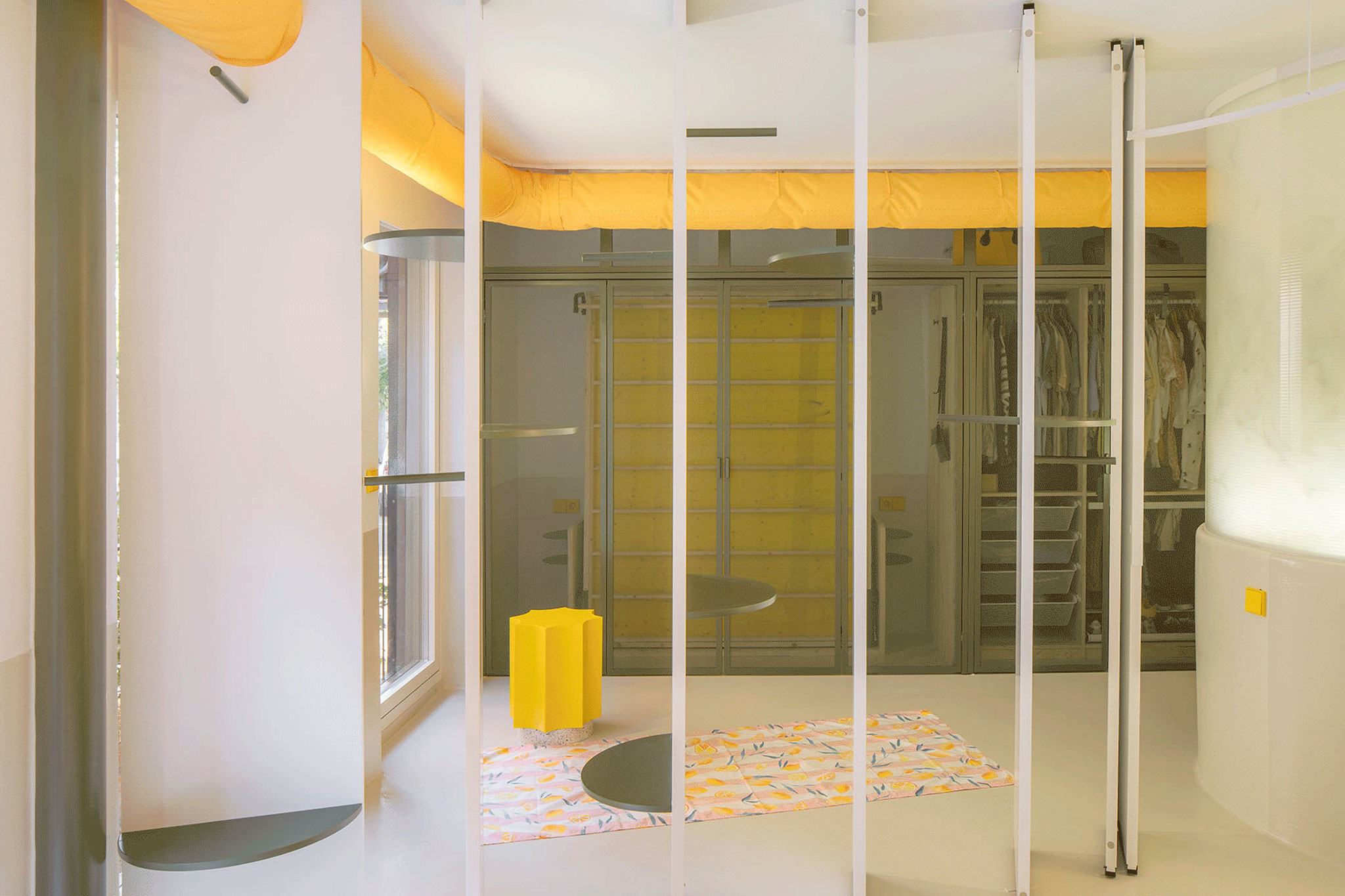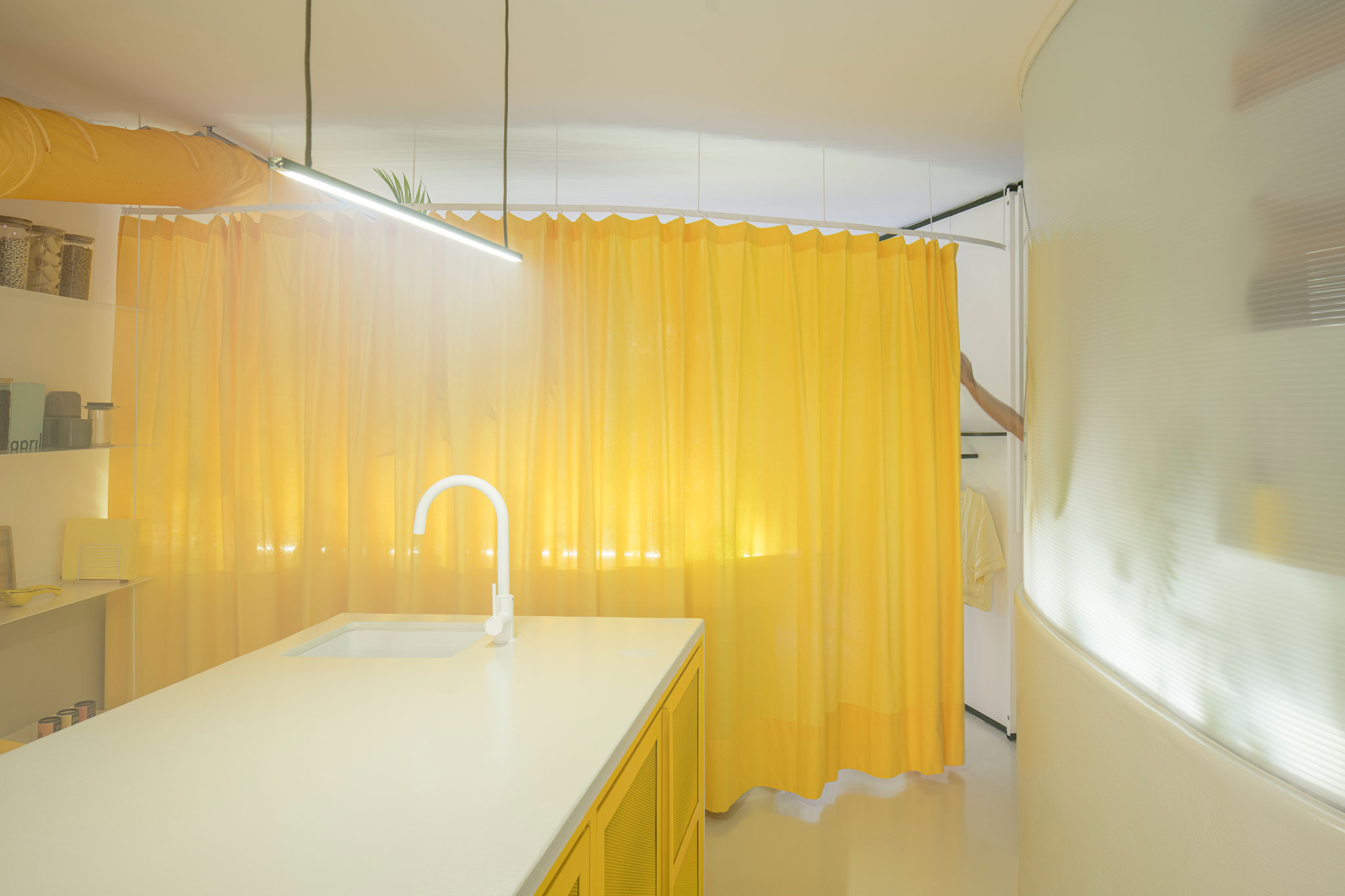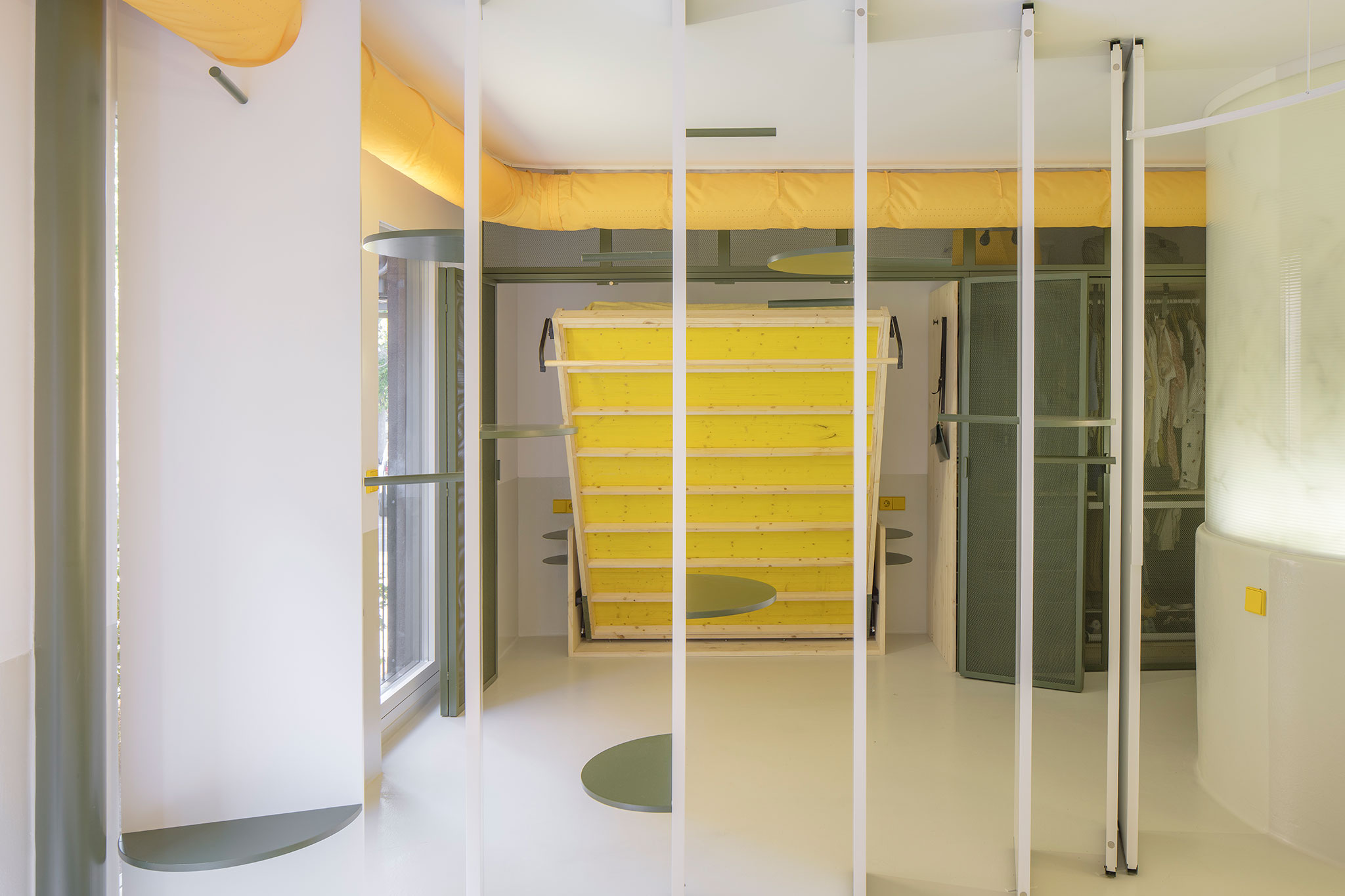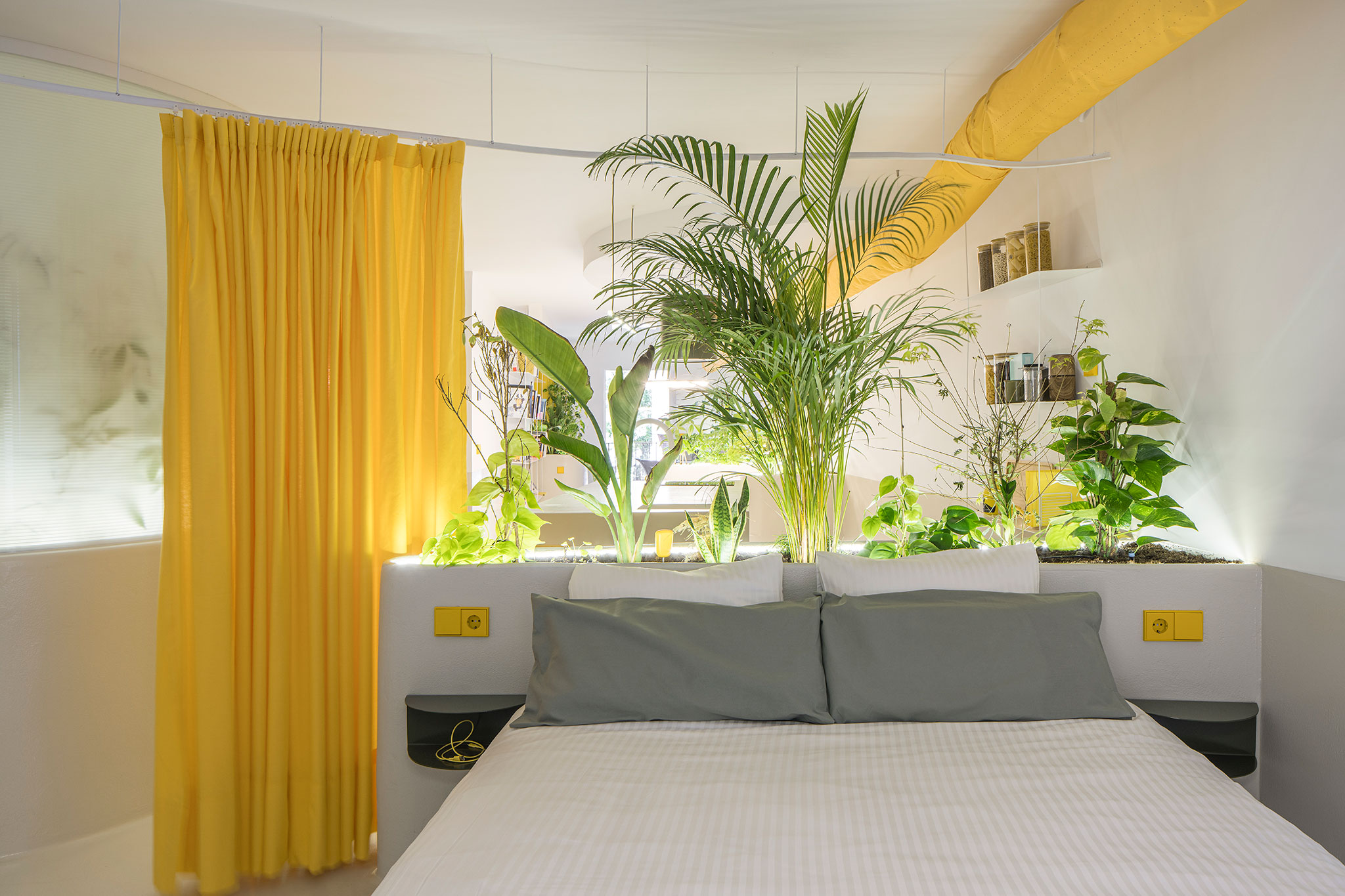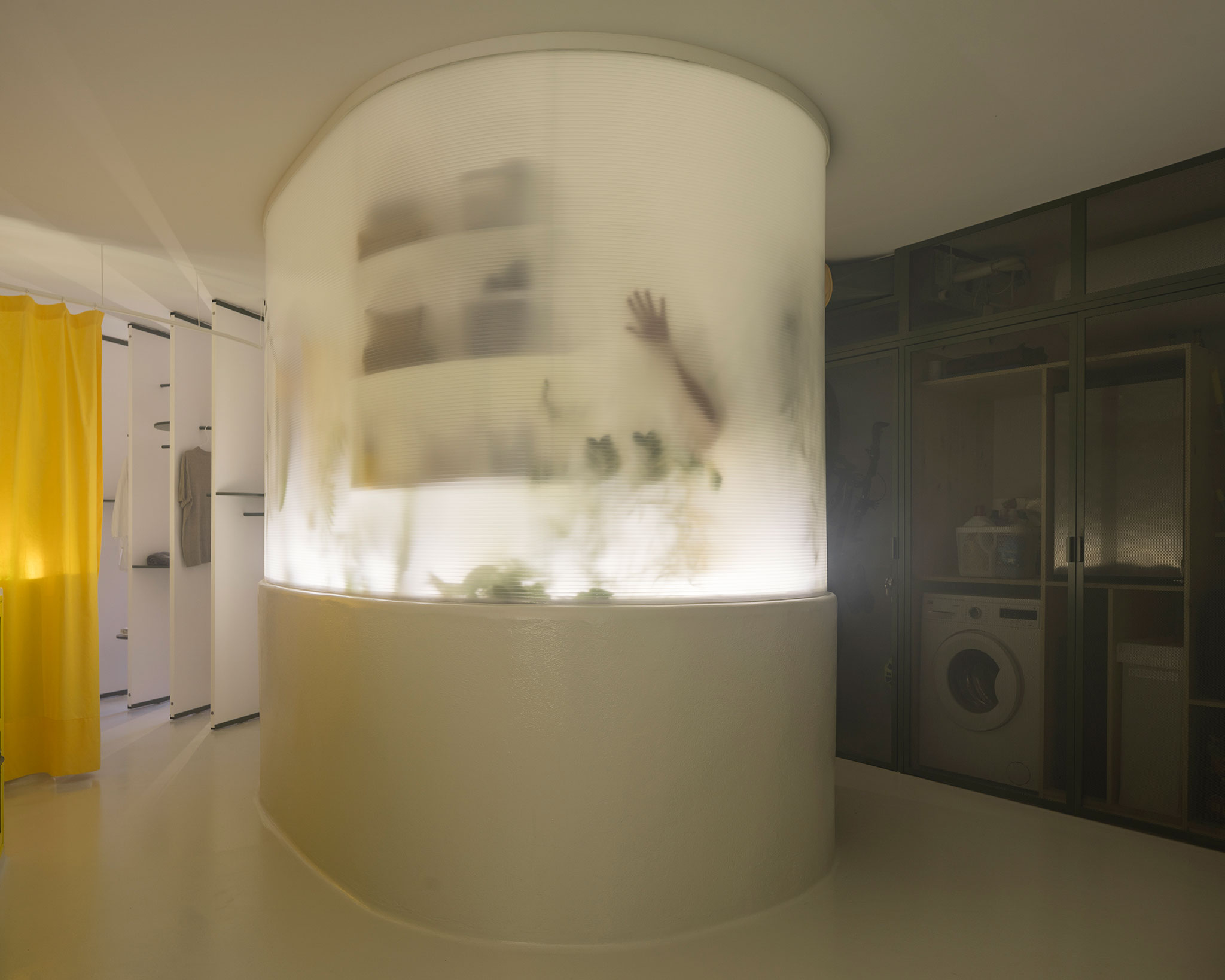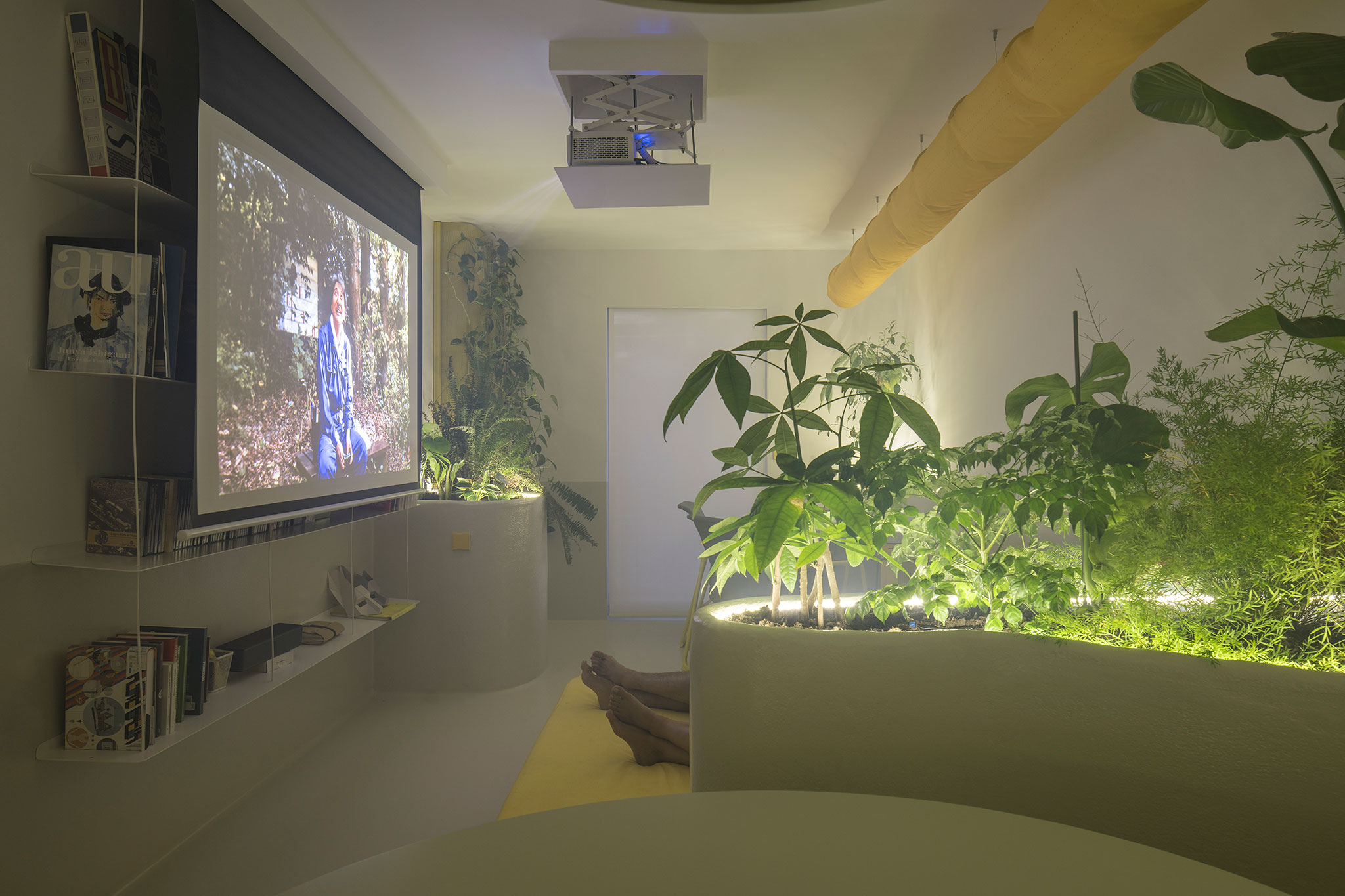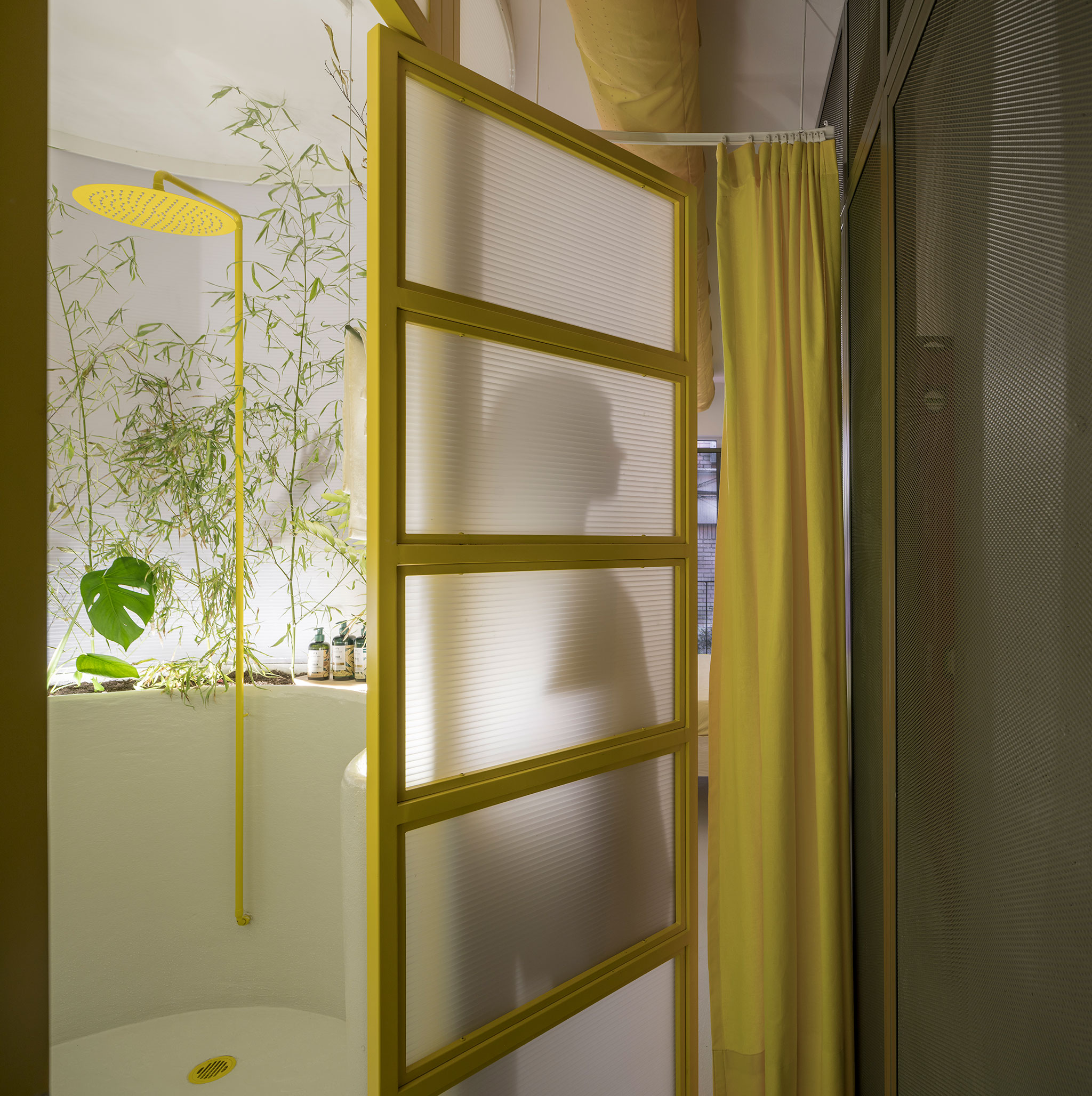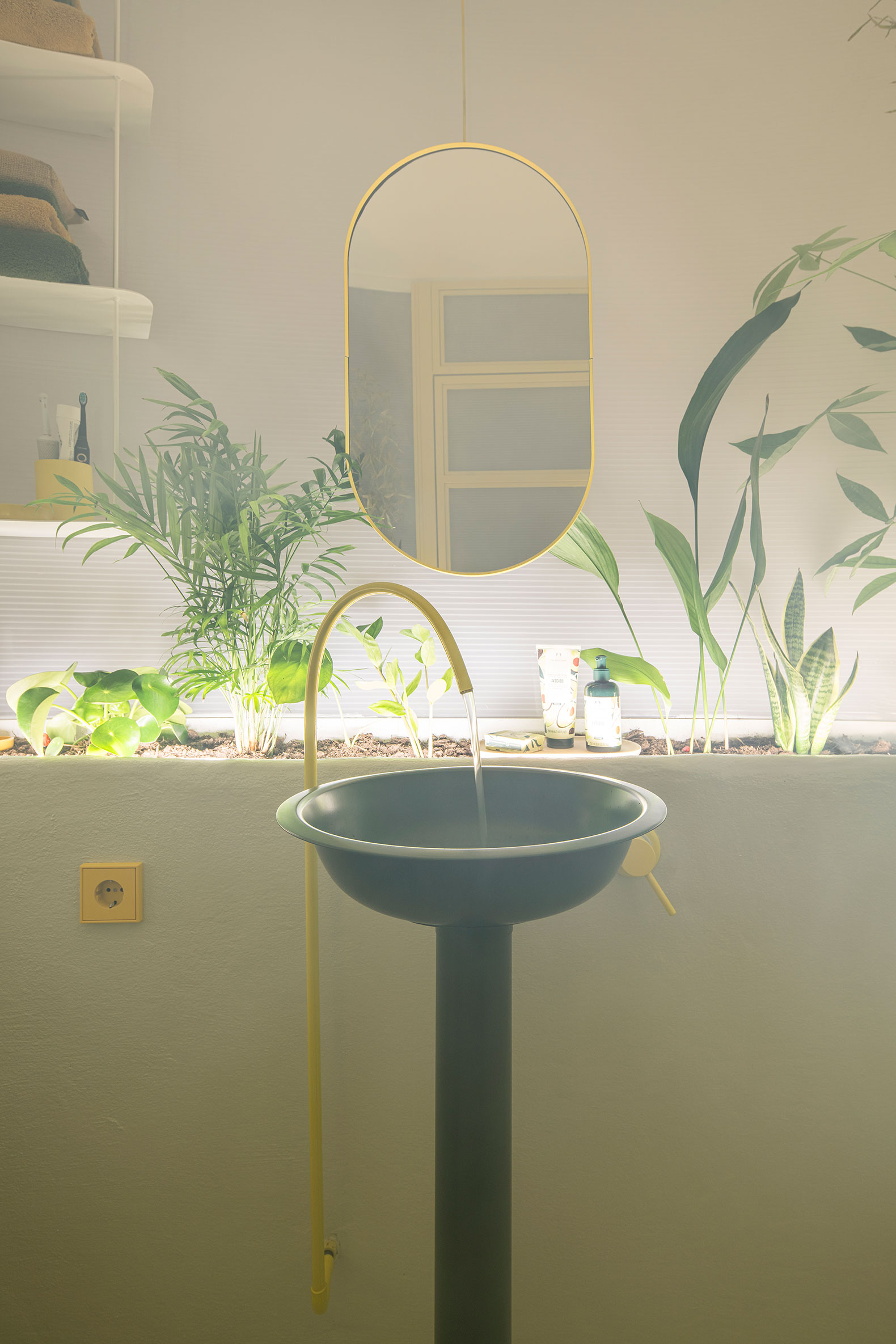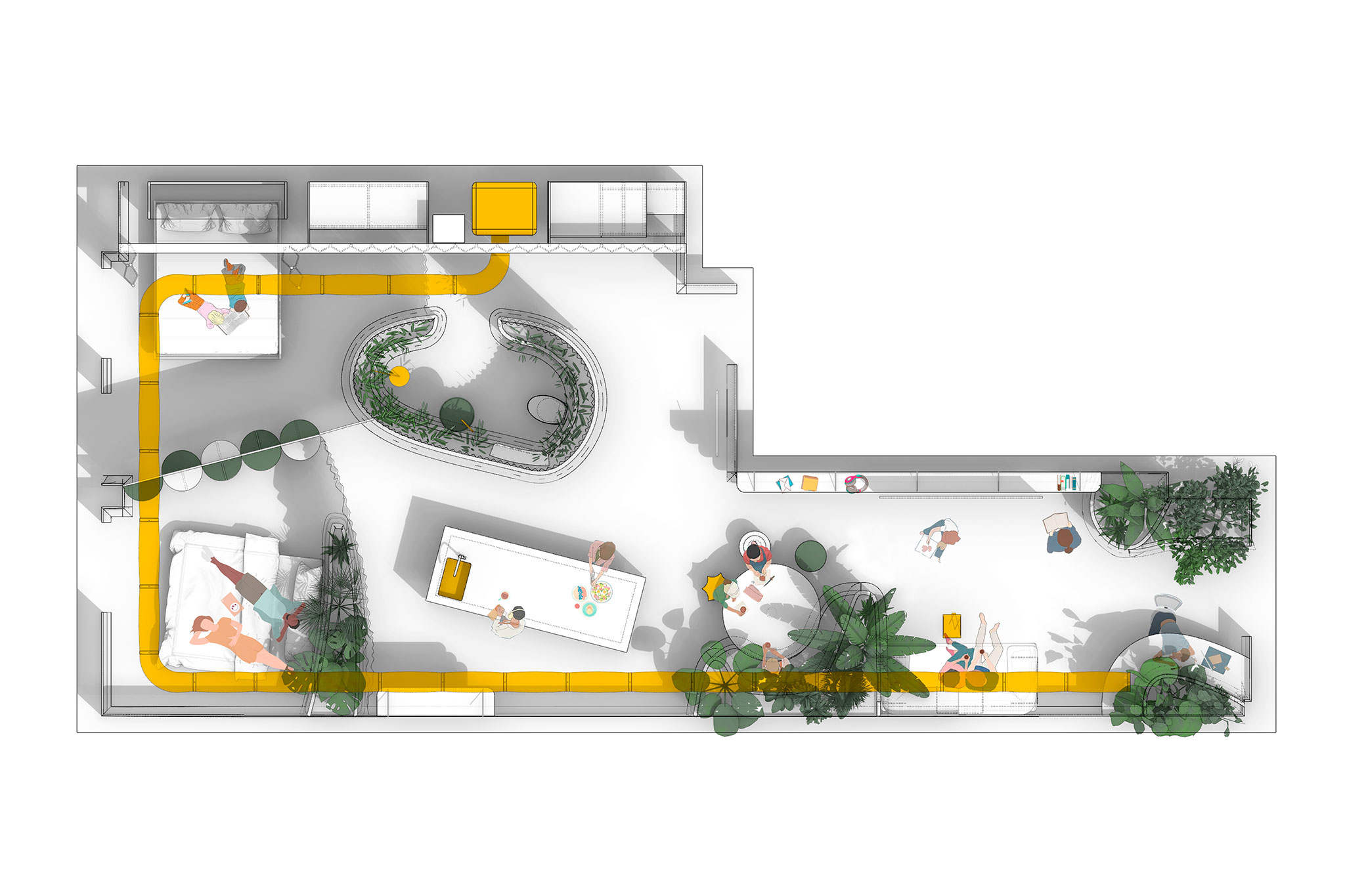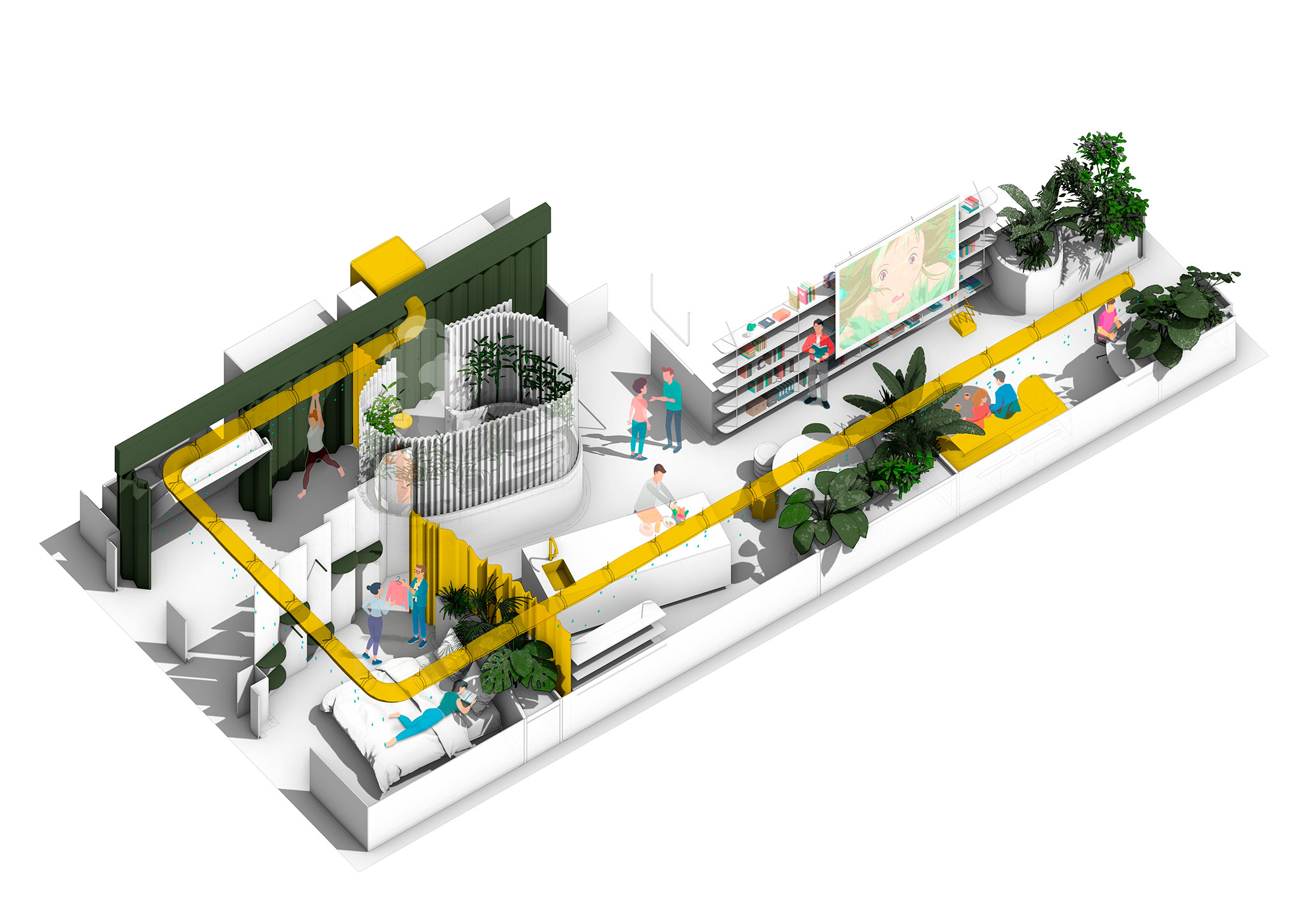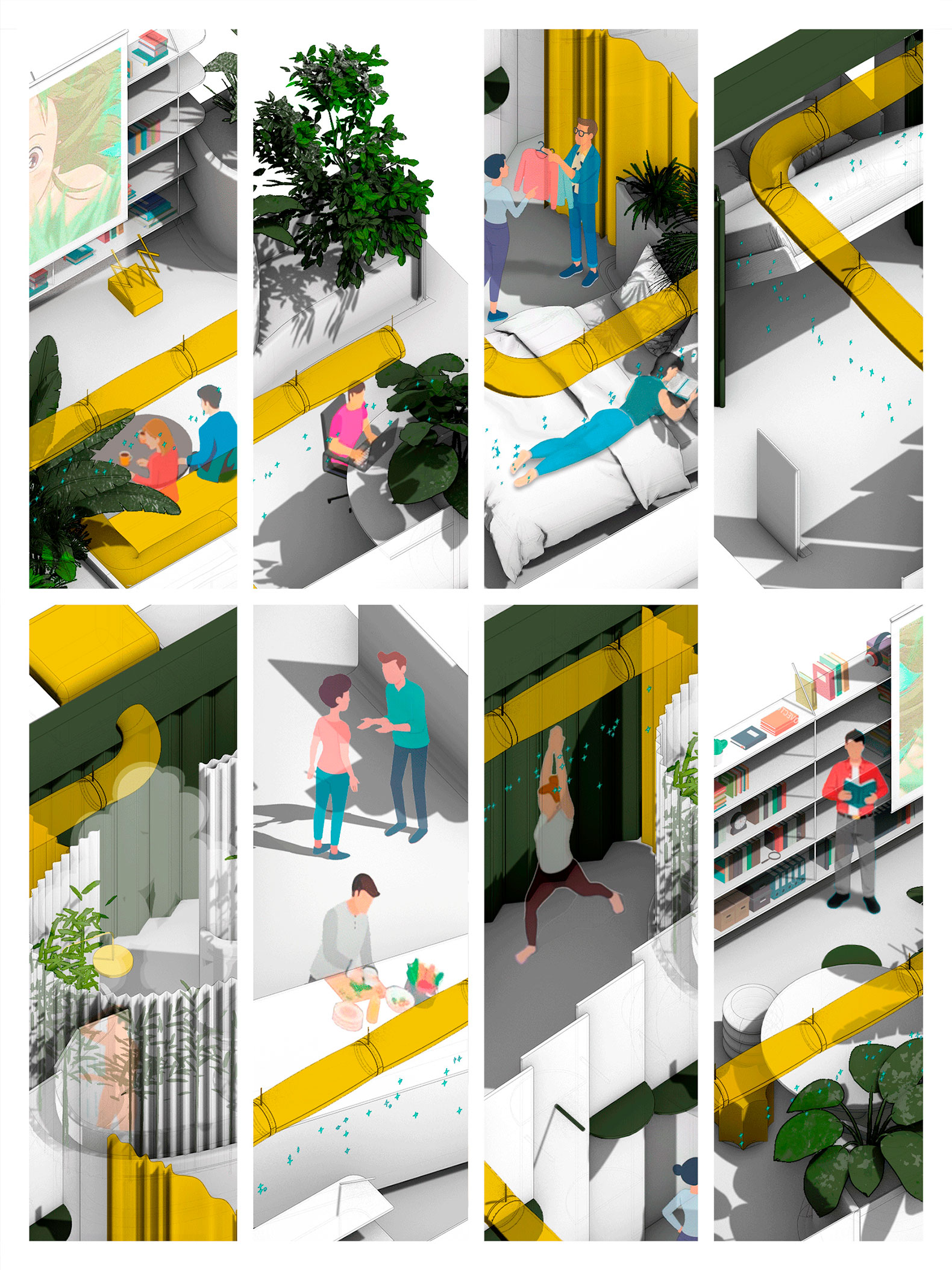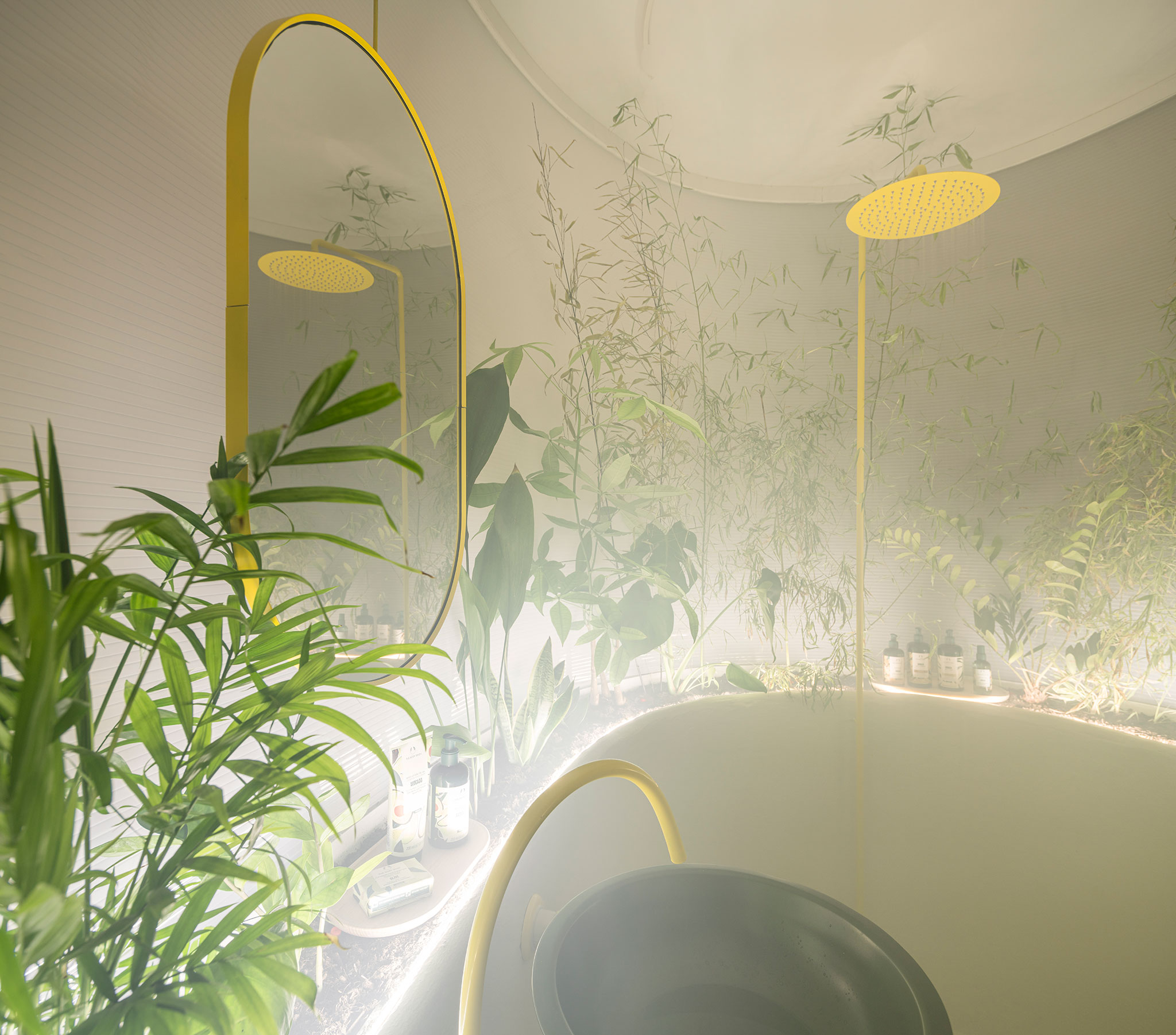
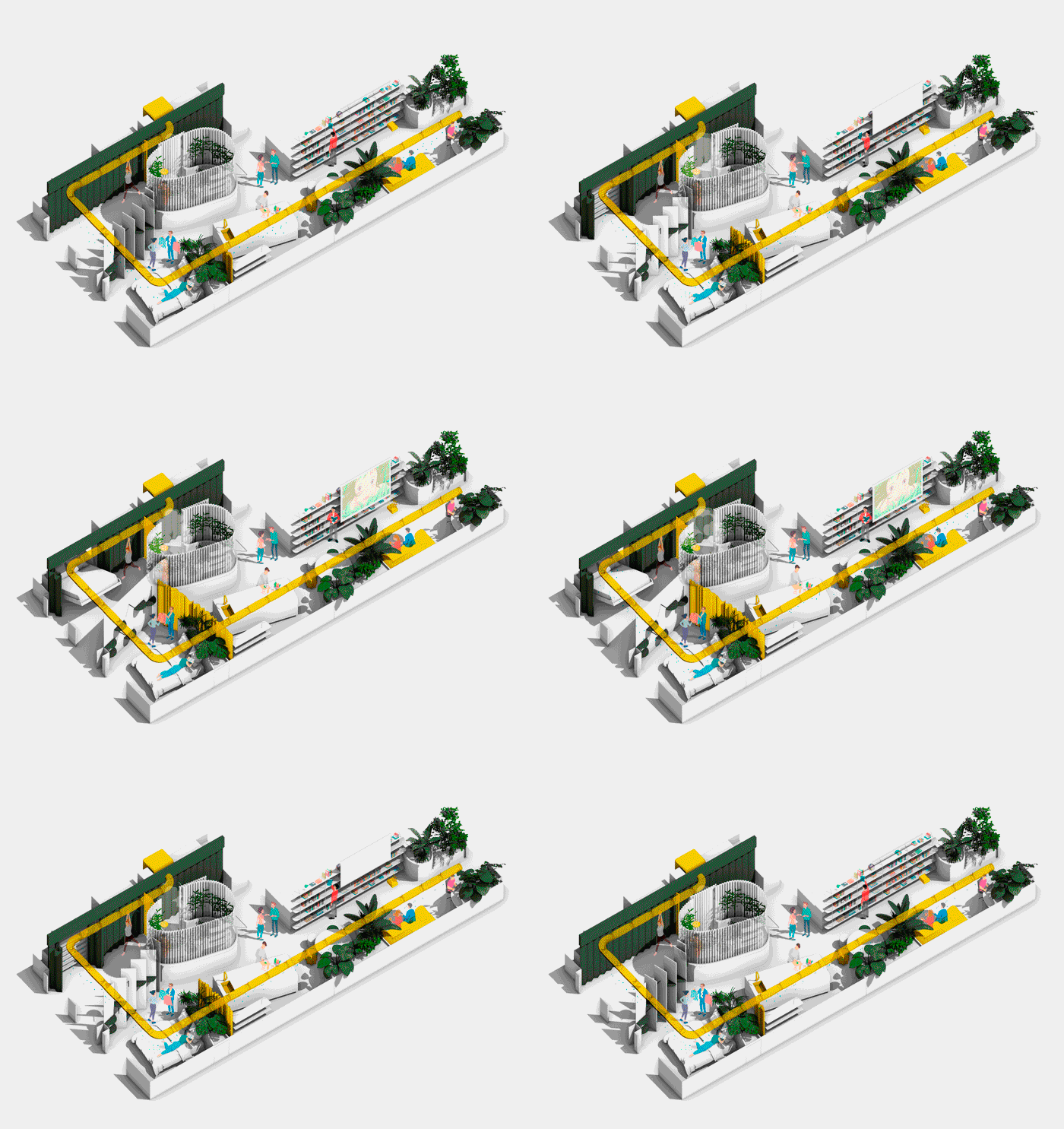
The atmospheric experiment conceived by Corrigan Arquitectos unfolds within an open-plan space, organized in a fluid and organic manner. Areas for rest and contemplation are defined by movable panels, while a translucent central oval houses the most intimate zone, providing privacy and allowing natural light to enter.
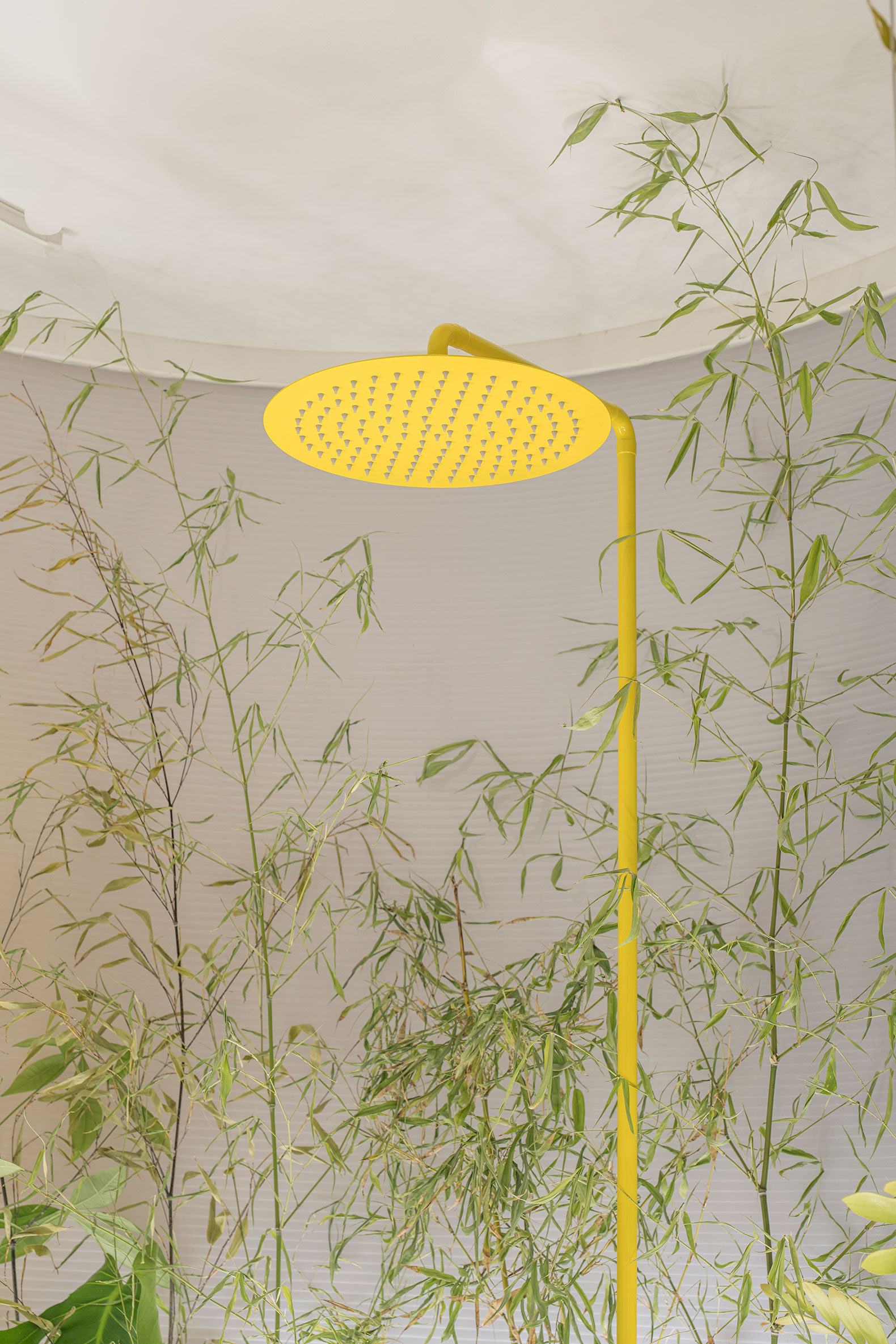
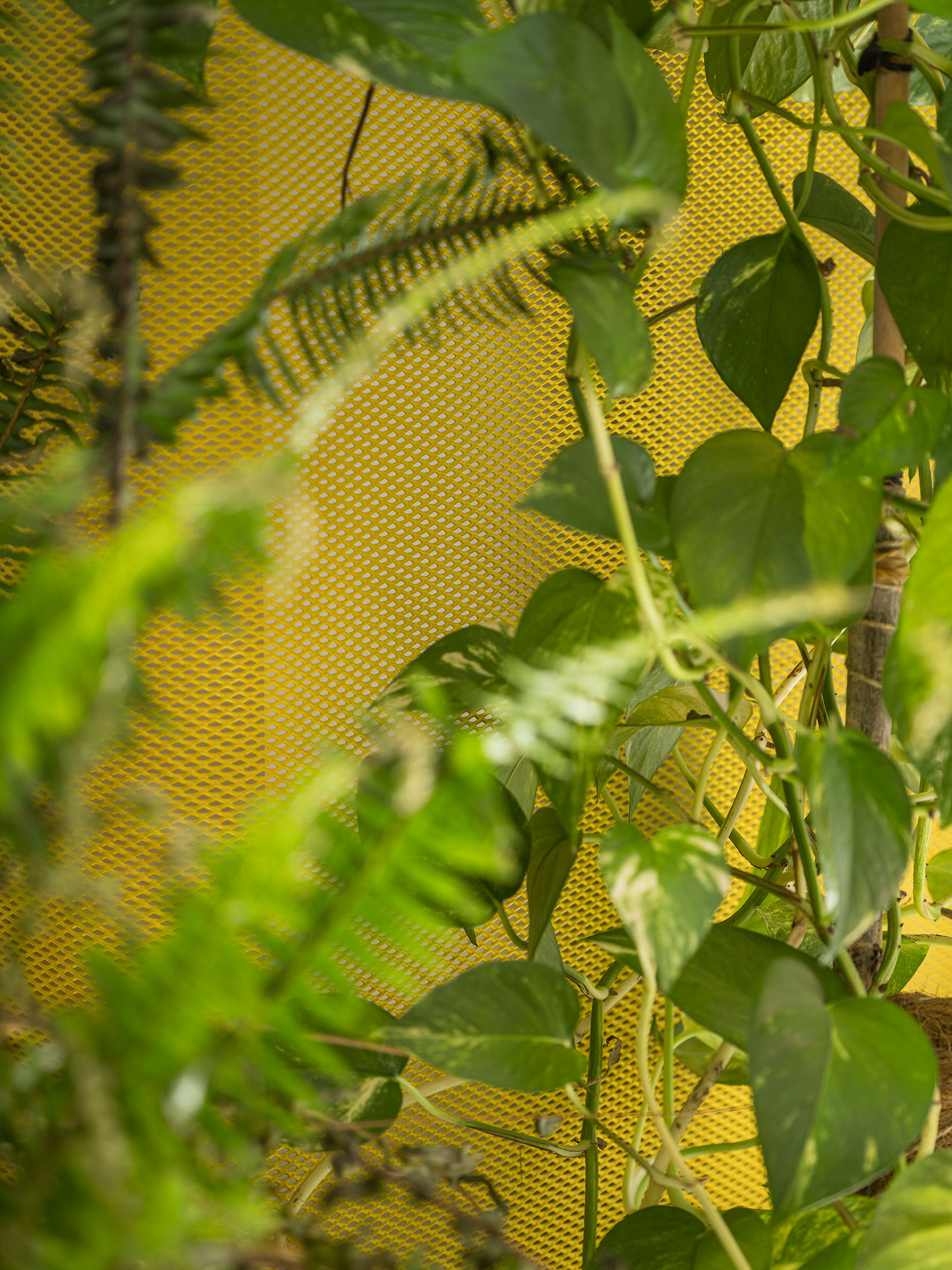
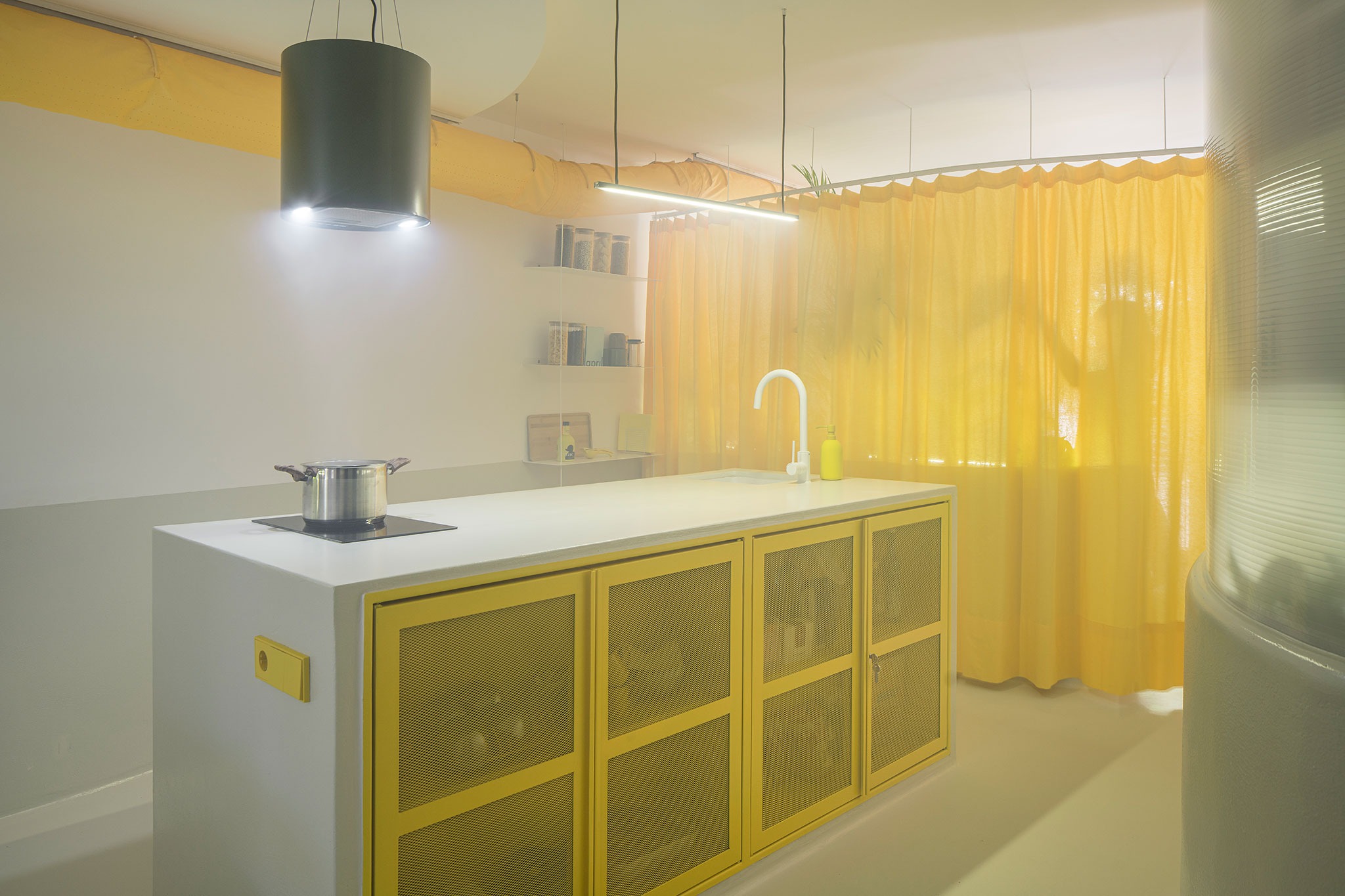
To delineate the spaces, metal mesh, translucent polycarbonate, textile curtains, and natural vegetation were used. An automated irrigation system, controlled by humidity sensors, maintains the plant ecosystem, and a textile duct system provides climate control for even temperature distribution.
Corrigan studio by Corrigan Architects.
Project description by Corrigan Arquitectos
Corrigan Studio is a constructed experiment: a hybrid space that explores new ways of inhabiting through matter, light, and environmental sensitivity.
Far from starting with a conventional functional or typological scheme, the project is formulated from an atmospheric question:
What if climatic and sensory conditions were the starting point of the architectural project?
Here, architecture is born not from the program or the use, but from the conditions that make being possible. It is not about defining rooms, but about regulating temperature, light, humidity, sound, and privacy.
Only when these variables become explicit do the boundaries appear. The division is not the starting point, but a physical consequence of an atmospheric need.
Each zone demands a precise condition: a greater degree of thermal insulation, an acoustic requirement, a need for privacy, a concentration of humidity, or indirect light.
Based on these premises, the space is modulated by a series of lightweight and porous materials: metal mesh, which allows for delimitation without obstruction; translucent polycarbonate, which filters light while maintaining privacy; textile curtains, which expand or contract visual privacy; and natural vegetation that does not decorate, but rather structures, filters, and regulates.
The project proposes an open floor plan, where traditional divisions disappear in favor of a fluid and organic organization.
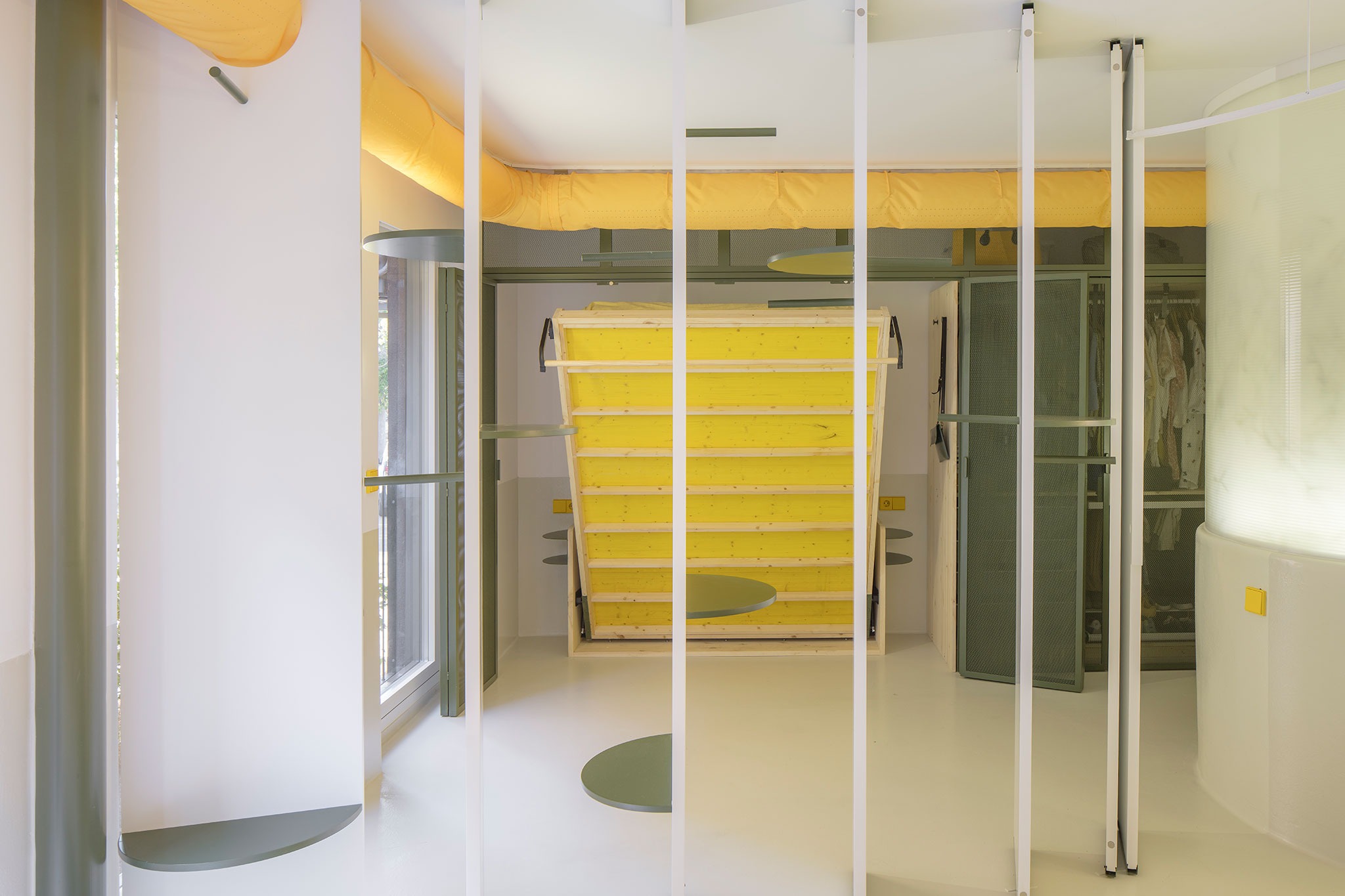
The system is articulated around a sequence of built volumes that organize circulation, contain vegetation, and accommodate diverse uses.
A translucent central oval houses the most intimate area, providing privacy without blocking natural light.
An autonomous volume that replicates the same constructive logic as the rest of the complex. It is not defined by a specific use, but rather by its role as a social hub, capable of sustaining shared life.
Movable panels allow for the configuration of rest areas or spaces for quiet contemplation, resolving with a single gesture the needs for privacy, storage, and flexibility, without compromising the overall openness.
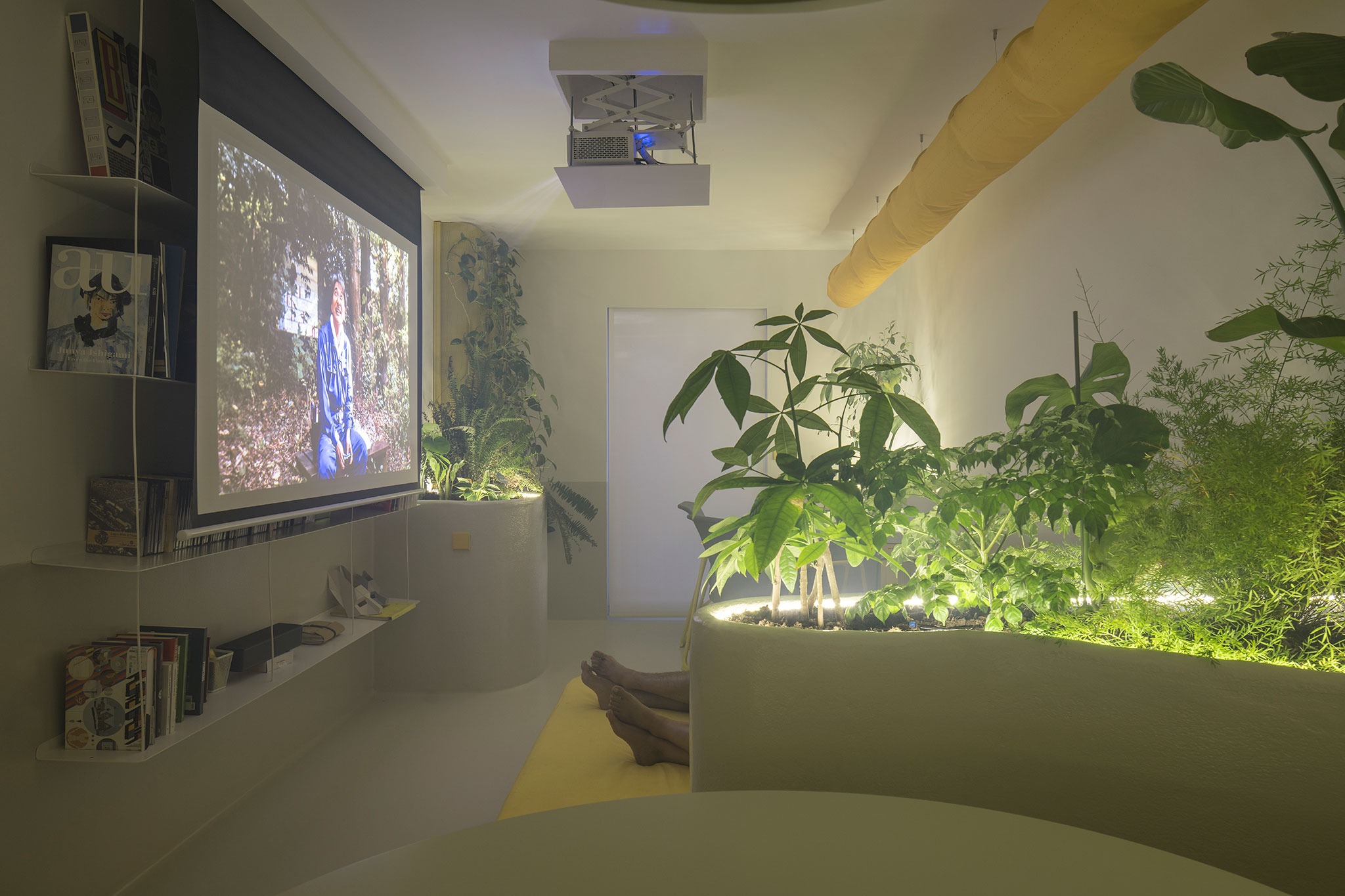
These partitions don't interrupt; they activate atmospheres. They function as sensitive filters that define spaces according to their needs, not according to their names.
An automated irrigation system, governed by humidity sensors, ensures the stability of the plant ecosystem. Concealed perimeter lighting, housed in the base of these structures, projects shifting shadows that transform the perception of the space throughout the day.
Cycled air conditioning with textile ducts homogeneously distributes thermal comfort and humidity, integrating technology as part of the space's vital system.
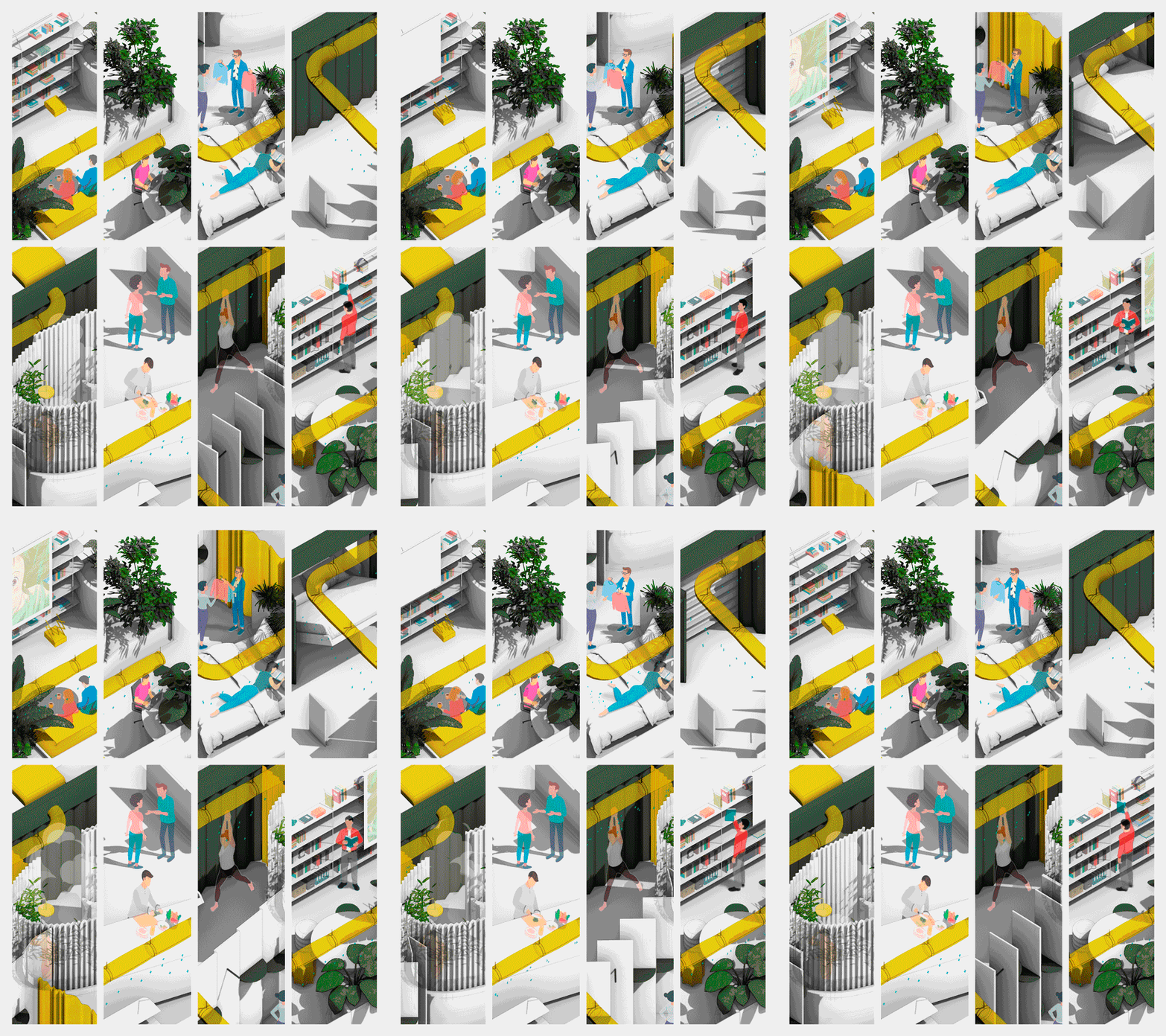
Corrigan studio by Corrigan Architects.
Corrigan Studio doesn't define itself as a house, studio, or accommodation. It's an experiment in how to define without dividing, build without isolating, and inhabit without labeling. A space that listens, interprets, and responds to the necessary conditions for living.