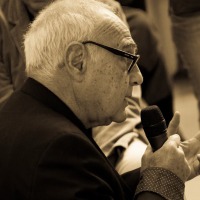
On September 13, 2000, Elia Zenghelis was the featured subject and interviewee in one of the documentaries produced for METALOCUS TV, an architecture and urban culture program broadcast on the Greek channel SEVEN.
Born in Athens in 1937, Zenghelis grew up in a Greece shaken by the German occupation and the civil war. In 1956, he moved to London to study at the Architectural Association School of Architecture (AA), drawn by a transgressive pedagogy that stood in contrast to the ossified academic conventions prevailing in architecture schools at the time. He graduated in 1961 and began working at Douglas Stephen and Partners, where he remained until 1971. Just two years after completing his studies, in 1963, he returned to the AA as a teacher.
The Architectural Association would become the principal laboratory of his intellectual formation. Over the following decades, and especially under the leadership of figures such as Alvin Boyarsky, the school consolidated a climate of experimentation that encouraged the emergence of increasingly radical positions. Zenghelis played an active role in this process, at a time when the AA was redefining the disciplinary boundaries of architecture and urbanism. It was there that he met Rem Koolhaas, then a student, with whom he soon established a relationship that would ultimately blur the conventional distinctions between teacher, collaborator, and partner.
Their encounter took place at a moment when architecture seemed to be recovering its capacity to imagine futures, as a new generation began to use the project, drawing, collage, and narrative as instruments for investigating the contemporary city. Architecture could operate critically on reality even without needing to materialise.
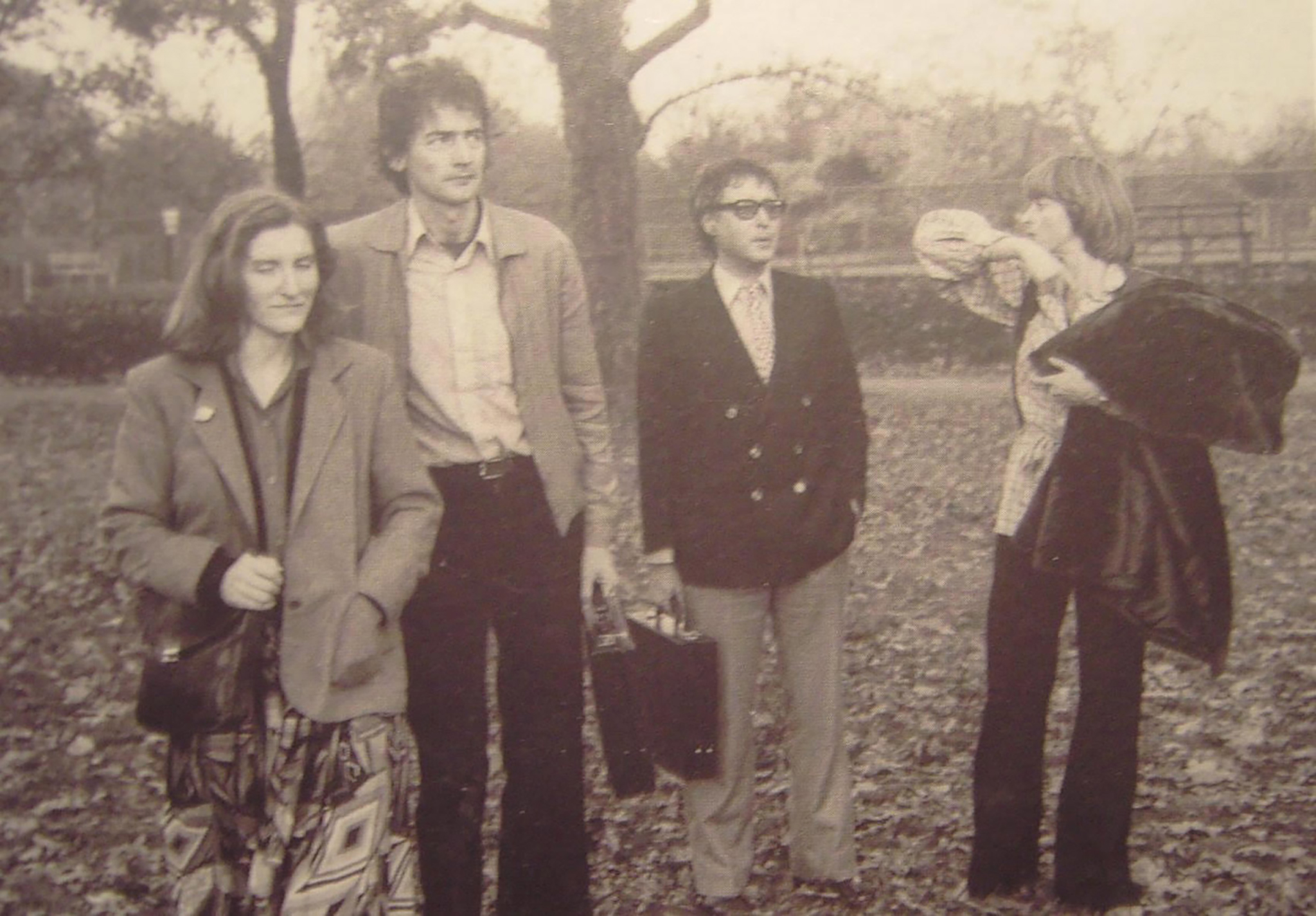
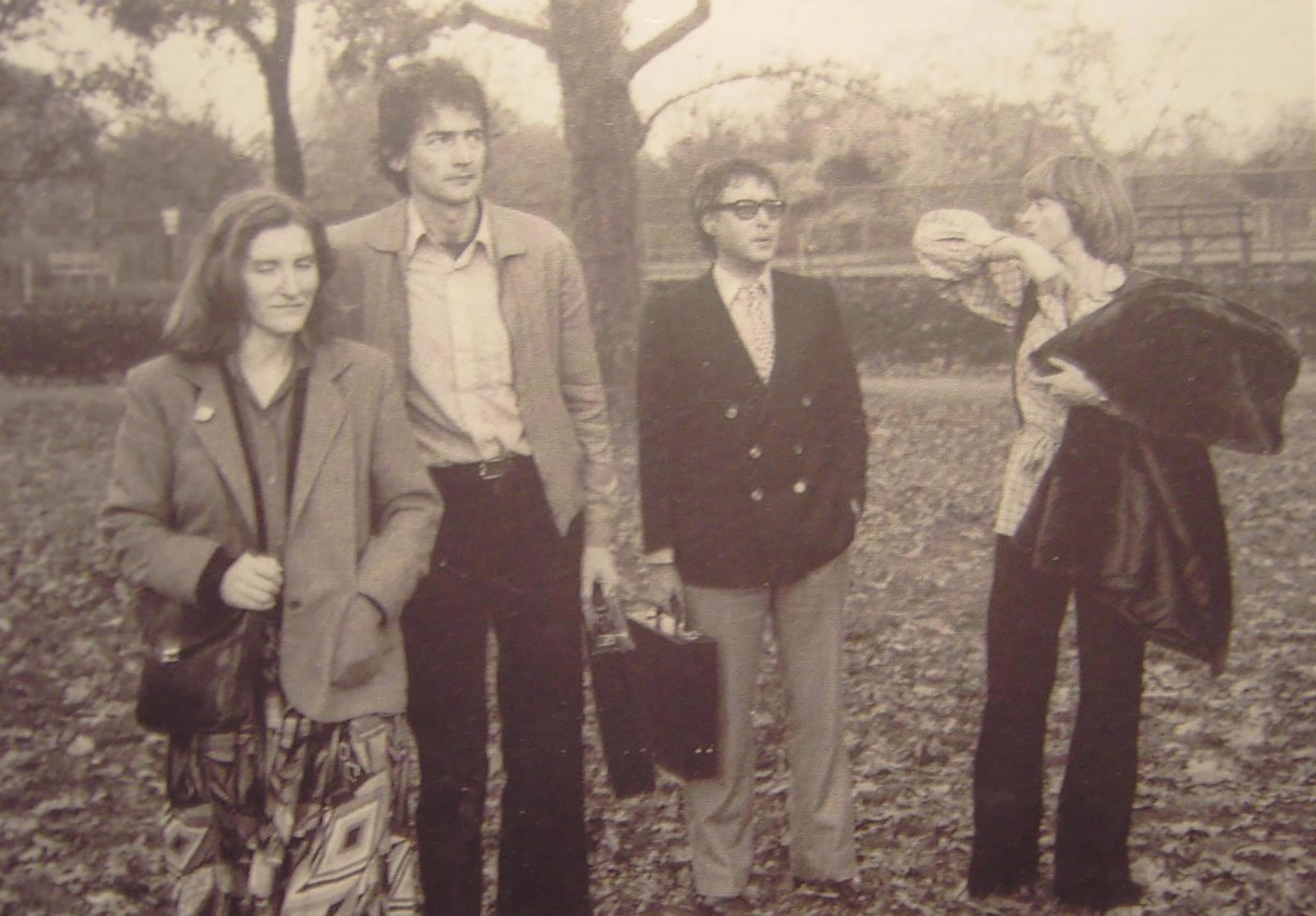
OMA founders, from left to right: Madelon Vriesendorp, Rem Koolhaas, Elia Zenghelis, and Zoe Zenghelis pictured in Central Park in 1978. Photograph courtesy of OMA.
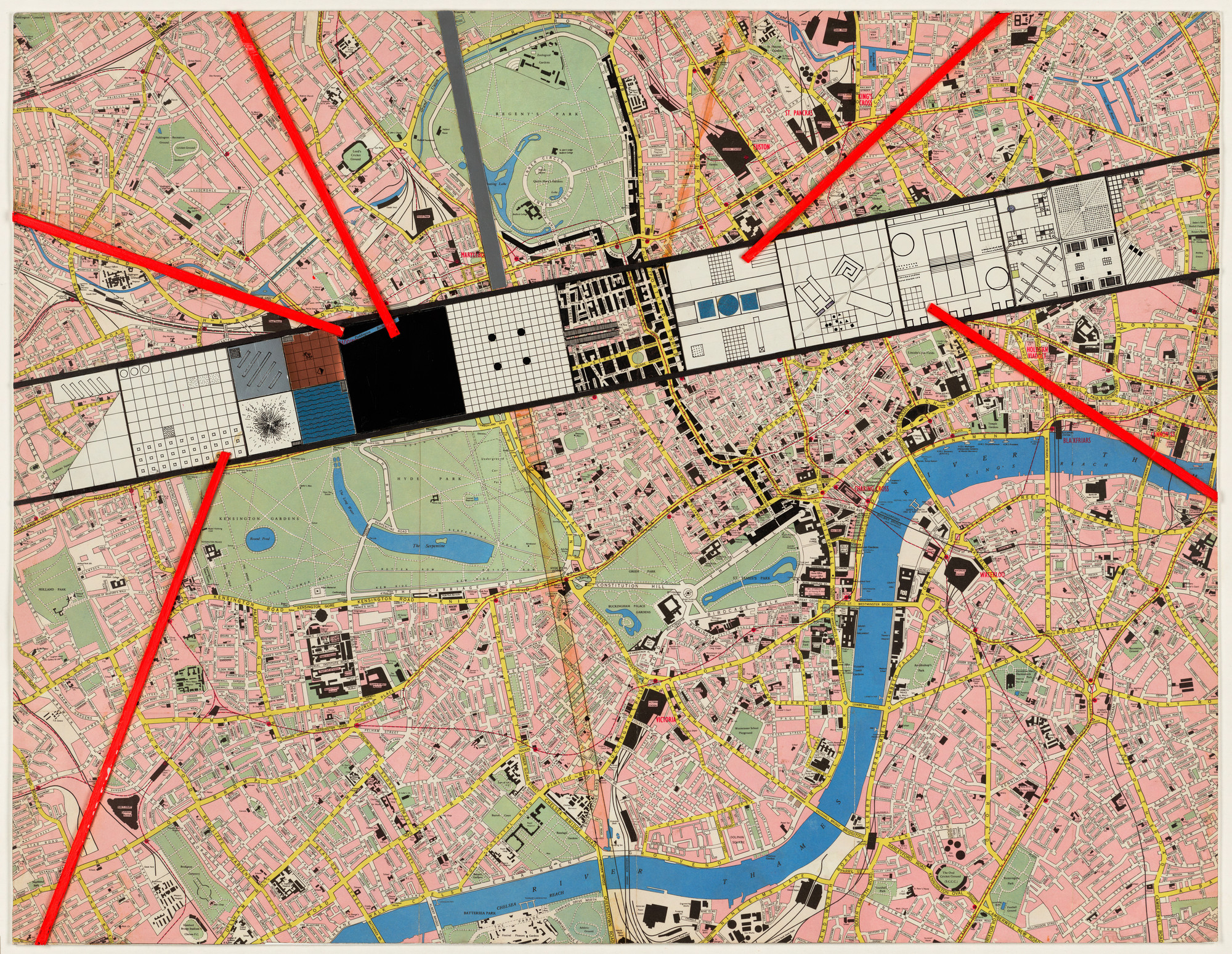
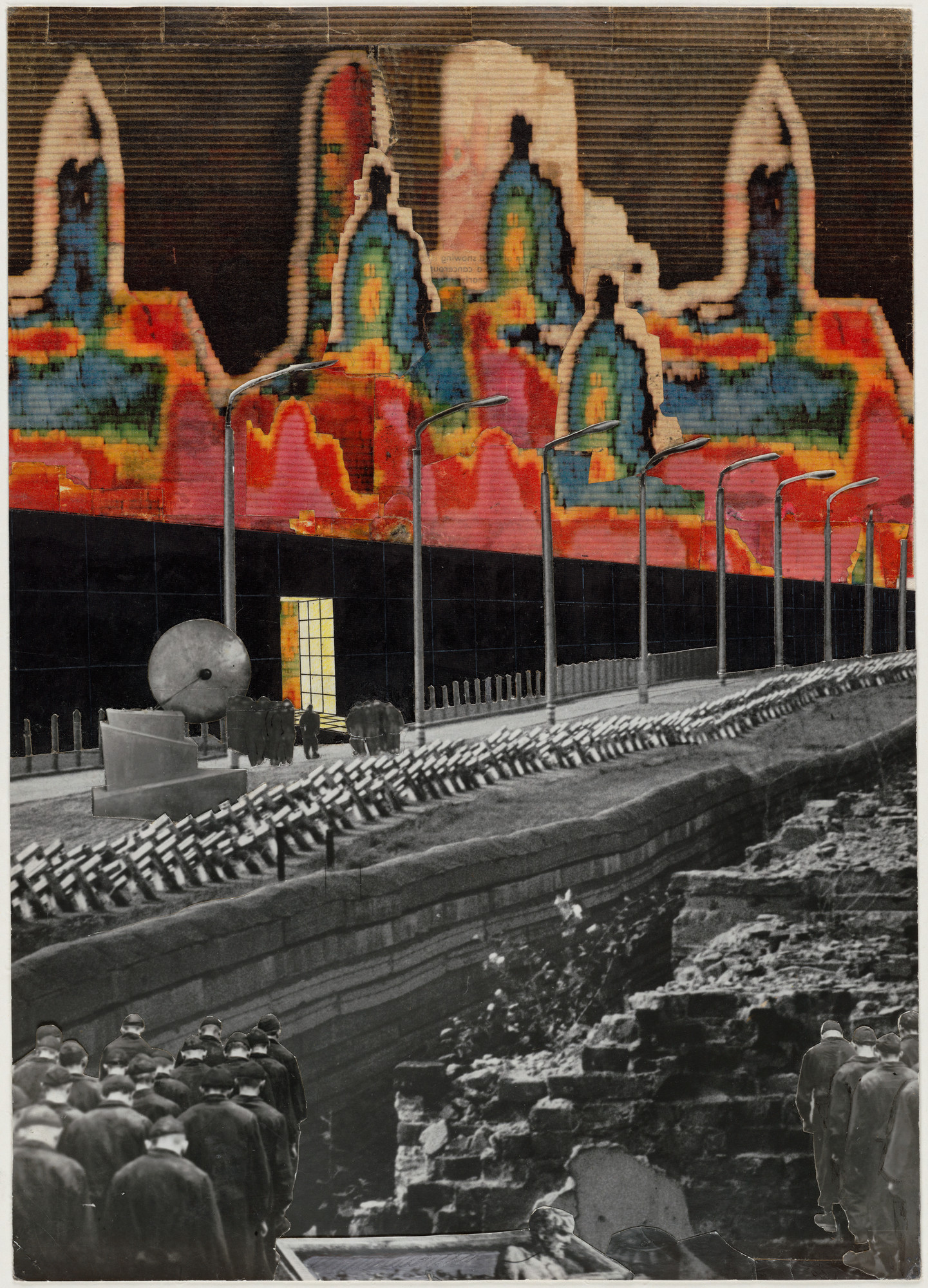
In 1972, Zenghelis and Koolhaas, together with Madelon Vriesendorp and Zoe Zenghelis, developed Exodus, or the Voluntary Prisoners of Architecture, a proposal for London that imagined a walled strip cutting across the city. Architecture, narrative, collage, and political provocation came together in a fiction about the contemporary metropolis, turning the architectural project into both argument and manifesto. Rather than anticipating a building, Exodus demonstrated architecture’s capacity to construct scenarios and formulate new questions about the city.
That research would become one of the seeds from which the Office for Metropolitan Architecture emerged. OMA was founded in 1975 as a collective project by Elia and Zoe Zenghelis, Rem Koolhaas, and Madelon Vriesendorp, conceived as a space for investigating the city, its programmes, and its forms of representation.
Remembering Zenghelis on 1 September 2026, Rem Koolhaas evoked not only his decisive role in the origins of OMA, but also the exuberance, generosity, and sense of possibility that defined both his architecture and his teaching:
"Elia Zenghelis, my teacher, has died. Without his exuberant talent OMA – as an idea – would not exist. Today it is hard to imagine the state of euphoria about architecture and about what architecture can do that made him a great example, inspiration and partner in crime. His falsetto singing in our small New York living room, bent over a drawing board, DESIGNING at 2 am, will remain proof that architecture can make you happy. The generosity he invested – his entire life – in other people’s talent is monumental. Our connection at a crucial moment generated the insights and energy to launch our project."
Rem Koolhaas.
The image described by Koolhaas — Zenghelis singing in falsetto while drawing at two in the morning — sums up a way of understanding the project as an intellectual activity, but also as a form of pleasure and life.
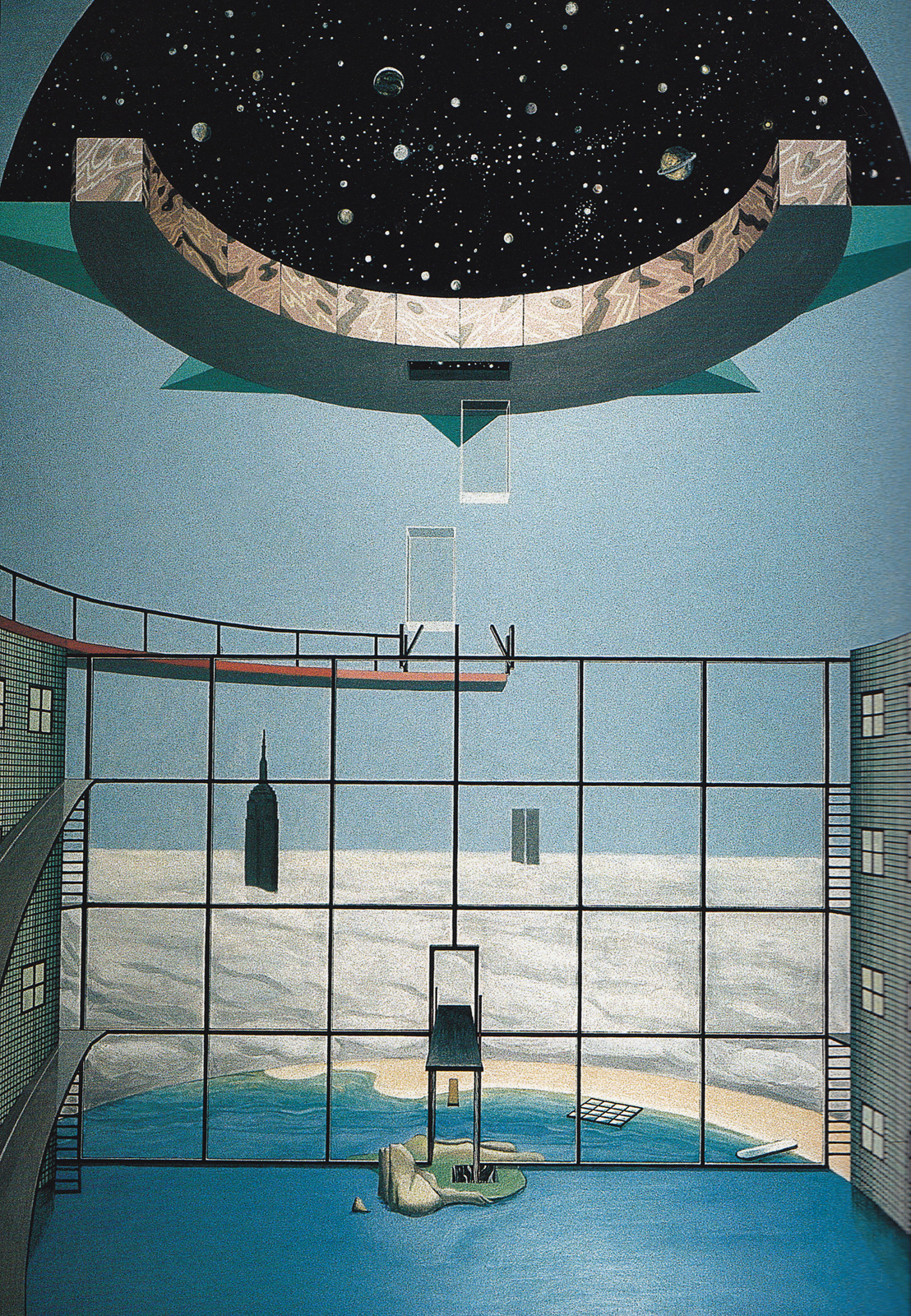
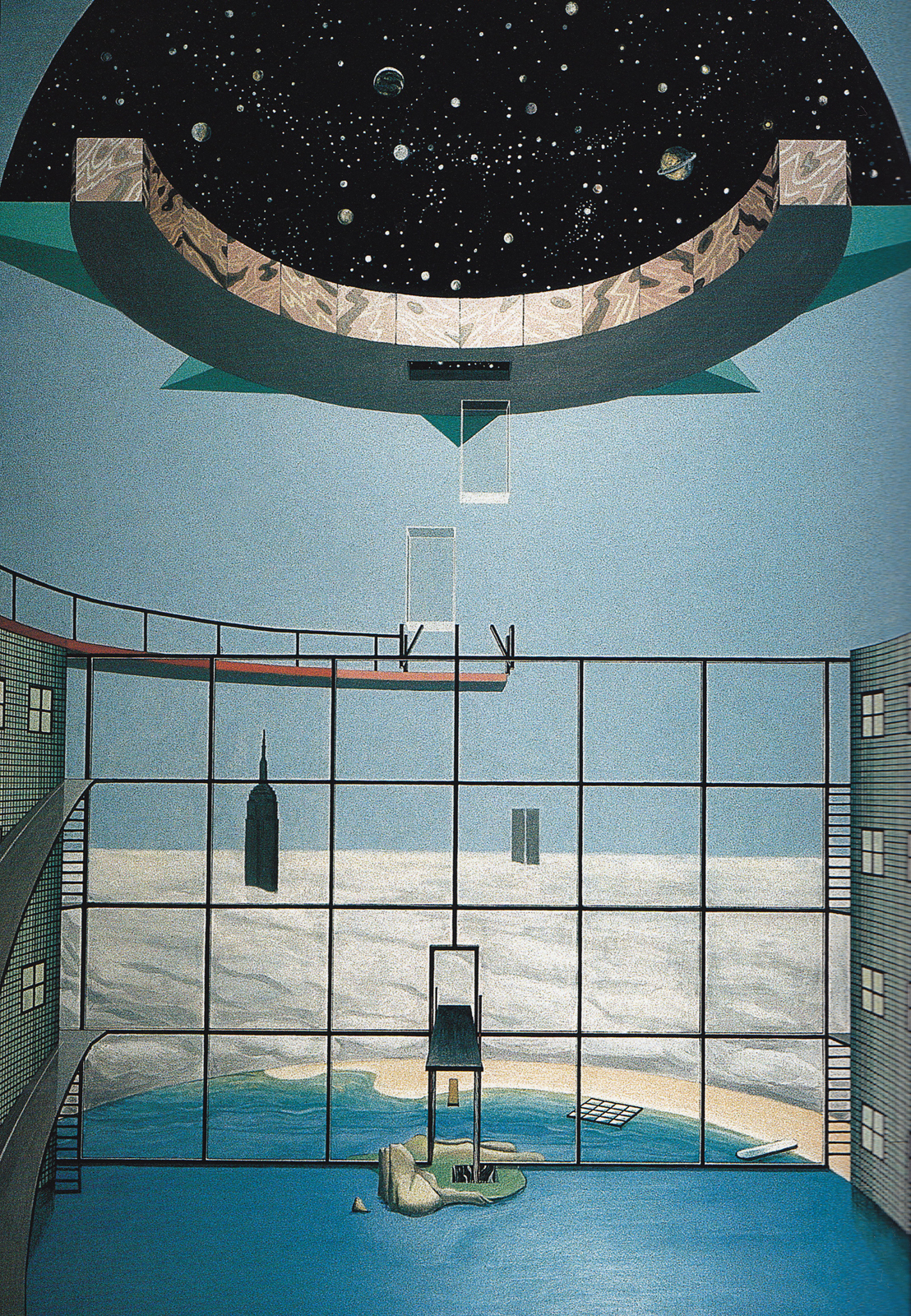
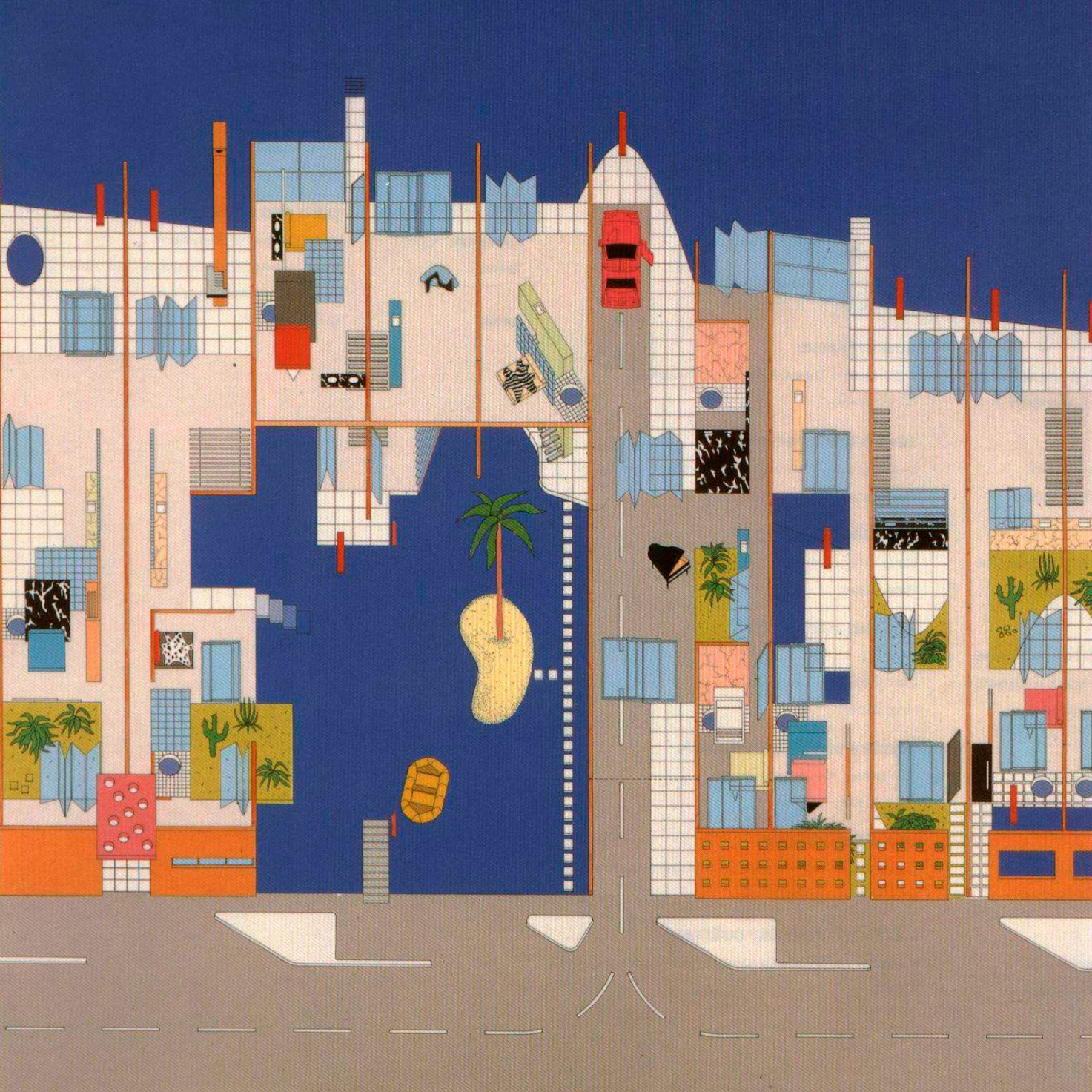
Elia Zenghelis, OMA, roof, Sphinx Hotel, Times Square, New York, 1975.
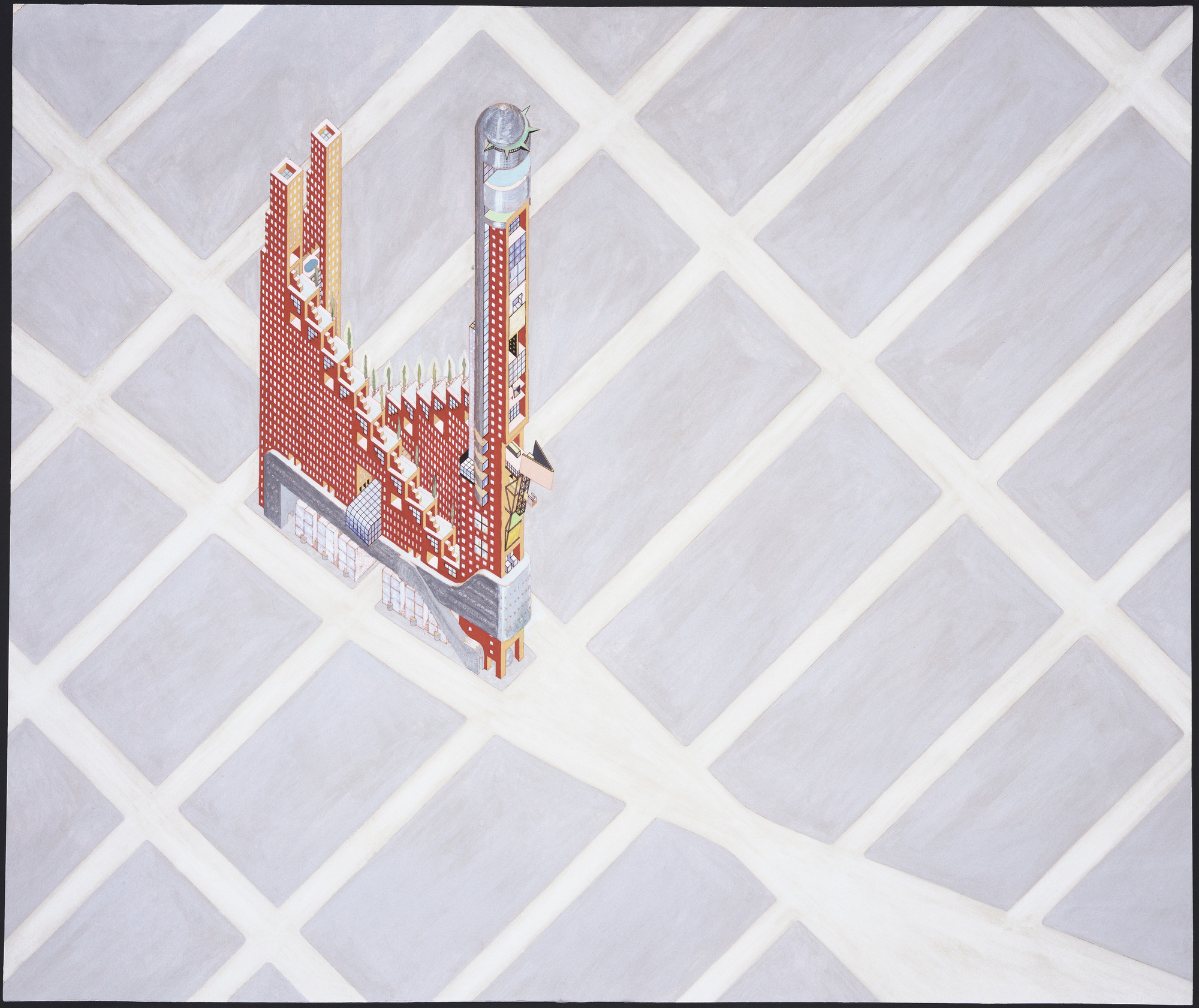
The Hotel Sphinx, developed by Elia and Zoe Zenghelis in 1975 for Times Square, reflects this attitude. Conceived as an urban alternative to conventional housing, it brought together apartments, rooms, clubs, auditoriums, sports facilities, and gardens within a single structure, drawing Manhattan’s programmatic intensity into the interior of the building. Architecture was not attempting to impose order on congestion, but to use it as material for the project.
For Zenghelis, the image could contain the objectives, values, and arguments of the project and thereby acquire an autonomy of its own. The paintings produced with Zoe Zenghelis for the Hotel Sphinx, the Sixteen Villas on the Island of Antiparos, and other early OMA projects now form part of the visual history of that architecture.
OMA’s early years were marked by projects and competitions that questioned the relationships between architecture, programme, and city: the extension of the Dutch Parliament in The Hague, the proposals for the IBA in Berlin, the competition for the Parc de la Villette, and the housing at Checkpoint Charlie. Rather than treating the building as an isolated object, these projects shifted attention towards broader urban systems.
Projects such as the sixteen villas on Antiparos transferred that investigation to other landscapes. In contrast to the congestion of New York, Paris, or Berlin, climate, topography, horizon, and the elementary geometries of the Mediterranean emerged as materials through which new relationships with strongly characterised contexts could be established.
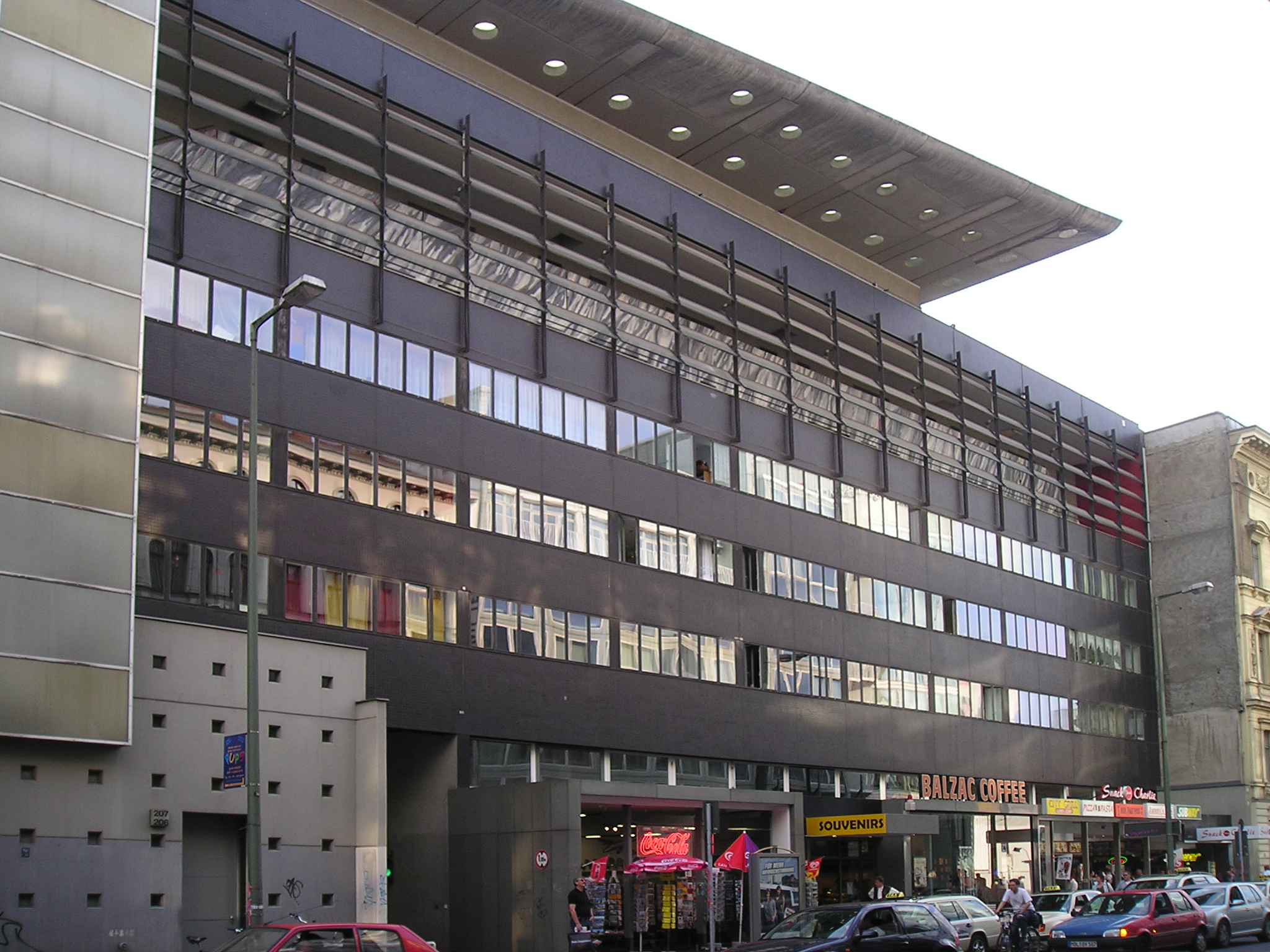
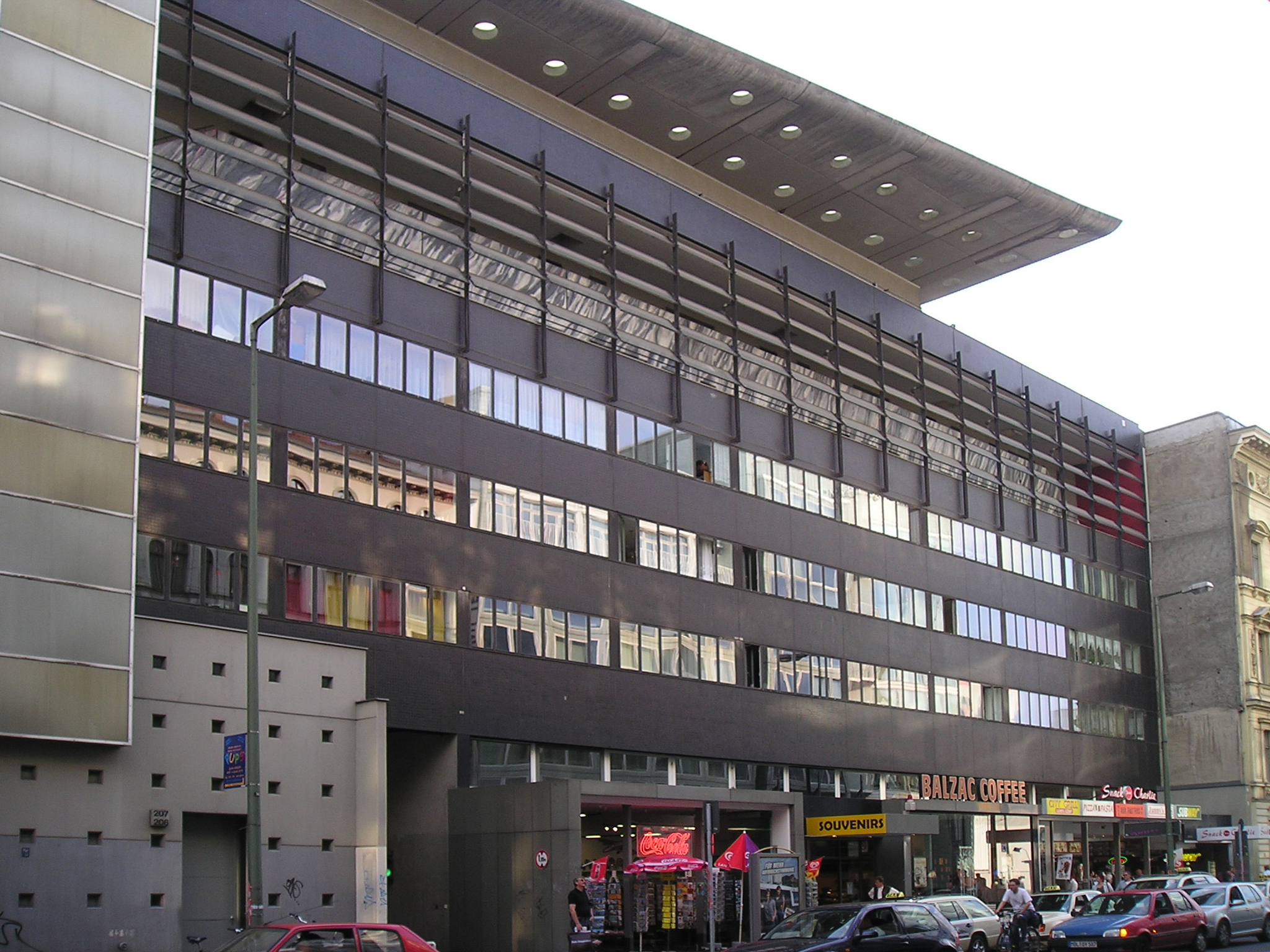
The Checkpoint Charlie housing complex at Friedrichstrasse 207–208, Berlin, designed as part of IBA Berlin by OMA, with contributions from Elias Zeggelis and Rem Koolhaas. Photograph by Gunnar Klack. CCC
In 1987, Zenghelis left OMA and founded Gigantes Zenghelis Architects with Eleni Gigantes. The housing at Checkpoint Charlie, completed in 1990, remained closely tied to this transition between the two phases of his career. Among the best-known works of the new practice is the Ashikita House of Youth, completed in 1998 in Kumamoto as part of the ArtPolis programme.
By the beginning of the 1990s, however, Zenghelis was gradually reducing his direct involvement in professional practice, and teaching came to occupy the centre of his activity. In 1989, he took up the Chair of Baukunst at the Kunstakademie Düsseldorf, where he remained until 2002, and he also taught at the Berlage Institute, EPFL, ETH Zurich, Mendrisio, the University of Thessaly, The Bartlett, and Yale. In 2000, he received the RIBA Annie Spink Award for Excellence in Architectural Education.
For Zenghelis, teaching architecture did not mean transmitting a formal repertoire. The project was a tool for reading situations, identifying possibilities, and producing new forms of collective life. His influence was not built through the reproduction of a personal language, but through his ability to provoke and nurture the talent of others.
It is precisely this quality that Koolhaas highlights when he recalls “the generosity he invested – his entire life – in other people’s talent”. A generosity that helps explain why his influence extends far beyond the number of buildings he realised, and even beyond the history of OMA itself. His work also continued through the projects and careers of those who passed through his studios and classrooms.
In 2017, in an advanced studio at Yale devoted to Athens and the ancient Long Walls that connected the city to Piraeus, Zenghelis returned to questions first posed decades earlier and proposed reinterpreting existing infrastructures in order to generate new centres and spaces for collective interaction within a contemporary, polycentric Athens.
Almost half a century after Exodus, architecture was once again being used to interrogate the existing city and reveal possibilities hidden within its structure. That continuity runs throughout his career: what architecture can do for the city; how a form can intensify a place without lapsing into formalism; what capacity an image has to anticipate an architecture that does not yet exist; and to what extent teaching is also a form of designing.
Zenghelis also defended the possibility of designing in the absence of a commission, when the architect temporarily becomes his own client. Rather than being confined to responding to programmes already defined, the project could formulate questions, construct scenarios, and make visible possibilities that reality had not yet revealed.
His career thus allows us to recover an idea of architecture inseparable from the optimism with which a generation approached the discipline in the 1960s and 1970s: a confidence that the project could transform our perception of reality and produce new forms of collective life.
Perhaps for that reason, the simplest phrase in Koolhaas’s remembrance is also the one that best sums up part of his legacy: “architecture can make you happy”.
Elia Zenghelis died on 30 August 2026, at the age of 89.