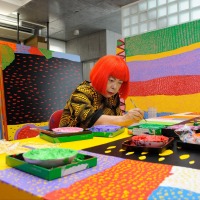
Illness was part of her life, but it does not explain her work. Kusama’s singularity lay in her ability to transform personal experience into a coherent, persistent and extraordinarily fertile artistic system. Repetition was not merely a response to obsession, but also a formal device; the dot ceased to be a decorative motif and became a unit capable of altering our perception of space, while the mirror allowed the viewer to enter that process of multiplication.
After studying art in Kyoto, she moved to New York in 1958, at a moment when the city had become one of the principal centres of transformation in Western art. She entered a competitive and overwhelmingly male art scene just as inherited distinctions between painting and sculpture were beginning to be questioned. Kusama succeeded in finding her place within that context, developing a body of work that retained a distinct identity while engaging with some of the debates that would shape Minimalism, Conceptual Art and the performative practices of the 1960s.
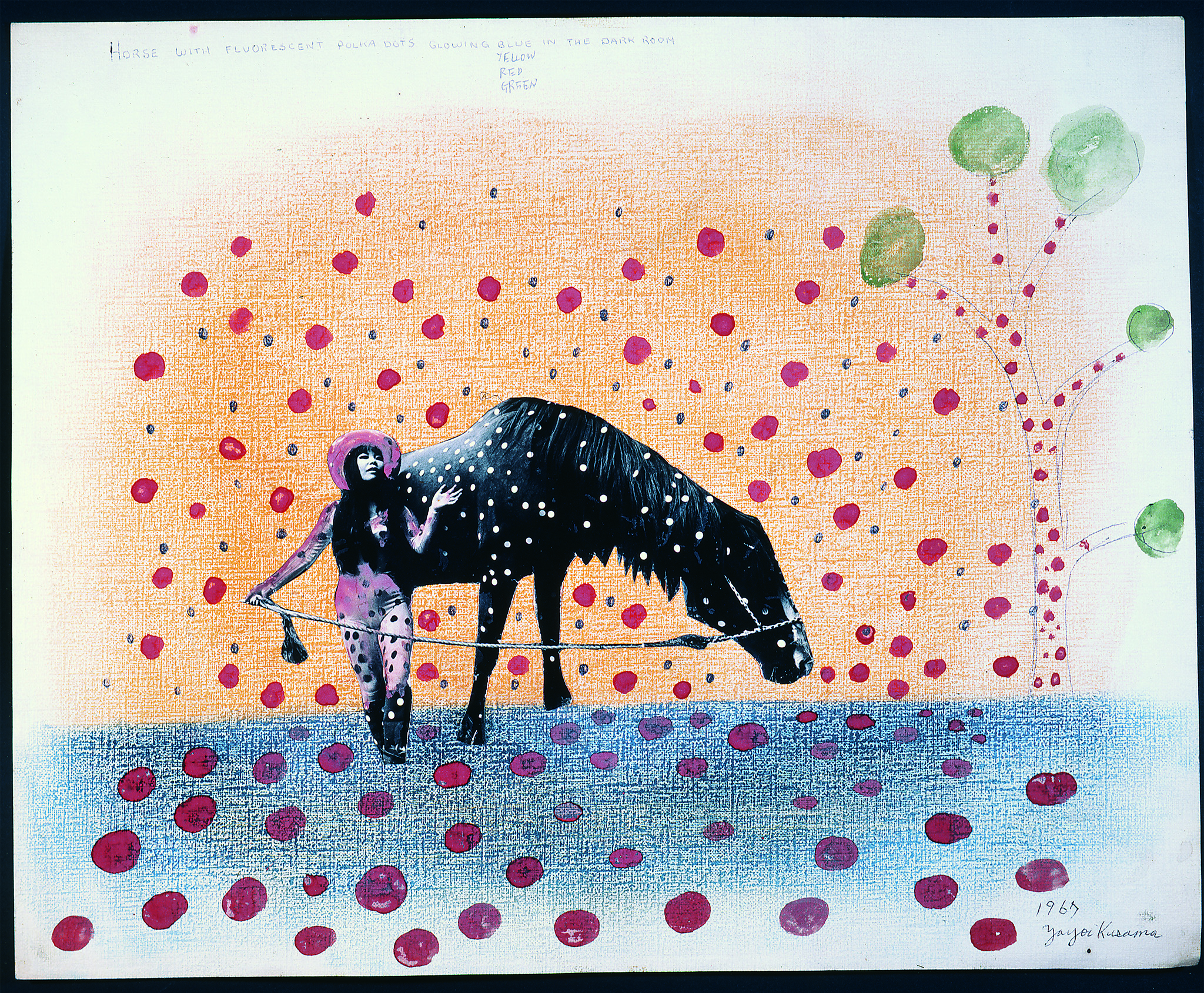
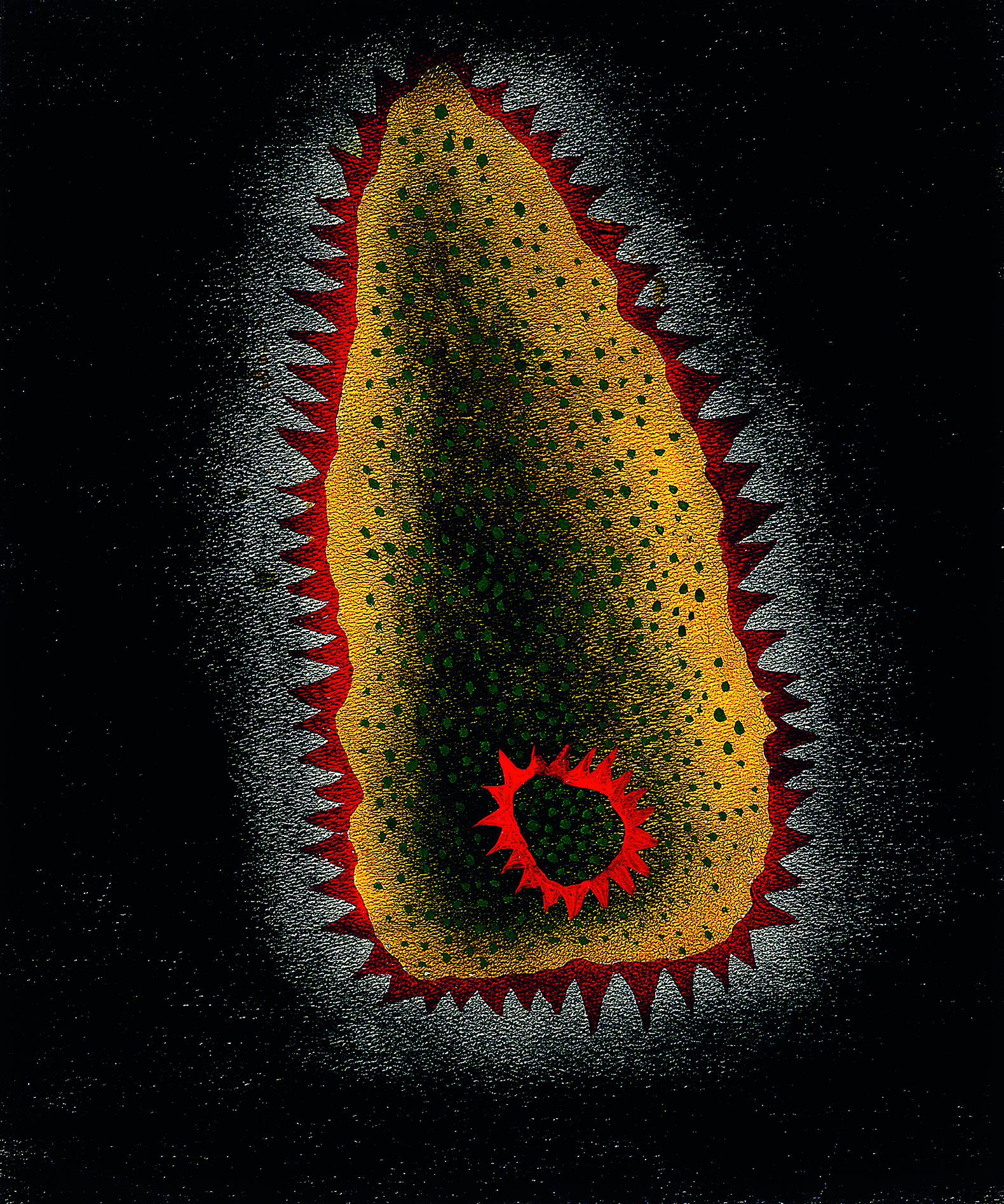
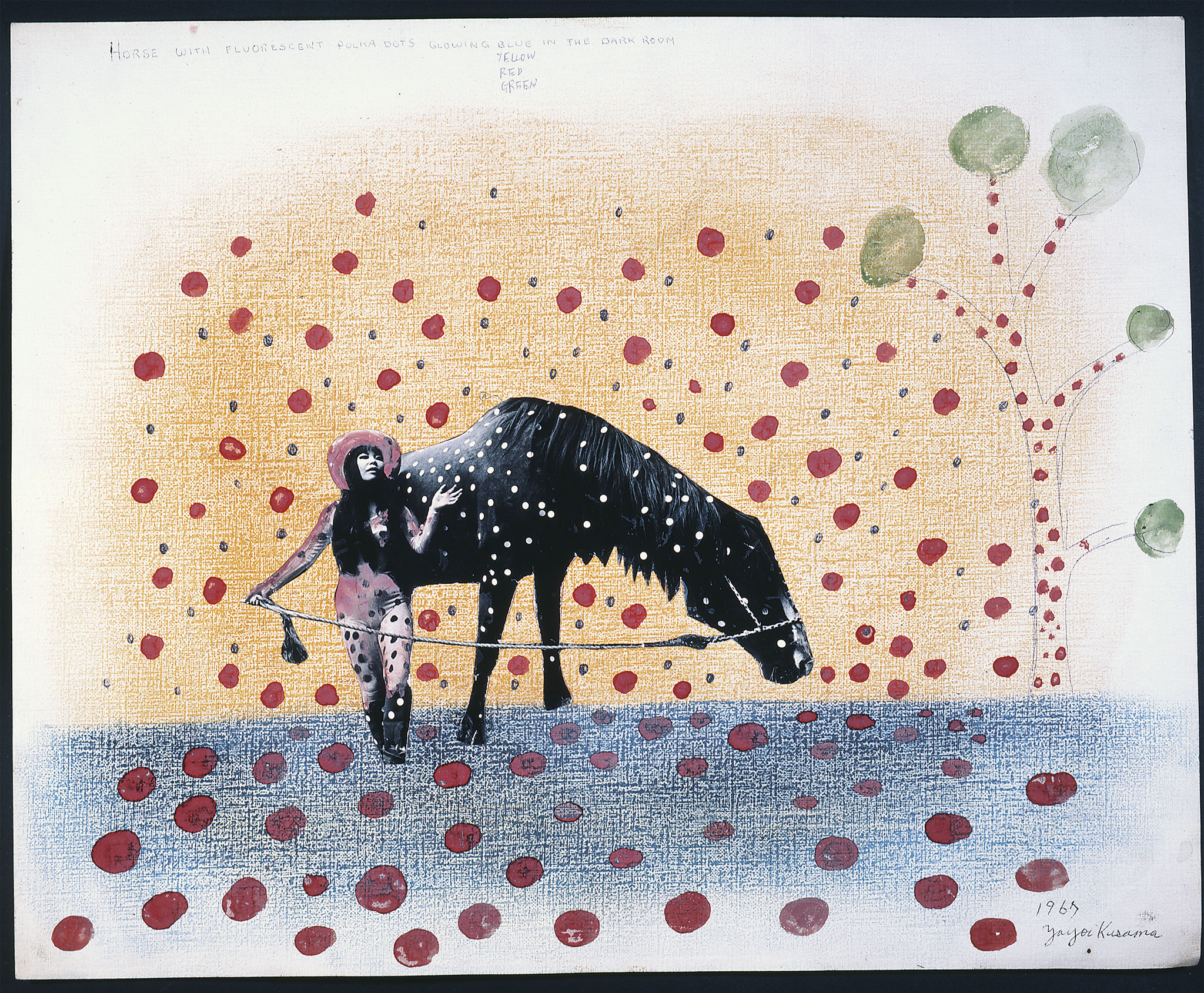
Self-Obliteration No. 2, 1967. Watercolor, pencil, pastel, and photo-collage on paper, 40.4 x 50.4 cm. Image courtesy of Yayoi Kusama.
Even before arriving in the United States, she had shown a remarkable capacity for experimentation. In post-war Japan, shortages of materials led her to work with household paint, sand and even sacks from her family’s business as supports. She also used ink, watercolour, pastel, tempera and wash. Seeds, flowers, trees and other natural forms gradually lost their figurative character, becoming abstract and repetitive structures.
In New York, that investigation developed into her celebrated Infinity Nets, large surfaces covered with small repeated gestures that form networks seemingly extending beyond the edges of the canvas. The method was as simple as it was radical: to insist on a single element until the perception of the entire surface was transformed. Within those nets, the dots that would become so closely associated with her work also began to emerge.
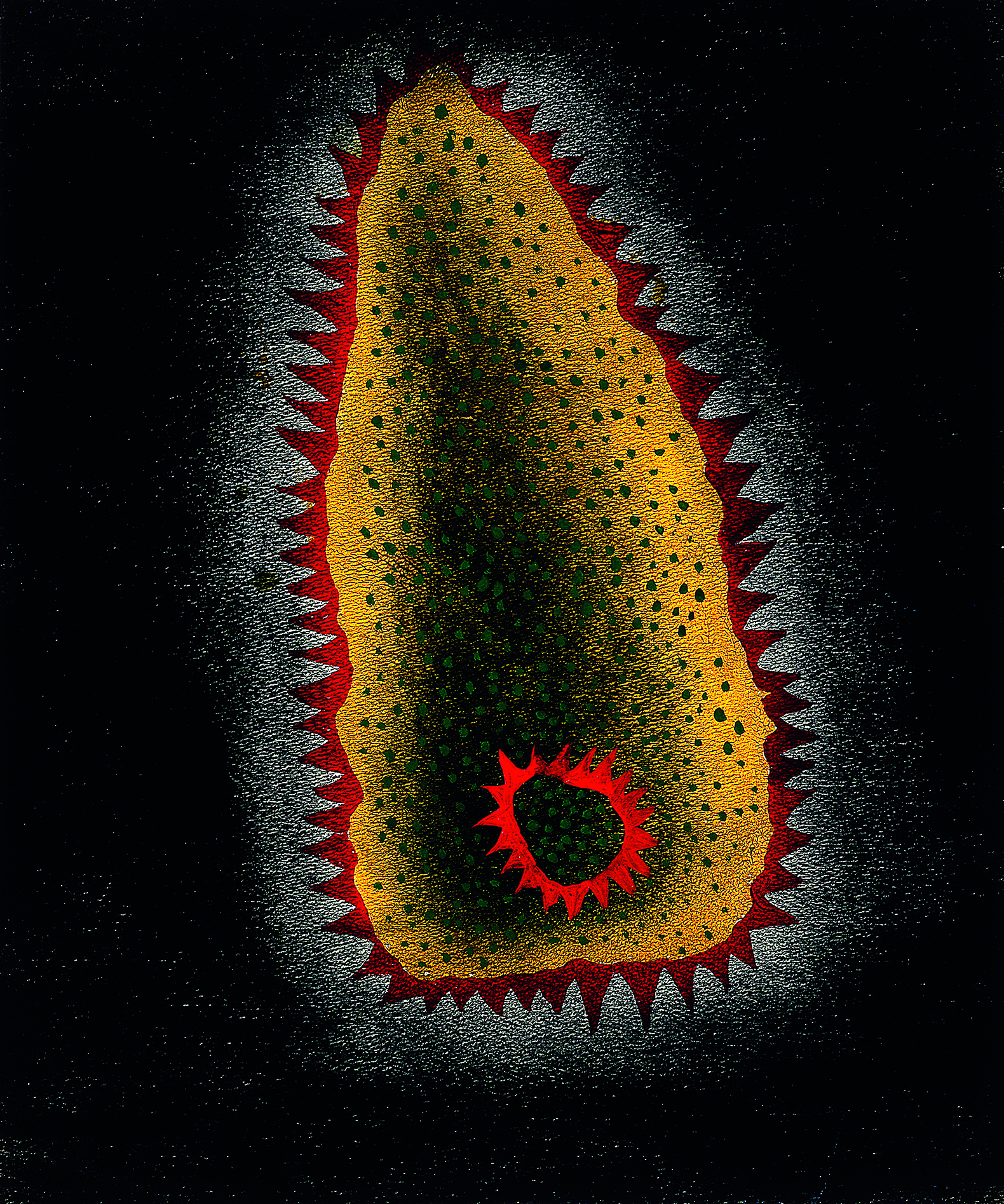
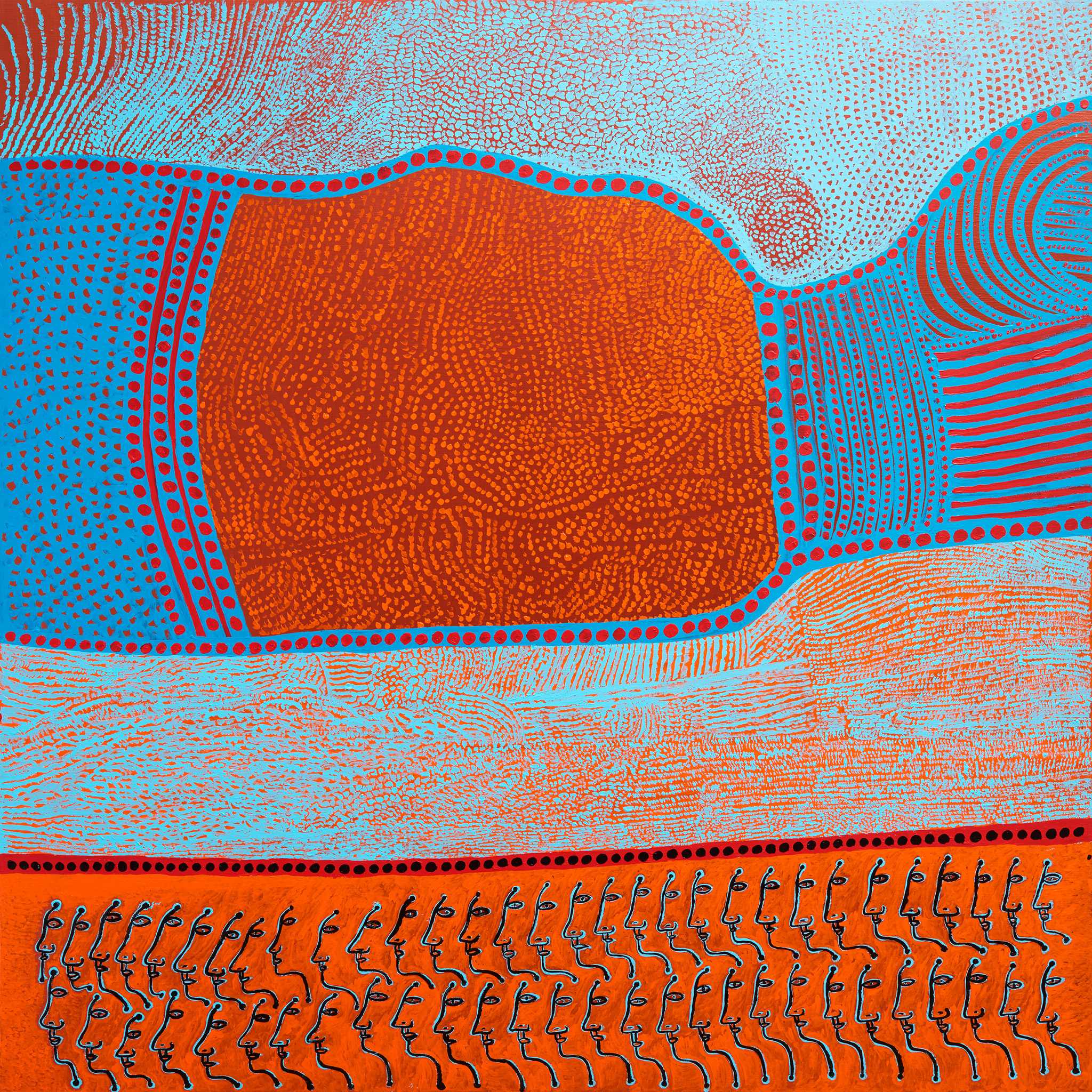
The Woman (La mujer), 1953. Pastel, tempera and acrylic on paper. 45,4 x 38,2 cm. The Blanton Museum (Texas, USA).
Kusama soon understood that this investigation did not need to stop at the limits of the canvas. In her Accumulation Sculptures, everyday objects, furniture and clothing were covered in repeated soft forms until their original identities were almost erased. Collage, photography, film, performance and, above all, installation followed. Rather than moving from one discipline to another, Kusama carried the same concerns across different media.
That continuity accounts for much of the strength of her work. Kusama did not simply create a recognisable iconography; she developed a way of organising space and of placing the viewer within it. Her dots, nets and reflections are effective because they can move from the smallest scale to the architectural without losing their intensity.
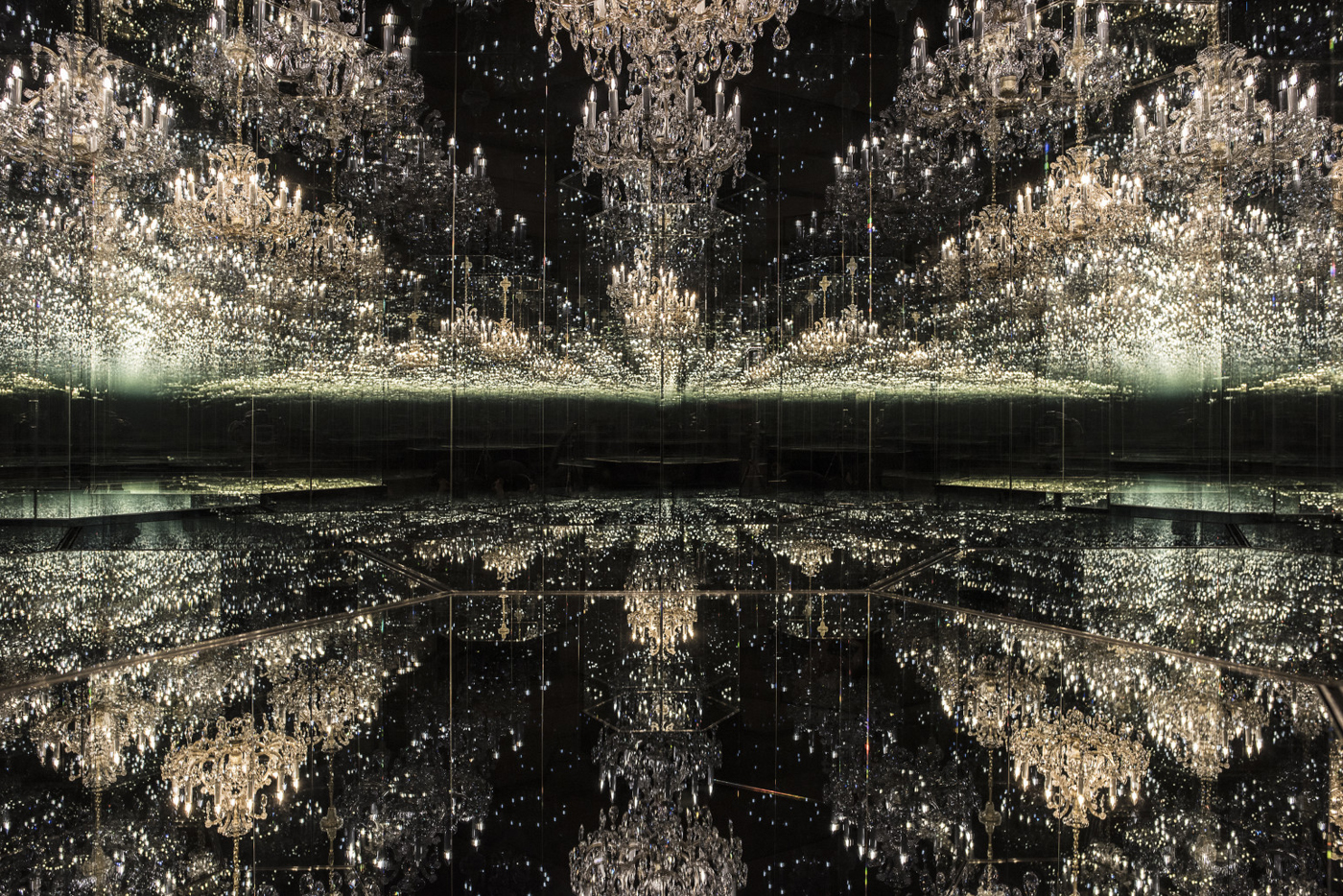
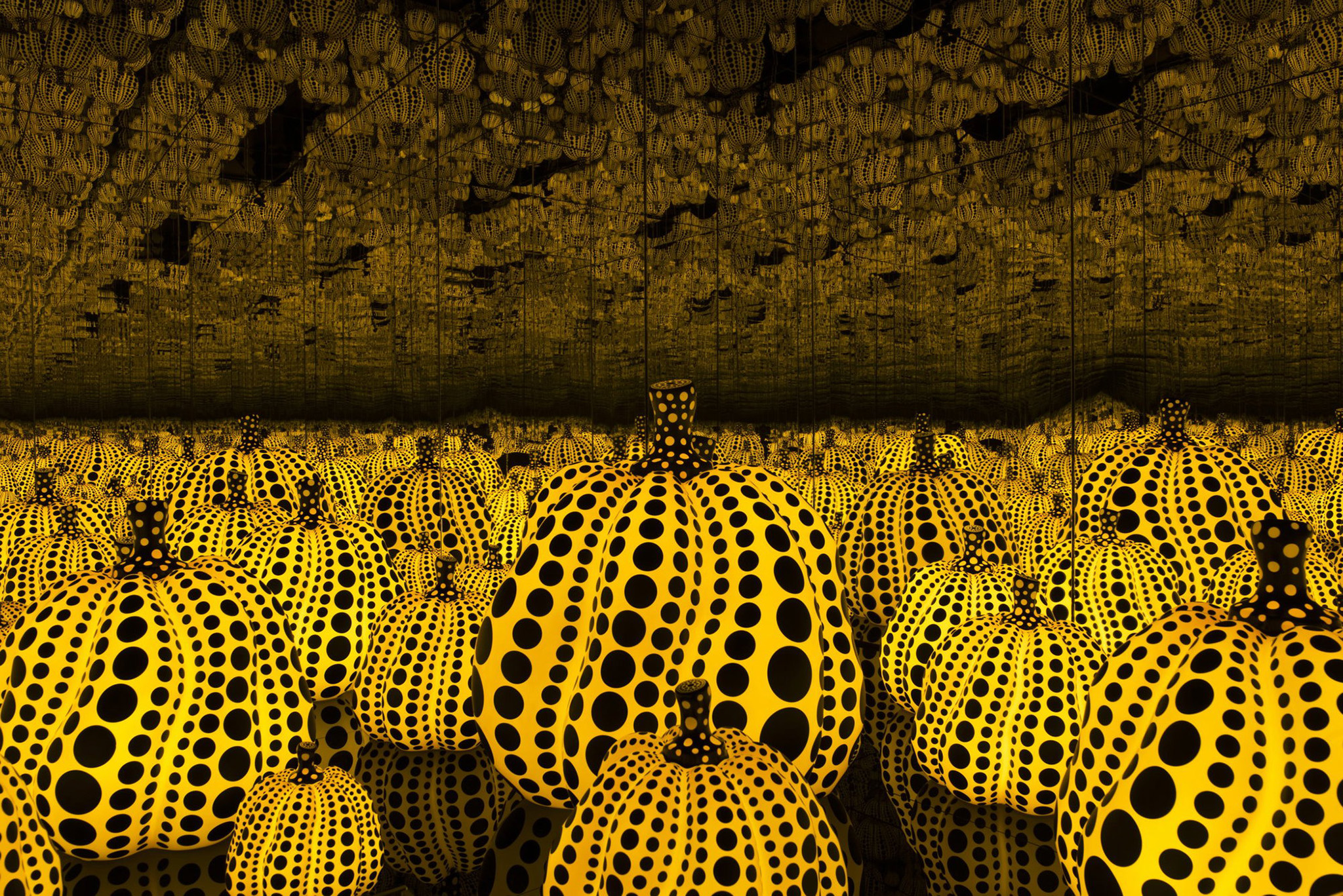
The Infinity Mirror Rooms are perhaps the clearest expression of this approach. From the first of these installations, created in 1965, mirrors allowed objects, lights and bodies to multiply until the visual boundaries of the room disappeared. The viewer no longer observes the work from the outside: their own image enters the system of repetition and becomes part of what they are looking at.
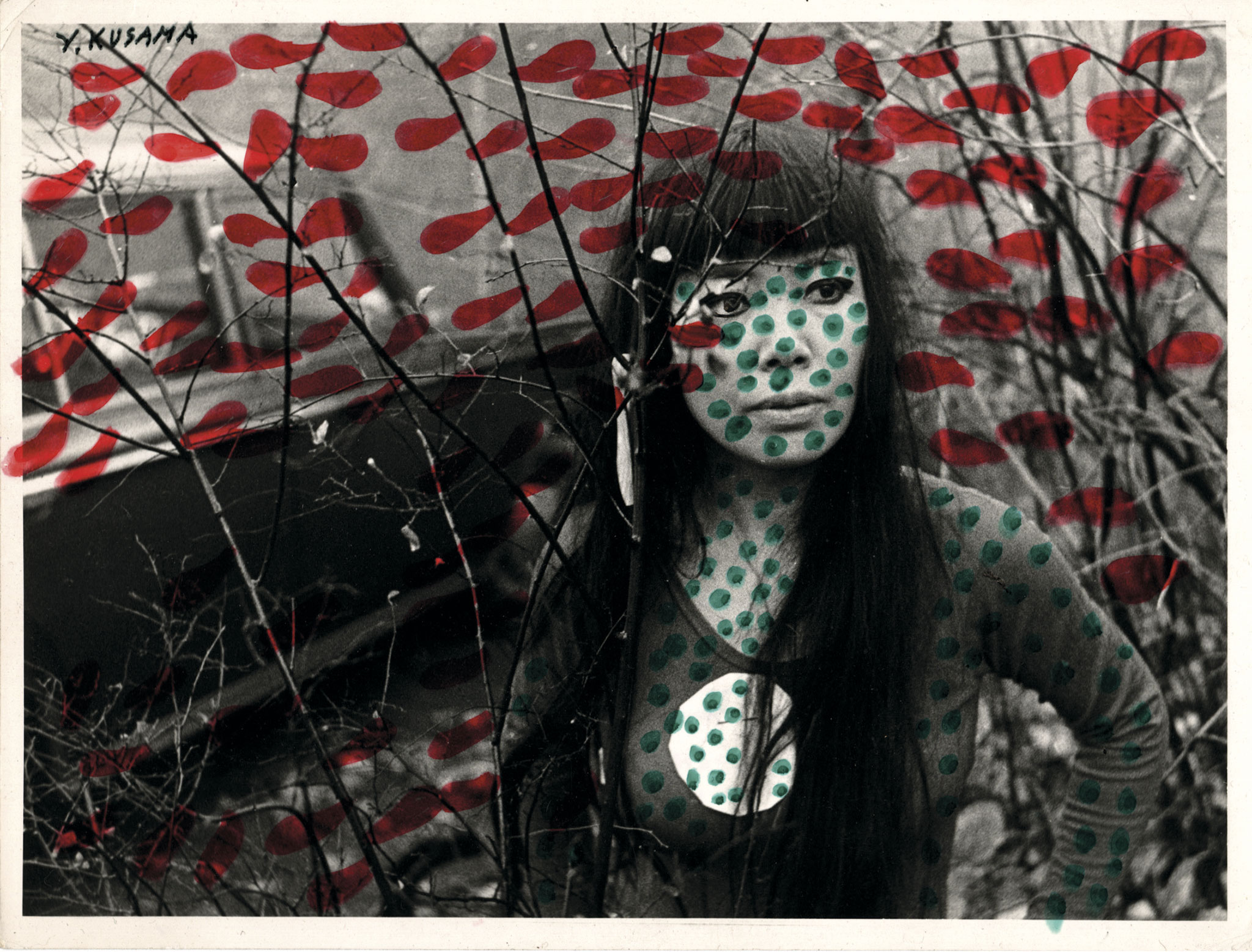
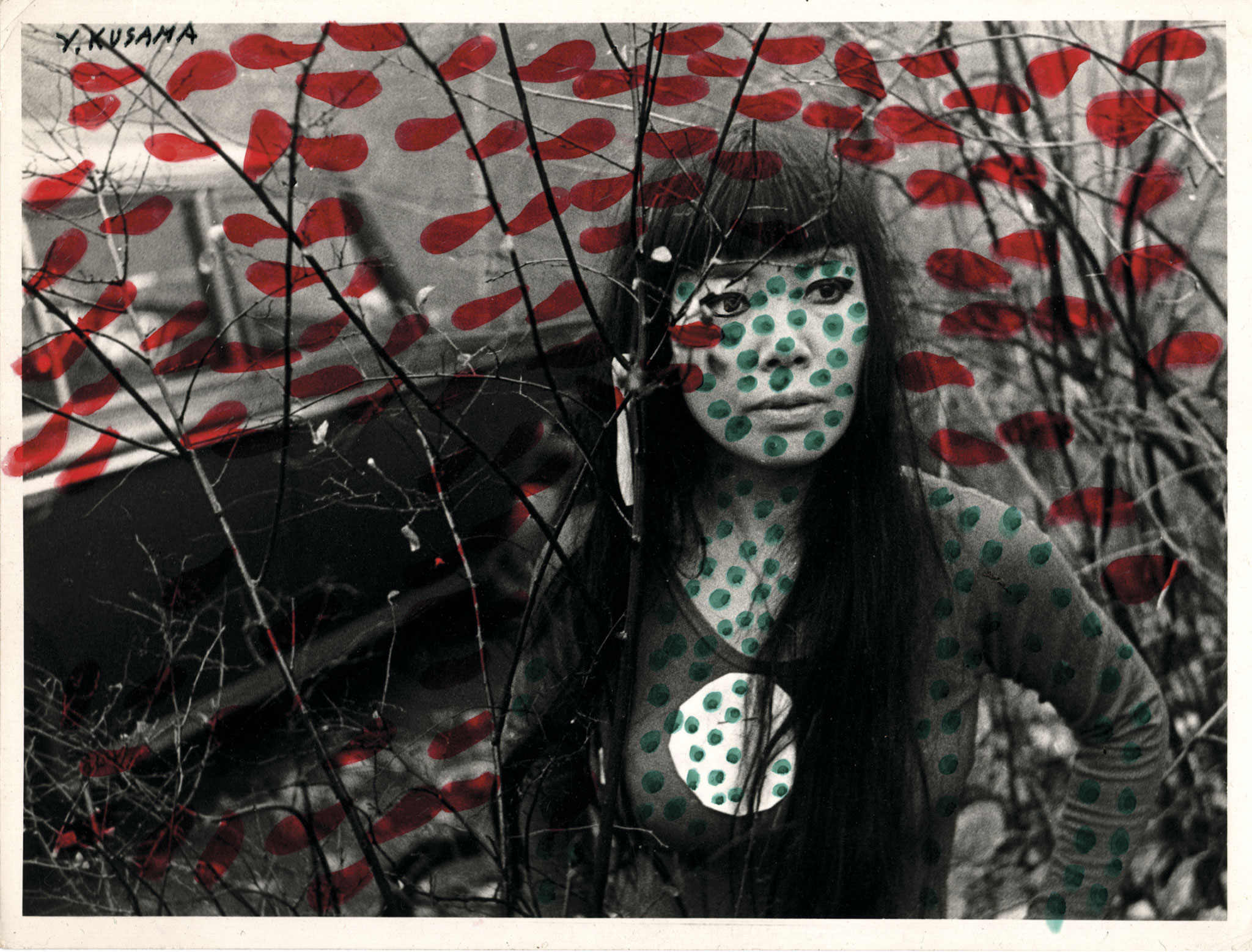
Self-Obliteration, 1967. Ink and photograph, 18,2 x 24 cm. Image courtesy of Yayoi Kusama.
In 2011, Madrid’s Museo Reina Sofía devoted a major retrospective to Kusama, spanning six decades of work. Among the pieces presented was Infinity Mirrored Room – Filled with the Brilliance of Life, conceived for the exhibition. The show later travelled to the Centre Pompidou in Paris, Tate Modern in London and the Whitney Museum in New York, consolidating an international recognition that had taken decades to reach its full extent.
Her visual vocabulary continued to evolve without abandoning those early elements. In 2016, Victoria Miro in London brought together new paintings, pumpkin sculptures and three mirror rooms. Her infinity nets, dots and works from the My Eternal Soul series, begun in 2009, revealed an artist still returning to long-standing concerns without simply repeating herself.
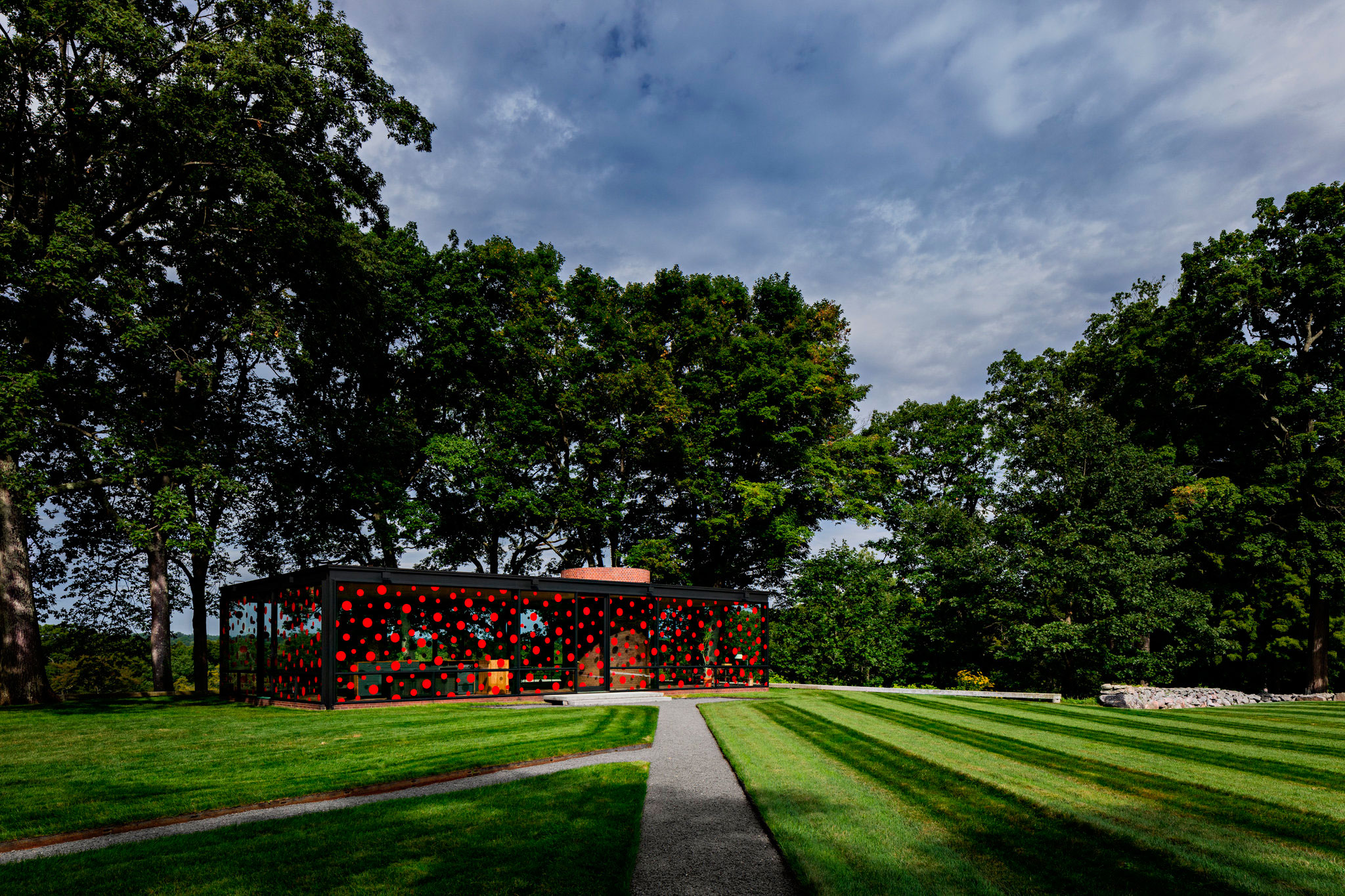
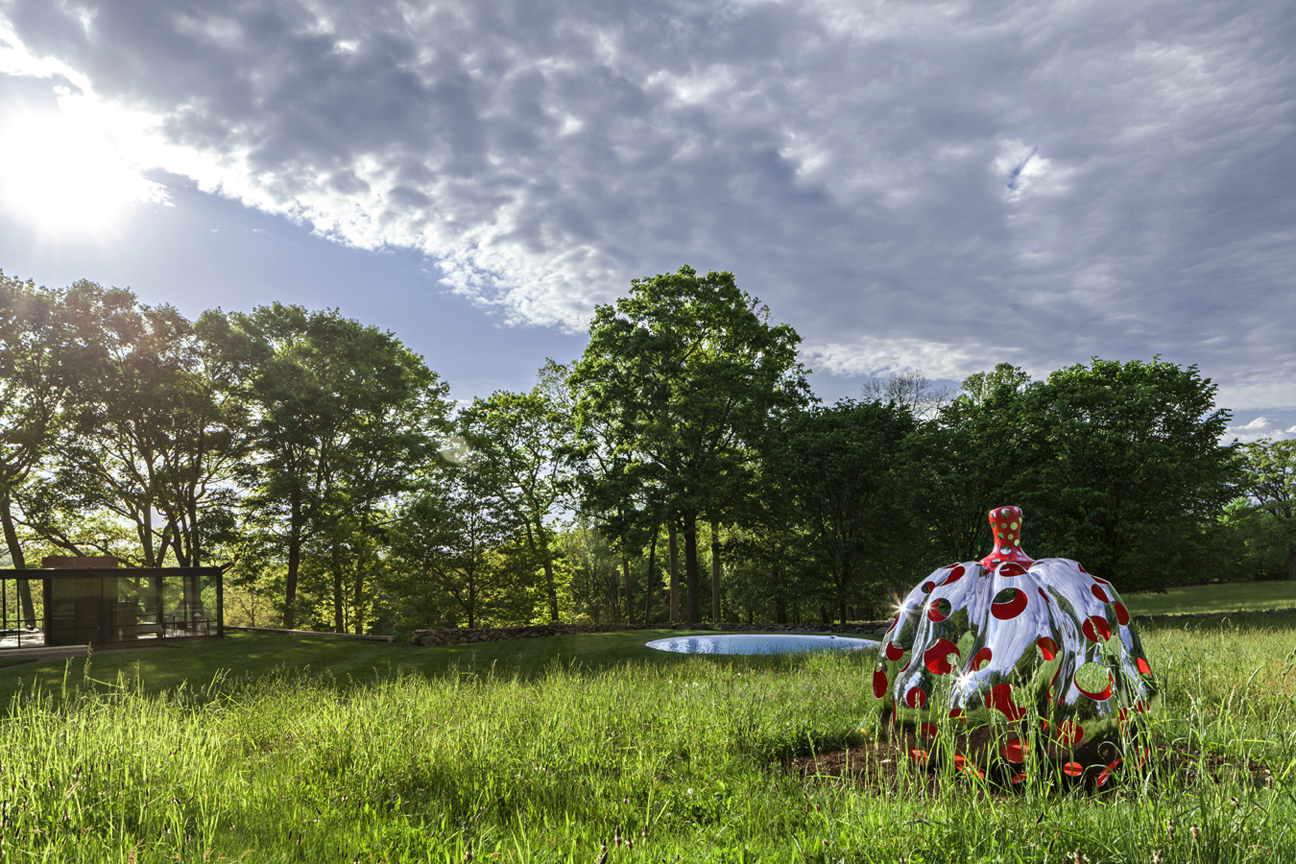
“Dots Obsession - Alive, Seeking for Eternal Hope,” a new site-specific work opening today, wraps Philip Johnson’s Glass House in Connecticut in Yayoi Kusama’s signature bright spots. Photograph by Matthew Placek.
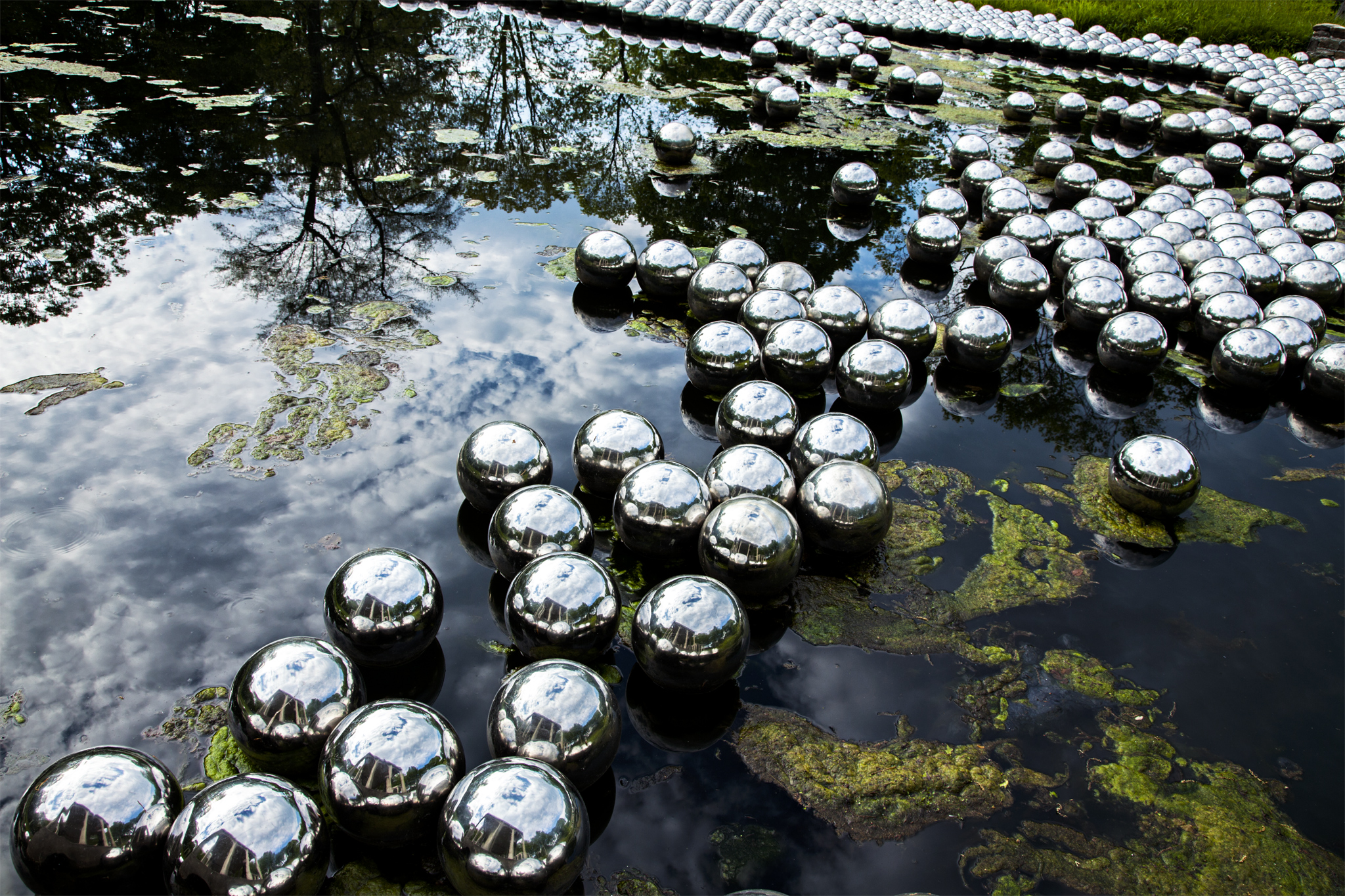
That same year, her Narcissus Garden was installed at Philip Johnson’s Glass House in Connecticut. First presented at the 1966 Venice Biennale, the work was composed on this occasion of 1,300 reflective steel spheres floating on a pond. Wind and water continuously altered their positions, while each sphere returned a fragmented image of the sky, the trees and the architecture.
The intervention inserted Kusama’s universe into one of the icons of modern architecture. The reflections multiplied the transparency of the house and altered the way the landscape was perceived, establishing a particularly precise relationship between object, architecture and surroundings. The installation was completed by a large Pumpkin and by her characteristic dots applied to the glass enclosure.
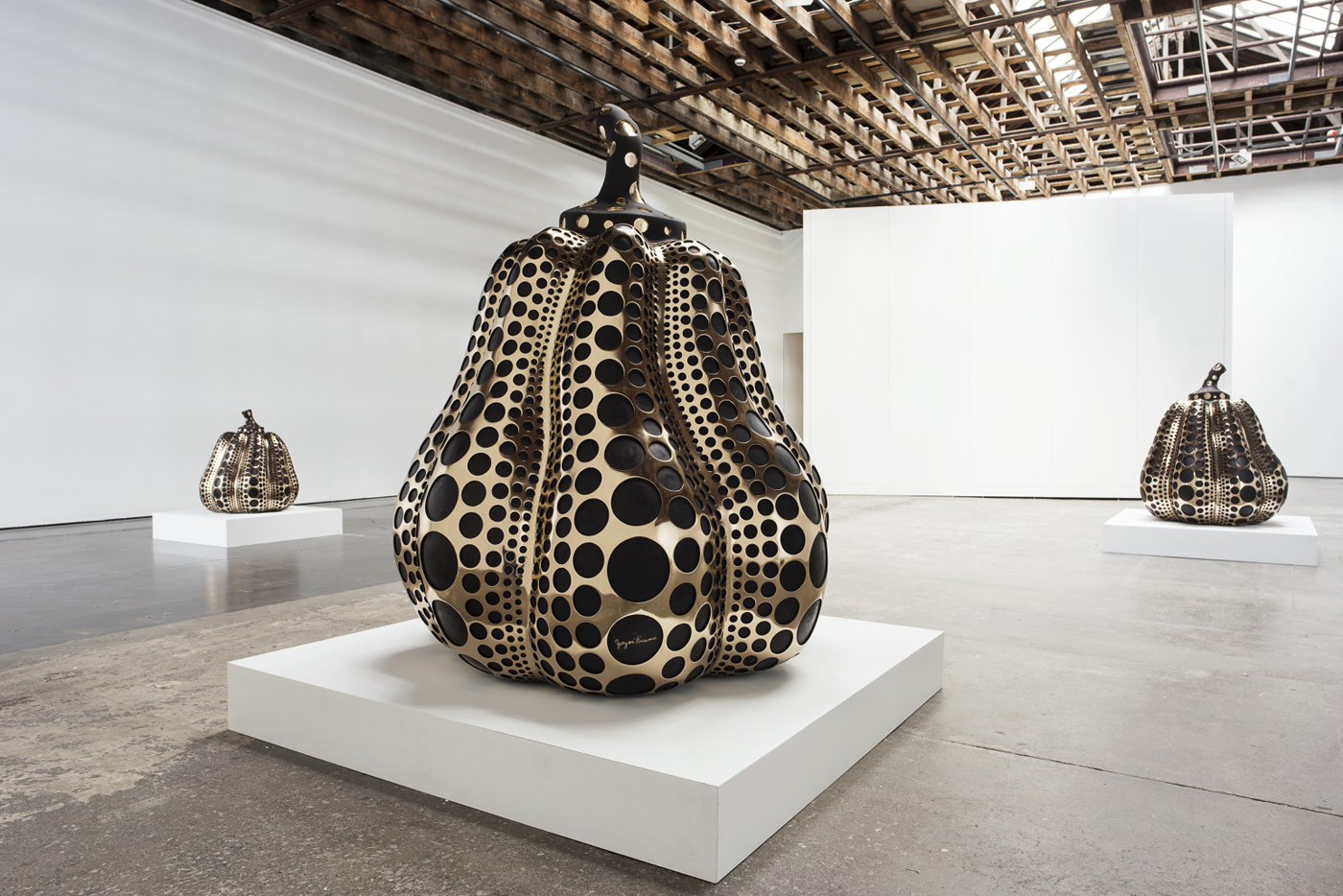
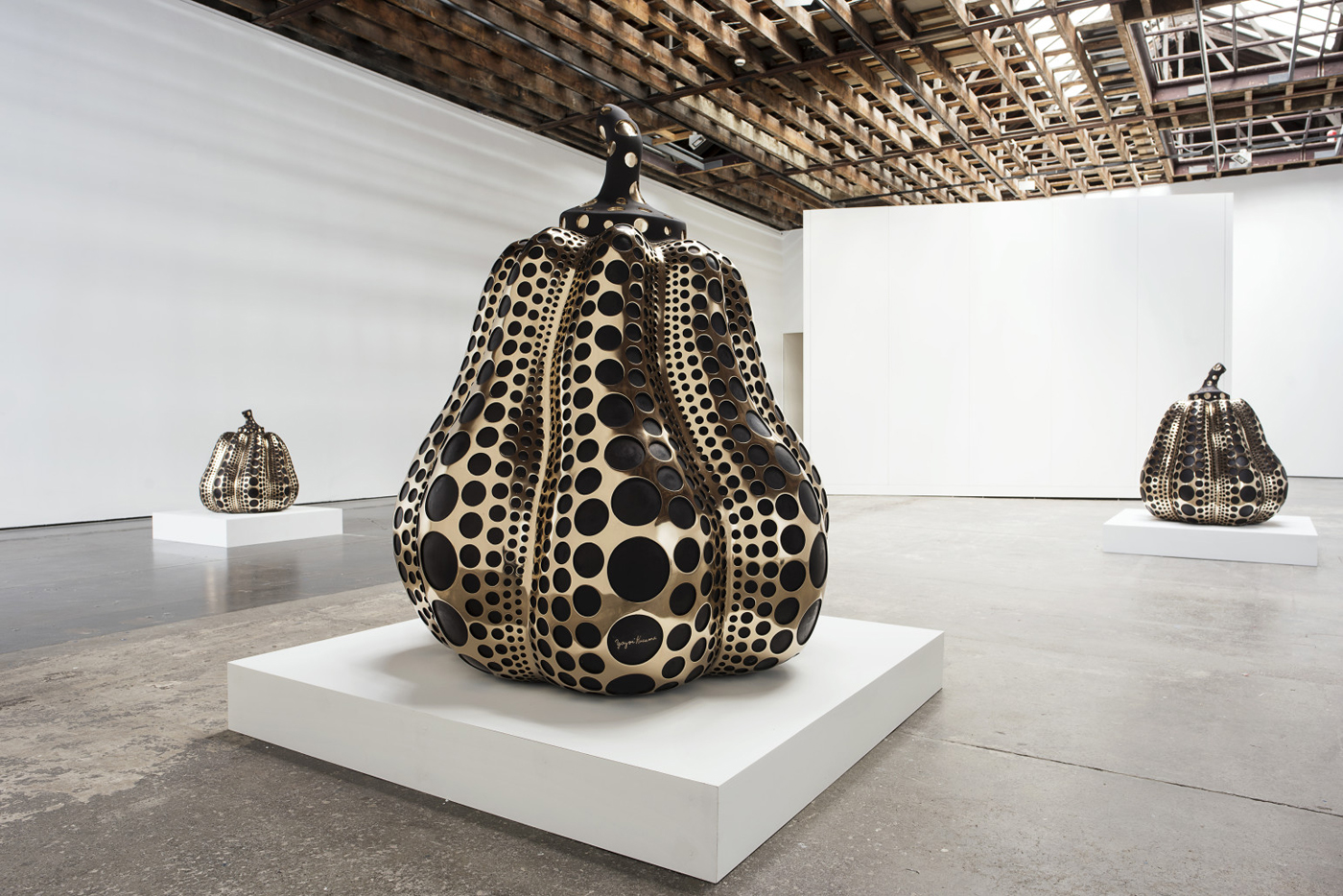
Installation View, Sculptures, Paintings & Mirror Rooms by Yayoi Kusama. Photography by Yayoi Kusama, courtesy of Kumasa Enterprise, OTA Fine Arts, Tokyo / Singapore and Victoria Miro, London.
The pumpkin, a recurring motif in her work, is a good example of her ability to transform an ordinary object into something strange and monumental. Kusama returned to it for decades, just as she returned to nets and dots. Her interest lay less in constantly inventing new forms than in discovering how far a small number of them could be taken.
After returning permanently to Japan in 1973, she also expanded her practice into literature, poetry and collage. From 1977 onwards, she lived voluntarily in a psychiatric hospital in Tokyo while maintaining her studio nearby. That circumstance, so often placed at the centre of accounts of her life, did not interrupt her work. On the contrary, Kusama continued producing with remarkable consistency for decades.
Her career therefore requires us to separate two things that are too often confused. Her mental health difficulties shaped part of her lived experience, but Kusama’s importance does not lie in turning illness into spectacle; it lies in having built from her experience a rigorous and autonomous body of work capable of transforming our perception of space.
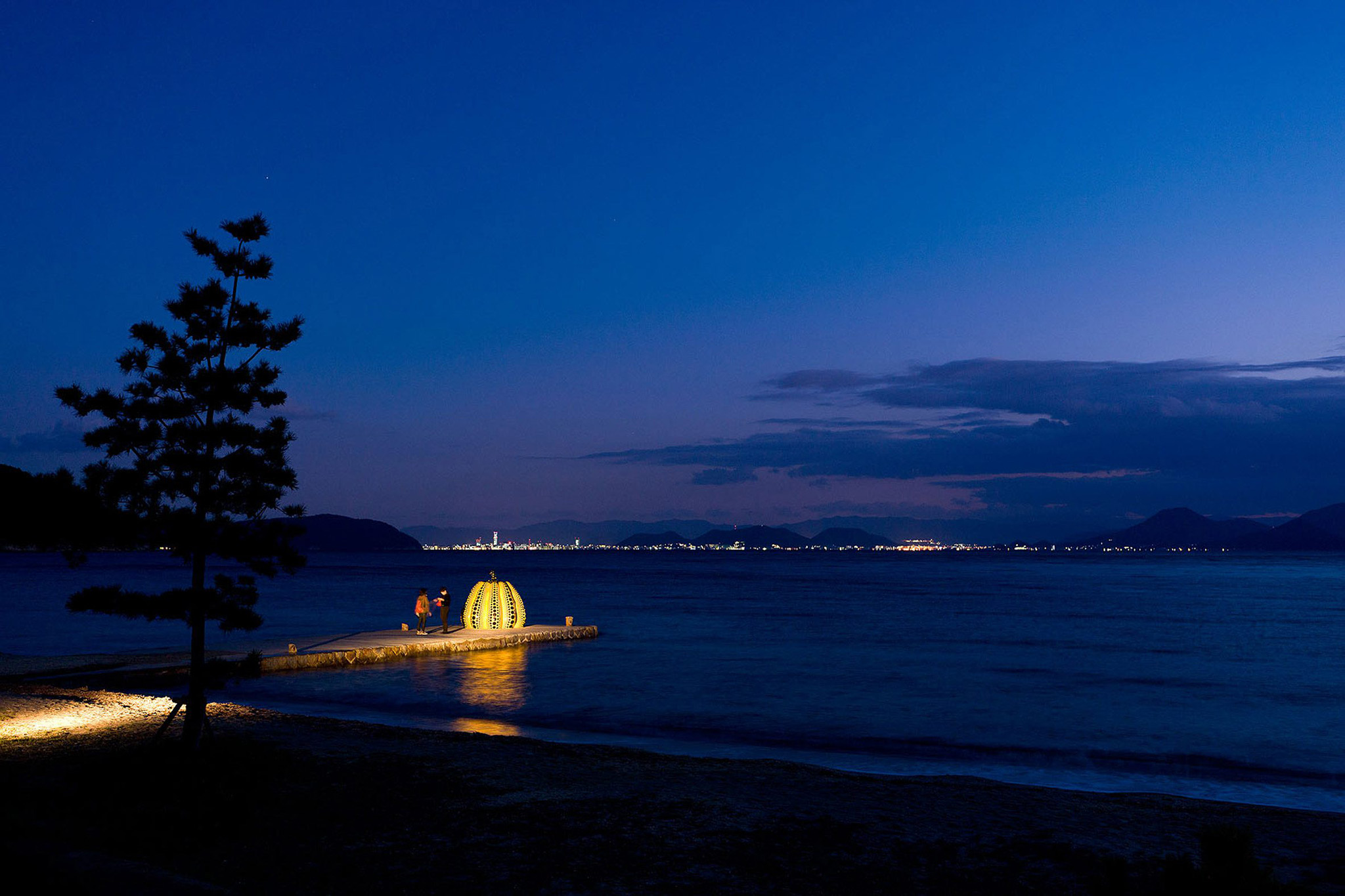
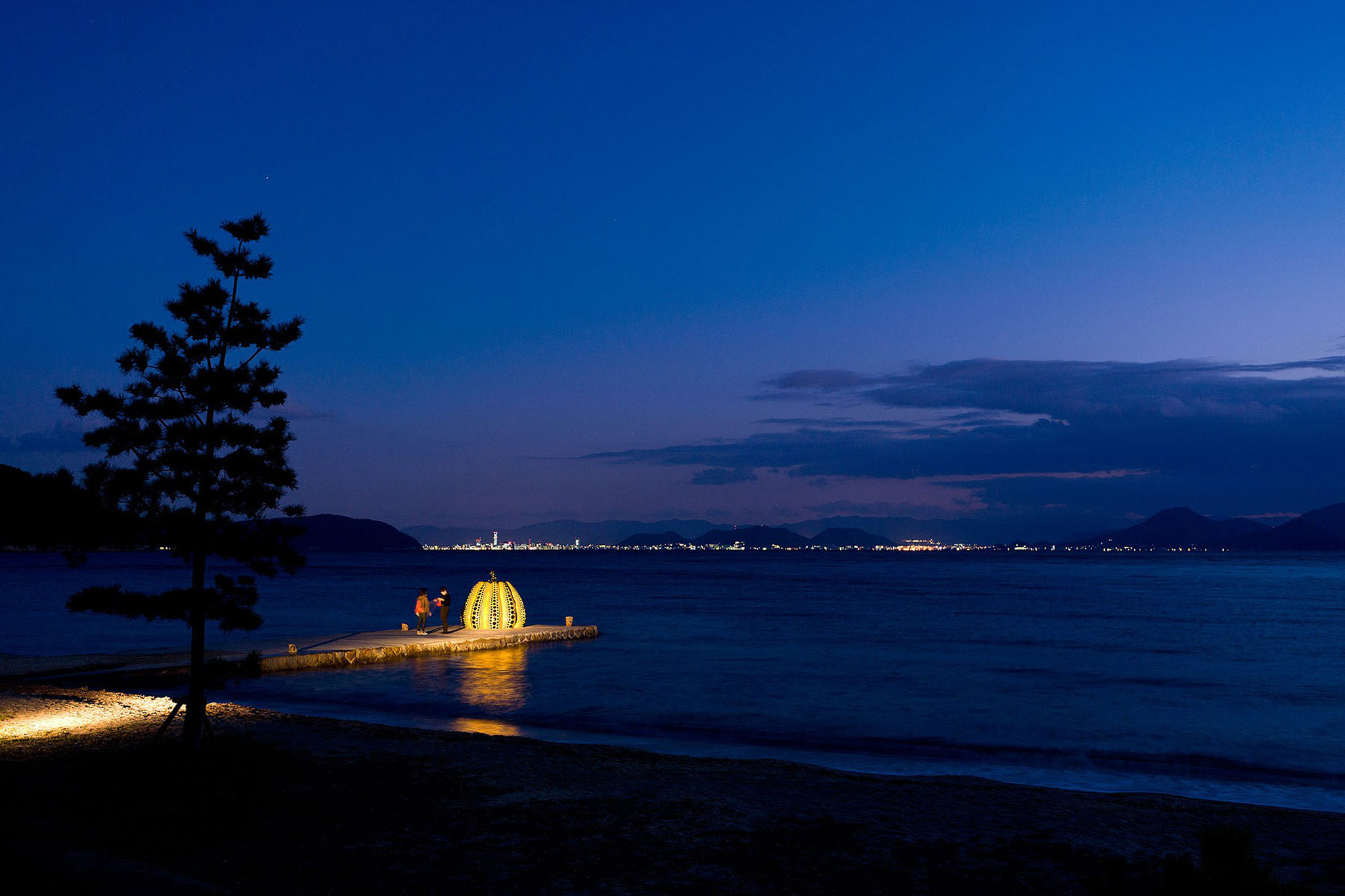
Iwan Baan photographed Kusama’s Pumpkin sculpture glowing at night, before it was damaged.
The artist is now gone, but what remains is a visual system seemingly conceived to resist any final boundary. Kusama spent her life repeating a dot until it became thousands, multiplying objects through reflection and turning enclosed rooms into the illusion of endless space.
Perhaps that is why her legacy is so easy to recognise and, at the same time, so difficult to summarise: behind her dots and colours was a deeply personal way of looking at the world, and of reminding us that each of us is only a single point within something much larger.
Yayoi Kusama leaves behind a body of work in which biography, discipline and perception remain inevitably intertwined, yet none of them can explain the whole on its own. Her greatest achievement may have been to turn a limited repertoire of forms into an almost inexhaustible territory: a universe built from dots, reflections and repetition that, as she so often suggested, seems to continue beyond its own limits.