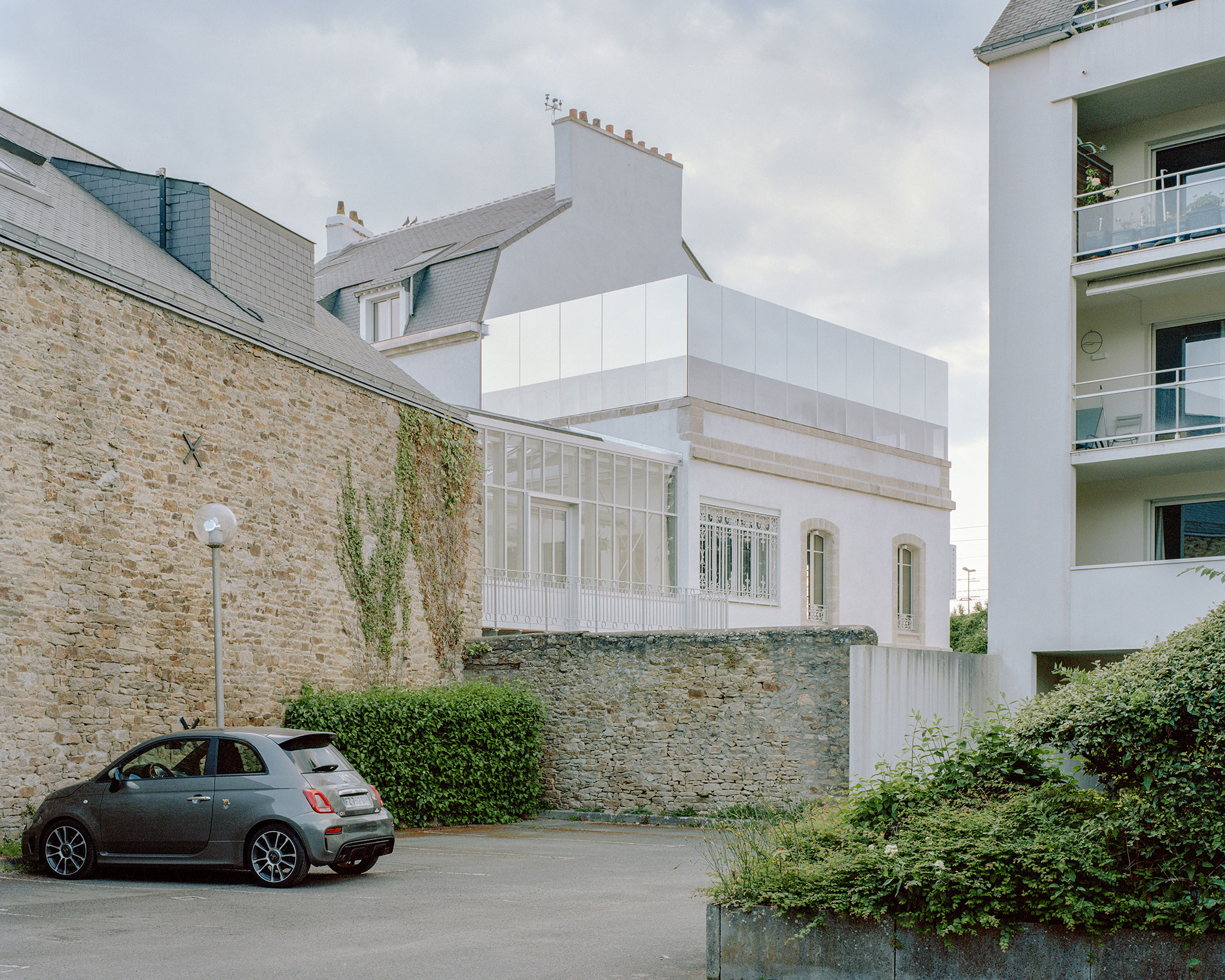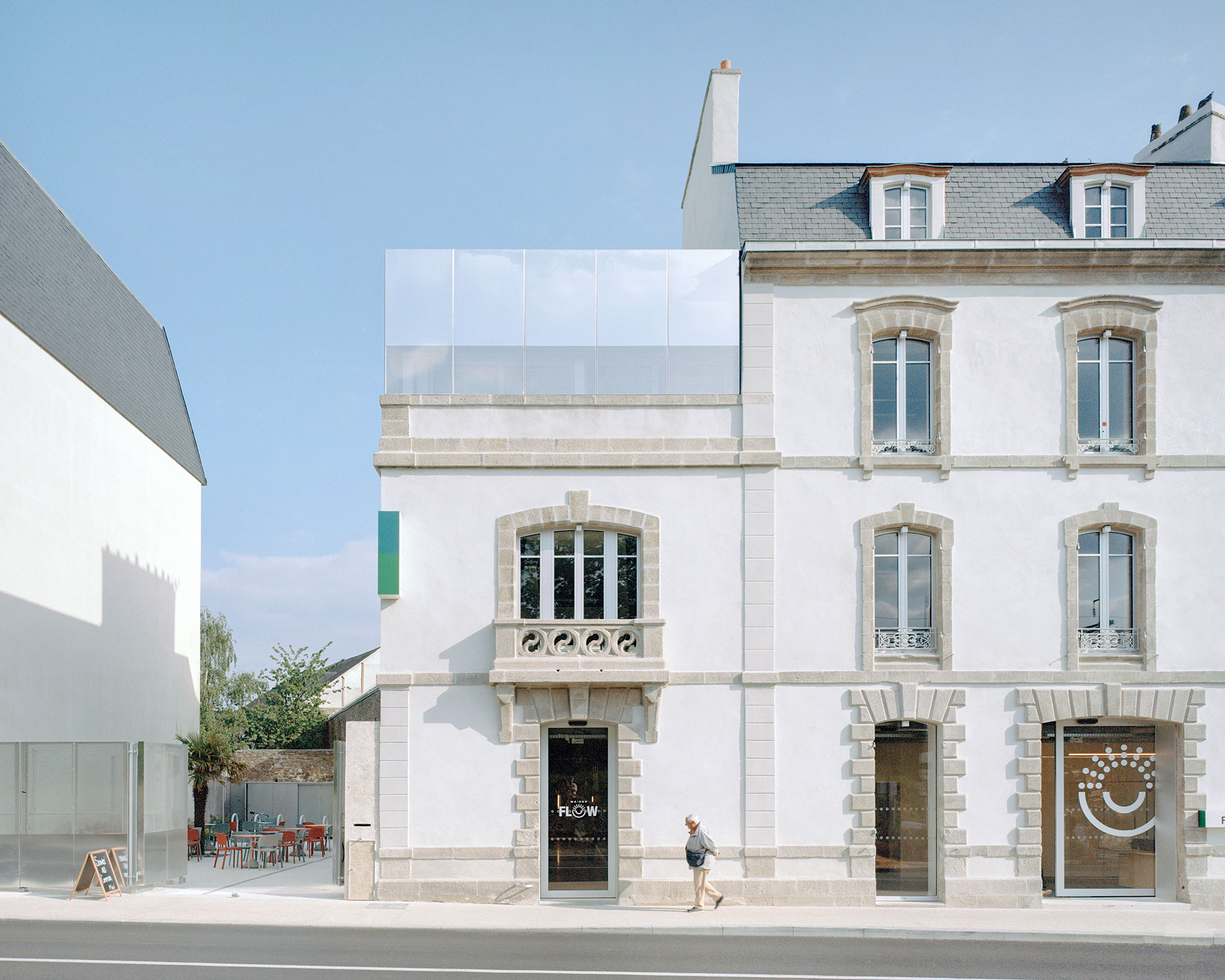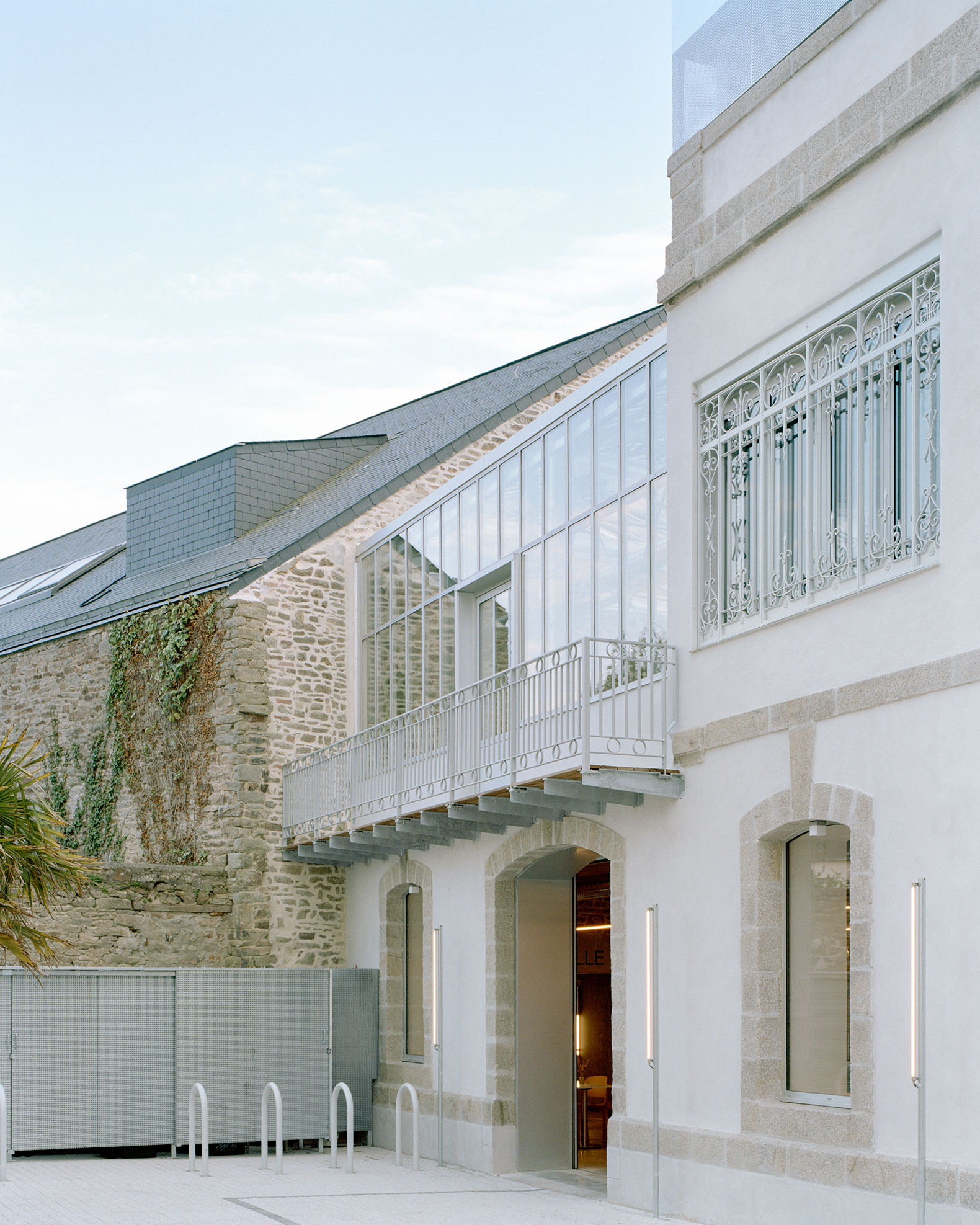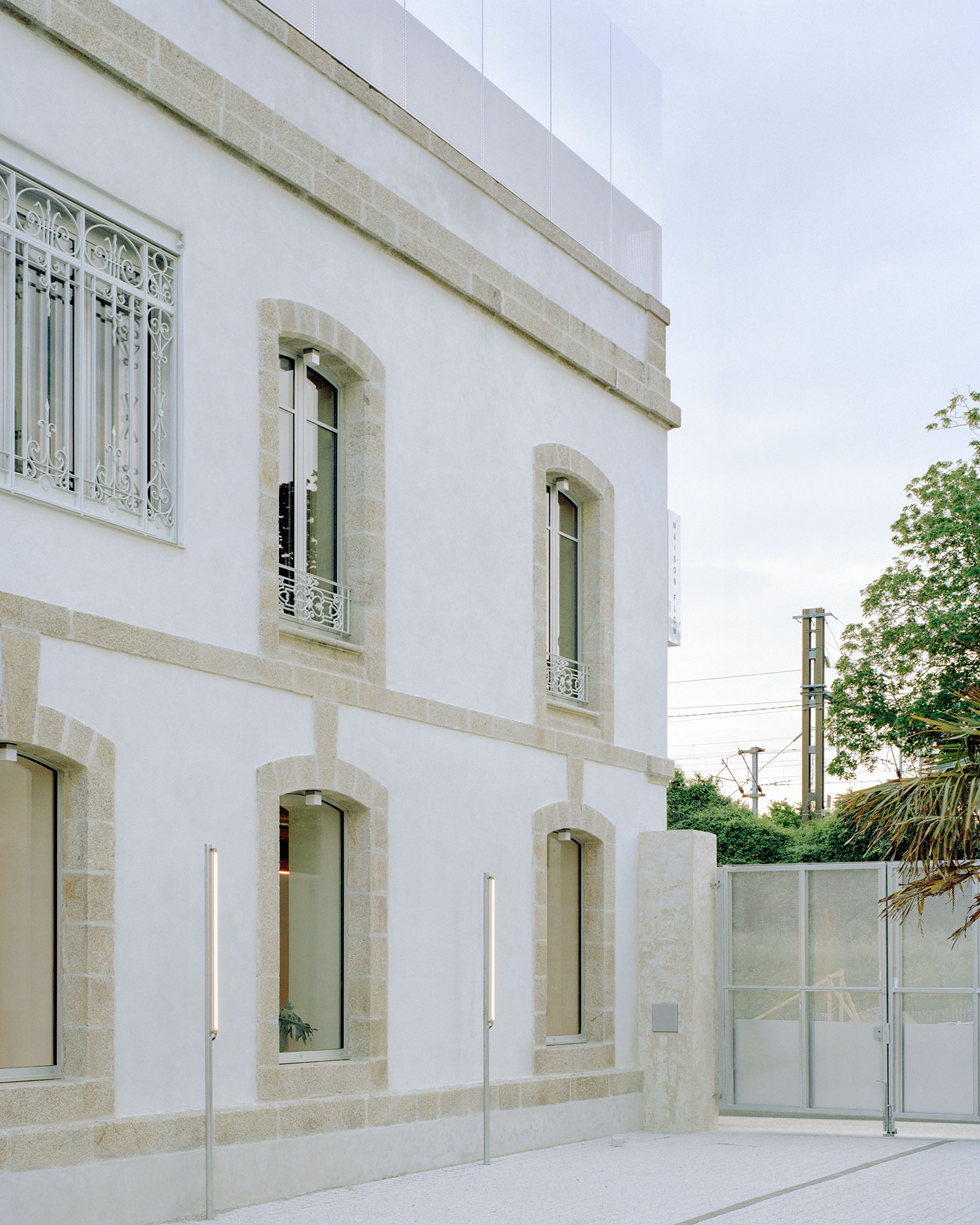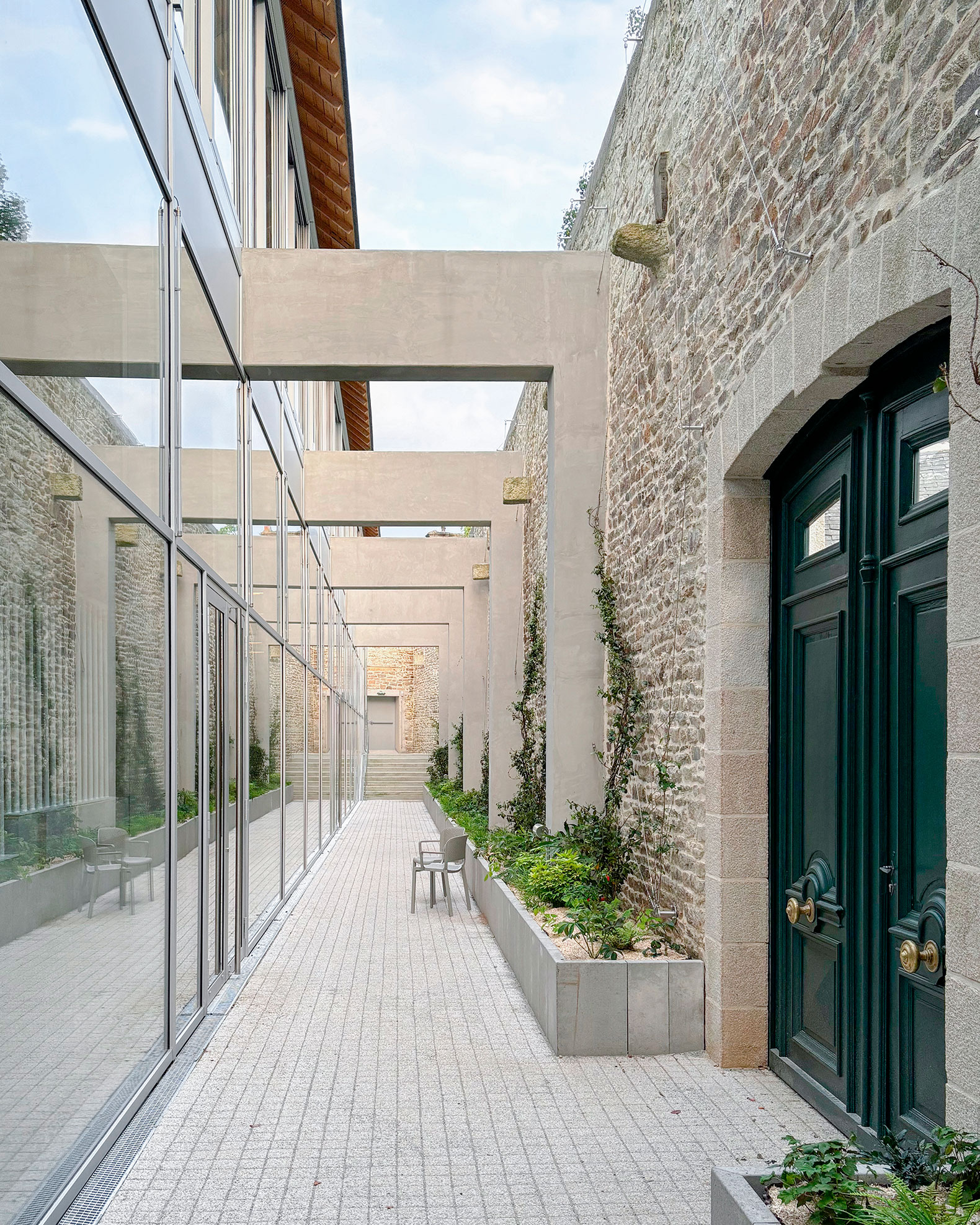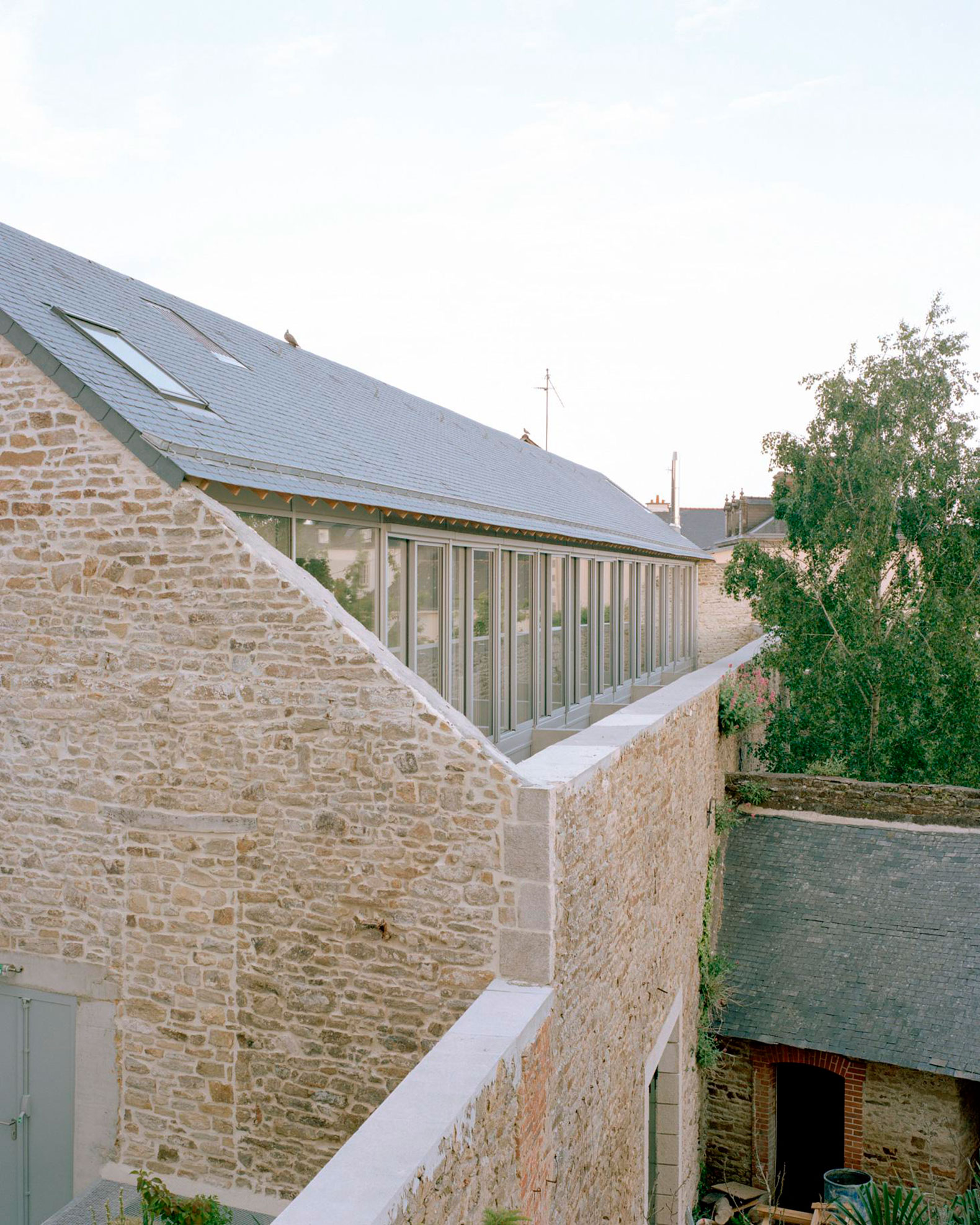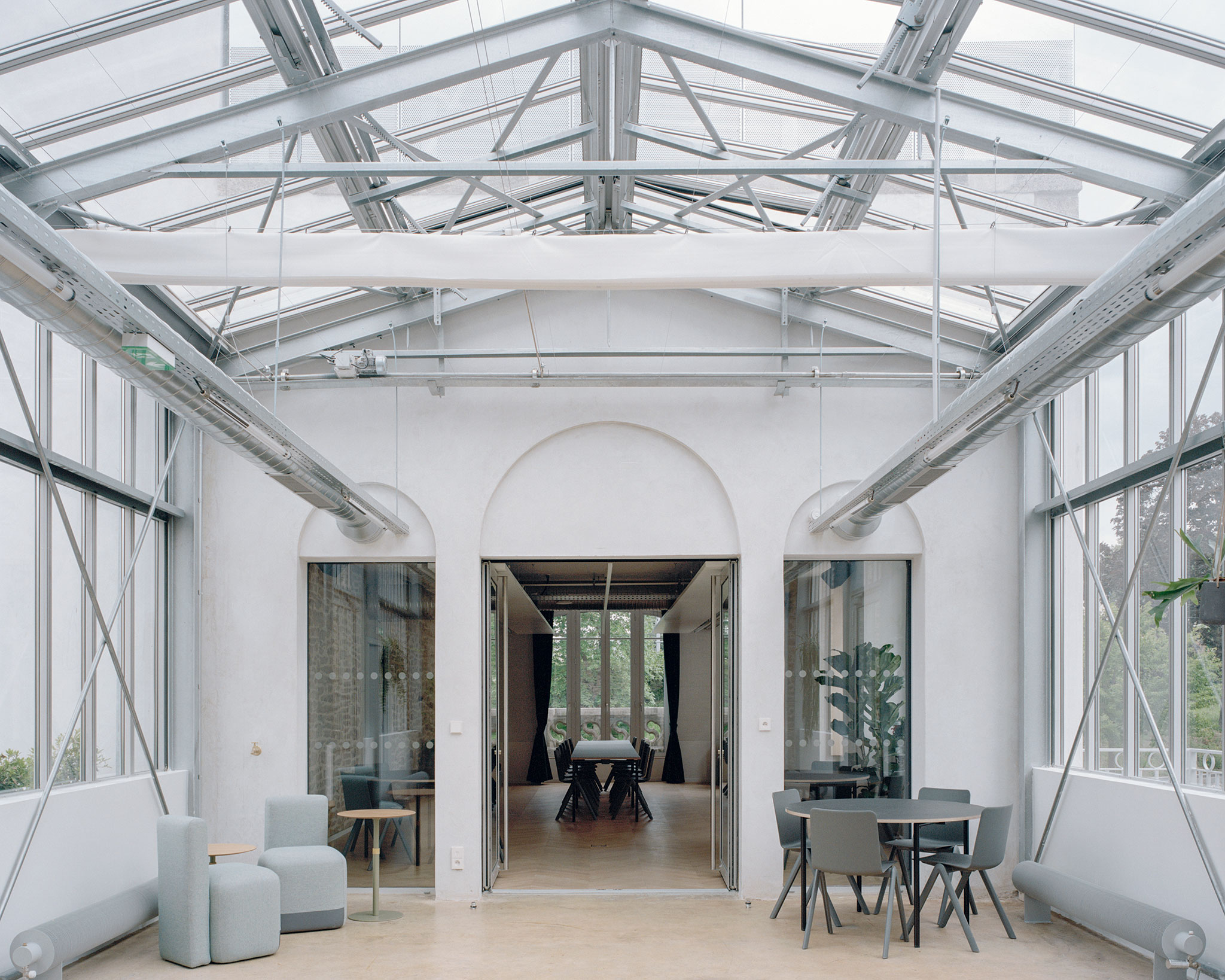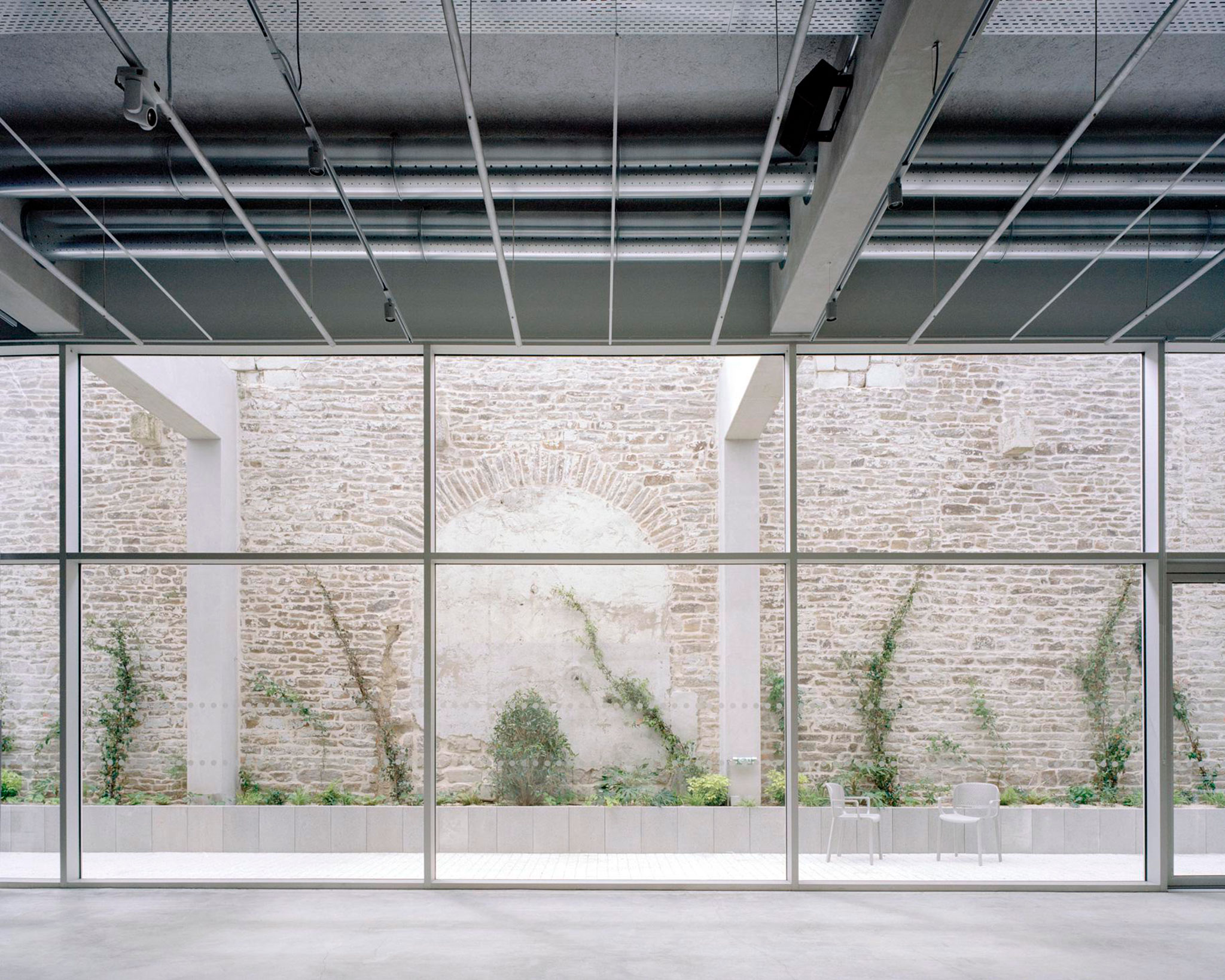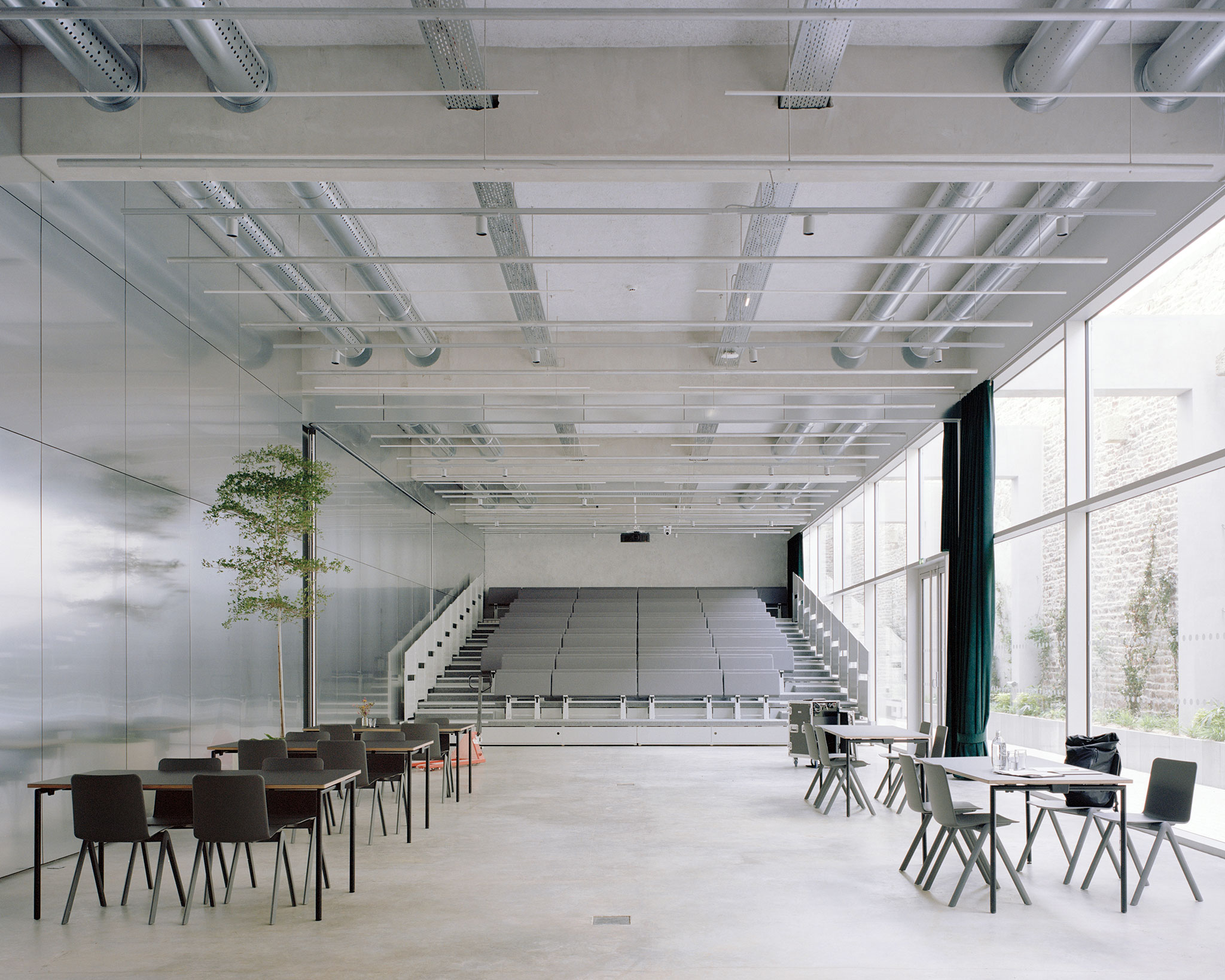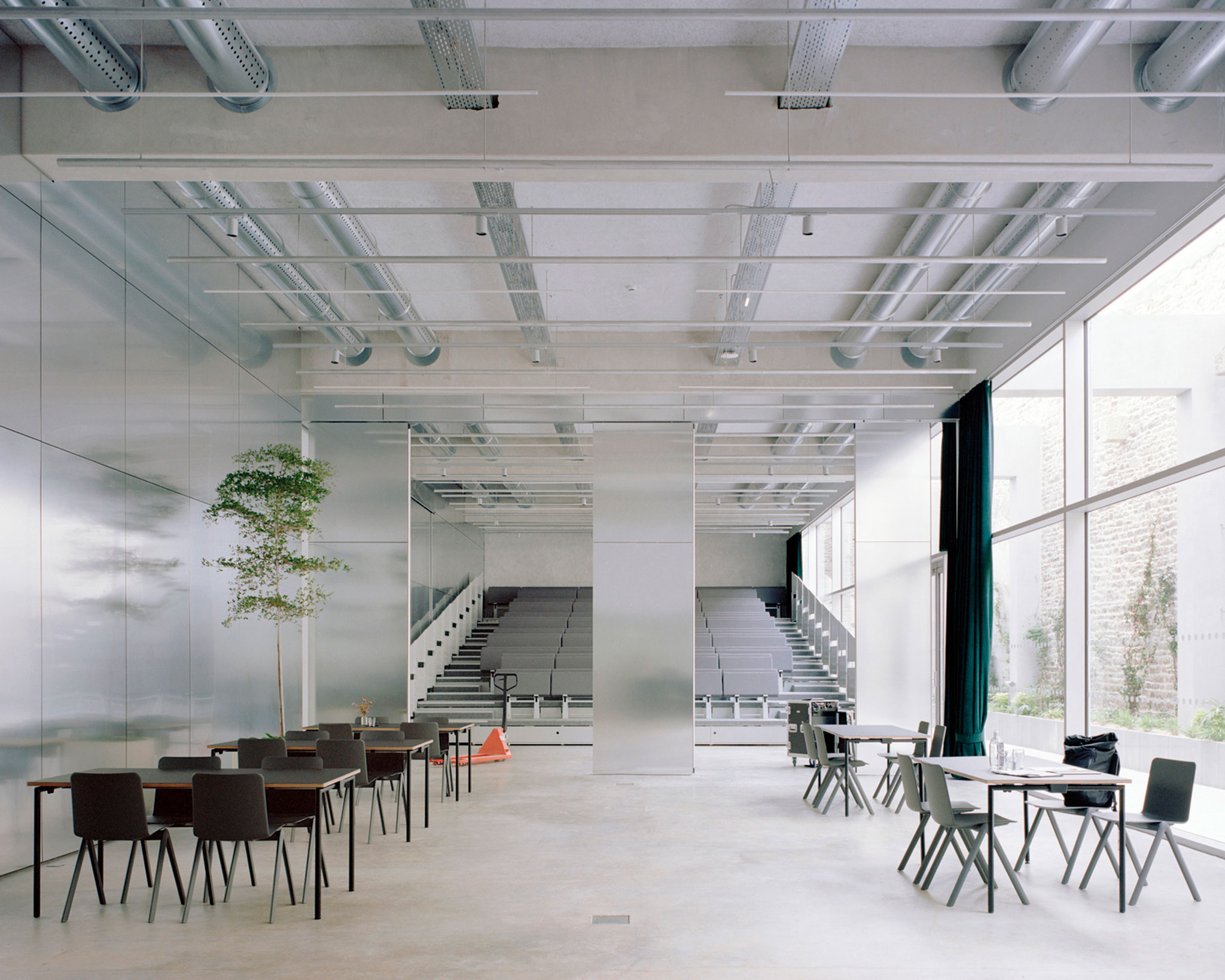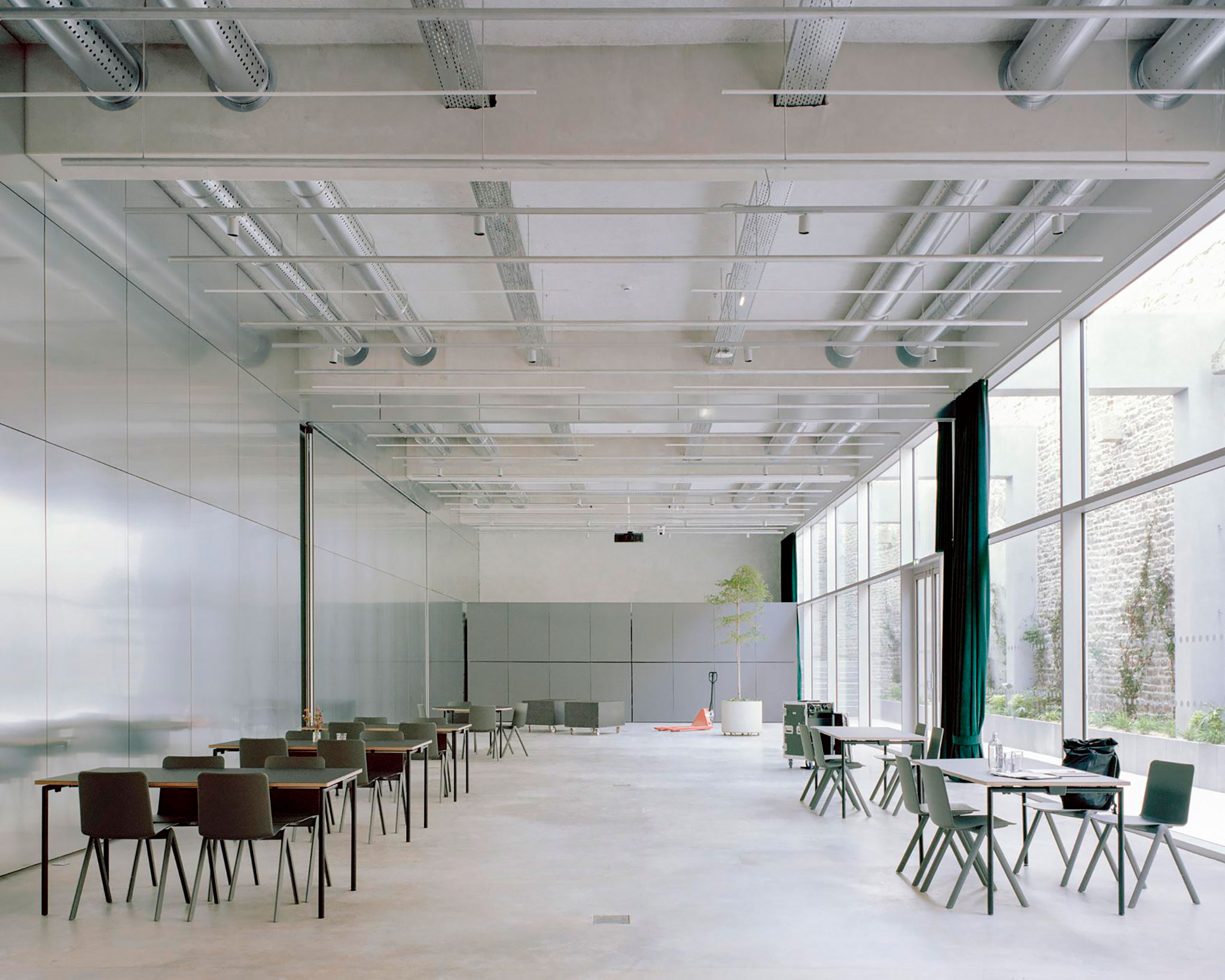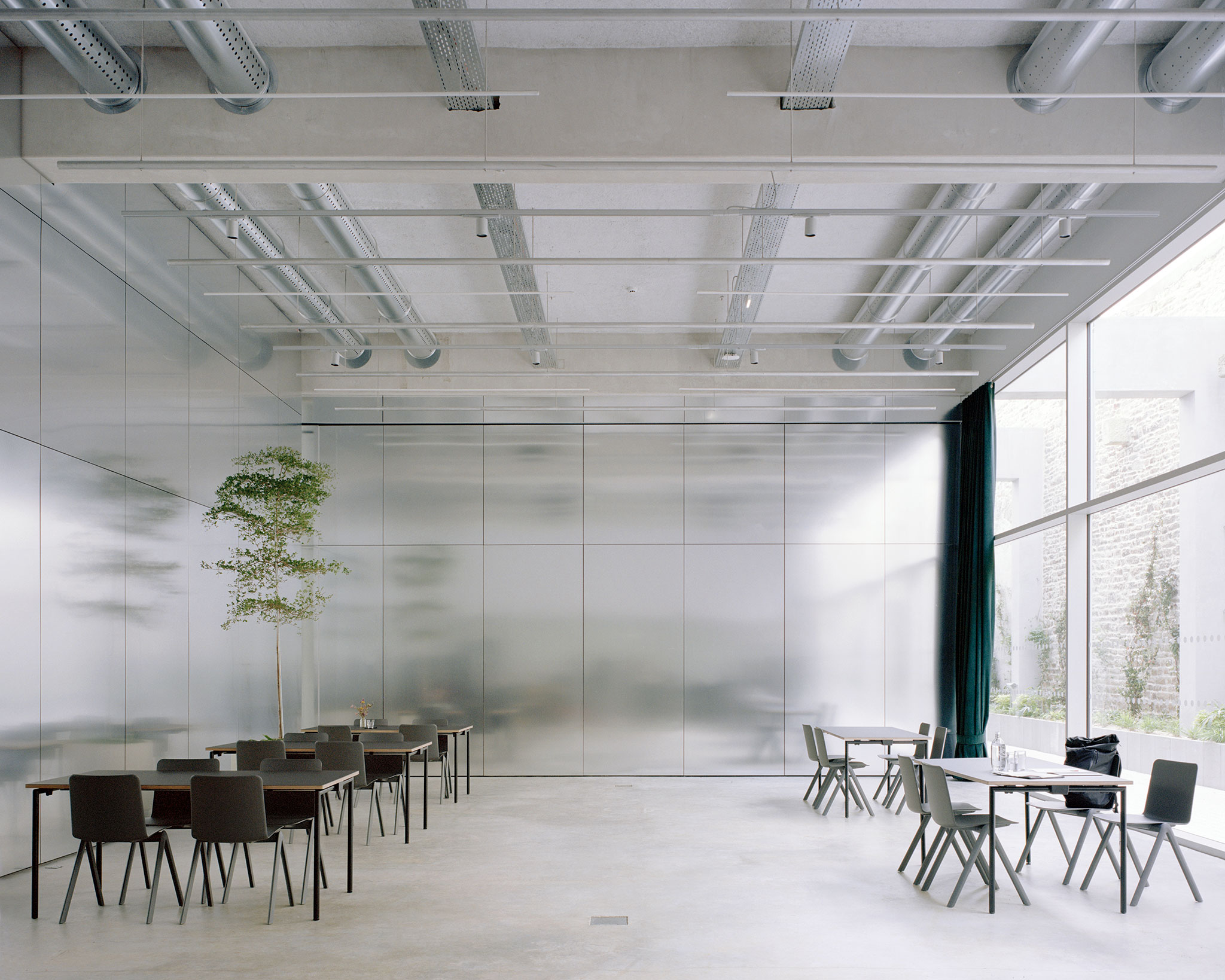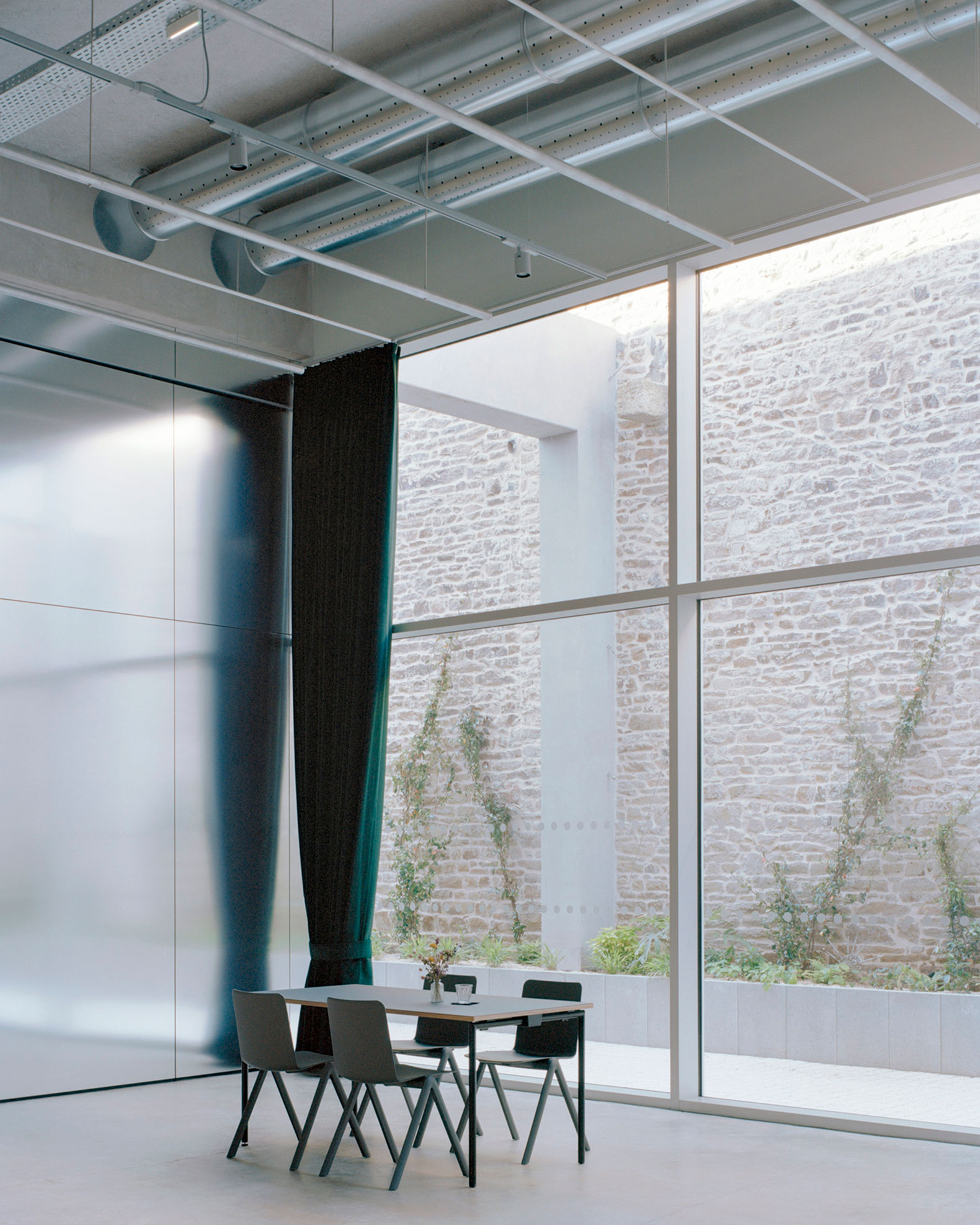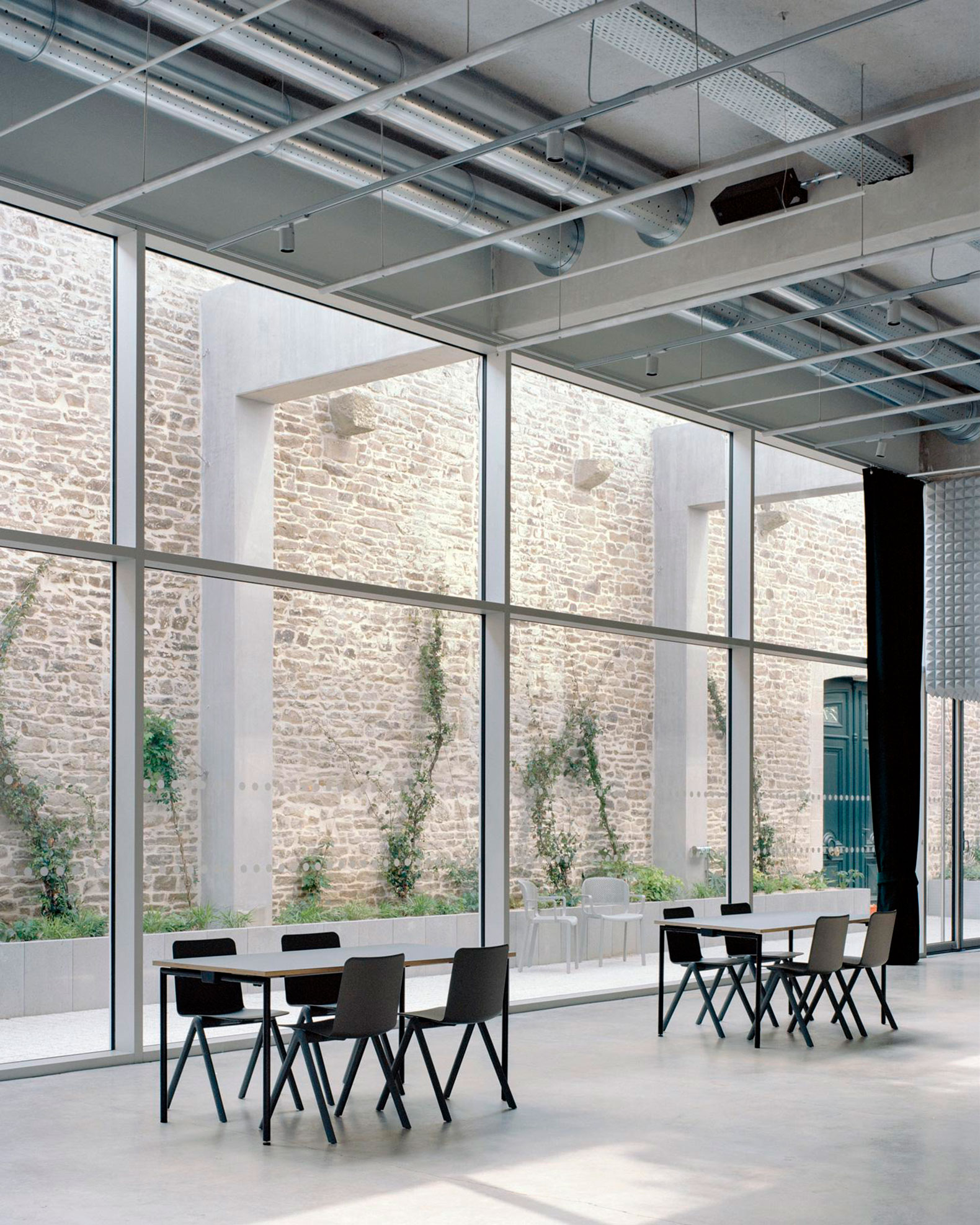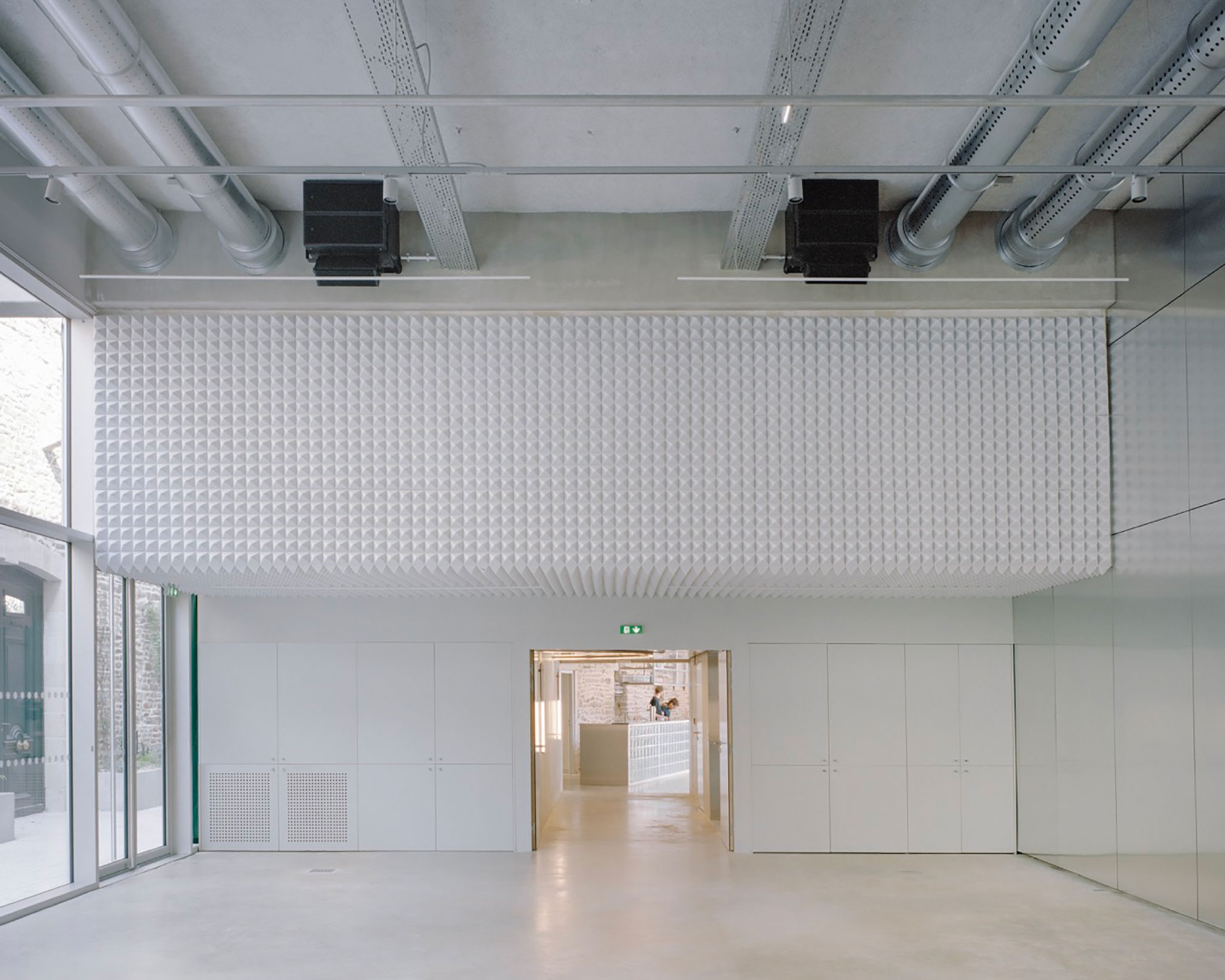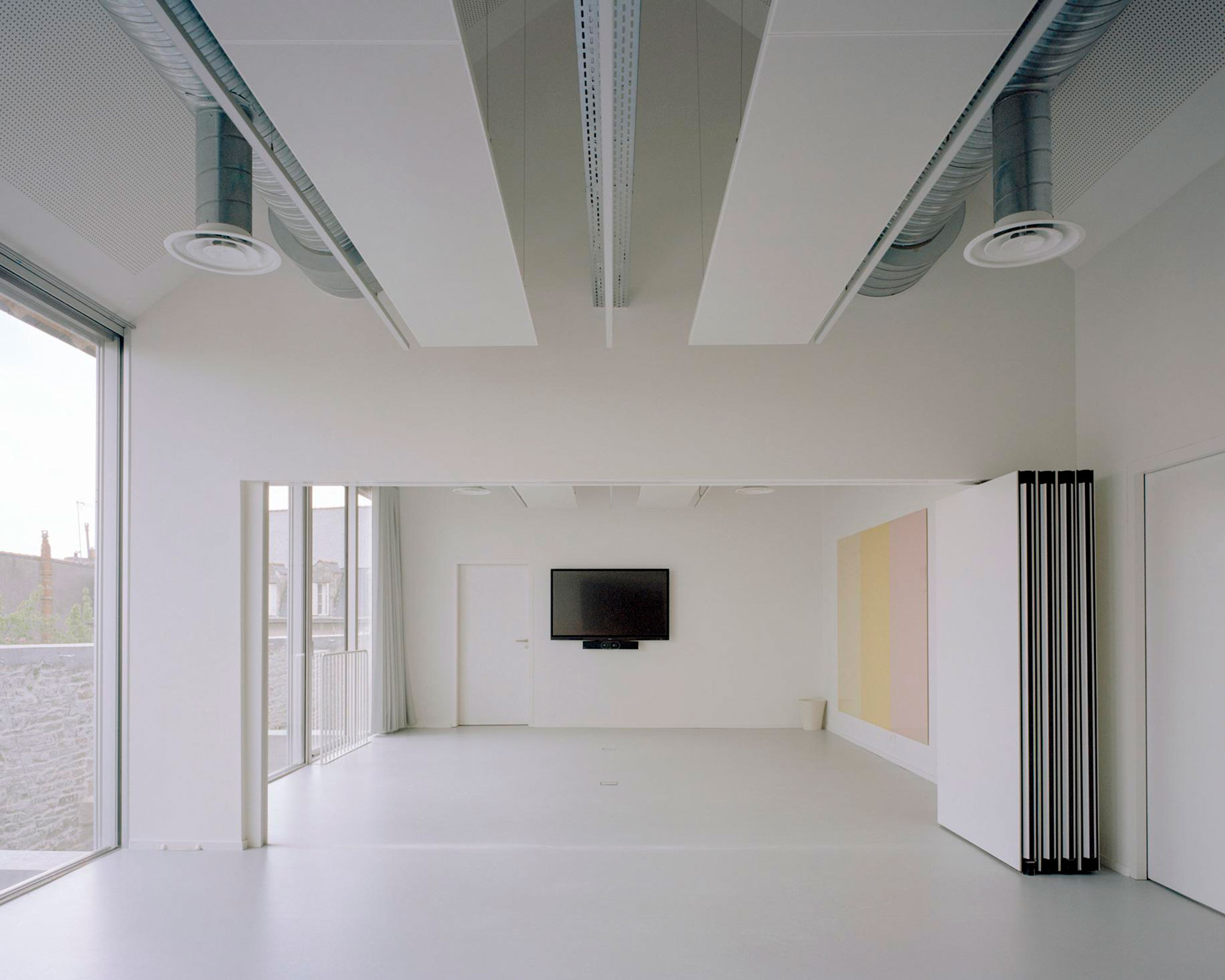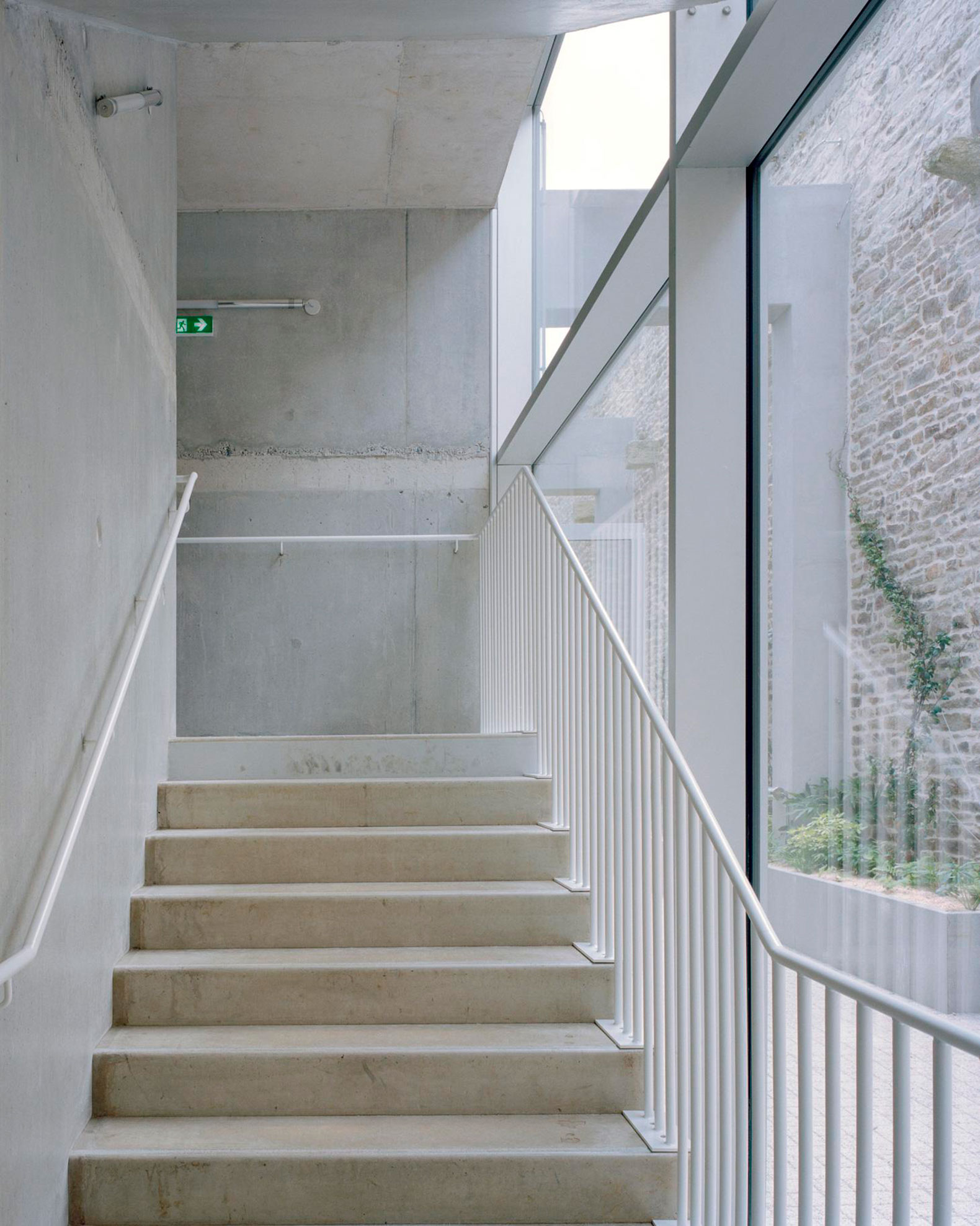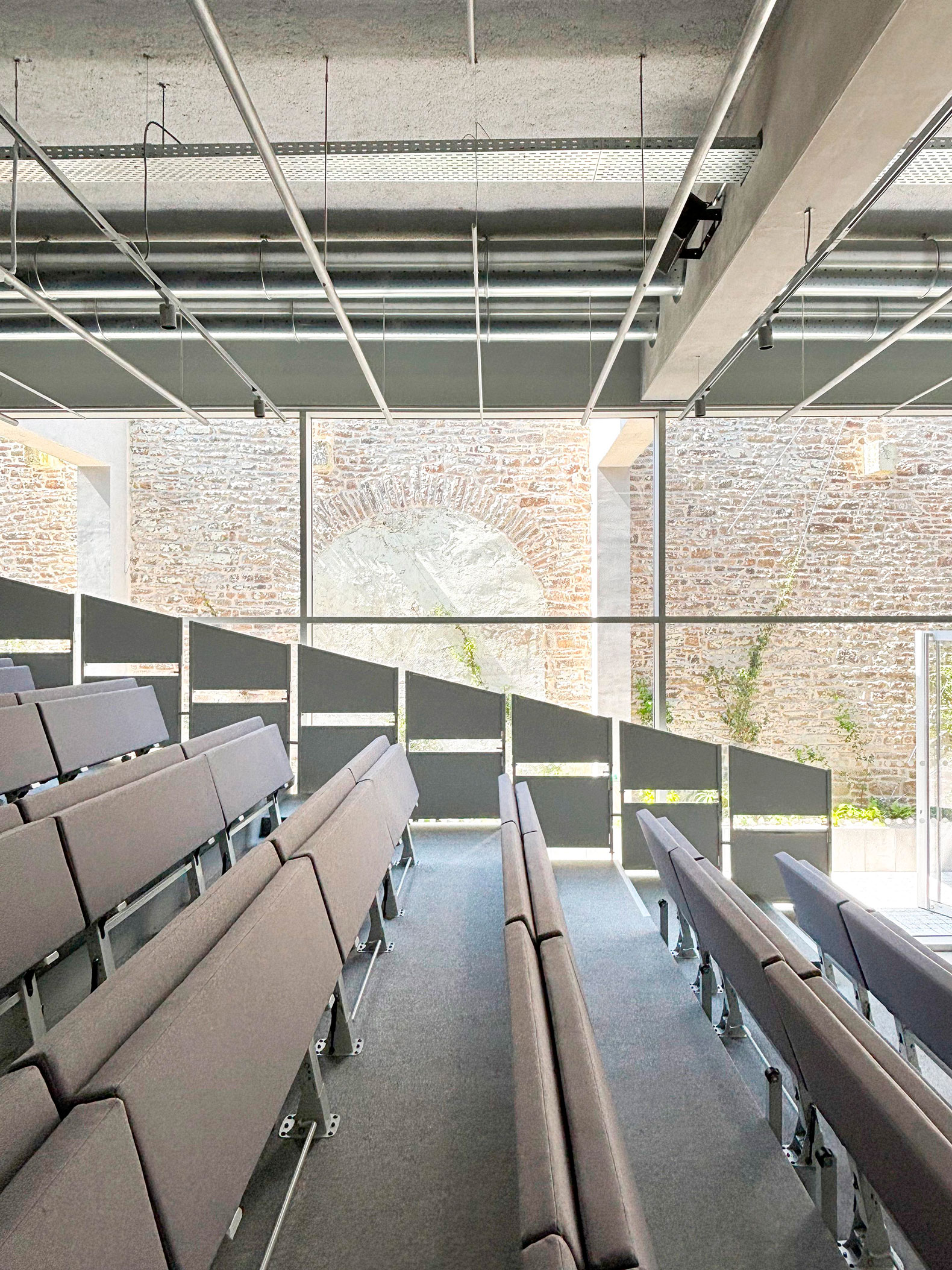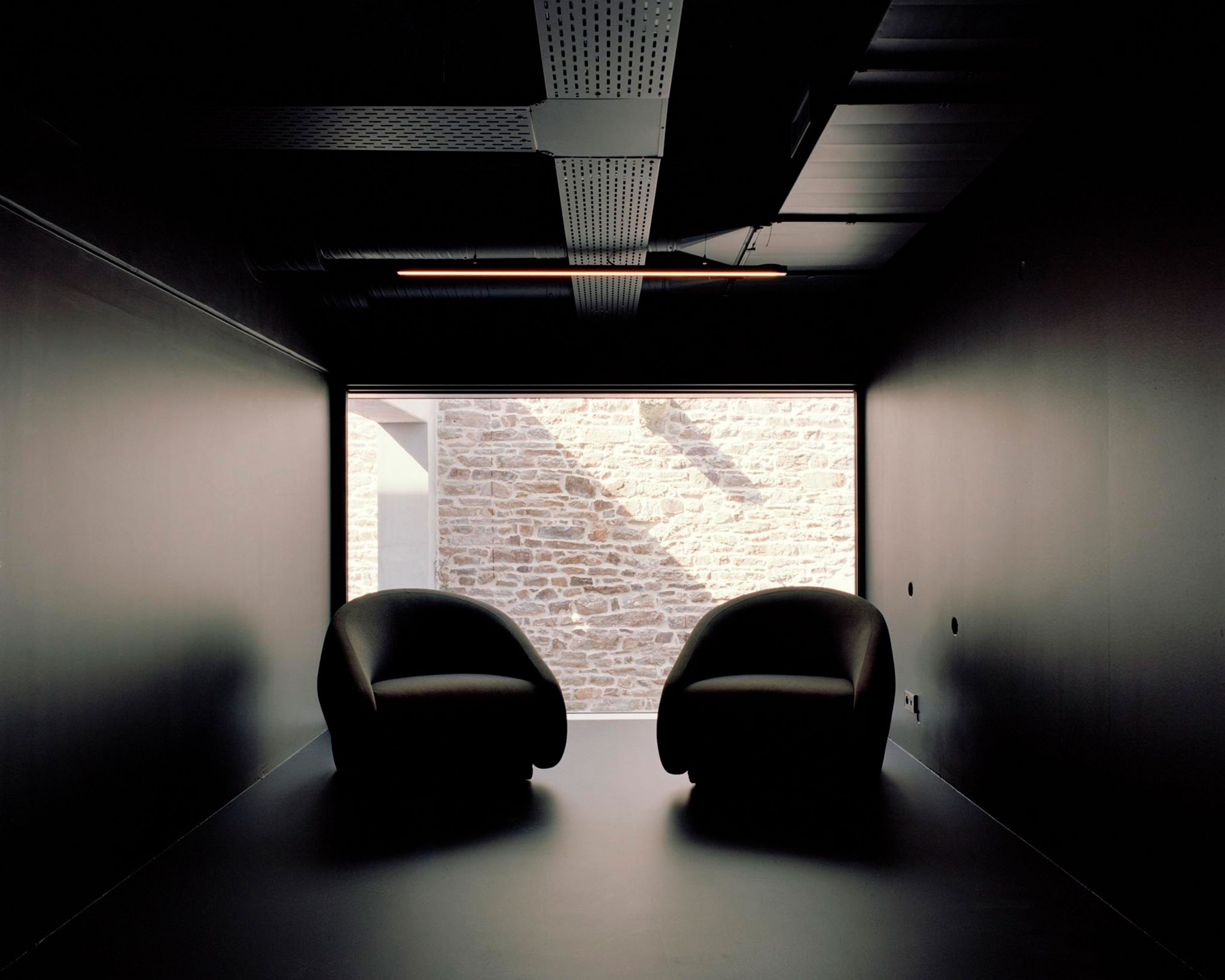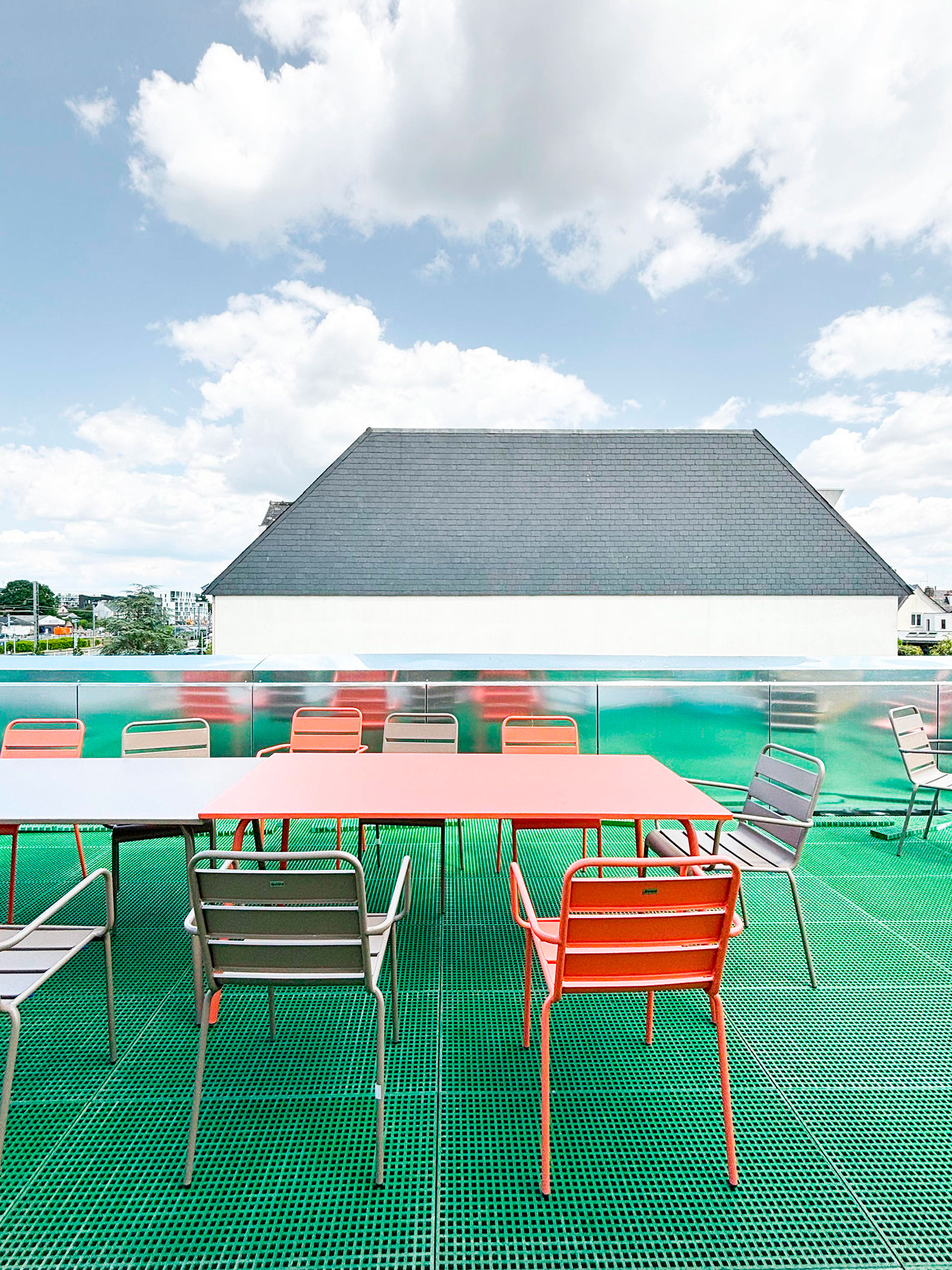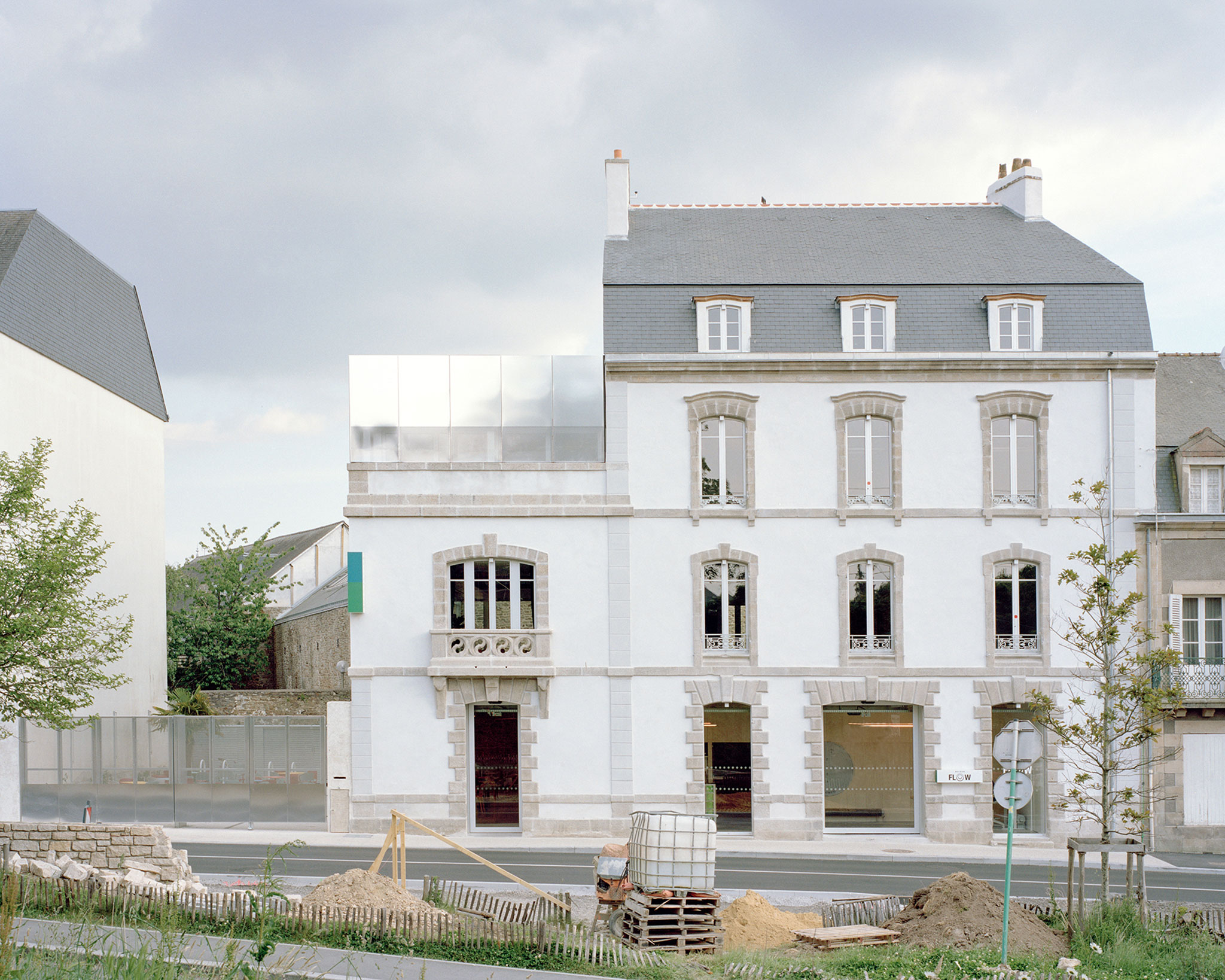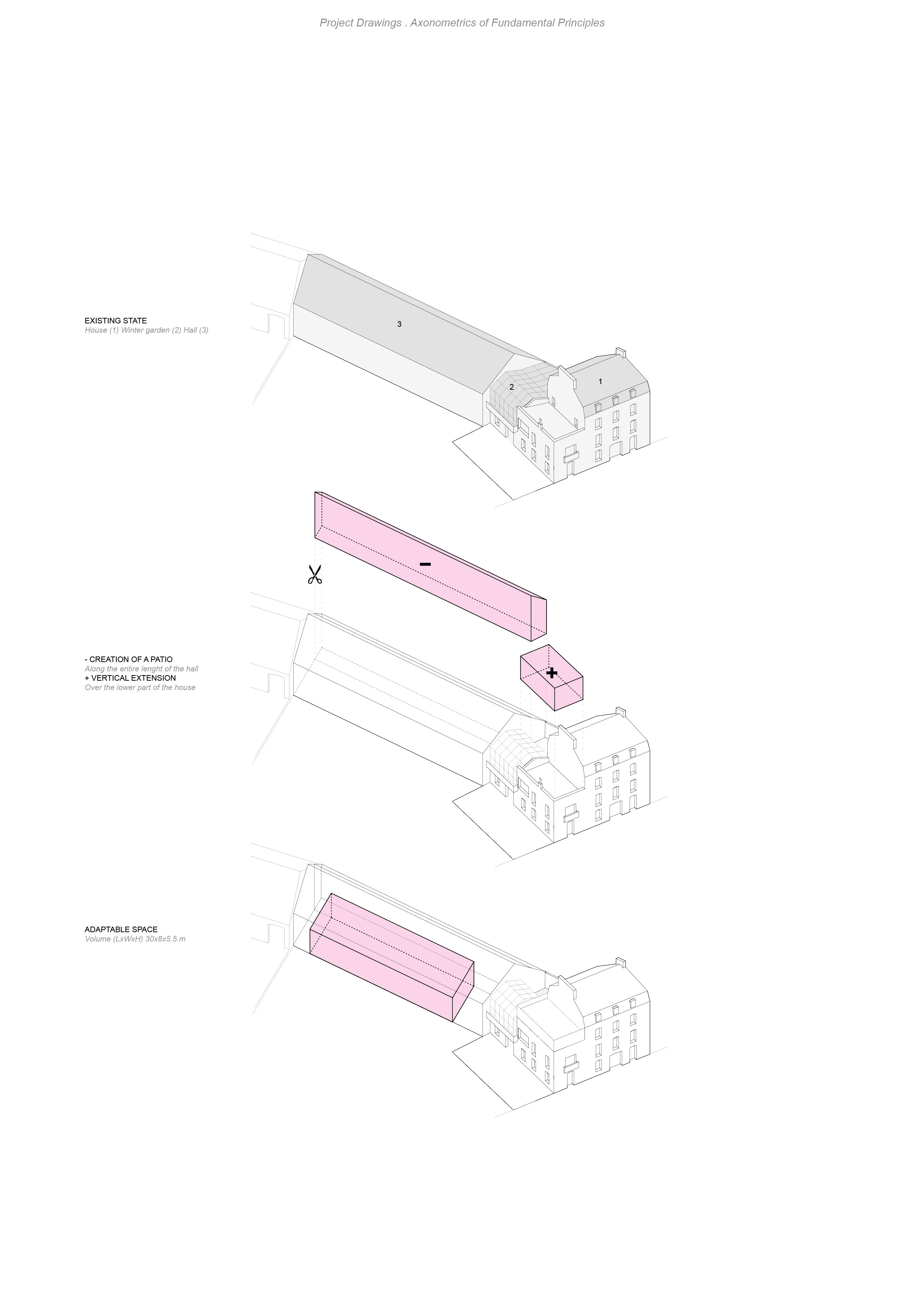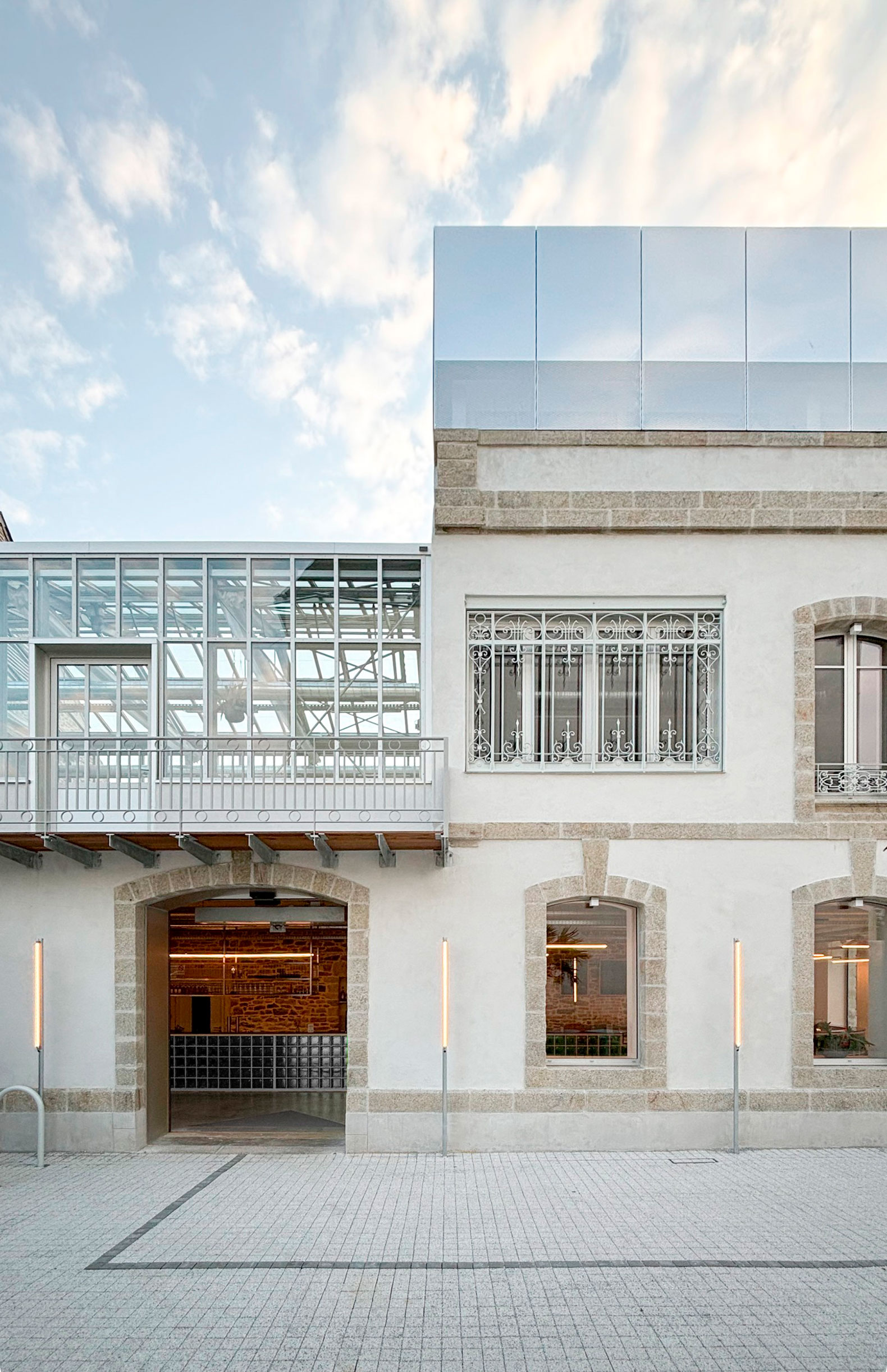
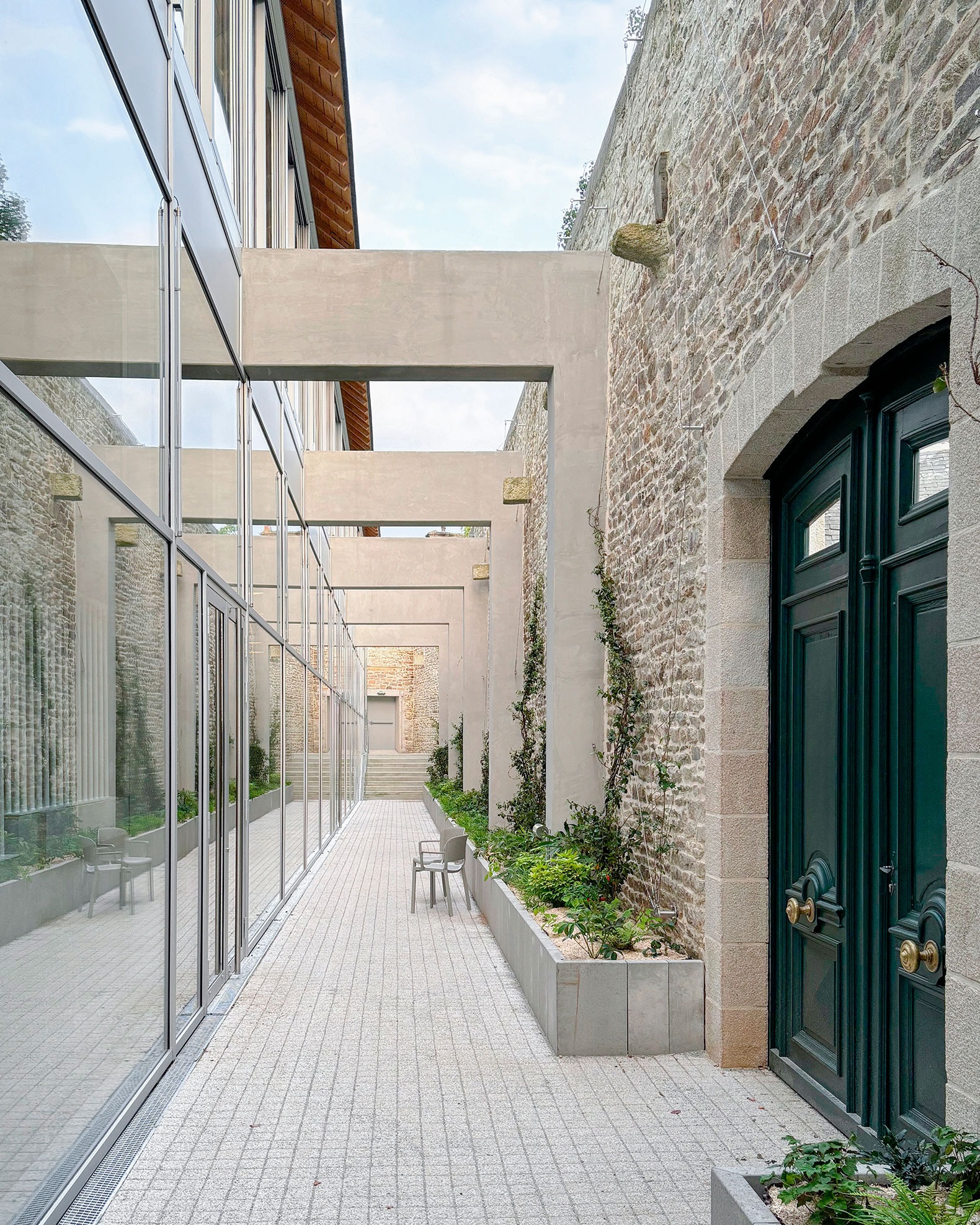
The rehabilitation carried out by Office Zola architectes is conceived as a responsible initiative that prioritizes conservation over replacement. In this sense, a fundamental aspect of the project was the profound transformation of the hall. To create new spaces that would expand the building's occupancy capacity, unstable sections of the roof were removed and structures deteriorated by time were reinforced. At the center of the building, the addition of a landscaped courtyard ensures the even entry of natural light into the heart of the project.
Through honest materials and hybrid structural solutions, the project prioritizes ease of maintenance and long-term durability. Instead of completely replacing the existing structure, the project reinterprets and enhances the virtues of the original building. In this context, the reduction of superfluous finishes and the strategic reuse of heritage elements enable a sustainable and economically responsible architectural narrative.
The project is one of the 40 selected for the 2026 EUmies/Mies van der Rohe Awards.
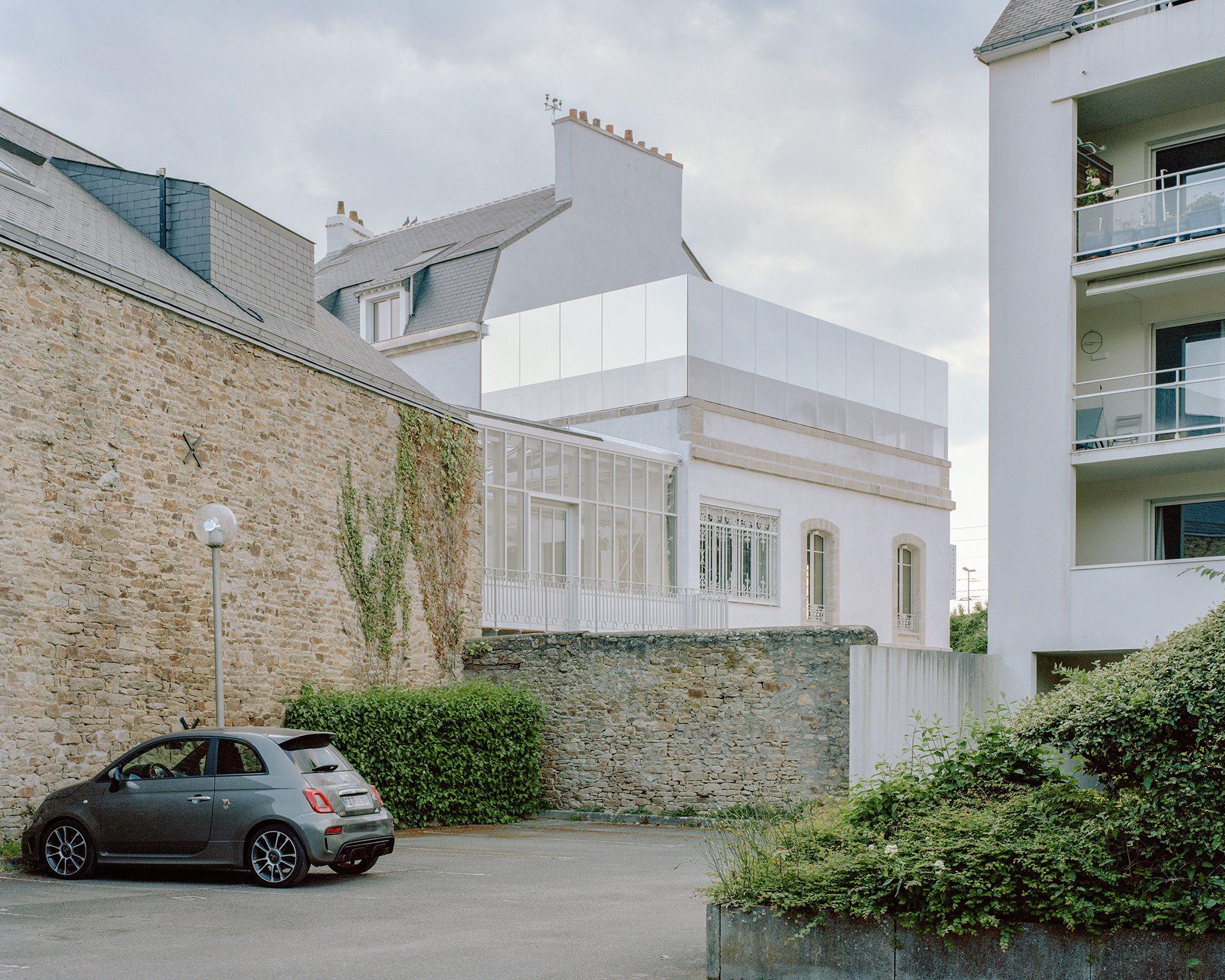
"Third Place Flow" by Office Zola architectes. Photograph by Maxime Delvaux.
Project description by Office Zola architectes
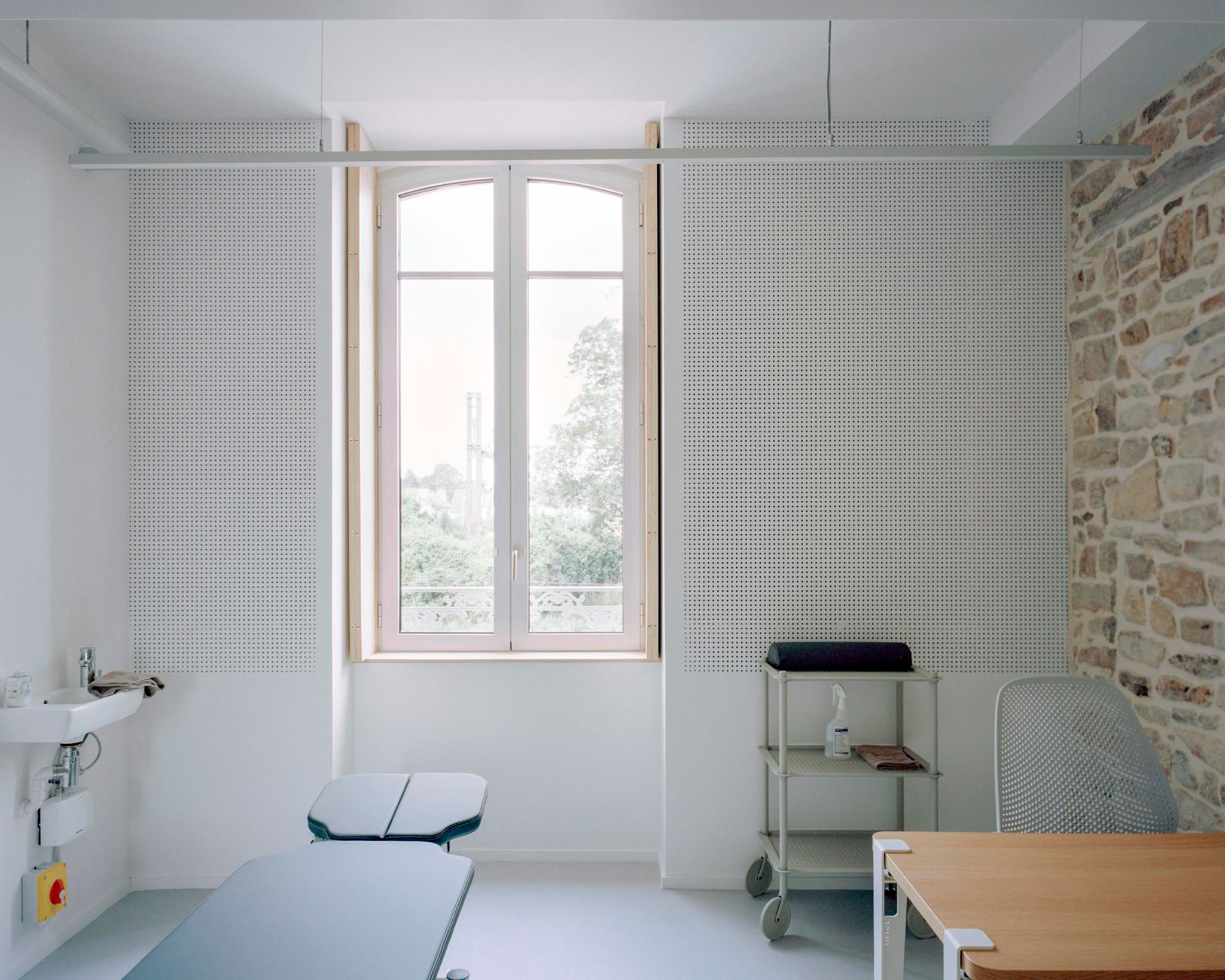
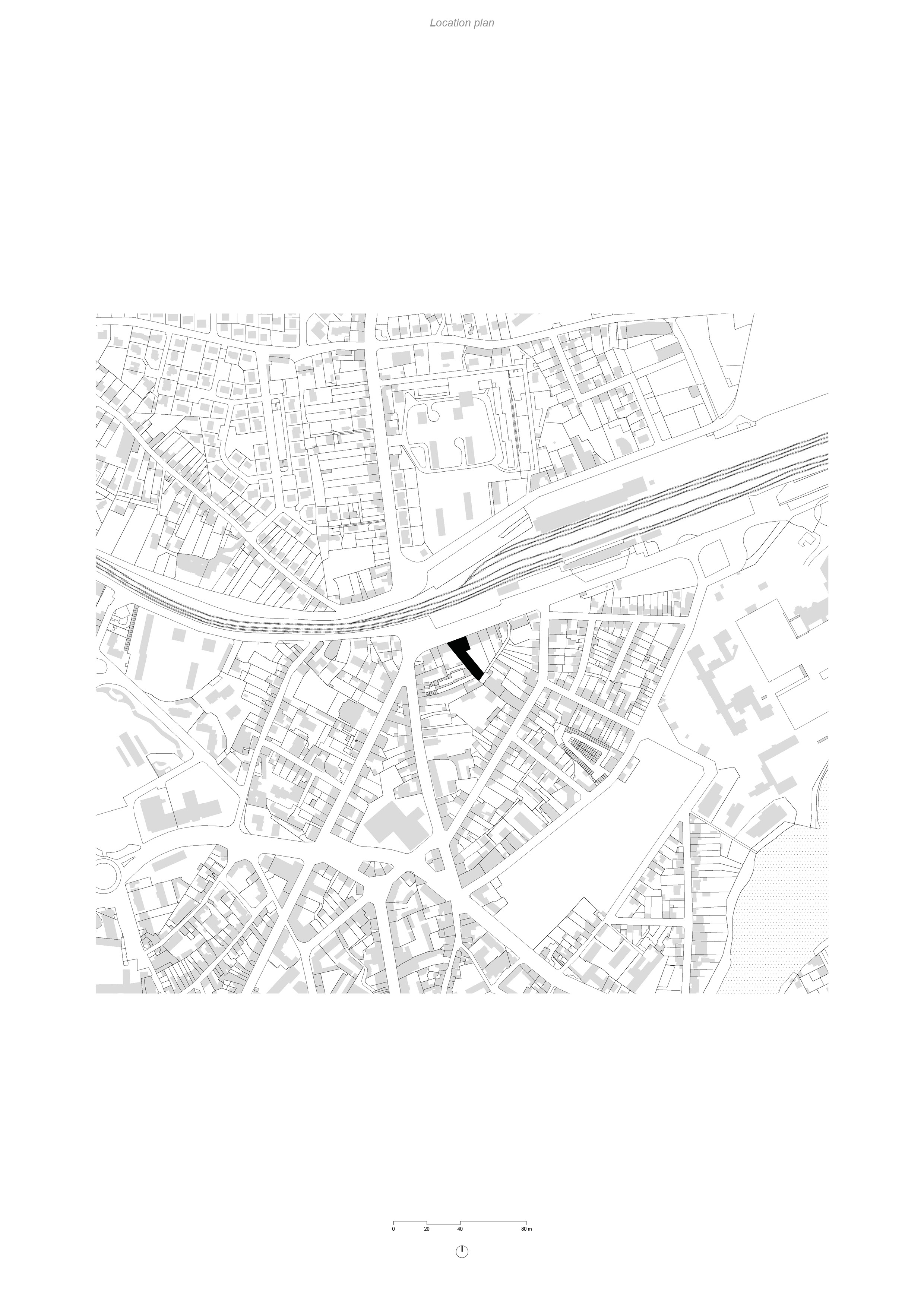
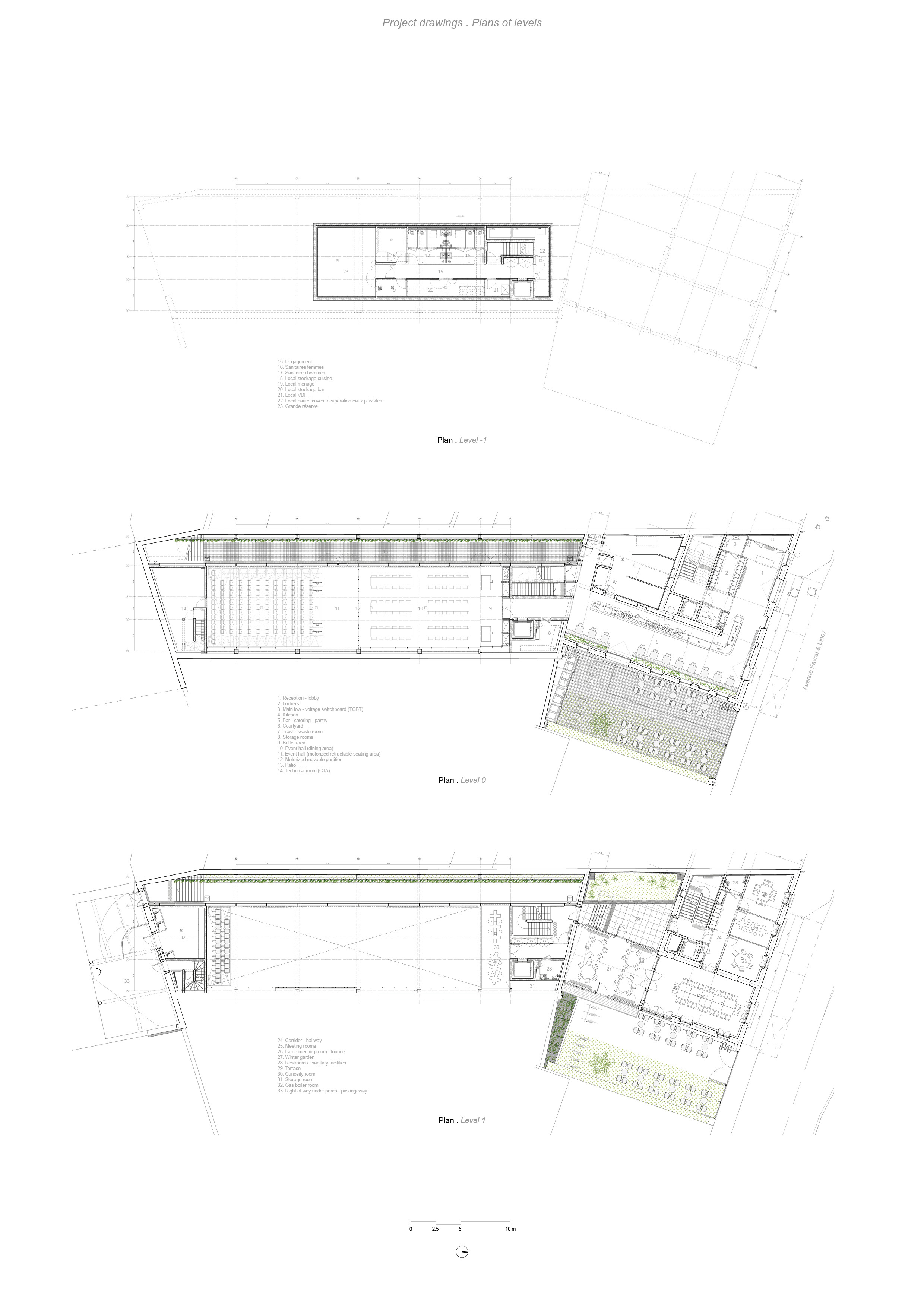
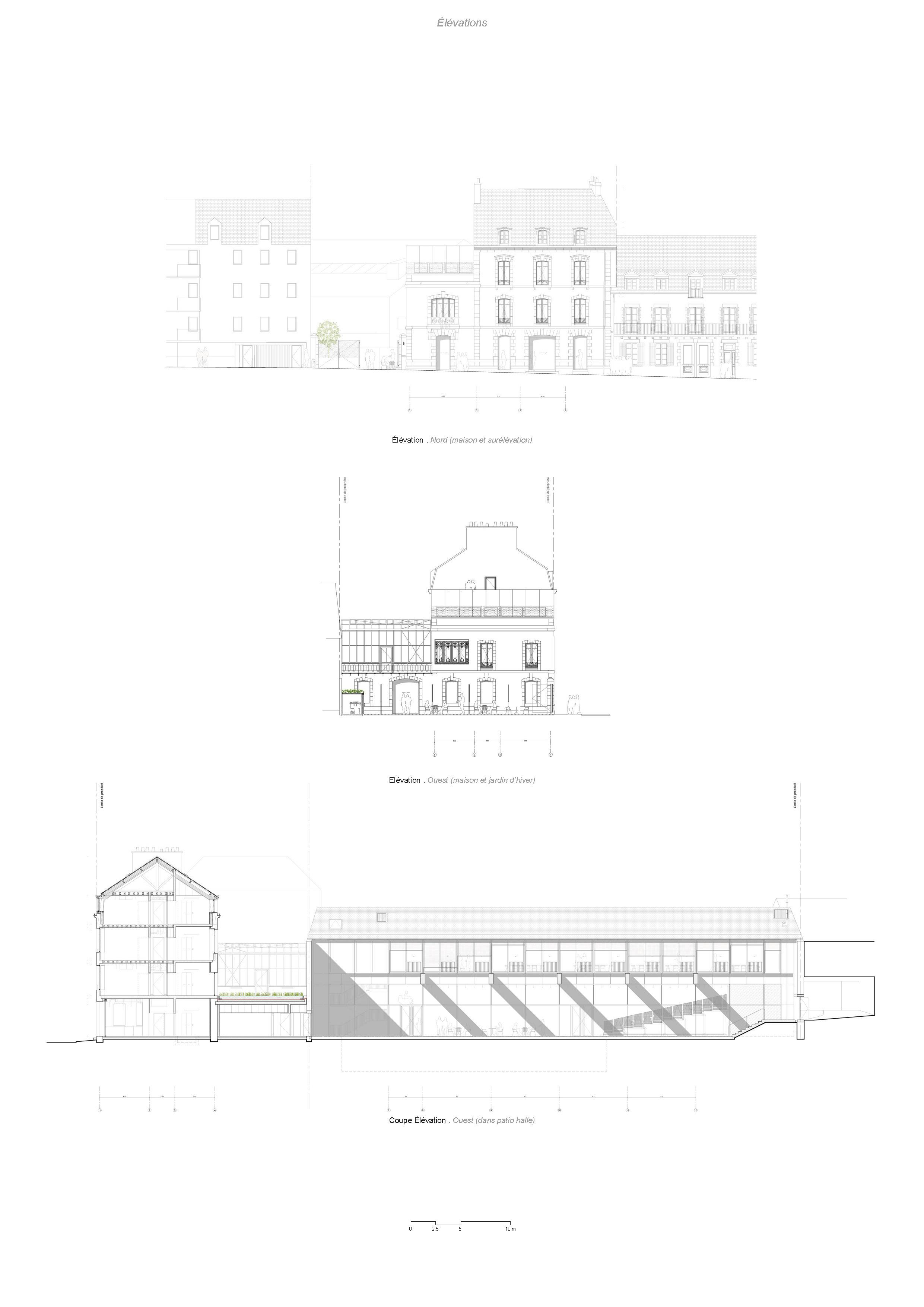
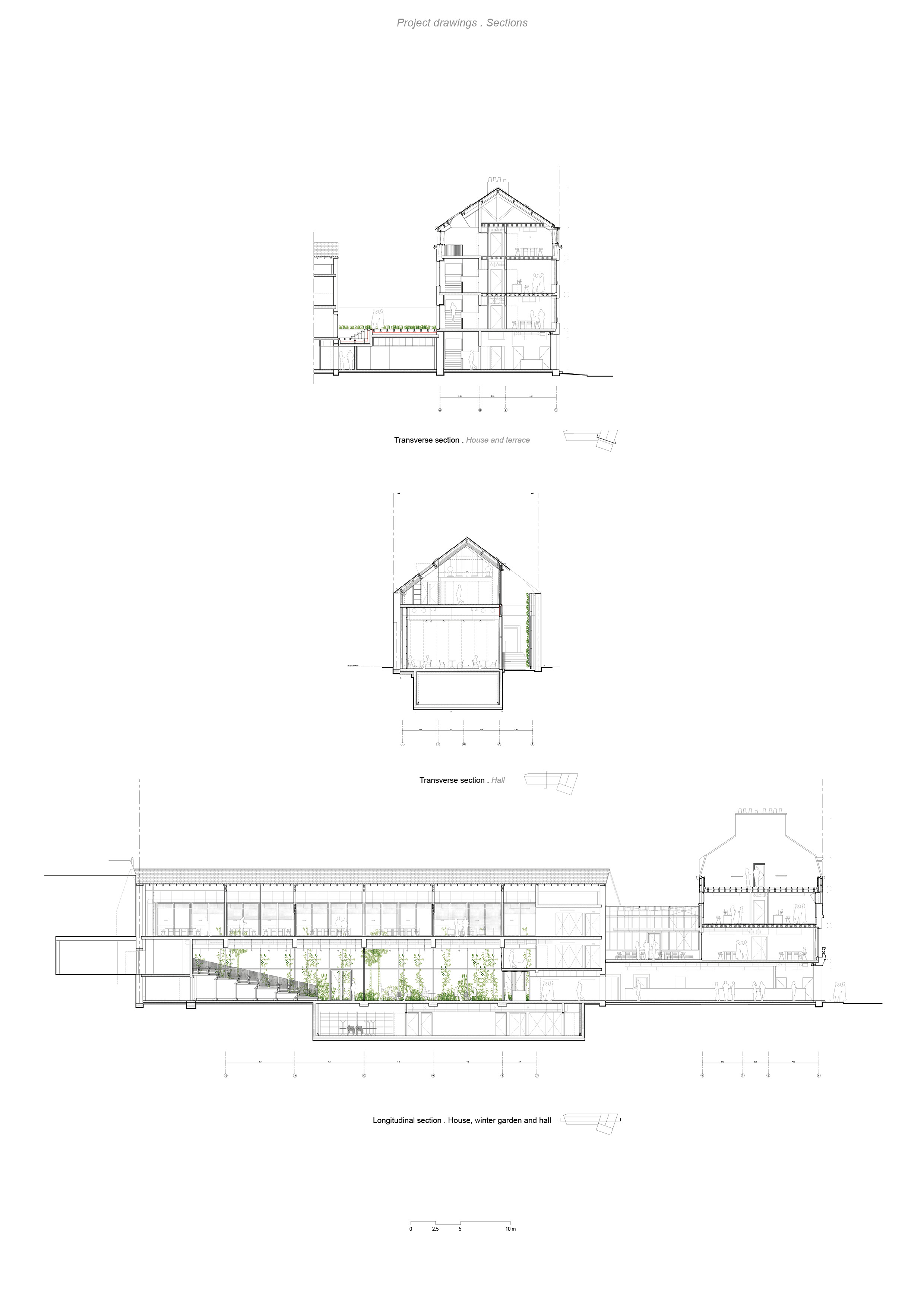
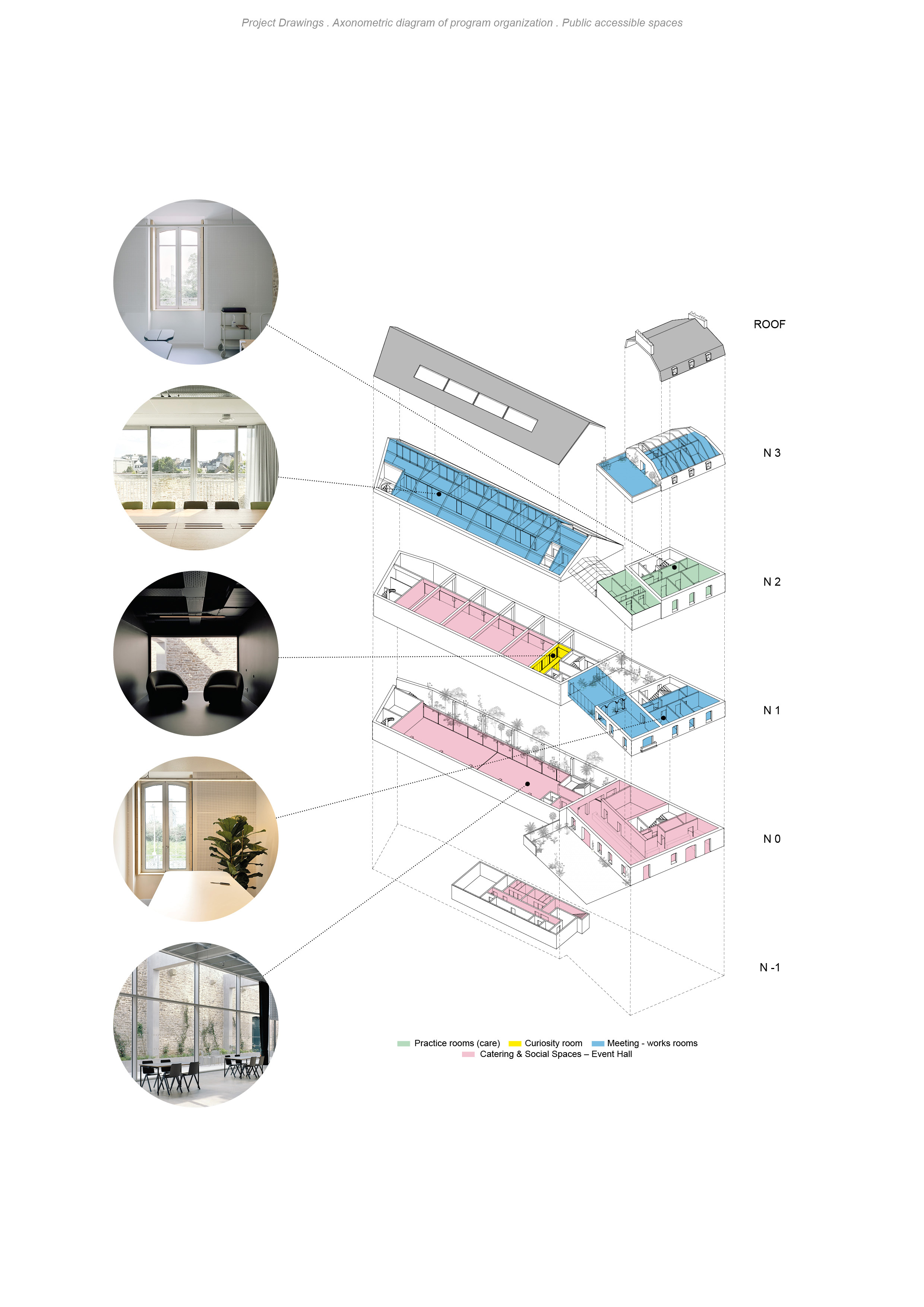
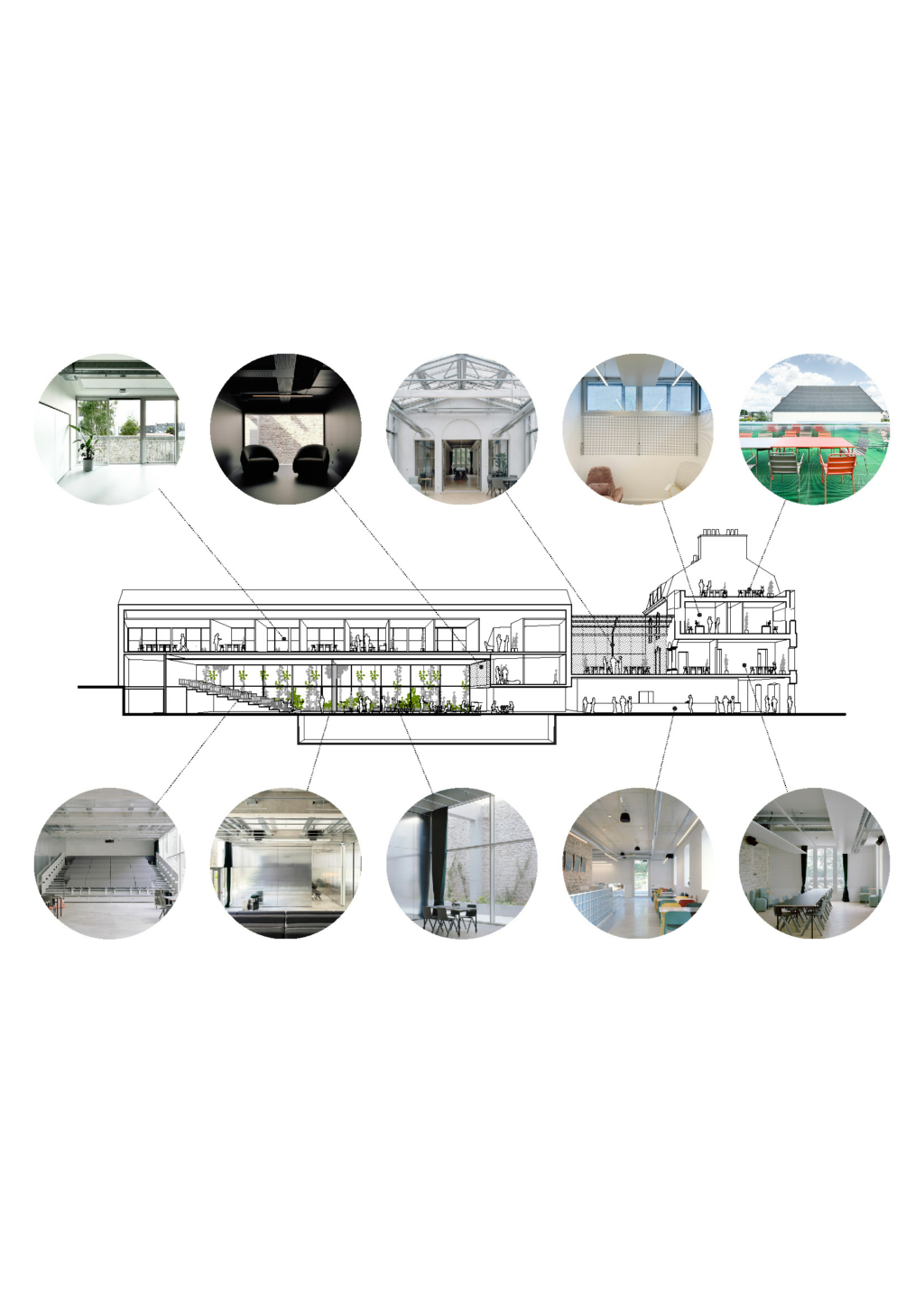
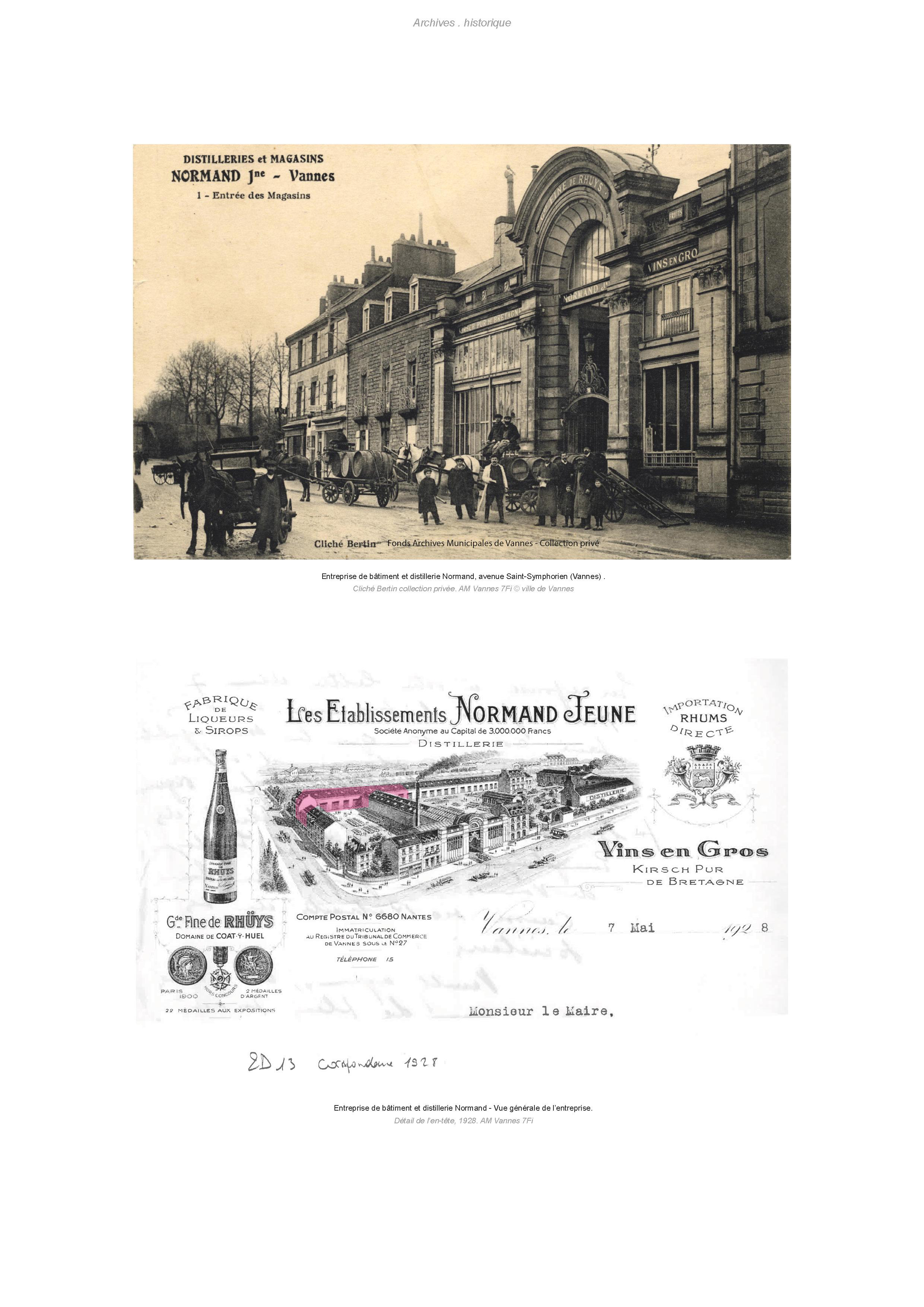
Facing Vannes train station, the project is part of the rehabilitation of a 19th-century industrial complex, composed of a house, a 44-meter-long hall, and a glass roof vestige of a winter garden. Long abandoned, the site was in a state of advanced decay. The intervention aimed to reveal the hidden strength of this heritage by opening it up to new uses: wellness, work, culture, and dining, all within a versatile and multifaceted space.
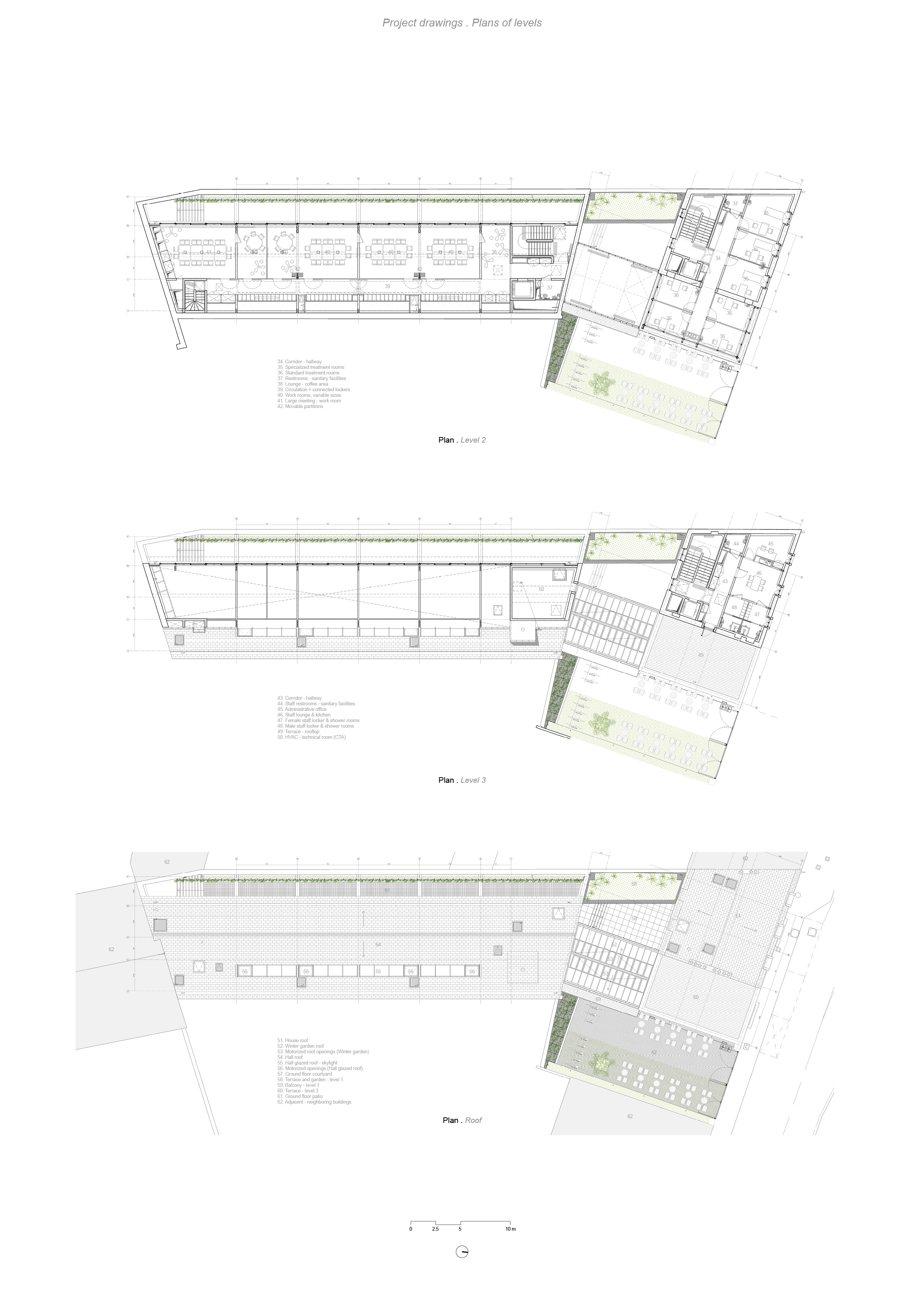
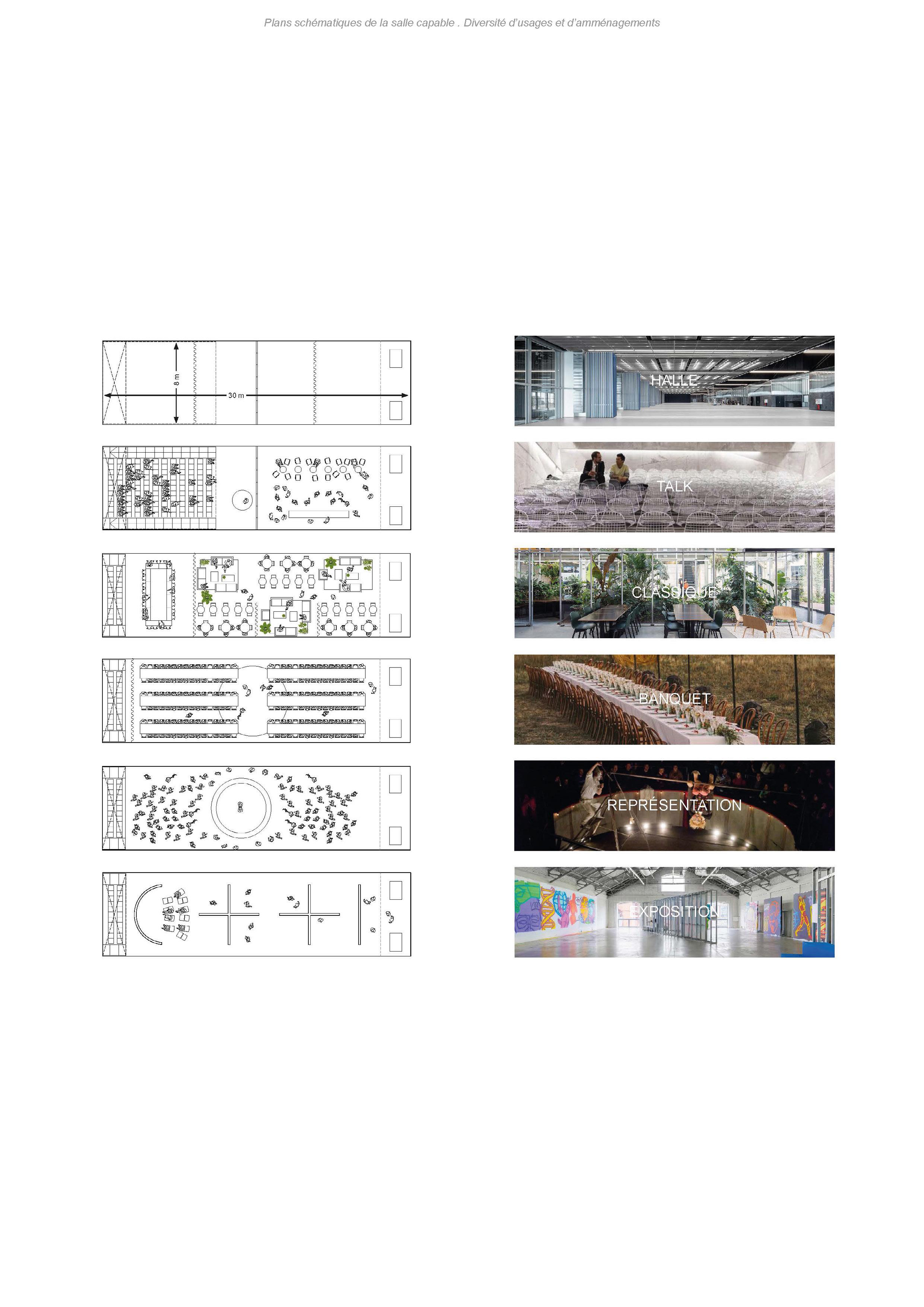
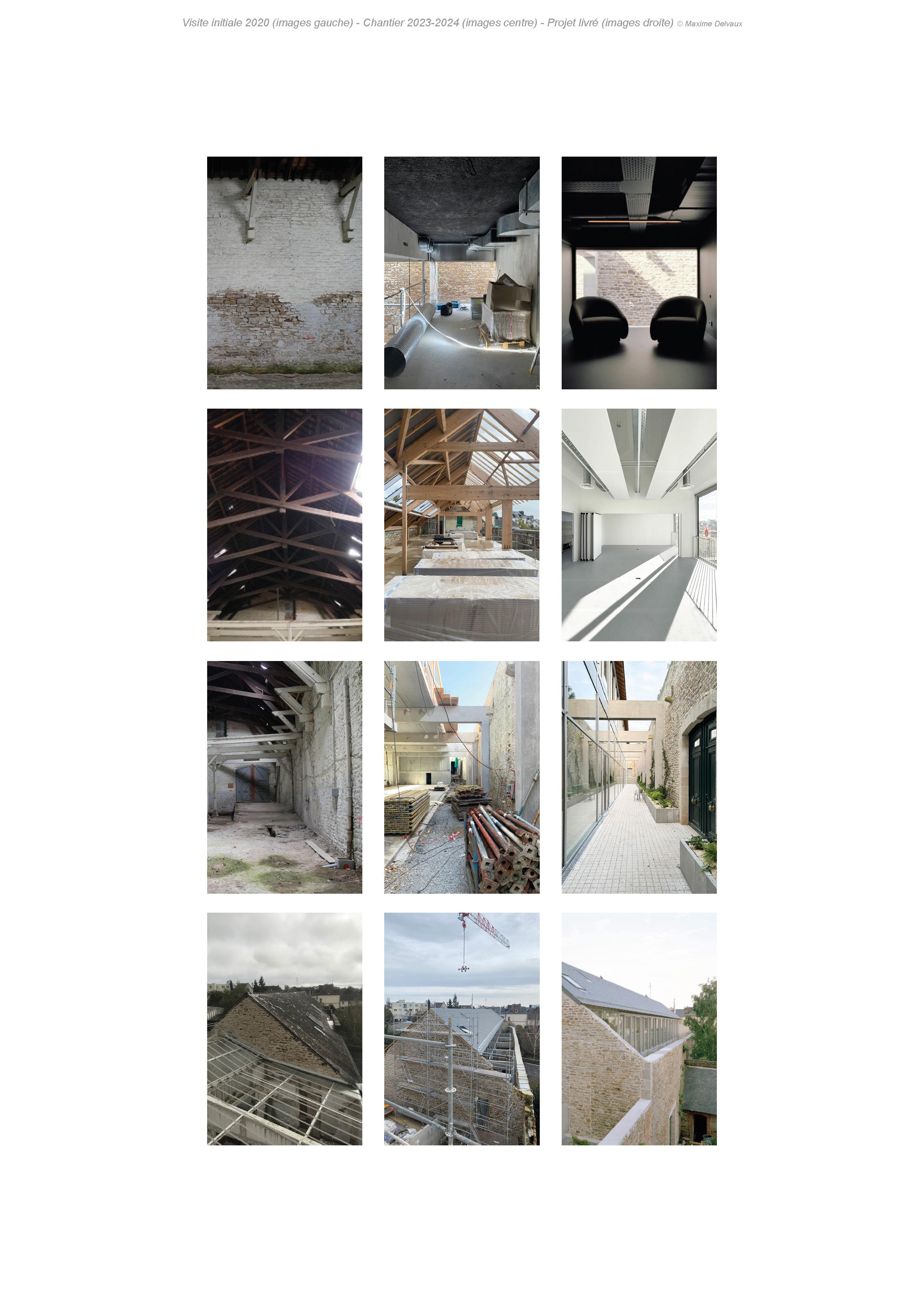
A central aspect of our approach was the thorough transformation of the hall, while addressing the deterioration of its structure, which had become unstable over time. We decided to remove an entire portion of the roof along its full length. This act of subtraction allowed the creation of new spaces, doubling the occupancy capacity, strengthening the structure, and introducing natural light into the heart of the building, without opening onto neighboring properties, which was prohibited. The subtraction enabled the creation of a planted patio and introduced a “capable space,” flexible and adaptable, which became the heart of the project.
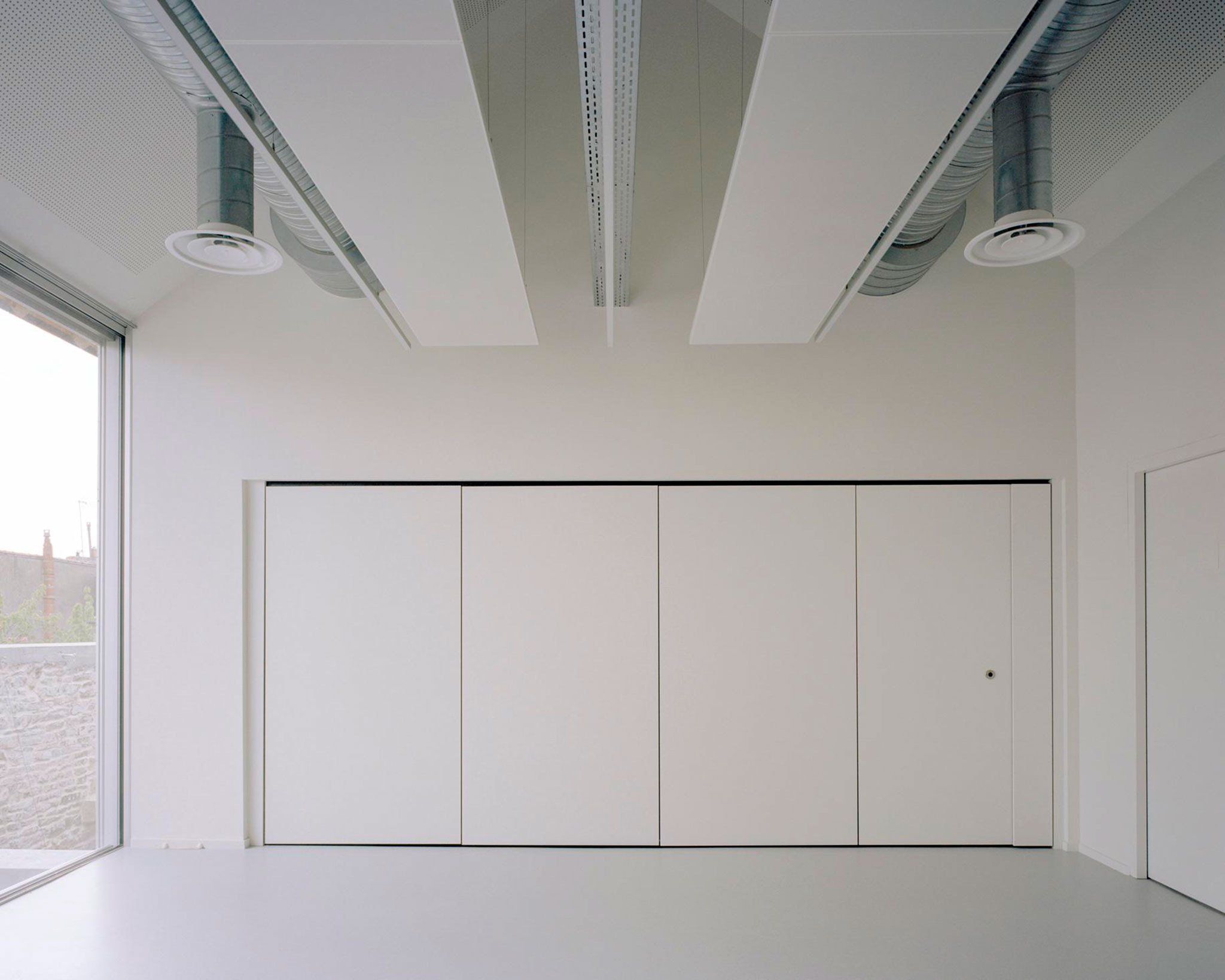
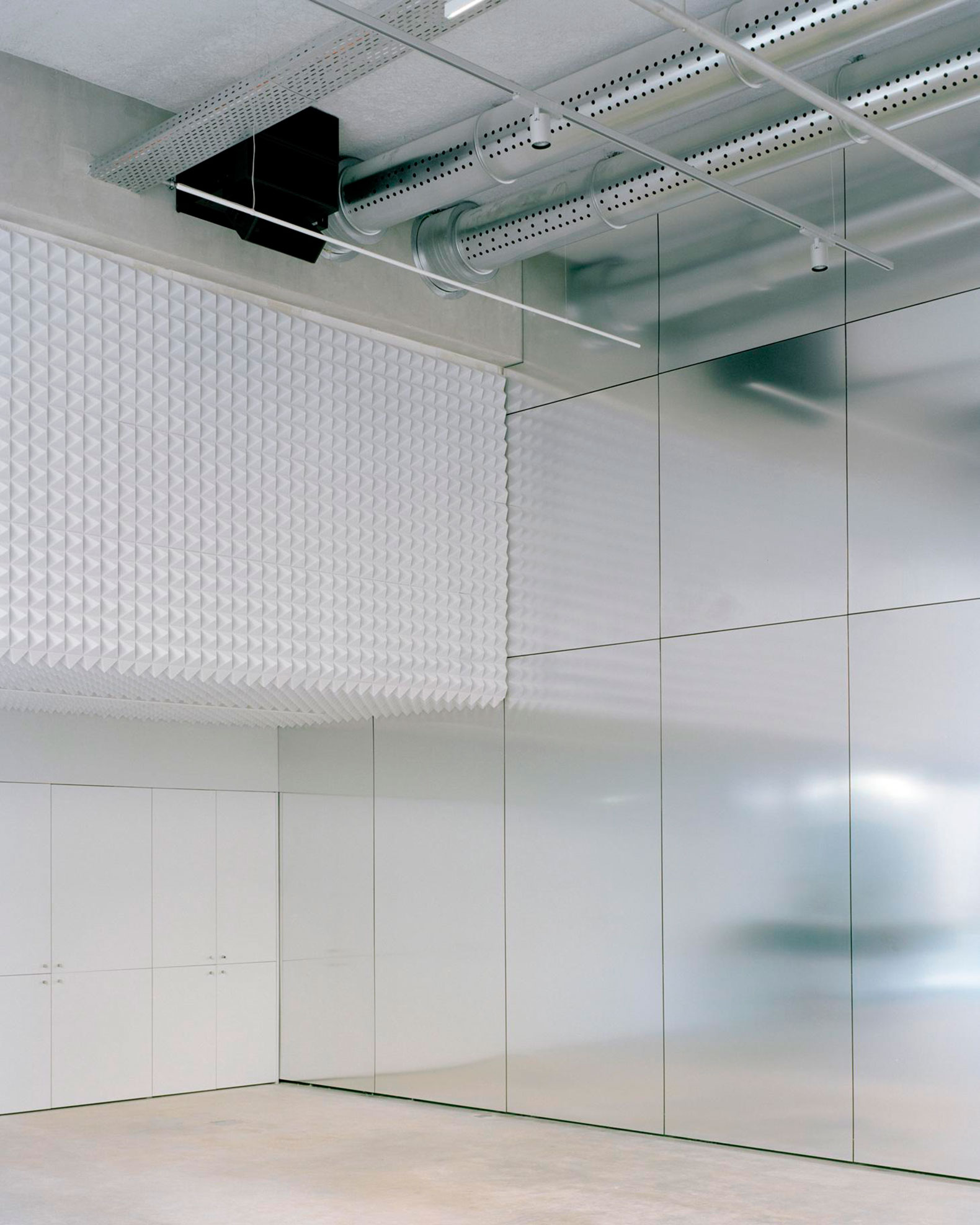
The architecture emphasizes compactness, modularity, and flexibility. The work floors under the trusses, the suspended Curieuse room, and the large event hall concretely illustrate this approach. The event hall is equipped with a retractable 140-seat bleacher and a motorized movable partition linked to the fire safety system, allowing the space to be reconfigured in minutes. These hidden engineering devices enhance programmatic adaptability and reversibility, generating both physical and visual modularity.
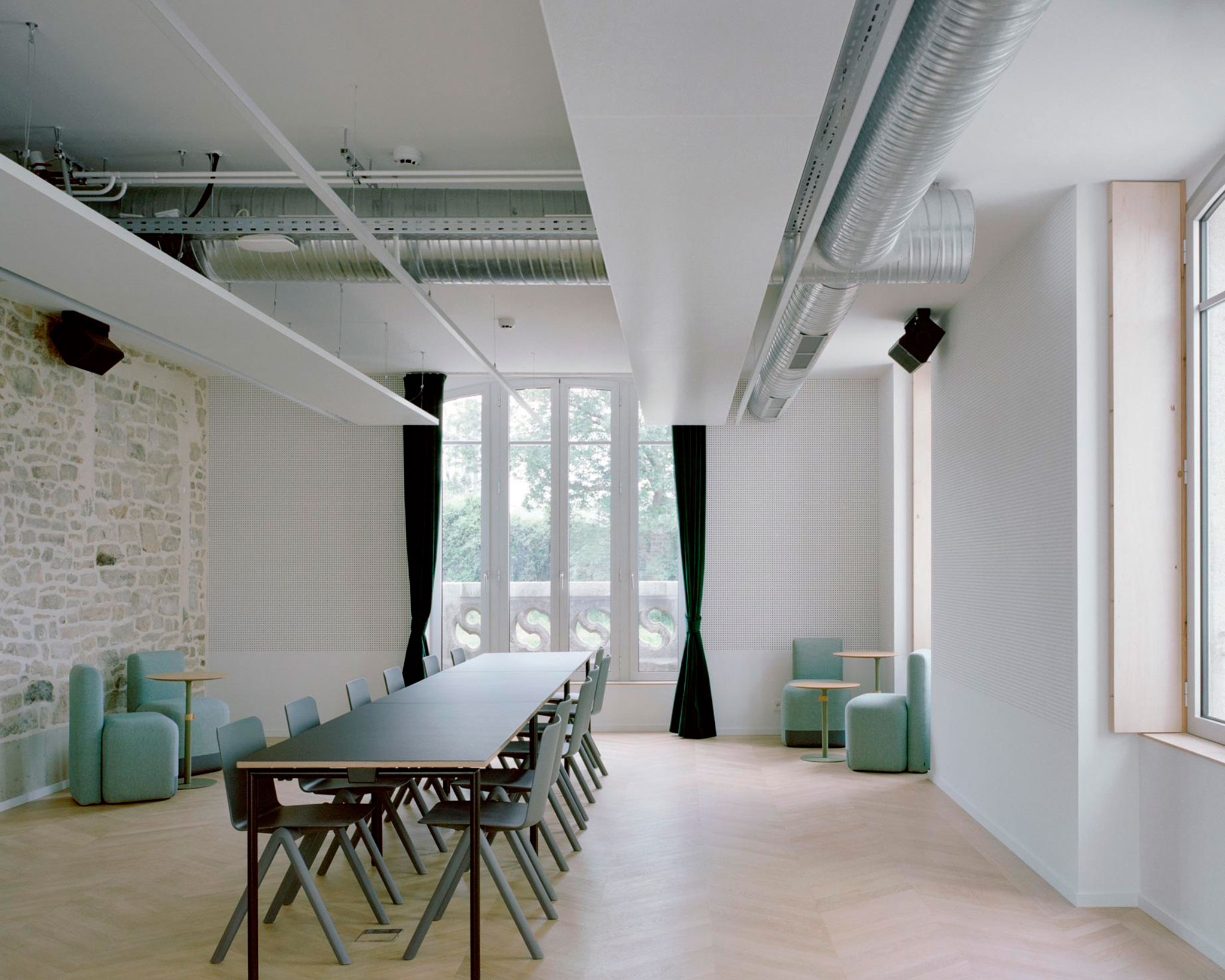
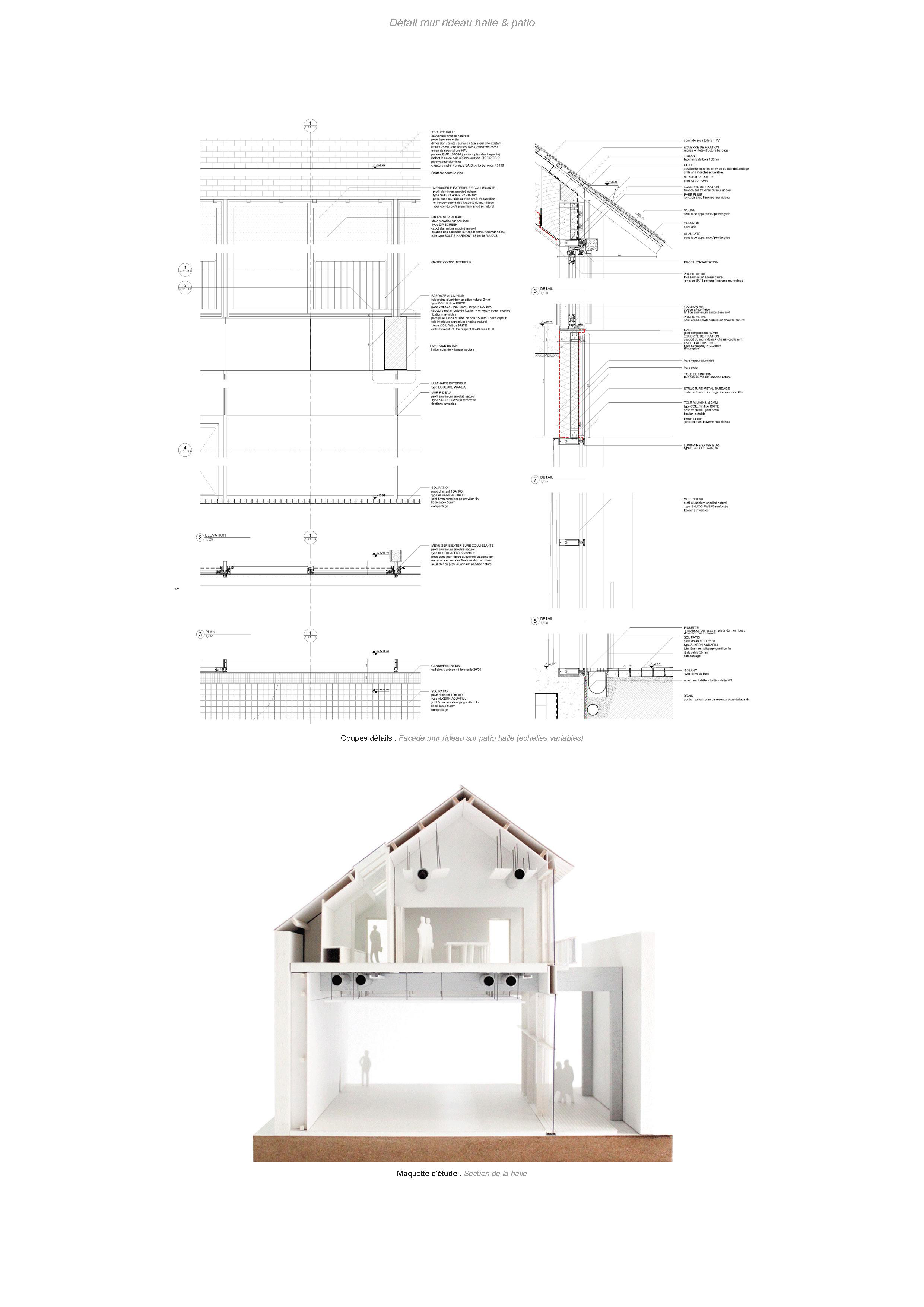
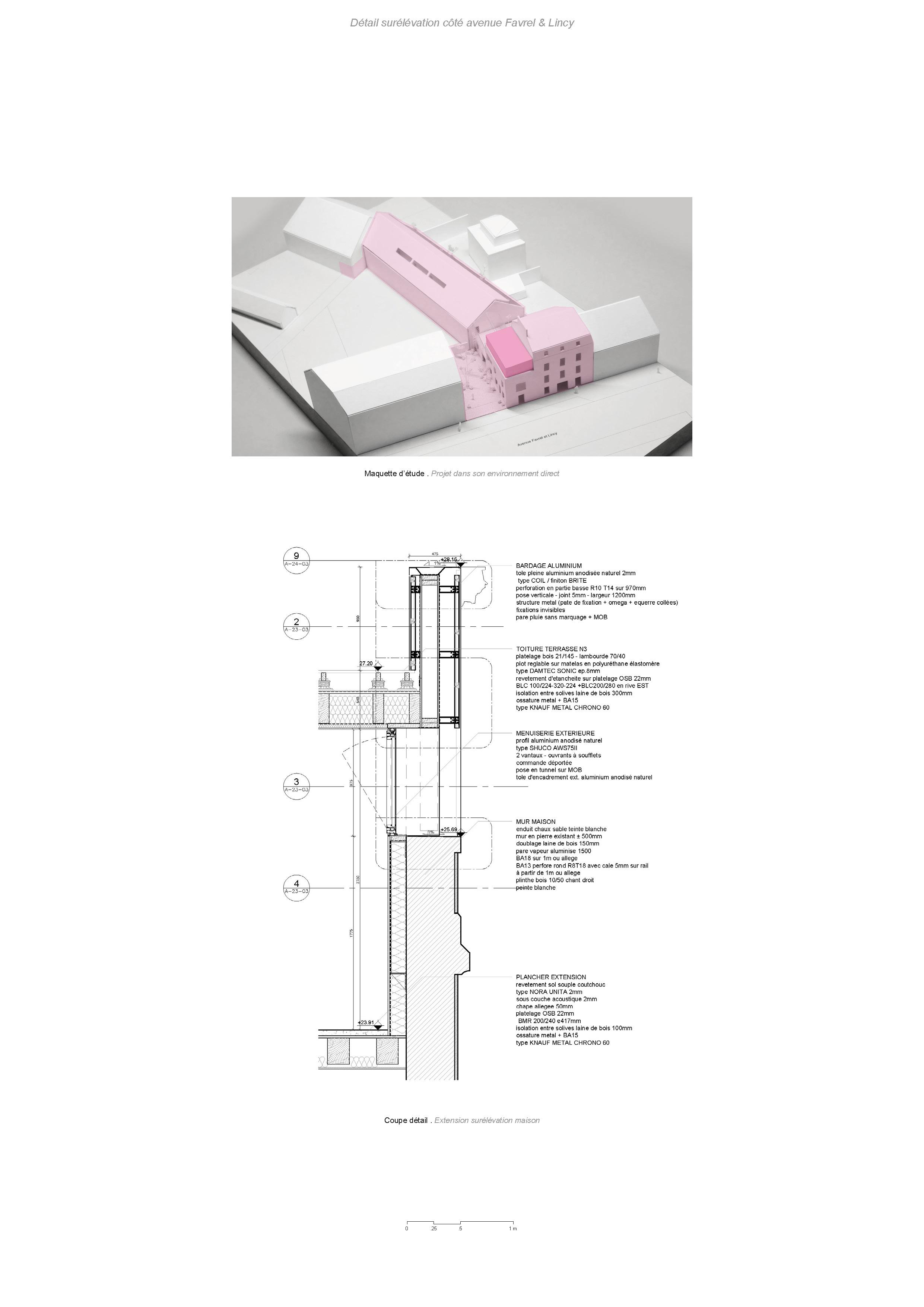
The construction approach balances conservation and innovation in a subtle continuity. The historic masonry was restored, stones from demolition were reused, floors and additional levels were built in timber, while a reinforced concrete portal frame stabilizes and frees the volumes. Structural technical choices were made empirically, selecting the most suitable solutions for each situation. This resulted in mixed solutions, with sections and installations tailored to the specific constraints of each space. Aluminum, lightweight and recyclable, was chosen for its reflective quality: externally, it blends into the environment, while internally, it amplifies natural light by capturing and reflecting its variations.
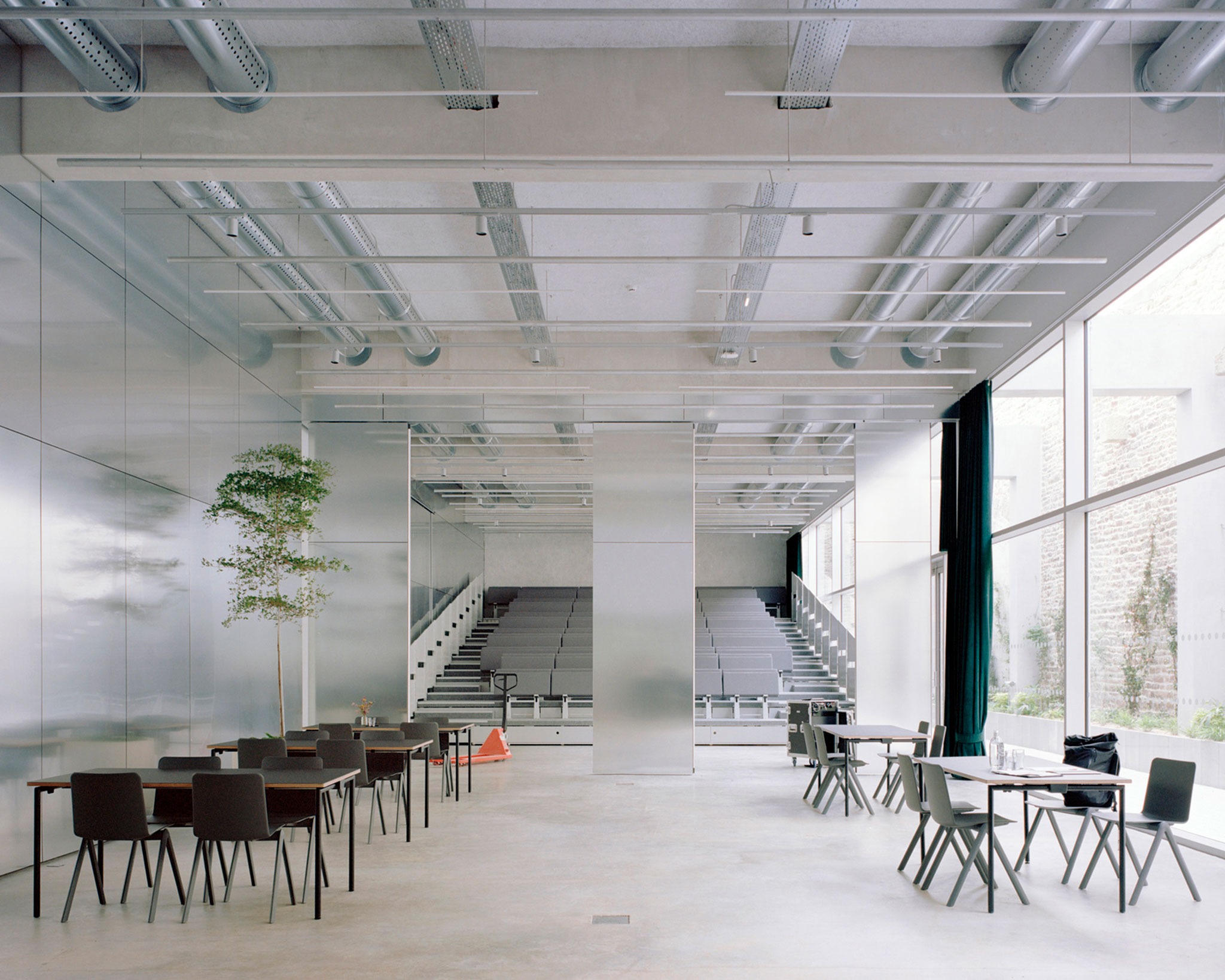
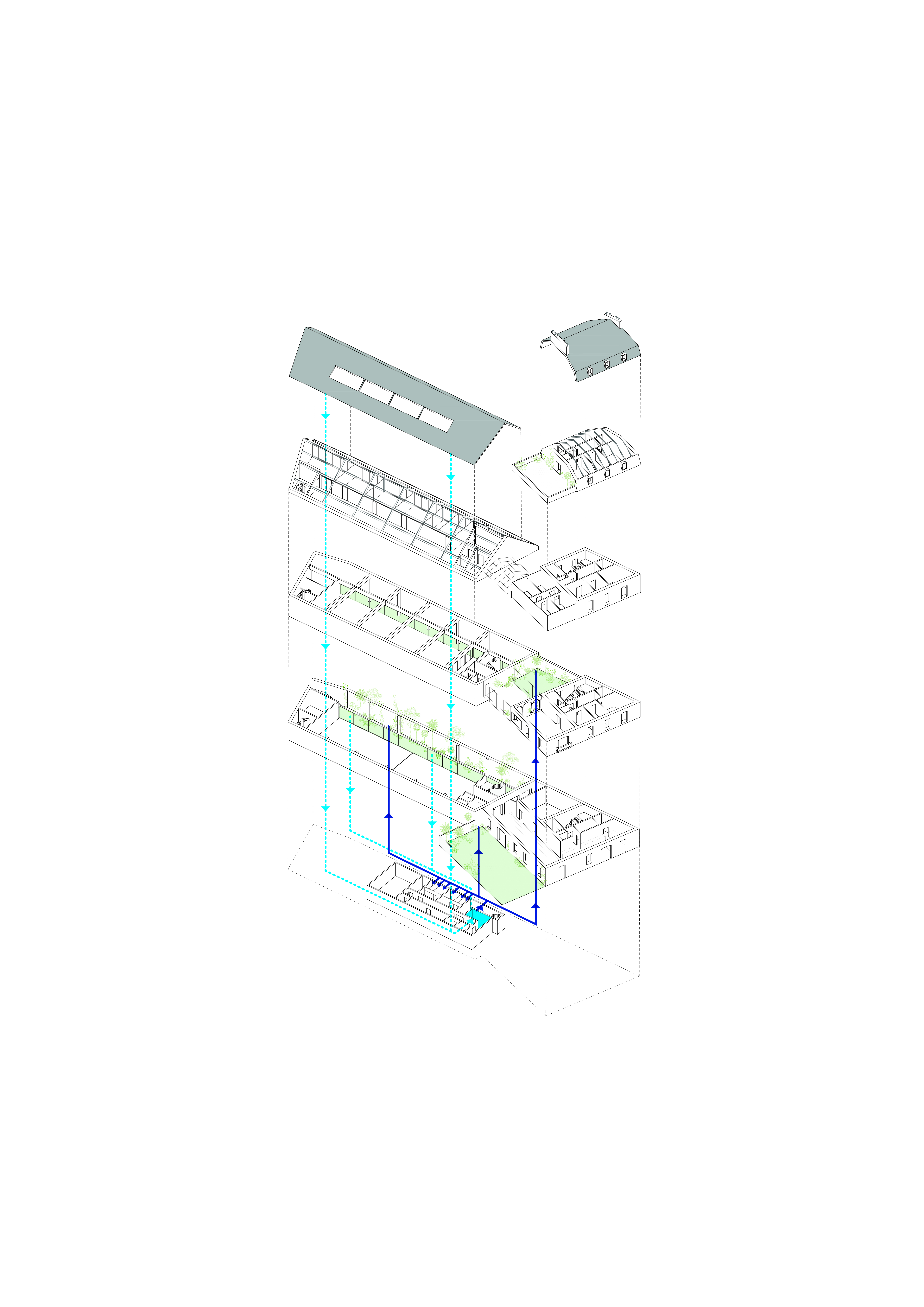
The project was realized without grandiose gestures, but through a succession of precise, coherent, and material-efficient interventions. This restraint in architectural expression ensures durability, letting the quality of spaces, light, and greenery speak for themselves. Choosing rehabilitation over reconstruction reduces the carbon footprint. Bio-based insulation, breathable lime plasters, exposed technical networks, minimal finishes, and the reuse of heritage elements reflect a strategy of constructive sobriety. Passive devices, cross-ventilation, solar protections, light color palettes, rainwater infiltration and recovery complete a pragmatic, low-energy approach.
This project embodies a “gentle radicality”: transforming by subtraction, innovating through simple but efficient solutions, and embracing a discreet, sober, and enduring architecture that reveals rather than imposes.