
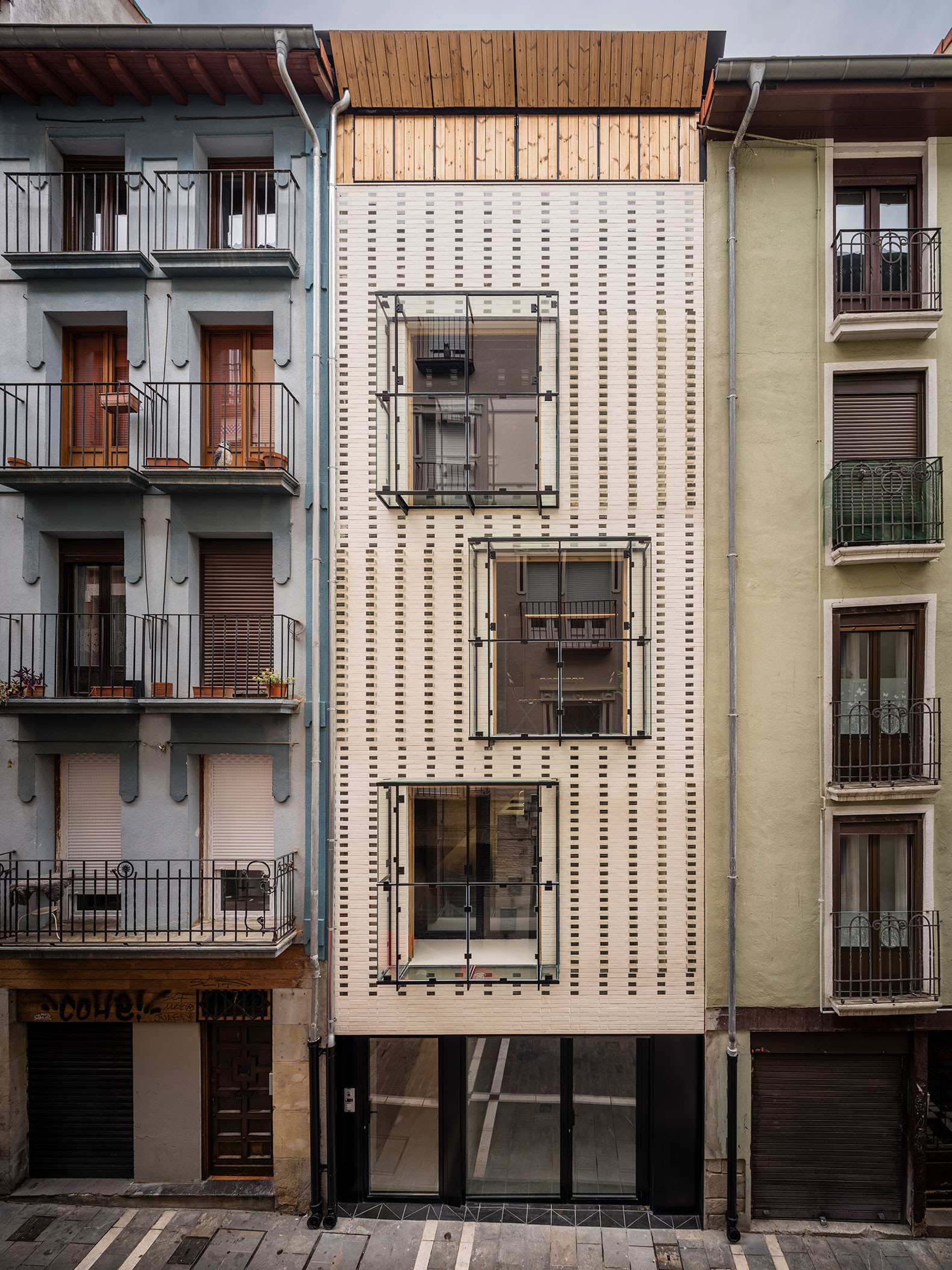
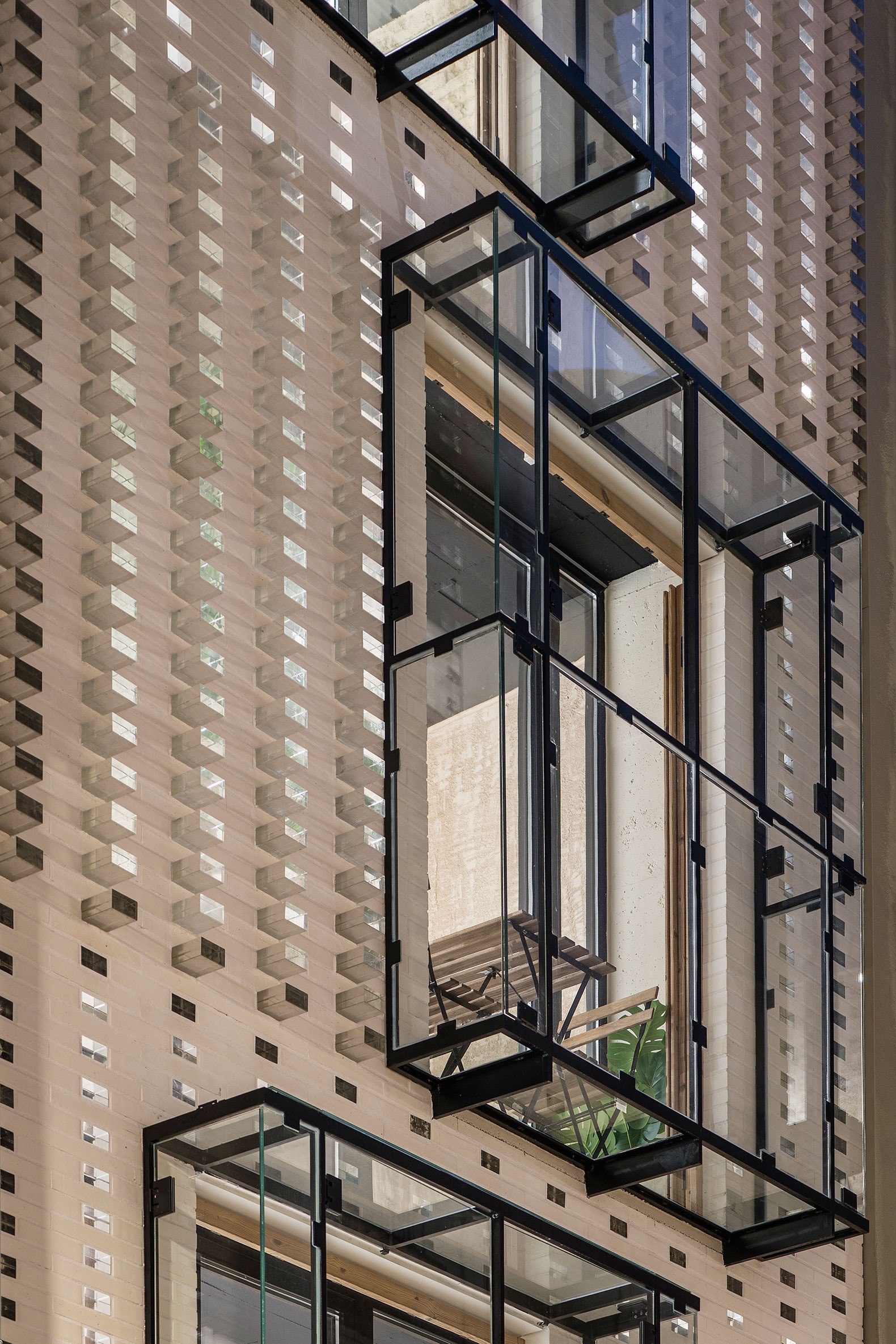
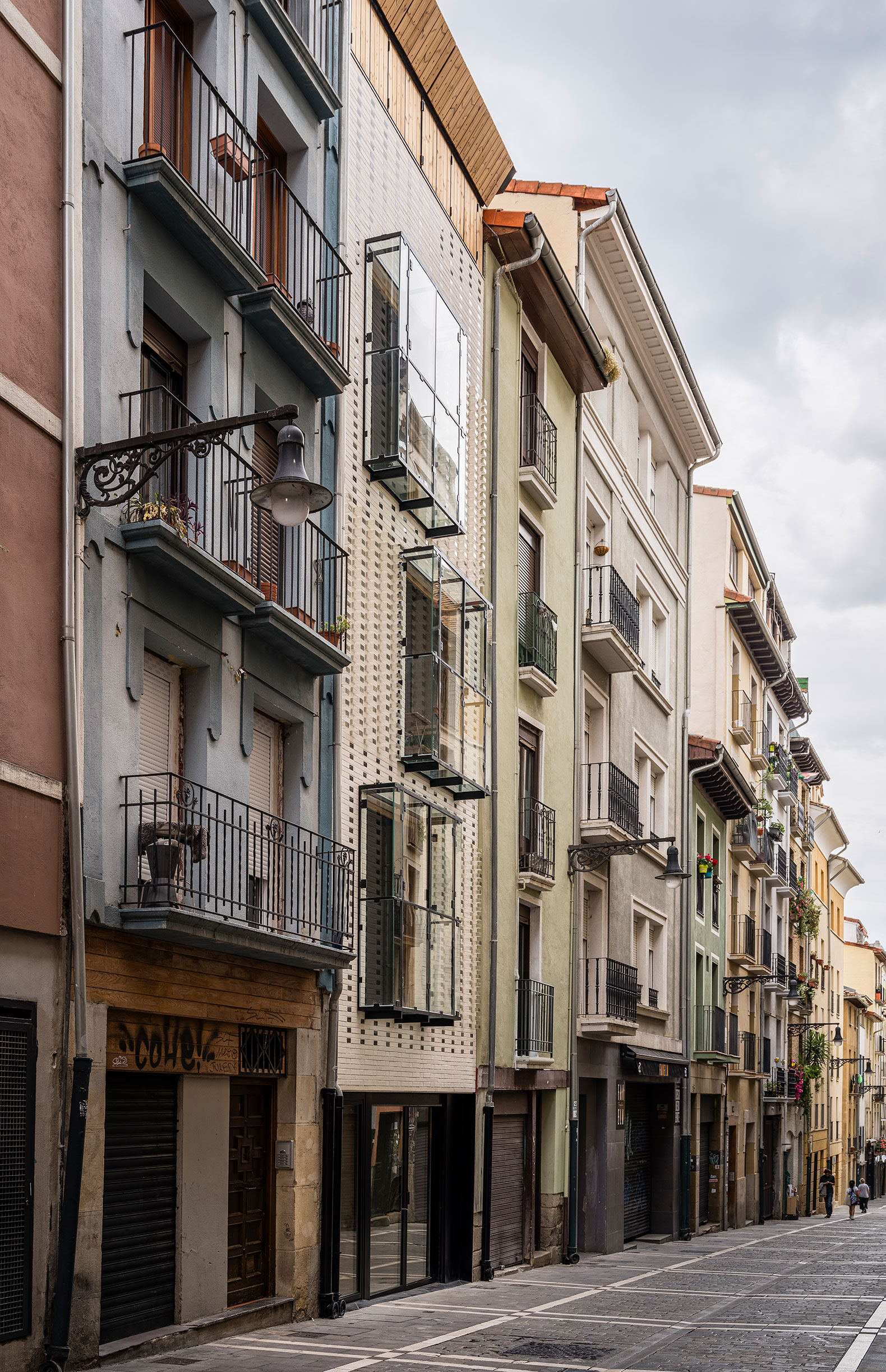
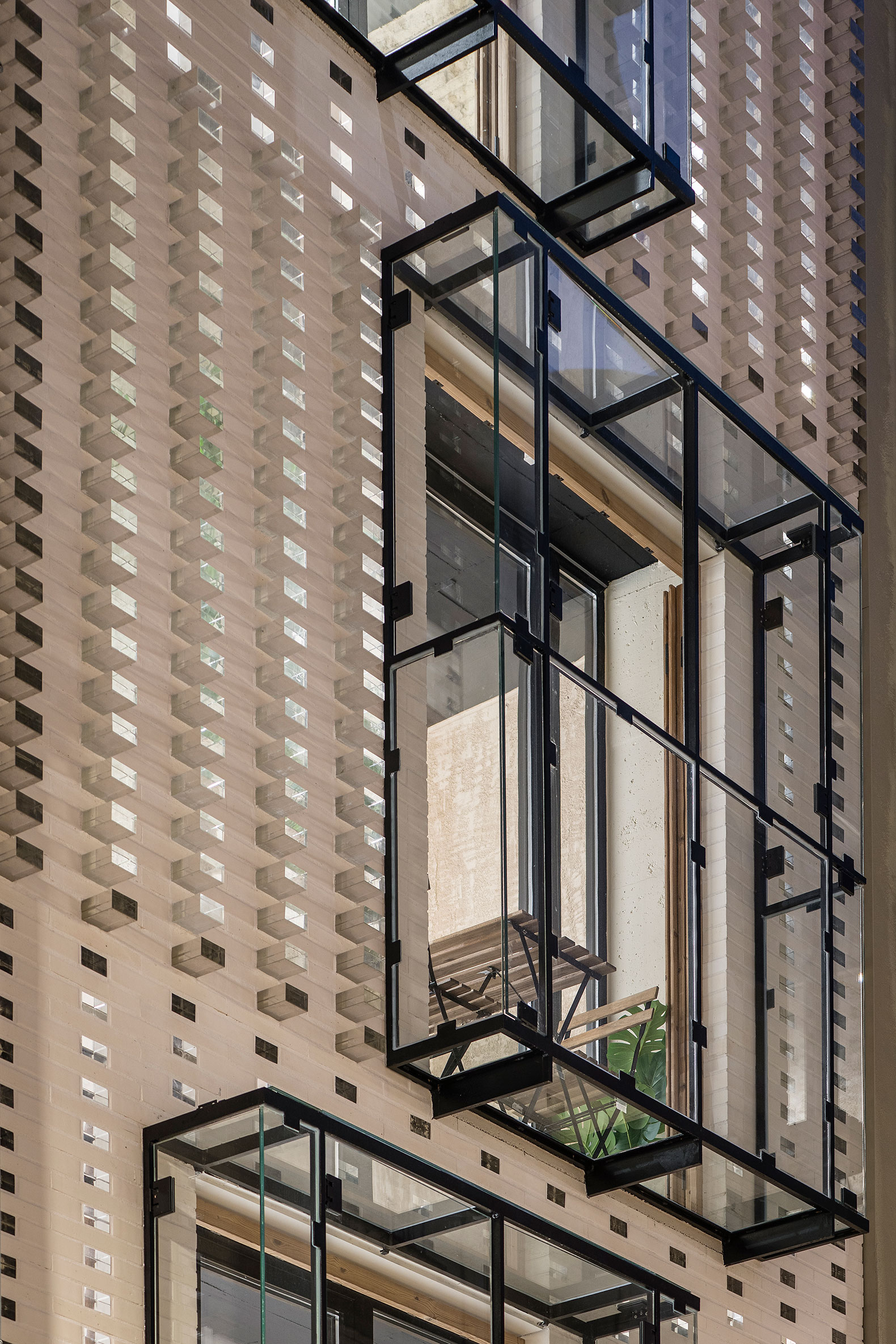
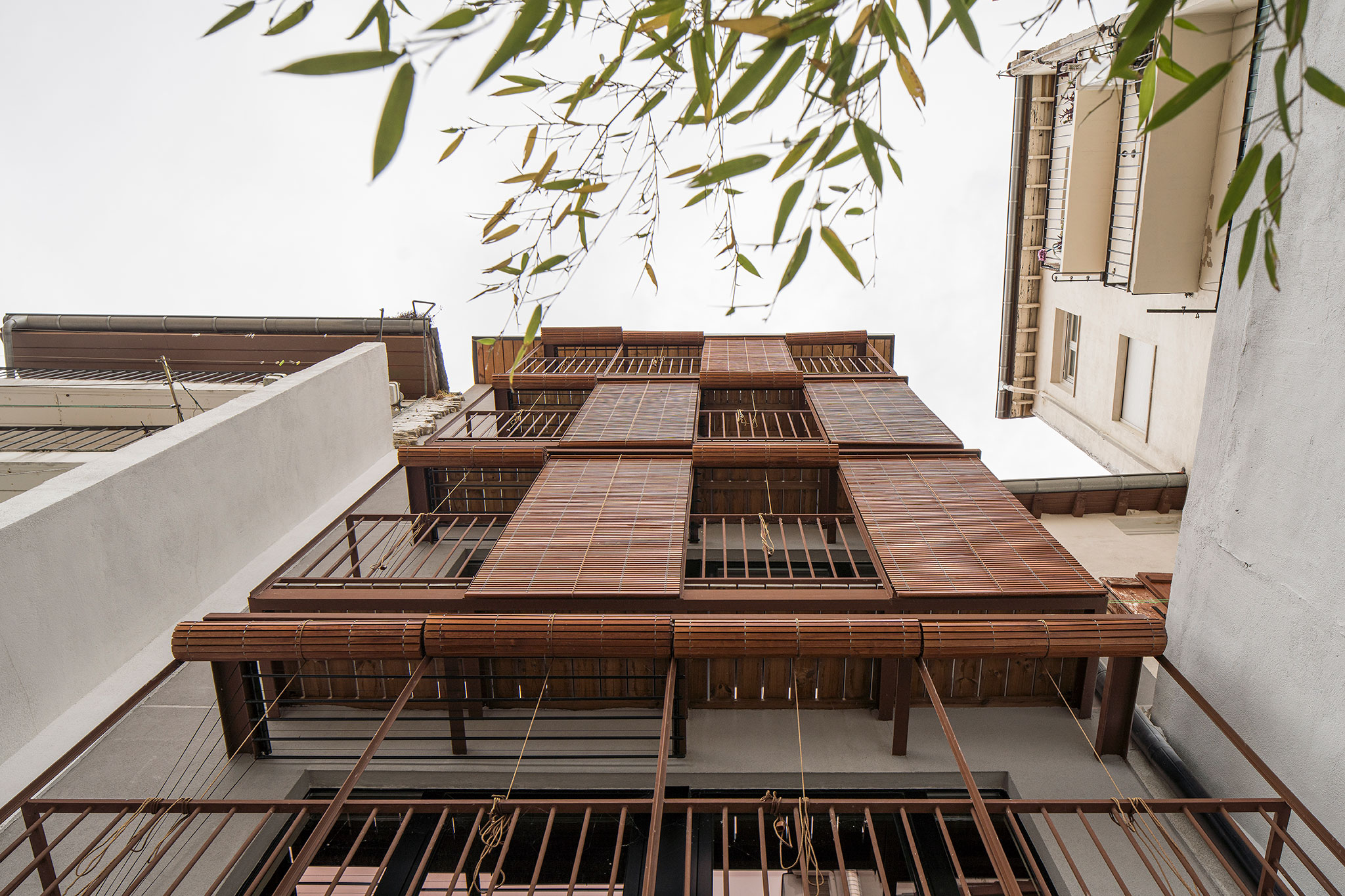
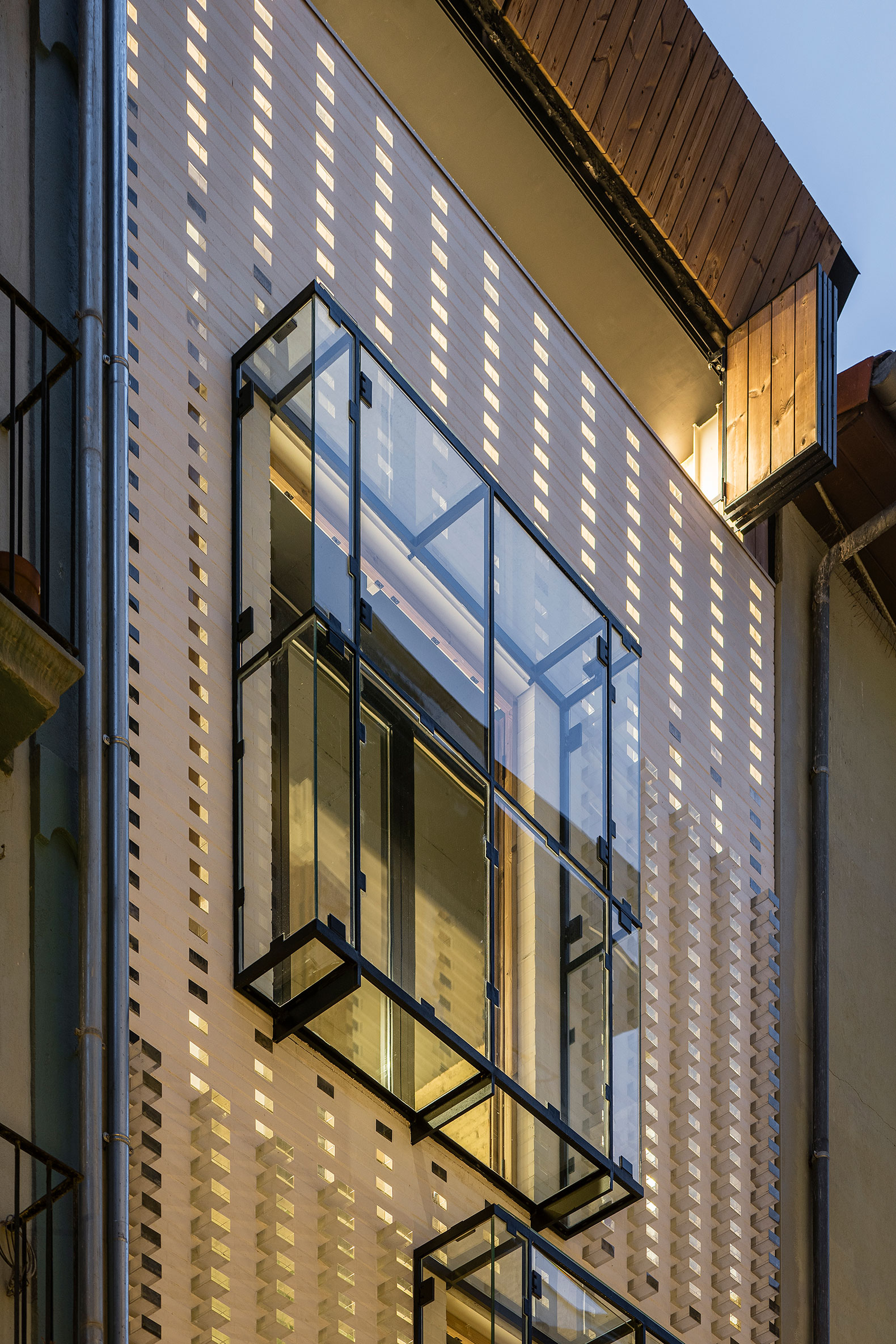
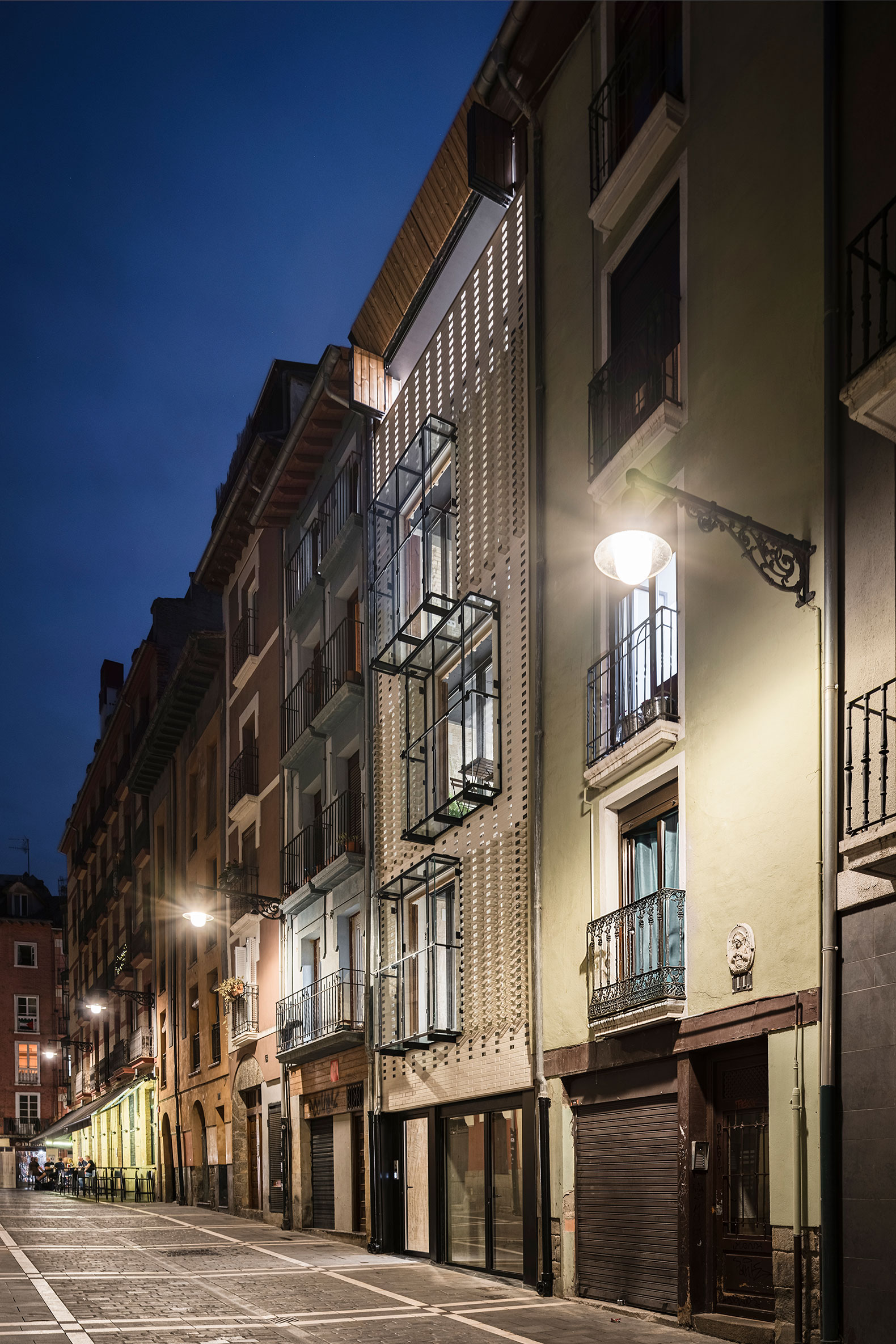
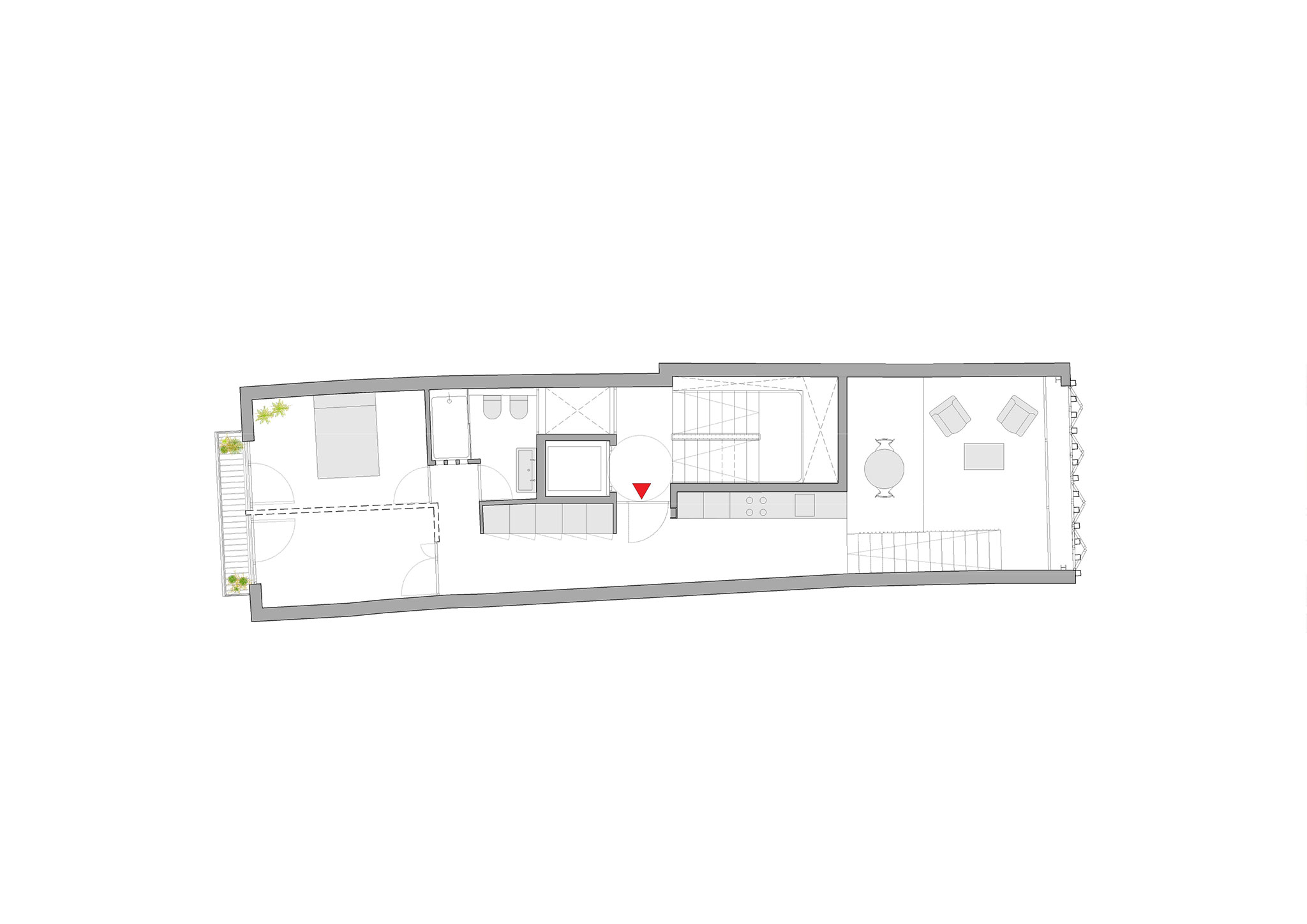
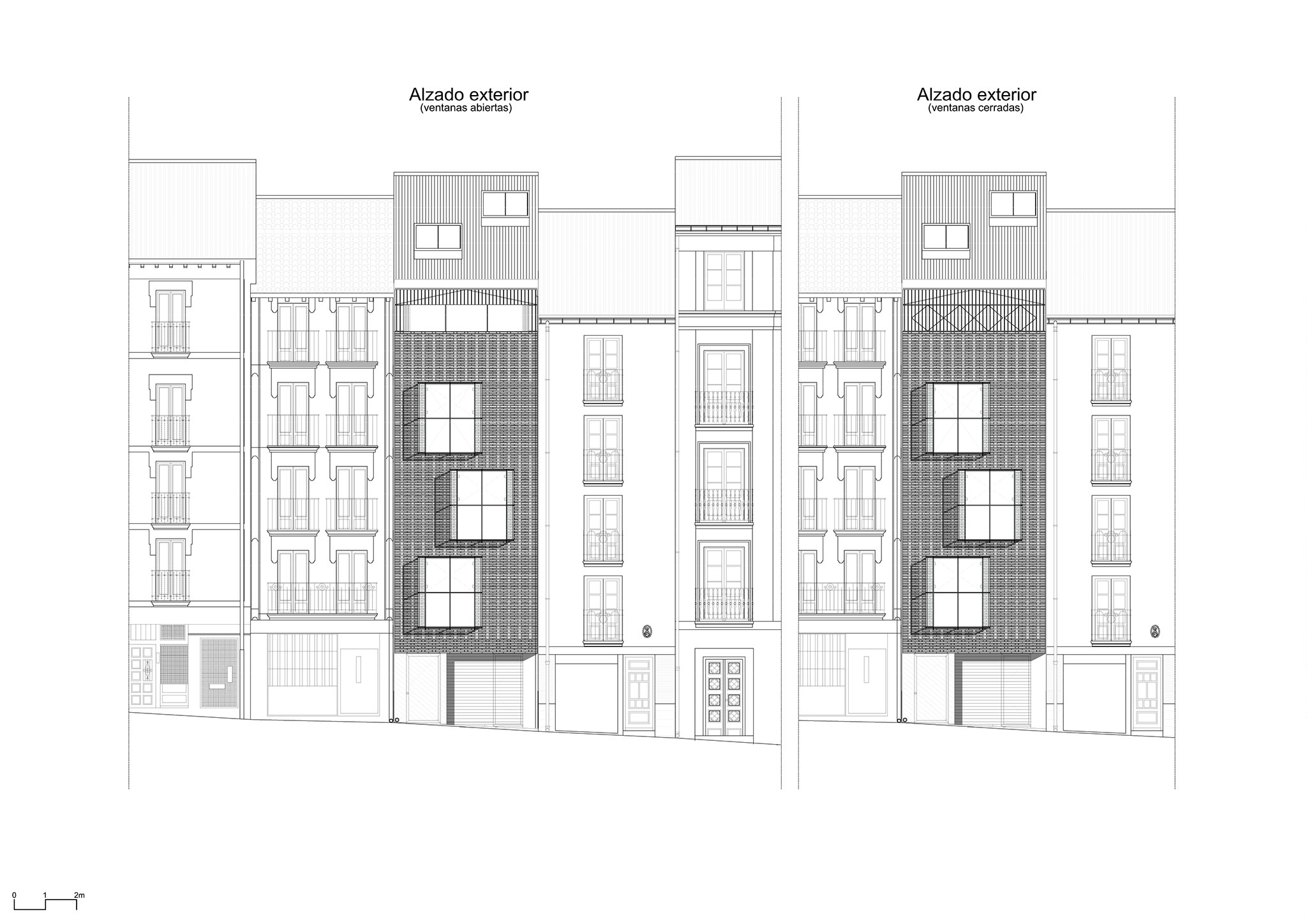
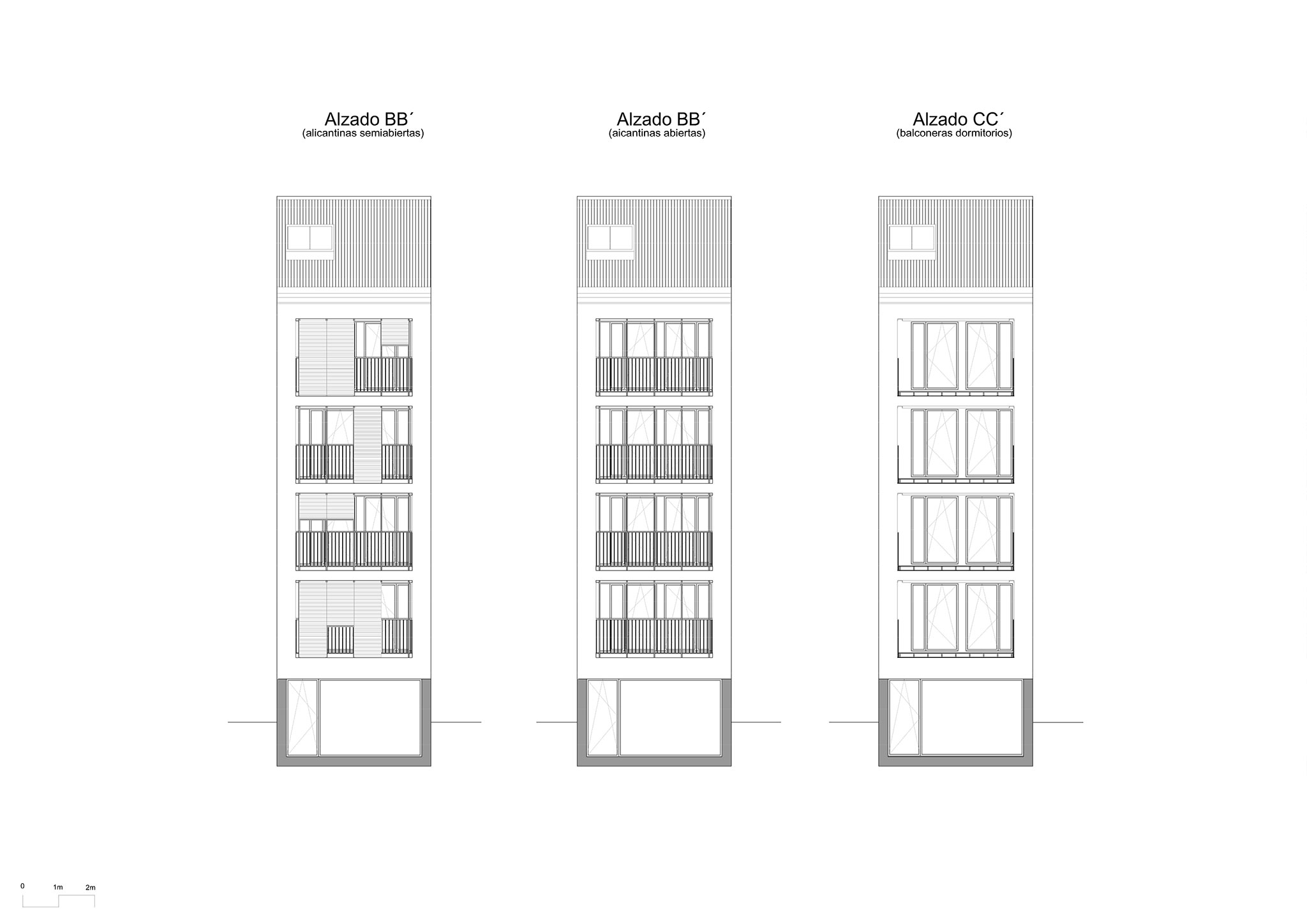
The 4 Houses projected by Josean Ruiz Esquíroz are configured as through-units, with living rooms facing outwards and bedrooms facing the courtyard. Inside, the façade becomes permeable through terraces protected by Alicante-style blinds, except on the fourth and top floor, which is set back behind the cornice to comply with regulations without compromising habitability.
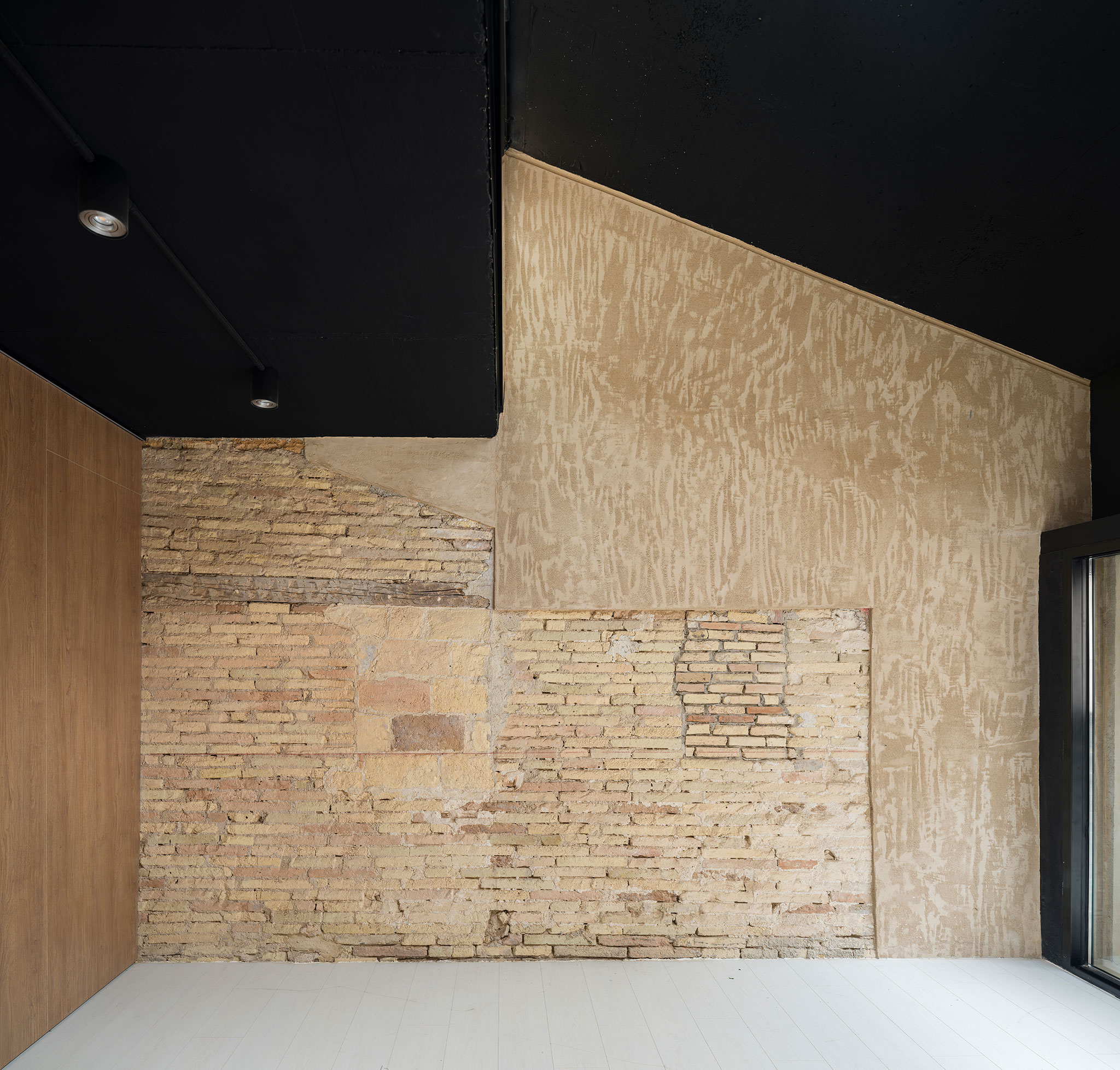
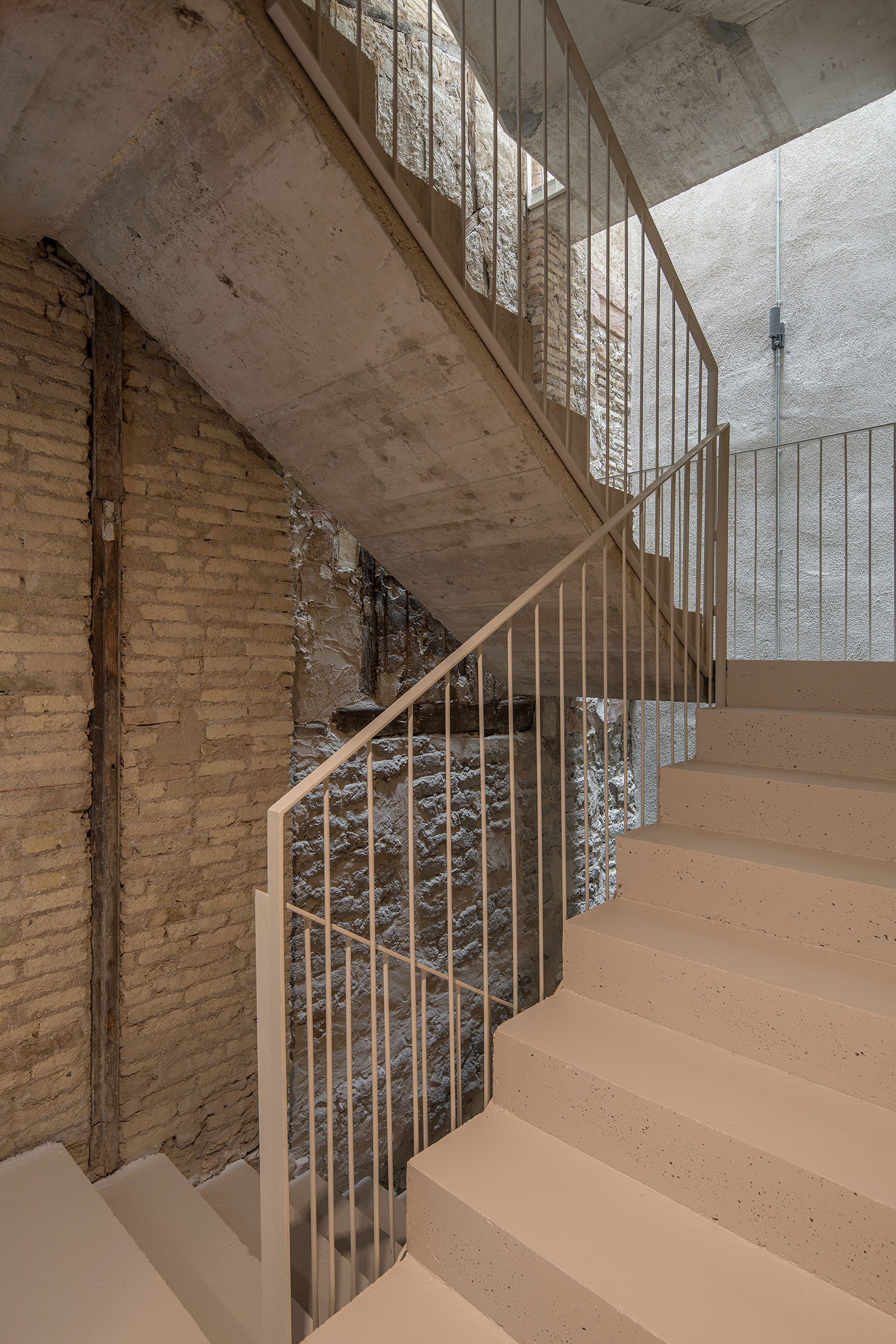
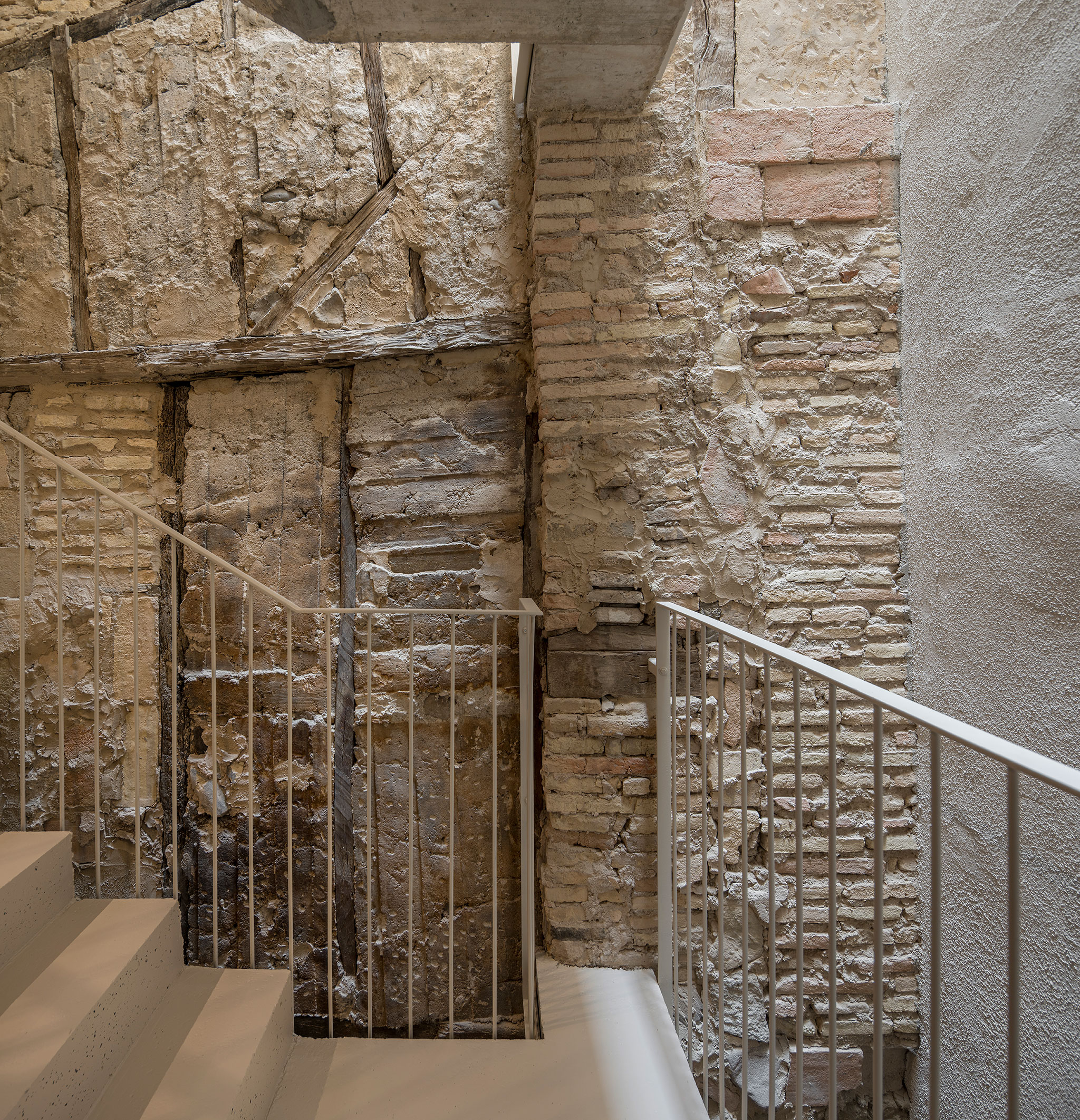
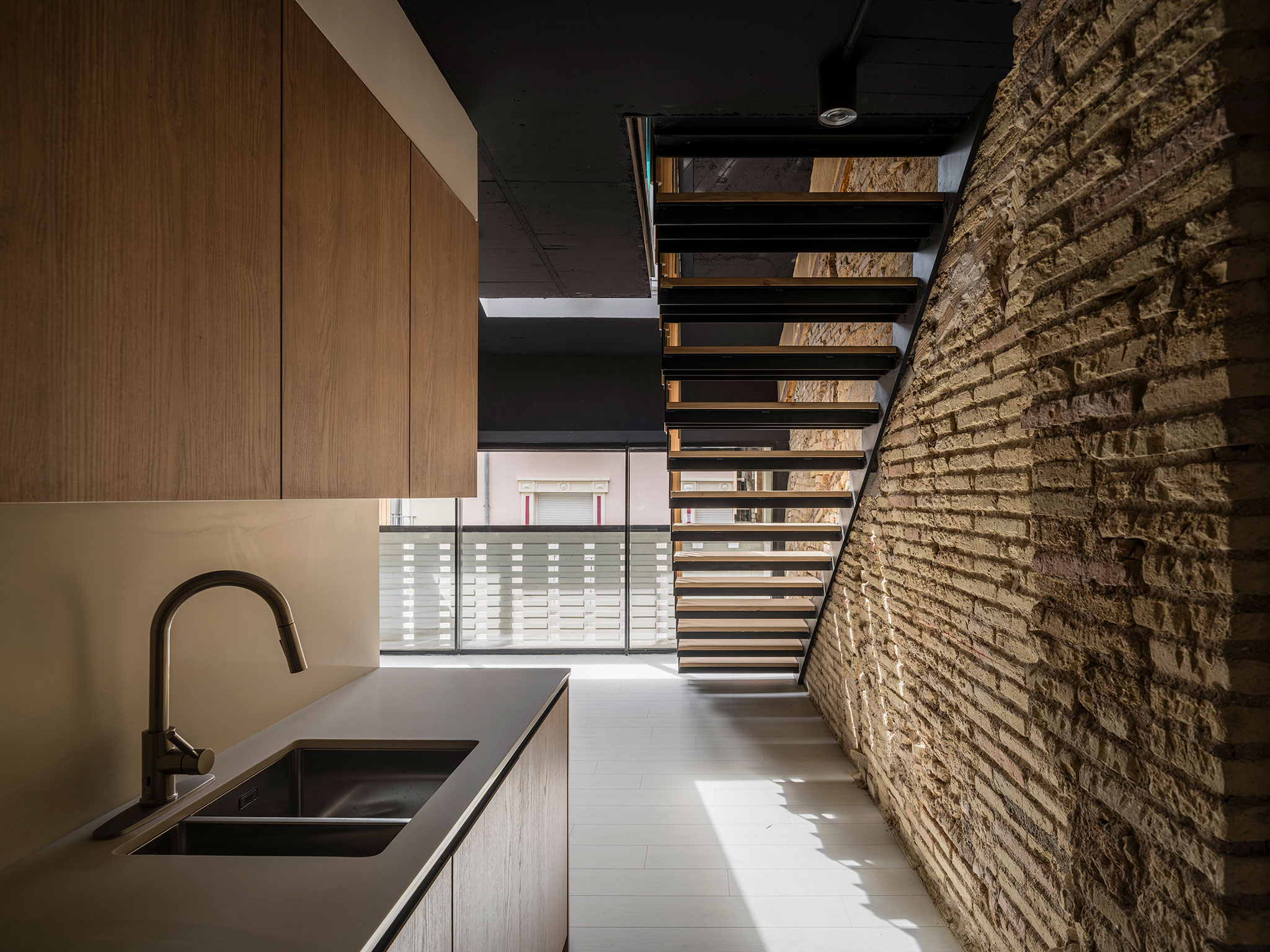
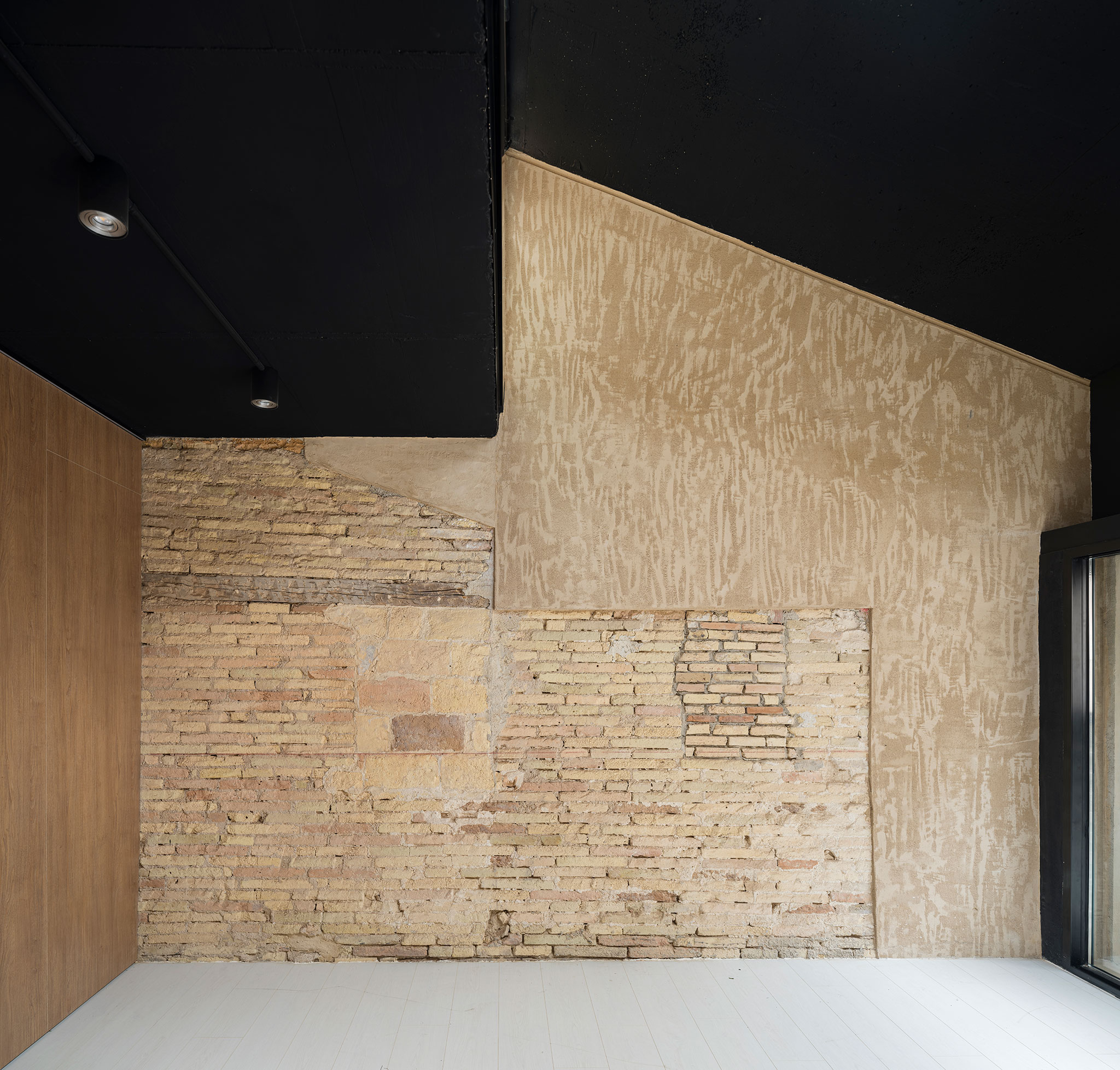
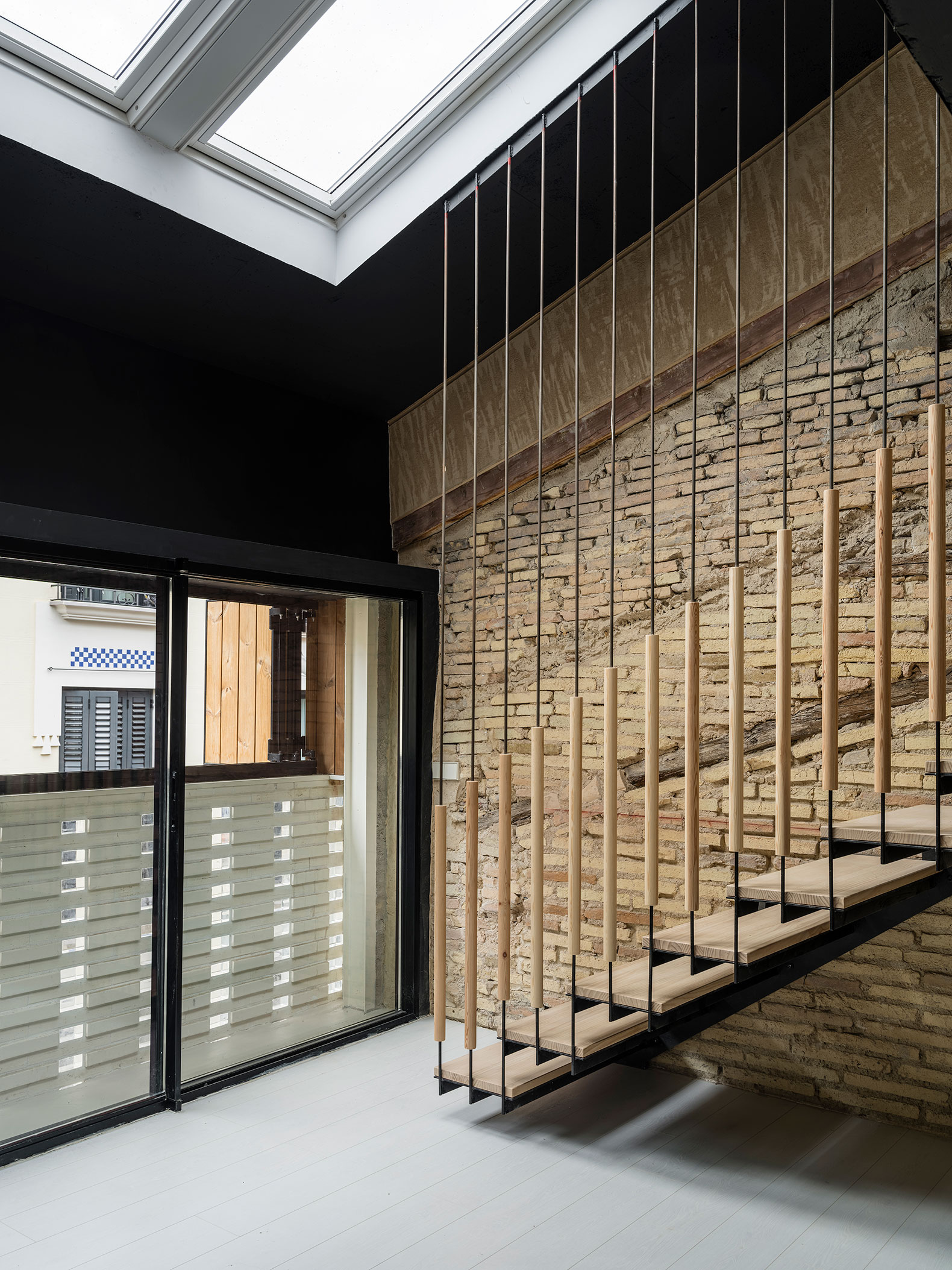
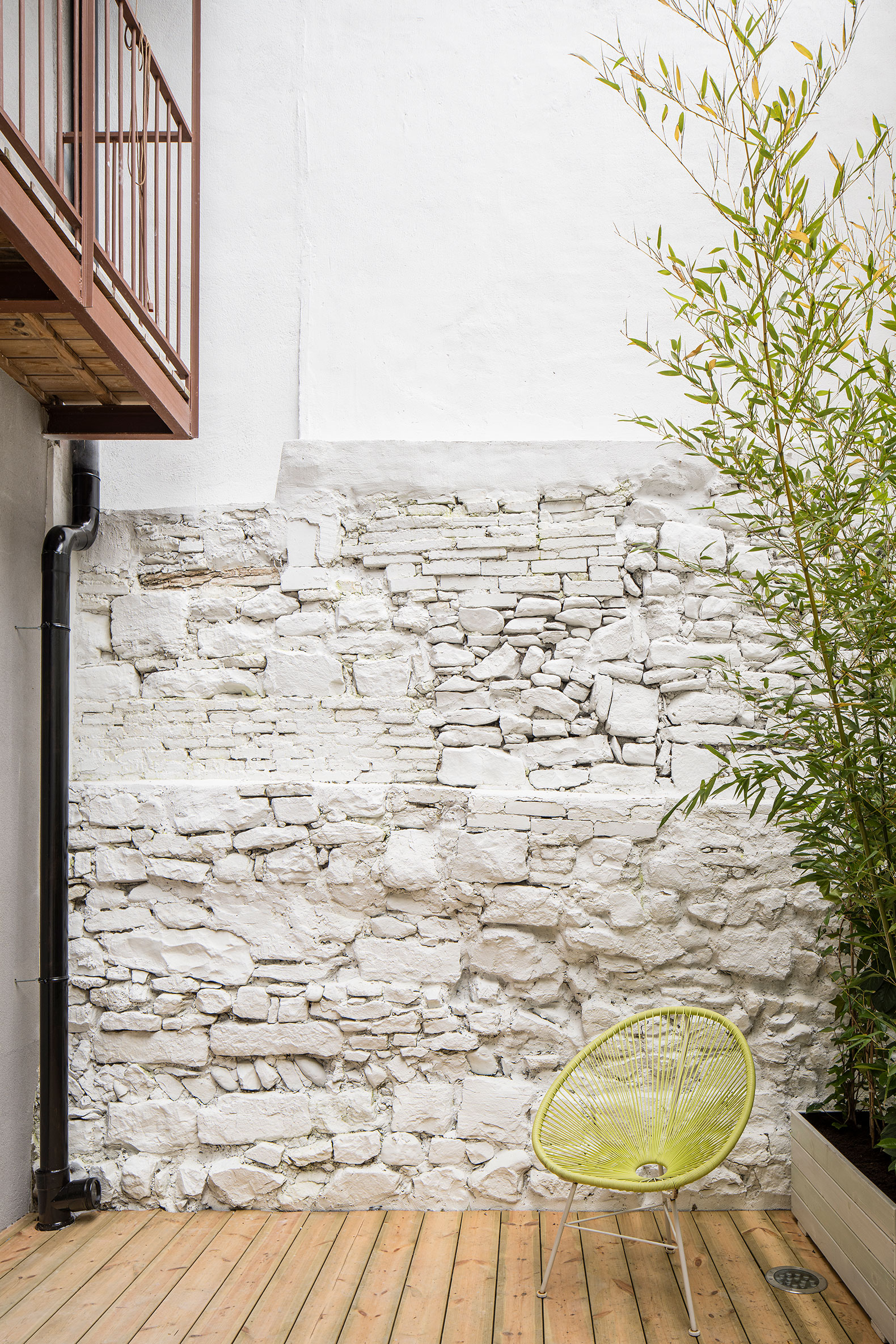
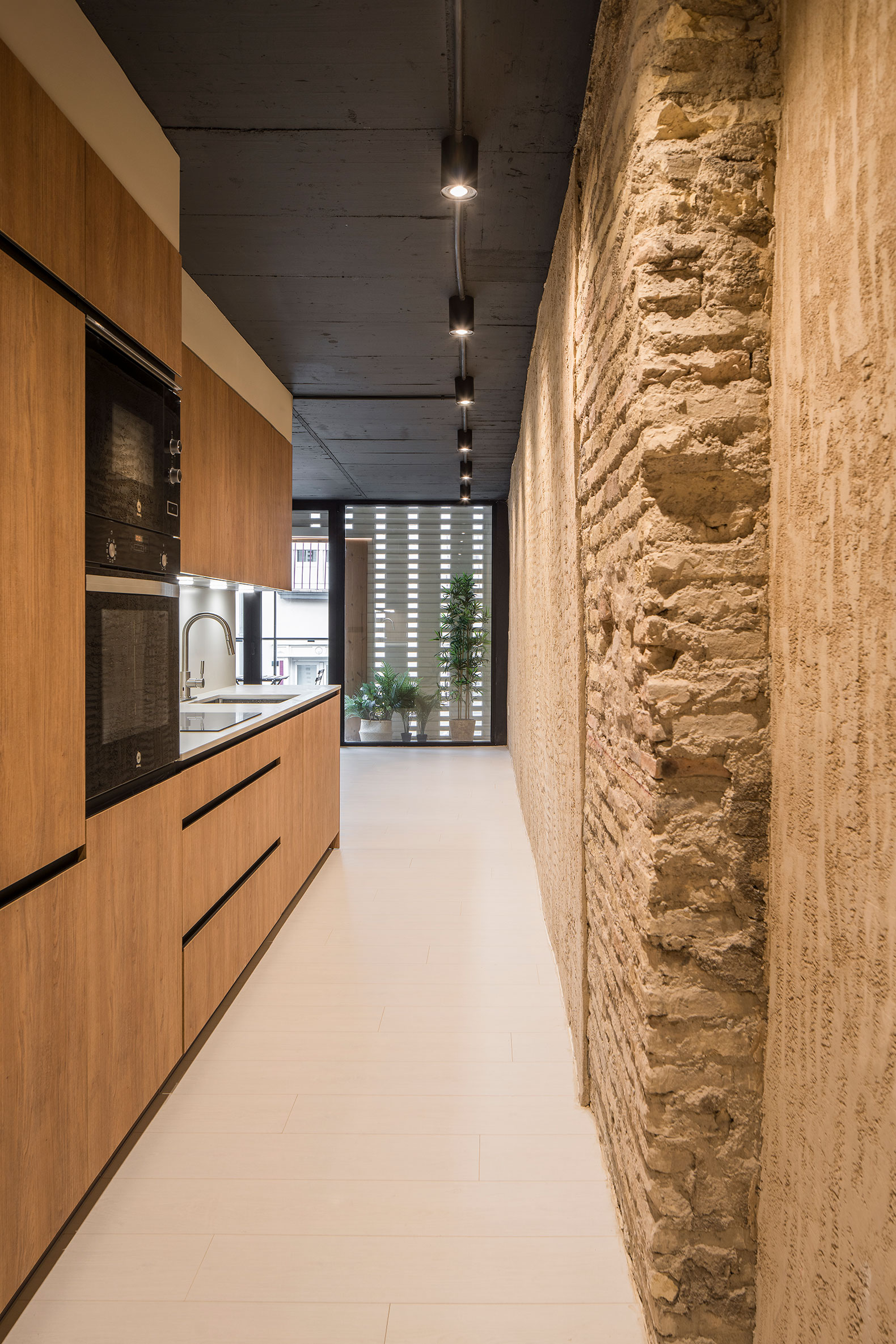
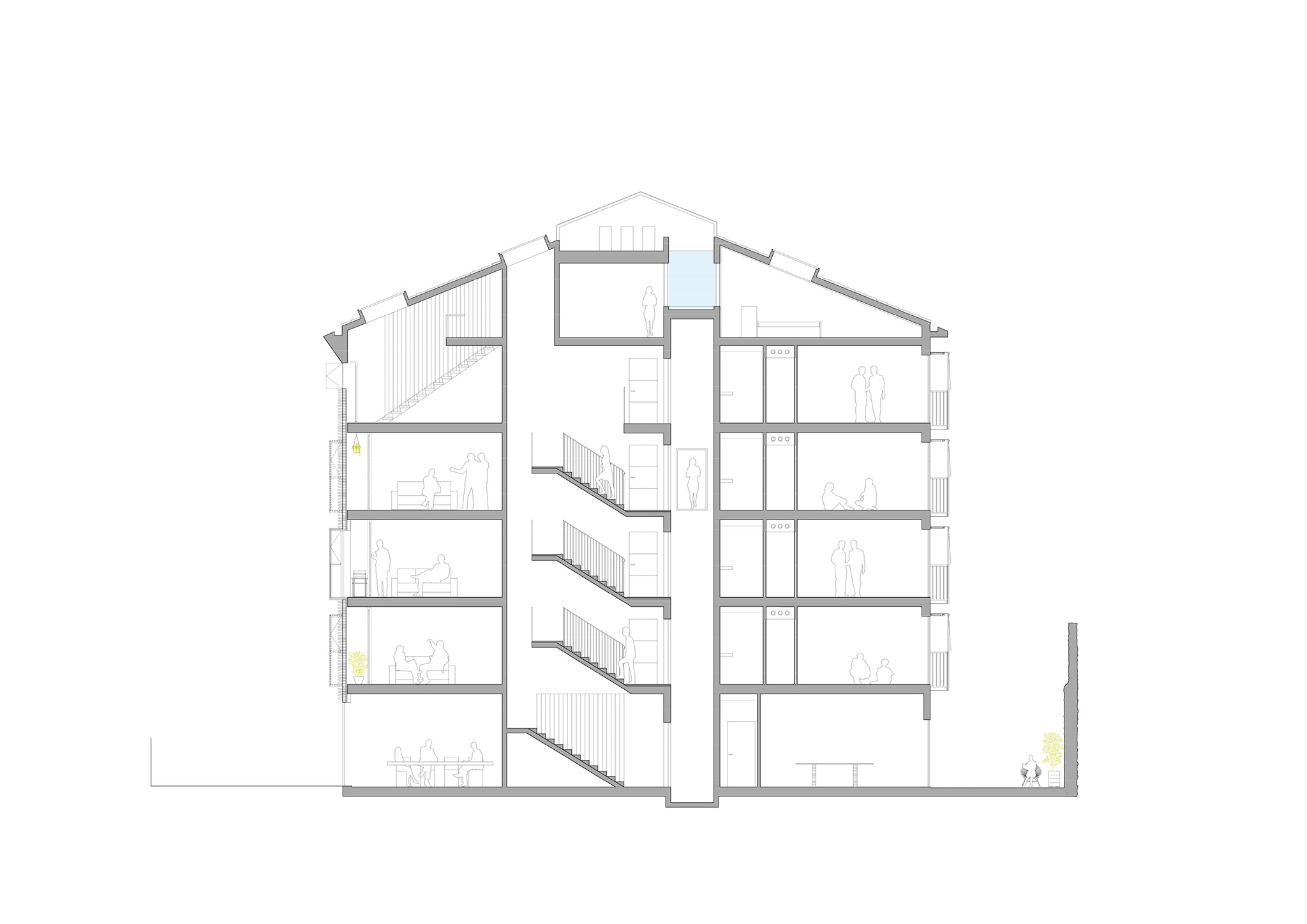
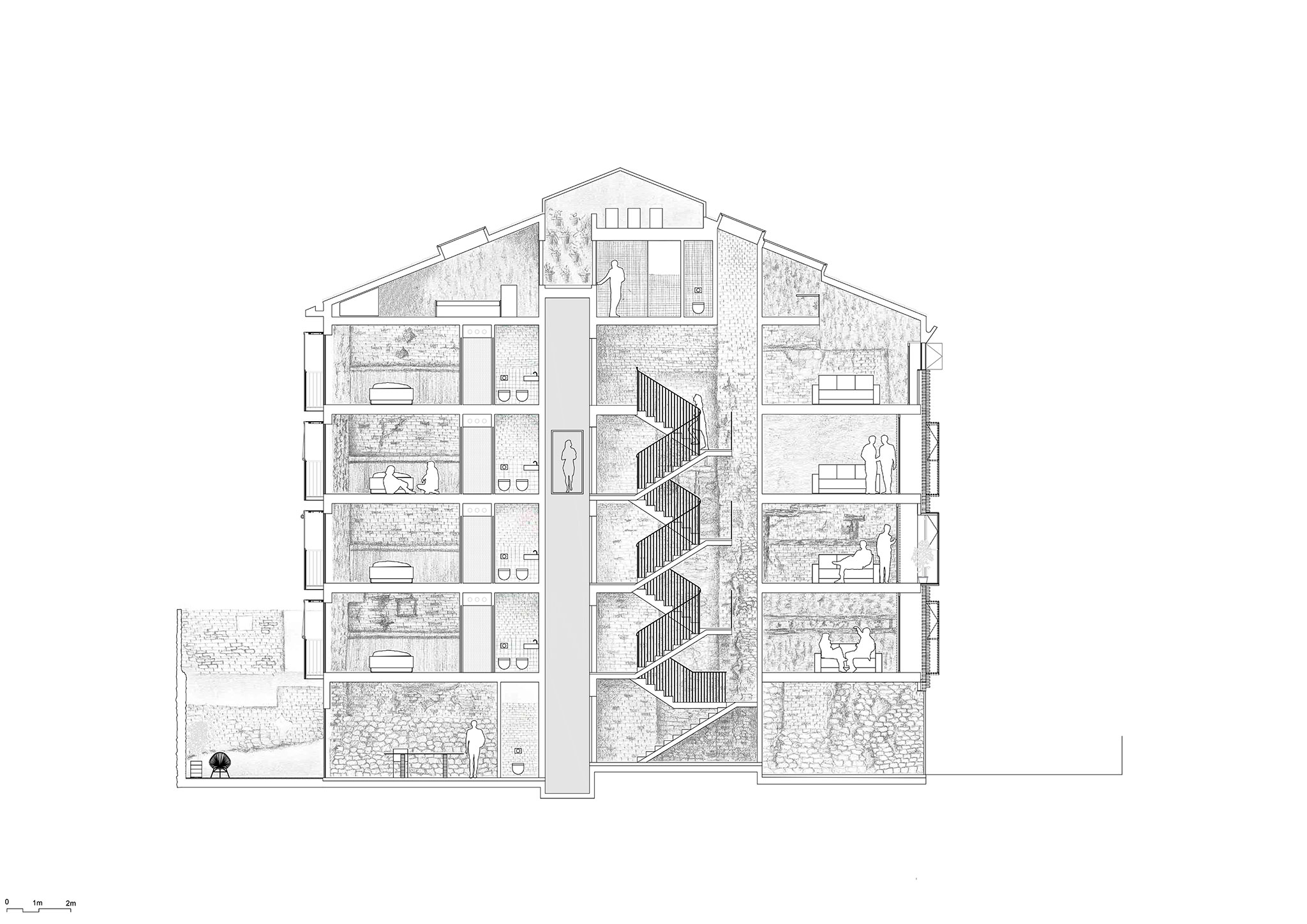
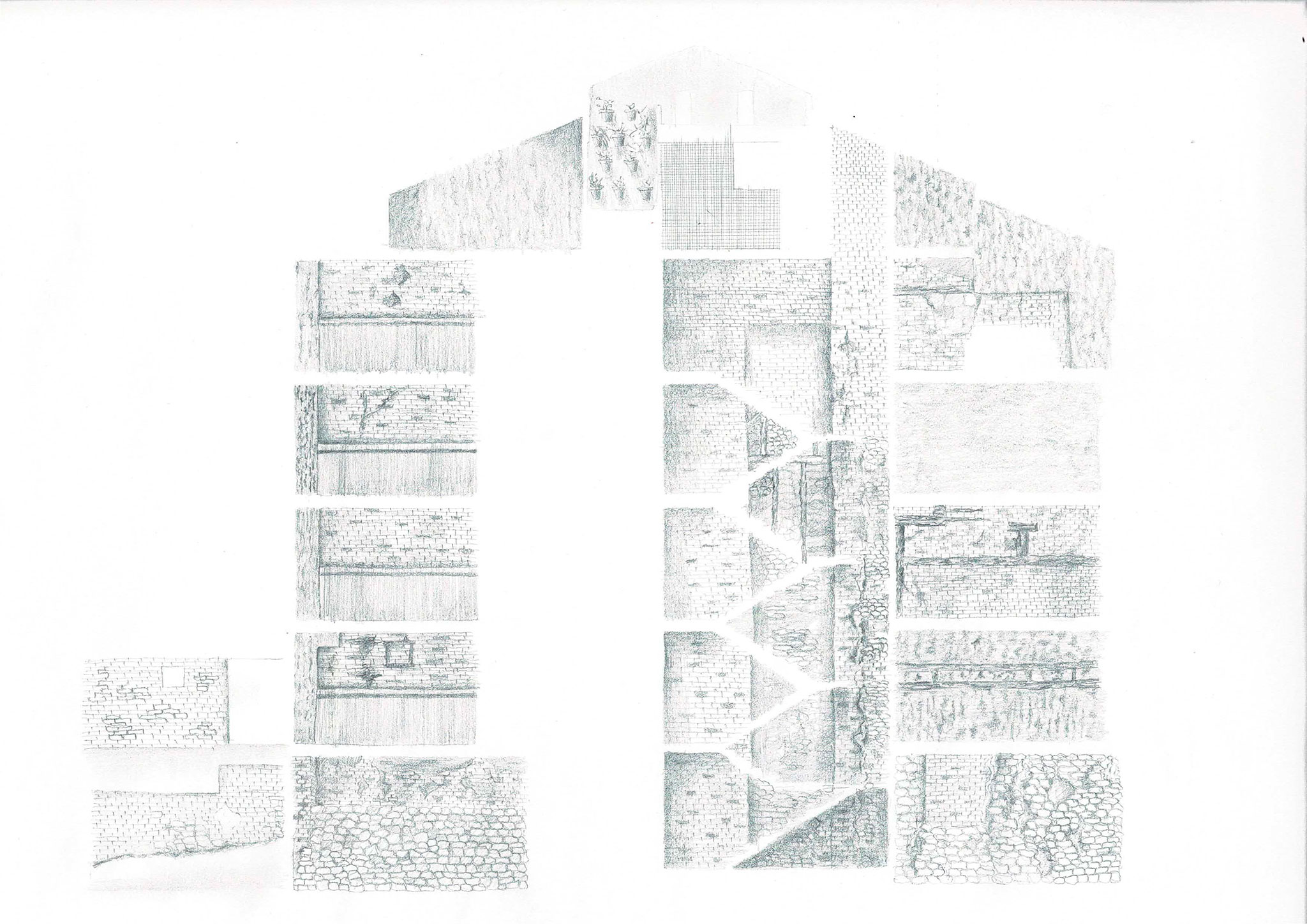
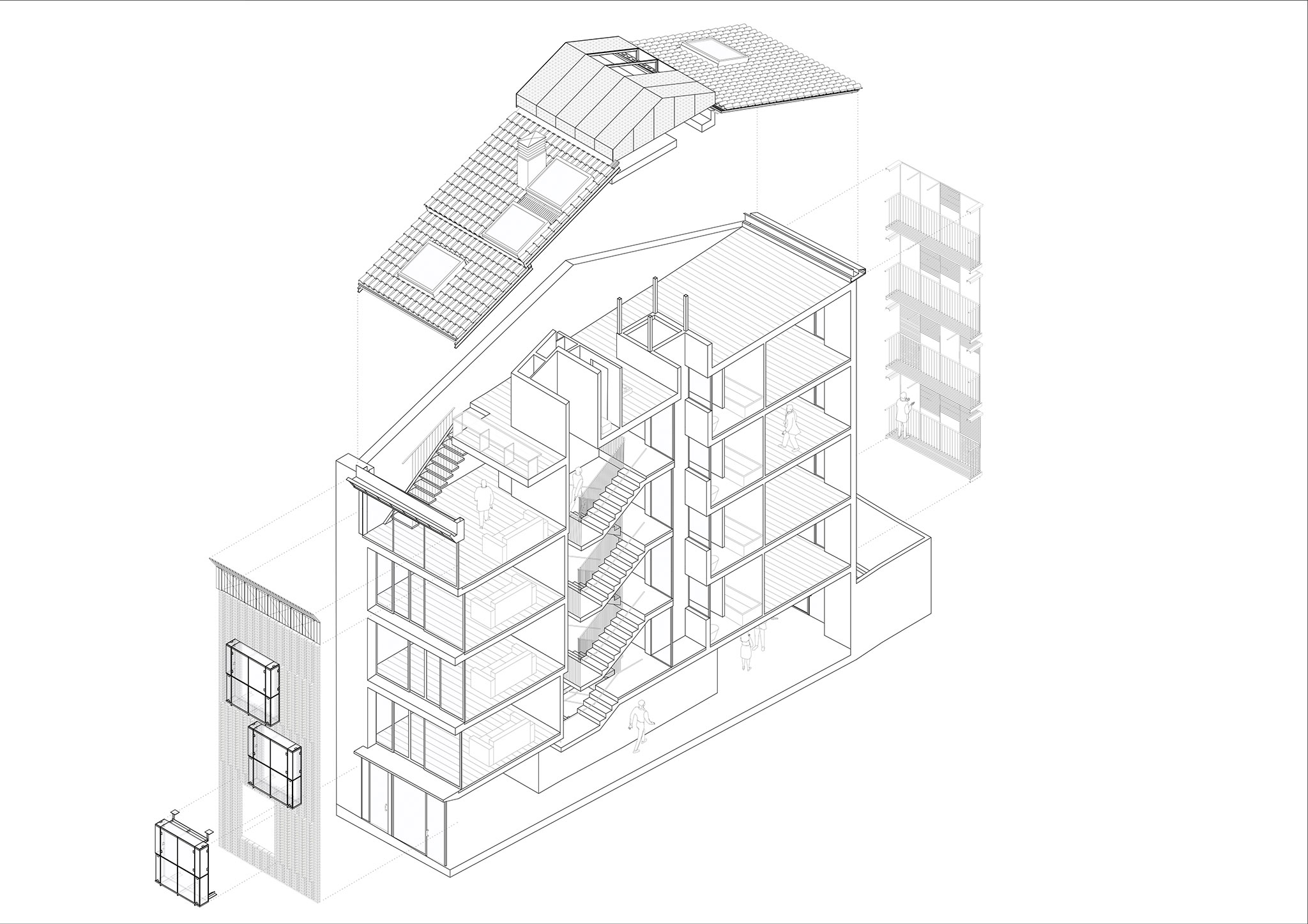
A new structure is proposed that frees up the party walls, supporting the building's weight on the circulation core and the façade planes. This decision protects the structural stability of the party walls while preserving and highlighting their palimpsest of stone, brick, and wood, which stands like a tapestry stabilized with lime mortar.
Replacement of 4 houses by Josean Ruiz Esquíroz. Photograph by Imagen Subliminal.
Project description by Josean Ruiz Esquíroz
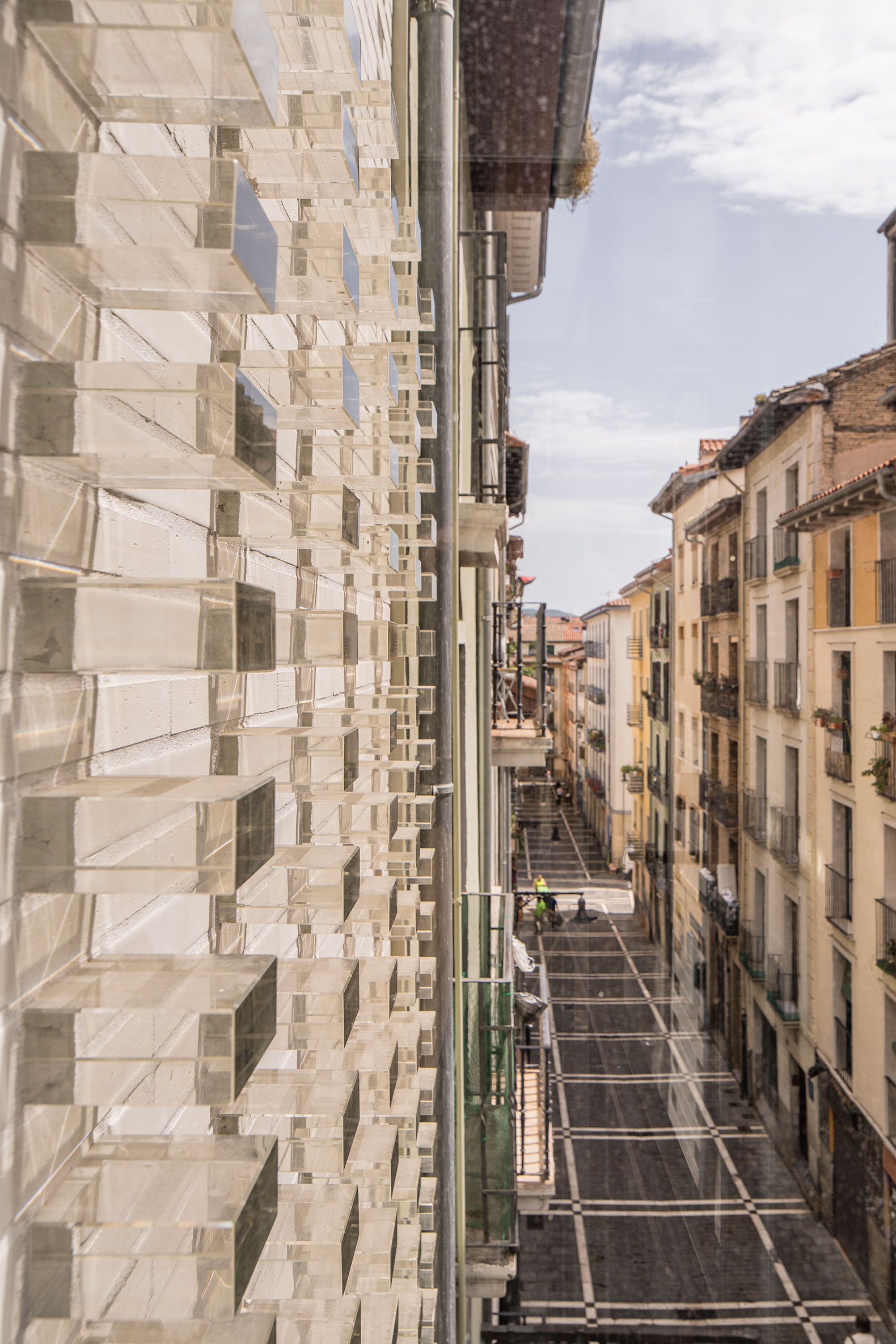
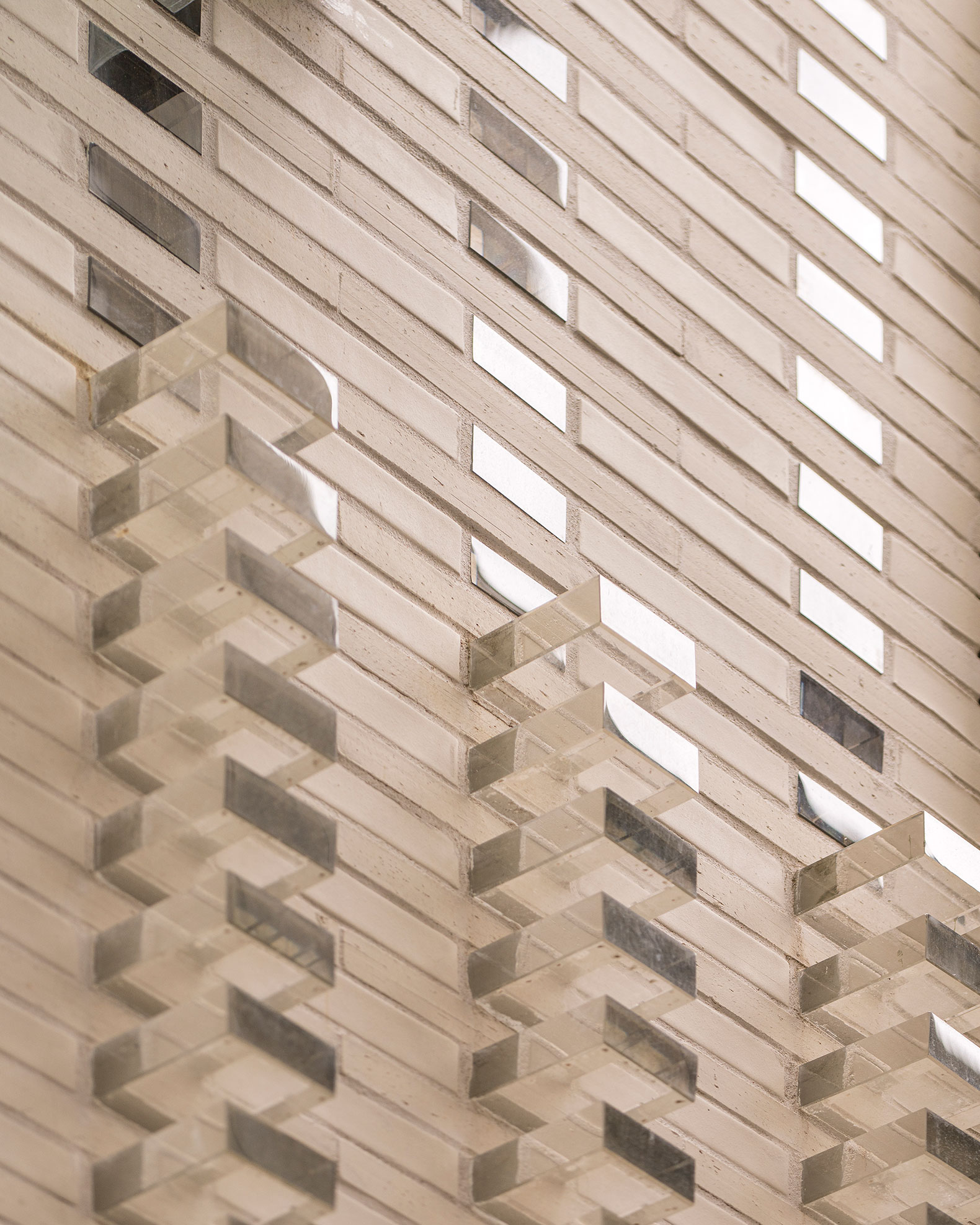
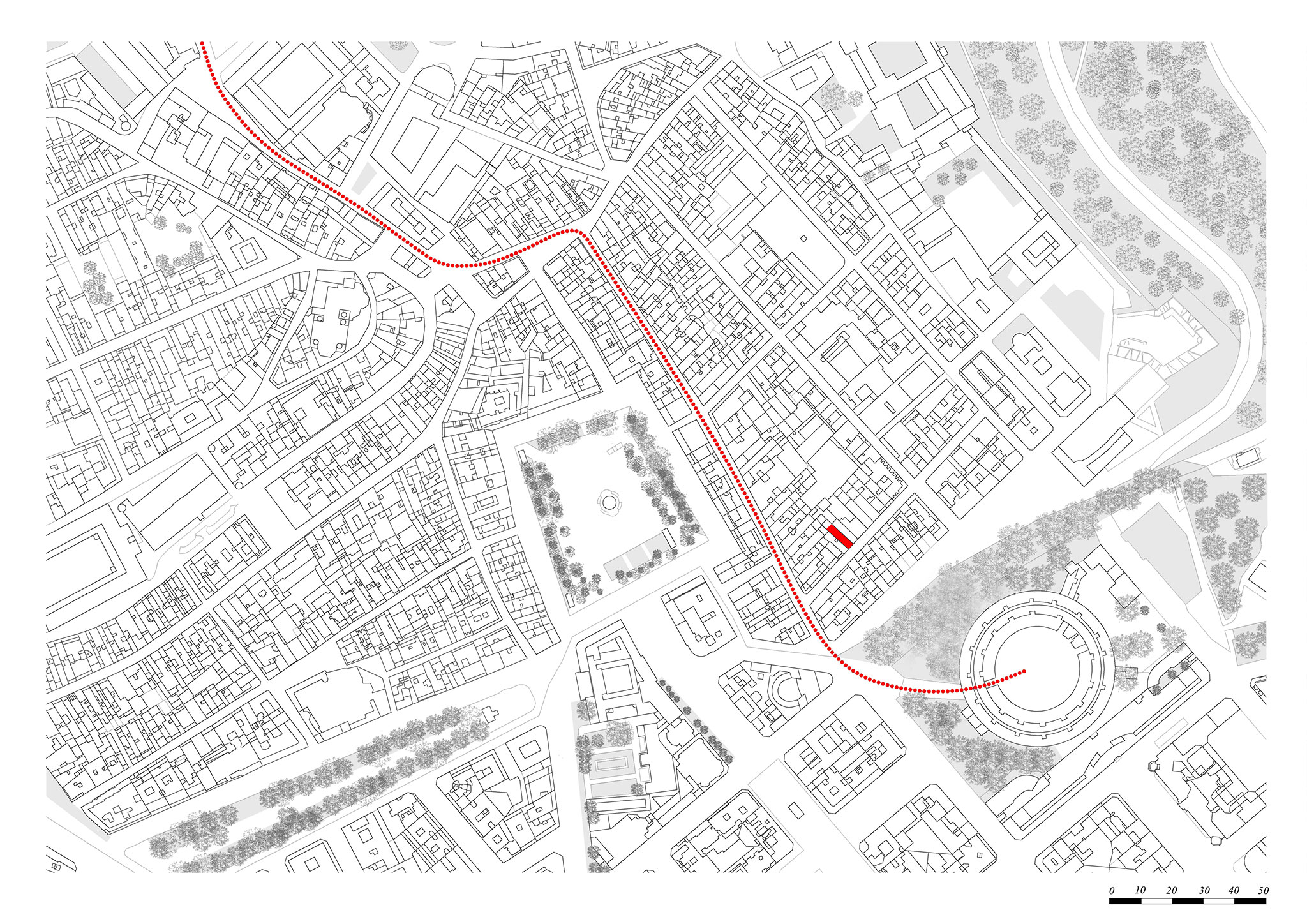
The project of four dwellings is located in the heart of Pamplona, barely 40 meters from Estafeta Street, famous for the San Fermín bull runs. The street, like so many in the Gothic fabric, is only 6 meters wide and has a cornice height of 15 meters. Given these proportions, the challenge was to introduce natural light and ventilation into dwellings that are just 4.6 meters wide and 18 meters deep. To achieve this, two elements were used:
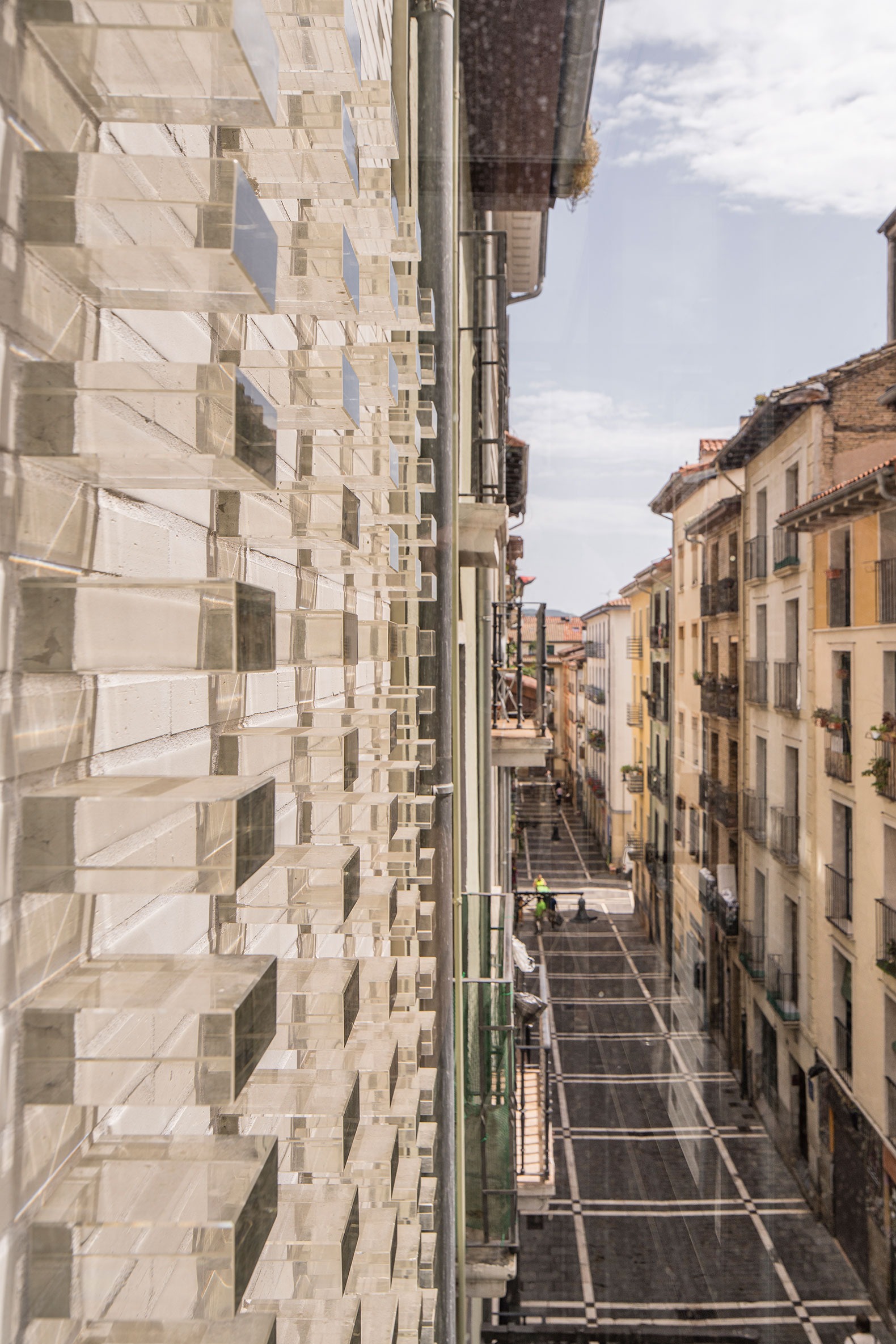
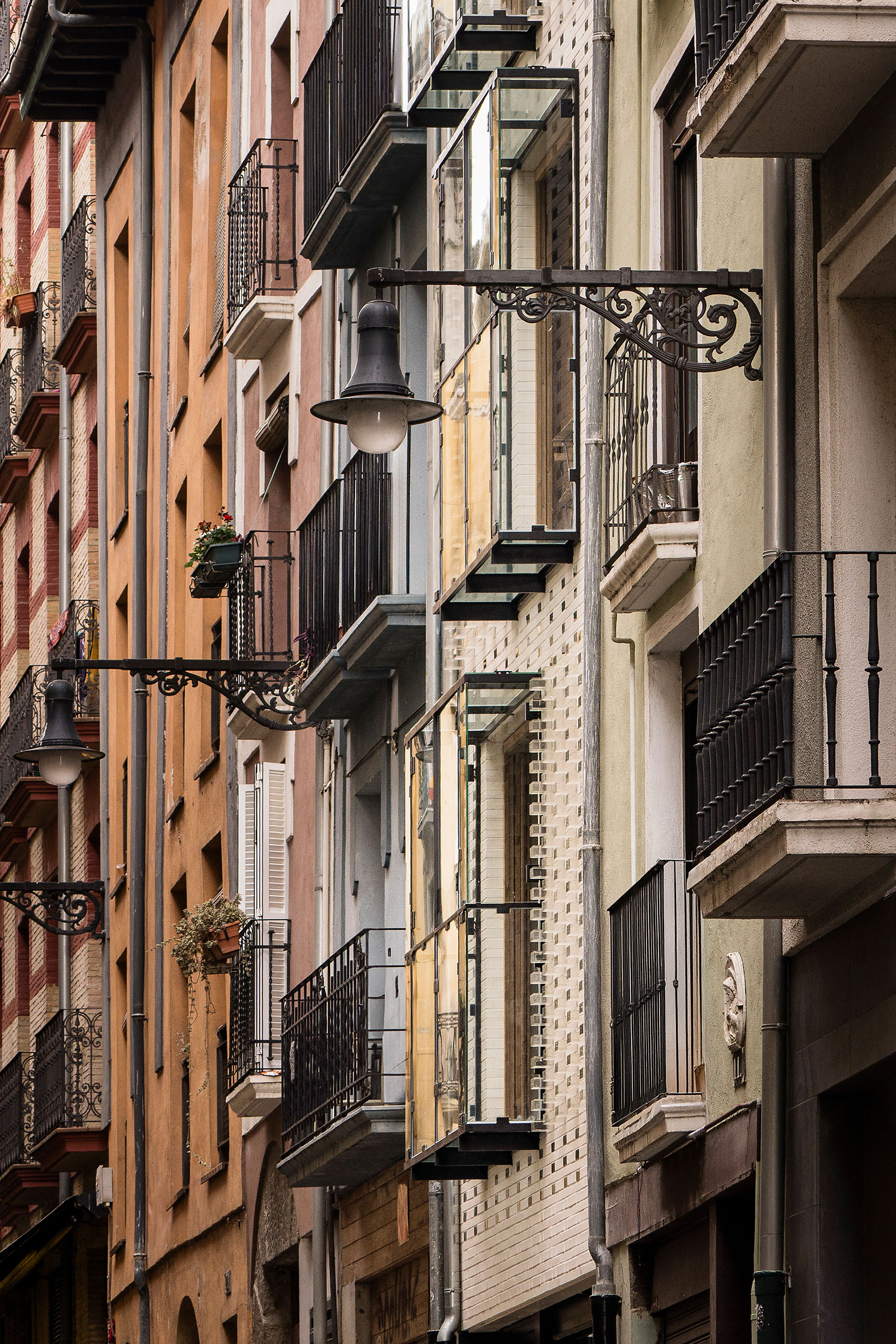
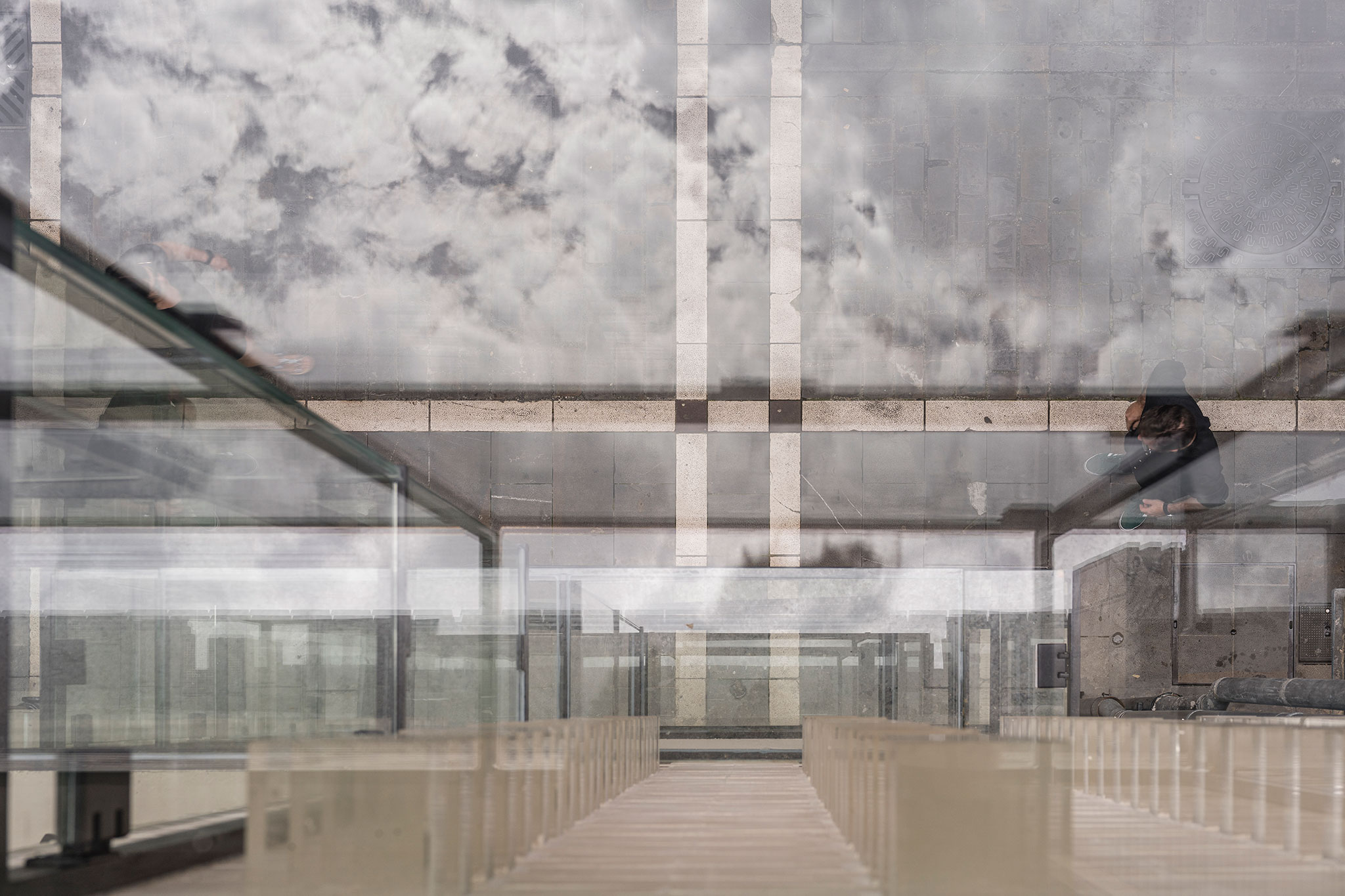
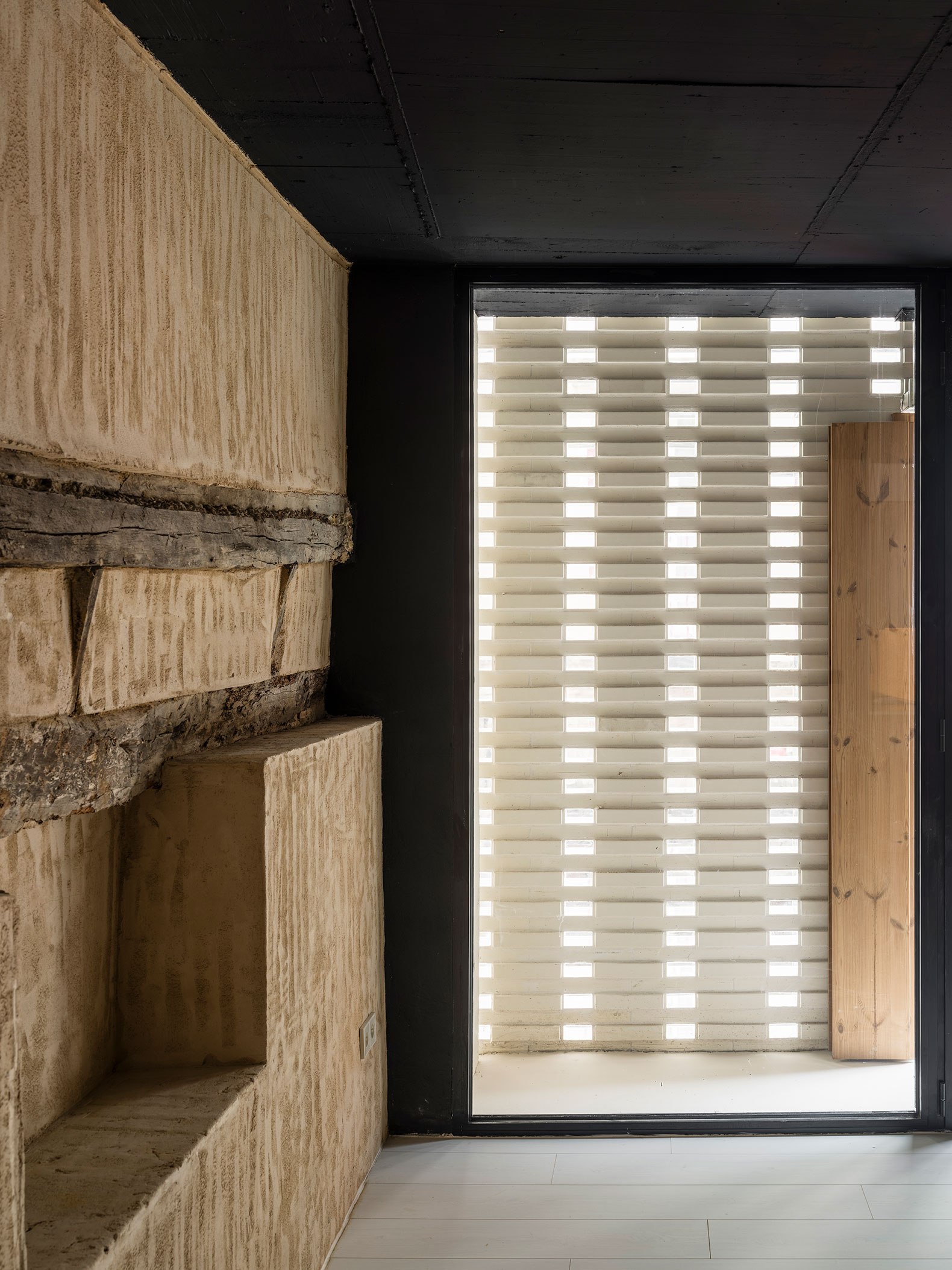
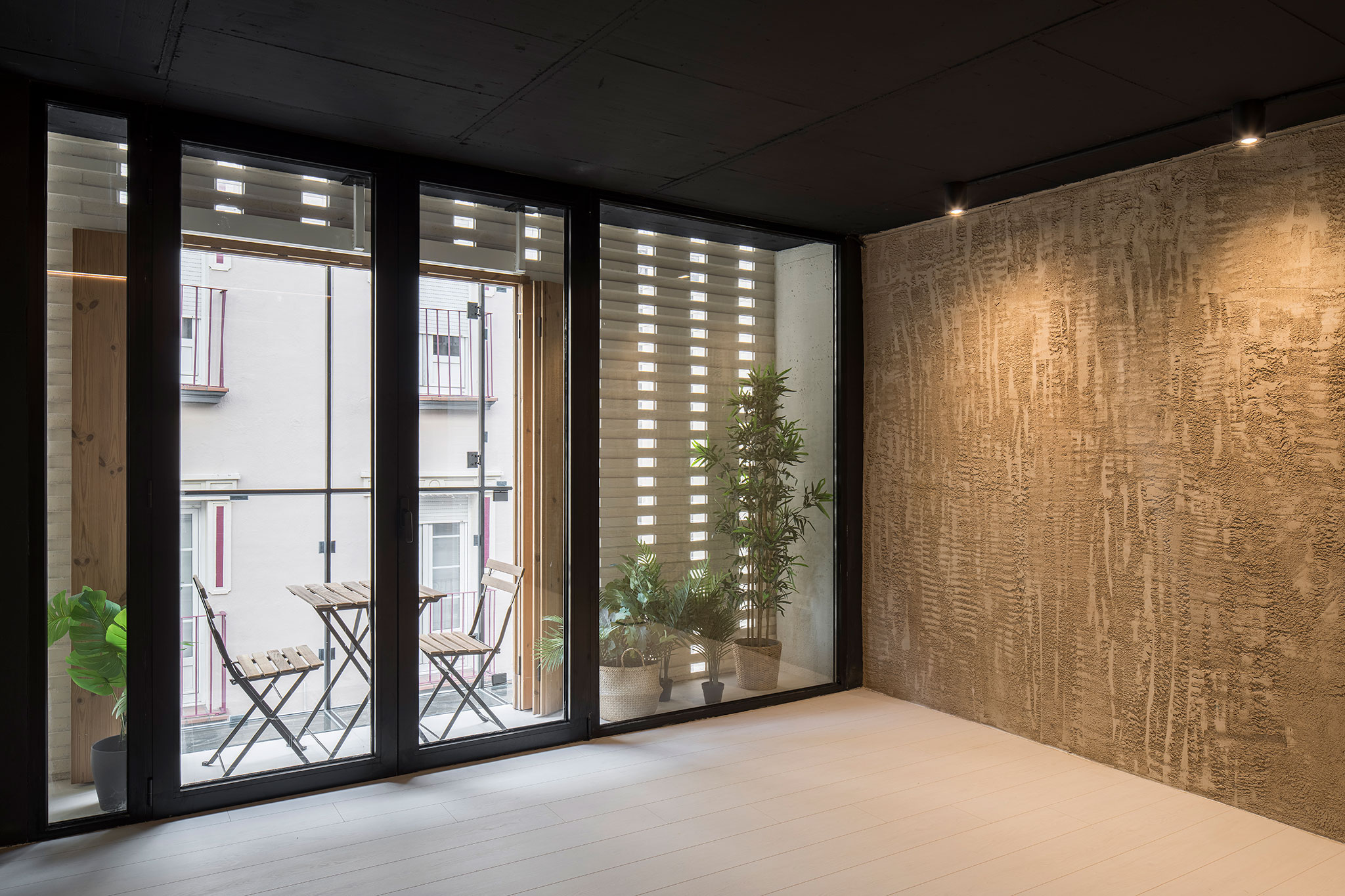
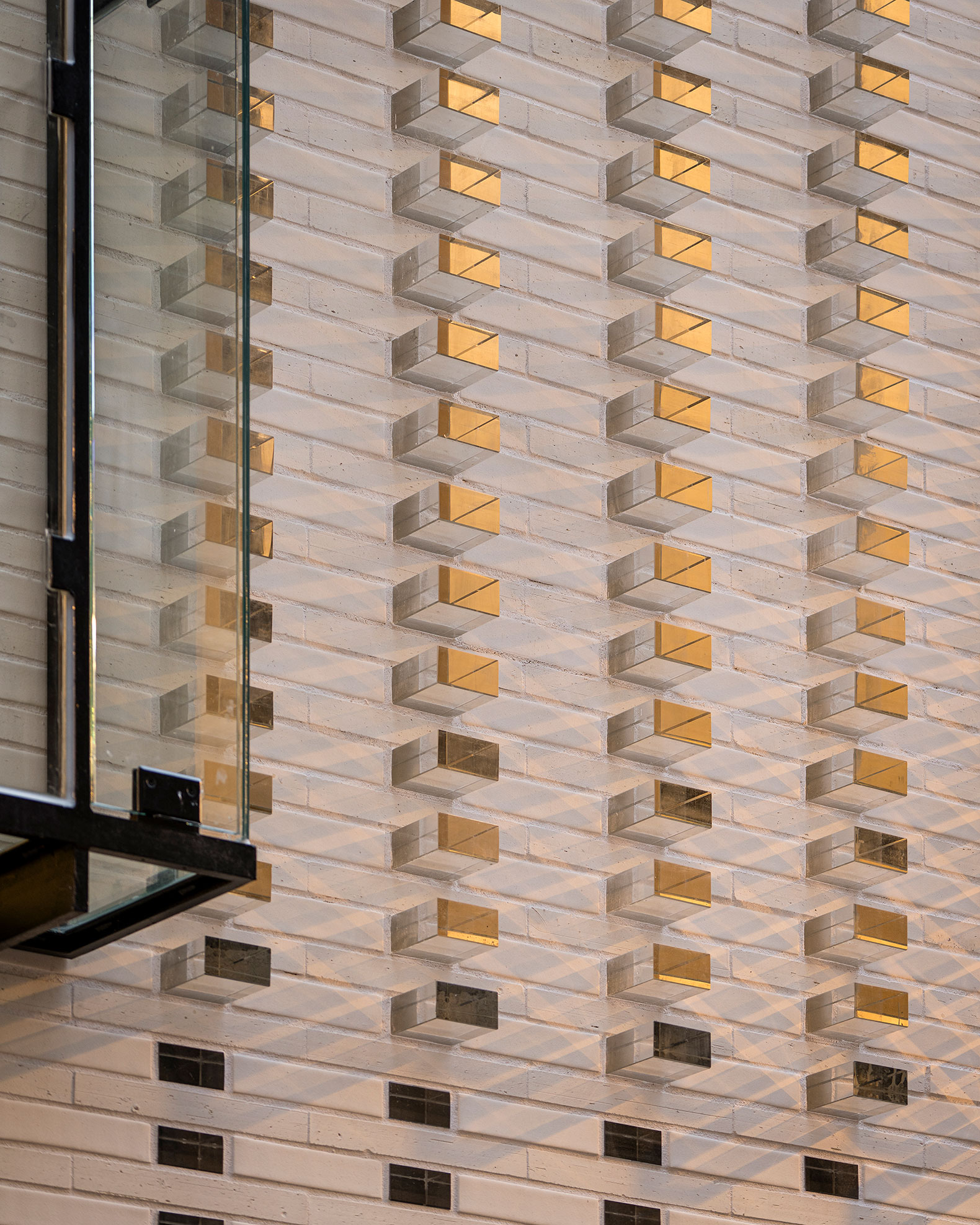
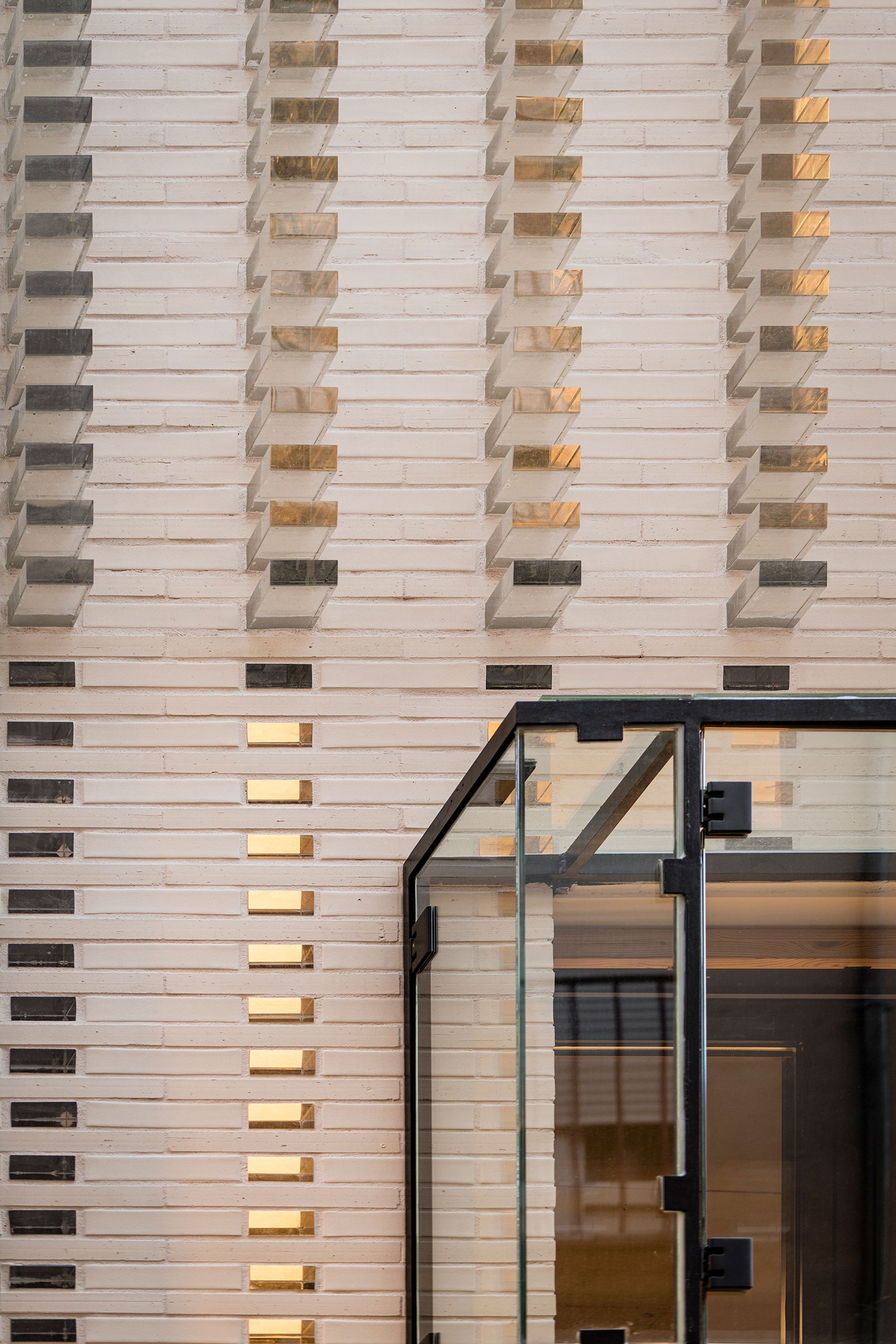
First, solid glass brick interwoven with ceramic brick, recalling that Tejería Street once housed the medieval craftsmen who made tiles and bricks. Second, wrought-iron glazed galleries, reinterpreting those built in the 19th century for their extreme lightness. The semi-transparent brick façade opens with three glazed galleries supported by thin steel plates. Behind this outer skin lies another glazed inner layer, creating a gallery that provides thermal and acoustic insulation from the street while generating a green buffer zone.
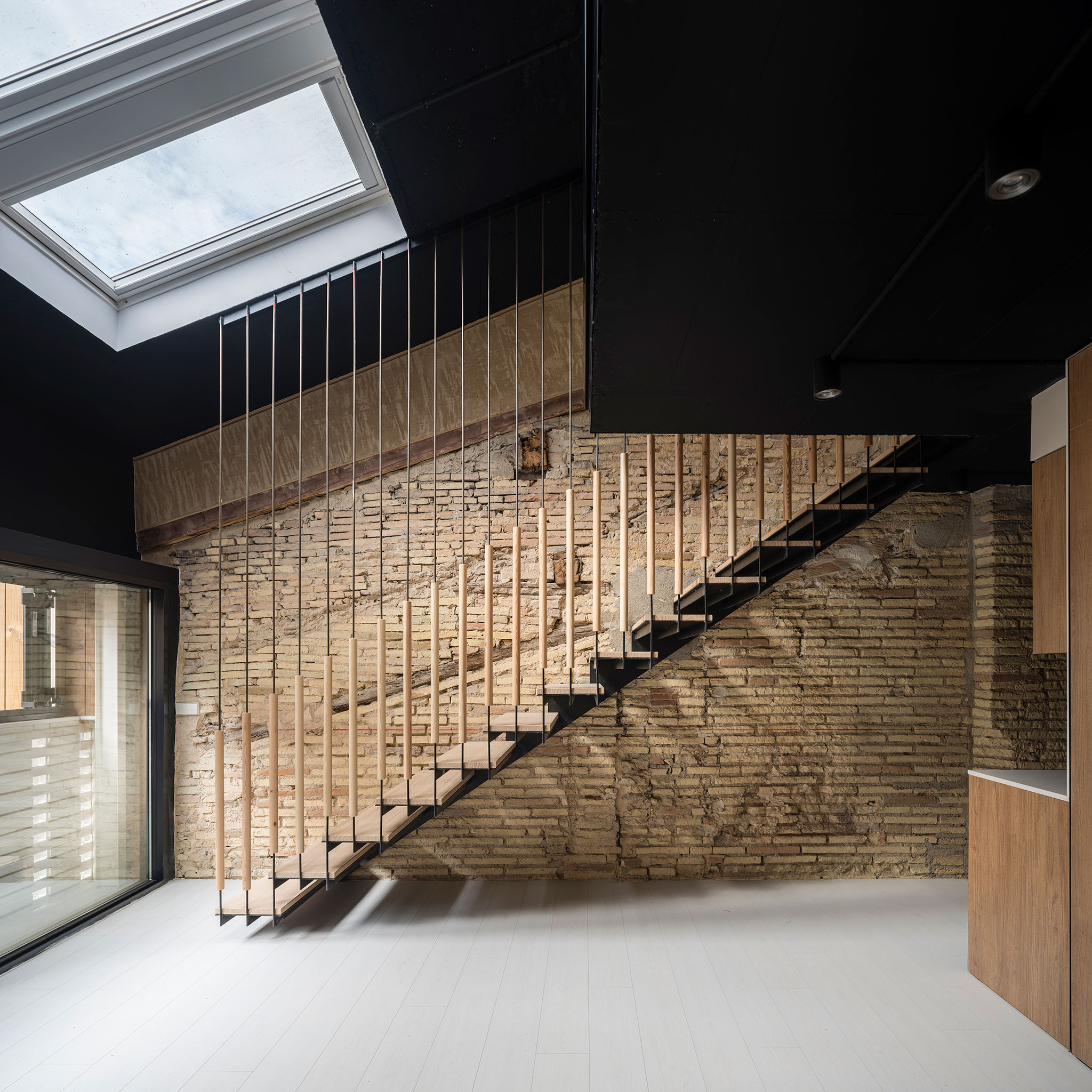
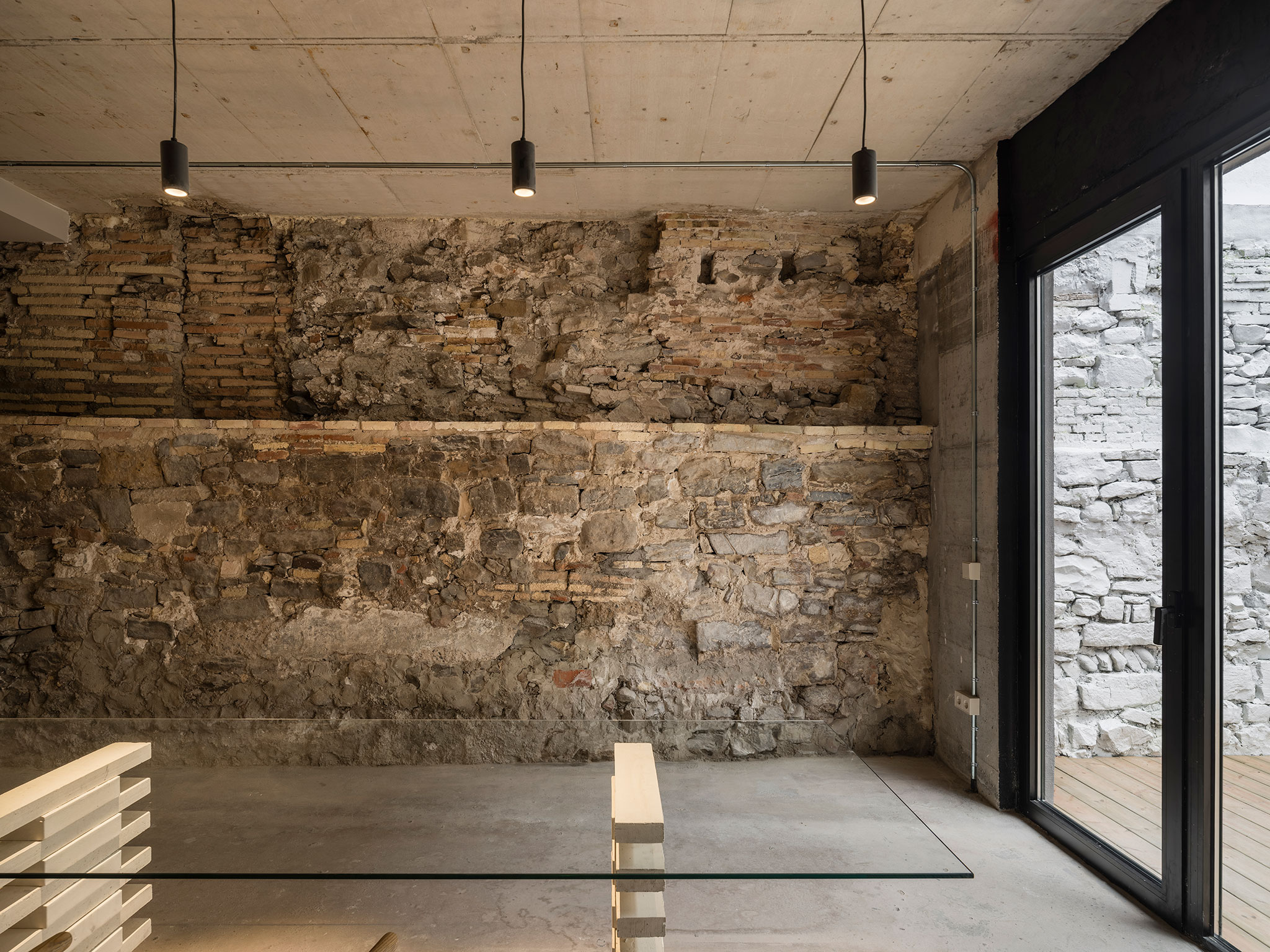
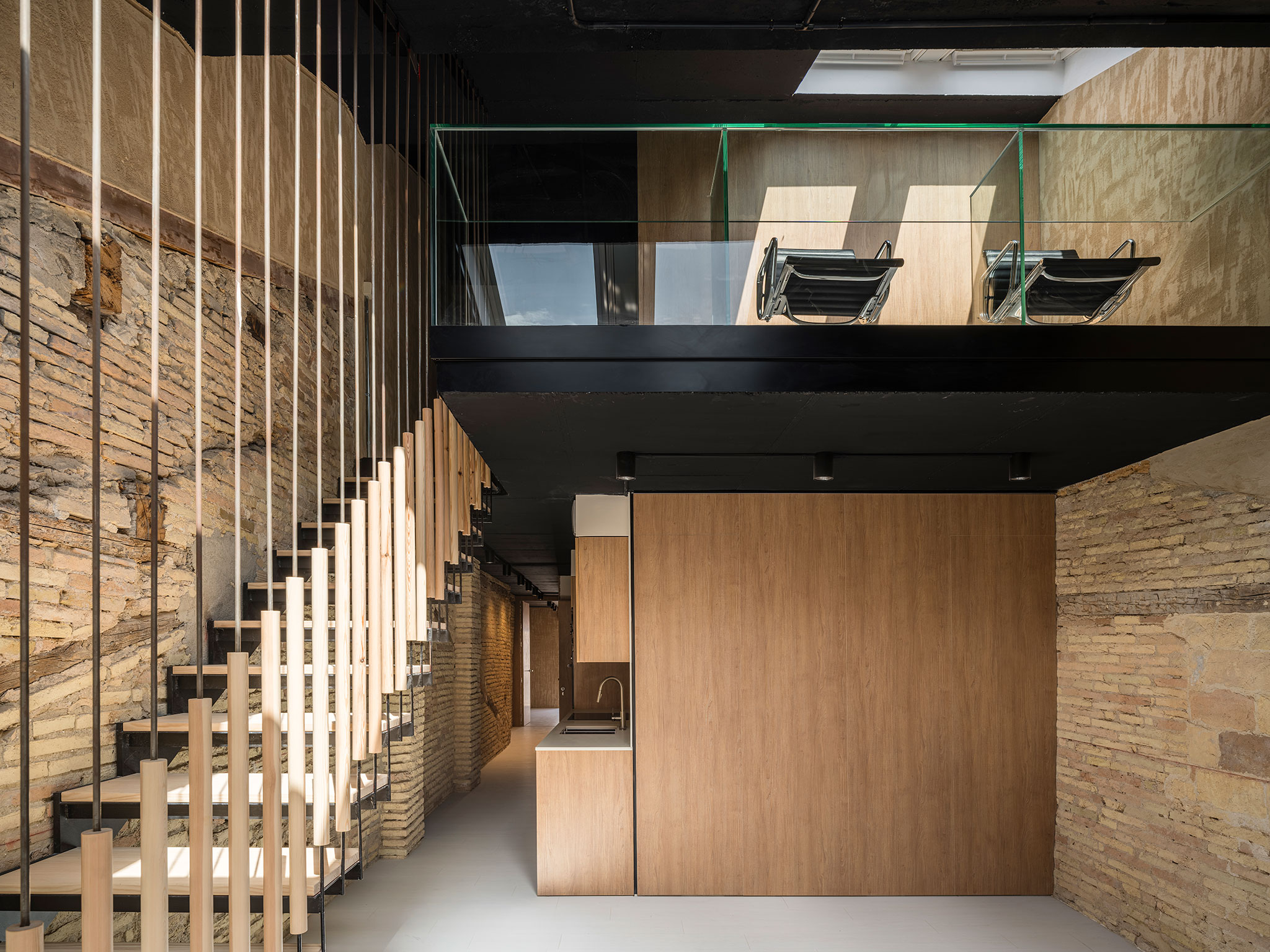
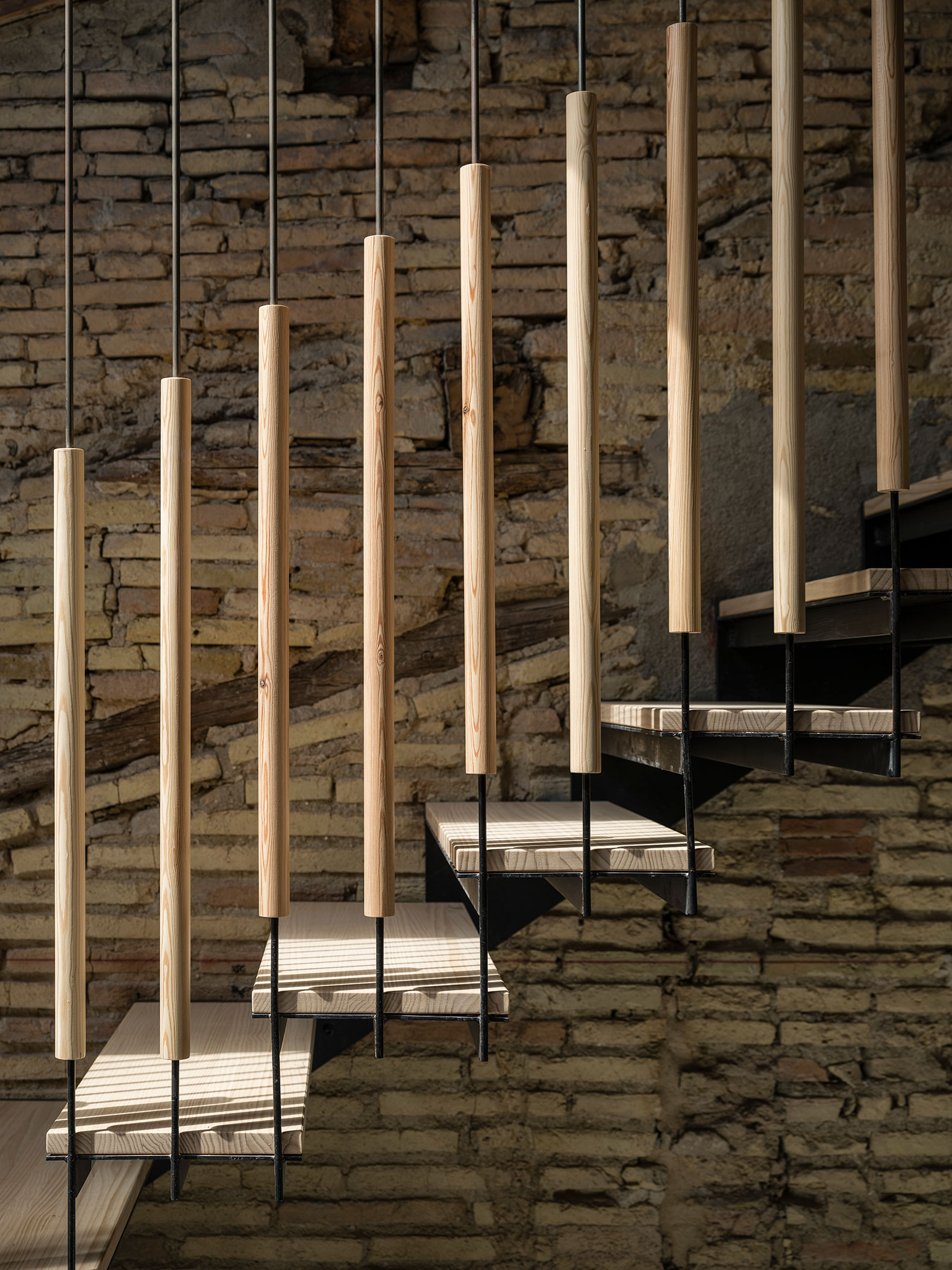
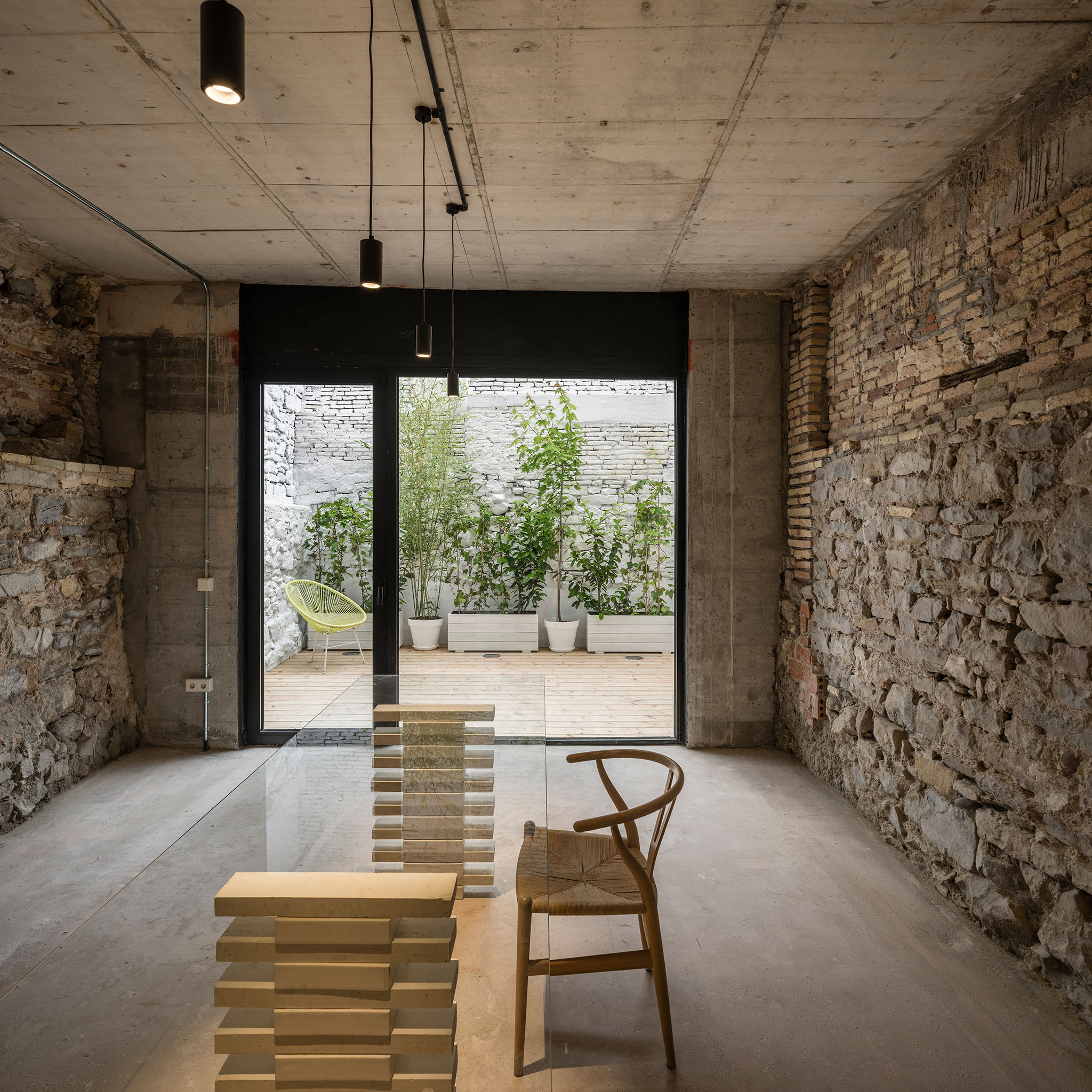
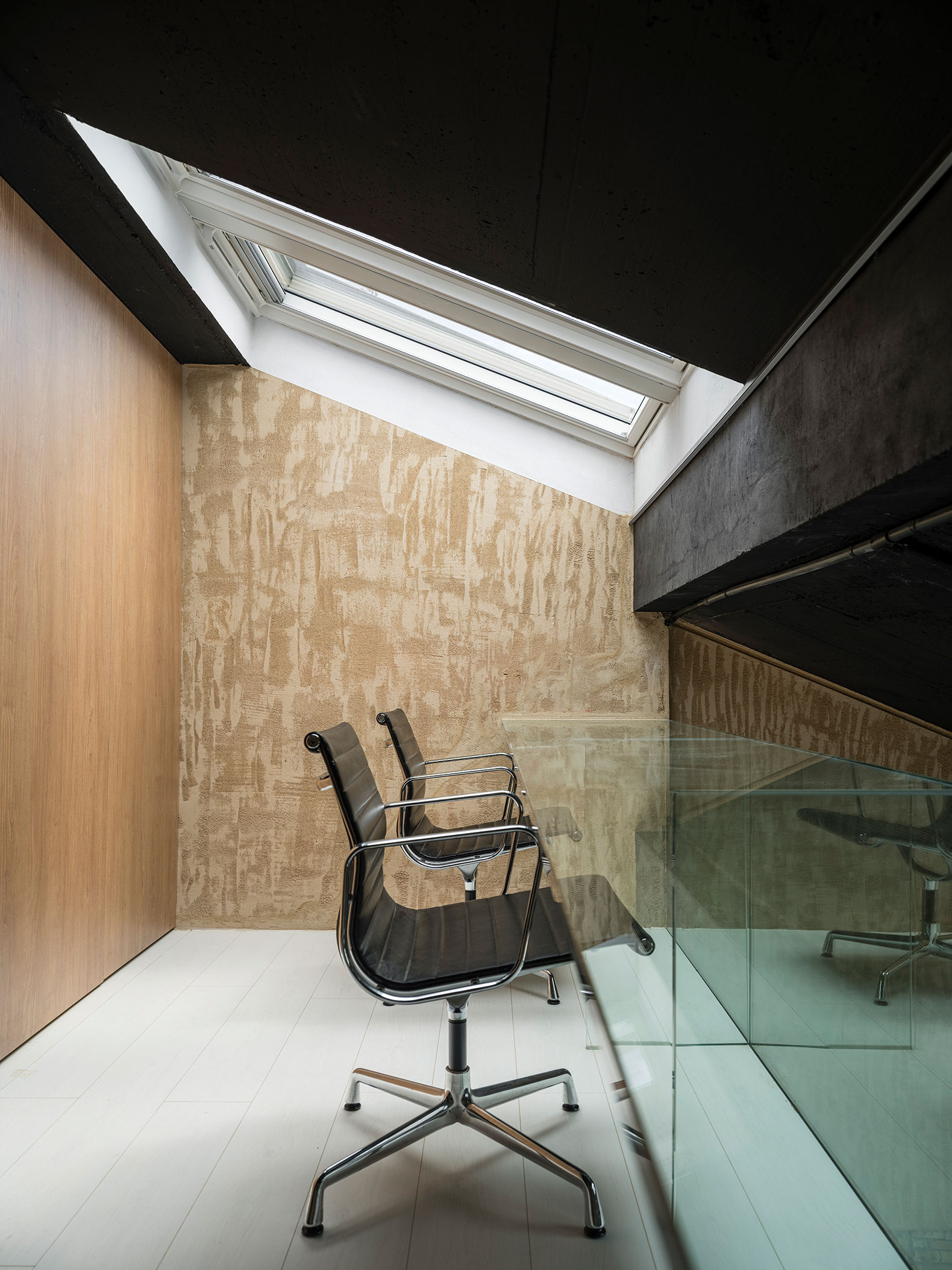
The new structure does not rest on the party walls but on the staircase core and the two façade planes—an operation that is, in some ways, counterintuitive. To preserve the structural stability of neighboring buildings, the party walls were maintained, revealing a palimpsest of stone, brick, and timber. The proposal leaves this tapestry exposed, stabilizing the most deteriorated areas with lime mortar.
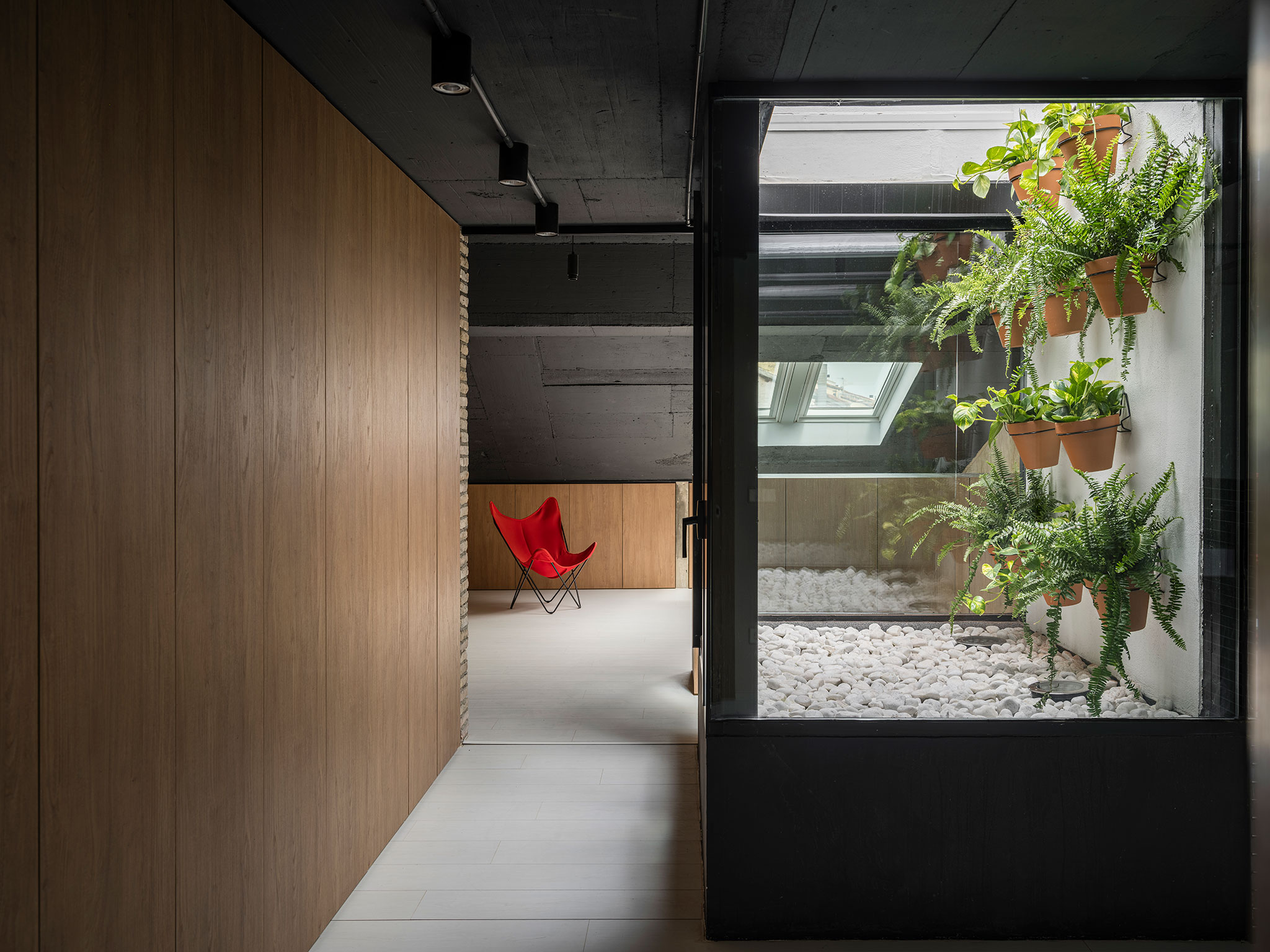
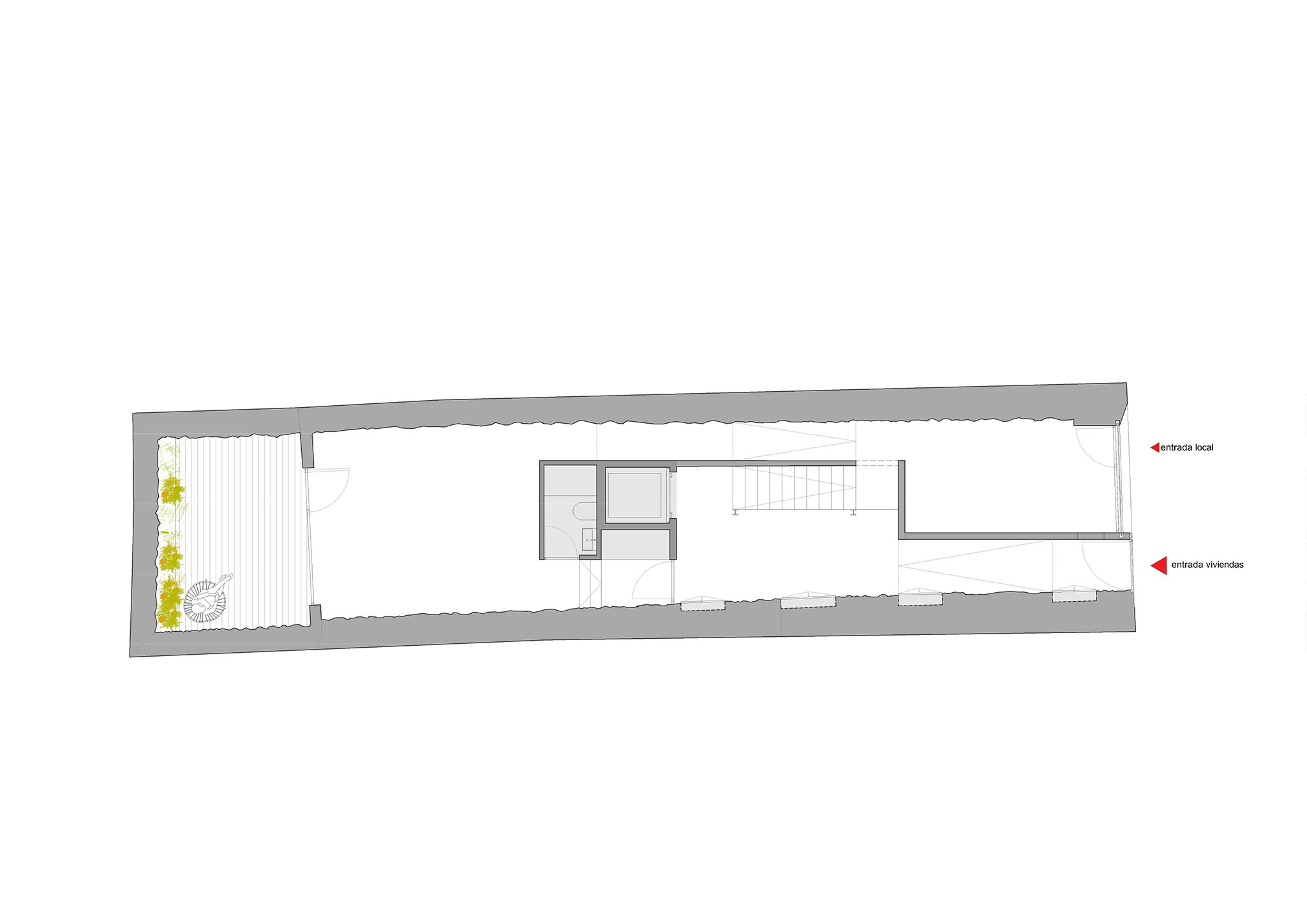
On the ground floor, the walls were thicker, limiting the space of both the entrance hall and the commercial unit. The former turns toward the skylight above the communal staircase, which bathes the rough surface of the exposed party wall in light. The latter connects the street to a small interior garden patio whose whitewashed walls amplify the light.
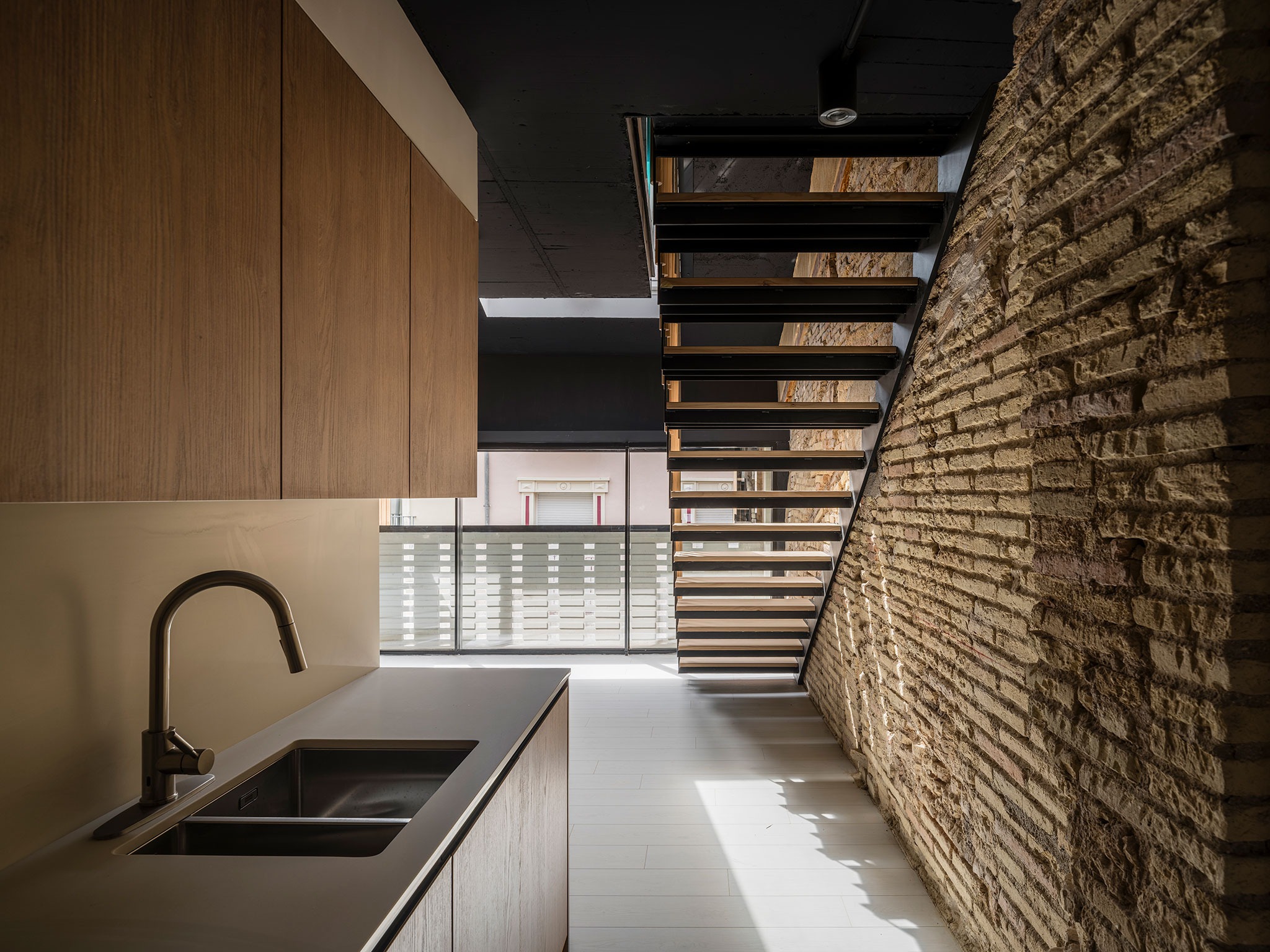
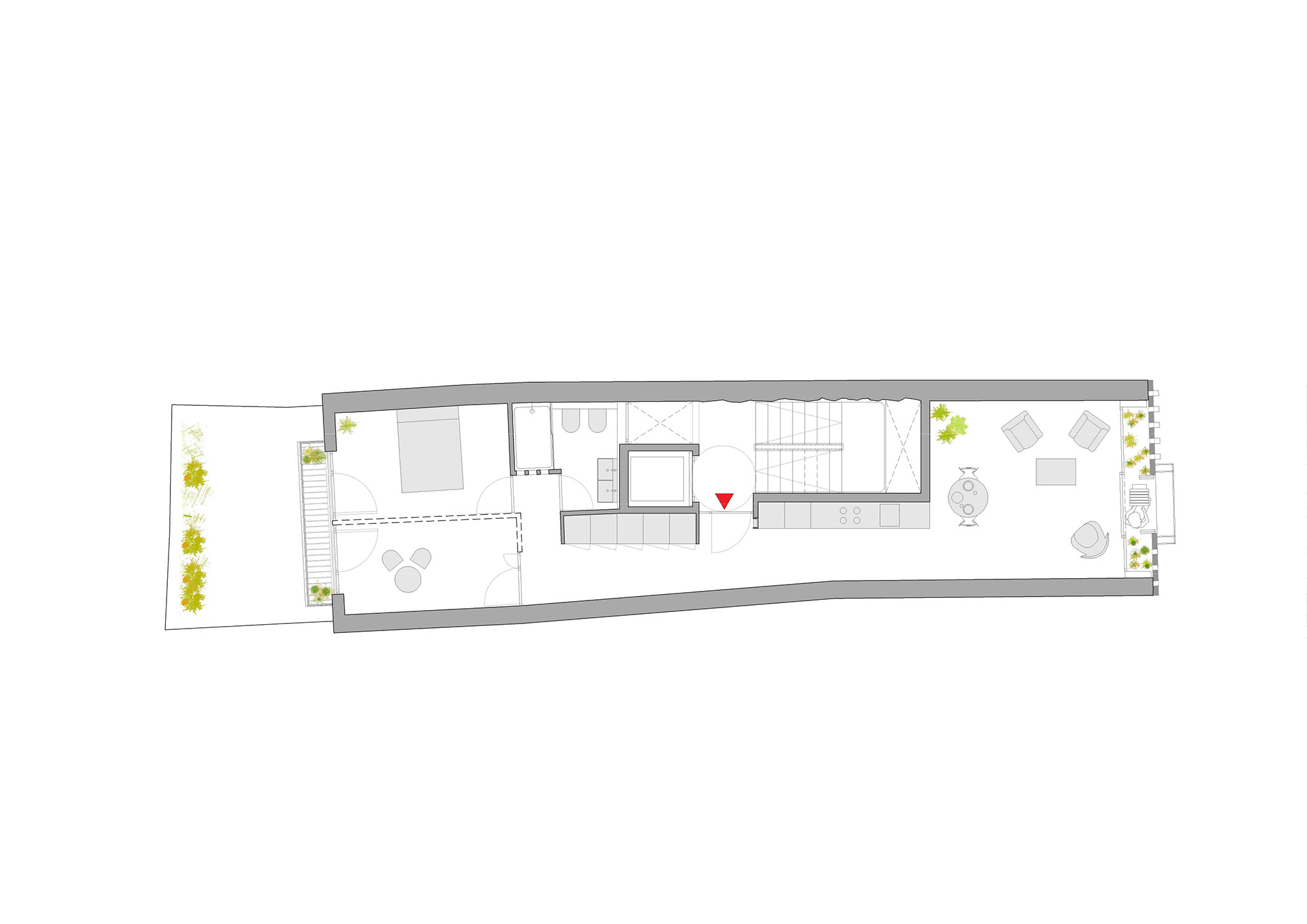
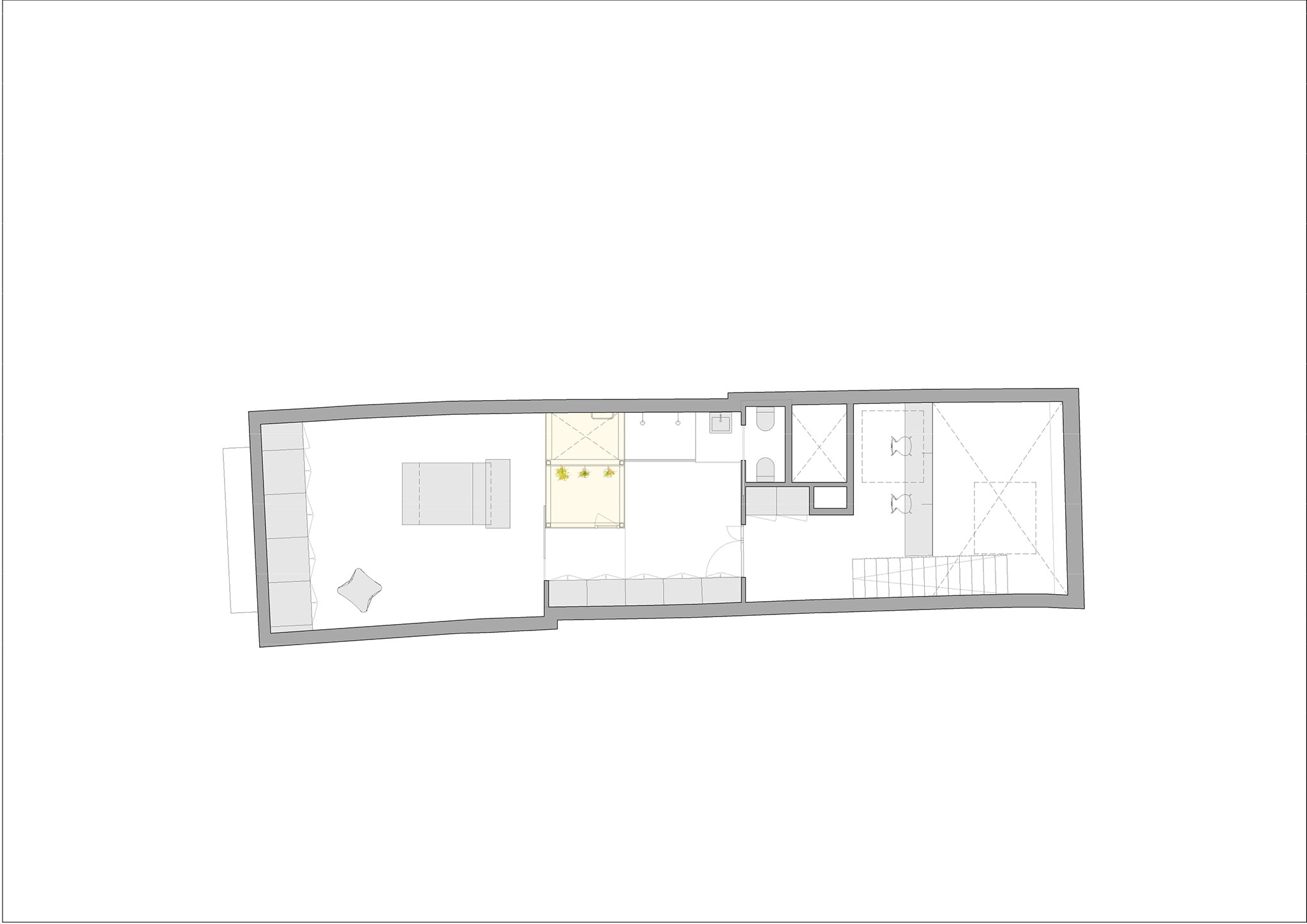
All homes have dual orientation, with living rooms facing the street and bedrooms facing the inner courtyard. To prevent the kitchen from encroaching on the living room, it was opened up to the hallway. The wardrobes are also placed in this space. Both elements are made of wood. The two bedrooms are of very different sizes but can be joined into a single space. The smaller one opens completely onto the corridor, visually connecting the entire depth of the dwelling.
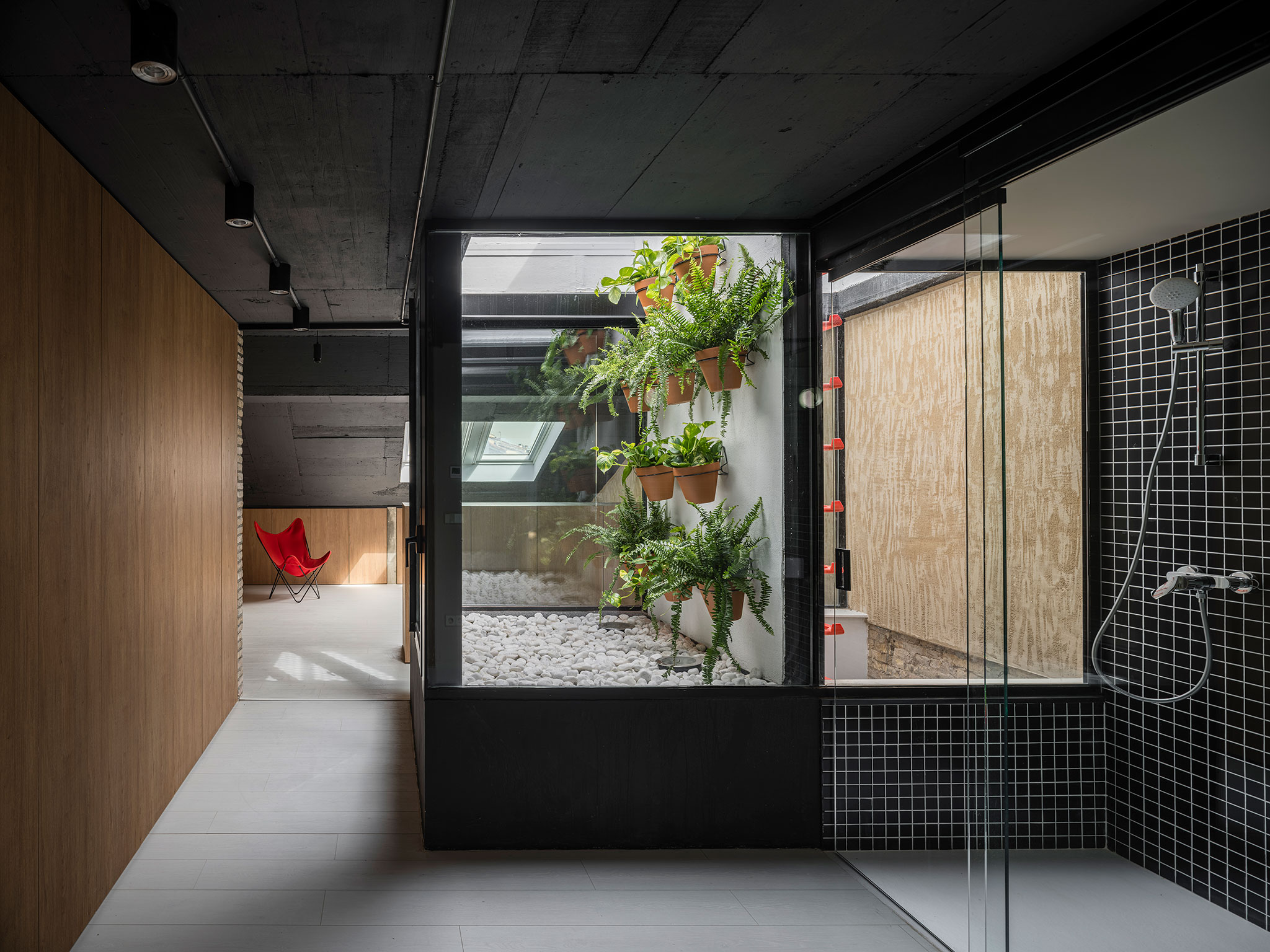
The interior façade opens up with the largest balconies permitted, giving access to a terrace protected by wooden roller blinds. In an attempt to reduce the scale of the building, the fourth floor is hidden from the street façade behind the wooden cornice, but in reality it contains a shutter that opens out onto an interior gallery. The sloping roof allows for a double-height living room, with an office in the loft and an en-suite bedroom lit by a private garden courtyard. The roof is perforated with three skylights that illuminate the living room, the loft, and the attic bedroom.
The building's climate control is provided by an aerothermal system that takes advantage of the thermal inertia of the concrete slabs and party walls, and which has obtained the highest energy rating.
It has been a slow-cooking project in which it has taken a lot of effort to convince the parties involved. The aim was simply to make better use of a small plot of land between party walls, so common in our historic European town centers, without resorting to historicist pastiche and pushing the interpretation of the regulations to the limit.


![Bois de Cergy Leisure Centre by PLURIEL[LES] ARCHITECTES. Photograph by Charly Broyez](/sites/default/files/styles/mopis_home_news_category_slider_desktop/public/2026-10/metalocus_PLURIEL-LES_Bois-de-Cergy-Leisure-Centre_14_2p.webp?h=3b4e7bc7&itok=DISDLRbJ "Bois de Cergy Leisure Centre by PLURIEL[LES] ARCHITECTES. Photograph by Charly Broyez")


