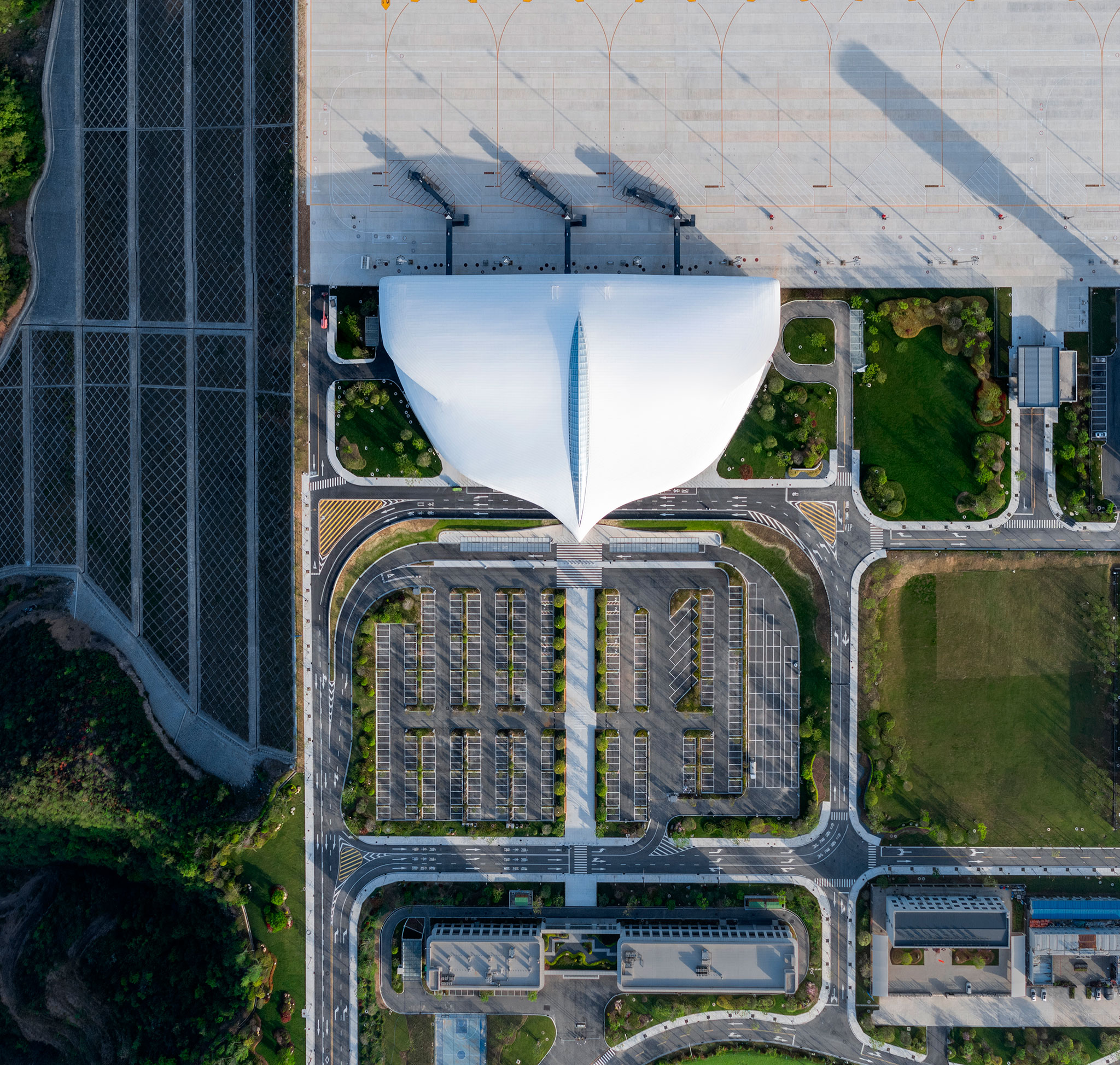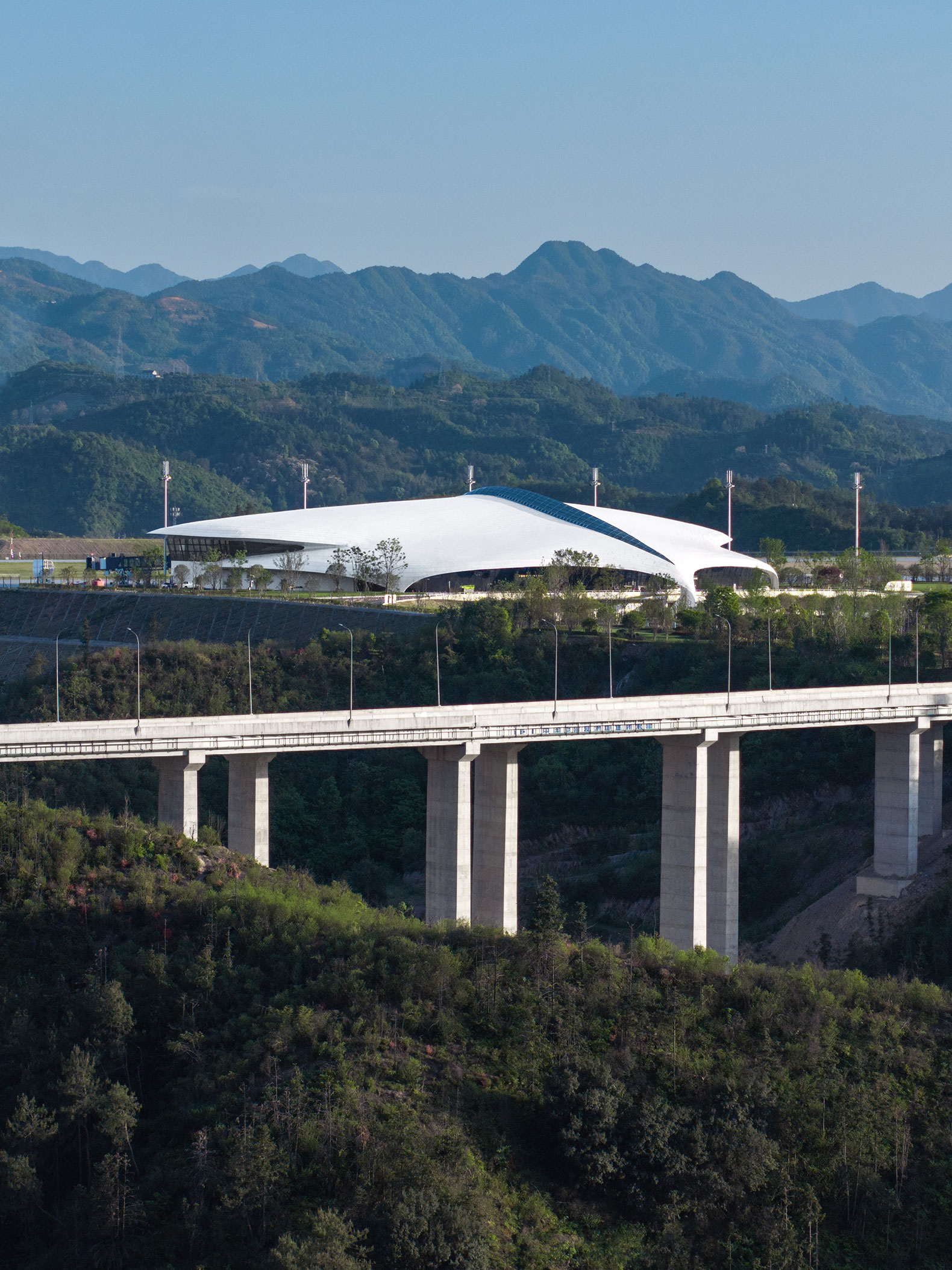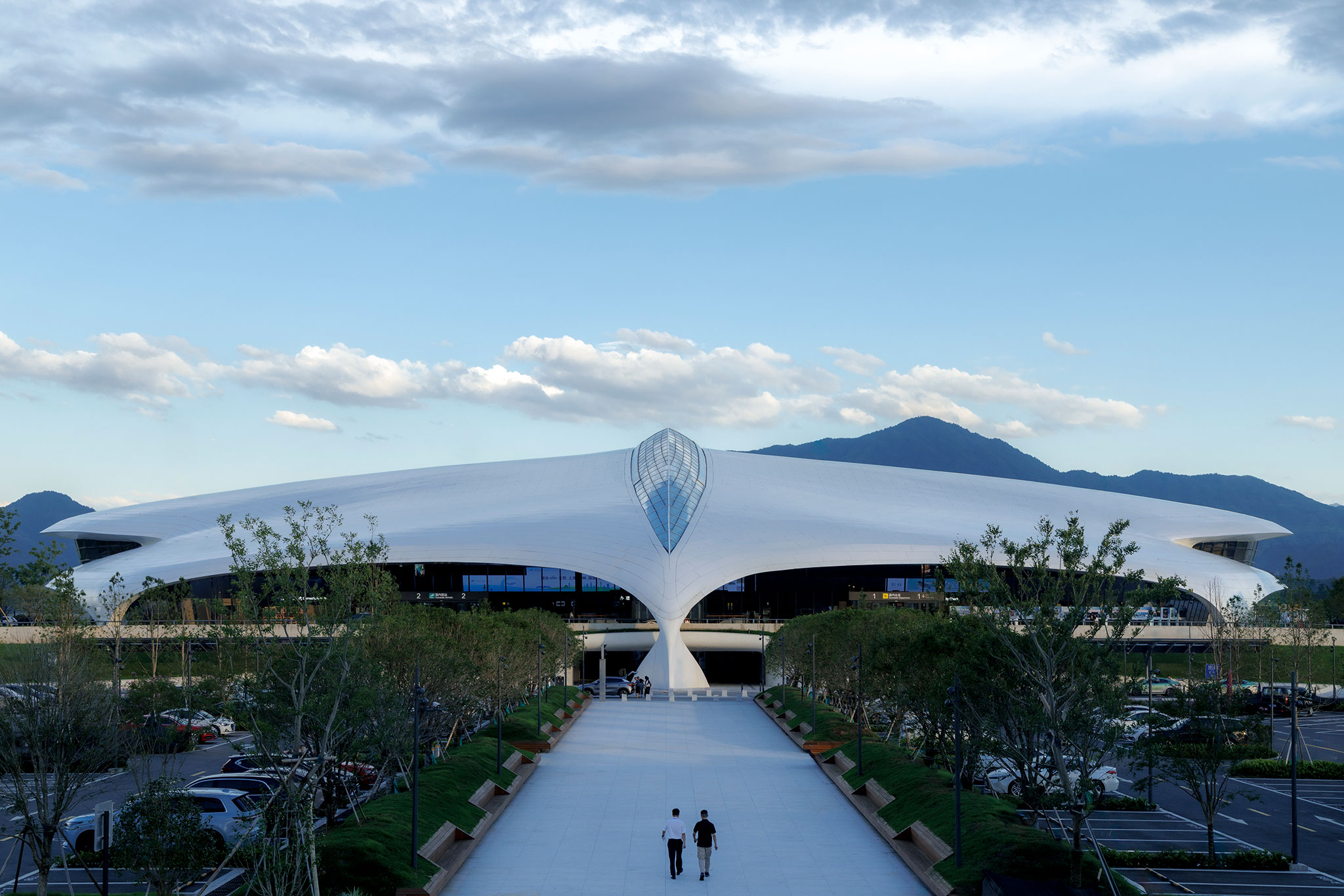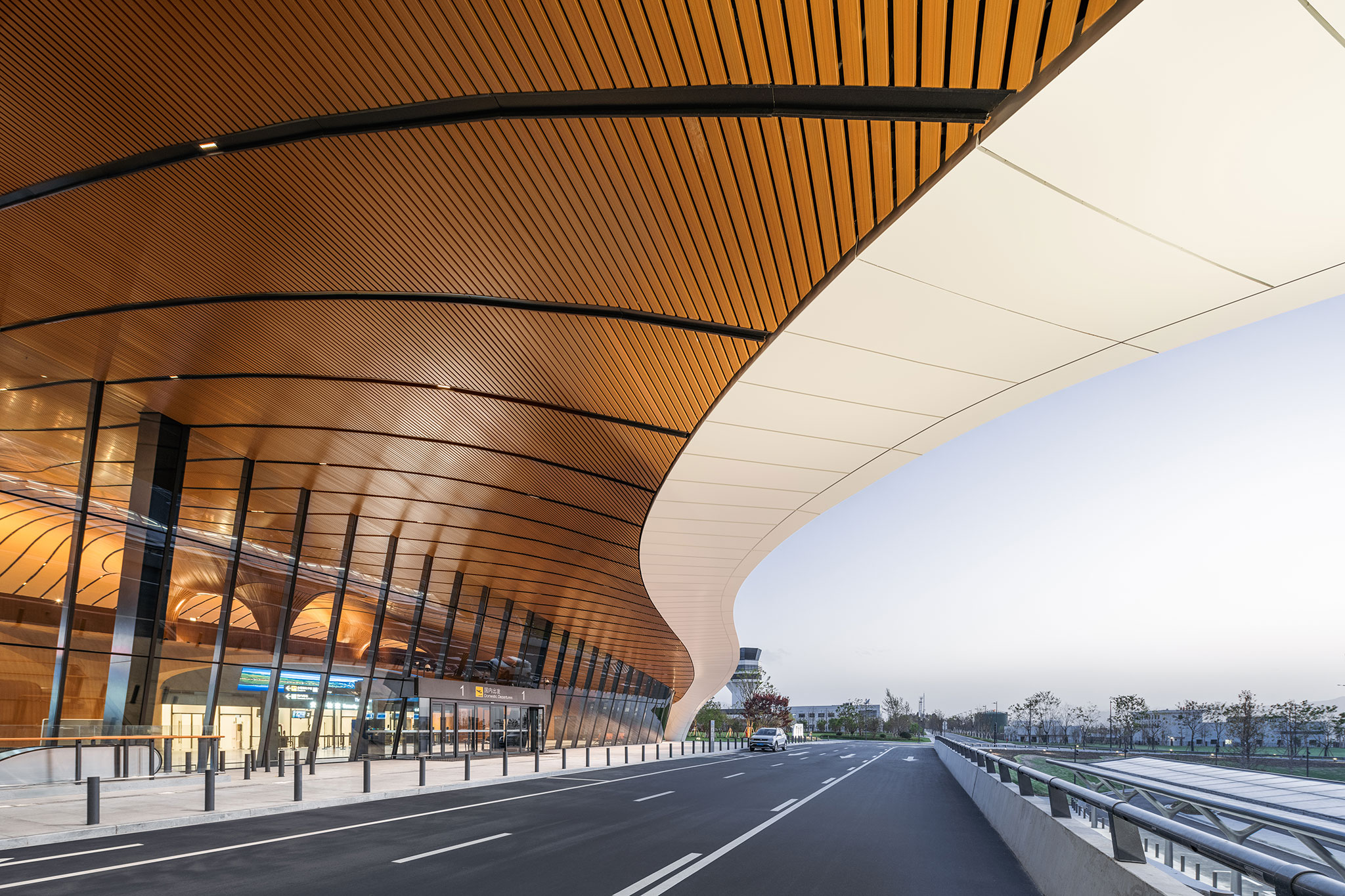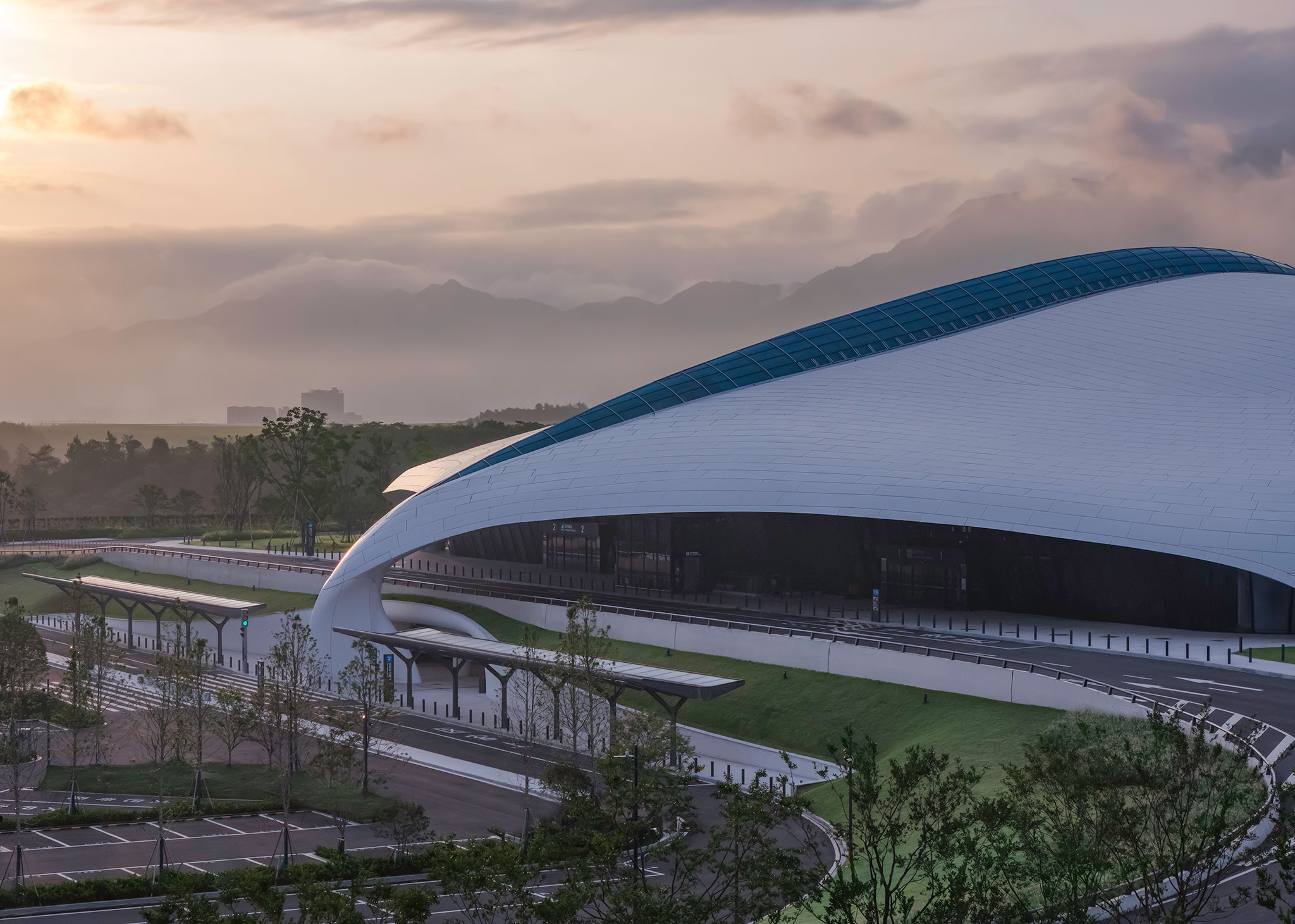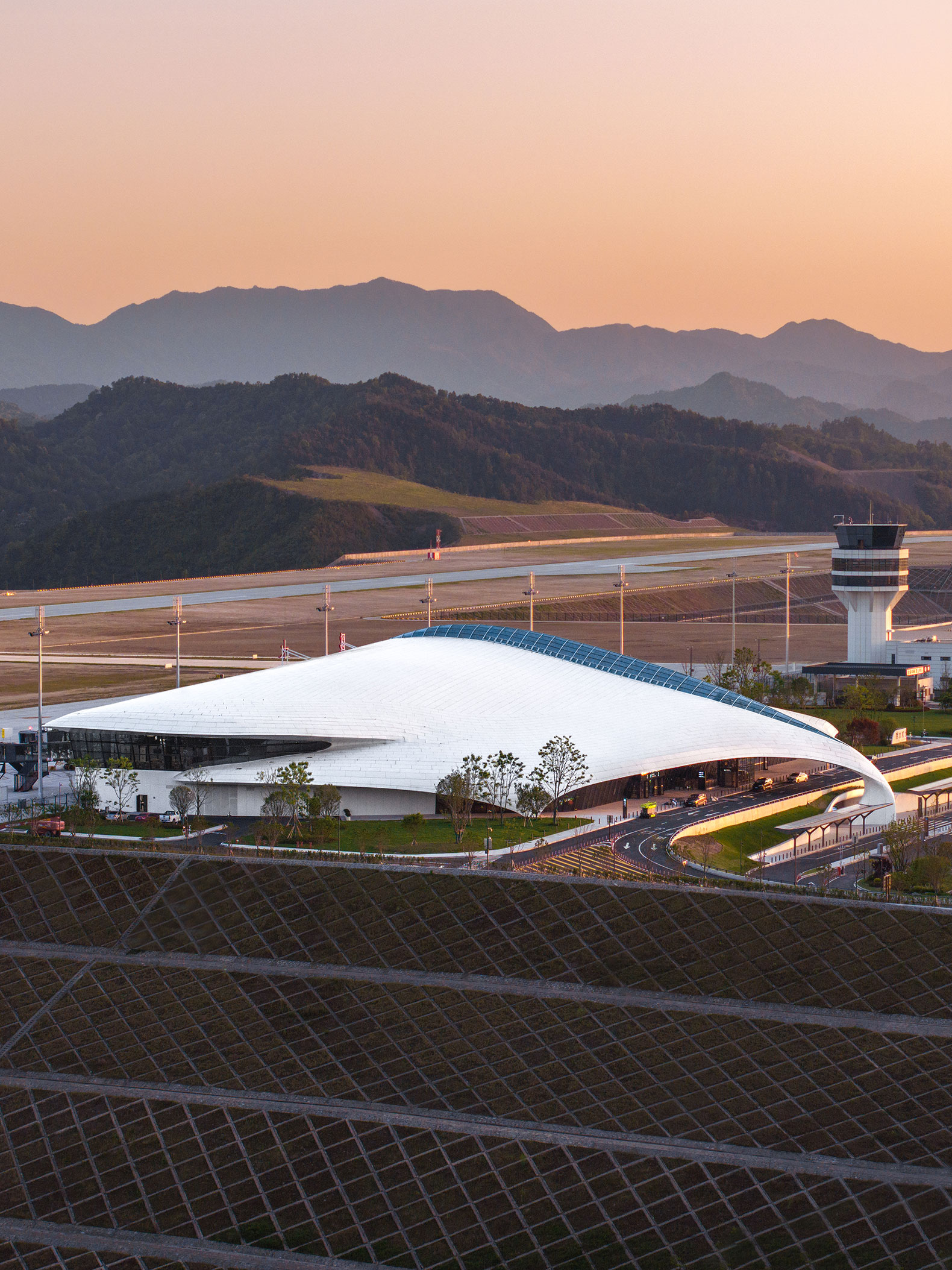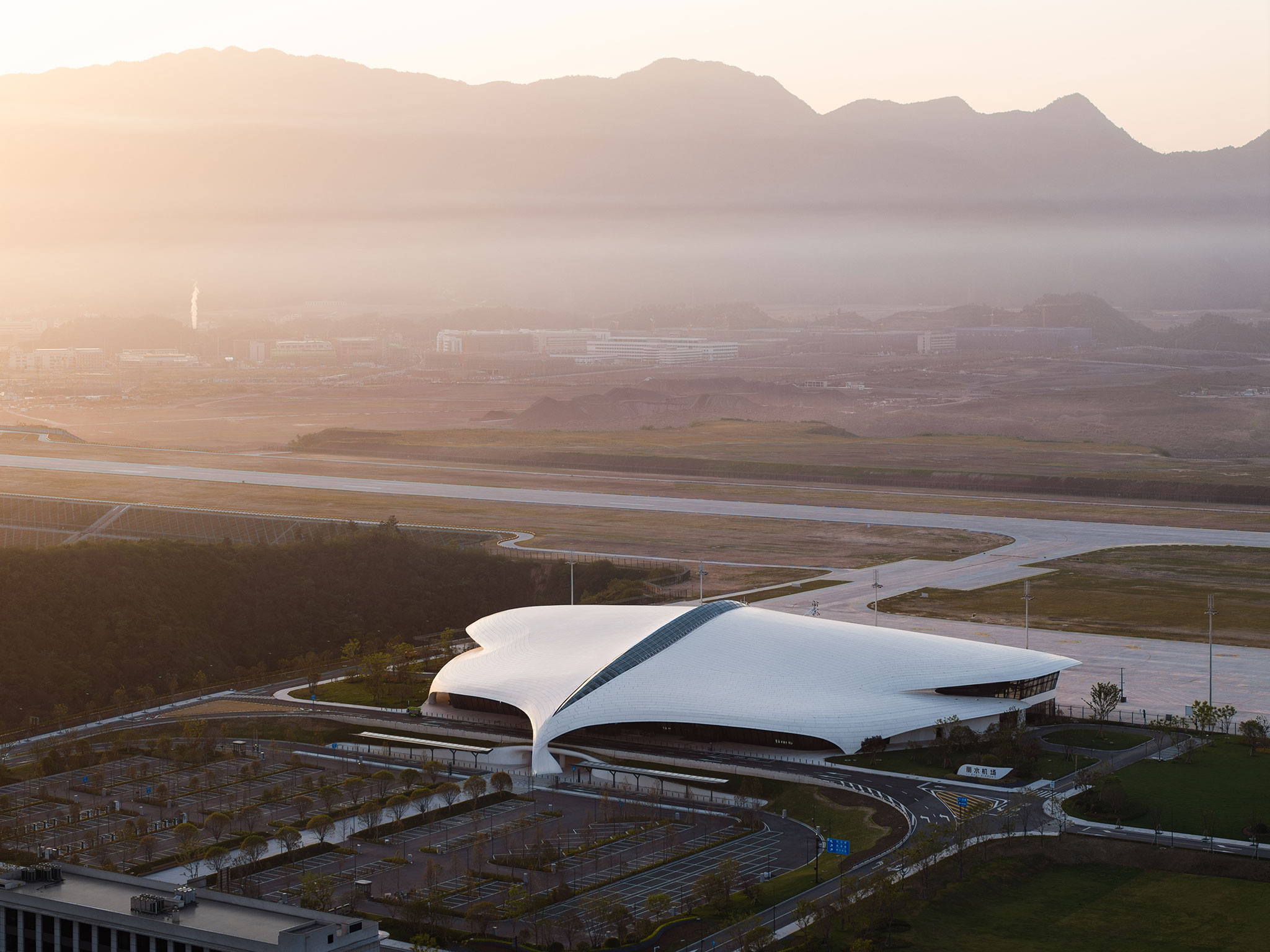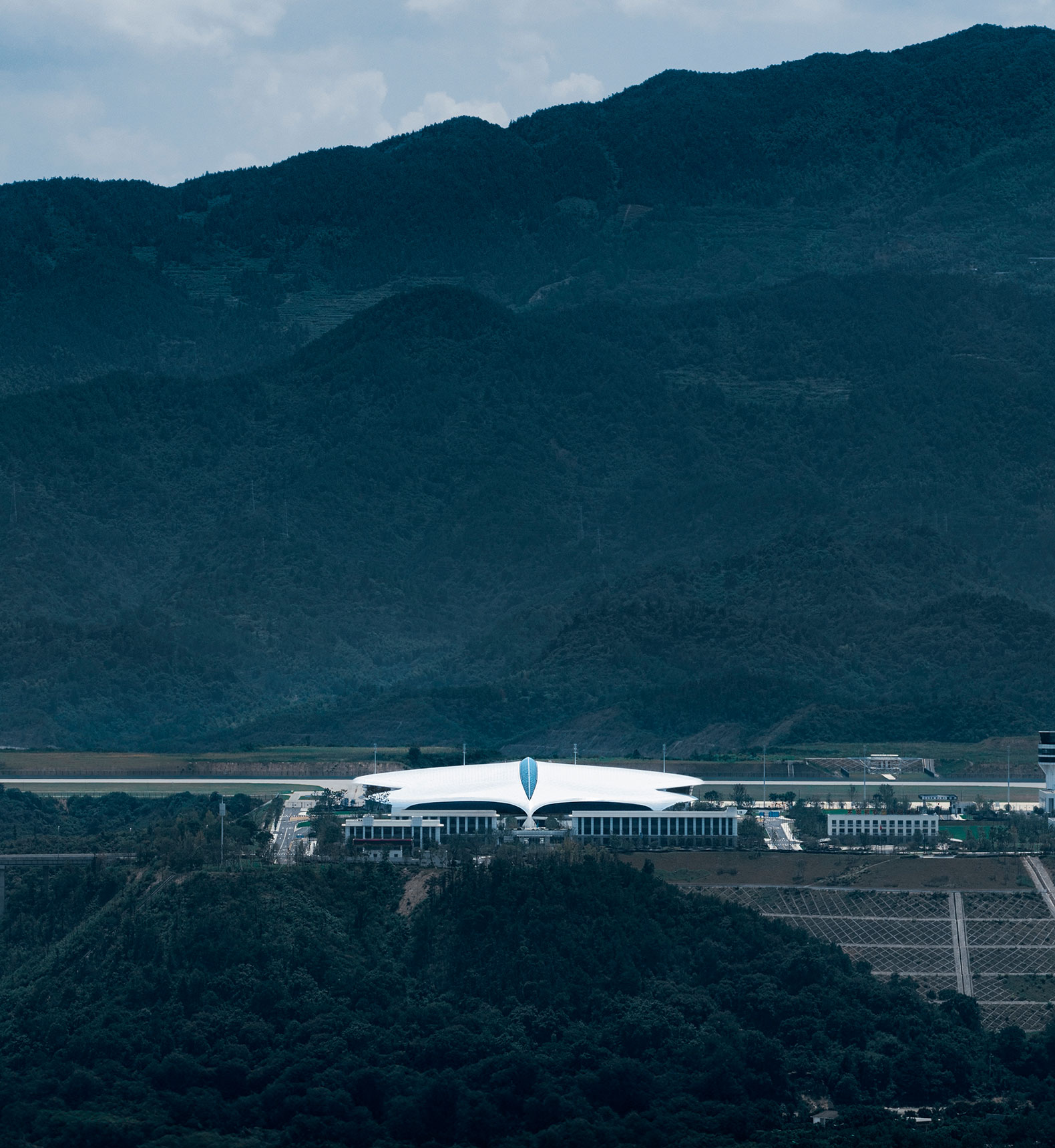
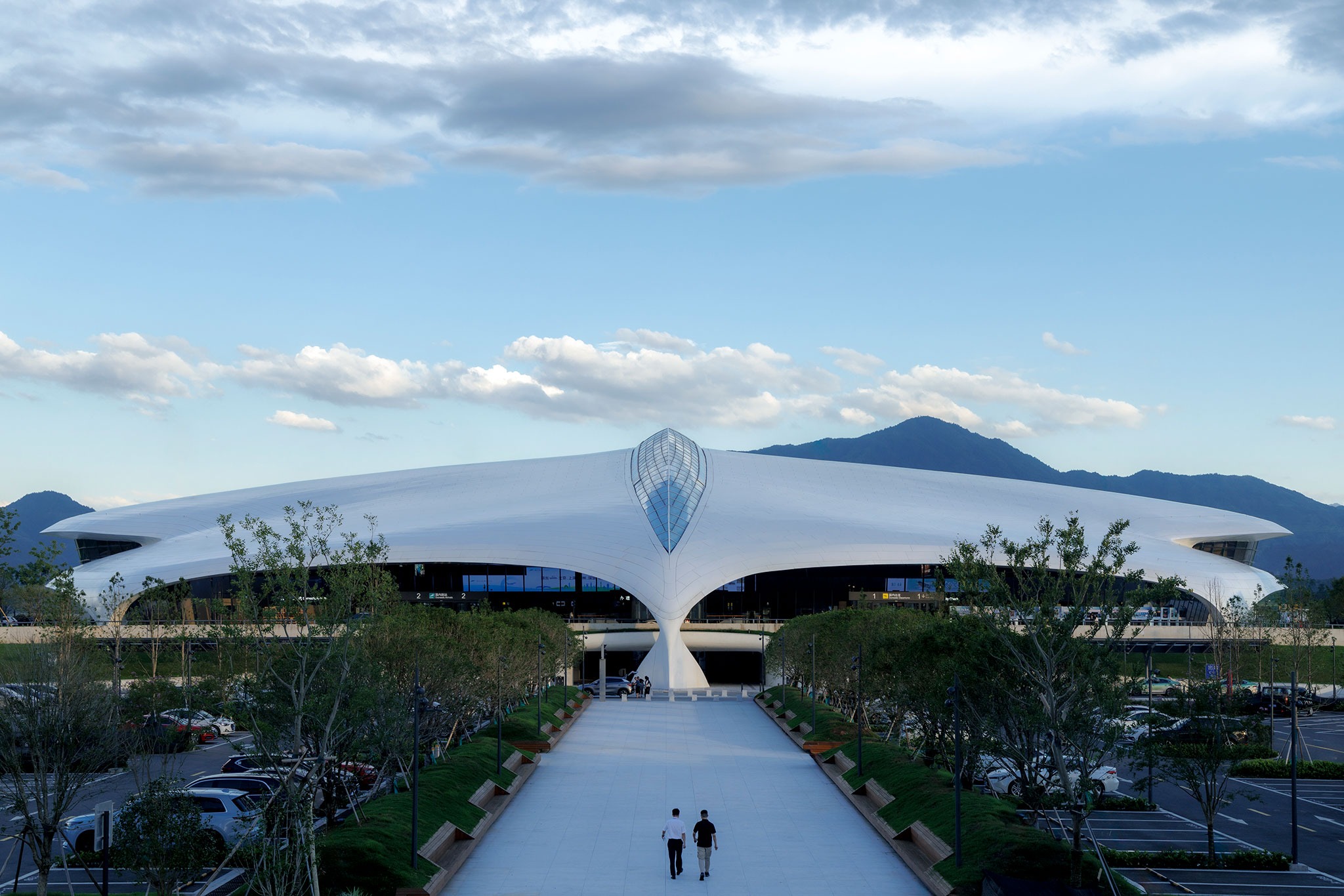
MAD Architects got the inspiration from the surrounding landscape, using it as the architectural concept for Lishui Airport. The design follows the natural contours of the terrain, integrating seamlessly with its smooth, continuous volumes of fluid geometry. The building thus resembles a white bird perched atop the mountains.
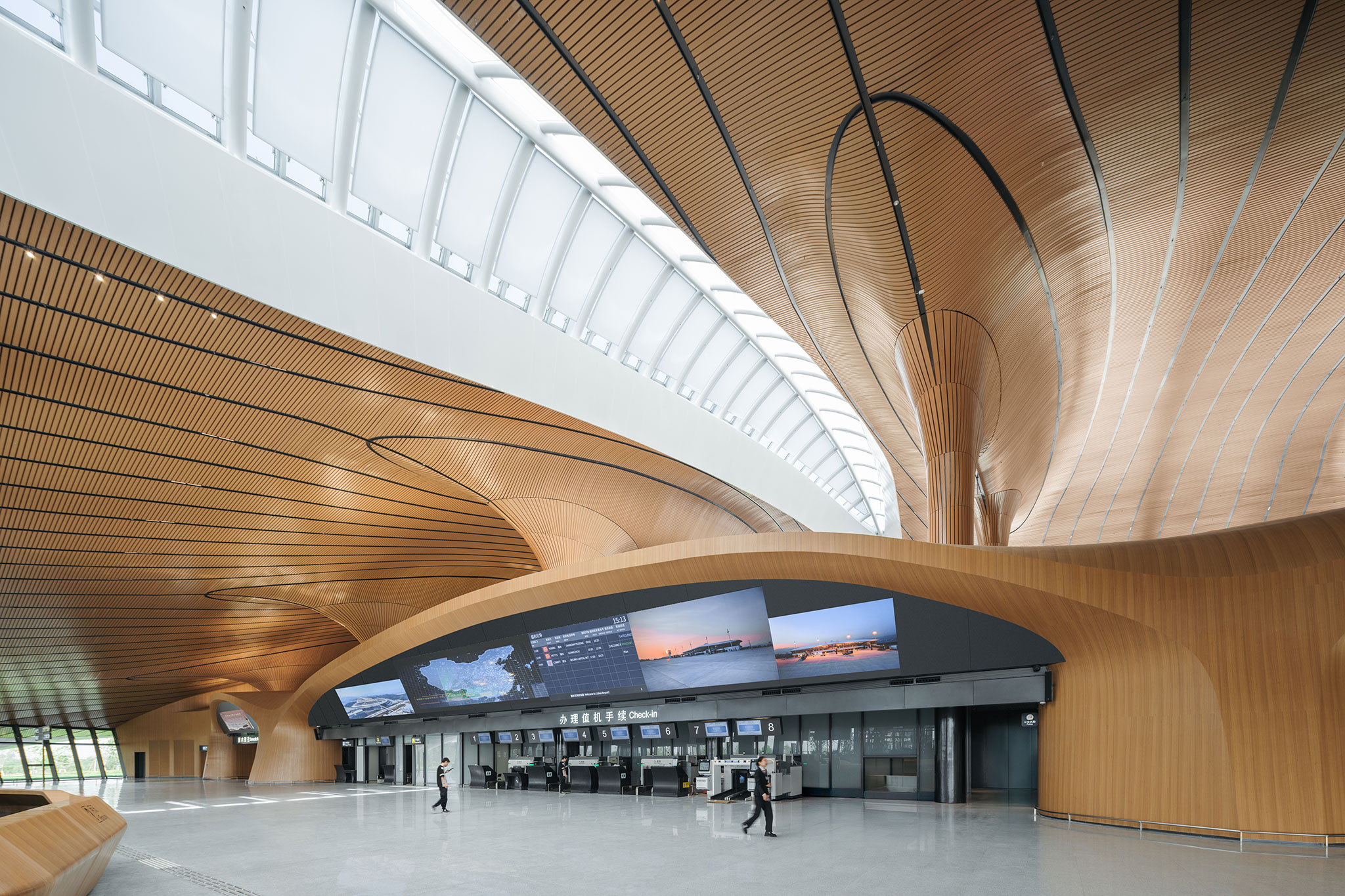
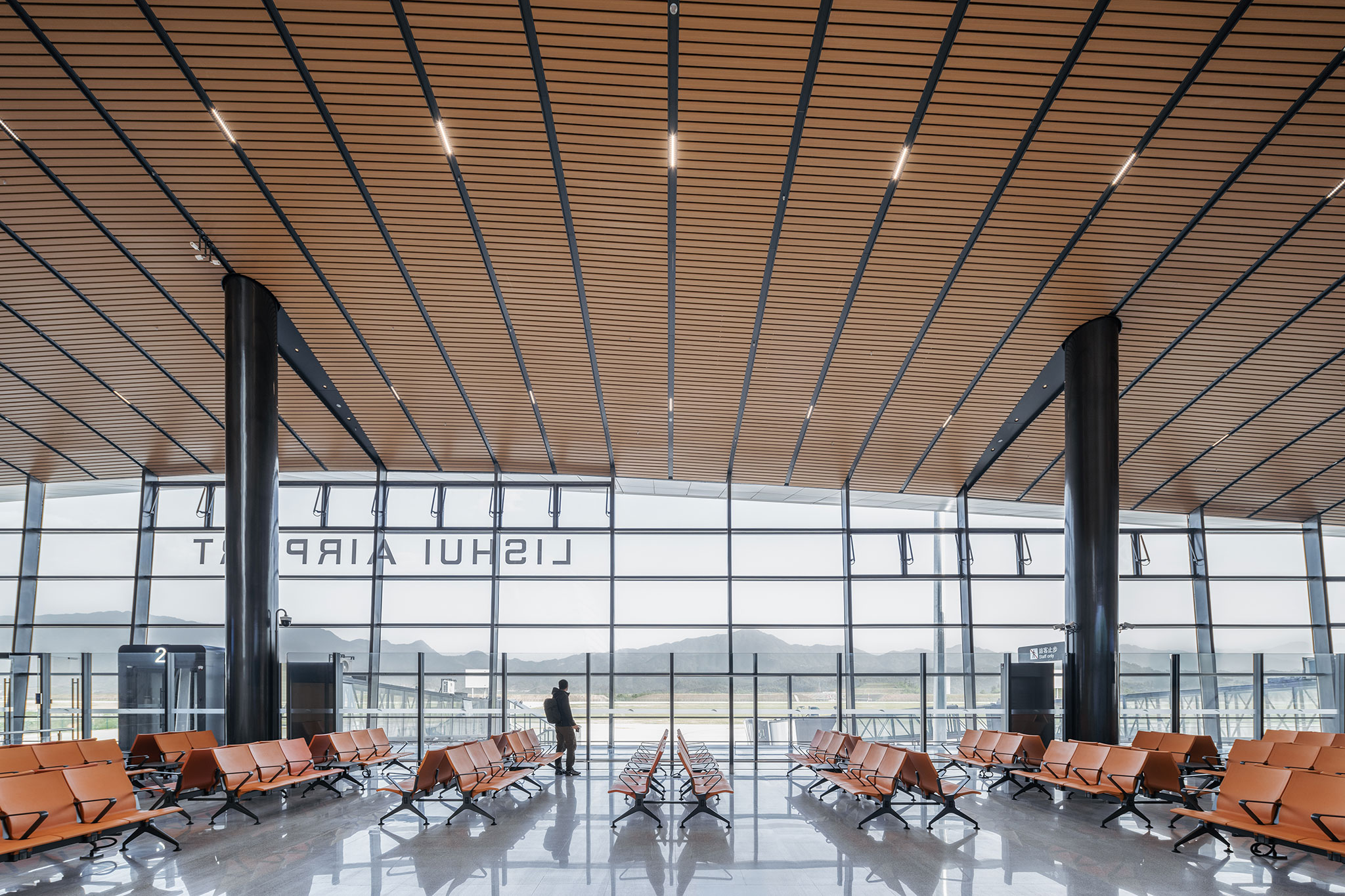
The structure comprises fourteen umbrella-shaped columns supporting a double-layered roof. The exterior is clad in aluminum panels, while the interior features warm, naturally textured materials. The transparent envelope blurs the boundary between interior and exterior, framing the views of the stunning landscape in which it is situated.
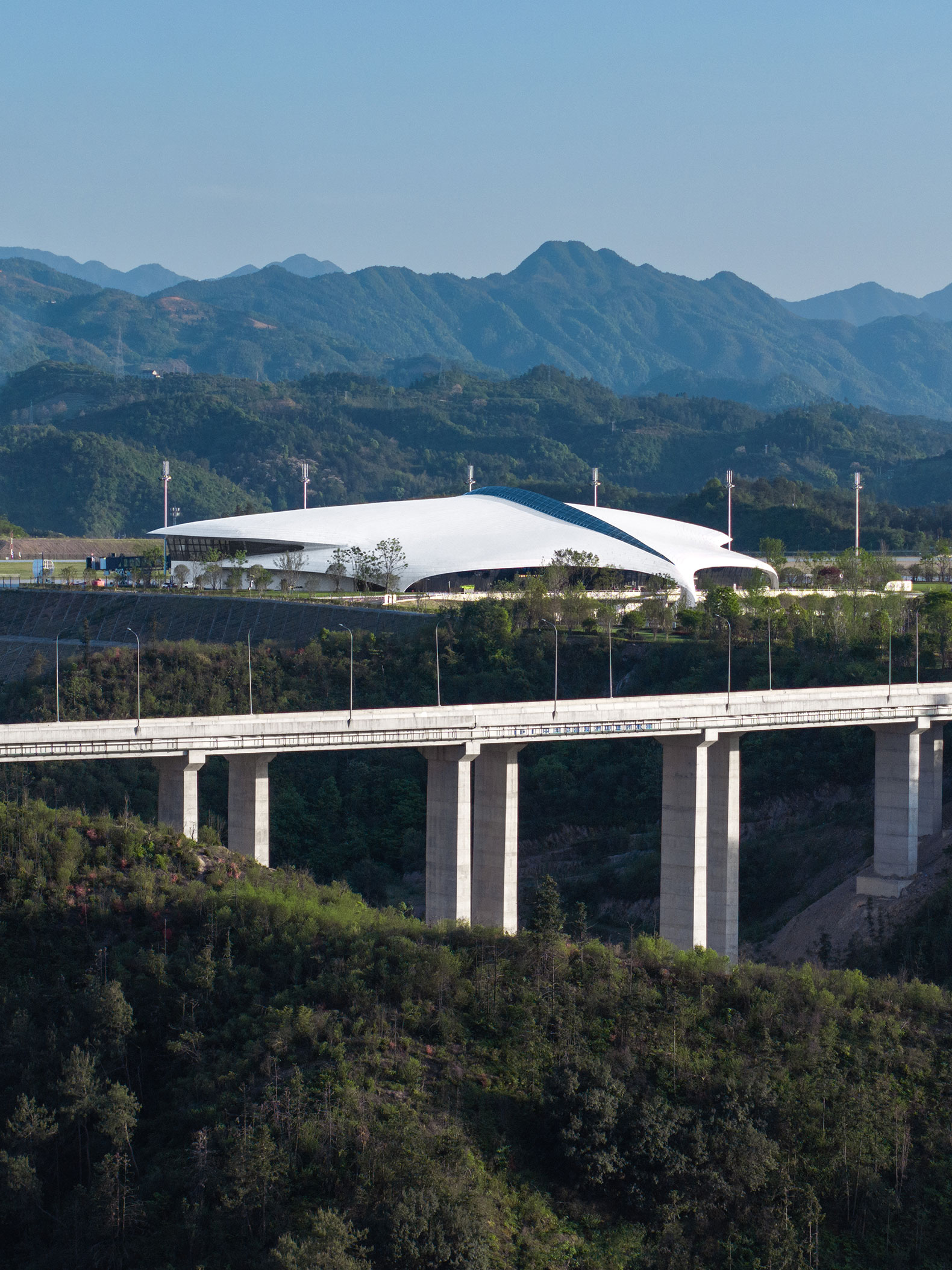
Lishui Airport by MAD. Photograph by Ding Junhao.
Project description by MAD Architects
The Lishui Airport in Zhejiang Province, designed by MAD, has officially begun operations, marking the region's first direct connection to China’s national aviation network. Initiated in 2,008 and completed after 17 years of planning and construction, the project signals a new chapter for the mountainous region of southwestern Zhejiang.
Located about 15 kilometers southwest of Lishui’s center, the airport sits within a low mountain and foothill valley shaped through extensive land reclamation. The construction required significant earthworks with cut-and-fill differences reaching nearly 100 meters in certain areas. As a result, Lishui Airport ranks amongst the most topographically complex airport projects in East China.
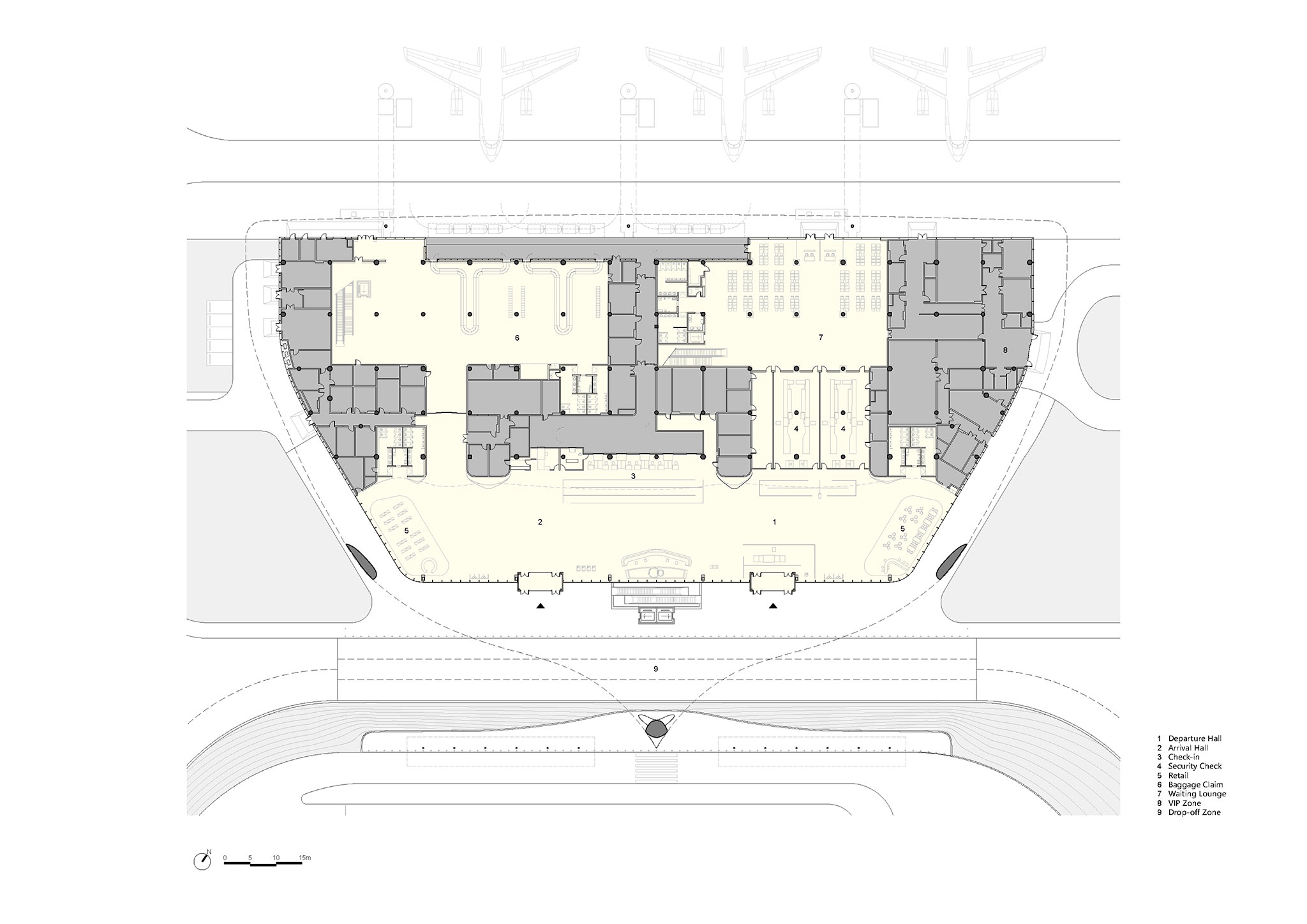
The airport site spans 2,267 hectares. The terminal building measures approximately 12,000 square meters and includes eight aircraft parking bays. In its initial phase, the airport is designed to handle up to one million passengers annually, alongside a cargo throughput capacity of 4,000 tons.
Traditionally conceived as purely functional infrastructure, airports are often detached from daily urban life. With Lishui Airport, MAD proposes an alternative model: a transportation hub that also operates as a civic space, an ecological landmark, and a place of psychological transition, offering travellers a moment of calm within the movement of travel.
The architectural concept draws directly from the surrounding landscape. The terminal follows the natural contours of the site, integrating its gentle slope into the terrain. Soft, continuous volumes and fluid geometries give the building the appearance of a white bird resting quietly among the mountains and forests.
The terminal’s double-layered roof is clad in silver-white aluminium panels, creating a compact yet expressive silhouette that responds to changing light and weather. The roofline evokes the imagery of mist-covered hills and birds in flight, allowing the architecture to register as part of the broader landscape rather than an isolated object.
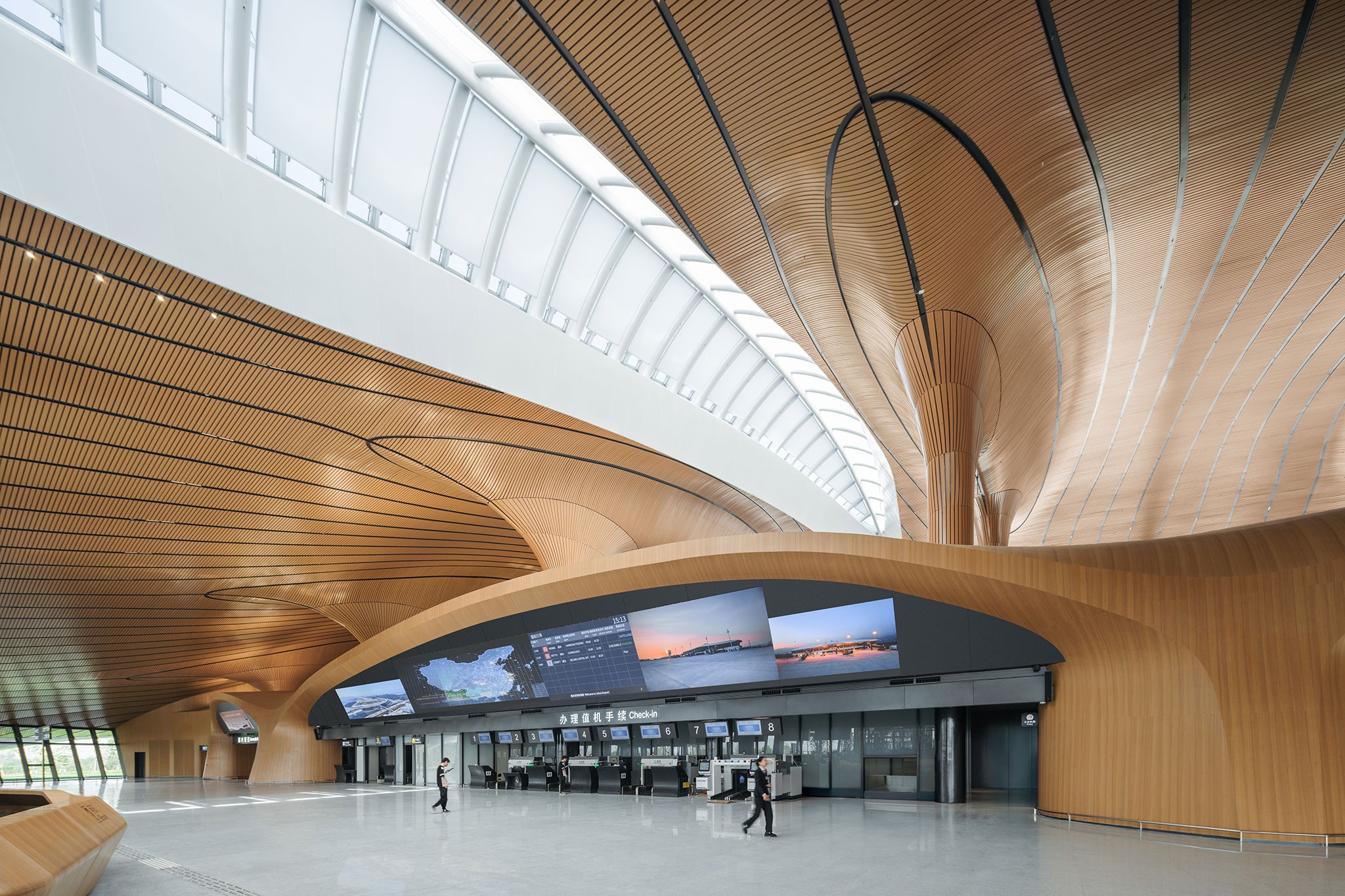
"We used materials with warm tones and natural textures to create a bright and airy interior. By adopting a one and a half story layout, the airport remains compact, while supporting daily comfort and engaging in a dialogue with nature."
Ma Yansong.
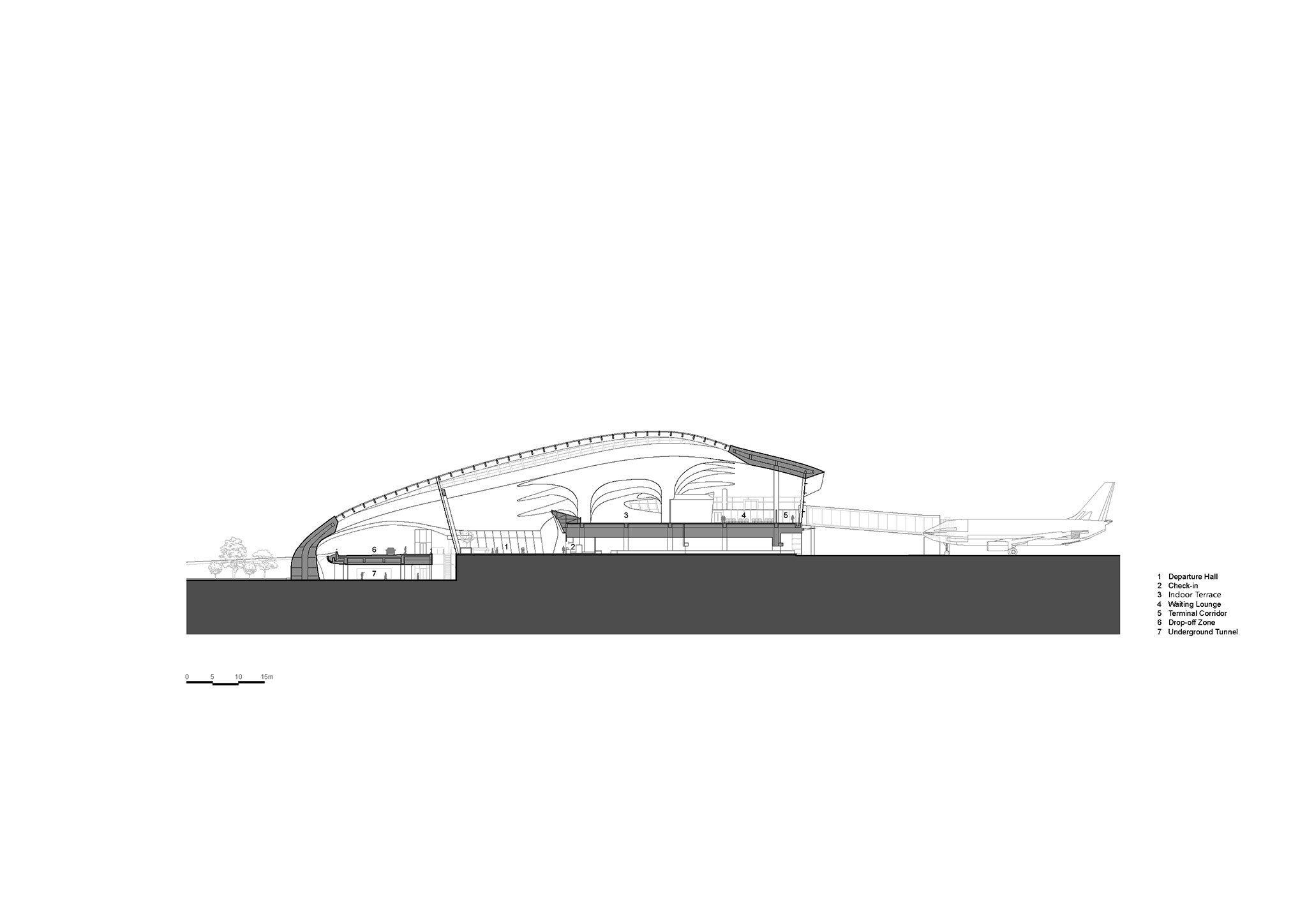
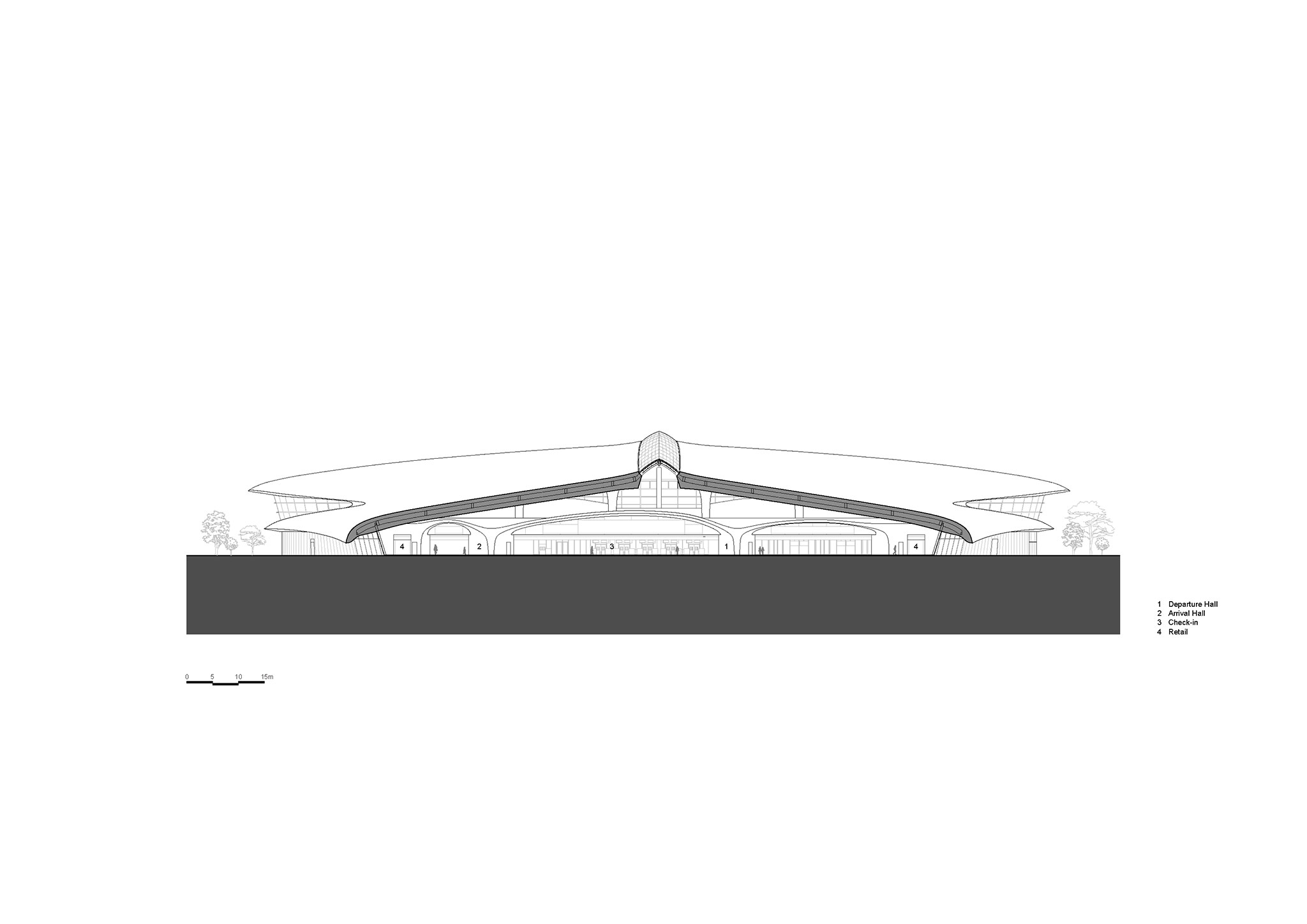
Fourteen umbrella-shaped structural columns support the lightweight roof, while wood-toned interior grilles introduce warmth and visual rhythm. At the roof’s apex, a spindle-shaped skylight brings daylight deep into the terminal, animating the interior with changing natural light.
Transparent curtain walls dissolve the boundary between inside and outside, framing views of the surrounding mountains. The first-floor lobby varies in height, ranging from approximately 4.5 meters to 13 meters, creating a carefully calibrated spatial experience that avoids the excess scale typical of large transport halls while reducing energy consumption. Narrow acoustic slots integrated between interior panels help absorb noise, contributing to a quieter and more comfortable waiting environment.
Lishui Airport by MAD. Photograph by Blackstation.
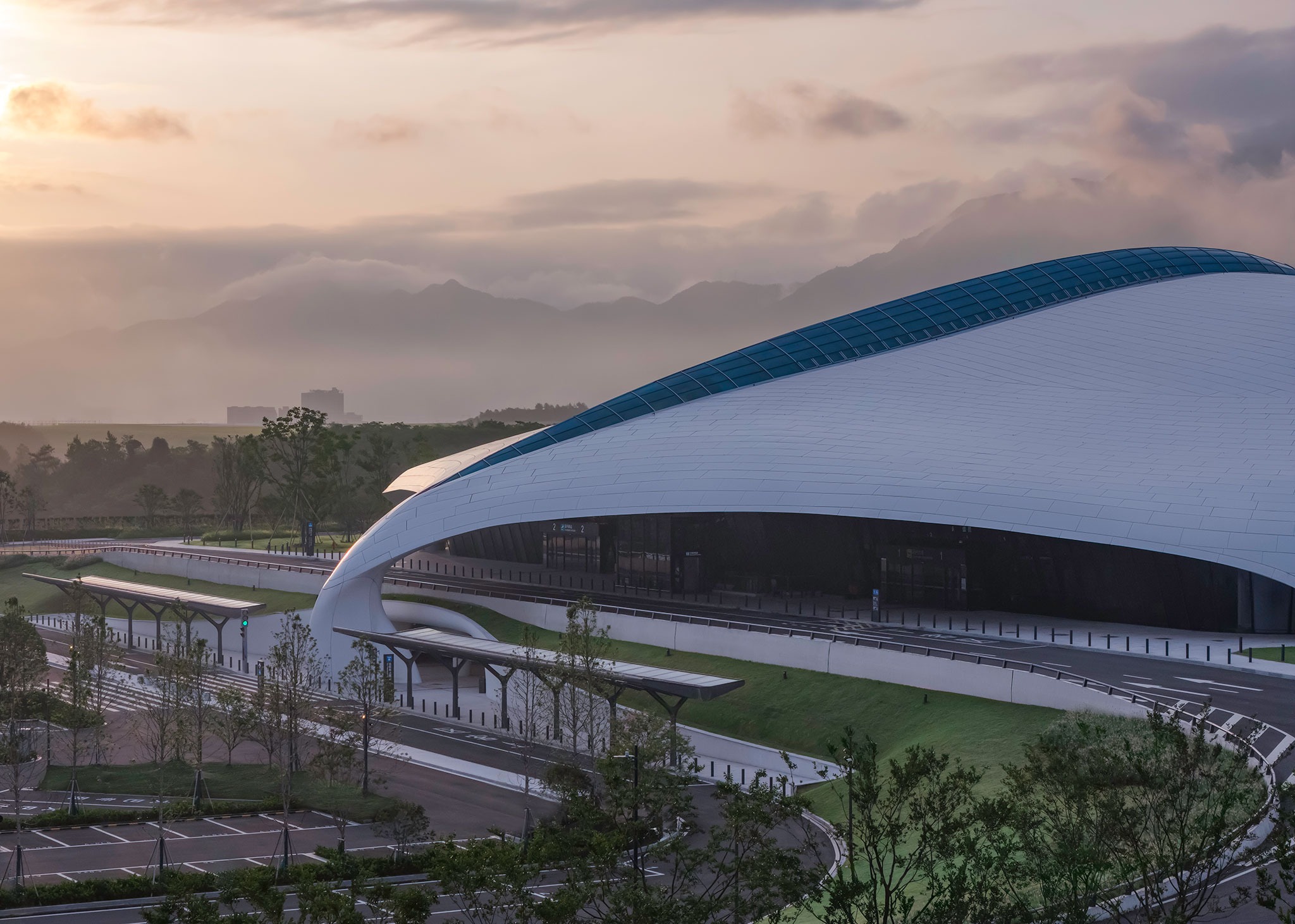
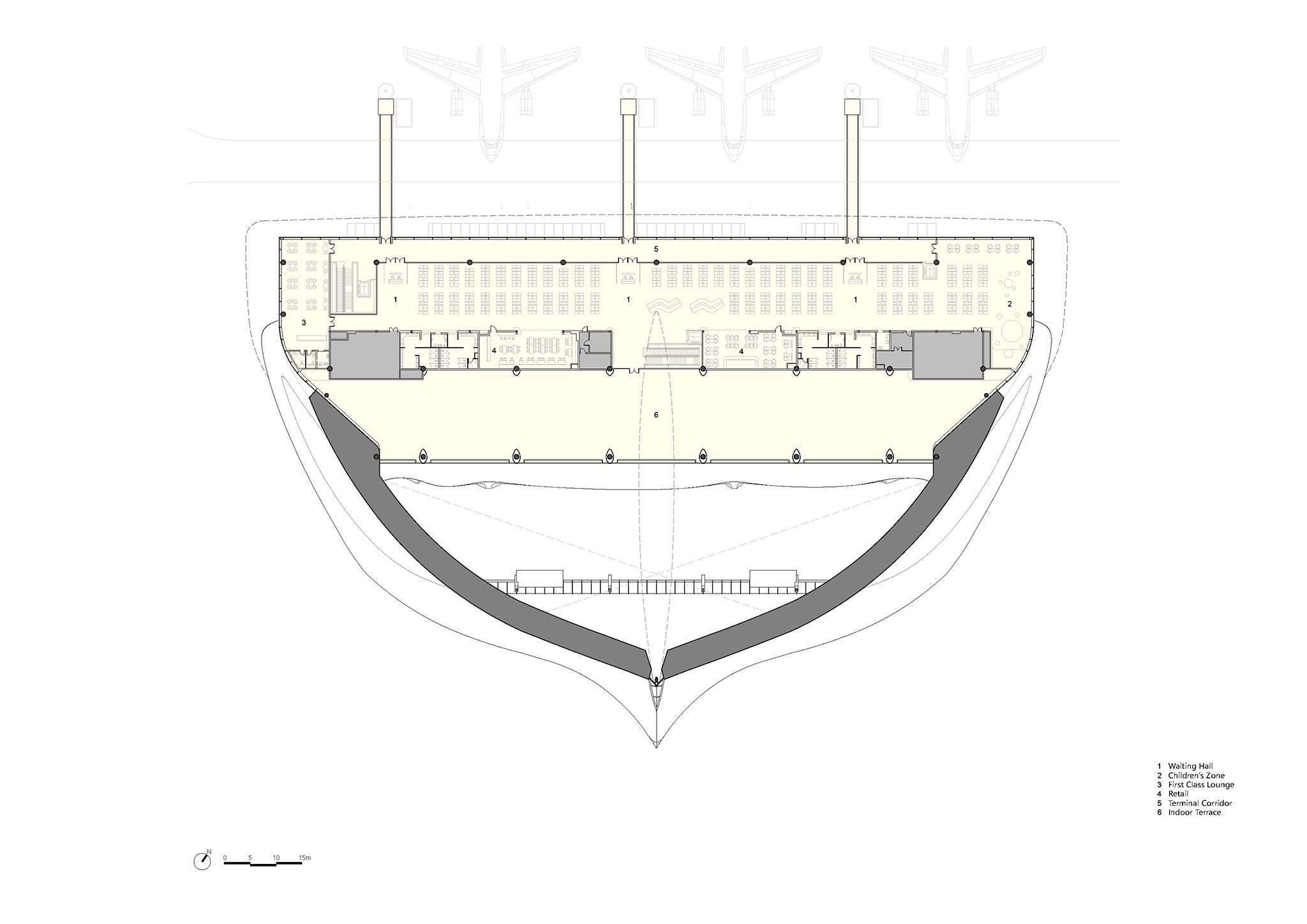
The terminal is organized around a one-and-a-half-story sectional strategy, anchored by a double-height entrance hall that links the ground-floor arrival spaces with the upper-level departure lounge. This compact vertical organization streamlines passenger circulation while maintaining visual continuity across levels.
Below the terminal, a sunken parking structure follows the natural terrain. A landscaped central promenade runs beneath the building, guiding passengers intuitively towards the departure hall and resolving the challenges posed by the mountainous site through architectural continuity rather than separation.
The design also anticipates future growth. Under the long-term master plan, passenger capacity is projected to reach 1.8 million by 2,030 and 5 million by 2,050, with provisions for the addition of an international terminal.
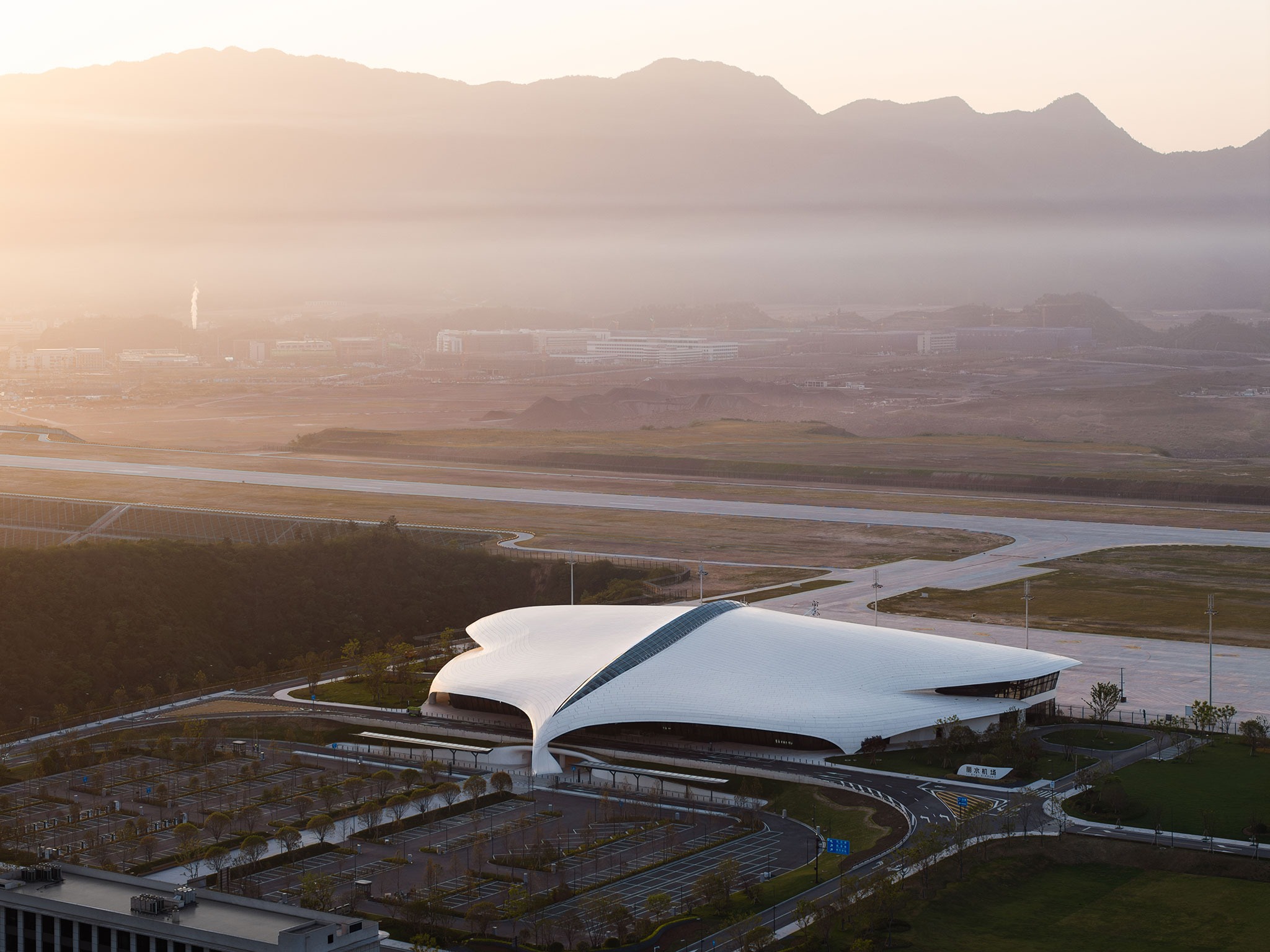
By the end of 2,025, Lishui Airport will operate multiple domestic destinations, establishing connections to major economic centers and key tourist regions, while positioning the airport as both an infrastructure gateway and a civic threshold to the city.