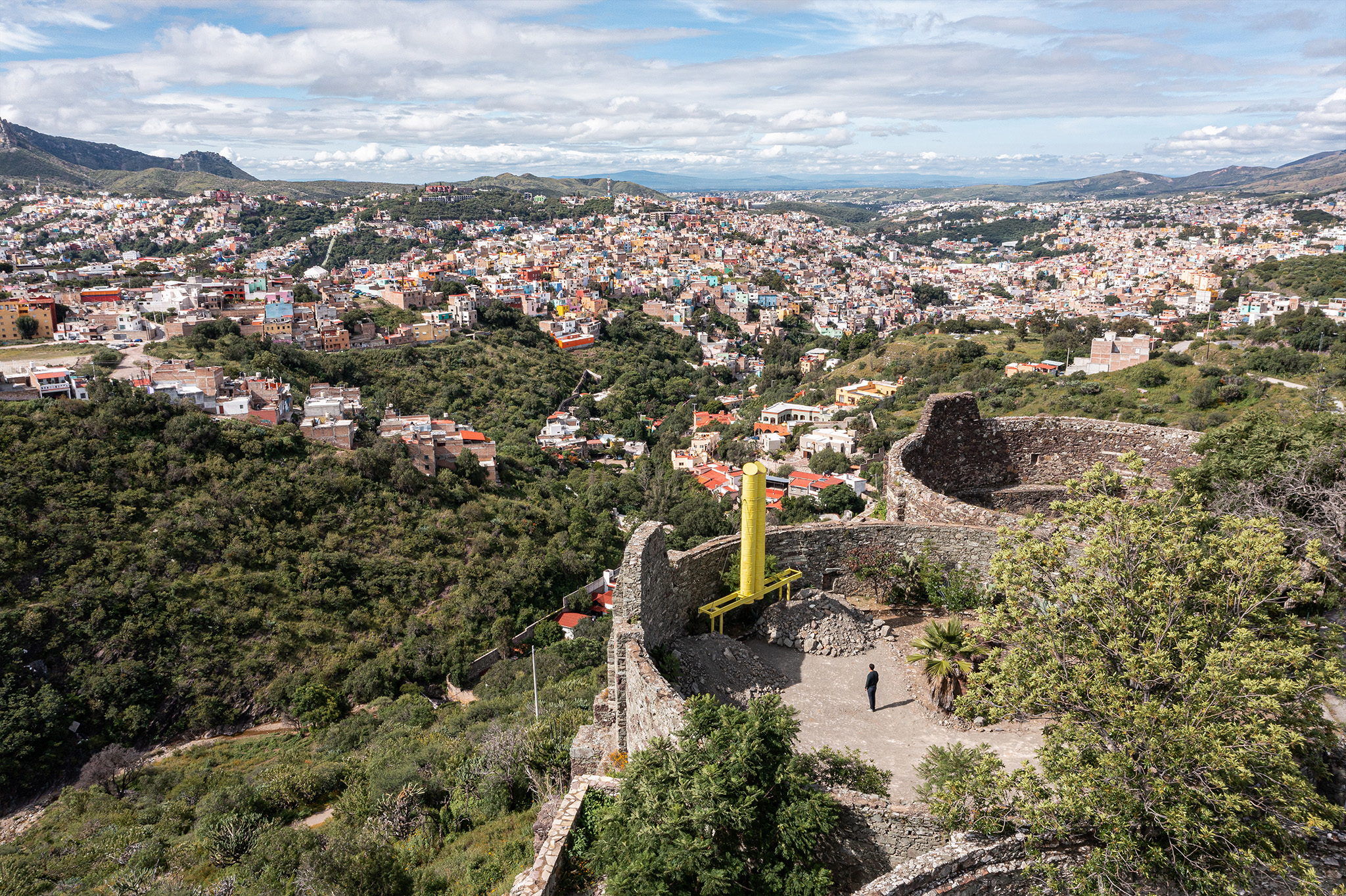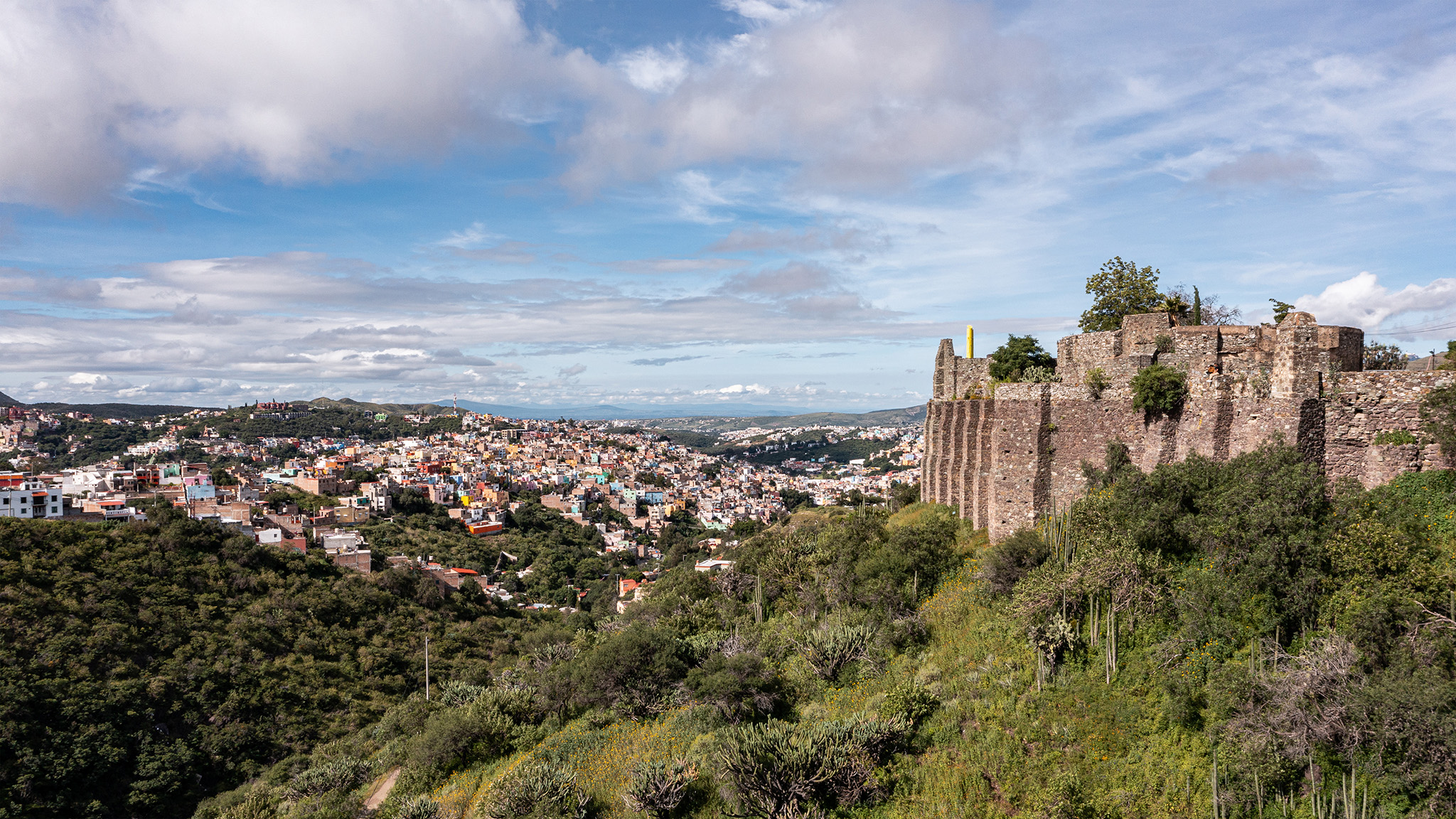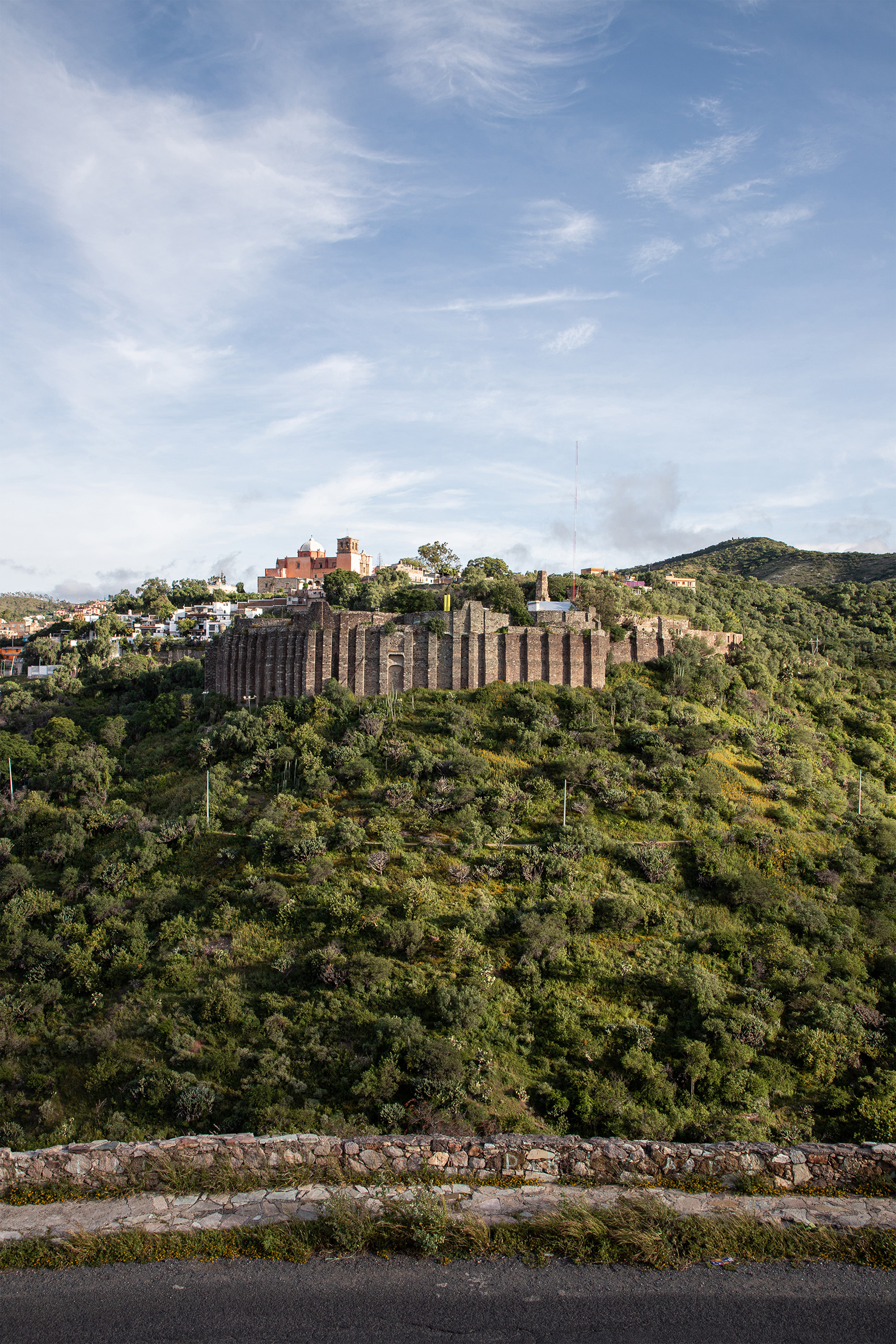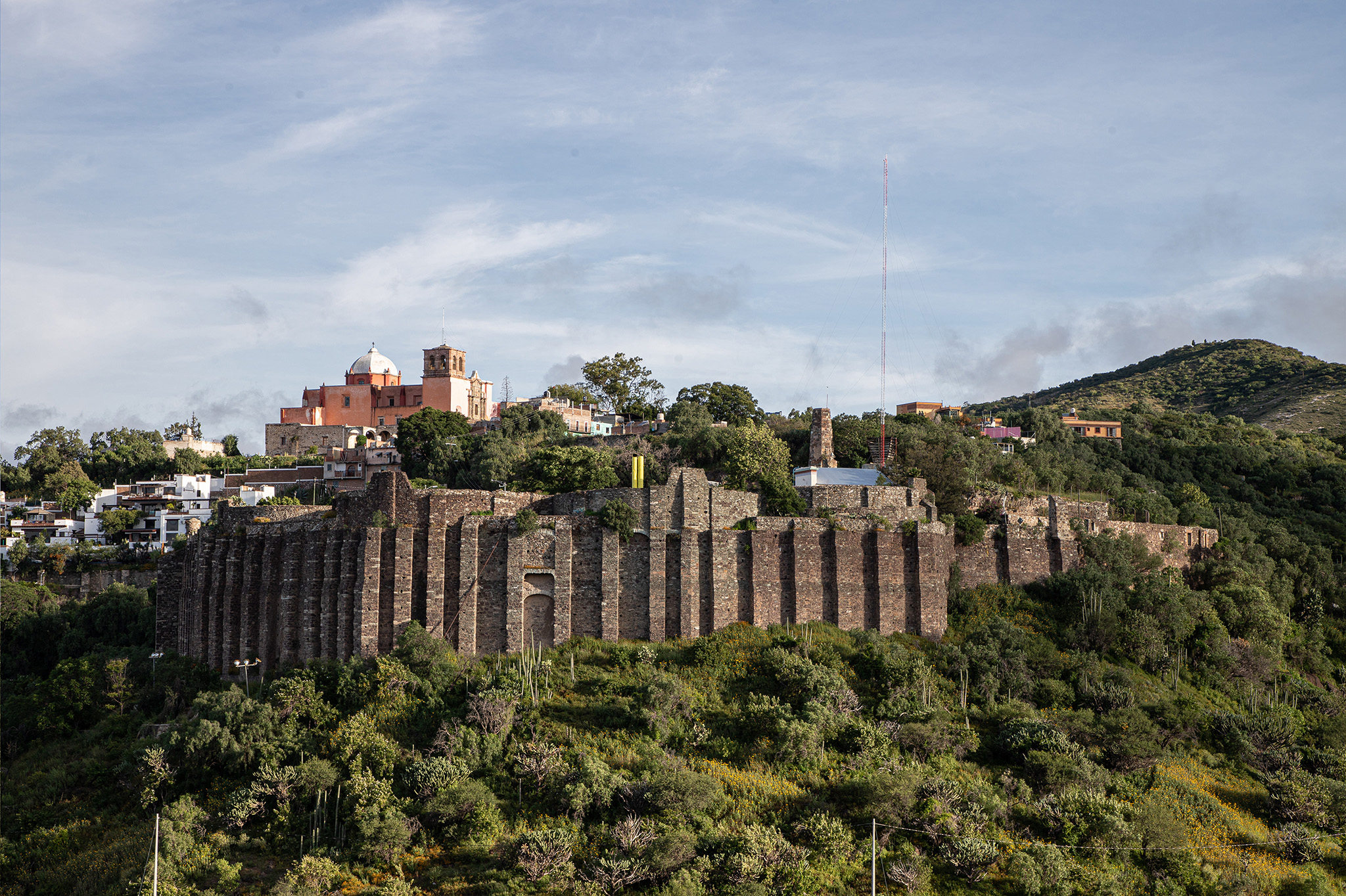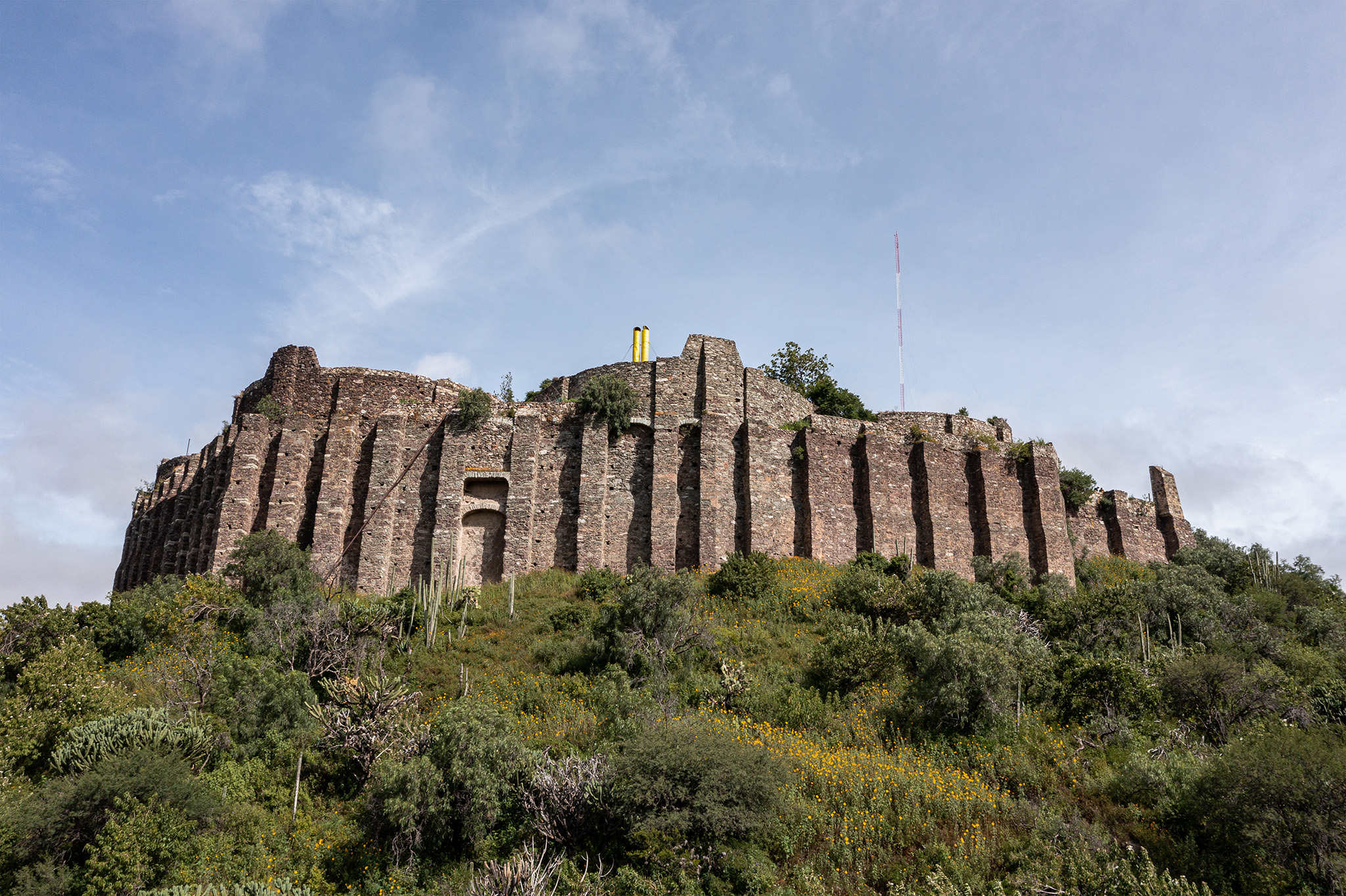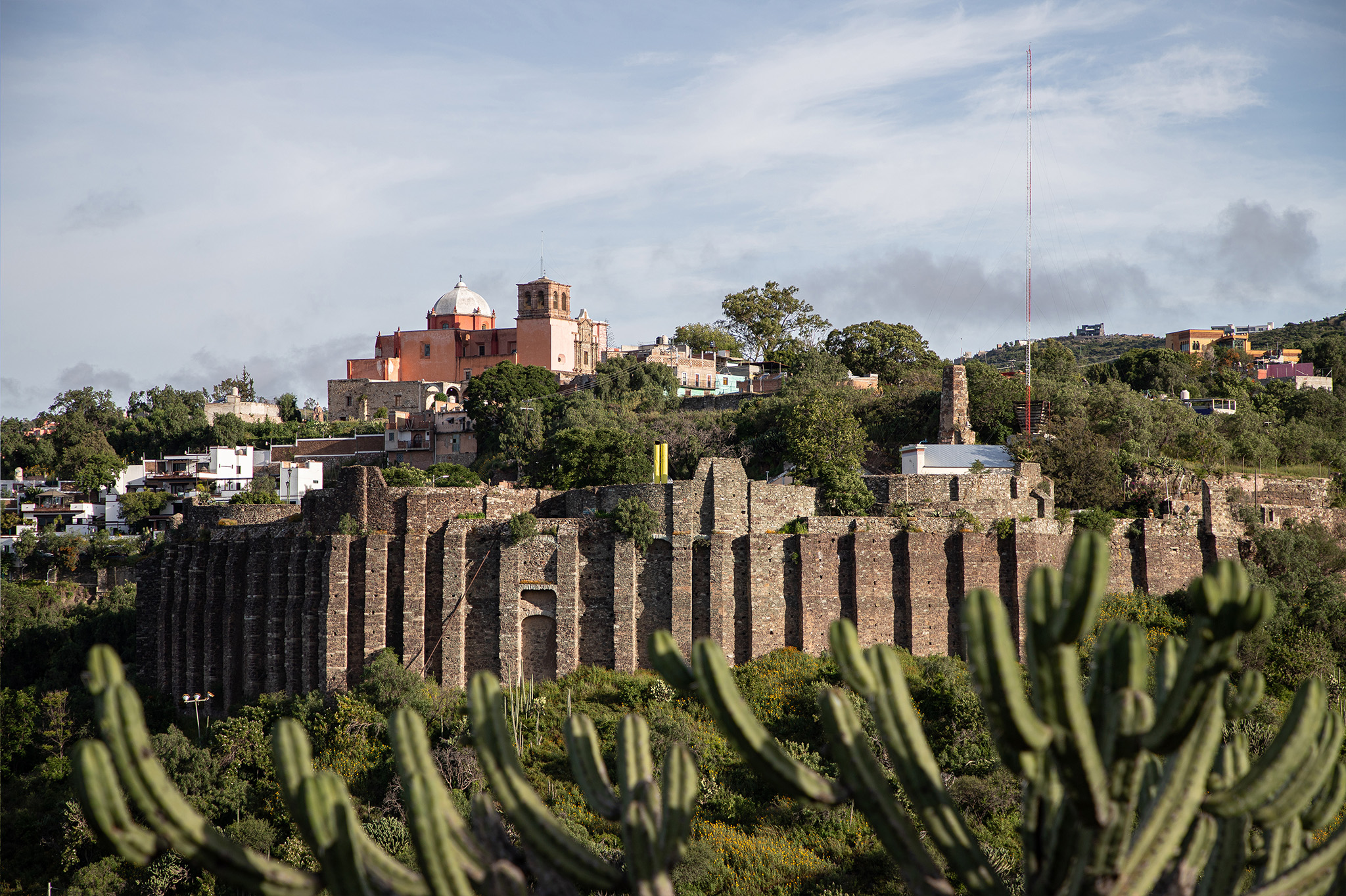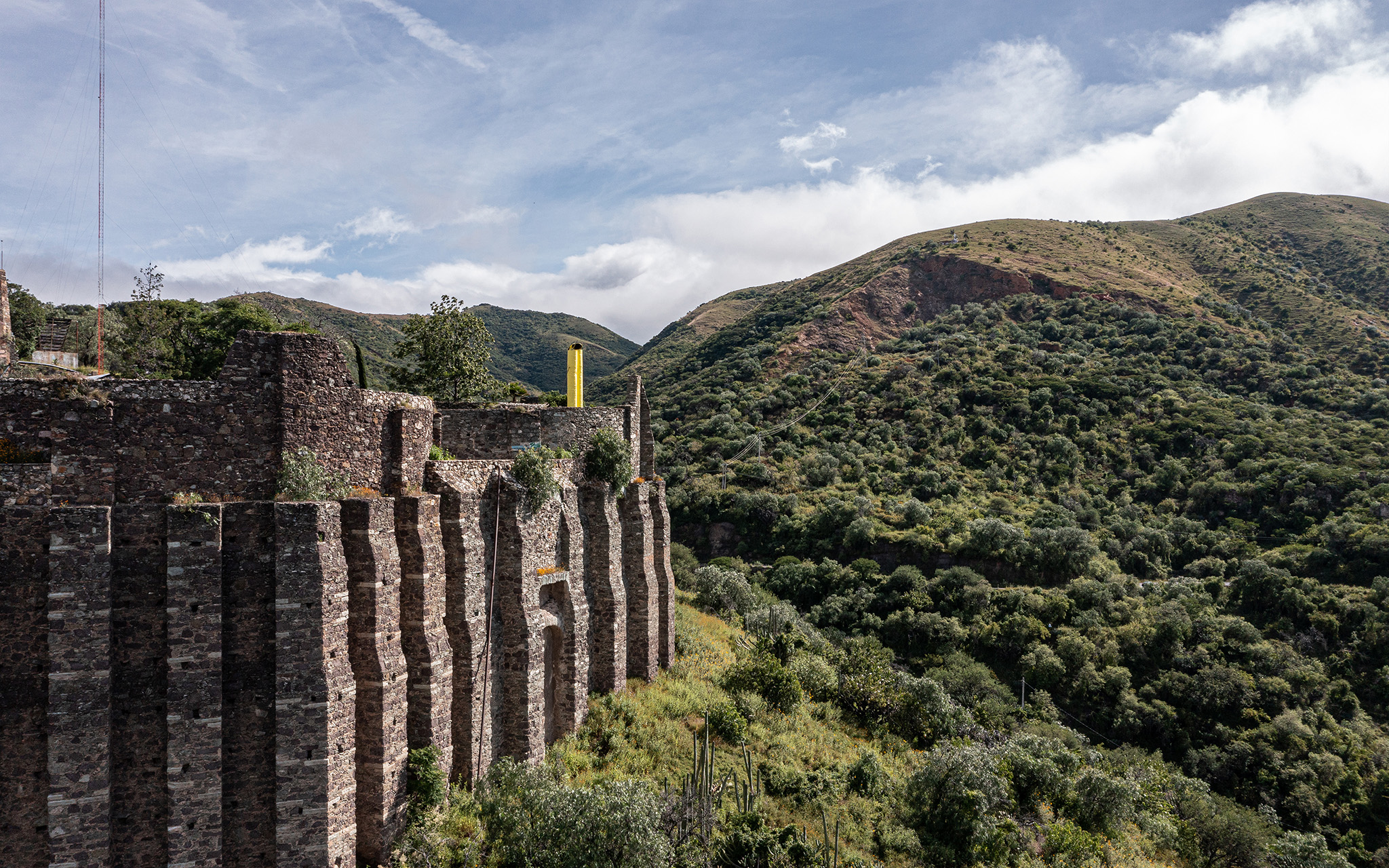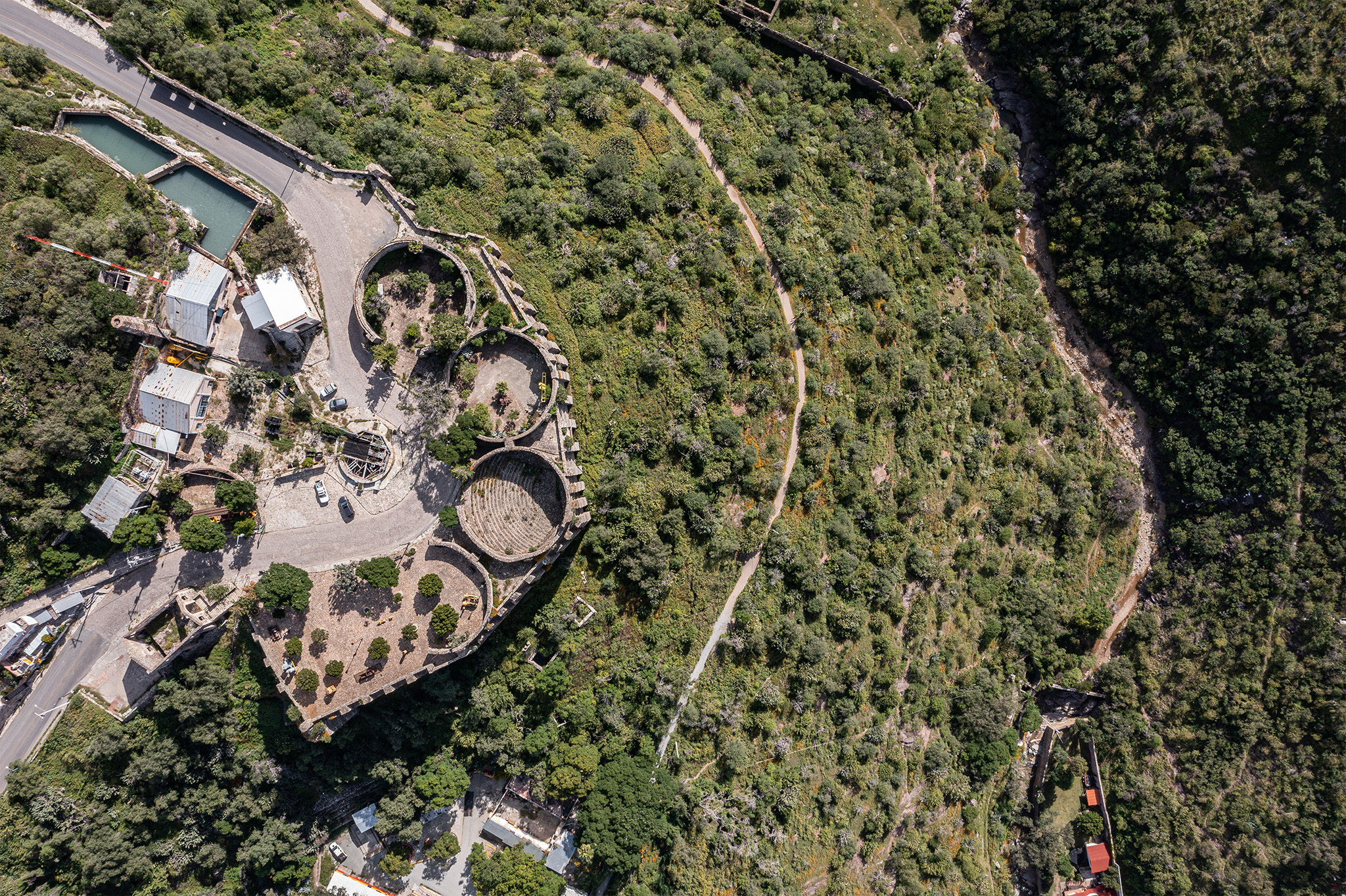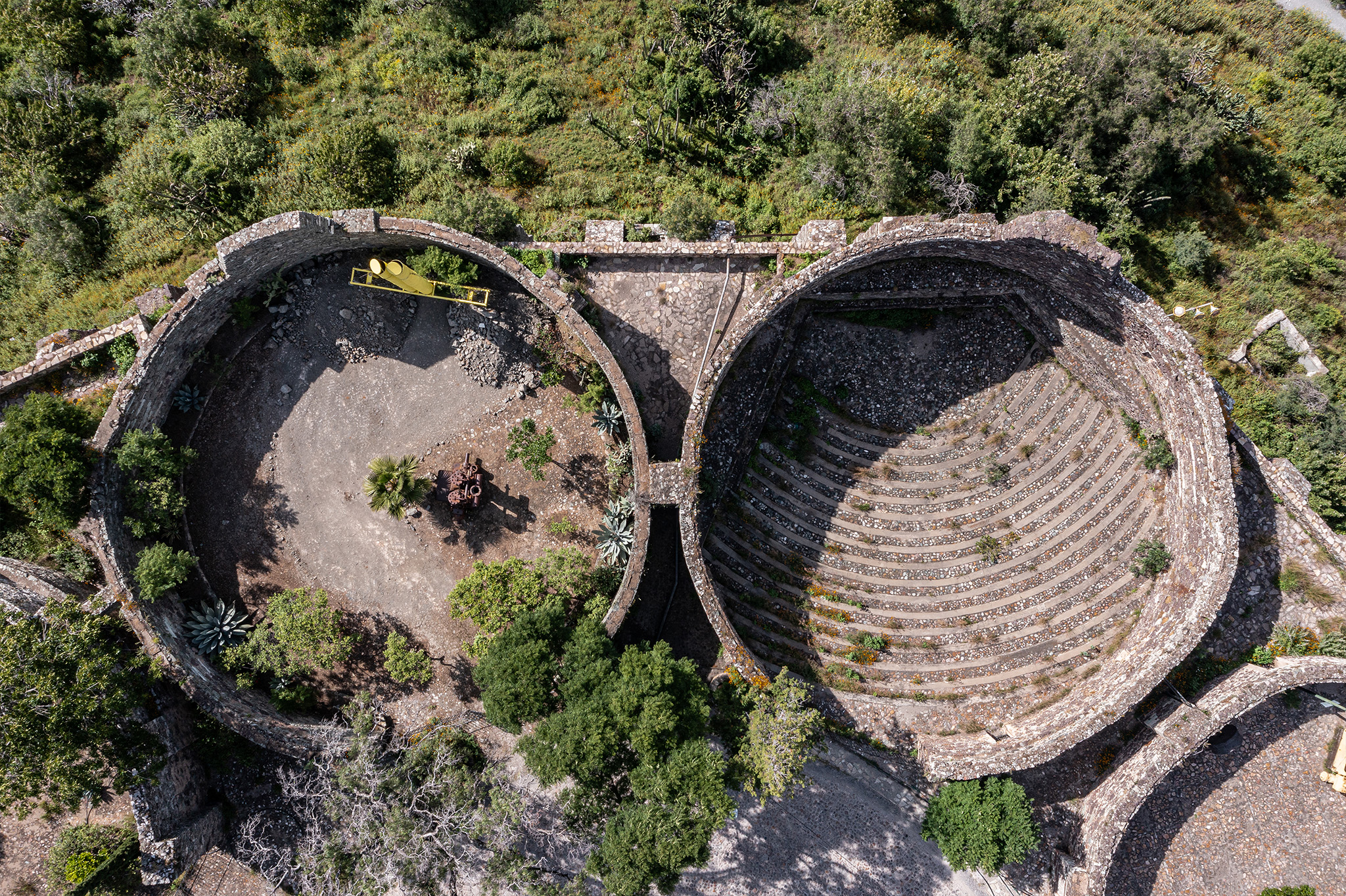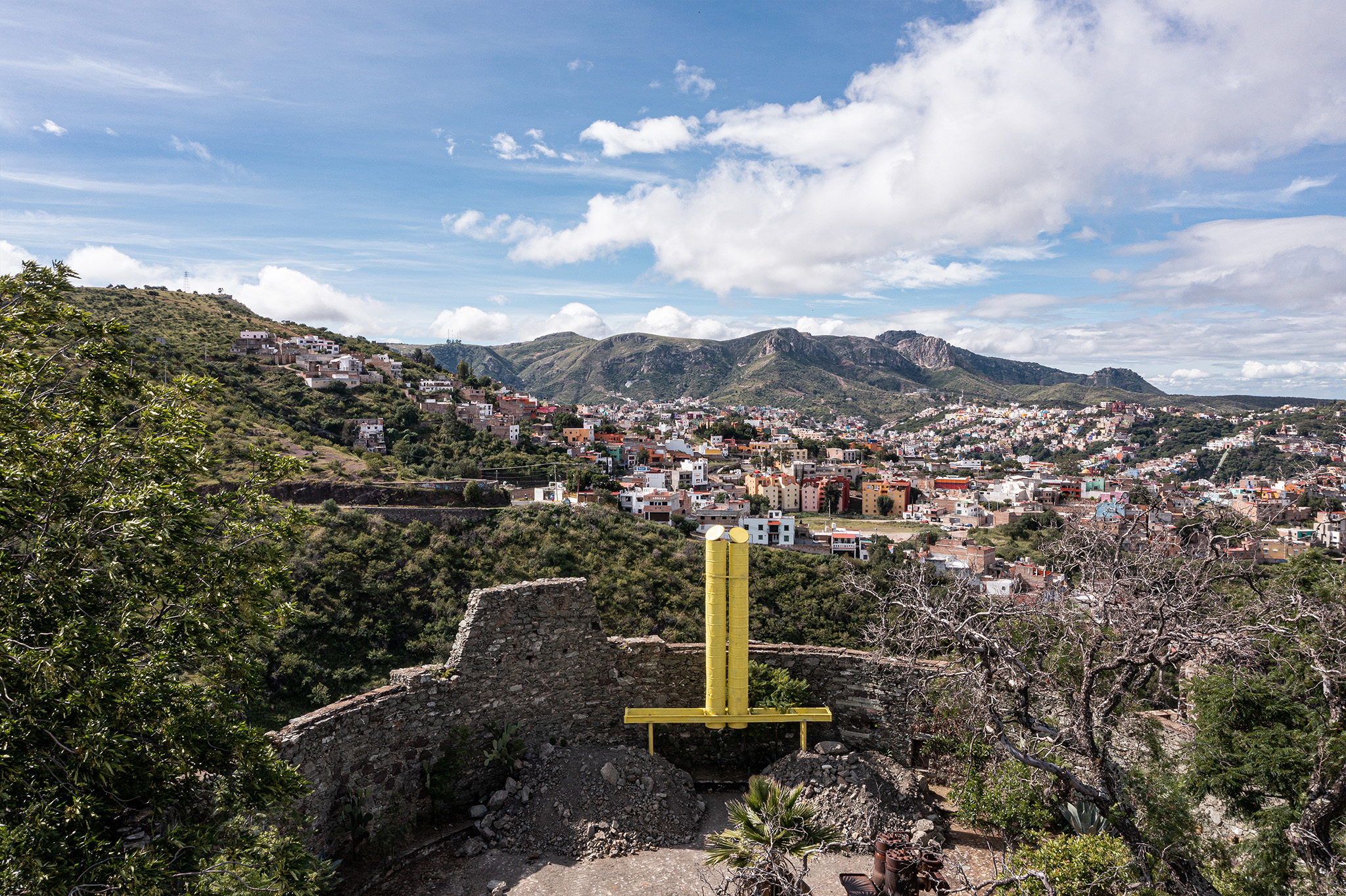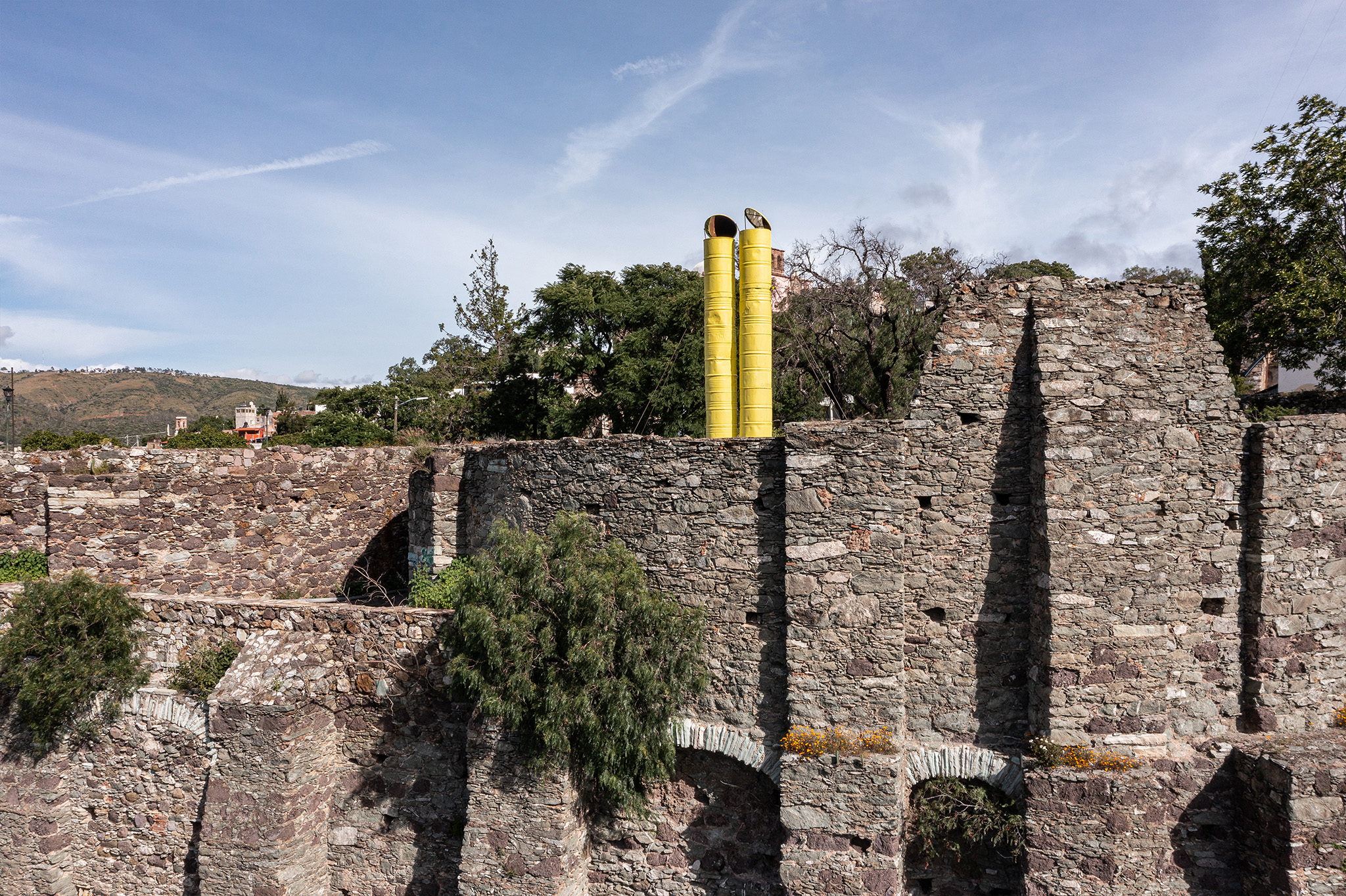
In this context, 3ME Arquitectura's proposal is conceived as a gesture of safeguarding and revaluing the bond between the community, its collective memory, and its material heritage. Faced with unchecked urban growth and the progressive disconnection between past and present, the intervention takes on the challenge of recovering the historical essence of Guanajuato.
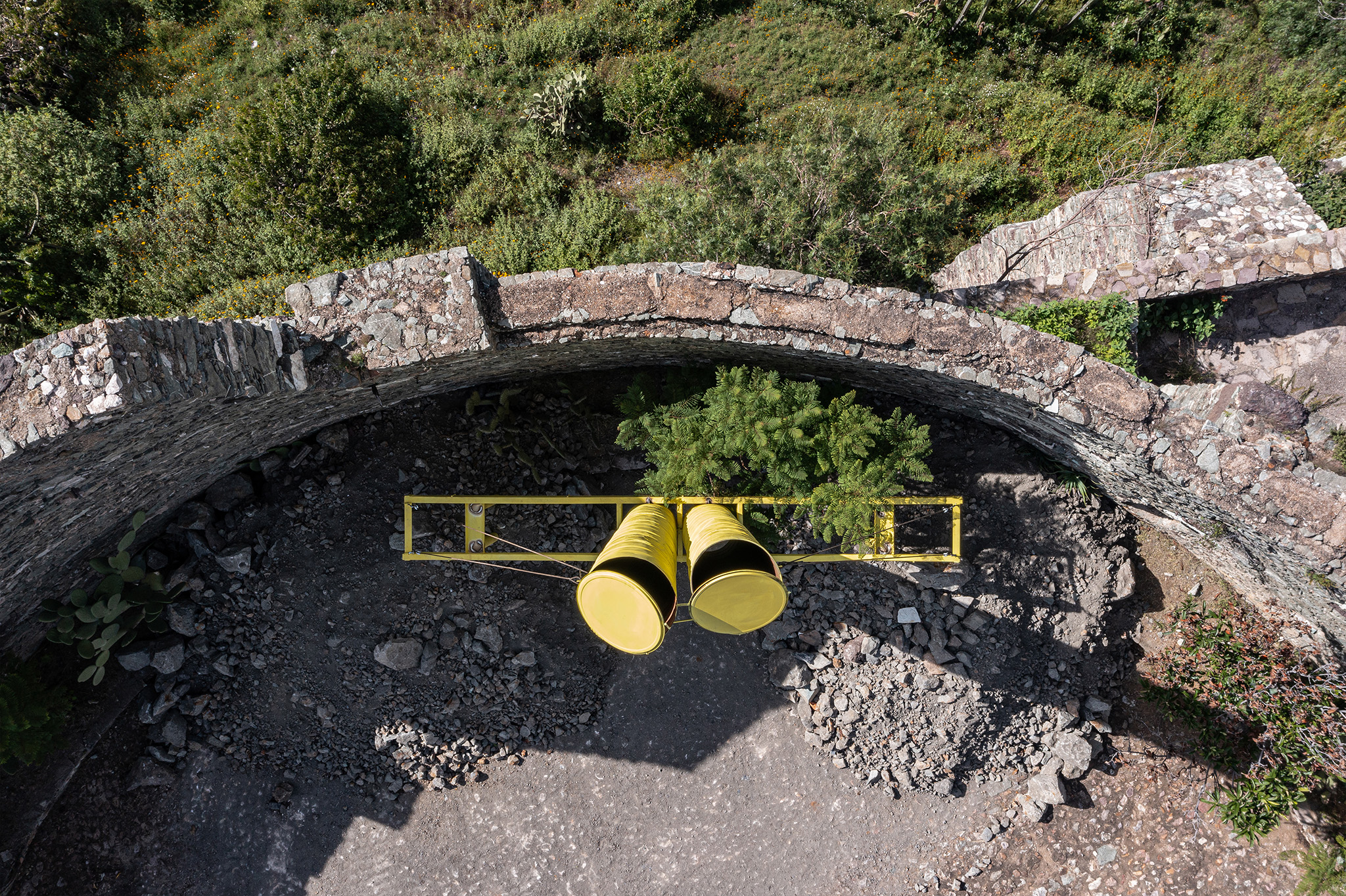
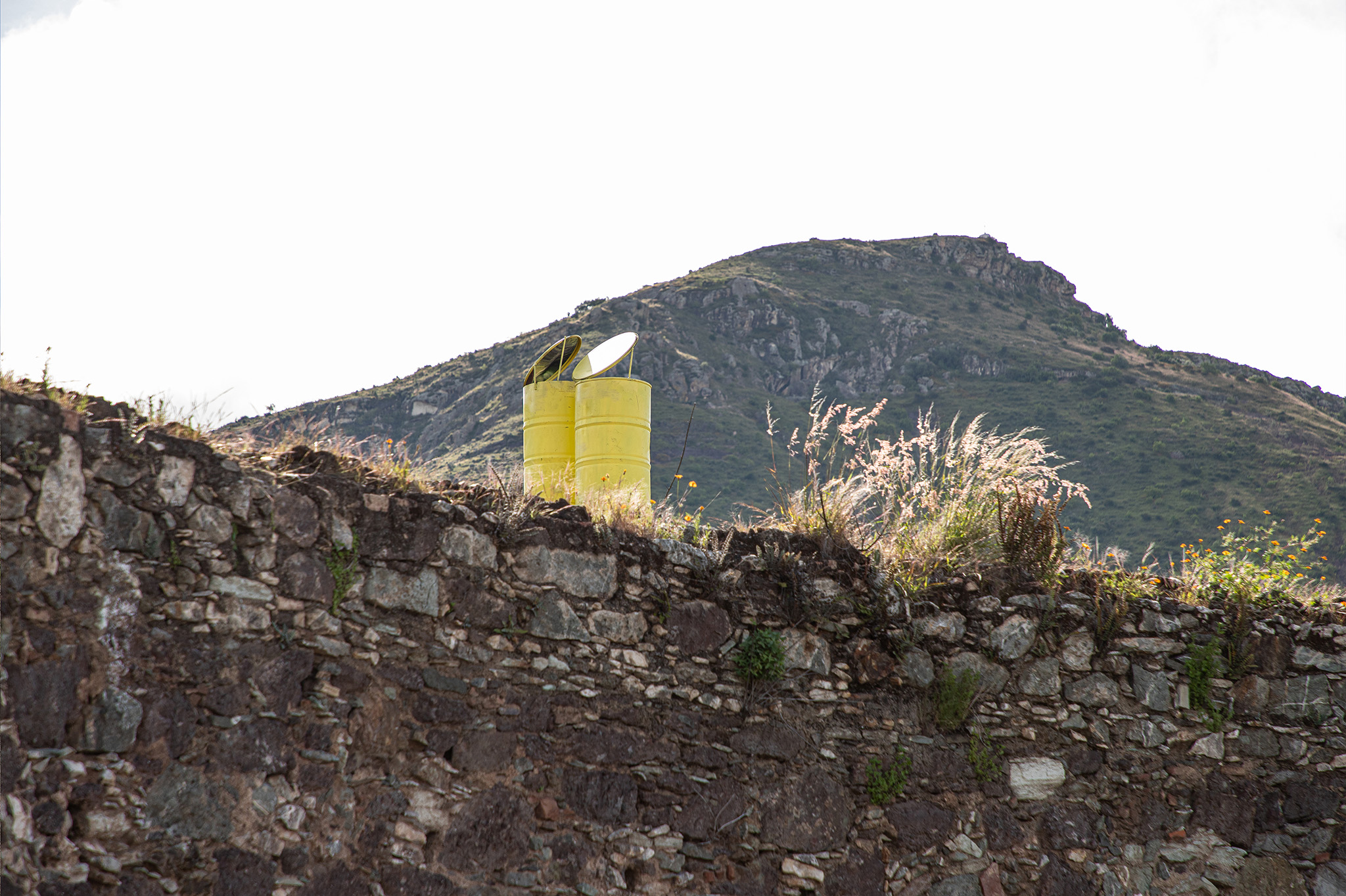
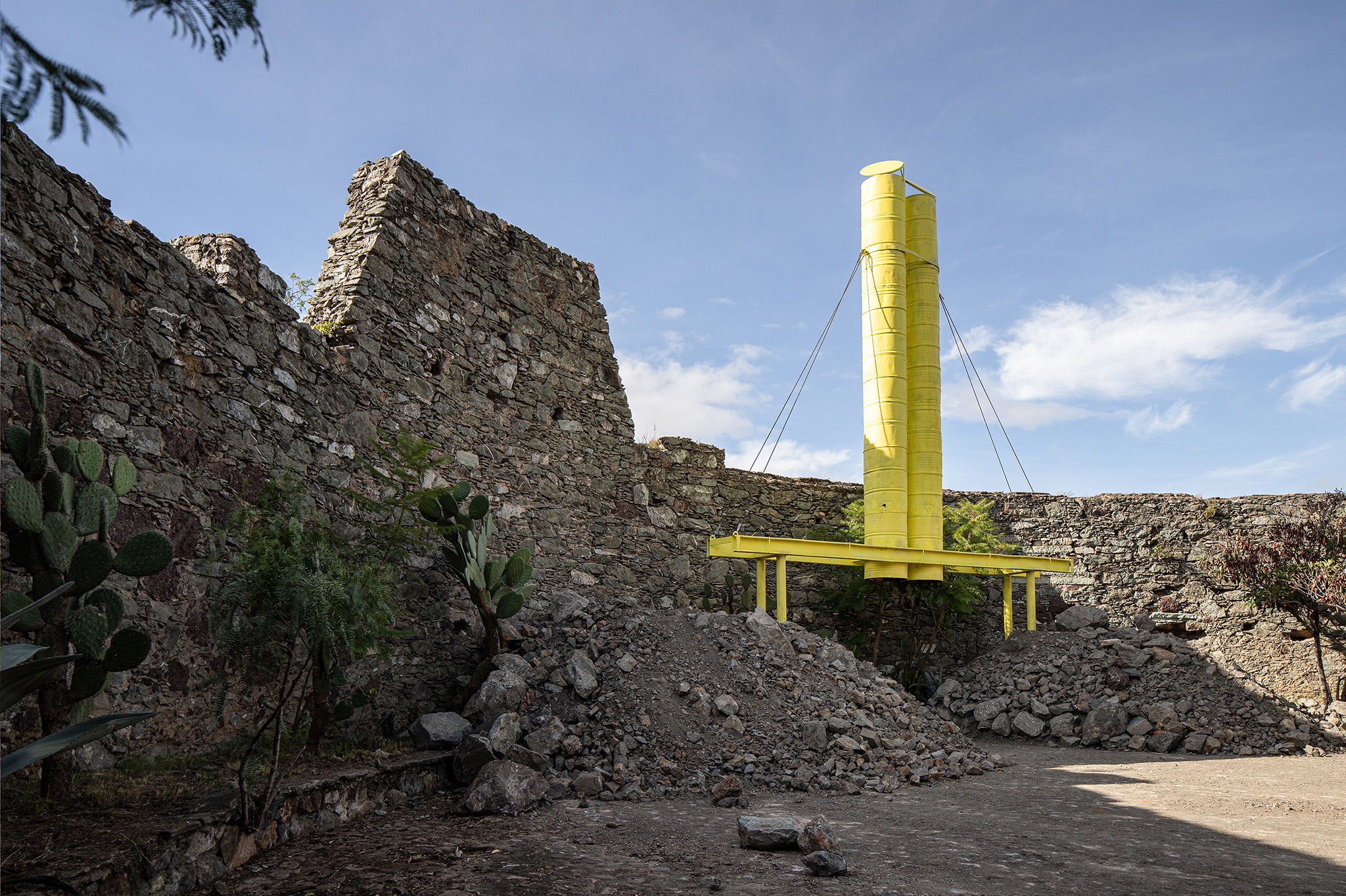
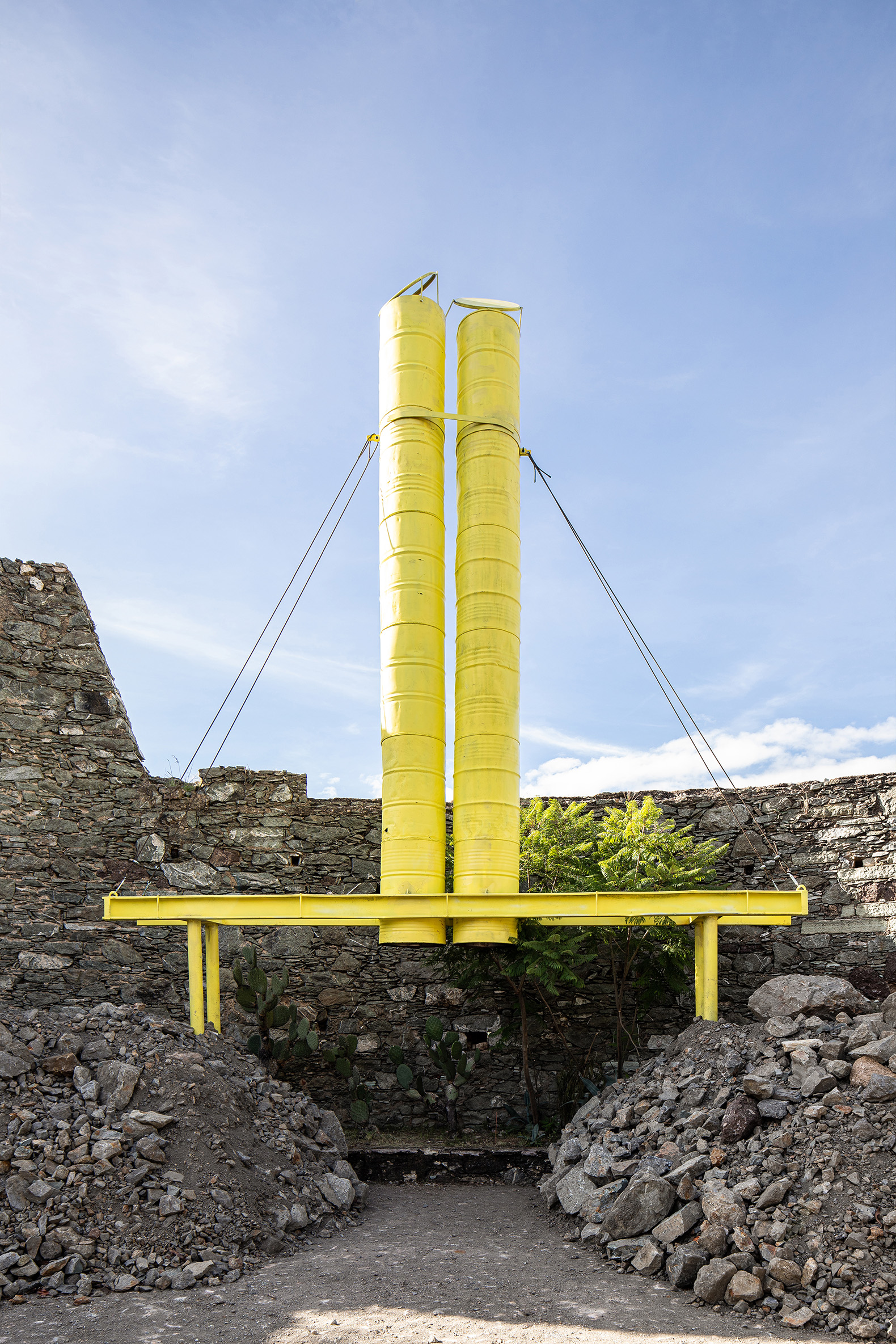
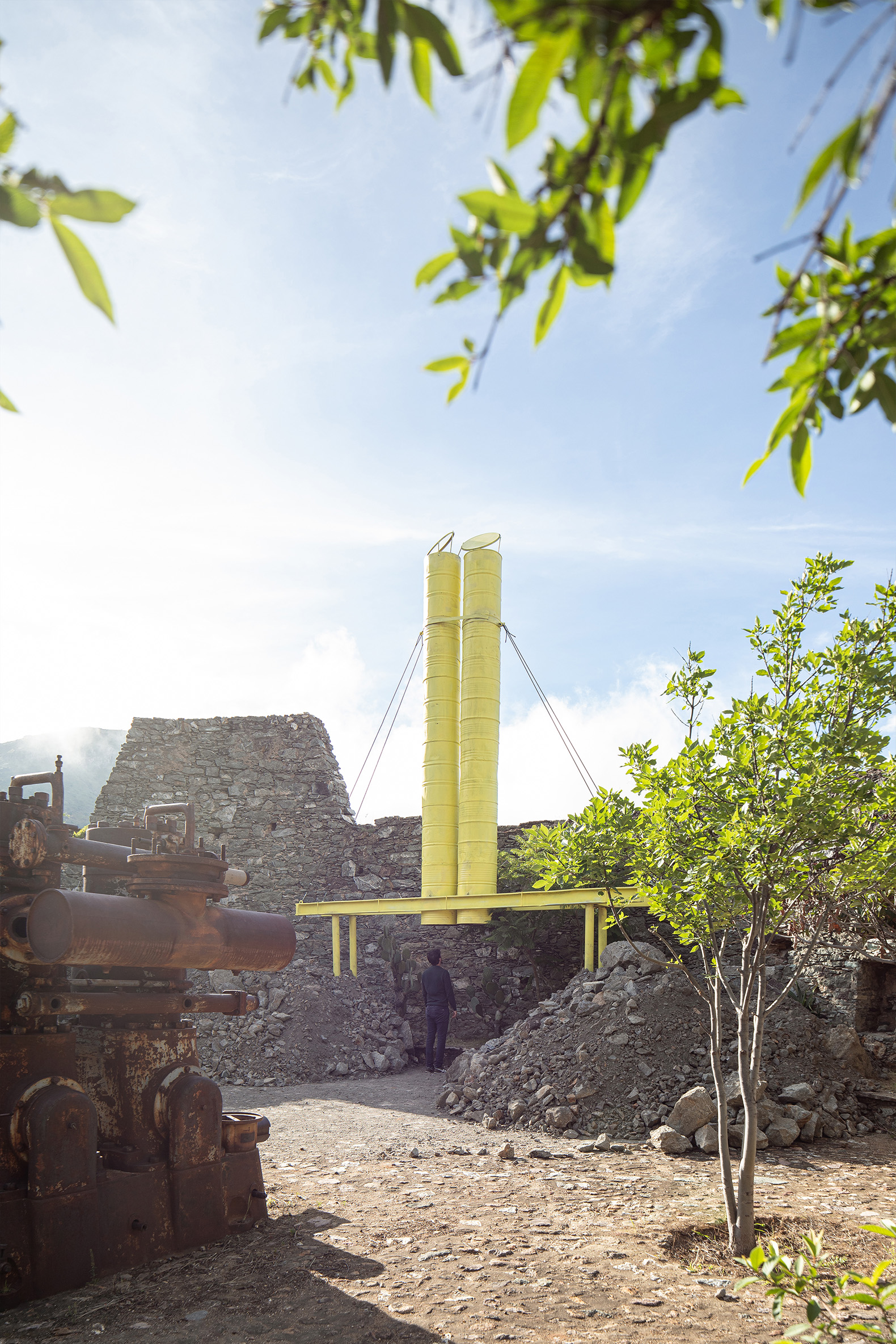
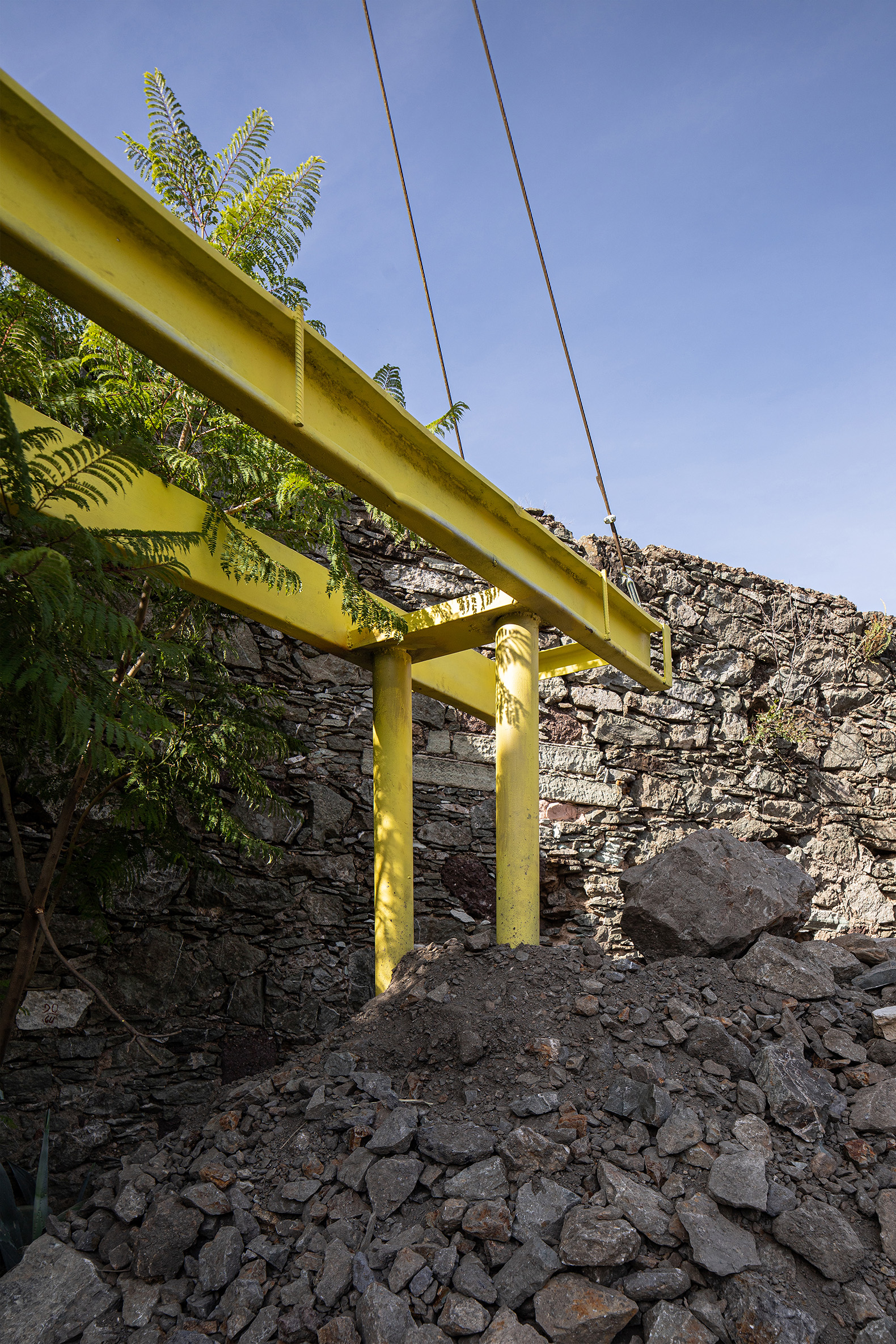
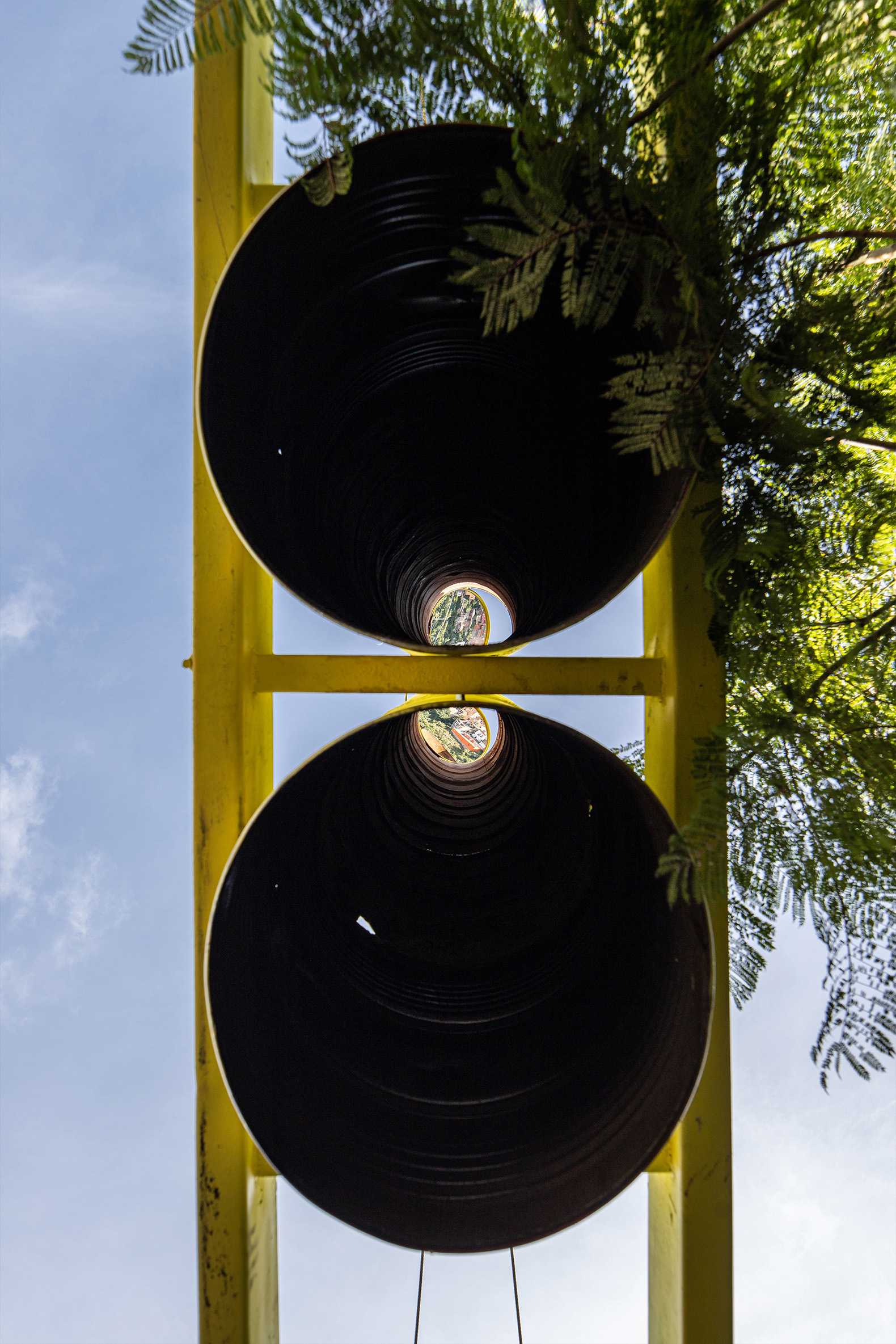
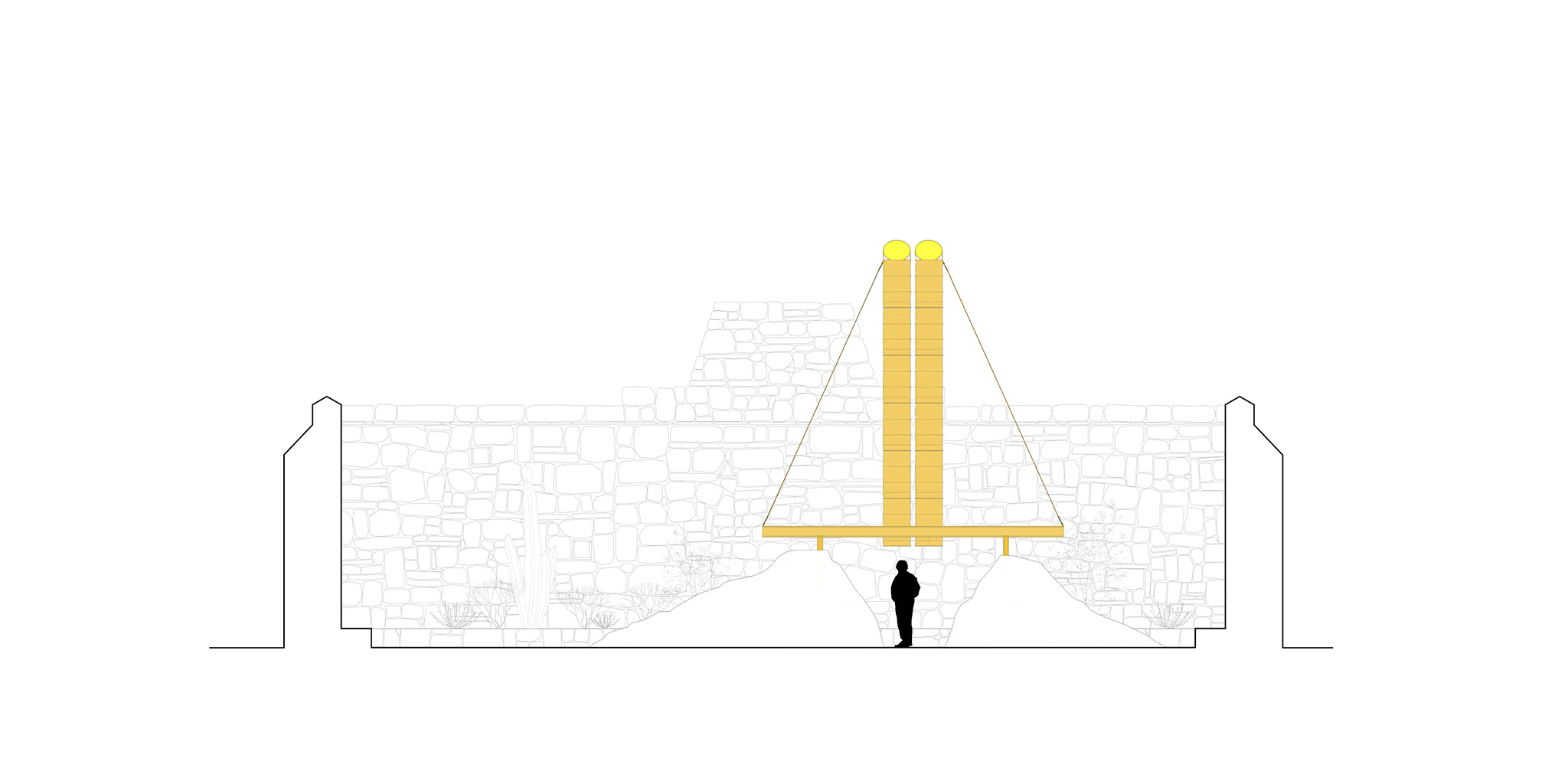
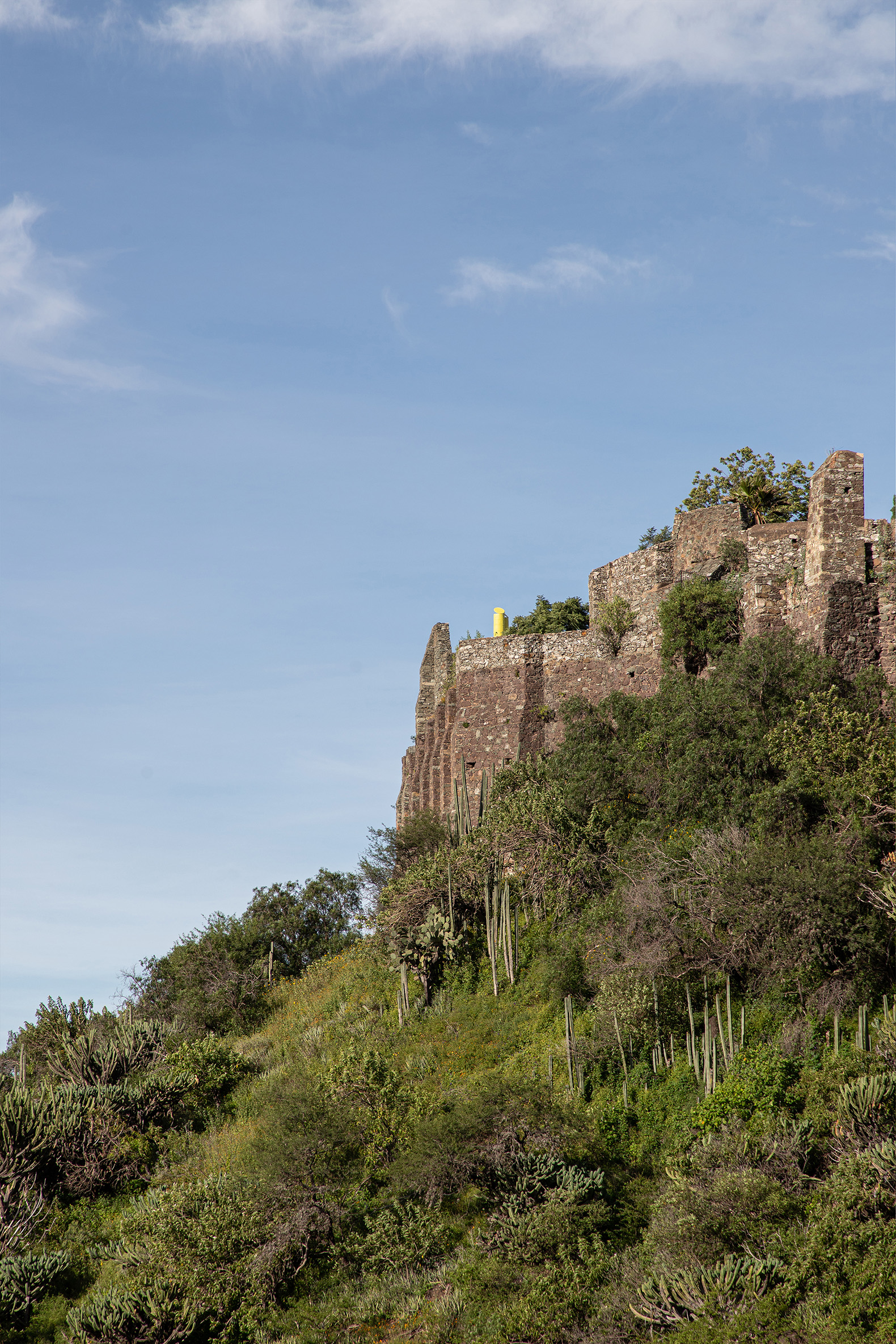
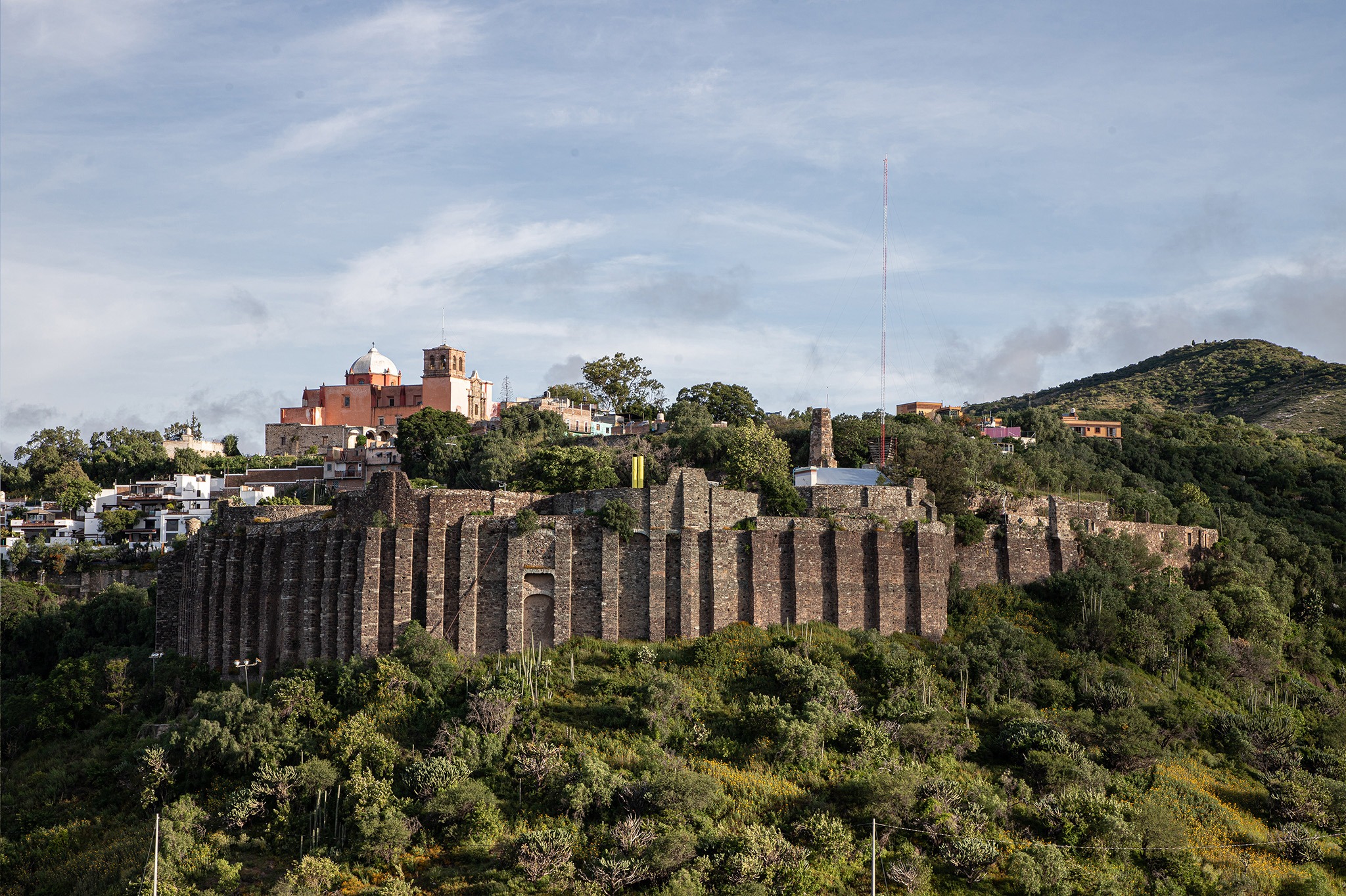
Made with recycled materials from waste extracted from the depths of the mines, the devices, painted in a vibrant yellow, emerge as landmarks in the landscape. Their interactive nature invites citizens to look through them: by focusing on the city through the telescopes, the urban landscape reveals itself as a reflection of its mining heritage, highlighting the close relationship between built form, memory, and territory.
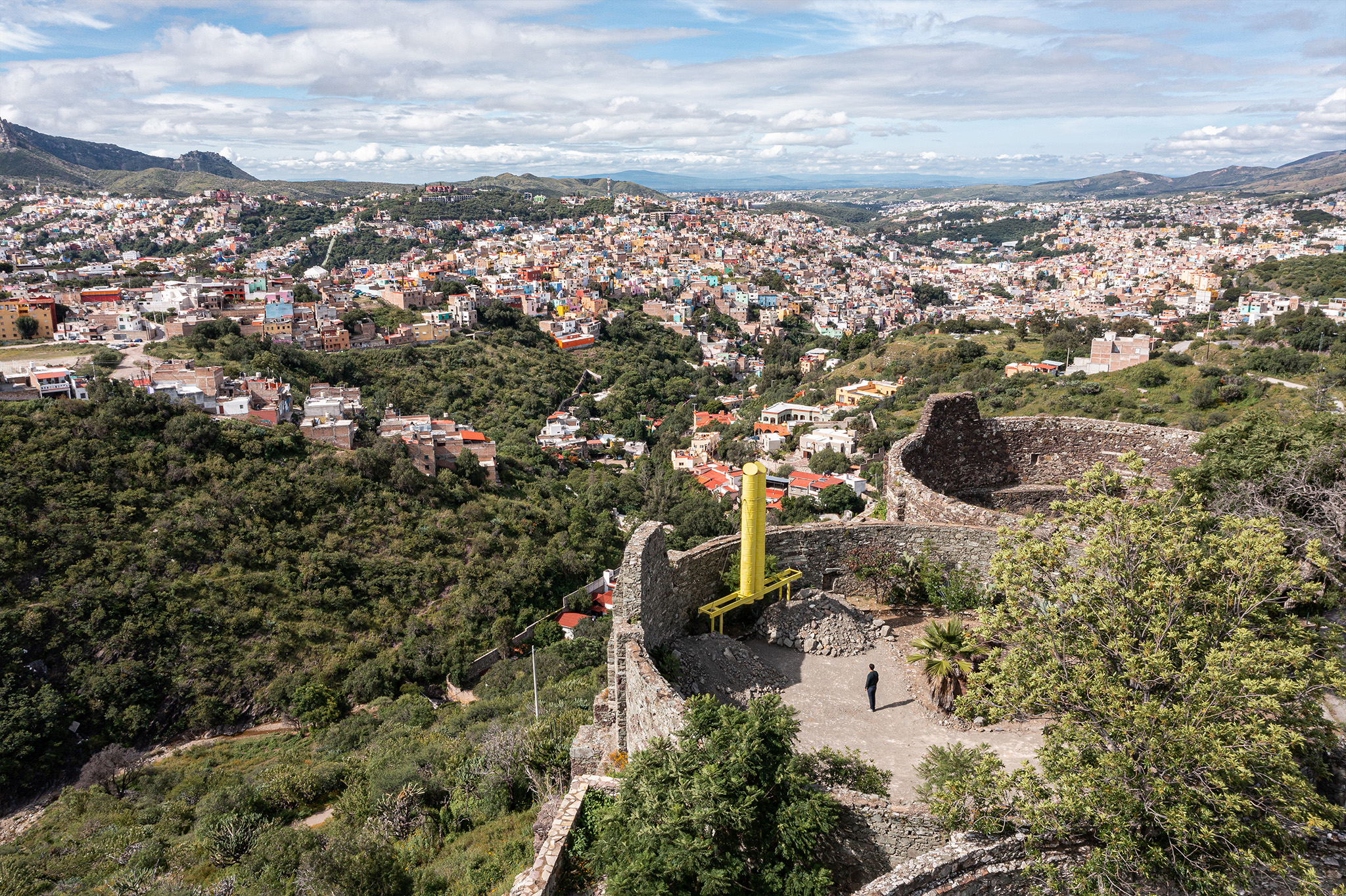
Urban Telescopes by 3ME Arquitectura. Photograph by Jorge Succar.
Project description by 3ME Arquitectura
The Mexican Bajío, a territory with no records of large pre-Hispanic settlements, reveals its history through its natural wealth and historical processes. The fertility of its lands along the Lerma River enabled agricultural development, while mining in Guanajuato marked a milestone in the history of New Spain, generating a profound sense of identity and culture.
The city, famous for the discovery of the mother lode of silver, transformed its landscape through extraction. Its structures seem to emerge from the natural surroundings, some reaching depths of up to 500 meters, with a unique, fragmented character that reflects their mineral origins.
Guanajuato’s heritage atmospheres are expressed through the materiality of its buildings, crafted from residual mine rock and quarried stone from the hills, establishing a deep dialogue with the natural landscape. However, urban growth and the disconnection between heritage, the city, and its people have put Guanajuato’s essence at risk, turning it into an increasingly generic space.
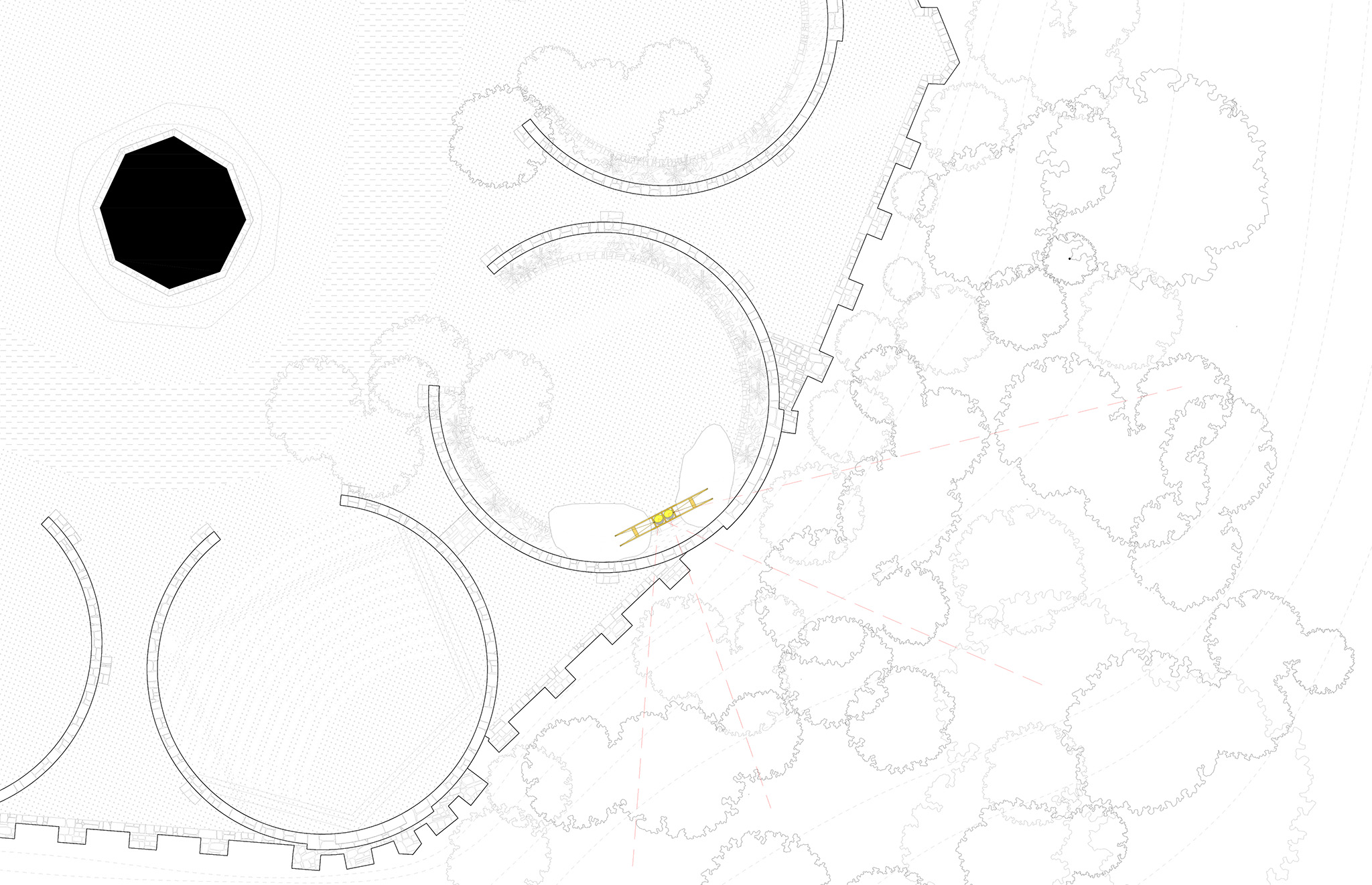
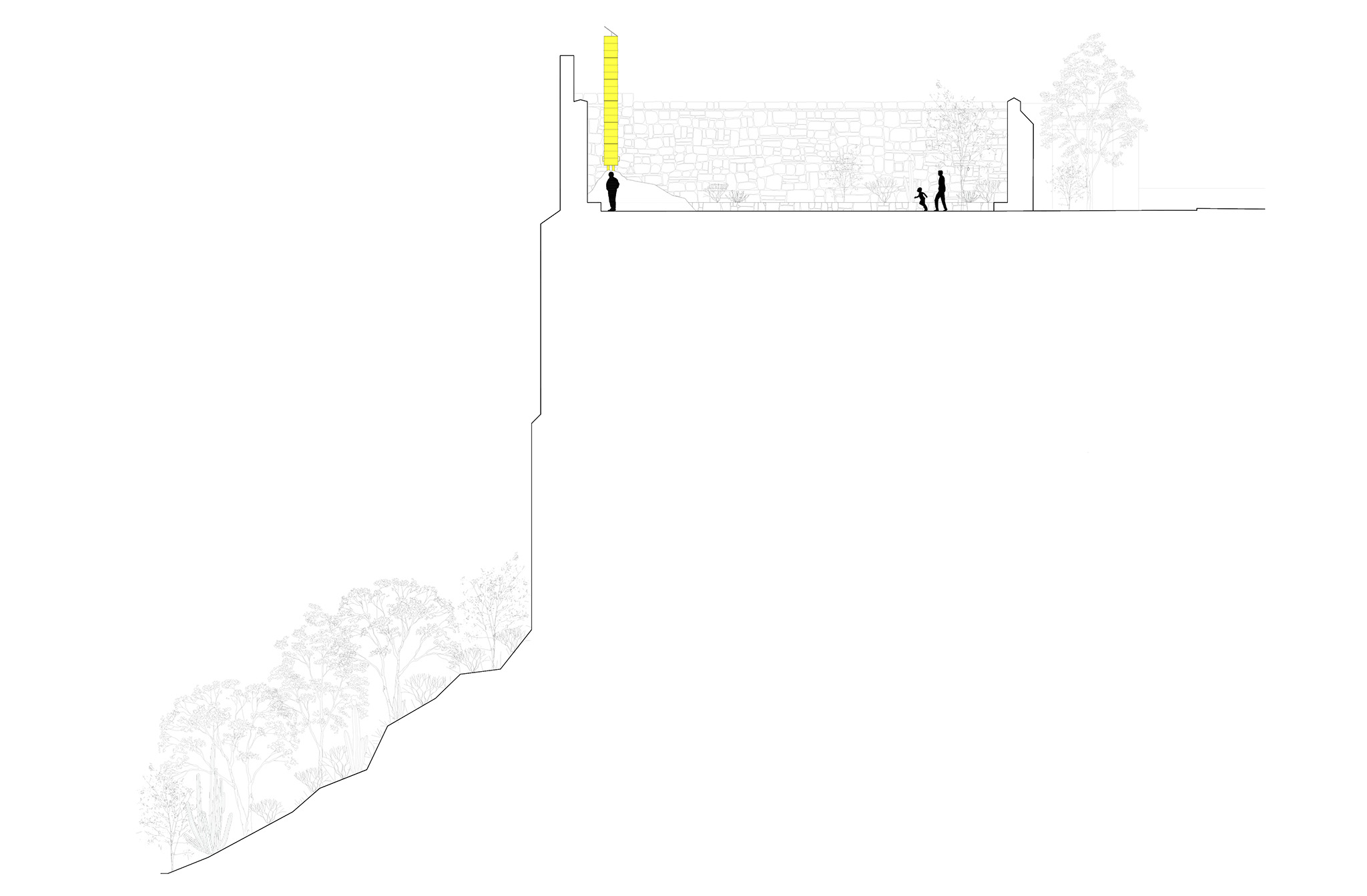
To recover that bond, the Urban Telescopes project emerges: interventions that seek to strengthen the connection between the San José de Rayas mine and the city by evoking their typologies, processes, and materials. The objective is to revitalize the link between the community and its history, culture, and heritage.
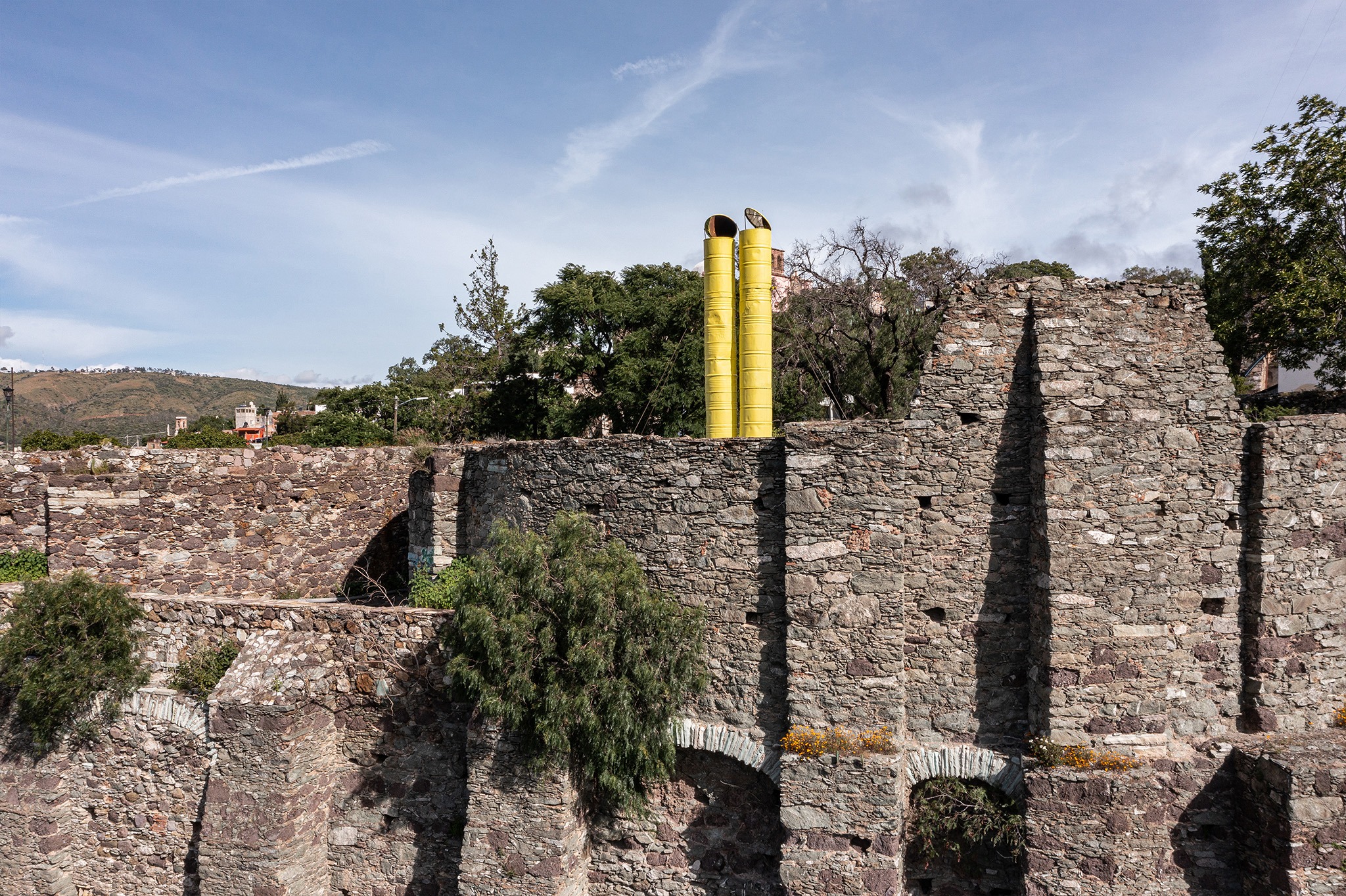
Through these visual devices, the yellow cylinders act as a "Trojan horse," capturing attention and drawing people into an interactive experience. When looking through the telescopes, the city of Guanajuato is reflected in mirrors placed at the top, offering an opportunity to understand the close relationship between the city and its mining history. Built from recycled materials, these devices are supported on piles of waste extracted from depths of 400 meters, reminding us that mining not only exploited the land but also shaped its urban fabric.