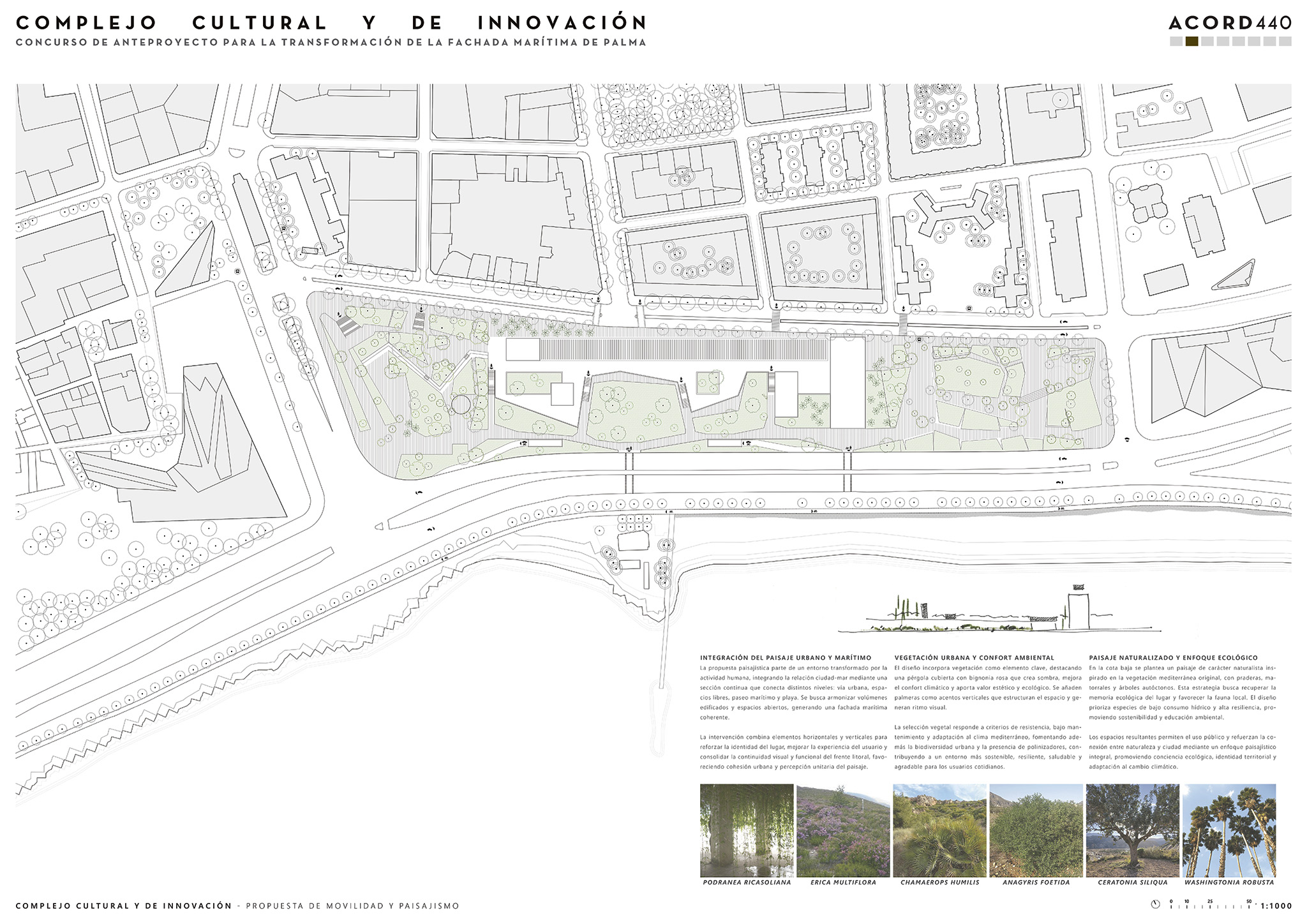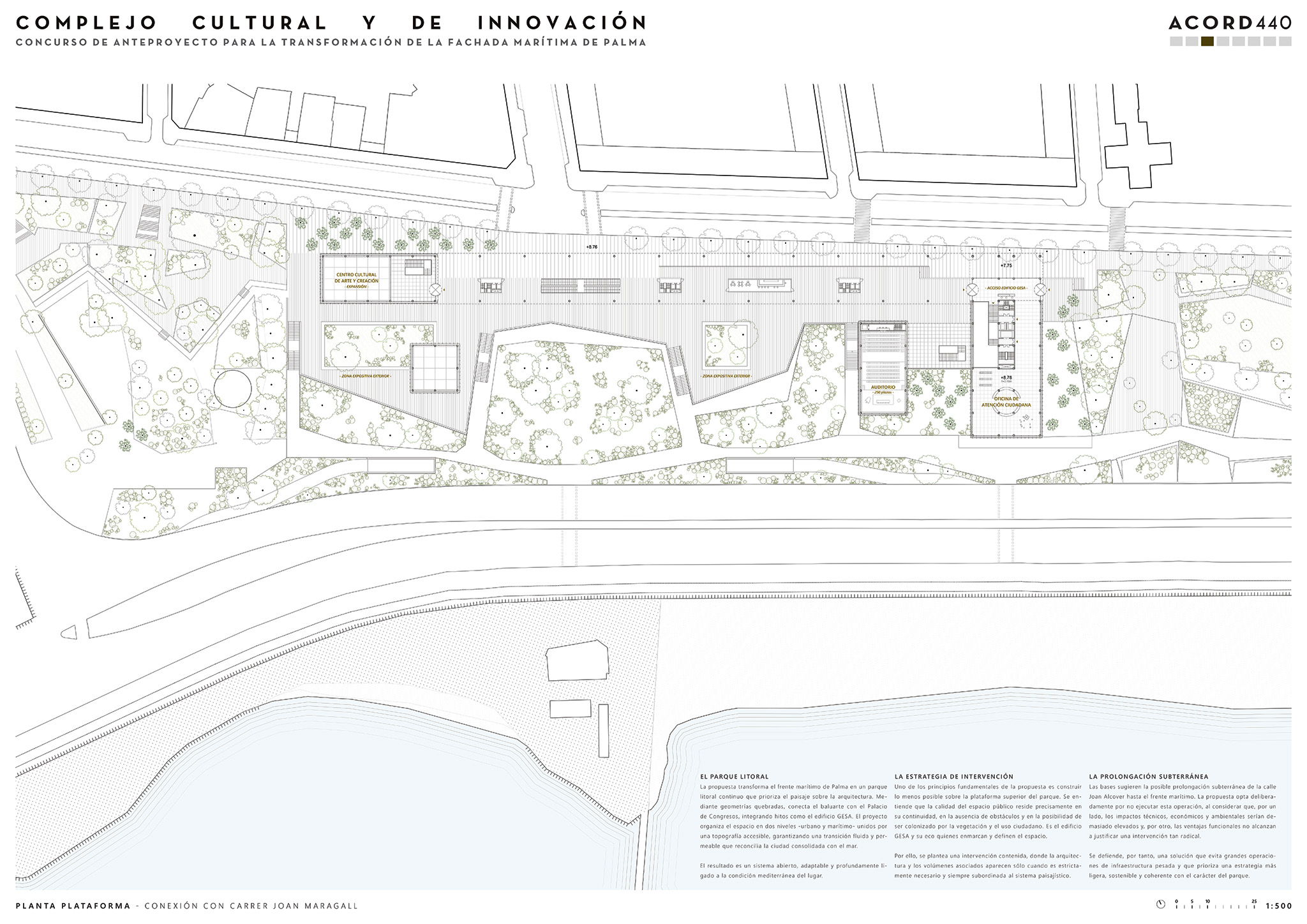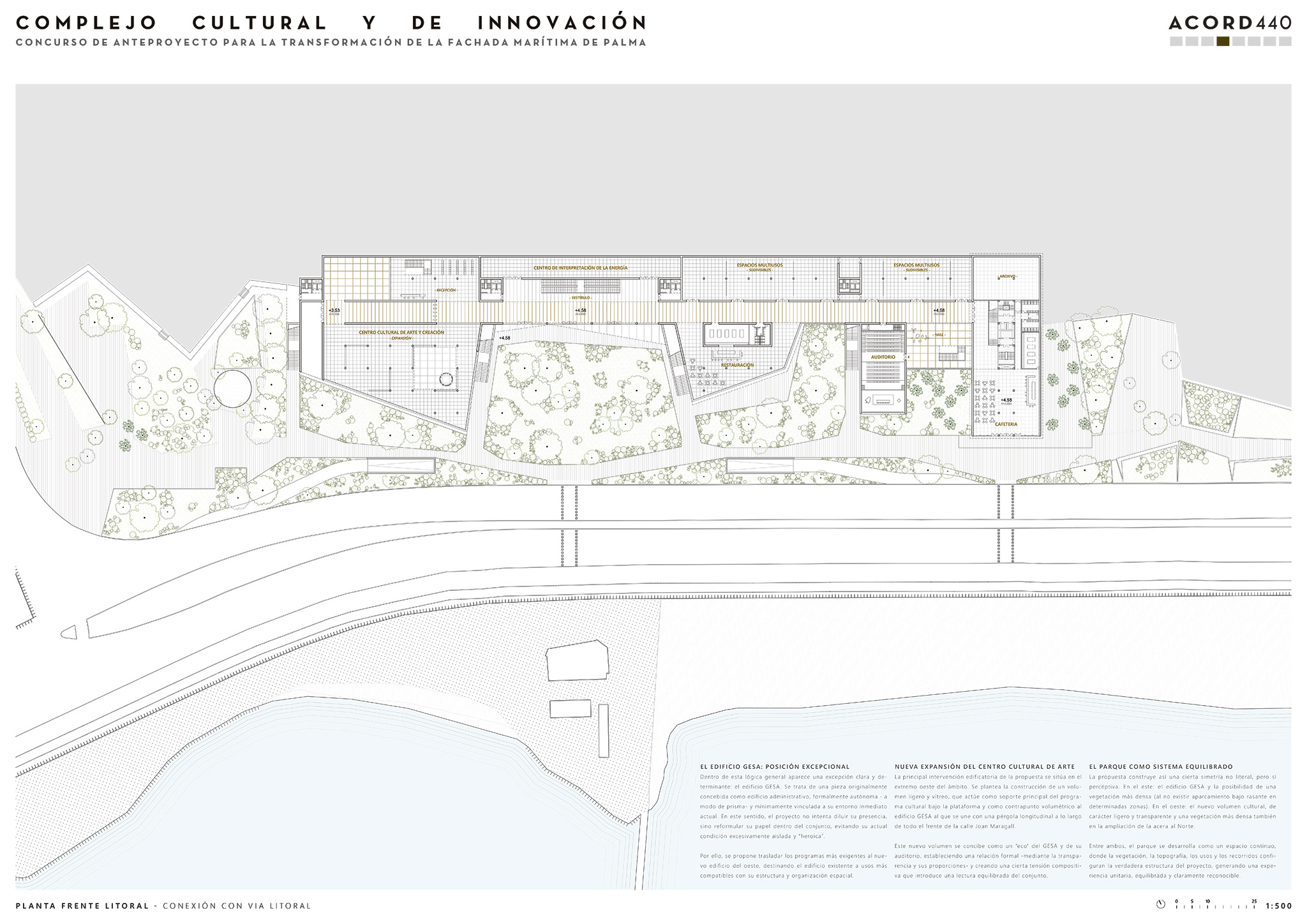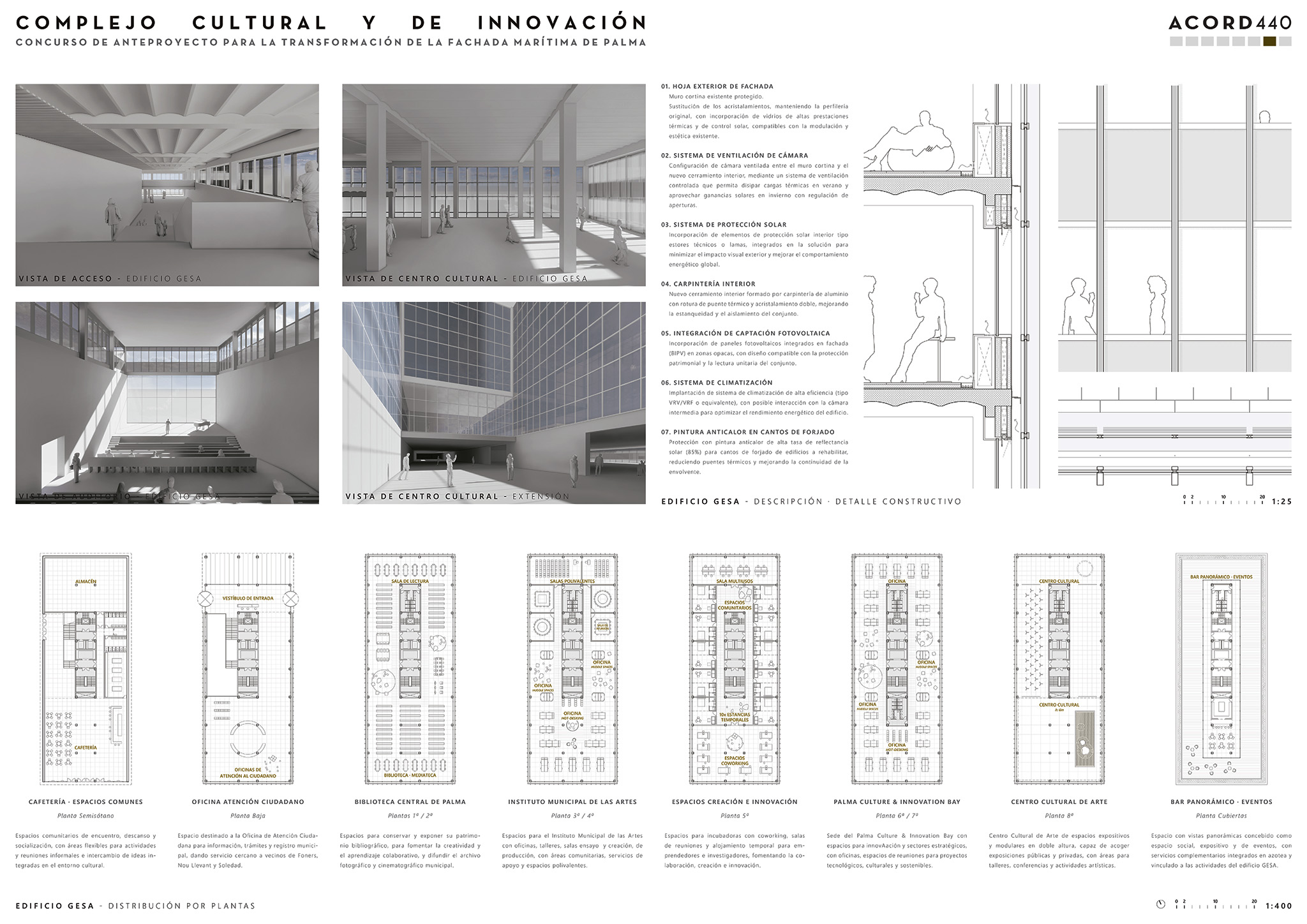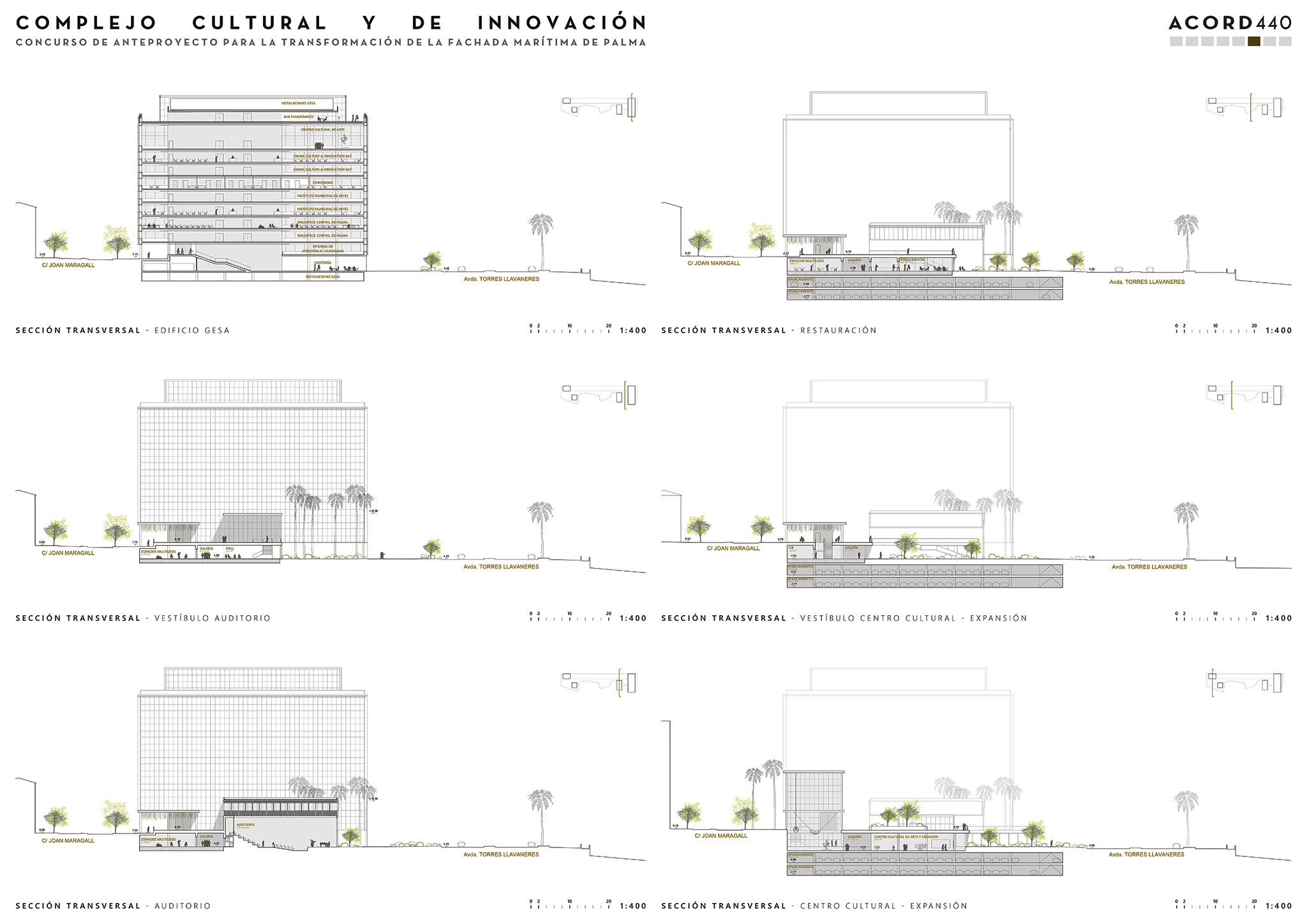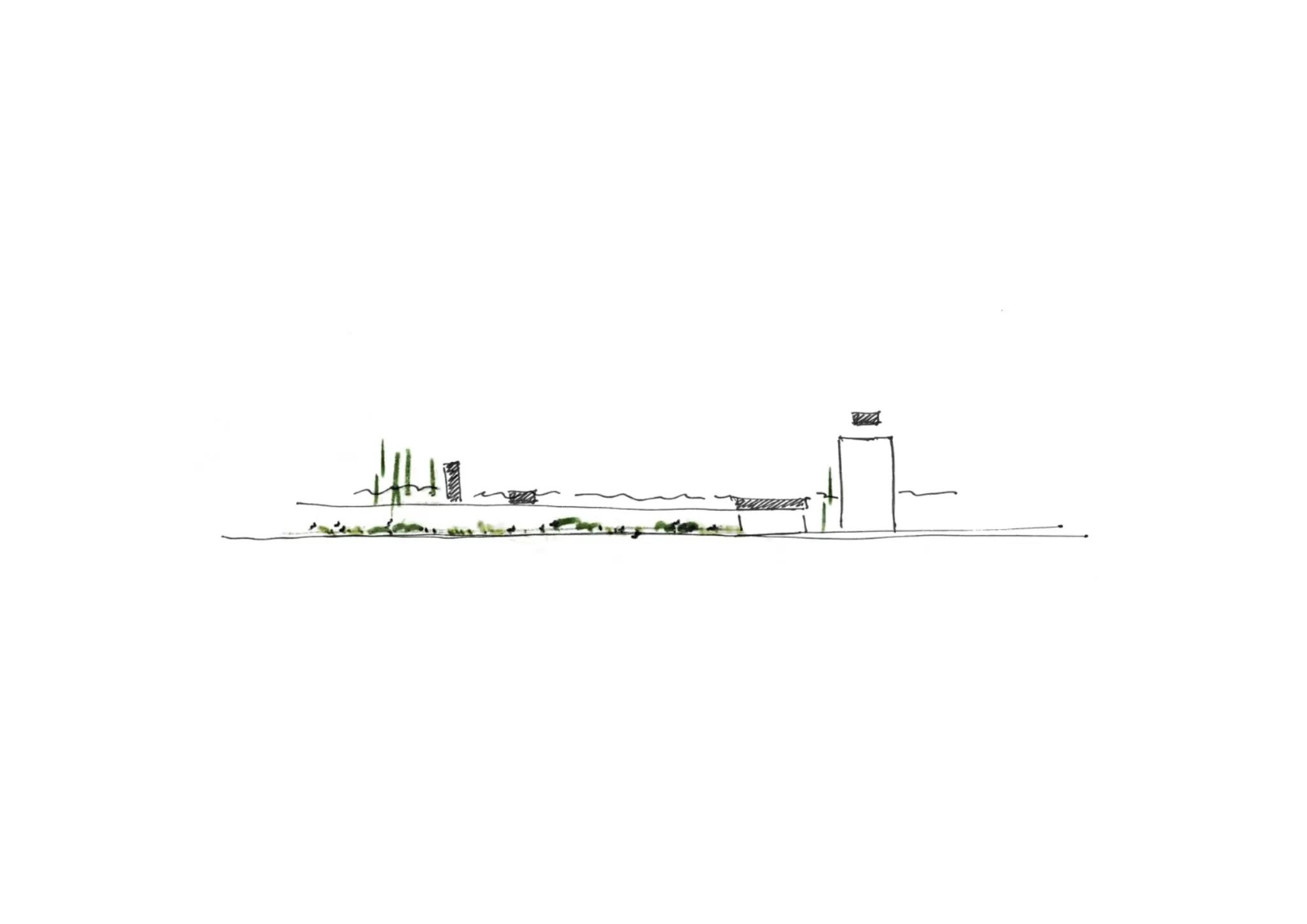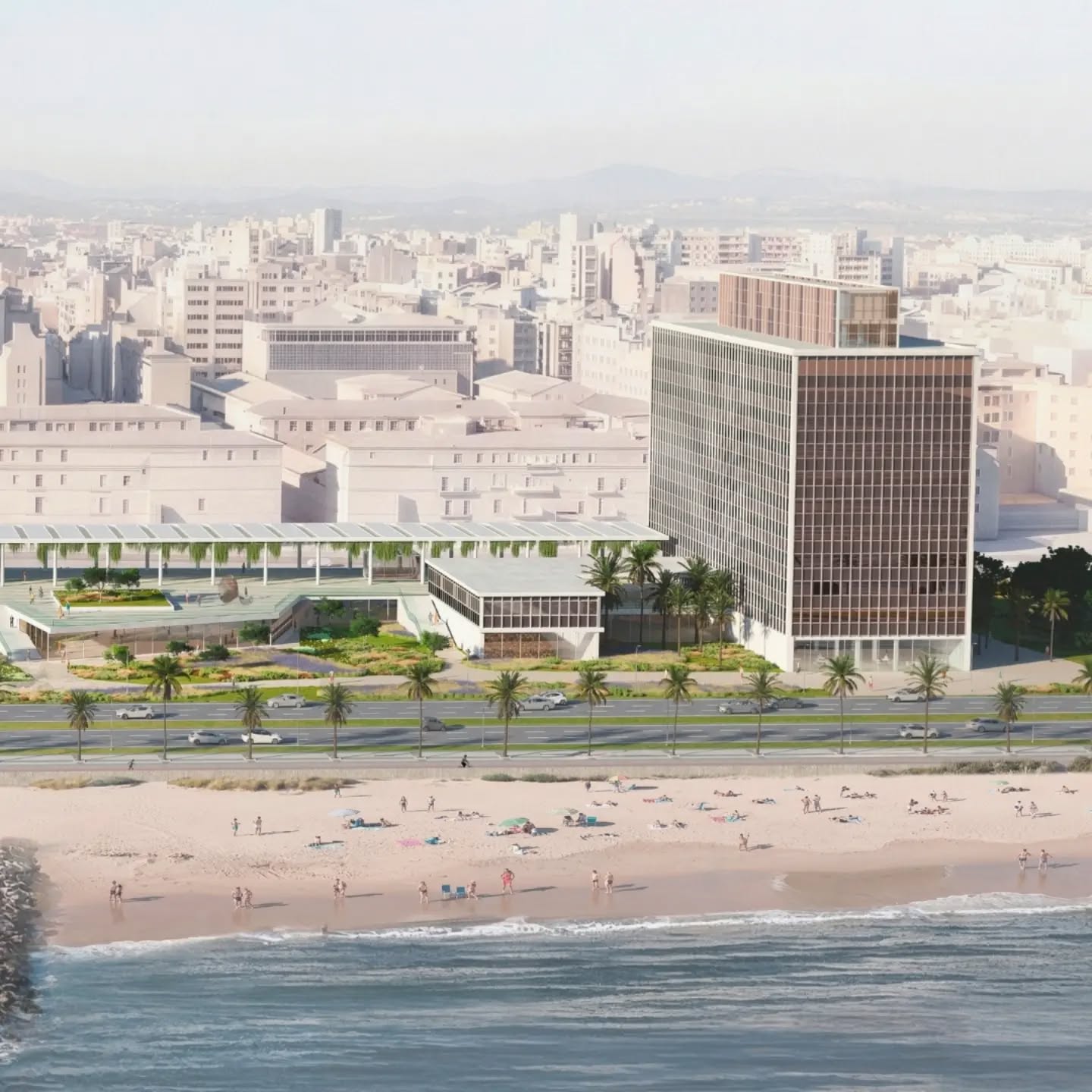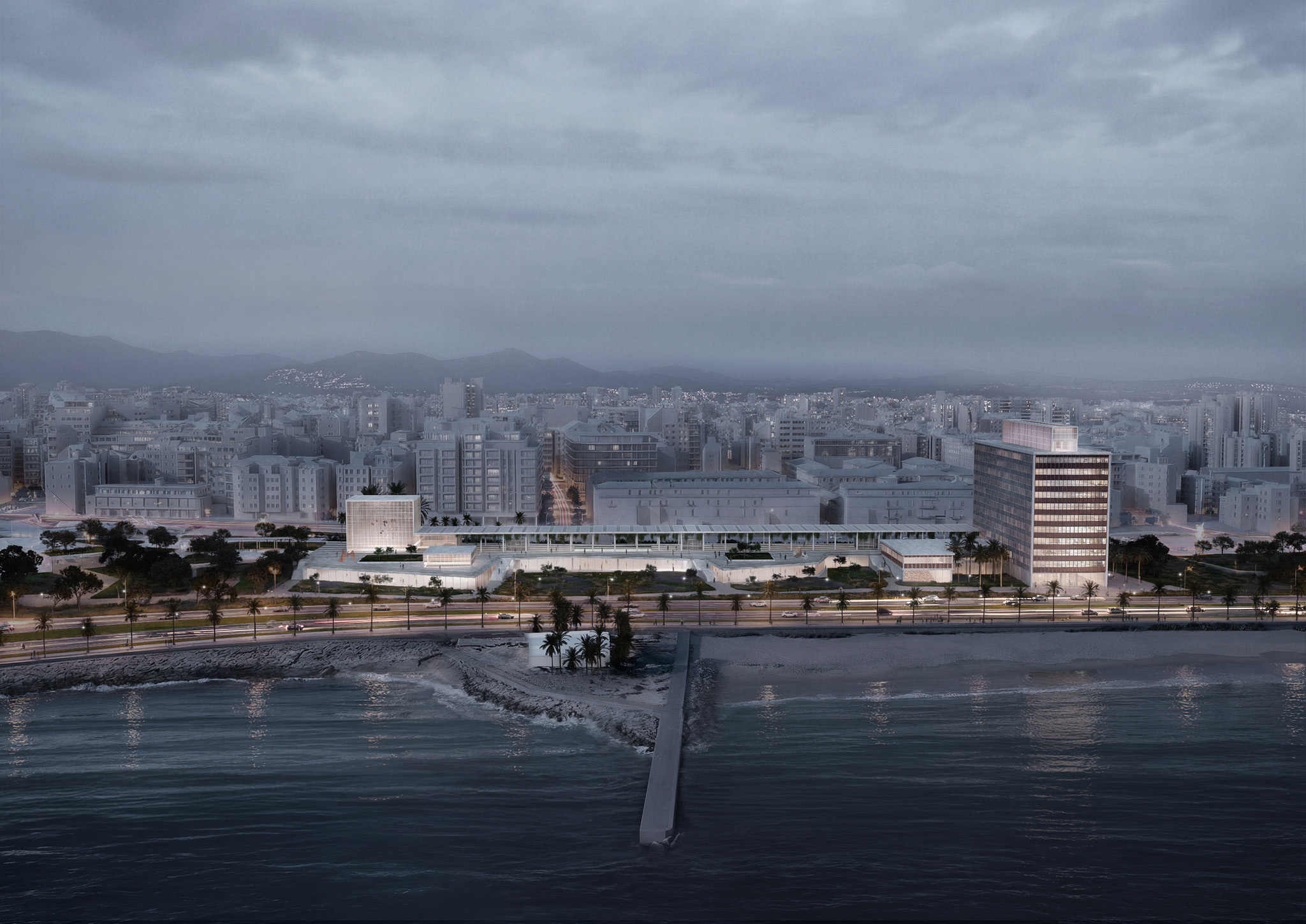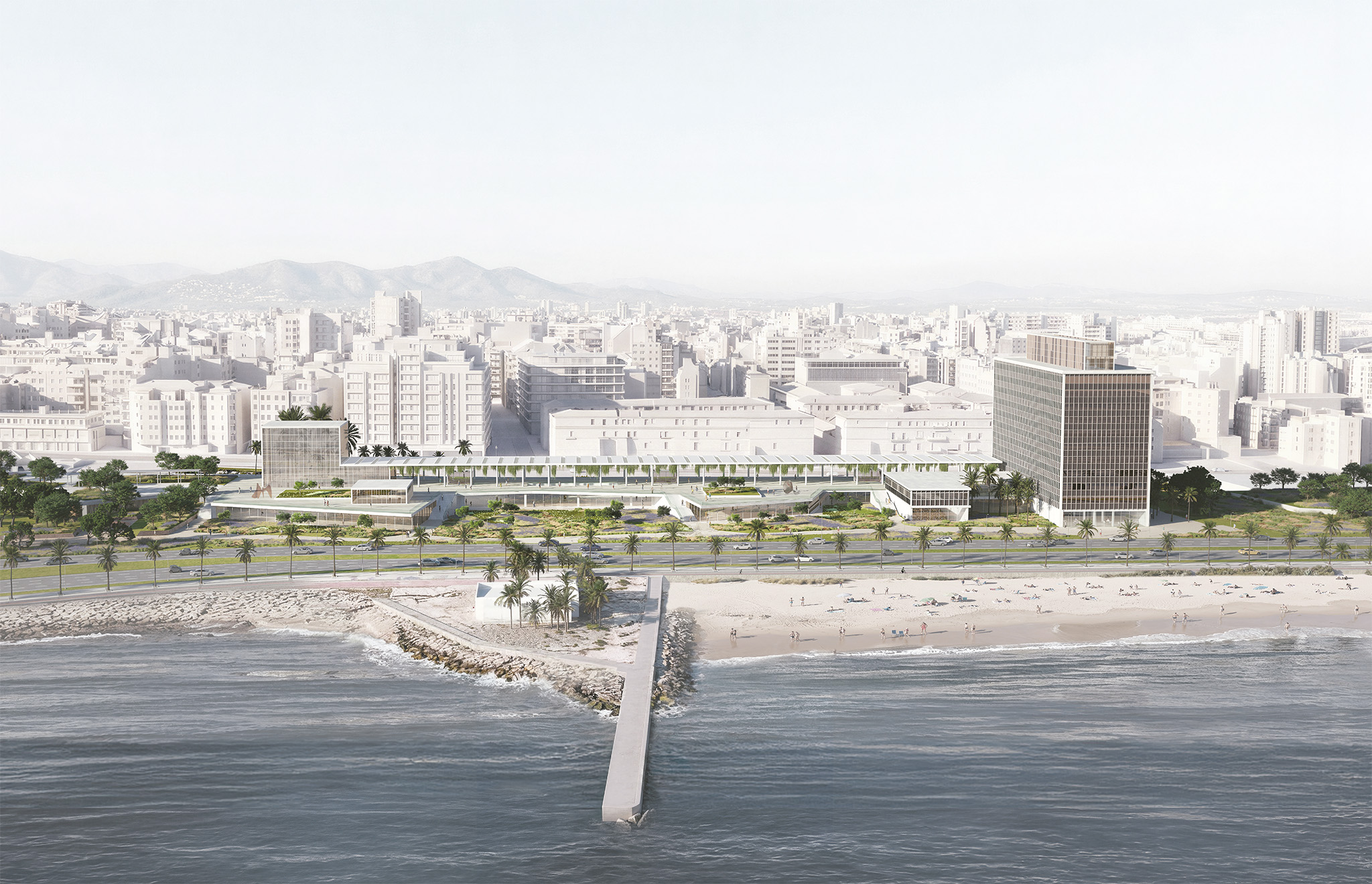
Cruz y Ortiz’s proposal is based on a strategy of minimal construction. The built intervention is concentrated, allowing the former GESA building to take centre stage as a landmark, programmatic framework and urban reference point. This decision preserves the legibility of the building, strengthens its presence on Palma’s waterfront skyline and frees up a substantial portion of the site for public use.
The rehabilitation of the listed building will accommodate a mixed programme of cultural, administrative and productive uses, including Palma’s future Central Library, the Municipal Institute of the Arts, creation spaces, exhibition areas, collaborative workspaces and facilities linked to the Palma Culture & Innovation Bay. GESA thus ceases to be an isolated object and becomes a public infrastructure where reading, archives, the arts, innovation and civic life overlap.
The intervention pushes the idea of rehabilitation beyond material conservation. It is not limited to restoring an architectural object, but reactivates its urban capacity, transforming it into a structure open to everyday and exceptional uses, at both neighbourhood and metropolitan scales.
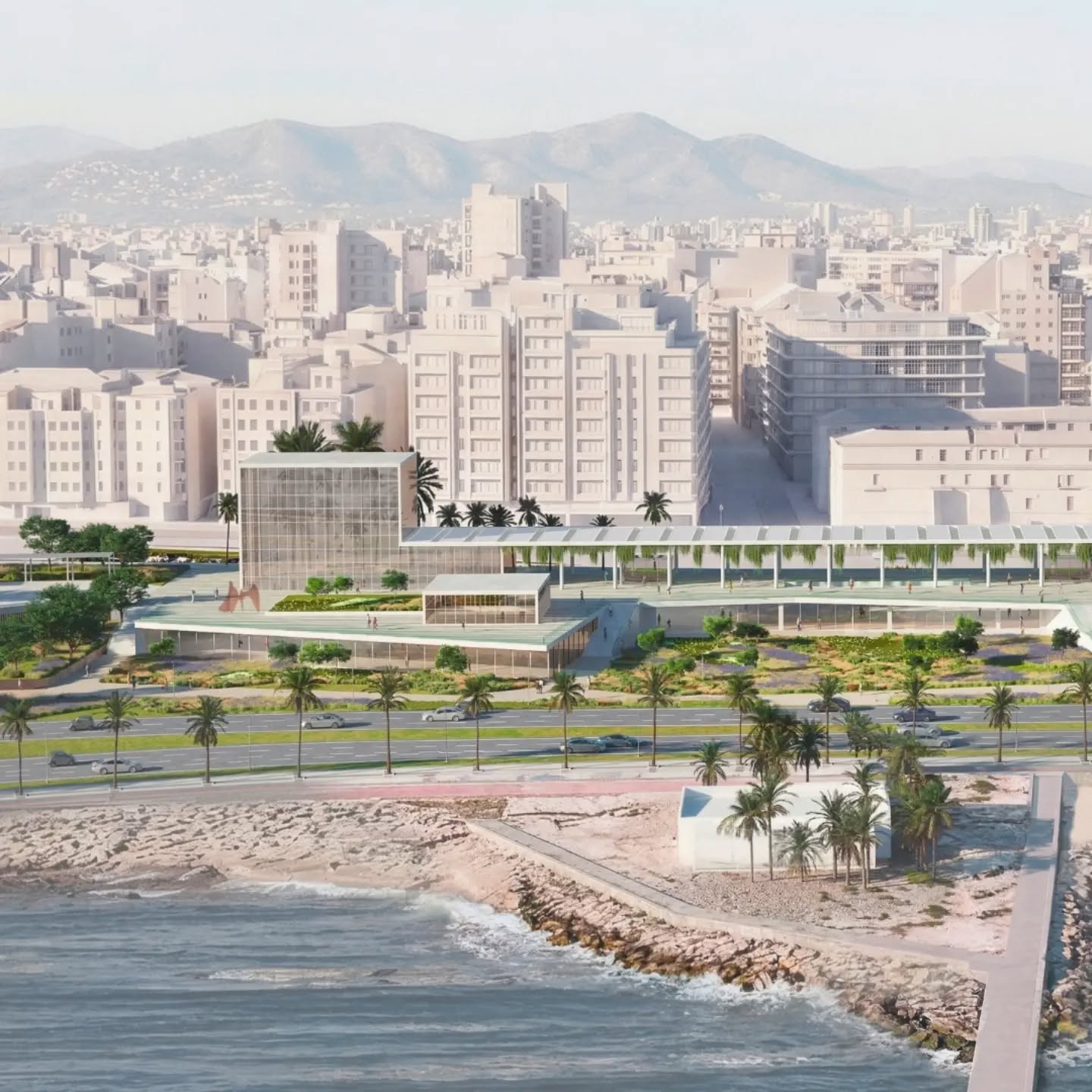
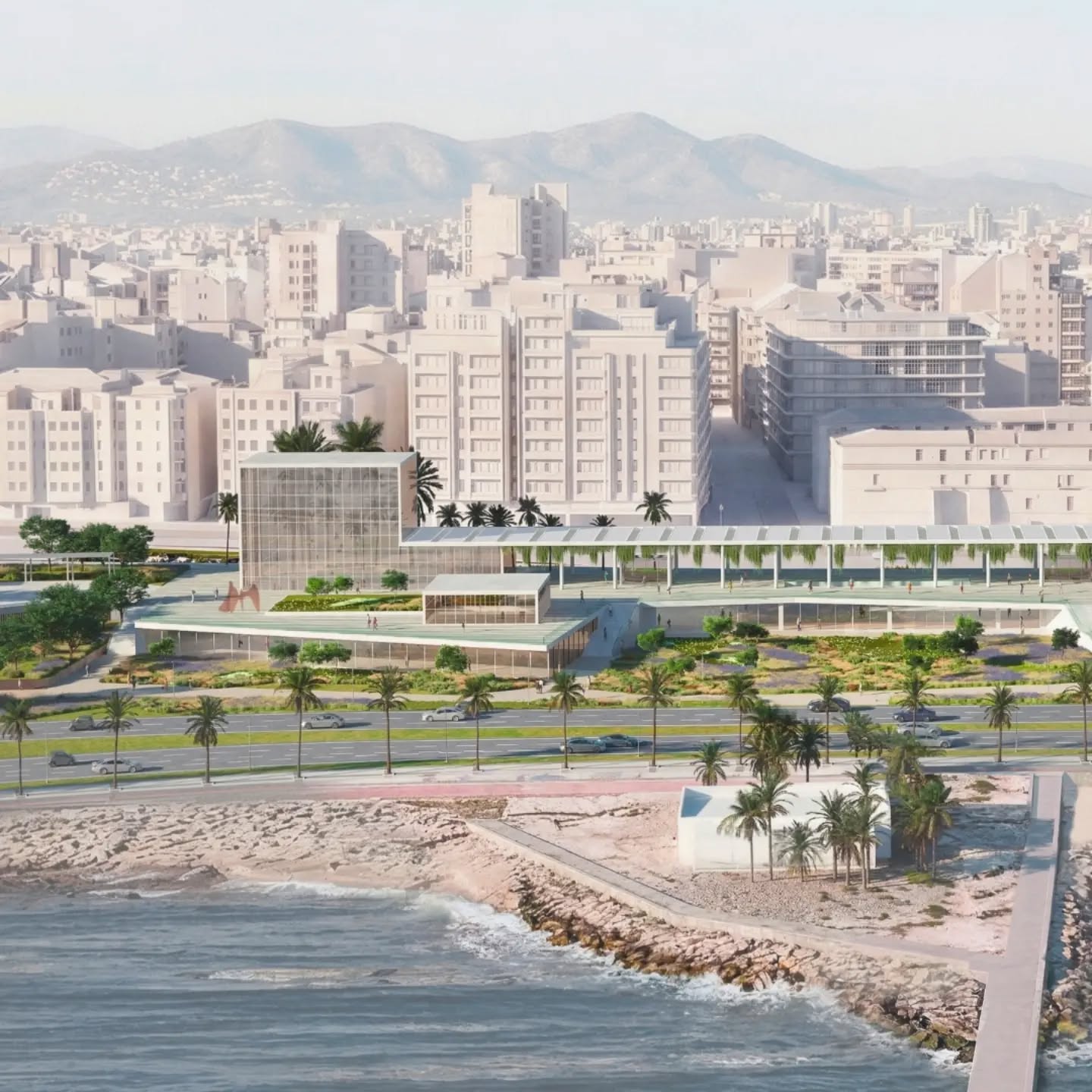
Proposal by Cruz and Ortiz, to recover the seafront of Palma.
The ensemble is completed by a new building dedicated to artistic creation, conceived as a complementary element rather than a formal rival to the main building. The relationship between the two constructions is articulated by a large planted pergola running along Joan Maragall, organising the open space and introducing shade, continuity and a pedestrian scale. This pergola operates as a climatic, spatial and civic device, creating a habitable threshold between the consolidated city and the bay.
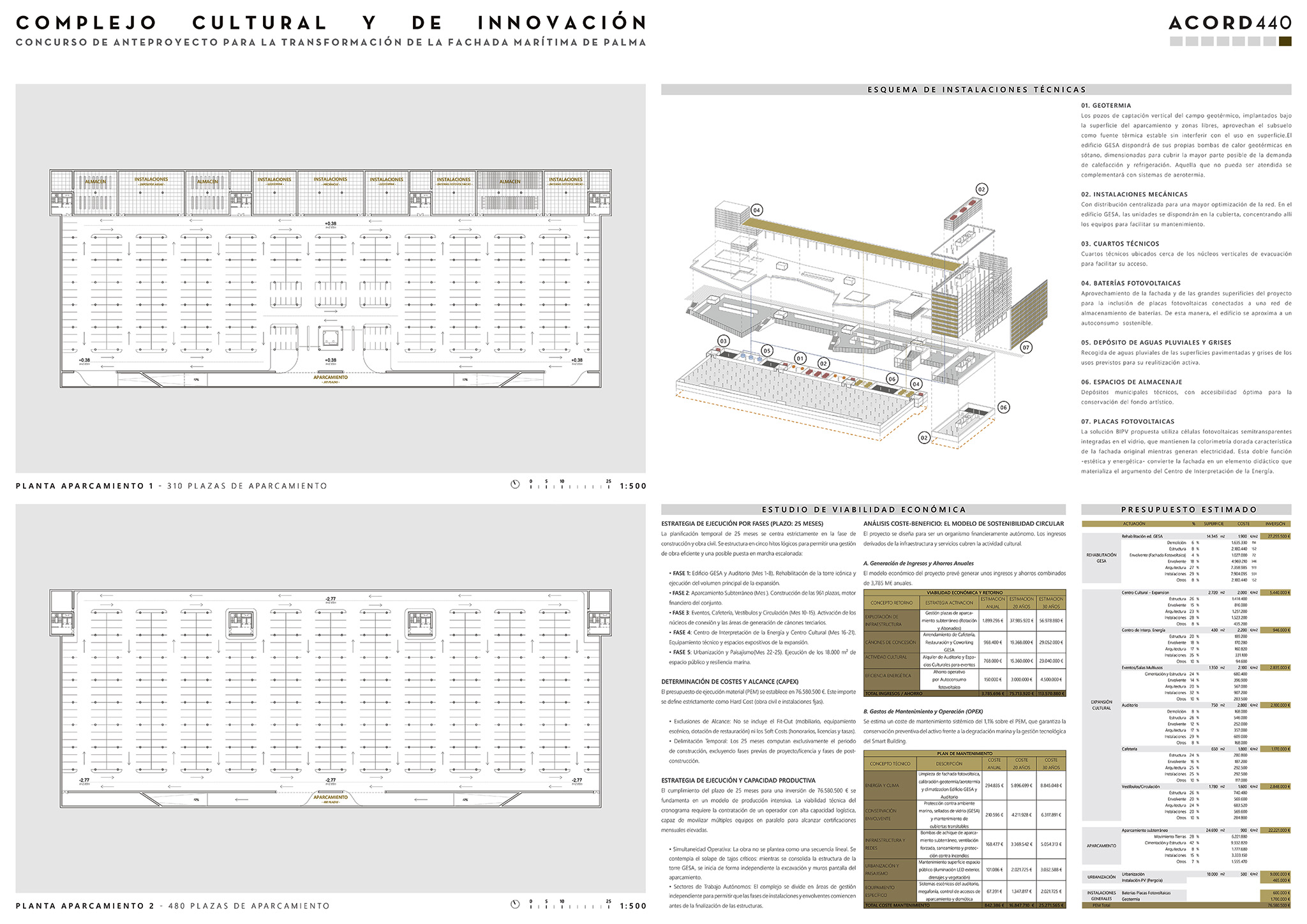
The proposal provides more than 18,000 m² of public space, underscoring its urban dimension. The transformation of the waterfront is conceived not merely as the recovery of a singular building, but as the creation of a system of open spaces capable of connecting Levante, the historic centre and the beach. The underground car parks help free up surface area for green spaces and pedestrian routes, although they raise the challenge of reconciling metropolitan accessibility with a reduced dependence on private vehicles.
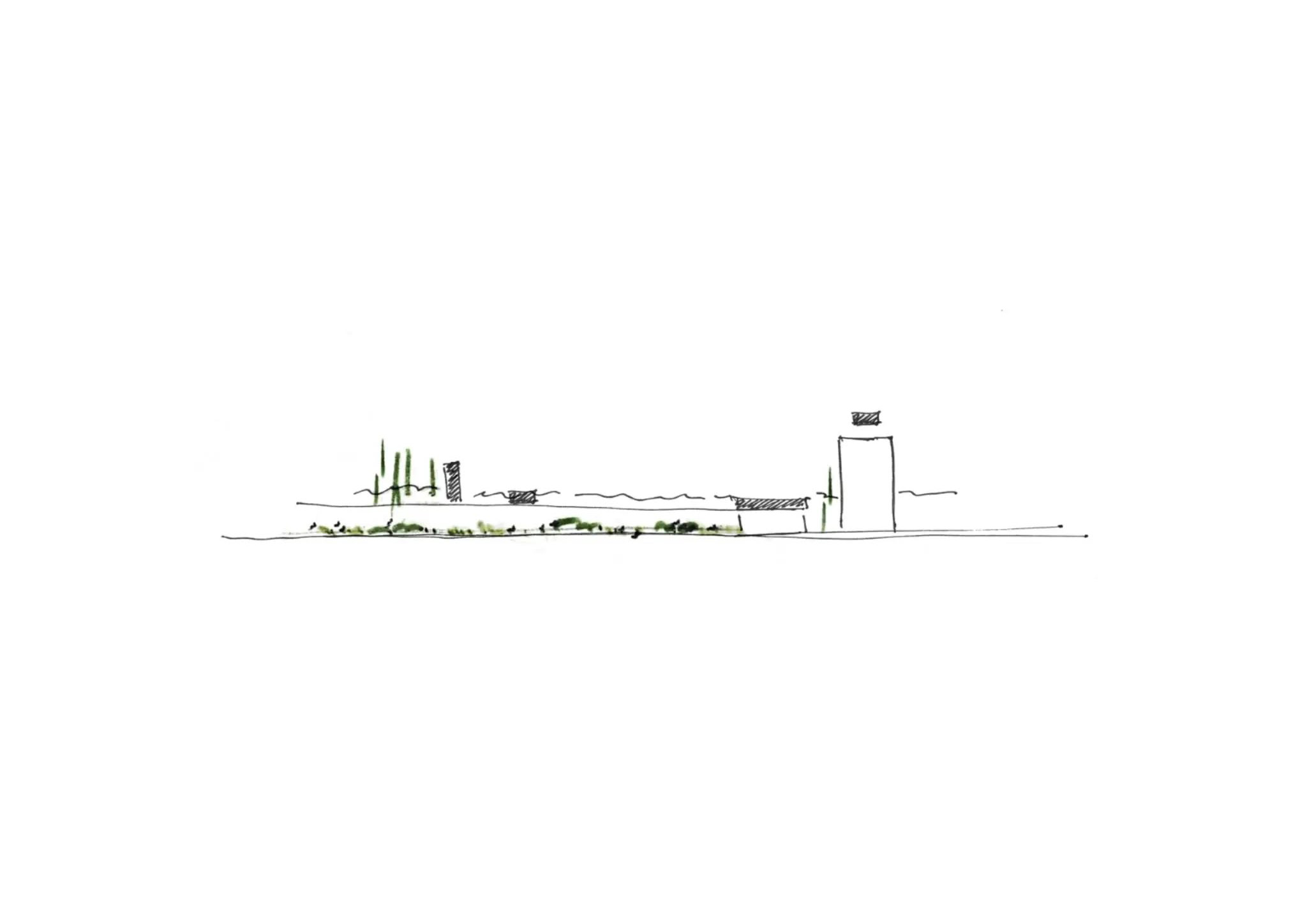
Sketch. Proposal by Cruz and Ortiz to recover the seafront of Palma.
After years of abandonment, the former GESA building now has the potential to become a reference point for sustainable twenty-first-century architecture. This sustainability is understood not only in terms of energy performance or the incorporation of vegetation, but through a logic of heritage reuse: conserving, adapting and extending the life of an existing structure.
The quality of the operation will depend on the balance between heritage respect and functional, accessible and socially relevant transformation. Its value lies not only in the sum of its programmes, but in the possibility of creating a new meeting place between Palma and the sea.