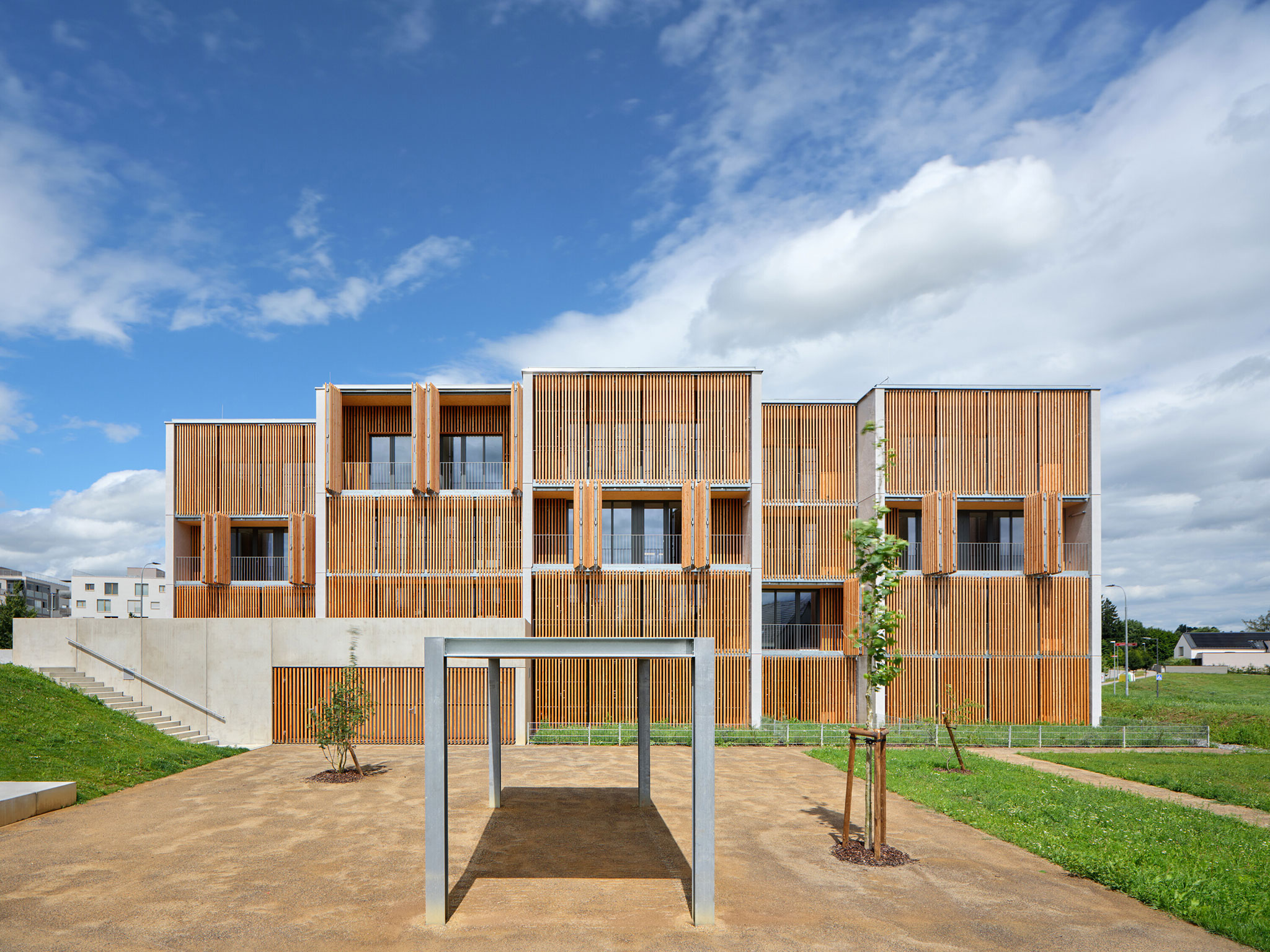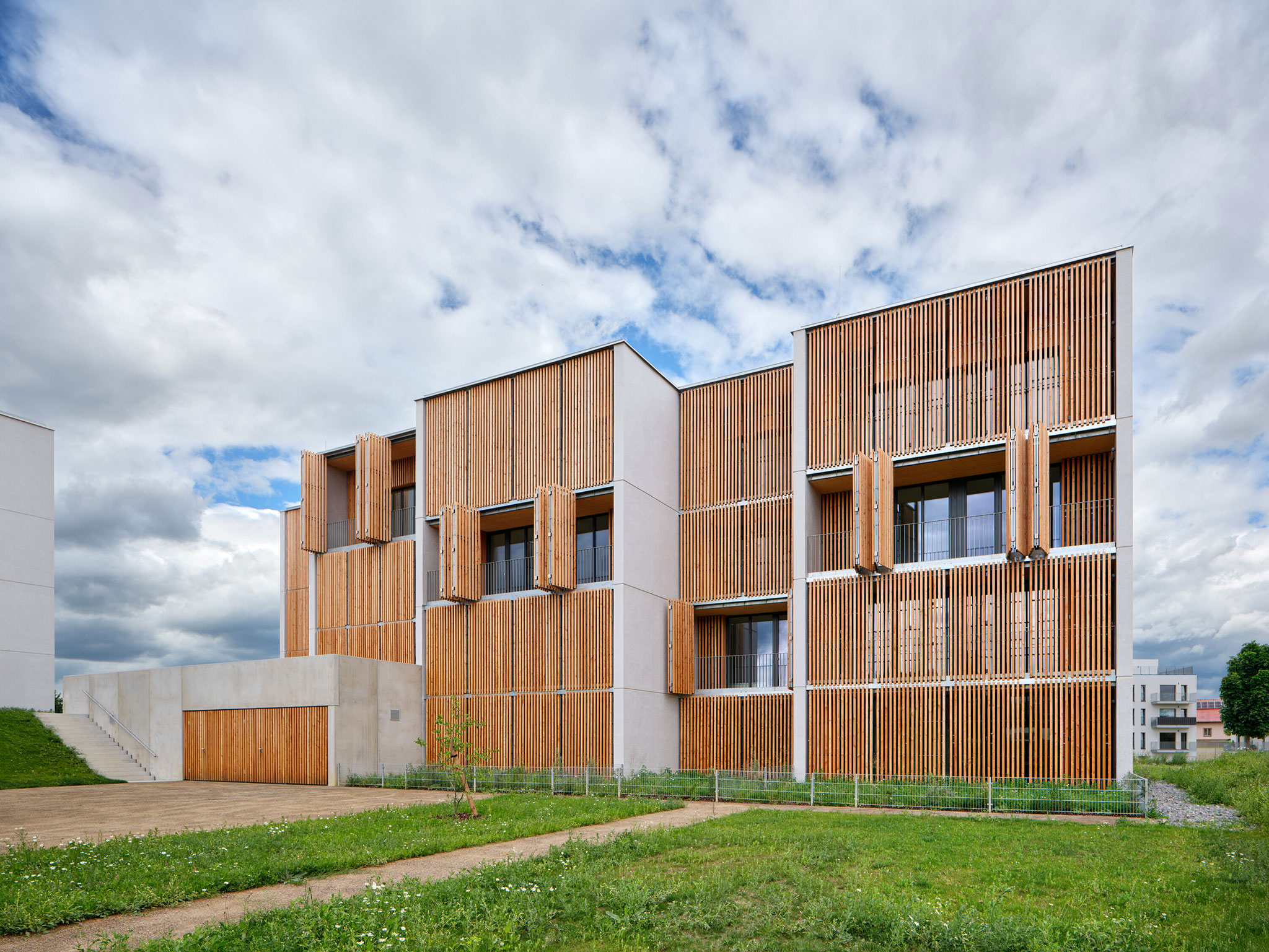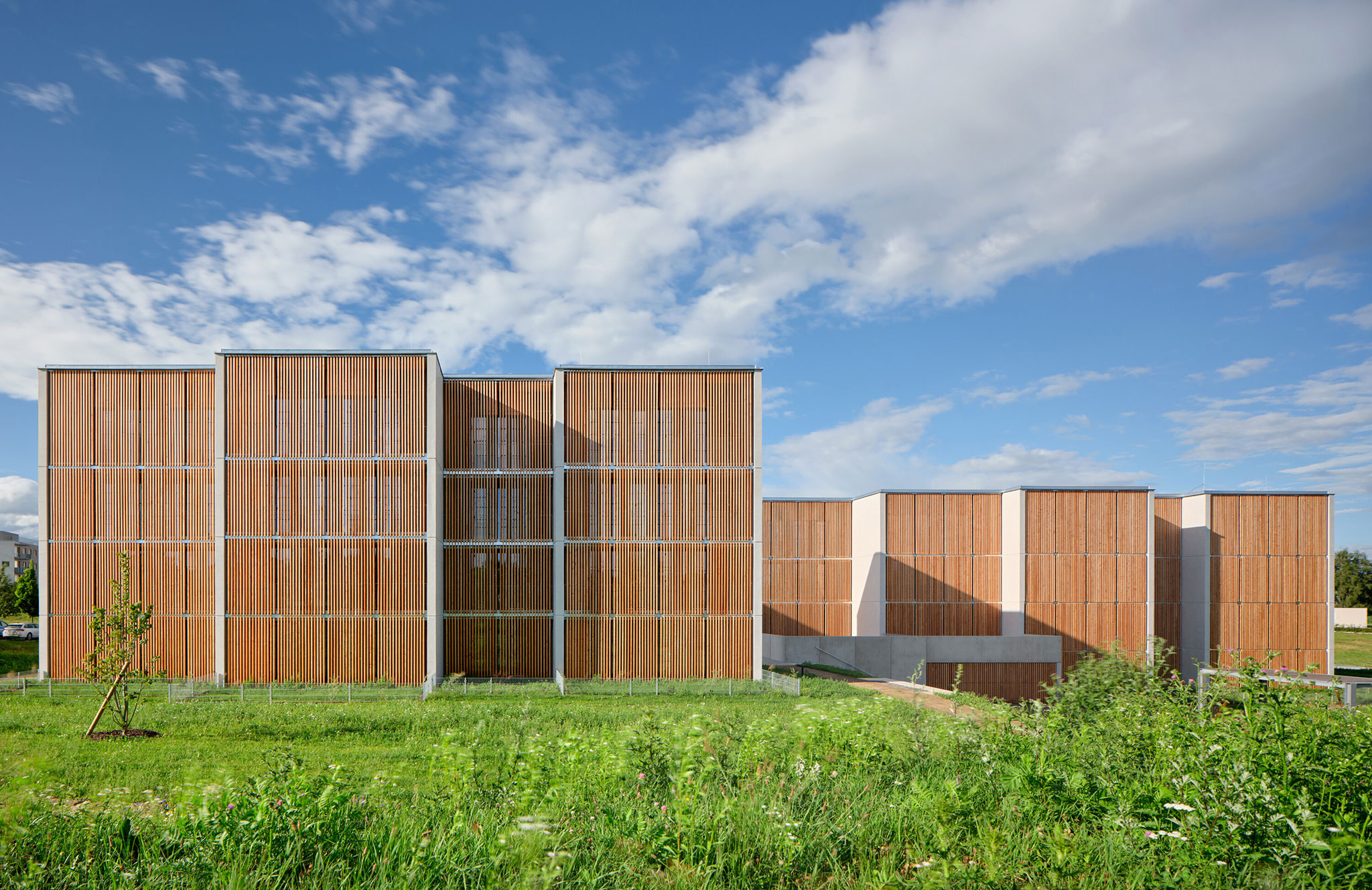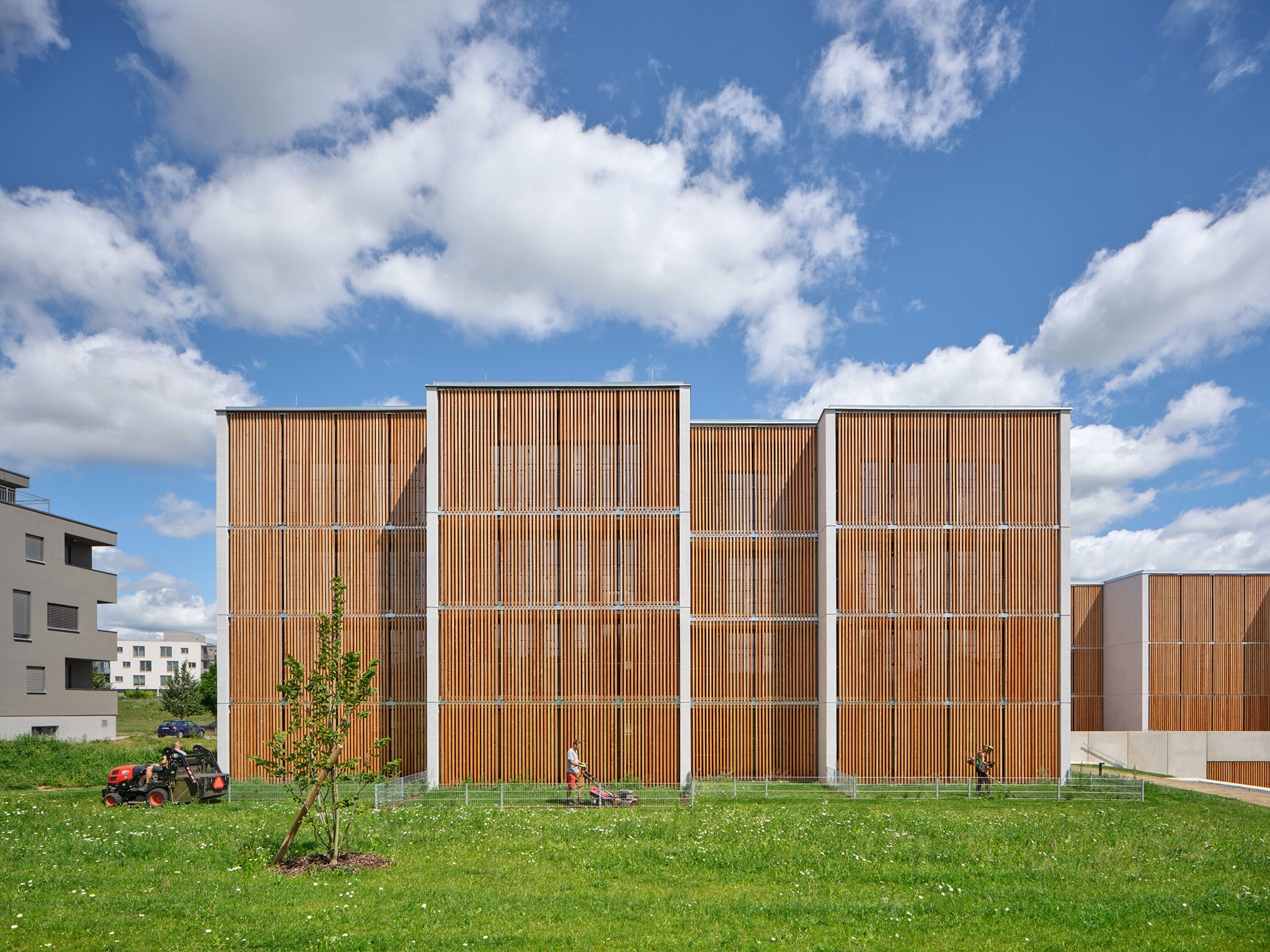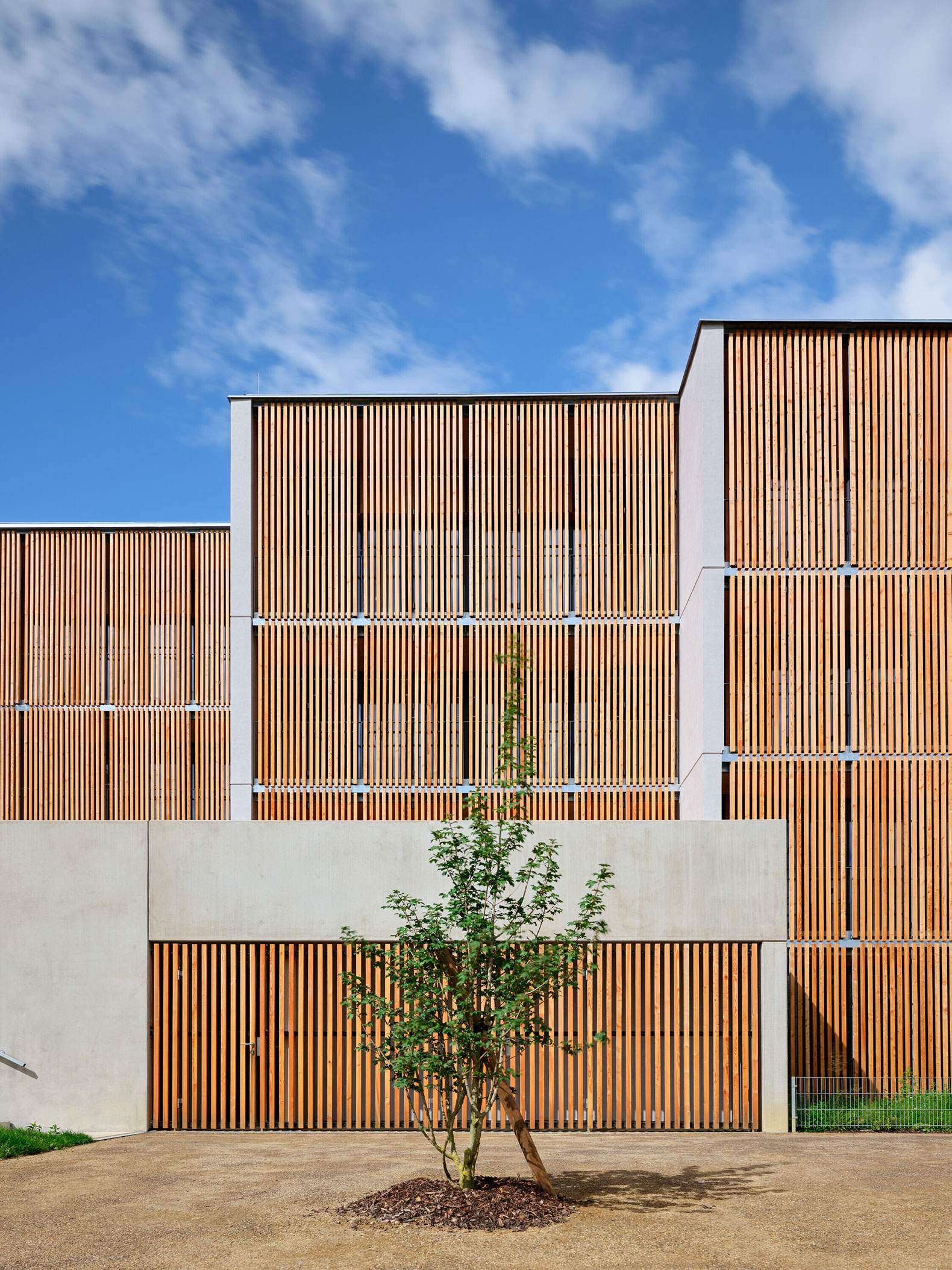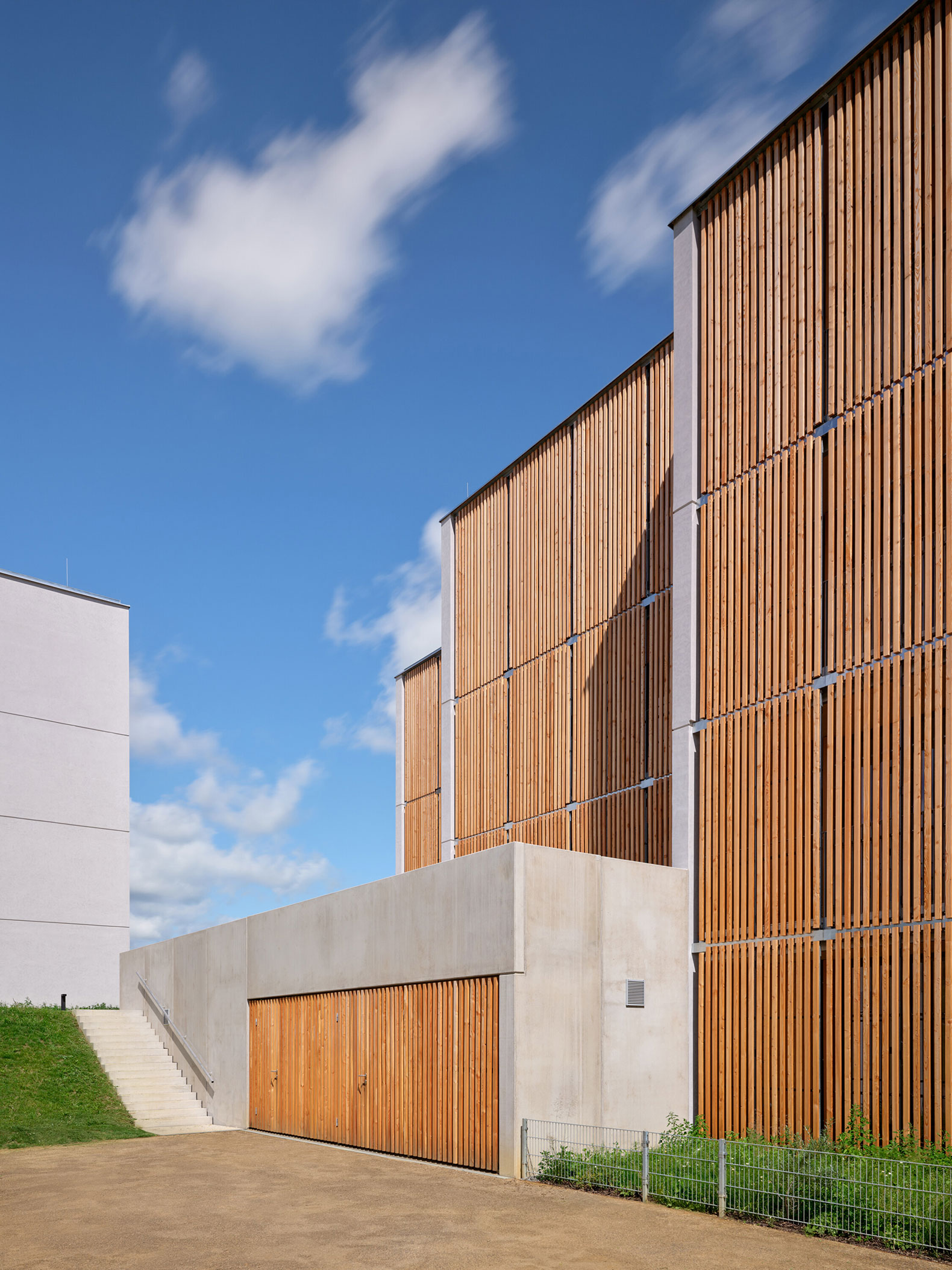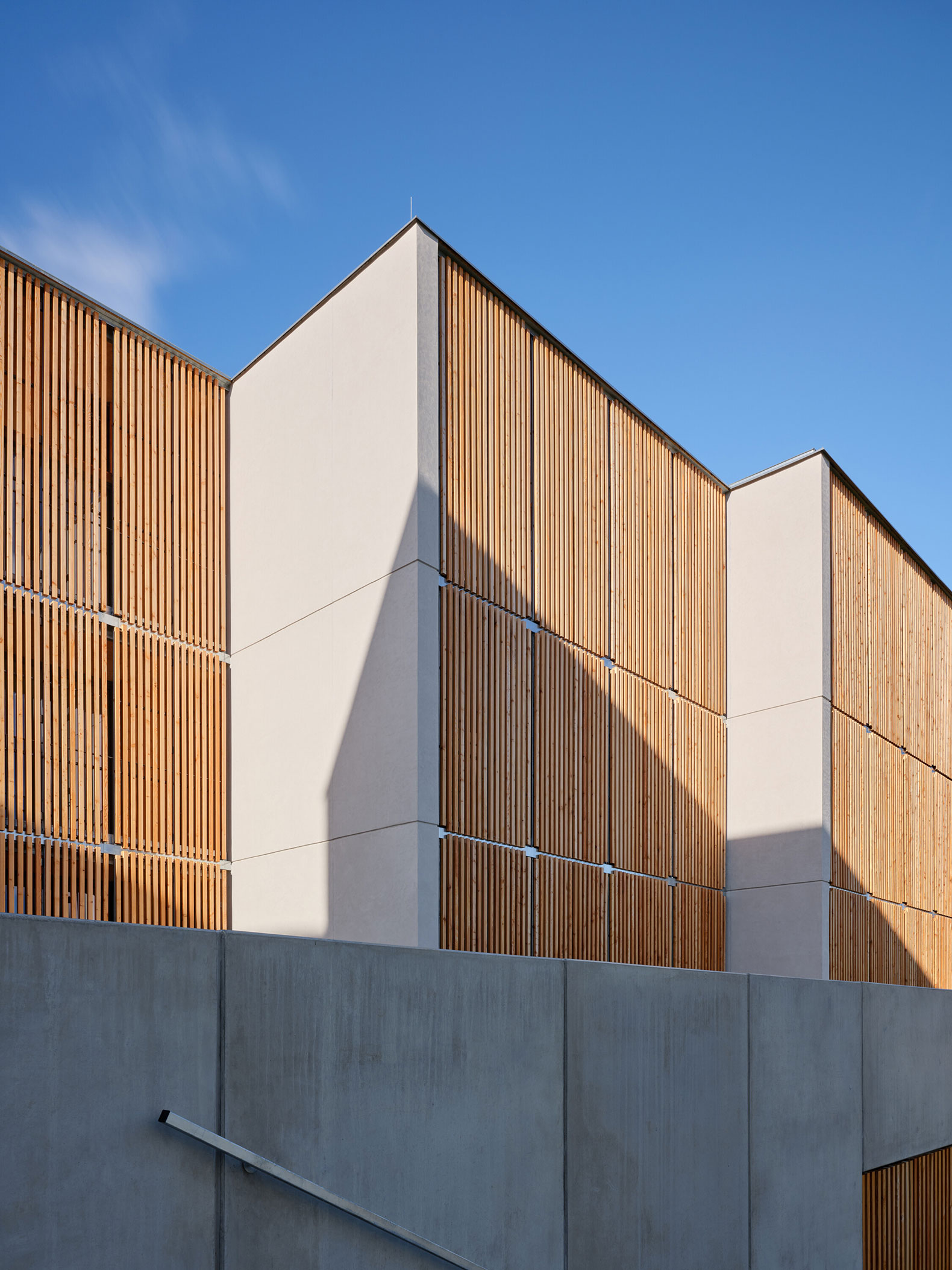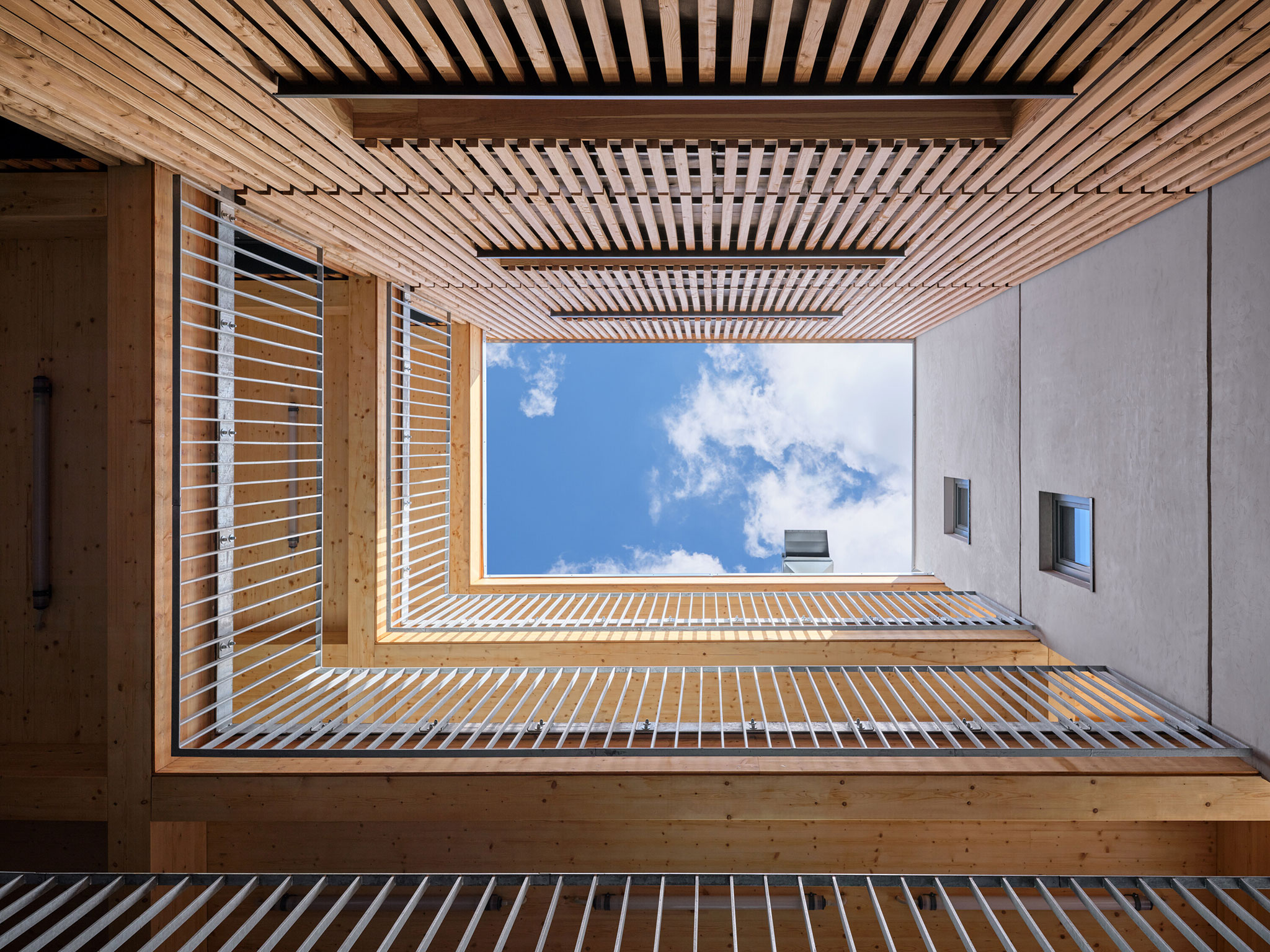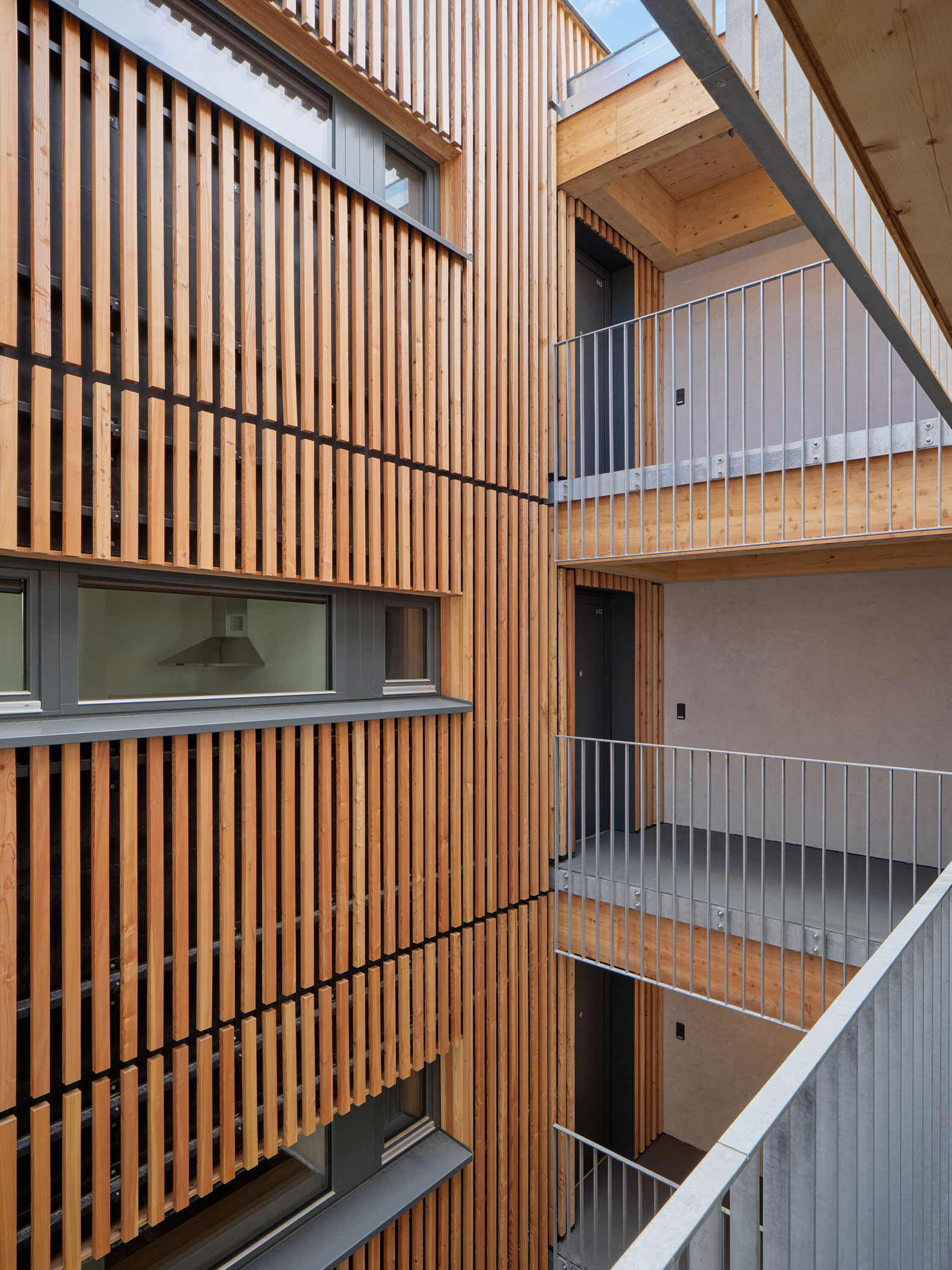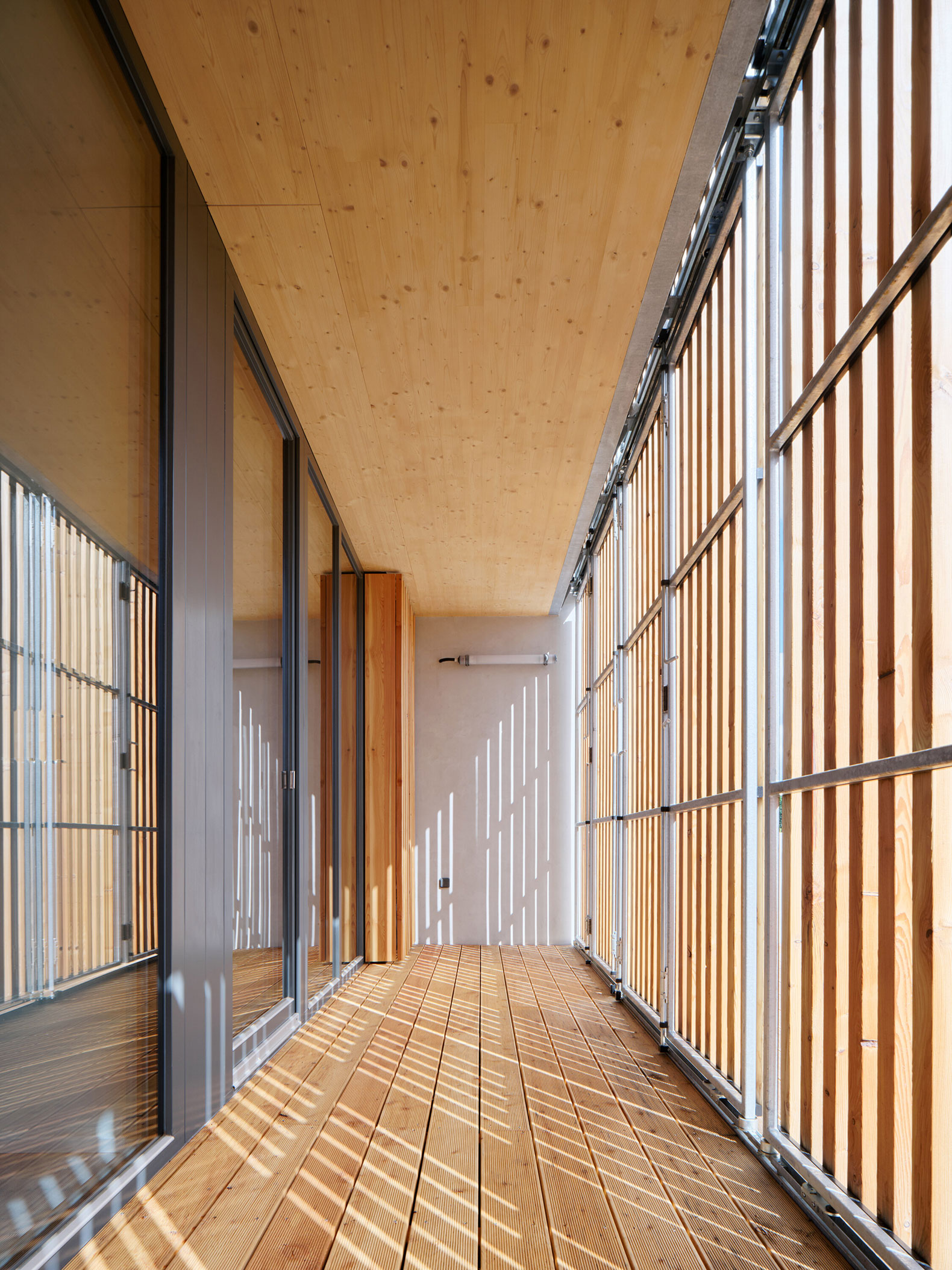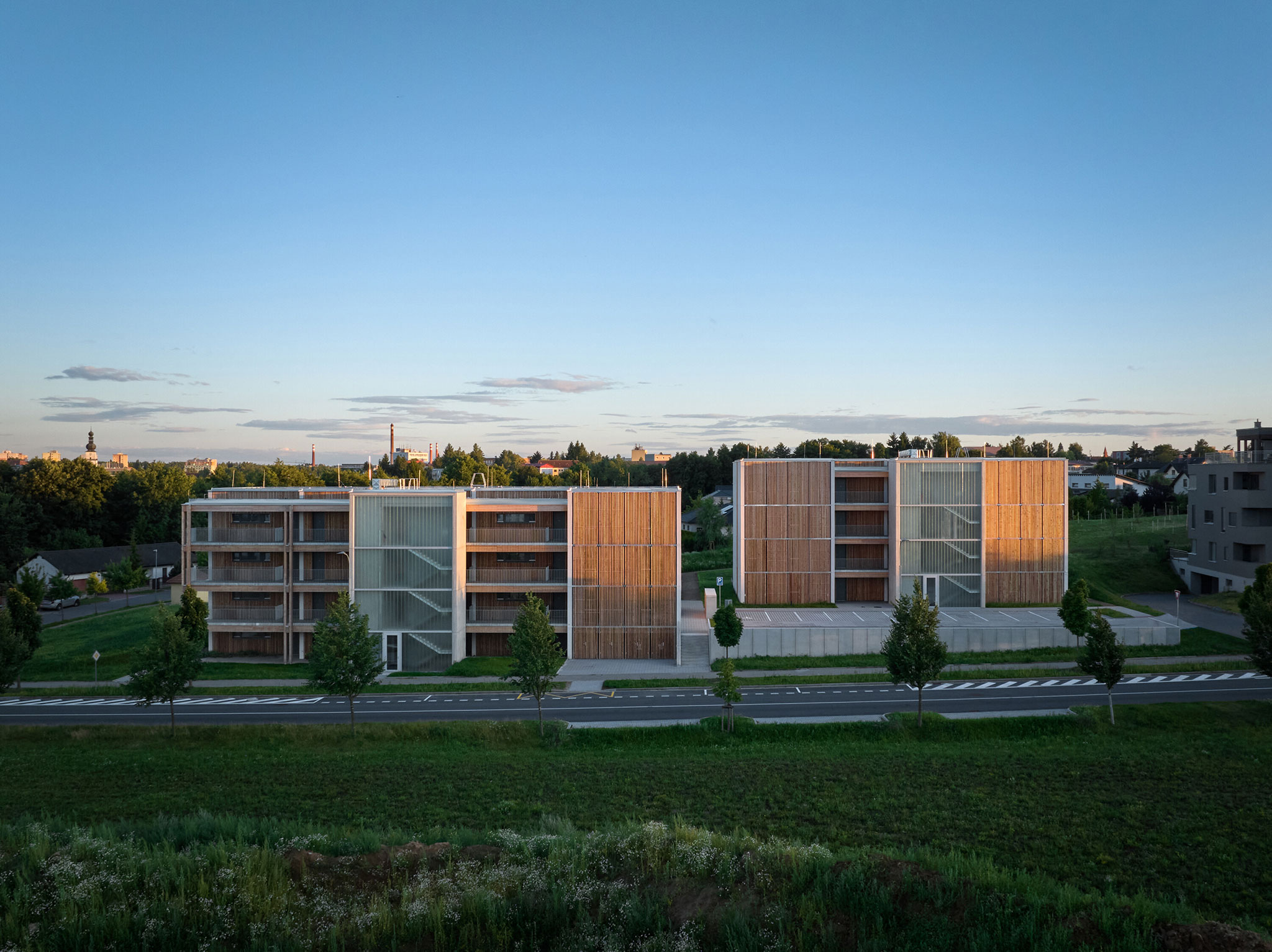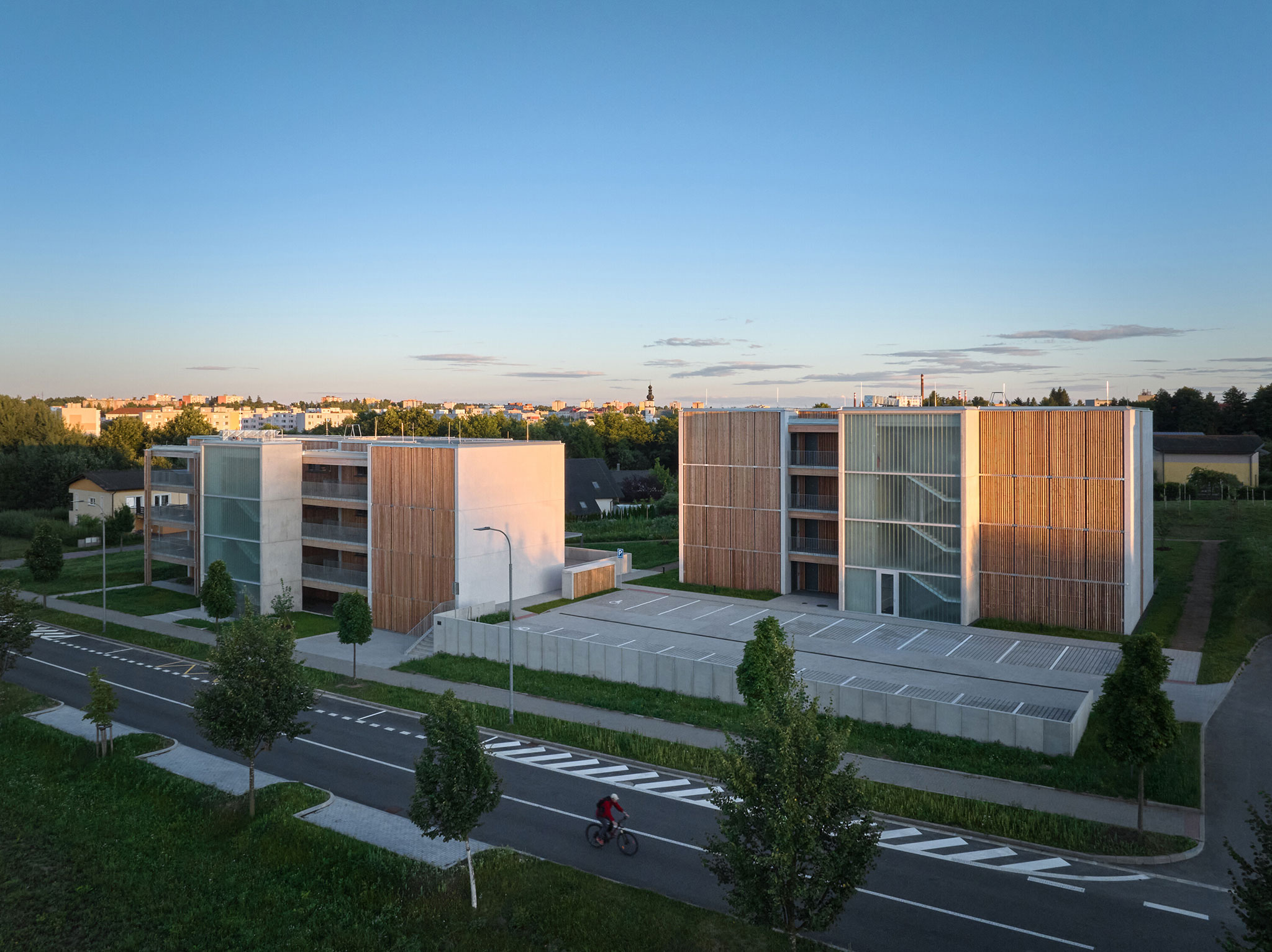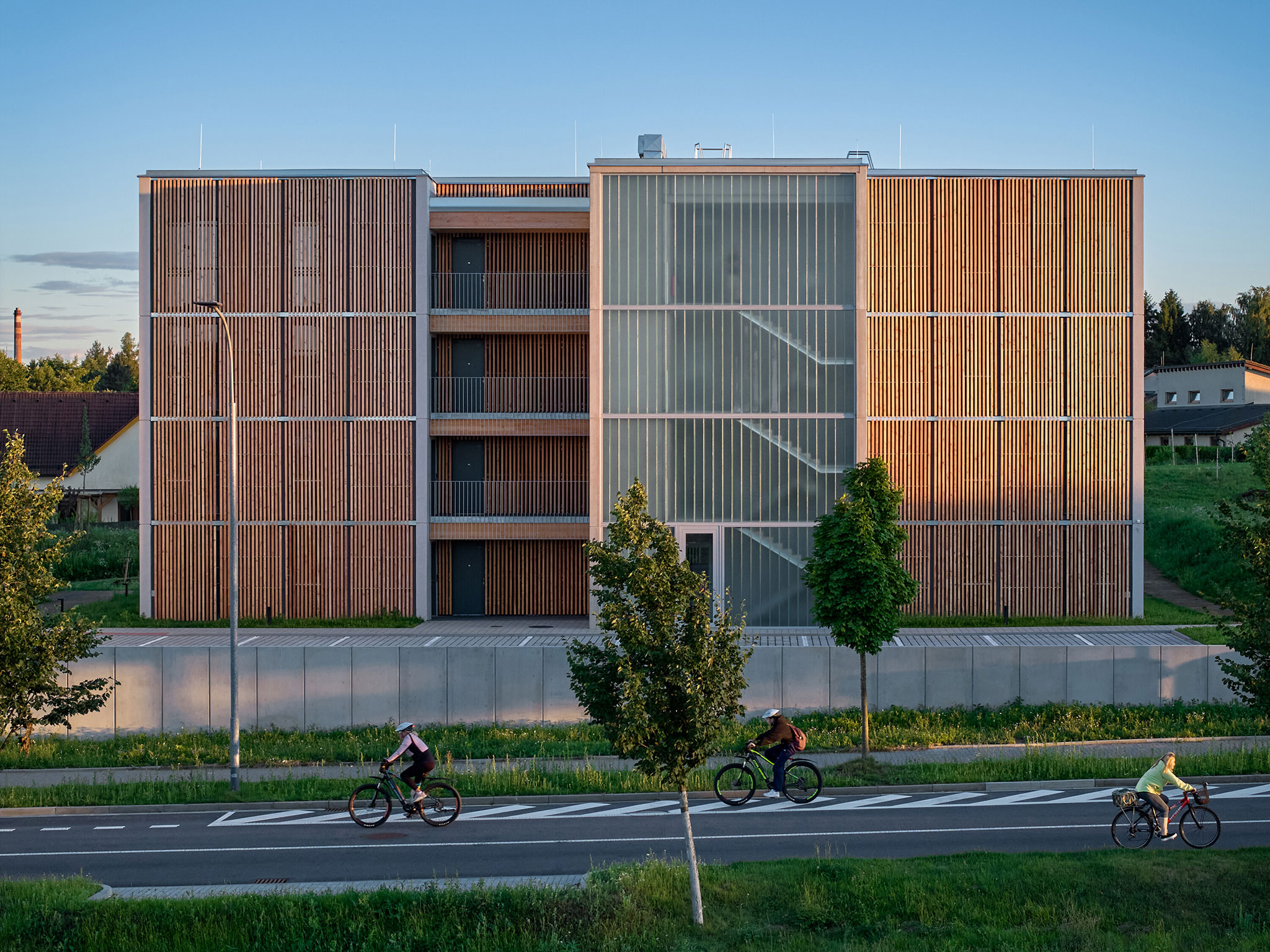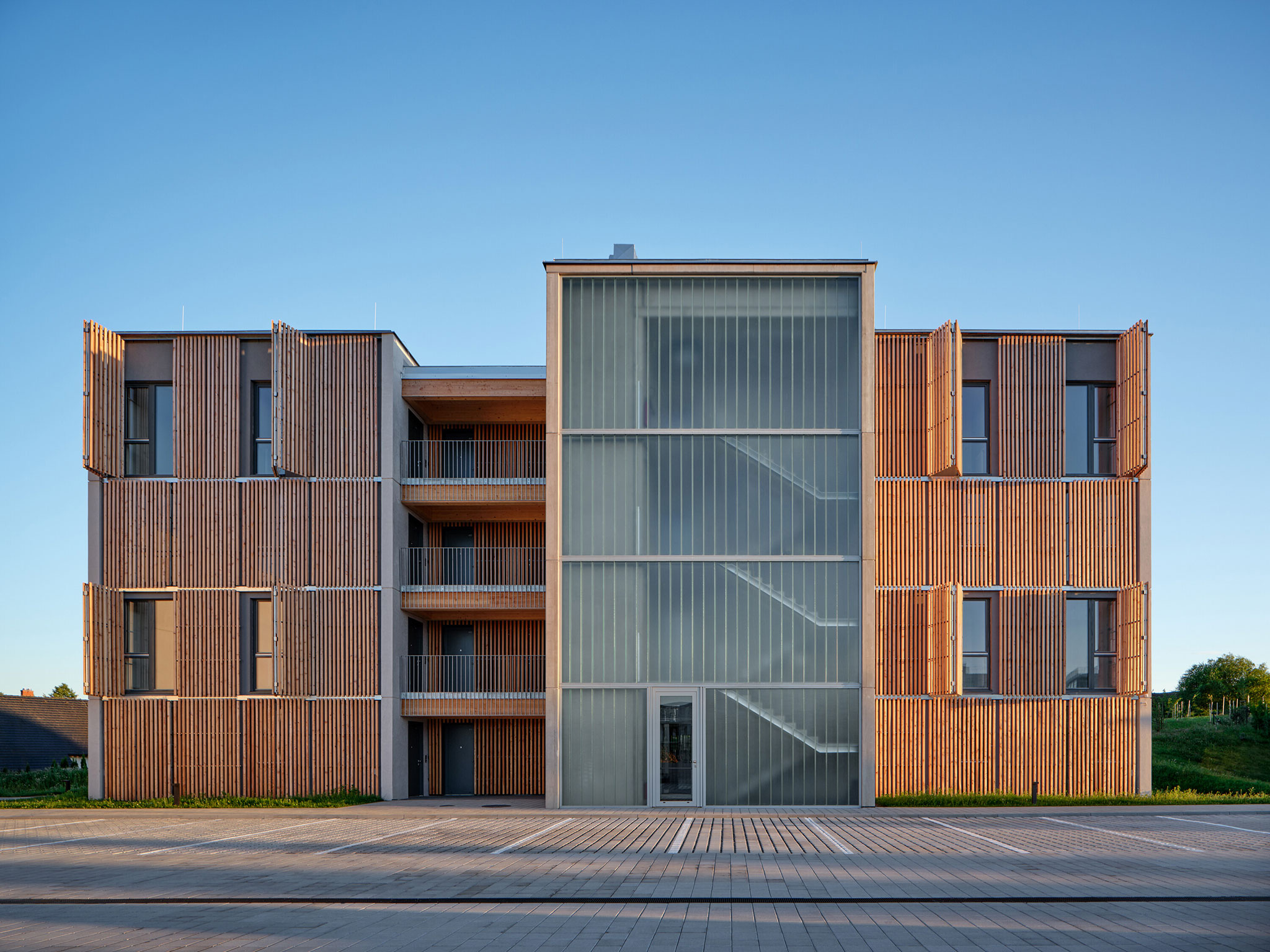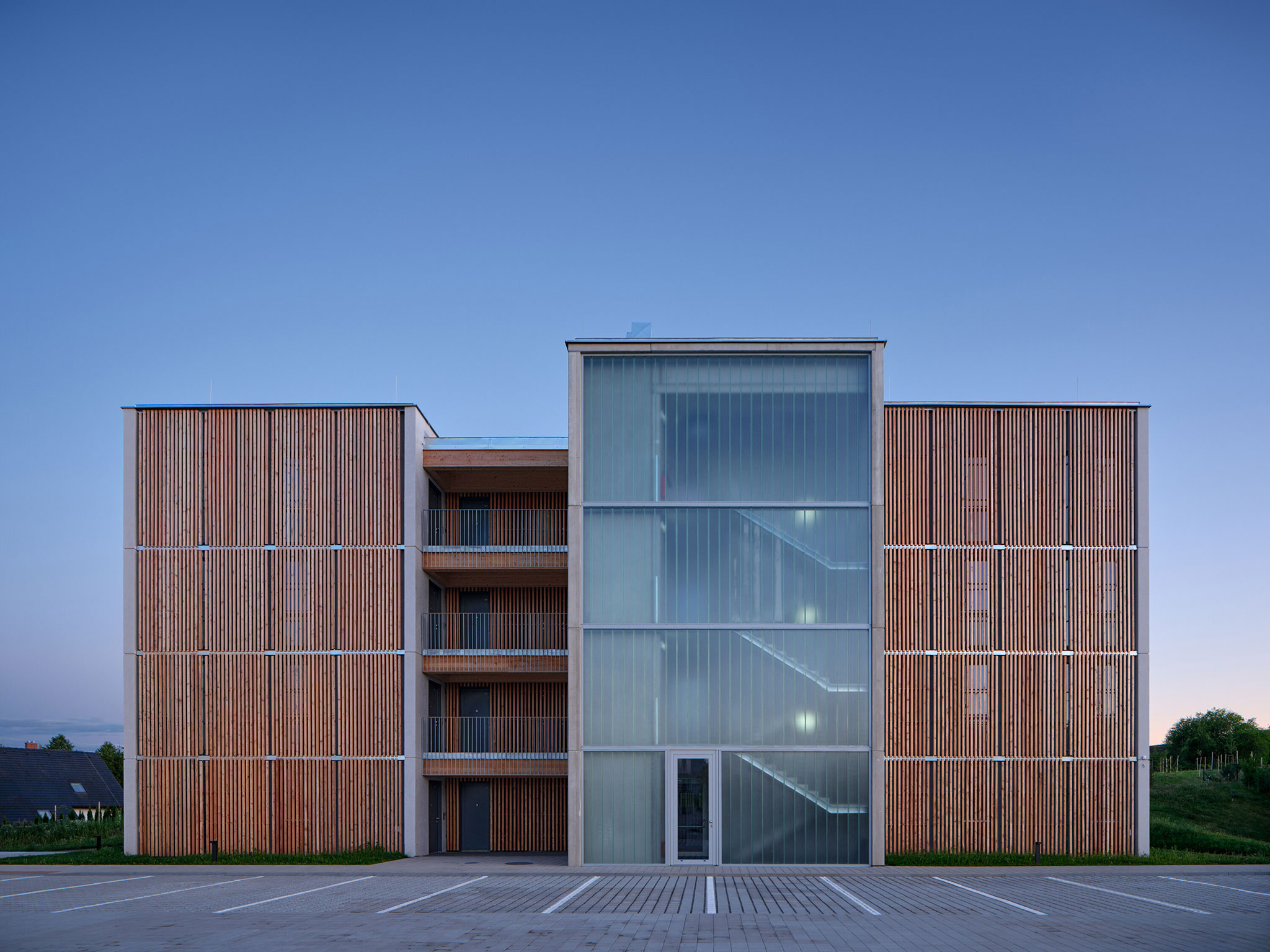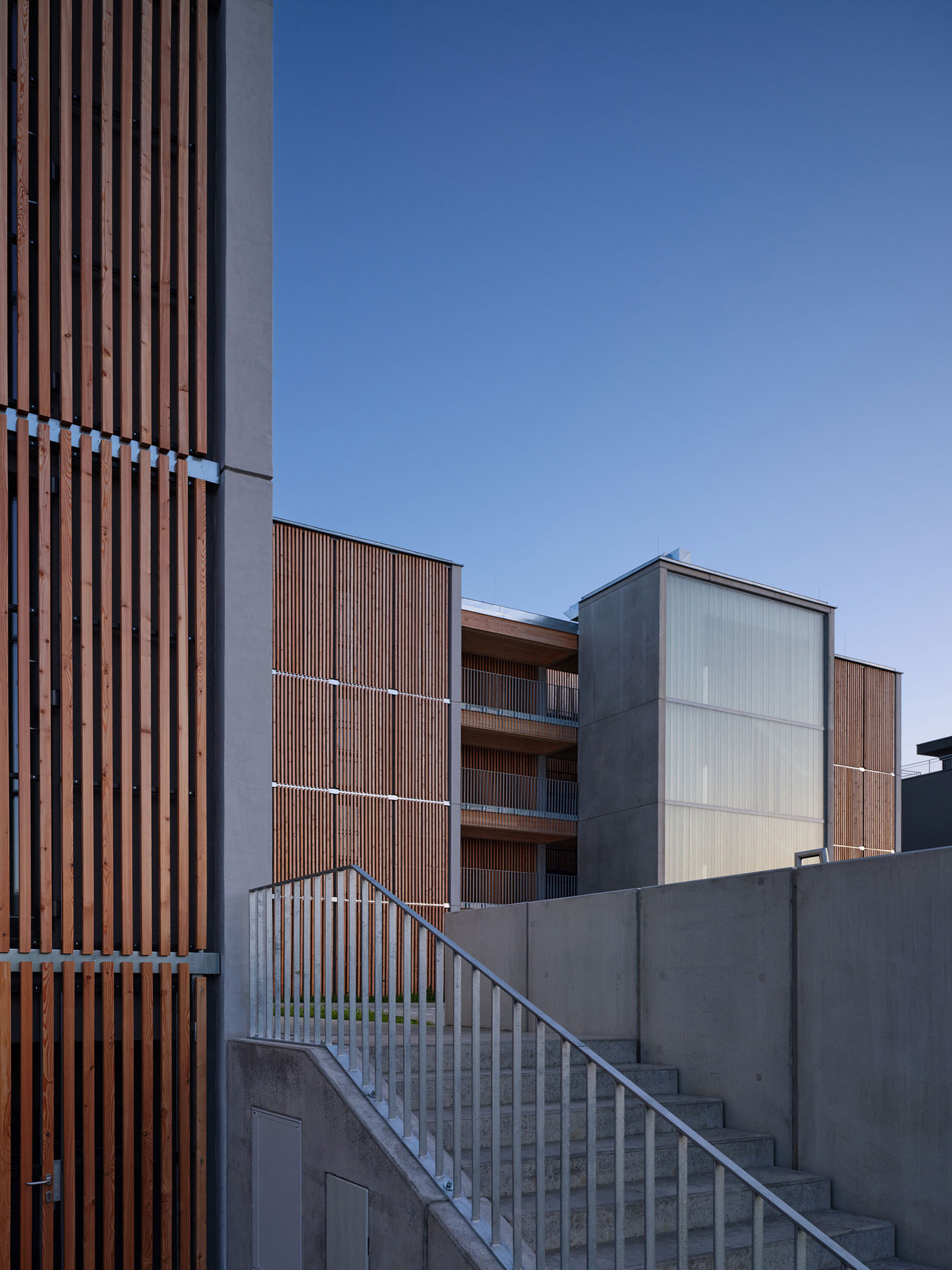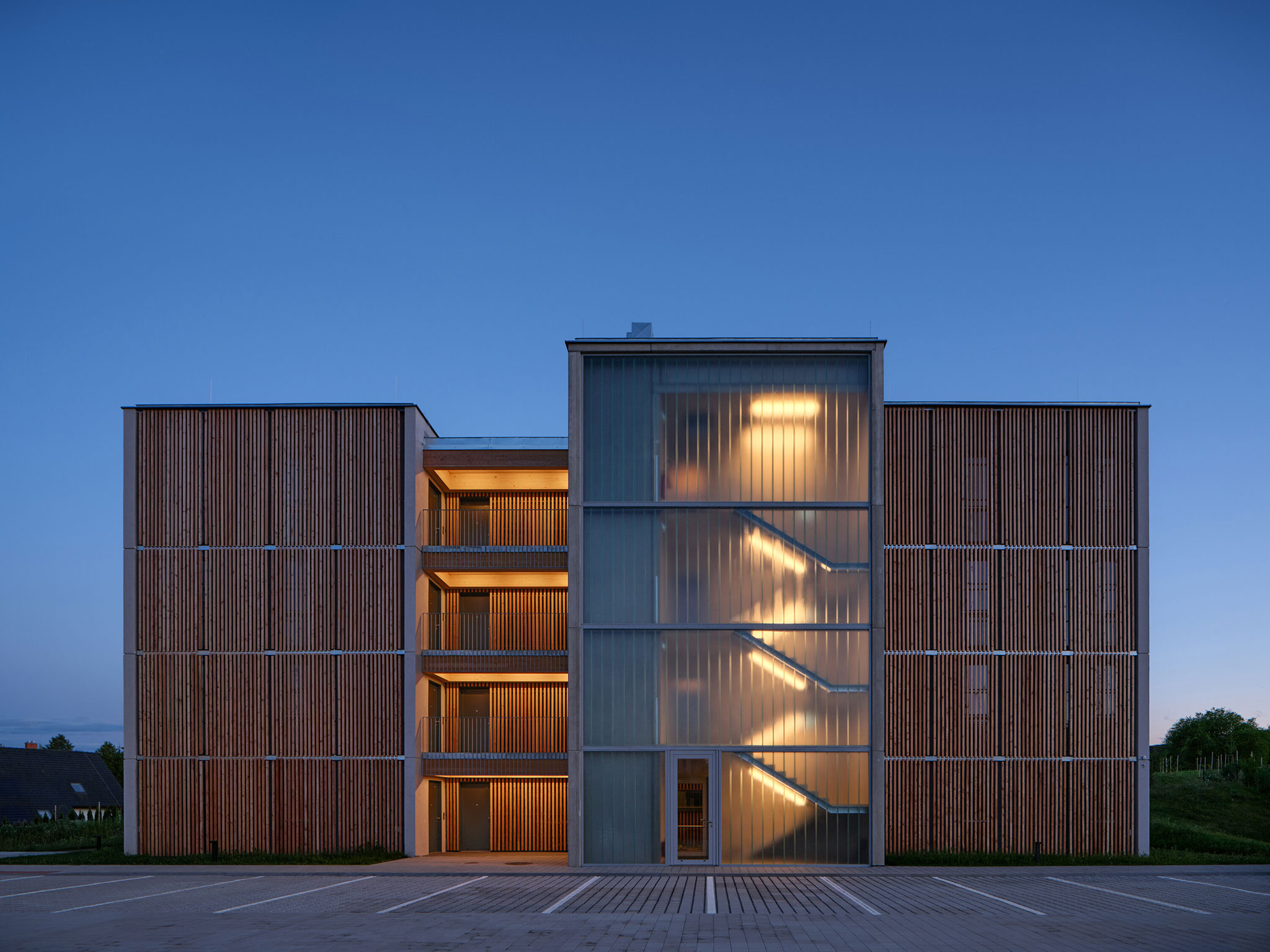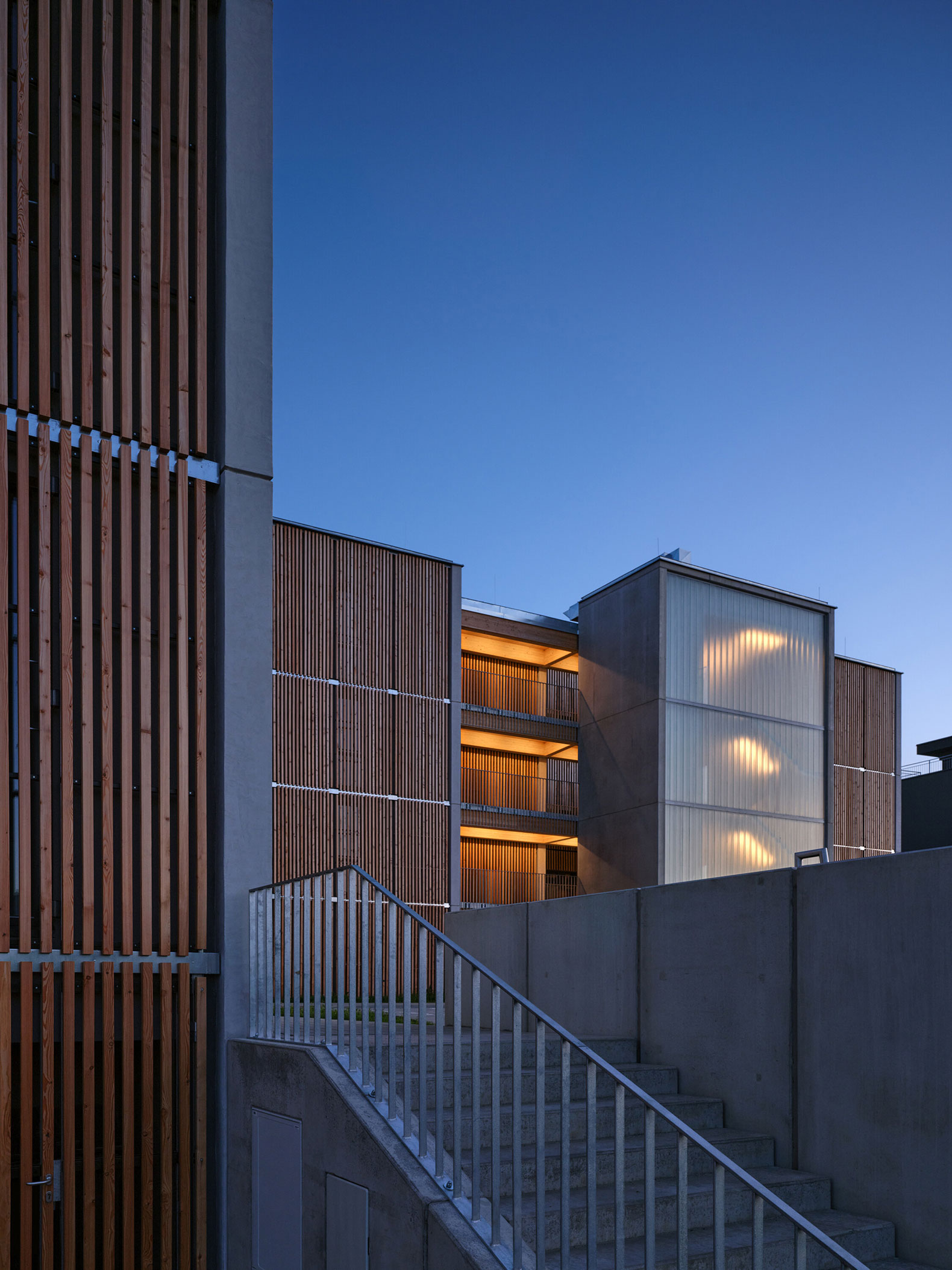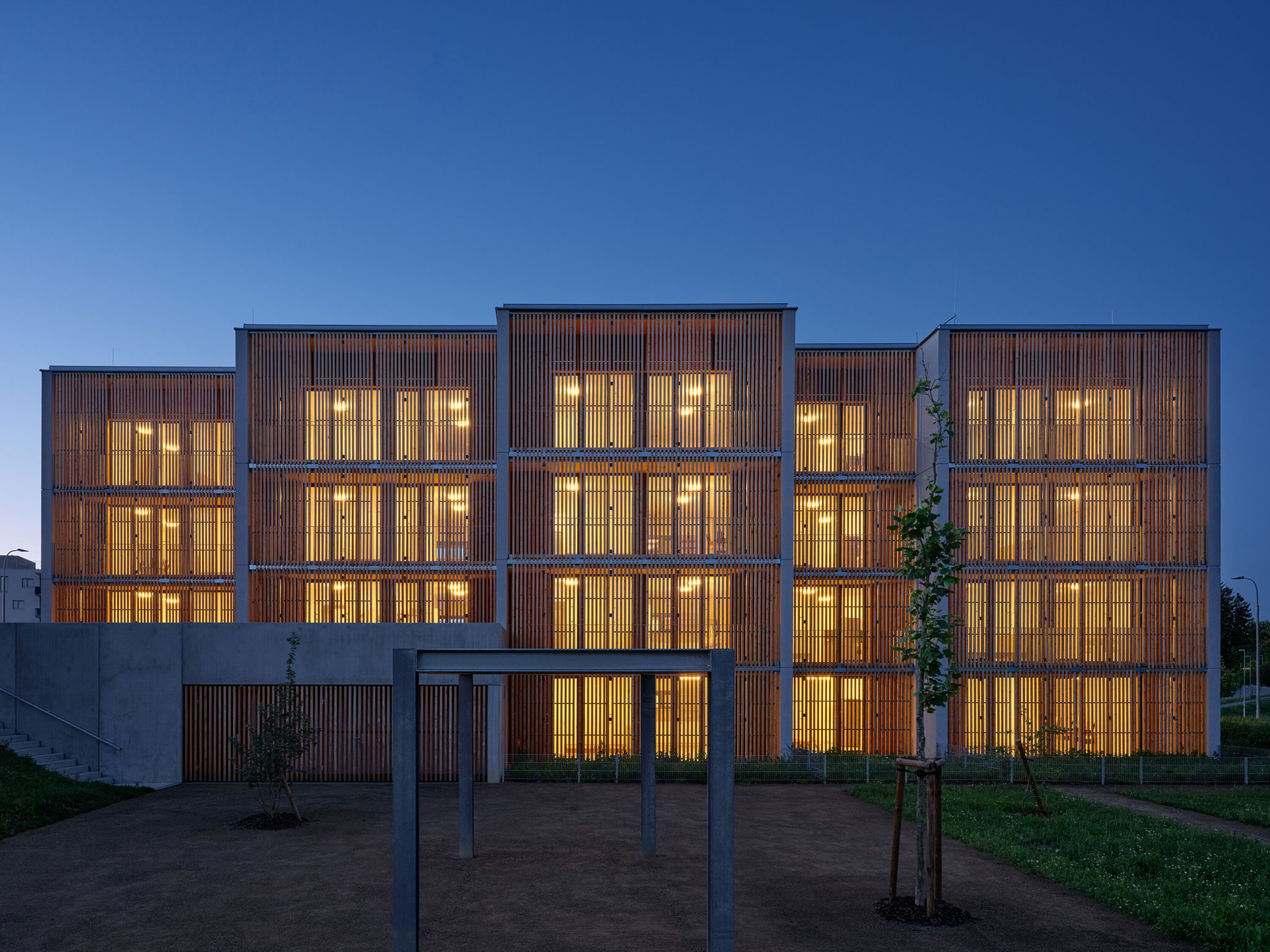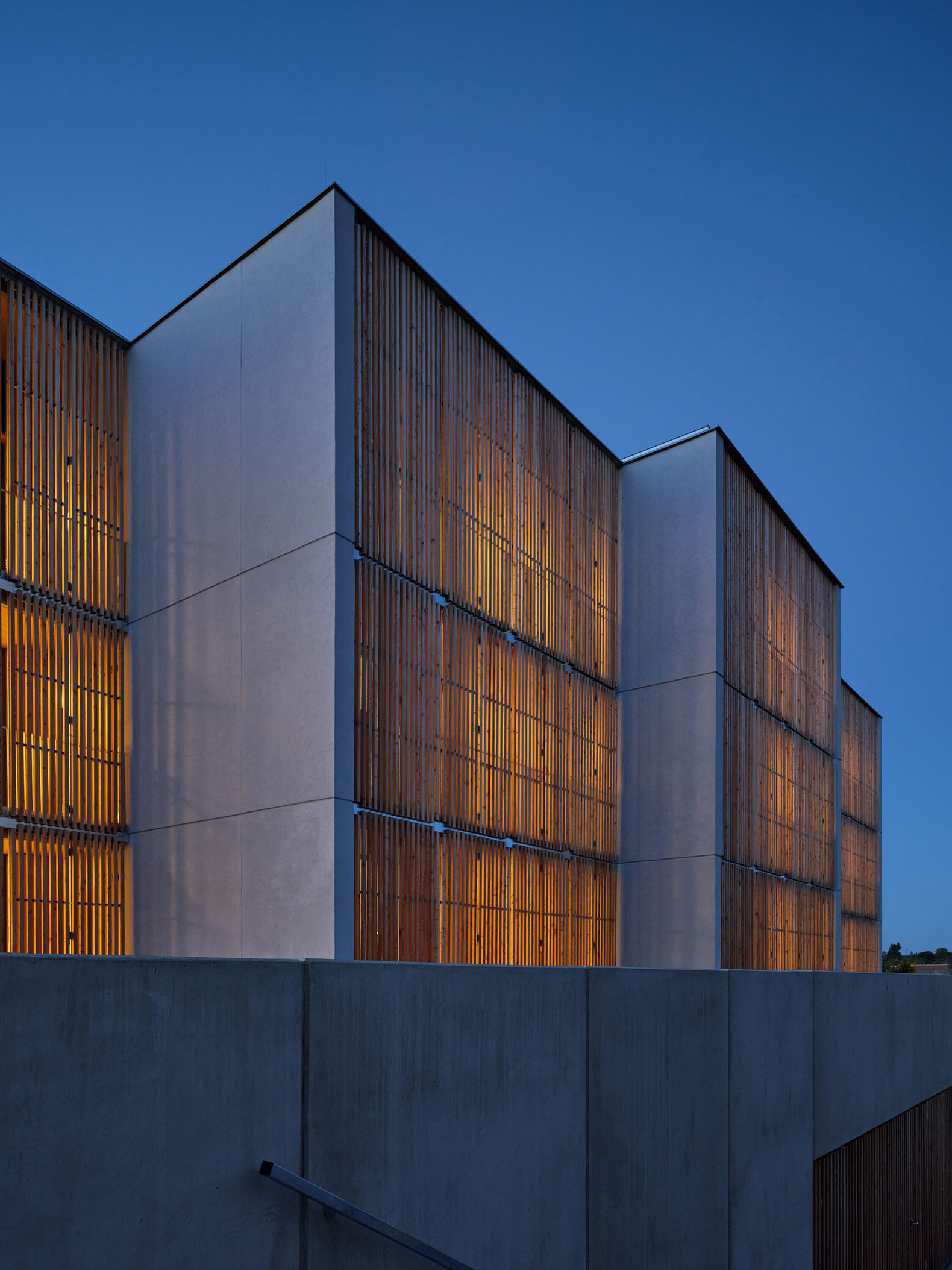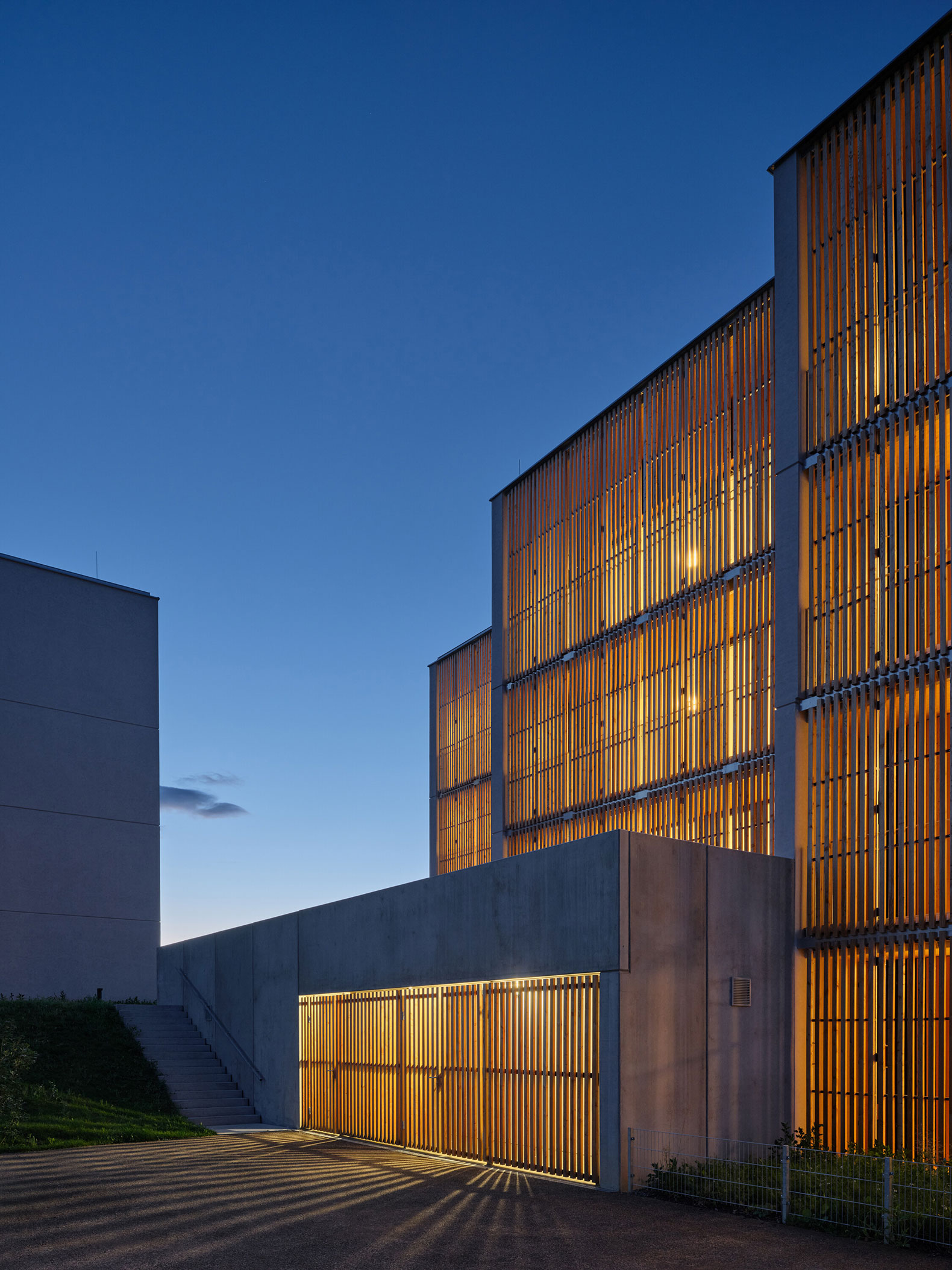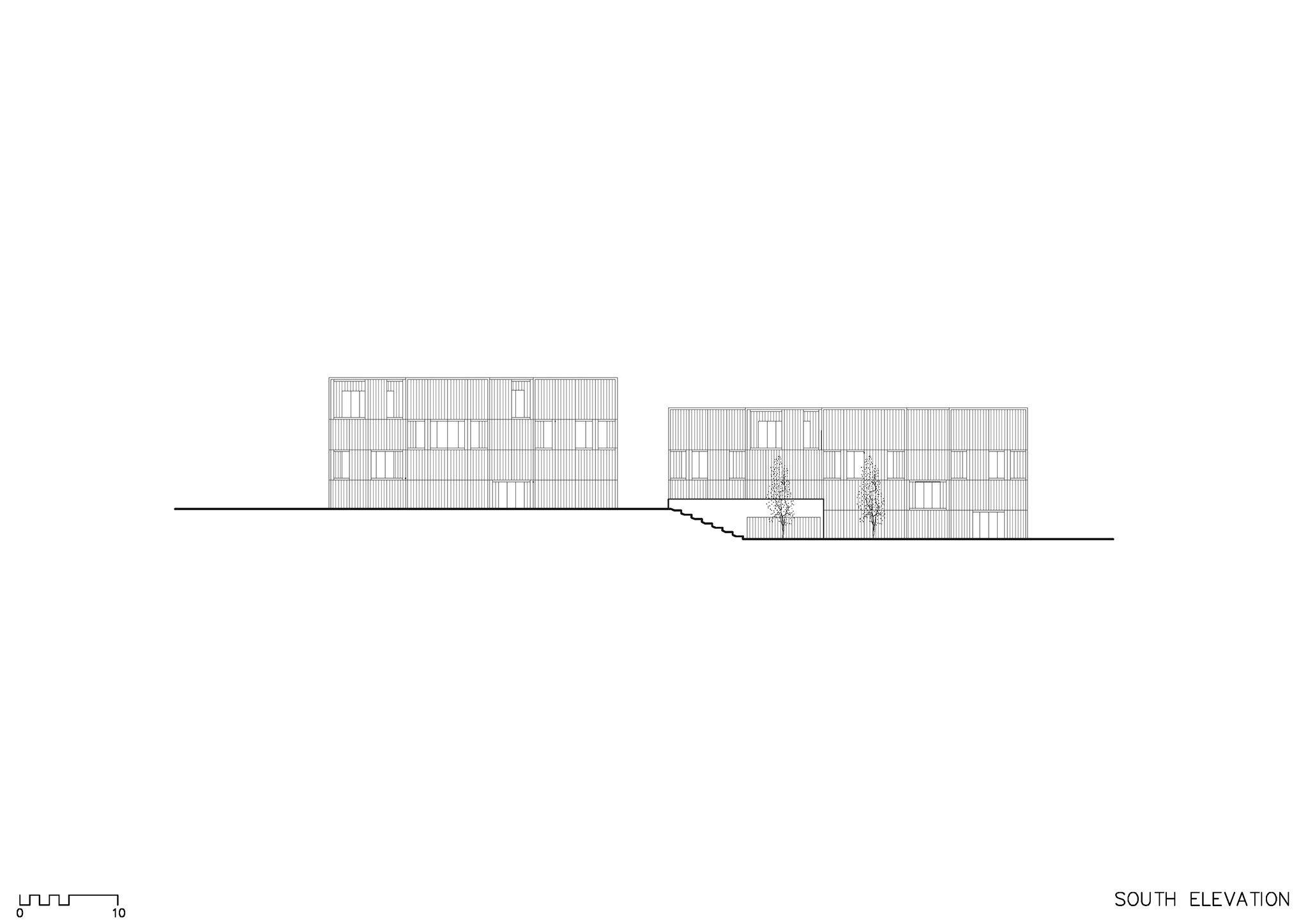
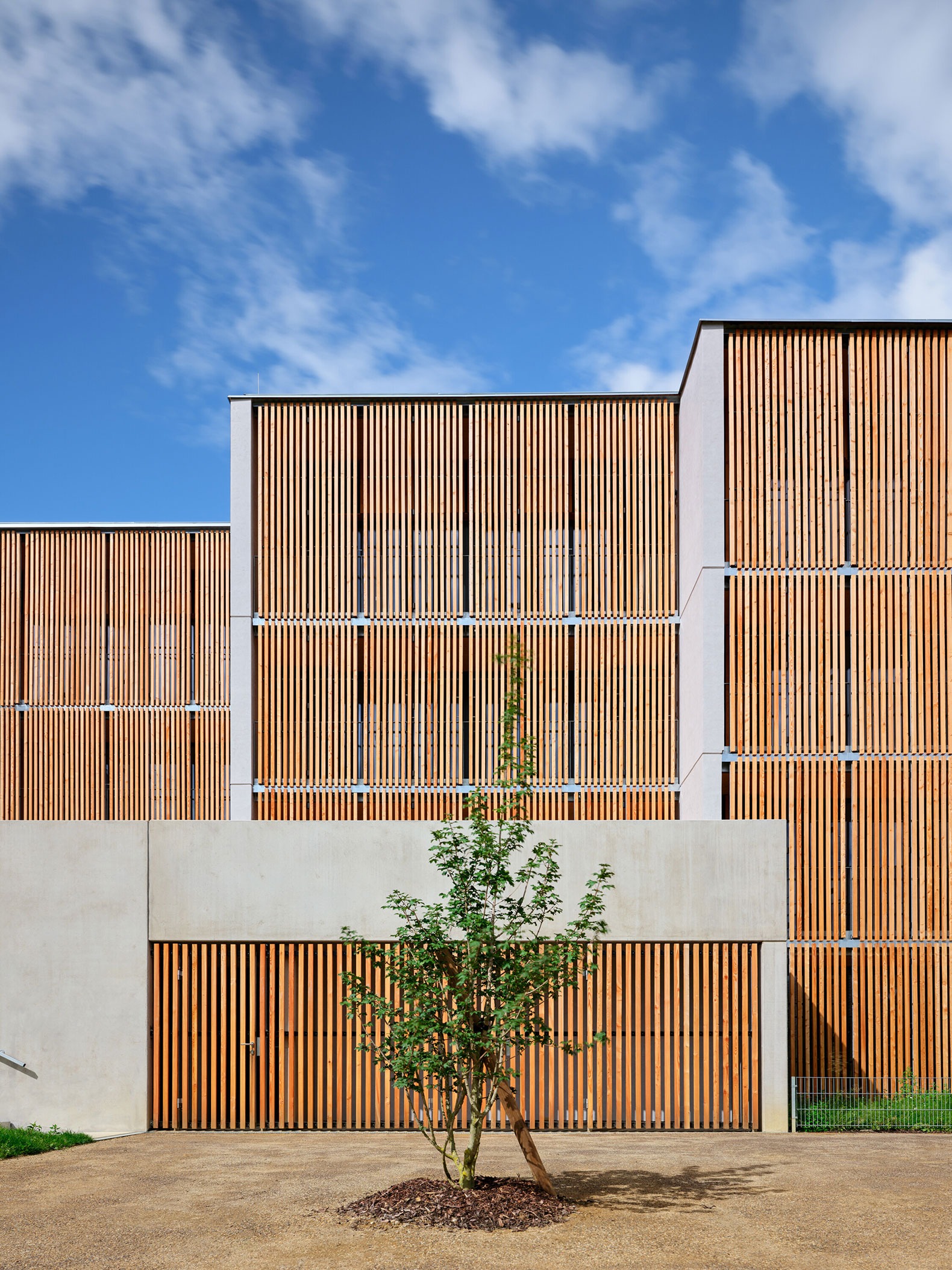
For the Žďár Wooden Housing, Kuba & Pilař architekti proposes buildings conceived as a structure composed of simple vertical sections, each four stories above ground and delimited by transverse load-bearing walls. Set-back loggias with wooden shutters are inserted between these walls, creating a play of randomness and transparency between the different layers.
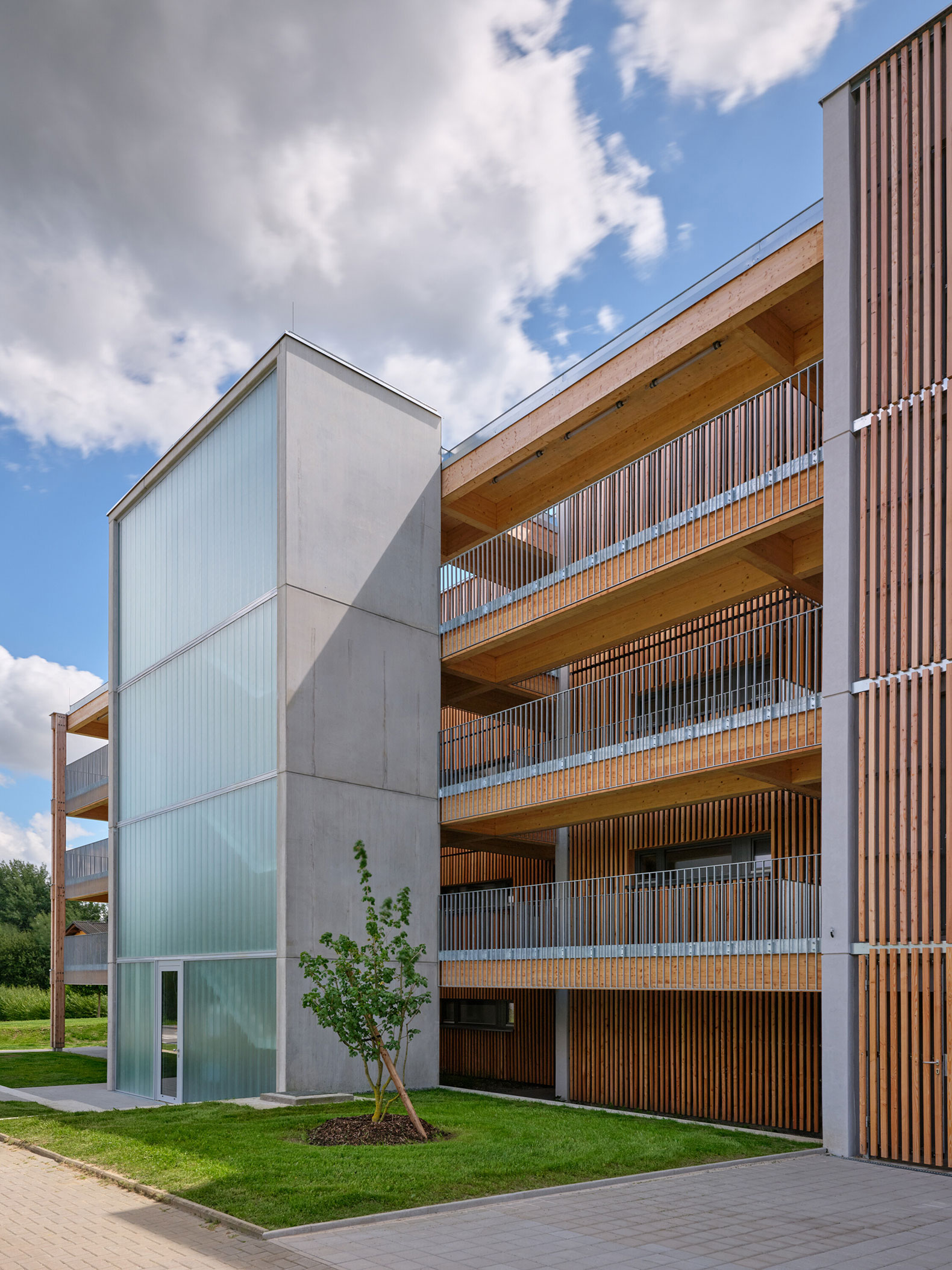
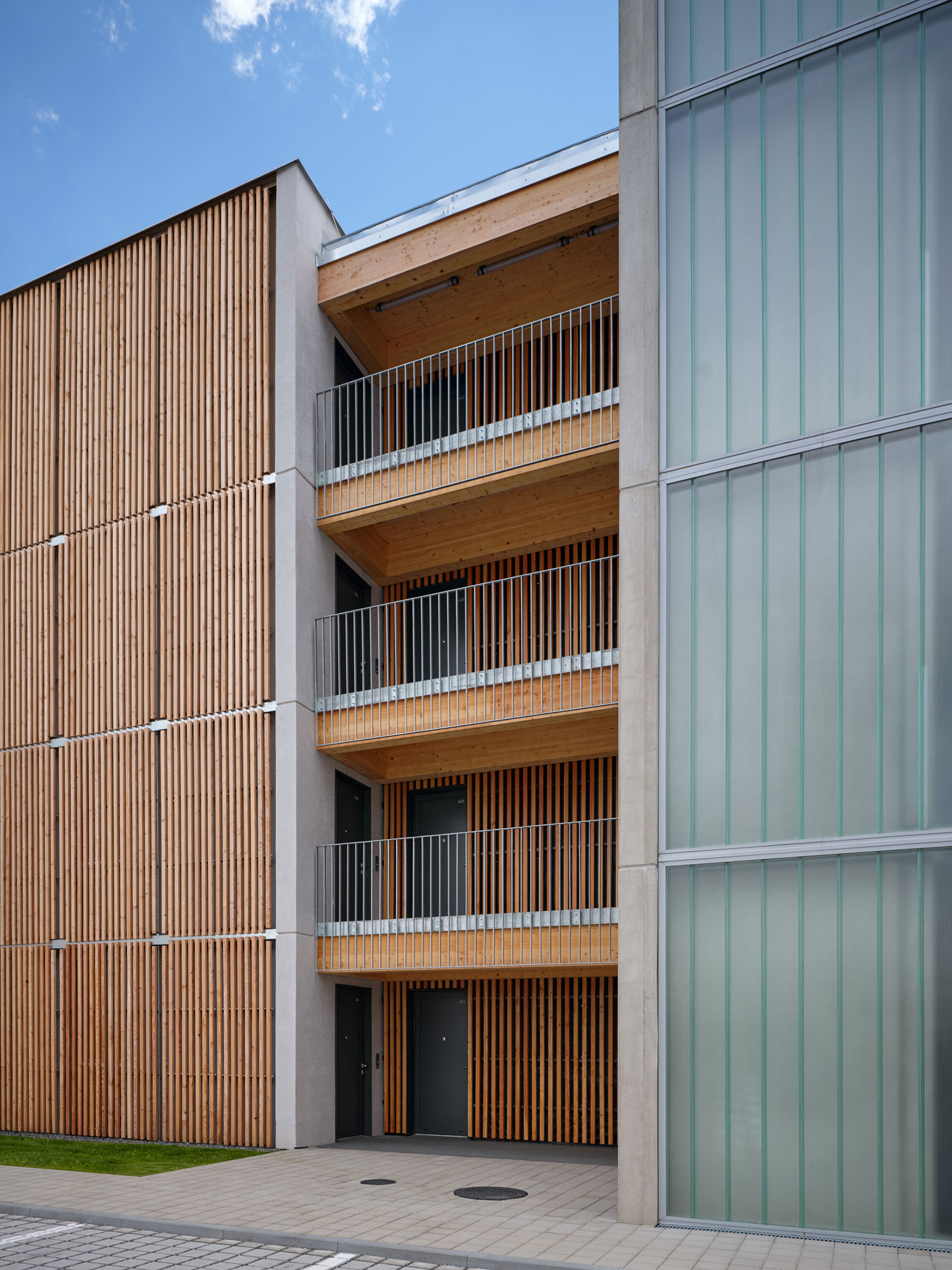
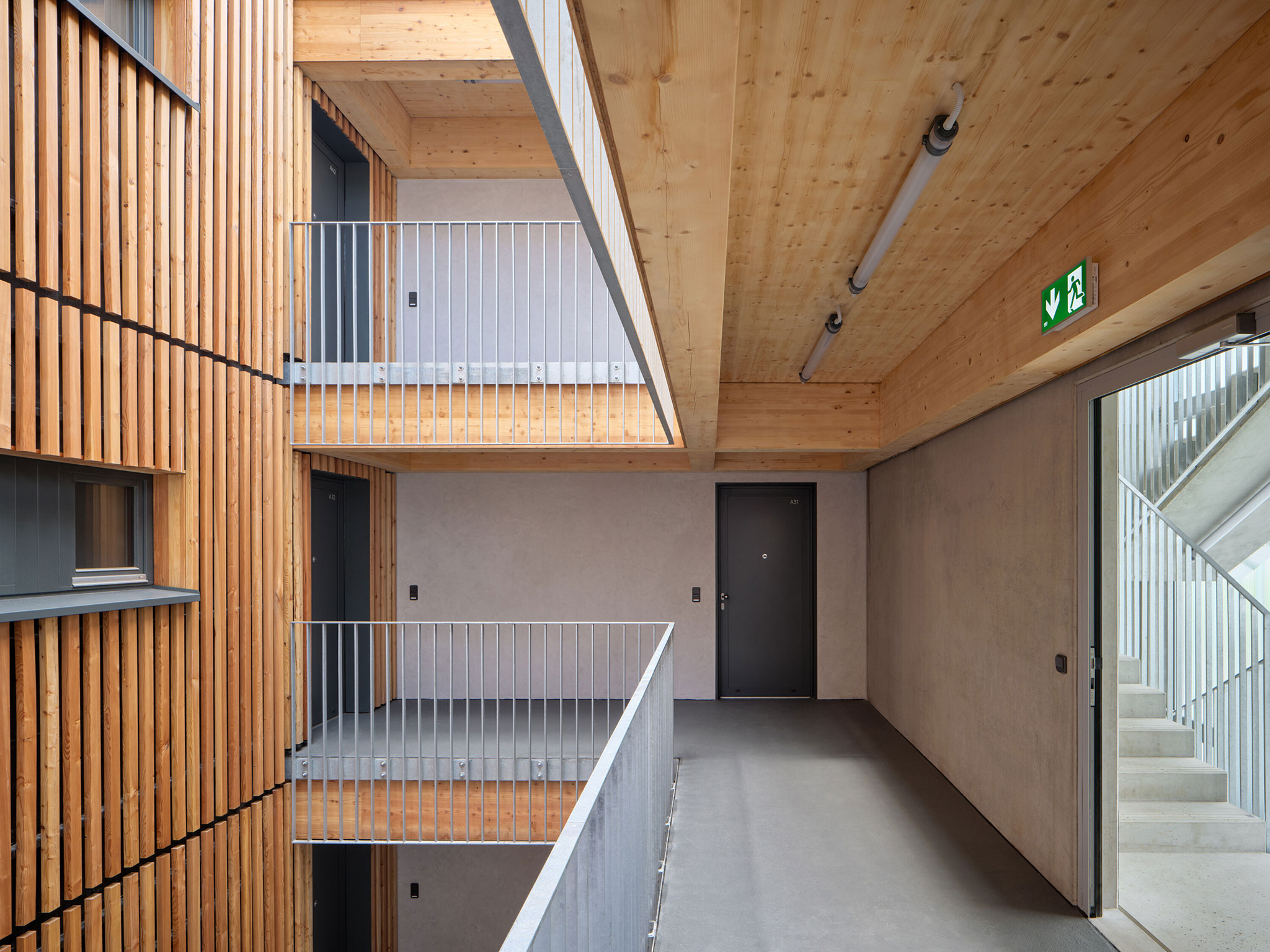
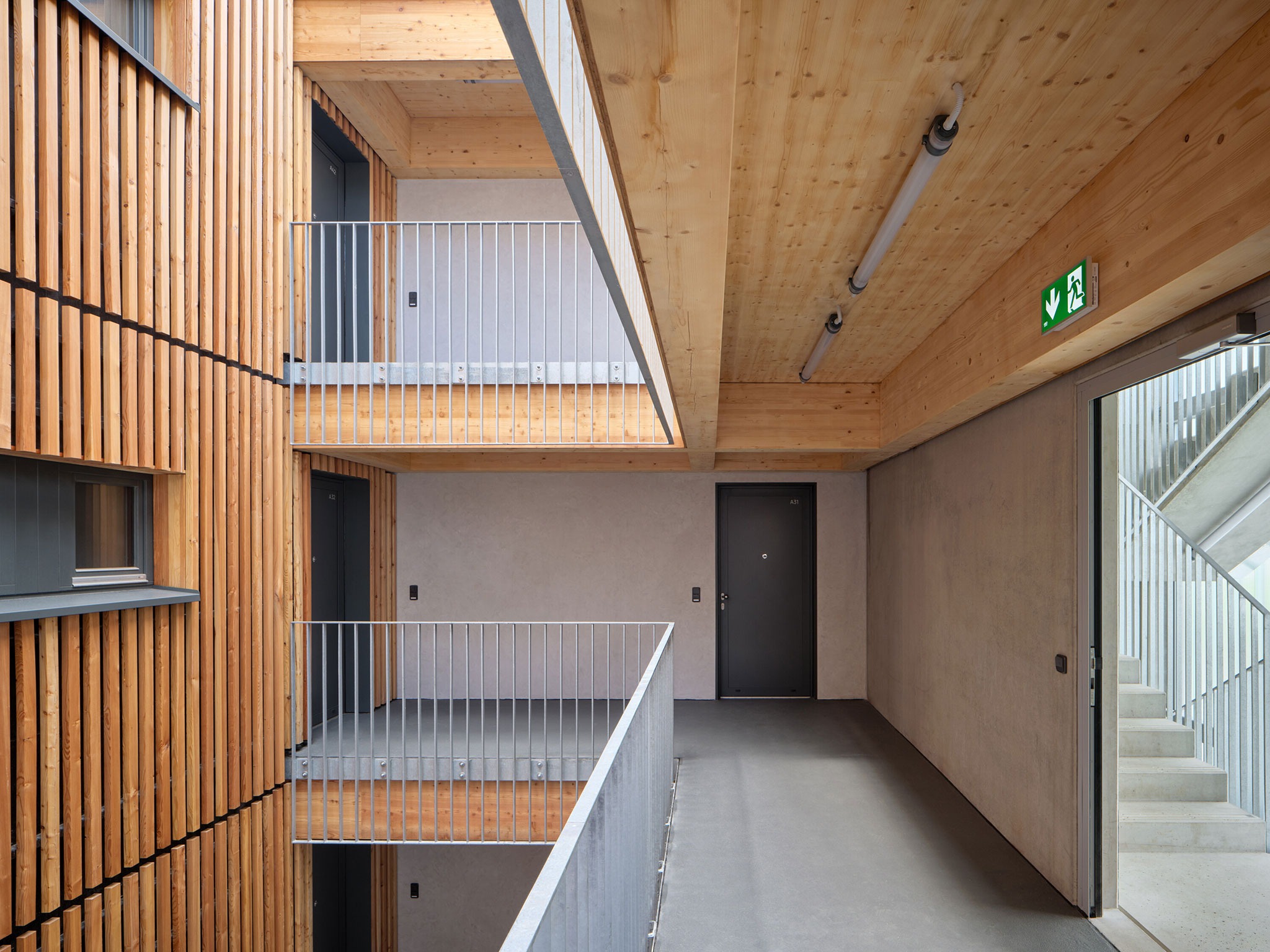
The modular structure, which combines wood and concrete, is prefabricated and assembled on-site. The walls and floors are made of cross-laminated timber panels, while the gallery features glued laminated timber trusses. Communal cores, retaining walls, and exterior elements are constructed of prefabricated reinforced concrete. Passive design strategies are employed, such as shading through shutters on the façade, natural cross-ventilation in all apartments, and the integration of vegetation on the roof and in the atriums.
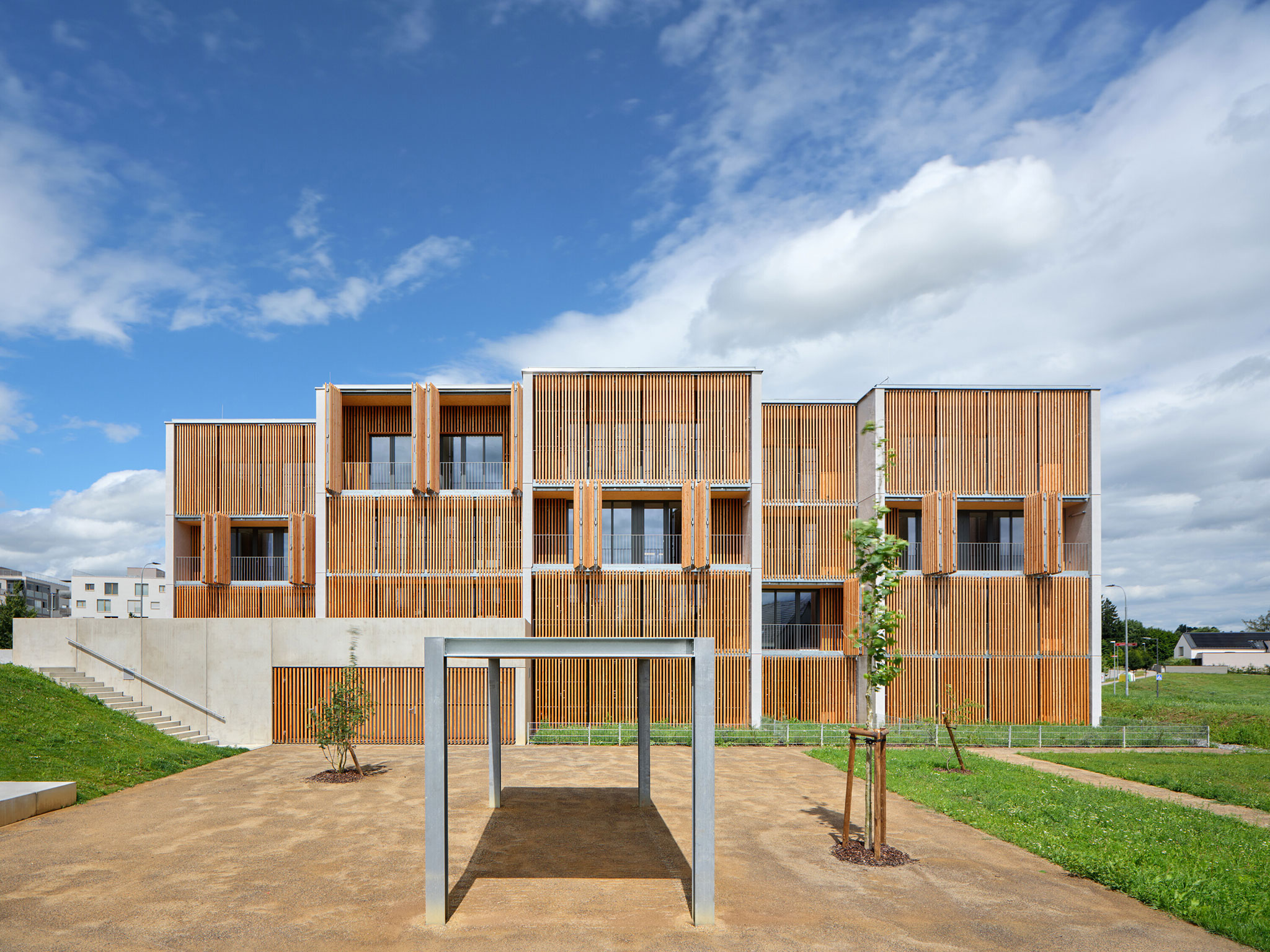
Žďár Wooden Housing by Kuba & Pilař architekti. Photograph by BoysPlayNice.
Project description by Kuba & Pilař architekti
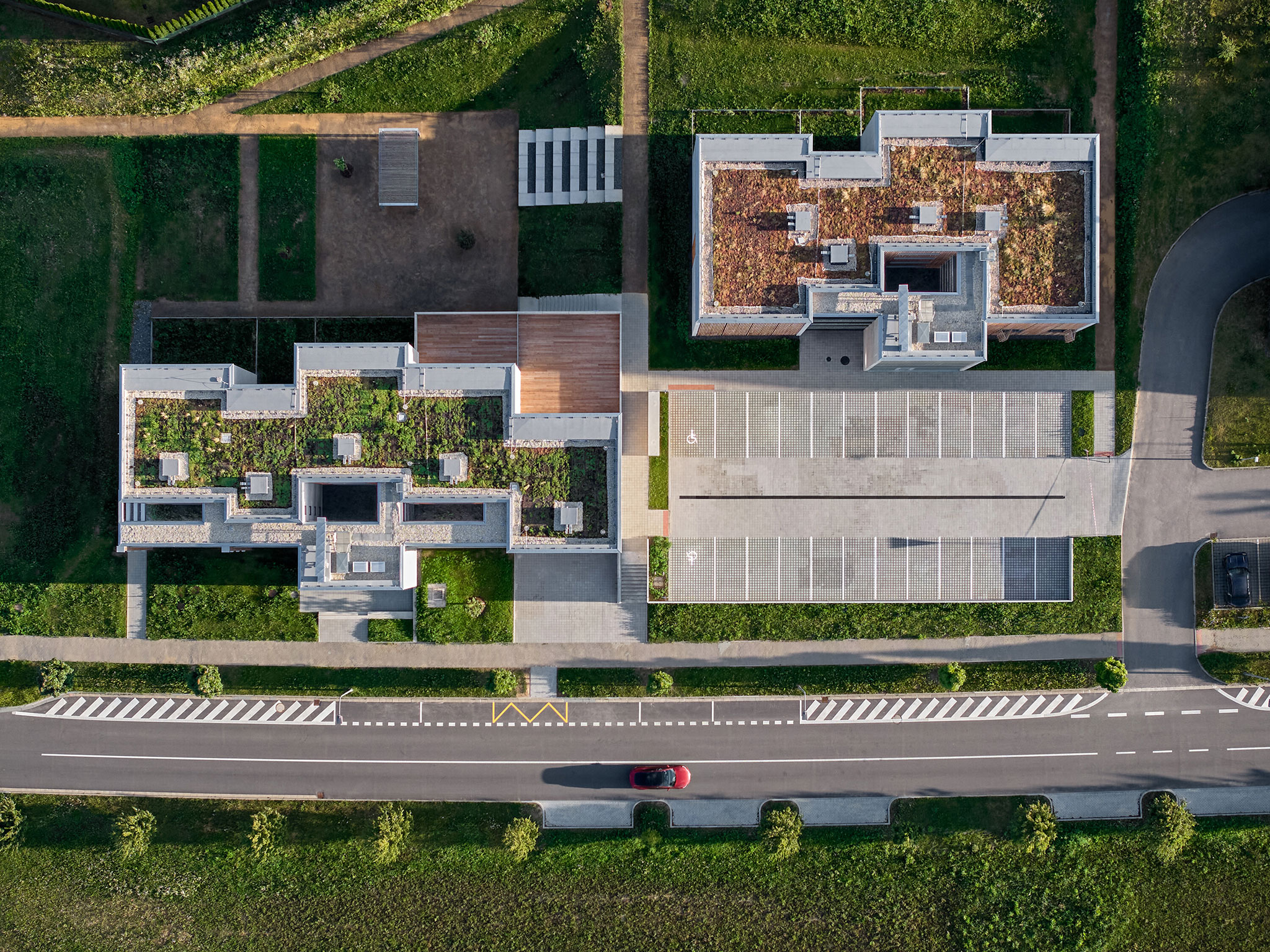
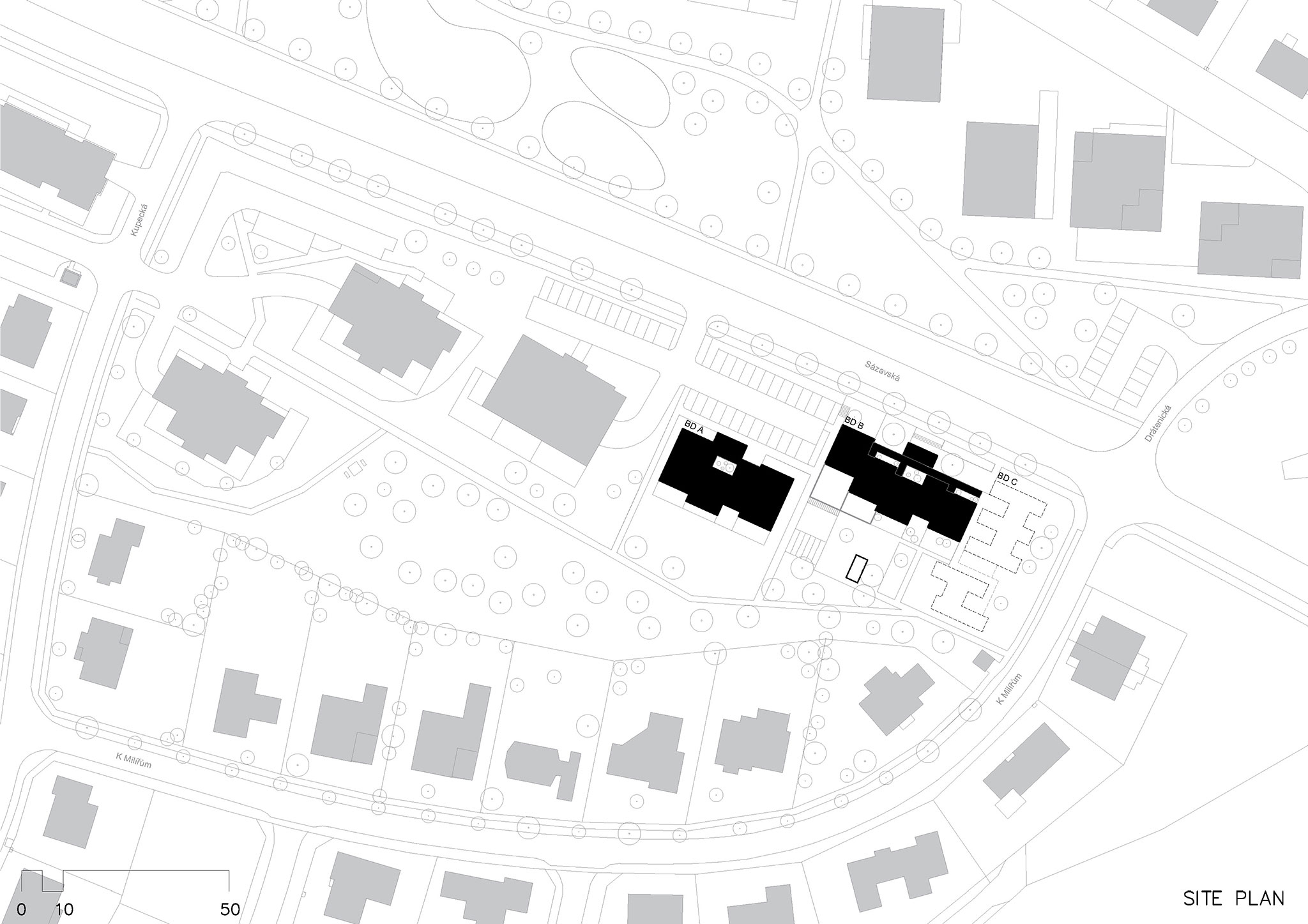
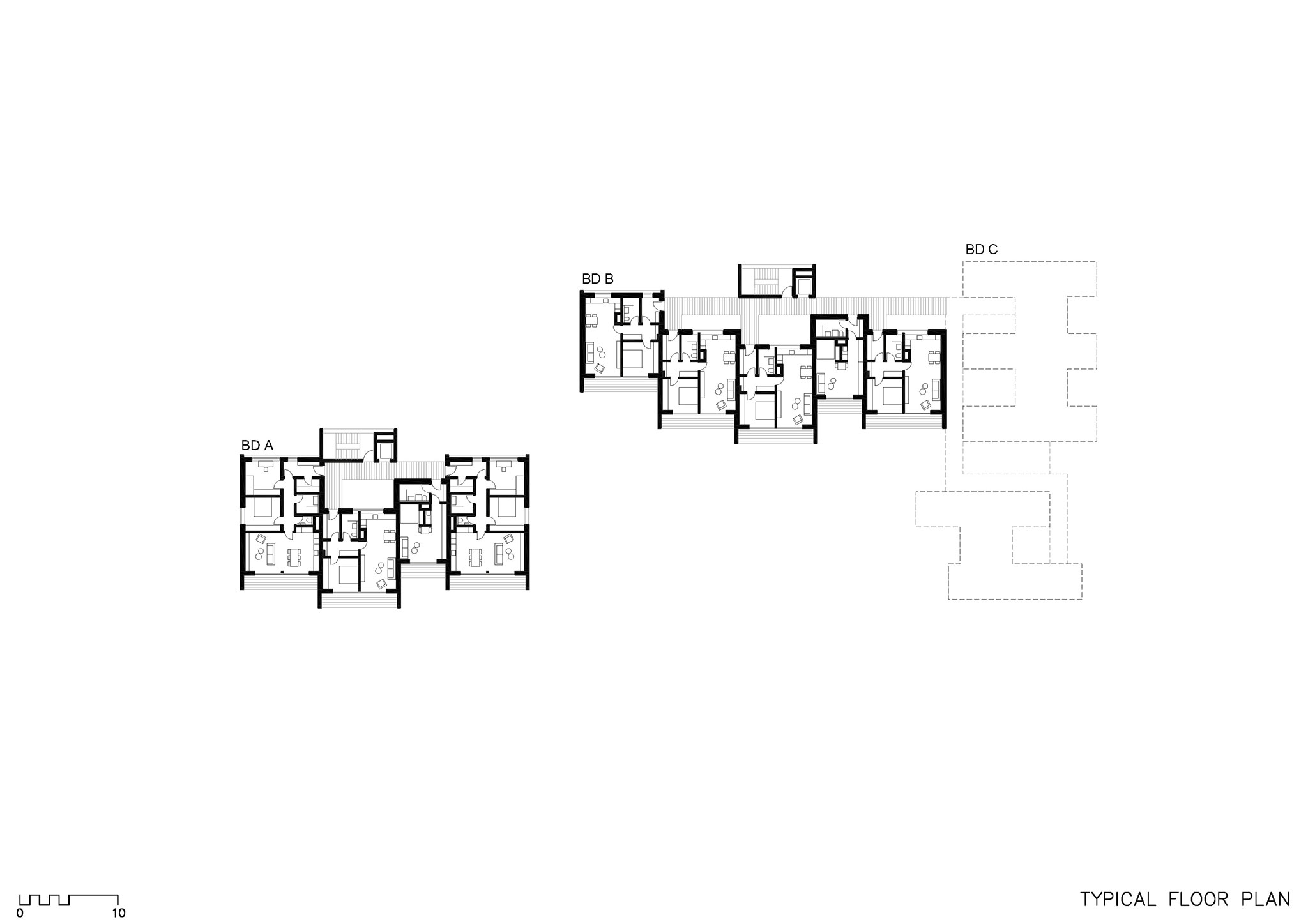
The construction site is part of the Klafar area in the northwest of the city. The urban layout of the apartment buildings is based on the principle of a traditional city block, which defines a hierarchy and character of spaces—from public street areas, through semi-private courtyards, to private front gardens. The proposed block forms the corner of Sázavská and K Milířům streets. The spatial arrangement of the buildings creates a semi-public courtyard oriented to the south, while leisure areas with vegetation are located in the western part of the site.
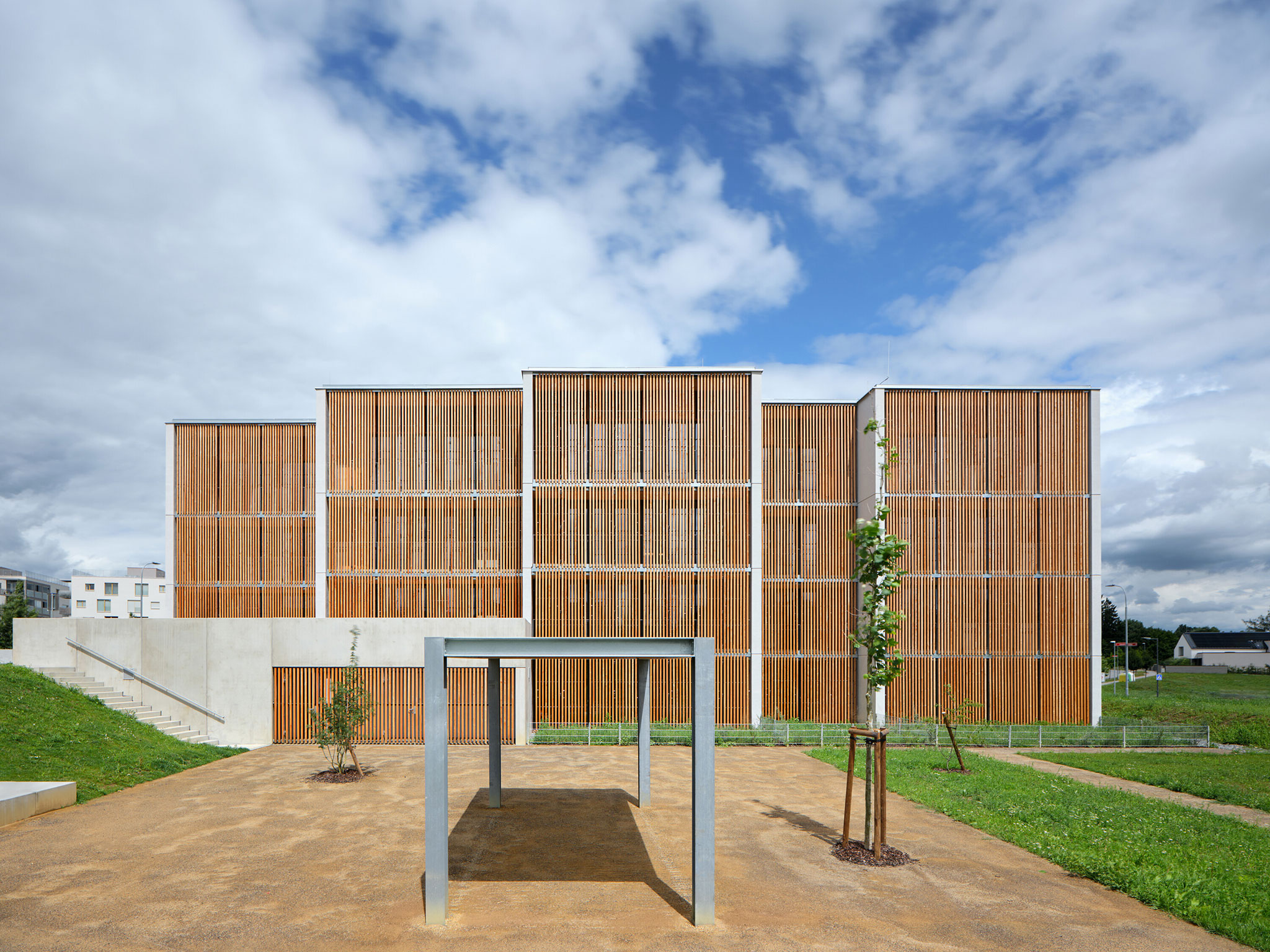
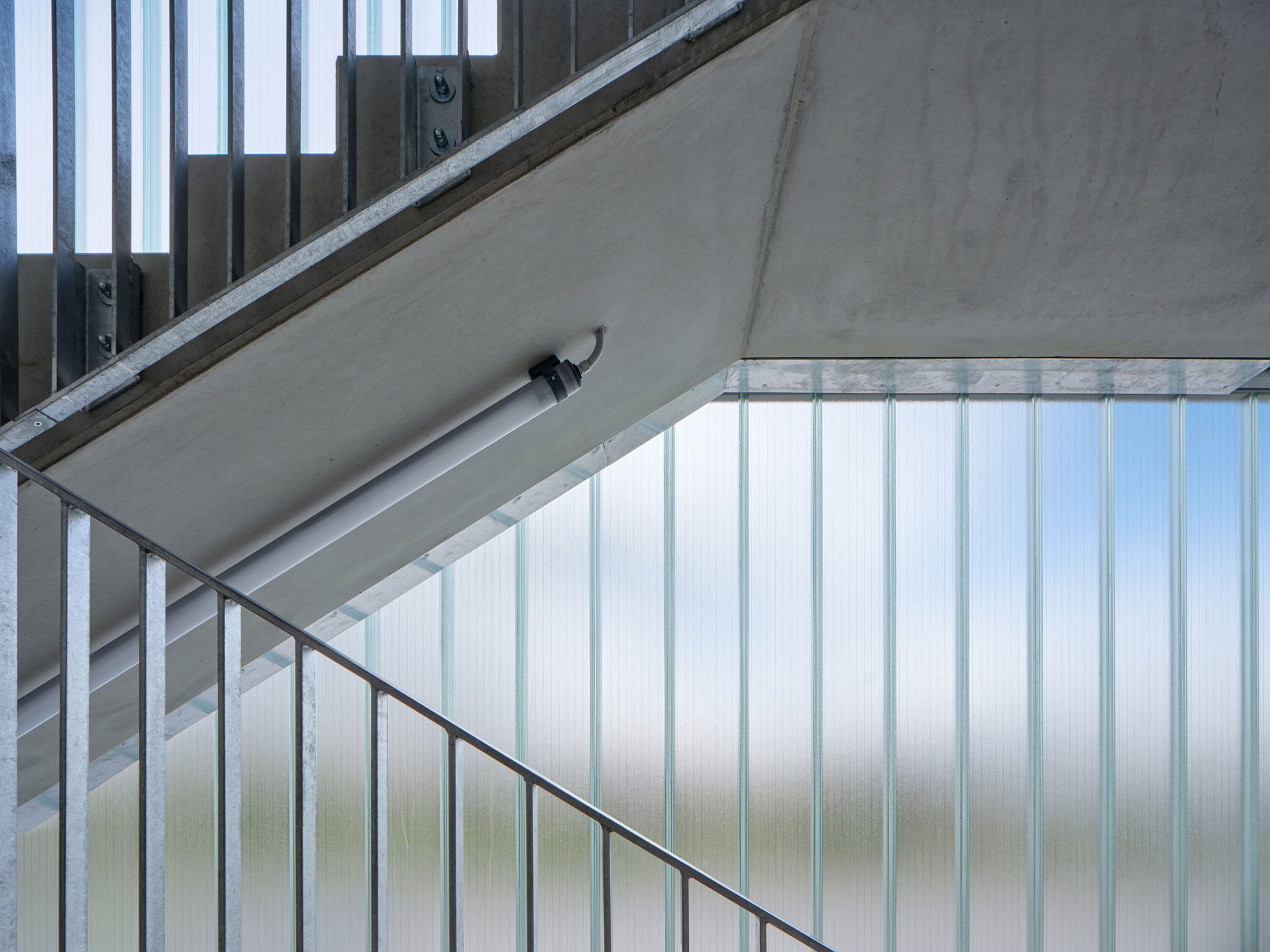
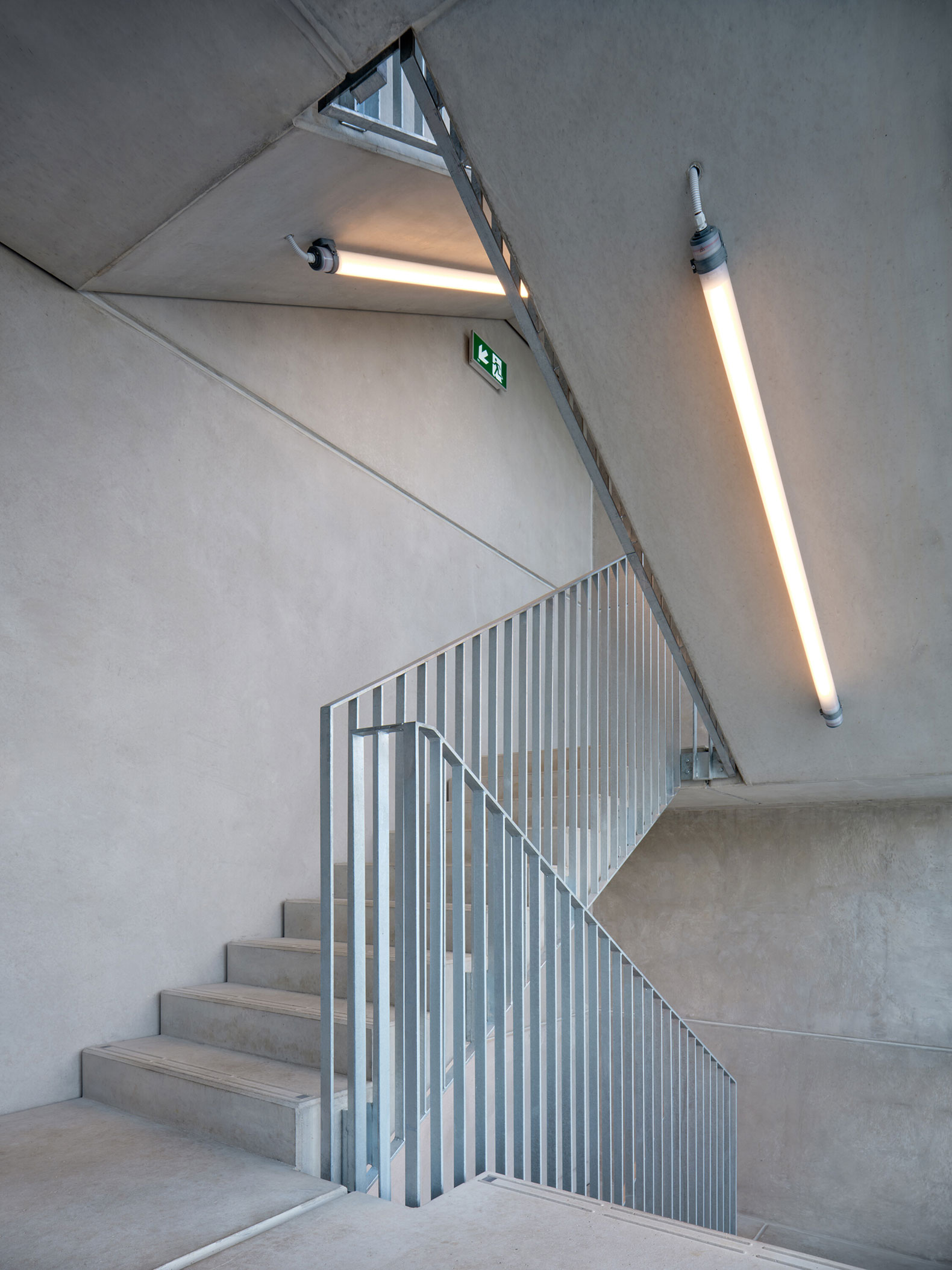
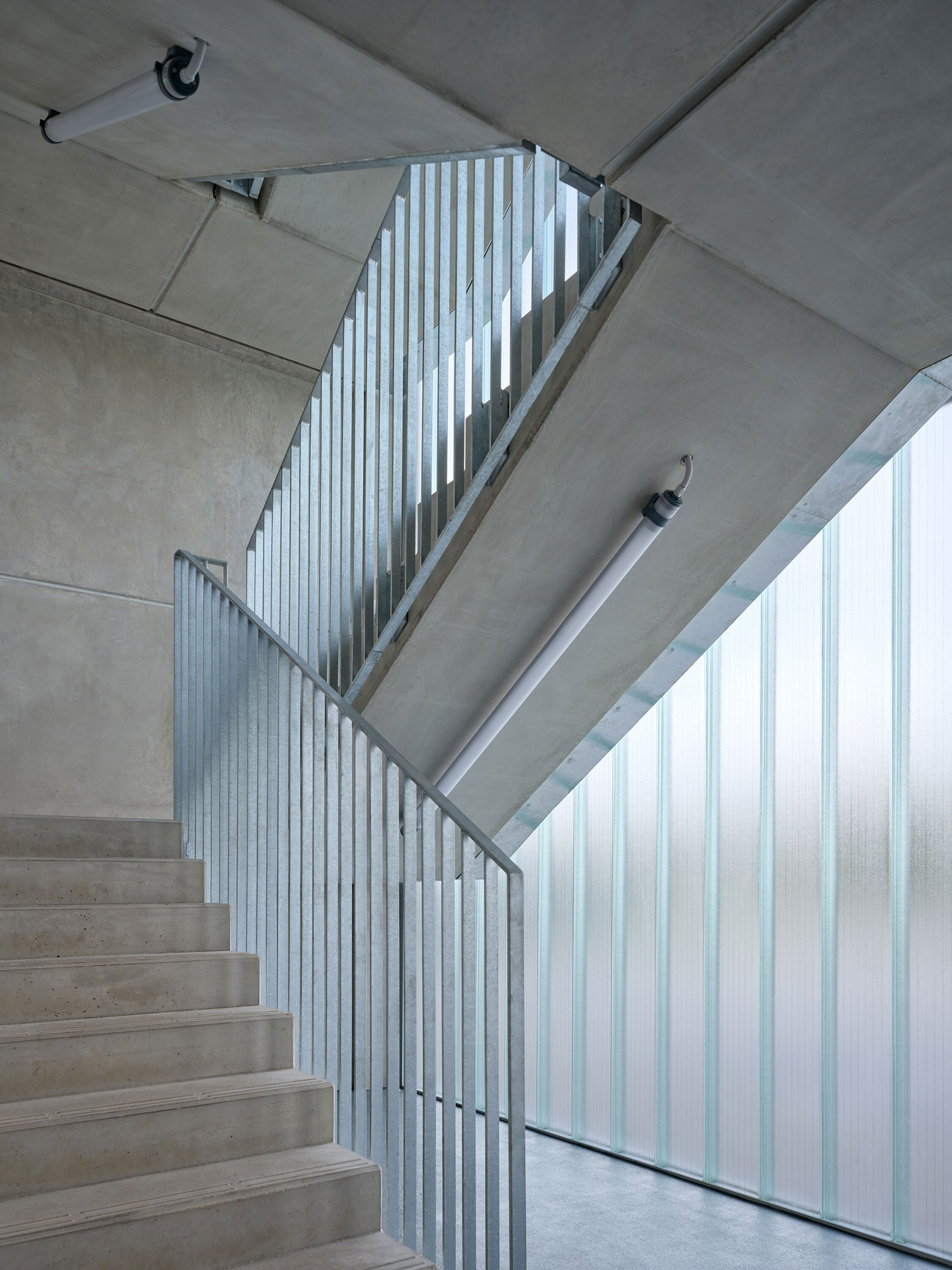
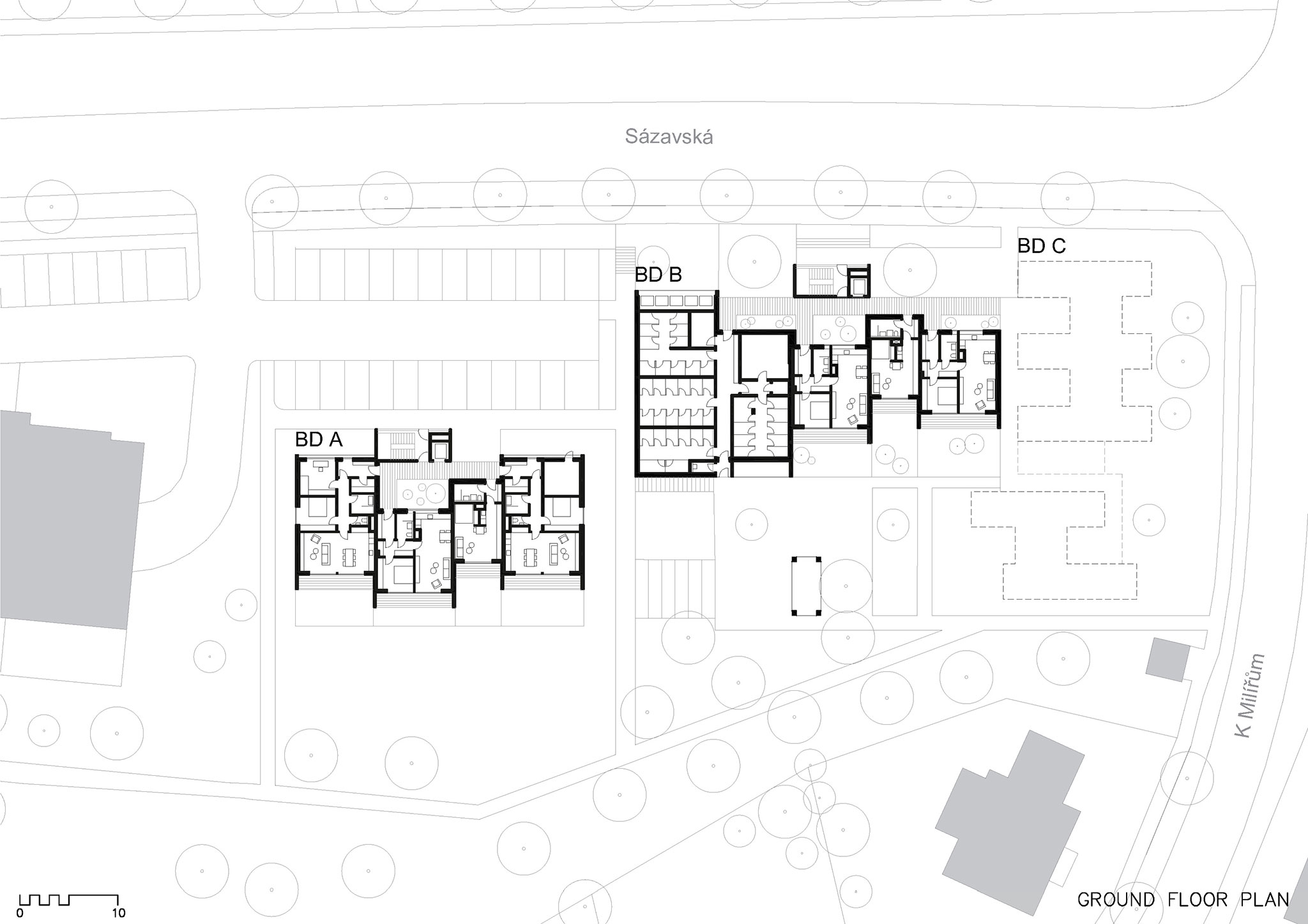
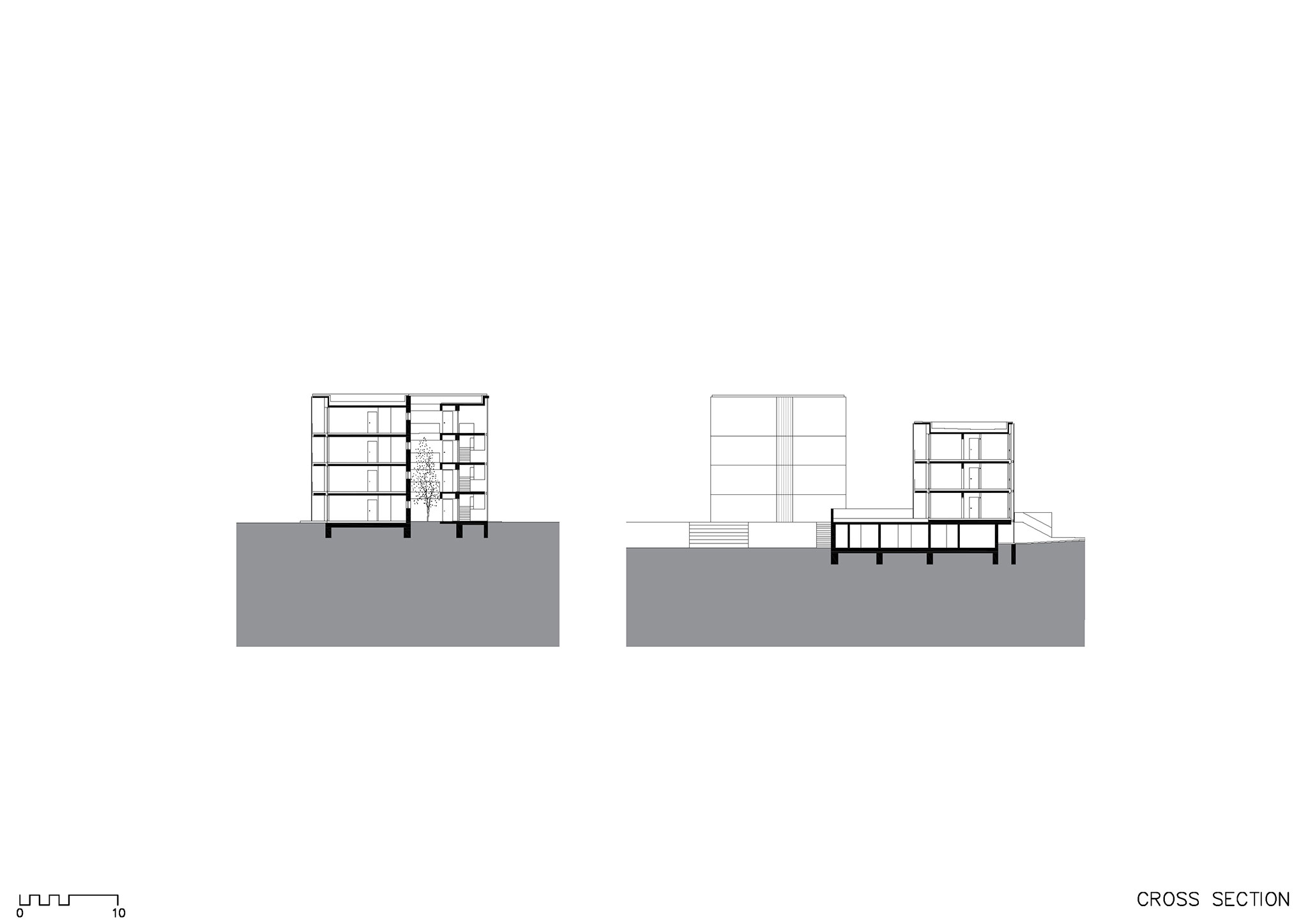
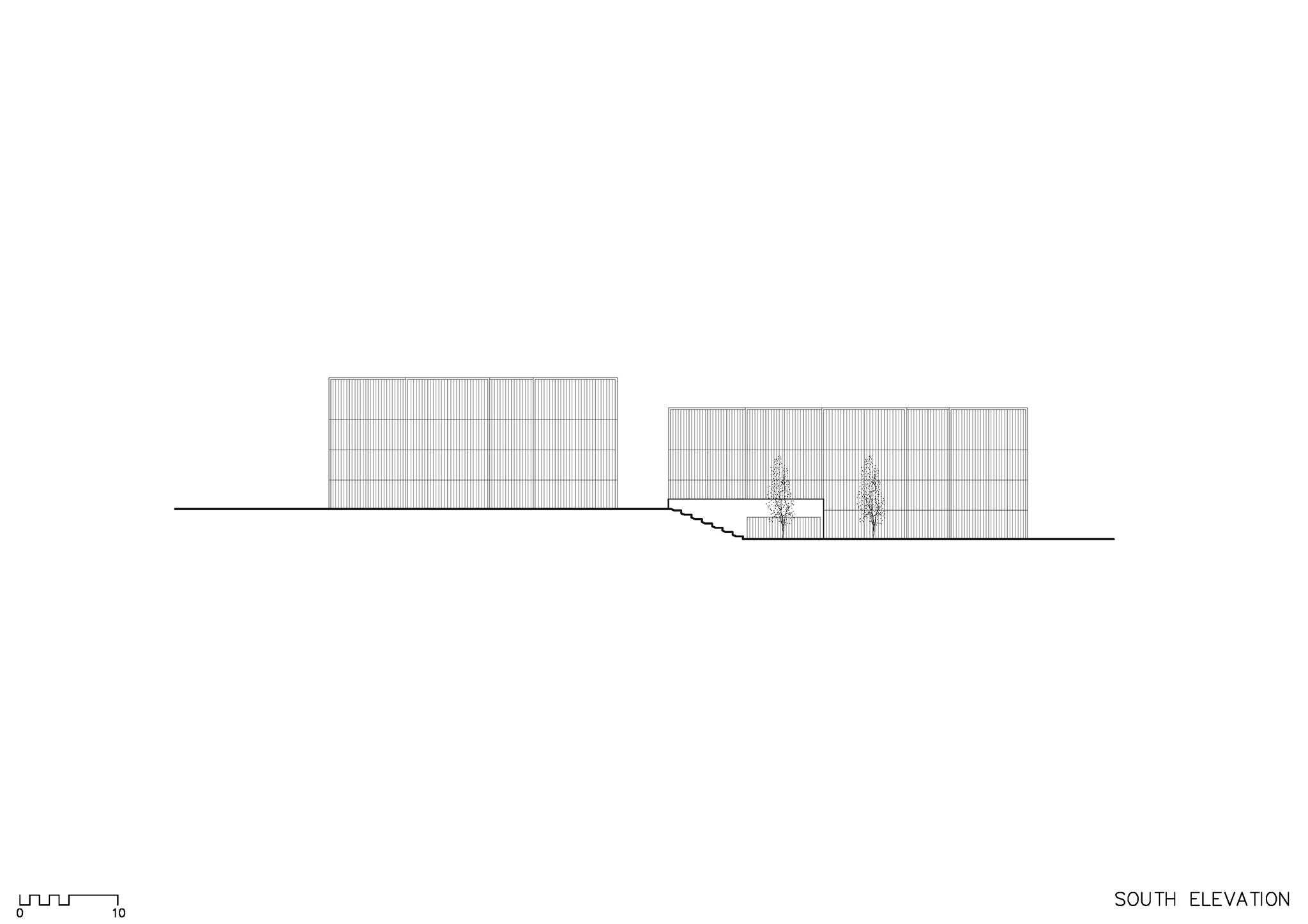
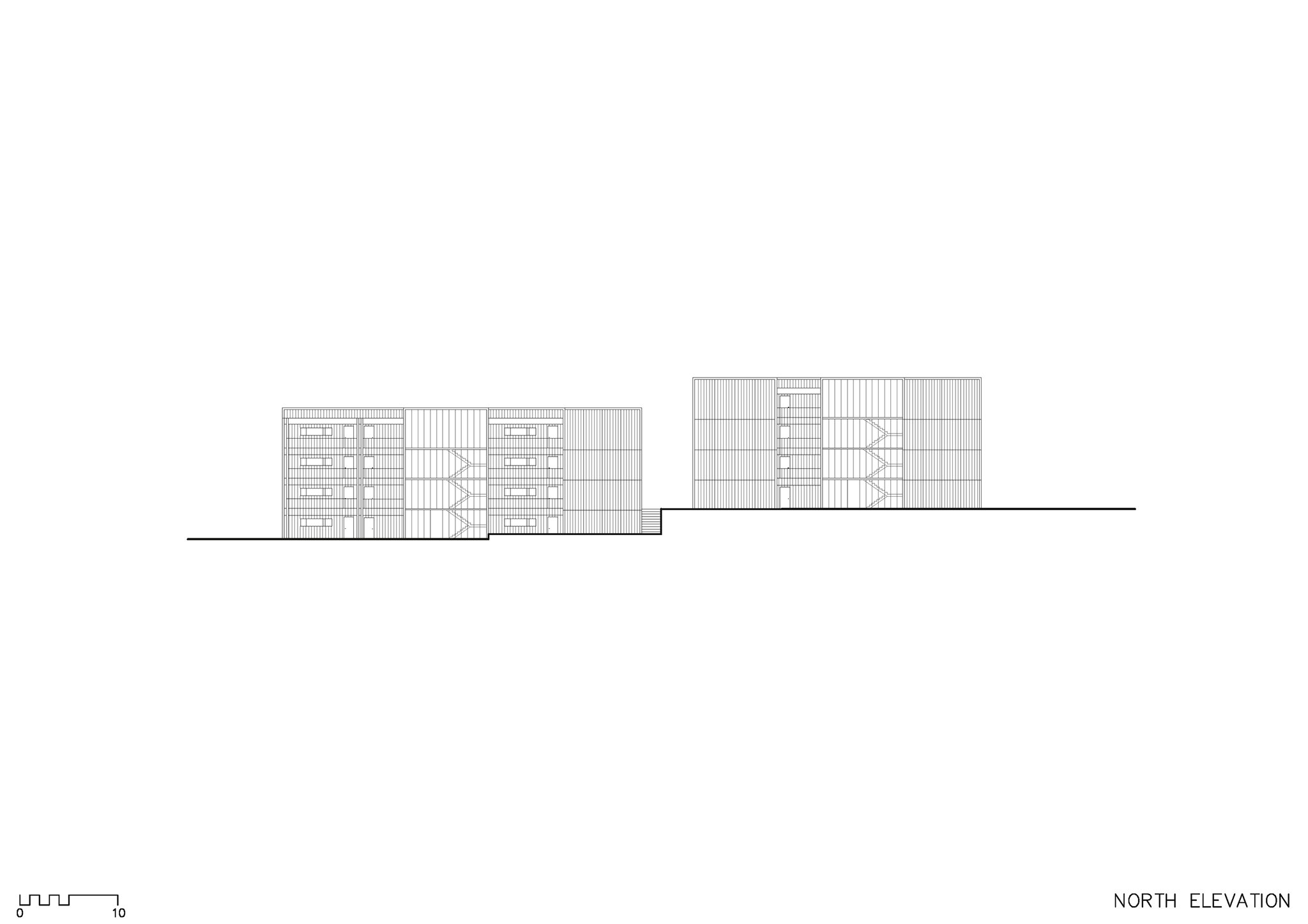
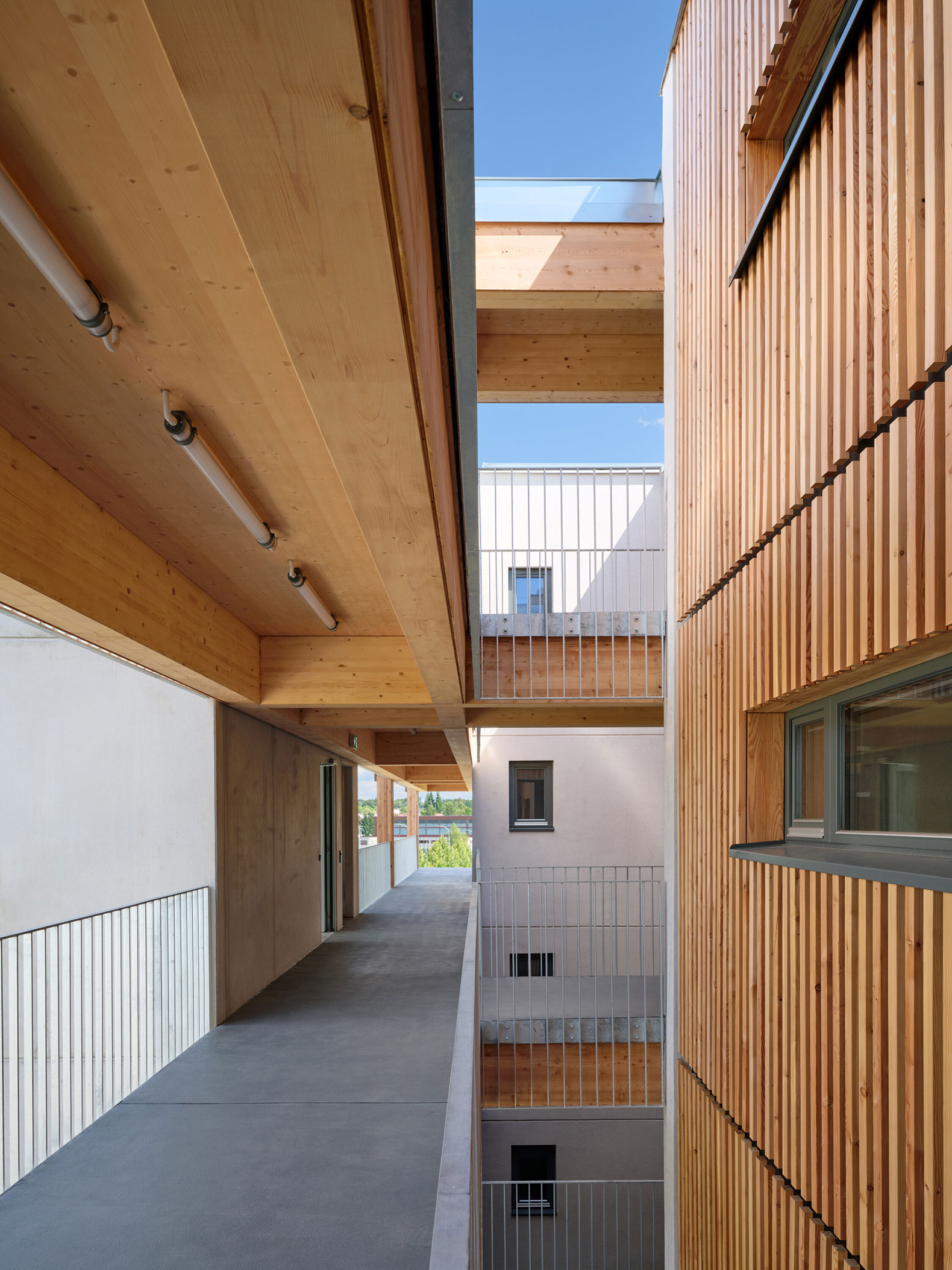
The buildings are designed as a structure composed of simple vertical sections. Each section has four above-ground floors and is defined by transverse load-bearing walls, between which recessed loggias with wooden shutters are inserted. This creates a play of randomness and transparency across multiple layers. The loggia areas are located on façades facing the courtyard. Along Sázavská Street, facing north, there are wooden access galleries and reinforced concrete communication cores with elevators and staircases. These façades are flatter and more enclosed, with only strip windows. The residential sections shift toward the courtyard relative to the gallery, creating vertical atria of varying depths with greenery between the gallery and the apartments. Most apartments are oriented southwest for both living spaces and bedrooms.
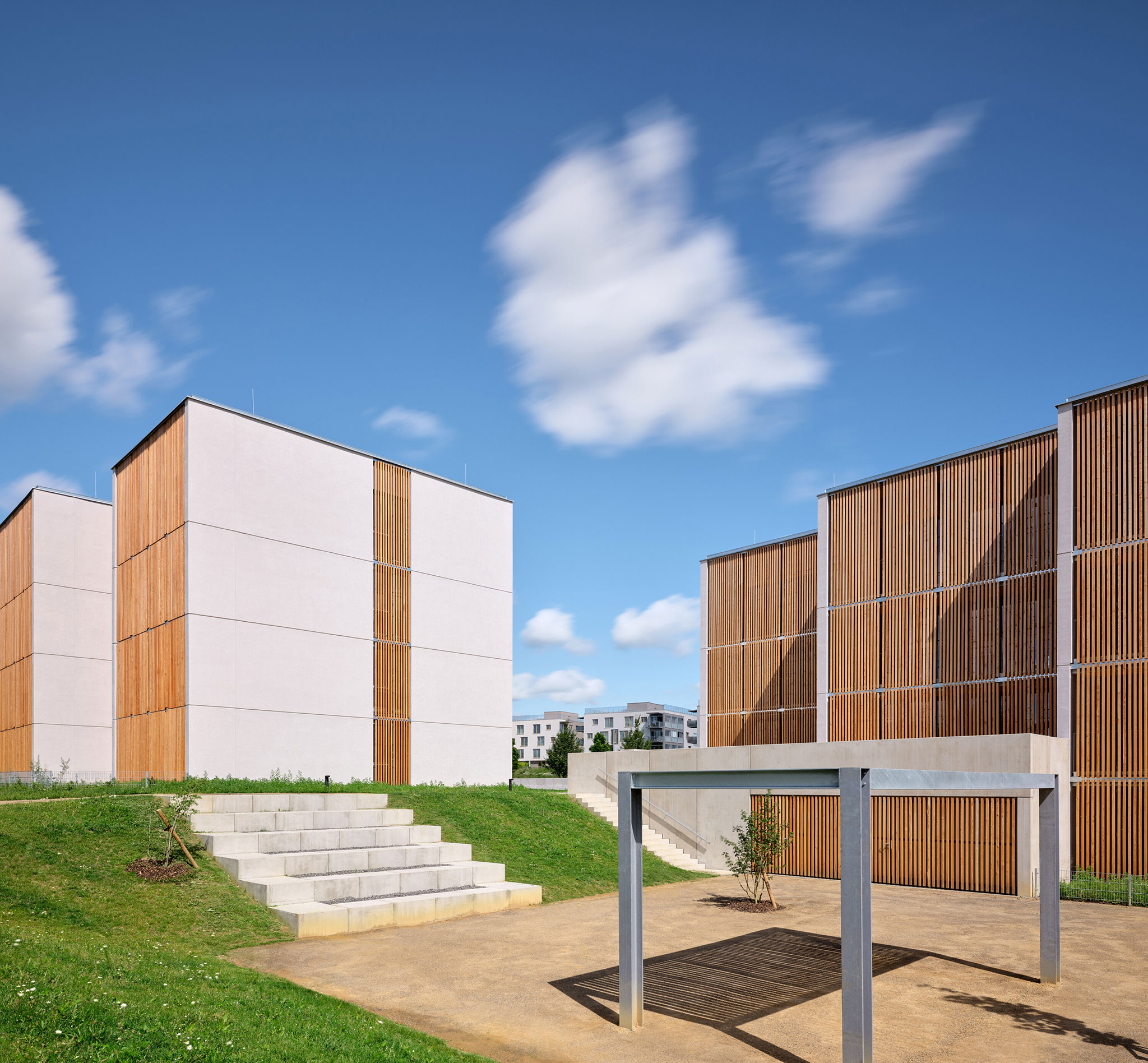
The courtyard is designed at the level of the first floor of buildings B and C and is intended for residents’ leisure activities. It includes gravel surfaces with benches under groups of trees, planting beds, and a pergola. On the slope between the courtyard and the area in front of building A, stepped seating (amphitheater-like) is created. The courtyard is connected by a path to public spaces in the western part of the site.
All building structures are prefabricated and assembled on-site. Walls and floor slabs are made of wooden CLT panels, while the gallery structure consists of glued laminated timber trusses. Elevator and staircase cores, retaining walls, steps, and exterior elements are made of prefabricated reinforced concrete.
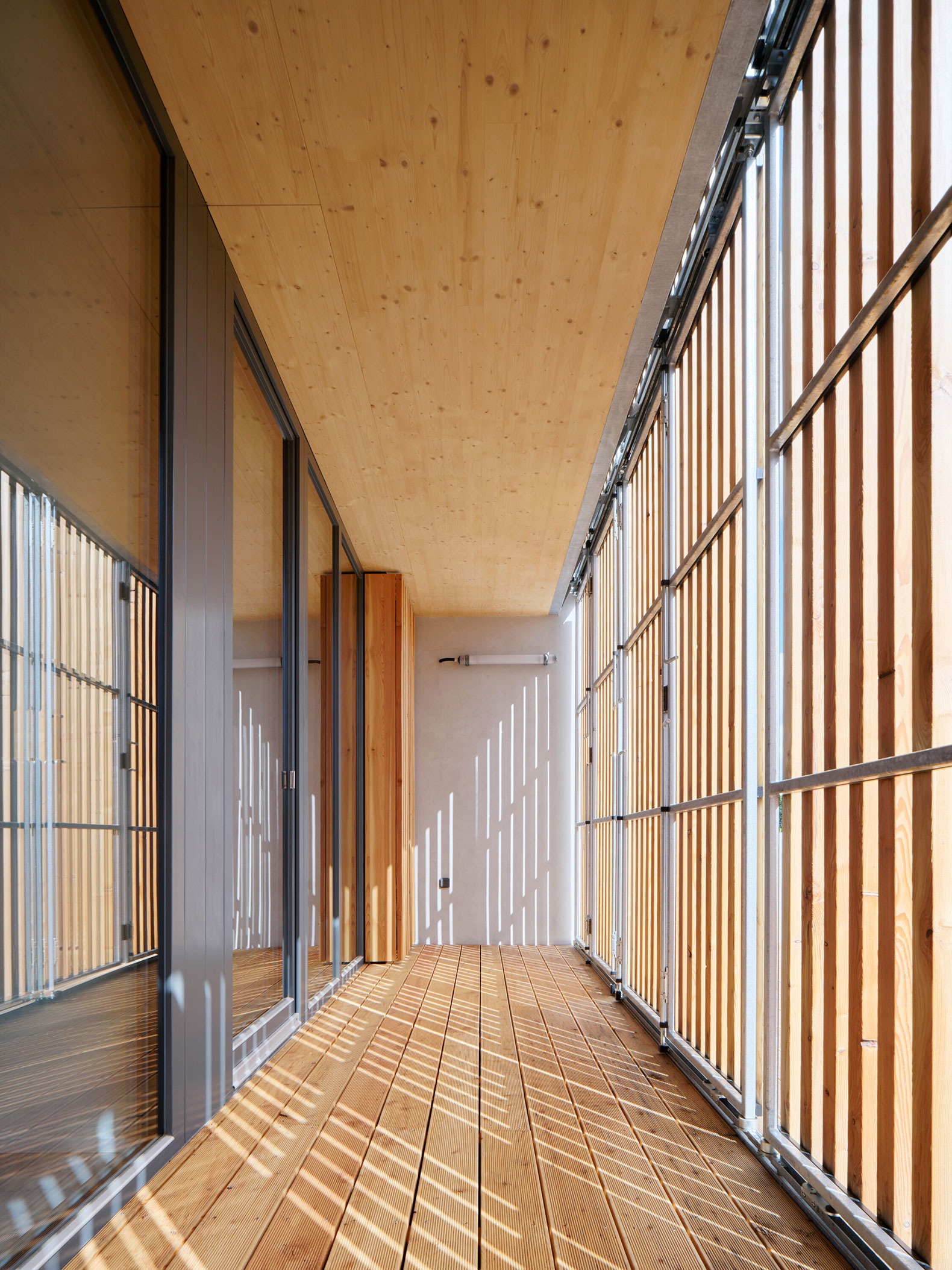
Sustainability is expressed through the compact building mass and a simple, modular prefabricated structure combining wood and concrete. The building uses passive energy strategies such as shading with façade shutters and natural cross-ventilation of all apartments (south/north). Vegetation is incorporated on the roof and in the atria to improve both indoor and outdoor environments. Nature-based design principles are also reflected in the landscaping, with greenery and permeable surfaces.
The buildings are among the first multi-storey timber residential projects in the Czech Republic and represent an example of affordable rental housing. The project was developed through collaboration between the city of Žďár nad Sázavou and Česká spořitelna, with support from the Ministry of Regional Development.