

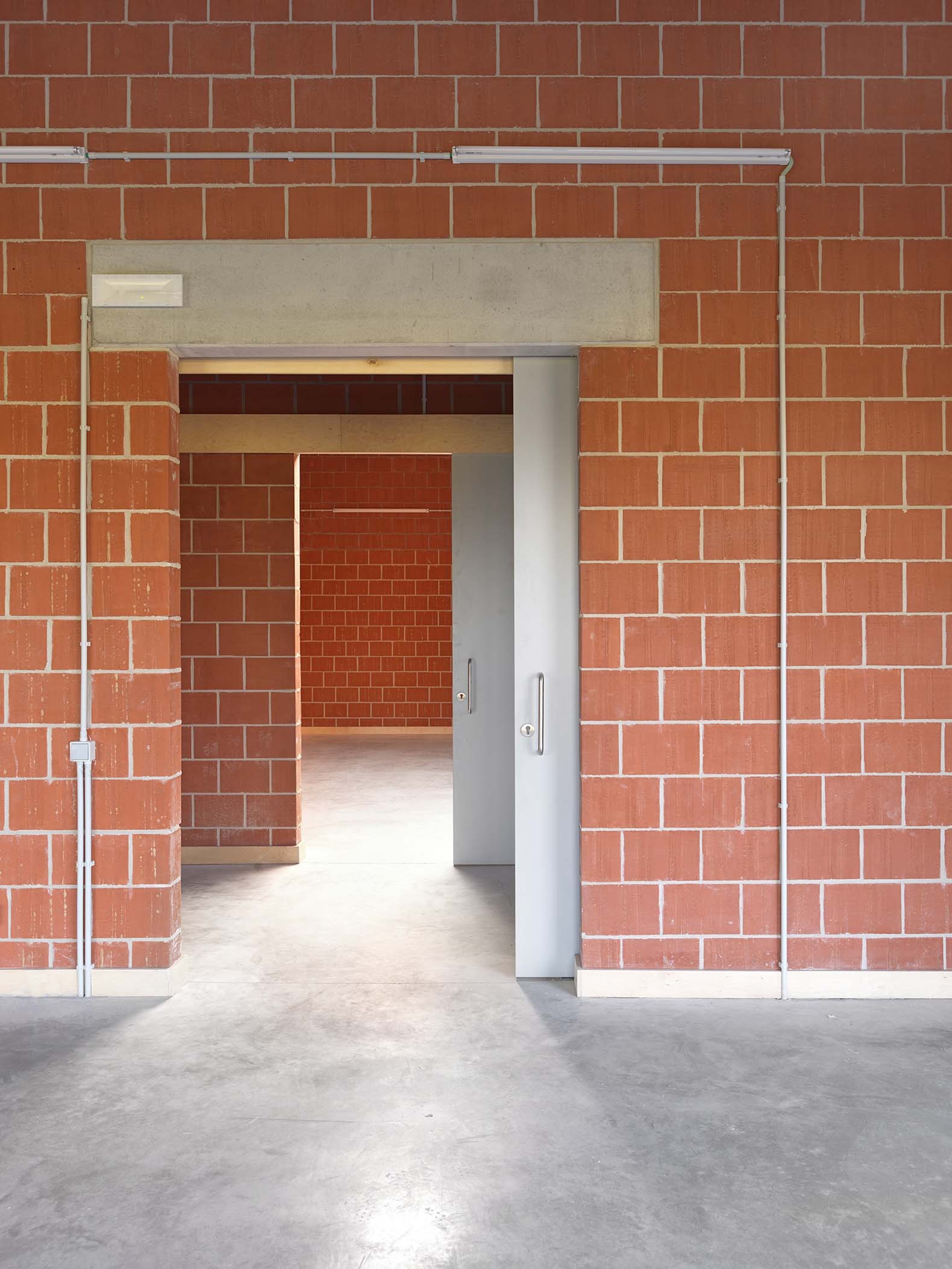
The project, designed by ENOF Architectuur, is organized on a single floor. It features a series of study spaces and a multifunctional room, all conceived with a high degree of flexibility. These spaces are complemented by a dining room, a radio studio, and a carpentry workshop, while a significant portion of the activities extend into a large garden intended for communal use.
Structurally, the center is characterized by a fragmented volume and a sloping roof. The green brick construction lends a recognizable and enduring identity to the complex, while the interior finishes were designed for intensive daily use, further enhancing the building's welcoming character.
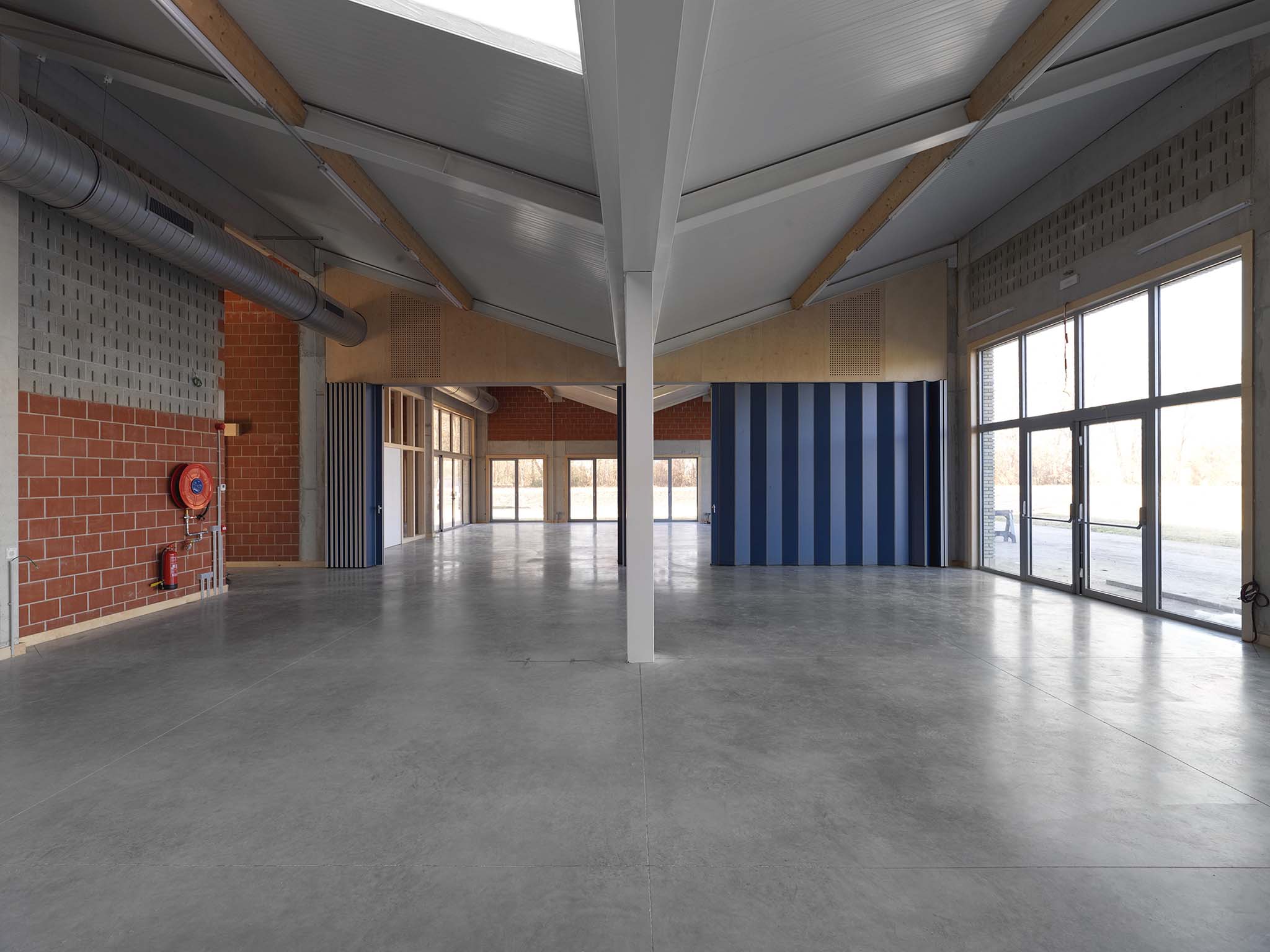
Pegode by ENOF Architectuur. Photograph by Franziska Krieck.
Project description by ENOF Architectuur
ENOF Architectuur took on the challenge of designing a center for people with disabilities in Waarloos (B) for the social support organization Pegode. This organization is distinguished by its inclusive vision of society and the personalized support it provides to people with disabilities.
Open space must be used with care; any intervention in a suburban context or on an undeveloped plot requires a solid justification. In this case, a community facility that expands the existing functions of the town center provides a relevant reason for integrating a new building into this open environment.
In addition to fulfilling the required functions, the project aims to become an intelligent support system that fosters necessary interactions without explicitly imposing limits on its use. The concept behind this building is a form of social sustainability, in which the existing built environment can be adapted to the functions it houses.
The center's program consists primarily of a series of study spaces and a multifunctional room; both designed to respond to the users' needs with a high degree of flexibility. In addition to a dining room, a radio room, and a carpentry workshop, the building incorporates a significant portion of its functions within a spacious, structured garden designed for everyone's use and enjoyment. The spaces are arranged in a clear sequence and hierarchy: areas for users and support zones for staff. Given the high number of wheelchair users, the entire program was developed on a single floor, resulting in a generous amount of space and exceptional usability. The green brick construction is complemented by a robust interior finish that encourages users to take ownership of the space.

Through its roof and fragmented volume, the day center seeks to integrate naturally into its surroundings. The surrounding industrial landscape directly influenced the roof's design: its slopes subtly evoke this context and allow for a harmonious transition to the more domestic scale of the neighboring residential buildings.


