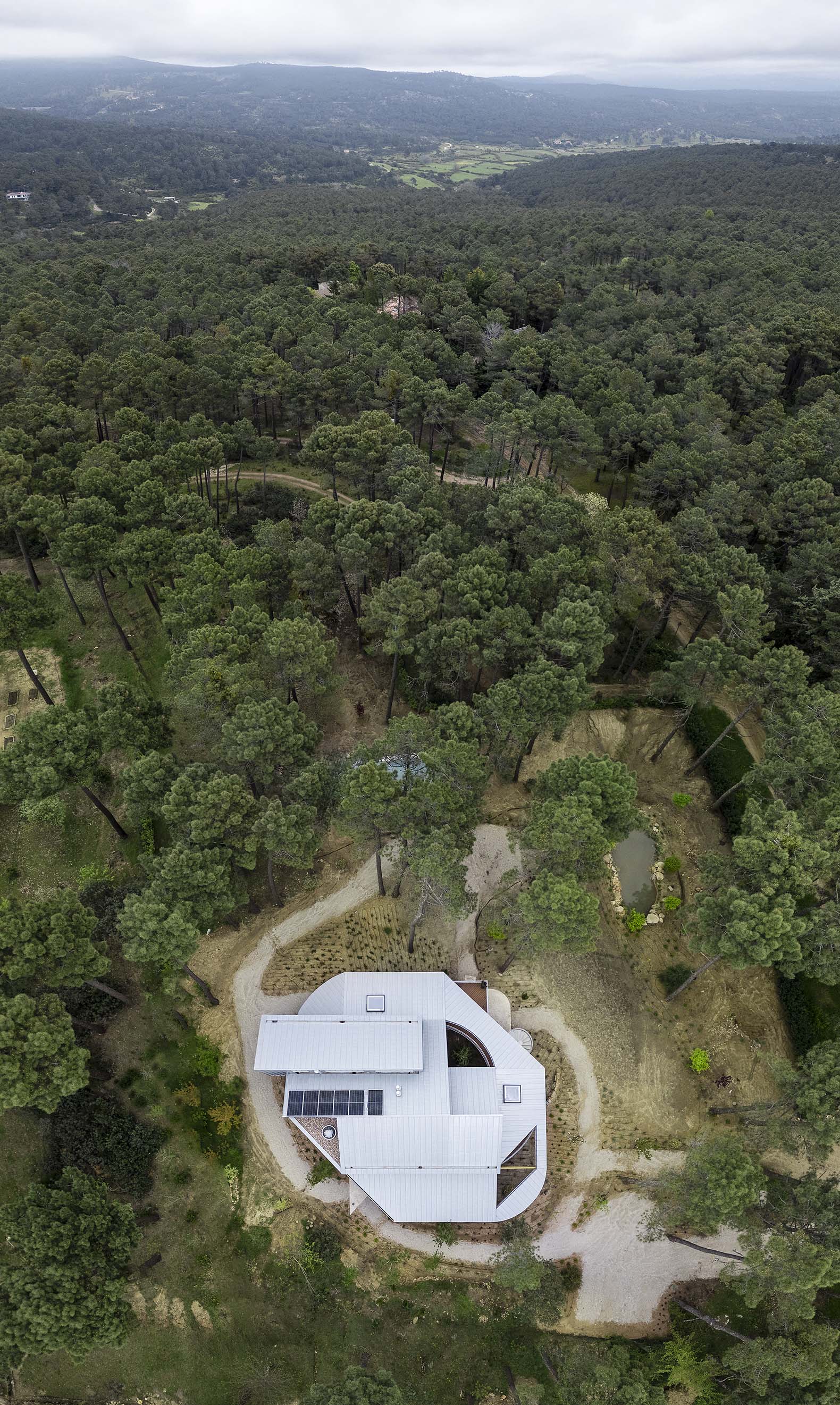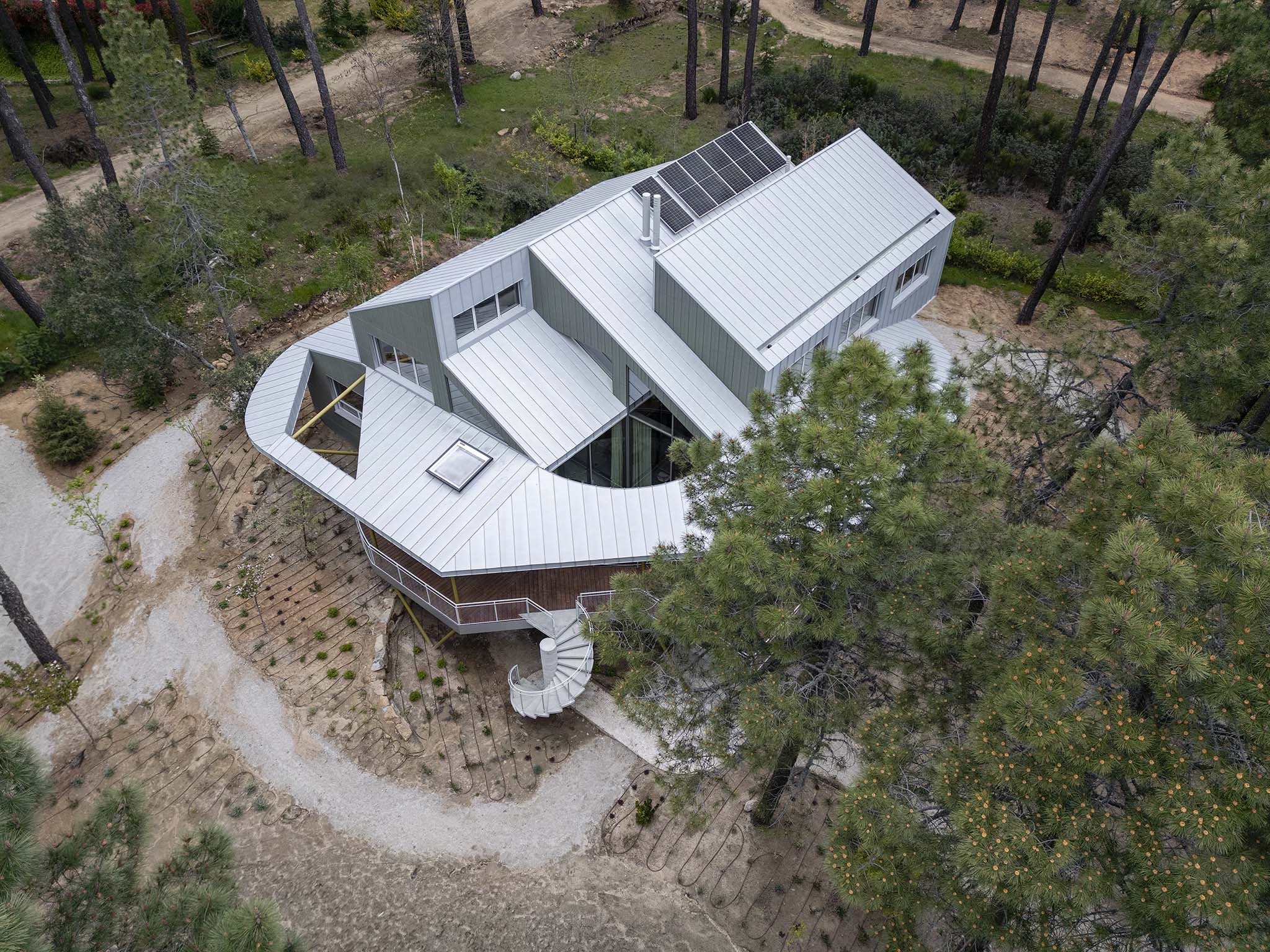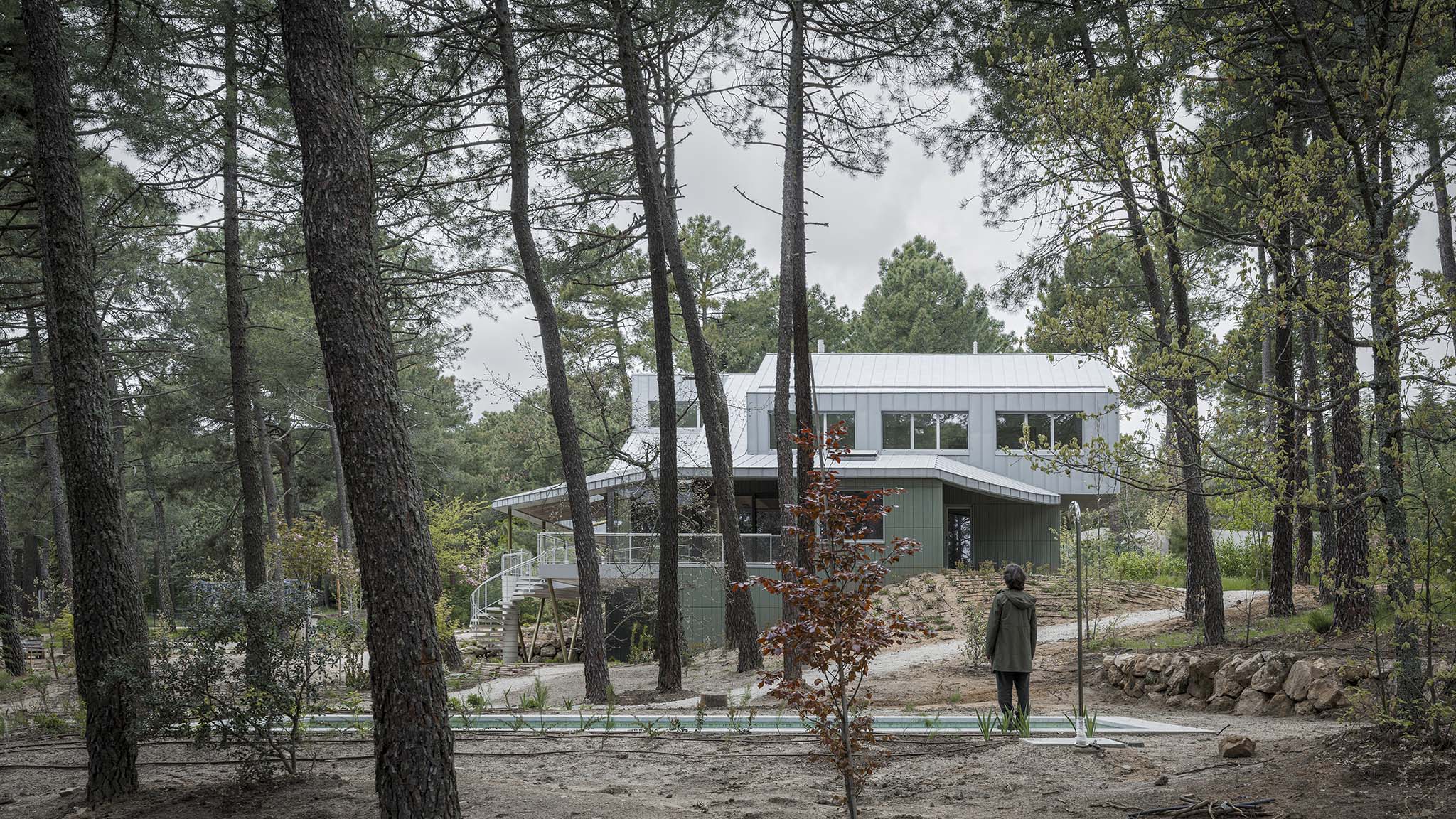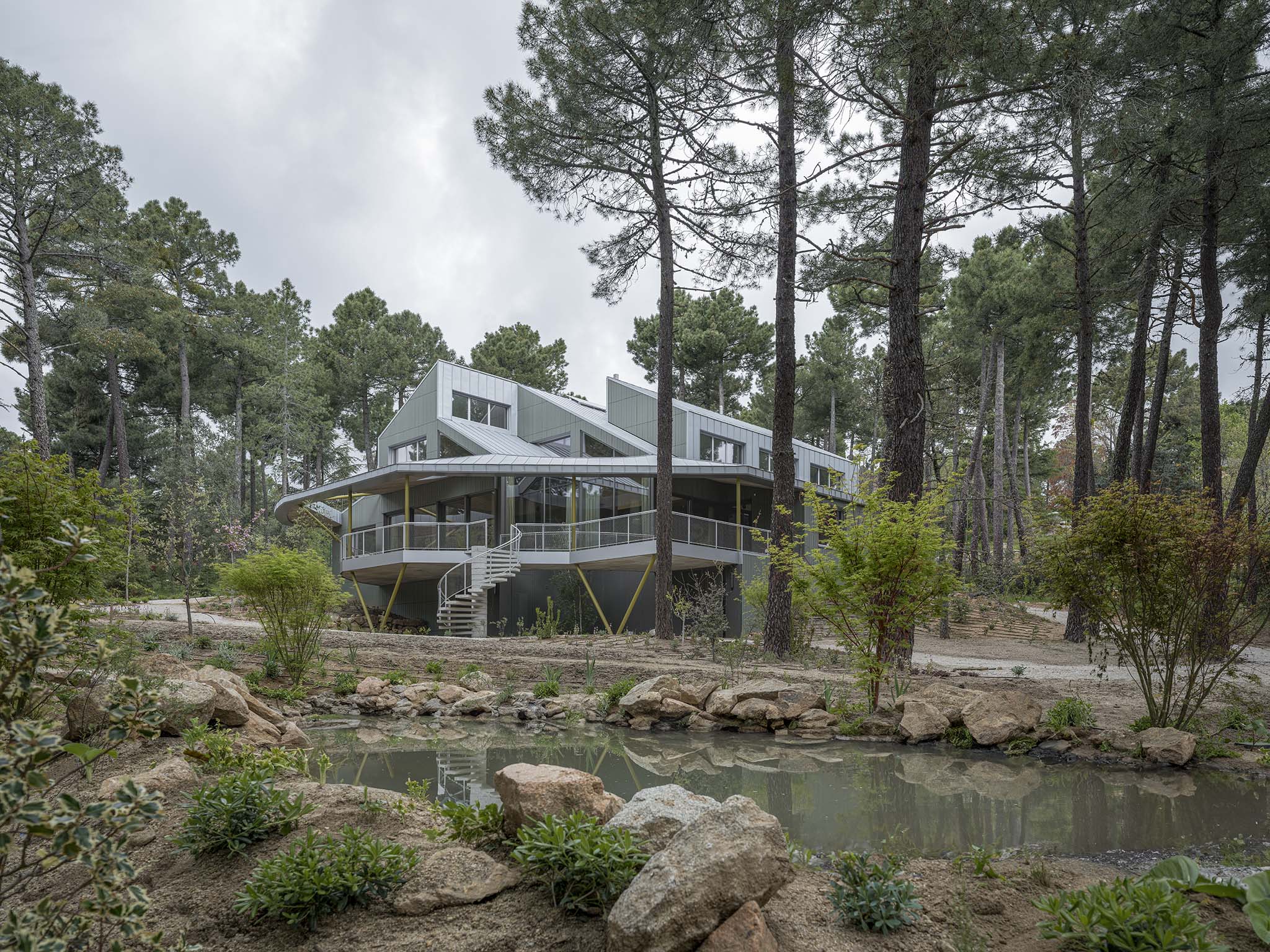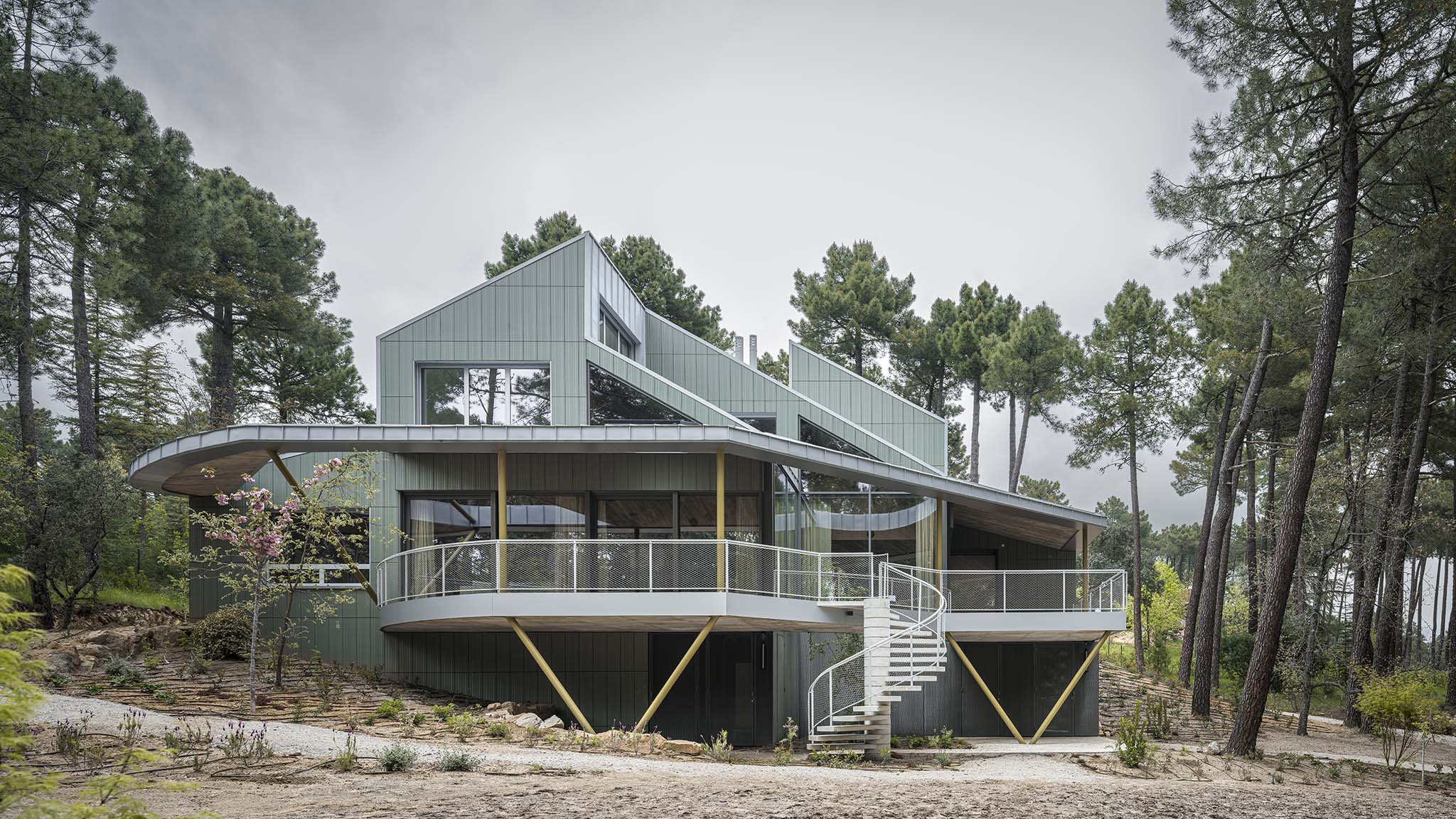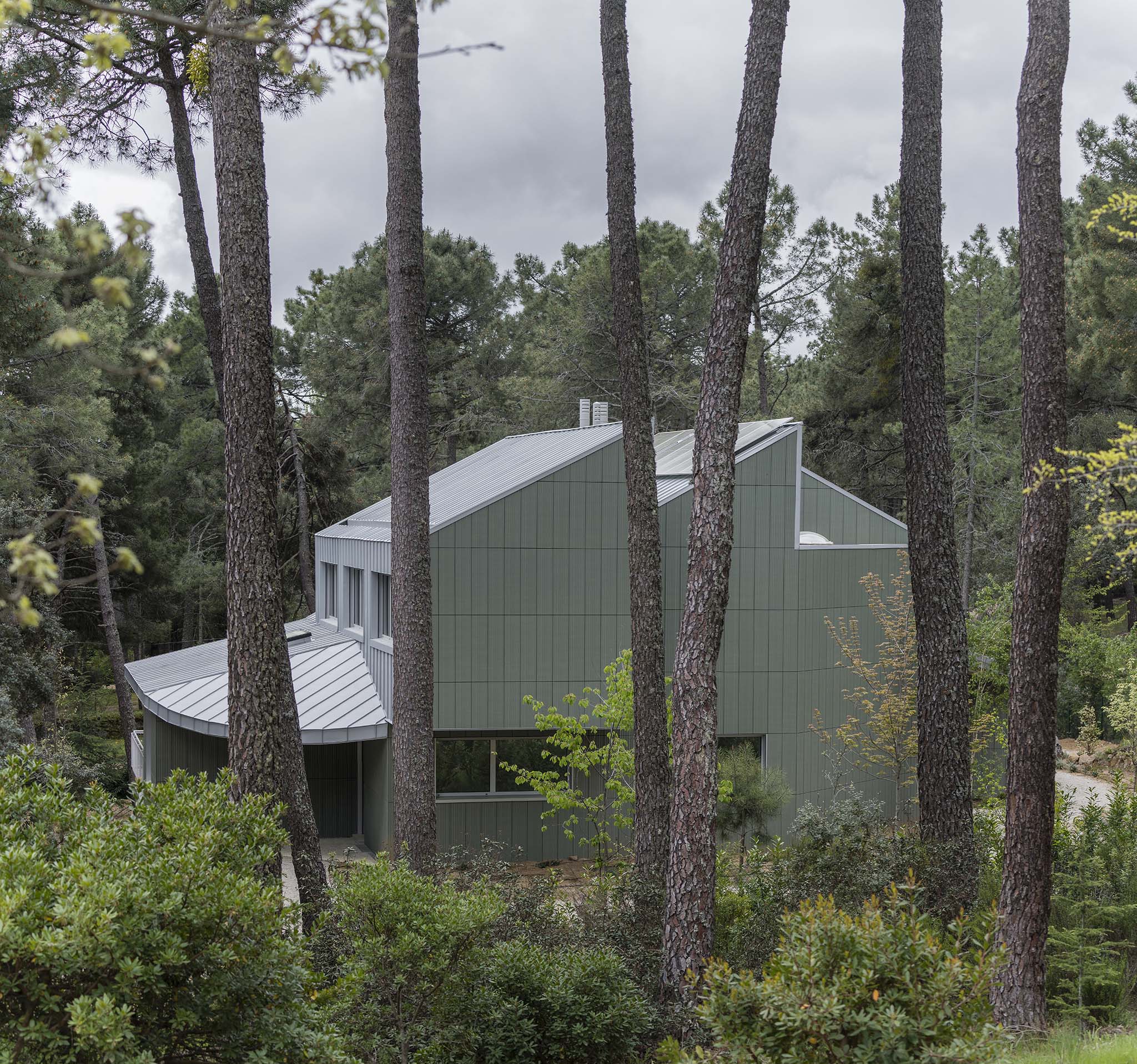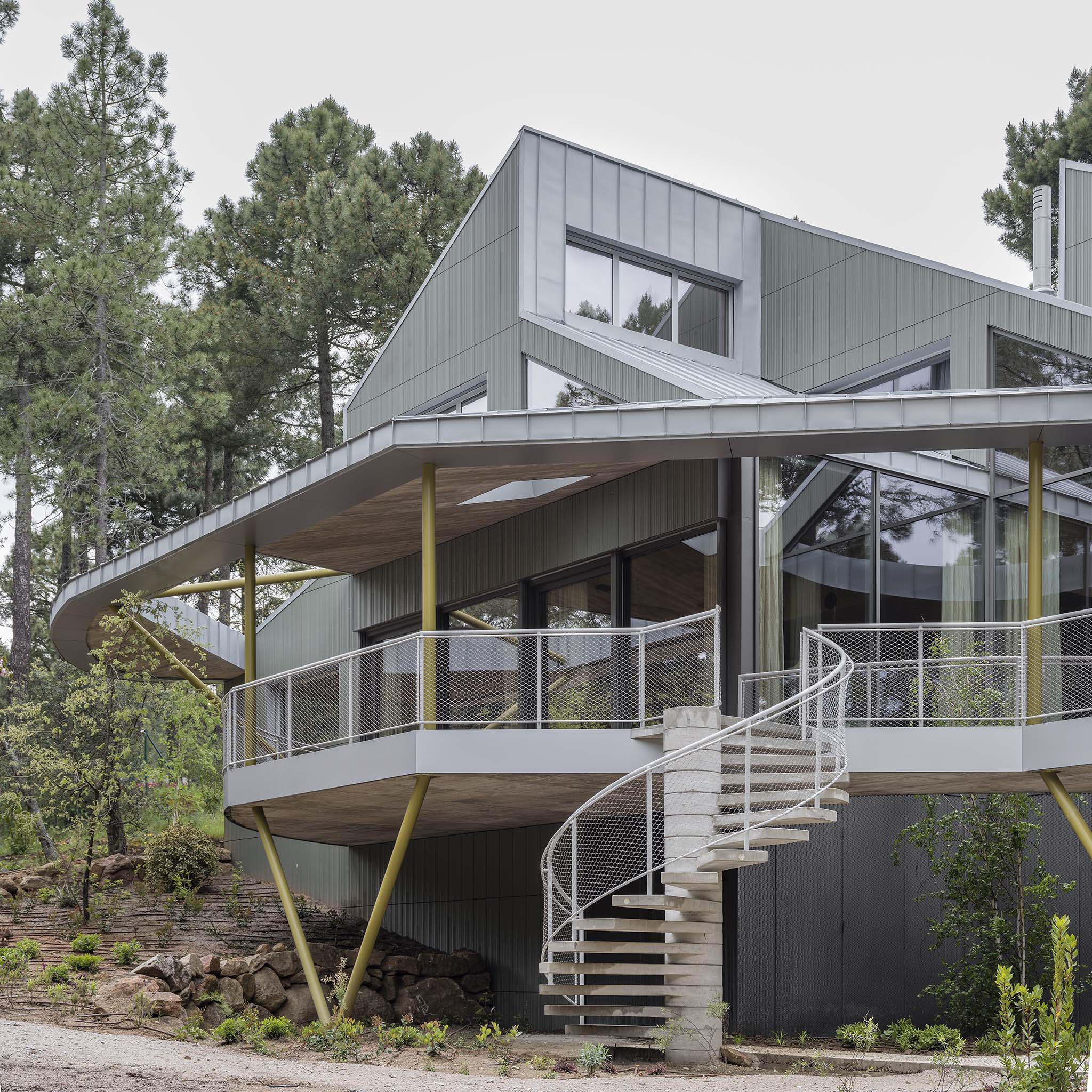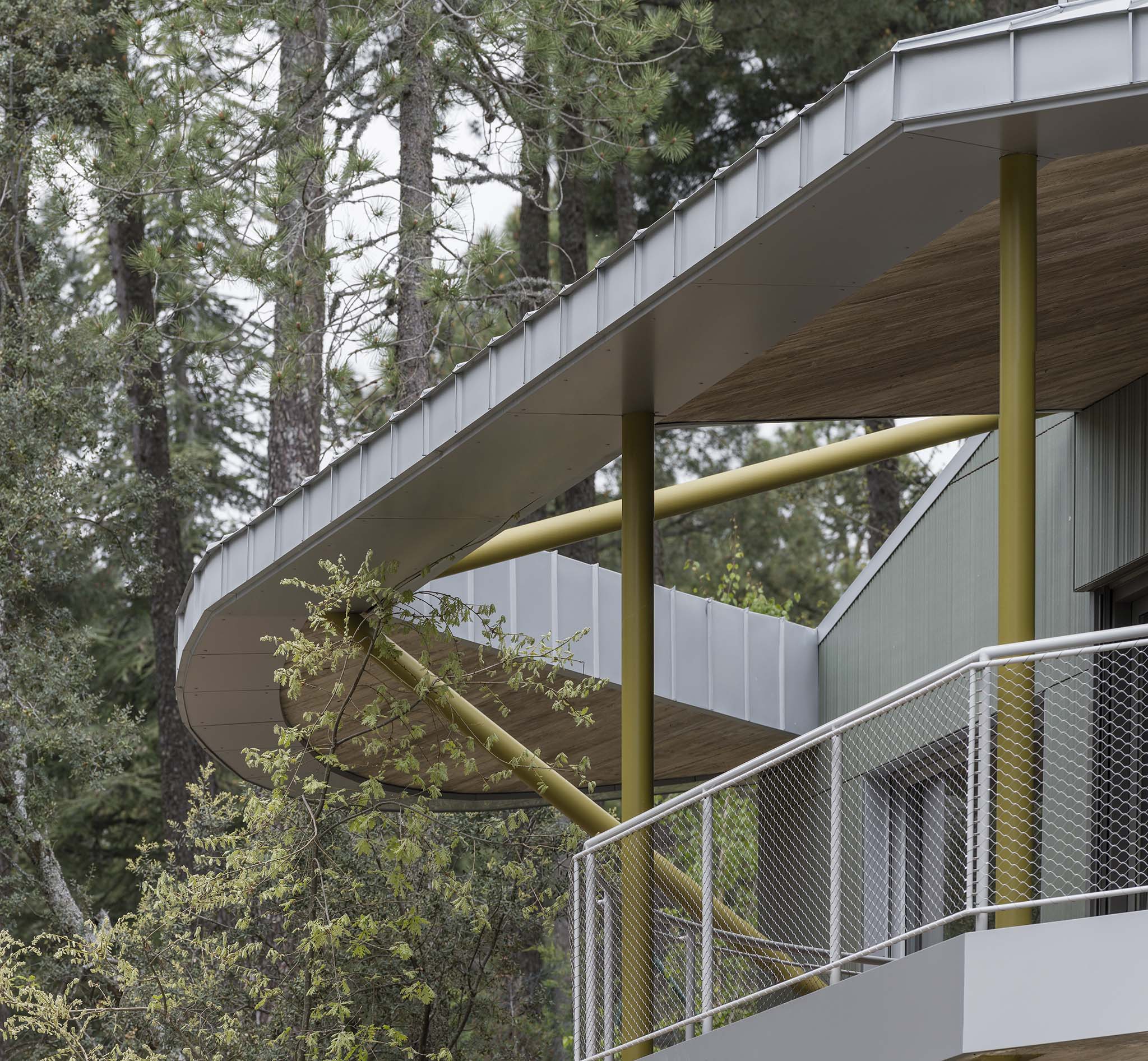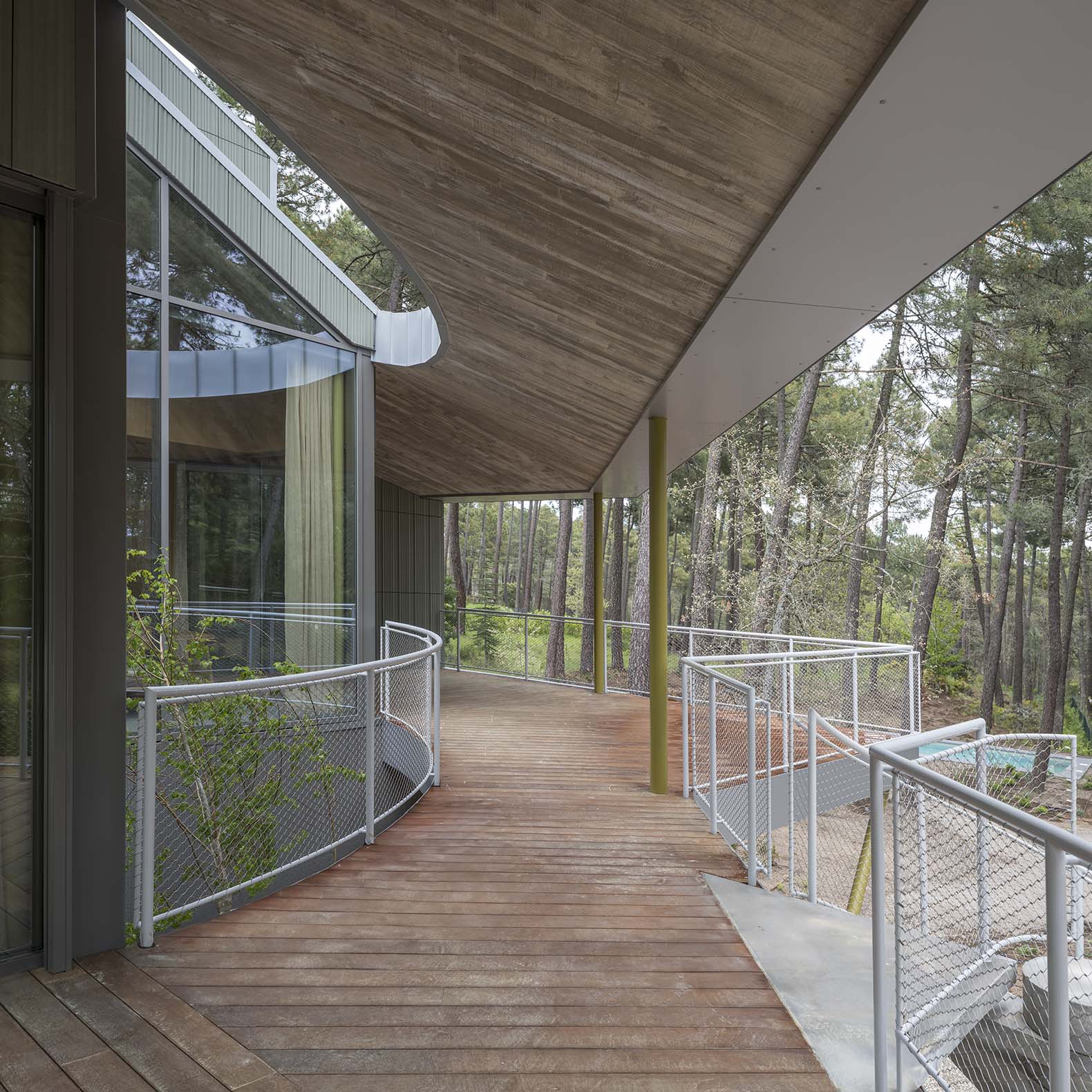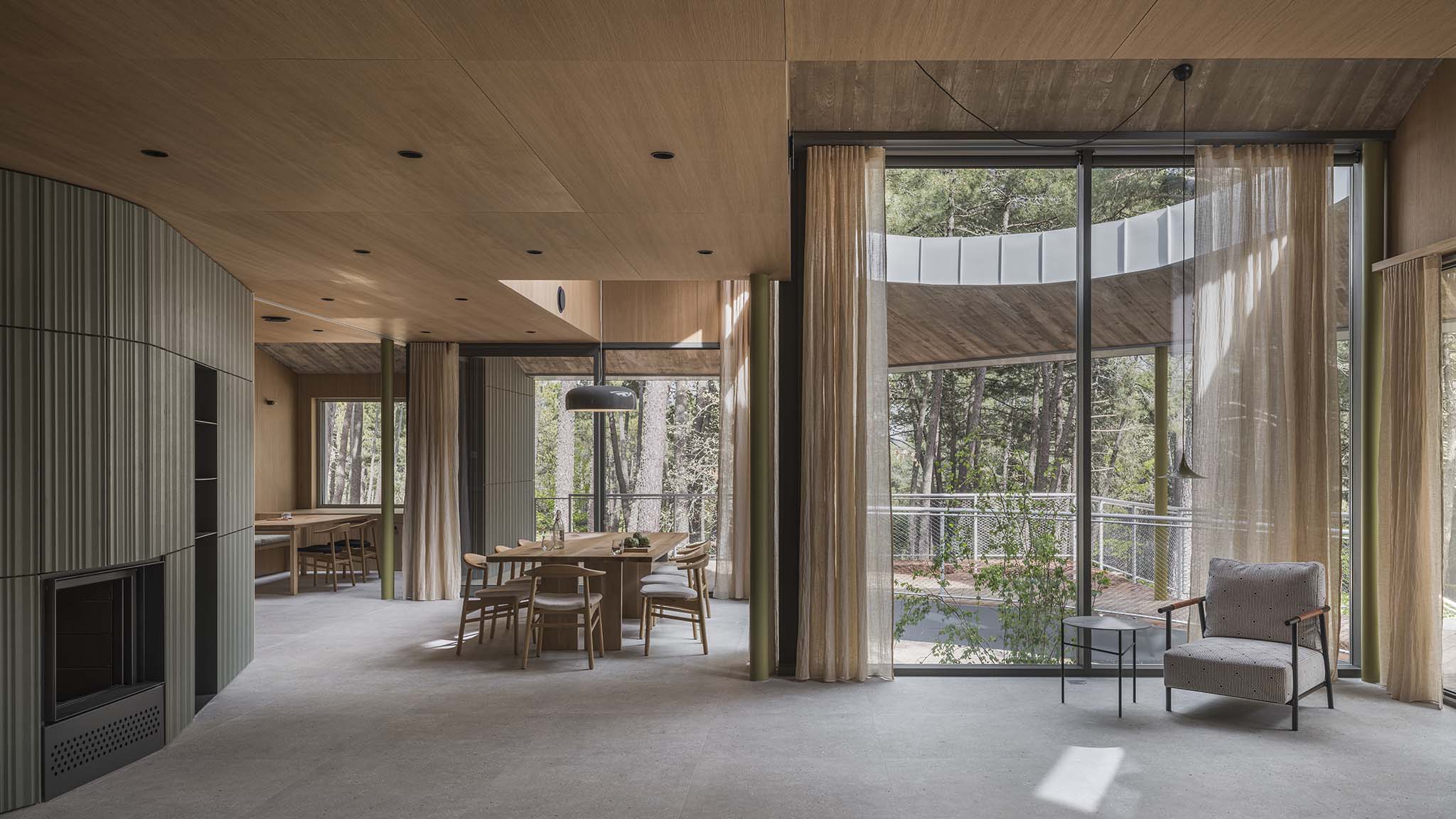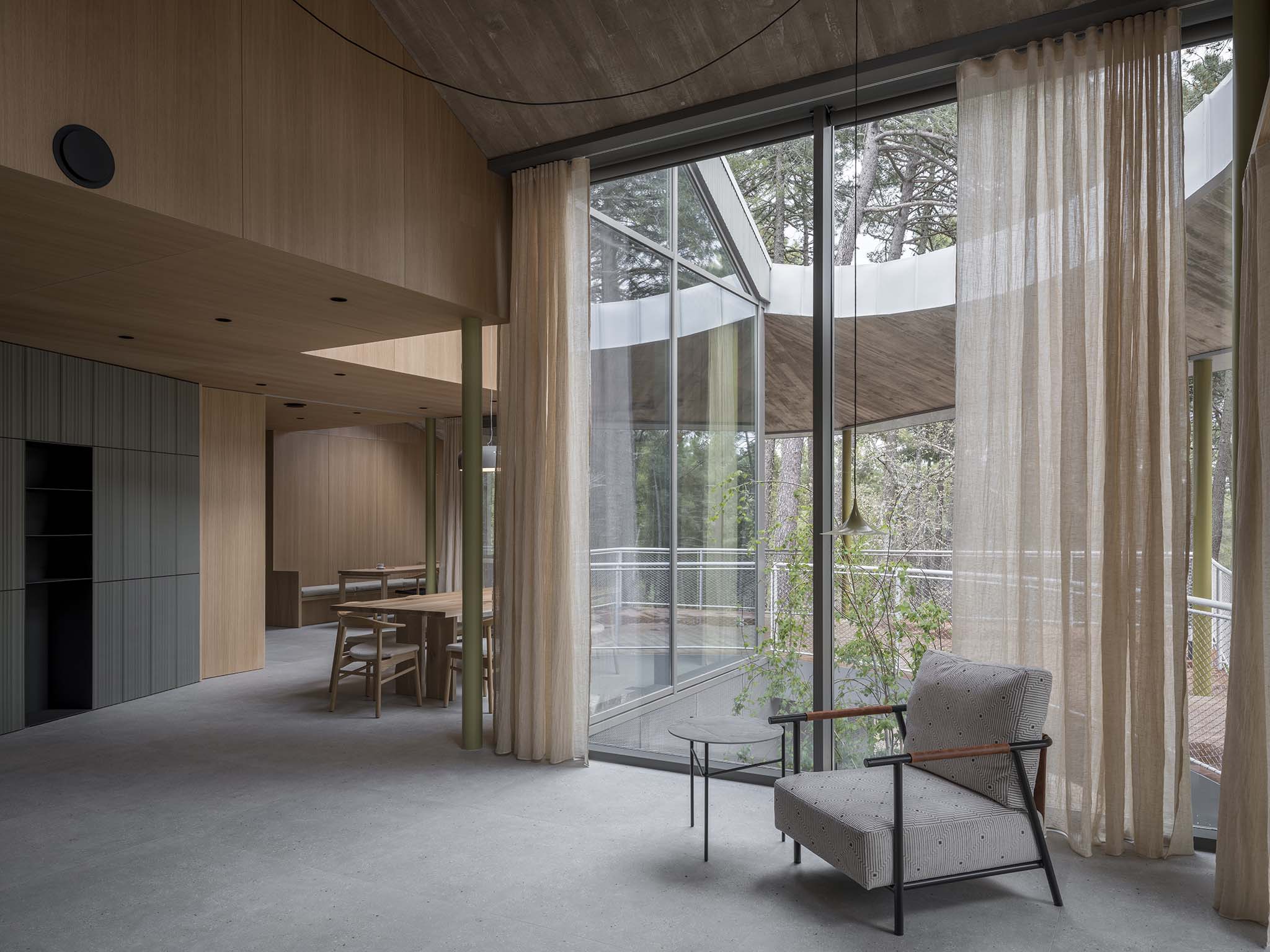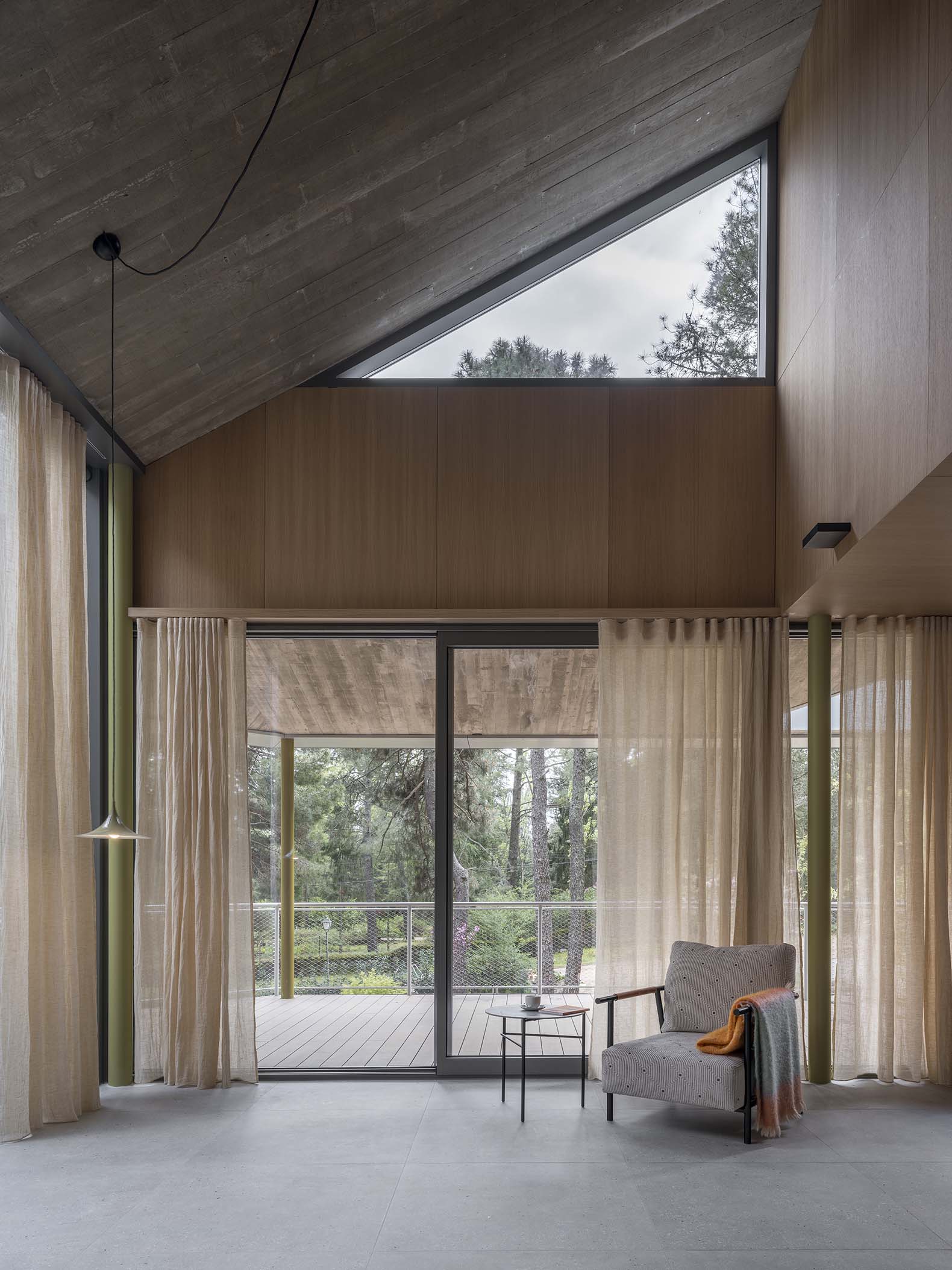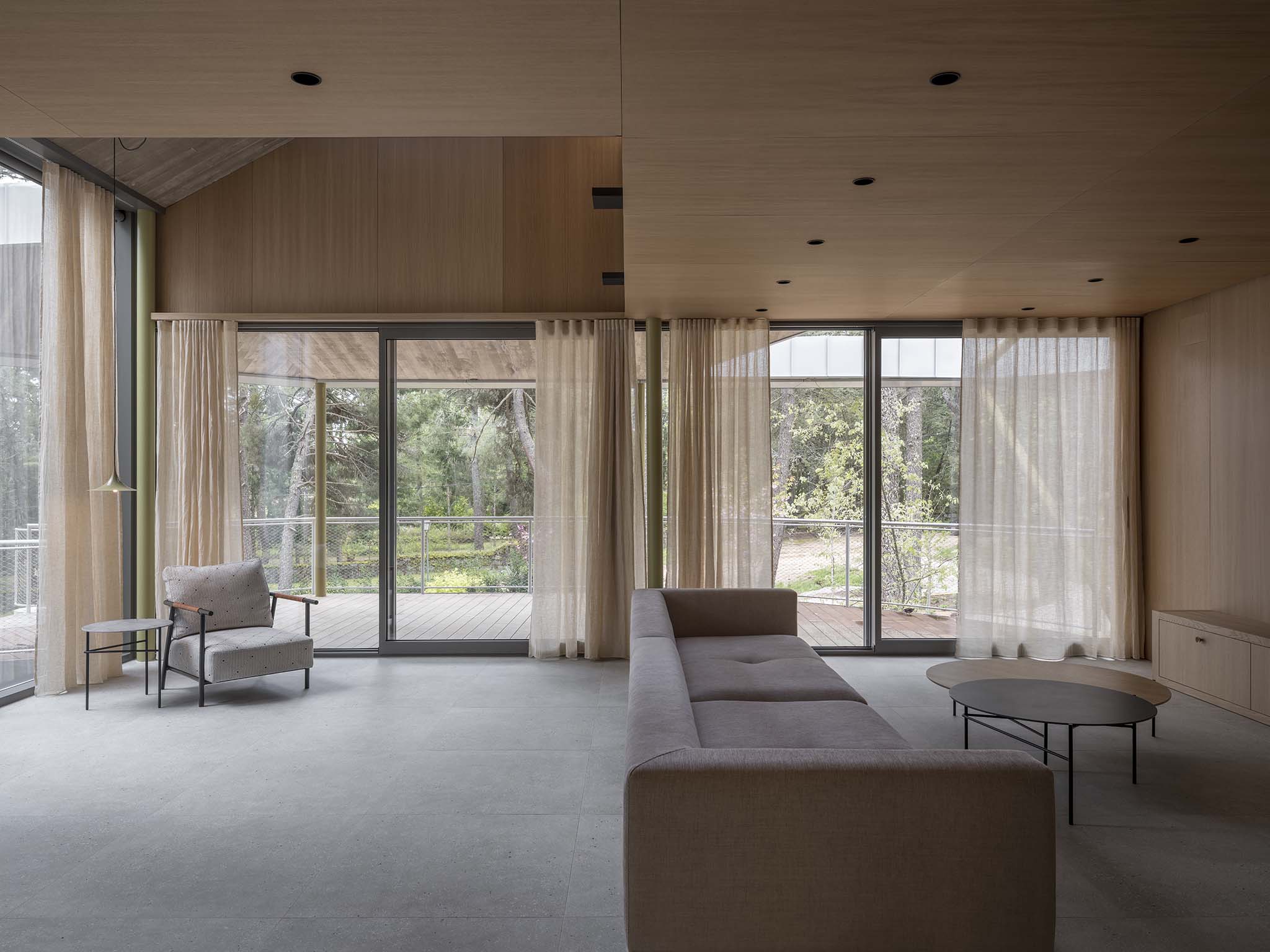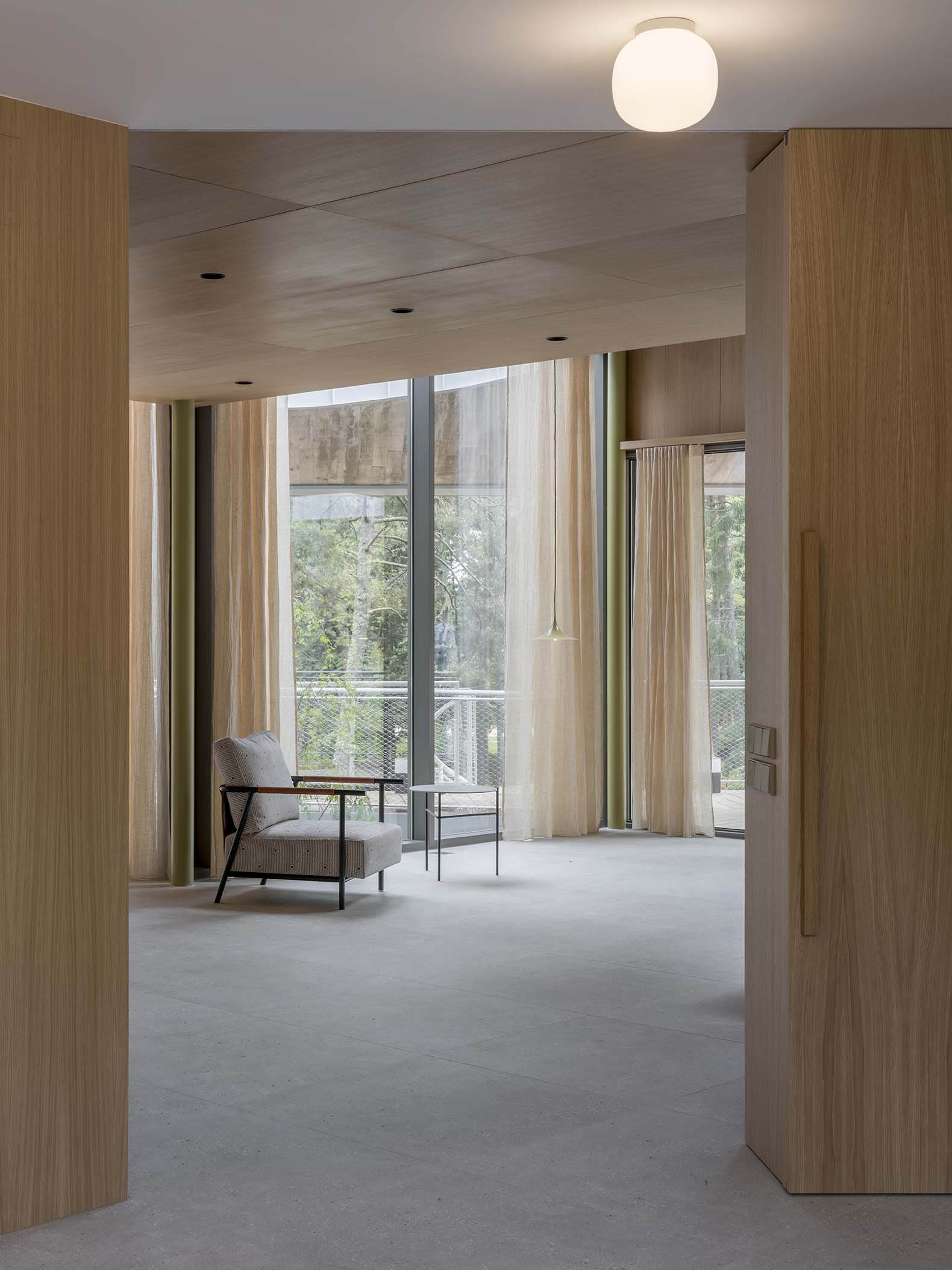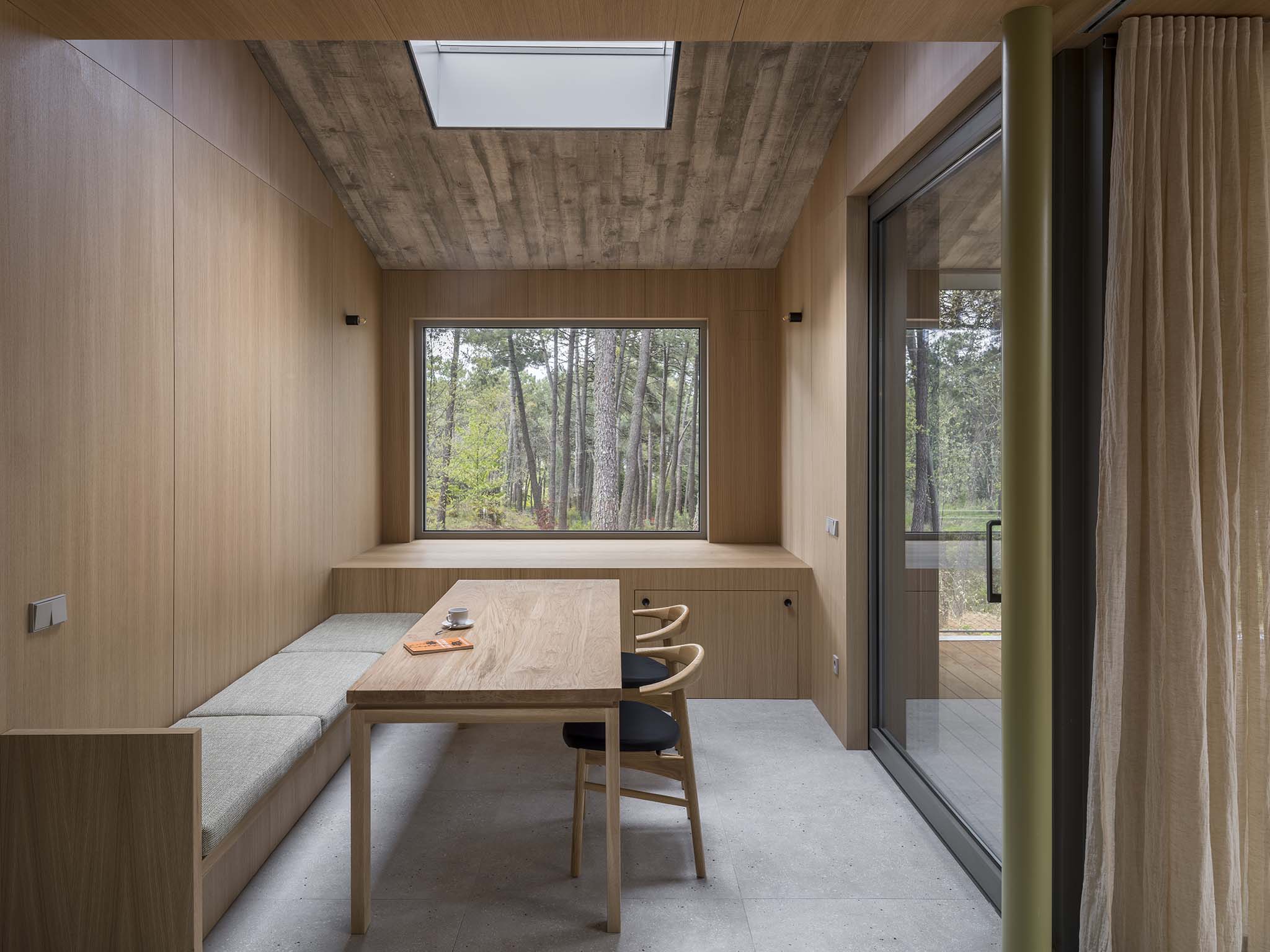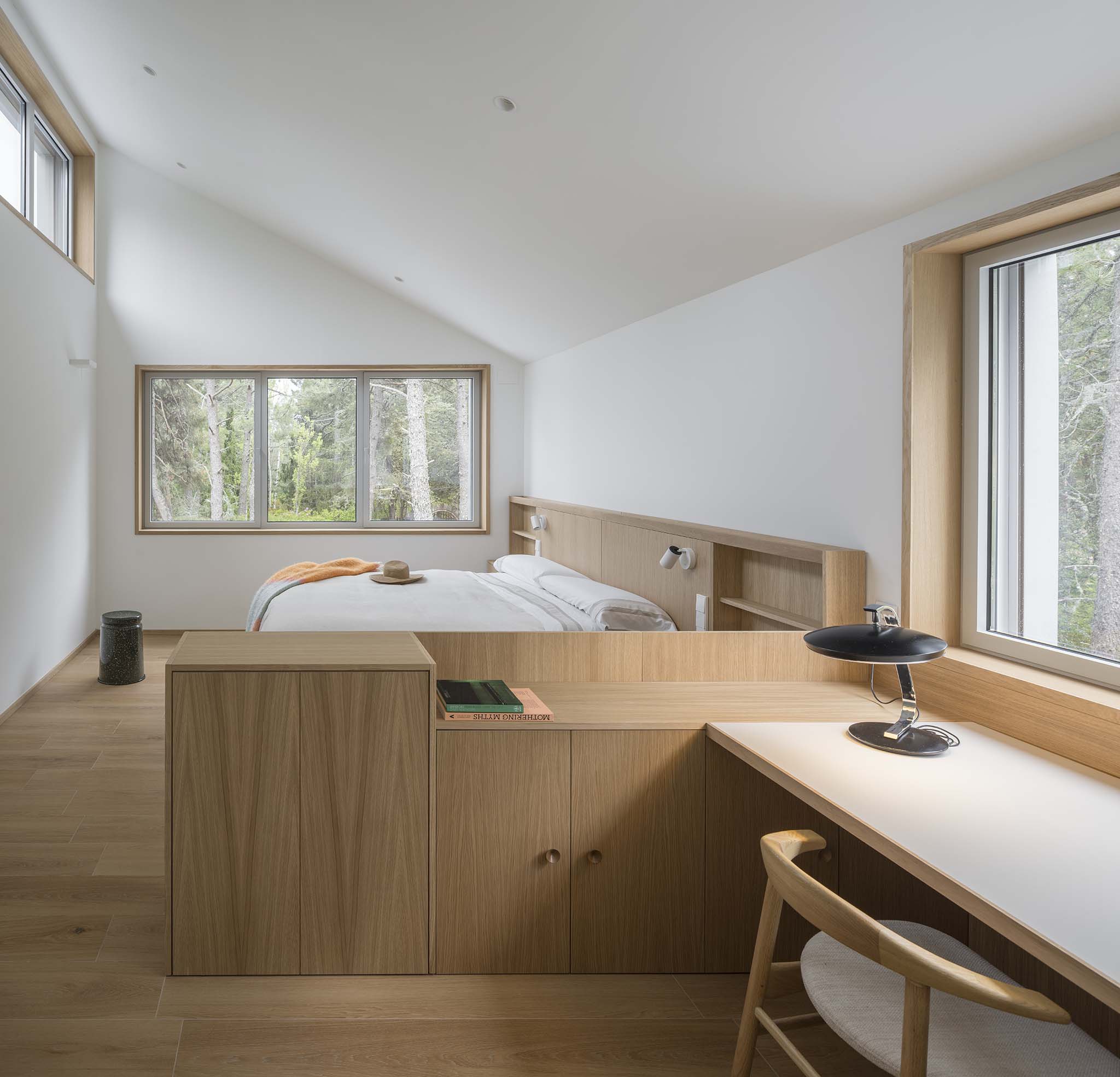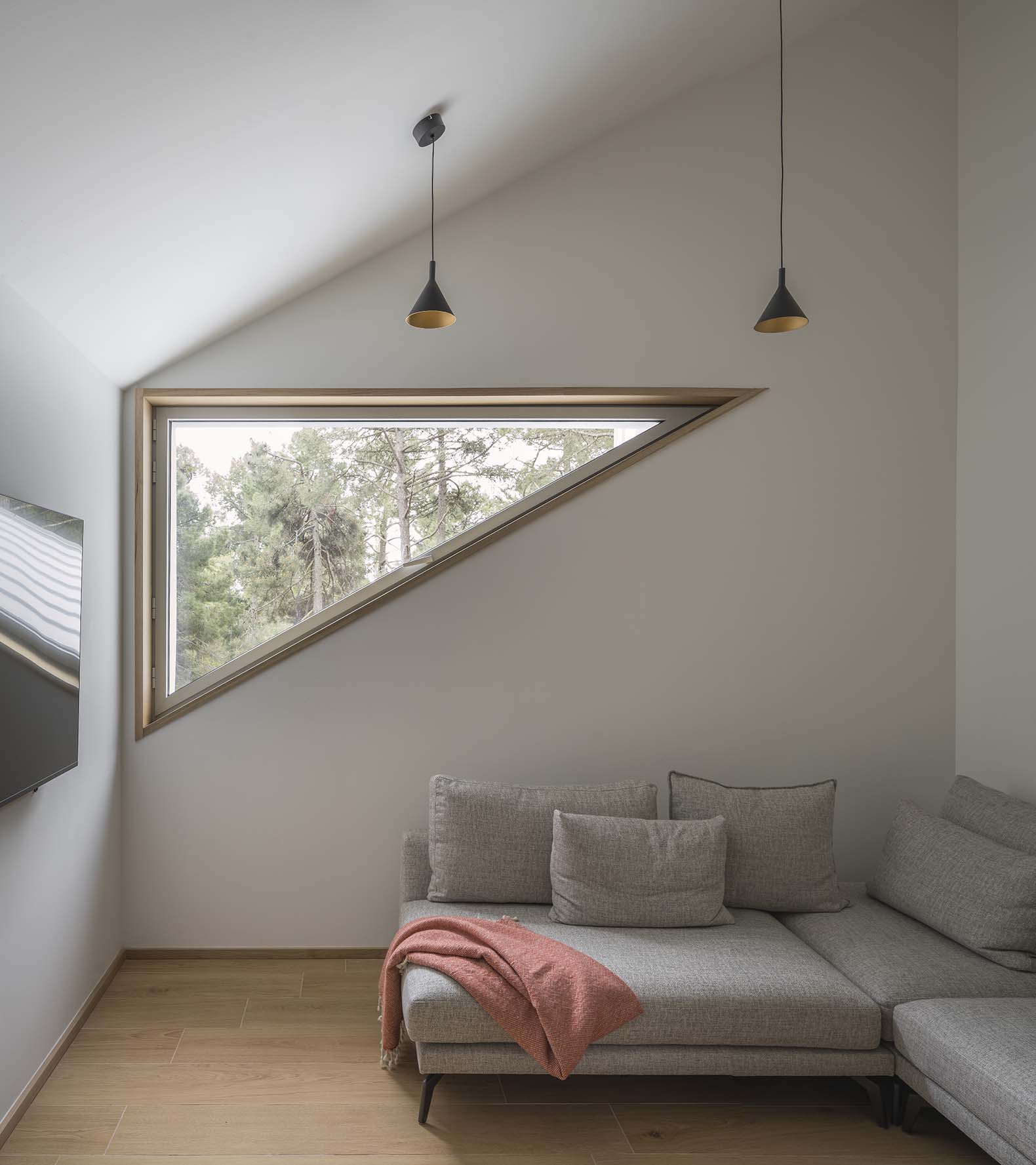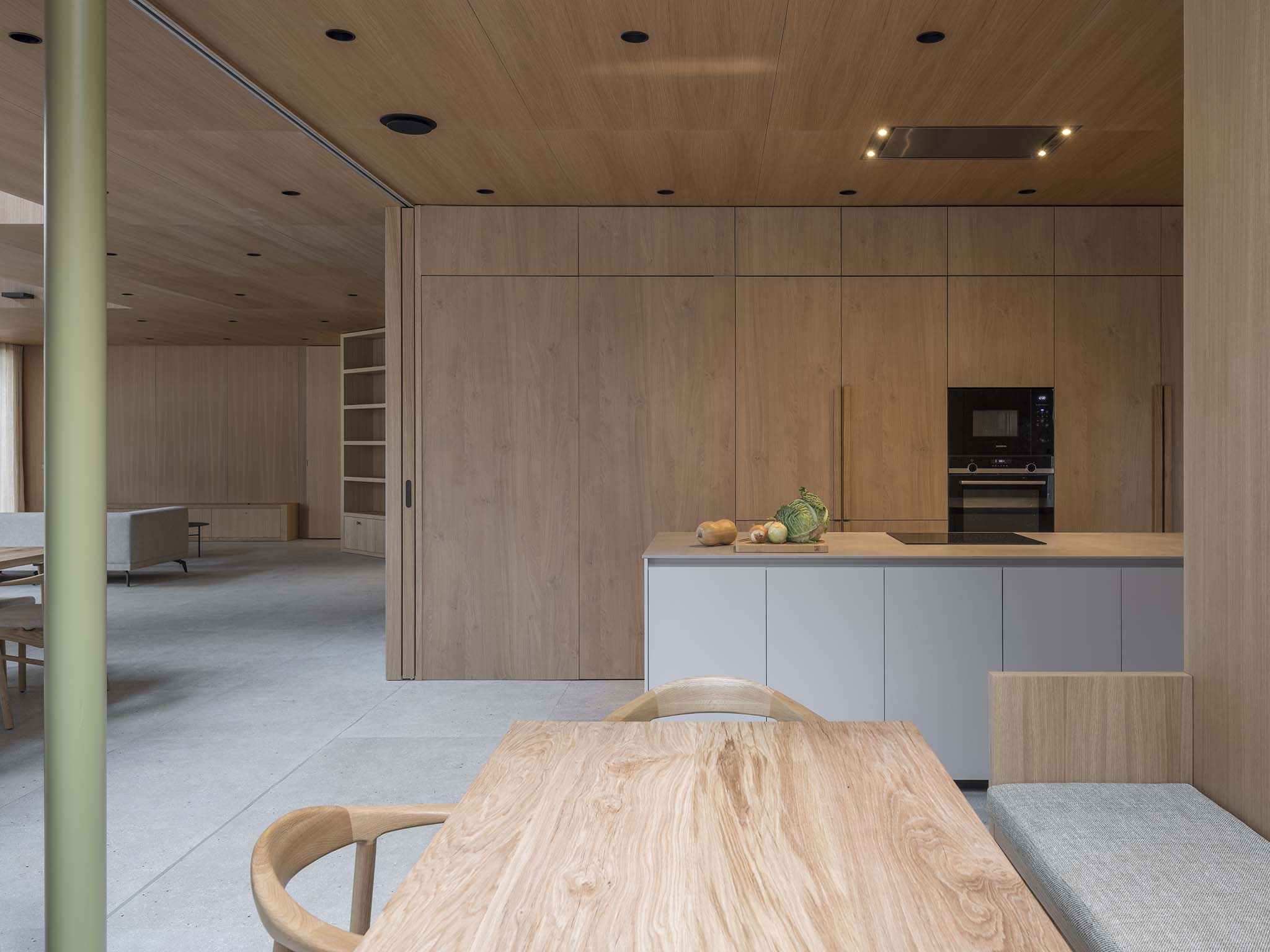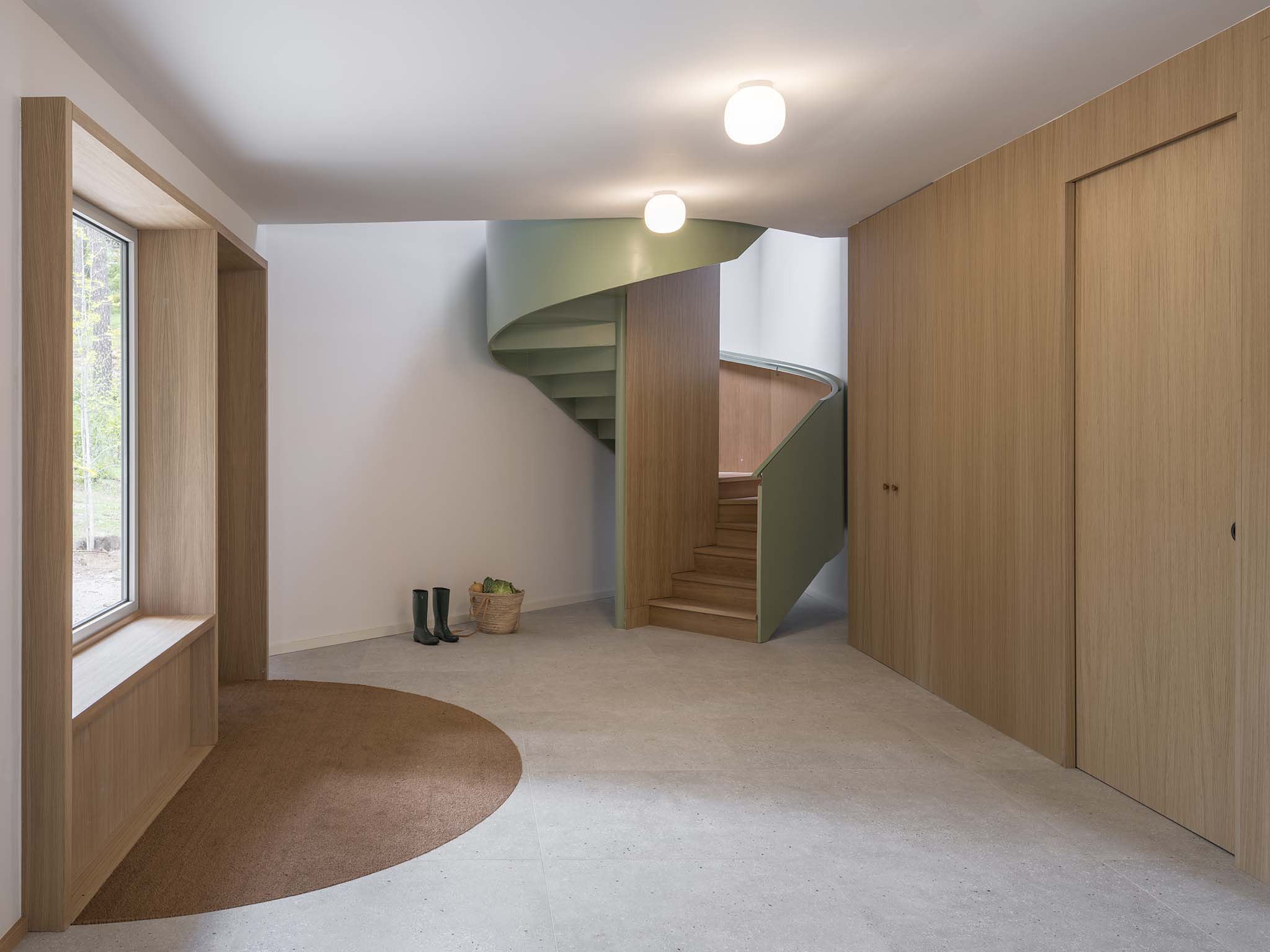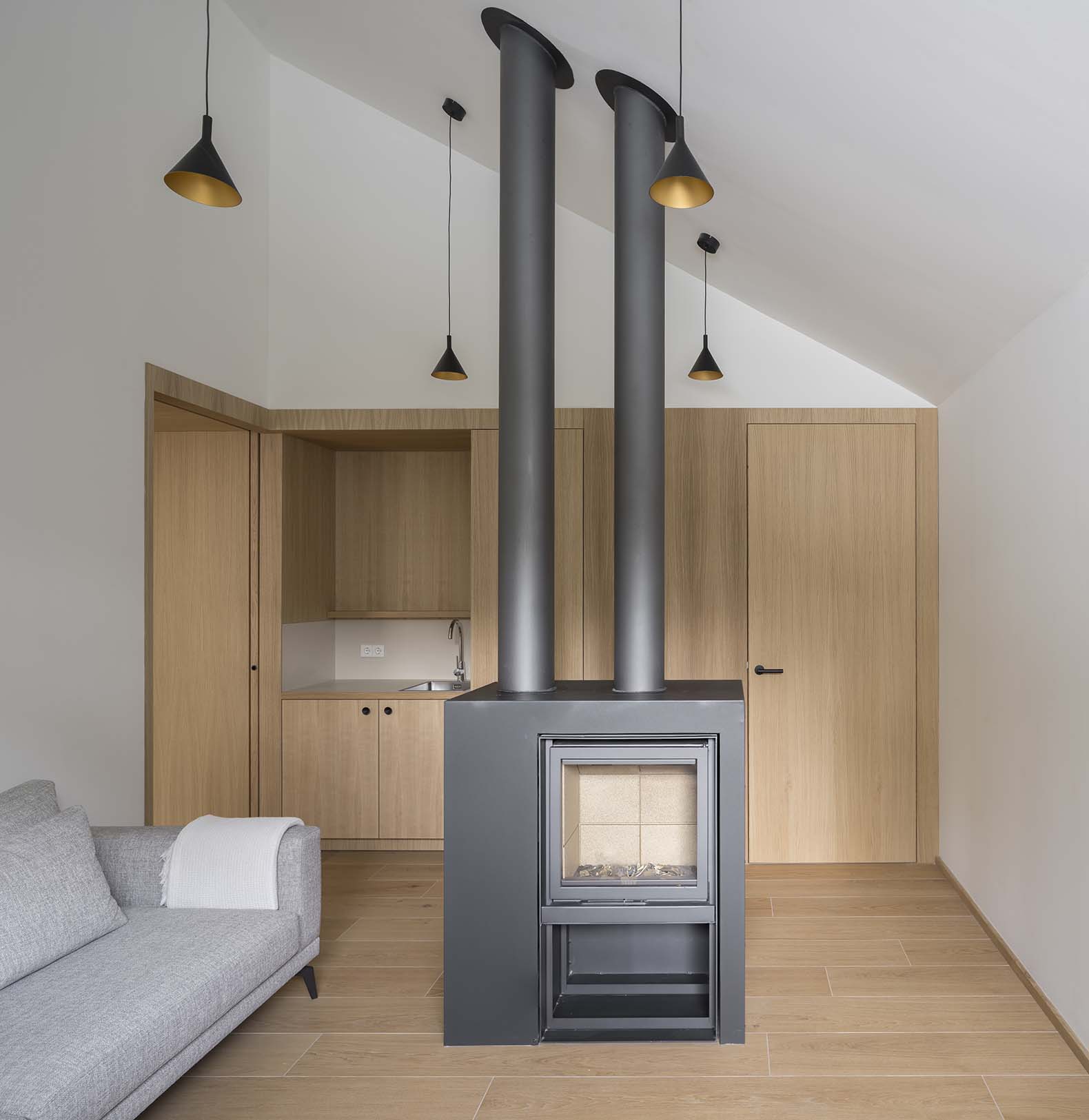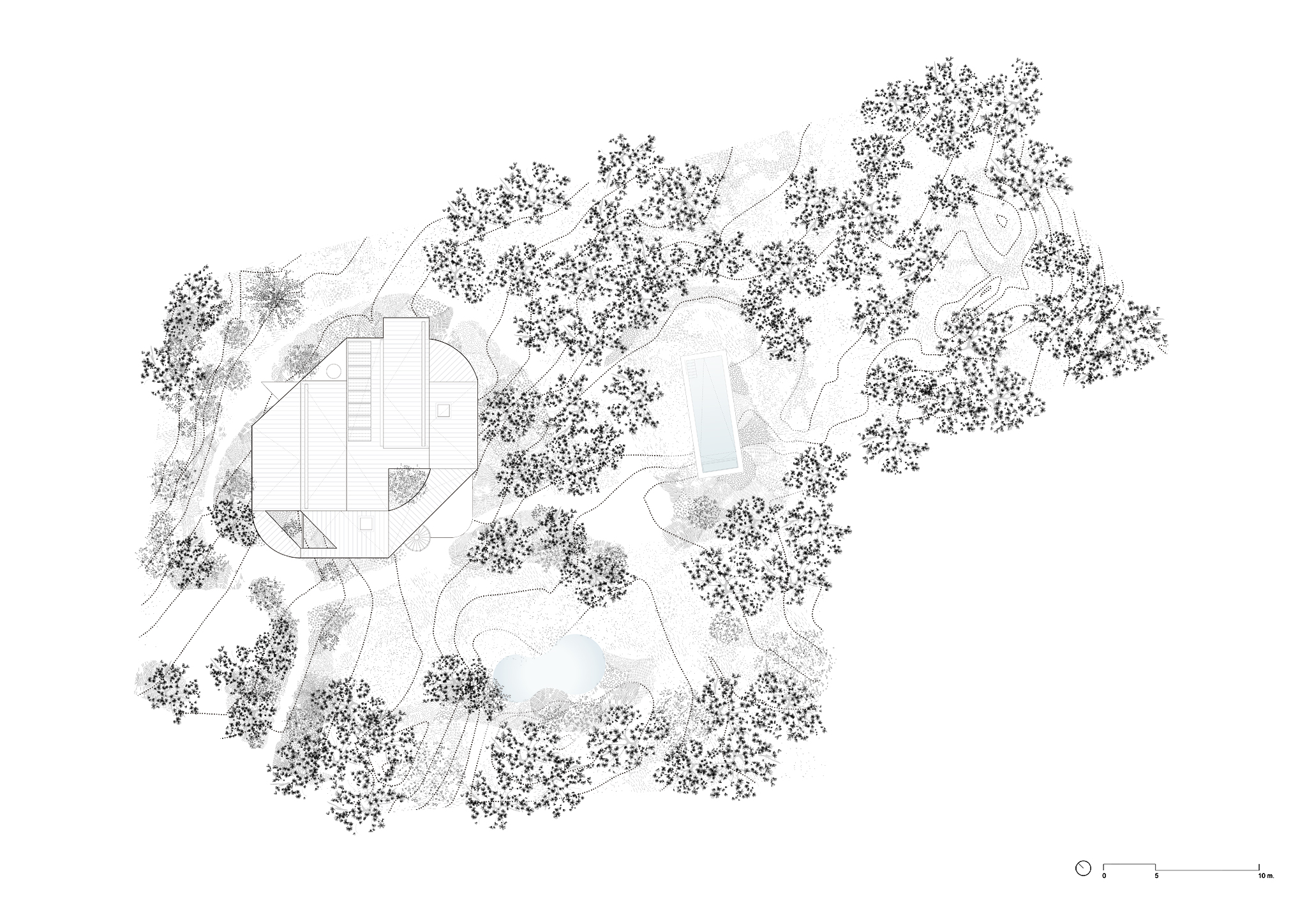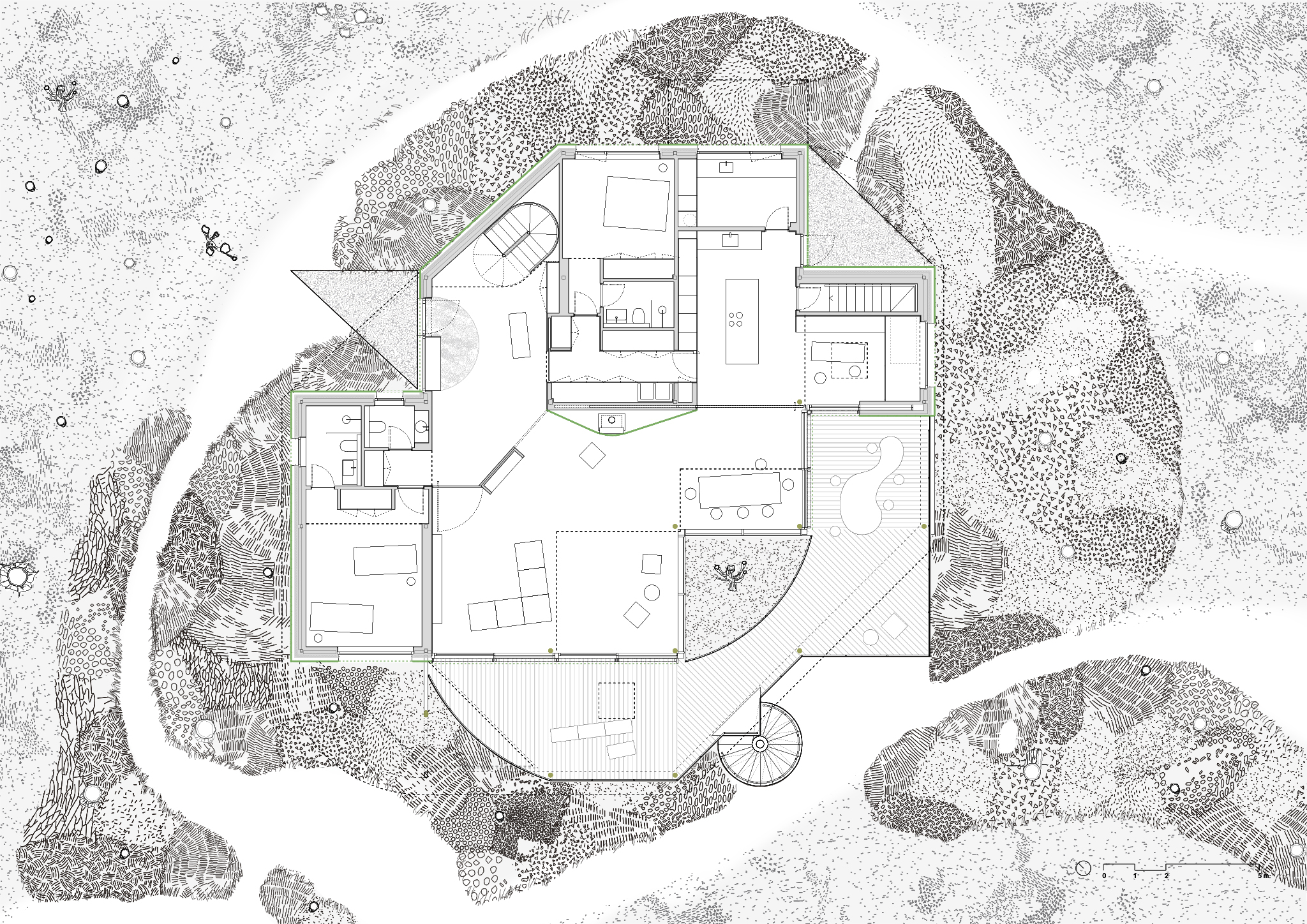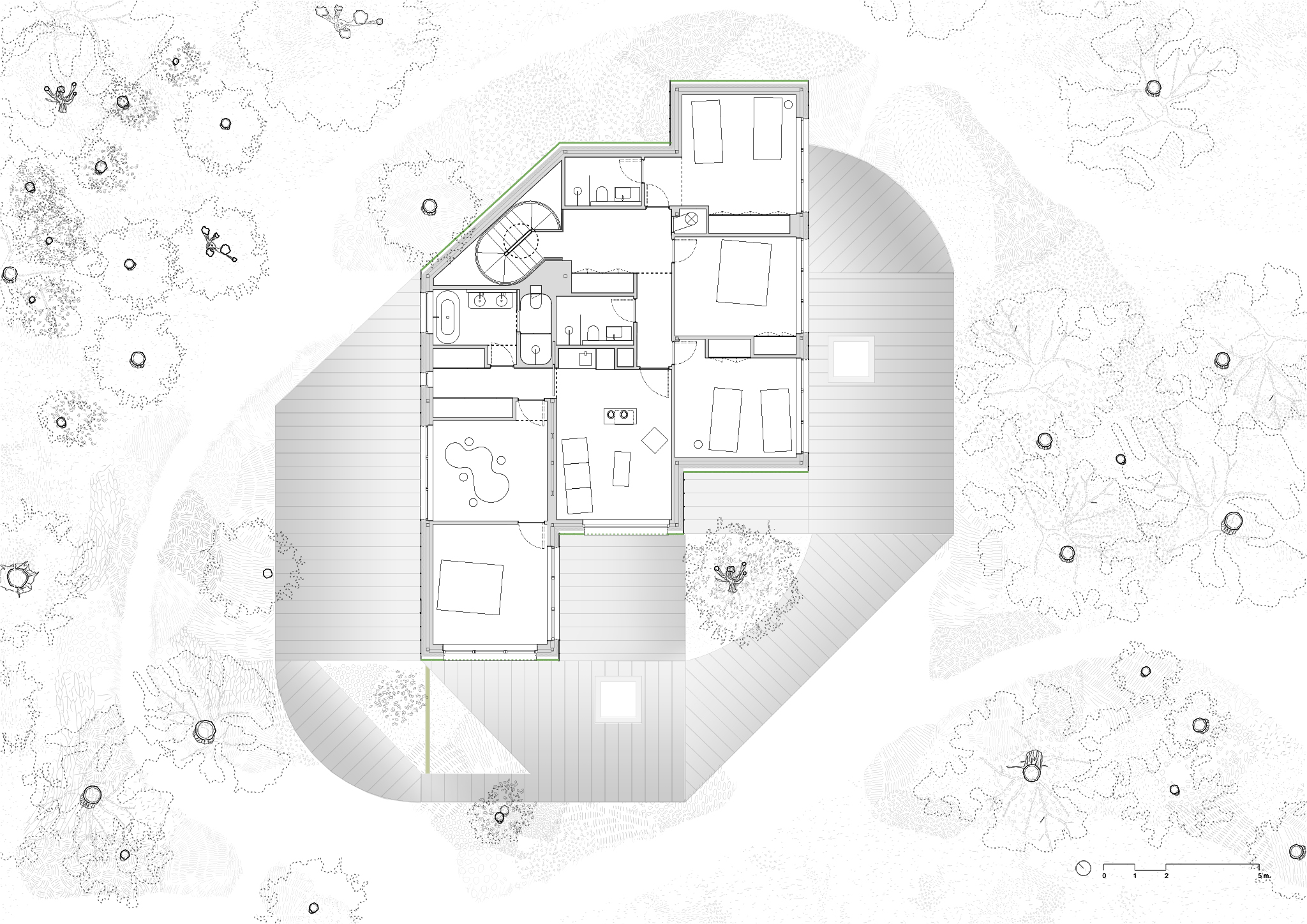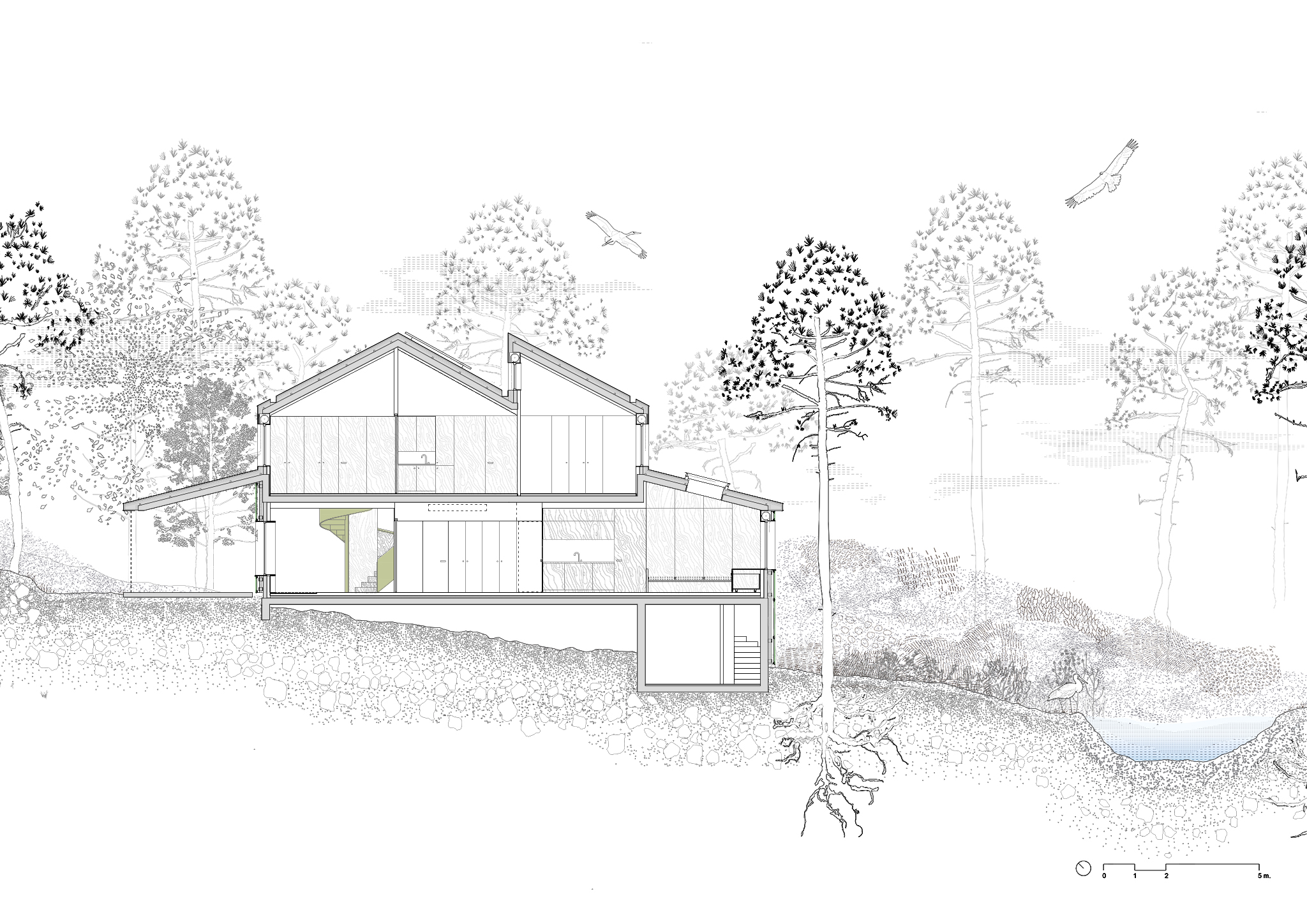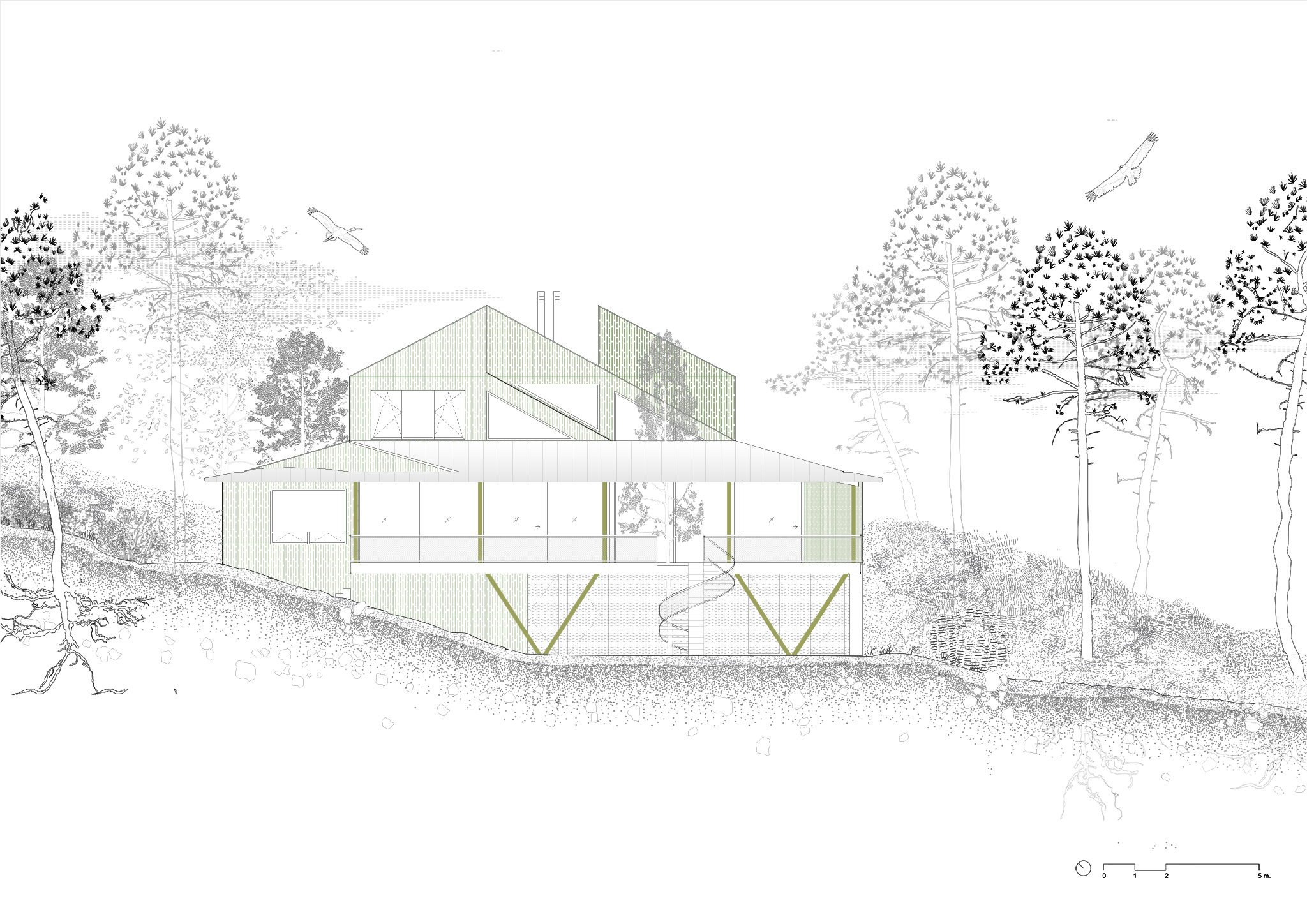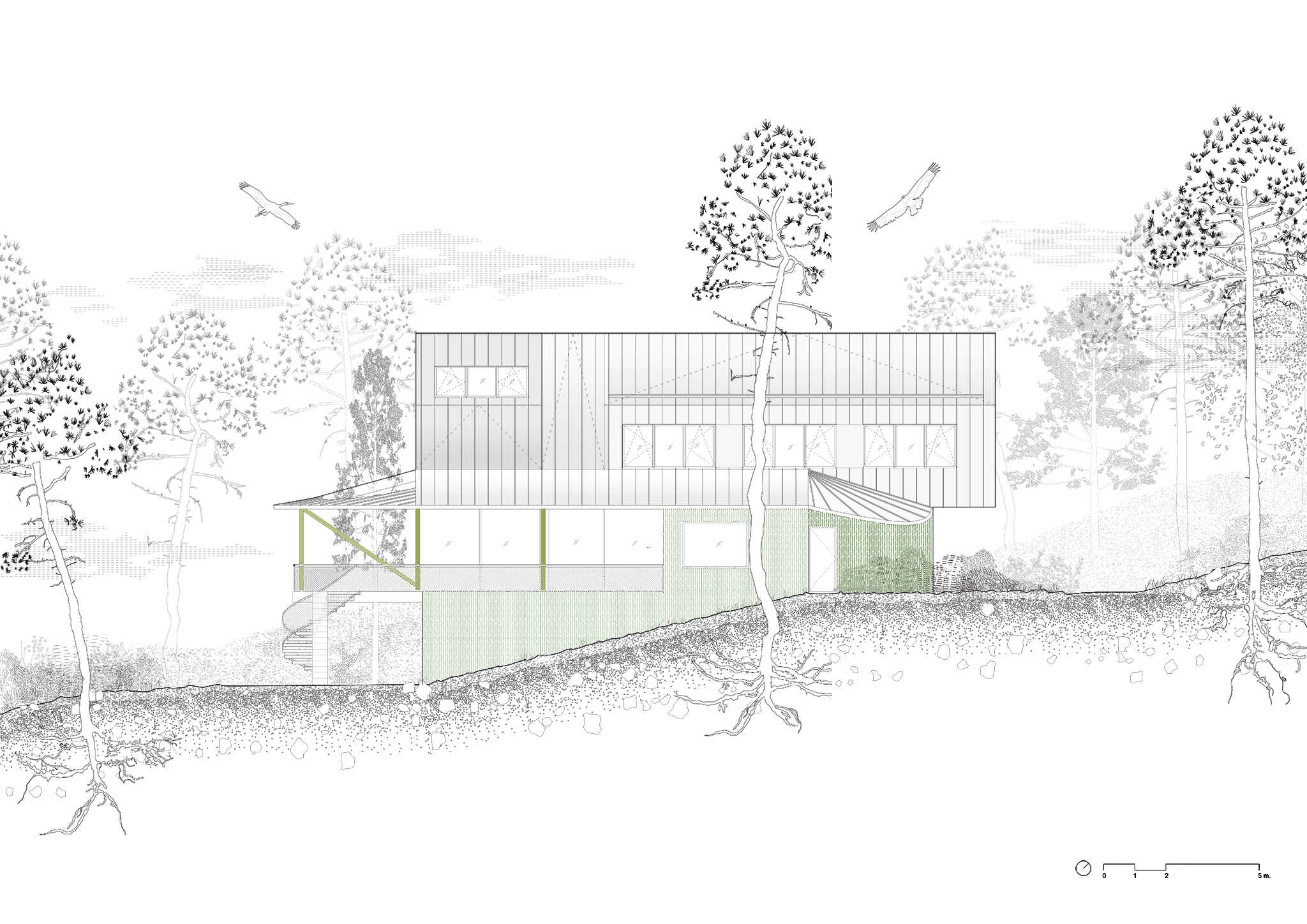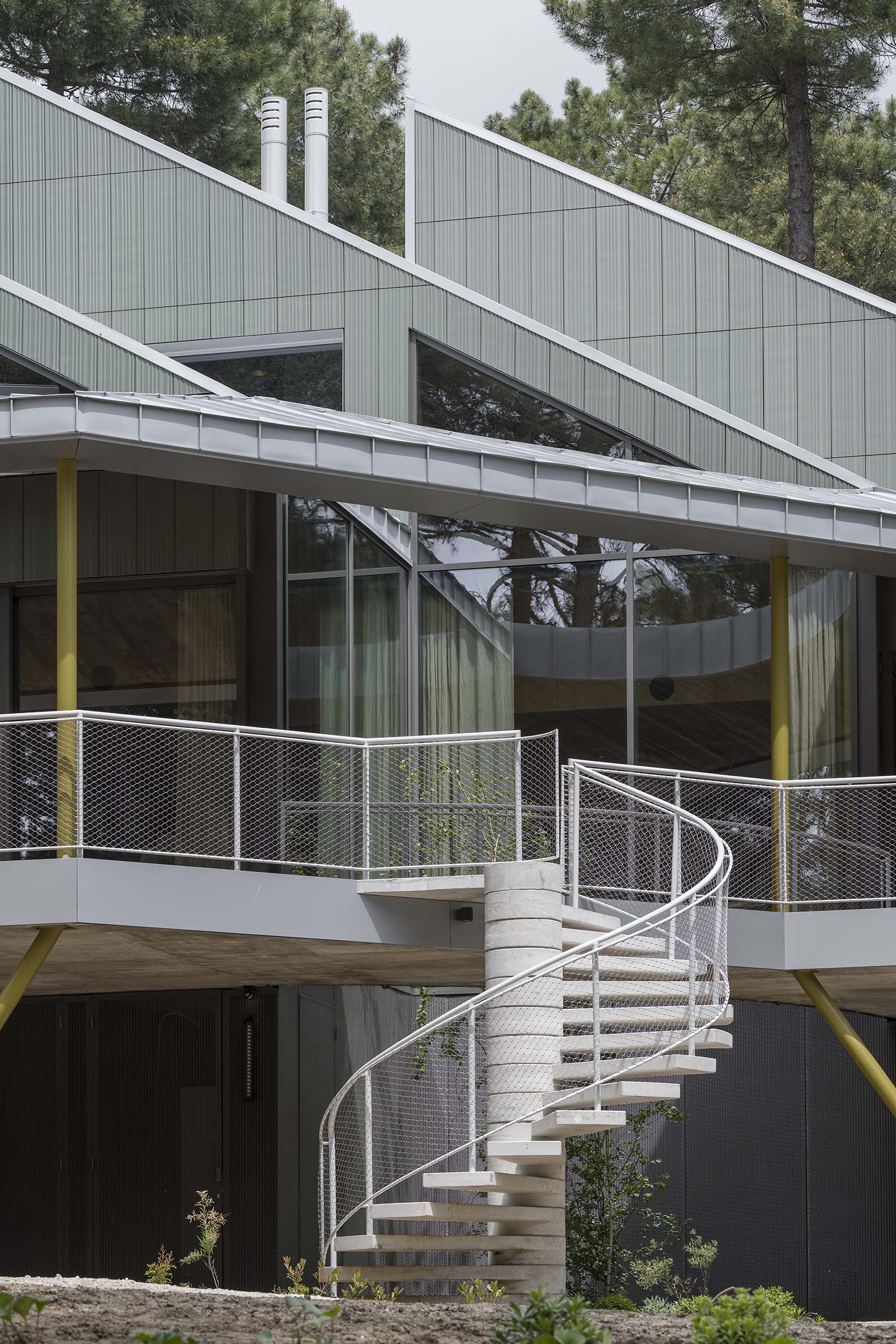
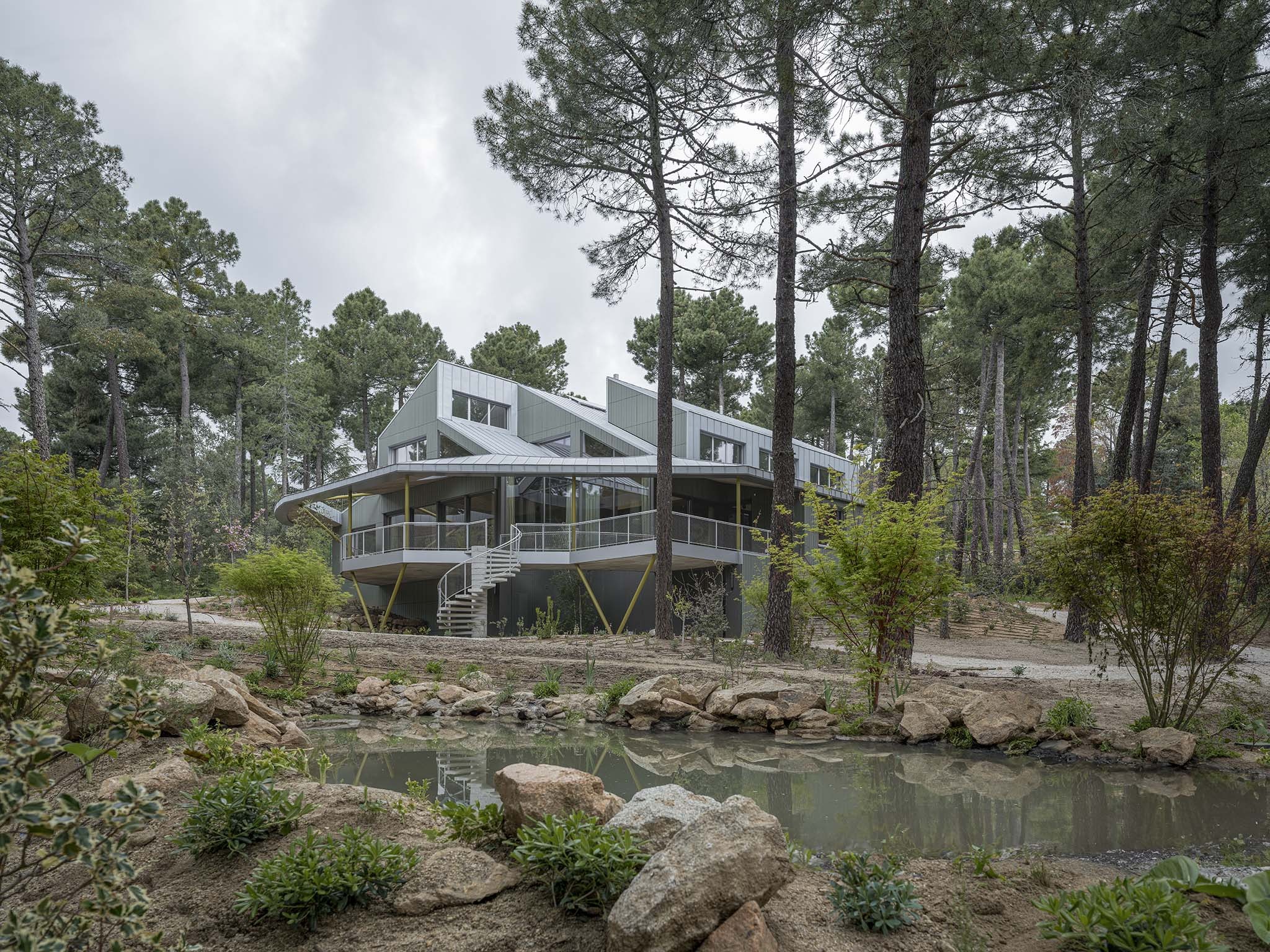
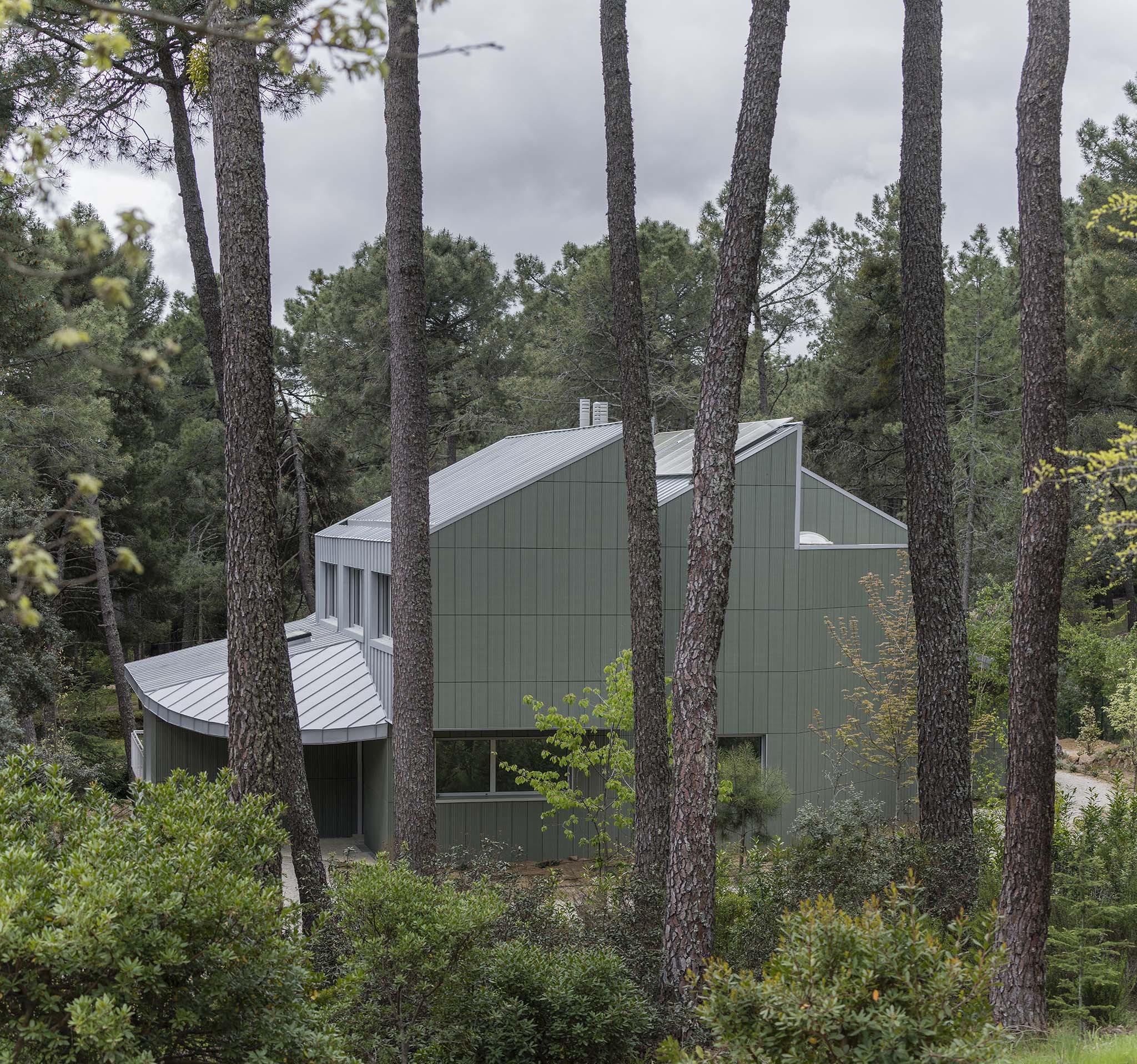
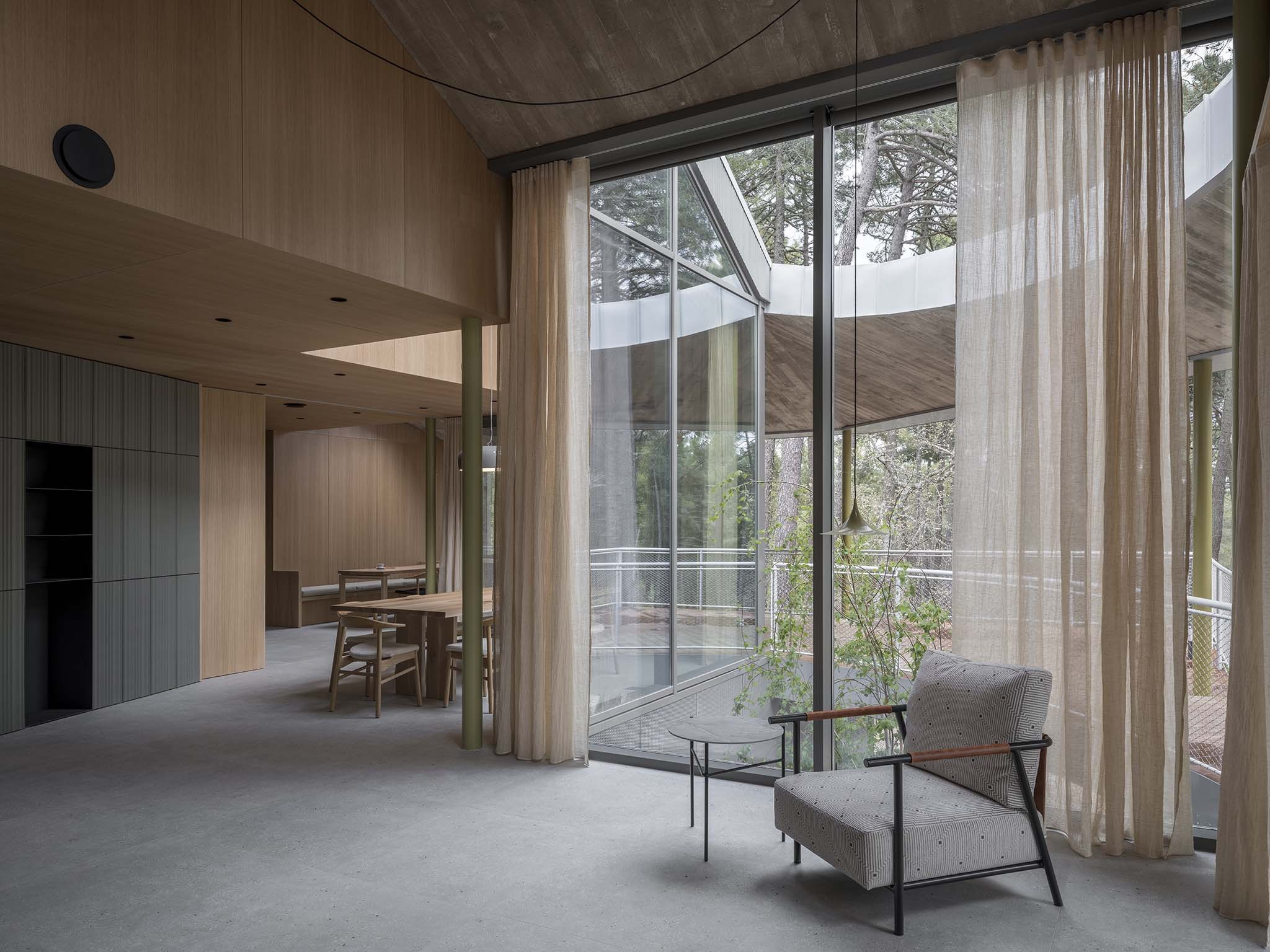
The project developed by G. Galán and Ozaeta-Fidalgo is conceived as an open and permeable volume, where each room has windows facing at least two directions to maximize natural light and cross-ventilation. In addition, a large south-facing terrace partially surrounds the house and serves as a space for gathering and observation.
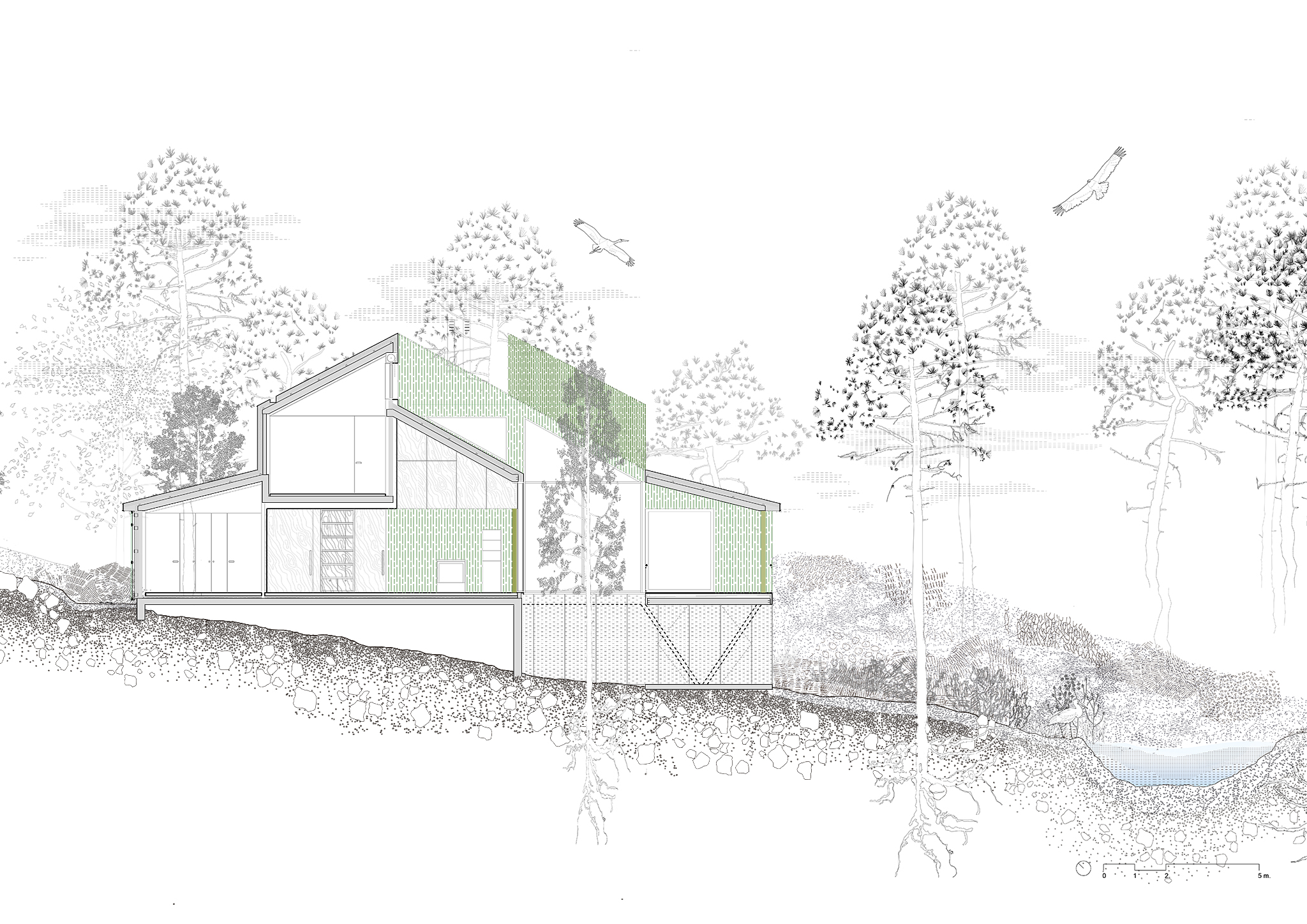
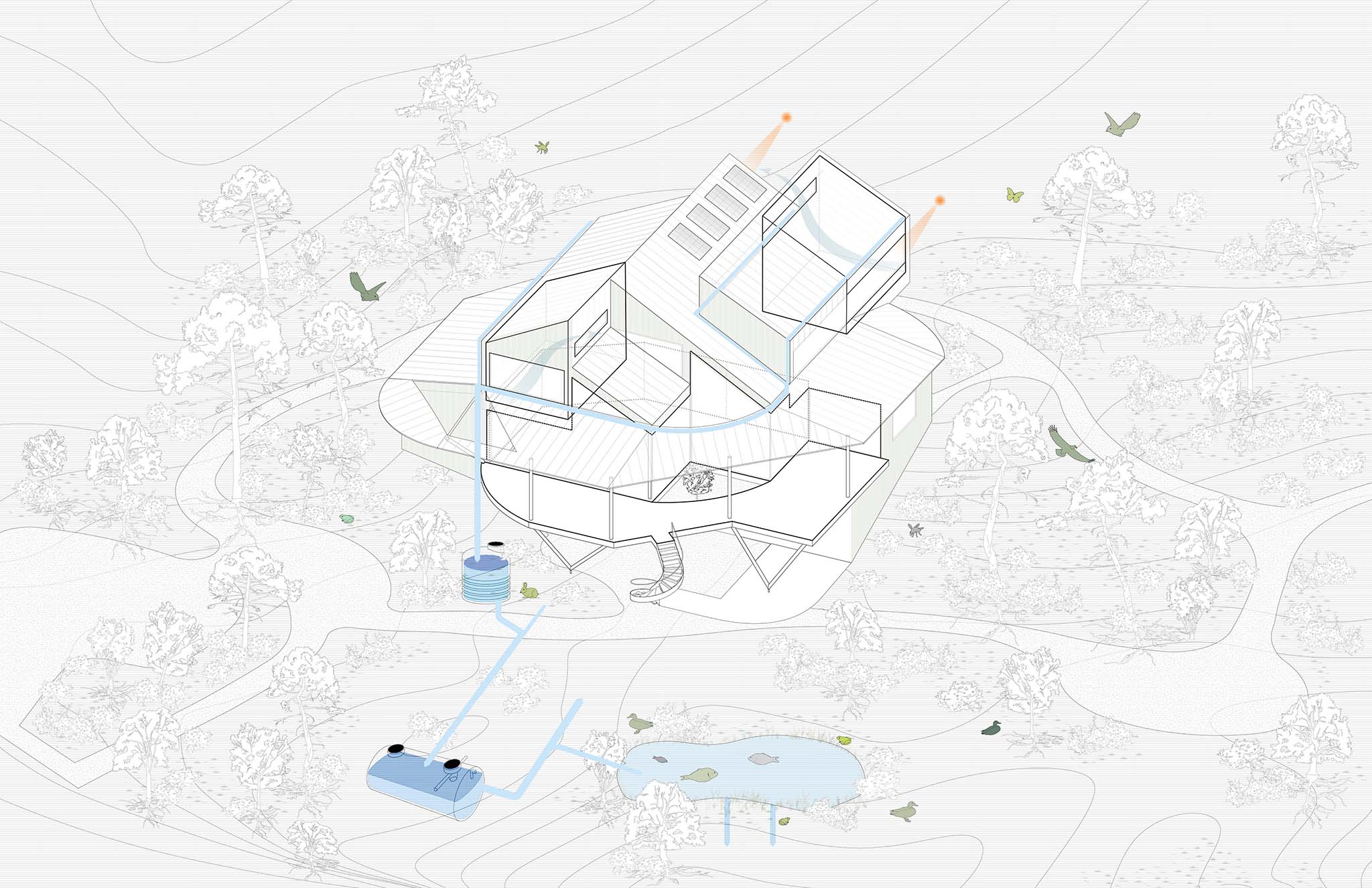
From a construction and environmental perspective, the project incorporates a ventilated façade of ceramic tiles with a rough green finish and a metal roof, both of which contribute to thermal control and landscape integration. Its innovative water management system is particularly noteworthy, based on wastewater separation and reduced reliance on conventional septic tanks. Through a series of reservoirs and an infiltration pond, a significant portion of the water is reintegrated into the environment, fostering the creation of habitats for species within the ecosystem.
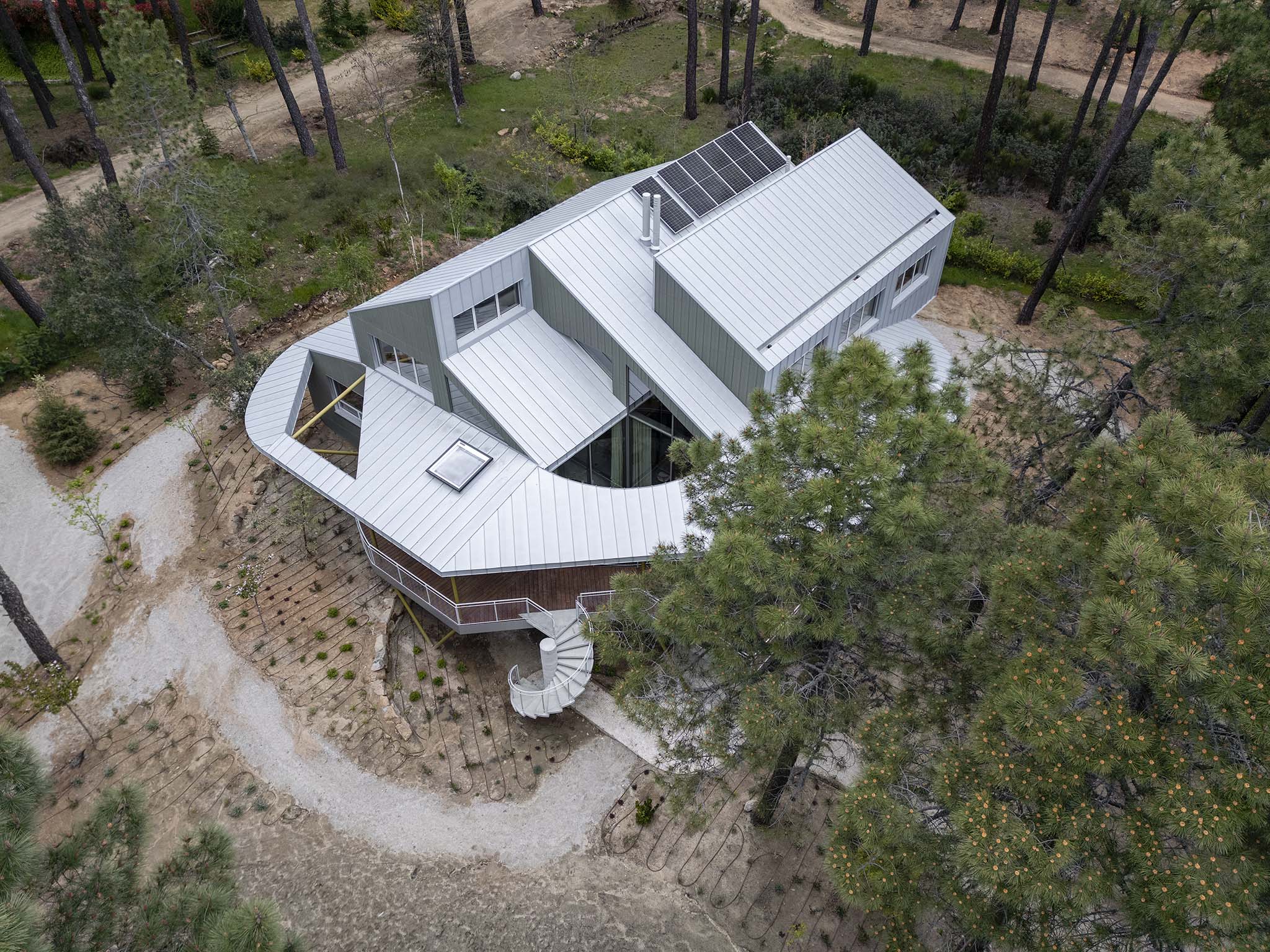
Camp-Alliances. Untanking Housing by Ignacio G. Galán, Álvaro M. Fidalgo, Arantza Ozaeta. Photograph by Imagen Subliminal.
Project description by G. Galán and Ozaeta-Fidalgo
Many of Spain's pine forests were planted as resources to be exploited, and have been subjected to timber and resin extraction campaigns that have impoverished the ecosystem.
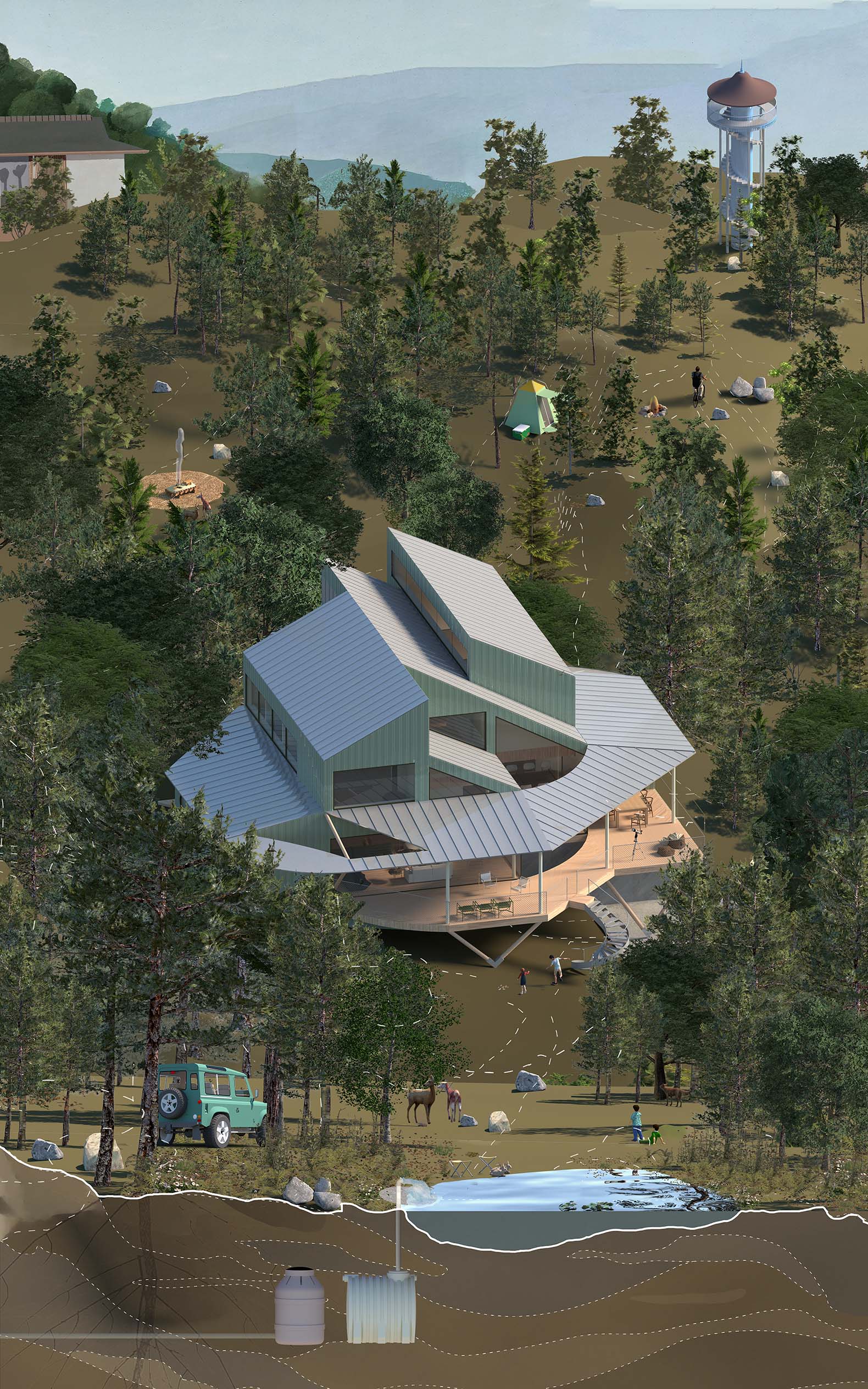
Camp Alliances is located in a pine forest with a long tradition linked to this extractive history, as evidenced by a prominent watchtower that is frequently attributed, without clear foundation, to the workshop of the famous engineer Gustave Eiffel in the late 19th century, when the forest was used as a source of resin. Emblematic of the forms of technical knowledge favored at that time, the tower also reflects a conception of nature as a distinct and external reality that must be observed and monitored in order to be exploited. Built nearby, Camp Alliances explores an alternative relationship with the forest that opposes the logic of the watchtower and the pursuit of control through engineering, learning instead from the forms of affection, familiarity, and experimentation that develop in summer camps, with different and overlapping forms of coexistence within diverse environmental contexts.
The house is defined as a compact volume, not only to reduce heat transfer during the cold winters and hot summers that characterize the local climate of this mountainous region, but also to minimize the building's impact on the continuity of the tree cover, which is essential for the area's wildlife. Despite this compactness, the project is generally defined by its multiple porosities, with a geometry that provides each room with access to windows on at least two facades to ensure multiple sources of light and facilitate natural ventilation.
The facade of ventilated ceramic tiles with a rough green finish and the metal roof define an envelope that is a simultaneous strategy for thermal control and environmental integration. A large terrace that surrounds the project on its southern side creates an additional environmental buffer, while also serving as the main social space, in contact with the surrounding ecosystems. Instead of peering over the tree cover in a panoptic view—like a watchtower—the terrace participates in the richness of this area within the forest. The mass of trees promotes evapotranspiration, creating the necessary conditions for different forms of life under the tree canopy.
The project's porosity and its interdependencies with the ecosystem are also embodied in the experimental permeability of the water management systems. In the absence of sewage infrastructure, homes in the area typically rely on closed systems with septic tanks that are pumped periodically, and whose waste, including large quantities of water, must be transported. By segregating different types of water, Camp Alliances minimizes the amount of liquid captured as waste in the septic tank and diverts most of the water in what we conceptualize as a "untanking" process. Temporarily stored in a series of filtered tanks, this water enters an open system that includes a pond, through which it is reintroduced into the environment.
Often altered by architectural structures, ponds are an essential element of the local forest ecosystem, as they concentrate diverse forms of animal and plant life. In this case, the new porous water management system is crucial for the diversification of the ecosystem, which is a potential ecotone damaged by extractive strategies.
The introduction of a variety of pollinating plants aims to attract a diverse insect ecosystem and support its richness. Of particular importance is the recovery of amphibian life, including frogs, which are not only essential for the survival of the black stork and the Spanish imperial eagle (protected species in the area), but are also linked to the memories of the house's residents. Indeed, these different strategies of porosity and permeability seek to encourage residents to build connections with the life forms that share the space with them, fostering the ingenuity and curiosity that define the spirit of summer camps.