

The project developed by Ignacio G.Galán, Arantza Ozaeta and Alvaro M. Fidalgo has about 800 sqm of surface, materializing the dialogue between the proposed concept of the curators and 24 works of art belonging to 19 galleries, including a forum for events and presentations in the program of this architectural space. The configuration of these spaces enables conversations between the works and defines enveloping spaces for the projections and the forum, while connecting the interior with the rest of the fair space through openings around its perimeter.
«The Caribbean is not a sea, it is oceanic. Addressing the Caribbean as an ocean implies refuting its insular, fragmented and disconnected condition to approach its continental and reticular dimension. Its maritime currents open towards the Atlantic and other gaps generated by our species inextricably connected it to the Pacific. This continental condition of the Caribbean highlights the colonial relationships that the archipelagos have with the continents, the trade winds that facilitated colonial expansion, and the terrestrial and underground currents that facilitate human and non-human movement.»
Carla Acevedo-Yates and Sara Hermann Morera, curators of the exhibition.
The architectural proposal decisively mobilizes the materiality of the exhibition space, which is configured through walls paneled in wood and partially covered with fairground carpet, through surfaces that are cut, folded, and twisted. Far from defining a stable representation and a unitary reading, these surfaces construct spaces that the curators describe as "ungraspable, showing vulnerability and precariousness." The pink colors of the carpets and a family of furniture covered in spongy recycled insulation, which strangely has a stone appearance, question the clichés spread in the representation of the Caribbean and contribute to the questioning of this territory that the exhibition raises.
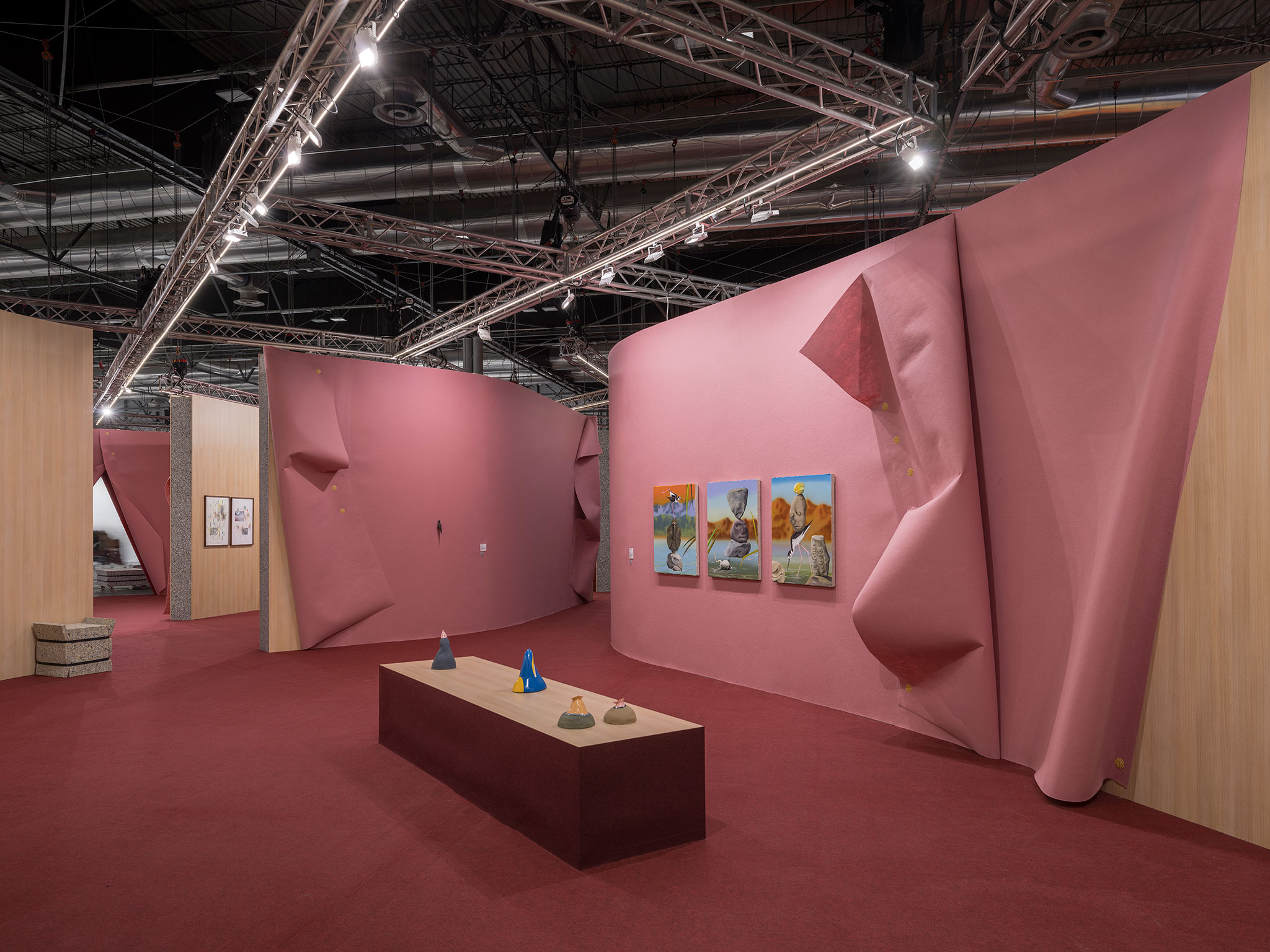
The shore, the tide, the current.- an oceanic Caribbean. ARCO 2024 by Ignacio G. Galán, Alvaro M. Fidalgo and Arantza Ozaeta. Photograph by Imagen Subliminal.
Superimposed on the changing geometries formed by the walls, a kind of nautical chart constituted by reticular trusses provides lines of light that guide the visitor through the narrative sequence of the exhibition, mark crossed visions and accompany diagonal circulations that emphasize the relational vision. of the space proposed by the commissioners.


