Architecture practice Estudio IUAPdA, led by Ignacio Urquiza and Ana Paula de Alba, was commissioned to design the "Casa en Palmilla," a house located in the hills of Los Cabos, a municipality in the Mexican state of Baja California Sur.

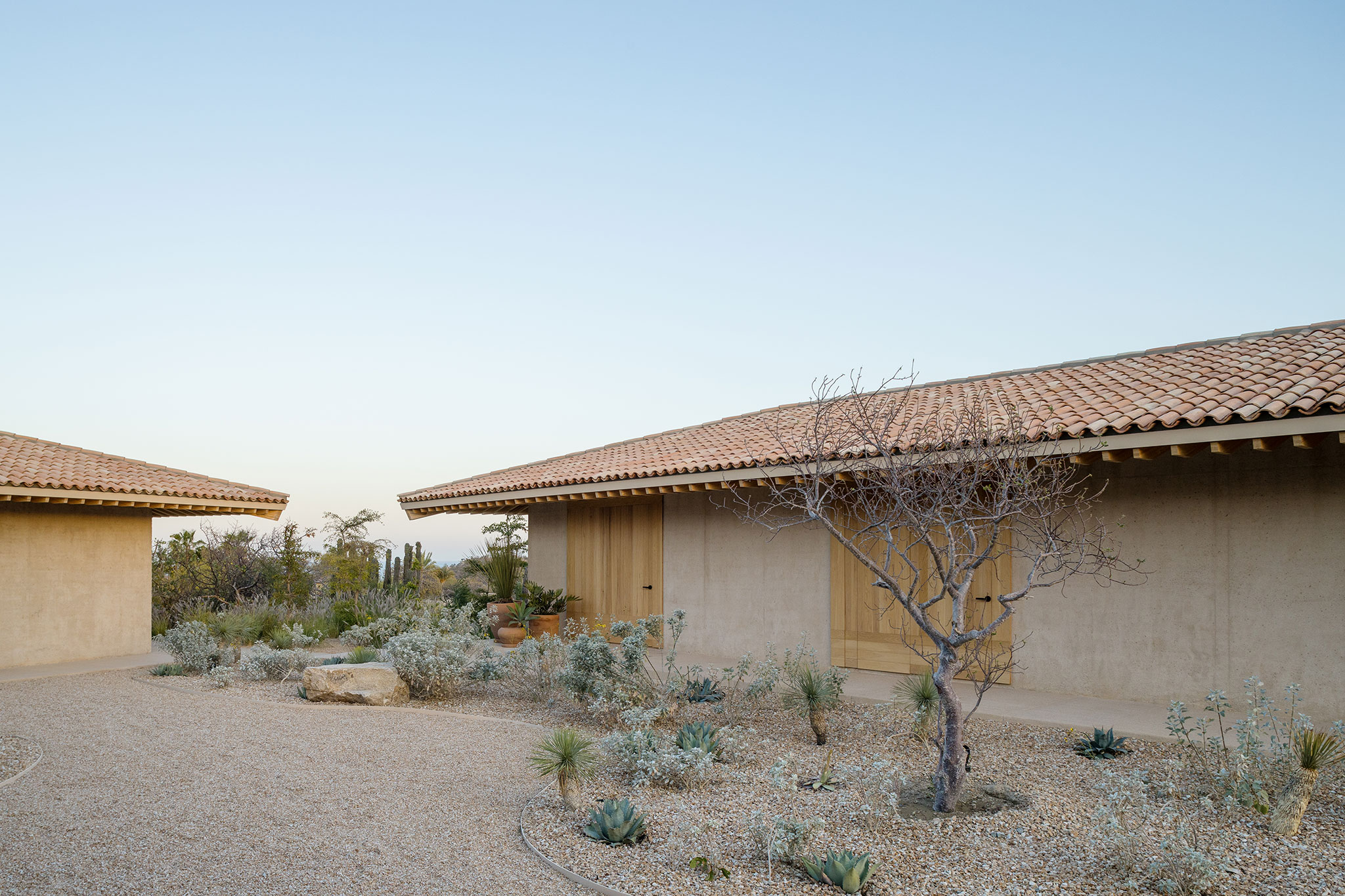
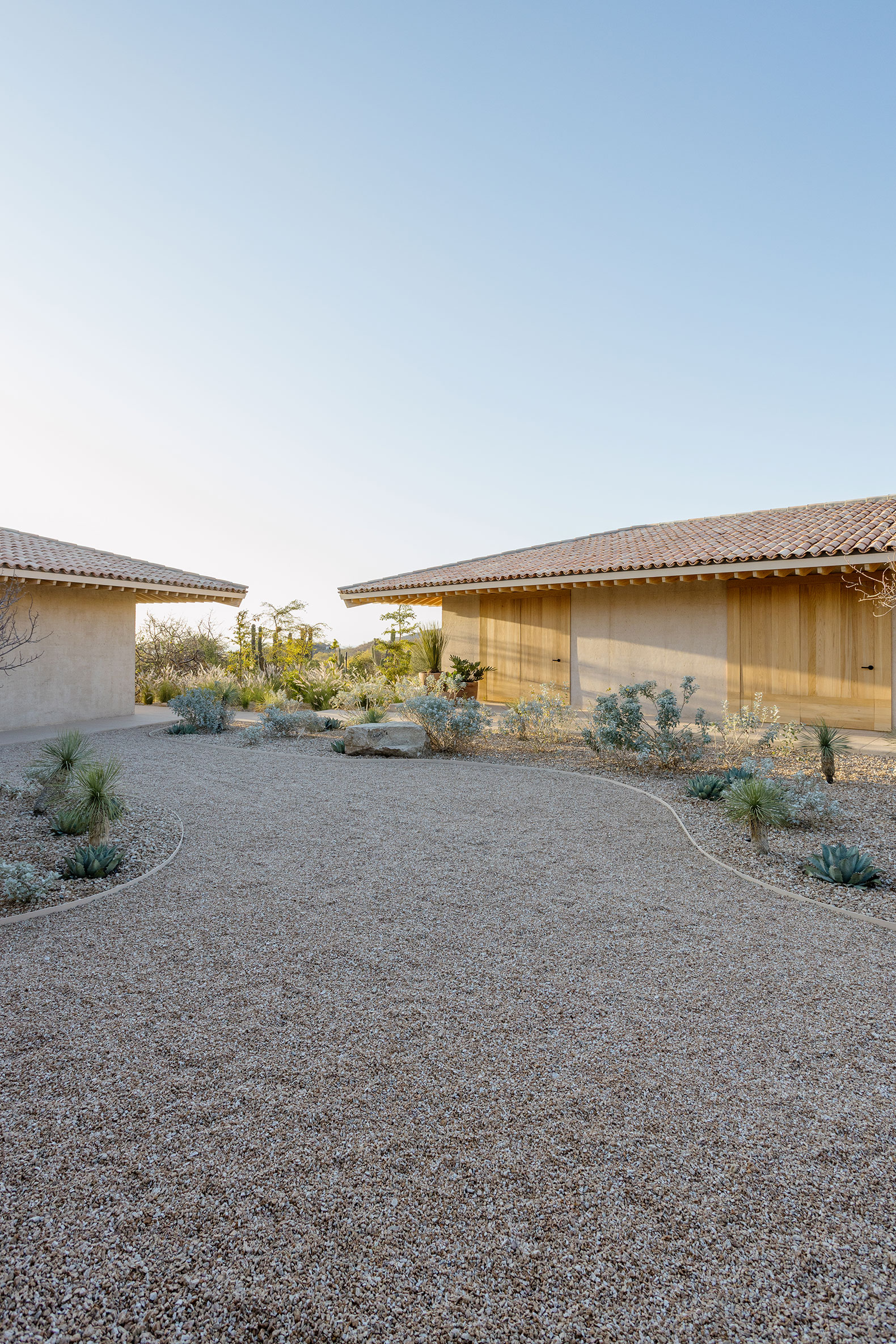
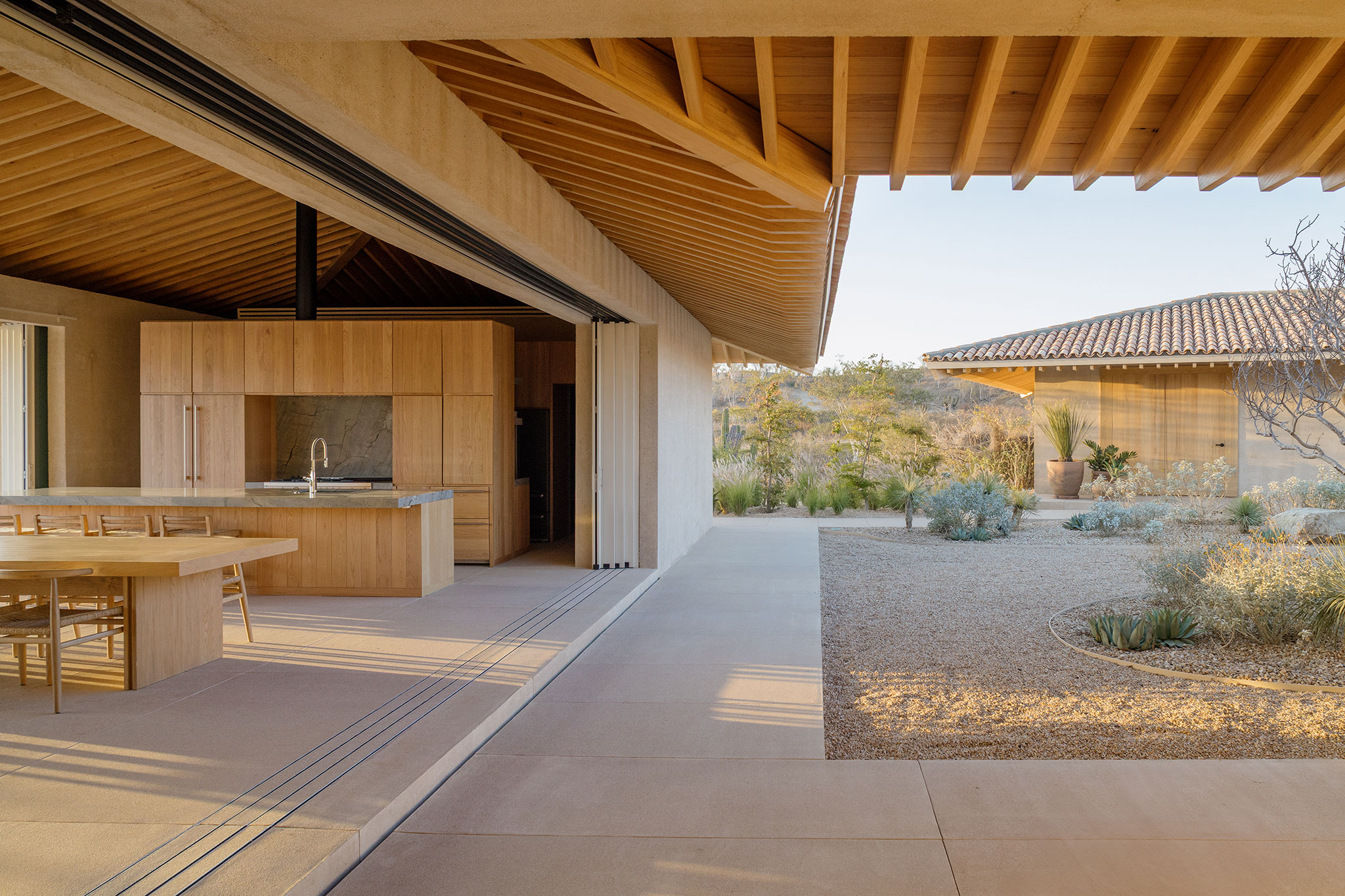
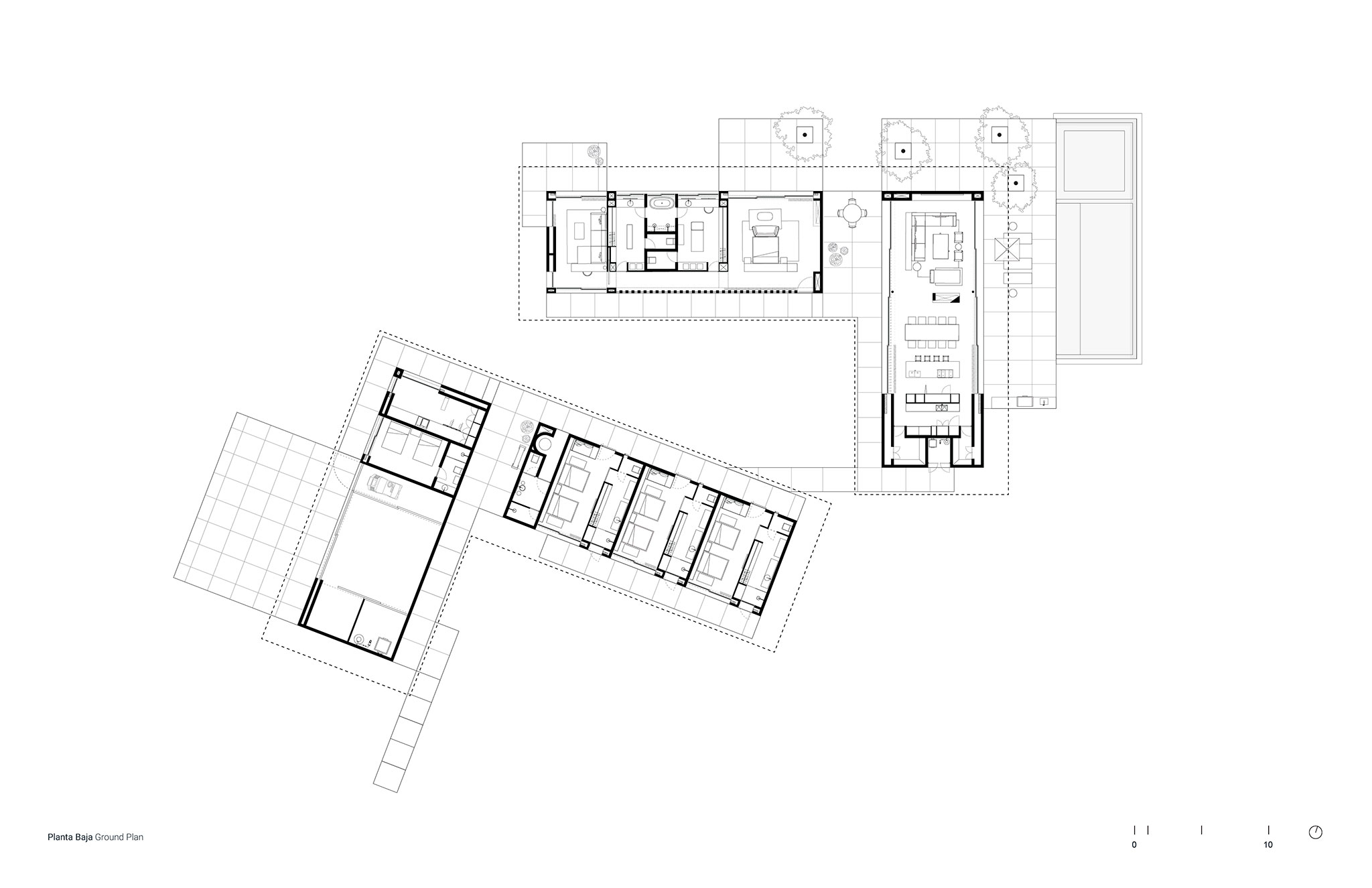
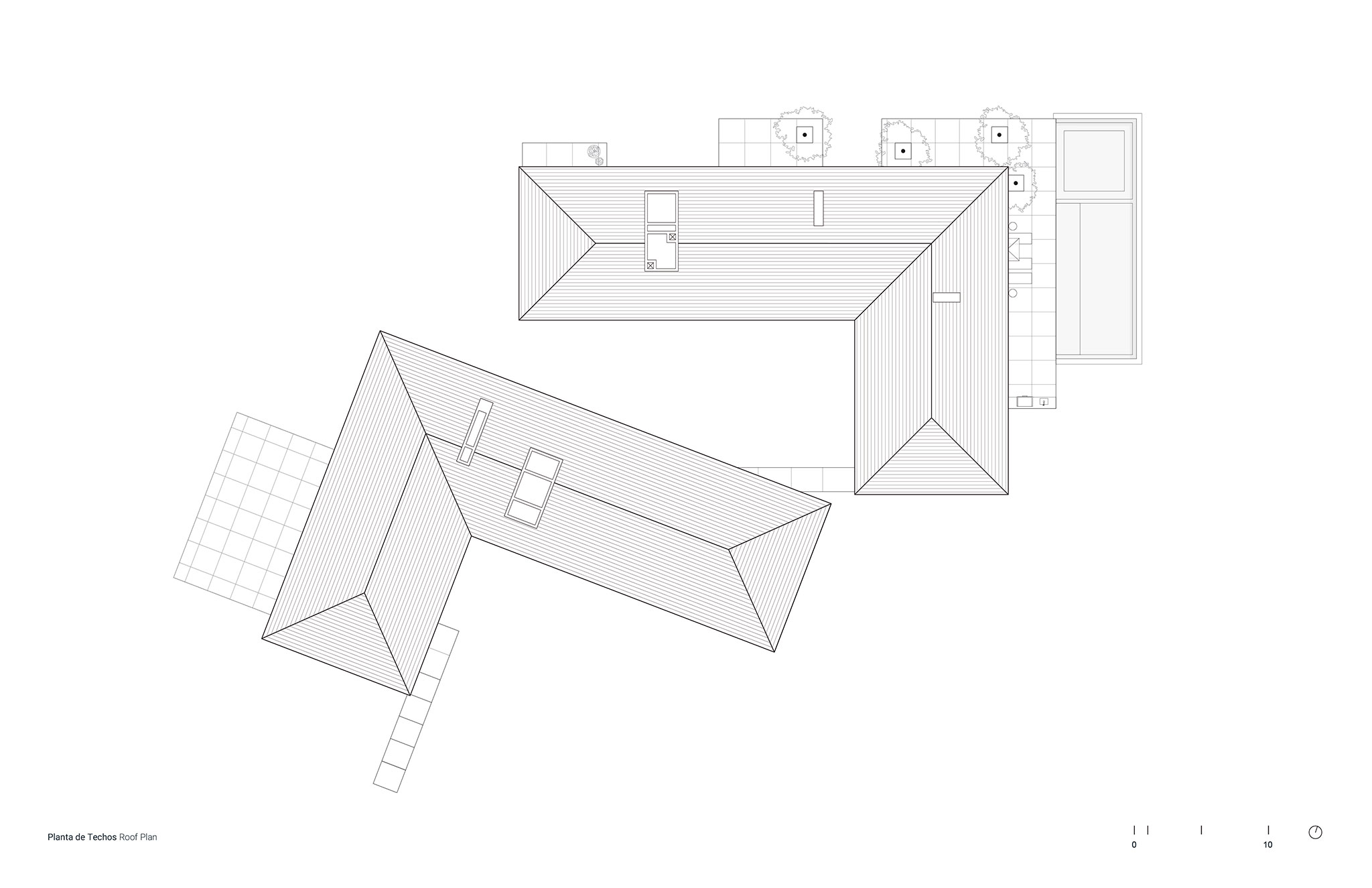
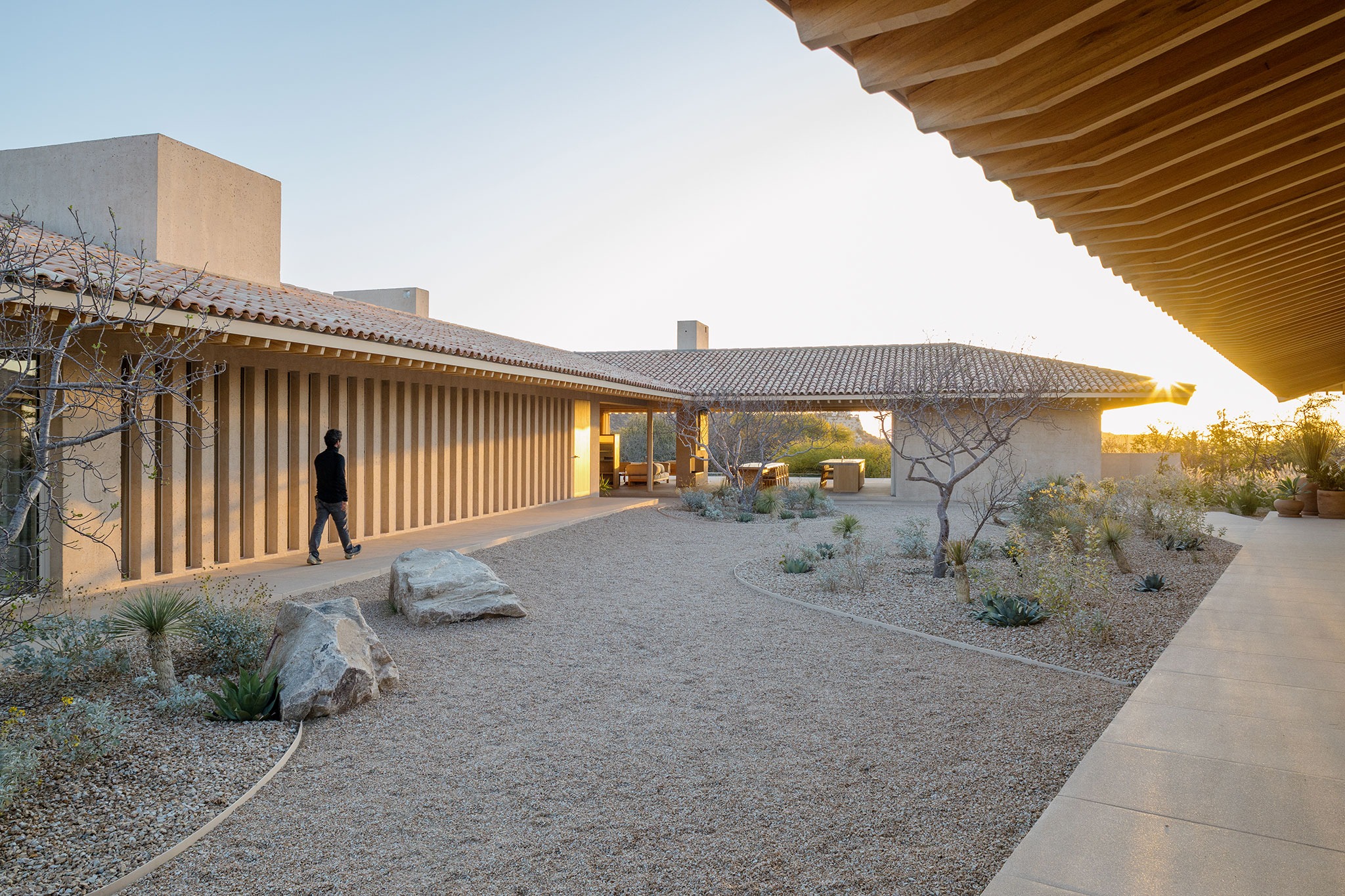
The house is conceived around two L-shaped roofs that organize the uses of the structure. These roofs are developed with perimeter overhangs that envelop and protect the independent volumes located beneath them, while also creating a central trapezoidal void that functions as a patio. 

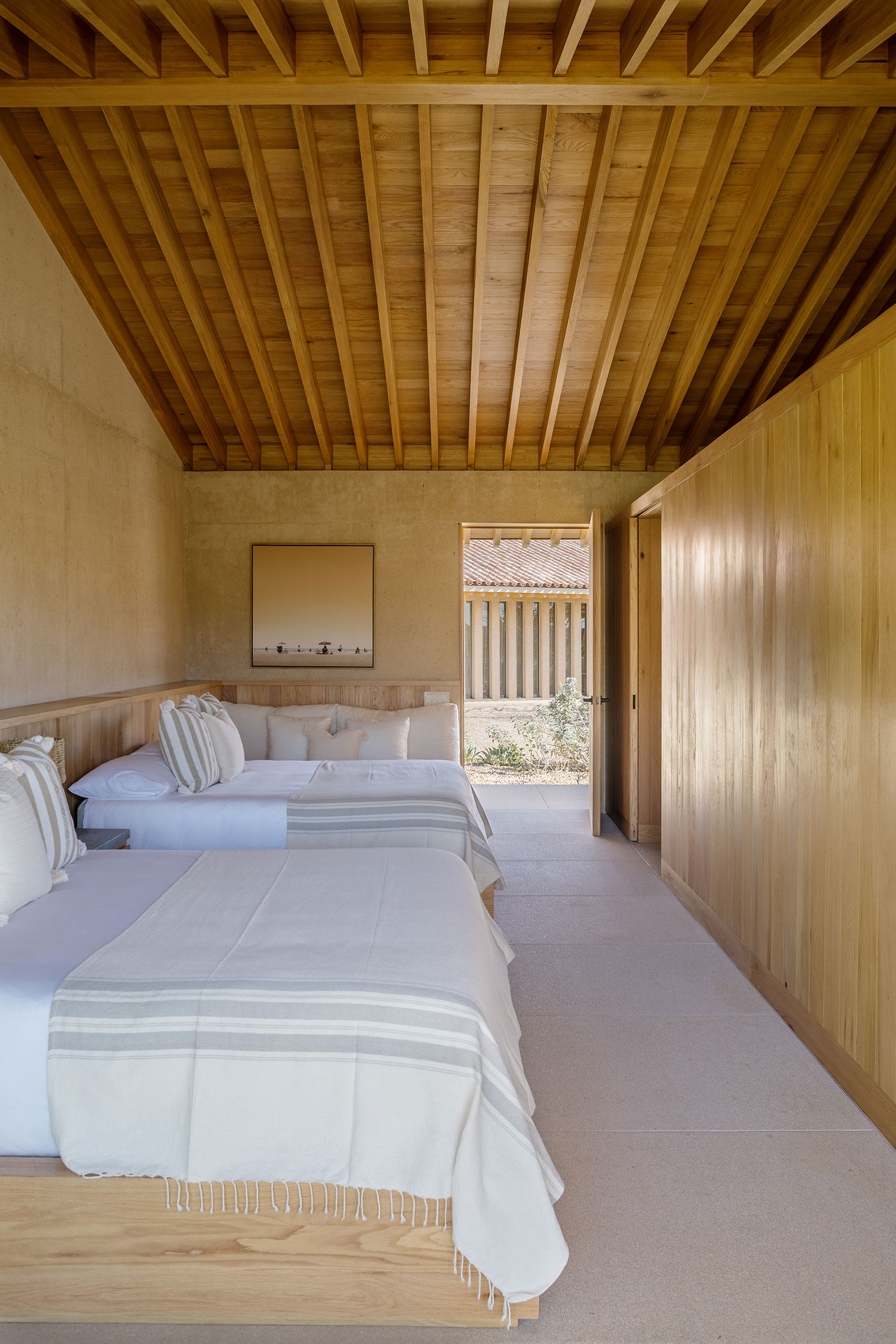
The "House in Palmilla," designed by Estudio IUAPdA, is organized into four independent volumes and a courtyard. Beneath the first roof are two volumes: the first houses the parking area, storage rooms, mechanical rooms, service areas, and laundry room; the second contains three guest bedrooms. Beneath the second roof, the third volume comprises the master suite, two separate dressing rooms, and a study. Finally, the fourth volume integrates the living room, dining room, and kitchen.

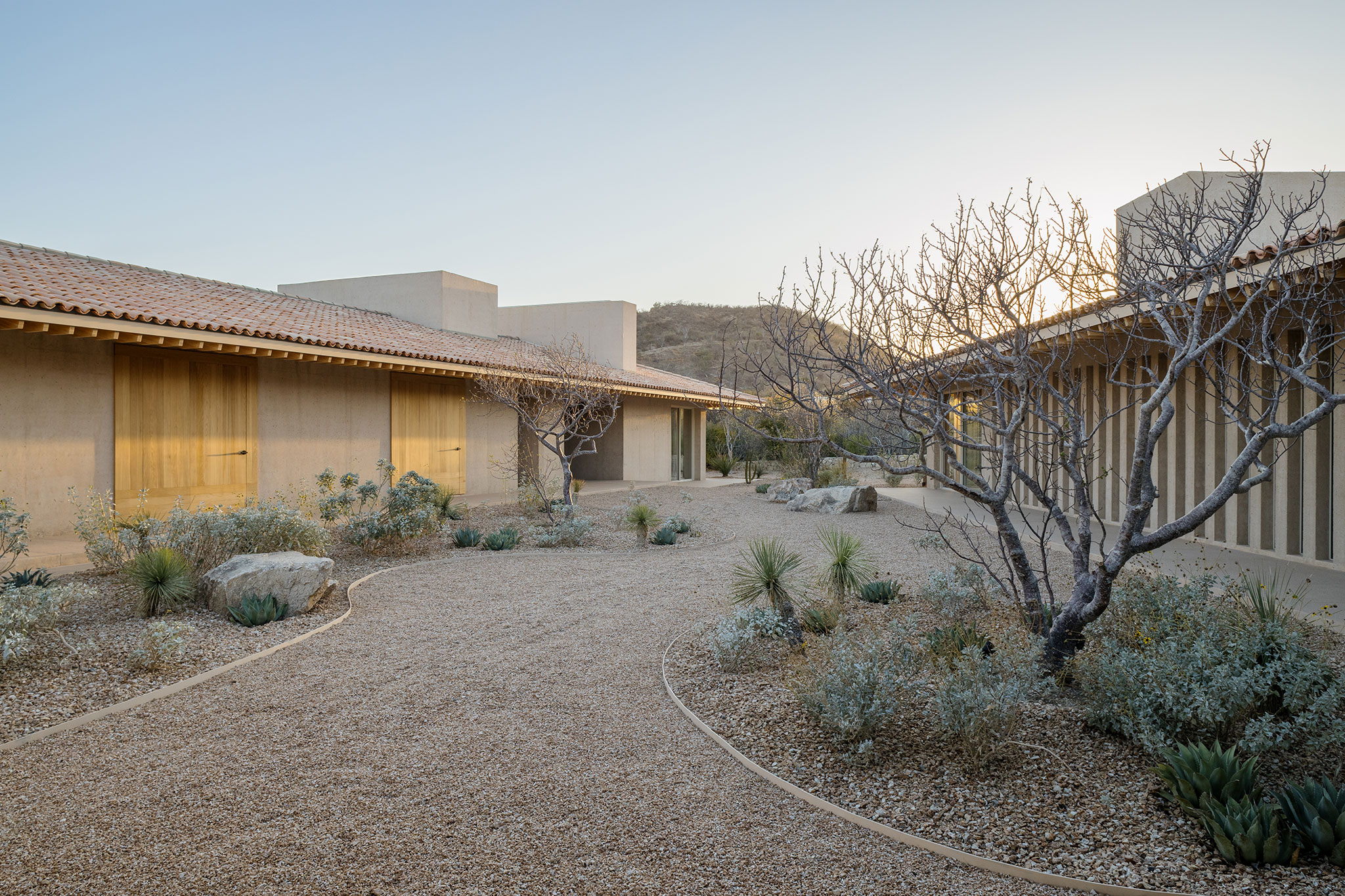
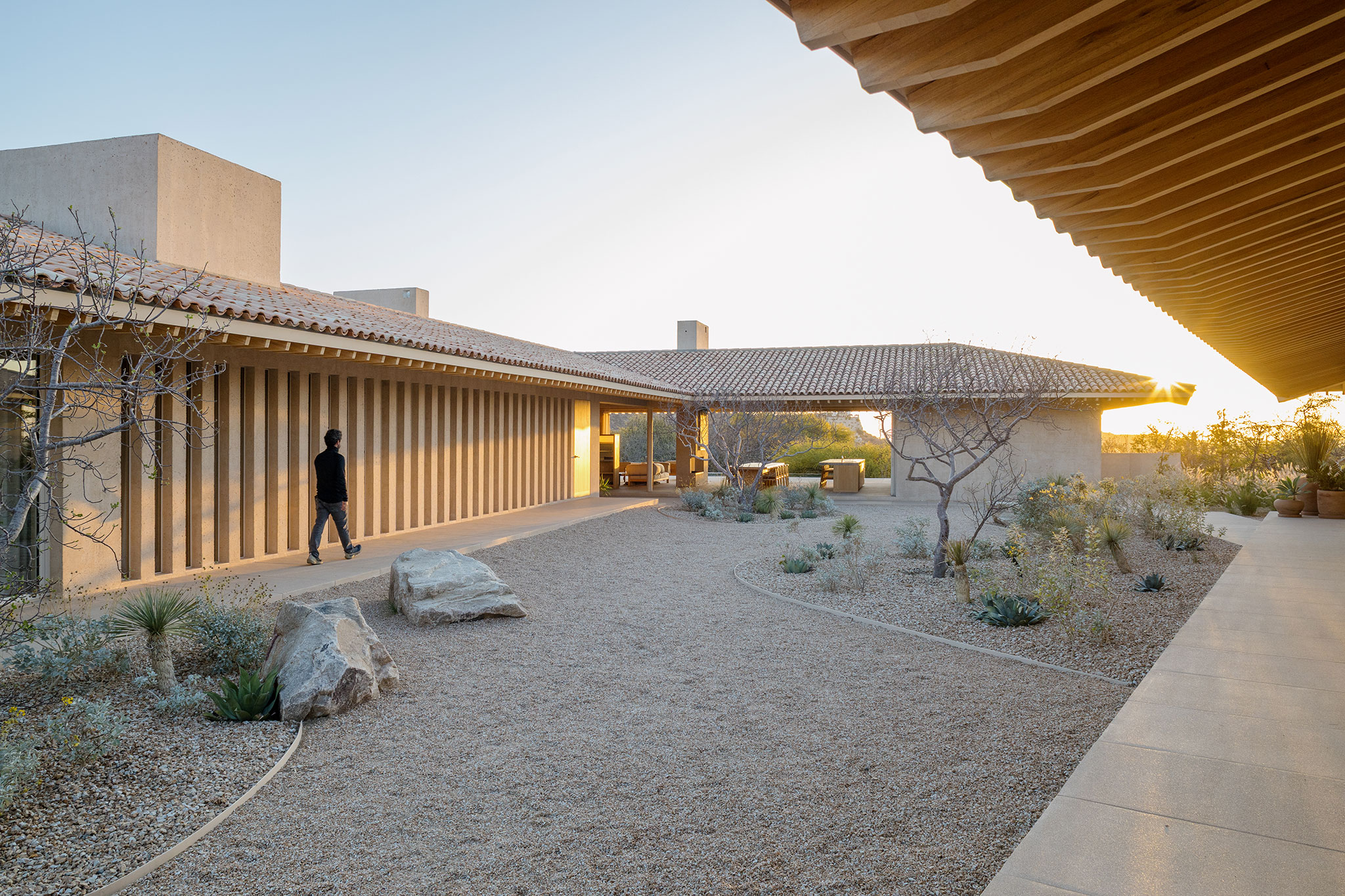
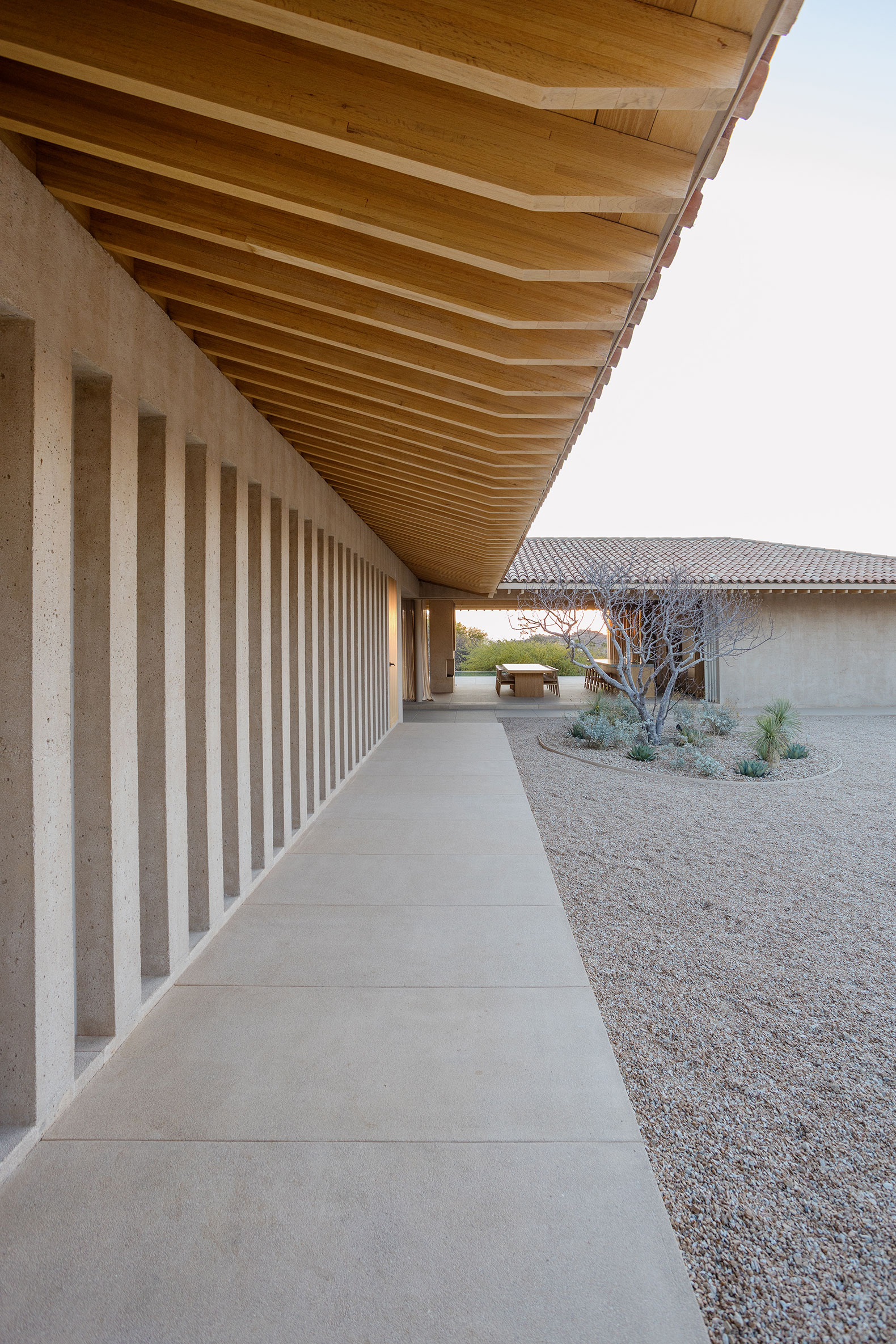
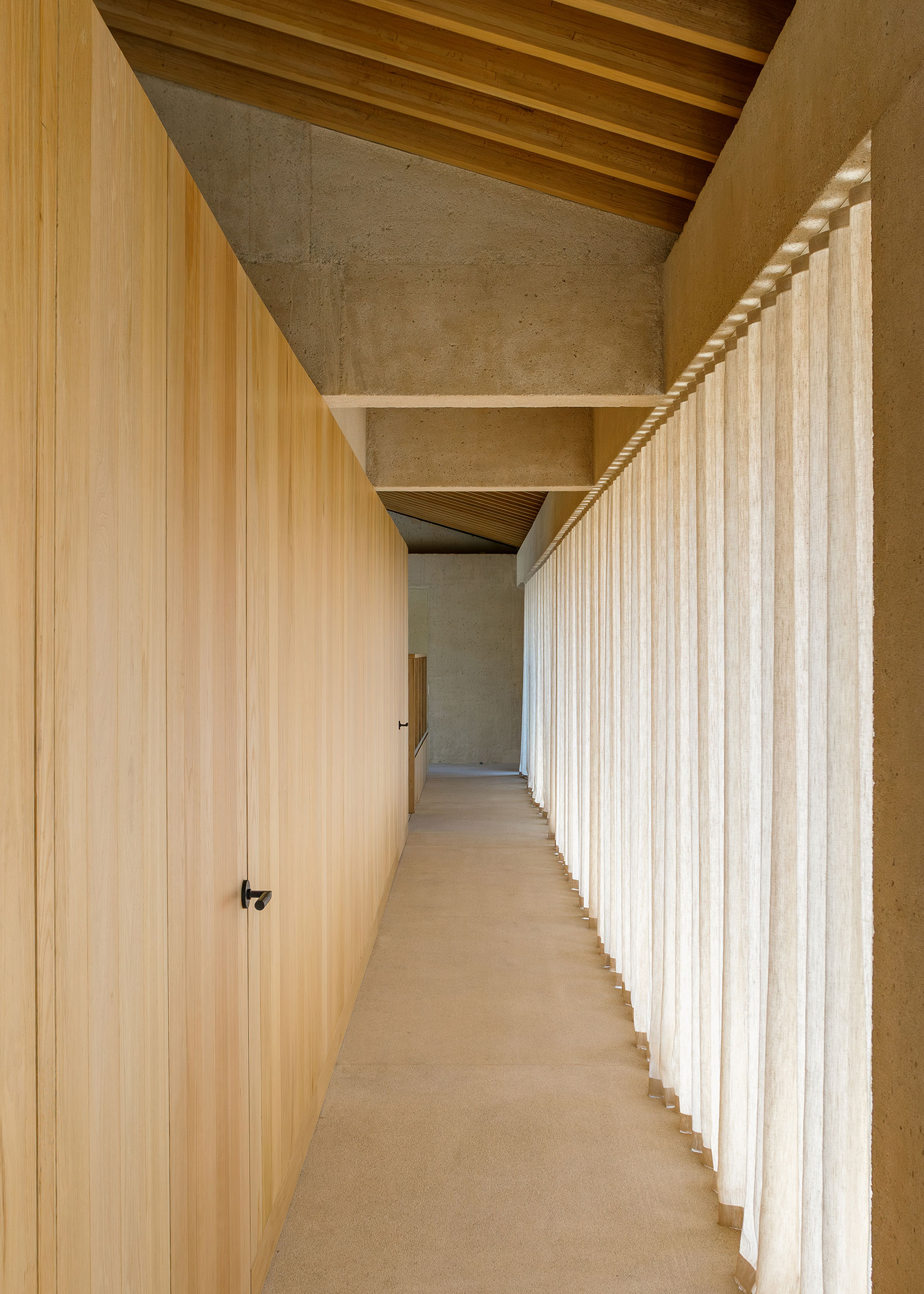
The central courtyard has four sides. The first opens toward the mountains, the second provides access to the secondary bedrooms, the third is constructed with a rhythm of 20 x 20 centimeter openings that grant privacy to the master suite, and the fourth corresponds to the large window in the social area.

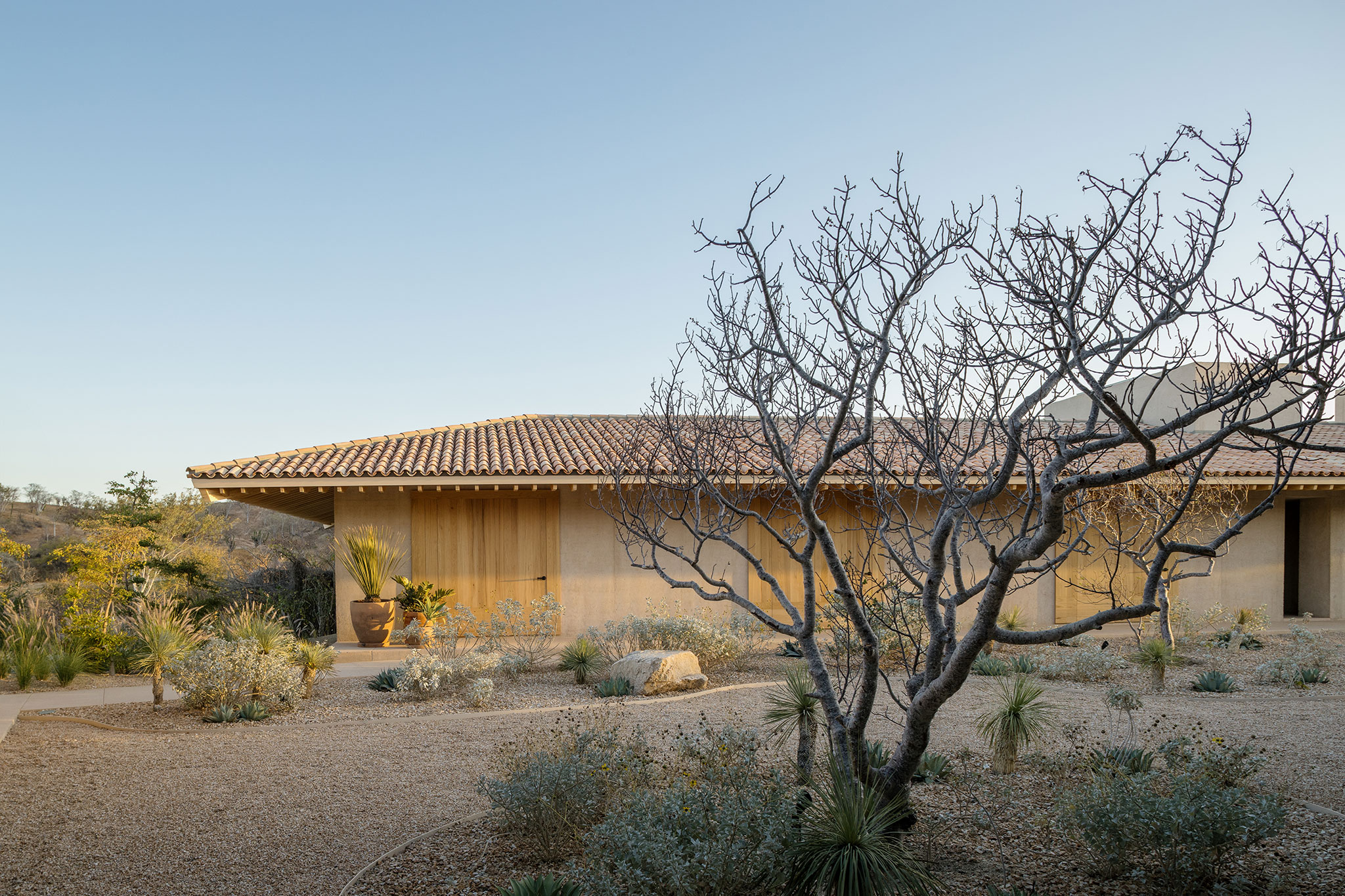
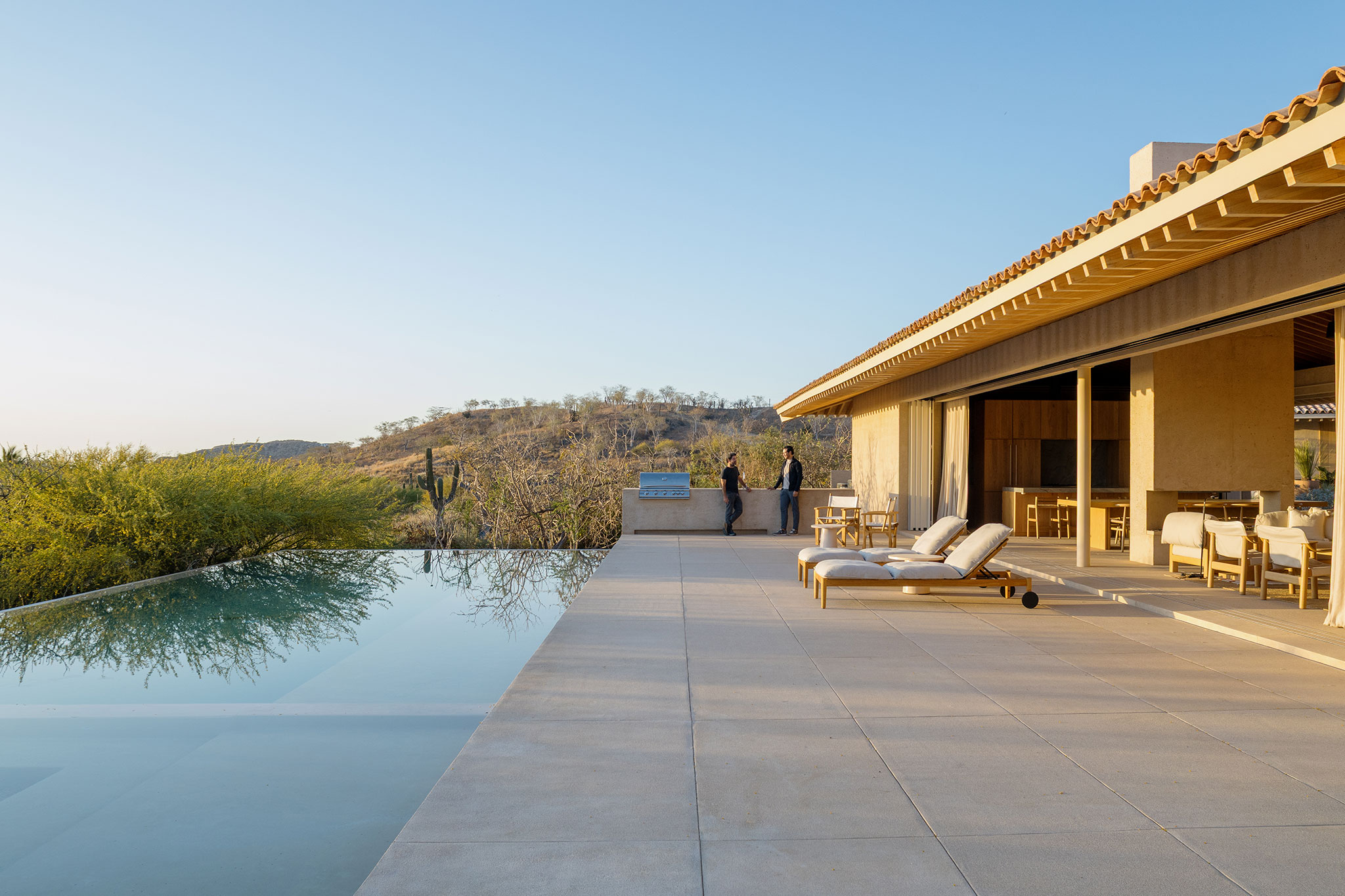
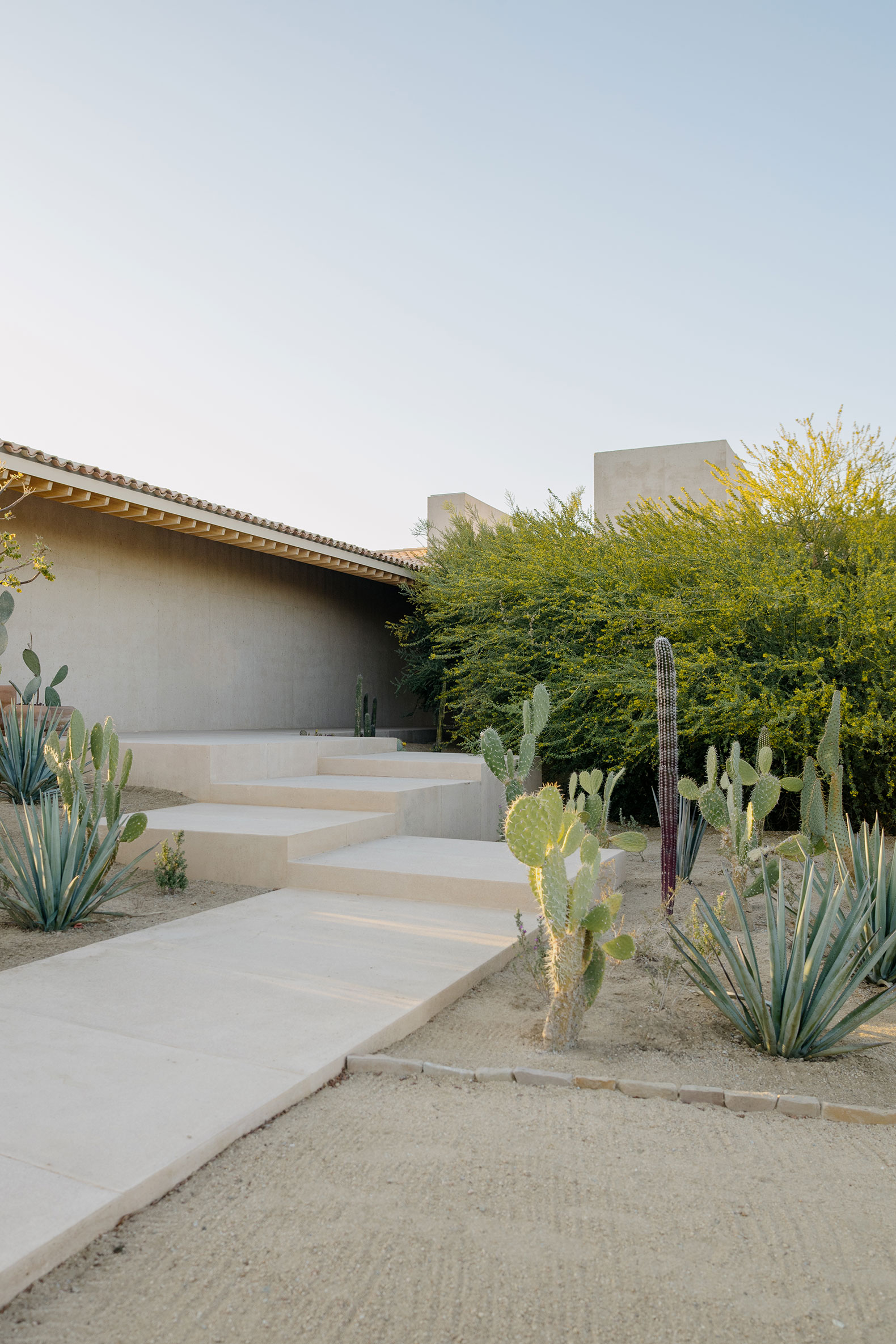
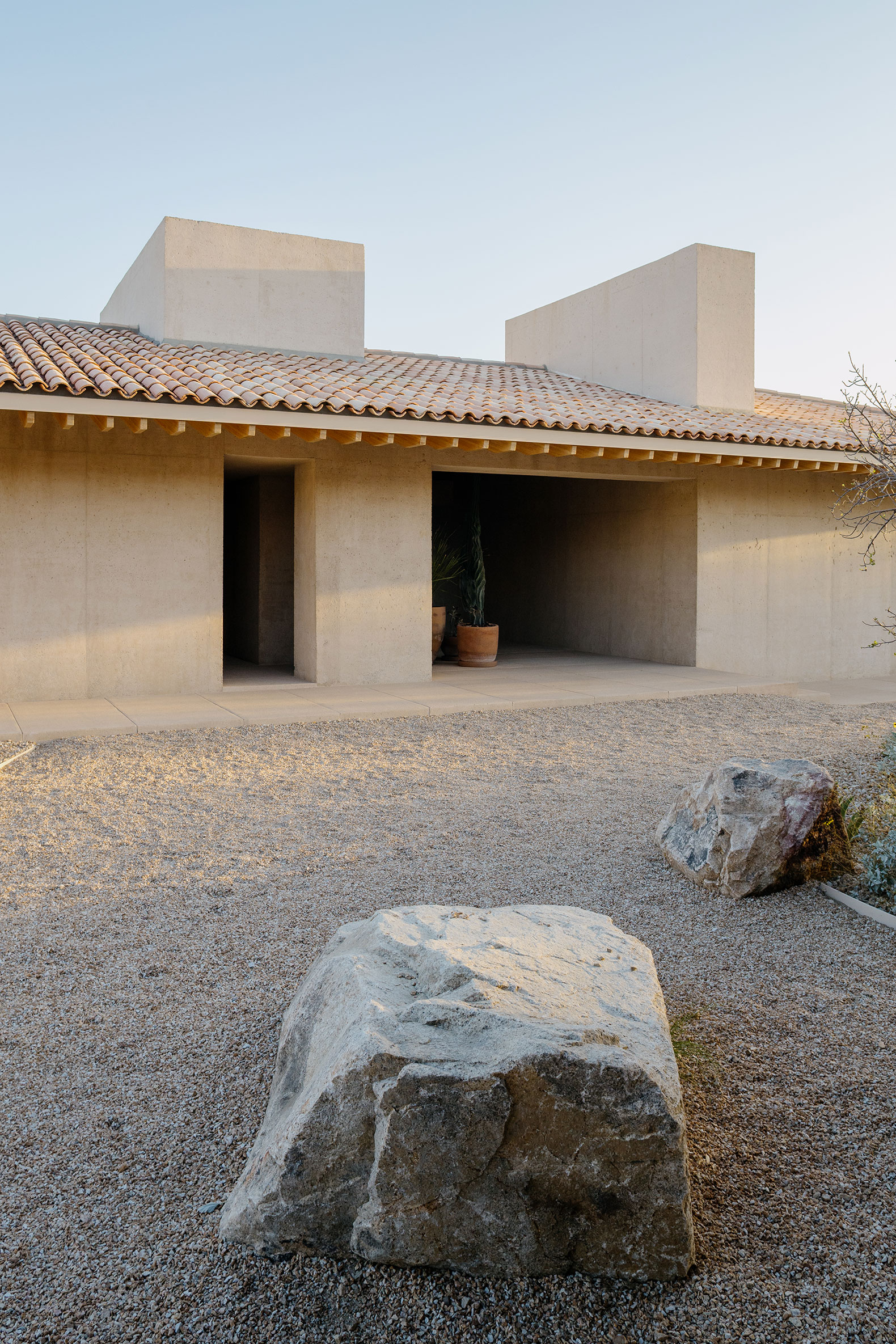
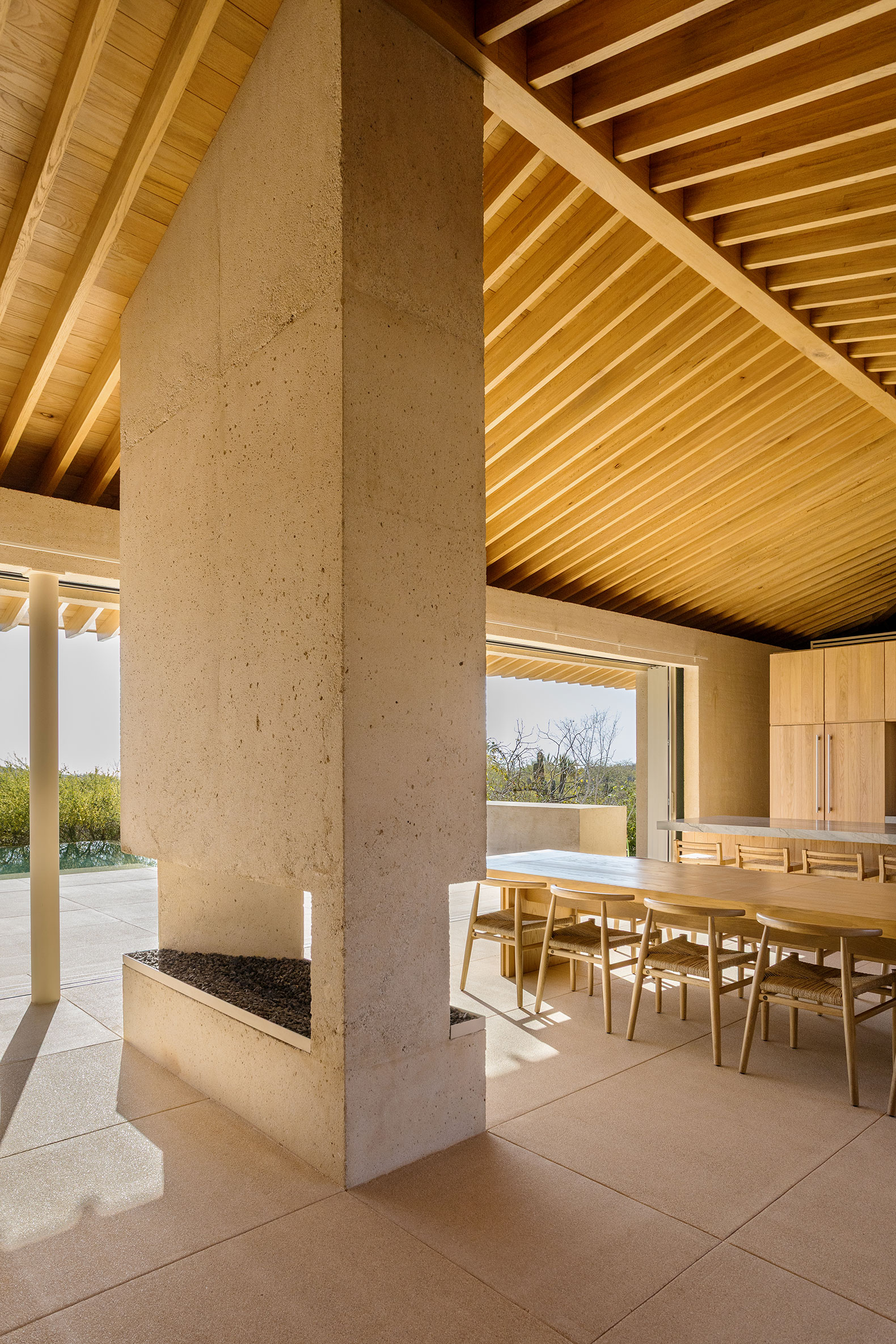
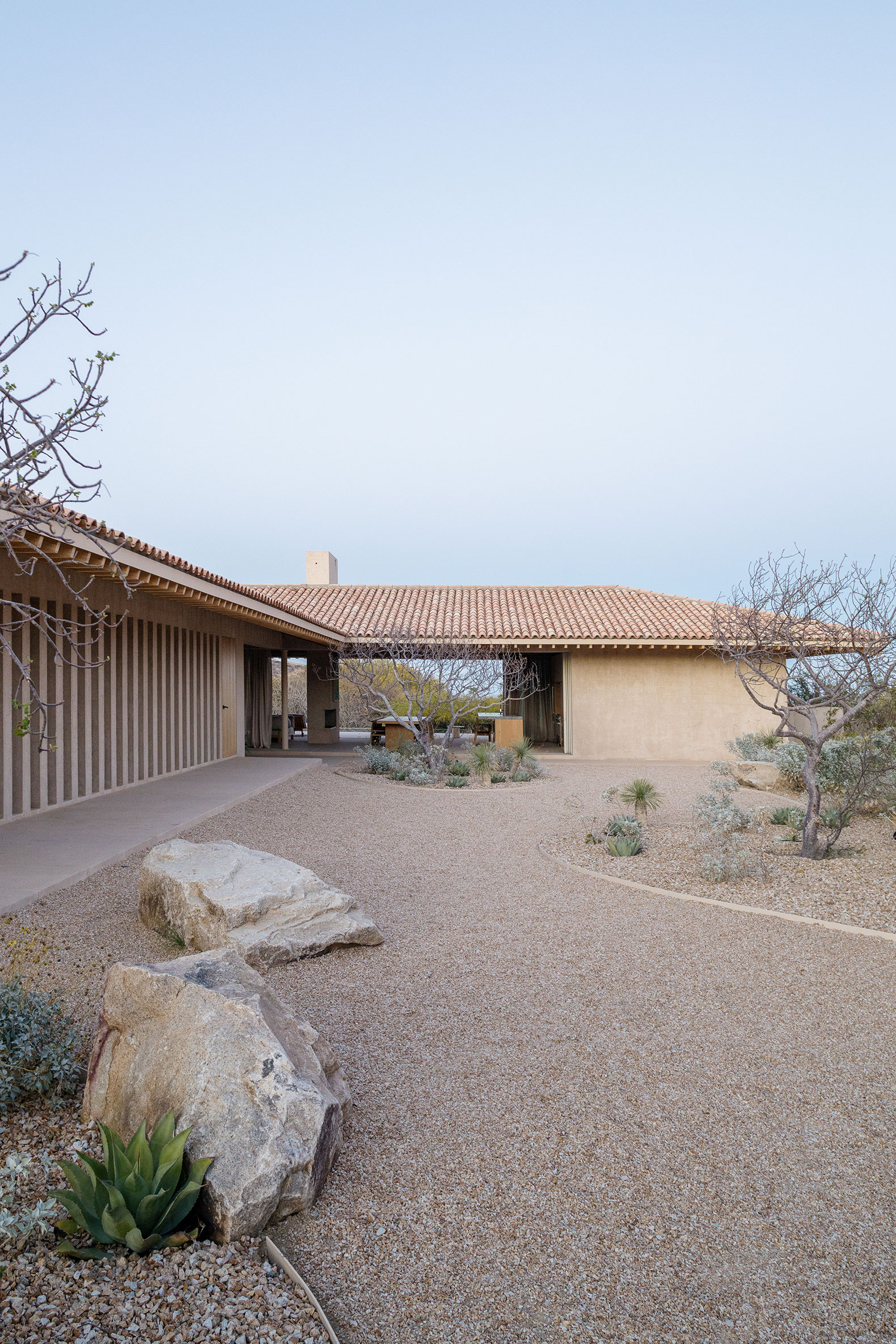
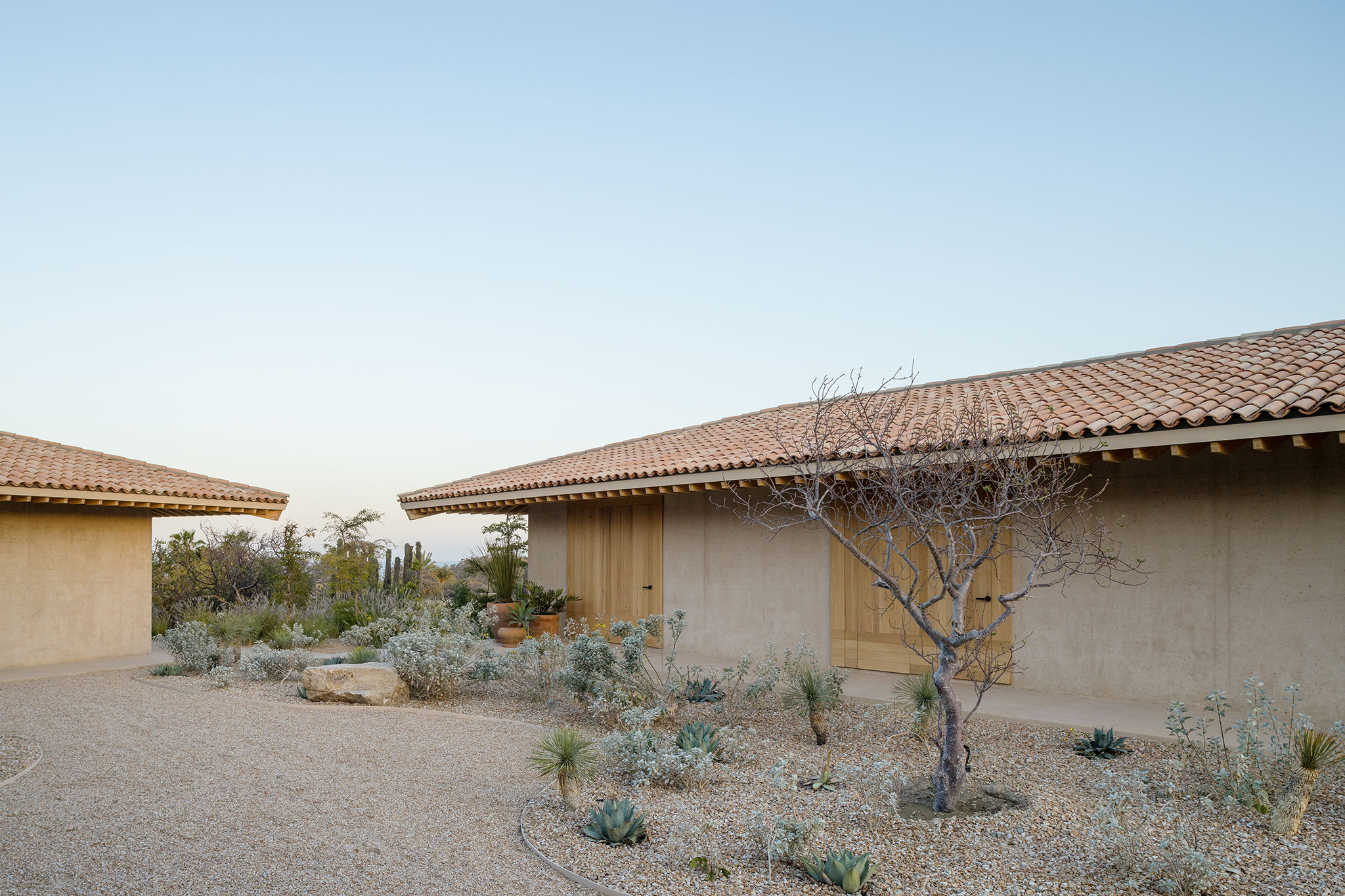
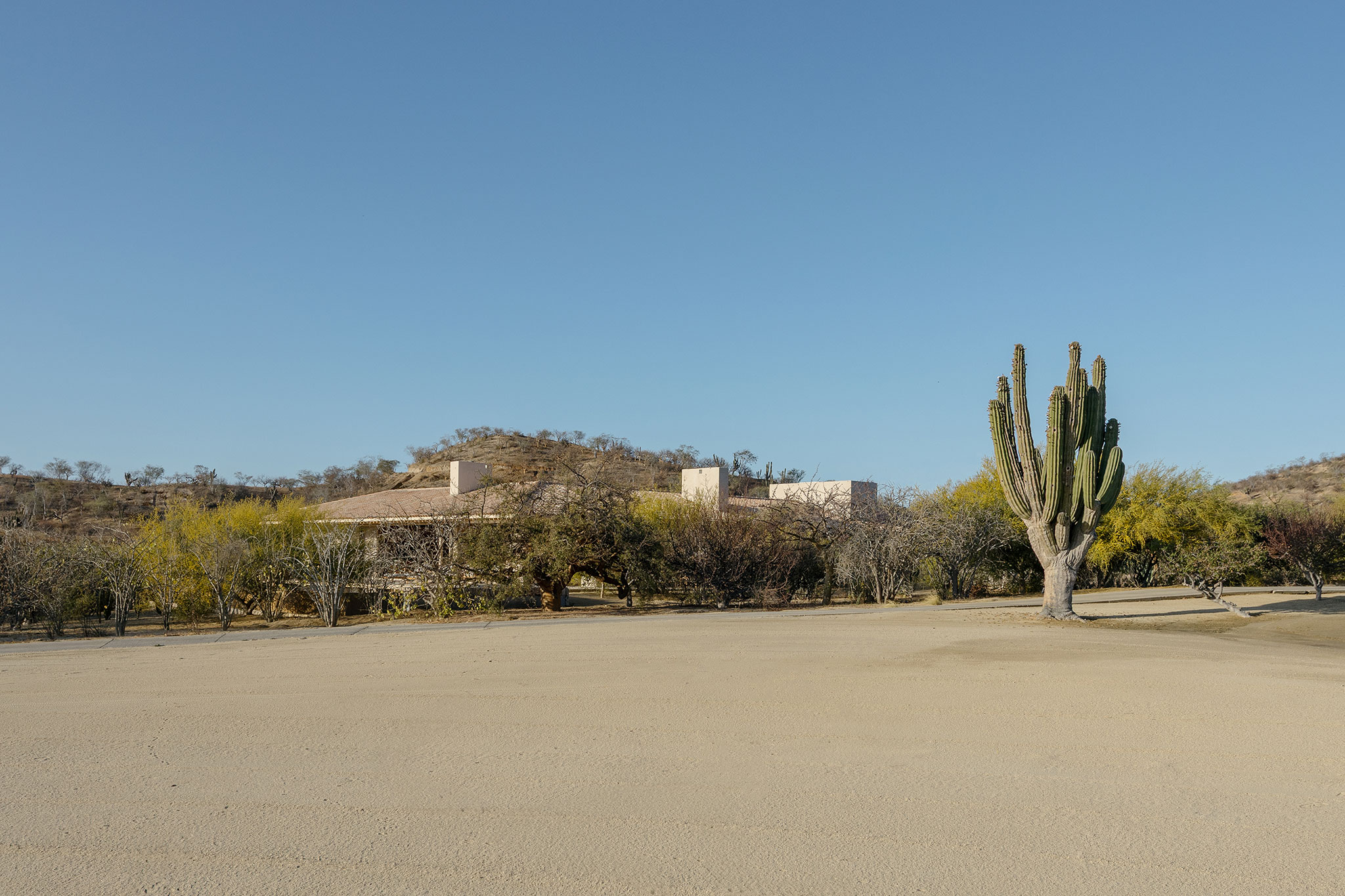
In terms of its construction, the project presents itself as a monochromatic monolith of textured, sand-colored concrete, complemented and softened by woodwork and a structural laminated oak roof.
Casa en Palmilla por Estudio IUAPdA. Fotografía por Ignacio Urquiza Luna Parra.

House in Palmilla by Estudio IUAPdA. Photograph by  Ignacio Urquiza Luna Parra.

Project description by Estudio IUAPdA

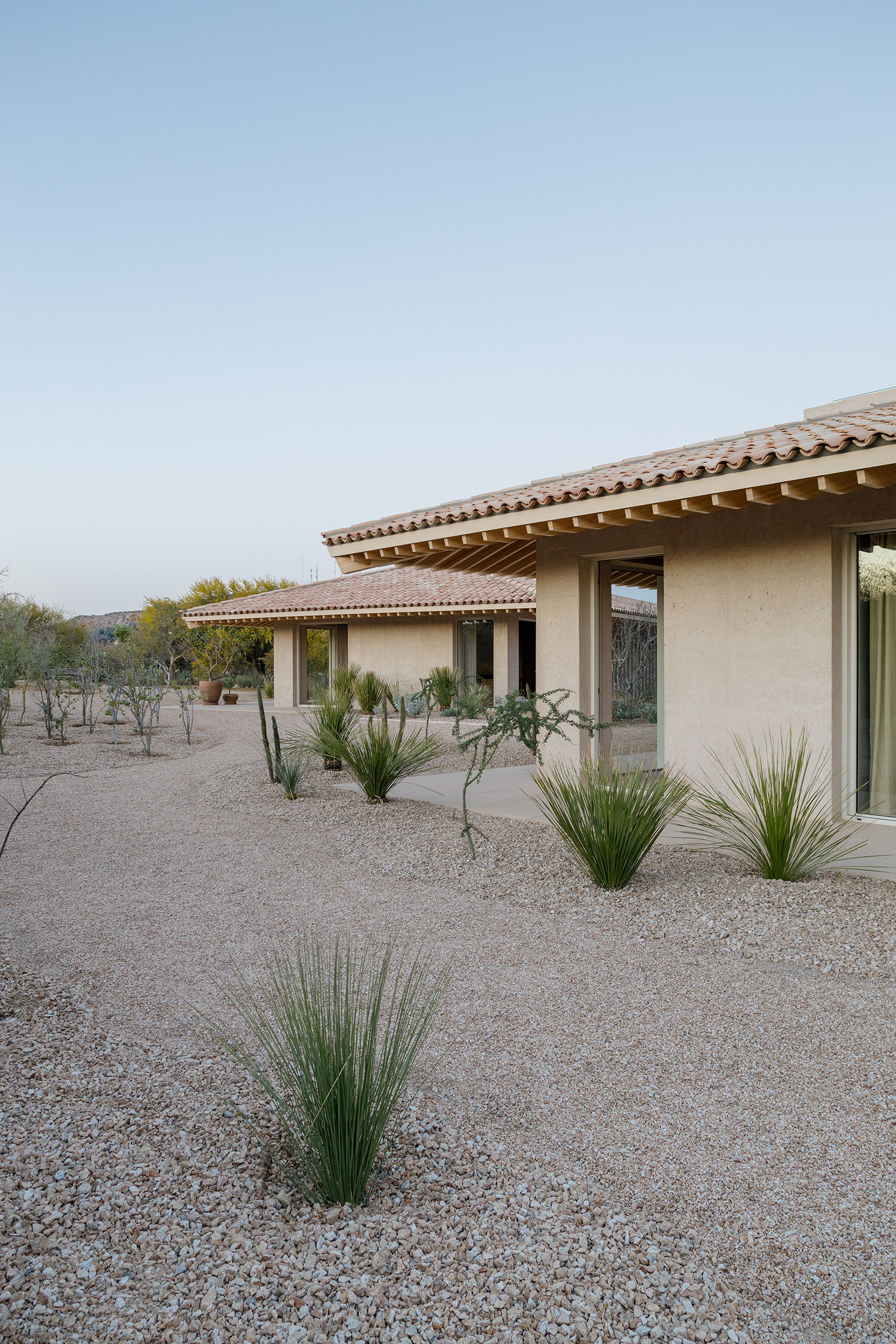
Located in the hills of Los Cabos, the house responds to a careful reading of the climate and its surrounding context. A pair of lightweight roofs resolved in wood and clay organize the project. Their 2.1 meter deep perimeter over hangs extend around the different built elements, creating generous shadows over walls and glazing and ensuring appropriate thermal performance for the region.

The house is organized into four independent volumes arranged beneath two L-shaped roofs. Their non orthogonal configuration creates a central courtyard of trapezoidal geometry, a void that articulates the spatial layout. This courtyard is almost blind: of its four edges, the shortest remains unbuilt and opens toward the western mountains; another accommodates access to the secondary bedrooms; a third is defined by a rhythmic sequence of 20 × 20 centimeter apertures that provide privacy for the main suite while filtering soft daylight into its interior; the final edge corresponds to the large glazed opening of the social area, the only space that opens directly onto this gravel garden at the center of the house.

Casa en Palmilla por Estudio IUAPdA. Fotografía por Ignacio Urquiza Luna Parra.
House in Palmilla by Estudio IUAPdA. Photograph by  Ignacio Urquiza Luna Parra.

Each of the four volumes contains a distinct program. The first contains the service areas: parking, storage rooms, mechanical spaces, service quarters, and laundry. Beneath the same roof, a second block contains the vanity area and three identical guest bedrooms. Within it, a freestanding wooden element detached from the roof plane defines the guest bathroom and dressing area, reinforcing a sense of continuity and spatial openness.

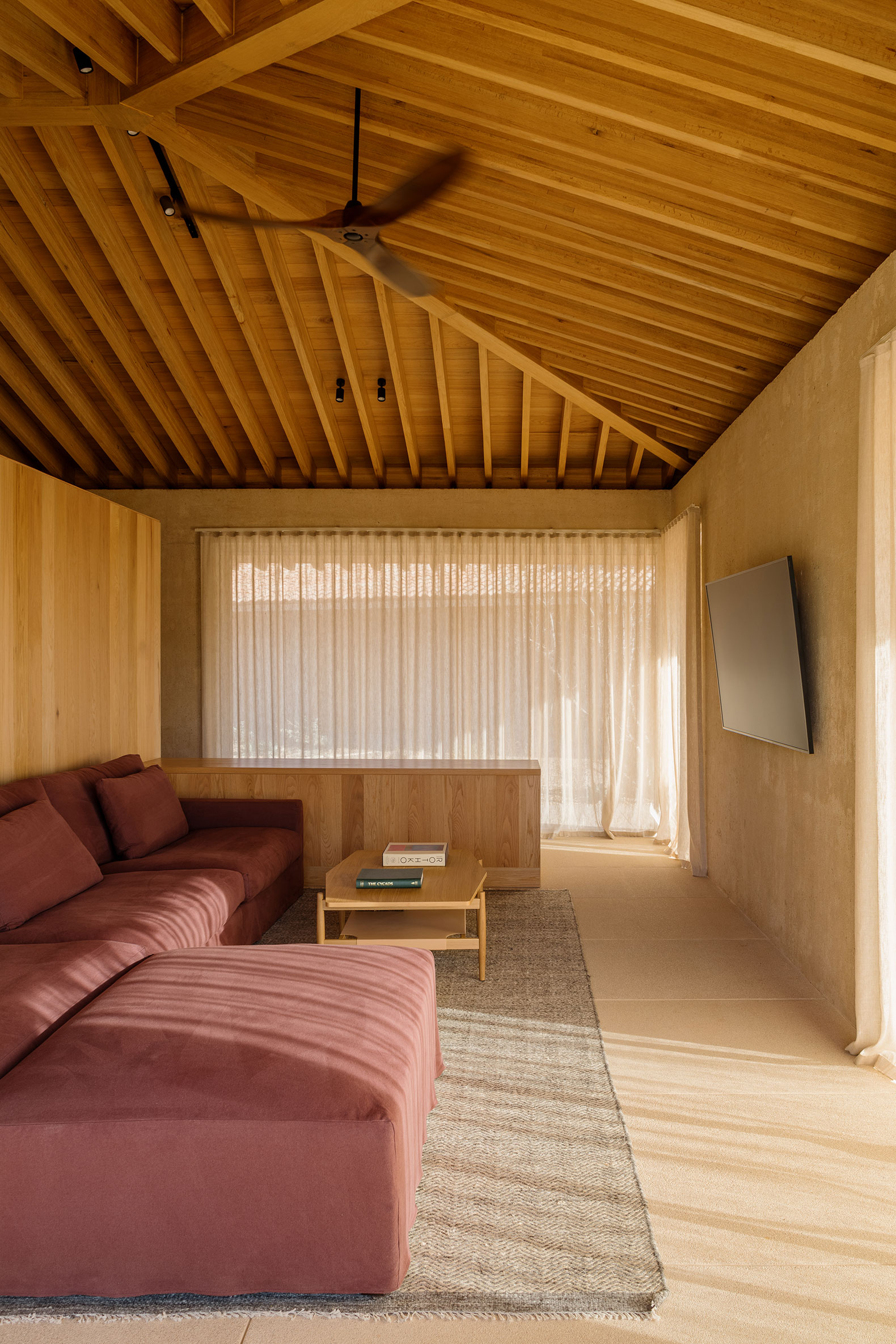
Beneath the second L-shaped roof, the third volume develops as the main suite, accompanied by two independent walk-in closets and a study that, depending on the use of the house, can function as a family room or as a private extension of the suite.
Casa en Palmilla por Estudio IUAPdA. Fotografía por Ignacio Urquiza Luna Parra.
House in Palmilla by Estudio IUAPdA. Photograph by  Ignacio Urquiza Luna Parra.

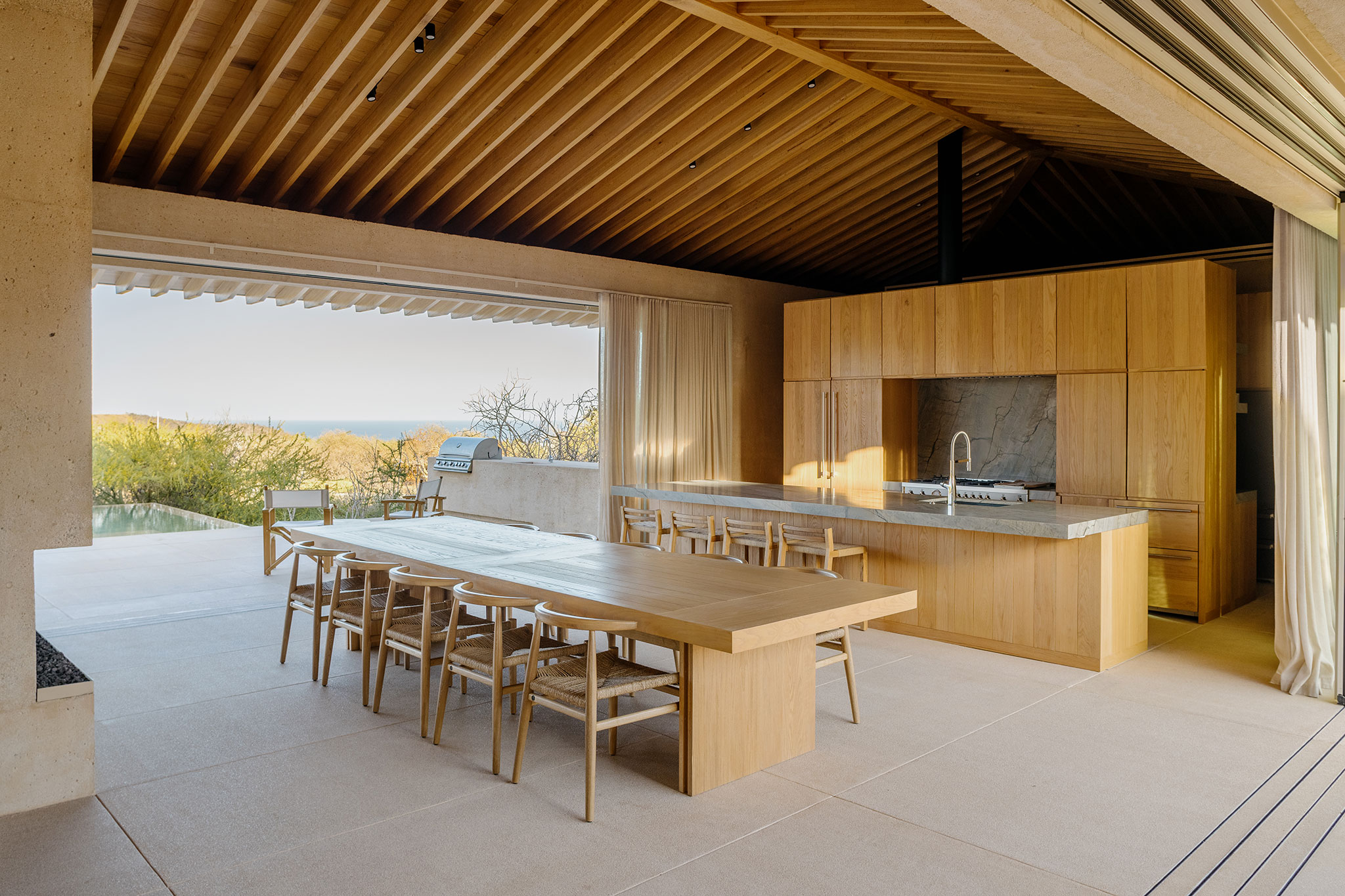
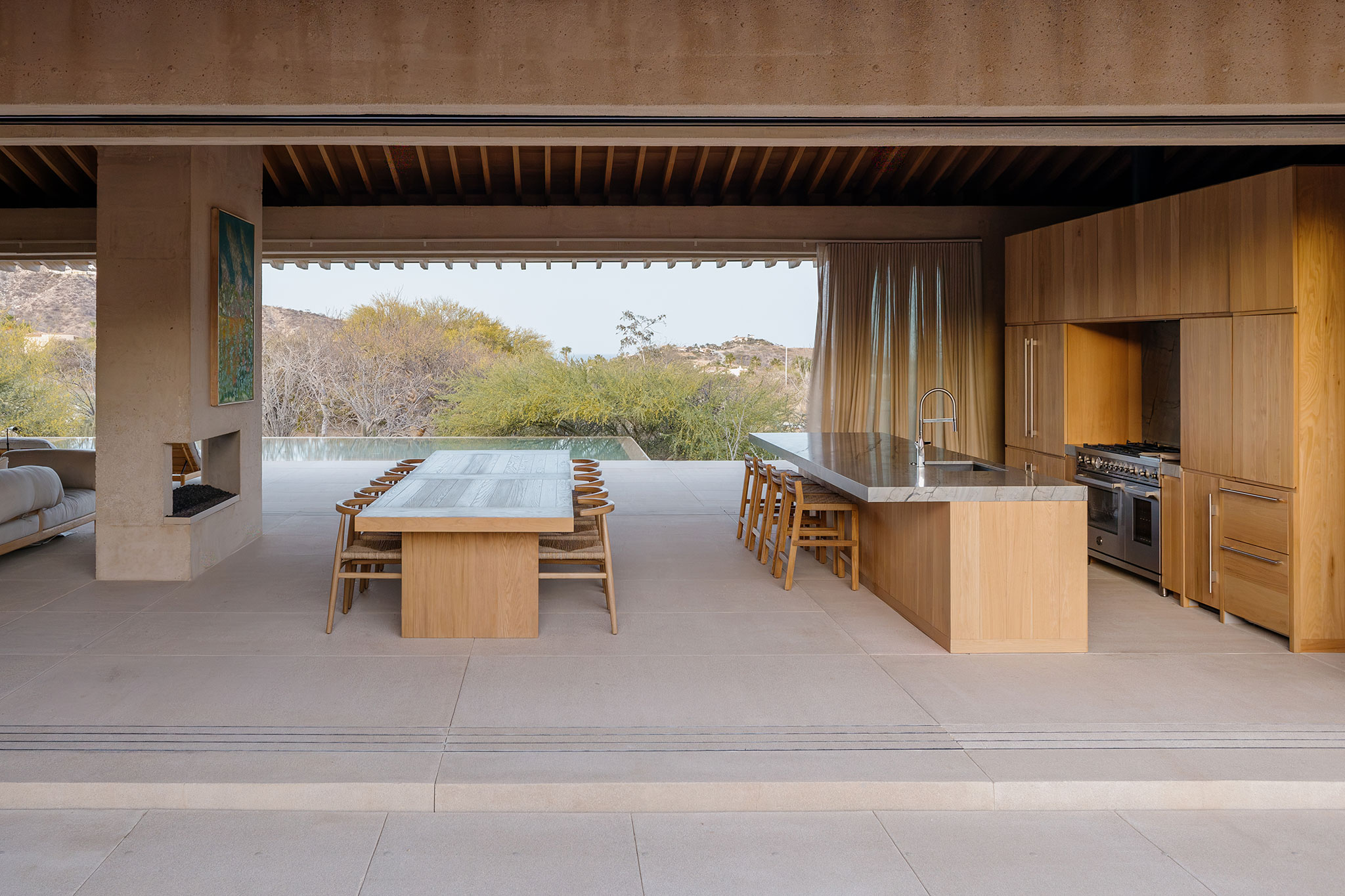
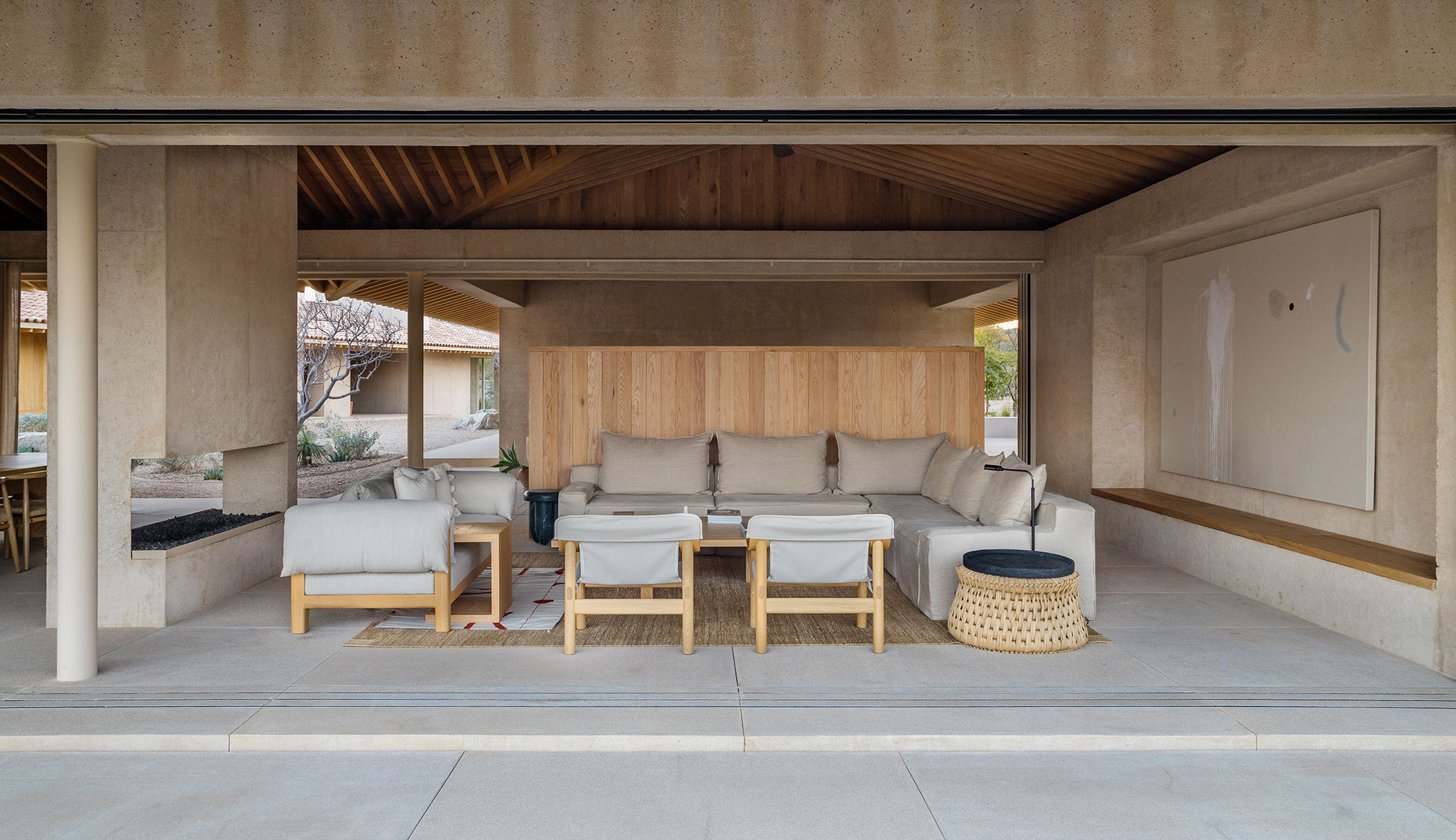
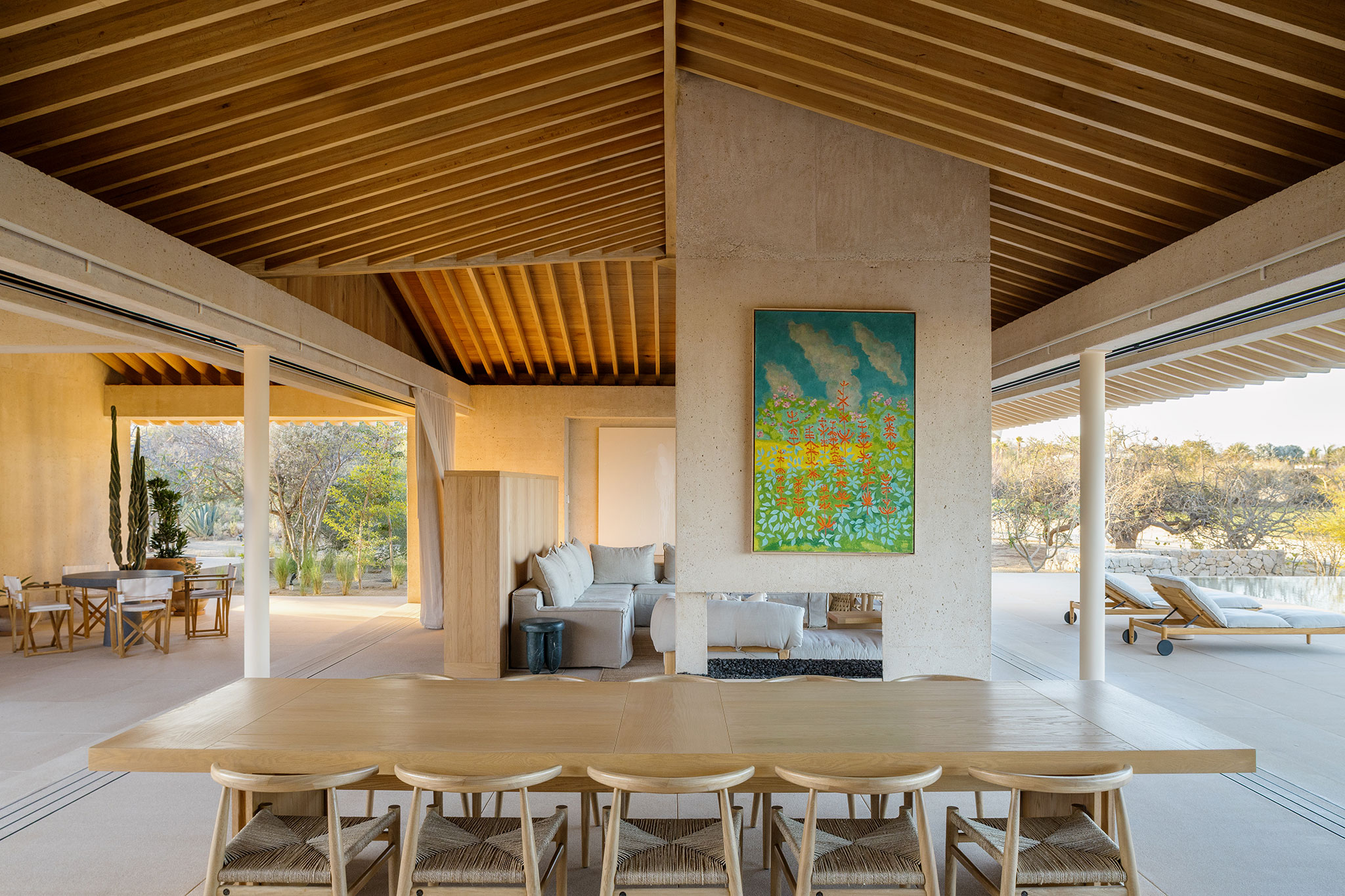
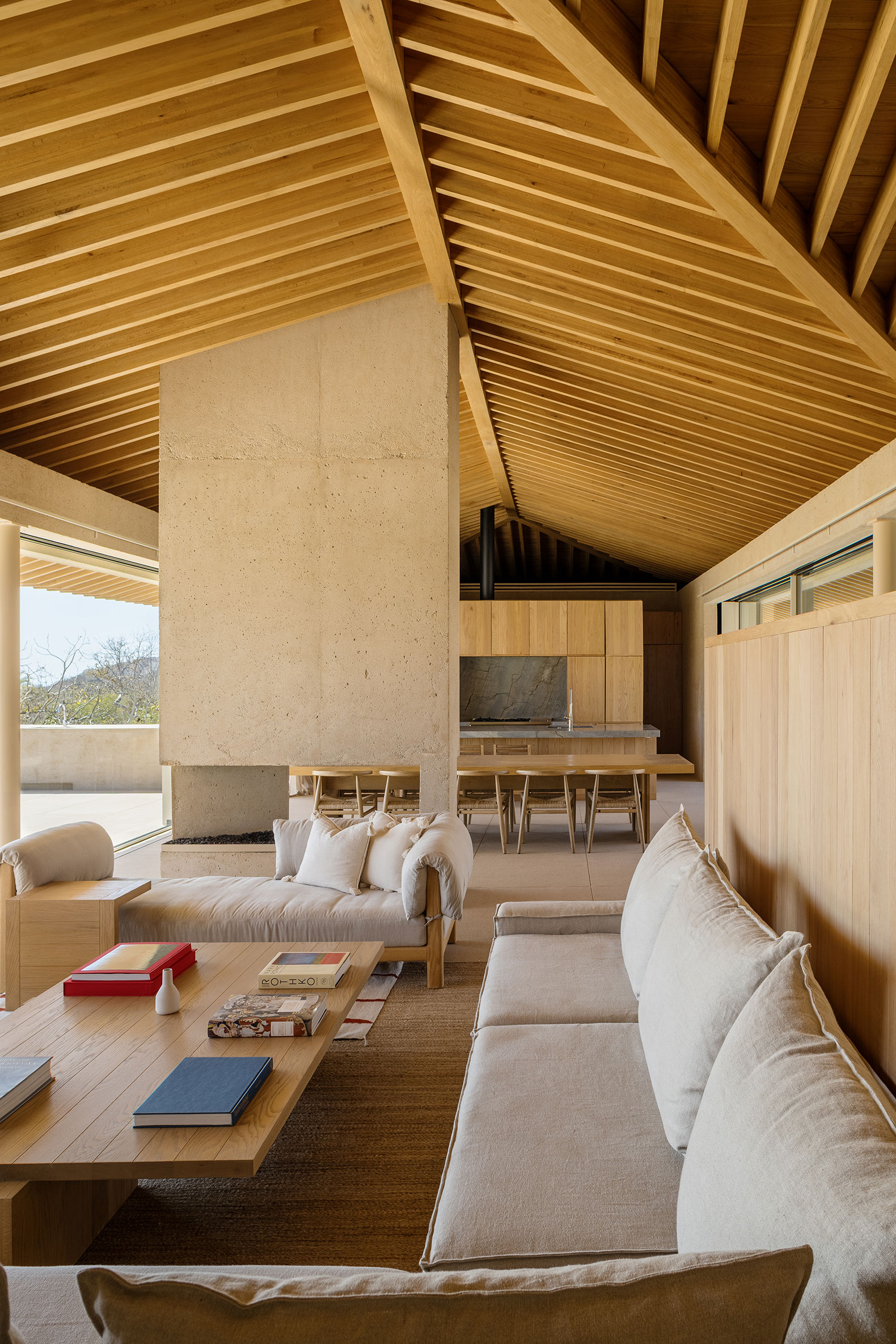
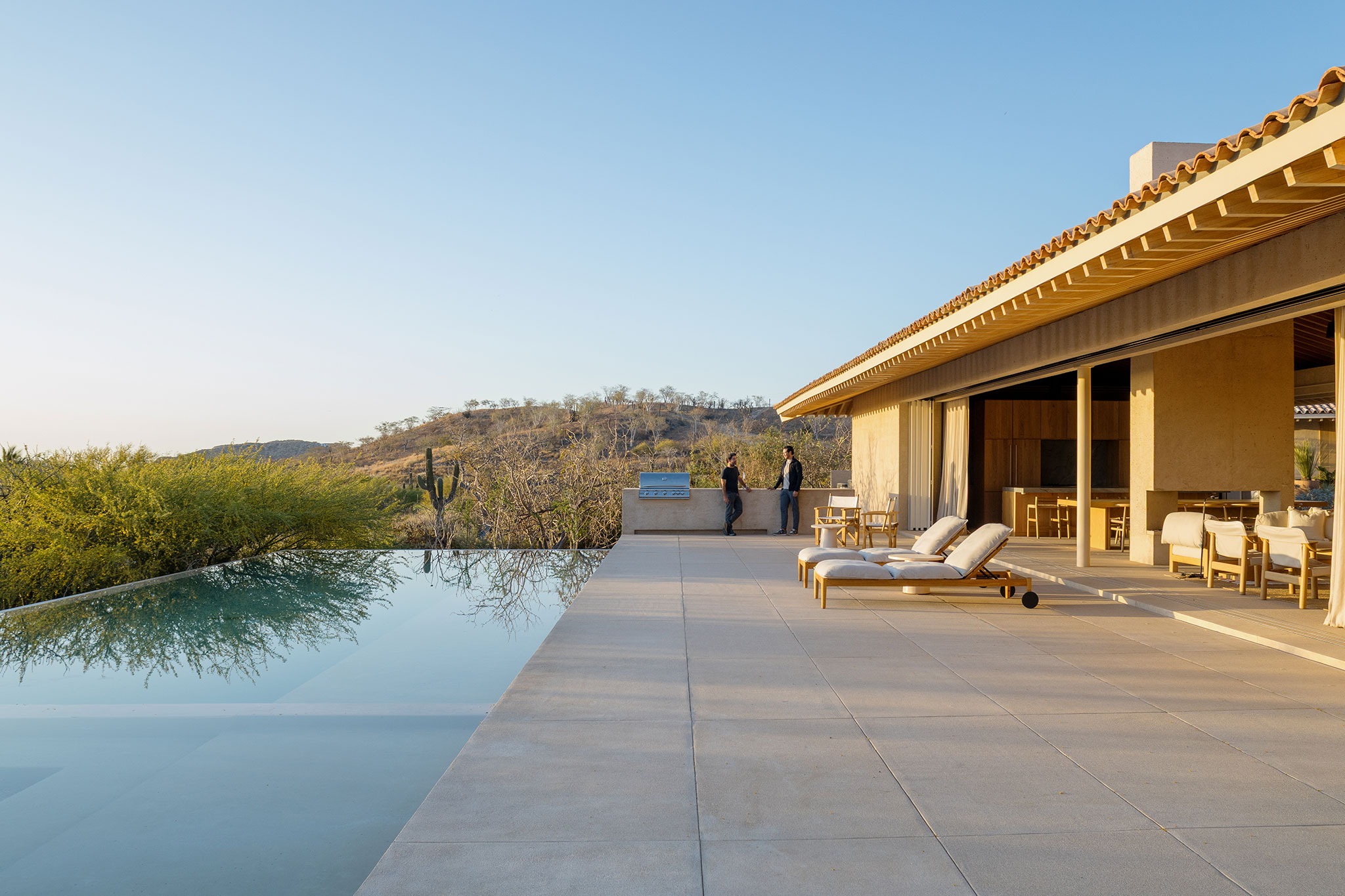
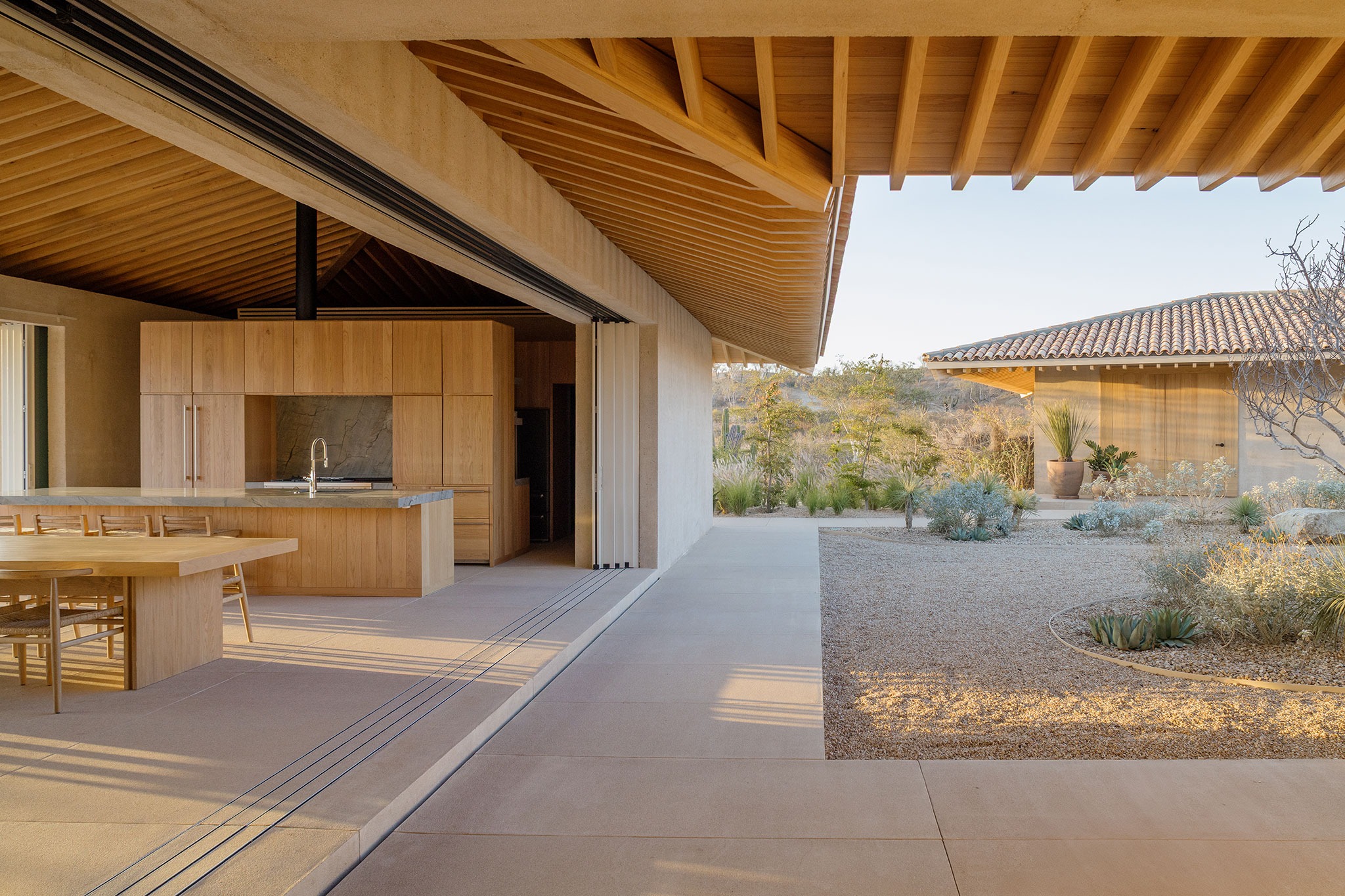
The sequence concludes with a fourth volume that brings together the core living spaces: the living room, dining area, and open kitchen. Two 12 meter long glazed openings along its longitudinal façades transform this space into a covered terrace, linking the central courtyard with the main terrace, the swimming pool, and the horizon of the Sea of San José.

The separation of the project into two primary wings allows the house to adapt to different modes of occupation. It can function as a single bedroom residence and, when required, activate the second L-shaped wing to increase capacity. The placement of each element responds to both the relationship between program and orientation and the pursuit of cross ventilation. Material choices, in dialogue with the projected shadows, ensure that surfaces remain cool to the touch. Defined by a neutral material palette, the house reads as a monochromatic monolith of sand colored textured concrete, softened by carpentry elements and a structural laminated oak roof.
Casa en Palmilla por Estudio IUAPdA. Fotografía por Ignacio Urquiza Luna Parra.
House in Palmilla by Estudio IUAPdA. Photograph by  Ignacio Urquiza Luna Parra.

Furnishings and decoration are consistently integrated into the architecture. Their textures, colors, textiles, and materials —together with the endemic, long-established landscape of the surroundings—naturally accompany the experience of inhabiting the house. 
More information

Label
Architects
Text

Estudio IUAPdA. Lead architects.- Ignacio Urquiza, Ana Paula de Alba.

+ + copy Created with Sketch.
- + copy Created with Sketch.
Label
Project team
Text

Michela Lostia di Santa Sofía, Aida Hurtado, Salvador Hurtado, Ana Laura Ochoa.

+ + copy Created with Sketch.
- + copy Created with Sketch.
Label
Collaborators
Text

Furniture and Decoration.- Alejandra Usobiaga.
Art Consultants.- KAYA Gallery, Mariel Prieto, Alejandra Usobiaga.
Lighting.- ILWT Miguel Ángel Vega. 

+ + copy Created with Sketch.
- + copy Created with Sketch.
Label
Builder
Text

Emiliano Zedillo.

+ + copy Created with Sketch.
- + copy Created with Sketch.
Label
Area
Text

600 sqm.

+ + copy Created with Sketch.
- + copy Created with Sketch.
Label
Dates
Text

2025.

+ + copy Created with Sketch.
- + copy Created with Sketch.
Label
Location
Text

Los Cabos, Mexico.

+ + copy Created with Sketch.
- + copy Created with Sketch.
Label
Photography
Text

Ignacio Urquiza Luna Parra.

+ + copy Created with Sketch.
- + copy Created with Sketch.

ESTUDIO Ignacio Urquiza y Ana Paula de Alba. Architecture practice based in Ciudad de México, founded by Ignacio Urquiza and Ana Paula de Alba.

The studio seeks to generate design and architecture congruent with the current economic, political, social, and environmental context. To achieve this, it works with three main elements: the object (what we design), the user (for whom we design), and the context (where what we design is placed), assigning them equal value or importance. In reality, it is in the interplay between these three elements of such distinct natures that their designs and architecture are generated.

Ana Paula de Alba studied Interior Design with a distinction of Excellence in Design at Parsons The New School of Design (2012). She worked on residential interior design projects at Shaker Inc. in New York (2013-2014). In 2014, she returned to Mexico City and worked as an interior architect at the design firm ESRAWE (2014-2015). Subsequently, she collaborated with Gloria Cortina on residential interior design projects both within Mexico and internationally. In parallel, she was part of the design team for special editions of the GC Ediciones collectable furniture line (2015-2019).

Ana Paula has participated in the development and coordination of interior design projects within Mexico and internationally; she now directs her own design firm, a p d a, focused primarily on residential and hospitality design projects, creating value through concepts and designs rooted in Mexican culture with a contemporary language and an aesthetic curated specifically for each context.

Ignacio Urquiza Seoane studied photography in Paris, France (2002), completed his studies in architecture and urban planning with honors at the Universidad Iberoamericana in Mexico City (2007), and holds a Master of Science in Advanced Architectural Design from Columbia University, USA (2014). In 2008, he co-founded the Center for Architectural Collaboration, where he served as Design Director until 2018. Since 2019, he has founded and directed Ignacio Urquiza Arquitectos, an architecture firm based in Mexico City.

Ignacio has developed and coordinated architectural and urban projects throughout Mexico, collaborating with numerous architects. His work has been published in various national and international print and digital media outlets, and he has received several awards in the field of architecture, including the Luis Barragán Award for "Young Architect Career Achievement" from the College of Architects in 2017 and the 2019 Emerging Voices Award from the Architectural League of New York.

Read more
Published on: April 30, 2026
Cite:
metalocus, SARA GENT
"Monochromatic monolith. House in Palmilla by Estudio IUAPdA" METALOCUS. Accessed
<https://www.metalocus.es/en/news/monochromatic-monolith-house-palmilla-estudio-iuapda> ISSN 1139-6415
Loading content ...
Loading content ...
Loading content ...
Loading content ...
Loading content ...
Loading content ...
Loading content ...
Loading content ...
Loading content ...
Loading content ...
Loading content ...
Loading content ...
Loading content ...
Loading content ...
Loading content ...
Loading content ...
Loading content ...
Loading content ...
Loading content ...
Loading content ...
Loading content ...
Loading content ...
Loading content ...
Loading content ...
Loading content ...
Loading content ...
Loading content ...
Loading content ...
Loading content ...
Loading content ...
Loading content ...
Loading content ...
Loading content ...
Loading content ...
Loading content ...
Loading content ...
Loading content ...
Loading content ...
Loading content ...
Loading content ...
Loading content ...
Loading content ...
Loading content ...
Loading content ...
Loading content ...
Loading content ...
Loading content ...
Loading content ...
Loading content ...
Loading content ...
Loading content ...
Loading content ...
Loading content ...
Loading content ...