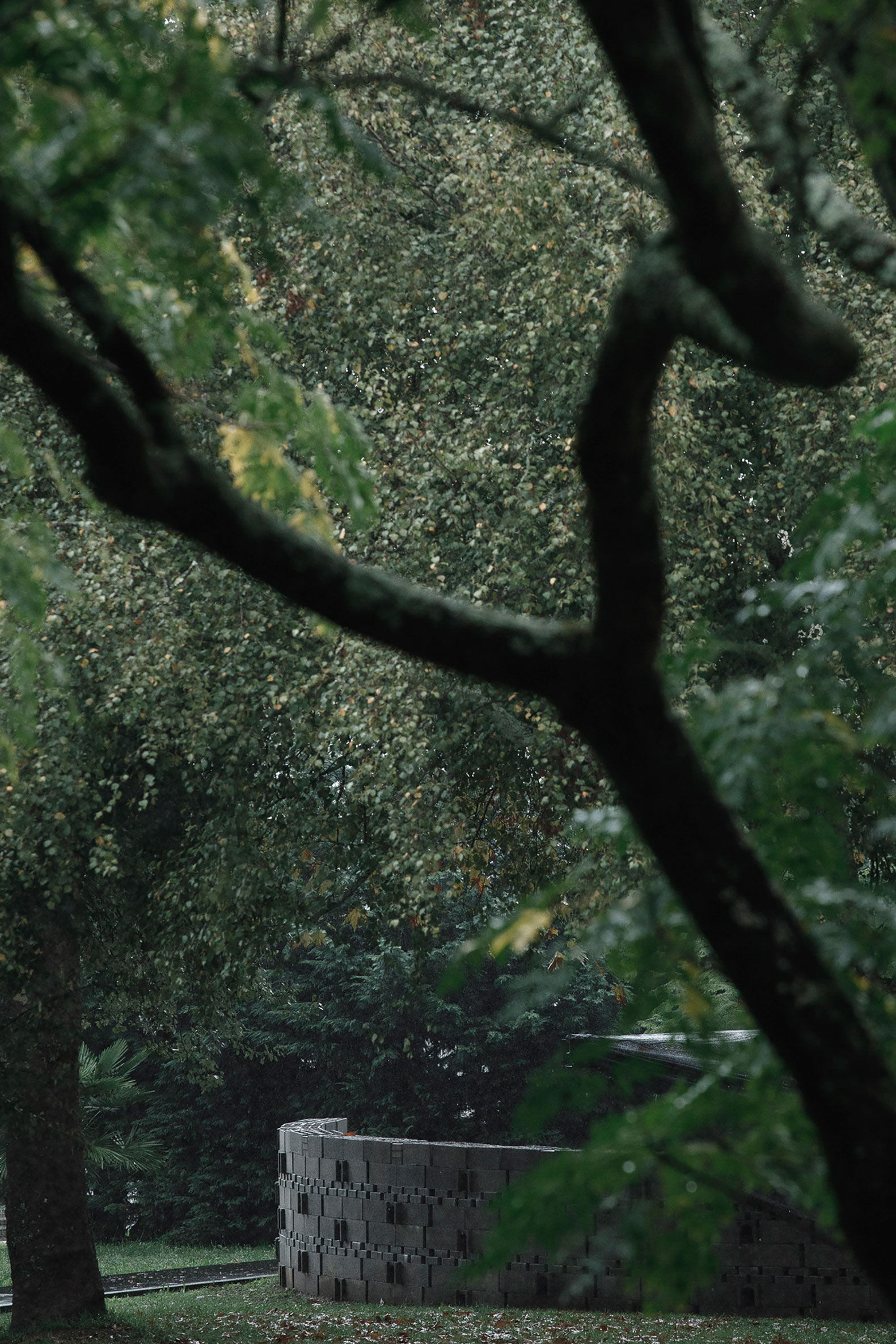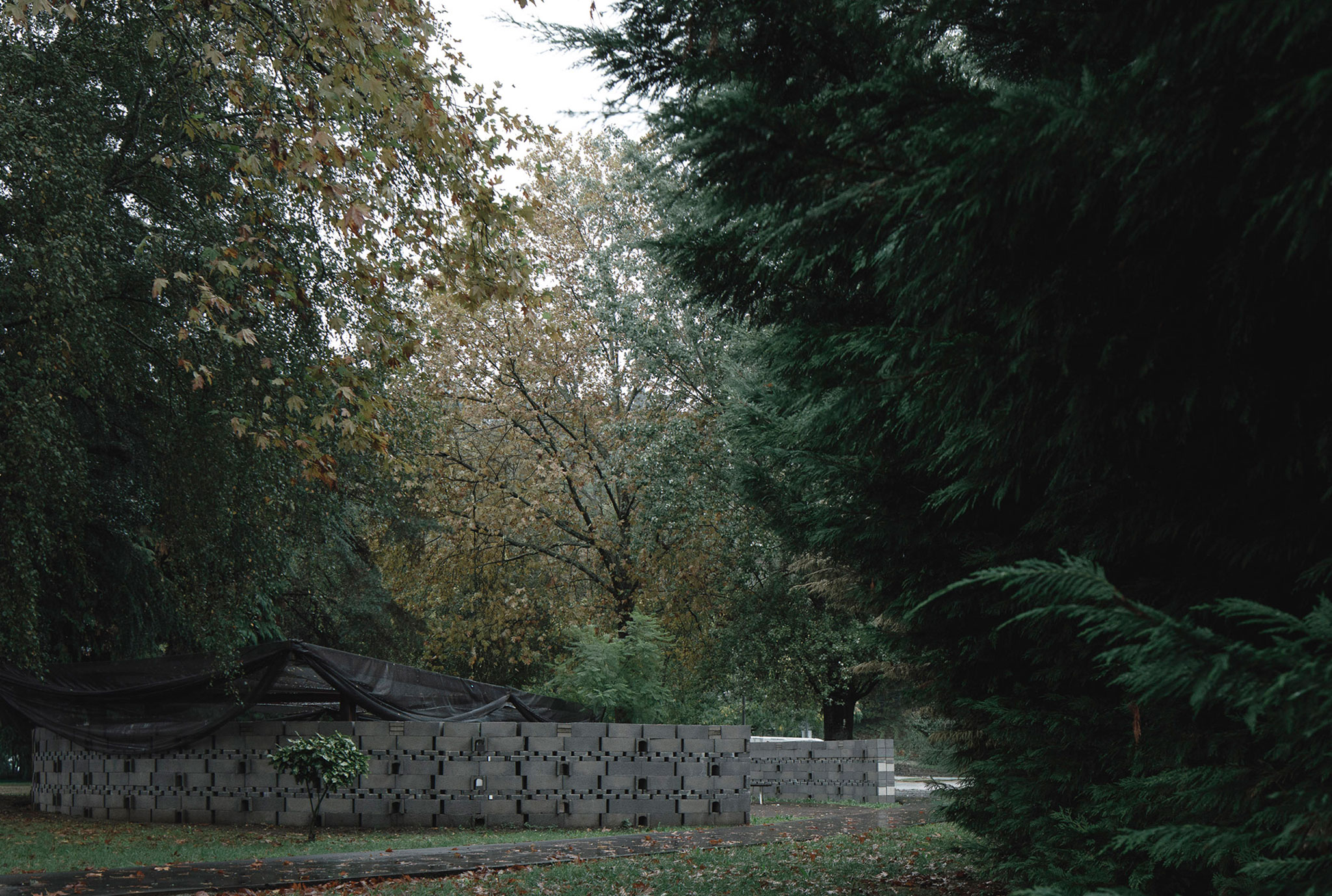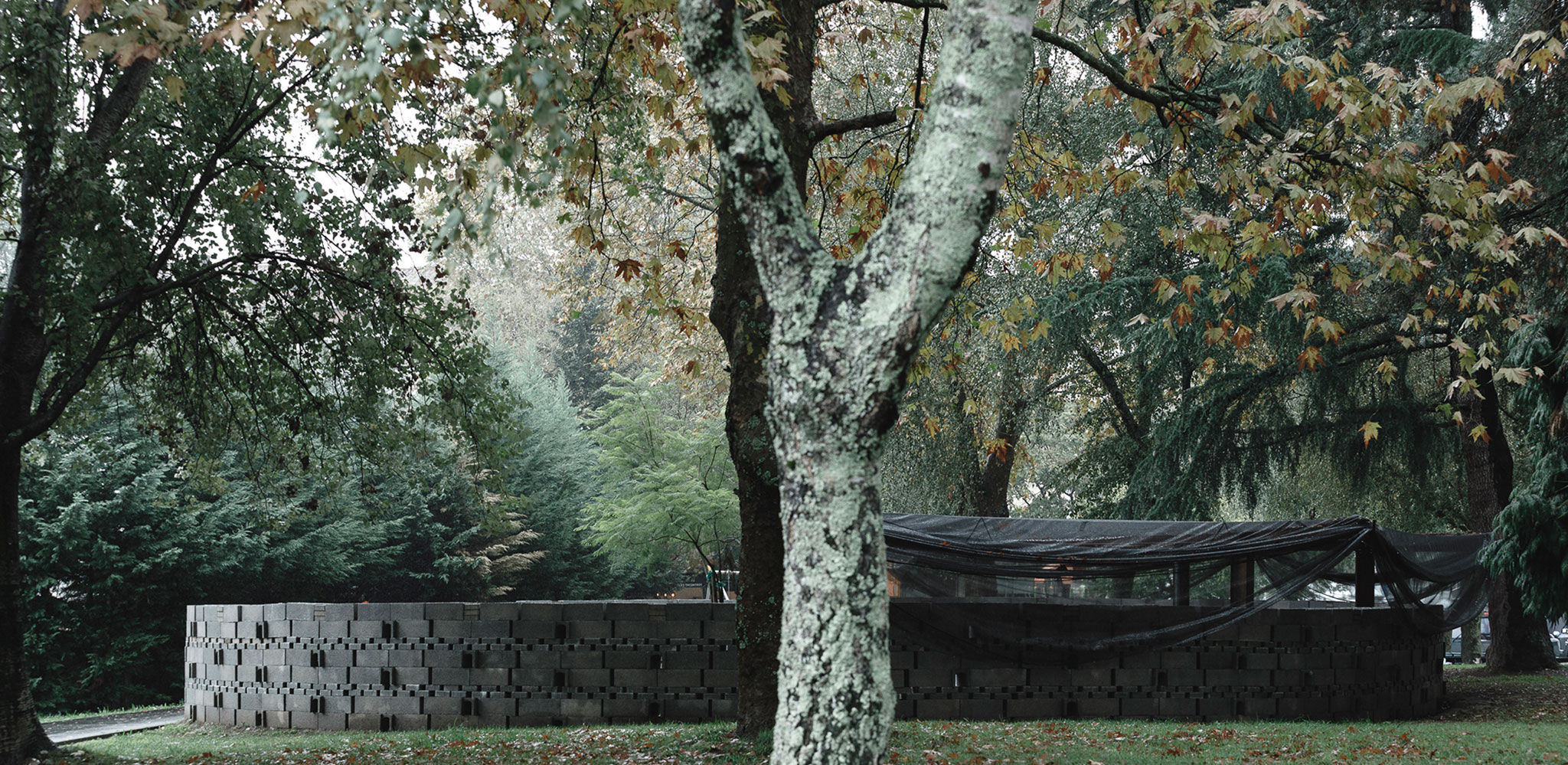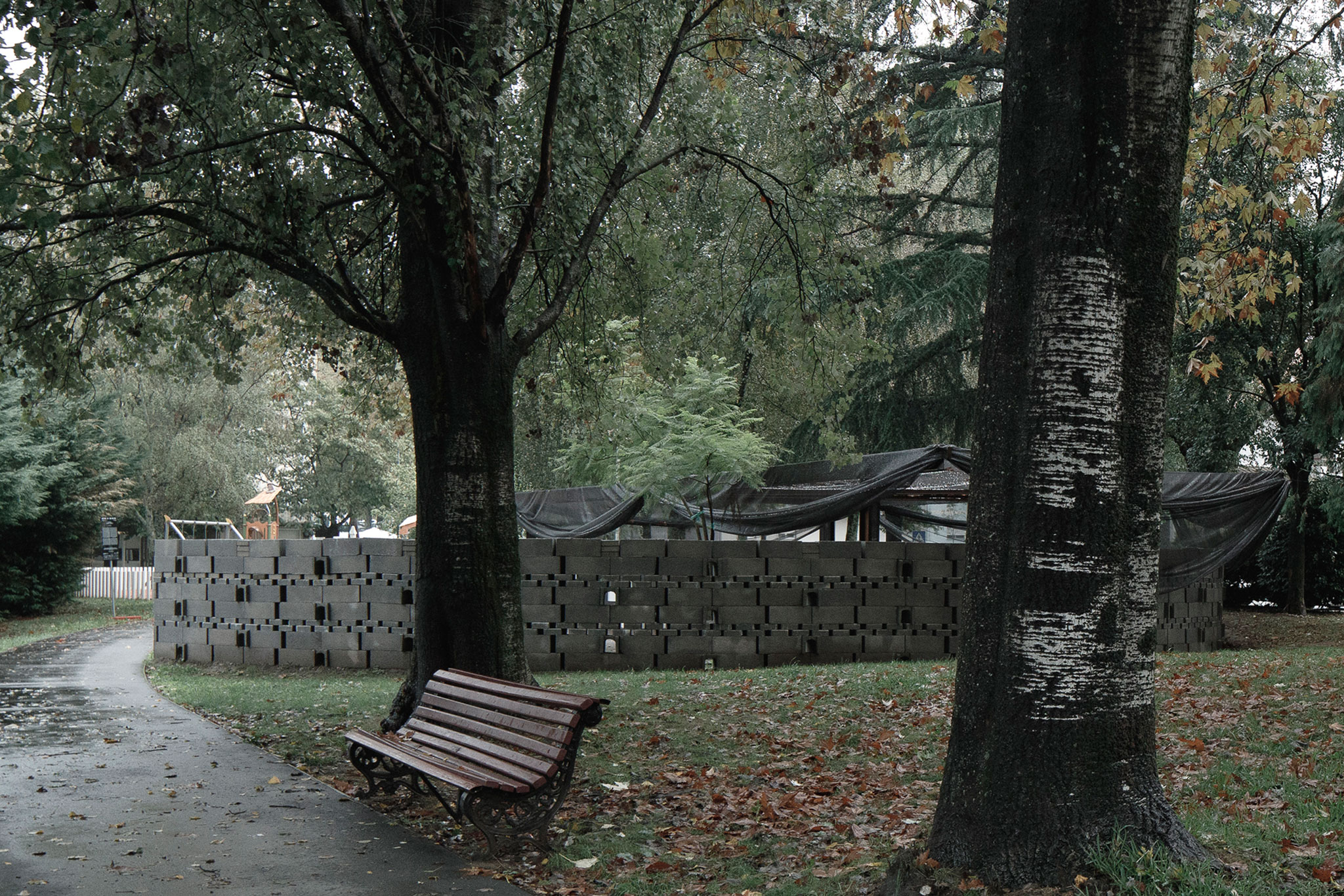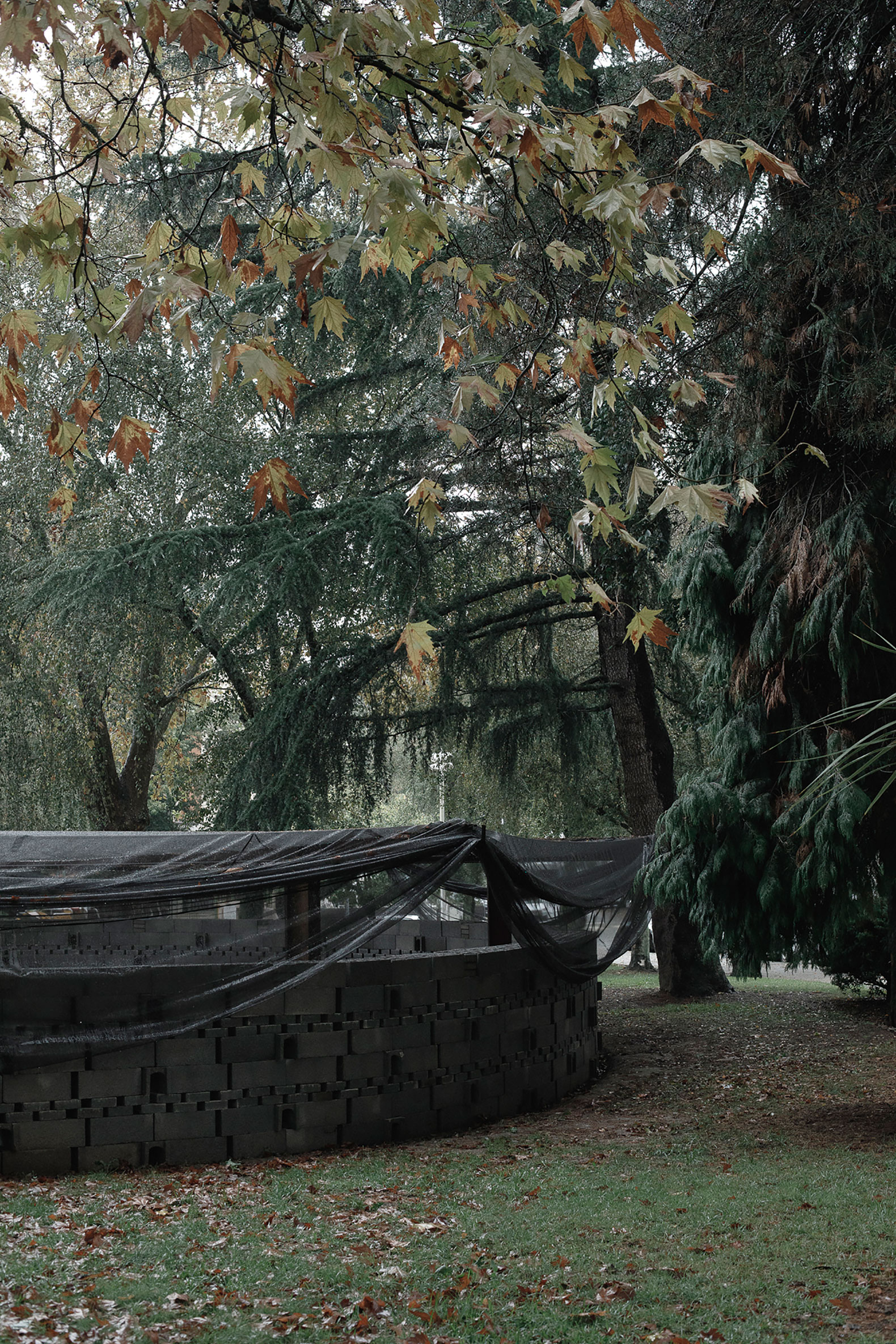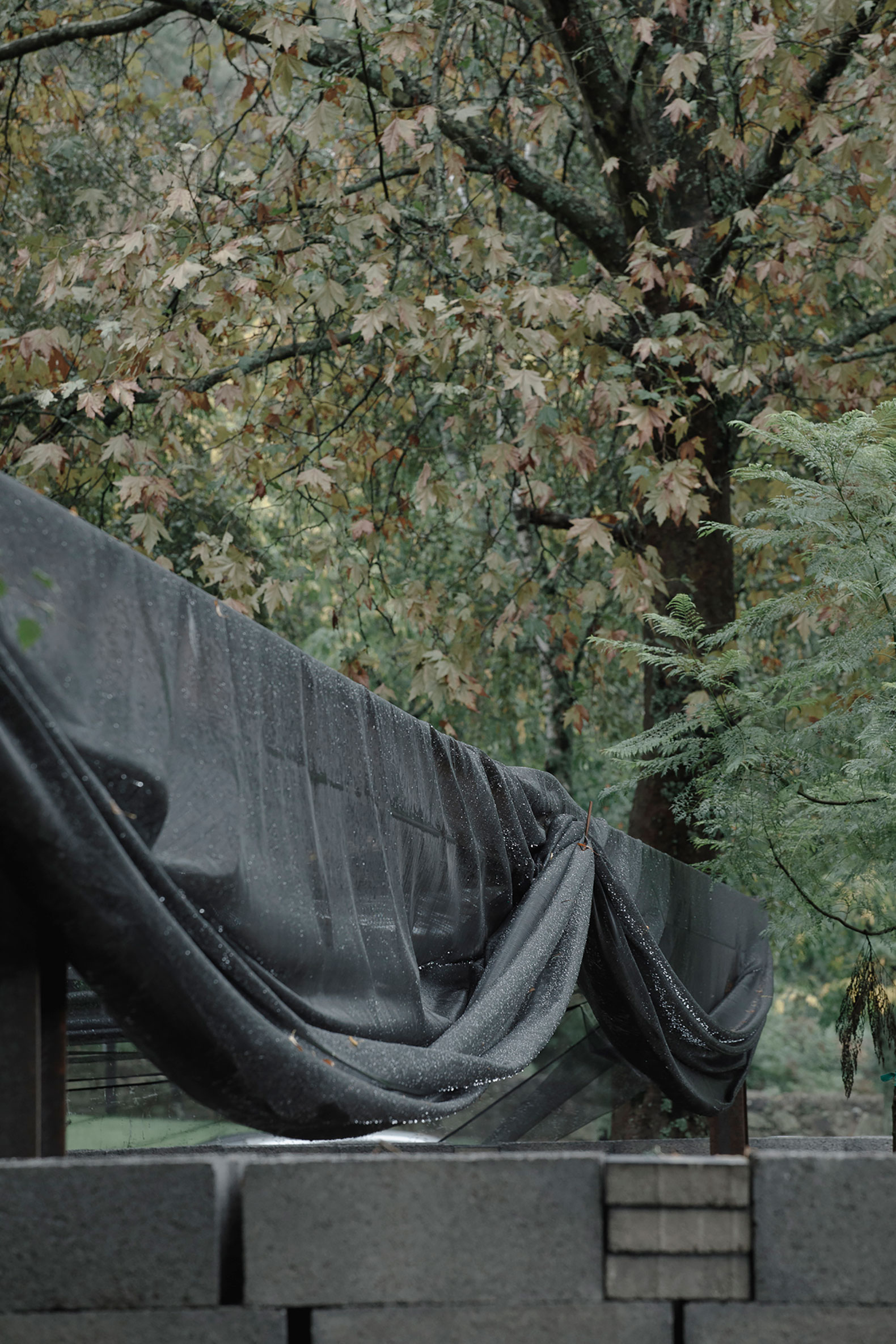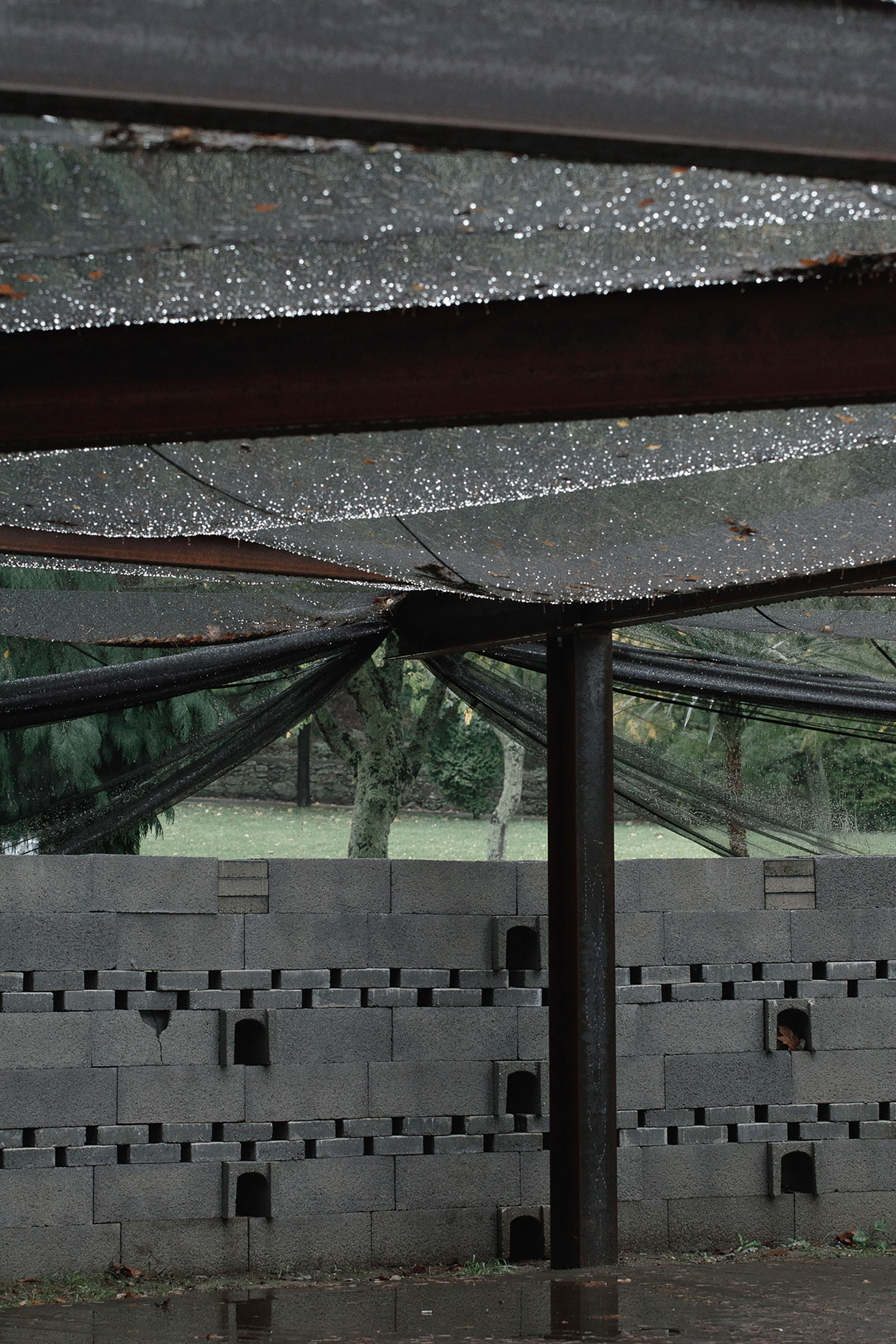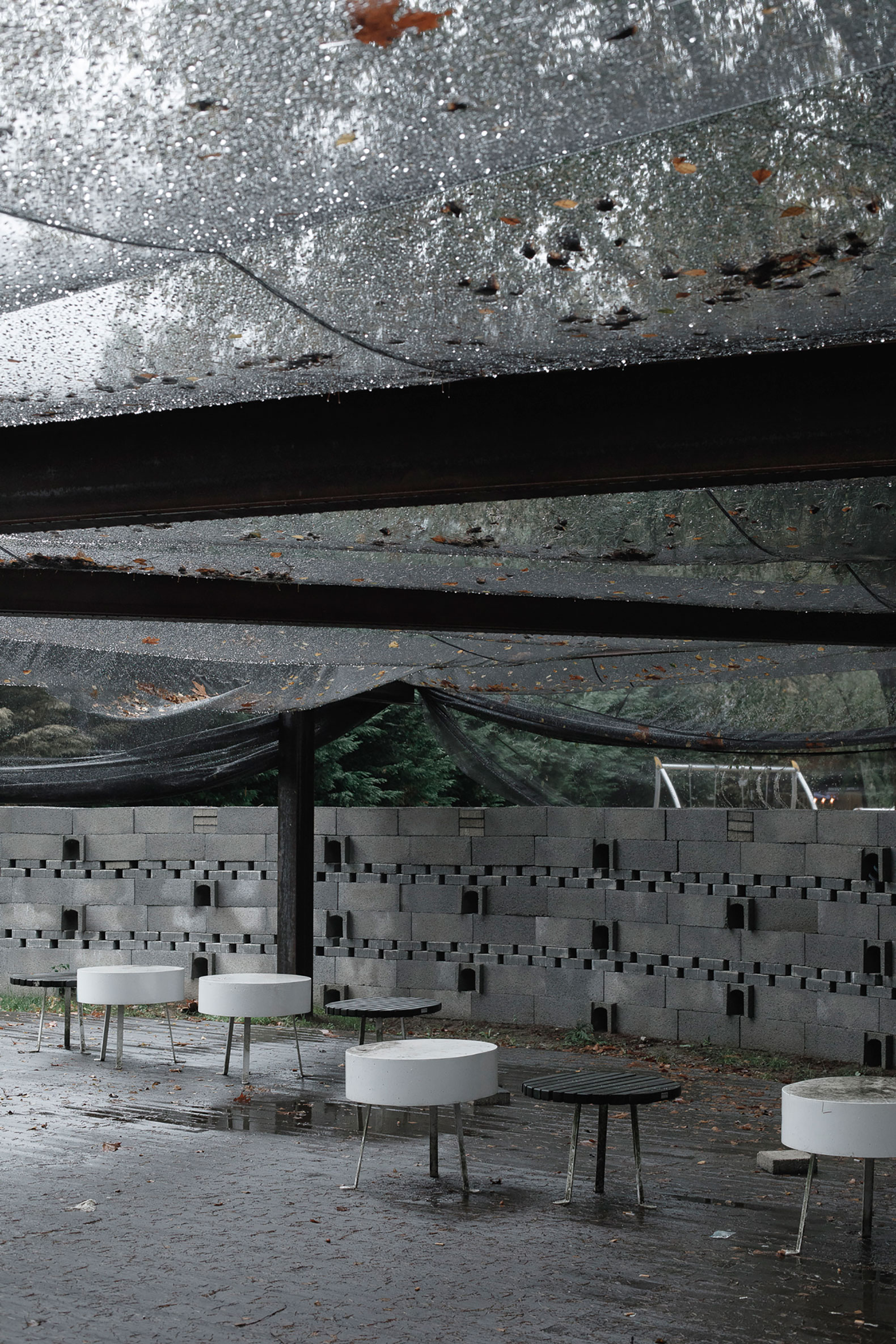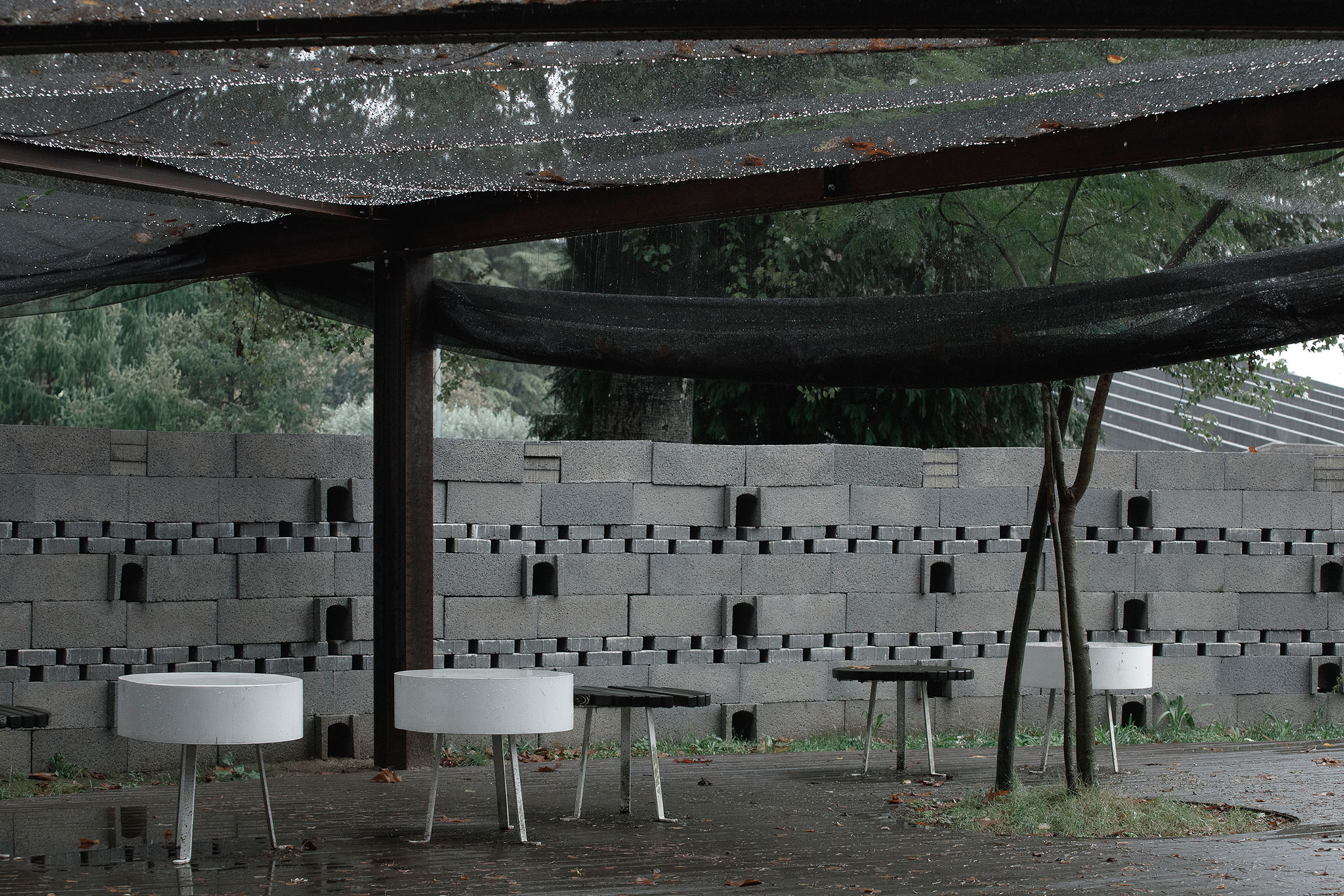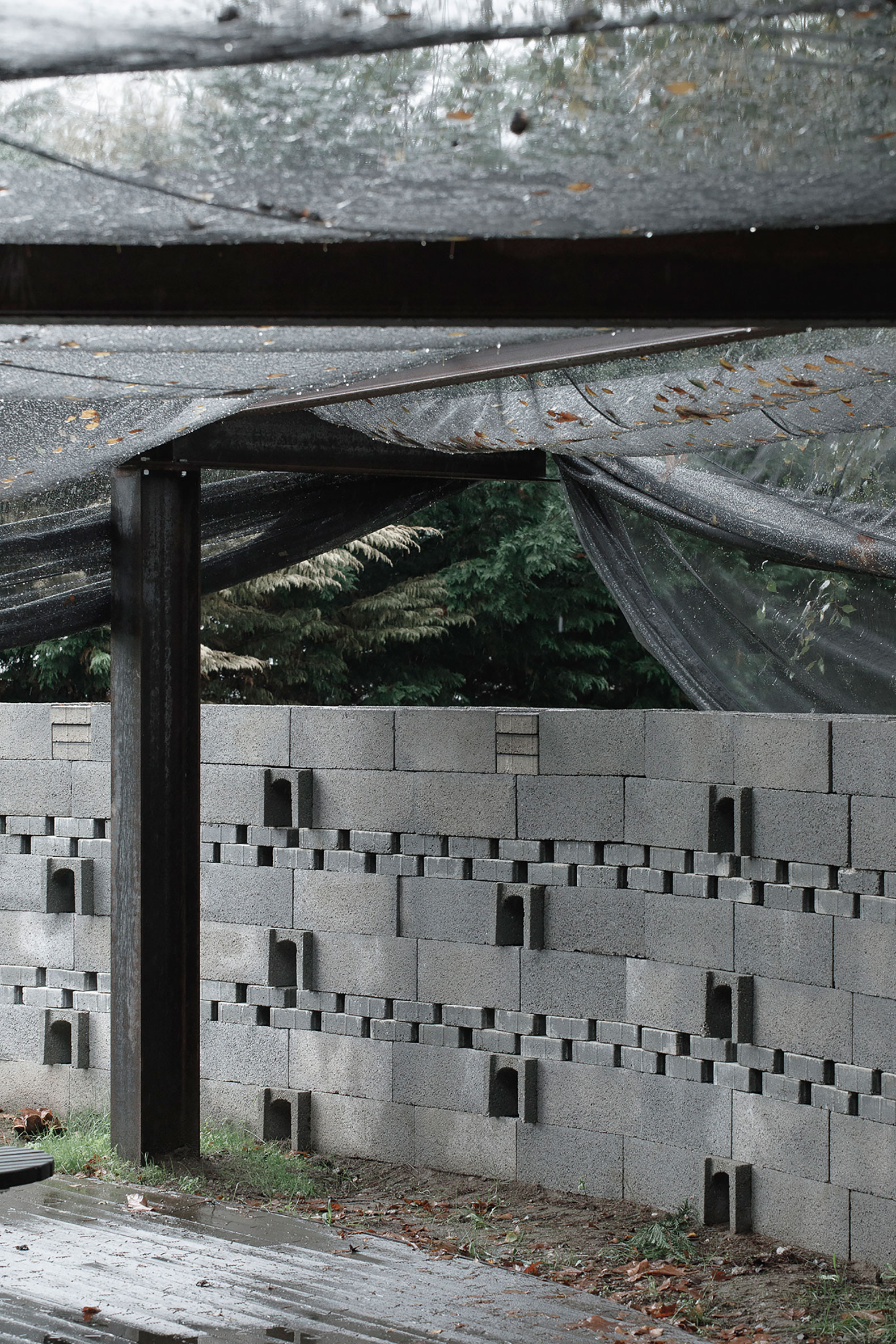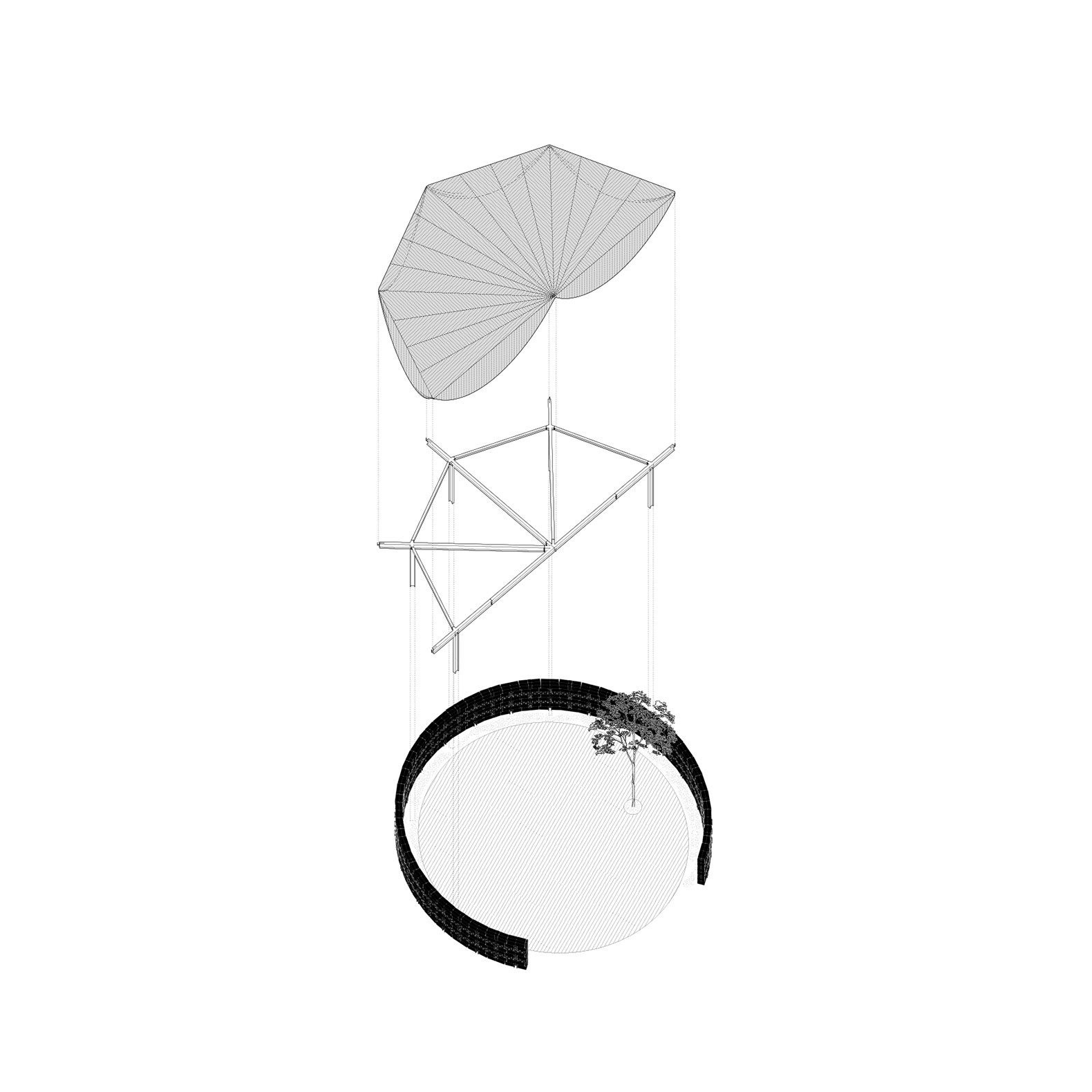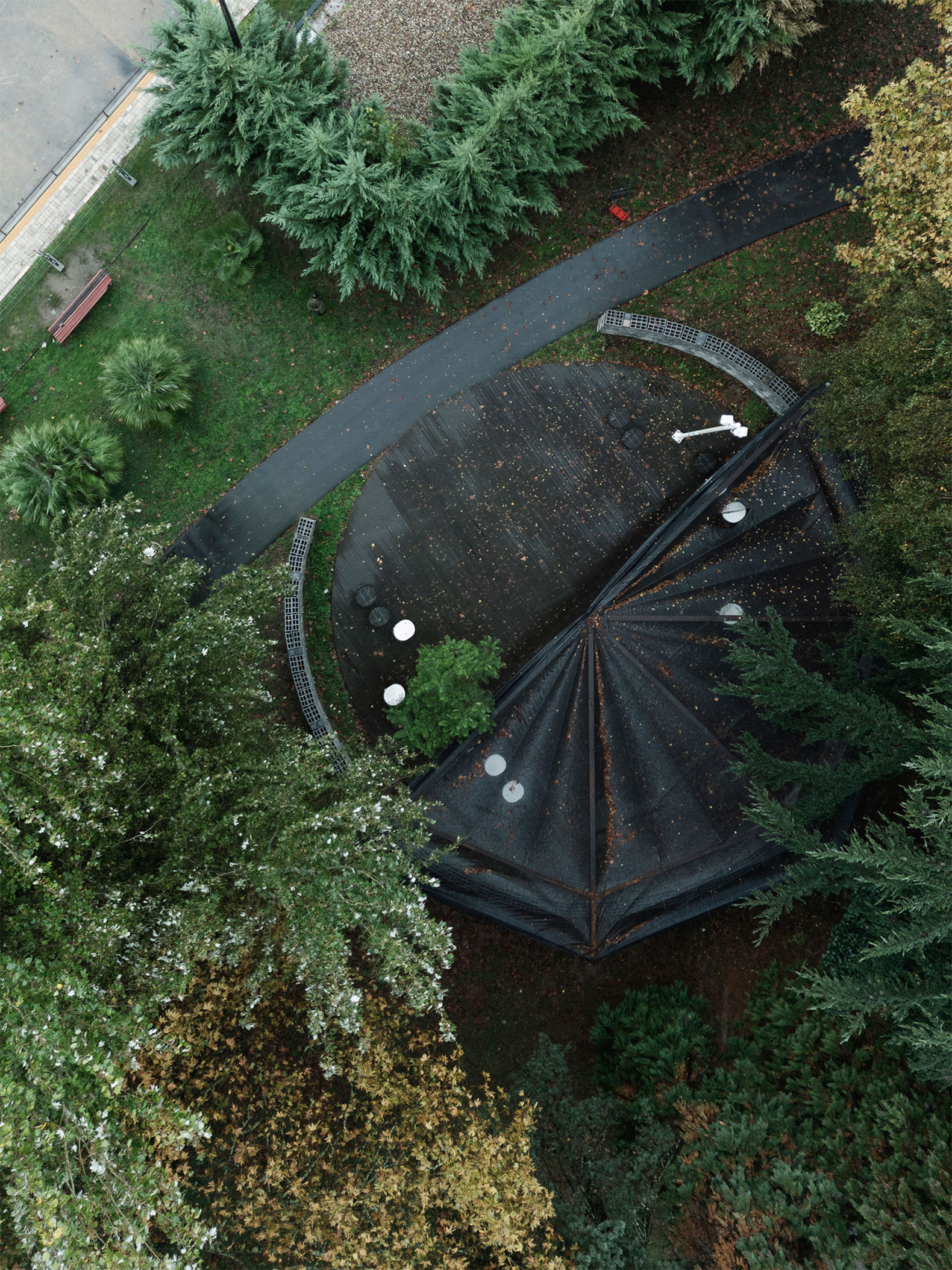
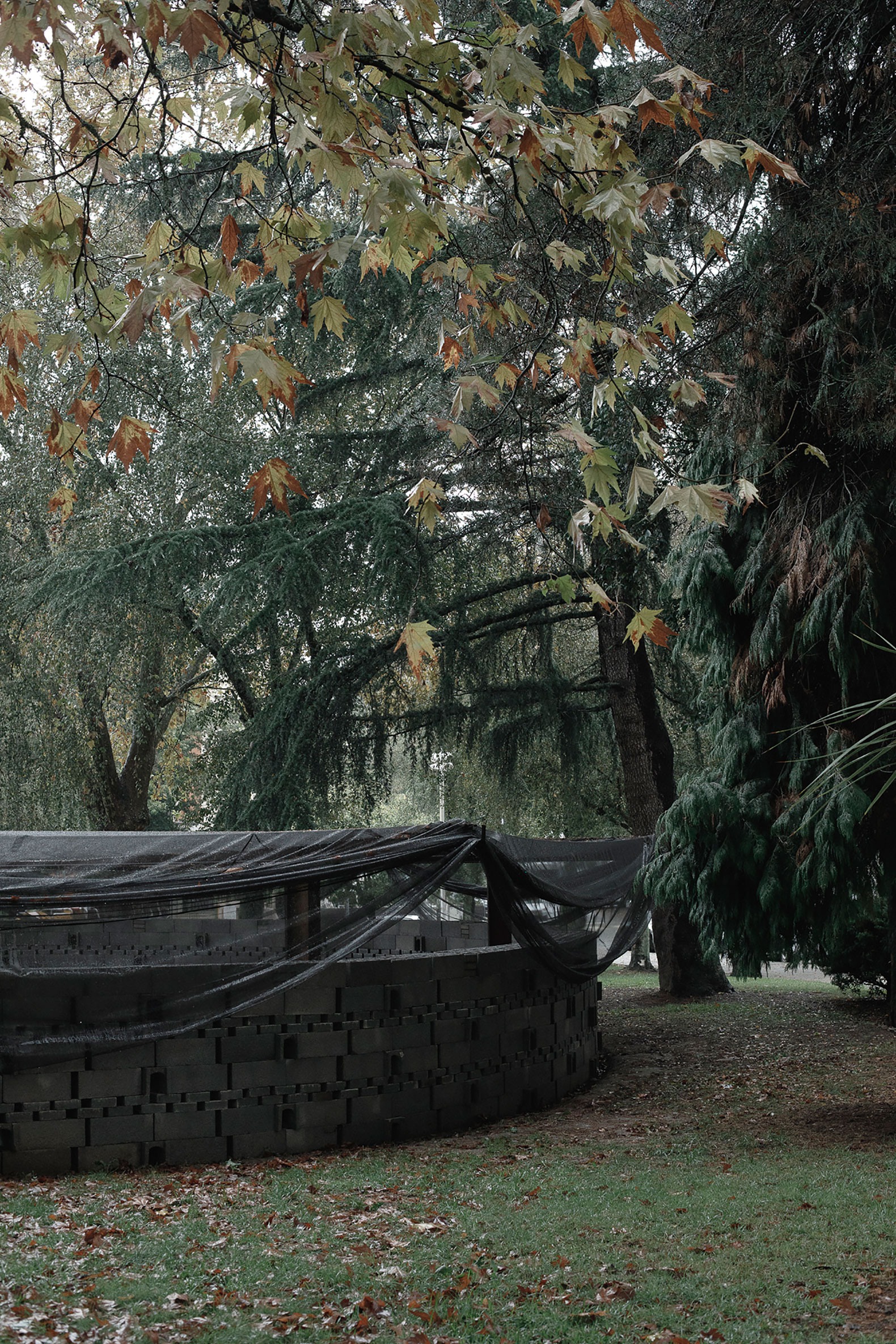
The "Rotation" pavilion, designed by ATA Atelier, comprises three main architectural components: a wall conceived as a meeting space, a metal structure rising from the wall, and a porous mesh roof enveloping the entire structure.
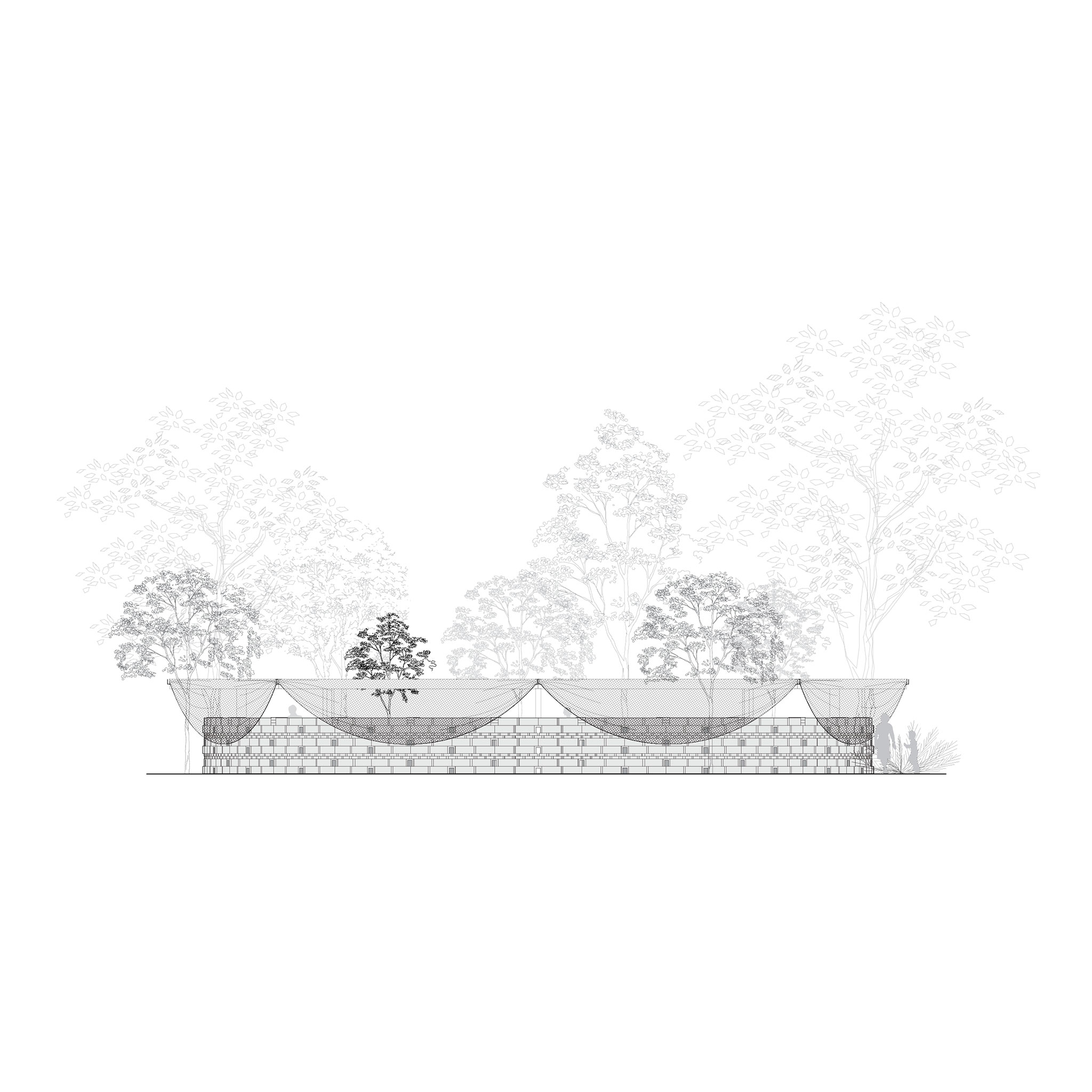
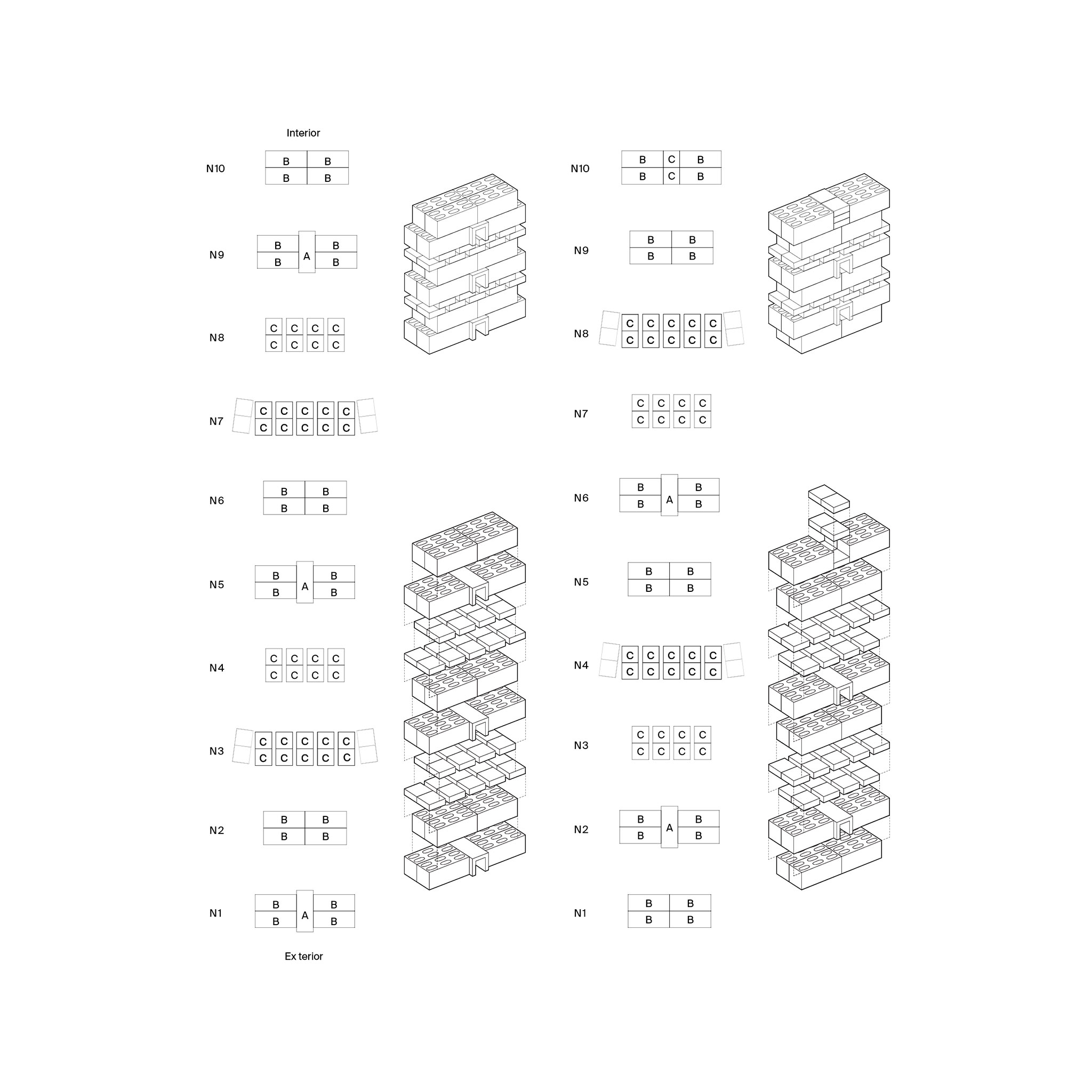
The new public space was built using a simple, dry construction system, allowing for reuse in different locations. The wall was constructed with various concrete blocks, and the structure was created following a radial metric related to the wall's modules. Finally, the mesh roof is supported by arches.
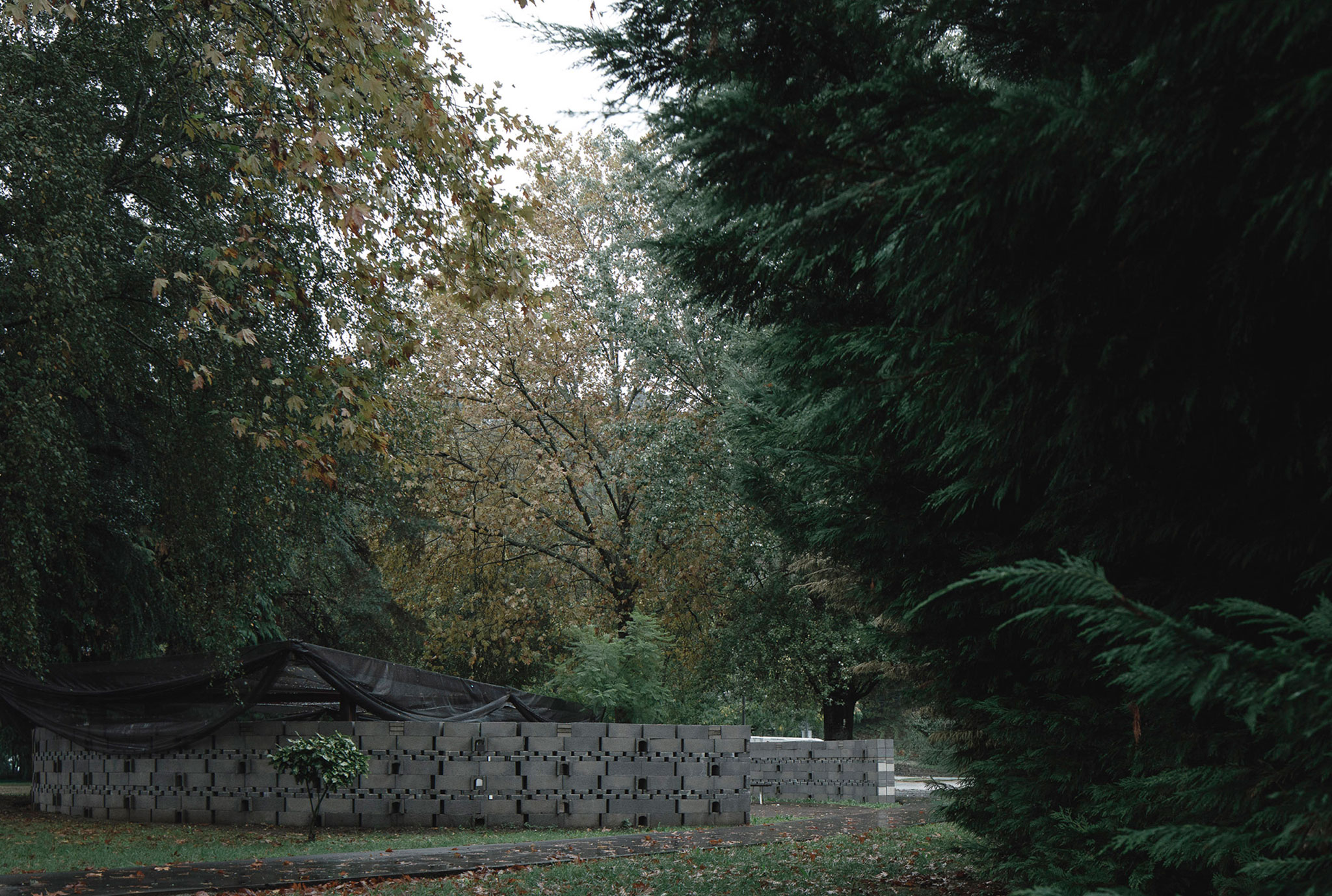
Rotation pavilion by ATA Atelier. Photograph by José Campos.
Project description by ATA Atelier
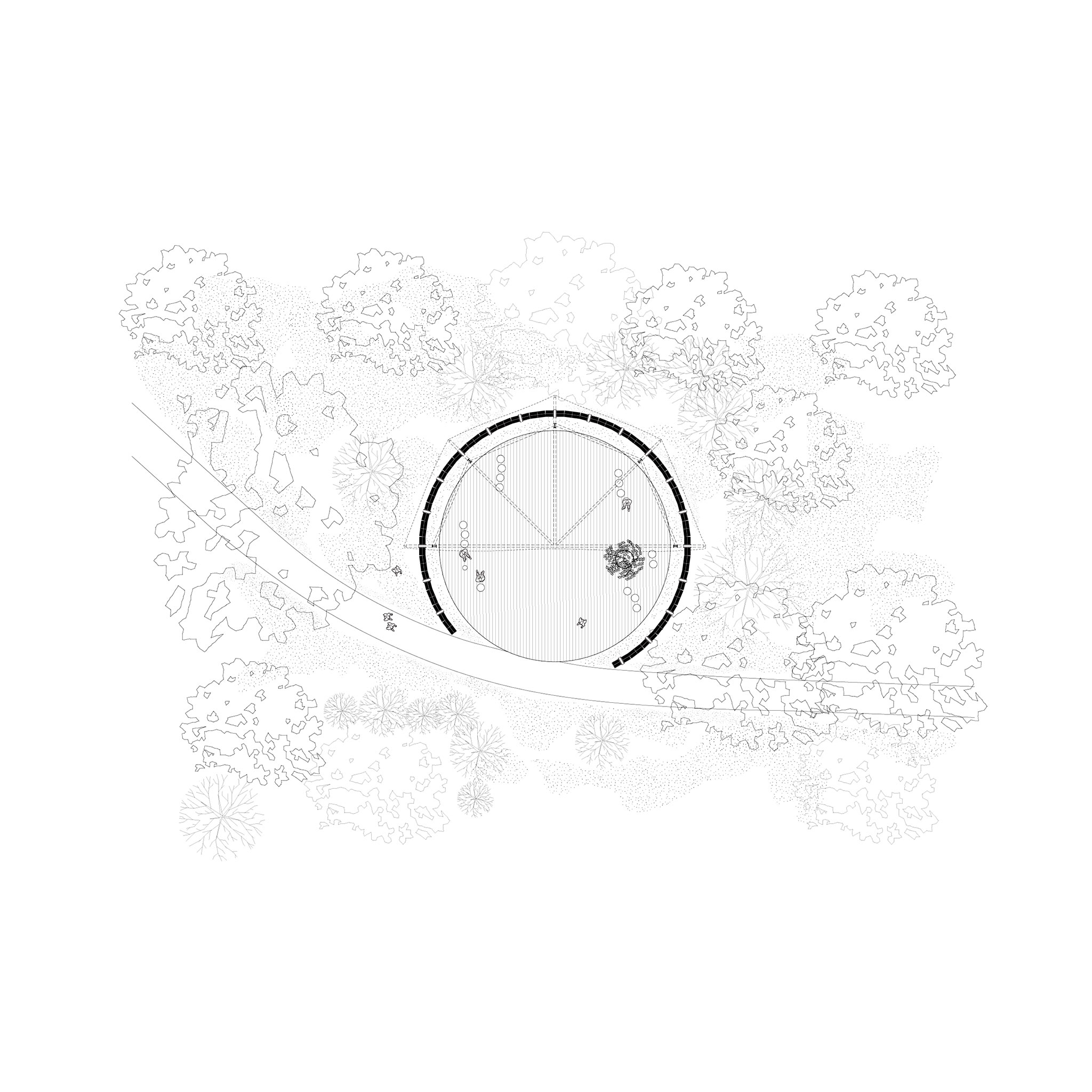
The intervention at Quinta da Capela, integrated in the Forma da Vizinhança Festival, emerges from the place itself: from its physical substance and from the memory accumulated within it, shaped by the overlapping histories of the community. These meanings are materialized in specific gestures, such as the jacaranda tree offered by the poet Eugénio de Andrade to a resident, which survived the garden’s redevelopment works thanks to the resistance of the neighbourhood. The symbolic strength of this gesture gave rise to a new space of permanence, defined by two circles that evoke different temporal layers: the pavement and the tree pit.
The substance of the pavilion’s form is configured from the idea of reusing materials and rotating resources that are abundant in a city like Braga, shaped by the construction industry. The premise is simple: to build a structure exclusively from leftover materials and without finishes, conceived through a simple, dry construction system, so that it can be reused elsewhere. In its dismantling, it aspires to be reconfigured and reborn within other built bodies.
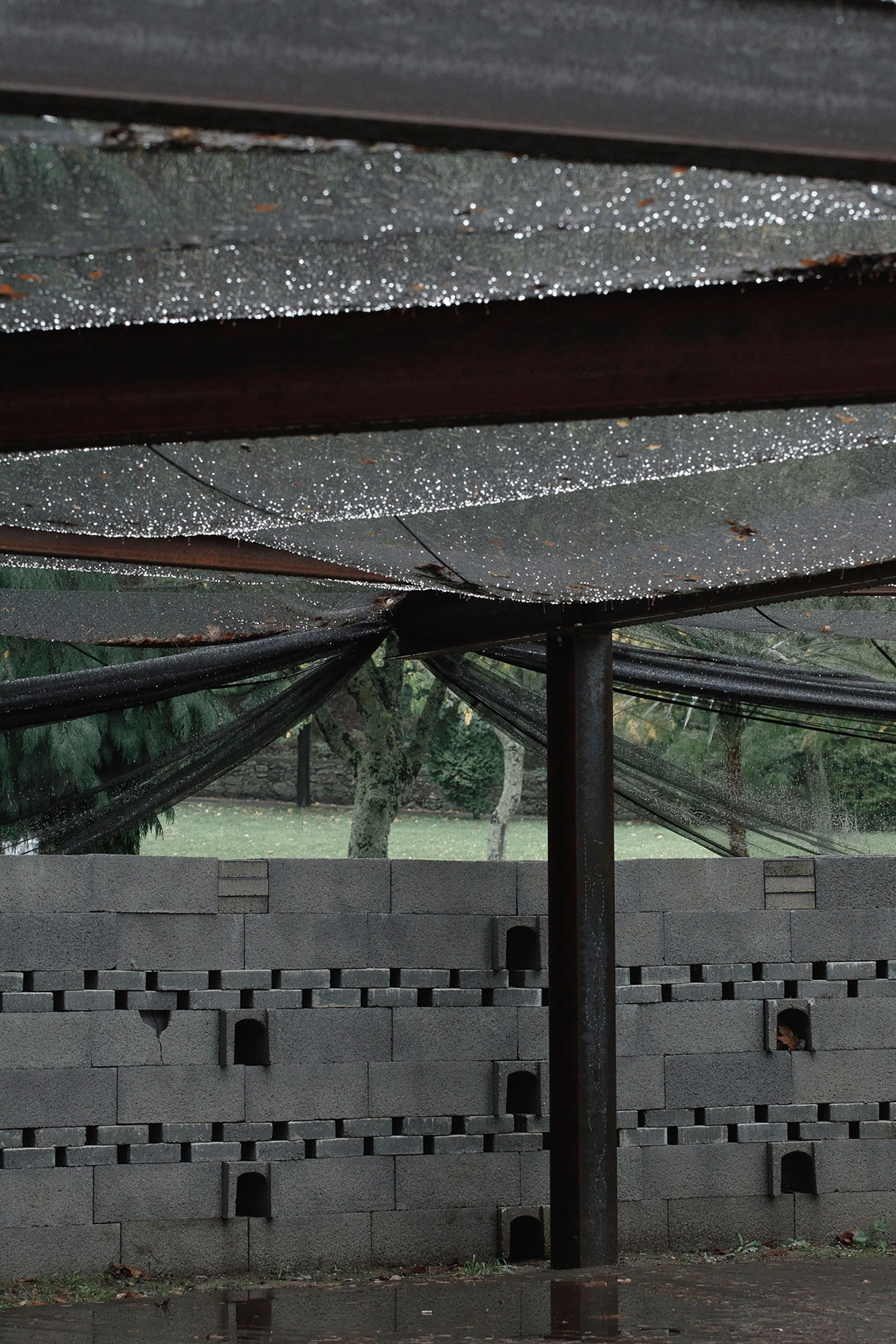
From this confluence — collective memory, the symbolism of the circle, and reused materials — three main architectural components emerge: a wall, a structure, and a roof. The wall, composed of different concrete blocks, traces a permeable and rhythmic circle, conceived as a gathering space. From it, following a radial metric related to the wall’s modules, rises a metal structure found in a warehouse. Finally, a porous mesh roof, supported by arches that embrace the wall without touching it, encloses the ensemble. The plastic rotation of these three elements — with distinct origins and functions — gives rise to a new public space at Quinta da Capela.