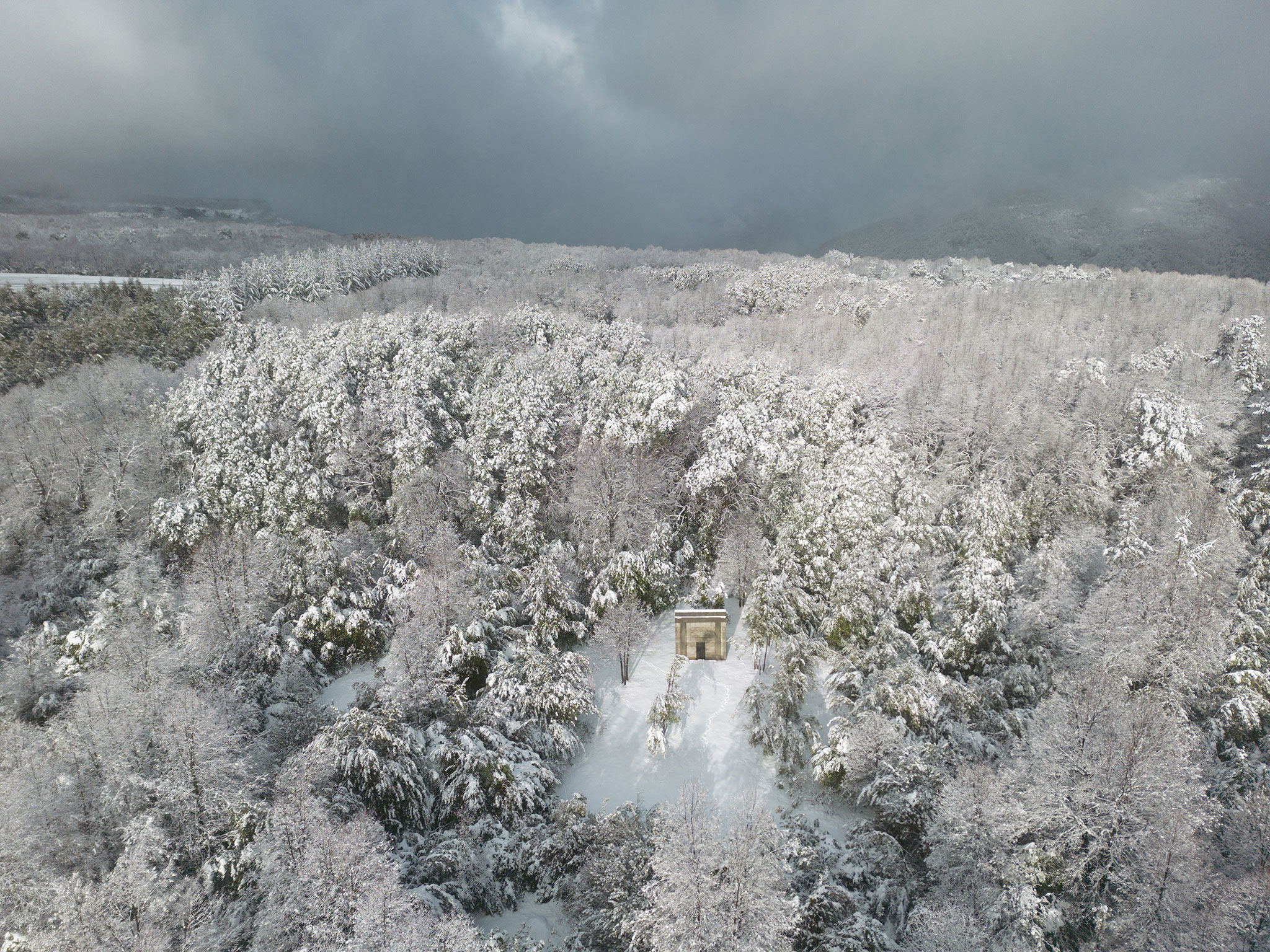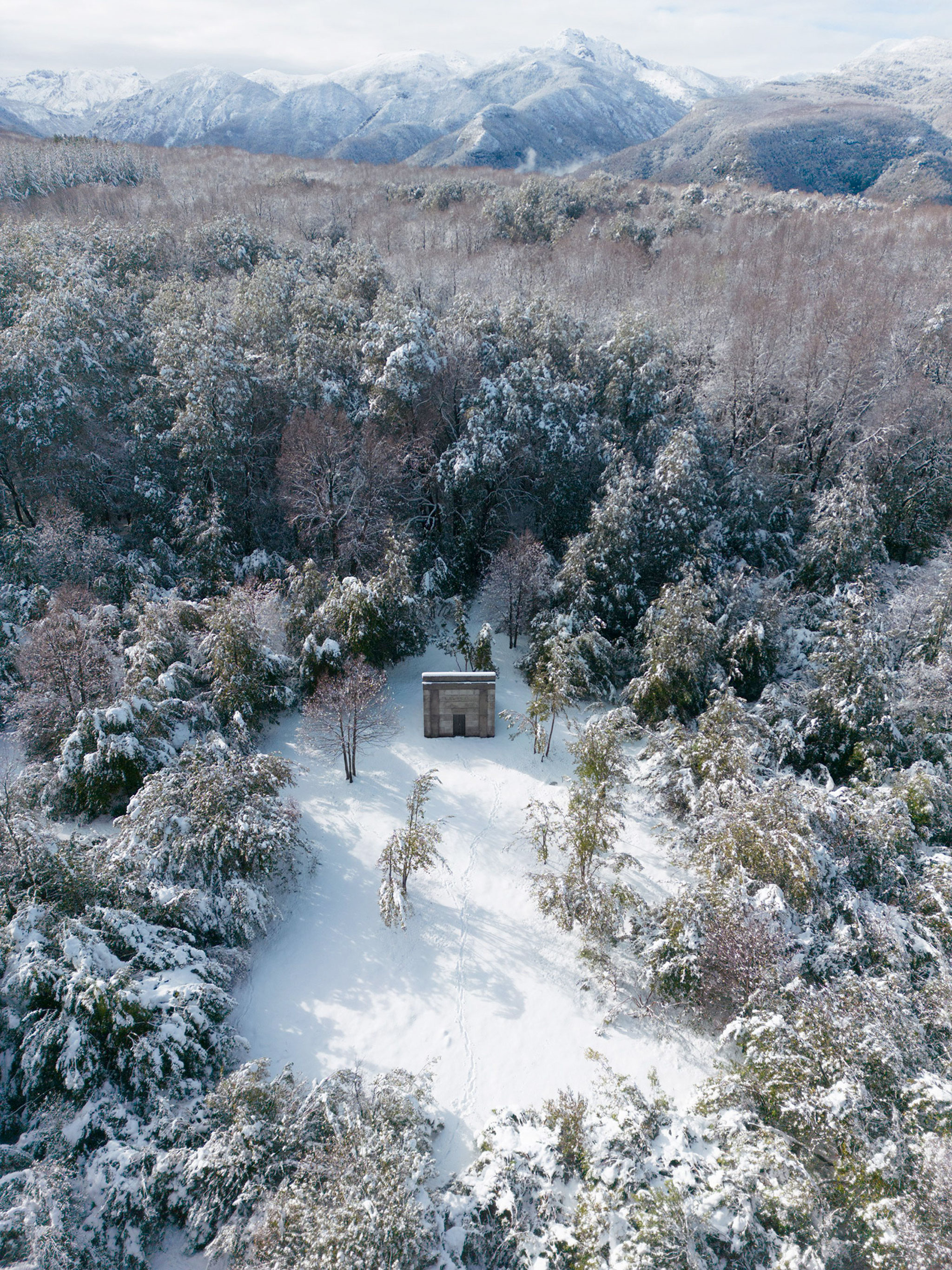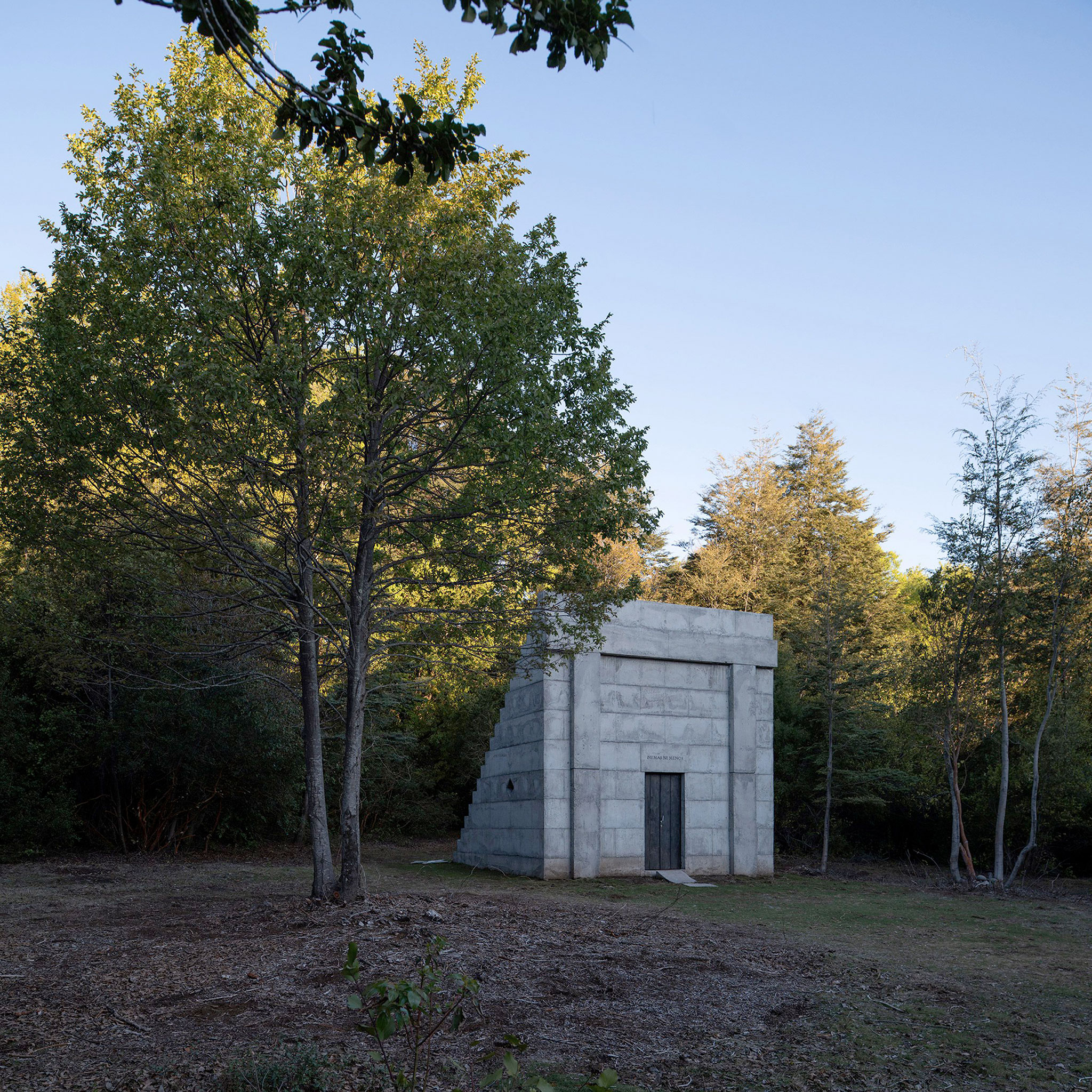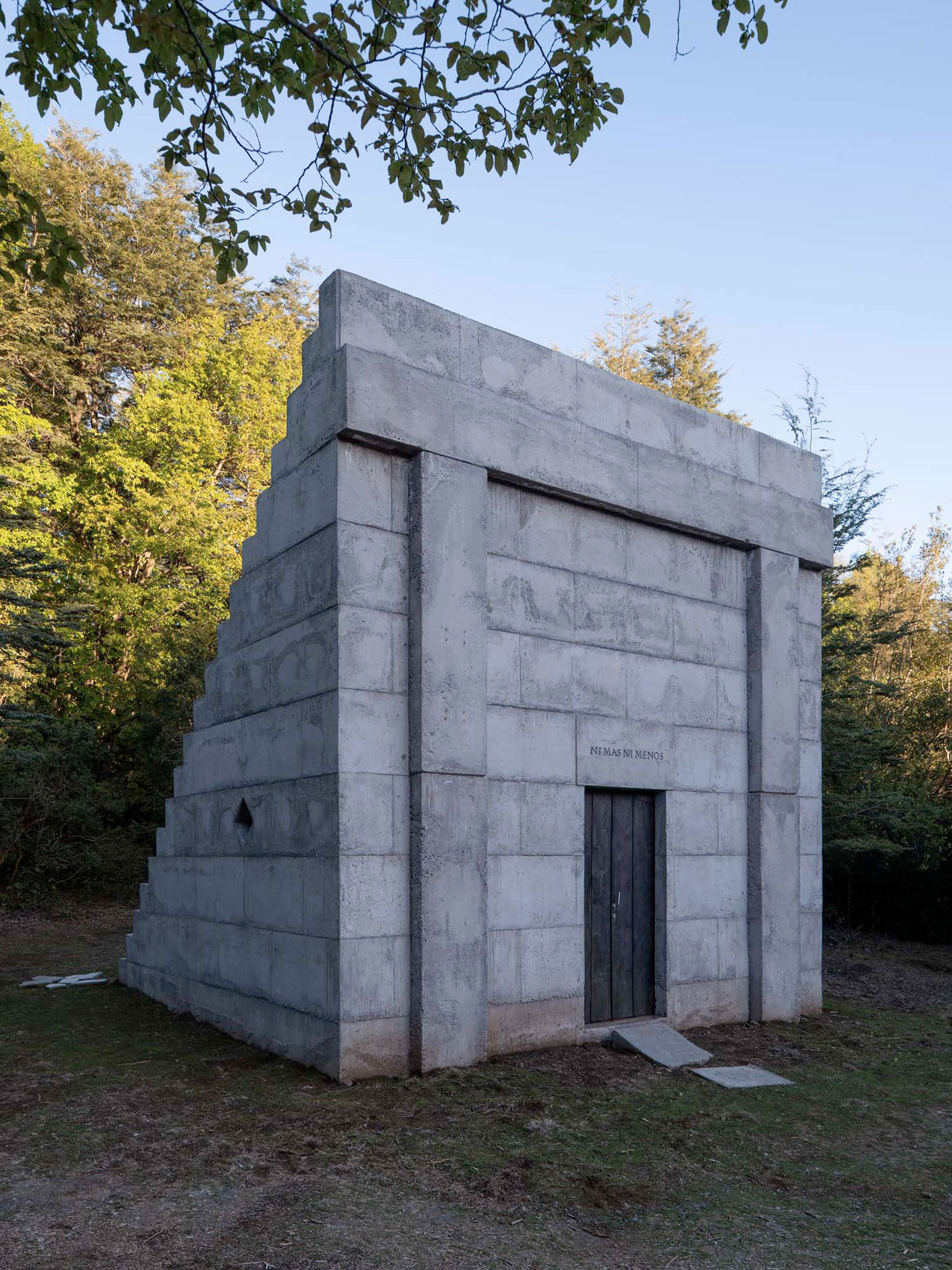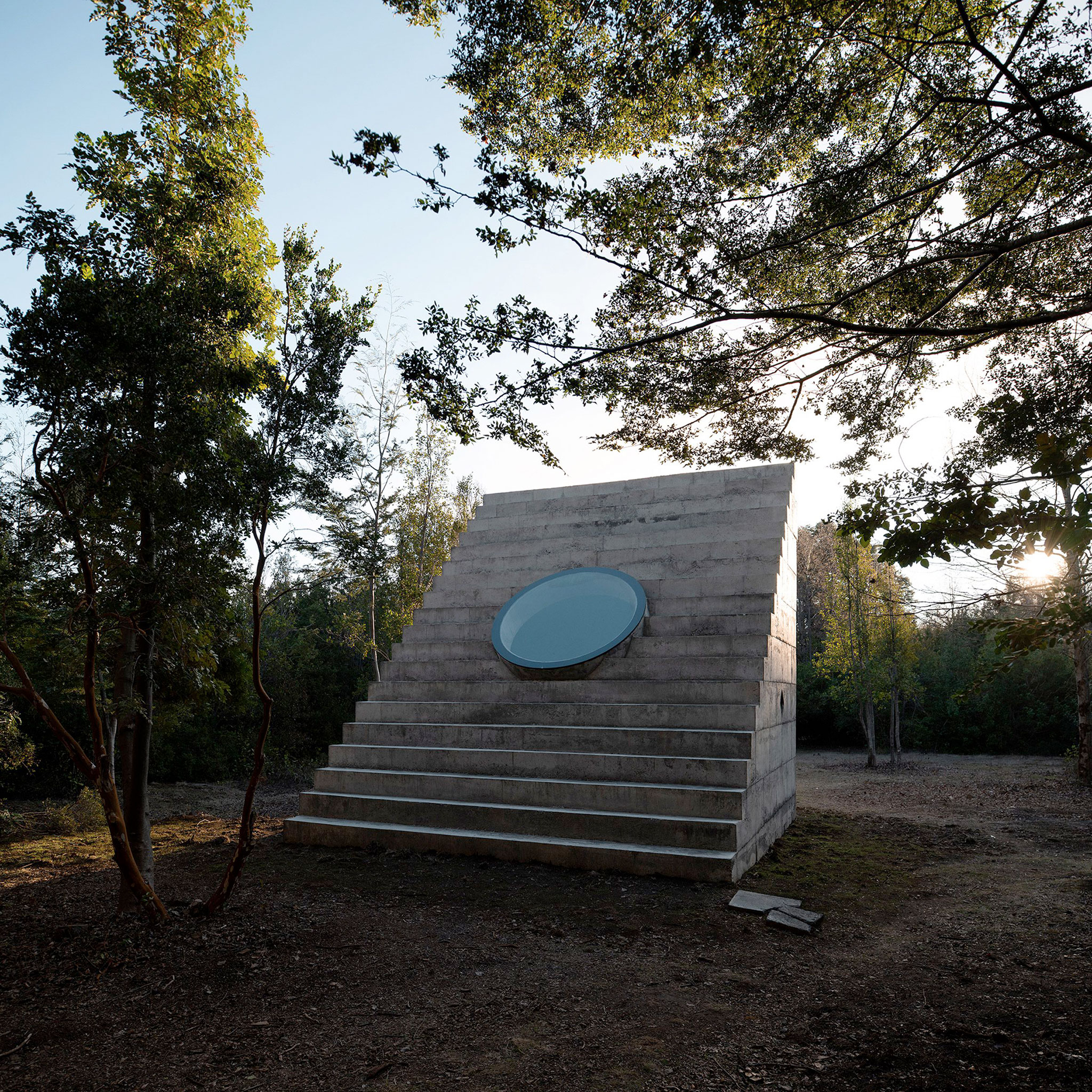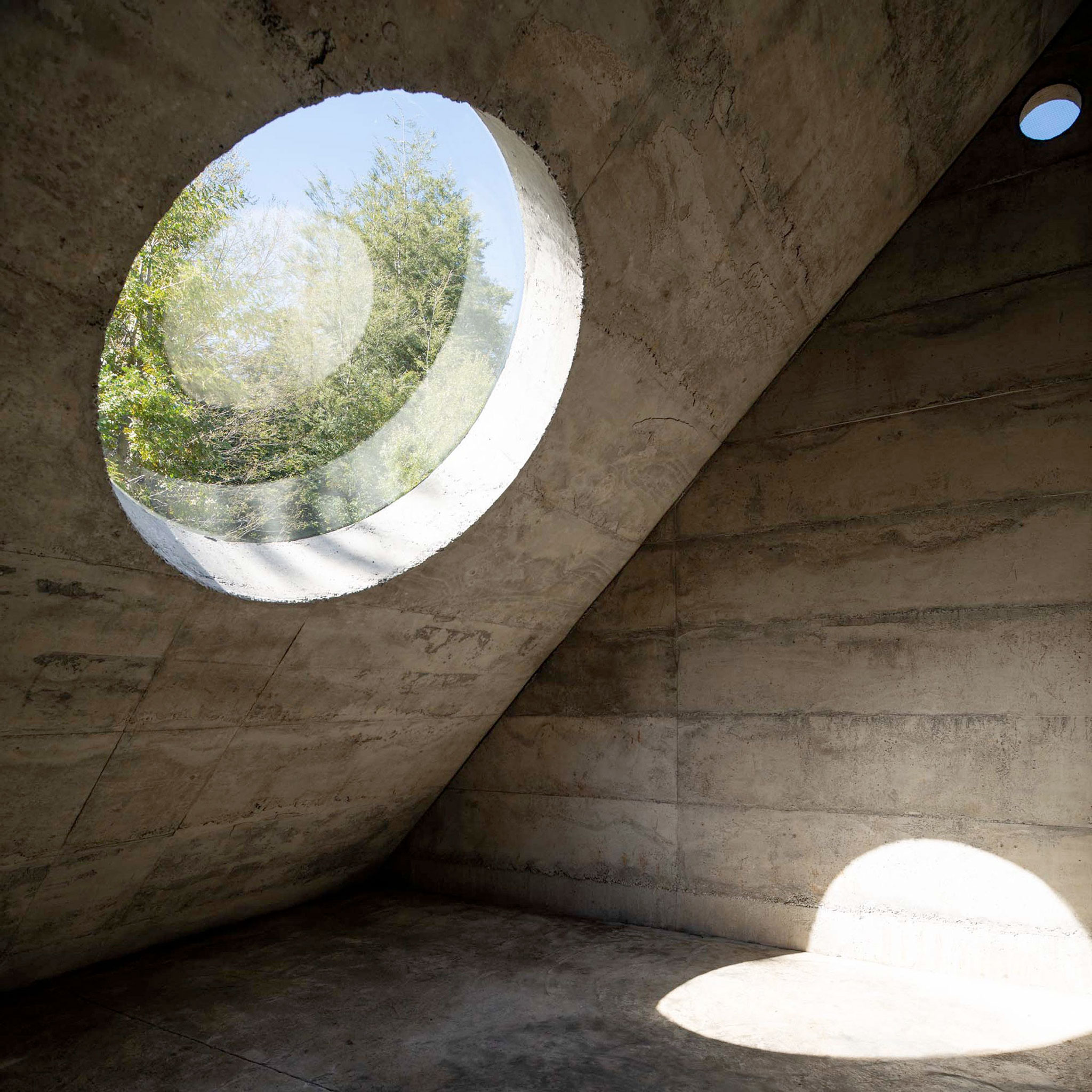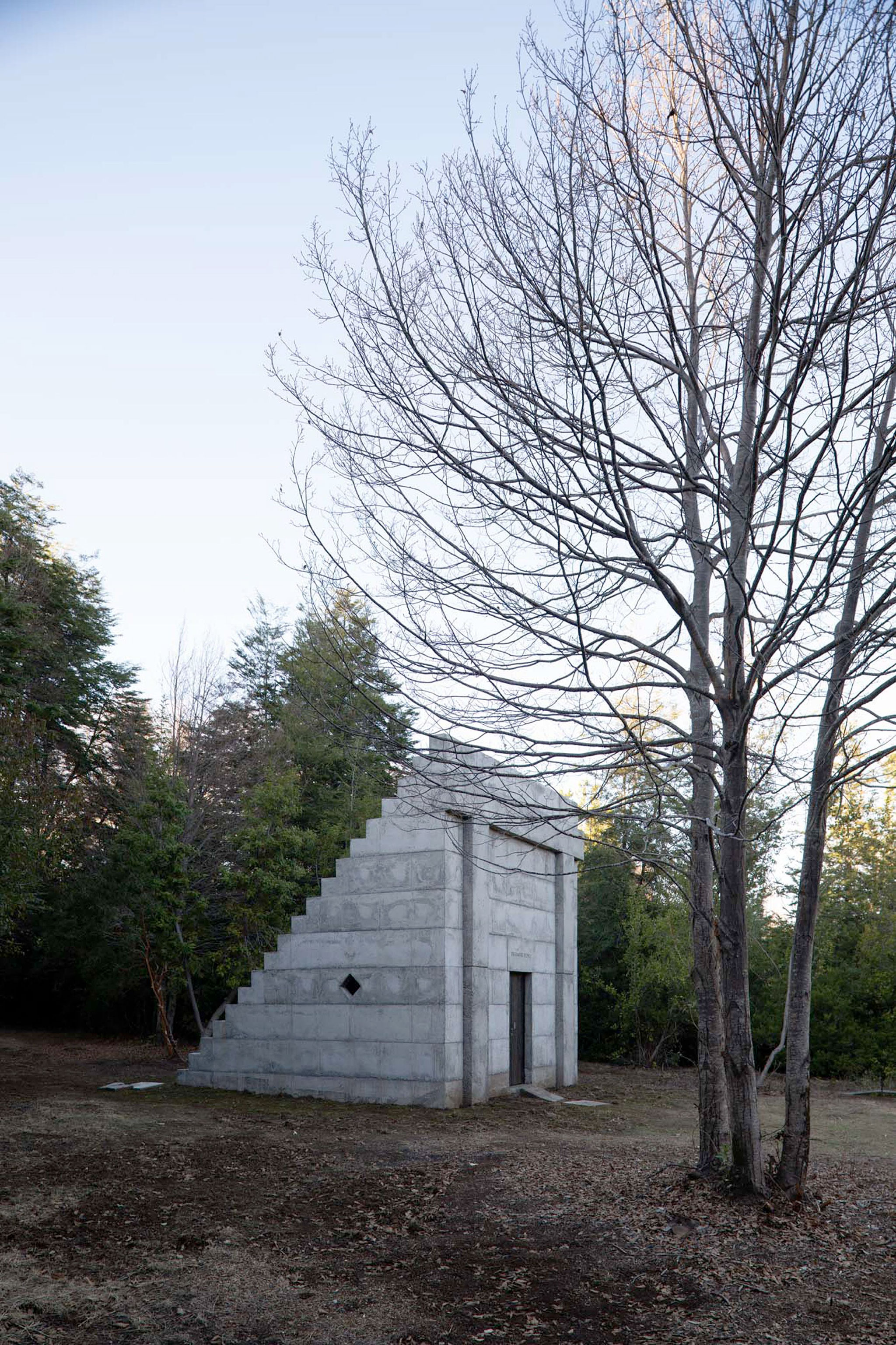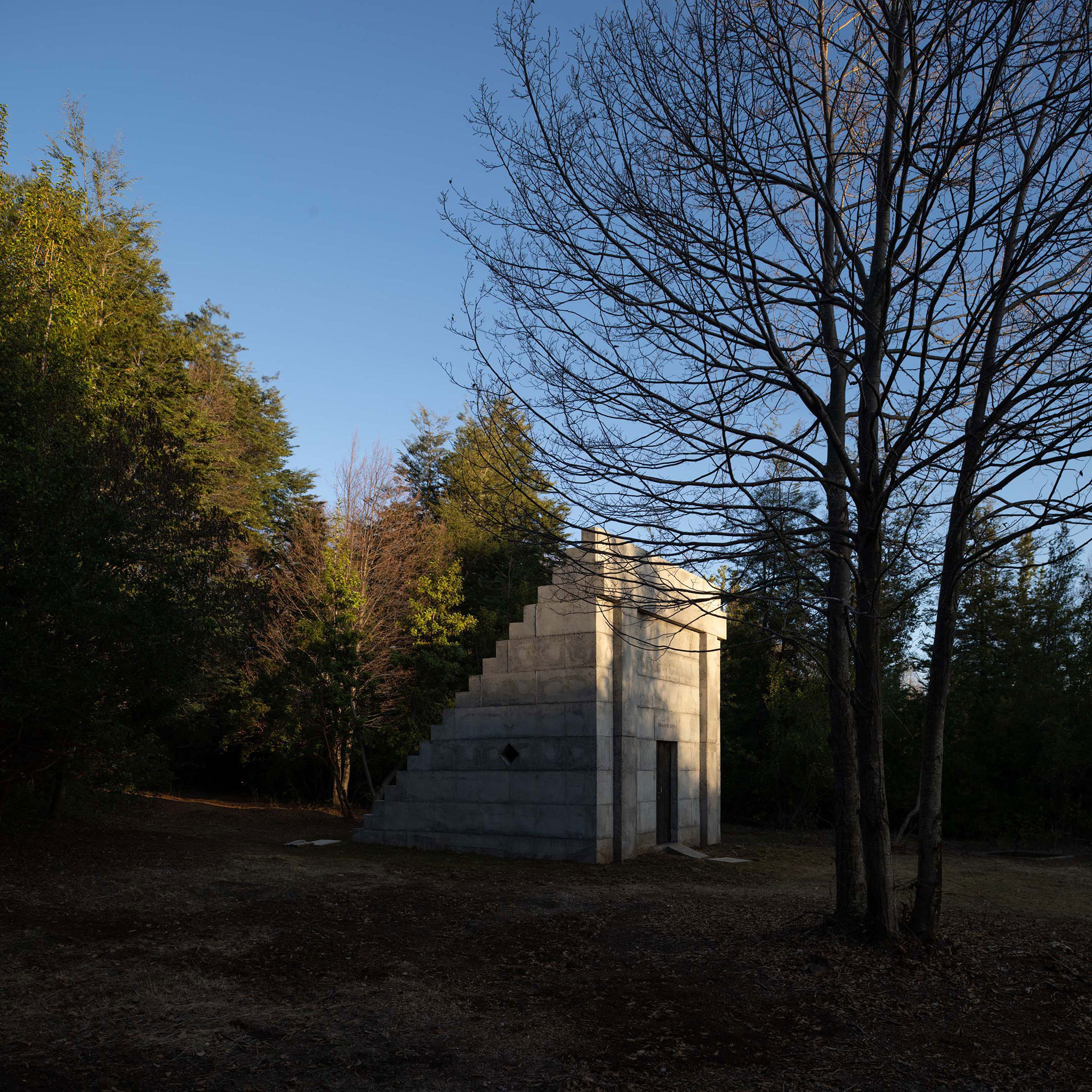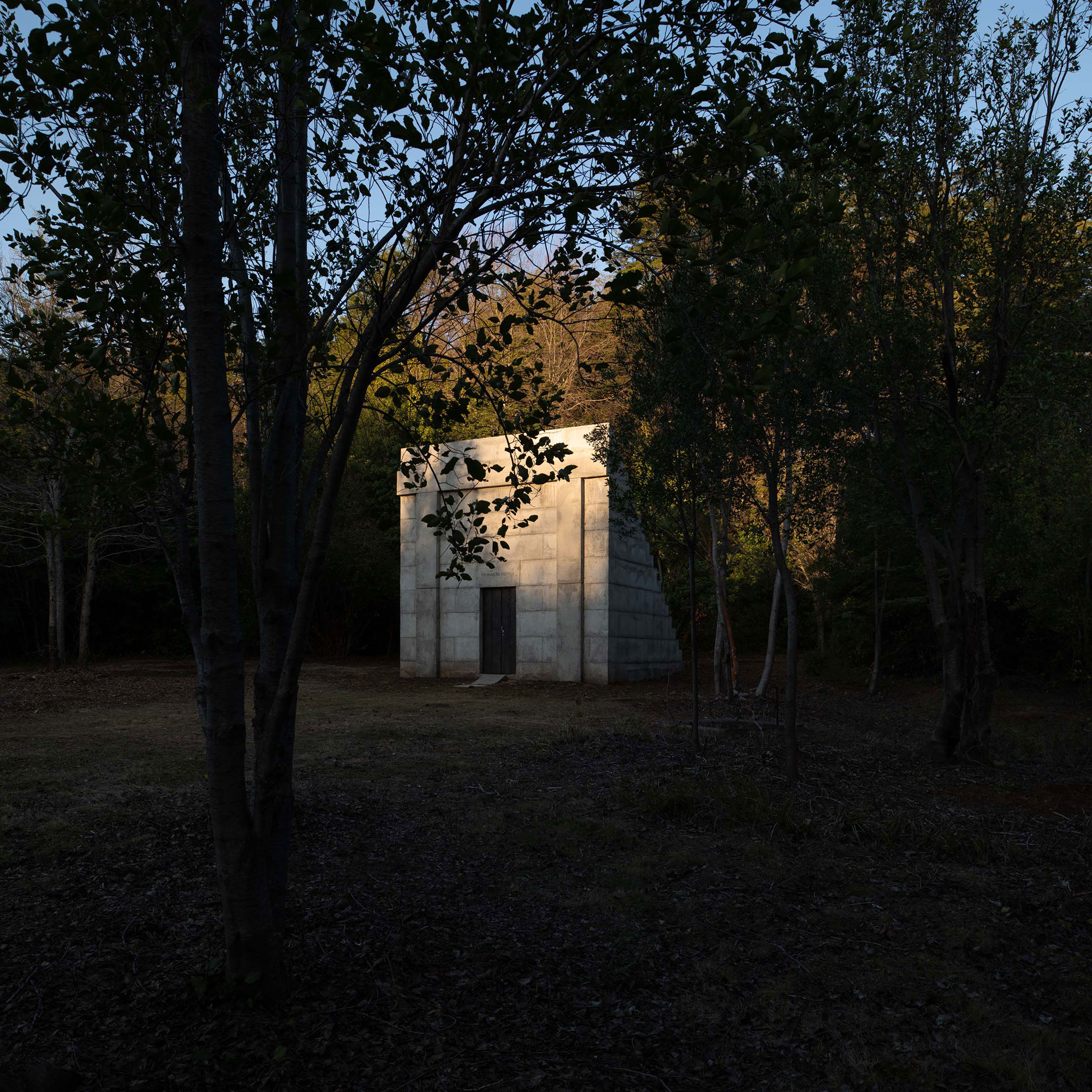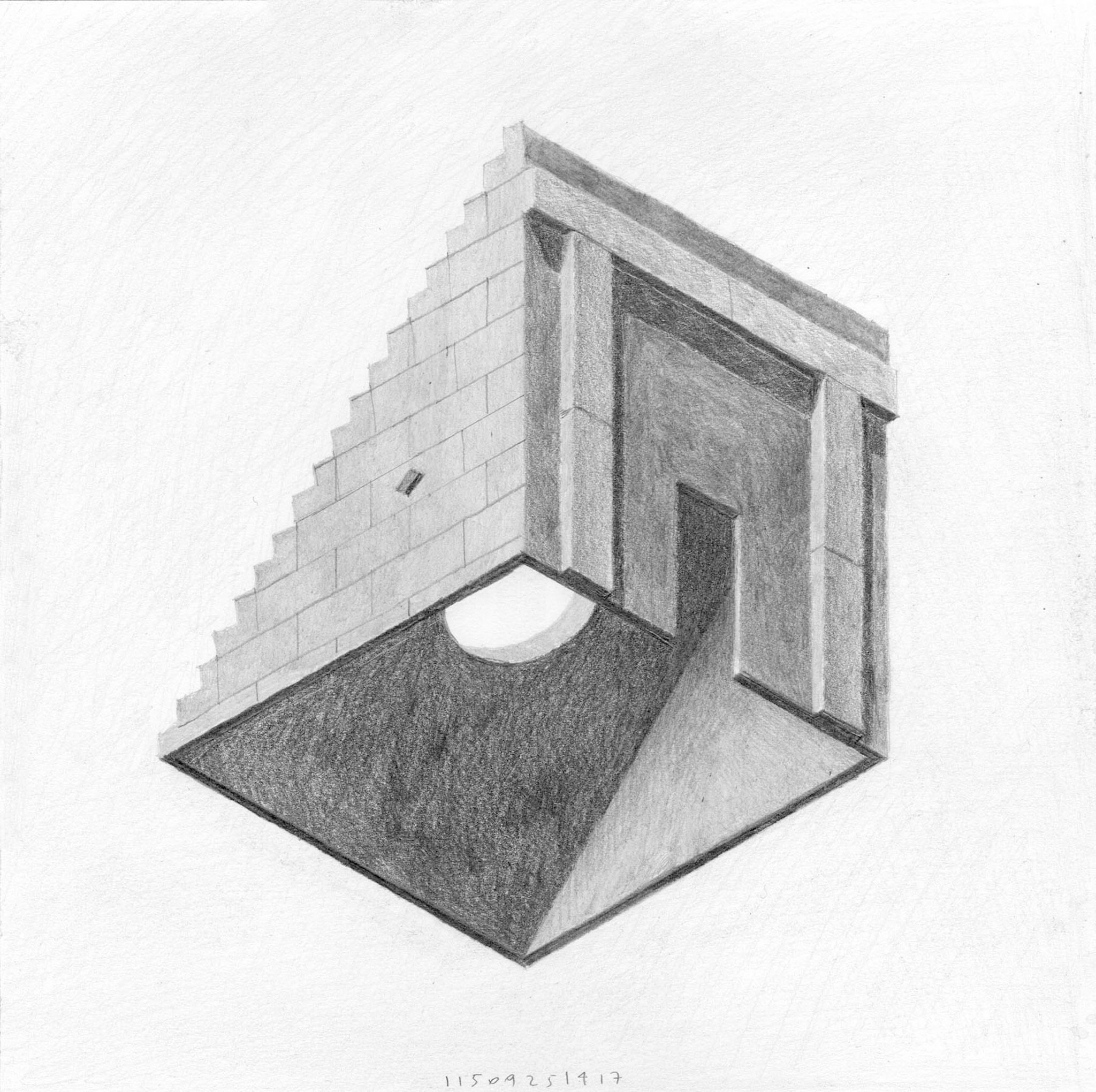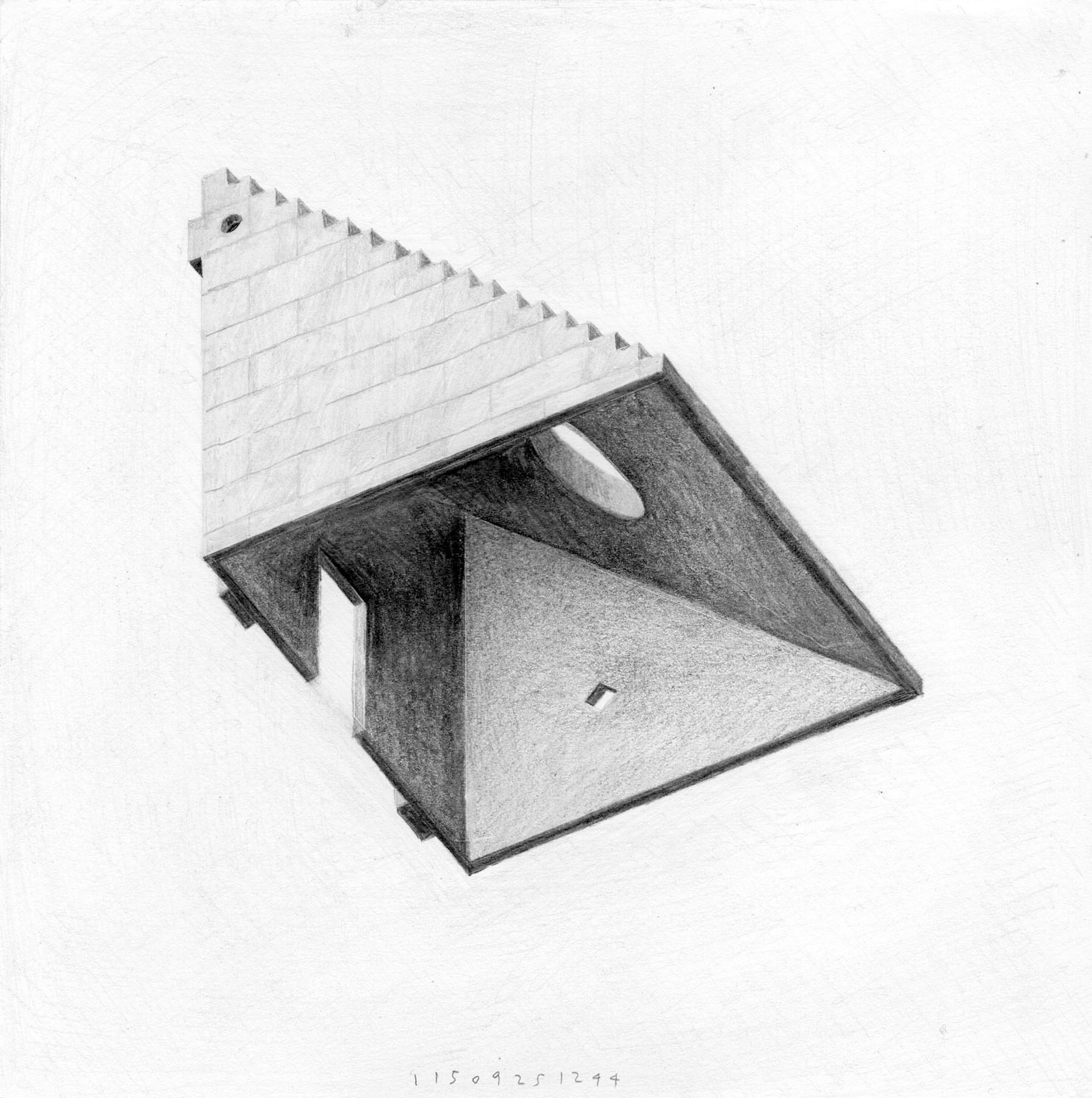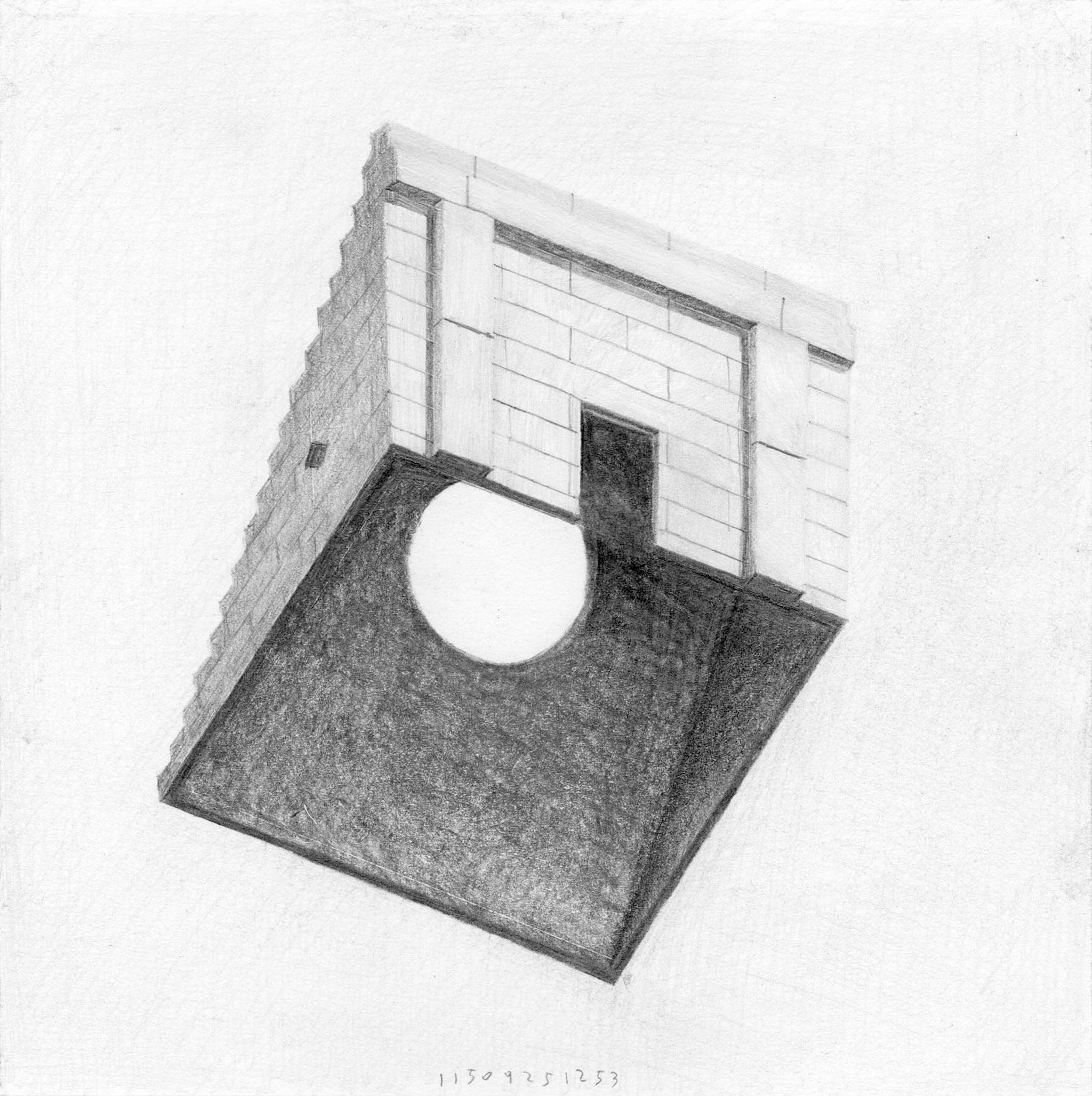
In the context of the nearby Casa Luna (also designed by the practice), the proposal seems to recall the investigations presented in the well-known book "Adam's House in Paradise" by Joseph Rykwert. The structure is made of rough, unfinished concrete.
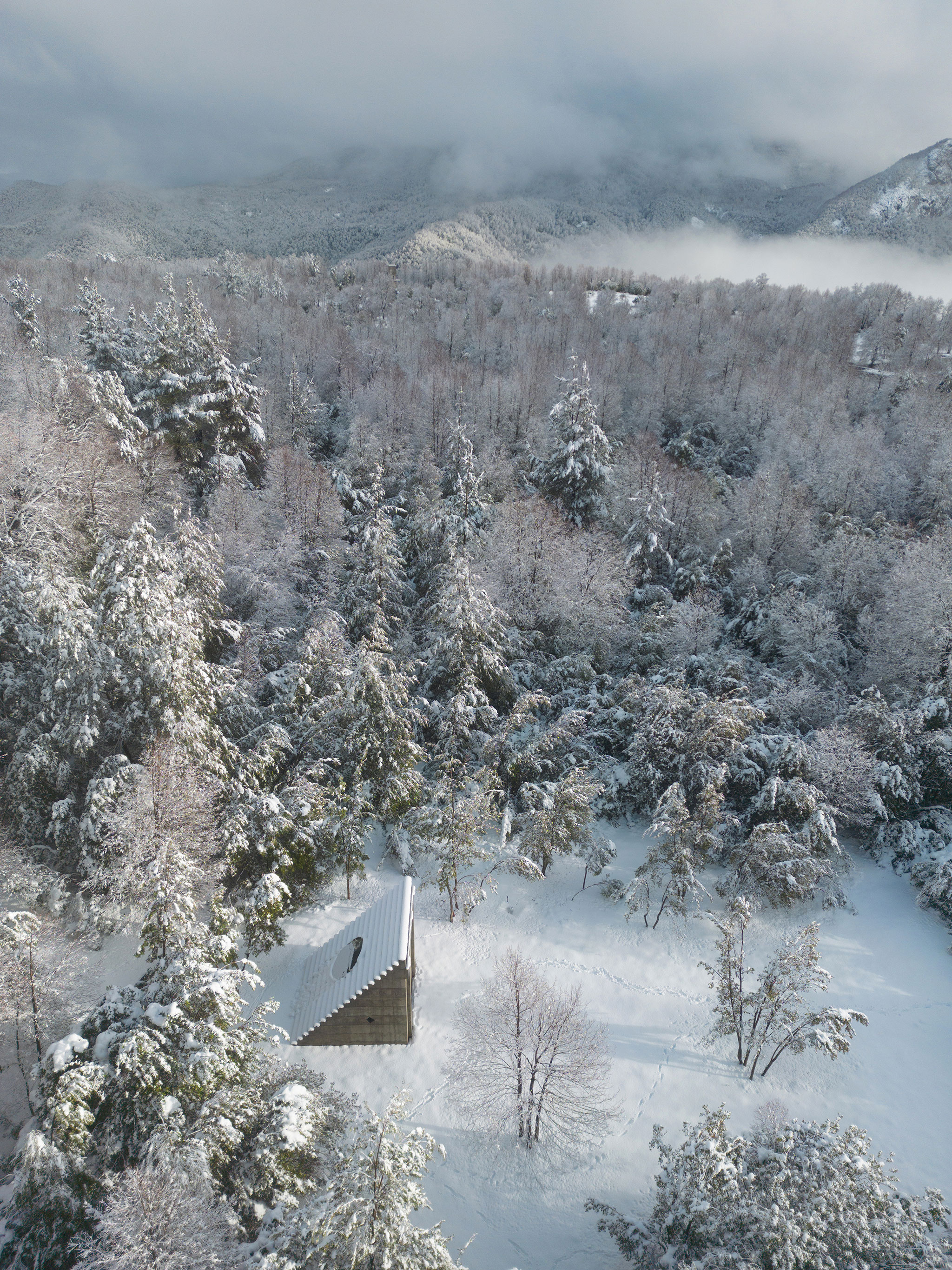
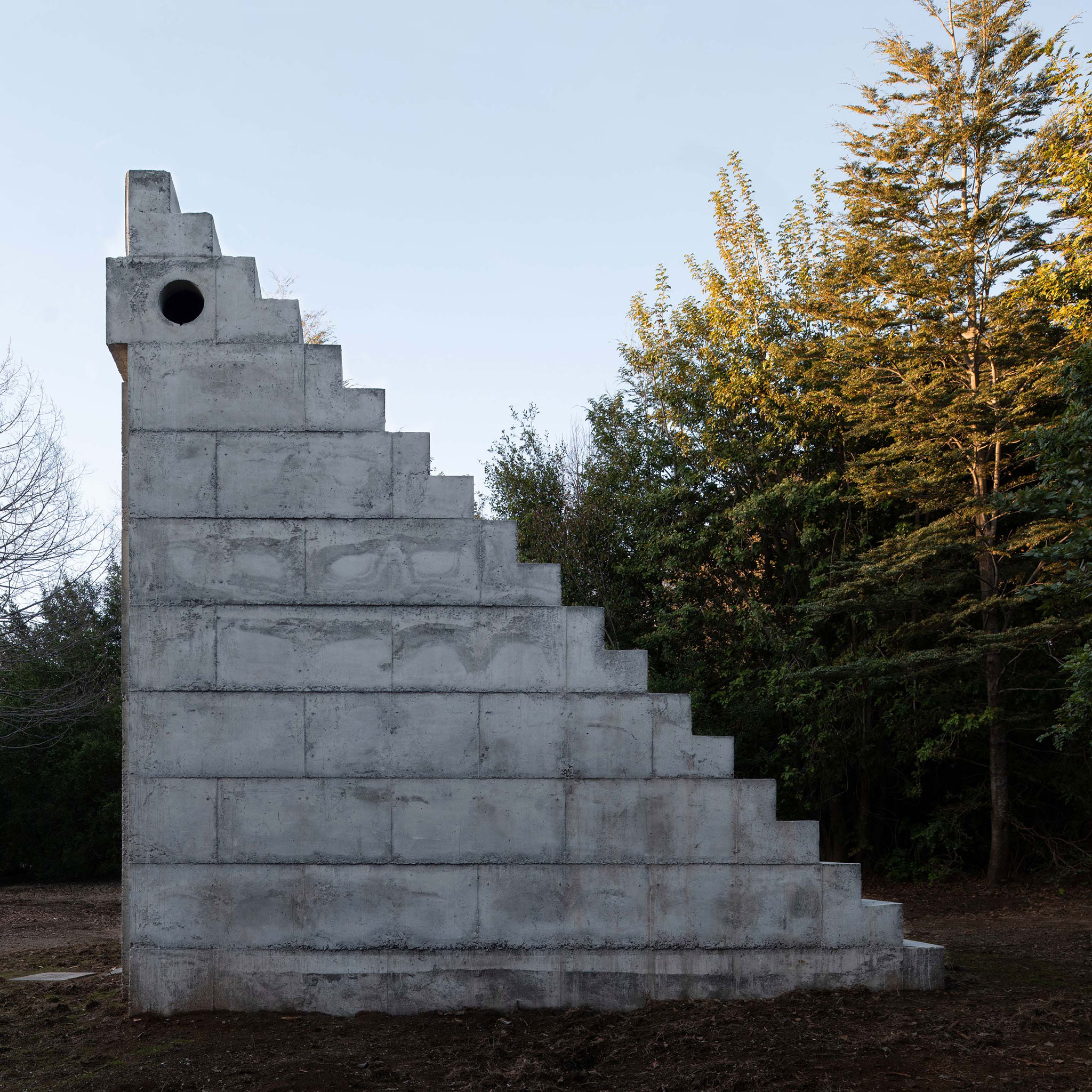
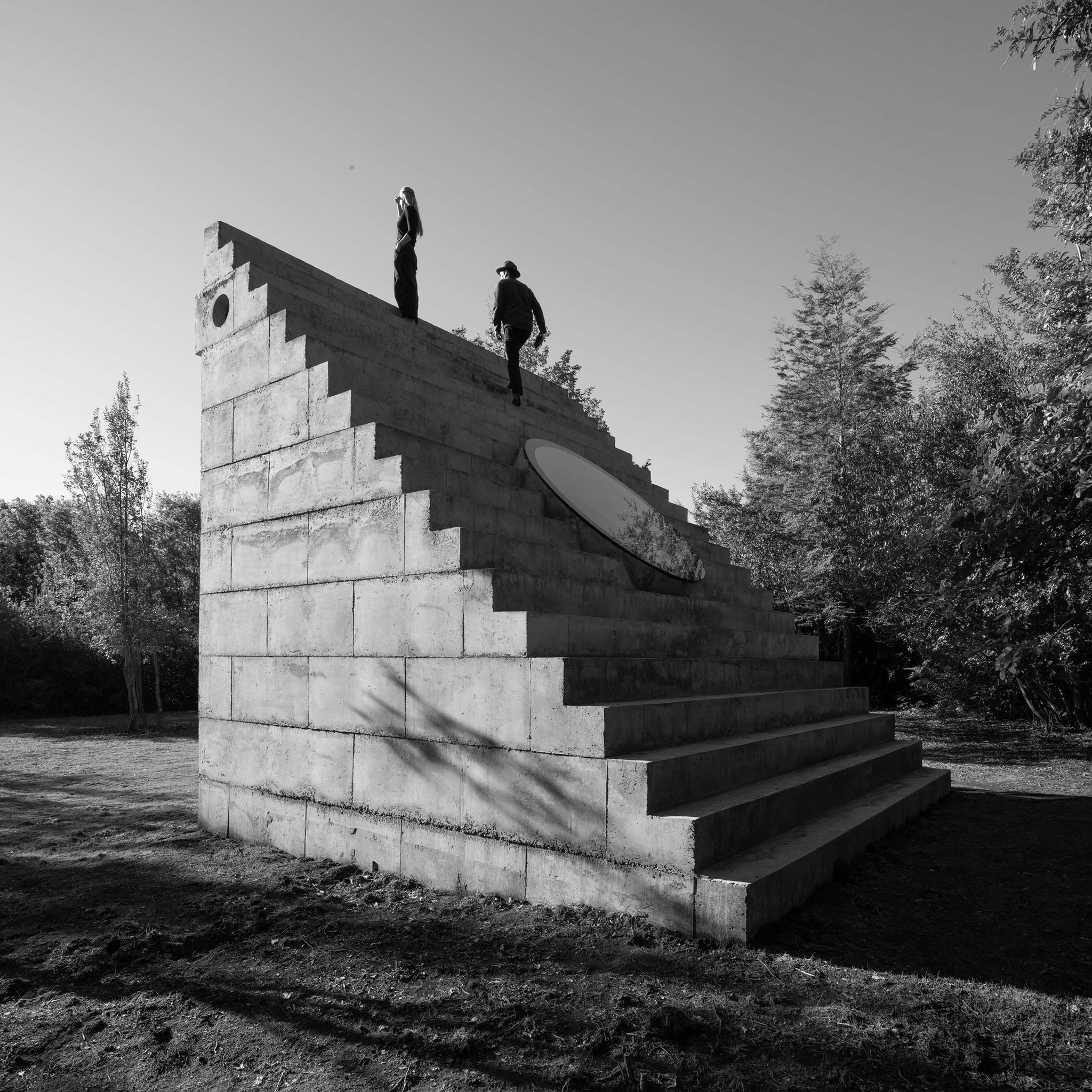
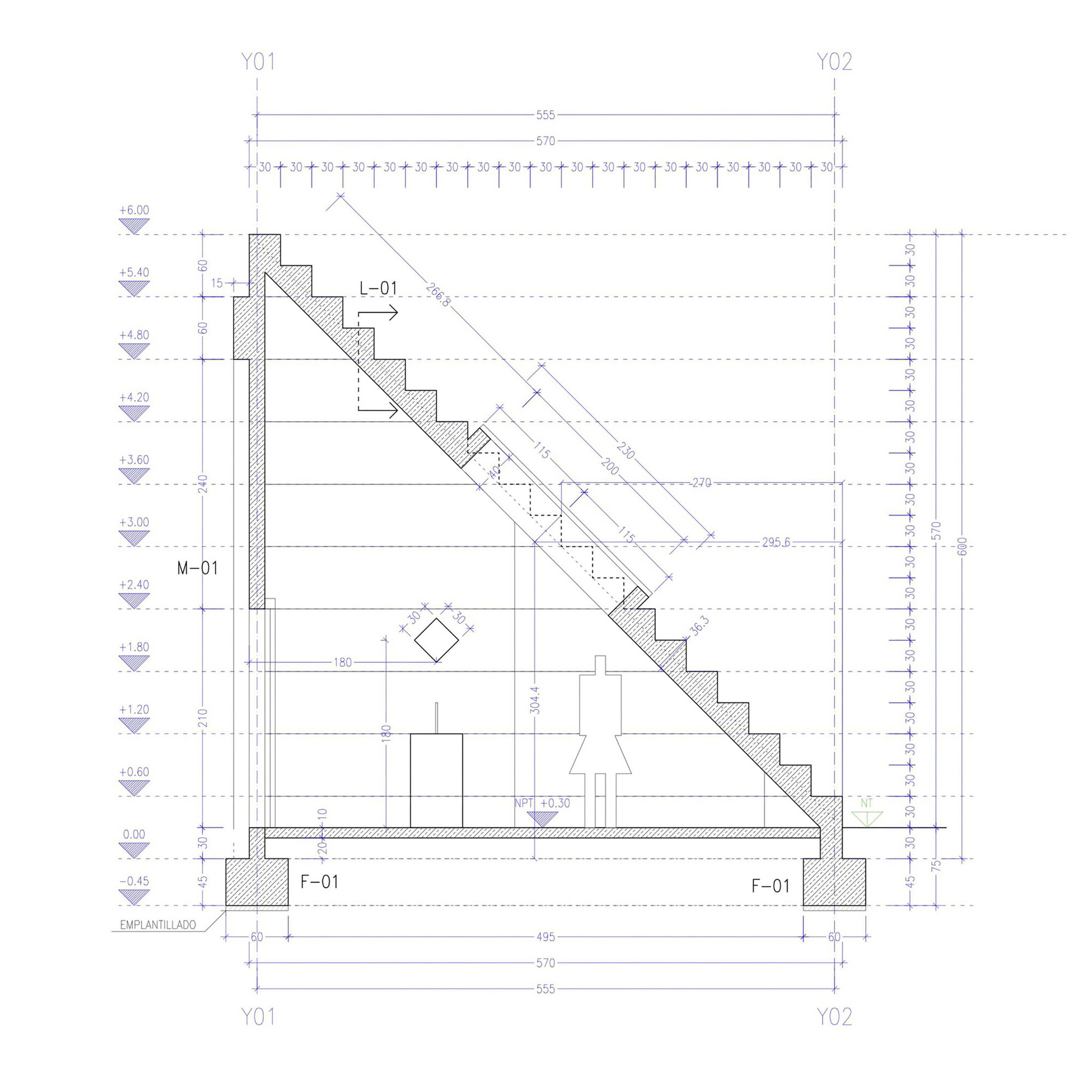
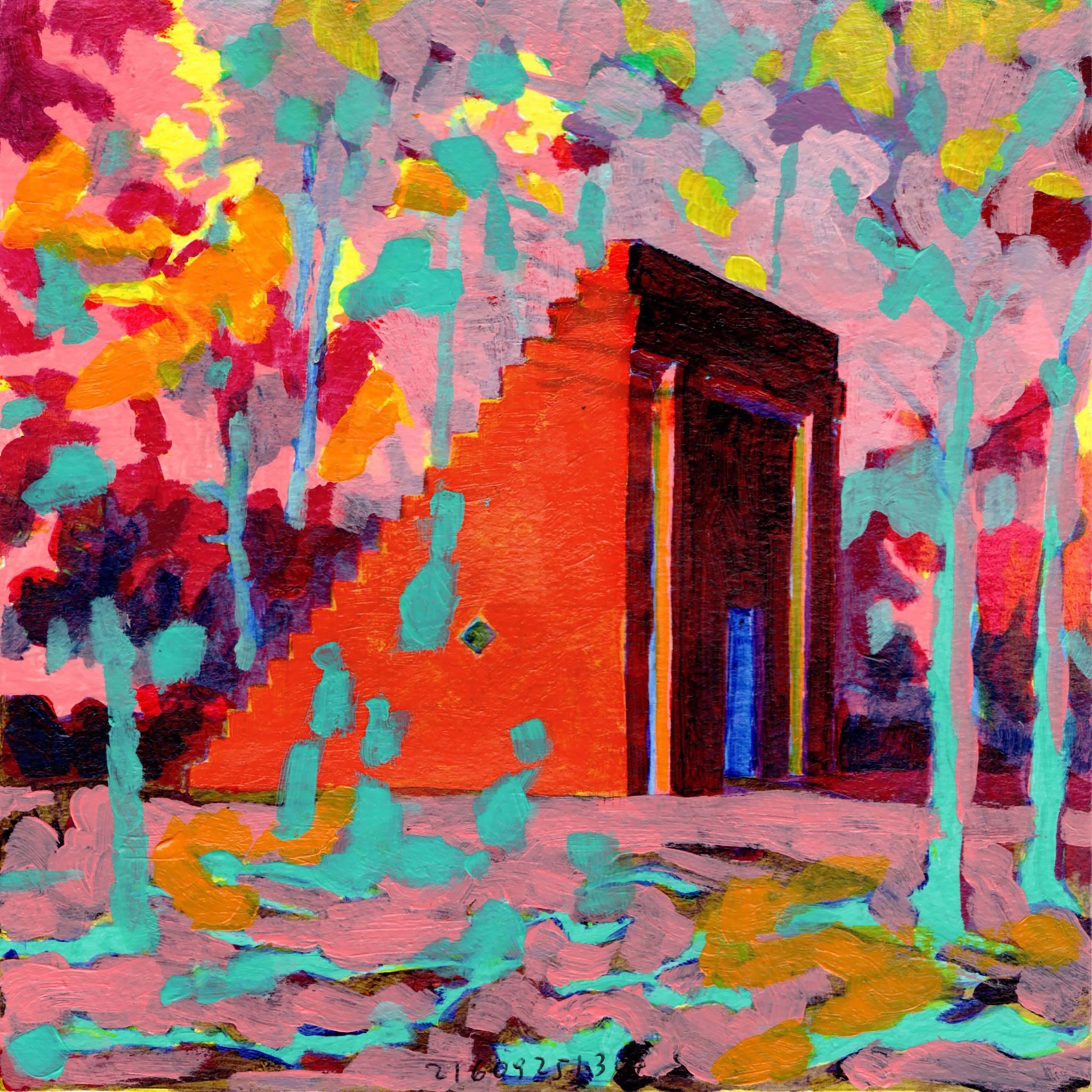
The pavilion follows the surrealist yet archaic tradition developed by the studio in other projects s. A volume that is presented as an altarpiece on its entrance façade and as a contemplative staircase (in memory of the Malaparte House in Italy) oriented to the dawn sun, in what seems an almost esoteric search with nature, to relate to nature.
"The pavilion is a kind of self-commission, since it is located within the same farm in which Luna house sits – a 150-hectare property adjacent to the Cholguan river, which demarcates the Ñuble Region, at the foot of the Andes mountains, about 1,000m above sea level.
The project is part of the Artificial Foundation, a non-profit initiative we have founded, which aims to protect the native forest while promoting the production (and contemplation) of art within such a natural environment. The whole purpose of this philanthropic project, including the land and its constructions, is to be left for public use."
Sofía von Ellrichshausen.
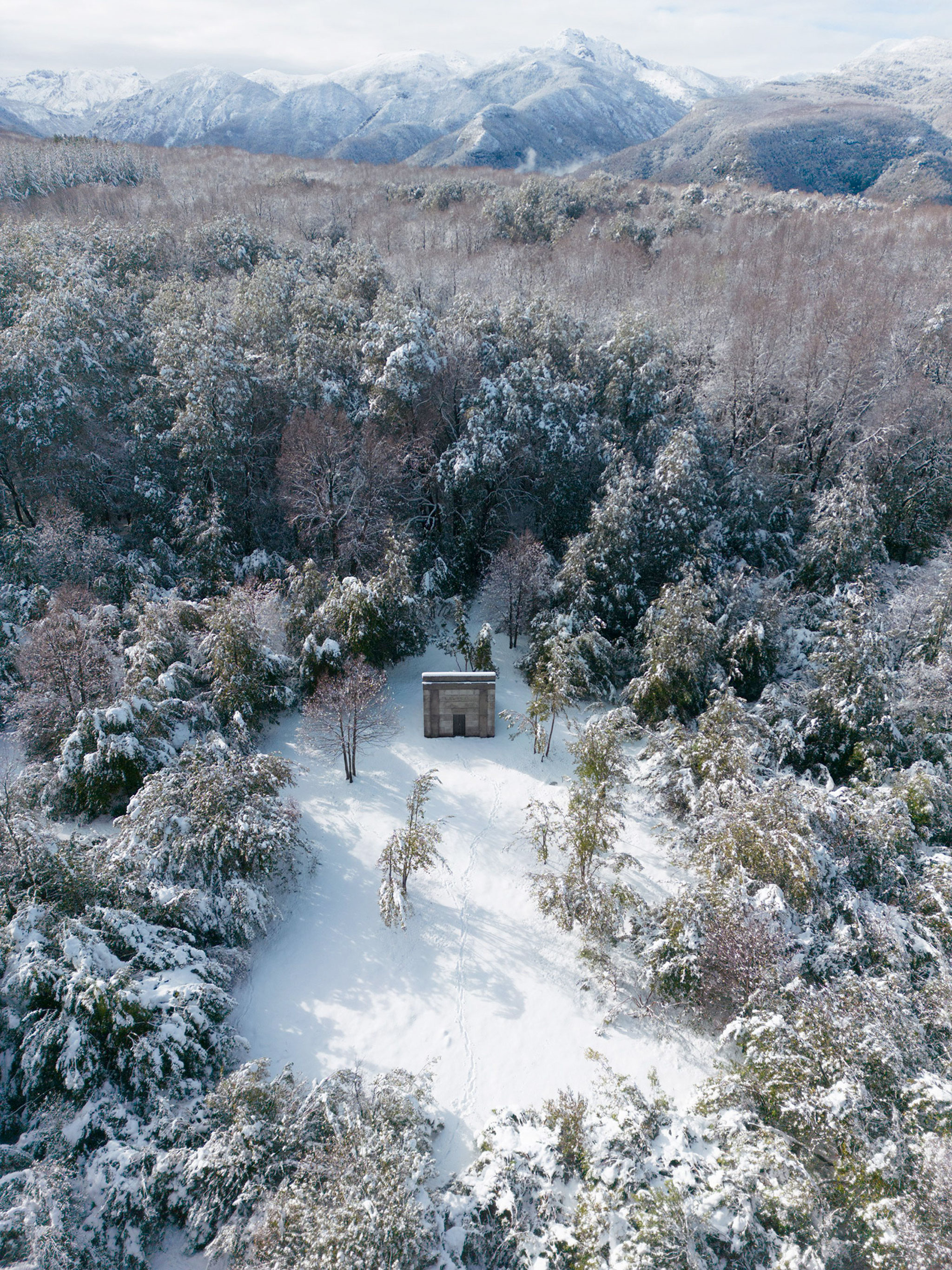
MIEL Pavilion by Pezo von Ellrichshausen. Photograph by Pezo von Ellrichshausen.
Project description by Pezo von Ellrichshausen
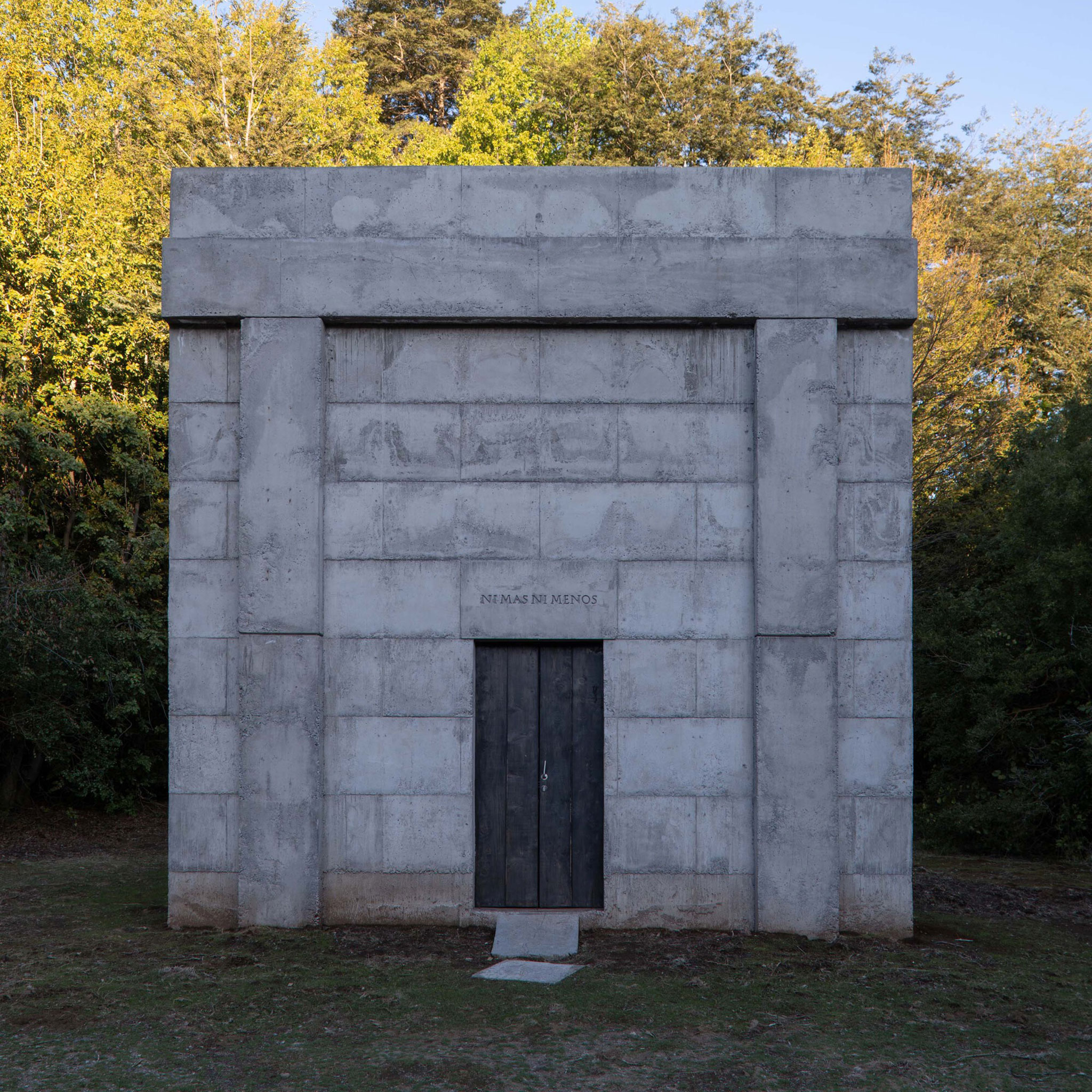
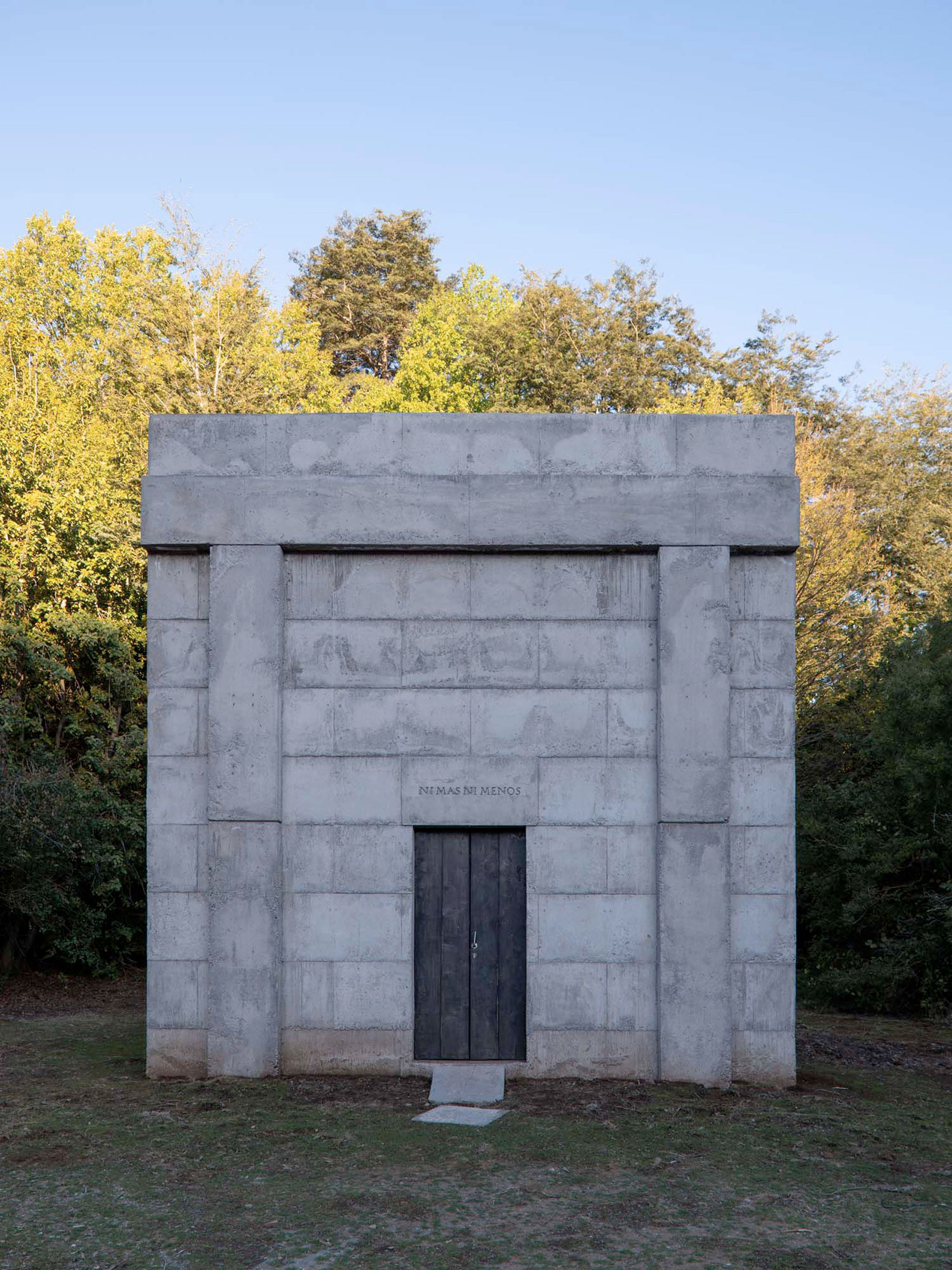
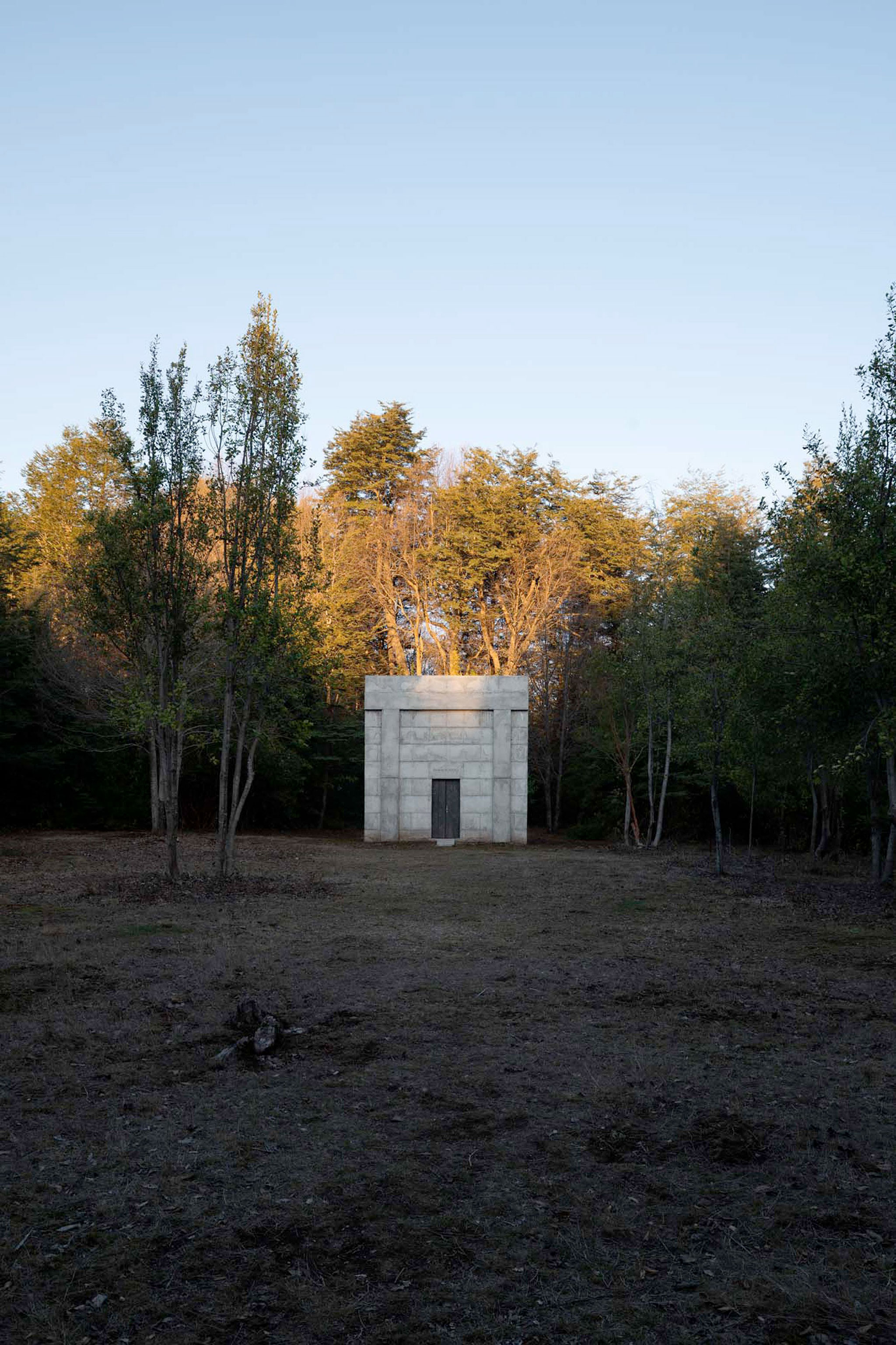
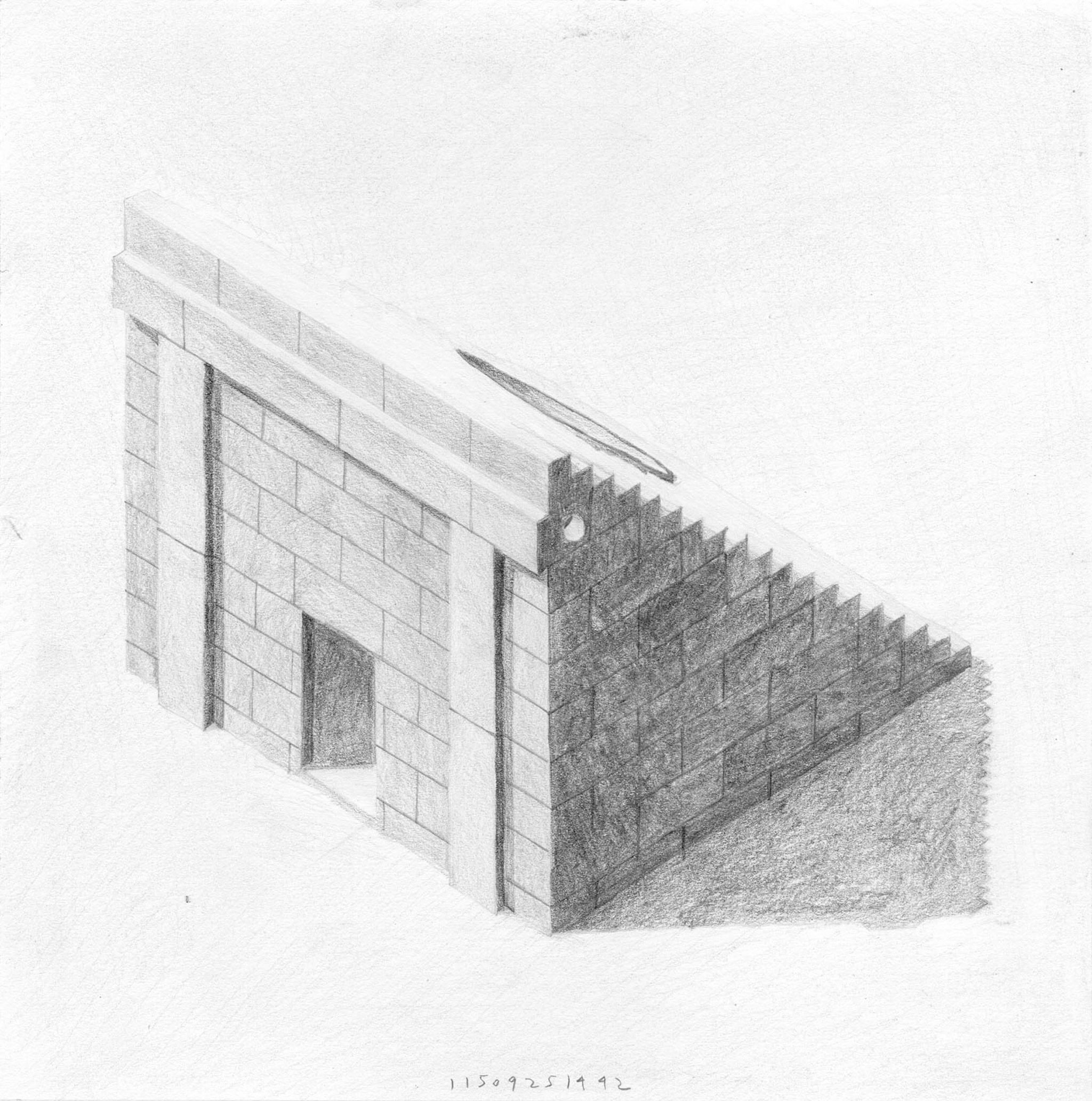
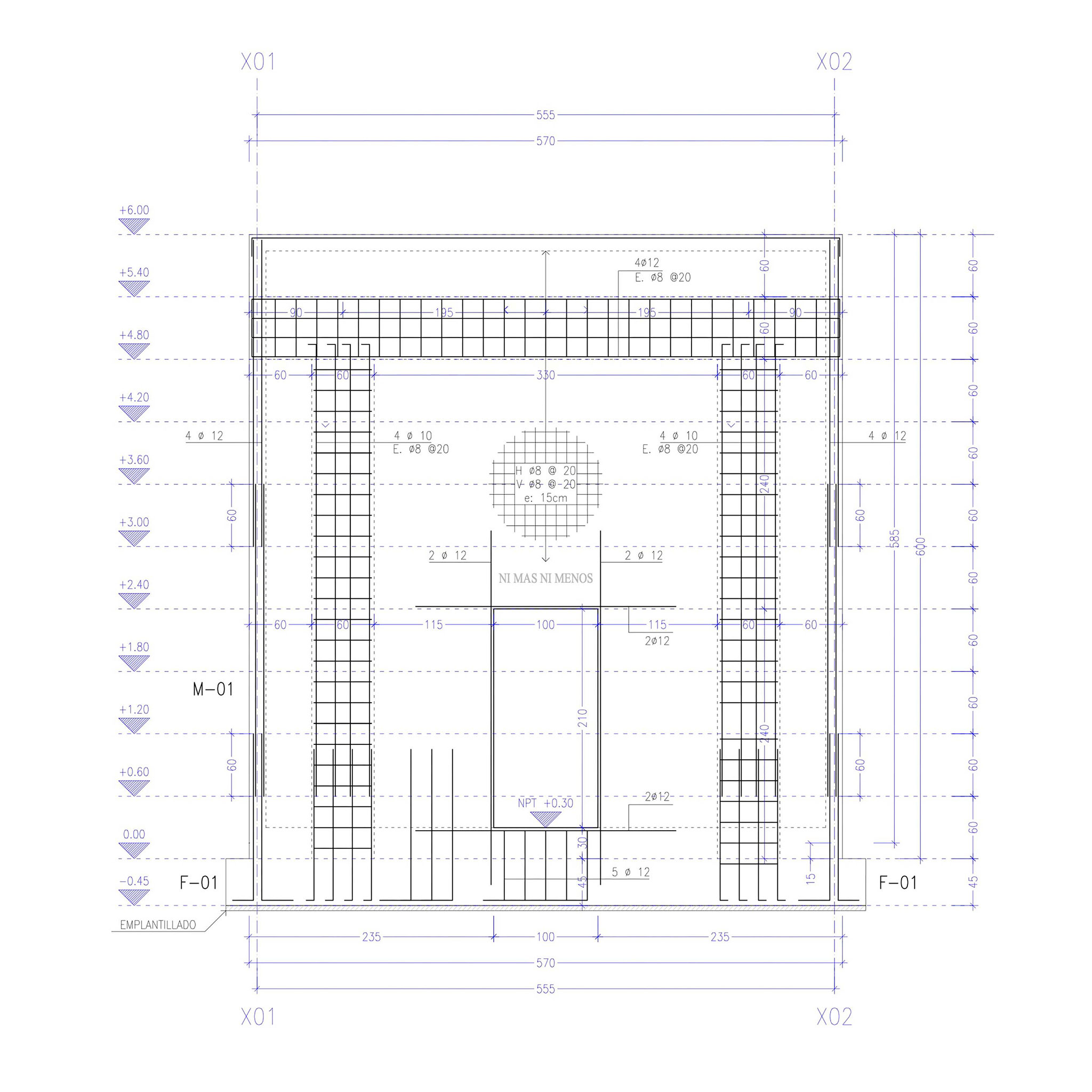
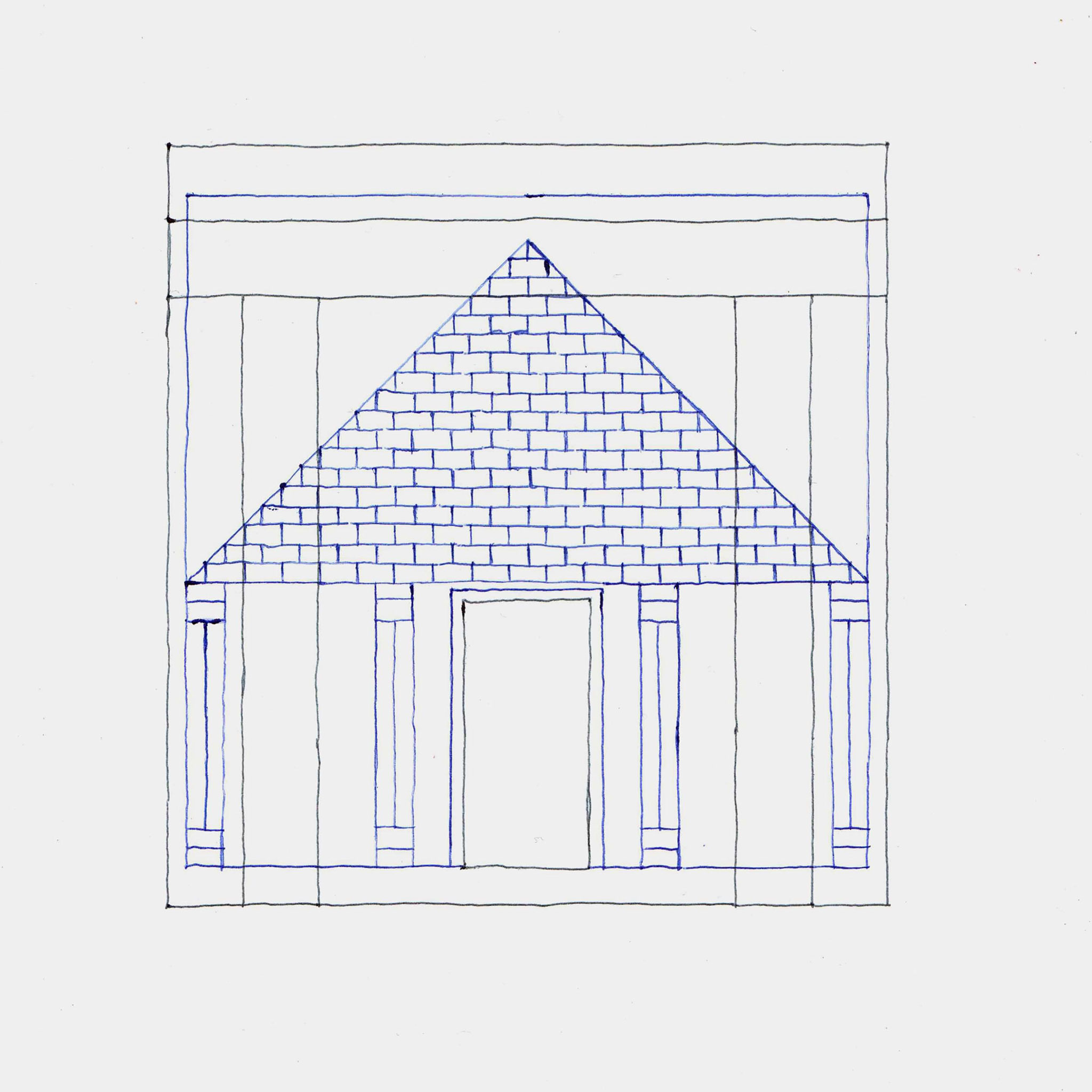
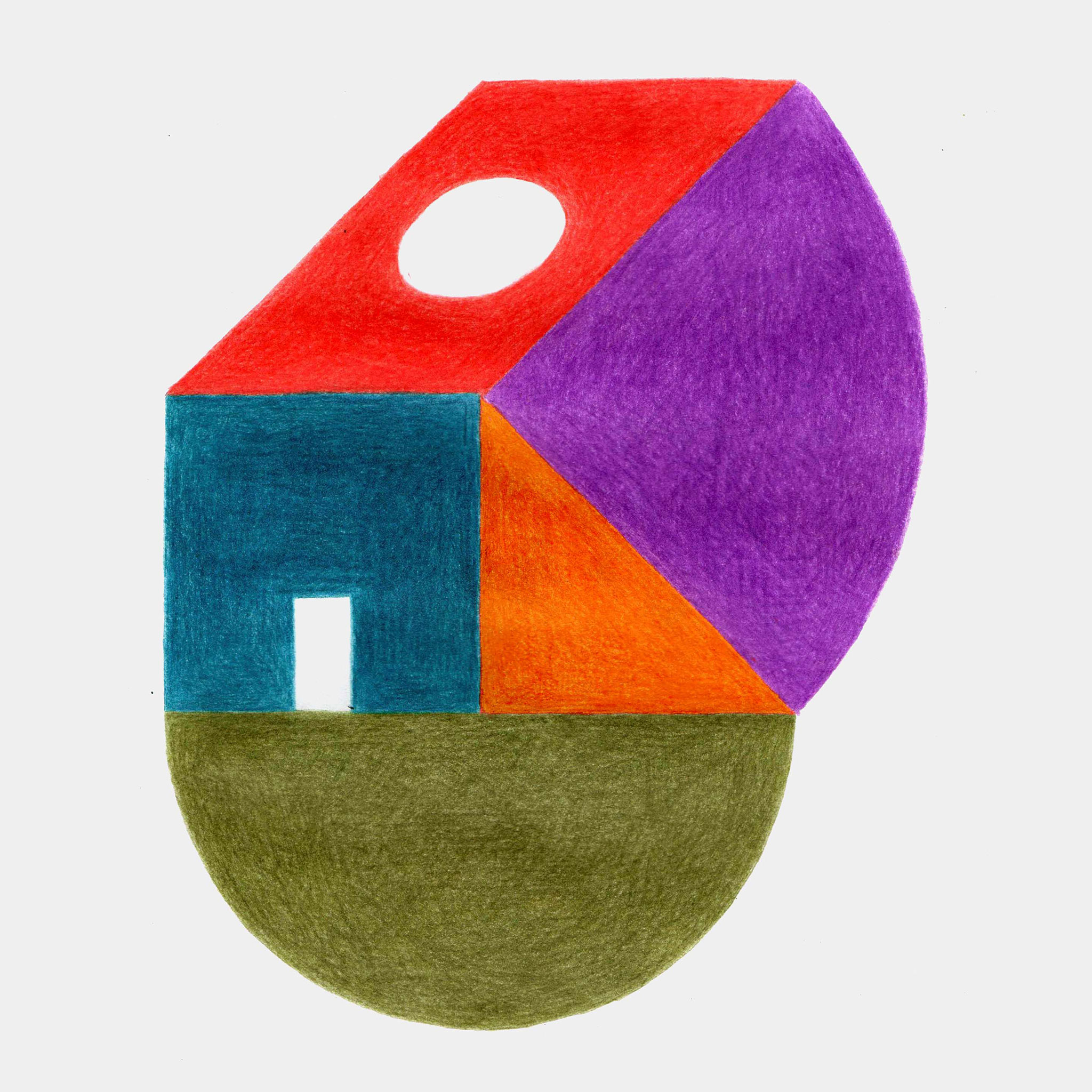
As the nearby trees age, in no hurry, this scaleless piece will become even smaller. Cornered against a dark forest of Coihues (Nothofagus dombeyi), the concentrated and directionless footprint acquires an axial sense, explicitly asymmetrical, with one high side, perhaps completing an imaginary cube, and with its opposite side with no elevation at all. Such frontality makes the wall an altarpiece, a mute plane reinforced by two buttresses that support an apparently useless beam and by an engraved lintel (NI MAS NI MENOS, or "no more no less" in Spanish) that contradicts its muteness.
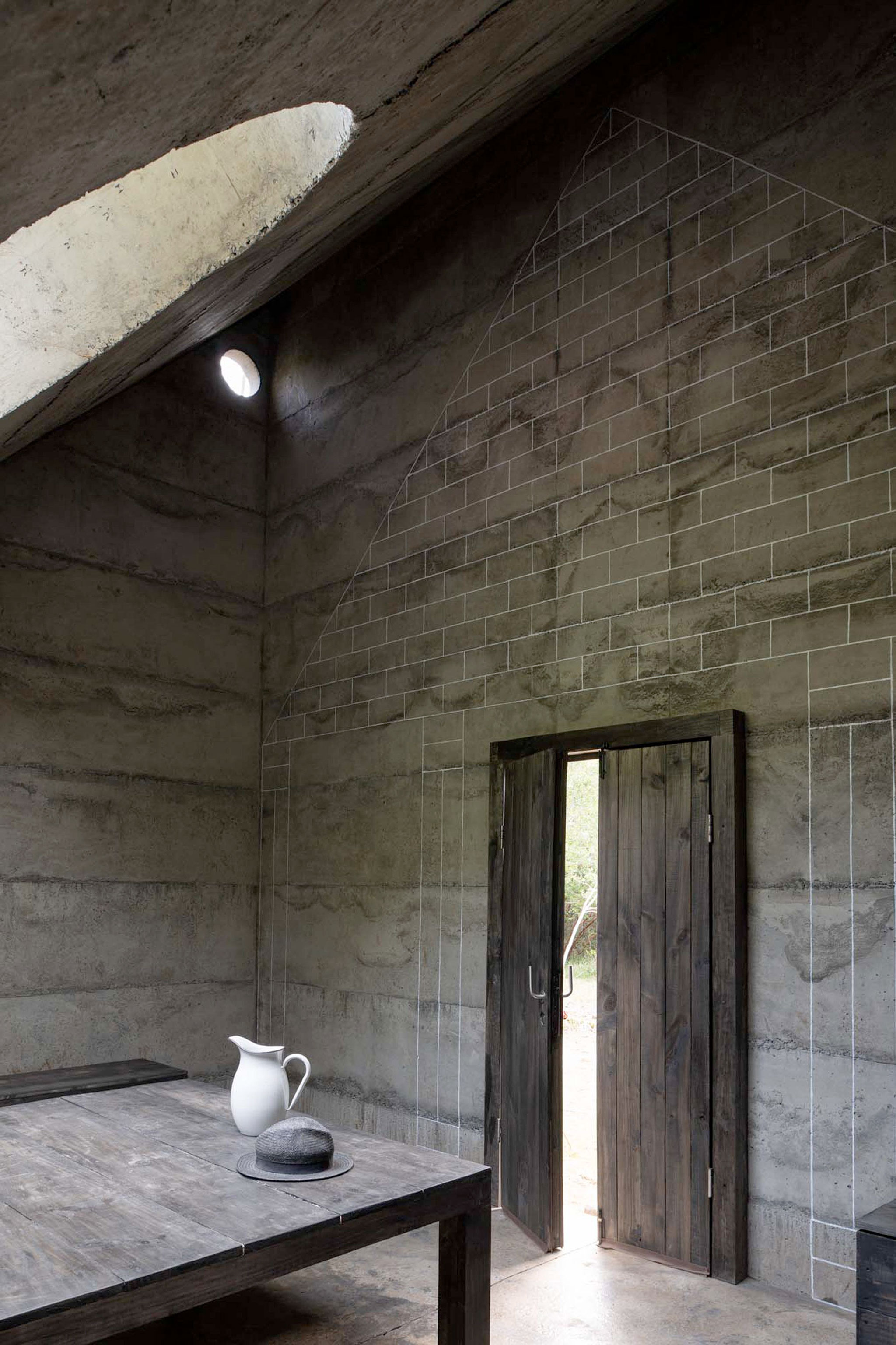
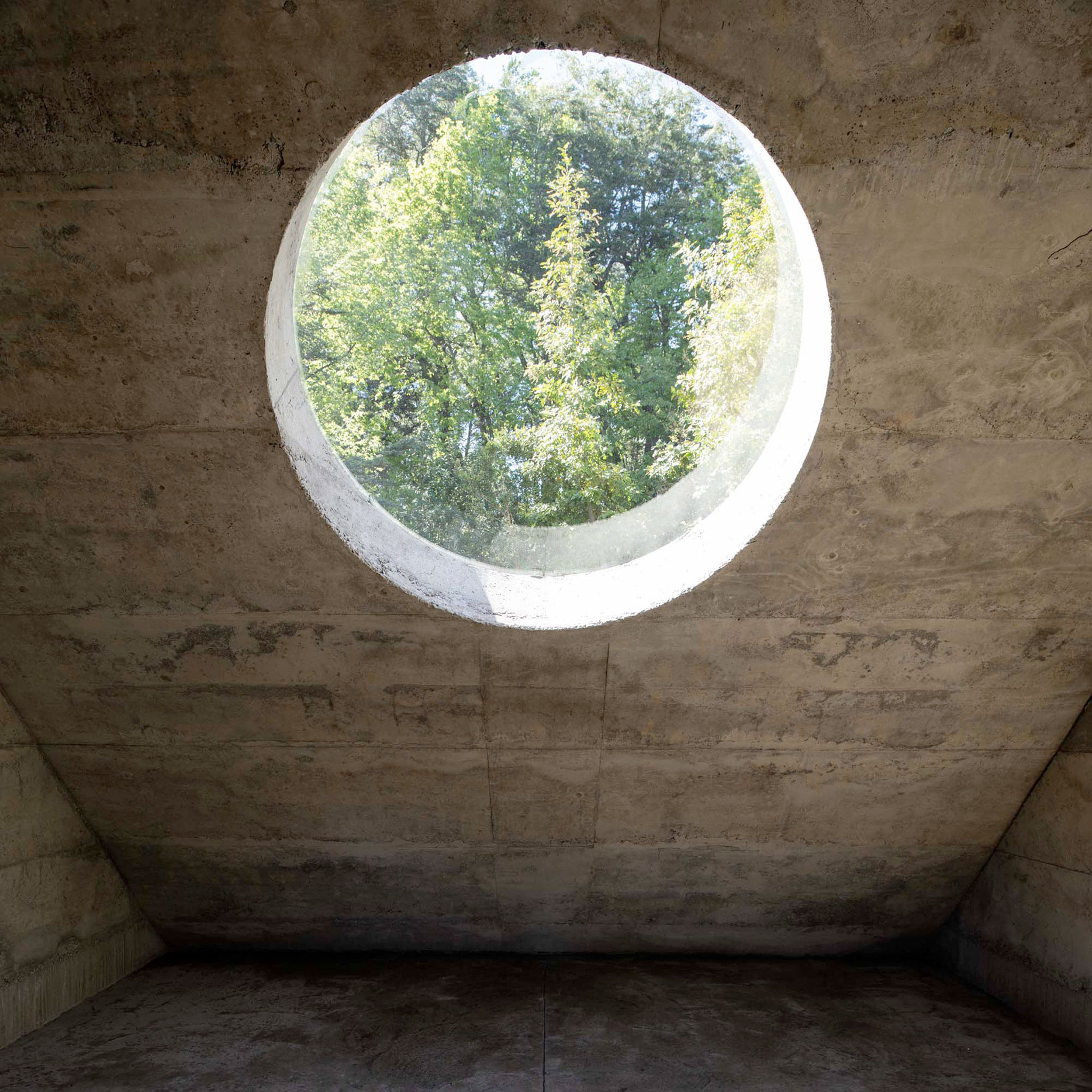
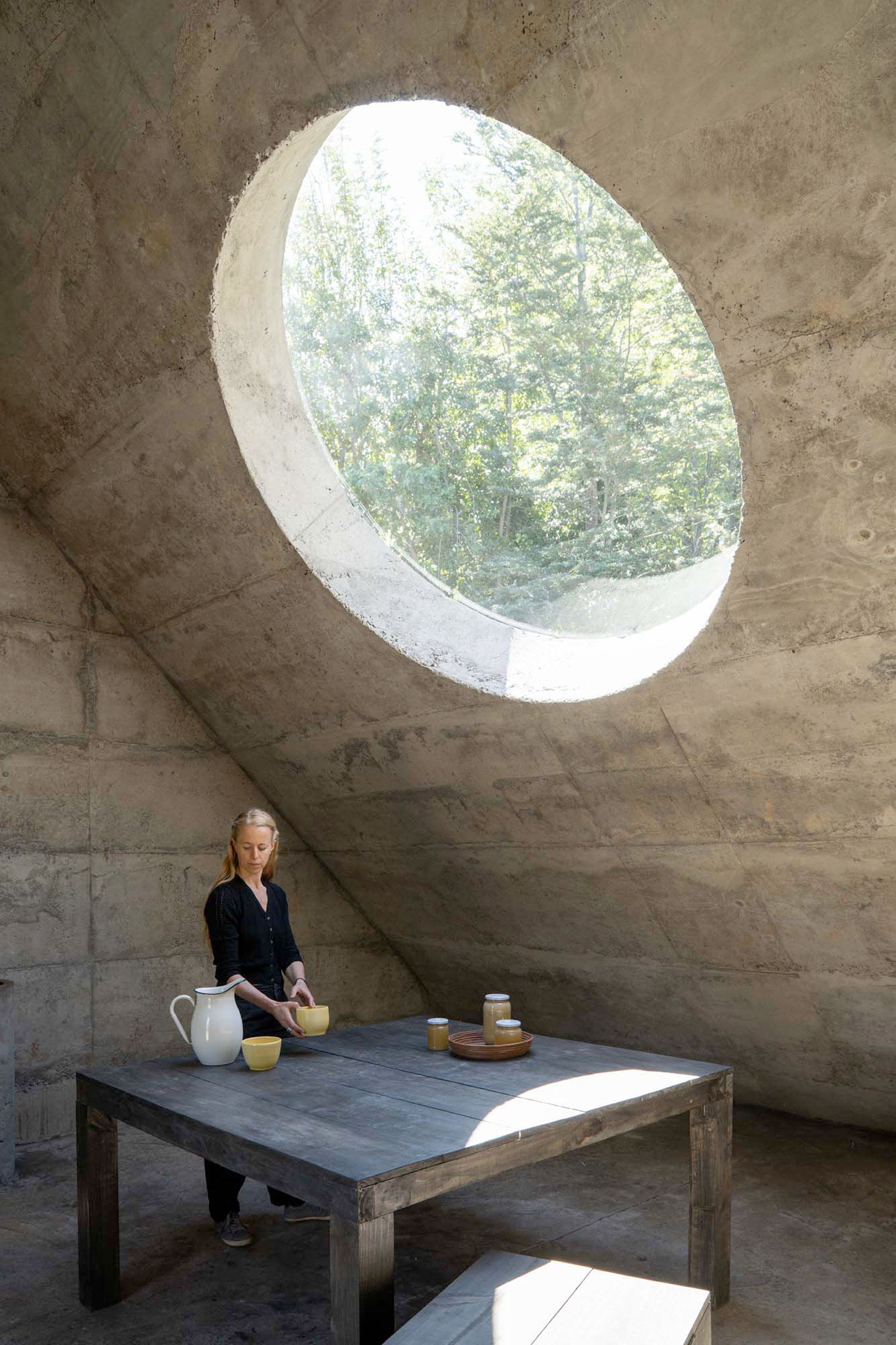
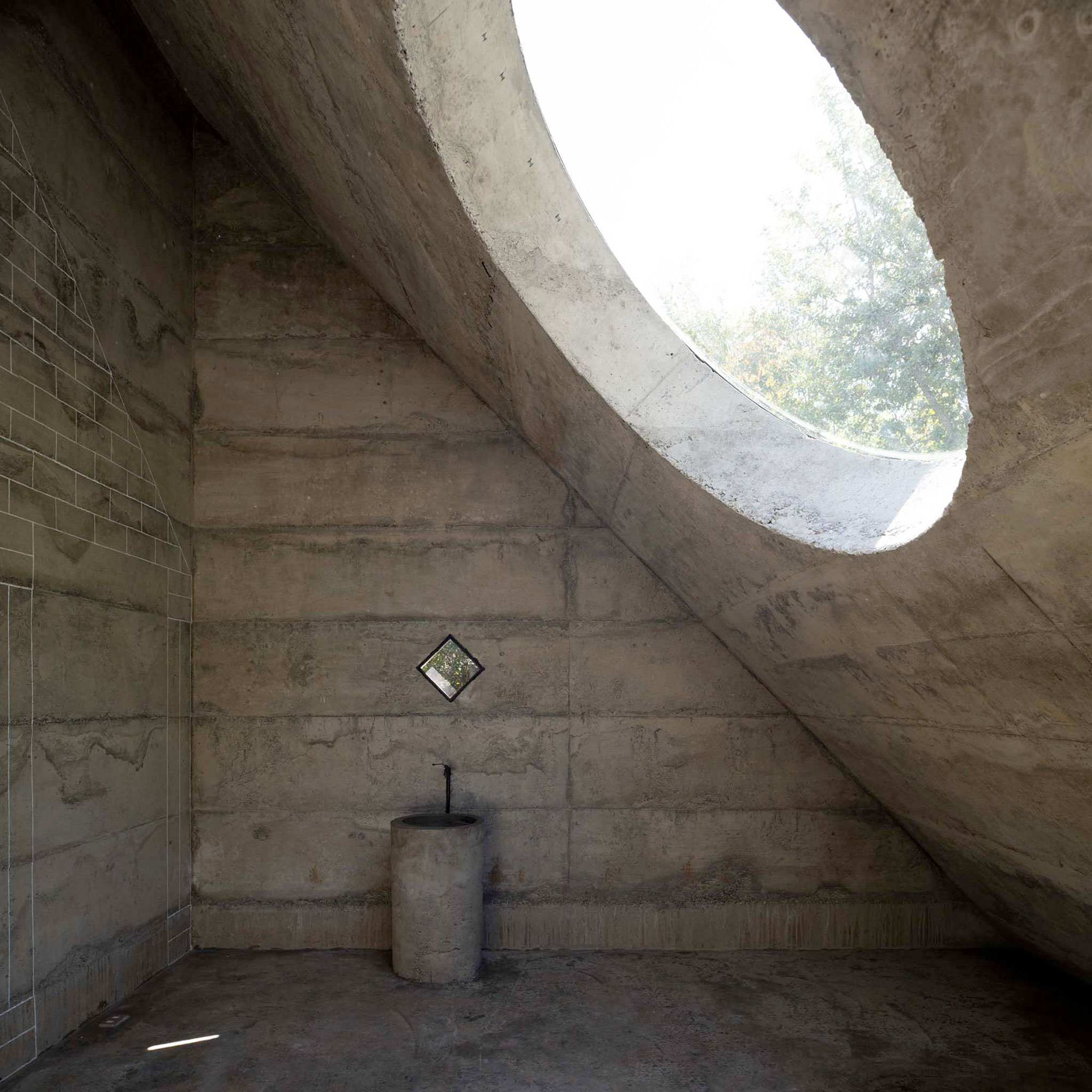
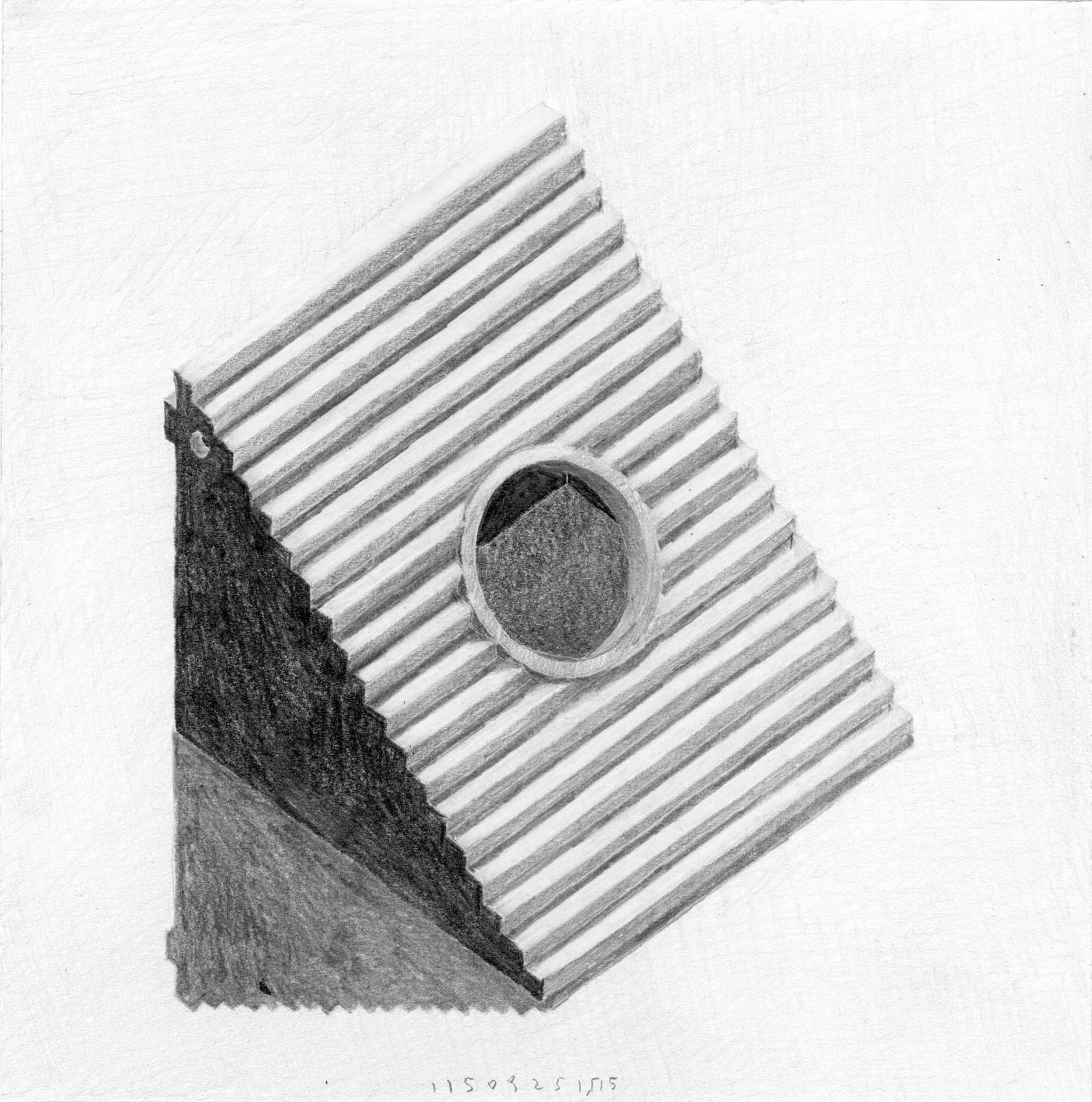
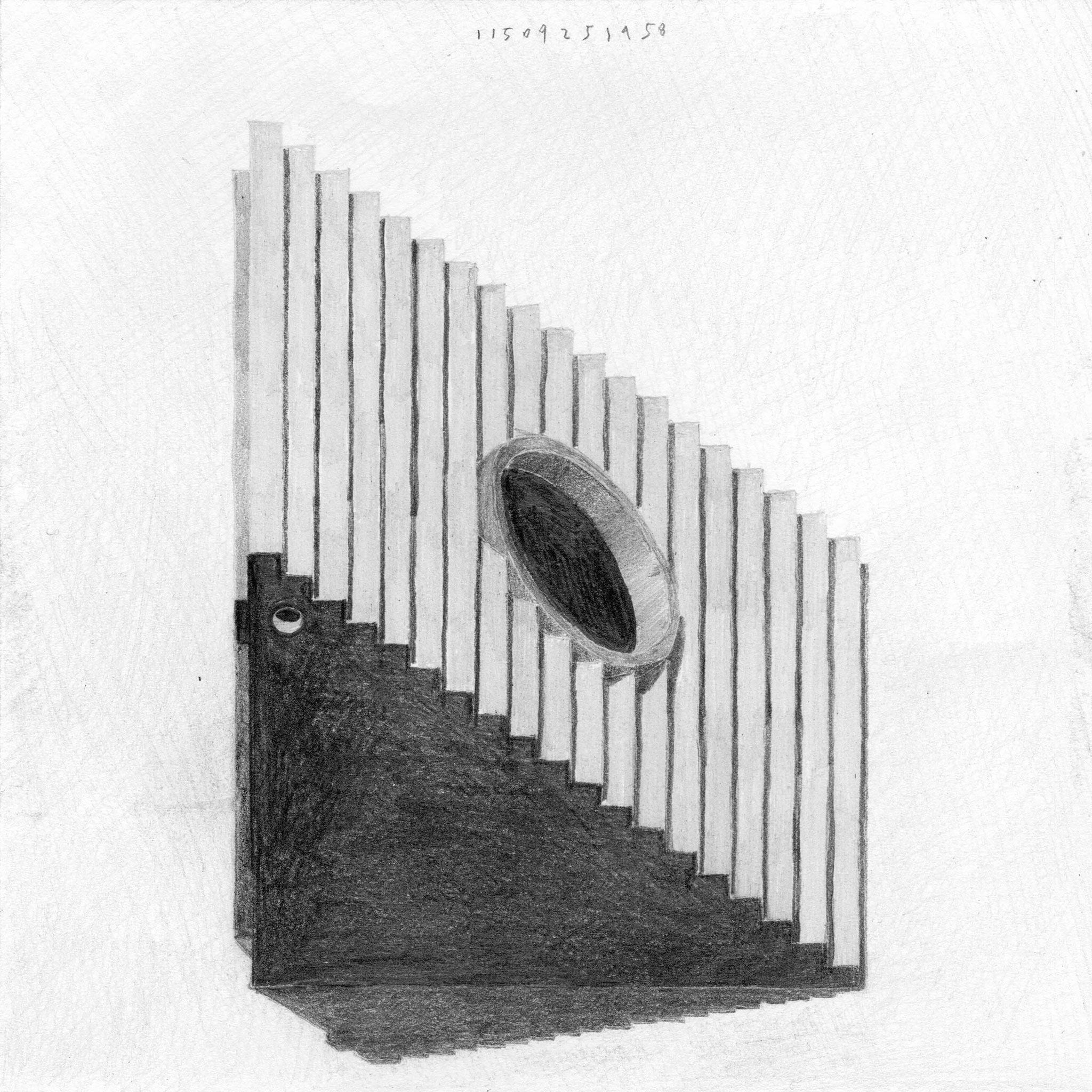
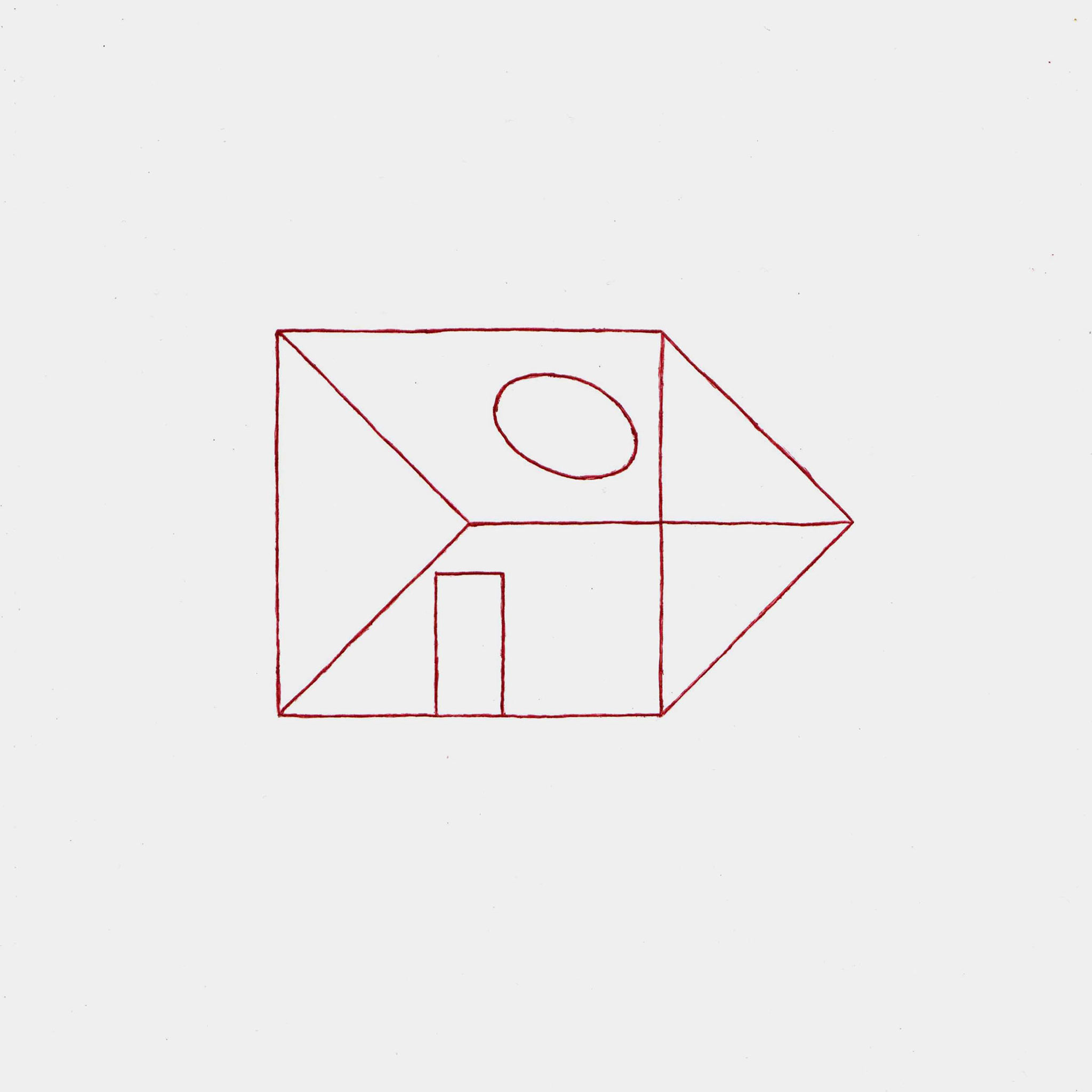
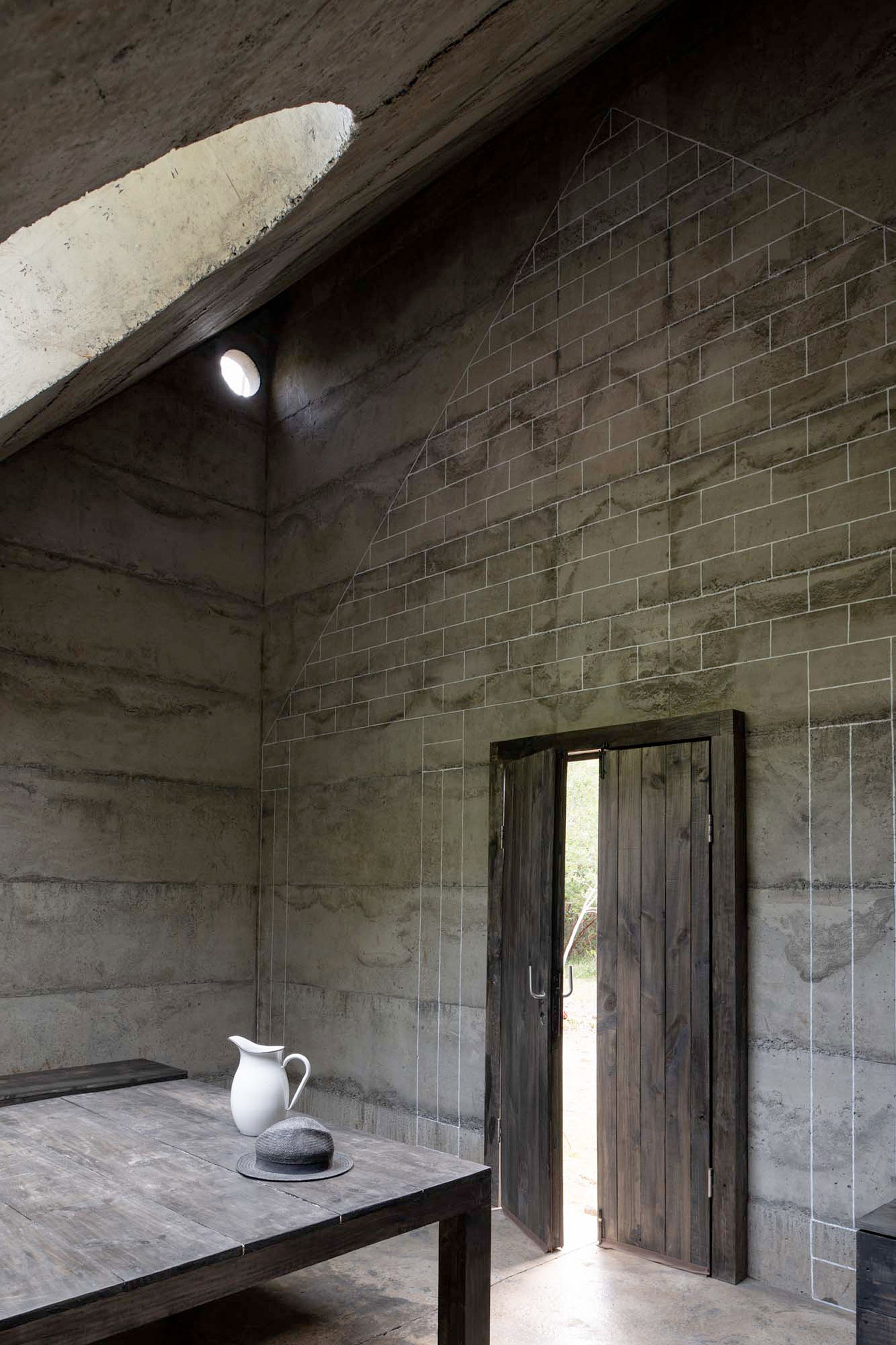
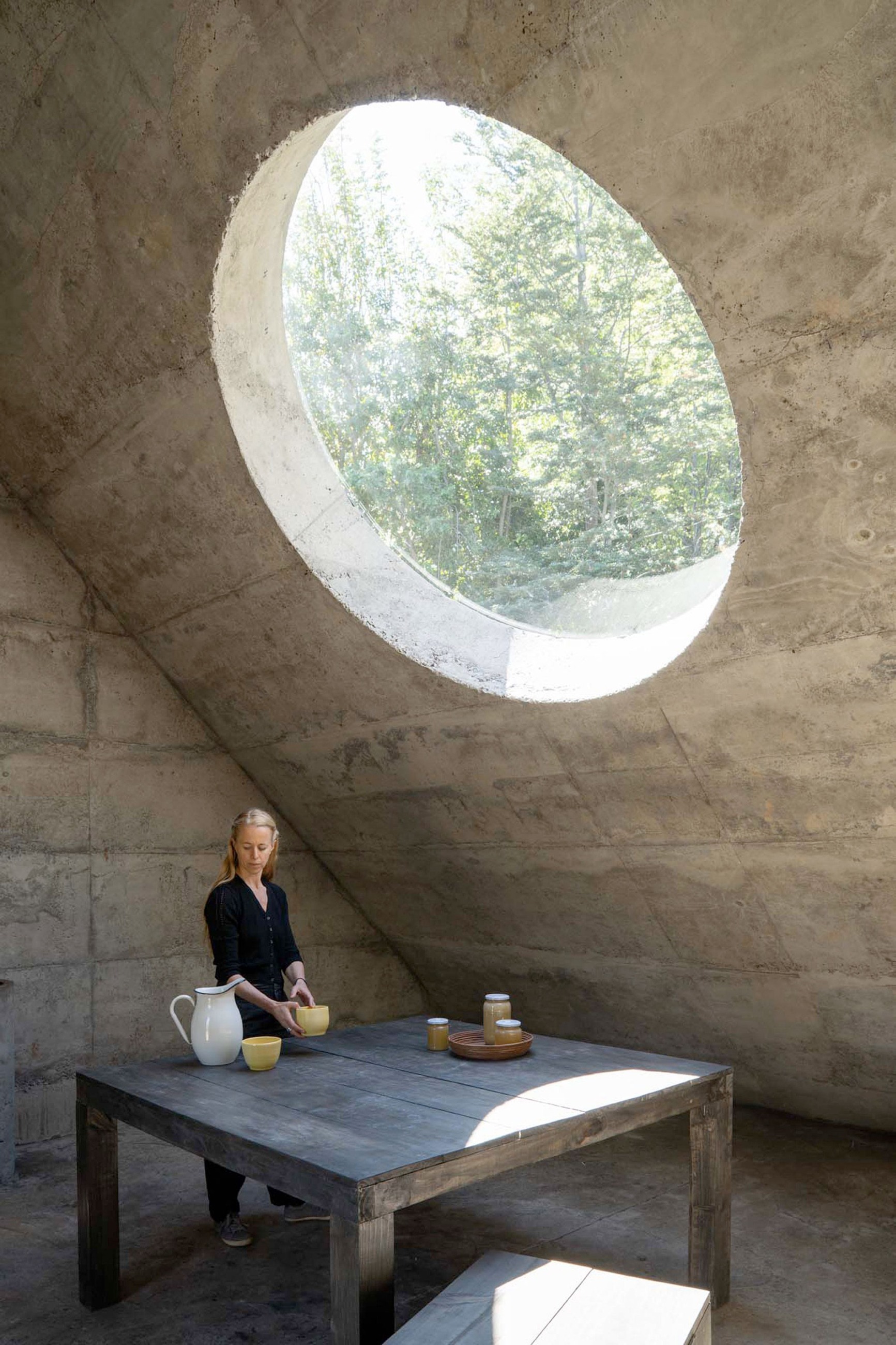
Beyond this opaque threshold, with the foliage cut off by an exaggerated circular oculus, there is no longer any distinction between wall and ceiling. Although inside the intentional and gravitational vectors (or "the will of the spirit and the necessity of nature", as Simmel would say) are diluted in a fair diagonal, on the outside they are rather evident; the topography is both artificial and meaningless, since reaching the top does not change the panorama much.
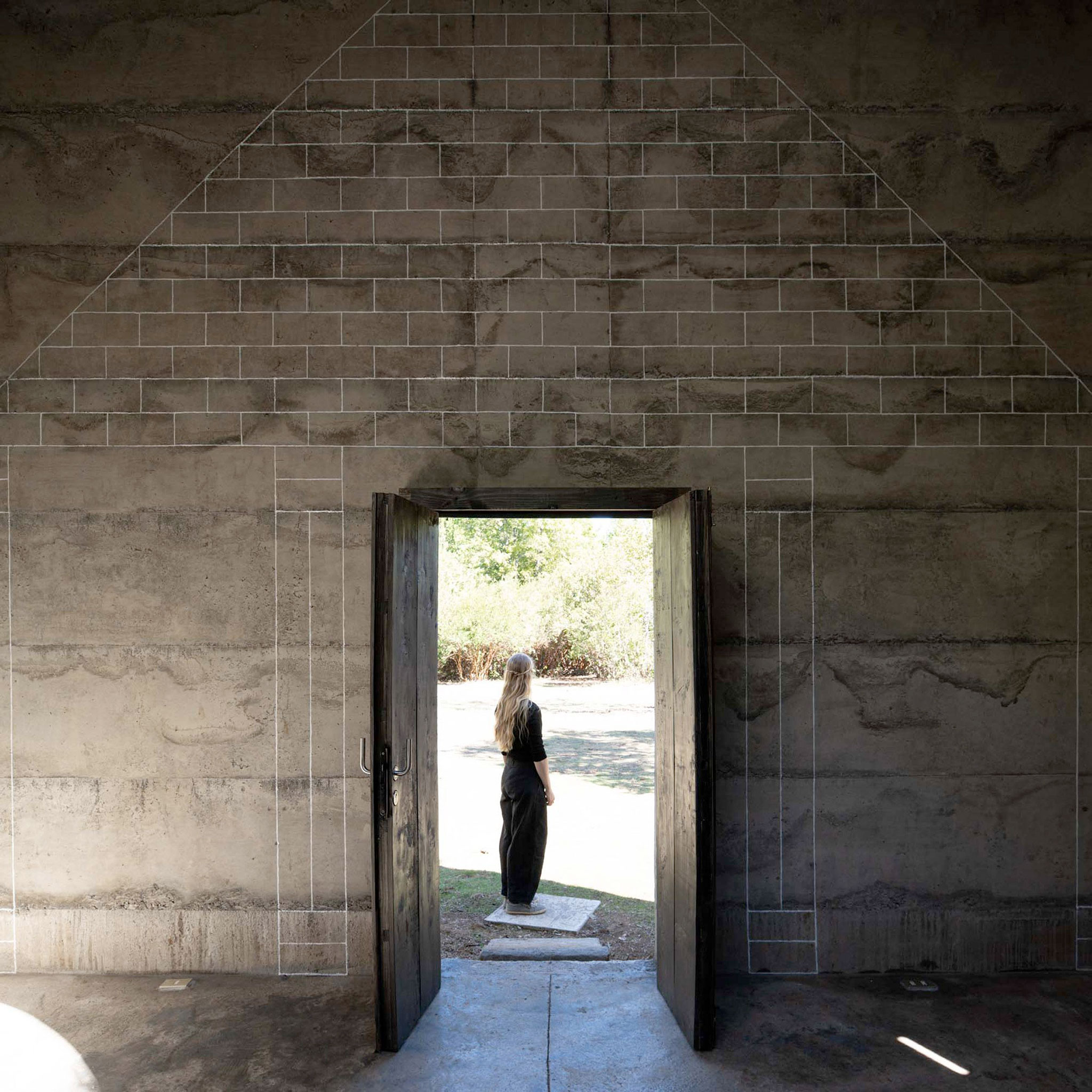
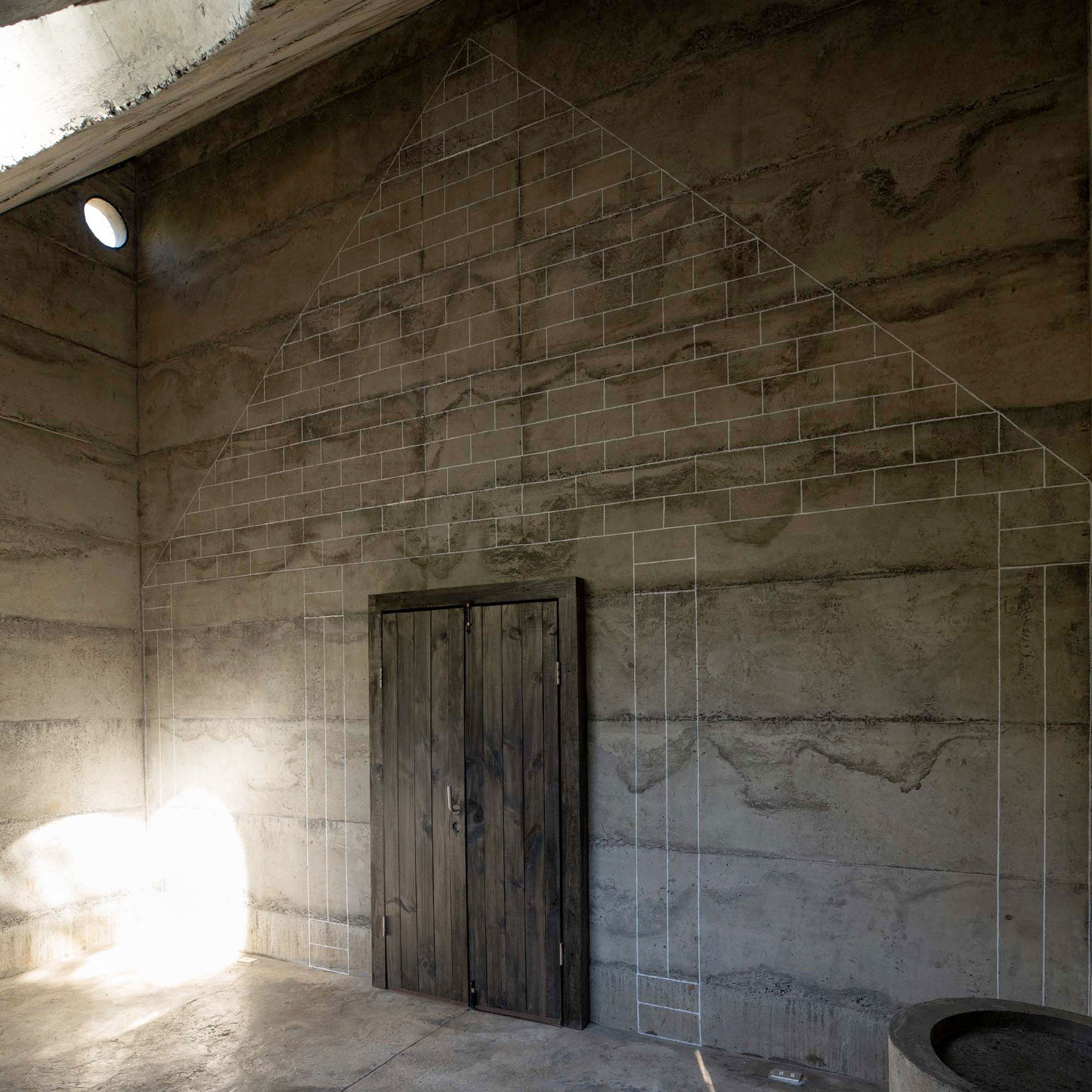
This deceptive block of artisanal concrete is relative, whatever way you look at it; from afar a discreet monument, from the forest an interrupted plinth, from the oblique discomfort of the room some delicate white lines that blur the imprint of the formwork. In its flatness, almost without thickness, the wall becomes irreversible; on the outside, the engaged frame of a temple for six queens and on the inside, the sheer drawing of an archetypal wooden cabin.
Fortunately, this cluttered device is not so much to look at as to work in; a modest organic production of honey is processed here, hence the queens.