

Inside the temple, PichiAvo created an altar, constructed from leftover paper from the printing of PichiAvo's 2024 book, Our Odyssey. Upon it rested a balanced scale with two sculptural wax candles—produced in collaboration with the century-old Barcelona brand Cerabella—one symbolizing Classical Art and the other Graffiti. The composition reflected the essential duality in the artists' work and the idea of balance between creative opposites.
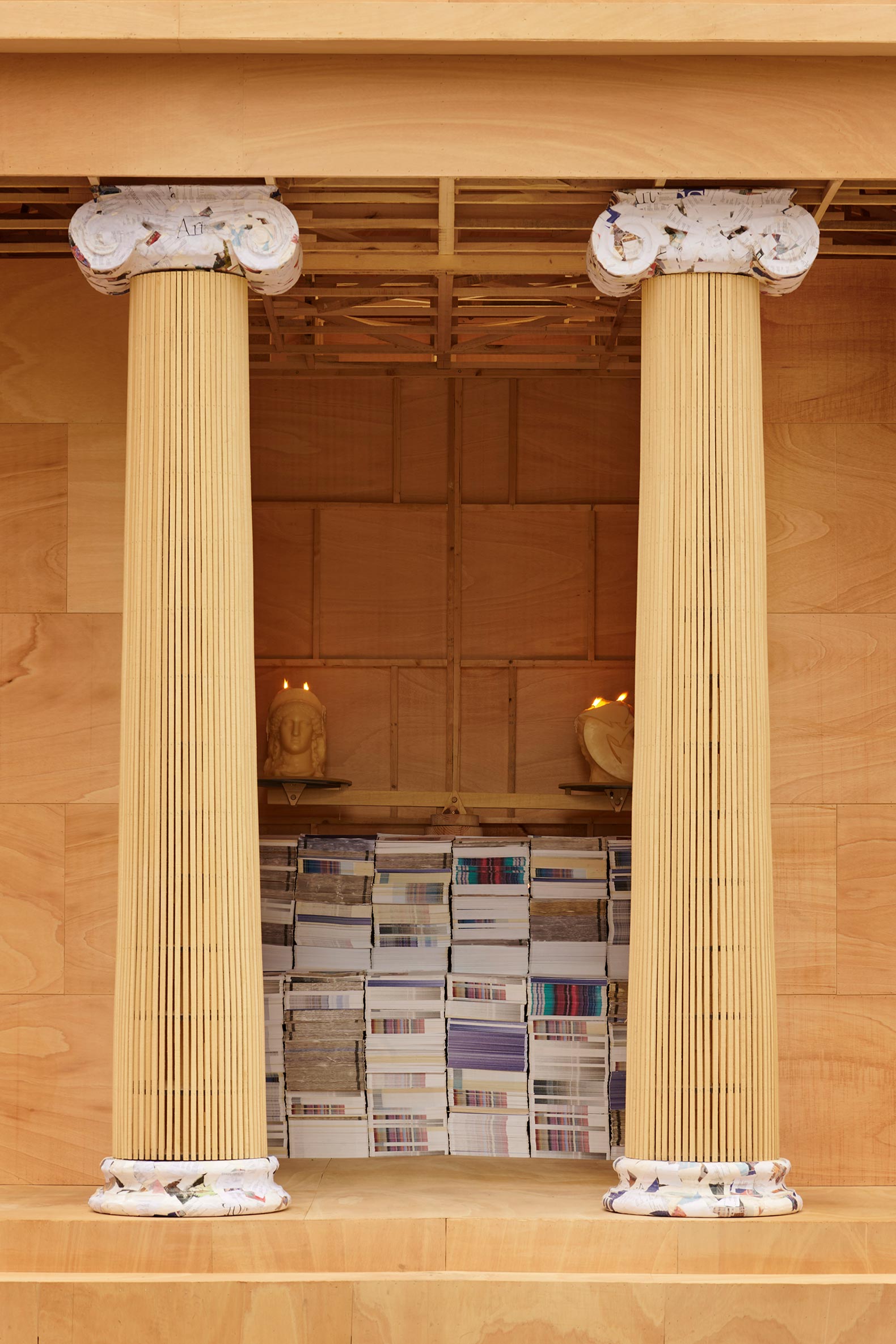
"Per ofrenar" by PichiAvo. Photograph courtesy of PichiAvo.
The monument took nearly a year to conceive and was built using traditional fallas techniques, employing wood and paper rather than the industrial materials often used in contemporary monuments.
Following the tradition of the Fallas festival—whose origins are often linked to carpenters burning leftover materials as offerings—the installation ultimately completed its cycle on March 19, when it was burned during La Cremà, the dramatic closing ceremony that returns each monument to ashes.
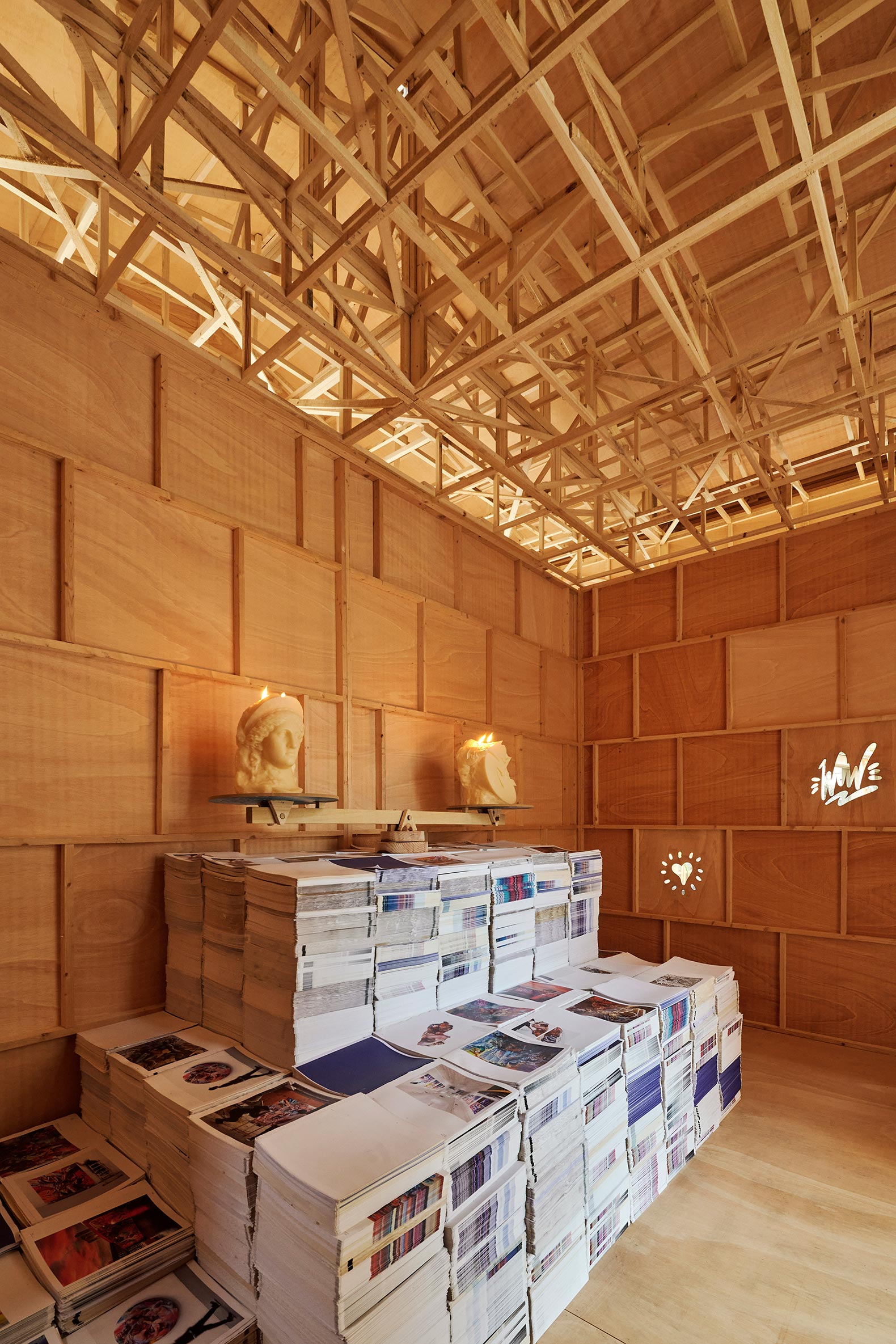
"Per ofrenar" by PichiAvo. Photograph courtesy of PichiAvo.
The falla was recognized with First Prize in the Sustainable Fallas category and Third Prize in the Experimental Fallas category, underscoring both its ecological approach and conceptual strength. During the four days of celebrations, hundreds of visitors actively participated in the project by presenting their own offerings using the same paper from which the monument was created—ranging from fl oral tributes to handwritten messages. In the final days, the interaction deepened as visitors began inscribing their wishes and reflections directly onto the walls of the structure, transforming the monument into a living, ever-evolving surface reminiscent of street graffiti.


