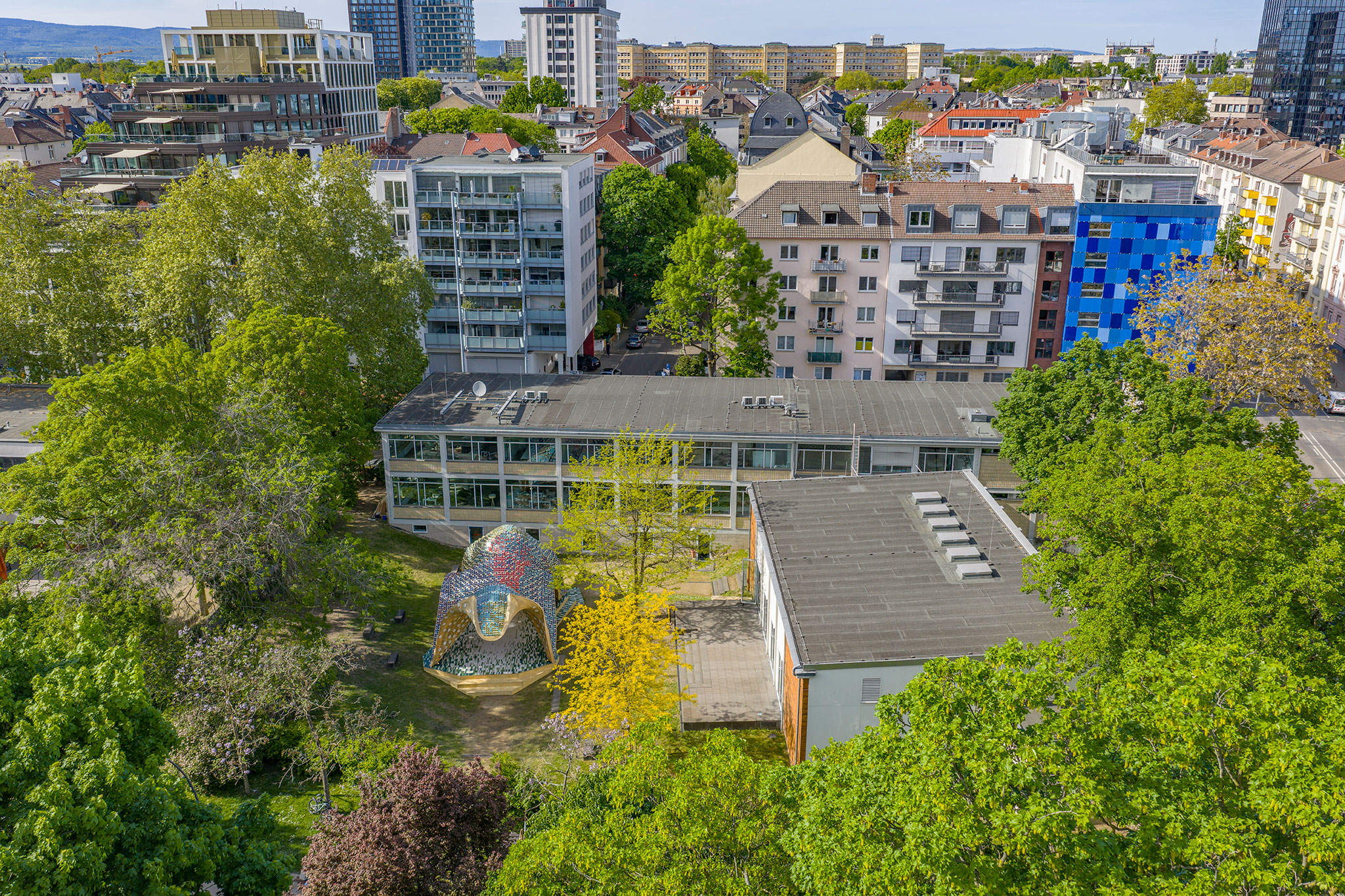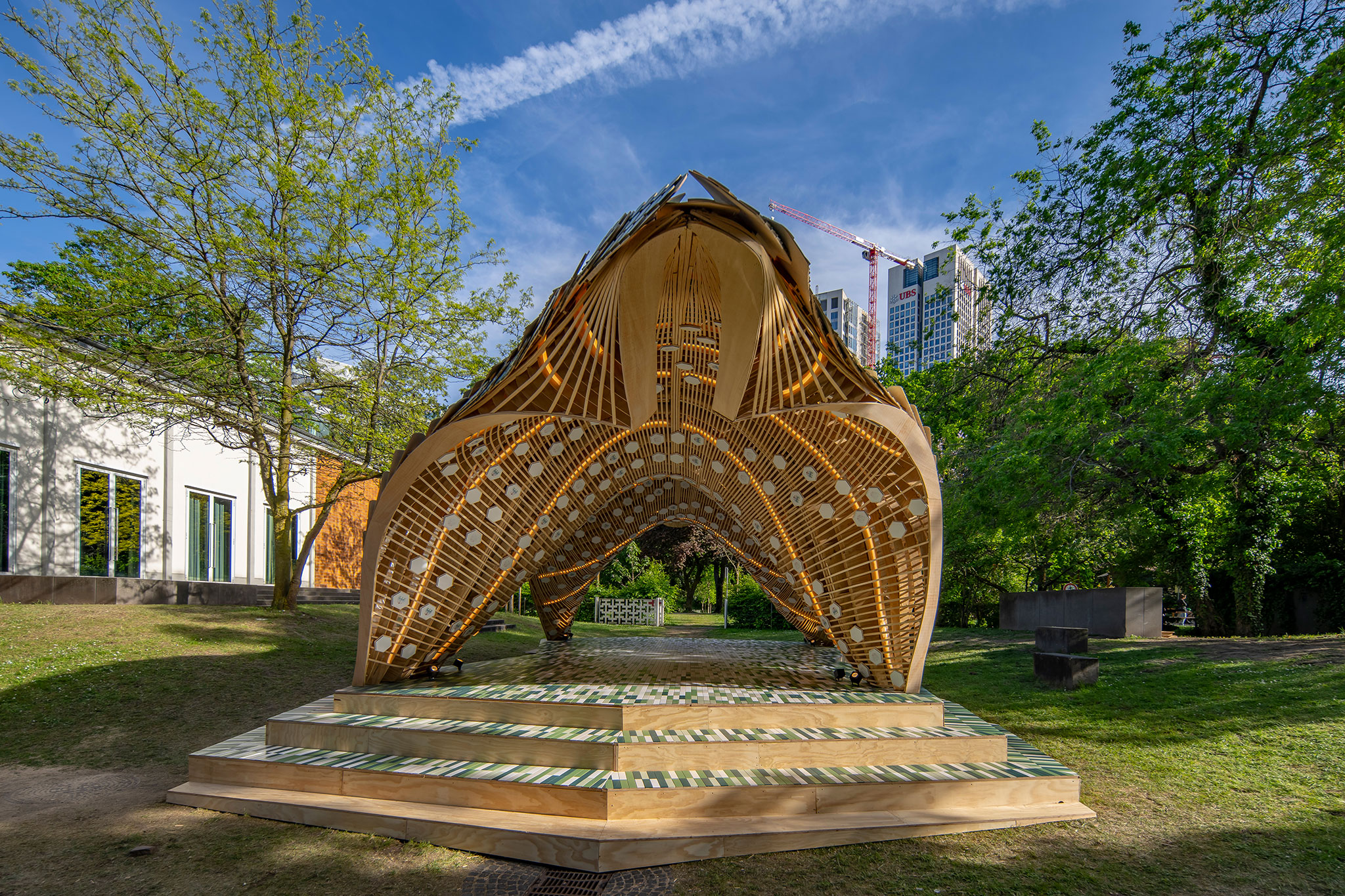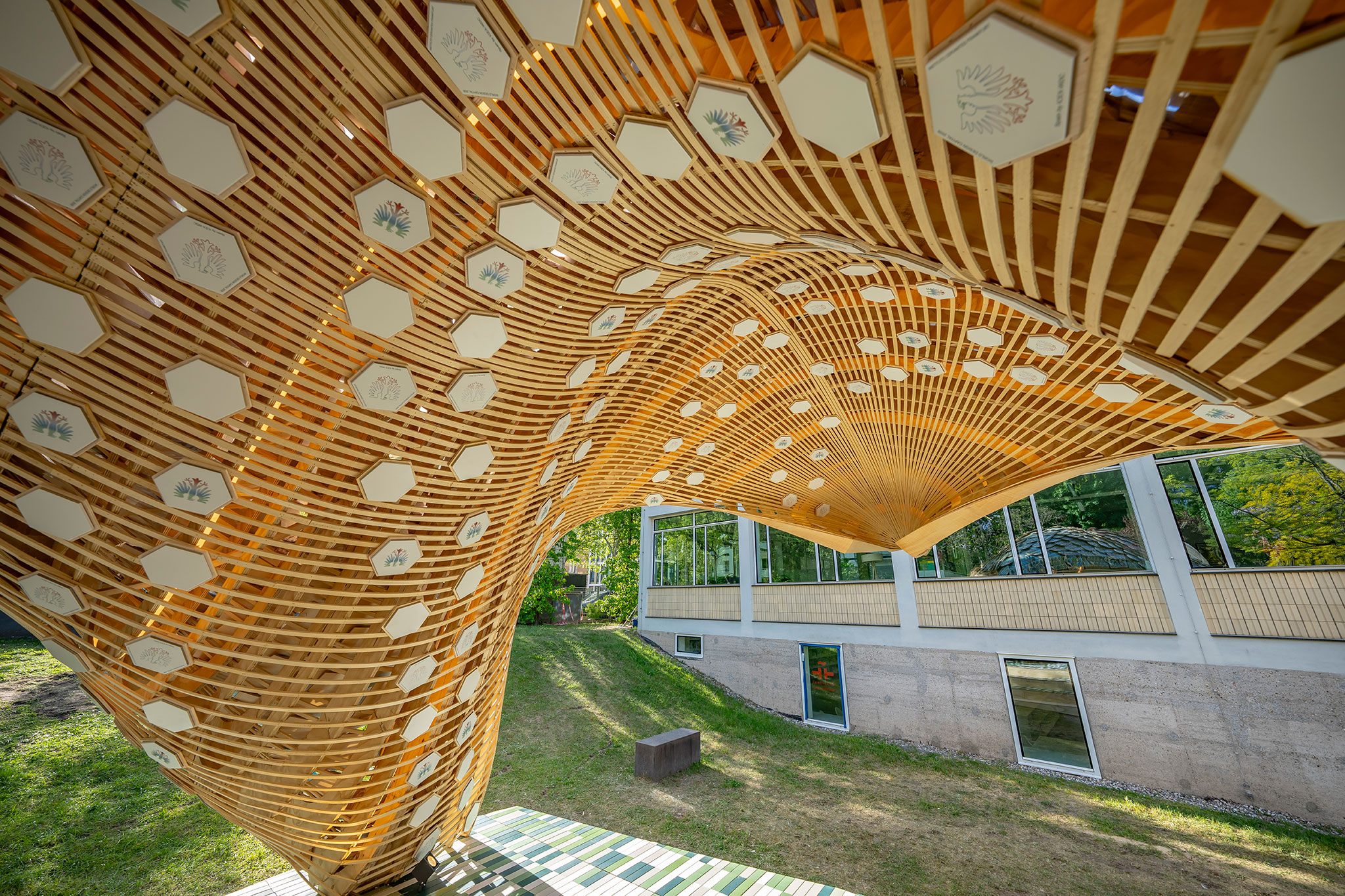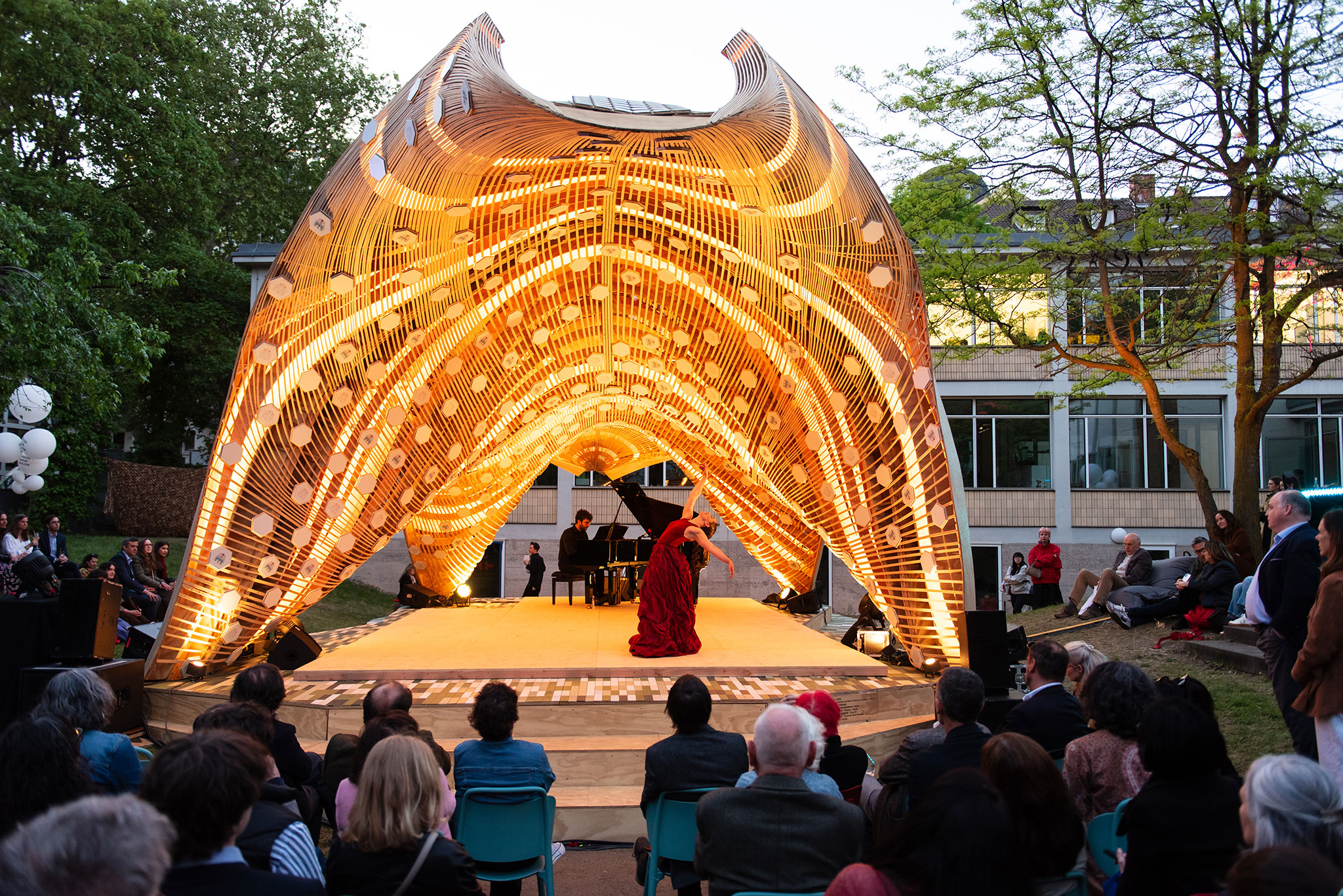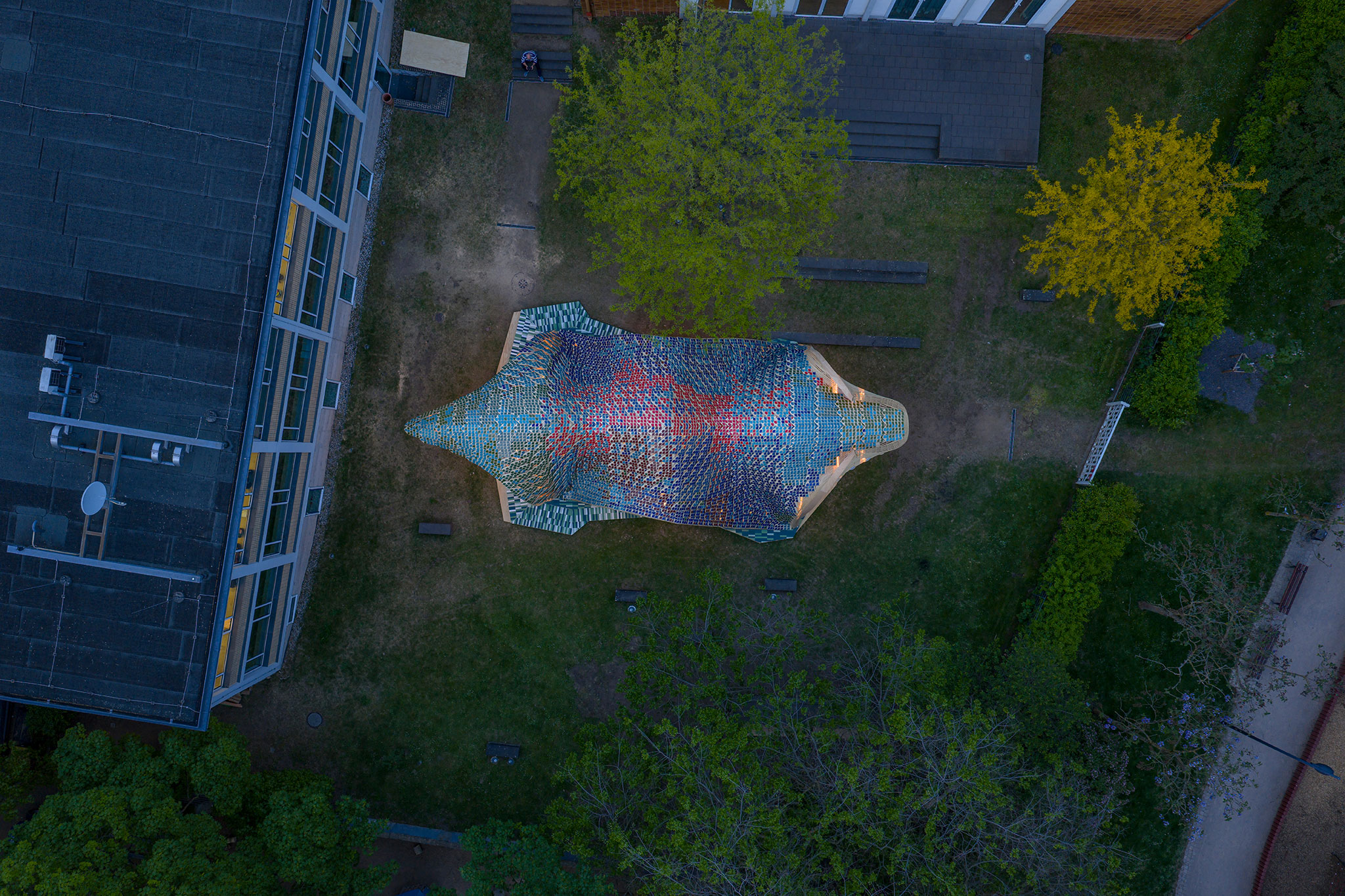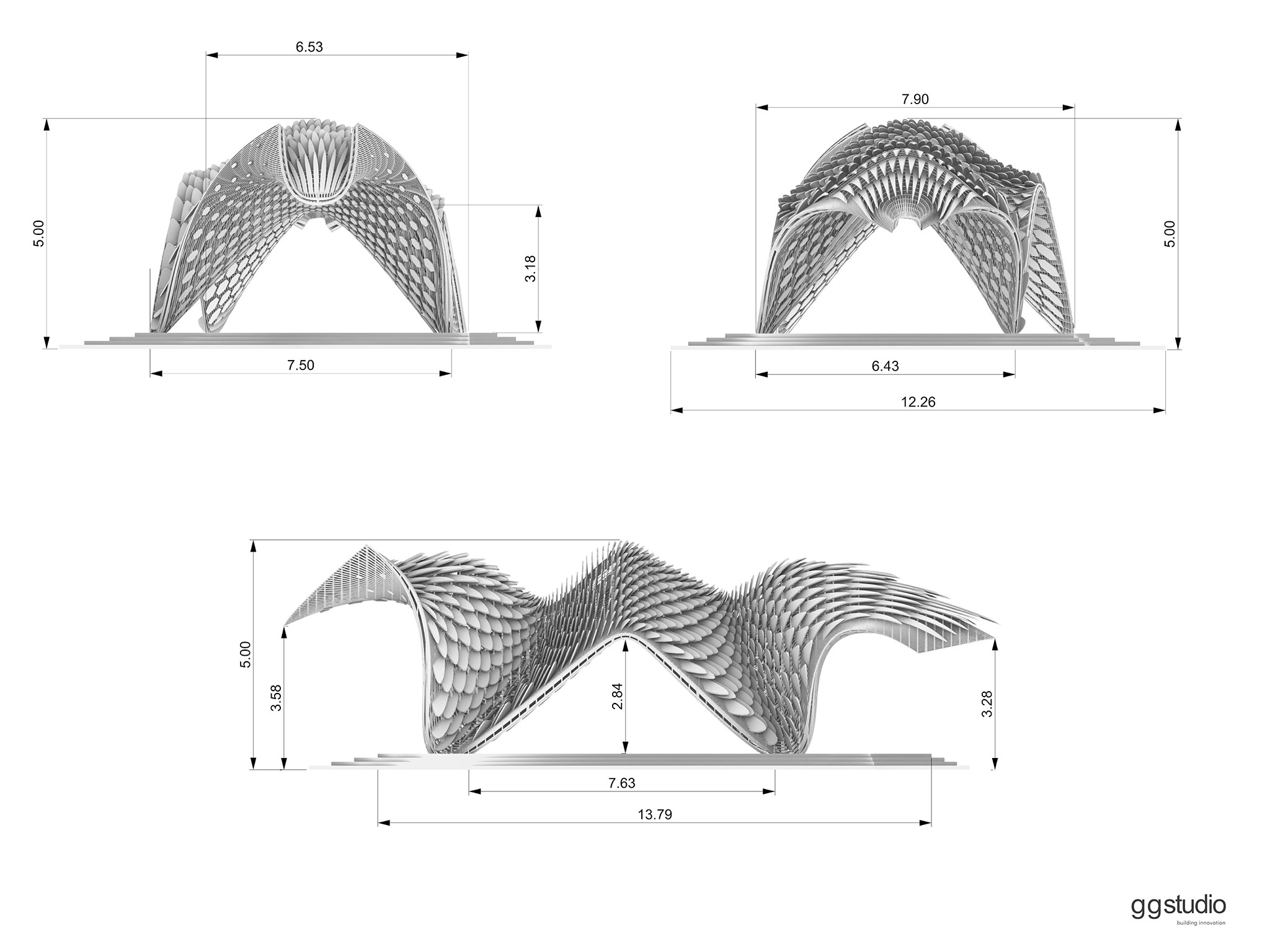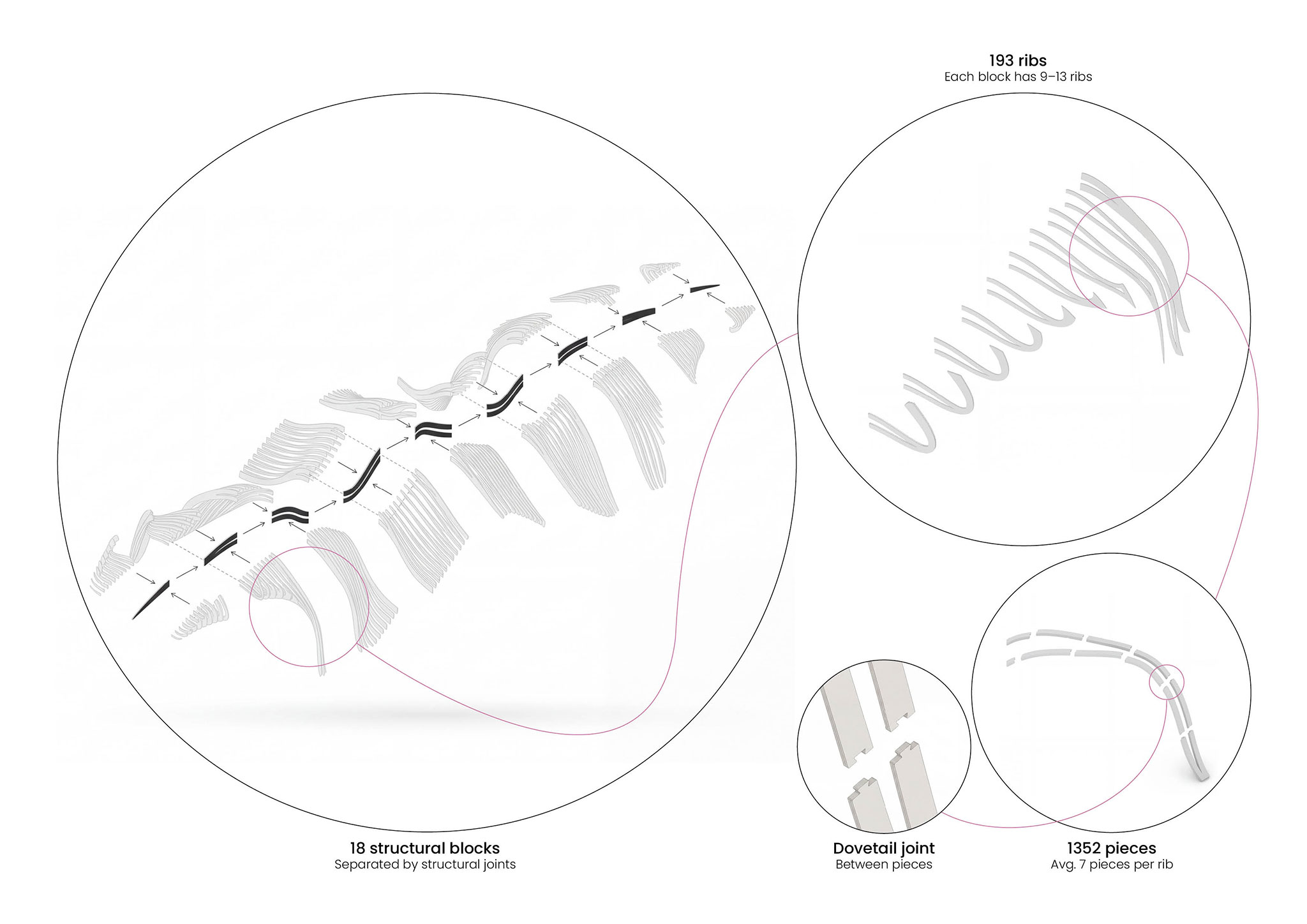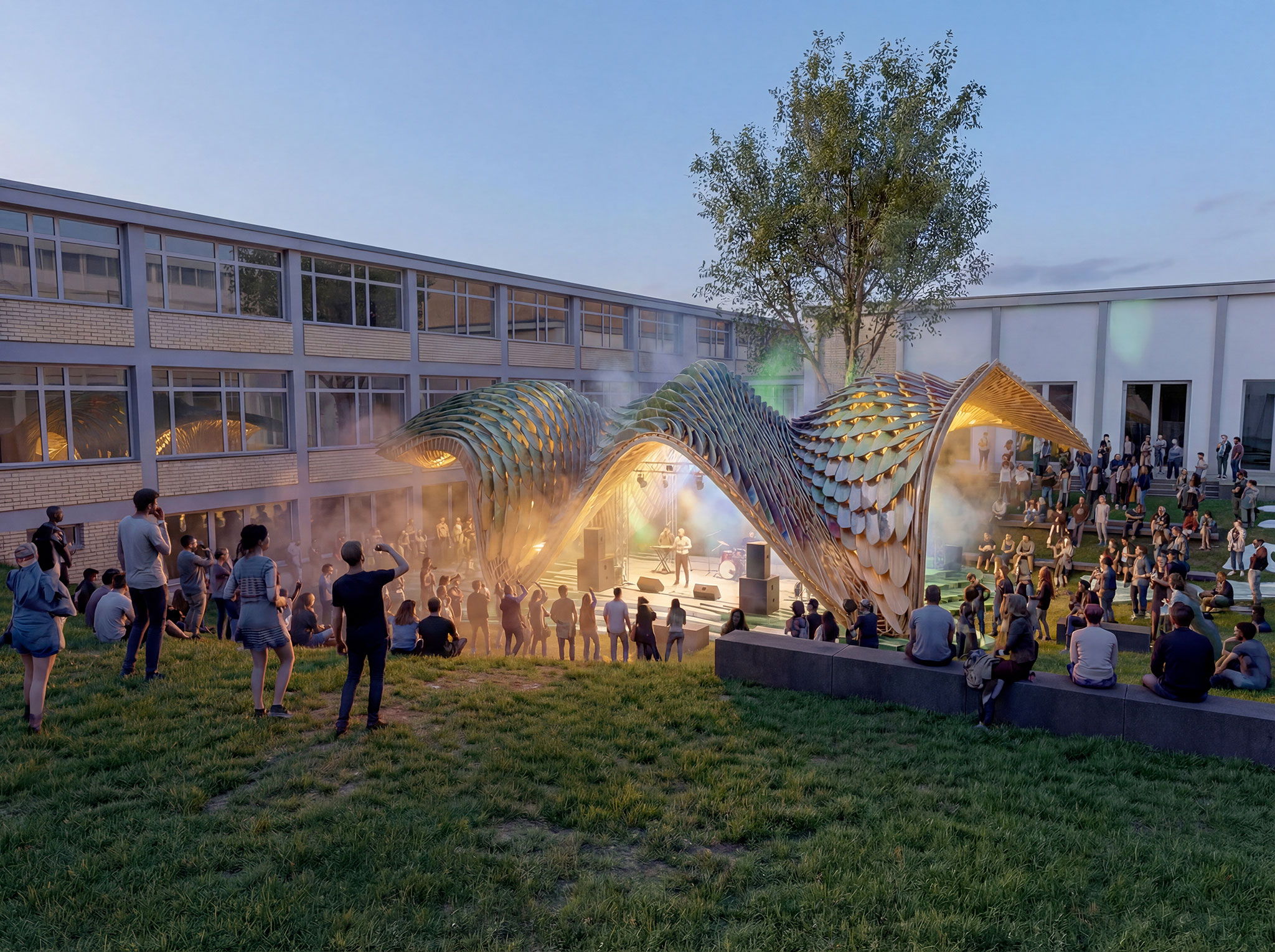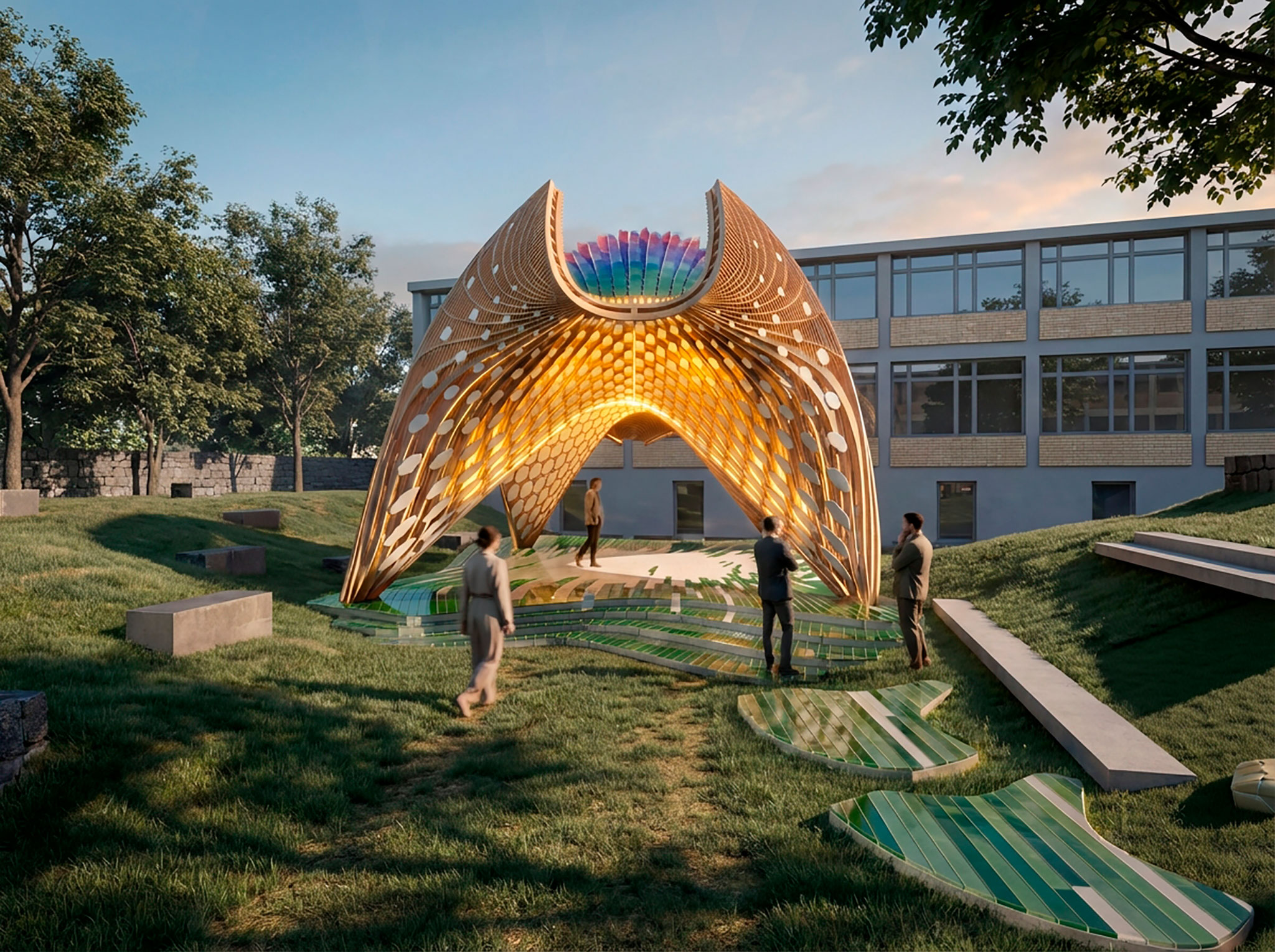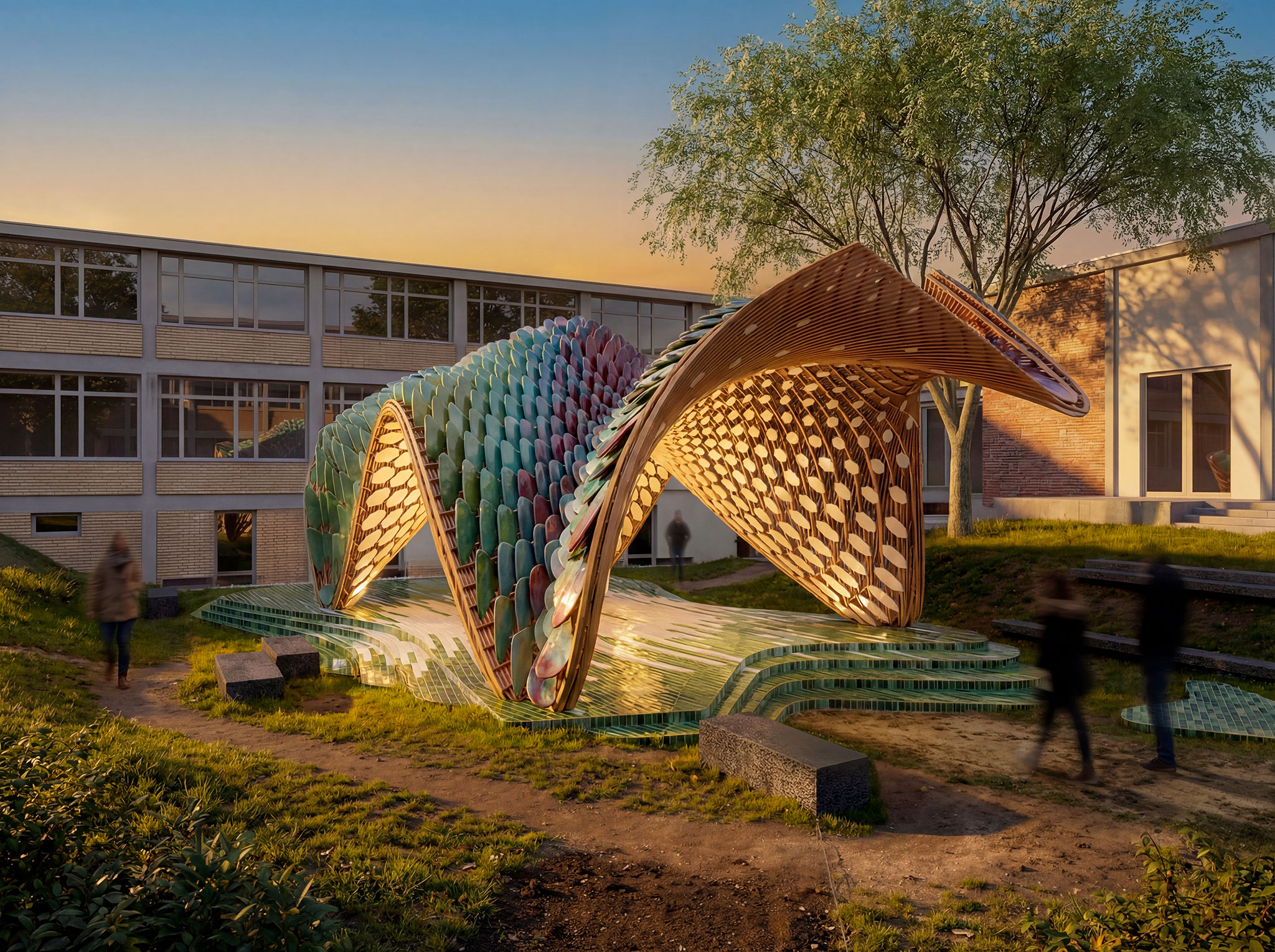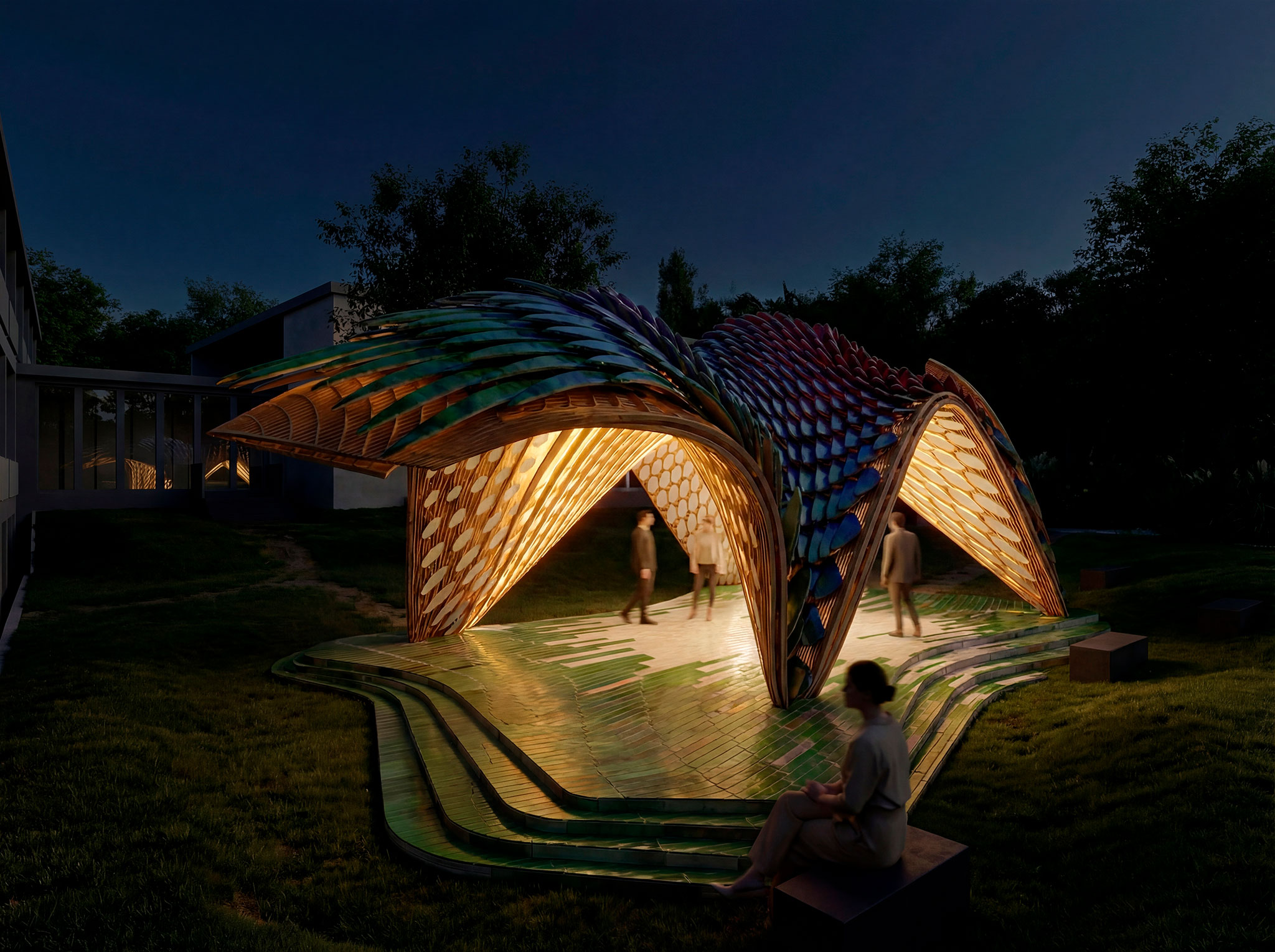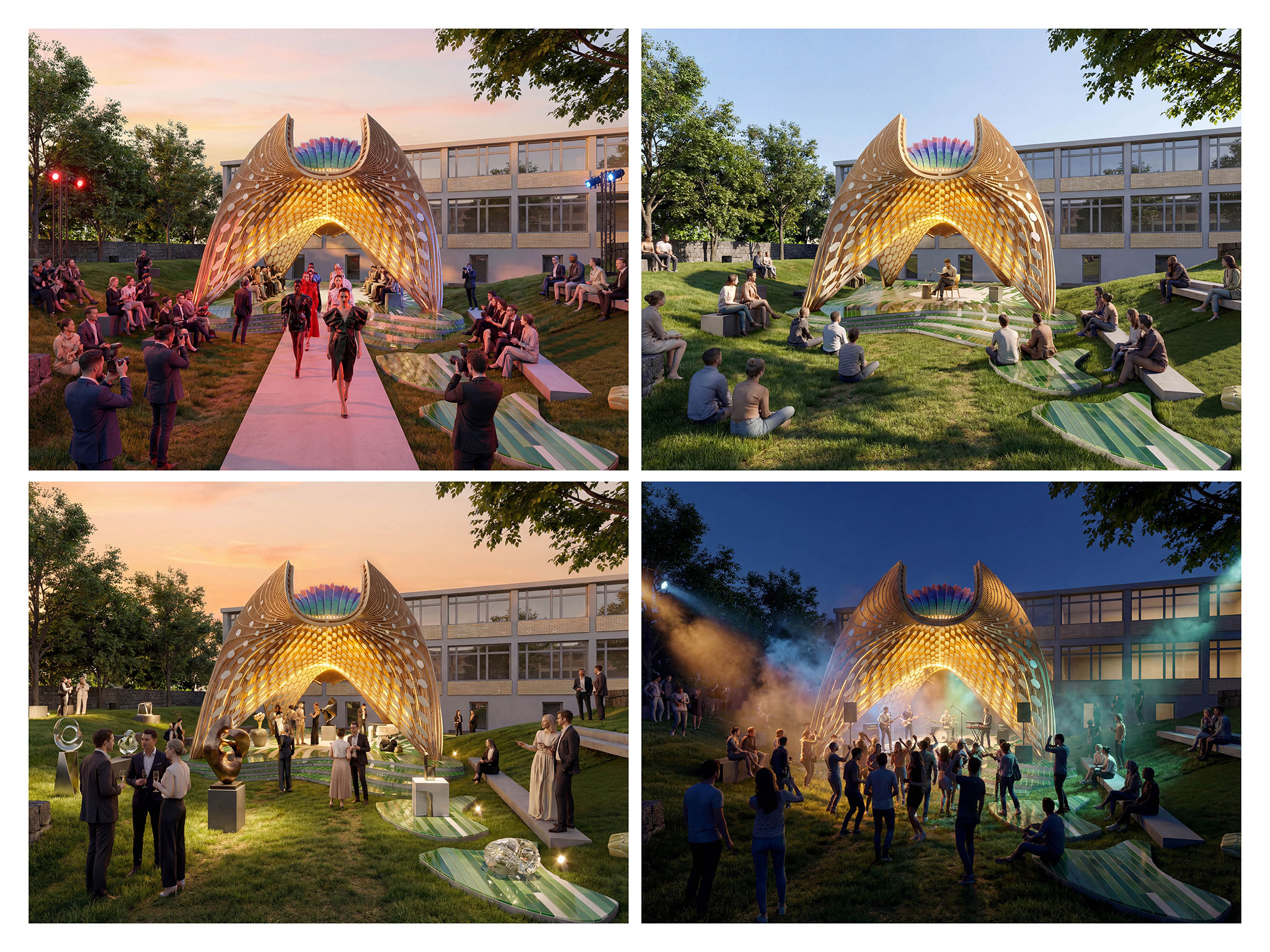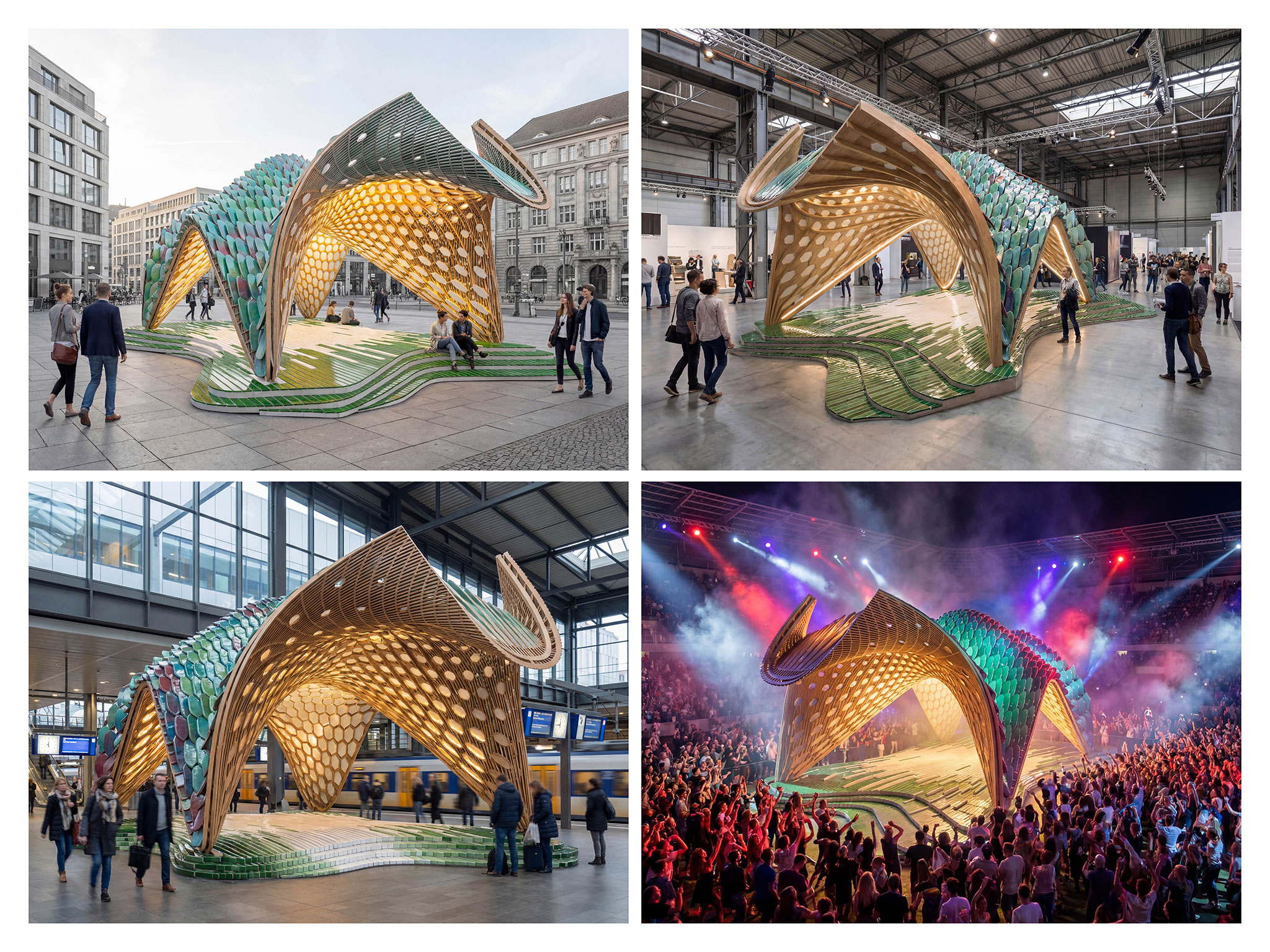
With "DRAC," ggstudio places materiality at the heart of architectural discourse, showcasing it as an expression of identity at one of the leading international forums for contemporary design. The 17 pieces that make up the installation, weighing nearly ten tons, have travelled from Valencia to Frankfurt, where they are already hosting the program of activities organized by the Cervantes Institute Frankfurt and ICEX, within the framework of the World Design Capital, before moving to Milan in the last quarter of the year.
The methodological legacy of Antoni Gaudí is addressed from an operational and contemporary perspective in the centenary year of his death. The project does not reproduce historical forms, but rather explores the structural and constructive principles linked to geometry, material efficiency, and the relationship between form and system of the brilliant creator.
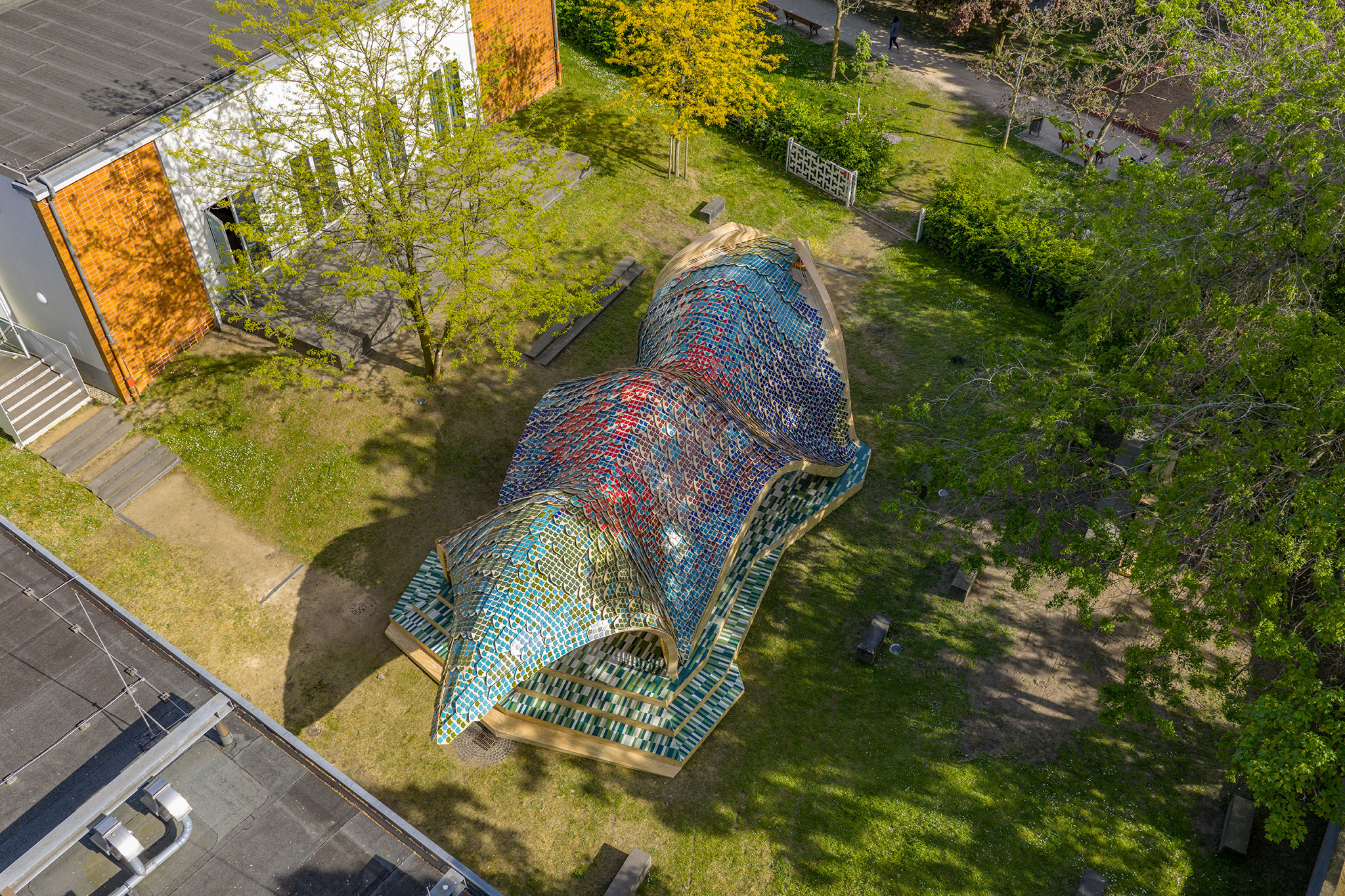
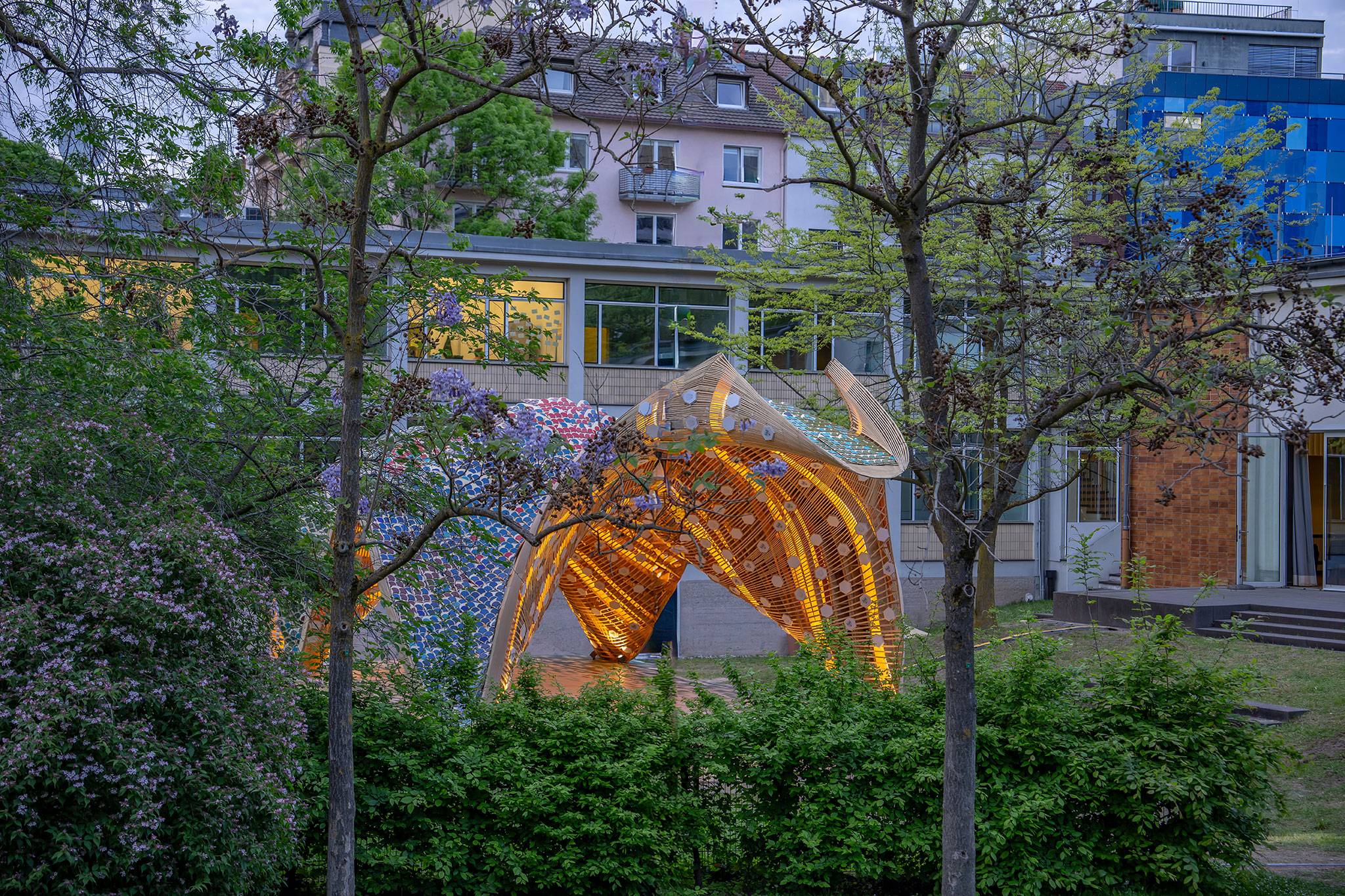
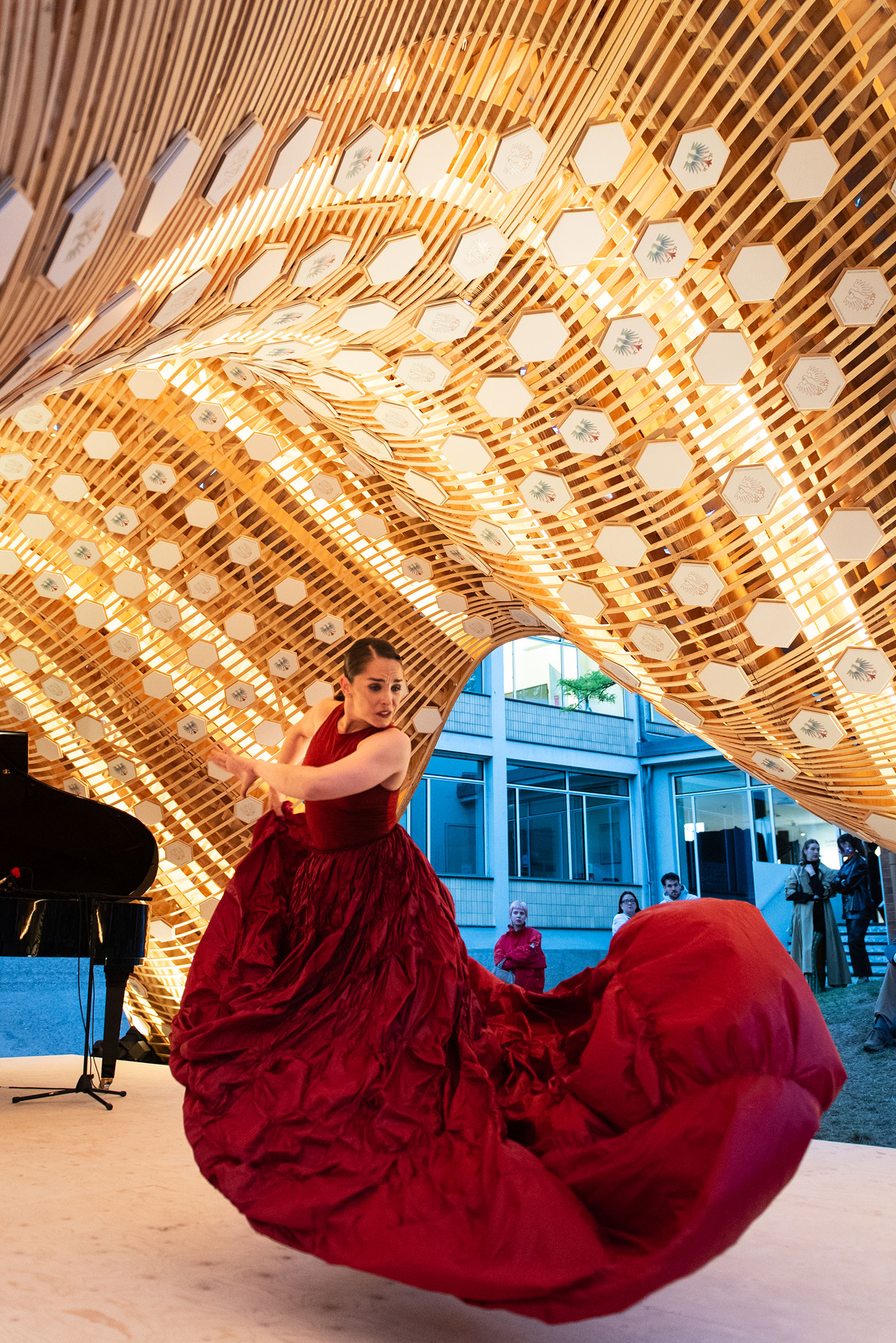
"DRAC" by ggstudio. Photograph by Felix Heinemeyer - High Vision GmbH.
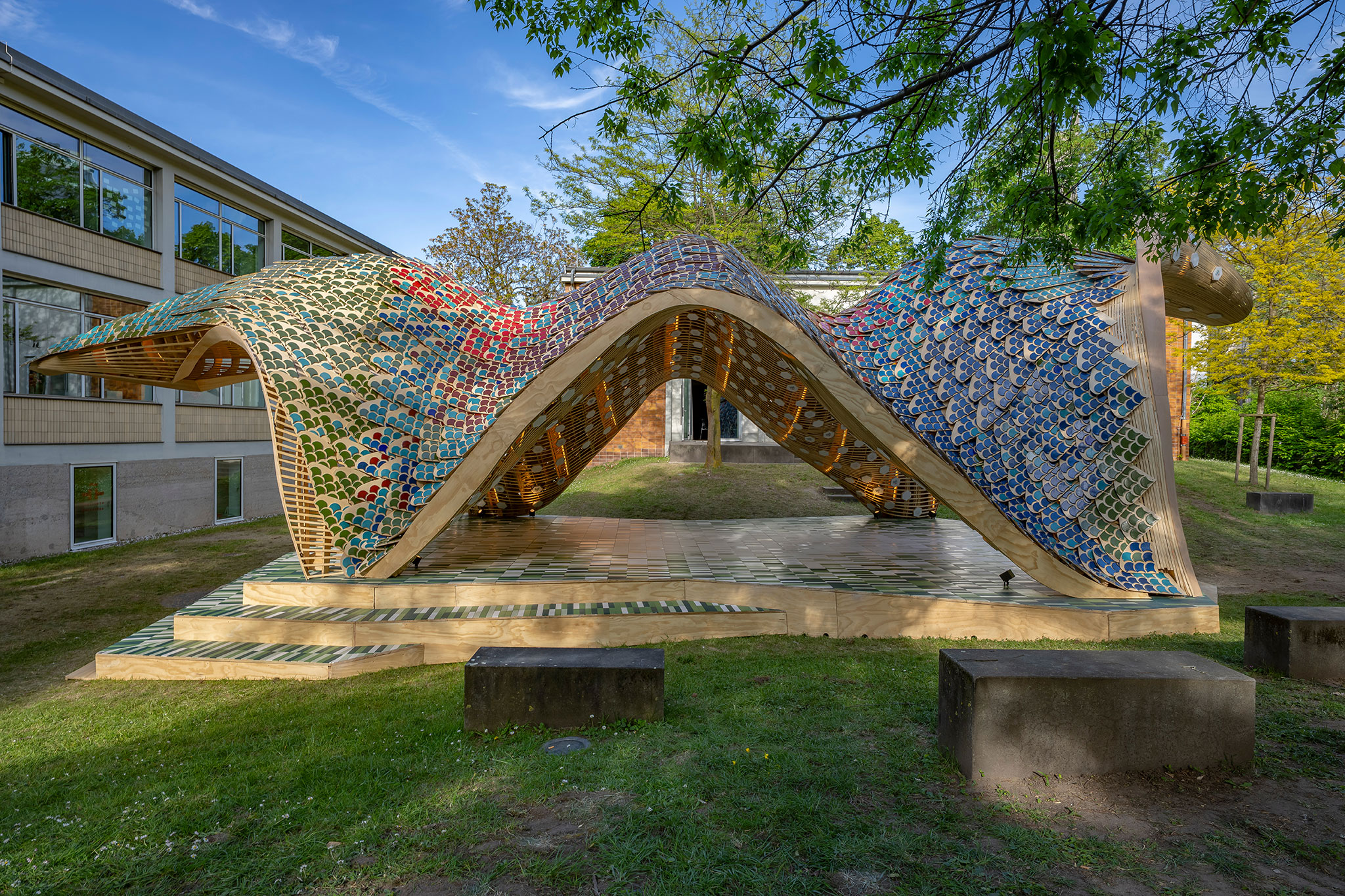
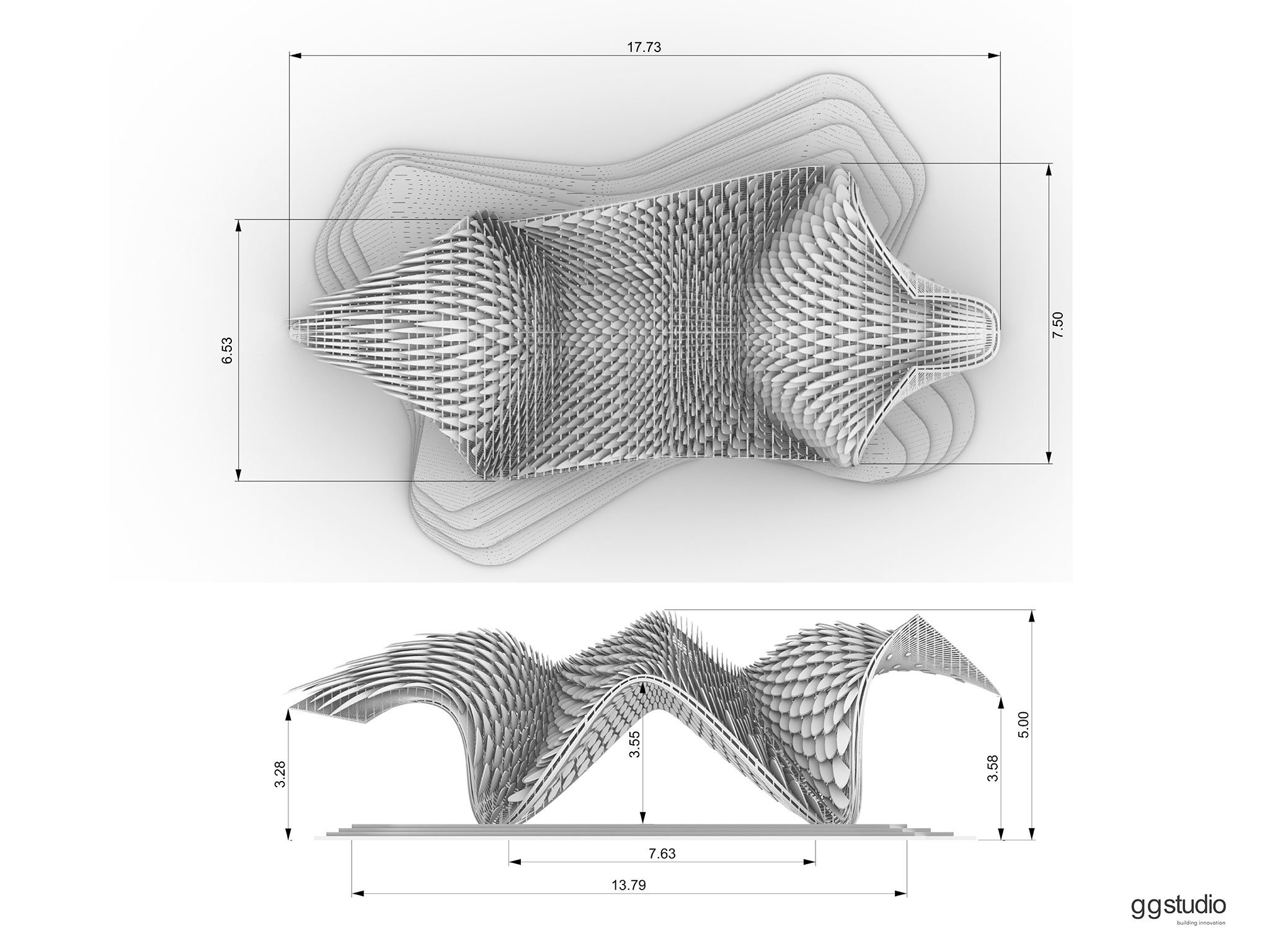
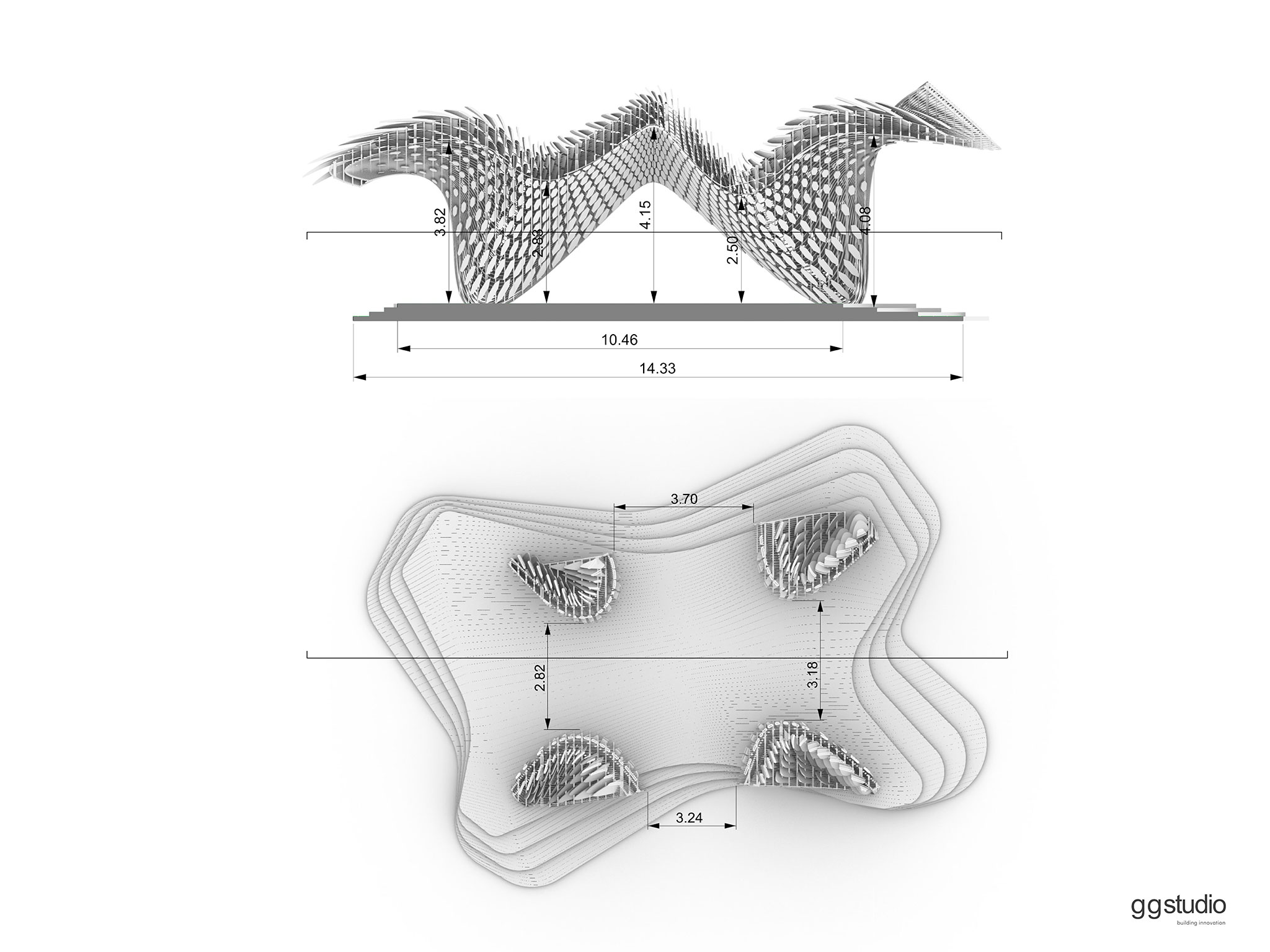
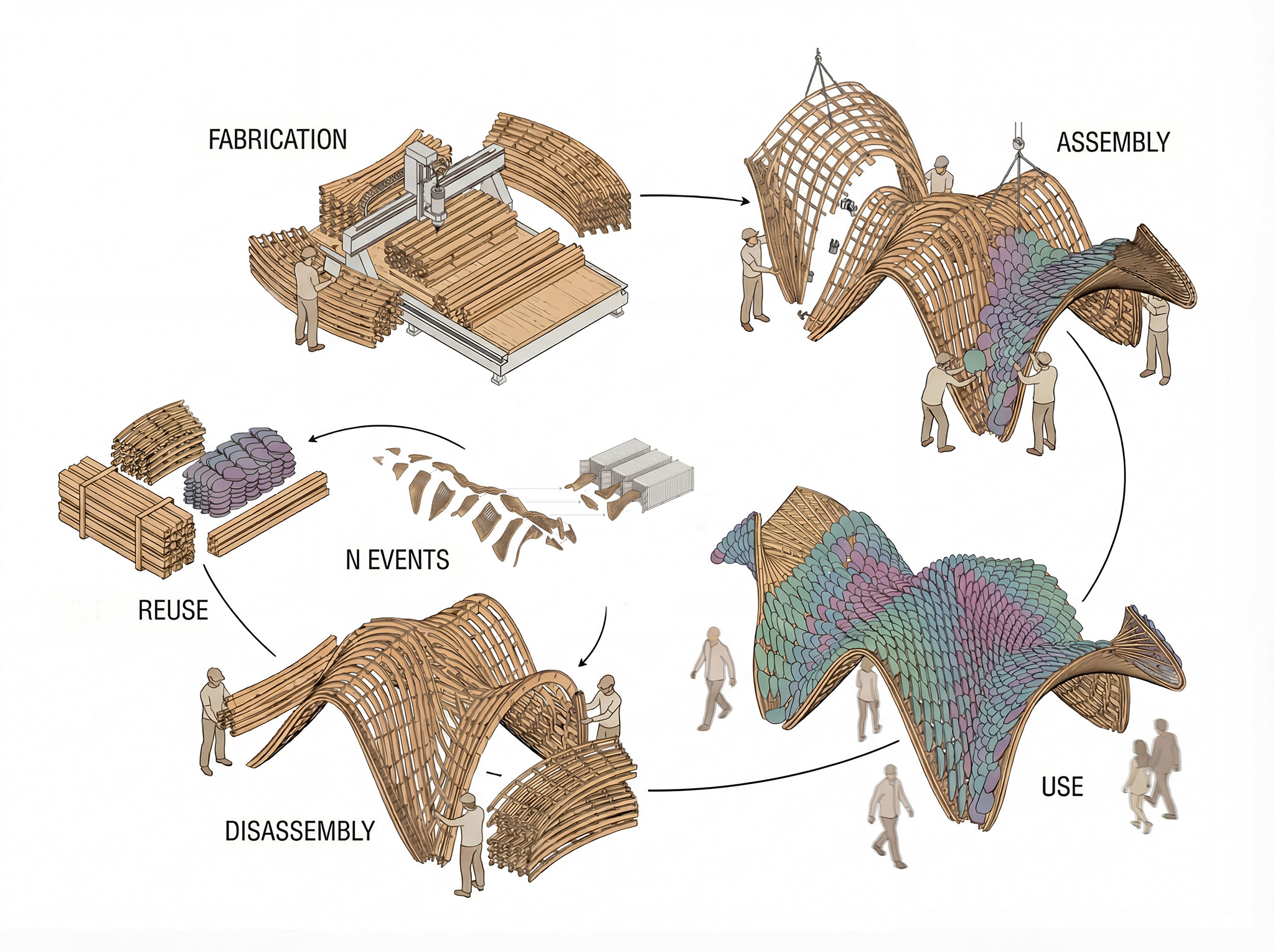
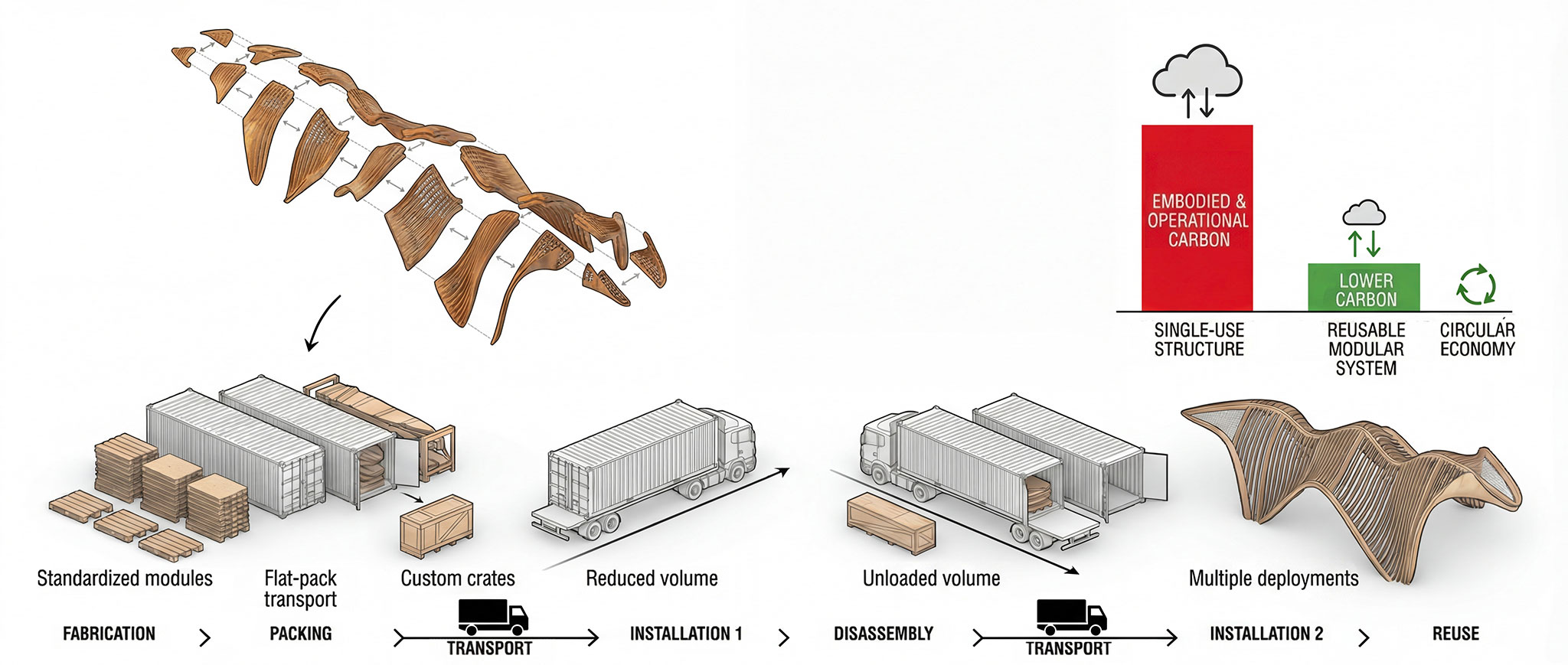
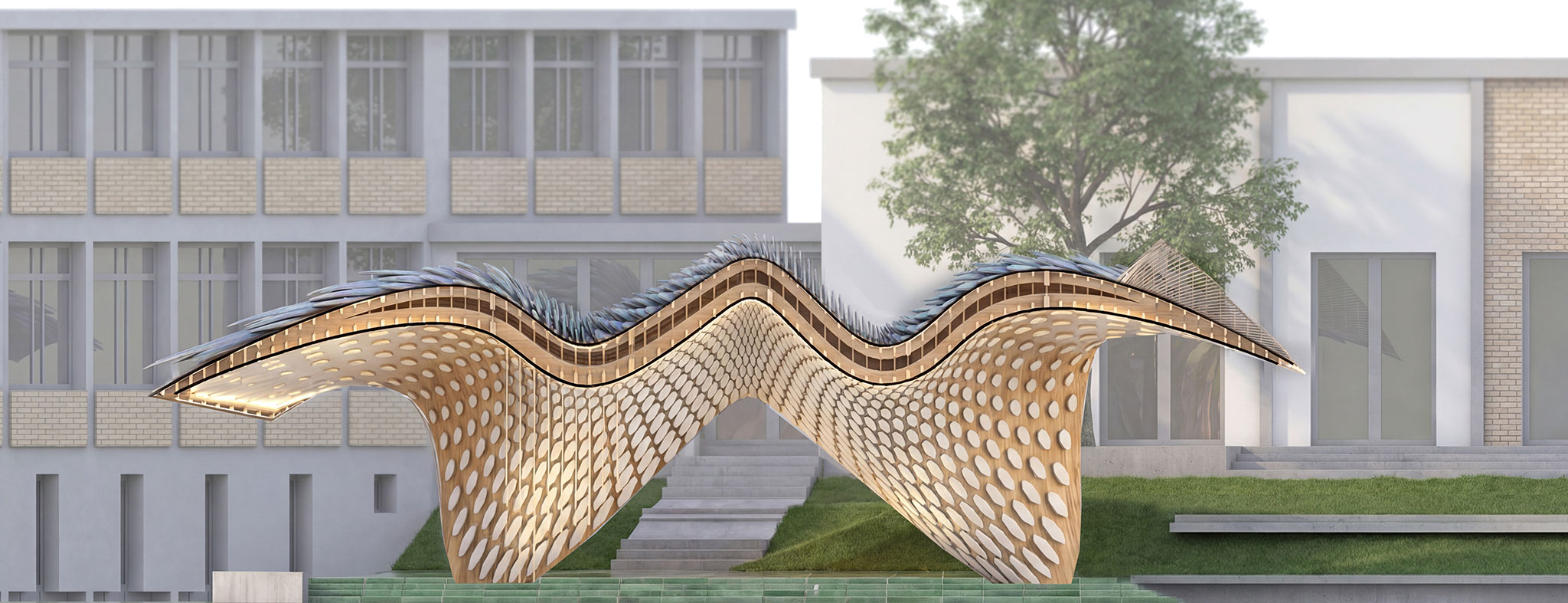
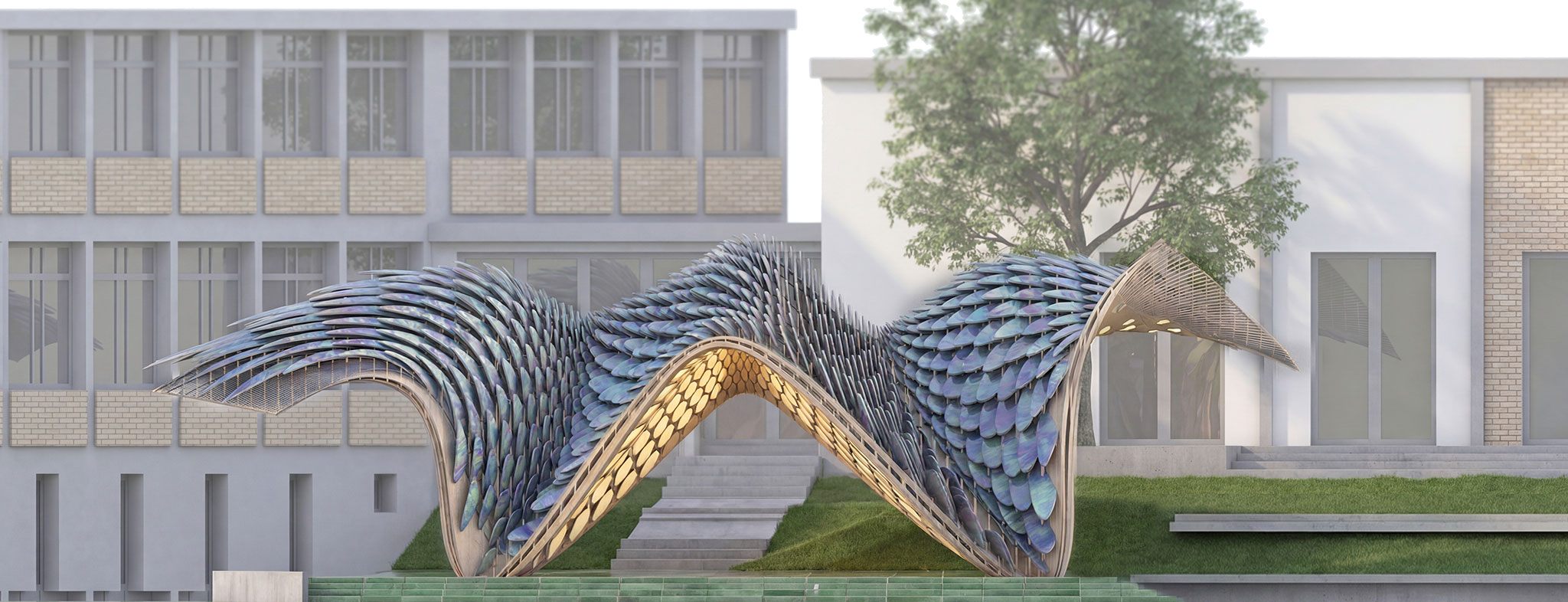
The installation translates this logic to the current European context through a lightweight modular structure that combines Mediterranean material culture and technical innovation. In this sense, the project aligns with the principles of the New European Bauhaus by integrating sustainability, construction precision, and a social dimension into a circular and reversible cultural infrastructure model.
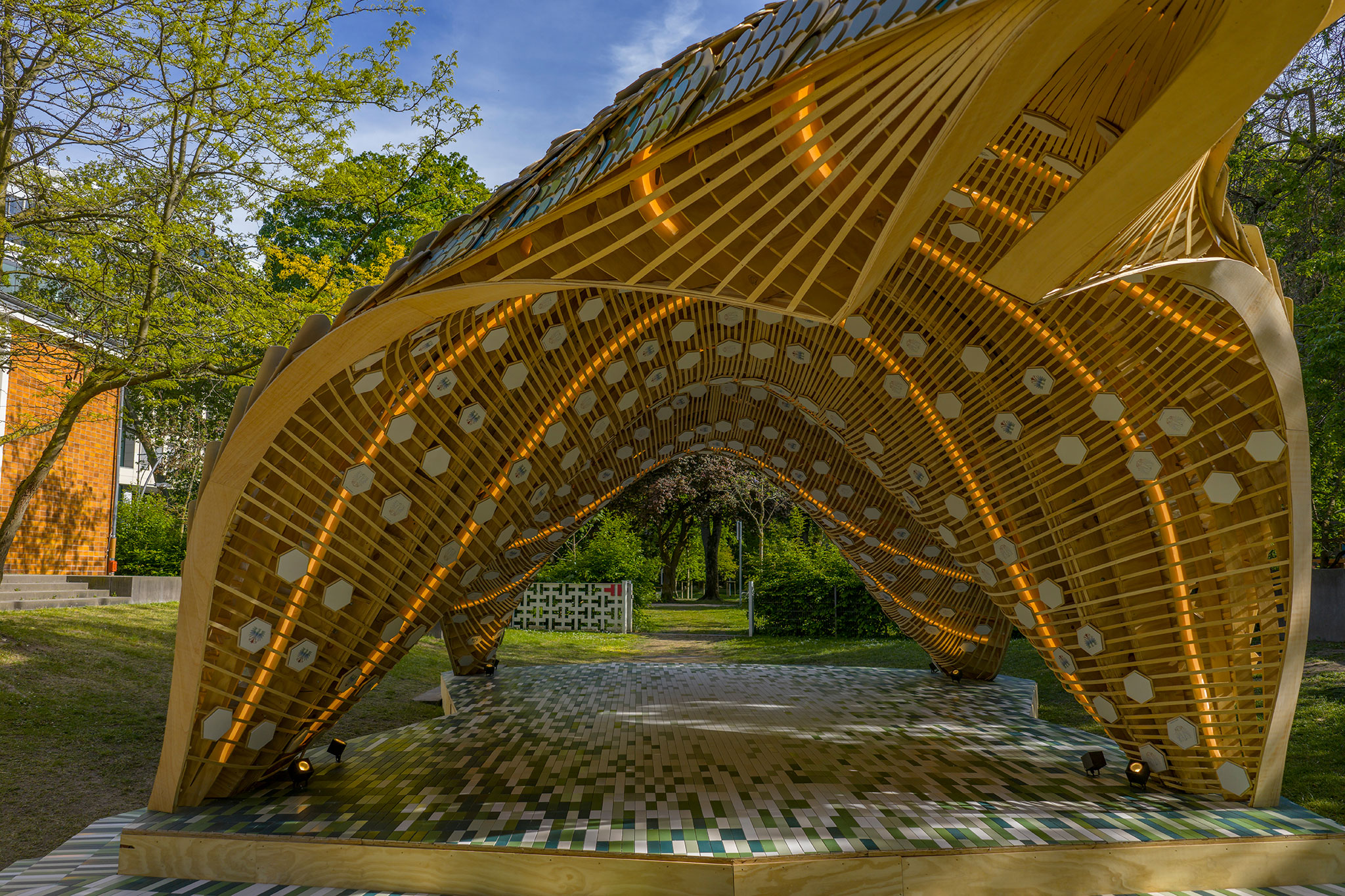
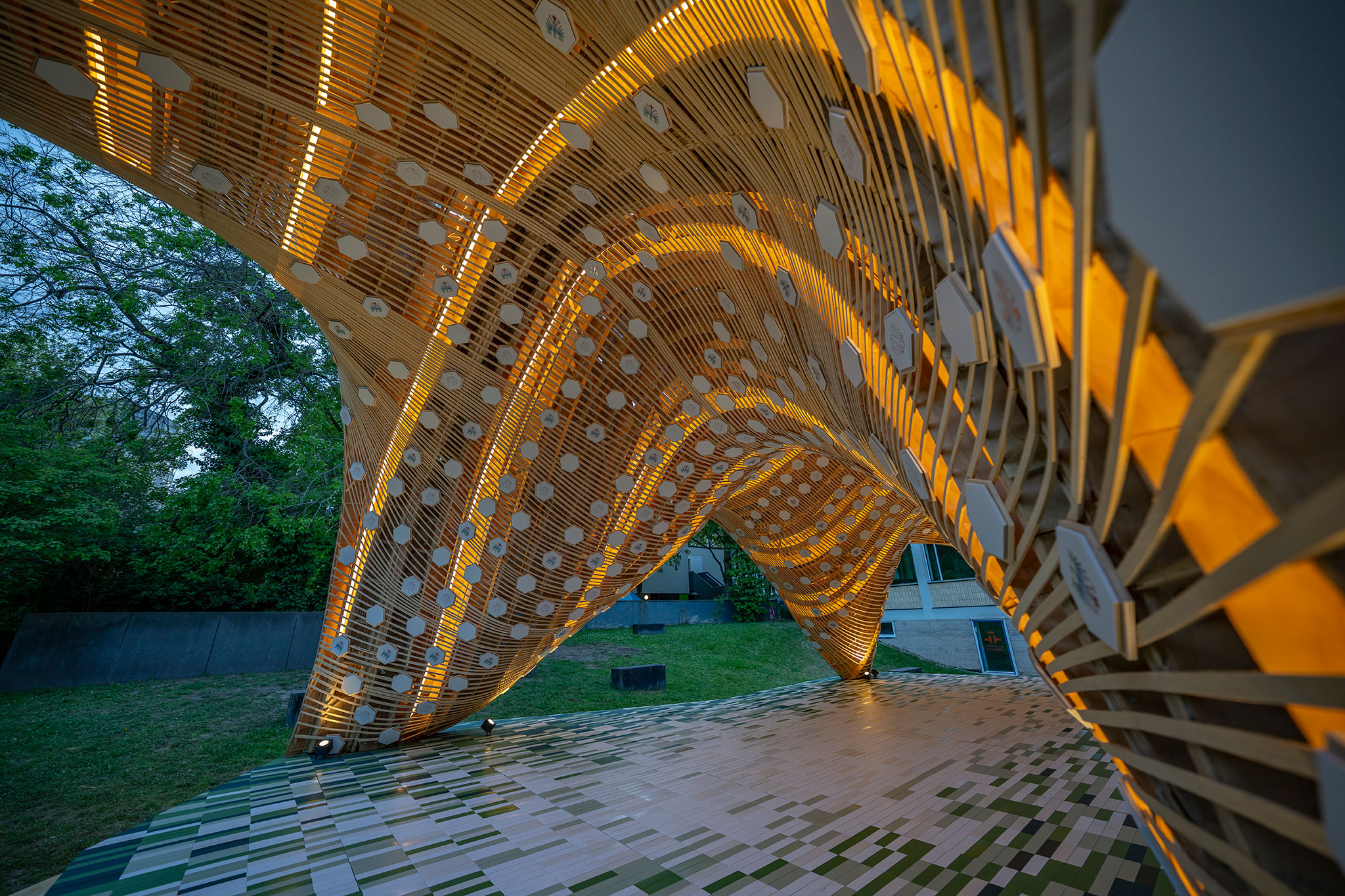
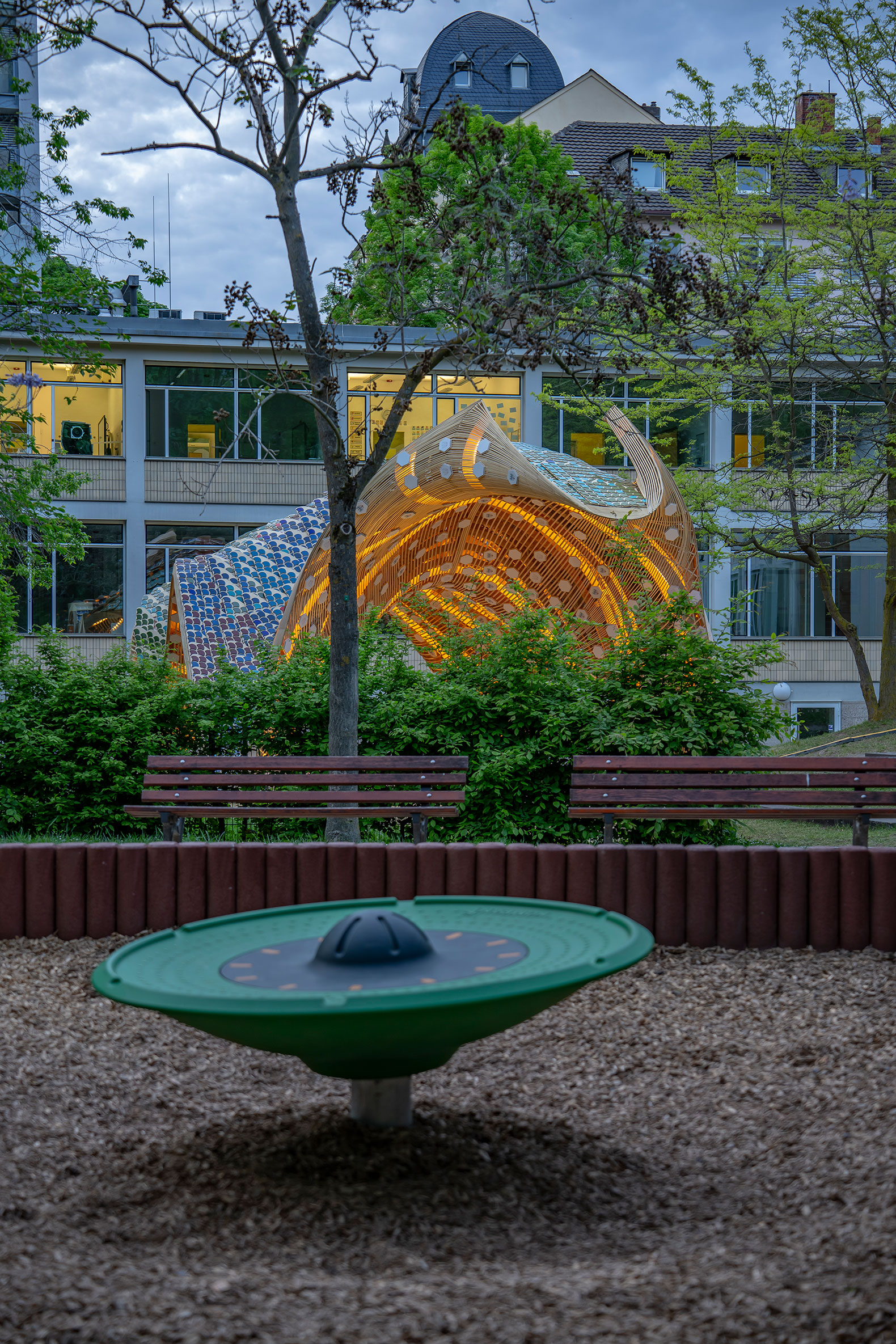
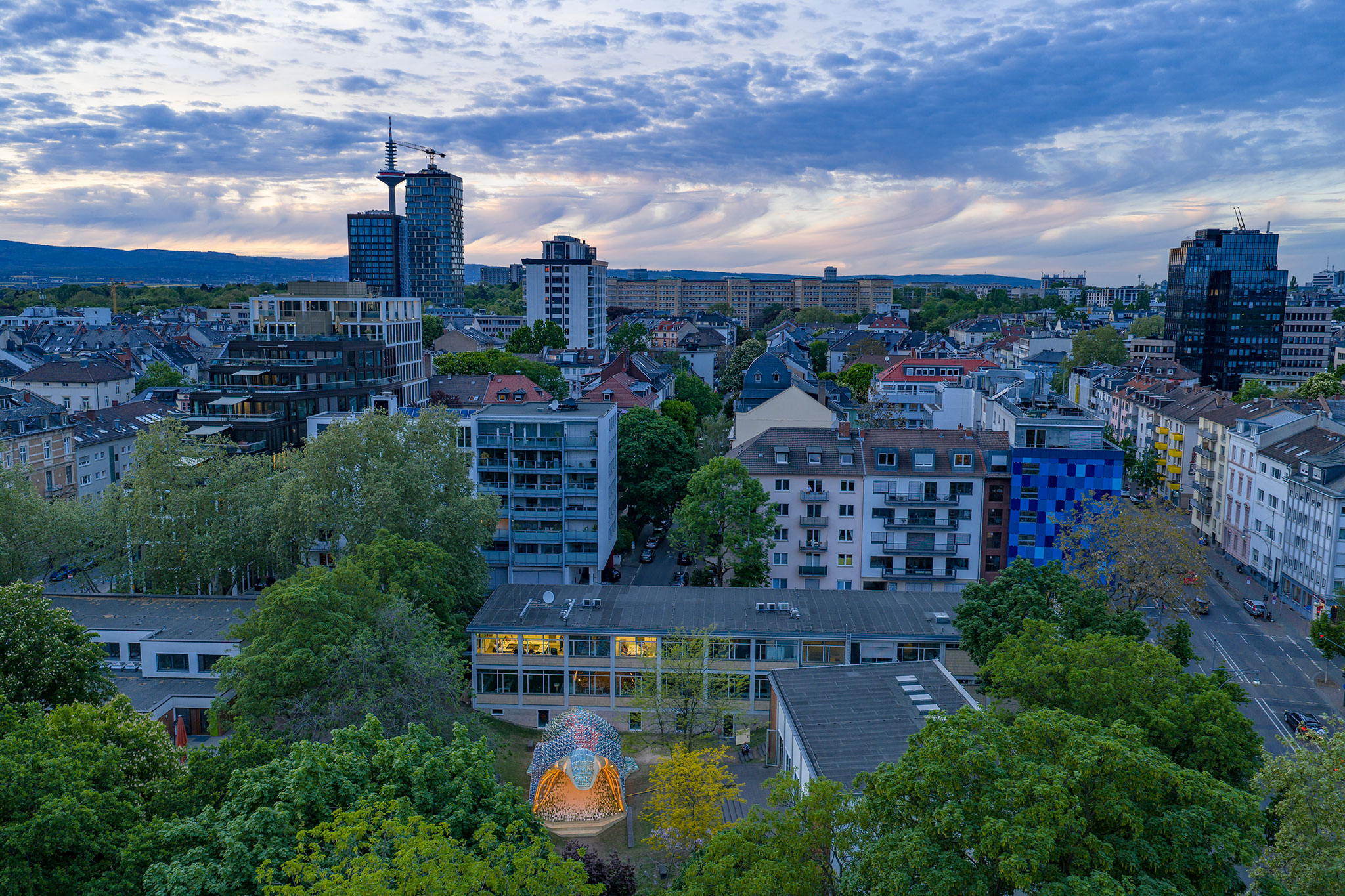
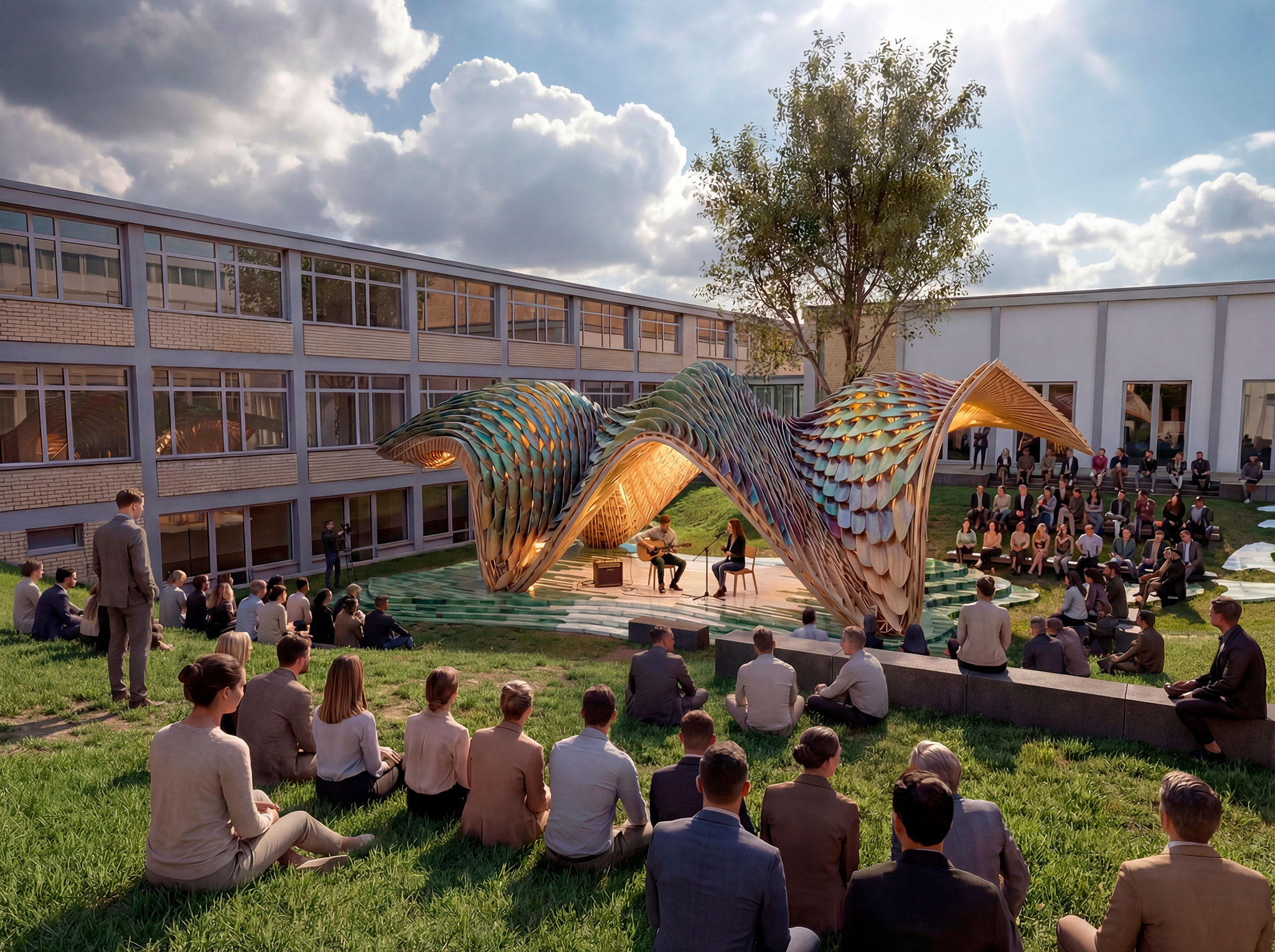
The space is not conceived as a closed pavilion, but rather as a permeable architecture that engages with the park and facilitates the free movement of visitors. The project has included a circularity analysis that evaluates its life cycle and implementation in different urban contexts to guarantee its reversible and reusable nature. Thus, all its elements, manufactured entirely in Spain, can undergo several assembly and disassembly cycles without leaving any construction trace.
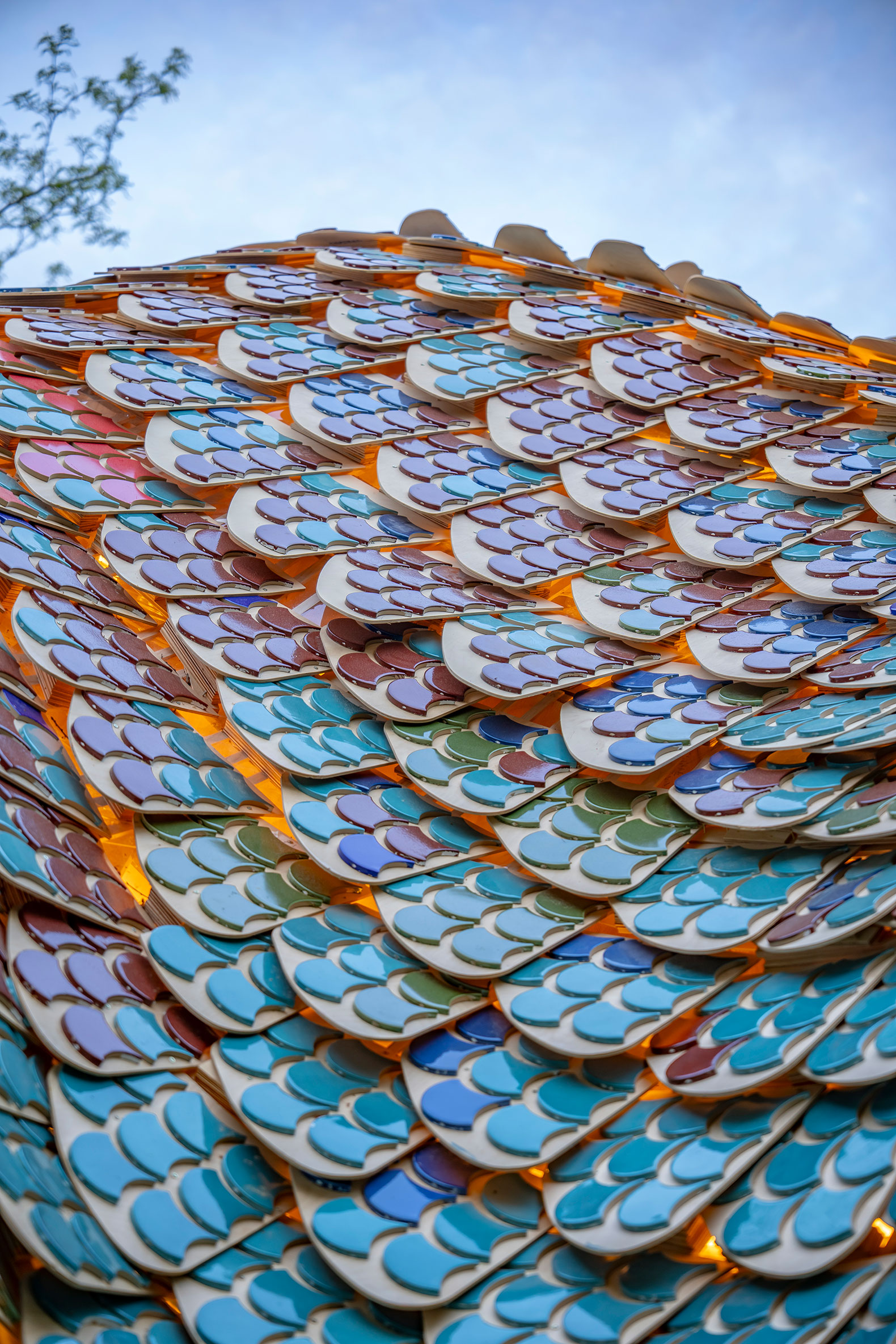
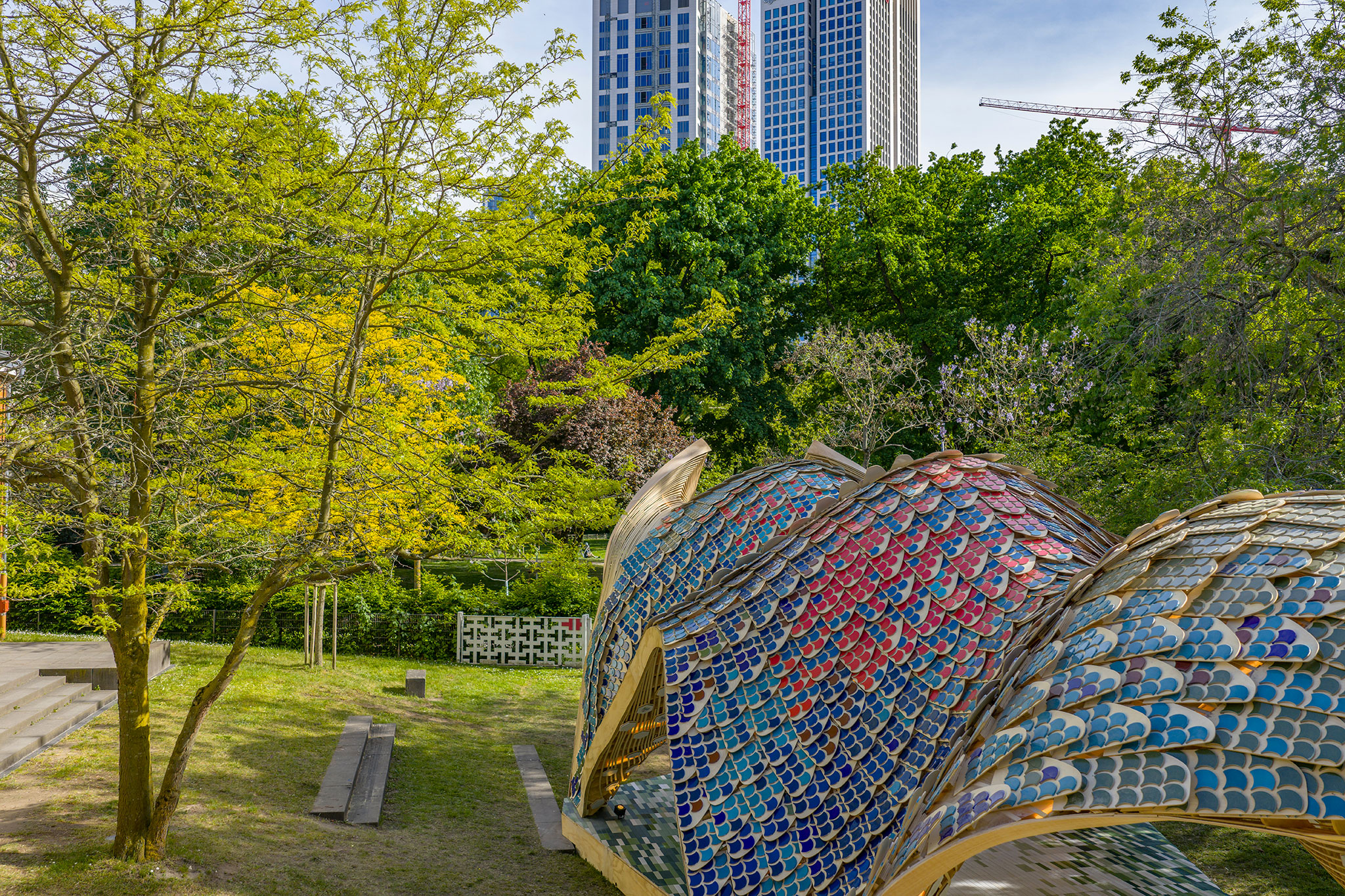
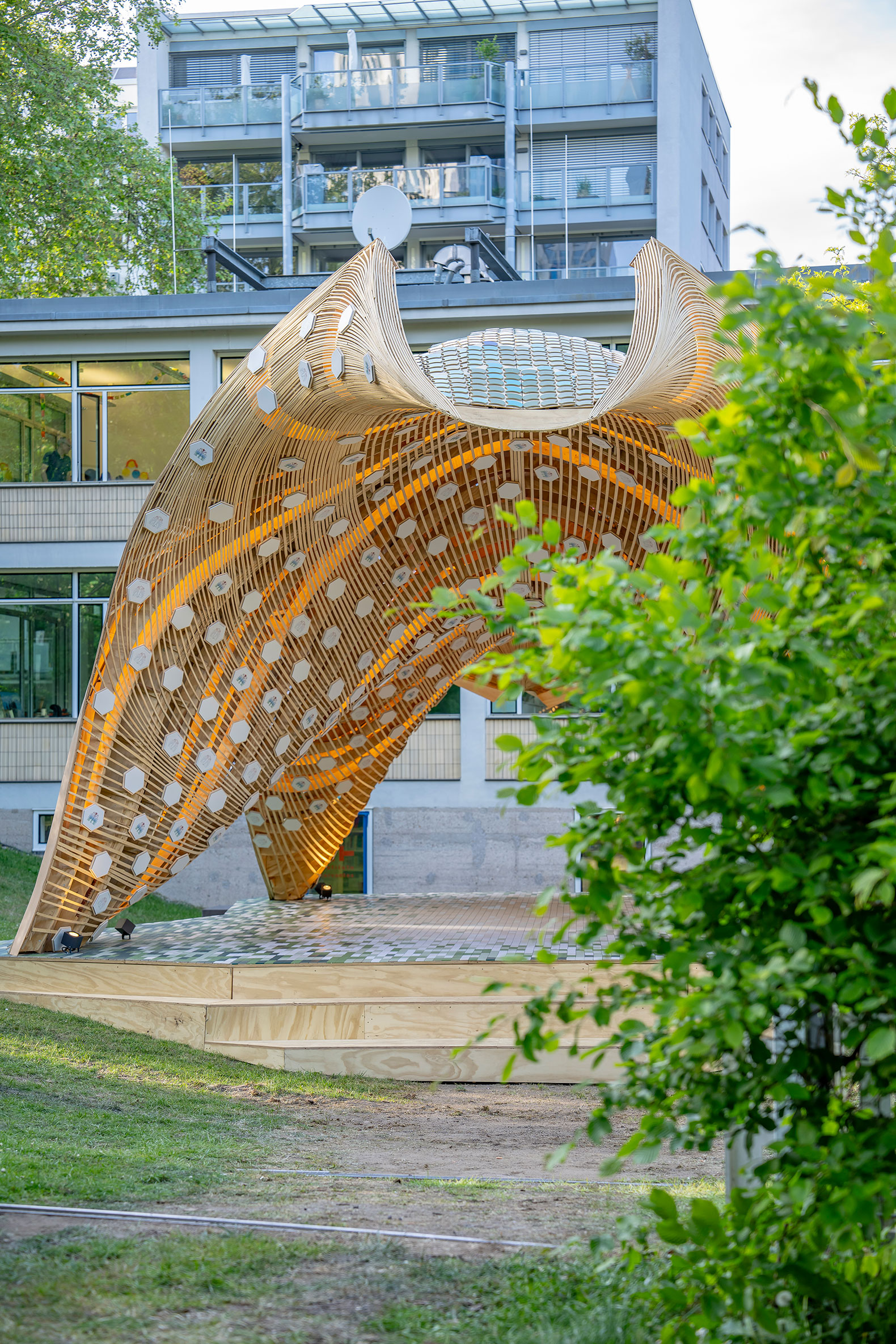
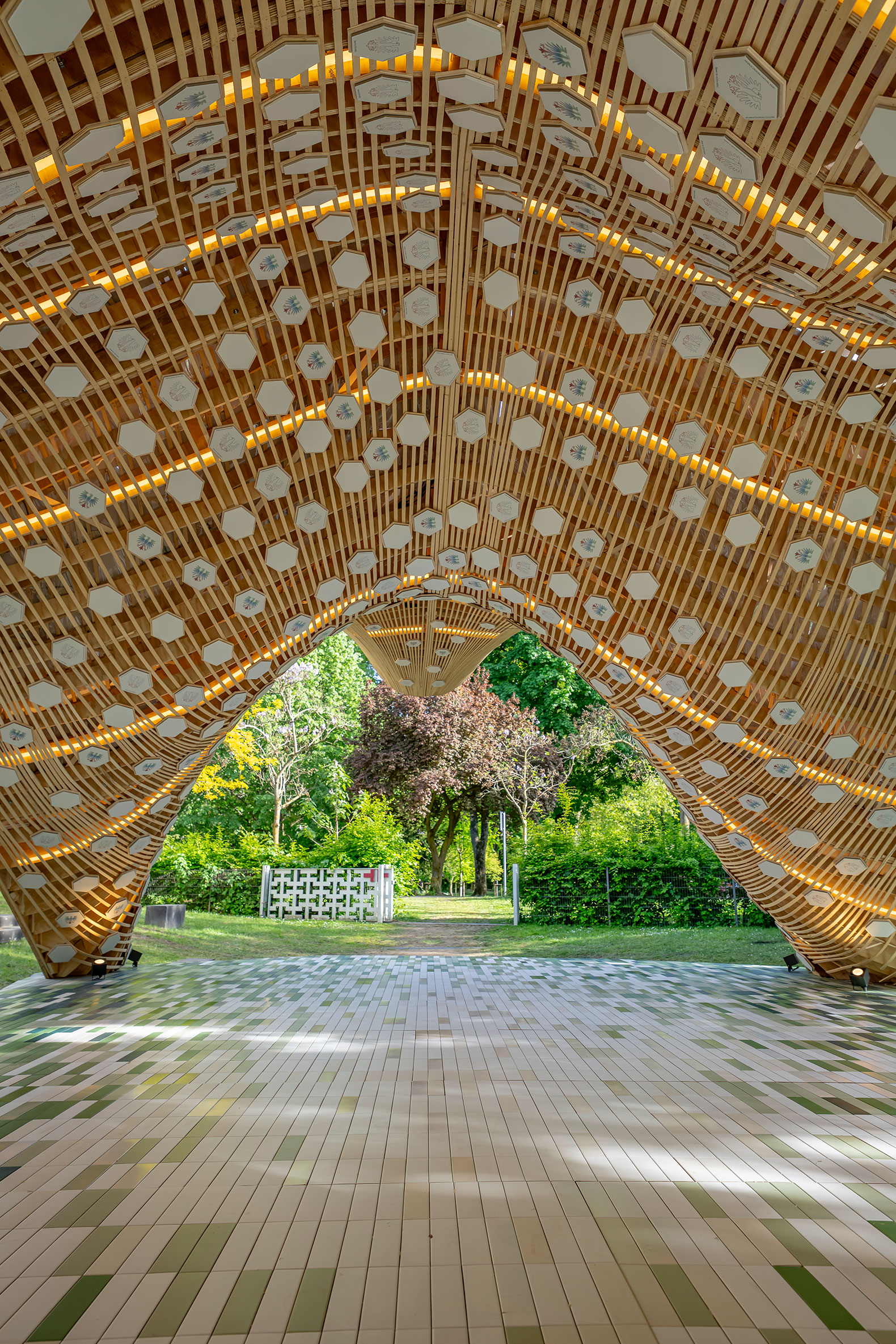
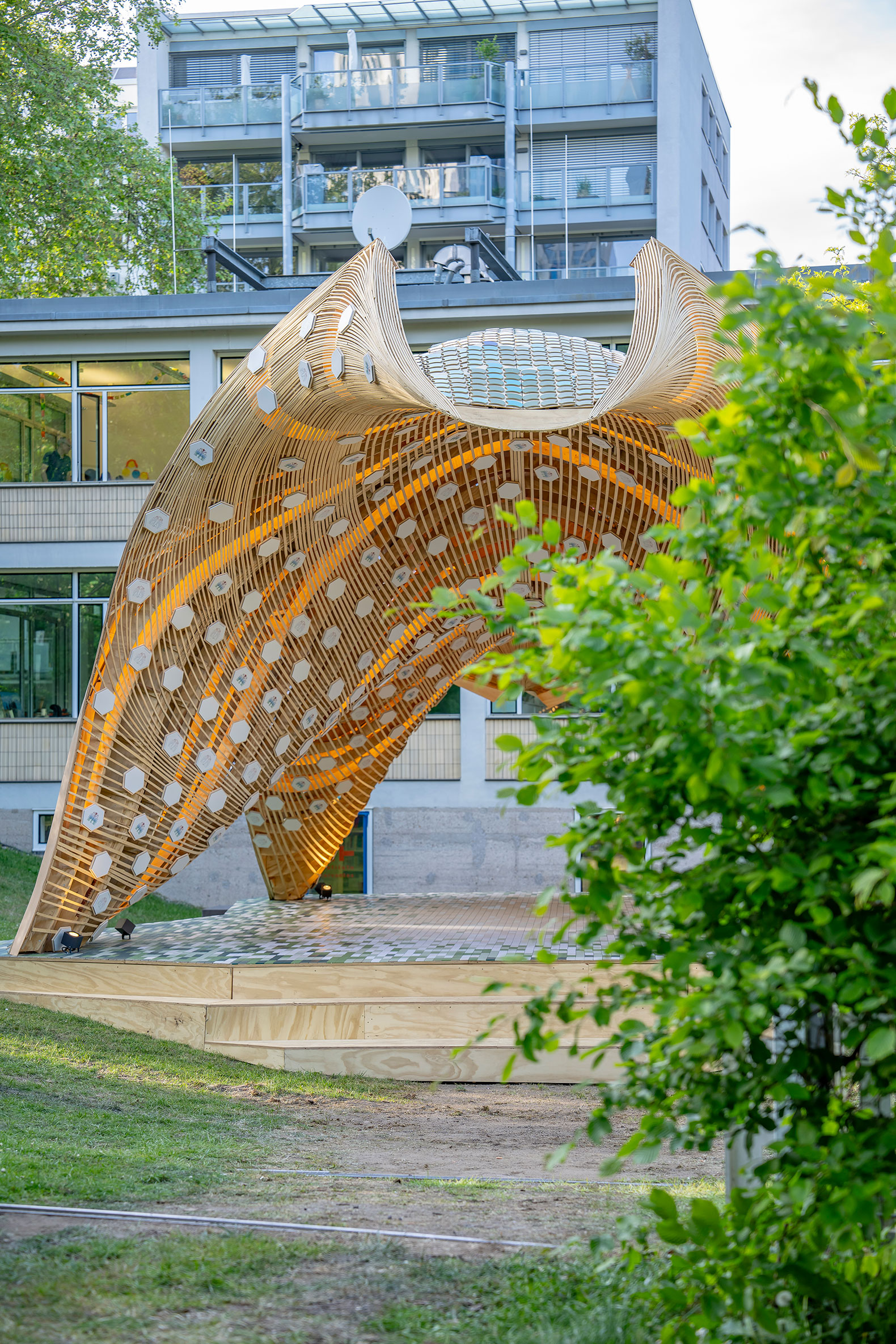
"DRAC" by ggstudio. Photograph by Felix Heinemeyer - High Vision GmbH.
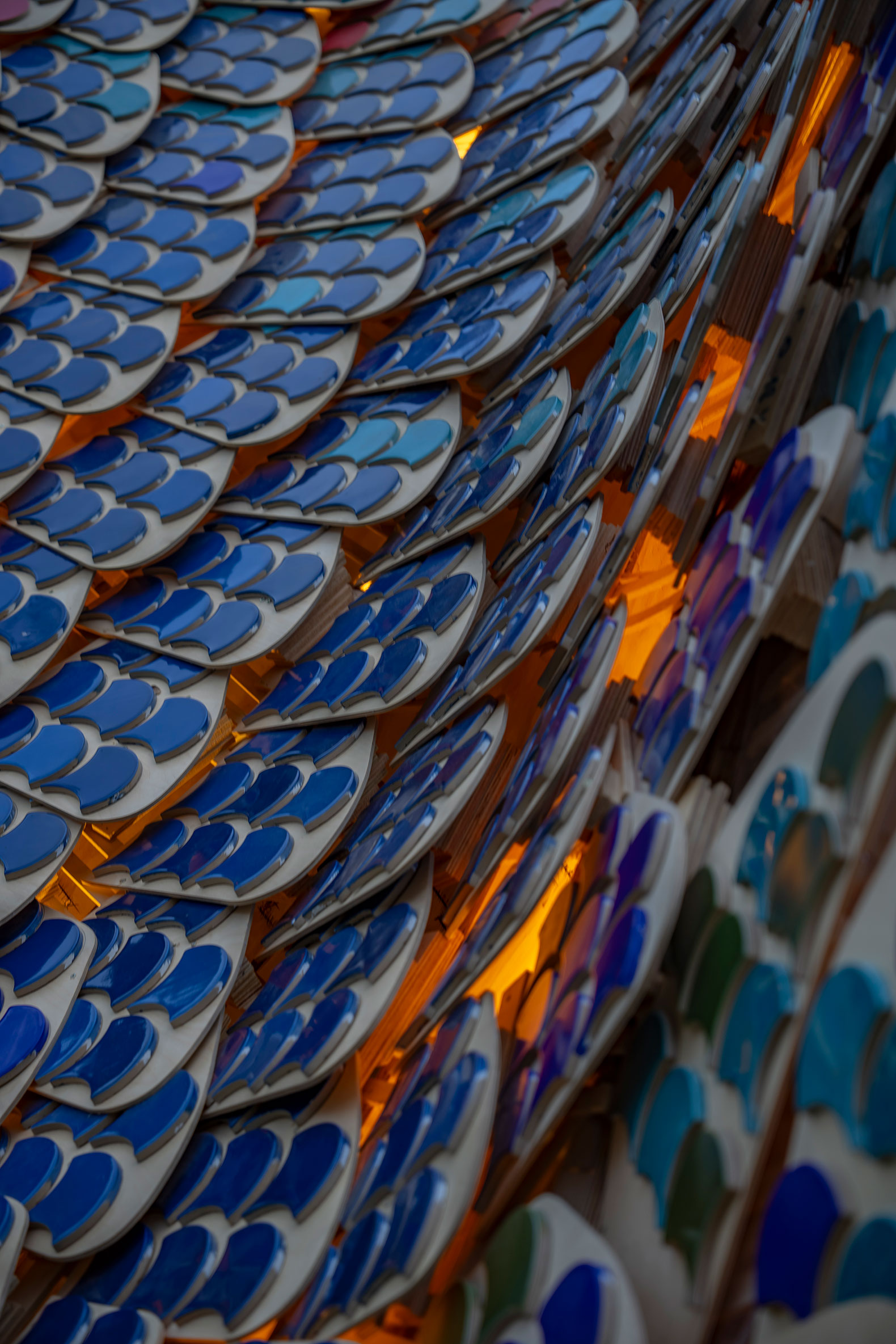
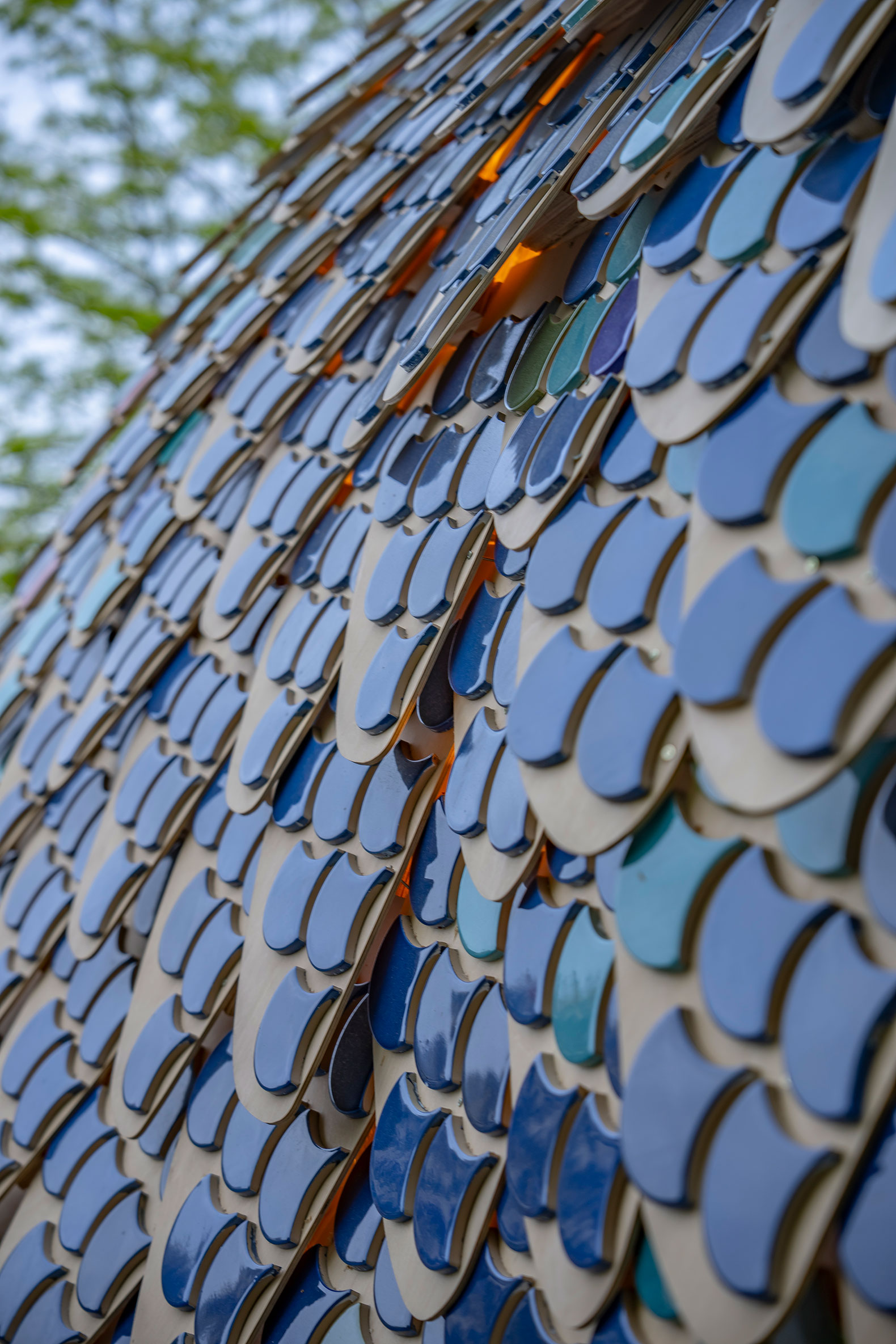
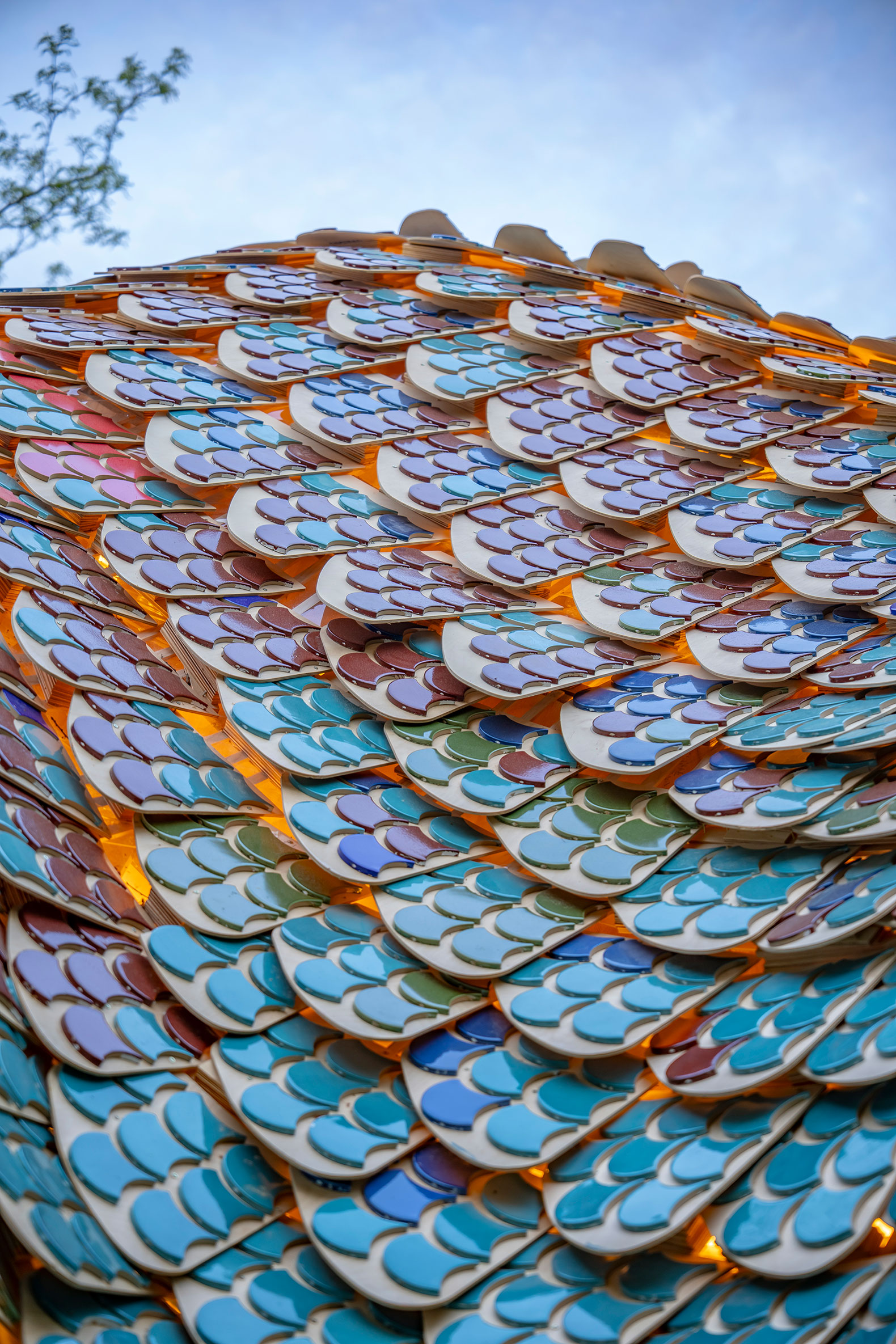
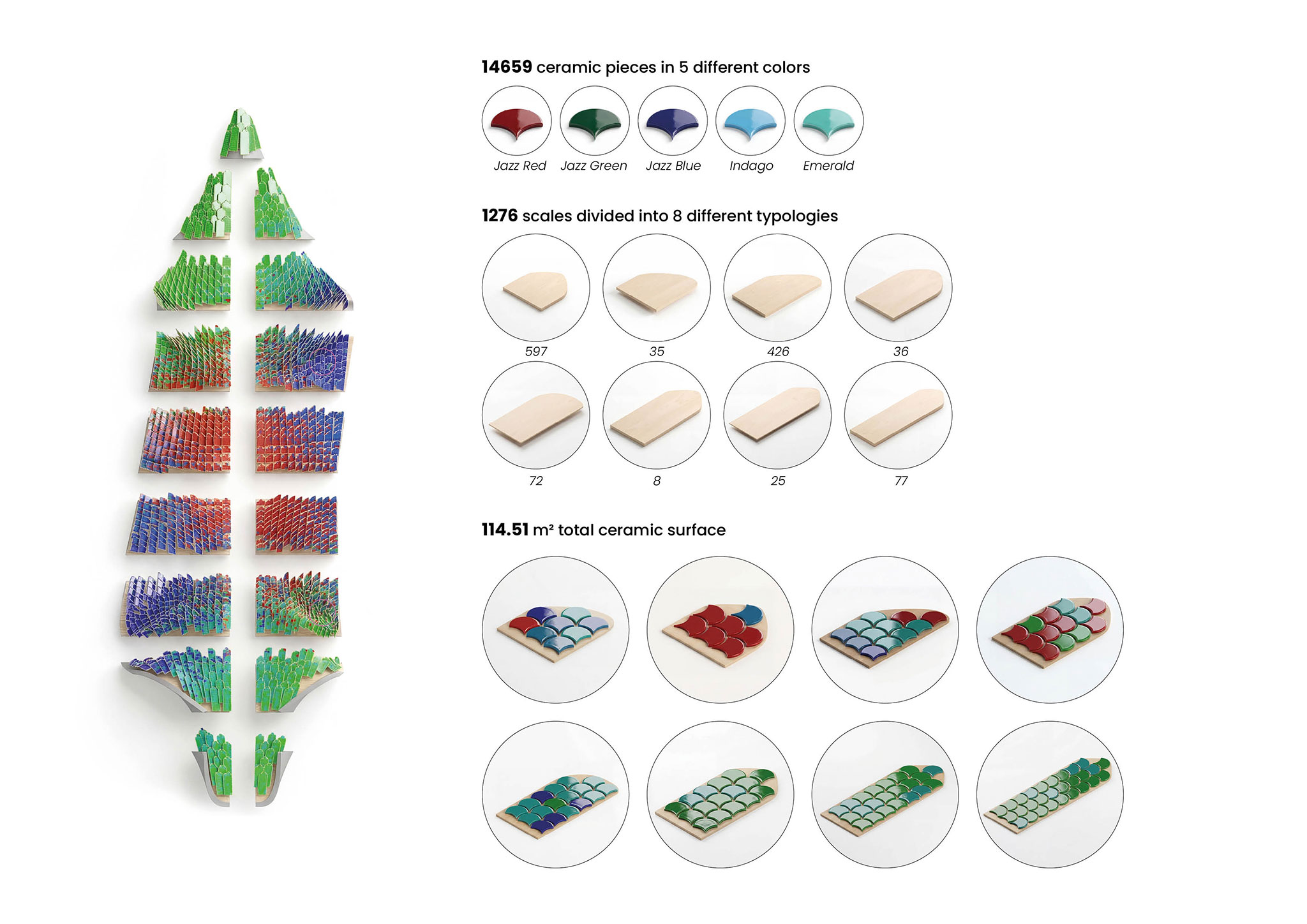
The wooden structure features a hybrid skin composed of more than 16,000 ceramic pieces, which provide color, texture, strength, and depth, as well as textile components that modulate light, ventilation, and the relationship with the surroundings. The combination creates a dynamic envelope, especially striking at night thanks to an integrated, low-energy lighting system.
"The project explores how ceramic tradition can be integrated into contemporary systems of prefabrication, digital fabrication, and reversible assembly."
José Ramón Tramoyeres, founder of ggstudio.