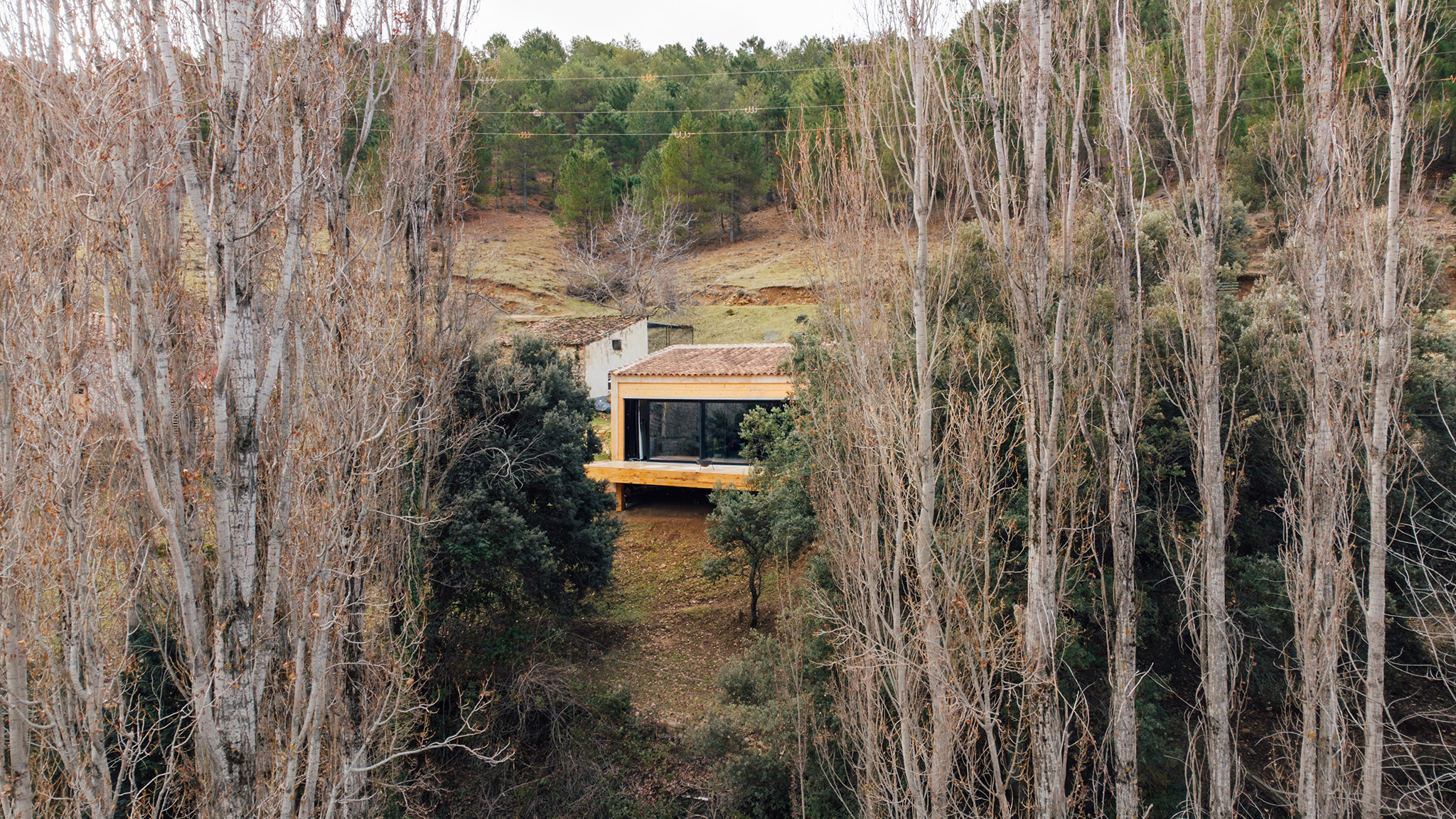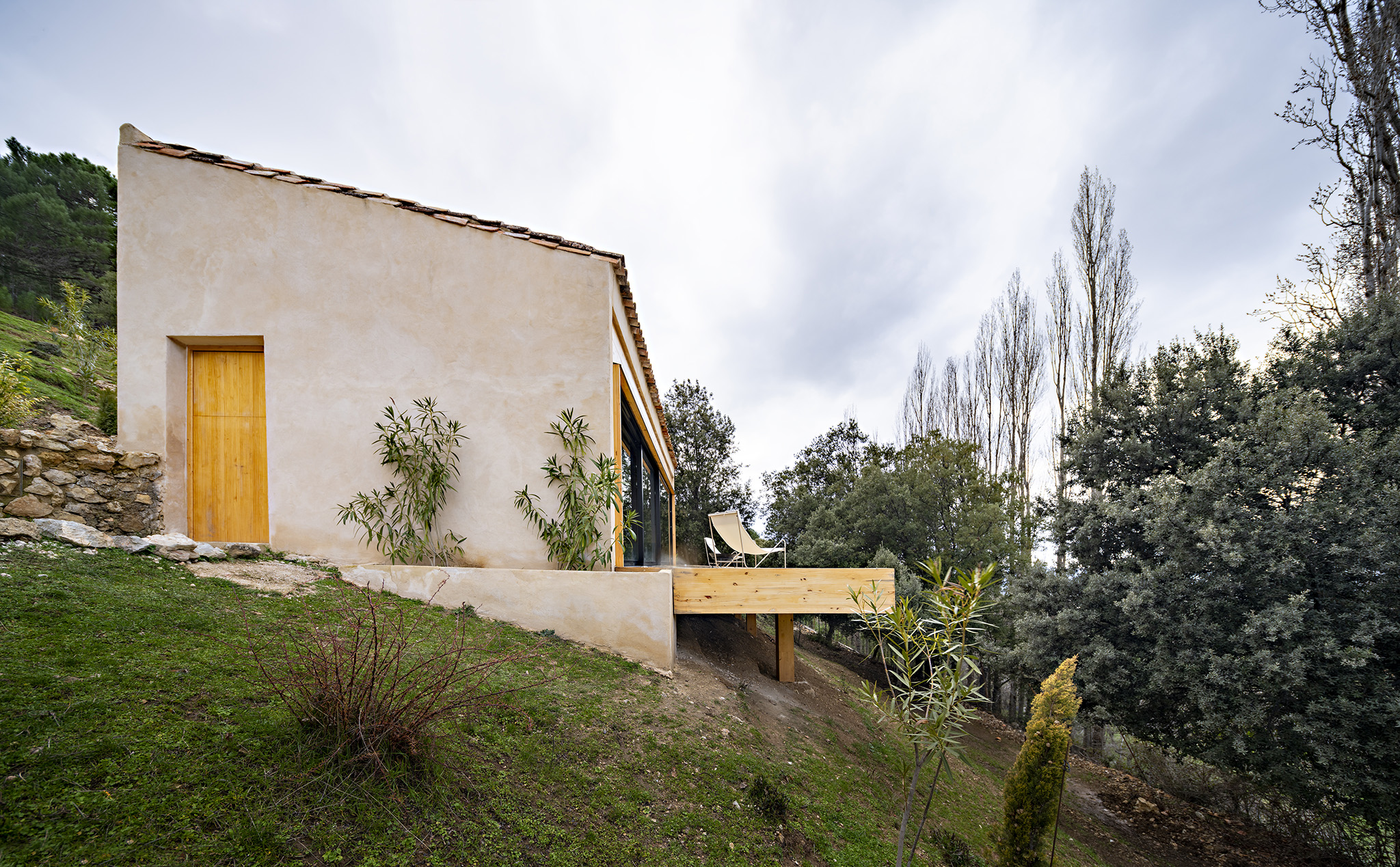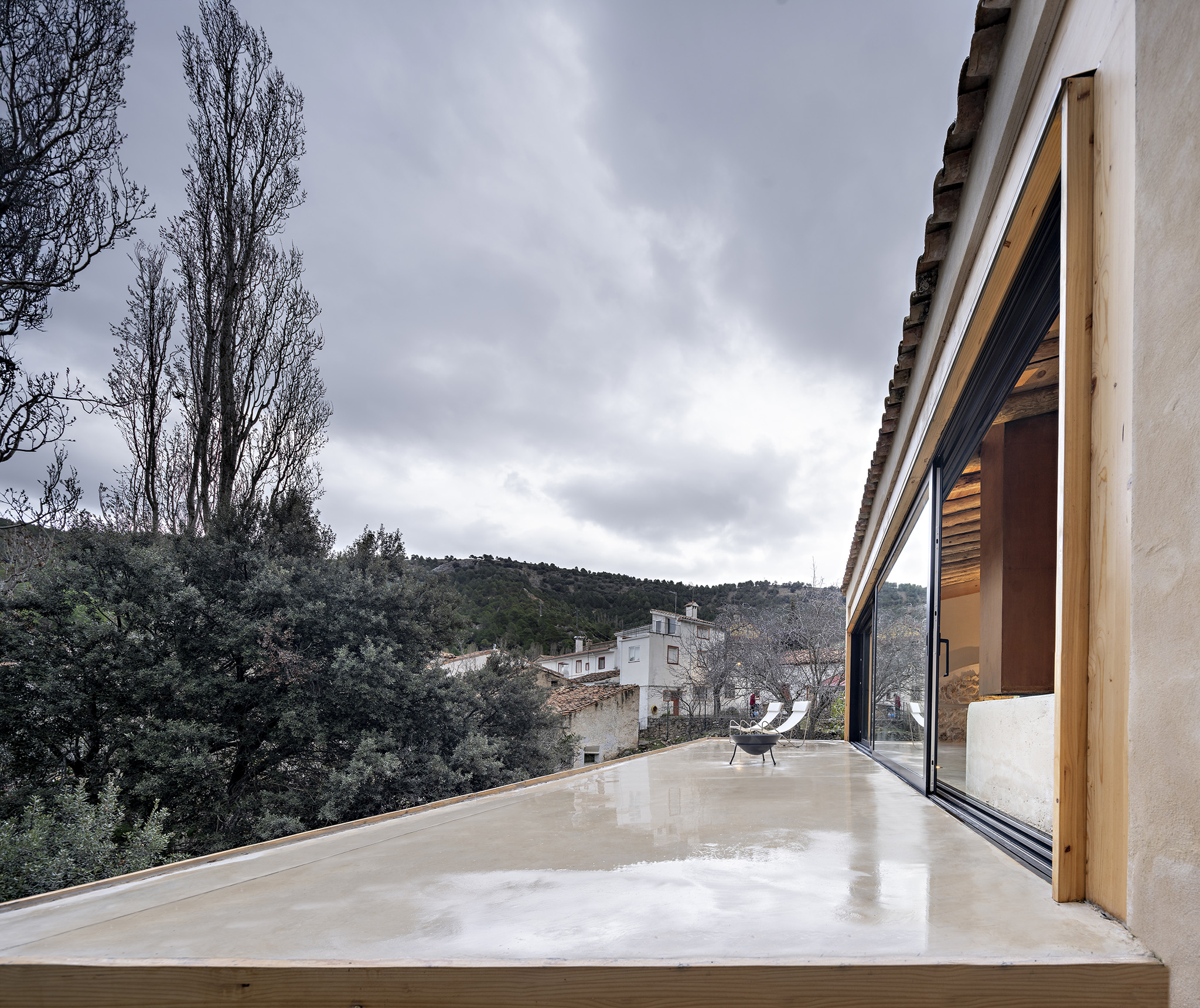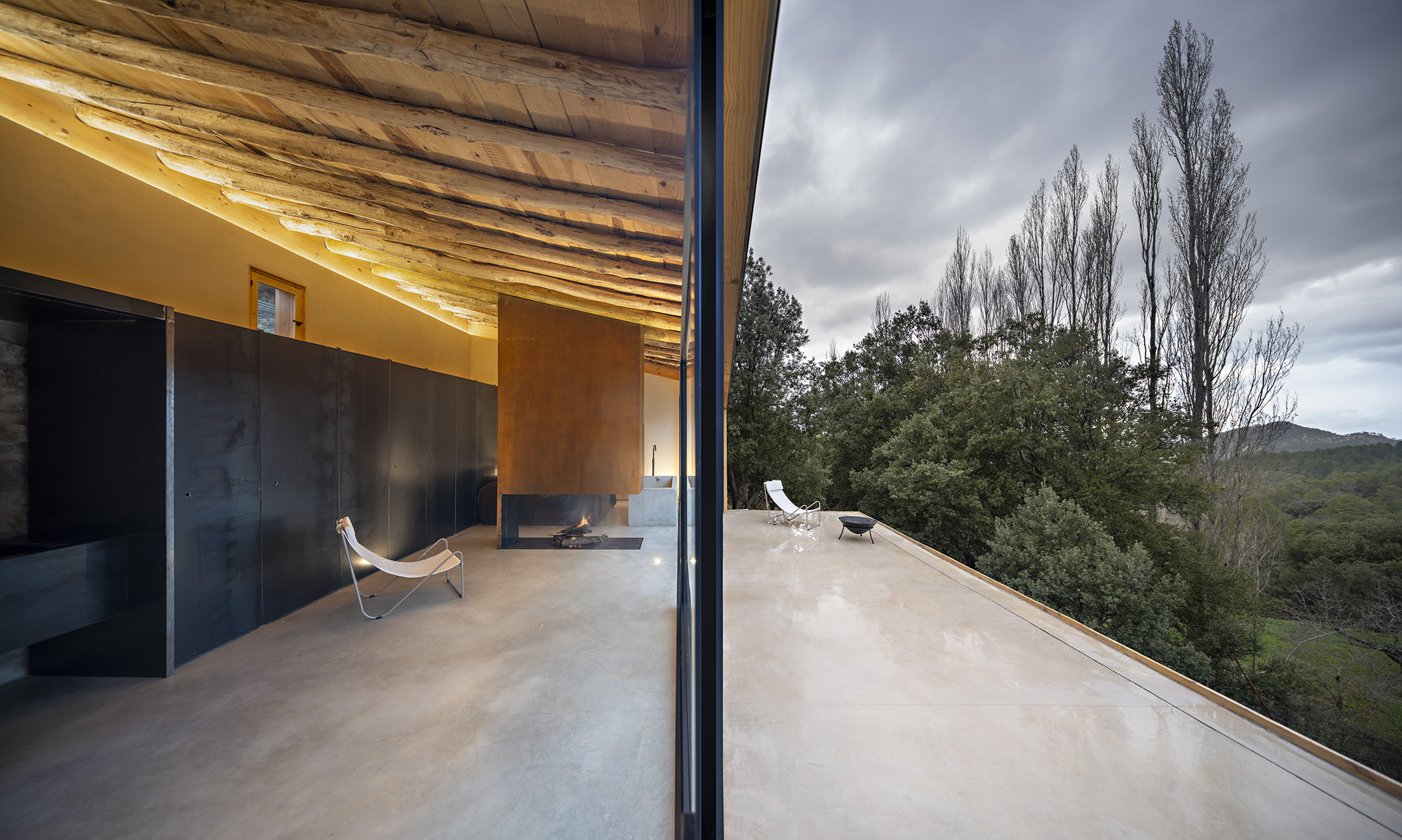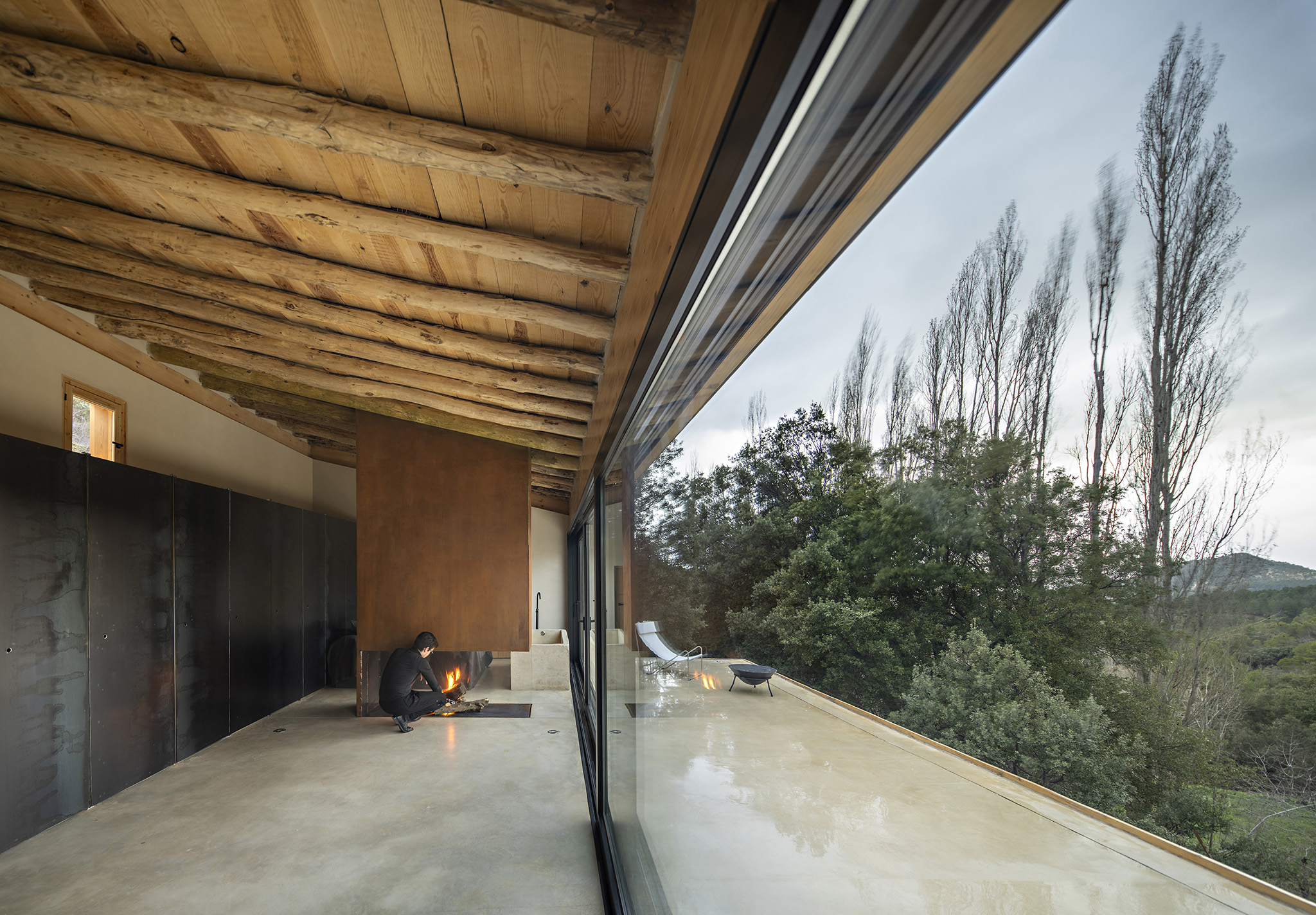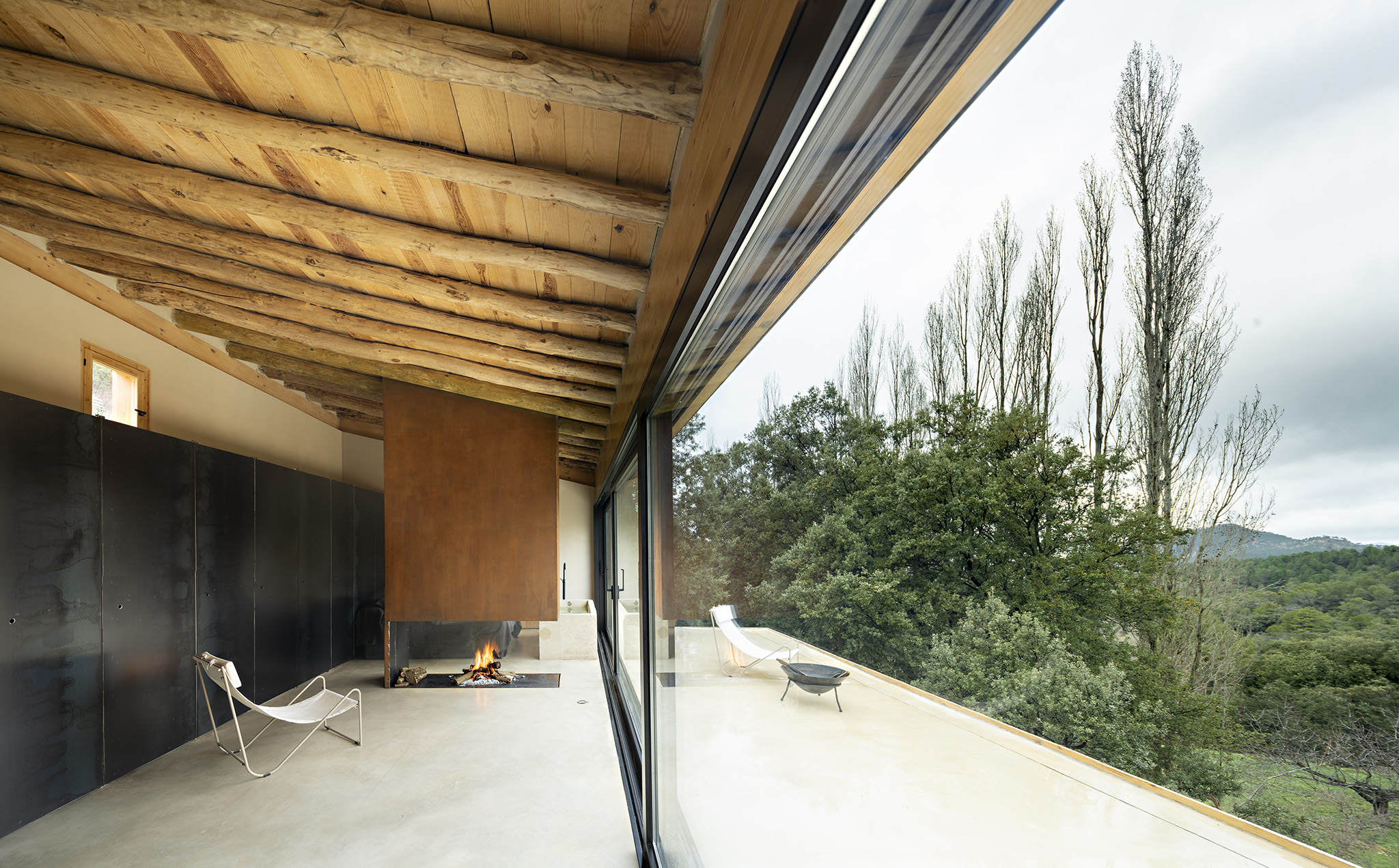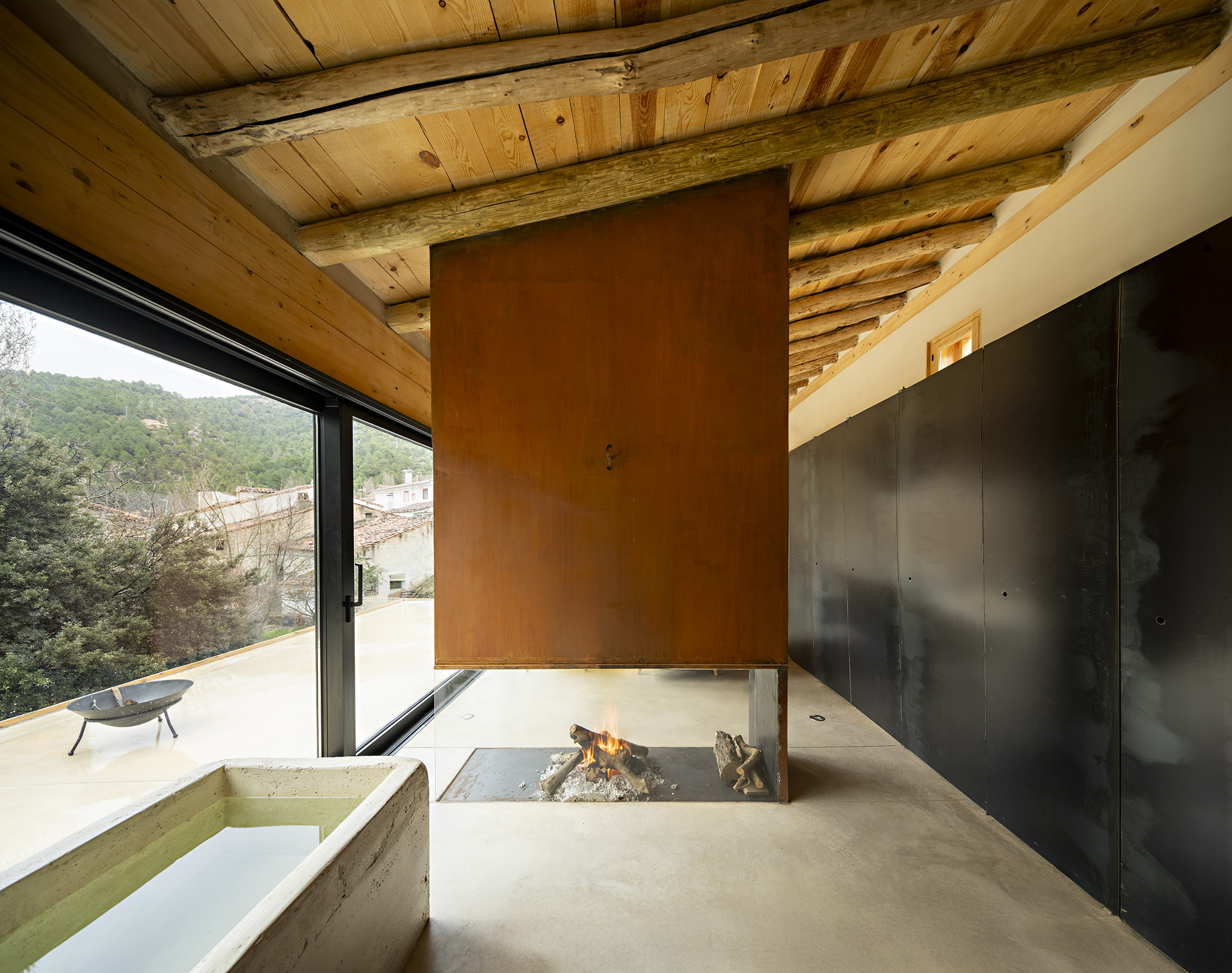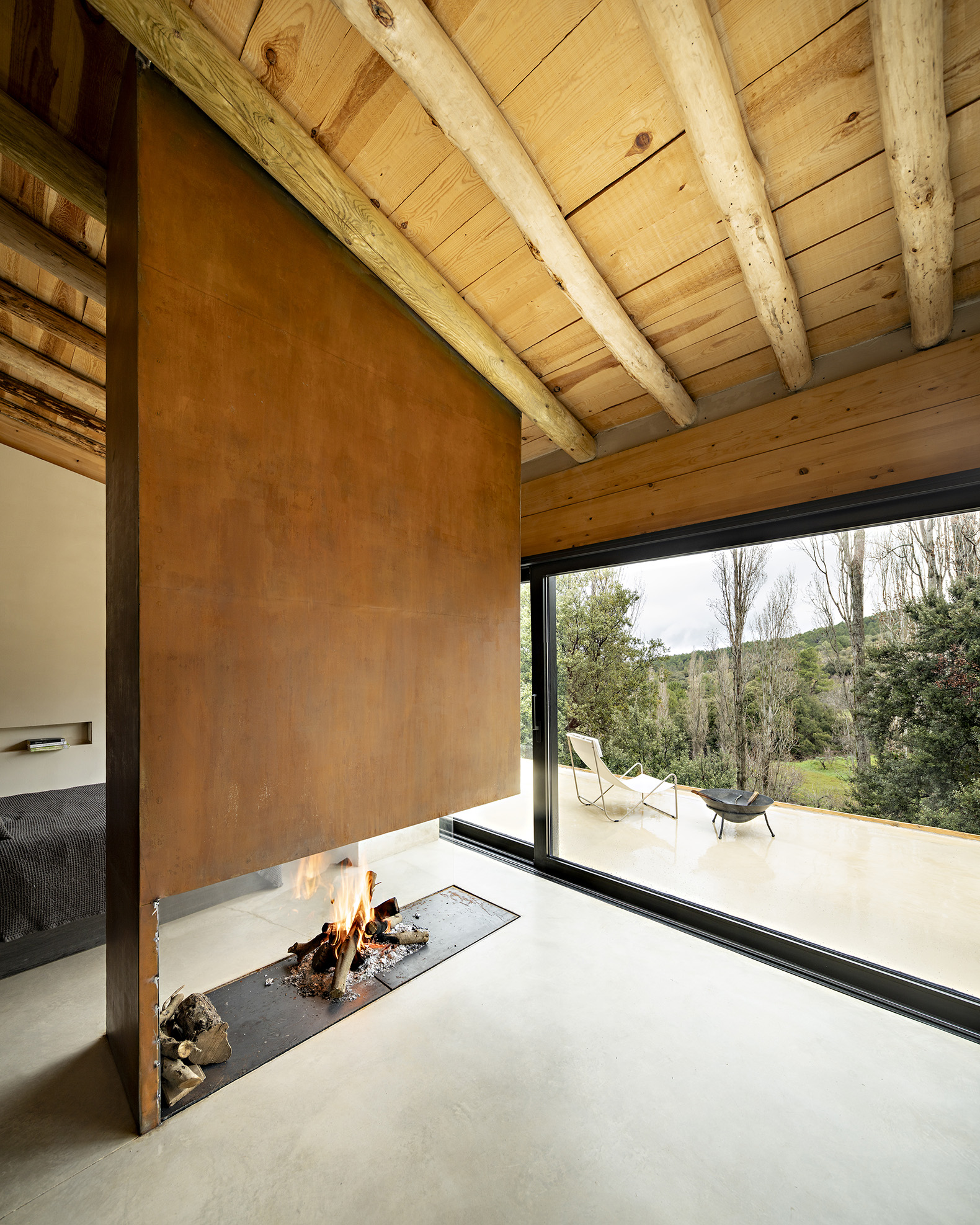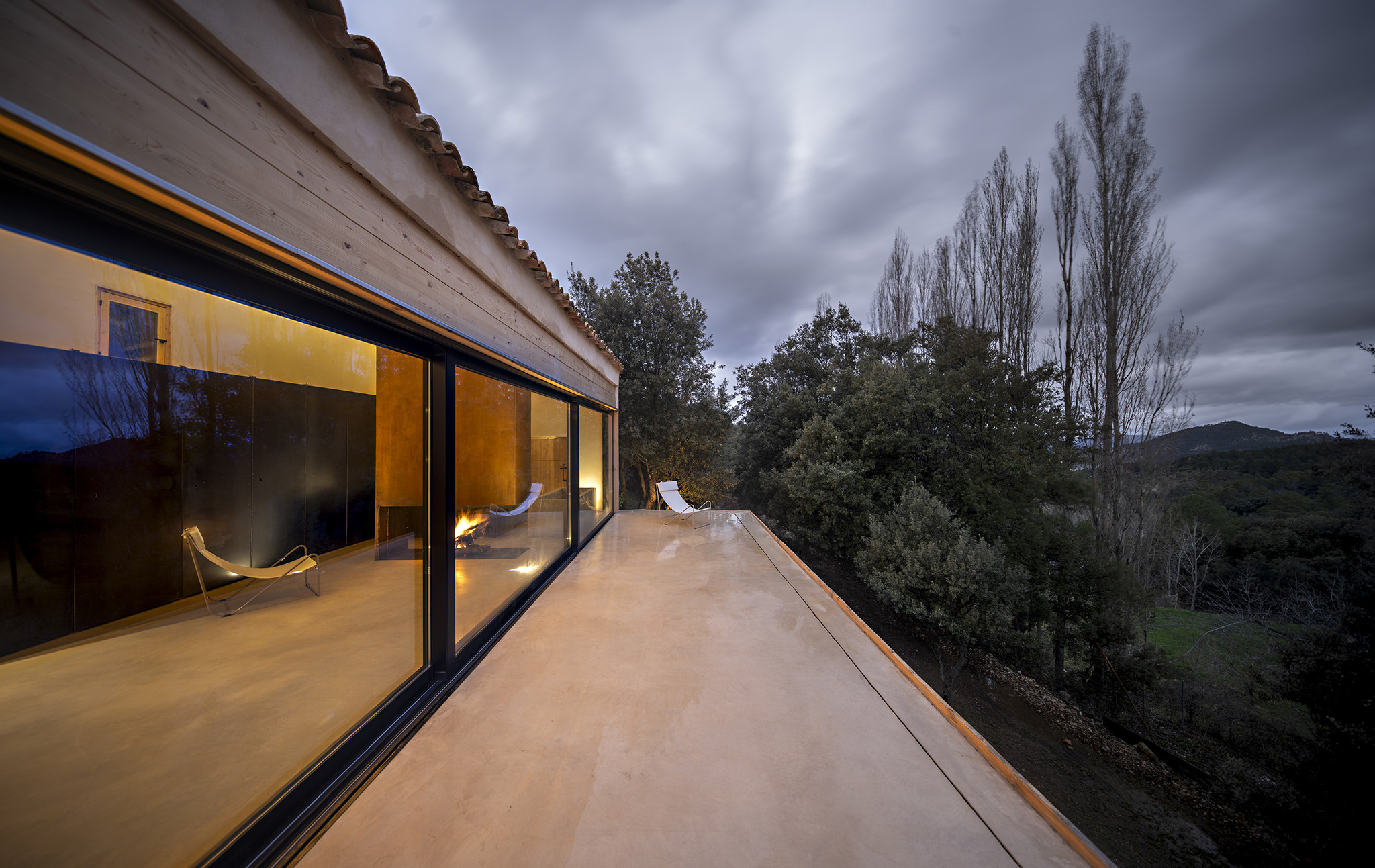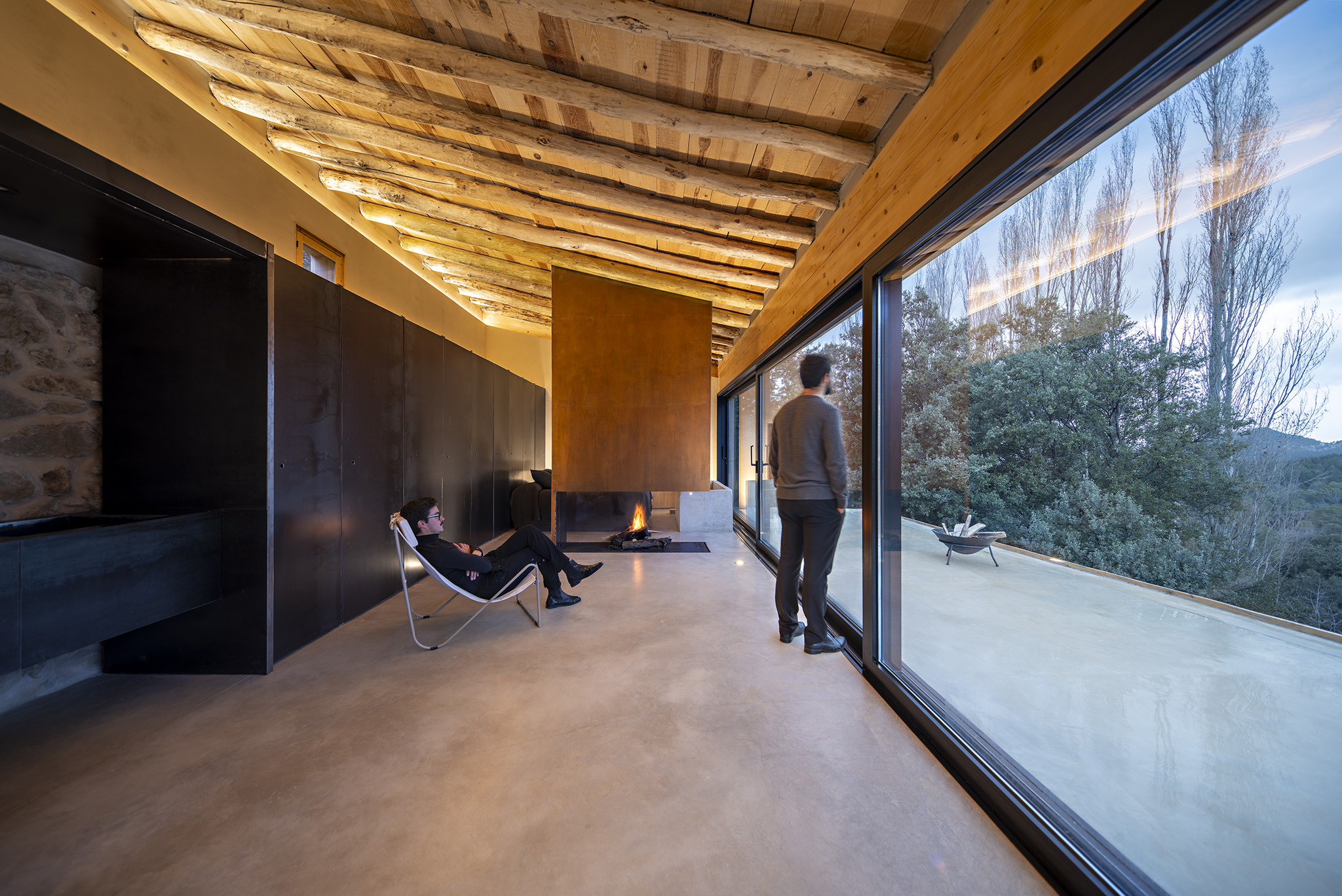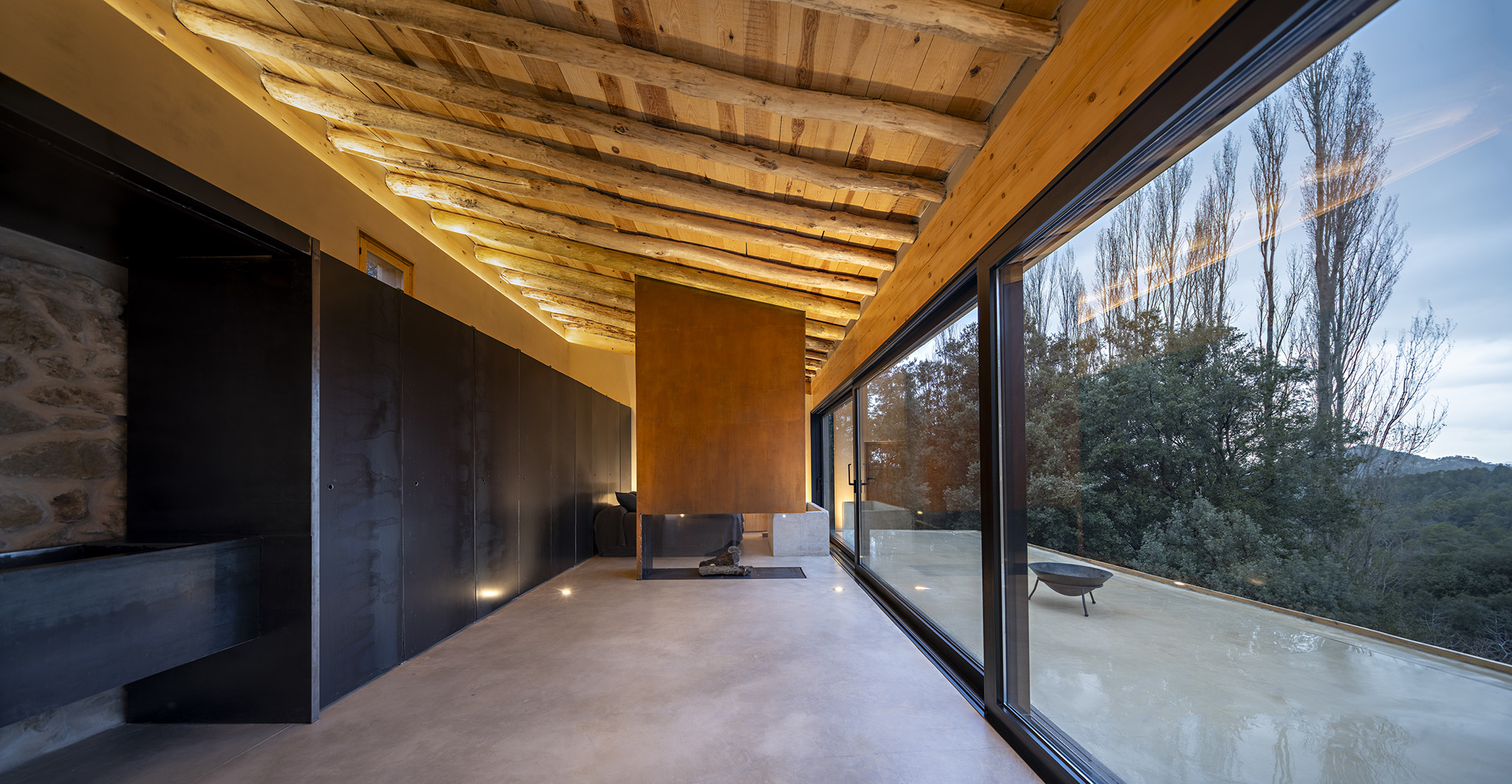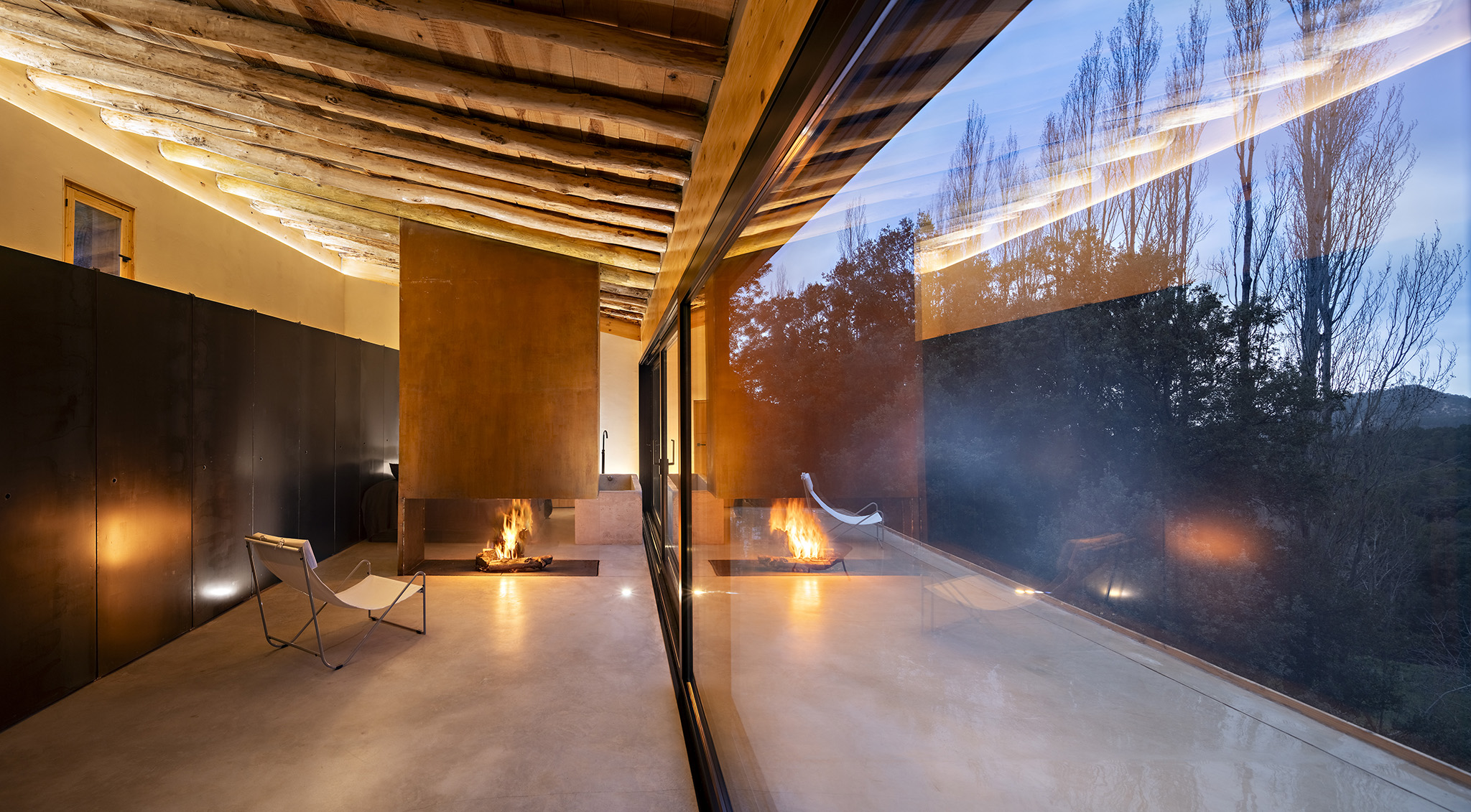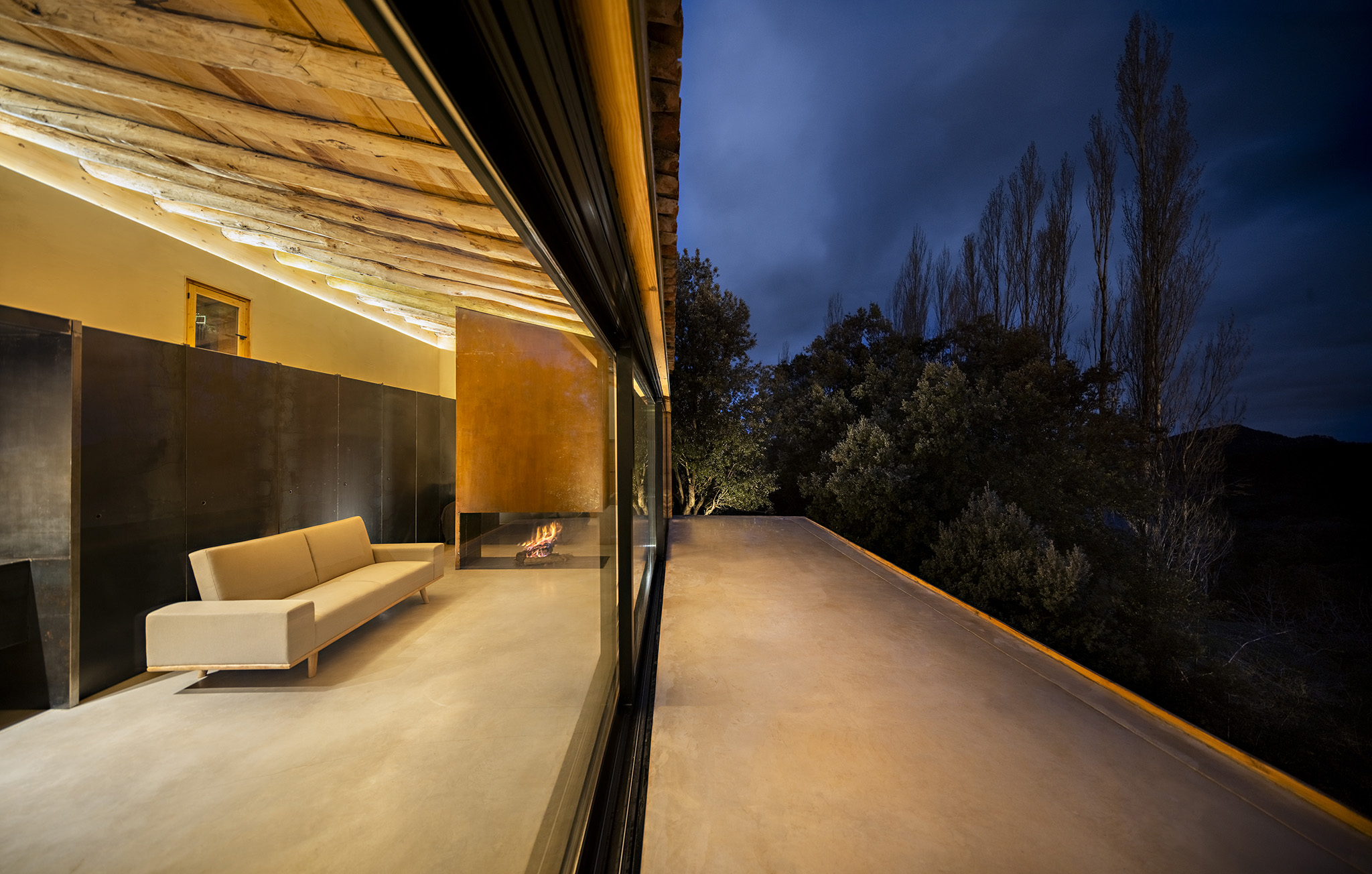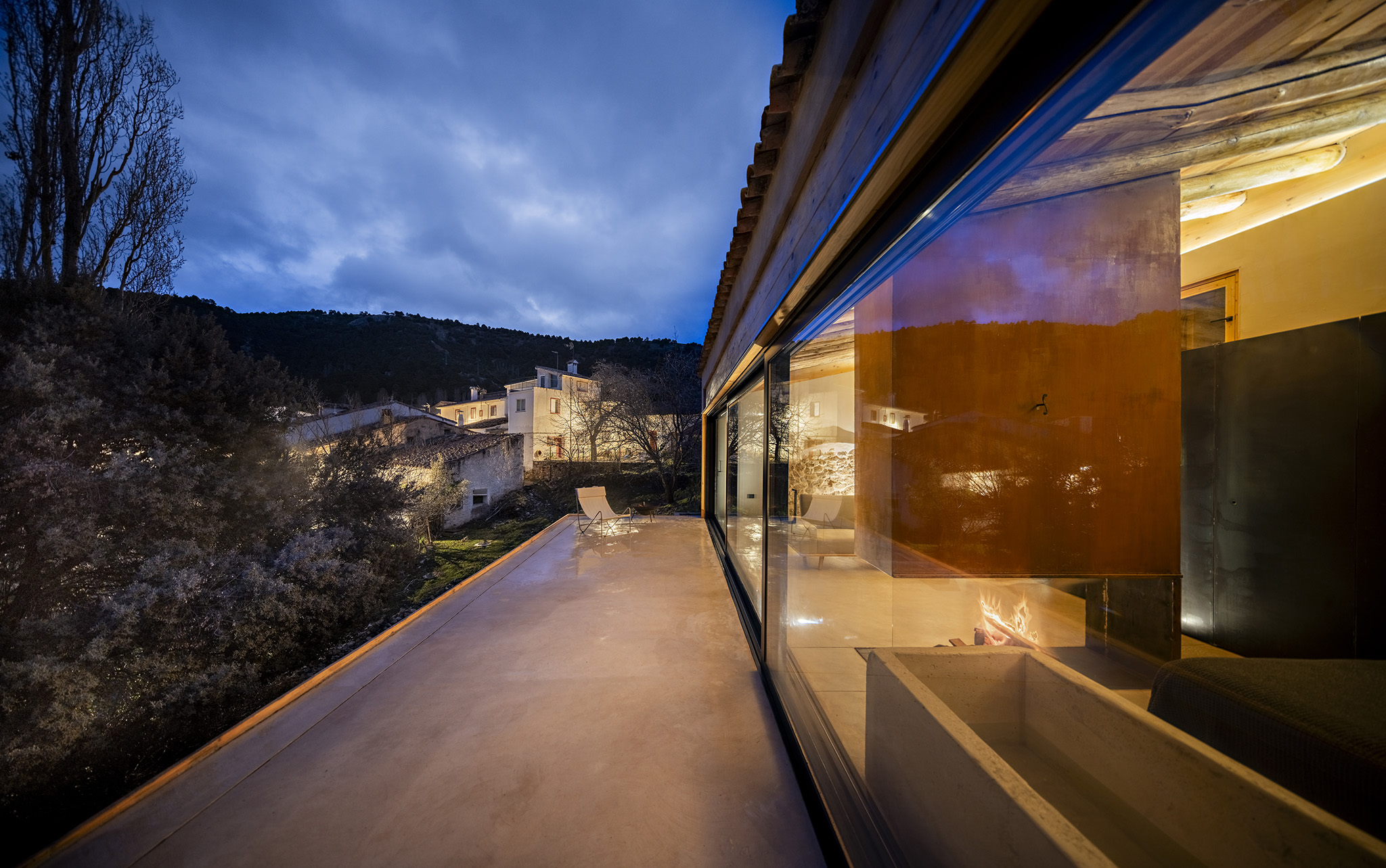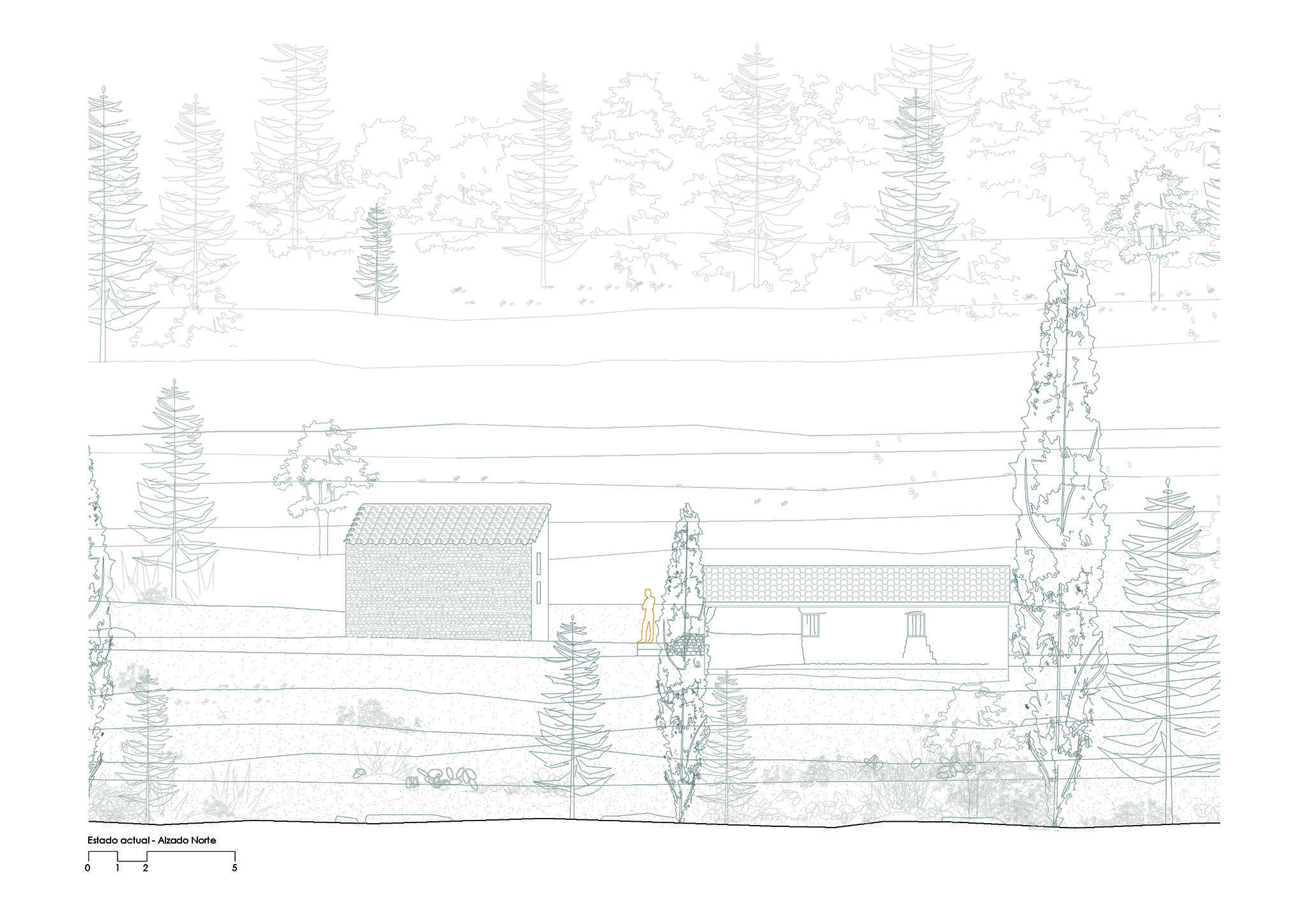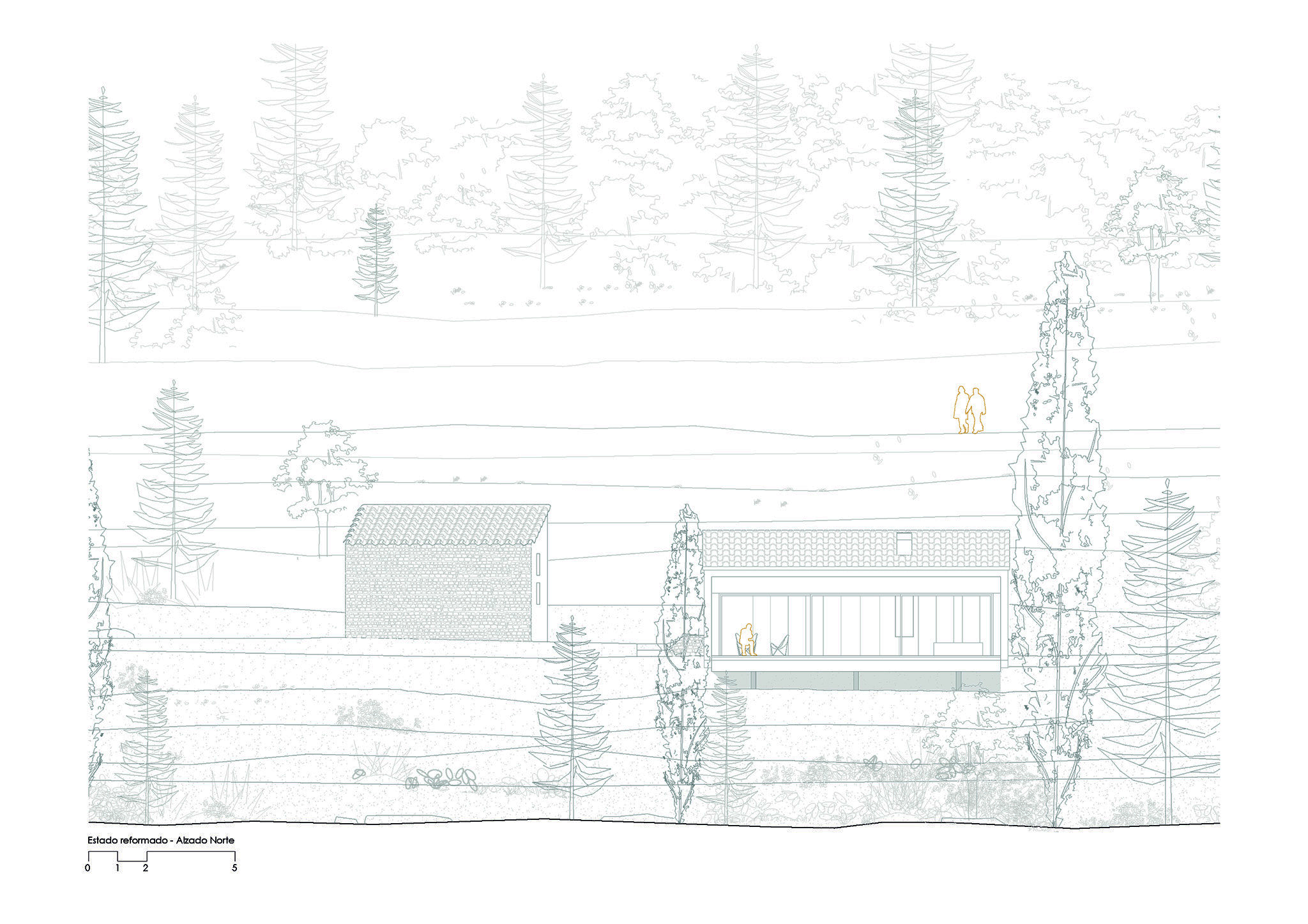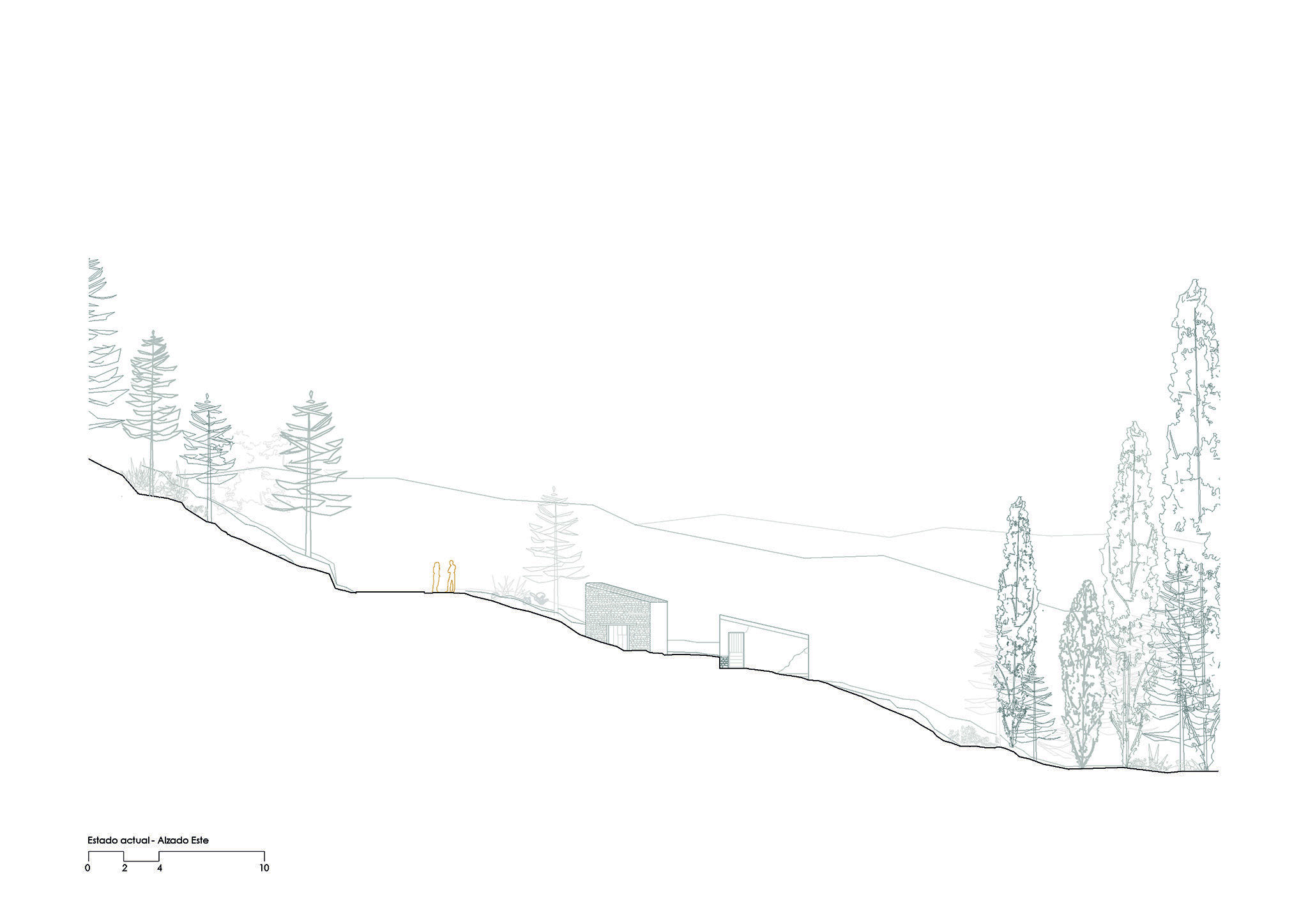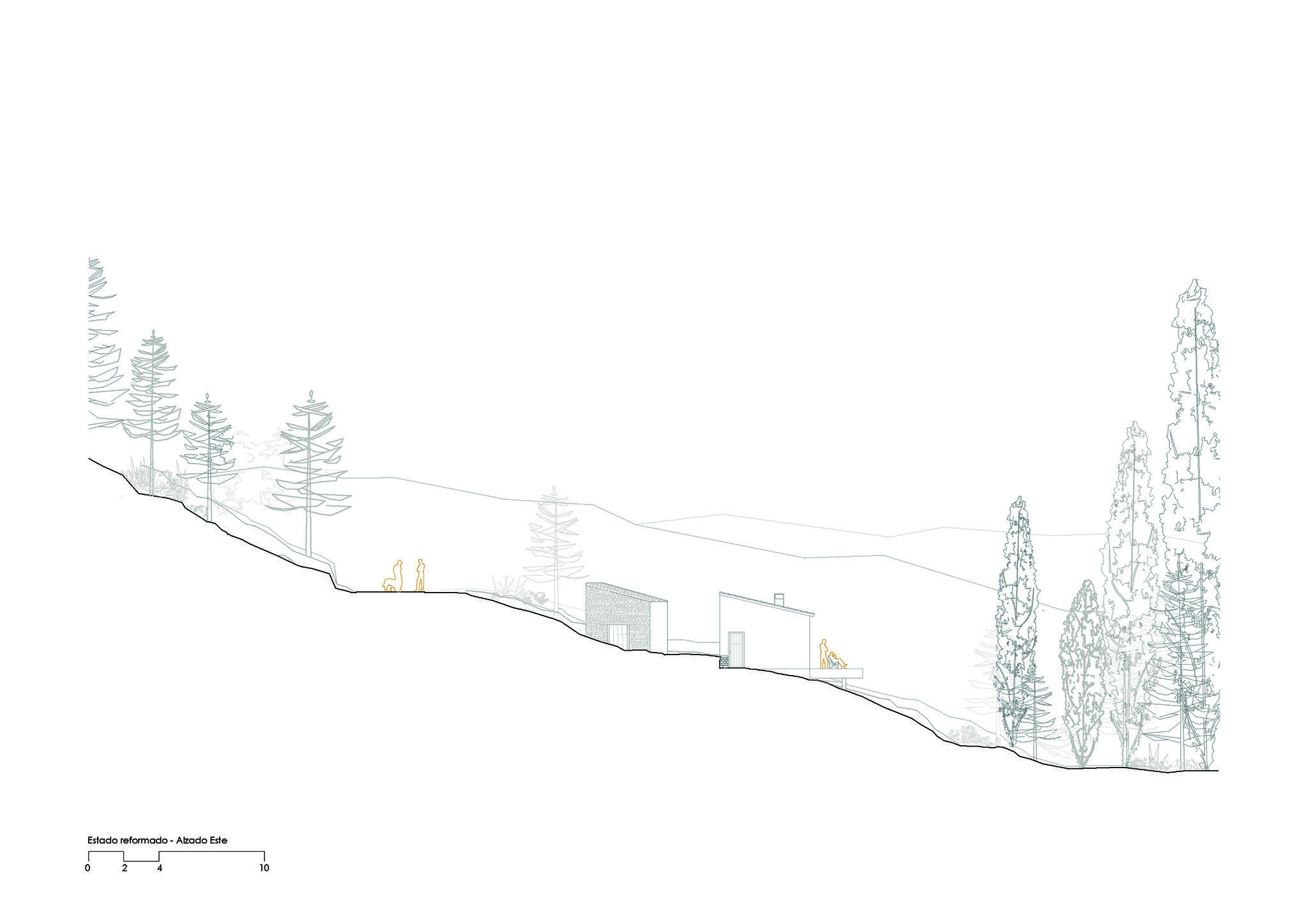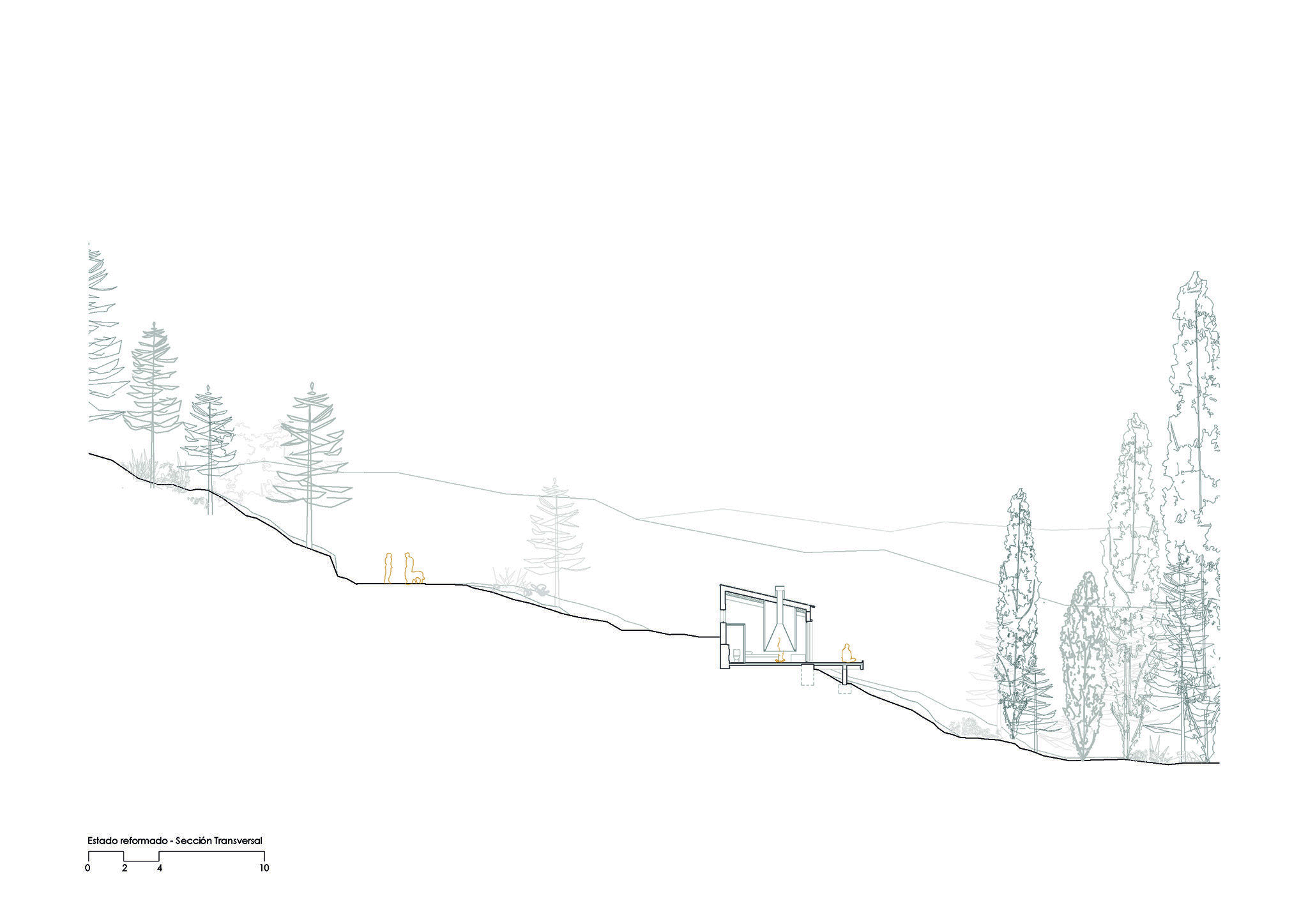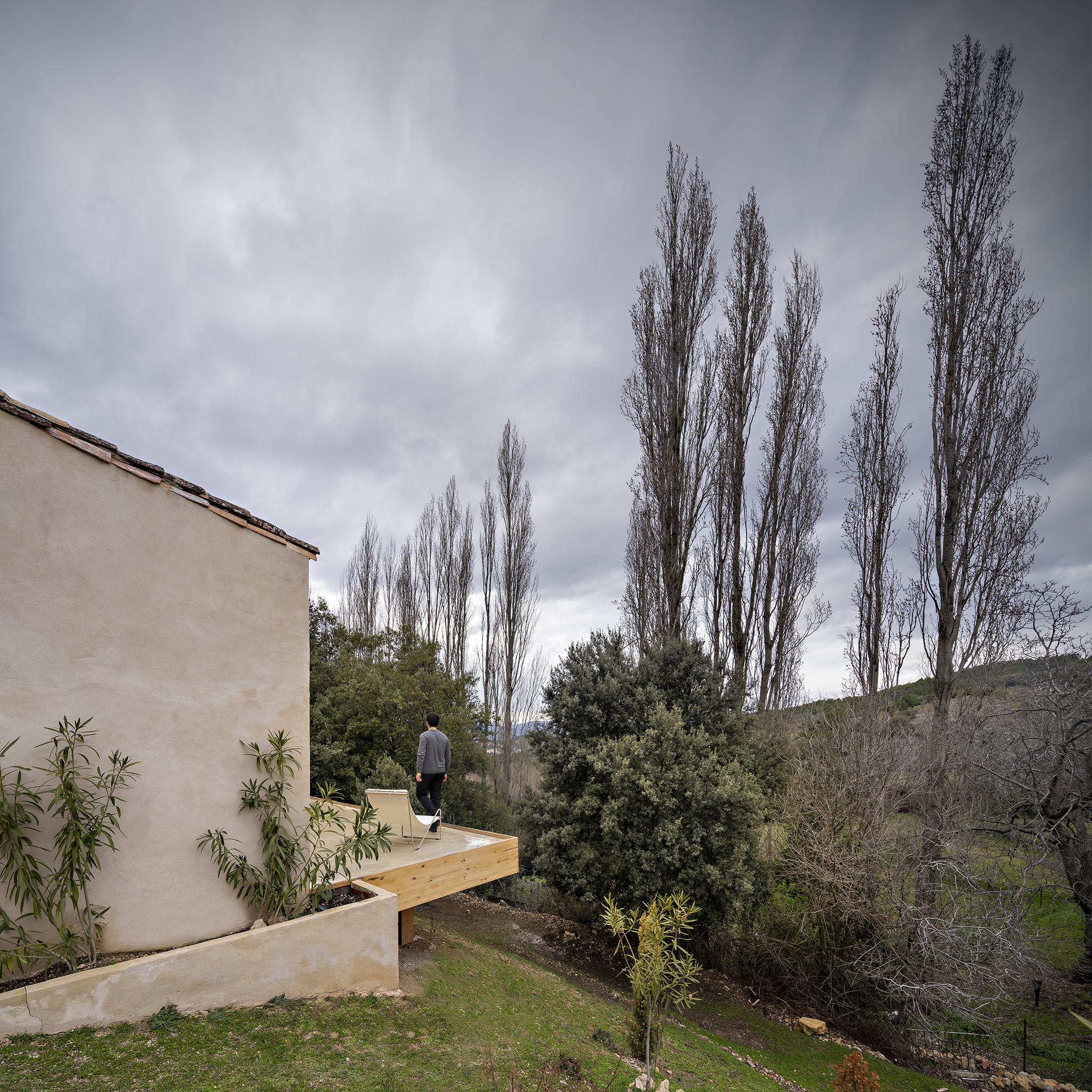
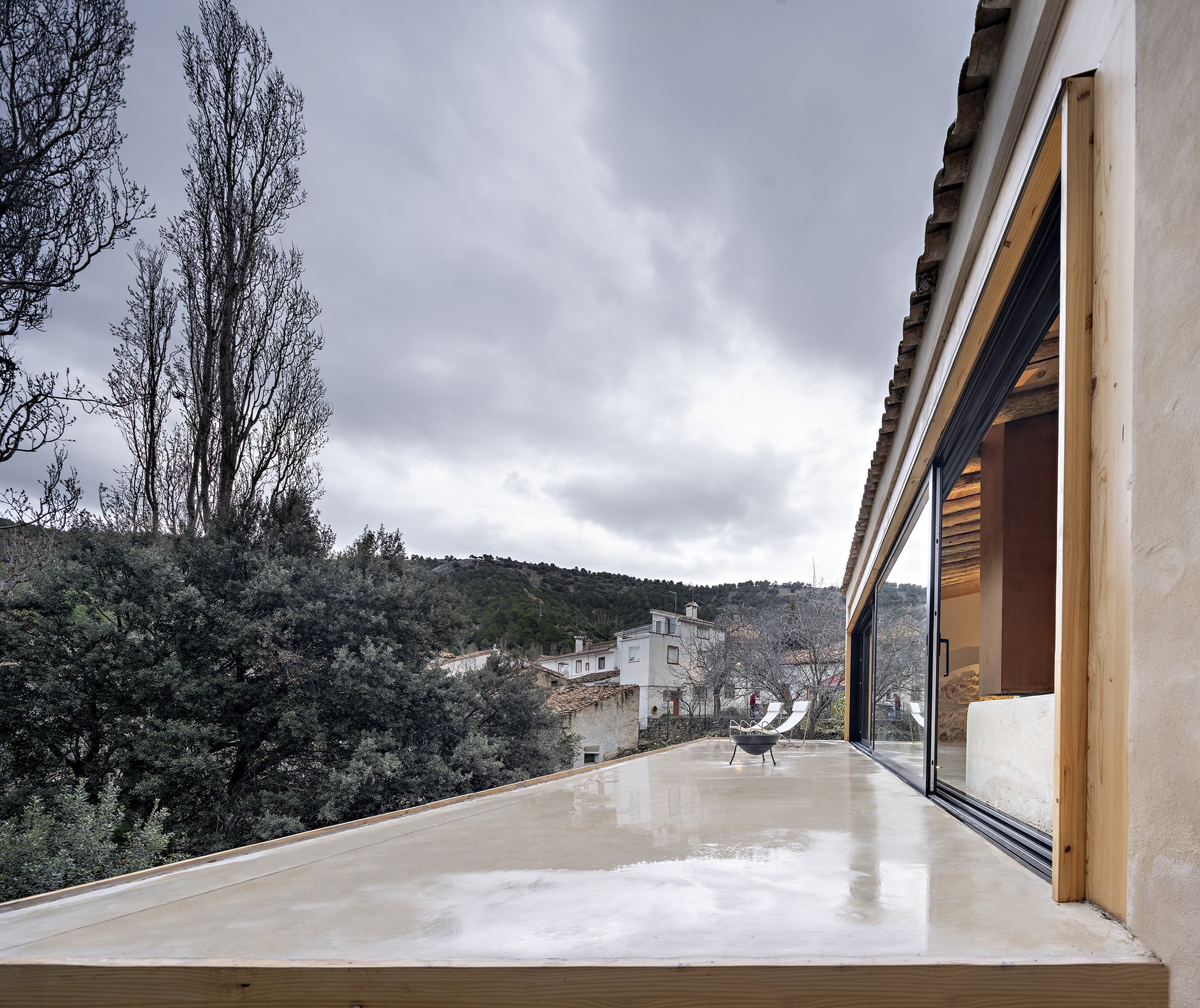
Conceived as an experimental and sensory retreat, the project developed by SANTZO arquitectos prioritizes a close relationship with the surrounding landscape through the complete opening of its north façade, thus blurring the boundary between interior and exterior. The design is structured around three fundamental elements of the site: fire, water, and the landscape of poplars and pines.
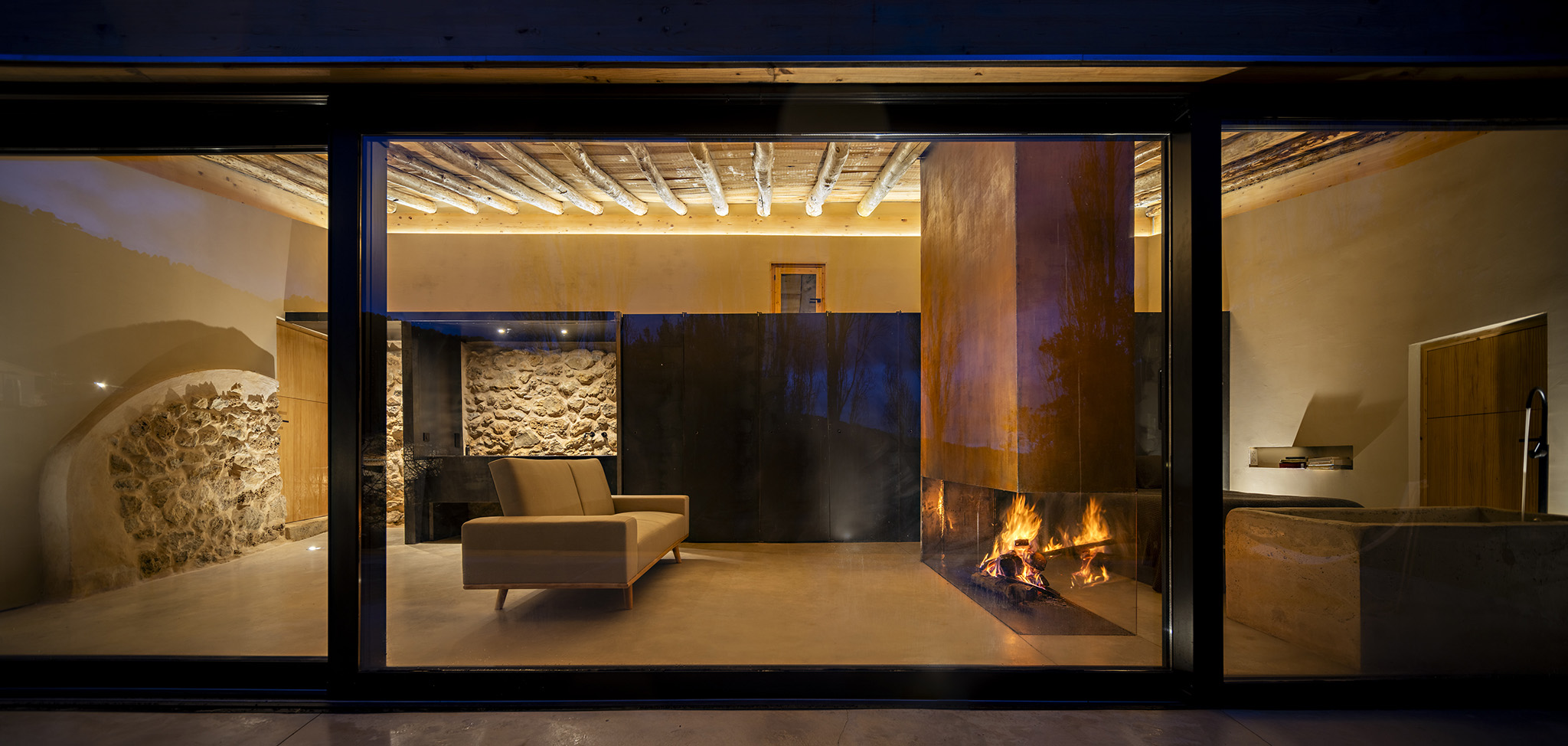
Fire appears as a central element that seems to levitate above a platform extending between the exterior and interior, generating two distinct atmospheres linked to day and night, as well as to public and private. Water, present through an old cattle trough, functions both as a functional and environmental resource and as a support for a more intimate experience of the landscape.
From this perspective, the project understands dwelling as a flexible and diffuse act, where the same space can be transformed into a home, a workplace, or a meeting place according to the needs of its users.
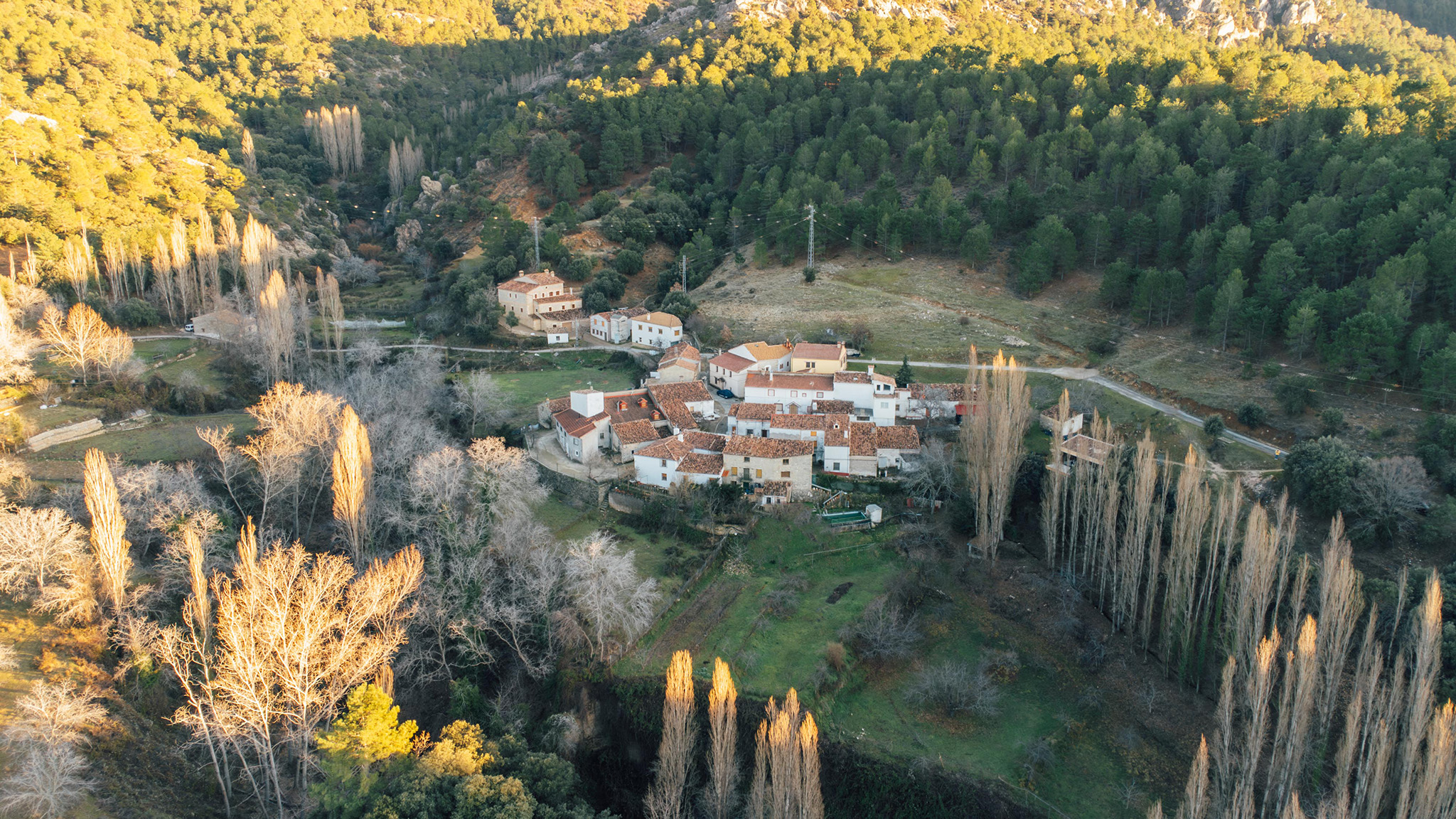
Experimental shelter by SANTZO arquitectos. Photograph by Pope Cabrera.
Project description by SANTZO arquitectos
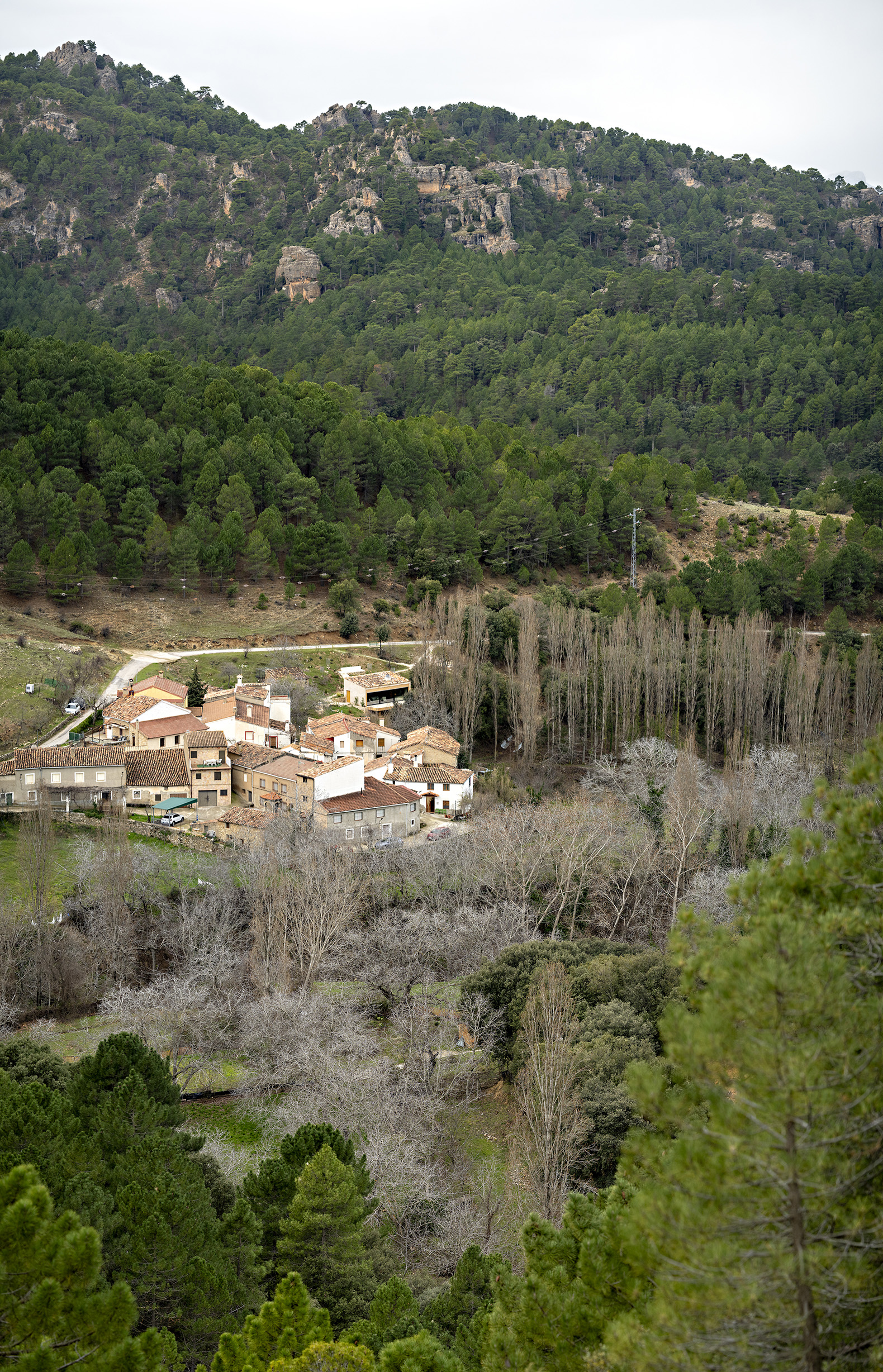
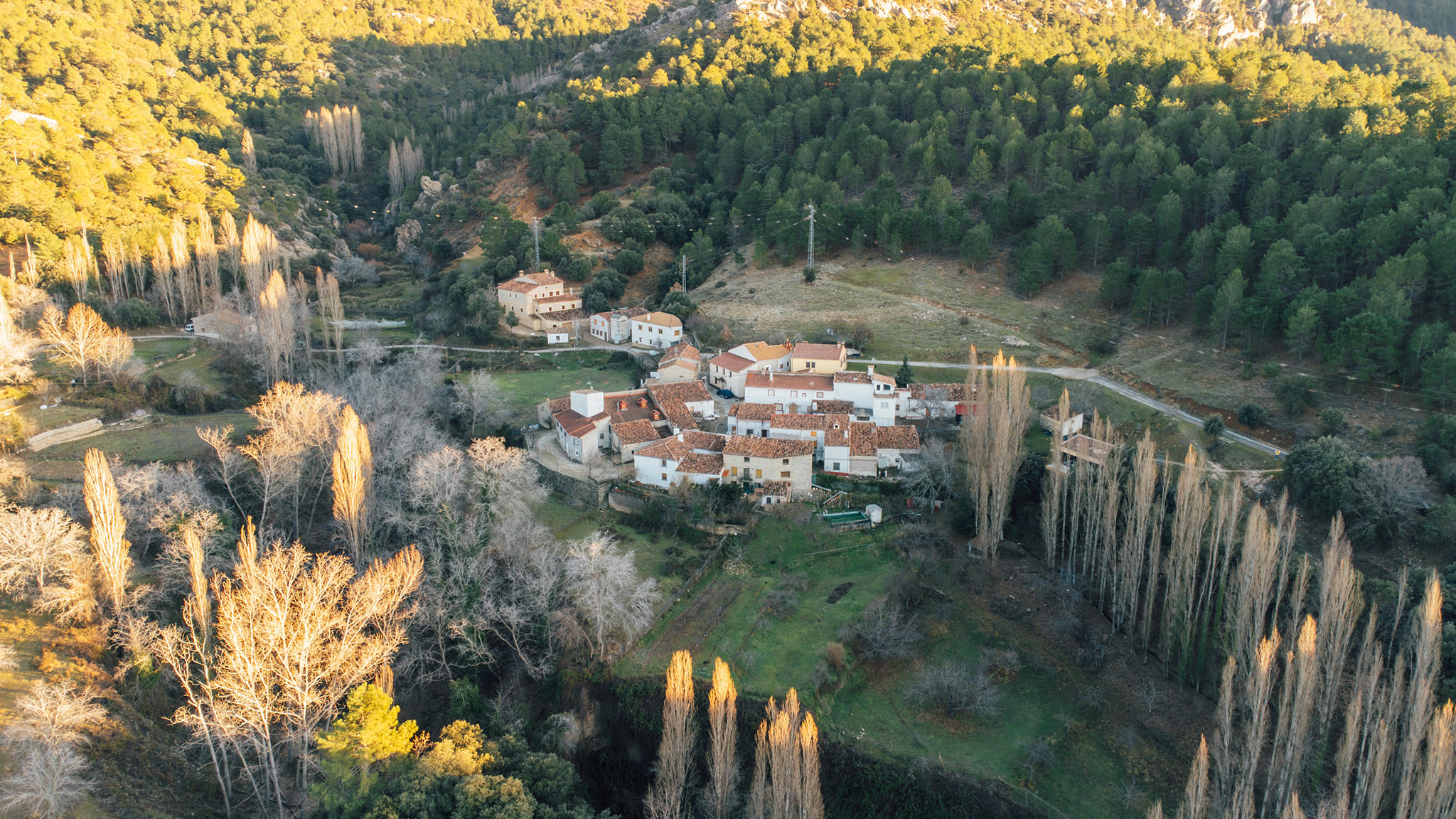
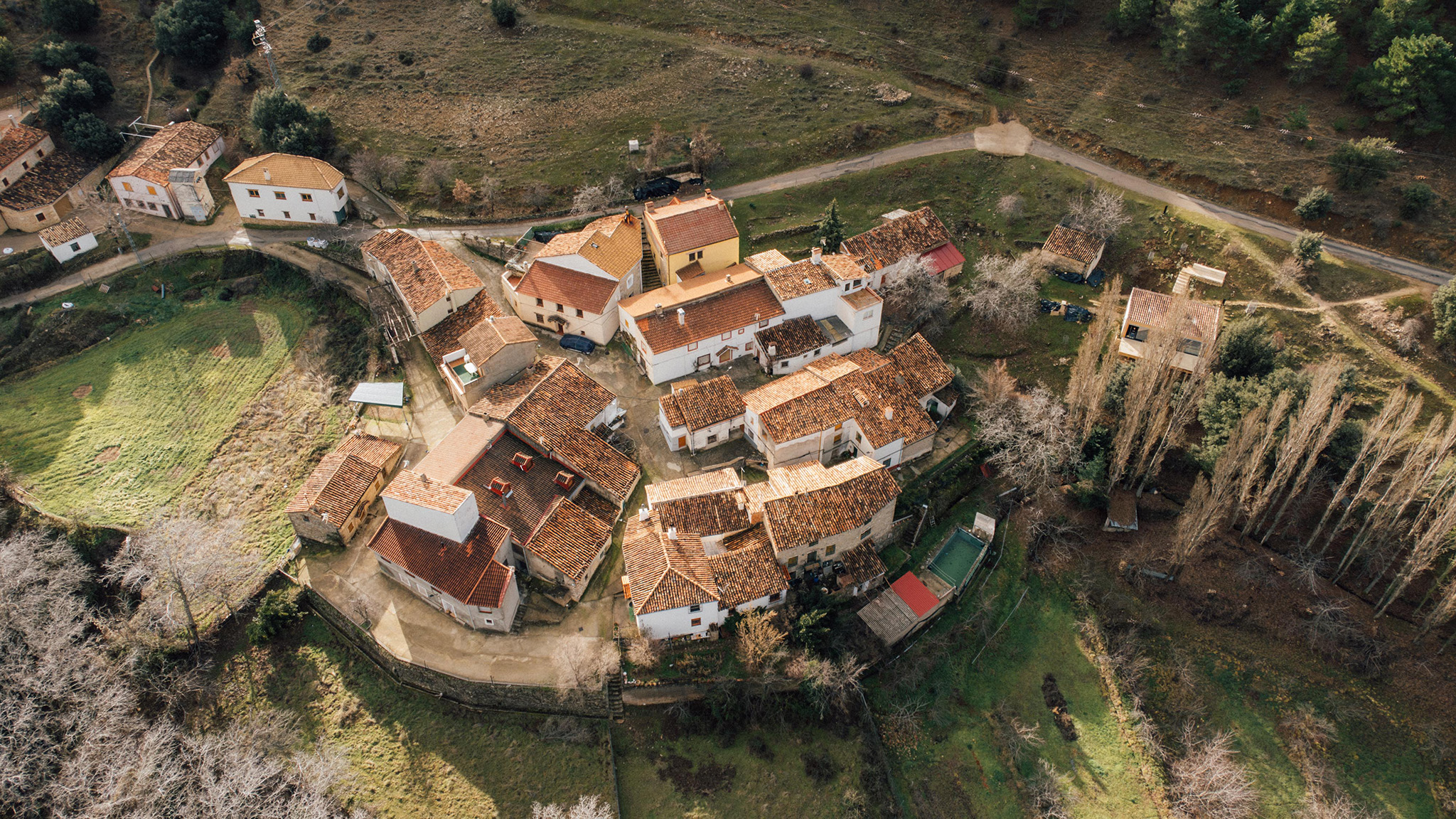
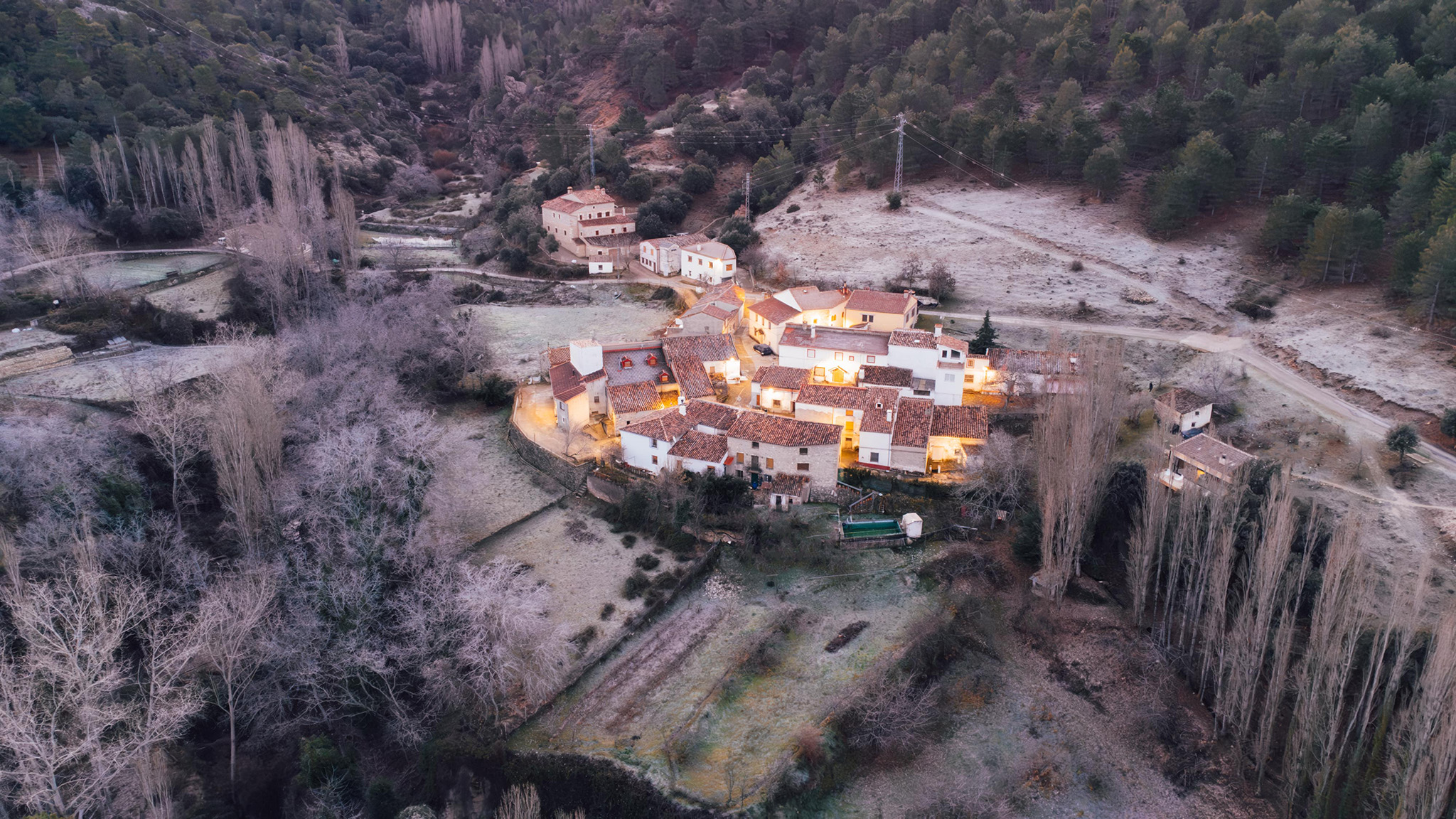
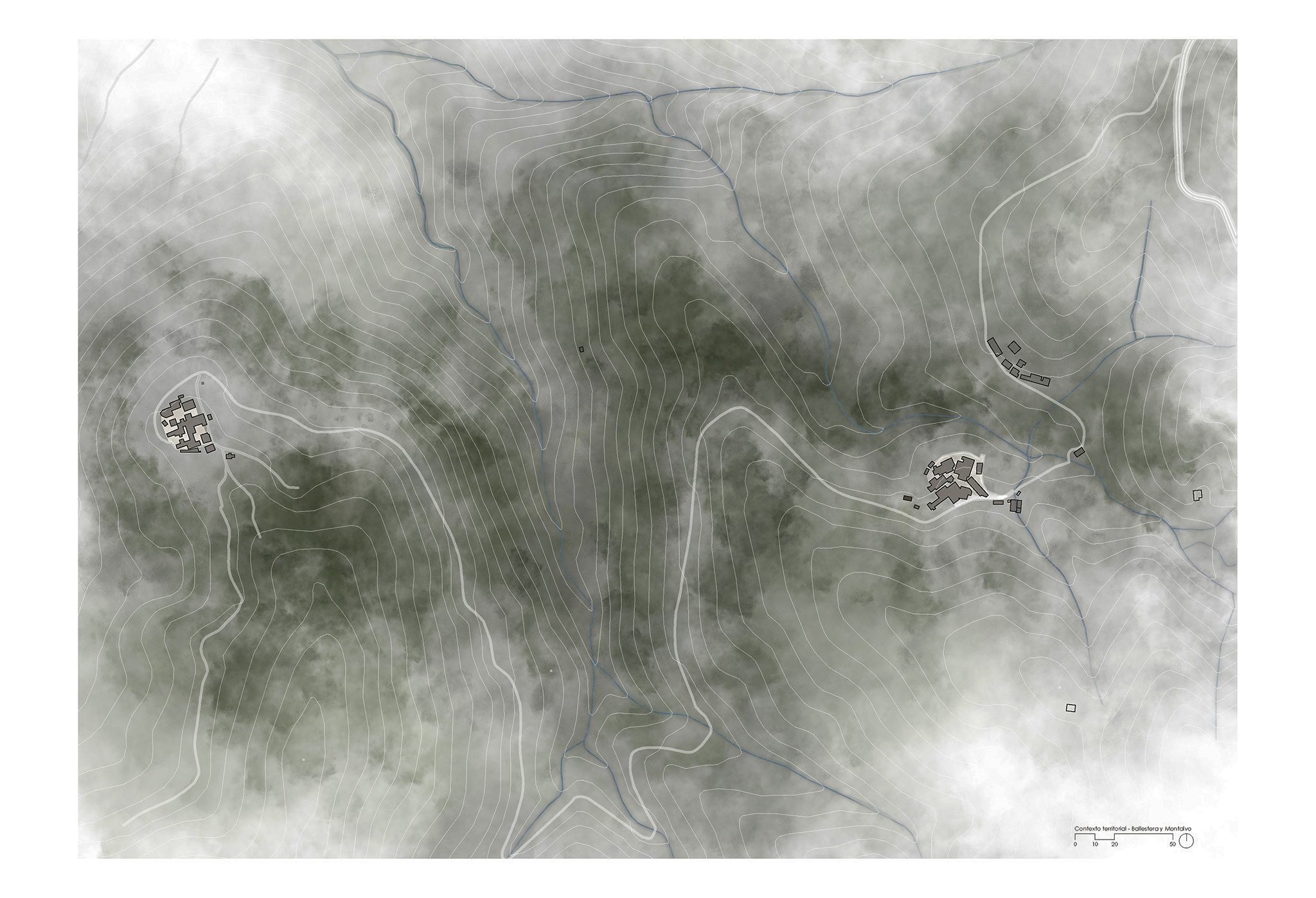
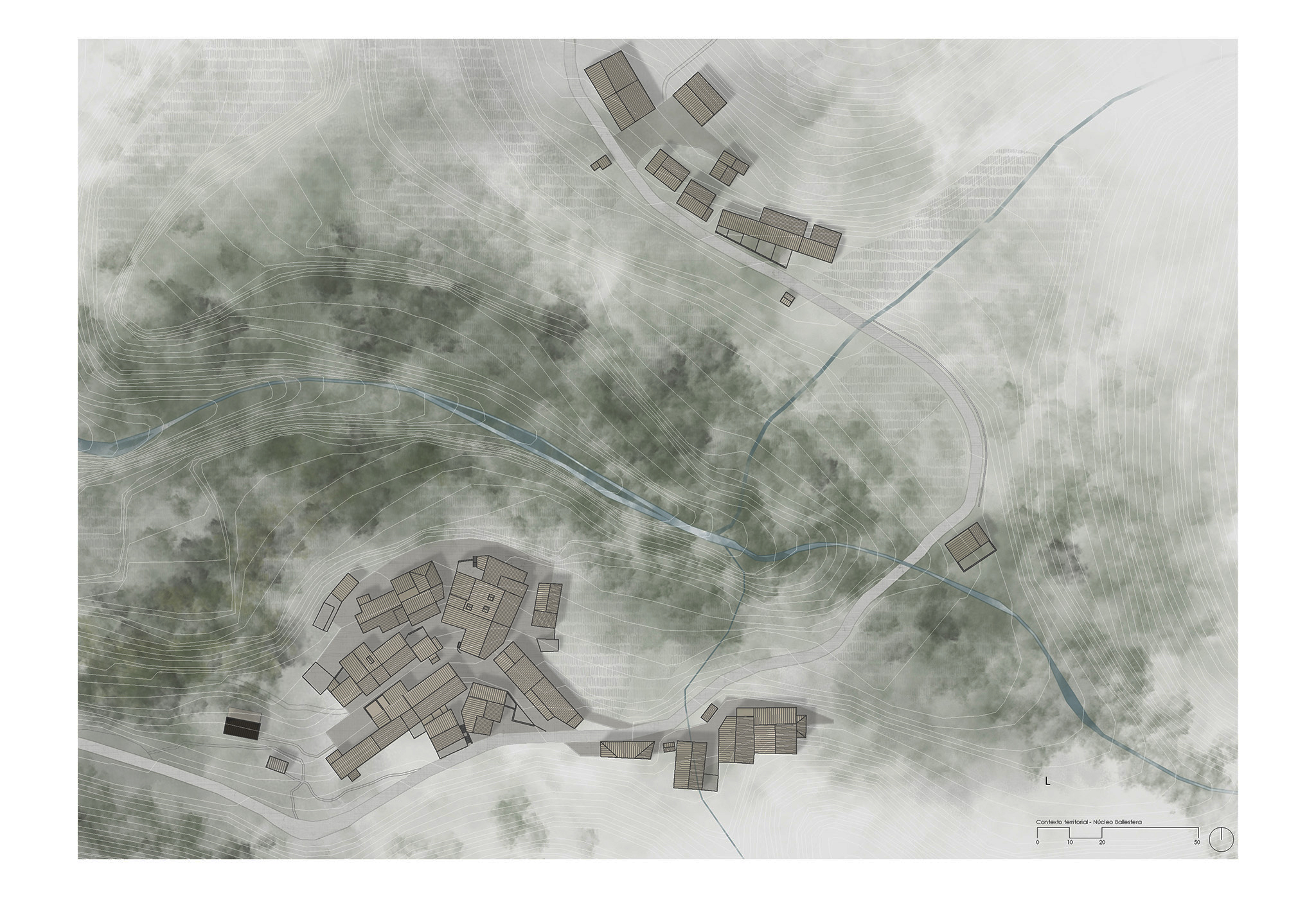
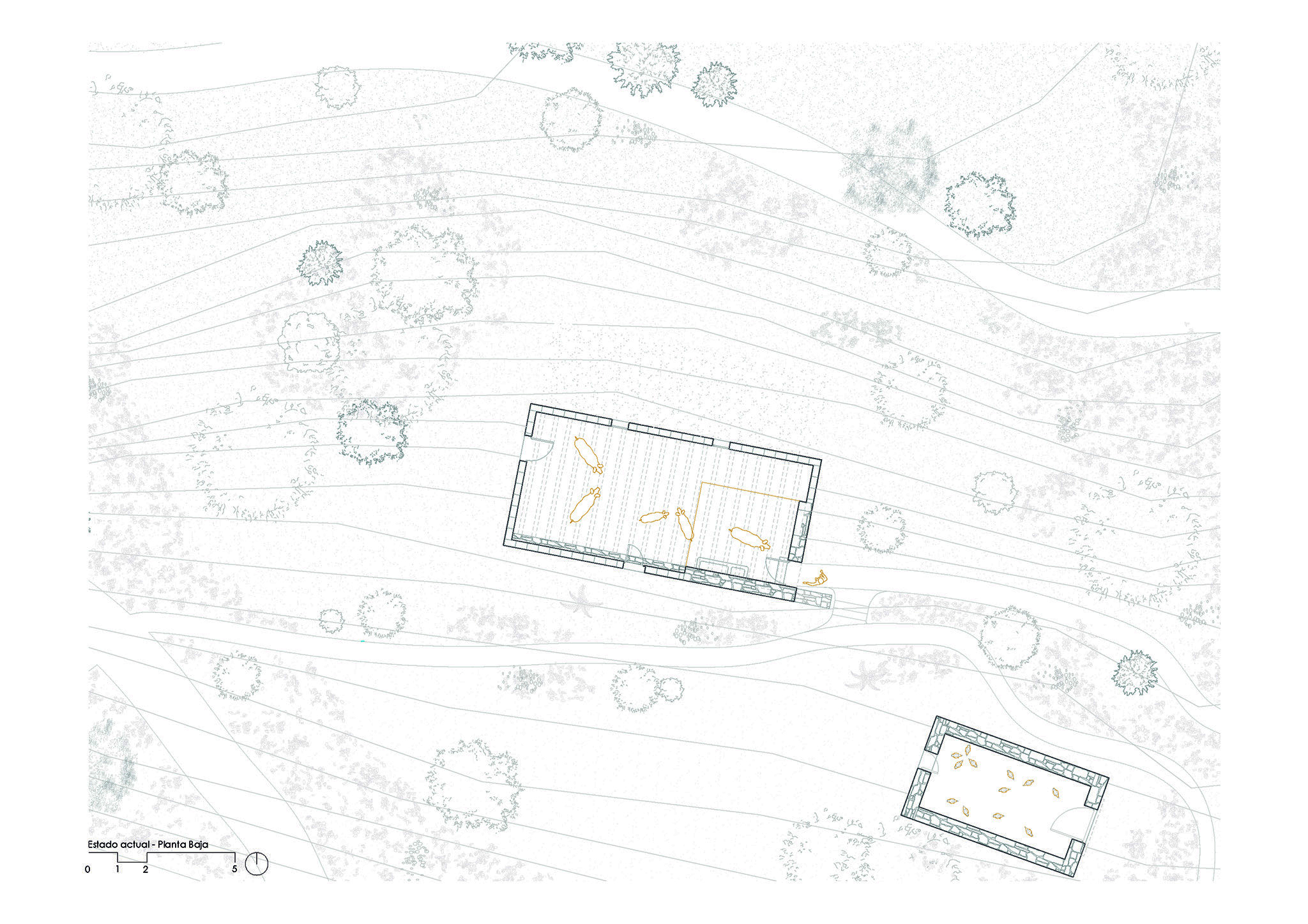
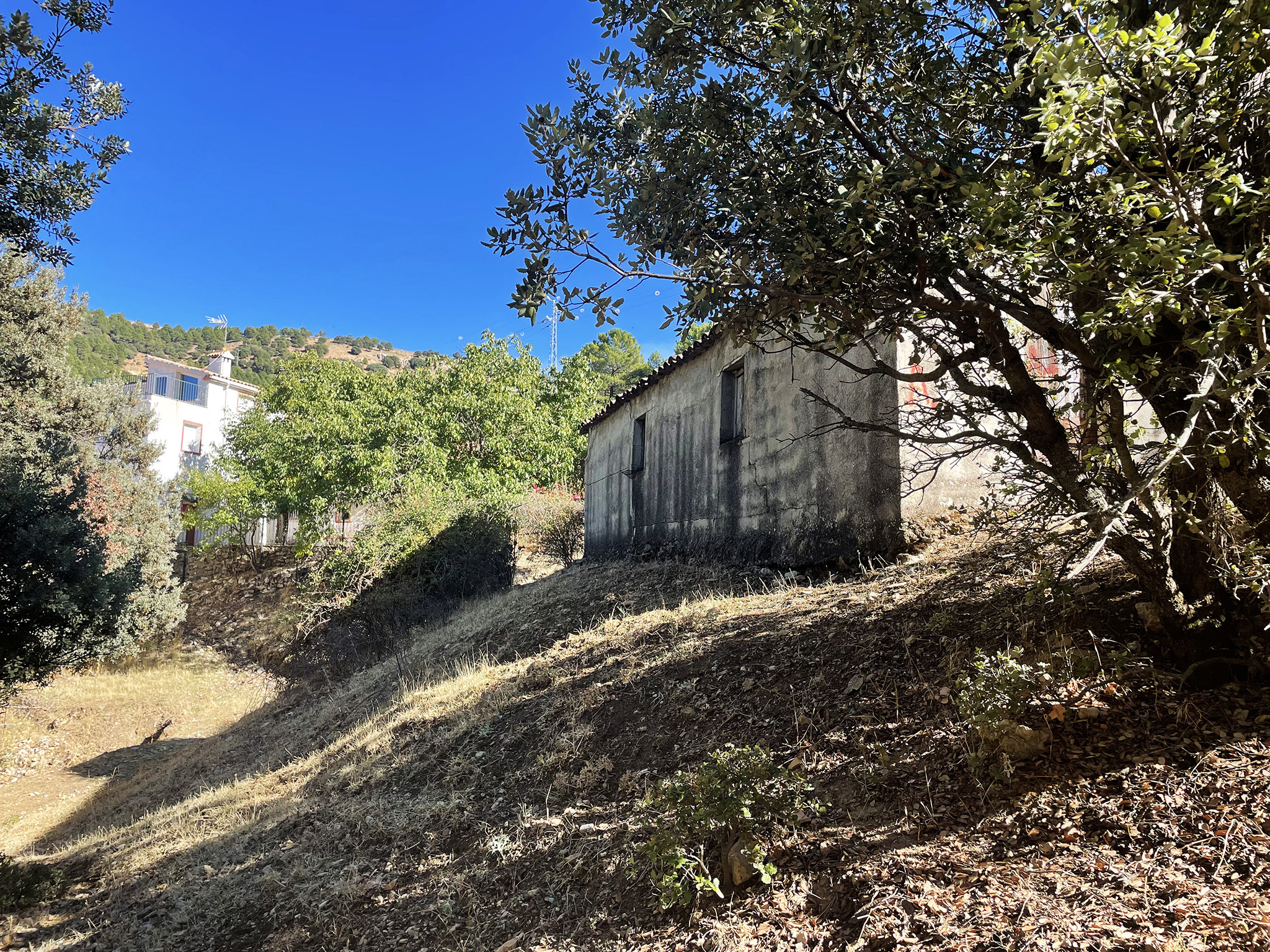
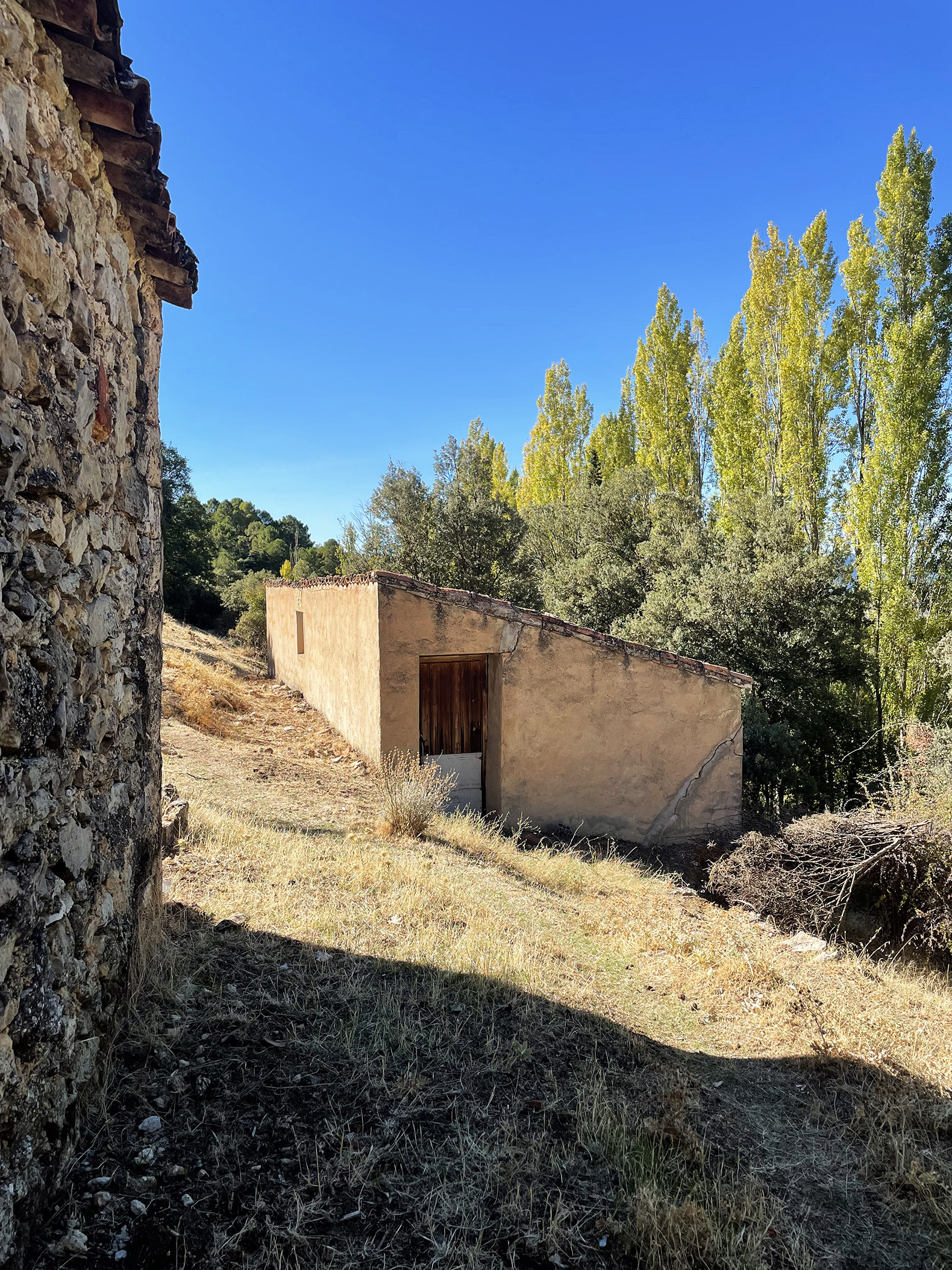
Located in a small hamlet within the Natural Park of the Sierras of Cazorla, Segura and Las Villas, the project transforms a derelict sty into an experimental shelter. Conceived as a prototype, it addresses the reuse of scattered rural structures while recovering the memory of vernacular architectures and disappearing crafts, engaging at once with contemporary housing concerns and the preservation of these dispersed mountain typologies.
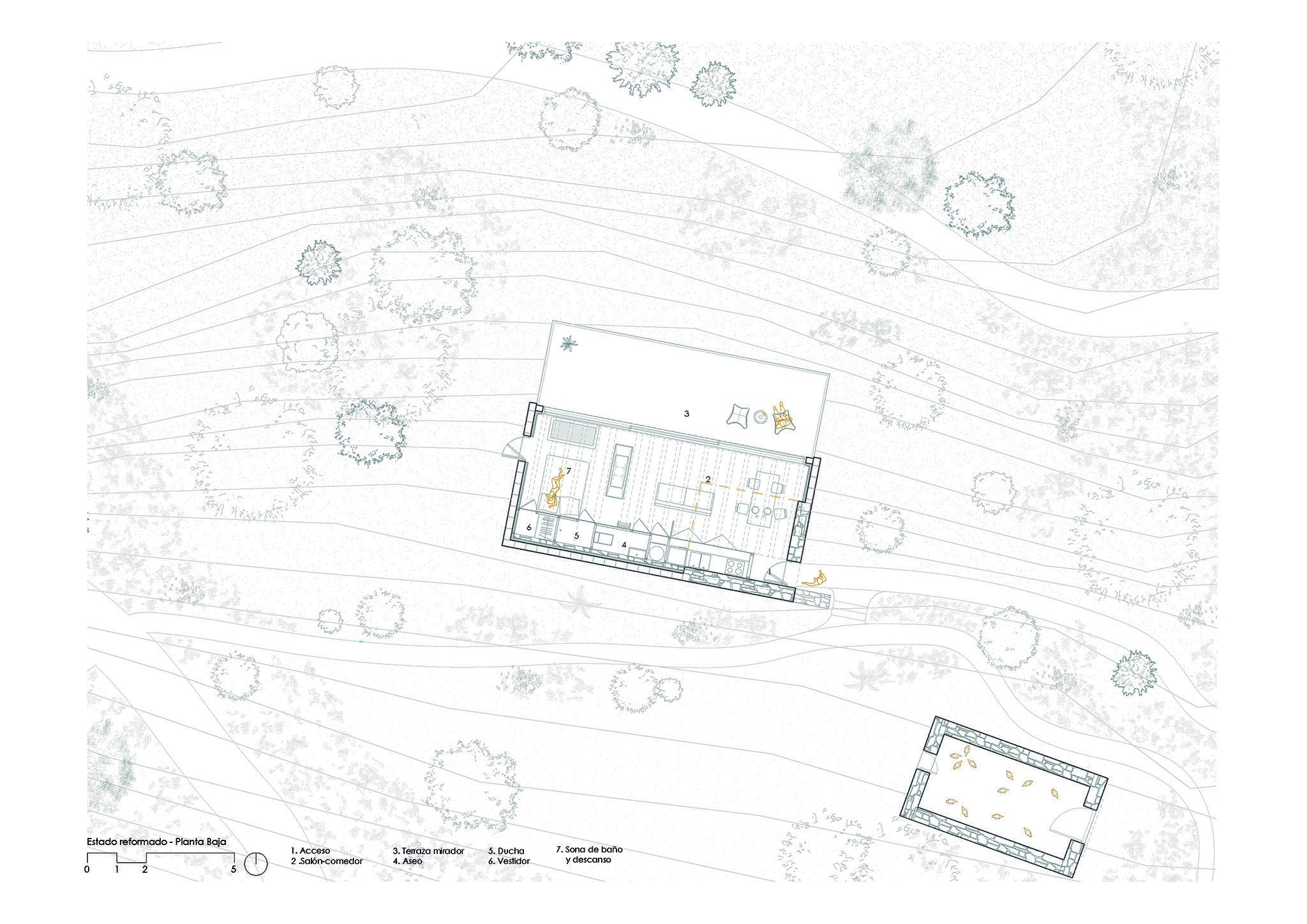
The intervention establishes a direct and intrinsic relationship with the landscape. The complete opening of the north façade dissolves the boundary between inside and outside, allowing the surrounding environment—poplars, pines, light and atmosphere—to permeate the space. Dwelling is thus expanded through the incorporation of the sensory and immaterial qualities of the rural context. The project is articulated around three elemental figures: fire, water and landscape.
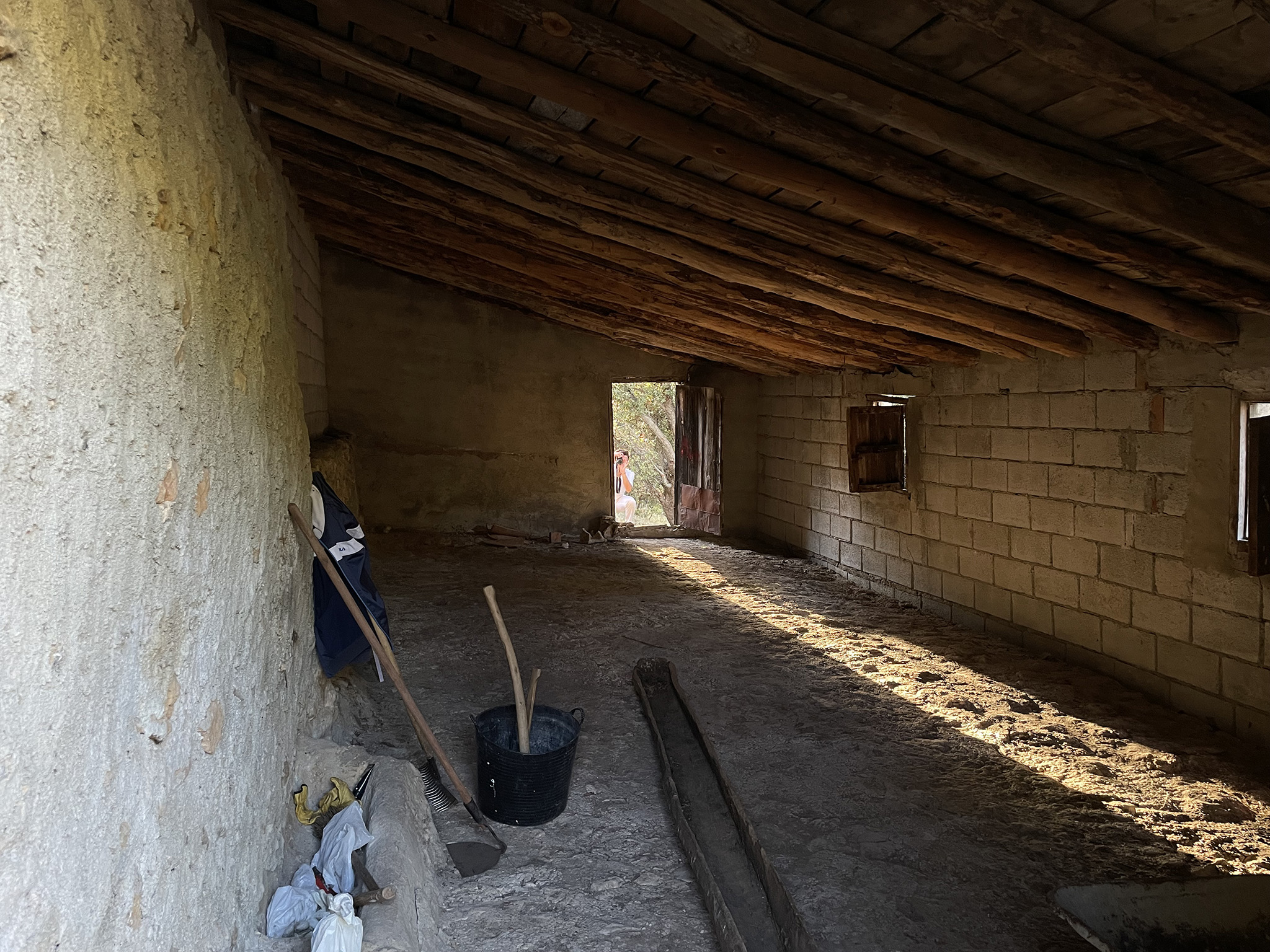
Fire becomes the gravitational centre, suspended over a platform that extends across interior and exterior, organising two complementary atmospheres: one associated with daytime and collective use, the other with night and intimacy. Water is reintroduced through a former livestock trough, reinterpreted as both a mediating device with the landscape and a functional environmental resource. Within this framework, inhabitation is understood as a fluid condition: a single, continuous space capable of accommodating domestic, productive or social uses depending on time and occupation.
In order to preserve the original longitudinal typology, an equipped steel wall is inserted along the most exposed enclosure. This element condenses the functional programme and storage, while concealing the most private areas and maintaining the spatial continuity of the nave. The intervention reveals and enhances the existing stone masonry, dating back over two centuries, as a primary material and historical substrate.
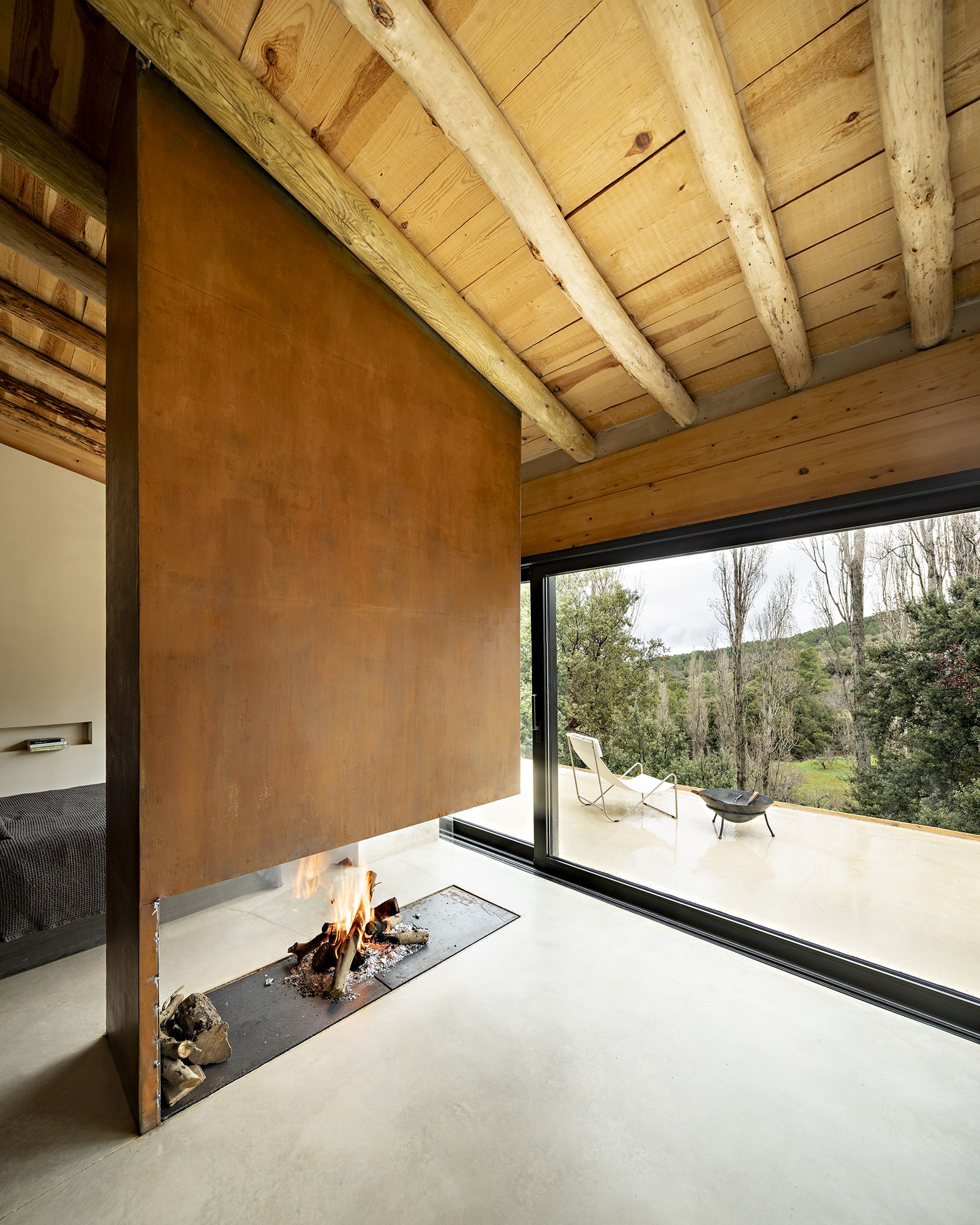
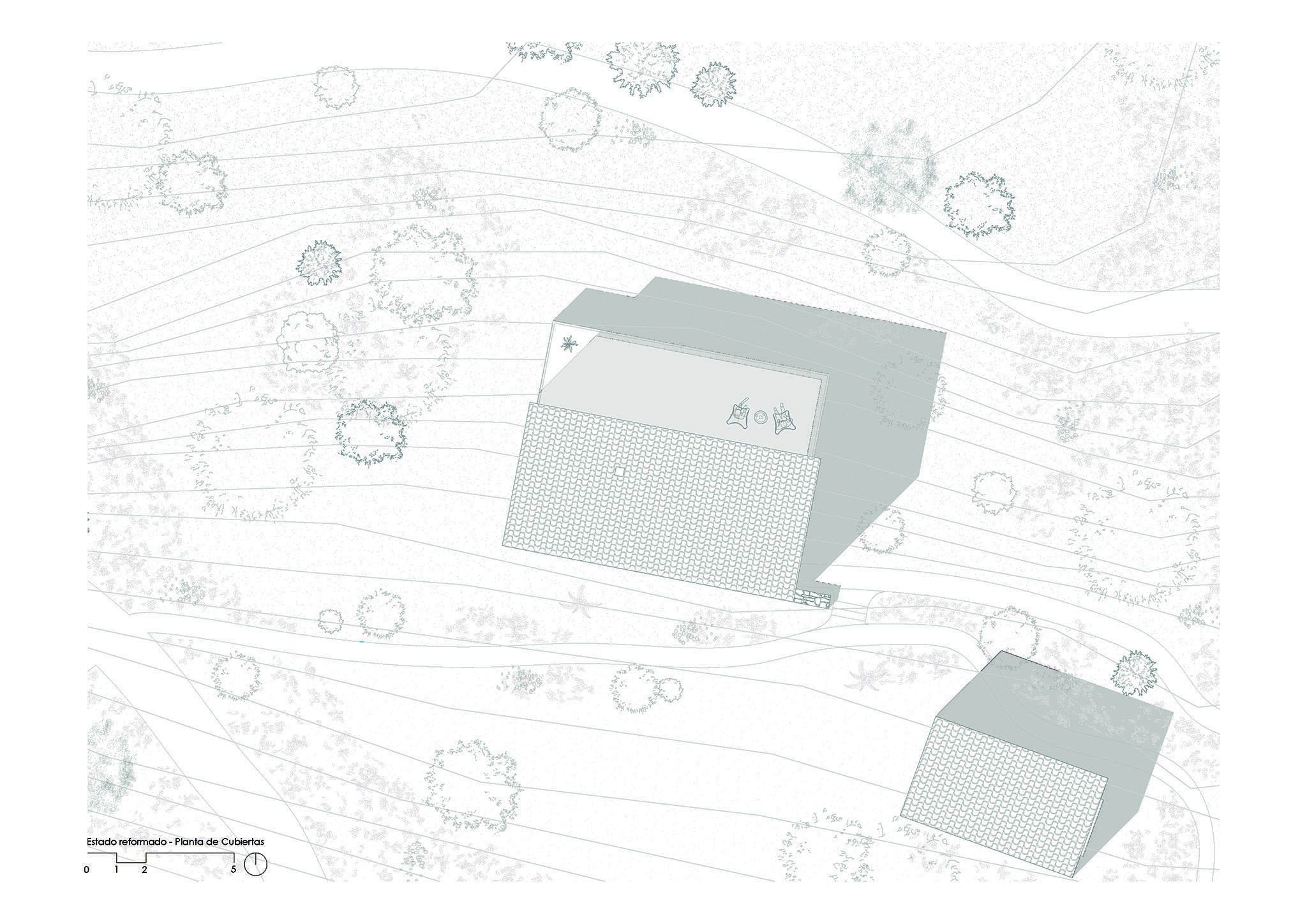
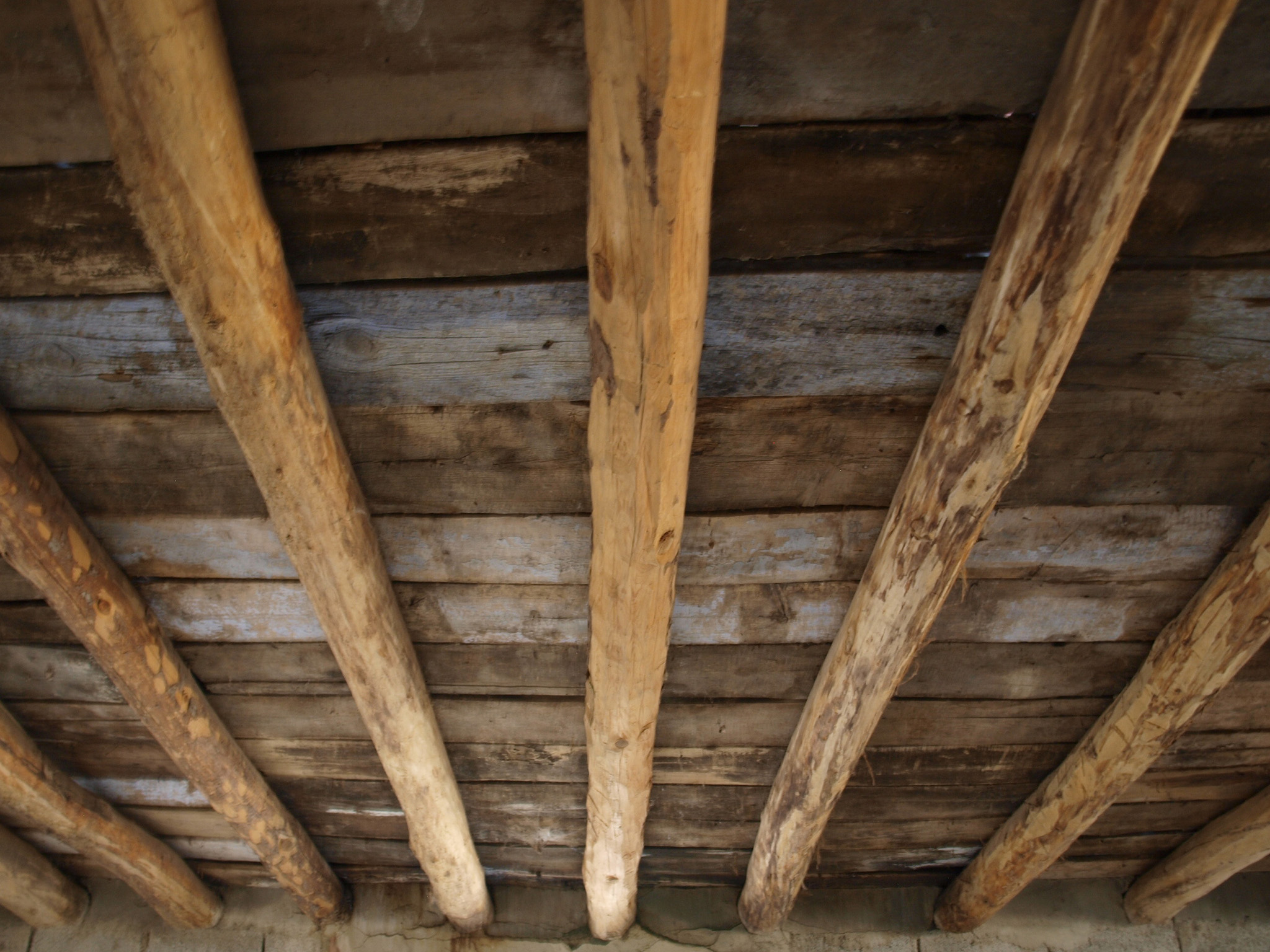
The project is grounded in reuse. Original timber elements were dismantled, catalogued and reassembled, while traditional clay roof tiles were reinstated. Existing walls were consolidated using lime mortar, and replacement timber was sourced locally, reinforcing a logic of proximity and sustainable resource management.
Craftsmanship plays a central role in the process. The project reclaims the knowledge of local trades, with all architectural elements designed to be fabricated and assembled by local carpenters and blacksmiths, both in workshop and on site. This approach responds not only to material scarcity and climatic constraints, but also to the need to preserve and transmit endangered forms of making.
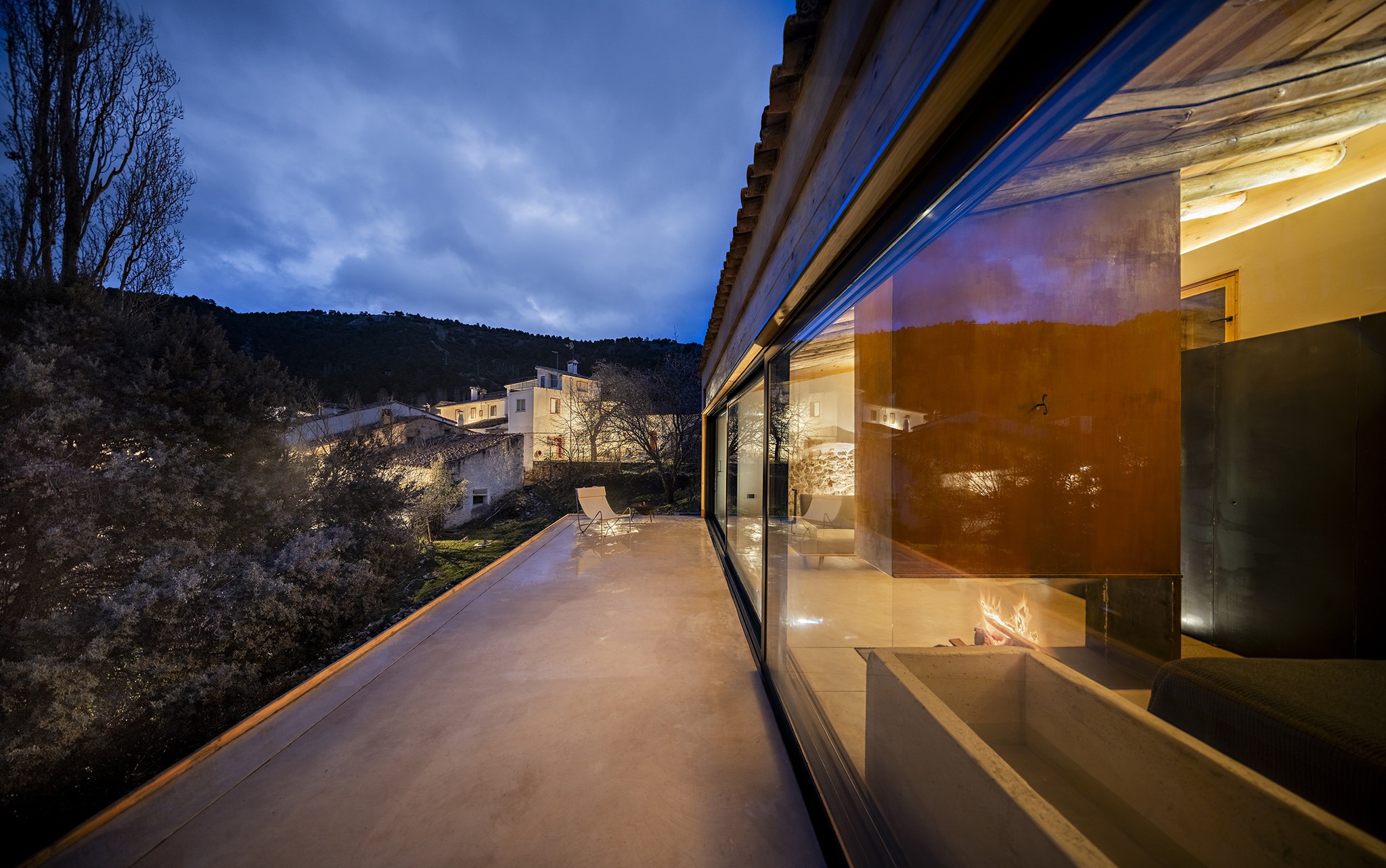
The widespread presence of similar abandoned structures across the territory has prompted the development of an ongoing inventory and mapping strategy. The project thus positions itself as a replicable model, capable of being extended to other pigsties, corrals, mills or barns, reactivated as small pavilions that support a hybrid, flexible and evolving mode of inhabitation.