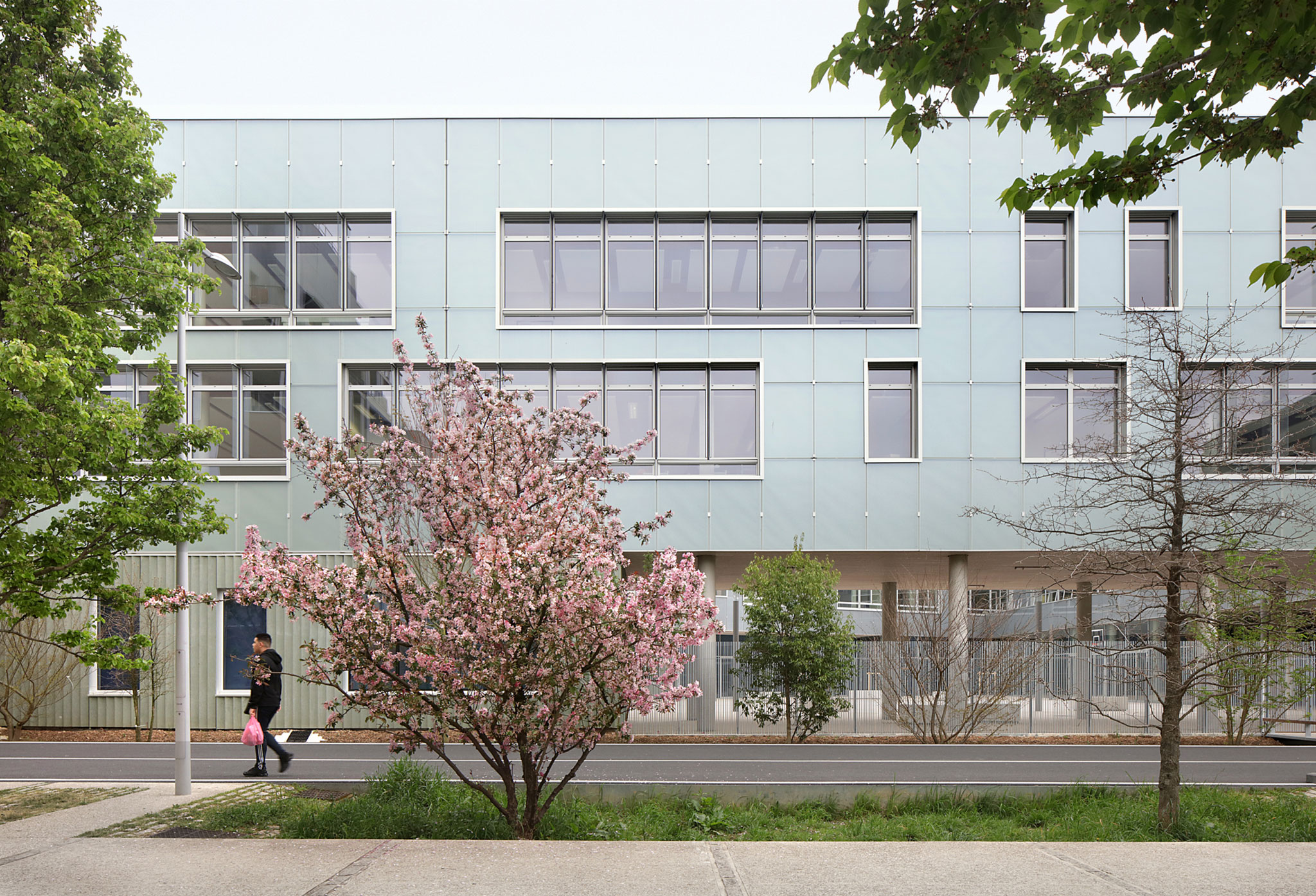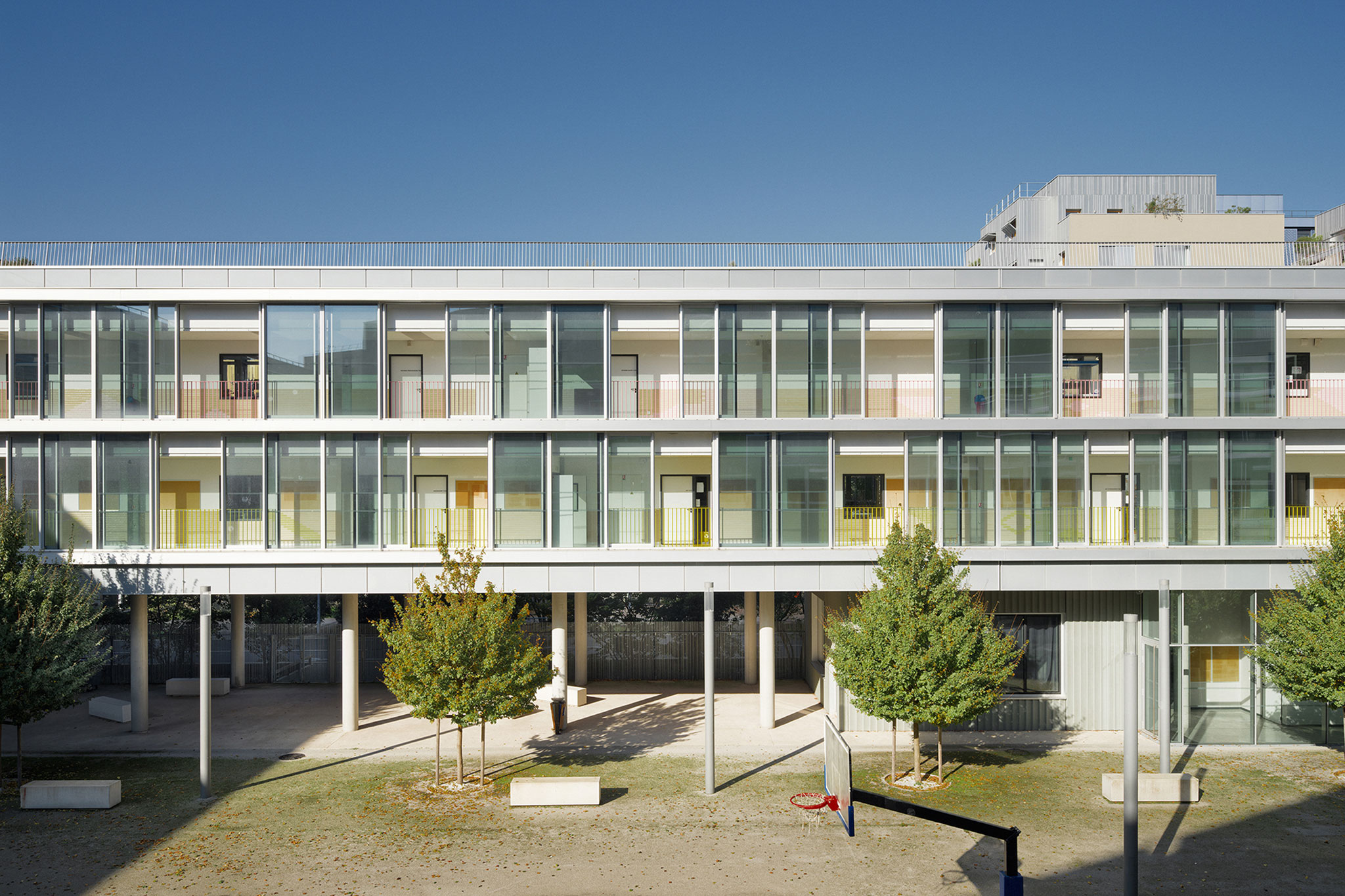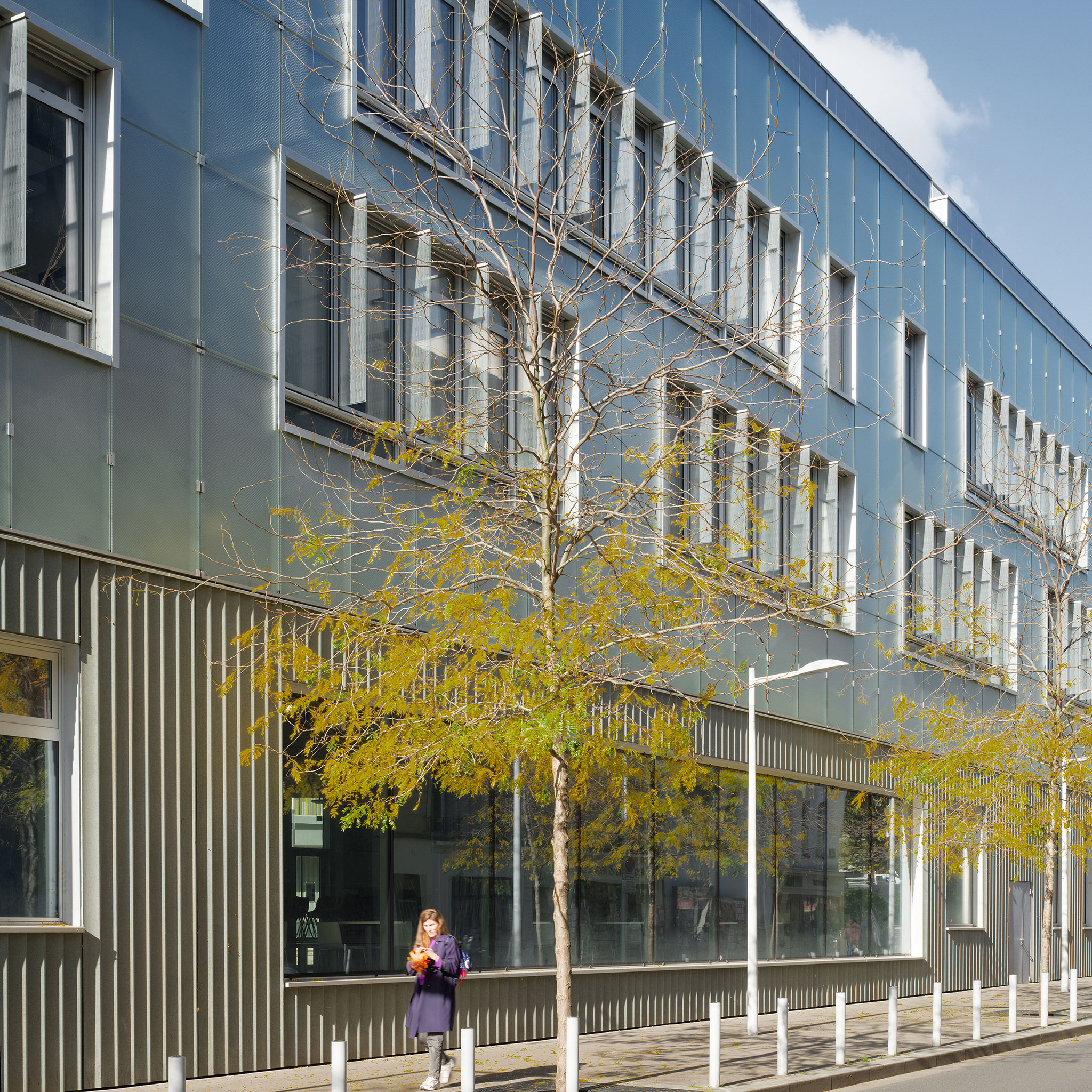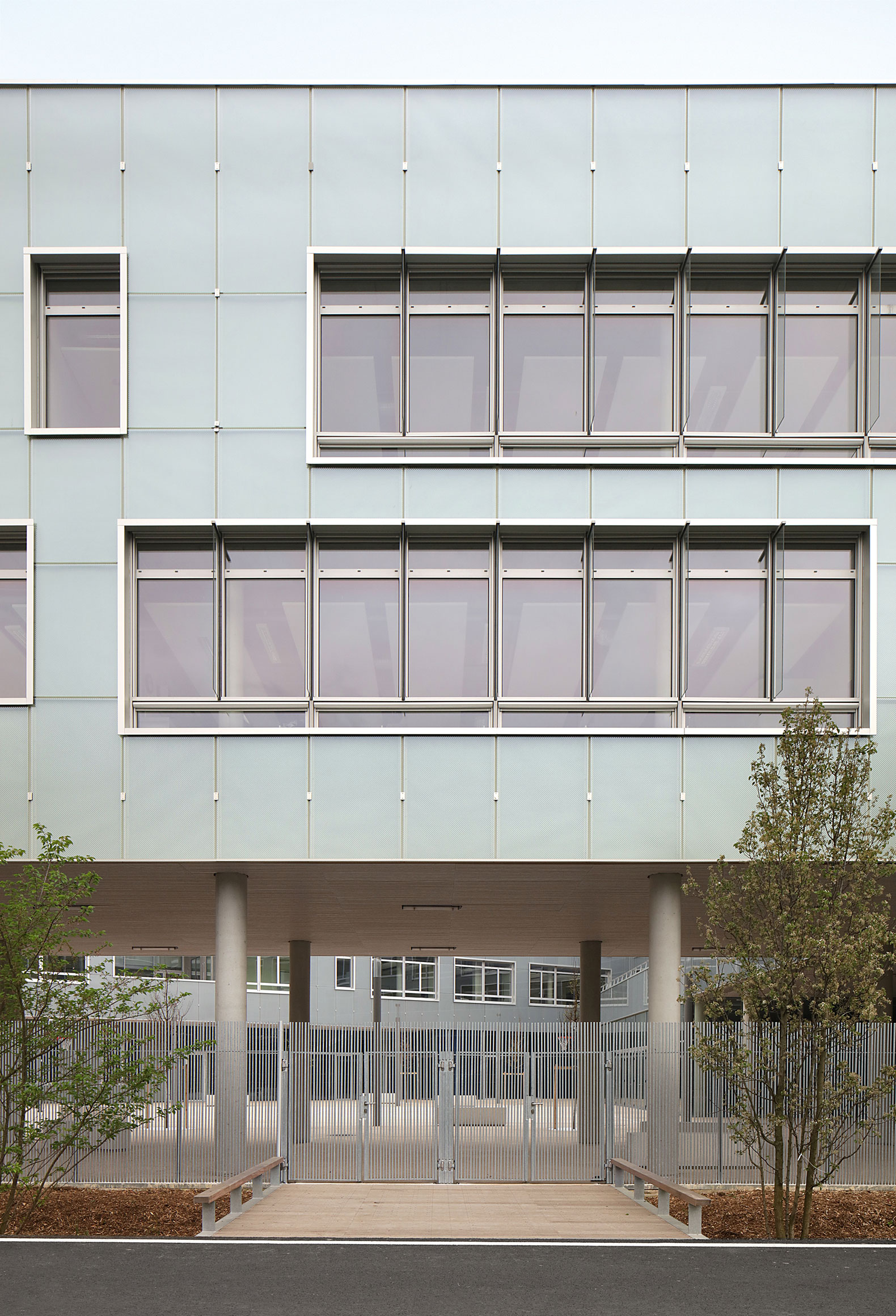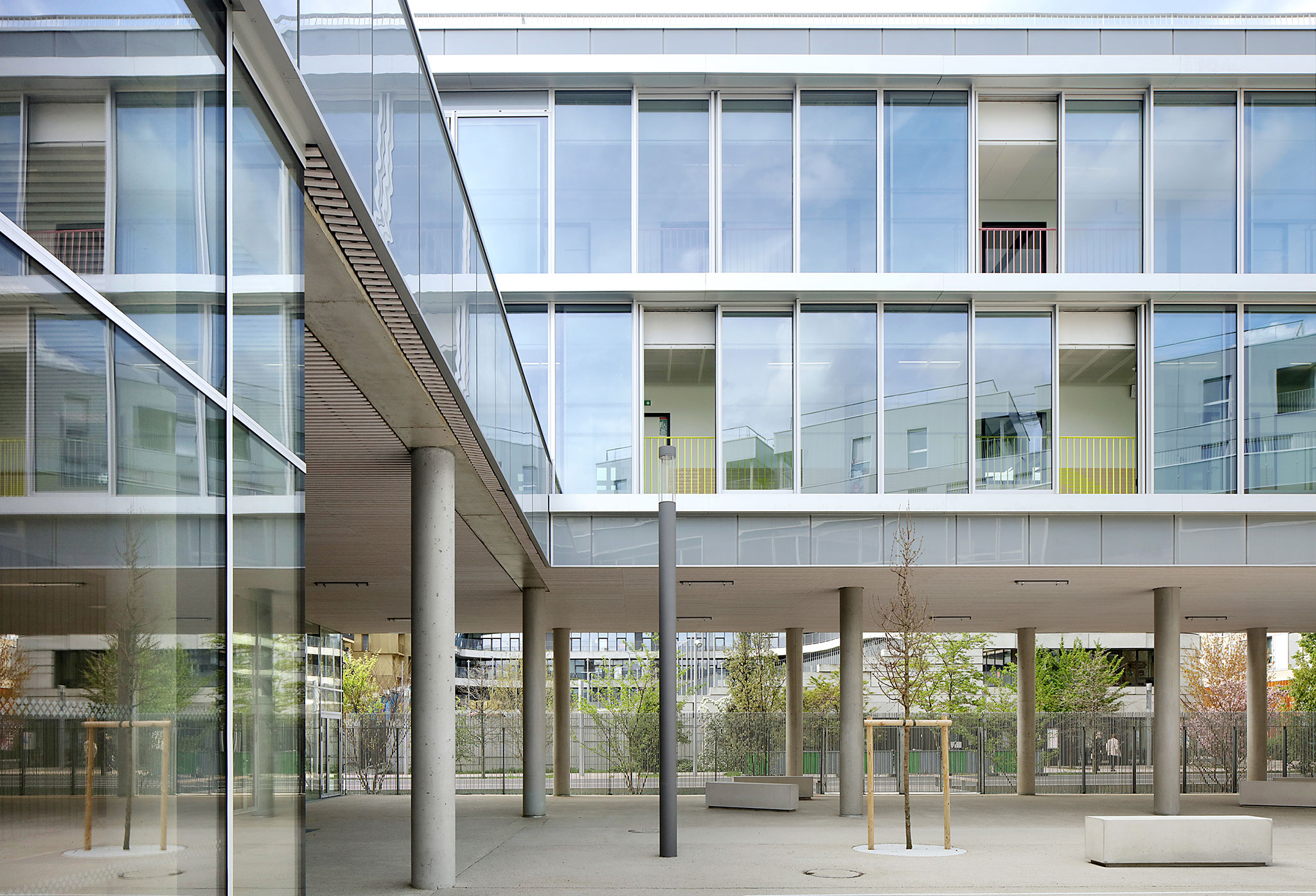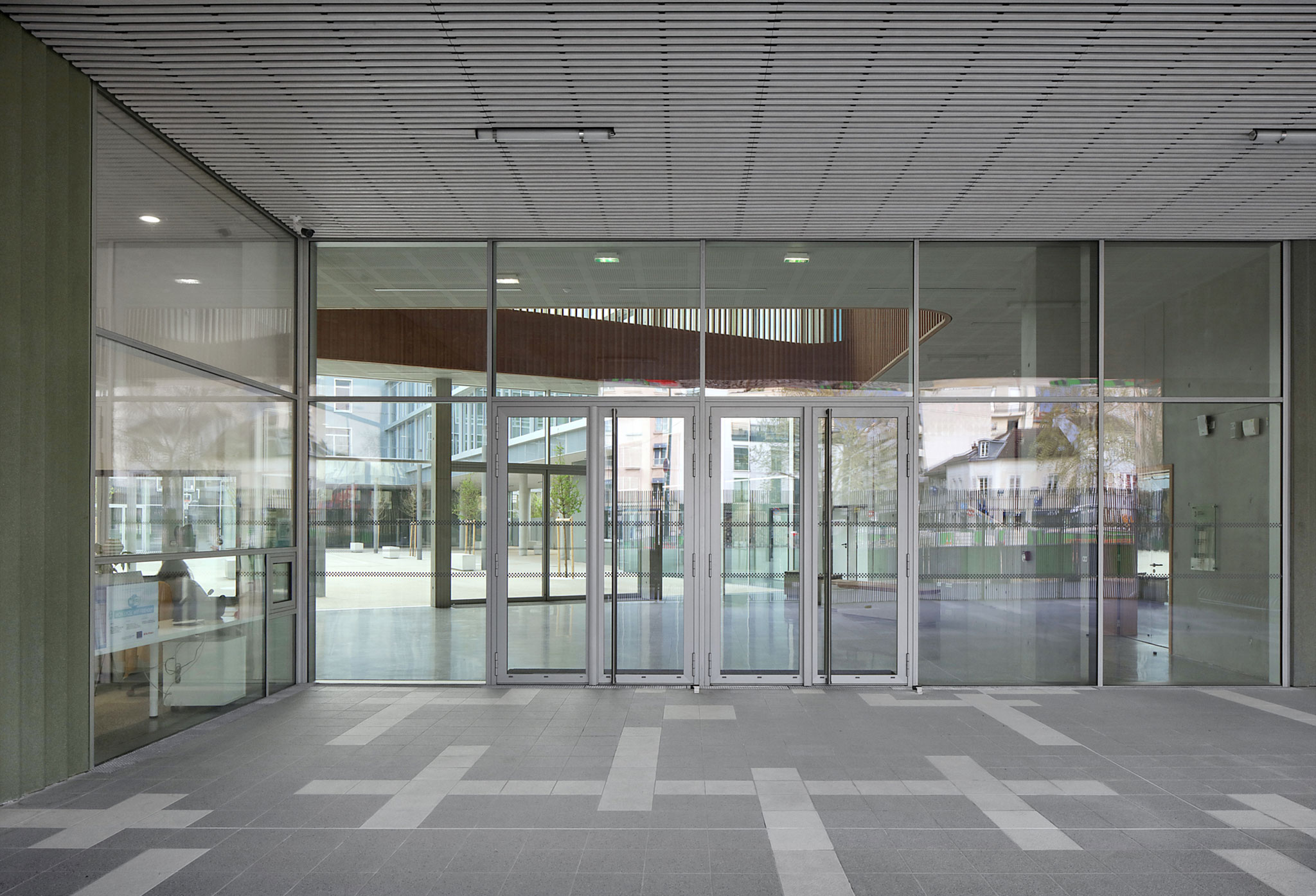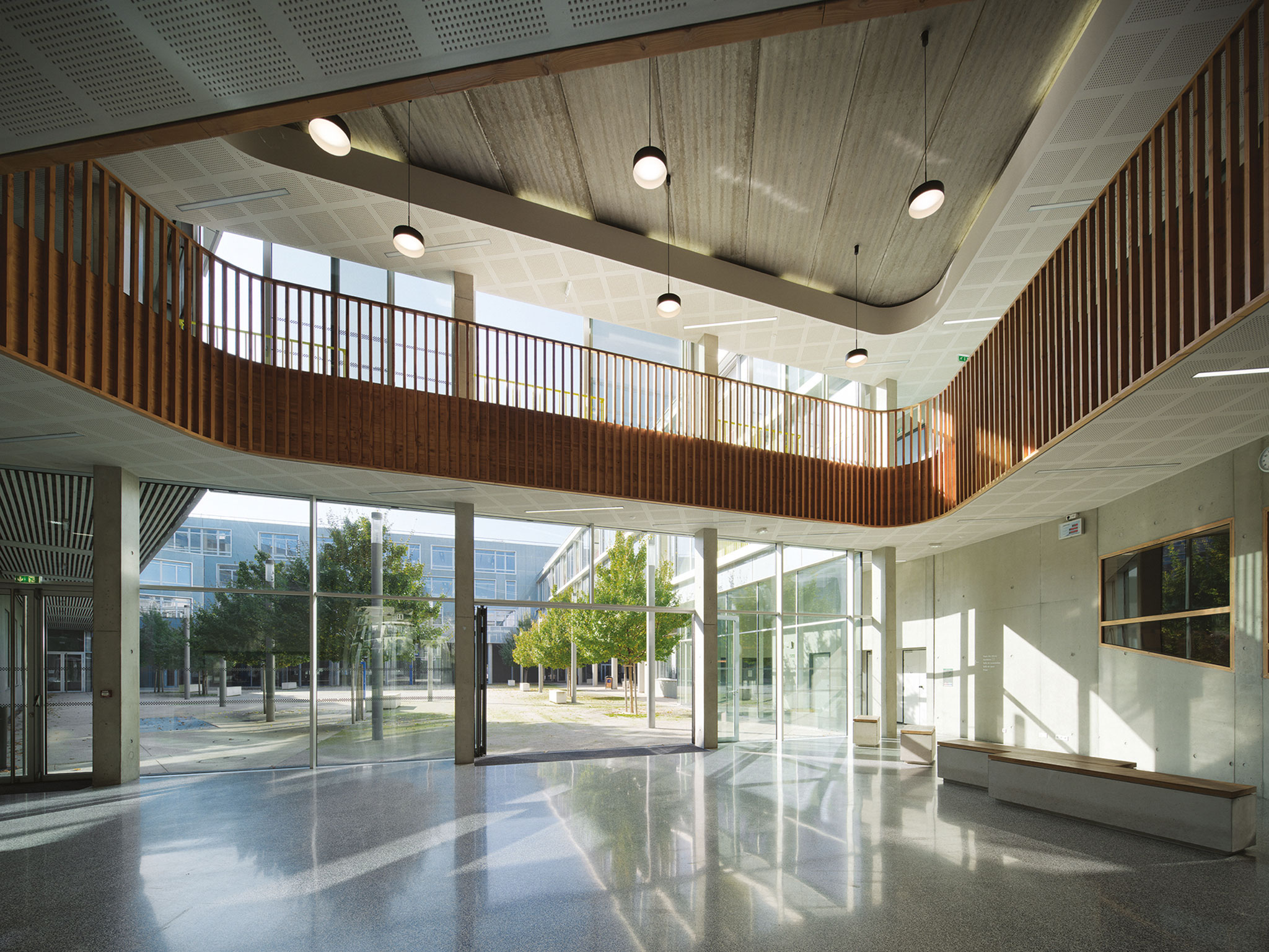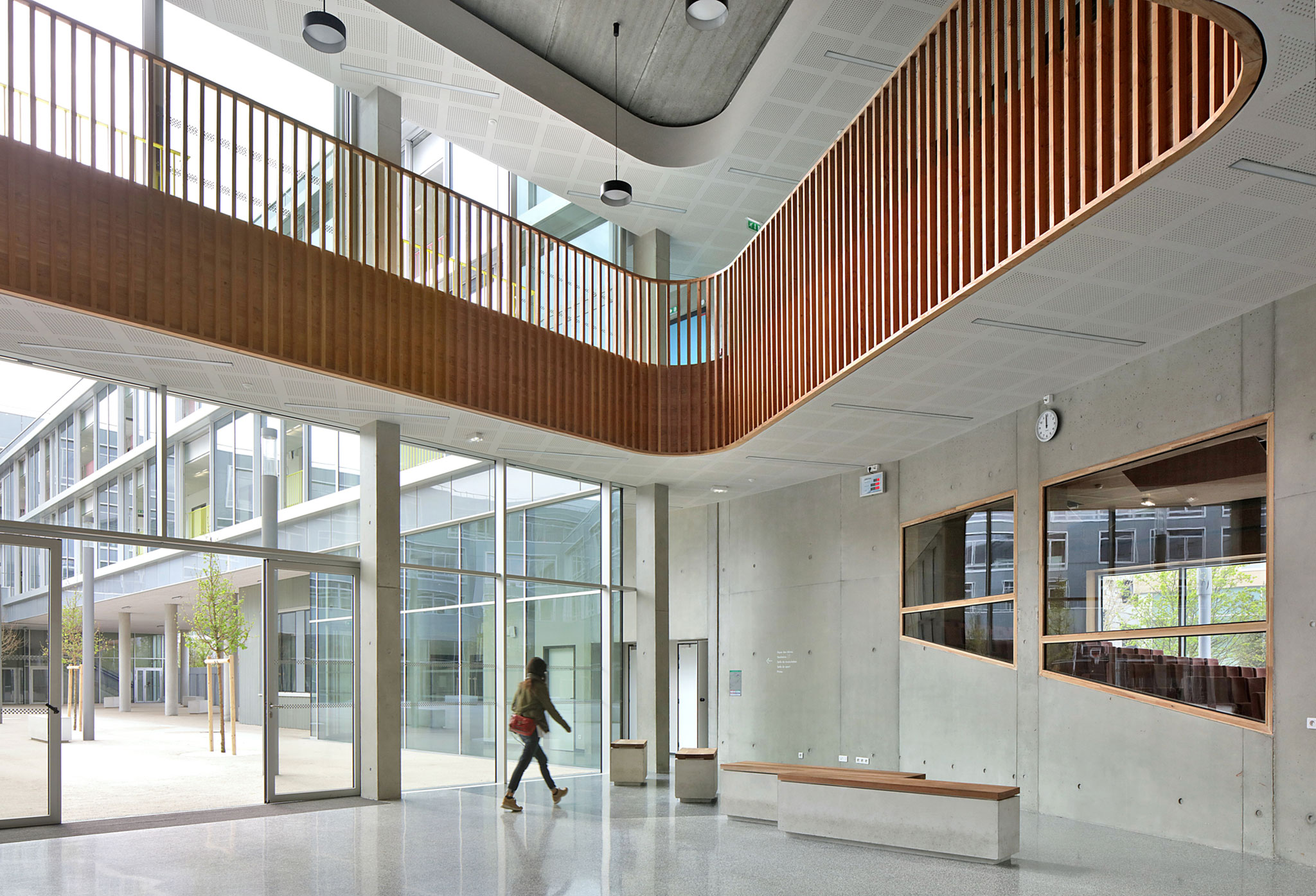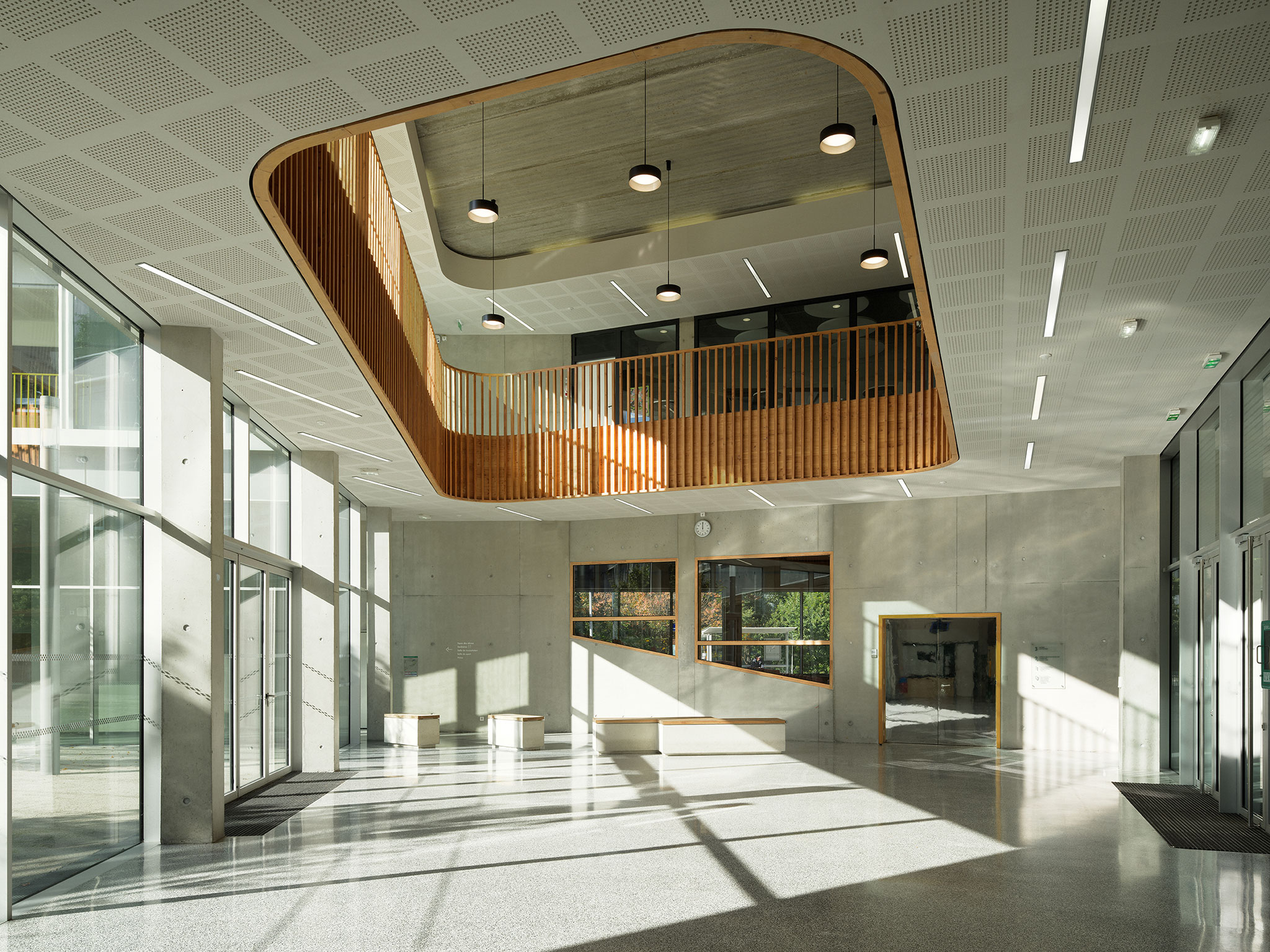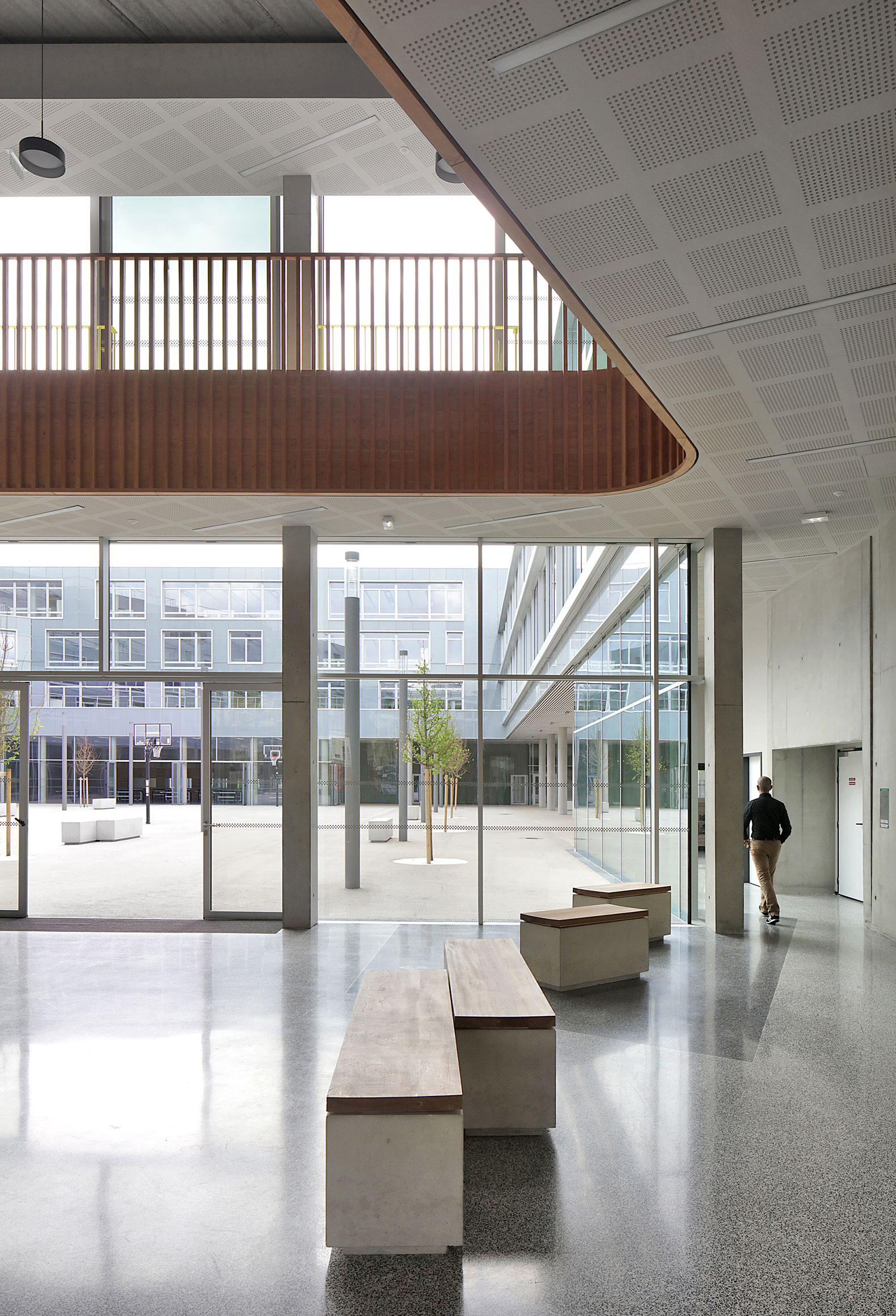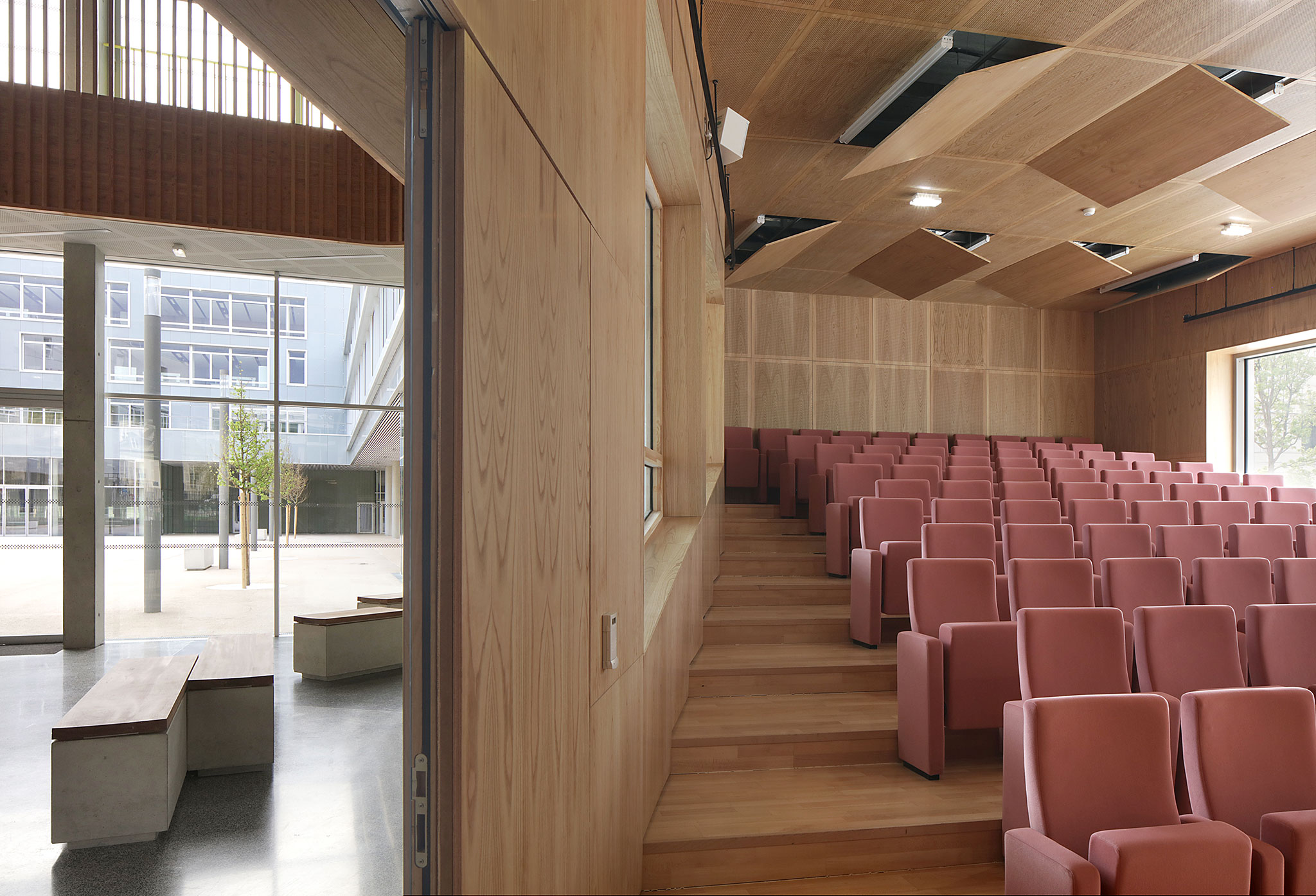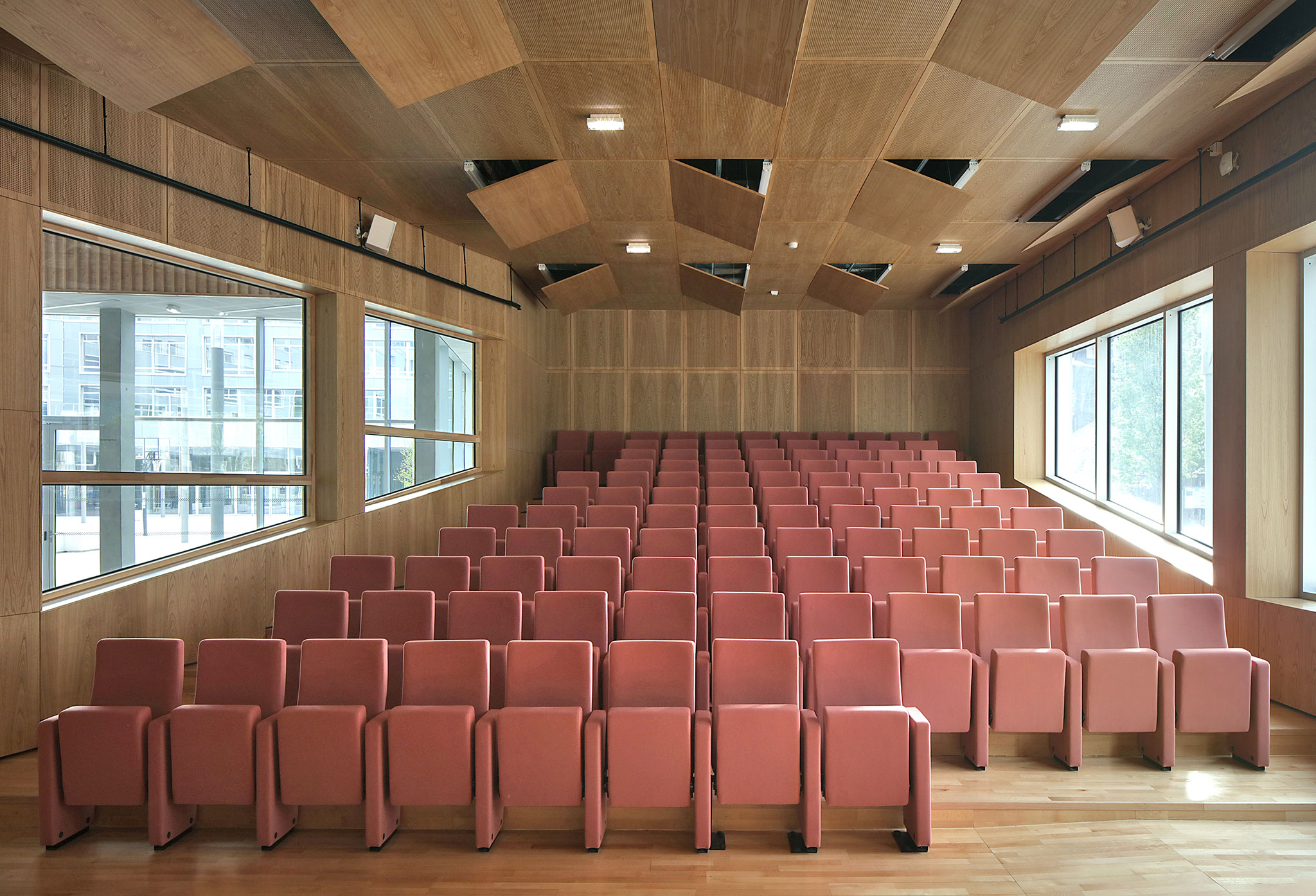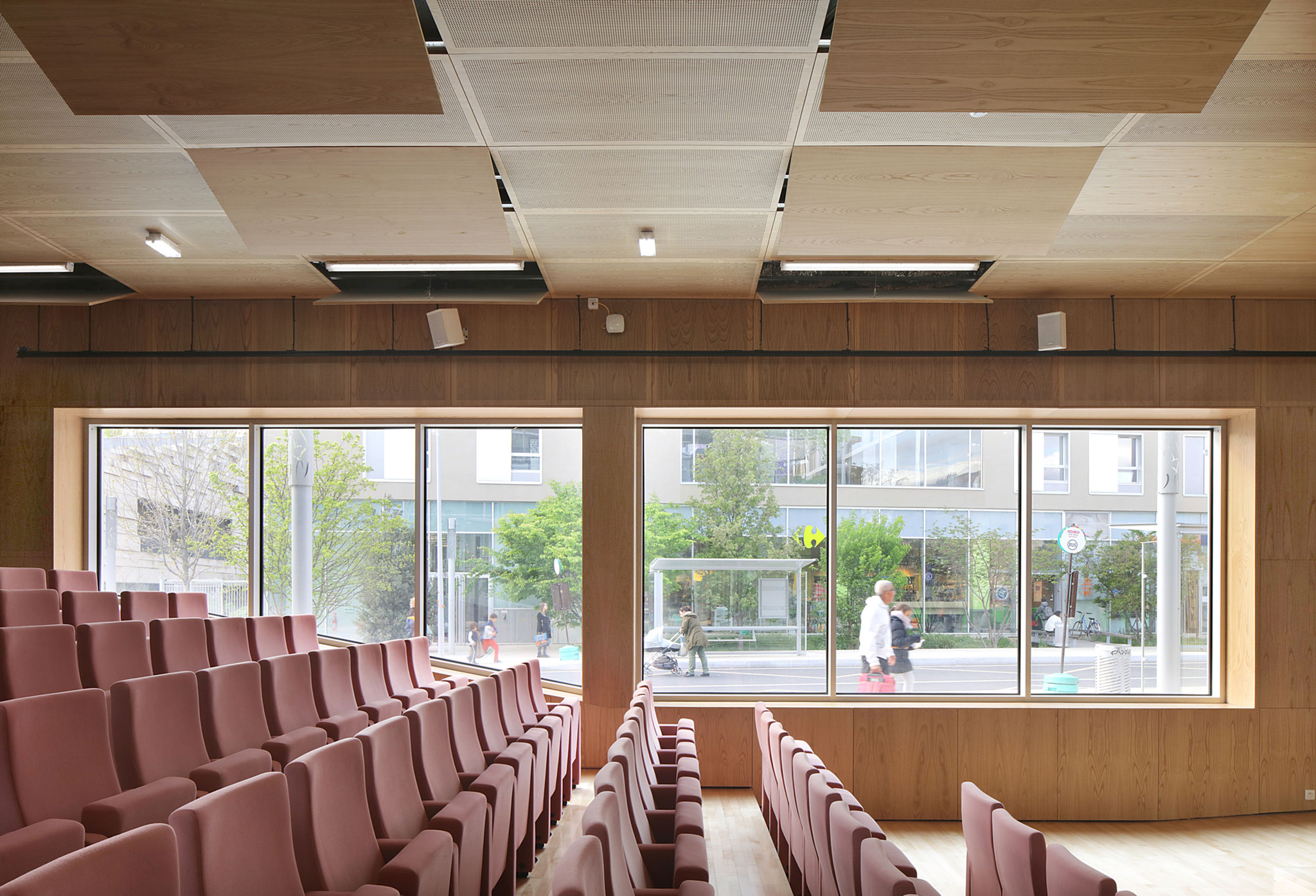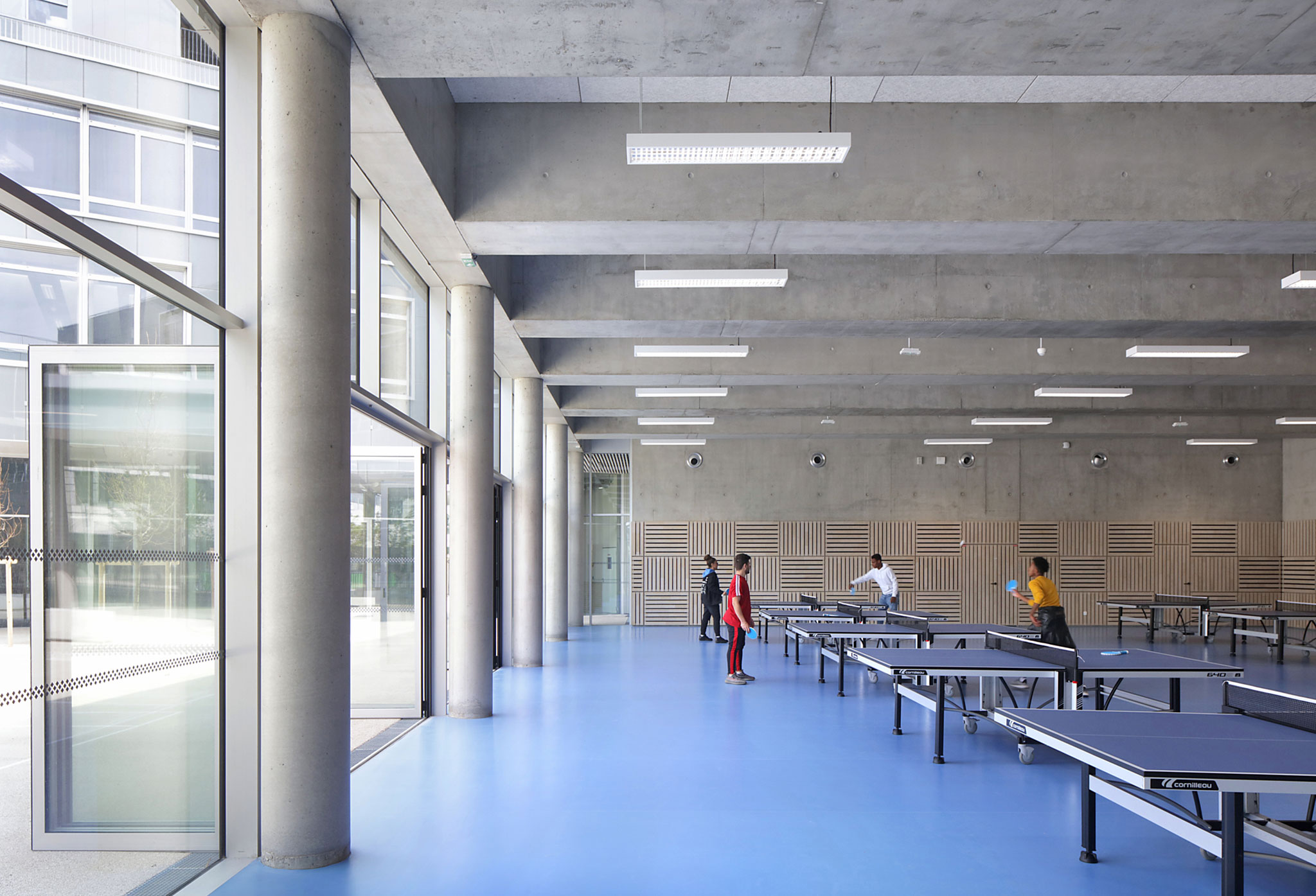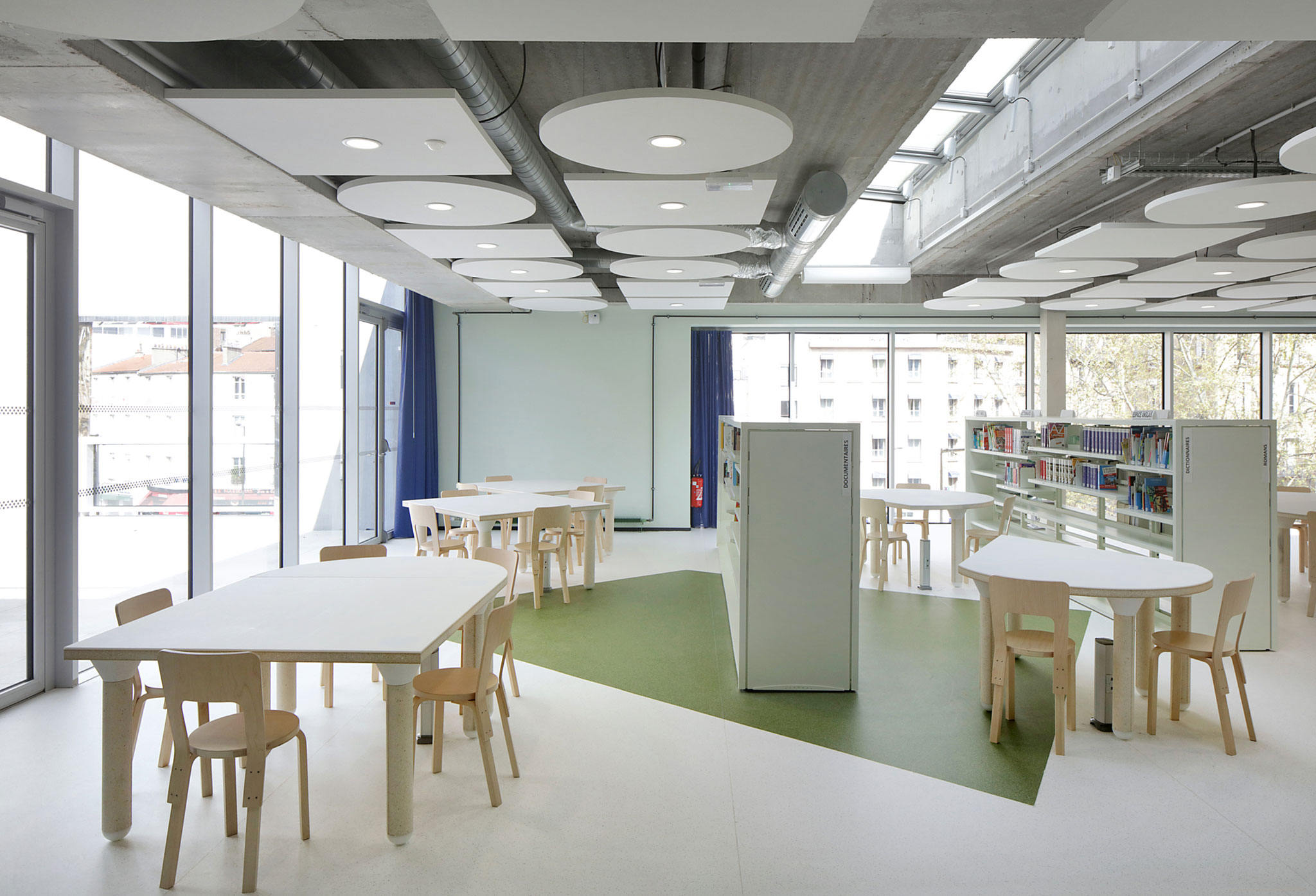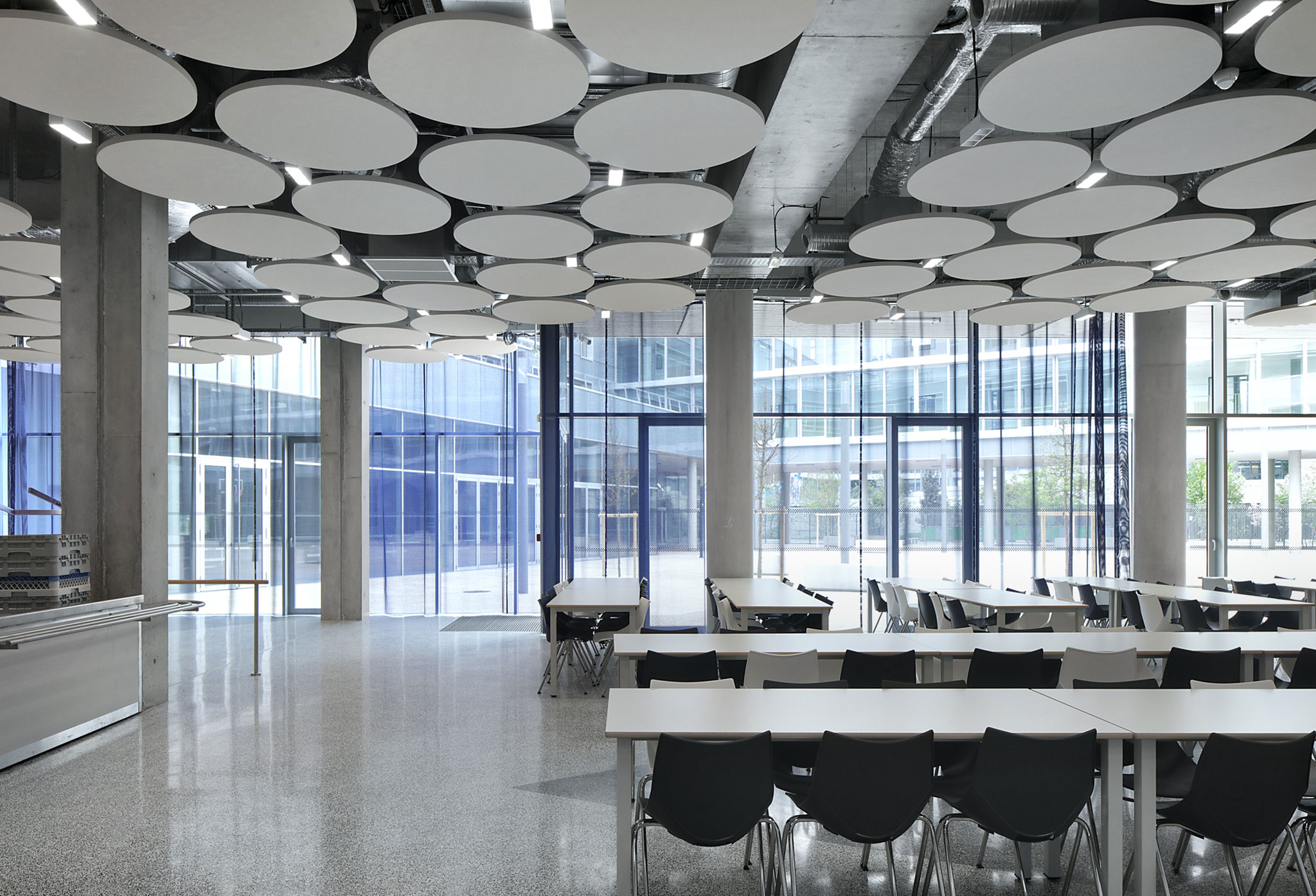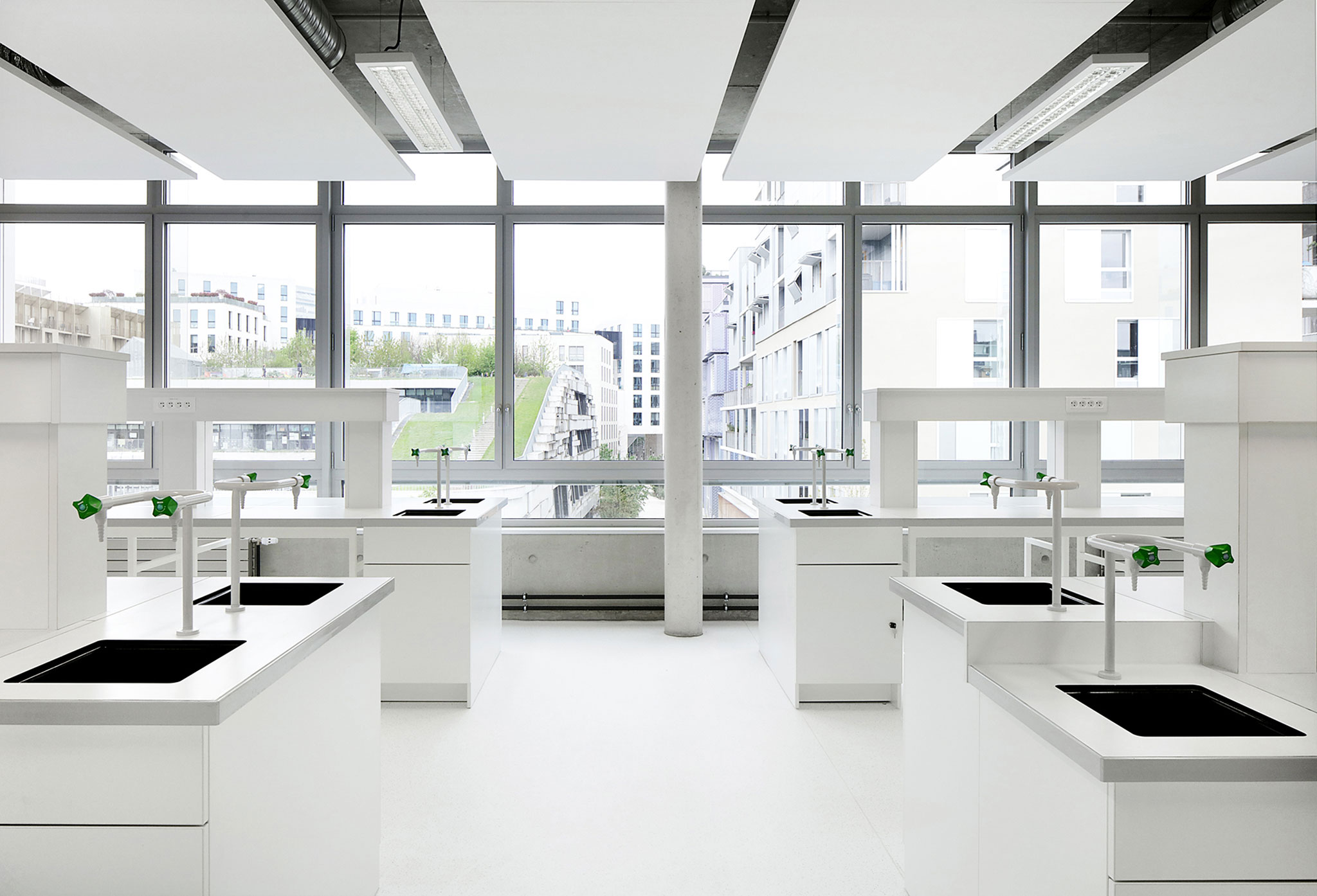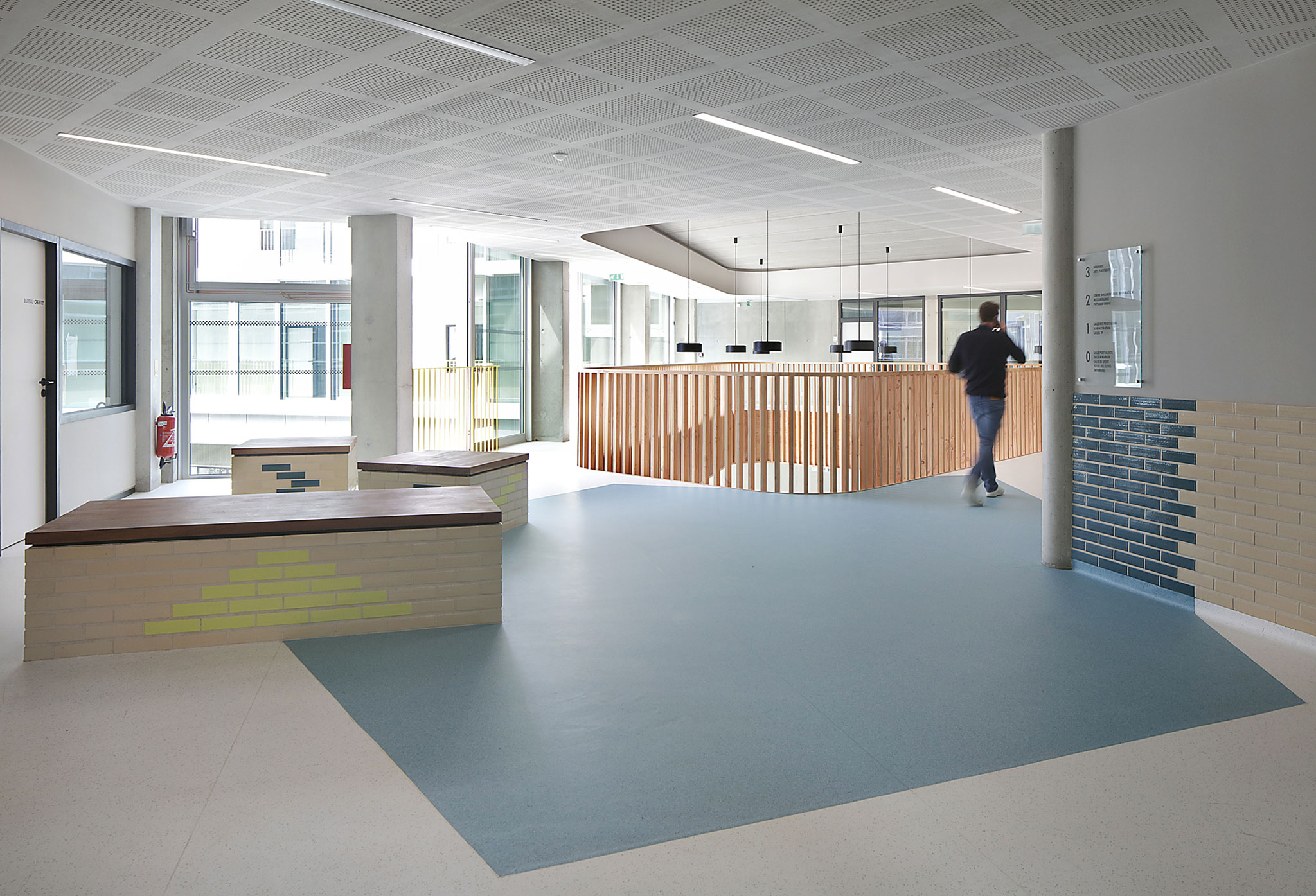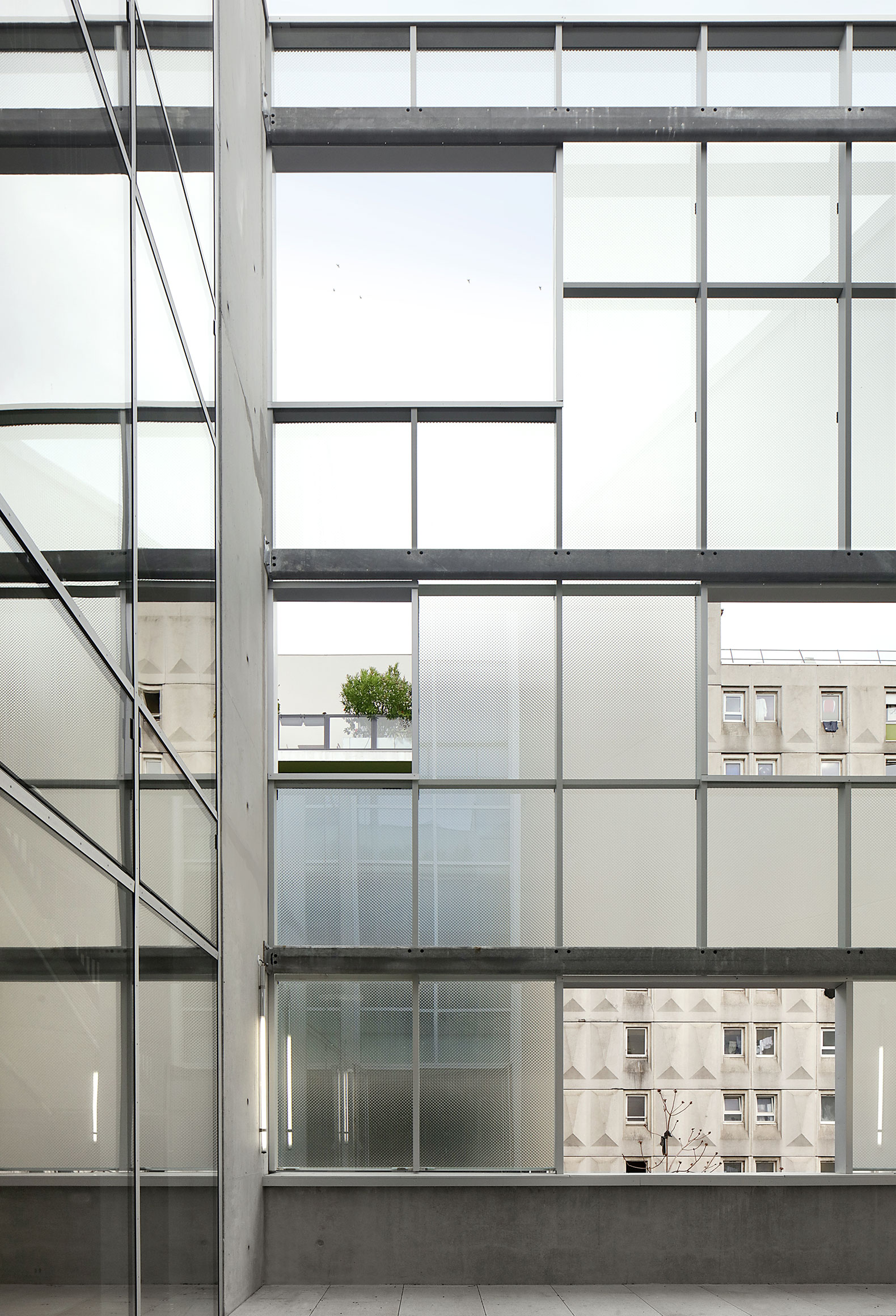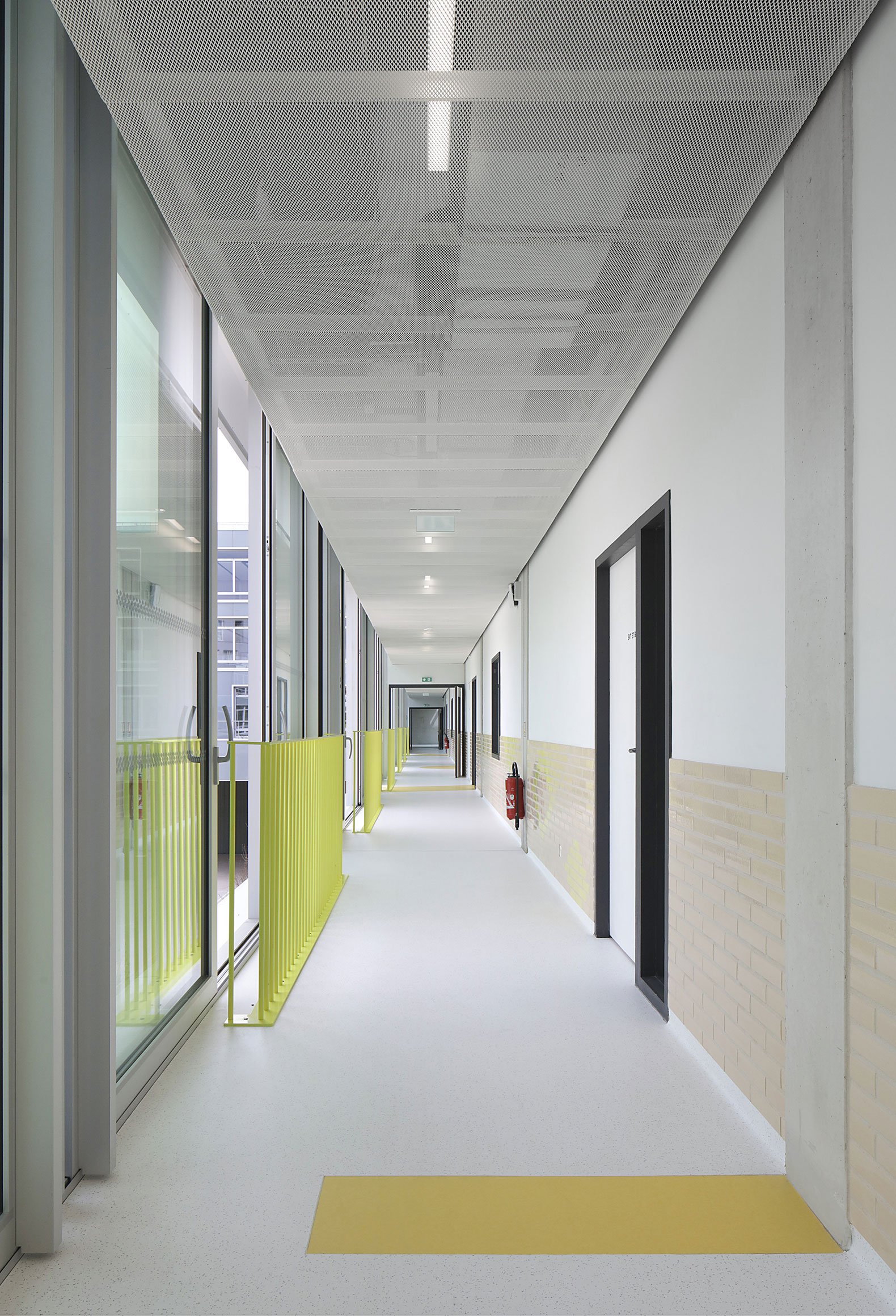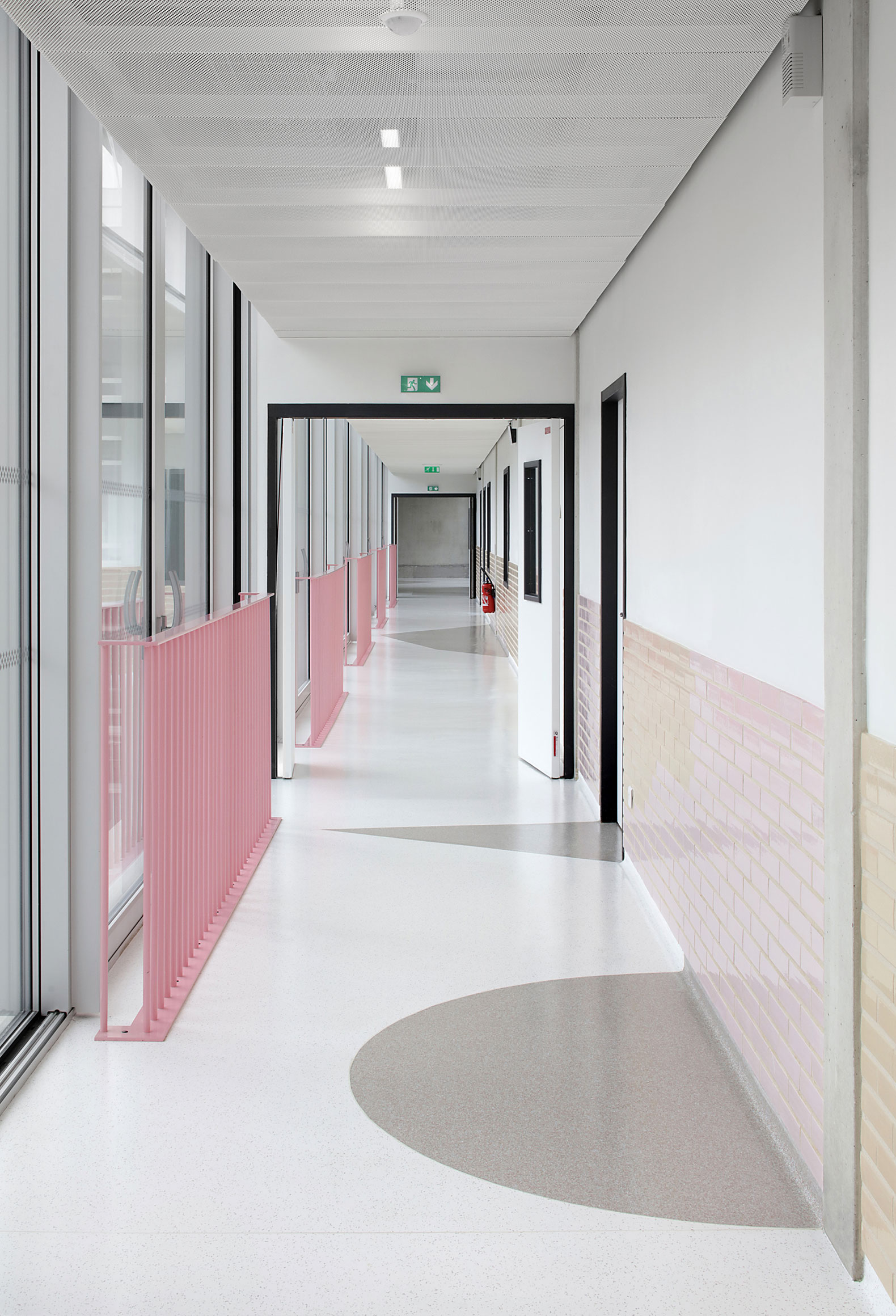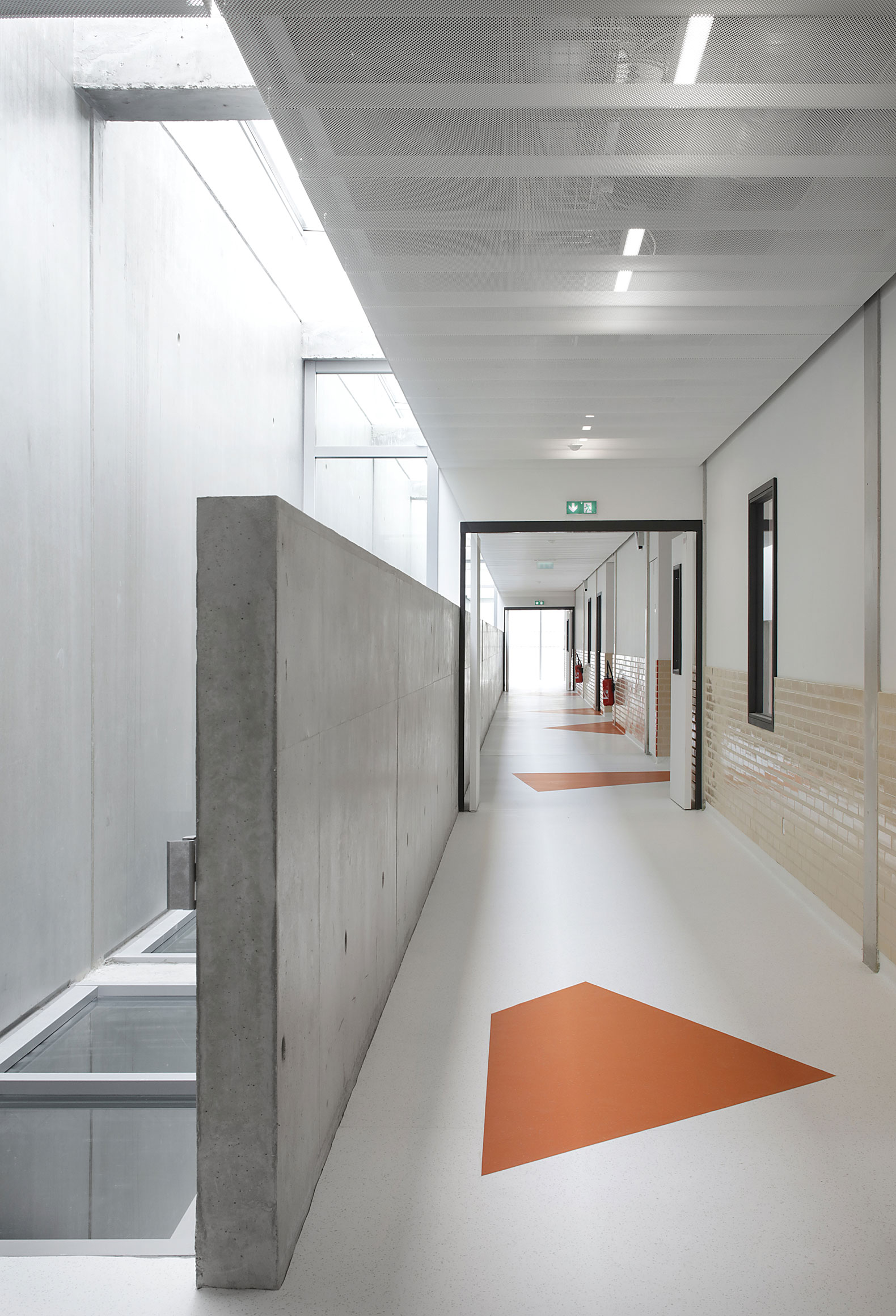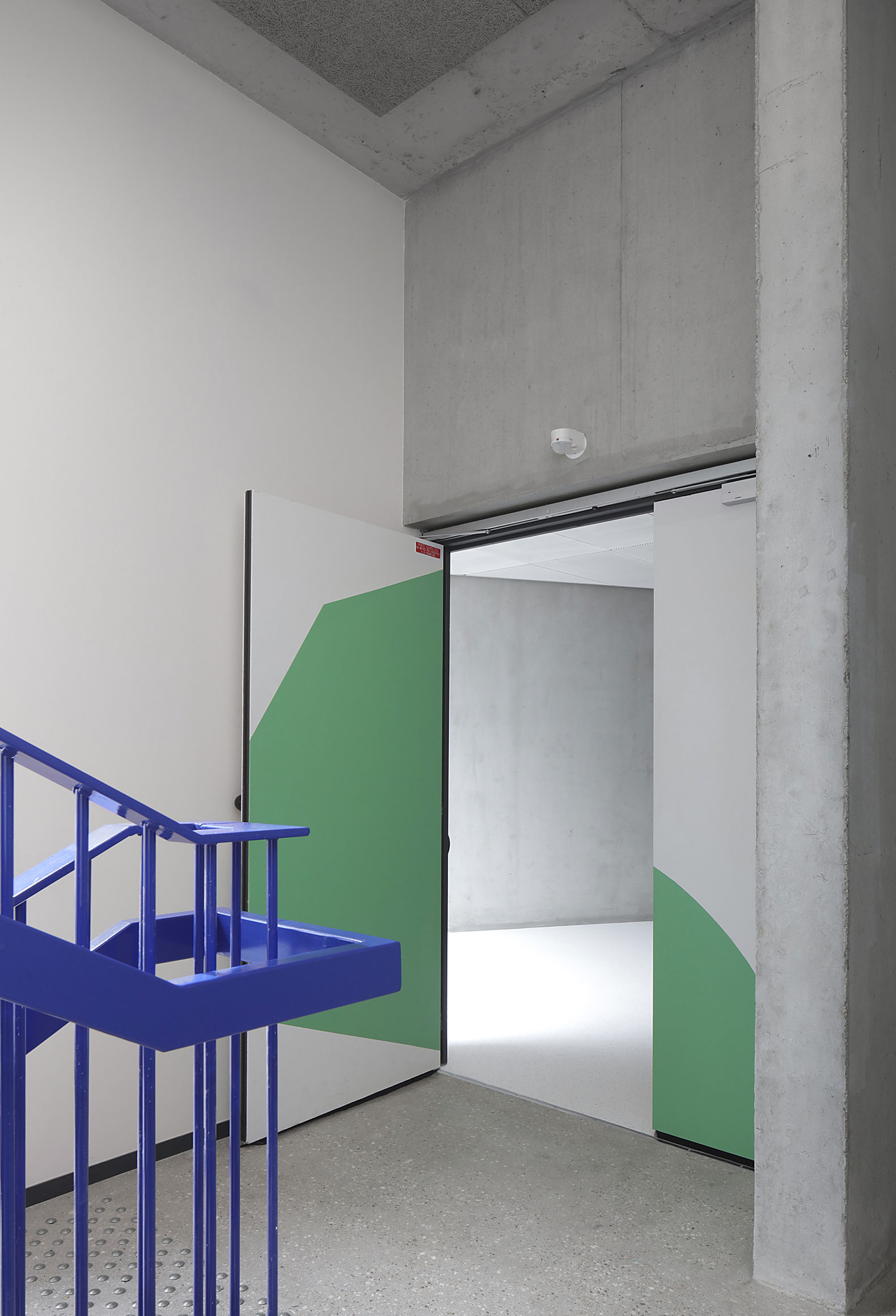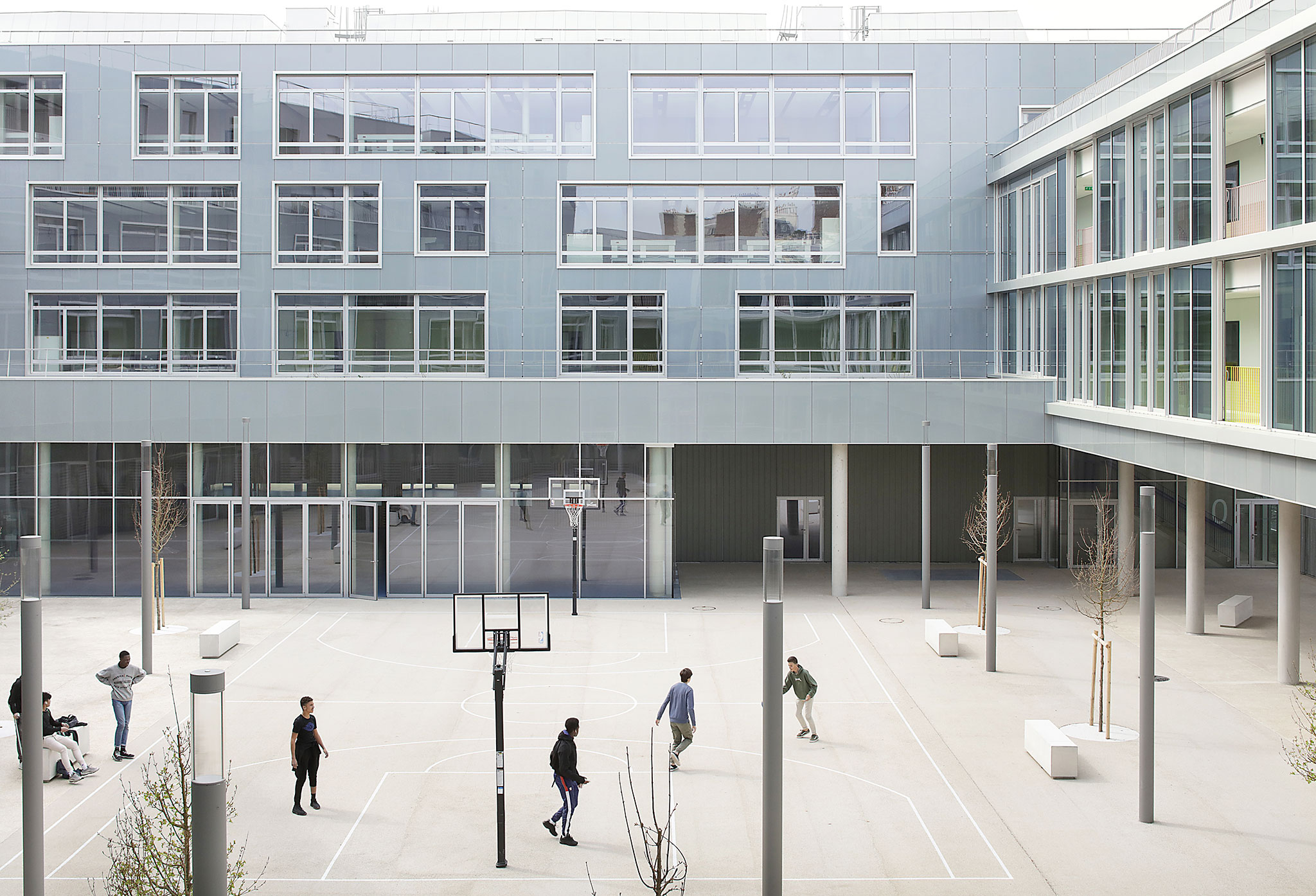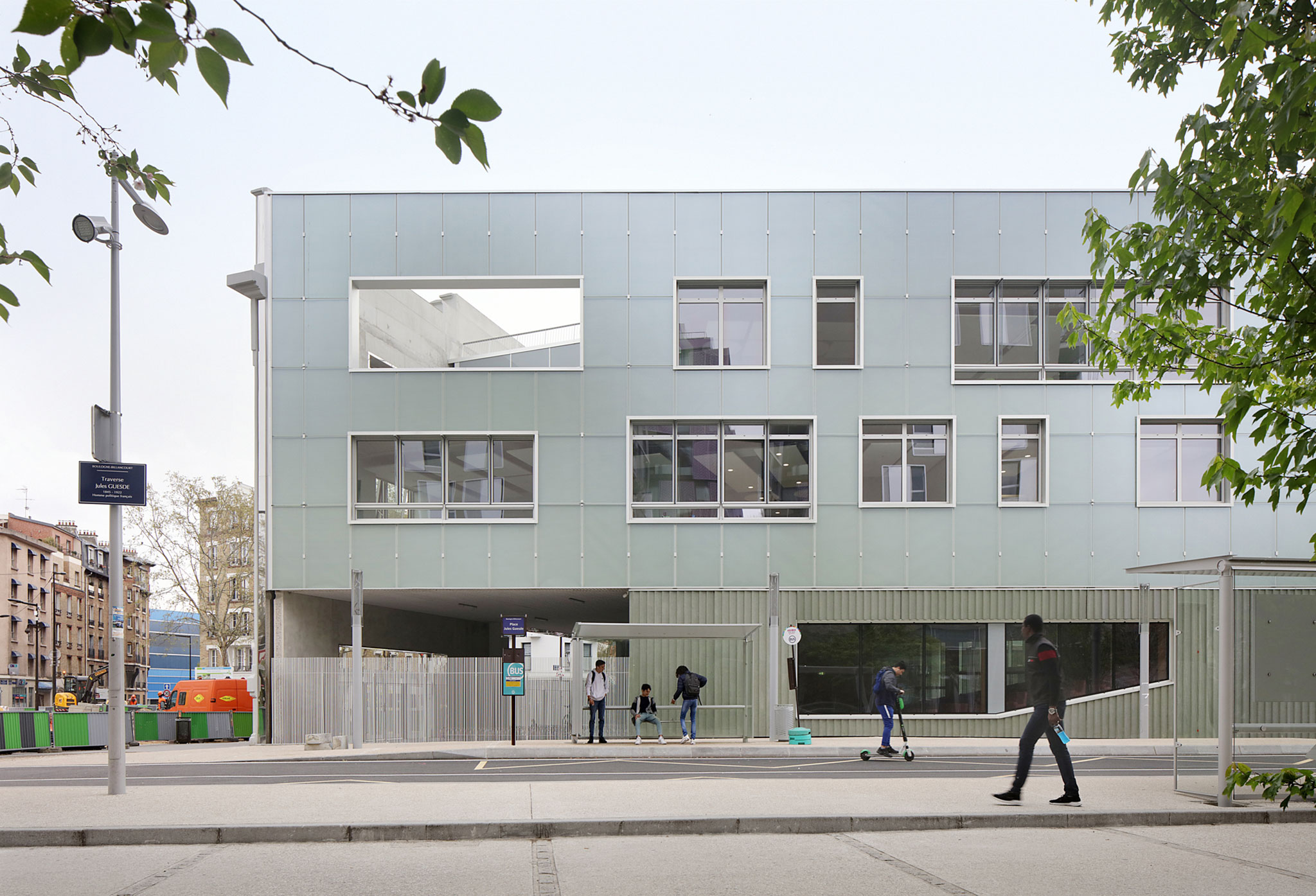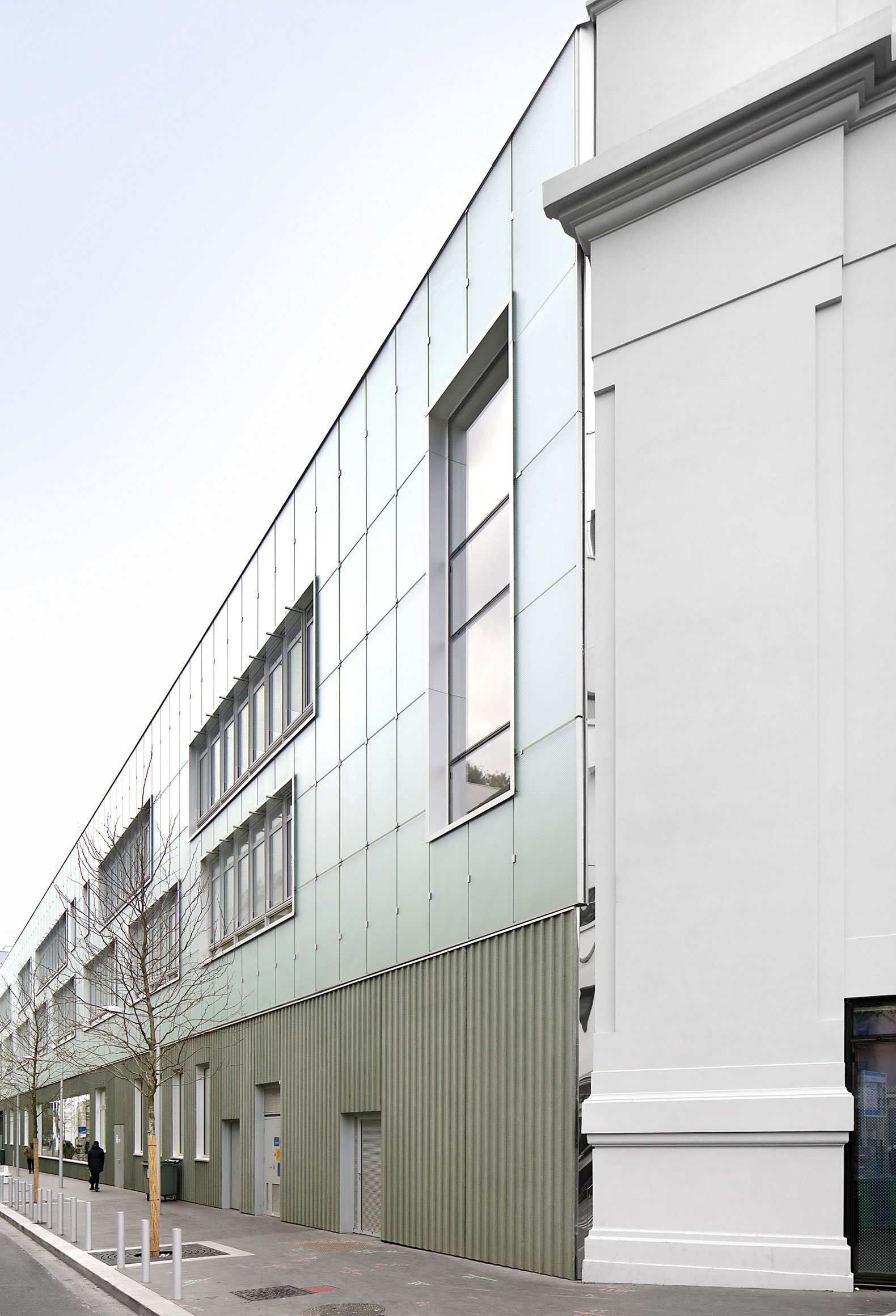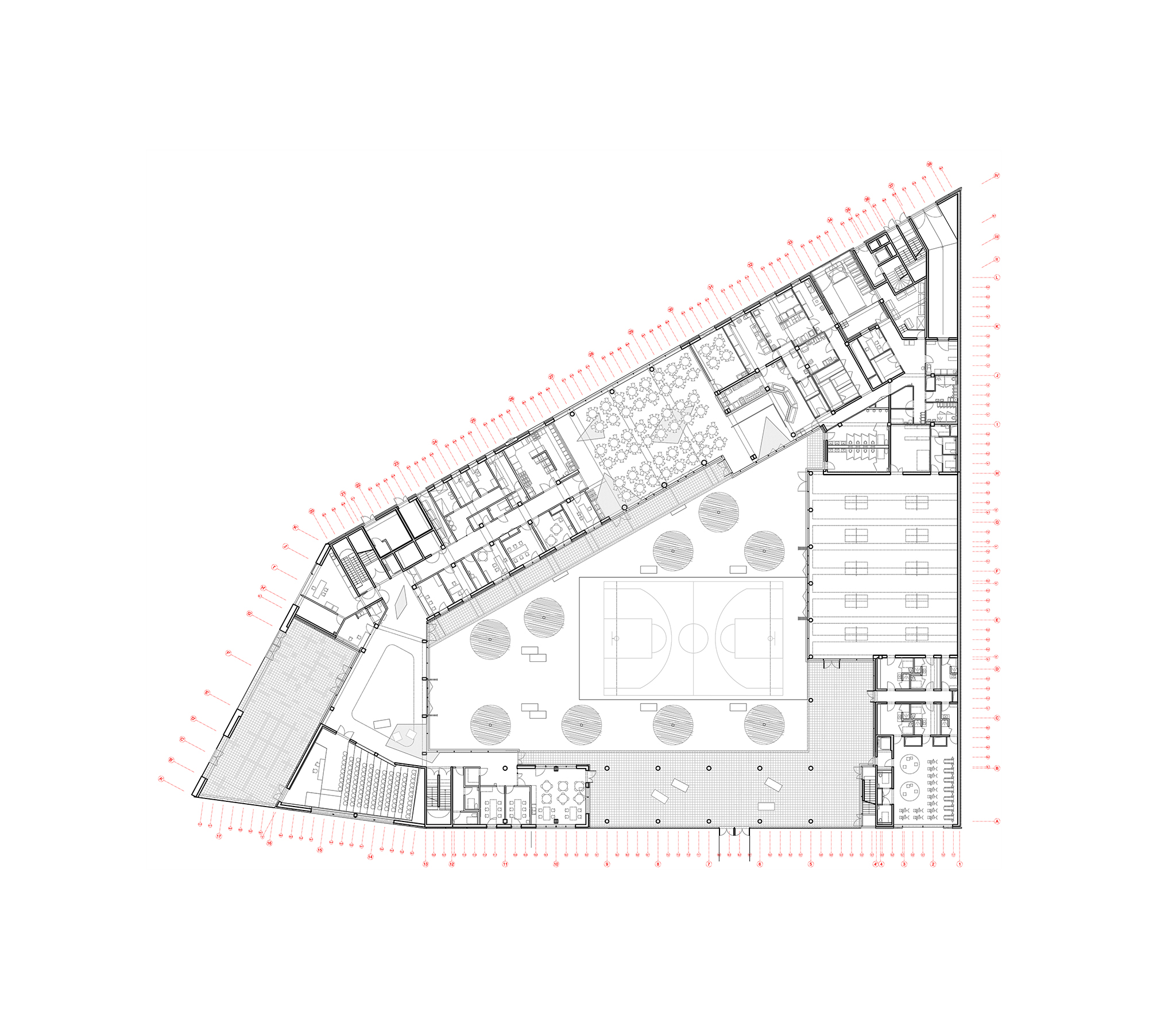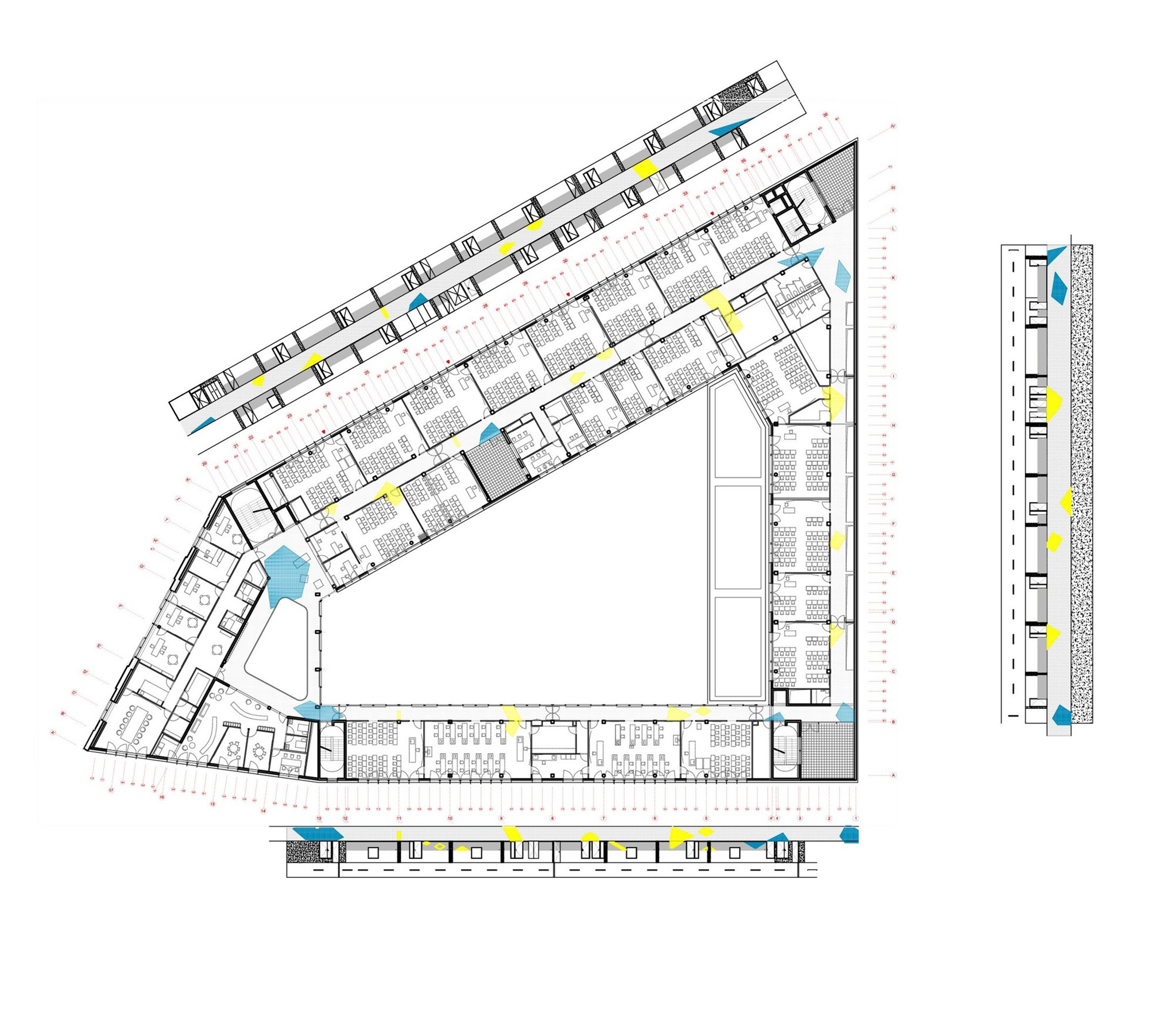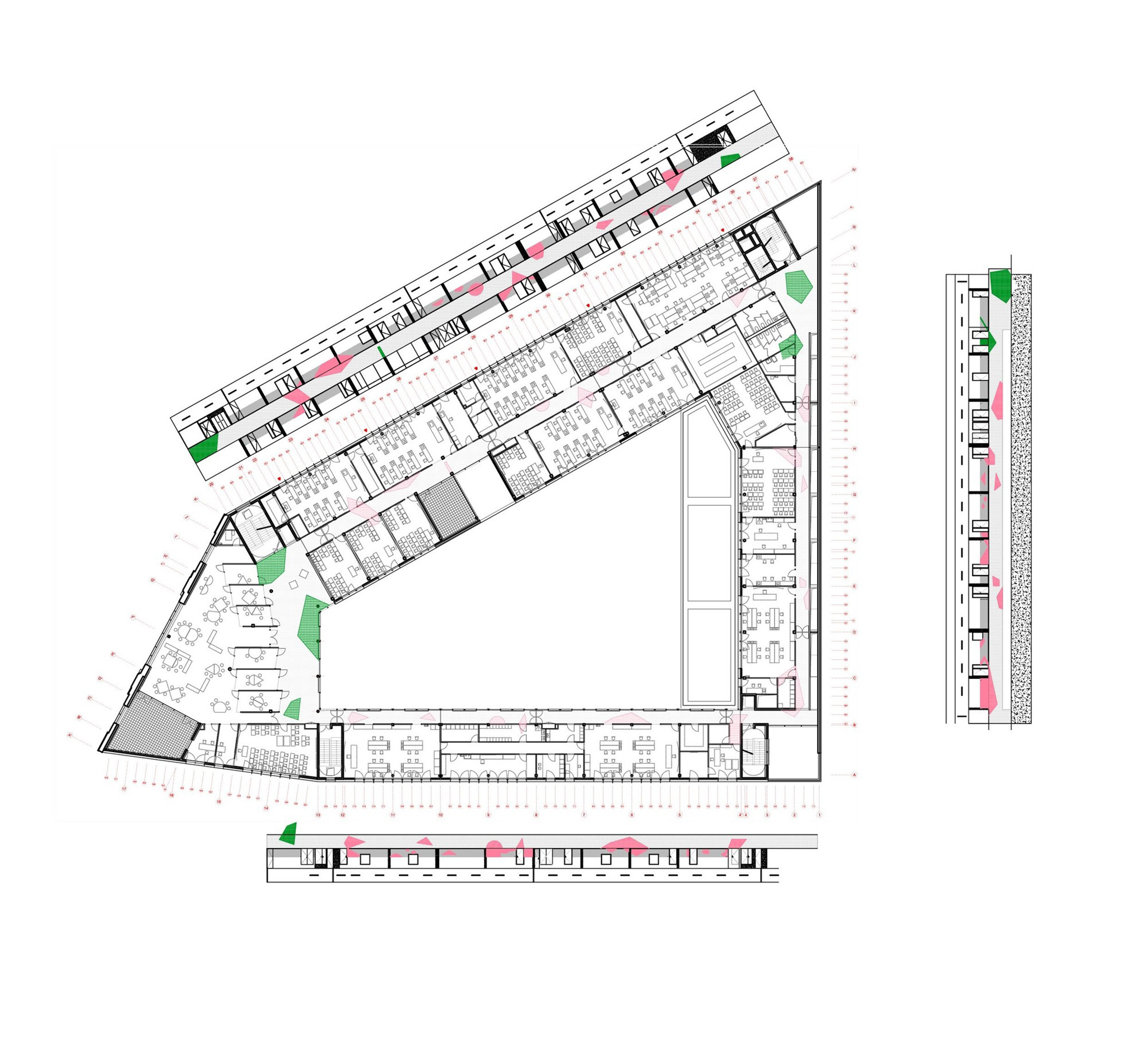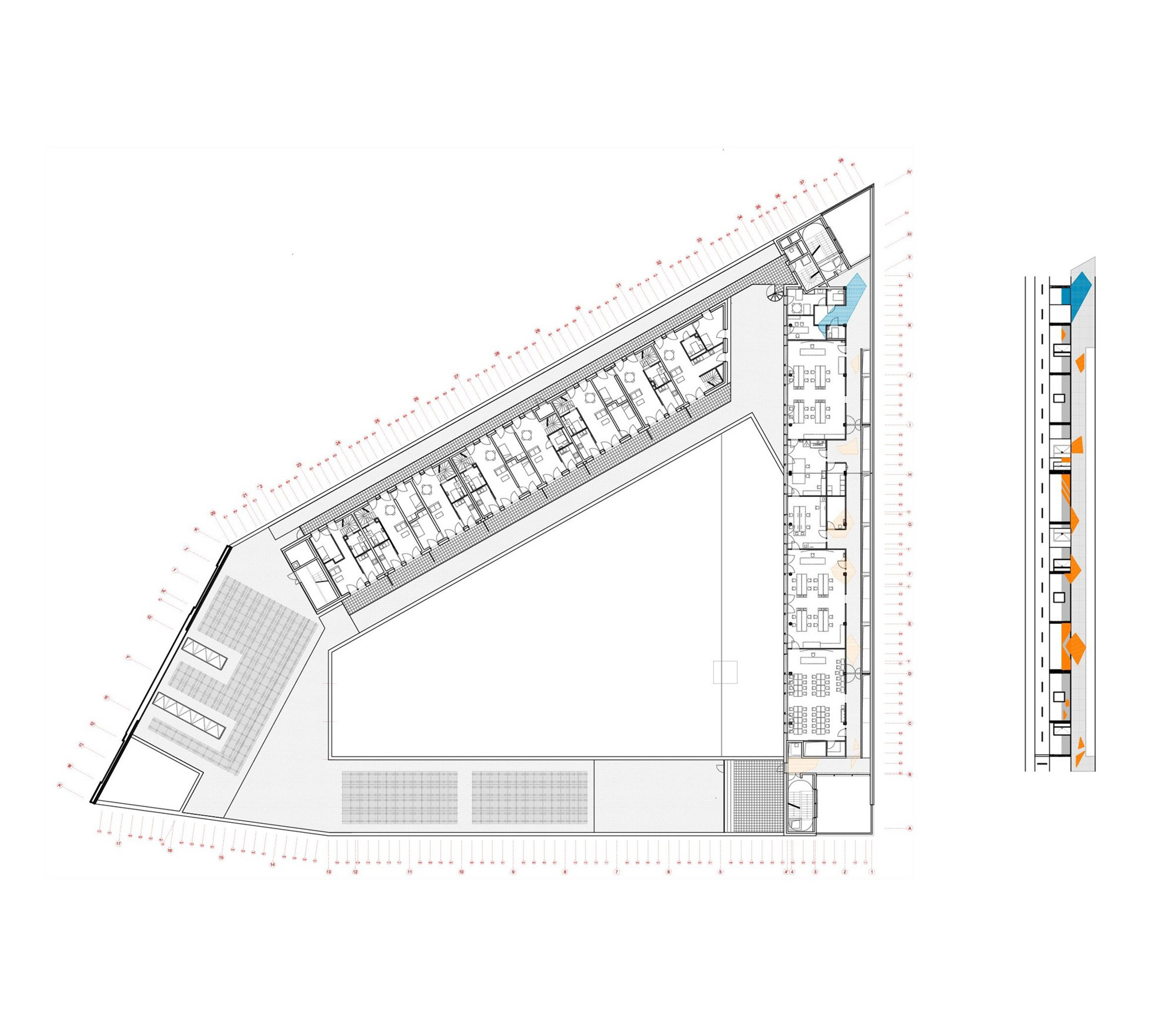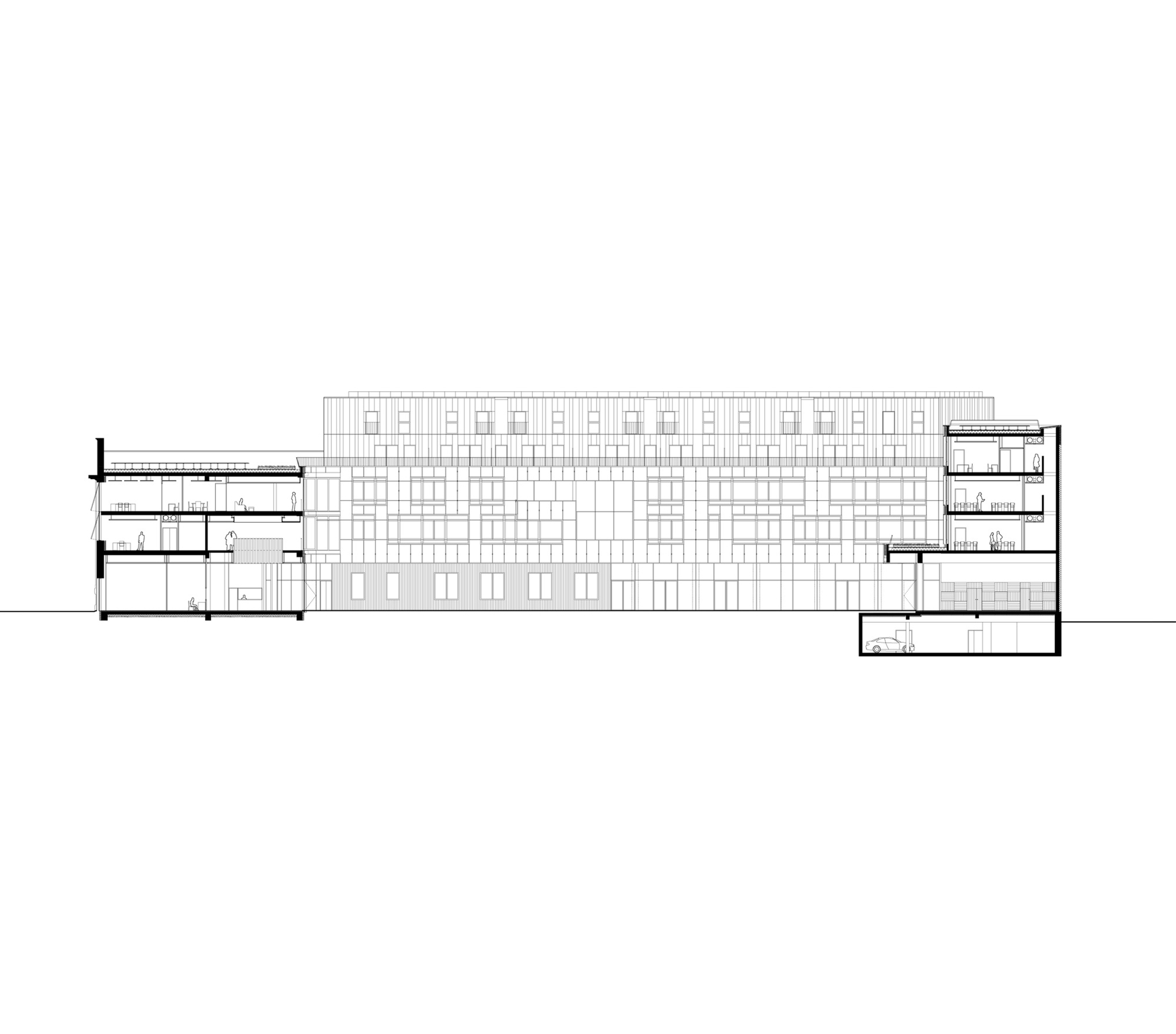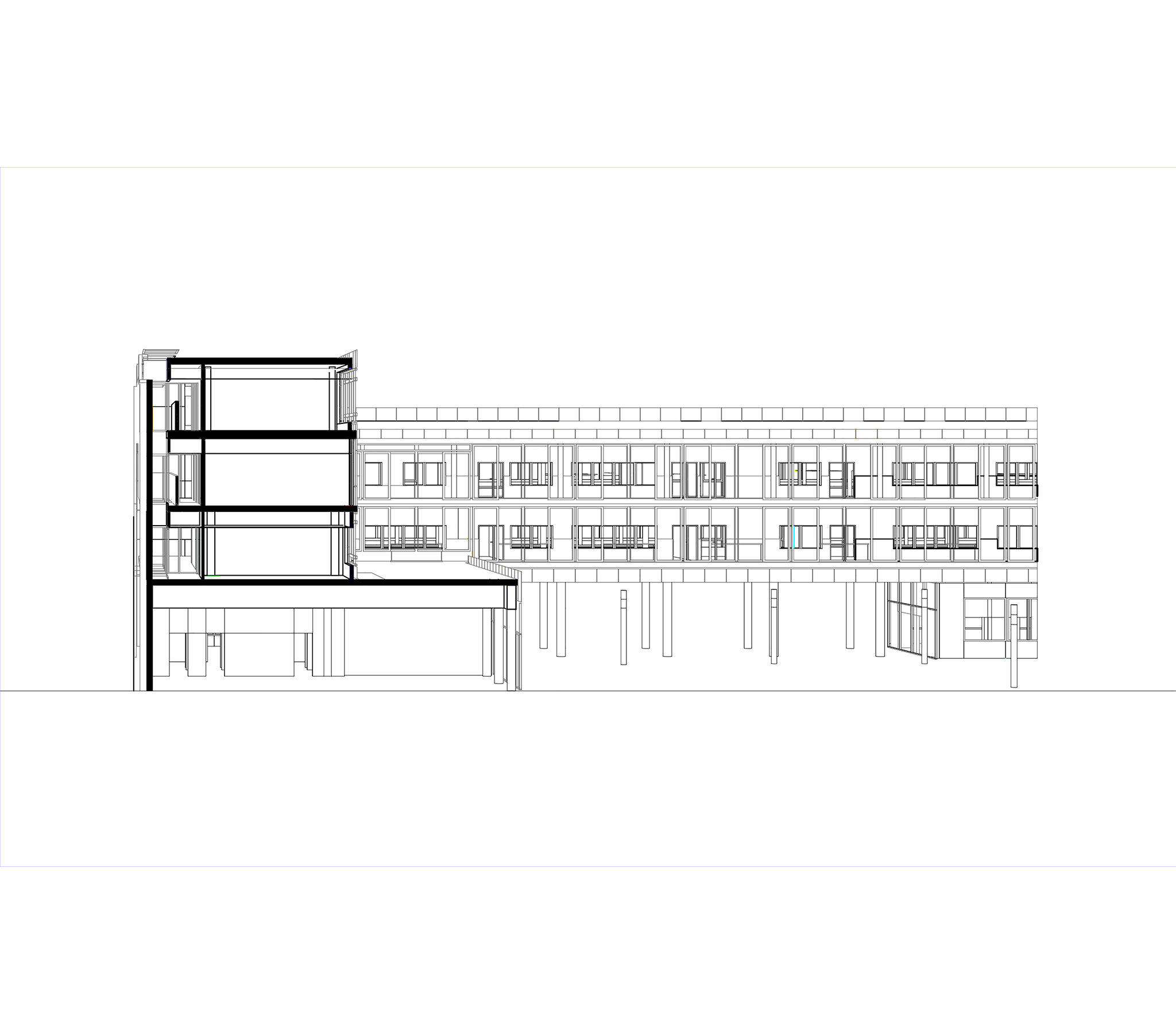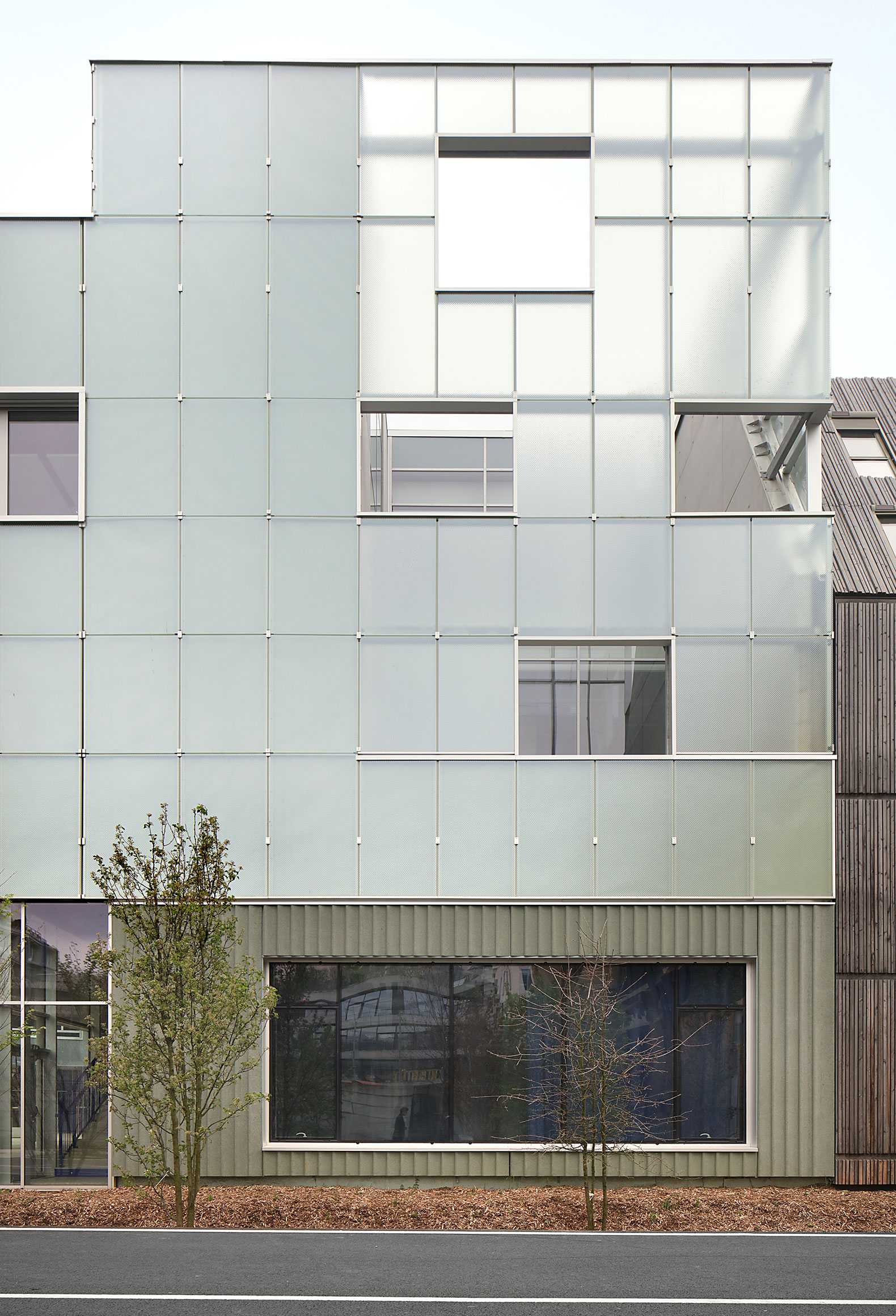
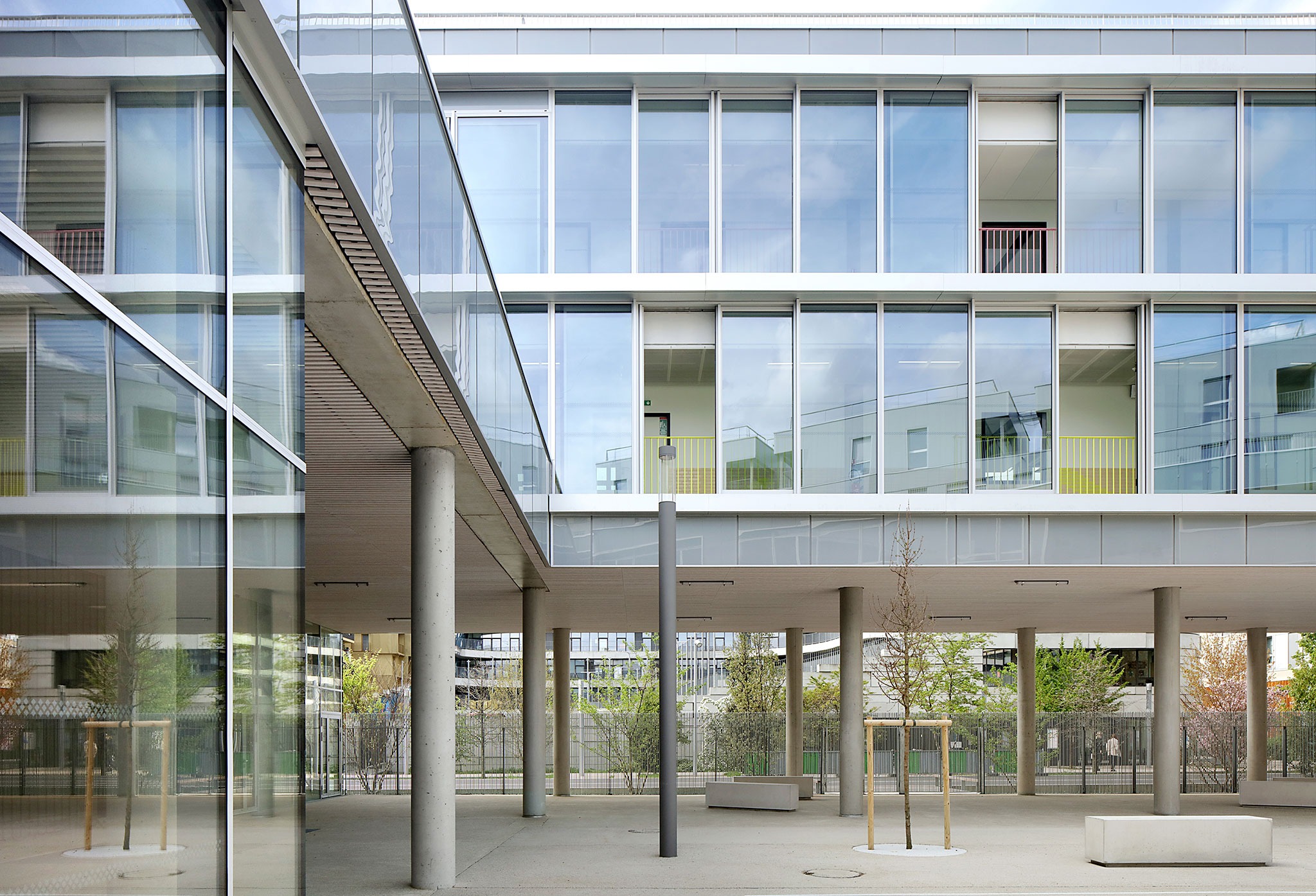
The Renault Experimental Campus, designed by Mikoü Architecture, remains open to the city through its ground floor, conceived as a fluid extension of the public space, and the building elevated on pilotis to create expansive openings onto the courtyard. A double-height lobby serves as a central space that articulates the building's functions, including spaces such as the auditorium, sports pavilions, common room, and restaurant.
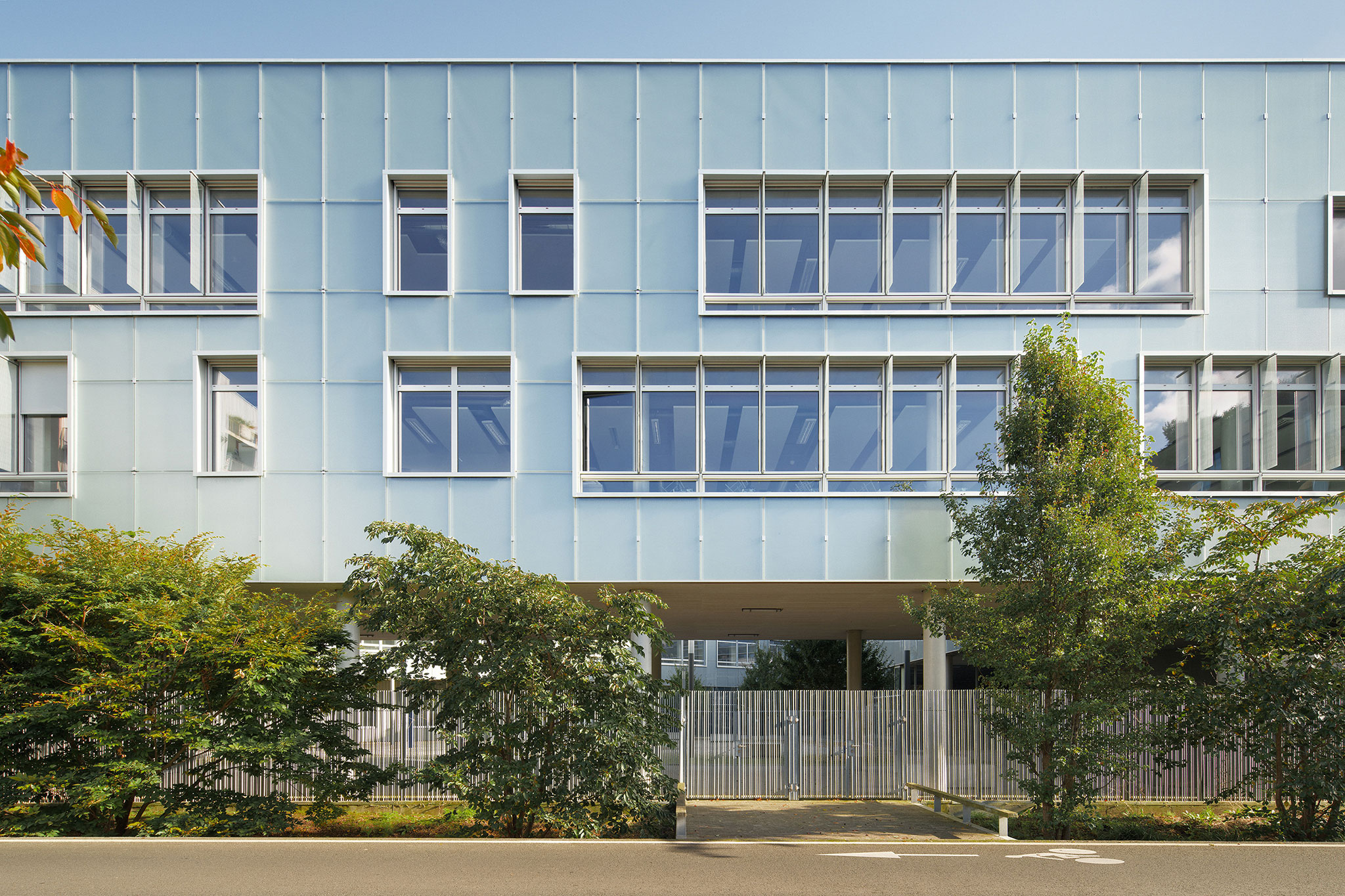
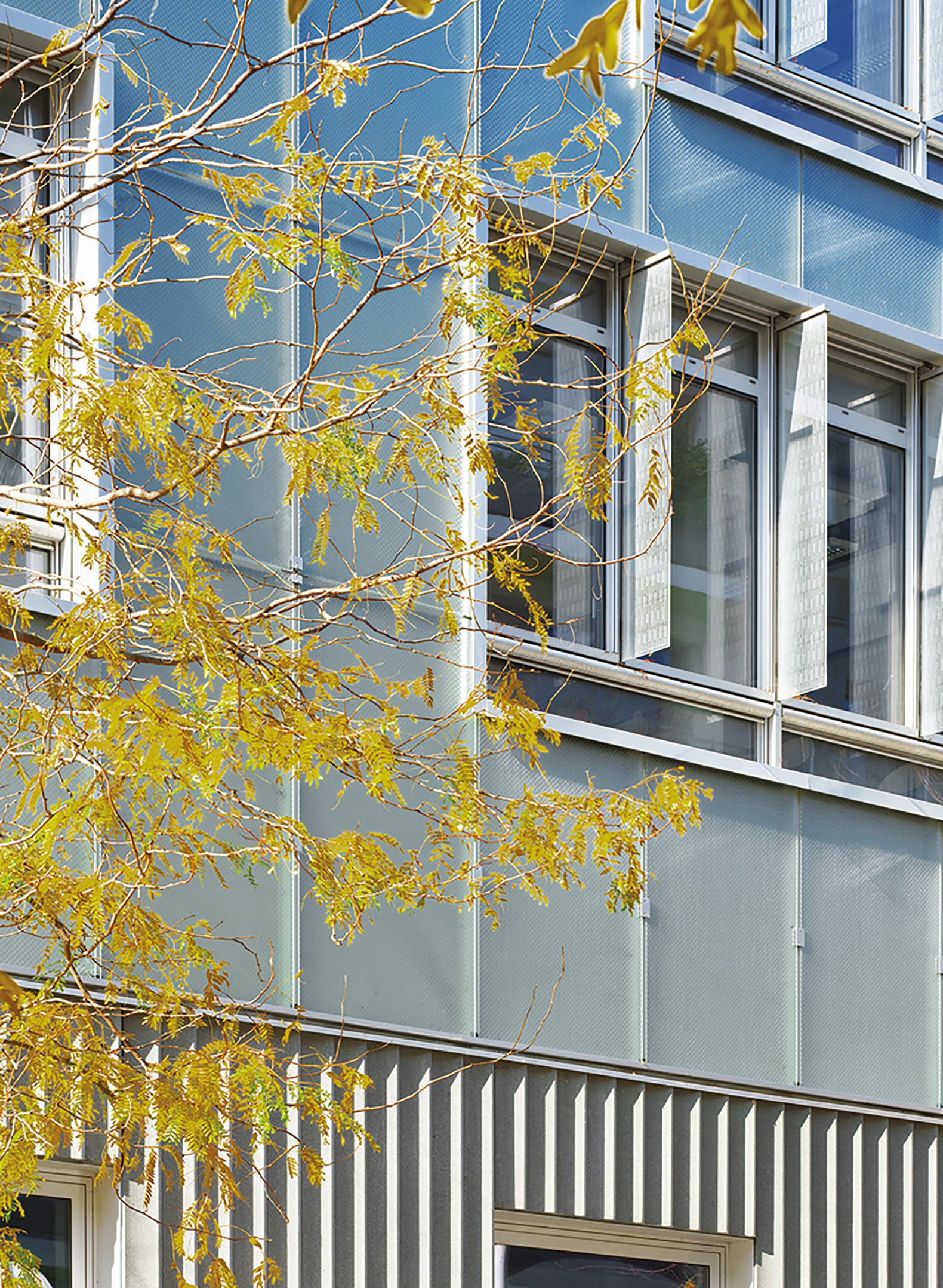
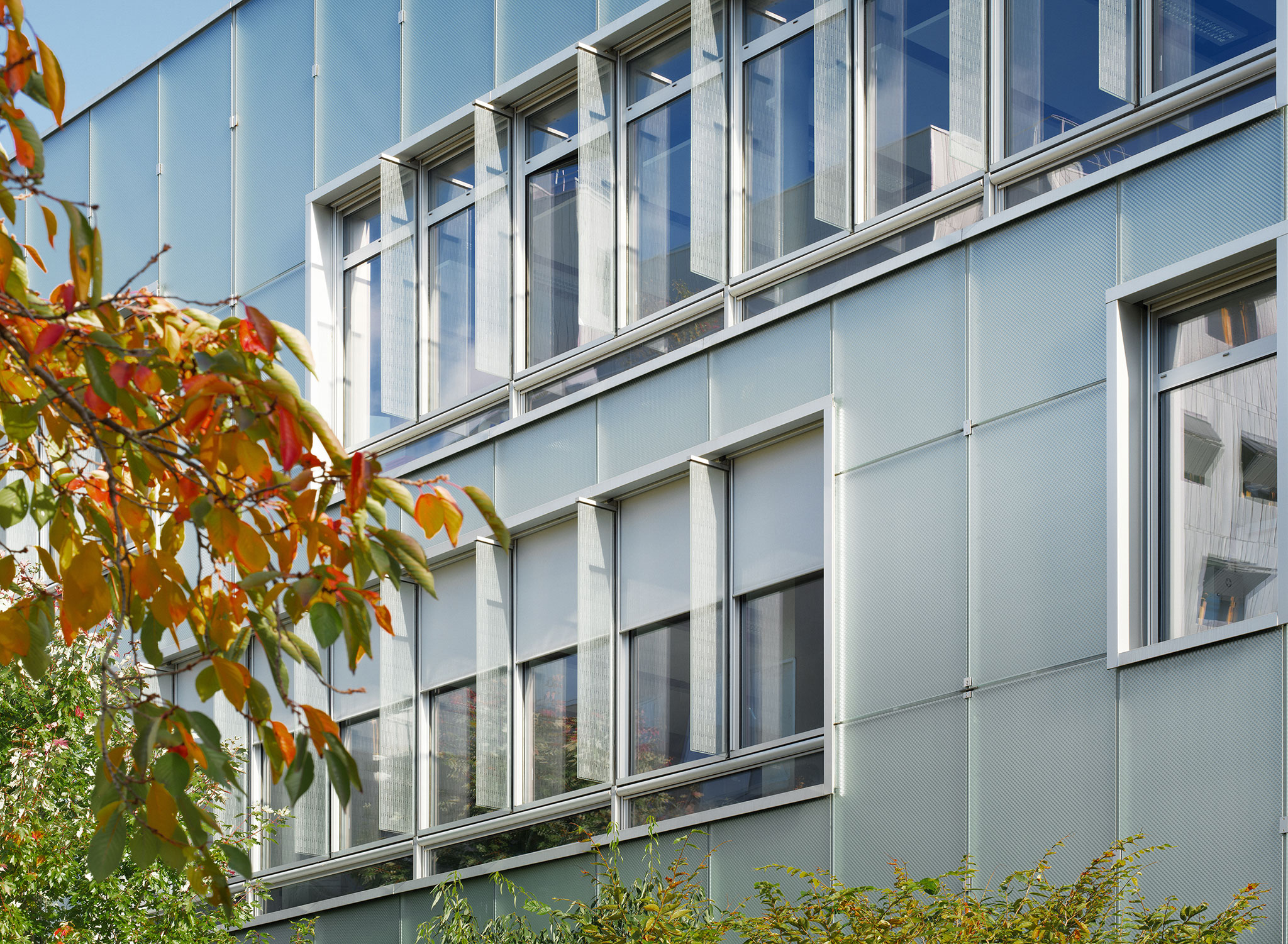
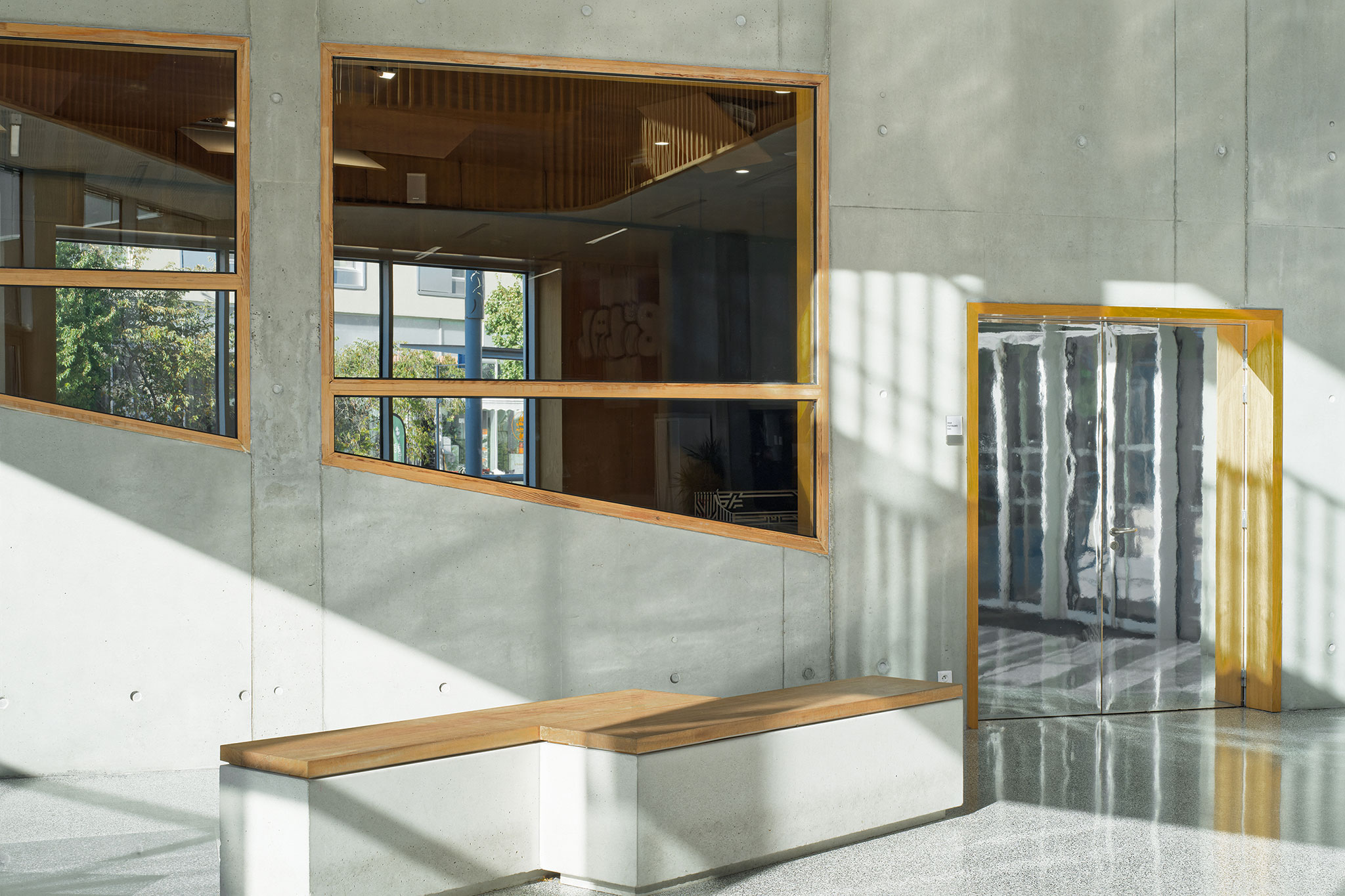
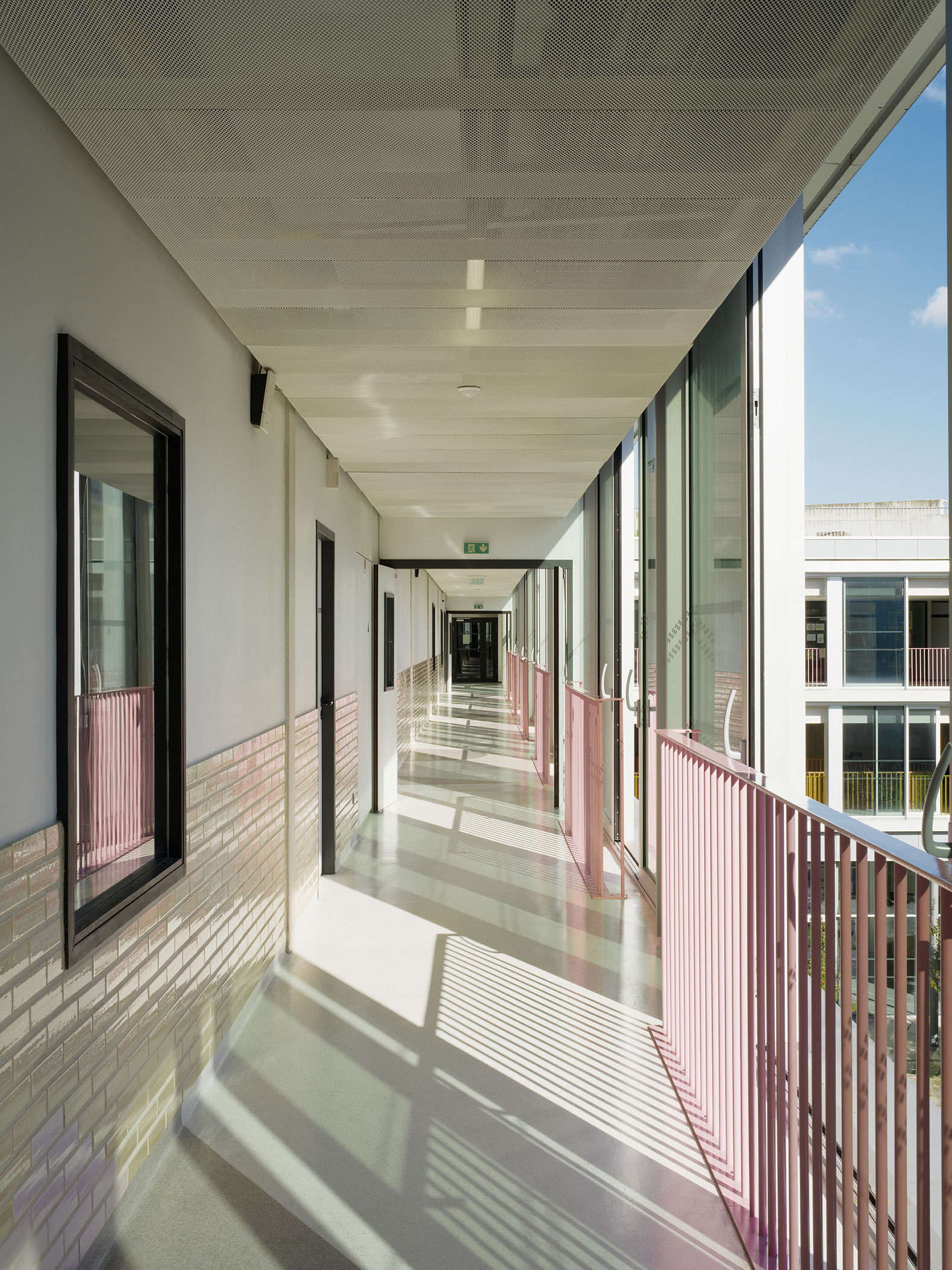
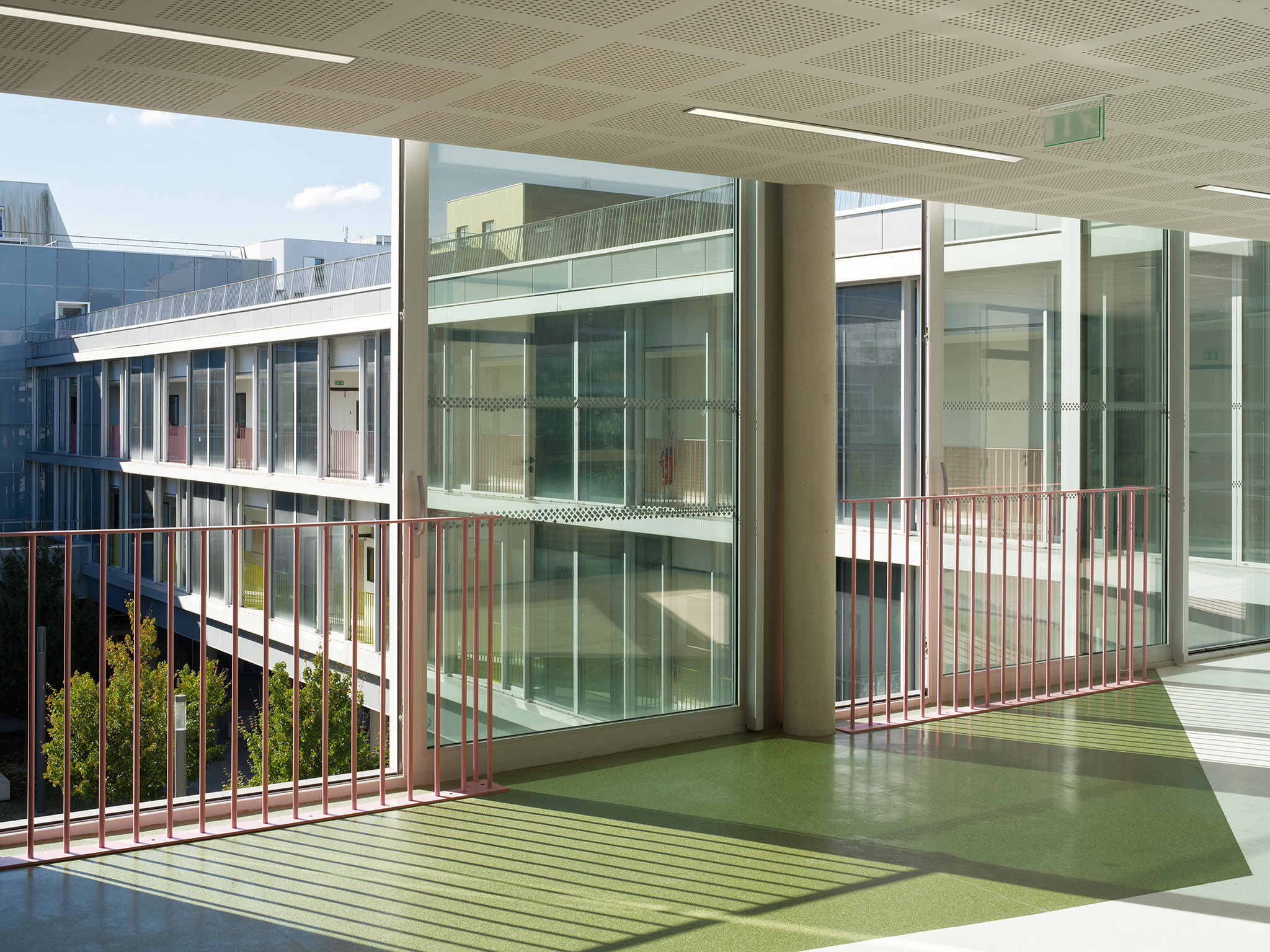
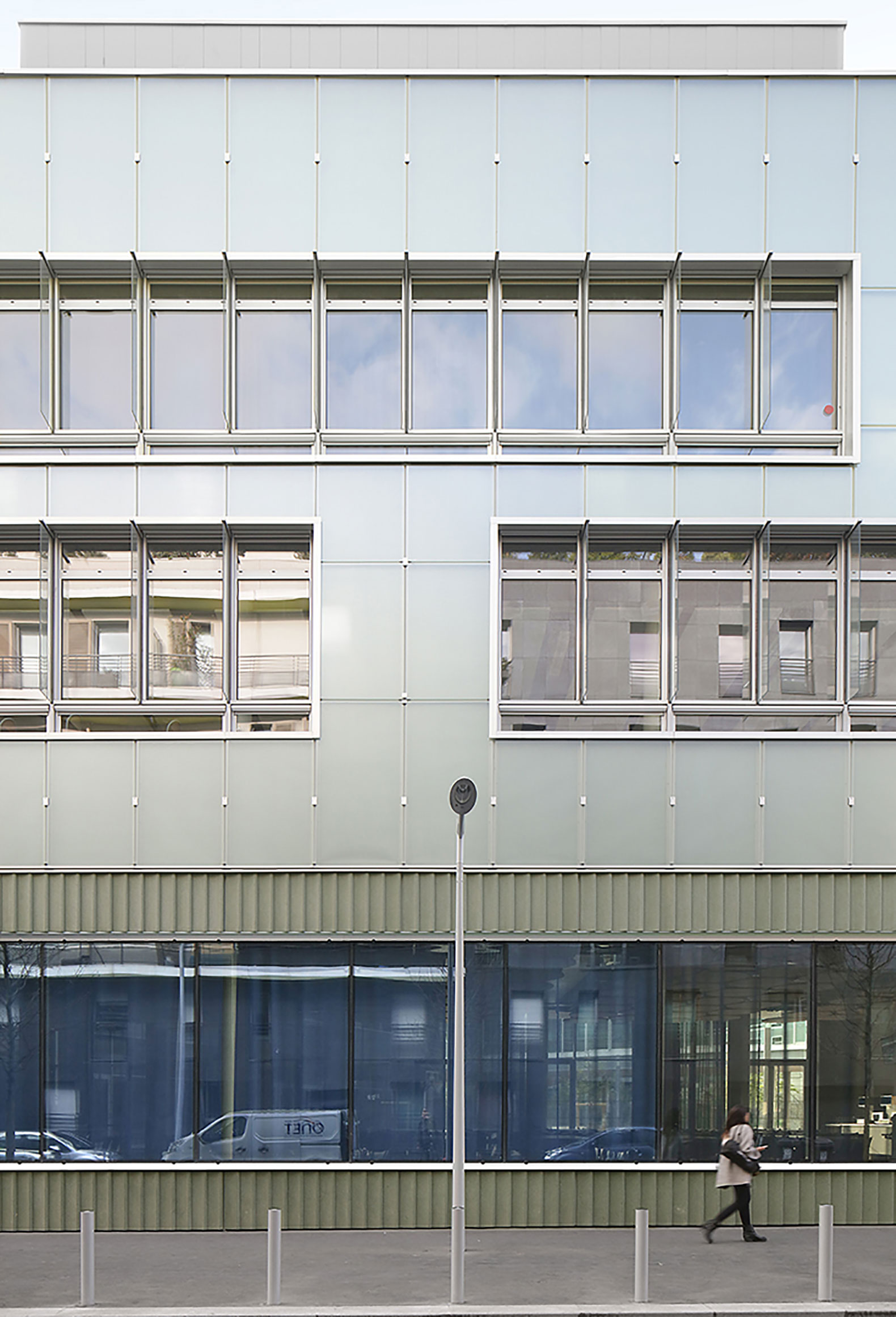
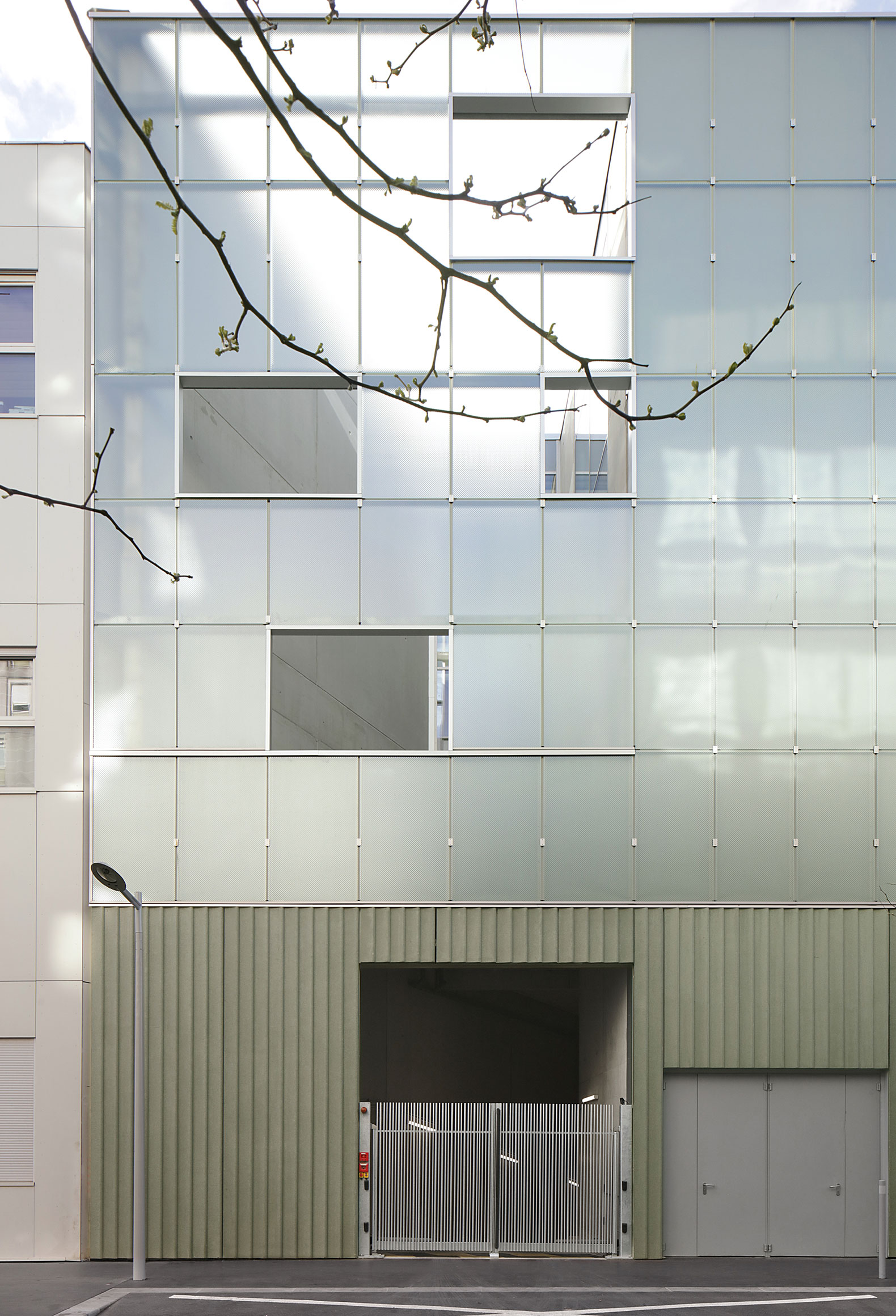
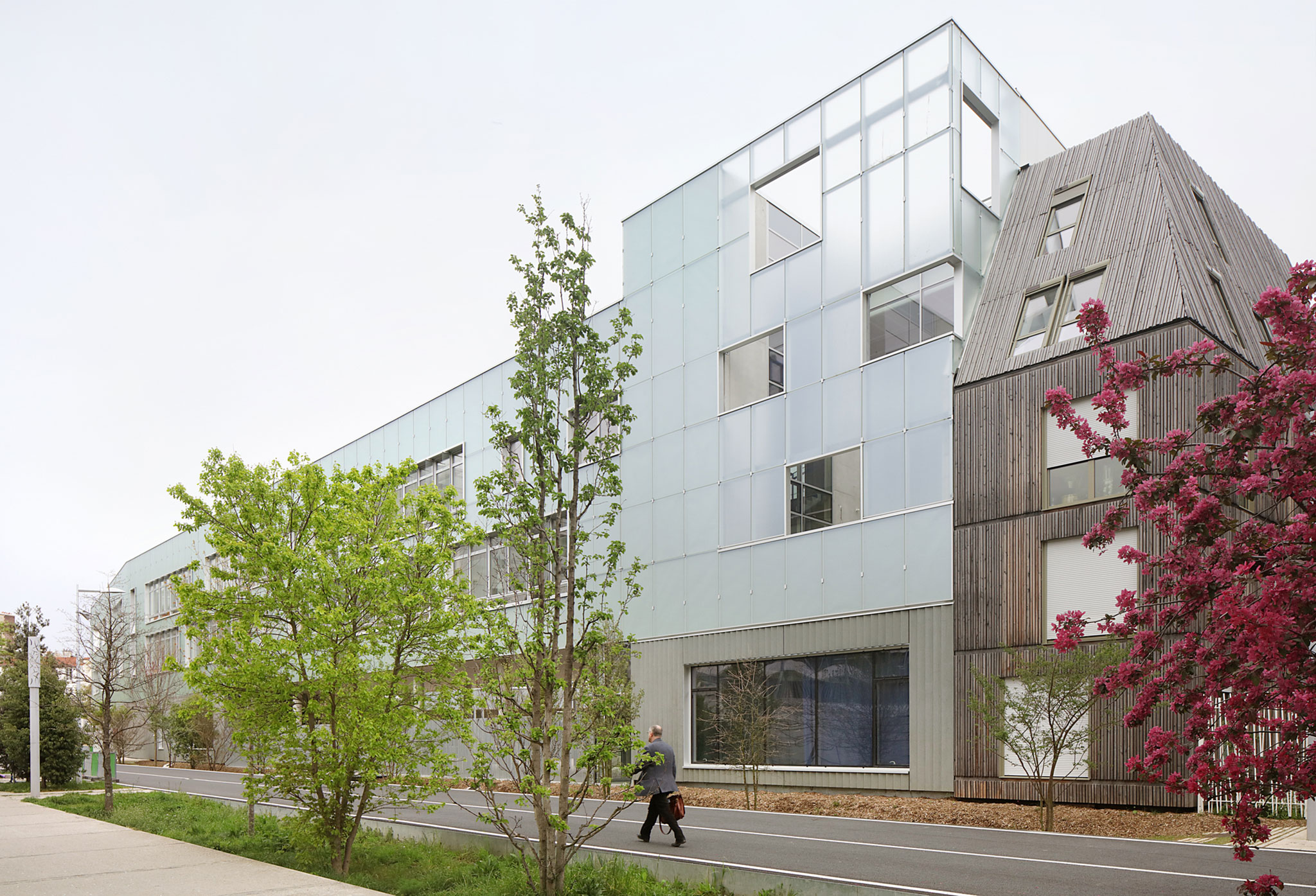
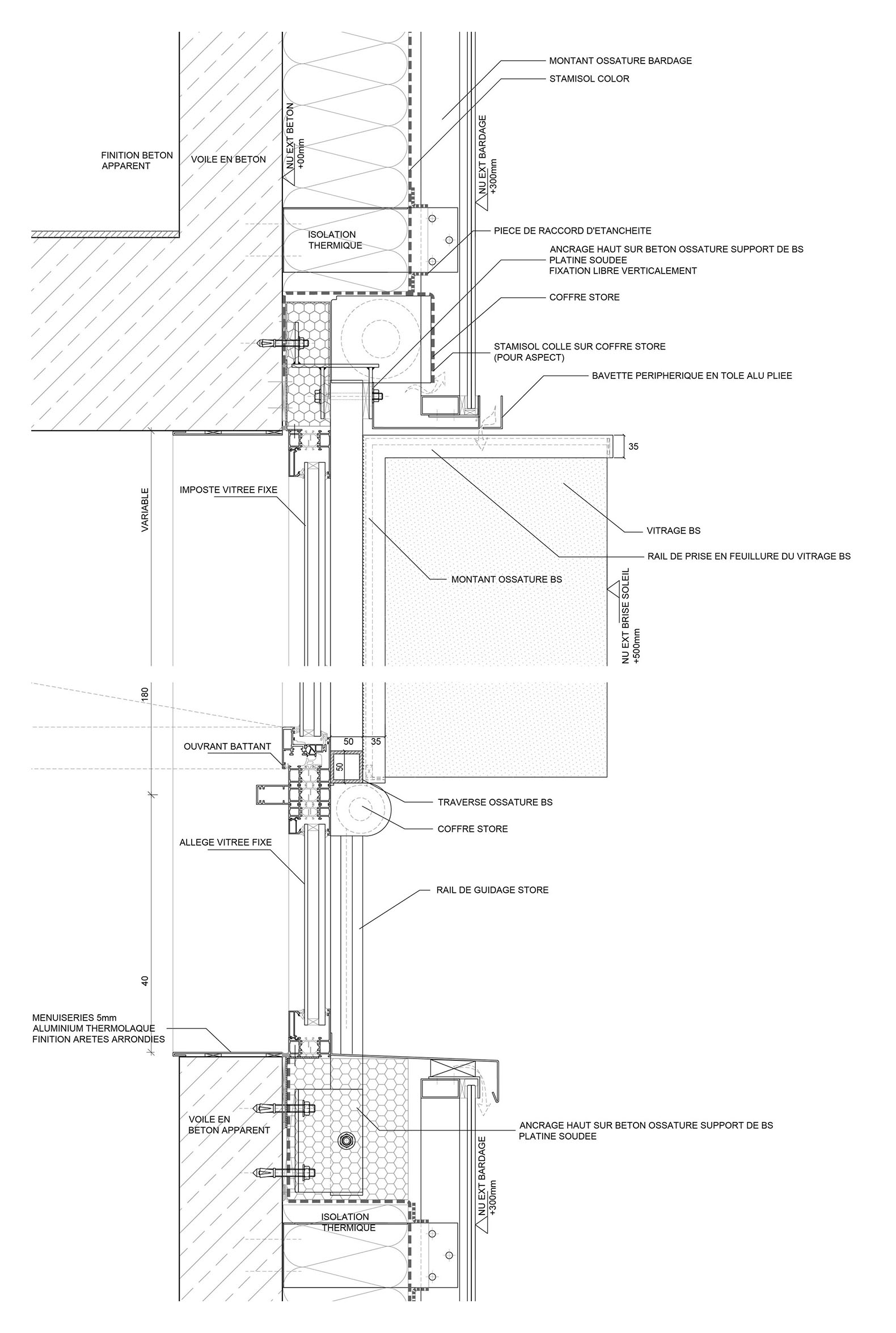
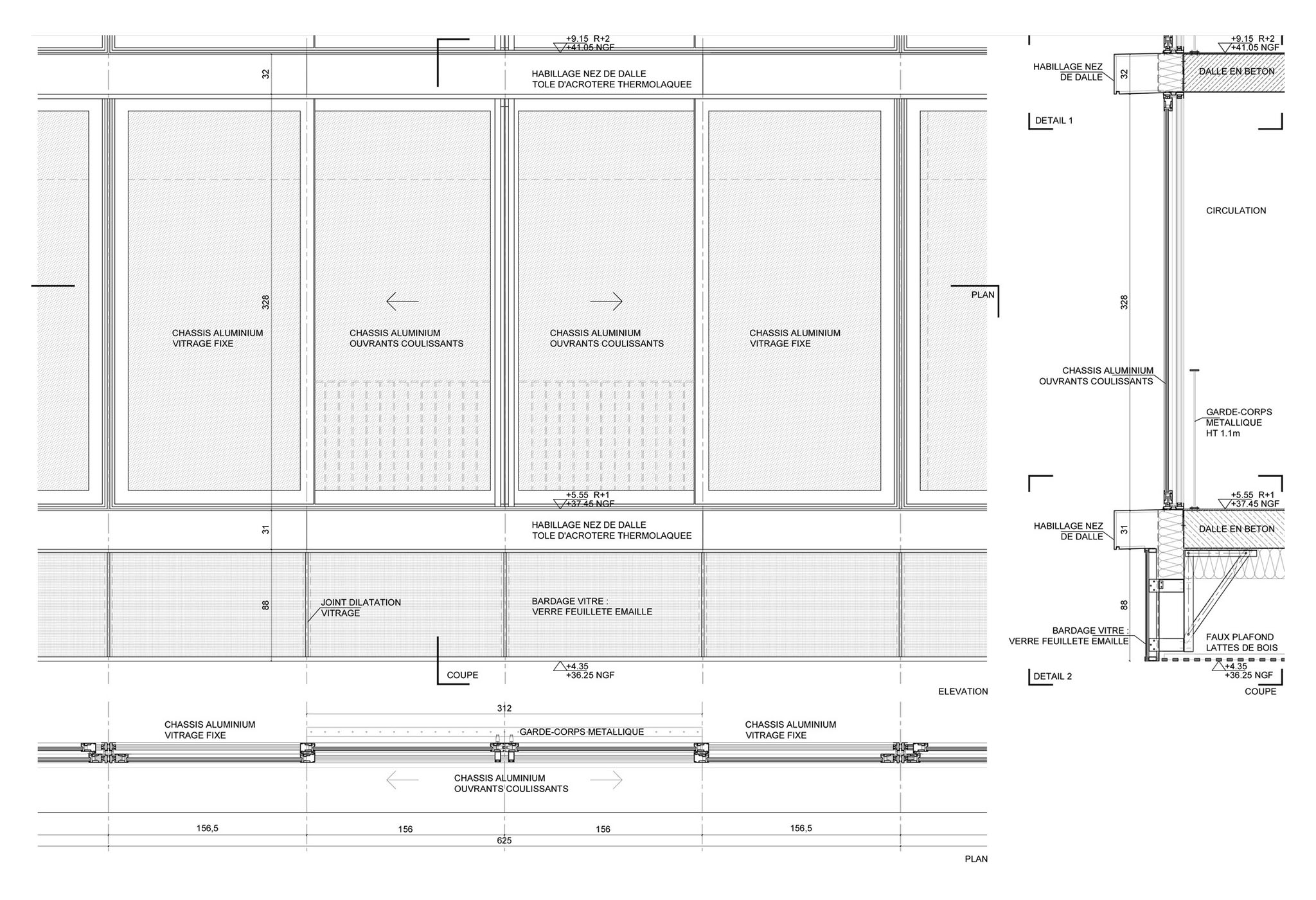
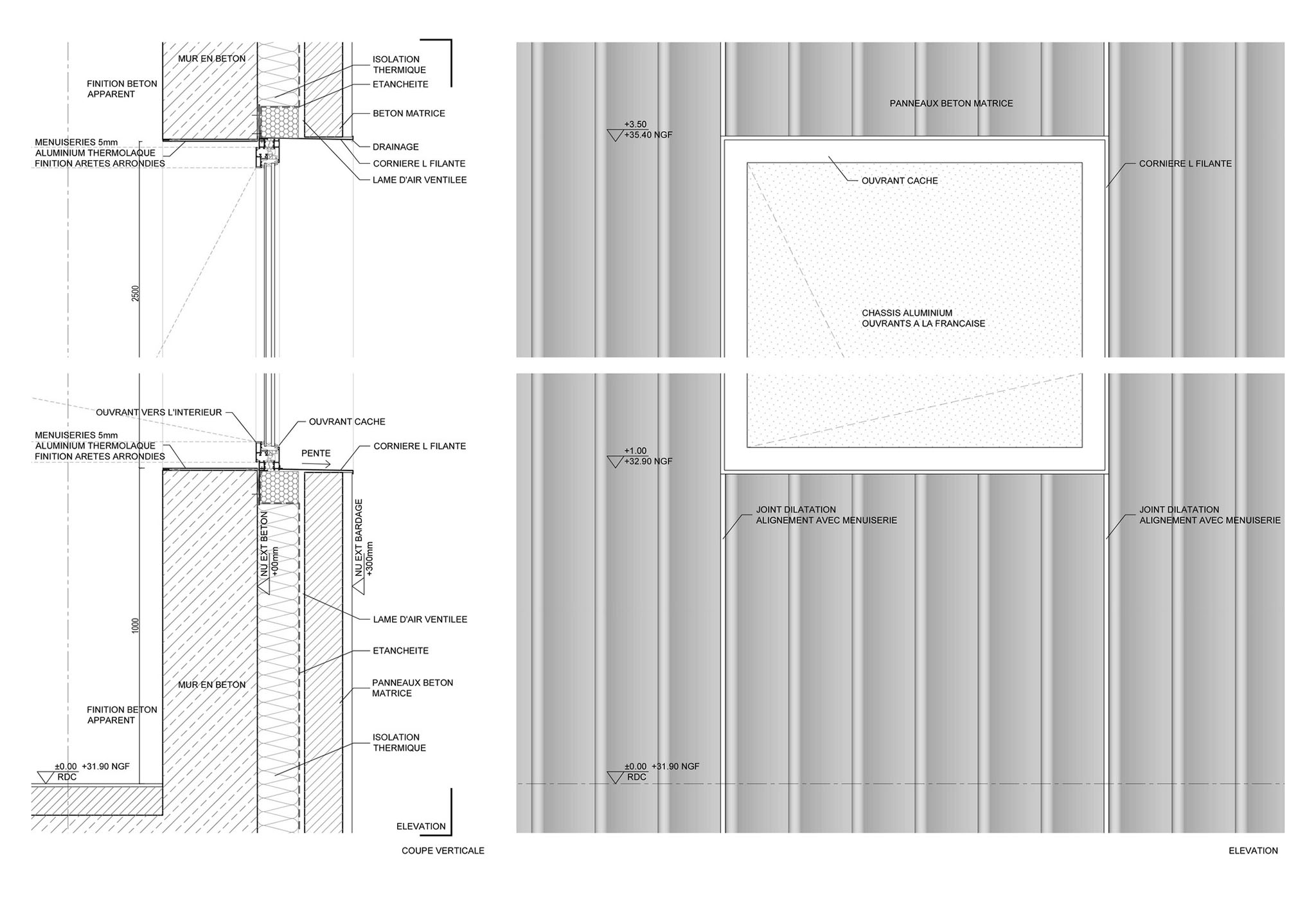
The facades are mostly glazed and clad with printed or enameled glass panels on a base of pleated precast concrete. Inside, the gray concrete spaces interact with warm materials such as wood, brightly colored glazed bricks, translucent fabric curtains, quartz marble terrazzo flooring, African wood paneling, and velvet finishes.
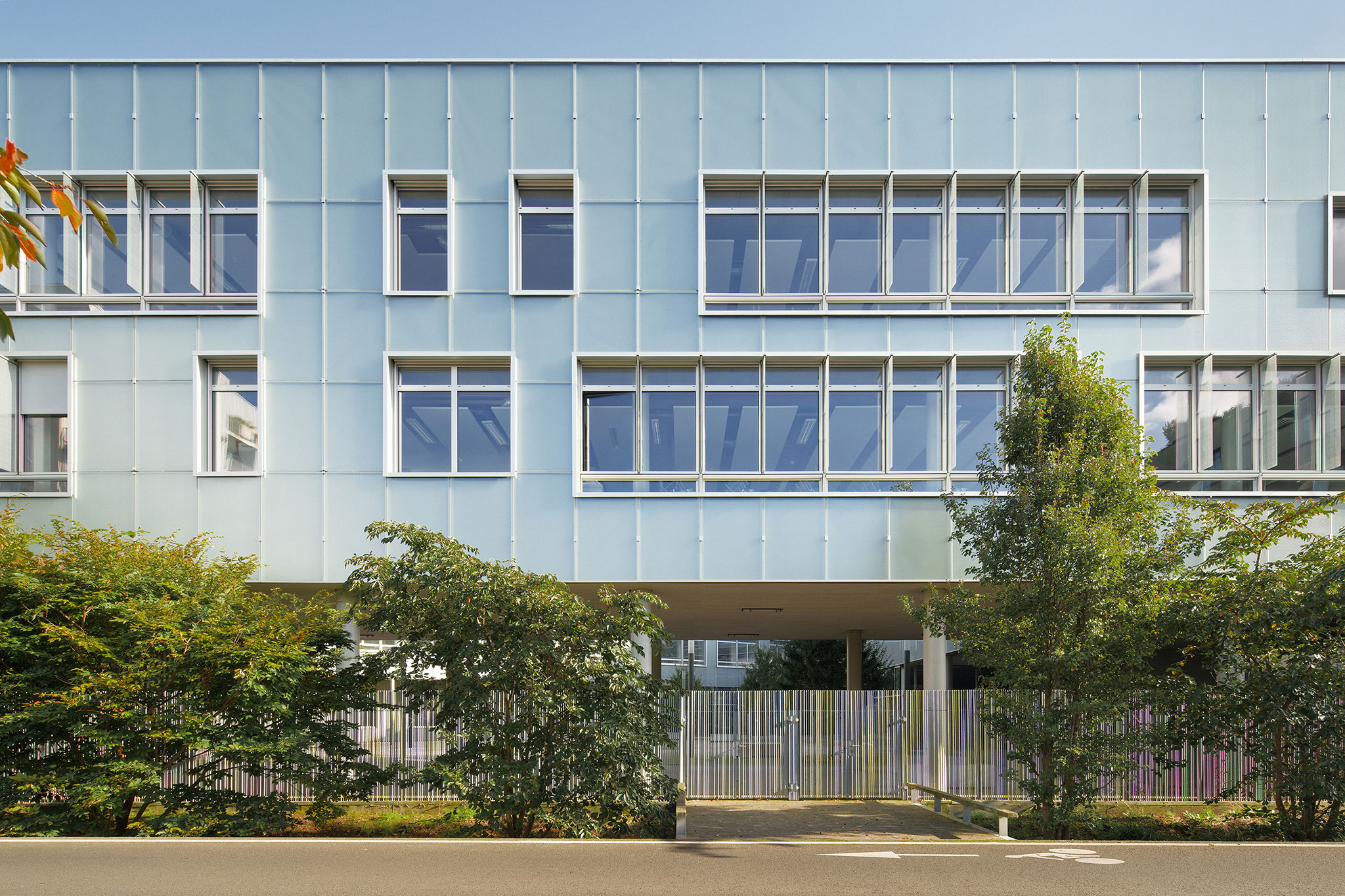
Renault Experimental Campus by Mikoü Architecture. Photograph by Filip Dujardin.
Project description by Mikoü Architecture
The Trapèze district in Boulogne-Billancourt stands as one of France’s first eco-districts. Situated along the Seine and offering vistas of the slopes of Sèvres and Meudon, it is a centerpiece of the ambitious Île Seguin–Rives de Seine redevelopment project on the Billancourt bank. Conceived as an inclusive “park city,” the district prioritizes landscaped environments, biodiversity, pedestrian pathways that ensure accessibility across all blocks, and a design ethos that fosters community engagement and urban transparency.
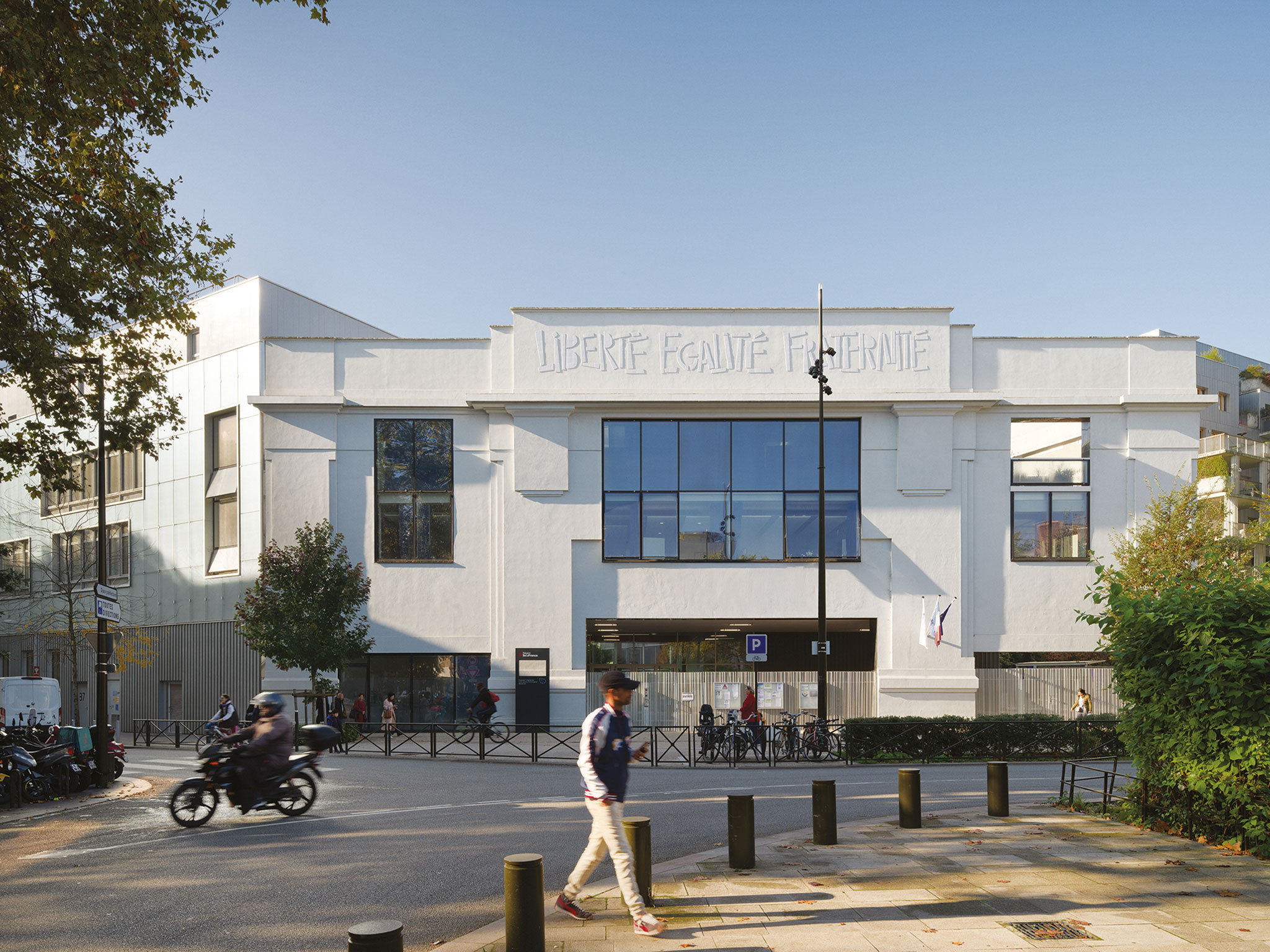
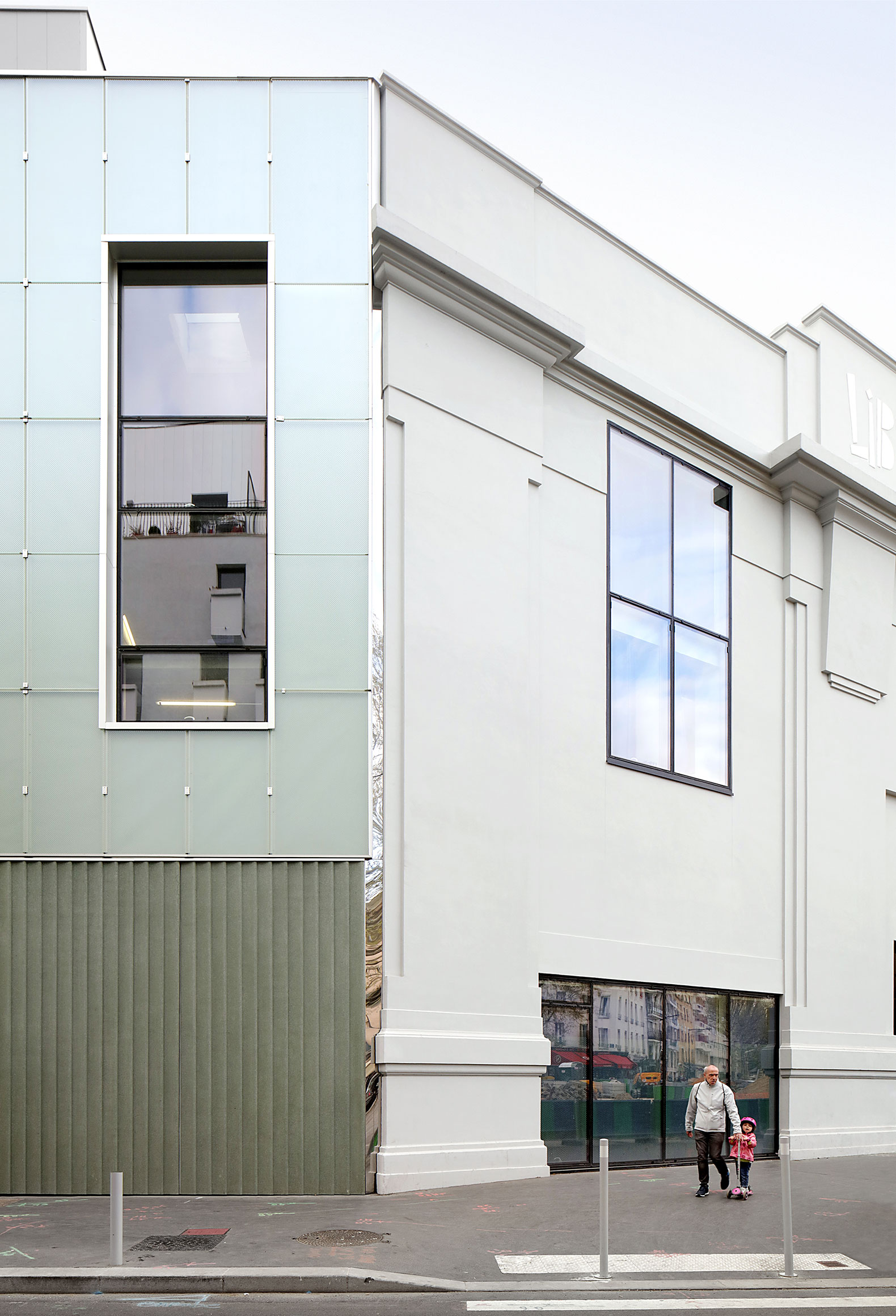
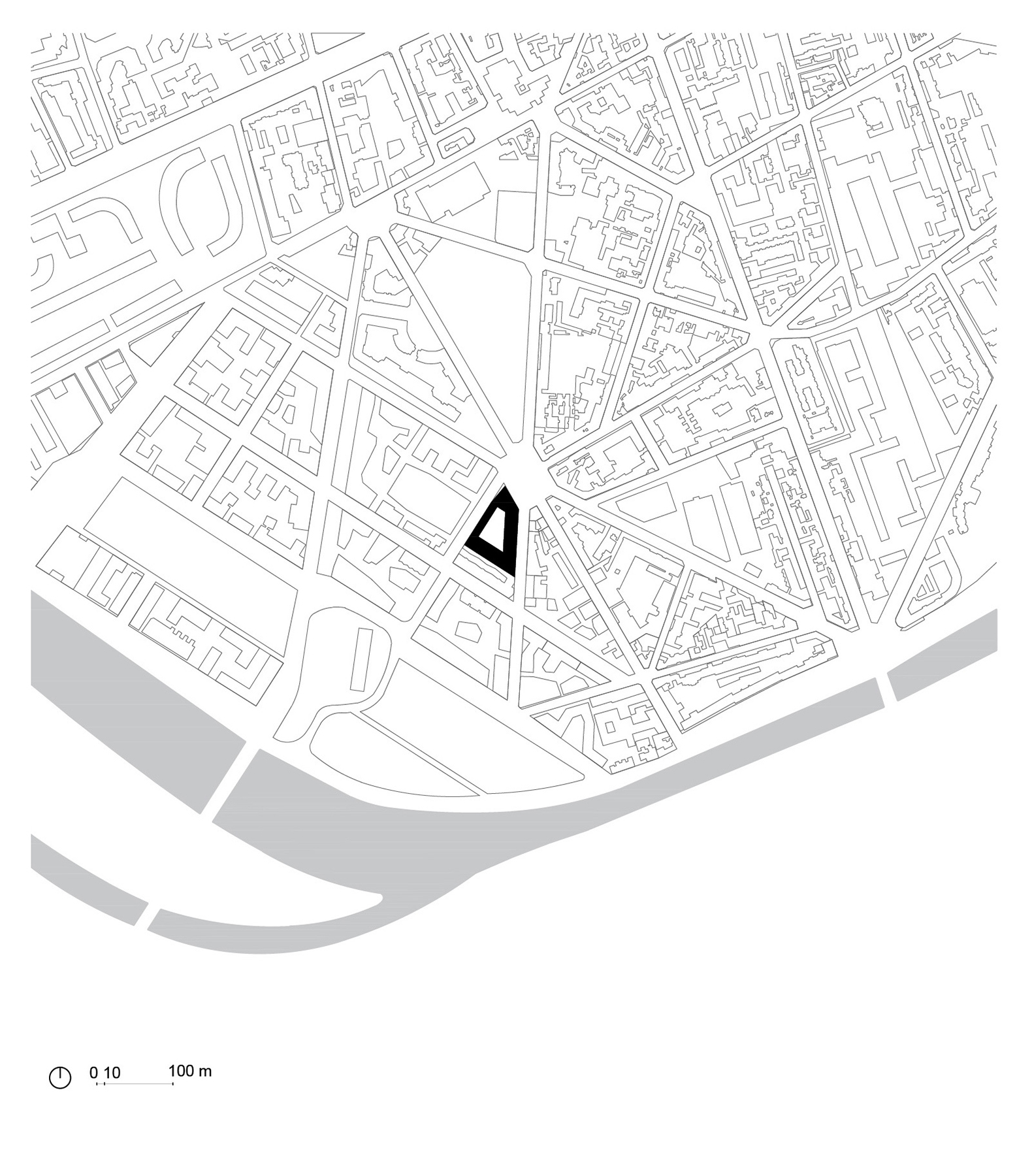
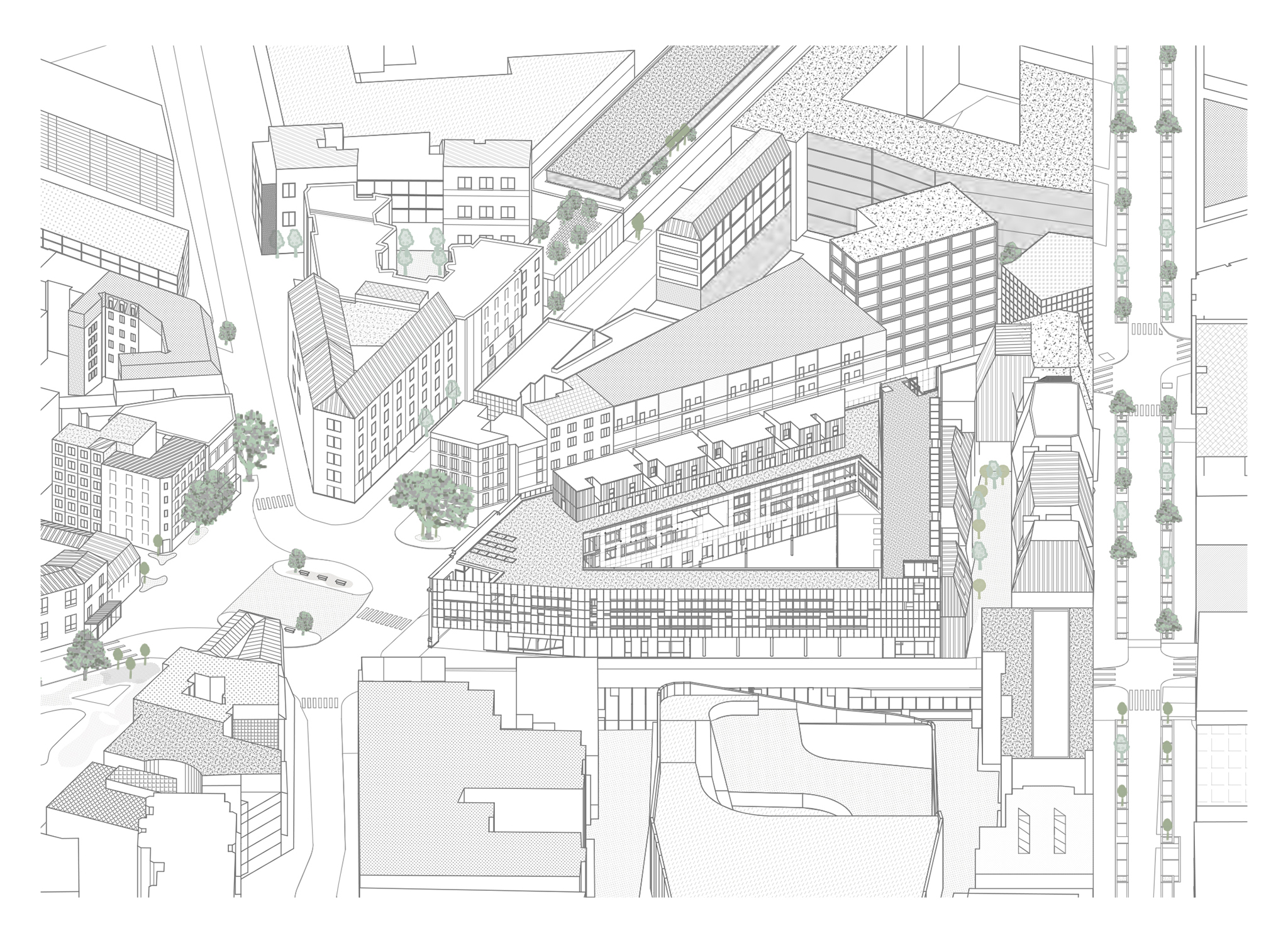
The Simone Veil experimental campus, located near Île Seguin with its ambitious cultural vision, serves as both an academic and research hub and a cultural venue open to the residents of Boulogne. It includes an auditorium, multipurpose spaces, and a shared community center. Positioned on a triangular plot at the historic Place Jules Guesde, the campus sits at the crossroads of Rue de Meudon and the tree-lined Traverse Plantée, creating a seamless connection between Boulogne-Billancourt’s historic core and the new district developed on the site of the former Renault factory. The campus plays a dual role: it ensures a smooth physical and urban transition between Boulogne’s industrial past and its modern present, while symbolically representing the shift from a world of manufacturing to one of education and technological innovation. At its heart is the Renault Fronton, a preserved remnant of the former factory.
This historical element has been fully integrated into the new building, subtly reimagined, and now anchors the campus to its site. It features the Republic’s motto, newly inscribed by artist Benoît Van Innis.
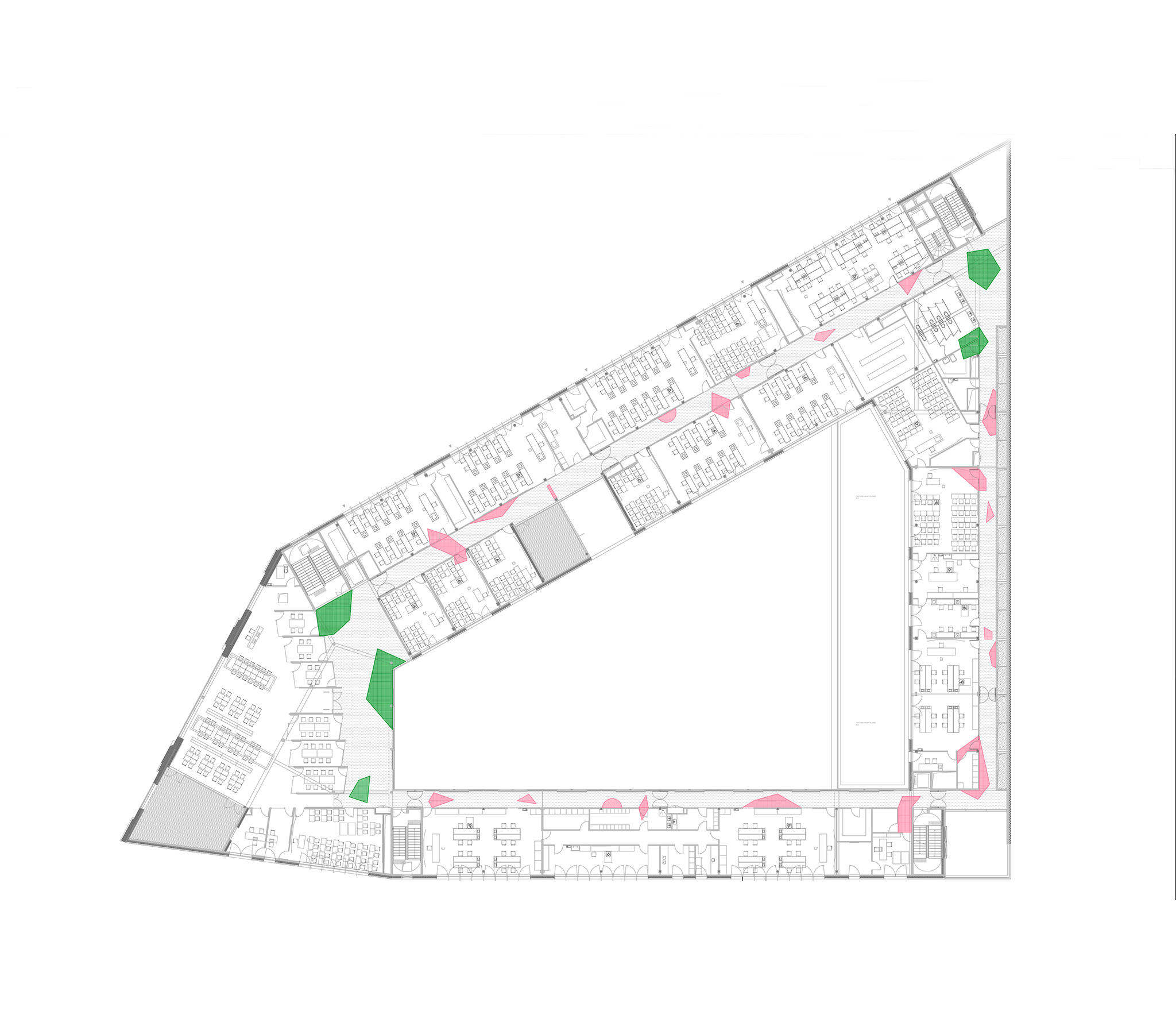
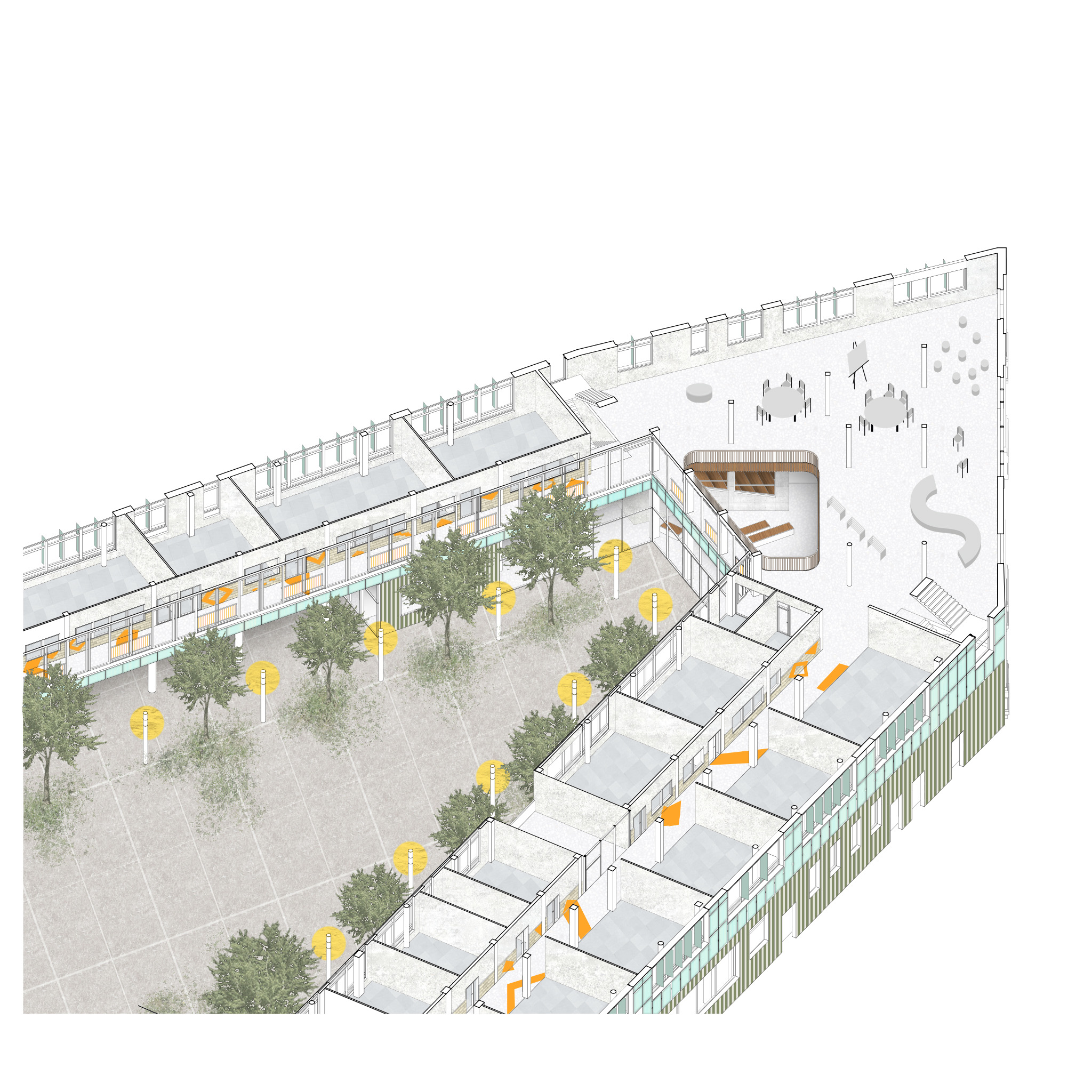
Our design approach reimagines the campus as a dynamic and interconnected space, creating direct and visual links to the surrounding streets, the inner courtyard, and Place Jules Guesde. The ground floor has been designed with versatility and adaptability in mind, ensuring the campus remains open to the city and inviting to Boulogne residents outside of student activities. The project is guided by three fundamental principles: transparency, permeability, and natural light.
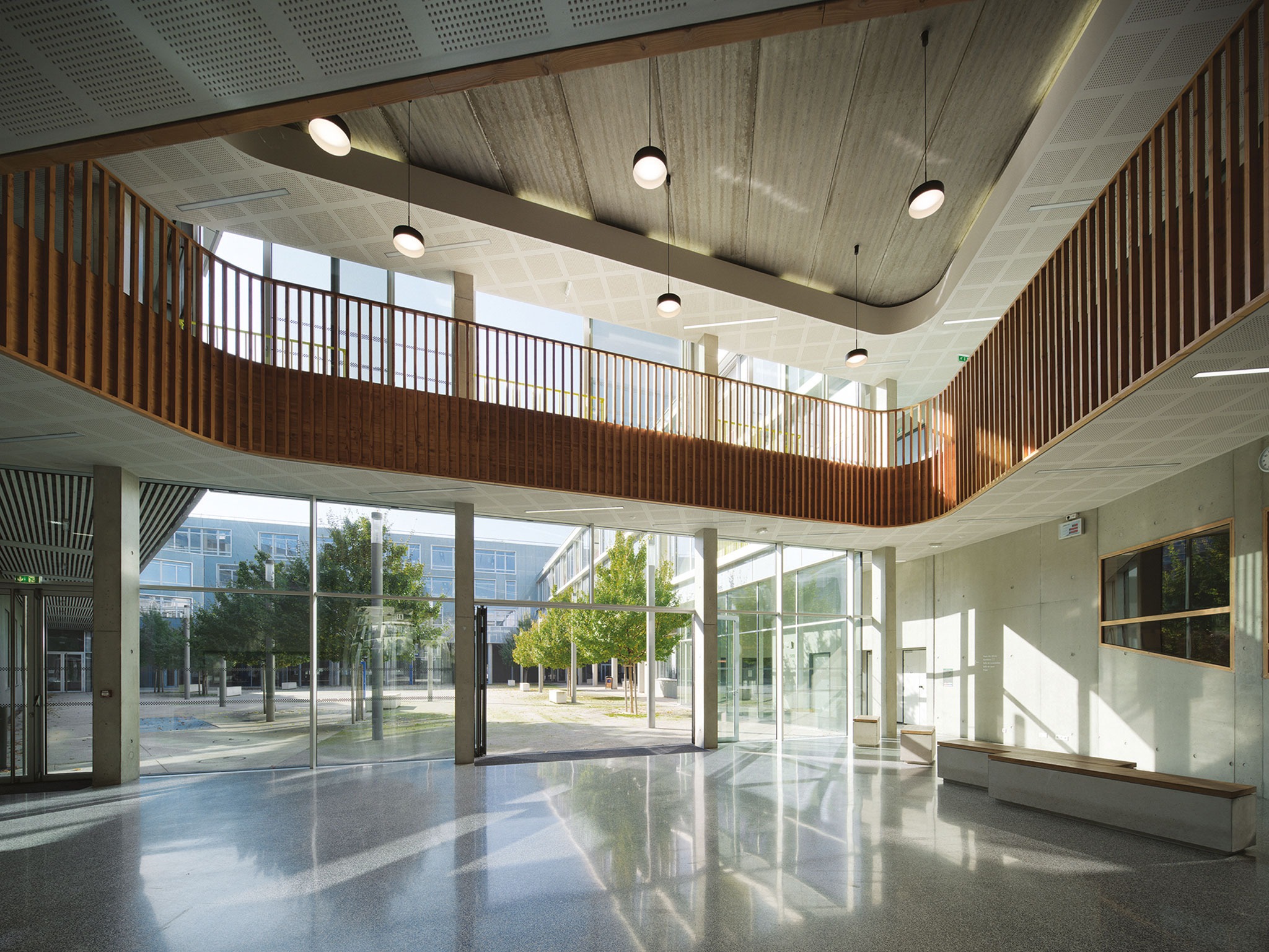
The ground floor is designed as a seamless extension of the public space, with the building elevated on pilotis to create expansive openings toward the courtyard. This configuration fosters shared, interactive spaces that enhance the urban dimension of the facility. Key programmatic elements such as the auditorium, sports halls, communal lounge, and restaurant activate and enliven the surrounding neighborhood. At the heart of the design, the double-height lobby functions as a pivotal space, articulating and connecting the building’s various functions. The architectural vocabulary allows for an abstract reading of the façades, which are mostly glazed and clad in printed or enamelled glass panels set on a pleated, prefabricated concrete base, offering a refined and cohesive aesthetic.
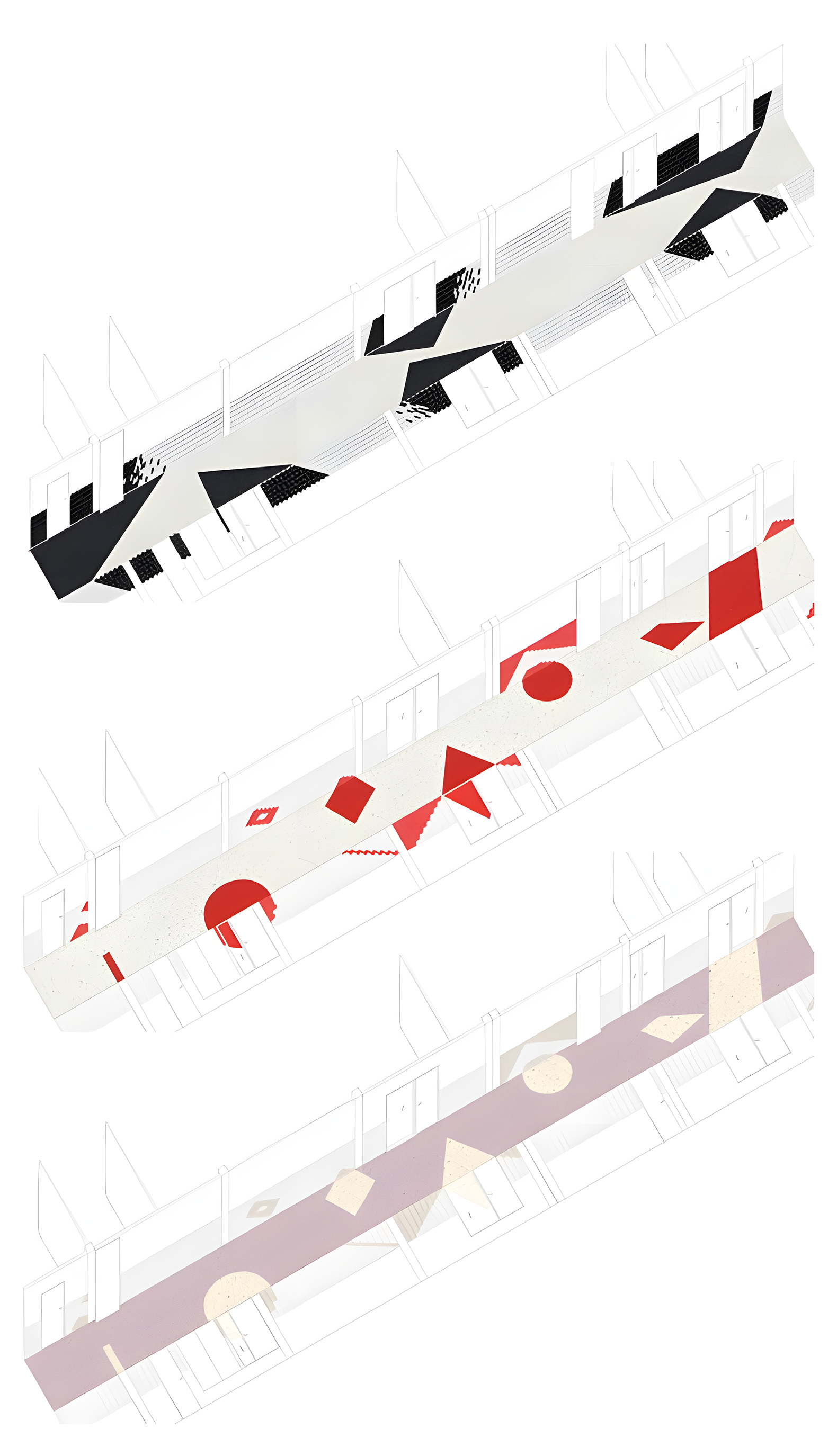
The gray concrete interior spaces interact with more tactile, evocative, and sensorial materials, bringing warmth, poetry, and a sense of domesticity to the space. These include intricate wood marquetry, vibrantly colored glazed bricks, translucent fabric curtains inspired by the iconic blue workwear of Renault factory workers, terrazzo paving in quartz-marble, African wood paneling, and velvet finishes.