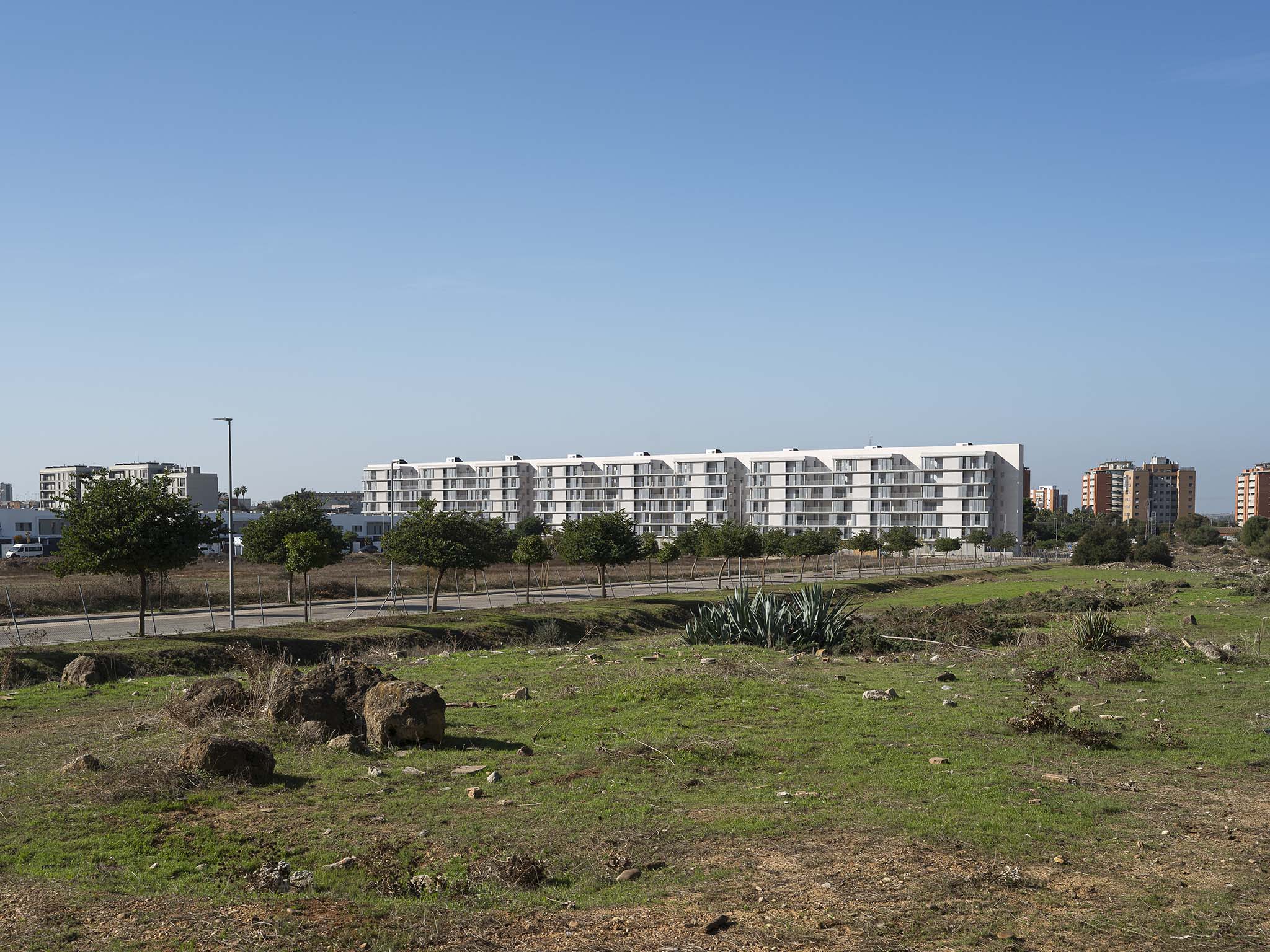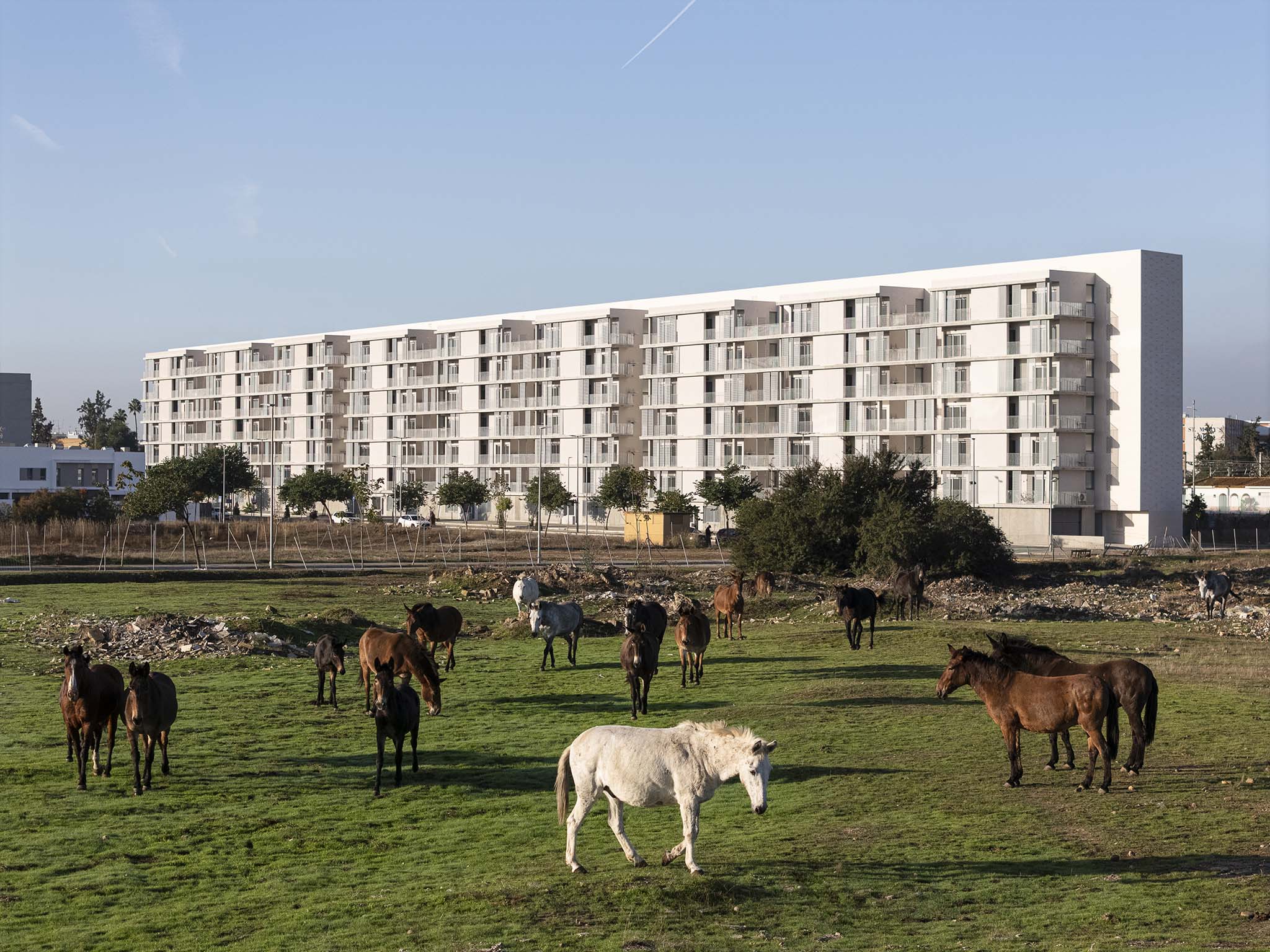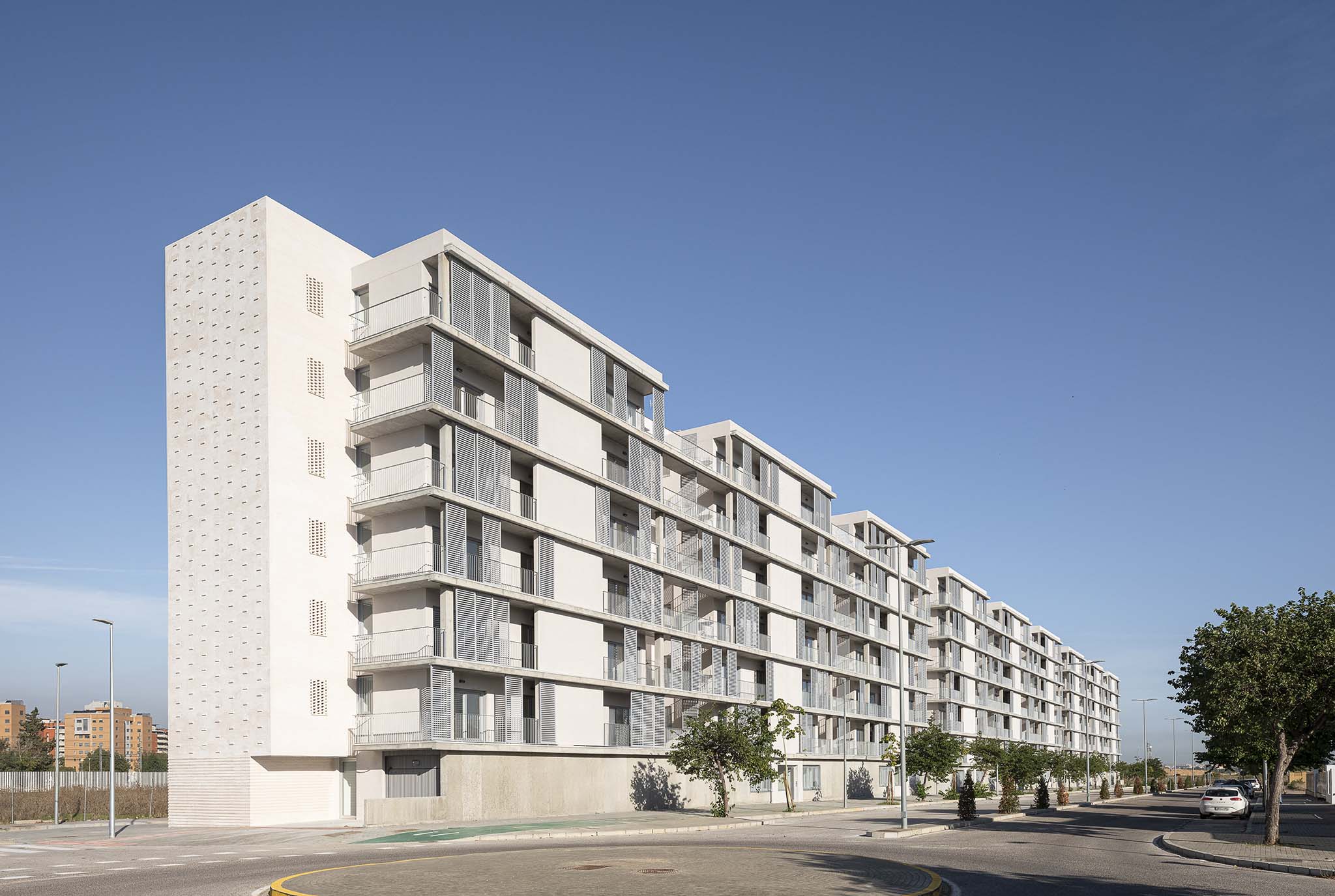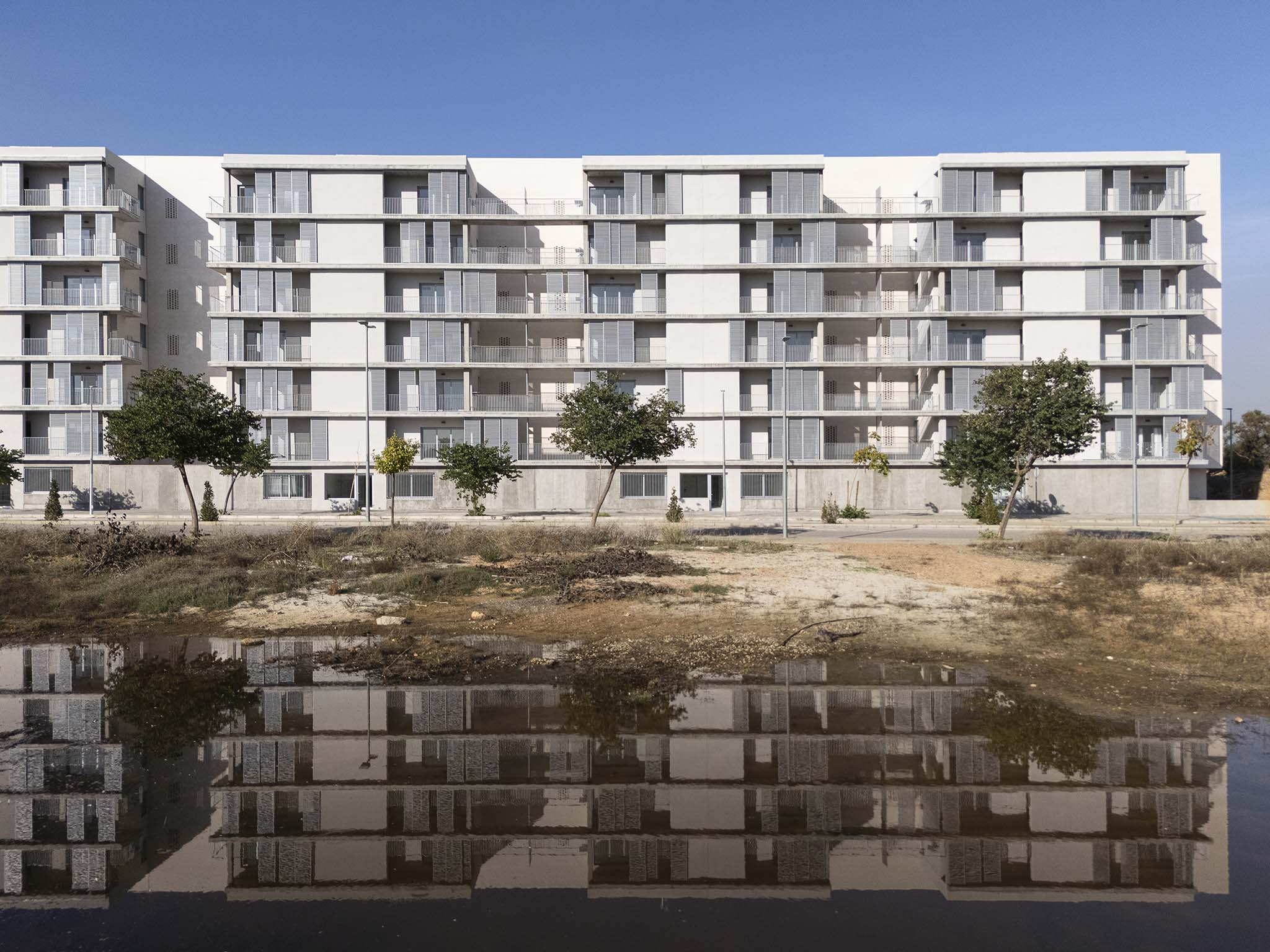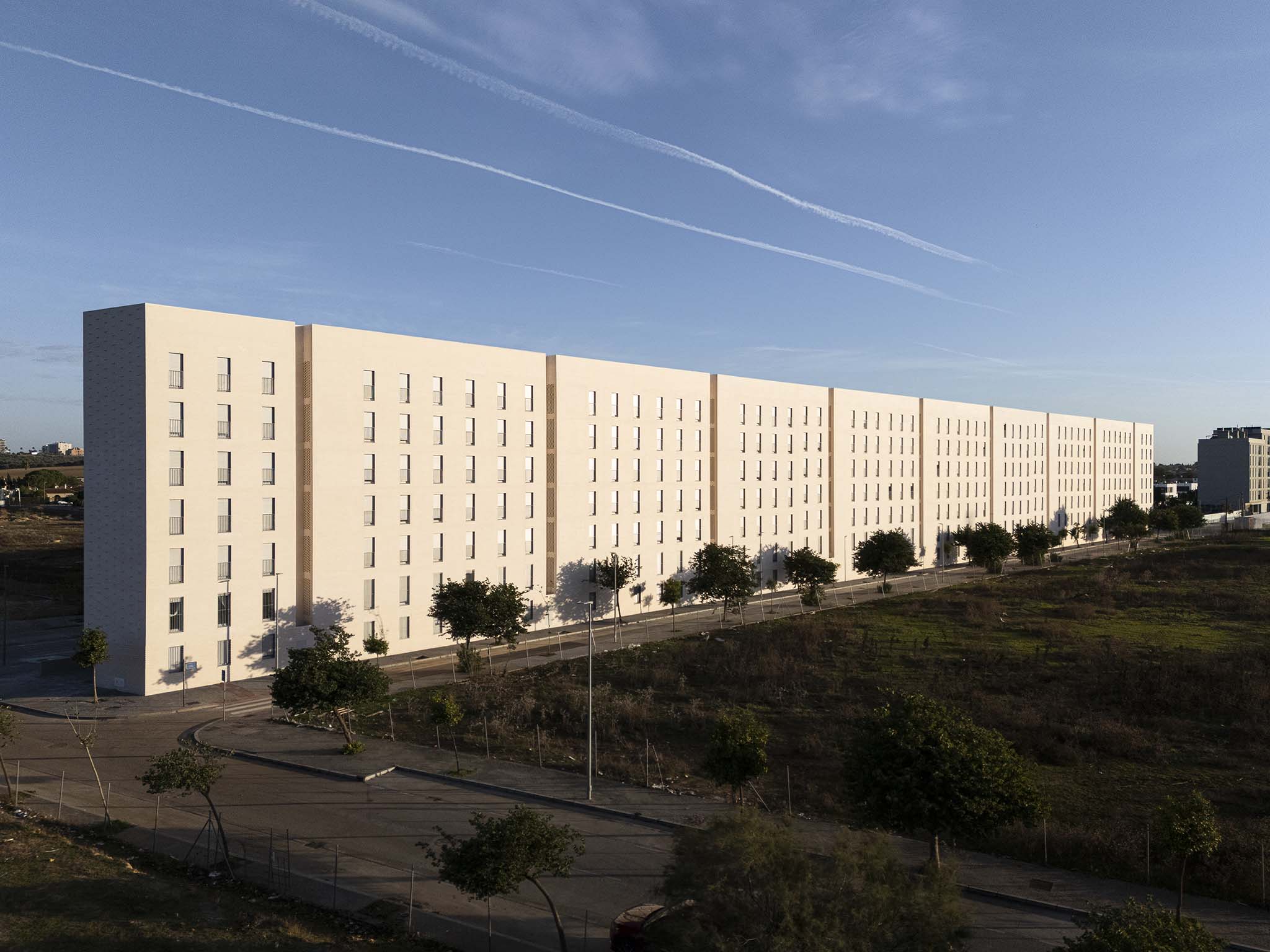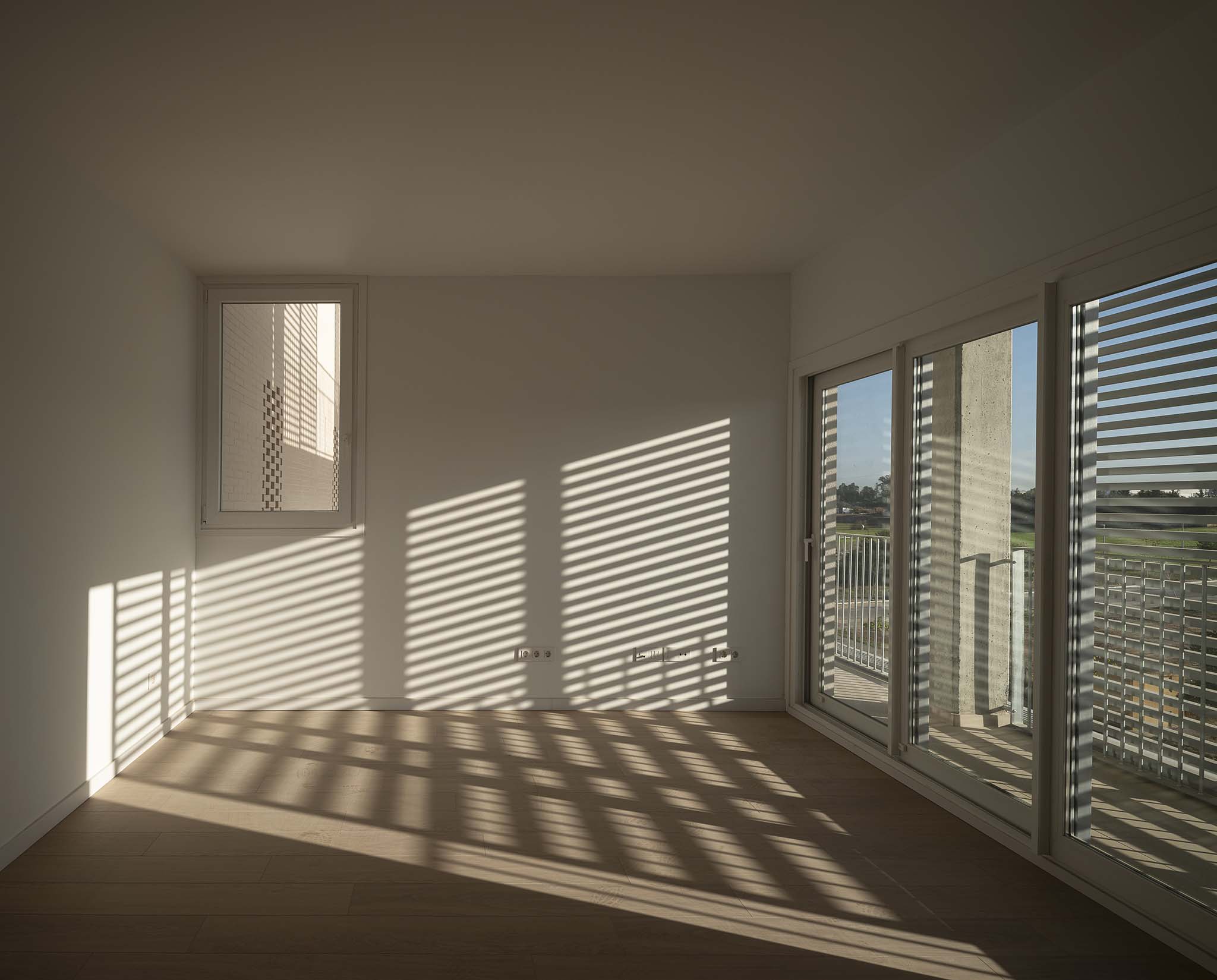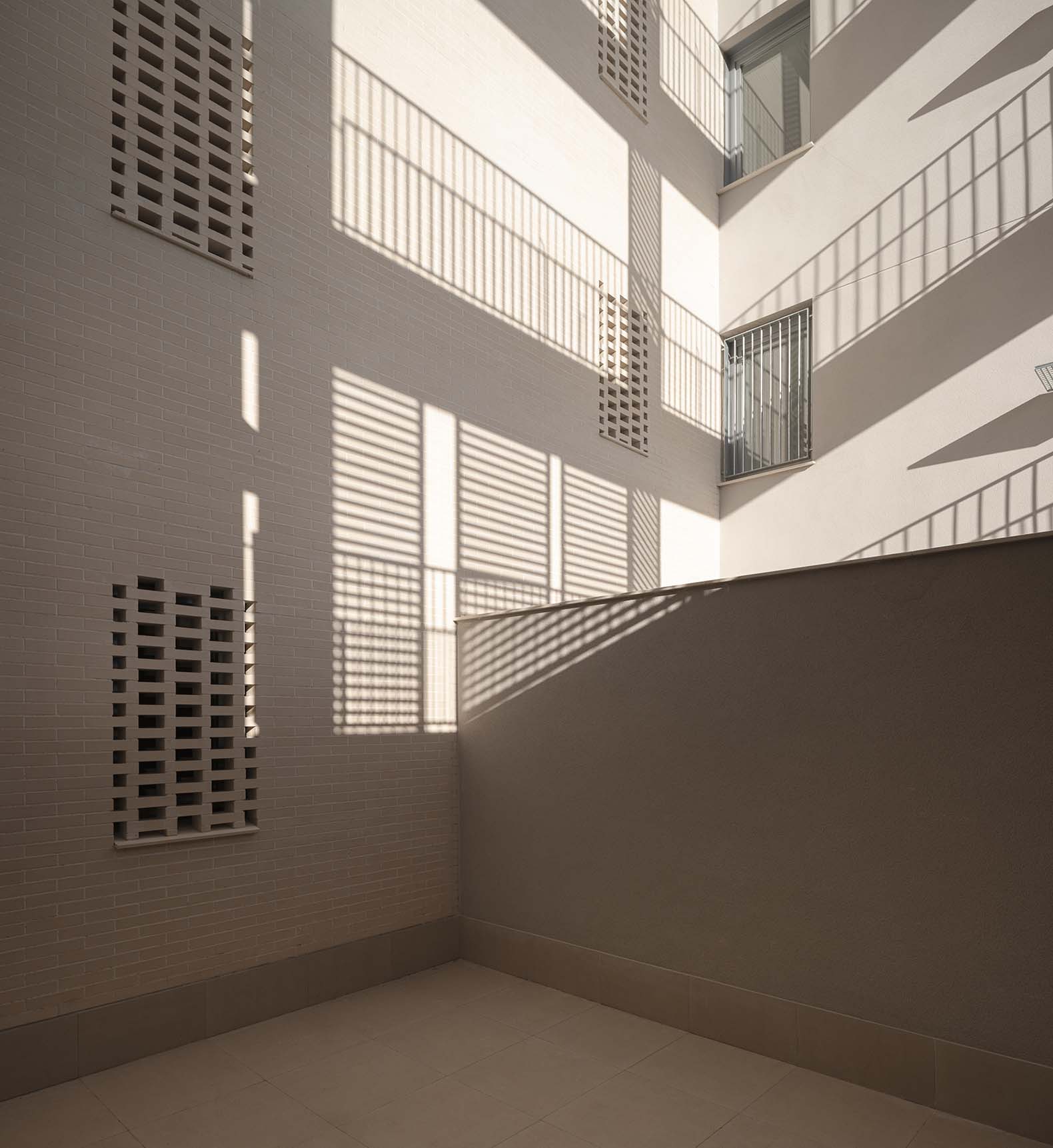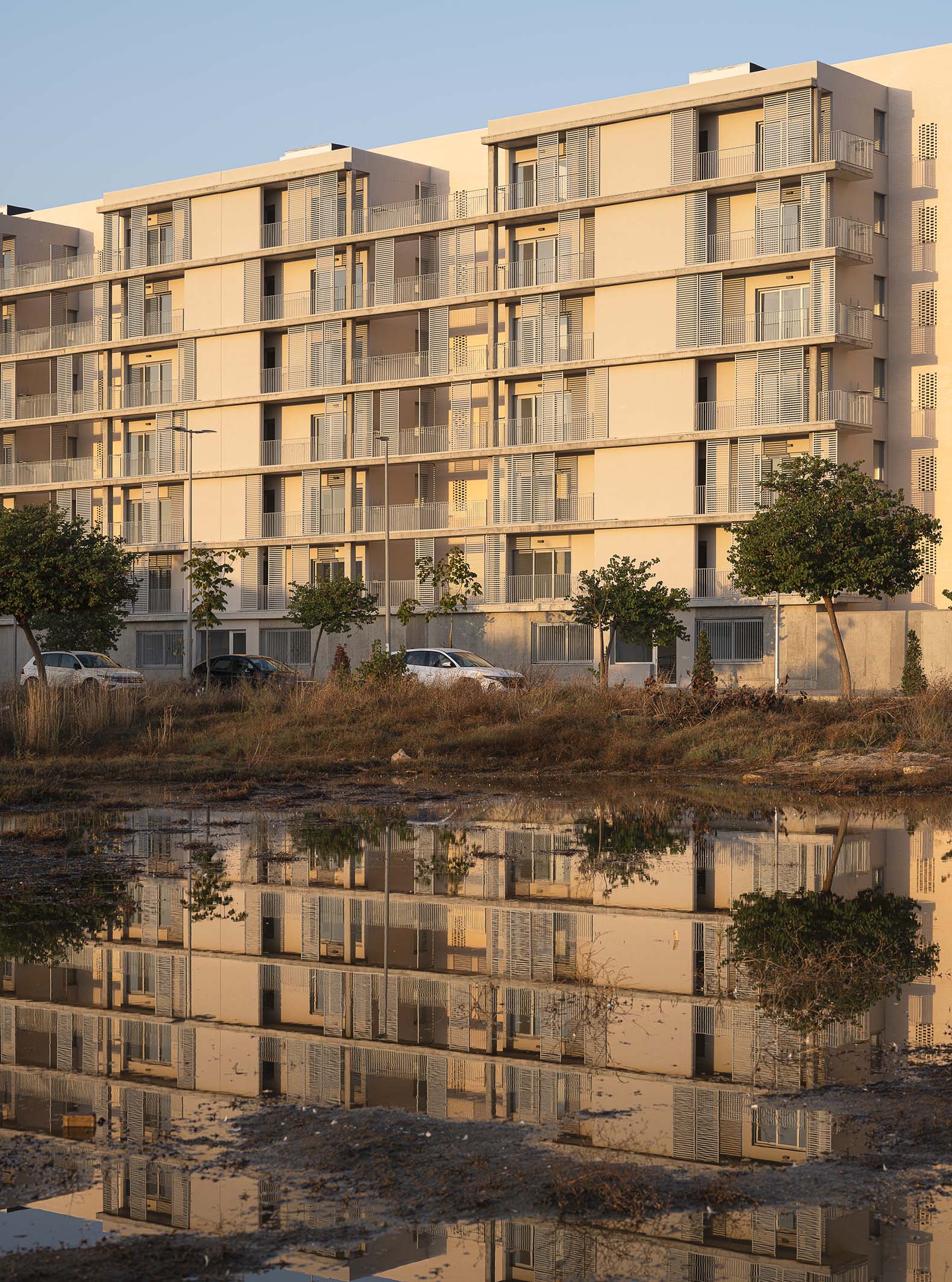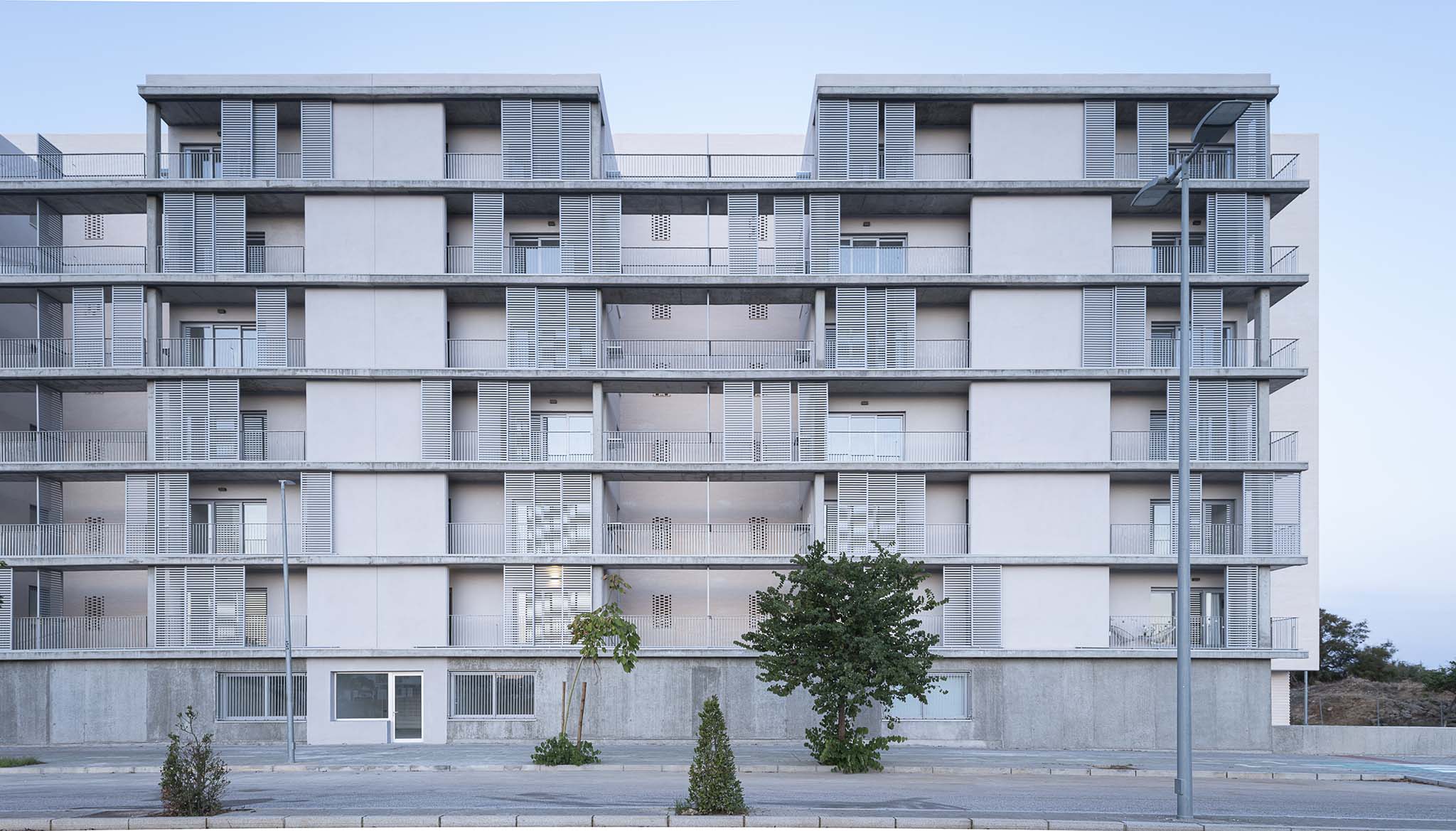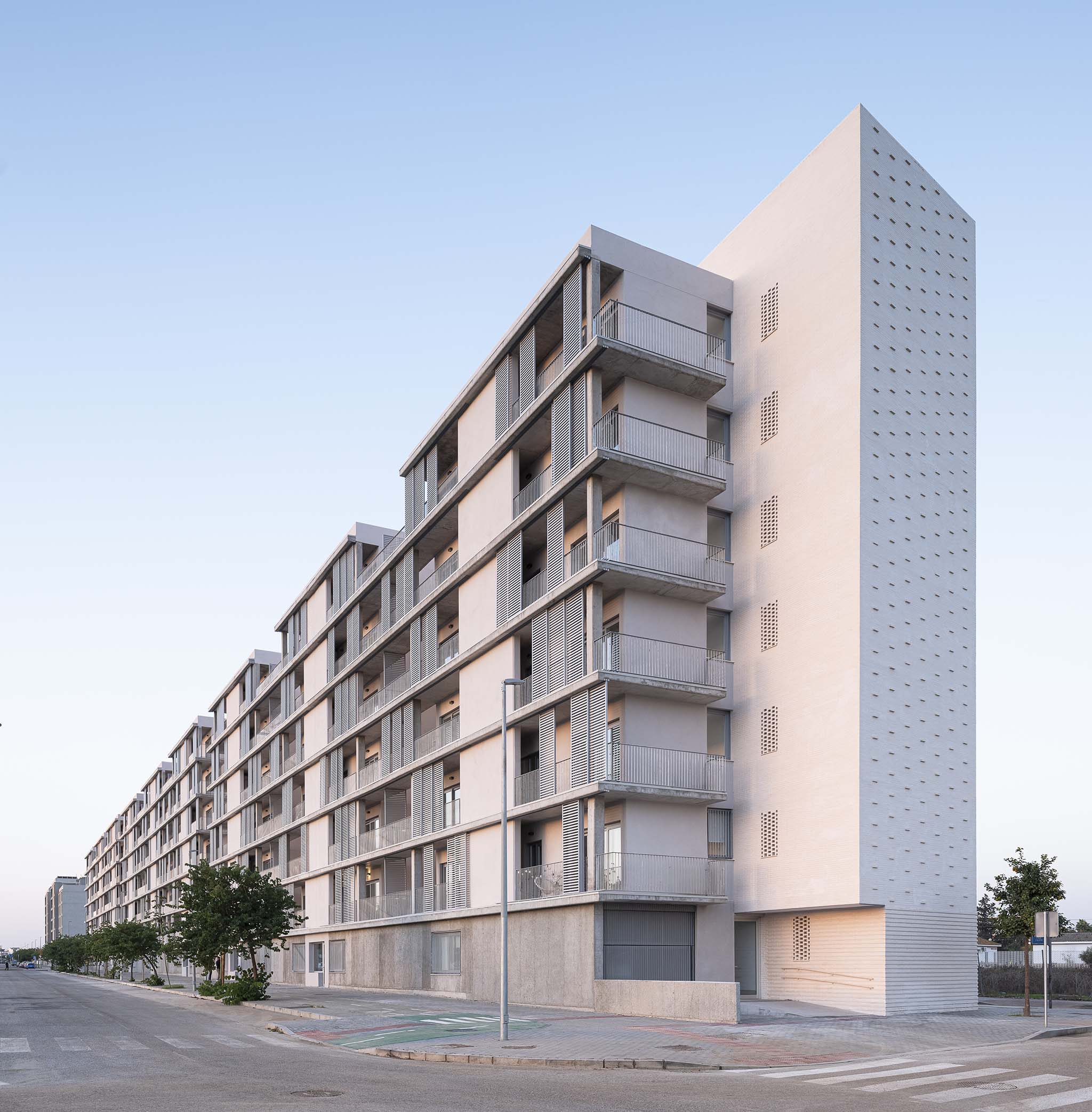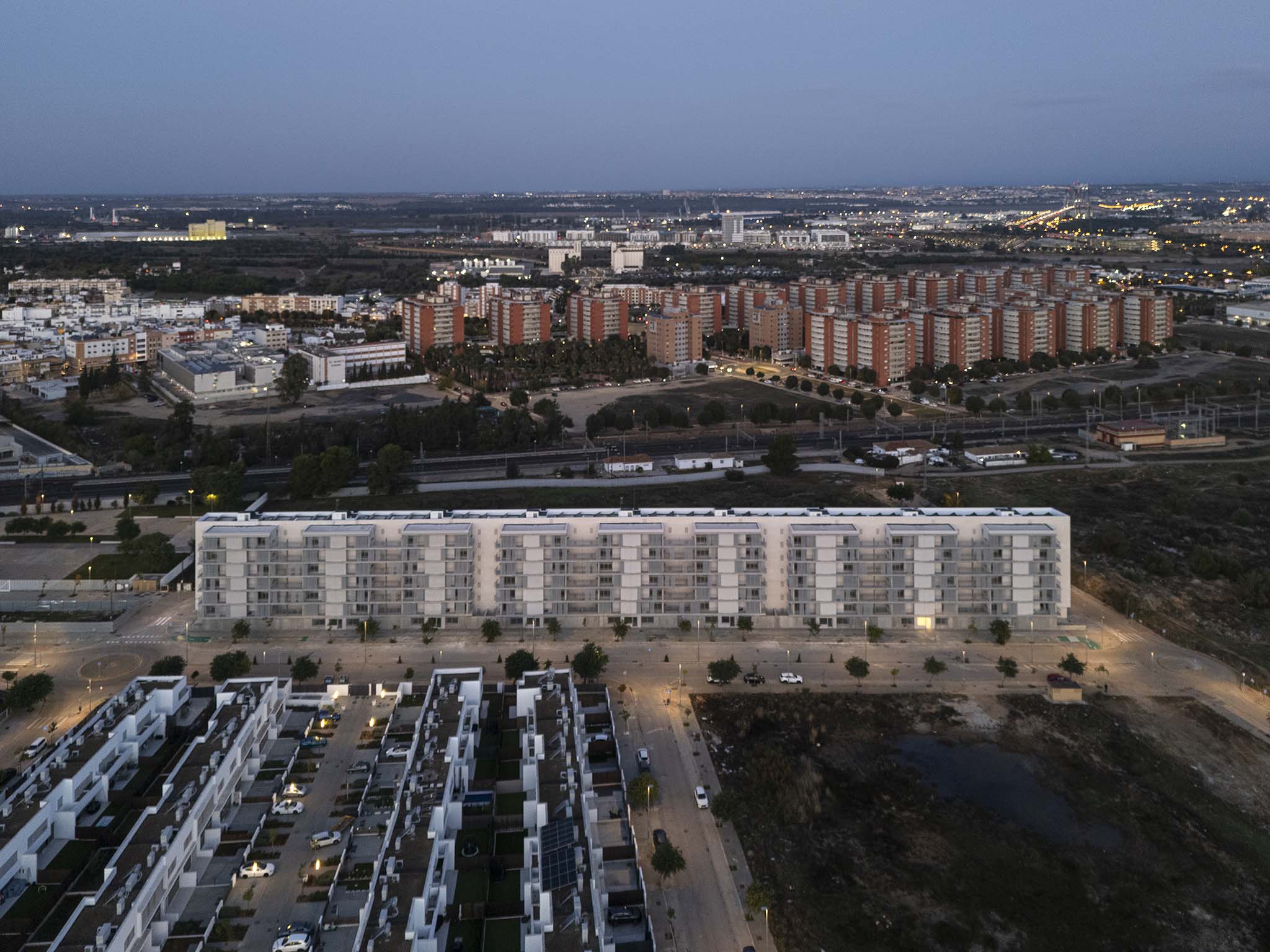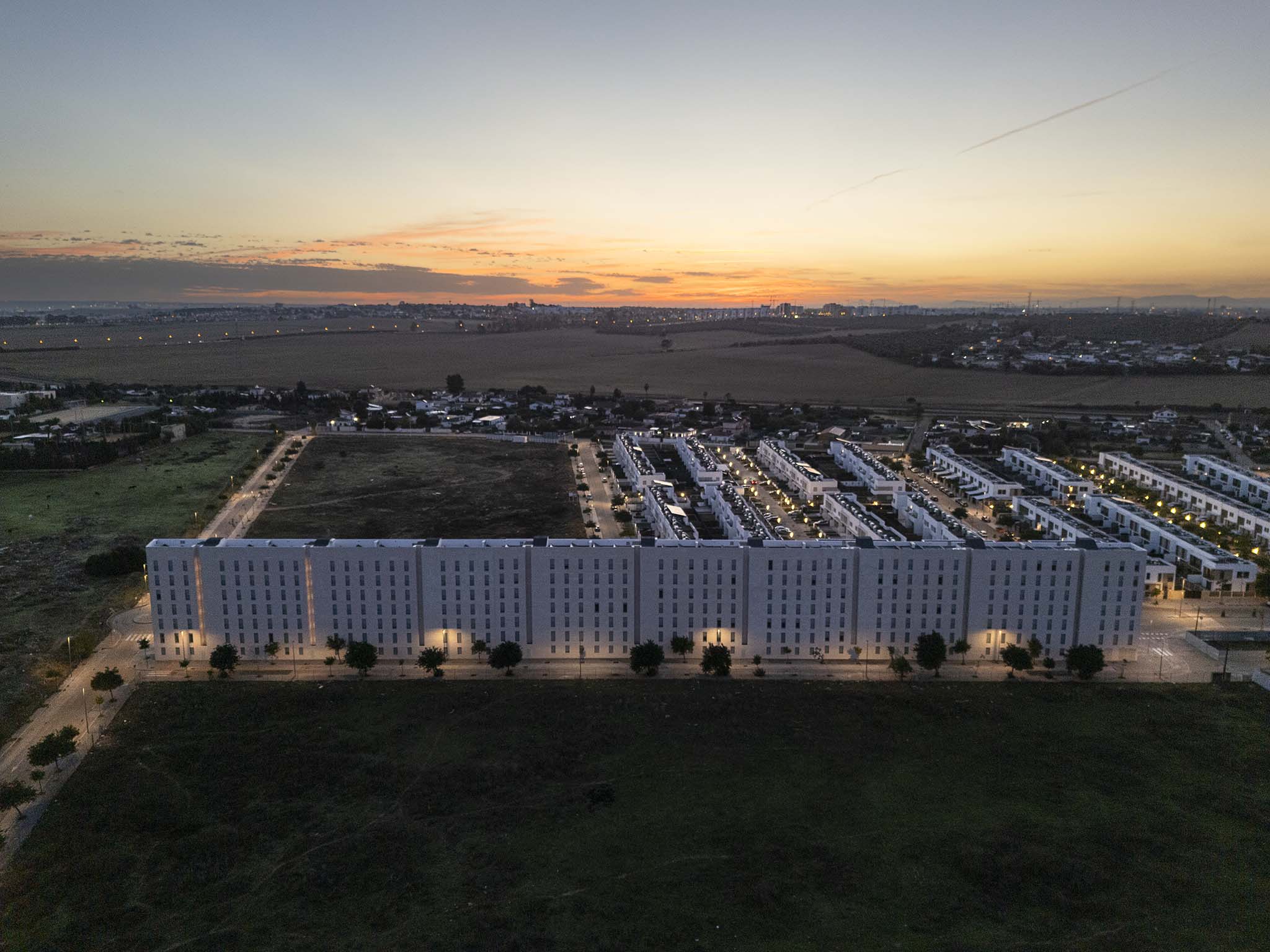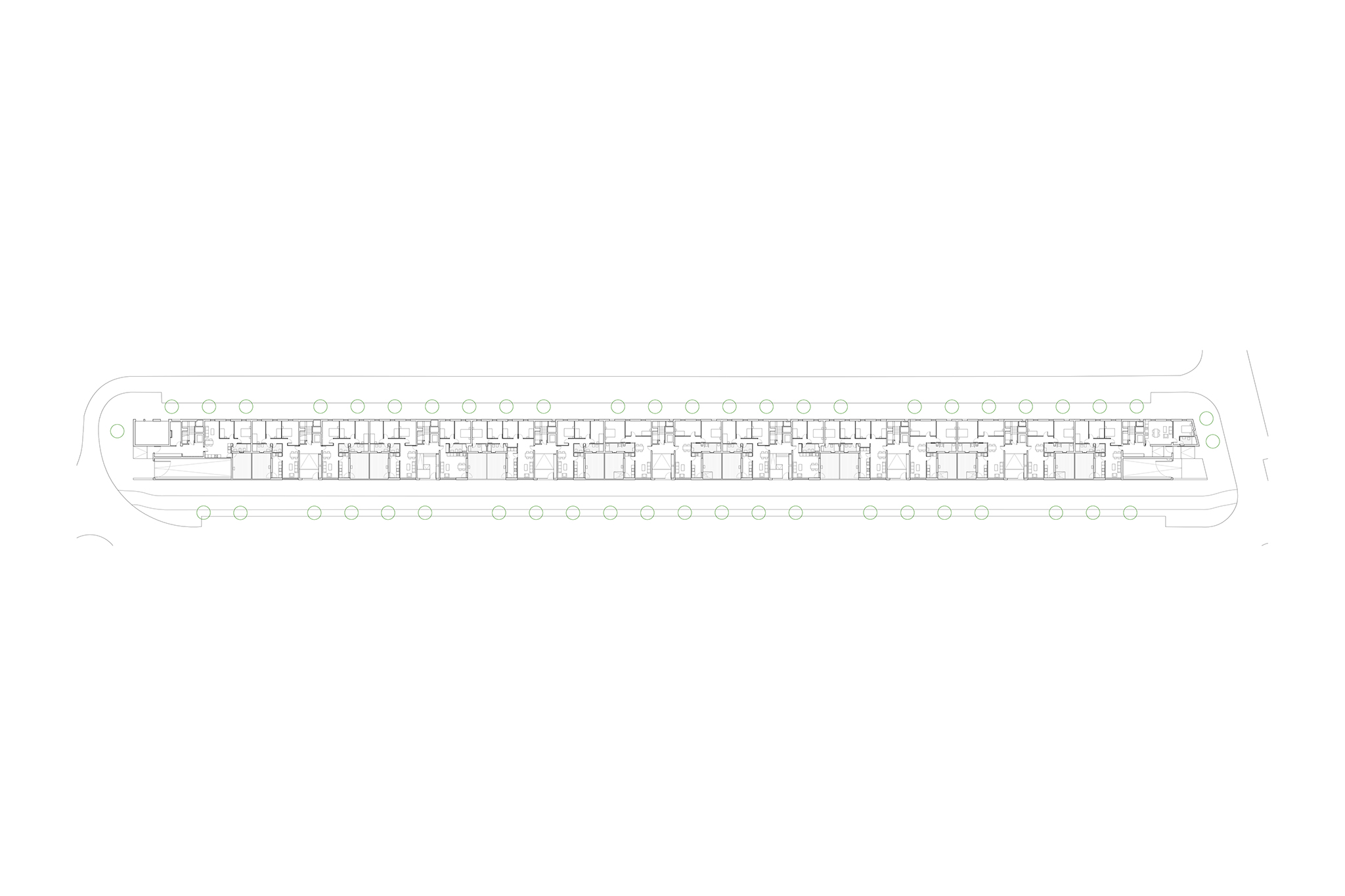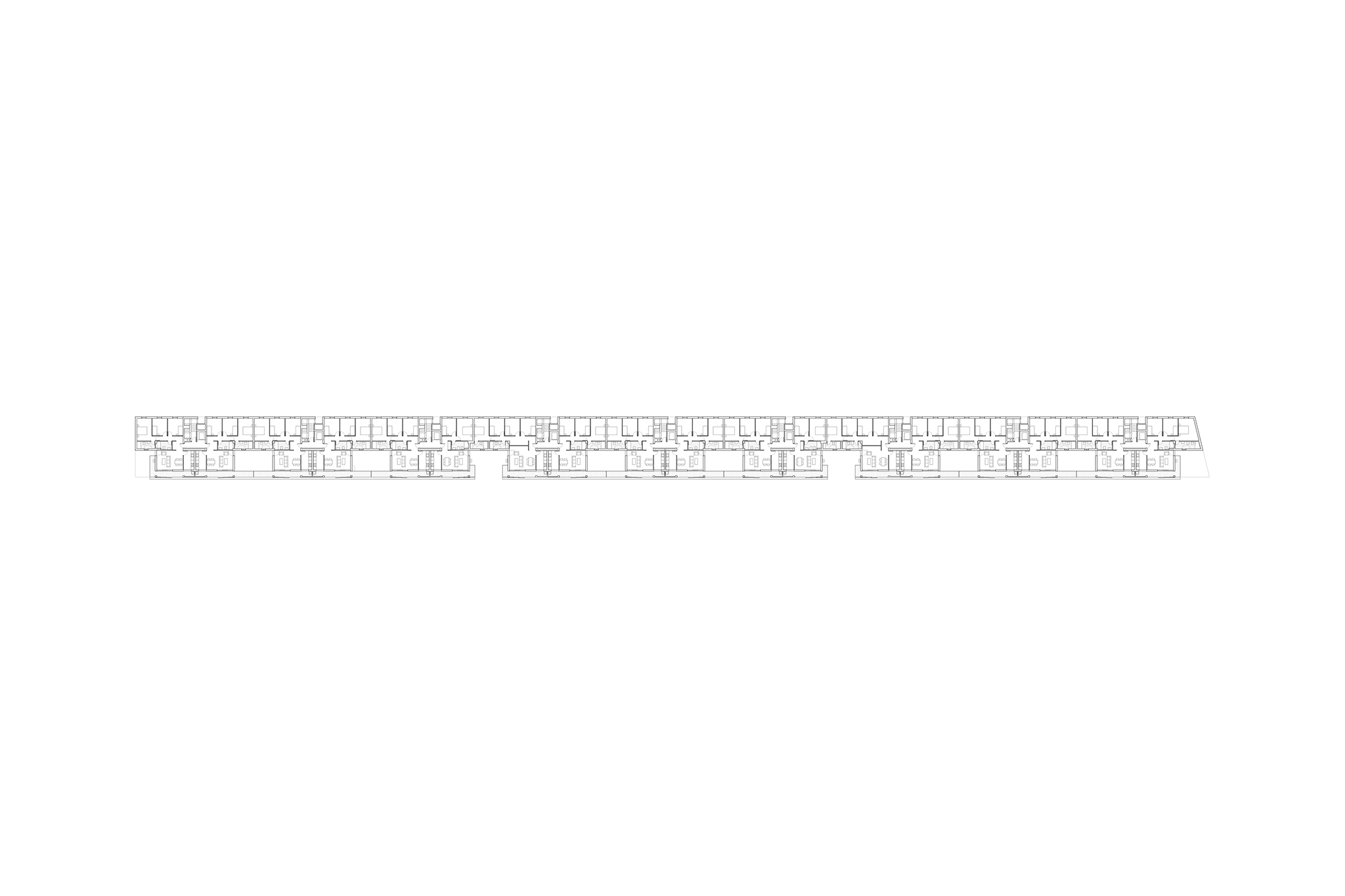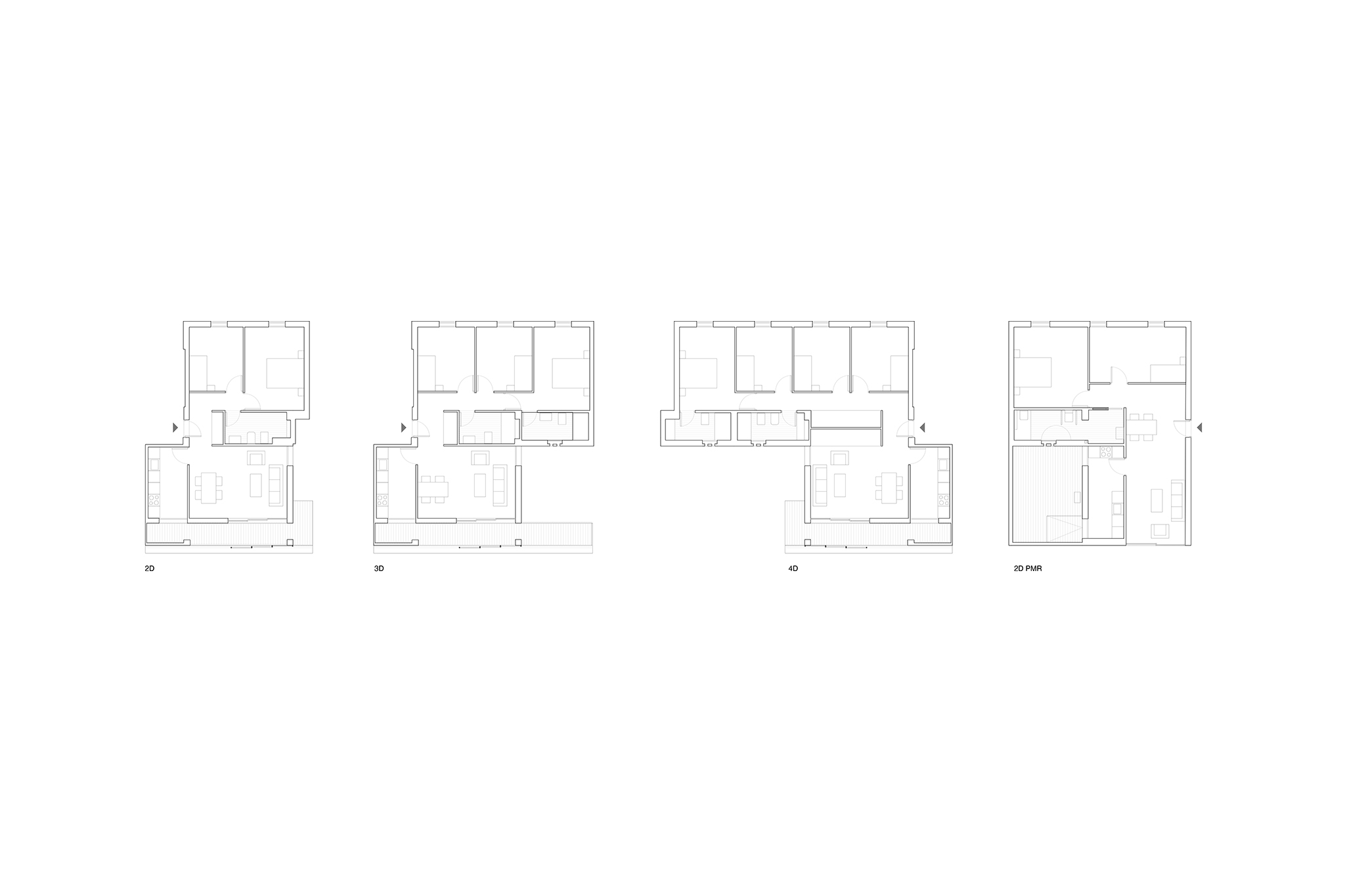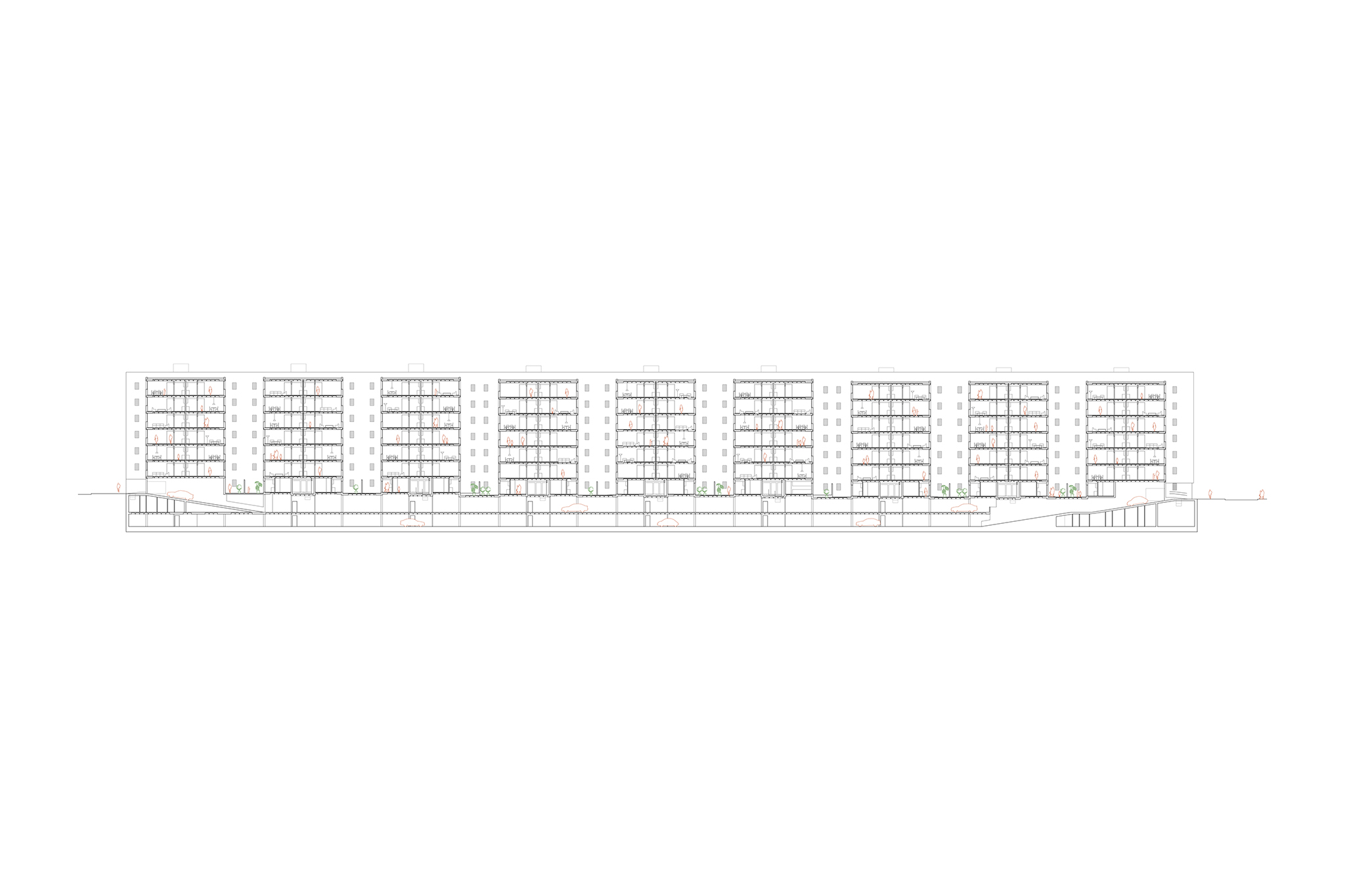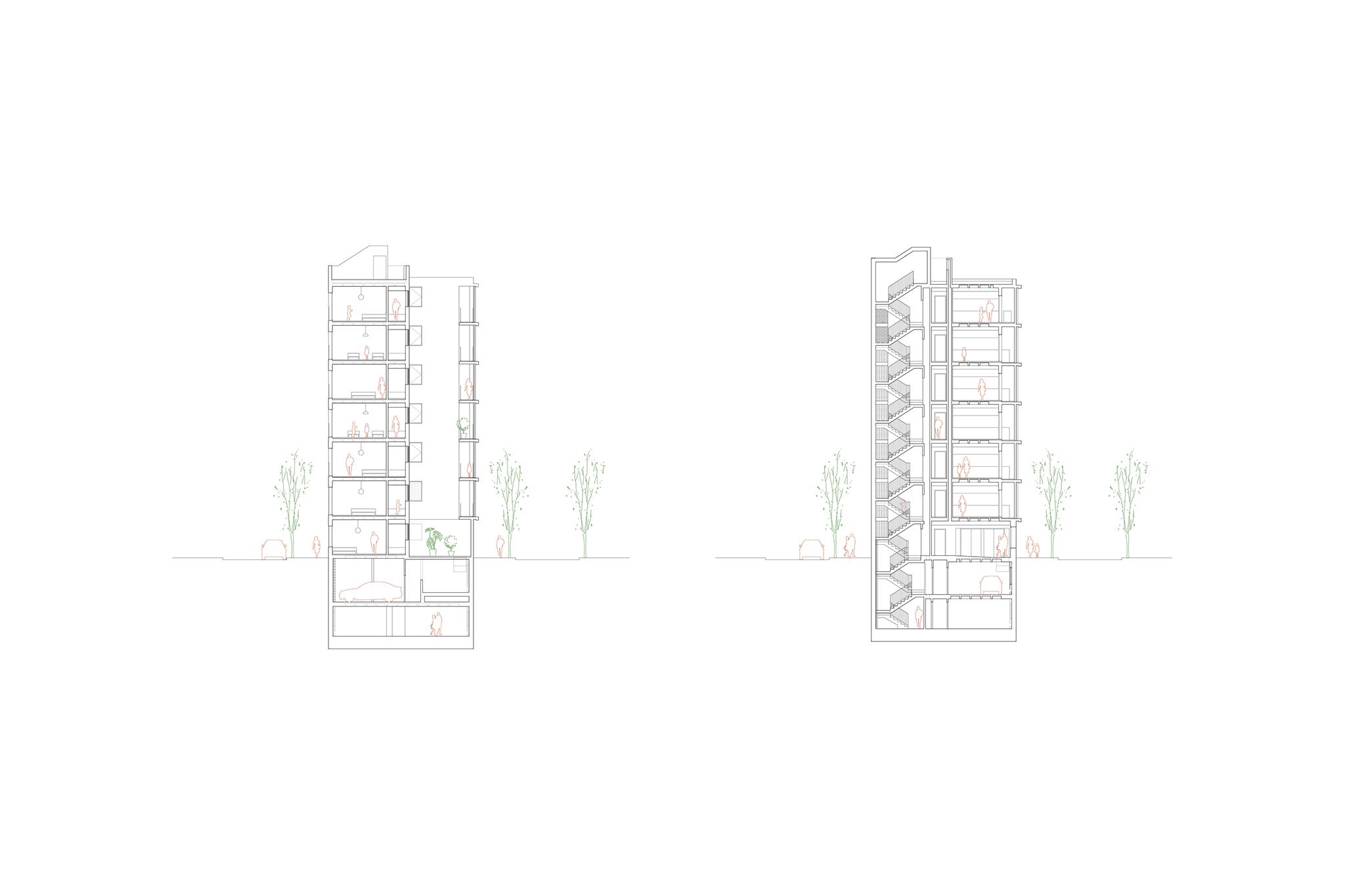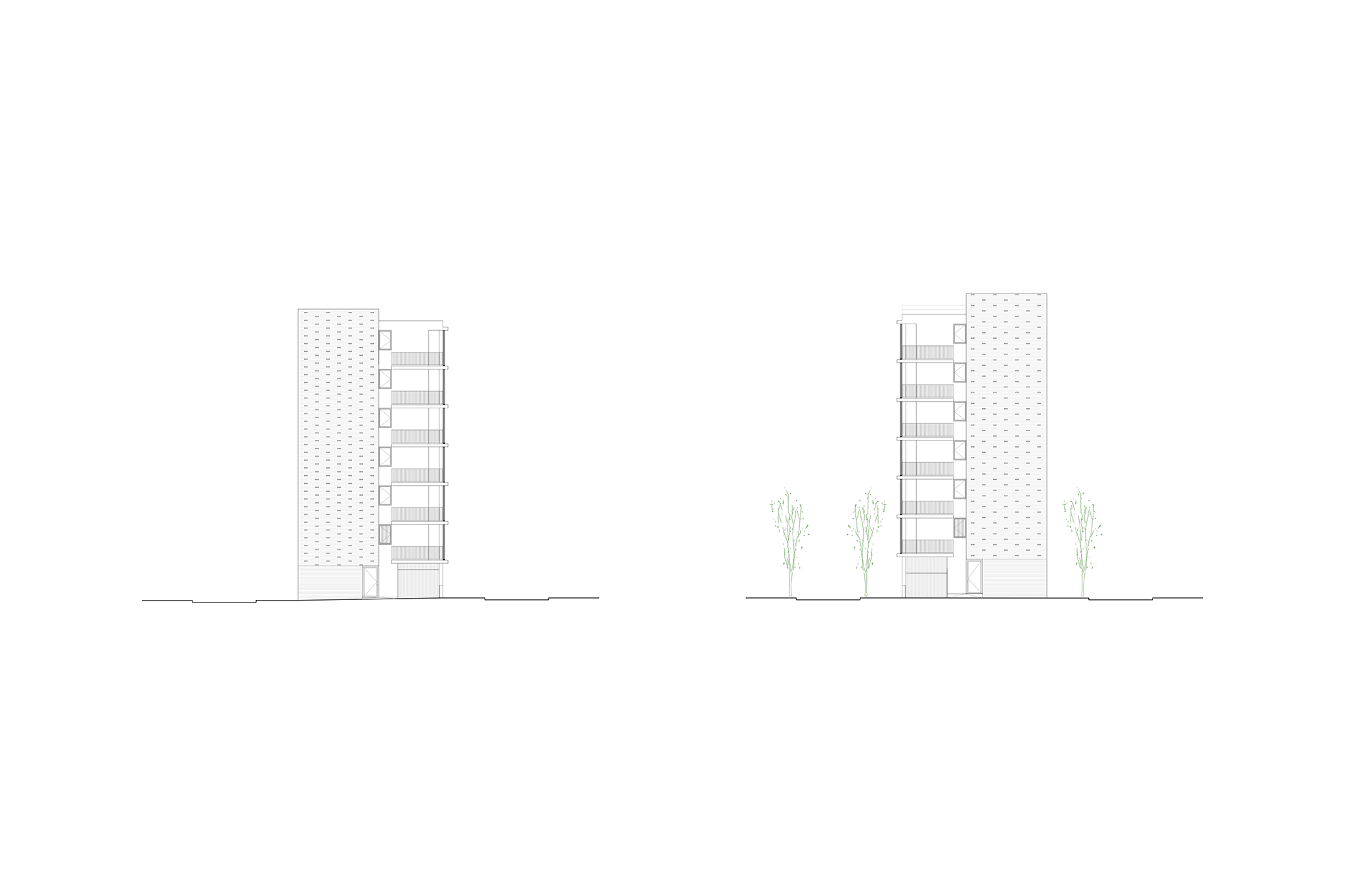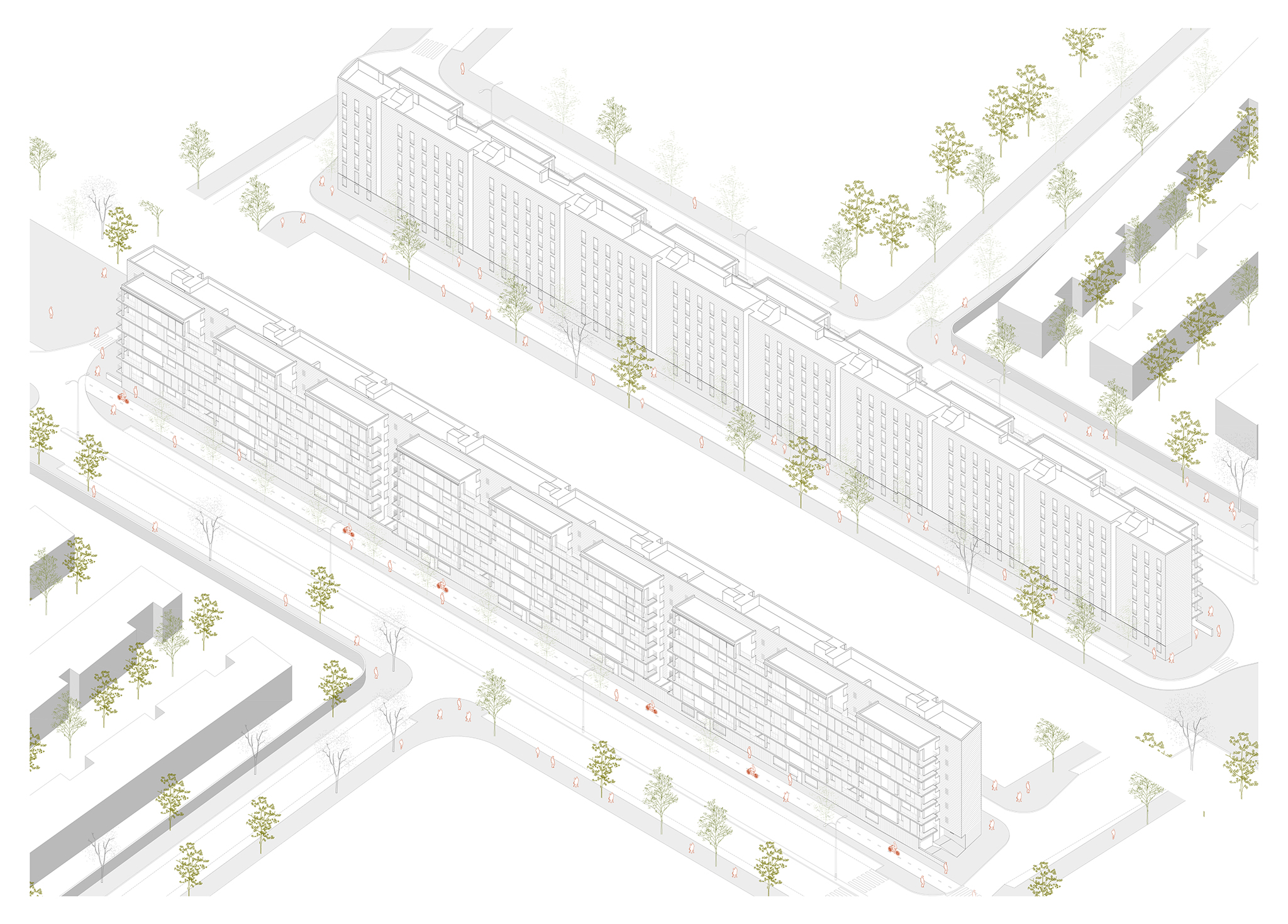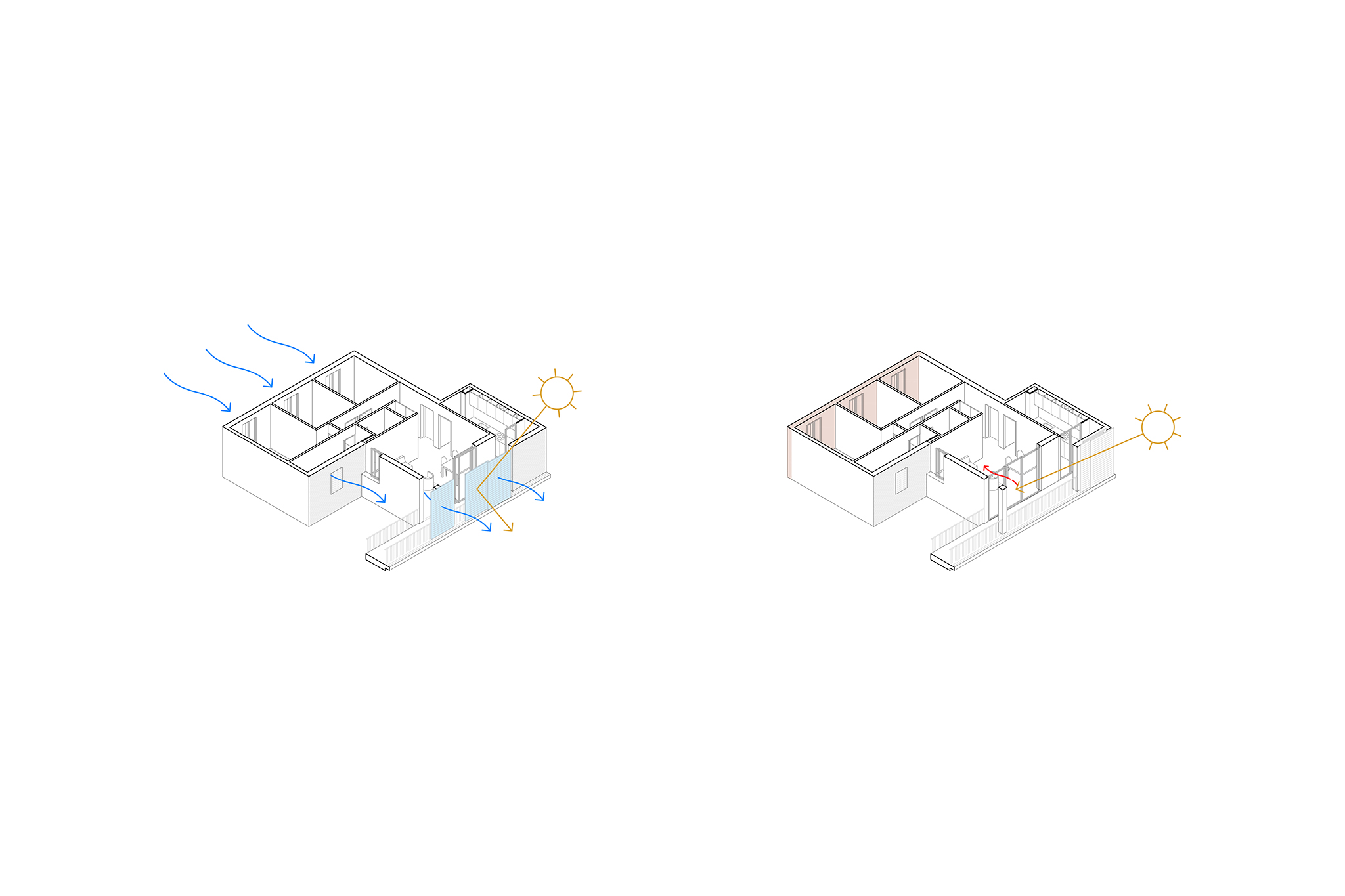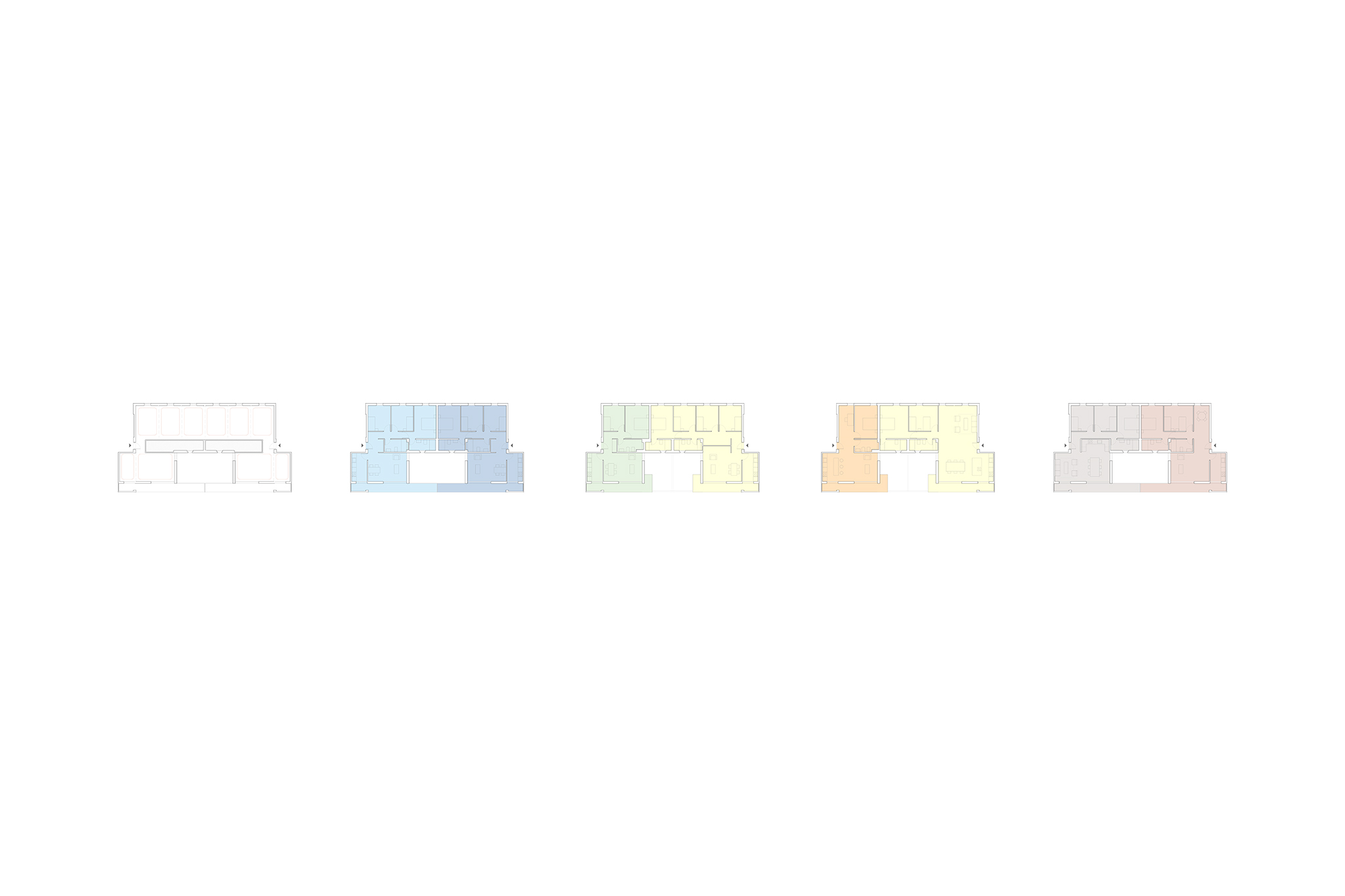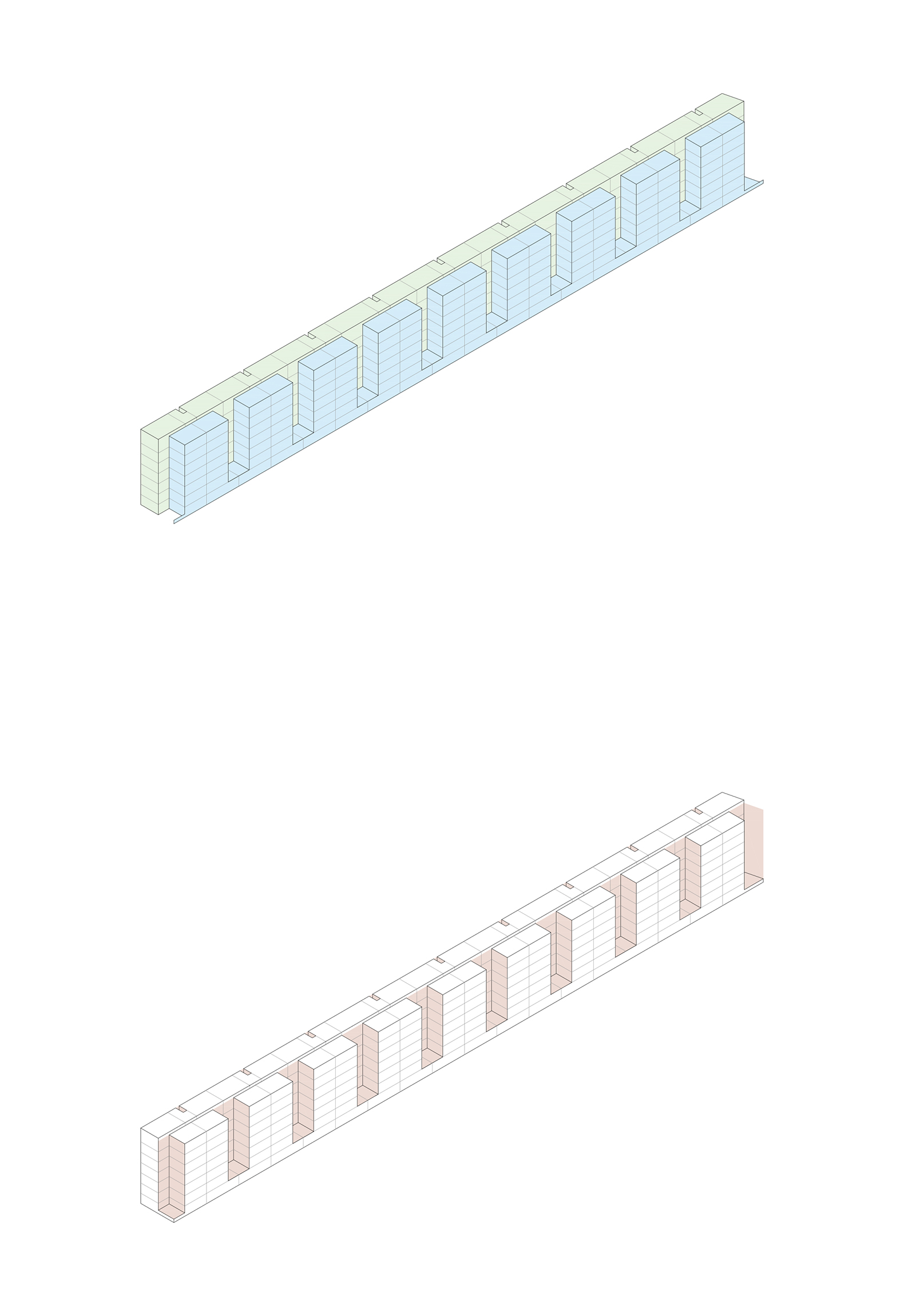
The residential building designed by Daroca Arquitectos and Práctica Arquitectura comprises six floors housing flexible two-, three-, and four-bedroom apartments. The design adapts to the site's extreme geometry and the existing topography through a stepped section that resolves the 1.26-meter north-south slope by grouping three entrances. Furthermore, the narrow width of the plot necessitates a double-bay layout that ensures cross-ventilation in all apartments, enhancing both spatial quality and interior environmental comfort.
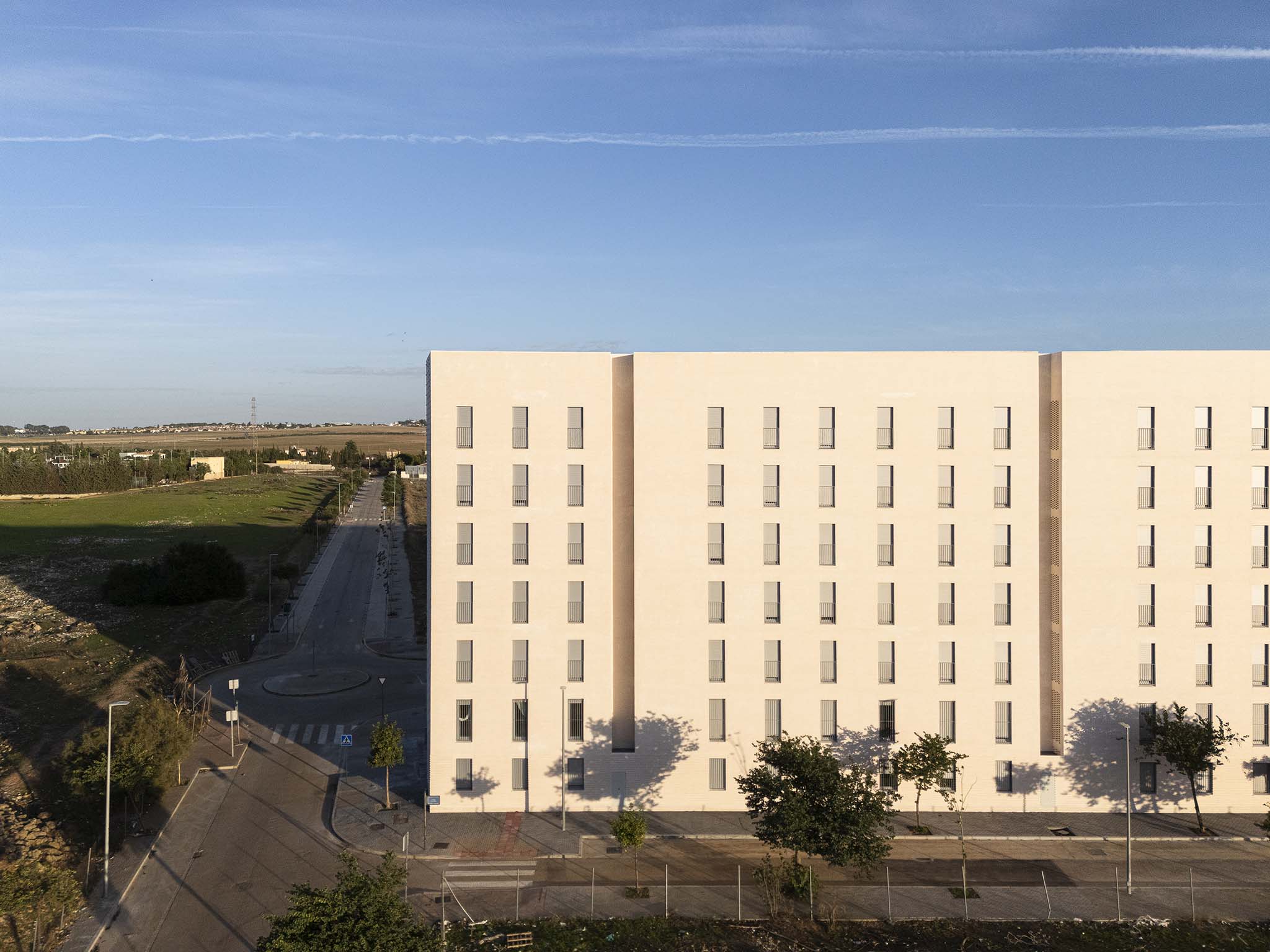
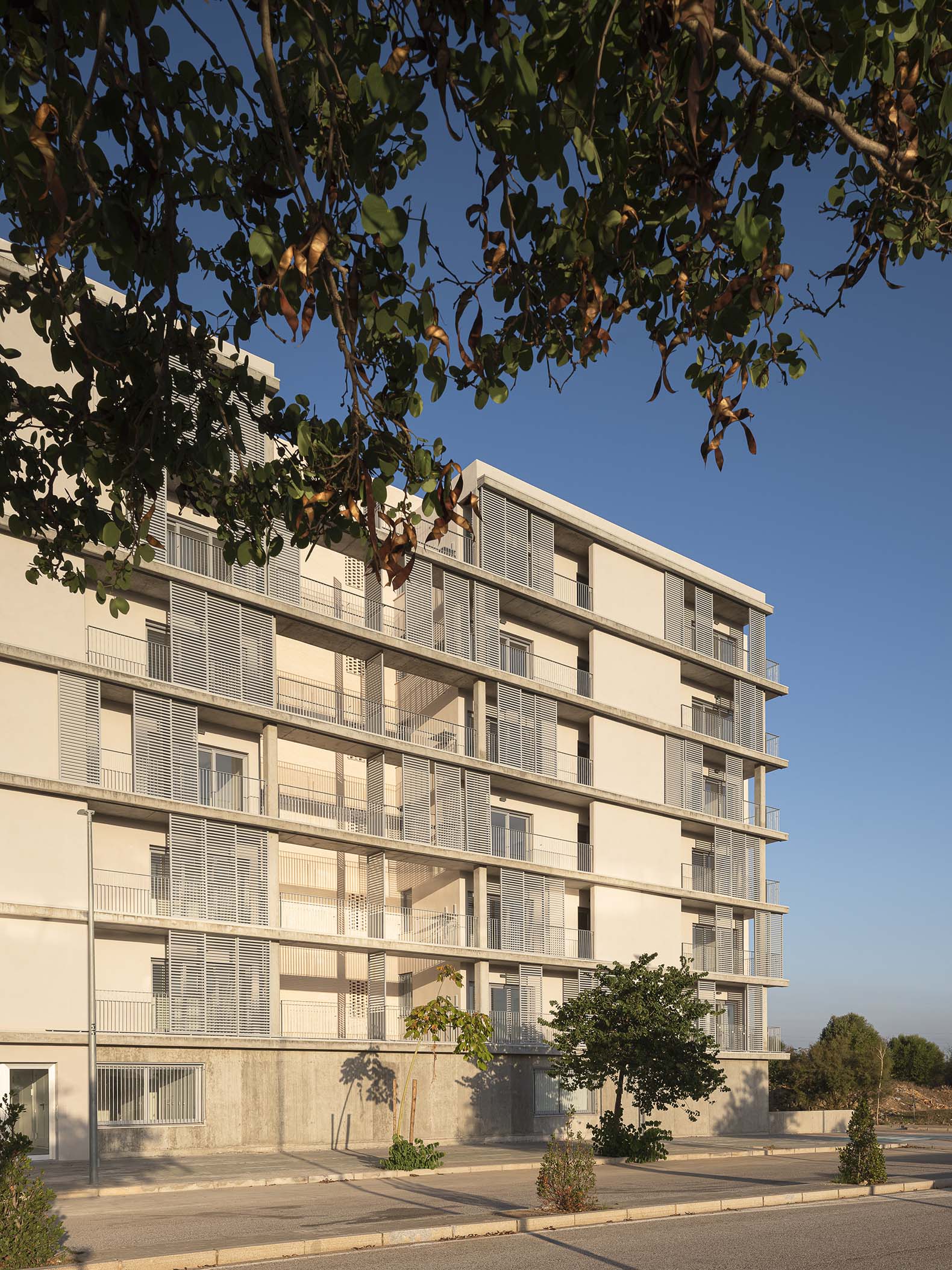
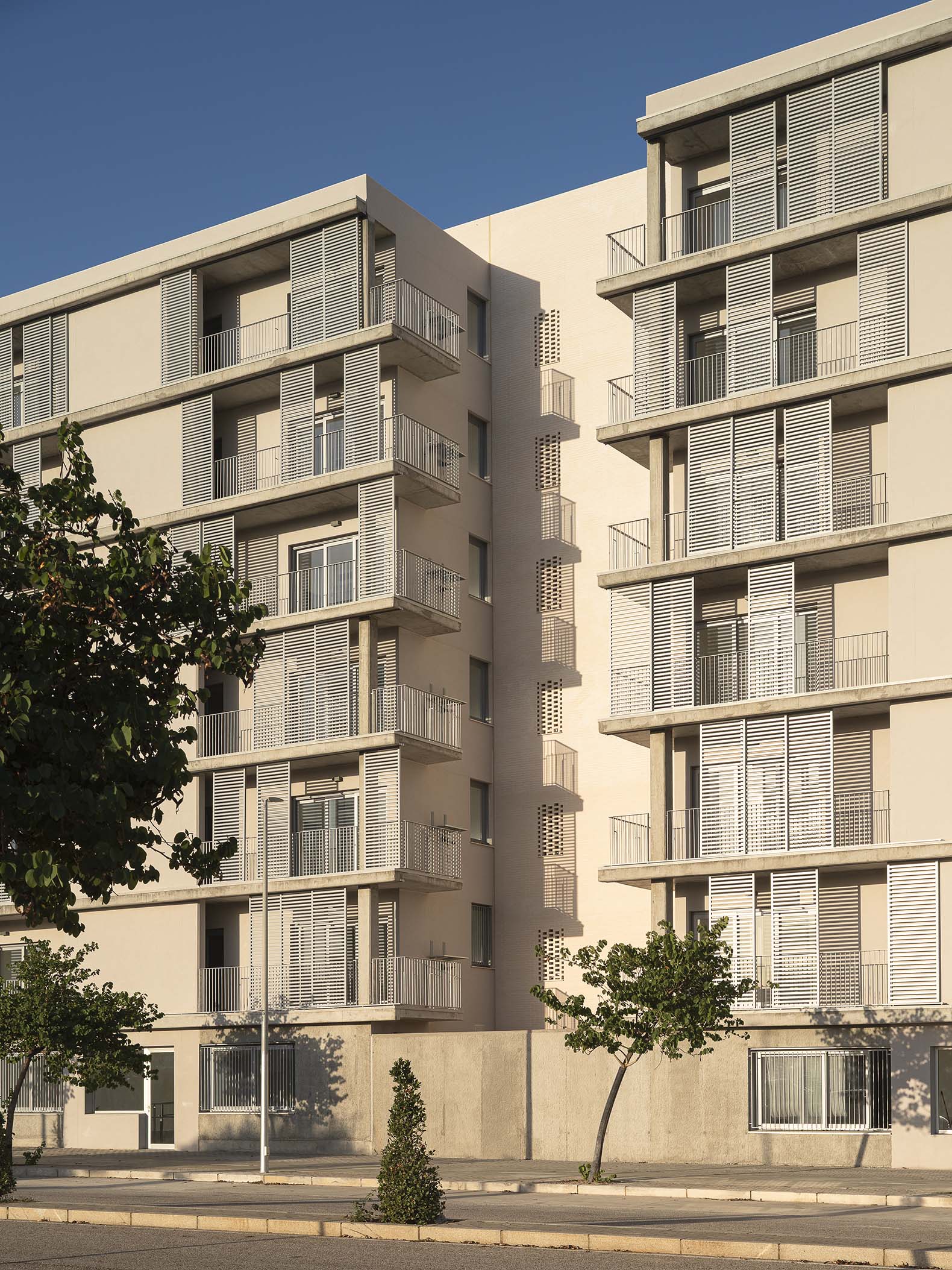
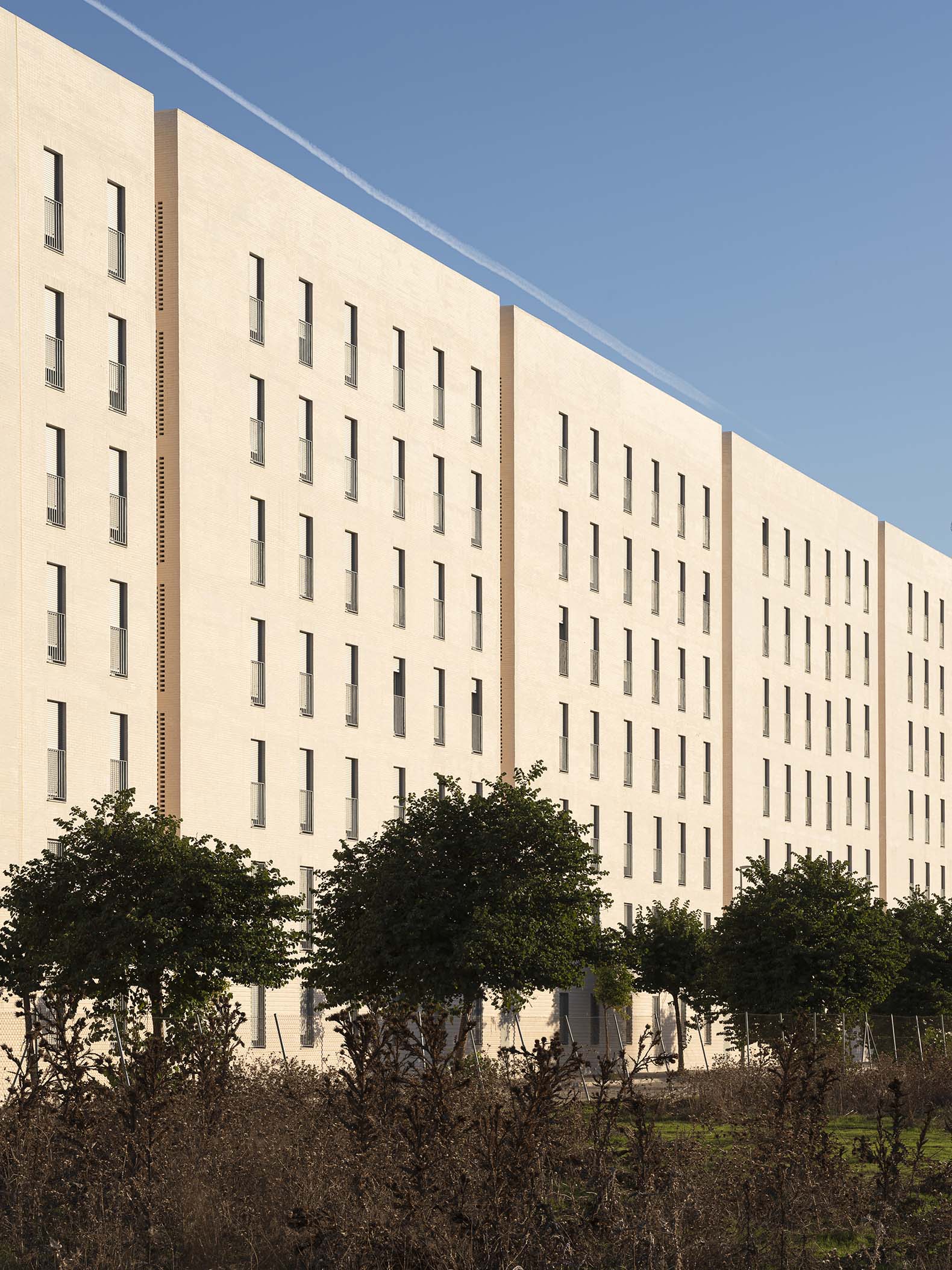
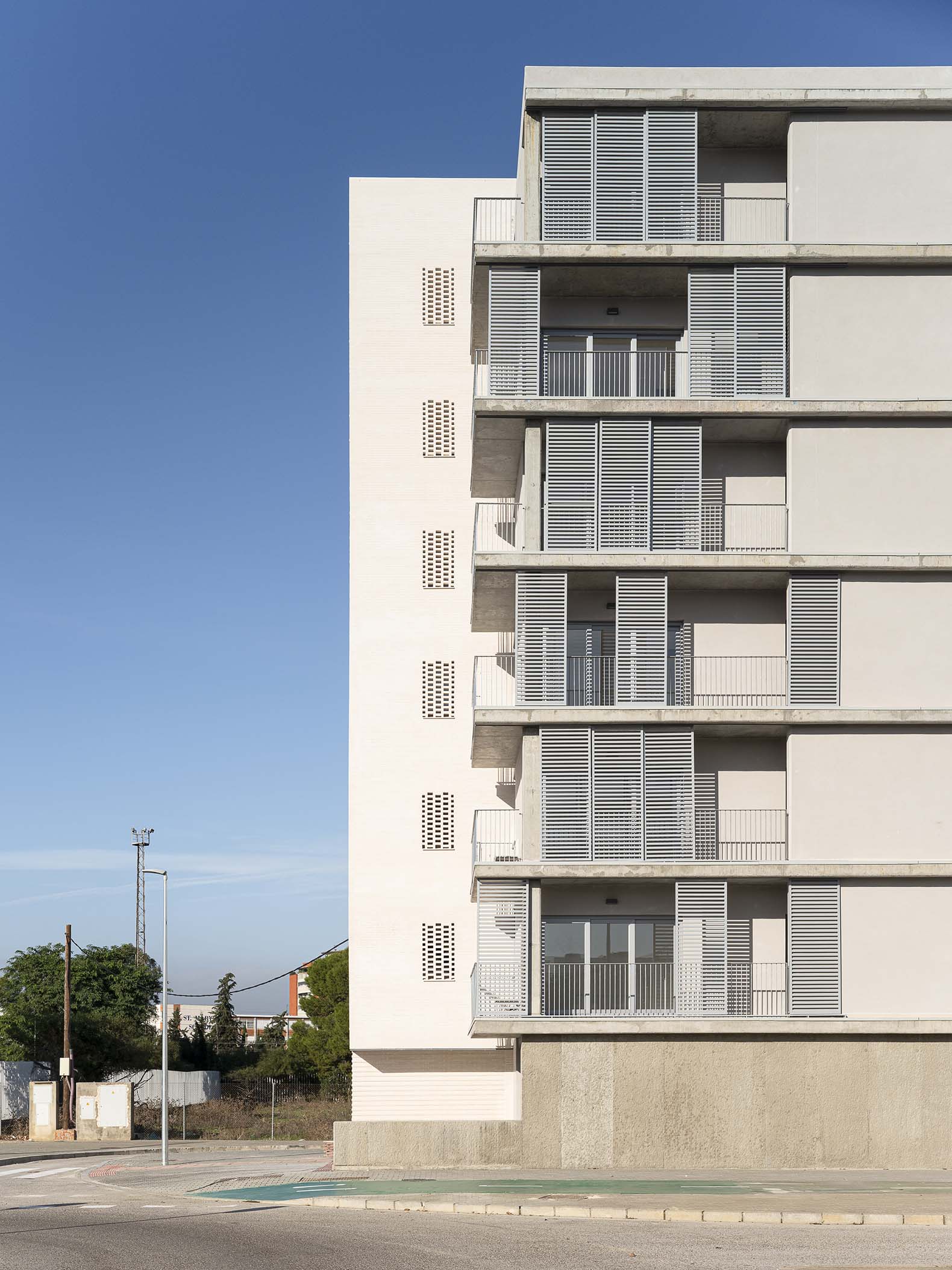
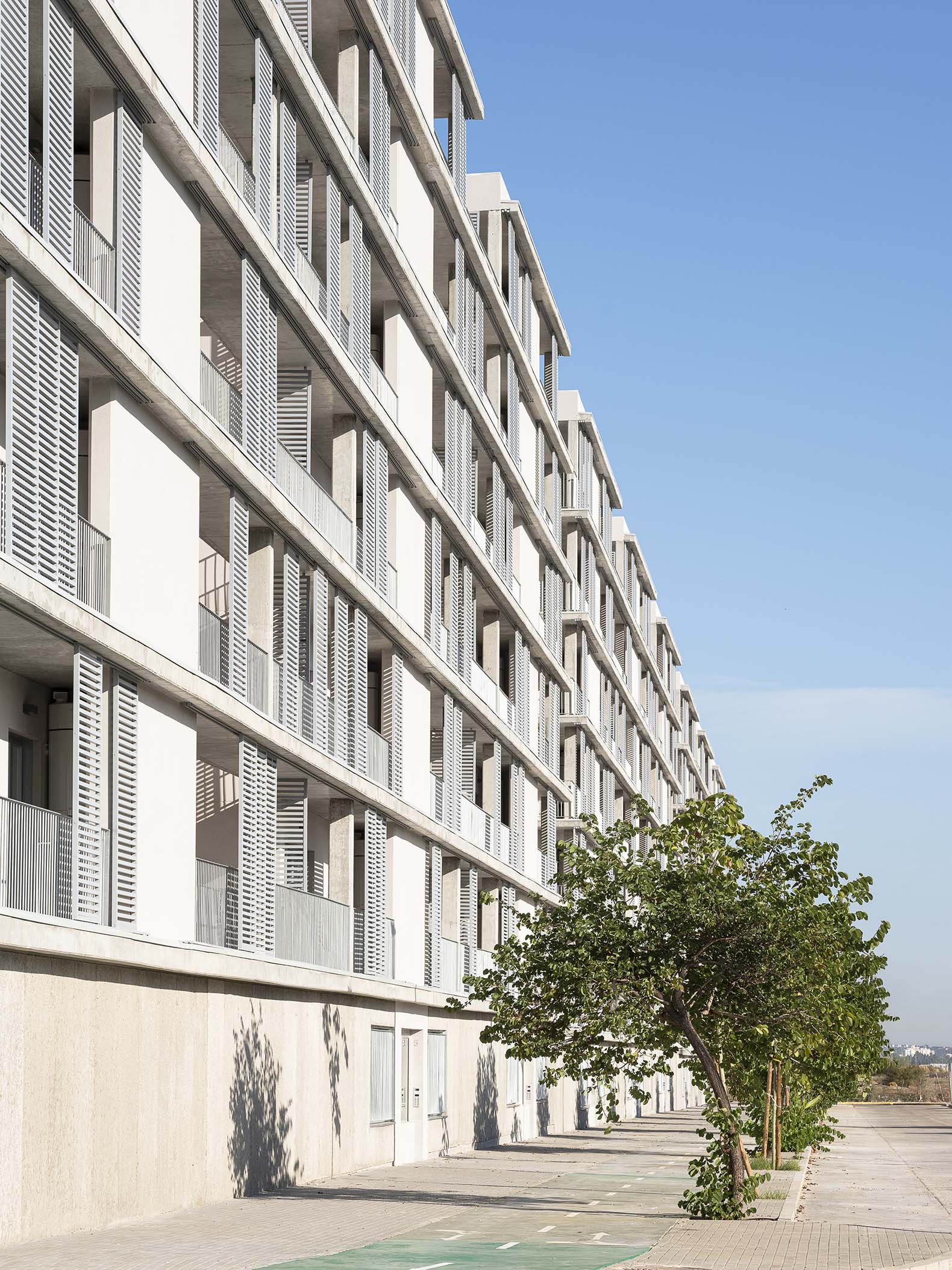
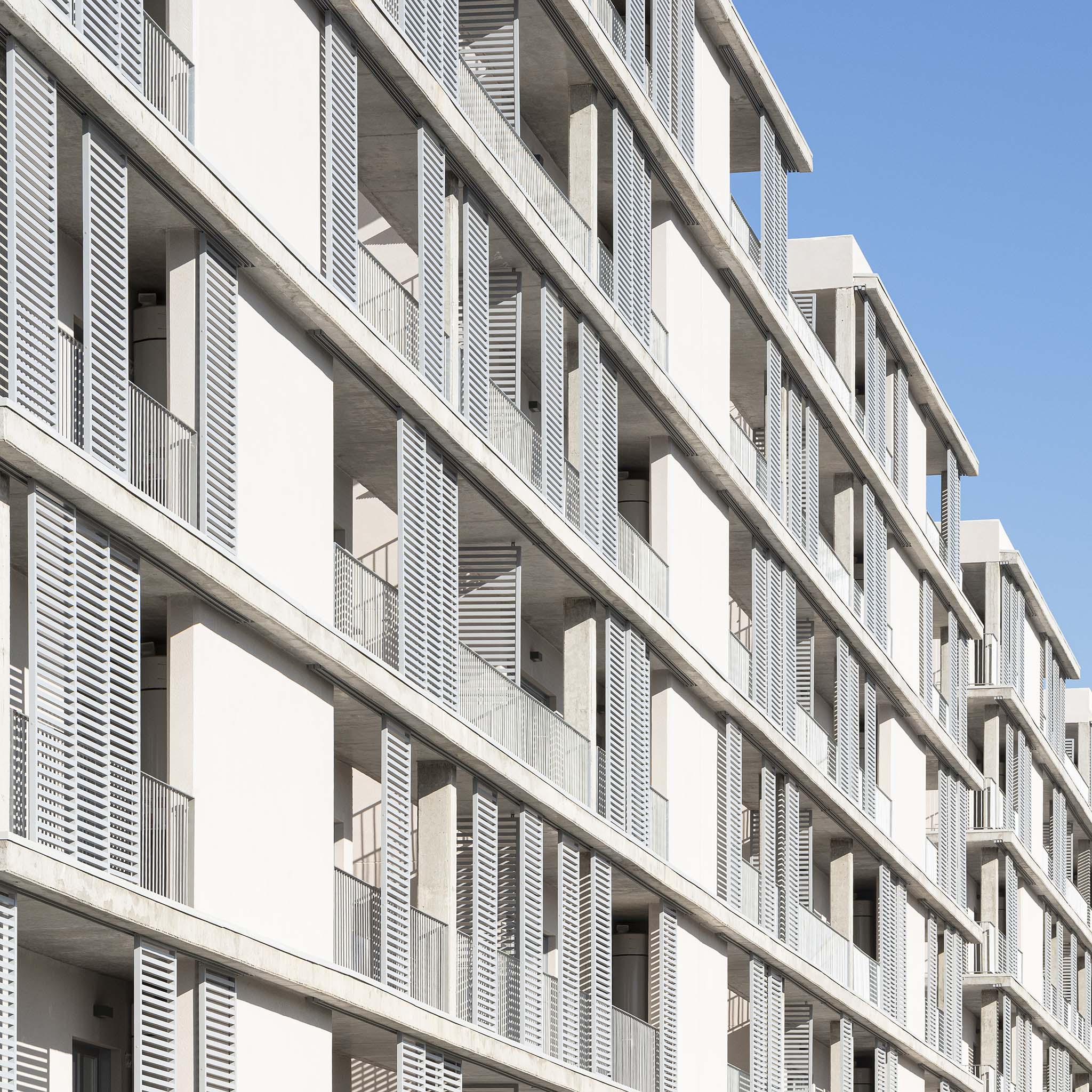
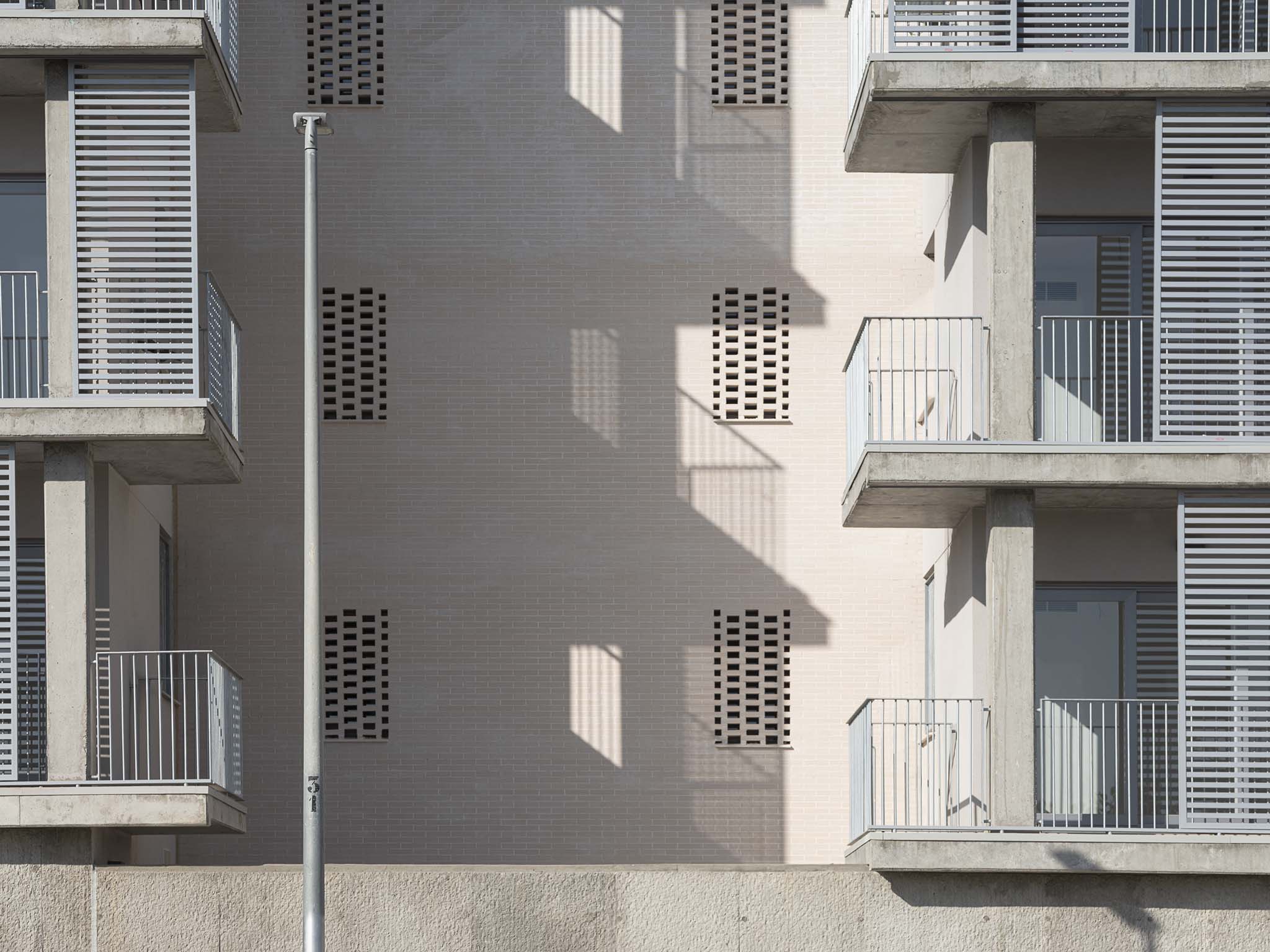
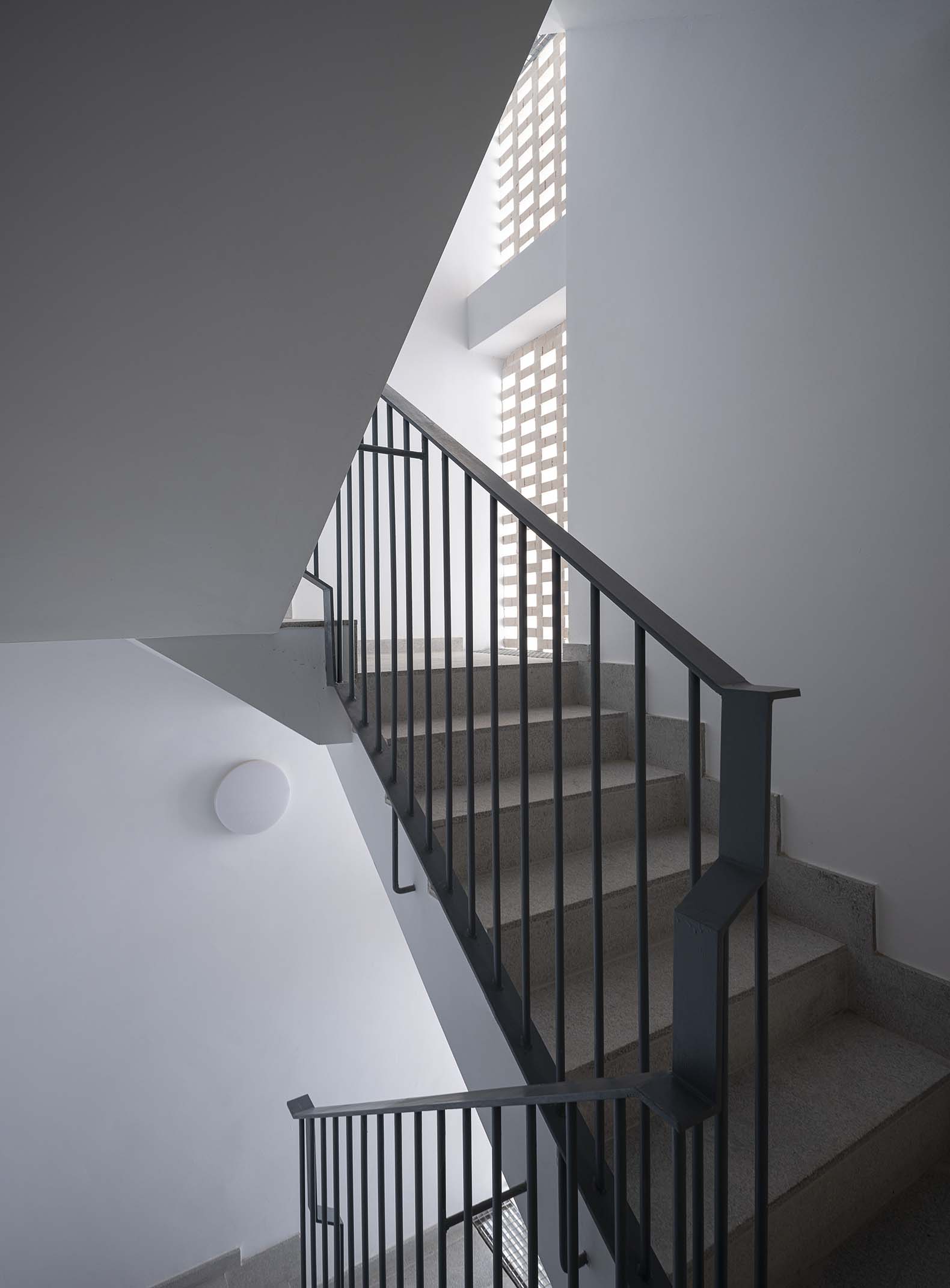
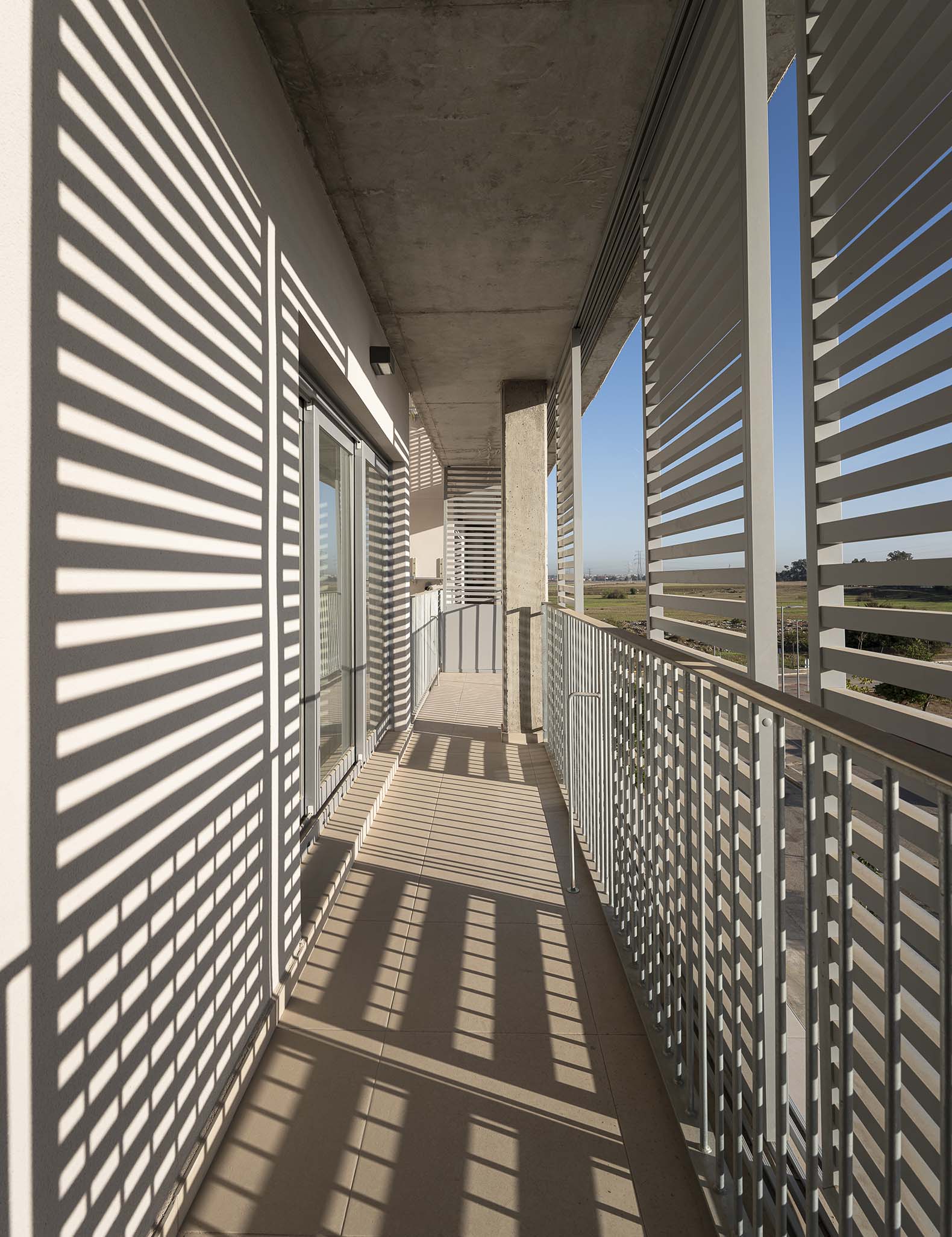
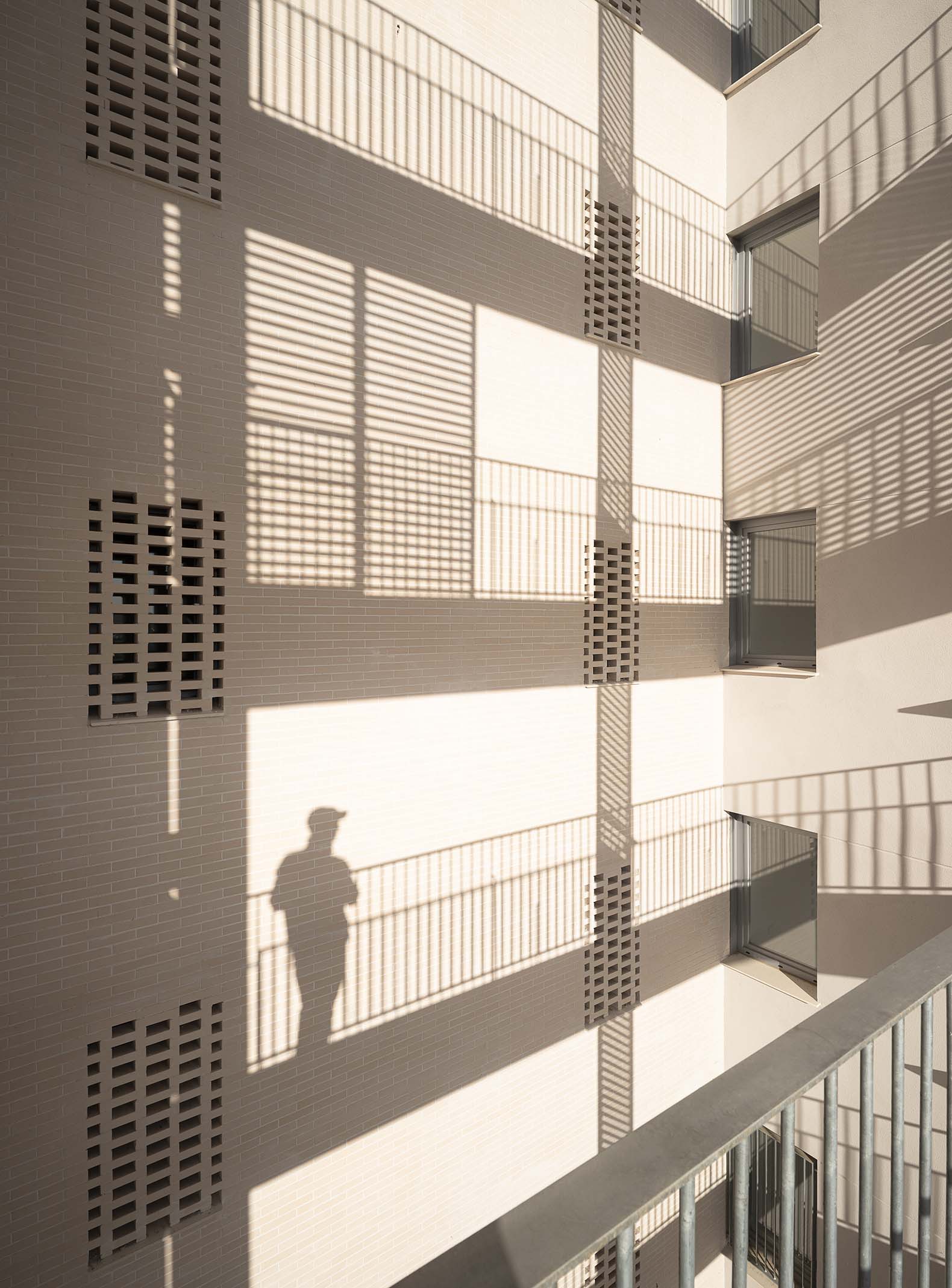
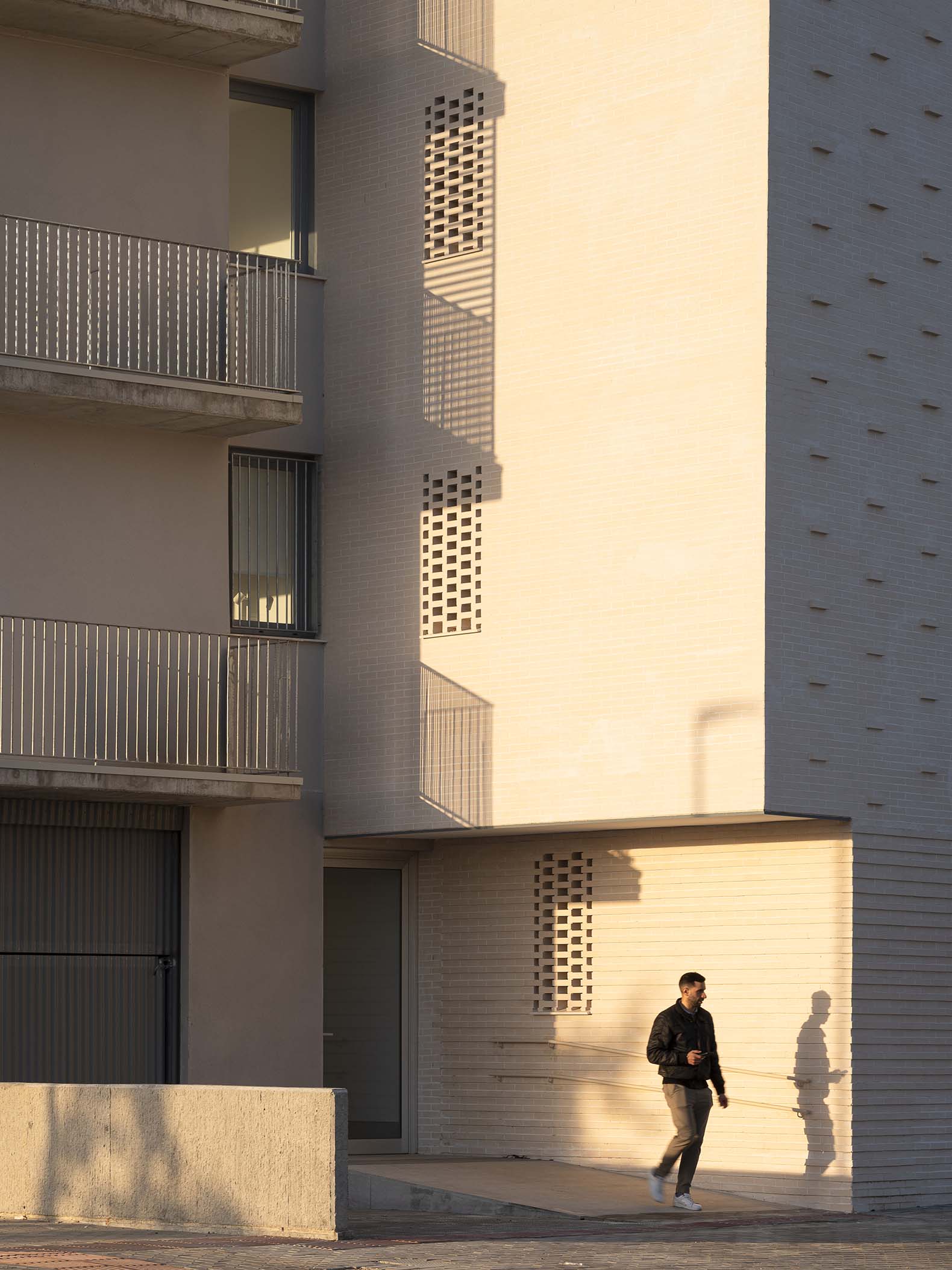
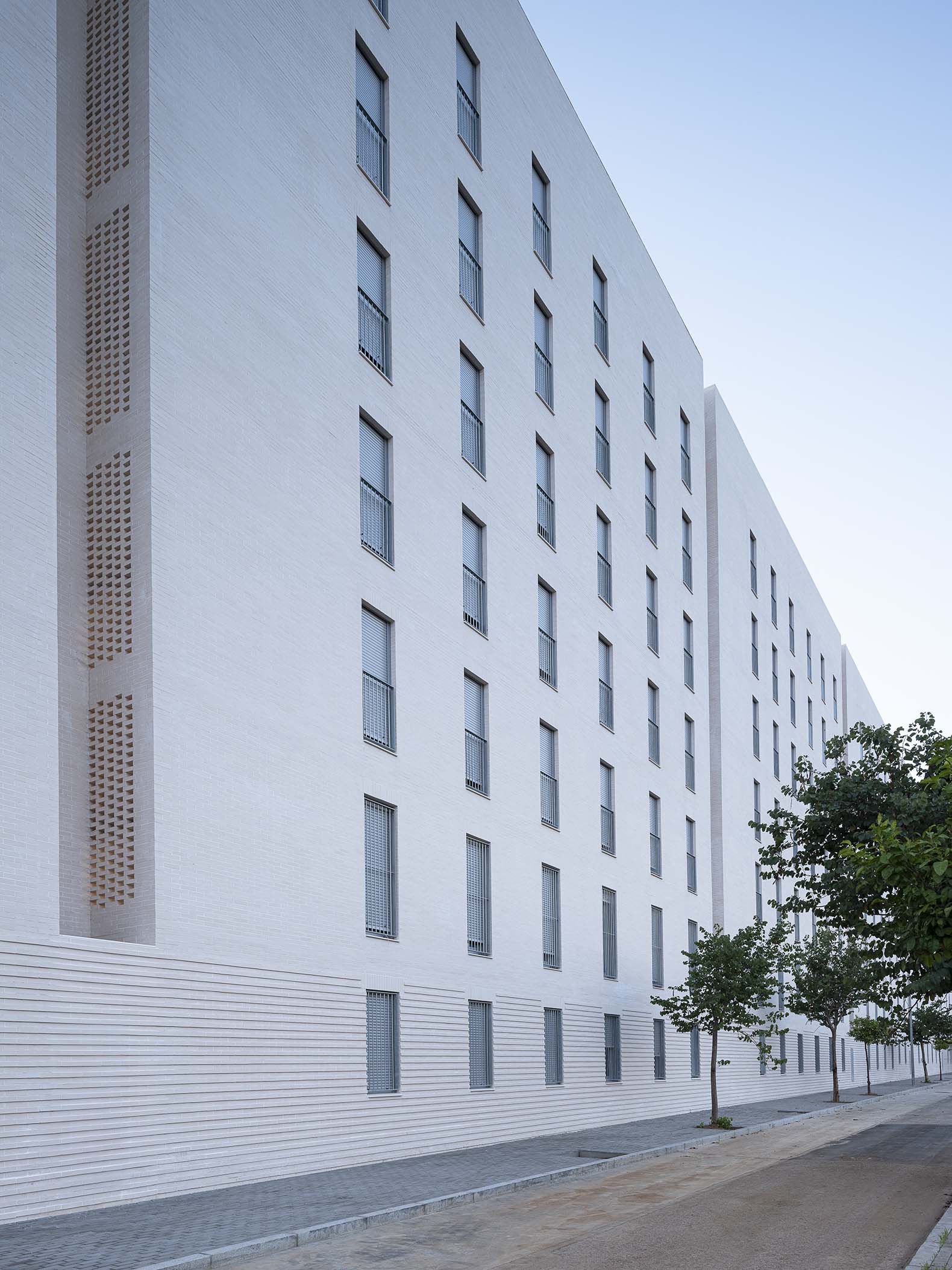
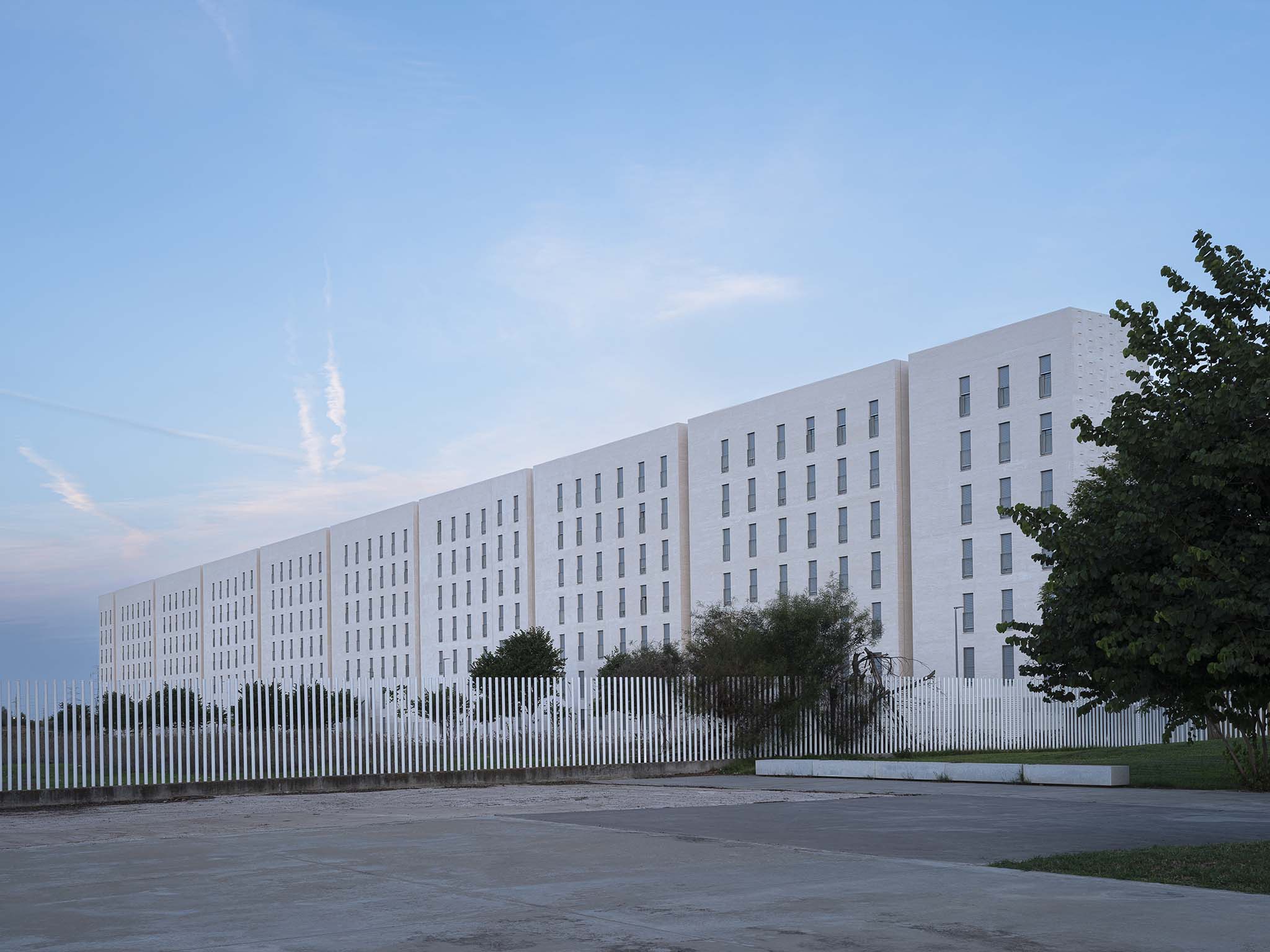
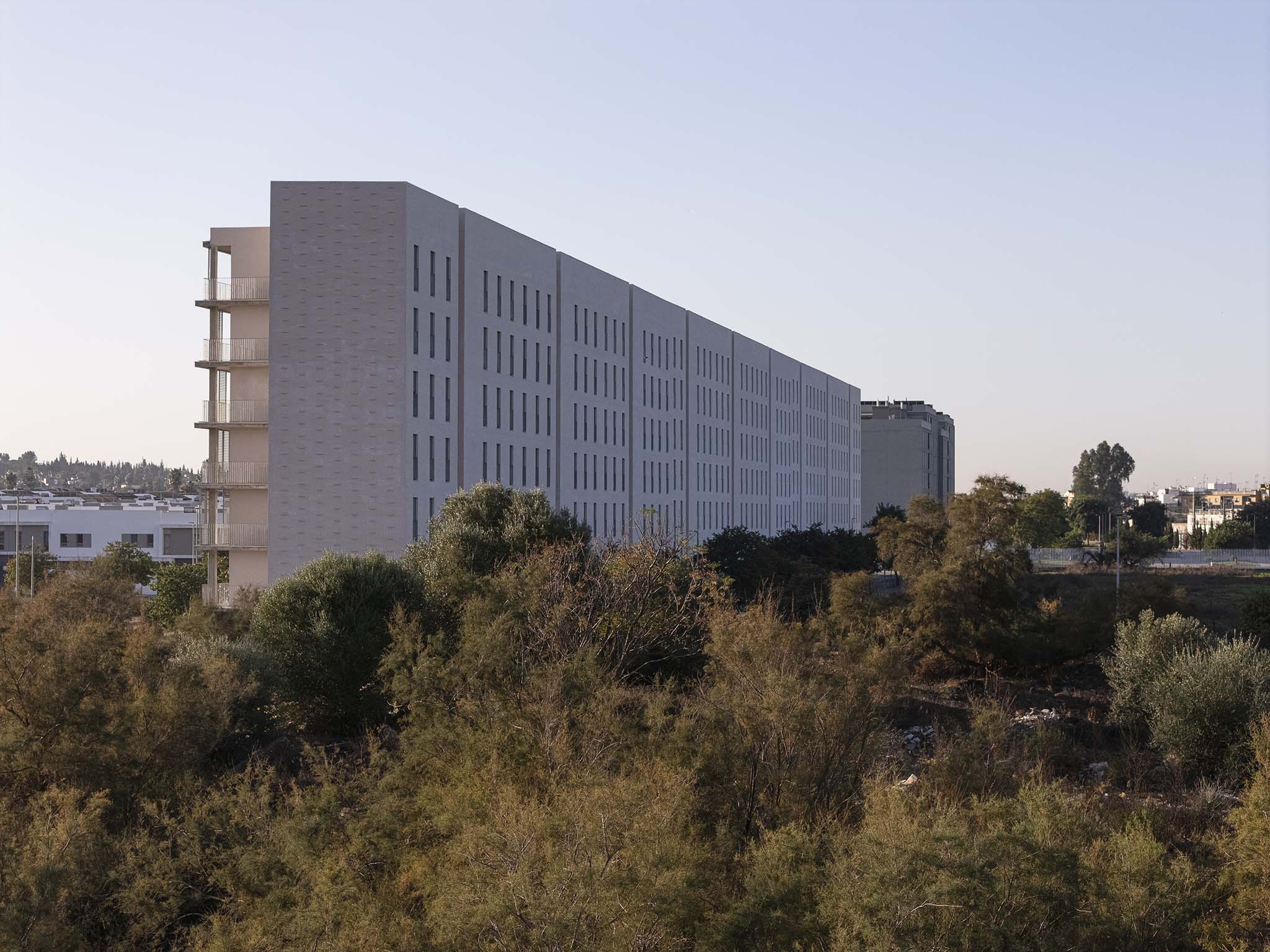
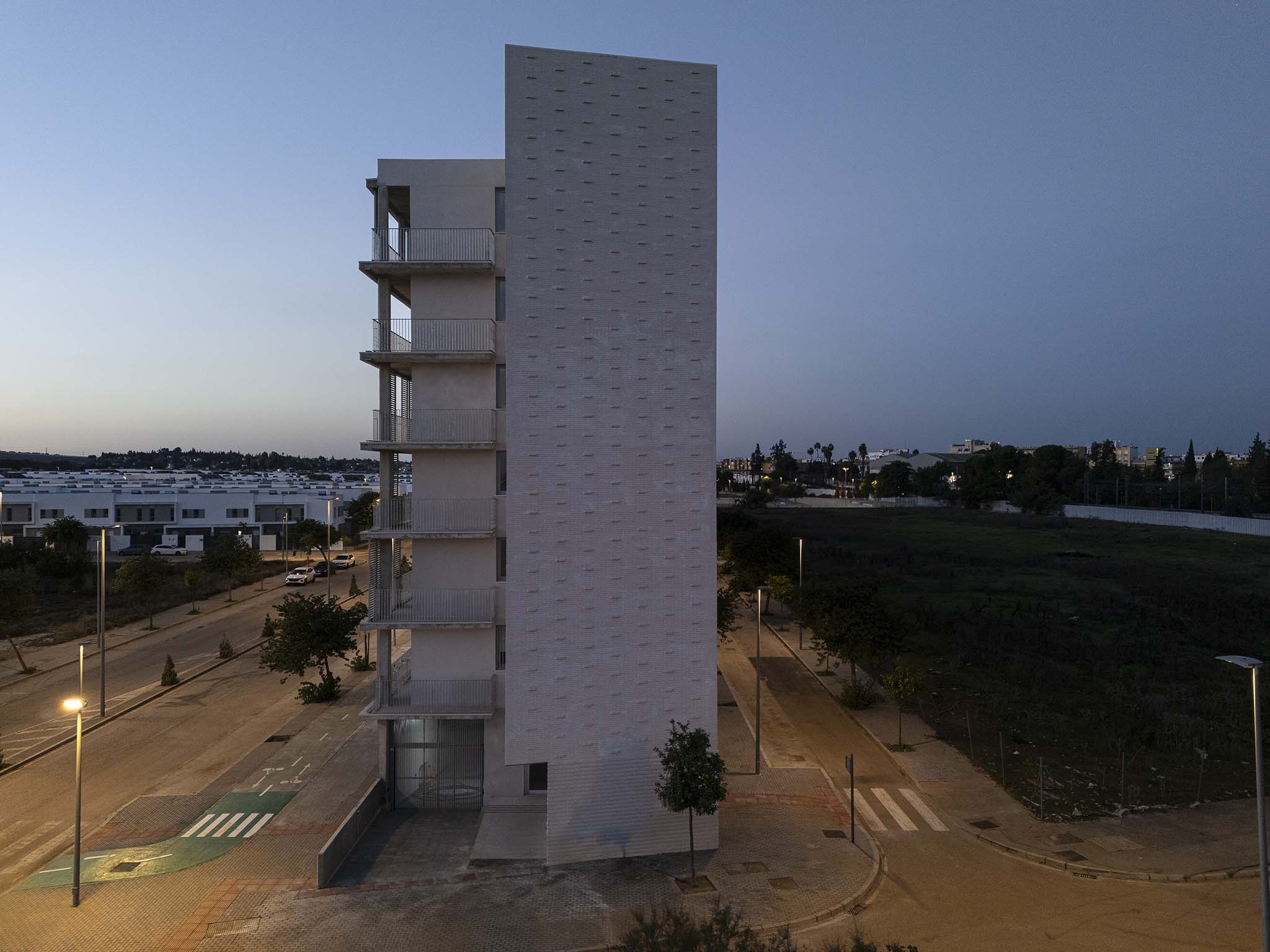
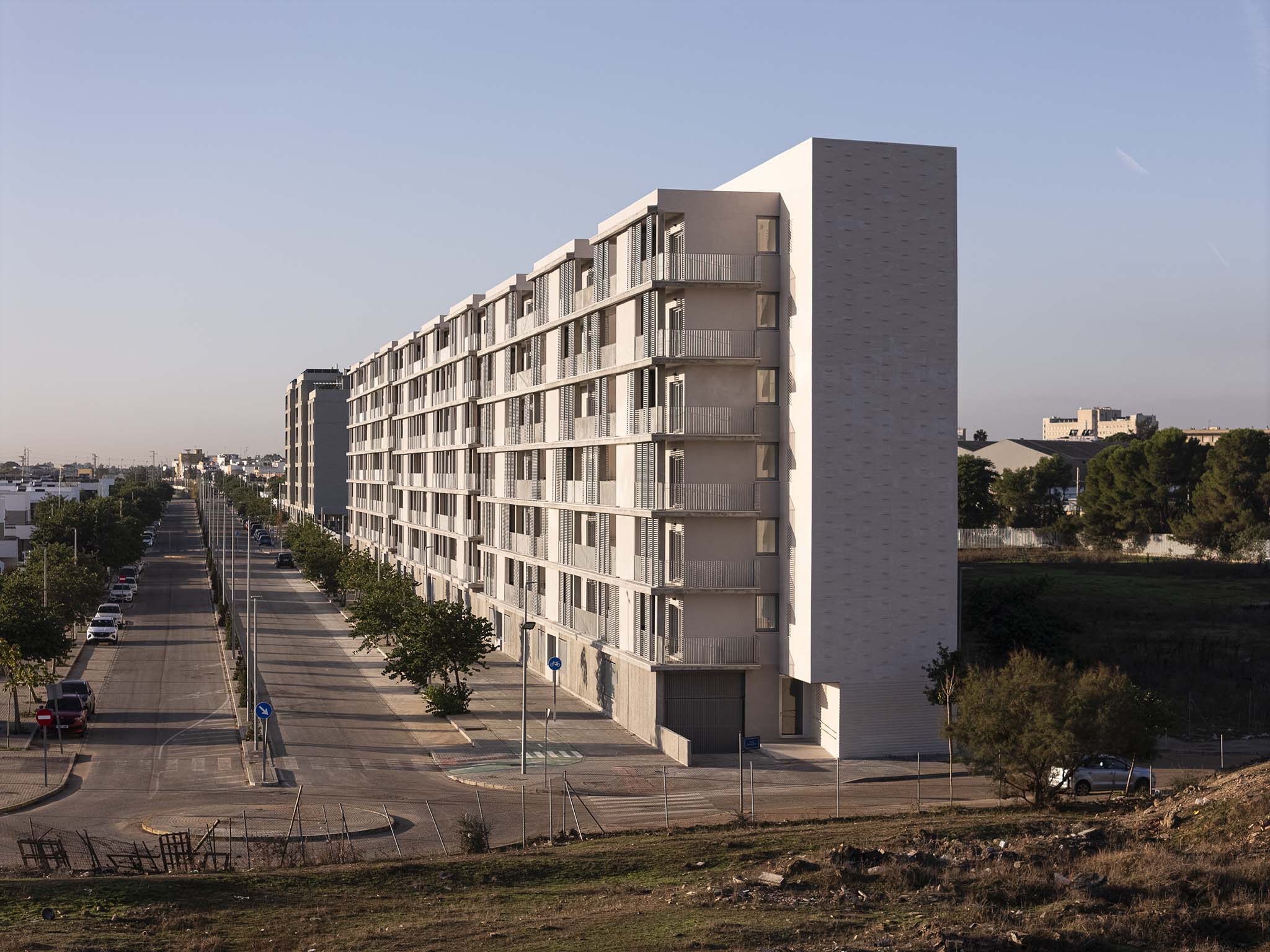
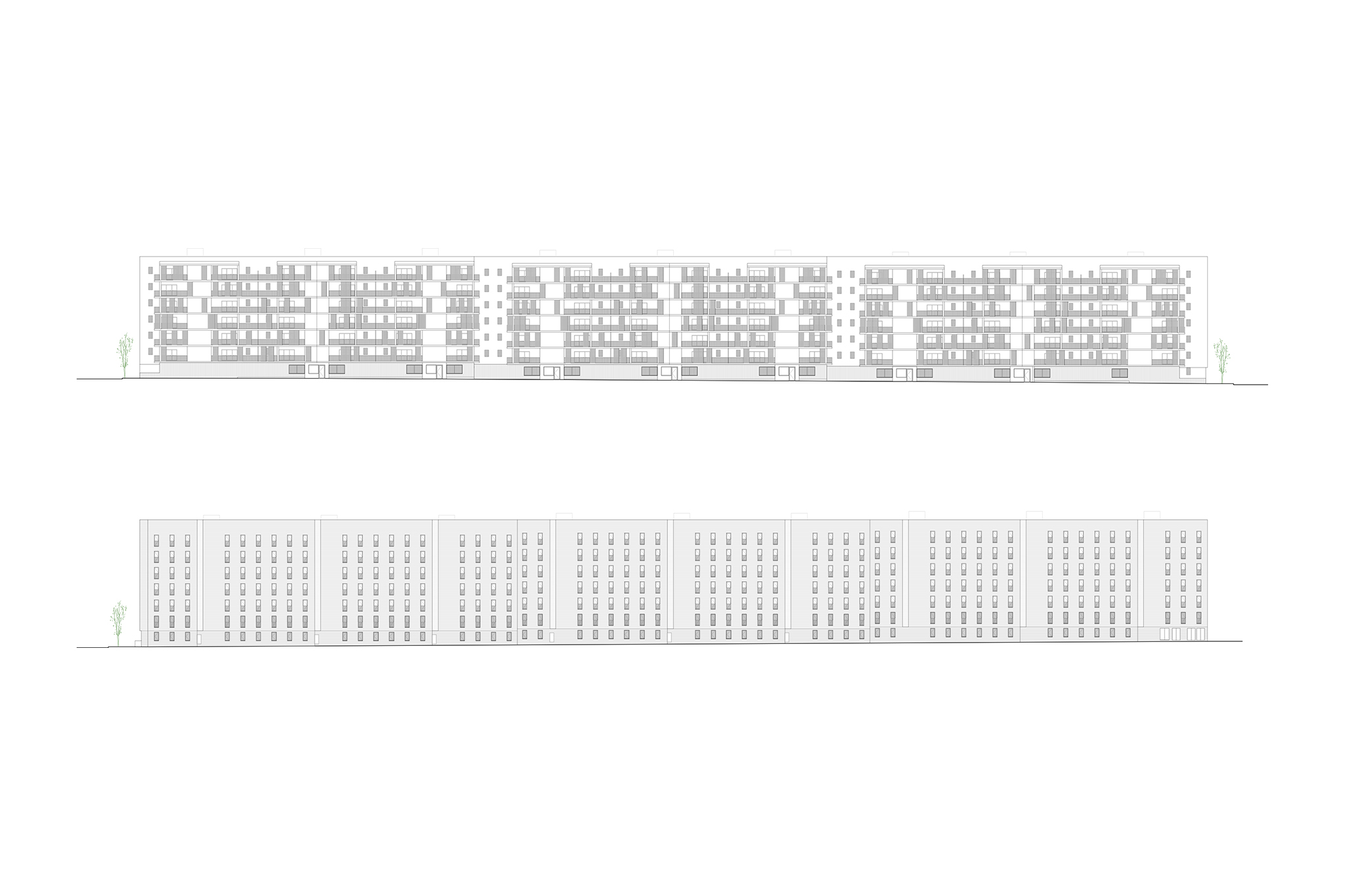
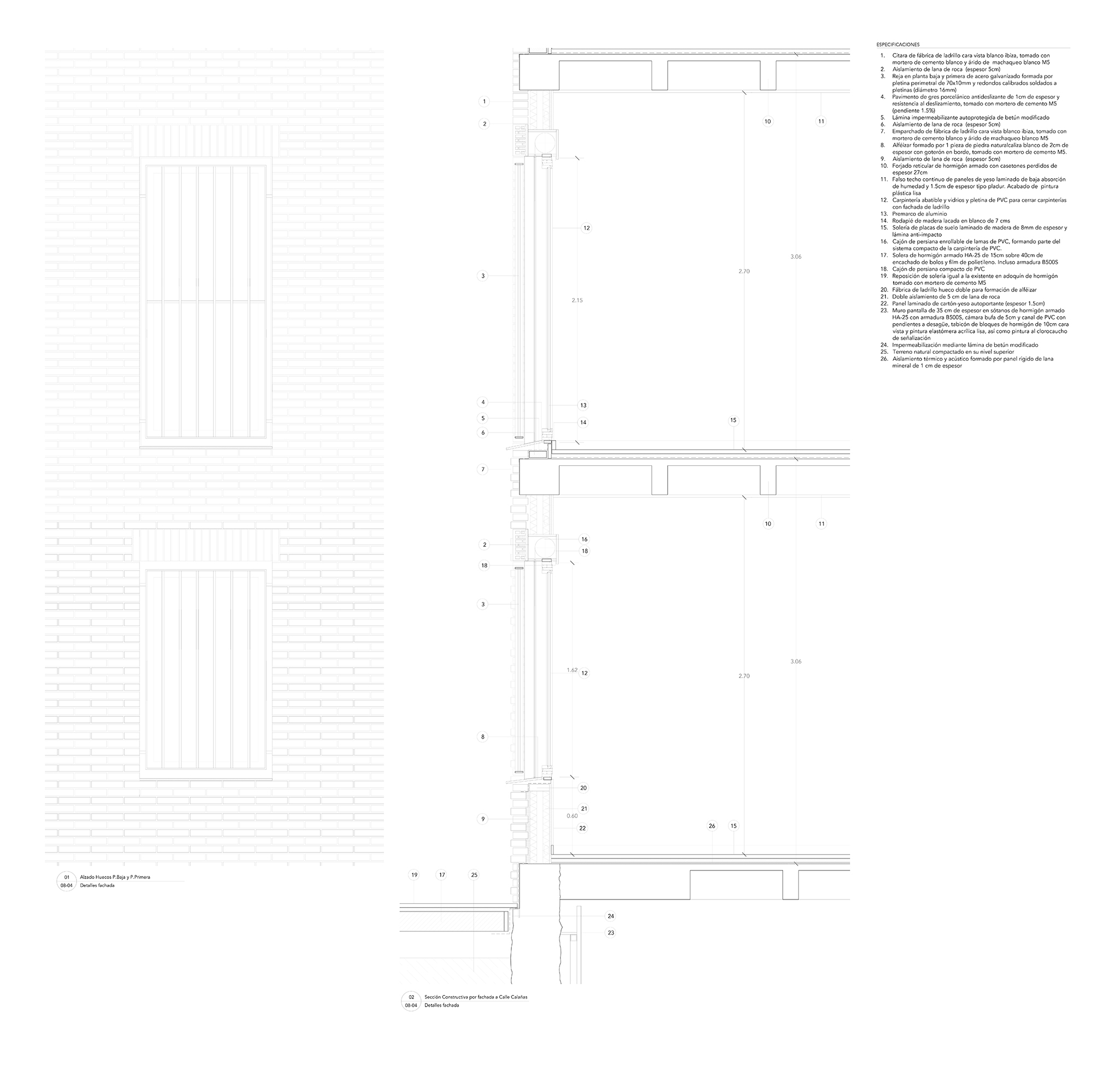
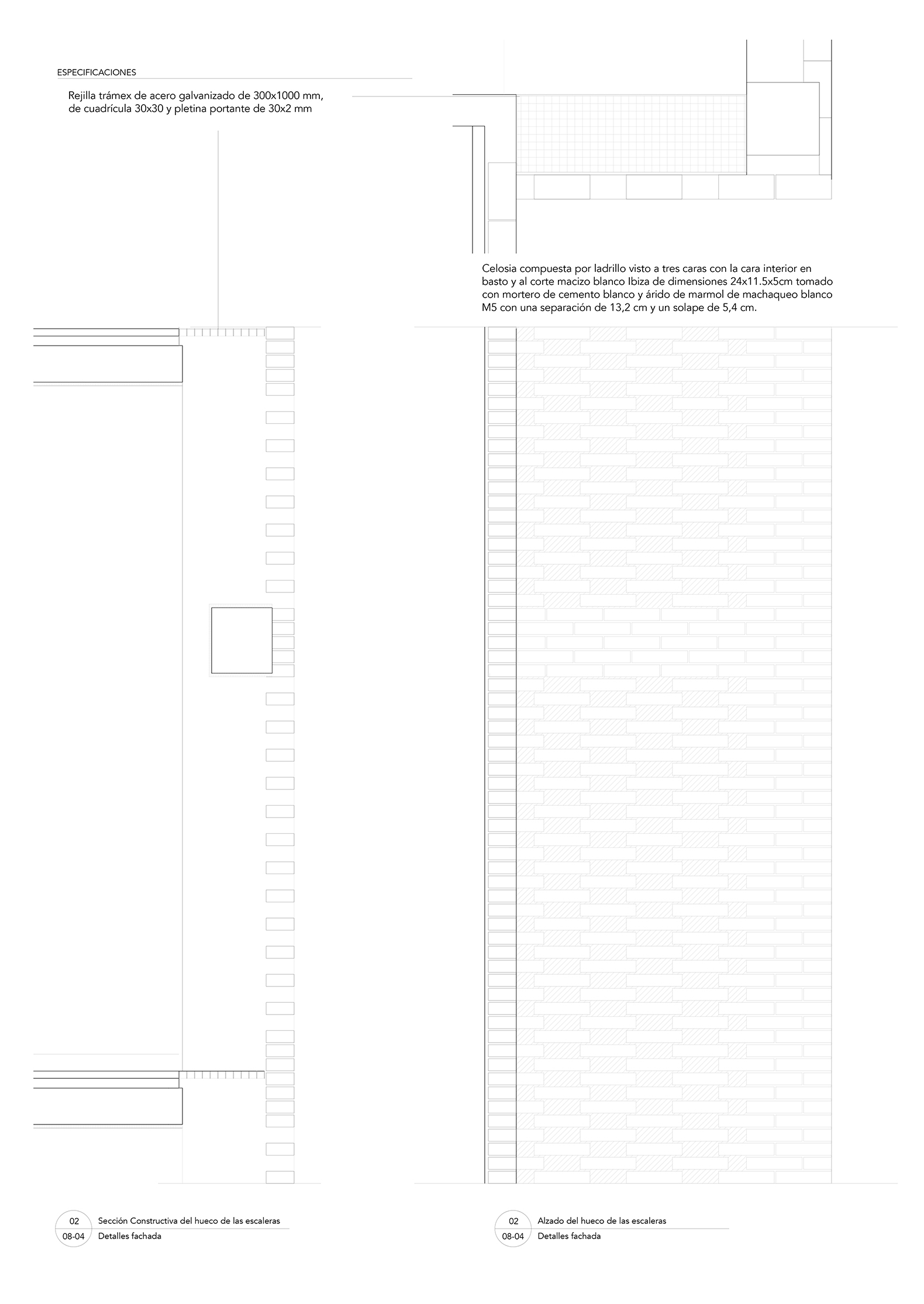
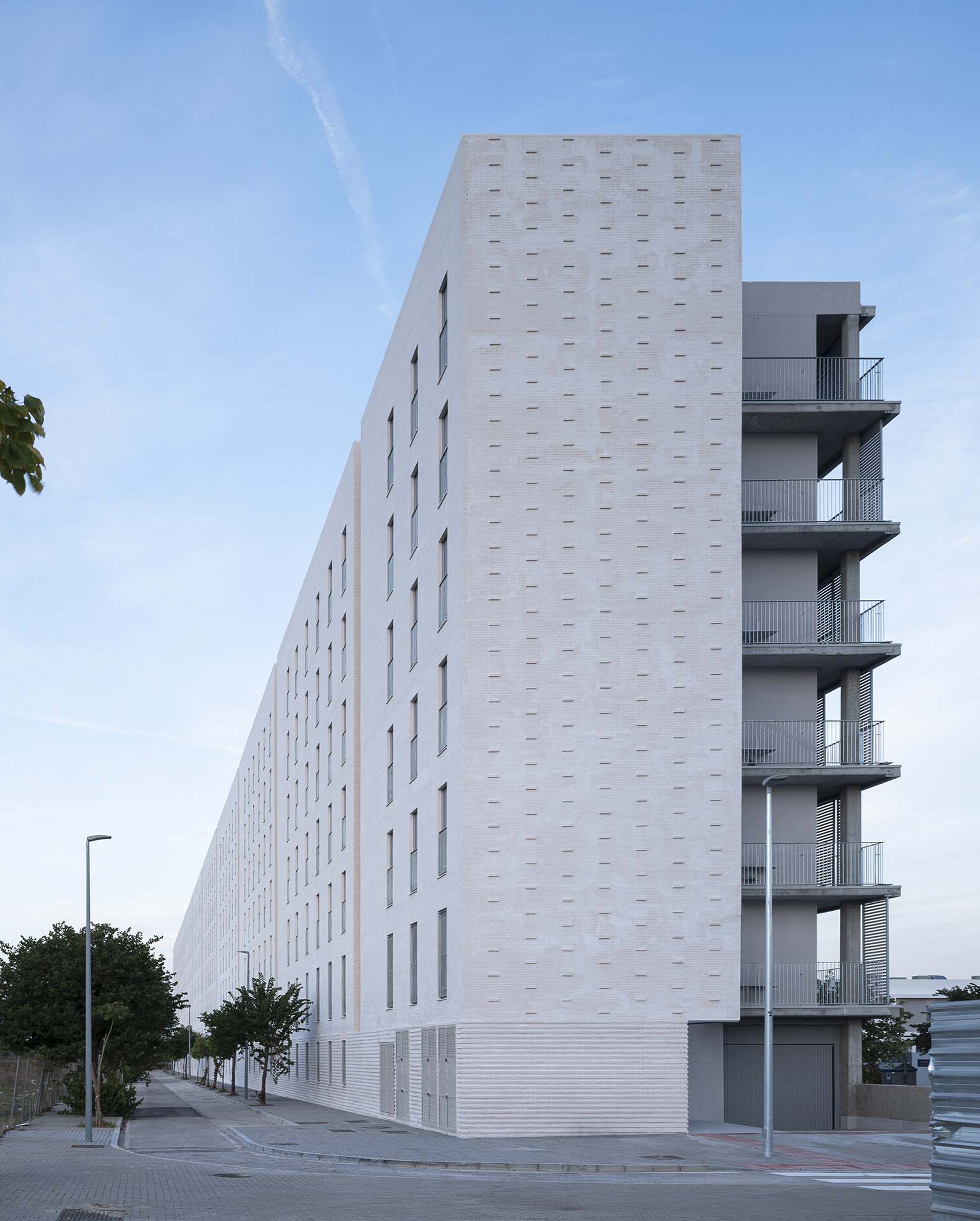
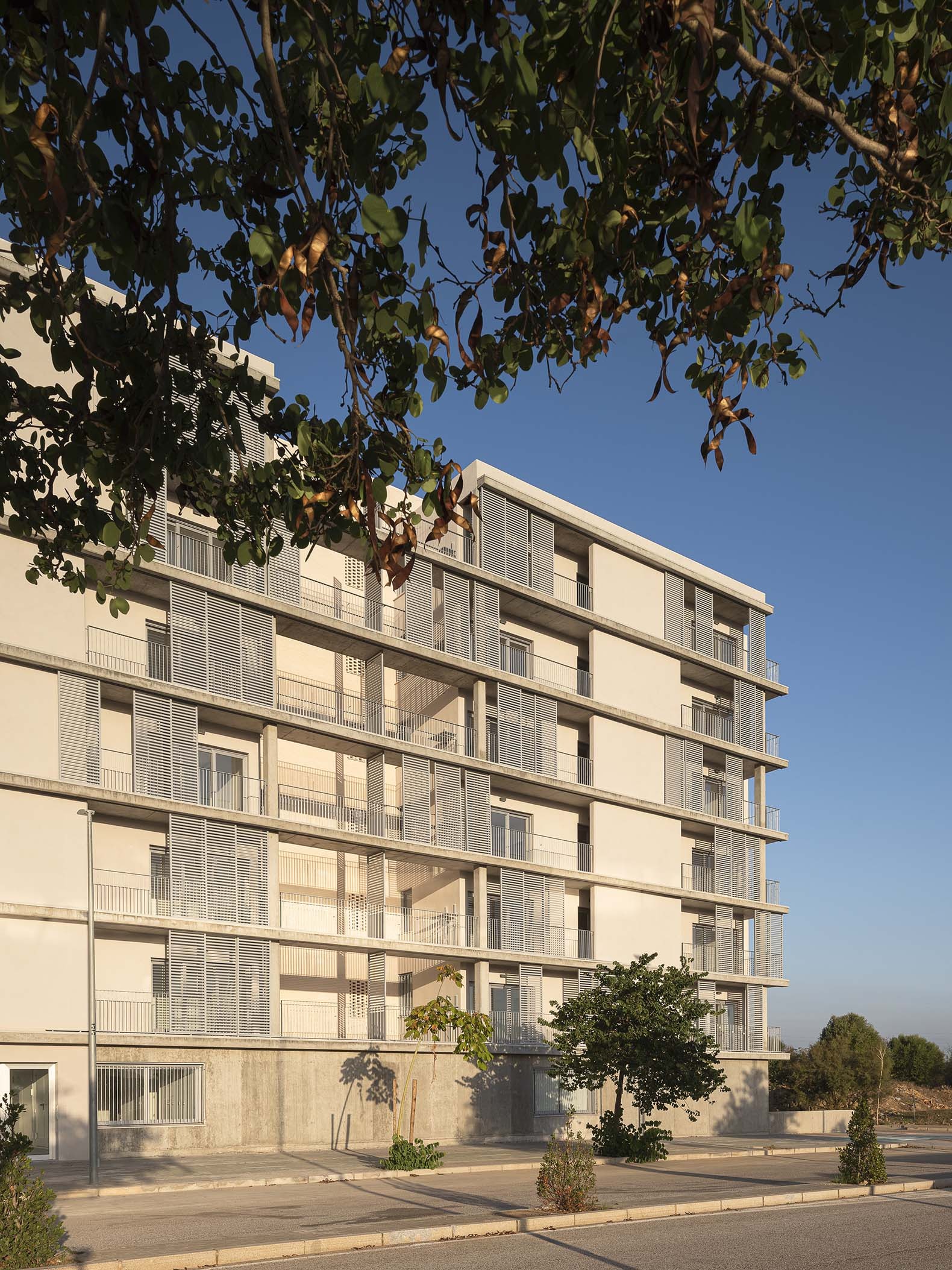
In terms of construction, the west façade features exposed white brickwork and vertical ventilation openings for the stairwells. Conversely, the east façade, facing Avenida del Flamenco, opens up in a more permeable manner with continuous terraces and large voids that maximize natural light and views of the surrounding urban landscape.
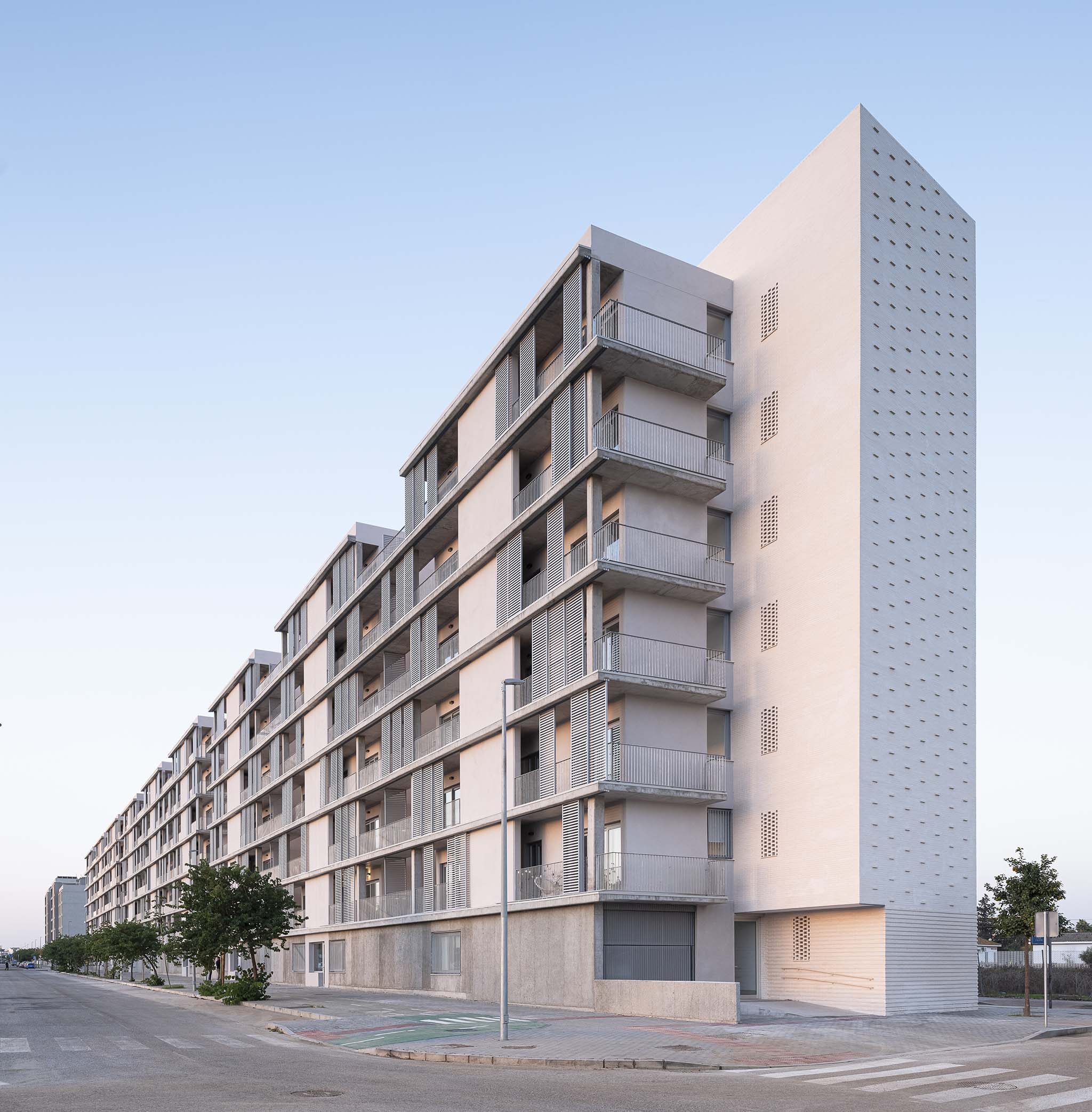
125 social housing units by Daroca Arquitectos + Práctica Arquitectura. Photograph by Fernando Alda.
Project description by Daroca + Práctica
The project, which won First Prize in a public competition, involves the construction of 125 social housing units in Pítamo Sur, Seville, based on a fundamental premise: the improvement of affordable housing through honest architecture that is sensitive to its context. The project embraces the extreme geometry of the site—a strip 200 meters long by barely 11.40 meters wide—not as a restrictive limitation, but as the primary driver of a high-performance passive bioclimatic strategy, demonstrating that efficiency and comfort are not incompatible with cost optimization.
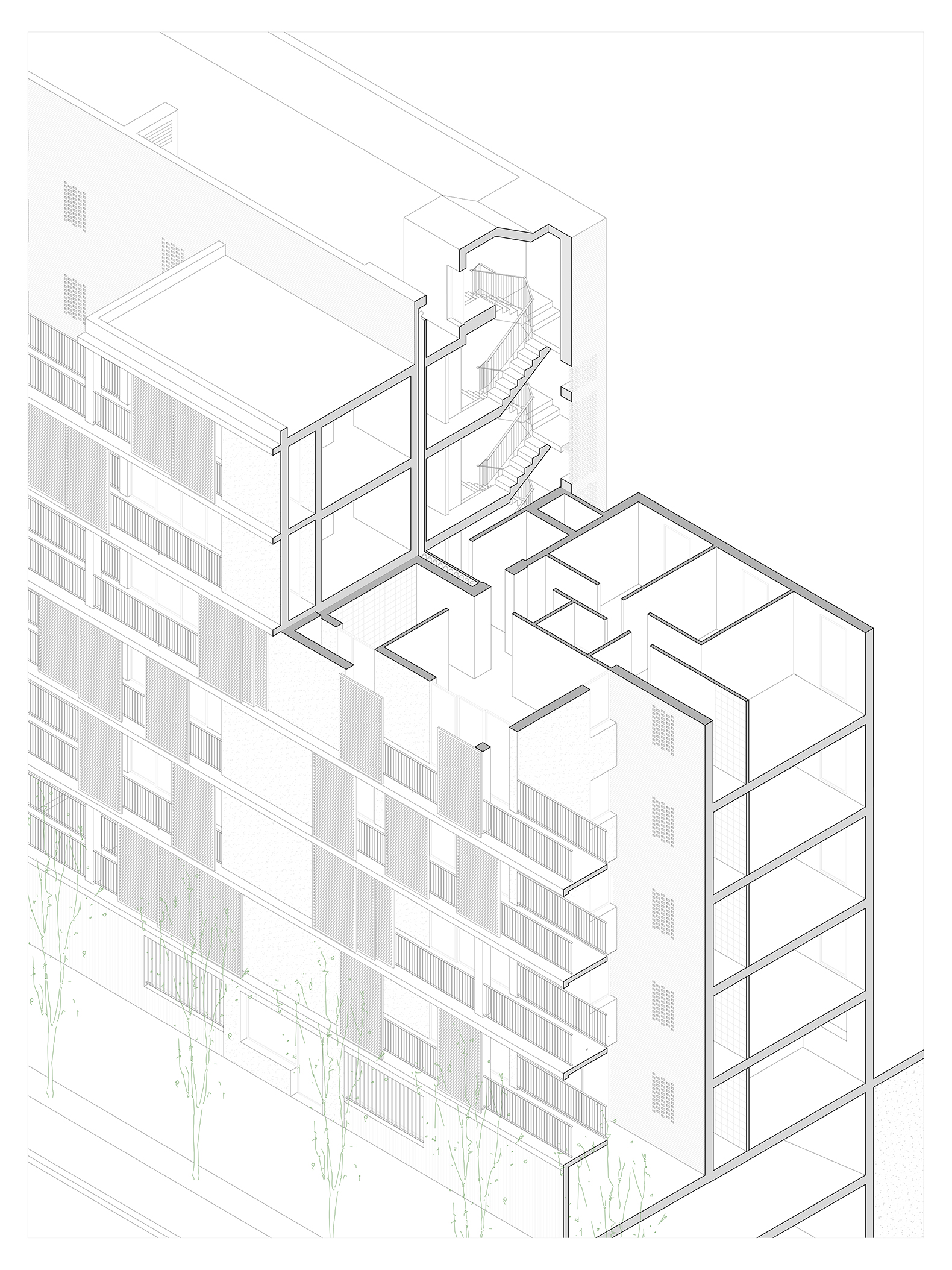
This minimal plot width necessitates a double-bay structural solution, which, far from being a drawback, becomes an advantage: it guarantees cross-ventilation in all the dwellings, an optimal factor for thermal comfort in the local climate. The building's design responds to the urban environment through a marked material and functional duality. The west façade, where the sleeping quarters are located, is constructed with exposed white brickwork and deep vertical stairwell ventilation shafts, providing thermal mass, acoustic insulation, and a solid appearance that aligns with local building traditions.
In contrast, the east façade, facing Avenida del Flamenco, opens up dramatically through a system of continuous terraces and large voids. These spaces act as a solar filter and thermal buffer, but their function extends beyond climate control: their arrangement fragments the length of the building, creating a rhythm of solids and voids that prevents the perception of a monotonous and endless facade, breaking the linear scale to make it more pedestrian-friendly.
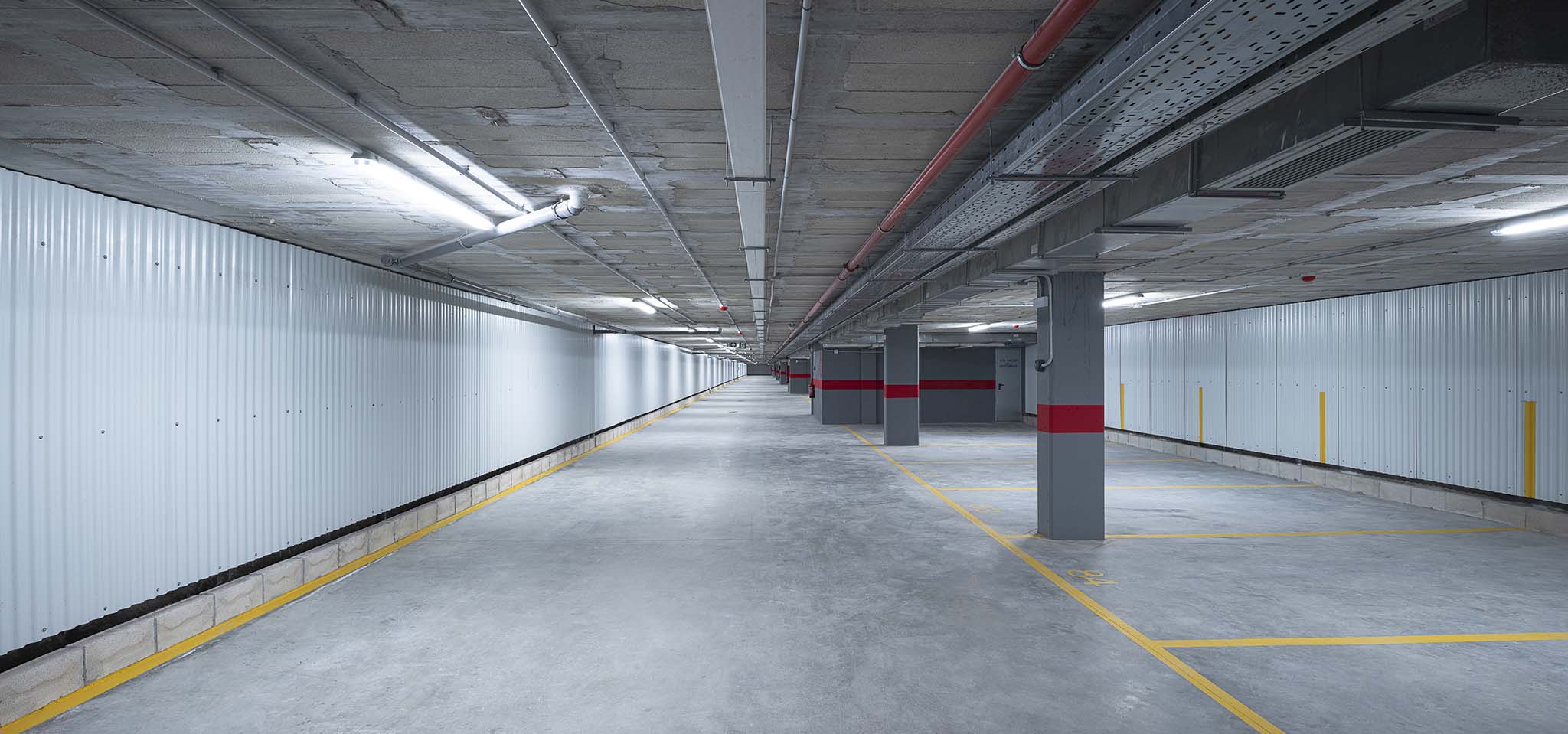
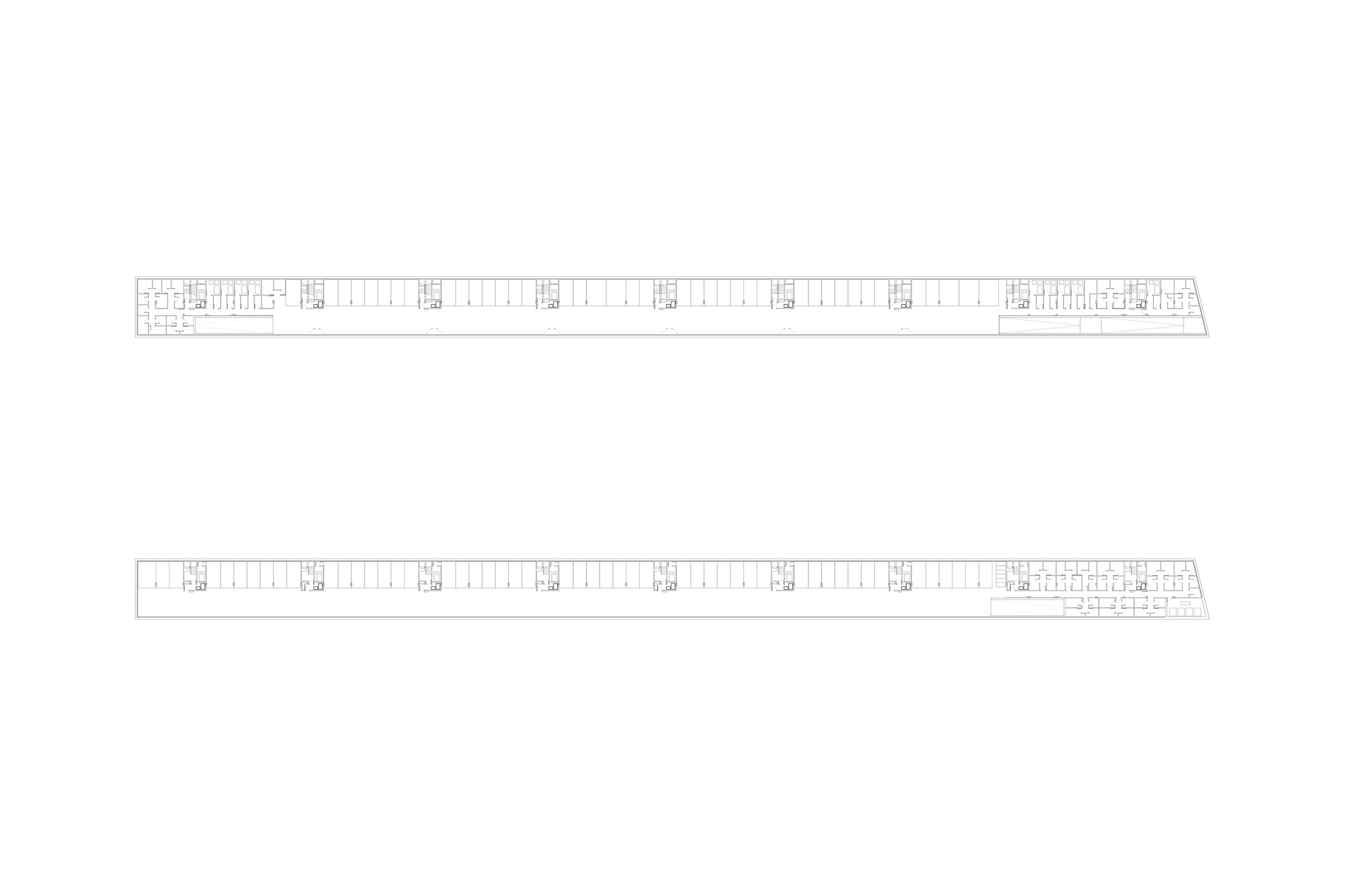
The building's section accommodates the existing topography (a north-south slope of 1.26 m) by subtly staggering the floor slabs in groups of three entrances. This design optimizes the access level and anchors the building to the terrain naturally. On the ground floor, vehicular access to the two parking levels is located at opposite ends of the building, eliminating the need for costly mechanical systems.
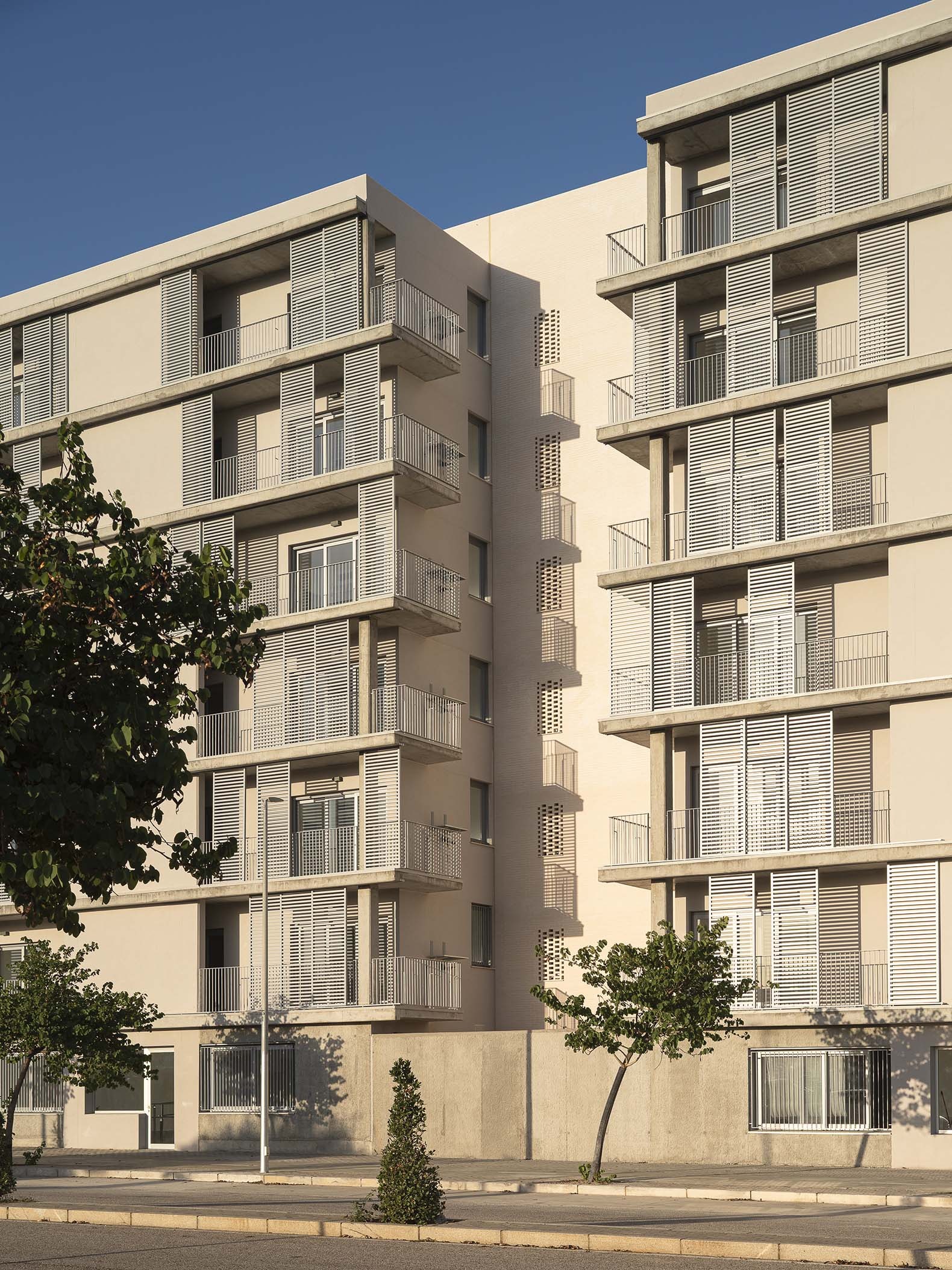
Typologically, the supporting structure frees up the floor plan, allowing for complete flexibility: the 2, 3, and 4-bedroom units are interchangeable and combinable. This feature gives the building temporal resilience, allowing for the future conversion of two adjacent dwellings to adapt the public housing stock to the inevitable evolution of family needs.