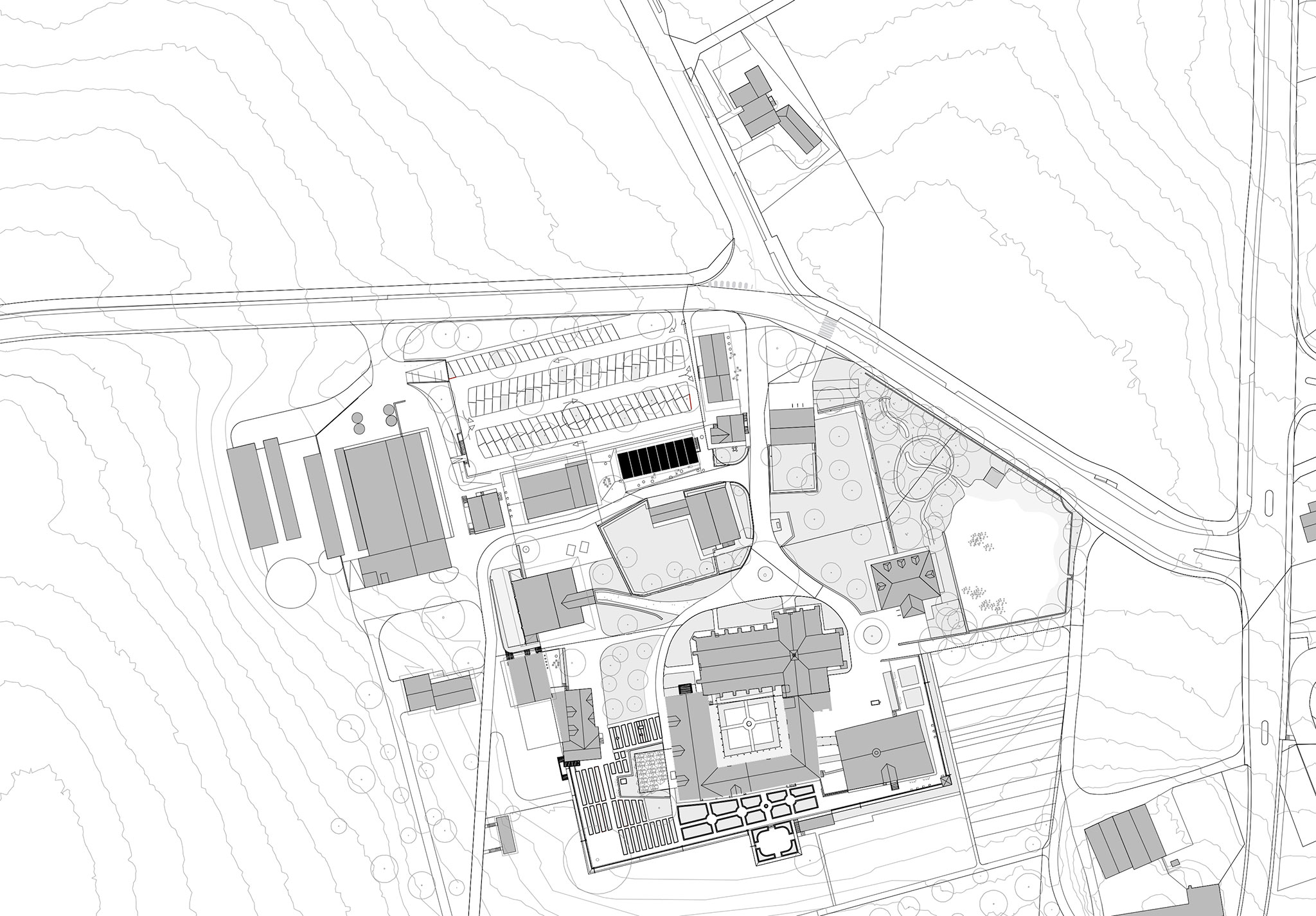
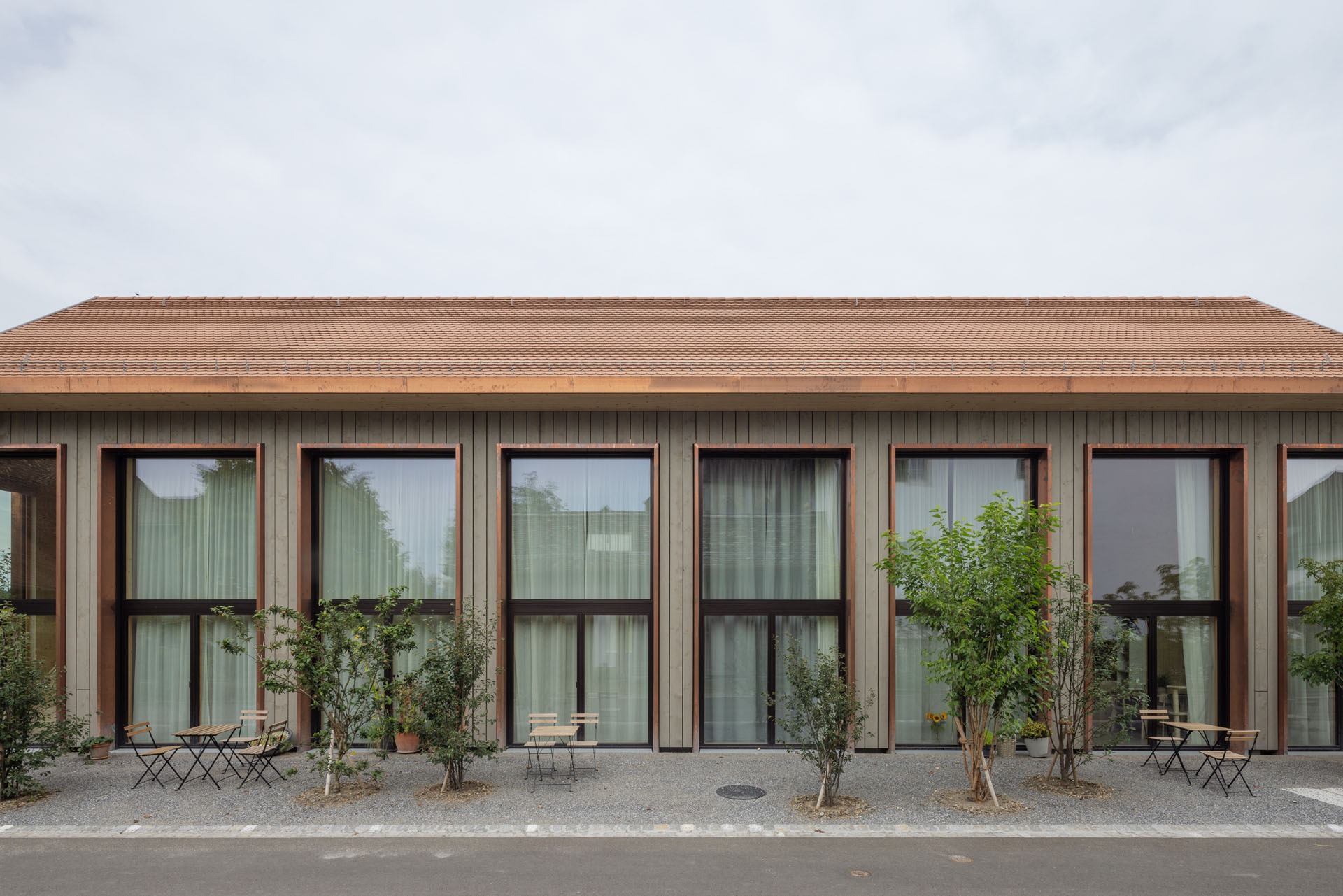
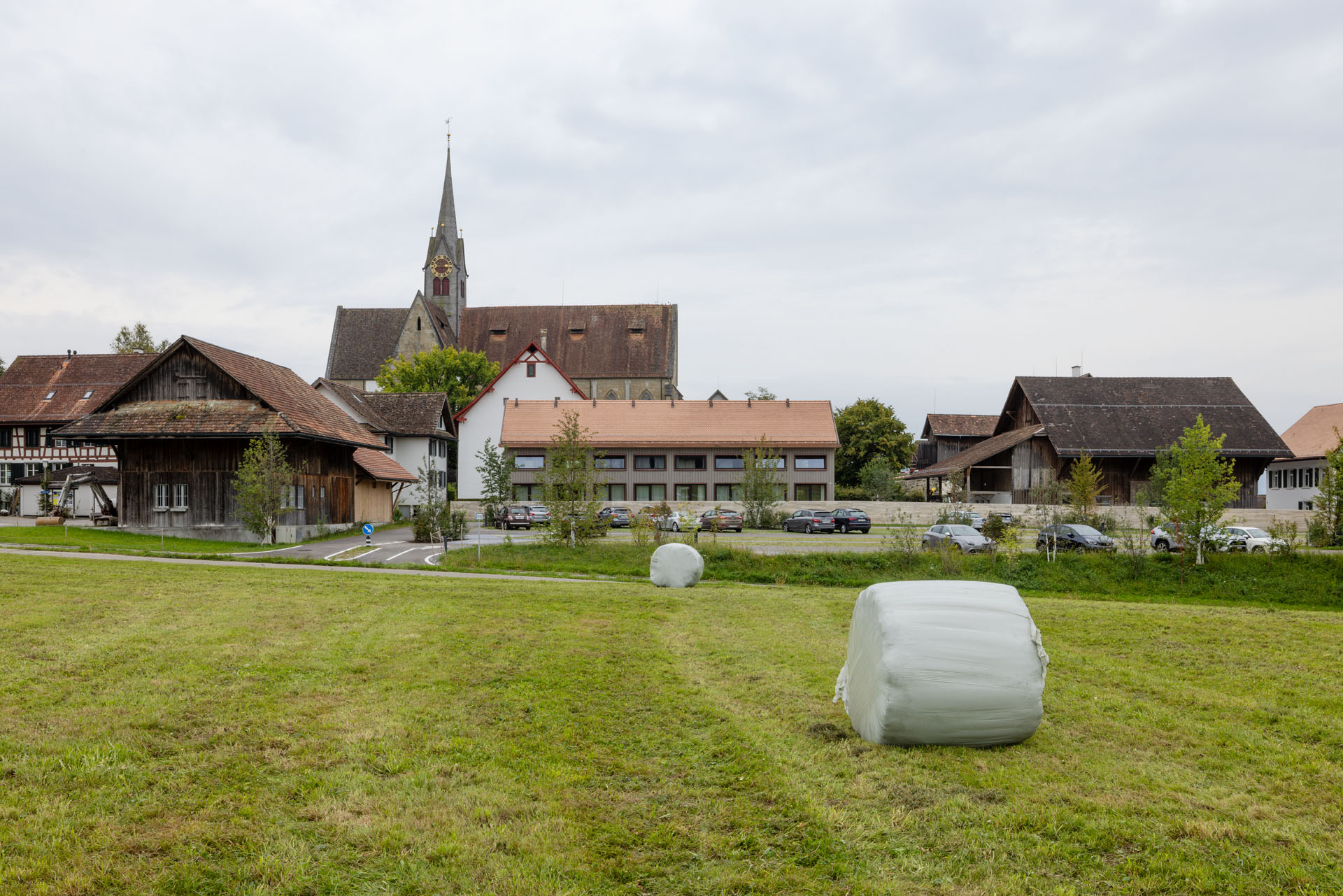
Architecture practice Atelier Kempe Thill designed this building of minimal apartments, located in a rural complex of whitewashed houses. The complex was conceived by the firm in collaboration with the landscape architects bbz landschaftsarchitekten in 2013, near the monastery of Kappel am Albis, a Swiss municipality in the canton of Zurich.

The client's objective was to create eight small apartments for short-term rental, while working within the constraints of a small plot of land and local building regulations requiring pitched roofs. The building was designed in the terraced-house typology, resulting in a cluster of highly optimised, narrow, and compact dwellings.

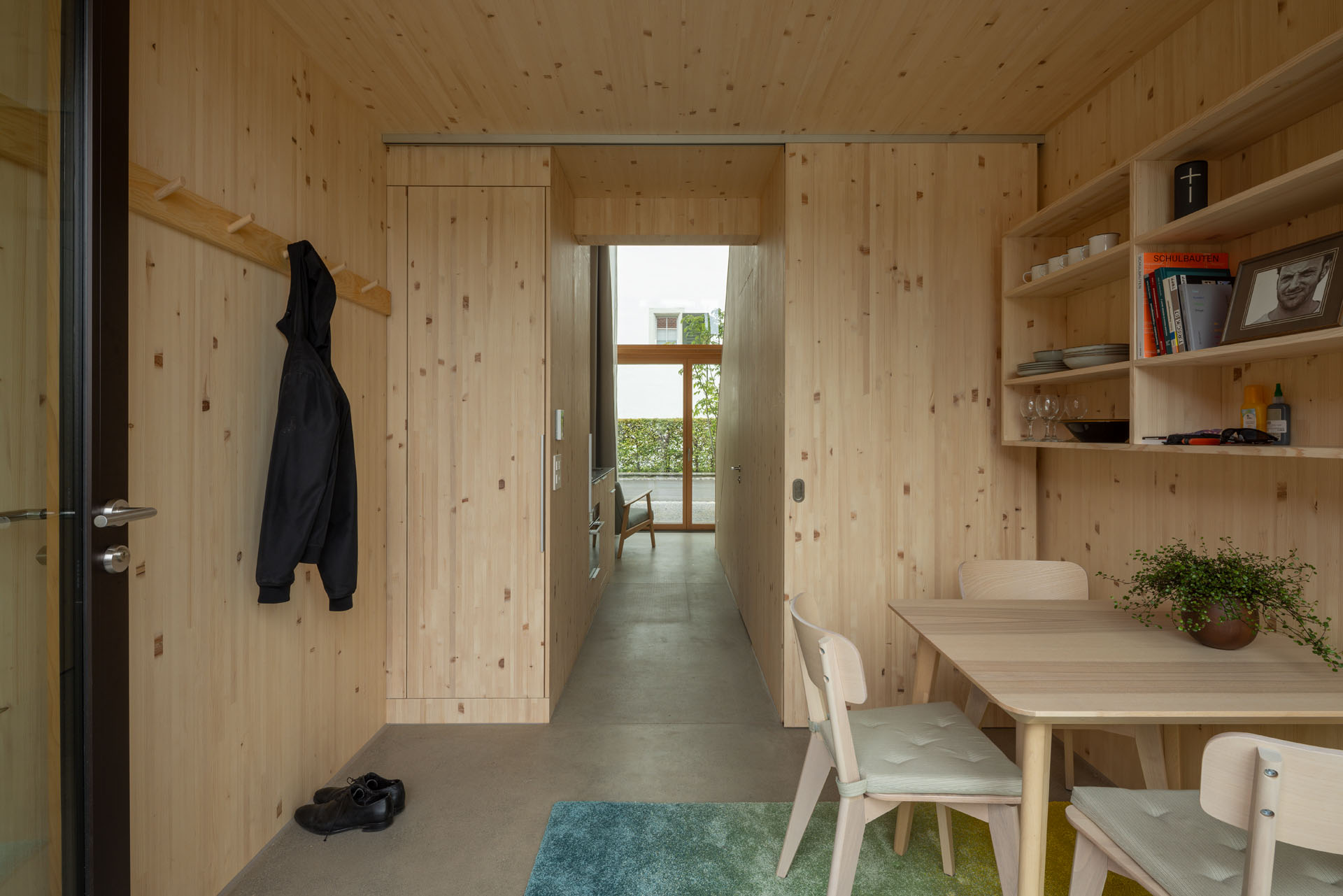
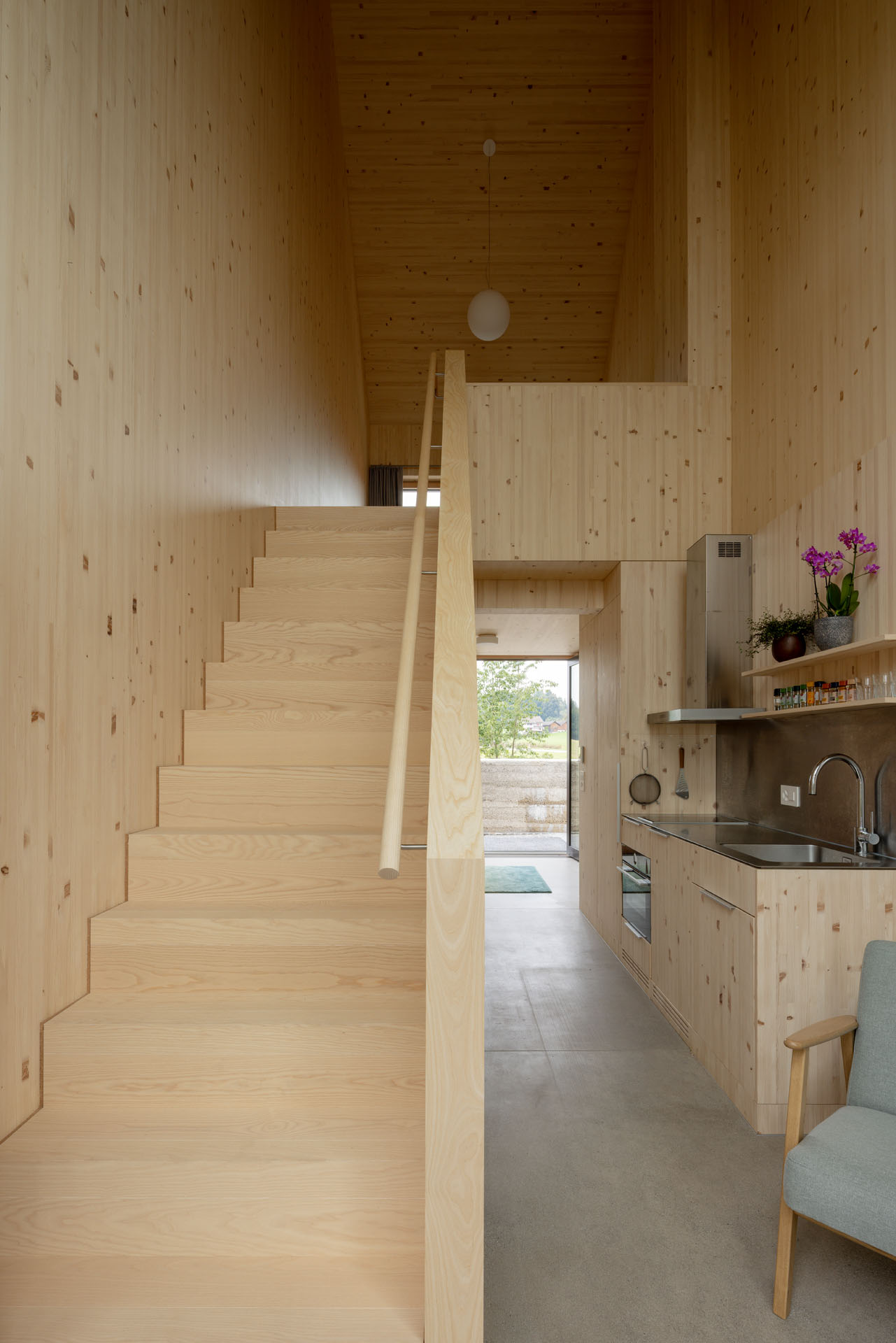
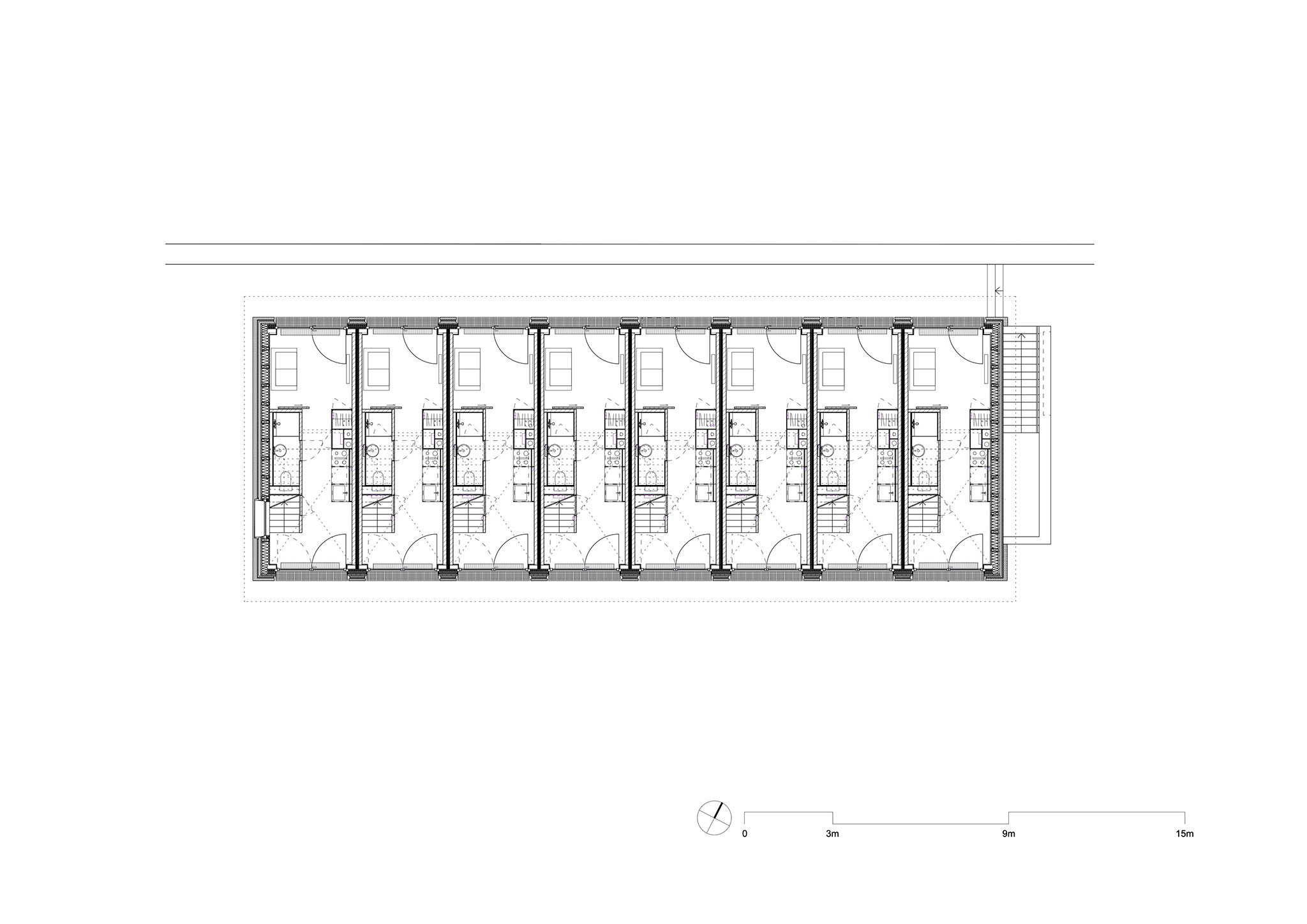
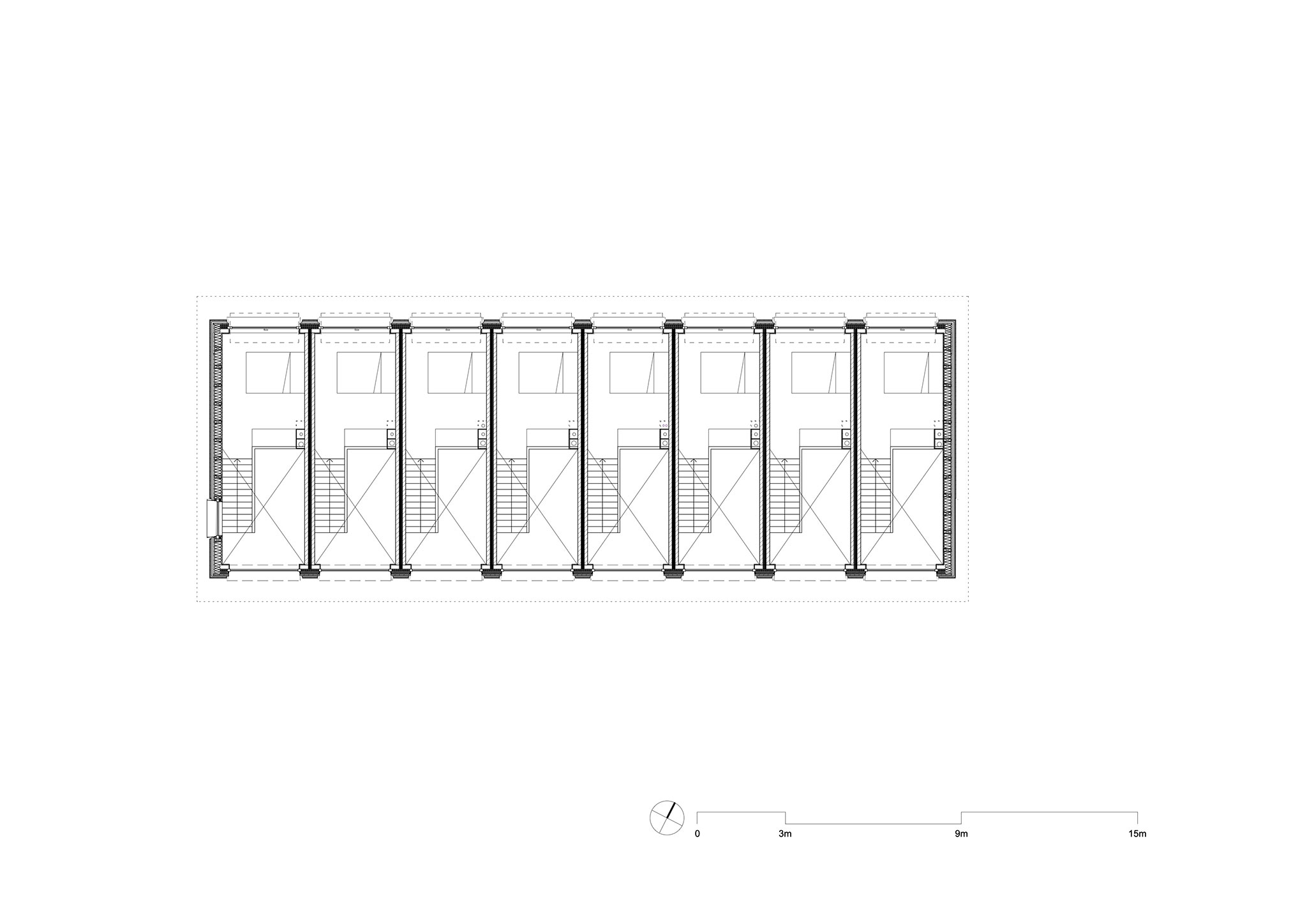
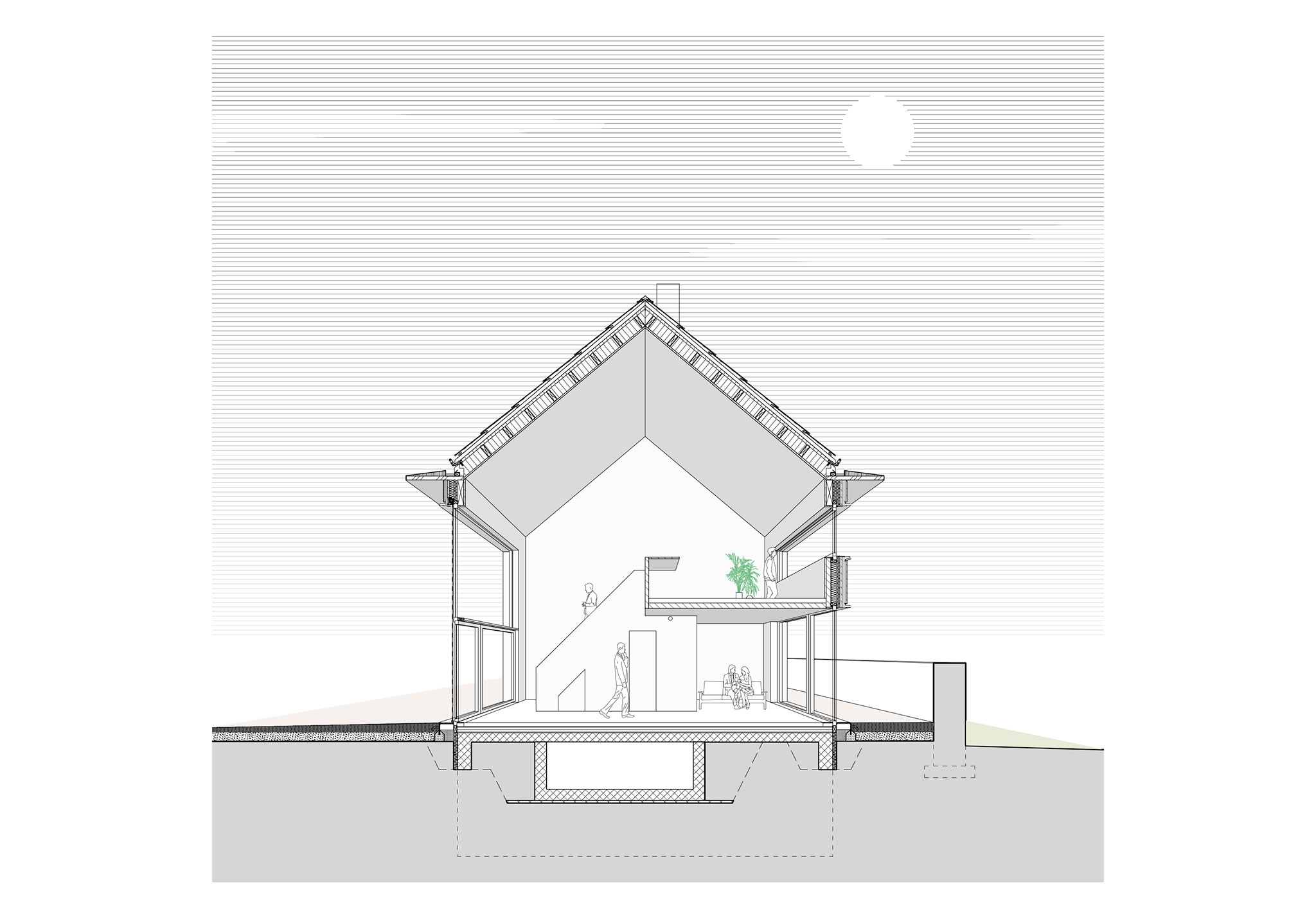
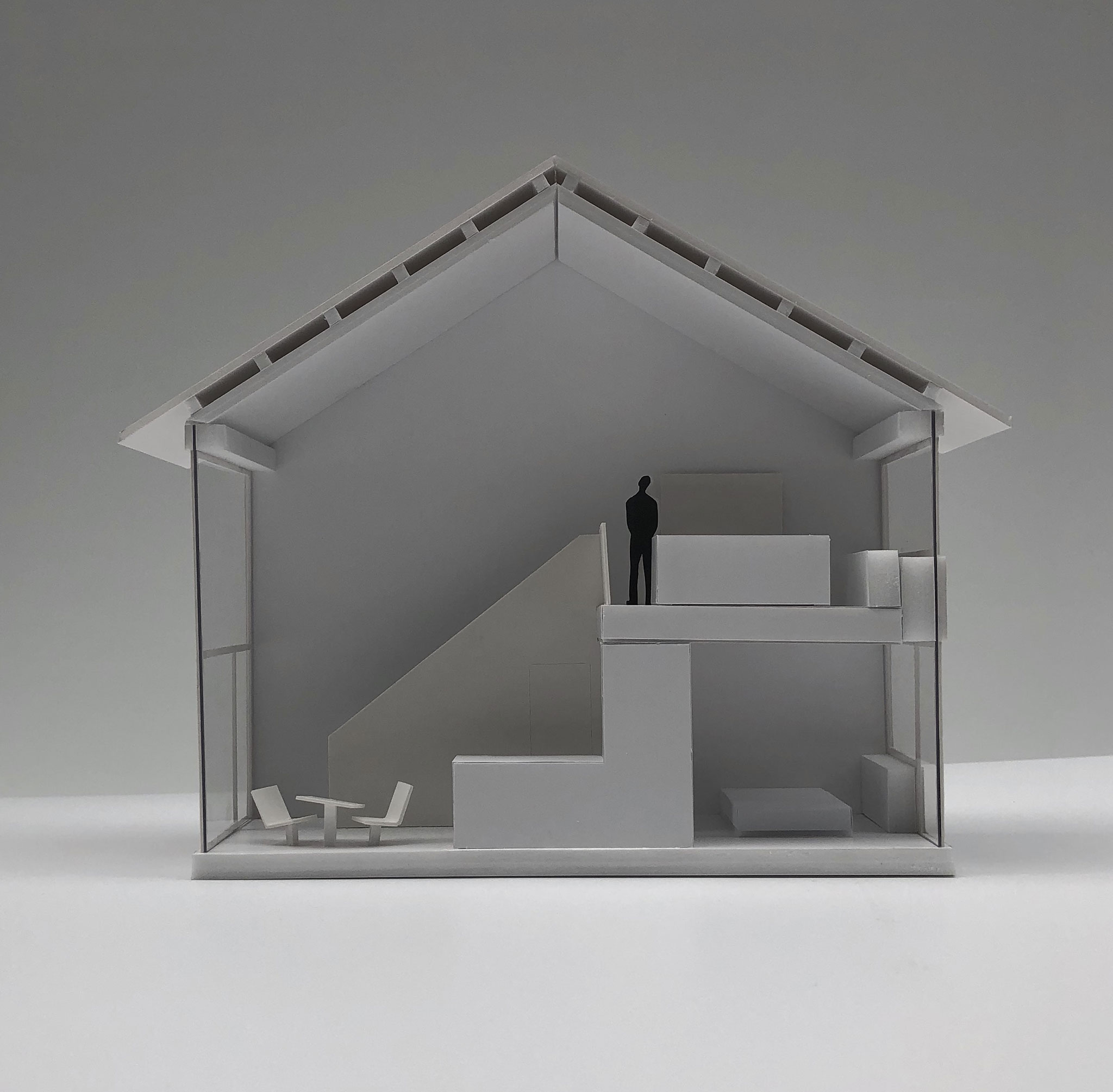
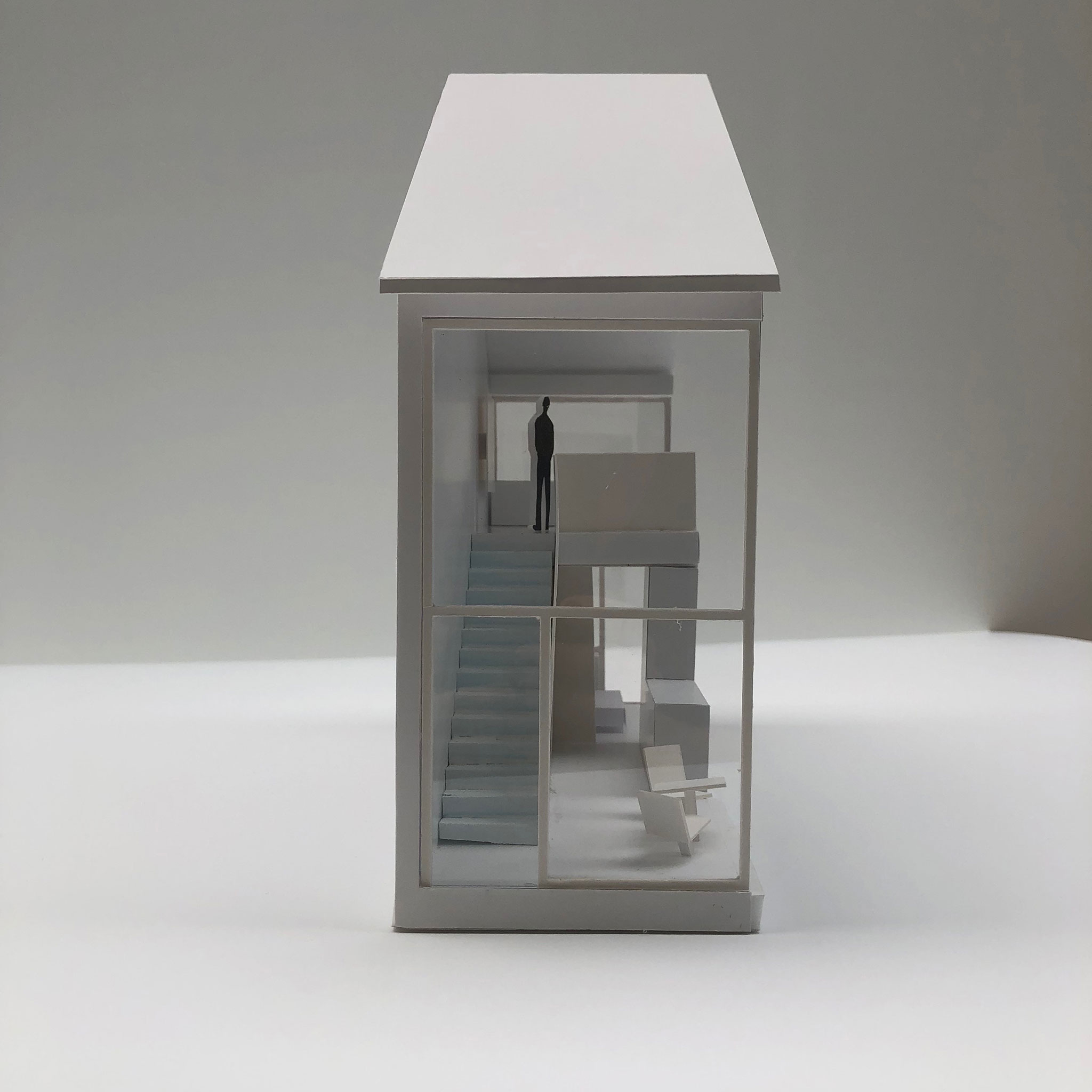
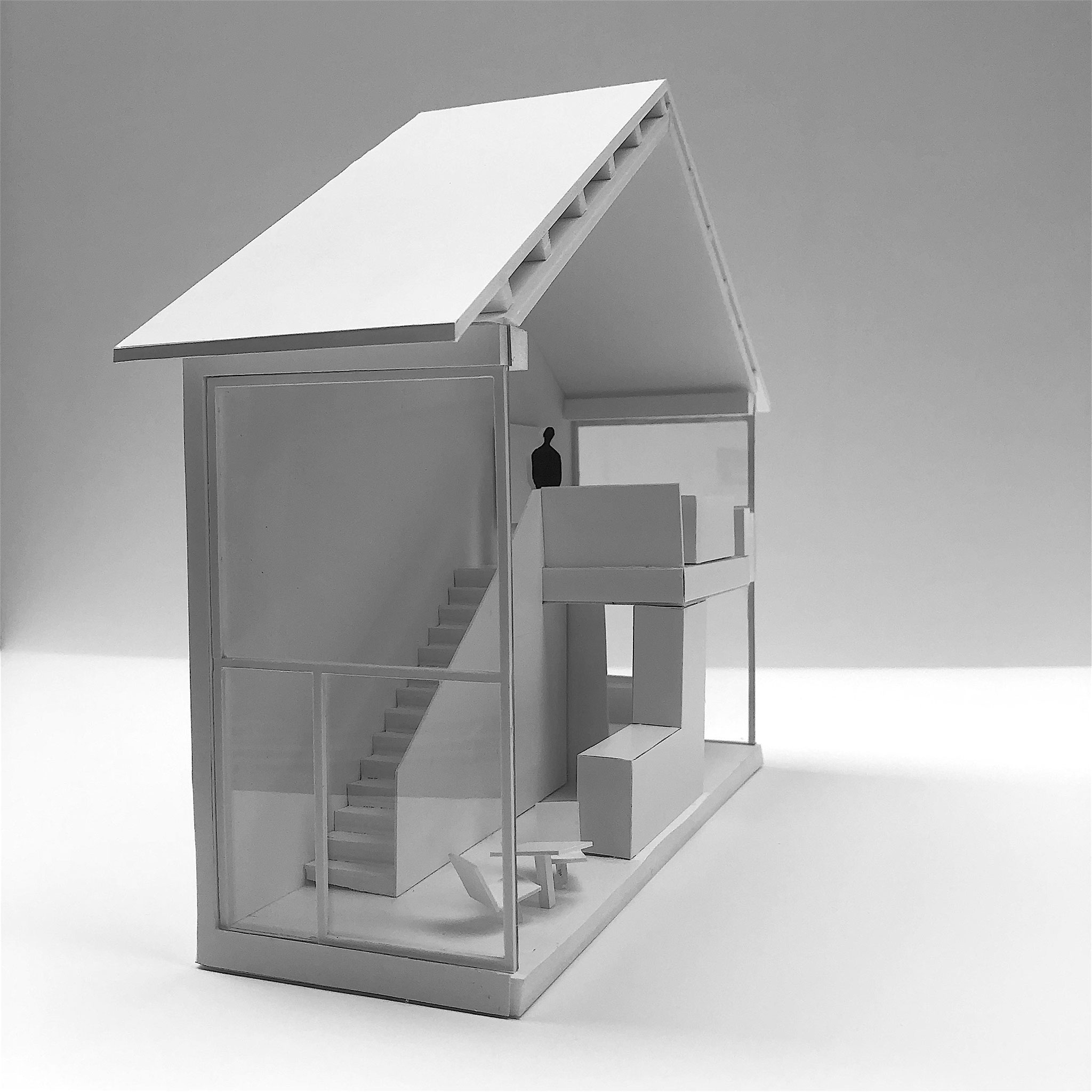
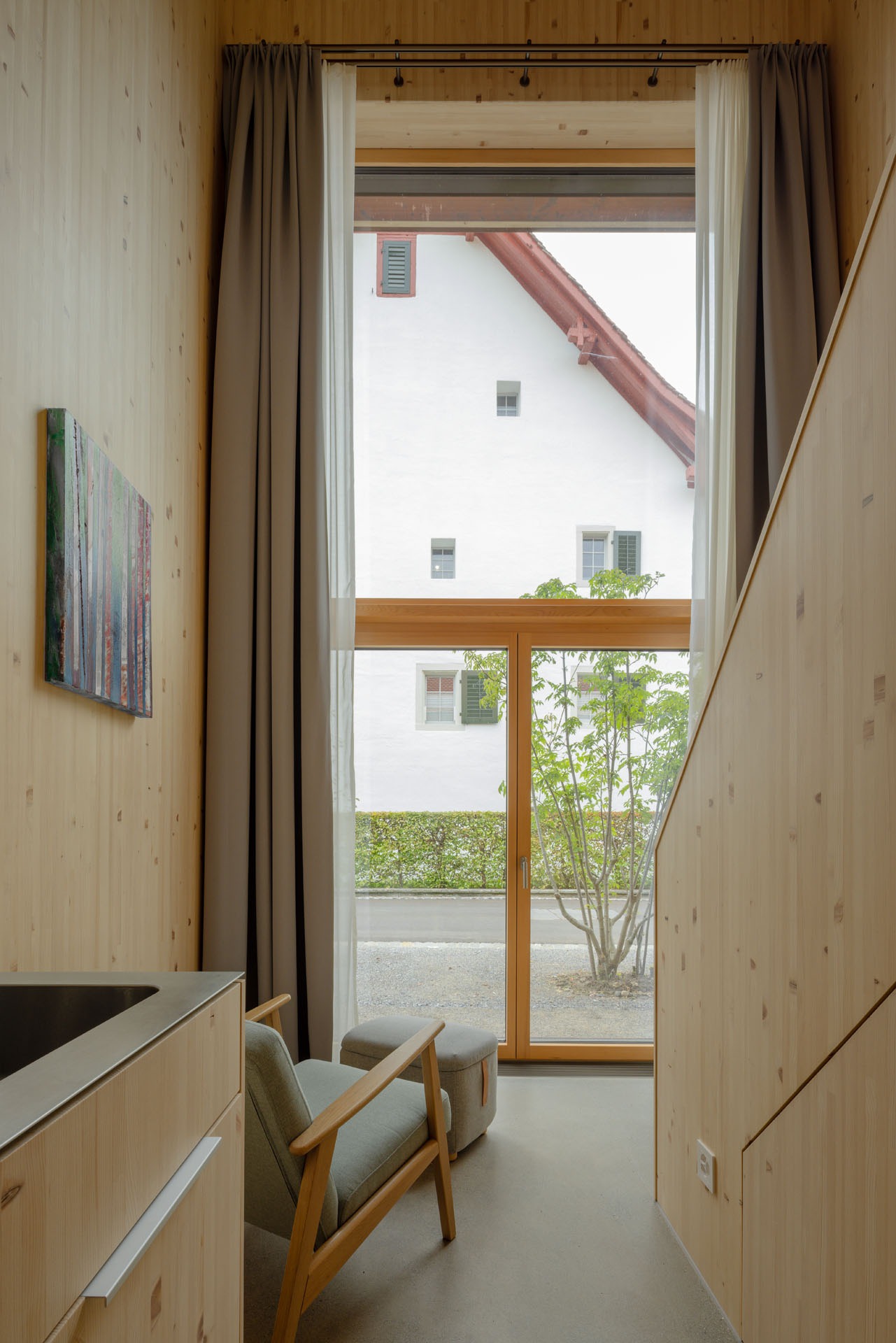
The tiny houses, designed by Atelier Kempe Thill, are housed in a small, two-story residential building, with apartments measuring 3.1 meters between floor plans and 33 square meters in area. Each apartment comprises a living area with a kitchen on the ground floor and a sleeping area on the upper floor. Furthermore, with a characteristic degree of space optimization, built-in furniture is used, reminiscent of inhabited furniture rather than typical homes.

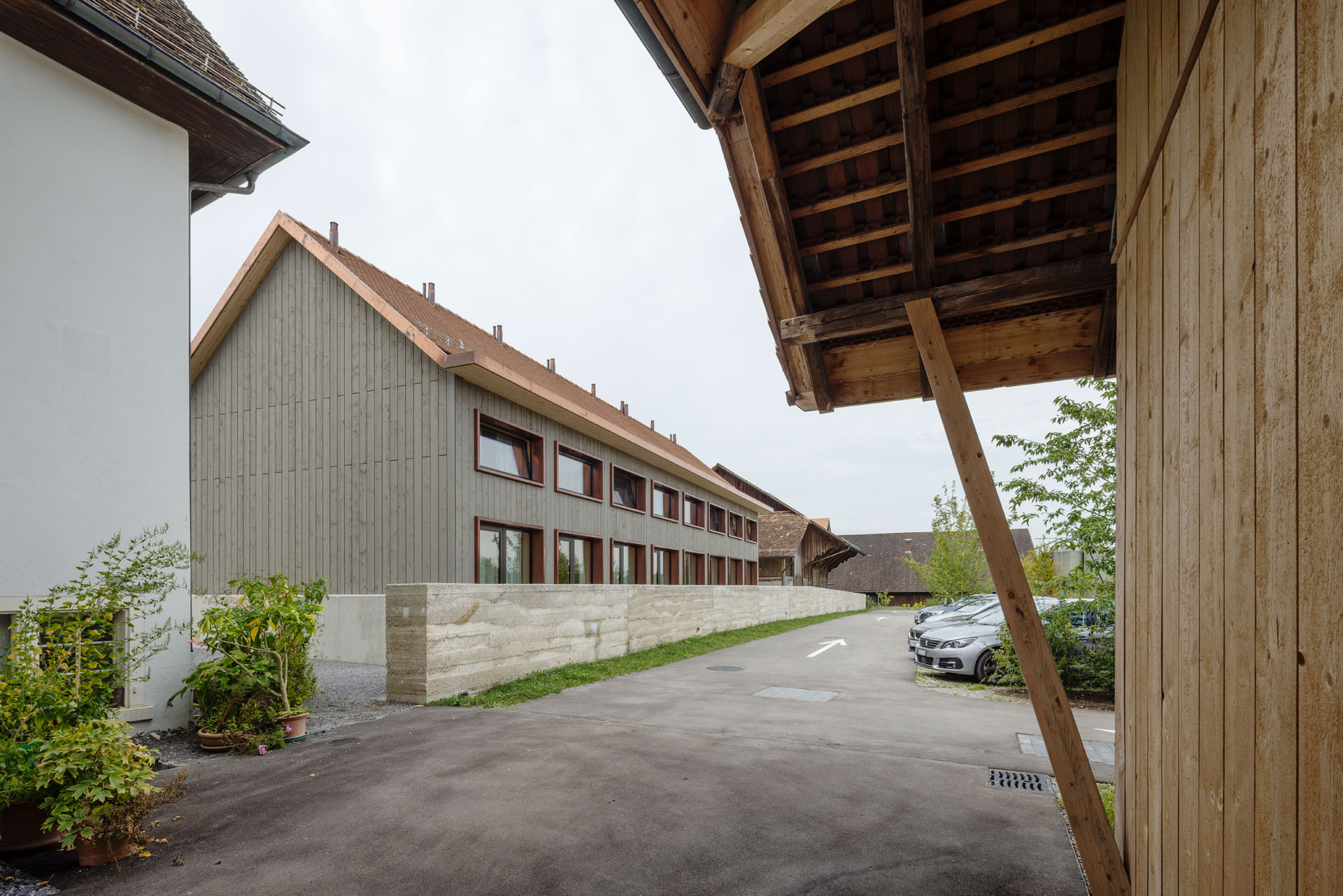
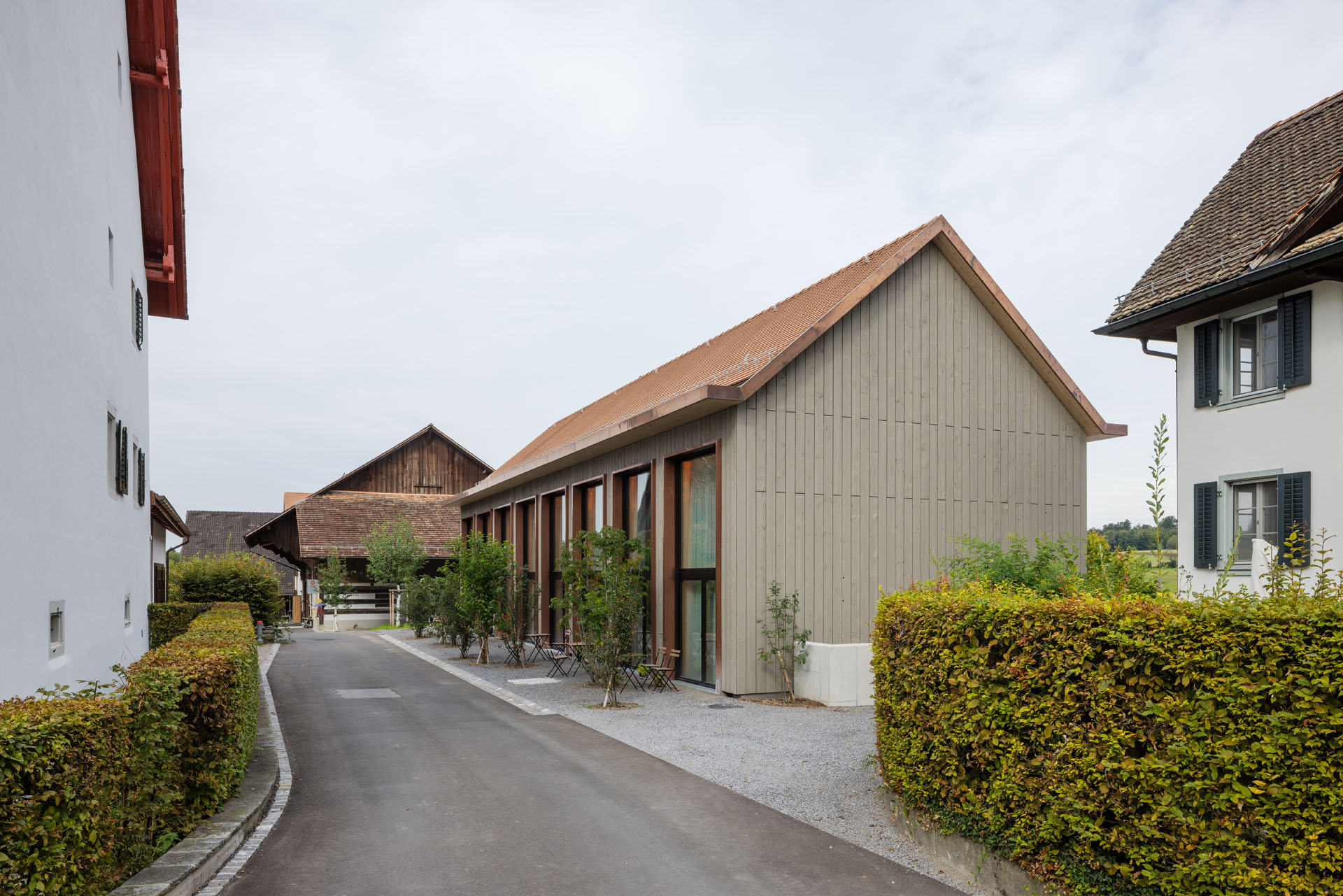
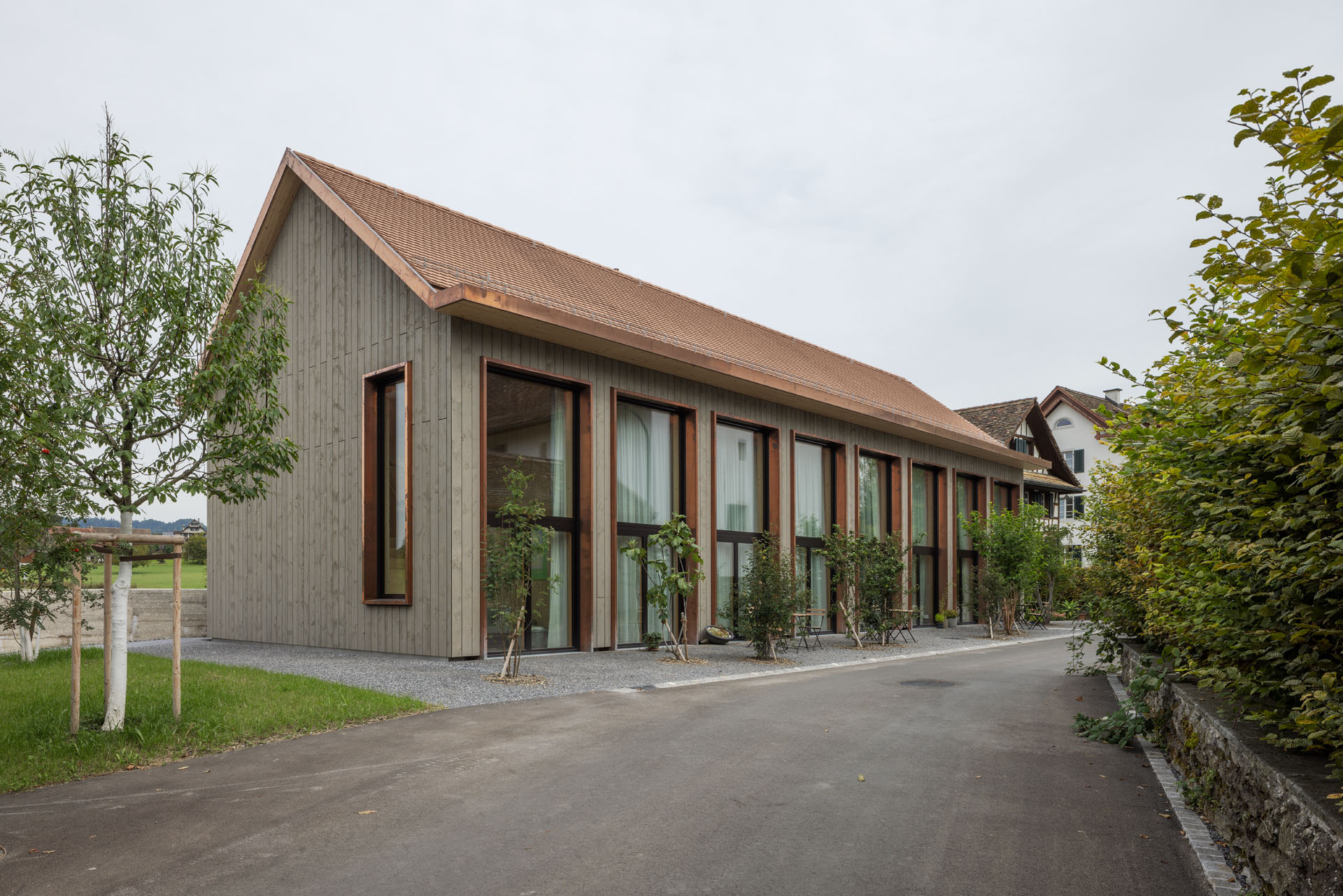
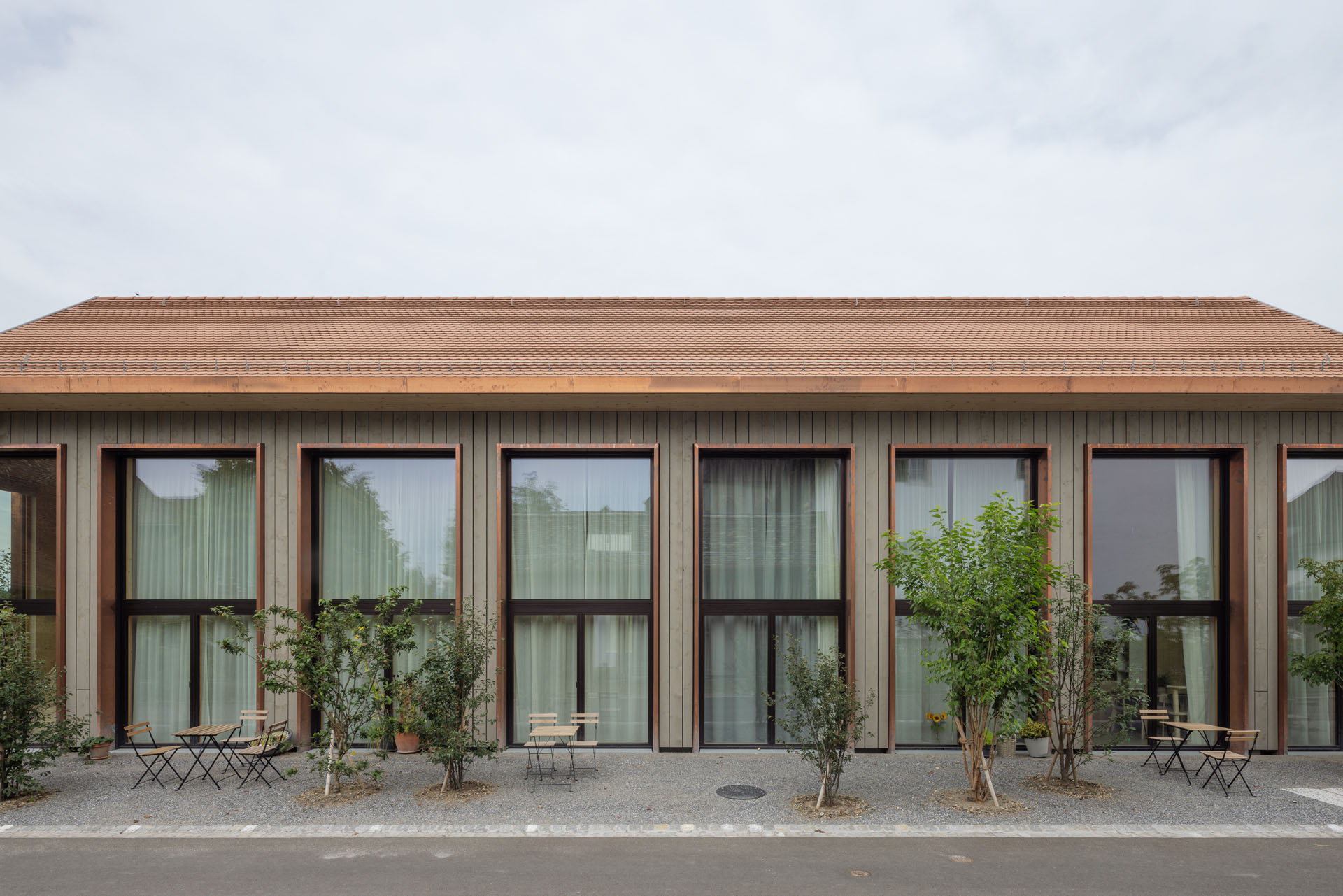
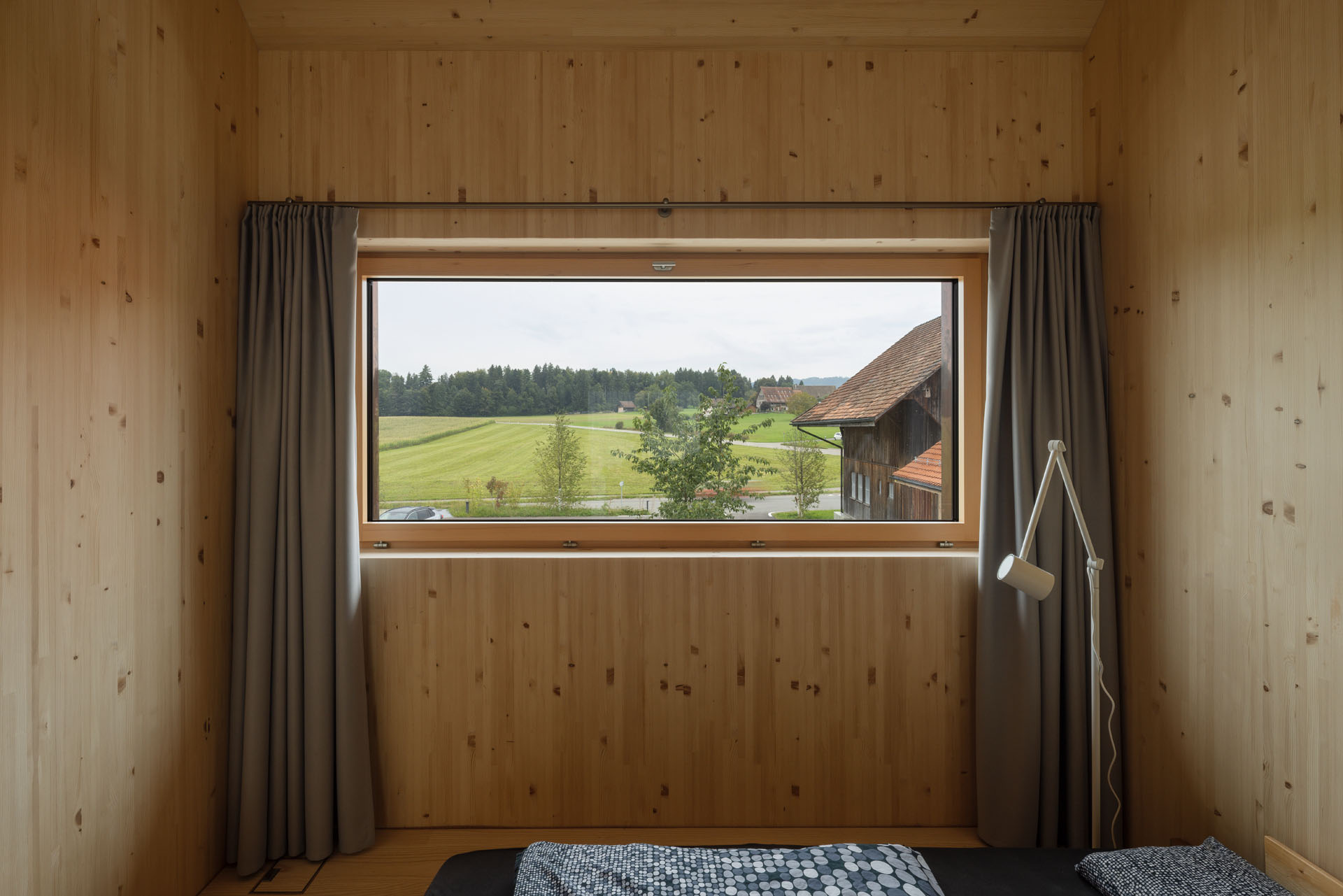
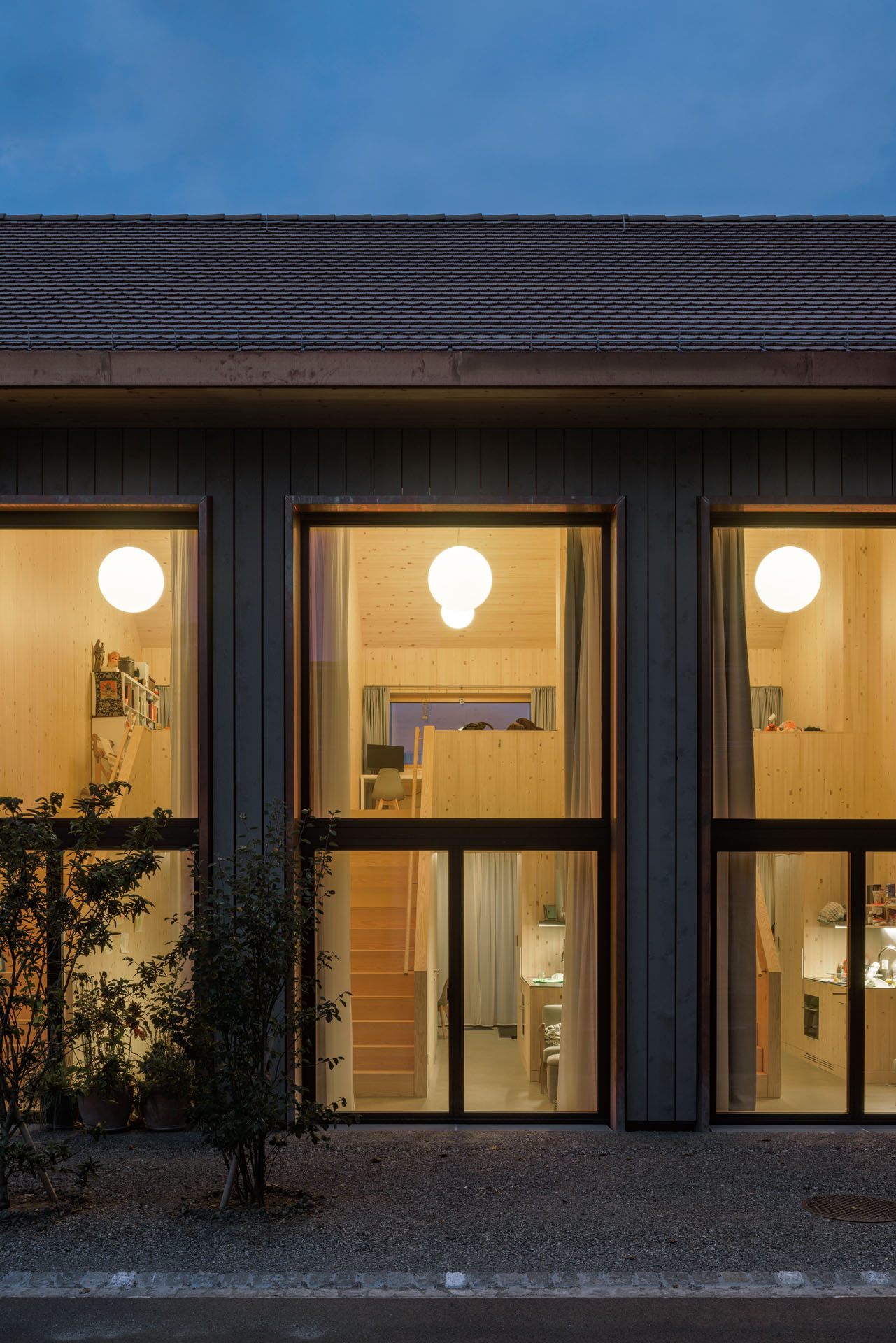
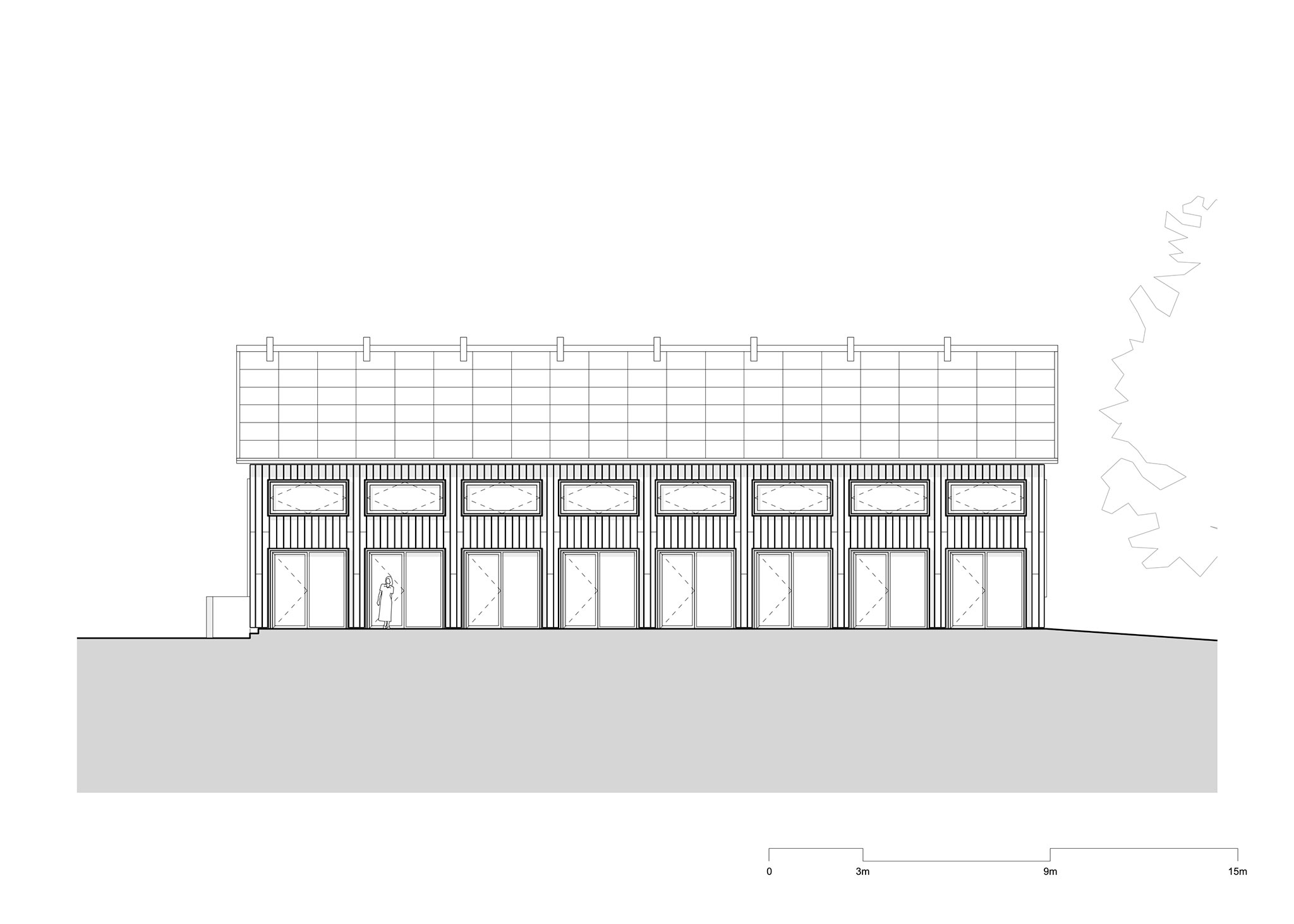
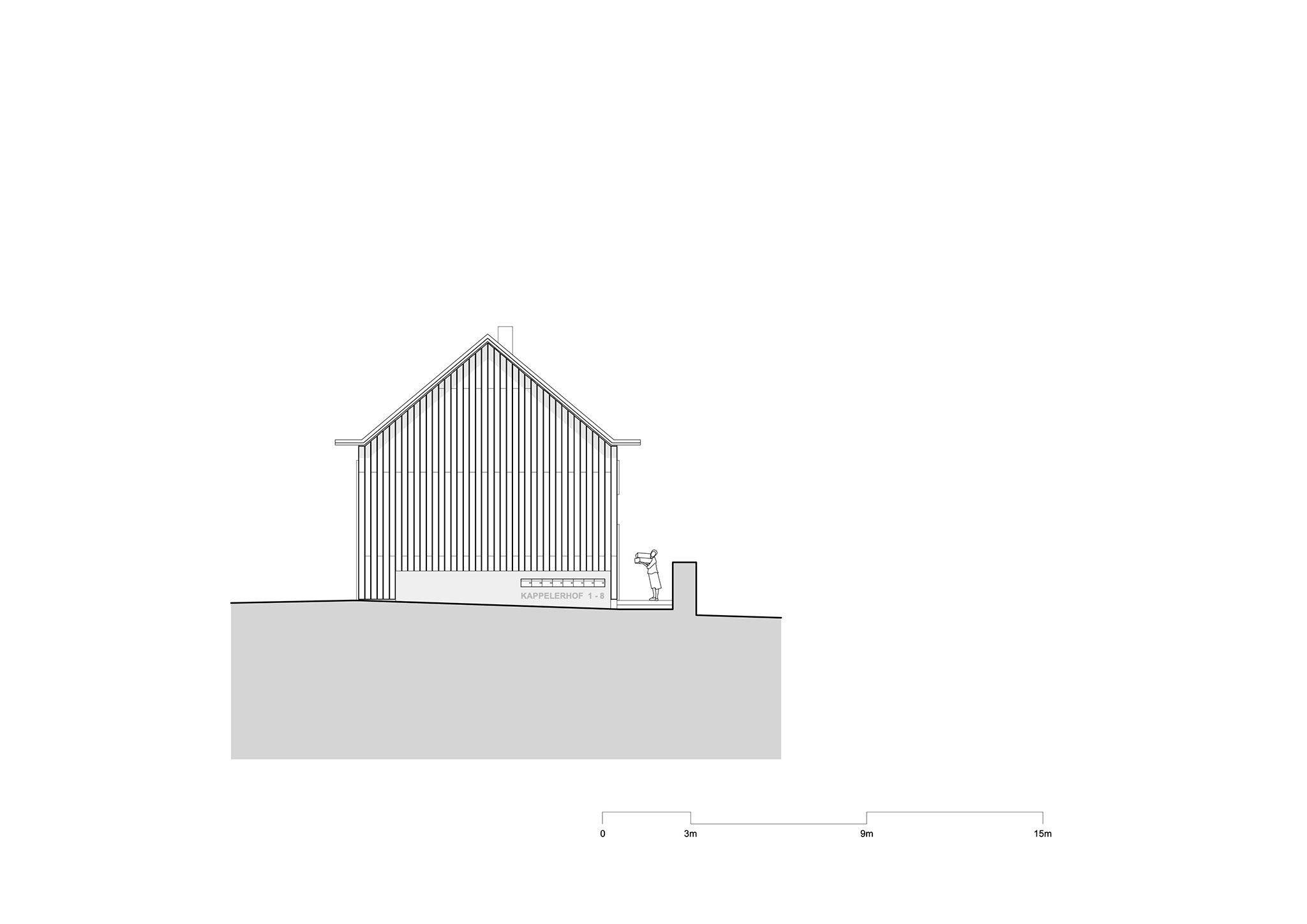
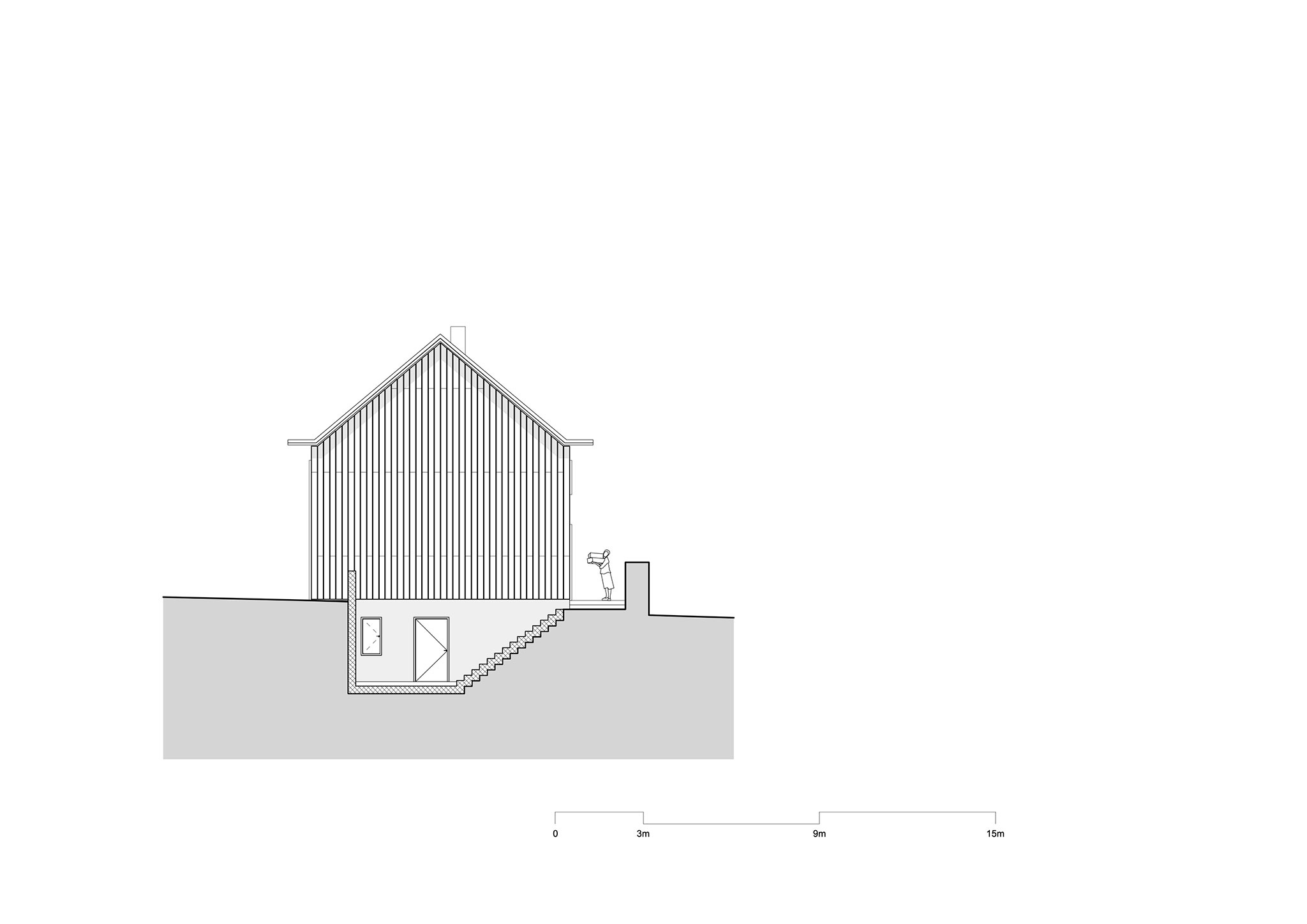
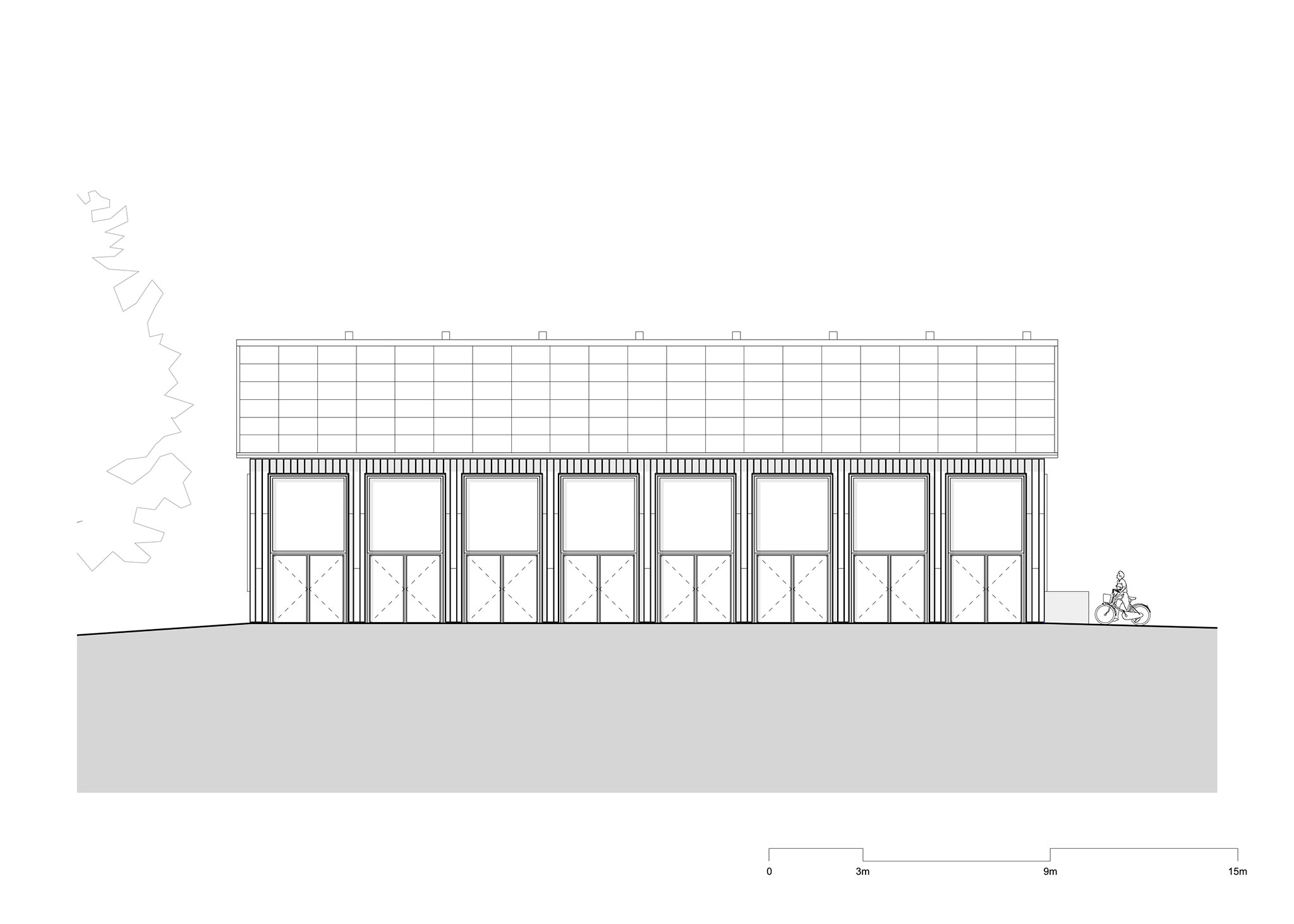
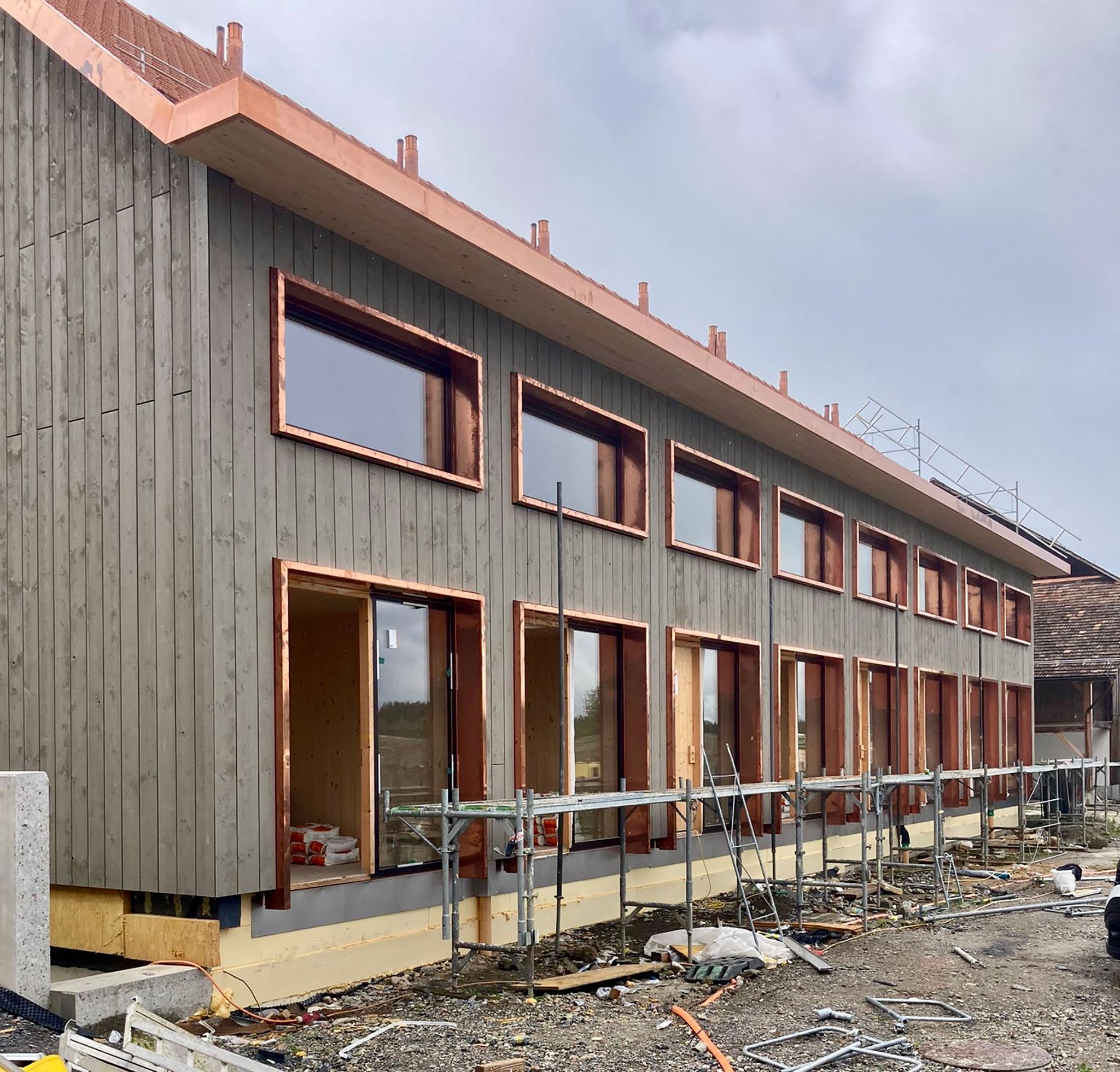
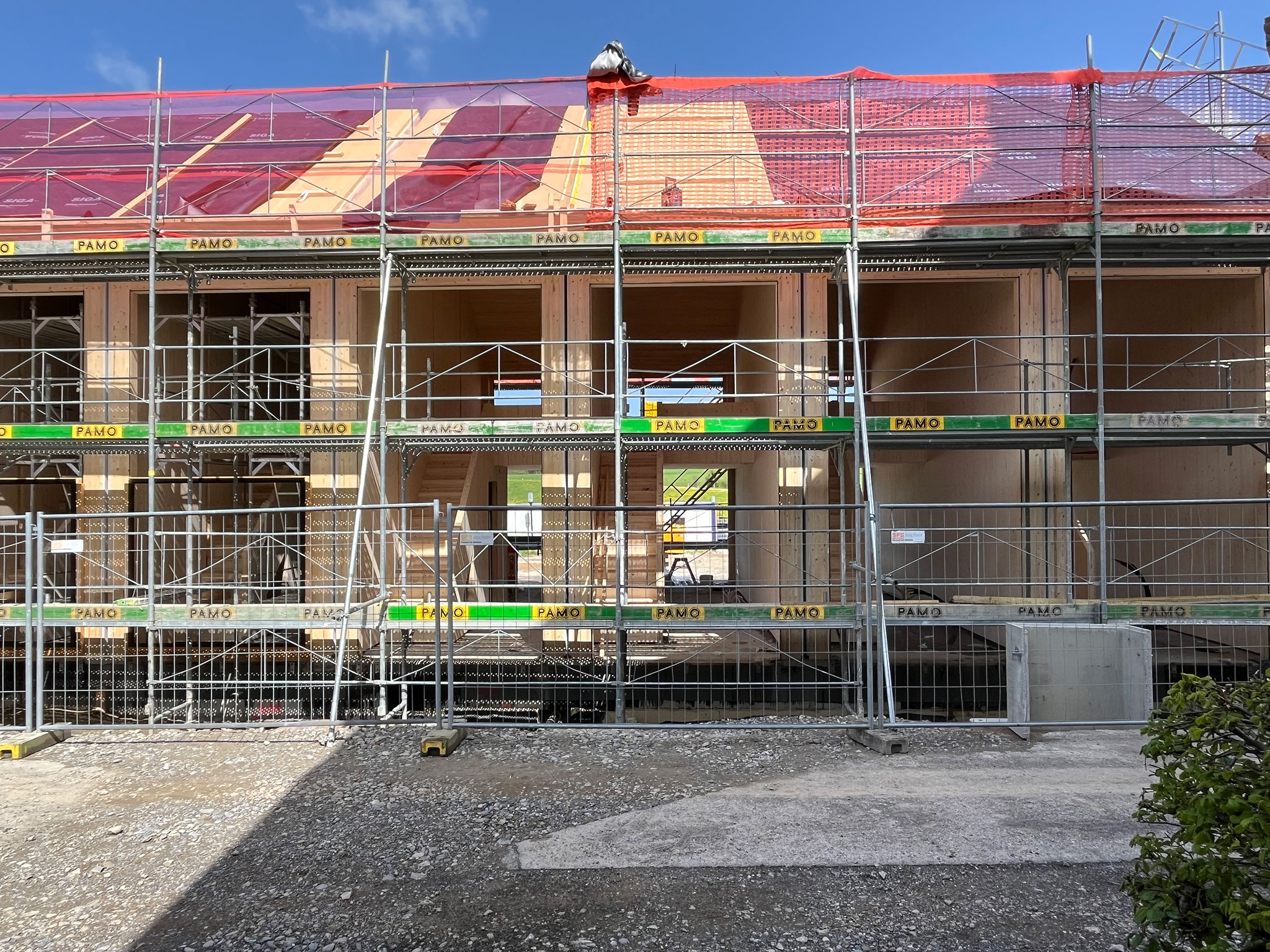
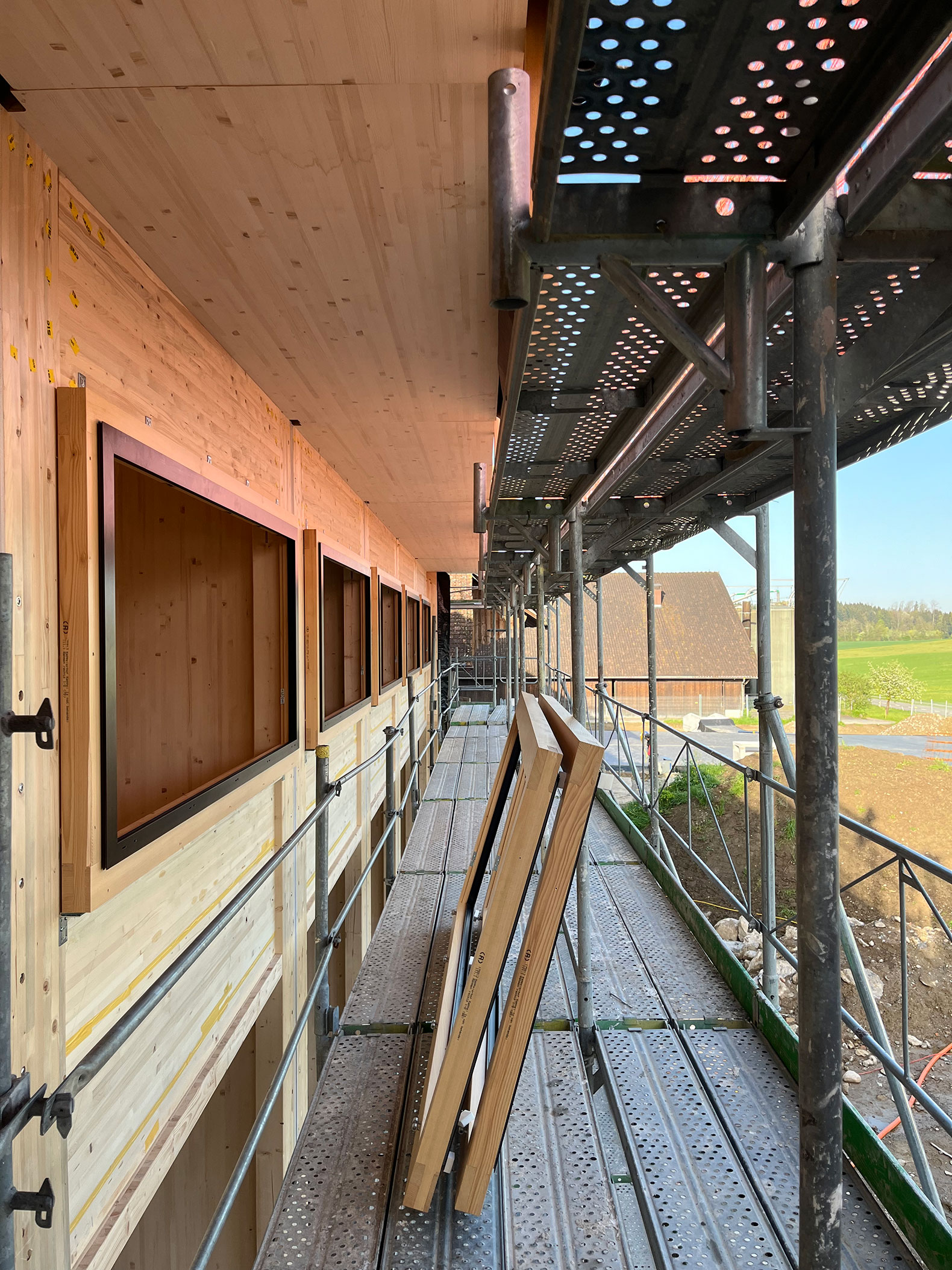
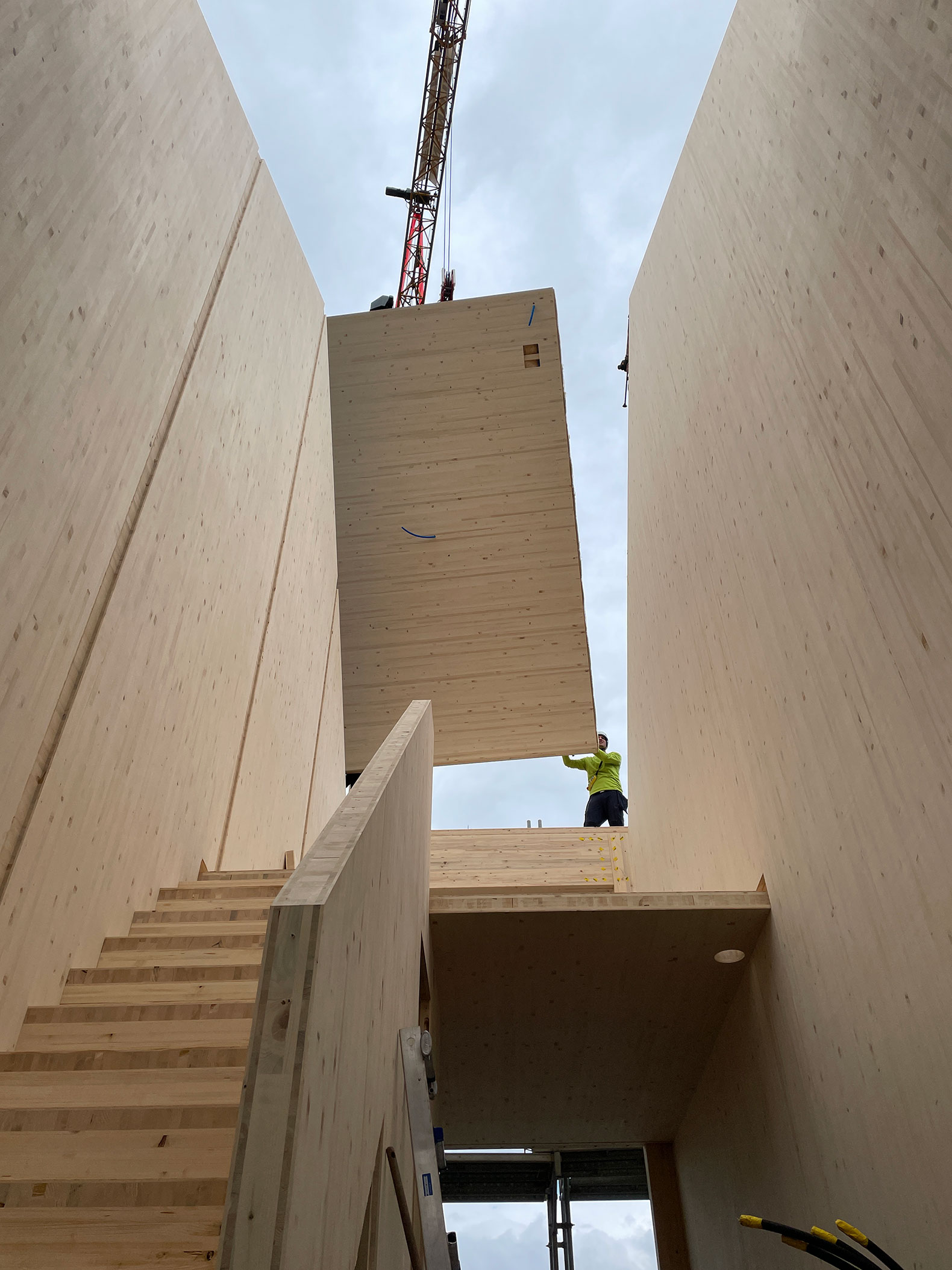
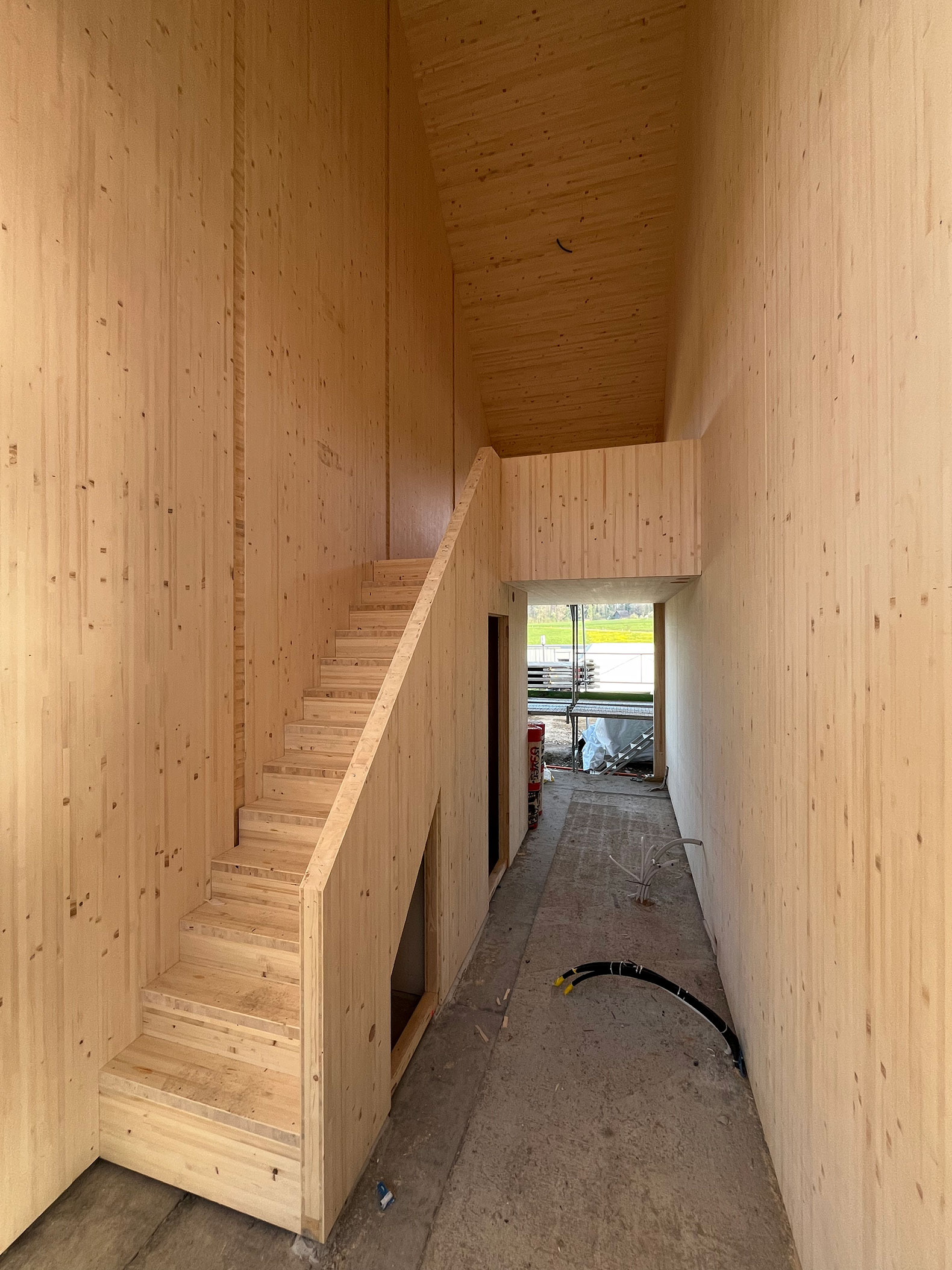
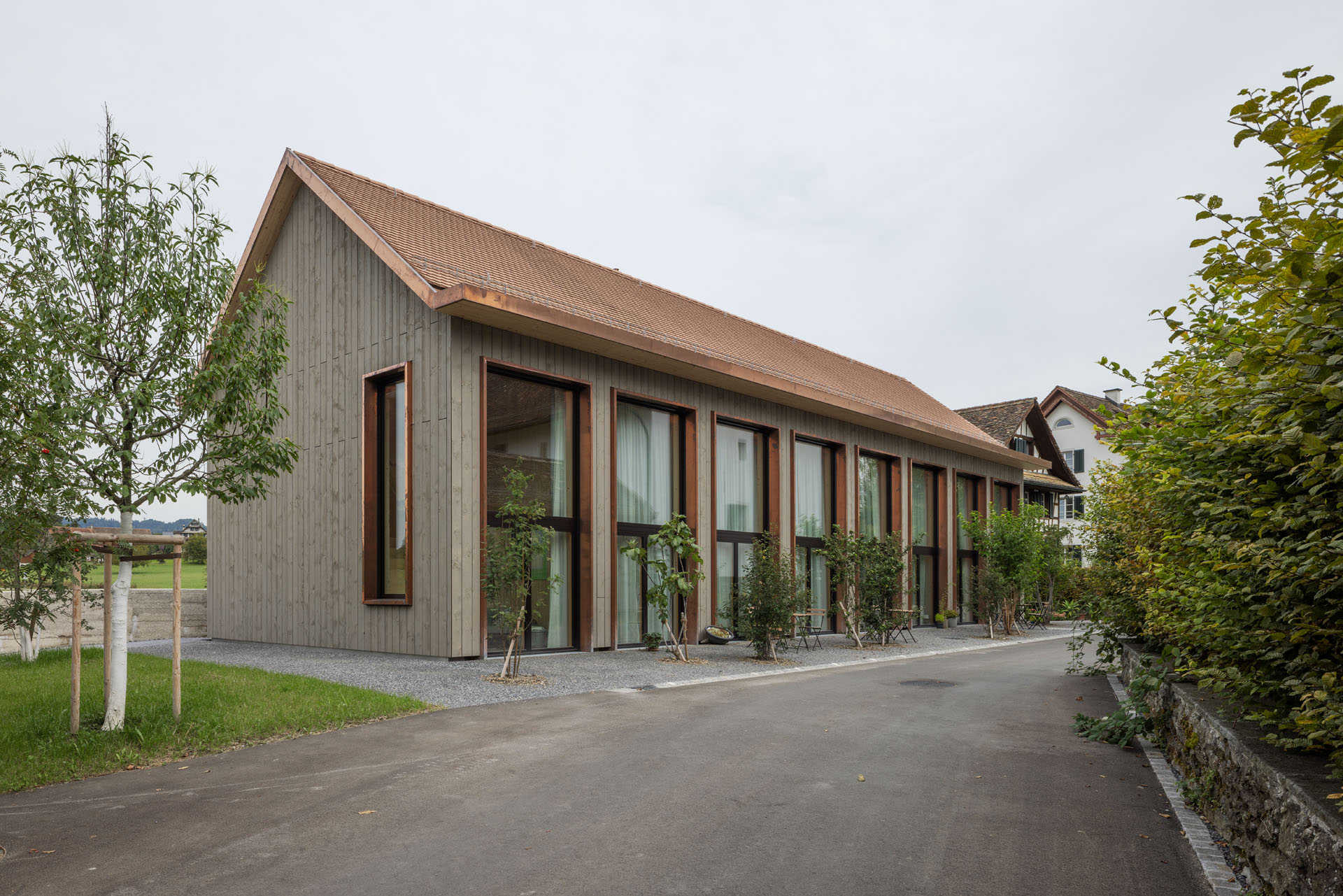
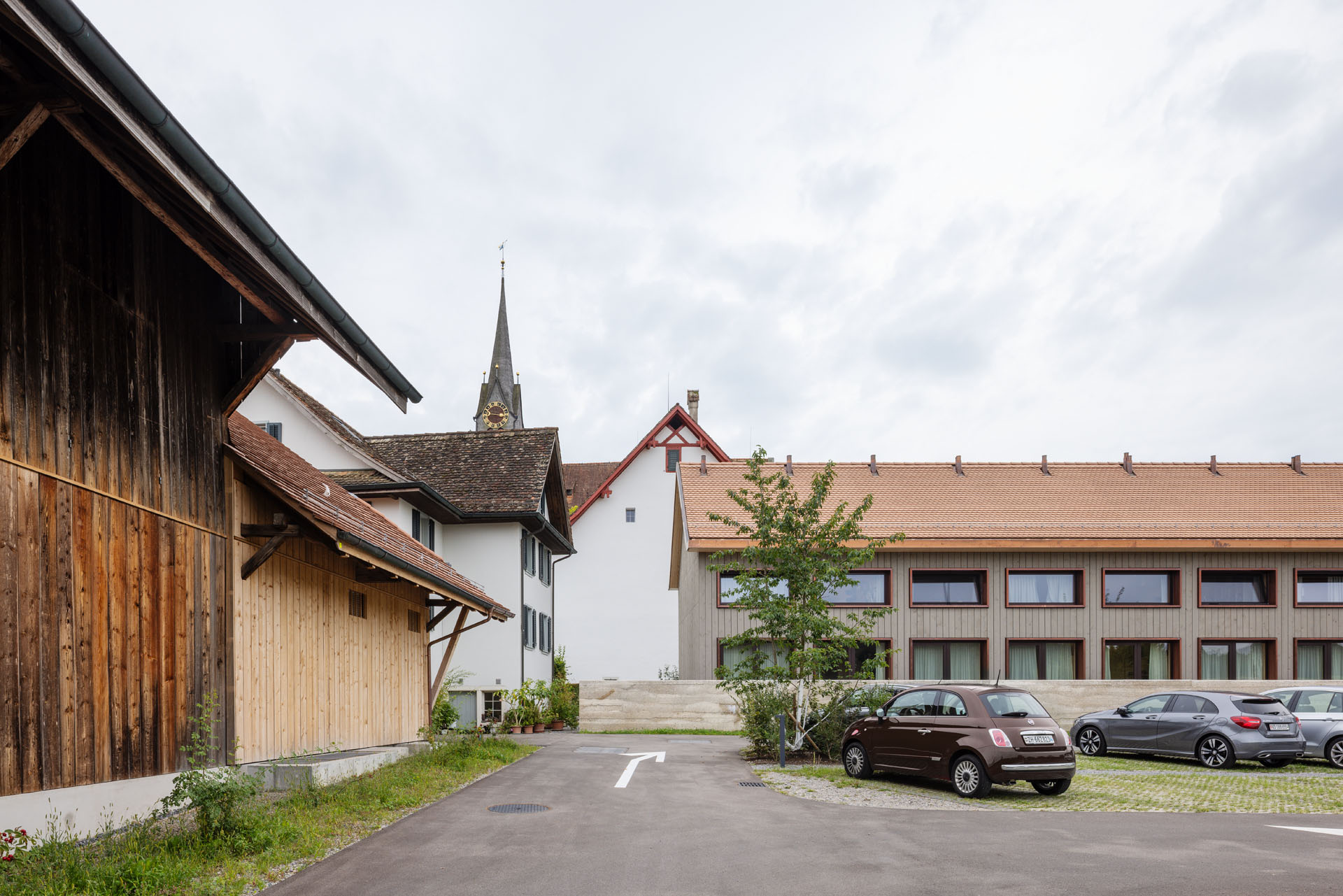
The main facade features large fixed windows and double doors, while the entrance doors, also with fixed windows, are located on the rear facade. The small building was constructed using a framework of CLT panels connected to the roof, the suspended ceiling, and the balustrade of the upper floor. Inside, the panels are combined with built-in furniture, wardrobes, and wall shelves made from the same wood. The ground floor was constructed with concrete and a terrazzo floor.
Casas pequeñas Kappel am Albis por Atelier Kempe Thill. Fotografía por Ulrich Schwarz.

Tiny houses Kappel am Albis by Atelier Kempe Thill. Photograph by Ulrich Schwarz.

Project description by Atelier Kempe Thill

New construction in a Gothic monastery complex
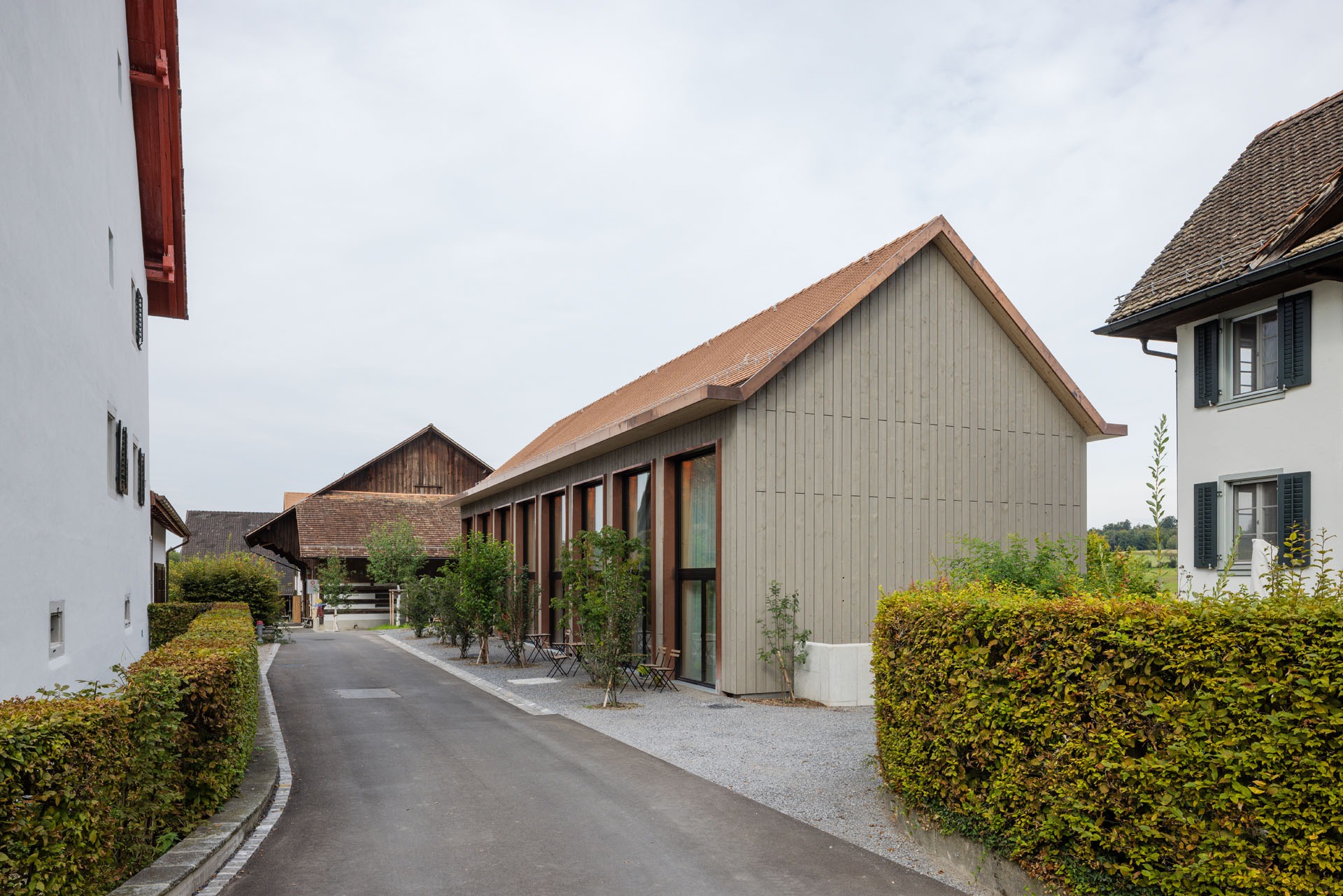
In 2013, Atelier Kempe Thill, together with bbz landschaftsarchitekten from Bern, won the competition for the long-term transformation of the Kappel am Albis monastery in Switzerland. This ensemble of different buildings consists of whitewashed Swiss houses, some of which are half-timbered. On the other hand, there is a row of impressive wooden barns with large roof overhangs. The overall project, which has now been running for more than ten years, comprises a large number of sub-projects. One of these is a small new residential building, which allowed Atelier Kempe Thill to continue its tradition of experimenting with the typical Dutch row house typology in an unexpected way. The client's goal is to create small apartments for temporary rental for the hotel. The old warehouse located on the project site will be demolished for this purpose, as it is not suitable for conversion into apartments. The architectural challenge for the new building lies primarily in the limited space available on the site and the eight apartments desired here. Extensive research into building typologies based on multi-story apartments did not yield any satisfactory concepts.

Furthermore, the village's local building regulations stipulate that roofs must be pointed. This raises the architectural question of how the resulting roof space in a residential building can be optimally used to create real interior quality.

Casas pequeñas Kappel am Albis por Atelier Kempe Thill. Fotografía por Ulrich Schwarz.
Tiny houses Kappel am Albis by Atelier Kempe Thill. Photograph by Ulrich Schwarz.

Miniature row house
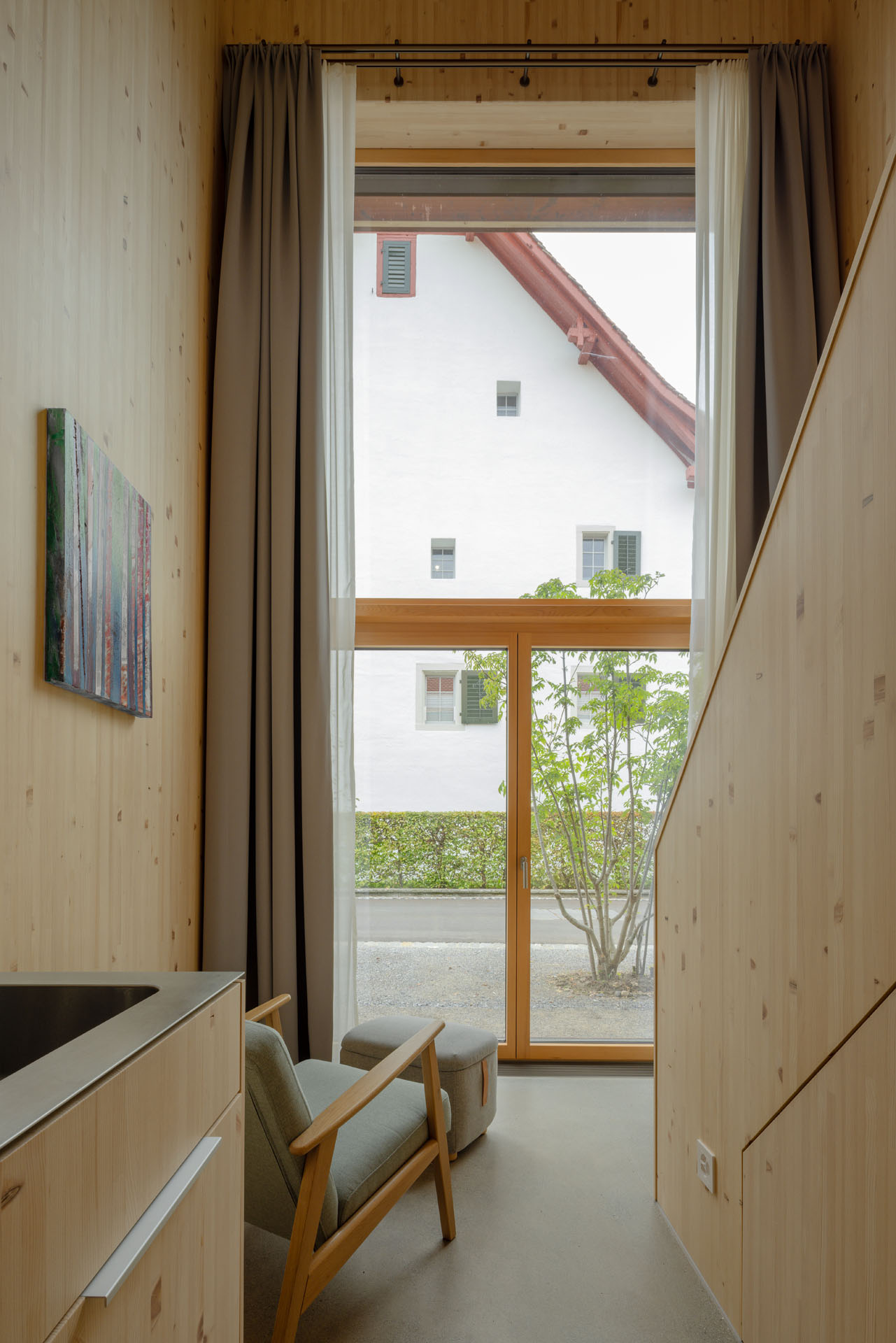
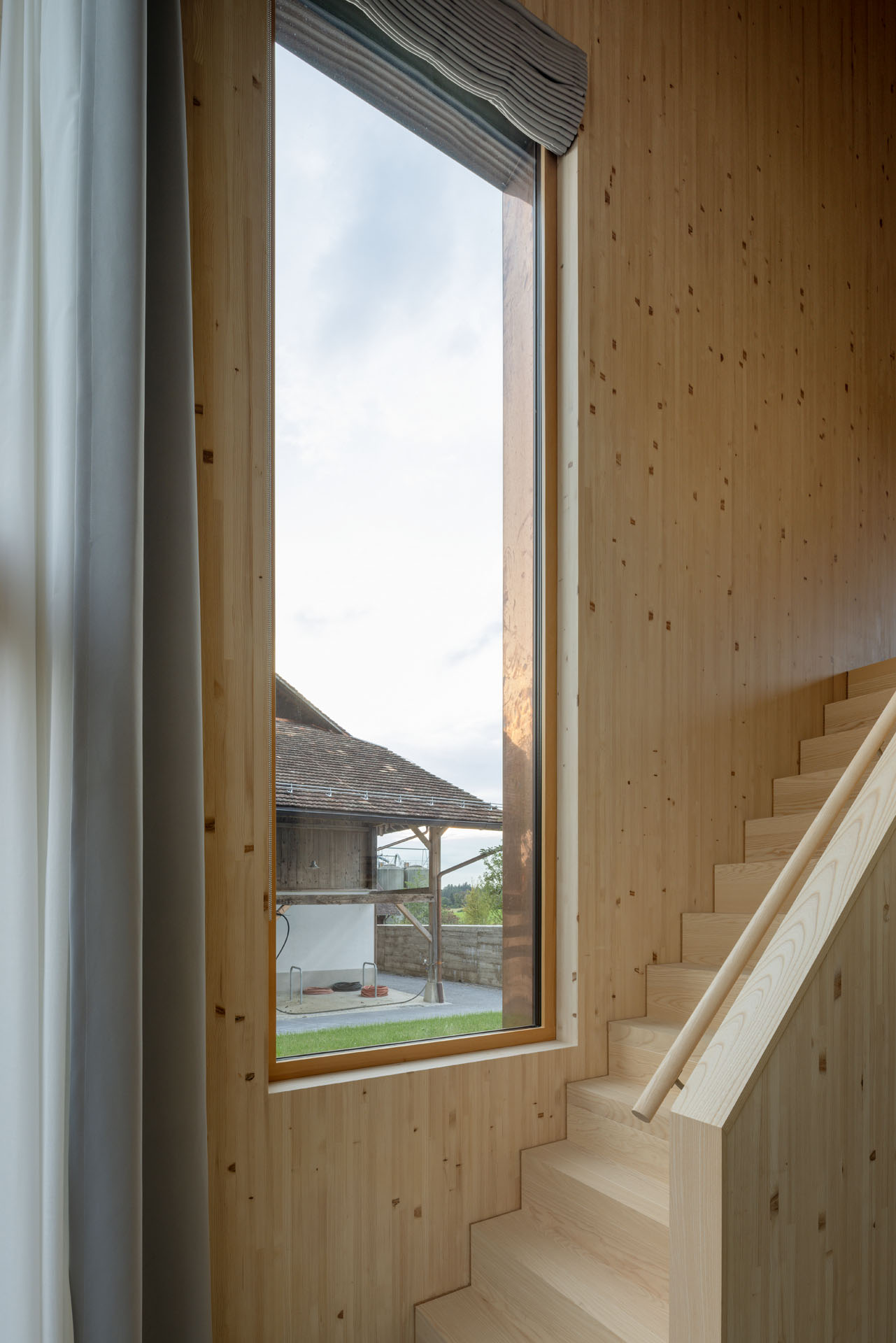
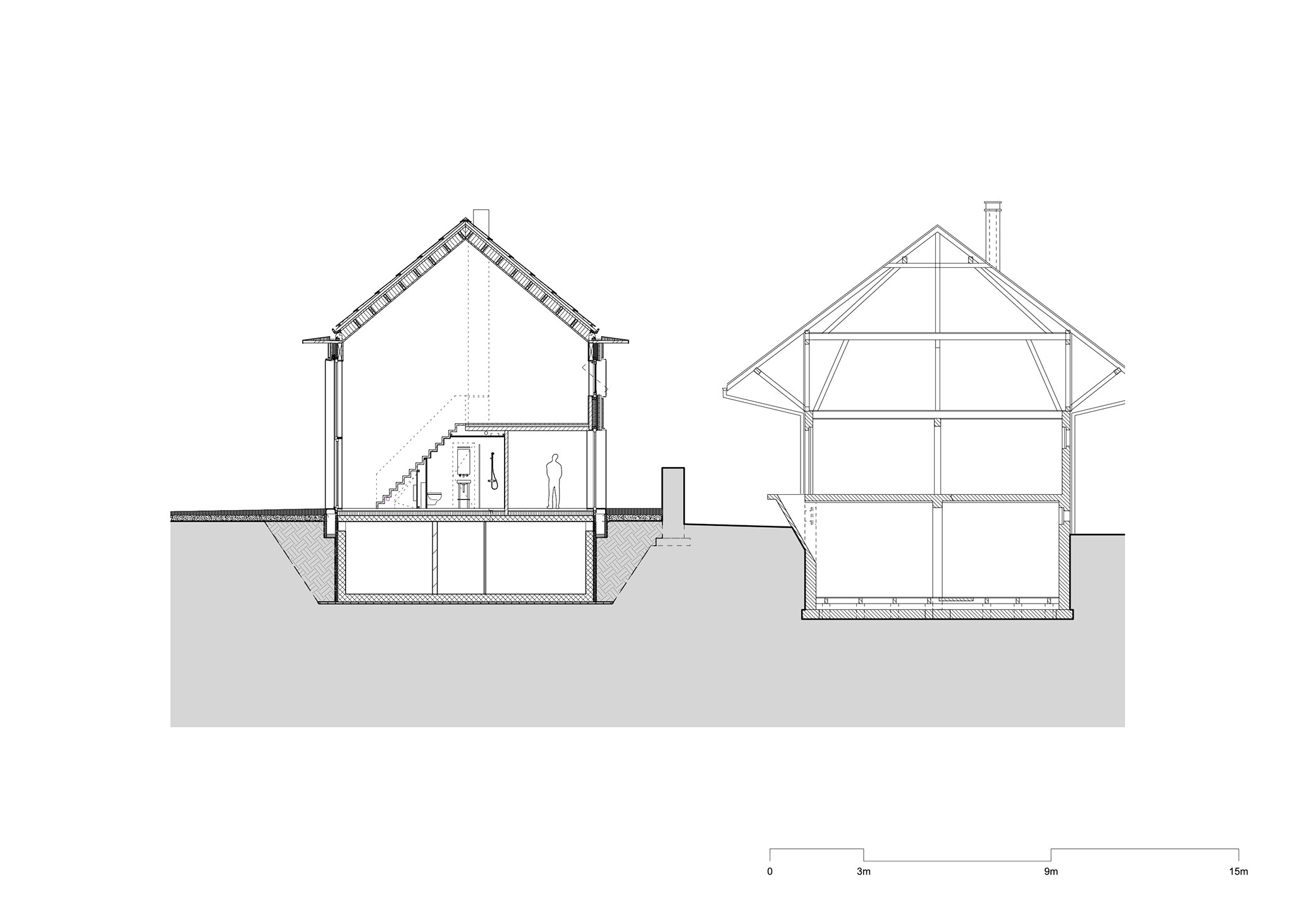
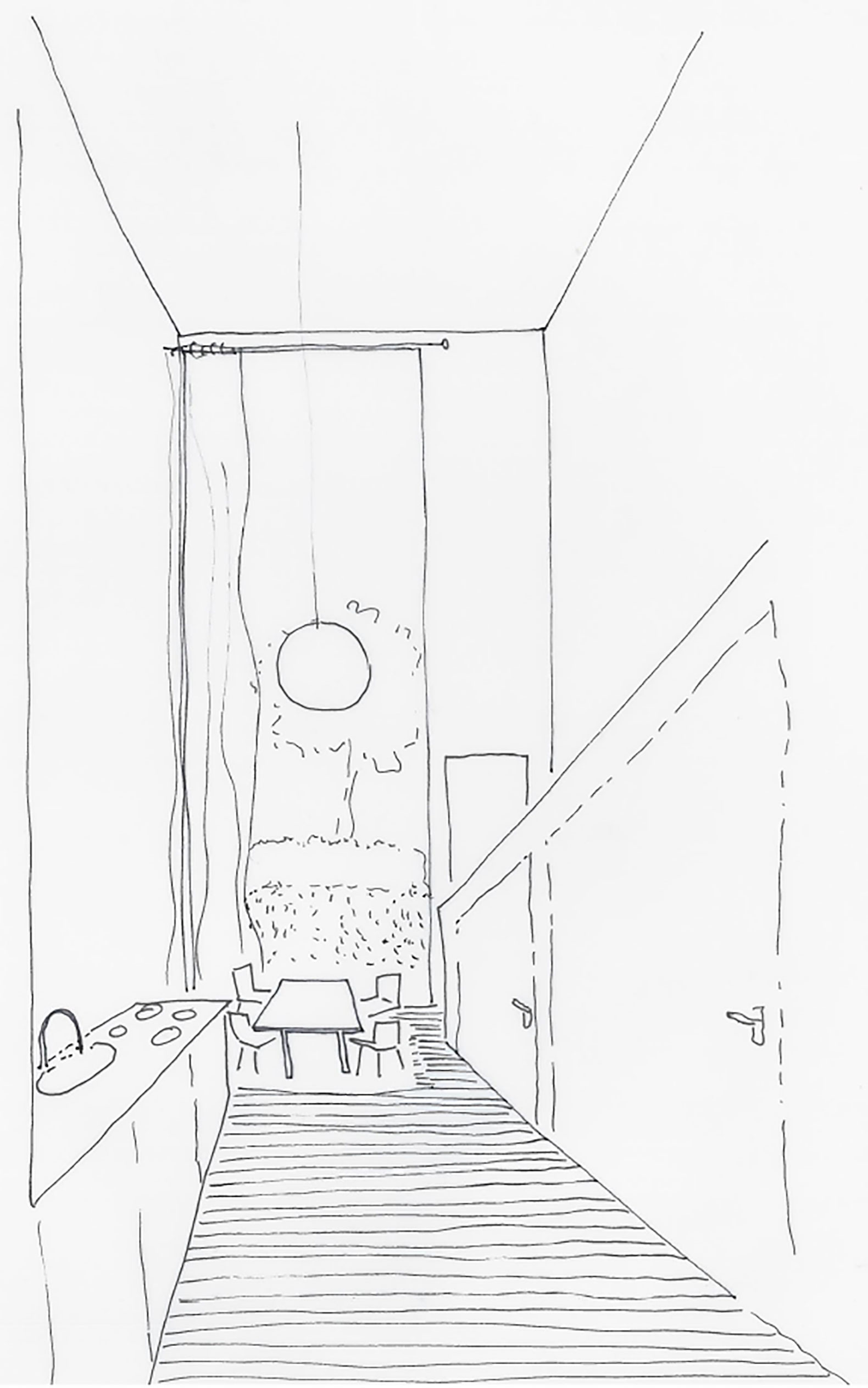
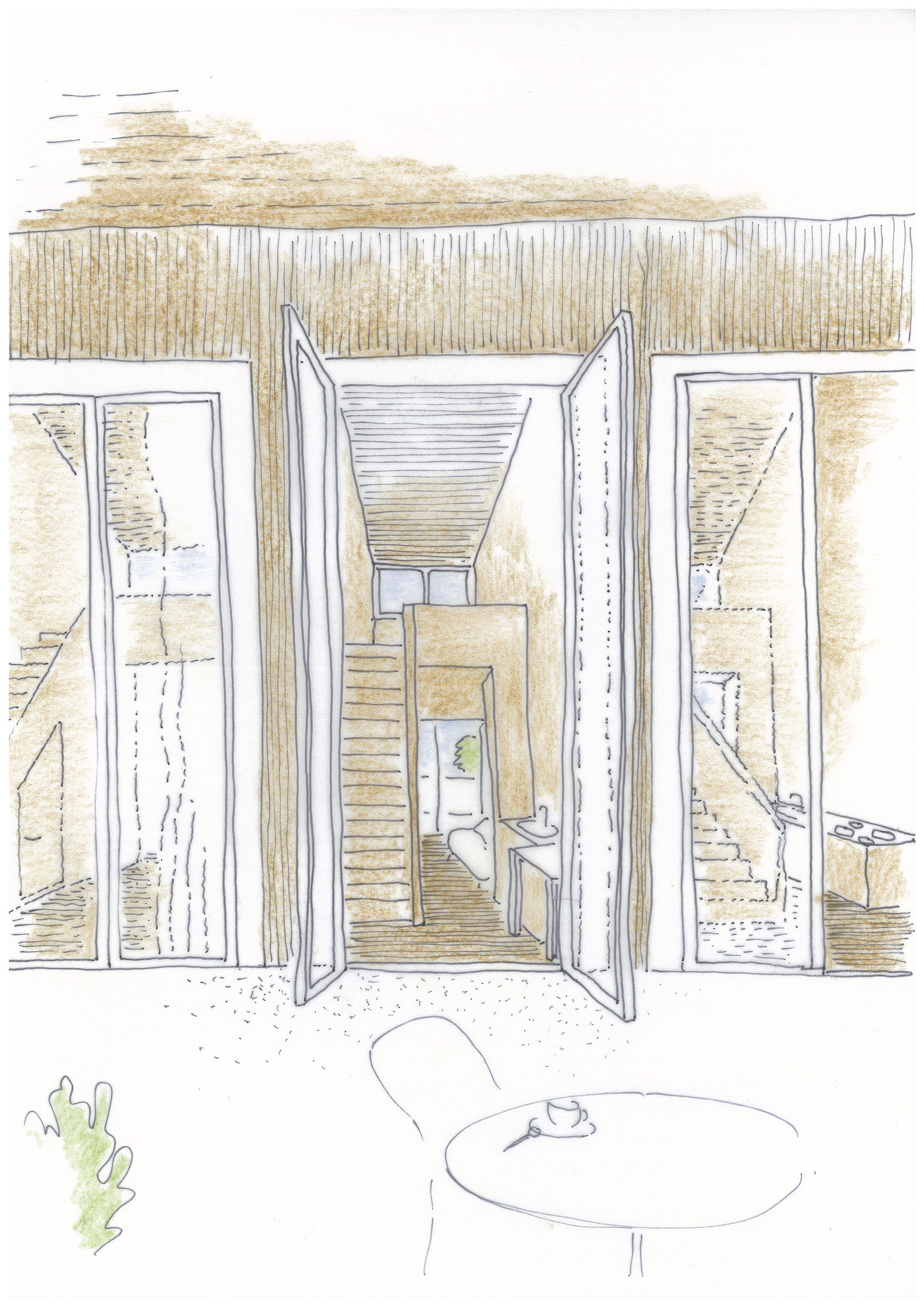
For these reasons, the typology of the row house is being examined. The result is extremely narrow terraced houses with a dimension between axes of 3.1 meters. These terraced houses have a living area with kitchen on the ground floor and a sleeping area on the upper floor. Both floors are connected by a double-height room that culminates in the pointed roof space above. The small apartment, measuring only 33m2, thus offers a spatially complex and rich situation. The scarcity of usable space necessitates an organization in which all areas interlock like clockwork and every corner is used optimally. For example, the bathroom is located precisely under the stairs in a wall cupboard. All the furniture is designed and built-in so that, apart from a bed, two small tables, and a few chairs, no other loose furniture is needed. In this sense, the houses follow the concept of “tiny houses,” which, with their typical degree of space optimization, resemble inhabited furniture rather than houses.

Tiny houses, which have a long tradition dating back to the 19th century, emerged in their current form in the USA in the 1990s and spread to Europe in the 2000s. On the one hand, they are the result of increasing criticism of consumerism, including the attempt to live with a minimal ecological footprint. On the other hand, they are a typological response to rising housing prices, demographic change, the increase in single-person households, and the resulting need to minimize living space. The tiny houses in Kappel were built for precisely this combination of reasons.
Casas pequeñas Kappel am Albis por Atelier Kempe Thill. Fotografía por Ulrich Schwarz.
Tiny houses Kappel am Albis by Atelier Kempe Thill. Photograph by Ulrich Schwarz.

Monolith in wood
The chosen materials further enhance the spaciousness and external appearance. The houses are designed using timber frame construction and benefit from the excellent and precise Swiss timber construction culture. The frames are made of CLT panels, which are also connected to the roof area, the false ceiling, and the balustrade of the upper floor by CLT panels. This creates the basis for the entire interior in wood. The CLT panels are combined with a range of built-in furniture such as wall cabinets and shelves. These are made from the same wood, consistently continuing the monolithic impression. Apart from the basement, only the ground floor is made of concrete and is finished with terrazzo in a color that matches the wood of the walls.

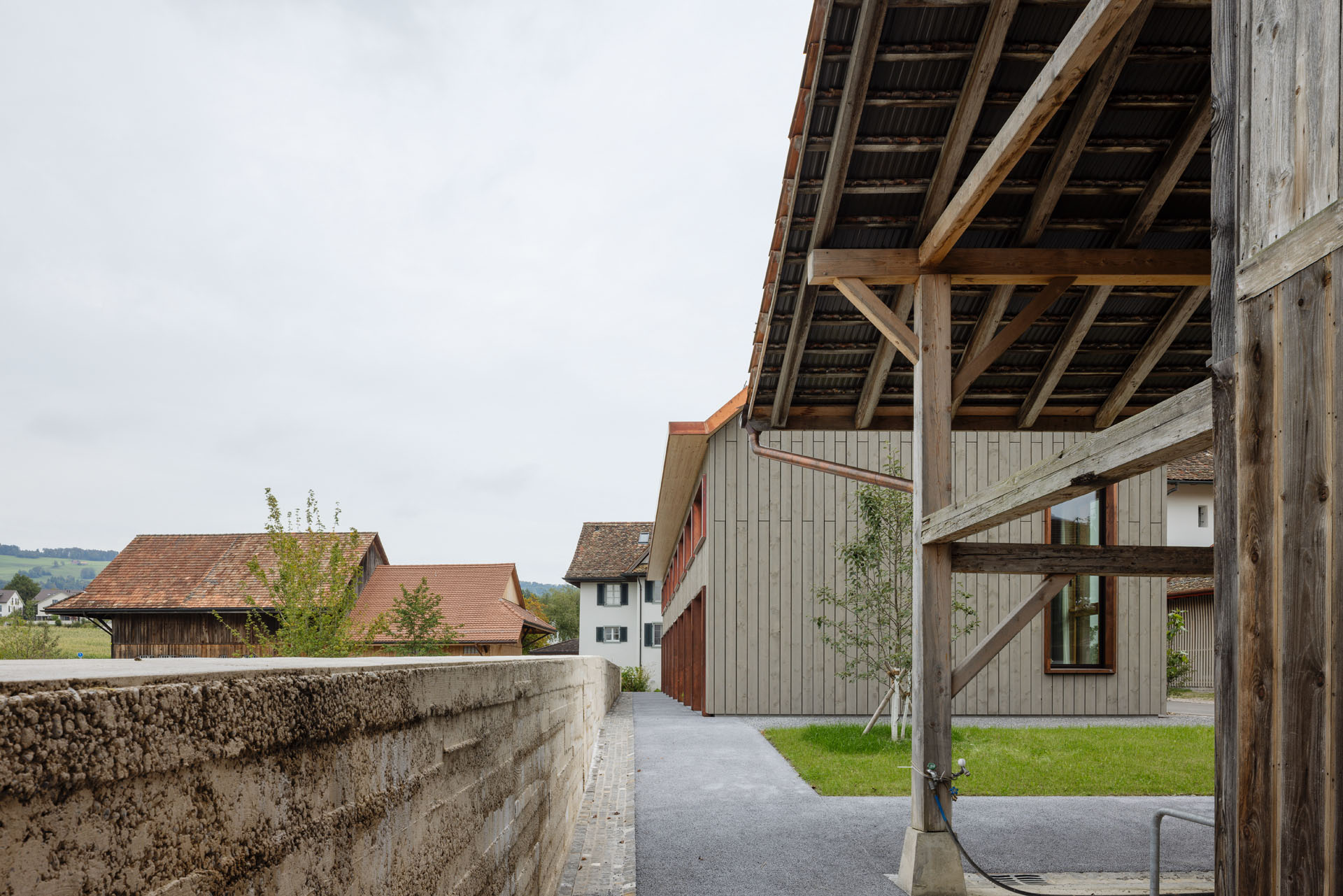
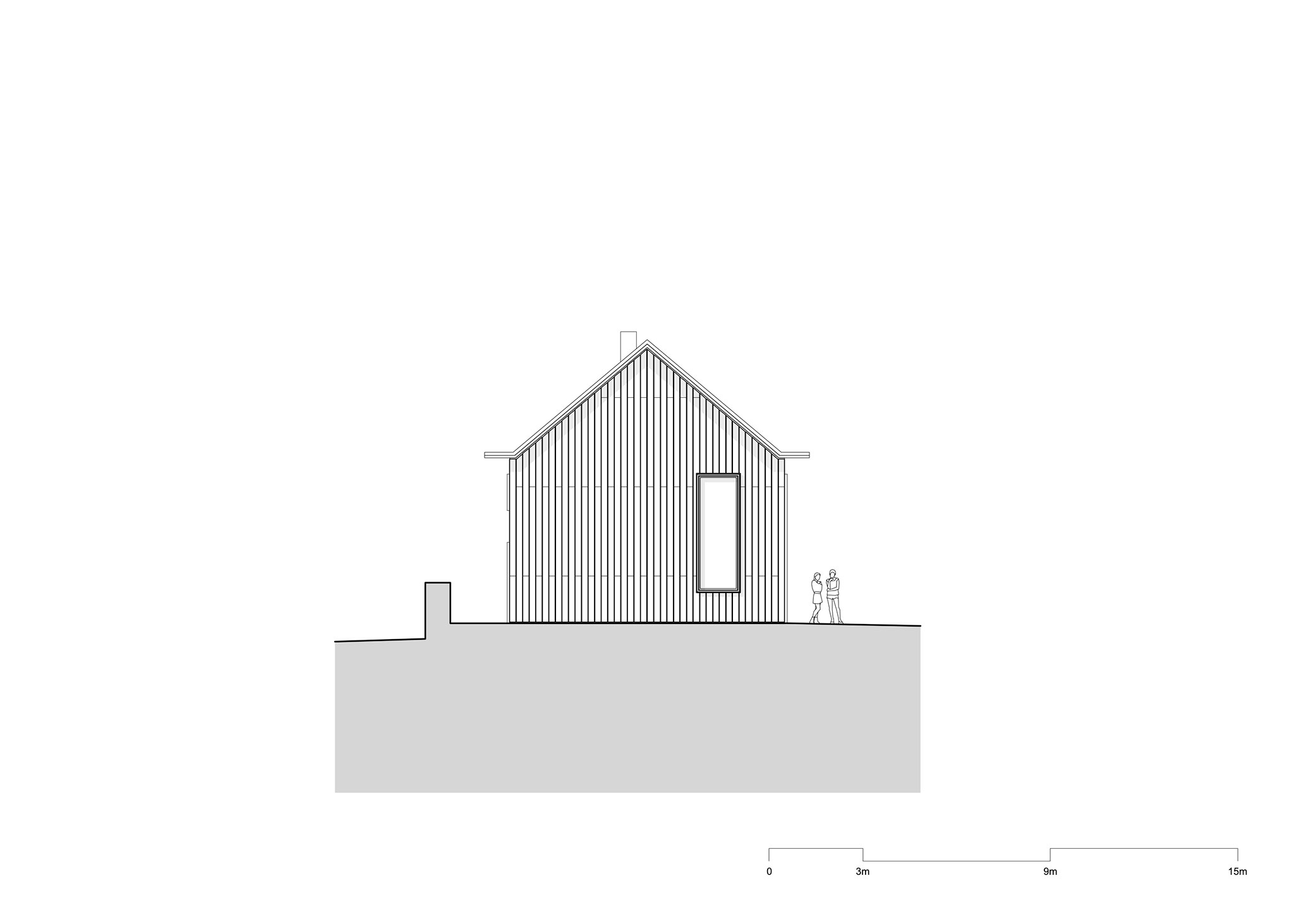
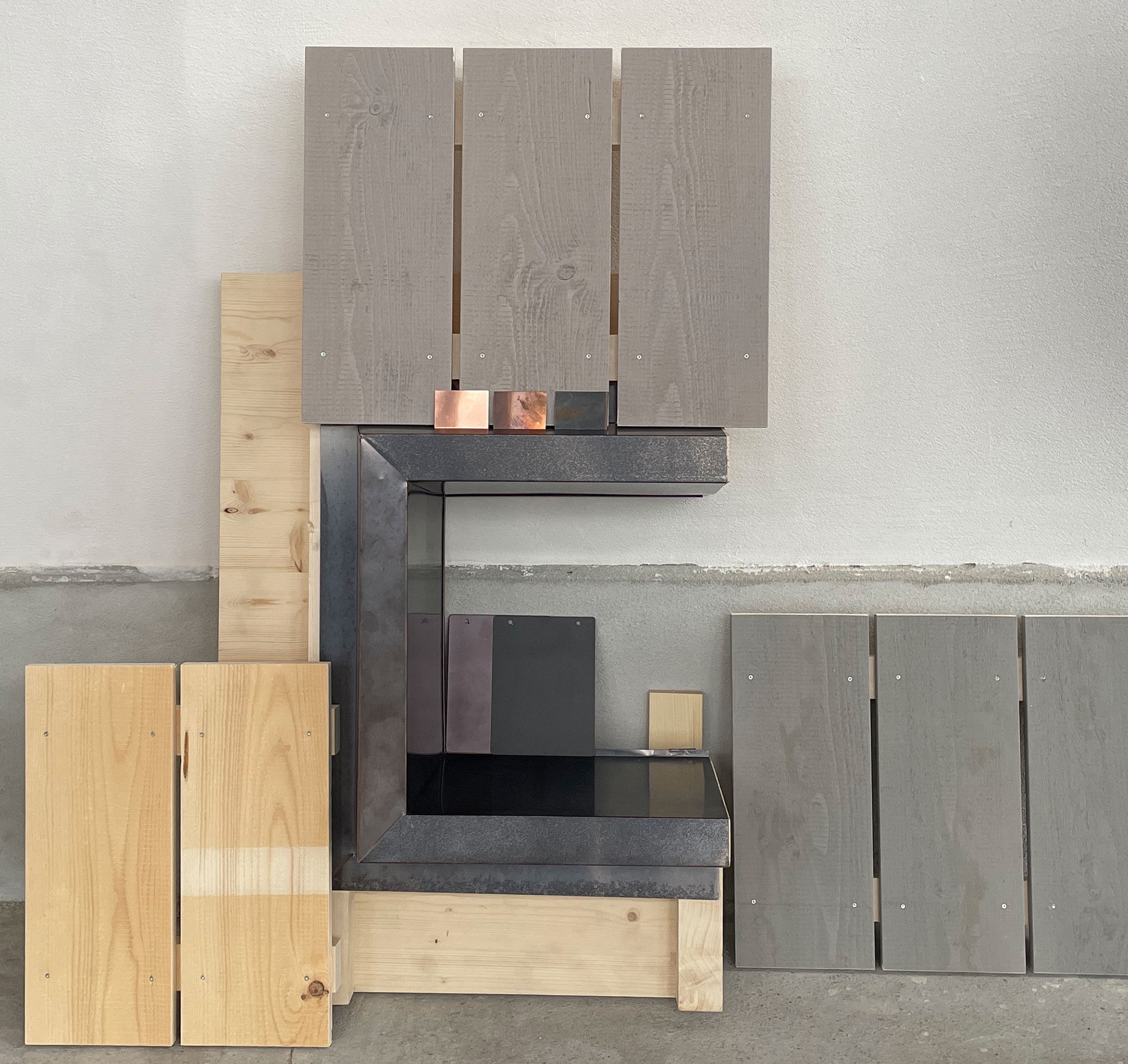
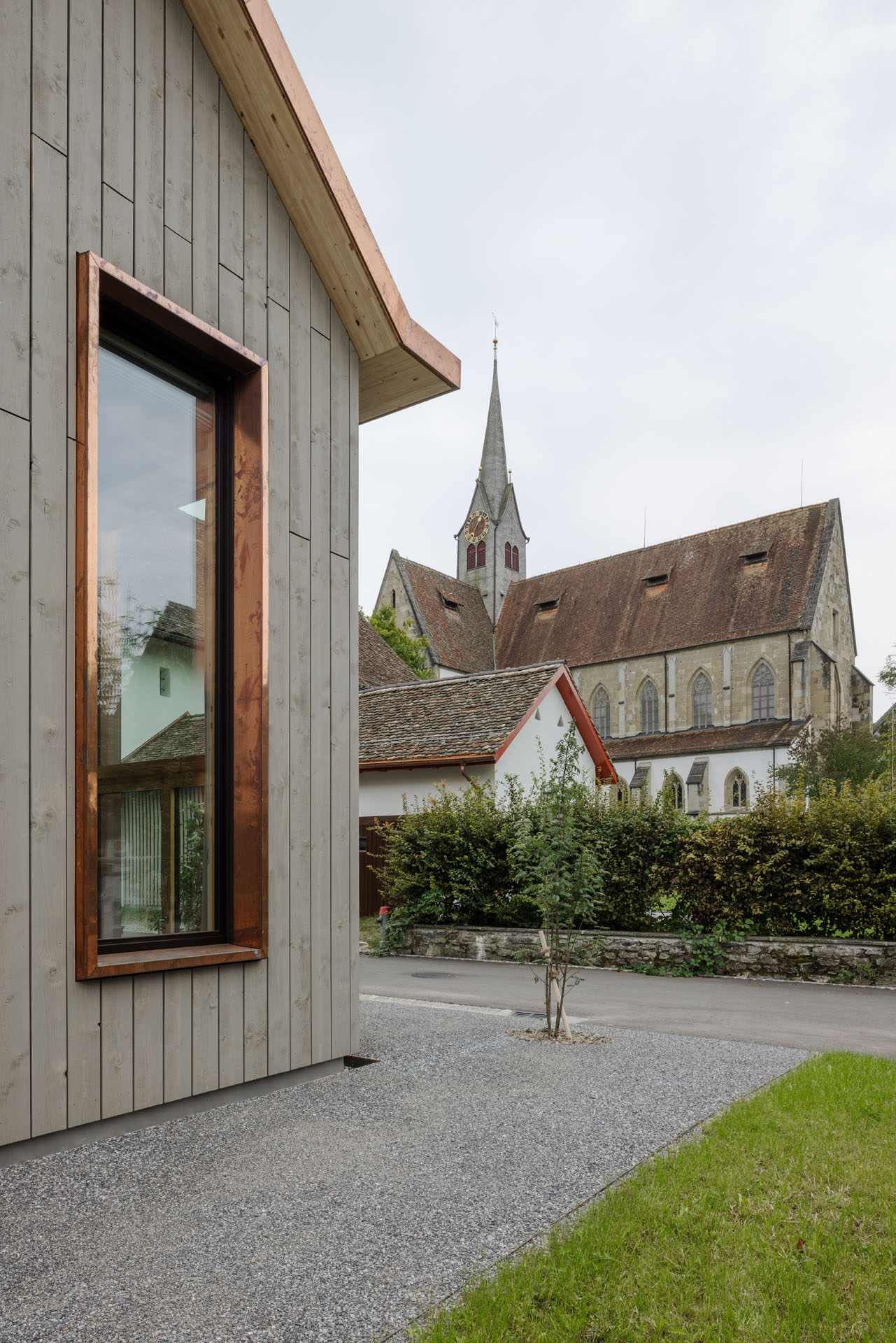
The main façade facing the monastery consists of large fixed glazing and double doors. The area in front of the houses, with its compact water-bound ceiling, serves as a terrace. At the rear, facing the newly constructed monastery wall, are the entrance doors, combined with fixed glazing. The sleeping area on the upper floor is equipped with a reversible window. The closed parts of the facade are clad with wooden slats to emphasize the wooden monolithism, making the new building part of the monastery's barn-like structures.
Casas pequeñas Kappel am Albis por Atelier Kempe Thill. Fotografía por Ulrich Schwarz.
Tiny houses Kappel am Albis by Atelier Kempe Thill. Photograph by Ulrich Schwarz.

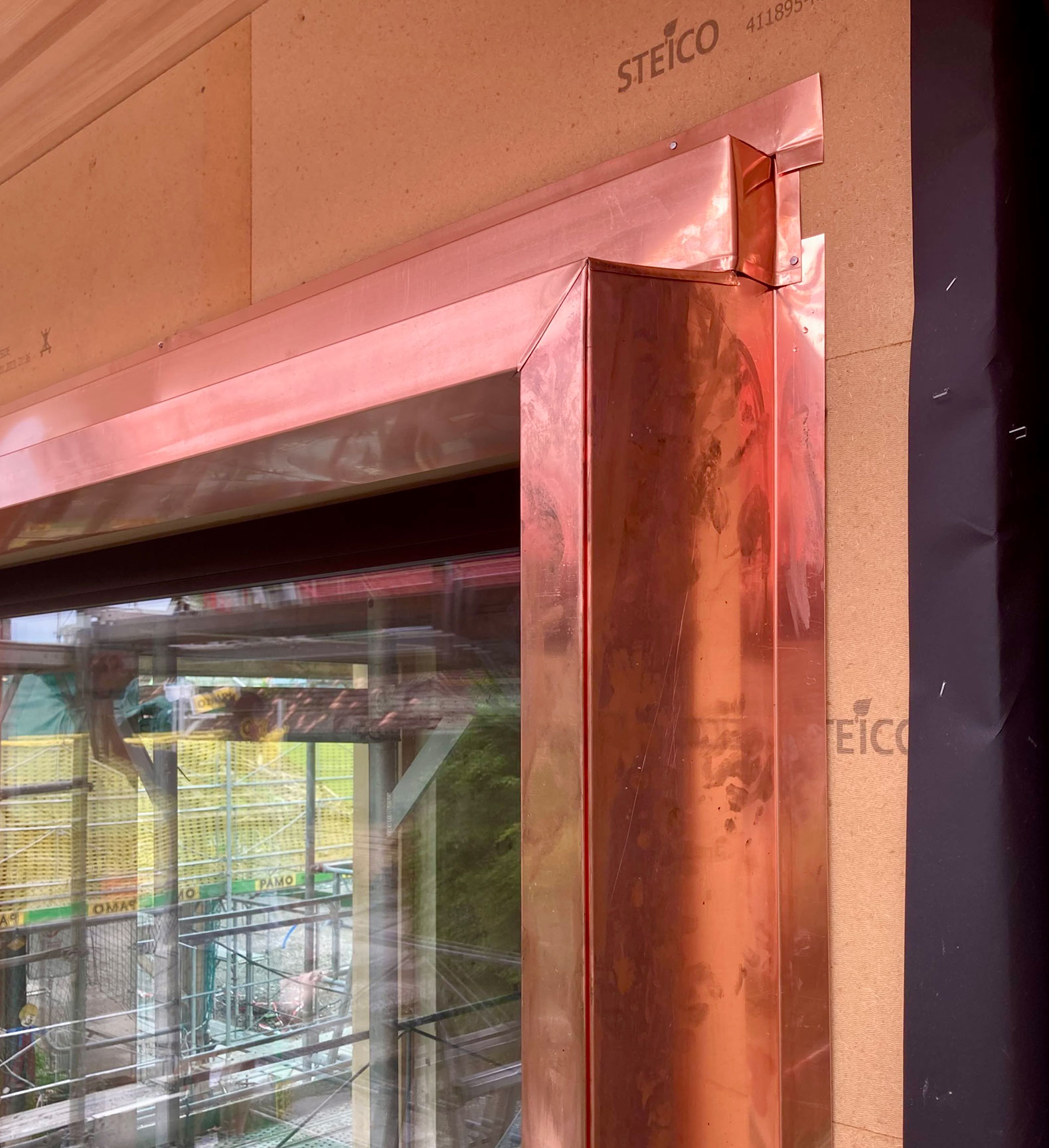
The roof edge and window reveals are finished in copper. The roof is covered with red roof tiles.

Objectified mass product
The terraced house is one of the most common types of housing in Western Europe. For Atelier Kempe Thill, it has been an important entry point into architectural design from the very beginning. In its simplicity, the terraced house is also a type of housing that can be typologically exploited and objectified almost diagrammatically, as an optimized mass product and, in that sense, an expression of the modern age. Atelier Kempe Thill has devoted several designs to this theme, both in the Netherlands and in a European context. The tiny houses in Kappel, designed as terraced houses for a maximum of one to two people as “mono spaces” and houses and furniture in one, are a radical, almost extreme building block in this research in their minimalist form.
More information

Label
Architects
Text

Atelier Kempe Thill architects and planners. Lead architects.- André Kempe, Oliver Thill.  

+ + copy Created with Sketch.
- + copy Created with Sketch.
Label
Project team
Text

André Kempe, Oliver Thill, Saskia Hermanek, Marisa Brunner, Bruno Godeiro, Kento Tanabe, Jurriaan Blom, Sebastian Humpert. 

+ + copy Created with Sketch.
- + copy Created with Sketch.
Label
Collaborators
Text

Construction management.- Die Realisatorin, Zürich - Iris Dätwyler, Jeannette Raupach, Daniel Keller.
Landscape architect.- bbz landschaftsarchitekten, Bern - Tino Buchs, Jacqueline Meier, Clara Gross.
Structural engineer basemenT.- Emch + Berger WSB AG, Cham - Markus Strehler.
Structural engineer wood.- Besmer Holzingenieure, Sattel - Martin Limacher.
Building services engineer.- Neukom engineering, Adliswil (HLS) - Rosario Spano, Fatmir Emini. TLP AG, Dietikom (Electric) - Alina Pally, Sven Hägi.
Building physicist.- BAKUS AG, Basel - Clemens Moser.

+ + copy Created with Sketch.
- + copy Created with Sketch.
Label
Client
Text

Verein Kloster Kappel.

+ + copy Created with Sketch.
- + copy Created with Sketch.
Label
Manufacturers
Text

Concrete structure.- Marti AG.
CLT and wooden fassade.- Kälin Holz Technik AG.
Techn. install (san).- Steger Haustechnik. 
Tech. Installation (heating).- Kaeppeli Haustechnik. 
Tech. install (elec).- Schneebeli Elektrofachgeschäft. 
Windows.- Schmidiger AG.                            
Roofing / metal works.- Abicht Dachtechnik. 
Steel works.- Tobias Hürlimann AG.
Kitchen + furniture.- Frick AG.
Terrazzo flooring.- Hächler AG.
Surrounding.- Holenstein AG. 

+ + copy Created with Sketch.
- + copy Created with Sketch.
Label
Area
Text

Site area.- 700 sqm.
Building size.- 535 sqm (gross floor area).  
Building volume.- 2.070 cbm (gross volume).

+ + copy Created with Sketch.
- + copy Created with Sketch.
Label
Dates
Text

Commission.- 2013 – 2024. 
Design.- 2018 – 2022.
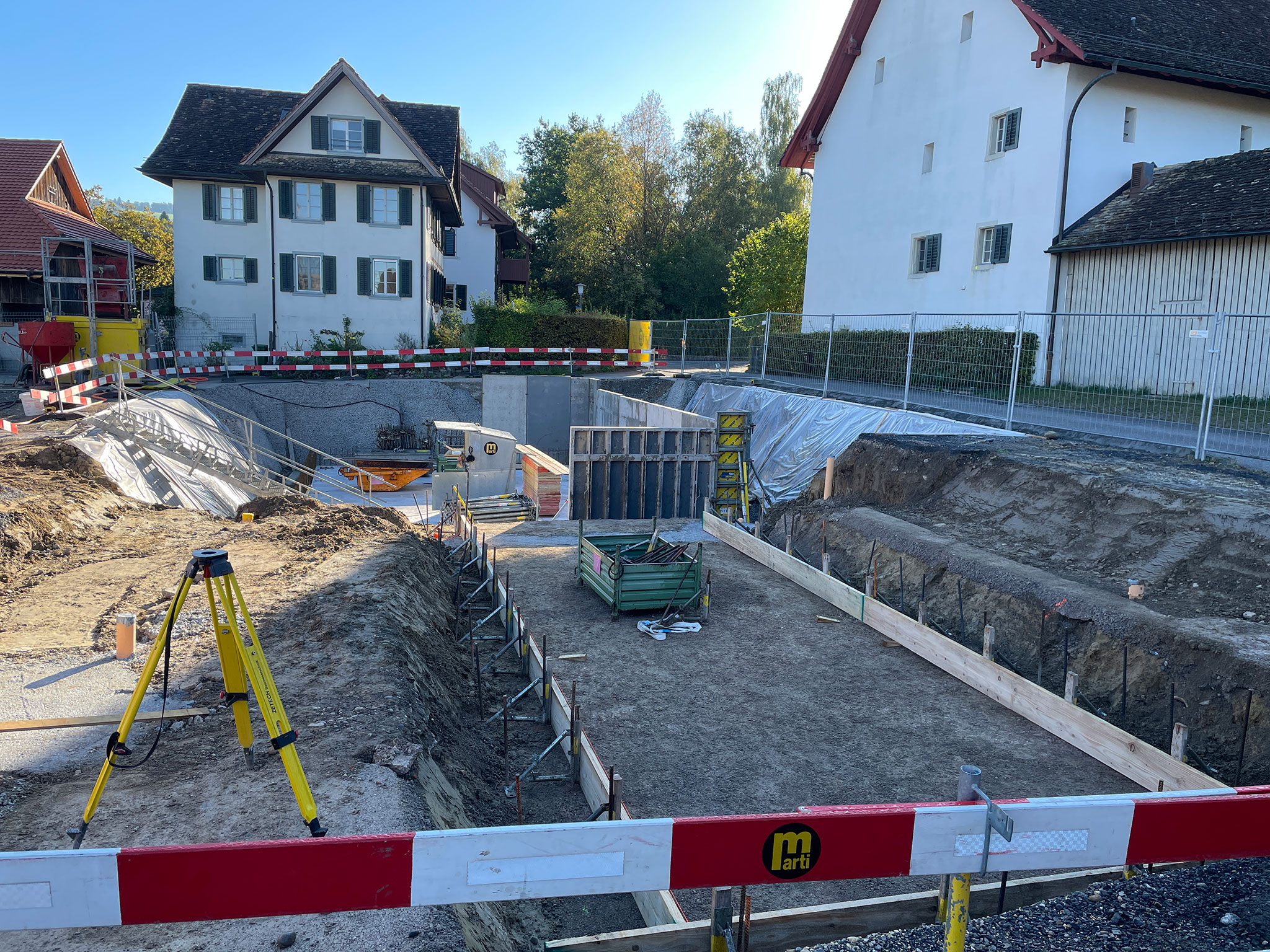
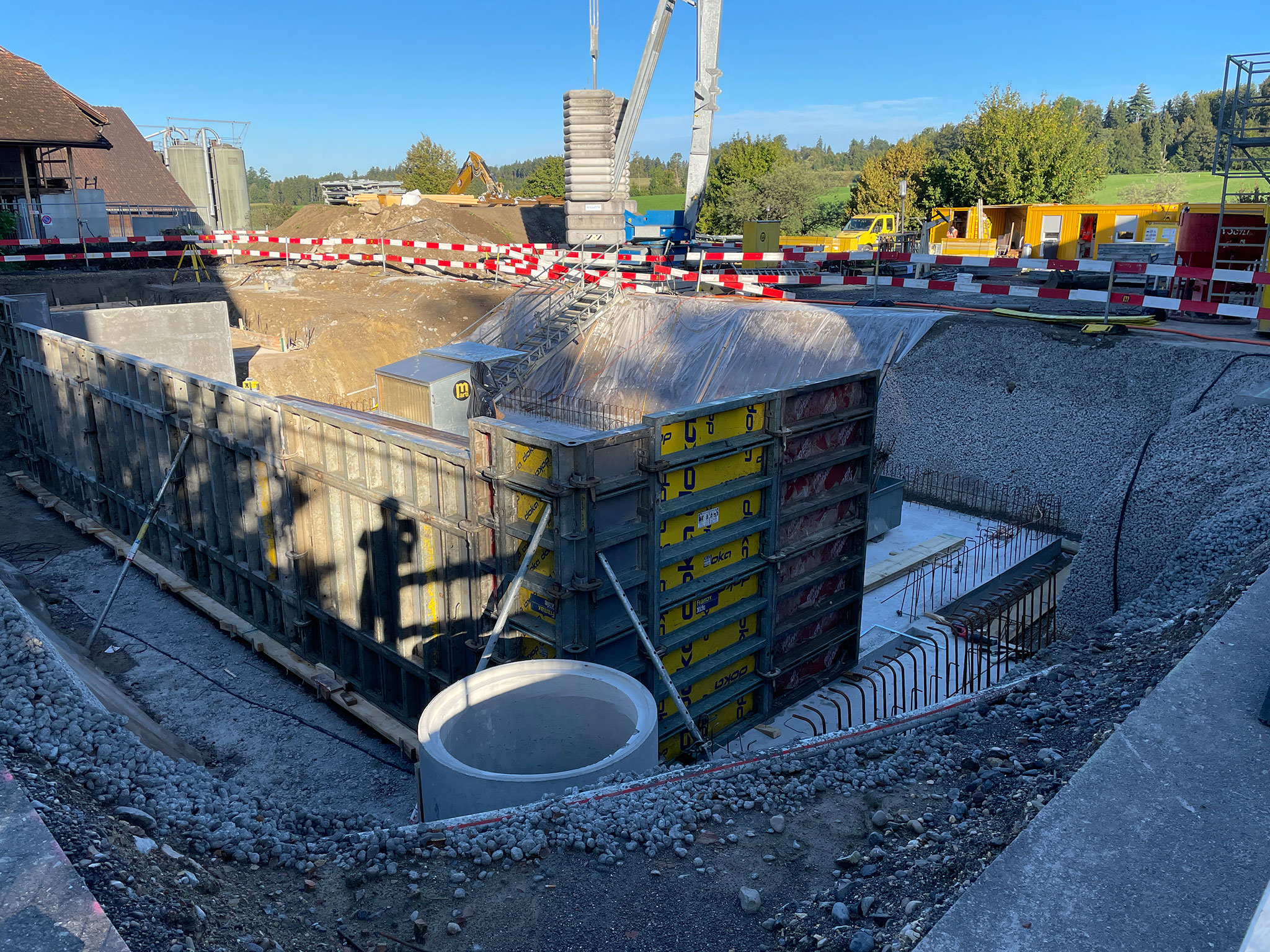
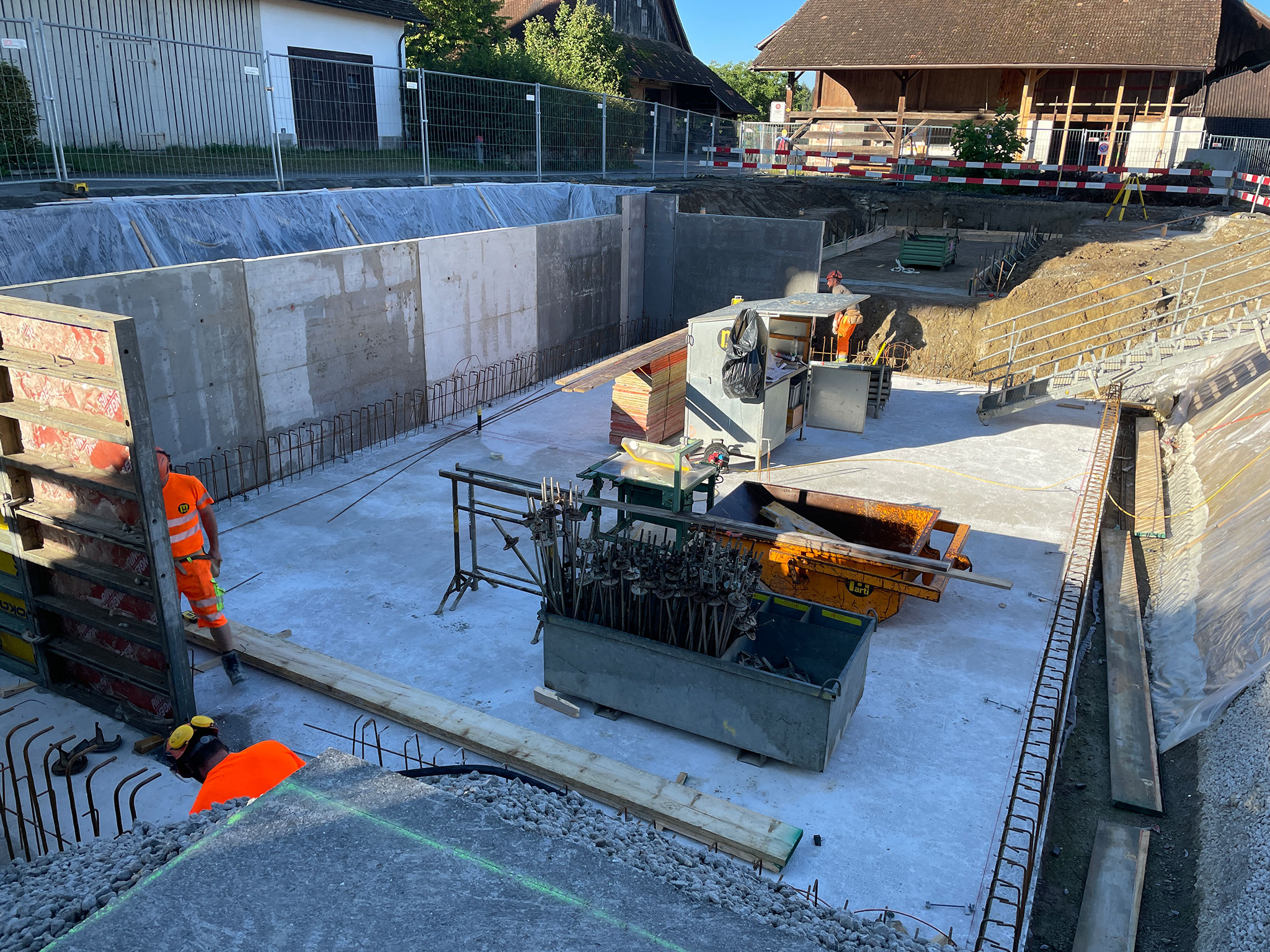
Execution.- 2022 – 2024.
Delivery date.- dec 2024.

+ + copy Created with Sketch.
- + copy Created with Sketch.
Label
Location
Text

Kappelerhof 4, CH - 8926 Kappel am Albis, Zurich, Switzerland.

+ + copy Created with Sketch.
- + copy Created with Sketch.
Label
Budget
Text

Total building cost (BKP 1-3) excl. VAT.- € 2,511,588. Incl. technical installations. Excl. landscape. Incl. interieur. 
Building costs / sqm.- € 4695,58 / sqm.
building costs / cbm.- € 1212,11 / m³. 

+ + copy Created with Sketch.
- + copy Created with Sketch.
Label
Photography
+ + copy Created with Sketch.
- + copy Created with Sketch.
Atelier Kempe Thill architects is an architecture studio founded by German architects André Kempe (1968) and Oliver Thill (1971) in 2000, after their Europan 5 winning proposal for three hundred homes in Kop van Zuid, Rotterdam, based in Rotterdam, Netherlands. While this project didn’t result in a commission, the office survived the recession of 2002-2004 and has been able to position itself well within the European architectural scene. In the last fifteen years, the practice has grown from a ‘two-man band’ to a stable, medium-sized office with around twenty-five employees.

The office’s range of work has systematically broadened since its foundation. The practice portfolio has developed with collective housing and small public building commissions to include large renovation, infrastructure and urban design projects. Single-sided specialisation and the consequent limitations have been avoided through the wide diversity of commissions; as a result, the practice is also more economically stable. Since its foundation, Atelier Kempe Thill has tried not to limit itself to the Netherlands but to establish itself within the wider European market. The office has acquired commissions in Austria, Belgium, Egypt, France, Germany, Morocco, the Netherlands and Switzerland through its participation in over one hundred and twenty international competitions.

Atelier Kempe Thill is becoming increasingly well-known in architectural circles. In the last fifteen years, the office has appeared in around five hundred publications worldwide, amongst which were two monographs. In addition, the office’s partners have given more than two hundred lectures. This professional recognition enables the office to acquire increasingly complex projects and compete with larger, more commercial practices.
 

André Kempe. Born in Freiberg, East Germany, in 1968 and stud­ied at the TU Dres­den. He is a found­ing part­ner of the Rot­ter­dam based firm Ate­lier Kempe Thill, which he directs together with Oliver Thill since 2000. André Kempe has been engaged as studio master at the Delft Uni­ver­sity of Tech­nol­ogy and the Acad­e­mie van Bouwkunst in both Arn­hem and Rot­ter­dam. He was an invited pro­fes­sor at the EPF Lau­sanne, PSBA Düsseldorf and the TU Berlin. In 2020 he was appointed as full professor at the Leibniz University of Hannover. André Kempe has given more than one hun­dred pub­lic lec­tures world­wide. He was a board mem­ber of Young Euro­pean Archi­tects and is cur­rently board mem­ber of the MONU magazine and Europan NL.

Oliver Thill. Born in Karl-Marx-Stadt, East Germany, in 1971 and stud­ied at the TU Dres­den. He is a found­ing part­ner of the Rot­ter­dam based firm Ate­lier Kempe Thill, which he directs together with André Kempe. Oliver Thill has been engaged as studio master at the Delft Uni­ver­sity of Tech­nol­ogy, the Acad­e­mie van Bouwkunst in both Arn­hem and Rot­ter­dam, and the Berlage Insti­tute Rot­ter­dam and Delft. He was an invited pro­fes­sor at the EPF Lau­sanne, the PSBA Düsseldorf, Polytechnico di Milano and the TU Berlin. In 2020 he was appointed as full professor at the Leibniz University of Hannover. Oliver Thill has given more than one hundred pub­lic lec­tures world­wide. He was a board mem­ber of the Jaap Bakema Foun­da­tion Rot­ter­dam and writes on a reg­u­lar basis for the European architecture mag­azine “San Rocco”.

Read more
Published on: May 6, 2026
Cite:
metalocus, CAMILA DOYLET
"Integration into a Gothic monastic complex. Tiny houses by Atelier Kempe Thill" METALOCUS. Accessed
<https://www.metalocus.es/en/news/integration-gothic-monastic-complex-tiny-houses-atelier-kempe-thill> ISSN 1139-6415
Loading content ...
Loading content ...
Loading content ...
Loading content ...
Loading content ...
Loading content ...
Loading content ...
Loading content ...
Loading content ...
Loading content ...
Loading content ...
Loading content ...
Loading content ...
Loading content ...
Loading content ...
Loading content ...
Loading content ...
Loading content ...
Loading content ...
Loading content ...
Loading content ...
Loading content ...
Loading content ...
Loading content ...
Loading content ...
Loading content ...
Loading content ...
Loading content ...
Loading content ...
Loading content ...
Loading content ...
Loading content ...
Loading content ...
Loading content ...
Loading content ...
Loading content ...
Loading content ...
Loading content ...
Loading content ...
Loading content ...
Loading content ...
Loading content ...
Loading content ...
Loading content ...
Loading content ...
Loading content ...
Loading content ...
Loading content ...
Loading content ...
Loading content ...
Loading content ...
Loading content ...
Loading content ...
Loading content ...