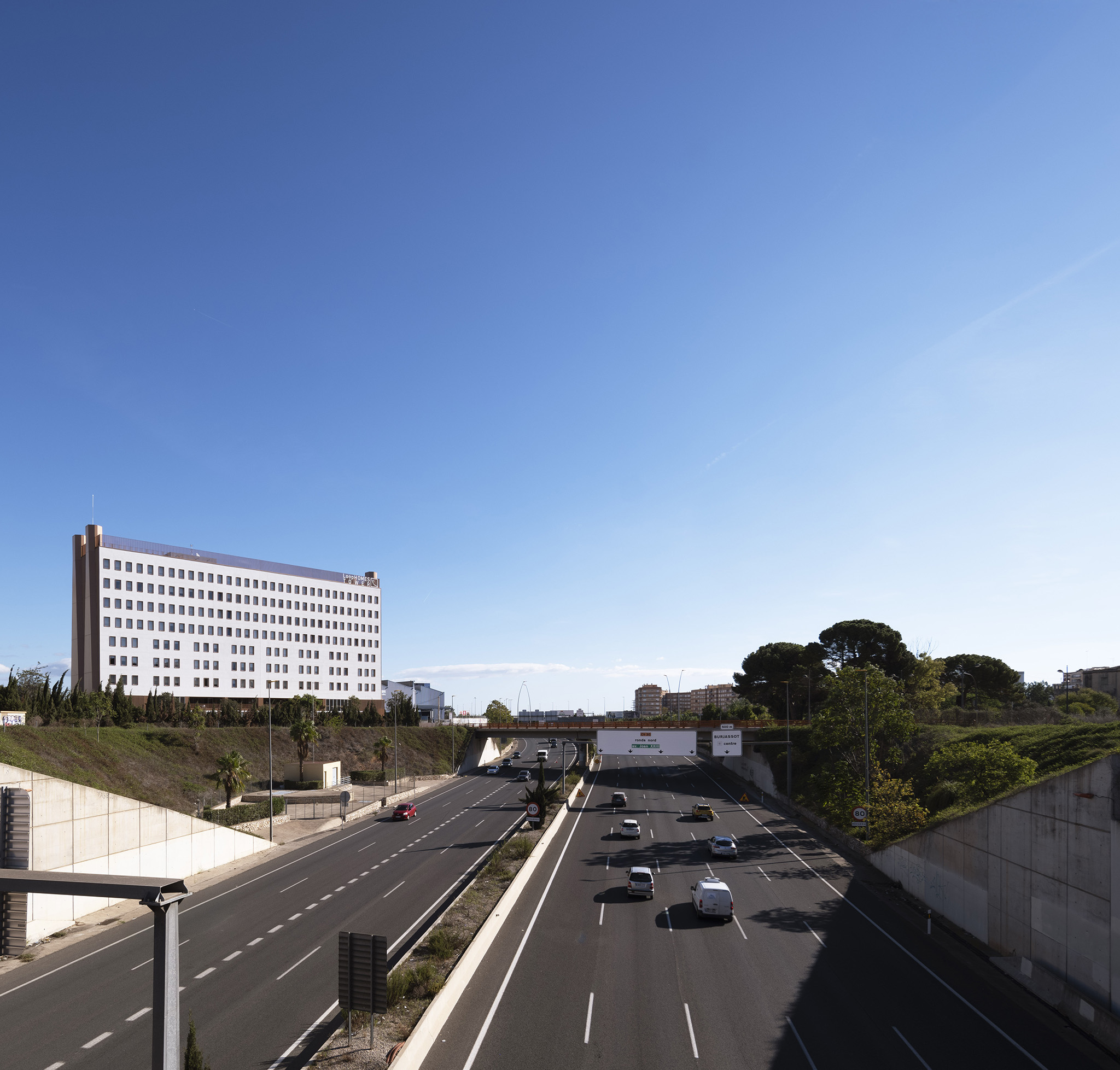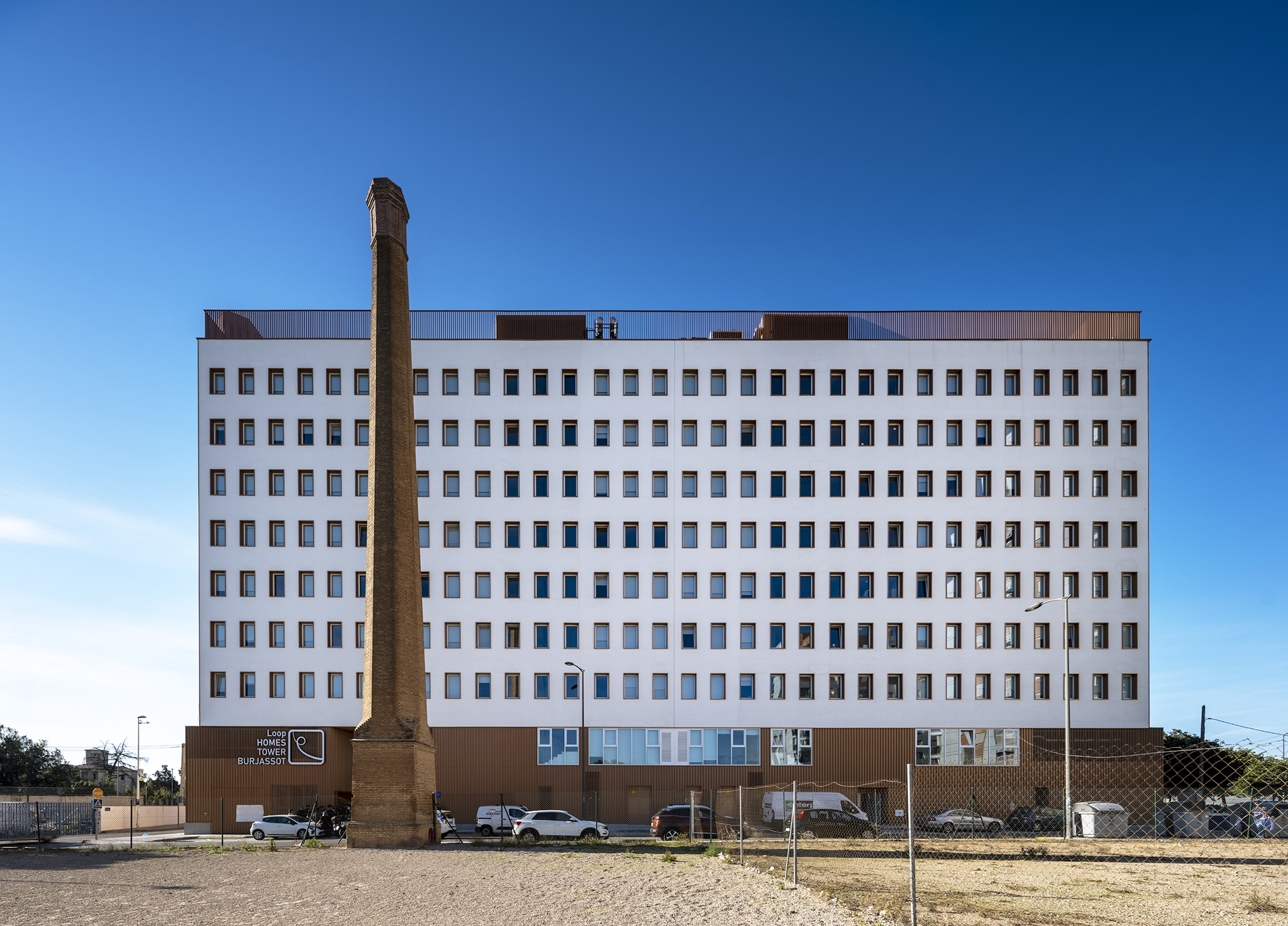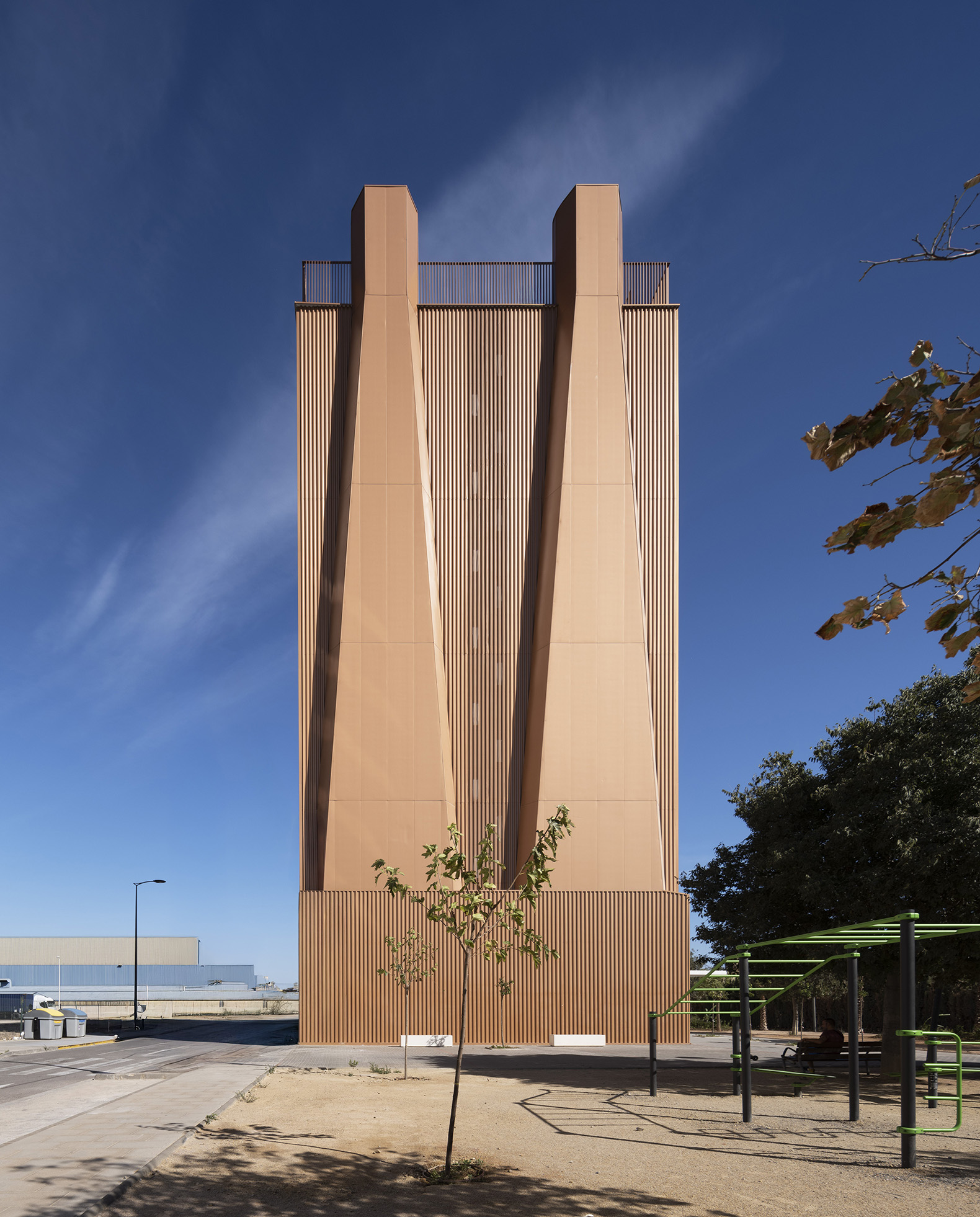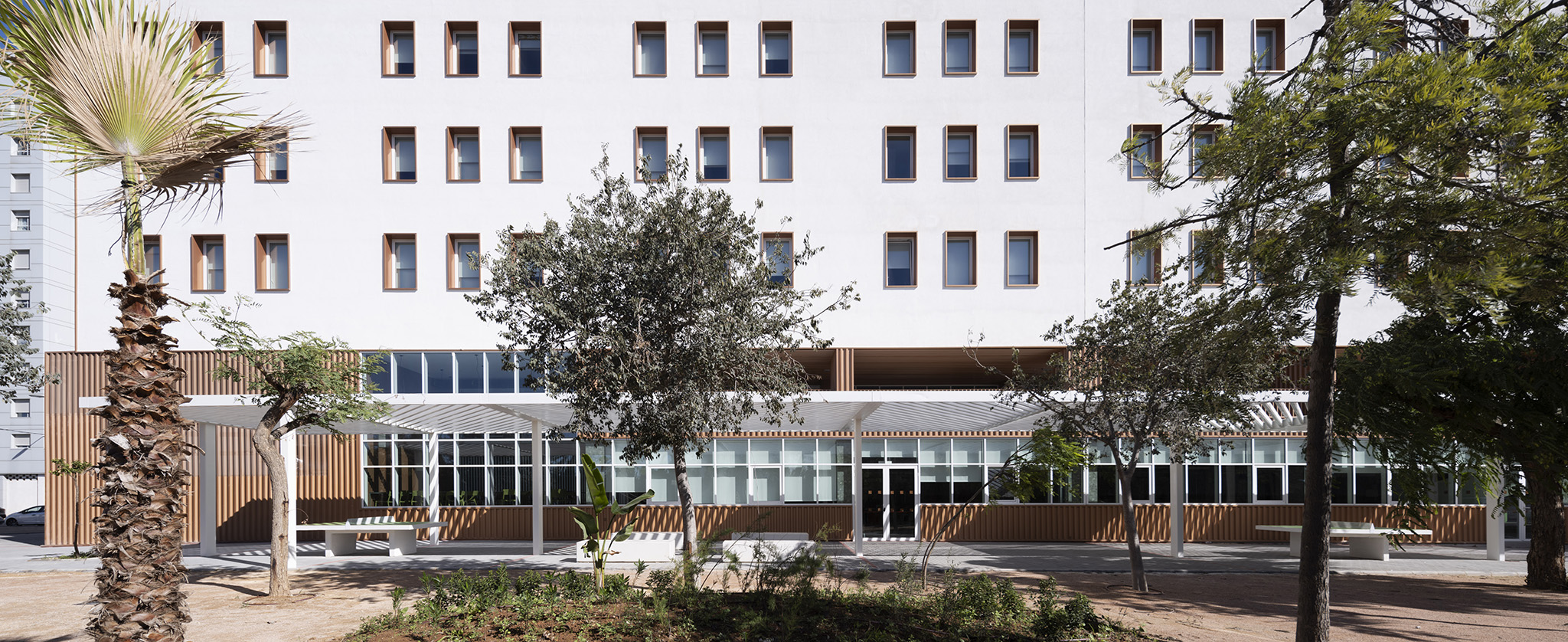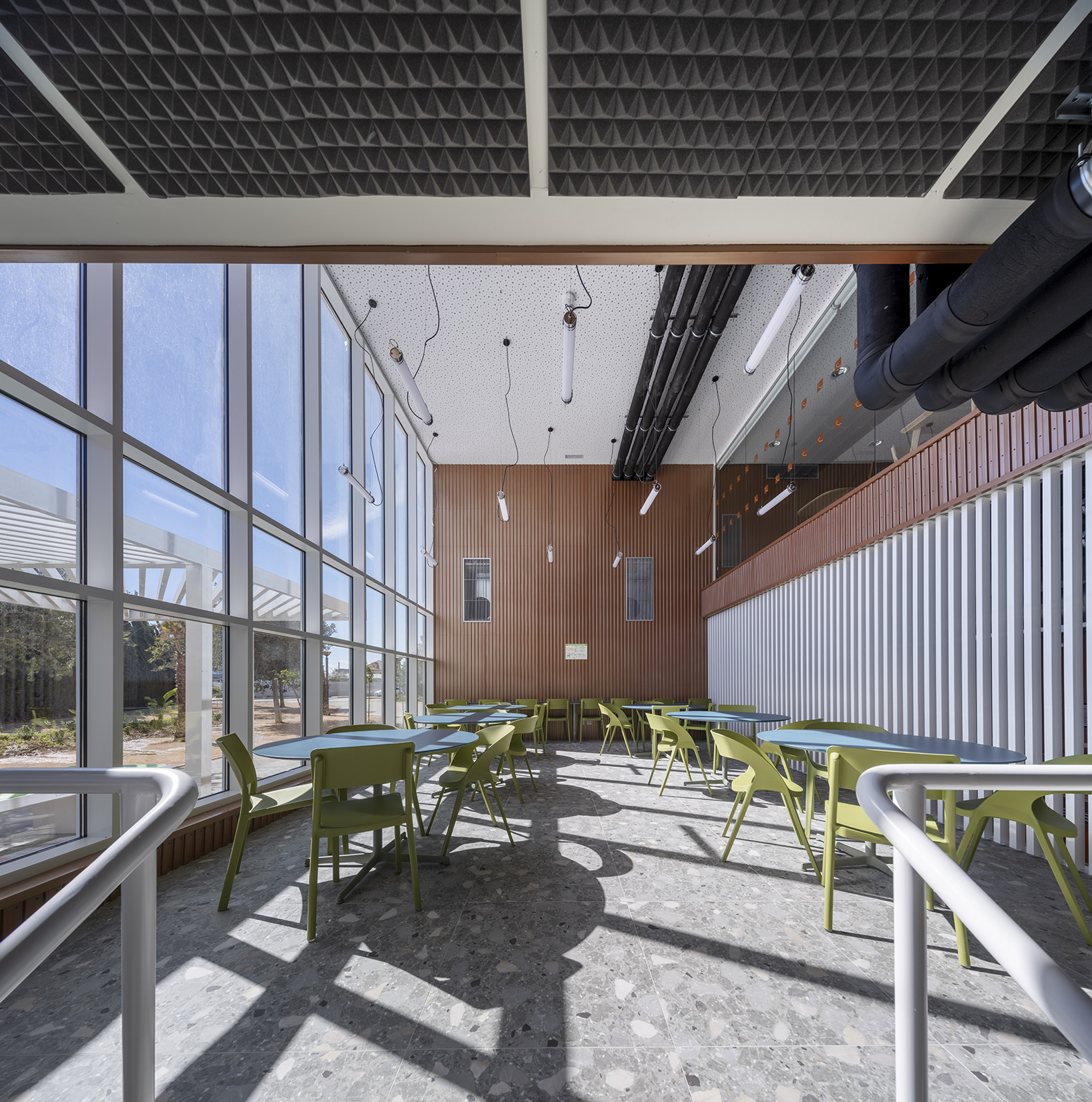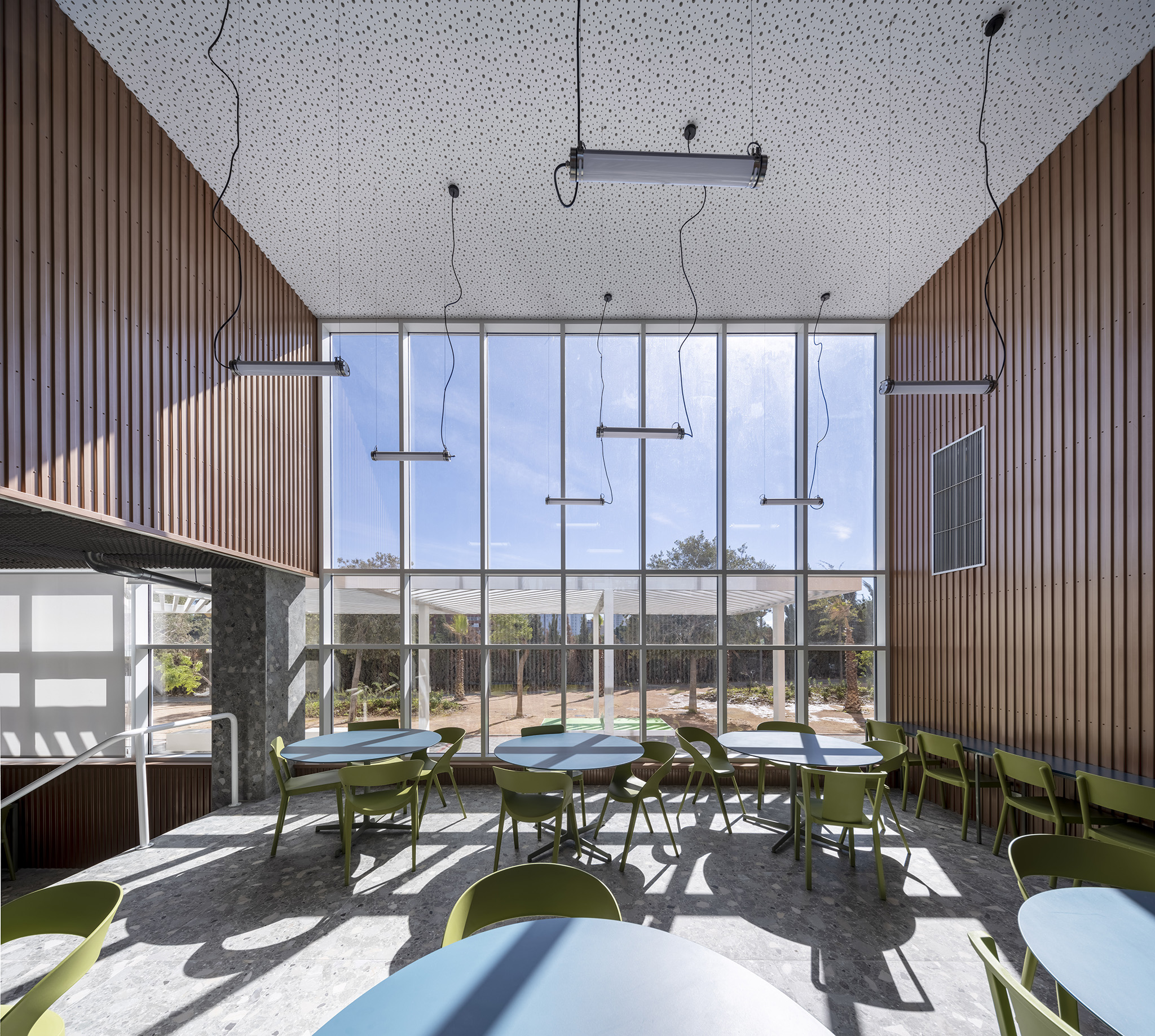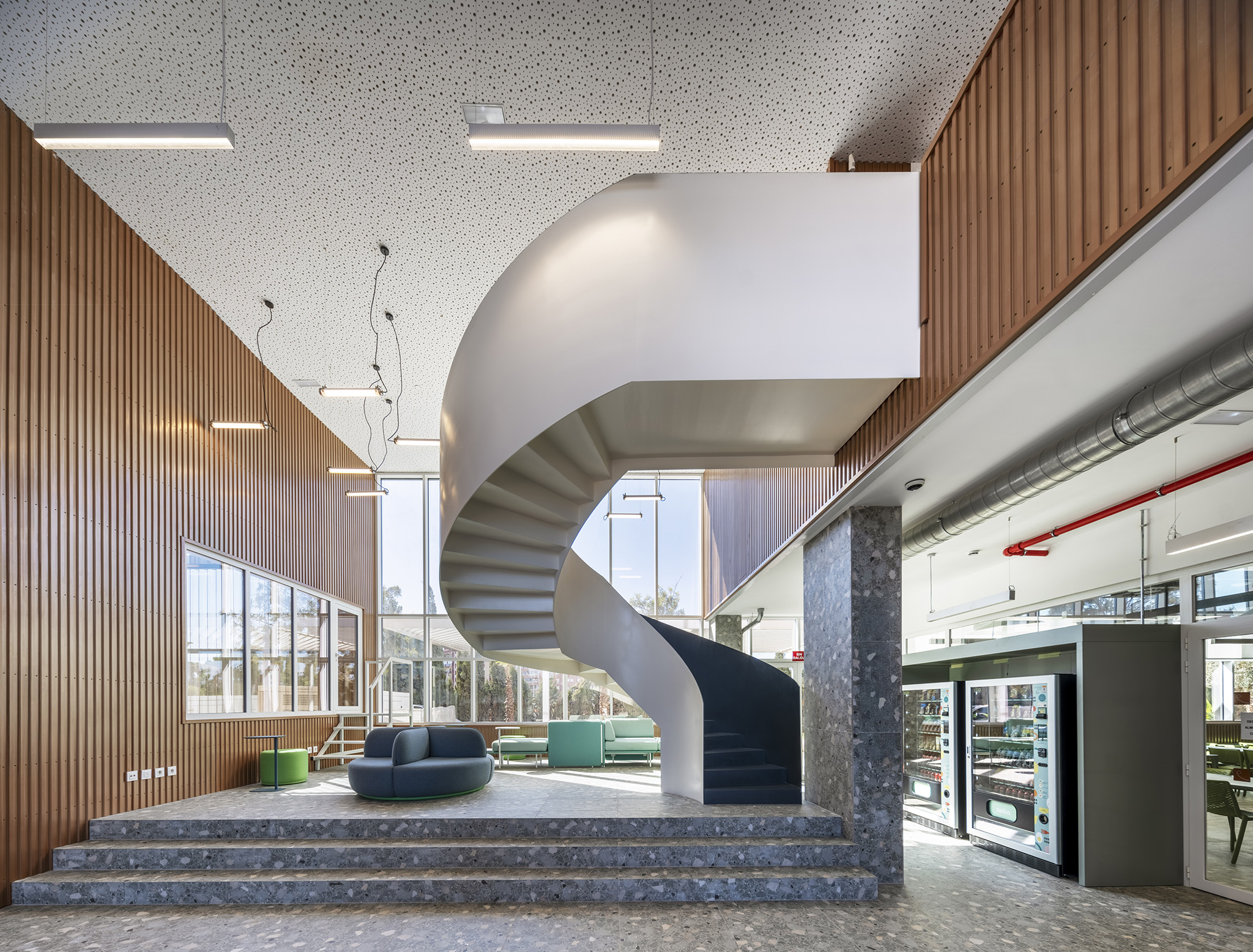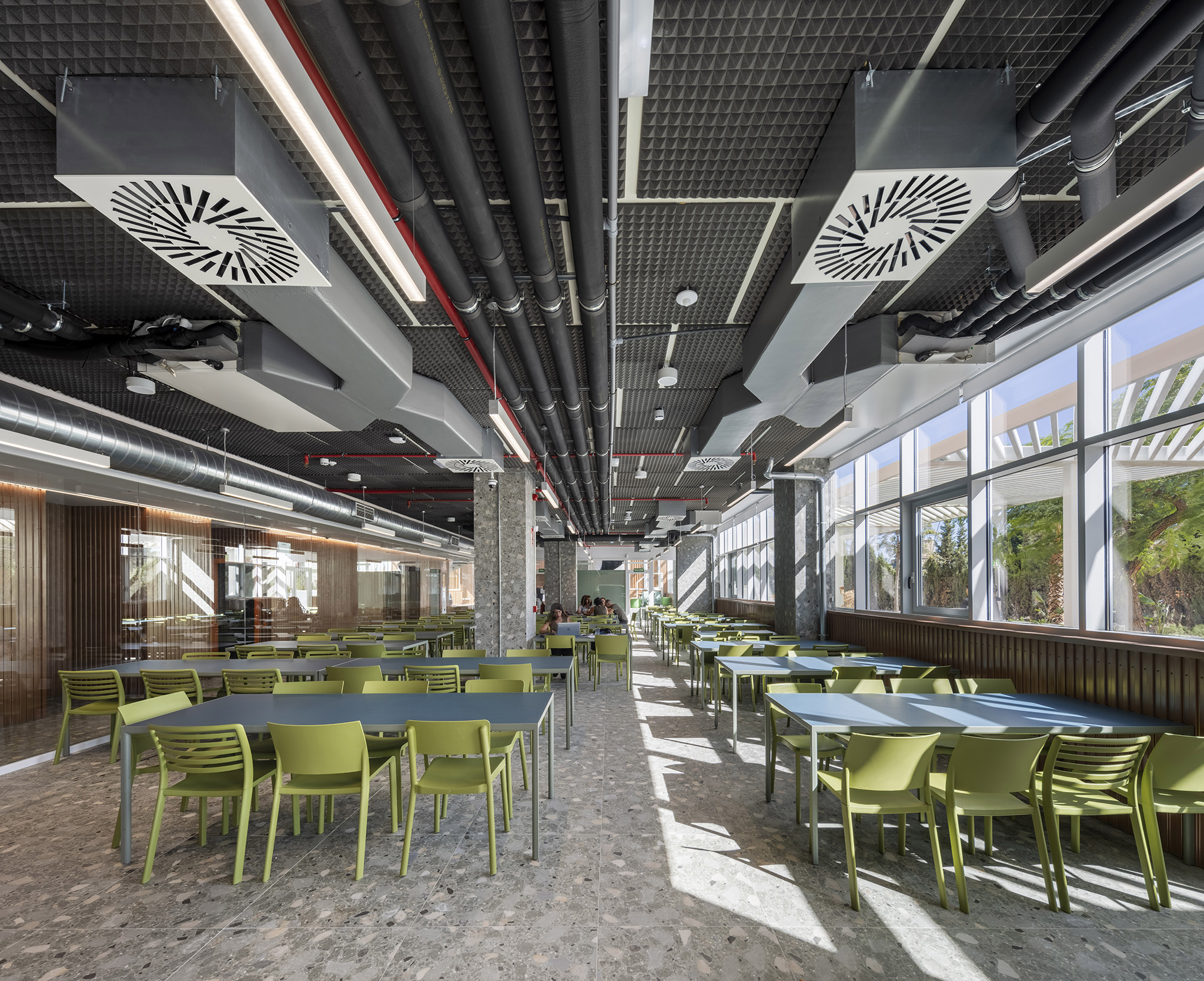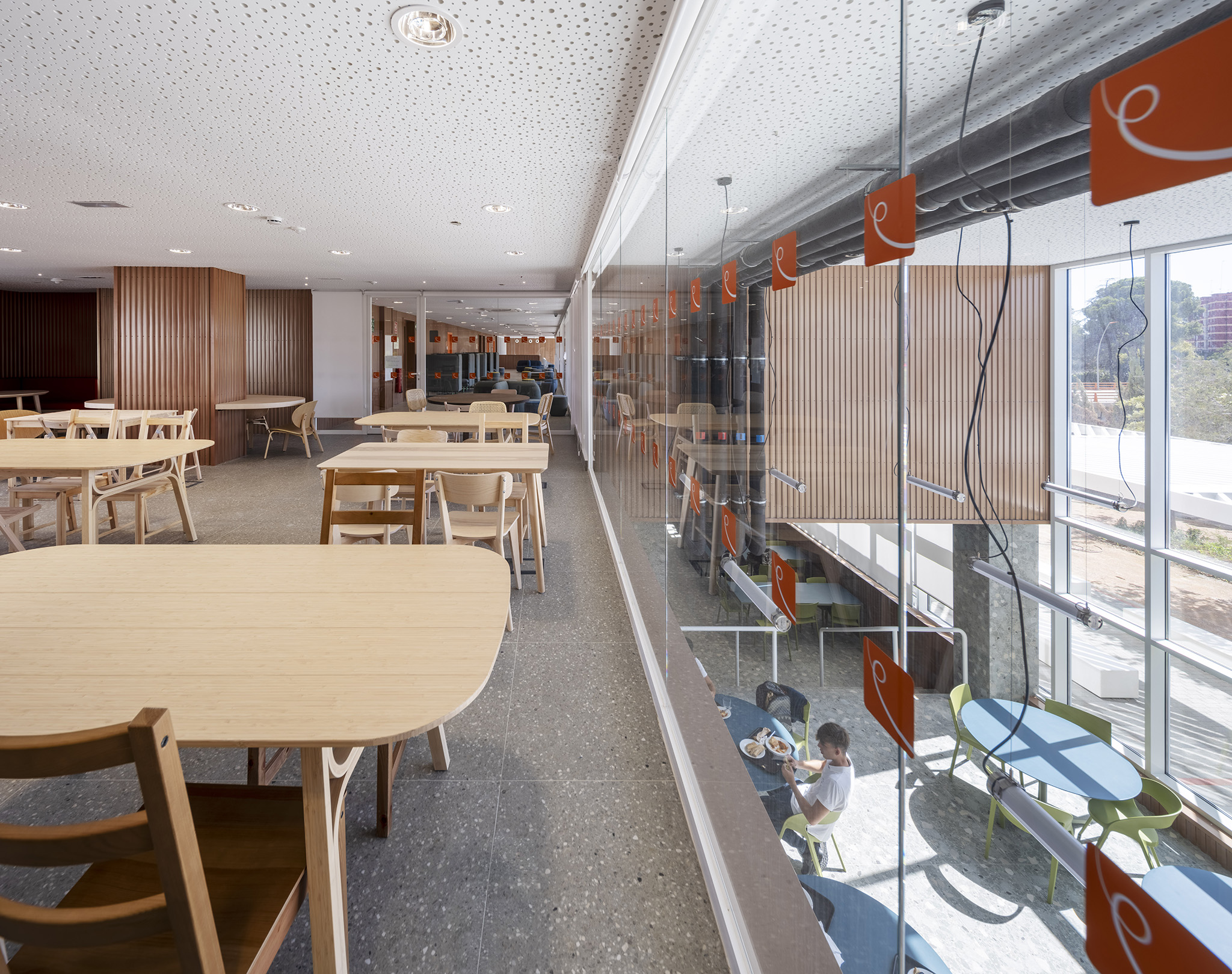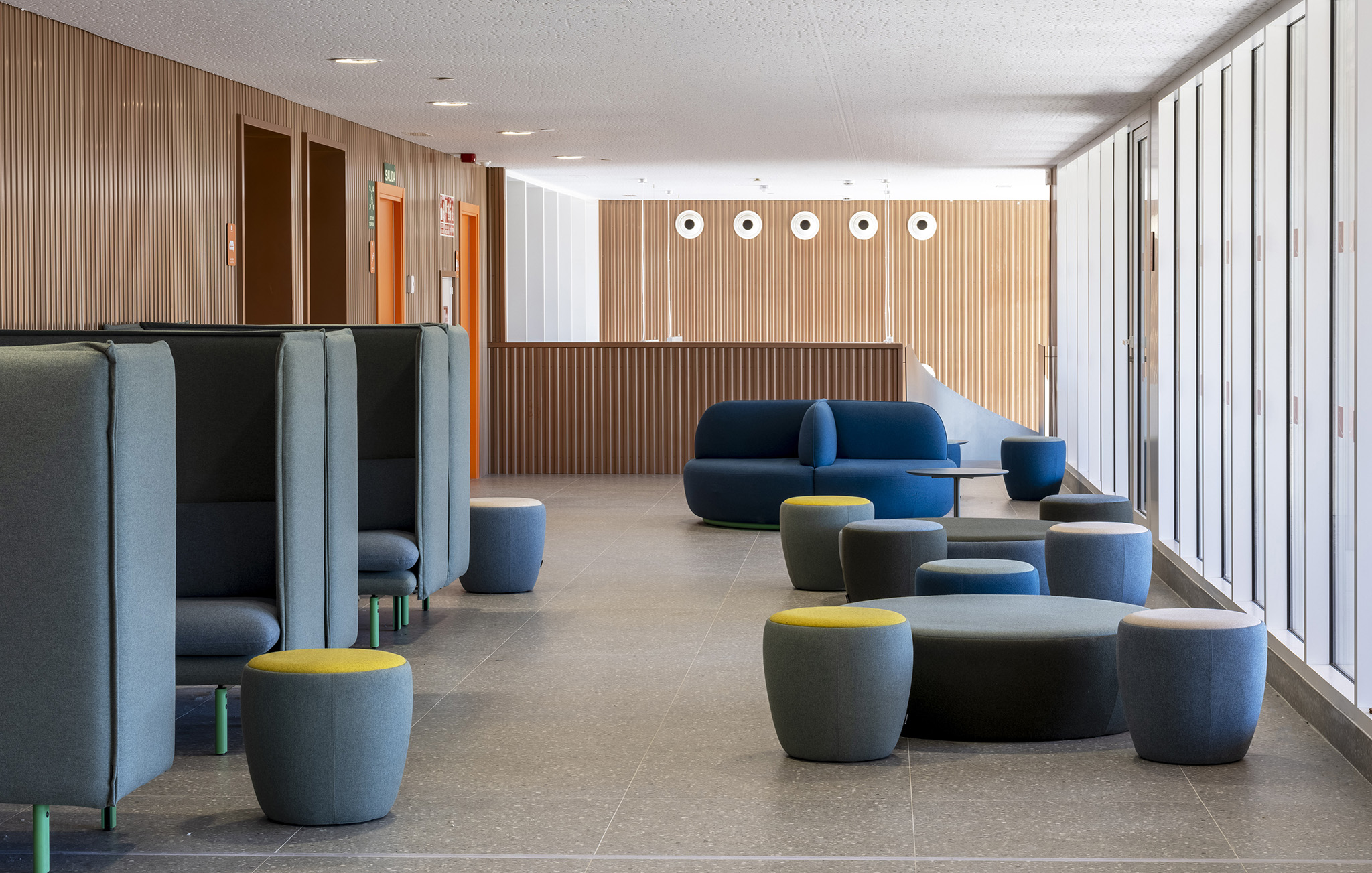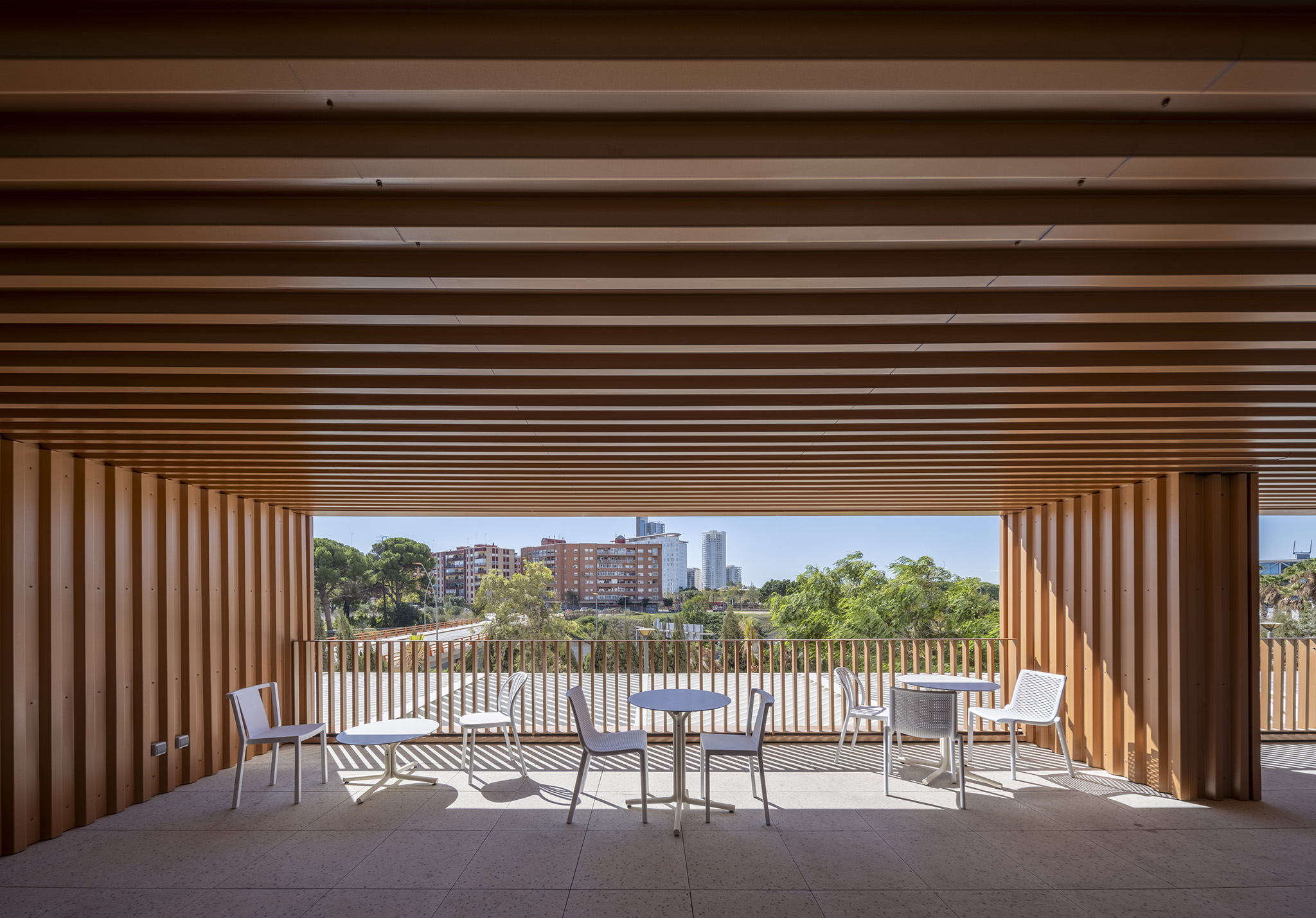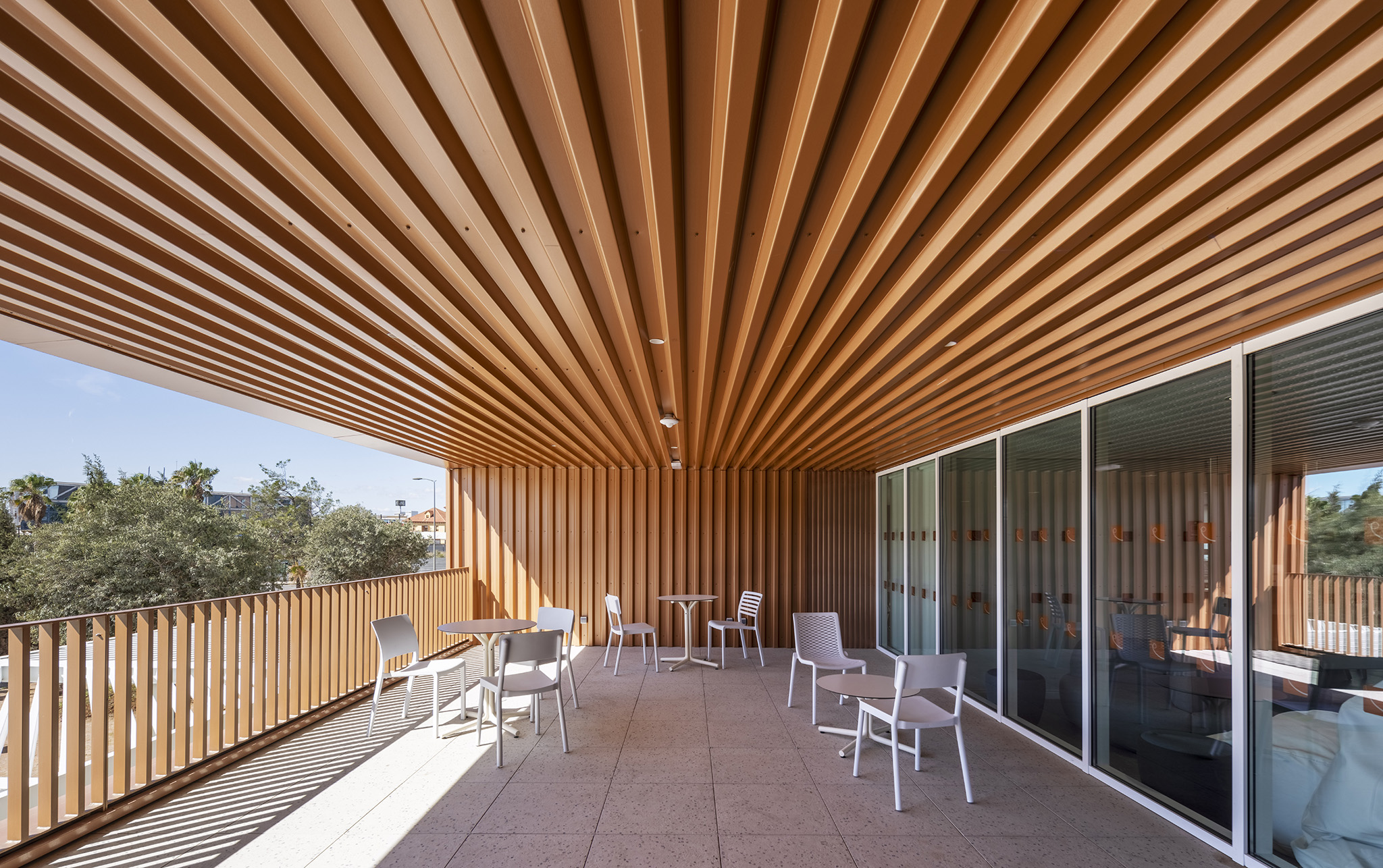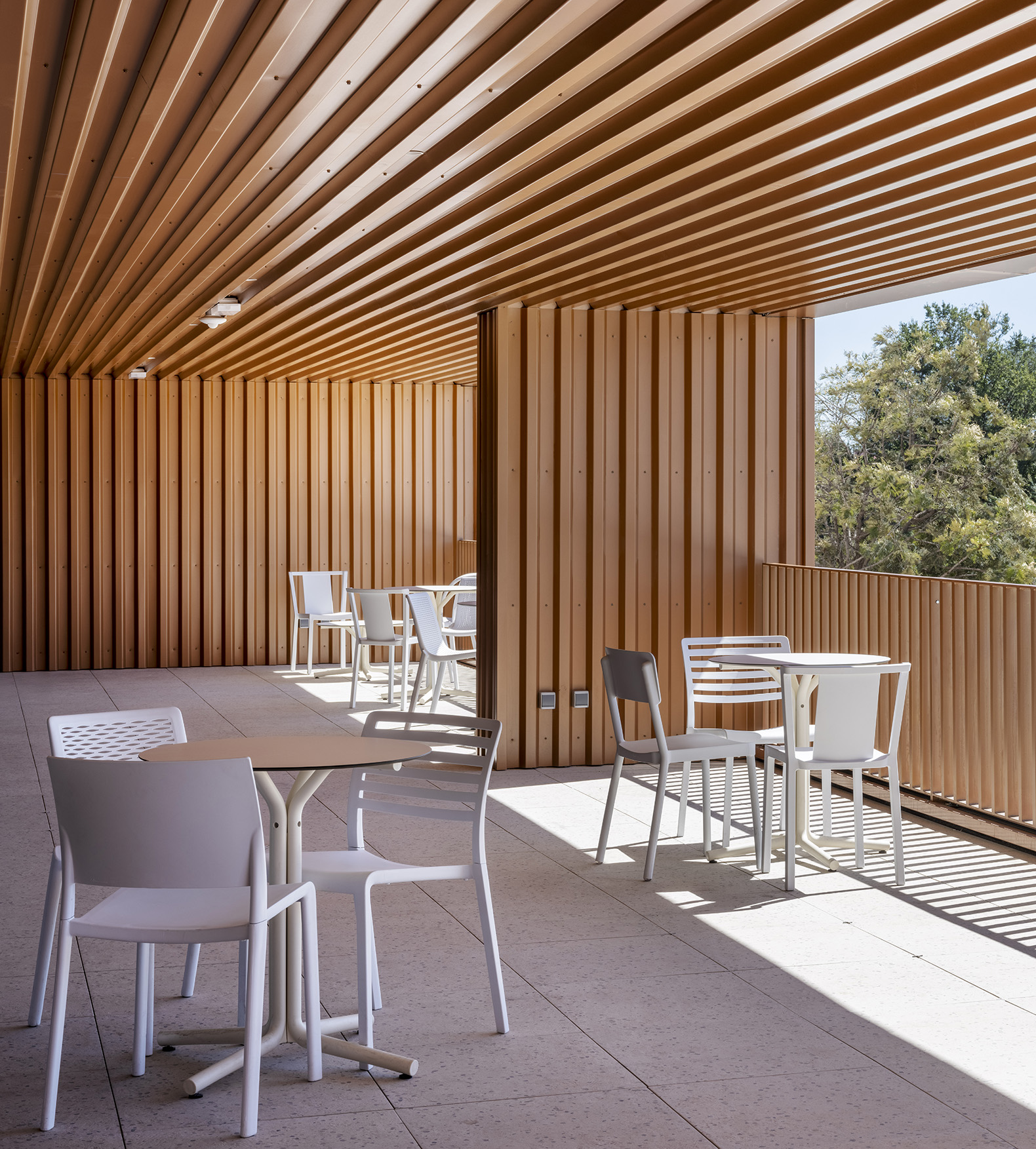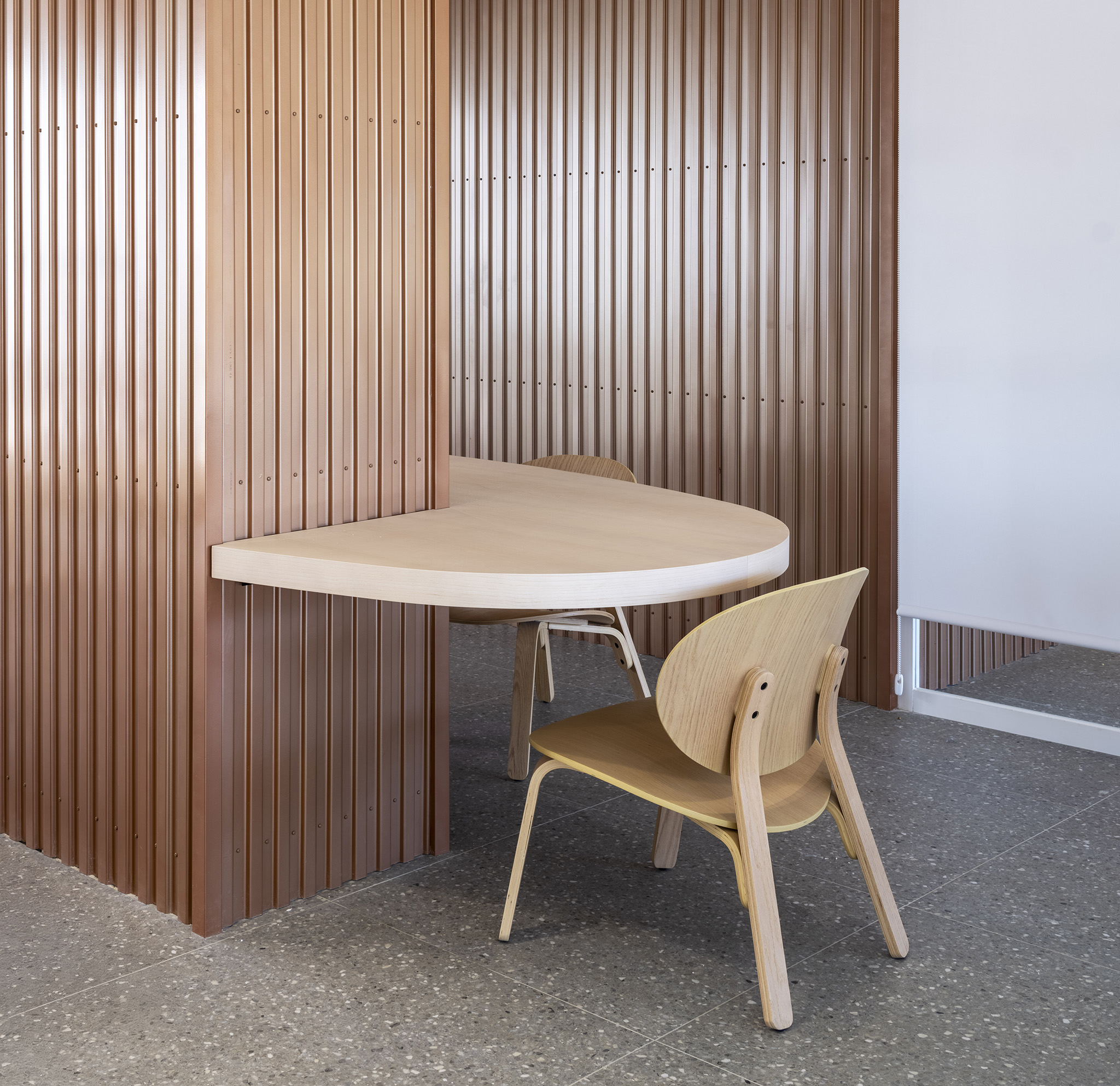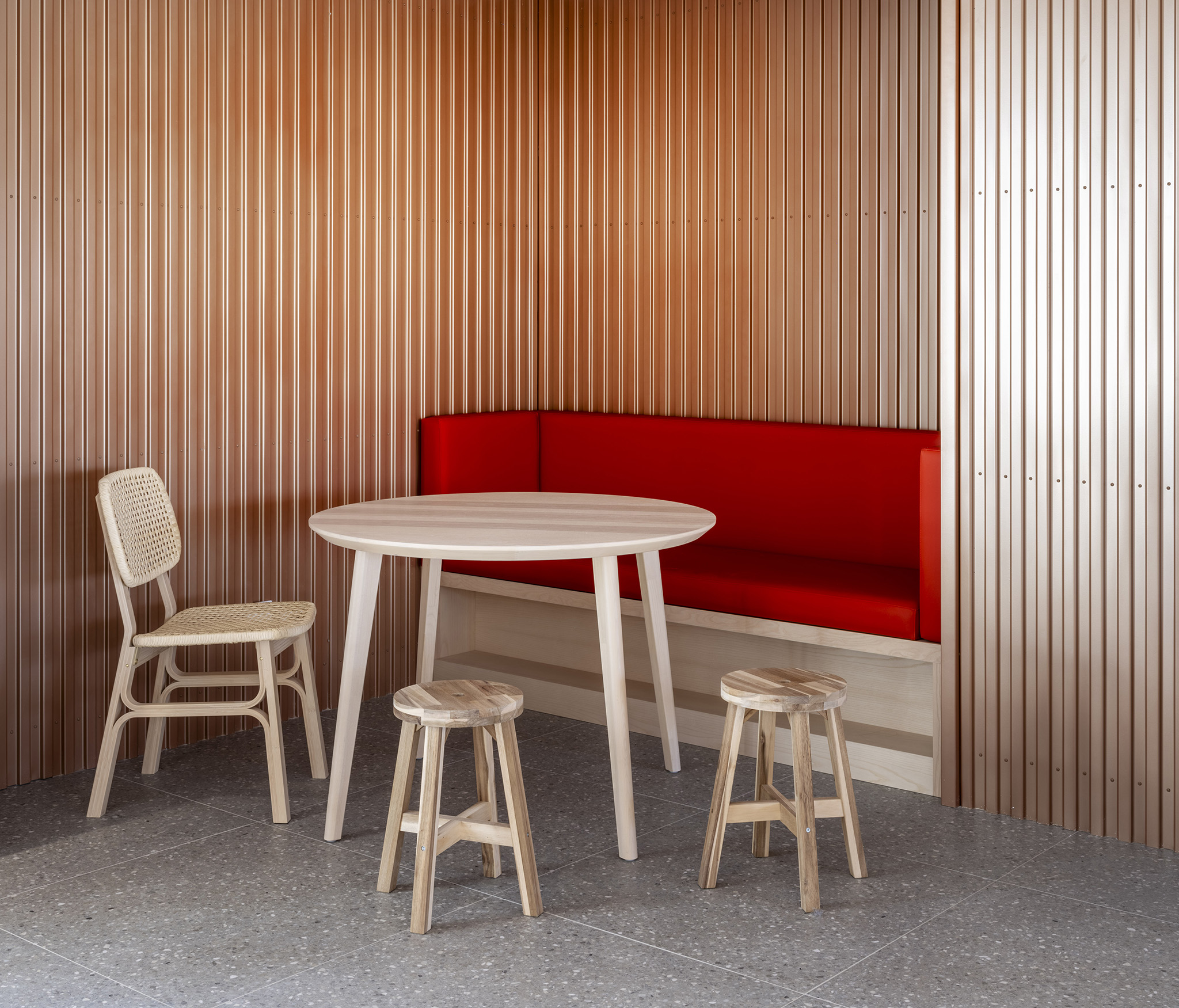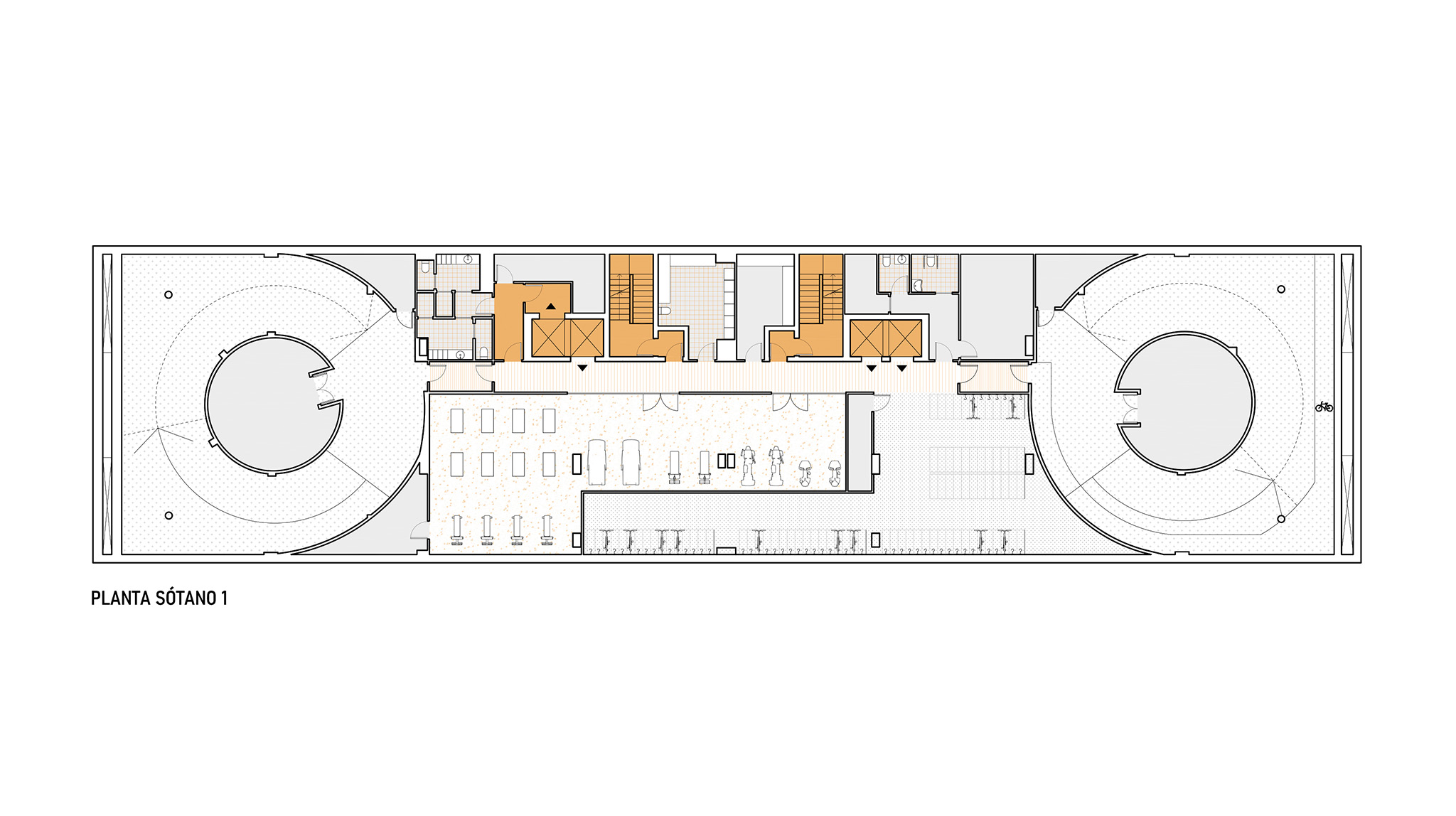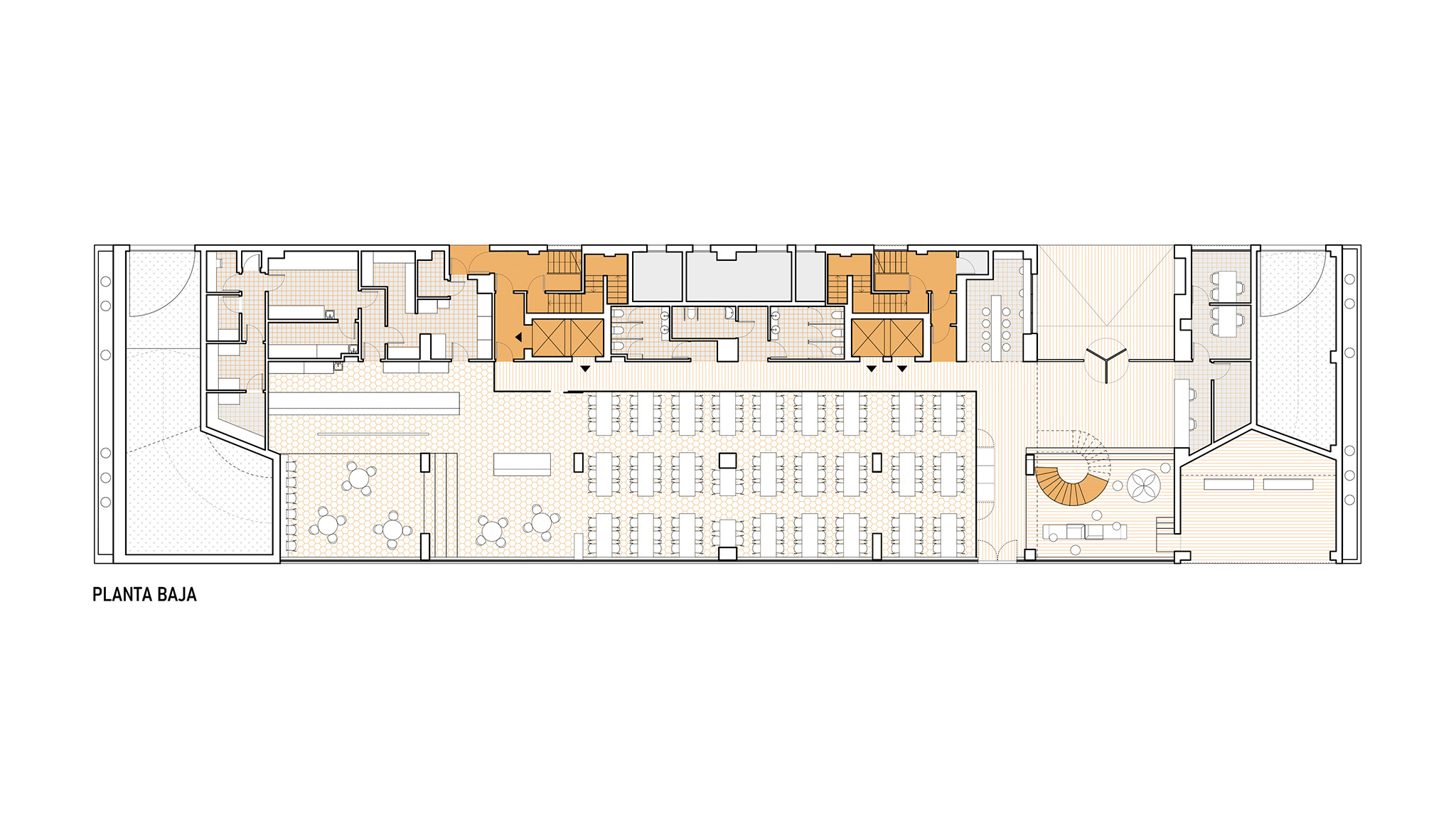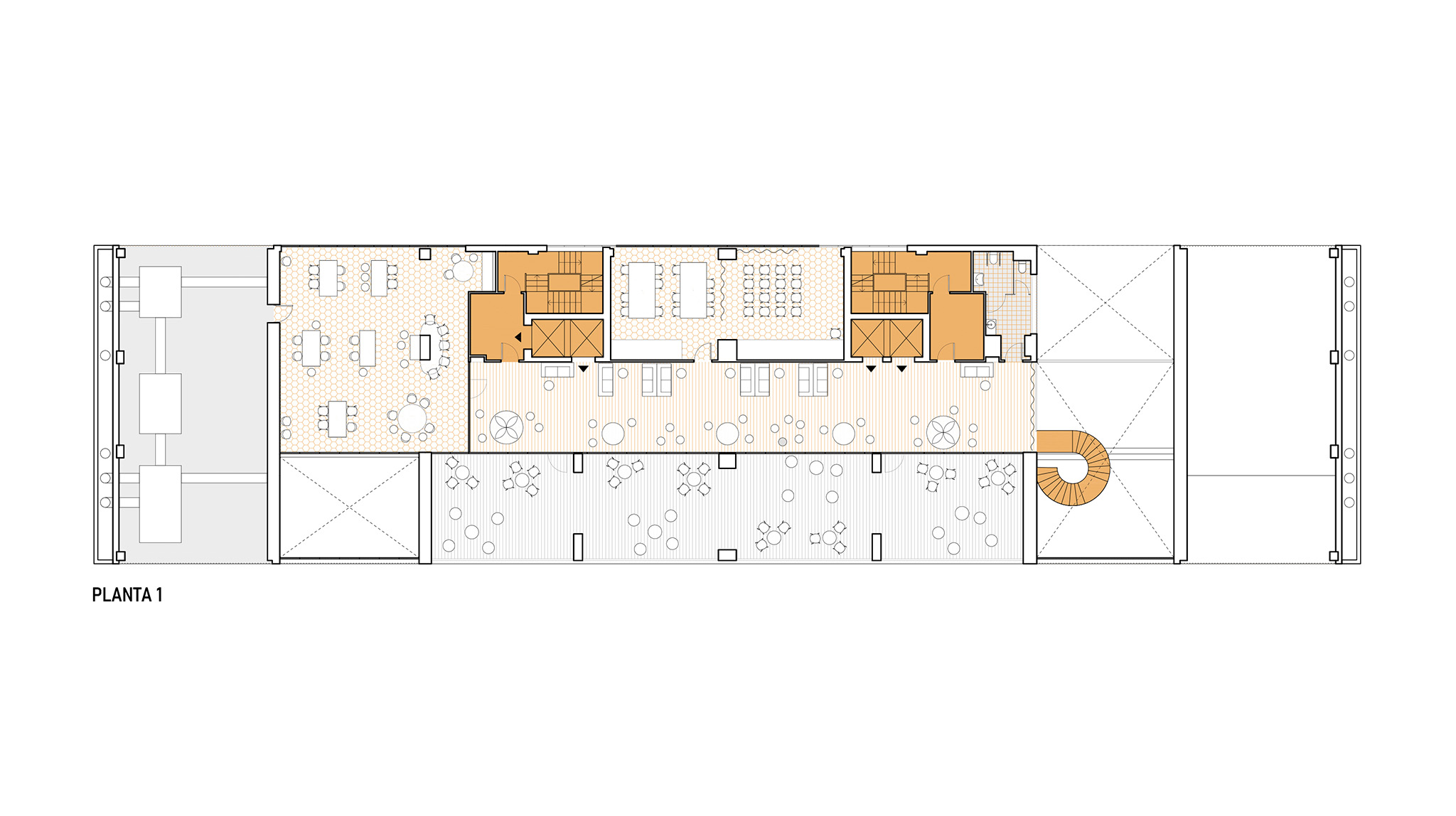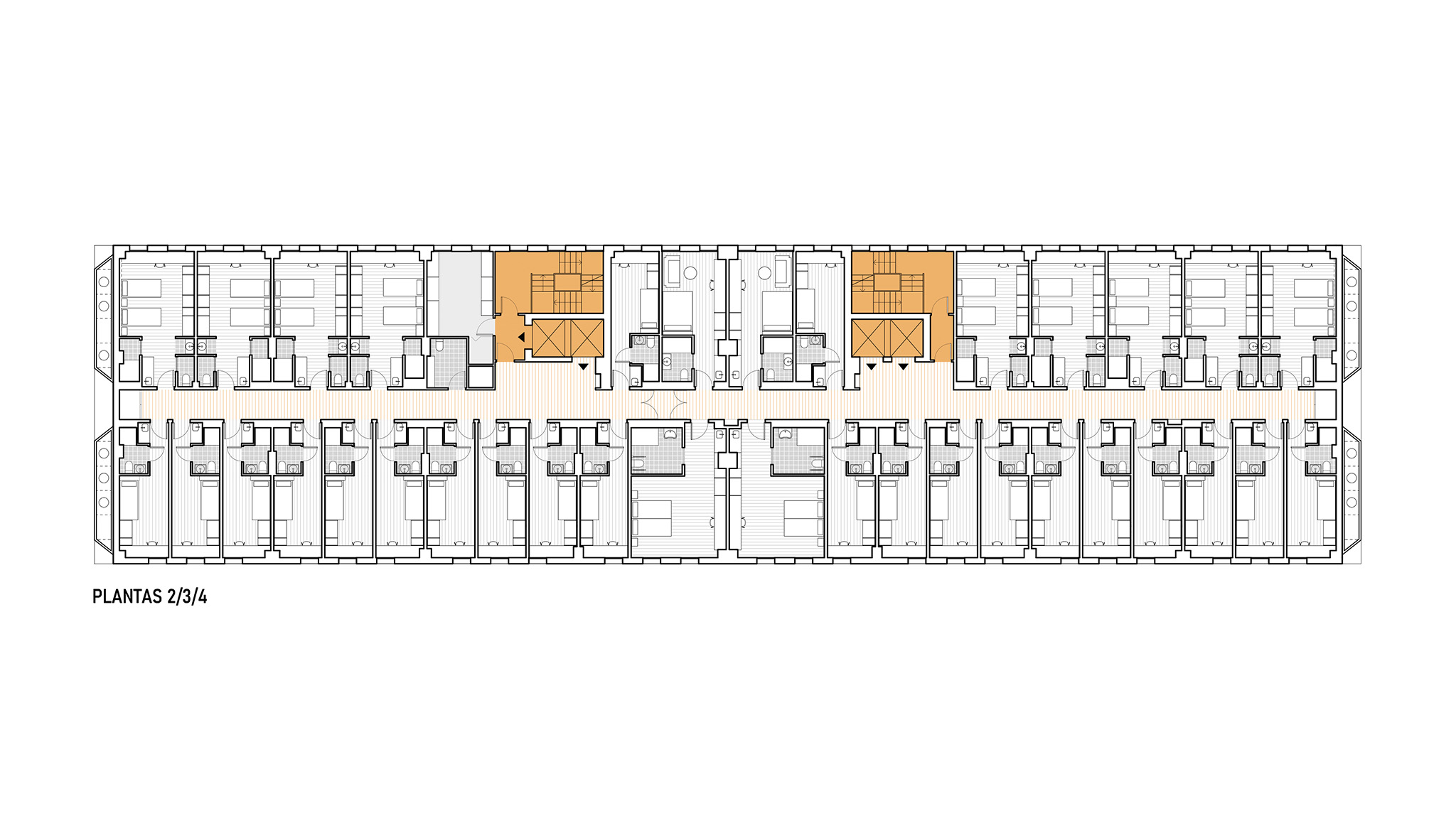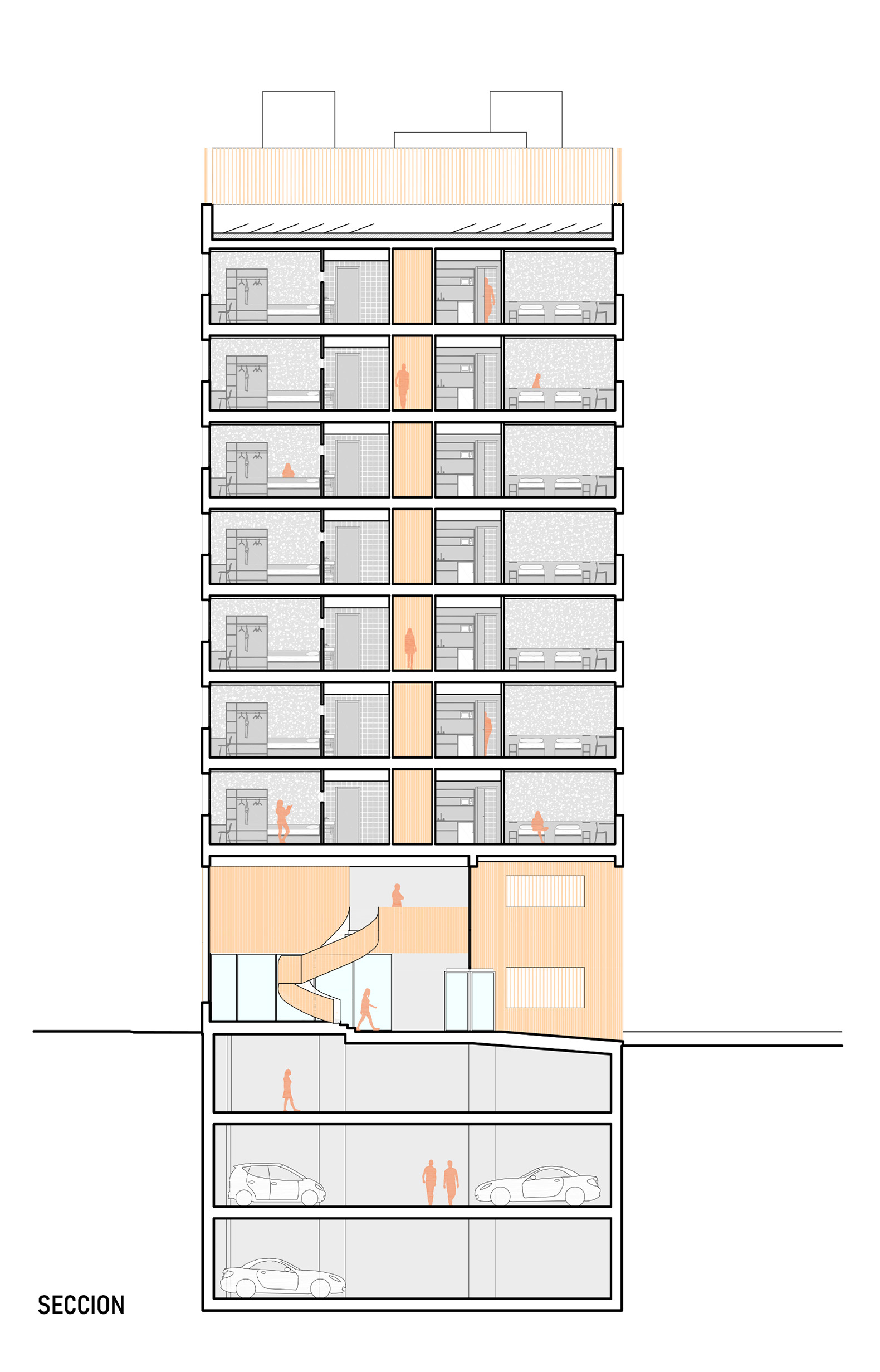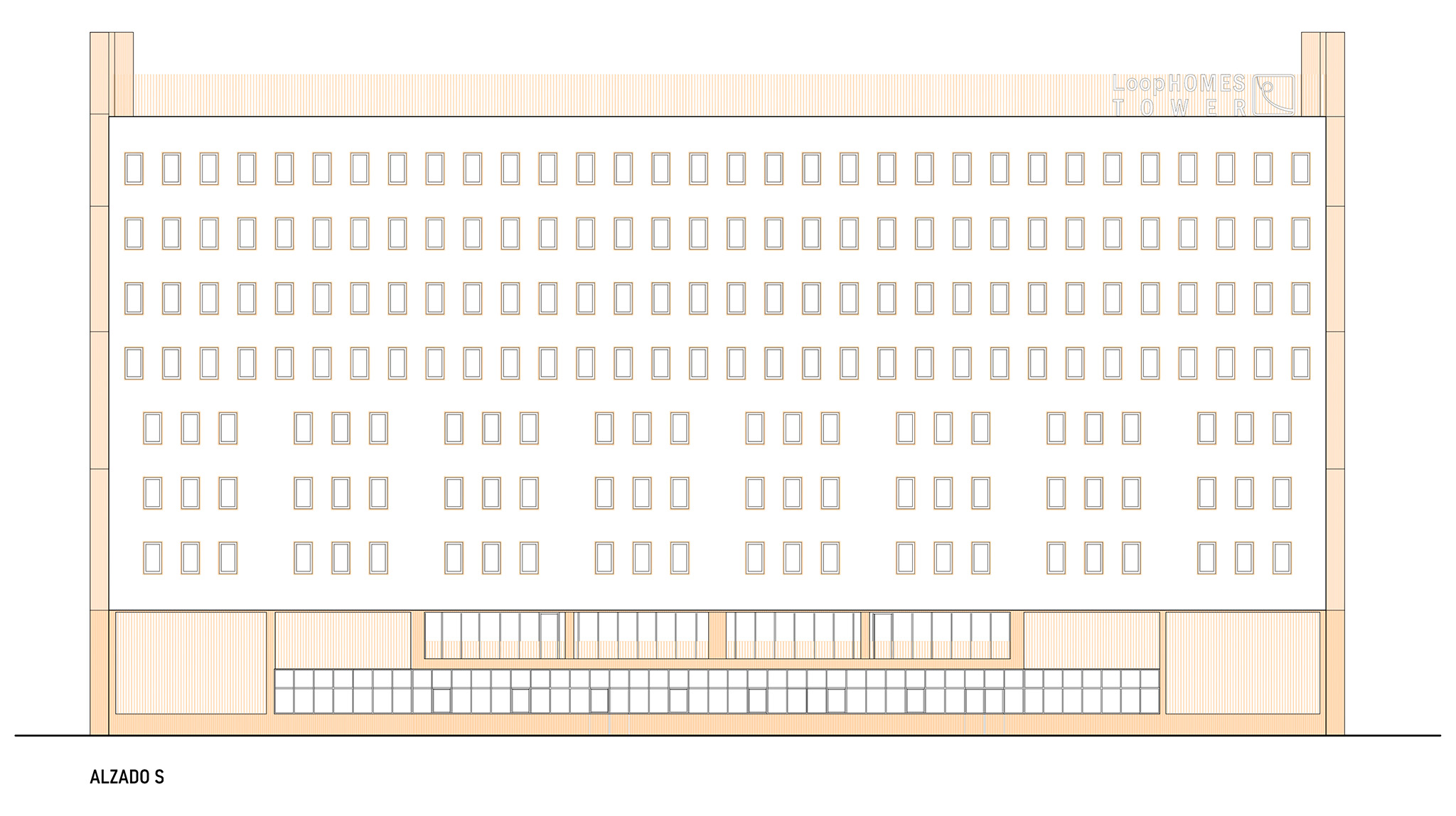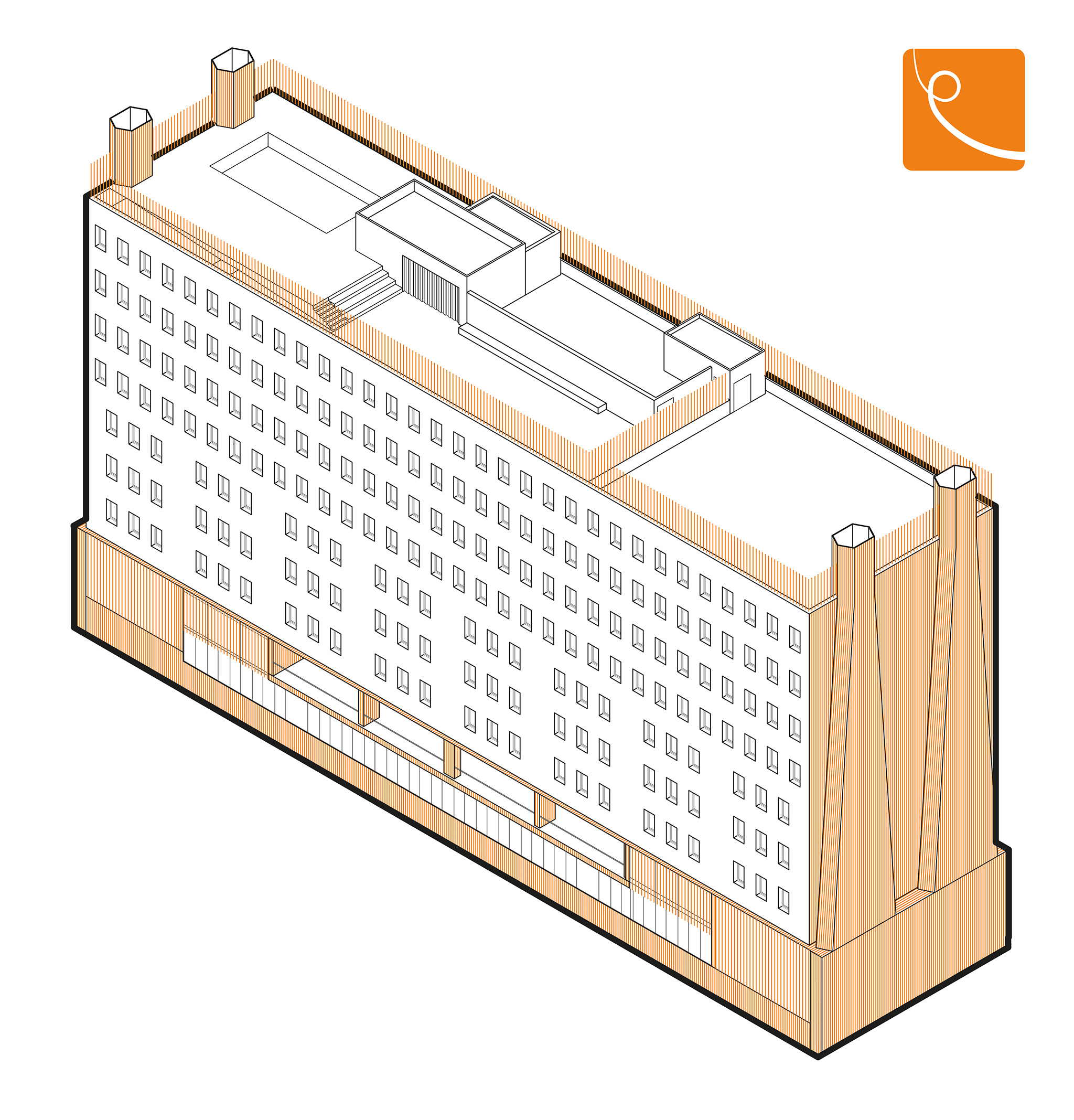
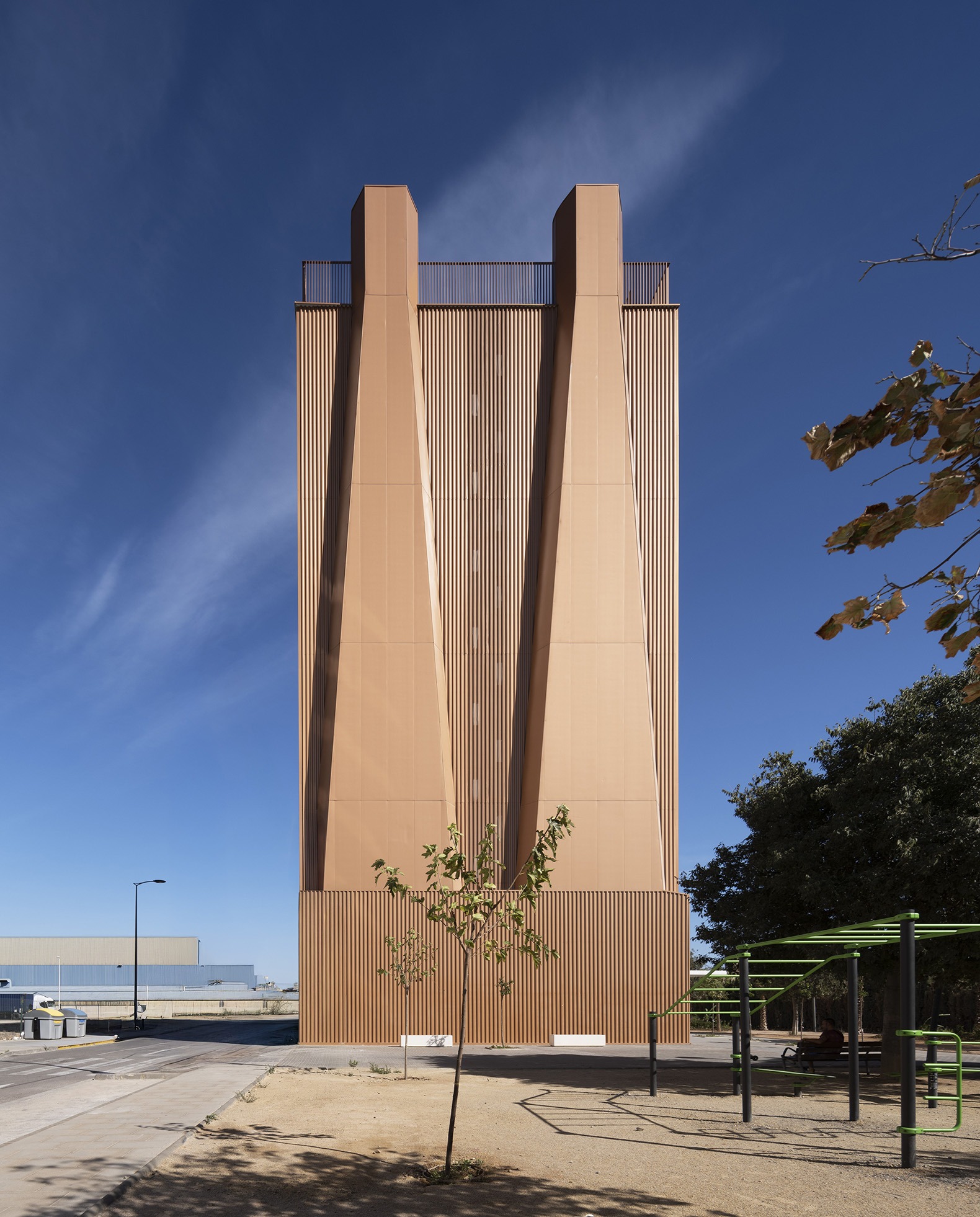
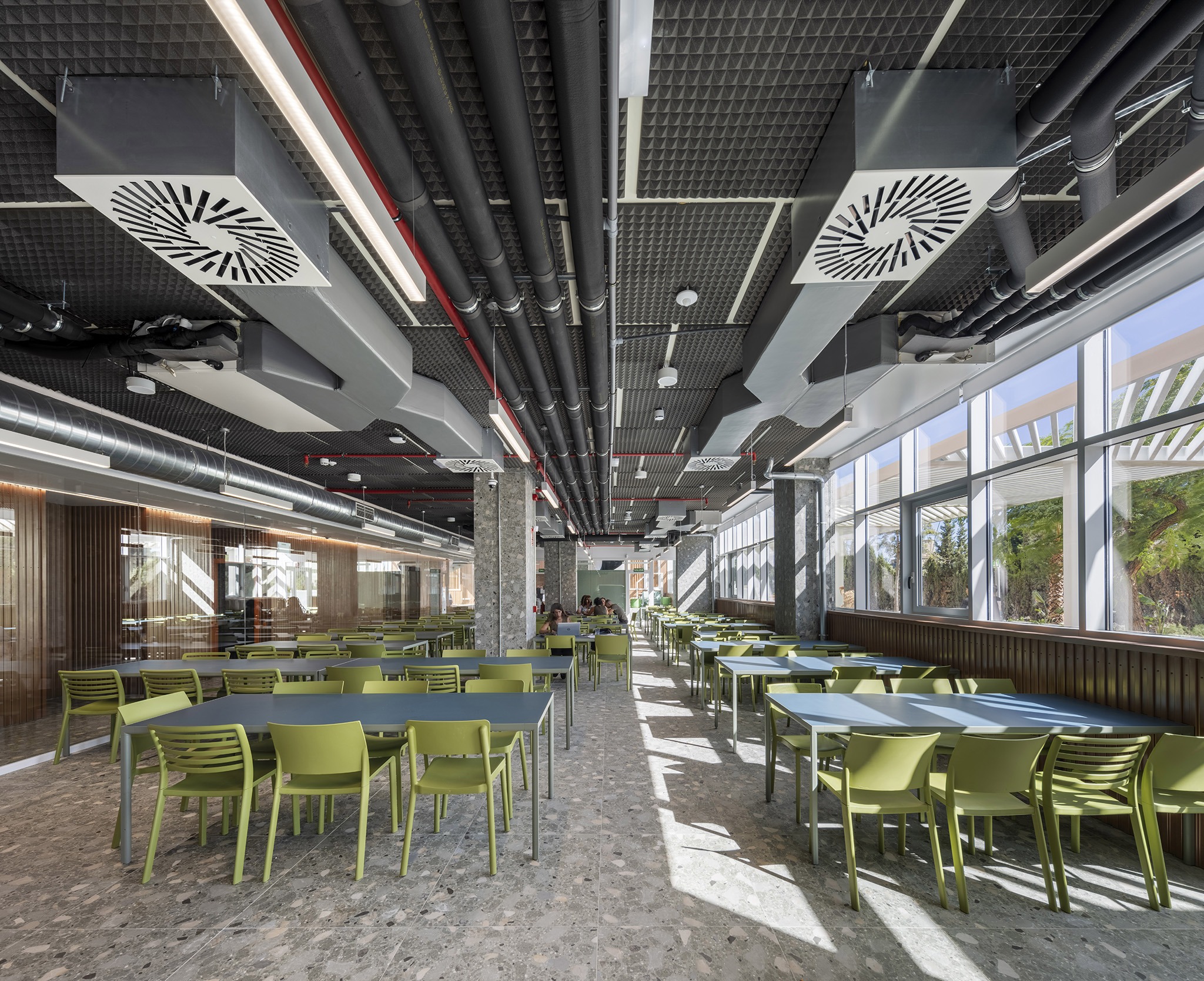
The proposal developed by Martín Lejarraga Oficina de Arquitectura efficiently arranges the different functional areas: the ground floor houses the main common spaces, such as the reception, dining room, coworking space, library, and audiovisual areas; while the basements accommodate complementary uses such as a gym, parking, and technical spaces.
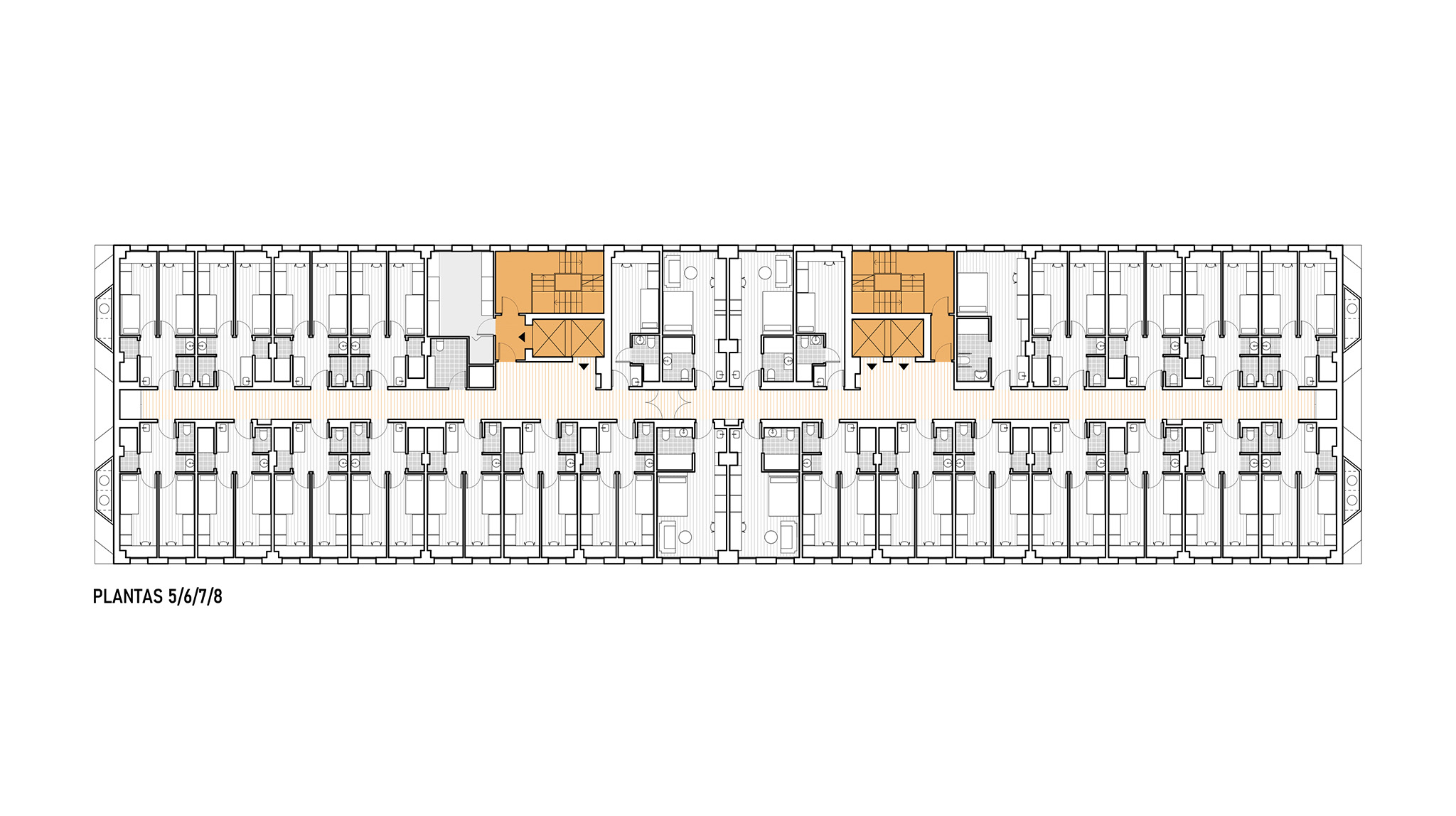
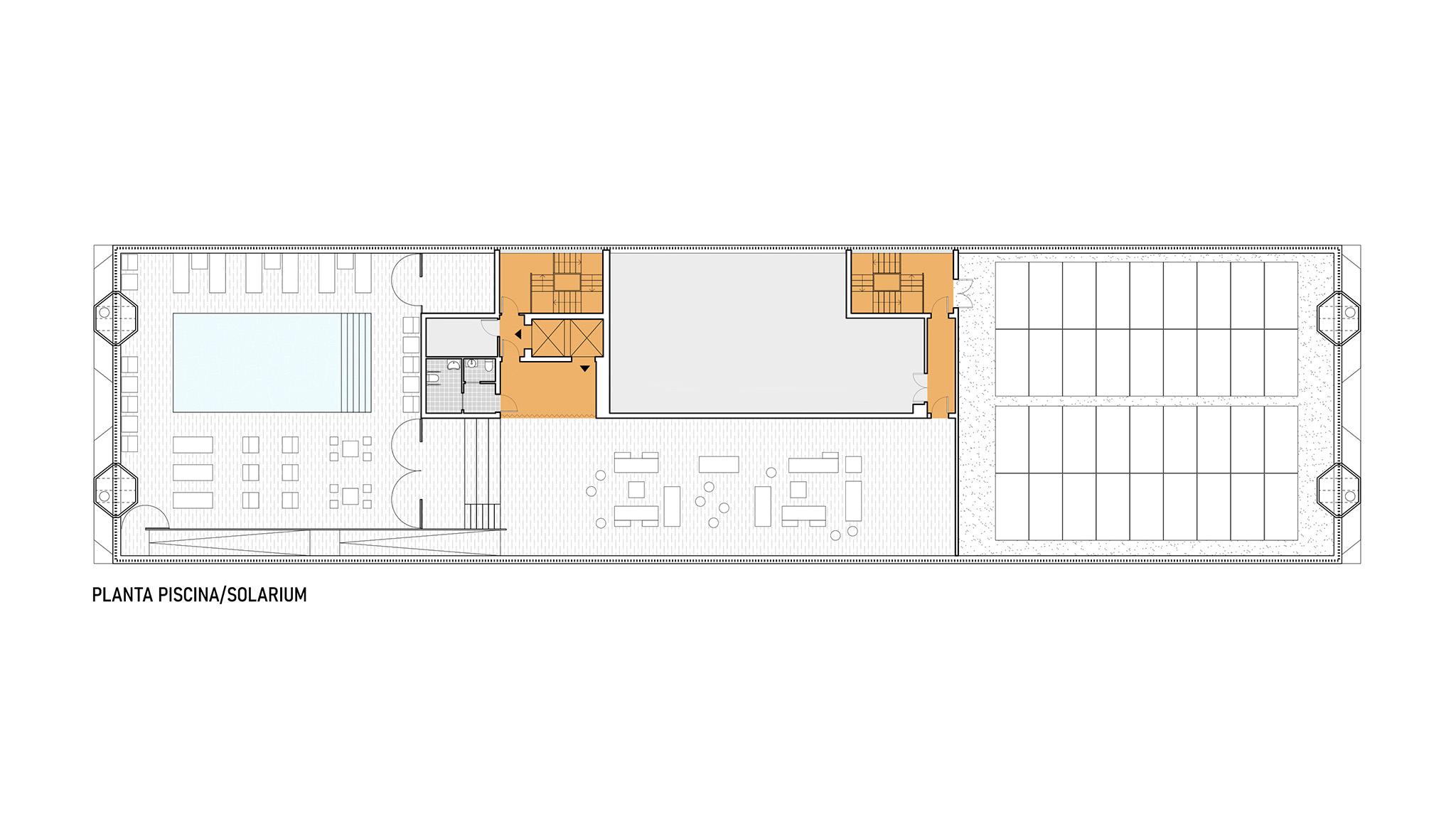
The upper floors, from the second to the eighth, are dedicated to accommodation, with a wide variety of layouts to suit the different needs of the users. The rooftop, with its swimming pool and solarium, completes the program, serving as a key leisure and social space within the complex.
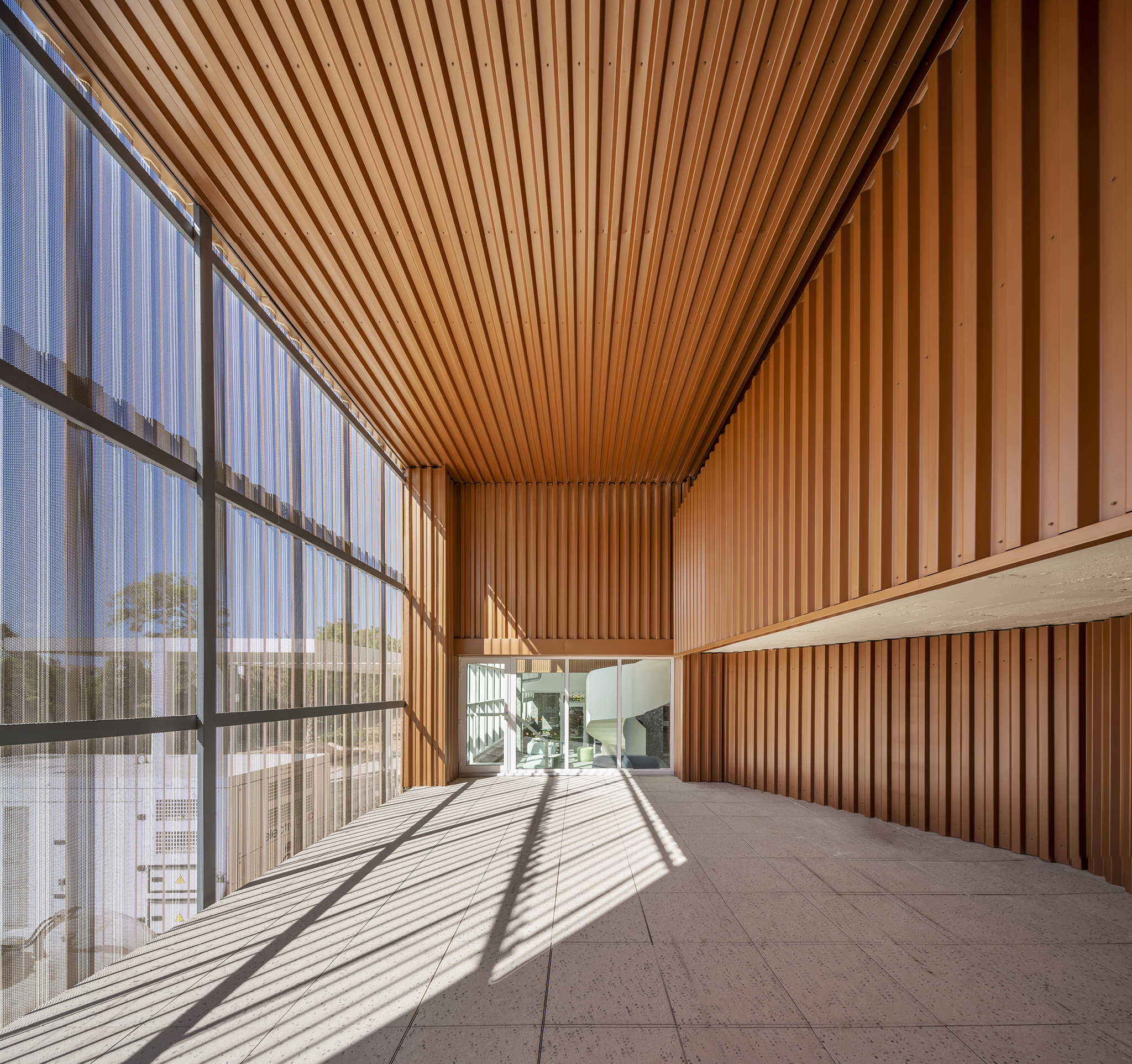
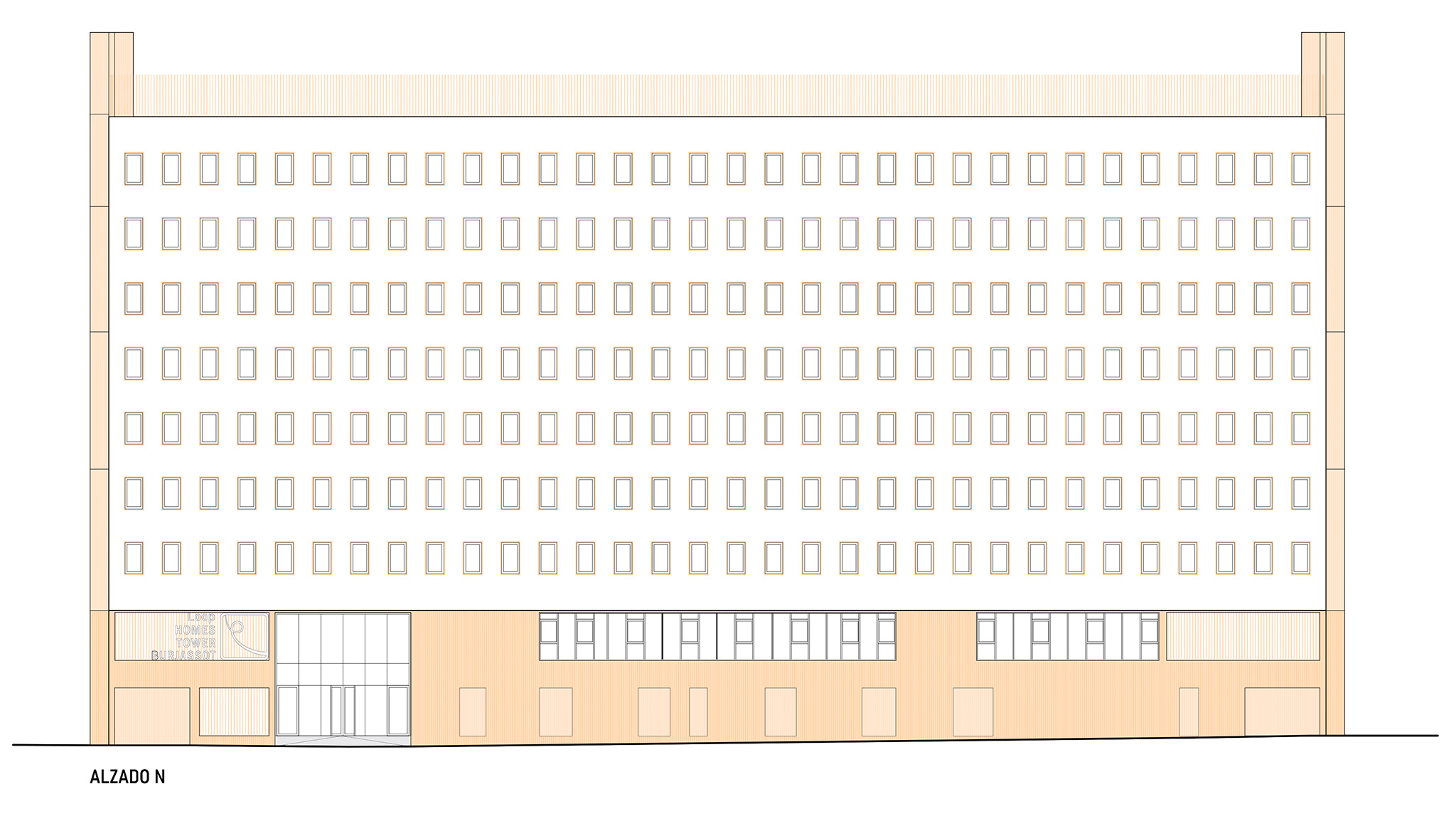
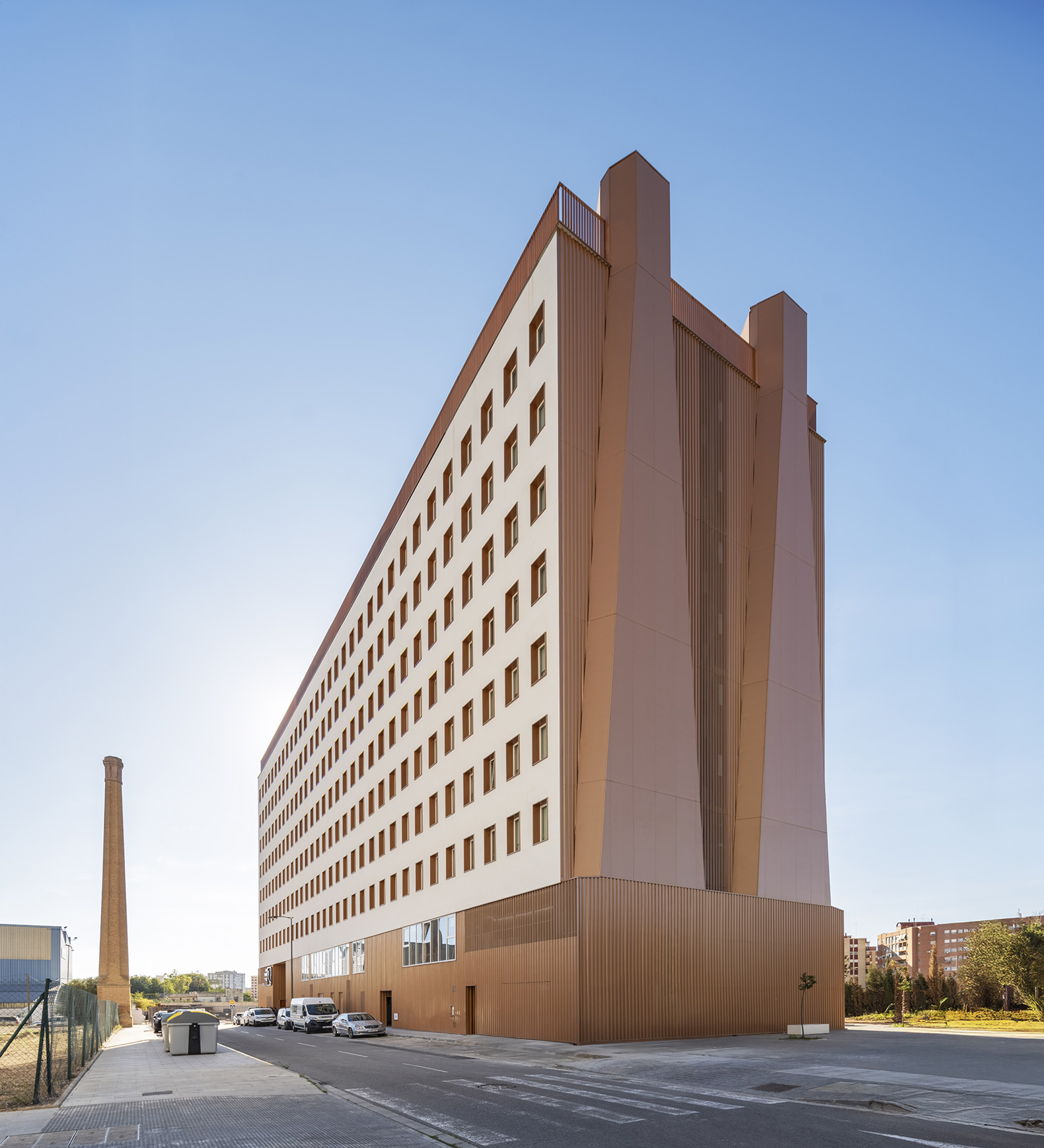
In terms of materiality, the building is clad in orange-toned metal sheets that evoke the local ceramic tradition, integrating into the context with a contemporary aesthetic. Beyond its residential function, the project is conceived as a university ecosystem, where architecture promotes learning and community life, transforming a pre-existing structure into a new hub of activity and cohesion for students.
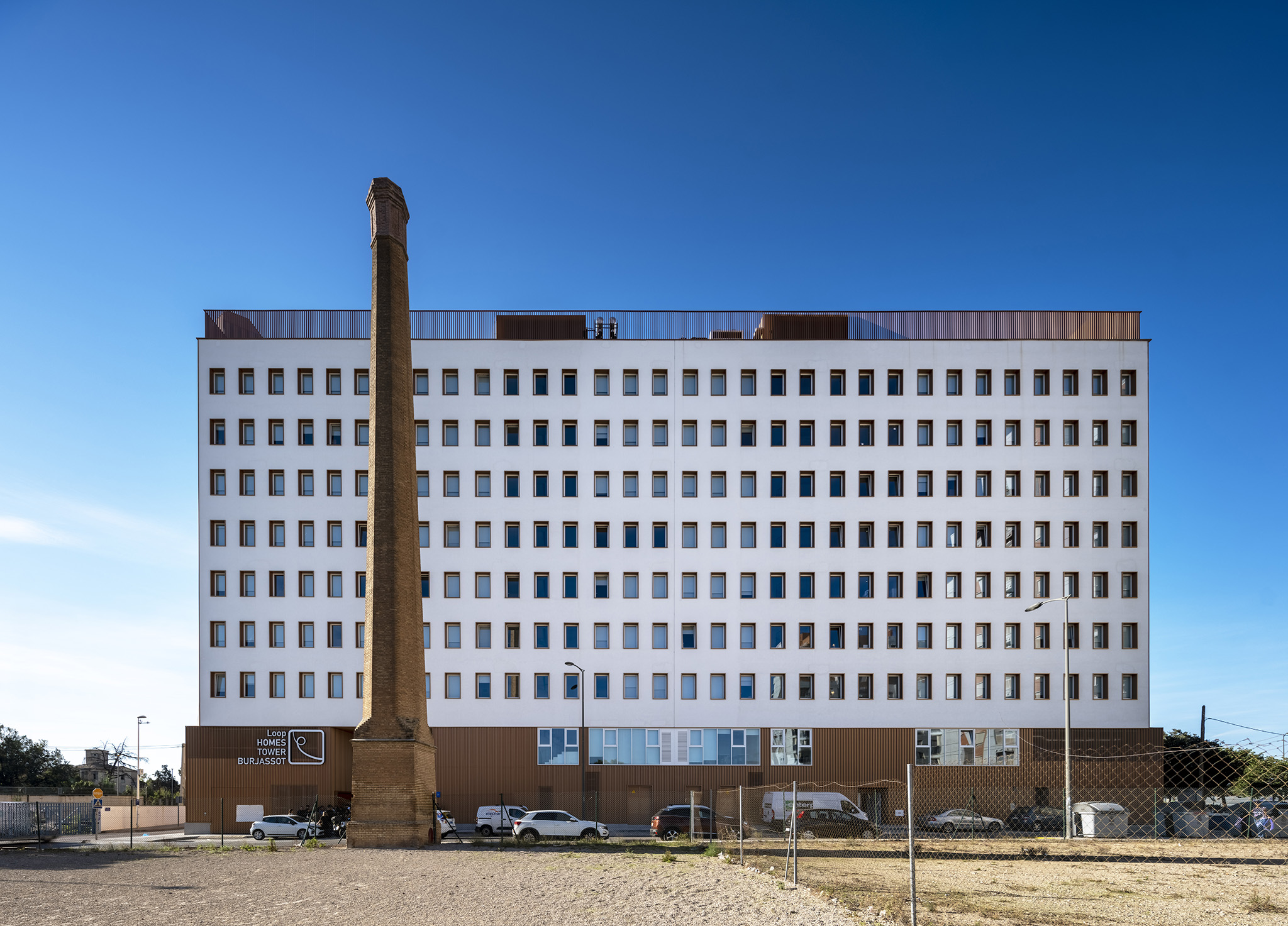
Student residence in Burjassot by Martín Lejarraga Oficina de Arquitectura. Photograph by David Frutos.
Project description by Martín Lejarraga Oficina de Arquitectura
Located in Burjassot, Valencia, the new student residence rises above a pre-existing structure, transforming an unfinished office building into a dynamic space for living and learning. With a compact, prismatic design, the project optimizes its placement on the site, reorganizing the spaces according to a specific structural scheme that responds to the pre-existing condition of having three basement levels already built.
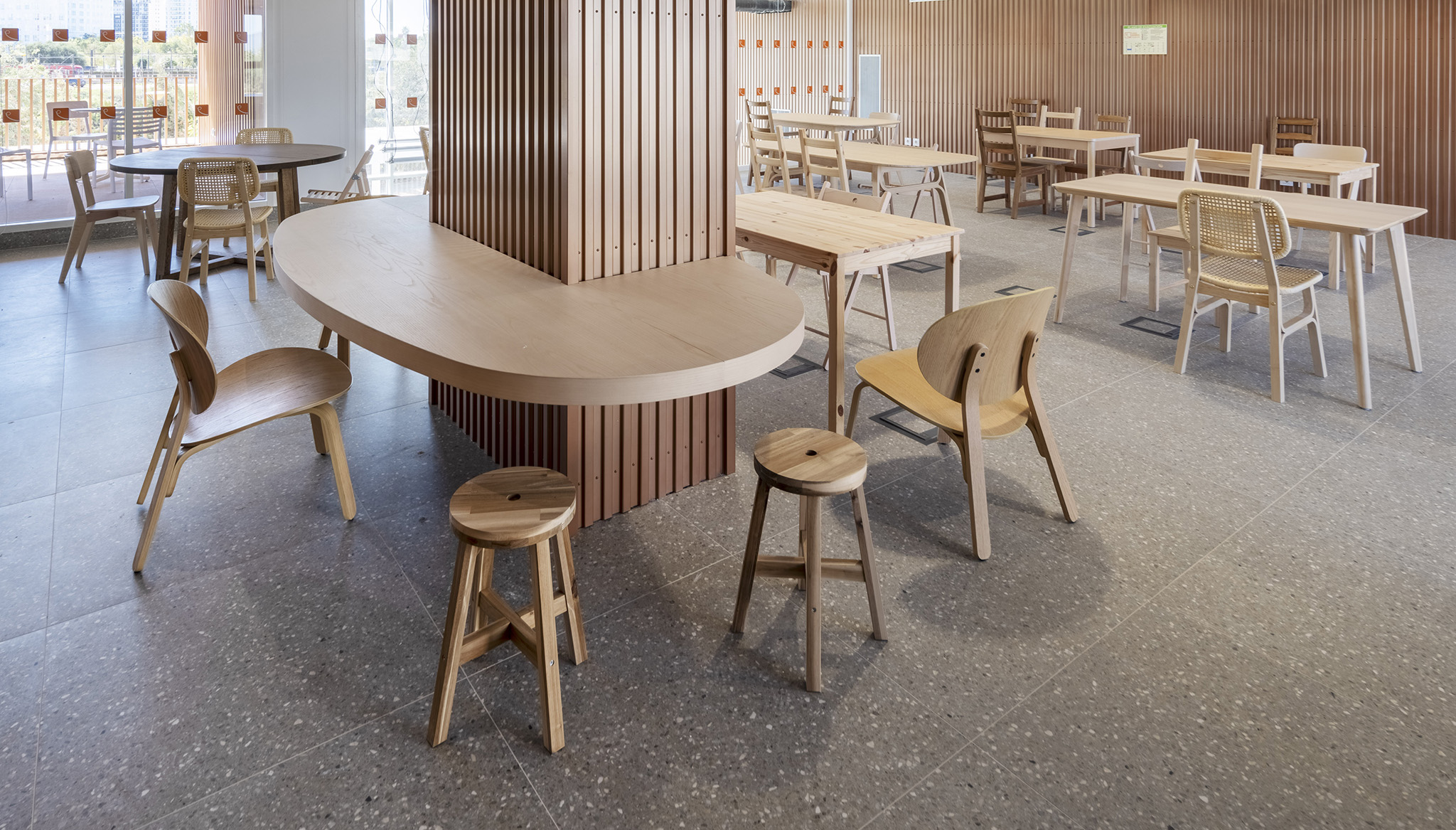
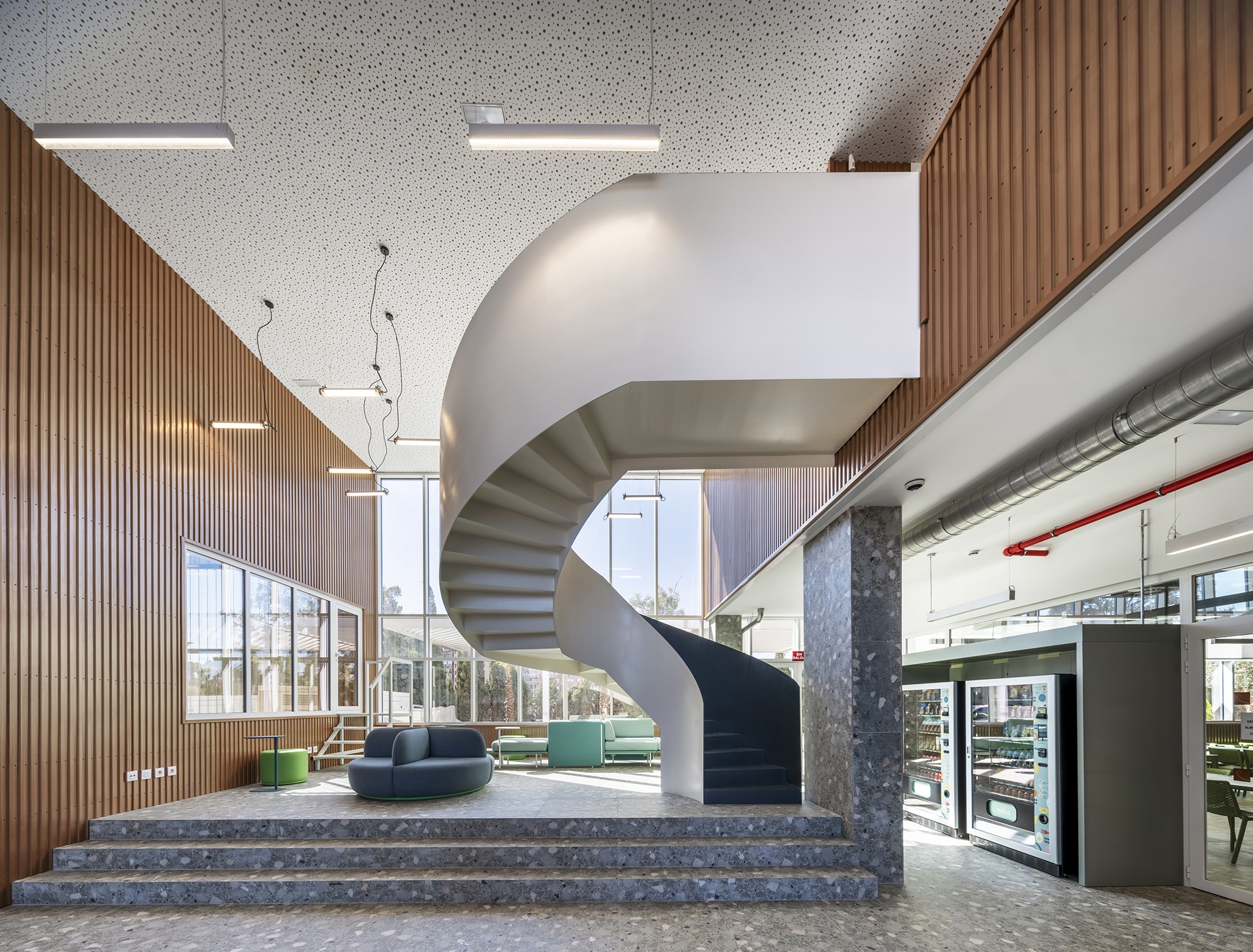
On the ground floor, next to the main entrance, a double-height space serves as the social hub of the residence's communal life. At its center, a spiral staircase visually and physically connects the different levels, enhancing interaction between the common areas, which form a network of shared spaces specifically designed for community living.
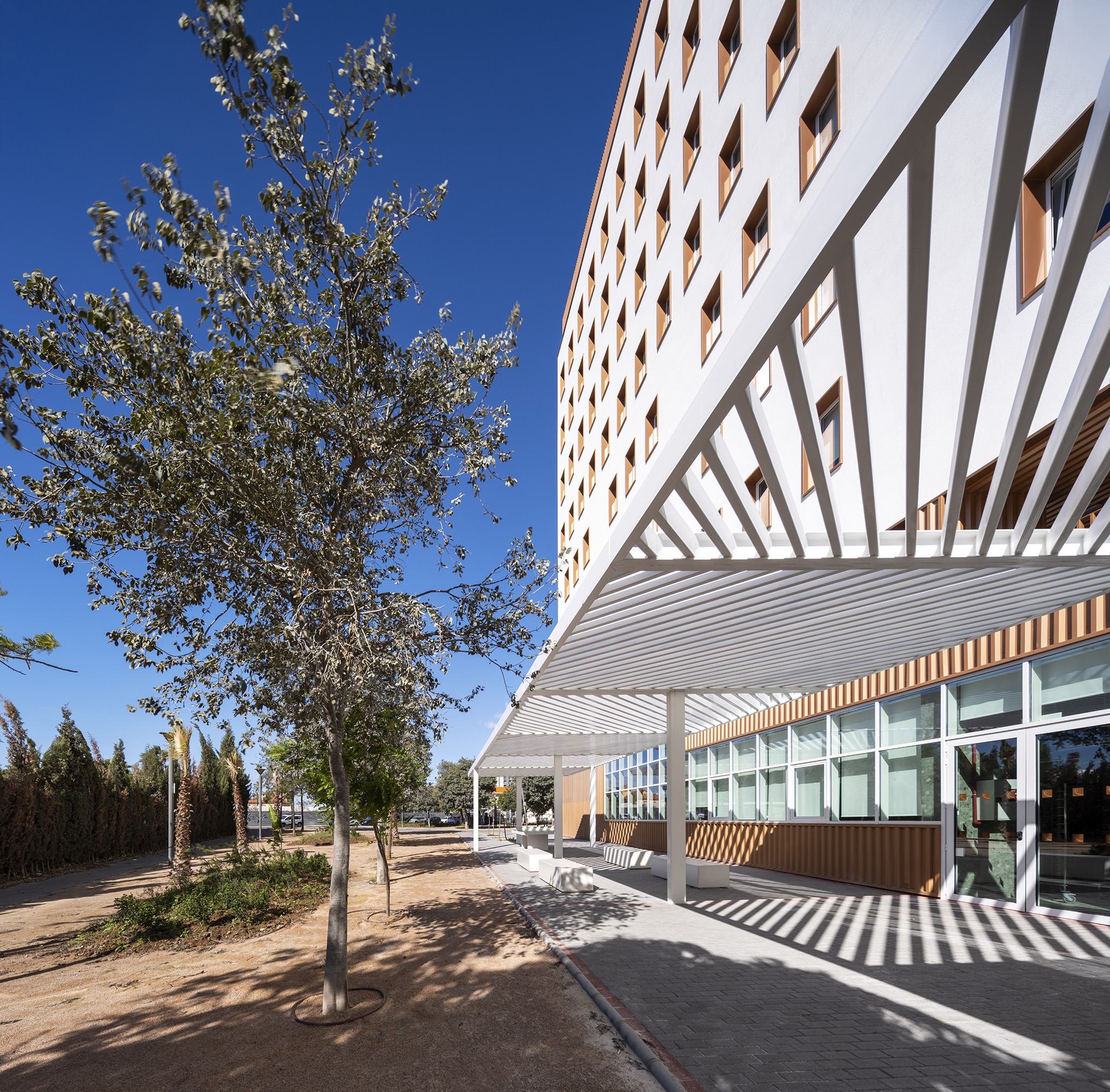
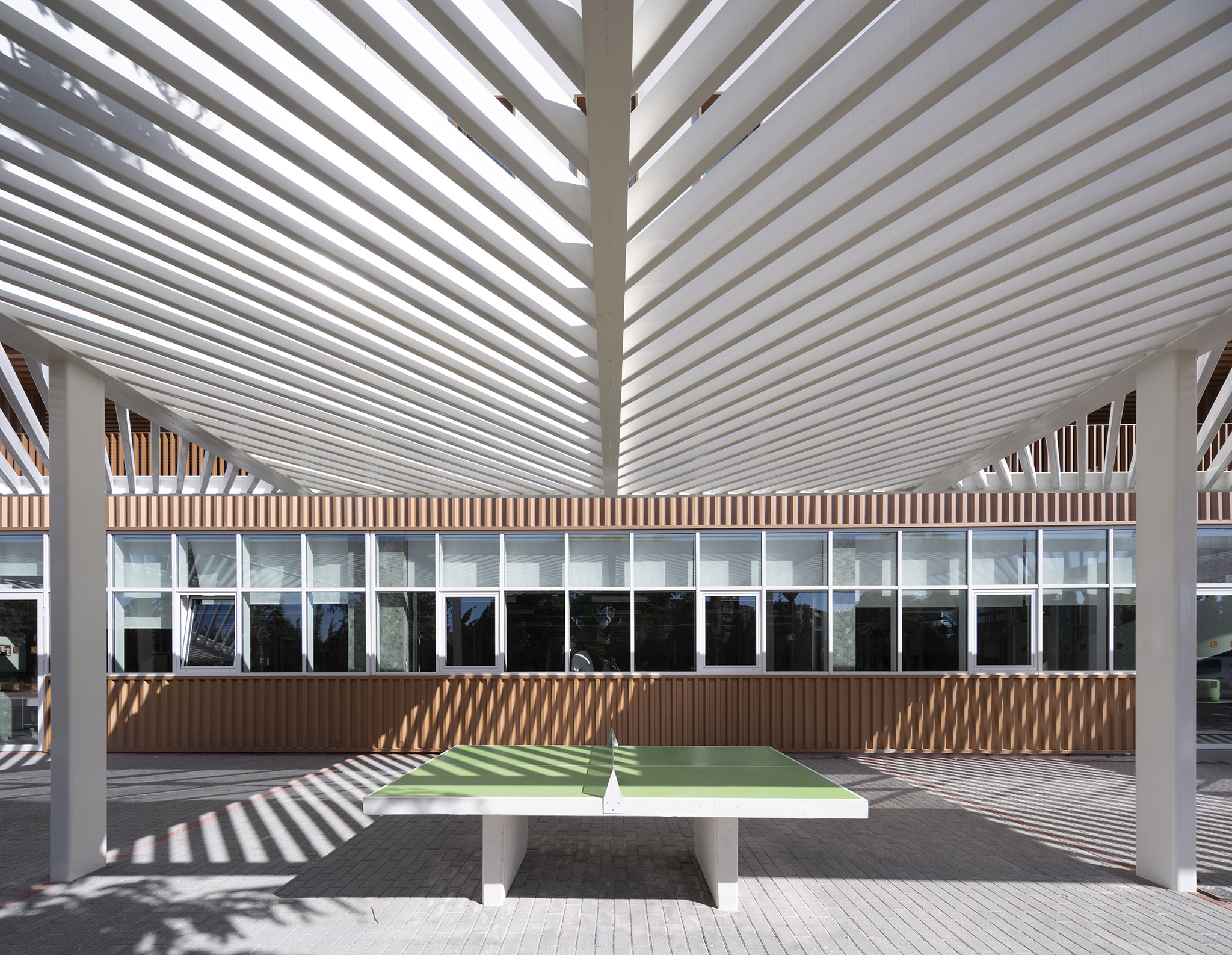
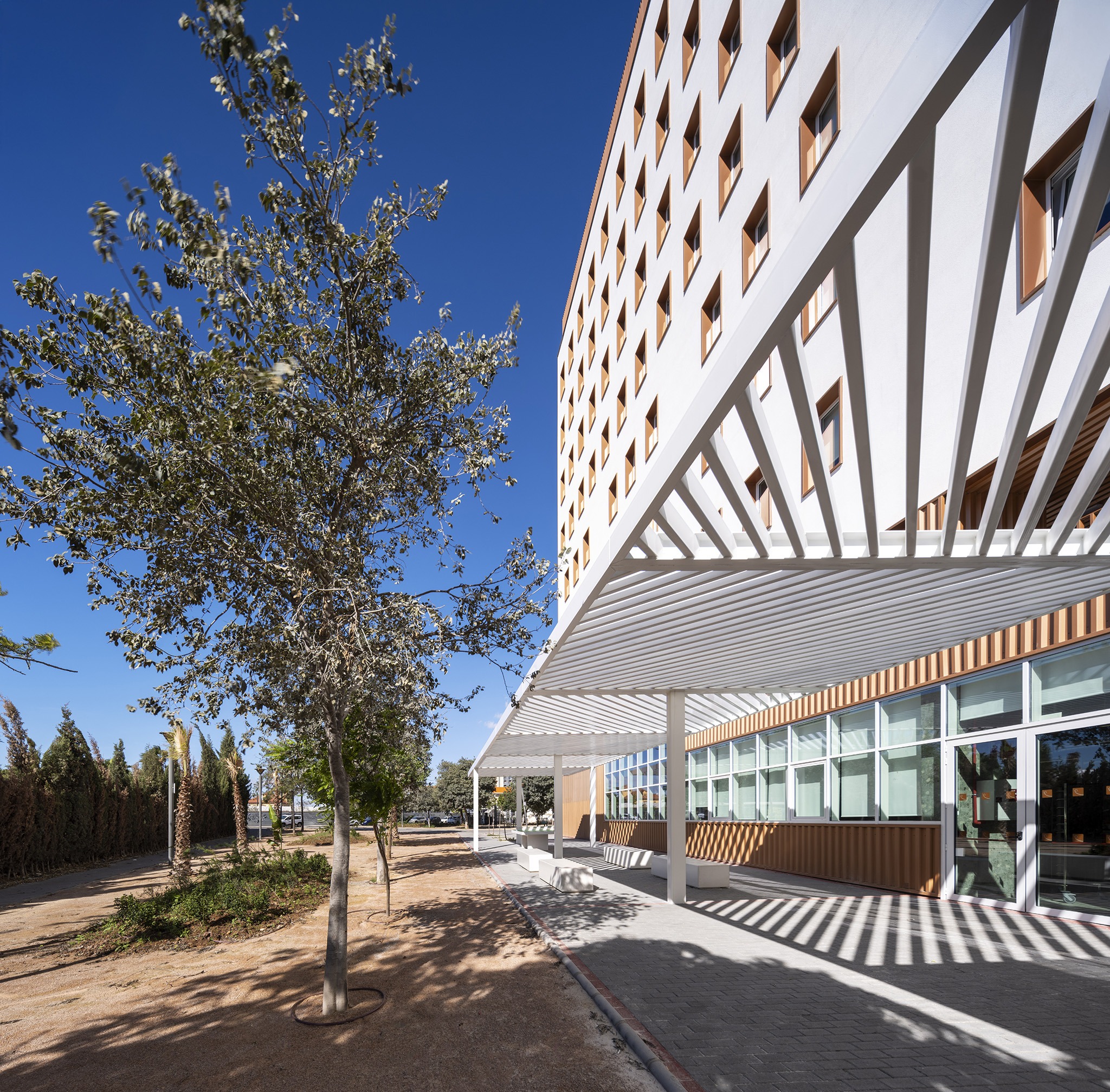
Key functions such as the reception, dining room, coworking and study rooms, library, audiovisual spaces, and several terraces are distributed around this large central area. On the main façade, a wide, longitudinal pergola creates an outdoor meeting place, connecting the interior spaces with the garden.
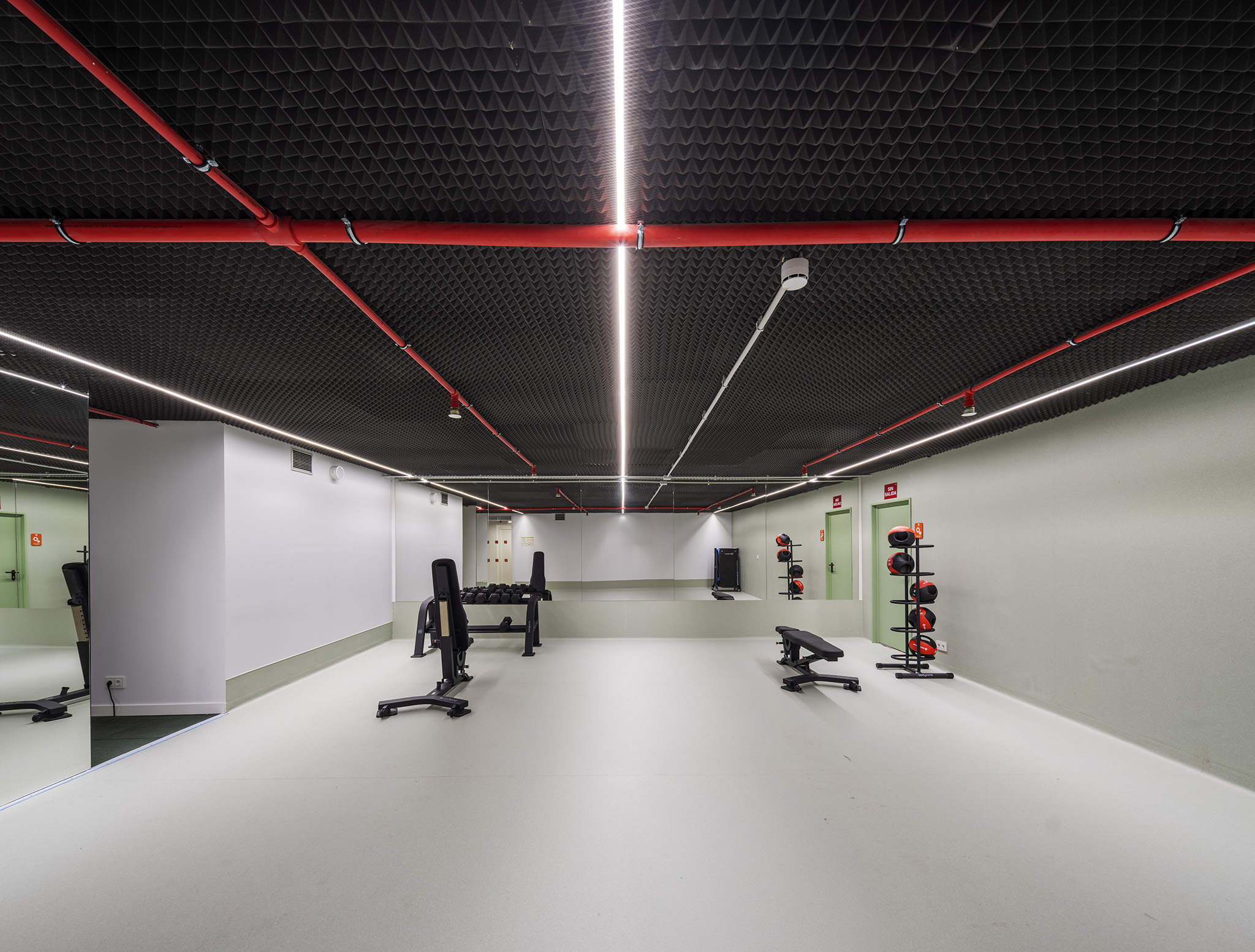
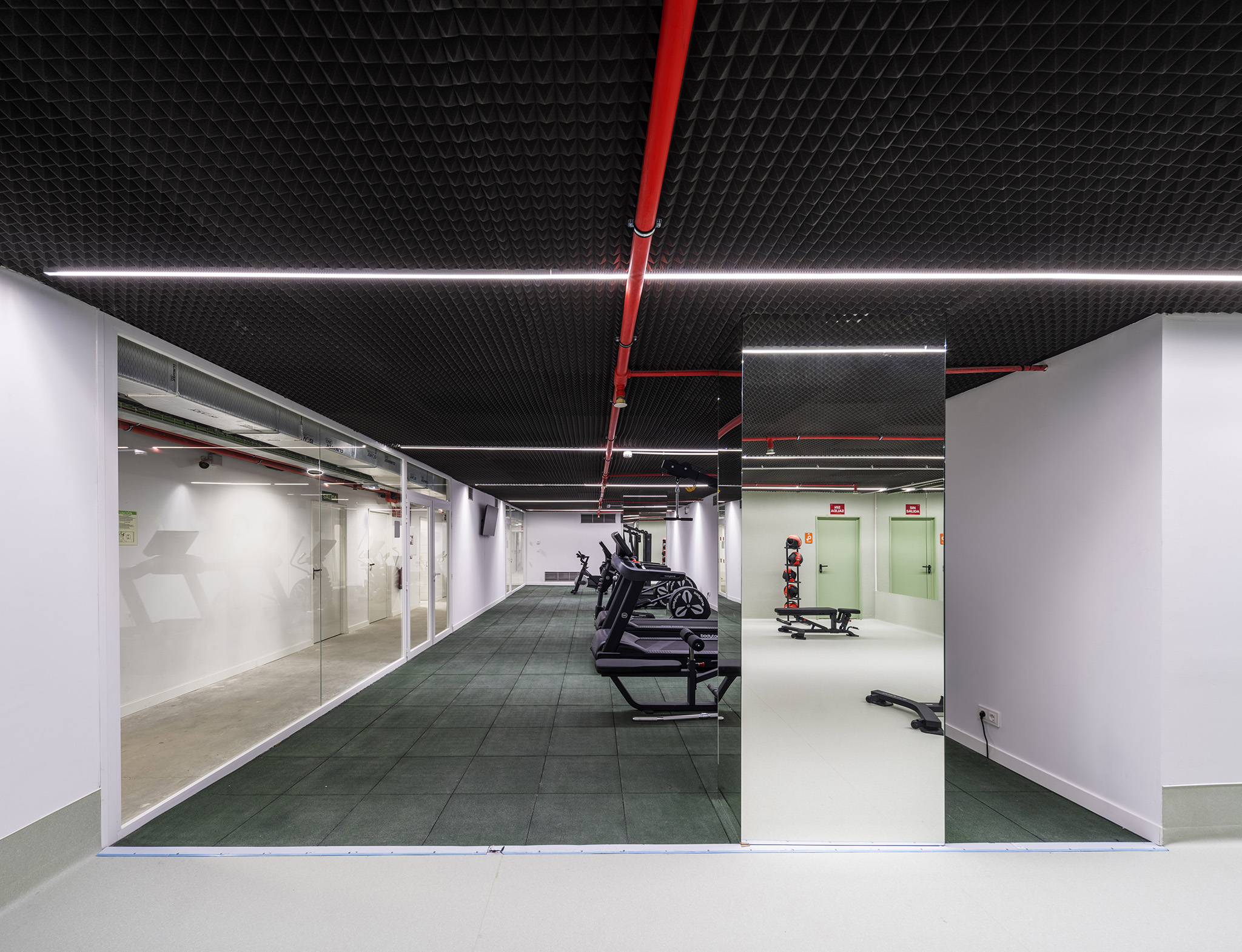
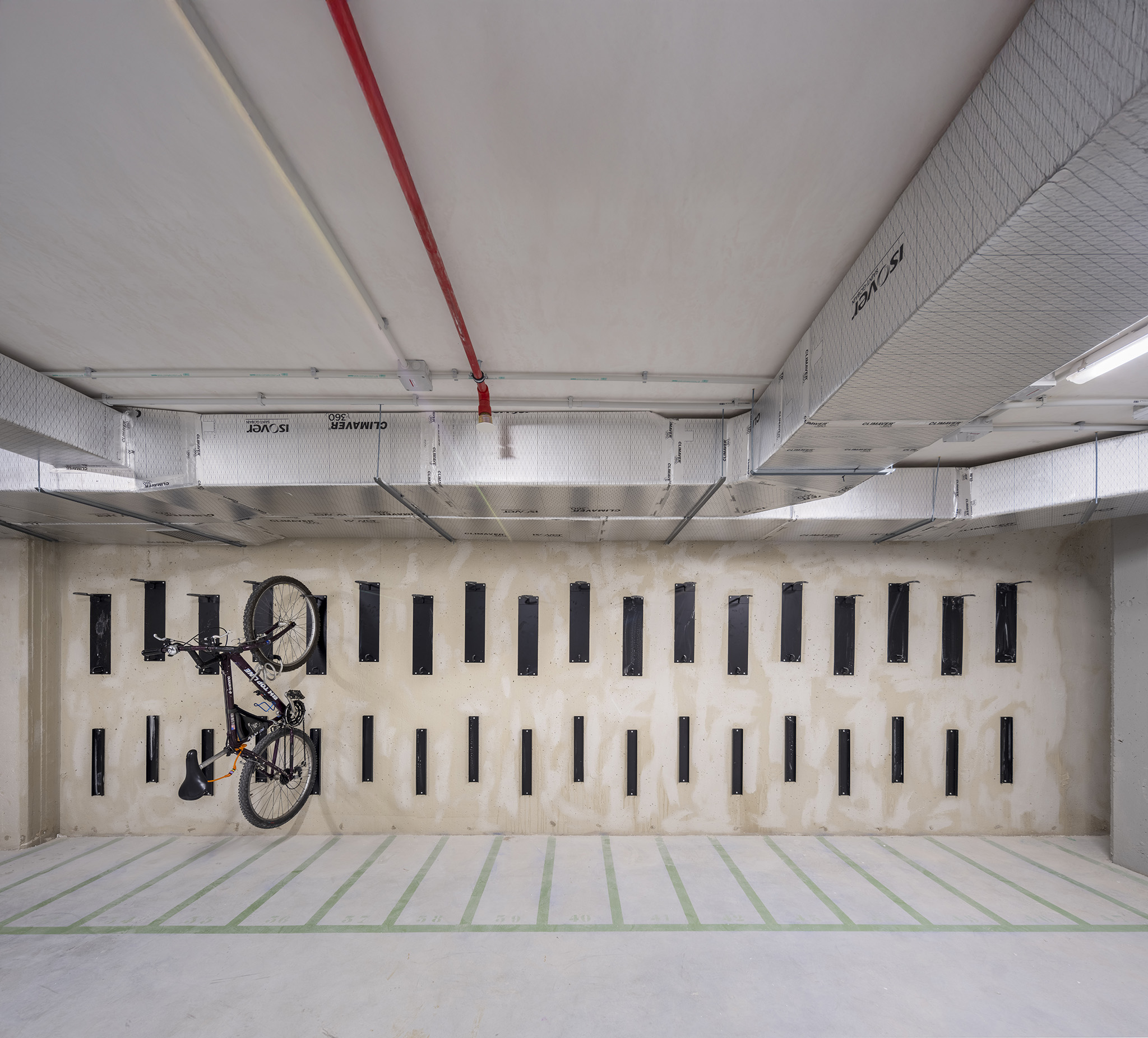
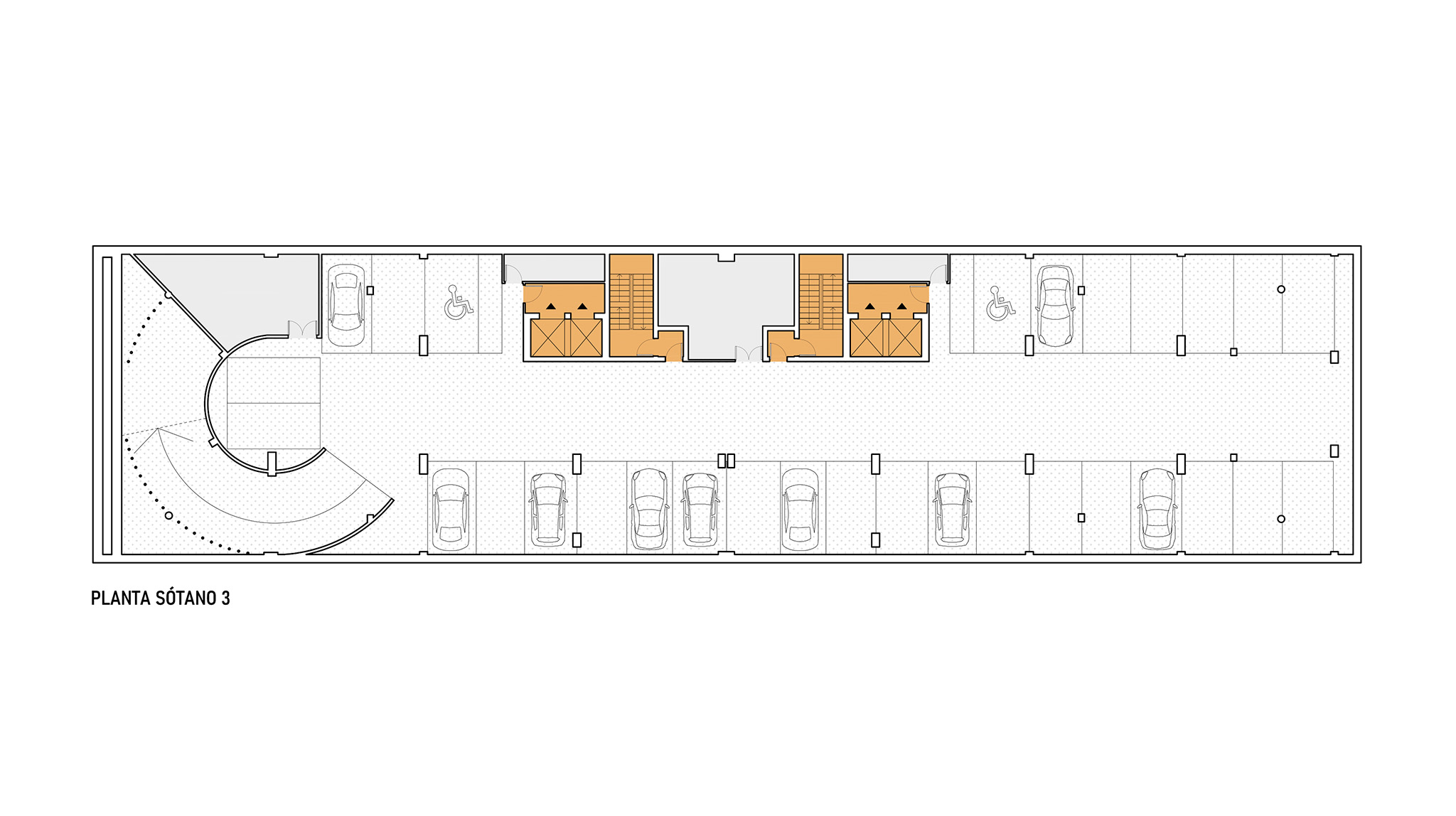
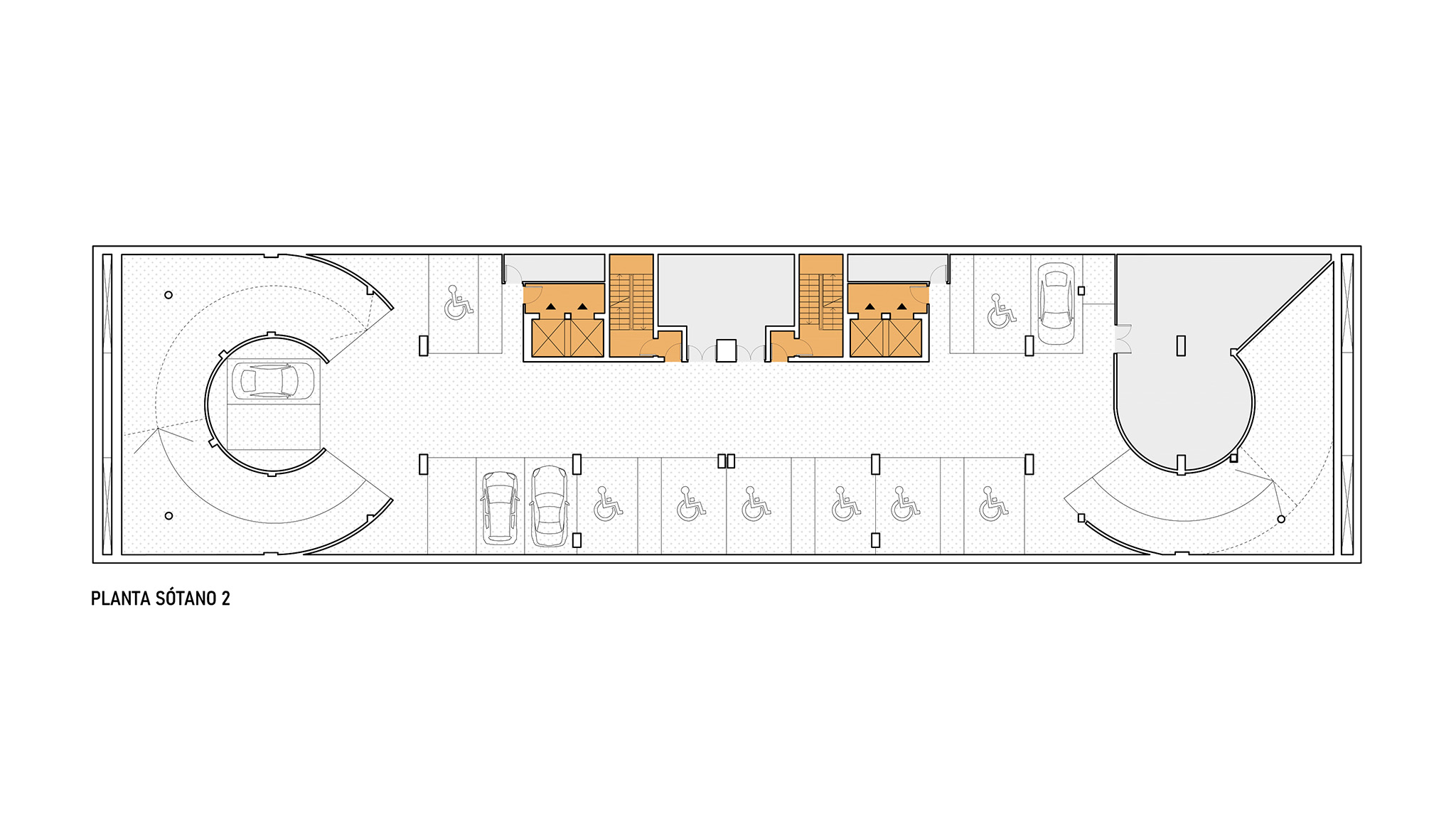
The existing basement levels have been repurposed to house various support and common areas. The first underground level includes a fully equipped gym, as well as parking for bicycles and electric scooters, promoting physical exercise and sustainable mobility for a healthier lifestyle. Levels -2 and -3 are dedicated to resident parking, along with technical areas for building services and storage.
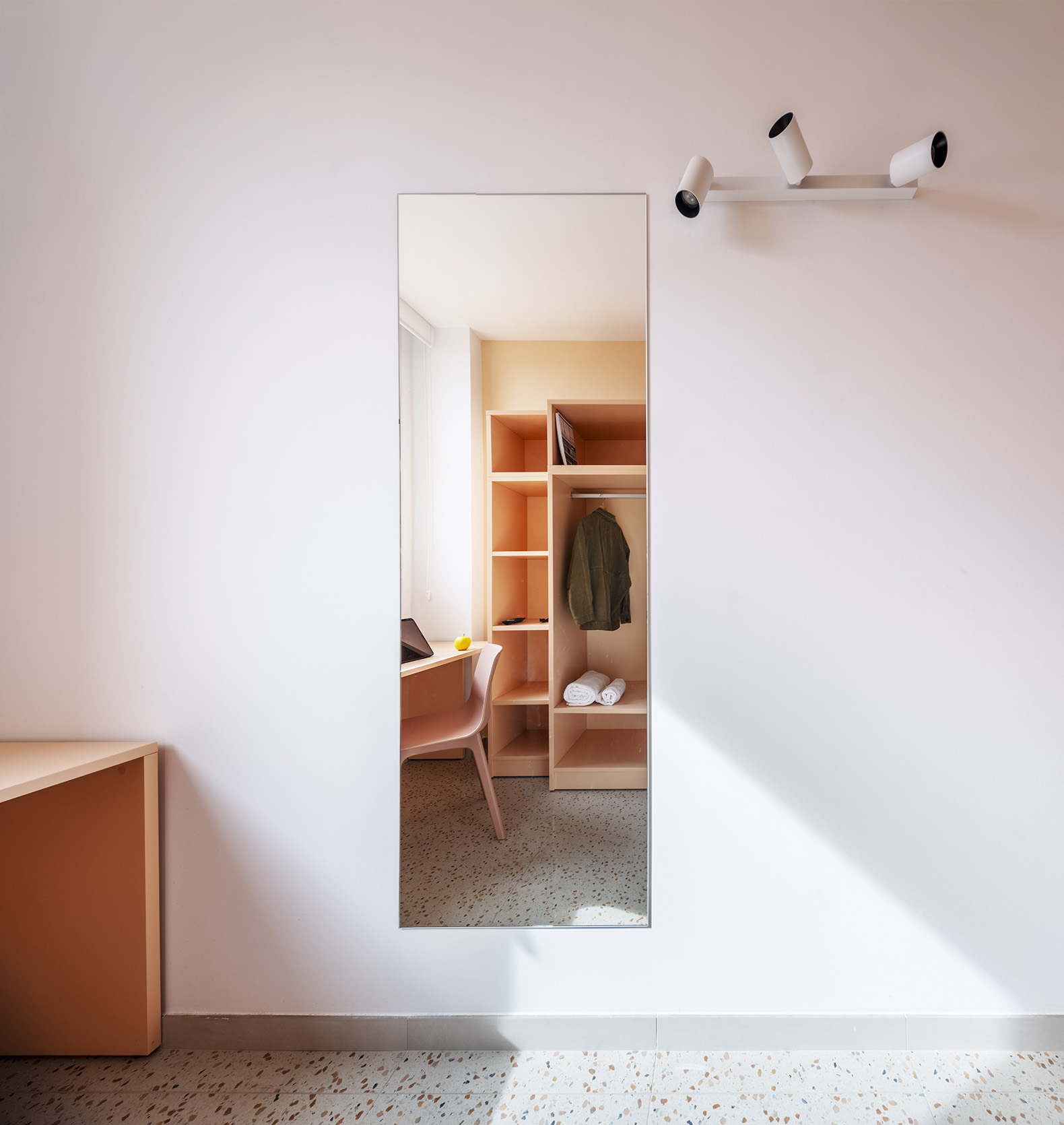
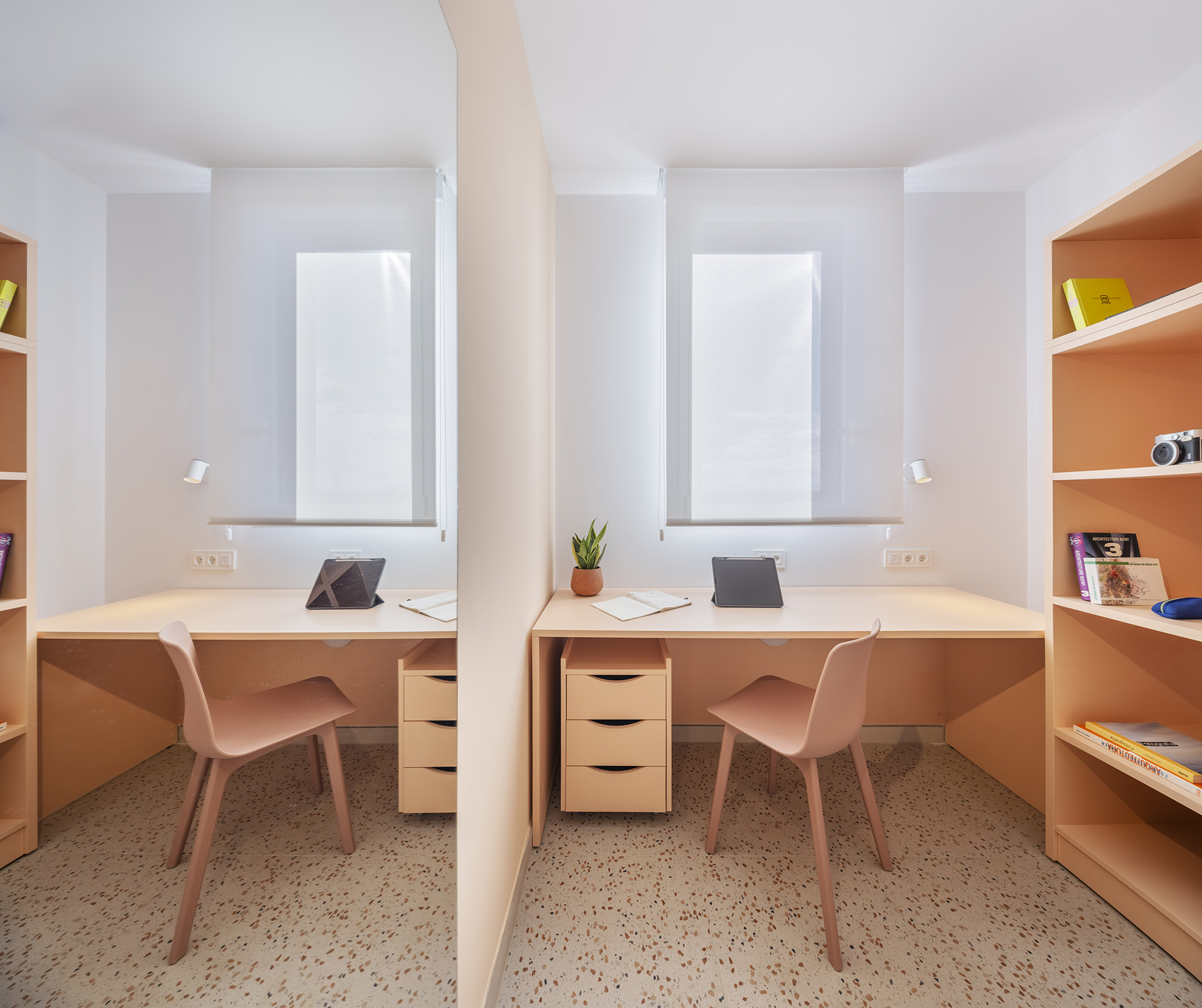
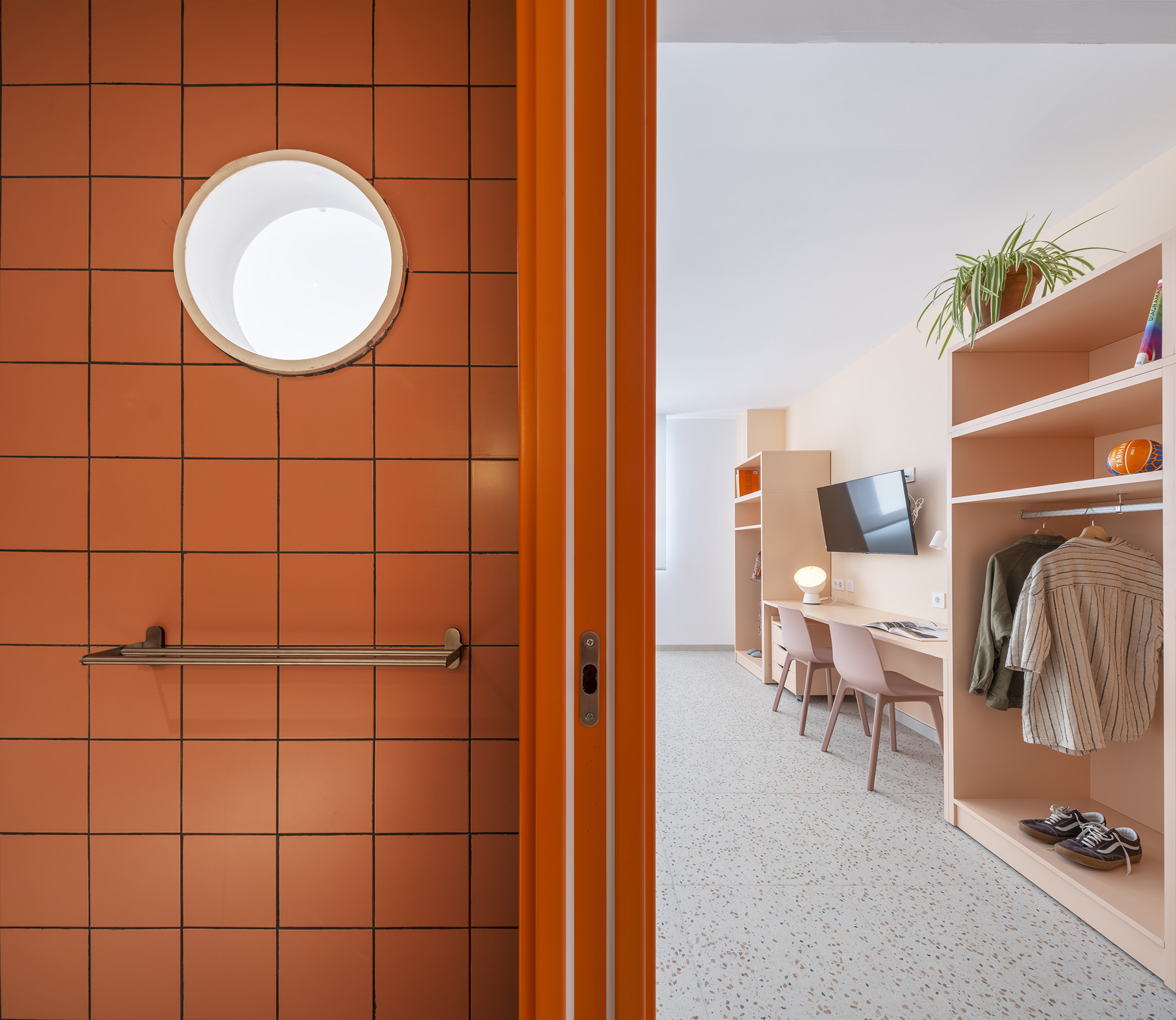
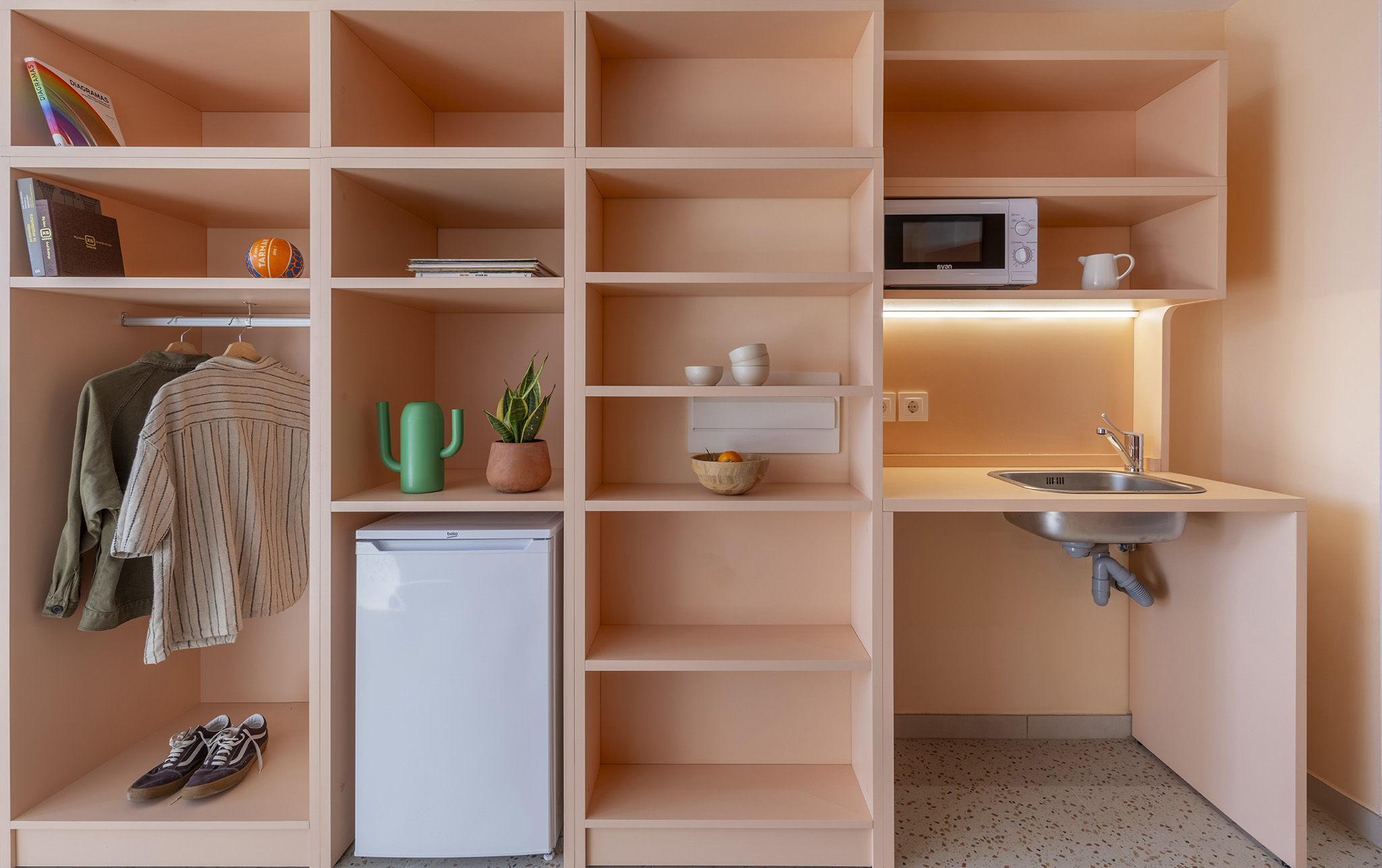
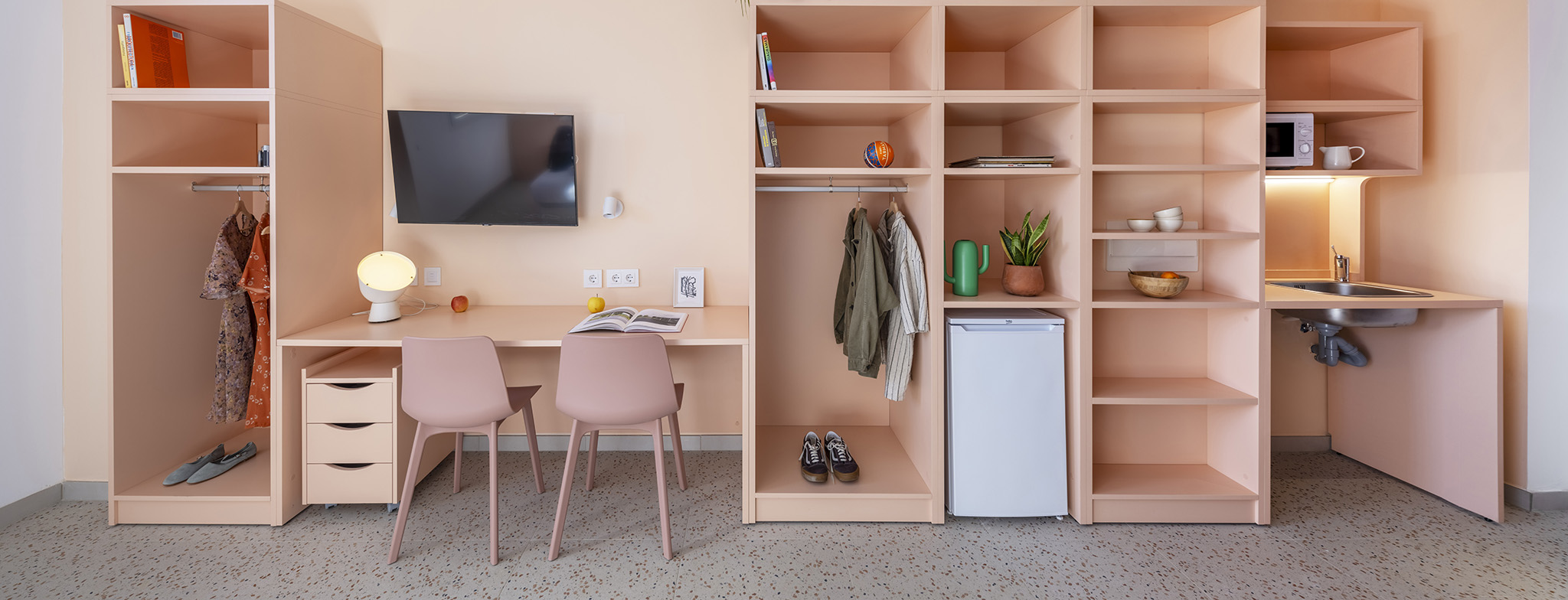
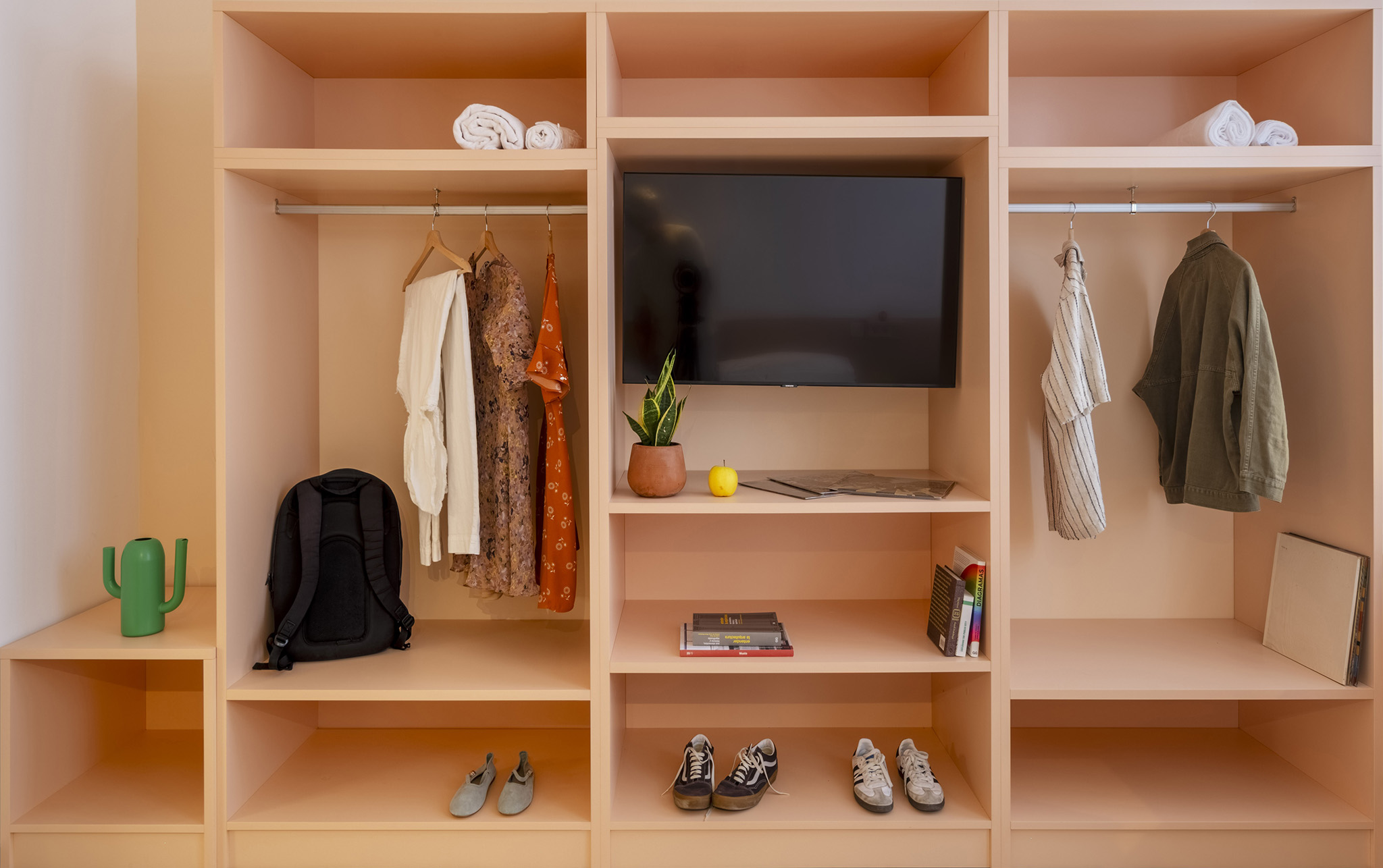
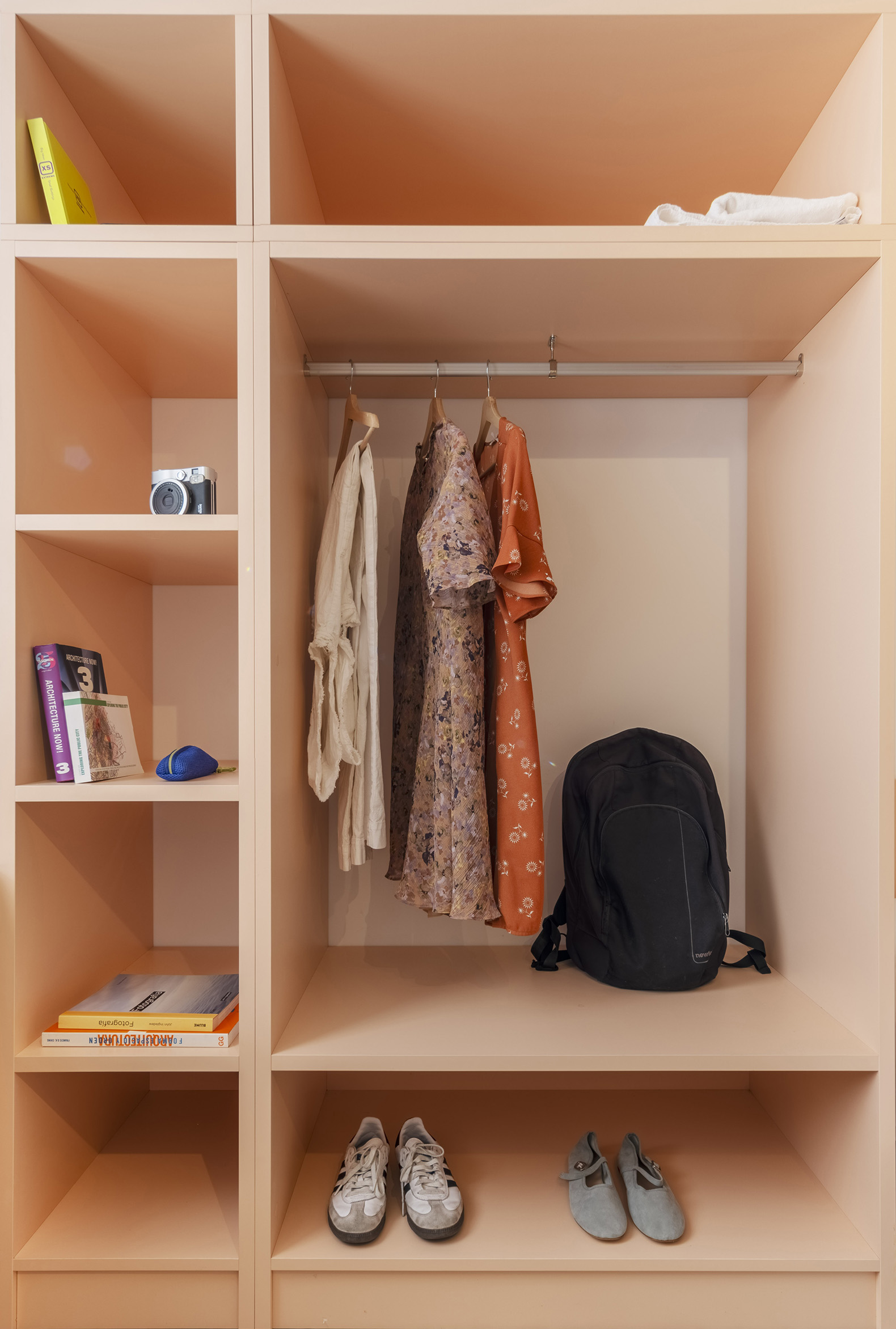
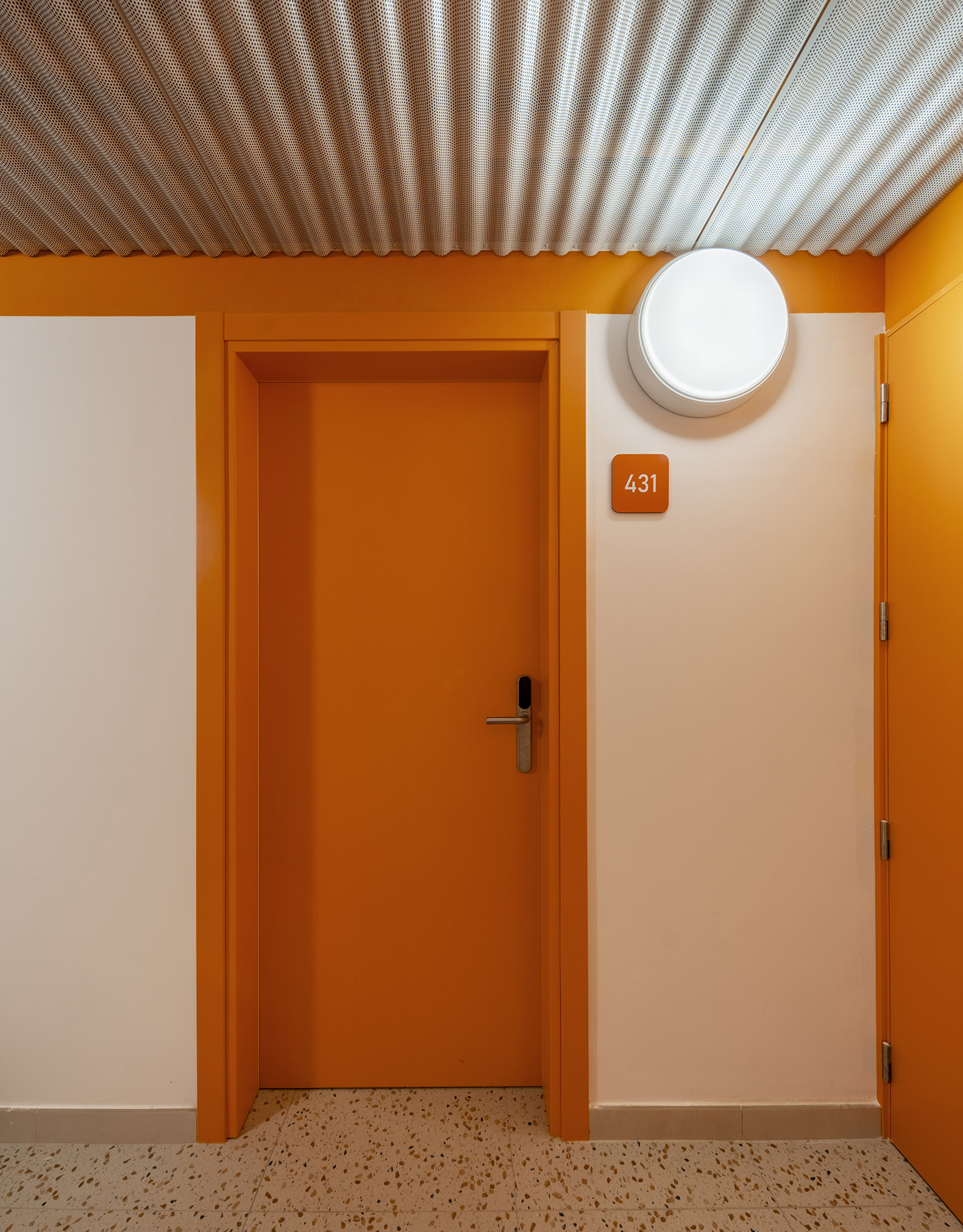
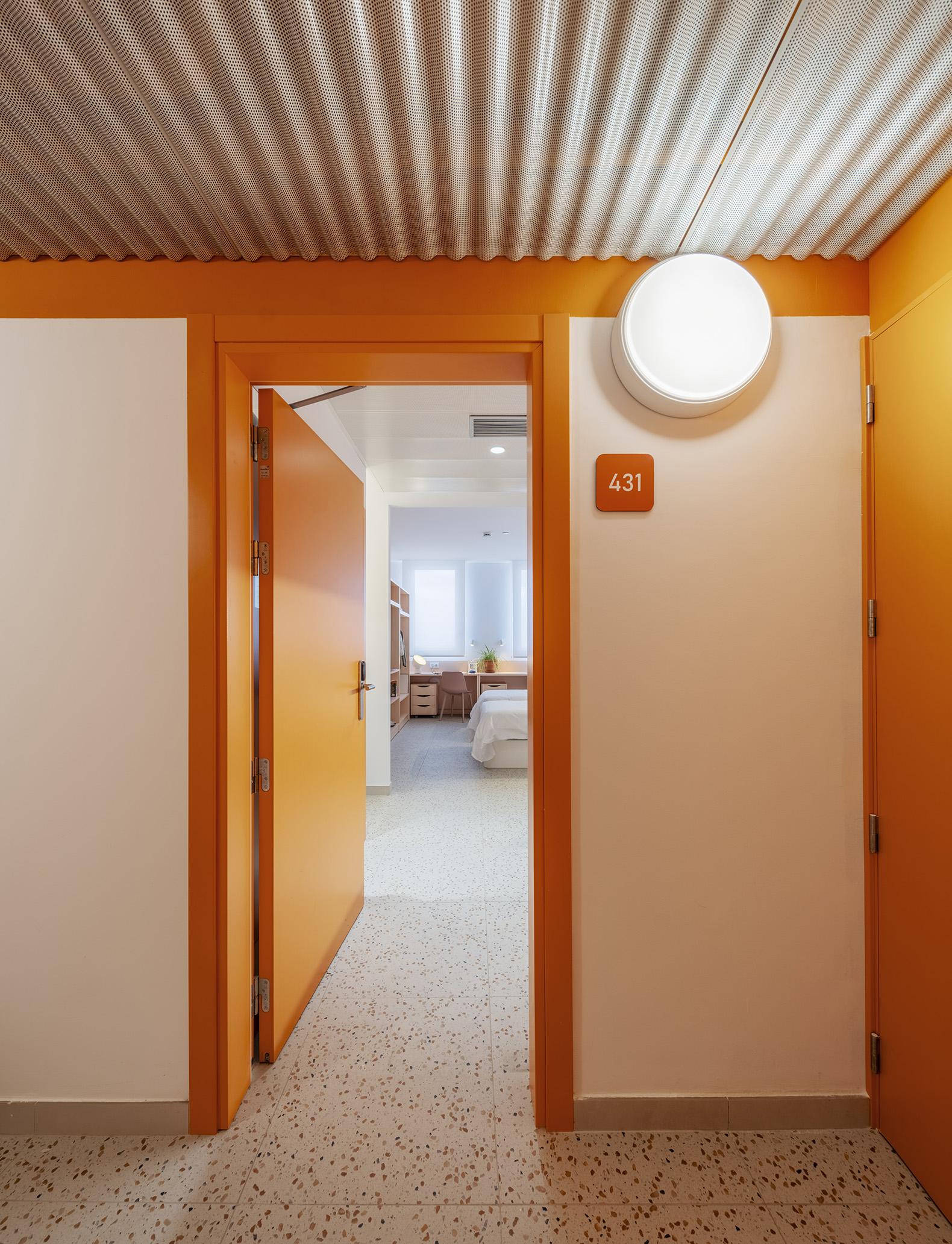
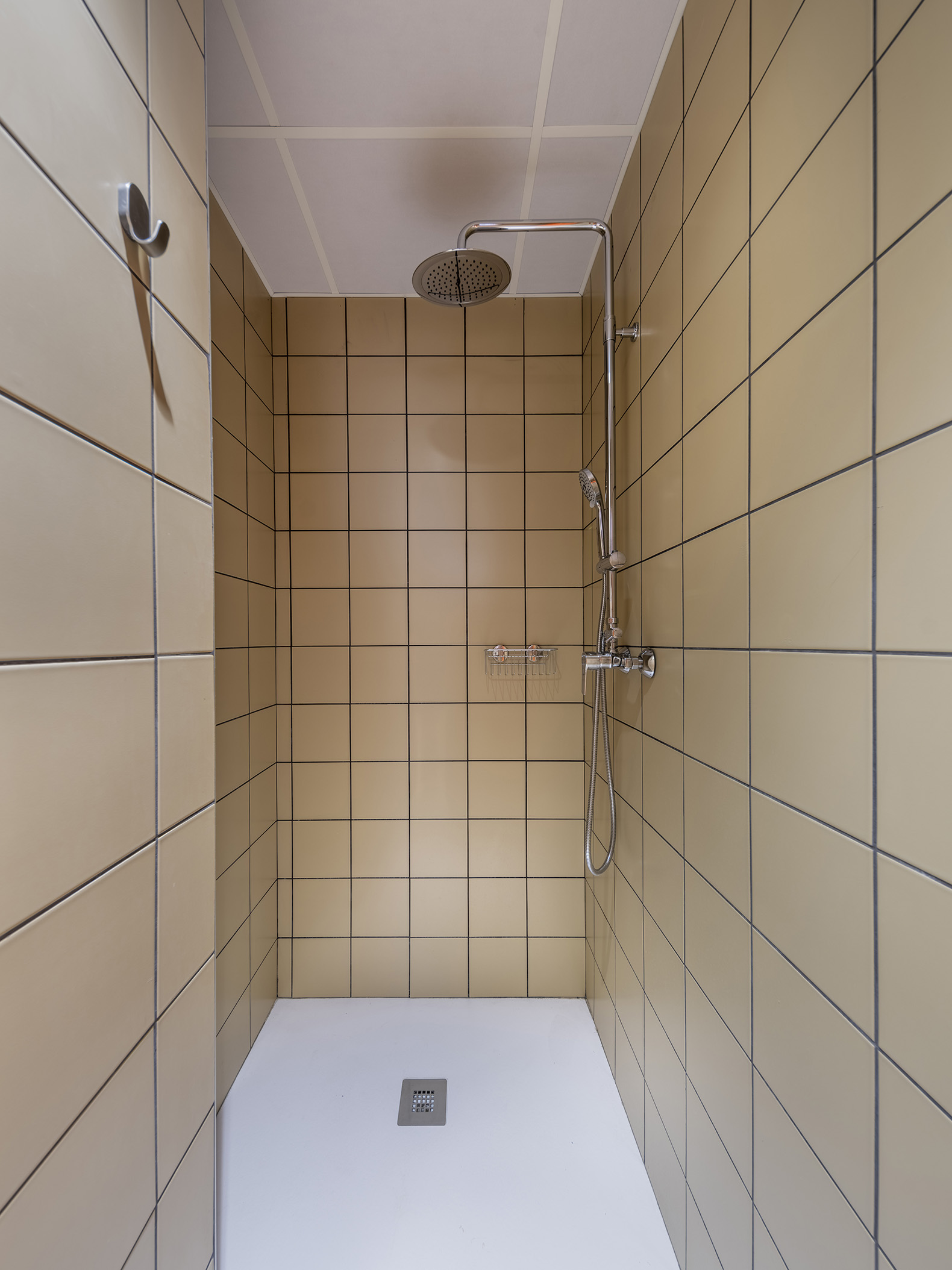
The upper floors, from 2 to 8, are dedicated to student accommodations, designed with a wide variety of layouts to meet the diverse needs of the students. From single and double rooms to shared, accessible, and suite-style units, each has been designed with specific furniture that optimizes space and allows for flexible configurations. Efficiency, comfort, and environmental quality are fundamental principles in each of these residential units.
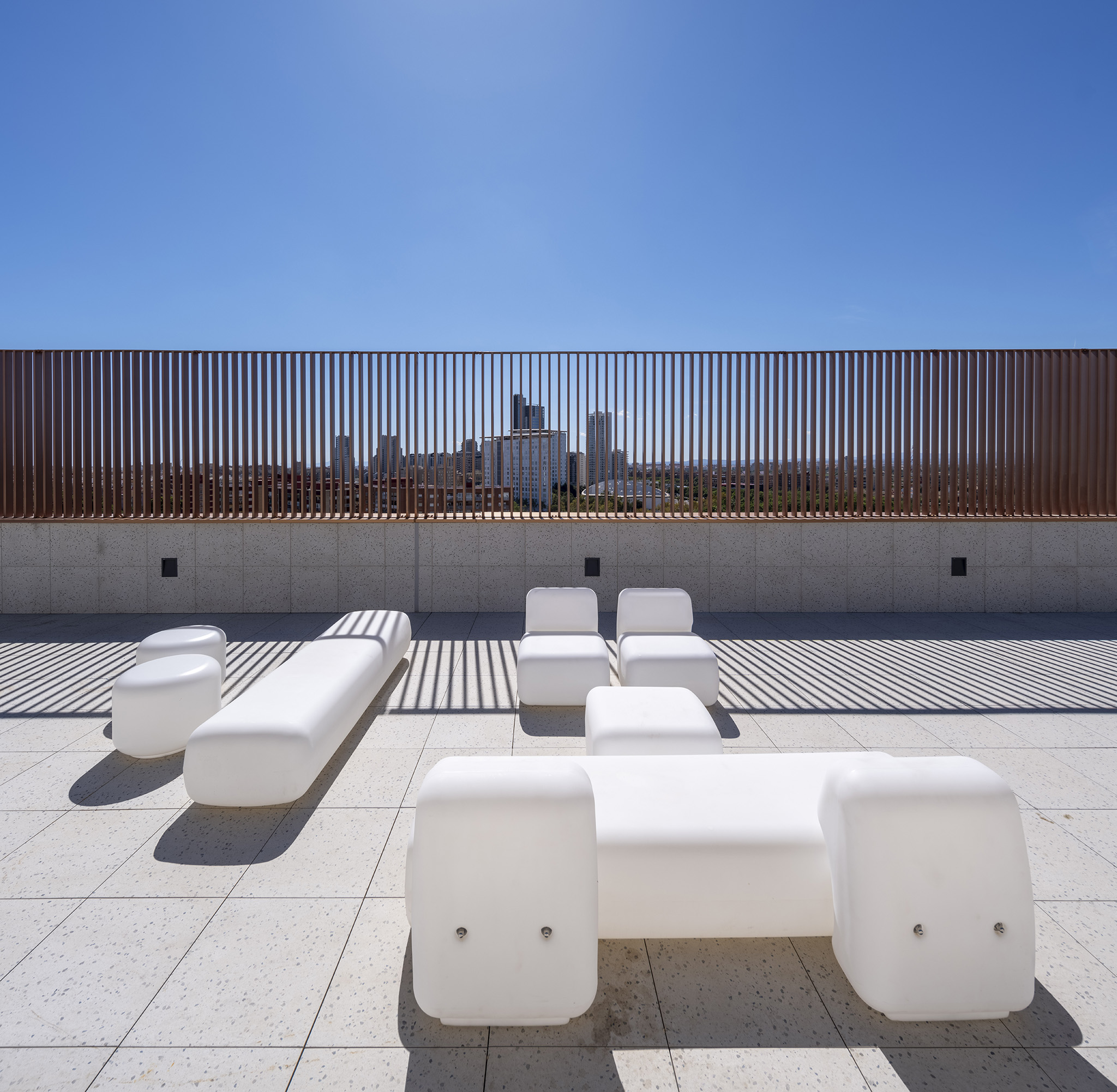
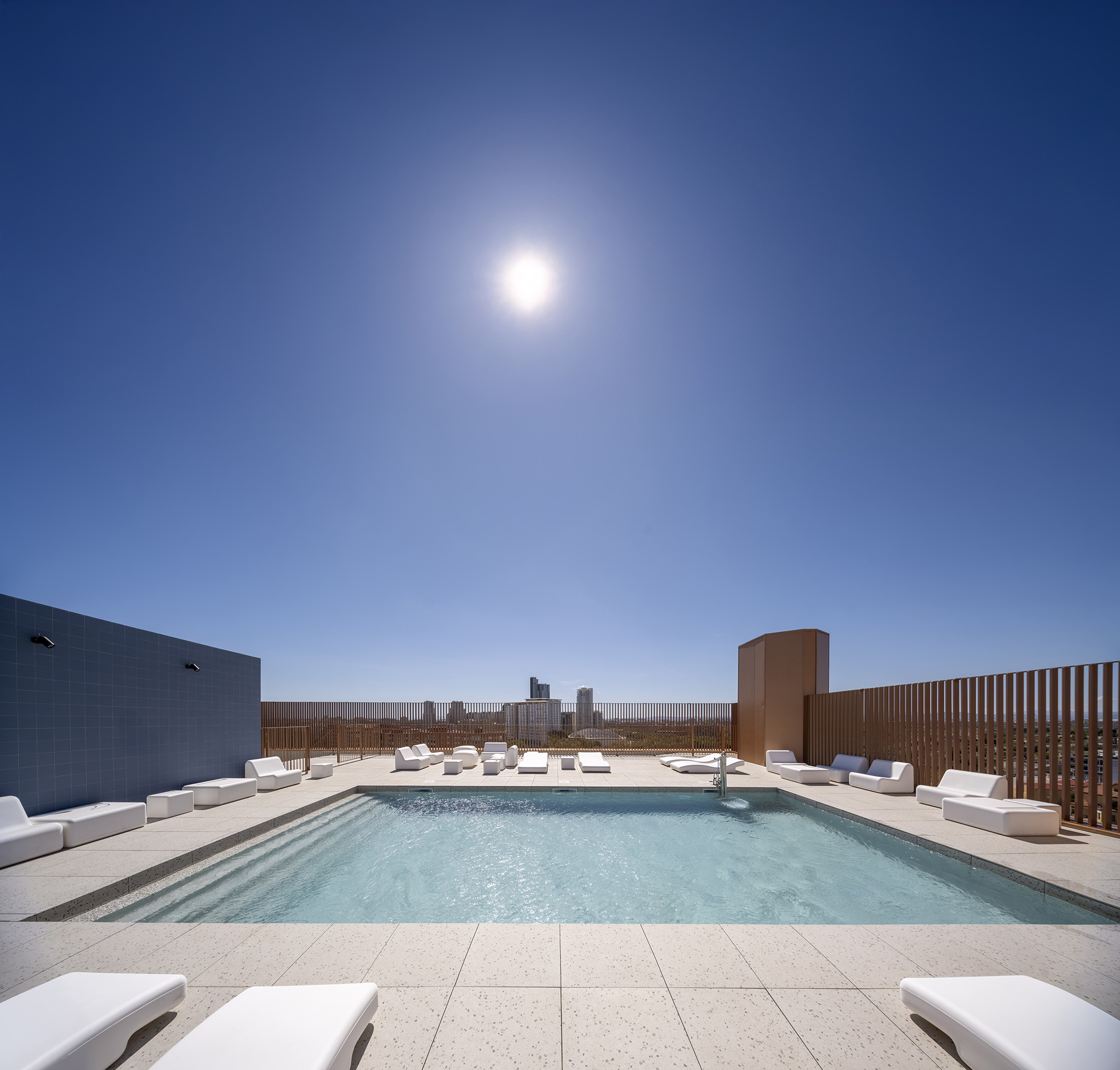
On the rooftop, a terrace with a pool and solarium becomes a privileged space for relaxation and socializing, offering unique views of the city of Valencia and the Mediterranean Sea. This open-air space not only expands the residents' recreational options but also reinforces the sense of community and well-being within the residence.
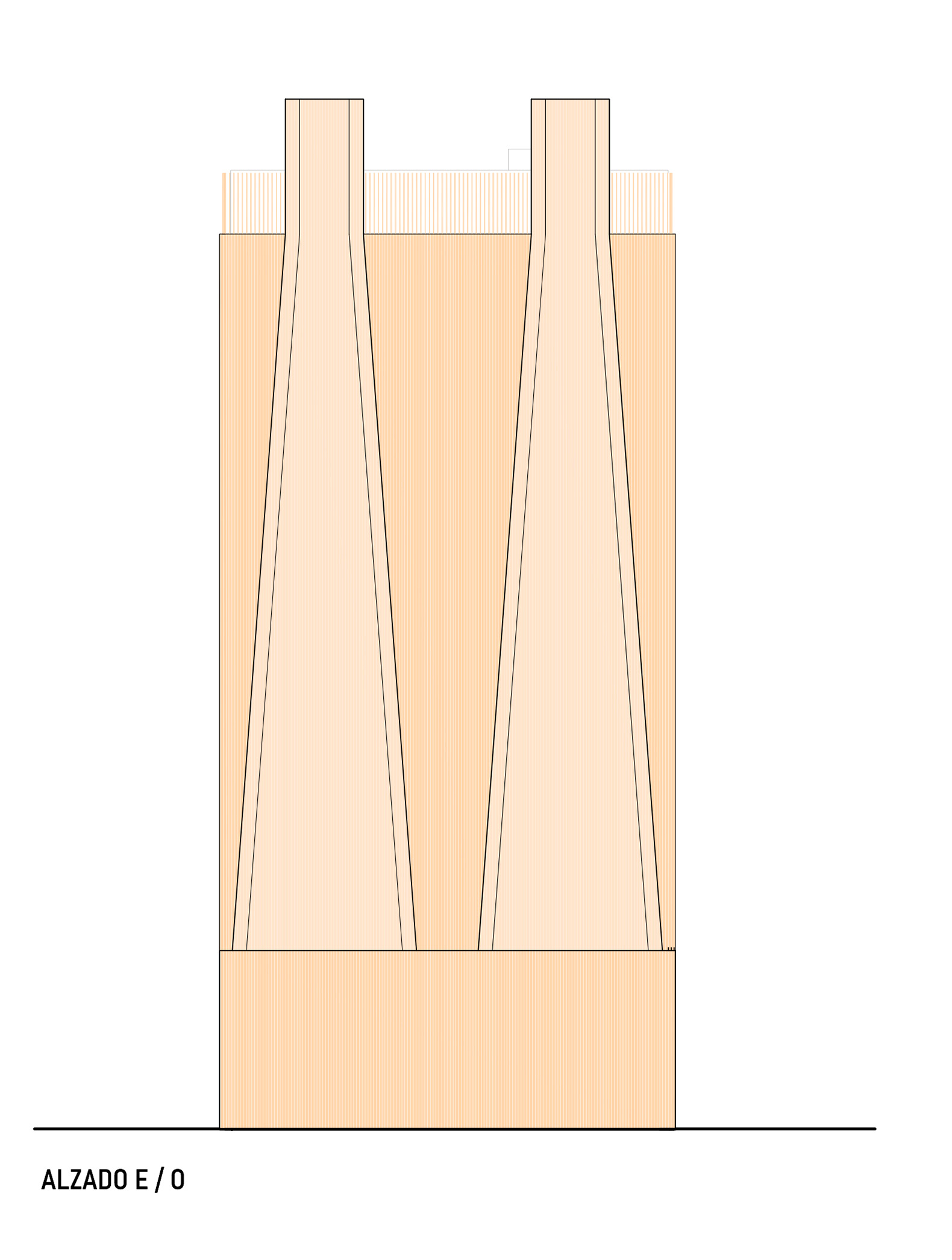
The building establishes a dialogue with the history of the site, recovering the industrial memory of Burjassot through a contemporary interpretation of its built landscape. As a testament to the past, a brick chimney near the plot is preserved, its silhouette inspiring the geometry of the volumes that crown the building's gable ends.
The façades, clad in metal sheets in orange tones reminiscent of traditional ceramics, give the complex a unique identity while harmoniously integrating it into its surroundings.
More than just a place to stay, this residence is conceived as a university life ecosystem, where shared spaces foster interaction, learning, and the building of connections. Through architecture designed for the community, the project transforms a pre-existing structure into a new hub for students, creating an environment that promotes both personal development and integration with the city.