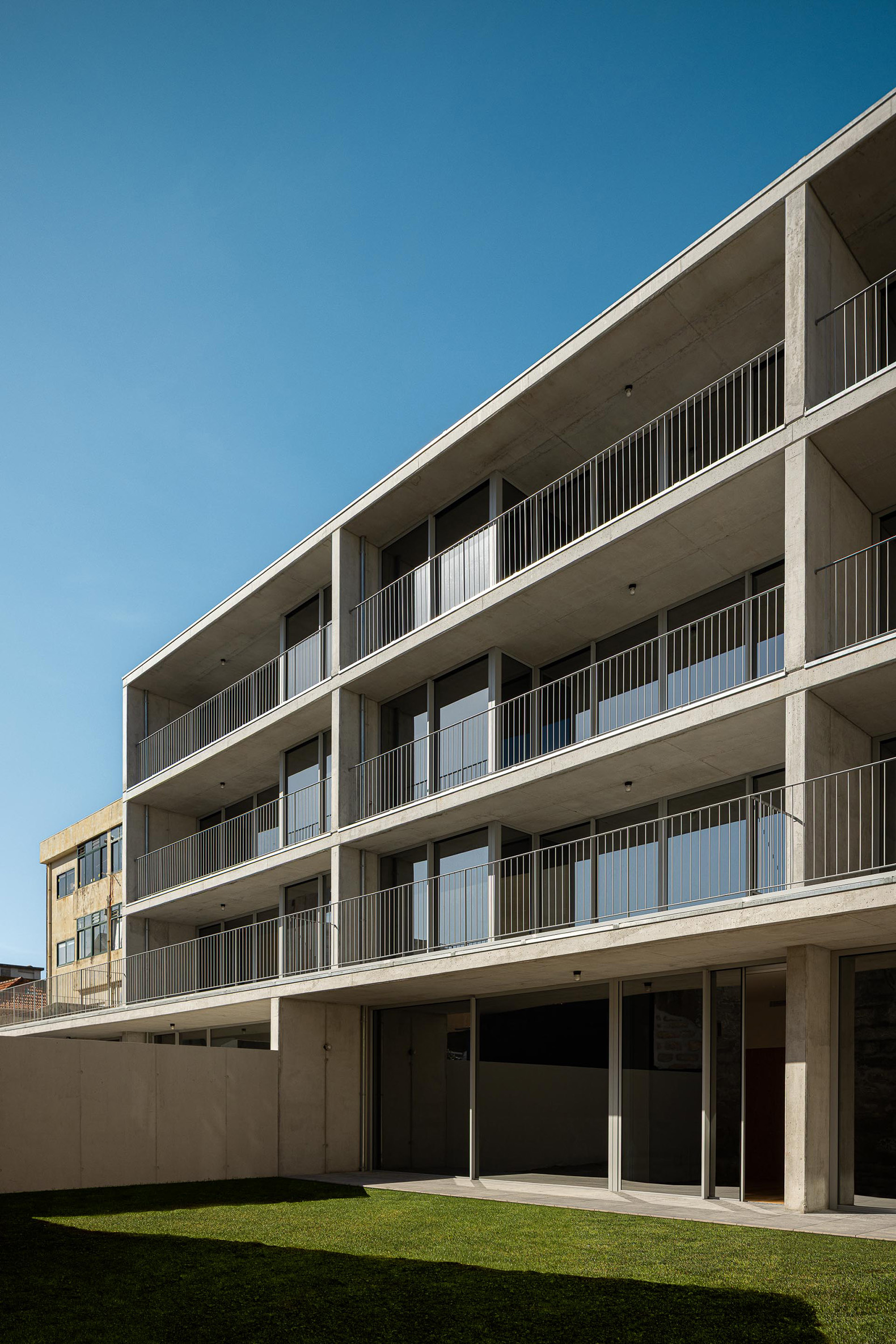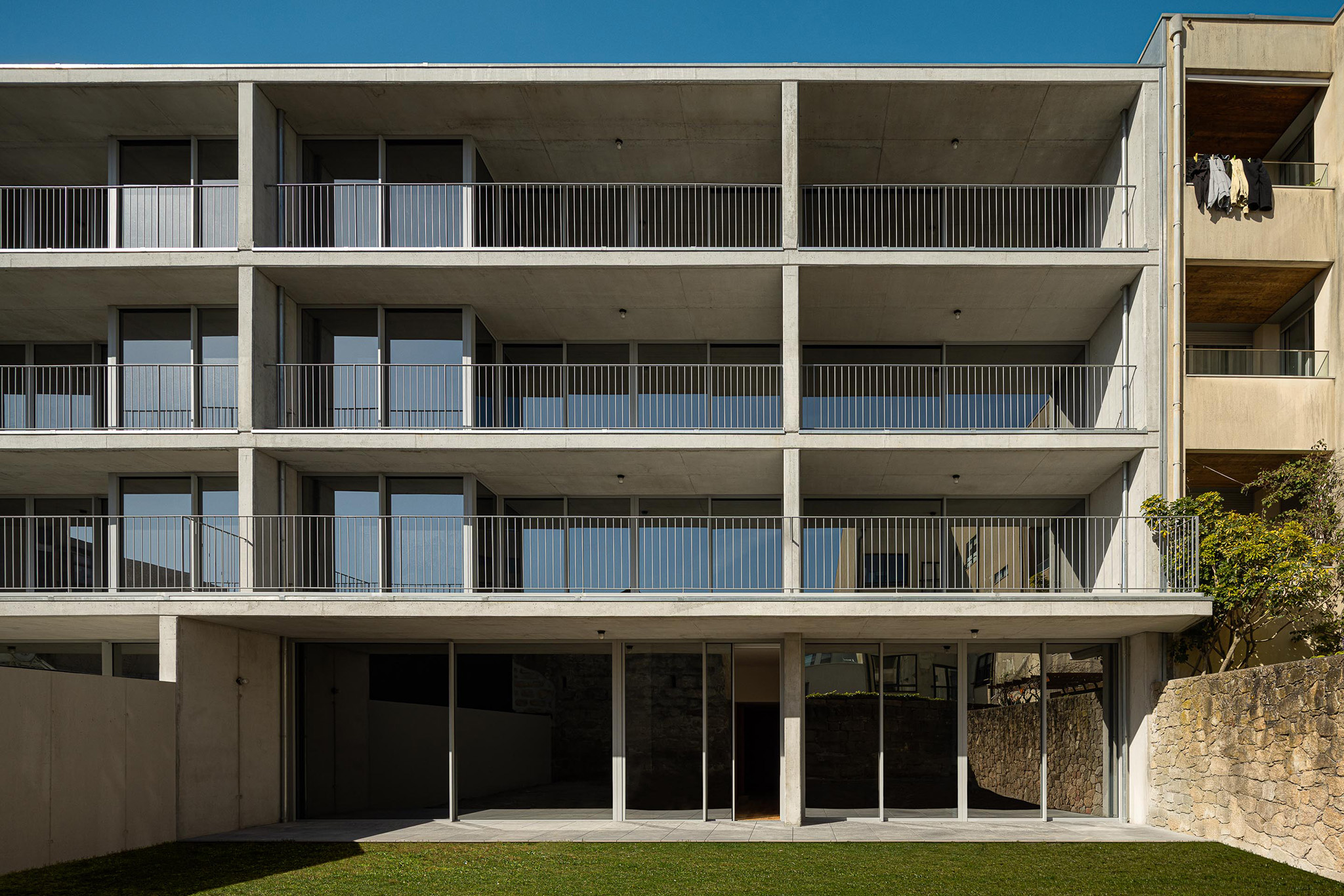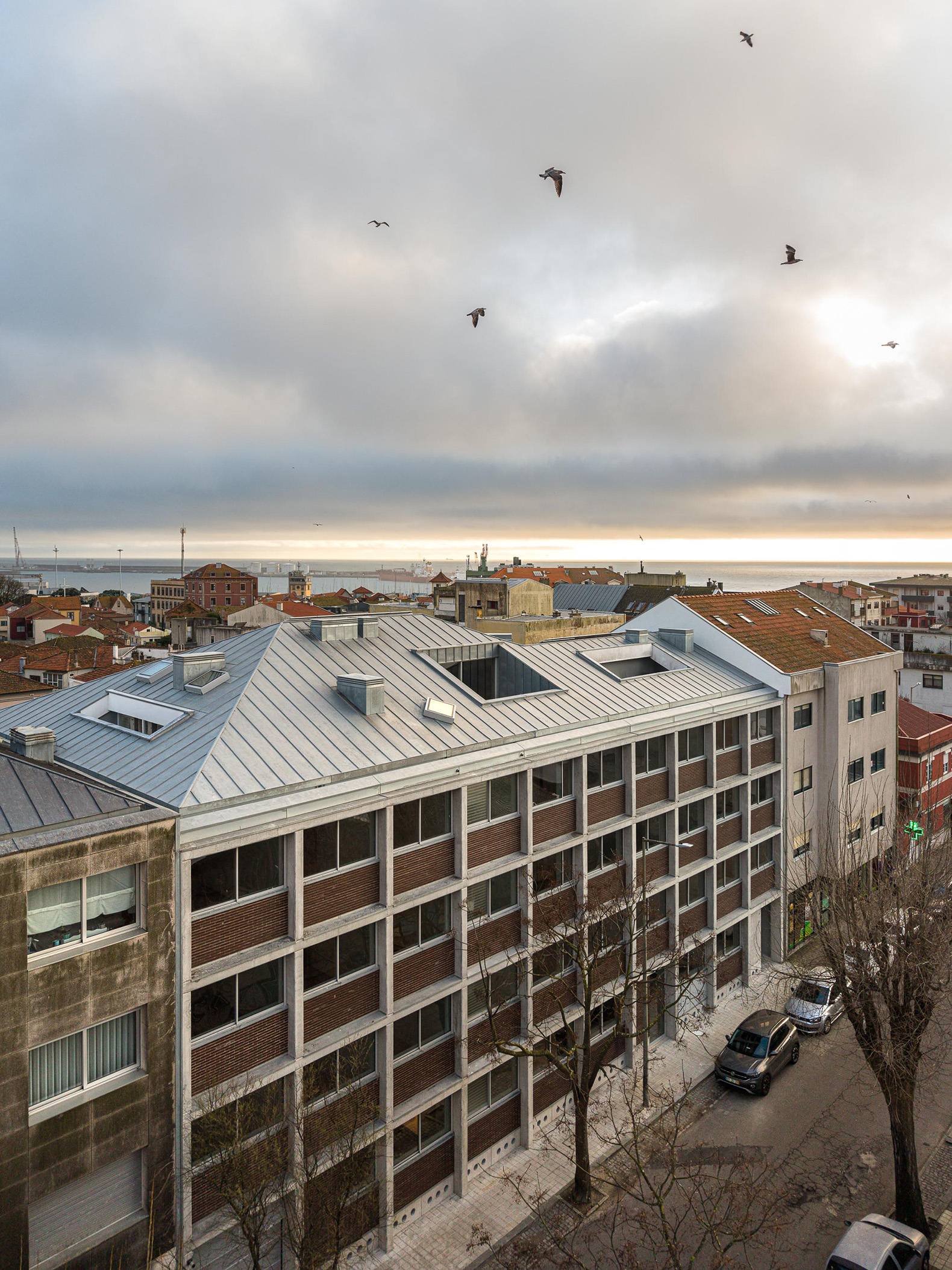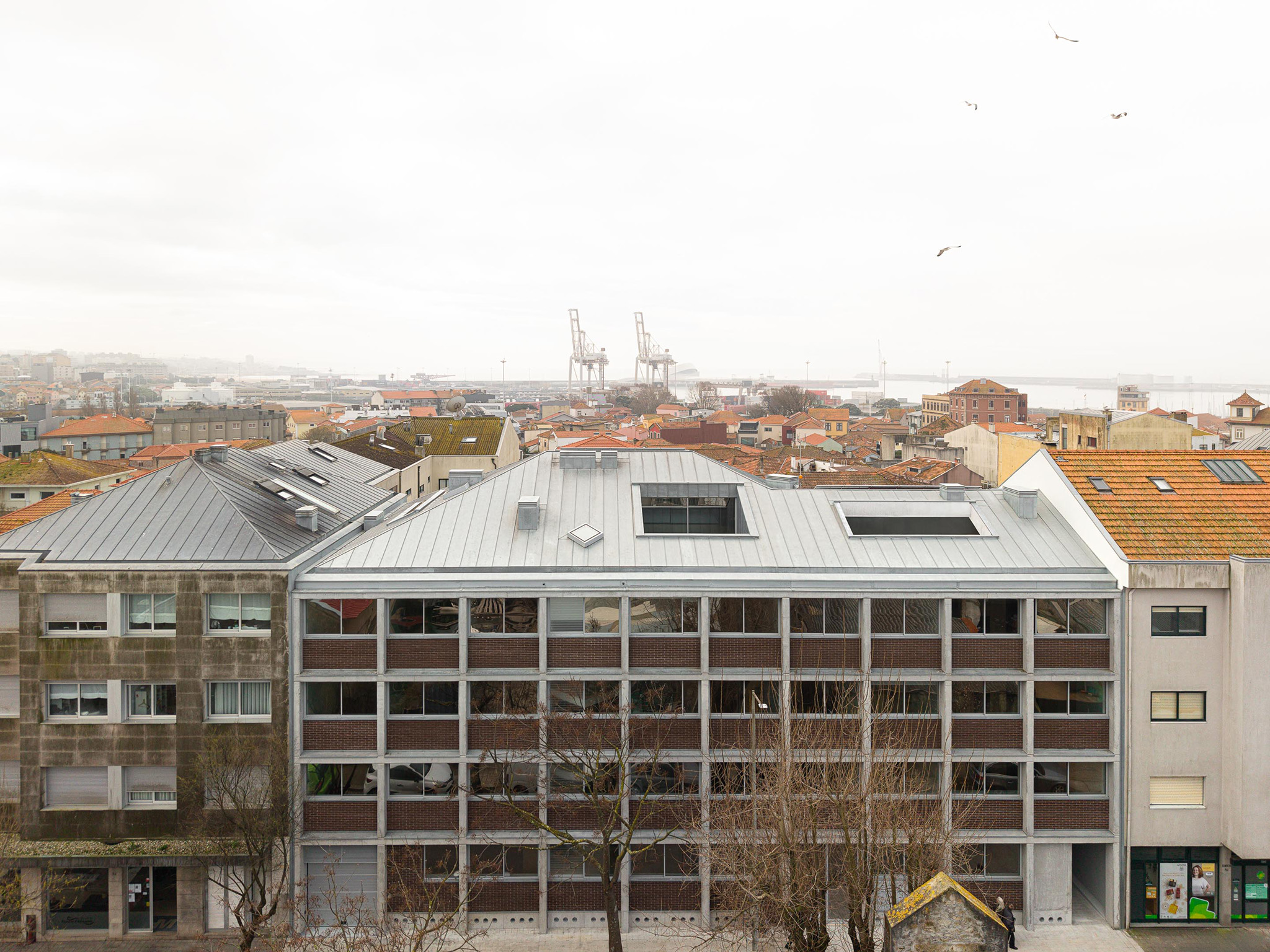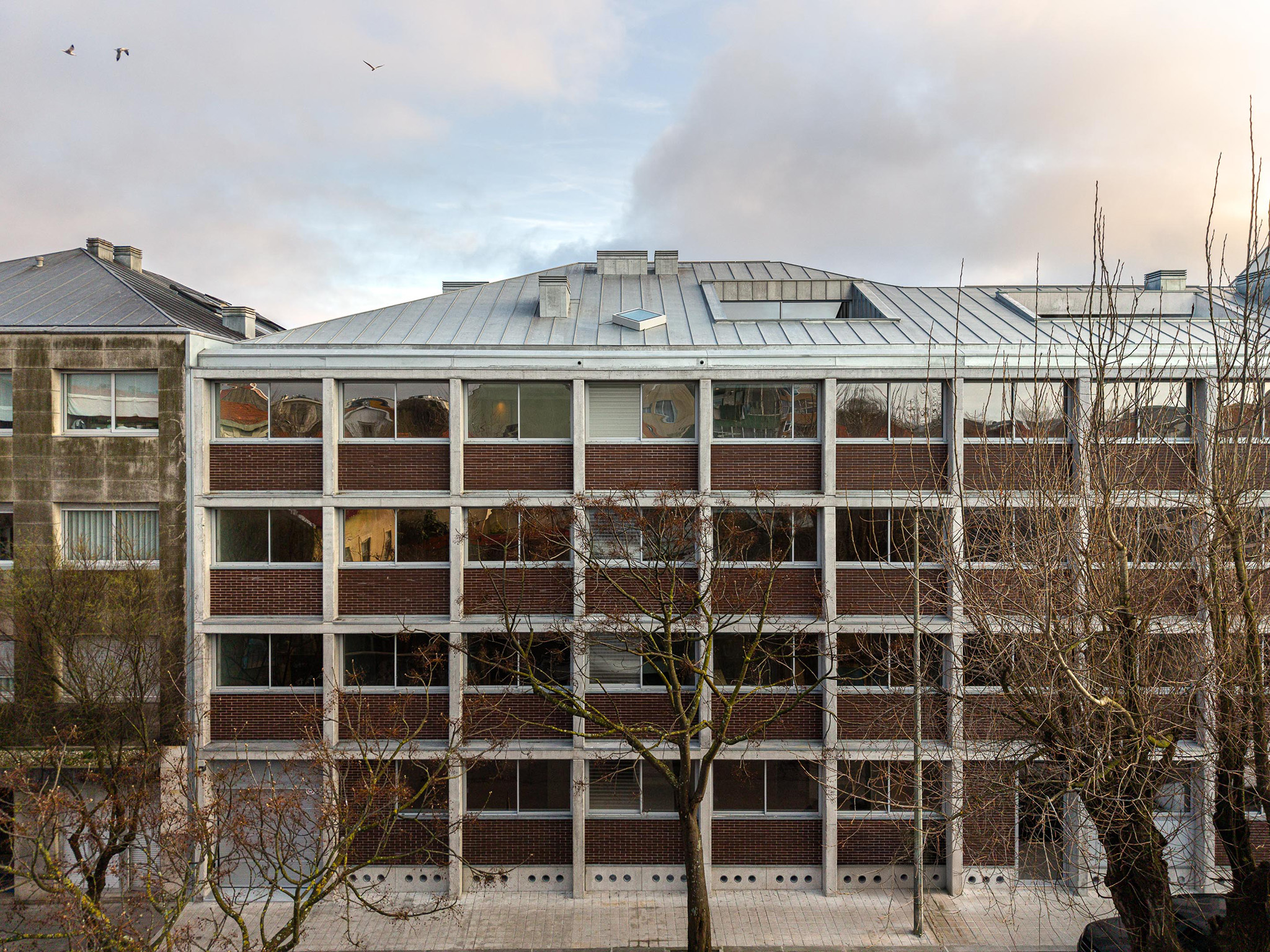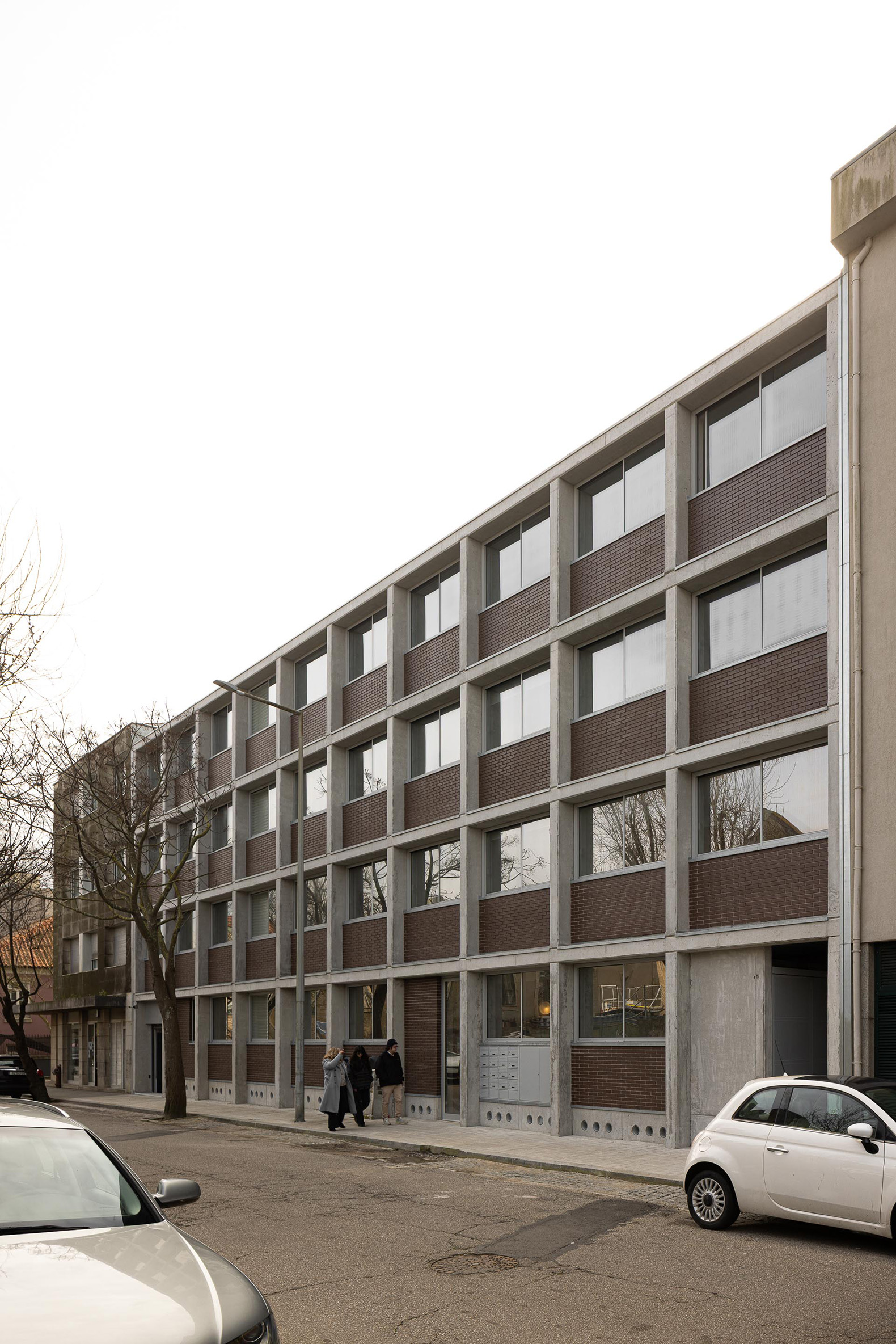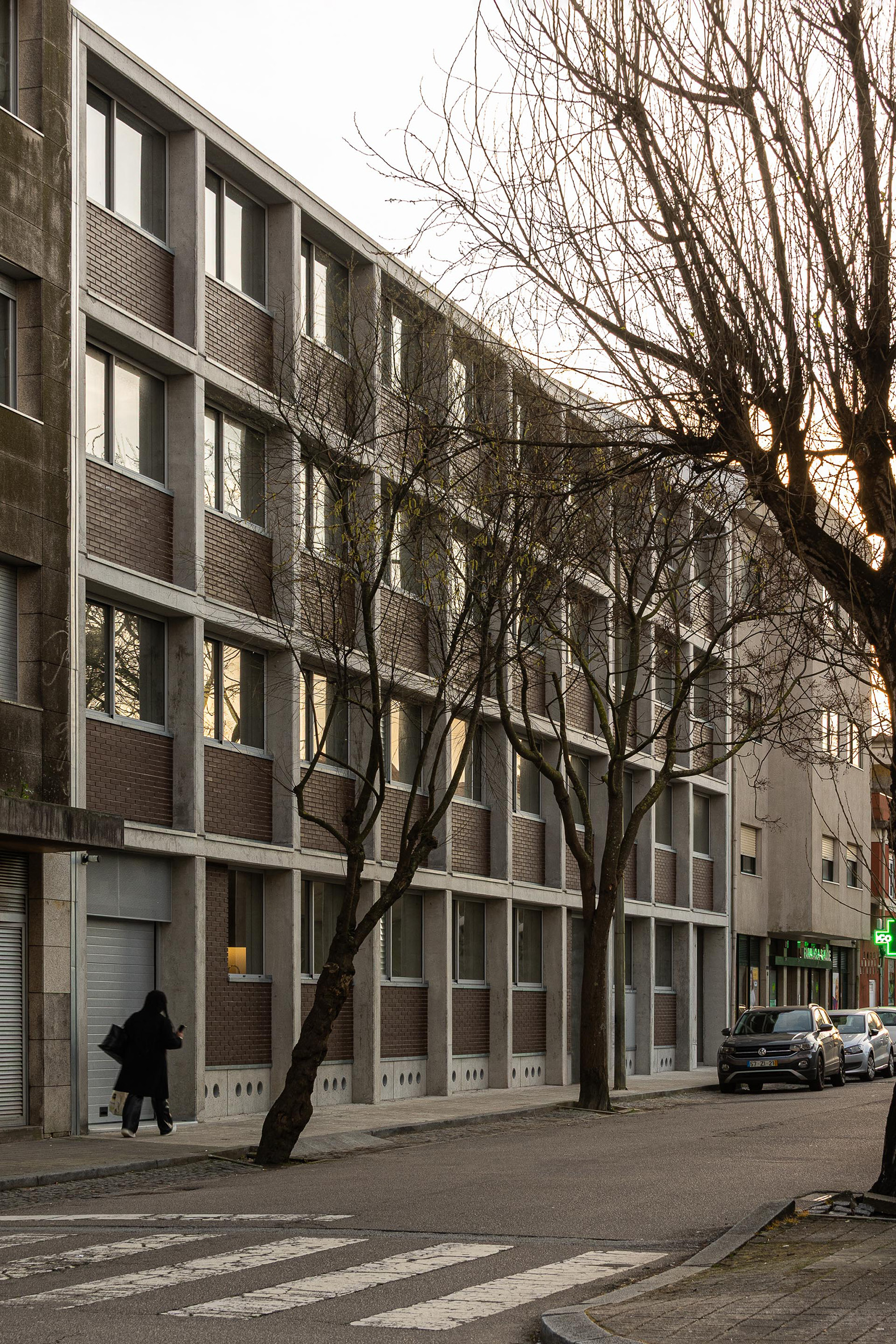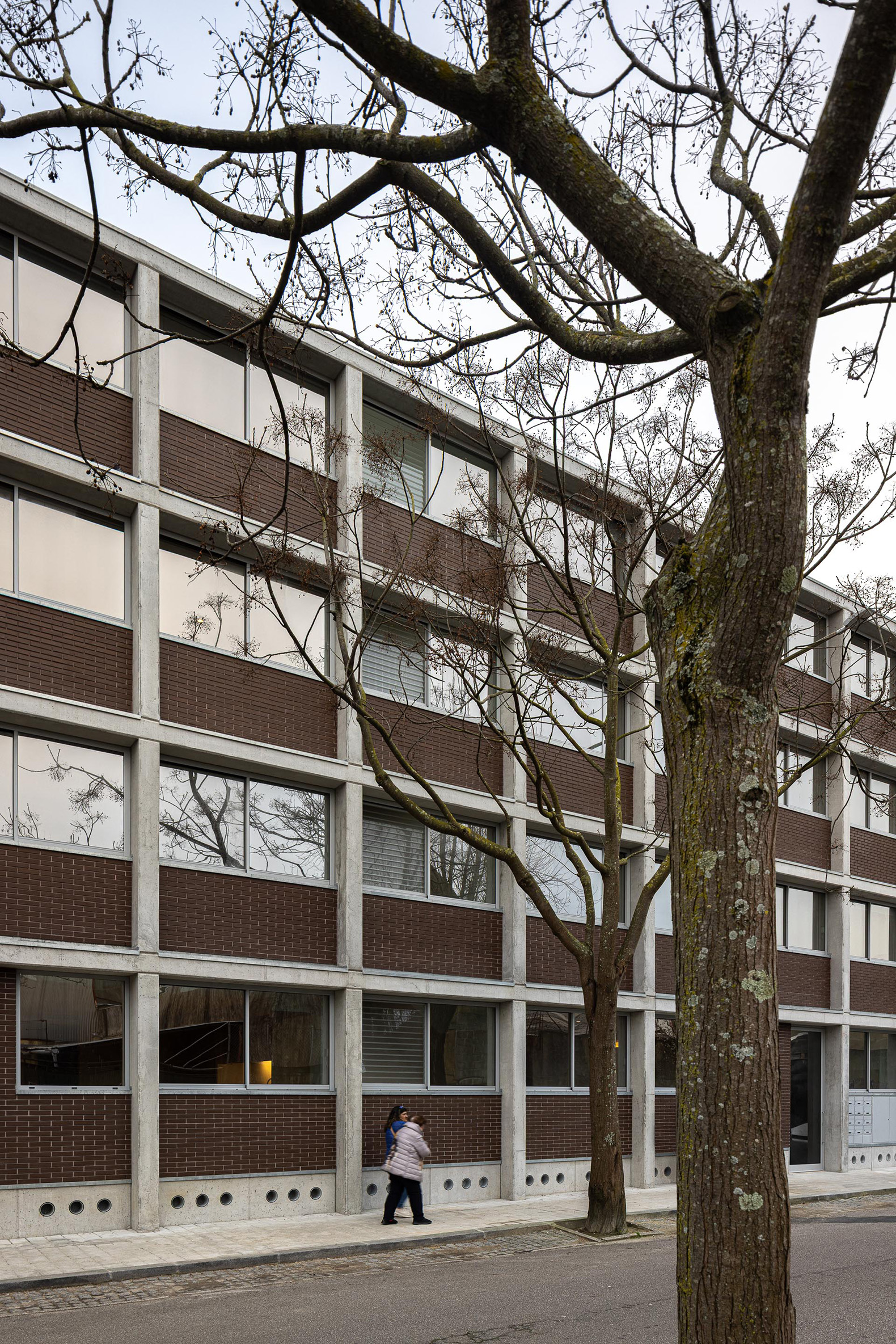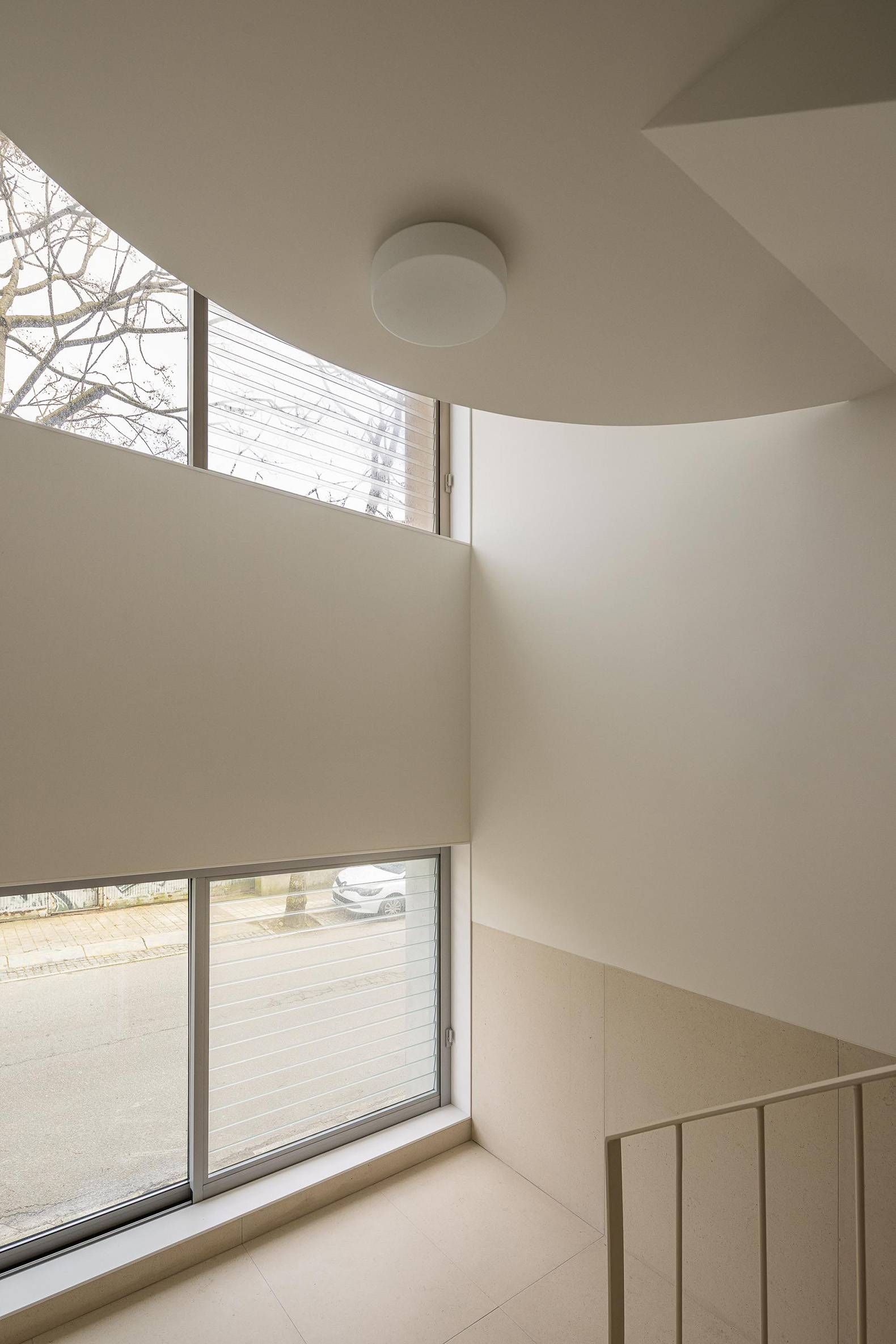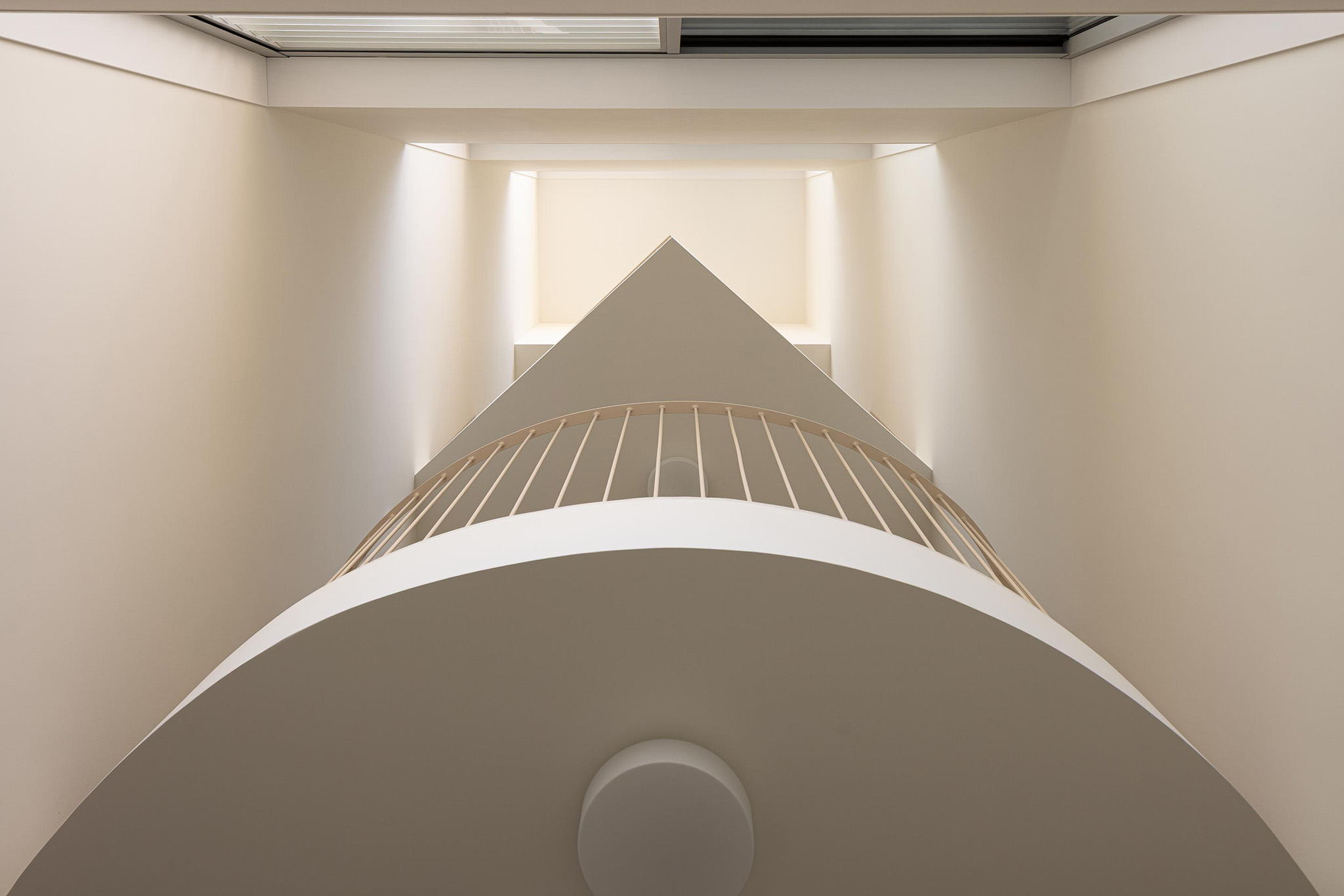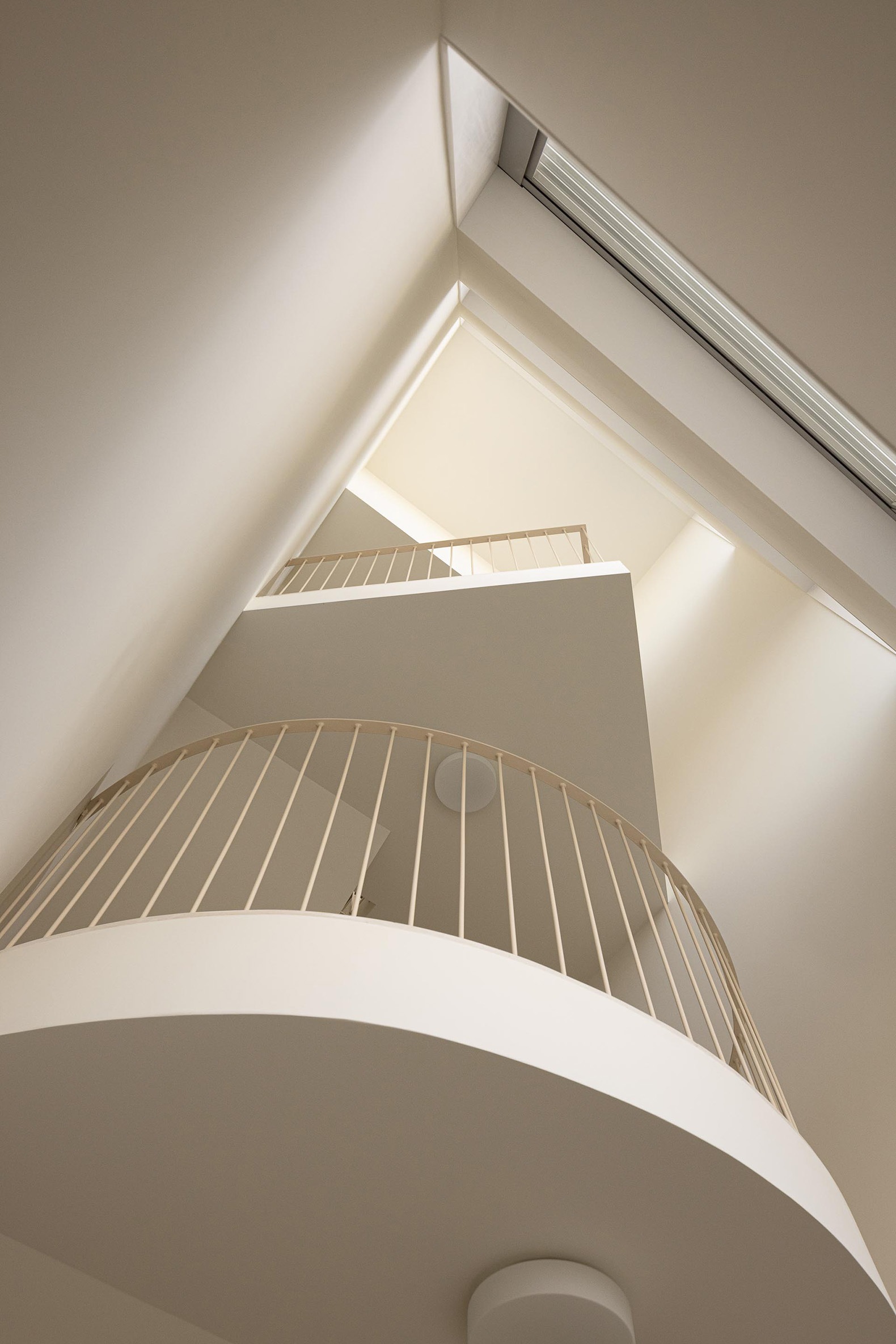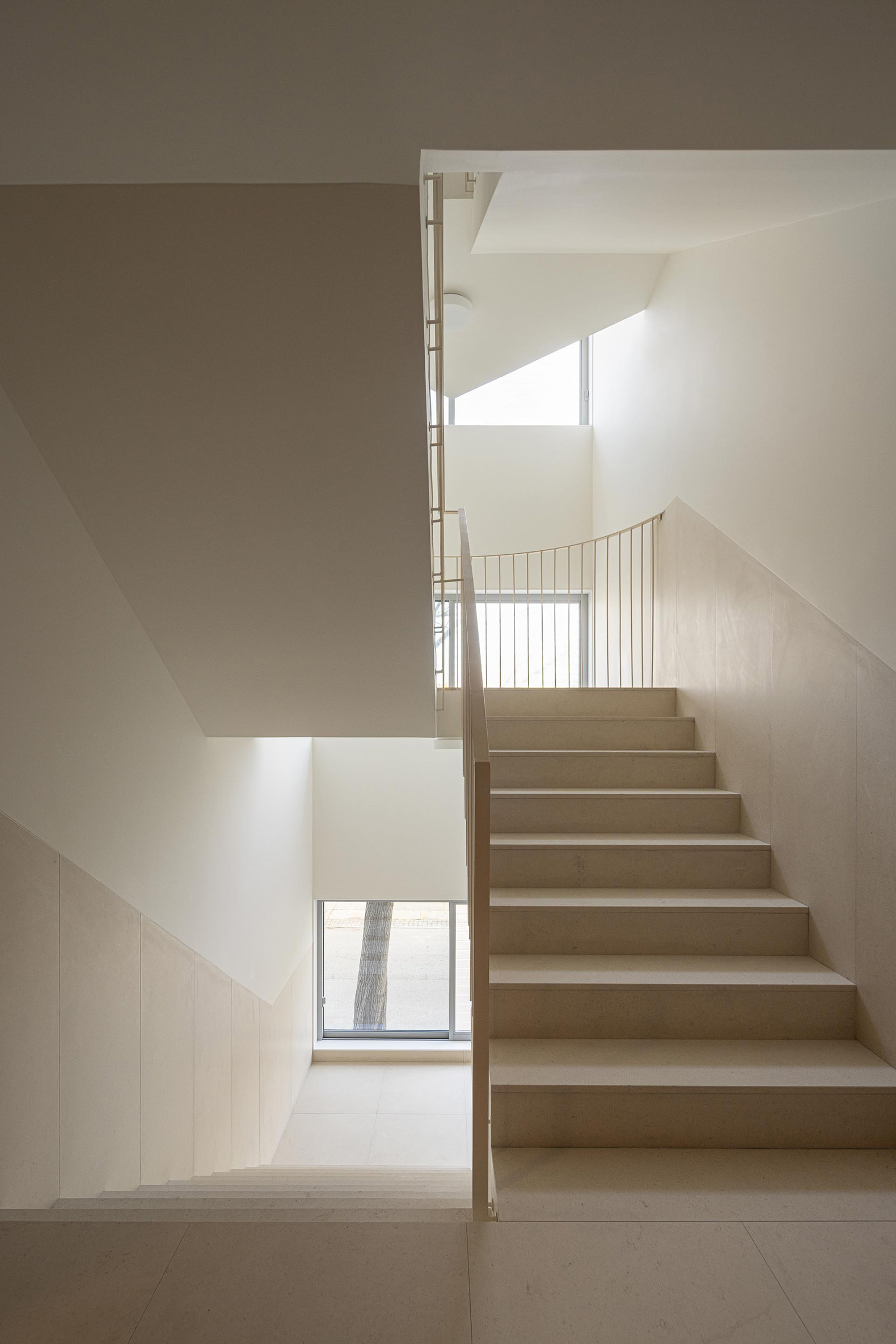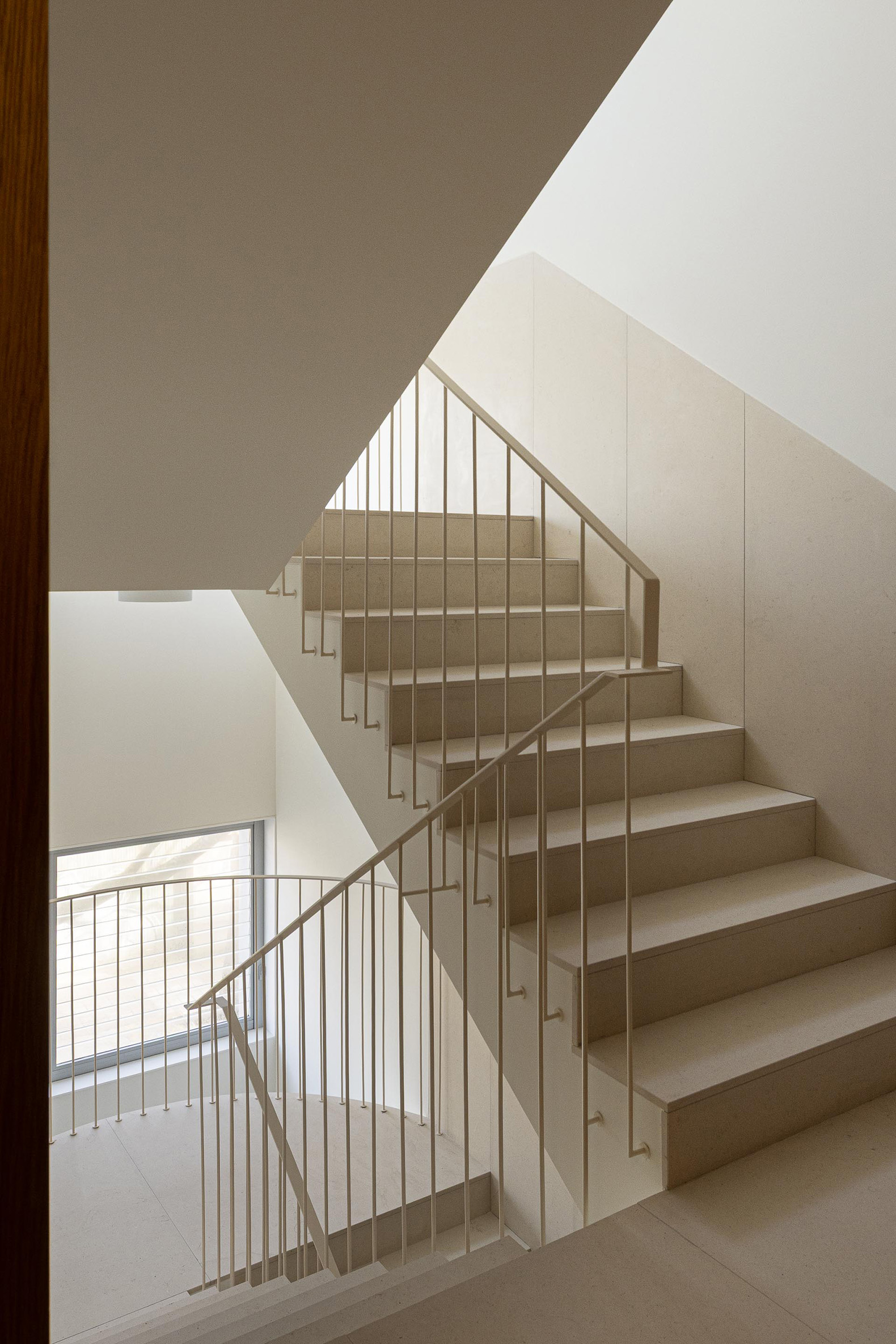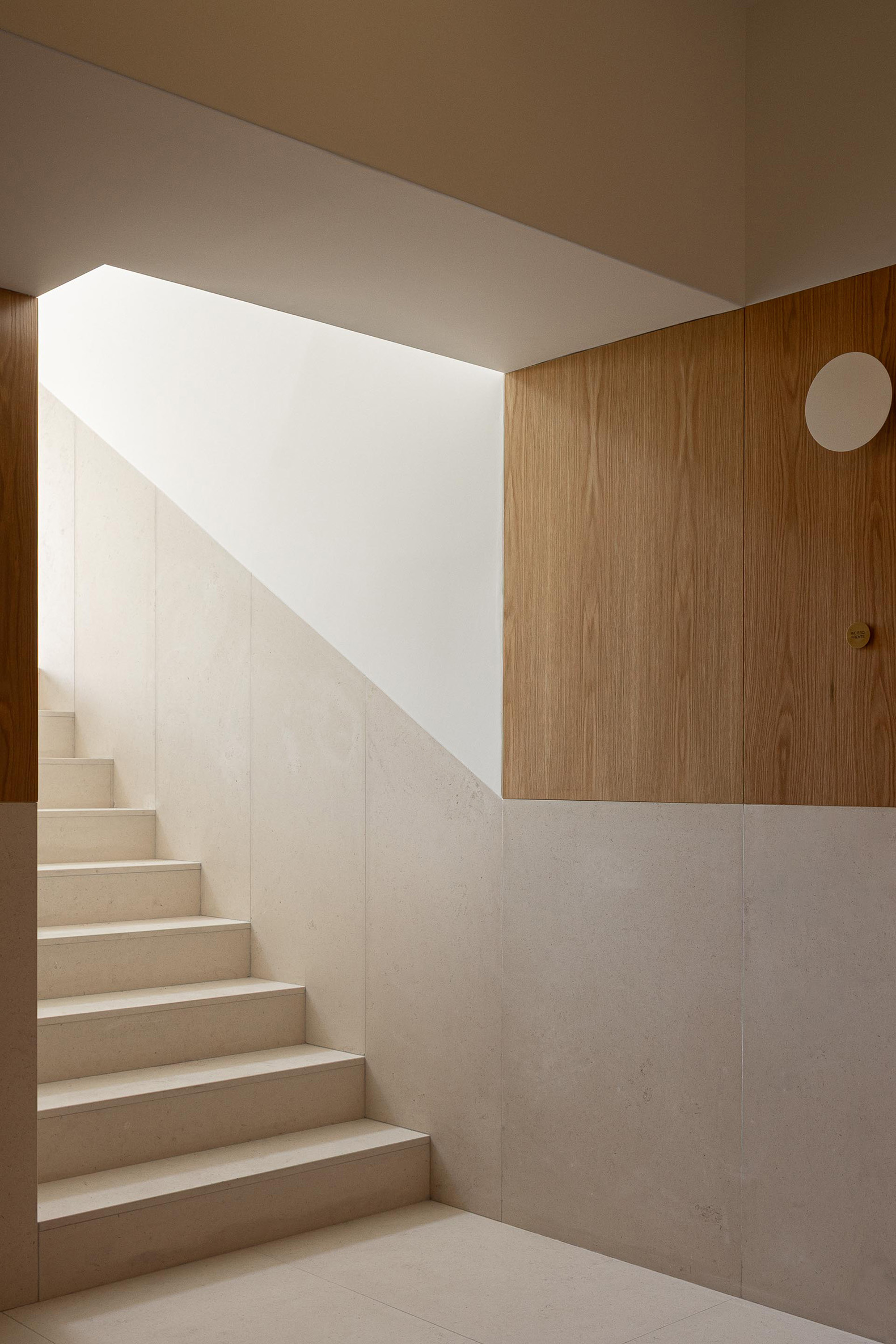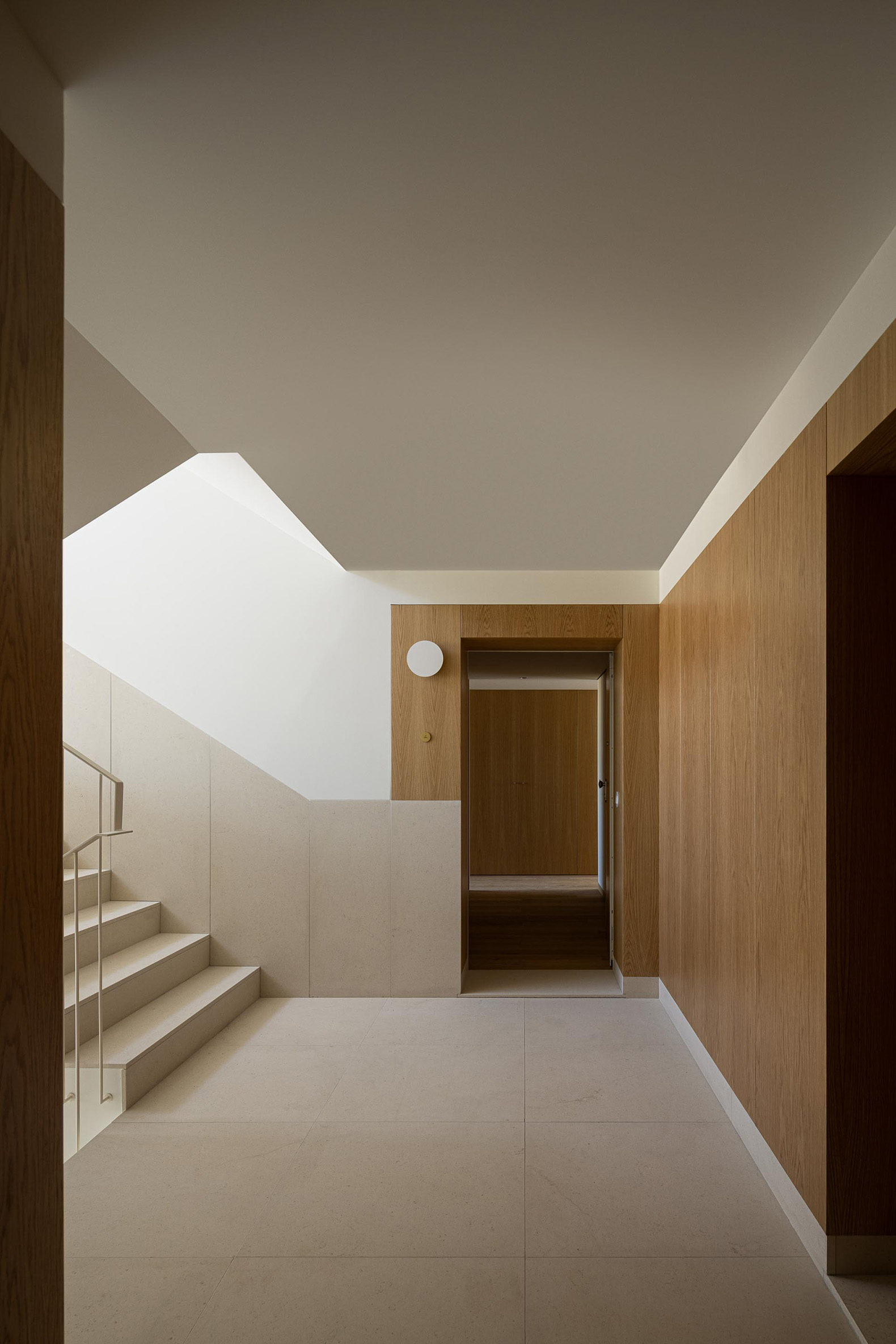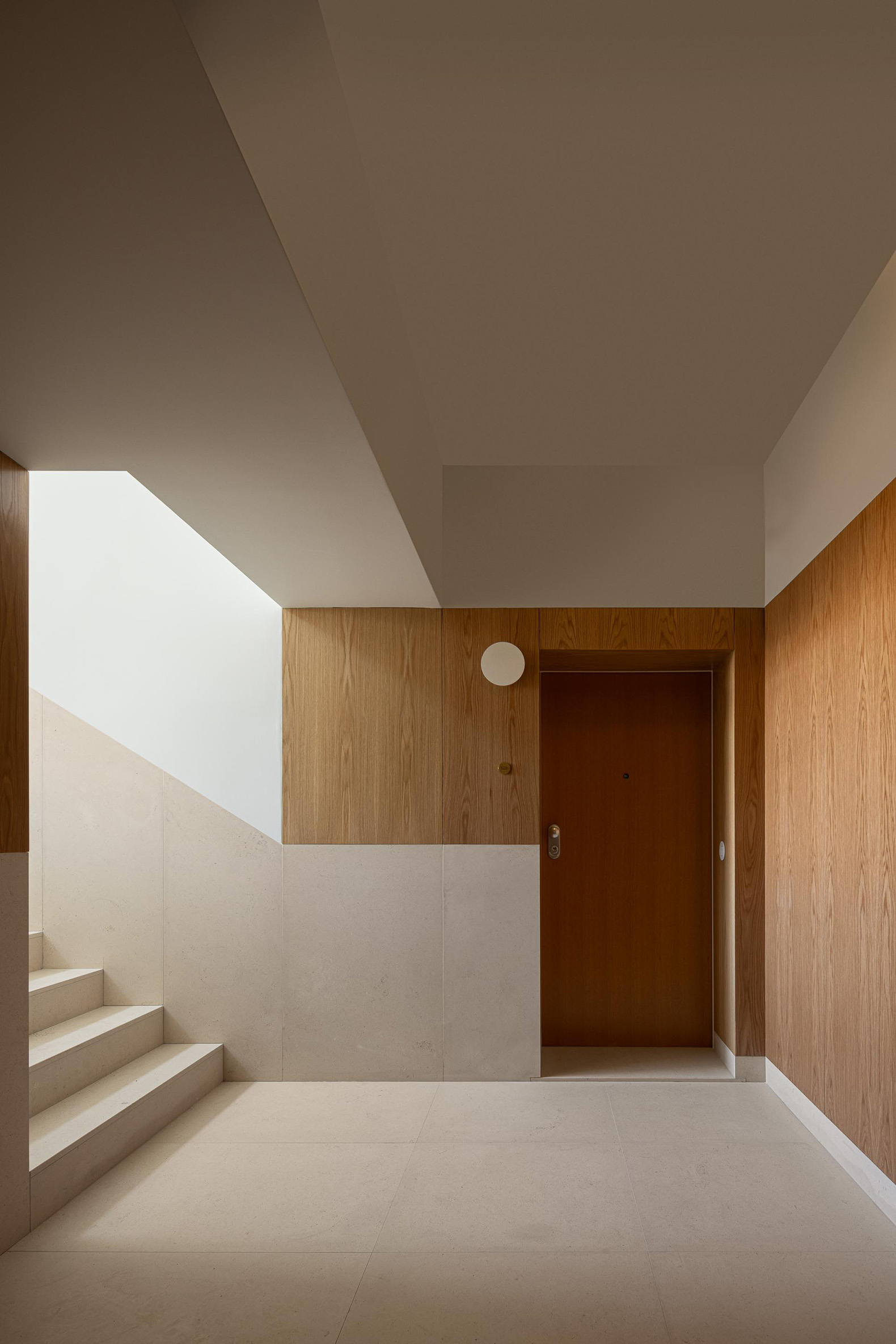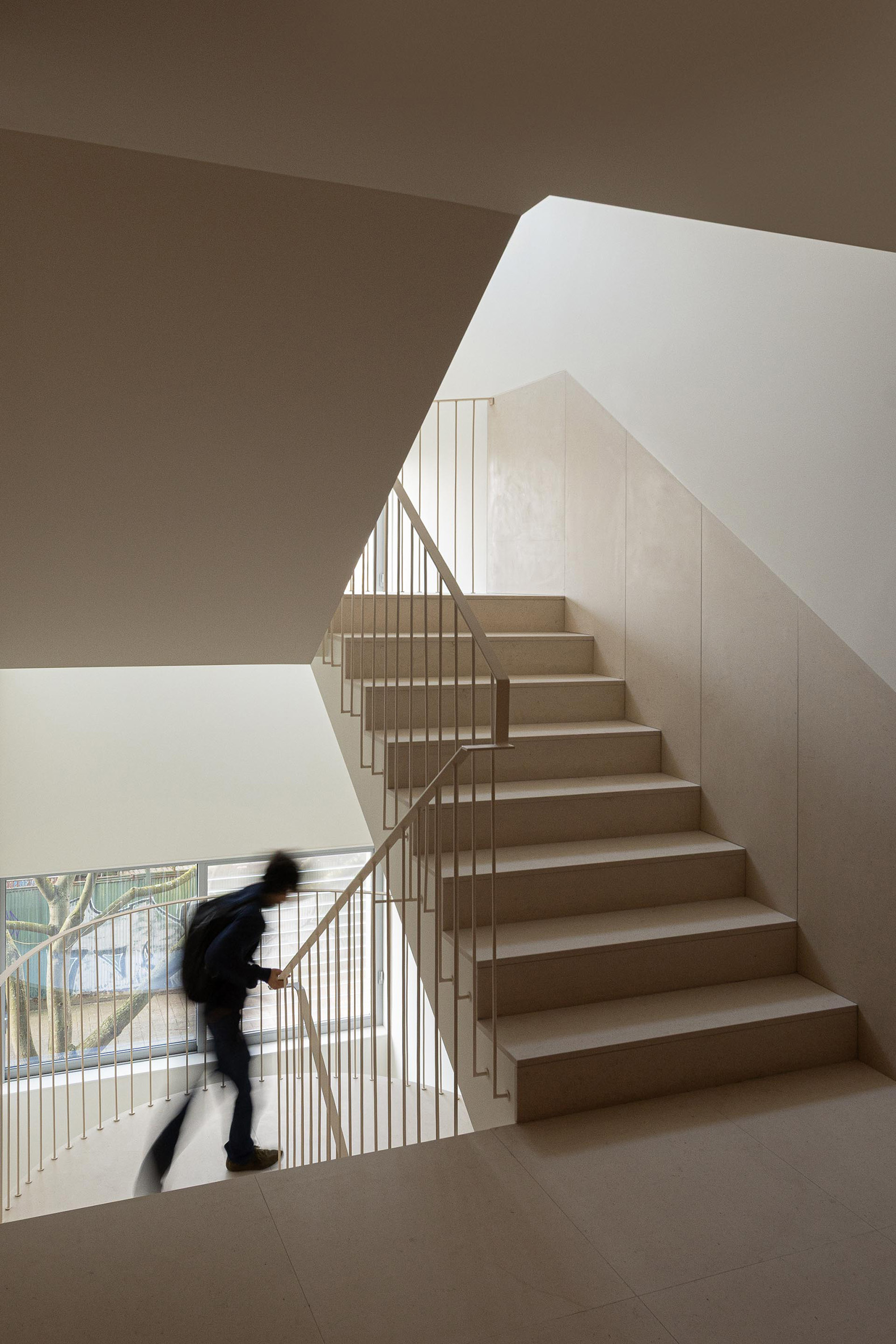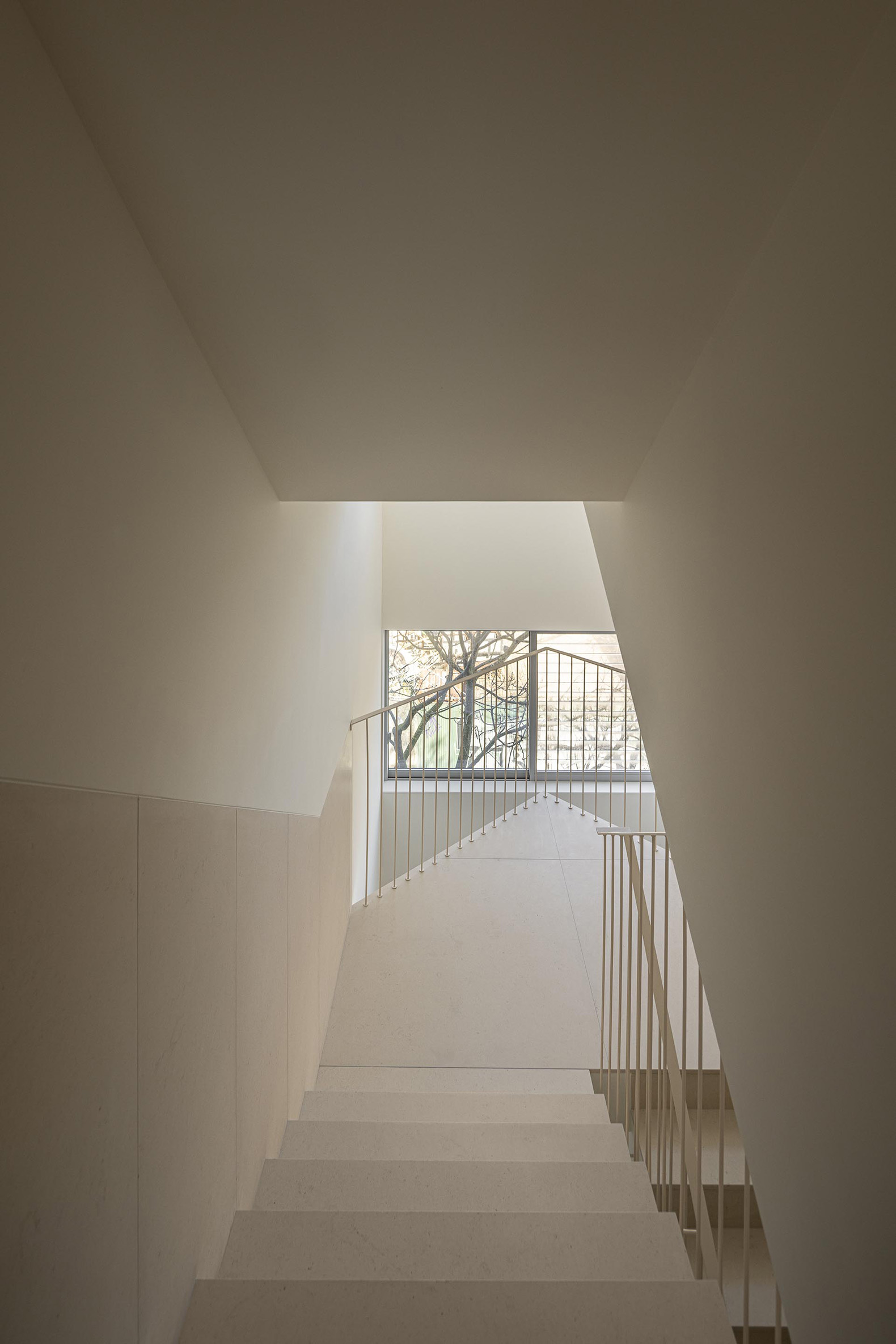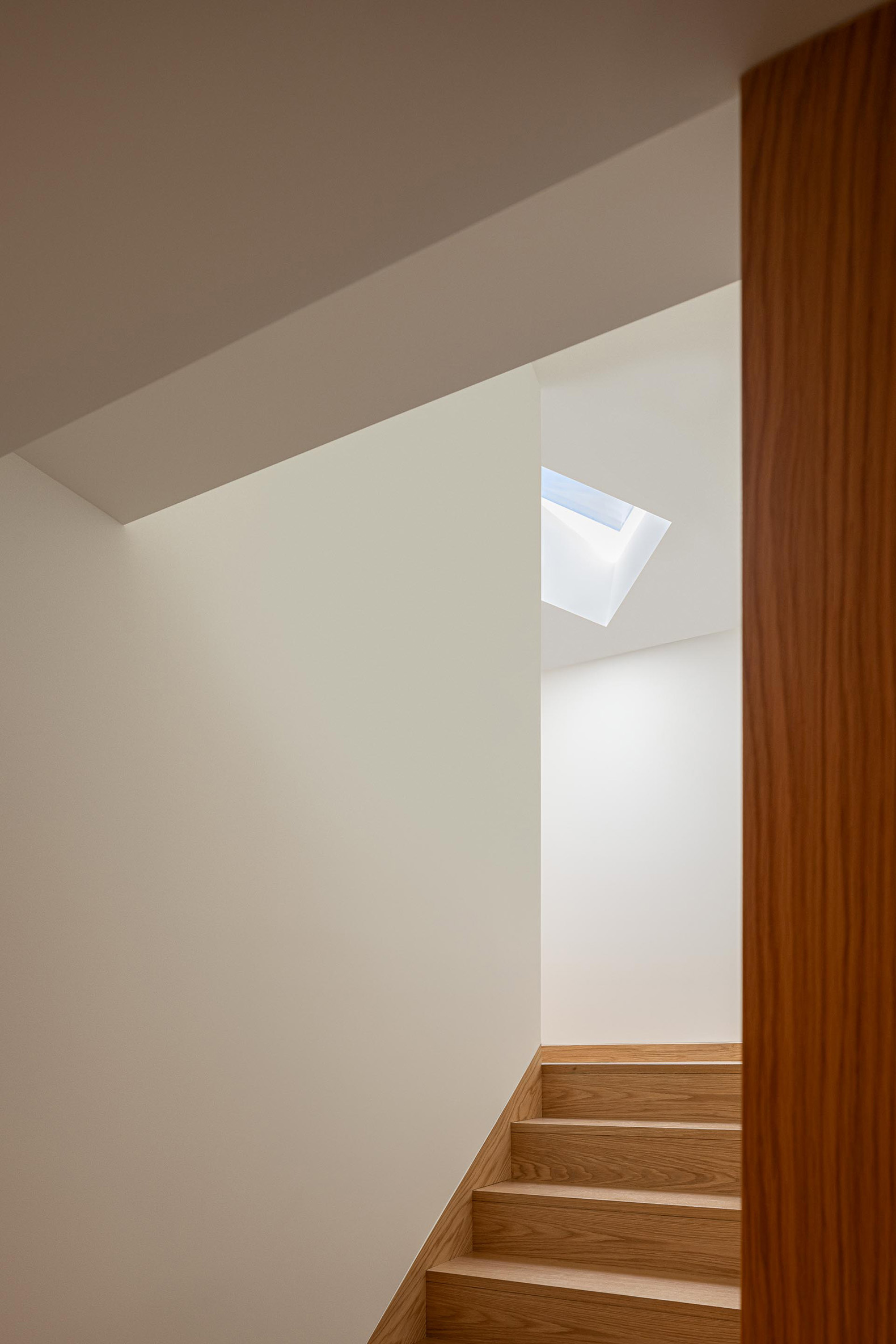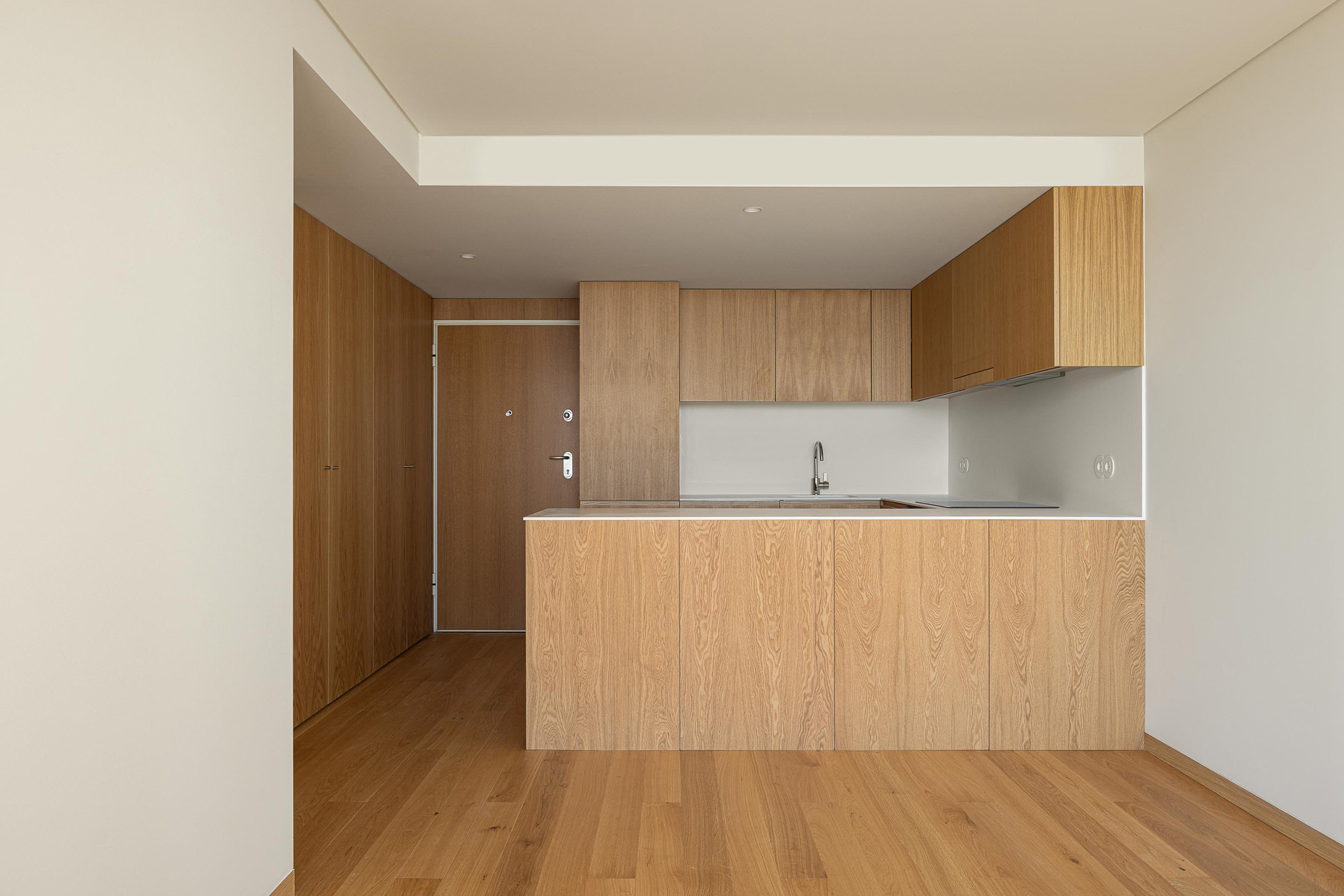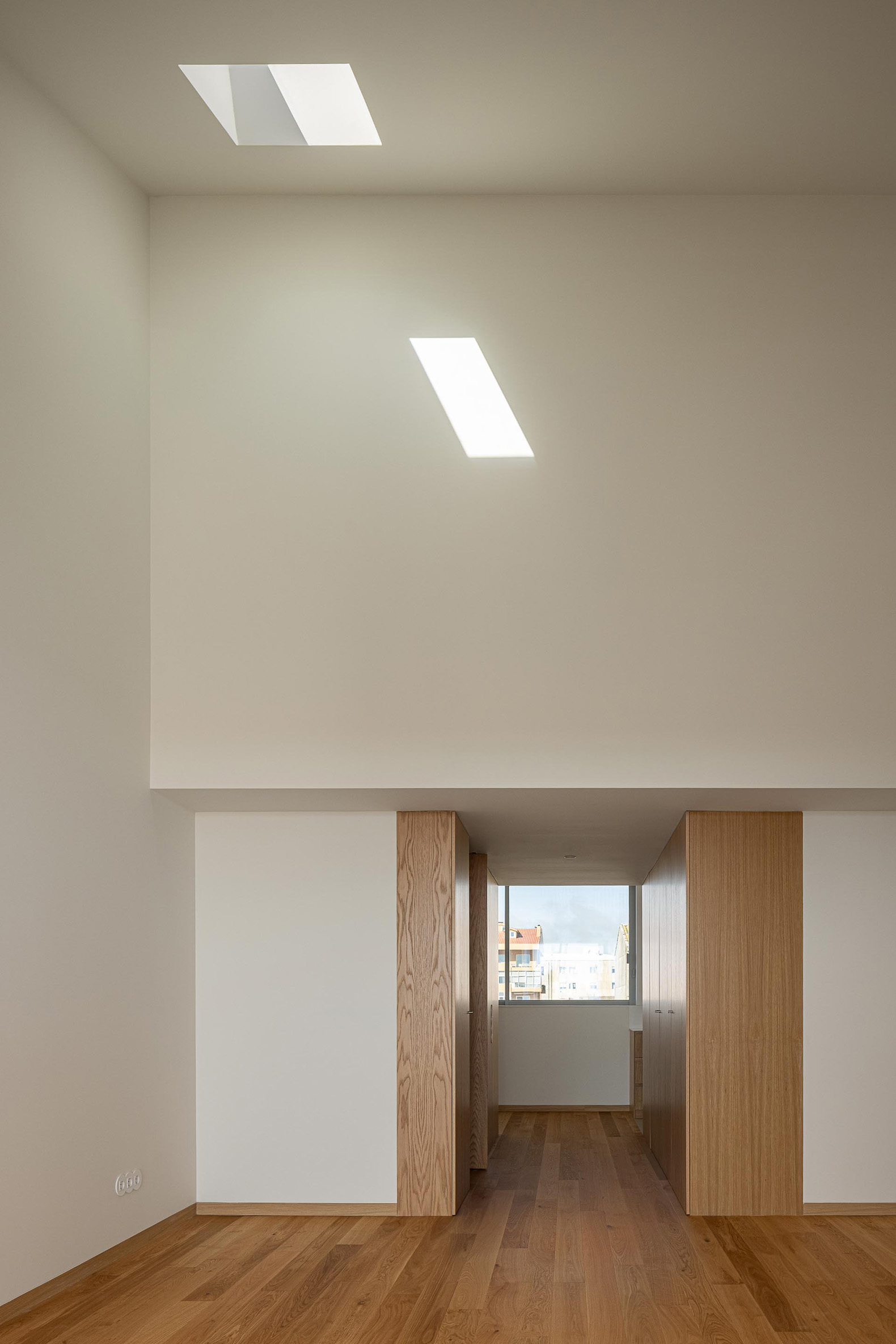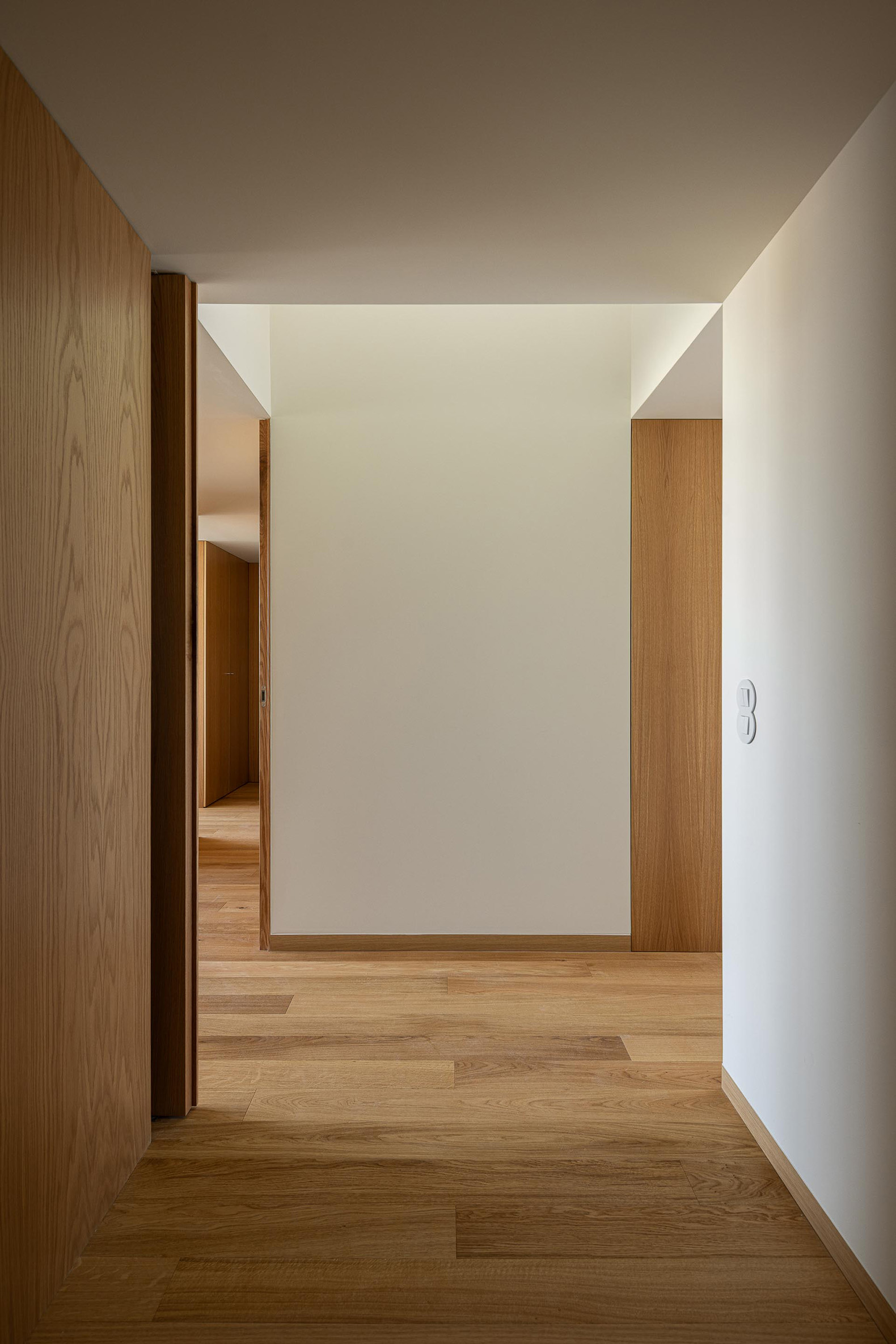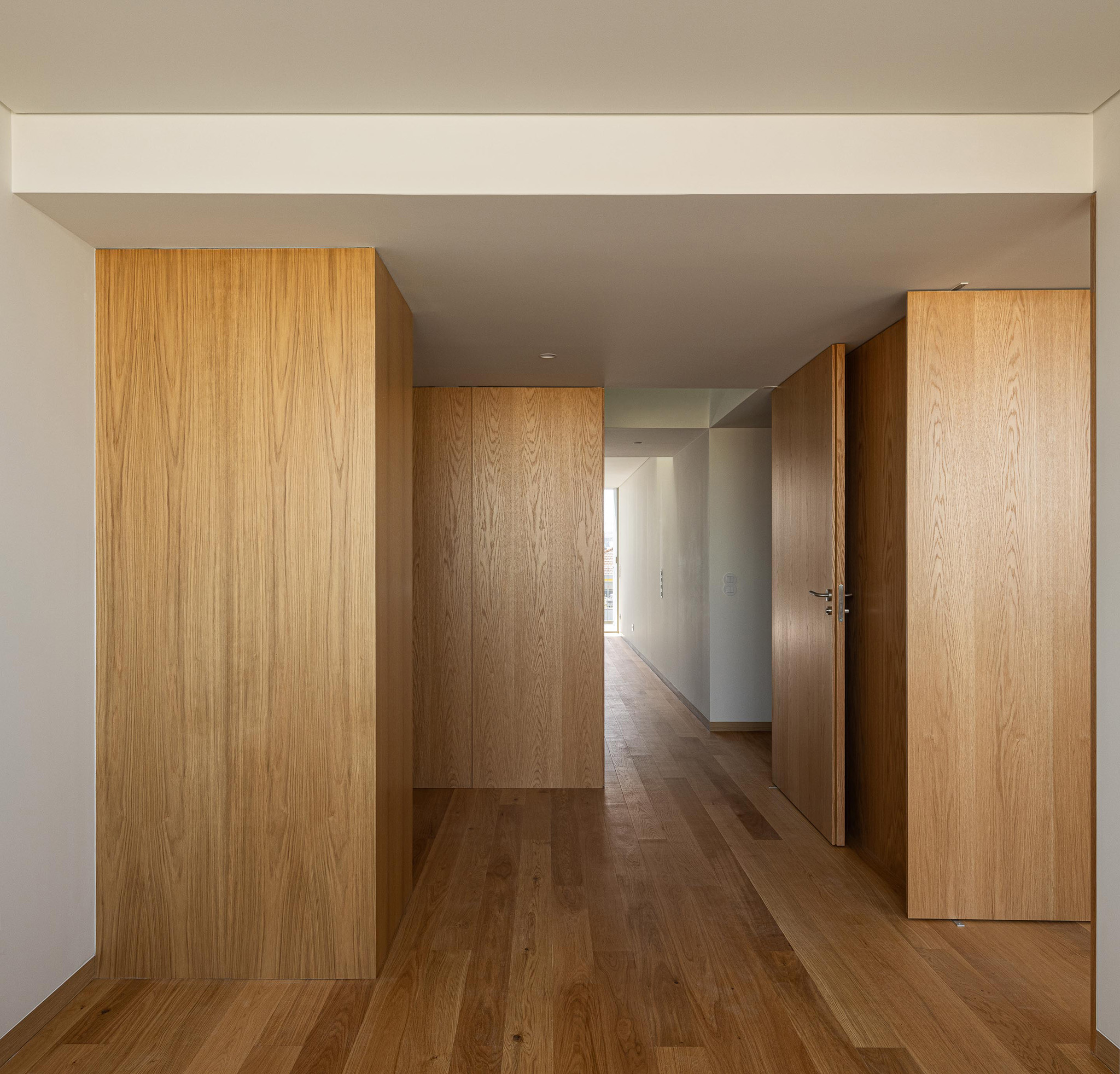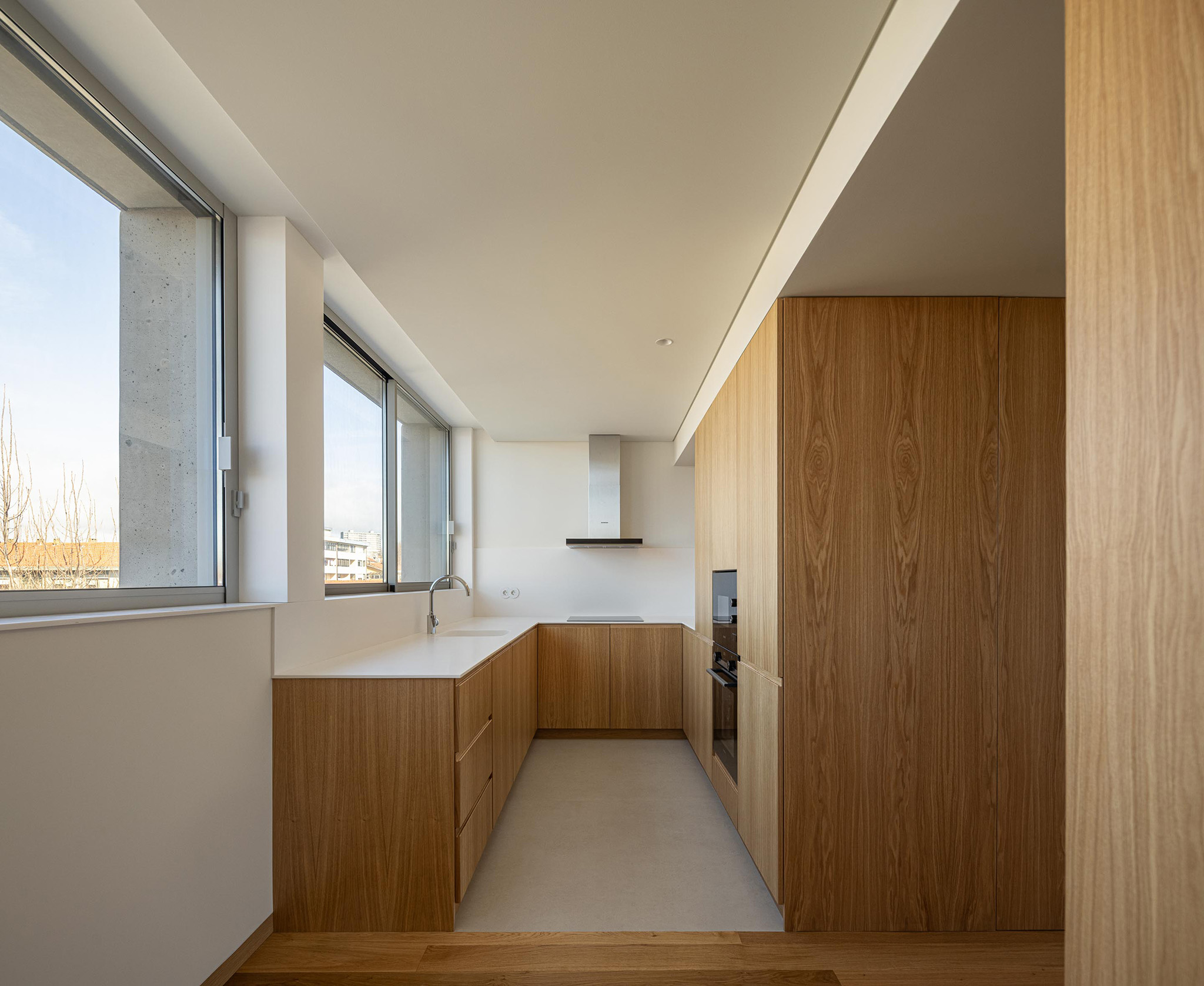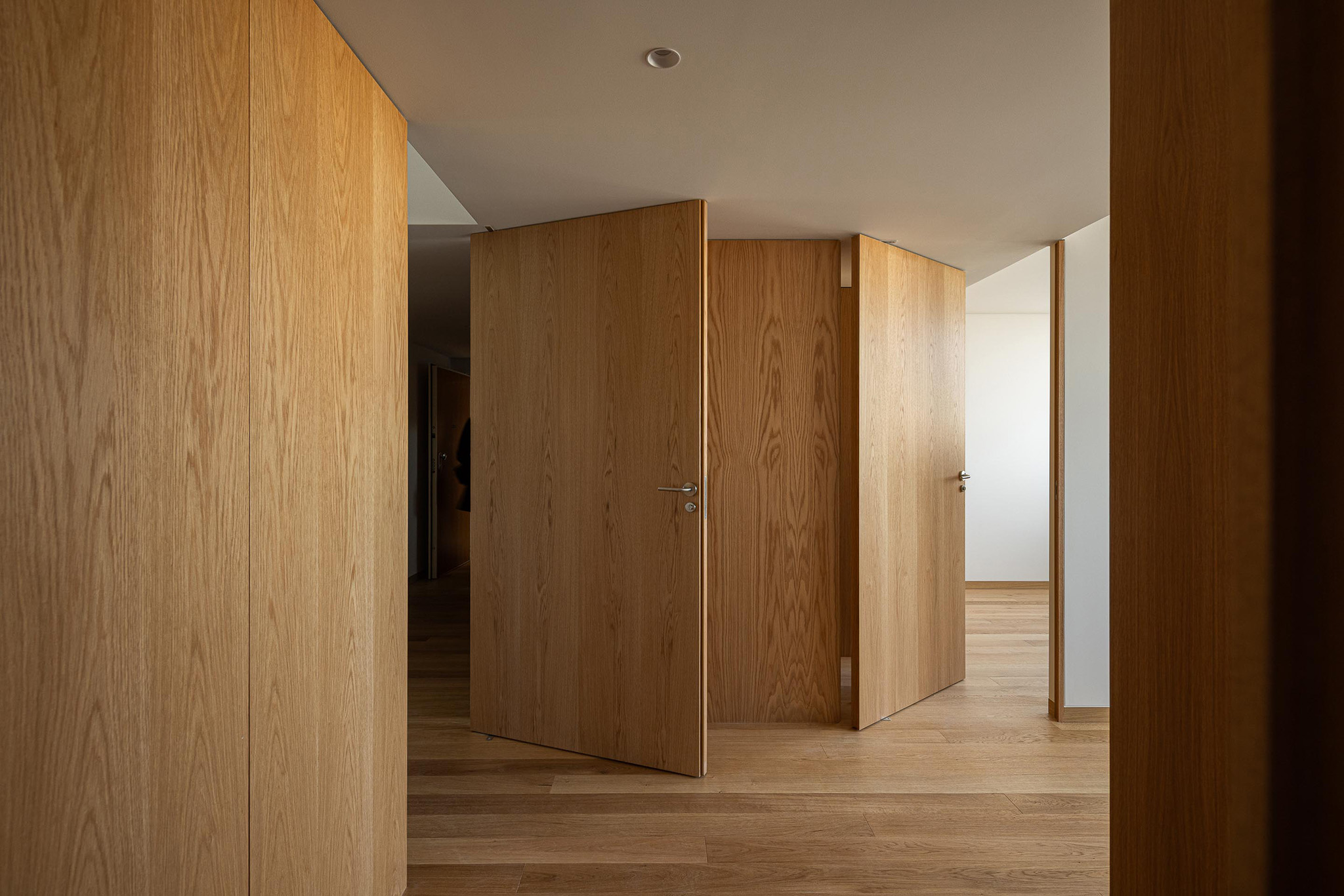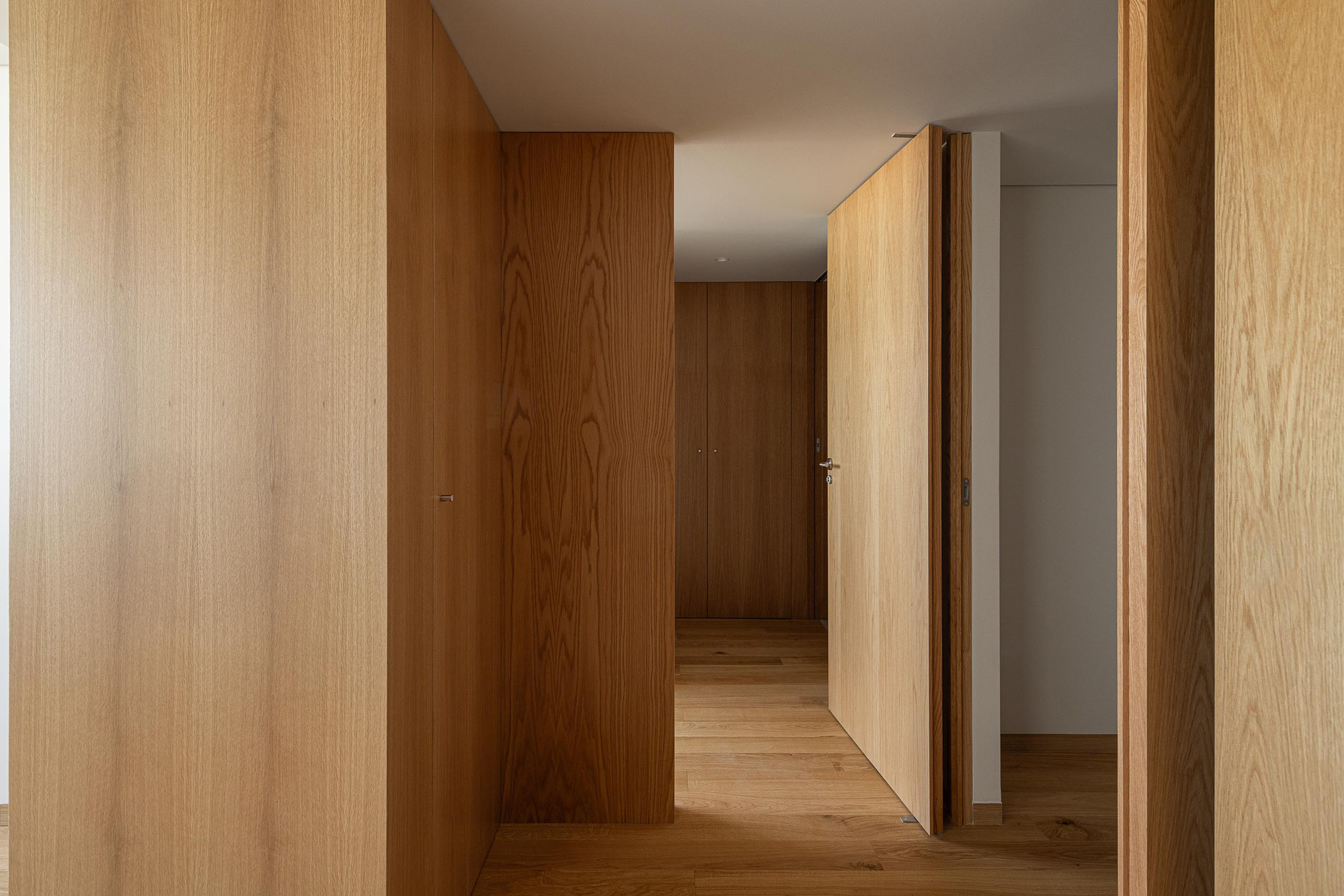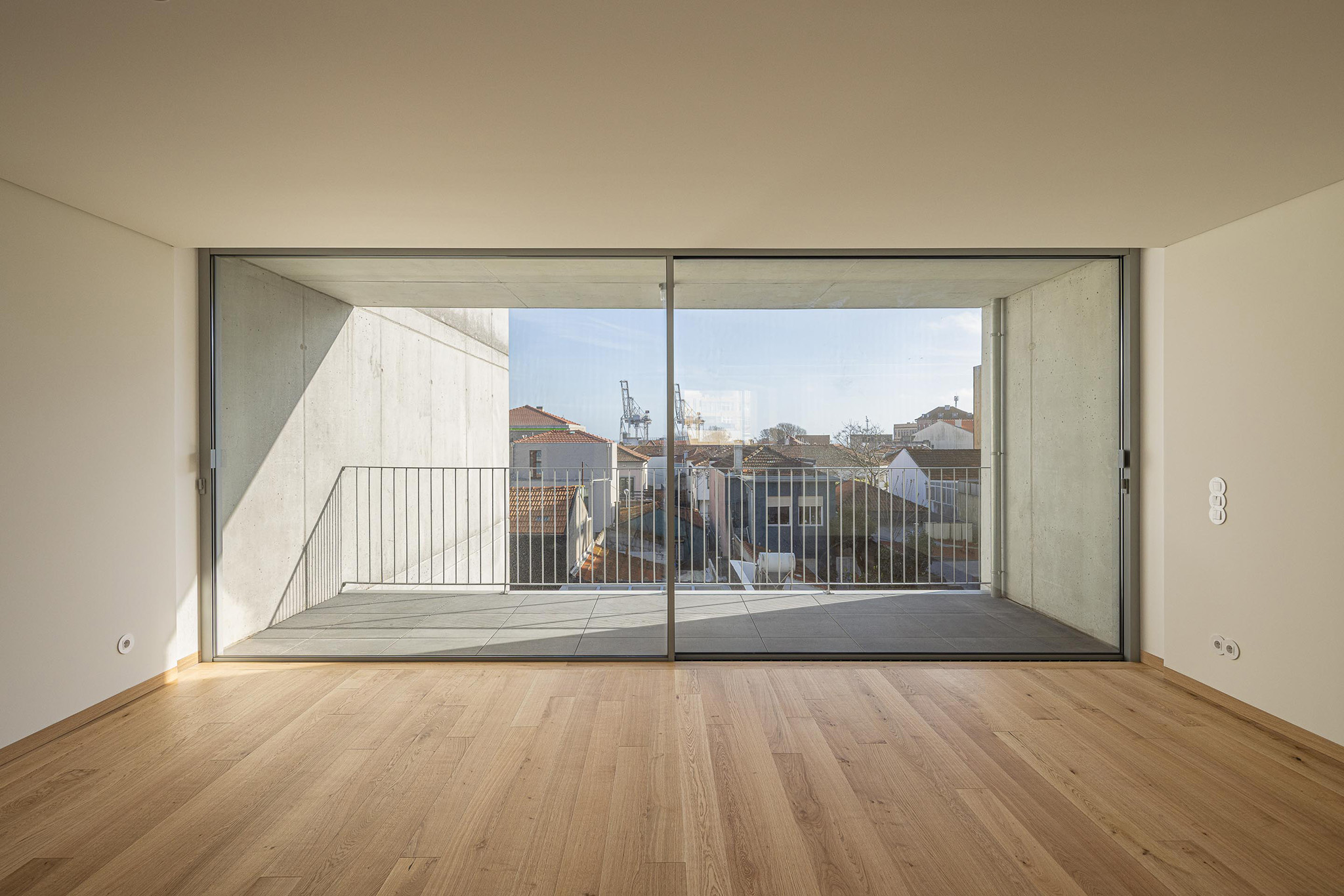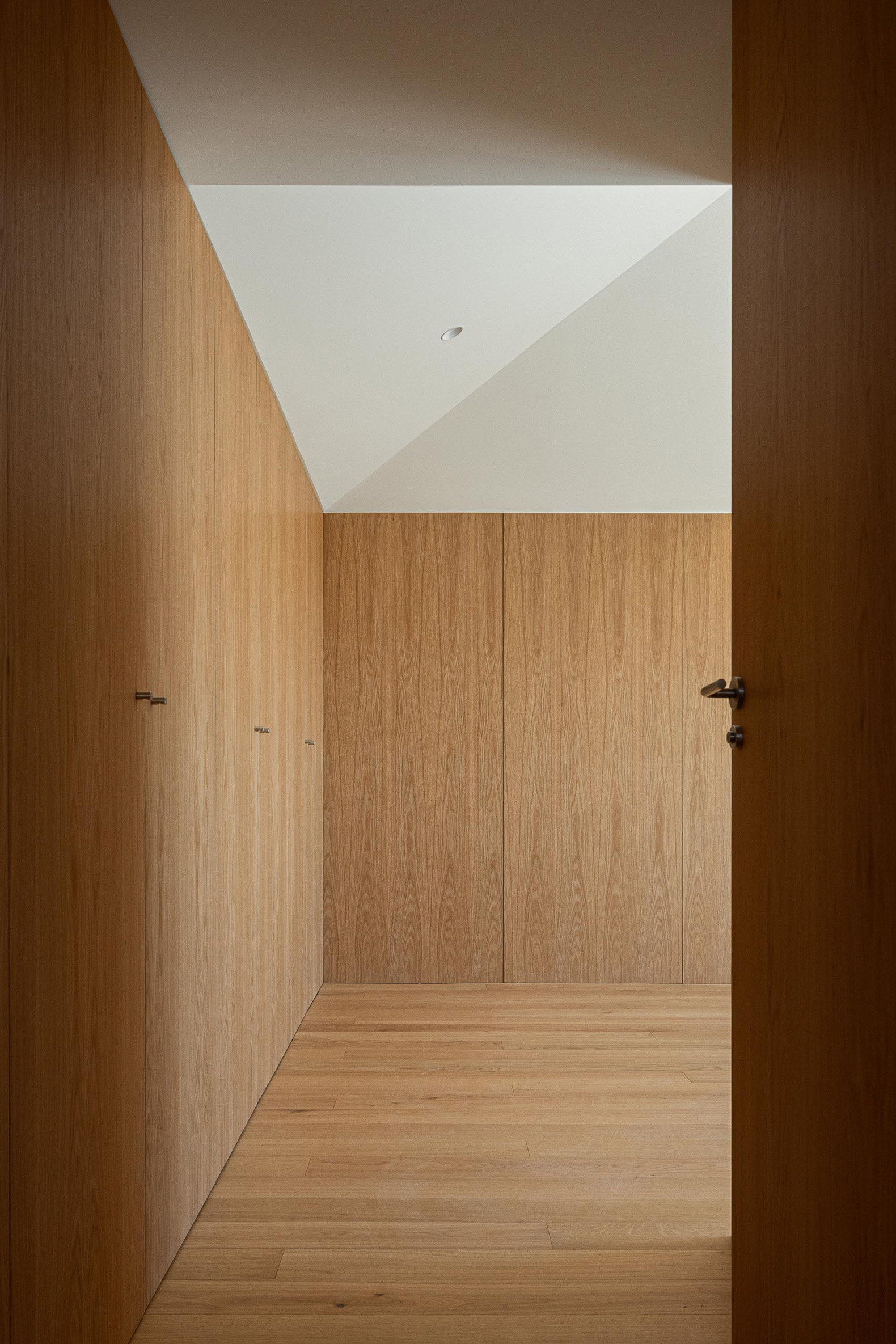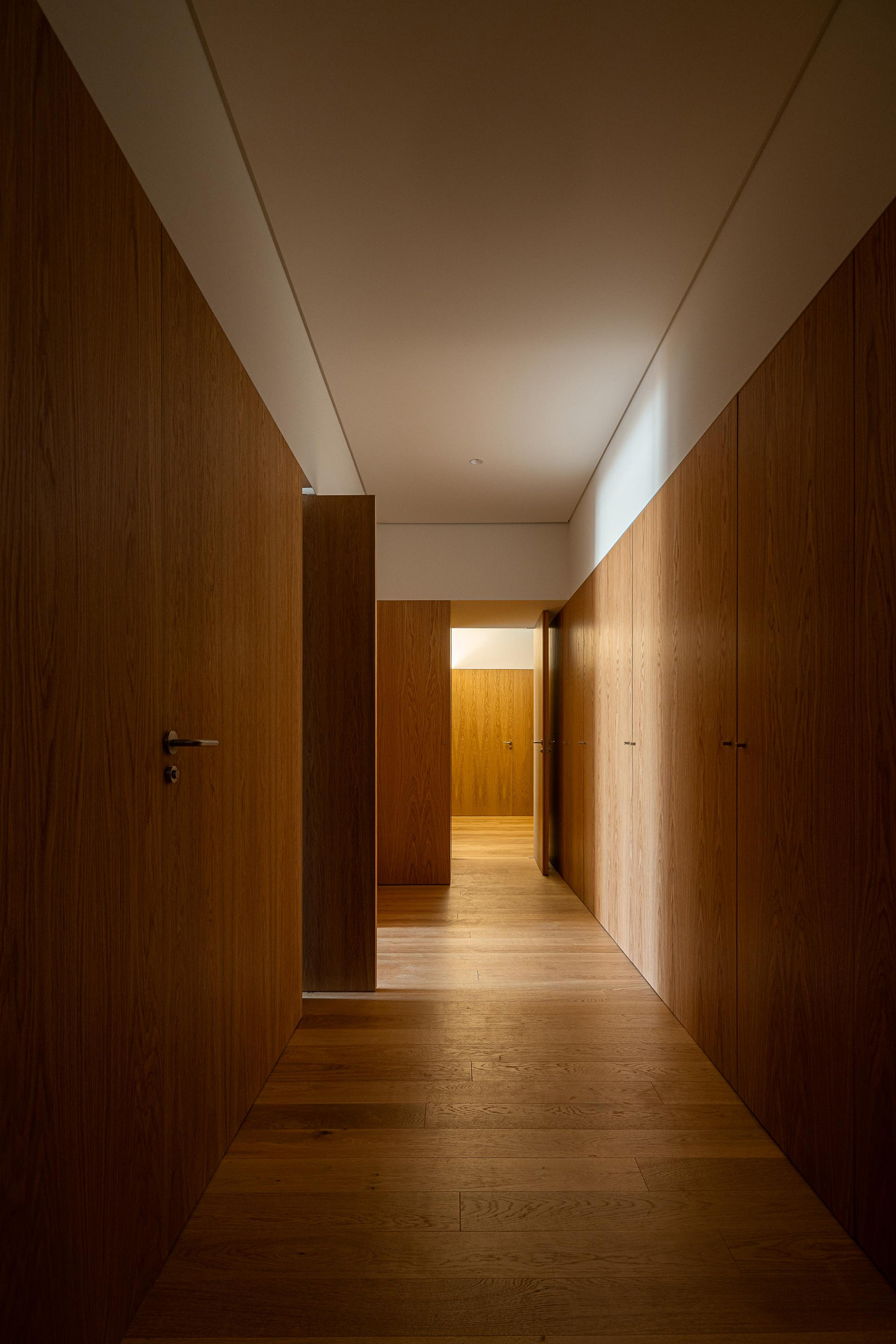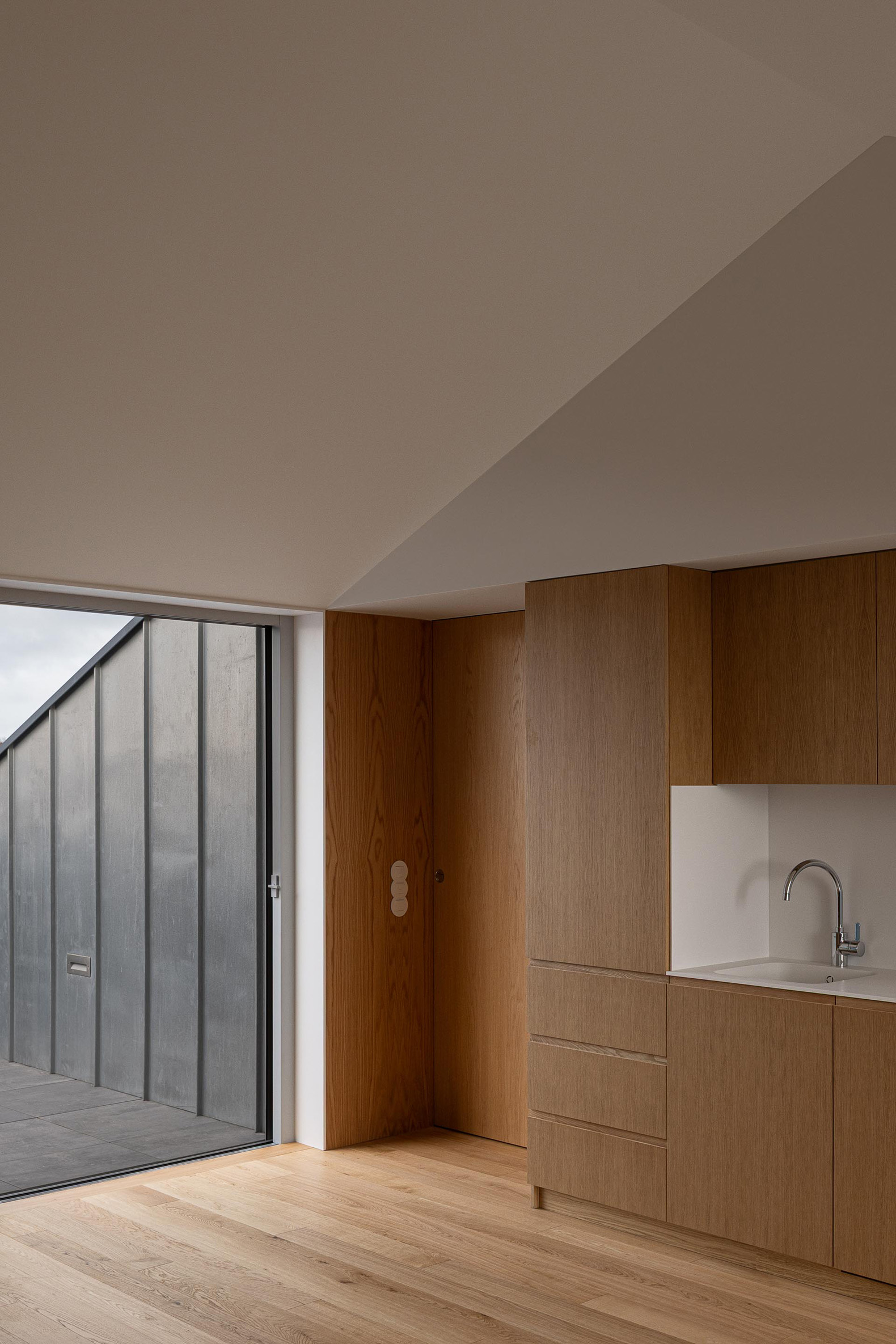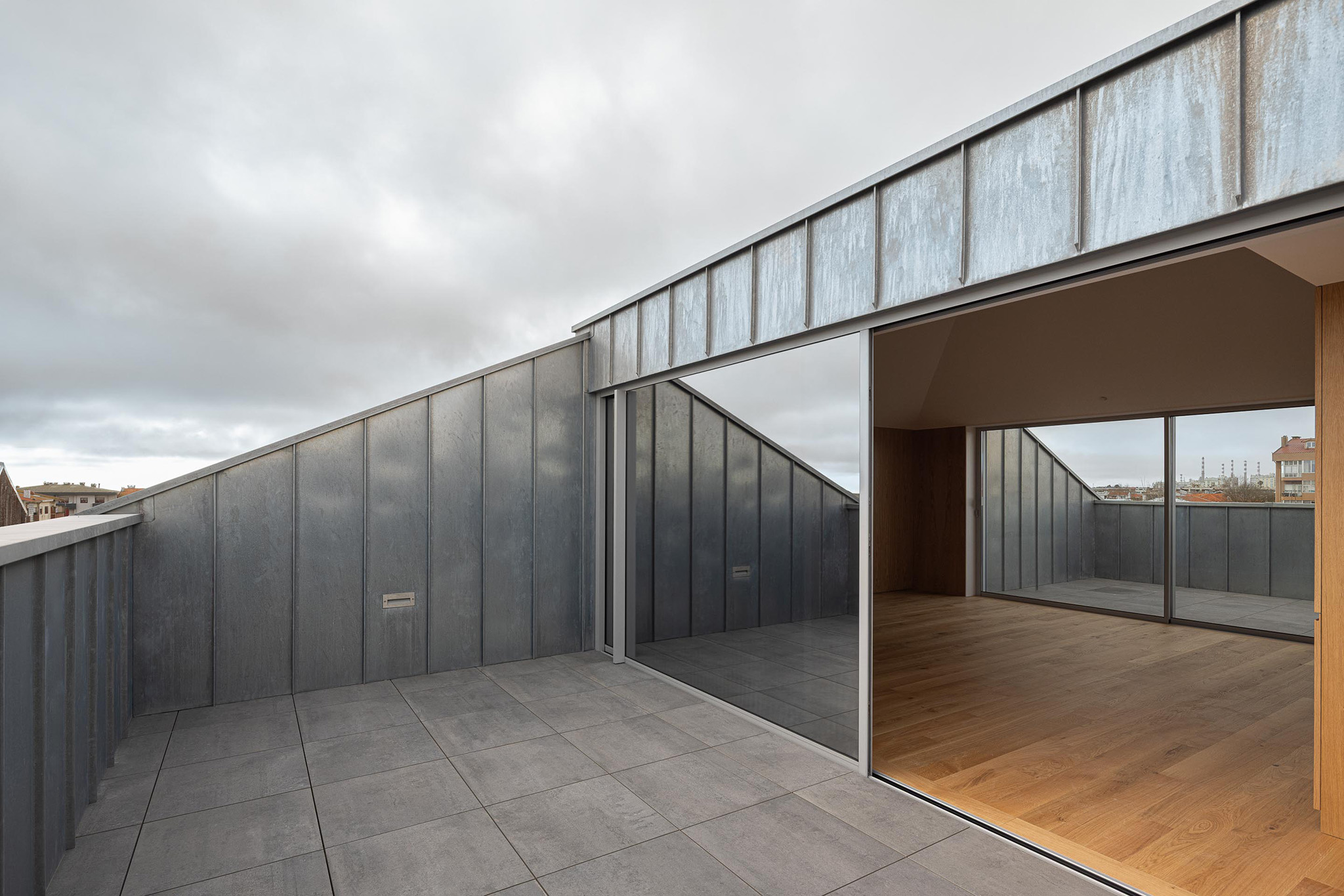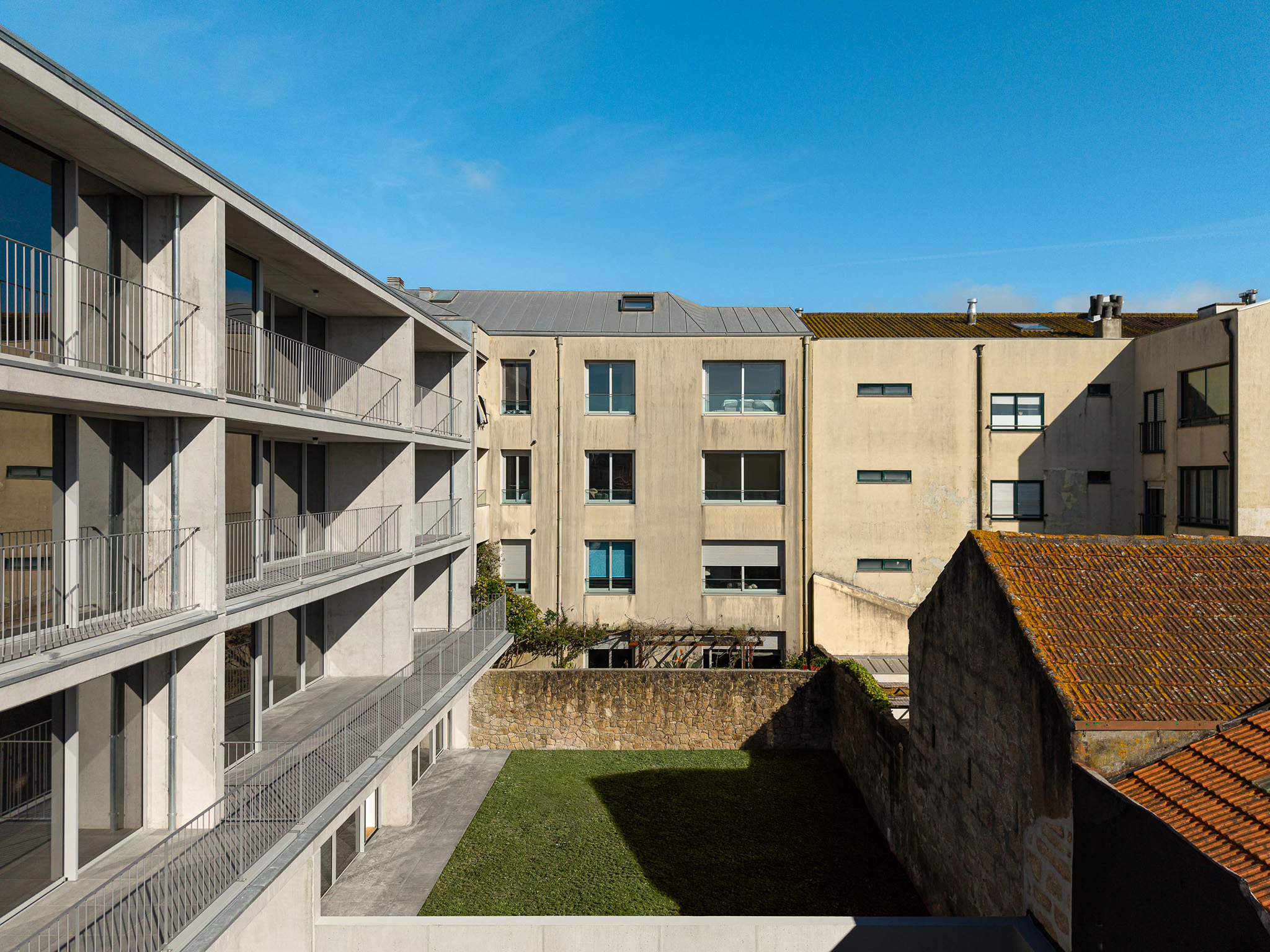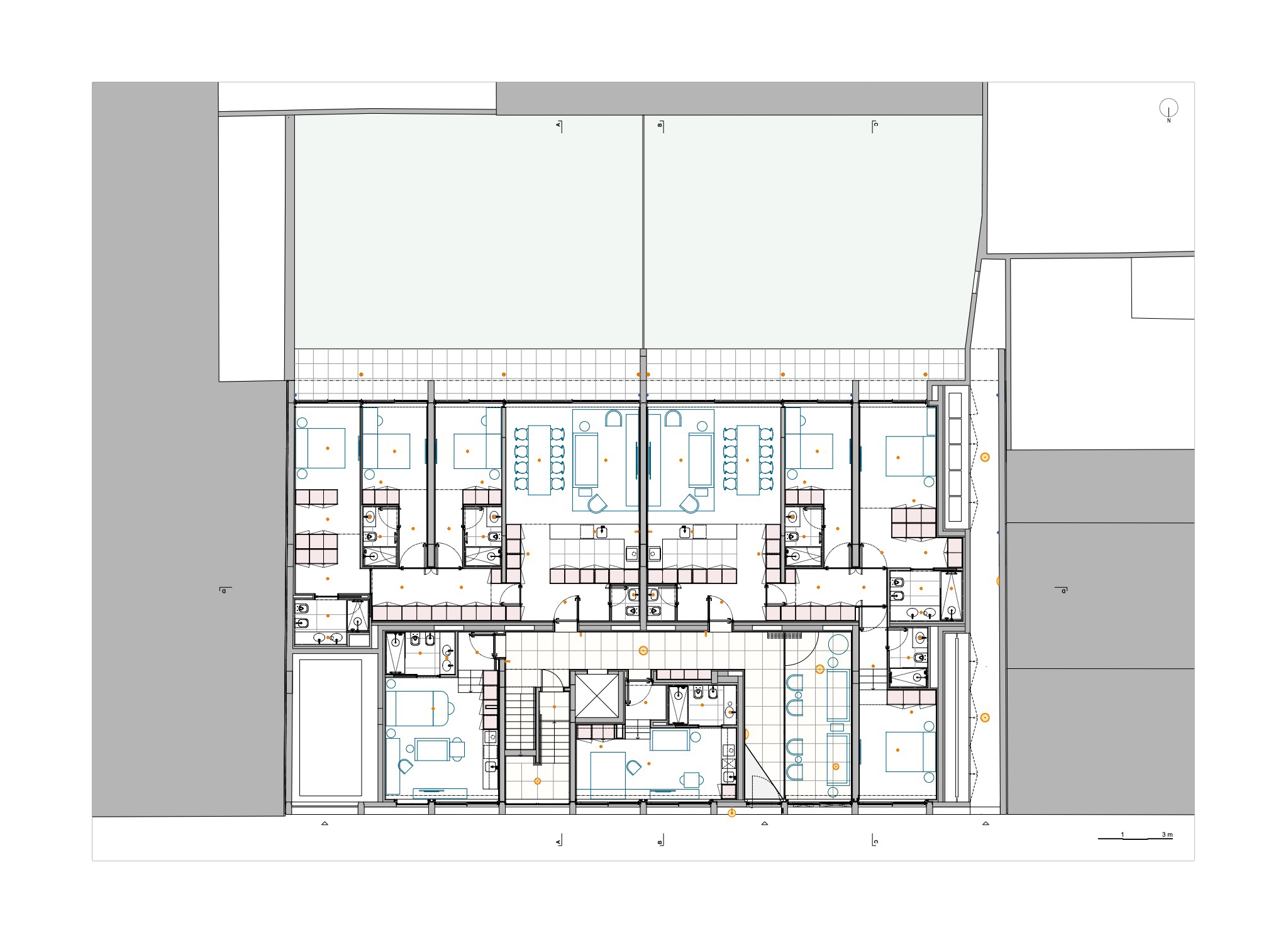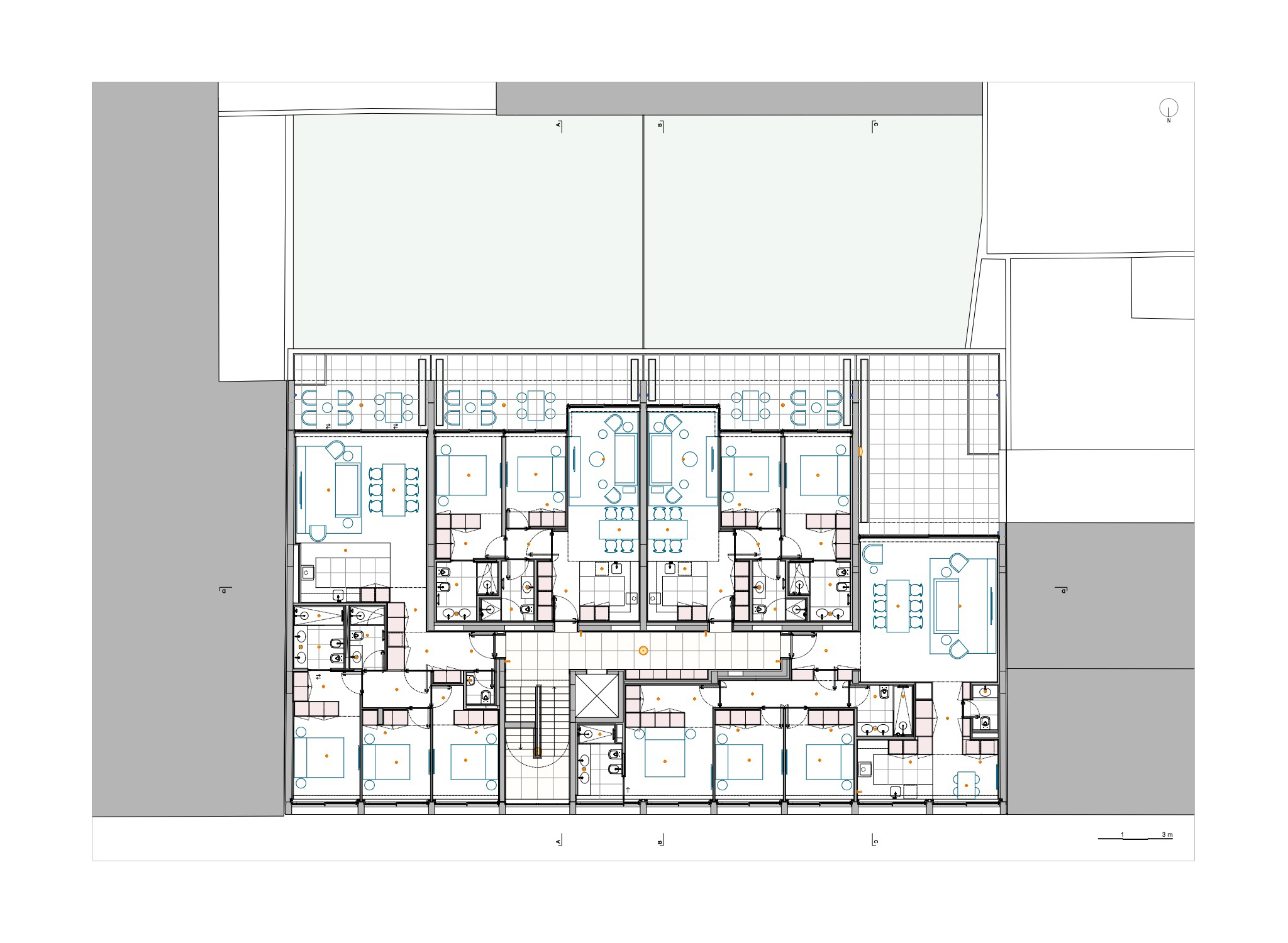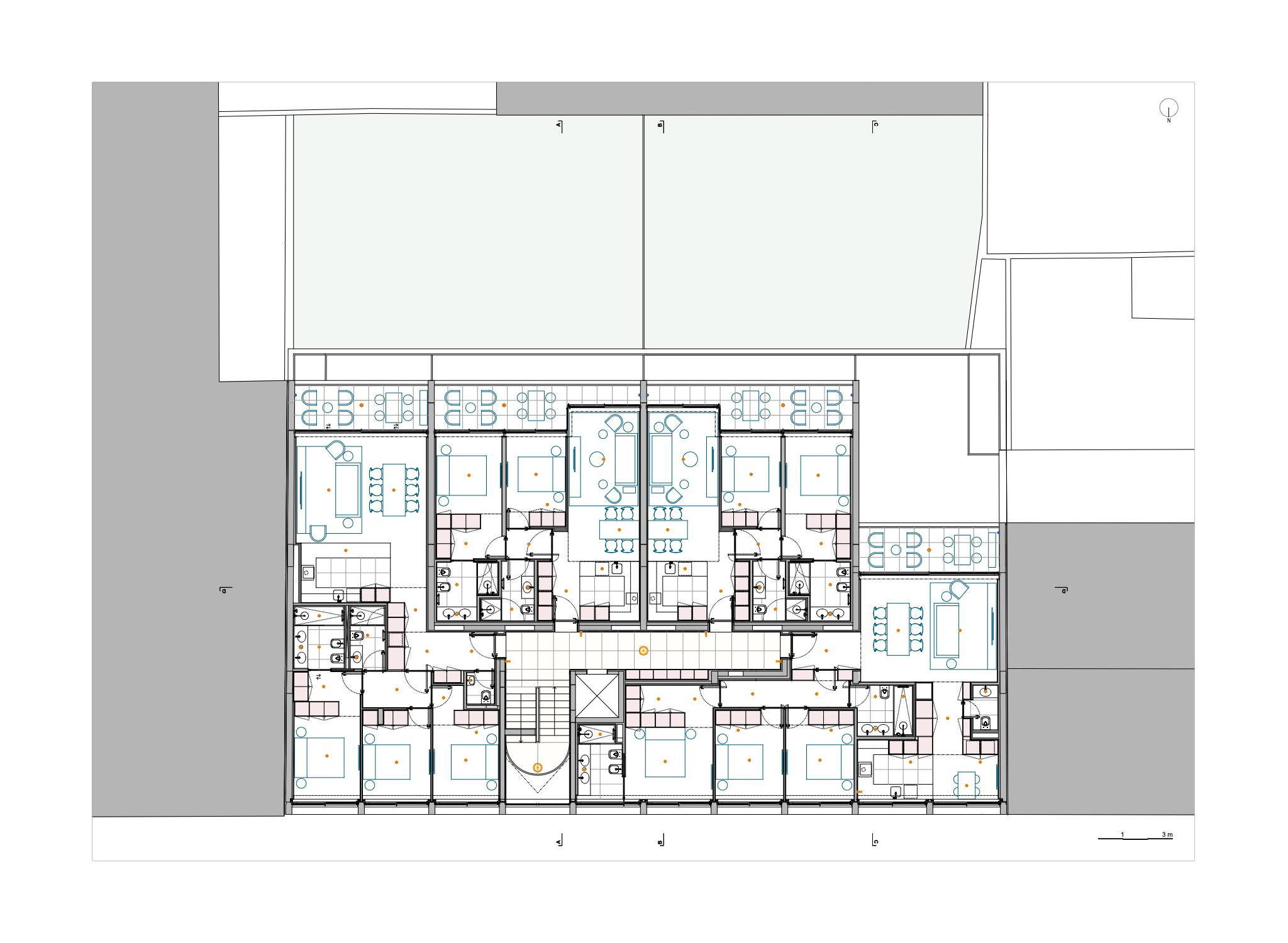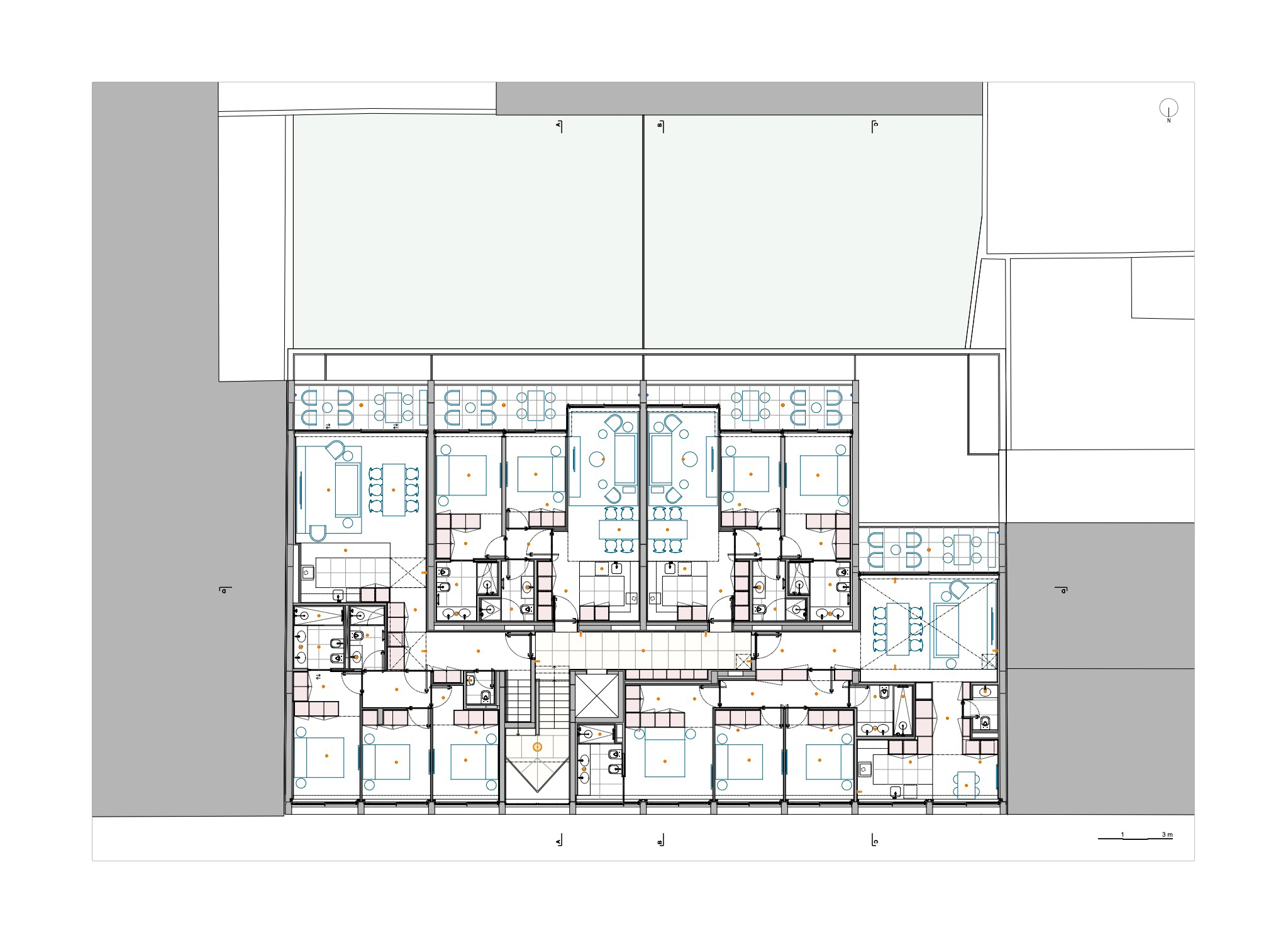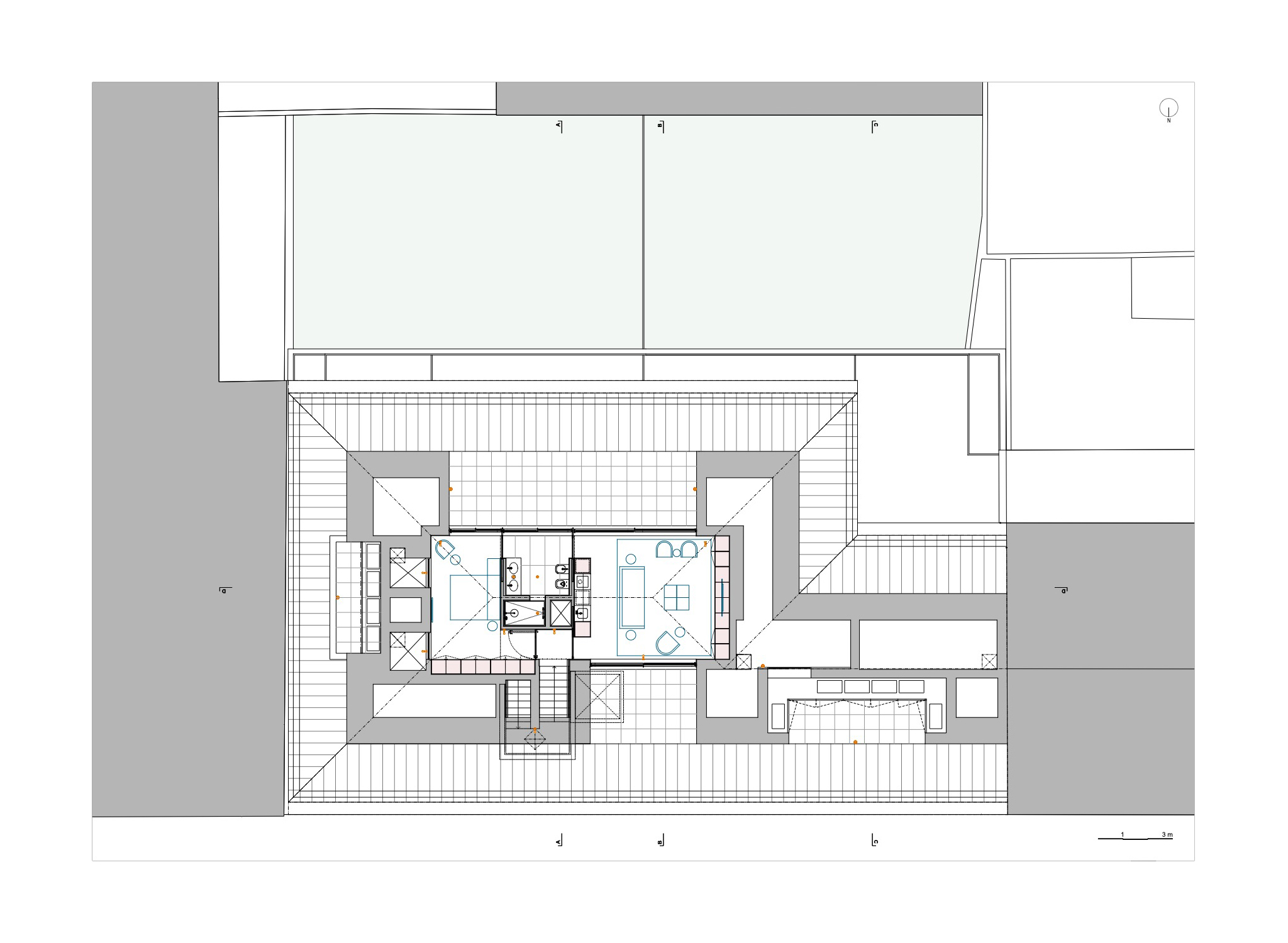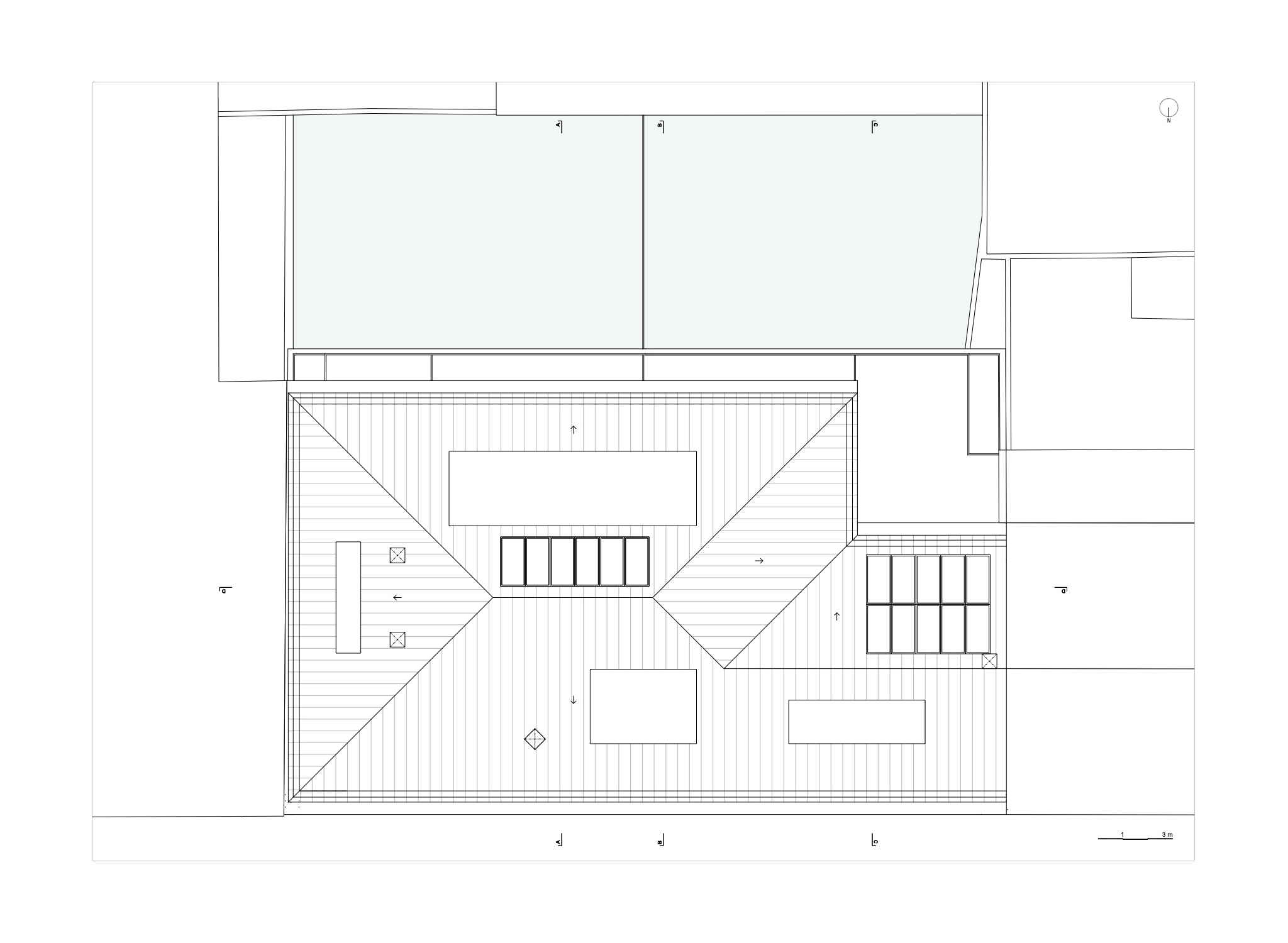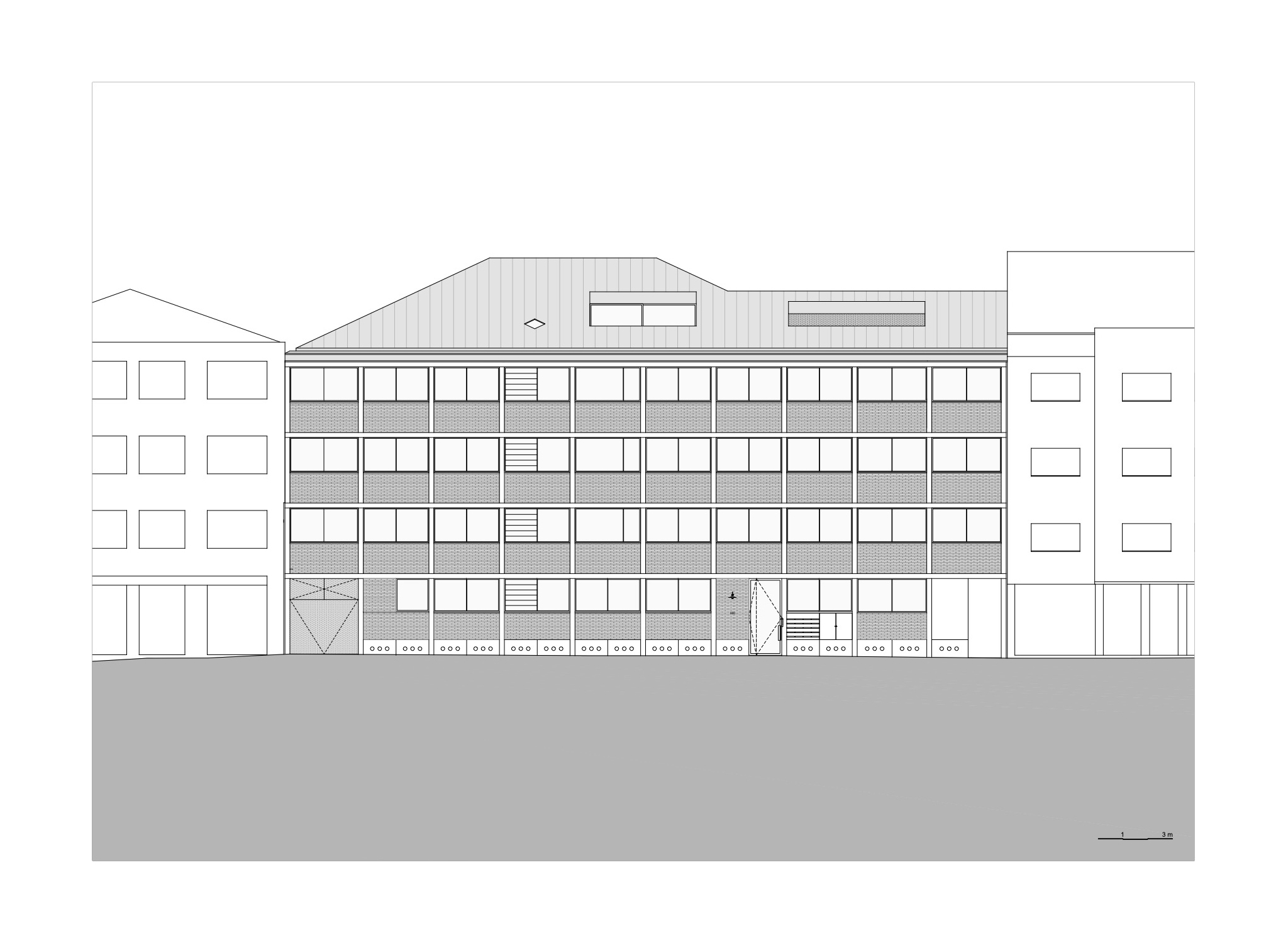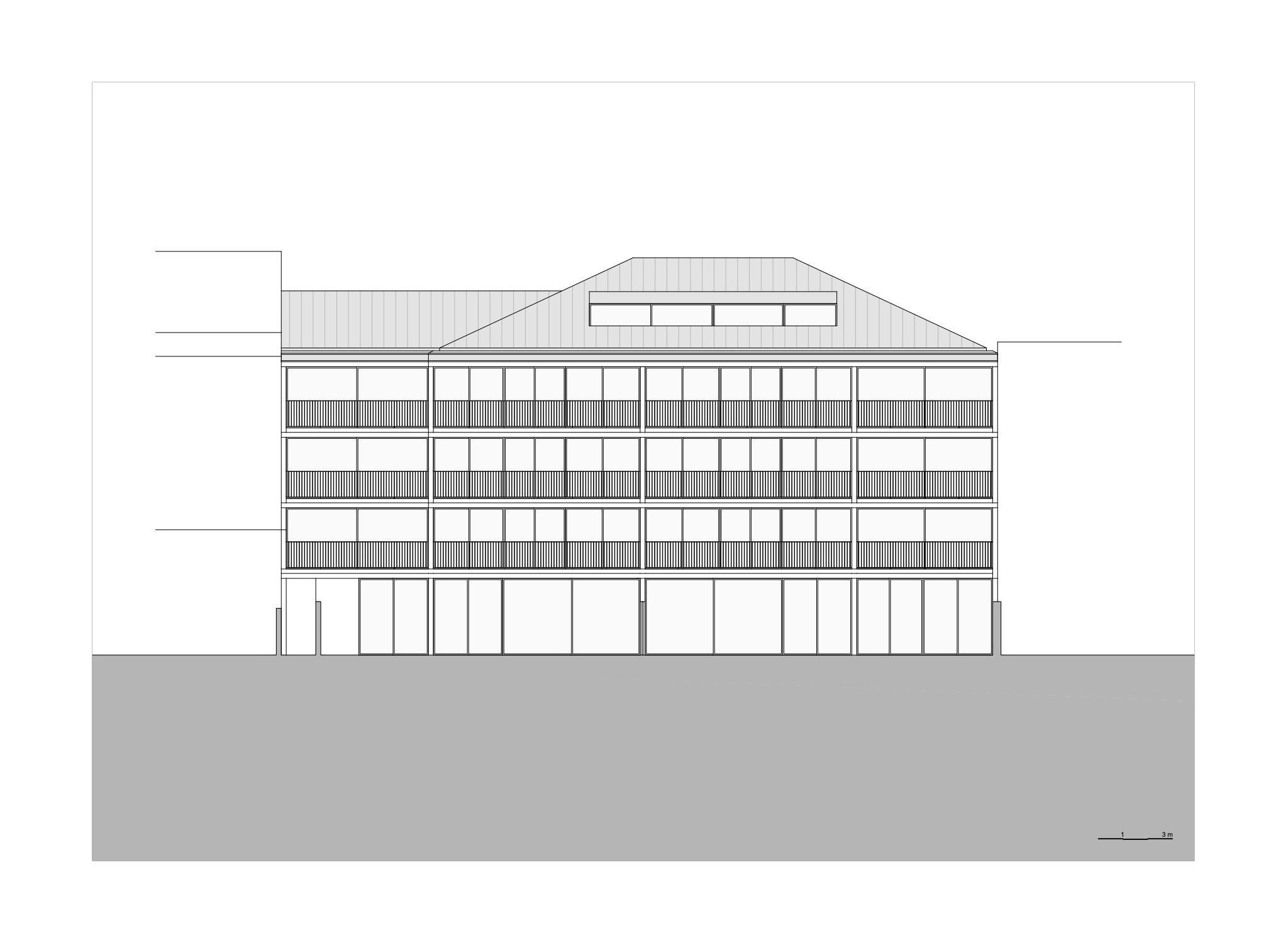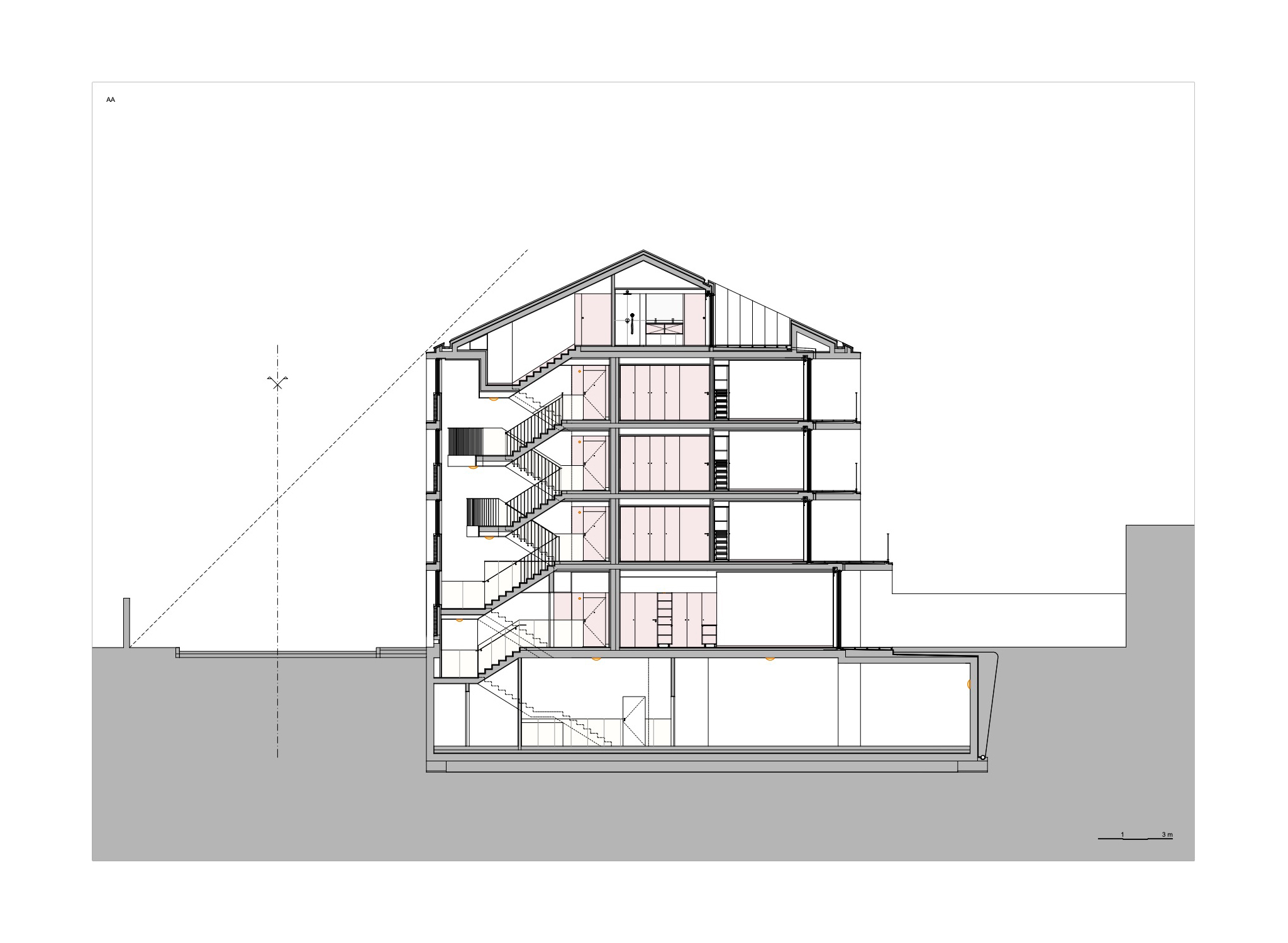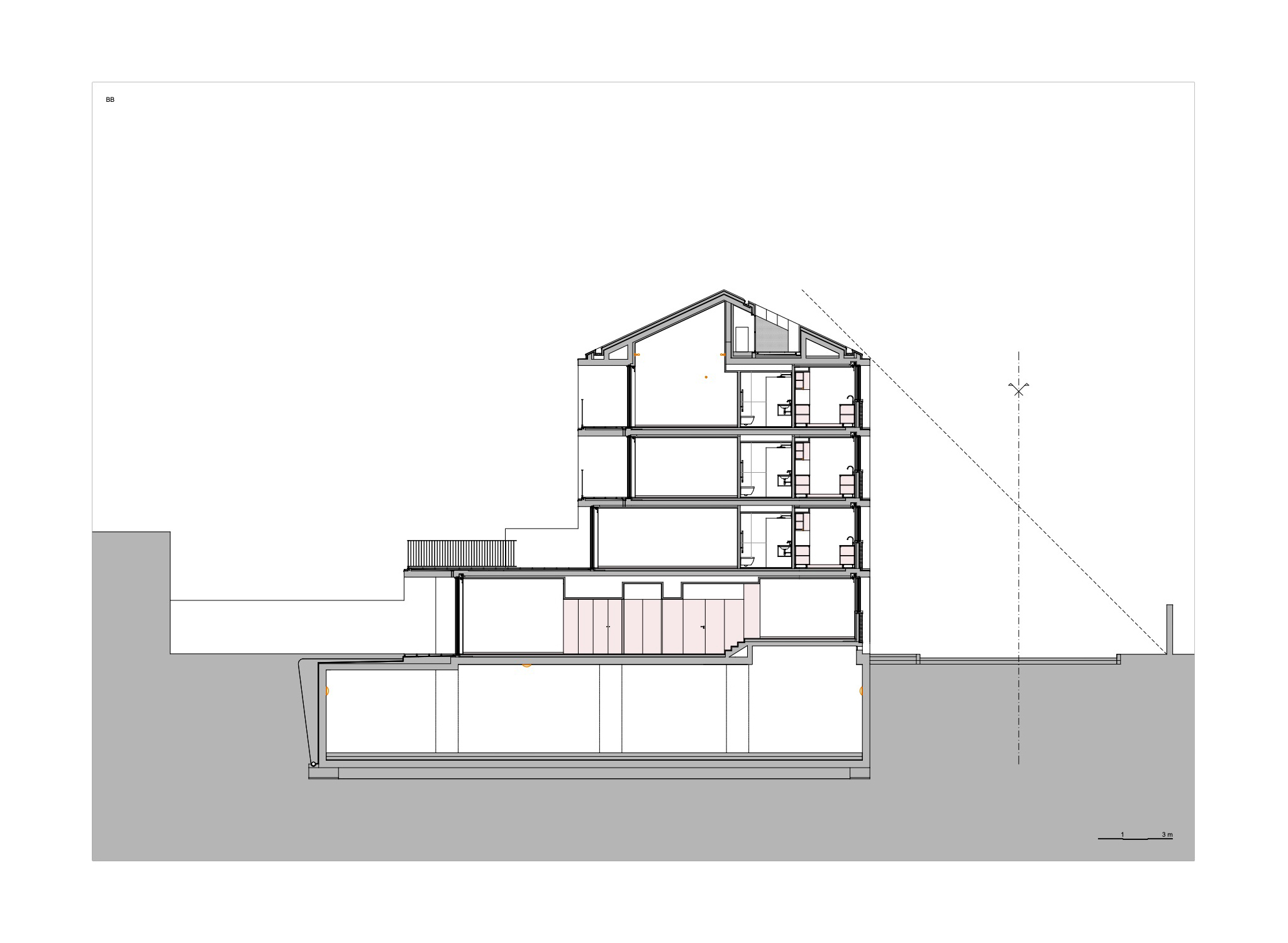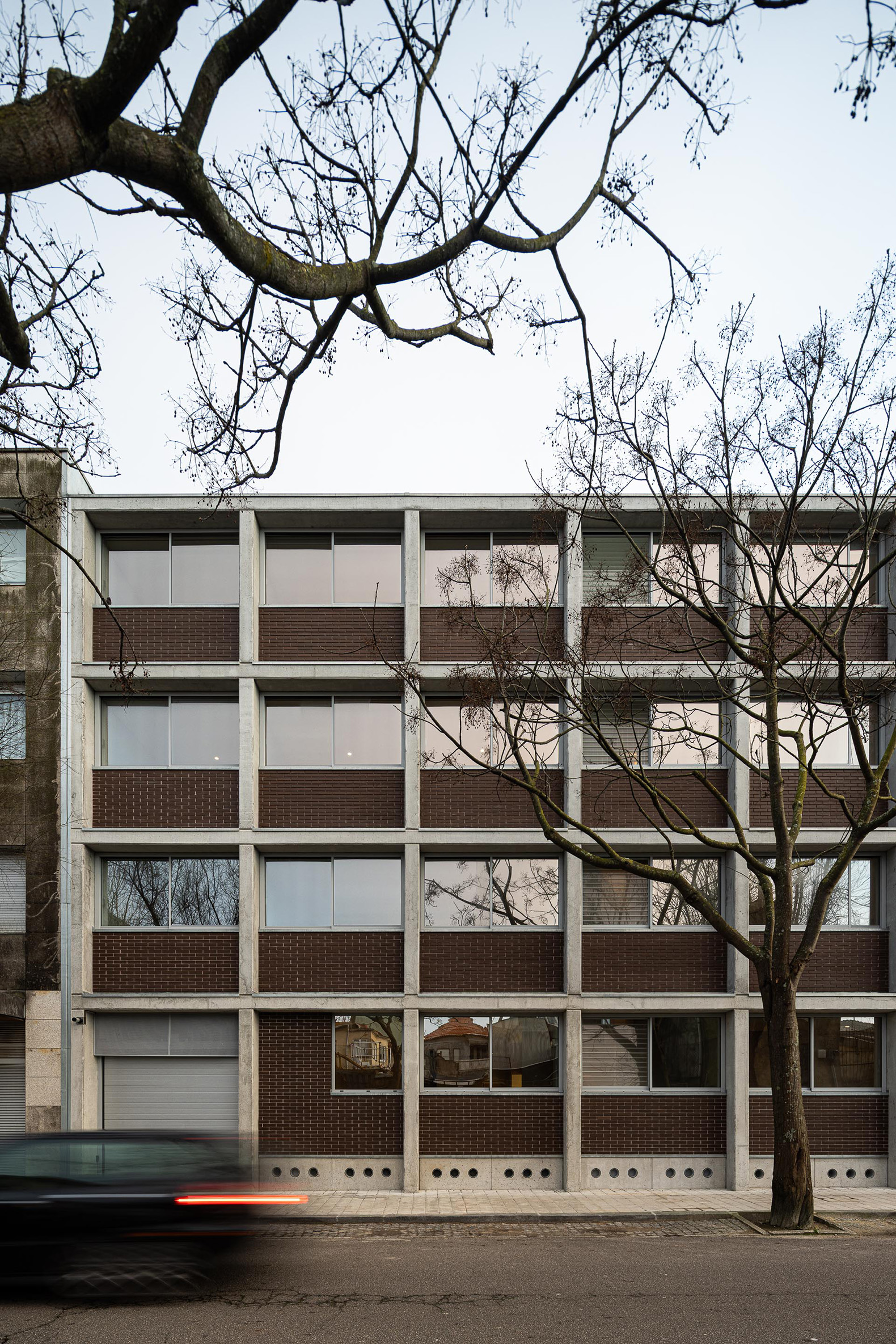
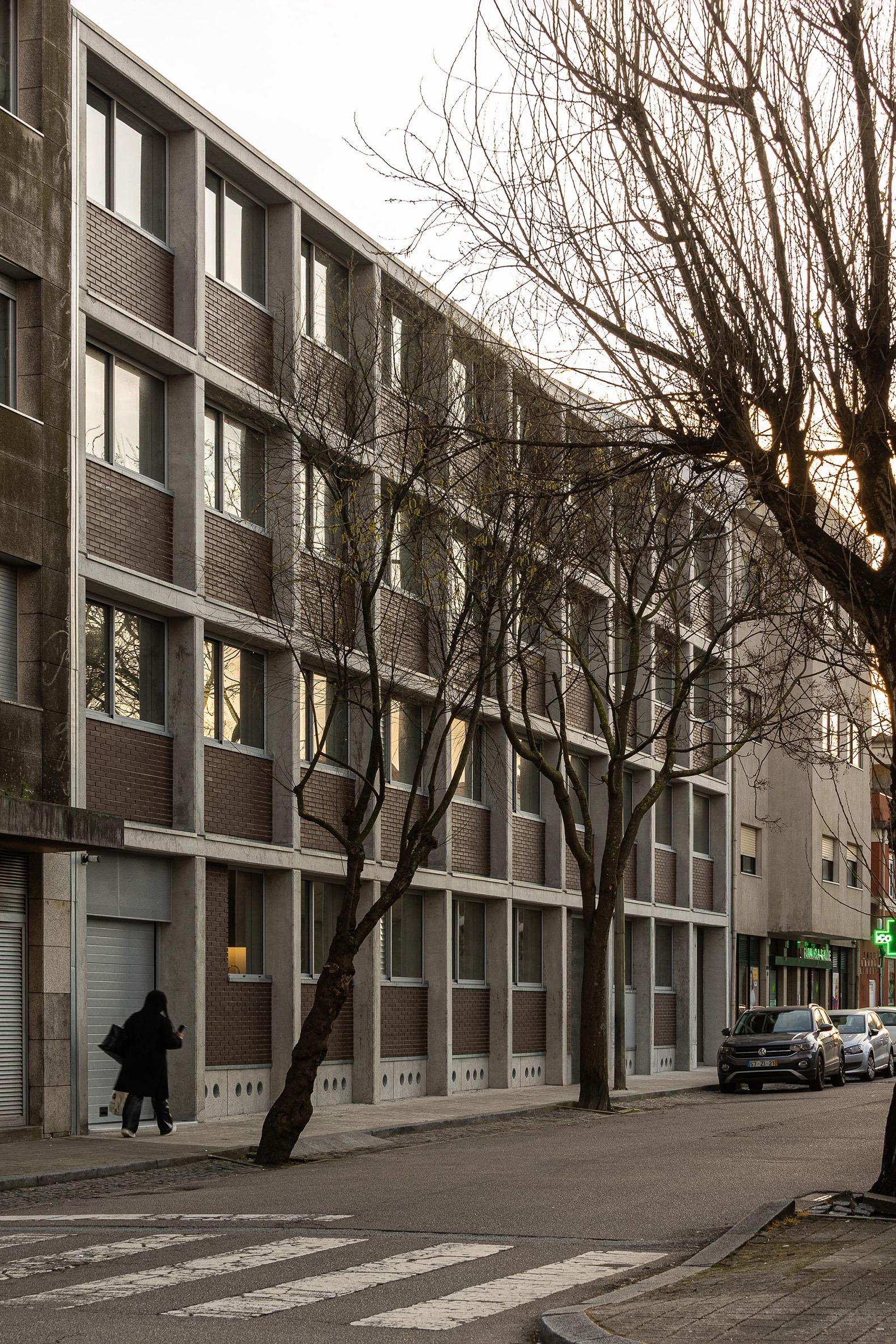
The program developed by Helder da Rocha Arquitectos adopts a rigorous modular logic, structuring the building from the garage to the roof. In this scheme, the bedrooms and vertical circulation cores face the north facade, while the social areas are located towards the interior of the block, following a common strategy in dense, established urban fabrics.
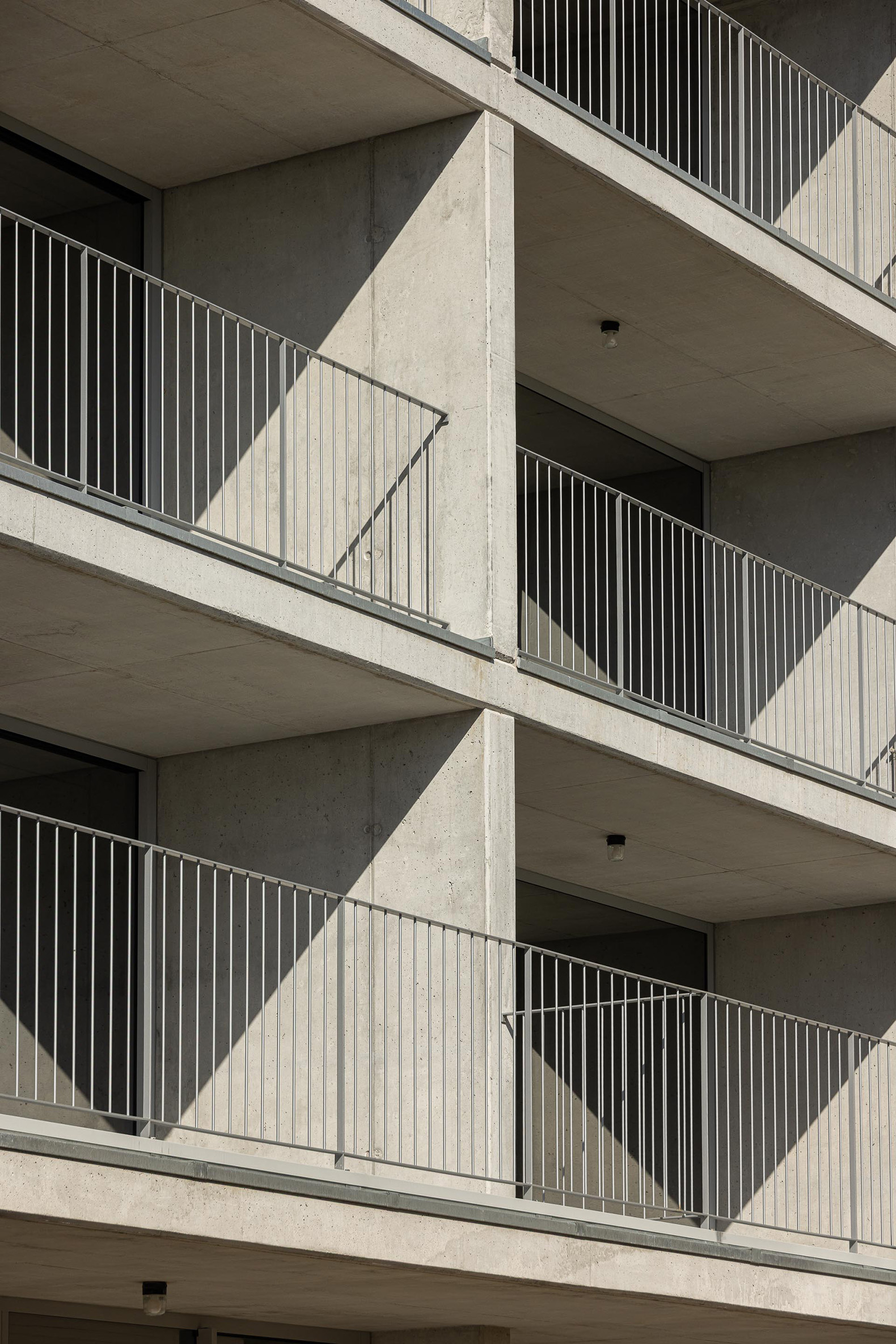
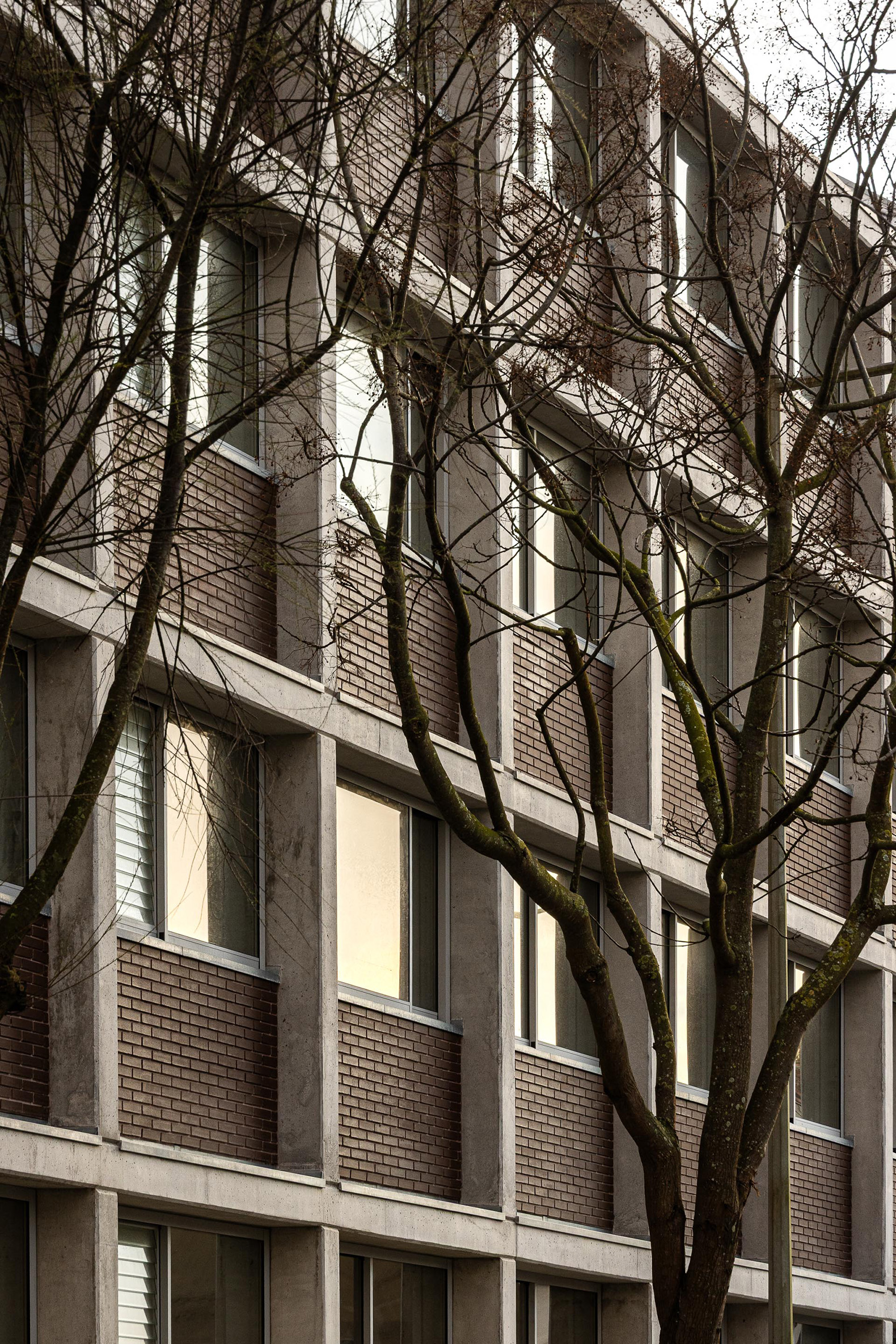
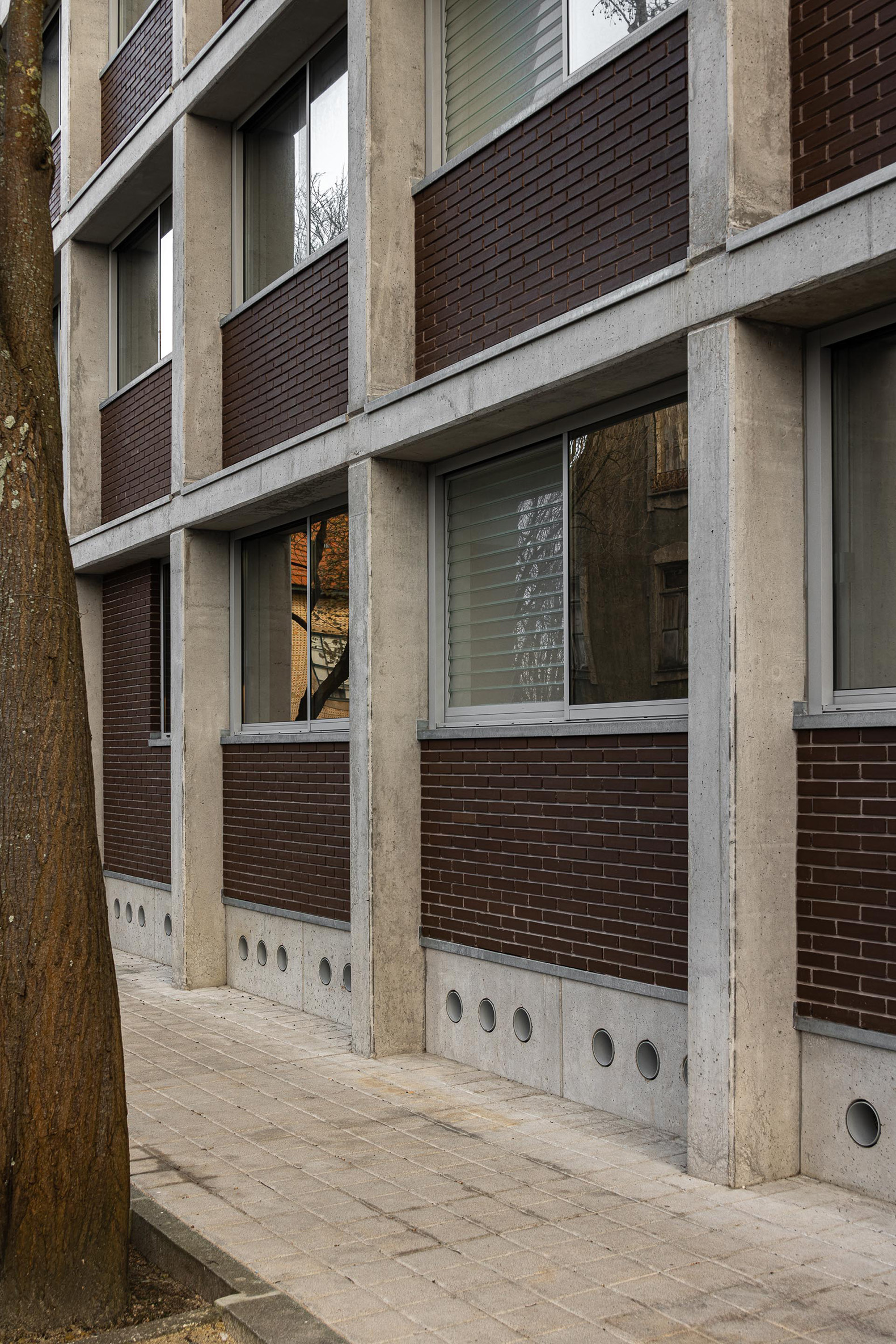
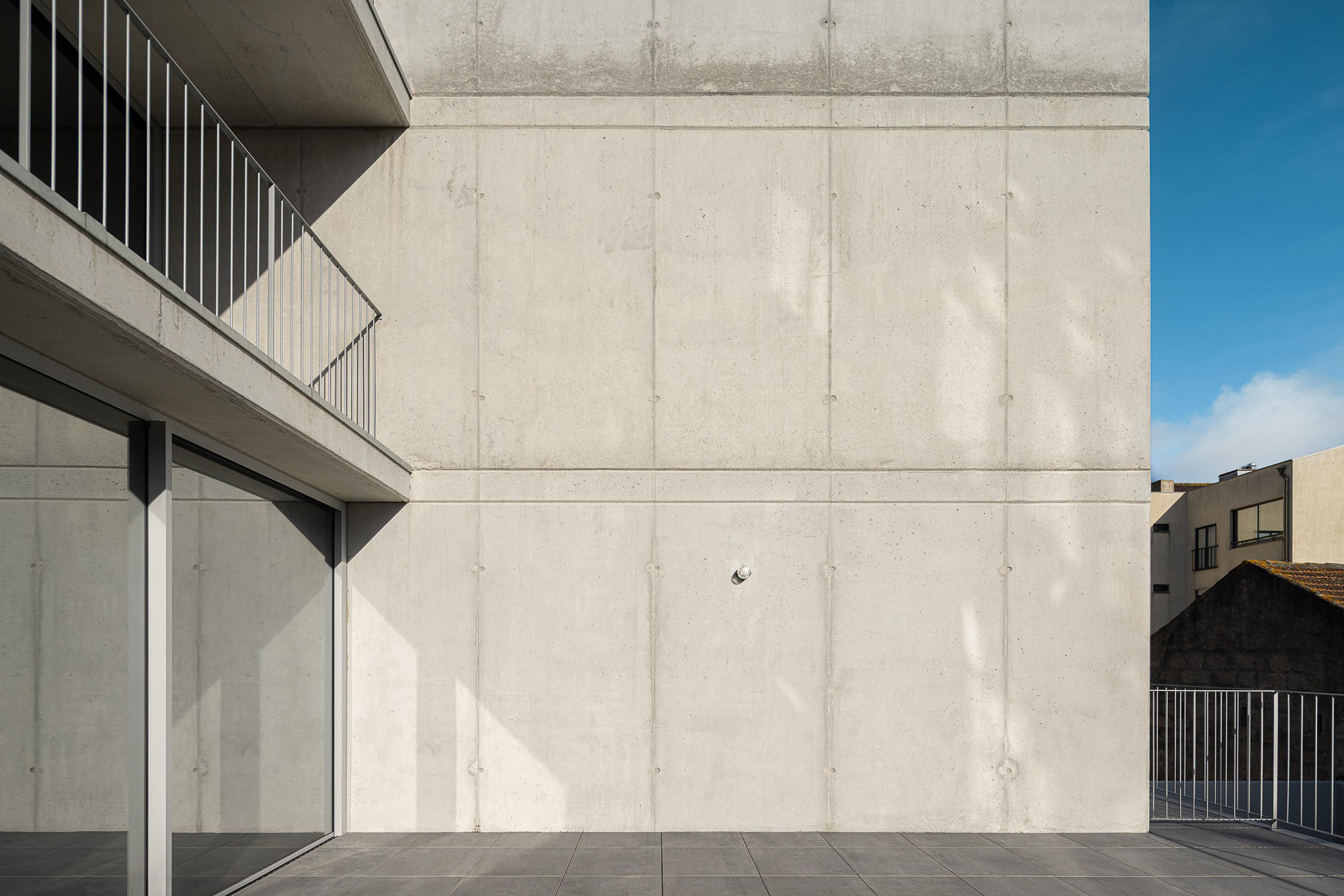
Regarding the materials used, exposed concrete is the primary element due to its structural efficiency, resolving both structure and finish in a single operation. The project is completed with the incorporation of solid brick on the facade, resulting in a building with a sober, austere, and rigorous character, in keeping with its construction logic and its urban context.
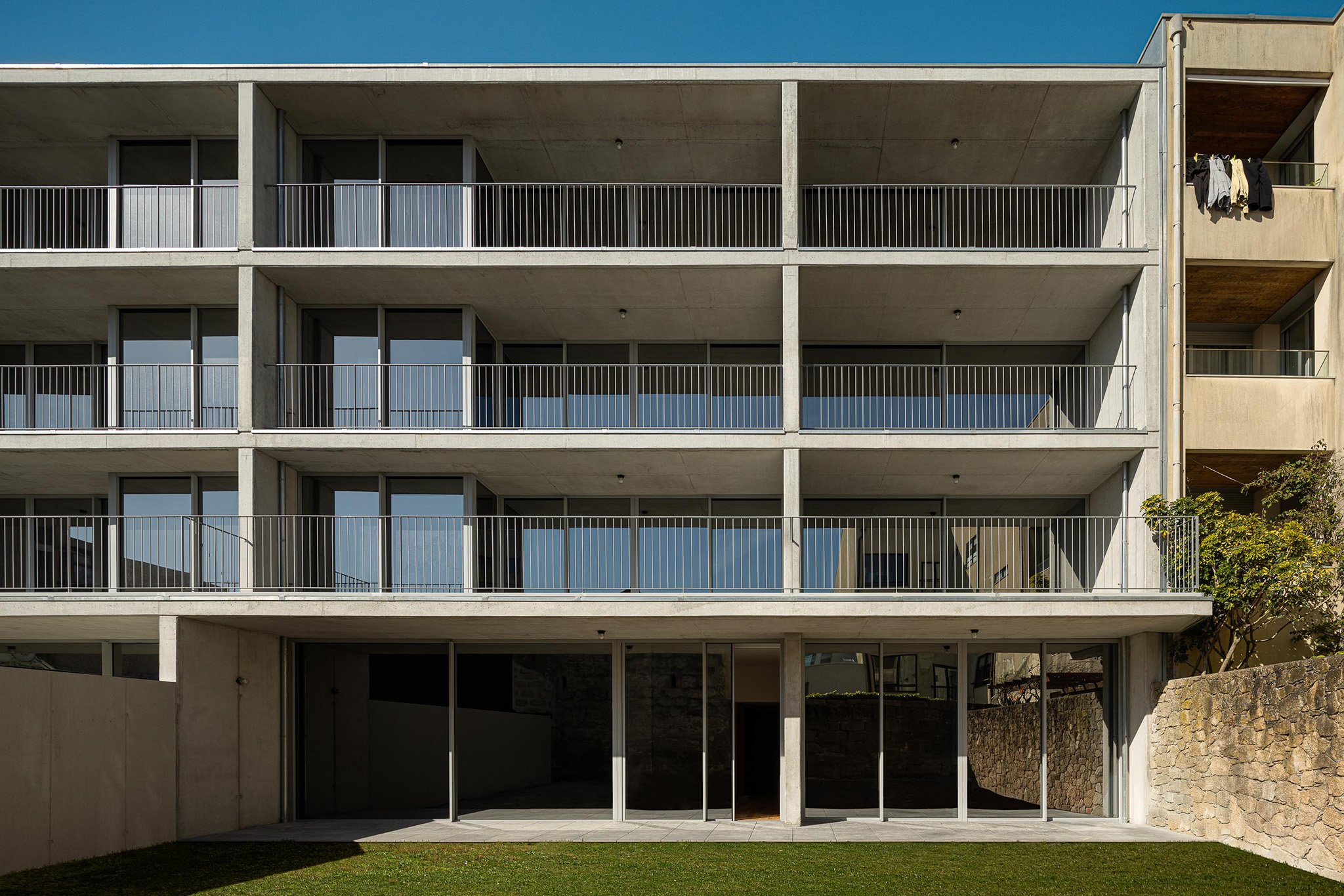
Hintze Ribeiro Multifamily Housing Building by Helder da Rocha Arquitectos. Photograph by Ivo Tavares Studio.
Project description by Helder da Rocha
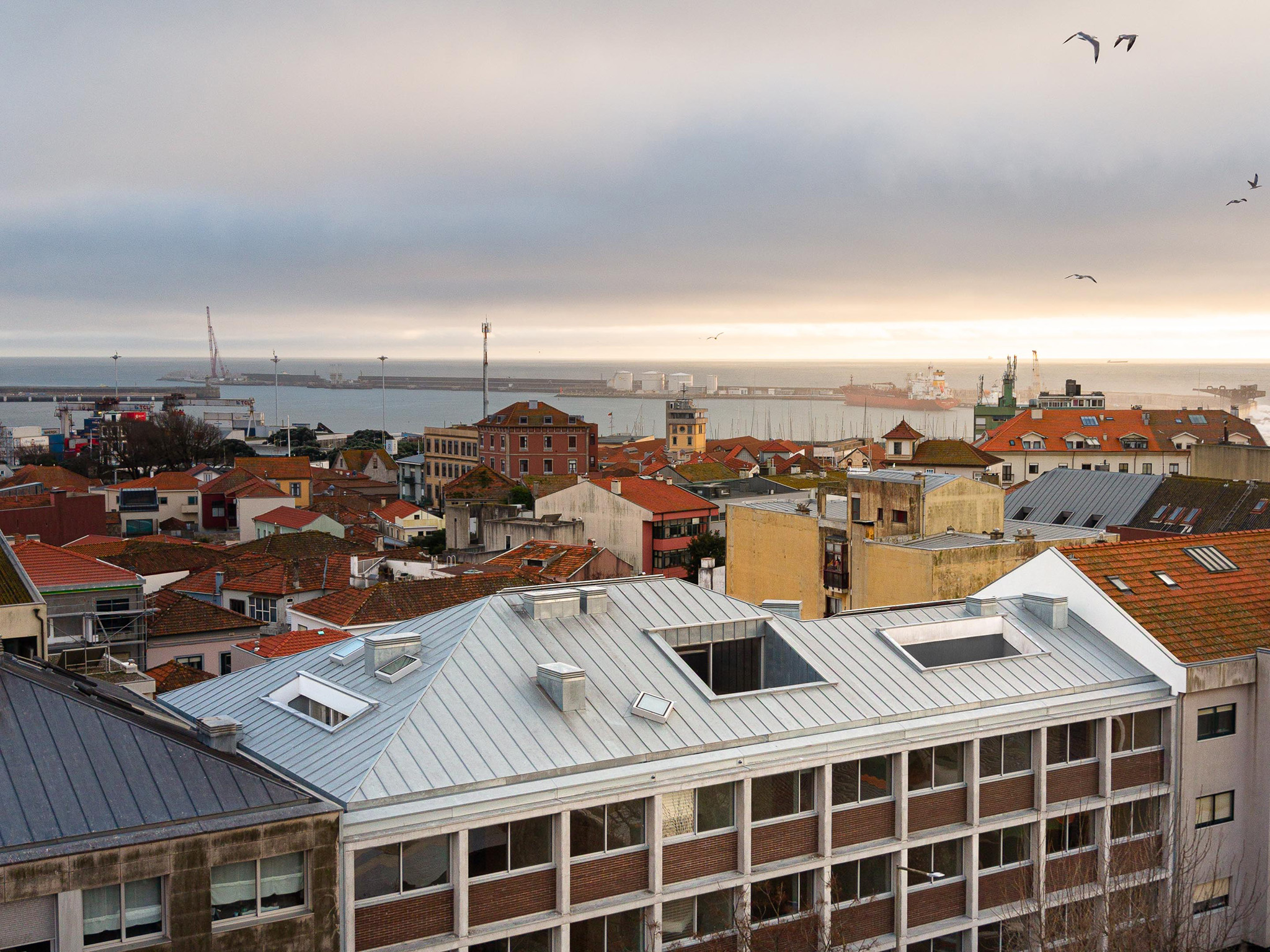
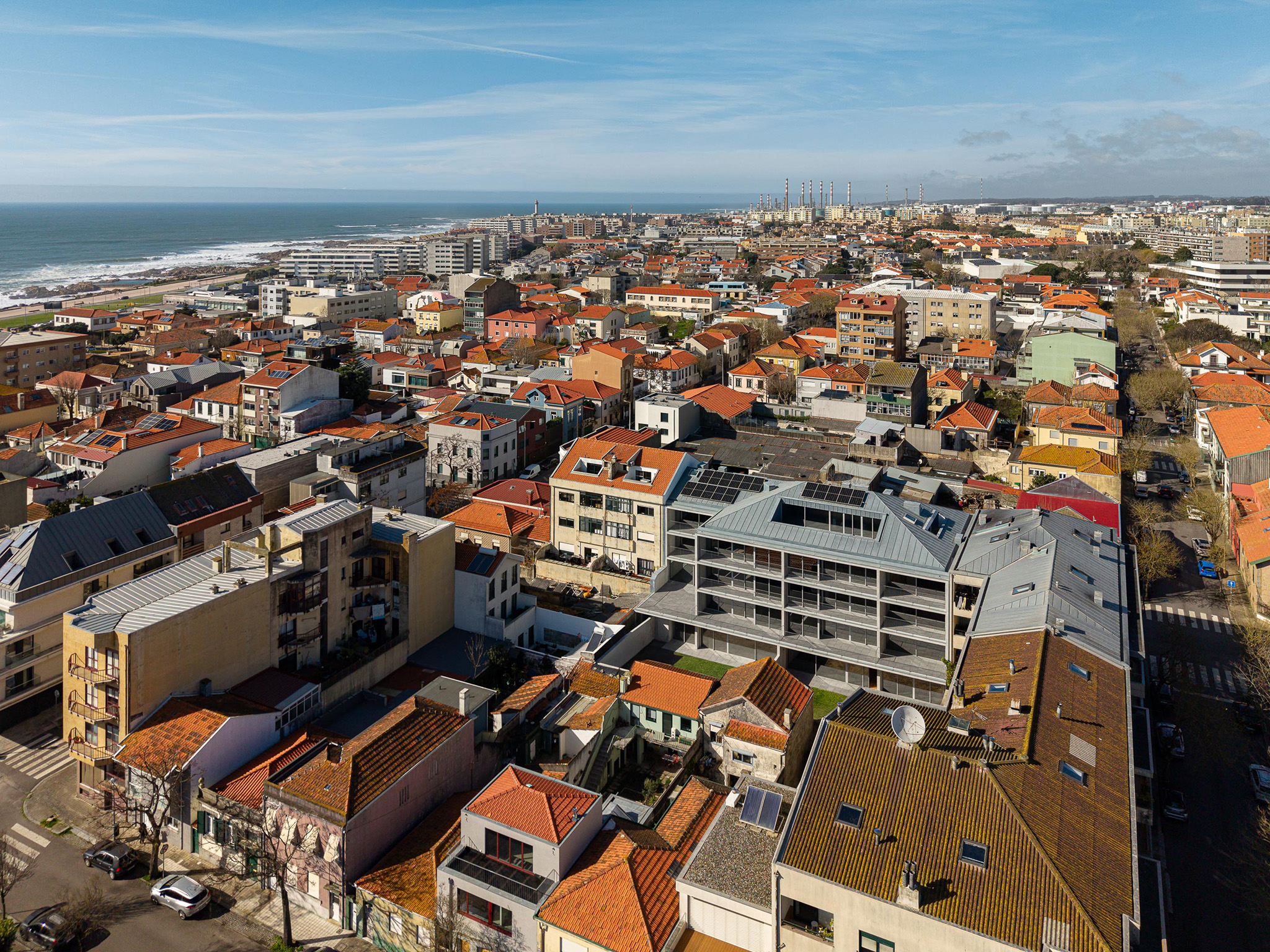
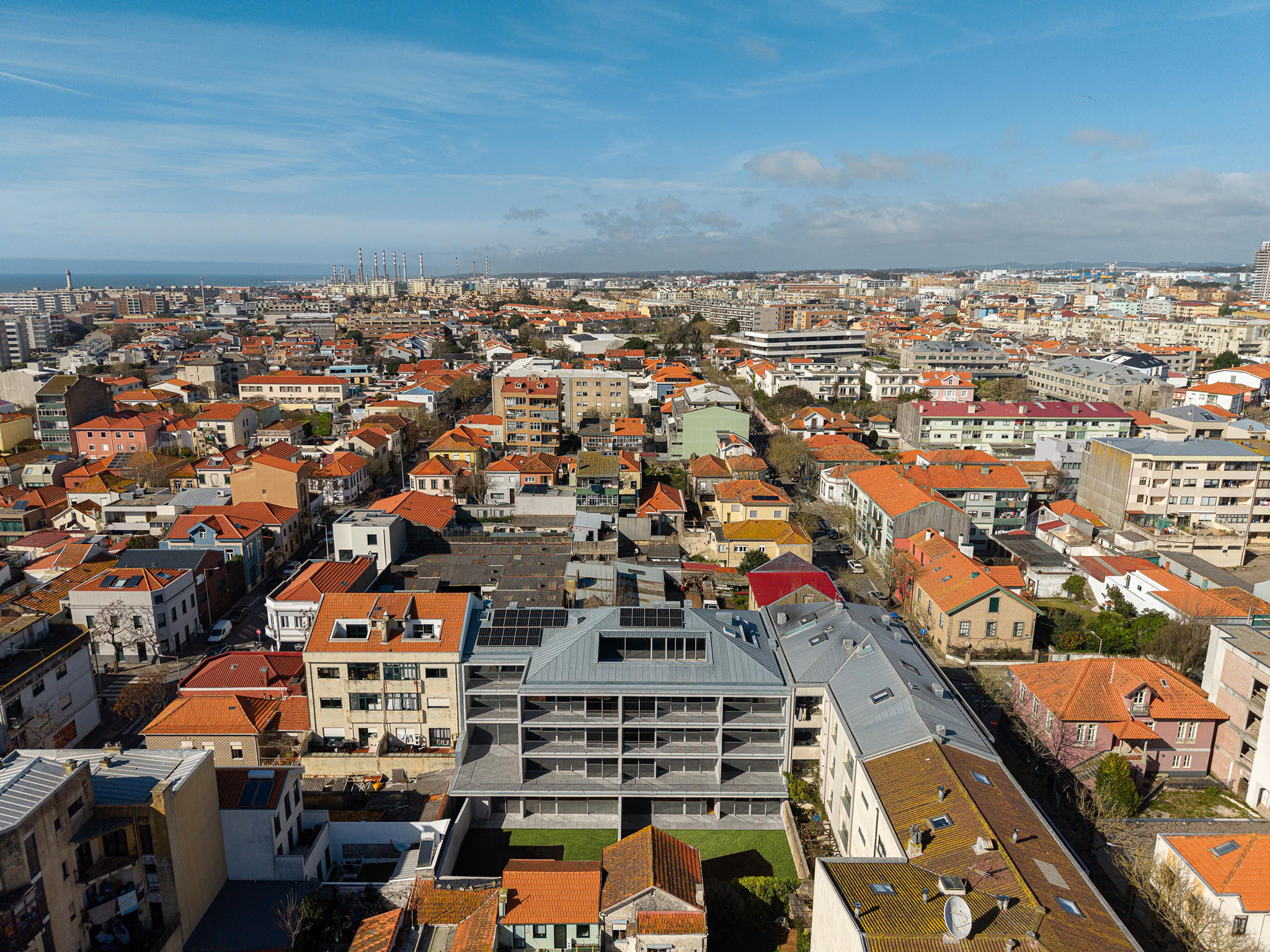
Hintze Ribeiro Street is one of the most pleasant streets in the center of Leça da Palmeira, where the city is being built with low-rise buildings, accompanied by vegetation that enhances the public space. "There is neighborhood life," largely due to the small shops and services that still exist. Life is good there. In addition, the sea is just a few meters away.
The Client is always the first architect. He defined the commercial product very well, with rigorous areas to meet market demands, and requested a rational and optimized construction that would respond with quality and consistency to the request. The exercise was to create high added value in the product to be offered to the public, with art, ingenuity, and efficiency.
Our proposal involved defining a very rigorous module to work with, from the garage to the roof. In this modular and structural grid, we oriented all the bedrooms and vertical accesses towards the north facade, Hintze Ribeiro Street, and all the social areas towards the center of the block. A classic in a consolidated city.
We adopted exposed concrete as the main construction material for the sake of optimizing the work. We formworked, stripped the formwork, and had the facade finished. In addition, there was the possibility of working with prefabrication, which later ended up not being confirmed.
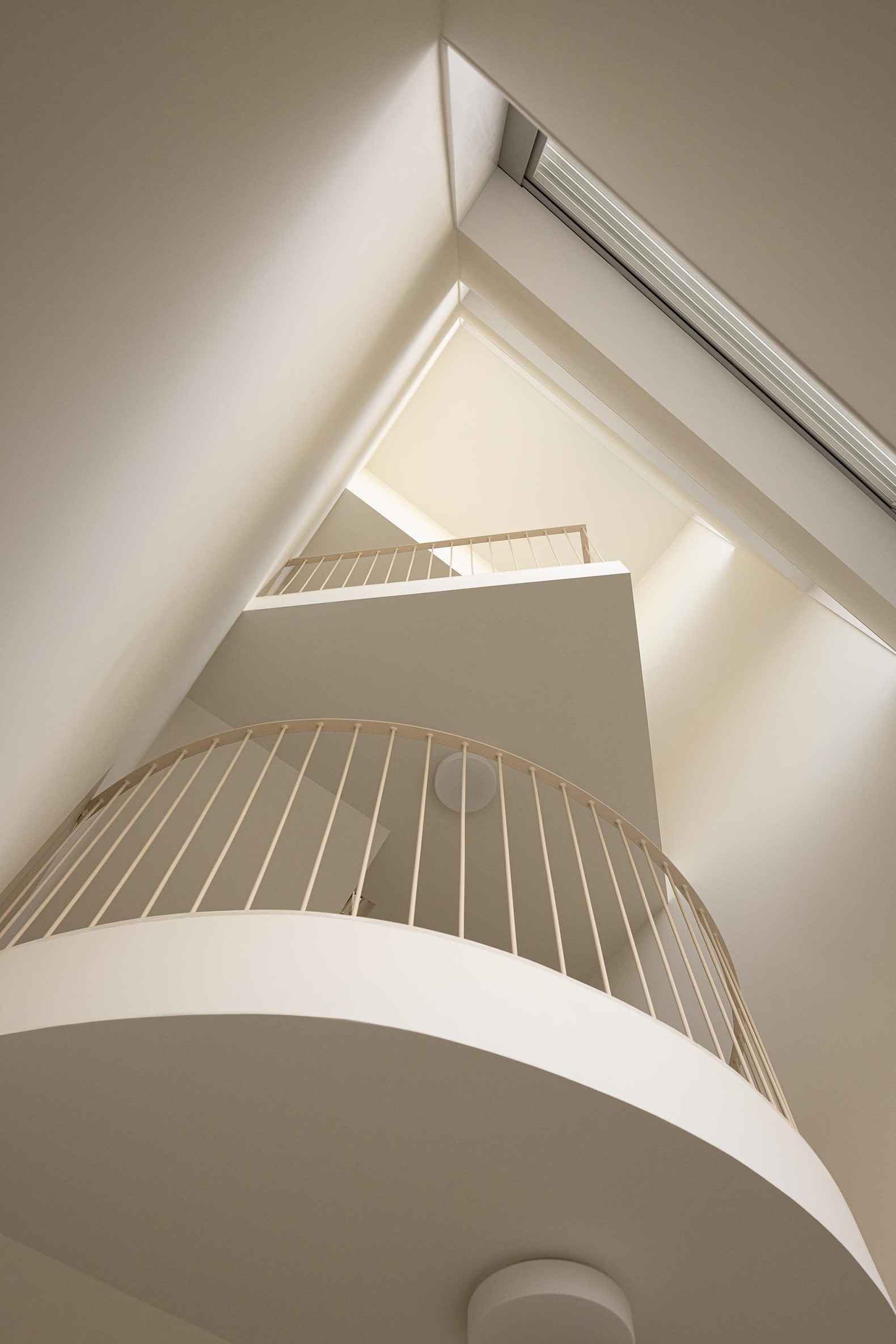
On the facade, solid brick appeared during the process as cladding, for the sake of the design language associated with the Client.
The building has an austere, serious, rigorous, and anonymous air, as this type of project should have.