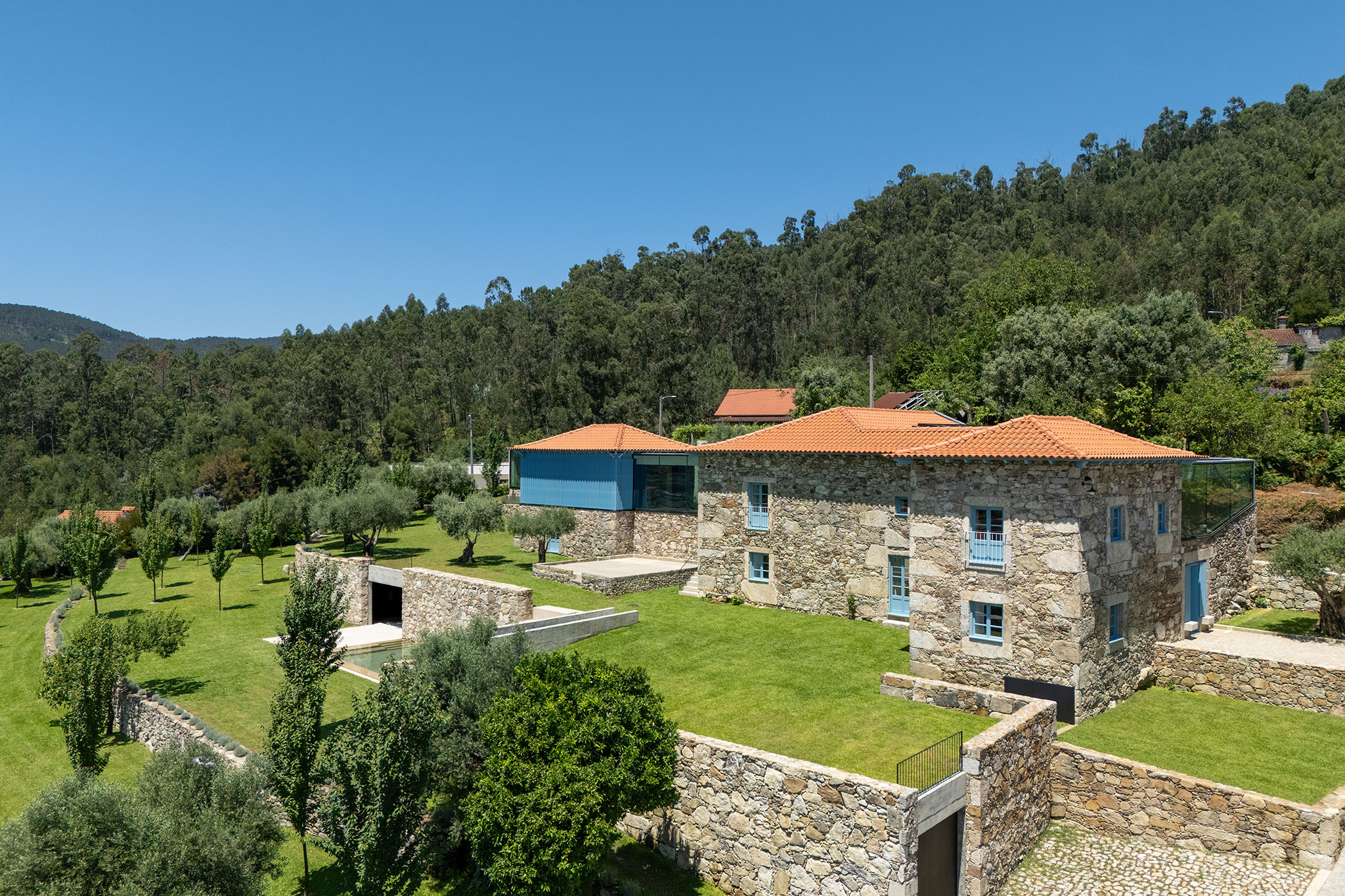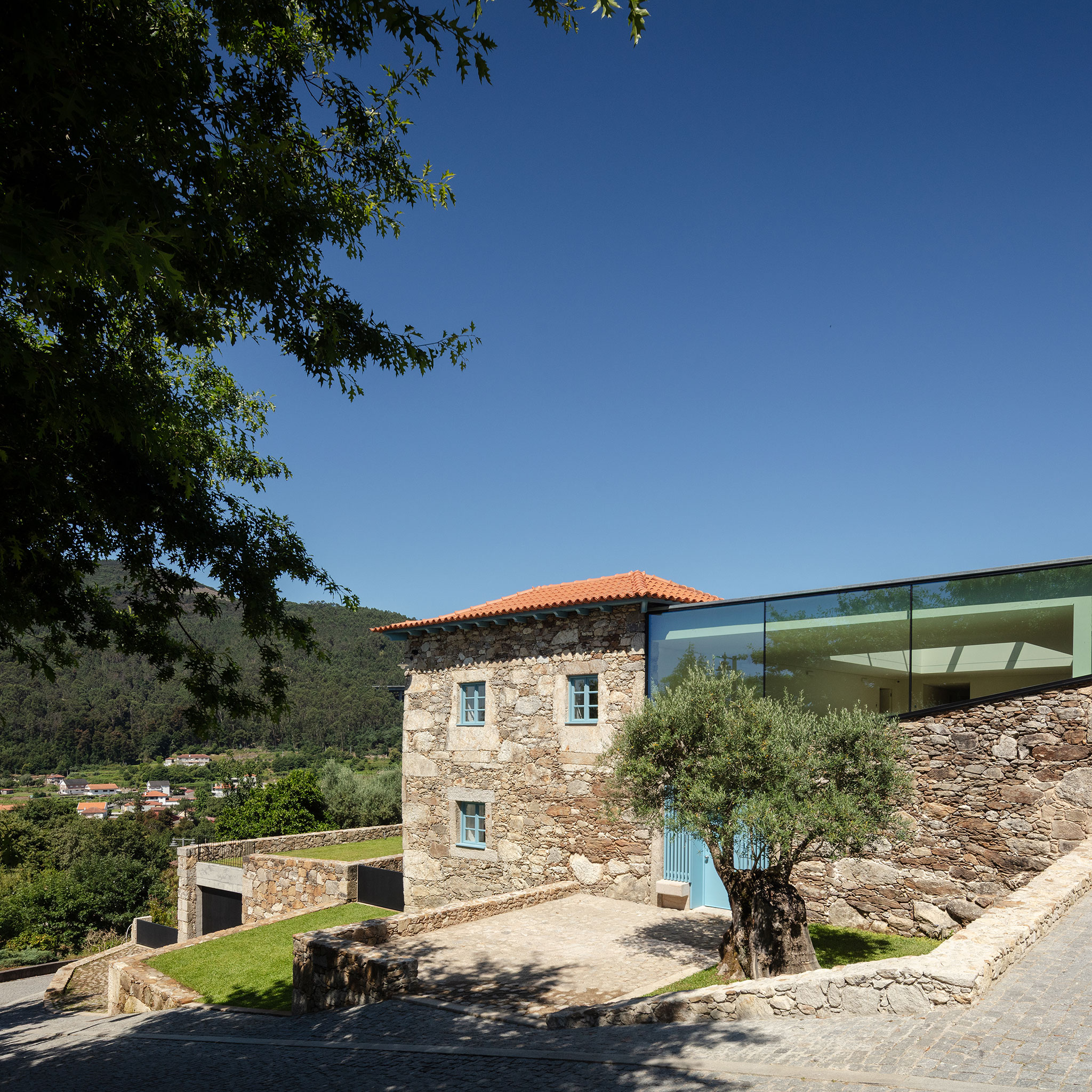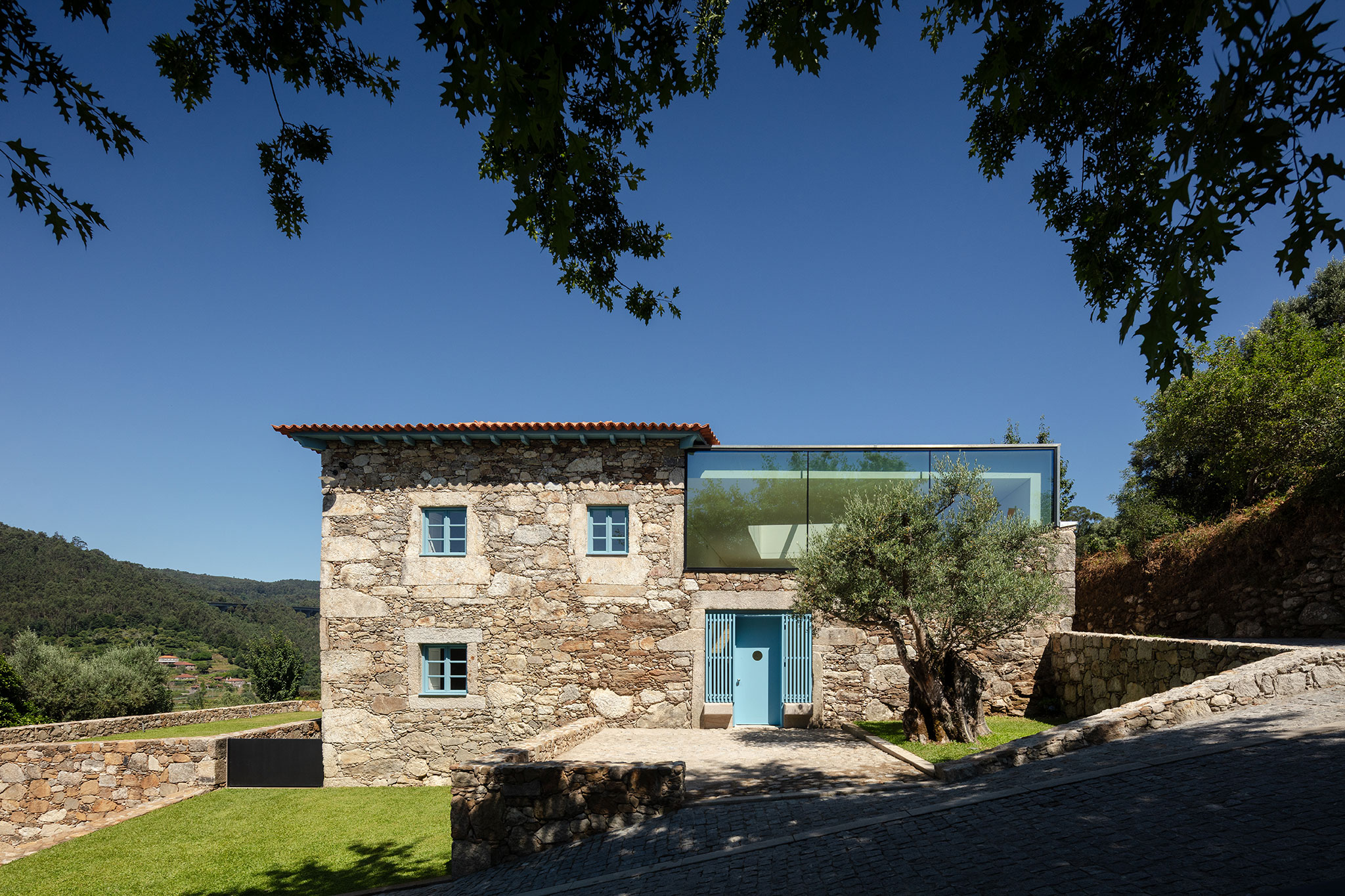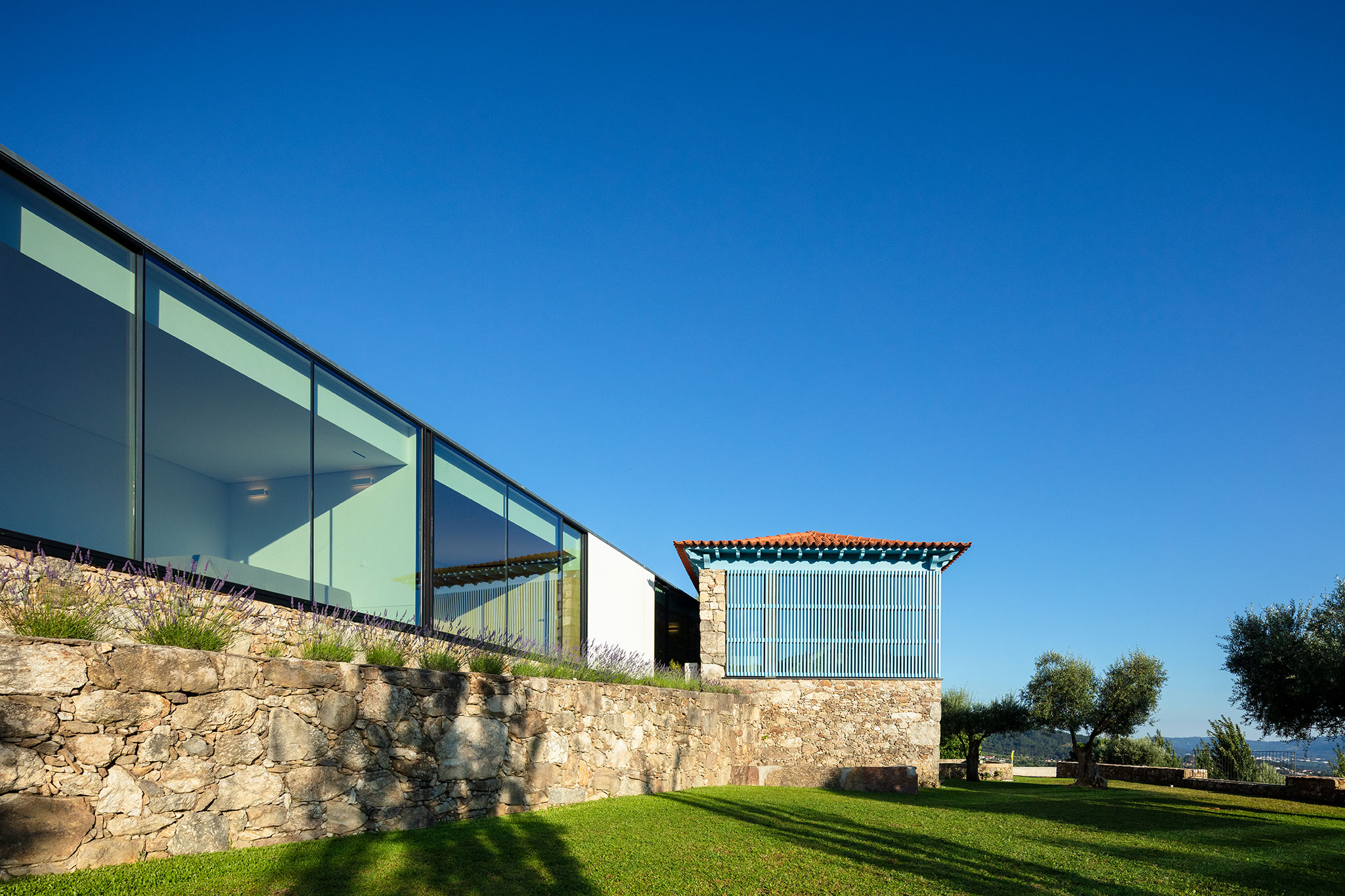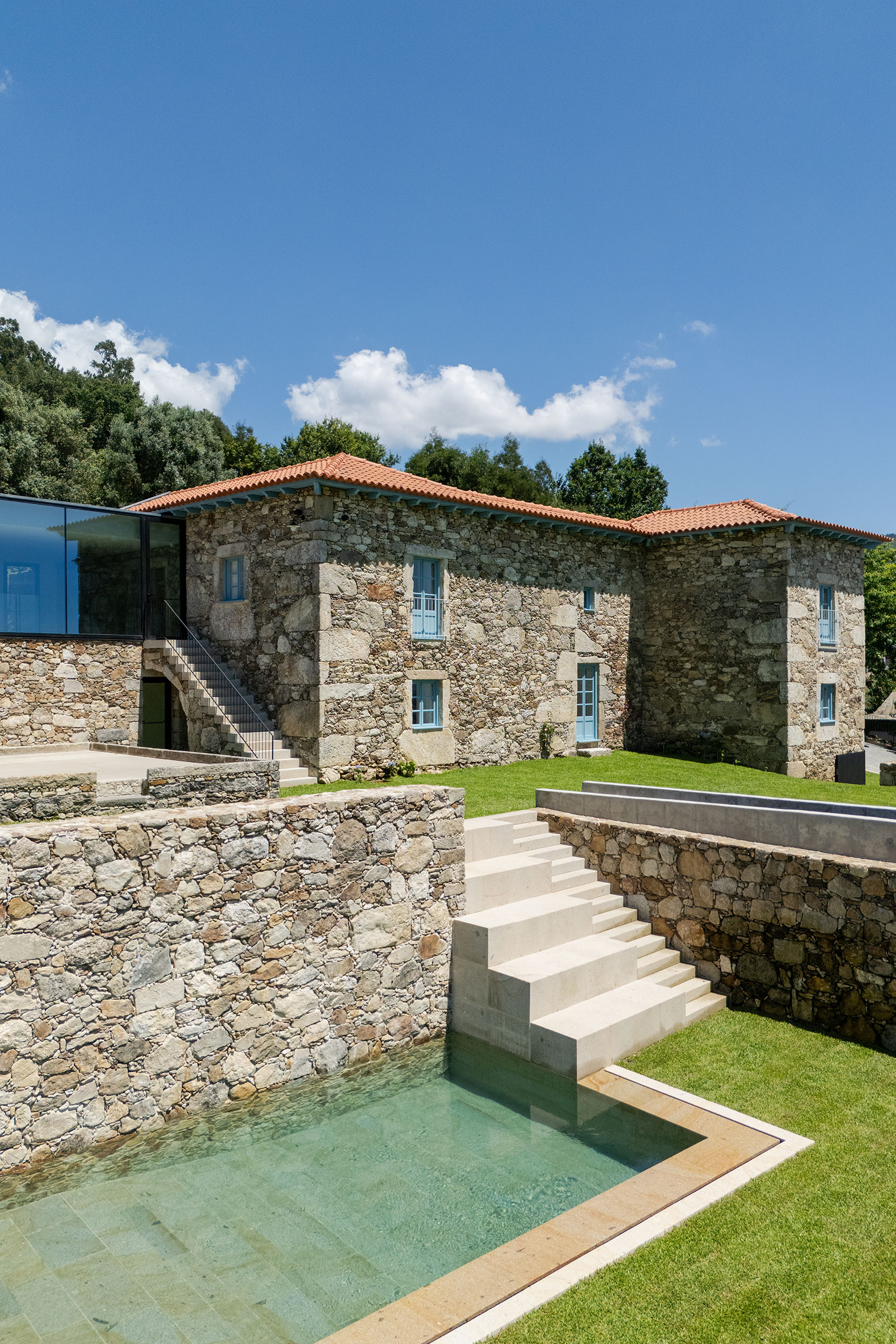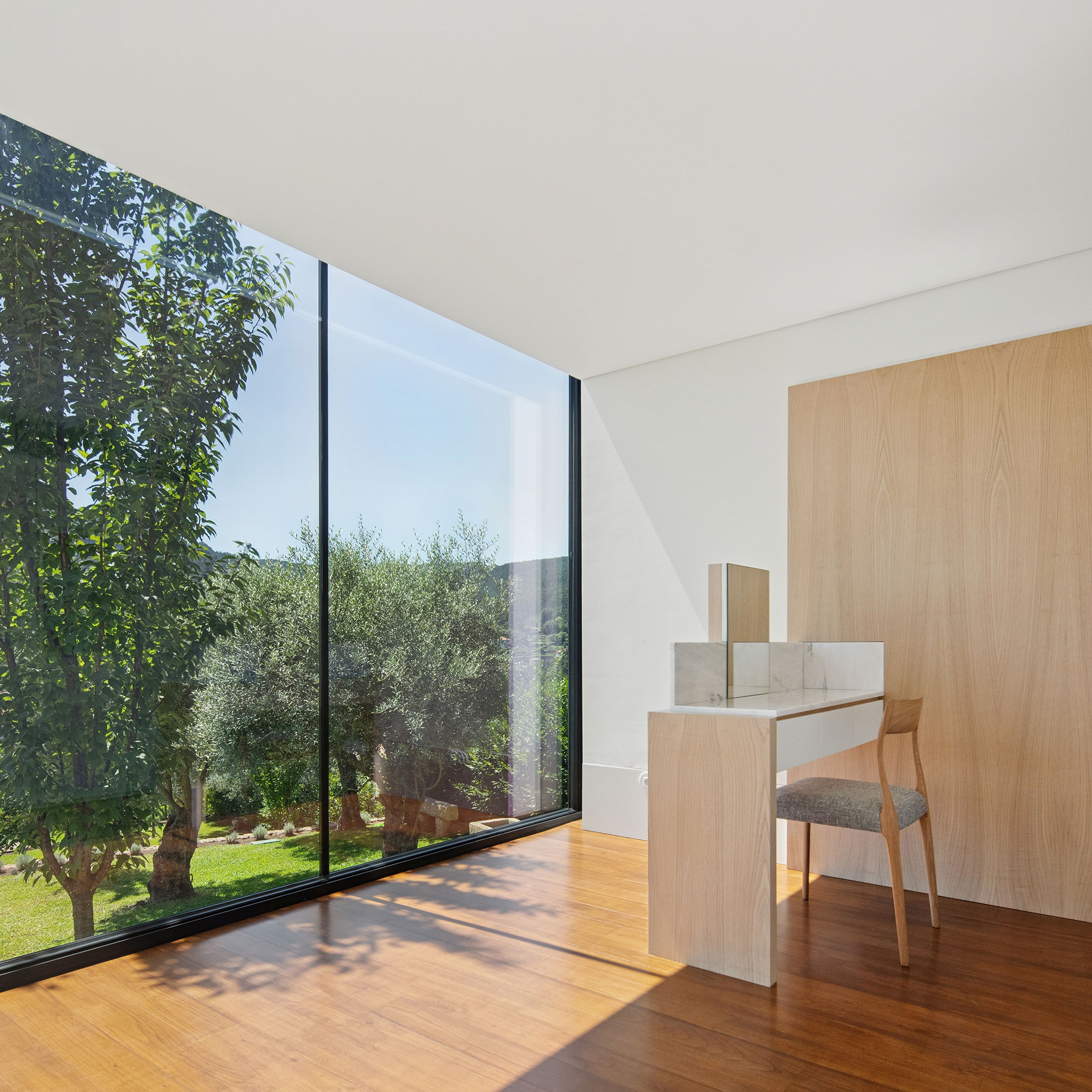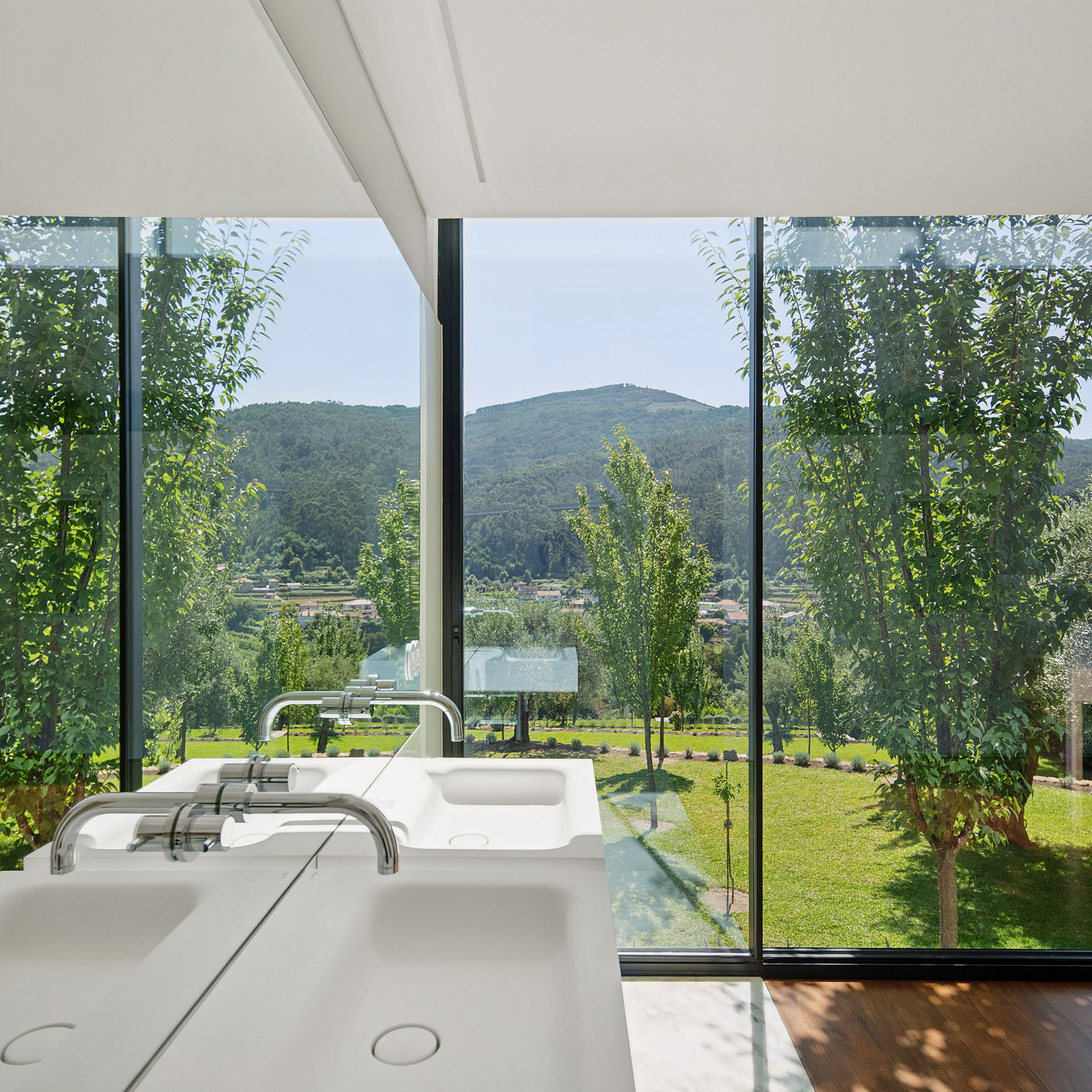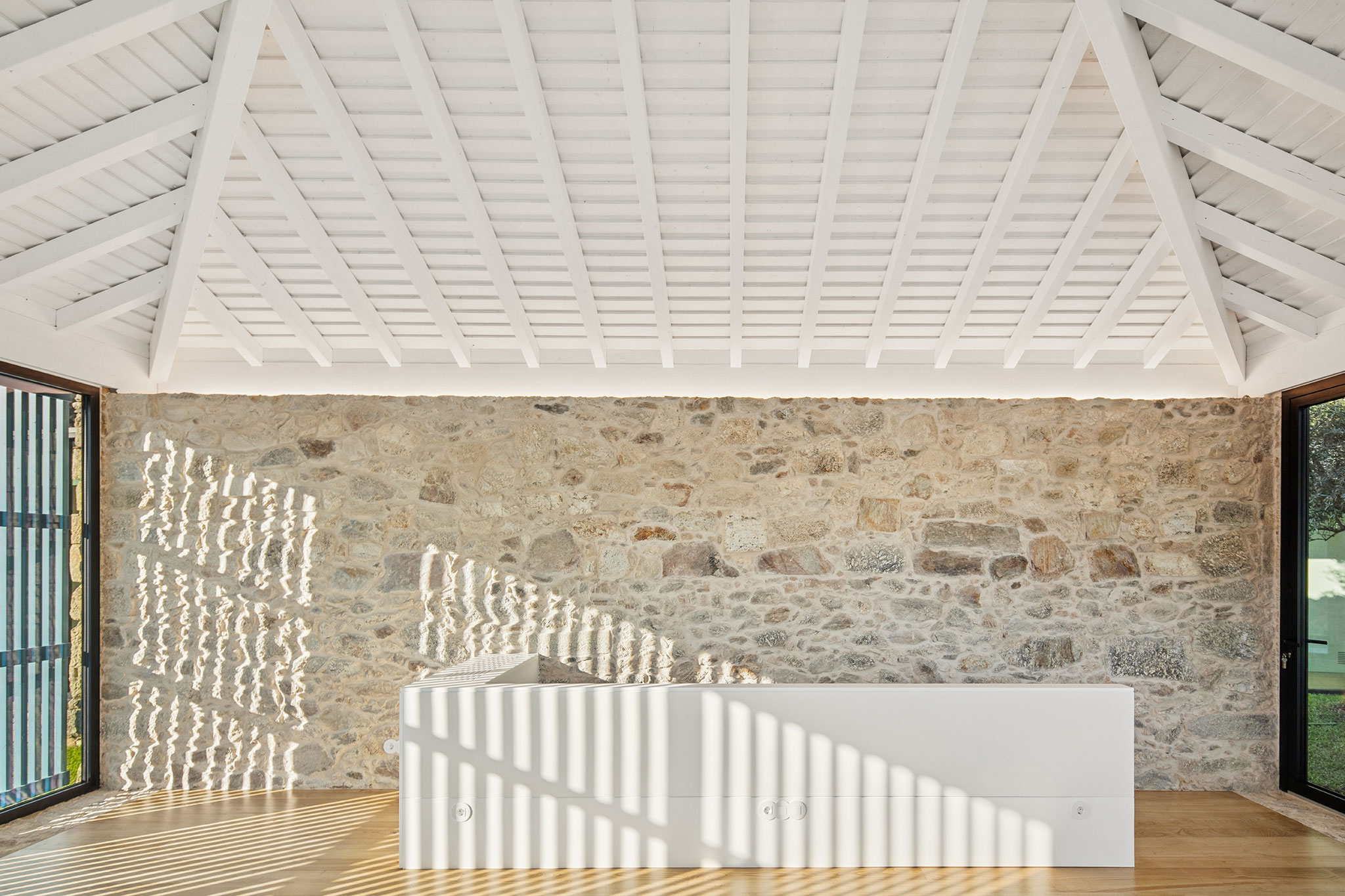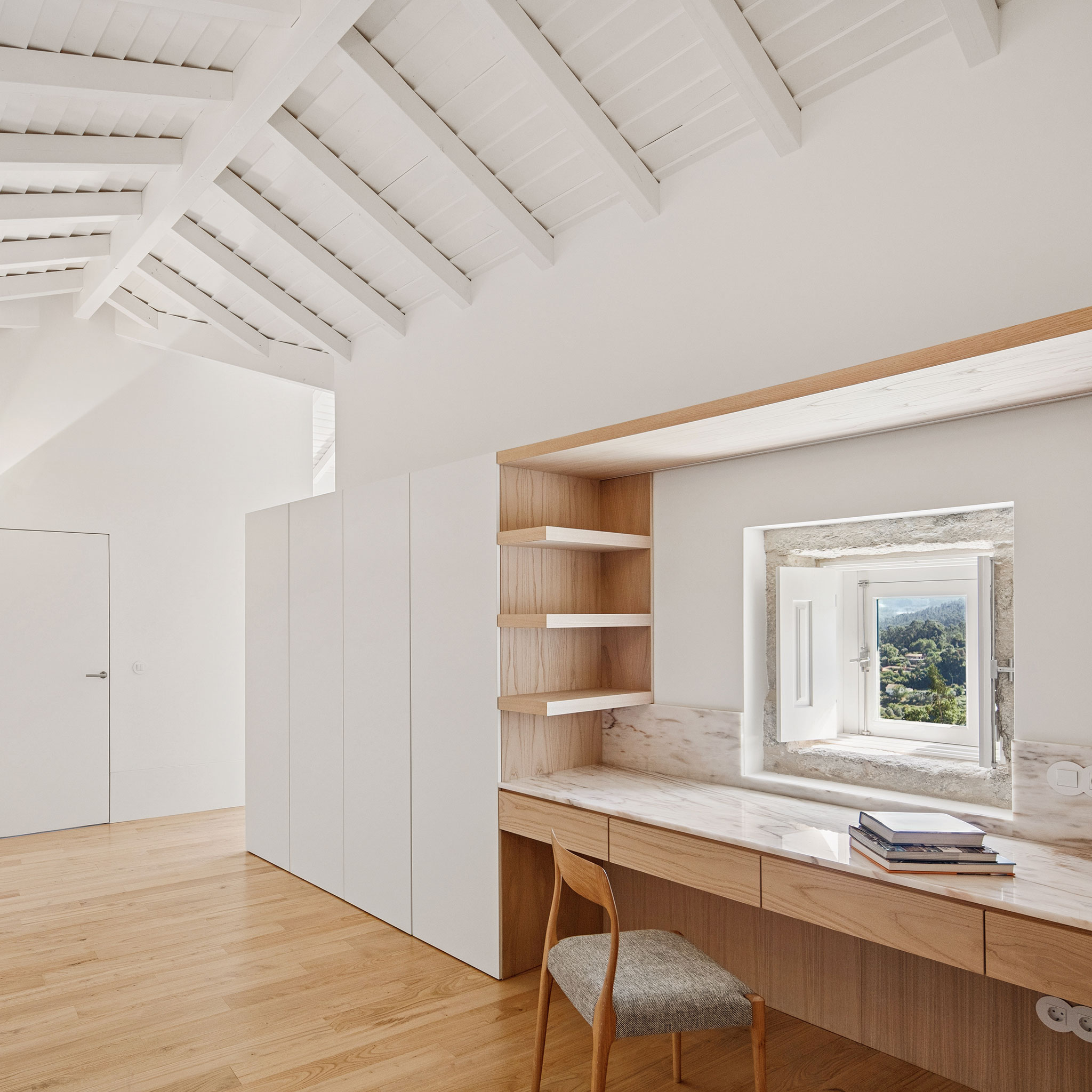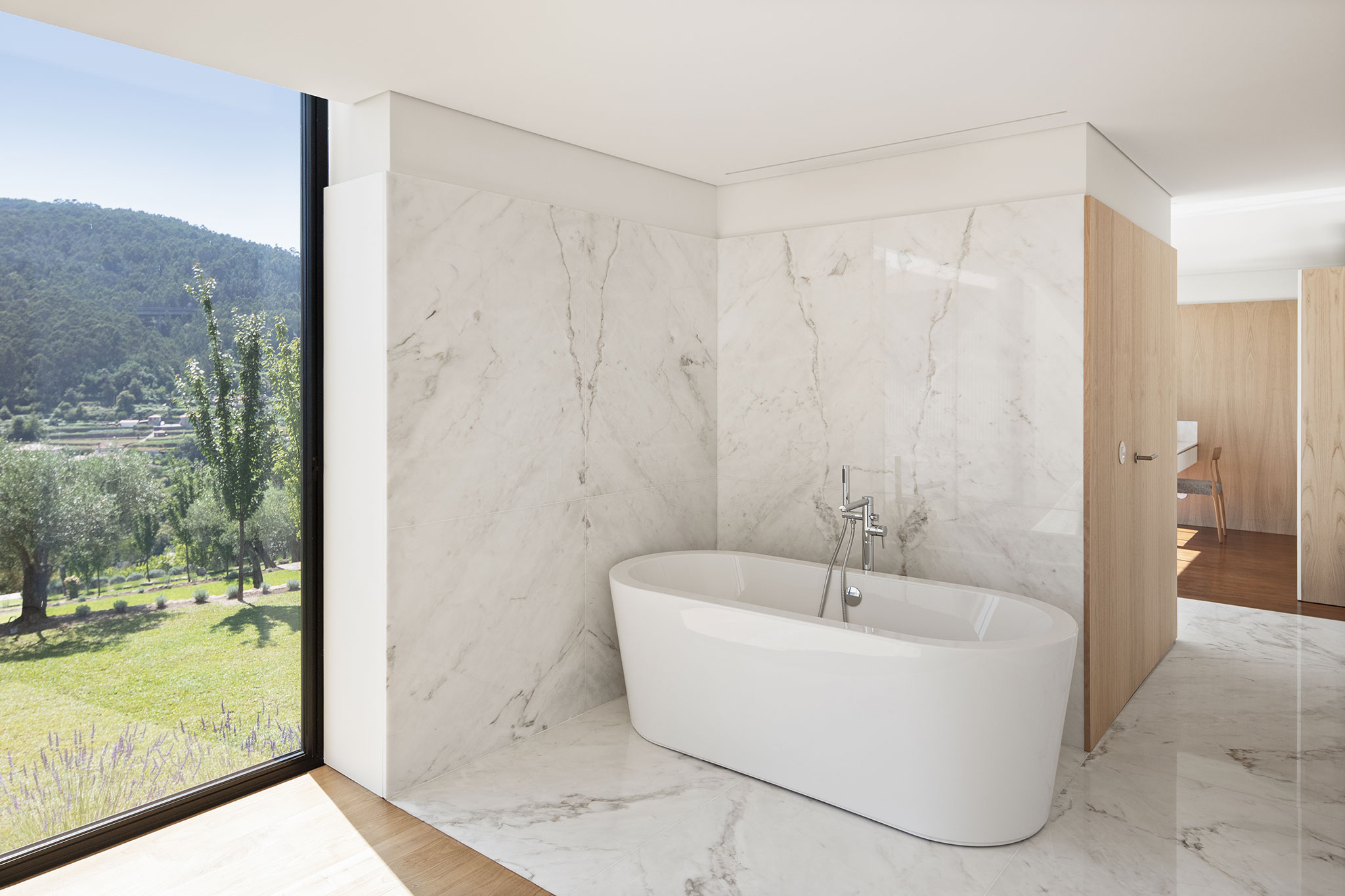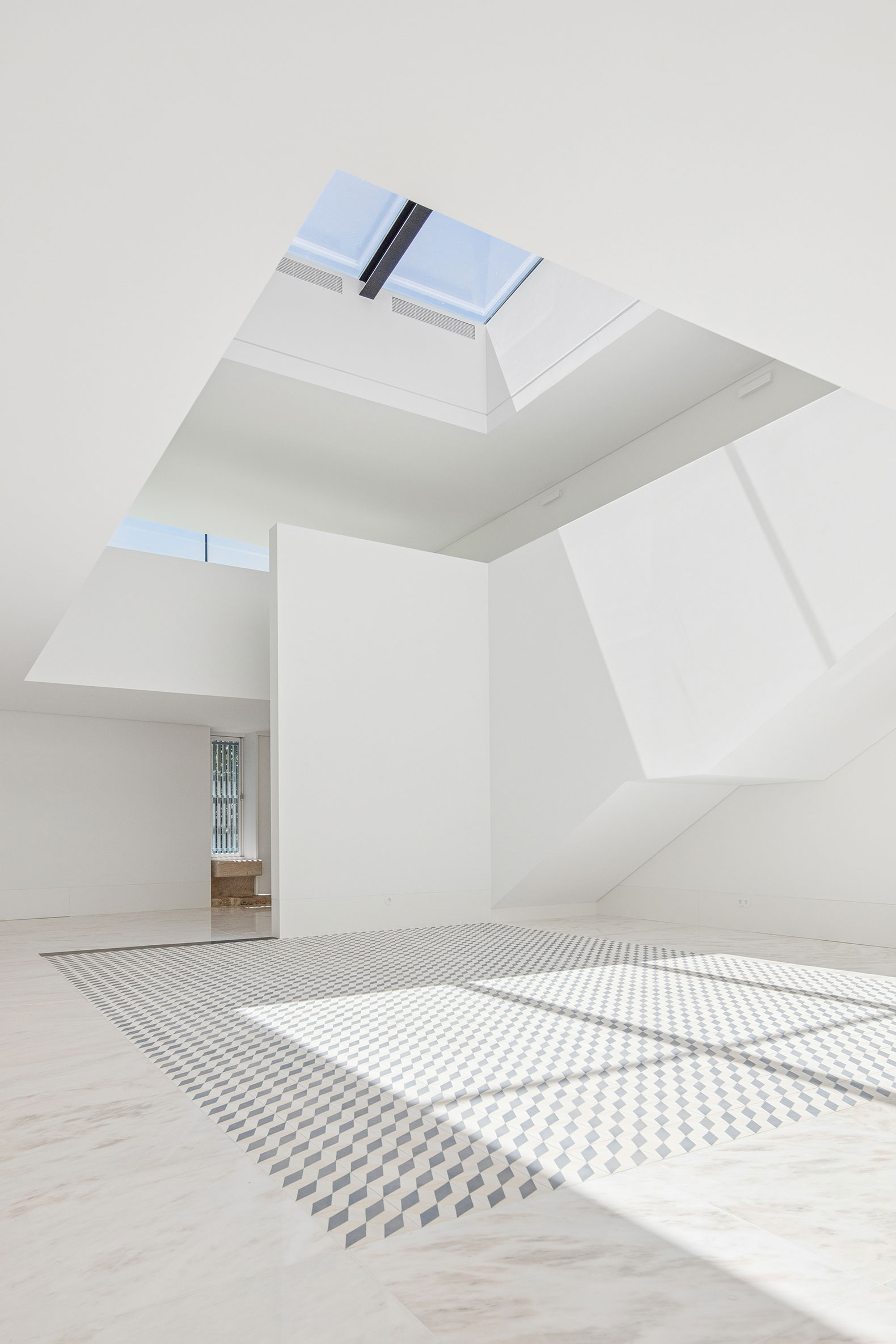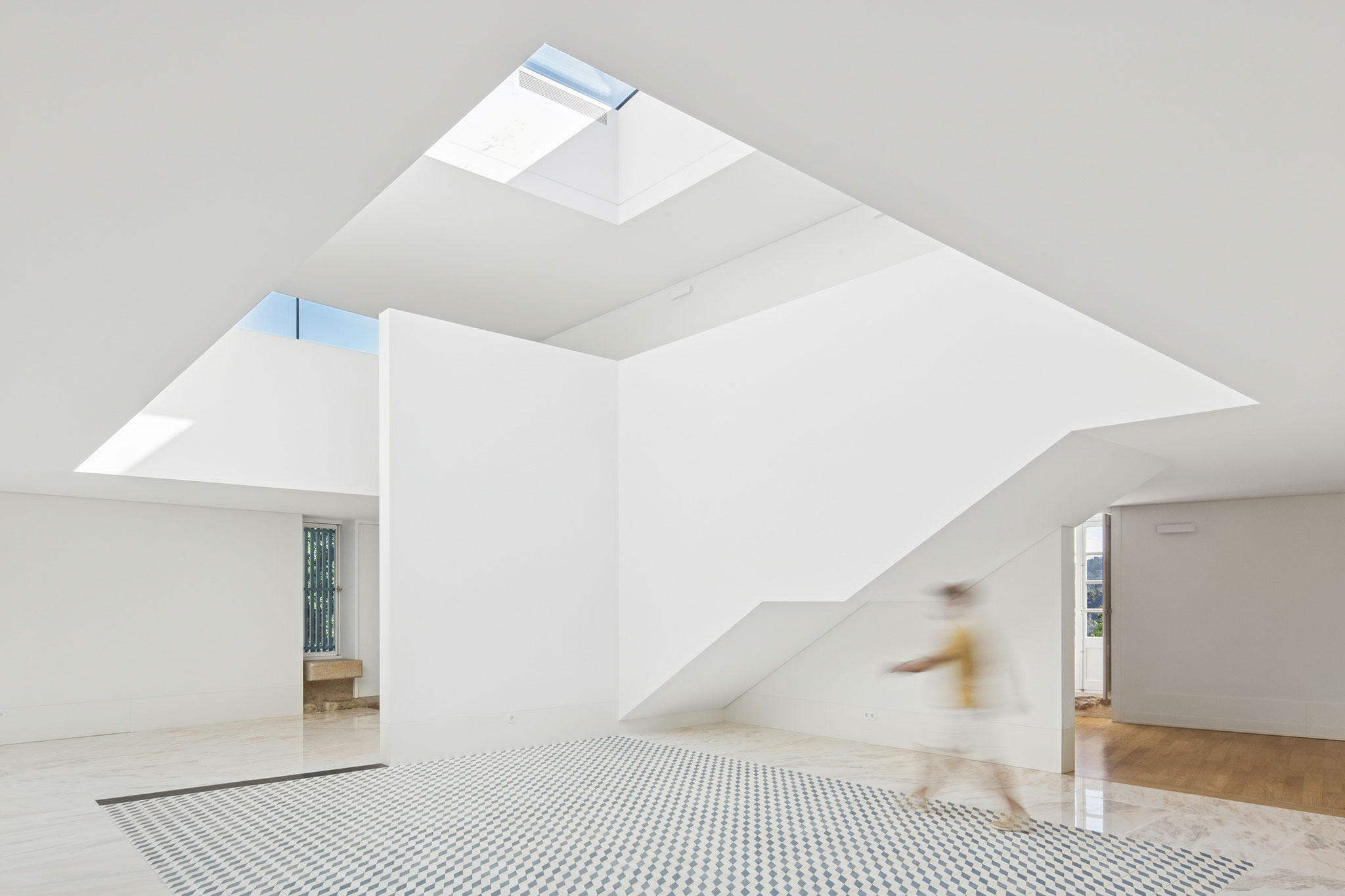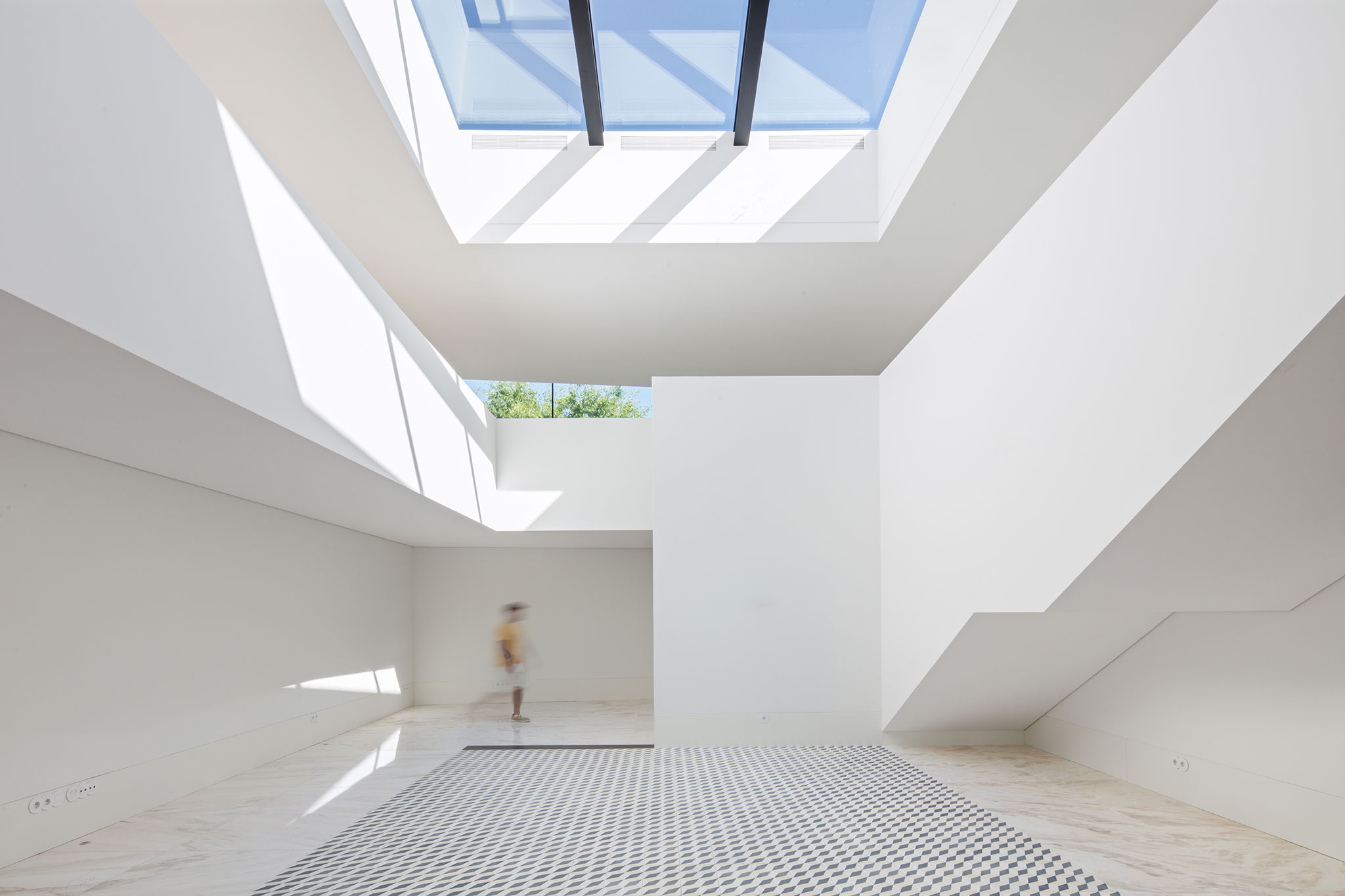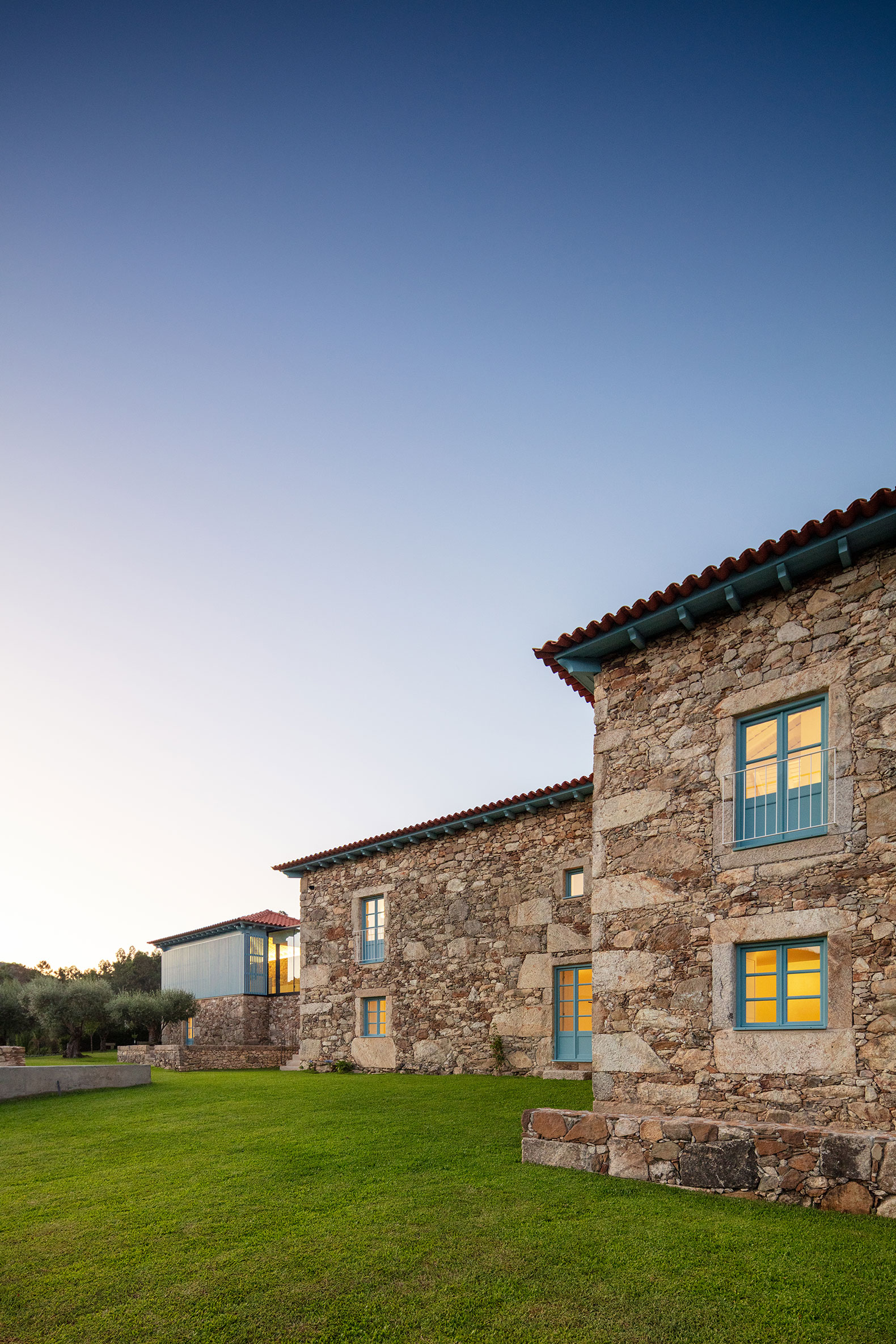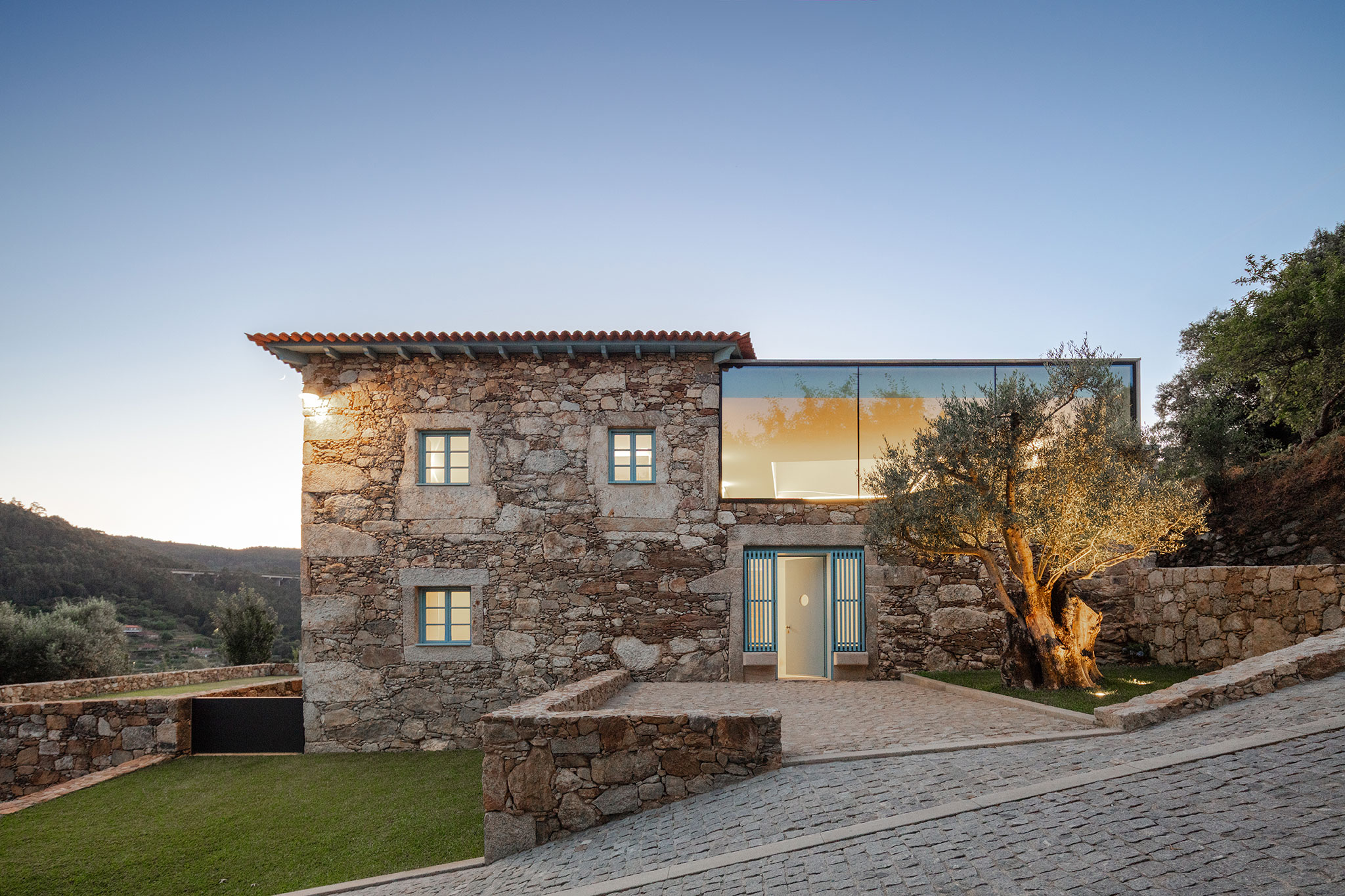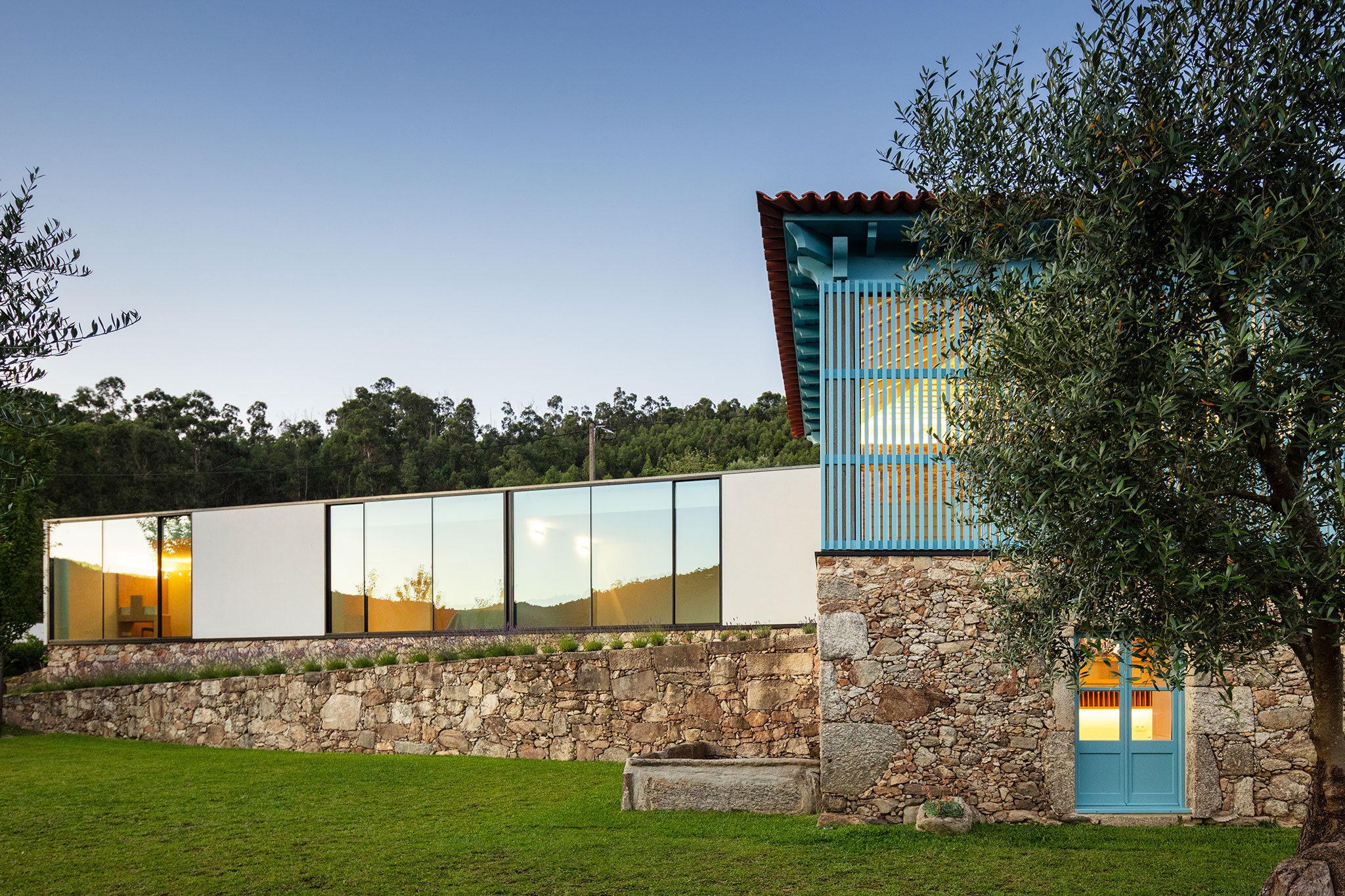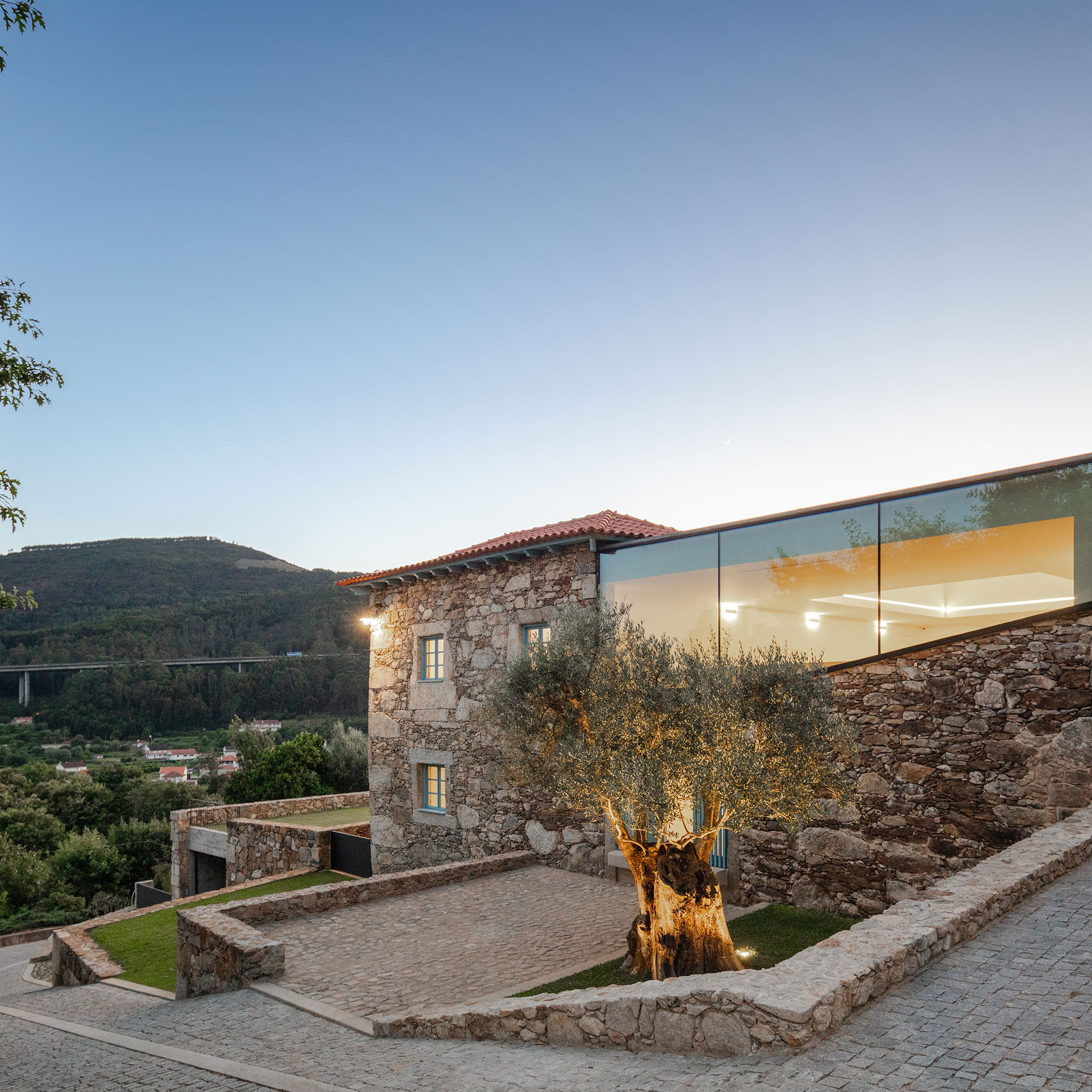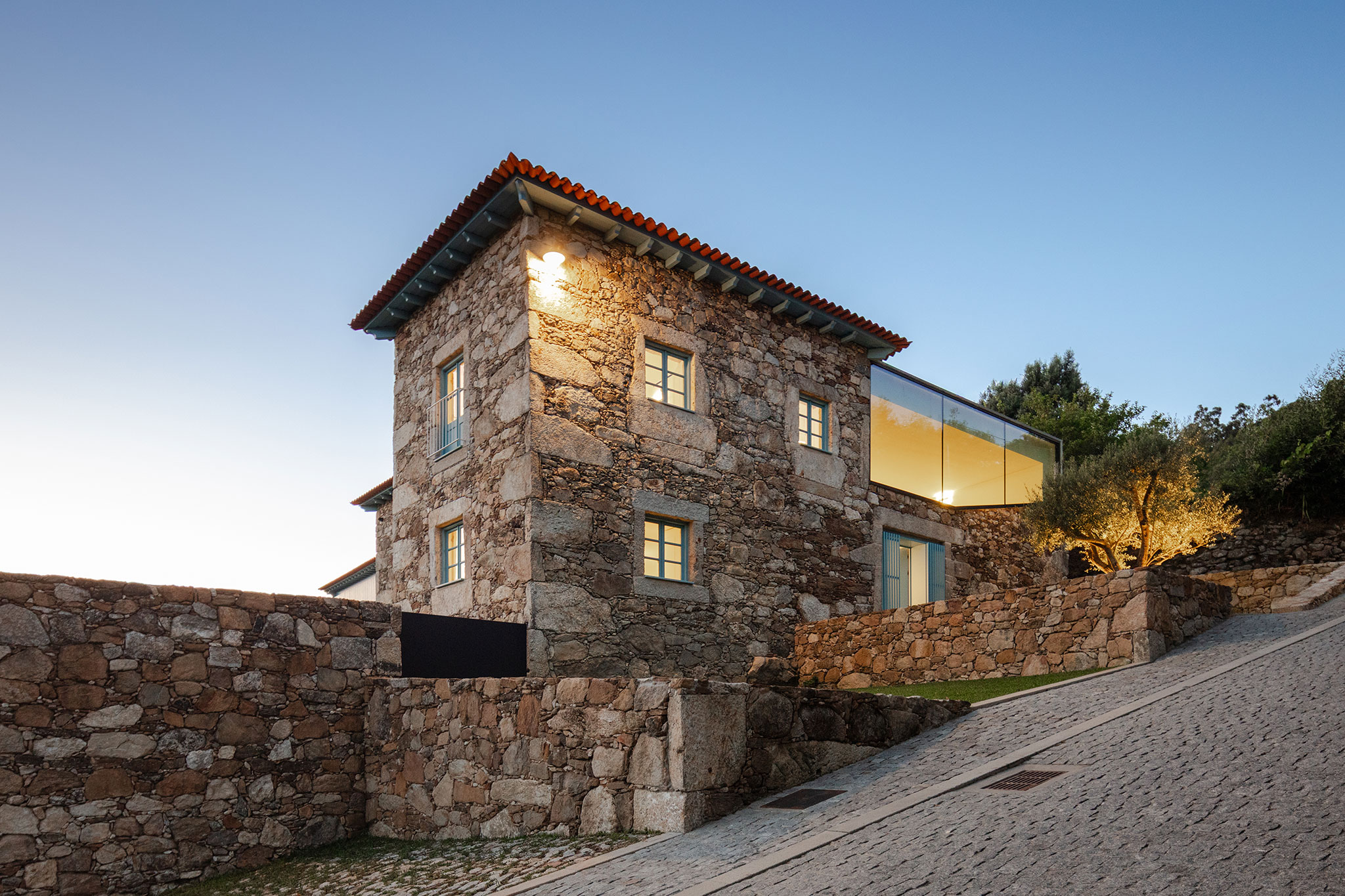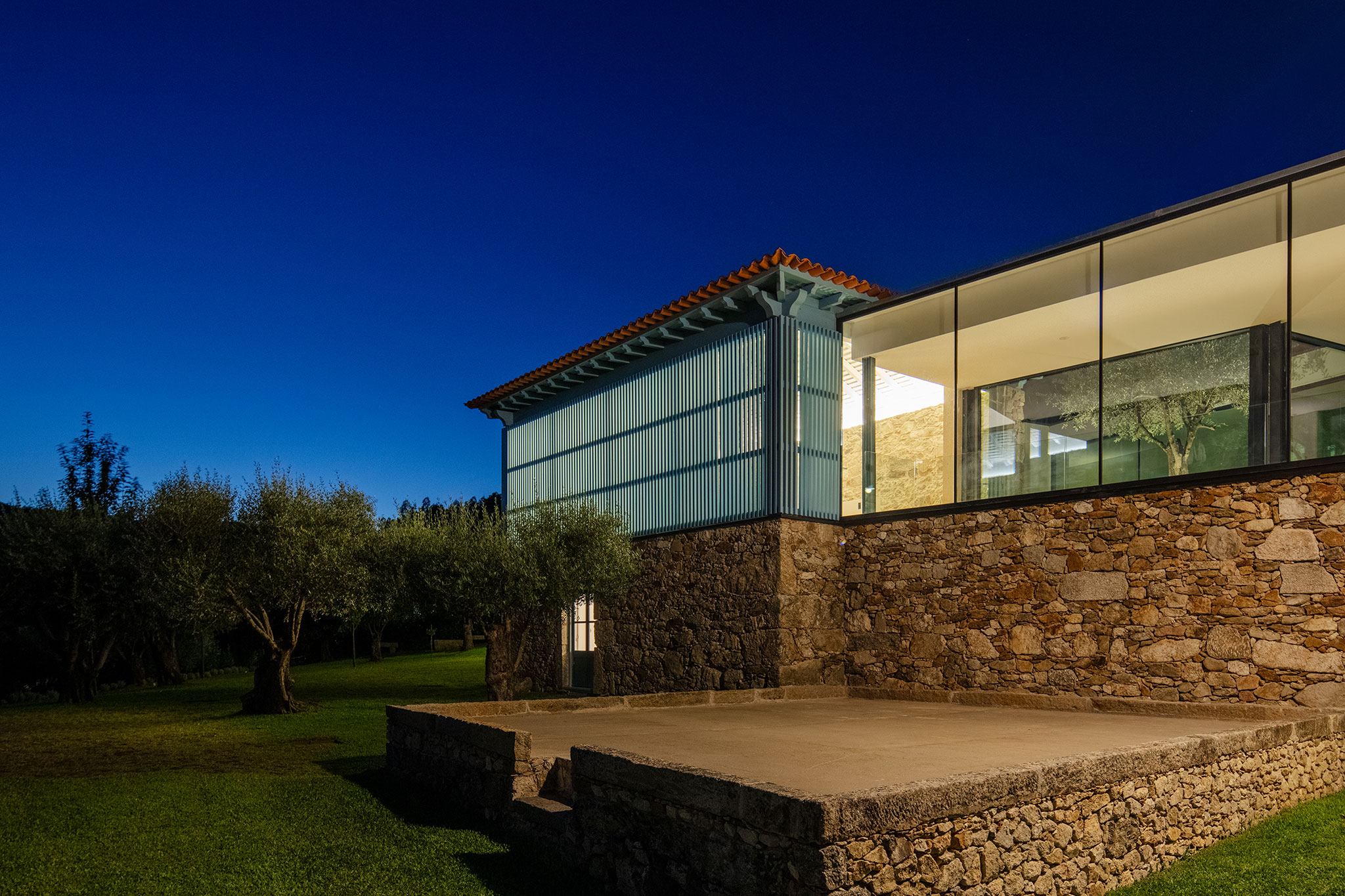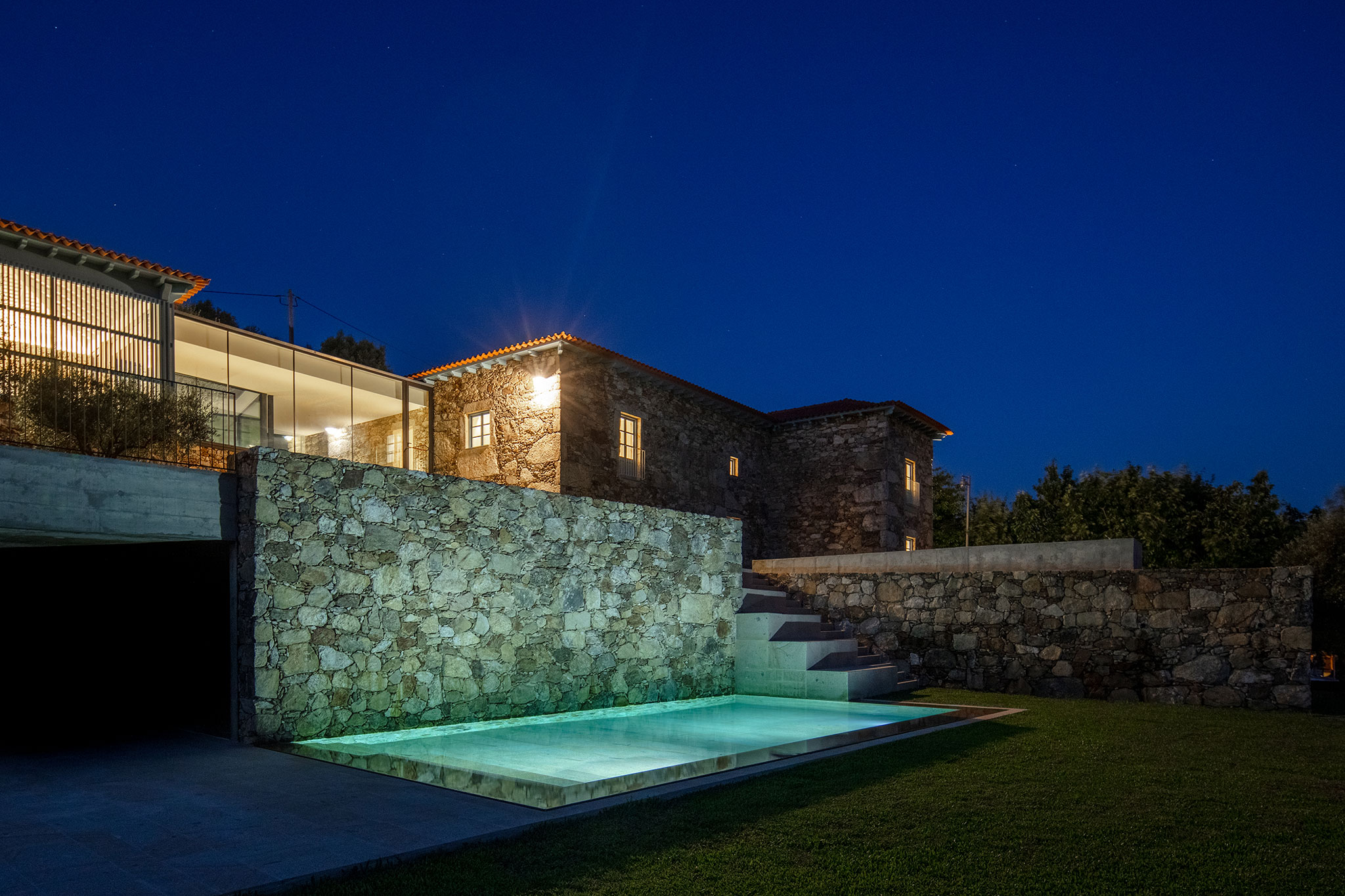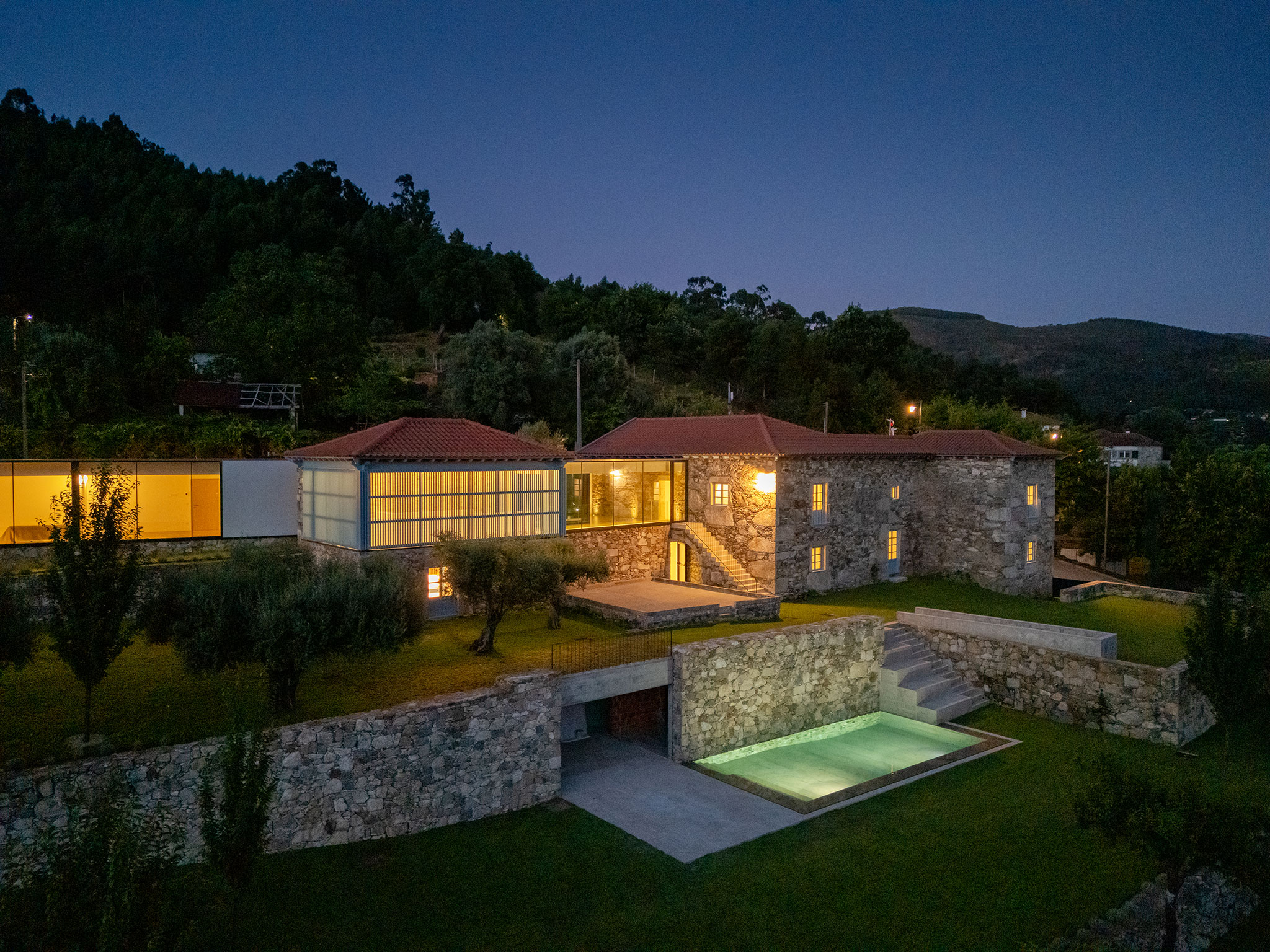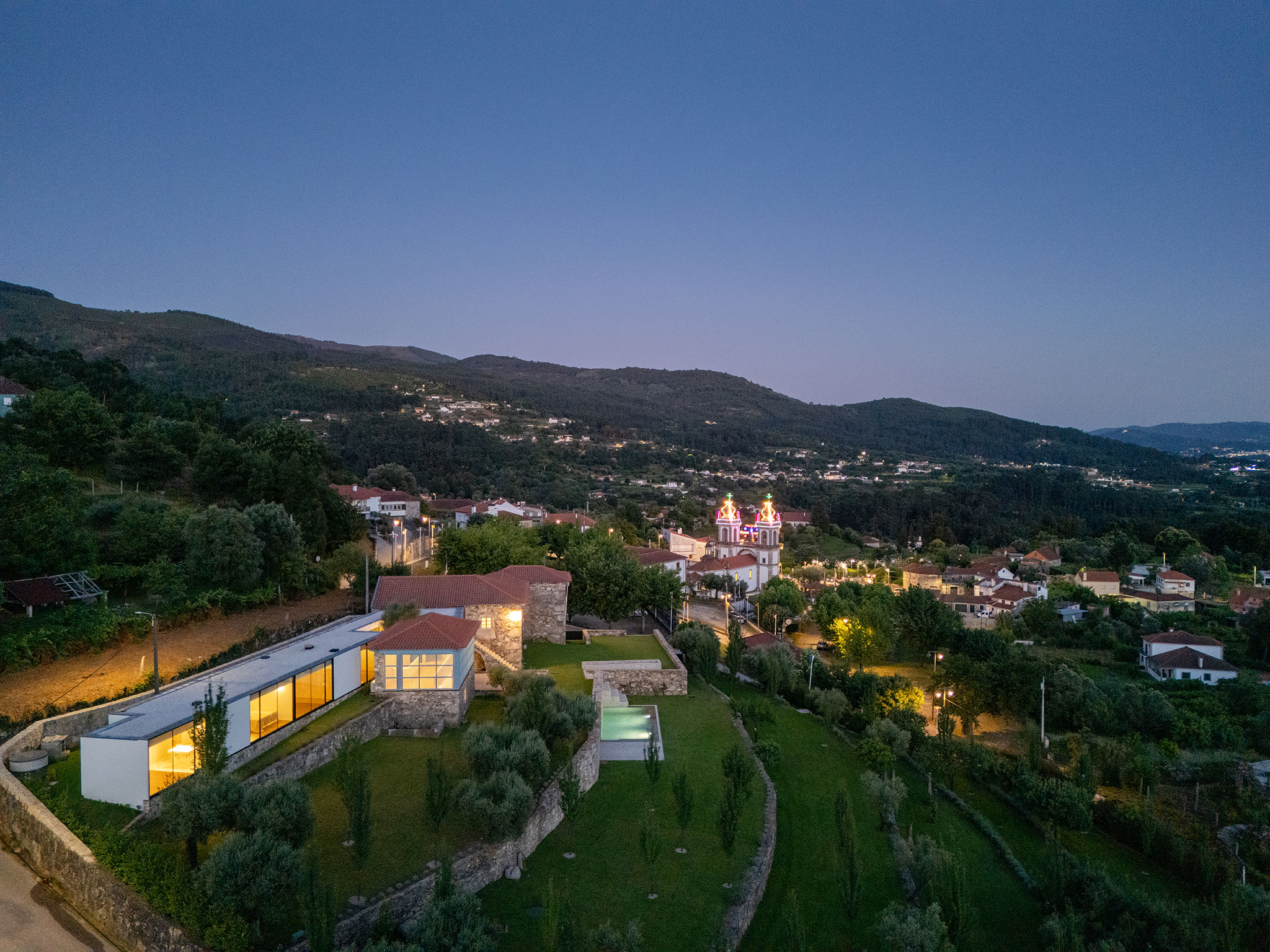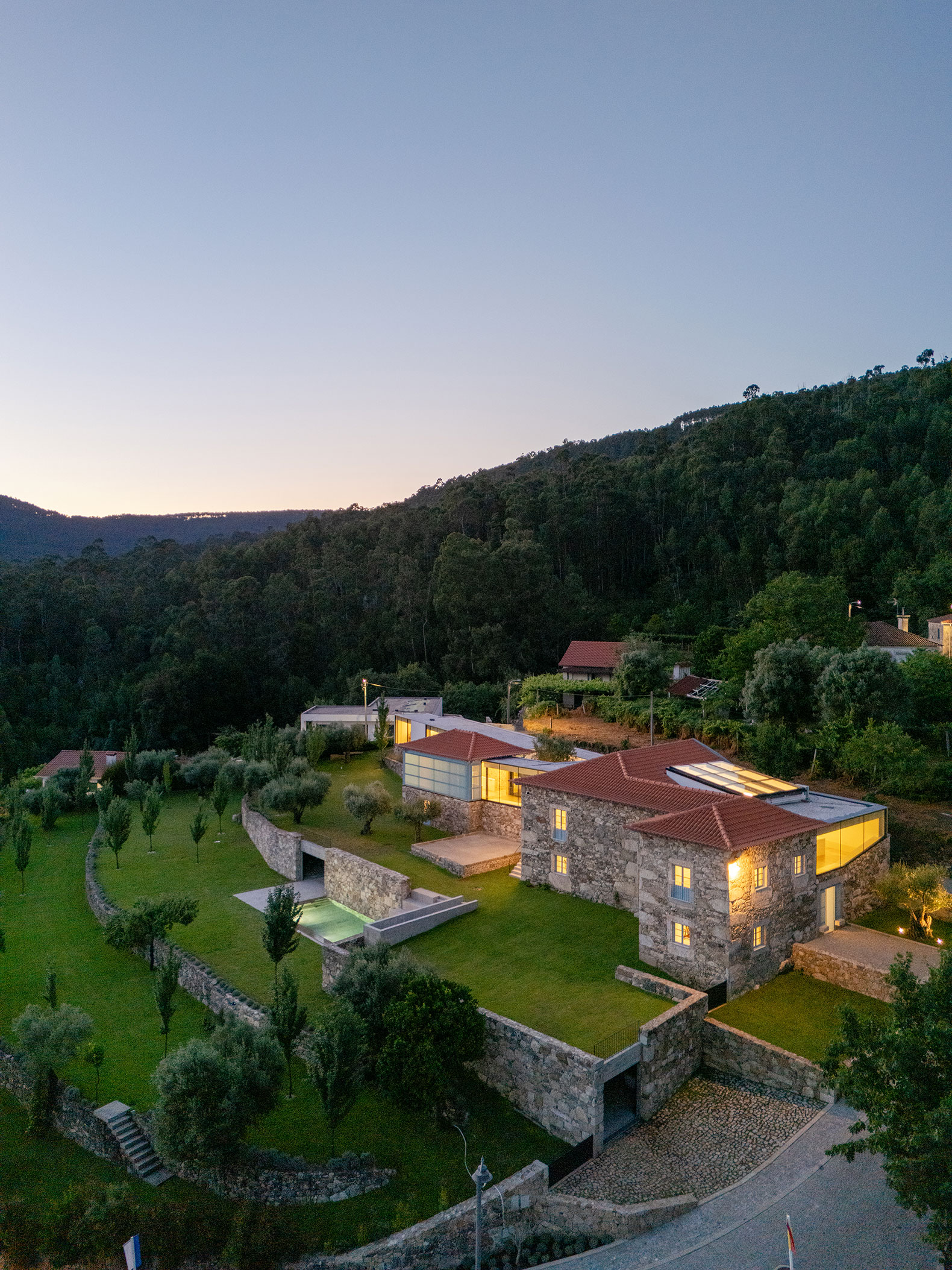
In the "Cherry Tree House Hotel" designed by Tiago do Vale Arquitectos, connections to a new wing of bedrooms are drawn from a pre-existing wall. The old courtyard is transformed into the living room of the house, and beyond the entrance threshold, a spiral vertical plane organizes the circulation. The hotel's social spaces are located on the ground floor, including the lounge, dining room, a small sitting room, a laundry room, a wine cellar, and a bathroom. The upper floor houses a dining area and the bedrooms. Additionally, a spacious suite and two extra bedrooms were created within the existing house.
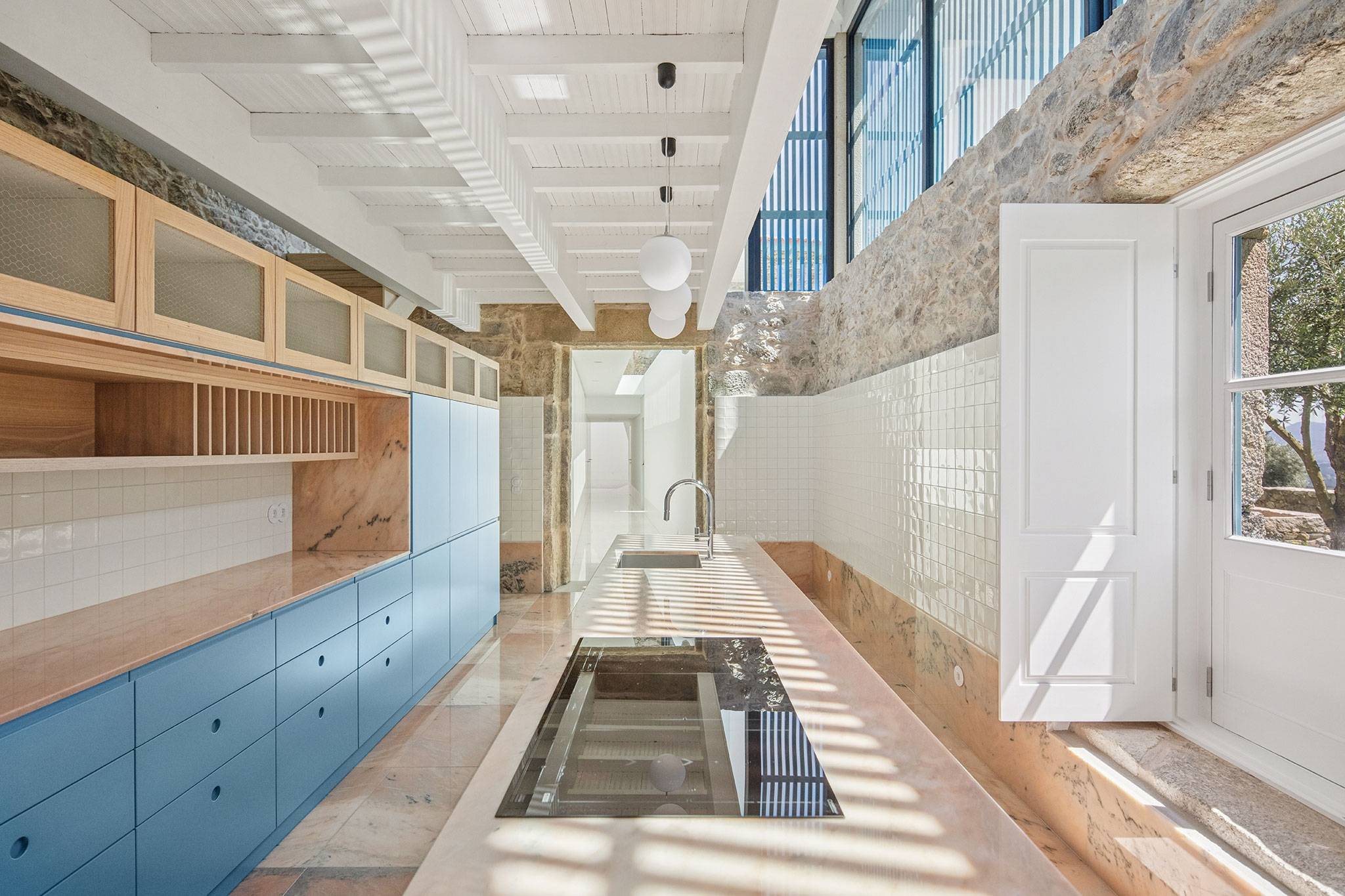
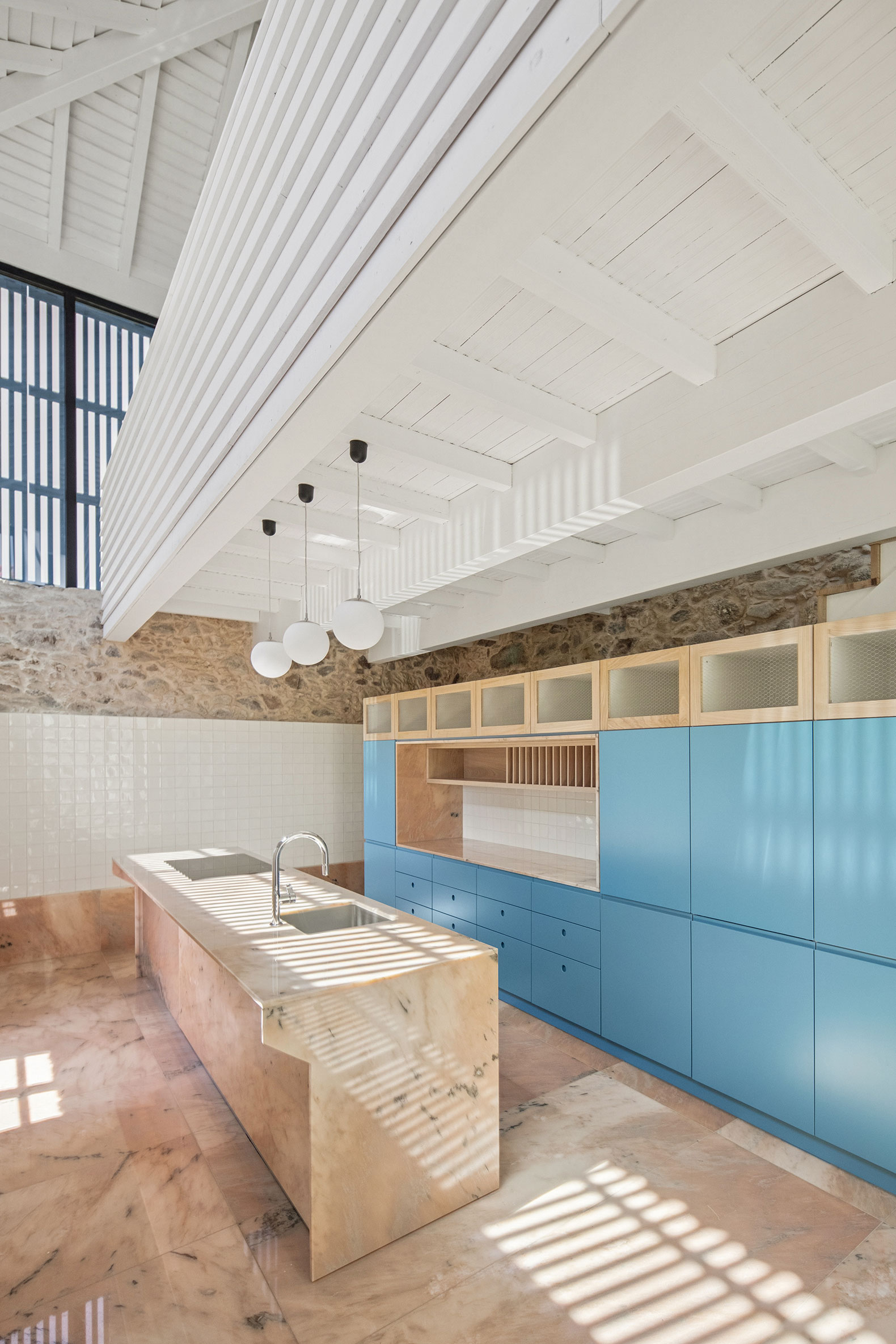
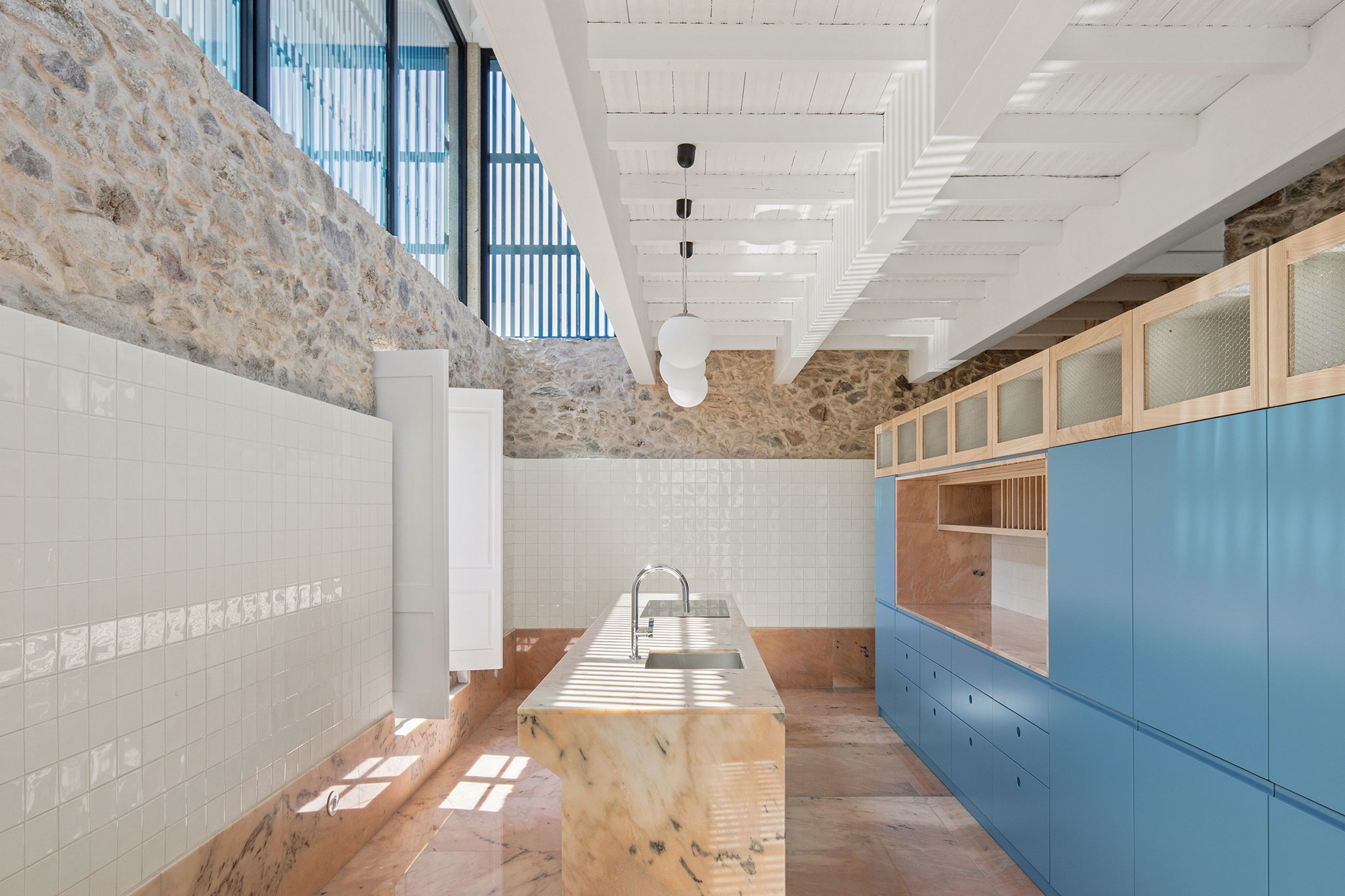
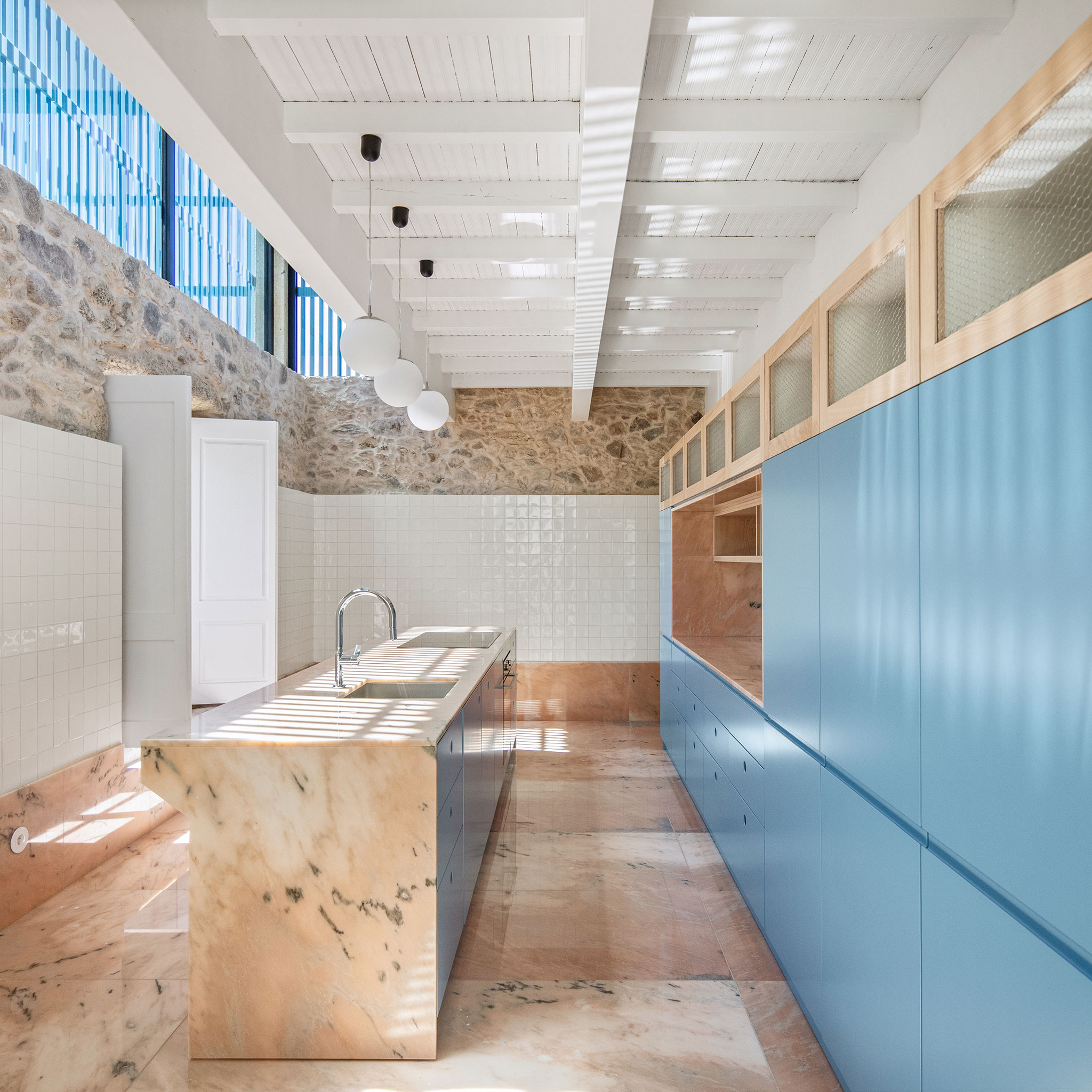
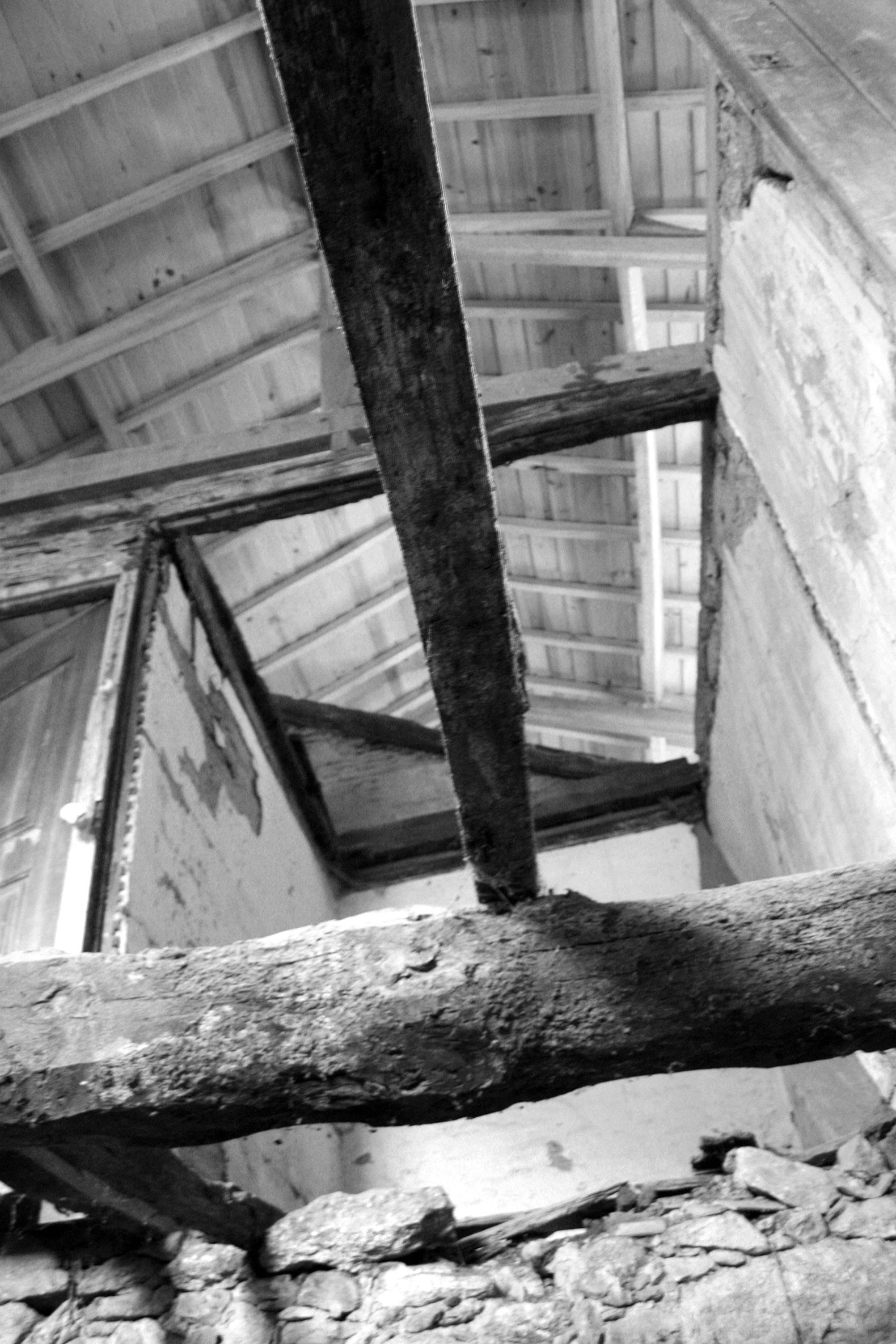
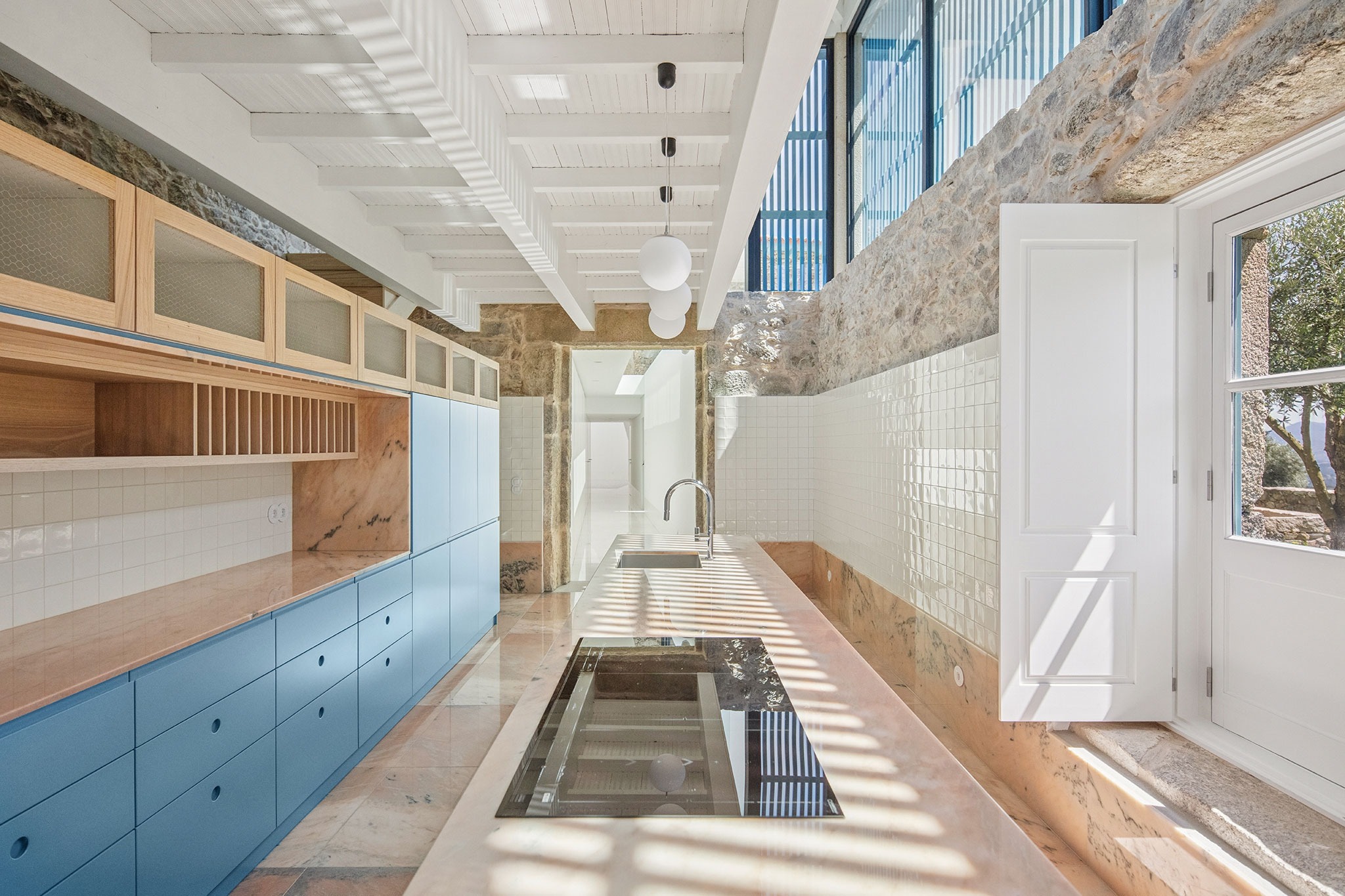
The reconstruction employed a traditional structural system of oak beams and joists supporting a chestnut floor, and a roof solution with treated pine wainscoting under the tiles, including insulation and waterproofing. The annexes were built behind granite retaining walls, a hydraulic mosaic floor was used in the living room, and in the kitchen they used materials that evoke the popular architecture of the Minho, such as cupboards, pink marble and handmade tiles.
Cherry Tree House Hotel by Tiago do Vale Arquitectos. Photograph by João Morgado.
Project description by Tiago do Vale Arquitectos
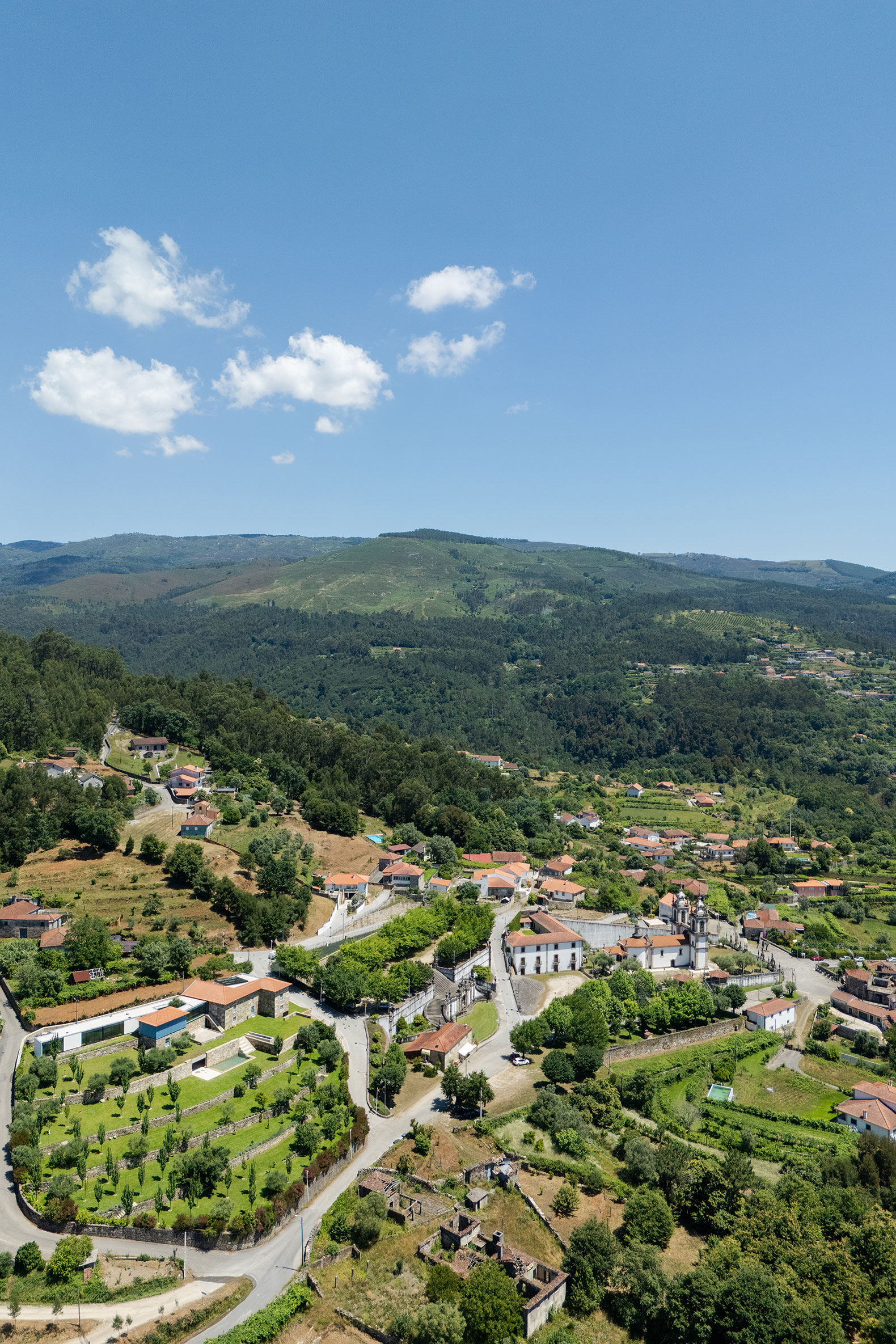
Built in 1773 on the foundations of a chapel dedicated to Saint Gregory the Great (dating back to the early 17th century), the Sanctuary of the Lord of Succor remains one of the most important pilgrimage destinations in the Alto Minho region. Located on the slopes of the Serra da Labruja mountain range, alongside the Portuguese Way of St. James and with sweeping views of the Labruja River valley, the Hotel Casa dos Cerezos (Cherry House Hotel) inhabits this territory and shares part of its history with the Sanctuary.
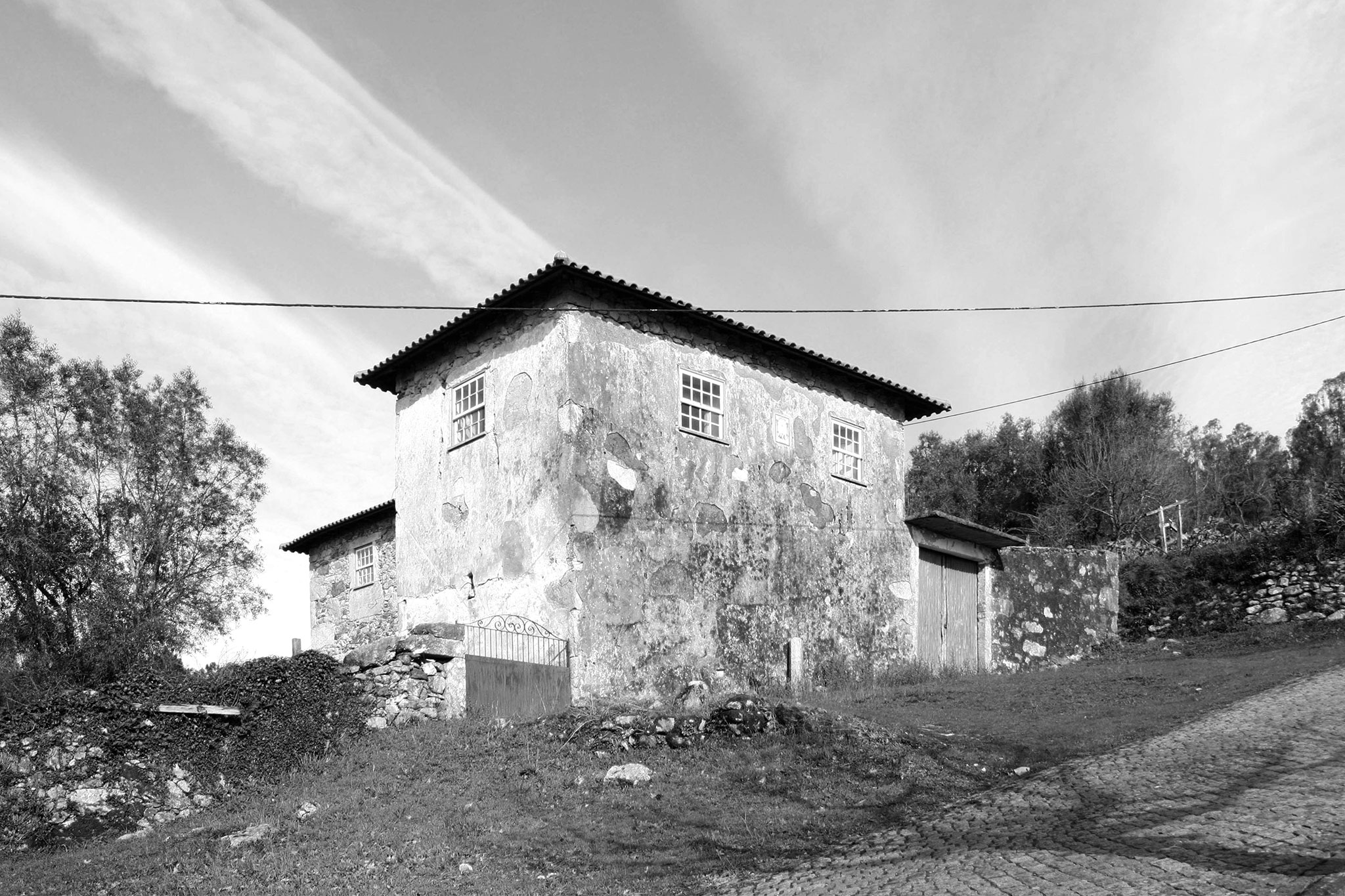
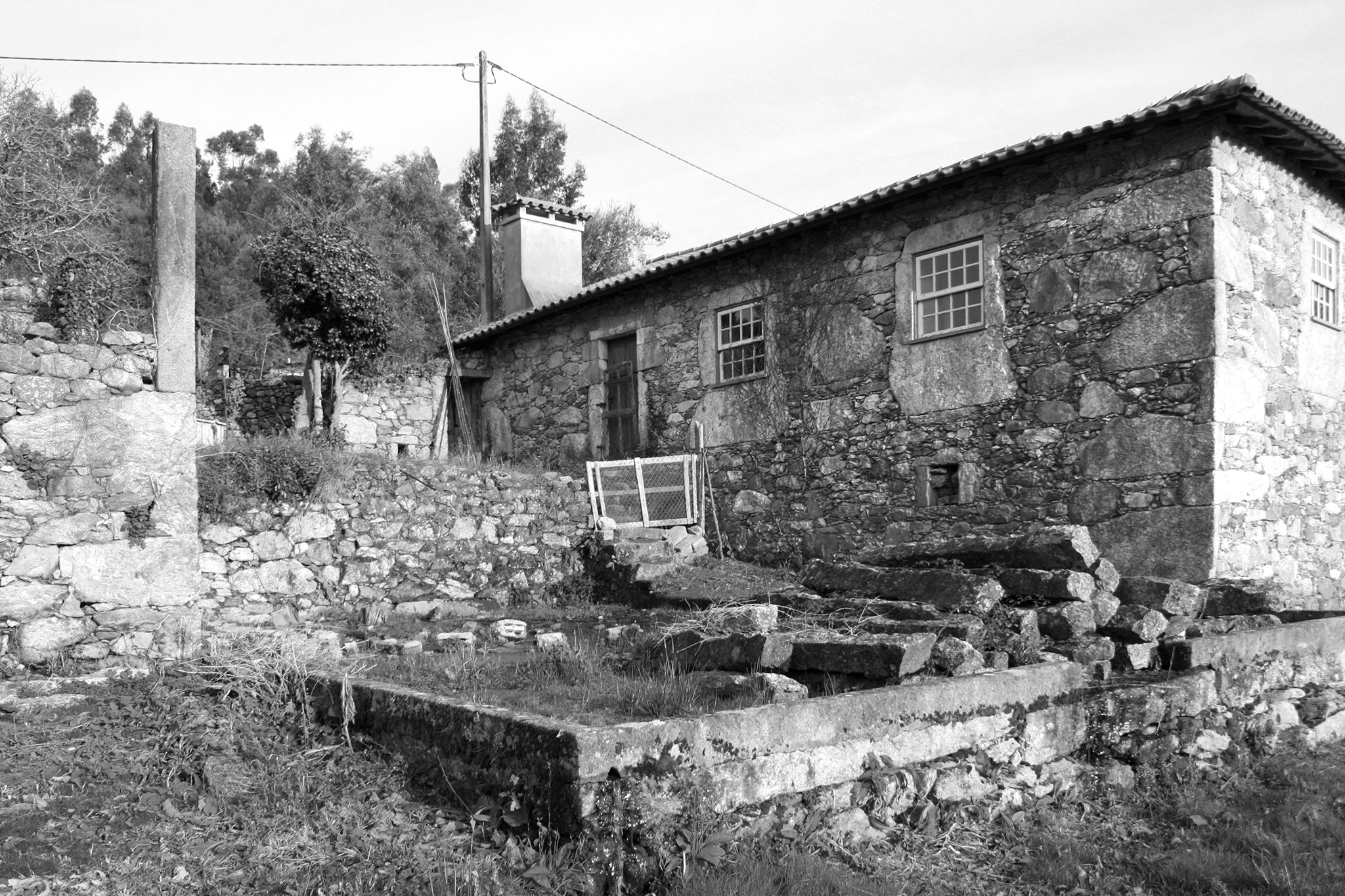
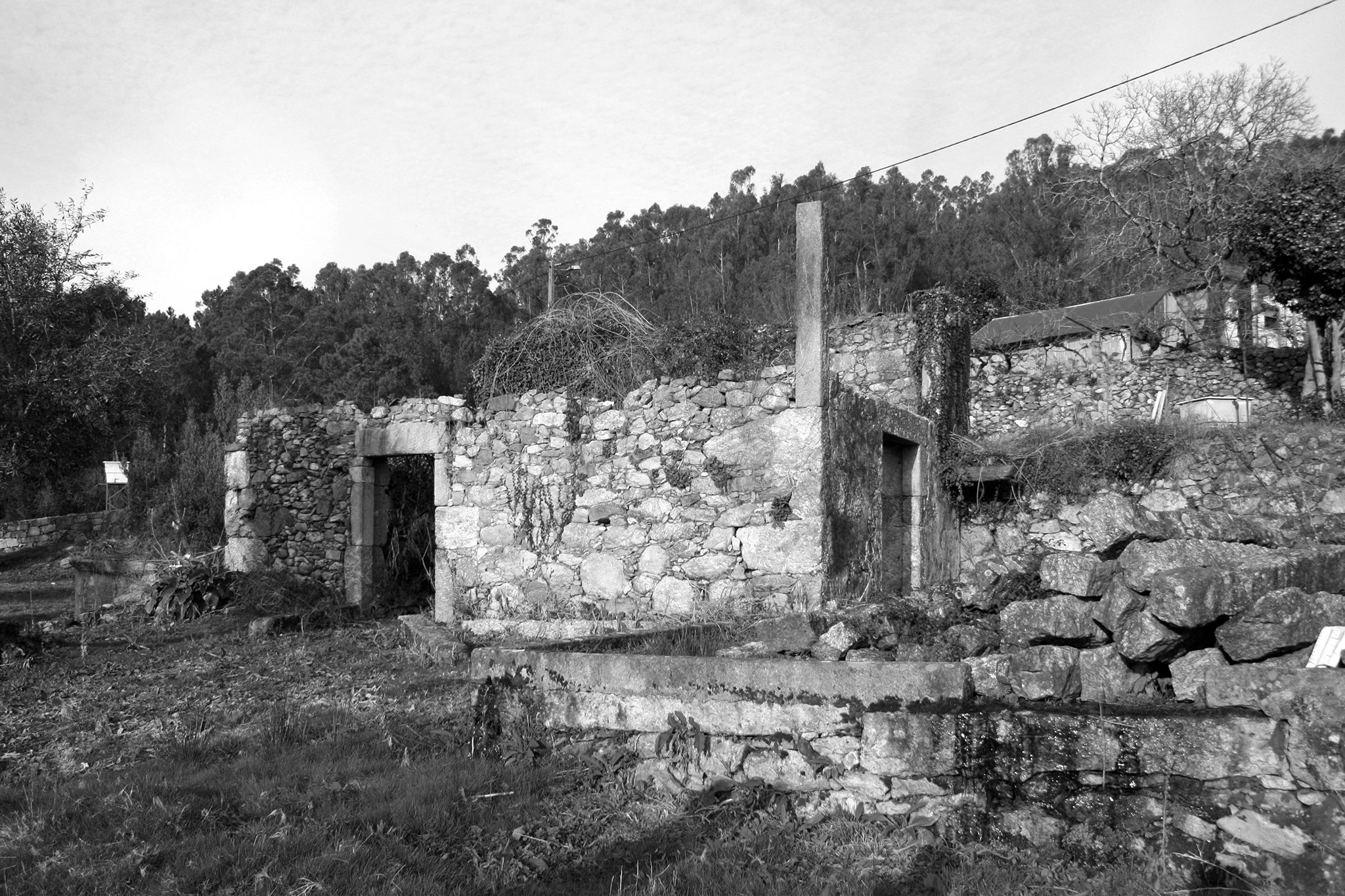
The house as it stands today is the result of successive, undocumented cycles of construction, abandonment, reconstruction, and transformation. The original core, with elements dating back to 1747, would have been a simple, parabolic, single-story structure, the presence of which is still discernible in the surviving façades, carefully constructed from a combination of granite and schist that reflects the site's unique geology.
The building complex developed from this original nucleus: a structure representative of rural architecture rooted in agriculture, yet also revealing a richness and dignity that distinguishes it from its immediate surroundings.
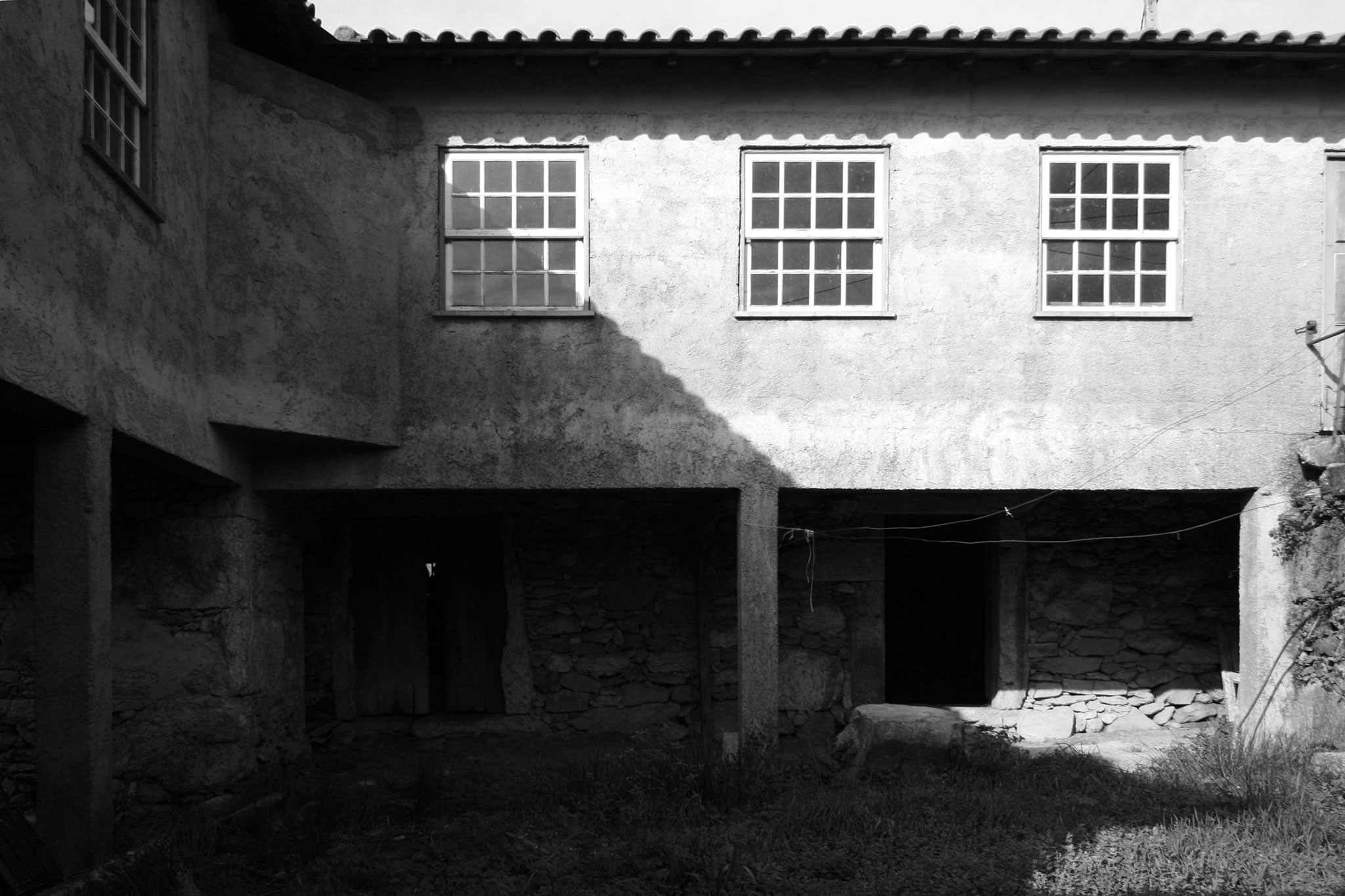
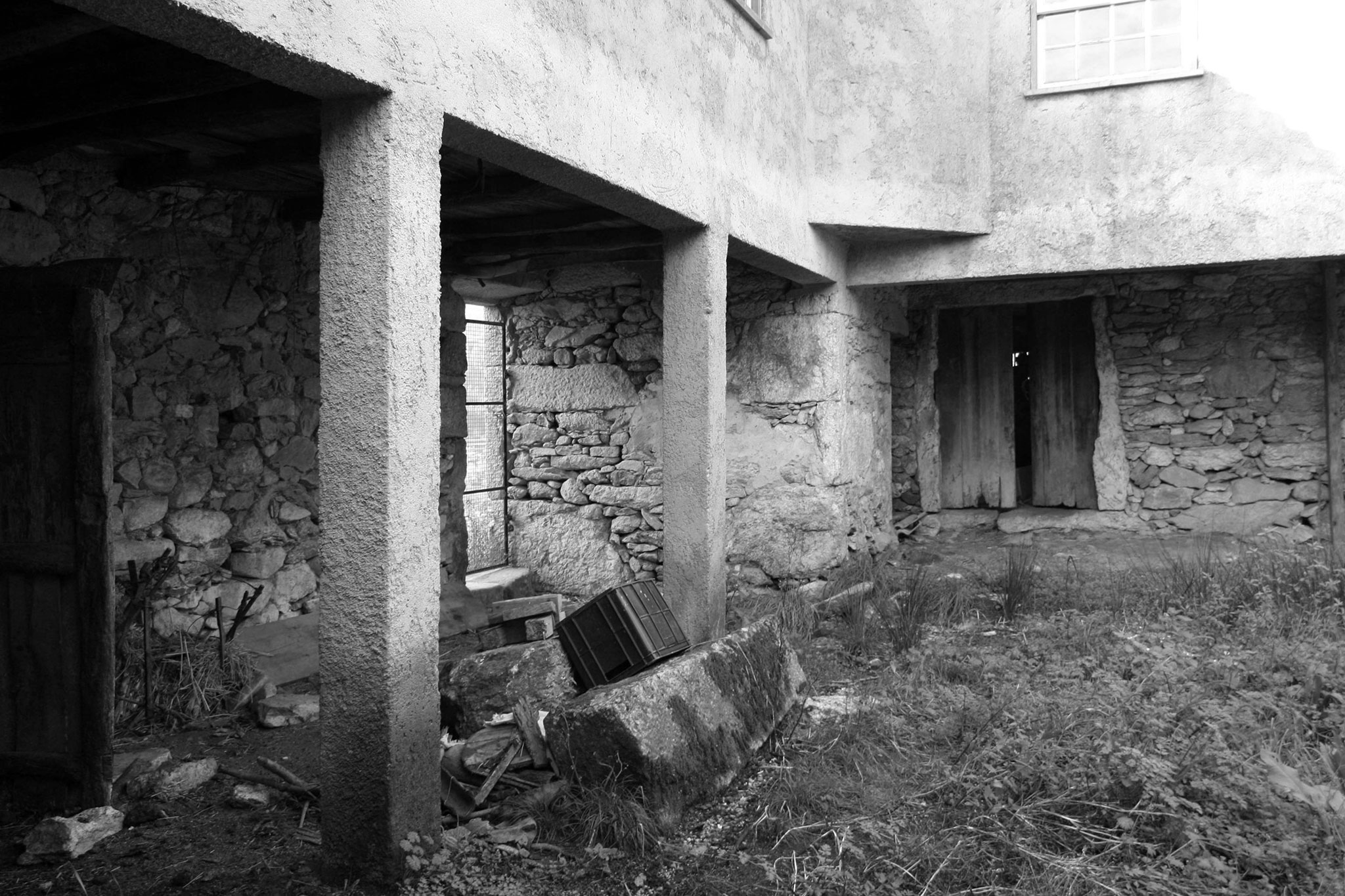
Like so many buildings in rural Portugal, it grew organically, both in plan and height, through successive expansions. It was rebuilt once again during the first half of the 20th century, incorporating an internal reinforced concrete portico structure, maintaining the pre-existing (already ruined) volume, and forming an L-shaped structure that encloses a courtyard with street access.
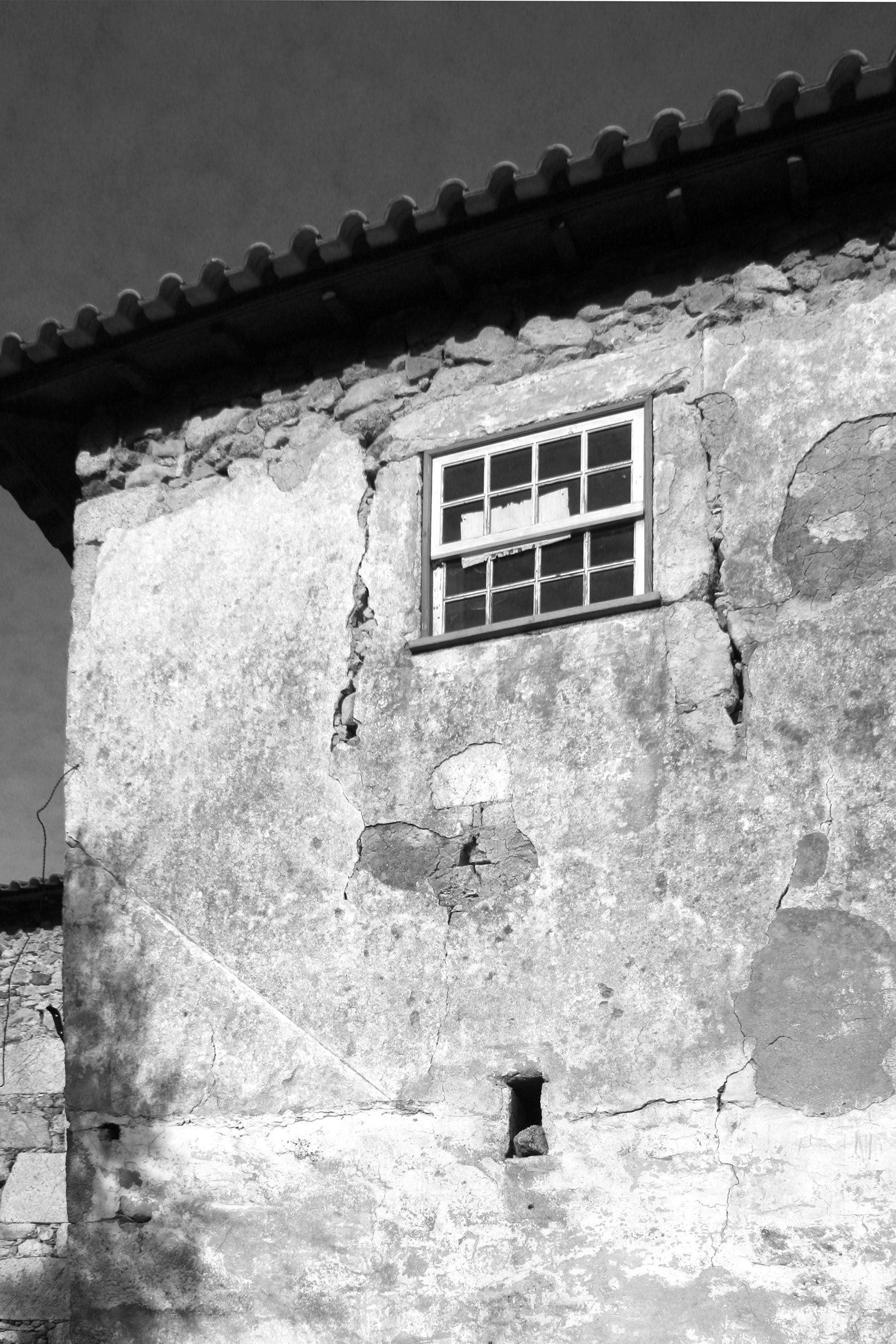
Only parts of the facades remain from the original construction; however, the interior still preserves elements that, by their nature and finish, reflect its former status as the property of the Rector of the Sanctuary.
The rehabilitation of the Cherry Tree House and its adaptation to a hotel program therefore required distinct approaches, respecting the past without mythologizing it, in a coexistence of different eras, uses, and memories, dispersed throughout various areas of the building.
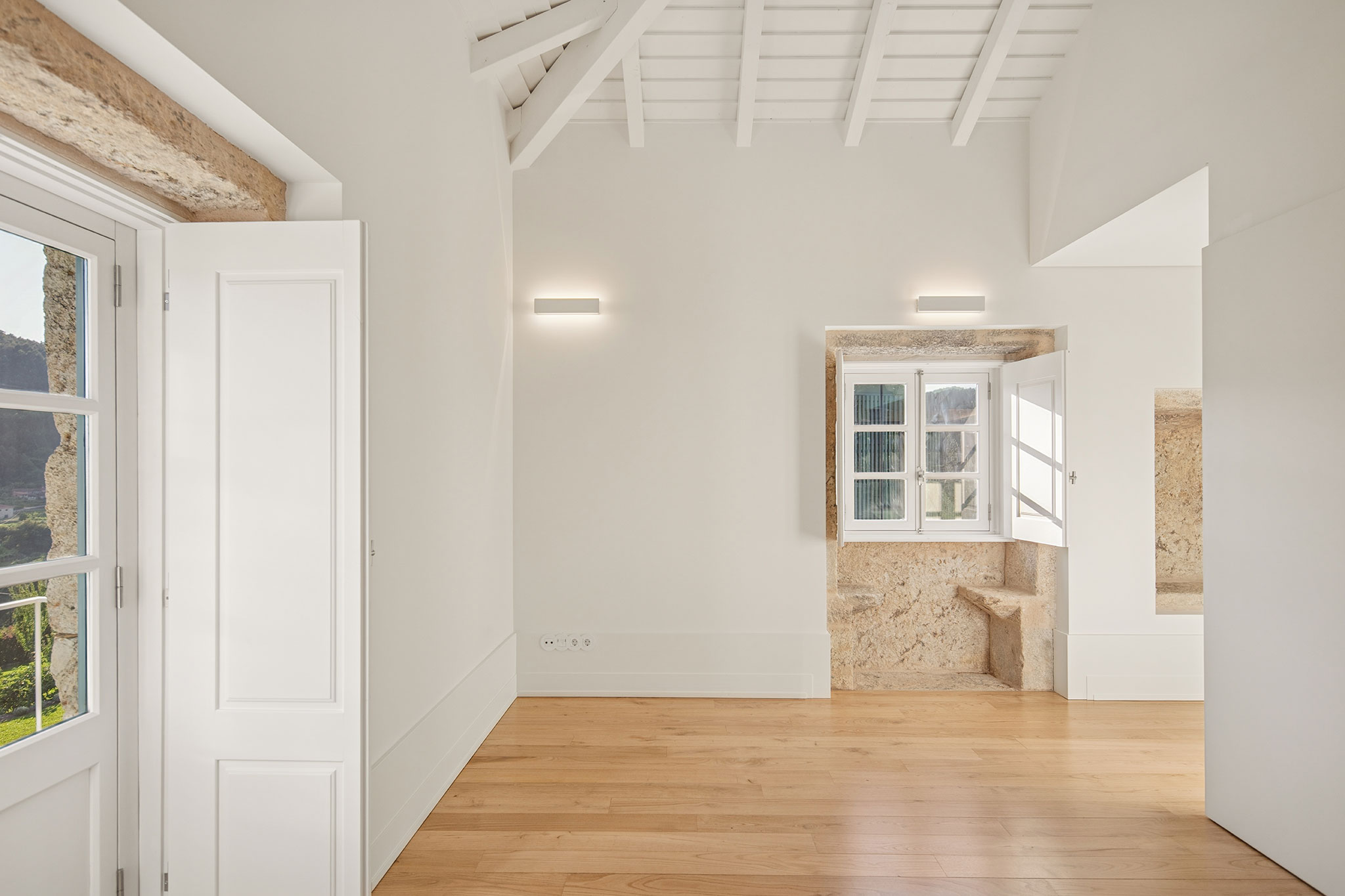
The restitution (albeit simplified and clearly distinct from a speculative restoration) of lost traditional elements (such as baseboards, roofs, woodwork, and doorways) on the surviving facade walls sought to highlight the original features, minimizing the distractions introduced by later additions.
At the same time, partially lost elements (such as the hayloft) were reconstructed, reinterpreting them in a way that directly references their former appearance without creating ambiguity regarding the time of the intervention.
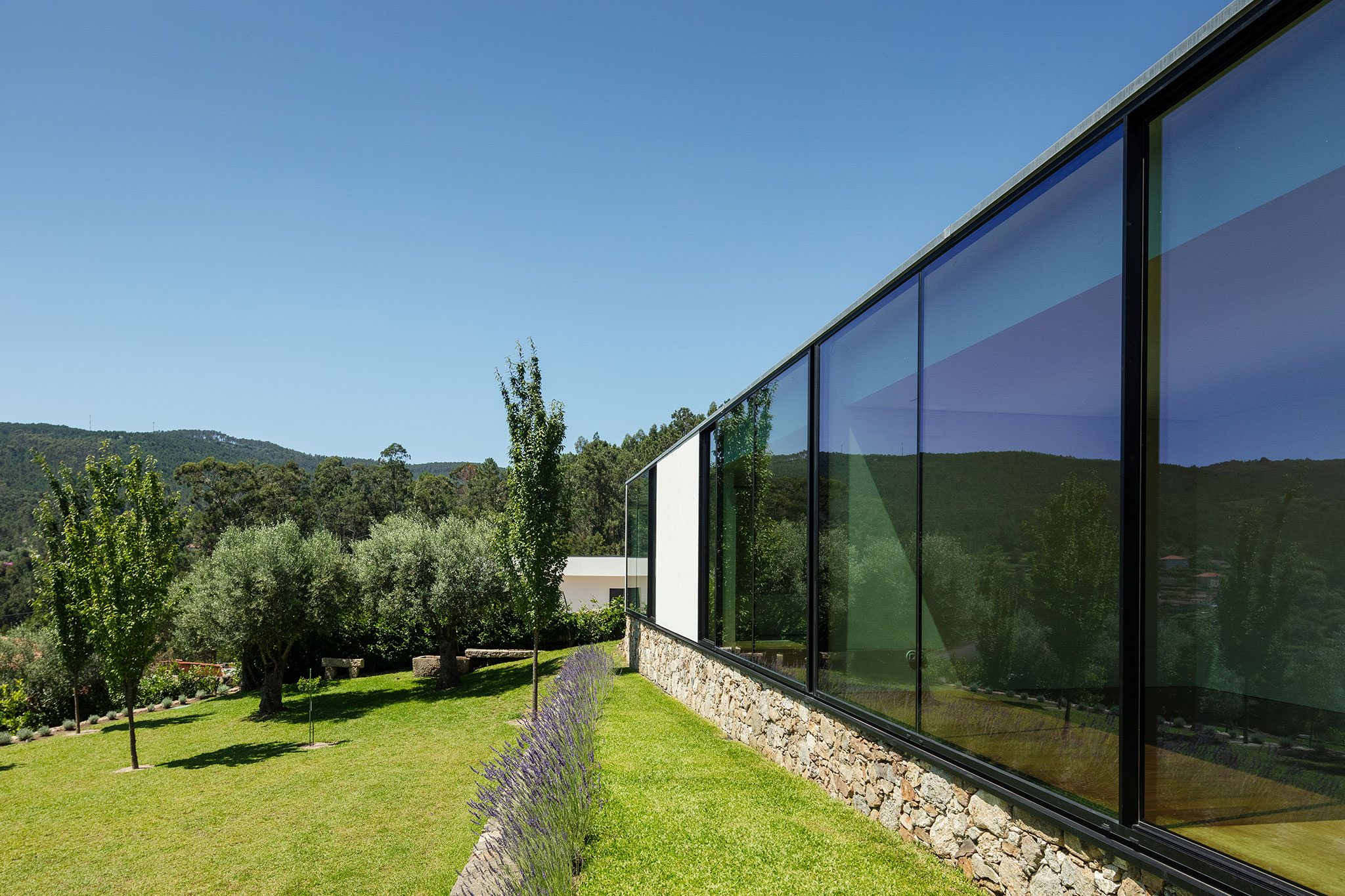
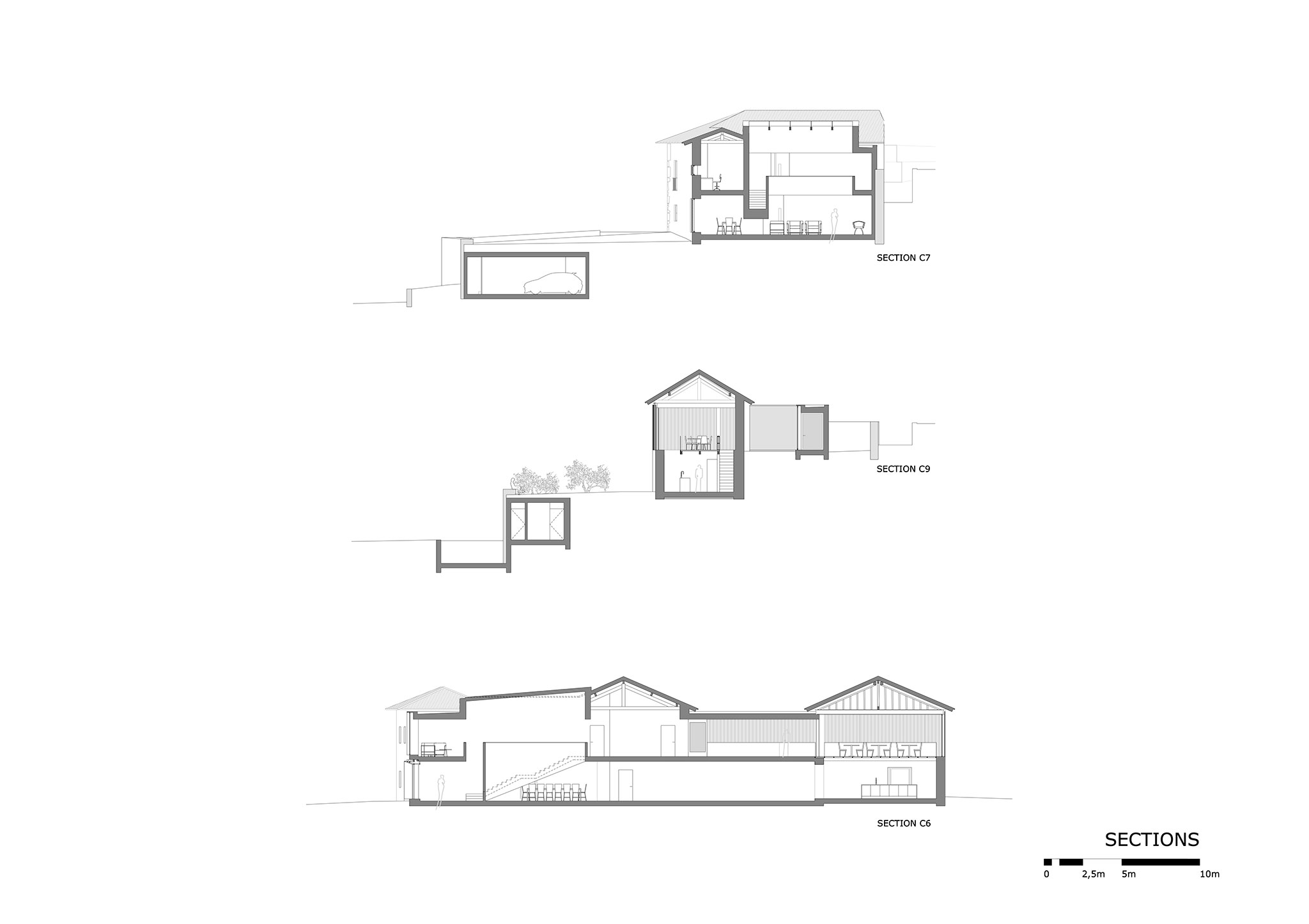
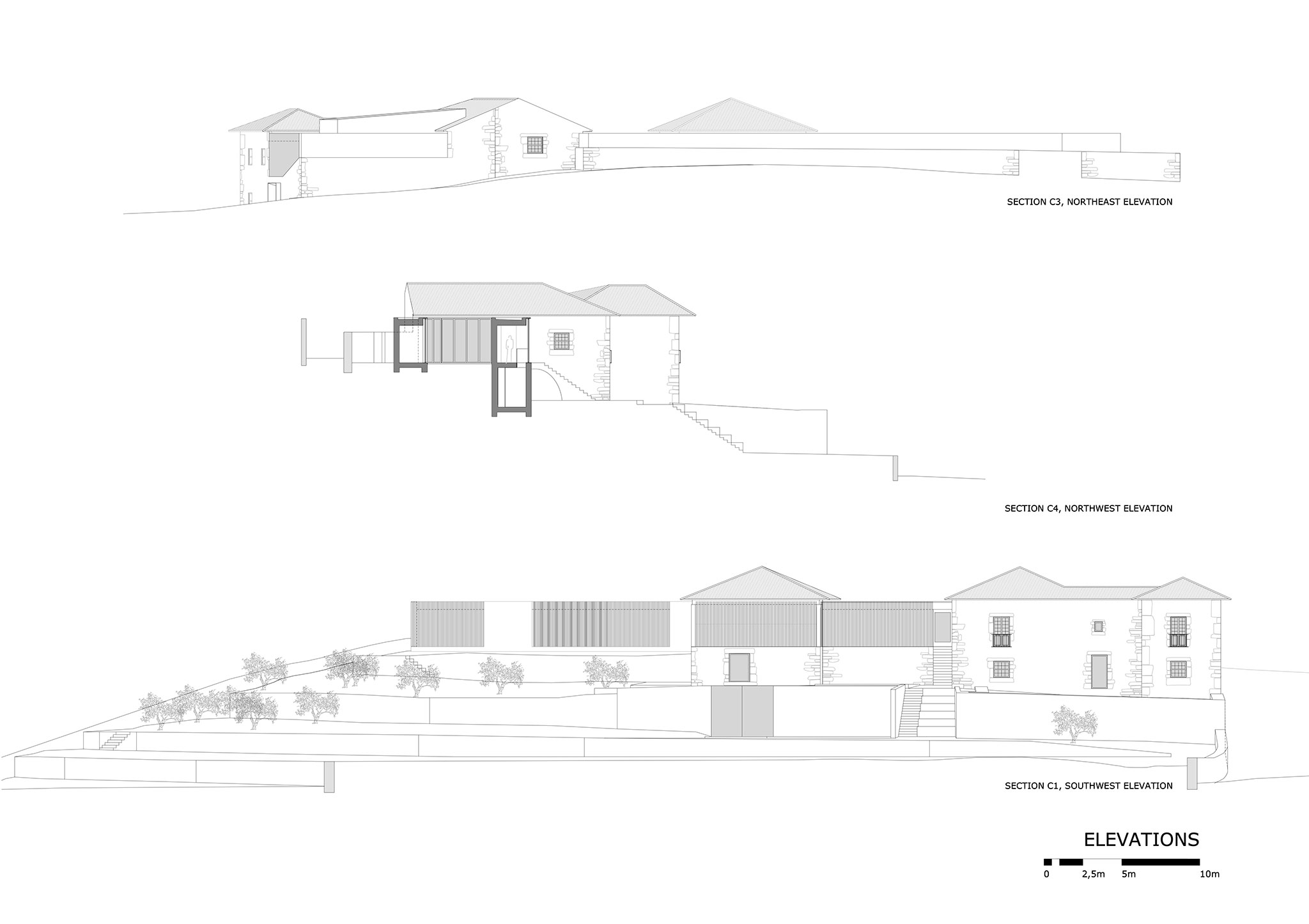
Finally, the new volumes that complement the existing structures (addressing both the spatial and performance needs of the new program) are equally distinctly contemporary. They unfold horizontally within a simplified volumetry that remains subordinate to the original structures, allowing these to be reinforced and enhanced through contrast.
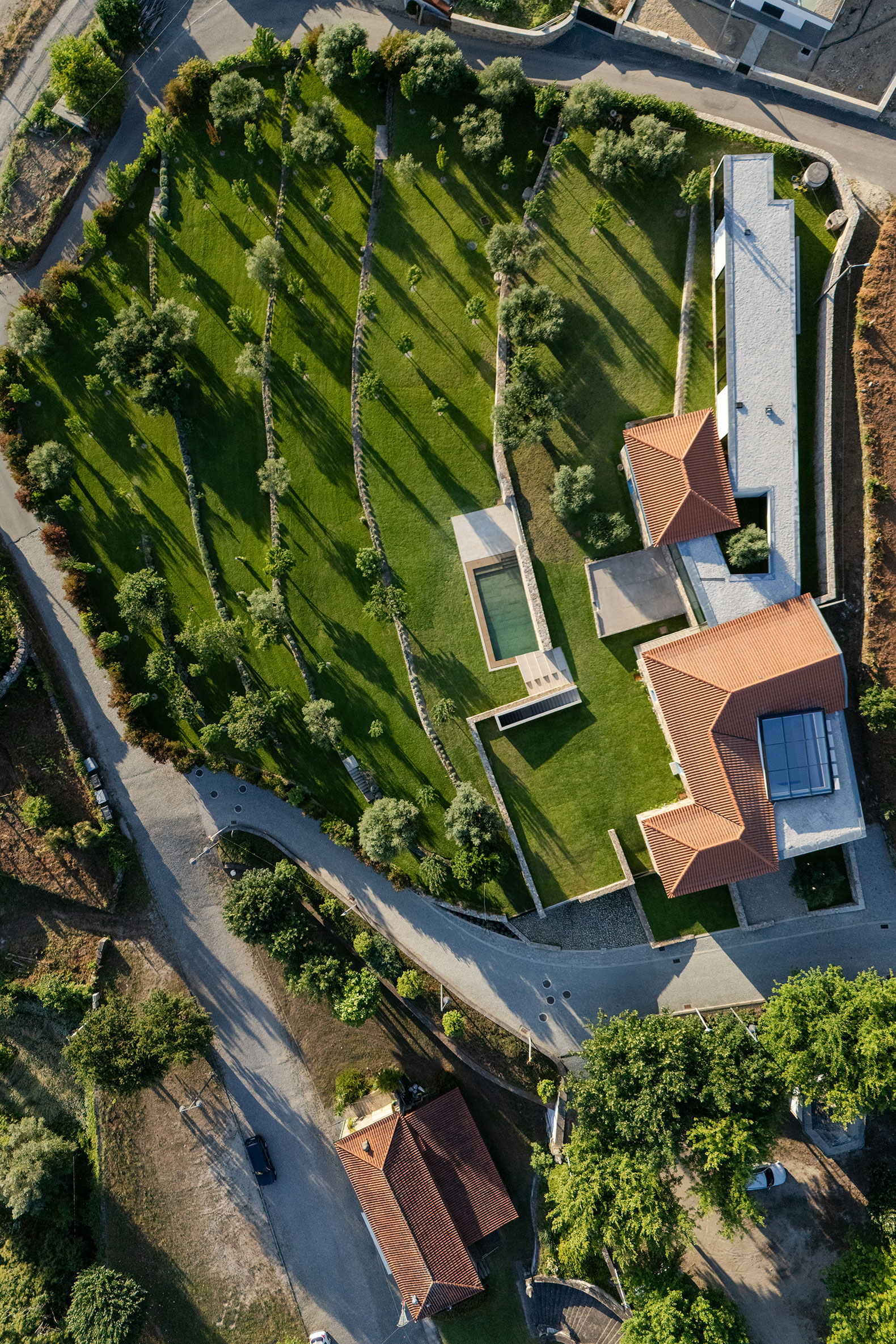
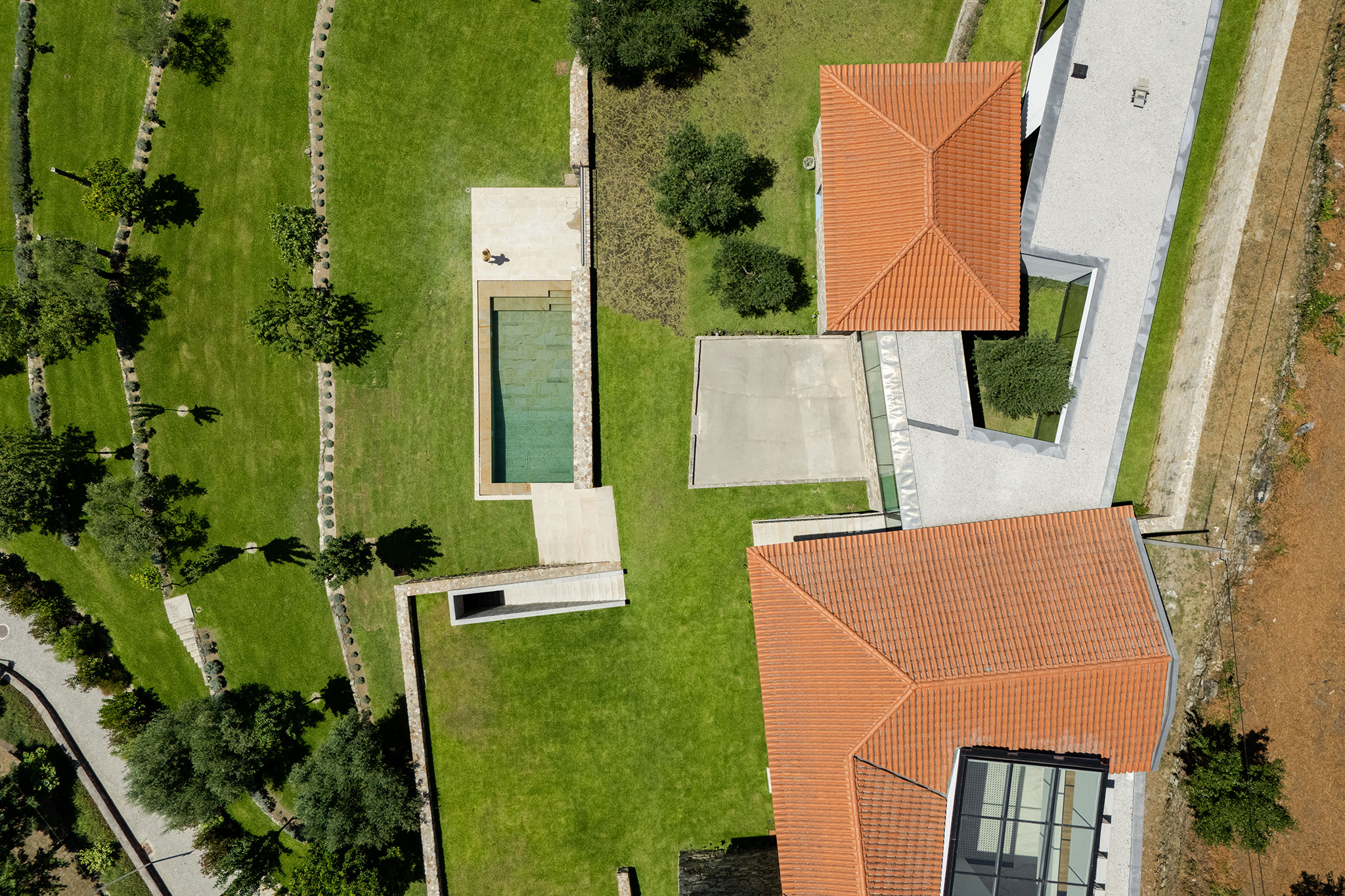
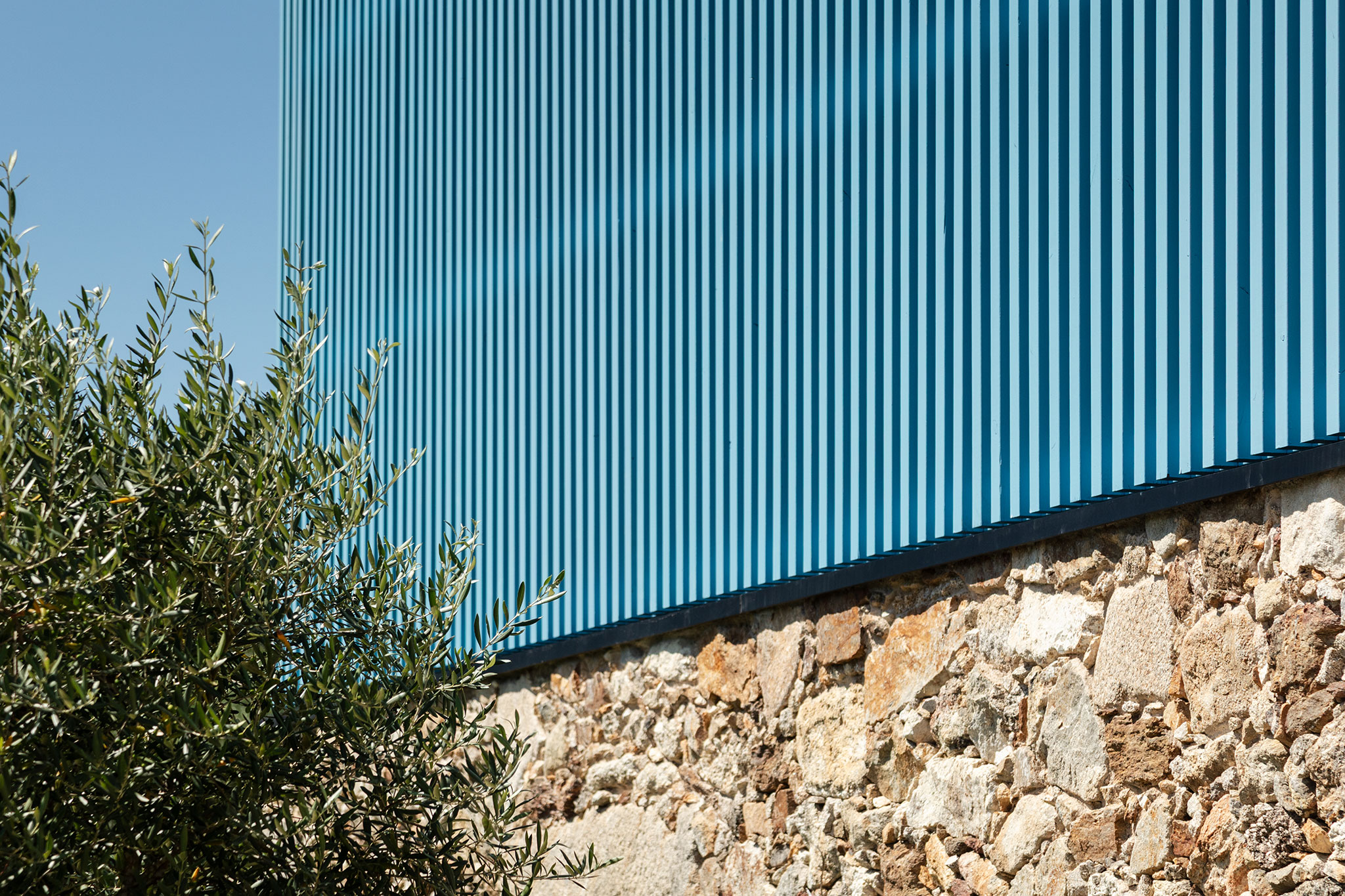
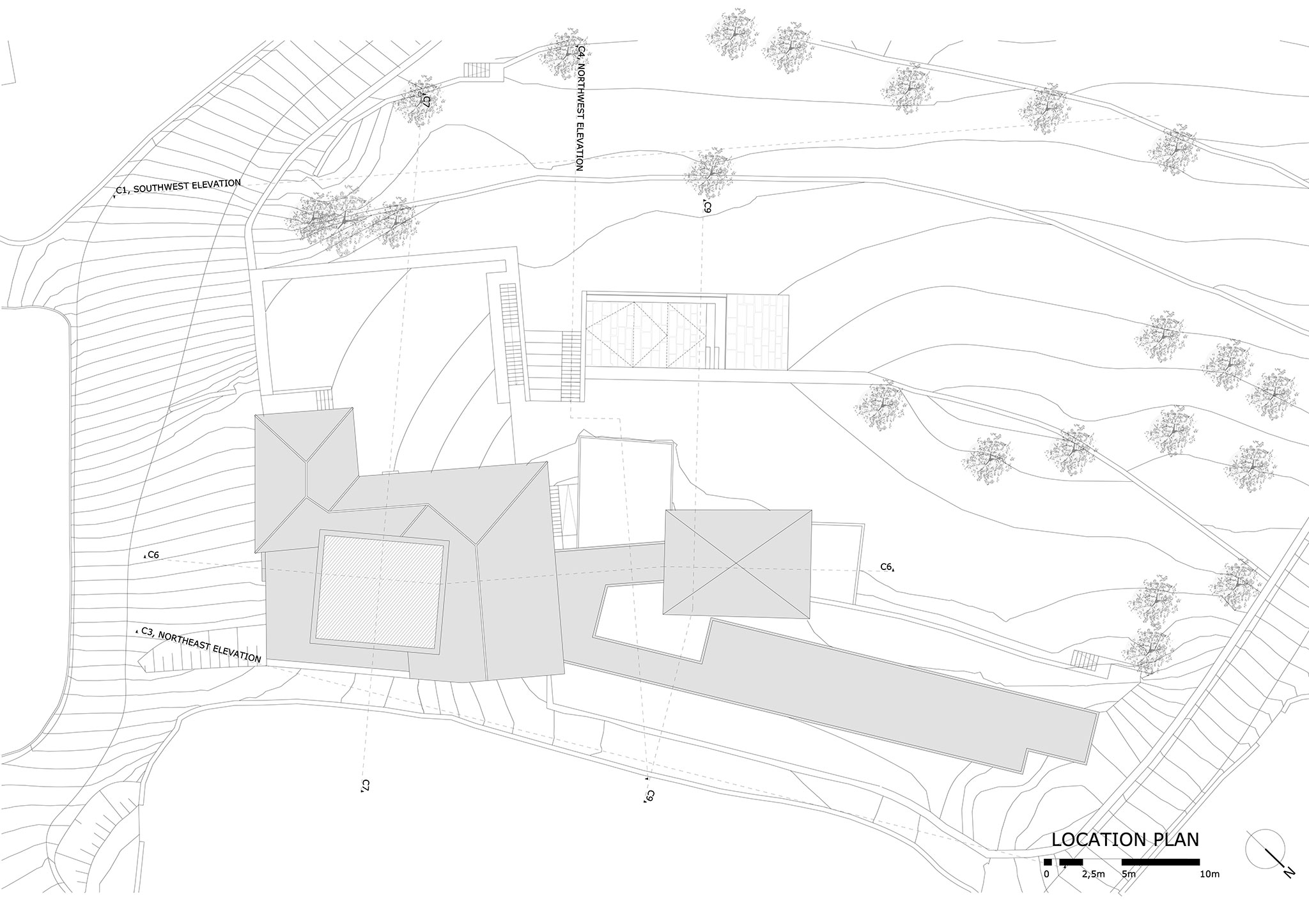
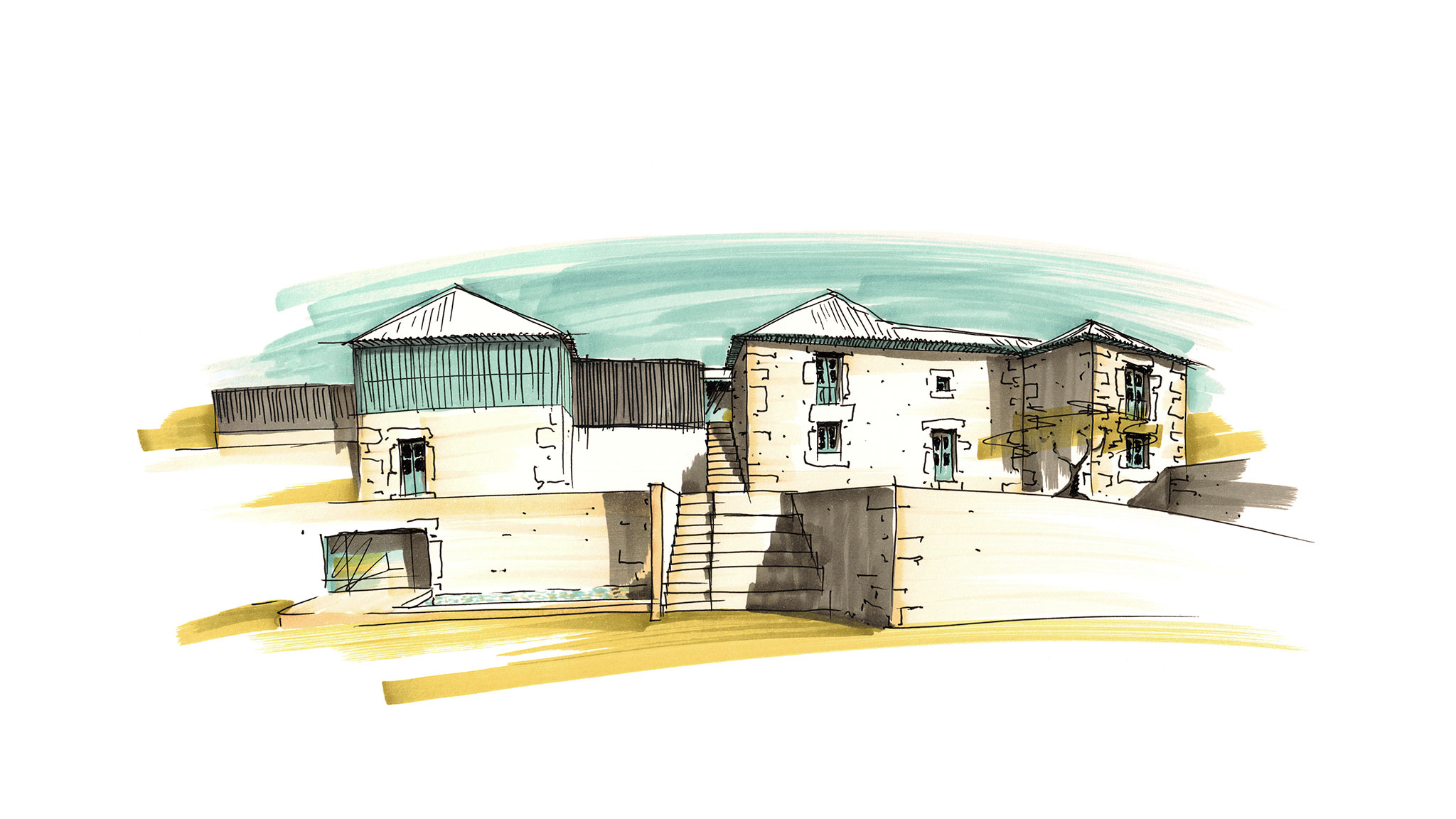
The organization of the built complex is rooted in the principles of the site, re-establishing the link between the house and the palheiro (a traditional thatched-roof structure) along a pre-existing wall, from which connections are drawn to the new bedroom wing.
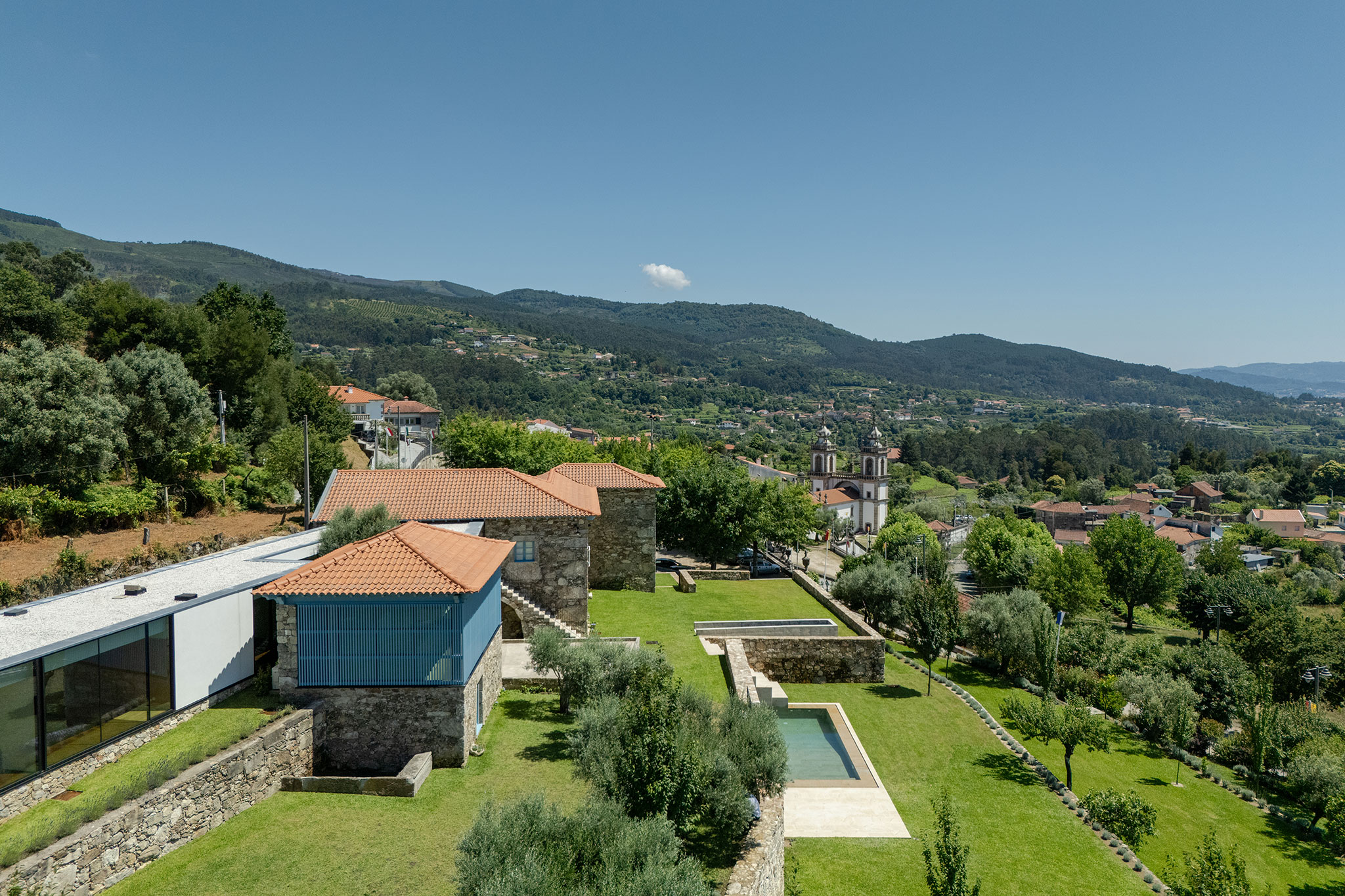
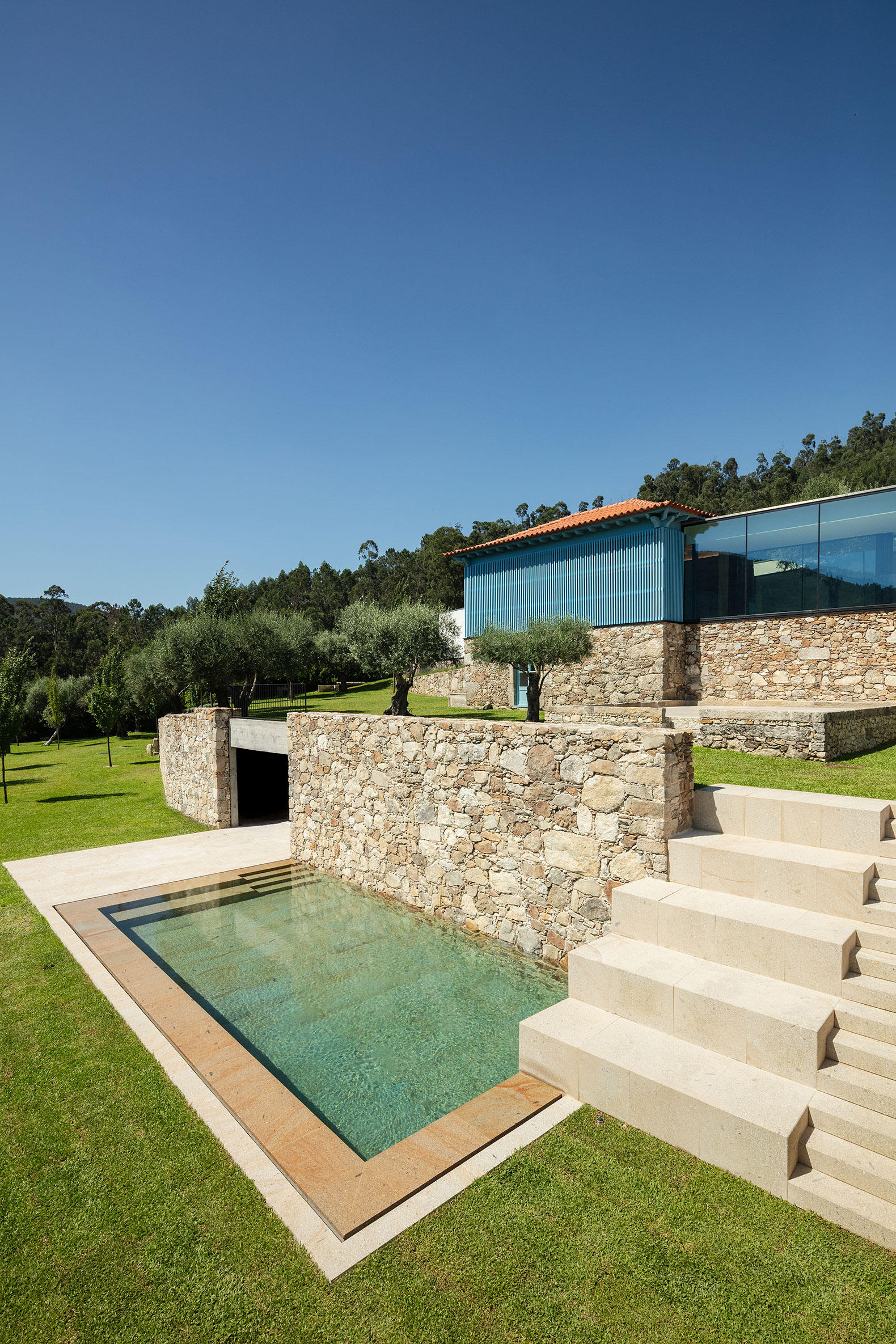
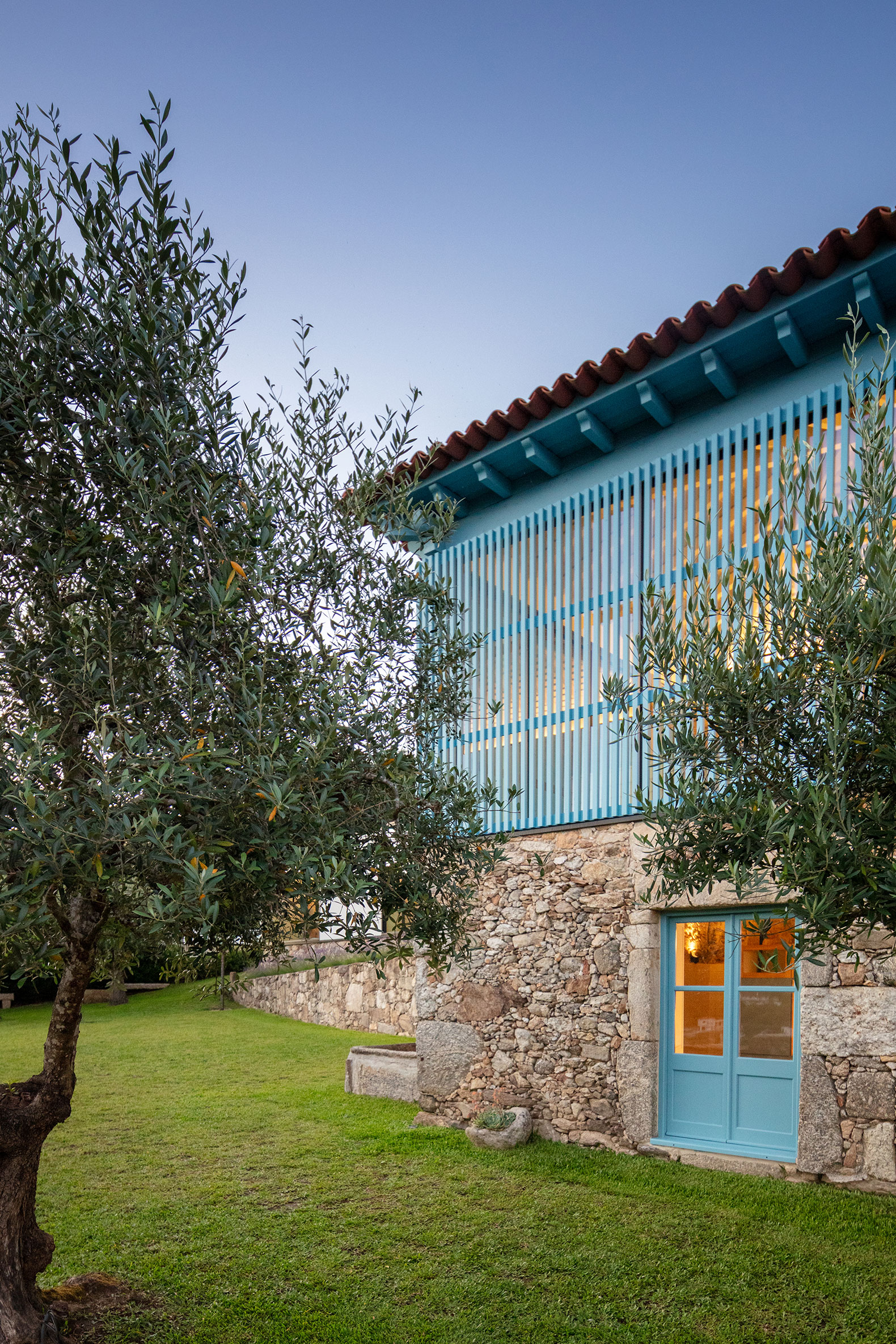
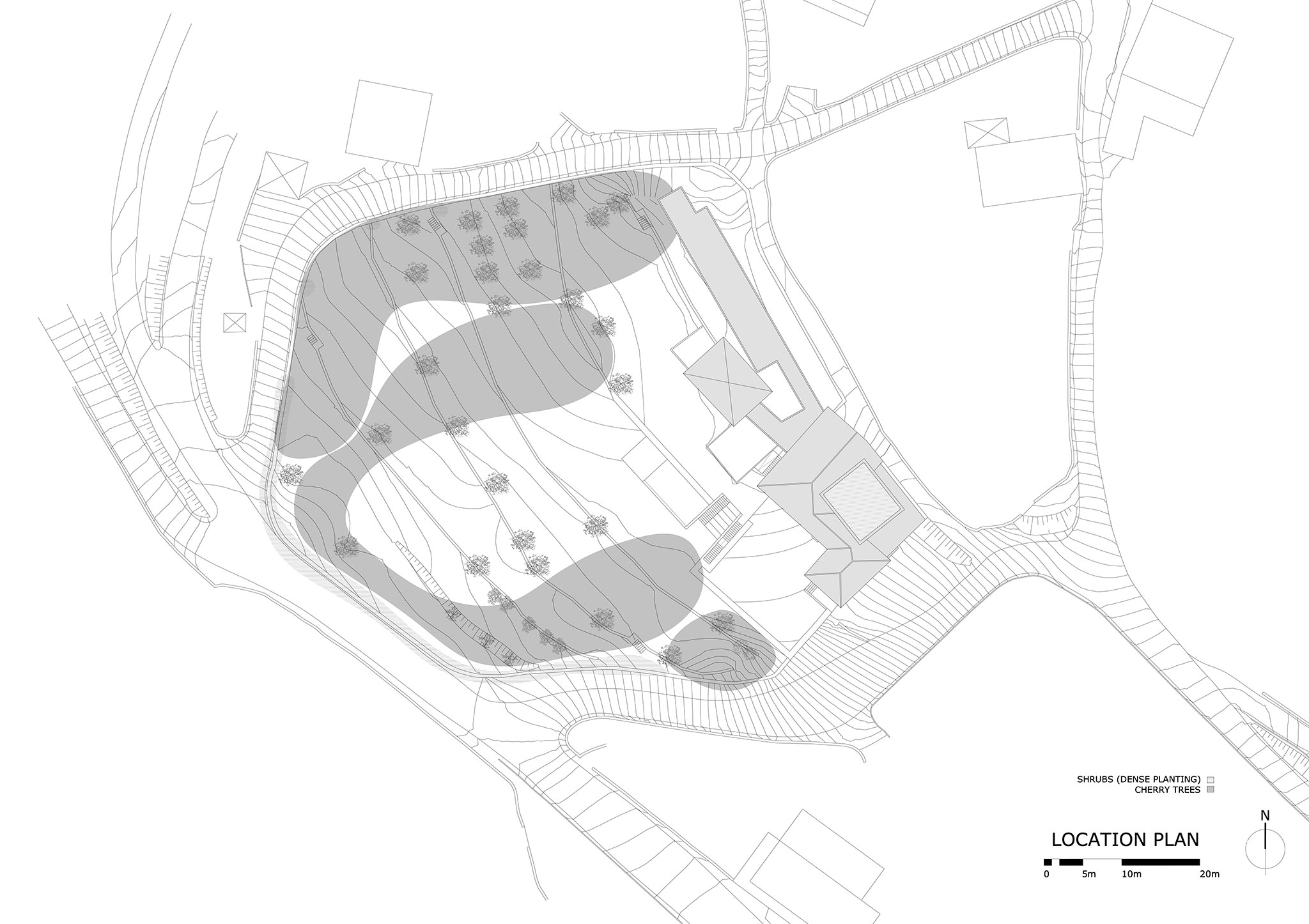
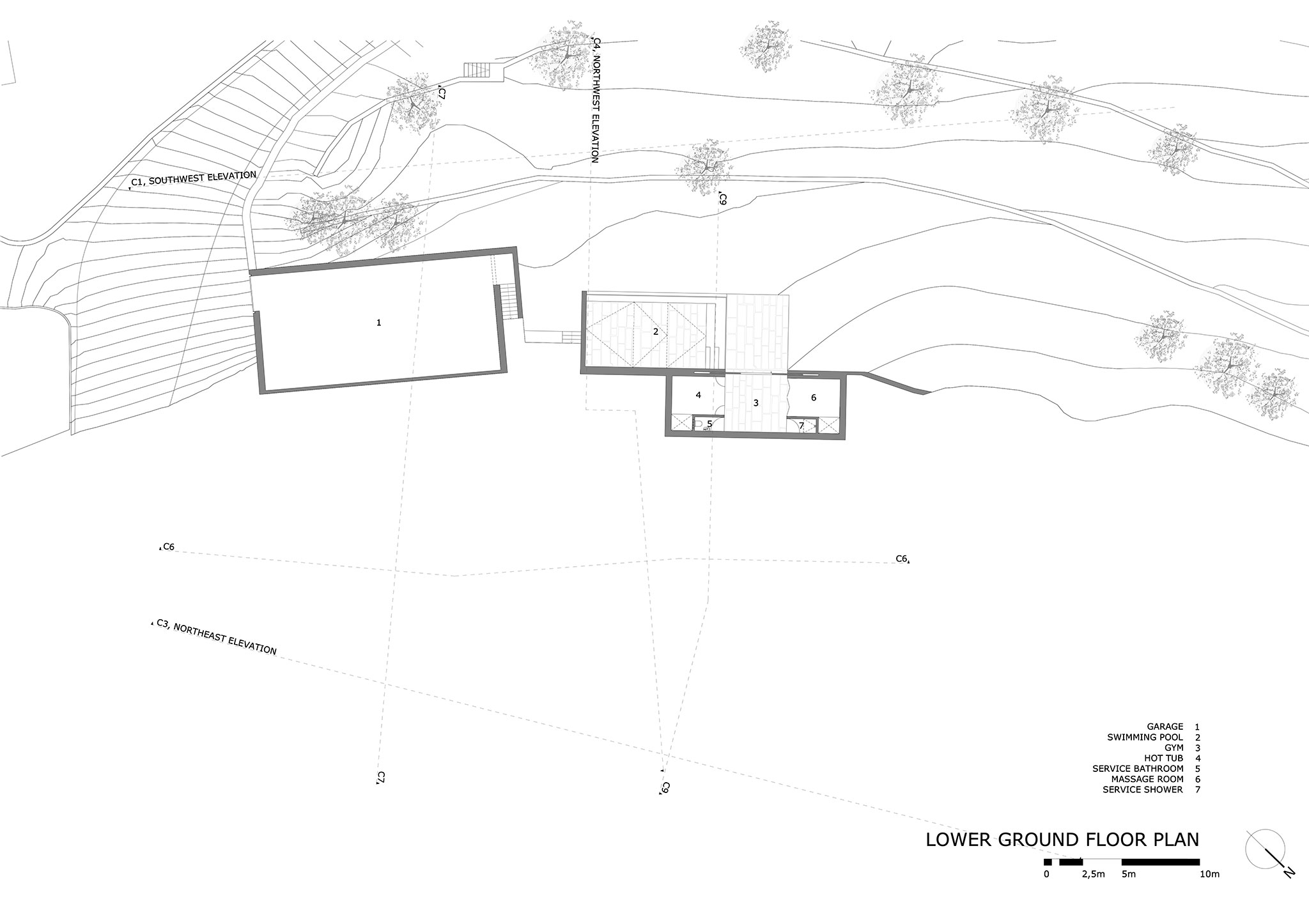
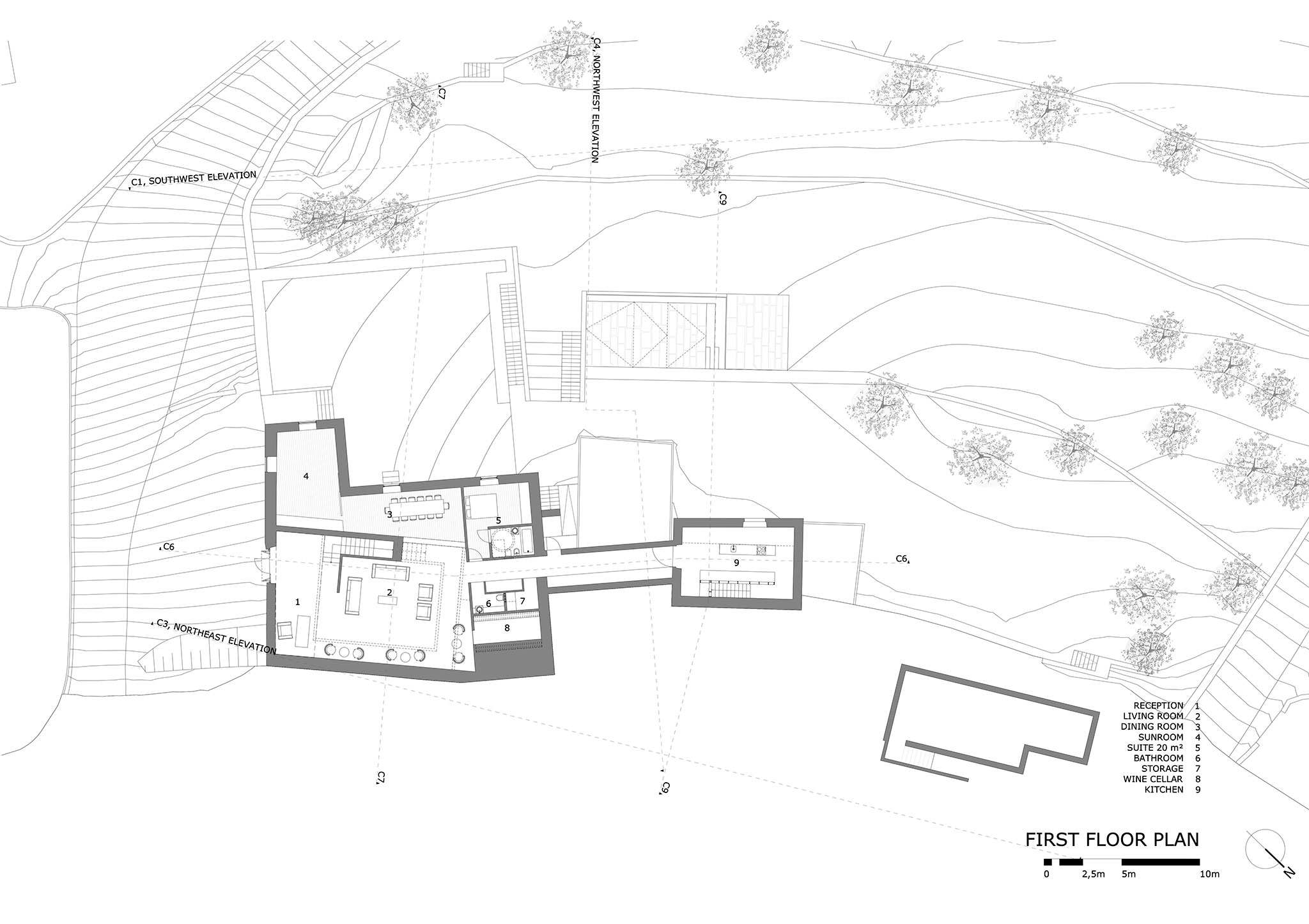
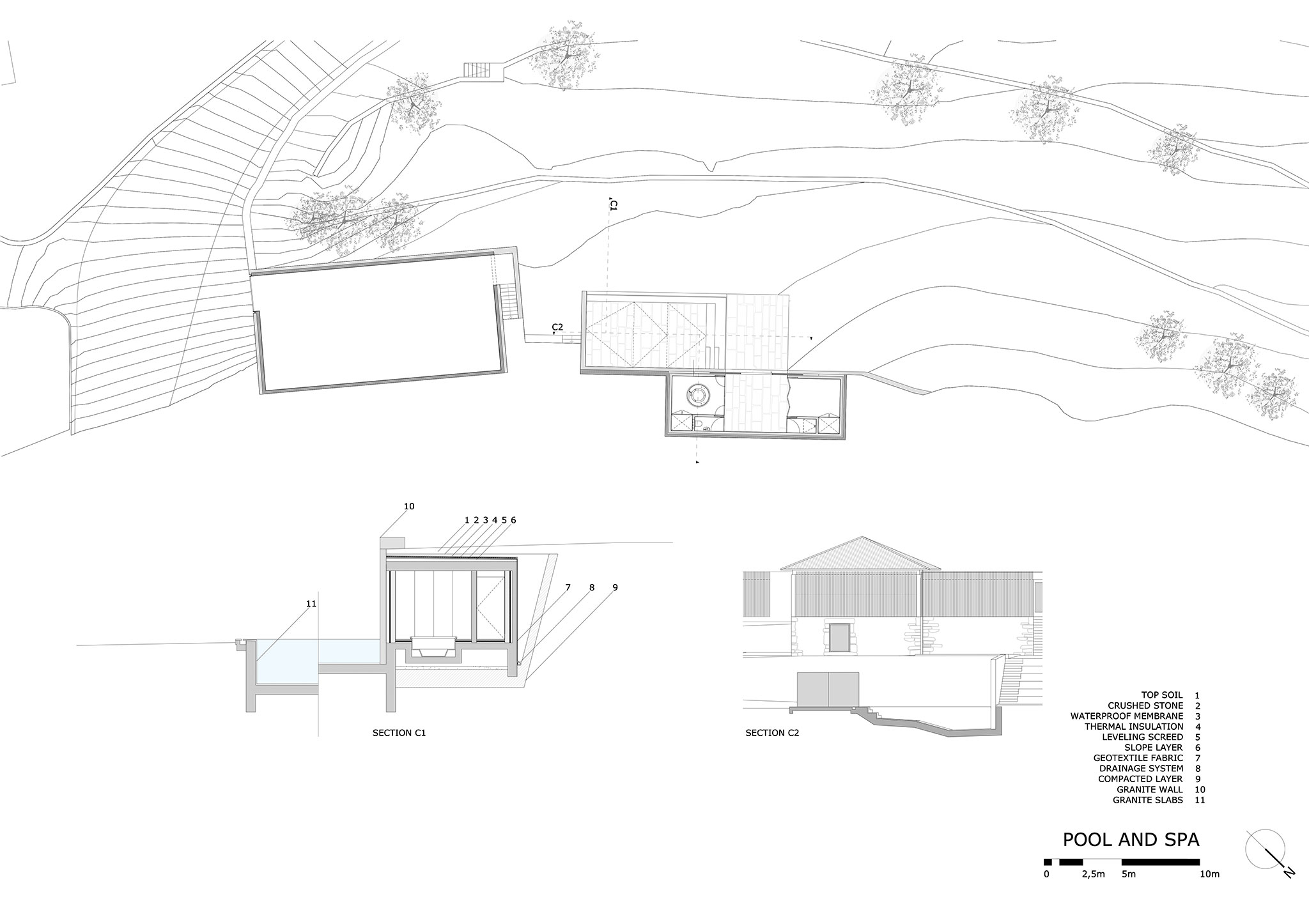
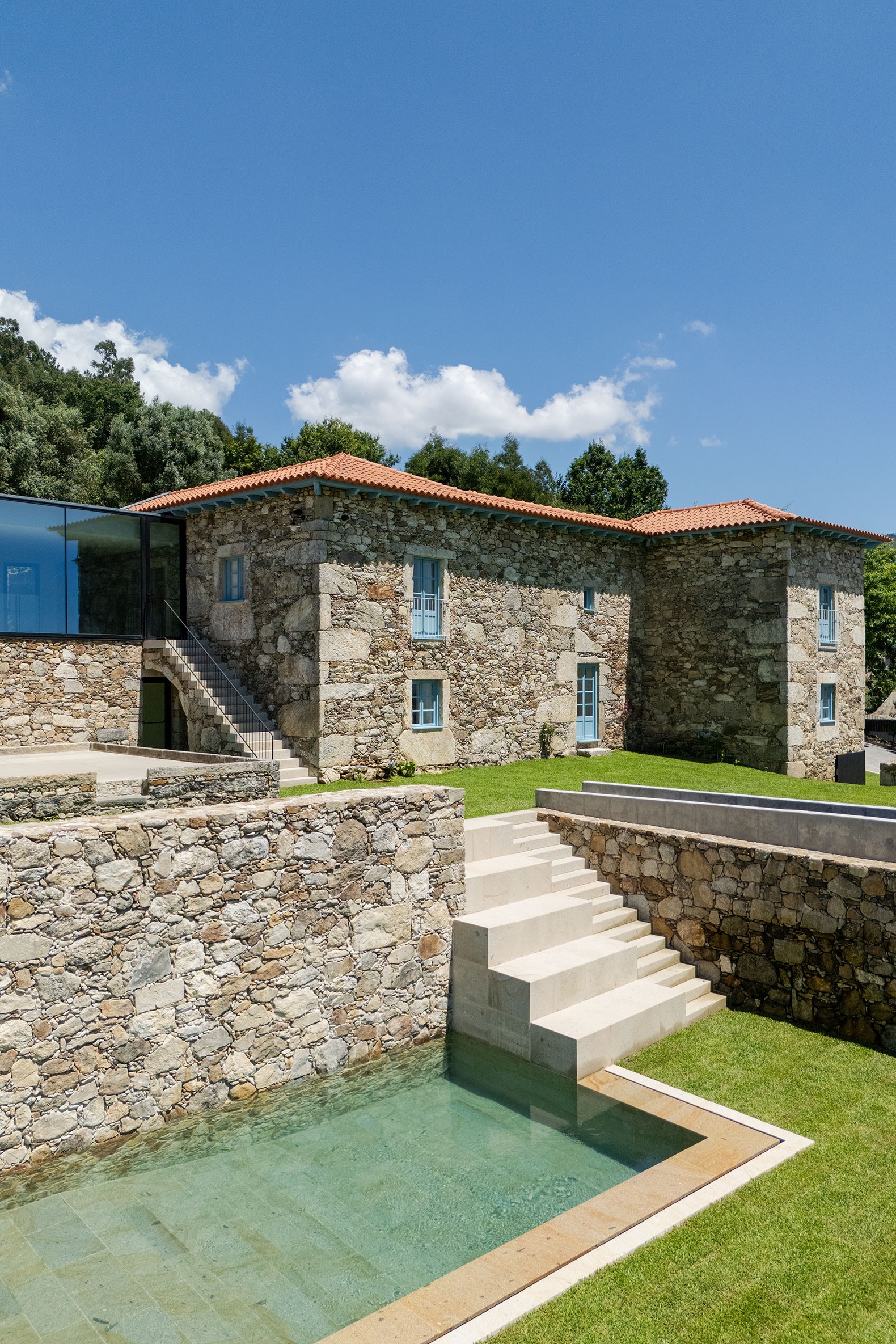
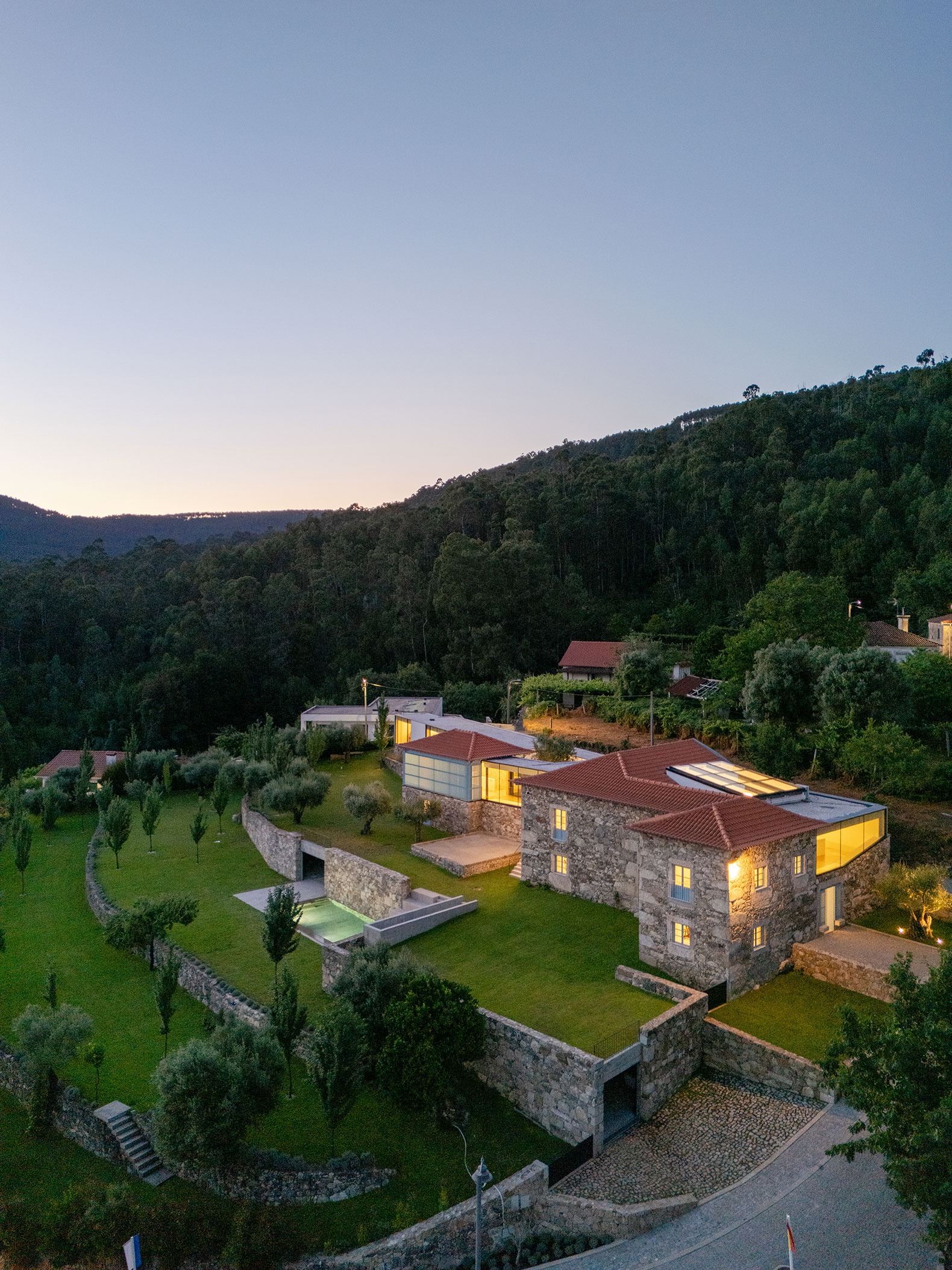
The old courtyard becomes the main living room of the house, and the annexes are built behind granite retaining walls, replicating the solutions traditionally used on the estate. The successive terraces are connected by strategically placed staircases.
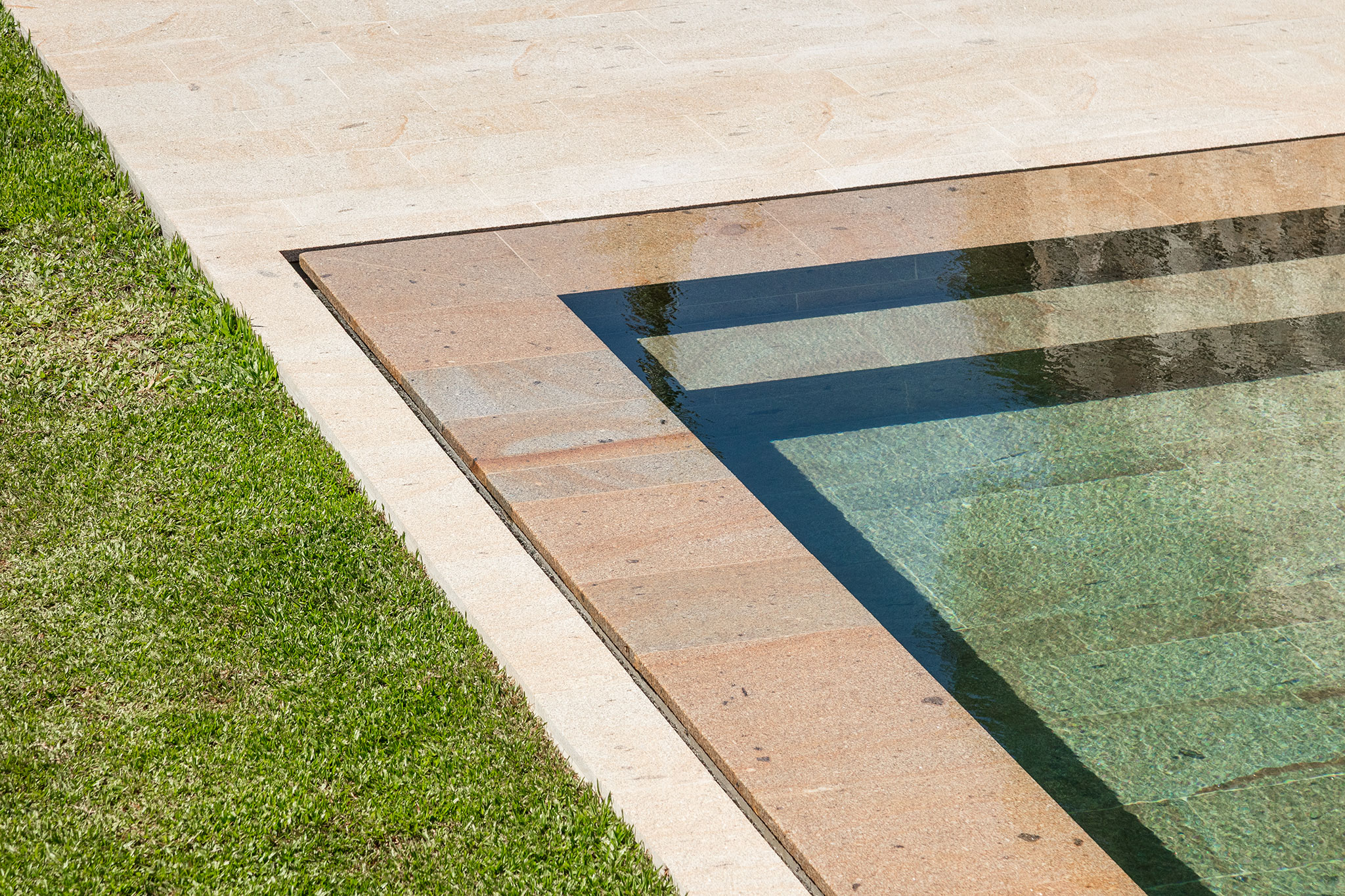
Between the terraces of the house and the granite pool (a reminder of the traditional irrigation ponds of Minho), a small auditorium opens up, a place for contemplating the sunset.
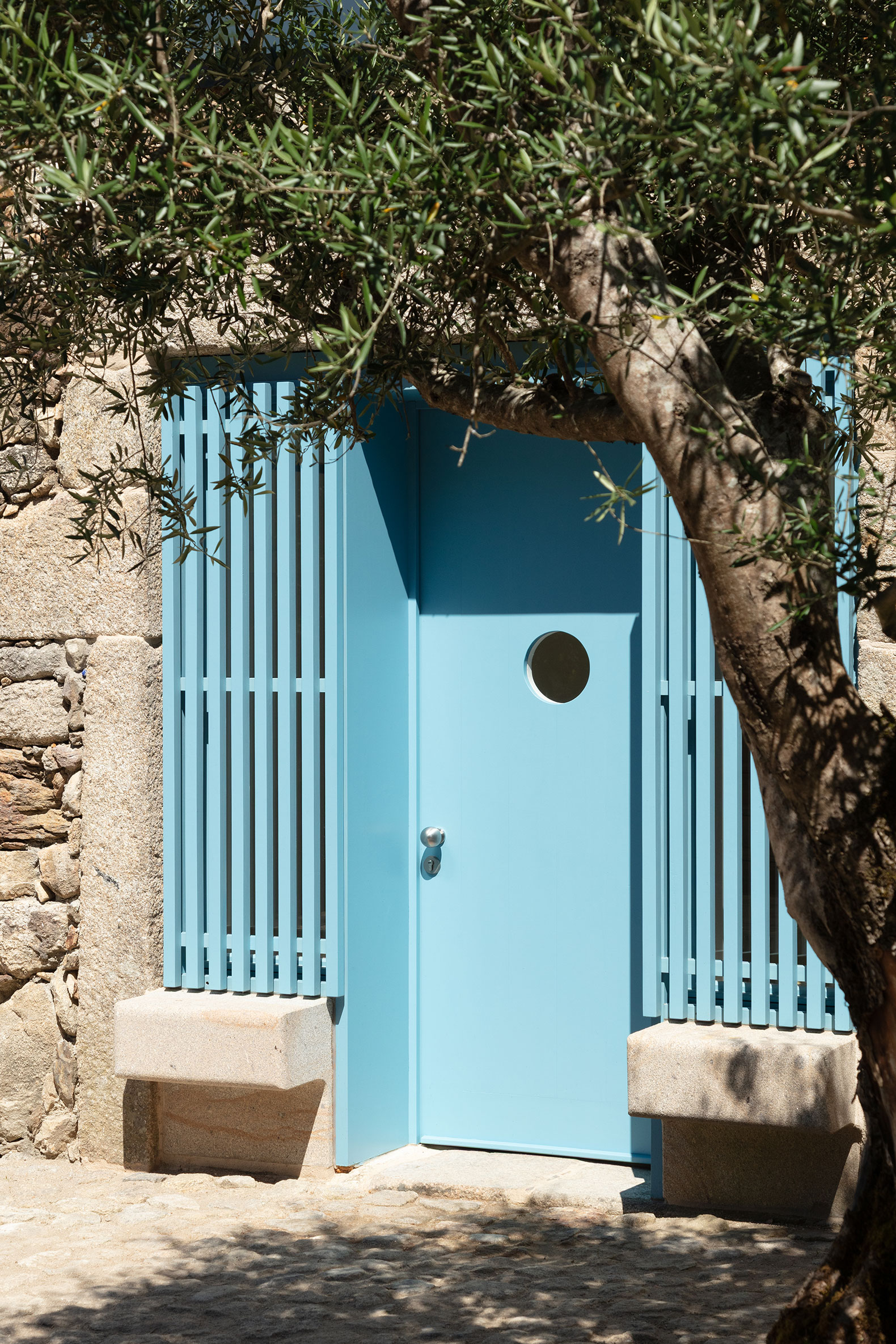
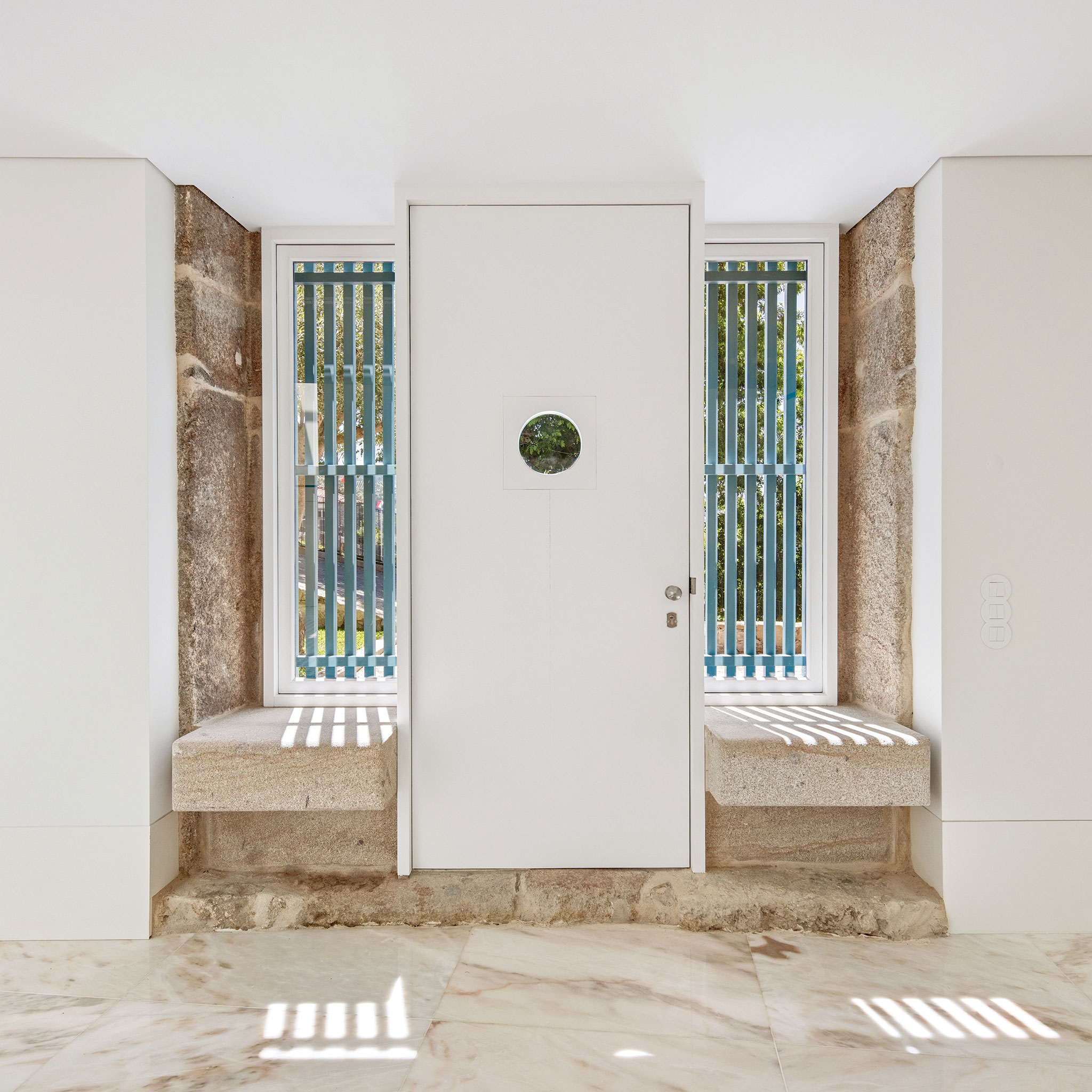
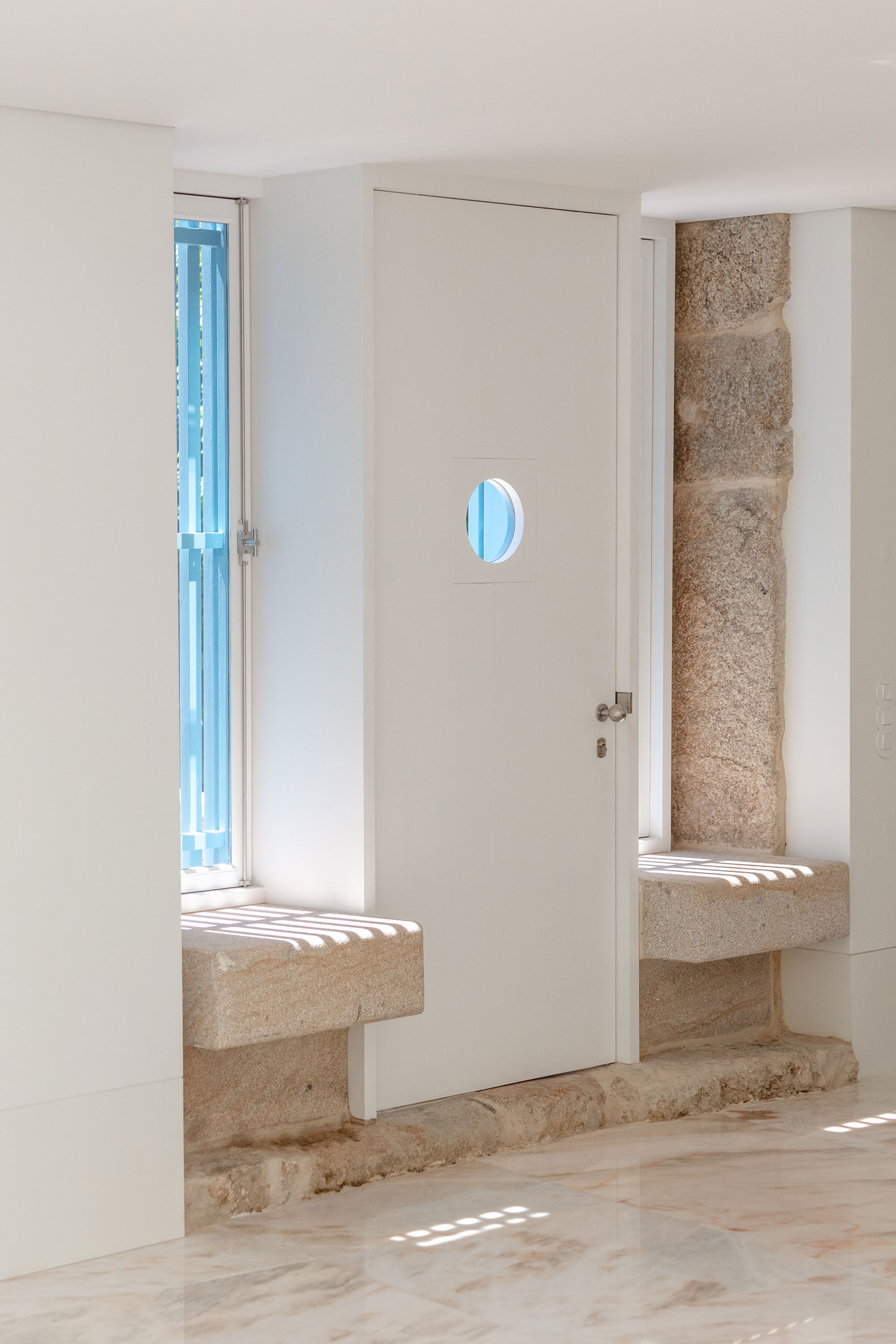
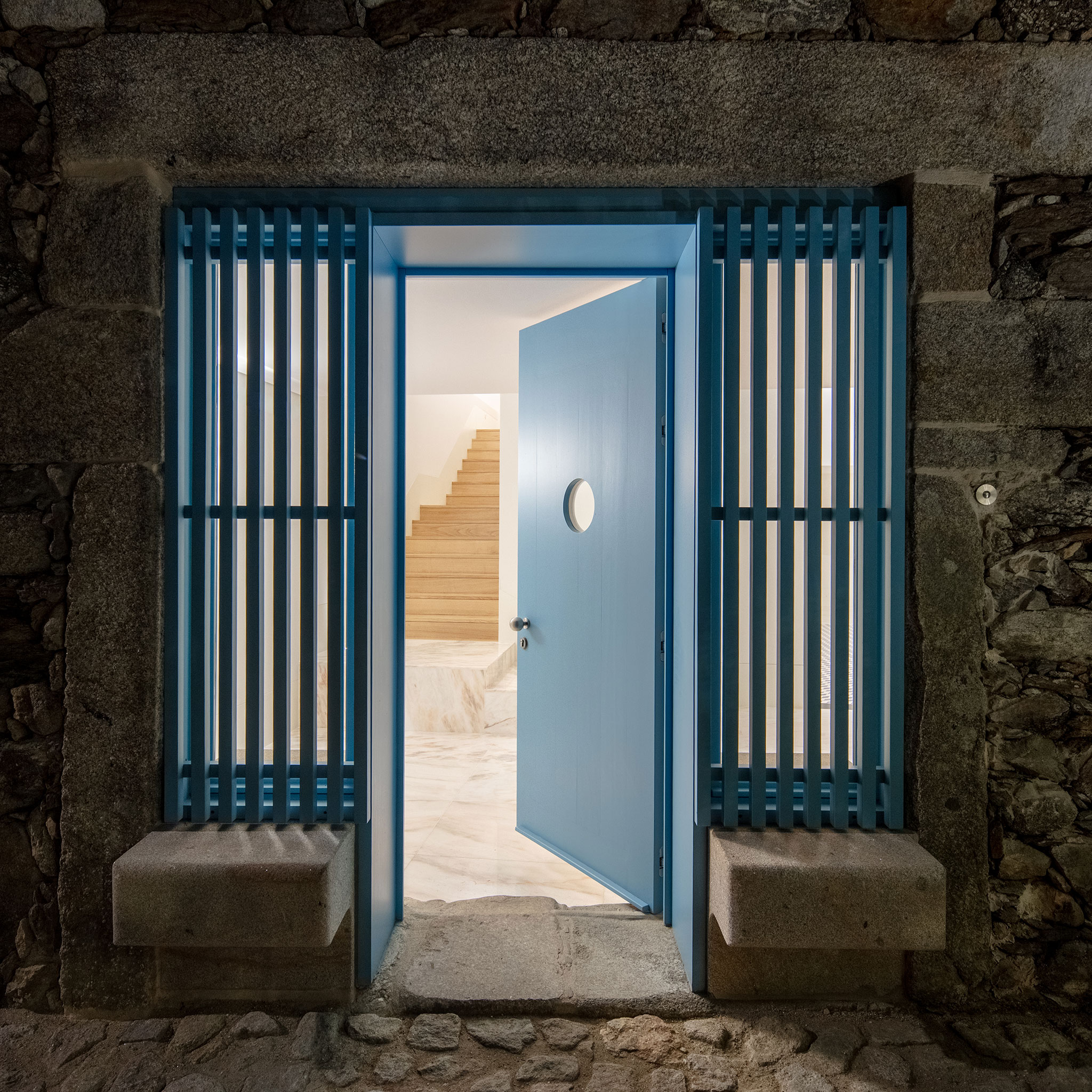
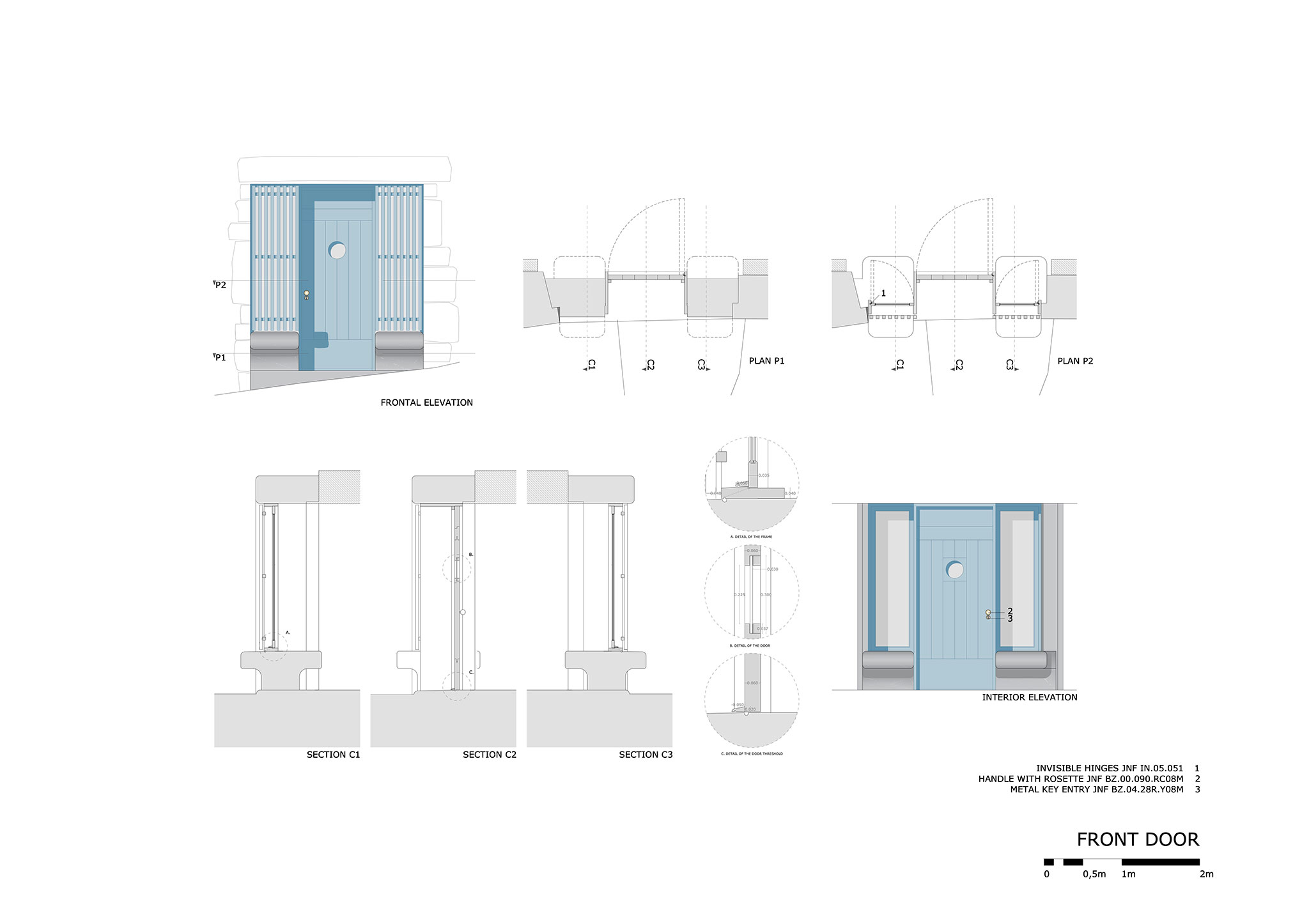
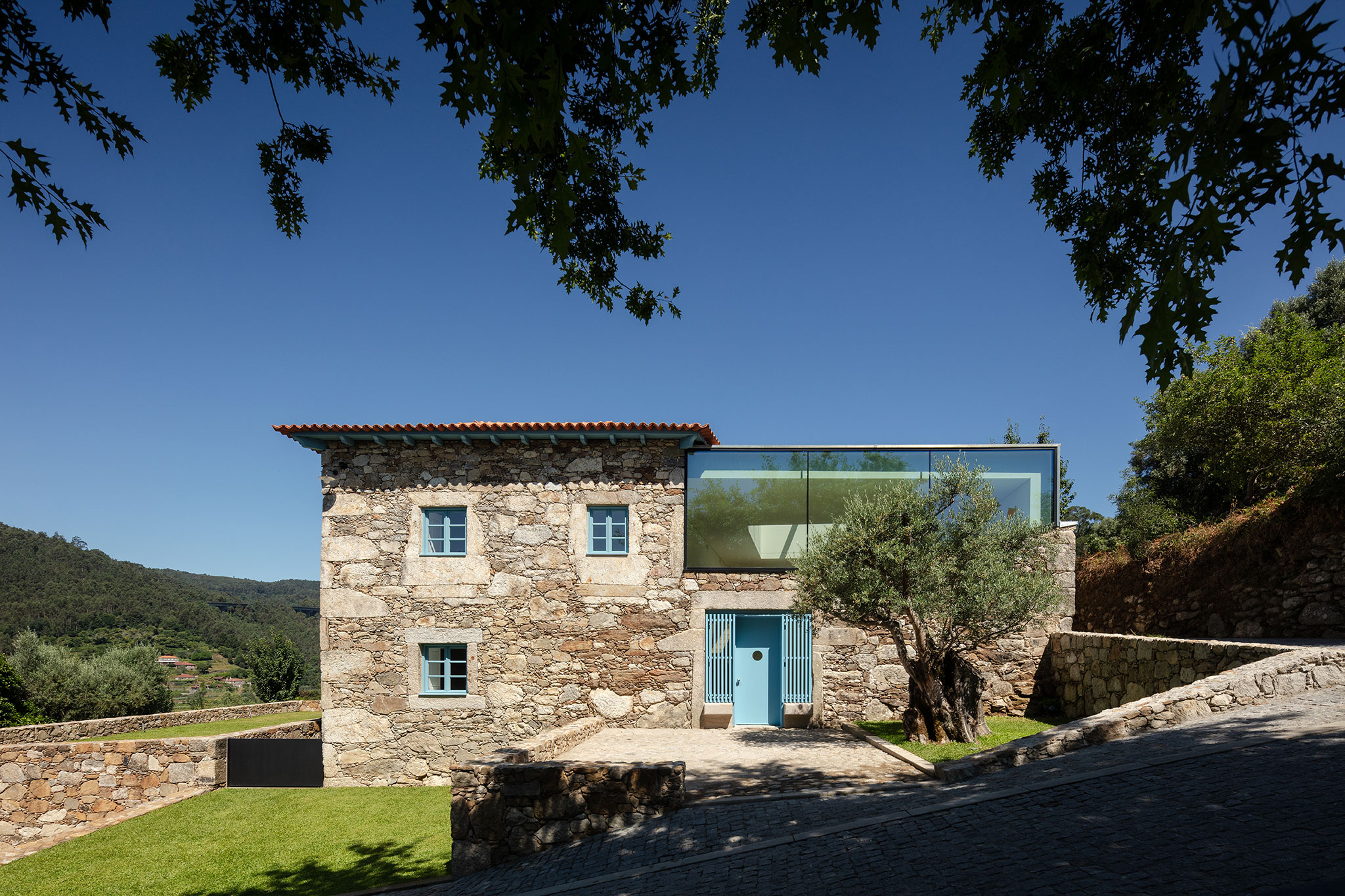
The entrance, now through the old courtyard gate, serves as the building's calling card.
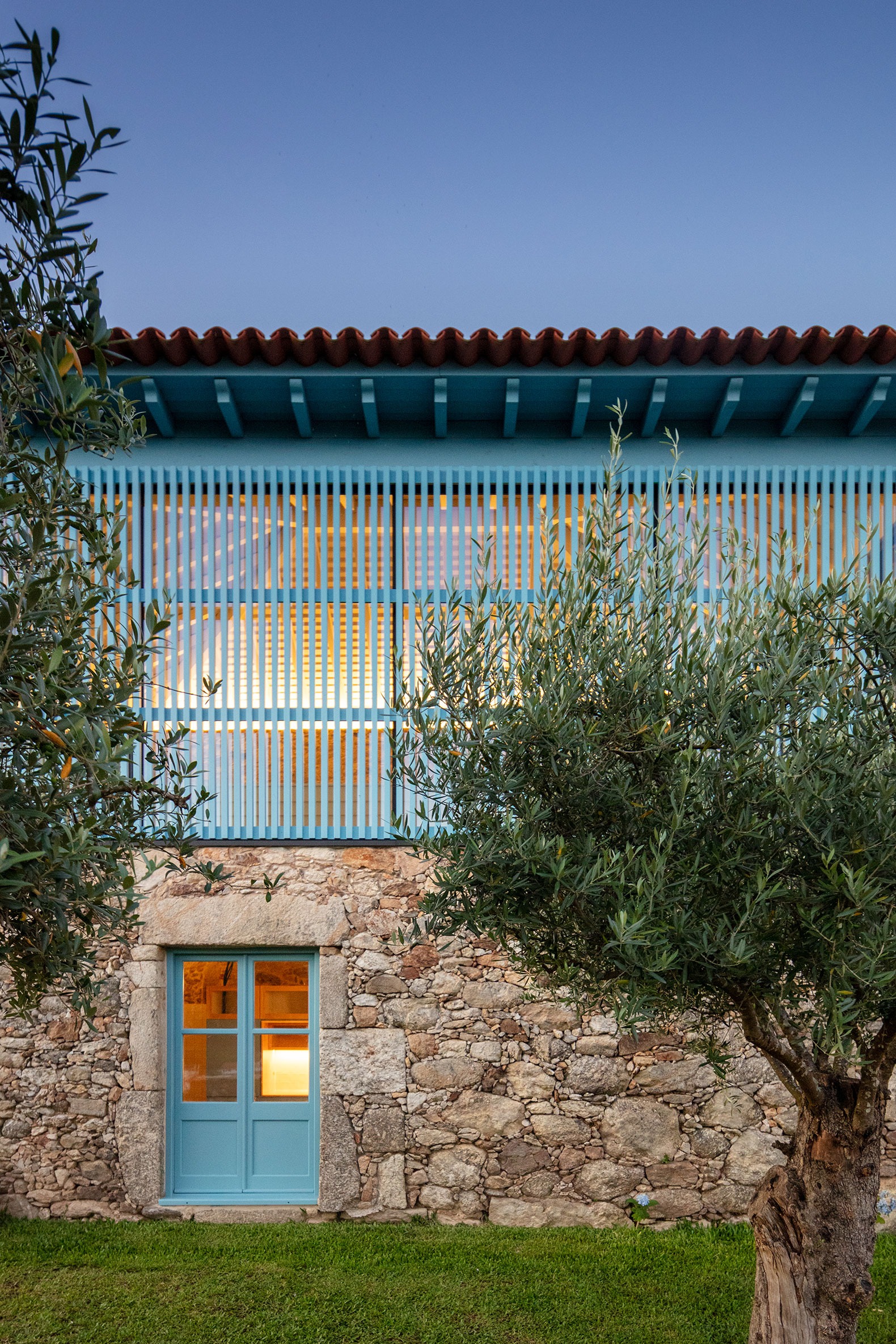
The large opening is reinterpreted as a doorway on a domestic scale, where references to the vernacular architecture of the Alto Minho region (such as the namoradeira chairs in the windows, the wooden latticework of the hórreos, and paintings with copper sulfate pigment) are incorporated to create a new design while sharing the same language.
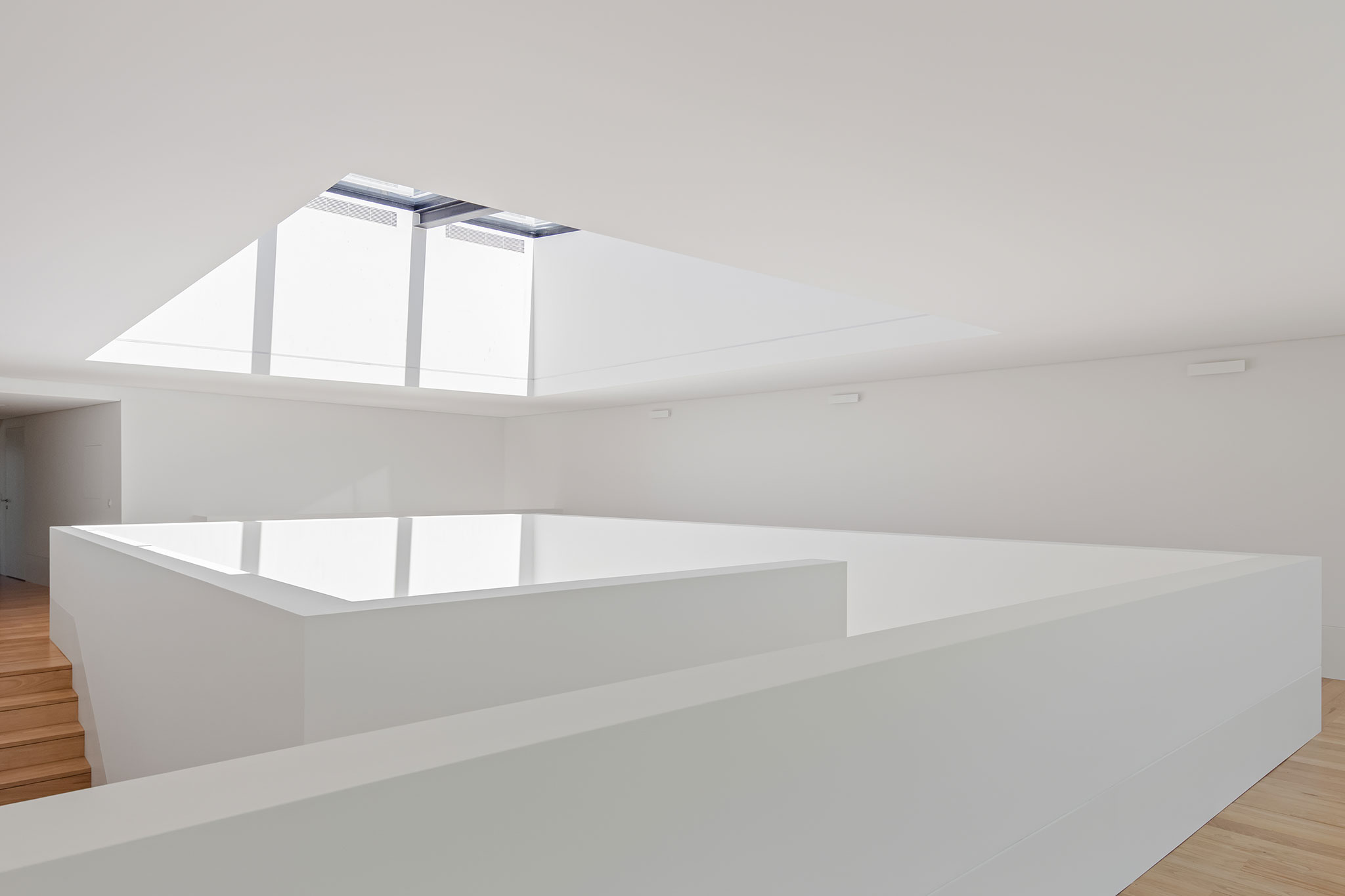
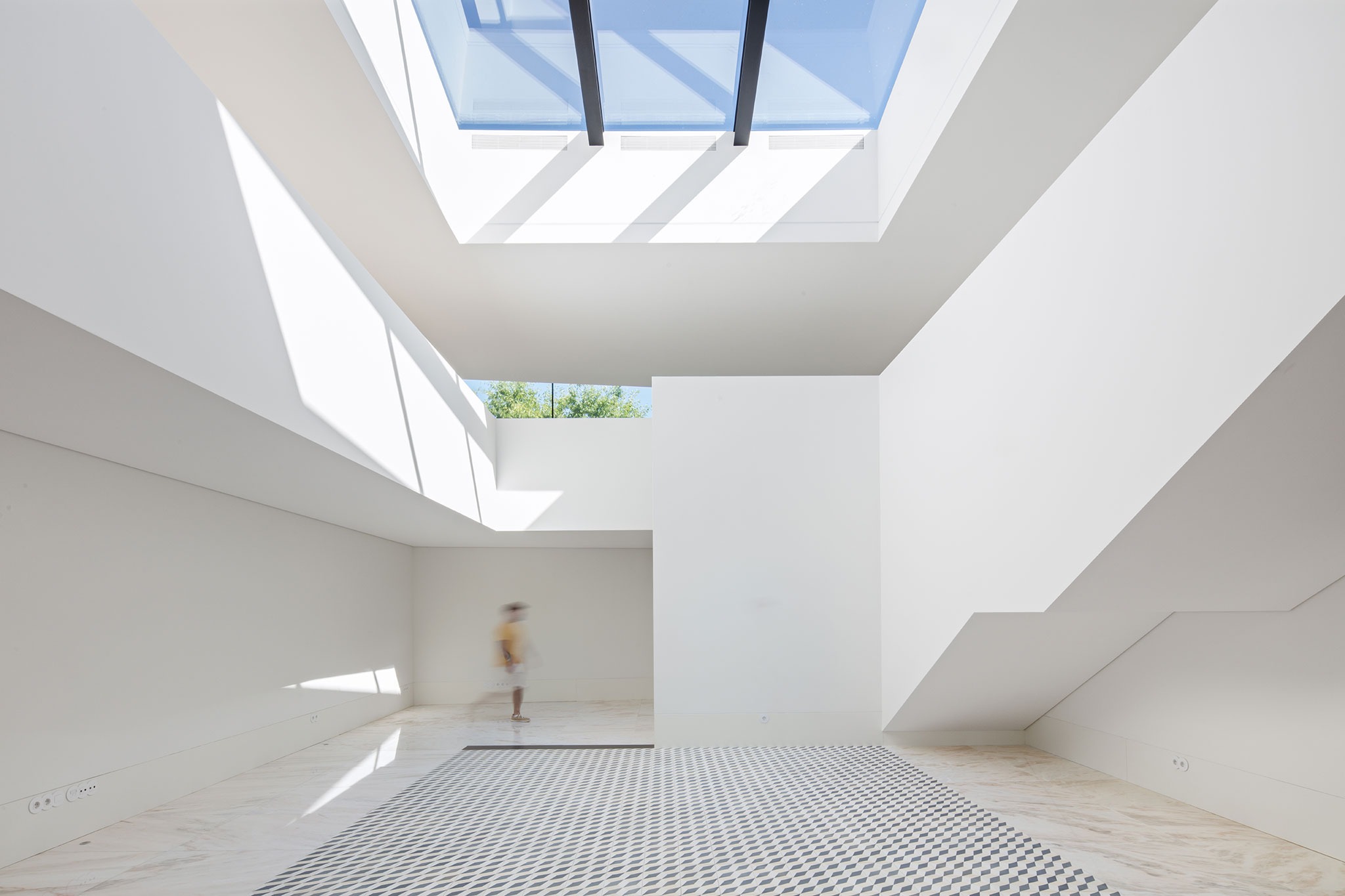
Beyond this threshold, the visitor is greeted by a spiraling vertical plane that organizes circulation and filters views, protecting the heart of the house: a room that preserves the experience of an outdoor patio, defined by a hydraulic mosaic floor and a large skylight, inscribing the sun's path (and, at night, the moonlight and starry sky of the interior Minho region) in the heart of the space.
Ascending the staircase, which follows the same vertical plane, one reaches a large opening at the top offering an unobstructed view of the Sanctuary and the surrounding treetops, flooding the space with light filtered through the foliage at dawn.
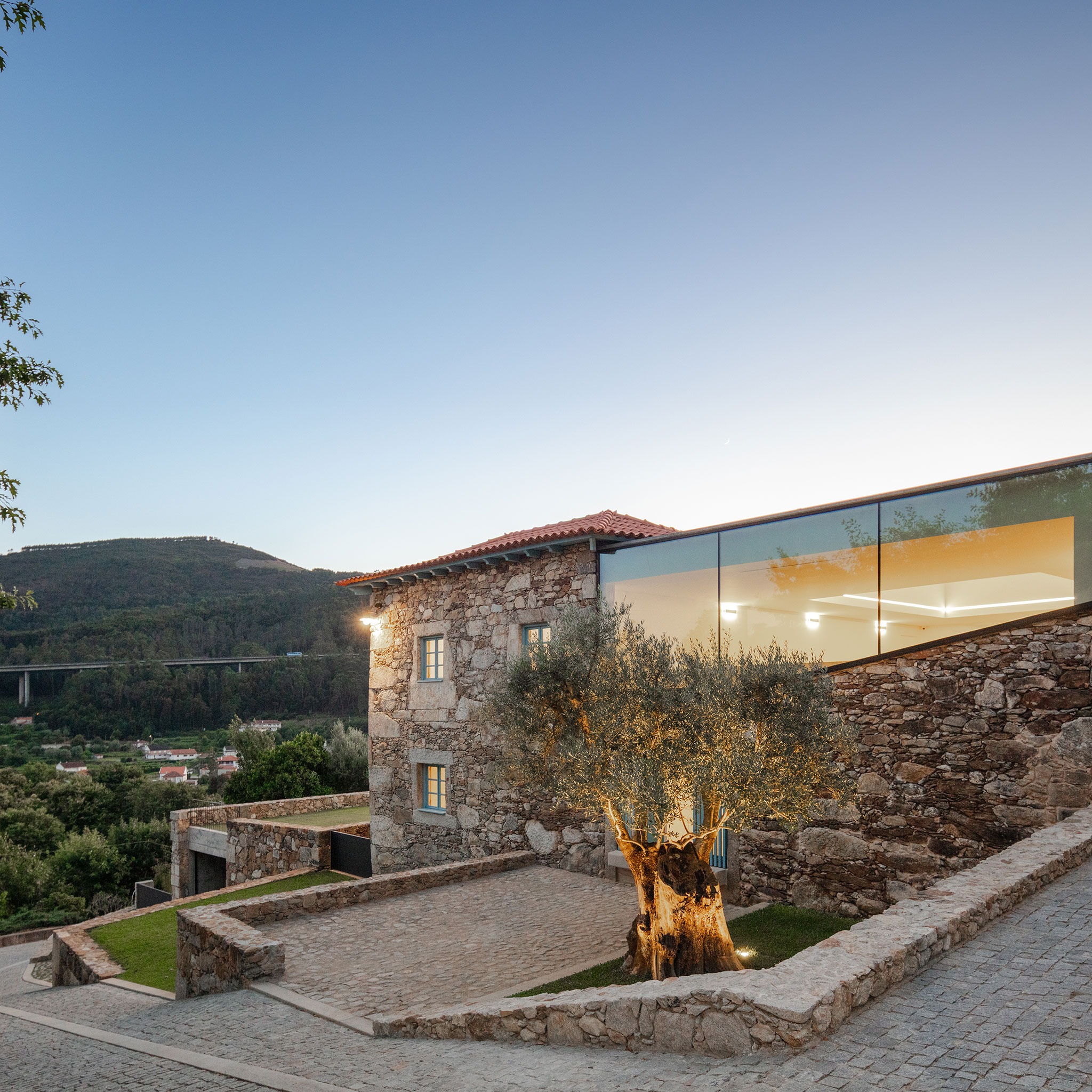
The hotel's social spaces are located on the ground floor, which includes, within the existing house, the living room, the dining room, and a small winter room. These are complemented by an accessible bedroom, a laundry room, a wine cellar, and a bathroom.
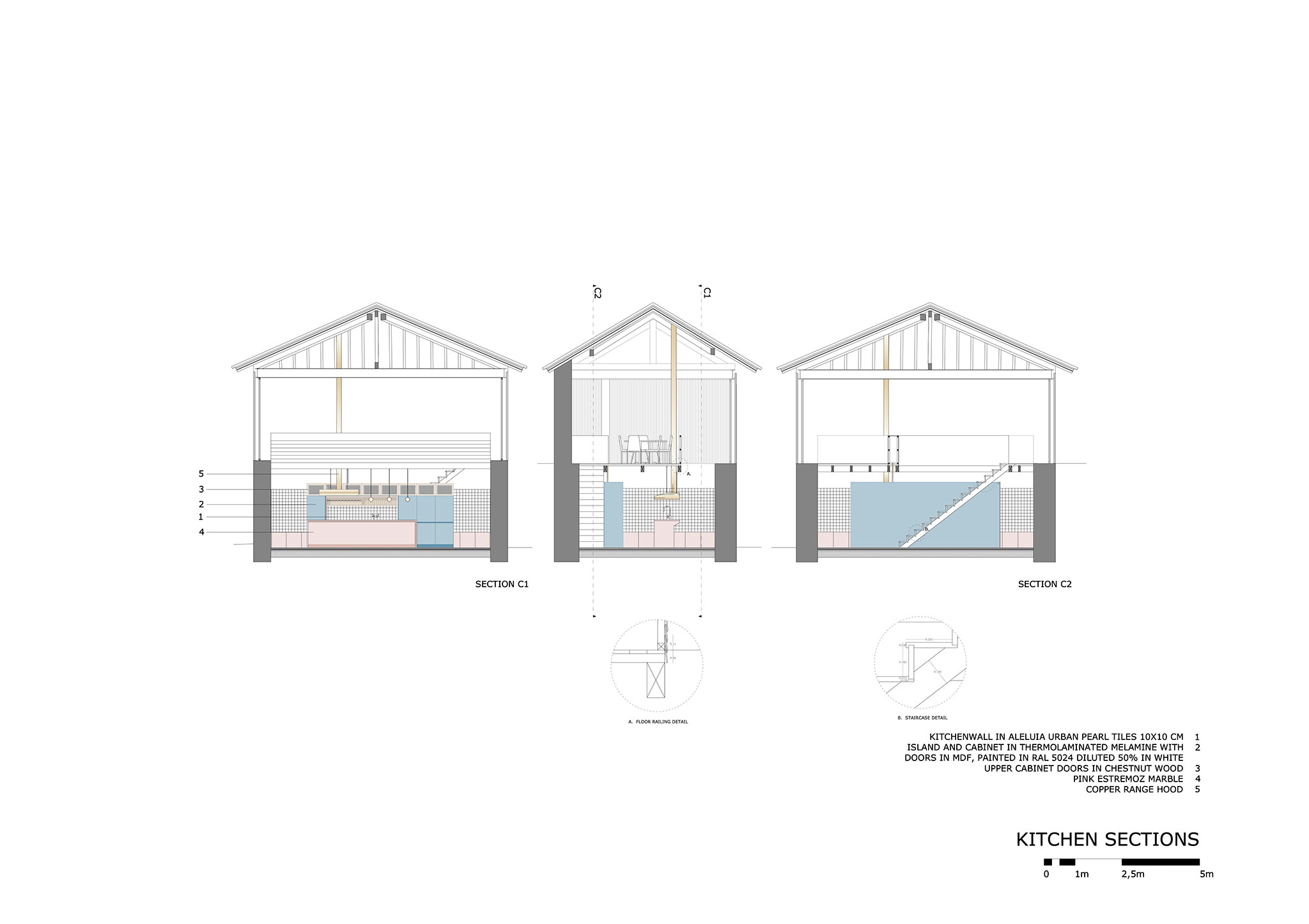
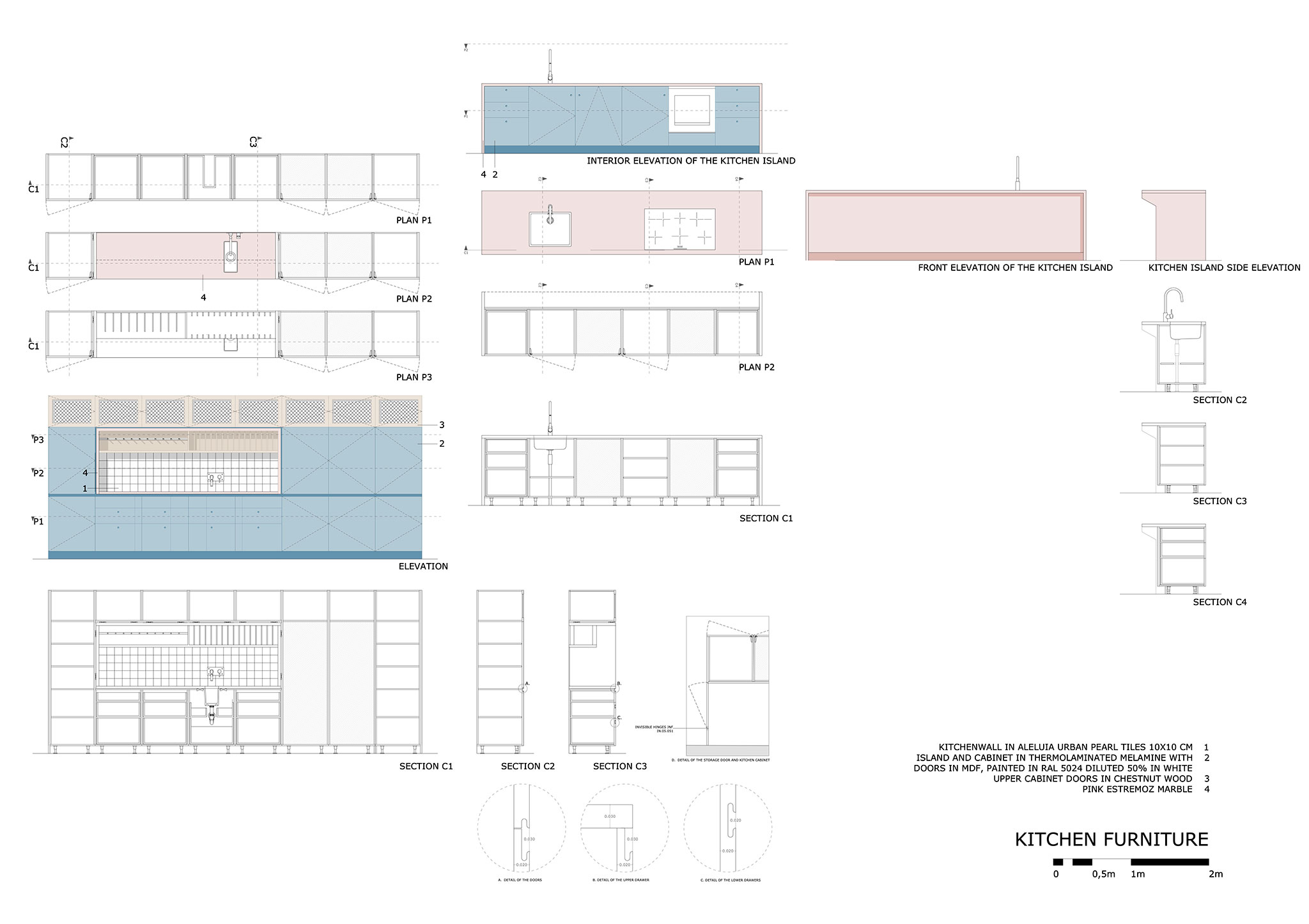
Following a new corridor that connects the house to the reconstructed hayloft, one finds the kitchen, located on the ground floor of this structure. Although contemporary in design, the kitchen employs materials, details, and design choices that evoke the vernacular architecture of the Minho region (cabinets, pink marble, handcrafted tiles), using memory as a building material.
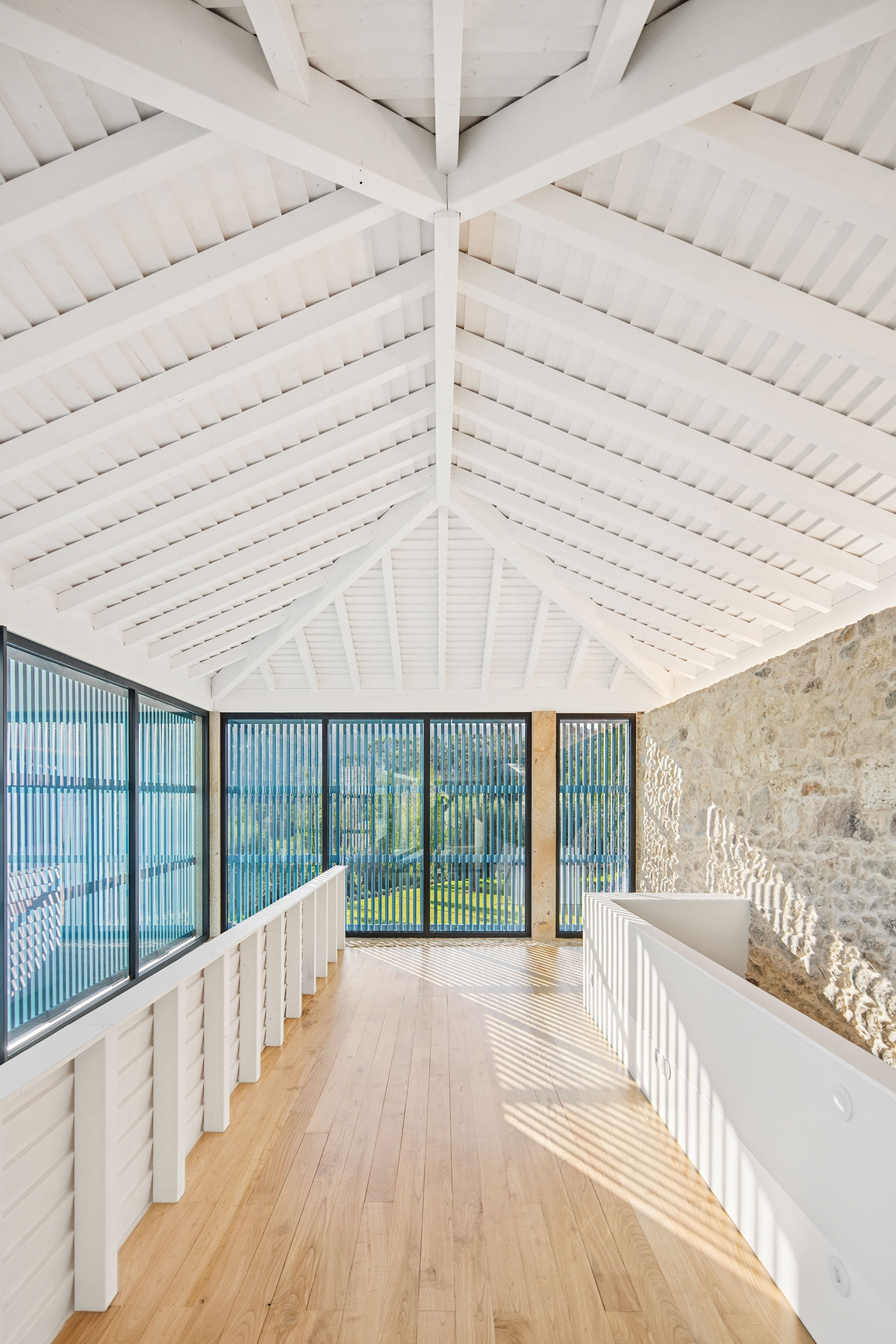
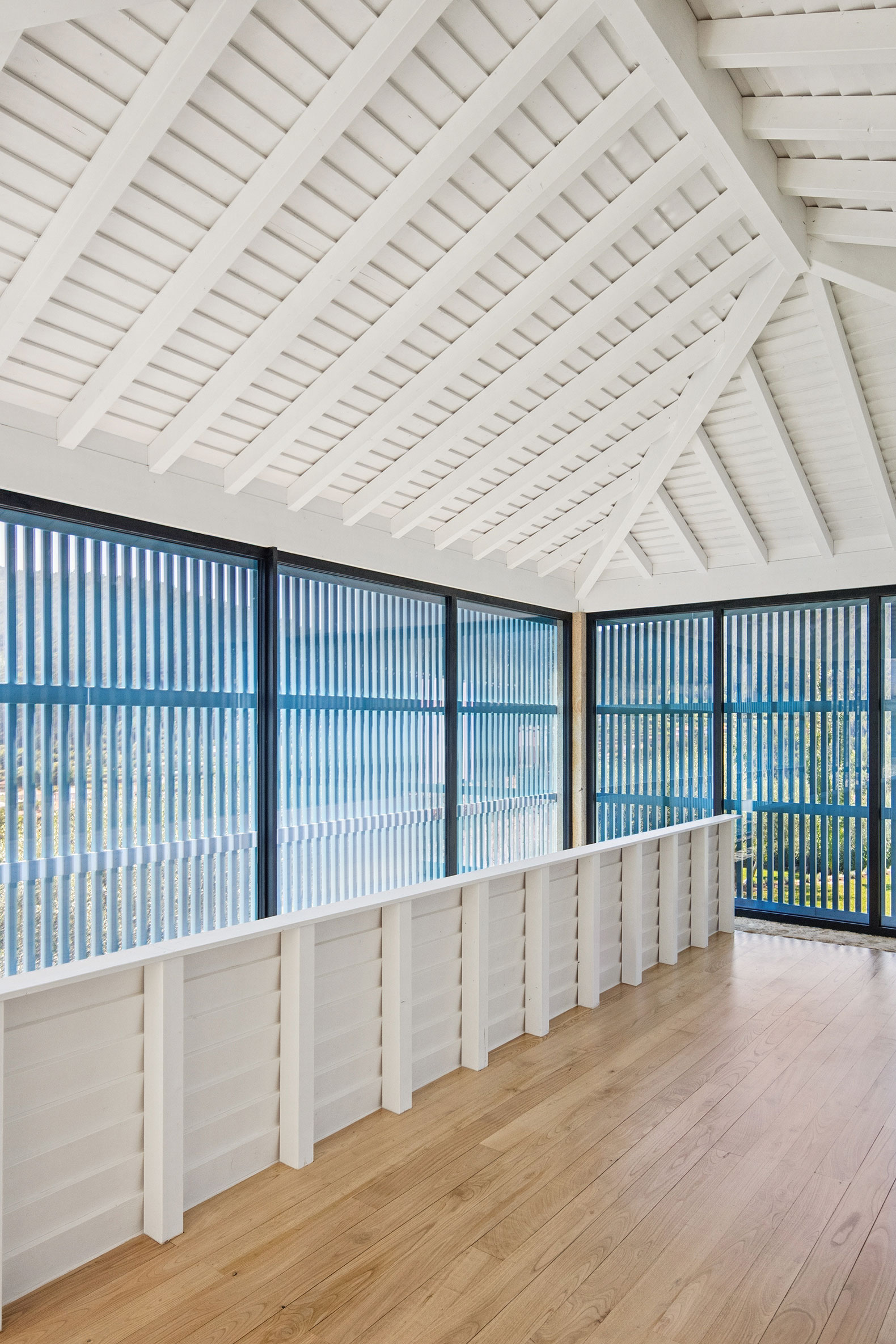
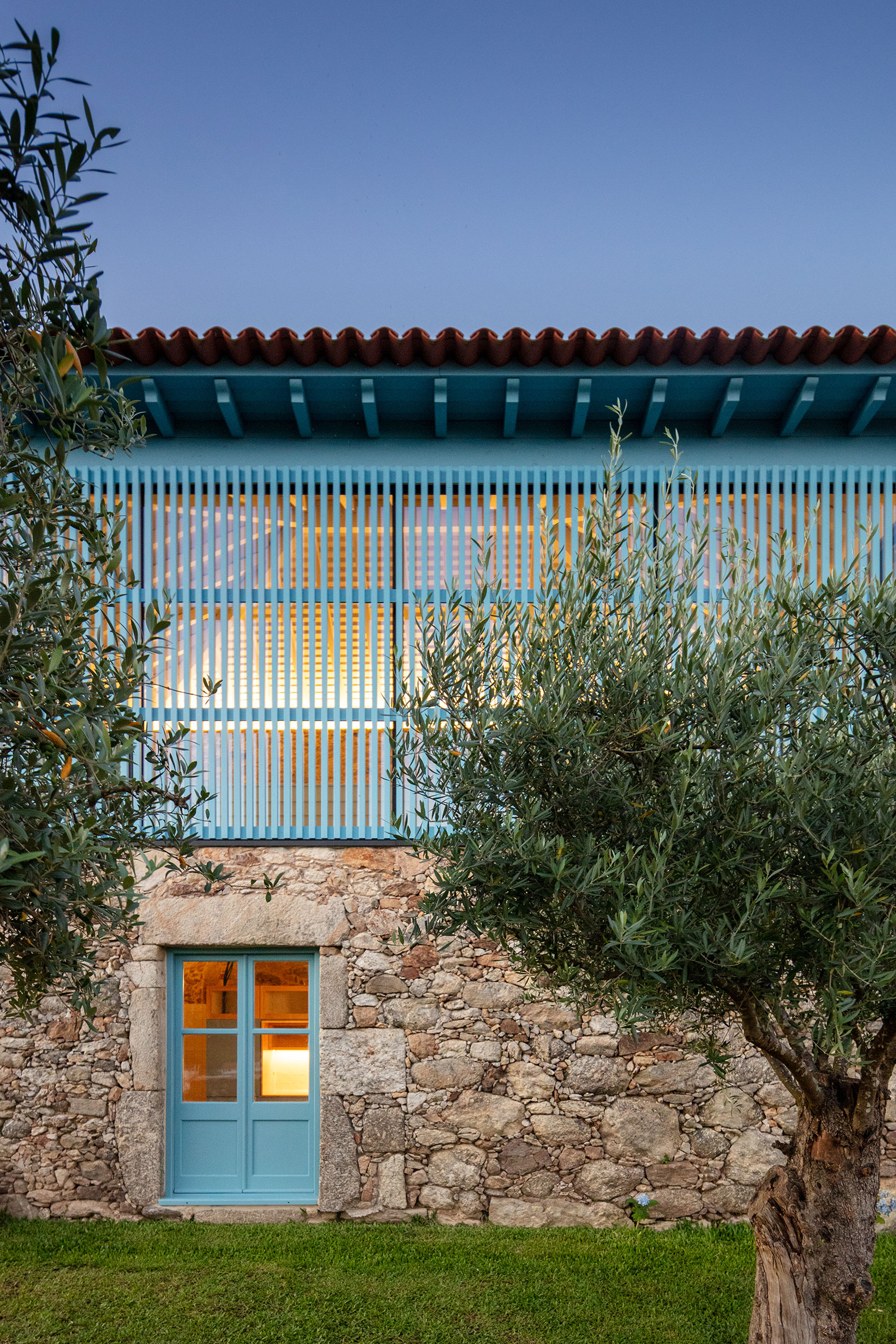
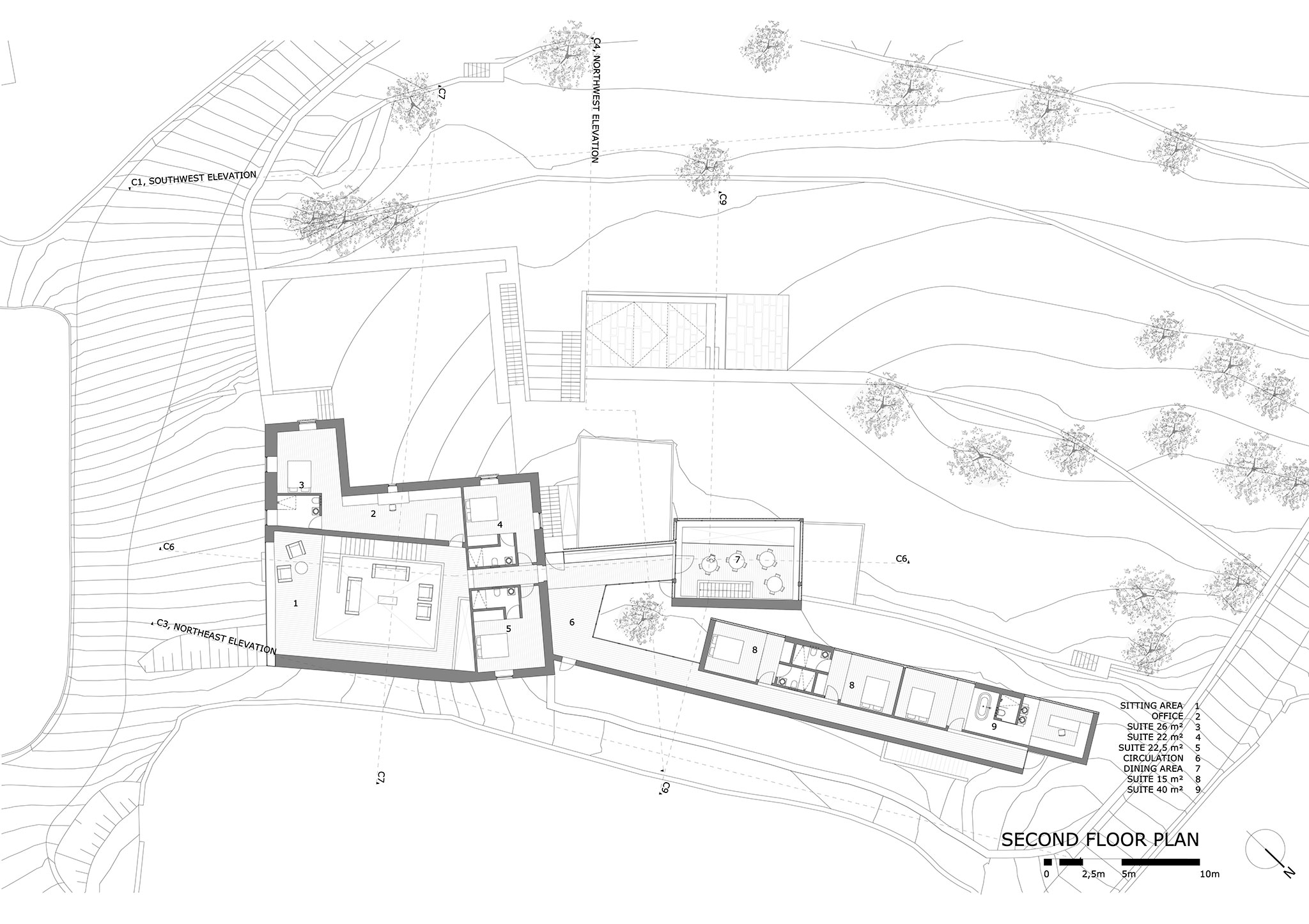
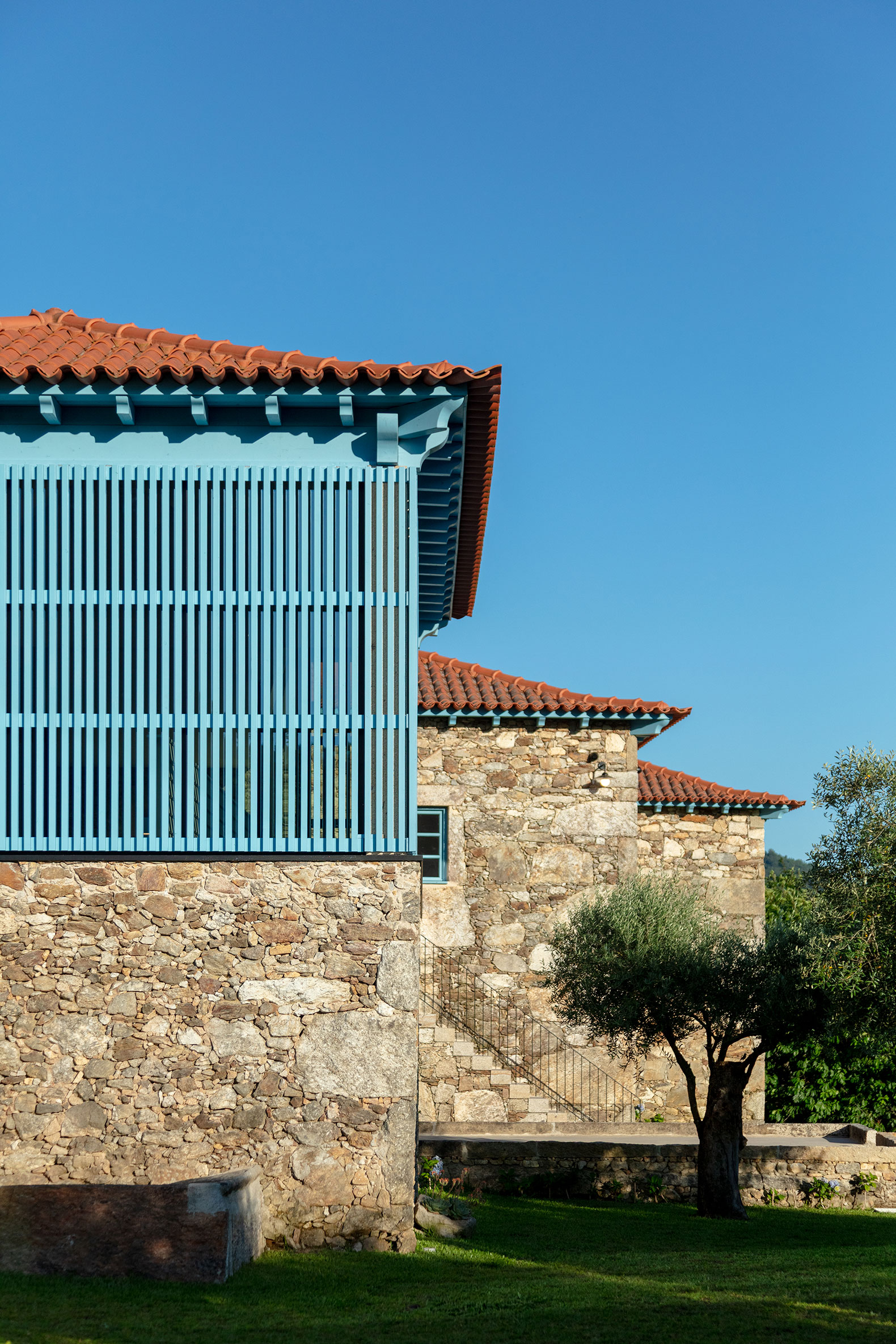
On the upper floor of the hayloft, a dining area complements the kitchen and opens to the valley to the south, protected by a wooden lattice that filters the view and regulates solar gain.
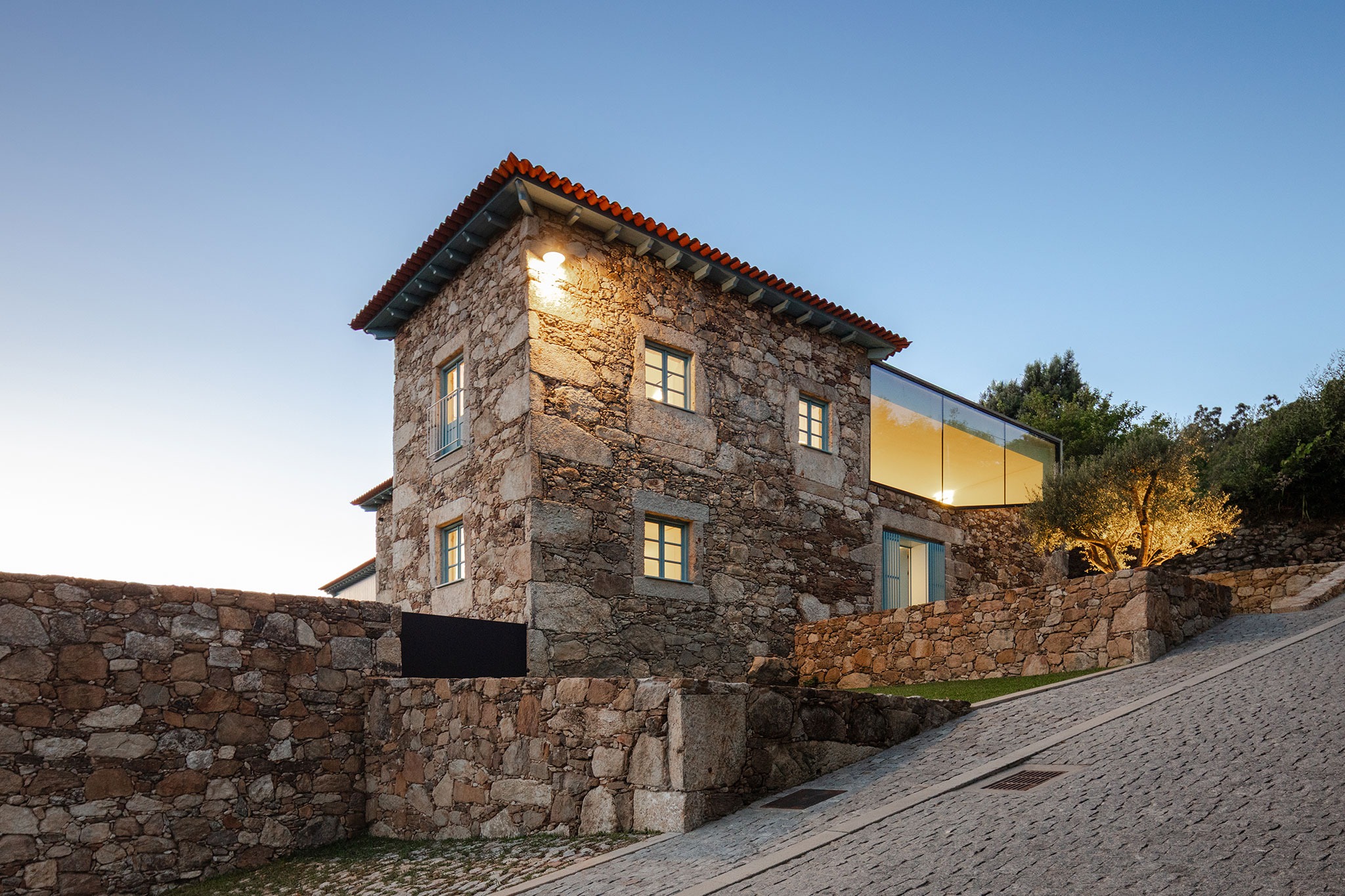
This reconstruction replicates a traditional structural system, with oak beams and rafters supporting a chestnut floor, and the same solution (on the roof, with treated pine wainscoting under the tiles, now including insulation and waterproofing) applied to the roof itself.
The bedrooms are therefore located on the upper floor.
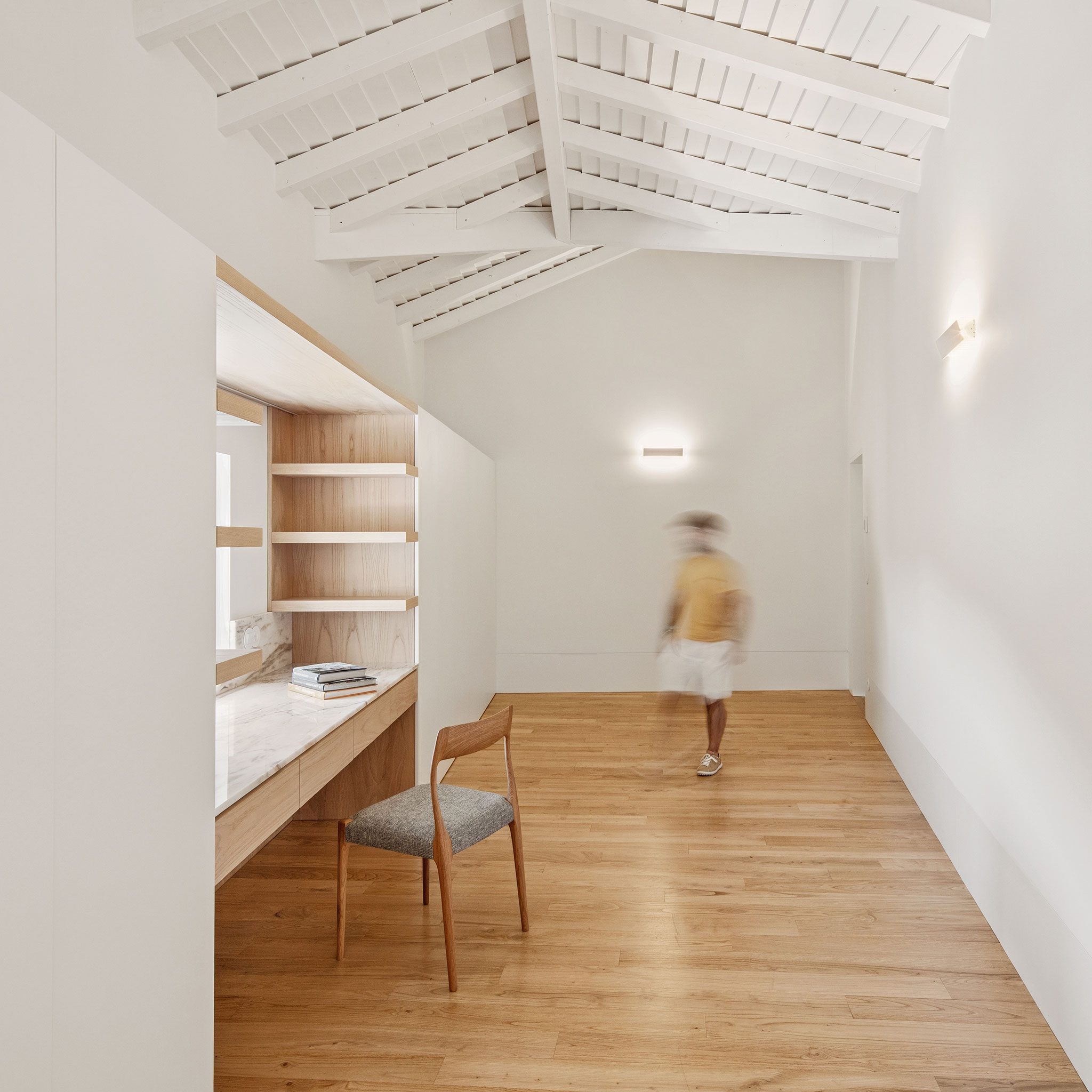
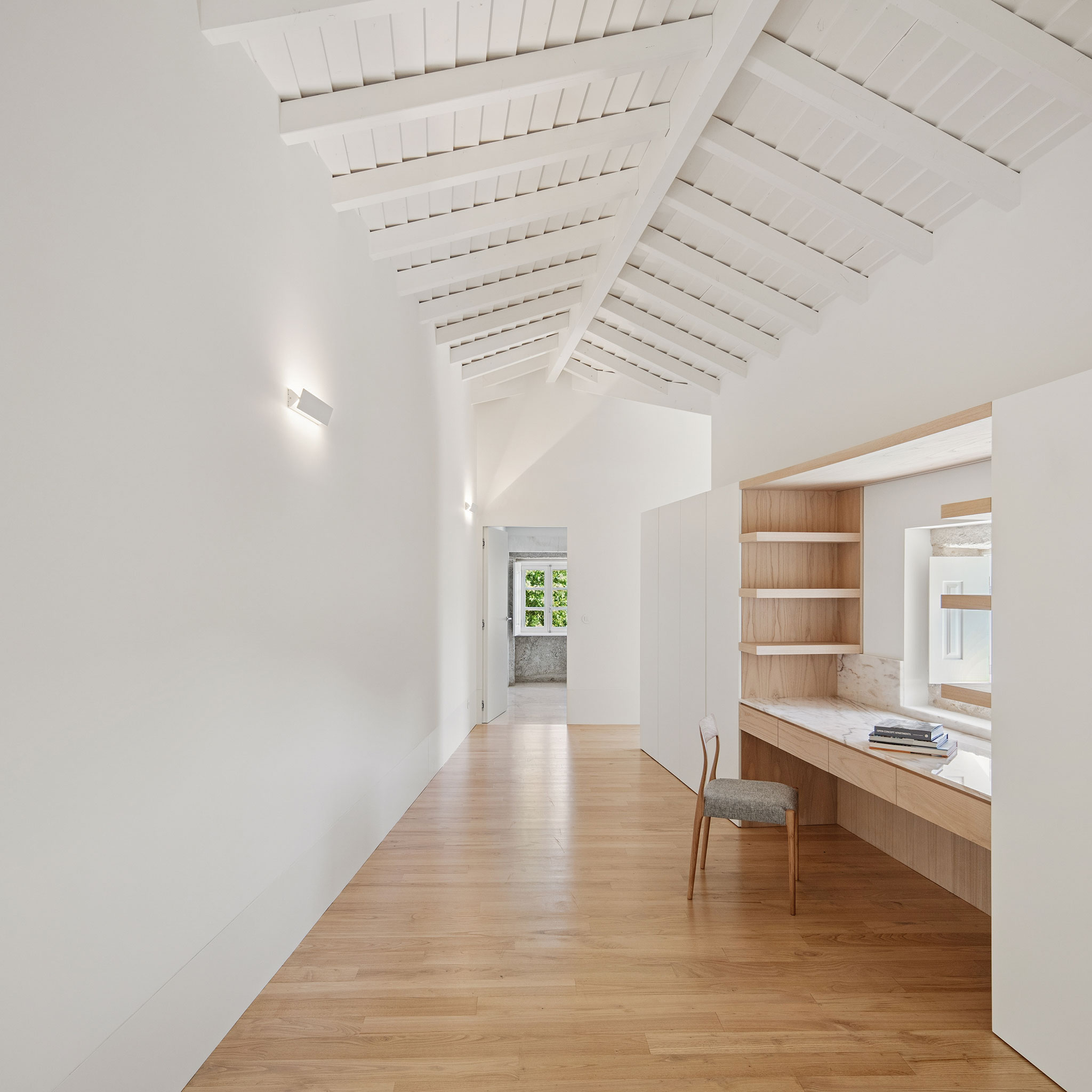
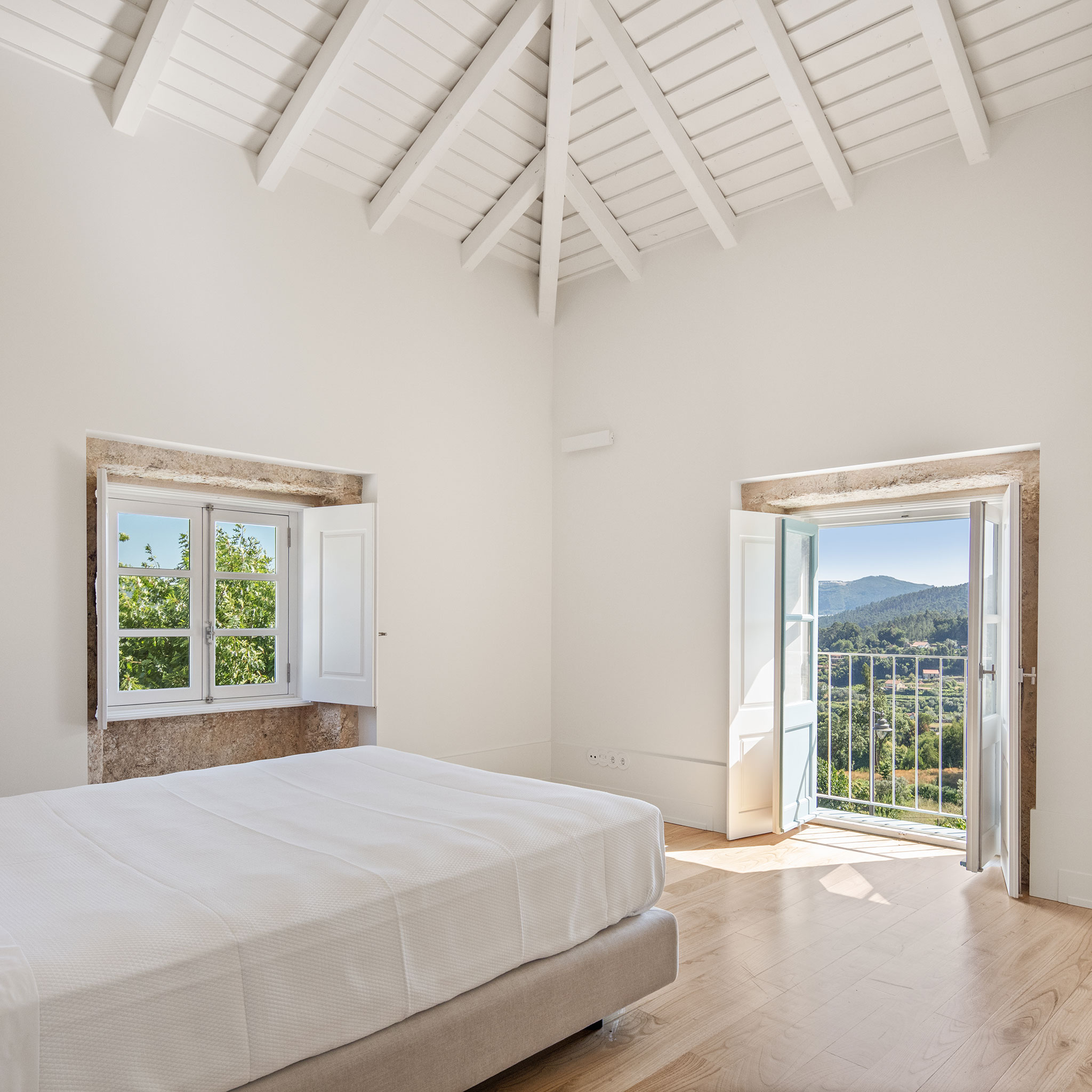
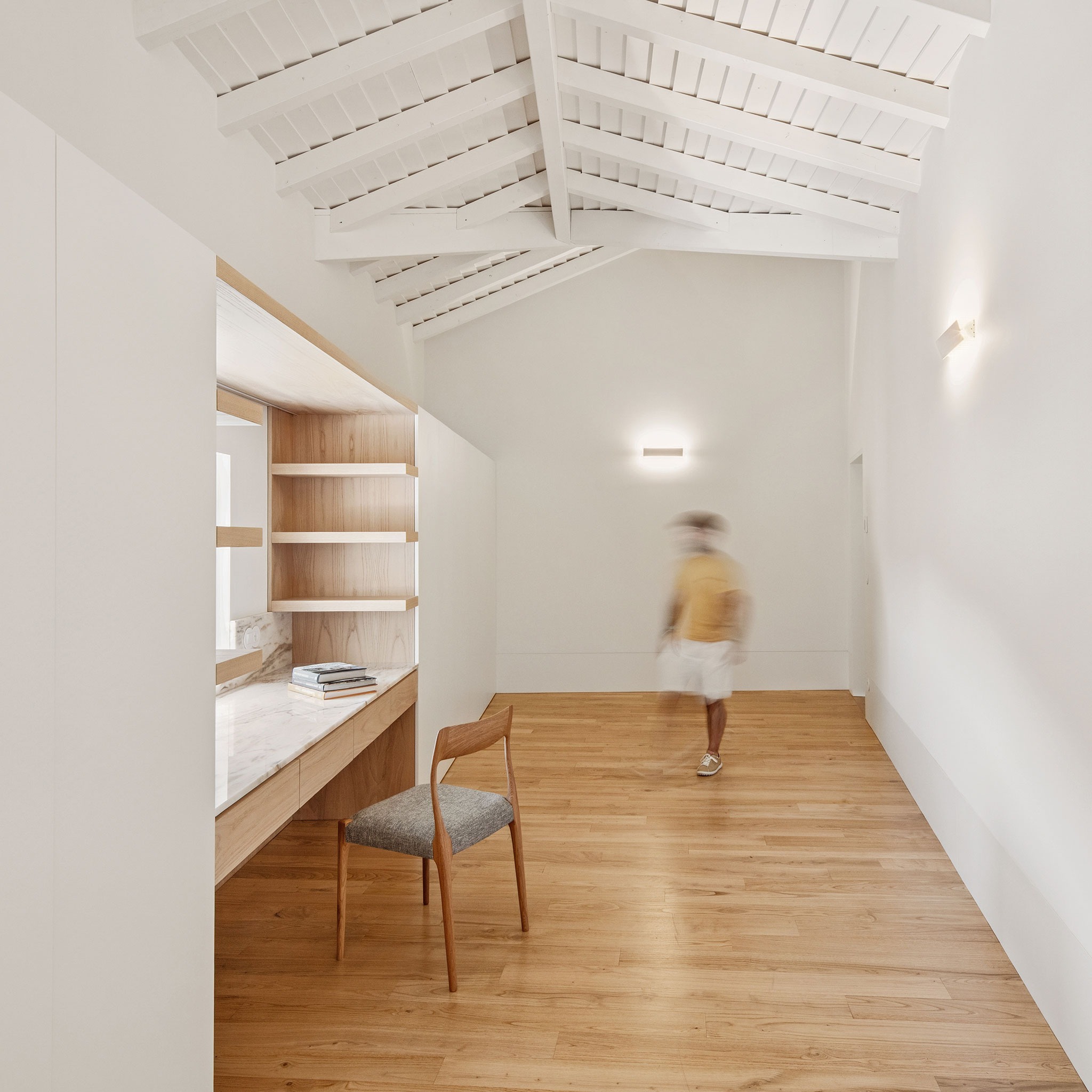
Inside the pre-existing house, there is a spacious master suite and two additional bedrooms. Behind the surviving facades are high baseboards, with simple details but clearly inspired by common typologies in houses of this type, and wooden joinery and doorways that follow the same logic. The roof, as in the palheiro (traditional thatched house), incorporates the vernacular construction system of the region. In these spaces, traditional details intersect with contemporary elements (such as the recessed, minimalist baseboards of the new partitions) in a seamless and fluid transition.
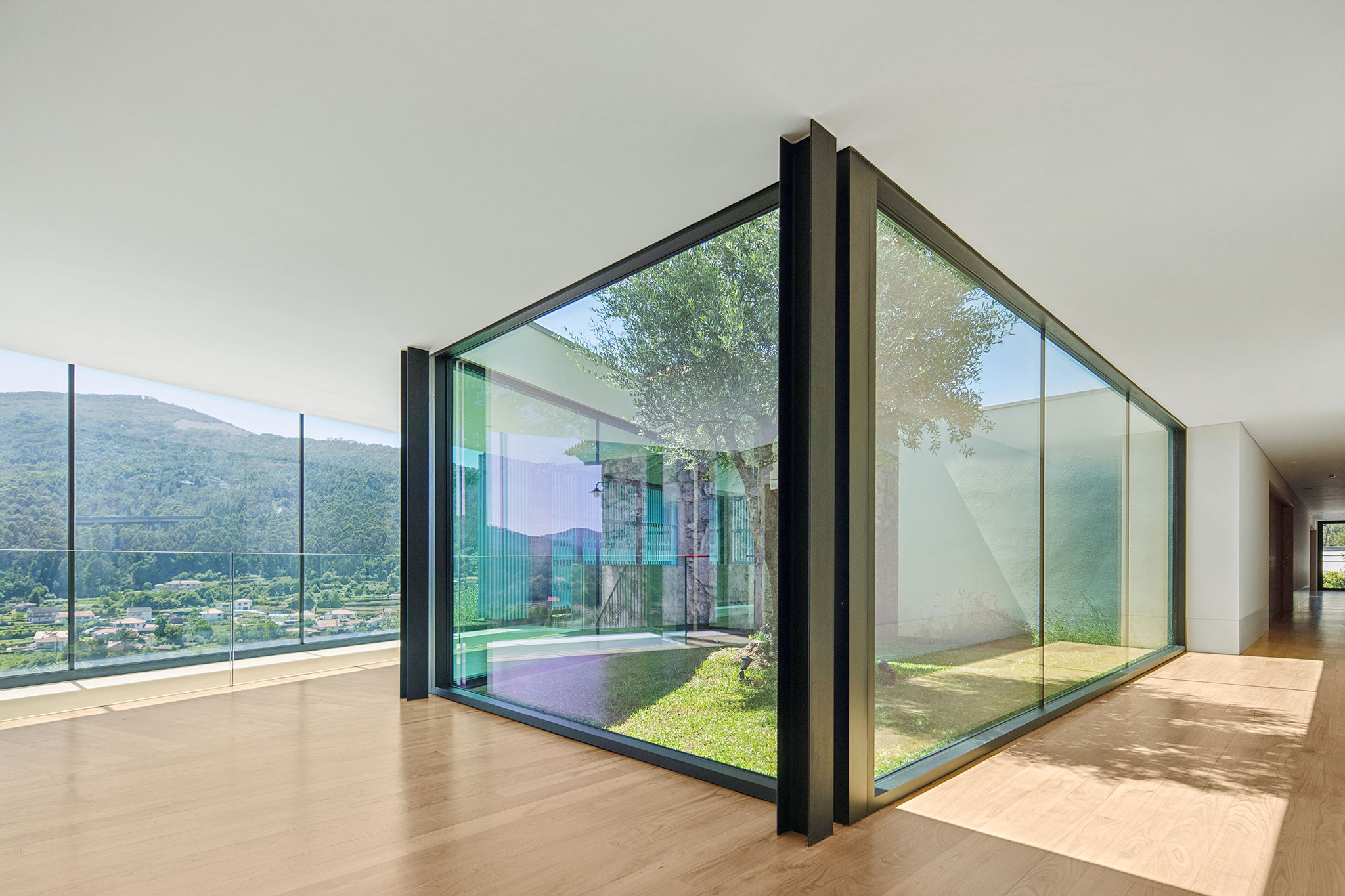
The corridor leading to the upper floor of the palheiro culminates in a transitional space marked by an exterior patio that frames an olive tree, distributing circulation between the existing house, the palheiro's dining area, and the new bedroom wing.
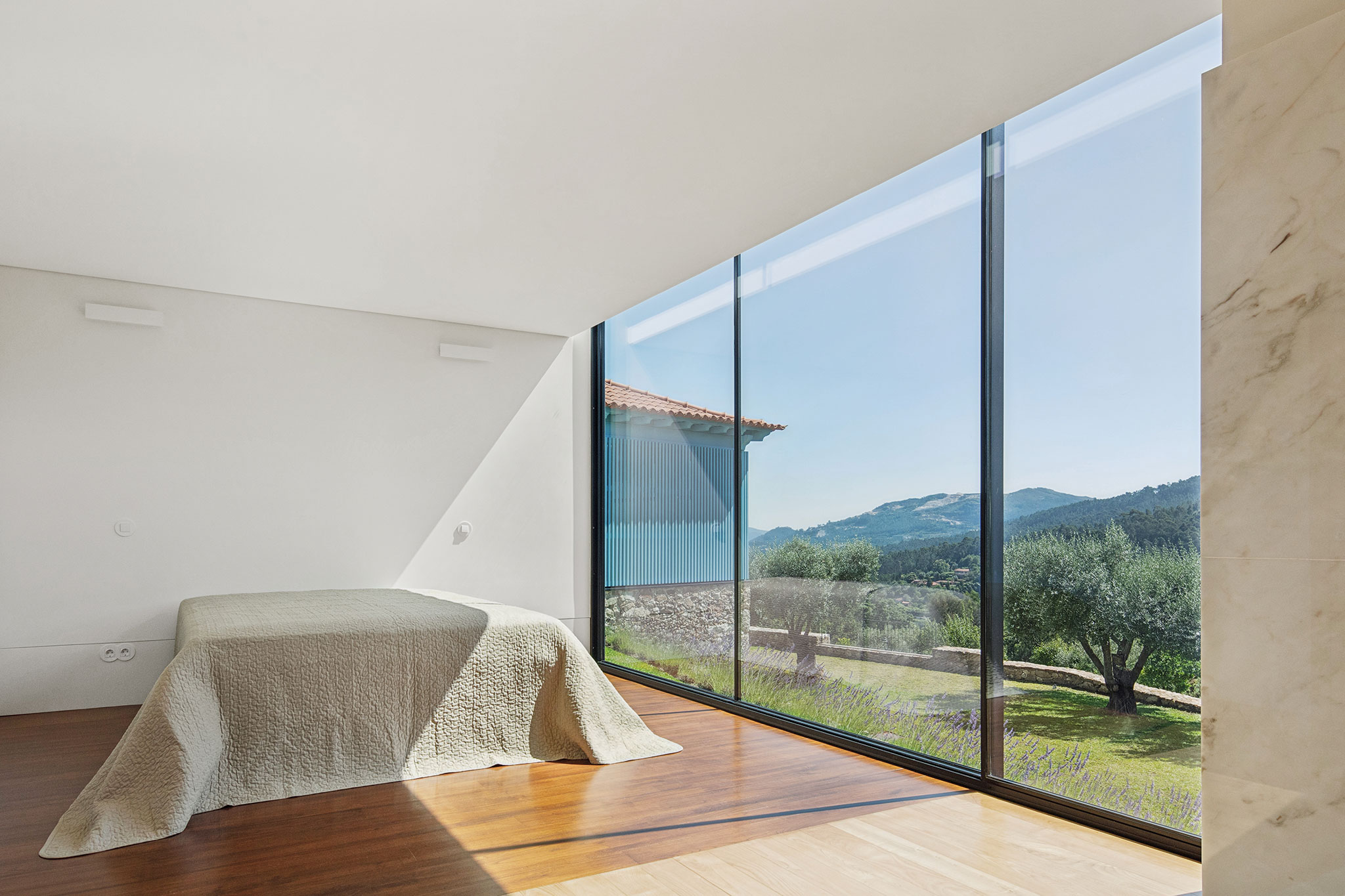
This new wing houses simple bedrooms where the connection with the landscape of the Labruja River valley takes center stage.
The project thus preserves the logic of a fragmented whole, composed of autonomous yet articulated volumes, crowning a landscape shaped by terraces and robust granite walls: a history made of overlapping eras, all rooted in the place, its materials, its traditions, and its building practices.
The Hotel de la Casa de los Cerezos is, therefore, another episode in the long process of reconstruction and adaptation that has shaped the history of the house since its founding in 1747, another chapter in its legacy of continuity and transformation, of permanence and renewal.